Brief Report

A Two-Filter Adaptation to Achieve Enhanced Hemodialysis Performance

1
Department of Chemistry, University of Waterloo, 200 University Ave West, Waterloo, ON N2L 3G1, Canada
2
Quantum Medical, Rosario del Alcazar Lt-6b, Quito 170809, Pichincha, Ecuador
3
Instituto de Atención Renal Especializada (IARE), Gonzalo Zaldumbide, N49C E6-68, Quito 170502, Pichincha, Ecuador
4
Waterloo Institute for Nanotechnology, University of Waterloo, 200 University Ave West, Waterloo, ON N2L 3G1, Canada
*
Author to whom correspondence should be addressed.
Kidney Dial. 2025, 5(4), 52; https://doi.org/10.3390/kidneydial5040052

Submission received: 15 August 2025 / Revised: 30 September 2025 / Accepted: 3 October 2025 / Published: 24 October 2025

Abstract

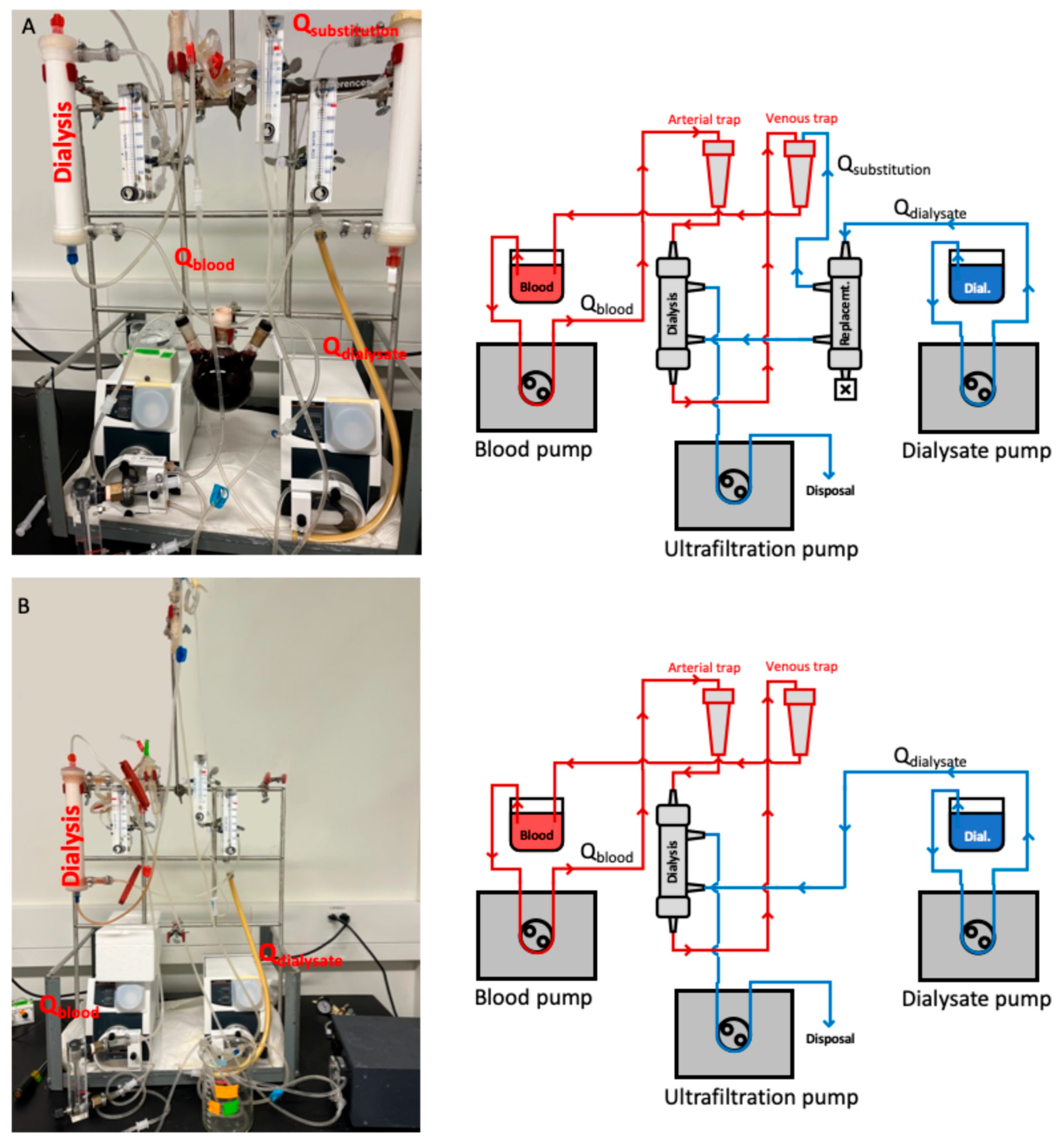
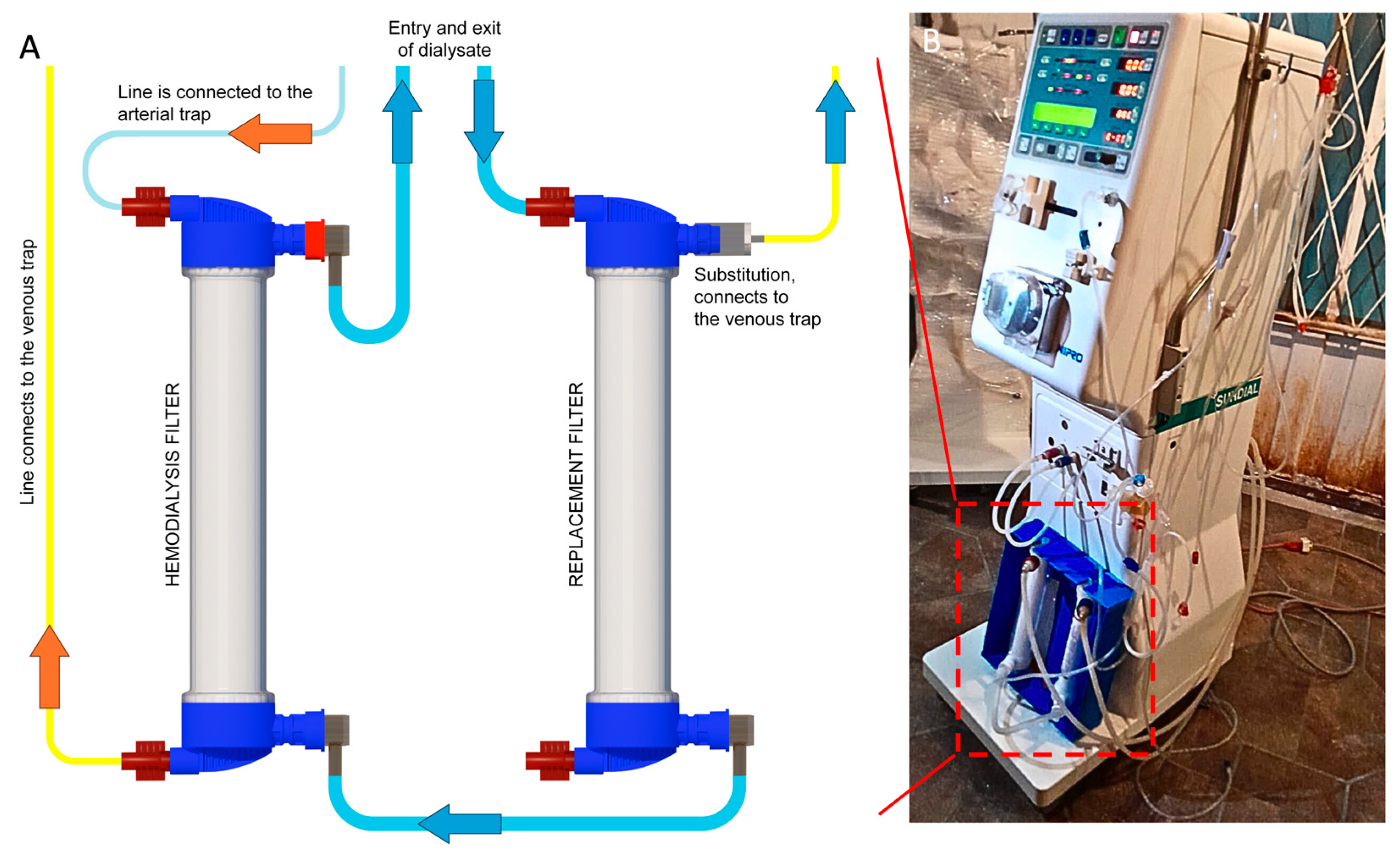
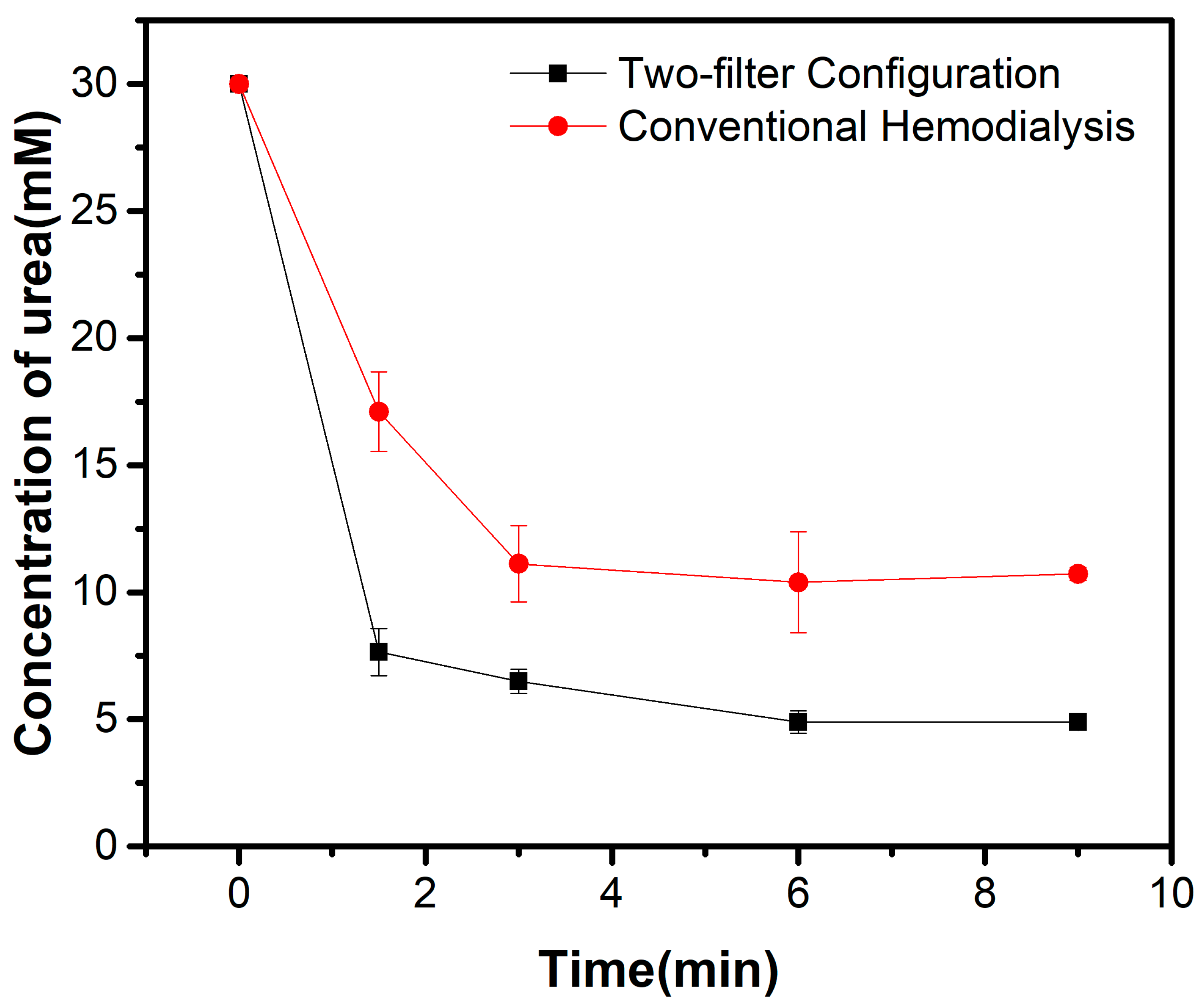
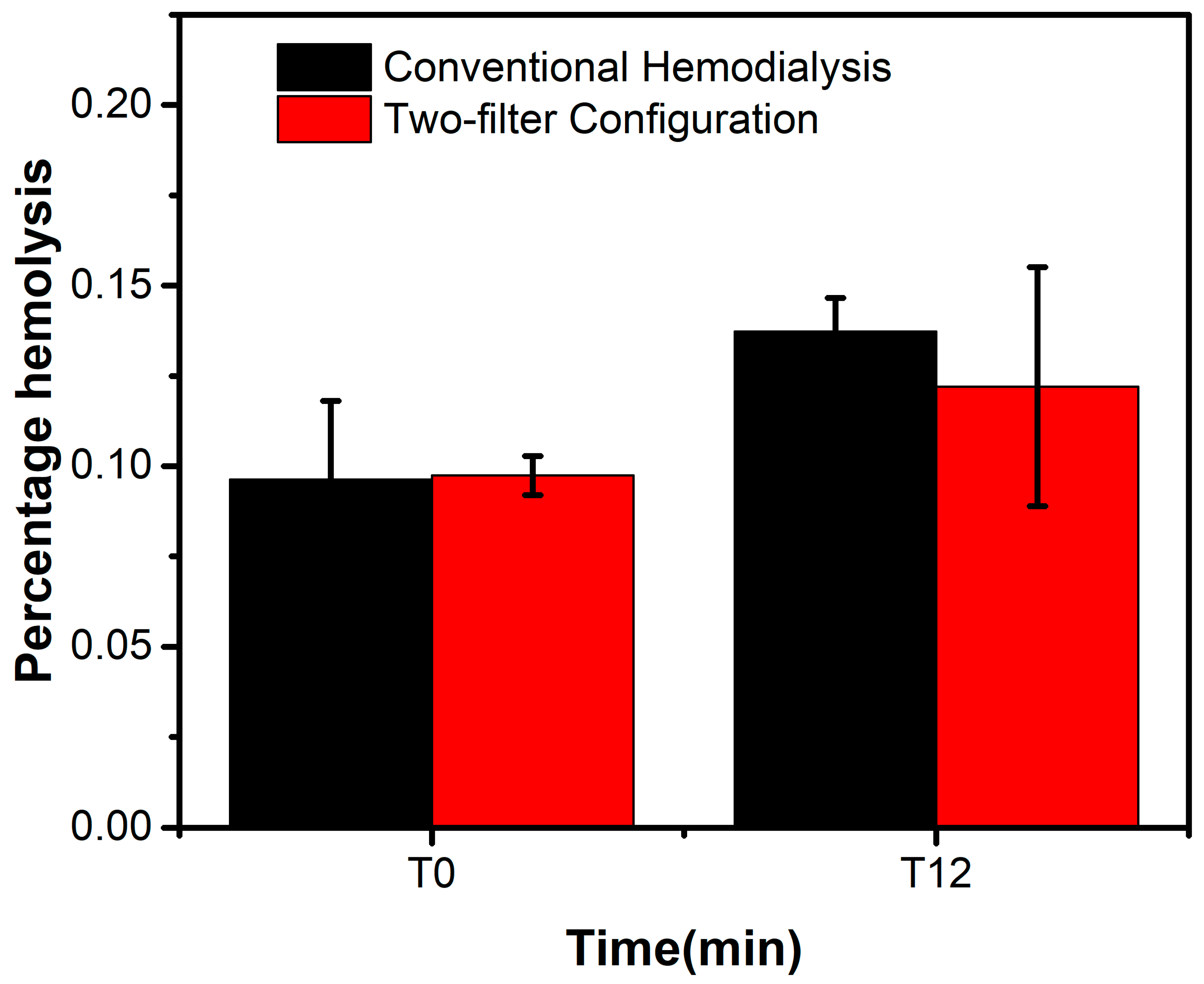
Hemodialysis (HD) technology, pivotal in managing end-stage kidney disease, has witnessed significant advancements. Yet, the high cost of novel equipment often restricts its usage in resource-limited settings. This study introduces a two-filter adaptation to conventional HD machines, aimed at enhancing toxin removal while maintaining cost-effectiveness. Using a benchtop experimental setup, the performance of the adapted system was compared with that of standard HD. The results demonstrated that the two-filter system improved urea clearance rates by 54% compared with standard HD, without increasing albumin loss or causing additional hemolysis. In a pilot study of four HD patients, the modified setup achieved a higher single-pool Kt/V (1.82) and urea-reduction ratio (80%). These findings underscore the potential of this adaptation to enhance HD machine efficiency without additional patient risks, thereby offering a feasible solution for improving access to advanced renal therapies in under-resourced areas. Further clinical trials with larger populations are warranted to validate these benefits and evaluate middle-molecule clearance for comparison with hemodiafiltration (HDF).
Keywords: hemodialysis; urea clearance; human serum albumin; hemolysis; hemodiafiltration hemodialysis; urea clearance; human serum albumin; hemolysis; hemodiafiltration