
Article

Isolation and Characterization of Phosphate-Solubilizing Rhizobacteria from Solanum tuberosum with Plant Growth-Promoting Activity


by
Michel Leiva-Mora
1,*,
Pamela Elizabeth Mera Guzmán
2,
Rafael Isaías Mera-Andrade
1,
Alicia Monserrath Zabala Haro
1,
Luis Rodrigo Saa
3,
Paúl Loján
3,
Catherine Lizzeth Silva Agurto
1,
Luis Fabián Salazar-Garcés
4,
Betty Beatriz González Osorio
5,
Dariel Cabrera Mederos
6,7 and
Orelvis Portal
8,9,*
1
Laboratorio de Biotecnología, Departamento de Agronomía, Facultad de Ciencias Agropecuarias, Universidad Técnica de Ambato (UTA-DIDE), Cantón Cevallos vía a Quero, Sector El Tambo-La Universidad, Cevallos 180150, Ecuador
2
Universidad de las Fuerzas Armadas ESPE—Sede Latacunga, Latacunga 050102, Ecuador
3
Departamento de Ciencias Biológicas y Agropecuarias, Facultad de Ciencias Exactas y Naturales, Universidad Técnica Particular de Loja (UTPL), San Cayetano Alto, Calle París s/n, Loja 110108, Ecuador
4
Facultad de Ciencias de la Salud, Universidad Técnica de Ambato, Ambato 180207, Ecuador
5
Universidad Técnica Estatal de Quevedo, Campus “Ingeniero Manuel Agustín Haz Álvarez”, Quevedo 120301, Ecuador
6
Unidad de Fitopatología y Modelización Agrícola (CONICET-INTA), Consejo Nacional de Investigaciones Científicas y Técnicas, Av. 11 de Septiembre 4755, Córdoba X5020ICA, Argentina
7
Instituto de Patología Vegetal, Centro de Investigaciones Agropecuarias, Instituto Nacional de Tecnología 13 Agropecuaria, Av. 11 de Septiembre 4755, Córdoba X5020ICA, Argentina
8
Departamento de Biología, Facultad de Ciencias Agropecuarias, Universidad Central “Marta Abreu” de Las Villas, Carretera a Camajuaní km 5.5, Santa Clara 54830, Cuba
9
Centro de Investigaciones Agropecuarias, Facultad de Ciencias Agropecuarias, Universidad Central “Marta Abreu” de Las Villas, Carretera a Camajuaní km 5.5, Santa Clara 54830, Cuba
*
Authors to whom correspondence should be addressed.
Appl. Microbiol. 2026, 6(1), 8; https://doi.org/10.3390/applmicrobiol6010008 (registering DOI)

Submission received: 26 November 2025 / Revised: 28 December 2025 / Accepted: 29 December 2025 / Published: 3 January 2026
(This article belongs to the Special Issue Microorganisms: A Way Forward for Sustainable Development?)

Abstract

Phosphate-solubilizing rhizobacteria associated with the Solanum tuberosum L. cultivar ‘Superchola’ were isolated and characterized to improve our understanding of plant growth promotion in agricultural systems. Bacteria were isolated by serial dilutions, and the morphology of the colonies was characterized on nutrient agar culture medium. In addition, morphological identification was achieved by Gram staining. The ability to solubilize phosphate was assessed in Pikovskaya agar culture medium, while molecular identification involved the amplification of the partial 16S rRNA gene using the polymerase chain reaction. In the Píllaro canton, the highest number of colony-forming units per gram of soil was recorded at 9.72 × 10⁹. Among the isolated strains, 62% exhibited circular morphology, 92% had a smooth texture, and 85% displayed entire margins. Notably, 83% of the isolates were Gram-negative, with 50% exhibiting a bacillary form. The most effective phosphate solubilizers were from the Mocha canton, particularly the isolate CC-FCAGP-BSF6, which showed superior solubilization capacity. Molecular identification revealed bacterial isolates from four genera, i.e., Bacillus, Pseudomonas, Lysinibacillus, and Paenibacillus. These strains exhibited significant phosphate solubilization in vitro and resulted in increased leaf area (0.21–0.49, p = 0.038), fresh mass (0.46–0.87, p = 0.014), dry mass (0.092–0.096, p = 0.047), and leaf area index (0.14–0.33, p = 0.026) in the S. tuberosum cultivar ‘Superchola’ in vitro plants. This study identifies bacterial species associated with the rhizosphere of S. tuberosum in Ecuador and highlights their potential for promoting plant growth and solubilizing phosphates.

1. Introduction

Phosphorus is the second most important element for plant growth and development, nutrient absorption, energy metabolism, and biological oxidation [1]. However, only a small fraction of P is directly assimilated by plants because most of it is present in an insoluble form [2].
Phosphorus inputs for crops are primarily provided by phosphate fertilizers or organic residues [3]. However, a significant amount of phosphorus often becomes insoluble, forming salts with elements such as Ca, Al, Mg, Mn, and Fe [4]. Another challenge associated with fertilizer application is the rapid immobilization of soluble inorganic phosphate in soil, which renders it unavailable to plants [5].
In most soils, plants can assimilate only a very small portion of total phosphorus because the majority is locked in insoluble mineral or organic forms that remain unavailable without external mobilization [6]. Inorganic phosphate ions (H2PO4 and HPO42−) are rapidly precipitated as calcium phosphates in neutral to alkaline soils [7] or strongly adsorbed onto iron and aluminum hydroxides in acidic soils [8], while organic P becomes incorporated into microbial biomass and humified compounds that require enzymatic degradation [9].
These fixation processes keep soluble orthophosphate concentrations extremely low (often below 0.1 mg P. L−1), creating a substantial limitation for plant nutrition [10]. Consequently, the ability of phosphate-solubilizing bacteria (PSB) to release P from these insoluble pools through acidification, ligand production, and enzymatic mineralization is critical, as it enhances the bioavailability of phosphorus and improves plant uptake in otherwise P-deficient environments [11].
Phosphorus plays a critical role in the growth and yield of Solanum tuberosum L. through its involvement in various physiological and metabolic processes [12]. Phosphorus drives the energy flow, root growth, and carbohydrate movement needed for tuber formation and yield [13]. As a core part of ATP, nucleic acids, and membranes, phosphorus supports rapid cell growth and strong photosynthesis, while also improving root development for better nutrient uptake [14]. It enables efficient transport of sugars from leaves to form tubers, which is vital for bulking. When phosphorus is deficient, canopy growth slows, stolon development is limited, and fewer assimilates reach the tubers, sharply reducing yield [15]. Thus, S. tuberosum productivity depends heavily on adequate phosphorus to sustain active metabolism, strong roots, and proper tuber filling.
As an essential nutrient, P is required for energy transfer and storage within the plant, supporting vital processes such as photosynthesis, respiration, and nucleic acid and protein synthesis [16].
It is particularly important during the early stages of S. tuberosum growth, promoting root development, tuber formation, and overall plant vigor. Adequate P availability enhances nutrient uptake, water use efficiency, and disease resistance in S. tuberosum plants, resulting in improved tuber yield and quality [17]. Insufficient P can result in stunted growth, reduced tuberization, delayed maturity, and decreased productivity.
Microorganisms play an active role in several biogeochemical processes, including the decomposition, solubilization, and transformation of P in soil [18]. Certain soil bacteria associated with plant roots promote plant growth. These bacteria increase yield, nutrient content, tolerance to various types of stress (biotic and abiotic), the production of beneficial secondary metabolites, and induced systemic resistance [19].
Beyond nutrition, microorganisms increase plant tolerance to stress by regulating ionic balance, reducing Na+ uptake, and improving the K+/Na+ ratio [20]. They also enhance the antioxidant defense system and modulate osmolyte accumulation, reducing cellular damage caused by oxidative stress. Together, microbial interactions in the soil not only sustain P cycling but also strengthen plant resilience and productivity under adverse environmental conditions [21].
Phosphate-solubilizing bacteria can release inorganic P from soil and convert it into a form that is readily available to plants. Phosphorus is an essential nutrient for plant growth and development, but its availability is often limited in many soils. Molecular analysis enables the identification and characterization of these bacteria, which helps to understand their role in improving P availability [22].
This study aimed to isolate and characterize phosphate-solubilizing rhizobacteria from the S. tuberosum rhizosphere and to evaluate their plant growth-promoting activity.

2. Materials and Methods

2.1. Isolation and Purification of Bacterial Isolates

Soil samples were collected in Quero (El Placer, Latitude: −1.42267° and Longitude: −78.58974°), Mocha (Pinguilí, Latitude: −1.3921° and Longitude: −78.6252°), Ambato (Llangahua, Latitude: −1.28635° and Longitude: −78.82947°), and Píllaro (Santa Rita, Latitude: −1.12578° and Longitude: −78.51371°) in the Province of Tungurahua, Ecuador. Phosphate-solubilizing bacteria were isolated and purified in the rhizosphere of the S. tuberosum cultivar ‘Superchola’.
Colony-forming unit (CFU) enumeration was performed using the standard serial dilution plating approach. A total of 1 g of rhizospheric soil was suspended in 9 mL of sterile physiological saline solution (0.9%) and thoroughly homogenized for 1 min with the vortex Genie 2 (Scientific Industries, Baltimore, MD, USA). Tenfold serial dilutions were prepared, and 100 µL of the 10−3 dilution was spread-plated onto Nutrient Agar (Difco, Sparks, NV, USA). This dilution was selected based on preliminary assays showing that it consistently yielded countable colonies for all soil samples, whereas higher dilutions resulted in colony numbers below the detection limit. Plates were prepared in triplicate for each soil sample. After incubation at 25 °C for 24 h, colonies were counted on plates presenting well-isolated colonies within the acceptable countable range. The number of CFU g−1 soil was calculated by multiplying the mean number of colonies by the reciprocal of the dilution factor and correcting for the plated volume.
After 24 h of incubation at 25 °C, individual bacterial colonies were selected and purified by streaking on fresh Pikovskaya agar plates (Himedia, Thane, India). Pure cultures with phosphate-solubilizing capacity were obtained by repeated streaking until a single CFU was achieved.

2.2. Cultural Characterization

Bacterial colonies were obtained by streaking the isolated strains onto nutrient agar medium plates [23]. Plates were incubated at 28 °C for 7 days, and colony morphology, size, shape, height, color, edges, consistency, and texture were evaluated under a stereoscopic microscope (Carl Zeiss®, Jena, Germany).

2.3. Morphology Characterization

For morphologic characterization, a small loop from pure cultures of the bacterial isolates was transferred to a clean glass slide and air-dried. The slide was then heat-fixed by passing it through a flame. Subsequently, the fixed bacterial cells were stained according to the Gram staining procedure outlined below.
The slide was immersed in a solution of crystal violet (Thermo Fisher Scientific Inc., Waltham, MA, USA) for 1 min and then rinsed with distilled water. It was then treated with an iodine solution for 1 min, followed by decolorization with 70% ethanol (v/v). After decolorization, the slide was counterstained with safranin (Thermo Fisher Scientific Inc., Waltham, MA, USA) for 1 min. Excess stain was rinsed off, after which the slide was air-dried.
Finally, the stained bacterial cells were observed under a light microscope using oil immersion. Gram-positive bacteria appeared purple, while Gram-negative bacteria appeared pink or red. The morphology of the bacterial isolates, including their shape (rod, cocci, or spiral), arrangement (single, in pairs, or in chains), and size, was recorded based on the Gram staining results.

2.4. In Vitro Phosphate Solubilization Activity

The bacterial isolates were streaked onto Pikovskaya agar medium plates using sterile inoculation loops. Each isolate was streaked onto a separate section of the 95 mm diameter, 15 mm high agar plate.
After streaking, the plates were incubated at 28–30 °C for 7 days (usually between 5 and 7 days). During this incubation period, the bacterial isolates used their metabolic capabilities to solubilize the insoluble phosphate compounds present in the Pikovskaya medium. If the isolates were efficient at solubilizing phosphate, clear zones or halos formed around their colonies. The diameter of these zones was measured using a digital caliper (Sigma-Aldrich, St. Louis, MO, USA).

2.5. Molecular Identification and Characterization

2.5.1. DNA Extraction

A single colony of ten bacterial isolates was grown on a sterile culture plate containing nutrient agar and incubated at 28 °C. After incubation, a portion of the bacterial colony was scraped, and DNA extraction was performed using a commercial kit QIAamp Power Fecal Pro DNA Kit (QIAGEN, Hilden, Germany), according to the manufacturer’s instructions.

2.5.2. PCR Amplification

Selective primers (forward EU49f: 5′-TTAACACATGCAAGTCGAACGG-3′ and reverse EU1070r: 5′-GGACTTAACCCAACATCTCACGA-3′), which amplify a 1021 bp fragment of the 16S rRNA gene, were used. The PCR was performed in a final volume of 25 µL containing 1× PCR buffer, 1.5 mM MgCl2, 0.3 mM dNTPs, 1.4 units of Taq DNA polymerase (Invitrogen, Waltham, MA, USA), 10 µL of each primer, and 1 µL of DNA template [24].
The reaction was carried out on a T100 thermocycler (Bio-Rad, Hércules, CA, USA), with an initial denaturation step at 94 °C for 5 min, followed by 30 cycles of denaturation at 94 °C for 1 min, annealing at 55 °C for 1 min, and extension at 72 °C for 1 min, and a final extension step at 74 °C for 5 min. The PCR products were separated by electrophoresis in 1.2% agarose gel to assess amplicon size. All positive amplicons were purified using the Wizard SV Gel and PCR Clean-Up System (Promega, Madison, WI, USA), following the manufacturer’s instructions. The purified DNA fragments were sent to Macrogen (Seoul, Republic of Korea) for sequencing.

2.5.3. Phylogenetic Analysis

The obtained sequences were assembled with Geneious Prime® 2025.2.2 (https://www.geneious.com; accessed on 25 November 2024) and submitted to the BlastN program [25] for homology searching (http://blast.ncbi.nlm.nih.gov, accessed on 15 March 2025). For phylogenetic analyses, selected sequences were retrieved from the NCBI database (Tables S1 and S2). Sequence alignments and comparisons were performed using MUSCLE 3.8.31, with default parameters [26], via SeaView software version 5.04 [27].
The evolutionary model for the dataset was estimated using ModelFinder software [28], according to the Bayesian information criterion, selecting K80 + G4 and K2P + I as the best-fit model for the multitaxon and L. macroides tree, respectively. Phylogenetic tree reconstruction was performed using the maximum likelihood method implemented in IQ-TREE version 1.6.12 software [29], available online (http://iqtree.cibiv.univie.ac.at/) (accessed on 16 November 2025) [30]. The SH-like approximate likelihood ratio test (1000 replicates) [31] and ultrafast bootstrap approximation (UFB) (10,000 replicates) [32] were used to evaluate the reliability of the branches and groups obtained.

2.6. Plant Growth-Promoting Activity Under Greenhouse Conditions

Acclimatized in vitro propagated S. tuberosum ‘Superchola’ plants, 10 cm tall with approximately five expanded leaves, were selected for inoculation with seven bacterial isolates with a higher phosphate solubilization index (PSI). The phosphorus-free substrate was composed of peat moss (70%) and perlite (30%), which had been sterilized in an autoclave M11 (Midmark, Versailles, KY, USA).
To prepare a fresh bacterial isolate inoculum, brain heart infusion (BHI) medium (Difco, Sparks, NV, USA) was prepared and sterilized in an autoclave. The BHI medium was then dispensed into 15 mL test tubes, each containing 5 mL. Using a sterilized loop in a laminar flow hood, one drop of the cryopreserved sample of bacterial isolates was inoculated in triplicate per isolate and incubated for 24 h at 28 °C.
The final inoculum concentration of each bacterial isolate was adjusted to 0.2 absorbance (600 nm) using a microplate reader (Biotek, Winooski, VT, USA). Finally, the roots of each in vitro plant were rinsed with distilled water and immersed for 10 min in a solution of each bacterial isolate.
The leaf area was determined using a portable leaf area meter LI-3000C (LI-COR Environmental, Lincoln, NE, USA). The measurements were recorded in cm2 and converted to dm2 as the basis for subsequent leaf area index calculations.

2.7. Statistical Analysis

All experiments were conducted using a completely randomized design. Quantitative data obtained from bacterial population density, phosphate solubilization index, and plant growth-related variables were first tested for normality and homogeneity of variances using the Shapiro–Wilk and Levene tests, and one-way analysis of variance (ANOVA) was used to determine significant differences between bacterial isolates or treatments. If the data did not meet the assumptions, then the Kruskal–Wallis H test, complemented with the Mann–Whitney U test, was used to compare bacterial isolates at a significance level of p ≤ 0.05.

3. Results

3.1. Isolation and Purification of Bacterial Isolates

The maximum number of CFU per gram of soil was recorded in soil samples taken from the Píllaro canton (Santa Rita) (Table 1).

3.2. Cultural Characterization

In the Quero canton (El Placer), based on elevation, 14% were flat, 14% convex, 29% umbilicate, and 43% umbellate. Regarding the shape, 29% were irregular, and 71% were circular. Regarding their edges, 14% had lobed edges, 14% had curled edges, and 72% had smooth edges. Regarding consistency, 43% were mucoid, and 57% were smooth. The texture of colonies was rough in 15% and smooth in 85%. Finally, 43% were opalescent, while 57% were bright (Table 2).
Based on elevation, 22% of isolates from the Mocha canton (Pinguilí) were umbilicate, 34% convex, and 44% umbellate. In addition, 11% were irregular, 33% were circular, and 56% were fusiform. Regarding their edges, 11% had curled edges, while 89% had smooth edges. Regarding the consistency, 44% were smooth, and 56% were mucoid. Smooth texture and bright aspects were observed in all isolates (Table 2).
In Llangahua, the Ambato canton, based on elevation, 10% were umbilicate, 10% were umbellate, 40% were convex, and 40% were flat. Regarding the shape, 10% were fusiform, and 90% were circular. Regarding their edges, 100% had smooth edges. Regarding the consistency and texture, 100% were smooth. In terms of texture, 100% were smooth. All colonies showed bright aspects when they were exposed to light (Table 2).
In Santa Rita, the Píllaro canton, based on elevation, 10% of the colonies were umbellate, 10% were umbilicate, 20% were convex, and 60% were flat. Regarding the shape, 10% were irregular, 10% were fusiform, and 80% were circular. Regarding their edges, 30% had irregular edges, while 70% had smooth edges. One hundred percent were smooth. Regarding the texture, 20% were rough, and 80% were smooth. All colonies showed bright aspects when they were exposed to light (Table 2).
In the Quero canton, 62.5% of isolates were bright, and 37.5% were opalescent, while isolates from the Mocha, Ambato, and Píllaro cantons all had bright colonies (Table 2).

3.3. Morphological Characterization

The morphology of colonies of bacterial isolates from the Quero canton (El placer) was as follows: bacillus (37.50%), large bacillus (37.50%), and cocos (25%). Mocha canton isolates (Pinguilí) comprised bacillus (87.50%) and large bacillus (12.50%). Isolates from the Ambato canton (Llangahua) included bacillus (50%), short bacillus (10%), and cocos (40%). Isolates from the Píllaro canton (Santa Rita) comprised bacillus (30%), short bacillus (60%), and cocos (10%) (Table 3).
Isolates from the Quero canton (El placer) comprised diplobacilli (25%), estreptobacilli (12.50%), palisade bacilli (25%), sarcin (12,50%), and diplococci (25%). Mocha canton isolates (Pinguilí) included diplobacilli (62.50%) and palisade bacilli (37.50%). Isolates from the Ambato canton (Llangahua) were diplobacilli (30%), estreptobacilli (20%), palisade bacilli (30%), sarcin (10%), and diplococci (10%). Isolates from the Píllaro canton (Santa Rita) comprised diplobacilli (70%), palisade bacilli (20%), and diplococci (10%) (Table 3).
Isolates from the Quero canton were Gram-positive (50%) and Gram-negative (50%), while isolates from the Mocha canton were Gram-negative (100%), and those from the Ambato canton were Gram-negative (90%) and Gram-positive (10%). Finally, in the Píllaro canton, 20% of bacterial isolates were Gram-positive and 80% were Gram-negative (Table 3).

3.4. In Vitro Phosphate Solubilization Activity

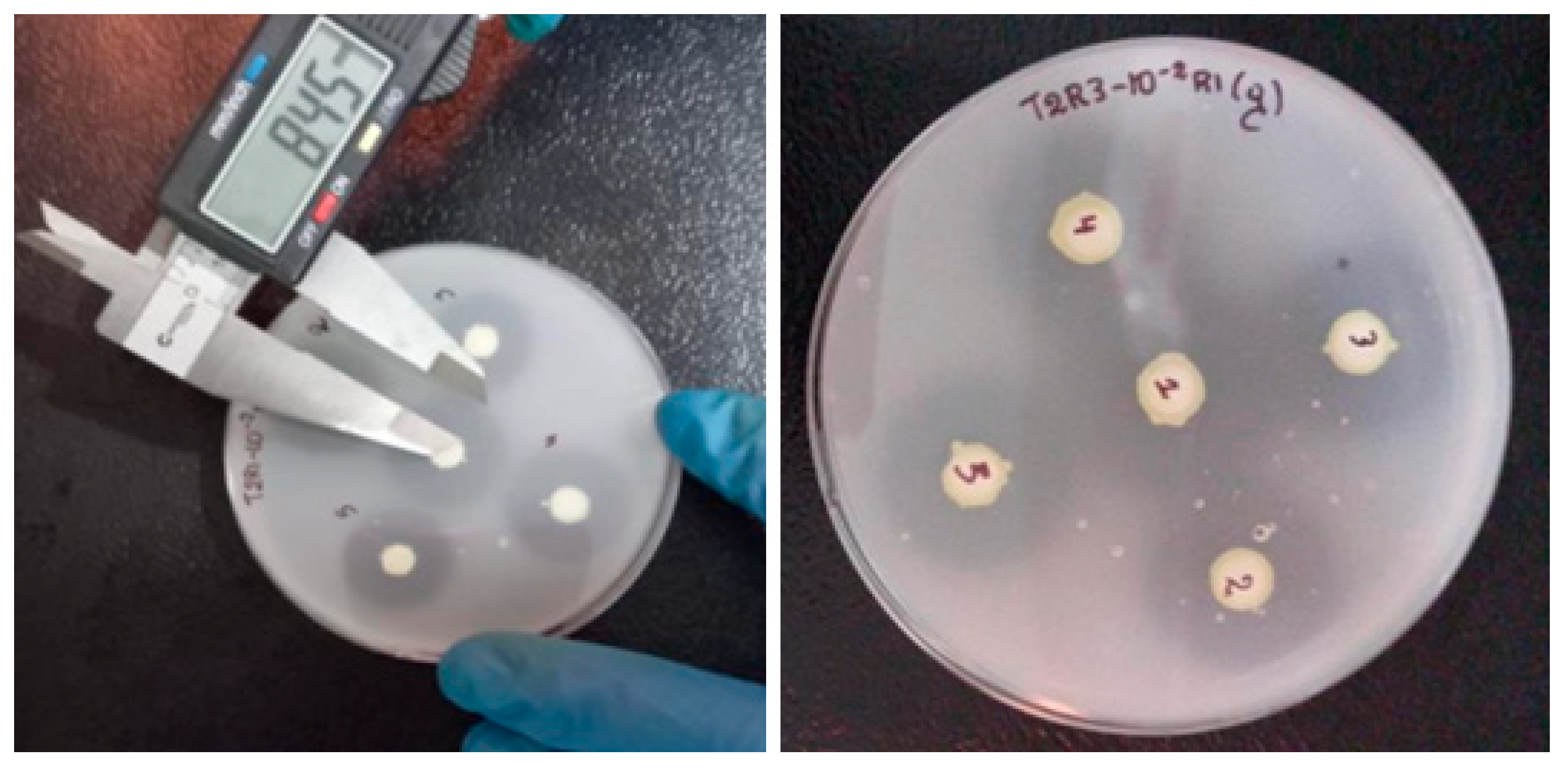
Bacterial isolates CC-FCAGP-BSF6, CC-FCAGP-BSF8, CC-FCAGP-BSF16, CC-FCAGP-BSF9, CC-FCAGP-BSF11, CC-FCAGP-BSF10, and CC-FCAGP-BSF27 showed the greatest solubilization halos and PSI (Table 4). Clear halos of the phosphate-solubilizing isolate CC-FCAGP-BSF6 were easily documented on Pikovskaya medium (Figure 1). These isolates were used for the rest of the trials.

3.5. Molecular Identification and Characterization

Through molecular identification by amplification of the 16S rRNA gene using the PCR and sequencing approach, bacterial isolates were taxonomically assigned to the following species: Bacillus thuringiensis, Bacillus sp., Bacillus cereus, Pseudomonas sp., Lysinibacillus macroides, and Paenibacillus shunpengii (GenBank accession numbers PX733316-PX733322). All these species were associated with the S. tuberosum rhizosphere and solubilized inorganic phosphates. The identification of these plant growth-promoting rhizobacteria expands the known diversity of microorganisms capable of enhancing nutrient availability and plant fitness in S. tuberosum cropping systems (Table 5).
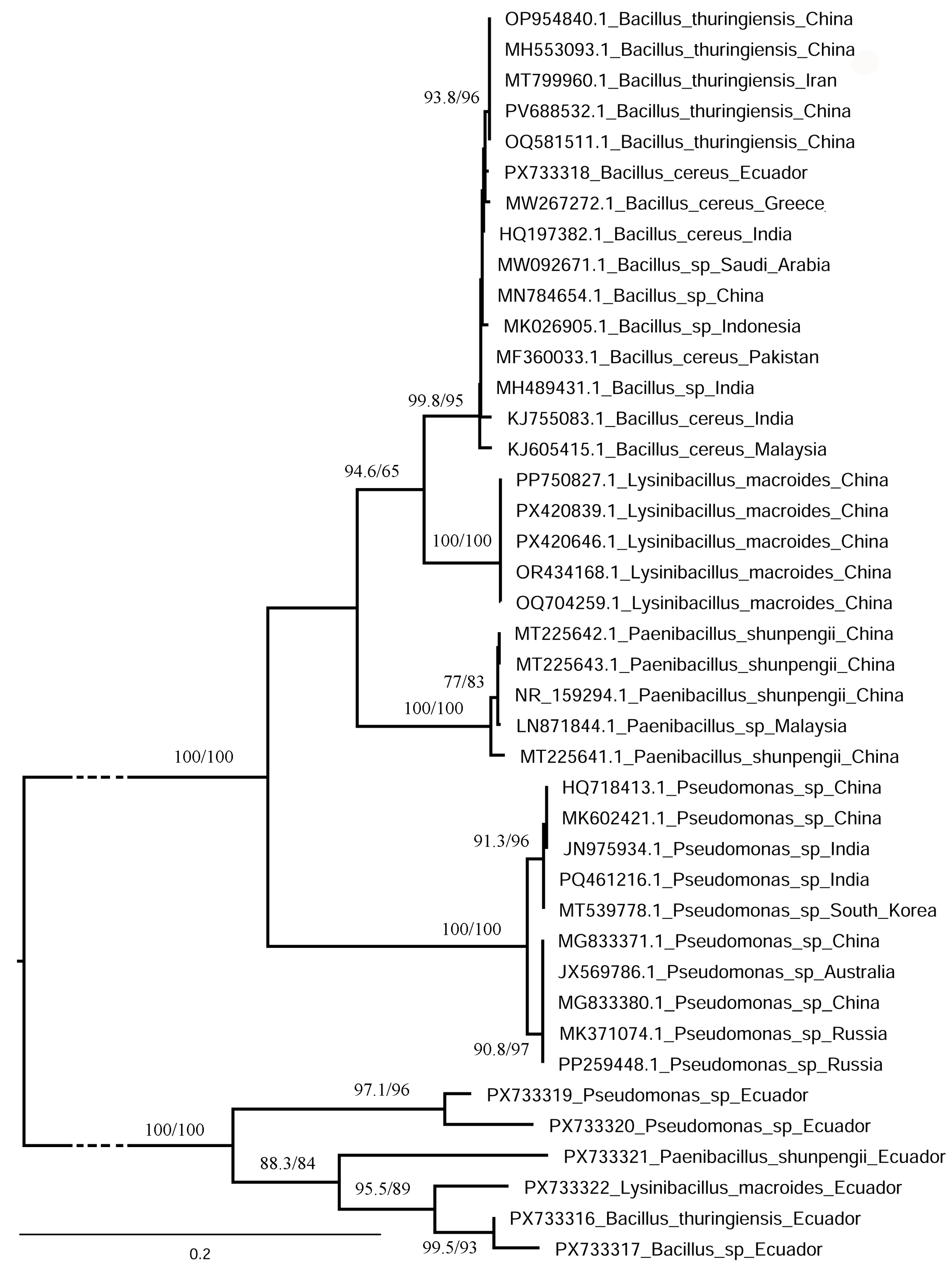
First, a multitaxon phylogenetic tree was constructed showing the associations of the seven sequences belonging to high-PSI isolates reported in this study and others retrieved from GenBank (Figure 2).
Interestingly, Figure 2 shows that, except for the sequence corresponding to B. cereus from Ecuador, the rest of the sequences obtained in this study are grouped together in a cluster, with good support values between them.
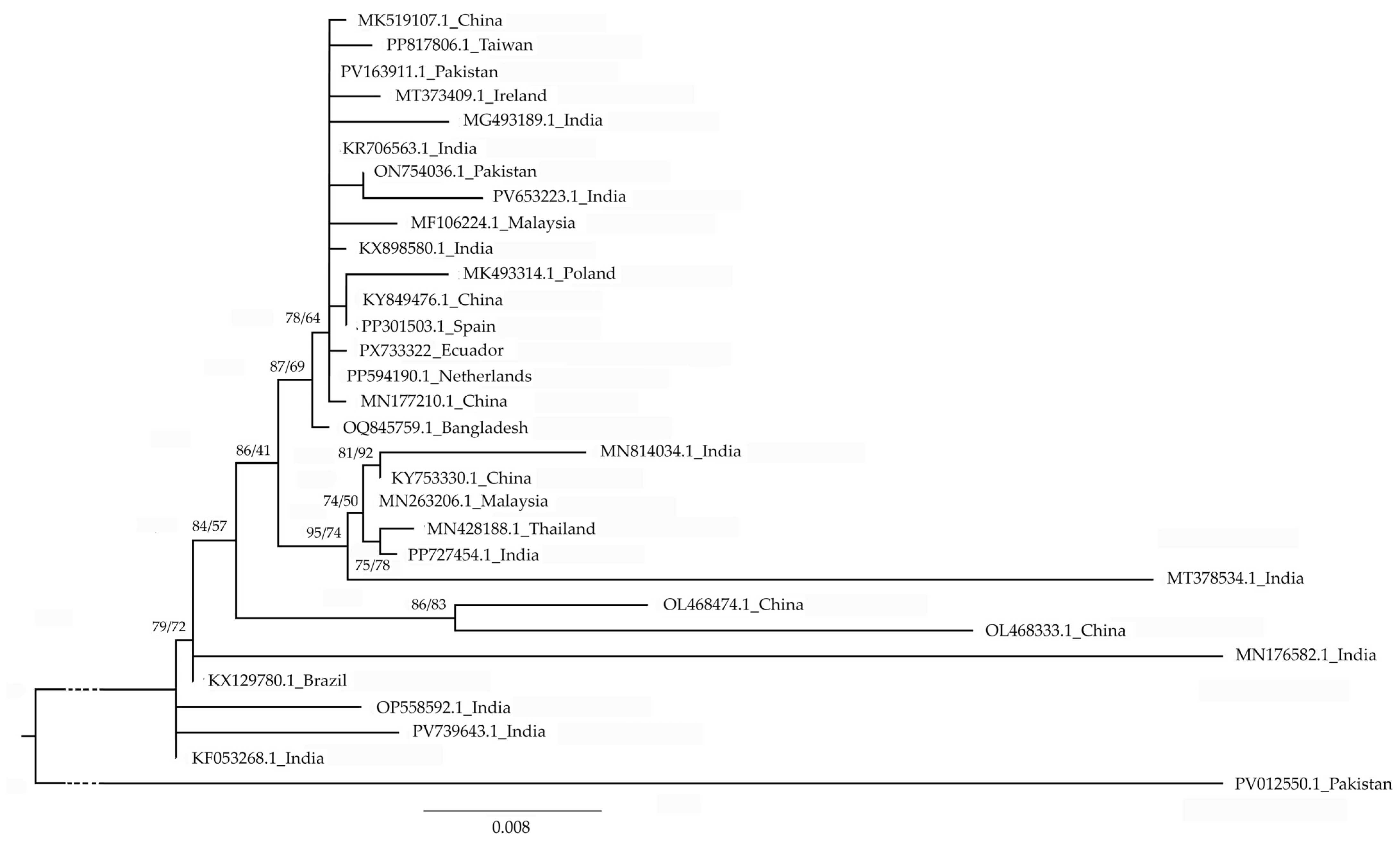
Given the versatility of L. macroides mechanisms for promoting plant growth, a phylogenetic analysis was performed with the CC-FCAGP-BSF11 isolate of L. macroides and other representative soil isolates from different locations retrieved from the GenBank database, enabling us to analyze their diversity in a global context. It was observed that the CC-FCAGP-BSF11 isolate clustered with isolates from China, Taiwan, India, Pakistan, Malaysia, Ireland, Bangladesh, Spain, and Poland (Figure 3).

3.6. Plant Growth-Promoting Activity Under Greenhouse Conditions

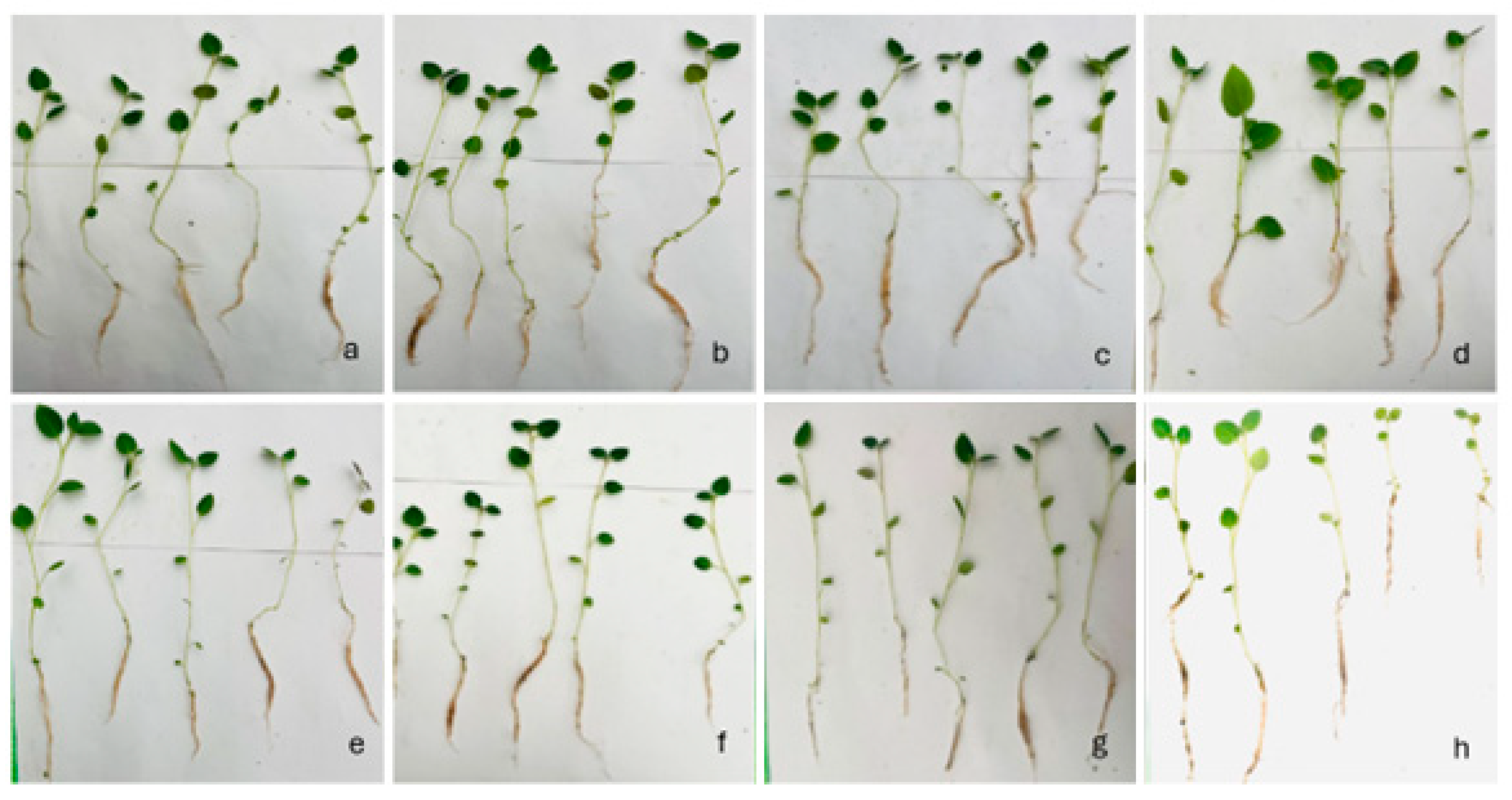
CC-FCAGP-BSF6, CC-FCAG-BSFP8, CC-FCAGP-BSF9, and CC-FCAGP-BSF10 isolates significantly promoted leaf area and leaf area index. Fresh mass and dry mass were higher in CC-FCAGP-BSF6, CC-FCAGP-BSF8, and CC-FCAGP-BSF9 isolates (Table 6, Figure 4).

4. Discussion

In this study, rhizosphere-associated bacteria were isolated from S. tuberosum cultivated in different locations of Tungurahua Province, Ecuador, and evaluated for their abundance, phosphate-solubilizing capacity, and plant growth-promoting potential under both in vitro and greenhouse conditions. The highest number of CFU per gram of soil was observed in the Píllaro canton (Santa Rita) (Table 1), which might be related to the high organic matter content reported in previous studies [34]. It is known that organic matter supports greater microbial biomass and enhances the functional capacity of rhizosphere communities [35].
The present study did not include a direct physicochemical characterization of the analyzed soils. Soil properties such as pH, organic matter content, and available phosphorus are well known to strongly influence microbial abundance, community composition, and functional traits, including phosphate solubilization. Therefore, a systematic assessment of key soil physicochemical parameters, including pH (e.g., in H2O or KCl), organic matter content, and available phosphorus, should be conducted to allow for a more robust interpretation of the observed differences in CFU density and functional performance between the sites, thereby strengthening the ecological linkage between soil properties and rhizosphere bacterial activity.
This pattern closely matched the higher organic matter content measured at this location, reinforcing the well-established relationship between organic matter availability and microbial abundance in agricultural soils [36]. Organic matter not only serves as a primary carbon and energy source for heterotrophic microorganisms but also improves soil aggregation, aeration, and moisture retention, thereby creating a more favorable microenvironment for rhizosphere colonization [37]. The association between organic matter content and CFU abundance observed in our study suggests that local soil physicochemical properties strongly influence microbial population density and composition.
In vitro screening revealed marked variability in phosphate solubilization between isolates, as reflected by differences in halo diameter and PSI values. Several isolates (CC-FCAGP-BSF6, BSF8, BSF16, BSF9, BSF11, BSF10, and BSF27) consistently formed larger solubilization halos and ranked within the highest PSI group (Table 4). We used the Pikovskaya medium as an initial screening tool to identify phosphate-solubilizing phenotypes, allowing us to distinguish phenotypic differences in phosphate solubilization potential [38].
The PSI values obtained fall within the upper range reported for native rhizosphere bacteria in comparable agroecosystems, suggesting that local soil conditions may have selected for microbial populations with enhanced phosphate-mobilizing capacity. Nevertheless, variability within the high-PSI group itself indicates that phosphate solubilization efficiency is a quantitative, strain-dependent trait rather than a uniform characteristic. Similar ranges of PSI values have been previously documented among diverse native isolates, supporting the notion of significant variability in solubilization capacity [39].
Greenhouse experiments provided a more integrative assessment of isolate performance and revealed that high PSI values did not always correspond to superior plant growth promotion. This finding represents a central outcome of the present study, demonstrating that in vitro phosphate solubilization alone is insufficient to predict in planta efficacy [40]. While the PSI reflects the capacity to mobilize insoluble phosphate under standardized laboratory conditions, plant growth responses are shaped by a combination of factors, including rhizosphere competence, metabolic compatibility with the host plant, and tolerance to environmental stresses [41]. The contrasting plant responses observed between isolates with similar PSI values highlight the complexity of plant–microbe interactions and underscore the importance of plant-based validation assays.
Several of the high-PSI isolates belonged to the genera Bacillus and Pseudomonas, taxonomic groups widely documented in the literature for their ability to solubilize phosphates and their broad repertoire of plant growth-promoting characteristics [42,43]. Bacillus cereus and B. thuringiensis may include toxin-producing or pathogenic strains; therefore, before considering their application in the field, biosafety assessments at the strain level must be performed (e.g., detection of toxin genes and safety tests).
Our results are therefore fully consistent with previous studies describing Pseudomonas spp. as effective phosphate mobilizers in agricultural soils [44]. Importantly, the Pseudomonas isolates characterized here originated from the S. tuberosum rhizosphere under Andean edaphoclimatic conditions and exhibited PSI values comparable with or exceeding those reported for isolates from other cropping systems [45]. Their variable performance in greenhouse trials further illustrates that even within a well-characterized genus, phosphate solubilization efficiency and plant growth promotion are highly strain-specific and influenced by ecological context.
The variability observed between isolates supports the hypothesis that native rhizosphere bacteria are shaped by strong ecological selection pressures, resulting in functional diversification and metabolic specialization [46]. Such specialization likely reflects adaptation to local edaphic stresses, nutrient availability, and host plant exudate profiles [47]. The relatively high PSI values obtained in this study suggest that Andean soils may harbor microbial communities with substantial phosphate-mobilizing potential, a feature that could be underrepresented in studies focusing solely on non-native or laboratory-adapted strains. These differences are often underestimated when results are presented only descriptively, yet they are critical for identifying strains with genuine agronomic relevance.
The combined analysis of soil microbial abundance, in vitro phosphate solubilization, and greenhouse-based plant growth responses provides a comprehensive framework for evaluating biofertilizer potential [48]. Rather than relying on single-trait screening, this tiered approach allows for the identification of strains that are not only functionally competent in vitro but also effective under biologically relevant conditions [49]. The novelty of this study does not lie in reporting phosphate solubilization by known bacterial genera, but in the systematic evaluation of native, locally adapted rhizosphere isolates using an integrated experimental strategy.
Finally, rhizosphere bacteria associated with S. tuberosum in Andean soils exhibit diverse phosphate-solubilizing capacities and variable effects on plant growth, reflecting the complex interplay between microbial function and ecological adaptation [50]. These findings highlight the importance of contextualizing microbial efficiency within the rhizosphere environment and support the development of locally adapted microbial inoculants. Such an approach has direct implications for sustainable S. tuberosum production, as it offers a pathway to reduce chemical phosphorus inputs, improve nutrient use efficiency, and enhance agroecosystem resilience with native beneficial microorganisms.

5. Conclusions

This study demonstrates that the rhizosphere of S. tuberosum cultivated in Andean soils harbors a diverse assemblage of phosphate-solubilizing bacteria with measurable functional activity under controlled conditions. Through the integration of cultural, morphological, molecular, and in vitro screening approaches, several bacterial taxa, including Bacillus, Pseudomonas, Lysinibacillus, and Paenibacillus, were shown to mobilize inorganic phosphate efficiently and to induce positive vegetative responses on in vitro-derived S. tuberosum plants under greenhouse conditions. These results provide experimental evidence of functional potential, rather than direct agronomic efficacy.
Importantly, the greenhouse assays revealed variability between isolates and confirmed that in vitro phosphate solubilization does not always translate into uniform plant growth responses. Thus, the present findings should be interpreted as a proof of concept supporting the relevance of native rhizosphere bacteria as contributors to nutrient dynamics and early plant development, rather than as validation of ready-to-deploy biofertilizer products. Further work regarding effects on tuber yield, long-term plant performance, or field-level nutrient substitution is required.
Overall, this work expands current knowledge of the functional diversity of S. tuberosum-associated rhizobacteria in Andean agroecosystems and establishes a foundation for subsequent research. Future studies should focus on biosafety assessment, formulation development, strain stability, and multi-season greenhouse and field trials, including yield-related parameters, before considering broader agricultural application or transfer to other cropping systems. Such stepwise validation will be essential to responsibly translate microbial functional potential into sustainable fertilization strategies.

Supplementary Materials

The following supporting information can be downloaded at: https://www.mdpi.com/article/10.3390/applmicrobiol6010008/s1, Table S1: List of bacteria strains from this study and retrieved from GenBank used for phylogenetic inferences of the partial sequence of 16S rRNA gene, Table S2: List of Lysinibacillus macroides strains retrieved from GenBank used for phylogenetic inferences of the partial sequence of 16S rRNA gene.

Author Contributions

Conceptualization, M.L.-M., R.I.M.-A. and A.M.Z.H.; methodology, M.L.-M., P.E.M.G. and P.L.; software, M.L.-M.; validation, O.P. and L.F.S.-G.; formal analysis, C.L.S.A., L.R.S., P.L. and O.P.; investigation, M.L.-M. and B.B.G.O.; resources, M.L.-M., L.R.S. and P.L.; data curation, D.C.M.; writing—original draft preparation, M.L.-M. and O.P.; writing—review and editing, M.L.-M., O.P. and D.C.M.; visualization, M.L.-M.; supervision, M.L.-M.; project administration, M.L.-M.; funding acquisition, M.L.-M., L.R.S. and P.L. All authors have read and agreed to the published version of the manuscript.

Funding

This research received no external funding.

Data Availability Statement

The original data that support some of the findings of this study are openly available in Zenodo at https://zenodo.org/records/17654729 accessed on 19 November 2025.

Acknowledgments

We express our sincere gratitude to the authorities of the Faculty of Agricultural Sciences and the Research and Development Directorate (DIDE) of the Technical University of Ambato. Their recognition and support of the efforts made in this project were instrumental in its successful completion. We also extend our appreciation to the self-funded team of engineers: David Ati, Hugo Tonino Mendoza, and Kevin Alexis Muñoz. Their dedication, technical expertise, and unwavering commitment to this research endeavor were pivotal in moving the project forward and enabling the remarkable outcomes presented in this study. The collaborative efforts and support from this diverse group of individuals and institutions have been invaluable in advancing our understanding of the potential of plant growth-promoting bacteria to revolutionize sustainable S. tuberosum production. We are deeply grateful for their contributions, which have laid the foundation for future research and innovations in this vital field of agricultural science.

Conflicts of Interest

The authors declare no conflicts of interest.

References

  1. Ali, S.; Riaz, A.; Mamtaz, S.; Haider, H. Nutrients and Crop Production. Curr. Res. Agric. Farm. 2023, 4, 1–15. [Google Scholar] [CrossRef]
  2. Anjum, N.A.; Masood, A.; Umar, S.; Khan, N.A. Introductory Chapter: Phosphorus in Soils and Plants. In Phosphorus in Soils and Plants; Anjum, N.A., Masood, A., Umar, S., Khan, N.A., Eds.; IntechOpen: London, UK, 2024; pp. 1–5. [Google Scholar] [CrossRef]
  3. Haynes, R.J.; Naidu, R. Phosphorus—An essential input for agriculture yet a key pollutant of surface waters. In Inorganic Contaminants and Radionuclides; Naidu, R., Ed.; Elsevier: Amsterdam, The Netherlands, 2024; pp. 405–426. [Google Scholar] [CrossRef]
  4. Kumaragamage, D.; Hettiarachchi, G.M.; Amarakoon, I.; Goltz, D.; Indraratne, S. Phosphorus fractions and speciation in an alkaline, manured soil amended with alum, gypsum, and Epsom salt. J. Environ. Qual. 2024, 53, 314–326. [Google Scholar] [CrossRef] [PubMed]
  5. Kumar, M.; Shankar, A.; Chaudhary, S.; Prasad, V. Phosphate Solubilizing Microorganisms: Multifarious Applications. In Plant Microbiome for Plant Productivity and Sustainable Agriculture; Microorganisms for Sustainability; Chhabra, S., Prasad, R., Maddela, N.R., Tuteja, N., Eds.; Springer: Singapore, 2023; pp. 245–262. [Google Scholar] [CrossRef]
  6. Khan, N.; Siddiqui, M.H.; Ahmad, S.; Ahmad, M.M.; Siddiqui, S. New insights in enhancing the phosphorus use efficiency using phosphate-solubilizing microorganisms and their role in cropping system. Geomicrobiol. J. 2024, 41, 485–495. [Google Scholar] [CrossRef]
  7. Nambafu, G.N.; Hoeppner, N.; Bessler, H.; Gweyi-Onyango, J.P.; Andika, D.O.; Mwonga, S.; Engels, C. Influence of soil phosphorus fertilizer forms on phosphorus uptake, morphology, and growth of leafy vegetables. Discov. Soil 2025, 2, 64. [Google Scholar] [CrossRef]
  8. Liang, Y.; Liu, J.; Jin, J.; Han, Y.; Wei, Z. Effects of low-molecular-weight organic acids on the transformation and phosphate retention of iron (hydr) oxides. Sci. Total Environ. 2024, 940, 173667. [Google Scholar] [CrossRef]
  9. Mansour, H.A.; El-Hady, M.A. Plant Growth-Promoting Rhizobacterial Enzyme Dynamics in Soil Remediation. In Plant-Microbe Interactions for Environmental and Agricultural Sustainability; Pandey, A., Choure, K., El-Sheekh, M., Yadav, A.A., Eds.; Springer Nature: Cham, Switzerland, 2025; pp. 247–304. [Google Scholar]
  10. Gerke, J. Improving phosphate acquisition from soil via higher plants while approaching peak phosphorus worldwide: A critical review of current concepts and misconceptions. Plants 2024, 13, 3478. [Google Scholar] [CrossRef]
  11. Etesami, H.; Jeong, B.R.; Glick, B.R. Contribution of arbuscular mycorrhizal fungi, phosphate–solubilizing bacteria, and silicon to P uptake by plant. Front. Plant Sci. 2021, 12, 699618. [Google Scholar] [CrossRef]
  12. Sawicka, B.; Barbaś, P.; Vambol, V.; Skiba, D.; Pszczółkowski, P.; Niazi, P.; Bienia, B. Applied Microbiology for Sustainable Agricultural Development. Appl. Microbiol. 2025, 5, 78. [Google Scholar] [CrossRef]
  13. Ren, J.; Shen, Y.; Shen, F. Optimizing fertilization strategies for high-yield potato crops. Mol. Soil Biol. 2025, 16, 1–15. [Google Scholar] [CrossRef]
  14. Lambers, H. Phosphorus Acquisition and Utilization in Plants. Annu. Rev. Plant Biol. 2022, 73, 17–42. [Google Scholar] [CrossRef]
  15. Chea, L.; Meijide, A.; Meinen, C.; Pawelzik, E.; Naumann, M. Cultivar-dependent responses in plant growth, leaf physiology, phosphorus use efficiency, and tuber quality of potatoes under limited phosphorus availability conditions. Front. Plant Sci. 2021, 12, 723862. [Google Scholar] [CrossRef]
  16. Sahoo, S.K.; Dash, G.K.; Pati, S.; Sahoo, D.; Lenka, B.; Nayak, L.; Guhey, A. Physiological and biochemical mechanisms in underground vegetable crops for growth and development. In Abiotic Stress in Underground Vegetables; Lal, M.K., Tiwari, R.K., Kumar, A., Kumar, R., Singh, B., Eds.; Academic Press: Cambridge, MA, USA, 2025; pp. 39–53. [Google Scholar]
  17. da Silva, L.I.; Pereira, M.C.; de Carvalho, A.M.X.; Buttros, V.H.; Pasqual, M.; Doria, J. Phosphorus-solubilizing microorganisms: A key to sustainable agriculture. Agriculture 2023, 13, 462. [Google Scholar] [CrossRef]
  18. Zhu, Y.; Xing, Y.; Li, Y.; Jia, J.; Ying, Y.; Shi, W. The role of phosphate-solubilizing microbial interactions in phosphorus activation and utilization in plant–soil systems: A review. Plants 2024, 13, 2686. [Google Scholar] [CrossRef] [PubMed]
  19. Pérez-Montaño, F.; Aparicio, N.; Arenas, F.; Arjona, J.M.; Camacho, M.; Fernández-García, N.; Reguera, M. Emerging crops and plant growth-promoting bacteria (PGPB): A synergistic approach to climate-resilient agriculture. Microbiome 2025, 13, 228. [Google Scholar] [CrossRef] [PubMed]
  20. Wang, Y.; Guo, Y.; Li, C.; Su, X.; Yang, M.; Li, W.; Li, H. Rhizosphere microorganisms mediate ion homeostasis in cucumber seedlings: A new strategy to improve plant salt tolerance. BMC Plant Biol. 2025, 25, 670. [Google Scholar] [CrossRef]
  21. Chen, Z.; Zhang, P.; Wang, B.; Li, H.; Li, S.; Zhang, H.; Li, X. Harnessing the role of rhizo-bacteria to mitigate salinity stress in rice (Orzya sativa); focus on antioxidant defense system, photosynthesis response, and rhizosphere microbial diversity. Rhizosphere 2025, 33, 101043. [Google Scholar] [CrossRef]
  22. Kumar, A.; Singh, H.S.; Kumar, A.; Singh, M.P.; Singh, A.; Maurya, N.K.; Kumar, R. A Comprehensive Review on Plant-Soil Interactions: Microbial Dynamics, Nutrient Cycling and Sustainable Crop Production. Asian J. Soil Sci. Plant Nutr. 2025, 11, 44–62. [Google Scholar] [CrossRef]
  23. Lai, X.; Wei, C.; Wang, H.; He, Z.; Zhang, F.; Lei, Z.; Wang, X.; Liu, S.; Yan, L. Responses of the potato rhizosphere bacterial communities to Ralstonia solanacearum infection and their roles in binary disease outcomes. Plant Soil 2025, 514, 2349–2366. [Google Scholar] [CrossRef]
  24. Amri, M.; Rjeibi, M.R.; Gatrouni, M.; Mateus, D.M.R.; Asses, N.; Pinho, H.J.O.; Abbes, C. Isolation, Identification, and Characterization of Phosphate-Solubilizing Bacteria from Tunisian Soils. Microorganisms 2023, 11, 783. [Google Scholar] [CrossRef]
  25. Altschul, S.F.; Gish, W.; Miller, W.; Myers, E.W.; Lipman, D.J. Basic local alignment search tool. J. Mol. Biol. 1990, 215, 403–410. [Google Scholar] [CrossRef]
  26. Edgar, R.C. MUSCLE: Multiple sequence alignment with high accuracy and high throughput. Nucleic Acids Res. 2004, 32, 1792–1797. [Google Scholar] [CrossRef]
  27. Gouy, M.; Guindon, S.; Gascuel, O. SeaView Version 4: A Multiplatform Graphical User Interface for Sequence Alignment and Phylogenetic Tree Building. Mol. Biol. Evol. 2010, 27, 221–224. [Google Scholar] [CrossRef]
  28. Kalyaanamoorthy, S.; Minh, B.Q.; Wong, T.K.F.; Von Haeseler, A.; Jermiin, L.S. ModelFinder: Fast model selection for accurate phylogenetic estimates. Nat. Methods 2017, 14, 587–589. [Google Scholar] [CrossRef]
  29. Nguyen, L.-T.; Schmidt, H.A.; Von Haeseler, A.; Minh, B.Q. IQ-TREE: A Fast and Effective Stochastic Algorithm for Estimating Maximum-Likelihood Phylogenies. Mol. Biol. Evol. 2015, 32, 268–274. [Google Scholar] [CrossRef]
  30. Trifinopoulos, J.; Nguyen, L.-T.; Von Haeseler, A.; Minh, B.Q. W-IQ-TREE: A fast online phylogenetic tool for maximum likelihood analysis. Nucleic Acids Res. 2016, 44, W232–W235. [Google Scholar] [CrossRef] [PubMed]
  31. Guindon, S.; Dufayard, J.-F.; Lefort, V.; Anisimova, M.; Hordijk, W.; Gascuel, O. New Algorithms and Methods to Estimate Maximum-Likelihood Phylogenies: Assessing the Performance of PhyML 3.0. Syst. Biol. 2010, 59, 307–321. [Google Scholar] [CrossRef] [PubMed]
  32. Hoang, D.T.; Chernomor, O.; Von Haeseler, A.; Minh, B.Q.; Vinh, L.S. UFBoot2: Improving the Ultrafast Bootstrap Approximation. Mol. Biol. Evol. 2018, 35, 518–522. [Google Scholar] [CrossRef]
  33. Lyngwi, N.A.; Koijam, K.; Sharma, D.; Joshi, S.R. Cultivable bacterial diversity along the altitudinal zonation and vegetation range of tropical Eastern Himalaya. Rev. Biol. Trop. 2013, 61, 467–490. [Google Scholar] [CrossRef]
  34. Viera, W.; Noboa, M.; Martínez, A.; Báez, F.; Jácome, R.; Medina, L.; Jackson, T. Trichoderma asperellum increases crop yield and fruit weight of blackberry (Rubus glaucus) under subtropical Andean conditions. Vegetos 2019, 32, 209–215. [Google Scholar] [CrossRef]
  35. Picone, R.; Pietramellara, G.; Guggenberger, G.; Pathan, S.I.; Gentsch, N. The contemporary plant-soil feedback in legume-cereal intercropping systems: A review of carbon, nutrient, and microbial dynamics. Plant Soil 2025, 1–21. [Google Scholar] [CrossRef]
  36. Khan, M.T.; Supronienė, S.; Žvirdauskienė, R.; Aleinikovienė, J. Climate, soil, and microbes: Interactions shaping organic matter decomposition in croplands. Agronomy 2025, 15, 1928. [Google Scholar] [CrossRef]
  37. Chutivisut, P.; Kotchaplai, P.; Faiyue, B.; Tuntiwiwattanapun, N. Exploring The Co-composting Potentials of Raw Grease Trap and Grease Trap-Derived Soaps: Insights into Grease Trap Modification, Calcium Supplementation, and Microbial Community Analysis. Appl. Environ. Res. 2025, 47, 010. [Google Scholar] [CrossRef]
  38. Li, Z.; Li, J.; Liu, G.; Li, Y.; Wu, X.; Liang, J.; Li, Z.; Wang, Z.; Chen, Q.; Peng, F. Isolation, Characterization and Growth-Promoting Properties of Phosphate-Solubilizing Bacteria (PSBs) Derived from Peach Tree Rhizosphere. Microorganisms 2025, 13, 718. [Google Scholar] [CrossRef] [PubMed]
  39. Damo, J.L.C.; Pedro, M.; Sison, M.L. Phosphate solubilization and plant growth promotion by Enterobacter sp. isolate. Appl. Microbiol. 2024, 4, 1177–1192. [Google Scholar] [CrossRef]
  40. Ughamba, K.T.; Ndukwe, J.K.; Lidbury, I.D.; Nnaji, N.D.; Eze, C.N.; Aduba, C.C.; Groenhof, S.; Chukwu, K.O.; Anyanwu, C.U.; Nwaiwu, A.; et al. Trends in the application of phosphate-solubilizing microbes as biofertilizers: Implications for soil improvement. Soil Syst. 2025, 9, 6. [Google Scholar] [CrossRef]
  41. Kumar, S.; Diksha Sindhu, S.S.; Kumar, R. Harnessing phosphate-solubilizing microorganisms for mitigation of nutritional and environmental stresses, and sustainable crop production. Planta 2025, 261, 95. [Google Scholar] [CrossRef] [PubMed]
  42. Patani, A.; Patel, M.; Islam, S.; Yadav, V.K.; Prajapati, D.; Yadav, A.N.; Kumar Sahoo, D.; Patel, A. Recent advances in Bacillus-mediated plant growth enhancement: A paradigm shift in redefining crop resilience. World J. Microbiol. Biotechnol. 2024, 40, 77. [Google Scholar] [CrossRef] [PubMed]
  43. Khoshru, B.; Fallah Nosratabad, A.; Mahjenabadi, V.A.J.; Knežević, M.; Hinojosa, A.C.; Fadiji, A.E.; Enagbonma, B.J.; Qaderi, S.; Patel, M.; Eisa Mollaiy Baktash, E.M.; et al. Multidimensional role of Pseudomonas: From biofertilizers to bioremediation and soil ecology to sustainable agriculture. J. Plant Nutr. 2025, 48, 1016–1042. [Google Scholar] [CrossRef]
  44. Pantigoso, H.A.; He, Y.; Manter, D.K.; Fonte, S.J.; Vivanco, J.M. Phosphorus-solubilizing bacteria isolated from the rhizosphere of wild potato Solanum bulbocastanum enhance growth of modern potato varieties. Bull. Natl. Res. Cent. 2022, 46, 224. [Google Scholar] [CrossRef]
  45. Djuuna, I.A.F.; Prabawardani, S.; Massora, M. Population distribution of phosphate-solubilizing microorganisms in agricultural soil. Microbes Environ. 2022, 37, ME21041. [Google Scholar] [CrossRef]
  46. Song, Y.; Zhang, T.; Yasen, M.; Li, M.; Wang, J. Plant species and altitudinal gradients jointly shape rhizosphere bacterial community structure in mountain ecosystems. Rhizosphere 2025, 37, 101245. [Google Scholar] [CrossRef]
  47. Lidbury, I.D.; Borsetto, C.; Murphy, A.R.; Bottrill, A.; Jones, A.M.; Bending, G.D.; Hammond, J.P.; Chen, Y.; Wellington, E.M.H.; Scanlan, D.J. Niche-adaptation in plant-associated Bacteroidetes favours specialisation in organic phosphorus mineralisation. ISME J. 2021, 15, 1040–1055. [Google Scholar] [CrossRef] [PubMed]
  48. Nunes, J.F.; da Silva, M.S.; de Oliveira, N.F.; de Souza, C.R.; Arcenio, F.S.; de Lima, B.A.; Zonta, E. Plant Growth-Promoting Bacteria from Tropical Soils: In Vitro Assessment of Functional Traits. Microorganisms 2025, 13, 2321. [Google Scholar] [CrossRef] [PubMed]
  49. Wang, Z.; Zhang, H.; Liu, L.; Li, S.; Xie, J.; Xue, X.; Jiang, Y. Screening of phosphate-solubilizing bacteria and their abilities of phosphorus solubilization and wheat growth promotion. BMC Microbiol. 2022, 22, 296. [Google Scholar] [CrossRef] [PubMed]
  50. Chen, J.; Zhao, G.; Wei, Y.; Dong, Y.; Hou, L.; Jiao, R. Isolation and screening of multifunctional phosphate solubilizing bacteria and its growth-promoting effect on Chinese fir seedlings. Sci. Rep. 2021, 11, 9081. [Google Scholar] [CrossRef] [PubMed]
Figure 1. Clear halos of phosphate-solubilizing bacterial isolate CC-FCAGP-BSF6 on Pikovskaya medium.
Applmicrobiol 06 00008 g001
Figure 2. A phylogenetic tree based on 16S rDNA gene sequences showing the position of the CC-FCAGP-BSF6, BSF8, BSF16, BSF9, BSF11, BSF10, and BSF27 isolates from Ecuador (GenBank accession numbers PX733316–PX733322) relative to other isolates retrieved from the GenBank database. The scale bar indicates 0.2 substitutions per nucleotide position.
Applmicrobiol 06 00008 g002
Figure 3. A phylogenetic tree based on 16S rDNA gene sequences showing the position of the CC-FCAGP-BSF22 isolate of Lysinibacillus macroides from Ecuador (GenBank accession number PX733322) relative to other isolates obtained from soil samples and retrieved from the GenBank database. The scale bar indicates 0.008 substitutions per nucleotide position.
Applmicrobiol 06 00008 g003
Figure 4. Growth-promoting activity of certain rhizosphere bacterial isolates with phosphate-solubilizing capacity in in vitro plants of the Solanum tuberosum cultivar ‘Superchola’. CC-FCAGP-BSF9 (a), CC-FCAGP-BSF8 (b), CC-FCAGP-BSF27 (c), CC-FCAGP-BSF6 (d), CC-FCAGP-BSF11 (e), CC-FCAGP-BSF10 (f), and CC-FCAGP-BSF16 (g) isolates and control inoculated with sterile water (h).
Applmicrobiol 06 00008 g004
Table 1. Colony-forming units (CFUs) per gram of soil at different locations in Tungurahua Province, Ecuador.
Locations CFU per gram of Soil
MeanMean Rank
Píllaro canton (Santa Rita) 9.72 × 10941.00 a
Quero canton (El Placer) 5.66 × 10627.44 b
Ambato canton (Llangahua) 4.21 × 10621.56 bc
Mocha canton (Pinguilí) 2.06 × 10617.17 c
Different letters in the columns indicate statistically significant differences between locations in the Tungurahua Province (Kruskal–Wallis test, p ≤ 0.05, complemented by Mann–Whitney post hoc test, p ≤ 0.05).
Table 2. Cultural characterization of bacterial rhizosphere isolate colonies from different locations (Quero, Mocha, Ambato, and Píllaro canton) in Tungurahua Province, Ecuador, on Pikovskaya agar medium.
LocationIsolatesCultural Characteristics
ElevationShapeEdgeConsistencyTextureBrightColor Pantone Code
Quero canton, El placerCC-FCAGP-BSF1#+++****SLb374
Quero canton, El placerCC-FCAGP-BSF2####+*SLs607
Quero canton, El placerCC-FCAGP-BSF3####+*MLb4525
Quero canton, El placerCC-FCAGP-BSF4####+*MRb4525
Quero canton, El placerCC-FCAGP-BSF5##+++R*MLb4525
Quero canton, El placerCC-FCAGP-BSF6###+*SLs607
Quero canton, El placerCC-FCAGP-BSF7###+*SLs607
Quero canton, El placerCC-FCAGP-BSF8###+++R*MLb698
Mocha canton, PinguilíCC-FCAGP-BSF9####+*MLb607
Mocha canton, PinguilíCC-FCAGP-BSF10##f+*MLb4525
Mocha canton, PinguilíCC-FCAGP-BSF11###f+*SLb698
Mocha canton, PinguilíCC-FCAGP-BSF12##f+*SLb374
Mocha canton, PinguilíCC-FCAGP-BSF13###f+*SLb4525
Mocha canton, PinguilíCC-FCAGP-BSF14###f+*MLb4525
Mocha canton, PinguilíCC-FCAGP-BSF15####+*SLb374
Mocha canton, PinguilíCC-FCAGP-BSF16##+*MLb698
Ambato canton, LlangahuaCC-FCAGP-BSF17###+*SLb374
Ambato canton, LlangahuaCC-FCAGP-BSF18#f+*SLb102
Ambato canton, LlangahuaCC-FCAGP-BSF19####+*SLb110
Ambato canton, LlangahuaCC-FCAGP-BSF20#+*SLb374
Ambato canton, LlangahuaCC-FCAGP-BSF21##+*SLb607
Ambato canton, LlangahuaCC-FCAGP-BSF22##+*SLb698
Ambato canton, LlangahuaCC-FCAGP-BSF23#+*SLb401
Ambato canton, LlangahuaCC-FCAGP-BSF24##+*SLb600
Ambato canton, LlangahuaCC-FCAGP-BSF25##+*SLb607
Ambato canton, LlangahuaCC-FCAGP-BSF26#+*SLb698
Píllaro canton, Santa RitaCC-FCAGP-BSF27#+*SLb401
Píllaro canton, Santa RitaCC-FCAGP-BSF28#+*SLb607
Píllaro canton, Santa RitaCC-FCAGP-BSF29###+*SLb401
Píllaro canton, Santa RitaCC-FCAGP-BSF30#+L*SRb401
Píllaro canton, Santa RitaCC-FCAGP-BSF31##+*SLb600
Píllaro canton, Santa RitaCC-FCAGP-BSF32####f+*SLb401
Píllaro canton, Santa RitaCC-FCAGP-BSF33##+*SLb600
Píllaro canton, Santa RitaCC-FCAGP-BSF34#+L*SRb374
Píllaro canton, Santa RitaCC-FCAGP-BSF35#+*SLb401
Píllaro canton, Santa RitaCC-FCAGP-BSF36#+++L*SLb401
Descriptions: Elevation: flat (#), convex (##), umbeliform (###), and umbilicate (####). Shape: circular (+), irregular (+++), and fusiform (f+). Edge: entire (*), aserrate (****), lobulate (L*), and rizoid (R*). Consistency: smooth (S) and mucoid (M). Texture: smooth (L) and rugose (R). Brightness: opalescent (s) and bright (b). Color: according to Pantone key codes.
Table 3. Morphology of colonies of bacterial isolates from different locations (Quero, Mocha, Ambato, and Píllaro canton) in Tungurahua Province, Ecuador, on nutrient agar medium.
LocationIsolatesMorphological Characteristics
MorphologyGroupingGram
Reaction
Quero canton, El placerCC-FCAGP-BSF1BDB(-)
Quero canton, El placerCC-FCAGP-BSF2BLEB(-)
Quero canton, El placerCC-FCAGP-BSF3BLEMP(-)
Quero canton, El placerCC-FCAGP-BSF4BDB(-)
Quero canton, El placerCC-FCAGP-BSF5CSAR(+)
Quero canton, El placerCC-FCAGP-BSF6BLDC(+)
Quero canton, El placerCC-FCAGP-BSF7CDC(+)
Quero canton, El placerCC-FCAGP-BSF8BEMP(-)
Mocha canton, PinguilíCC-FCAGP BSF9BDB(-)
Mocha canton, PinguilíCC-FCAGP-BSF10BDB(-)
Mocha canton, PinguilíCC-FCAGP-BSF11BLDB(-)
Mocha canton, PinguilíCC-FCAGP-BSF12BEMP(-)
Mocha canton, PinguilíCC-FCAGP-BSF13BDB(-)
Mocha canton, PinguilíCC-FCAGP-BSF14BEMP(-)
Mocha canton, PinguilíCC-FCAGP-BSF15BEMP(-)
Mocha canton, PinguilíCC-FCAGP-BSF16BDB(-)
Ambato canton, LlangahuaCC-FCAGP-BSF17BEB(-)
Ambato canton, LlangahuaCC-FCAGP-BSF18BEB(-)
Ambato canton, LlangahuaCC-FCAGP-BSF19BEMP(-)
Ambato canton, LlangahuaCC-FCAGP-BSF20CEMP(-)
Ambato canton, LlangahuaCC-FCAGP-BSF21CDC(-)
Ambato canton, LlangahuaCC-FCAGP-BSF22BDB(-)
Ambato canton, LlangahuaCC-FCAGP-BSF23BCDB(-)
Ambato canton, LlangahuaCC-FCAGP-BSF24CSAR(+)
Ambato canton, LlangahuaCC-FCAGP-BSF25BDB(-)
Ambato canton, LlangahuaCC-FCAGP-BSF26CEMP(-)
Píllaro canton, Santa RitaCC-FCAGP-BSF27BDB(-)
Píllaro canton, Santa RitaCC-FCAGP-BSF28BCDB(-)
Píllaro canton, Santa RitaCC-FCAGP-BSF29BEMP(+)
Píllaro canton, Santa RitaCC-FCAGP-BSF30BDB(-)
Píllaro canton, Santa RitaCC-FCAGP-BSF31BCEMP(-)
Píllaro canton, Santa RitaCC-FCAGP-BSF32CDC(+)
Píllaro canton, Santa RitaCC-FCAGP-BSF33BCDB(-)
Píllaro canton, Santa RitaCC-FCAGP-BSF34BCDB(-)
Píllaro canton, Santa RitaCC-FCAGP-BSF35BCDB(-)
Píllaro canton, Santa RitaCC-FCAGP-BSF36BCDB(-)
Descriptions: Morphology: bacillus (B), short bacilli (BC), large bacilli (BL), and cocos (C). Grouping: diplococci (DC), diplobacilli (DB), sarcin (SAR), estreptobacilli (EB), and palisade bacilli (EMP).
Table 4. Phosphate solubilization capacity of bacterial isolates from different locations (Quero, Mocha, Ambato, Píllaro canton) in Tungurahua Province, Ecuador.
IsolatesPhosphate Solubilization Capacity
Solubilization Halos (mm)Phosphate Solubilization Index
X ¯ Mean Rank X ¯ Mean Rank
CC-FCAGP-BSF6 8.39188.90 a3.79188.90 a
CC-FCAGP-BSF8 8.36186.40 ab3.79186.10 ab
CC-FCAGP-BSF16 8.30185.60 ab3.77185.70 ab
CC-FCAGP-BSF9 8.09185.10 ab3.70185.00 ab
CC-FCAGP-BSF11 7.86178.00 abc3.62177.80 abc
CC-FCAGP-BSF10 7.55168.20 abc3.52168.30 abc
CC-FCAGP-BSF27 7.41167.80 abc3.47168.00 abc
CC-FCAGP-BSF14 7.35165.60 bc3.45166.20 bc
CC-FCAGP-BSF7 7.45164.30 c3.47164.10 c
CC-FCAGP-BSF227.25162.70 c3.42162.50 c
CC-FCAGP-BSF24 6.01142.80 d3.00142.80 d
CC-FCAGP-BSF335.89140.60 d2.96140.30 d
CC-FCAGP-BSF31 5.73132.30 d2.91132.40 d
CC-FCAGP-BSF15 5.60130.40 d2.87130.60 d
CC-FCAGP-BSF35 5.39126.10 e2.79125.90 e
CC-FCAGP-BSF25 5.52122.70 e2.84122.90 e
CC-FCAGP-BSF19 5.21119.00 e2.74118.90 e
CC-FCAGP-BSF21 5.05110.80 e2.68110.80 e
CC-FCAGP-BSF29 4.99108.70 e2.66108.30 e
CC-FCAGP-BSF12 4.79101.90 e2.60102.40 e
CC-FCAGP-BSF34 4.7799.60 e2.5999.40 e
CC-FCAGP-BSF17 4.5298.50 ef2.5199.40 e
CC-FCAGP-BSF13 4.0682.20 fg2.3582.30 fg
CC-FCAGP-BSF5 4.0482.10 fg2.3582.10 fg
CC-FCAGP-BSF20 3.8678.80 fg2.2978.80 fg
CC-FCAGP-BSF28 3.7775.60 fg2.2575.60 fg
CC-FCAGP-BSF4 3.7574.80 fg2.2575.10 fg
CC-FCAGP-BSF36 3.3265.20 fg2.1064.90 fg
CC-FCAGP-BSF2 2.6949.30 gh1.9049.10 gh
CC-FCAGP-BSF30 2.3942.20 h1.8042.20 h
CC-FCAGP-BSF18 2.3341.50 h1.7841.60 h
CC-FCAGP-BSF23 2.2839.40 h1.7639.30 h
CC-FCAGP-BSF3 2.1636.80 h1.7236.70 h
CC-FCAGP-BSF32 1.5213.10 jk1.5113.20 jk
CC-FCAGP-BSF1 1.359.40 kl1.459.30 kl
CC-FCAGP-BSF26 1.113.60 l1.373.50 l
Mean ranges with different letters within the same column differ according to the Kruskal–Wallis H test complemented with the Mann–Whitney U test for p ≤ 0.05, n = 10.
Table 5. Percentage of similarity of the partial 16S rDNA gene of bacterial strains isolated from the rhizosphere of Solanum tuberosum with phosphate solubilization capacity.
IsolatesAmplicon (bp)Max ScoreMost Related SpeciesSimilarity (%)Accession NumberReference
CC-FCAGP-BSF613462428Bacillus thuringiensis100OQ581511.1Direct Submission
CC-FCAGP-BSF89641739Bacillus sp. 100OK663528.1Direct Submission
CC-FCAGP-BSF16521936Bacillus cereus99.81MF360033.1Direct Submission
CC-FCAGP-BSF912132177Pseudomonas sp.99.84JN975934.1Lyngwi et al. [33]
CC-FCAGP-BSF1111882346Lysinibacillus macroides99.62MN538923.1Direct Submission
CC-FCAGP-BSF1010581909Pseudomonas sp. 100PP259448.1Direct Submission
CC-FCAGP-BSF279801768Paenibacillus shunpengii100MT225642.1 Direct Submission
Table 6. Effect of inoculation of certain rhizosphere bacterial isolates with phosphate-solubilizing capacity on the physiological response of in vitro plants of the Solanum tuberosum cultivar ‘Superchola’.
IsolatesLeaf Area (dm2)Fresh Mass (g)Dry Mass (g)Leaf Area Index
X ¯ Mean Rank X ¯ Mean Rank X ¯ Mean Rank X ¯ Mean Rank
CC-FCAGP-BSF270.26230.10 b0.2323.70 cd0.03623.50 d0.17029.60 b
CC-FCAGP-BSF160.28132.70 b0.2728.30 c0.03725.50 d0.19032.10 b
CC-FCAGP-BSF110.28331.60 b0.3232.40 bc0.04132.00 bc0.19031.80 b
CC-FCAGP-BSF100.32236.20 ab0.3636.30 b0.05637.00 b0.21036.30 ab
CC-FCAGP-BSF90.36439.50 ab0.4645.30 a0.06342.00 ab0.24040.00 a
CC-FCAGP-BSF80.42740.10 a0.6647.90 a0.09248.20 a0.28040.10 a
CC-FCAGP-BSF60.49245.10 a0.8750.80 a0.09651.00 a0.33045.50 a
Control0.0293.10 d0.093.00 f0.03712.80 fg0.0203.20 d
Mean ranges with different letters within the same column differ according to the Kruskal–Wallis H test complemented with the Mann–Whitney U test for p ≤ 0.05, n = 10.
Disclaimer/Publisher’s Note: The statements, opinions and data contained in all publications are solely those of the individual author(s) and contributor(s) and not of MDPI and/or the editor(s). MDPI and/or the editor(s) disclaim responsibility for any injury to people or property resulting from any ideas, methods, instructions or products referred to in the content.