1. Introduction
Daily trips become more time-consuming and less safe when travelers encounter unfamiliar areas, changing traffic conditions, or irregular public transport services. Access to accurate travel information helps users to interpret the conditions of their trip more effectively. By providing timely insights, such information can influence how people move around the city, supporting more convenient, safer, and more efficient travel decisions. Well-designed travel planning tools can guide users toward options that reduce travel time, enhance safety, and lessen environmental impacts.
Modern travel information systems integrate diverse technological solutions to deliver real-time updates to users. These include navigation tools that highlight alternative routes, dynamic public transport information, and digitally delivered strategies such as social media alerts, which encourage commuters to adjust their travel patterns. Although each traveler ultimately selects their own route, these individual decisions collectively influence the performance of the wider transport network. The capacity of travel information to shape travelers’ choices has therefore received substantial attention in recent research [
1,
2]. Beyond individual route optimization, recent research has increasingly emphasized the potential of travel information to support network-level objectives, such as congestion mitigation and environmental impact reduction.
The selection of optimal routes is crucial in transportation systems, where efficient and timely movement is essential. However, the existence of suboptimal route choices poses a significant problem that hinders the overall effectiveness and performance of transportation networks. The suboptimal route choice refers to instances where individuals select routes that are less efficient compared to the available alternatives. Limited information, incomplete knowledge about alternative routes, habitual travel patterns, or suboptimal decision-making processes are some factors that contribute to suboptimal route choice. Consequently, suboptimal route choices can result in several adverse consequences for transportation systems [
3,
4,
5]. A primary concern associated with suboptimal route choices is the increased travel time. The selection of routes that are suboptimal in terms of distance, congestion, or road conditions can lead to unnecessary delays. This not only affects individual commuters but also impacts the overall efficiency of a transportation network and leads to decreased productivity, higher fuel consumption, and increased environmental emissions [
5].
The current research took place in the city of Volos, Greece. Volos is a medium-sized city situated in the center of Greece and is the sixth largest city of the country with 139,670 inhabitants [
6]. The city center is arranged based on the Hippodamian or grid plan and serves high traffic volumes, especially during the summer season. In a study conducted by the Volos Development Company SA [
7], it was found that the central district of Volos is faced with a significant challenge in terms of parking availability. The scarcity of parking areas has resulted in congested roads, as drivers endlessly circle the city center seeking parking spaces for their vehicles. This suboptimal route choice worsens the problem of congestion, making imperative the need for more effective solutions in the city [
8]. To this direction, this study aims to investigate the daily trips that are performed in a medium-sized city and evaluate them to explore the impact of travel information that aims to decongest and reduce environmental pollutants in the overall road network. In particular, the study examines how travel information framed at the network level, highlighting congestion and environmental impacts, can influence route choice decisions beyond purely individual travel time minimization. The analysis focuses on the students and staff of the University of Thessaly. Towards this, the study addresses the following research questions:
RQ1: What are the habitual travel patterns of university students and staff in a medium-sized city, as captured through GPS trajectories and self-reported data?
RQ2: To what extent do motorized vehicle users show willingness to switch routes when travel information highlights congestion and environmental impacts at the network level (i.e., beyond individual travel time minimization)?
RQ3: Which individual and trip-related factors are associated with route switching towards socially preferable alternatives?
The rest of the paper is structured as follows. The literature review follows in
Section 2.
Section 3 describes the methodological approach of this study.
Section 4 includes the data analysis of Phase 1. The stated preference survey—Phase 2—and its analysis can be found in
Section 5.
Section 6 concludes the paper.
2. Literature Review
The influence of traffic and travel information on decision-making has been repeatedly highlighted in previous research. Asselin et al. [
9] showed that new technological tools can deliver immediate benefits, particularly for trips requiring familiarity with the road network [
10]. Even so, when such information is provided, travelers still face the choice of whether to rely on it. The perceived reliability of the information source is therefore crucial, as inconsistent or inaccurate messages can discourage users from following the guidance and may even produce unintended outcomes [
11]. Evidence from the same study indicated that travelers tend to trust and follow pre-trip information more often than updates received during the trip.
A range of factors have also been shown to shape travel decisions. Earlier studies pointed to the importance of socioeconomic attributes [
12], specific travel-related conditions [
13,
14], and individual attitudes toward travel [
15,
16], all of which contribute to how commuters ultimately select their routes or modes. The study of van Bladel, et al. [
17] proved that commuters with flexible work schedules are more likely to change their daily activities based on available information. Yeboah et al. [
18] showed that pretravel information-seeking behaviors of public transport users are affected by trip frequency, sociodemographic characteristics, trip characteristics, and the information source. In their study, it was also mentioned that the understanding of smartphones or other devices for information seeking is important for the development of information provision strategies that serve the needs of public transport passengers.
In medium-sized cities, the familiarity with the road network and knowledge of how to reach destinations make travel information seeking a less commonly adopted approach. The habitual patterns of daily trips result in road users ending up with other than optimal route choices, in terms of cost, time, and emissions, etc. Especially for the case of motorized vehicle users, these choices can have significant impacts to the total road network. Strong habitual behaviors in driving tend to neglect alternative ways of travel [
19,
20]. In some cases, travel behavior and route choice are often influenced by the tendency to avoid complex decision-making. Unavailable travel information and the presence of constraints shape habitual behavior over time [
21].
The potential of travel information to affect travelers’ behavior creates an increased interest in its role on travelers’ choices [
22]. Van Essen et al. [
5] explored how real-time travel information influences the traveler’s route switch propensity, concluding that the behavioral inertia to persist in the previous decisions is critical in the actual route choice. Vacca et al. [
23] related behavioral inertia and route switch propensity, revealing that a higher behavioral inertia corresponds to a lower route switch propensity. More recently, social media and digital communication platforms have emerged as relevant channels for disseminating travel-related information and influencing mobility behavior. Unlike traditional navigation tools that primarily support individual route optimization, social media-based information can highlight collective impacts, such as congestion, delays, or environmental burden, thereby framing travel decisions in a broader social context. Previous studies indicate that such information framing can affect travelers’ perceptions, trust in information sources, and willingness to adjust habitual travel choices, particularly when messages emphasize shared network benefits rather than personal gains [
22]. This behavioral dimension makes social media a suitable channel for examining information-driven route switching and supports its use in stated preference experiments that aim to assess responses to network-oriented travel information.
Numerous recent studies have examined travel behavior and route choices in the context of information provision. However, it is recognized that most of these studies predominantly focused on evaluating the impact of real-time information on individual trip optimization, suggesting the most efficient route for personal journeys. Despite these contributions, much of the existing literature is subject to methodological limitations. Several studies rely primarily on stated preference data or hypothetical scenarios, with limited validation against observed travel behavior. In addition, empirical evidence is often drawn from relatively homogeneous or convenience samples, which constrains the assessment of how information-driven interventions perform across different user groups and real-world contexts. These limitations highlight the need for approaches that combine revealed and stated data and explicitly examine behavioral responses to information beyond individual route optimization [
24,
25]. While valuable insights have emerged from these works, there remains a notable gap in research that explores the potential of travel information to address broader goals, such as decongesting road networks in total and reducing environmental pollutants in small- and medium-sized cities.
Recent research has further established that university campuses are distinctive mobility environments with specific behavioral patterns. Studies of travel behavior among university students indicate that mode choice and mobility decisions are shaped not only by travel time and cost but also by habit, mode familiarity, and availability of information [
26]. Large survey-based analyses at European campuses reveal how students and staff differ in their transport mode preferences and the barriers they encounter when using public and active transport [
27]. Additionally, longitudinal assessments of modal use suggest that students’ satisfaction with public transport frequency, comfort, and safety influences overall mobility patterns [
28]. Psychological and technology-related factors, including attitudes toward mobility technologies and sustainability, have also been shown to significantly affect travel decisions on campus [
29]. Finally, perceived ease of travel and accessibility plays a key role in shaping campus commutes, linking subjective perceptions with actual travel behavior [
30]. These recent contributions highlight the importance of situating campus travel studies within both behavioral and contextual frameworks, justifying our focus on university populations in this research.
Our research seeks to address this gap by providing novel contributions to the literature by investigating the impact of travel information beyond individual route optimization, specifically exploring its potential in mitigating traffic congestion and environmental issues within the overall road network of medium-sized cities. Building on recent evidence that university campuses constitute distinctive mobility environments with highly regular and habitual travel patterns, the present study uses a campus-based population as an analytically relevant case for examining how travel information may influence route and mode choices beyond purely individual optimization. The main objective of this study is to comprehensively examine the daily travel patterns of motorized vehicle users in medium-sized cities, with a particular focus on the city of Volos, Greece. Through a two-phase survey, self-reported and GPS data from a group of 96 participants were collected, consisting of both students and staff affiliated with the University of Thessaly. This population is particularly suitable for the study, as students and staff exhibit recurring commuting trips and high familiarity with digital information tools, allowing for a focused investigation of behavioral responses to travel information provision. Additionally, a stated preference survey was designed to gather insights from motorized vehicle users within this examined group. Such stated preference approaches are commonly used to examine how travelers respond to information-based interventions and to identify the factors influencing route and mode switching under different informational framings. This aligns with recent work on social routing, which examines whether travelers accept route recommendations that are not individually optimal but improve network performance or reduce externalities (e.g., congestion and emissions) [
5,
31].
By conducting this research, valuable insights can inform policymakers and transportation planners in devising effective strategies for decongesting road networks and promoting sustainable urban mobility. Although the empirical analysis is grounded in a university campus context, the behavioral mechanisms explored, such as habitual route choice, responsiveness to information, and willingness to adjust travel decisions, are relevant to other activity-based travel contexts in medium-sized cities. We believe that our findings will shed light on the importance of travel information as a tool for addressing transportation challenges in medium-sized cities and beyond. Building on this literature, Phase 2 of the study explicitly tests whether network-oriented information framing can trigger route switching and examines the factors associated with such switching behavior.
3. Methodological Approach
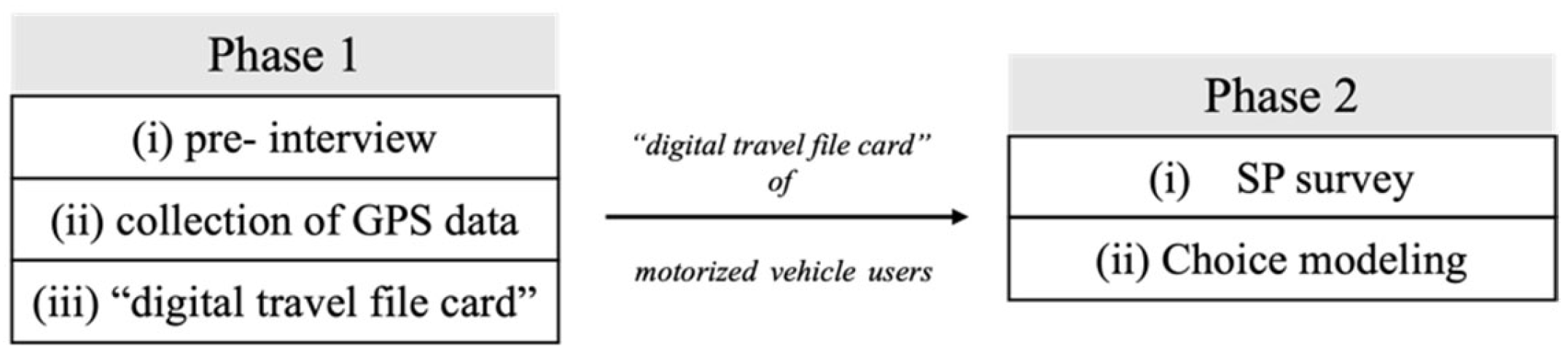
A survey was conducted to meet the needs of the evaluation of the daily main trips and the impact of travel information in a medium-sized city. Only main trips were analyzed to ensure comparability among all participants. Main trips tend to be more consistent among participants in terms of purpose, duration, and frequency. This consistency allows for a fairer comparison of results across different individuals. Narrowing the analysis to main trips reduced inaccuracies from incidental trips and simplified the interpretation of the findings. The analysis is structured in two phases: Phase 1 characterizes observed travel behavior and information seeking using GPS and self-reports, while Phase 2 quantifies route switching responses to network-oriented travel information through a stated preference choice model (see
Figure 1). Phase 1 involved data collection from a representative sample of participants, comprising both students and staff from an academic institution. University students and staff constitute an analytically relevant population for examining travel behavior in medium-sized cities. This group typically exhibits regular and repetitive commuting patterns, high familiarity with the urban road network, and frequent exposure to digital information tools. These characteristics make them particularly suitable for investigating habitual route choice and behavioral responses to travel information, especially in urban contexts where commuting trips dominate daily mobility demand. While the sample is not statistically representative of the broader population, it allows for a focused analysis of behavioral mechanisms that are also present in other activity-based commuting contexts within medium-sized cities. Participants’ demographic characteristics were collected through a digital questionnaire. Additionally, GPS data were gathered to record and evaluate their daily trips, providing valuable insights into travel behavior. To complement the GPS data, a “digital travel file card” was created for each participant, capturing essential information about their travel patterns and preferences.
Phase 2 focused on collecting stated preference (SP) survey responses from the motorized vehicle users who participated in Phase 1. The SP survey was designed to investigate participants’ responses to various travel scenarios and assess the impact of shared travel information on their mobility choices. To analyze the data collected during both phases, an error component logit model was developed. This model allowed for a comprehensive evaluation of the influence of travel information on participants’ decision-making processes and travel behavior. The two-phase approach provided a robust foundation for assessing the impact of travel information in the context of the medium-sized city under study, offering valuable insights into the dynamics of daily trips and mobility choices.
The study was conducted as part of a PhD research project under the academic and ethical governance framework of the University of Thessaly. Ethical oversight and approval were provided by the PhD Supervisory Subcommittee appointed by the Department, which reviewed the research design, data collection procedures, and compliance with ethical standards.
4. Phase 1: Pre-Interview and GPS Data Analysis
Phase 1 quantifies the habitual travel patterns and information-seeking behavior of the university community using GPS trajectories combined with a pre-interview survey. A total of 130 potential participants, who owned a smartphone, were approached at the Polytechnic School campus of the University of Thessaly in Volos, Greece, in December 2019. During the recruitment process, only people from the university community were approached, as they would be easier to reach and more committed to participating. Hence, all respondents were students and employees of the Polytechnic School. The participation of students was encouraged since they are stronger users of social media and ICT devices. After an analytical description of the survey and its scope, they were asked about their intention to participate in it. Those who were positive about participating received an introductory letter about the study, which also included (a) the link to the pre-interview, (b) a written manual on how the applications work, and (c) a unique ID. The final sample size comprised 96 users who fully completed the questionnaire and used the smartphone application to record their trips.
The three parts of Phase 1: (i) the pre-interview, (ii) GPS data collection, and (iii) participants’ “digital travel file cards”, are described below.
4.1. Pre-Interview
A digital questionnaire was formulated to investigate the participants’ perception of the travel times and distances of their main trip from home to campus and vice versa. Additional factors such as transport mode selection and arrival flexibility, which affect the travel time perception, were also considered. The questionnaire was built on Survey Monkey, and it was written in both Greek and English language, since Erasmus students were also among the participants. Data collection was conducted between December 2019 and January 2020, prior to the COVID-19 pandemic. While temporary changes in mobility patterns occurred during the pandemic period, the core commuting conditions for the examined population, such as course scheduling and physical presence on campus, have largely returned to in-person operation. The findings therefore remain relevant for understanding habitual commuting behavior within this group.
The questionnaire consisted of three parts. The first part referred to the daily trips of the participants, in which data regarding the trip distance and duration from and to the University campus, the flexibility at arrival time, and the familiarity with traveling in Volos city were collected. The next part aimed to investigate the intentions and the factors that affect travel information seeking, and its impact on commuters’ mobility and travel choices. The last part recorded the socio-economic characteristics of the respondents by collecting personal information such as gender, age, education level, and employment status, etc. The analysis of the data was conducted through descriptive statistics.
The final sample size comprised 96 users who fully completed the questionnaire. A summary of the sample characteristics can be found in the following table (
Table 1). The high percentages in the age group of 18–24 years old and in the occupation group of students were expected as the questionnaire survey was carried out at a university campus. Finally, 83% of participants stated that their mobile device is connected to the internet when they are not home. Furthermore, the characteristics of the respondents’ daily trips are also summarized in
Table 1. Participants’ mode choice and travel characteristics were analyzed to gain insight into their daily mobility patterns. The data revealed diverse modal choices within the examined group. Participants were intentionally recruited from the university community, as this group exhibits regular commuting patterns and high use of digital travel information services.
While efforts were made to ensure a representative sample, the survey’s voluntary nature could introduce selection bias, where participants who chose to participate might have unique travel patterns compared to those who did not. Additionally, self-reported data may be subject to recall bias or social desirability bias, potentially affecting the accuracy of the reported travel behaviors. Furthermore, the study’s focus on students and staff from a specific academic institution could introduce institutional bias, limiting the generalizability of the findings to a broader population. Additionally, participants’ familiarity with Volos city and their transportation preferences might be influenced by their daily routines and individual circumstances. The predominance of participants aged 18–24 reflects the university-based recruitment context. Given the limited age variation within the sample, age-related stratification or weighting was not incorporated into the models, and results are interpreted as reflecting behavioral patterns within this specific commuter group.
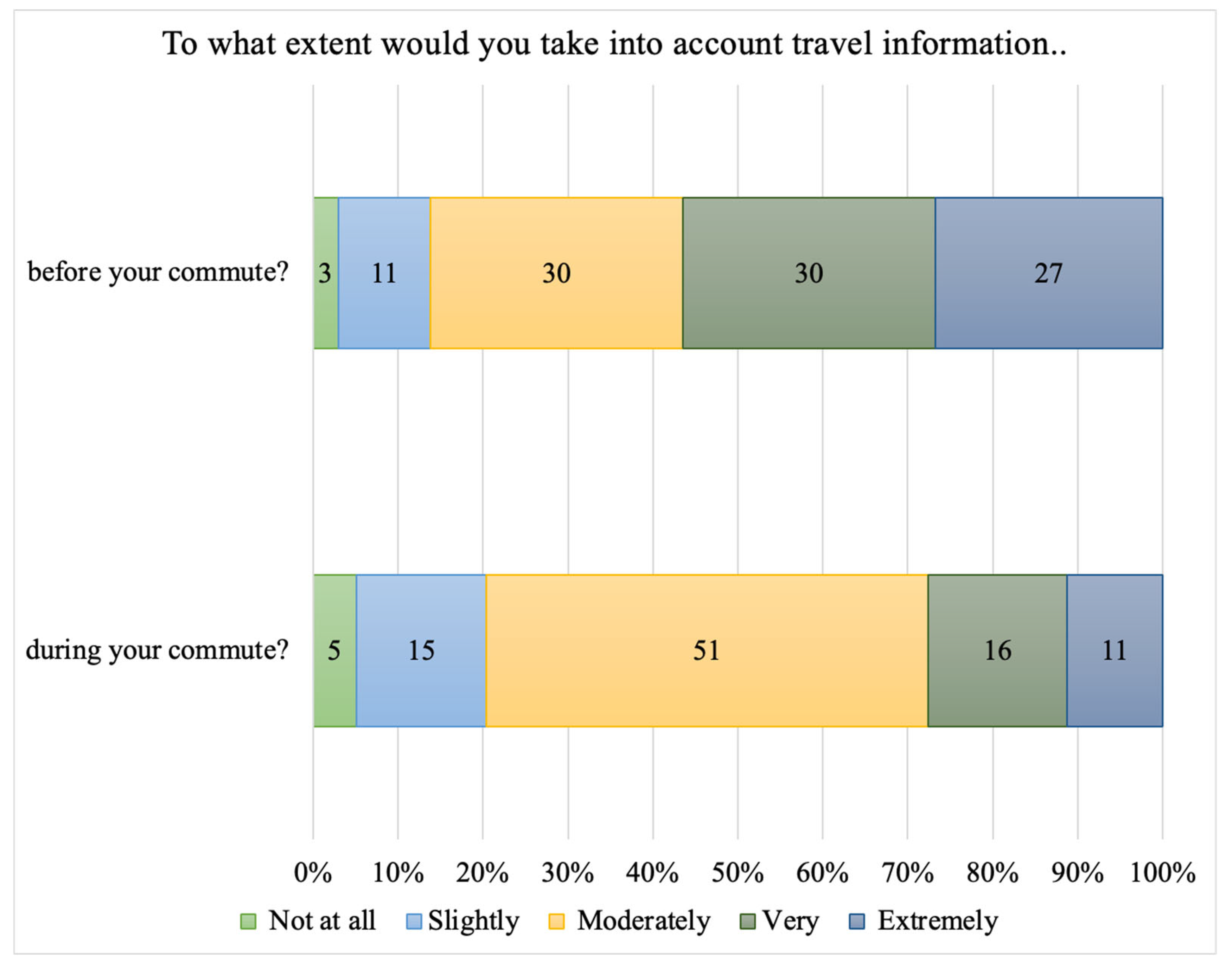
Regarding the extent to which participants would consider travel information before their commute, 36% and 23% stated that they would very much and extremely, respectively, consider travel information. According to
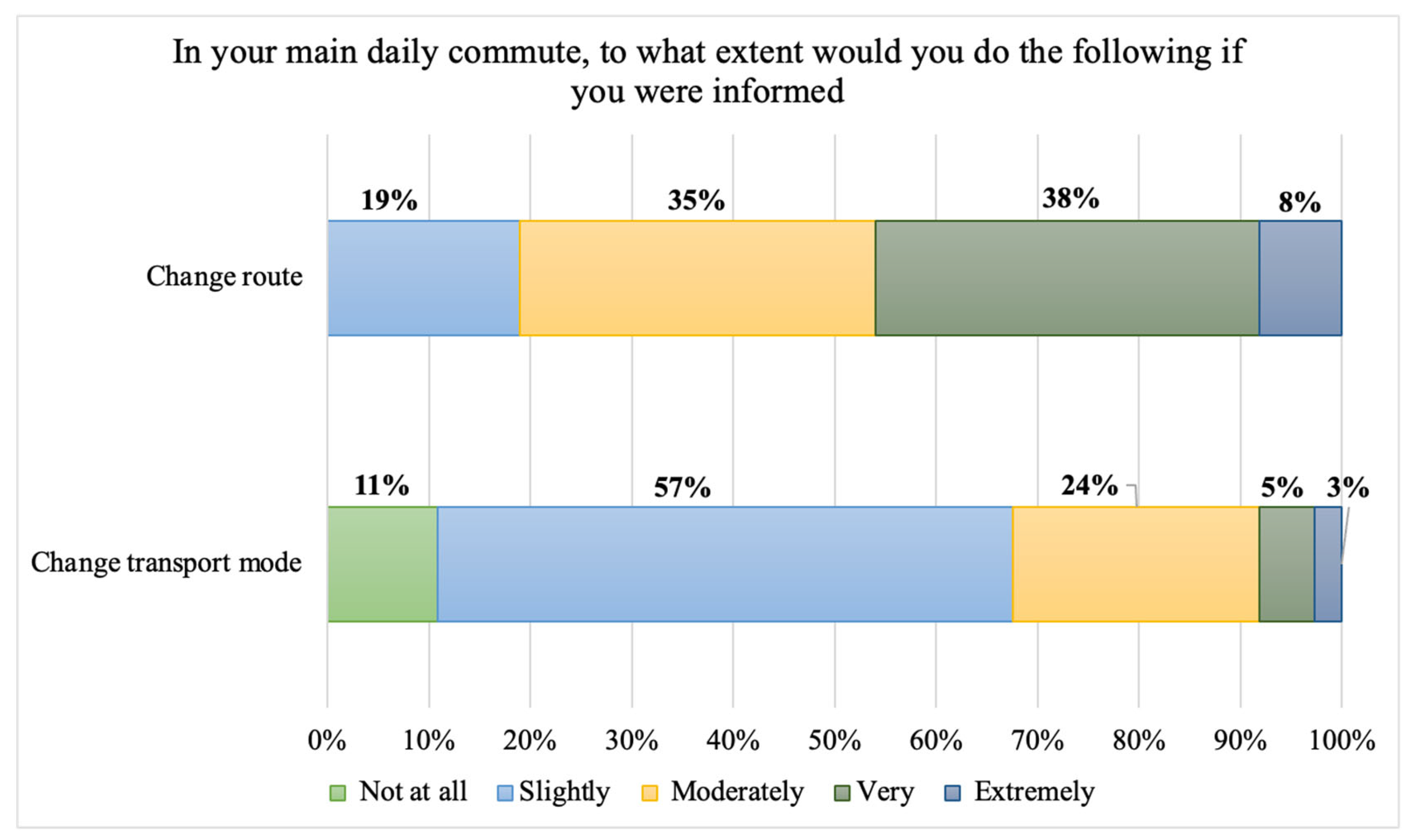
Table 2, during their commute, 56% of the participants stated that they would moderately consider travel information, while only 14% and 5% would very much and extremely consider it, respectively. Concerning the possible influence of travel information on commuters’ final decisions, 37% and 32% respondents stated that their route choice would be affected moderately and very much, respectively. As per the transport mode choice, 38% and 31% stated that they would be slightly or moderately affected, respectively.
4.2. GPS Data Collection
Smartphone-based applications—Route Tracker (iOS) and VEZMA (Android)—were used to collect the actual trips and GPS data of the participants over a period of 7 days. This period was selected to capture habitual daily travel patterns, including both weekday and weekend behavior, with an emphasis on regular home–campus trips rather than long-term or seasonal variability.
In our study, respecting the privacy of survey’s participants, unique IDs were randomly assigned to each participant, so there was a limited possibility to connect the respondent’s identity with his or her daily track and personal data. Furthermore, participants could keep private selected trips either by turning off the GPS tracking system at any time or by not recording the trip on the application menu.
Communication and support were provided before and throughout the duration of the field test. Additionally, a Facebook group related to the survey was created to offer support to participants during the field test and send them remainders—three times a day—to activate the application recording.
After the installation of the applications, GPS/GMS signals were used to record individuals’ trips. The applications ran on the participants’ smartphones during their travel activities. Participants with Android-based smartphones had to label the trip purpose and specify the transport mode and then press the start button before their trips. Participants could choose among 18 trip purposes (Work (my workplace), Work (other work reason), Education, Go home, Get on/off public transport, Eat/Drink, Entertainment/Recreation, Social visit, Shopping, Refuel vehicle, Park/pick up vehicle, Pick up/deliver a package, Transporting someone, Fitness/Gym, Health, Accompanying someone, Personal reason, and Other). Participants with iOS-based smartphones could press the record button either at the beginning of the survey and turn it off after seven days or press the record button before every trip and turn it off after the trip’s end. The second way was recommended to avoid battery draining. The iOS application did not allow the participants to label trip purposes; hence, the ends of the obtained trips were matched manually with reported frequent places. Trip purposes were identified based on the relative location of the GPS trip origin and destination and participant’s known home and work location (UTH campus). Subsequently, participants were asked to review and validate the accuracy of the manually labeled trips in a follow-up interview.
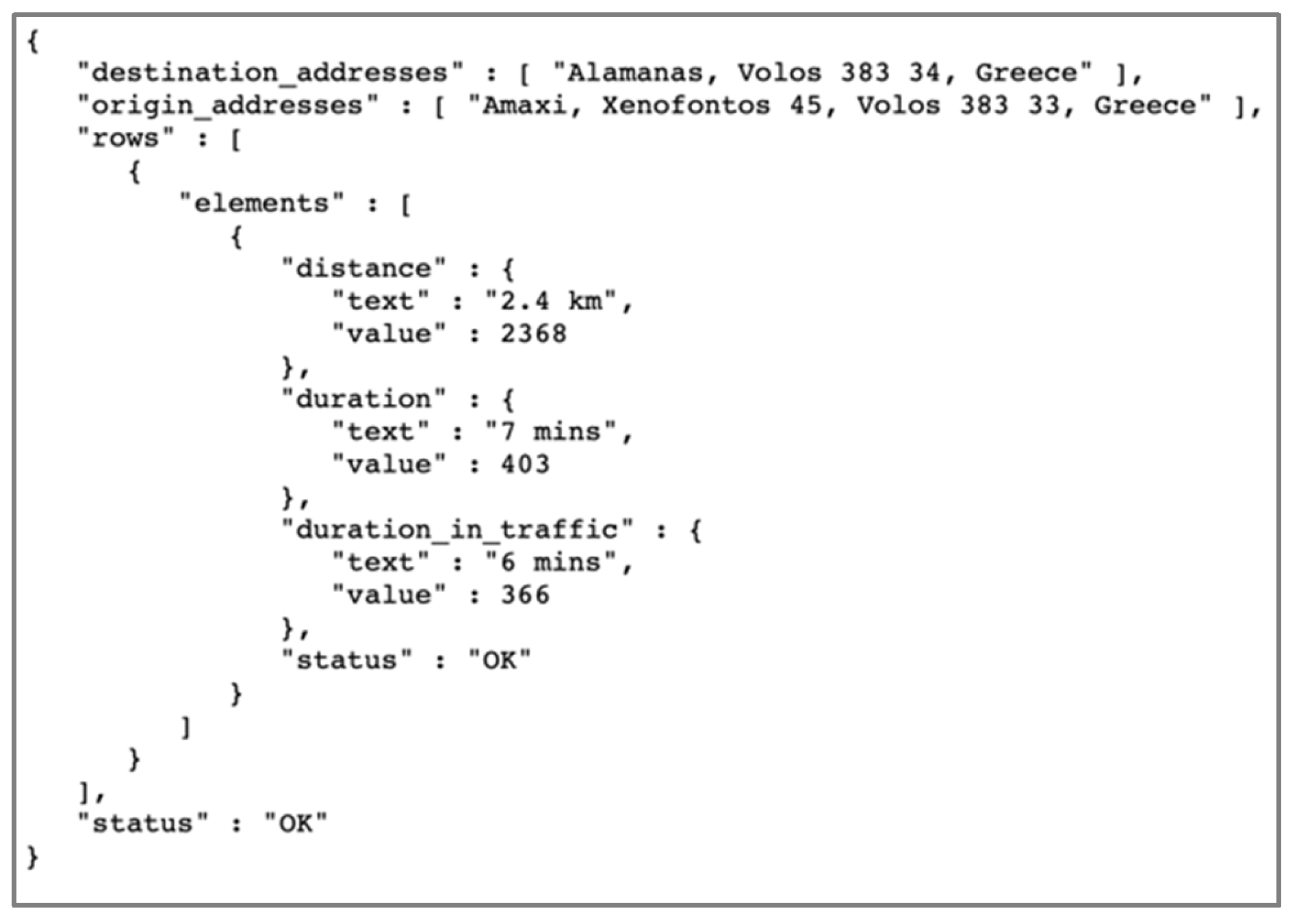
The GPS data were used to evaluate the participants’ trips and the chosen routes in terms of travel time, cost, and environmental friendliness. To achieve an evaluation of the trips in terms of travel time, a comparison of the recorded routes with the suggested routes by route planners was performed. Specifically, the Google Maps Distance Matrix API (Application Programming Interface) service was used. This service returns travel distance and travel time between two given points at a specified departure time. The received information is based on the recommended route between these two points (trip start–trip end), as calculated by the Google Maps Distance Matrix API [
32]. The parameters of the longitude and latitude of the start point, longitude and latitude of the end point, mode of travel, and the date and time of departure were used to construct the Uniform Resource Locators (URLs). The URL initiates a Distance Matrix request for distances between the given points. The provided results are JavaScript Object Notation (JSON) objects which contain the destination and origin addresses and the distance and duration in kilometers and minutes, respectively. An example of a provided result where the travel mode was driving can be seen in
Figure 2. In this example, the value of the duration_in_traffic was also returned. The parameter traffic_model (defaults to best_guess) specifies the assumptions to use when calculating duration in traffic, which contains the predicted time in traffic based on historical averages. It may only be specified for requests where the travel mode is driving and the request includes a departure_time. The departure_time must be set to the current time or sometime in the future and not in the past. The Google Maps Distance Matrix API was used as a reference benchmark for travel time and distance estimation, reflecting widely available route recommendations used by travelers in practice, rather than as an absolute ground truth. Unfortunately, it only provides information for present and future travel distances and times. Since the weekday and time determine more travel decisions and traffic, it was decided to request the data based on the weekday that was close to the date that the trip took place. For example, to request data for a recorded trip that took place on Friday 13 December 2019 at 09:30, we called future data for Friday 11 December 2020. Another limitation of the Google Distance Matrix API is the unknown sample size that was used to calculate the average travel times for vehicle trips, so the reliability remains unclear and cannot be estimated.
To evaluate the recorded trips in terms of travel cost, the recorded and Google API distances were multiplied by 0.12 EUR/km for car trips and 0.06 EUR/km for motorcycle trips. This stems from the average fuel price back in 2019 of 1.5 EUR/ℓ, assuming an average consumption of 7.5 ℓ/100 km for cars and 3.5 ℓ/100 km for motorcycles. Bicycle and walking trips had zero travel costs; trips by public transport had a cost of EUR 0.60 (student price for a single ticket) and EUR 1.10 (regular price for a single ticket). In addition, to calculate trips’ emissions and determine their environmental impact, COPERT Street Level was used. COPERT Street Level is based on the algorithms of COPERT Street Level 2.4 software, allowing for the calculation of emissions (CO, CO
2, NOx, PM, and VOC) based on traffic flow data, i.e., link lengths, traffic volume data, and average vehicle speeds per link, of the baselined country and reference year [
33]. The calculations of the environmental indicators’ values were based on the recorded GPS data (average speed (km/h), distance (km), fuel type, and type of motorized vehicle) from the participants.
The self-reported data (pre-interview) and the collected GPS data were compared to investigate the over- and underestimation of the actual travel times and distances. To avoid confounds, only the travel times and distances of the participants’ main trip from home to university campus, and vice versa, were considered in the analysis. A variable
di, was defined as the ratio of the stated travel distance and the recorded distance from GPS data. The ratio was calculated for every participant by dividing the average value of the measured distances for these trips. A variable
ti, was defined as the ratio of the stated travel time and the average recorded time from GPS data for these trips. The
di and
ti ratios are defined mathematically as
The trips were divided into three groups: overestimated trips, underestimated, and accurately estimated trips in terms of travel distance and time. Overestimated trips in terms of travel distance refer to trips with di > 1 and in terms of travel time refer to trips with ti > 1. Trips with di < 1 and ti < 1 are the underestimated trips and trips with di = ti = 1 are accurately estimated. The intention was not to scrutinize every minute in detail but to understand the general trend of overestimation or underestimation among participants. The calculation of these ratios enables us to evaluate and better understand the perception of the distance and travel time of drivers in medium-sized cities. By understanding to what extent perceptions deviate from reality, we can tailor information provision to address common misperceptions, provide timely updates on traffic conditions, and offer alternative routes to enhance the overall travel experience.
4.3. GPS Data Analysis
In total, 1164 trips and 1354 trip legs were recorded. A total of 38.2% of the participants used a car (36.9% conventional car/1.3 electric car), 34.4% traveled on foot, 9.3% used PT, 8.6% used a bicycle, and 9.5% used a motorcycle. The recorded travel time spent per respective transport mode was 32% (4004 min) for cars, 46.9% (6054 min) walking, 8.9% (1147 min) for PT, 7.1% (913 min) for bicycles, and 5% (651 min) for motorcycles (see
Table 3).
The characteristics of trip purposes can be summarized as follows: 35% (403 trips) are Go Home purposed trips, 21% (247 trips) are Education trips, 12% (136 trips) are Eat/Drink trips, 9% (102 trips) are Shopping trips, 7% (76 trips) are Social Visit trips, 5% (54 trips) are Entertainment trips, 4% (52 trips) are Fitness/Gym trips, 3% (36 trips) are Work trips, and the rest are ≤1% (see
Table 4).
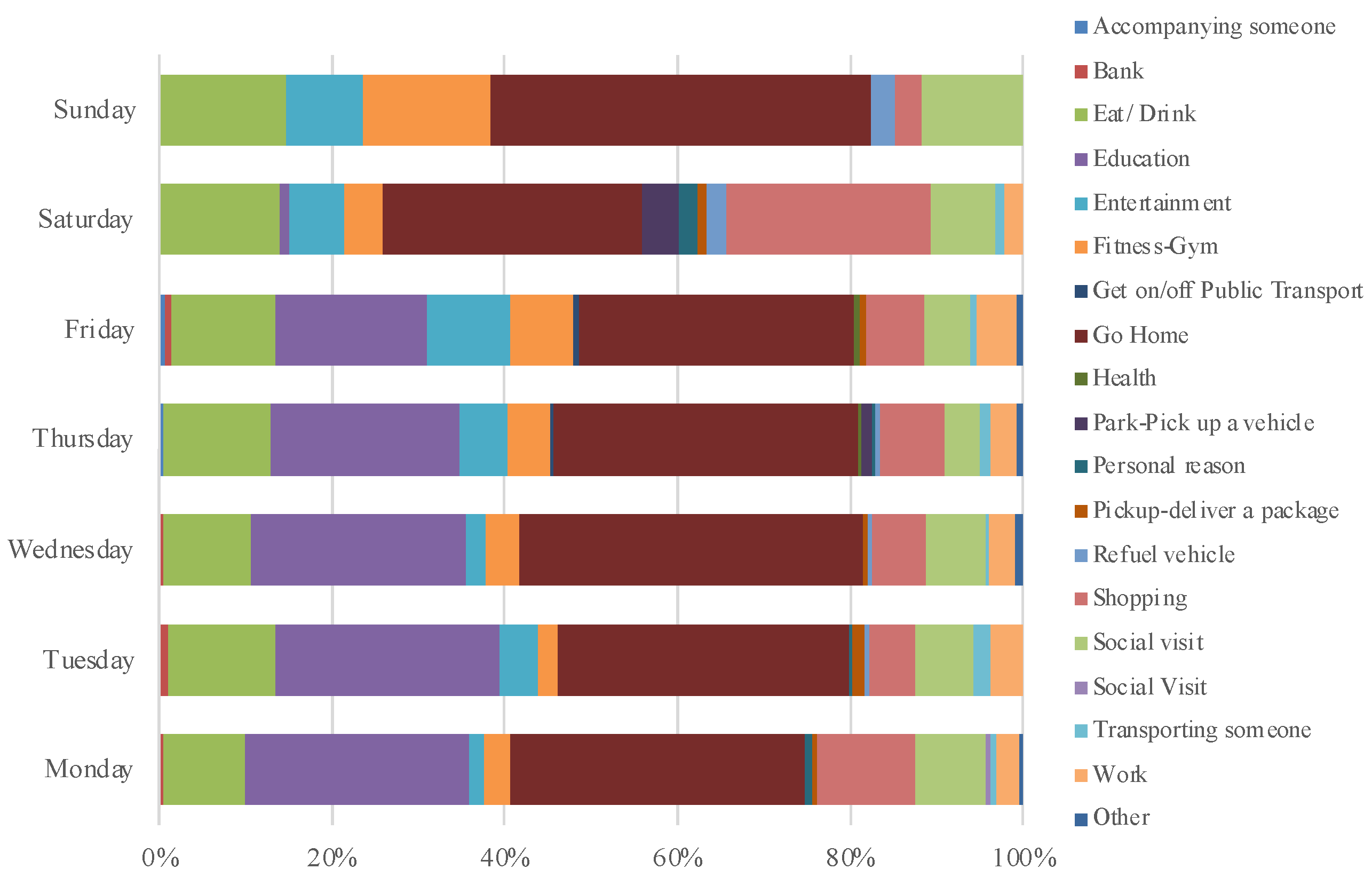
It is noted that an analysis of these trips in relation to the weekdays showed that education-related trips have a higher percentage on weekdays, while shopping-related trips are steeply increased on Saturday.
Figure 3 shows the percentage of trips and their purpose based on the weekday.
A total of 276 missed trips could be identified based on the trip tour. For example, when a trip from home to university was recorded and then the next recorded trip was from home to shopping, then it was implied that there was an unrecorded trip from university to home. A total of 42% of the missed trips were walking trips, 39% were car trips, 8% were public transport trips, 7% were motorcycle trips, and 4% were bicycle trips.
Table 5 shows the purpose of the missed trips.
Regarding the travel time of trips from home to university campus (and university campus to home), 50% (and 50%) were overestimated, 43% (and 39%) were underestimated, and 7% (and 11%) were accurately estimated. Respectively, for the travel distance, 44% (and 46%) were overestimated, 52% (and 45%) were underestimated, and 4% (and 9%) were accurately estimated (see
Table 6). Inaccurate travel time and distance estimations can potentially lead to adverse decisions after information provision, influencing various aspects of commuters’ travel behaviors and experiences. Respondents who underestimate their travel times may unintentionally allocate insufficient time for their trips, resulting in time constraints and potential late arrivals to their destinations. This may reduce the overall satisfaction with the travel experience. Conversely, respondents who overestimate travel times might leave earlier than necessary, leading to idle time and missed opportunities for other activities. Additionally, estimations influence route selections, with underestimations leading to the choice of longer or more-congested routes, perceived as faster. On the other hand, overestimations may result in opting for shorter but less-efficient routes, leading to potential delays. To mitigate the potential negative consequences of inaccurate estimations, providing travelers with more reliable and real-time travel information is essential.
Additionally, it is worth mentioning that 216 of the 1164 recorded trips were not the same as the suggested routes of the route planners. The total travel cost of the recorded trips was EUR 226.3. If all the recorded trips were based on the suggested routes by route planners, the total cost would be EUR 207.2. The total recorded duration of trips was 215 h (12,898 min) and ideally would be 21 h less (1279 min). In terms of environmental emissions, a selection of the suggested routes would lead to 175.1 g less CO, 26.803 kg less CO2, 151.1 g less NOx, 4.9 g less PM, and 28.9 g less VOC.
4.4. “Digital Travel File Card”
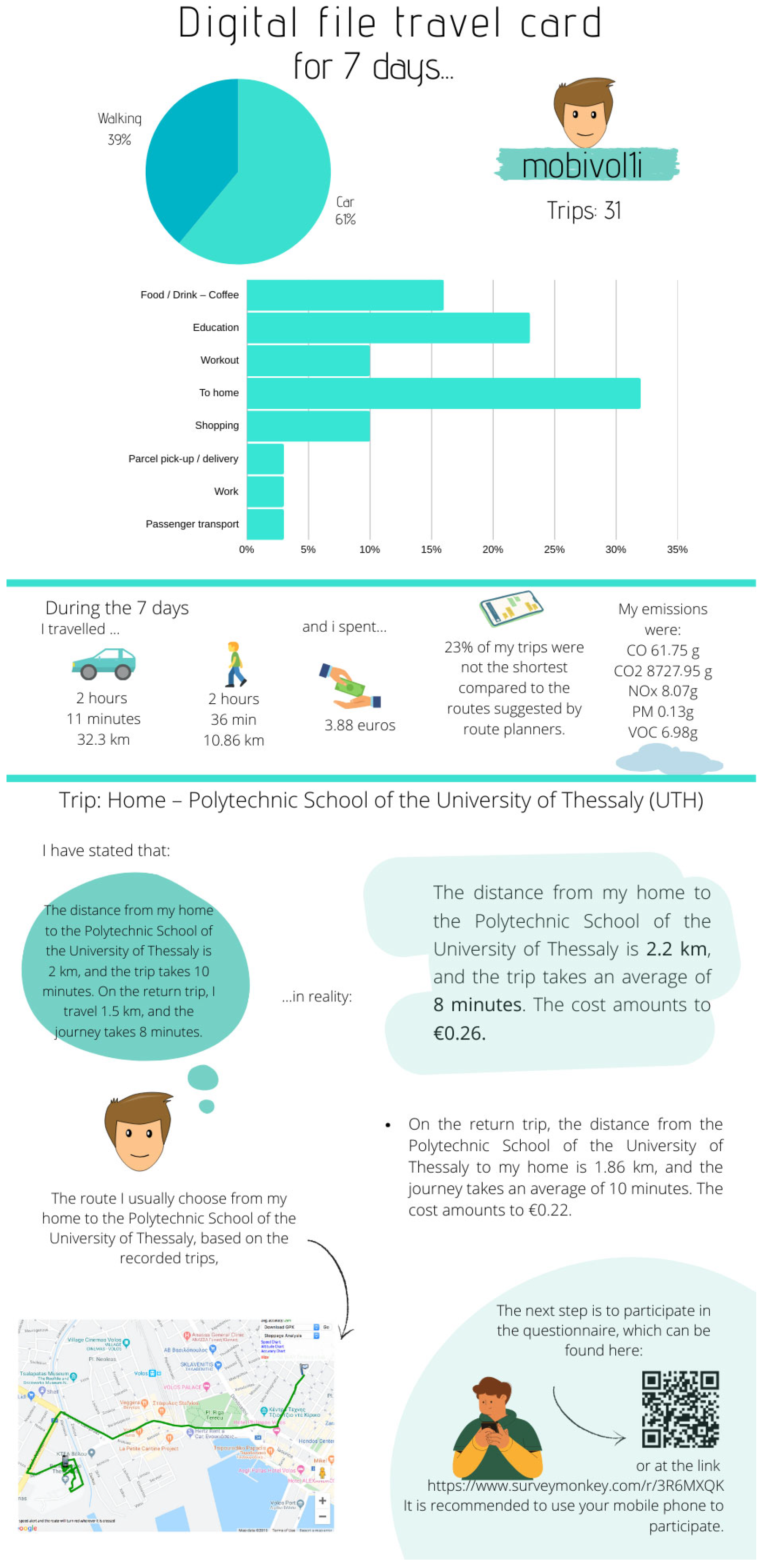
The processed data were used to develop a “digital travel file card” for each participant, which included both the analyzed data and suggestions for improving his/her daily commute. The digital card includes information about the participant’s mobility characteristics based on the GPS recorded data. The card consists of three parts. The first part includes the participant’s survey ID, the number of recorded trips, the percentage use of transport modes, and the percentages for the recorded trip purposes. In the second part, the participants can find details about their trips: the total travel duration and distance for each selected mode, travel expenses, percentage of recorded routes that are longer compared to the suggested routes by route planners, and the environmental emissions during the days that the trips were recorded. The last part refers to the trip from home to campus. Analytically, this part includes the participants’ statements about the distance and duration of this trip (home to campus), as well as the real GPS recorded distance and duration. In addition, a figure shows the recorded route that the participant usually prefers to perform the “home to campus” trip. The digital cards of the 37 motorized vehicle participants also include a QR code of the second phase’s stated preference online survey. Colors, graphics, and icons were chosen to be familiar and attractive to participants without having to spend too much time on understanding the card.
The existing literature shows that mobility records such as the “digital travel file cards” with presented statistics encourage the respondents to think about their overall trip activity and its characteristics and keep them committed to continue with the survey [
34].
Figure 4 is an example of a “digital travel file card”. The card refers to respondent ‘mobivol1i’ who recorded his trips for seven days.
5. Phase 2: Stated Preference Survey and Behavioral Modeling
Initial findings showed that approximately 35% of motorized users consistently follow the same route to their regular destinations, even when this choice is not the most efficient in terms of time or cost. This observation motivated the development of a stated preference survey directed at the car and motorcycle users who participated in Phase 1.
5.1. Stated Preference Survey Design
The stated preference survey aimed to assess how information shared through social media could influence these users’ decisions, either by encouraging them to choose an alternative route instead of their habitual one or by prompting a shift toward more sustainable travel options, such as public transport or active modes. In this study, the term “social media” is used to refer to online platforms, such as Facebook, and Twitter which can serve as channels for disseminating travel information to a broader audience. While the study does not directly involve interpersonal interactions or social influences, these platforms are utilized as a means of sharing travel-related content, including route recommendations and sustainable transportation options, with users. This broader interpretation of “social media” encompasses the diverse array of digital communication channels utilized in the study. The purpose of the shared information was to support network-wide decongestion and reduce environmental impacts. It should be emphasized that the content was designed to improve overall traffic and environmental conditions, not to provide an individually optimized route for each motorized user. The explicit references to congestion and environmental pollution in the information messages are intentional elements of the study’s design. In line with the objective of examining travel information beyond individual route optimization, these messages communicate network-level conditions and impacts. This approach reflects the concept of social routing, which aims to assess whether travelers are willing to adjust their route choices when informed about congestion and environmental effects affecting the overall road network. The choice experiment included three alternatives: the usual route (as recorded by GPS data), the suggested route (the other main route that leads to the Polytechnic School), and a sustainable way of transport (public transportation or active transportation). It is noted that in the city of Volos, two main routes lead to the Polytechnic School, providing participants with alternative routes reflecting the common travel patterns observed in the area. To facilitate a realistic choice situation, each participant was given access to his/her digital travel file card prior to completing the experiment, while the data collected during the GPS survey was incorporated into the stated choice experiment to allow convenient and clear selections. Variability in travel times due to congestion and traveling at different times in a day to attend courses were taken into consideration, emphasizing the realism of the scenarios presented. Once the alternatives of the choice experiment were decided upon, it was necessary to determine which attributes and their corresponding levels should be included to describe them, see
Table 7. Τhe type of personalized information services includes real-time traffic updates, alternative route suggestions, and transportation mode recommendations based on individual preferences.
Each respondent was presented with ten choice situations in which the levels were chosen based on a clean random experimental design. As per [
35], the efficacy of the random design is comparable to other designs, and it can perform even better if the design is sanitized by eliminating the choice tasks where one alternative completely dominates THE others. Such scenarios have no real trade-off for the respondents. This approach helps to minimize the occurrence of strictly dominant alternatives that could potentially lead to biased estimates, as suggested by Bliemer, et al. [
35] and Matyas and Kamargianni [
36]. The appearance of choices was differentiated and randomized to avoid selection bias.
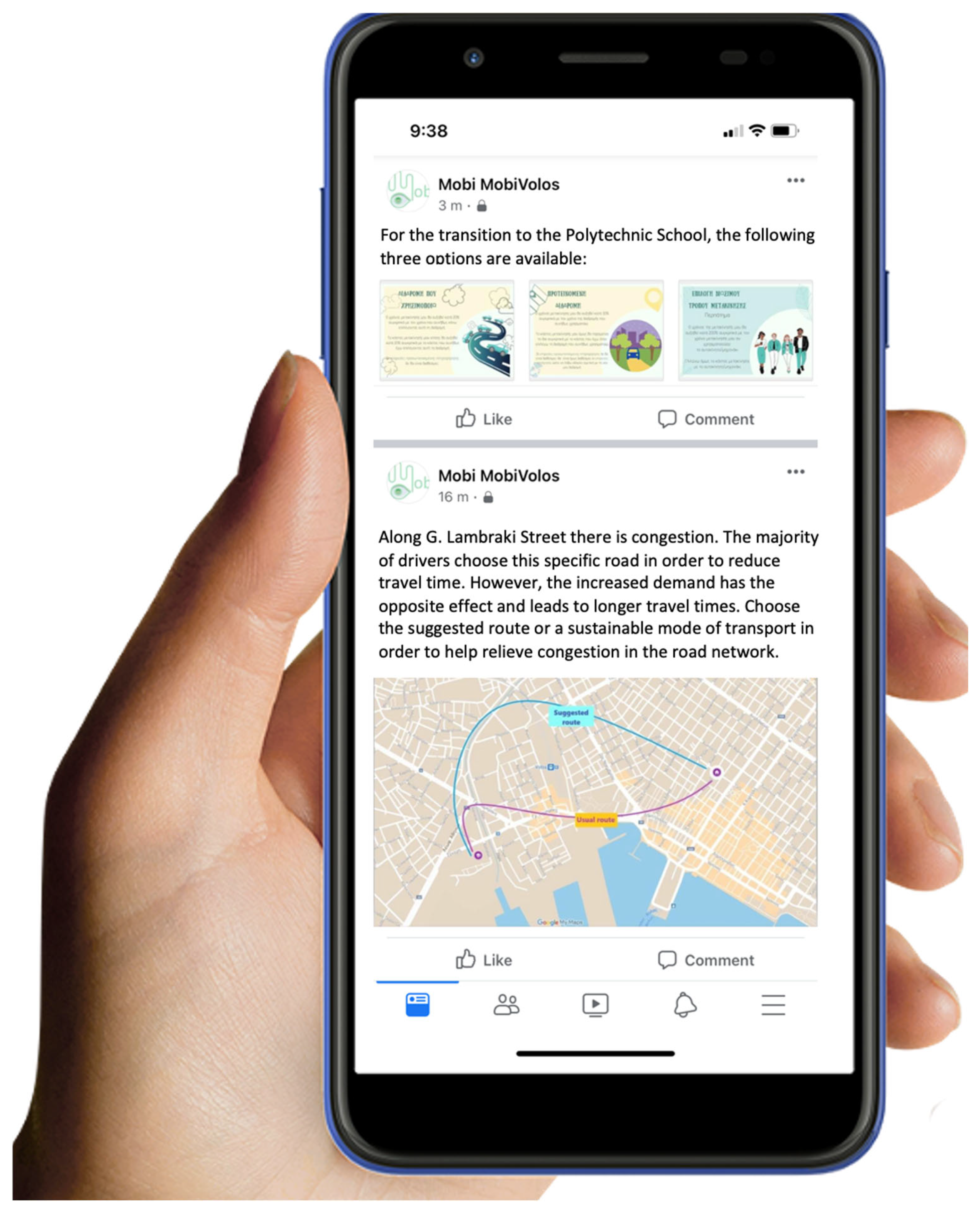
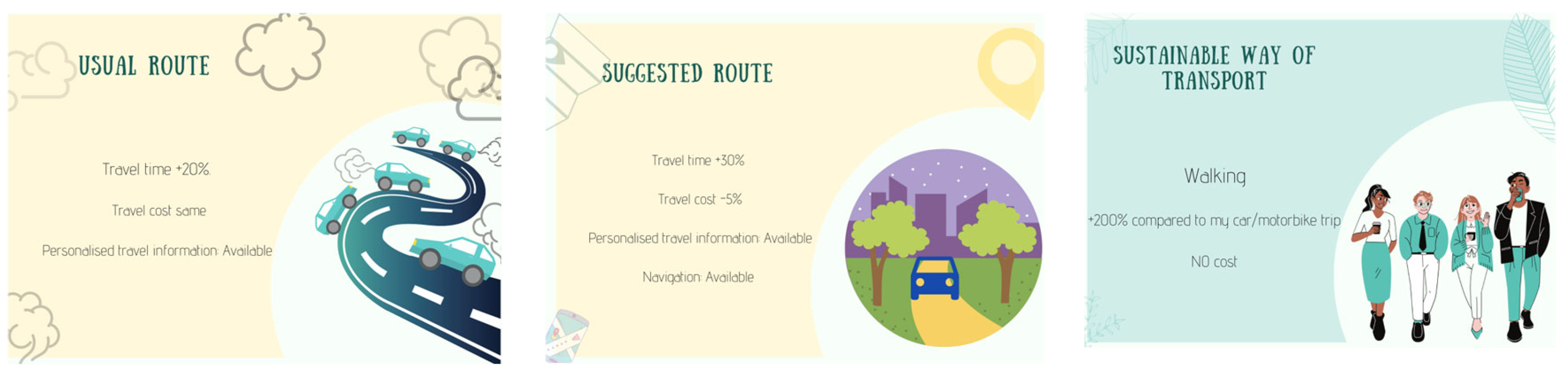
The shared content included a post that informed the respondents about either congestion or high levels of environmental pollution on their usual route, followed by three available travel options. Social media was used as a realistic and familiar channel for presenting these information messages, allowing for the empirical assessment of behavioral responses to information framing under conditions similar to real-world exposure. Each respondent had to choose between the three alternatives, thinking of his/her digital travel card. The posts were prepared and shared on a Facebook profile (Mobi MobiVolos) to obtain screenshots and include them in the presented scenarios of the stated preference survey. The selection of the Facebook platform as a channel for promoting sustainable mobility is based on several factors. Firstly, Facebook is one of the most widely used social media platforms globally, offering a diverse user base and extensive reach. This widespread usage enhances the potential of reaching a broad audience with travel information and promoting behavior change. Additionally, Facebook’s user-friendly interface further enhances its effectiveness as a medium for promoting sustainable travel behavior. The shared post included text and photos. The text included the message about either congestion or high levels of environmental pollution on the usual route and was followed by a photo of a map showing the usual and the suggested route. A follow-up post included a text about the three available travel options, followed by three pictures representing them. The first picture was related to respondent’s usual travel choice, the second one was related to the suggested travel choice, and the third one was related to the sustainable way of transport.
Figure 5 illustrates the appearance of the Facebook post on the mobile phone of a vehicle user.
The design and the appearance of the shared choice cards on the Facebook account were either plain without any special format or included pictures and colors related to the content of the message and the attribute levels. Specifically, the usual route in some choice sets was depicted with a congested road and air pollutants while the suggested route was depicted with a route among trees. For the sustainable way of travel, photos related to the respective suggested way were used, i.e., a bus for public transport, a bicycle for cycling, or people walking.
Figure 5 shows an example of the post appearance of the designated account on the Facebook profile Mobi MobiVolos, which was created in the context of this research.
Figure 6 shows an example of the presented stated preference experiments. The specific example advises taking another route to decongest the usual route. Specifically, the text that appears is in Greek and mentions the following:
“G. Lambraki route is congested. Most of drivers choose this route to minimize their travel time. Τhe increased demand has the opposite effect and leads to an increase in travel times. Choose the suggested route or a sustainable way of travel to help decongest the transport network.
There are three available travel options to arrive at Polytechnic School of Volos.”
While the SP scenarios were carefully designed to reflect realistic travel decision contexts, they inevitably simplify the complexity of real-world trade-offs. In particular, SP experiments cannot fully capture dynamic factors such as day-to-day variability, unexpected disruptions, or the longer-term adaptation of travel behavior. The results should therefore be interpreted as reflecting behavioral responses under controlled informational conditions rather than exact predictions of real-world choices.
5.2. Choice Model Estimation
The collected data were used to develop an error component logit model using Monte Carlo integration and estimate the probability of an individual choosing one of the three alternatives in the presence of travel information on social media. The error component logit model allows us to account for individual-level heterogeneity and the influence of unobserved factors that may impact travel choices. By incorporating the error component, we can better understand the underlying preferences and decision-making processes of the participants when faced with different travel options. Since in the SP survey the respondents faced several scenarios, the models account for repeated observations from the same individuals in the dataset (panel data). The procedure for selecting the variables in the utility equations involved a manual approach. Emphasis was placed on careful consideration of the theoretical and empirical relevance of each variable within the context of the research objectives. Variables were chosen based on data availability and the estimation results of alternative models. Notably, a broader set of variables, including socio-demographic and trip-related factors, was examined beyond those presented. The final selection of variables was determined based on the best estimation results, with a focus on identifying variables with the most significant influence on the outcomes. Concerns regarding potential confirmation bias were addressed through the inclusion of a diverse range of variables and by conducting sensitivity analyses to assess the robustness of the selected variables. These measures aimed to ensure a comprehensive and unbiased variable selection process.
The choices are modeled using a logit framework. Each individual chooses among alternatives
i ∈ {
UR,
SR,
SW}, corresponding to the Usual Route (
UR), Suggested Route (
SR), and Sustainable Way of transport (SW). The utility of each alternative is composed of a systematic component and a random error term. Under the standard logit assumptions, the probability of choosing an alternative depends on the relative magnitude of its utility. The systematic utilities are specified as follows:
where
TT denotes travel time,
TC is the travel cost, and
GENDER captures gender differences;
ωn is an error component normally distributed across individuals
n, and is specific to the alternative suggested route and sustainable means of transport. Specifically,
ωn is a random term that captures the individual’s willingness to change. The final model was estimated in the Pythonbiogeme software (v. 3.3.2) [
37] and was determined after testing various specifications and by using 10,000 draws. The estimation of the coefficients
a,
β is given in
Table 2.
5.3. Analysis of Stated Preference Survey Data
Phase 2 applies a stated preference experiment to a subset of motorized users from Phase 1 for whom complete GPS data were available, enabling the construction of individualized choice scenarios. The resulting analysis provides exploratory behavioral insights and is not intended to yield population-representative estimates. The final sample size of the stated preference survey comprised 37 motorized vehicle users. Men comprise 65% of them and the remaining 35% are women. A total of 70% of the respondents belong to the age group of 18–23, 22% of them to the 24–40 age group, and 8% to the 41–65 age group. In addition, 62% of the participants are students, 16% are students with a part-time job, 8% are students with a full-time job, 8% belong to university staff, and the remaining 5% are researchers. A total of 78% of participants stated that their mobile device is connected to the internet when they are not home. A total of 89% of the participants use a car and 11% use a motorcycle for their daily trips.
According to
Figure 7, 51% of the participants stated that they would moderately consider travel information during their commute; 27% of the participants stated that they are extremely willing to consider travel information before their commute.
Figure 8 shows that 57% of the participants would slightly change transport mode if they would receive travel information about their main daily trip. A total of 38% of the participants stated that they would be very willing to change their regular route if they received travel information about their main daily trip.
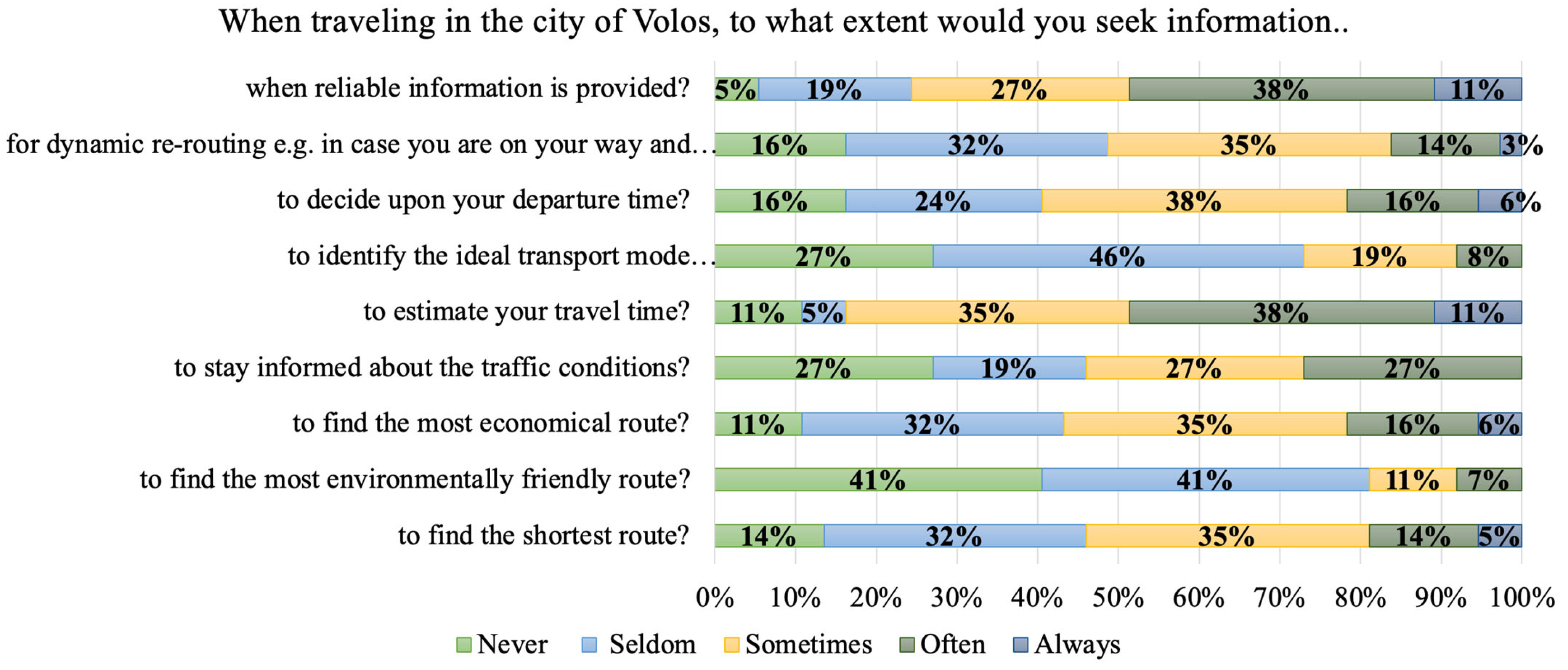
Parameters related to the frequency of travel information seeking when traveling in the city of Volos based on different factors (nine parameters) were examined and can be found in
Figure 9. The rating was measured on a five-point scale (Never—one, Seldom—two, Sometimes—three, Often—four, and Always—five).
The analysis of the survey showed that 81% and 78% of the participants are willing to spend up to EUR 0.50 more for their trip from home to campus, to contribute to congestion alleviation and a reduction in environmental pollutants, respectively. Similarly, 86% and 81% of the participants are willing to prolong up to 5 min their total travel time to contribute to the same purposes. The choice experiment showed that the dominant selection of the three given alternatives was the suggested route even though, in some cases, this scenario added extra travel time and cost to the participant. The alternative sustainable means of transport was less selected for tasks where the public transport level appeared (Tasks 4 and 8). In Tasks 1, 5, and 7, where the walking level appeared, the sustainable way of transport was more preferred compared to the usual route, but the suggested route was still the dominant selection. Two types of messages appeared at the ten tasks. For the first five tasks, the message aimed at decongesting the road network and in the remaining five, the message was aimed at a reduction in environmental pollution. Nonetheless, the scope of the message did not emerge as a decisive factor. With respect to visual presentation—specifically, the colors and graphics used—10 participants (27%) indicated that it shaped their final decision, an equal proportion (27%) disagreed, and nearly half of the sample (46%) remained neutral.
5.4. Modeling Estimation Results
Table 8 presents the model estimation results. The developed models were estimated using the software package Biogeme [
29] and consider the panel effect for repeated observations from the same individuals in the dataset. After testing various specifications, the final presented models were selected based on statistical goodness-of-fit (likelihood ratio tests, estimated coefficient significance
t-tests, the rho-square and adjusted rho-square statistics. A total of 10,000 random draws were used for the models’ estimation. Although model convergence has little direct relation to the number of draws, we are confident that the use of 10,000 draws, which is a relatively high number compared to some modeling practices, was sufficient for our estimation process.
The independent variables are briefly described, and their standard errors and significance values are reported. The results indicate that the coefficients align with the theoretical expectations, with most variables reaching high significance. With regard to the constant terms of the utility functions, the estimation results indicate that the respondents have some propensity towards the suggested route instead of the usual route. Regarding the sustainable means of transport, respondents prefer the usual route instead of a sustainable means of transport. Travel time was included in the model as a core route attribute. Although the estimated coefficient has the expected negative sign, it does not reach conventional levels of statistical significance (t = −1.29). The variable is retained as a control, as excluding it affected the estimation of the remaining parameters. A similar pattern is observed for travel cost: the negative sign indicates that higher costs reduce the probability of selecting a sustainable mode. In the case of public transport, the ticket price acts as a deterrent. The relatively large magnitude of the cost coefficient for the sustainable alternative indicates a high sensitivity to monetary cost, implying that even modest increases in perceived cost can substantially reduce the likelihood of sustainable mode uptake within this commuter group. From a behavioral perspective, this suggests that pricing policies, fare levels, or cost-related incentives are likely to play a critical role in shaping the adoption of sustainable travel options, particularly in habitual commuting contexts. Travel time also influences these choices in the same direction; longer alternatives are less likely to be selected.
Finally, gender appears to play a role in route choice. Women show a higher tendency than men to deviate from their habitual route. Although the availability of personalized information services did not reach statistical significance, route switching increased after information provision. This suggests that travelers responded primarily to the presence and content of the information (e.g., congestion and environmental impacts), rather than to personalization as a distinct feature. In this context, personalization did not appear to add explanatory power beyond the general information framing provided in the scenarios.
Model performance was evaluated using standard goodness-of-fit measures for discrete choice models, including the log-likelihood and rho-square indicators, as reported in
Table 8.
6. Concluding Discussion
Understanding daily travel and mobility choices in a medium-sized city provides valuable information about traveler needs and characteristics. This study investigated the daily trips of students and staff from the University of Thessaly, in the medium-sized city of Volos, Greece, and evaluated them to explore the impact of travel information. The analysis was based on a dataset that combines stated and revealed data. Accordingly, the findings reflect the behavior of this specific commuter group rather than the broader urban population.
The main findings of the study, corresponding to the research questions posed, can be summarized as follows:
- (1)
In relation to RQ1, the analysis of GPS and self-reported data shows that commuting trips dominate daily mobility within the examined university population, with a substantial share of participants underestimating both the travel time and distance of their main home–campus trips.
- (2)
In relation to RQ2, the stated preference analysis indicates that network-oriented travel information highlighting congestion and environmental impacts can trigger route switching away from habitual routes.
- (3)
In relation to RQ3, the modeling results suggest that route switching behavior is associated with individual and trip-related factors, including gender and cost sensitivity.
The results verified that ~40% of the participants underestimate the travel time and distance of their main trip from home to campus and vice versa. Familiarity with traveling and lower complexity of the road network in a medium-sized city can result in road users sometimes ending up with route choices other than the optimal one without noticing it. From a policy and system design perspective, these misperceptions highlight the importance of travel information services that explicitly correct biased perceptions rather than merely providing route recommendations. Information systems that make time, distance, and congestion impacts more transparent, particularly for habitual trips, may help travelers reassess routine choices and support more efficient use of the network. Such approaches are especially relevant in medium-sized cities, where familiarity with the network can reinforce persistent misperceptions and limit spontaneous route adaptation. While it is possible that the participants might have been aware of the optimal route, we acknowledge that travel choices are influenced by a variety of factors beyond mere awareness. Factors such as habitual travel patterns, personal preferences, avoidance of certain areas, and considerations related to traffic conditions or landmarks can all play a role in participants’ route selection.
In our study, we sought to understand the impact of personalized information services, specifically when presented on social media, on travel choices. Model outputs indicate that after receiving travel information provision, individuals are more willing to choose the suggested route over their usual route, which aligns with the aim of exploring the effectiveness of travel information in decongesting roads by promoting alternative routes. Importantly, the empirical findings indicate that social media can function as an effective channel for delivering network-oriented travel information, as the observed route switching reflects responses to information framing rather than to individualized optimization cues. While statistical significance in predicting preferences was not demonstrated by the availability of personalized information services about the selected route, the positive and significant alternative specific constant for the suggested route suggests a potential influence on individuals’ route choices. This alternative specific constant played a crucial role in the modeling framework, indicating a higher propensity for individuals to choose the suggested route over their usual route following the provision of travel information. While the non-significance of the availability of personalized information services about the selected route may initially appear to contradict this conclusion, several factors warrant consideration. This finding implies that factors beyond the availability of travel information may play a role in shaping behavior change. Possible explanations may include the perceived reliability of the suggested route or individual preferences for route familiarity.
Regarding the sustainable way of transport, the preference for the usual route over a sustainable mode suggests that participants are more inclined to stick to their established travel habits, which may have implications for reducing the environmental impact of daily trips. The negative coefficients for travel time and cost variables highlight that individuals are more likely to avoid longer travel times and higher costs, indicating the potential for travel information to influence route choices that could lead to decongestion and reduced pollution by promoting shorter and more cost-effective routes. Specifically, the travel cost of a sustainable means of transport reduces the probability that an individual will choose it. In our case, public transport is less preferred compared to walking or biking. A reasonable explanation is that Volos is a flat, bike- and walk-friendly city with a long seaside ideal for these means of mobility.
Another important finding is that women are more likely to change their usual route. This indicates that women may be more willing to change their habits. This gender-related finding could be an important consideration in designing targeted interventions and travel information strategies that can influence route selection and potentially lead to a more efficient and environmentally friendly road network. A similar conclusion has been documented in [
38], where the authors concluded that women are affected at a higher degree than men and are more receptive to the information provided by social media.
The model outputs provide valuable insights that are directly relevant to the overall aim of the study. The results suggest that travel information has the potential to influence route choices and contribute to congestion alleviation and a reduction in environmental pollutants in a medium-sized city. Understanding the factors that influence travel choices is essential for developing effective interventions, policies, and information campaigns that promote sustainable and eco-friendly travel behaviors [
39].
The findings of the study contribute to the broader understanding of travel behavior and have practical implications for urban transportation planning and environmental sustainability efforts.
Given the non-representative and context-specific nature of the sample, the findings should not be interpreted as directly generalizable to the broader urban population. Instead, the external validity of the study lies in the behavioral mechanisms identified, such as habitual route choice, responsiveness to information framing, and willingness to switch routes, which are likely to be relevant in other activity-based commuting contexts in medium-sized cities. This work highlights the need to understand the role of information dissemination through social media more explicitly. From a policy perspective, the findings suggest that municipalities could use social media as a low-cost and flexible channel for disseminating travel information that highlights congestion and environmental impacts at the network level. Rather than focusing solely on personalized route optimization, information campaigns could emphasize shared benefits, such as reduced congestion or improved air quality, to encourage voluntary route switching. However, the results also indicate that information alone may not be sufficient to sustain long-term behavioral change. Complementary measures, such as pricing incentives, improvements to walking and cycling infrastructure, or to public transport service quality, are likely necessary to reinforce and maintain shifts toward more sustainable travel choices. Future research should extend the empirical analysis beyond university communities to include more diverse socio-demographic groups and trip purposes. Expanding sample diversity would allow for an assessment of whether the behavioral responses observed in this study, such as route switching triggered by information framing, persist across different urban populations and mobility contexts.