Review

Advances in Diagnostic, Prognostic and Predictive Biomarker Testing for the Characterization of Uterine Mesenchymal Neoplasms

1
Faculty of Arts and Science, University of Toronto, Toronto, ON M5S 3G3, Canada
2
Department of Pathology and Laboratory Medicine, Mount Sinai Hospital, Toronto, ON M5G 1X5, Canada
3
Department of Laboratory Medicine and Pathobiology, University of Toronto, Toronto, ON M5S 1A8, Canada
*
Author to whom correspondence should be addressed.
Submission received: 13 April 2026 / Revised: 8 June 2026 / Accepted: 9 June 2026 / Published: 11 June 2026

Simple Summary

Uterine mesenchymal tumours can be benign, malignant or of uncertain malignant potential. Pathologists utilize a variety of biomarkers, including microscopic features, immunohistochemical staining patterns and advanced molecular testing, to help arrive at the correct diagnosis. By using the best available biomarkers, pathologists can determine how likely a tumour is to show malignant behaviour, what treatments may be most appropriate and whether a tumour may be associated with a hereditary condition. This review article highlights the current state of practice in the use of biomarkers to assess uterine mesenchymal tumours and also discusses the emerging areas of research in this field.

Abstract

The family of uterine mesenchymal neoplasms is diverse in etiology and clinical impact. While histomorphology remains central to diagnostic classification, numerous biomarkers have been developed to aid in refining diagnoses and informing optimal treatment strategies. Indeed, a growing number of neoplasms are being primarily classified on the basis of key pathognomonic genetic events, and this number is expected to continue expanding as access to next-generation sequencing rapidly democratizes. Moreover, several quantitative biomarker tests have been developed to aid in the prognostic stratification of tumours with ambiguous morphologic features, providing critical insights to clinicians seeking optimal oncologic management while minimizing unnecessary treatment morbidity. In this review, we discuss key advances in the utilization of biomarkers for diagnostic classification, prognostication, and the prediction of response to targeted therapeutics in uterine mesenchymal neoplasms, with the aim of highlighting the most clinically impactful biomarkers used by pathologists to enhance the clinical care of patients.

1. Introduction

Uterine mesenchymal neoplasms are a diverse but under-studied group of tumours. The prototypical uterine mesenchymal tumour is the smooth muscle neoplasm, with the benign form (leiomyoma) representing by far the most common uterine mesenchymal tumour. Leiomyosarcoma, its malignant counterpart, is the most common uterine sarcoma, but the fact that it represents <5% of all uterine malignancies highlights the relative rarity of uterine sarcomas relative to carcinomas. Endometrial stromal neoplasia represents the second most common family of uterine mesenchymal tumours. After these two main groups, the literature recognizes a plethora of rare mesenchymal neoplasms with diverse clinical behaviour, some representing tumours that arise nearly exclusively in the uterus, while others represent uterine variants of tumours that arise across multiple body sites (such as PEComas and inflammatory myofibroblastic tumours, to name two) [1].
Key clinical challenges in the assessment of uterine mesenchymal neoplasms include predicting the clinical behaviour of smooth muscle neoplasms (particularly those with variant histologies), accurately classifying the histotype and malignant potential of morphologically ambiguous tumours, and identifying potentially targetable molecular driver events (particularly in the advanced and metastatic setting). All of these diagnostic challenges, amongst others, have been greatly aided by recent advances in clinical biomarker testing.
The family of uterine mesenchymal neoplasms has been at the forefront of the molecular revolution in oncologic pathology, with the number of distinct diagnostic entities and variants expanding each year as broad-spectrum RNA and DNA sequencing continue to gain traction in routine clinical laboratory diagnostics. Next-generation sequencing (NGS) has allowed for the gradual erosion of the category of “unclassified uterine sarcomas” by enabling the detection of recurrent, disease-defining gene fusions in morphologically ambiguous tumours. While fluorescence in situ hybridization (FISH) testing predates NGS for the detection of oncogenic rearrangements, the latter enables the detection of novel fusion partners and now represents the preferred first-line approach to molecular diagnostics in this area, although access to validated NGS platforms remains limited in low- and middle-income jurisdictions [2].
At the same time, traditional methods of diagnosing and prognosticating uterine mesenchymal tumours, namely histologic assessment and immunohistochemistry (IHC), have not been pushed aside by this molecular revolution. Accurate and precise application of histologic and immunohistochemical biomarkers remains critical in helping pathologists to determine a neoplasm’s cell of origin and malignant potential and must be closely integrated with the results of next-generation sequencing in order to best inform downstream treatment decisions. Histologic biomarkers remain the anchor of diagnostic classification, as evidenced by the number of tumours incorporating features such as necrosis, cytologic atypia and mitotic index (amongst others) into diagnostic and prognostic algorithms [3]. Proper orchestration of this concert of histomorphology, immunohistochemistry and molecular testing allows for the most refined diagnosis possible and more confident prognostic stratification. The growing availability of NGS testing is not a panacea and raises new diagnostic challenges which are still being untangled, as our ability to generate molecular data begins to outstrip our capacity to digest it. For example, tumours with identical gene alterations may show widely variable histomorphology and clinical behaviour, while tumours with similar histologic features may harbour different underlying molecular alterations that drive prognosis. The most appropriate way to integrate morphological and molecular findings remains an ongoing area of investigation in the field of uterine mesenchymal neoplasia, and the relative importance of these factors may differ depending on the specific tumour type in question.
Many diagnostic tests in uterine sarcoma pathology also serve as predictive biomarkers, with disease-defining molecular events also serving as potentially targetable variants for novel therapeutics. Both disease-specific and pan-cancer biomarker tests are opening up new avenues for the targeted treatment of sarcomas in the advanced and metastatic setting.
In this review, we seek to outline the current state of diagnostic, prognostic and predictive biomarker testing in the assessment of uterine mesenchymal neoplasms and discuss novel areas of investigation that may provide further refinement in the optimal pathologic assessment of these challenging but fascinating tumours. In particular, we highlight new, molecularly defined neoplasms that have been recognized in recent years and link these findings to possible therapeutic interventions. Moreover, we briefly discuss the role that artificial intelligence-based methods may play in the near future in generating new, clinically relevant insights.

2. Body

2.1. Smooth Muscle Neoplasia

Smooth muscle neoplasms represent by far the most common family of uterine mesenchymal tumours. By IHC, smooth muscle tumours are positive for markers of smooth muscle differentiation, including desmin, smooth muscle actin and h-caldesmon. However, other tumour types, including low-grade endometrial stromal sarcomas, inflammatory myofibroblastic tumours and certain fusion-defined neoplasms, can show focal or extensive histologic and immunophenotypic smooth muscle differentiation. As such, adequate macroscopic sampling of uterine mesenchymal tumours is essential to avoid misclassification on the basis of focal variant histology.
The diagnostic classification of smooth muscle tumours as benign or malignant rests on three key histologic parameters: nuclear atypia, mitotic rate and coagulative tumour cell necrosis, with different thresholds defining malignancy depending on whether a tumour is predominantly spindled, epithelioid or myxoid in morphology [1]. Tumours that demonstrate atypical morphologic features but fall short of diagnostic criteria for malignancy are classified as smooth muscle tumours of uncertain malignant potential (STUMPs), and research into the pathogenesis and prognostication of STUMPs represents one of the most active areas of research in uterine mesenchymal pathology (vide infra) (Table 1).
Conventional leiomyomata are the most common uterine mesenchymal tumours [1]. They are characterized by spindle cells with eosinophilic cytoplasm and blunt-ended nuclei arranged in fascicles [1]. In order of frequency, the vast majority of uterine leiomyomata are driven by MED12 mutations, HMGA2 overexpression or biallelic inactivation of FH [4,5]. A subset of leiomyosarcomas also contains similar genetic alterations, suggesting a possible malignant transformation of pre-existing leiomyomata as one pathogenic mechanism for their development [5].
A number of leiomyoma variants have been described, including cellular, mitotically-active, epithelioid and myxoid leiomyomata, as well as leiomyomata with bizarre nuclei [1]. While an exhaustive review of morphologic variants of leiomyomata is outside the scope of this article, a few merit discussion based on their potential overlap with malignant neoplasms of smooth muscle and non-smooth muscle origin.
Leiomyoma with bizarre nuclei (LBN), also known as symplastic leiomyoma, represents a diagnostically challenging lesion to assess, as the presence of focal to diffuse nuclear atypia, hyperchromasia and multinucleation mimics the atypia seen in leiomyosarcomas [1]. However, unlike in leiomyosarcomas, the mitotic rate is low, and these tumours lack coagulative tumour cell necrosis [1]. While they may also possess genetic alterations frequently seen in leiomyosarcoma (vide infra), there is significant clinical and molecular data to support their benign behaviour [6,7].
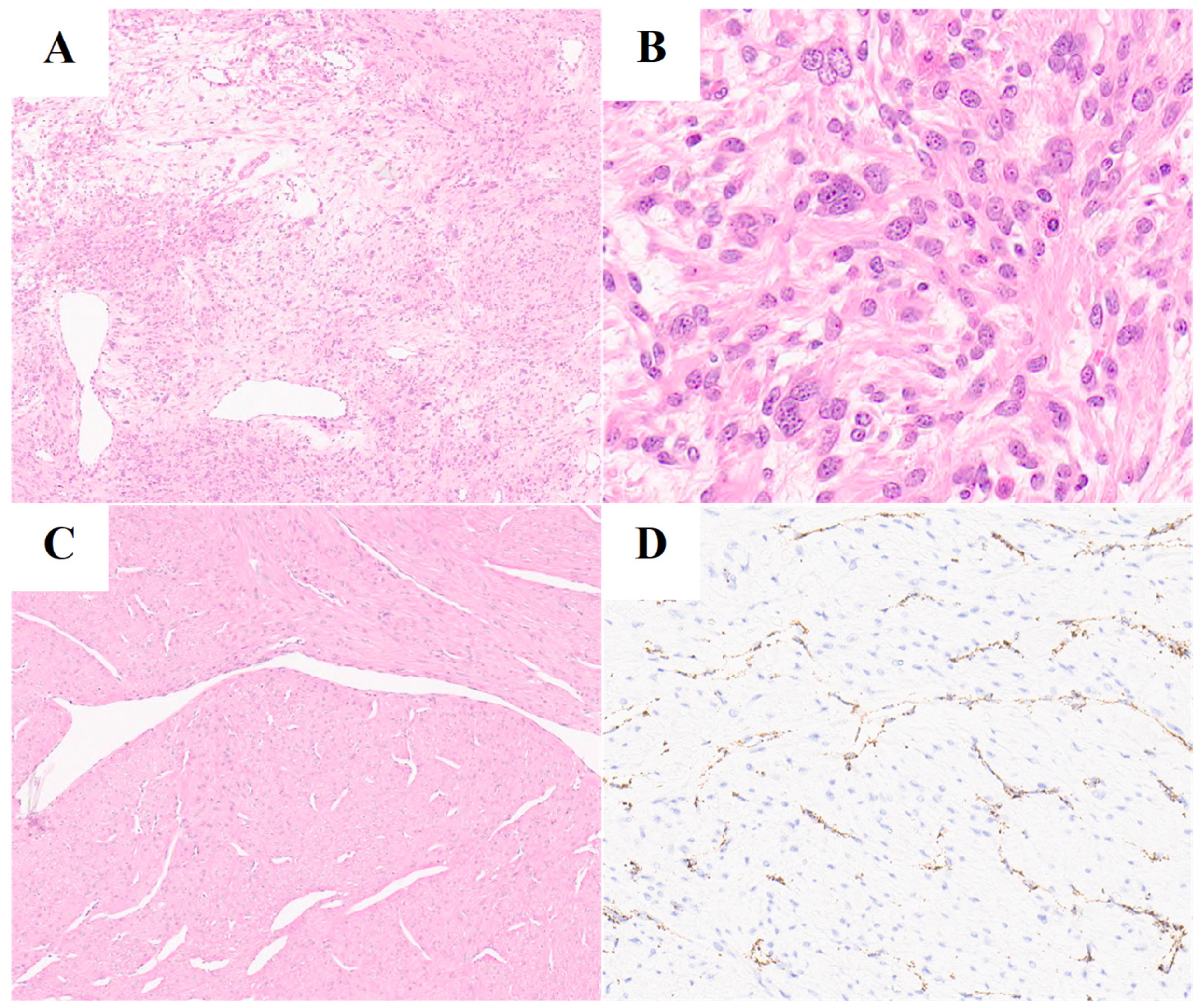
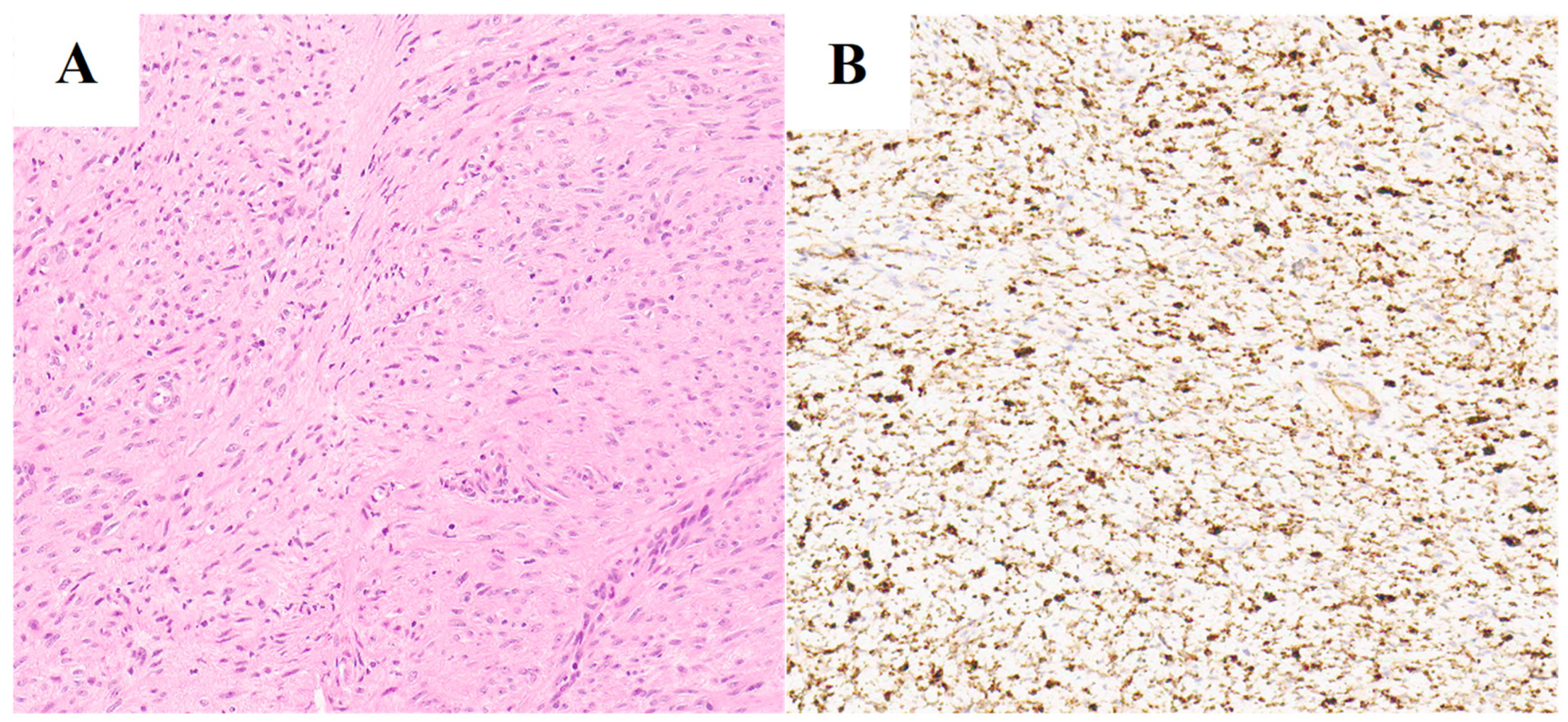
Overlapping with the diagnosis of LBN is the category of fumarate hydratase-(FH)-deficient leiomyomata (Figure 1). These tumours are defined by biallelic inactivation of the fumarate hydratase (FH) gene, and while the majority are sporadic, a subset are associated with a germline pathogenic variant in one copy of the FH gene [8,9,10]. FH-deficient leiomyomata show characteristic morphologic features, although not all of these features are present/well-developed in all cases [11]. They include alveolar-type edema, hemangiopericytoma-like (“staghorn”) blood vessels, bizarre nuclear atypia, eosinophilic macronucleoli with perinucleolar halos, and cytoplasmic eosinophilic globules [12]. Identification of FH-deficient leiomyomata is primarily of importance to identify those patients who may harbour germline mutations in the FH gene, resulting in the hereditary leiomyomatosis and renal cell carcinoma (HLRCC) syndrome, which is associated with an elevated risk of aggressive renal cell carcinomas [13]. Loss of FH by IHC is specific, but not entirely sensitive, for pathogenic FH variants, and aberrant accumulation of 2-succinocysteine (2-SC) by IHC may represent a more sensitive marker [13,14]. In settings where access to these markers is limited, it is reasonable to suggest the possibility of FH-deficient leiomyoma and recommend consideration of germline testing on the basis of characteristic histologic features alone.
While the majority of FH-deficient smooth muscle neoplasms are leiomyomata, a small subset of leiomyosarcomas have also been found to be associated with FH deficiency [15]. The finding of FH deficiency in a smooth muscle tumour does not, on its own, therefore, imply benign behaviour, and assessment for the traditional morphologic features of leiomyosarcoma in addition to the expected cytologic atypia (ex. coagulative necrosis, elevated mitotic rate) remains obligatory.
Finally, apoplectic leiomyomata, which are usually associated with supra-physiologic progestin levels (either due to pregnancy or exogenous progestin therapy), are characterized by zones of stellate necrosis with a peri-necrotic increase in mitotic activity, potentially resulting in misclassification as STUMP or leiomyosarcoma [16]. Accurate clinical history, and careful assessment for nuclear atypia and mitotic activity away from foci of incipient necrosis, can help to distinguish between these progestin-exposed leiomyomata and more worrisome neoplasms [17].
Leiomyosarcomas are the malignant counterparts of uterine leiomyomata. Conventional spindle cell leiomyosarcomas possess two or more of the following morphologic features: moderate-to-severe nuclear atypia, coagulative tumour cell necrosis, and ≥10 mitotic figures per 2.4 mm [1,3]. Epithelioid leiomyosarcomas are defined as those with ≥50% of tumour cells showing epithelioid cytology, with round to ovoid nuclei [18]. The current (5th edition) of the World Health Organization (WHO) classification of Female Genital Tumours defines an epithelioid leiomyosarcoma as possessing any one of (a) moderate-to-severe cytologic atypia, (b) coagulative tumour cell necrosis, or (c) ≥4 mitotic figures per 2.4 mm [1]. However, a relatively large series of 81 epithelioid leiomyosarcomas by Chapel et al. suggested that raising the threshold for malignancy to at least two of these criteria being required would not sacrifice diagnostic sensitivity [18]. In the event of continued diagnostic uncertainty after applying these three classic histologic biomarkers, a higher risk of aggressive behaviour may also be seen in epithelioid smooth muscle tumours that measure ≥5 cm in size or demonstrate infiltrative borders, lymphovascular invasion or atypical mitotic figures [18]. Finally, myxoid leiomyosarcomas possess abundant myxoid stroma and frequently demonstrate infiltrative borders, although the degree of cytologic atypia may be attenuated relative to conventional leiomyosarcomas [1,19]. Myxoid smooth muscle tumours have the lowest threshold for malignancy, with a diagnosis of myxoid leiomyosarcoma requiring only one or more of (a) moderate-to-severe cytologic atypia, (b) coagulative tumour cell necrosis, (c) >1 mitotic figure per 2.4 mm2, or (d) infiltrative borders [1].
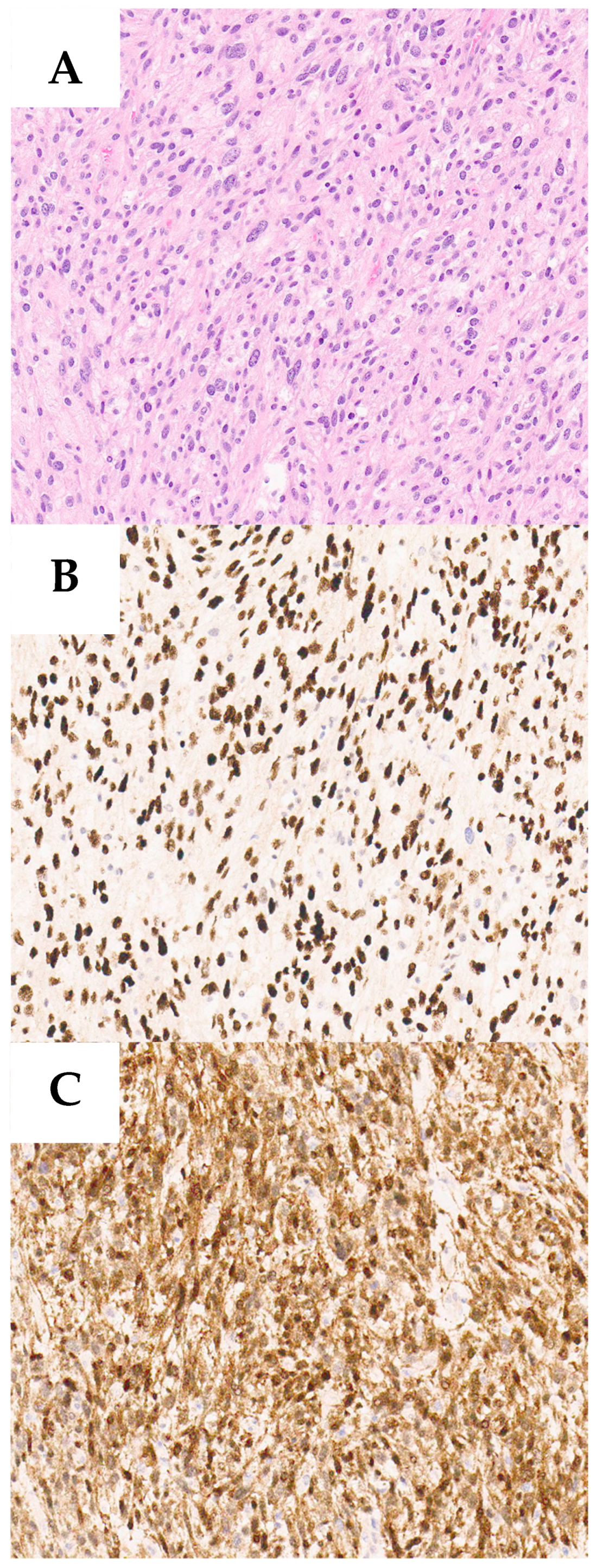
Frequently mutated genes in leiomyosarcoma include TP53, RB1, ATRX and PTEN [20,21]. In a landmark study, Momeni-Boroujeni et al. found that 94% of uterine leiomyosarcomas harboured pathogenic alterations in at least one of TP53, RB1, ATRX, PTEN, CDKN2A and MDM2, with 80% showing alterations in at least two [20]. Leveraging the presence of immunohistochemical correlates for each of these genes, they proposed a two-stage IHC algorithm for diagnosing malignancy in morphologically challenging uterine smooth muscle tumours [20]. In the first stage, tumours are tested with p53, Rb, PTEN and ATRX IHC. If fewer than two abnormal patterns are seen, tumours are also tested with DAXX, MTAP (as a surrogate for CDKN2A deletion), and MDM2 IHC (Figure 2). Rare STUMPs and leiomyomata showed single IHC abnormalities involving ATRX, p53 or Rb, but none showed two or more abnormalities using the complete panel [20]. Overall, the authors established that using a threshold of ≥2 IHC abnormalities, this algorithm performed with a sensitivity of 92% and a specificity of 100% for distinguishing between uterine leiomyosarcomas and leiomyomata/STUMP. However, in a validation study by Rehman et al., the authors reported that a threshold of ≥2 IHC abnormalities was only 79% sensitive for the diagnosis of leiomyosarcoma, although they did find that tumours with fewer than two abnormalities showed lower average mitotic rate and nuclear atypia [22]. Another pitfall in the use of these biomarkers is in the setting of LBN, which, despite their often striking cytologic atypia, are associated with benign clinical outcomes [6]. LBNs frequently harbour variants in either FH or TP53 [23]. Alves-Vale et al. applied the IHC algorithm to a cohort of 29 LBN and 30 FH-deficient leiomyomata and found that 28.6% showed aberrant alterations in ≥2 IHC markers [7]. One of the tumours in this study, harbouring a single IHC alteration, recurred as a leiomyosarcoma, calling into question whether at least some LBNs represent precursors of leiomyosarcoma, but more data are needed to determine the clinicopathologic significance of abnormal IHC patterns in these tumours [7]. Moreover, Fontanges et al. found that 24% of LBN harboured concurrent TP53 and RB1 deletions [24]. The LBNs in this study also showed an elevated genomic index relative to conventional leiomyomata, particularly in those with TP53 alterations, and the genomic index overlapped with that of leiomyosarcomas and aggressive STUMPs [24]. Nevertheless, using RNA-based transcriptomic (Nanocind) profiling, all tested LBNs were classified as having a low risk of recurrence [24]. Taken together, while more research is needed on the biologic potential of LBNs, these findings highlight the limitations of purely molecular-based risk stratification protocols and emphasize the importance of integrating molecular findings with traditional histopathologic diagnostic criteria [24].
Some molecular alterations are enriched in leiomyosarcomas with variant histology. A subset of epithelioid leiomyosarcomas, often with variable rhabdoid morphology, is defined by fusions involving PGR, with the most common partner being NR4A3 [25]. Similarly, a subset of myxoid leiomyosarcomas possesses oncogenic fusions involving PLAG1 [26]. NR4A3 fusions, involving PGR but also CARMN, ACT and SLC05A1, have been described in both myxoid-predominant and epithelioid-predominant leiomyosarcomas [27]. However, PLAG1 fusions have also been described in uterine sarcomas without histologic or immunophenotypic evidence of smooth muscle differentiation, emphasizing the importance of correlating molecular results with other pathologic parameters in making a definitive diagnosis [28].
One of the key challenges in the histopathologic assessment of uterine smooth muscle tumours is how to best manage the STUMP category, as it is important to perform definitive surgical treatment on tumours with an elevated risk of malignancy while avoiding unnecessary hysterectomies, particularly in those patients desiring preserved fertility. Between 0 and 28% of STUMPs have been reported to recur, depending on the study cohort and criteria used to assign a STUMP diagnosis [1,29,30]. The development of risk stratification models is hampered by heterogeneity in the application of diagnostic criteria for STUMP and the relative rarity of the diagnosis, precluding the assembly of sufficiently large cohorts [30]. For example, even amongst sub-specialized gynecologic pathologists, the interobserver variability for determining the presence/absence of tumour cell necrosis in smooth muscle neoplasia is only moderate [31]. Confounding factors such as treatment with tranexamic acid or progestogens, as well as pregnancy, can also result in unusual patterns of necrosis, such as those seen in apoplectic leiomyomas, further impairing reproducible assessment of tumour necrosis as a prognostic factor [16,32]. Moreover, STUMP, as defined by mitotic rate, is controversial due to the limited number of reported cases and the apparently benign behaviour of cases reported in the WHO classification of Female Genital Tumours [1]. A study by Li et al. suggested that a revised threshold of 21 mitotic figures per 10 high-power fields could be used to separate out cases with malignant potential, as all of the recurrent cases in the study had at least 22 mitotic figures per 10 HPF [33]. Gupta et al. analyzed a cohort of 22 STUMP and proposed infiltrative margins, atypical mitoses and LVI as supplementary histologic features predictive of aggressive behaviour, to be integrated with the traditional parameters of necrosis, mitotic count and cytologic atypia [34]. Lower ER and PR expression, diffuse expression of p16, abnormal p53 immunoreactivity and loss of ATRX or DAXX by IHC have all been reported to portend higher recurrence risk in STUMPs, although they have not been incorporated into formal diagnostic algorithms and their employment by pathologists remains heterogeneous [20,35,36,37,38]. Genomic profiling using comprehensive array-genomic hybridization (cGH) analysis represents another promising technique for the prognostic stratification of STUMPs, with the goal of separating out indolent tumours that can be managed with fertility-preserving techniques and those requiring definitive surgery [39]. Croce et al. used cGH to calculate a genomic index for smooth muscle tumours based on the total number of DNA copy number alterations and the number of involved chromosomes [39,40]. Using a genomic index threshold of 10, they were able to separate out a biologically indolent group of smooth muscle tumours (including leiomyomata and a subset of STUMPs) from a biologically aggressive subset (including a subset of STUMPs and all leiomyosarcomas in their cohort), suggesting that histologically classified STUMPs with a genomic index < 10 may be treatable with fertility-preserving surgery alone, although carefully-designed clinical studies are required [29]. Another way to diminish the proportion of tumours classified as STUMP is to carefully exclude morphologic mimics. With the advent of more routine immunohistochemical and molecular interrogation of uterine mesenchymal neoplasms, studies have found that a subset of cases historically designated as STUMP in fact represent fusion-defined tumours such as IMT [41].
In addition to the prognostic stratification of STUMPs, another task inspiring significant research has been the prognostic stratification of early-stage leiomyosarcoma, for which adjuvant therapy is not routinely recommended but which is still associated with relapse and metastasis in a substantial percentage of cases [42]. Traditional pathologic parameters informing prognosis include larger size and higher mitotic count [43]. Davidson et al. found that higher progesterone receptor expression by IHC was associated with improved overall survival in a cohort of 147 stage I tumours [44]. Dermawan et al. established a three-tier genomic risk stratification model for uterine leiomyosarcomas, wherein high-risk tumours harbour concurrent TP53 mutations and either amplification of chromosome 20q or ATRX mutation, low-risk tumours contain none of these alterations, and intermediate-risk tumours harbour one [44]. Loss of ATRX or DAXX by immunohistochemistry, which is associated with the alternative lengthening of telomeres (ALT) phenotype, has also been shown to be associated with worse prognosis in early-stage uterine leiomyosarcomas [38,45]. Another poor prognostic factor in leiomyosarcomas is histologic dedifferentiation, in which a subset of the neoplasm demonstrates highly atypical, pleomorphic nuclei and loses the immunophenotypic expression of smooth muscle markers [46]. Dedifferentiated leiomyosarcomas tend to show more complex genomes than conventional leiomyosarcomas and are associated with alterations of TP53, RB1 and ATRX based on IHC surrogates [46,47]. Chapel et al. devised a prognostic risk score for stage I uterine leiomyosarcomas that incorporates tumour cell necrosis, a mitotic rate of >25 per 2.4 mm2, atypical mitotic figures, lymphovascular invasion, and abutment of the uterine serosa as poor prognostic factors [48]. Other IHC markers with demonstrated prognostic significance in leiomyosarcoma include stathmin and insulin-like growth factor II messenger ribonucleic acid binding protein 3 (IMP3), although these markers are not widely available for clinical use [49,50]. In terms of more advanced modalities of molecular classification, using a cGH genomic index threshold of 35 stratifies stage I leiomyosarcomas into indolent and aggressive prognostic risk groups [39]. Meanwhile, the Complexity INdex in SARComas (CINSARC) Nanocind signature assesses the expression of 67 genes relevant to sarcoma tumorigenesis and can be used to predict the risk of recurrence and death in uterine leiomyosarcoma [51]. Further research is needed to determine whether more widespread use of these advanced modalities can be used to stratify patients for adjuvant therapy [29].
Given the limited efficacy of chemotherapy in the setting of advanced/metastatic leiomyosarcoma, there is an urgent need to identify the predictive biomarkers that would unlock potentially more efficacious targeted therapies [52]. While uterine leiomyosarcomas are not traditionally graded (unlike their soft tissue analogues), tumours that are “lower-grade” and have morphologic features overlapping with STUMP criteria show better response to endocrine therapy [53]. Another potentially predictive biomarker of emerging interest in the management of uterine leiomyosarcomas is the homologous recombination deficiency (HRD) phenotype [54]. In a dedicated study of HR pathway alterations in tumours from 509 patients with uterine sarcomas, Nasioudis et al. found pathogenic alterations in 28.2% of tumour samples, with the highest prevalence of alterations being found in leiomyosarcomas (36%) [52]. Choi et al. similarly found a characteristic HRD mutation signature in approximately 25% of leiomyosarcomas [55]. Interestingly, alterations in the HR pathway may be associated with a worse prognosis in patients with uterine leiomyosarcoma [56]. Hensley et al. found homozygous deletion of BRCA2 in 5% of uterine leiomyosarcomas, and this was associated with partial response to poly (ADP-ribose) polymerase (PARP) inhibition [21]. In a study of uterine sarcomas harbouring pathogenic BRCA1/2 alterations, 86% of the tumours were leiomyosarcomas, and of the 13 treated with PARP inhibitors in the recurrent or metastatic setting, six showed at least partial response, although this was more common in the setting of combined treatment with chemotherapy than with PARPi monotherapy [57].

2.2. Endometrial Stromal Sarcoma

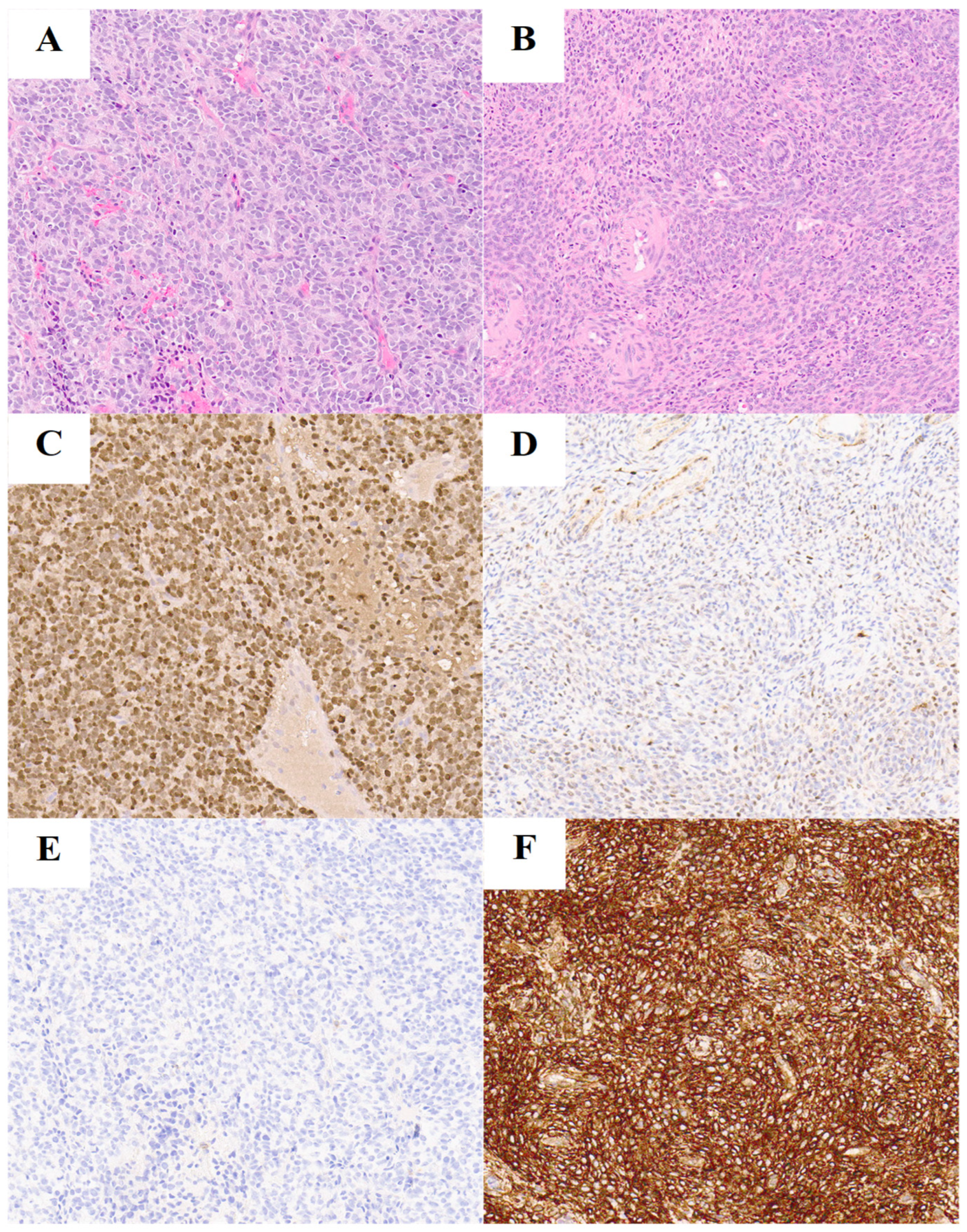
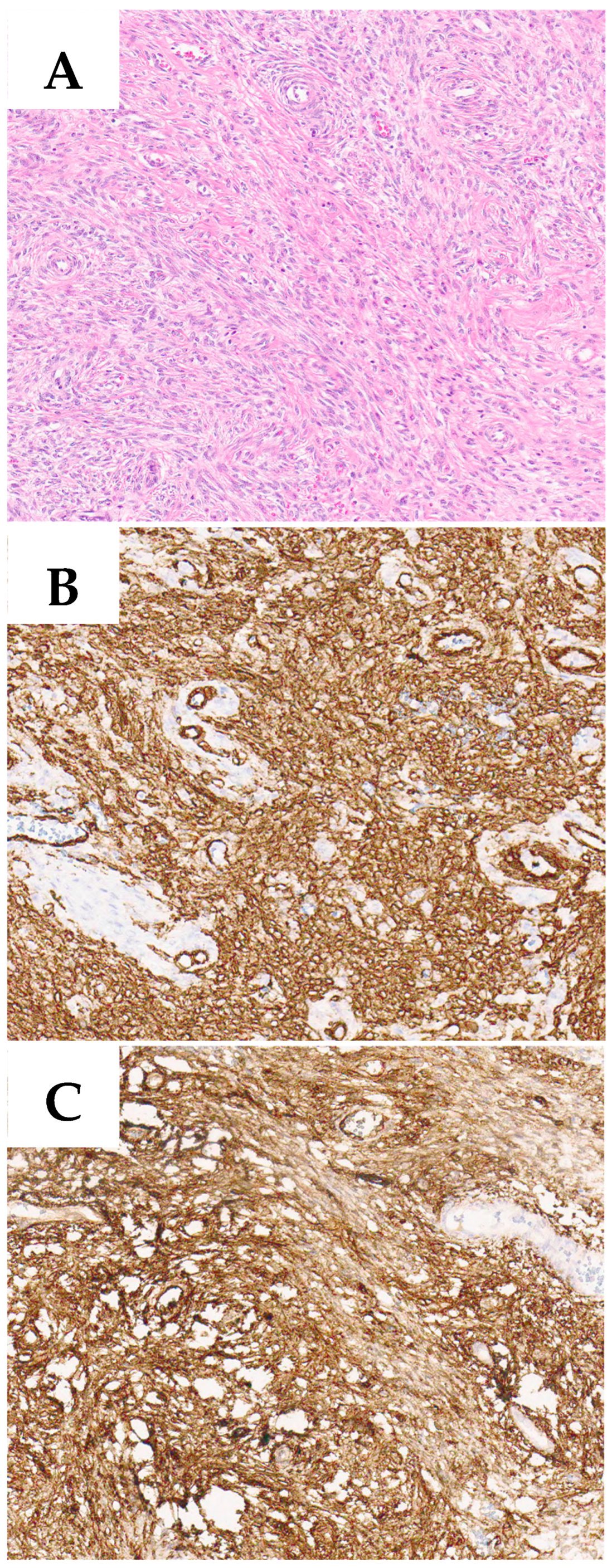
The family of endometrial stromal sarcomas is broadly divided into low-grade endometrial stromal sarcoma (LG-ESS) and high-grade endometrial stromal sarcoma (HG-ESS). LG-ESS is characterized by bland, spindle cells with minimal cytoplasm that show variable amounts of peri-arteriolar whorling [1]. Tumours can show multiple different variant architectures, including sex cord-like differentiation, smooth muscle differentiation, fibromyxoid architecture, glandular and pseudopapillary changes and ossifying fibromyxoid tumour-like morphology with metaplastic bone formation [58,59]. Well-circumscribed tumours without lymphovascular invasion and with ≤3 myometrial projections < 3 mm in size are classified as endometrial stromal nodules, although these neoplasms share the same molecular drivers as LG-ESS and exist on a morphologic spectrum [1]. Low-grade endometrial stromal sarcoma is typically positive for CD10, ER and PR by immunohistochemistry, with occasional focal expression of smooth muscle markers (Figure 3) [60]. IFITM1 is a more specific marker for distinction from cellular leiomyomas, which represent a key morphologic mimicker, although it has been reported to be less sensitive than CD10 and may also be expressed in inflammatory myofibroblastic tumour [60,61,62]. Approximately 75% of low-grade endometrial stromal sarcomas harbour recurrent fusions [63,64]. Characteristic fusions seen in LG-ESS include JAZF1::SUZ12, BRD8::PHF1, JAZF1::PHF1, EPC1::SUZ12, EPC1::PHF1, and MEAF6::PHF1. Fusion-negative and fusion-positive tumours show similar histomorphology and immunophenotype [65]. A relatively newly described tumour is the so-called endometrial stromal tumour with extensive whorling and CTNNB1 translocation [66]. As the name suggests, these tumours are characterized by tight whorls of spindled-to-epithelioid cells which resemble those of an LG-ESS, with associated small vessels and variably hyalinized, myxoid and fibroblastic stroma [66,67,68]. They are characterized by CTNNB1 rearrangements and show diffuse, nuclear expression of beta-catenin [66,67]. They may demonstrate focal sex cord-like architecture and immunoexpression [67]. While showing a unique morphology and molecular pathogenesis, evidence from DNA methylation clustering suggests it may be reasonable to classify them as a variant of LG-ESS [66].
While these tumours have a lower propensity for metastasis and recurrence than HG-ESS, a subset does show aggressive behaviour. In a large study of LG-ESS by Devins et al., only cervical stromal involvement (but no other microscopic features) was an independent predictor of increased recurrence risk [59]. In the advanced and metastatic setting, LG-ESS can be treated with systemic endocrine therapy [54]. ESR1 hotspot mutations predict resistance to aromatase inhibitor therapy in LG-ESS and appear to correlate with histologic high-grade transformation and reduced ER expression by IHC [54,69]. Consideration may be given to treatment with the selective estrogen receptor degrader fulvestrant in this setting [54].
High-grade endometrial stromal sarcoma (HG-ESS) represents a continuously evolving entity. Recurrent oncogenic fusions defining this entity include YWHAE::NUTM2, ZC3H7B::BCOR and BCOR internal tandem duplication (ITD) [70,71]. YWHAE::NUTM2-associated HG-ESS are composed of round cells with relatively monomorphic cytologic atypia and conspicuous mitotic activity, although a subset is associated with a histologically low-grade component showing variably fibromyxoid architecture, reinforcing the importance of adequate tissue sampling [71,72]. BCOR-rearranged tumours are usually composed of relatively monomorphic spindle cells arranged in an abundant myxoid stroma [70,73,74]. Fusions involving BCORL1, a transcriptional corepressor which is homologous to BCOR, are associated with similar clinicopathologic features to BCOR-rearranged HG-ESS [75]. Other partner genes for BCOR/BCORL include L3MBTL2, NUTM2G, RALGPS1, MAP7D2, RGAG1, ING3, NUGGC, KMT2D, CREBBP, EP300, LPP, JAZF1 and EPC1 [73,76]. Separate are those tumours with BCOR internal tandem duplication, which are also often associated with myxoid stroma [73,74]. Diffuse expression of cyclin D1 and/or BCOR is a supportive IHC finding for the diagnosis of HG-ESS, regardless of the underlying fusion [70,77]. Unlike myxoid smooth muscle tumours, HG-ESS are usually negative for smooth muscle markers, while they show reduced ER and PR immunoreactivity relative to LG-ESS [70]. Other reported fusions in HG-ESS include EPC1::KDM2B and EPC1::SUZ12 [78,79]. KDM2B-rearranged tumours in particular, which have been reported with EPC1, EP400 and CITED1 as fusion partners, appear to represent a unique subtype of HG-ESS based on RNA expression profiling [80]. Furthermore, BCOR-rearranged tumours frequently display CDK4 and MDM2 amplification, which may provide a therapeutic target for CDK4/6 inhibitors such as palbociclib [42,76,81,82].
The distinction between LG-ESS and HG-ESS can be challenging in the setting of discordant morphologic and molecular findings. LG-ESS can undergo high-grade transformation, demonstrating high-grade histologic features, relative attenuation of hormone receptor immunoexpression, and clinically aggressive behaviour, despite the presence of canonical LG-ESS fusions such as JAZF1::SUZ12 or EPC1::PHF1 [83]. Conversely, Devins et al. reported on a series of tumours with exclusively low-grade morphology that harboured YWHAE::NUTM2 fusions, a subset of which demonstrated aggressive clinical behaviour [71]. The authors advocated routine cyclin D1 and CD10 immunohistochemistry in all morphologically low-grade ESS, as in their series they found that the immunoprofile was more in keeping with a HG-ESS, thereby prompting confirmatory molecular testing [71]. A similar phenomenon has been reported in a tumour harbouring the ZC3H7B::BCOR fusion, which showed strong immunoexpression of CD10, ER and PR and only focal cyclin D1, in addition to bland cytomorphology, despite harbouring a disease-defining HG-ESS fusion [84]. Taken together, it appears that a diagnosis of HG-ESS is most appropriate in the setting of either a morphologically high-grade tumour or an HG-ESS-defining oncogenic fusion (even in the setting of low-grade histology).
Transcriptomic profiling has been used to explore prognostic factors in high-grade endometrial stromal sarcomas, although this represents a very new avenue of investigation, and further research is needed. Interestingly, Hojny et al. found that HG-ESS without a confirmed oncogenic fusion tended to show clustering with undifferentiated uterine sarcomas and had a poorer prognosis than HG-ESS with confirmed oncogenic fusions [63].

2.3. Adenosarcoma

Uterine adenosarcomas are biphasic neoplasms characterized by phyllodiform architecture, periglandular stromal condensation, hypercellular stroma with variable cytologic atypia and increased mitotic activity [1]. They are considered to be malignant mesenchymal neoplasms with an entrapped, benign glandular component, although a secondary carcinoma can independently arise in the glandular component in rare cases [1].
Adenosarcomas can be classified as low-grade or high-grade on the basis of cytologic atypia [85,86]. Tumours with ≥25% pure sarcomatous component are classified as having sarcomatous overgrowth [85,86]. High-grade cases and/or those with sarcomatous overgrowth are associated with increased copy number variations and other markers of genomic complexity and poor prognosis relative to low-grade cases [85,87,88]. Pathogenic variants in TP53 are preferentially associated with high-grade histology [52,85,86]. Adenosarcomas have a heterogeneous molecular profile. Recurrent gene alterations include DICER1, PIK3CA, PTEN and KRAS mutations; MDM2/CDK4 amplification; BAP1 deletion, and ESR1-NCOA3 fusions [52,86,89]. DICER1-altered adenosarcoma, particularly in the setting of heterologous, rhabdomyosarcomatous differentiation, represents a potential diagnostic pitfall that could result in the erroneous diagnosis of embryonal rhabdomyosarcoma; adequate sampling to identify conventional areas of adenosarcoma architecture is key in making the distinction [90].
Uterine polyps harbouring atypical features that are insufficient to warrant a diagnosis of adenosarcoma have been described and were shown to have a benign clinical course [91]. However, a subset of these atypical polyps harbours similar molecular profiles to adenosarcomas, suggesting they may exist as underdeveloped precursors of adenosarcoma [92].

2.4. Uterine Tumour Resembling Ovarian Sex Cord Tumour

Uterine tumour resembling ovarian sex cord tumour (UTROSCT), as the name suggests, can show several different patterns of sex cord-like architecture, including nests, sheets, cords, tubules and trabeculae, with multiple patterns frequently coexisting in the same tumour [93,94,95,96]. The lesional cells can be epithelioid or spindled, and a subset can have rhabdoid morphology [93,94]. They are typically cytologically bland, although clinically malignant cases can show more nuclear atypia and mitotic activity [1]. Adequate sampling and molecular testing can help distinguish UTROSCT from an LG-ESS with sex cord differentiation [1].
By immunohistochemistry, UTROSCTs tend to show variable expression of epithelial, smooth muscle and sex cord markers [97,98]. While they can express FOXL2 by IHC, they are invariably negative for pathogenic variants in FOXL2 and DICER1 that are frequently seen in adult granulosa cell tumours and Sertoli–Leydig cell tumours [99,100].
Next-generation sequencing plays an important role in both the diagnosis and prognostication of UTROSCT. Approximately 70% of UTROSCTs harbour recurrent fusions [63,96]. Fusions typically consist of NCOA1, NCOA2 or NCOA3 as the 3′ partner and either ESR1 or GREB1 as the 5′ partner [96,98,100,101]. ESR1::NCOA2/3 fusions have also been described in adenosarcomas, highlighting the importance of integrating molecular findings with histology in reaching a diagnosis [86,102].
Rarer fusions include ESR1::CITED2, GTF2A1::NCOA2, GREB1::CTNNB1 and GREB1::SS18 [95,97,103,104,105,106]. Tumours with GREB1-rearrangements have been shown in multiple studies to have a propensity for more aggressive clinical behaviour [95,97,103,107]. Moreover, GREB1-rearranged tumours tend to show less well-developed sex cord-like architecture and more prominent whorled architecture [95,103]. However, a subset of ESR1::NCOA2 fusion-tumours with rhabdoid morphology were reported by Bennett et al. to display aggressive behaviour with local recurrence, suggesting that all UTROSCTs should be treated as having malignant potential regardless of the defining fusion [108]. Furthermore, Flídrova et al. found that while ESR1::NCOA3 UTROSCTs cluster together based on RNA expression profile, tumours with GREB1 and/or NCOA2 as fusion partners show a different expression profile [96]. While there has been some debate regarding the relationship between GREB1 and ESR1-rearranged tumours given these findings, the current consensus is to consider them as variants under the same UTRSOCT umbrella [109].
In a series of 34 UTROSCTs with long-term follow-up, necrosis and increased mitotic rate were independent histologic predictors of aggressive behaviour [110]. Boyraz et al., meanwhile, classified UTROSCTs as malignant on the basis of having more than three of the following features: size > 5 cm, at least moderate cytologic atypia, ≥3 mitotic figures per 10 high-power fields, infiltrative borders and necrosis [93]. Finally, higher programmed death-ligand 1 (PD-L1) expression in stromal tumour infiltrating lymphocytes has been reported as a poor prognostic marker in UTROSCTs, although more research is needed regarding a potential role for immunotherapy in this setting [111].

2.5. PEComa

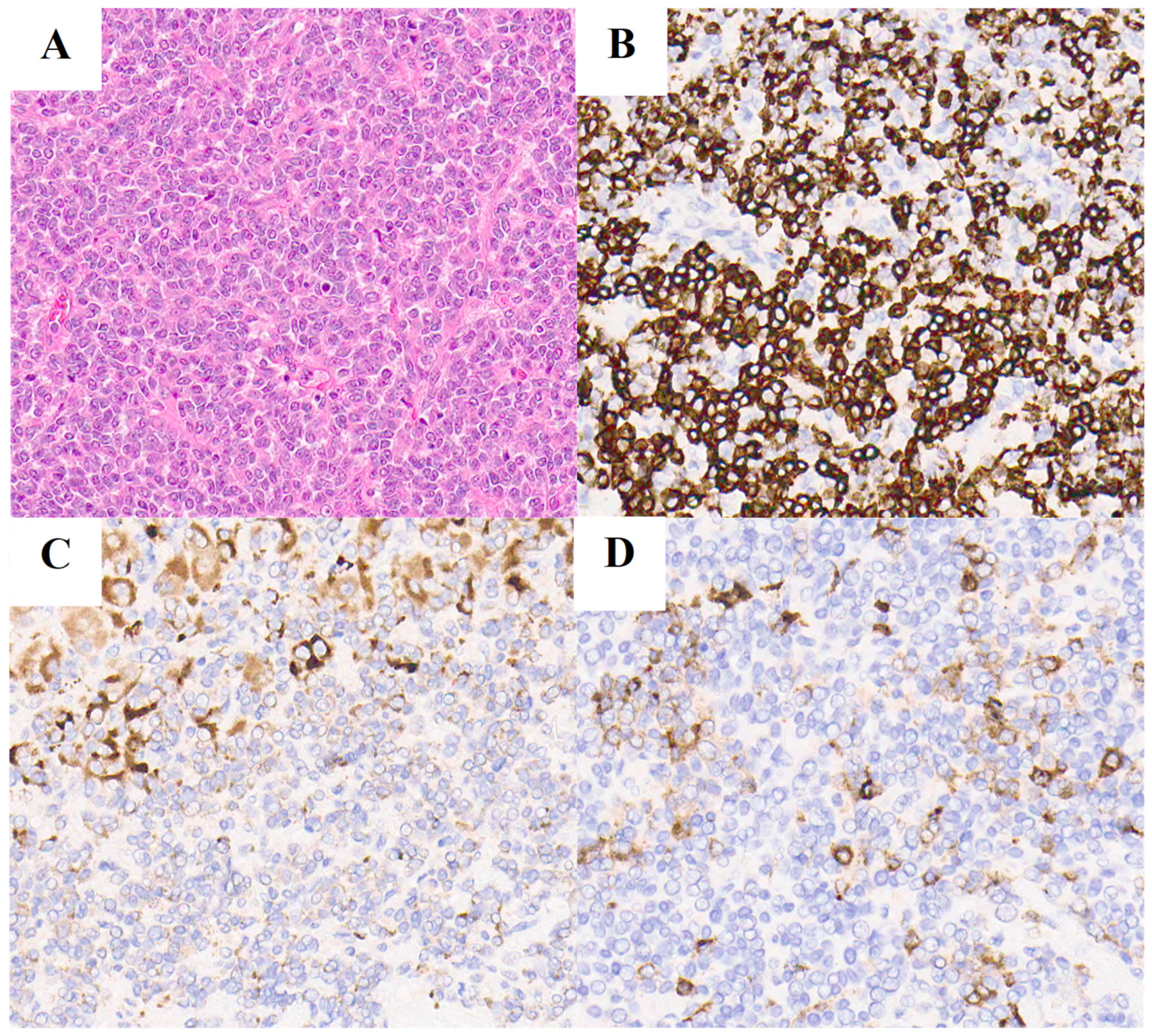
Classically, uterine PEComas are composed of epithelioid cells with abundant, clear-to-eosinophilic, granular cytoplasm, sometimes admixed with a variable spindle cell component [112,113]. Abundant, thin-walled vessels are invariably described, and in a subset of cases, tumour cells appear to radiate from these vessels [112,113]. By immunohistochemistry, PEComas variably express markers of smooth muscle and melanocytic differentiation (Figure 4). HMB45 is more sensitive than melan-A, although it can often be focal [112,114]. Cathepsin K is also usually positive [112]. Two main molecular pathways define the majority of uterine PEComas. The first involves mutations in genes of the mammalian target of rapamycin (mTOR) signalling pathway, such as TSC1, TSC2 and FLCN [115,116]. Approximately 10–15% of uterine PEComas are associated with germline variants in TSC1/TSC2, which result in the tuberous sclerosis complex [115]. In a minority of cases, PEComas are driven by oncogenic TFE3 fusions [117,118]. These cases are typically associated with more nested architecture and clear cytoplasm, without reliable smooth muscle marker expression by IHC [112,118]. Other rare, oncogenic events described in PEComas include HTR4-ST3GAL1 and RASSF1-PDZRN3 fusions, and fusions involving RAD51B [113,117]. A subset of smooth muscle tumours also displays aberrant melanocytic differentiation by immunohistochemistry. Consequently, Selenica et al. recommend reserving a PEComa diagnosis for tumours with supportive histologic features and positivity for at least two melanocytic markers, with molecular testing playing a role in the case of equivocal findings [119]. Intriguingly, Chiang et al. have reported a series of uterine sarcomas harbouring both TSC2 mutations and JAZF1::SUZ12 fusions [120]. These cases demonstrated epithelioid (PEComa-like) and spindled (LG-ESS-like) morphology, with expression of CD10, ER and PR, as well as variable expression of melanocytic markers and cathepsin K [120]. Rare cases of tumours harbouring features of both leiomyosarcoma and PEComa have also been reported [121,122].
Prognostication of uterine PEComas is based predominantly on histologic biomarkers. The original gynecologic-specific risk stratification algorithm for PEComas classified tumours as malignant if they harboured four or more of the following criteria: size ≥ 5 cm, severe cytologic atypia, necrosis, lymphovascular invasion, and a mitotic rate of >1 per 50 high-power fields [114]. A large series by Bennett et al. revised these criteria by requiring only ≥3 features to improve sensitivity for capturing malignant cases, although they also emphasize that even tumours with fewer than three “high-risk” features can show aggressive behaviour, warranting classification of all PEComas as either “malignant” or of “uncertain malignant potential”, thereby eliminating the category of “benign” PEComa [113]. Malignant PEComas frequently possess additional oncogenic mutations in genes including TP53, RB1, ATRX and BRCA2, in addition to canonical mTOR pathway alterations [116,123,124].
Treatment of PEComas with mTOR inhibitors such as sirolimus is recommended in the advanced or metastatic setting. In a tissue-agnostic study of malignant PEComas, which included eight uterine PEComas, nearly 40% of patients experienced a response to treatment with the mTOR inhibitor nab-sirolimus, with the response being more likely in those patients with TSC2 mutations [125] (Table 2).

2.6. Inflammatory Myofibroblastic Tumour

Uterine inflammatory myofibroblastic tumours (IMTs) typically present with some combination of three main histopathologic patterns: spindle cells arranged in a myxoid stroma, fascicular spindle cells imparting a smooth muscle architecture, and a relatively paucicellular architecture composed of spindle cells embedded in hyalinized collagen [126,127]. While a lymphoplasmacytic infiltrate is common, it can be subtle or even completely absent, leading to possible misclassification as a smooth muscle neoplasm in the absence of ALK immunohistochemistry or molecular testing [128,129,130]. There is variable expression of smooth muscle markers and CD10 by immunohistochemistry [131].
>90% of IMTs harbour oncogenic fusions in the ALK gene. Immunohistochemistry for the ALK protein is a highly sensitive and specific marker for ALK rearrangements, with all ALK-rearranged IMTs and no morphologic mimickers showing ALK immunoreactivity in a study of 274 uterine mesenchymal tumours by Mohammad et al. (Figure 5) [132]. Reported partners for ALK include DCTN1, CASC15, ACTG2, THBS1, IGFBP5, DES, SEC31, TPM3, TIMP3, TNS1 and NRP2 [127,129,133,134,135,136]. TIMP3 and THBS1 appear to be preferential partners in the setting of pregnancy-associated IMTs, which tend to occur in the setting of medically complicated pregnancies but which, on their own, show clinically indolent behaviour [137].
A minority of IMTs harbour oncogenic fusions involving non-ALK genes, including ROS1 [138]. IHC for ROS1 is a sensitive proxy for ROS1 rearrangements [138,139]. Reported ROS1 fusion partners include SORBS1, TIMP3, FN, TFG and NUDCD3 [133,134,139,140,141]. Non-ALK or ROS fusions reported in IMT include SORBS1::RET, IGFBP5::PDGRRB, THBS1::INSR and ETV6::NTRK3 [140,142,143].
In a clinicopathologic risk score devised by Ladwig et al., the authors stratified IMTs into three risk groups, with age > 45 years, size ≥ 5 cm, mitotic rate ≥ 4 per 10 HPF, and infiltrative borders all being assigned one point. Tumours with 0 points did not recur or metastasize, whereas 21% with 1–2 points and all tumours with 3–4 points showed clinically malignant behaviour [144]. The authors advocated incorporating this risk score with targeted molecular testing for additional oncogenic drivers for tumours in the intermediate risk category [144]. Tumours with malignant behaviour tend to harbour additional pathogenic variants and/or copy number alterations, in addition to oncogenic fusions [144]. From a molecular standpoint, CDKN2A/2B deletions and associated aberrant p16 expression are preferentially seen in clinically aggressive cases [145]. In a study of 30 IMTs, Devins et al. found that all cases with malignant behaviour demonstrated abnormal p16 immunoexpression (either <1%, >90% or, in one case, subclonal loss), while all benign tumours showed patchy staining in 20–80% of cells [146]. The authors recommend routine p16 IHC on all uterine IMTs and highlight its utility in further risk-stratifying tumours classified as intermediate using the risk score developed by Ladwig et al. [146].
Related to IMT are the more clinically aggressive epithelioid inflammatory myofibroblastic sarcomas, which are also associated with recurrent ALK fusions (typically with RANBP2 or RRBP1 as the fusion partner) but with more epithelioid cytomorphology and a distinct, peri-nuclear ALK IHC staining pattern [140,147]. While these tend to occur disproportionately in males, they have been described in females as well in an intra-abdominal setting [147].
While diagnosis of IMT is important at baseline for the purpose of appropriate surgical management and surveillance, it is particularly critical in the recurrent/metastatic setting, as there is evidence to support a role for targeted therapy with anti-ALK tyrosine kinase inhibitors such as crizotinib [42,129,135,148,149].

2.7. Undifferentiated Uterine Sarcoma

Undifferentiated uterine sarcoma (UUS) is a prototypical “wastebasket” entity and is, by definition, a diagnosis of exclusion [150]. It can present in monomorphic and pleomorphic forms, and is characterized by a lack of histologic, immunophenotypic or molecular evidence of a specific lineage of differentiation. With the growing capacity to identify disease-defining oncogenic events, the proportion of uterine sarcomas diagnosed as UUS appears to be decreasing (particularly within the monomorphic subgroup) [151]. Indeed, in a study by Cotzia et al., the majority of tumours initially diagnosed as UUS in their cohort harboured recurrent gene fusions such as YWHAE-NUTMB2 and BCOR rearrangements that would warrant reclassification as HG-ESS [152]. Adequate sampling is also required to exclude an adenosarcoma or carcinosarcoma with extensive sarcomatous overgrowth [1].
While UUS are invariably aggressive, there is evidence that using a mitotic index cutoff of 25 mitotic figures per 10 high-power fields can identify a relatively more indolent subgroup [153,154].

2.8. Novel Diagnostic Entities Defined by Molecular Alteration

A number of new entities have been defined in recent years on the basis of recurrent oncogenic fusions or mutations and correlation with a shared morphologic spectrum.
KAT6B/A::KANSL1 fusion sarcomas show morphologic features overlapping between low-grade endometrial stromal sarcomas and smooth muscle neoplasms (Figure 6) [155,156,157]. They are characterized by monomorphic, round-to-spindled cells with minimal cytoplasm, prominent spiral arterioles, variable whorling architecture and stromal hyalinization [155,158]. The majority of cases are positive for ER, PR, CD10 and SMA, with some also showing immunoreactivity for desmin and caldesmon [158]. In one series, 6/9 patients presented with advanced, recurrent or metastatic disease [158]. Another series of 12 patients with KAT6B::KANSL1 fusion sarcomas showed a 33.3% recurrence rate [155]. Transcriptomic clustering analysis places them close to, but distinct from, LG-ESS, and recognition of this entity is critical as its relatively bland morphology belies its potential for aggressive behaviour [155,157]. Aggressive cases tend to show additional oncogenic hits, including mutations in TP53, RB1, and PTEN, amongst other genes [157].
NTRK-rearranged sarcomas preferentially arise in the uterine cervix rather than the corpus, and show morphologic overlap with fibrosarcomas, with monomorphic spindle cells arranged in sheets, fascicles, storiform, or herringbone architecture [159,160,161,162,163,164]. Approximately 70% possess a lymphocytic infiltrate, and many display myxoid stroma [159,164]. Reported fusion partners include STRN, LMNA, TPM3, NTRP1, SPECC1L, and EML4 [159,160,164,165,166]. They typically co-express S100 and CD34 by immunohistochemistry [159,164]. Pan-Trk immunohistochemistry is highly sensitive, but not specific, for disease-defining NTRK fusions, as it can also be expressed in LG-ESS, HG-ESS, UUS and LMS [160,161,164,167,168]. A subset of NTRK-rearranged sarcomas shows aggressive clinical behaviour [159,164]. Factors predicting aggressive behaviour include elevated mitotic rate (≥8 per 10 HPF), necrosis, lymphovascular invasion and NTRK3 as the oncogenic fusion partner [163]. NTRK-rearranged tumours may show response to TRK-inhibitors such as larotrectinib [164].
In addition to tumours with NTRK fusions, a growing number of uterine sarcomas with other tyrosine kinase fusions have been described [169]. Sarcomas with COL1A1-PDGFB fusions show variably “fibrosarcomatous” histomorphology and are positive for CD34, but not S100 or pan-Trk, by immunohistochemistry [160,169,170,171]. Other examples include sarcomas harbouring CIQTNF1-ERBB4, FGFR1-TACC1, and RET-SPECC1L fusions [169,172,173,174]. While suggestive histologic features such as those described above can prompt up-front molecular testing to aid in definitive diagnostic classification, the possibility of variant morphologies suggests that pathologists should have a low threshold to sequence unusual mesenchymal tumours in the advanced and metastatic/recurrent settings [2]. Identification of these fusions is critical as they may represent treatment targets with tyrosine kinase inhibitors such as imatinib or selpercatinib [42,170,175,176].
Sarcomas harbouring MEIS1-NCOA2 fusions are another rare, novel subtype of fusion-defined uterine sarcoma with a propensity for local recurrence, although these tumours more commonly arise in the pelvic cavity rather than the uterine corpus [177,178]. The neoplastic cells are typically monomorphic and display variably storiform/whorling or solid architecture, with variable myxoid stroma and associated microcystic architecture [178]. They may be misdiagnosed as LG-ESS due to overlapping morphologic features [179]. In one reported case, the tumour showed conspicuous adipocytic metaplasia [180]. The immunohistochemical profile is non-specific, and the diagnosis is made on the basis of identifying the defining fusion [178]. Rare distant metastases have been reported [181].
SMARCA4-deficient uterine sarcomas are defined by SMARCA4 variants and associated loss of BRG1 staining by immunohistochemistry (although in a minority of cases they may be related to SMARCB1 variants and associated loss of INI1 by IHC) [182]. They are composed of atypical epithelioid cells with variable rhabdoid morphology and are associated with an invariably dismal prognosis [183]. The differential diagnosis includes undifferentiated endometrial carcinoma, which can show similar histomorphology and is frequently associated with mismatch repair deficiency [182]. Interestingly, one case with pathogenic variants in SMARCA4 demonstrated overlapping features of adenosarcoma, pure sarcoma and undifferentiated carcinoma [184]. Accurate diagnosis of SMARCA4-deficient uterine sarcomas is important in order to rule out germline variants in SMARCA4 and to open opportunities for histology-agnostic trials of agents such as EZH2 and CDK4/6 inhibitors that are being studied to target tumours with SWI/SNF abnormalities [182].
A subset of aggressive uterine sarcomas harbour oncogenic fusions involving RAD51B, with reported fusion partners including OPHN1, NUDT3, HMGA2, PDDC1 and CEP170 [113,185,186]. Chang et al. described seven uterine sarcomas with RAD51B fusions, which showed variably spindle cell morphology reminiscent of leiomyosarcoma, tumours with predominantly myxoid stroma, a predominantly epithelioid tumour suggestive of PEComa, and cases with high-grade, pleomorphic, undifferentiated morphology [186]. The mitotic rate was invariably >10 per 10 HPF [186]. The tumours showed variably myomelanocytic differentiation by immunohistochemistry [186]. The group of RAD51B-rearranged sarcomas includes tumours classified as RAD51B-rearranged sarcomas per se, as well as PEComas and leiomyosarcomas, reinforcing the challenge of determining when a molecular finding should be considered disease-defining rather than forming a subtype of a histologically defined entity [185]. Importantly, RAD51B fusions have also been reported in leiomyomas, and the finding of a RAD51B fusion alone does not warrant classification of a tumour as a sarcoma without the correct histological context [187].
Another group of recently described, clinically malignant tumours is characterized by variably fibrosarcomatous morphology, coexpression of S100 and SOX10 by immunohistochemistry, and mutations in ERBB2/ERBB3 [188,189]. Finally, FOXO1-rearranged uterine sarcomas (morphologically and immunophenotypically distinct from alveolar rhabdomyosarcoma) have recently been described, although more research is needed on their clinical significance [190].

2.9. Miscellaneous Tumours

Sarcomas that classically present in other body sites but are vanishingly rare in the uterus include alveolar soft part sarcoma, rhabdomyosarcoma (including embryonal, alveolar and pleomorphic subtypes), angiosarcoma, Ewing sarcoma, and liposarcoma [190,191,192,193,194,195,196,197].

3. Conclusions

The relationship between histology, immunohistochemistry and molecular profiling continues to evolve as pathologists and oncologists seek to optimally classify, prognosticate and treat uterine mesenchymal tumours. Key challenges remain that are largely related to the rarity of many of these entities. The rarity of many tumours means that the largest published series to date often include a disproportionate number of referred-in-consultation cases and cases subjected to next-generation sequencing only in the advanced or metastatic setting, which may overestimate malignant potential. Moreover, the relative rarity of uterine mesenchymal tumours makes the development and clinical validation of targeted therapies and companion diagnostics challenging. However, the growing popularity of tissue-agnostic trials based solely on the presence of a defined molecular alteration represents a promising avenue, and current National Comprehensive Cancer Network (NCCN) guidelines recommend consideration of treatments such as larotrectinib for NTRK-rearranged sarcomas, sirolimus for PEComas and selpercatinib for RET-rearranged sarcomas, amongst others, on the basis of such studies [42]. Finally, it is acknowledged that access to ancillary biomarkers remains uneven based on jurisdiction. While IHC and NGS provide key insights and may be obligatory for the diagnosis of certain molecularly defined tumours, as noted above, careful assessment of histologic parameters remains central to the diagnosis of uterine mesenchymal neoplasms and can be used to appropriately stratify prognosis and guide treatment in a substantial percentage of cases.

4. Future Directions

As the cost of performing multi-omic characterization of tumours continues to fall and access continues to democratize, it is anticipated that novel insights will continue to be generated into optimal prognostic stratification of uterine sarcomas and new therapeutic options will be discovered. In addition to cGH and transcriptomic profiling (vide supra), DNA methylation profiling represents one particularly useful technique for the diagnosis and prognosis of uterine sarcomas, which, as of now, remains restricted to predominantly research use due to cost and technical challenges. For example, Kommoss et al. used methylation profiling to confirm the relationship between tumours with BCOR-ITD, tumours with rare BCOR/BCORL1 rearrangements and “conventional” HG-ESS with ZC3H7B::BCOR and YWHAE::NUTM2 fusions, providing additional molecular validation for their classification as HG-ESS [73,198]. Methylation profiling can also be used for prognostic stratification within tumour classes. Using array-based global methylation profiling, Felicelli et al. were able to stratify uLMS into two different, clinically relevant prognostic subgroups [199]. Additional use cases for methylation analysis will likely be developed in the coming years, given the powerful insights that can be gleaned from this technique.
Finally, artificial intelligence (AI) tools will likely play an increasingly central role in all aspects of pathologic assessment of uterine mesenchymal tumours, although the field is underdeveloped compared with the use of AI tools in more common tumours such as breast and prostate carcinomas, given the relative paucity of well-annotated datasets. However, early research in this area is promising. For example, a deep learning algorithm has been developed which is capable of prognostically stratifying uterine STUMPs based on assessment of morphology alone [200]. Machine learning can also be applied to large molecular datasets, as was done by Khamaiseh et al. when they used AI-assisted transcriptome profiling to identify a relatively indolent subset of uLMS with transcriptomic features similar to leiomyomata [201].
Developments in molecular pathology have transformed the diagnostic assessment of uterine mesenchymal neoplasms over the past decade, and as new technologies enter mainstream use in the diagnostic laboratory, the coming decade holds great promise for the development of novel prognostic and predictive biomarkers, although leveraging this data effectively will require nuanced analysis and effective multi-disciplinary collaboration.

Author Contributions

J.D. and R.E.Z. participated in the literature review and drafting of the manuscript. All authors have read and agreed to the published version of the manuscript.

Funding

This research received no external funding.

Institutional Review Board Statement

Not applicable.

Informed Consent Statement

Not applicable.

Data Availability Statement

No new data were generated for the purpose of this article, as this is a review article. Figure 1, Figure 2, Figure 3, Figure 4, Figure 5 and Figure 6 are generated from images from the archives of the corresponding author’s institution and are used to illustrate the histomorphology and immunophenotype of FH-deficient leiomyoma, leiomyosarcoma, endometrial stromal sarcoma, PEComa, inflammatory myofibroblastic tumour, and KAT6A/B-rearranged sarcoma, respectively. Data sharing is not applicable to this article.

Acknowledgments

The authors would like to thank Sara Pakbaz, Tatjana Terzic, and Michael Chen for contributing case images for the manuscript figures. All the figures were prepared by the corresponding author from original archival material.

Conflicts of Interest

The authors declare no conflicts of interest.

References

  1. WHO Classification of Tumours Editorial Board. WHO Classification of Female Genital Tumours, 5th ed.; International Agency for Research on Cancer: Lyon, France, 2020. [Google Scholar]
  2. Ray-Coquard, I.; Casali, P.G.; Croce, S.; Fennessy, F.M.; Fischerova, D.; Jones, R.; Sanfilippo, R.; Zapardiel, I.; Amant, F.; Blay, J.-Y.; et al. ESGO/EURACAN/GCIG guidelines for the management of patients with uterine sarcomas. Int. J. Gynecol. Cancer 2024, 34, 1499–1521. [Google Scholar] [CrossRef]
  3. Nucci, M.R.; Webster, F.; Croce, S.; George, S.; Howitt, B.E.; Ip, P.P.C.; Lee, C.-H.; Rabban, J.T.; Soslow, R.A.; van der Griend, R.; et al. Data set for reporting of Uuerine malignant and potentially malignant mesenchymal tumors: Recommendations from the International Collaboration on Cancer Reporting (ICCR). Int. J. Gynecol. Pathol. 2022, 41, S44–S63. [Google Scholar] [CrossRef] [PubMed]
  4. Pérot, G.; Croce, S.; Ribeiro, A.; Lagarde, P.; Velasco, V.; Neuville, A.; Coindre, J.-M.; Stoeckle, E.; Floquet, A.; MacGrogan, G.; et al. MED12 alterations in both human benign and malignant uterine soft tissue tumors. PLoS ONE 2012, 7, e40015. [Google Scholar] [CrossRef]
  5. Mäkinen, N.; Kämpjärvi, K.; Frizzell, N.; Bützow, R.; Vahteristo, P. Characterization of MED12, HMGA2, and FH alterations reveals molecular variability in uterine smooth muscle tumors. Mol. Cancer 2017, 16, 101. [Google Scholar] [CrossRef] [PubMed]
  6. Croce, S.; Young, R.H.; Oliva, E. Uterine leiomyomas with bizarre nuclei: A clinicopathologic study of 59 cases. Am. J. Surg. Pathol. 2014, 38, 1330–1339. [Google Scholar] [CrossRef]
  7. Alves-Vale, C.; Truffaux, N.; Velasco, V.; Azmani, R.; Alame, M.; Rebier, F.; Mayeur, L.; Leger, Y.; Hostein, I.; Soubeyran, I.; et al. Challenges of a tailored immunohistochemistry algorithm for uterine leiomyosarcoma: An integrated analysis of leiomyomas with bizarre nuclei and fumarate hydratase (FH) deficiency. Histopathology 2025, 86, 1147–1158. [Google Scholar] [CrossRef]
  8. Harrison, W.J.; Andrici, J.; Maclean, F.; Madadi-Ghahan, R.; Farzin, M.; Sioson, L.; Toon, C.W.; Clarkson, A.; Watson, N.; Pickett, J.; et al. Fumarate hydratase-deficient uterine leiomyomas occur in both the syndromic and sporadic settings. Am. J. Surg. Pathol. 2016, 40, 599–607. [Google Scholar] [CrossRef]
  9. Miettinen, M.; Felisiak-Golabek, A.; Wasag, B.; Chmara, M.; Wang, Z.; Butzow, R.; Lasota, J. Fumarase-deficient uterine leiomyomas: An immunohistochemical, molecular genetic, and clinicopathologic study of 86 cases. Am. J. Surg. Pathol. 2016, 40, 1661–1669. [Google Scholar] [CrossRef]
  10. McHenry, A.; Monsrud, A.; Pors, J.; Folkins, A.; Longacre, T.; Hodan, R. Prospective fumarate hydratase tumor predisposition syndrome screening in patients with uterine smooth muscle tumors: Age, morphology, fumarate hydratase/S-(2-succino) cysteine immunohistochemistry, and germline testing. Am. J. Surg. Pathol. 2025, 49, 315–327. [Google Scholar] [CrossRef]
  11. Szczepanski, J.M.; Chapel, D.B.; Huang, T.; Pham, T.; Mannan, R.; Mehra, R.; Sciallis, A.P.; Tomlins, S.; Skala, S.L.; Udager, A.M. The morphologic and molecular heterogeneity of fumarate hydratase-deficient leiomyomas: Integrative molecular profiling of uterine smooth muscle tumors with histologic feature correlation. Int. J. Gynecol. Pathol. 2025, 44, 385–397. [Google Scholar] [CrossRef] [PubMed]
  12. Li, H.; Yang, W.; Tu, X.; Yu, L.; Huang, D.; Cheng, Y.; Chang, B.; Tang, S.; Ge, H.; Bao, L.; et al. Clinicopathological and molecular characteristics of fumarate hydratase-deficient uterine smooth muscle tumors: A single-center study of 52 cases. Hum. Pathol. 2022, 126, 136–145. [Google Scholar] [CrossRef]
  13. Chan, E.; Rabban, J.T.; Mak, J.; Zaloudek, C.; Garg, K. Detailed morphologic and immunohistochemical characterization of myomectomy and hysterectomy specimens from women with hereditary leiomyomatosis and renal cell carcinoma syndrome (HLRCC). Am. J. Surg. Pathol. 2019, 43, 1170–1179. [Google Scholar] [CrossRef] [PubMed]
  14. Joseph, N.M.; Solomon, D.A.; Frizzell, N.; Rabban, J.T.; Zaloudek, C.; Garg, K. Morphology and immunohistochemistry for 2SC and FH aid in detection of fumarate hydratase gene aberrations in uterine leiomyomas from young patients. Am. J. Surg. Pathol. 2015, 39, 1529–1539. [Google Scholar] [CrossRef] [PubMed]
  15. Chapel, D.B.; Sharma, A.; Maccio, L.; Bragantini, E.; Zannoni, G.F.; Yuan, L.; Quade, B.J.; Parra-Herran, C.; Nucci, M.R. Fumarate hydratase and S-(2-succinyl)-cysteine immunohistochemistry shows evidence of fumarate hydratase deficiency in 2% of uterine leiomyosarcomas: A cohort study of 348 tumors. Int. J. Gynecol. Pathol. 2023, 42, 120–135. [Google Scholar] [CrossRef]
  16. Bennett, J.A.; Lamb, C.; Young, R.H. Apoplectic leiomyomas: A morphologic analysis of 100 cases highlighting unusual features. Am. J. Surg. Pathol. 2016, 40, 563–568. [Google Scholar] [CrossRef]
  17. Boyd, C.; McCluggage, W.G. Unusual morphological features of uterine leiomyomas treated with progestogens. J. Clin. Pathol. 2011, 64, 485–489. [Google Scholar] [CrossRef] [PubMed]
  18. Chapel, D.B.; Nucci, M.R.; Quade, B.J.; Parra-Herran, C. Epithelioid leiomyosarcoma of the uterus: Modern outcome-based appraisal of diagnostic criteria in a large institutional series. Am. J. Surg. Pathol. 2022, 46, 464–475. [Google Scholar] [CrossRef]
  19. Parra-Herran, C.; Schoolmeester, J.K.; Yuan, L.; Dal Cin, P.; Fletcher, C.D.M.; Quade, B.J.; Nucci, M.R. Myxoid leiomyosarcoma of the uterus: A clinicopathologic analysis of 30 cases and review of the literature with reappraisal of its distinction from other uterine myxoid mesenchymal neoplasms. Am. J. Surg. Pathol. 2016, 40, 285–301. [Google Scholar] [CrossRef]
  20. Momeni-Boroujeni, A.; Yousefi, E.; Balakrishnan, R.; Riviere, S.; Kertowidjojo, E.; Hensley, M.L.; Ladanyi, M.; Ellenson, L.H.; Chiang, S. Molecular-based immunohistochemical algorithm for uterine leiomyosarcoma diagnosis. Mod. Pathol. 2023, 36, 100084. [Google Scholar] [CrossRef]
  21. Hensley, M.L.; Chavan, S.S.; Solit, D.B.; Murali, R.; Soslow, R.; Chiang, S.; Jungbluth, A.A.; Bandlamudi, C.; Srinivasan, P.; Tap, W.D.; et al. Genomic landscape of uterine sarcomas defined through prospective clinical sequencing. Clin. Cancer Res. 2020, 26, 3881–3888. [Google Scholar] [CrossRef]
  22. Rehman, A.; Nelson, G.S.; Nohr, E.; Lee, C.H.; Köbel, M. Utility of morphologic risk stratification modeling and immunohistochemical surrogates for key molecular alterations in uterine leiomyosarcoma. Int. J. Gynecol. Pathol. 2026, 45, 18–27. [Google Scholar] [CrossRef]
  23. Bennett, J.A.; Weigelt, B.; Chiang, S.; Selenica, P.; Chen, Y.-B.; Bialik, A.; Bi, R.; Schultheis, A.M.; Lim, R.S.; Ng, C.K.Y.; et al. Leiomyoma with bizarre nuclei: A morphological, immunohistochemical and molecular analysis of 31 cases. Mod. Pathol. 2017, 30, 1476–1488. [Google Scholar] [CrossRef]
  24. Fontanges, Q.; Dubos, P.; Lesluyes, T.; Laizet, Y.; Velasco, V.; Melendez, B.; D’Haene, N.; Oliva, E.; Young, R.H.; Mayeur, L.; et al. Genomic profile analysis of leiomyomas with bizarre nuclei and fumarate hydratase deficient leiomyomas: Strengths, weaknesses, and limitations of array-CGH interpretation. Genes Chrom. Cancer 2024, 63, e23229. [Google Scholar] [CrossRef] [PubMed]
  25. Chiang, S.; Samore, W.; Zhang, L.; Sung, Y.-S.; Turashvili, G.; Murali, R.; Soslow, R.A.; Hensley, M.L.; Swanson, D.; Dickson, B.C.; et al. PGR gene fusions identify a molecular subset of uterine epithelioid leiomyosarcoma with rhabdoid features. Am. J. Surg. Pathol. 2019, 43, 810–818. [Google Scholar] [CrossRef]
  26. Arias-Stella, J.A.; Benayed, R.; Oliva, E.; Young, R.H.; Hoang, L.N.; Lee, C.-H.; Jungbluth, A.A.; Frosina, D.; Soslow, R.A.; Antonescu, C.R.; et al. Novel PLAG1 Gene Rearrangement Distinguishes a Subset of Uterine Myxoid Leiomyosarcoma From Other Uterine Myxoid Mesenchymal Tumors. Am. J. Surg. Pathol. 2019, 43, 382–388. [Google Scholar] [CrossRef]
  27. Momeni-Boroujeni, A.; Mullaney, K.; DiNapoli, S.E.; Leitao, M.M., Jr.; Hensley, M.L.; Kotabi, N.; Allison, D.H.R.; Park, K.J.; Antonescu, C.R.; Chiang, S. Expanding the Spectrum of NR4A3 Fusion-Positive Gynecologic Leiomyosarcomas. Mod. Pathol. 2024, 37, 100474. [Google Scholar] [CrossRef] [PubMed]
  28. Michal, M.; Agaimy, A.; Croce, S.; Mechtersheimer, G.; Gross, J.M.; Xing, D.; Bell, D.A.; Gupta, S.; Mosaieby, E.; Martínek, P.; et al. PLAG1-Rearranged Uterine Sarcomas: A Study of 11 Cases Showing a Wide Phenotypical Spectrum Not Limited to Myxoid Leiomyosarcoma-Like Morphology. Mod. Pathol. 2024, 37, 100552. [Google Scholar] [CrossRef]
  29. Croce, S.; Chibon, F. Molecular prognostication of uterine smooth muscle neoplasms: From CGH array to CINSARC signature and beyond. Genes Chrom. Cancer 2011, 60, 129–137. [Google Scholar] [CrossRef] [PubMed]
  30. Momeni-Boroujeni, A.; Nucci, M.R.; Chapel, D.B. Risk Stratification of Uterine Smooth Muscle Tumors: The Role of Morphology, Immunohistochemistry, and Molecular Testing. Adv. Anat. Pathol. 2025, 32, 44–56. [Google Scholar] [CrossRef]
  31. Lim, D.; Alvarez, T.; Nucci, M.R.; Gilks, B.; Longacre, T.; Soslow, R.A.; Oliva, E. Interobserver Variability in the Interpretation of Tumor Cell Necrosis in Uterine Leiomyosarcoma. Am. J. Surg. Pathol. 2013, 37, 650–658. [Google Scholar] [CrossRef]
  32. Ip, P.P.C.; Lam, K.-W.; Cheung, C.-L.; Yeung, M.C.-W.; Pun, T.-C.; Chan, Q.K.-Y.; Cheung, A.N.-Y. Tranexamic acid-associated necrosis and intralesional thrombosis of uterine leiomyomas: A clinicopathologic study of 147 cases emphasizing the importance of drug-induced necrosis and early infarcts in leiomyomas. Am. J. Surg. Pathol. 2007, 31, 1215–1224. [Google Scholar] [CrossRef]
  33. Li, T.; Wang, Y.; Zhang, L.; Li, J.; Yu, X.; Ning, Y.; Zhao, C. Uterine Spindle Cell Smooth Muscle Tumor of Uncertain Malignant Potential with Mitotic Figures Greater Than or Equal to 15/10 High-Power Fields: A Clinicopathologic Study of 20 Patients with a Rare Tumor. Int. J. Surg. Pathol. 2025, 33, 1349–1359. [Google Scholar] [CrossRef]
  34. Gupta, M.; Laury, A.L.; Nucci, M.R.; Quade, B.J. Predictors of adverse outcome in uterine smooth muscle tumours of uncertain malignant potential (STUMP): A clinicopathological analysis of 22 cases with a proposal for the inclusion of additional histological parameters. Histopathology 2018, 73, 284–298. [Google Scholar] [CrossRef] [PubMed]
  35. Borella, F.; Cosma, S.; Ferraioli, D.; Ray-Coquard, I.; Chopin, N.; Meeus, P.; Cockenpot, V.; Valabrega, G.; Scotto, G.; Turinetto, M. Clinical and Histopathological Predictors of Recurrence in Uterine Smooth Muscle Tumor of Uncertain Malignant Potential (STUMP): A Multicenter Retrospective Cohort Study of Tertiary Centers. Ann. Surg. Oncol. 2022, 29, 8302–8314. [Google Scholar] [CrossRef]
  36. Leitao, M.M.; Hensley, M.L.; Barakat, R.R.; Aghajanian, C.; Gardner, G.J.; Jewell, E.L.; O’Cearbhaill, R.; Soslow, R.A. Immunohistochemical expression of estrogen and progesterone receptors and outcomes in patients with newly diagnosed uterine leiomyosarcoma. Gynecol. Oncol. 2012, 124, 558–562. [Google Scholar] [CrossRef] [PubMed]
  37. Travaglino, A.; Raffone, A.; Gencarelli, A.; Neola, D.; Oliviero, D.A.; Alfano, R.; Campanino, M.R.; Cariati, F.; Zullo, F.; Mollo, A.; et al. p53, p16 and ki67 as immunohistochemical prognostic markers in uterine smooth muscle tumors of uncertain malignant potential (STUMP). Pathol. Res. Pract. 2021, 226, 153592. [Google Scholar] [CrossRef] [PubMed]
  38. Slatter, T.L.; Hsia, H.; Samaranayaka, A.; Sykes, P.; Clow, W.B.; Devenish, C.J.; Sutton, T.; Royds, J.A.; Ip, P.P.; Cheung, A.N.; et al. Loss of ATRX and DAXX expression identifies poor prognosis for smooth muscle tumours of uncertain malignant potential and early stage uterine leiomyosarcoma. J. Pathol. Clin. Res. 2015, 1, 95–105. [Google Scholar] [CrossRef]
  39. Croce, S.; Ducoulombier, A.; Ribeiro, A.; Lesluyes, T.; Noel, J.-C.; Amant, F.; Guillou, L.; Stoeckle, E.; Devouassoux-Shisheboran, M.; Penel, N.; et al. Genome profiling is an efficient tool to avoid the STUMP classification of uterine smooth muscle lesions: A comprehensive array-genomic hybridization analysis of 77 tumors. Mod. Pathol. 2018, 31, 816–828. [Google Scholar] [CrossRef]
  40. Croce, S.; Ribeiro, A.; Brulard, C.; Noel, J.-C.; Amant, F.; Stoeckle, E.; Devouassoux-Shisheborah, M.; Floquet, A.; Arnould, L.; Guyon, F.; et al. Uterine smooth muscle tumor analysis by comparative genomic hybridization: A useful diagnostic tool in challenging lesions. Mod. Pathol. 2015, 28, 1001–1010. [Google Scholar] [CrossRef]
  41. Devereaux, K.A.; Kunder, C.A.; Longacre, T.A. ALK-rearranged Tumors Are Highly Enriched in the STUMP Subcategory of Uterine Tumors. Am. J. Surg. Pathol. 2019, 43, 64–74. [Google Scholar] [CrossRef]
  42. Abu-Rustum, N.R.; Campos, S.M.; Amarnath, S.; Arend, R.; Barber, E.; Bradley, K.; Brooks, R.; Chino, J.; Chon, H.S.; Crispens, M.A. NCCN Guidelines Insights: Uterine Neoplasms, Version 3.2025. J. Natl. Compr. Cancer Netw. 2025, 23, 284–291. [Google Scholar] [CrossRef]
  43. Dermawan, J.K.; Chiang, S.; Singer, S.; Jadeja, B.; Hensley, M.L.; Tap, W.D.; Movva, S.; Maki, R.G.; Antonescu, C.R. Developing Novel Genomic Risk Stratification Models in Soft Tissue and Uterine Leiomyosarcoma. Clin. Cancer Res. 2024, 30, 2260–2271. [Google Scholar] [CrossRef]
  44. Davidson, B.; Kjaereng, M.L.; Forsund, M.; Danielsen, H.E.; Kristensen, G.B.; Abeler, V.M. Progesterone Receptor Expression Is an Independent Prognosticator in FIGO Stage I Uterine Leiomyosarcoma. Am. J. Clin. Pathol. 2016, 145, 449–458. [Google Scholar] [CrossRef]
  45. Liau, J.-Y.; Tsai, J.-H.; Jeng, Y.-M.; Lee, J.-C.; Hsu, H.-H.; Yang, C.-Y. Leiomyosarcoma with alternative lengthening of telomeres is associated with aggressive histologic features, loss of ATRX expression, and poor clinical outcome. Am. J. Surg. Pathol. 2015, 39, 236–244. [Google Scholar] [CrossRef]
  46. Chapel, D.B.; Maccio, L.; Bragantini, E.; Zannoni, G.F.; Quade, B.J.; Parra-Herran, C.; Nucci, M.R. Dedifferentiated leiomyosarcoma of the uterus: A clinicopathologic and immunohistochemical analysis of 23 cases. Histopathology 2023, 82, 812–825. [Google Scholar] [CrossRef]
  47. Kousar, A.; Wald, A.I.; Heayn, M.; Cardillo, N.D.; Elishaev, E.; Bhargava, R. Dedifferentiated Leiomyosarcoma-morphology, Immunohistochemistry, and Molecular Findings of a Case and Review of Literature. Int. J. Gynecol. Pathol. 2024, 43, 264–270. [Google Scholar] [CrossRef]
  48. Chapel, D.B.; Sharma, A.; Lastra, R.R.; Maccio, L.; Bragantini, E.; Zannoni, G.F.; George, S.; Quade, B.J.; Parra-Herran, C.; Nucci, M.R. A novel morphology-based risk stratification model for stage I uterine leiomyosarcoma: An analysis of 203 cases. Mod. Pathol. 2022, 35, 794–807. [Google Scholar] [CrossRef]
  49. Davidson, B.; Skeie-Jensen, T.; Holth, A.; Hausladen, S. Stathmin is an Independent Prognostic Marker of Poor Outcome in Uterine Leiomyosarcoma. Int. J. Gynecol. Pathol. 2025, 44, 56–66. [Google Scholar] [CrossRef]
  50. Yasutake, N.; Ohishi, Y.; Taguchi, K.; Hiraki, Y.; Oya, M.; Oshiro, Y.; Mine, M.; Iwasaki, T.; Yamamoto, H.; Kohashi, K.; et al. Insulin-like growth factor II messenger RNA-binding protein-3 is an independent prognostic factor in uterine leiomyosarcoma. Histopathology 2018, 72, 739–748. [Google Scholar] [CrossRef]
  51. Croce, S.; Lesluyes, T.; Valle, C.; M’Hamdi, L.; Thebault, N.; Perot, G.; Stoeckle, E.; Noel, J.-C.; Fontanges, Q.; Devouassoux-Shisheboran, M.; et al. The Nanocind Signature Is an Independent Prognosticator of Recurrence and Death in Uterine Leiomyosarcomas. Clin. Cancer Res. 2020, 26, 855–861. [Google Scholar] [CrossRef]
  52. Nasioudis, D.; Latif, N.A.; Ko, E.M.; Cory, L.; Kim, S.H.; Martin, L.; Simpkins, F.; Giuntoli, R. Next generation sequencing reveals a high prevalence of pathogenic mutations in homologous recombination DNA damage repair genes among patients with uterine sarcoma. Gynecol. Oncol. 2023, 177, 14–19. [Google Scholar] [CrossRef]
  53. Sanfilippo, R.; Sbaraglia, M.; Fabbroni, C.; Croce, S.; Ray-Coquard, I.; Guermazi, F.; Paolini, B.; Blanc-Durand, F.; Lecesne, A.; Chiappa, V.; et al. Low-Grade Uterine Leiomyosarcoma Is Highly Sensitive to Hormonal Treatment. Clin. Cancer Res. 2023, 29, 4679–4684. [Google Scholar] [CrossRef]
  54. Chiang, S. Molecular Pathogenesis of Uterine Sarcomas: Mechanisms and Implications for Treatment. Ann. Rev. Pathol. Mech. Dis. 2026, 21, 239–267. [Google Scholar] [CrossRef]
  55. Choi, J.; Manzano, A.; Dong, W.; Bellone, S.; Bonazzoli, E.; Zammataro, L.; Yao, X.; Deshpande, A.; Zaidi, S.; Guglielmi, A.; et al. Integrated mutational landscape analysis of uterine leiomyosarcomas. Proc. Natl. Acad. Sci. USA 2021, 118, e2025182118. [Google Scholar] [CrossRef]
  56. Rosenbaum, E.; Jonsson, P.; Seier, K.; Qin, L.-X.; Chi, P.; Dickson, M.; Gounder, M.; Kelly, C.; Keohan, M.L.; Nacev, B.; et al. Clinical Outcome of Leiomyosarcomas With Somatic Alteration in Homologous Recombination Pathway Genes. JCO Precis. Oncol. 2020, 4, 1350–1360. [Google Scholar] [CrossRef]
  57. Rao, M.; Merrill, M.; Troxel, M.; Chiang, S.; Momeni-Boroujeni, A.; Hensley, M.L.; Schram, A.M. Retrospective Analysis of BRCA-Altered Uterine Sarcoma Treated With Poly(ADP-ribose) Polymerase Inhibitors. JCO Precis. Oncol. 2025, 9, e2400765. [Google Scholar] [CrossRef]
  58. O’Neill, N.; Sampson, J.; McCluggage, W.G. Uterine Mesenchymal Neoplasm With BRD8::PHF1 Fusion: Low-grade Endometrial Stromal Sarcoma or Uterine Ossifying Fibromyxoid Tumor? Int. J. Gynecol. Pathol. 2026, 45, 82–88. [Google Scholar] [CrossRef]
  59. Devins, K.M.; Mendoza, R.P.; Shahi, M.; Ghioni, M.; Alwaqfi, R.; Croce, S.; Pesci, A.; Ferreira, J.; Felix, A.; Espinosa, I.; et al. Low-Grade Endometrial Stromal Sarcoma: Clinicopathologic and Prognostic Features in a Cohort of 102 Tumors. Am. J. Surg. Pathol. 2025, 49, 977–991. [Google Scholar] [CrossRef]
  60. Flídrová, M.; Dundr, P.; Vránková, R.; Nĕmejcová, K.; Cibula, D.; Poncová, R.; Michalová, K.; Bouda, J.; Laco, J.; Ndukwe, M.; et al. Immunohistochemical analysis of 147 cases of low-grade endometrial stromal sarcoma: Refining the immunohistochemical profile of LG-ESS on a large, molecularly confirmed series. Virchows Arch. 2025, 486, 1289–1304. [Google Scholar] [CrossRef]
  61. Busca, A.; Gulavita, P.; Parra-Herran, C.; Islam, S. IFITM1 Outperforms CD10 in Differentiating Low-grade Endometrial Stromal Sarcomas From Smooth Muscle Neoplasms of the Uterus. Int. J. Gynecol. Pathol. 2018, 37, 372–378. [Google Scholar] [CrossRef]
  62. Bennett, J.A.; Croce, S.; Pesci, A.; Niu, N.; Van de Vijver, K.; Burks, E.J.; Burandt, E.; Zannoni, G.F.; Rabban, J.T.; Oliva, O. Inflammatory Myofibroblastic Tumor of the Uterus: An Immunohistochemical Study of 23 Cases. Am. J. Surg. Pathol. 2020, 44, 1441–1449. [Google Scholar] [CrossRef]
  63. Hojný, J.; Dvořák, J.; Vránkova, R.; Kendall Bártů, M.; Hájková, N.; Krkavcová, E.; Flídrová, M.; Stružinská, I.; Nĕmejcová, K.; Bouda, J.; et al. Decoding the Molecular Landscape of 262 Uterine Sarcomas: RNA-Seq Clustering of Endometrial Stromal Sarcomas, Uterine Tumors Resembling Ovarian Sex Cord Tumors, and Undifferentiated Uterine Sarcomas with Prognostic Insights. Lab. Investig. 2025, 105, 104198. [Google Scholar] [CrossRef]
  64. Dundr, P.; Hojný, J.; Dvořák, J.; Hájková, N.; Vránková, R.; Krkavcová, E.; Berjon, A.; Bizoń, M.; Bobiński, M.; Bouda, J.; et al. The Rare Gynecologic Sarcoma Study: Molecular and Clinicopathologic Results of A Project on 379 Uterine Sarcomas. Lab. Investig. 2025, 105, 104092. [Google Scholar] [CrossRef]
  65. Kolin, D.L.; Nucci, M.R.; Turashvili, G.; Song, S.J.; Corbett-Burns, S.; Cesari, M.; Chang, C.C.; Clarke, B.; Demicco, E.; Dube, V.; et al. Targeted RNA Sequencing Highlights a Diverse Genomic and Morphologic Landscape in Low-grade Endometrial Stromal Sarcoma, Including Novel Fusion Genes. Am. J. Surg. Pathol. 2024, 48, 36–45. [Google Scholar] [CrossRef]
  66. Boyraz, B.; da Cruz Paula, A.; Deveraux, K.A.; Tran, I.; da Silva, E.M.; Young, R.H.; Snuderl, M.; Weigelt, B.; Oliva, E. Endometrial/Endometrioid Stromal Tumors With Extensive Whorling and CTNNB1 Translocation: A Report of 3 Cases. Am. J. Surg. Pathol. 2023, 47, 1285–1290. [Google Scholar] [CrossRef]
  67. Travaglino, A.; Arciuolo, D.; Ronchi, S.; Raffone, A.; Giovannoni, I.; Barresi, S.; Casarin, J.; Zannoni, G.F.; Alaggio, R.; La Rosa, S. Endometrial stromal tumor with whorling and GREB1::CTNNB1 fusion: Expanding the knowledge on a recently described entity. Virchows Arch. 2025, 487, 461–464. [Google Scholar] [CrossRef]
  68. Kendall Bártů, M.; Flídrová, M.; Nĕmejcová, K.; Hojný, J.; Dvořák, J.; Michalová, K.; Dundr, P. Endometrial stromal tumor with whorling and GREB1::CTNNB1 fusion-a case report on a rare entity. Virchows Arch. 2025, 486, 633–638. [Google Scholar] [CrossRef]
  69. Dessources, K.; Miller, K.M.; Kertowidjojo, E.; Da Cruz Paula, A.; Zou, Y.; Selenica, P.; da Silva, E.M.; Benayed, R.; Ashley, C.W.; Abu-Rustum, N.R.; et al. ESR1 hotspot mutations in endometrial stromal sarcoma with high-grade transformation and endocrine treatment. Mod. Pathol. 2022, 35, 972–978. [Google Scholar] [CrossRef]
  70. Lewis, N.; Soslow, R.A.; Delair, D.F.; Park, K.J.; Murali, R.; Hollmann, T.J.; Davidson, B.; Micci, F.; Panagopoulos, I.; Hoang, L.N.; et al. ZC3H7B-BCOR high-grade endometrial stromal sarcomas: A report of 17 cases of a newly defined entity. Mod. Pathol. 2018, 31, 674–684. [Google Scholar] [CrossRef]
  71. Devins, K.M.; Attygalle, A.D.; Croce, S.; Vroobel, K.; Oliva, E.; McCluggage, W.G. Uterine Endometrial Stromal Tumors with Pure Low-Grade Morphology Harboring YWHAE::NUTM2 Fusions: Report of a Case Series Emphasizing Potential for High-Grade Transformation and Aggressive Behavior. Am. J. Surg. Pathol. 2023, 47, 717–724. [Google Scholar] [CrossRef]
  72. Lee, C.-H.; Mariño-Enriquez, A.; Ou, W.; Zhu, M.; Ali, R.H.; Chiang, S.; Amant, F.; Gilks, C.B.; van de Rijn, M.; Oliva, E.; et al. The clinicopathologic features of YWHAE-FAM22 endometrial stromal sarcomas: A histologically high-grade and clinically aggressive tumor. Am. J. Surg. Pathol. 2012, 36, 641–653. [Google Scholar] [CrossRef]
  73. Kommoss, F.K.F.; Chiang, S.; Köbel, M.; Koelsche, C.; Chang, K.T.-E.; Irving, J.A.; Dickson, B.; Thiryayi, S.; Rouzbahman, M.; Rasty, G.; et al. Endometrial Stromal Sarcomas With BCOR Internal Tandem Duplication and Variant BCOR/BCORL1 Rearrangements Resemble High-grade Endometrial Stromal Sarcomas With Recurrent CDK4 Pathway Alterations and MDM2 Amplifications. Am. J. Surg. Pathol. 2022, 46, 1142–1152. [Google Scholar] [CrossRef] [PubMed]
  74. Mariño-Enriquez, A.; Lauria, A.; Przybyl, J.; Ng, T.L.; Kowalewska, M.; Debiec-Rychter, M.; Ganesan, R.; Sumathi, V.; George, S.; McCluggage, W.G.; et al. BCOR Internal Tandem Duplication in High-grade Uterine Sarcomas. Am. J. Surg. Pathol. 2018, 42, 335–341. [Google Scholar] [CrossRef]
  75. Lin, D.I.; Huang, R.S.P.; Mata, D.A.; Decker, B.; Danziger, N.; Lechpammer, M.; Hiemenz, M.; Ramkissoon, S.H.; Ross, J.S.; Elvin, J.A. Clinicopathological and genomic characterization of BCORL1-driven high-grade endometrial stromal sarcomas. Mod. Pathol. 2021, 34, 2200–2210. [Google Scholar] [CrossRef]
  76. Lin, D.I.; Hemmerich, A.; Edgerly, C.; Duncan, D.; Severson, E.A.; Huang, R.S.P.; Ramkissoon, S.H.; Connor, Y.; Shea, M.; Hecht, J.L.; et al. Genomic profiling of BCOR-rearranged uterine sarcomas reveals novel gene fusion partners, frequent CDK4 amplification and CDKN2A loss. Gynecol. Oncol. 2020, 157, 357–366. [Google Scholar] [CrossRef]
  77. Chiang, S.; Lee, C.-H.; Stewart, C.J.R.; Oliva, E.; Hoang, L.N.; Ali, R.H.; Hensley, M.L.; Arias-Stella, J.A., 3rd; Frosina, D.; Jungbluth, A.A.; et al. BCOR is a robust diagnostic immunohistochemical marker of genetically diverse high-grade endometrial stromal sarcoma, including tumors exhibiting variant morphology. Mod. Pathol. 2017, 30, 1251–1261. [Google Scholar] [CrossRef]
  78. Vroobel, K.M.; Khalid, S.; Cavalchini, S.; Attygalle, A.D. A Novel EPC1::KDM2B Fusion in High-grade Endometrial Stromal Sarcoma. Int. J. Gynecol. Pathol. 2024, 43, 612–616. [Google Scholar] [CrossRef] [PubMed]
  79. Dickson, B.C.; Lum, A.; Swanson, D.; Bernardini, M.Q.; Colgan, T.J.; Shaw, P.A.; Yip, S.; Lee, C.-H. Novel EPC1 gene fusions in endometrial stromal sarcoma. Genes Chrom. Cancer 2018, 57, 598–603. [Google Scholar] [CrossRef]
  80. Devins, K.M.; Truffaux, N.; Azmani, R.; Ancelle, M.; Bourdon, A.; Hostein, I.; Marion, E.; Blanchard, L.; Alame, M.; Soubeyran, I. Uterine Sarcomas With Recurrent KDM2B Gene Fusions: Three Cases of a Possible Novel Subtype of High-Grade Endometrial Stromal Sarcoma. Mod. Pathol. 2025, 38, 100872. [Google Scholar] [CrossRef]
  81. Martin-Broto, J.; Martinez-Garcia, J.; Moura, D.S.; Redondo, A.; Gutierrez, A.; Lopez-Pousa, A.; Martinez-Trufero, J.; Sevilla, I.; Diaz-Beveridge, R.; Solis-Hernandez, M.P.; et al. Phase II trial of CDK4/6 inhibitor palbociclib in advanced sarcoma based on mRNA expression of CDK4/CDKN2A. Signal Transduct. Target. Ther. 2023, 8, 405. [Google Scholar] [CrossRef] [PubMed]
  82. Schuetze, S.; Rothe, M.; Mangat, P.K.; Garrett-Mayer, E.; Meric-Bernstam, F.; Calfa, C.J.; Farrington, L.C.; Livingston, M.B.; Wentzel, K.; Behl, D.; et al. Palbociclib in Patients With Soft Tissue Sarcoma With CDK4 Amplifications: Results From the Targeted Agent and Profiling Utilization Registry Study. JCO Precis. Oncol. 2024, 8, e2400219. [Google Scholar] [CrossRef]
  83. Zou, Y.; Turashvili, G.; Soslow, R.A.; Park, K.J.; Croce, S.; McCluggage, W.G.; Stewart, C.J.R.; Oda, Y.; Oliva, E.; Young, R.H.; et al. High-grade transformation of low-grade endometrial stromal sarcomas lacking YWHAE and BCOR genetic abnormalities. Mod. Pathol. 2020, 33, 1861–1870. [Google Scholar] [CrossRef]
  84. Zhao, L.; Cheng, Y.-W.; Policarpio-Nicolas, M.L.C. ZC3H7B-BCOR Fusion High-grade Endometrial Stromal Sarcoma with Morphologic Features of Low-grade Endometrial Stromal Sarcoma. A Case Report and Review of Literature. Int. J. Gynecol. Pathol. 2023, 42, 597–601. [Google Scholar] [CrossRef]
  85. Hodgson, A.; Amemiya, Y.; Seth, A.; Djordjevic, B.; Parra-Herran, C. High-grade Müllerian Adenosarcoma: Genomic and Clinicopathologic Characterization of a Distinct Neoplasm With Prevalent TP53 Pathway Alterations and Aggressive Behavior. Am. J. Surg. Pathol. 2017, 41, 1513–1522. [Google Scholar] [CrossRef]
  86. Momeni Boroujeni, A.; Kertowidjojo, E.; Wu, X.; Soslow, R.A.; Chiang, S.; Da Silva, E.M.; Weigelt, B.; Chui, M.H. Mullerian adenosarcoma: Clinicopathologic and molecular characterization highlighting recurrent BAP1 loss and distinctive features of high-grade tumors. Mod. Pathol. 2022, 35, 1684–1694. [Google Scholar] [CrossRef]
  87. Lee, J.-C.; Lu, T.-P.; Changou, C.A.; Liang, C.-W.; Huang, H.-N.; Lauria, A.; Huang, H.-Y.; Lin, C.-Y.; Chiang, Y.-C.; Davidson, B.; et al. Genomewide copy number analysis of Müllerian adenosarcoma identified chromosomal instability in the aggressive subgroup. Mod. Pathol. 2016, 29, 1070–1082. [Google Scholar] [CrossRef] [PubMed]
  88. Ngo, C.; Cotteret, S.; Deneche, I.; Kfoury, M.; Chehab, R.; Tran-Dien, A.; Vibert, J.; Leary, A.; Gouy, S.; Maulard, A.; et al. Uterine adenosarcoma: Clinical significance of histological classification and SNP array analysis. Hum. Pathol. 2024, 148, 14–22. [Google Scholar] [CrossRef] [PubMed]
  89. Bean, G.R.; Anderson, J.; Sangoi, A.R.; Krings, G.; Garg, K. DICER1 mutations are frequent in müllerian adenosarcomas and are independent of rhabdomyosarcomatous differentiation. Mod. Pathol. 2019, 32, 280–289. [Google Scholar] [CrossRef] [PubMed]
  90. Kim, H.-S.; Oliva, E.; Turashvili, G. DICER1-Associated Gynecologic Neoplasms: An Update and Review. Adv. Anat. Pathol. 2026, 33, 17–33. [Google Scholar] [CrossRef]
  91. Howitt, B.E.; Quade, B.J.; Nucci, M.R. Uterine polyps with features overlapping with those of Müllerian adenosarcoma: A clinicopathologic analysis of 29 cases emphasizing their likely benign nature. Am. J. Surg. Pathol. 2015, 39, 116–126. [Google Scholar] [CrossRef]
  92. Chapel, D.B.; Howitt, B.E.; Sholl, L.M.; Dal Cin, P.; Nucci, M.R. Atypical uterine polyps show morphologic and molecular overlap with mullerian adenosarcoma but follow a benign clinical course. Mod. Pathol. 2022, 35, 106–116. [Google Scholar] [CrossRef]
  93. Boyraz, B.; Watkins, J.C.; Young, R.H.; Oliva, E. Uterine Tumors Resembling Ovarian Sex Cord Tumors: A Clinicopathologic Study of 75 Cases Emphasizing Features Predicting Adverse Outcome and Differential Diagnosis. Am. J. Surg. Pathol. 2023, 47, 234–247. [Google Scholar] [CrossRef]
  94. Hurrell, D.P.; McCluggage, W.G. Uterine tumour resembling ovarian sex cord tumour is an immunohistochemically polyphenotypic neoplasm which exhibits coexpression of epithelial, myoid and sex cord markers. J. Clin. Pathol. 2007, 60, 1148–1154. [Google Scholar] [CrossRef]
  95. Qijun, C.; Wei, W.; Cheng, W.; Dongni, L. Clinicopathological features and molecular genetic changes in 17 cases of uterine tumor resembling ovarian sex cord tumor. Hum. Pathol. 2024, 143, 33–41. [Google Scholar] [CrossRef] [PubMed]
  96. Flídrová, M.; Hájková, N.; Hojný, J.; Dvořák, J.; Michálková, R.; Krkavcová, E.; Laco, J.; McCluggage, W.G.; Giordano, G.; Silini, E.M.; et al. Unraveling the Molecular Landscape of Uterine Tumor Resembling Ovarian Sex Cord Tumor: Insights From A Clinicopathological, Morphologic, Immunohistochemical, and Molecular Analysis of 35 Cases. Mod. Pathol. 2024, 37, 100611. [Google Scholar] [CrossRef]
  97. Lee, C.-H.; Kao, Y.-C.; Lee, W.-R.; Hsiao, Y.-W.; Lu, T.-P.; Chu, C.-Y.; Lin, Y.-J.; Huang, H.-Y.; Hsieh, T.-H.; Liu, Y.-R.; et al. Clinicopathologic Characterization of GREB1-rearranged Uterine Sarcomas With Variable Sex-Cord Differentiation. Am. J. Surg. Pathol. 2019, 43, 928–942. [Google Scholar] [CrossRef]
  98. Lu, B.; Xia, Y.; Chen, J.; Tang, J.; Shao, Y.; Yu, W. NCOA1/2/3 rearrangements in uterine tumor resembling ovarian sex cord tumor: A clinicopathological and molecular study of 18 cases. Hum. Pathol. 2023, 135, 65–75. [Google Scholar] [CrossRef]
  99. Croce, S.; de Kock, L.; Boshari, T.; Hostein, I.; Velasco, V.; Foulkes, W.D.; McCluggage, W.G. Uterine Tumor Resembling Ovarian Sex Cord Tumor (UTROSCT) Commonly Exhibits Positivity With Sex Cord Markers FOXL2 and SF-1 but Lacks FOXL2 and DICER1 Mutations. Int. J. Gynecol. Pathol. 2016, 35, 301–308. [Google Scholar] [CrossRef]
  100. Goebel, E.A.; Bonilla, S.H.; Dong, F.; Dickson, B.C.; Hoang, L.N.; Hardisson, D.; Lacambra, M.D.; Lu, F.-I.; Fletcher, C.D.M.; Crum, C.P.; et al. Uterine Tumor Resembling Ovarian Sex Cord Tumor (UTROSCT): A Morphologic and Molecular Study of 26 Cases Confirms Recurrent NCOA1-3 Rearrangement. Am. J. Surg. Pathol. 2020, 44, 30–42. [Google Scholar] [CrossRef] [PubMed]
  101. Dickson, B.C.; Childs, T.J.; Colgan, T.J.; Sung, Y.-S.; Swanson, D.; Zhang, L.; Antonescu, C.R. Uterine Tumor Resembling Ovarian Sex Cord Tumor: A Distinct Entity Characterized by Recurrent NCOA2/3 Gene Fusions. Am. J. Surg. Pathol. 2019, 43, 178–186. [Google Scholar] [CrossRef] [PubMed]
  102. Agaimy, A.; Chiang, S.; Michal, M.; Dermawan, J.K.; Clarke, B.A.; Emons, J.; Stoehr, R.; Beckmann, M.W.; Hartmann, A.; Hodgson, A.; et al. ESR1::NCOA2/3 fusions in uterine neoplasms with adenosarcoma-like morphology: Clinicopathologic and molecular features of 12 cases and review of the literature. Virchows Arch. 2026; online ahead of print.
  103. Bi, R.; Yao, Q.; Ji, G.; Bai, Q.; Li, A.; Liu, Z.; Cheng, Y.; Tu, X.; Yu, L.; Chang, B.; et al. Uterine Tumor Resembling Ovarian Sex Cord Tumors: 23 Cases Indicating Molecular Heterogeneity With Variable Biological Behavior. Am. J. Surg. Pathol. 2023, 47, 739–755. [Google Scholar] [CrossRef]
  104. Abbasi, F.; Nucci, M.R.; Doron, B.; Ruskin, R.; Chien, J.; Watkins, J.C.; Karnezis, A.N. Case Report: ESR1::CITED2 Fusion in a Malignant Uterine Tumor Resembling Ovarian Sex Cord Tumor. Int. J. Gynecol. Pathol. 2025, 44, 368–373. [Google Scholar] [CrossRef]
  105. Devereaux, K.A.; Kertowidjojo, E.; Natale, K.; Ewalt, M.D.; Soslow, R.A.; Hodgson, A. GTF2A1-NCOA2-Associated Uterine Tumor Resembling Ovarian Sex Cord Tumor (UTROSCT) Shows Focal Rhabdoid Morphology and Aggressive Behavior. Am. J. Surg. Pathol. 2021, 45, 1725–1728. [Google Scholar] [CrossRef]
  106. Croce, S.; Lesluyes, T.; Delespaul, L.; Bonhomme, B.; Pérot, G.; Velasco, V.; Mayeur, L.; Rebier, F.; Ben Rejeb, H.; Guyon, F.; et al. GREB1-CTNNB1 fusion transcript detected by RNA-sequencing in a uterine tumor resembling ovarian sex cord tumor (UTROSCT): A novel CTNNB1 rearrangement. Genes Chrom. Cancer 2019, 58, 155–163. [Google Scholar] [CrossRef]
  107. Yin, X.; Wang, M.; He, H.; Ru, G.; Zhao, M. Uterine Tumor Resembling Ovarian Sex Cord Tumor With Aggressive Histologic Features Harboring a GREB1-NCOA2 Fusion: Case Report With a Brief Review. Int. J. Gynecol. Pathol. 2023, 42, 54–62. [Google Scholar] [CrossRef]
  108. Bennett, J.A.; Lastra, R.R.; Barroeta, J.E.; Parilla, M.; Galbo, F.; Wanjari, P.; Young, R.H.; Krausz, T.; Oliva, E. Uterine Tumor Resembling Ovarian Sex Cord Stromal Tumor (UTROSCT): A Series of 3 Cases with Extensive Rhabdoid Differentiation, Malignant Behavior, and: ESR1-NCOA2: Fusions. Am. J. Surg. Pathol. 2020, 44, 1563–1572. [Google Scholar] [CrossRef]
  109. Kao, Y.-C.; Lee, J.-C. An update of molecular findings in uterine tumor resembling ovarian sex cord tumor and GREB1-rearranged uterine sarcoma with variable sex-cord differentiation. Genes Chrom. Cancer 2021, 60, 180–189. [Google Scholar] [CrossRef]
  110. Moore, M.; McCluggage, W.G. Uterine tumour resembling ovarian sex cord tumour: First report of a large series with follow-up. Histopathology 2017, 71, 751–759. [Google Scholar] [CrossRef]
  111. Xiong, S.-P.; Luo, R.-Z.; Wang, F.; Yang, X.; Lai, J.-P.; Zhang, C.; Liu, L.-L. PD-L1 expression, morphology, and molecular characteristic of a subset of aggressive uterine tumor resembling ovarian sex cord tumor and a literature review. J. Ovarian Res. 2023, 16, 102. [Google Scholar] [CrossRef]
  112. Bennett, J.A.; Oliva, E. Perivascular epithelioid cell tumors (PEComa) of the gynecologic tract. Genes Chrom. Cancer 2021, 60, 168–179. [Google Scholar] [CrossRef]
  113. Bennett, J.A.; Braga, A.C.; Pinto, A.; Van de Vijver, K.; Cornejo, K.; Pesci, A.; Zhang, L.; Morales-Oyarvide, V.; Kiyokawa, T.; Zannoni, G.F.; et al. Uterine PEComas: A Morphologic, Immunohistochemical, and Molecular Analysis of 32 Tumors. Am. J. Surg. Pathol. 2018, 42, 1370–1383. [Google Scholar] [CrossRef]
  114. Schoolmeester, J.K.; Howitt, B.E.; Hirsch, M.S.; Dal Cin, P.; Quade, B.J.; Nucci, M.R. Perivascular epithelioid cell neoplasm (PEComa) of the gynecologic tract: Clinicopathologic and immunohistochemical characterization of 16 cases. Am. J. Surg. Pathol. 2014, 38, 176–188. [Google Scholar] [CrossRef]
  115. Zebrowski, K.; Chapel, D.B. Perivascular epithelioid cell tumor (PEComa) of the female genital tract. Int. J. Gynecol. Cancer 2023, 33, 1160–1161. [Google Scholar] [CrossRef] [PubMed]
  116. Bennett, J.A.; Ordulu, Z.; Pinto, A.; Wanjari, P.; Antonescu, C.R.; Ritterhouse, L.L.; Oliva, E. Uterine PEComas: Correlation between melanocytic marker expression and TSC alterations/TFE3 fusions. Mod. Pathol. 2022, 35, 515–523. [Google Scholar] [CrossRef] [PubMed]
  117. Agaram, N.P.; Sung, Y.-S.; Zhang, L.; Chen, C.-L.; Chen, H.-W.; Singer, S.; Dickson, M.A.; Berger, M.F.; Antonescu, C.R. Dichotomy of Genetic Abnormalities in PEComas With Therapeutic Implications. Am. J. Surg. Pathol. 2015, 39, 813–825. [Google Scholar] [CrossRef] [PubMed]
  118. Schoolmeester, J.K.; Dao, L.N.; Sukov, W.R.; Park, K.J.; Murali, R.; Hameed, M.R.; Soslow, R.A. TFE3 translocation-associated perivascular epithelioid cell neoplasm (PEComa) of the gynecologic tract: Morphology, immunophenotype, differential diagnosis. Am. J. Surg. Pathol. 2015, 39, 394–404. [Google Scholar] [CrossRef]
  119. Selenica, P.; Conlon, N.; Gonzalez, C.; Frosina, D.; Jungbluth, A.A.; Beets-Tan, R.G.H.; Rao, M.K.; Zhang, Y.; Benayed, R.; Ladanyi, M.; et al. Genomic Profiling Aids Classification of Diagnostically Challenging Uterine Mesenchymal Tumors With Myomelanocytic Differentiation. Am. J. Surg. Pathol. 2021, 45, 77–92. [Google Scholar] [CrossRef]
  120. Chiang, S.; Vasudevaraja, V.; Serrano, J.; Stewart, C.J.R.; Oliva, E.; Momeni-Boroujeni, A.; Jungbluth, A.A.; Da Cruz Paula, A.; da Silva, E.M.; Weigelt, B.; et al. TSC2-mutant uterine sarcomas with JAZF1-SUZ12 fusions demonstrate hybrid features of endometrial stromal sarcoma and PEComa and are responsive to mTOR inhibition. Mod. Pathol. 2022, 35, 117–127. [Google Scholar] [CrossRef]
  121. Katsakhyan, L.; Shahi, M.; Eugene, H.C.; Nonogaki, H.; Gross, J.M.; Nucci, M.R.; Vang, R.; Xing, D. Uterine Leiomyosarcoma Associated With Perivascular Epithelioid Cell Tumor: A Phenomenon of Differentiation/Dedifferentiation and Evidence Suggesting Cell-of-Origin. Am. J. Surg. Pathol. 2024, 48, 761–772. [Google Scholar] [CrossRef]
  122. Natsume, T.; Yoshida, H.; Nishikawa, T.; Kikkawa, N.; Naka, T.; Kobayashi-Kato, M.; Tanase, Y.; Uno, M.; Ishikawa, M.; Kato, T. Uterine Leiomyosarcoma Masquerading as a Malignant Perivascular Epithelioid Cell Tumor: A Diagnostic Challenge. Int. J. Surg. Pathol. 2023, 31, 778–784. [Google Scholar] [CrossRef]
  123. Anderson, W.J.; Dong, F.; Fletcher, C.D.M.; Hirsch, M.S.; Nucci, M.R.A. Clinicopathologic and Molecular Characterization of Uterine Sarcomas Classified as Malignant PEComa. Am. J. Surg. Pathol. 2023, 47, 535–546. [Google Scholar] [CrossRef] [PubMed]
  124. Lin, R.; Gross, J.M.; Xing, D.; Argani, P.; Lotan, T.; Meeker, A.K. Alternative Lengthening of Telomeres in Malignant Perivascular Epithelioid Cell Neoplasms: Correlation With Molecular Features Including ATRX Gene Mutation Status. Mod. Pathol. 2026, 39, 100964. [Google Scholar] [CrossRef]
  125. Wagner, A.J.; Ravi, V.; Riedel, R.F.; Ganjoo, K.; Van Tine, B.A.; Chugh, R.; Cranmer, L.; Gordon, E.M.; Hornick, J.L.; Du, H.; et al. nab-Sirolimus for Patients With Malignant Perivascular Epithelioid Cell Tumors. J. Clin. Oncol. 2021, 39, 3660–3670. [Google Scholar] [CrossRef]
  126. Goel, M.; Bennett, J.A. Inflammatory myofibroblastic tumor: A rare uterine mesenchymal neoplasm. Int. J. Gynecol. Cancer 2024, 34, 171–173. [Google Scholar] [CrossRef] [PubMed]
  127. Bennett, J.A.; Nardi, V.; Rouzbahman, M.; Morales-Oyarvide, V.; Nielsen, G.P.; Oliva, E. Inflammatory myofibroblastic tumor of the uterus: A clinicopathological, immunohistochemical, and molecular analysis of 13 cases highlighting their broad morphologic spectrum. Mod. Pathol. 2017, 30, 1489–1503. [Google Scholar] [CrossRef] [PubMed]
  128. Pickett, J.L.; Chou, A.; Andrici, J.A.; Clarkson, A.; Sioson, L.; Sheen, A.; Reagh, J.; Najdawi, F.; Kim, Y.; Riley, D.; et al. Inflammatory Myofibroblastic Tumors of the Female Genital Tract Are Under-recognized: A Low Threshold for ALK Immunohistochemistry Is Required. Am. J. Surg. Pathol. 2017, 41, 1433–1442. [Google Scholar] [CrossRef]
  129. Devins, K.M.; Samore, W.; Nielsen, G.P.; Deshpande, V.; Oliva, E. Leiomyoma-like Morphology in Metastatic Uterine Inflammatory Myofibroblastic Tumors. Mod. Pathol. 2023, 36, 100143. [Google Scholar] [CrossRef] [PubMed]
  130. Kuisma, H.; Jokinen, V.; Pasanen, A.; Heikinheimo, O.; Karhu, A.; Välimäki, N.; Aaltonen, L.; Bützow, R. Histopathologic and Molecular Characterization of Uterine Leiomyoma-like Inflammatory Myofibroblastic Tumor: Comparison to Molecular Subtypes of Uterine Leiomyoma. Am. J. Surg. Pathol. 2022, 46, 1126–1136. [Google Scholar] [CrossRef]
  131. Parra-Herran, C.; Quick, C.M.; Howitt, B.E.; Dal Cin, P.; Quade, B.J.; Nucci, M.R. Inflammatory myofibroblastic tumor of the uterus: Clinical and pathologic review of 10 cases including a subset with aggressive clinical course. Am. J. Surg. Pathol. 2015, 39, 157–168. [Google Scholar] [CrossRef]
  132. Mohammad, N.; Haimes, J.D.; Mishkin, S.; Kudlow, B.A.; Leong, M.Y.; Chew, S.H.; Koay, E.; Whitehouse, A.; Cope, N.; Ali, R.H.; et al. ALK Is a Specific Diagnostic Marker for Inflammatory Myofibroblastic Tumor of the Uterus. Am. J. Surg. Pathol. 2018, 42, 1353–1359. [Google Scholar] [CrossRef]
  133. Chang, B.; Wang, Z.; Ren, M.; Yao, Q.; Zhao, L.; Zhou, X. A Novel CASC15-ALK and TFG-ROS1 Fusion Observed in Uterine Inflammatory Myofibroblastic Tumor. Int. J. Gynecol. Pathol. 2023, 42, 451–459. [Google Scholar] [CrossRef]
  134. Zhang, L.; Luan, L.; Shen, L.; Xue, R.; Huang, J.; Su, J.; Huang, Y.; Xu, Y.; Wang, X.; Shao, Y.; et al. Uterine inflammatory myofibroblastic tumor harboring novel NUDCD3-ROS1 and NRP2-ALK fusions: Clinicopathologic features of 4 cases and literature review. Virchows Arch. 2023, 482, 567–580. [Google Scholar] [CrossRef]
  135. Subbiah, V.; McMahon, C.; Patel, S.; Zinner, R.; Silva, E.G.; Elvin, J.A.; Subbiah, I.M.; Ohaji, C.; Ganeshan, D.M.; Anand, D.; et al. STUMP un “stumped”: Anti-tumor response to anaplastic lymphoma kinase (ALK) inhibitor based targeted therapy in uterine inflammatory myofibroblastic tumor with myxoid features harboring DCTN1-ALK fusion. J. Hematol. Oncol. 2015, 8, 66. [Google Scholar] [CrossRef]
  136. Haimes, J.D.; Stewart, C.J.R.; Kudlow, B.A.; Culver, B.P.; Meng, B.; Koay, E.; Whitehouse, A.; Cope, N.; Lee, J.-C.; Ng, T.; et al. Uterine Inflammatory Myofibroblastic Tumors Frequently Harbor ALK Fusions With IGFBP5 and THBS1. Am. J. Surg. Pathol. 2017, 41, 773–780. [Google Scholar] [CrossRef] [PubMed]
  137. Devereaux, K.A.; Fitzpatrick, M.B.; Hartinger, S.; Jones, C.; Kunder, C.A.; Longacre, T.A. Pregnancy-associated Inflammatory Myofibroblastic Tumors of the Uterus Are Clinically Distinct and Highly Enriched for TIMP3-ALK and THBS1-ALK Fusions. Am. J. Surg. Pathol. 2020, 44, 970–981. [Google Scholar] [CrossRef]
  138. Smith, J.; Sharma, A.; Momeni-Boroujeni, A.; Foulke, L.; Stewart, C.; McCluggage, G.; Nucci, M.; Bennett, J.; Oliva, E.; Lee, C.-H.; et al. 1079 ROS1-Associated Uterine Inflammatory Myofibroblastic Tumours: Rare Neoplasms Occurring Over a Wide Age Range and with Potentially Aggressive Behaviour. Lab. Investig. 2025, 105, 103313. [Google Scholar] [CrossRef]
  139. Bennett, J.A.; Wang, P.; Wanjari, P.; Diaz, L.; Oliva, E. Uterine inflammatory myofibroblastic tumor: First report of a ROS1 fusion. Genes Chrom. Cancer 2021, 60, 822–826. [Google Scholar] [CrossRef]
  140. Umetsu, S.E.; Ladwig, N.R. Advances in uterine inflammatory myofibroblastic tumours: Diagnostic challenges and risk stratification. Histopathology 2024, 85, 215–223. [Google Scholar] [CrossRef]
  141. Schoolmeester, J.K.; Minn, K.; Sukov, W.R.; Halling, K.C.; Clayton, A.C. Uterine inflammatory myofibroblastic tumor involving the decidua of the extraplacental membranes: Report of a case with a TIMP3-ROS1 gene fusion. Hum. Pathol. 2020, 100, 45–46. [Google Scholar] [CrossRef] [PubMed]
  142. Sim, A.; Devouassoux-Shisheboran, M.; Benmoulay-Rigollot, C.; Picot, T.; Péoc’h, M.; Karpathiou, G. Uterine inflammatory myofibroblastic tumor with THBS1-INSR fusion. Pathol. Res. Pract. 2023, 246, 154500. [Google Scholar] [CrossRef]
  143. Takahashi, A.; Kurosawa, M.; Uemura, M.; Kitazawa, J.; Hayashi, Y. Anaplastic lymphoma kinase-negative uterine inflammatory myofibroblastic tumor containing the ETV6-NTRK3 fusion gene: A case report. J. Int. Med. Res. 2018, 46, 3498–3503. [Google Scholar] [CrossRef]
  144. Ladwig, N.R.; Bean, G.R.; Pekmezci, M.; Boscardin, J.; Joseph, N.M.; Therrien, N.; Sangoi, A.R.; Piening, B.; Rajamanickam, V.; Galvin, M.; et al. Uterine Inflammatory Myofibroblastic Tumors: Proposed Risk Stratification Model Using Integrated Clinicopathologic and Molecular Analysis. Am. J. Surg. Pathol. 2023, 47, 157–171. [Google Scholar] [CrossRef]
  145. Bui, Q.H.; Krausová, M.; Hájková, N.; Hojný, J.; Kendall Bártů, M.; Vránková, R.; Kalousová, M.; Frühauf, F.; Michal, M.; Nĕmejcová, K.; et al. Integrating clinicopathological and molecular data to assess the biological behavior of uterine inflammatory myofibroblastic tumors. Pathol. Res. Pract. 2025, 270, 155959. [Google Scholar] [CrossRef]
  146. Devins, K.M.; Ordulu, Z.; Mendoza, R.P.; Croce, S.; Haridas, R.; Wanjari, P.; Pinto, A.; Oliva, E.; Bennett, J.A. Uterine Inflammatory Myofibroblastic Tumors: P16 as a Surrogate for CDKN2A Deletion and Predictor of Aggressive Behavior. Am. J. Surg. Pathol. 2024, 48, 813–824. [Google Scholar] [CrossRef]
  147. Mariño-Enríquez, A.; Wang, W.-L.; Roy, A.; Lopez-Terrada, D.; Lazar, A.J.F.; Fletcher, C.D.M.; Coffin, C.M.; Hornick, J.L. Epithelioid inflammatory myofibroblastic sarcoma: An aggressive intra-abdominal variant of inflammatory myofibroblastic tumor with nuclear membrane or perinuclear ALK. Am. J. Surg. Pathol. 2011, 35, 135–144. [Google Scholar] [CrossRef]
  148. Butrynski, J.E.; D’Adamo, D.R.; Hornick, J.L.; Dal Cin, P.; Antonescu, C.R.; Jhanwar, S.C.; Ladanyi, M.; Capelletti, M.; Rodig, S.L.; Ramaiya, N.; et al. Crizotinib in ALK-rearranged inflammatory myofibroblastic tumor. N. Engl. J. Med. 2010, 363, 1727–1733. [Google Scholar] [CrossRef] [PubMed]
  149. Kyi, C.; Friedman, C.F.; Mueller, J.J.; Benayed, R.; Ladanyi, M.; Arcila, M.; Yang, S.R.; Hensley, M.L.; Chiang, S. Uterine mesenchymal tumors harboring ALK fusions and response to ALK-targeted therapy. Gynecol. Oncol. Rep. 2021, 37, 100852. [Google Scholar] [CrossRef]
  150. Ferreira, J.; Félix, A.; Lennerz, J.K.; Oliva, E. Recent advances in the histological and molecular classification of endometrial stromal neoplasms. Virchows Arch. 2018, 473, 665–678. [Google Scholar] [CrossRef] [PubMed]
  151. Croce, S.; Devouassoux-Shisheboran, M.; Pautier, P.; Ray-Coquard, I.; Treilleux, I.; Neuville, A.; Arnould, L.; Just, P.-A.; Le Frere Belda, M.A.; Averous, G.; et al. Uterine sarcomas and rare uterine mesenchymal tumors with malignant potential. Diagnostic guidelines of the French Sarcoma Group and the Rare Gynecological Tumors Group. Gynecol. Oncol. 2022, 167, 373–389. [Google Scholar] [CrossRef]
  152. Cotzia, P.; Benayed, R.; Mullaney, K.; Oliva, E.; Felix, A.; Ferreira, J.; Soslow, R.A.; Antonescu, C.R.; Ladanyi, M.; Chiang, S. Undifferentiated Uterine Sarcomas Represent Underrecognized High-Grade Endometrial Stromal Sarcomas. Am. J. Surg. Pathol. 2019, 43, 662–669. [Google Scholar] [CrossRef] [PubMed]
  153. Hardell, E.; Josefson, S.; Ghaderi, M.; Skeie-Jensen, T.; Westbom-Fremer, S.; Cheek, E.H.; Bell, D.; Selling, J.; Schoolmeester, J.K.; Måsbäck, A.; et al. Validation of a Mitotic Index Cutoff as a Prognostic Marker in Undifferentiated Uterine Sarcomas. Am. J. Surg. Pathol. 2017, 41, 1231–1237. [Google Scholar] [CrossRef]
  154. Gremel, G.; Liew, M.; Hamzei, F.; Hardell, E.; Selling, J.; Ghaderi, M.; Stemme, S.; Pontén, F.; Carlson, J.W. A prognosis based classification of undifferentiated uterine sarcomas: Identification of mitotic index, hormone receptors and YWHAE-FAM22 translocation status as predictors of survival. Int. J. Cancer 2015, 136, 1608–1618. [Google Scholar] [CrossRef] [PubMed]
  155. Trecourt, A.; Azmani, R.; Hostein, I.; Blanchard, L.; Le Loarer, F.; Bourdon, A.; Alame, M.; Nadaud, B.; Mayer, L.; Rebier, F.; et al. The KAT6B::KANSL1 Fusion Defines a New Uterine Sarcoma With Hybrid Endometrial Stromal Tumor and Smooth Muscle Tumor Features. Mod. Pathol. 2023, 36, 100243. [Google Scholar] [CrossRef]
  156. Kommoss, F.K.F.; Charbel, A.; Kolin, D.L.; Howitt, B.E.; Köbel, M.; Lee, J.-C.; McCluggage, W.G.; Agaimy, A.; Dickson, B.C.; von Deimling, A.; et al. Uterine mesenchymal tumours harboring the KAT6B/A::KANSL1 gene fusion represent a distinct type of uterine sarcoma based on DNA methylation profiles. Virchows Arch. 2024, 485, 793–803. [Google Scholar] [CrossRef]
  157. Dundr, P.; Dvořák, J.; Krausová, M.; Hojný, J.; Kudrnová, N.; Struzinska, I.; Nĕmejcová, K.; Ondic, O.; Michal, M.; Michalova, K.; et al. Uterine sarcoma with KAT6B/A::KANSL1 fusion: A molecular and clinicopathological study on 9 cases. Virchows Arch. 2025, 486, 551–562. [Google Scholar] [CrossRef]
  158. Agaimy, A.; Clarke, B.A.; Kolin, D.L.; Lee, C.-H.; Lee, J.-C.; McCluggage, W.G.; Pöschke, P.; Stoehr, R.; Swanson, D.; Turashvili, G.; et al. Recurrent KAT6B/A::KANSL1 Fusions Characterize a Potentially Aggressive Uterine Sarcoma Morphologically Overlapping With Low-grade Endometrial Stromal Sarcoma. Am. J. Surg. Pathol. 2022, 46, 1298–1308. [Google Scholar] [CrossRef]
  159. Croce, S.; Hostein, I.; McCluggage, W.G. NTRK and other recently described kinase fusion positive uterine sarcomas: A review of a group of rare neoplasms. Genes Chrom. Cancer 2021, 60, 147–159. [Google Scholar] [CrossRef]
  160. Croce, S.; Hostein, I.; Longacre, T.A.; Mills, A.M.; Pérot, G.; Devouassoux-Shisheboran, M.; Velasco, V.; Floquet, A.; Guyon, F.; Chakiba, C.; et al. Uterine and vaginal sarcomas resembling fibrosarcoma: A clinicopathological and molecular analysis of 13 cases showing common NTRK-rearrangements and the description of a COL1A1-PDGFB fusion novel to uterine neoplasms. Mod. Pathol. 2019, 32, 1008–1022. [Google Scholar] [CrossRef]
  161. Chiang, S.; Cotzia, P.; Hyman, D.M.; Drilon, A.; Tap, W.D.; Zhang, L.; Hechtman, J.F.; Frosina, D.; Jungbluth, A.A.; Murali, R.; et al. NTRK Fusions Define a Novel Uterine Sarcoma Subtype With Features of Fibrosarcoma. Am. J. Surg. Pathol. 2018, 42, 791–798. [Google Scholar] [CrossRef] [PubMed]
  162. Wong, D.D.; Vargas, A.C.; Bonar, F.; Maclean, F.; Kattampallil, J.; Stewart, C.; Sulaiman, B.; Santos, L.; Gill, A.J. NTRK-rearranged mesenchymal tumours: Diagnostic challenges, morphological patterns and proposed testing algorithm. Pathology 2020, 52, 401–409. [Google Scholar] [CrossRef] [PubMed]
  163. Costigan, D.C.; Nucci, M.R.; Dickson, B.C.; Chang, M.C.; Song, S.; Sholl, L.M.; Hornick, J.L.; Fletcher, C.D.M.; Kolin, D.L. NTRK -Rearranged Uterine Sarcomas: Clinicopathologic Features of 15 Cases, Literature Review, and Risk Stratification. Am. J. Surg. Pathol. 2022, 46, 1415–1429. [Google Scholar] [CrossRef]
  164. Grant, L.; Boyle, W.; Williams, S.; Pascoe, J.; Ganesan, R. Uterine Neurotrophic Tyrosine Receptor Kinase Rearranged Spindle Cell Neoplasms: Three Cases of an Emerging Entity. Int. J. Gynecol. Pathol. 2024, 43, 326–334. [Google Scholar] [CrossRef] [PubMed]
  165. Michal, M.; Hájková, V.; Skálová, A.; Michal, M. STRN-NTRK3-rearranged Mesenchymal Tumor of the Uterus: Expanding the Morphologic Spectrum of Tumors with NTRK Fusions. Am. J. Surg. Pathol. 2019, 43, 1152–1154. [Google Scholar] [CrossRef]
  166. de Castro, J.V.A.; Dos Santos, P.J.S.; Mantoan, H.; Baiocchi, G.; Bovolim, G.; Torrezan, G.; Corassa, M.; Geraldo do Nascimento, A.; De Brot, M.; Costa, F.D.A.; et al. Uterine Sarcoma With EML4::NTRK3 Fusion: A Spectrum of Mesenchymal Neoplasms Harboring Actionable Gene Fusions. Int. J. Gynecol. Pathol. 2024, 43, 56–60. [Google Scholar] [CrossRef]
  167. Momeni-Boroujeni, A.; Mohammad, N.; Wolber, R.; Yip, S.; Köbel, M.; Dickson, B.C.; Hensley, M.L.; Leitao, M.M., Jr.; Antonescu, C.R.; Benayed, R.; et al. Targeted RNA expression profiling identifies high-grade endometrial stromal sarcoma as a clinically relevant molecular subtype of uterine sarcoma. Mod. Pathol. 2021, 34, 1008–1016. [Google Scholar] [CrossRef]
  168. Moura, M.S.; Costa, J.; Velasco, V.; Kommoss, F.; Oliva, E.; Le Loarer, F.; McCluggage, W.G.; Razack, R.; Treilleux, I.; Mills, A.; et al. Pan-TRK immunohistochemistry in gynaecological mesenchymal tumours: Diagnostic implications and pitfalls. Histopathology 2024, 84, 451–462. [Google Scholar] [CrossRef]
  169. Devereaux, K.A.; Weiel, J.J.; Mills, A.M.; Kunder, C.A.; Longacre, T.A. Neurofibrosarcoma Revisited: An Institutional Case Series of Uterine Sarcomas Harboring Kinase-related Fusions With Report of a Novel FGFR1-TACC1 Fusion. Am. J. Surg. Pathol. 2021, 45, 638–652. [Google Scholar] [CrossRef]
  170. Panwar, V.; Liu, Y.; Gwin, K.; Chen, H. COL1A1-PDGFB Fusion Associated Fibrosarcoma of the Uterine Corpus: A Case Report and Literature Review. Int. J. Gynecol. Pathol. 2023, 42, 143–146. [Google Scholar] [CrossRef]
  171. Hogeboom, A.; Bárcena, C.; Parrilla-Rubio, L.; Revilla, E.; Ruano, Y.; Gallego-Gutiérrez, I.; Martínez-López, M. A Case of COL1A1-PDGFB Fusion Uterine Sarcoma. Int. J. Gynecol. Pathol. 2023, 42, 147–150. [Google Scholar] [CrossRef] [PubMed]
  172. Lim, S.H.; Mansor, S.B.; Kathirvel, R.; Kuick, C.H.; Lim-Tan, S.K.; McCluggage, W.G. Description of a Novel ERBB4 -rearranged Uterine Sarcoma. Int. J. Gynecol. Pathol. 2022, 41, 508–513. [Google Scholar] [CrossRef] [PubMed]
  173. Zyla, R.E.; Goebel, E.A.; Jang, J.-H.; Turashvili, G. Uterine Sarcoma With FGFR1-TACC1 Gene Fusion: A Case Report and Review of the Literature. Int. J. Gynecol. Pathol. 2022, 41, 588–592. [Google Scholar] [CrossRef]
  174. Weisman, P.S.; Altinok, M.; Carballo, E.V.; Kushner, D.M.; Kram, J.J.F.; Ladanyi, M.; Chiang, S.; Buehler, D.; Michelson, E.L.D. Uterine Cervical Sarcoma With a Novel RET-SPECC1L Fusion in an Adult: A Case Which Expands the Homology Between RET-rearranged and NTRK-rearranged Tumors. Am. J. Surg. Pathol. 2020, 44, 567–570. [Google Scholar] [CrossRef]
  175. Grindstaff, S.L.; DiSilvestro, P.; Quddus, M.R. COL1A1-PDGFB fusion uterine sarcoma and its response to Imatinib therapy. Gynecol. Oncol. Rep. 2020, 34, 100653. [Google Scholar] [CrossRef]
  176. Subbiah, V.; Wolf, J.; Konda, B.; Kang, H.; Spira, A.; Weiss, J.; Takeda, M.; Ohe, Y.; Khan, S.; Ohashi, K.; et al. Tumour-agnostic efficacy and safety of selpercatinib in patients with RET fusion-positive solid tumours other than lung or thyroid tumours (LIBRETTO-001): A phase 1/2, open-label, basket trial. Lancet Oncol. 2022, 23, 1261–1273. [Google Scholar] [CrossRef]
  177. Niu, S.; Rivera-Colon, G.; Lucas, E. Aggressive High-grade Uterine Sarcoma Harboring MEIS1-NCOA2 Fusion and Amplification of Multiple 12q13-15 Genes: A Case Report With Morphologic, Immunohistochemical, and Molecular Analysis. Int. J. Gynecol. Pathol. 2023, 42, 460–465. [Google Scholar] [CrossRef]
  178. Kao, Y.-C.; Bennett, J.A.; Suurmeijer, A.J.H.; Dickson, B.C.; Swanson, D.; Wanjari, P.; Zhang, L.; Lee, J.-C.; Antonescu, C.R. Recurrent MEIS1-NCOA2/1 fusions in a subset of low-grade spindle cell sarcomas frequently involving the genitourinary and gynecologic tracts. Mod. Pathol. 2021, 34, 1203–1212. [Google Scholar] [CrossRef]
  179. Mejbel, H.A.; Harada, S.; Stevens, T.M.; Huang, X.; Netto, G.J.; Mackinnon, A.C.; Al Diffalha, S. Spindle Cell Sarcoma of the Uterus Harboring MEIS1::NCOA1 Fusion Gene and Mimicking Endometrial Stromal Sarcoma. Int. J. Surg. Pathol. 2023, 31, 227–232. [Google Scholar] [CrossRef] [PubMed]
  180. Kommoss, F.K.F.; Kölsche, C.; Mentzel, T.; Schmidt, D.; von Deimling, A.; McCluggage, W.G.; Kommoss, F. Spindle Cell Sarcoma of the Uterine Corpus With Adipose Metaplasia: Expanding the Morphologic Spectrum of Neoplasms with MEIS1-NCOA2 Gene Fusion. Int. J. Gynecol. Pathol. 2022, 41, 417–422. [Google Scholar] [CrossRef] [PubMed]
  181. Xing, D.; Meyer, C.F.; Gross, J.M.; Argani, P.; Hung, C.-F.; Wu, T.-C.; Vang, R.; Armstrong, D.K.; Gaillard, S.L. Uterine MEIS1::NCOA2 Fusion Sarcoma With Lung Metastasis: A Case Report and Review of the Literature. Int. J. Gynecol. Pathol. 2024, 43, 47–55. [Google Scholar] [CrossRef] [PubMed]
  182. Kolin, D.L.; Quick, C.M.; Dong, F.; Fletcher, C.D.M.; Stewart, C.J.R.; Soma, A.; Hornick, J.L.; Nucci, M.R.; Howitt, B.E. SMARCA4-deficient Uterine Sarcoma and Undifferentiated Endometrial Carcinoma Are Distinct Clinicopathologic Entities. Am. J. Surg. Pathol. 2020, 44, 263–270. [Google Scholar] [CrossRef]
  183. Kolin, D.L.; Dong, F.; Baltay, M.; Lindeman, N.; MacConaill, L.; Nucci, M.R.; Crum, C.P.; Howitt, B.E. SMARCA4-deficient undifferentiated uterine sarcoma (malignant rhabdoid tumor of the uterus): A clinicopathologic entity distinct from undifferentiated carcinoma. Mod. Pathol. 2018, 31, 1442–1456. [Google Scholar] [CrossRef]
  184. Wei, C.H.; Sadimin, E.; Agulnik, M.; Yost, S.E.; Longacre, T.A.; Fadare, O. SMARCA4/BRG1-deficient Uterine Neoplasm With Hybrid Adenosarcoma and Carcinoma Features: Expanding the Molecular-morphologic Spectrum of SMARCA4 -driven Gynecologic Malignancies. Int. J. Gynecol. Pathol. 2024, 43, 354–361. [Google Scholar] [CrossRef] [PubMed]
  185. Yin, X.; Ye, L.; Xu, J.; Zhao, M. CD34-positive pleomorphic uterine sarcoma with NUDT3::RAD51B fusion. Virchows Arch. 2025, 487, 453–459. [Google Scholar] [CrossRef] [PubMed]
  186. Chang, H.-Y.; Dermawan, J.; Sharma, A.; Dickson, B.; Turashvili, G.; Torrence, D.; Nucci, M.; Chiang, S.; Oliva, E.; Kirchner, M.; et al. Sarcomas With RAD51B Fusions Are Associated With a Heterogeneous Phenotype. Mod. Pathol. 2024, 37, 100402. [Google Scholar] [CrossRef]
  187. Dundr, P.; Machado-Lopez, A.; Mas, A.; Vĕcková, Z.; Mára, M.; Richtárová, A.; Matĕj, R.; Stružinská, I.; Kendall Bártů, M.; Němejcová, K.; et al. Uterine leiomyoma with RAD51B::NUDT3 fusion: A report of 2 cases. Virchows Arch. 2024, 484, 1015–1022. [Google Scholar] [CrossRef]
  188. Agaimy, A.; Dermawan, J.K.; Haller, F.; Semrau, S.; Meidenbauer, N.; Stoehr, R.; Lax, S.; Hartmann, A.; Zou, Y.S.; Xing, D.; et al. ERBB2/ ERBB3-mutated S100/ SOX10-positive unclassified high-grade uterine sarcoma: First detailed description of a novel entity. Virchows Arch. 2024, 485, 805–813. [Google Scholar] [CrossRef]
  189. Shi, W.J.; Fadare, O. ERBB2/ERBB3-mutated S100/SOX10-positive uterine sarcoma: Something new. Virchows Arch. 2025, 486, 605–610. [Google Scholar] [CrossRef]
  190. Pilkington, T.; Watt, C.; Dermawan, J.; Haider, A.; Agaimy, A.; Howitt, B.E.; Chiang, S.; Antonescu, C.; McClugage, W.G. Uterine Sarcomas Harbouring Novel FOXO1 Gene Rearrangements: Report of A Case Series. Am. J. Surg. Pathol. 2026, 50, 163–178. [Google Scholar] [CrossRef]
  191. Gama, J.M.; Quick, C.M. Uterine alveolar soft part sarcoma—An unexpected case. Int. J. Gynecol. Cancer 2023, 33, 1322–1323. [Google Scholar] [CrossRef] [PubMed]
  192. Bennett, J.A.; Ordulu, Z.; Young, R.H.; Pinto, A.; Van de Vijver, K.; Burandt, E.; Wanjari, P.; Shah, R.; de Kock, L.; Foulkes, W.D.; et al. Embryonal rhabdomyosarcoma of the uterine corpus: A clinicopathological and molecular analysis of 21 cases highlighting a frequent association with DICER1 mutations. Mod. Pathol. 2021, 34, 1750–1762. [Google Scholar] [CrossRef]
  193. Fadare, O.; Bonvicino, A.; Martel, M.; Renshaw, I.L.; Azodi, M.; Parkash, V. Pleomorphic rhabdomyosarcoma of the uterine corpus: A clinicopathologic study of 4 cases and a review of the literature. Int. J. Gynecol. Pathol. 2010, 29, 122–134. [Google Scholar] [CrossRef]
  194. Nishino, S.; Shimizu, Y.; Yamashita, D.; Komatsu, M.; Matsumoto, T.; Nakamura, M.; Yoshioka, S.; Kohashi, K.; Hirose, T.; Hara, S. Primary alveolar rhabdomyosarcoma of the uterine corpus expressing MUC4 and OLIG2: A case report with combined morphological and molecular analysis. Hum. Pathol. Rep. 2022, 28, 300637. [Google Scholar] [CrossRef]
  195. Deb, P.Q.; Weiss, R.E.; Heller, D.S. Angiosarcoma of the Uterus: A Systematic Review. Int. J. Gynecol. Pathol. 2022, 41, 496–502. [Google Scholar] [CrossRef]
  196. Sharma, A.E.; Wepy, C.B.; Chapel, D.B.; Maccio, L.; Irshaid, L.; Al-Ibraheemi, A.; Dickson, B.C.; Nucci, M.R.; Crum, C.P.; Fletcher, C.D.M.; et al. Ewing Sarcoma of the Female Genital Tract: Clinicopathologic Analysis of 21 Cases With an Emphasis on the Differential Diagnosis of Gynecologic Round Cell, Spindle, and Epithelioid Neoplasms. Am. J. Surg. Pathol. 2024, 48, 972–984. [Google Scholar] [CrossRef] [PubMed]
  197. McDonald, A.G.; Dal Cin, P.; Ganguly, A.; Campbell, S.; Imai, Y.; Rosenberg, A.E.; Oliva, E. Liposarcoma arising in uterine lipoleiomyoma: A report of 3 cases and review of the literature. Am. J. Surg. Pathol. 2011, 35, 221–227. [Google Scholar] [CrossRef] [PubMed]
  198. Kommoss, F.K.F.; Stichel, D.; Schrimpf, D.; Kriegsmann, M.; Tessier-Cloutier, B.; Talhouk, A.; McAlpine, J.N.; Chang, K.T.E.; Sturm, D.; Pfister, S.M.; et al. DNA methylation-based profiling of uterine neoplasms: A novel tool to improve gynecologic cancer diagnostics. J. Cancer Res. Clin. Oncol. 2020, 146, 97–104. [Google Scholar] [CrossRef] [PubMed]
  199. Felicelli, C.; Duckett, D.; Coty-Fattal, Z.; Feng, Y.; Obeidin, F.; Alexiev, B.A.; Santana Dos Santos, L.; Jennings, L.; Wei, J.-J. Methylation Signatures Identify Two Distinct Clusters of Uterine Leiomyosarcoma With Unique Histologic and Clinical Behaviors. Mod. Pathol. 2025, 38, 100883. [Google Scholar] [CrossRef]
  200. Costa, J.; Le, V.-L.; De Leo, A.; Ravaioli, C.; Velasco, V.; Davidson, B.; Skeie-Jensen, T.; Devouassoux-Shisheboran, M.; Trecourt, A.; Bartosch, C.; et al. Deep Learning Can Accurately Predict the Prognosis of Gynecologic Smooth Muscle Tumors of Uncertain Malignant Potential: A Multicenter Pilot Study. Lab. Investig. 2025, 105, 104211. [Google Scholar] [CrossRef]
  201. Khamaiseh, S.; Koivisto-Korander, R.; Schreiber, N.; Pitkänen, E.; Ahvenainen, T.; Bützow, R.; Mehine, M.; Vahteristo, P. Transcriptome profiling of uterine leiomyosarcomas identifies a leiomyoma-like expression pattern that indicates better survival. BJC Rep. 2025, 3, 76. [Google Scholar] [CrossRef]
Figure 1. Fumarate hydratase-deficient leiomyomata are characterized by alveolar-type edema (A), atypical nuclei with prominent, eosinophilic nucleoli (B), eosinophilic hyaline globules (B), and hemangiopericytoma-like blood vessels (C). Loss of fumarate hydratase by immunohistochemistry is a key diagnostic biomarker (D)—intact staining of FH in vascular endothelium represents a helpful internal control. This figure was generated using images from the archives of the corresponding author’s institution, and illustrates the histologic and immunophenotypic features of FH-deficient leiomyoma.
Onco 06 00029 g001
Figure 2. Leiomyosarcoma (A) can often show diffuse overexpression of p53 (B) and p16 (C) by immunohistochemistry. This figure was generated using images from the archives of the corresponding author’s institution and illustrates common immunohistochemical features of leiomyosarcoma.
Onco 06 00029 g002
Figure 3. High-grade endometrial stromal sarcoma (A) is typically diffusely positive for cyclin D1 (C) and only weakly positive or negative for CD10 (E). Low-grade endometrial stromal sarcoma (B) shows only rare staining for cyclin D1 (D) but is strongly positive for CD10 (F). This figure was generated using images from the archives of the corresponding author’s institution and illustrates common immunohistochemical features of endometrial stromal sarcomas.
Onco 06 00029 g003
Figure 4. Uterine PEComas (A) show variable coexpression of smooth muscle markers such as desmin (B) and melanocytic markers such as melan-A (C) and HMB45 (D). This figure was generated using images from the archives of the corresponding author’s institution and illustrates common immunohistochemical features of uterine PEComa.
Onco 06 00029 g004
Figure 5. Inflammatory myofibroblastic tumour (A) can show extensive leiomyoma-like differentiation. Diffuse immunoreactivity for ALK by immunohistochemistry (B) can help prevent misclassification as a smooth muscle neoplasm. This figure was generated using images from the archives of the corresponding author’s institution and illustrates ALK positivity in inflammatory myofibroblastic tumour.
Onco 06 00029 g005
Figure 6. Uterine sarcomas with KAT6A/B::KANSL1 rearrangements show morphologic overlap between smooth muscle neoplasms and low-grade endometrial stromal neoplasms (A) and can co-express IHC markers such as SMA (B) and CD10 (C). This figure was generated using images from the archives of the corresponding author’s institution and illustrates common immunohistochemical features of KAT6A/B-rearranged sarcomas.
Onco 06 00029 g006
Table 1. Select biomarkers for interrogating the malignant potential of uterine smooth muscle tumours.
HistomorphologyImmunohistochemistryNovel Methodologies
Mitotic rate (different thresholds based on morphologic variant)P53RNA-based transcriptomic signatures (i.e., Nanocind)
Cytologic atypiaP16Comprehensive
array-genomic
hybridization
Tumour cell necrosisRB1Methylation signatures
Infiltrative borders (myxoid and epithelioid tumours)PTENArtificial intelligence-based morphologic
analysis
ATRX
MDM2
DAXX
P16
Table 2. Diagnostic, prognostic and predictive biomarkers for select uterine mesenchymal neoplasms.
UTROSCTPEComaIMT
DiagnosticFusions involving NCOA1/2/3 and ESR1 or GREB1TSC1/2 mutations, TFE3 fusionsALK or ROS1
fusions
PrognosticSize, rhabdoid cytology, infiltrative borders, cytologic atypia, mitotic rate, necrosis, GREB1 rearrangements Size, cytologic atypia, necrosis, LVI, mitotic rateSize, mitotic rate, infiltrative borders, abnormal p16 IHC
PredictiveN/AMutations in mTOR pathway genes (response to mTOR inhibitor therapy)ALK fusions and response to crizotinib, other TKIs
Abbreviations: UTROSCT—uterine tumour resembling ovarian sex cord tumour; LVI—lymphovascular invasion; mTOR—mammalian target of rapamycin; IMT—inflammatory myofibroblastic tumour.
Disclaimer/Publisher’s Note: The statements, opinions and data contained in all publications are solely those of the individual author(s) and contributor(s) and not of MDPI and/or the editor(s). MDPI and/or the editor(s) disclaim responsibility for any injury to people or property resulting from any ideas, methods, instructions or products referred to in the content.