Article

Impact of Unplanned Radiotherapy Interruptions and Prolonged Overall Treatment Time on Recurrence in Head and Neck Squamous-Cell Carcinoma: A Retrospective Analysis from a Single Institution


1
Department of Radiation Oncology, Kasturba Medical College Mangalore, Manipal Academy of Higher Education, Manipal, India
2
Department of Radiation Oncology, Kasturba Medical College Manipal, Manipal Academy of Higher Education, Manipal, India
*
Author to whom correspondence should be addressed.
Submission received: 17 November 2025 / Revised: 23 December 2025 / Accepted: 24 December 2025 / Published: 17 January 2026
(This article belongs to the Topic Cancer Biology and Radiation Therapy: 2nd Edition)

Simple Summary

Head and neck cancer treatment relies heavily on radiotherapy, but even short, unplanned breaks can affect cure rates. This study reviewed 212 patients who experienced treatment gaps and found that those with prolonged overall treatment time—especially beyond 56 days—had a much higher chance of the cancer returning. Most recurrences occurred in oral cavity cancers, particularly tongue tumors, and treatment breaks in the fourth week were the most harmful, often caused by severe mouth sores and skin reactions. The findings emphasize the importance of timely treatment, active toxicity management, and support for patients to continue therapy without delays.

Abstract

Introduction: Radiotherapy plays a critical role in the management of head and neck squamous-cell carcinoma (HNSCC); however, the influence of overall treatment time on patient outcomes remains an area of ongoing investigation. The use of radiation, either in conjunction with concurrent chemotherapy or on its own, is crucial when treating HNSCC. Despite the longstanding hypothesis that treatment gaps may adversely affect tumor response and overall survival, there is a paucity of literature on this particular area. This study aims to bridge the knowledge gap and assess the correlation of treatment gaps on recurrences in HNSCC patients. Materials and Methodology: This retrospective study is based on an analysis of data obtained from a single institution between 2017 and 2021. Patients were selected on the basis of the presence of treatment gaps. Data were extracted from medical records and analyzed to evaluate the association between overall treatment time and various patient and treatment-related factors. Various factors thought to contribute to treatment gaps, such as age, TNM Stage, radiation dose, and use of concurrent chemotherapy, were also examined. Results: A total of 212 patients with treatment gaps were evaluated. Of these, 80 individuals experienced recurrences. It was observed that compared to distant metastases, locoregional failure was more frequent (n = 2, 4.2% vs. n = 45, 95.74%). The patients underwent both adjuvant and definitive therapy and were treated with a dose range of 60–70 Gy and concurrent cisplatin chemotherapy. It was noticed that this cohort had a range of 4–43 days of treatment gaps. Notably, 19 out of 47 patients had treatment gaps ≤ 5 days, while 28 out of 47 had gaps exceeding 5 days. It was also observed that patients with treatment gaps of >5 days had poorer quality of life and overall survival. Conclusions: This study identified that the Overall Treatment Time (OTT) had a strong statistical correlation with the development of recurrences. Further, the age of the patient, presence of neutropenia and the duration of the treatment gap were also identified to significantly correlate with the chance of developing recurrences.

1. Introduction

According to GLOBOCAN 2020, head and neck cancers account for ~930,000 new cases and ~460,000 deaths worldwide annually [1]. The Global Burden of Disease (GBD) Study reports increasing mortality in South Asia and LMICs due to late-stage presentation and limited access to care [2]. Head and Neck Squamous-Cell Carcinomas (HNSCCs) constitute a significant global health concern, encompassing a heterogeneous group of malignancies originating from the mucosal surfaces of the upper aerodigestive tract. HNSCC ranks as the 6th most common cancer globally, with a particularly high burden in India where it accounts for up to 30% of all cancers [3]. Despite notable advancements in therapeutic modalities including surgery, chemotherapy, and radiotherapy HNSCC continues to be associated with high morbidity and mortality rates. This underscores the ongoing need for research aimed at refining treatment strategies and improving clinical outcomes.
According to GLOBOCAN data, HNSCC accounts for approximately 4.5% of all cancer cases and related deaths worldwide [4]. Radiotherapy is a cornerstone in the management of HNSCC, used either as a standalone treatment or as part of a multimodal therapeutic approach. The effectiveness of radiotherapy is influenced by several critical factors, including treatment technique, radiation dose, target volume coverage, and overall treatment time. While considerable efforts have been made to optimize these parameters to enhance tumor control and minimize toxicity, the impact of overall treatment time on patient outcomes remains an area of active investigation.
Head and Neck Squamous-Cell Carcinomas (HNSCCs) constitute a heterogeneous group of tumors classified by anatomic site, HPV status, and histological variants. Based on site, HNSCCs arise from the oral cavity, oropharynx, hypopharynx, and larynx, each exhibiting distinct clinical behavior and prognosis. HPV-associated HNSCC, particularly of the oropharynx, represents a biologically distinct entity with improved treatment response and survival compared with HPV-negative tumors, which are commonly linked to tobacco and alcohol exposure. Histologically, conventional squamous-cell carcinoma predominates; however, variants such as verrucous, basaloid, spindle cell, papillary, and adenosquamous carcinomas are recognized and may influence prognosis and management. Understanding these subtypes is essential for accurate risk stratification and treatment planning.
Withers et al. demonstrated accelerated repopulation beginning at 4–5 weeks [5]; Bese et al. estimated a 1.6% loss in local control per day of prolongation [6] (Ferreira et al. reported a 9–13% drop in OS with 1-week delay [7]), adding: “Despite these studies, evidence from LMIC settings and analyses evaluating week-specific interruptions remains limited, forming the rationale for the present study.”
Overall treatment time (OTT) defined as the interval from the start to the completion of the prescribed radiotherapy regimen captures the cumulative delivery of treatment fractions over time. Maintaining the intended schedule is crucial due to the radiobiological concept of tumor repopulation; prolonged treatment durations may enable accelerated proliferation of tumor cells, thereby reducing the likelihood of tumor control, as suggested by the Poisson model of Tumor Control Probability [8]. Furthermore, extended treatment times can increase normal tissue toxicity, potentially affecting patient tolerance and compliance [9].
There is limited evidence from LMIC settings evaluating week-specific treatment interruptions and OTT thresholds in IMRT-era HNSCC, forming a critical gap addressed by this study. In light of these considerations, the present study aims to evaluate the effect of overall treatment time on outcomes in patients with HNSCC treated with radiotherapy. Drawing from a retrospective analysis of data collected at a single institution, this study seeks to explore the factors contributing to treatment duration and their association with treatment response and clinical outcomes. Through this analysis, we aim to clarify the role of treatment time in optimizing radiotherapy effectiveness in HNSCC management.

2. Materials and Methods

The study included patients who received radiotherapy at our institution between 2017 and 2021. Eligible patients were identified by reviewing medical records in accordance with predefined inclusion and exclusion criteria, as detailed in Table 1. Patients who died during treatment or within 3 months after completion were excluded, as adequate post-treatment clinical and radiological assessment is required to confirm the presence or absence of recurrence. A minimum follow-up duration of 3 months was necessary to distinguish residual from recurrent disease. Both definitive and adjuvant settings experience unplanned interruptions; therefore, both groups were included. Split-course RT was excluded because treatment breaks are intentional in this technique and do not represent unplanned gaps. p16 testing was unavailable for many patients due to resource limitations; thus, p16 was not included in analysis. Based on the treatment intent, patients were categorized into two groups: definitive and adjuvant radiotherapy. Subsequently, patients who met the inclusion criteria were further stratified into two subgroups based on the duration of treatment interruption: those with treatment gaps of ≤5 days and those with gaps > 5 days. The 5-day cutoff was selected as treatment interruptions of 2–3 days were commonly related to chemotherapy administration rather than radiotherapy. Uninterrupted patients were excluded because the primary objective was to study predictors within patients who experienced treatment gaps.
Of 212 eligible patients, 80 developed recurrence and 132 did not. All analyses compared these two predefined groups using OTT, gap duration, and clinical factors.
Ethical approval for this study was obtained from the Institutional Ethics Committee (IEC KMC MLR 12-2020/420), and all procedures were conducted in accordance with applicable guidelines and regulations. As this was a retrospective analysis of existing clinical data, the requirement for informed consent was waived by the Institutional Review Board.
The standard radiotherapy protocols followed at our institution involve the delivery of total radiation doses ranging from 66 to 70 Gy, administered in daily fractions of 2 Gy over a course of 6.5 to 7 weeks. When concurrent chemotherapy was indicated, patients typically received either weekly Cisplatin at a dose of 40 mg/m2 or Carboplatin dosed according to an area under the curve of 1.5 to 2.
All unplanned treatment interruptions were prospectively recorded, including the specific cause and the corresponding week of radiotherapy. In addition, clinical and pathological parameters potentially associated with disease recurrence—such as hemoglobin (Hb) concentration, total leukocyte count (TLC), patient age, and tumor histopathology—were systematically documented for each case.
Overall treatment time (OTT) was defined as the duration from the initiation to the completion of radiotherapy. OTT was considered within the acceptable range if it did not exceed 49 days for definitive treatment and 60 days for adjuvant treatment, consistent with established clinical benchmarks [4].
Patients were followed regularly for a period of three years post-radiotherapy. Follow-up visits were scheduled monthly during the first three months, every three months for the subsequent two years, and biannually during the third year. Residual disease was defined as the presence of persistent tumor tissue detected on contrast-enhanced computed tomography (CECT) of the head and neck at the third-month follow-up. Patients exhibiting residual disease at this time point were excluded from the study this retrospective convenience sample. Recurrence was defined as the reappearance of tumor tissue at the primary site, postoperative bed, regional lymph nodes, or as distant metastasis, provided it was histologically confirmed to be squamous-cell carcinoma.

Statistical Analysis

Statistical analysis was performed using IBM SPSS Statistics for Windows, Version 23.0 (IBM Corp., Armonk, NY, USA). Data were initially compiled and organized using Microsoft Excel. A p-value of <0.05 was considered indicative of statistical significance. Due to the non-Gaussian distribution of the dataset, non-parametric tests were utilized, including the Kruskal–Wallis test, Chi-square test, and Fisher’s exact test, as appropriate. Kendall’s Tau correlation coefficient was employed to evaluate the strength and significance of associations between variables. Descriptive statistics were computed for all variables: continuous data were summarized using mean, standard deviation (SD), and interquartile range (IQR), while categorical data were expressed as frequencies and percentages. Box-and-whisker plots were used to represent continuous variables graphically, and bar charts were generated for categorical data visualization.

3. Results

A total of 212 patients were included in this retrospective, time-bound study. Of these, 72 patients (33.96%) received adjuvant chemoradiotherapy, while 140 patients (66.04%) underwent definitive chemoradiation. To maintain cohort homogeneity and specifically evaluate the impact of unplanned treatment interruptions on recurrence, only patients who experienced unplanned gaps in radiotherapy were included. Patients without such interruptions were excluded to avoid dilution of the findings. The mean age among patients who developed recurrences was 56 years, compared to 54 years among those without recurrences (Figure 1). The majority of the study population were male (81.6%), with females comprising 18.4%. The most frequently observed primary tumor site was the oral cavity, with carcinoma of the tongue being the most prevalent (n = 61; 28.77%), followed by carcinoma of the buccal mucosa (n = 48; 22.64%) (Table 2).
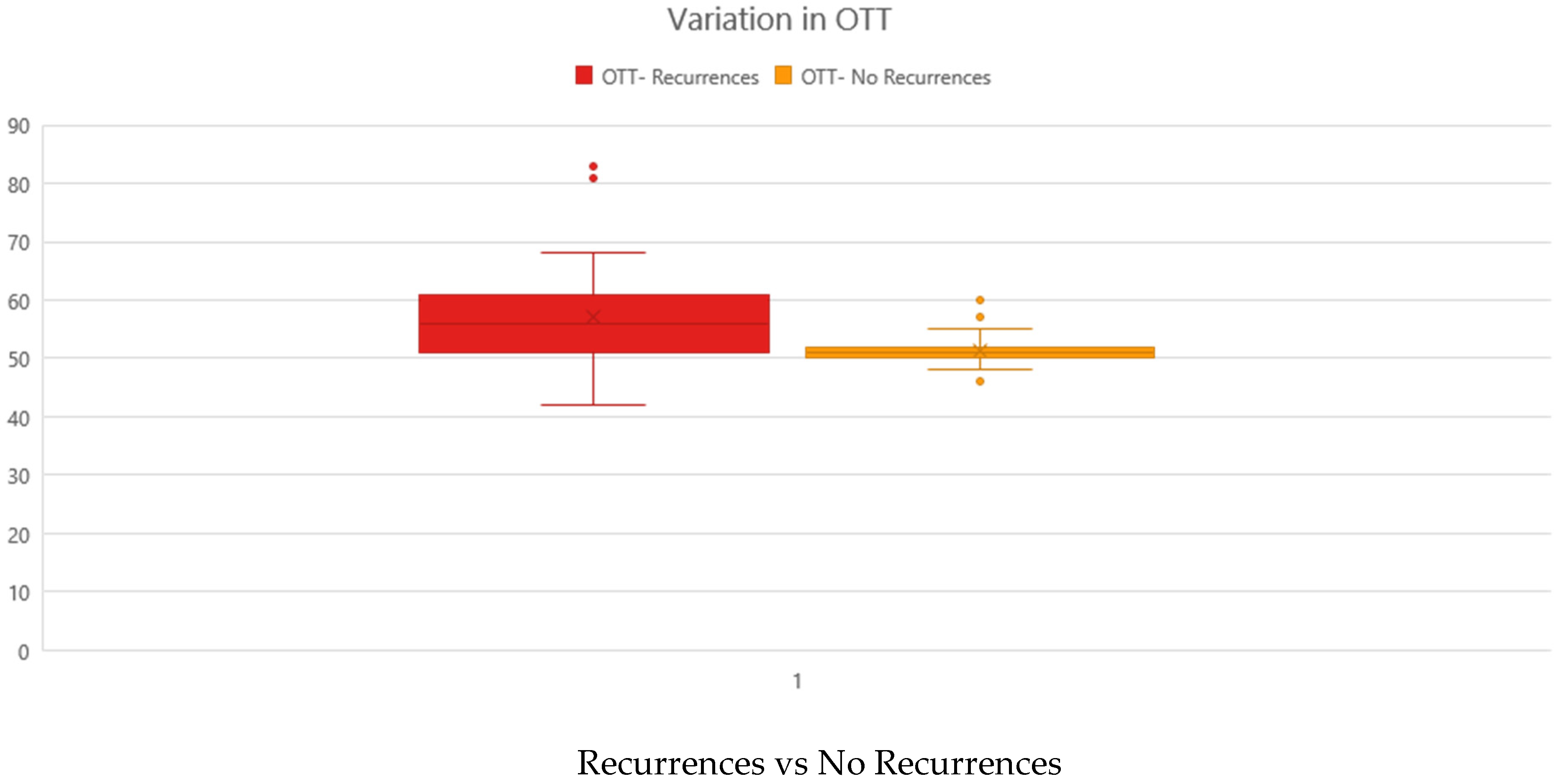
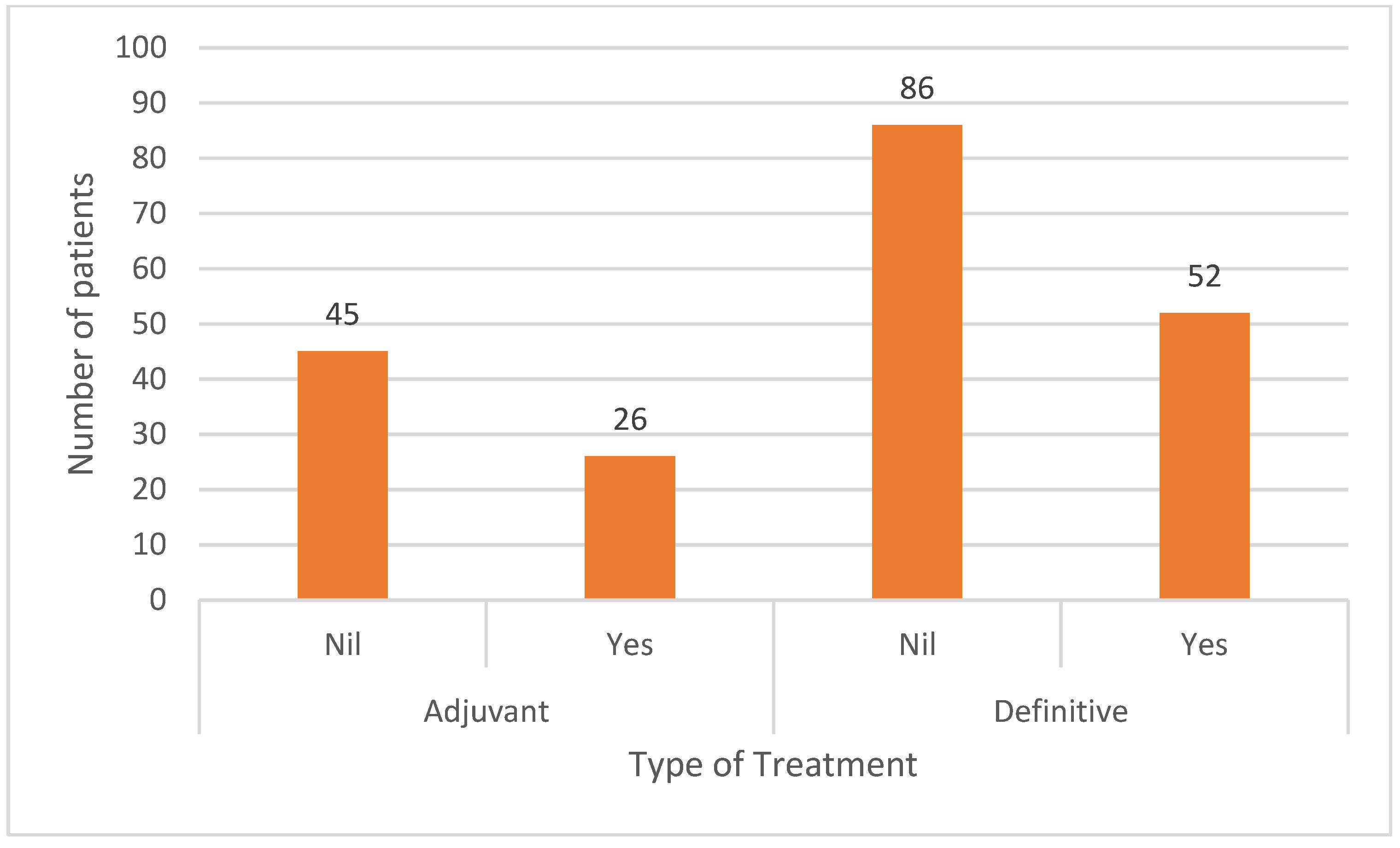
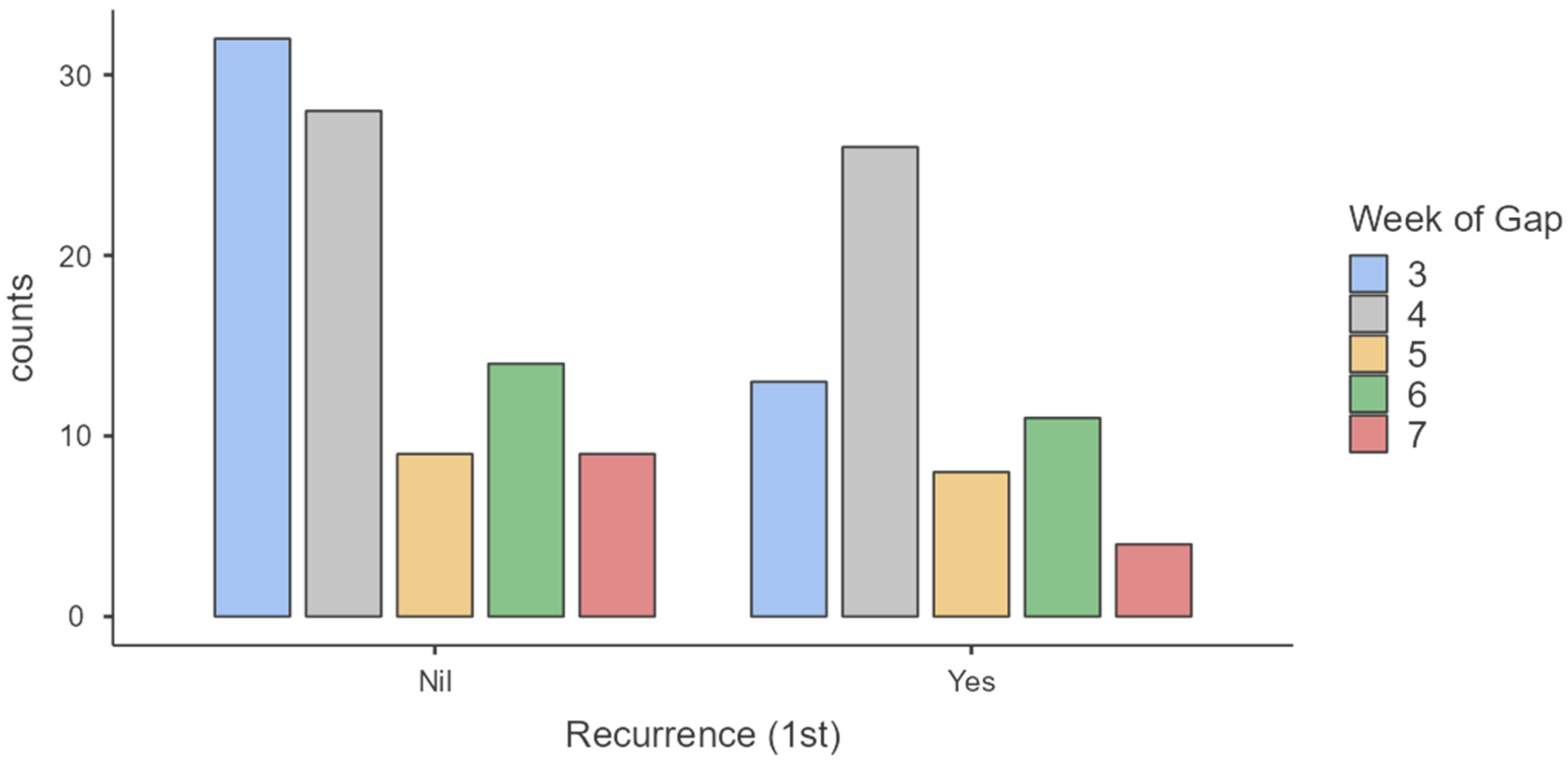
Among the 80 patients who experienced recurrence, the most common site of recurrence was the cervical lymph nodes (n = 28; 35%). The primary site most frequently associated with recurrence was carcinoma of the tongue (Table 2). Patients with an overall treatment time (OTT) exceeding 56 days exhibited significantly higher recurrence rates compared to those with shorter OTT (p < 0.001) (Figure 2). Patients who underwent adjuvant therapy (n = 72) demonstrated a lower recurrence rate (n = 28; 35%) compared to those treated with definitive chemoradiation (n = 140; n = 52; 65%) (Figure 3). Treatment interruptions occurring at the end of the fourth week of radiotherapy were notably associated with increased recurrence risk (Figure 4).
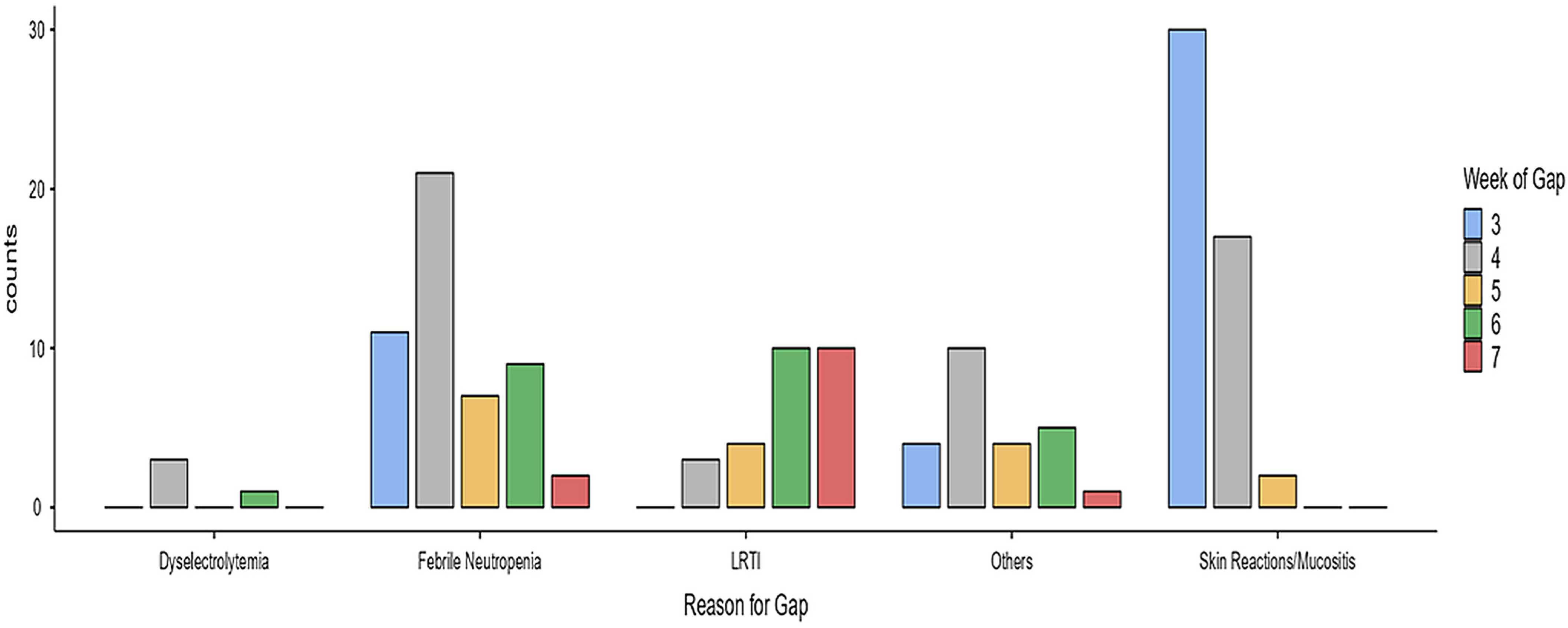
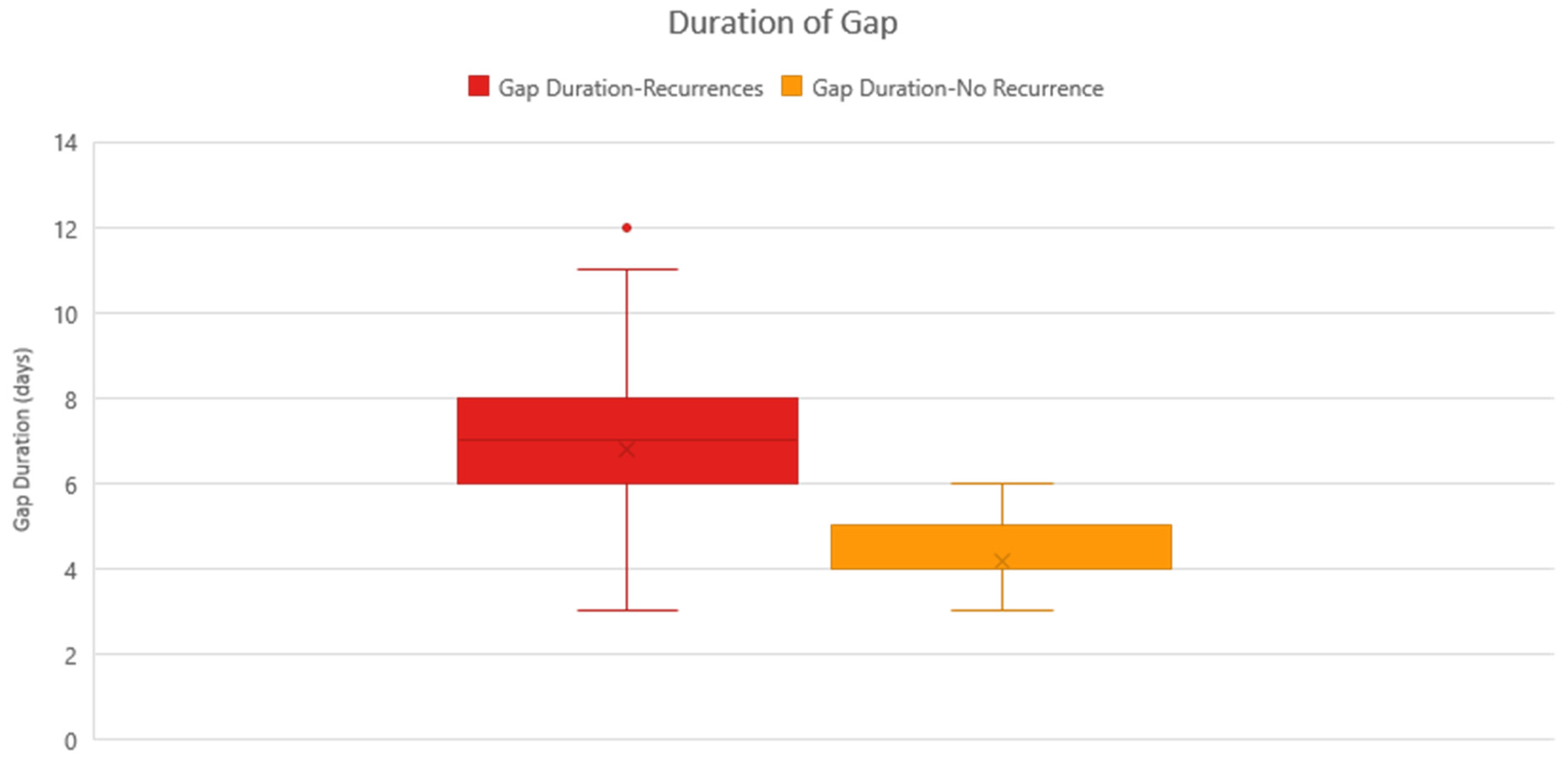
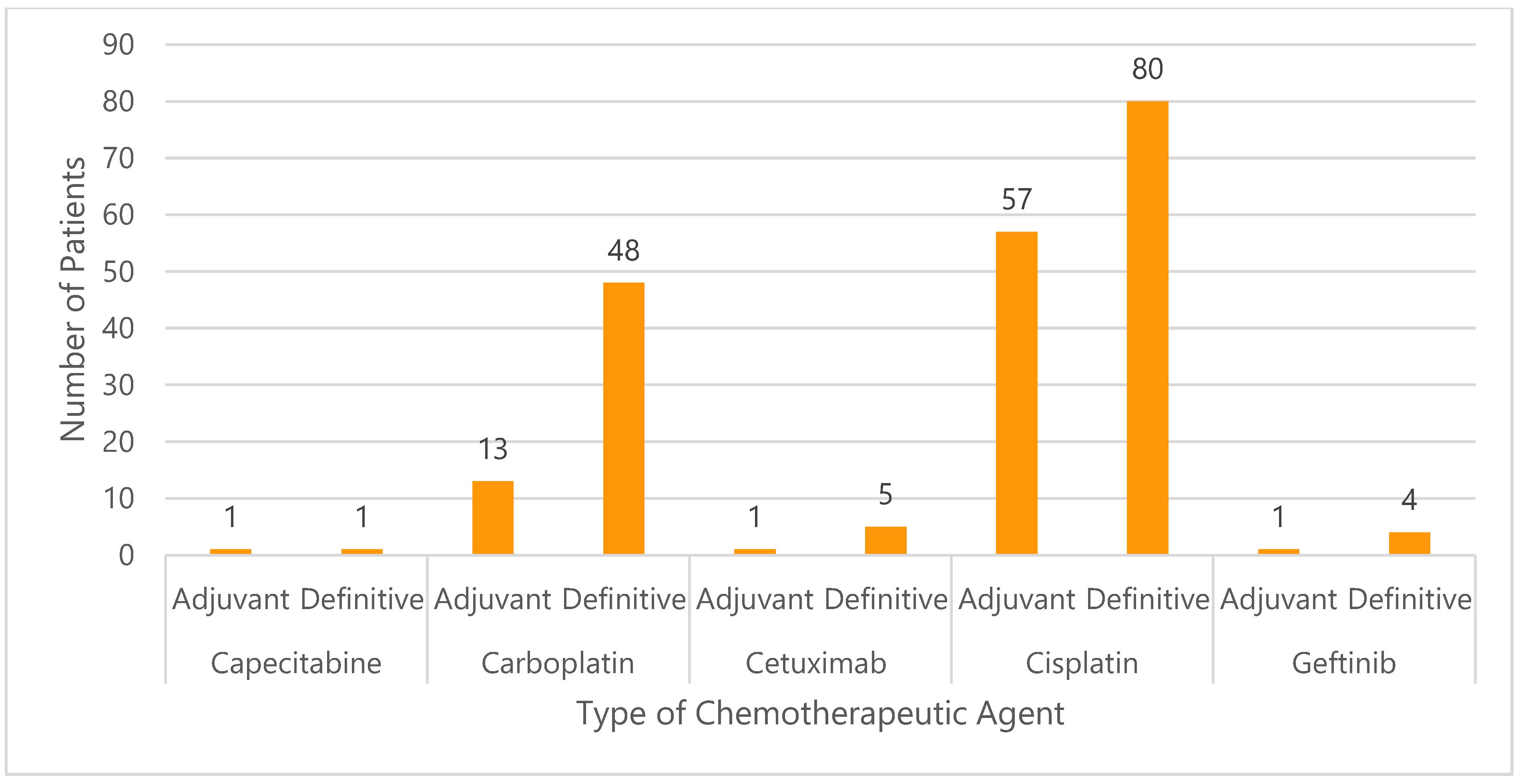
The most frequent cause of unplanned treatment gaps was acute toxicity—specifically, skin reactions and mucositis—which typically manifested by the end of the third week of radiotherapy (n = 56; 35.89%) (Figure 5). Patients with treatment interruptions beginning in the fourth week demonstrated significantly poorer survival outcomes and higher recurrence rates (p < 0.001) (Figure 5). The median duration of treatment gaps among patients with recurrence was 7 days, whereas those without recurrence had a median gap of only 4 days (Figure 6). The choice of chemotherapeutic agent did not have a statistically significant impact on treatment outcomes, although Cisplatin (n = 117) was the most commonly used agent in both definitive and adjuvant settings (Figure 7). In terms of staging, patients with recurrence were most commonly staged as T4a with nodal involvement of N2b, while those without recurrence were predominantly staged as T3 and N0, according to the AJCC 8th Edition (Table 2). However, neither tumor (T) stage nor nodal (N) stage reached statistical significance, with p-values of 0.111 and 0.744, respectively. Table 3 represents high-Risk Features Predisposing Patients with Unplanned Treatment Gaps to Recurrence.

4. Discussion

Pei-Jing Li et al. investigated the impact of prolonged treatment durations in nasopharyngeal carcinoma and demonstrated that T and N classifications were independent prognostic indicators for progression-free survival (PFS), loco-regional recurrence-free survival (LRFS), and disease-free survival (DFS) (p < 0.05) [10]. Similarly, Chang et al. found that over 60% of recurrences in HNSCC occurred in patients with advanced-stage disease (Stage III and IV) [11]. In alignment with these findings, our study revealed that the majority of patients who experienced recurrence had T4a and N2b disease, while those without recurrence predominantly had T3 and N0 staging—reflecting late-stage presentation in most cases.
A retrospective study by Kwong et al. on 796 nasopharyngeal carcinoma patients revealed that prolongation of overall treatment time (OTT) significantly compromised loco-regional control (p = 0.0063) in patients receiving split-course radiotherapy, although this was not observed in those treated with continuous RT [12]. Our findings reinforce this: among 212 patients with HNSCC across all subsites, extended OTT—specifically beyond 56 days—was significantly associated with increased recurrence risk (p < 0.001). This observation is consistent with the results of Kwong et al. [12] and Narayan et al. [13].
Although IMRT has become the standard of care, the influence of treatment gaps in this context remains underexplored. Narayan et al. reported improved treatment response in oropharyngeal carcinoma patients who either had uninterrupted treatment or received gap compensation, showing a response rate of 64.5% compared to 61.7% in those with untreated gaps [13]. In our study, treatment gaps beyond 4 weeks were significantly correlated with poorer outcomes (p < 0.001).
Chang et al. also reported the oral cavity as the predominant site for recurrence (15.45%) [11]. Consistently, our analysis showed that 76.25% of recurrences originated from oral cavity primaries, with carcinoma of the tongue being the most frequent.
The MACH-NC meta-analysis revealed a 6.5% 5-year survival advantage with the addition of concurrent chemotherapy to radiotherapy [13]. However, in our cohort, the type of chemotherapeutic agent used, predominantly Cisplatin, did not significantly influence recurrence rates (p = 0.072).
Blanchard et al. emphasized the prognostic relevance of timely treatment, especially the interval between surgery and completion of adjuvant RT, identifying a critical threshold of 77 days [14]. Similarly, Goel et al. found that patients completing treatment within 12 weeks had a median survival of 11.8 years versus 7.4 years in those exceeding 14 weeks (p < 0.001) [15]. These observations are echoed in Graboyes et al.’s study, which associated delays of just one week with a 9% decline in local control and a 9–13% drop in 3-year overall survival [16]. Hendry et al. quantified this loss at 1.6% per day of treatment prolongation in HNSCC [17], while Bese et al. reported a 10–12% weekly loss of loco-regional control (LRC) [6]. Cannon et al. documented that an OTT of 38–57 days corresponded with an LRC of 82.5% and a 5-year overall survival rate of 69.4% [18]. These findings align closely with our study, where OTT exceeding 56 days correlated with significantly higher recurrence rates.
Withers et al. proposed that accelerated tumor repopulation begins within 4 ± 1 weeks from treatment initiation and estimated that an additional 0.6 Gy/day would be required to compensate for this proliferation [5]. Ferreira et al. highlighted the 3rd–4th week of RT as the most common window for treatment interruptions [7]. According to Poisson’s Model for Tumor Control Probability (TCP), delays of one week in rapidly proliferating tumors, such as HNSCC, can reduce local control by 1.5% [16]. During active radiation, proliferation slows to 0.2 Gy/day, but unplanned gaps can raise this to 0.75 Gy/day [19].
Herrmann et al., in a retrospective analysis of 192 HNSCC patients, demonstrated that treatment gaps led to a reduction in LRC from 61% to 28%, with gaps beyond the third week further diminishing survival from 25% to 18% [20]. In our study, the 4th week emerged as the most frequent period for treatment interruptions, which were strongly associated with recurrence (p < 0.001). This supports the hypothesis that treatment gaps occurring beyond the third week of RT are particularly detrimental to locoregional control.
A study from the Vancouver Cancer Centre by Giddings et al. identified statutory holidays as the leading cause of treatment delays (69%) [21]. While that may not be generalizable, our study identified acute radiation-induced toxicities—such as mucositis and skin reactions occurring toward the end of the 3rd week—as the primary contributors to treatment interruptions.
Approximately 40% of HNSCC patients experience recurrence within 5 years of definitive treatment [22]. A study by Goel et al. underscored that extended treatment durations were associated with higher recurrence rates, with contributing factors including tumor subsite, stage, and nodal involvement [15]. Our findings corroborate these results, emphasizing the critical influence of acute toxicity-related treatment gaps.
However, our study is not without limitations. Given that only patients experiencing treatment gaps were included, selection bias is present. Exclusion of early deaths introduces survivor bias. Retrospective design introduces information bias, including incomplete toxicity grading and missing biomarker data. Residual confounding remains due to limited ability to adjust for socioeconomic factors, HPV/p16 status, or comorbidities. Differences in fractionation schedules and a relatively small sample size may affect the generalizability of our conclusions. Moreover, the retrospective design inherently limits the robustness of the data. Importantly, while the time interval from diagnosis to initiation of treatment is known to impact outcomes, we did not include this parameter due to socioeconomic barriers and variable access to care among our patient population, which rendered this variable inconsistent and difficult to analyze. Thus OTT > 56 days, gap > 5 days, week-4 interruptions, neutropenia, and age as significant predictors, recommending structured gap-mitigation protocols.

5. Conclusions

This study shows that when radiotherapy for head and neck cancer is interrupted, even for a few days, patients face a noticeably higher risk of the disease returning. Breaks that happen around the fourth week when treatment side effects become toughest were especially harmful. Many patients struggled with painful ulcers and skin reactions, making it difficult to continue on schedule. These findings remind us that timely treatment is not just a medical goal but a crucial safeguard for patients’ hopes of recovery. Providing better symptom relief, counseling, and treatment support can help patients stay on track and improve their chances of long-term control.

Author Contributions

Conceptualization, D.L.; Methodology, D.L., A.M.S., S.B., A.K. and P.S.; Validation, D.L., A.M.S. and A.K.; Formal analysis, A.K.; Investigation, R.S.A., S.C. and J.S.; Data curation, R.S.A.; Writing—original draft, R.S.A.; Writing—review & editing, D.L., A.M.S., S.B., J.S. and P.S.; Visualization, S.B., S.C. and J.S.; Supervision, D.L. All authors have read and agreed to the published version of the manuscript.

Funding

This research received no external funding.

Institutional Review Board Statement

Ethical approval for this study was obtained from the Institutional Ethics Committee (IEC KMC MLR 12-2020/420, 18 January 2024).

Informed Consent Statement

As this was a retrospective analysis of existing clinical data, the requirement for informed consent was waived by the Institutional Review Board.

Data Availability Statement

The data presented in this study are available on request from the corresponding author.

Conflicts of Interest

The authors declare no conflicts of interest.

Correction Statement

This article has been republished with a minor correction to the Informed Consent Statement. This change does not affect the scientific content of the article.

References

  1. Sung, H.; Ferlay, J.; Siegel, R.L.; Laversanne, M.; Soerjomataram, I.; Jemal, A.; Bray, F. Global Cancer Statistics 2020: GLOBOCAN Estimates of Incidence and Mortality Worldwide for 36 Cancers in 185 Countries. CA A Cancer J. Clin. 2021, 71, 209–249. [Google Scholar] [CrossRef]
  2. Global Burden of Disease 2019 Cancer Collaboration; Kocarnik, J.M.; Compton, K.; Dean, F.E.; Fu, W.; Gaw, B.L.; Harvey, J.D.; Henrikson, H.J.; Lu, D.; Pennini, A.; et al. Cancer Incidence, Mortality, Years of Life Lost, Years Lived with Disability, and Disability-Adjusted Life Years for 29 Cancer Groups From 2010 to 2019: A Systematic Analysis for the Global Burden of Disease Study 2019. JAMA Oncol. 2022, 8, 420–444. [Google Scholar] [CrossRef] [PubMed]
  3. Bray, F.; Ferlay, J.; Soerjomataram, I.; Siegel, R.L.; Torre, L.A.; Jemal, A. Global cancer statistics 2018: GLOBOCAN estimates of incidence and mortality worldwide for 36 cancers in 185 countries. CA A Cancer J. Clin. 2018, 68, 394–424. [Google Scholar] [CrossRef] [PubMed]
  4. Barsouk, A.; Aluru, J.S.; Rawla, P.; Saginala, K.; Barsouk, A. Epidemiology, Risk Factors, and Prevention of Head and Neck Squamous Cell Carcinoma. Med. Sci. 2023, 11, 42. [Google Scholar] [CrossRef]
  5. Withers, H.R.; Taylor, J.M.G.; Maciejewski, B. The hazard of accelerated tumor clonogen repopulation during radiotherapy. Acta Oncol. 1988, 27, 131–146. [Google Scholar] [CrossRef]
  6. Bese, N.S.; Hendry, J.; Jeremic, B. Effects of prolongation of overall treatment time due to unplanned interruptions during radiotherapy of different tumor sites and practical methods for compensation. Int. J. Radiat. Oncol. Biol. Phys. 2007, 68, 654–661. [Google Scholar] [CrossRef]
  7. Ferreira, J.A.G.; Olasolo, J.J.; Azinovic, I.; Jeremic, B. Effect of radiotherapy delay in overall treatment time on local control and survival in head and neck cancer: Review of the literature. Rep. Pract. Oncol. Radiother. 2015, 20, 328–339. [Google Scholar]
  8. Wyatt, R.M.; Jones, B.J.; Dale, R.G. Radiotherapy treatment delays and their influence on tumour control achieved by various fractionation schedules. Br. J. Radiol. 2008, 81, 549–563. [Google Scholar] [CrossRef] [PubMed]
  9. Barnett, G.C.; West, C.M.L.; Dunning, A.M.; Elliott, R.M.; Coles, C.E.; Pharoah, P.D.P.; Burnet, N.G. Normal tissue reactions to radiotherapy. Nat. Rev. Cancer 2009, 9, 134–142. [Google Scholar] [CrossRef]
  10. Li, P.J.; Jin, T.; Luo, D.H.; Shen, T.; Mai, D.M.; Hu, W.H.; Mo, H.-Y. Effect of prolonged radiotherapy treatment time on survival outcomes after intensity-modulated radiation therapy in nasopharyngeal carcinoma. PLoS ONE 2015, 10, e0141332. [Google Scholar]
  11. Chang, J.H.; Wu, C.C.; Yuan, K.S.P.; Wu, A.T.H.; Wu, S.Y. Locoregionally recurrent head and neck squamous cell carcinoma: Incidence, survival, prognostic factors, and treatment outcomes. Oncotarget 2017, 8, 55600–55612. [Google Scholar] [CrossRef]
  12. Kwong, D.L.W.; Sham, J.S.T.; Chua, D.T.T.; Choy, D.T.K.; Au, G.K.H.; Wu, P.M. The effect of interruptions and prolonged treatment time in radiotherapy for nasopharyngeal carcinoma. Int. J. Radiat. Oncol. Biol. Phys. 1997, 39, 703–710. [Google Scholar] [CrossRef]
  13. Narayan, S.; Sharma, N.; Soni, S.; Niwan, R. A Comparative Study of Uninterrupted Treatment by Radiotherapy versus Standard Gap Correction after Interruptions in Oropharyngeal Cancer. Gulf J. Oncol. 2020, 1, 31–39. [Google Scholar]
  14. Blanchard, P.; Baujat, B.; Holostenco, V.; Bourredjem, A.; Baey, C.; Bourhis, J.; Pignon, J.-P.; The MACH-CH Collaborative Group. Meta-analysis of chemotherapy in head and neck cancer (MACH-NC): A comprehensive analysis by tumour site. Radiother. Oncol. 2011, 100, 33–40. [Google Scholar] [CrossRef] [PubMed]
  15. Goel, A.N.; Frangos, M.I.; Raghavan, G.; Lazaro, S.L.; Tang, B.; Chhetri, D.K.; Long, J.L.; John, M.A.S. The impact of treatment package time on survival in surgically managed head and neck cancer in the United States. Oral Oncol. 2019, 88, 39–48. [Google Scholar] [CrossRef]
  16. Graboyes, E.M.; Kompelli, A.R.; Neskey, D.M.; Brennan, E.; Nguyen, S.; Sterba, K.R.; Warren, G.W.; Hughes-Halbert, C.; Nussenbaum, B.; Day, T.A. Association of Treatment Delays with Survival for Patients with Head and Neck Cancer: A Systematic Review. JAMA Otolaryngol.-Head Neck Surg. 2019, 145, 166–177. [Google Scholar] [CrossRef] [PubMed]
  17. Hendry, J.H.; Bentzen, S.M.; Dale, R.G.; Fowler, J.F.; Wheldon, T.E.; Jones, B.; Slevin, N.; Robertson, A. A modelled comparison of the effects of using different ways to compensate for missed treatment days in radiotherapy. Clin. Oncol. 1996, 8, 297–307. [Google Scholar] [CrossRef]
  18. Cannon, D.M.; Hartig, G.K.; Traynor, A.M.; Hoang, T.; McCulloch, T.M.; Wiederholt, P.A.; Geye, H.; Chappell, R.; Harari, P. Overall Treatment Time in the Era of Concurrent Radiochemotherapy for HNSCC: Still Significant for Outcome? Int. J. Radiat. Oncol. Biol. Phys. 2011, 81, S530–S531. [Google Scholar]
  19. Tarnawski, R.; Fowler, J.; Skladowski, K.; Wierniak, A.; Suwiński, R.; Maciejewski, B.; Wygoda, A. How fast is repopulation of tumor cells during the treatment gap? Int. J. Radiat. Oncol. Biol. Phys. 2002, 54, 229–236. [Google Scholar]
  20. Herrmann, T.; Jakubek, A.; Trott, K.R. The importance of the timing of a gap in radiotherapy of squamous cell carcinomas of the head and neck. Strahlenther. Und Onkol. 1994, 170, 545–549. [Google Scholar]
  21. Giddings, A. Treatment interruptions in radiation therapy for head-and-neck cancer: Rates and causes. J. Med. Imaging Radiat. Sci. 2010, 41, 222–229. [Google Scholar] [CrossRef] [PubMed]
  22. Zhang, S.; Zeng, N.; Yang, J.; He, J.; Zhu, F.; Liao, W.; Xiong, M.; Li, Y. Advancements of radiotherapy for recurrent head and neck cancer in modern era. Radiat. Oncol. 2023, 18, 166. [Google Scholar] [CrossRef] [PubMed]
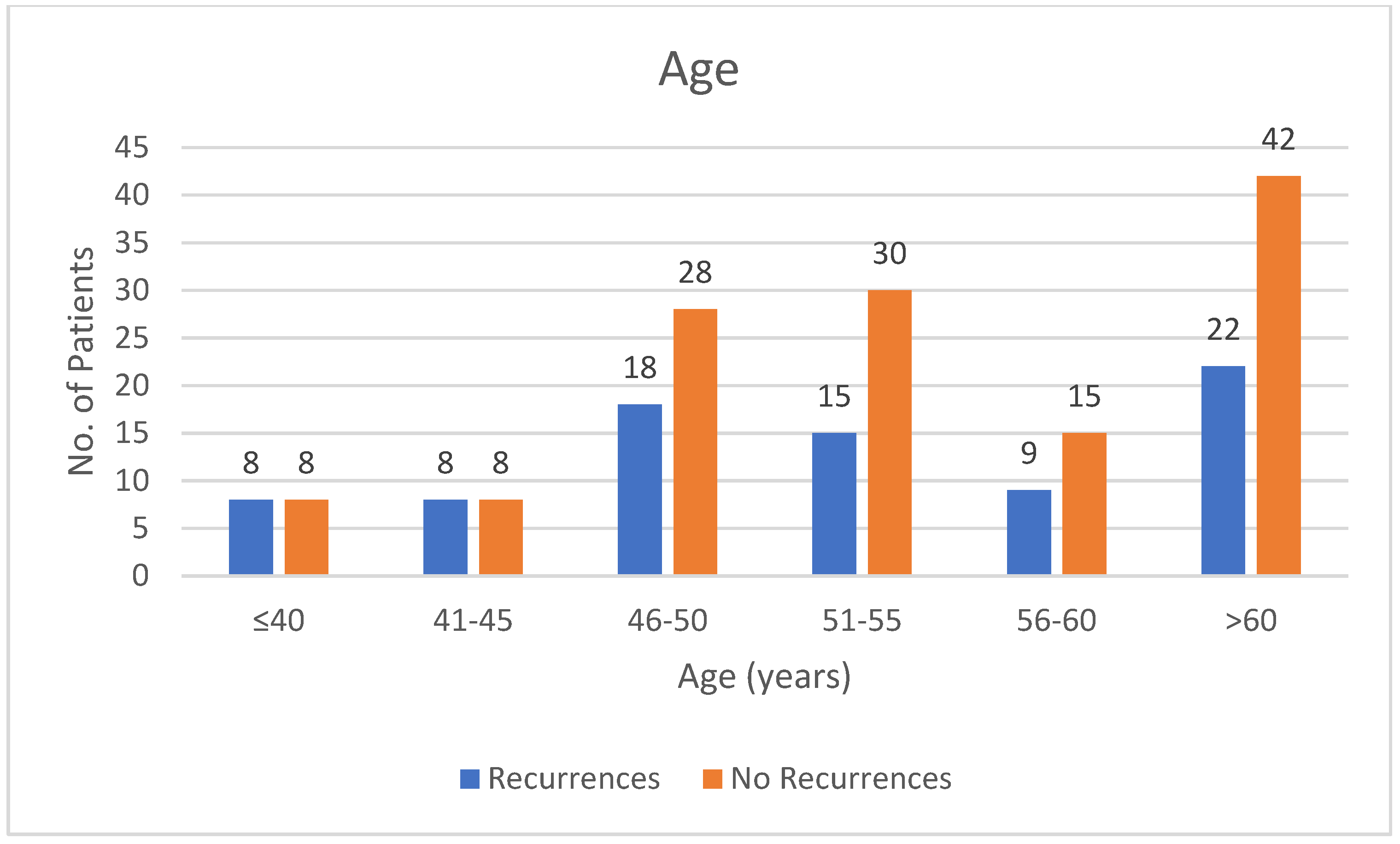
Figure 1. Bar Chart depicting the variation in the ages of patients (N = 212).
Onco 06 00008 g001
Figure 2. Box and Whisker Plot depicting the OTT vs. Development of Recurrences (N = 212).
Onco 06 00008 g002
Figure 3. Pivot Chart depicting Recurrences based on the type of treatment given.
Onco 06 00008 g003
Figure 4. Bar Graph depicting the most common Week of Gap and Cause of Gap.
Onco 06 00008 g004
Figure 5. Bar Graph depicting the Week of Gap vs. Recurrences.
Onco 06 00008 g005
Figure 6. Box and Whisker Plot depicting Duration of Gap vs. Recurrences.
Onco 06 00008 g006
Figure 7. Bar Chart depicting the Type of Chemotherapeutic Agent used and the type of Treatment.
Onco 06 00008 g007
Table 1. Depicting the Inclusion and Exclusion Criteria for this Study.
Inclusion CriteriaExclusion Criteria
Patients aged 18 years and aboveThe patient received partial or prior treatment from other hospitals
Histologically proven HNSCCPatients who succumbed to the disease during or within 3 months after treatment
Stage I to IV BPatients who discontinued treatment
Patients treated with palliative or split-course radiotherapy at presentation
Table 2. Patient Characteristics among Recurrence and Non-recurrence Groups.
ParametersRecurrencesNo Recurrencesp-Value
Total Patient Numbers80132
Males7697
Females435
Age [Range (Median)]
years
34–76 (53)29–75 (55)0.263
Most common T Stage (T)4a2
Counts: 1280.111
21028
32034
4a3742
4b712
No T stage48
Most common N Stage (N)3b00.744
Counts: 02034
11016
2a34
2b1326
2c1416
3a01
3b1526
No N stage59
Median OTT (days)42–83 (56)46–60 (51)<0.001
Most common Primary SiteCa Tongue (Oral Cavity)Ca Buccal Mucosa (Oral Cavity)<0.001
Oral Cavity6171
Oropharynx78
Hypopharynx029
Larynx1011
No primary site213
Chemotherapy
Cisplatin57650.072
Carboplatin1646
Cetuximab43
Capecitabine01
Gefitinib13
No chemotherapy214
Table 3. High-Risk Features Predisposing Patients with Unplanned Treatment Gaps to Recurrence.
Parameters≤5 Days>5 Days
Mean OTT (days)57.1553
Primary SiteOral Cavity
(Ca Tongue)
Oral Cavity
(Ca Tongue)
T Stage44
N Stage22
Total Patients (n)1264
Disclaimer/Publisher’s Note: The statements, opinions and data contained in all publications are solely those of the individual author(s) and contributor(s) and not of MDPI and/or the editor(s). MDPI and/or the editor(s) disclaim responsibility for any injury to people or property resulting from any ideas, methods, instructions or products referred to in the content.