
Akt/mTOR Activation in Lung Cancer Tumorigenic Regulators and Their Potential Value as Biomarkers
Research Institute of Medicines (iMed.ULisboa), Faculty of Pharmacy, University of Lisbon, 1600-033 Lisbon, Portugal
*
Author to whom correspondence should be addressed.
Onco 2022, 2(1), 36-55; https://doi.org/10.3390/onco2010004
Submission received: 14 December 2021
/
Revised: 16 February 2022
/
Accepted: 22 February 2022
/
Published: 25 February 2022
(This article belongs to the Special Issue Feature Papers in Onco)
Simple Summary
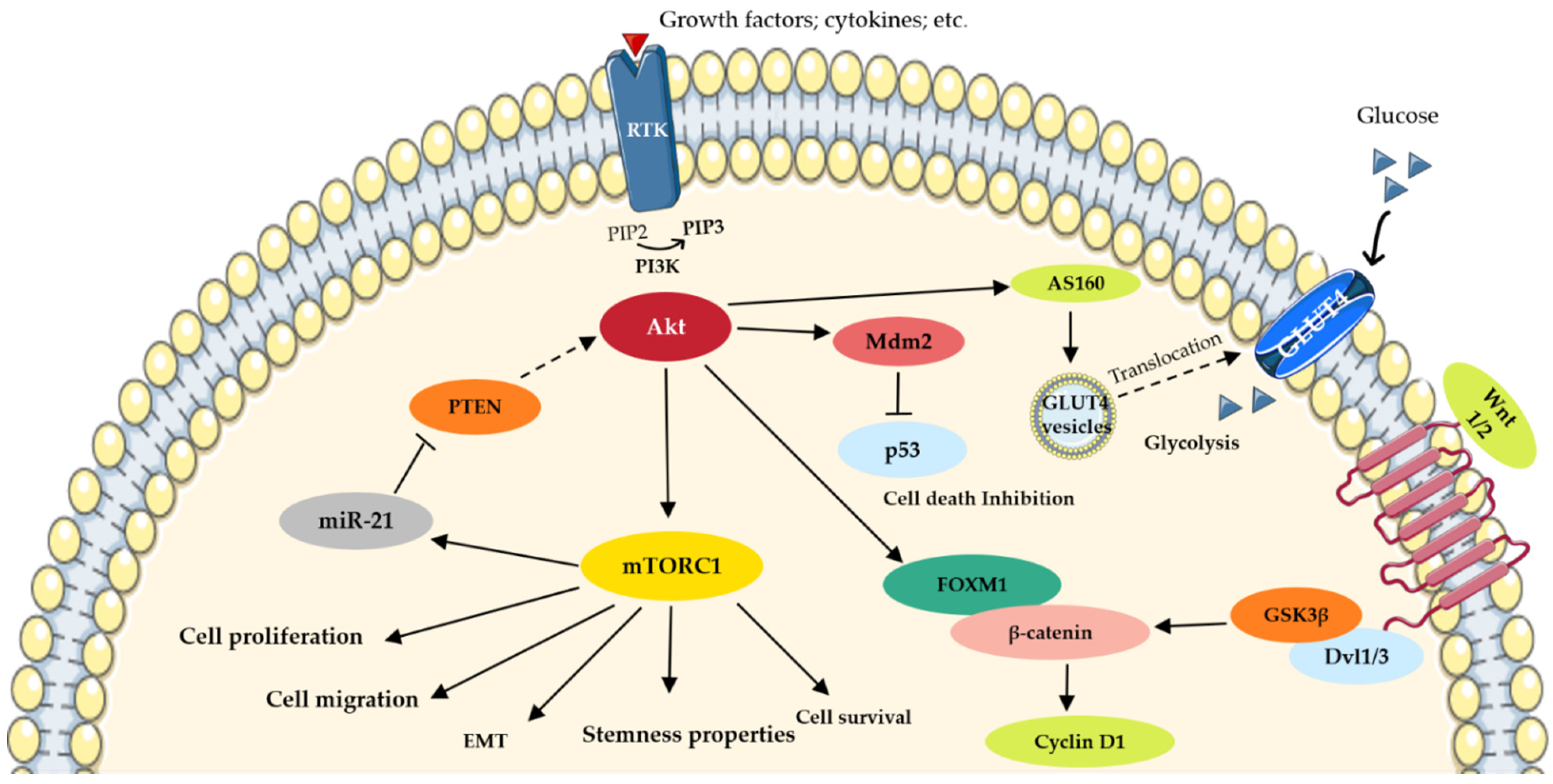
Key breakthroughs in evidence gathered from genetic and epigenetic data from lung cancer patient samples are related to dissimilar levels of gene expression both in the initial biopsy and upon therapeutic running protocols. Cancer stressful cell survival and growth involves phenotypic changes known as the EMT (epithelial-to-mesenchymal transition) to allow the key transition from an epithelial (polarized) state to a mesenchymal one (fibroblast-like). From a molecular point of view, several cell regulators and dependent cascades, such as proteins, miRNAs, growth factors, among others, support each of these states. Most, if not all, malignant steps are triggered by extracellular growth factor–membrane interaction that, at an intracellular level, initiates the tumorigenic PI3K/Akt tyrosine kinase pathway. Aside from this axis malignant potential, the resulting downstream cascades are full of molecular states that, once identified, could represent druggable targets and/or predictive tools. Surgery, radiation, chemotherapy and develop immunotherapies are already a pluralist approach devoted to target lung tumor’s heterogeneity. Yet, and not surprisingly, inconstant therapeutic outcomes have been associated with different cancer epigenetic signatures. As such, the patients’ positive stratification associated with high-grade malignancy is tricky, but highly needed as it can offer decision support to health professionals to manage and predict the lung cancer patient’s therapeutic outcomes.
Abstract
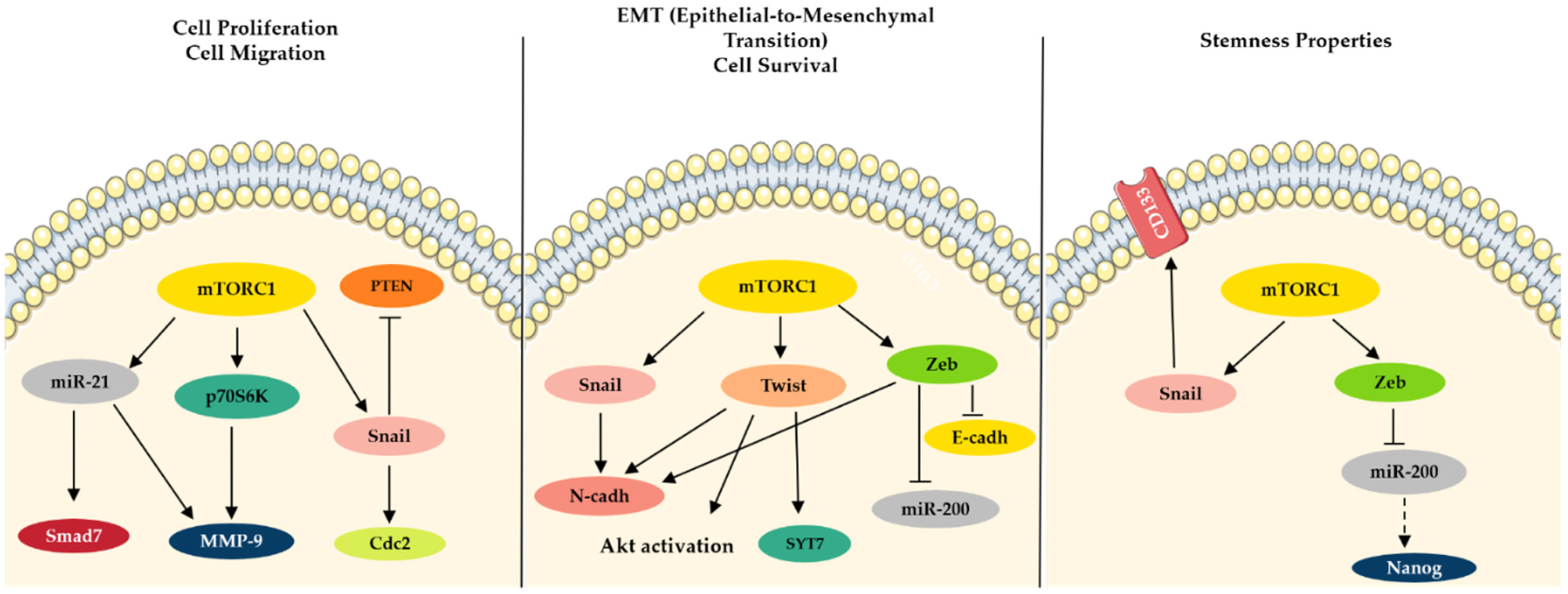
The high incidence and modest therapeutic outcomes of lung cancer have prompted the identification of cell molecular targets/biomarkers within the complex networks of interactions involved in cell malignancy. Most of the EMT-related regulatory mediators underline patients’ biologic variations, therapeutic refractory events, and tumor cell heterogeneity. Patient stratification based on the understanding of the relevant pathways, such as the PI3K/Akt axis crucial in EMT initiation, could favorably alter disease management. Significant clinical advantage could be expected when overexpressed Akt tyrosine kinase (Akt2) is addressed as a malignant biomarker to guide clinical management decisions, improving prognosis in lung cancer patients. Moreover, one should not miss the opportunity of using it as a druggable target aiming at the inhibition of the downstream complexity that underlies cell proliferation and survival, expression of stemness markers and drug resistance. The value of mTOR, as a downstream target of Akt, and the further activation of EMT transcription factors Twist, Snail and Zeb1 are revisited in this review. An in-depth state-of-the-art assessment provides evidence of its role in the mechanistic inhibition of epithelial markers, such as E-cadherin and miR-200, while inducing the expression of the mesenchymal ones, such as vimentin, N-cadherin, and miR-21. Lastly, evidence suggesting another transcription factor, FOXM1, as the link between the PI3K/Akt and Wnt/β-catenin pathways, prompting cell metabolism through the regulation of p70S6K, is analyzed. A more realistic approach is advised to address unmet clinical needs and support decision making at a clinical level. Taking into consideration several complex intracellular interactions might further improve patient stratification and result in better outcomes.