Article

Career Matching Platform for Students with Disabilities: A Co-Design Study

by
Ahsan Romadlon Junaidi
1,*,
I Nyoman Suputra
2,
Buyung Adi Dharma
3,
Andi Basuki
3,
Nor Laili
4 and
Afis Baghiz Syafruddin
5
1
Department of Special Education, Faculty of Education, Universitas Negeri Malang, Malang 65145, Indonesia
2
Department of Management, Faculty of Economics and Business, Universitas Negeri Malang, Malang 65145, Indonesia
3
Department of Office Administration Education, Faculty of Economics and Business, Universitas Negeri Malang, Malang 65145, Indonesia
4
Applied Behaviour Analysis, Monash University, Melbourne, VIC 3800, Australia
5
Department of Management, Faculty of Economics and Business, Universitas Gadjah Mada, Yogyakarta 55281, Indonesia
*
Author to whom correspondence should be addressed.
Disabilities 2026, 6(2), 37; https://doi.org/10.3390/disabilities6020037
Submission received: 9 January 2026 / Revised: 2 April 2026 / Accepted: 8 April 2026 / Published: 13 April 2026

Abstract

Career assessment instruments for children with special needs are not fully inclusive and precise. This study uses both quantitative and qualitative methods to identify the key problems students face, refine the career matching stages, and assess the desirability, feasibility, and viability of the services developed. This study found that co-design in the preparation and validation of the career matching platform has integrated several aspects, namely people with disabilities’ behavior, interests, and career paths, and has been adjusted to national competency standards, according to the group. The development of this platform uses the Double Diamond approach, including focus group discussions with several extraordinary school teachers across two activities. The existing analysis shows that the fifteen-stage career development model has prepared students for career paths, making it a potential reference for career services for people with disabilities. In addition, implementing a career development model integrated with the platform can make it easier for students to find a job profile that best suits the world of work. The results of this research can be the basis for disability career development policies, programs that bridge students to the world of work, and the formation of an industrial ecosystem that cares more about children with special needs.

1. Introduction

Children with needs who are entering the world of work and industry face various obstacles and unequal access to adequate career information, resulting in a considerable gap in the job search process [1,2]. Millions of people with disabilities who have just graduated from school do not get the opportunity to work or even become unemployed, not because they lack competence but because they do not have access. Exceptional school graduates face systemic barriers to obtaining equal access to information, or existing students do not meet the applicant criteria due to a lack of preparation [3,4]. The school’s position is extraordinary, serving as a strategic educational institution to help students develop their careers. However, it faces constraints in resources, access, and assessment instruments that are not yet aligned with industry needs [5].
Choosing a career for children with disabilities is a crucial decision because it determines their future. So far, teachers, counselors, or parents have directed children with special needs based on their own intuition or experience, leading to decisions that can be biased. Career selection by teachers is not systematically recorded, and there is no periodic evaluation to ensure that job choices are in line with industry needs [6,7].
The transition of children with special needs to the world of work is an important moment for parents and schools to accompany them every step of the way. Existing disabilities can be grouped into five main categories, namely autism, hearing, intellectual, physical, and visual disabilities, which significantly affect the required preparation in accordance with existing needs [8,9].
Career information service platforms that need to be accessed on screens, as well as auditory content, should be provided for visually impaired groups. Persons with hearing impairments experience difficulties understanding instructions and have an unclear understanding of commands, and there is an absence of additional services that support the use of sign language in the work process. Problems related to mobility of activities, adaptation to the periodic work environment, and stamina constraints make fatigue the main challenge for people with physical disabilities [10,11]. Complex instructions, undetailed routines, and students′ sensory management while working are crucial parts that must be addressed by intellectual disability and autism groups [12,13]. Career map strategy recommendations proposed by teachers are general and do not delve into students’ specific characteristics. Attention to sensory, cognitive, and behavioral characteristics is necessary to identify the actual support needs of each disability group in career preparation and transition planning [14].
In this study, the grouping of disability into five categories—autism, hearing, intellectual, physical, and visual disabilities—was used as an operational grouping rather than as a universal taxonomy of disability. This categorization was selected because it reflects the service structure and practical organization used in the participating partner schools, especially special education settings involved in the project. The same grouping was also adopted in the program grand design to organize stakeholder discussions, identify context-specific needs, and develop a more feasible workflow for the Career Matching platform. In addition, this grouping is consistent with the way disability-related educational and service practices are commonly operationalized in the Indonesian school context, where support, intervention, and transition planning are often arranged according to broad disability service categories. Therefore, the five-category grouping in this study should be understood as a context-based and program-driven classification that was used to guide platform design and stakeholder engagement.
Schools generally use standardized measurement devices to determine students’ career interests by assessing literacy, learning style, numeracy, and concentration. Career interest assessment tools have so far not widely adopted the use of sign language and illustrated instruction [15,16]. In addition, most of these instruments are not clearly aligned with the special work competency standards and the specific needs of the world of work, thereby creating opportunities to build an inclusive work system for people with disabilities [17]. This enables the results of complex assessments to be translated into a clear career plan, such as the choice of a training program, the type of initial job, or the design of a realistic probation program [18,19]. At the same time, opportunities to use data science, such as analyzing data on interests, talents, and work behavior sustainably, are still limited in Sekolah Luar Biasa (SLB; Special Schools) and inclusive school environments, so the pattern of success or failure in the placement of disability has not been systematically studied [20,21].
The gap between employees’ skills (interests, talents, and work attitudes) and the needs of an inclusive job market indicates that a career mapping system is needed that can measure and describe these three areas clearly and comprehensively [22]. Many career services in schools still use manual means, such as paperwork, personal teacher notes, and verbal communication with parents and training institutions; important information regarding strengths, support needs, and practical work experience is often found in a variety of documents that are not interconnected [11]. In addition, there is no centralized database that provides information on inclusive employment opportunities that schools and families can use to recognize the fit between student profiles and the nature of the job at hand [23,24]. In this context, the development of a digital platform for career matching is significant: an inclusive system based on data science, connected to special work competency standards, and integrated with education and recruitment processes in the industry. Platforms like this are expected not only to store assessment data but also to manage the entire flow of assessment, coaching, job registration, placement, and probation in a more transparent, documented, and easily visible manner to all parties involved [25,26]. The participation of various parties strongly supports innovations that bring comprehensive change, not just technical aspects. The career matching system for disability is designed by listening to the voices of SLB teachers, disability experts, career practitioners, parents, and prospective employers from the outset of the planning process [27,28].
Despite the growing need for inclusive career support, there remains a limited body of research on how disability-responsive career services can be systematically designed through the integration of stakeholder perspectives, structured career pathways, and data-informed decision support. Existing studies tend to discuss disability career readiness, vocational support, or technology use separately, while fewer studies explain how these elements can be integrated into a co-designed digital platform that supports school-to-work transition in a practical and context-sensitive way. Therefore, this study addresses that gap by developing and validating a Career Matching platform for students with disabilities through a co-design process involving multiple stakeholders and guided by the Double Diamond Design Process. The study is important because it offers both a conceptual and practical contribution: it proposes a structured 15-stage workflow for inclusive career services and provides an early-stage prototype model that may support more transparent, evidence-based, and contextually relevant transition planning for students with disabilities.

2. Literature Review

2.1. Inclusive Career Services and Stakeholder Challenges

Career services for Children with Special Needs in Special Schools and inclusive schools require strong cooperation among various parties, but in practice, this cooperation remains inadequate. Accompanying teachers, psychologists, parents, and industry partners often work individually, with different perspectives and technical terms [10,11,29]. Teachers pay attention to students’ behavior and learning outcomes in the classroom, psychologists have official assessment results, and parents know children’s habits and hobbies at home, while the industry looks at it from the perspective of work standards and company culture [4,10,25]. Without an organized way to share information, these pieces of knowledge typically do not meet in a complete career plan, so decisions about the choice of major, training program, or type of job for people with disabilities are often made based on limited experience and personal considerations [30,31].
The management of career assessment data for disability is still carried out manually and separately. Questions about interests, talents, behaviors, and skills are stored on paper, in separate files, or in teacher notes. Data from internships, industrial work, and vocational training are typically not connected to previous assessment results, making it difficult to track student progress when schools want to know [4,7]. The career selection process now relies more on the individual’s memory than on continuously recorded, readily available data for review. This can lead to “safe” job stereotypes persisting for specific groups with disabilities [14,32].
In addition, the relationship between schools and the world of work remains distant. Criteria and requirements in the world of work are constantly changing as industries develop, yet schools have not fully met the clear criteria. Learners’ abilities have not been regularly upgraded, and companies do not receive clear information on the profiles of limitations and needs for each disability in the work processes to be carried out [16,33]. Doubts arose in the industry because there was no information transfer from the school, leading to hesitation in recommending students for jobs. The process of preparing people with disabilities to enter the workforce is complicated by the existence of various types of disabilities, such that schools and companies must accommodate every existing need. The design of disability career services needs to be strengthened to comprehensively meet existing needs.
An all-inclusive digital platform can integrate assessment data, training processes, and information on job opportunities into a single system [31,34]. By using the special work competency standards as a structural framework, core competencies can be defined and delivered in language easily understood by schools and industry [17]. Meanwhile, the use of longitudinal data in analyzing initial assessment results can provide a fairer, evidence-based basis for career decisions [13,15].

2.2. Conceptual Framework: Behavioral-Based Profiling and Interest–Aptitude Mapping

Effective disability career services require more than general vocational advice; they require a structured understanding of how students’ work-related behavior, interests, aptitudes, and support needs interact in real educational and employment settings. For this reason, the conceptual framework of this study begins with behavioral-based profiling, followed by interest–aptitude mapping, the use of a data science model, and the development of a 15-stage career pathway, all of which are operationalized through a co-design process using the Double Diamond Design Process (DDDP).
Profiling, mapping, and the use of data science models as a basis for disability career development are integrated with recommendations for more structured work levels. The work behavior patterns of people with disabilities can be analyzed to determine the criteria, needs, and suitability of each individual using behavior-based profiling. The work simulation will help people with disabilities perform tasks, manage emotions at work, persevere, and interact with other workers [35,36].
People with disabilities need teachers at school to train them in behavioral skills to survive, be accepted by colleagues, and grow together in the work environment. Mapping student behavior can provide an overview of the challenges they face and the shortcomings that can be addressed through training or support from the school or institution that hires them. Behavioral mapping helps group types of disabilities without resorting to discrimination or negative labeling [29,37,38].
On this basis, the concept of interest and talent mapping tools helps combine what is liked (career interests) with what can be done (cognitive, technical, and practical talents) despite disability. This tool does not use common categories of interests and talents but is focused on aligning with the special work competency standards and more disability-friendly types of work [17,18]. In the process of grouping work, the existing competency criteria will be the output of the assessment process carried out by teachers, who will adjust to the training needs of students [12,39]. In specific fields such as packing, inventory, and housekeeping, a job can be one of the choices of children with disabilities who have an interest in tidying up goods with adequate visual skills [40]. Training services and job placement planning can be matched to an existing recommendation system based on each student’s career path.
In addition, a data science model is needed to connect multiple sources of information, including assessment results, behavioral observations, training records, and placement outcomes, into a more measurable recommendation system. Rather than treating these data sources separately, a data-informed system allows schools and other stakeholders to identify patterns in student readiness, career preferences, and support needs, thereby improving the quality and accountability of career matching decisions.
In the present study, the career pathway was organized into 15 structured stages developed by the authors through the co-design process, rather than adopted as a pre-existing universal framework. These stages include new student admission, initial and advanced assessment, skills assessment, document preparation, review and coaching processes, and later phases such as application, selection, placement, and probation. The purpose of this staged structure was to translate fragmented school-based career support into a clearer and more operational workflow for disability-responsive career planning. This should culminate in the creation of a work environment conducive to participation by people with disabilities through a system guide that includes concrete steps for teachers and industry [5,37].
To address the complex problem of career matching for people with disabilities, this study does not use a top–down approach. Instead, it follows the Double Diamond Design Process (DDDP), which comprises four stages: discover, define, develop, and deliver [41]. This framework of thinking combines two main concepts, namely convergent and divergent, to develop a comprehensive system. Issues related to career counseling planning for children need to be explored more deeply by stakeholders and teachers during the discovery stage. Each existing issue will be managed to become a more comprehensive finding through the defined stage. The identified issues will be explored for alternative solutions to address the problem throughout the development stage. The platform design and workflow, organized into 15 stages, are assembled to meet each existing solution in the deliver phase [42,43].
The principle of co-design is an important part of this whole process. Collaboration between schools, in this case, teachers and industry, will be a concrete way to develop guidelines and technologies that support the career planning process for people with disabilities [34,44]. Each party is involved in the development of the existing 15-stage sequence through a structured discussion process as the basis for the development of digital service platforms.
Teachers often have limited time and limited knowledge of career guidance practices that are aligned with workforce needs. The recruitment process from the industry is part of the system improvement, aligned with the analysis of children with disabilities’ user needs [4,6,9]. Sustainably implemented activities must be based on the design used in the existing discussion process. The development of existing technologies encounters significant obstacles, especially when moving to large-scale trials and becoming irrelevant to industry and the world of work [38,45]. Disability career services can be analyzed for user acceptance to identify resistance to their use and improve them from the start. A collaborative process can be formed among various stakeholders, including teachers with administrative burdens in schools. In addition, the industry can provide insight into the needs and prerequisites job applicants must meet to ensure mutual correction among peers. The result is expected to be a career partnership platform that not only has an innovative concept but is also worthy of use, maintenance, and co-development within a career system for children with special needs [46,47].

3. Materials and Methods

3.1. Research Design and Program Context

This study used a mixed-method design within a design-based research framework. This study employed a design-based research approach, which is suitable for developing and refining practical educational innovations through iterative cycles of design, implementation, reflection, and revision in real-world contexts [48]. This approach was selected because the present study did not aim merely to describe stakeholder perceptions, but to generate and validate a prototype workflow for a digital Career Matching platform for students with disabilities. In this sense, design-based research provided an appropriate methodological foundation for linking practical problem-solving with theory-informed design [49].
The study was conducted within the context of the SINERGI program, an innovation-oriented program that supports the development of socially and commercially relevant solutions in educational and industrial environments. In the present study, the SINERGI context was directly relevant because the Career Matching platform was designed not only as an educational support tool for schools, but also as a transition-support system intended to connect school-based assessment, career preparation, and workplace placement for students with disabilities.
A co-design approach was used because the platform required input from multiple stakeholders who hold different forms of practical knowledge, including special school teachers, disability experts, technical developers, and industry representatives [34]. Co-design was considered appropriate because disability career services involve complex, context-dependent decisions that cannot be adequately addressed through a top–down design process alone [41]. Instead, the service model and platform workflow needed to be developed collaboratively with those who are directly involved in school-to-work transition practices.
Focus group discussions (FGDs) were selected as the main data collection strategy because they allow participants to discuss shared experiences, compare perspectives, and generate collective insights about service needs, barriers, and possible solutions [50]. This method was particularly suitable for the present study because the researchers sought to explore both common and group-specific challenges in disability career services while also facilitating collaborative design discussions around platform functions and workflow structure [27].
The study design was informed by the Double Diamond Design Process (DDDP), which consists of the phases discover, define, develop, and deliver [41]. The DDDP was selected because the issue of disability career matching represents a wicked problem, involving multiple stakeholders, diverse disability-related needs, fragmented service systems, and uncertainty regarding how best to connect assessment, support, and employment outcomes. The DDDP therefore offered a useful framework for organizing the co-design process through alternating divergent and convergent stages of inquiry and solution development [42].
The overall study was conducted in two sequential phases. Phase 1 corresponded to the discover, define, and early develop stages of the DDDP, in which participants identified key challenges in disability career services, discussed stakeholder needs, and collaboratively generated ideas for the structure and functions of the platform. The outputs of this phase included thematic issue mapping, agreement on core service needs, and the initial formulation of the 15-stage Career Matching workflow [41]. Phase 2 corresponded to the deliver and validation stage, in which the preliminary workflow and mock-up prototype developed from Phase 1 were presented back to participants for structured evaluation. In this stage, the prototype was assessed in terms of desirability, feasibility, and viability. The two phases were conducted in sequence rather than as a single undifferentiated session. Phase 1 focused on needs exploration and workflow co-design, whereas Phase 2 focused on prototype review and validation. Participants in Phase 2 included the core stakeholder groups involved in Phase 1, with validation emphasizing the practical relevance and usability of the prototype generated from the earlier phase [45].

3.2. Participants and Settings

This study uses purposive sampling in the focus group discussion process and in the co-design of disability career service programs. Purposive sampling was selected because the study required participants who had direct practical experience in disability career services, school-to-work transition support, and student assessment processes. This strategy was considered appropriate for identifying information-rich participants who could contribute context-specific insights to the co-design process.
Participants in this study were selected by teachers who were directly involved in developing disability career services in schools, comprising five groups of children with special needs. The research respondents shared their opinions, problems, and alternative solutions based on the situation at the school to date [34,41]. A total of 27 teachers from Sekolah Luar Biasa (SLB; Special Schools) were invited from six partner schools, namely SLB Kedung Kandang, SLB Pembina Lawang, SLB Bhakti Luhur, SLB YPTB, SLB YPAC, and SLB Lab Autis. They have diverse roles, including classroom teachers, vocational skills teachers, guidance and counseling teachers, transition program coordinators, and experts who administer assessments and interventions for students with special needs. In the literature, their role is considered to be part of a professional learning community that supports inclusive education and the transition from schools to the workforce [51,52]. All participants were willing to participate without compensation, with the primary goal of improving the quality of career services at their respective schools.
To meet the various needs and characteristics of the students with disabilities, participants were divided into five discussion groups based on the type of disability they were primarily dealing with, namely visual impairment, hearing disability, physical disability, intellectual disability, and autism, according to the general classification in disability education and employment studies [6,8]. This grouping was used to support more focused discussion within each disability service category and to capture differences in work behavior, support needs, communication barriers, and career preparation challenges across groups. It also enabled the co-design process to generate more specific and practically relevant input for the development of the platform workflow and features. This sharing helps to facilitate the exchange of more specific experiences regarding work behavior patterns, learning challenges, and good practices for accompanying participants’ careers within each group. Each group is accompanied by at least one member of the research team from the university who is in charge of facilitating the co-design process and recording the data, in accordance with the principle of equal participation in the creation of shared public services [46,53,54].
The development of the existing platform involves various parties, including the technical team and teachers with disabilities, to align it with the company’s needs. Assistance services for children with disabilities, in collaboration with industry, will provide input on the development of activity procedures. The industry can provide views and expectations during the development of work standards and targets, and support the creation of a comprehensive work environment [34,44].
Meanwhile, the data science technical team and platform developers are tasked with translating user needs into features, data flows, and interface displays of the Career Matching system that will be developed together. This is completed in accordance with data-driven and empathetic design approaches in social service innovation [20,21,32]. All sessions are held at partner schools and university campuses in a participatory, reflective, and collaborative atmosphere with the same familiarity. As shown in Table 1, the study involved 27 participants representing five disability service groups, a platform technical team, and practitioners from the world of work.

3.3. Co-Design and Focus Group Discussion Procedures

The co-design and focus group discussion (FGD) procedures were carried out in two consecutive phases and were guided by the Double Diamond Design Process (DDDP). FGDs were selected because they enable participants to share experiences, compare perspectives, and collectively generate ideas regarding complex service problems, while co-design was used to ensure that the workflow and prototype were developed collaboratively with the stakeholders who were directly involved in disability career services.
At the beginning of the study, all participants received an explanation of the research objectives, the co-design process, and their role in the development of the Career Matching platform. Written informed consent was obtained from all participants prior to data collection. Each discussion group was facilitated by at least one member of the research team, who guided the discussion process and documented the outputs generated by participants.
In Phase 1, participants were grouped according to the five disability categories and engaged in structured discussion sessions; participants were grouped according to the five disability categories and engaged in structured discussion sessions on the challenges of existing career services, barriers in school-to-work transition, and the functional requirements of a digital career matching platform. Questions that focused on “what is most challenging” in supporting individuals with special needs (SENs) in their careers elicited rich anecdotes about frustrations with the dissemination of student data and a lack of understanding of SENs’ potential by schools and industry.
Participants expressed their ideas through oral discussion, sticky notes, and structured worksheets. The outputs of this phase included lists of recurring service problems, shared stakeholder needs, and the initial structure of the 15-stage Career Matching workflow. As the workshop enters the develop phase, participants often refer back to the results and feelings that emerged in the previous phase, such as teacher burnout due to excessive administrative tasks or parents’ anxiety when their child is unable to survive at work. The sticky notes and worksheet responses were collected, grouped by topic, and reviewed by the research team to identify recurring themes and category-based needs across groups.
The outputs from Phase 1 were then used by the research team and technical developers to construct a preliminary workflow model and a mock-up prototype of the platform. This prototype included the proposed 15-stage service flow and key feature components based on stakeholder input.
In Phase 2, the workflow model and mock-up prototype developed from Phase 1 were presented again to participants. The workflow model and mock-up prototype developed from Phase 1 were presented again to participants through simulation-based FGD sessions and directed discussion. During this phase, participants reviewed the clarity, relevance, usefulness, and practicality of the proposed platform and its workflow using validation sheets and open comments. The outputs of this phase included desirability, feasibility, and viability ratings, as well as suggestions for refinement before further development [46,47]. Table 2 clarifies how each co-design phase contributed to a specific set of research outputs that informed the subsequent stage of platform development.

3.4. Assessment Instruments and Scales

The validation instrument used in this study was developed by the authors based on the co-design outputs generated in Phase 1, particularly the identified service challenges, stakeholder needs, and the proposed 15-stage Career Matching workflow. The instrument was designed to assess the extent to which the proposed platform and workflow were perceived as appropriate, relevant, and usable within disability career service settings.
The instrument was administered during the Phase 2 validation process and used a 5-point Likert scale, ranging from 1 = Not Appropriate to 5 = Very Appropriate. A five-point scale was selected because it provides sufficient variation for participants to express degrees of agreement while remaining simple and practical for use in a focus group validation setting involving multiple stakeholder groups.
The validation instrument covered several key aspects of the proposed platform, including accessibility and ease of use, relevance to the Special Work Competency Standards, suitability for the career development goals of students with disabilities, clarity of the assessment and coaching flow, and overall practicality of the proposed service model. In addition to the rating-scale items, the instrument also included open-comment sections to capture participant suggestions and qualitative feedback for prototype refinement.
Before being used in the FGD validation stage, the instrument underwent internal expert review by the research team and expert contributors involved in the study. This review process was conducted to ensure that the items were aligned with the study objectives, the platform design, and the disability career service context, and to improve the clarity and contextual relevance of the validation items.
Supporting research documents included focus group discussion guides, observation notes, assessment recap forms, and meeting minutes. These documents were used to support qualitative–quantitative triangulation and to trace the development of design decisions across the co-design process. Quantitative data were organized and analyzed using Microsoft Excel, while qualitative data from notes and open comments were reviewed and categorized manually by the research team [22,28,38]. The detailed desirability, feasibility, and viability items used in the Phase 2 validation are presented in Appendix A.

3.5. Data Analysis Techniques

This study used a mixed-method analytical strategy by combining qualitative and quantitative data to examine both the development process and the validation of the proposed Career Matching platform. Qualitative data from Phase 1 were used to identify key stakeholder issues, define service needs, and support the development of the initial workflow structure, whereas qualitative and quantitative data from Phase 2 were used to evaluate the prototype in terms of desirability, feasibility, and viability.
The qualitative data were analyzed using a thematic analysis approach [55]. The sources of qualitative data included sticky notes, FGD notes, open-ended participant comments, and observation sheets collected during the co-design and validation sessions [56]. The analysis followed several steps: (1) familiarization, in which the research team reviewed all qualitative records and written responses; (2) initial coding, in which meaningful units related to stakeholder challenges, service needs, workflow expectations, and platform improvement suggestions were identified; (3) theme development, in which similar codes were grouped into broader categories; (4) theme review, in which the emerging themes were re-examined across the data sources; and (5) theme naming, in which the final themes were labeled to reflect the major issues and needs identified by participants [57].
In other words, notes and sticky notes are not just “data” but also a gateway to a shared understanding of problems and opportunities for change [18,23]. The qualitative coding was conducted manually by two members of the research team. Differences in coding and interpretation were discussed until agreement was reached, and the final themes were reviewed collectively in relation to the study objectives and the platform design process. This procedure was used to improve the consistency and credibility of the interpretation.
Quantitative analysis was limited to descriptive statistics, because the purpose of the validation stage was to examine stakeholder perceptions of the platform rather than to test causal relationships. The validation scores were analyzed using Microsoft Excel, and the results are presented in terms of mean, standard deviation, and percentage for each evaluation aspect and for each disability group. The quantitative items assessed perceptions of desirability, feasibility, and viability across the platform workflow and feature design. The complete structure of the proposed 15-stage Career Matching workflow is summarized in Table 3.

4. Results

4.1. Focus Group Discussions and Co-Design Results—Phase 1

4.1.1. Key Career Service Issues and System Needs

To address Research Question 1 and Research Question 2, this subsection presents the main challenges identified by stakeholders and the shared service needs that informed the design of the proposed Career Matching platform. The results of the focus group discussions at the discovery stage showed that the parties involved had almost the same view of the weaknesses in career services for students with disabilities in schools. Teachers, transition program coordinators, and industry representatives simultaneously highlighted that the interest and ability assessment instruments currently used are not specifically designed for people with disabilities. Instruments that are often used are considered too abstract, require high literacy skills, and are unable to describe various work behaviors in both the classroom and practice [15,16,41]. On the other hand, data on behavior, vocational skills, and internship reports are scattered across various formats, making them difficult to compile into a single, complete, easy-to-understand career profile. As a result, the decision-making process relies more on personal memories and feelings than on systematically and continuously recorded data [37,39,58].
For example, several participants explained that student assessment records were often kept in separate files by different teachers, making it difficult to reconstruct a complete career profile when placement decisions had to be made. Industry representatives also noted that schools were not always able to provide concise summaries of students’ strengths, support needs, and work readiness in a format that could be directly used in recruitment or internship planning.
The discussion also highlighted that the network of inclusive industries that can partner with schools on a sustainable basis is still limited. Many teachers admit that they have to find a place for internships or jobs that are willing to accept students with disabilities, without clear guidance on whether the student’s profile matches the job’s characteristics [5,26,27]. From the various issues discussed, the need for a Career Matching platform is considered to be the need for a system that can store assessment result data on an ongoing basis, provide career path recommendations based on complete profiles (interests, abilities, and behaviors), and assist in the coaching and probation documentation process. Thus, the decision to place students with disabilities to work can be more measurable and accountable [19,25,45]. These findings were then compared across stakeholder groups to identify patterns of acceptance and areas requiring refinement. The overall assessment design is presented in Table 4.
The platform is also expected to support periodic reflection from teachers, students, and parents on the development of work readiness for children and women regularly, in line with the encouragement from the literature to build a data-driven school-to-work transition ecosystem and long-term partnerships with the business world [9,38]. As shown in Table 5, the key issues identified during Phase 1 were translated into corresponding system requirements that informed the design of the proposed Career Matching platform.

4.1.2. Preparation of the 15-Stage Career Matching Flow

Regarding Research Question 3, this subsection describes how the 15-stage Career Matching workflow was formulated through the co-design process and how its structure responded to the needs identified in Phase 1. The preparation of the 15-stage Career Matching flow emerged as a direct response to the problems and system needs identified in the discover and define phases. After all participants’ ideas were written on sticky notes and grouped by service phase (assessment, preparation, implementation), the co-design team jointly compiled a series of steps that were considered reasonable, realistic, and applicable in SLB and inclusive schools. This process aligns with participatory design principles that emphasize a shift from focusing on the problem to a mutually agreed solution flow [41,44,45].
For instance, teachers emphasized that coaching and probation could not be merged into a single step because students’ readiness for work often changed gradually and required separate monitoring and documentation. Participants also stressed that the review stages were necessary to ensure that decisions were not based solely on one-time assessment results, but on repeated reflection and support planning. The Assessment Phase (Stages 1–5) is designed so that every child with special needs enters the system with fairly complete basic data. The process of adding new students; conducting initial, advanced, and skill assessments; and preparing documents aims to build a comprehensive profile that combines information about interests, talents, and work behaviors, along with supporting documents such as portfolios and teacher observation results. This aligns with recommendations in the literature on the importance of assessments from various sources in transition planning [18,21].
Furthermore, the Preparatory Phase (Stages 6–10) serves as a bridge between assessment and placement. In the Review, Coaching, Probation, Preparation, and Review II stages, teachers, students, and parents can review profiling results, agree on work behavior targets, and prepare support strategies before students enter the workforce. At this stage, the participants emphasized the importance of a fully structured and recorded coaching session so that small changes in the work readiness of the crew are not missed, in accordance with a strengths-based approach and transition planning tailored to individual needs [3,19,39].
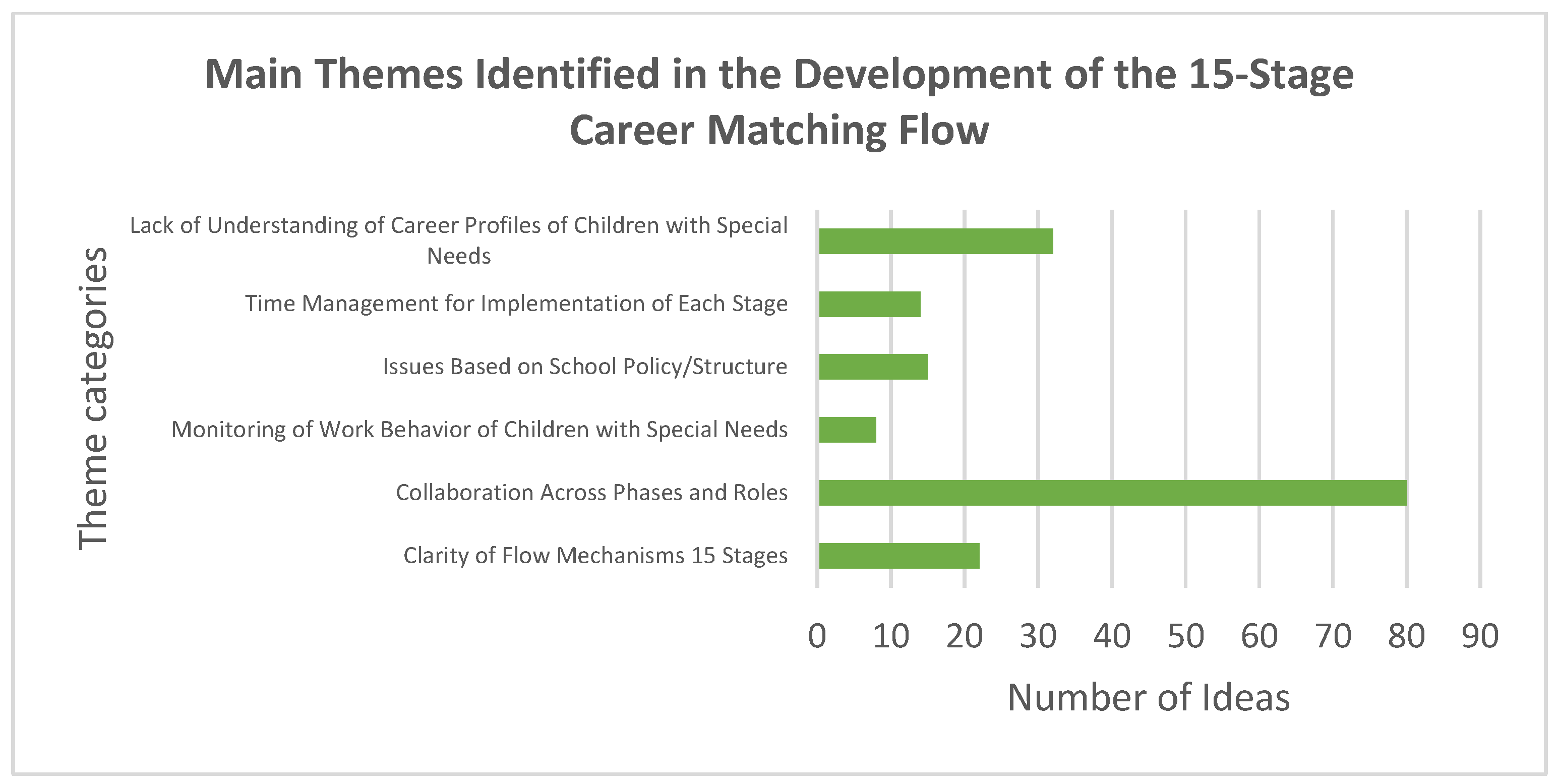
The Implementation Phase (Stages 11–15) describes the transition to the world of work through several stages, namely Interview, Job Apply, Selection, Placement, and Training Probation. Participants emphasized the importance of sufficient support, especially at the beginning of a work placement, so that the crew’s first experience is a lesson, not a cause of failure [25,26]. In each stage, specific adaptations according to the type of disability are also discussed, such as the need for visual or auditory support, simplification of commands, and the use of a similar work environment before actual placement, according to the principles of accessibility and reasonable adjustment in the workplace [23,45]. With this process, participants begin to understand the 15 stages not only as an administrative document but also as a framework for determining when, where, and how adjustments are made, so that career mapping decisions become clearer, documented, and easier to re-examine. This framework also aids inter-agency communication and supports the establishment of a more structured transitional ecosystem for students with disabilities [11,31]. As shown in Figure 1, the preparation of the 15-stage Career Matching workflow was informed by a set of central themes identified during the co-design process.

4.2. Focus Group Discussions and Validation Results—Phase 2

4.2.1. Desirability

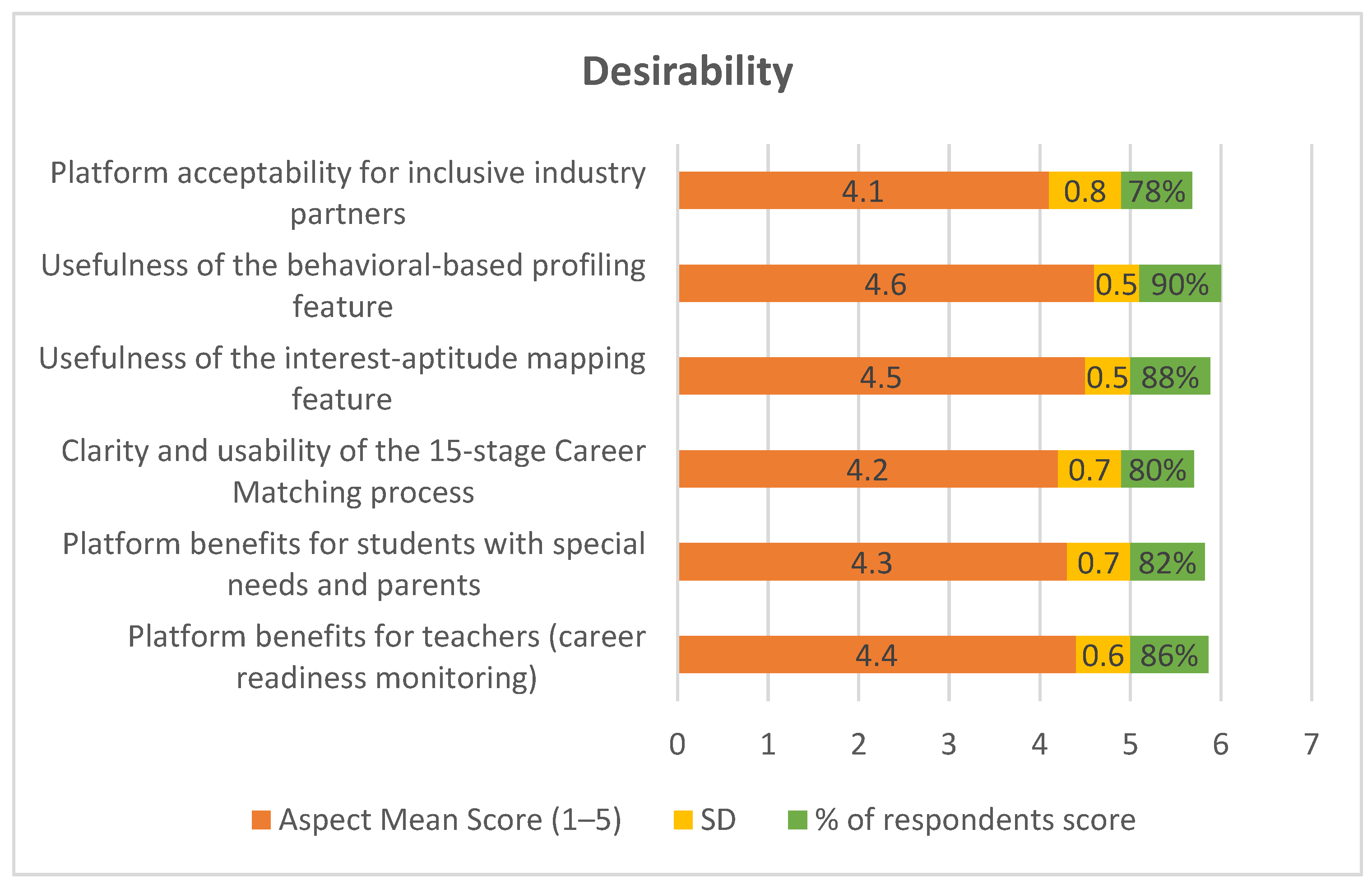
To further address Research Question 3, this subsection reports stakeholder evaluations of the desirability of the proposed prototype and 15-stage workflow. In the second stage, the desirability aspect was explored through a 15-stage flow prototype simulation and a directed discussion. After the prototype had been developed from the Phase 1 co-design outputs, Phase 2 focused on simulation-based validation of the proposed 15-stage Career Matching workflow. In this phase, participants reviewed the prototype through guided discussion and structured evaluation to assess its desirability. In general, stakeholders assessed the Career Matching platform as very beneficial for teachers, students with disabilities, parents, and industry partners, in accordance with the findings that involving various parties in the service design process increases the acceptance and relevance of digital solutions [5,6]. Teachers feel that the 15-stage flow helps them understand the student’s career journey in a more structured way, from the initial assessment stage through the probation training period, so that decisions are no longer made intermittently between school years [10,39].
Several teachers explained that the staged workflow would make it easier for them to explain a student’s current position to parents and to document why a student was still in preparation rather than ready for placement. Participants from industry also indicated that a structured profile summary would increase their confidence in understanding what kinds of support a student might need during early work placement. Parents consider that this platform has the potential to reduce confusion about the status of their child’s position, which is currently in the assessment or preparation phase, or has entered the job placement stage.
For students with special needs, focus group discussion participants stated that a flow view using simple icons and terms, such as review, coaching, and interview, can help them understand the steps that are being taken and will be taken. This is especially useful when accompanied by visual explanations and teacher support, as described in the literature on disability-friendly interface design [3,30]. This combination is considered capable of increasing equality in career recommendations. Students who may be underachieving academically but are consistent, are thorough, and have a strong interest in certain types of work can still get a realistic career path. This aligns with a strengths-based approach in career services for people with disabilities [4,23]. In general, interest in the platform is considered high. It serves as a basis for continuing the design refinement and field trials, in accordance with recommendations from Double Diamond Design Process (DDDP)-based co-design studies in the educational and social fields [34,41,47]. As shown in Figure 2, stakeholder evaluations indicated a generally high level of desirability for the proposed Career Matching platform and its 15-stage workflow. This suggests that the proposed platform was perceived as relevant and acceptable across stakeholder groups at the conceptual design stage, particularly because it made the career support process easier to understand and communicate.

4.2.2. Feasibility

This subsection continues the response to Research Question 3 by examining the feasibility of implementing the proposed workflow and platform in school settings. In terms of feasibility, the focus group discussions showed that stakeholders were quite optimistic but highlighted several important conditions for the platform to run well in schools. First, regarding integration with existing administrative systems, most schools with disabilities report that they are still using a mix of manual records, spreadsheet files, and simple applications such as e-report cards. Therefore, the Career Matching platform is expected not to add to the input burden, but to be able to import or export basic student data as well as summaries of assessment results to a format already used by schools, in accordance with the principle of system integration in information and communication technology-based educational service innovation [37,39,54]. Second, the readiness of information and communication technology (ICT) devices across schools varies: some already have computer labs and stable internet connections, while others still rely on teacher-owned devices and inadequate networks. This proposes that the platform be accessible through low-spec devices and support offline–online synchronization features whenever possible, as recommended for schools with limited resources [7,18].
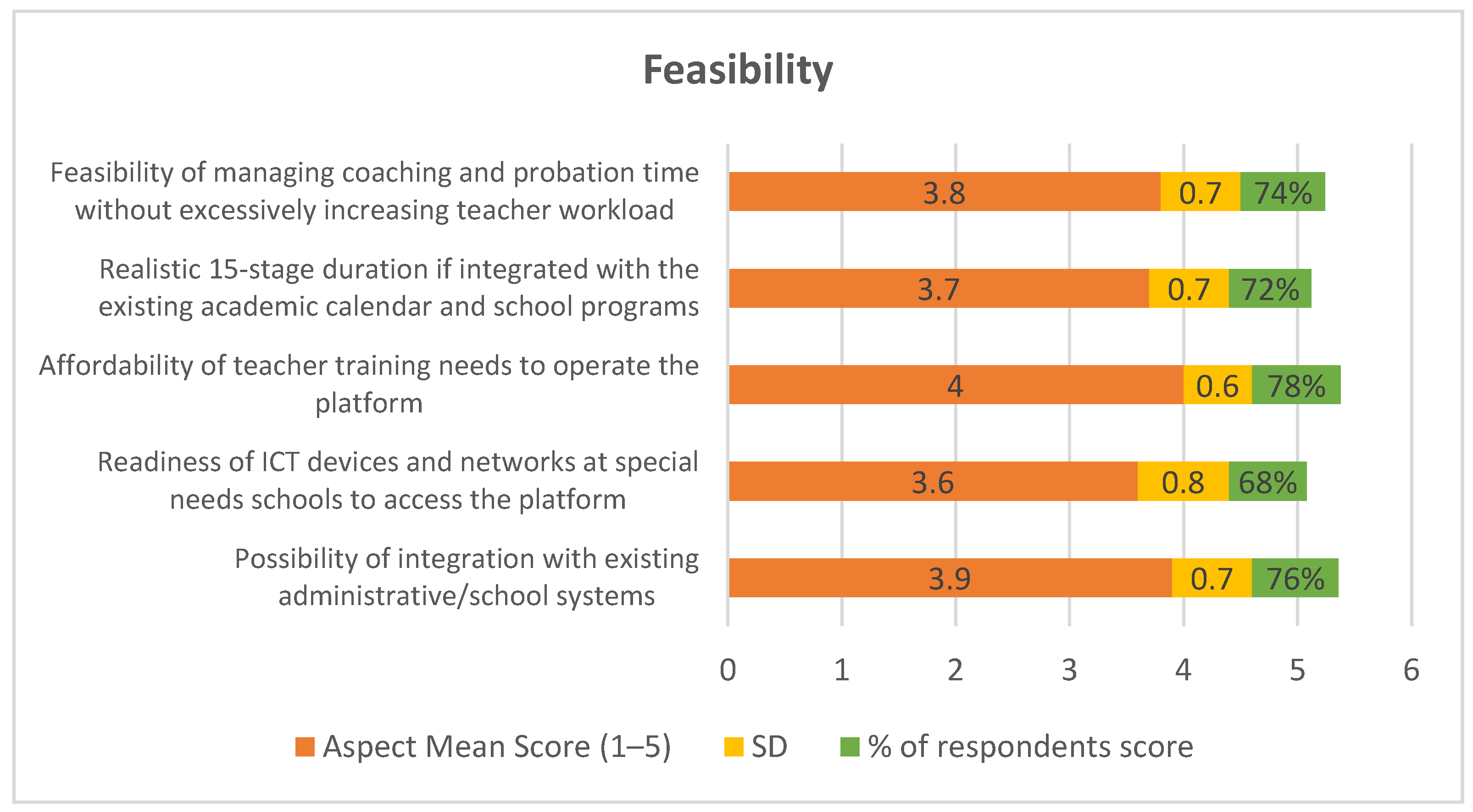
Strong input also emerged on the importance of teacher training. Participants acknowledged that many teachers have considerable administrative tasks, so training should be designed practically, based on real-case simulations, and complemented by a brief guide to use for each stage, in line with findings that show that practice-based training is essential in the adoption of educational technologies [30,53]. A discussion of the duration of each stage in 15 steps highlighted concerns that, if not managed properly, the process could feel too long and burdensome. The coordinators propose a guide to estimating the time for each stage (e.g., in weeks or months) as well as the flexibility to adjust according to school conditions and the level of student readiness, in accordance with the principle of adapting service design to the local context [6,33,44]. Some time management strategies in coaching and probation include incorporating these activities into existing skill practice hours or field activities, rather than adding new schedules [3,4]. In general, the level of practicality is rated as medium to high, noting that support from school policies, initial guidance, and technical adjustments is needed for the platform to fit the on-the-ground reality [38,51]. As shown in Figure 3, stakeholder responses indicated a moderate to high level of feasibility for the proposed platform, while also highlighting several practical conditions required for implementation. These findings indicate that the platform is promising for school use, but its implementation will depend on practical support such as teacher training, system integration, and adaptation to uneven ICT readiness across schools.

4.2.3. Viability (Long-Term Viability)

This subsection also addresses Research Question 3 by examining the long-term viability of the proposed platform from the perspective of sustainability, governance, and future expansion. In terms of long-term viability, the focus group discussion participants emphasized that the sustainability of the Career Matching platform depends not only on the quality of technical design but also on a clear funding and management model. Some of the options discussed include a school subscription system at an affordable cost, integration with government programs such as inclusive education assistance or school-to-work transition programs, and support from corporate social responsibility (CSR) companies that care about disability employment [1,38].
The need for technical maintenance is also a significant concern. Teachers expect the system to be updated, bugs fixed, and features to be changed regularly without disturbing the data that has been stored. This highlights the importance of having a clear management team, which is a consortium consisting of universities, schools, and technology partners, with agreed post-sales service standards, as emphasized in the study on education digital platform management and cross-institutional partnerships [51,52]. The protection of the data of children and persons with disabilities is also considered very important: participants emphasized the need to regulate multi-layered access rights, the encryption of sensitive data, and procedures for approving the use of data for research or reporting purposes, in accordance with the principles of data protection in the digital era [27,59].
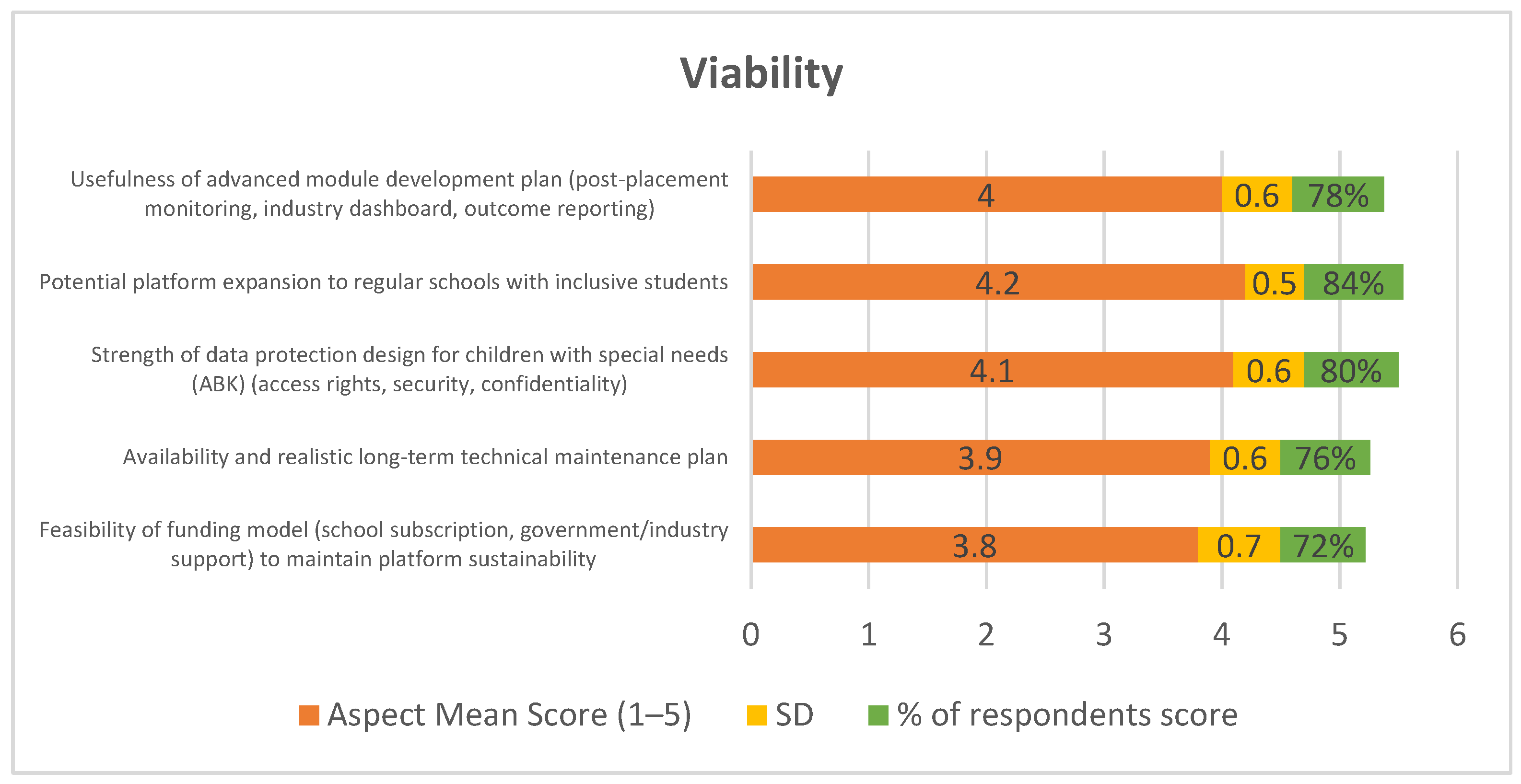
In the long term, stakeholders see an opportunity to expand the platform to public schools serving students with special needs, so the benefits are not limited to special schools. They also suggested creating additional modules, such as monitoring after students are placed in work, reporting results to relevant agencies, and industry-specific dashboards to monitor the performance of workers with special needs [4,10]. In general, the sustainability potential of the platform is considered very good as long as there is a mutual understanding in preparing a strong business model, technical management, and data protection policy, so that the platform can serve as a long-term infrastructure for the ecosystem of transition from schools to an inclusive world of work [8,25,37]. As shown in Figure 4, stakeholder evaluations indicated that the proposed platform was considered promising in terms of long-term viability, particularly when supported by sustainable governance, funding, and data protection arrangements. In other words, long-term viability was viewed not simply as a technical issue, but as something that depends on institutional commitment, sustainable funding arrangements, and clear governance for maintenance and data protection.

5. Discussion

At the current stage, the Career Matching platform should be understood as an early-stage co-designed prototype rather than a fully deployed live system. The study evaluated the proposed 15-stage workflow and its mock-up interface through stakeholder-based validation, with the aim of refining the conceptual platform before broader implementation and field testing.
Taken together, the findings address the four research questions by identifying stakeholder challenges, clarifying shared service needs, developing and validating the 15-stage workflow, and outlining key design principles for disability-responsive profiling and career recommendation. This discussion shows that the series of research stages successfully connects the challenges in the disability career service described in the beginning with the design of the 15-stage workflow and the main features of the proposed Career Matching prototype platform. With an organized co-design process, stakeholders can see the entire disability career process, from initial assessment to training during the probationary period. This allows issues such as disintegrated assessment data, intuition-based decision-making, and a lack of documentation in the coaching process to be considered as problems with the flow and system, rather than just individual teacher or school weaknesses. This interpretation is supported by the FGD data, in which participants repeatedly described fragmented student records, uncertainty about placement readiness, and limited communication with industry as recurring barriers that could not be solved through informal teacher judgment alone. In accordance with the design epistemology approach that emphasizes the formation of practical ideas to solve real problems [20,34,41,44], the 15-stage flow serves as an operational framework that combines the efforts of various parties in the disability career ecosystem.
In relation to Research Question 4, the findings also suggest that behavioral-based profiling, interest–aptitude mapping, and data integration need to be adapted to the characteristics of different disability groups in order to support more responsive and equitable career planning. This research makes an important contribution to the literature by clearly integrating behavior-based profiling, data science, and interest and talent mapping in the context of career services for people with disabilities. Most career assessment systems place greater emphasis on interest scales and standardized cognitive tests [10,14,23]. The model developed here adds aspects of work behavior such as perseverance, emotion management, and social interaction, as well as a history of field transfers as a significant part of the career profile. This approach is similar to the concept of strengths-based assessments for people with disabilities [1,15,47], in which career decision-making is based not only on “deficiencies” in abilities, but also on existing behavioral strengths and support environments. By combining data science, these profiles can be analyzed on an ongoing basis, enabling career recommendations to be more evidence-based and reducing the subjective biases that often occur in disability work placements.
In practice, these findings have several impacts on schools and coaching programs for people with disabilities. First, the 15-stage flow can serve as a guide for implementing career services in a more structured manner, with a clear division between the Assessment, Preparation, and Implementation phases. This aligns with recommendations for transitioning from school to the workforce for people with disabilities that emphasize the importance of long-term planning and multi-stakeholder engagement [5,26]. Second, the roles of accompanying teachers and psychologists can be redefined not only as assessment implementers but also as career coaches who help read profiles, determine goals, and facilitate periodic reflections on the development of students’ work behavior. Third, a clear relationship between the platform’s features and the special work competency standards provides the basis for combining career services with competency-based job training programs in schools, so that assessment results can be directly transformed into targeted training and work experience packages [16,37,38,51].
Another significant implication arises for industry and the world of inclusive work. First, we should improve the quality of the inclusive recruitment process, as HR should not rely solely on short interviews but also consider documented histories of disability job readiness [25,31]. Second, we should support the arrangement of the work environment, including task assignment, job adjustment, and natural assistance design in the workplace based on the actual needs contained in the system. Third, we should add a more adaptive probation program design: supervisors can monitor behavioral and performance indicators, provide feedback to schools, and jointly decide on sustainable placement strategies [32,35,51,52,60].
From the perspective of a cross-institutional professional learning community, the platform can serve as a shared learning space between schools and industry. Data is used not only to assess whether a person is deserving, but also to design more humane and sustainable support for a disability career with a disability.

6. Reflection on the Co-Design Process

These findings should therefore be interpreted as evidence of early-stage conceptual and prototype validation, rather than as the outcome of a fully operational platform already implemented in schools or workplaces. Reflections on the co-design process in this study show that collaborative approaches are relatively new, but very promising for exploring important issues in the context of special schools and career services for children with special needs (disability) [41,44].
Applying the Double Diamond Design Process (DDDP) in the context of SLB provides valuable lessons. Although the DDDP is usually described as a linear process, from the discover, define, and develop, to deliver phases, in practice, it is much more reflective and does not proceed in a straight line [41,42]. As in other research, in this context, co-design is seen as an interconnected, iterative process across phases, in which stakeholders continue to develop ideas until they feel that the 15-stage flow design truly reflects the reality of their work [61].
Another important observation is the need to consciously activate participants’ emotional experiences. These findings are consistent with other arguments that emotion-based questions encourage stakeholders working with complex services to uncover hidden stories, thereby facilitating the identification of root causes [1,53].
Finally, reflection on time, including time allocation for assessment, coaching, and inter-agency coordination, can emphasize the importance of analyzing complexity before determining the direction of the project [13,40]. The fact that many educators and practitioners feel overwhelmed helps teams develop a more realistic 15-step framework with clear decision points and platform support, thereby reducing the administrative burden. In a design epistemology that emphasizes empathy and connects diverse perspectives around shared issues, this co-design process resulted in the development of an early-stage platform prototype and workflow model, while also fostering a sense of ownership among stakeholders [4,19,37]. This, in turn, increases the chances of the implementation and sustainability of the Career Matching for Students with Special Needs (disability) program as an integral part of an inclusive career services ecosystem [1,20,54,60].

7. Limitations of Research and Advanced Agenda

This study can be seen as an initial attempt to use a co-design framework to explore the complexity of career services for students with disabilities in special education settings and in the transition from school to work in Indonesia. By activating the divergent and convergent phases of the Double Diamond Design Process (DDDP) and gathering collective reflections of practitioners involved in daily career support for children with special needs, the study provides an initial direction for schools that want to build a more structured and data-driven career matching system [14,28,37]. However, some limitations need to be acknowledged. First, the participants came from SLE in one city/region and the purposive sampling method was used; therefore, it is impossible to determine whether their views reflect the diversity of practices and challenges in other regions [32,59]. Second, in the early stages of co-design, the direct voices of children with special needs and parents were not systematically involved; teachers and disability experts primarily represented their input. This is despite the literature confirming that people with disabilities and their families are key stakeholders in career transition planning [31,46]. This limitation reduces the user-centered validity of the current platform design, because the perspectives of the primary intended users were not directly incorporated into the early co-design stages. Third, the study was focused on system design and early-stage validation of desirability, feasibility, and viability, rather than on measuring implementation outcomes such as increased career readiness or successful job placement [30,62].
A more advanced research agenda should include pilot testing in collaborating schools, full implementation of the 15-stage process, and outcome evaluation focusing on job readiness, placement retention, and stakeholder satisfaction [34,44]. Subsequent research should also specifically involve the voices of people with disabilities and parents at all stages of the DDDP, as well as develop more sophisticated analytical modules in data science using longitudinal modeling and pattern recognition to determine the career profiles that would benefit most from a particular type of support [1,3,5]. In particular, future work should involve students with disabilities directly in participatory design, prototype testing, and usability evaluation in order to strengthen the platform’s relevance and user-centered validity. A strengths-based approach and meaningful participation are expected to enhance the development of platforms to be more relevant, equitable, and sustainable for the career ecosystem of people with disabilities in Indonesia.

8. Conclusions and Implications

Inserting empathy into the design process is a crucial element that sparks innovation when addressing complex issues, such as career services for people with disabilities. The results of this study reveal the importance of empathy in two areas: design methods and product design. Through co-design based on the Double Diamond Design Process (DDDP), the participation of SLB teachers, disability experts, career professionals, technical teams, and industry representatives allows them to understand difficulties from their own perspectives, which is difficult to achieve when design methods are done top–down [10,23]. From this process, a Career Matching model was developed, comprising 15 stages from New Student Addition to Probationary Training, and was validated by stakeholders, and it is poised to strengthen the inclusive career services ecosystem in education.
Theoretically, this study underscores the importance of behavior-based profiling and data-based interest–aptitude mapping in producing career recommendations that are more fair, realistic, and in line with a person’s abilities. In contrast to career assessments that generally focus more on general interests and cognitive abilities, the platform integrates data on work behavior, interests, aptitudes, and transition track records into a single longitudinal career profile [9,21]. Combining with the data science model opens the possibility of learning from placement patterns across generations, so that career recommendations not only reduce subjective bias but can also be empirically tested.
Practically, this study offers a structured 15-stage Career Matching workflow that can be used by schools, teachers, counselors, and industry partners as a shared framework for assessment, coaching, placement preparation, and probation support for students with disabilities. The implications of the emerging policy are evident for the Career Matching for disability platform to function as an inclusive career services infrastructure. Supportive regulations, financing, and integration into transition programs between schools and the world of work at the local and national levels are needed [14,33]. This includes formal recognition of the role of career services in special schools, as well as support for the procurement and maintenance of information and communication technologies, and the development of partnership schemes between schools and industry that leverage data from platforms for inclusive recruitment [16,18]. These implications should, however, be interpreted in light of the study’s limitations, particularly the context-specific sample, the absence of direct student participation in the early co-design stages, and the fact that the current study focused on prototype validation rather than full implementation outcomes.
Finally, this study is based on the belief that every individual with special needs deserves a meaningful career future. There is a need for data-driven innovation designed with inclusiveness. An approach of empathy, participation, and collaboration between institutions can serve as a link between the potential of individuals with special needs and the employment opportunities available in society [28,29,38].
Future research is needed to test the platform in broader field settings, evaluate its effects on work readiness and placement outcomes, and refine its behavioral profiling and data science components across different disability service contexts. This foundation is vital for further research and for policy change efforts towards a fairer work ecosystem for people with disabilities in Indonesia.


Author Contributions

Conceptualization, A.R.J. and I.N.S.; methodology, I.N.S.; software, A.B.S.; validation, A.B., A.R.J. and N.L.; formal analysis, A.R.J.; investigation, I.N.S.; resources, A.B.S.; data curation, A.R.J.; writing—original draft preparation, B.A.D.; writing—review and editing, N.L.; visualization, A.B.S.; supervision, I.N.S.; project administration, B.A.D.; funding acquisition, A.R.J. All authors have read and agreed to the published version of the manuscript.

Funding

This work was supported by the Indonesia Endowment Fund for Education Agency (Lembaga Pengelola Dana Pendidikan, Indonesia) under grant number 202311121272937.

Institutional Review Board Statement

The study was conducted in accordance with the ethical standards for research involving human participants and was reviewed and approved by the Research Ethics Committee (Komite Etik Penelitian) of Universitas Negeri Malang, Indonesia (Ethical Exemption Letter No. 19.09.11/UN32.14.2.8/LT/2026, 19 September 2025). The committee declared that the protocol was ethically appropriate in accordance with the seven WHO 2011 standards (social value, scientific validity, fair selection of participants, risk–benefit balance, non-exploitation, confidentiality and privacy, and informed consent) and the CIOMS 2016 guidelines.

Informed Consent Statement

Informed consent was obtained from all participants involved in the study. All participants were adult teachers, school staff, disability experts, and industry representatives who voluntarily took part in focus group discussions and co-design workshops. Written informed consent was also obtained from the participants for the use of anonymized quotations and aggregated data in this publication.

Data Availability Statement

The data presented in this study are available on reasonable request from the corresponding author. The data are not publicly available due to privacy and ethical restrictions involving human participants.

Conflicts of Interest

The authors declare no conflicts of interest. The funders had no role in the design of the study; in the collection, analyses, or interpretation of data; in the writing of the manuscript; or in the decision to publish the results.

Disability Language/Terminology Positionality Statement

Throughout this manuscript, we primarily use person-first language (e.g., “children with special needs”, “students with disabilities”, “students with autism”) because it reflects the official terminology used in Indonesian educational and legal frameworks and in the participating schools (e.g., Anak Berkebutuhan Khusus [ABK] and Sekolah Luar Biasa). Our intention is not to pathologize disabled people, but to describe how educational and career matching supports are organized around existing policy categories while foregrounding students’ strengths, interests, and workplace potential. All direct participants in this study were adult professionals (teachers, disability experts, and industry partners), and no students with disabilities were enrolled as research subjects; nevertheless, we have sought to avoid deficit-based framings and to emphasize environmental barriers, reasonable accommodations, and inclusive career pathways.

Appendix A

Quantitative Validation Items Used in Phase 2

These items were used during the Phase 2 validation process to assess stakeholder perceptions of the proposed Career Matching platform in terms of desirability, feasibility, and viability. All items were rated on a 5-point Likert scale.
Table A1. Desirability items used for prototype validation.
No.DimensionItem Statement
D1DesirabilityThe platform is beneficial for teachers in monitoring students’ career readiness.
D2DesirabilityThe platform is beneficial for students with special needs and their parents.
D3DesirabilityThe 15-stage Career Matching process is clear and easy to use.
D4DesirabilityThe interest–aptitude mapping feature is useful for understanding students’ career potential.
D5DesirabilityThe behavioral-based profiling feature is useful for understanding students’ work-related strengths and support needs.
D6DesirabilityThe platform is acceptable for use by inclusive industry partners.
Response scale: 1 = Not Appropriate, 2 = Less Appropriate, 3 = Fairly Appropriate, 4 = Appropriate, 5 = Very Appropriate.
Table A2. Feasibility items used for prototype validation.
No.DimensionItem Statement
F1FeasibilityThe platform can be integrated with existing administrative or school systems.
F2FeasibilityInformation and communication technology (ICT) devices and internet networks in special schools are sufficiently ready to support access to the platform.
F3FeasibilityThe teacher training needed to operate the platform is manageable and affordable.
F4FeasibilityThe 15-stage process is realistic if integrated with the existing academic calendar and school programs.
F5FeasibilityCoaching and probation activities can be managed without excessively increasing teachers’ workload.
Response scale: 1 = Not Appropriate, 2 = Less Appropriate, 3 = Fairly Appropriate, 4 = Appropriate, 5 = Very Appropriate.
Table A3. Viability items used for prototype validation.
No.DimensionItem Statement
V1ViabilityThe proposed funding model (e.g., school subscription, government support, or industry support) is feasible for sustaining the platform.
V2ViabilityA long-term technical maintenance plan for the platform is available and realistic.
V3ViabilityThe platform has a strong data protection design for children with special needs, including access rights, security, and confidentiality.
V4ViabilityThe platform has the potential to be expanded to regular schools with inclusive students.
V5ViabilityThe development of advanced modules (e.g., post-placement monitoring, industry dashboard, and outcome reporting) would be useful for long-term implementation.
Response scale: 1 = Not Appropriate, 2 = Less Appropriate, 3 = Fairly Appropriate, 4 = Appropriate, 5 = Very Appropriate.

References

  1. Wee, C.; Wood, J.J.; Thompson, L.M.; Kennedy, S.; Sherry, J.; Joyce, L.; Odiyoor, M.; Jaydeokar, S. Identifying multi-agency support for children and young people with special educational needs and disability. The dynamic needs assessment tool (DNAT-SEN). Adv. Autism 2025, 11, 361–371. [Google Scholar] [CrossRef]
  2. Alasmari, A.N.; Almalky, H.A. Employment barriers for people with disabilities in Saudi Arabia. Res. Dev. Disabil. 2026, 170, 105231. [Google Scholar] [CrossRef]
  3. Bezze, M.; Geron, D. Review Children with special educational needs: An impact evaluation. Child. Youth Serv. Rev. 2025, 176, 108396. [Google Scholar] [CrossRef]
  4. Eden, S.; Shamir, A. The impact of teachers’ iPad use on supporting functional abilities in children with special needs. Res. Dev. Disabil. 2025, 162, 105028. [Google Scholar] [CrossRef] [PubMed]
  5. Duraku, Z.H.; Hoxha, L.; Buqaj, B. One-on-one tutoring for children with special educational needs: A qualitative multiple-case pilot study in a Kosovo public school. J. Child. Serv. 2025, 20, 94–110. [Google Scholar] [CrossRef]
  6. Almarzooqi, S.A.; Efstratopoulou, M.; Habeeb, H.; Opoku, M. Exploring the usefulness of companion pet ownership in the everyday functioning of children with Autism Spectrum Disorder in the United Arab Emirates: A qualitative focus-group study. Res. Dev. Disabil. 2025, 167, 105154. [Google Scholar] [CrossRef]
  7. Van Cleave, J.; Taft, K.; Ware, A.; Stille, C. Assessing and Addressing Social Determinants of Health Among Children and Youth With Special Health Care Needs. Acad. Pediatr. Recomm. 2022, 22, 28–33. [Google Scholar] [CrossRef] [PubMed]
  8. Profanter, A. Children and Youth Services Review Facing the challenges of children and youth with special abilities and needs on the fringes of Omani society. Child. Youth Serv. Rev. 2009, 31, 8–15. [Google Scholar] [CrossRef]
  9. Merve, Ş.; Salik, H.; Durmu, M. In the shadow of stigmatization: The psychological effects of having a child with special needs on parents in Türkiye: A qualitative research. J. Pediatr. Nurs. 2025, 85, 128–134. [Google Scholar] [CrossRef]
  10. Alfonso, J.; Datu, D.; Feifan, P. The upside of a purposeful career? Sense of calling, empathy, and attitude towards students with autism spectrum disorders among Chinese special education teachers. Res. Autism 2025, 128, 202707. [Google Scholar] [CrossRef]
  11. Larsen, K.; Elena, E.; Albertini, E. “My child is my job now”—Care, work and careers of mothers with disabled children in the Norwegian welfare state. Soc. Sci. Med. J. 2024, 355, 117097. [Google Scholar] [CrossRef]
  12. Almalky, H.A. Saudi teachers’ attitudes toward community-based vocational instruction for secondary students with intellectual disabilities. Res. Dev. Disabil. 2025, 166, 105132. [Google Scholar] [CrossRef] [PubMed]
  13. Derks, S.; Willemen, A.M.; Sterkenburg, P.S. Improving adaptive and cognitive skills of children with an intellectual disability and/or autism spectrum disorder: Meta-analysis of randomised controlled trials on the effects of serious games. Int. J. Child-Comput. Interact. 2022, 33, 100488. [Google Scholar] [CrossRef]
  14. Tian, L. Next career recommendation in Mississippi with artificial intelligence. J. Comput. Appl. Math. 2024, 437, 115458. [Google Scholar] [CrossRef]
  15. Zhou, Y.; Tao, Z.; Shi, L.; Wang, P. Leadership behavior and career resilience in Chinese preschool teachers: A sequential mediation model of trust and professional identity. Teach. Teach. Educ. 2026, 171, 105339. [Google Scholar] [CrossRef]
  16. Raslan, G.; Forawi, S.A. Examining critical thinking aptitudes of high school students using the W-GCTA test in the context of UAE. Think. Ski. Creat. 2024, 52, 101509. [Google Scholar] [CrossRef]
  17. The World Bank. Competency Standards as a Tool for Human Capital Development: Assessment of Their Development and Introduction into TVET and Certification in Indonesia; The World Bank: Washington, DC, USA, 2020. [Google Scholar]
  18. Almenara, J.C. Digital teaching competencies and disability. Validation of a questionnaire design using the K coefficient to select experts. Heliyon 2023, 9, e16467. [Google Scholar] [CrossRef]
  19. Mwaka, C.R.; Best, K.L.; Chang, N.; Gagnon, M.; Routhier, F. Travel training program among adults with disabilities: A systematic review. Transp. Res. Interdiscip. Perspect. 2026, 36, 101825. [Google Scholar] [CrossRef]
  20. Stahlhut, M.; Toft, T.; Barfod, K.; Mikkelsen, S.; Mall, C.; Elsborg, P.; Aadahl, M.; Mads, B. Education outside the classroom for children with neurodevelopmental disorders in special needs education settings—A scoping review. Int. J. Educ. Res. 2025, 132, 102649. [Google Scholar] [CrossRef]
  21. Du, X.; Gao, S.; Zhao, X.; Chen, X. The effect of cognitive reappraisal on emotion recognition in mothers of children with special needs. Acta Psychol. 2024, 248, 104401. [Google Scholar] [CrossRef]
  22. Speybroeck, E.; Kautz-turnbull, C.; Rockhold, M.N.; Cole, L.; Petrenko, C.L.M. Review Leveraging court appointed special advocates to improve outcomes for children involved in the child welfare system with prenatal alcohol exposure. Child. Youth Serv. Rev. 2026, 180, 108694. [Google Scholar] [CrossRef]
  23. Almalky, H.A.; Alwadei, A.M. Vocational rehabilitation services and career readiness for individuals with intellectual disability in Saudi Arabia. Child. Youth Serv. Rev. 2024, 166, 108003. [Google Scholar] [CrossRef]
  24. Shin, G.; Hur, W.; Shin, Y. Service employees’ workplace incivility and career regret: Mediation of organizational dehumanization and moderation of psychological safety. J. Retail. Consum. Serv. 2025, 84, 104192. [Google Scholar] [CrossRef]
  25. Hooper, A.; Johnson, K. Teacher educators’ reflections on supporting pre-service and early career educators’ social-emotional learning. Soc. Emot. Learn. Res. Pract. Policy 2025, 5, 100100. [Google Scholar] [CrossRef]
  26. Dong, D.; Akkermans, J.; Khapova, S.N. Navigating a double school-to-work transition: How do Chinese graduate students decide where to start their careers after studying abroad? Career Dev. Int. 2025, 30, 139–159. [Google Scholar] [CrossRef]
  27. Kuboni, S.; Mawila-chauke, D. ‘Navigating my way through trial and error’ … resilience of newly qualified teachers in special educational needs schools for learners with physical disabilities. Soc. Sci. Humanit. Open 2025, 12, 101836. [Google Scholar] [CrossRef]
  28. Augsberger, A.; Collins, M.E.; Mohanty, S. Bridging success: How institutional adults can support system involved youth and young adults in pursuing post-secondary vocational education and career pathways. Child. Youth Serv. Rev. 2025, 173, 108282. [Google Scholar] [CrossRef]
  29. Wang, Y.; Liu, Y.; Xiang, J.; Liu, J. Developmental relationships between motor skills and executive functioning in children with intellectual disabilities. Hum. Mov. Sci. 2025, 104, 103424. [Google Scholar] [CrossRef]
  30. Hansen, N.; Bialka, C.S.; Jin, S.; Gamerman, T. “Learning on the job”: An exploration of teacher educators’ training and comfort with anti-ableist disability discussion. Teach. Teach. Educ. 2024, 140, 104481. [Google Scholar] [CrossRef]
  31. Wu, F.Y.; Udomsirirat, V.T.; Dwertmann, D.J.G.; Oswald, F.L. Identifying macro-level disability-job fit to predict people with disabilities’ occupational representation: Leveraging O * NET and Census datasets. J. Vocat. Behav. 2025, 163, 104192. [Google Scholar] [CrossRef]
  32. Rezaiee, A.; Amiri, B. Decoding career success: A personality-based analysis of data science Professional based on ANFIS modeling. Heliyon 2024, 10, e34130. [Google Scholar] [CrossRef]
  33. Wong, J.; Chung, W.; Wang, H.; Lin, Y.; Chen, E.E. Brief Report: School support in career development for young adults with autism spectrum disorder. Res. Autism 2025, 120, 202537. [Google Scholar] [CrossRef]
  34. Jing, X.; Shen, B.; Yu, J.; Zhang, C.; Xie, F. A SysML-driven co-design platform applying an MBSE-PDM integration framework and cross-stage change propagation method. Comput. Ind. Eng. 2025, 209, 111460. [Google Scholar] [CrossRef]
  35. Hu, H.; Zhao, Y.; Guo, D.; Deng, Y.; Luo, H.; Hao, Y. Cognitive function differs across healthy lifestyle behavior profiles: A 10-year population-based prospective cohort study. Anaesth. Crit. Care Pain Med. 2025, 29, 100487. [Google Scholar] [CrossRef] [PubMed]
  36. Liu, J.; Yan, C.; Liu, W.; Liu, X.; Ding, Y.; Zhou, Y. Research on learner “emotion-behavior-ability” characteristics based on MOOC online education user profiles. Inf. Process. Manag. 2025, 62, 104026. [Google Scholar] [CrossRef]
  37. Chan, X.W.; Hutchings, K. Exploring the careers of women with disabilities: A systematic review and implications for human resource management. Pers. Rev. 2025, 54, 1202–1251. [Google Scholar] [CrossRef]
  38. Drencheva, A.; Chan, W. Navigating crisis in non-standard work: Social entrepreneurs’ sensemaking and purpose protection during career shocks. J. Vocat. Behav. 2025, 162, 104178. [Google Scholar] [CrossRef]
  39. Chan, J. Seeking a second chance: A study on rehabilitated offenders’ attitudinal transformation and career construction. Tour. Manag. 2026, 112, 105265. [Google Scholar] [CrossRef]
  40. Brzykcy, A.Z.; Boehm, S.A.; Baldridge, D.C. Fostering sustainable careers across the lifespan: The role of disability, idiosyncratic deals and perceived work ability. J. Vocat. Behav. 2019, 112, 185–198. [Google Scholar] [CrossRef]
  41. Johnson, G.U.; Towell-barnard, A.; Mclean, C.; Robert, G.; Ewens, B. Co-designing a digital family-led intervention for delirium prevention and management in adult critically ill patients: An application of the double diamond design process. Int. J. Nurs. Stud. 2024, 160, 104888. [Google Scholar] [CrossRef]
  42. Prasad, H.; Narayan, T.; Apan, A.A. Enhancing systematic literature review adapting ‘double diamond approach’. Heliyon 2024, 10, e40581. [Google Scholar] [CrossRef] [PubMed]
  43. Ren, L.; Shen, H. The relationship between servant leadership and team innovation performance: Mediating effect of self-efficacy. Heliyon 2024, 10, e27723. [Google Scholar] [CrossRef] [PubMed]
  44. Zhu, S.; Nie, T. Product design and pricing decisions in platform-based co-creation. Eur. J. Oper. Res. 2025, 324, 893–907. [Google Scholar] [CrossRef]
  45. Bimrose, J.; Brown, A.; Mulvey, R.; Kieslinger, B.; Fabian, C.M.; Schaefer, T.; Kinkel, S.; Kopp, T. Transforming identities and co-constructing careers of career counselors. J. Vocat. Behav. 2019, 111, 7–23. [Google Scholar] [CrossRef]
  46. Feng, J. Enhancing person-job fit through multi-temporal career trajectory modeling. Expert Syst. Appl. 2026, 300, 130413. [Google Scholar] [CrossRef]
  47. Aloudah, N.S.; Alshehri, M.S.; Alhamad, A.R. A proposed AI application for enhancing the quality of life of people with disabilities in Saudi Arabia. Res. Dev. Disabil. 2025, 167, 105137. [Google Scholar] [CrossRef]
  48. Wolcott, M.D.; Lobczowski, N.G.; Lyons, K.; Mclaughlin, J.E. Design-based research: Connecting theory and practice in pharmacy educational intervention research. Curr. Pharm. Teach. Learn. 2019, 11, 309–318. [Google Scholar] [CrossRef]
  49. Vreugdenhil, J.; Broeksma, L.; Dobber, J.; Kusurkar, R.A. Routines mediate educational solutions in clinical practice: A discussion paper on design-based research. Nurse Educ. Pract. 2025, 83, 104279. [Google Scholar] [CrossRef]
  50. Tokidis, E.; Vivekananda-schmidt, P.; Balasubramanian, S.P. A Focus Group Discussion Study Exploring General Surgery Trainees’ Views on Evidence-Based Medicine Within Their Training Program in the United Kingdom. J. Surg. Educ. 2024, 82, 103348. [Google Scholar] [CrossRef]
  51. Liu, Y. Multi-stakeholder collaboration in an online professional learning community: Co-constructing professional learning. Int. J. Educ. Res. 2025, 133, 102668. [Google Scholar] [CrossRef]
  52. Yang, W. University language teachers’ scholarship of teaching and learning in a virtual professional learning community. System 2025, 131, 103658. [Google Scholar] [CrossRef]
  53. Victor, K.; Goggin, G. New possibilities or problems for disability and inclusion? The case of AI and ADMs across work. Telemat. Inform. 2024, 92, 102156. [Google Scholar] [CrossRef]
  54. Fajardo-castro, L.V.; Martínez-tur, V.; Moliner, C.; Lira, E.; Gracia, E. Digitalization and integrated employment for persons with intellectual disabilities. Res. Dev. Disabil. 2025, 164, 105070. [Google Scholar] [CrossRef]
  55. Hareli, M.; Knutsen, J.C.; Nowakowski, L.M.; Conley, C.S.; Gonzales, C.H.; Hopkins, J. Infusing social-emotional skills into a career and life planning course for college adults: A qualitative analysis and quantitative summary of student perceptions at post-course and at post-college follow-up. Soc. Emot. Learn. Res. Pract. Policy 2025, 5, 100097. [Google Scholar] [CrossRef]
  56. Arulraj, S.; Mohebi, L. Implications of career guidance on career choices and professional development: Stakeholders’ perspectives from selected higher educational institutions in the UAE. Soc. Sci. Humanit. Open 2026, 13, 102594. [Google Scholar] [CrossRef]
  57. Irem, H. Weathering the storm: Career development stories of Syrian refugee women. Women’s Stud. Int. Forum 2026, 114, 103203. [Google Scholar] [CrossRef]
  58. Narendorf, S.C.; Khan, U.; Munson, M.R.; Klodnick, V.V. Transition symptom management careers: Historical patterns of mental health symptoms and service use among young adults experiencing a psychiatric crisis. Soc. Sci. Med. 2025, 366, 117657. [Google Scholar] [CrossRef]
  59. Zhou, P.; Hu, Z.; Chen, H.; Ming, J. Professional mentality in the age of intelligence: How does cynicism moderate the impact of AI awareness on employees’ career development? Int. J. Hosp. Manag. 2026, 134, 104531. [Google Scholar] [CrossRef]
  60. Wiser, J.A. The career pathways of academic librarians: A kaleidoscope career model analysis of faculty identity and institutional engagement. Libr. Inf. Sci. Res. 2025, 47, 101371. [Google Scholar] [CrossRef]
  61. Shen, L.; Tang, L.; Mu, Y. Critical success factors and collaborative governance mechanism for the transformation of existing residential buildings in urban renewal: From a social network perspective. Heliyon 2024, 10, e27672. [Google Scholar] [CrossRef]
  62. Hernández-Rodríguez, F.; Guillén-Yparrea, N. Competencies Development Strategy Using Augmented Reality for Self-Management of Learning in Manufacturing Laboratories (AR-ManufacturingLab). Heliyon 2023, 9, e22072. [Google Scholar] [CrossRef]
Figure 1. The central theme related to the preparation of the 15-stage career matching disability flow.
Disabilities 06 00037 g001
Figure 2. Summary of the desirability score of the career matching disability platform.
Disabilities 06 00037 g002
Figure 3. Quantitative score of the feasibility aspect of the career matching disability platform.
Disabilities 06 00037 g003
Figure 4. Quantitative score of the viability aspect of the career matching disability platform.
Disabilities 06 00037 g004
Table 1. Profile of participants in the co-design focus group discussions.
Participant GroupsOrigin of the Institution/SettingKey Roles in Focus Group DiscussionsNumber of Participants
Teachers from special schools—visual disabilitySLB Kedung Kandang, SLB Pembina LawangShared assessment practices and career mentoring strategies for students with visual disabilities5
Teachers from special schools—hearing disabilitySLB Bhakti Luhur, SLB YPTBProvided input on visual communication, written instructions, and sign language support needs5
Teachers from special schools—physical disabilitySLB YPACExplained issues related to mobility, environmental access, and task adaptation in school-to-work transition4
Teachers from special schools—intellectual disabilitySLB Kedung Kandang, SLB Pembina LawangProvided feedback on simplified instructions, structured routines, and support needs in career preparation4
Teachers from special schools—autismSLB Lab Autis, SLB Bhakti LuhurDescribed work behavior patterns, sensory regulation needs, and visual structure supports for students with autism4
Platform technical teamUniversities/technology partnersDesigned data flows, system features, and interface components of the proposed platform2
Practitioners from the world of workCompanies/MSMEsProvided recruitment perspectives, work standards, and workplace support considerations3
Table 2. Profile of focus group discussions with participants: co-design and career matching in the context of disability.
Co-Design PhaseResearch QuestionsOutcome
Discover(1) What are the challenges faced by SLB teachers, psychologists, career practitioners, and the industry related to disability assessment and career placement?Various fundamental issues in career services and work transitions for people with disabilities in schools, and their relationships with the world of work, were identified.
Define(2) What issues and needs are common among stakeholders in designing a disability career matching system?Core themes of platform needs (features, flows, and data types) were agreed upon across disability groups and stakeholder roles.
Develop(3) What is the design of the 15-stage flow and the features of the career matching platform that are considered desirable, feasible, and viable by stakeholders?A draft of the 15-stage flow (Add New Students–Training Probation) was prepared, along with proposed main features and specific adjustments for each type of disability.
Deliver(4) What are the design principles of behavior-based profiling and data science models that are in accordance with the characteristics of the five disability groups?A prototype of the system flow, an interface mock-up, and a validation sheet that reflects the integration of behavioral profiles, interests–aptitudes, and analytical needs were compiled.
Table 3. The 15 stages of the career matching platform.
No.StagePhaseObjectiveKey Output
1Add New StudentAssessmentRegister the student into the system and create an initial digital profile.Student profile created
2Initial AssessmentAssessmentIdentify the student’s basic condition, disability profile, and initial career-related needs.Initial assessment data
3Advanced AssessmentAssessmentExplore more detailed aspects of the student’s readiness, support needs, and development areas.Extended assessment profile
4Skills AssessmentAssessmentAssess vocational, practical, and work-related skills relevant to future placement.Skills profile summary
5Document PreparationAssessmentCompile supporting documents required for career planning and placement.Career support documents completed
6ReviewPreparationReview the results of the assessment process with relevant stakeholders.Reviewed student profile
7CoachingPreparationProvide career guidance and behavioral support based on the assessment results.Coaching notes and goals
8Probation DocumentationPreparationPrepare documents and records required for probation planning.Probation preparation documents
9PreparationPreparationPrepare the student for transition into workplace-related activities or placement.Readiness plan completed
10Review IIPreparationConduct a second review to confirm student readiness before implementation.Final pre-placement review
11InterviewImplementationSupport the student in participating in interview-related activities.Interview readiness/output
12Job ApplyImplementationFacilitate the application process for relevant work opportunities.Job application submitted
13SelectionImplementationMatch the student with available work opportunities and selection outcomes.Selection result
14PlacementImplementationPlace the student into the selected work setting or internship environment.Placement confirmed
15Training ProbationImplementationMonitor and support the student during the early placement/probation stage.Probation monitoring record
Table 4. Collaborative group feedback on issues related to inclusive career services and the development of the career matching platform.
GroupsReference to the Issue *Examples from Group Members **
Group 1—Visual DisabilityAccess to career information (7); assessment data not integrated (5); suitability of work tasks (4)Participants explained that many career materials and job vacancy announcements remain visually dominant and are difficult for students with visual disabilities to access independently. They also noted that assessment results are often stored in separate files, making it difficult to build a continuous student profile. In addition, teachers expressed concern that internship tasks are not always aligned with students’ visual capacities and workplace accessibility.
Group 2—Hearing DisabilityCommunication during assessment and coaching (9); explanation of career pathways (6); visual information media (5)Participants reported that communication barriers frequently occur during interviews, coaching, and career guidance sessions because sign language support is limited. They also noted that explanations of career stages are often too verbal and not sufficiently supported by visual or written materials. As a result, teachers frequently need to repeat career information in written form to ensure student understanding.
Group 3—Physical DisabilityMobility to training/work sites (6); adaptation of environment and tasks (7); documentation of skills (4)Participants emphasized that students with physical disabilities often face difficulties reaching training or workplace locations due to transportation and accessibility barriers. They also highlighted that some work environments require task modifications or physical adjustments that are not always anticipated in advance. In addition, participants noted that evidence of students’ practical skills is not always documented systematically to support job placement decisions.
Group 4—Intellectual DisabilitySimplification of instructions (8); structure of career routines (7); monitoring of work behavior (6)Participants explained that students are often confused by assessment forms and career guidance materials that are too long, abstract, or complex. Teachers therefore stressed the need for simple language, repeated explanations, and clearly structured routines at each stage of career preparation. They also noted that changes in students’ work behavior during training are often observed informally but not recorded in a consistent way.
Group 5—Autism/SLB Lab AutisSensitivity to work environment (7); transition between career stages (6); communication with parents and industry (7)Participants reported that students with autism are often highly sensitive to noise, crowding, and changes in routine in workplace settings. They noted that transitions from school-based preparation to internship placement can trigger anxiety if not carefully scaffolded. Participants also emphasized that communication between schools, parents, and workplace supervisors is essential, because information about sensory needs and support strategies is not always fully transferred.
* Numbers in parentheses indicate the frequency with which the issue appeared across group notes and discussion records. ** Examples are paraphrased summaries of participant responses and are not presented as verbatim quotations.
Table 5. Summary of the main issues of career services and the needs of the Career Matching system.
Category: IssueKey Issue DescriptionImplications of System Requirements
Interest and aptitude assessment instrumentThe existing tools are too abstract, are not adaptive to disability, and do not map specific interests.An assessment module is needed that is adapted to disabilities and is directly connected to the work group and the national standard.
Integration of behavioral and skills dataAn assessment module is needed that is adapted to disabilities and is directly connected to the work group and the national standard.The system must be able to store and combine multi-source data into a single, complete longitudinal career profile.
Inclusive industry networkingLimited to inclusive industry partners, teachers often find internship/work placements for individuals with DISABILITIES on their own, without clear fit guidelines.The platform needs to include a database of inclusive job opportunities and the logic for matching the DISABILITY profile to the job characteristics.
Coaching and probation documentationThe mentoring and work-trial process has not been well documented and is difficult to trace.The system needs to provide coaching and probation recording features to support evaluation and decision-making.
Disclaimer/Publisher’s Note: The statements, opinions and data contained in all publications are solely those of the individual author(s) and contributor(s) and not of MDPI and/or the editor(s). MDPI and/or the editor(s) disclaim responsibility for any injury to people or property resulting from any ideas, methods, instructions or products referred to in the content.