
Development and Evaluation of Antimicrobial Hospital Apparel Incorporating Copper Nanoparticles: Upscaling, Durability, and Hospital Assessment

 ,
,  , , ,
, , ,  , , , , , ,
Abstract
1. Introduction
2. Materials and Methods
2.1. Materials
2.2. Methods
2.2.1. Masterbatch Fabrication
2.2.2. Filament Yarns Extrusion and Texturizing
2.2.3. Narrow Fabric Weaving and Apparel Fabrication
2.3. Characterization
2.3.1. Optical and Scanning Electron Microscopy
2.3.2. Durability Testing Methods
2.3.3. Antimicrobial Assays
2.3.4. Cytotoxicity Assays
2.3.5. Hospital Validation Trial
2.3.6. Statistical Analysis
3. Results
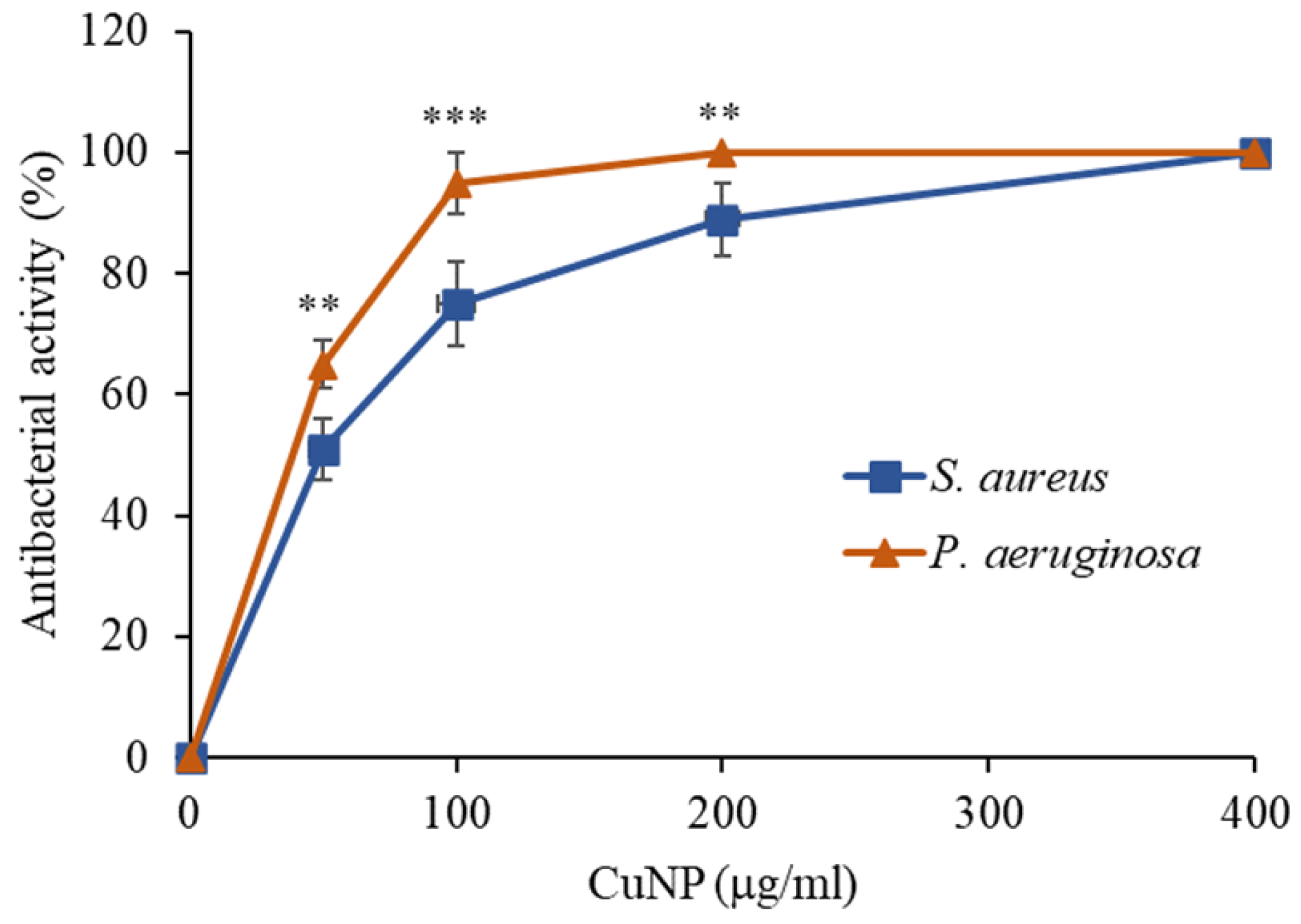
3.1. Antimicrobial Characterization of Copper Nanoparticles
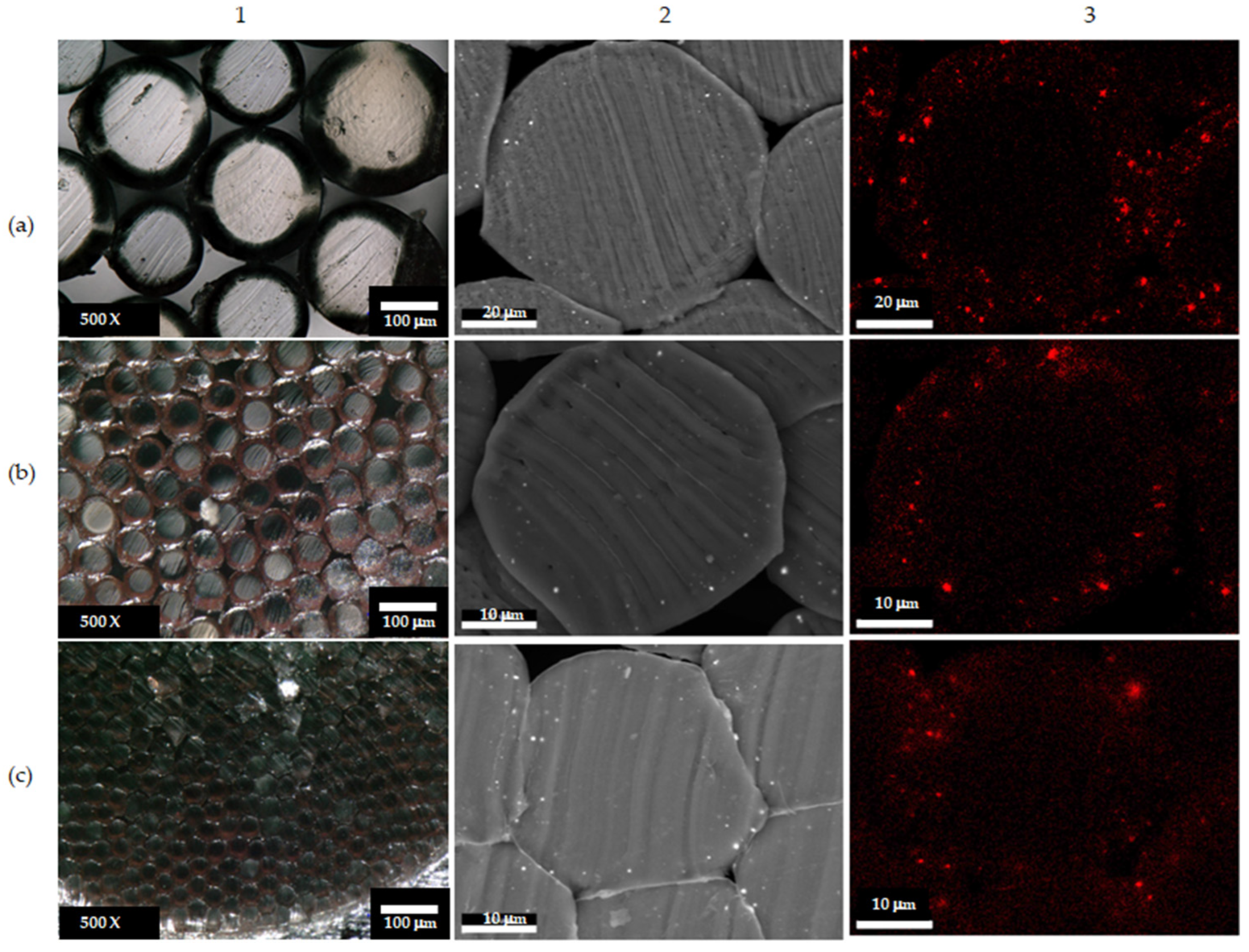
3.2. Bi-Component Filaments Characterization
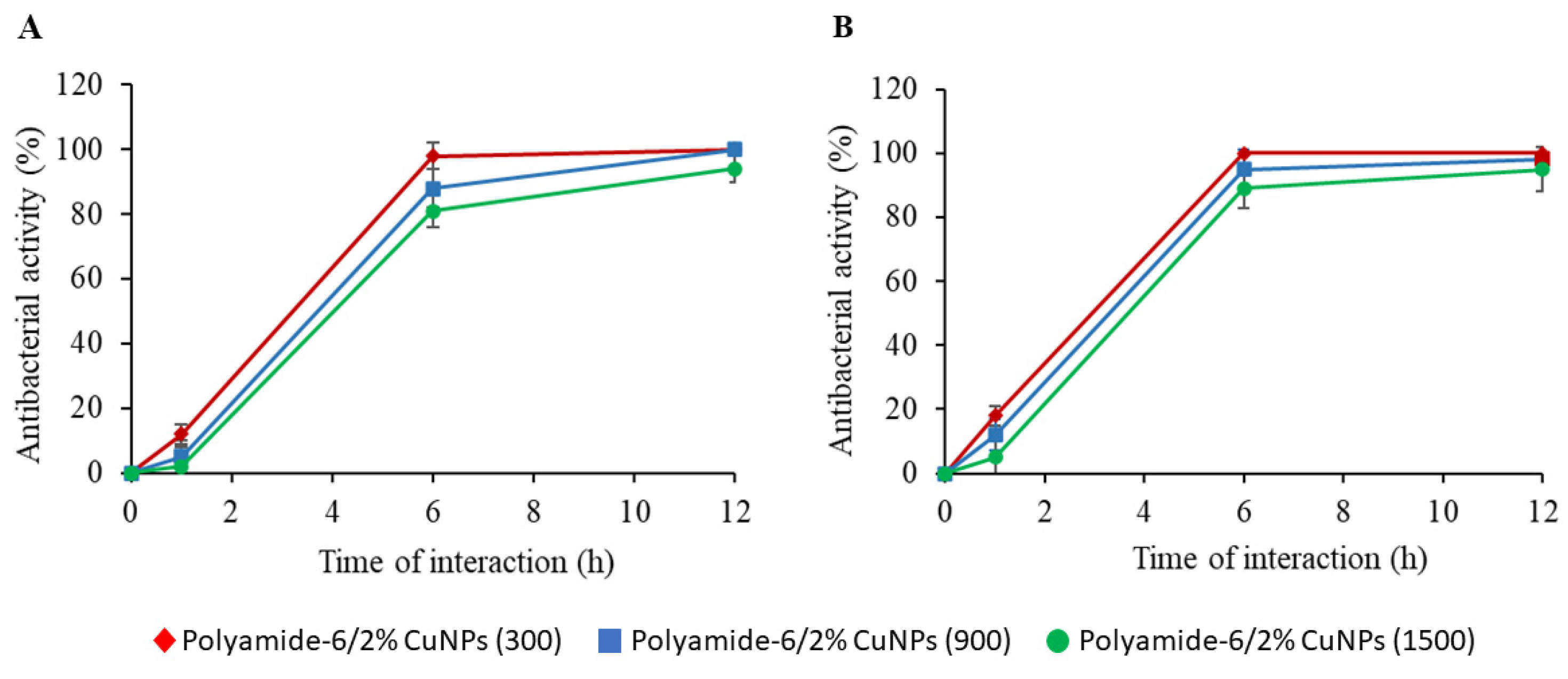
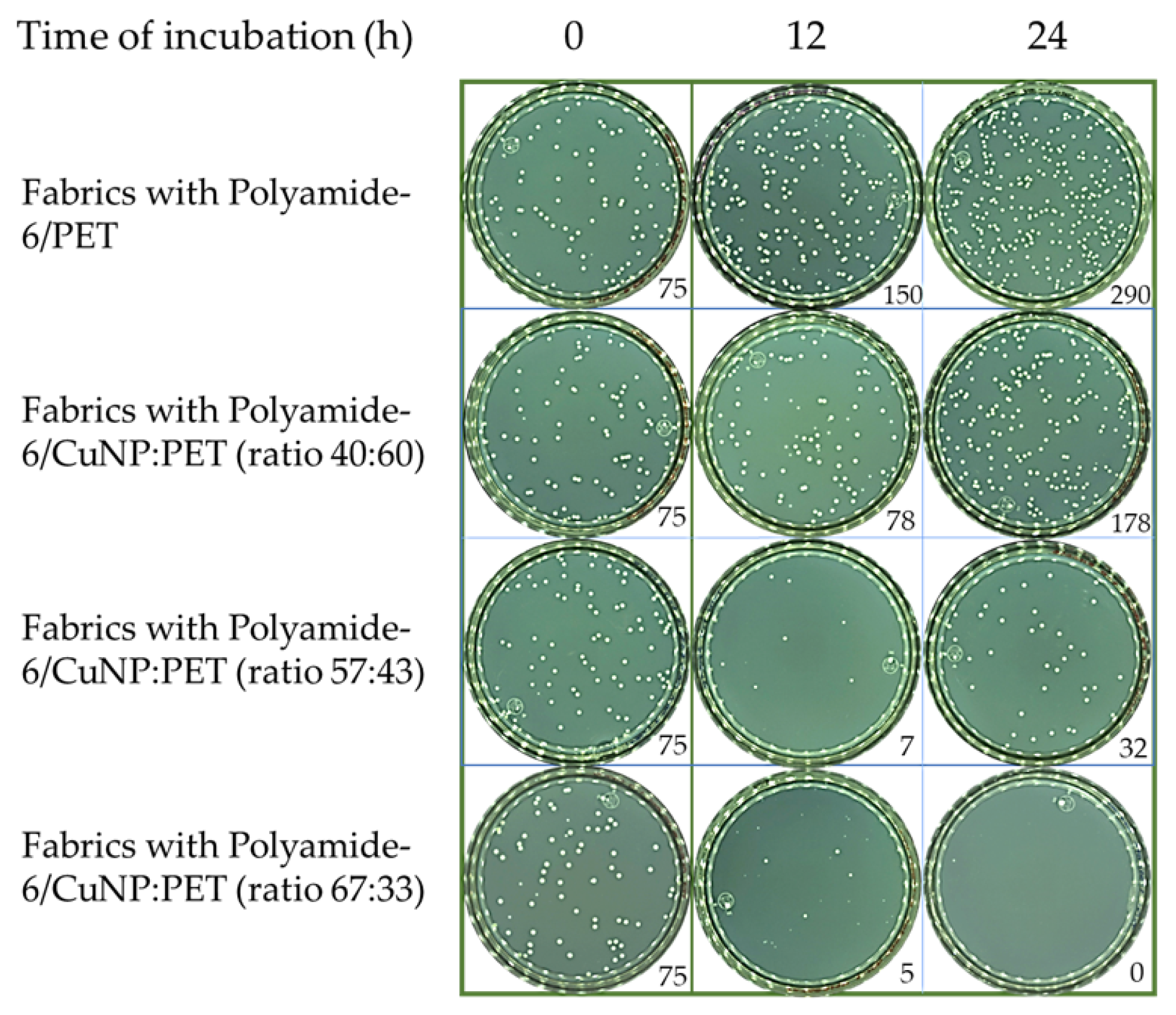
3.3. Woven Narrow Fabrics Characterization
3.4. Hospital Validation Trial
4. Discussion
4.1. Antimicrobial Efficacy and Mechanism of Action
4.2. Durability and Practical Implementation
4.3. Hospital Validation and Toxicity
4.4. Limitations and Future Directions
5. Conclusions
Supplementary Materials
Author Contributions
Funding
Institutional Review Board Statement
Informed Consent Statement
Data Availability Statement
Acknowledgments
Conflicts of Interest
Abbreviations
| AATCC | American Association of Textile Chemists and Colorists |
| ACTIn | Antimicrobial Textiles for the Healthcare Sector |
| AgNPs | Silver nanoparticles |
| ANOVA | Analysis of variance |
| ASTM | American Society for Testing and Materials |
| ATCC | American Type Culture Collection |
| CFU | Colony-forming units |
| CuNPs | Copper nanoparticles |
| dTex | Decitex (unit of linear density) |
| DMEM | Dulbecco’s Modified Eagle’s Medium |
| EDS | Energy-dispersive X-ray spectroscopy |
| FE-SEM | Field Emission Scanning Electron Microscope |
| HAI | Healthcare-associated infection |
| HF | Human fibroblast |
| ICP | Inductive coupling plasma |
| IMSS-Bienestar | Instituto Mexicano del Seguro Social para el Bienestar |
| MRSA | Methicillin-resistant Staphylococcus aureus |
| NPs | Nanoparticles |
| PBS | Phosphate-buffered saline |
| PET | Polyethylene terephthalate (Polyester) |
| POY | Partially oriented yarn |
| TiO2 | Titanium dioxide nanoparticles |
| UV-Vis | Ultraviolet-Visible |
| WHO | World Health Organization |
| ZnO | Zinc oxide nanoparticles |
References
- Allegranzi, B.; Nejad, S.B.; Garcia-Castillejos, G.; Kilpatrick, C.; Kelley, E.; Mathai, E. Report on the Burden of Endemic Health Care–Associated Infection Worldwide; A Systematic Review of the Literature; World Health Organization: Geneva, Switzerland, 2011; p. 40. [Google Scholar]
- Allegranzi, B.; Pittet, D. Role of hand hygiene in healthcare-associated infection prevention. J. Hosp. Infect. 2009, 73, 305–315. [Google Scholar] [CrossRef]
- Owen, L.; Laird, K. The role of textiles as fomites in the healthcare environment: A review of the infection control risk. PeerJ 2020, 8, e9790. [Google Scholar] [CrossRef]
- Kramer, A.; Schwebke, I.; Kampf, G. How long do nosocomial pathogens persist on inanimate surfaces? A systematic review. BMC Infect. Dis. 2006, 6, 130. [Google Scholar] [CrossRef] [PubMed]
- Neely Alice, N.; Maley Matthew, P. Survival of Enterococci and Staphylococci on Hospital Fabrics and Plastic. J. Clin. Microbiol. 2000, 38, 724–726. [Google Scholar] [CrossRef] [PubMed]
- Cayrou, C.; Silver, K.; Owen, L.; Dunlop, J.; Laird, K. Domestic laundering of healthcare textiles: Disinfection efficacy and risks of antibiotic resistance transmission. PLoS ONE 2025, 20, e0321467. [Google Scholar] [CrossRef]
- Treakle, A.M.; Thom, K.A.; Furuno, J.P.; Strauss, S.M.; Harris, A.D.; Perencevich, E.N. Bacterial contamination of health care workers’ white coats. Am. J. Infect. Control 2009, 37, 101–105. [Google Scholar] [CrossRef]
- Wilson, J.A.; Loveday, H.P.; Hoffman, P.N.; Pratt, R.J. Uniform: An evidence review of the microbiological significance of uniforms and uniform policy in the prevention and control of healthcare-associated infections. Report to the Department of Health (England). J. Hosp. Infect. 2007, 66, 301–307. [Google Scholar] [CrossRef]
- Gao, Y.; Cranston, R. Recent advances in antimicrobial treatments of textiles. Text. Res. J. 2008, 78, 60–72. [Google Scholar] [CrossRef]
- Purwar, R.; Joshi, M. Recent developments in antimicrobial finishing of textiles—A review. AATCC Rev. 2004, 4, 22–26. [Google Scholar]
- Gulati, R.; Sharma, S.; Sharma, R.K. Antimicrobial textile: Recent developments and functional perspective. Polym. Bull. 2022, 79, 5747–5771. [Google Scholar] [CrossRef] [PubMed]
- Orasugh, J.T.; Temane, L.T.; Pillai, S.K.; Ray, S.S. Advancements in Antimicrobial Textiles: Fabrication, Mechanisms of Action, and Applications. ACS Omega 2025, 10, 12772–12816. [Google Scholar] [CrossRef] [PubMed]
- Karypidis, M.; Karanikas, E.; Papadaki, A.; Andriotis, E.G. A Mini-Review of Synthetic Organic and Nanoparticle Antimicrobial Agents for Coatings in Textile Applications. Coatings 2023, 13, 693. [Google Scholar] [CrossRef]
- Tanasa, F.; Teaca, C.A.; Nechifor, M.; Ignat, M.; Duceac, I.A.; Ignat, L. Highly Specialized Textiles with Antimicrobial Functionality-Advances and Challenges. Textiles 2023, 3, 219–245. [Google Scholar] [CrossRef]
- Dastjerdi, R.; Montazer, M. A review on the application of inorganic nano-structured materials in the modification of textiles: Focus on anti-microbial properties. Colloids Surf. B Biointerfaces 2010, 79, 5–18. [Google Scholar] [CrossRef]
- Noor, N.; Mutalik, S.; Younas, M.W.; Chan, C.Y.; Thakur, S.; Wang, F.; Yao, M.Z.; Mou, Q.; Leung, P.H. Durable Antimicrobial Behaviour from Silver-Graphene Coated Medical Textile Composites. Polymers 2019, 11, 2000. [Google Scholar] [CrossRef]
- Wahab, S.; Salman, A.; Khan, Z.; Khan, S.; Krishnaraj, C.; Yun, S.I. Metallic Nanoparticles: A Promising Arsenal against Antimicrobial Resistance-Unraveling Mechanisms and Enhancing Medication Efficacy. Int. J. Mol. Sci. 2023, 24, 14897. [Google Scholar] [CrossRef] [PubMed]
- Espirito Santo, C.; Lam, E.W.; Elowsky, C.G.; Quaranta, D.; Domaille, D.W.; Chang, C.J.; Grass, G. Bacterial killing by dry metallic copper surfaces. Appl. Environ. Microbiol. 2011, 77, 794–802. [Google Scholar] [CrossRef]
- Warnes, S.L.; Caves, V.; Keevil, C.W. Mechanism of copper surface toxicity in Escherichia coli O157:H7 and Salmonella involves immediate membrane depolarization followed by slower rate of DNA destruction which differs from that observed for Gram-positive bacteria. Environ. Microbiol. 2012, 14, 1730–1743. [Google Scholar] [CrossRef]
- Morones, J.R.; Elechiguerra, J.L.; Camacho, A.; Holt, K.; Kouri, J.B.; Ramírez, J.T.; Yacaman, M.J. The bactericidal effect of silver nanoparticles. Nanotechnology 2005, 16, 2346. [Google Scholar] [CrossRef]
- dos Santos, L.M.G.; Medeiros, R.J.; Maciel-Magalhães, M.; Guedes, N.C.C.; Brito, T.M.; de Souza, G.F.; Oliveira, M.L.; Pereira, R.A.; Neto, S.A.V.; Jacob, S.C.; et al. Unravelling the effects of silver nanoparticles on textiles: A comprehensive toxicological and quantitative analysis. Health Nanotechnol. 2025, 1, 6. [Google Scholar] [CrossRef]
- Hosny, S.; Gaber, G.A.; Ragab, M.S.; Ragheb, M.A.; Anter, M.; Mohamed, L.Z. A Comprehensive Review of Silver Nanoparticles (AgNPs): Synthesis Strategies, Toxicity Concerns, Biomedical Applications, AI-Driven Advancements, Challenges, and Future Perspectives. Arab. J. Sci. Eng. 2025. [Google Scholar] [CrossRef]
- Jones, N.; Ray, B.; Ranjit, K.T.; Manna, A.C. Antibacterial activity of ZnO nanoparticle suspensions on a broad spectrum of microorganisms. FEMS Microbiol. Lett. 2008, 279, 71–76. [Google Scholar] [CrossRef]
- Verdier, T.; Coutand, M.; Bertron, A.; Roques, C. Antibacterial Activity of TiO2 Photocatalyst Alone or in Coatings on E. coli: The Influence of Methodological Aspects. Coatings 2014, 4, 670–686. [Google Scholar] [CrossRef]
- Grass, G.; Rensing, C.; Solioz, M. Metallic Copper as an Antimicrobial Surface. Appl. Environ. Microbiol. 2011, 77, 1541–1547. [Google Scholar] [CrossRef]
- Vincent, M.; Hartemann, P.; Engels-Deutsch, M. Antimicrobial applications of copper. Int. J. Hyg. Environ. Health 2016, 219, 585–591. [Google Scholar] [CrossRef]
- Ali, A.; Petrů, M.; Azeem, M.; Noman, T.; Masin, I.; Amor, N.; Militky, J.; Tomková, B. A comparative performance of antibacterial effectiveness of copper and silver coated textiles. J. Ind. Text. 2023, 53, 15280837221134990. [Google Scholar] [CrossRef]
- Al Kayal, T.; Giuntoli, G.; Cavallo, A.; Pisani, A.; Mazzetti, P.; Fonnesu, R.; Rosellini, A.; Pistello, M.; D’Acunto, M.; Soldani, G.; et al. Incorporation of Copper Nanoparticles on Electrospun Polyurethane Membrane Fibers by a Spray Method. Molecules 2023, 28, 5981. [Google Scholar] [CrossRef]
- González-Sánchez, A.; Rosas-Macías, R.; Hernández-Bautista, J.E.; Valdez-Garza, J.A.; Rodríguez-Fuentes, N.; Soriano-Corral, F.; Ledezma-Pérez, A.S.; Ávila-Orta, C.A.; Cruz-Delgado, V.J. Antimicrobial Properties of Polyester/Copper Nanocomposites by Melt-Spinning and Melt-Blowing Techniques. Textiles 2024, 4, 1–16. [Google Scholar] [CrossRef]
- Jalali, E.; Erasmus, E.; Schutte-Smith, M.; Visser, H.G. Fixation of nanoparticles on fabric: Applications in general health management. Mater. Today Commun. 2024, 41, 110577. [Google Scholar] [CrossRef]
- Kanade, V.A.; Patel, B.H. Copper nano-sol loaded woven fabrics: Durable antibacterial finishing of polyester, cotton and their blends. Fash. Text. 2017, 4, 10. [Google Scholar] [CrossRef]
- Mahltig, B. Nanomaterials and textiles: Review on materials and applications. J. Eng. Fibers Fabr. 2025, 20, 15589250251318010. [Google Scholar] [CrossRef]
- Tomotoshi, Y.; Kawasaki, H. Surface and Interface Designs in Copper-Based Conductive Inks for Printed/Flexible Electronics. Nanomaterials 2020, 10, 1689. [Google Scholar] [CrossRef] [PubMed]
- Tamayo, L.; Azócar, M.; Kogan, M.; Riveros, A.; Páez, M. Copper-polymer nanocomposites: An excellent and cost-effective biocide for use on antibacterial surfaces. Mater. Sci. Eng. C 2016, 69, 1391–1409. [Google Scholar] [CrossRef] [PubMed]
- España-Sánchez, B.L.; Ávila-Orta, C.A.; Padilla-Vaca, F.; Neira-Velázquez, M.G.; González-Morones, P.; Rodríguez-González, J.A.; Hernández-Hernández, E.; Rangel-Serrano, A.; Barriga, E.D.; Yate, L.; et al. Enhanced Antibacterial Activity of Melt Processed Poly(propylene) Ag and Cu Nanocomposites by Argon Plasma Treatment. Plasma Process. Polym. 2014, 11, 353–365. [Google Scholar] [CrossRef]
- AATCC TM61-2013; Test Method for Colorfastness to Laundering: Accelerated. American Association of Textile Chemists and Colorists: Research Triangle Park, NC, USA, 2023.
- ASTM D4060-19; Test Method for Abrasion Resistance of Organic Coatings by the Taber Abraser. American Society for Testing and Materials: West Conshohocken, PN, USA, 2025.
- Ermini, M.L.; Voliani, V. Antimicrobial Nano-Agents: The Copper Age. ACS Nano 2021, 15, 6008–6029. [Google Scholar] [CrossRef]
- Wei, Q.; Pan, Y.; Zhang, Z.; Yan, S.; Li, Z. Copper-based nanomaterials for biomedical applications. Chem. Eng. J. 2024, 483, 149040. [Google Scholar] [CrossRef]
- Wozniak-Budych, M.J.; Staszak, K.; Staszak, M. Copper and Copper-Based Nanoparticles in Medicine-Perspectives and Challenges. Molecules 2023, 28, 6687. [Google Scholar] [CrossRef]
- Pant, B.; Pant, H.R.; Pandeya, D.R.; Panthi, G.; Nam, K.T.; Hong, S.T.; Kim, C.S.; Kim, H.Y. Characterization and antibacterial properties of Ag NPs loaded nylon-6 nanocomposite prepared by one-step electrospinning process. Colloids Surf. A Physicochem. Eng. Asp. 2012, 395, 94–99. [Google Scholar] [CrossRef]
- Andrade-Guel, M.; Ávila-Orta, C.A.; Cabello-Alvarado, C.; Cadenas-Pliego, G.; Esparza-González, S.C.; Pérez-Alvarez, M.; Quiñones-Jurado, Z.V. Non-Woven Fabrics Based on Nanocomposite Nylon 6/ZnO Obtained by Ultrasound-Assisted Extrusion for Improved Antimicrobial and Adsorption Methylene Blue Dye Properties. Polymers 2021, 13, 1888. [Google Scholar] [CrossRef]
- Palaskar, R.S.; Dhokane, D.S.; Ankamwar, B.G. Green-Synthesized Nanoparticles to Combat Multidrug-Resistant Bacteria. In Nanotechnology Based Strategies for Combating Antimicrobial Resistance; Wani, M.Y., Wani, I.A., Rai, A., Eds.; Springer Nature: Singapore, 2024; pp. 511–532. [Google Scholar]
- Sati, H.; Carrara, E.; Savoldi, A.; Hansen, P.; Garlasco, J.; Campagnaro, E.; Boccia, S.; Castillo-Polo, J.A.; Magrini, E.; Garcia-Vello, P.; et al. The WHO Bacterial Priority Pathogens List 2024: A prioritisation study to guide research, development, and public health strategies against antimicrobial resistance. Lancet Infect. Dis. 2025, 25, 1033–1043. [Google Scholar] [CrossRef]
- Khan, I.; Ali, S.; Khan, I.; Mohamed, S.; Khan, S.; Khan, F.; Higazi, H. Antibacterial Efficacy of Linezolid Alone and in Combination with Zinc Oxide Nanoparticles against Methicillin-Resistant S. aureus Clinical Isolates. Int. J. Biomed. 2022, 12, 454–458. [Google Scholar] [CrossRef]
- Matta, A.M.; Mahmoud, M.A.E.S.; Essawy, S.H.; Ragab, R.N. Sole Zinc Oxide and Titanium Dioxide nanoparticles antimicrobial activity versus their association with different antibiotics on Methicillin-Resistant Staphylococcus aureus. Egypt. J. Med. Microbiol. 2022, 31, 71–76. [Google Scholar] [CrossRef]
- Román, L.E.; Villalva, C.; Uribe, C.; Paraguay-Delgado, F.; Sousa, J.; Vigo, J.; Vera, C.M.; Gómez, M.M.; Solís, J.L. Textiles Functionalized with Copper Oxides: A Sustainable Option for Prevention of COVID-19. Polymers 2022, 14, 3066. [Google Scholar] [CrossRef]
- Losada-García, N.; Vazquez-Calvo, A.; Alcami, A.; Palomo, J.M. Preparation of Highly Stable and Cost-Efficient Antiviral Materials for Reducing Infections and Avoiding the Transmission of Viruses such as SARS-CoV-2. ACS Appl. Mater. Interfaces 2023, 15, 22580–22589. [Google Scholar] [CrossRef]
- Rathee, G.; Blair, J.; Puertas-Segura, A.; Ivanova, K.; Cabanes, G.F.; Tzanov, T. Scaling up the sono-enzymatic coating of cotton textiles with antimicrobial silver-phenolated lignin nanocomposites. Ultrason. Sonochem. 2025, 122, 107609. [Google Scholar] [CrossRef] [PubMed]
- Zhen, J.; Sun, A.; Yang, L.; Wang, R.; Liu, M.; Liu, Y.; Zhang, W. Silver-Conjugated-Polyarginine Anchored Cotton Fabrics Exhibit Durable and Efficient Antimicrobial Properties. ACS Omega 2025, 10, 34822–34830. [Google Scholar] [CrossRef] [PubMed]
- Mehravani, B.; Ribeiro, A.I.; Montazer, M.; Zille, A. Development of Antimicrobial Polyester Fabric by a Green In Situ Synthesis of Copper Nanoparticles Mediated from Chitosan and Ascorbic Acid. Mater. Sci. Forum 2022, 1063, 83–90. [Google Scholar] [CrossRef]
- Shahid, M.; Ali, A.; Khaleeq, H.; Tahir, M.F.; Militky, J.; Wiener, J. Development of Antimicrobial Multifunctional Textiles to Avoid from Hospital-Acquired Infections. Fibers Polym. 2021, 22, 3055–3067. [Google Scholar] [CrossRef]
- Chen, H.-T.; Huang, M.-C.; Chiang, Y.-Y.; Chang, Y.; Wu, C.-C. Industrially compatible manufacturing process of wash-durable antimicrobial textiles using cuprous oxide–polymer composites. Mater. Adv. 2025, 6, 2507–2520. [Google Scholar] [CrossRef]
- Rozman, U.; Kevorkijan, B.K.; Rupnik, M.; Turk, S.Š. Revealing Microbial Population Complexity on Hospital Textiles Using DHPLC. Univers. J. Microbiol. Res. 2018, 6, 15–34. [Google Scholar] [CrossRef][Green Version]
- Hilmi, A.; Ait Said, L.; Tadlaoui Ouafi, A.; Azlay, L.; Oubassou, E.; Tigui, K.; Zahlane, K. Contamination of hospital environment with multi drug resistant (MDR) bacteria responsible for healthcare acquired infections: Case of Universitary Hospital Center of Marrakesh-Morocco. RAS Microbiol. Infect. Dis. 2023, 3, 1–7. [Google Scholar] [CrossRef]
- Fan, T.; Shao, L.; Wang, X.; Ren, P. Efficacy of copper-impregnated hospital linen in reducing healthcare-associated infections: A systematic review and meta-analysis. PLoS ONE 2020, 15, e0236184. [Google Scholar] [CrossRef] [PubMed]
- Schneider, G.; Vieira, L.G.; de Carvalho, H.E.F.; de Sousa, A.F.L.; Watanabe, E.; de Andrade, D.; Silveira, R. Textiles impregnated with antimicrobial substances in healthcare services: Systematic review. Front. Public Health 2023, 11, 1130829. [Google Scholar] [CrossRef]
- Borkow, G. Antimicrobial Medical Textiles Used in Clinical Settings May Play an Important Role in Reducing Healthcare-Acquired Infections. J. Infect. Dis. Travel Med. 2019, 3, 000131. [Google Scholar] [CrossRef]
- Radetić, M.; Marković, D. Nano-finishing of cellulose textile materials with copper and copper oxide nanoparticles. Cellulose 2019, 26, 8971–8991. [Google Scholar] [CrossRef]
- Ferrer-Vilanova, A.; Jimenez Ezenarro, J.; Ivanova, K.; Calvo, O.; Perelshtein, I.; Gorni, G.; Reguera, A.C.; Rodriguez-Rodriguez, R.; Blanes, M.; Vigues, N.; et al. Smart bactericidal textile enabling in-situ visual assessment of antimicrobial activity. Mater. Today Bio 2025, 32, 101724. [Google Scholar] [CrossRef] [PubMed]



| Roller Speed, m/min | 0 | 300 | 900 | 1500 | ||||
|---|---|---|---|---|---|---|---|---|
| Diameter of Polyamide-6 filaments, μm | 434.75 | 65.00 | 37.50 | 30.50 | ||||
| Bi-component filament diameter, μm | 382.47 | 124.92 | 71.53 | 68.65 | ||||
| Configuration | Core | Sheath | Core | Sheath | Core | Sheath | Core | Sheath |
| Proportion, % | 41 | 59 | 41 | 59 | 45 | 55 | 47 | 53 |
| Sample | Polyamide-6 Filaments | Bi-Component Filaments | ||||
|---|---|---|---|---|---|---|
| Roller Speed, m/min | 300 | 900 | 1500 | 300 | 900 | 1500 |
| * Average mass of filament, g | 0.6300 | 0.2067 | 0.1247 | 0.6337 | 0.1990 | 0.0770 |
| Total dTex | 700.0 (Very coarse) | 229.7 (Coarse) | 138.5 (Coarse) | 704.1 (Very coarse) | 221.1 (Coarse) | 85.5 (Medium) |
| dTex/filament | 38.89 | 12.76 | 7.70 | 39.12 | 12.28 | 4.75 |
| Treatment of Woven Narrow Fabrics | Antibacterial Activity Against Staphylococus aureus (%) * |
|---|---|
| Untreated (control) | 95 ± 4 |
| 10 laundering cycles | 92 ± 6 |
| 20 laundering cycles | 55 ± 12 |
| 130 abrasion cycles | 91 ± 6 |
| 200 abrasion cycles | 94 ± 5 |
| Part of the Medical Coat Evaluated | Polyamide-6 | Polyamide-6/CuNP:PET Ratio 57:43 (Textile 2) | ||||
|---|---|---|---|---|---|---|
| Bacterial Burden * | Gram (+) * | Gram (−) * | Bacterial Burden * | Gram (+) * | Gram (−) * | |
| Cuffs | 1317.7 ± 122 | 72.9 ± 8 | 304.8 ± 29 | 949.2 ± 50 | 33.7 ± 6 | 93.6 ± 17 |
| Pockets | 533 ± 51 | 22.8 ± 5 | 246.2 ± 30 | 606.5 ± 89 | 32.9 ± 10 | 61.2 ± 19 |
| Standard plackets | 937.1 ± 54 | 0.3 ± 0.1 | 152.8 ± 25 | 888.4 ± 45 | 0.0 | 35.2 ± 12 |
Disclaimer/Publisher’s Note: The statements, opinions and data contained in all publications are solely those of the individual author(s) and contributor(s) and not of MDPI and/or the editor(s). MDPI and/or the editor(s) disclaim responsibility for any injury to people or property resulting from any ideas, methods, instructions or products referred to in the content. |
© 2026 by the authors. Licensee MDPI, Basel, Switzerland. This article is an open access article distributed under the terms and conditions of the Creative Commons Attribution (CC BY) license.
Share and Cite
Ávila-Orta, C.A.; Cruz-Delgado, V.J.; García-Hernández, Z.; Soriano-Corral, F.; Cadenas-Pliego, G.; Padilla-Vaca, F.; Anaya-Velázquez, F.; Franco, B.; Mendoza-Macías, C.L.; Alvarez-Canales, J.A.; et al. Development and Evaluation of Antimicrobial Hospital Apparel Incorporating Copper Nanoparticles: Upscaling, Durability, and Hospital Assessment. Textiles 2026, 6, 20. https://doi.org/10.3390/textiles6010020
Ávila-Orta CA, Cruz-Delgado VJ, García-Hernández Z, Soriano-Corral F, Cadenas-Pliego G, Padilla-Vaca F, Anaya-Velázquez F, Franco B, Mendoza-Macías CL, Alvarez-Canales JA, et al. Development and Evaluation of Antimicrobial Hospital Apparel Incorporating Copper Nanoparticles: Upscaling, Durability, and Hospital Assessment. Textiles. 2026; 6(1):20. https://doi.org/10.3390/textiles6010020
Chicago/Turabian StyleÁvila-Orta, Carlos Alberto, Víctor Javier Cruz-Delgado, Zureima García-Hernández, Florentino Soriano-Corral, Gregorio Cadenas-Pliego, Felipe Padilla-Vaca, Fernando Anaya-Velázquez, Bernardo Franco, Claudia Leticia Mendoza-Macías, José Antonio Alvarez-Canales, and et al. 2026. "Development and Evaluation of Antimicrobial Hospital Apparel Incorporating Copper Nanoparticles: Upscaling, Durability, and Hospital Assessment" Textiles 6, no. 1: 20. https://doi.org/10.3390/textiles6010020
APA StyleÁvila-Orta, C. A., Cruz-Delgado, V. J., García-Hernández, Z., Soriano-Corral, F., Cadenas-Pliego, G., Padilla-Vaca, F., Anaya-Velázquez, F., Franco, B., Mendoza-Macías, C. L., Alvarez-Canales, J. A., Radillo-Pineda, E. A., & Radillo-Ruíz, R. (2026). Development and Evaluation of Antimicrobial Hospital Apparel Incorporating Copper Nanoparticles: Upscaling, Durability, and Hospital Assessment. Textiles, 6(1), 20. https://doi.org/10.3390/textiles6010020