Article

Genetic Differentiation and Population Structure of the Freshwater Snail Rivomarginella morrisoni (Gastropoda: Marginellidae) in Central and Southern Thailand


by
Navapong Subpayakom
1,
Puntipa Wanitjirattikal
2,
Pongrat Dumrongrojwattana
3 and
Supattra Poeaim
1,*
1
Department of Biology, School of Science, King Mongkut’s Institute of Technology Ladkrabang, Bangkok 10520, Thailand
2
Department of Statistics, School of Science, King Mongkut’s Institute of Technology Ladkrabang, Bangkok 10520, Thailand
3
Department of Biology, Faculty of Science, Burapha University, Chonburi 20131, Thailand
*
Author to whom correspondence should be addressed.
Taxonomy 2026, 6(1), 7; https://doi.org/10.3390/taxonomy6010007 (registering DOI)
Submission received: 20 November 2025 / Revised: 19 December 2025 / Accepted: 30 December 2025 / Published: 4 January 2026

Abstract

Rivomarginella morrisoni (Gastropoda: Marginellidae) is a narrowly distributed freshwater snail inhabiting drainage basins of central and southern Thailand. To clarify patterns of genetic differentiation across its range, 45 individuals from 11 sites across eight river basins were analyzed using two dominant molecular markers: sequence-related amplified polymorphism (SRAP) and inter-simple sequence repeats (ISSR). SRAP primers produced higher polymorphic information content (PIC) values than ISSR primers (0.35 vs. 0.27). Analysis of molecular variance (AMOVA) revealed strong population structure, with 80.29% of the genetic variation occurring among populations and 19.71% within populations Population differentiation statistic (PhiPT) = 0.803, p < 0.001). Unweighted Pair Group Method with Arithmetic mean (UPGMA) and principal coordinate analysis (PCoA) consistently separated central and southern populations, and STRUCTURE supported K = 2 as the most likely number of clusters. Similarly, principal component analysis (PCA) of morphological traits also distinguished specimens into two groups corresponding to these geographic regions, confirming region-specific divergence. Overall, the genetic and morphological patterns indicate restricted gene flow among basins and a clear separation between central and southern lineages of R. morrisoni. This study provides the first molecular evidence of population structure in this species and offers important baseline information for future taxonomic, ecological, and conservation research on freshwater marginellid snails.

1. Introduction

Freshwater gastropods play key ecological roles in aquatic environments, contributing to nutrient cycling, detritus processing, and food-web dynamics [1]. However, many taxa remain insufficiently studied, particularly with respect to their genetic diversity and population structure [2]. Assessing genetic variation is essential for understanding evolutionary relationships, population connectivity, and conservation planning, especially for species restricted to narrow or fragmented habitats [3,4,5].
The family Marginellidae, commonly known as margin shells, is primarily marine, with most species inhabiting tropical and subtropical seas [6]. Rivomarginella morrisoni Brandt, 1968, however, represents a remarkable exception as one of the freshwater members of this family, and is the type species of the genus Rivomarginella [6,7,8]. This species has a narrow distribution in Thailand, occurring within the river basins of the central and southern regions. Although it has been reported from several localities, many records remain poorly verified, with some, such as those from Songkhla Lake, requiring further confirmation [9]. Despite its formal morphological descriptions [6,7], knowledge of the biology of R. morrisoni remains extremely limited. To date, published studies on this species have focused almost exclusively on behavioral aspects, particularly chemosensory-driven foraging and nocturnal activity under laboratory conditions [10]. In contrast, information on its ecology in natural habitats, genetic diversity, genetic differentiation, and population structure is still lacking. Consequently, the species is currently listed as Data Deficient due to the lack of population-genetic information [9]. Given its restricted distribution and specialized habitat, investigating the genetic structure of R. morrisoni is essential for clarifying its true range, understanding its evolutionary history and informing effective conservation strategies.
Molecular markers are valuable for revealing genetic variation, particularly in non-model organisms. Among dominant marker systems, sequence-related amplified polymorphism (SRAP) [11] and inter-simple sequence repeats (ISSR) [12] are widely used due to their reproducibility, cost-effectiveness, and ability to detect high levels of polymorphism without prior genomic information. Although these markers are widely used in plants, their application in animals, including mollusks, has expanded. SRAP markers have also been applied to aquatic animals such as the bivalve Meretrix petechialis (Lamarck, 1818) [13], demonstrating their effectiveness in assessing genetic diversity in non-model taxa. ISSR markers have been more widely used in mollusks; for example, Etukudo et al. (2018) [14] used ISSR to investigate the genetic diversity of three African land snail species (Archachatina marginata (Swainson, 1821), Achatina achatina (Linnaeus, 1758), and Achatina fulica (Bowdich, 1822). However, neither SRAP nor ISSR markers have previously been applied to R. morrisoni, and in general, the population genetics of freshwater marginellids remain largely unexplored.
This study provides the first molecular assessment of genetic diversity and population structure of R. morrisoni across eight river basins in central and southern Thailand, using SRAP and ISSR molecular markers. The resulting dataset establishes an essential baseline for clarifying its taxonomic status, delineating population connectivity, and supporting future conservation planning for this freshwater marginellid.

2. Materials and Methods

2.1. Sample Collection, Identification and Morphological Study

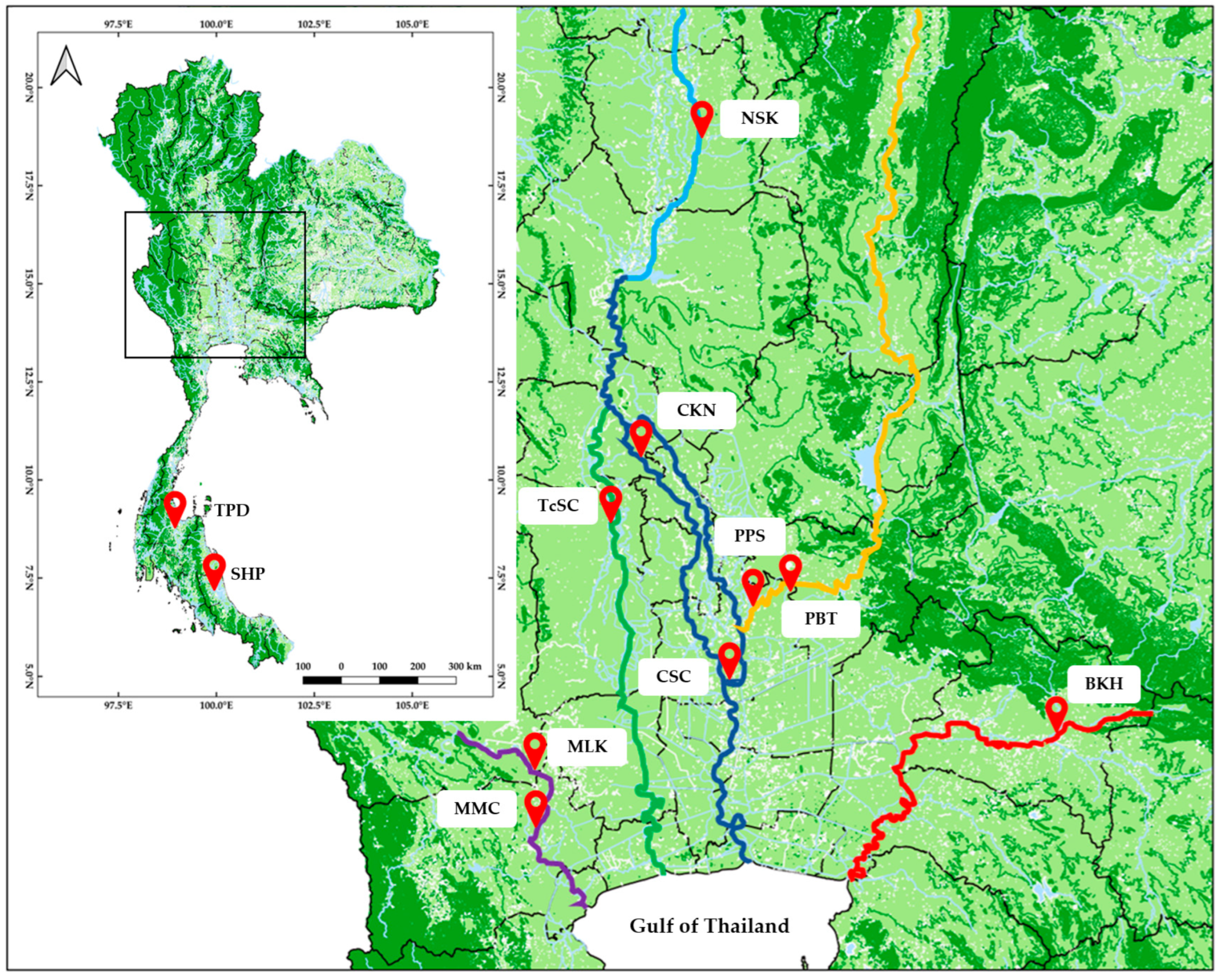
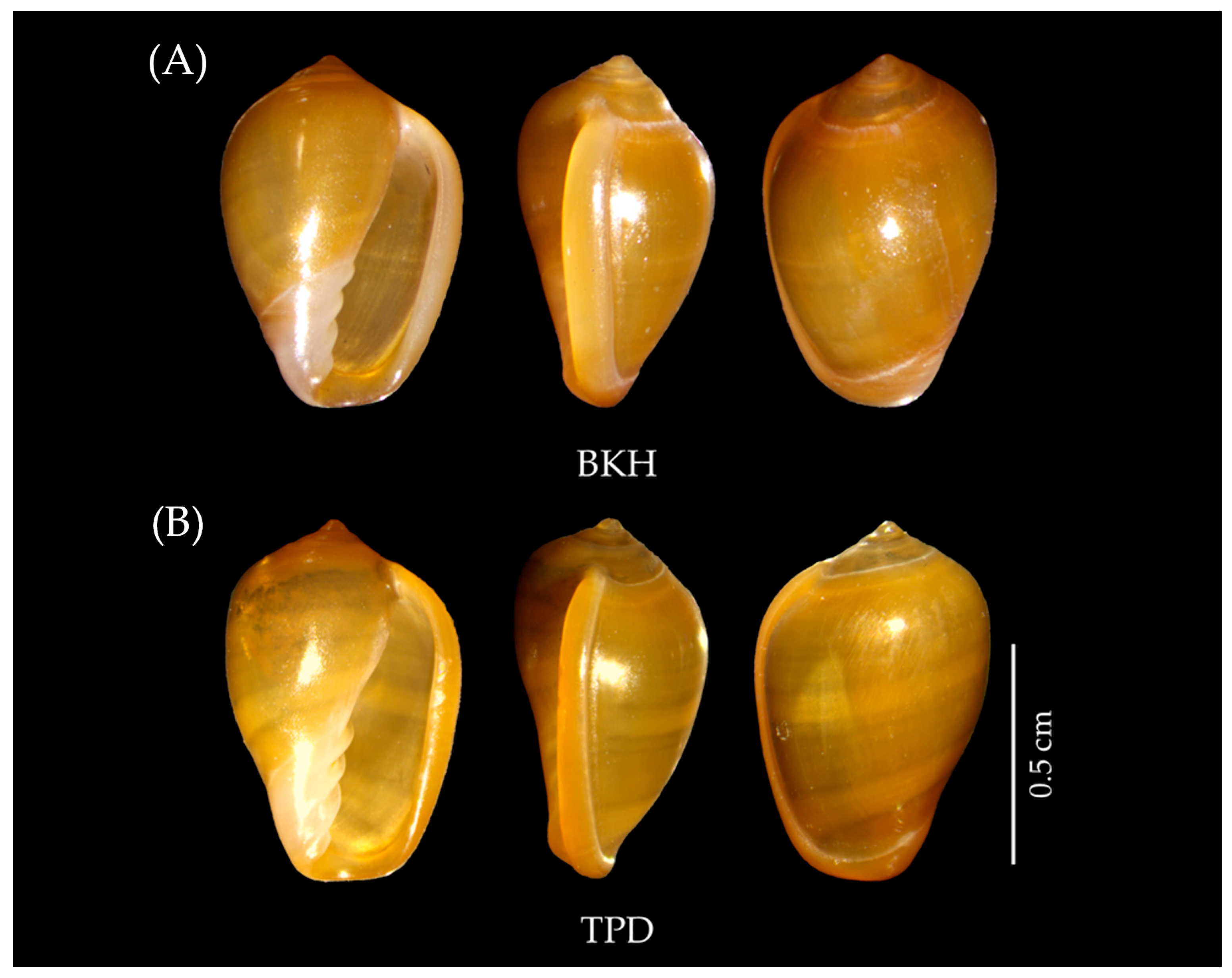
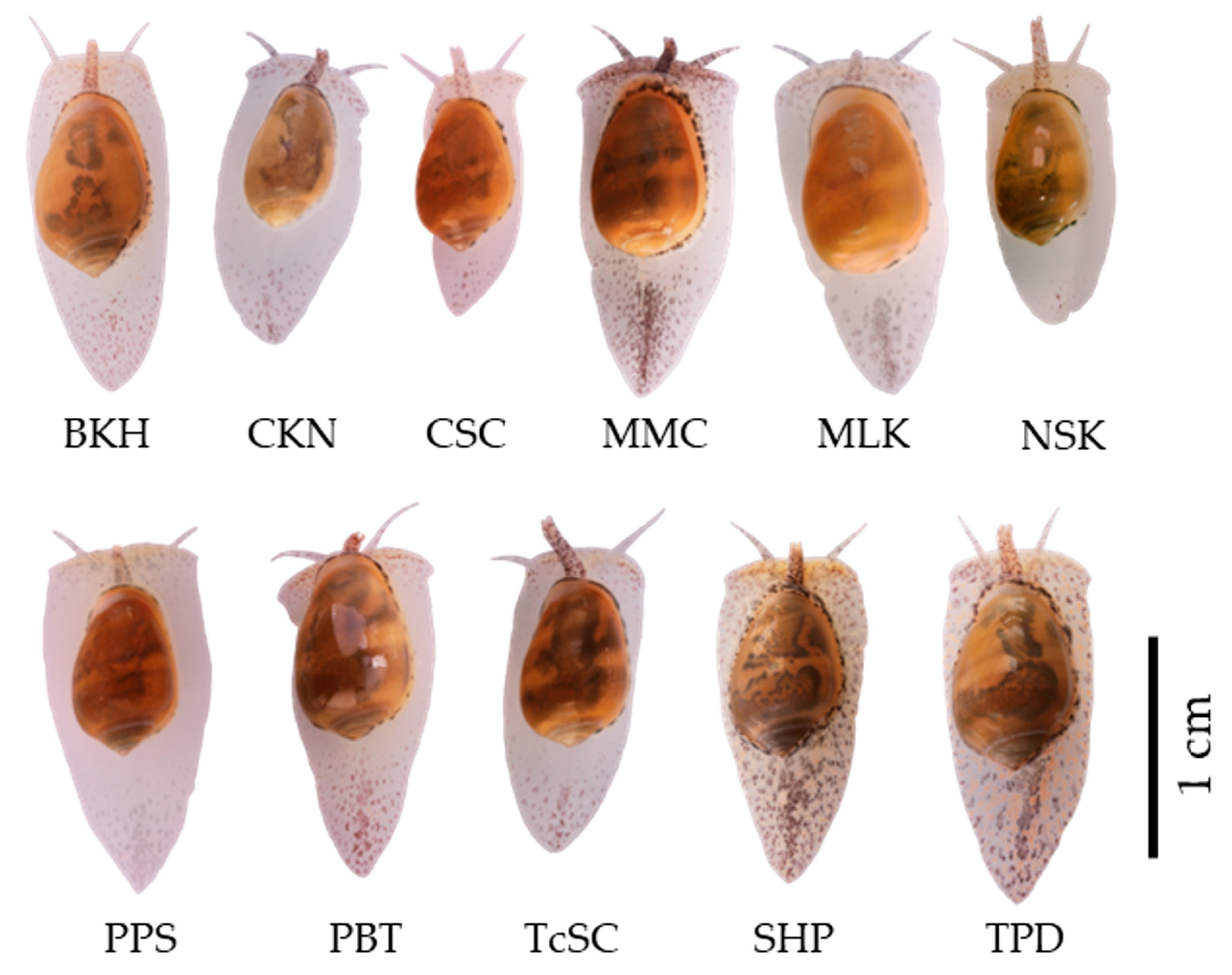
Specimens of Rivomarginella morrisoni were collected from 11 sampling sites across eight river basins in central and southern Thailand between February 2022 and June 2023. Details of the river basins, sampling sites, provinces, sample codes, and GPS coordinates are provided in Table 1. The geographic locations of all sampling sites and their corresponding river basins are illustrated in Figure 1. Sampling was conducted during daylight hours using a randomized sand-sieving technique with a mesh size of <5 mm. Morphological identification in the field followed the original description by Brandt (1968) [7] and was subsequently confirmed by Asst. Prof. Pongrat Dumrongrojwattana. Diagnostic shell characters include a solid, piriform–conoidal shell with a smooth, amber-colored, translucent and glossy surface, and two low whorls, with the last greatly enlarged (Figure 2). The soft body is whitish with spots, bearing a pair of long tentacles with eyes at their bases, and a siphon protrudes between the tentacles (Figure 3). Live individuals were maintained under continuous aeration.
All live specimens were photographed before preservation to record external shell and body characteristics. Shell measurements were obtained from calibrated digital images using ImageJ version 1.54g software, including shell length, shell width, and spire length. Qualitative traits, namely the spot pattern and spot coloration on the foot, were visually scored from the same images following standardized criteria. All measurements and observations were compiled for each specimen and summarized by river basin. Morphometric data were analyzed using IBM SPSS Statistics version 29, and variation among populations was visualized using a scatter plot. After morphological examination, specimens were kept at 4 °C overnight and subsequently preserved in 50% ethanol at 4 °C for DNA extraction.
Sample codes were assigned using a three-letter system in which the first letter represents the river basin and the second and third letters represent the sampling site, taken from the initial letters of the site name. For example, specimens collected from the Bang Pakong river basin at Khwae Hanuman were coded BKH. In contrast, those from the Chao Phraya river basin collected at Khlong Noi were coded CKN. When multiple individuals from a site were used for DNA extraction, sequential two-digit numbers were appended to the site code (e.g., CKN01–CNK04 represent specimens numbered 1–4 from the Chao Phraya river basin at Khlong Noi).

2.2. DNA Isolation

DNA was extracted from approximately 20 mg of foot tissue from 45 R. morrisoni individuals using the GF-1 Tissue DNA Extraction Kit (Vivantis, Subang Jaya, Malaysia). Specimens were randomly selected from each sampling location, with 3–5 individuals per site. DNA quality was checked on 1% agarose gels using a 1 kb Ladder (New England Biolabs, Ipswich, MA, USA), and the gels were visualized under UV after ethidium bromide staining. Concentrations were measured spectrophotometrically, adjusted to 50 ng/µL, and stored at –20 °C.

2.3. Sequence-Related Amplified Polymorphism (SRAP) Analysis

Four DNA samples (MMC01, TcSC01, PPS01, TPD01) representing different river basins were initially screened to identify suitable SRAP primer combinations for genetic diversity analysis of R. morrisoni. A total of five forward and six reverse primers [11] (Table 2) were used to generate 30 possible SRAP primer pairs, each forward primer being combined with each reverse primer (e.g., Me1/Em1, Me1/Em3). Primer pairs producing clear and polymorphic banding patterns were selected for subsequent analysis of all 45 samples across the eight river basins.
PCR was performed in 20 µL reactions containing 50 ng DNA, 1 U Taq polymerase, 0.5 µM primers, 0.2 mM dNTPs, and 2.5 mM MgCl2. Cycling conditions followed [13]: initial denaturation at 94 °C for 3 min; five cycles of denaturation at 94 °C, annealing at 35 °C, and extension at 72 °C (1 min each); 35 cycles of 94 °C, 50 °C, and 72 °C (1 min each); and a final extension at 72 °C for 10 min. Amplicons were resolved on 2% agarose gels with a 100 bp Plus DNA Ladder (Vivantis, Malaysia) and visualized under UV.

2.4. Inter-Simple Sequence Repeat (ISSR) Analysis

ISSR primers were initially screened using the same four DNA samples used for SRAP primer selection to identify those that produced clear, polymorphic banding patterns. Six primers [12] (Table 3) were selected for subsequent analyses from a total of 38 primers (UBC primer set, University of British Columbia, Vancouver, BC, Canada) tested. These primers were then used to amplify 45 genomic DNA samples collected across eight river basins. PCR reactions were performed in 20 µL mixtures containing 50 ng DNA template, 1 U Taq DNA polymerase, 2 µL of 10× buffer, 0.5 µM primer, 0.2 mM dNTPs, 1.5 mM MgCl2, and nuclease-free water [15]. Amplifications were conducted in an Eppendorf Mastercycler® ep Gradient S thermal cycler (Eppendorf AG, Hamburg, Germany) using an initial denaturation at 95 °C for 3 min, followed by 40 cycles of 95 °C for 15 s, primer-specific annealing for 15 s, and 72 °C for 45 s, with a final extension at 72 °C for 5 min. PCR products were separated on 2% (w/v) agarose gels in 1× TBE buffer at 100 V for 40 min, using 100 bp Plus DNA Ladder (Vivantis, Malaysia) as a size standard. Gels were stained with ethidium bromide, rinsed, and visualized under UV light.

2.5. Data Scoring and Molecular Analysis

SRAP and ISSR bands were scored as binary characters (1 for presence and 0 for absence) to generate a matrix for downstream analyses. Genetic relationships among populations were inferred using the Unweighted Pair Group Method with Arithmetic mean (UPGMA) in NTSYSpc version 2.11X [16] and visualized with dendrograms. Principal Coordinate Analysis (PCoA) was conducted in PAST version 4.03 [17], and molecular variance within and among populations was assessed using Analysis of Molecular Variance (AMOVA) in Arlequin version 3.5.2.2 [18]. Population structure was examined using STRUCTURE version 2.3 [19,20] under an admixture model with correlated allele frequencies, incorporating sampling location as prior information. Analyses employed a burn-in of 100,000 iterations followed by 500,000 Markov Chain Monte Carlo (MCMC) repetitions, testing the number of genetic clusters (K) ranging from 1 to 10 with 20 replicates per K. Individual ancestry coefficients were averaged across replicates for the optimal K, which was determined using ΔK in StructureSelector [21,22].

3. Results

3.1. Morphological Analysis

Morphometric characteristics of Rivomarginella morrisoni from 11 populations representing eight major river basins in central and southern Thailand are summarized in Table 4. Mean shell length ranged from 5.99 ± 0.43 mm in CSC to 9.06 ± 0.66 mm in TPD. Shell width varied from 3.70 ± 0.26 mm in CSC to 5.78 ± 0.38 mm in BKH, while spire length ranged from 0.98 ± 0.10 mm in NSK to 1.50 ± 0.20 mm in SHP. Despite the absence of variation in shell size, shell shape was consistent across all populations, characterized by a short spire and an enlarged final whorl, typical of the species.
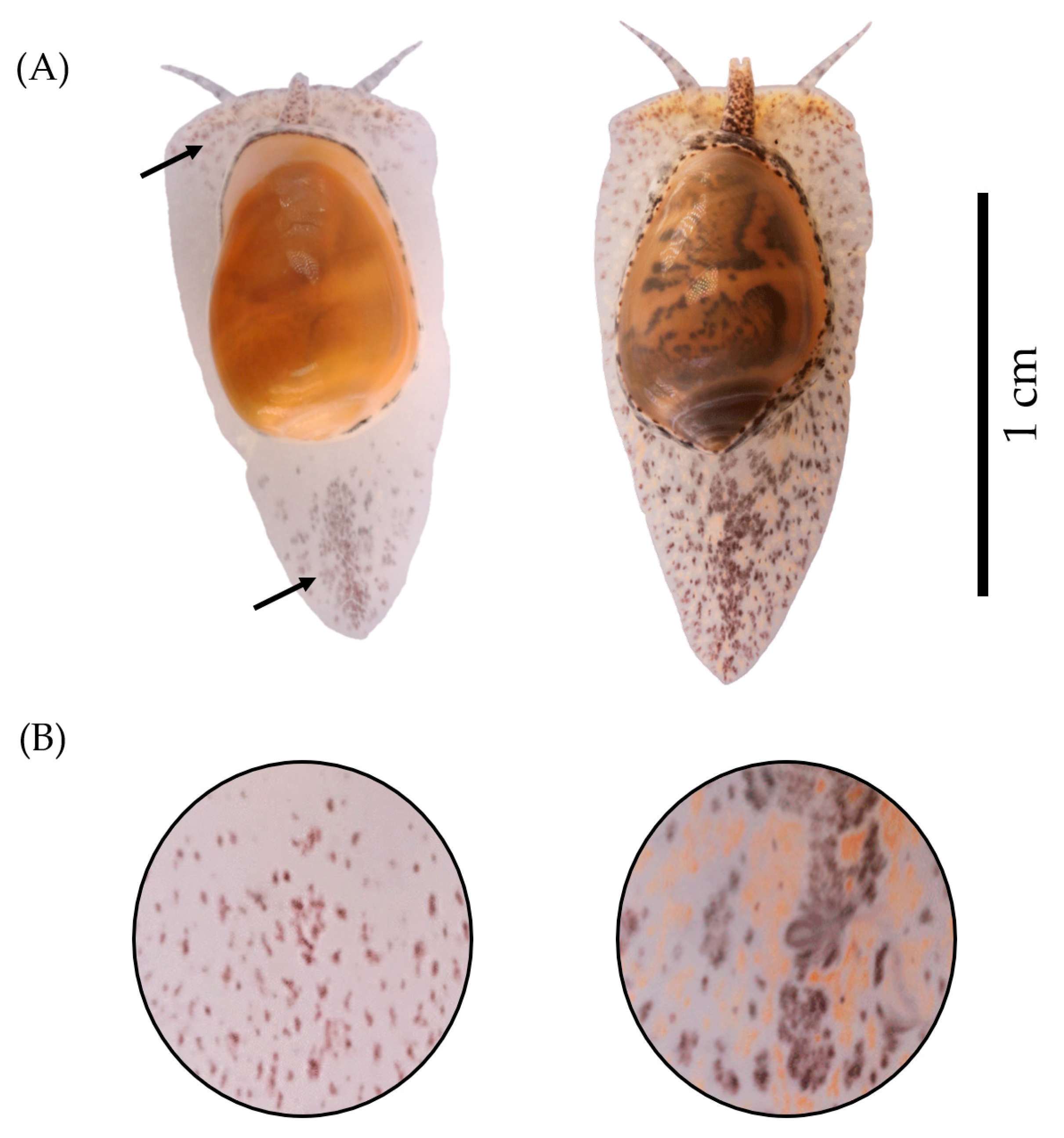
Qualitative traits showed pronounced regional differentiation. Foot-spot patterns were classified into two distinct types (Figure 4A): type 1, with spots distributed across both anterior and posterior regions of the foot, and a dense aggregation in the medial area of the posterior part forming a linear midline band of intensified pigmentation, with varied among individuals in spot number and intensity; and type 2, with spots abundantly scattered over the entire foot and a dense aggregation in the medial posterior area forming a similar linear band. Central populations predominantly exhibited type 1, while southern populations consistently displayed Type 2, indicating clear geographic differentiation.
Spot coloration was categorized into two types: (1) black spots and (2) black plus brown spots (Figure 4B). Central populations exhibited exclusively black spots, whereas southern populations, particularly SHP and TPD, displayed both black and brown pigmentation. This pattern indicates a clear regional differentiation in coloration. Overall, the results indicate modest geographically structured morphological variation in R. morrisoni, with southern populations differing notably from central populations in pigmentation patterns.
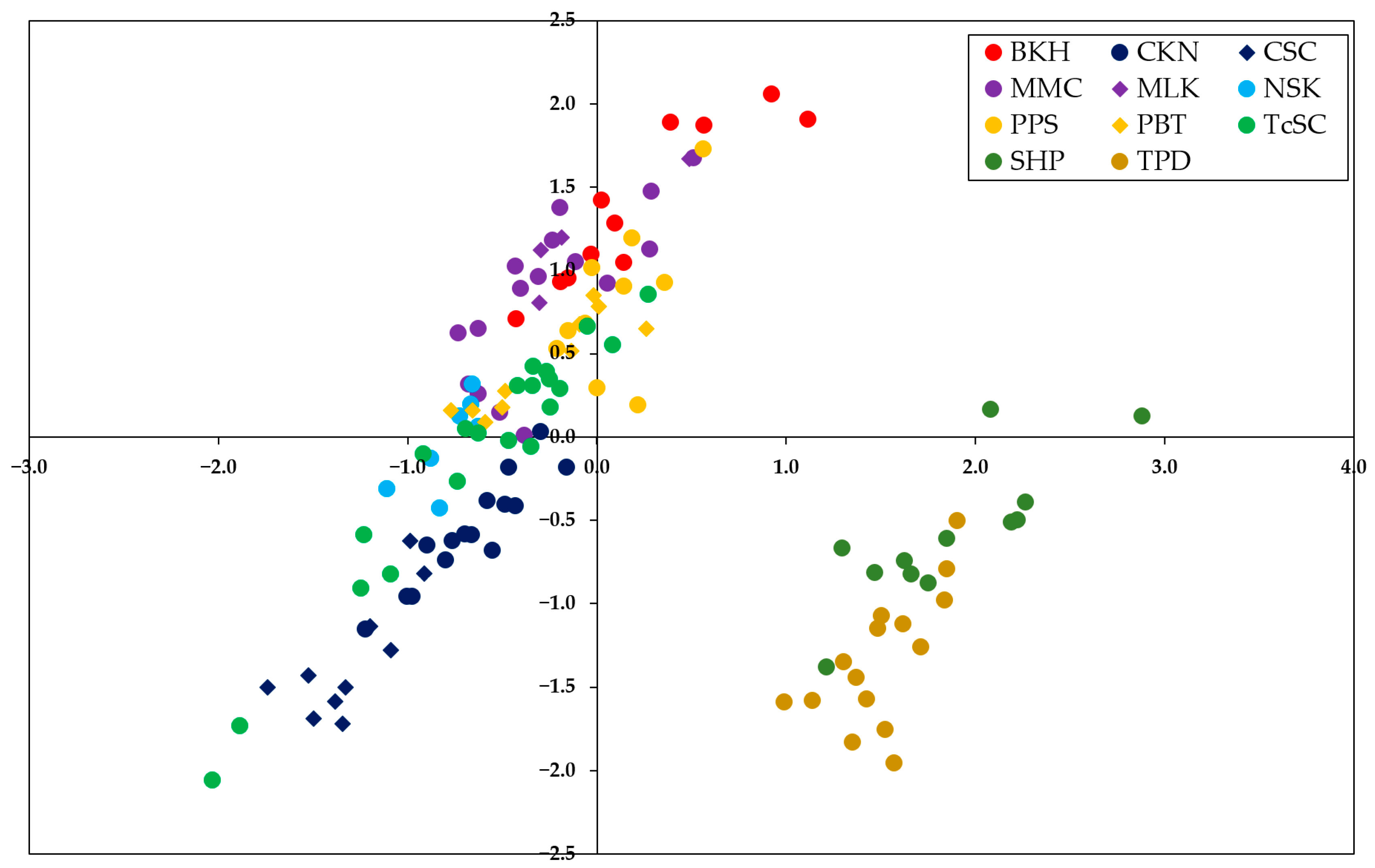
Principal component analysis (PCA) based on five morphological variables (shell length, shell width, spire length, spot pattern, and spot color) revealed a distinct regional separation among populations of R. morrisoni (Figure 5). Specimens from the southern basins (TPD and SHP) were clearly separated from those of the central basins (BKH, CKN, CSC, MMC, MLK, NSK, PPS, PBT, and TcSC).

3.2. Polymorphism Disclosed by SRAP and ISSR Primers

Analysis of the R. morrisoni populations revealed substantial genetic variation detected by both SRAP and ISSR markers (Table 5). Eight of the 30 SRAP primer combinations generated clear and reproducible profiles, yielding 67 scorable fragments (5–13 per primer pair; mean = 8.38 bands per primer). Of these, 43 fragments were polymorphic, giving 20.00–87.50% polymorphism (mean = 62.02%), with polymorphic information content (PIC) values ranging from 0.05 to 0.58 (mean = 0.35). In the ISSR analysis, screening 38 primers identified six that produced reliable polymorphic patterns. These primers amplified 36 fragments (3–9 per primer; mean = 6 bands per primer), of which an average of 3.33 were polymorphic, corresponding to 25.00–77.78% polymorphism (mean = 56.02%), and PIC values ranging from 0.07 to 0.42 (mean = 0.27).

3.3. Genetic Distance and Population Structure Analyses

3.3.1. Based on SRAP Markers

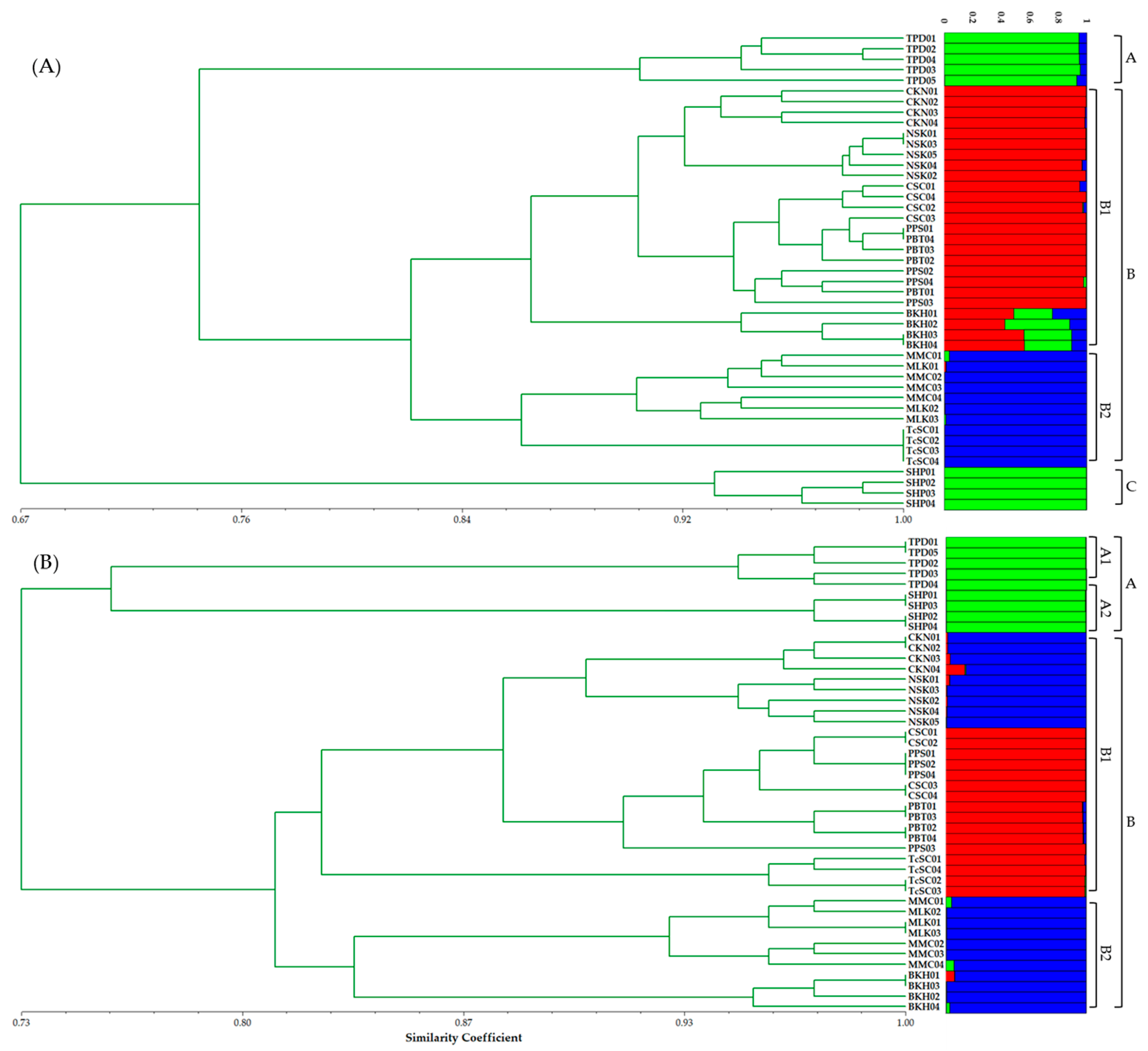
The UPGMA dendrogram based on SRAP markers (Figure 6A) separated the 45 R. morrisoni individuals from eight river basins into two main groups at a similarity coefficient of 0.67. Cluster C (SHP) contained four individuals clearly distinct from all others. Within this framework, three major clusters were resolved at 0.74 similarity: cluster A (TPD) and cluster C (SHP), representing the southern basins, were clearly separated from the central populations in cluster B. Cluster B, comprising all central river basins, displayed sub-clustering at 0.82 similarity: sub-cluster B1 (CKN, CSC, NSK, PPS, PBT, BKH) and sub-cluster B2 (MMC, MLK, TcSC).
Bayesian clustering of SRAP data in STRUCTURE, evaluated with the ΔK method, supported three genetic clusters (K = 3) (Figure 6A). Individuals from the southern basins (TPD, SHP) were primarily assigned to a single cluster (green), distinct from central populations. However, a few TPD individuals showed slight admixture with the dark-blue cluster. The second cluster (red) comprised individuals from the Chao Phraya (CKN, CSC), Nan (NSK), Pa Sak (PPS, PBT), and Bang Pakong (BKH) river basins, with several BKH individuals exhibiting partial admixture with the green cluster. The third cluster (dark blue) included individuals from the Mae Klong (MLK, MMC) and Tha Chin (TcSC) river basins, indicating additional genetic sub-structuring within the central region.

3.3.2. Based on ISSR Markers

The UPGMA dendrogram generated from ISSR data (Figure 6B) separated the 45 R. morrisoni individuals into two primary clusters at a similarity coefficient of 0.73, corresponding to the southern (cluster A) and central (cluster B) populations. At 0.76 similarity, cluster A represented the southern basins and was further subdivided into A1 (Tapi River, TPD) and A2 (Songkhla Lake, SHP). Cluster B included all central populations and resolved into two subclusters: B1 (CKN, CSC, PPS, PBT, NSK) and B2 (MLK, MMC, TcSC, BKH), reflecting genetic differentiation among central basins.
STRUCTURE analysis based on ISSR data indicated K = 3 as the most probable number of genetic clusters (Figure 6B). Southern populations from the Tapi River (TPD) and Songkhla Lake (SHP) formed a single distinct cluster (green), clearly separated from all central populations. Within the central populations, two clusters were recovered: a blue cluster comprising individuals from the Nan (NSK), Chao Phraya (CKN), Mae Klong (MLK, MMC), and Bang Pakong (BKH) river basins, and a red cluster grouping the Chao Phraya (CSC), Pa Sak (PPS, PBT), and Tha Chin (TcSC) river basins. Notably, the two Chao Phraya populations (CKN and CSC) were assigned to different clusters, and several BKH individuals showed admixture between the blue and red clusters.

3.3.3. Based on Combined SRAP and ISSR Markers

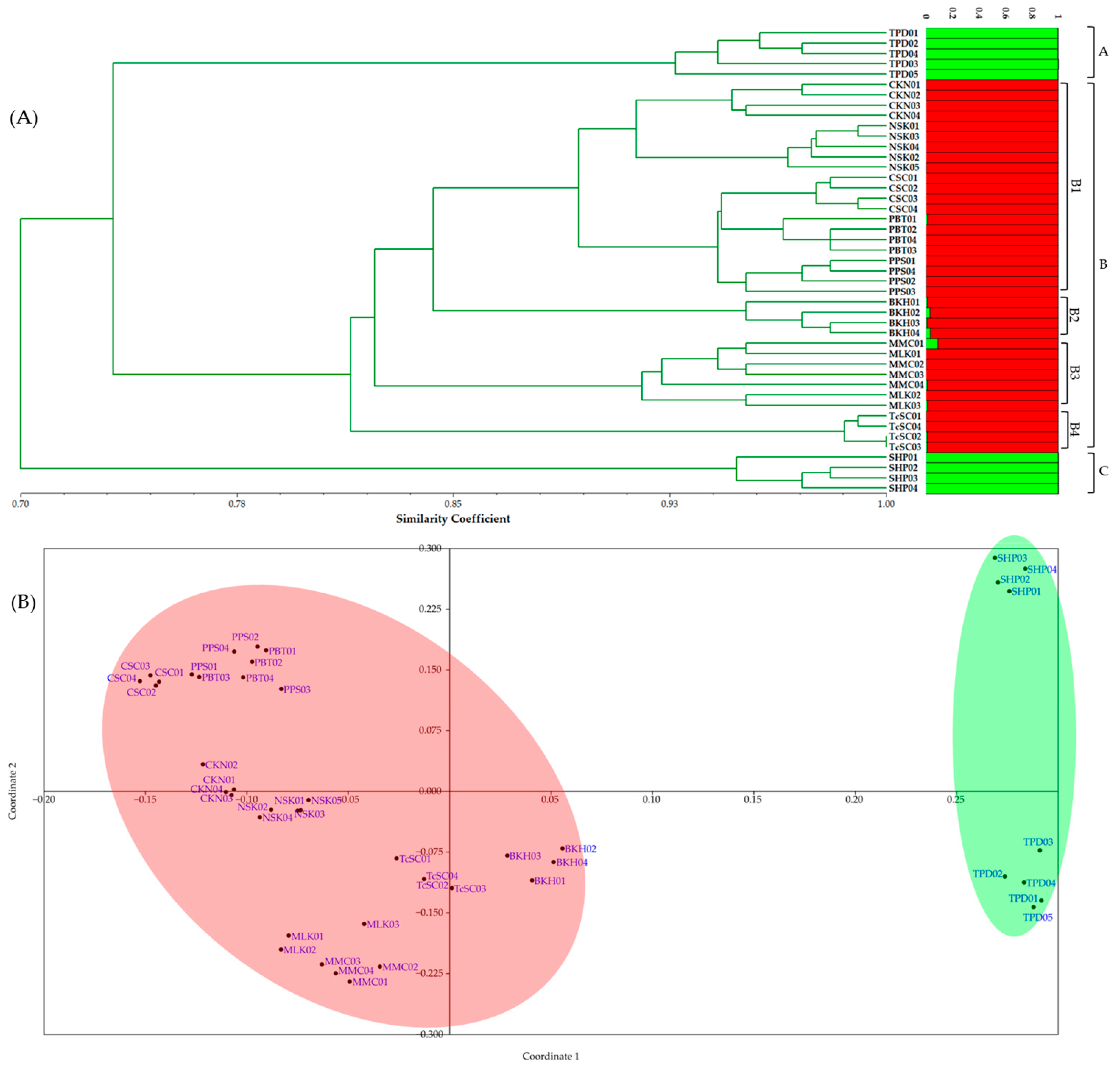
The UPGMA dendrogram based on the combined SRAP and ISSR dataset (Figure 7A) separated the 45 R. morrisoni individuals into two main groups at a similarity coefficient of 0.70. Within this topology, cluster C (SHP) comprised four individuals clearly distinct from all others. Three major clusters were resolved at a higher resolution (similarity coefficient = 0.74). The southern Tapi River population (TPD) formed cluster A, whereas the southern Songkhla Lake population (SHP) remained cluster C, confirming marked genetic separation between the two southern basins. All central populations were grouped into cluster B (similarity coefficient = 0.84), which was further partitioned into four subclusters: B1 (CKN, CSC, PPS, PBT, NSK), B2 (BKH), B3 (MLK, MMC), and B4 (TcSC). This topology highlights pronounced subdivisions within the central region while demonstrating strong differentiation between the southern and central basins. PCoA of the combined dataset (Figure 7B) supported these results, clearly separating the southern populations (TPD, SHP; light green) from the central populations (CKN, CSC, PPS, PBT, NSK, MLK, MMC, BKH, TcSC; light red) into two distinct genetic groups.
STRUCTURE analysis of the combined SRAP and ISSR dataset identified K = 2 as the most likely number of genetic clusters (Figure 7A). All individuals from the southern basins, Tapi River (TPD) and Songkhla Lake (SHP), were consistently grouped in a single cluster (green). All central populations, Chao Phraya (CKN, CSC), Pa Sak (PPS, PBT), Nan (NSK), Mae Klong (MLK, MMC), Bang Pakong (BKH), and Tha Chin (TcSC) formed the second cluster (red). Only a few individuals, notably from BKH and MMC, showed minor admixture, suggesting minimal gene flow or shared ancestral polymorphism.

3.4. Analysis of Molecular Variance (AMOVA)

AMOVA showed that genetic variation was predominantly distributed among populations across all datasets. Specifically, SRAP markers exhibited 77.76% variation among populations (PhiPT = 0.778, p < 0.001) and 22.24% within populations, ISSR markers had 84.92% among and 15.08% within populations (PhiPT = 0.849, p < 0.001), and the combined SRAP and ISSR dataset revealed 80.29% among and 19.71% within populations (PhiPT = 0.803, p < 0.001) (Table 6), confirming strong population subdivision.

3.5. Pairwise Genetic Differentiation

3.5.1. Based on SRAP Markers

Specimens of R. morrisoni were collected from 11 sampling sites across eight river basins in central and southern Thailand. Pairwise PhiPT values from SRAP markers revealed pronounced genetic differentiation among most populations (Table 7). Values were generally high (0.028–0.936). The strongest differentiation occurred between the TcSC and NSK populations (PhiPT = 0.936). The Mae Klong populations (MMC vs. MLK) showed minimal differentiation (PhiPT = 0.028). Very high differentiation (PhiPT > 0.900), close to 1, was detected between TcSC and NSK (0.936), TcSC and CSC (0.933), TcSC and SHP (0.931), TcSC and PBT (0.927), TcSC and PPS (0.904), and between SHP and NSK (0.900). By contrast, low differentiation (PhiPT < 0.500), approaching 0, occurred between MMC and MLK (0.028), PPS and PBT (0.200), PPS and CKN (0.464), and PPS and CSC (0.475).

3.5.2. Based on ISSR Markers

Pairwise PhiPT values based on ISSR markers indicated high levels of genetic differentiation among 11 R. morrisoni populations (Table 7). Most comparisons yielded PhiPT values ranging from 0.556 to 0.926, all significant at p < 0.001. The lowest differentiation was detected between the Mae Klong populations (MLK vs. MMC, PhiPT = 0.556). In contrast, the highest differentiation was observed between SHP and CSC (PhiPT = 0.926). Very high differentiation (PhiPT > 0.900), close to 1, was detected between CSC and TPD (0.907), SHP and PBT (0.917), SHP and CKN (0.921), SHP and TcSC (0.908), SHP and CSC (0.926), SHP and PPS (0.921), SHP and BKH (0.901), and SHP and MLK (0.915). No pairwise comparisons showed PhiPT values below 0.500.

3.5.3. Based on Combined SRAP and ISSR Markers

Pairwise PhiPT values calculated from the combined SRAP and ISSR dataset indicated high genetic differentiation among 11 R. morrisoni populations (Table 7). Most comparisons yielded PhiPT values ranging from 0.197 to 0.924, all significant at p < 0.001. The lowest differentiation occurred between the Mae Klong populations (MLK vs. MMC; PhiPT = 0.197), with other values also relatively low (< 0.500) among some central basins, such as PPS vs. PBT (PhiPT = 0.433). In contrast, the highest differentiation was observed between TcSC and SHP (PhiPT = 0.924), followed by TcSC vs. PBT (PhiPT = 0.902).

4. Discussion

Rivomarginella morrisoni from 11 sites across eight river basins in central and southern Thailand showed body pigmentation differed regionally: central populations exhibited only black spots, whereas southern populations displayed both black and brown spots. This visible distinction is consistent with our genetic data. Analyses using SRAP, ISSR, and combined datasets revealed strong genetic divergence between central and southern populations, with PhiPT values ranging from 0.778 to 0.849 across all marker systems. STRUCTURE and PCoA analyses corroborated this regional genetic subdivision (K = 2), and UPGMA dendrograms further indicated sub-structuring among central river basins. Together, these findings suggest that geographic isolation, distinct drainage systems, and varying levels of hydrological connectivity among basins are key drivers shaping the genetic structure of R. morrisoni populations.
The PCA results revealed clear morphological differentiation between central and southern populations of R. morrisoni, consistent with the observed variation in foot pigmentation. A consistent difference in body coloration, central populations exhibited exclusively black spots, whereas southern populations displayed a mixture of black and brown spots, suggesting potential population differentiation. This regional color variation, supported by the PCA clustering pattern, may reflect a combination of evolutionary processes. Differences in pigmentation have been linked to environmental factors such as substrate color, water clarity, and predator assemblages, which can influence pigmentation for camouflage or UV protection, as reported in the Kerry spotted slug (Geomalacus maculosus Allman, 1843) [23]. However, given the relatively limited latitudinal separation between central and southern Thailand, it is also plausible that the observed pigmentation differences primarily result from genetic drift acting on reproductively isolated populations with restricted gene flow among drainage basins. In freshwater systems, such isolation can allow stochastic processes to generate phenotypic divergence even over modest geographic distances. Although pigmentation alone is not diagnostic, its alignment with both the morphological clustering and genetic subdivision suggests that phenotypic variation may reflect underlying genetic differences [24], highlighting the value of integrating morphological and molecular evidence in population and taxonomic studies [25].
Both SRAP and ISSR markers revealed substantial genetic polymorphism in R. morrisoni, though SRAP provided slightly higher resolution. SRAP primers produced higher mean polymorphism (62.02% vs. 56.02%) and PIC values (0.35 vs. 0.27), along with more bands per primer (8.38 vs. 6.00), indicating greater genomic coverage and stronger discriminatory power for population differentiation. These results indicate that SRAP markers for R. morrisoni provided greater discriminatory power than ISSR markers. ISSR is generally considered an efficient marker system [12] and has been successfully applied to gastropods in previous studies [14,15]. Comparative studies in plants have sometimes reported slightly higher PIC values for ISSR, such as in Aeluropus lagopoides (L.) Thwaites [26], while in other cases SRAP outperformed ISSR, as shown in Allium L. species [27]. This outcome highlights the importance of species-specific primer testing, as the informativeness of dominant markers may vary depending on genome characteristics [11]. The reproducibility and informativeness of SRAP, combined with the complementary use of ISSR, reduced marker-specific bias and enhanced resolution of population structure. Overall, the dual-marker approach effectively captured genetic diversity and supported robust inferences about population differentiation in this non-model freshwater snail, consistent with recommendations for multi-marker analyses in mollusks [28] and other non-model organisms [29]. Therefore, the complementary use of SRAP and ISSR markers in this study enhanced the overall resolution of genetic diversity patterns in R. morrisoni.
AMOVA results demonstrated that the majority of genetic variation in R. morrisoni was distributed among populations rather than within them, with among-population components ranging from 77.76% (SRAP) to 84.92% (ISSR), and a combined dataset value of 80.29% (PhiPT = 0.803, p < 0.001) (Table 4). These high values, well above the threshold for strong differentiation [30], align with overall high PhiPT values (0.778–0.849) and pairwise PhiPT comparisons, most of which exceed 0.700. The most significant differentiation occurred between southern populations (TPD, SHP) and central populations. In contrast, the lowest values were observed within the same drainage systems, such as Mae Klong (MLK vs. MMC) and Chao Phraya (CSC vs. CKN). These findings indicate that genetic divergence is pronounced between regions and shaped by watershed boundaries within the central river basins. In contrast, SRAP-based analyses of Meretrix petechialis showed lower population differentiation [13], suggesting that geographic isolation among drainage basins has a stronger impact on freshwater species than on marine or estuarine bivalves. Similarly, the freshwater snail Biomphalaria pfeifferi (Krauss, 1848) exhibited pronounced genetic structure with FST values exceeding 0.5 across populations [31], reinforcing the idea that restricted gene flow and geographic or ecological barriers can drive strong population differentiation in freshwater gastropods.
Although among-population differentiation accounted for most of the total variation, a measurable proportion (15.08–22.24%) was distributed within populations, as revealed by ISSR and SRAP markers, respectively. These relatively low within-population values suggest limited gene exchange among individuals within each drainage river basin, which is consistent with freshwater snails’ sedentary lifestyle and restricted dispersal ability [31]. Interestingly, SRAP markers detected slightly higher intrapopulation variation than ISSR, likely because they preferentially amplify open reading frames (ORFs) [11], thereby capturing greater functional polymorphism. In contrast, ISSR markers target inter-microsatellite regions that often represent more conserved, non-coding portions of the genome [12], resulting in lower within-population diversity. The combined SRAP–ISSR dataset yielded intermediate values (19.71%), reflecting a balance between functional and neutral variation. These patterns indicate that integrating multiple marker systems provides a more comprehensive and realistic assessment of genetic variation across both inter- and intrapopulation levels in R. morrisoni.
Bayesian clustering and ordination analyses further clarified the genetic subdivision of R. morrisoni. STRUCTURE analysis based on SRAP and ISSR markers indicated K = 3, revealing two distinct southern clusters (TPD and SHP) and sub-structuring within the central region, while the combined dataset supported a simpler division of K = 2, clearly separating all southern from all central populations. Similarly, PCoA consistently distinguished southern from central populations along the first coordinate axis while separating subsets of central populations along secondary axes. Dendrogram analyses produced congruent patterns, with southern populations forming independent clusters and central populations partitioned into subgroups corresponding to major river basins. Although SRAP- and ISSR-based clustering showed overall agreement, some discrepancies were observed: ISSR grouped Nan and Khlong Noi populations more closely with Mae Klong and Bang Pakong, whereas SRAP tended to align them with Chao Phraya and Pa Sak. Such differences are not unexpected, as distinct marker systems can capture different portions of genomic variation [11,12].
Nevertheless, both markers consistently separated southern from central populations, and their combined analysis provided the most robust resolution of hierarchical genetic structure. Similar concordance among STRUCTURE, ordination, and tree-based approaches has been reported in other taxa, such as the clam M. petechialis [13], the sea anemone Paracondylactis sinensis Carlgren, 1934 [32], and Allium species [27], where multiple marker systems yielded broadly consistent clustering signals despite minor differences. These parallels underscore the reliability of our results and indicate that R. morrisoni populations cluster primarily by geographic isolation among drainage basins, which promotes reproductive isolation and restricts gene flow [33] between the central and southern basins. Under such conditions, genetic drift can act independently in isolated populations, leading to pronounced genetic differentiation between southern and central regions even in the absence of strong environmental.
The complementary use of SRAP and ISSR markers likely enhanced the resolution of population genetic analyses in R. morrisoni. Together, these marker systems provide broader genomic coverage and enable a more comprehensive assessment of functional and neutral genetic variation across populations [34]. Notably, the combined SRAP–ISSR dataset revealed clustering patterns more consistent with hydrological connectivity among central Thai river basins than analyses based on single markers. For instance, dendrogram, STRUCTURE, and PCoA analyses of the combined dataset (Figure 7) clearly resolved subcluster B1, in which populations from NSK and CKN clustered closely together, reflecting the natural confluence of the Nan (blue lines in Figure 1) and Chao Phraya rivers (dark blue lines in Figure 1). These populations are also grouped with CSC, PBT and PPS populations, consistent with the Pa Sak River’s (yellow line in Figure 1) inflow into the Chao Phraya system. Moreover, the combined dataset resolved additional subclusters corresponding to the Bang Pakong (red line in Figure 1), Mae Klong (purple line in Figure 1), and Tha Chin (green line in Figure 1) basins, underscoring the power of multilocus approaches. This improved resolution demonstrates that integrating SRAP and ISSR markers strengthens the primary division between central and southern populations and clarifies fine-scale population affinities shaped by watershed boundaries and river connectivity.
The pronounced genetic separation between central and southern populations of R. morrisoni likely reflects the absence of hydrological connectivity between drainage systems. Central basins, including the Chao Phraya, Pa Sak, Tha Chin, Mae Klong, and Bang Pakong, are historically interconnected via distributaries and artificial canals, allowing limited gene flow among neighboring populations. In contrast, the Tapi River and Songkhla Lake in the south are completely isolated, restricting dispersal and gene exchange. This geographic isolation is consistent with the strong divergence observed in AMOVA, PhiPT, and STRUCTURE analyses. At the same time, the clustering within central basins suggests that watershed boundaries also act as partial barriers, shaping fine-scale genetic structure. Such patterns mirror observations in other freshwater taxa, where hydrological connectivity maintains gene flow and isolation promotes divergence [35].
The pronounced regional differentiation detected in R. morrisoni has essential implications for taxonomy and conservation. Although dominant-marker data alone do not allow definitive species delimitation, the distinct and highly consistent clustering patterns observed across multiple analytical approaches (dendrograms, STRUCTURE, and PCoA) indicate the presence of deeply differentiated evolutionary lineages among populations from central and southern Thailand. Such patterns justify the recognition of these populations as separate management units or evolutionarily significant units (ESUs) [33,36]. Notably, the magnitude and consistency of the genetic differentiation observed suggest that these lineages may correspond to species-level divergence rather than cryptic diversity. However, formal taxonomic resolution requires integrative evidence and expert evaluation. Future studies combining detailed shell comparisons, internal anatomy (including radula morphology), and mitochondrial DNA barcoding—particularly Bayesian phylogenetic inference based on cytochrome c oxidase subunit 1 gene (COI) and 16S rRNA gene sequences—will be essential to confirm species boundaries within this lineage [2,37]. Expanding to complete mitochondrial genome sequencing would also shed light on the evolutionary history of R. morrisoni and its transition from marine ancestors to freshwater habitats, thereby improving taxonomic resolution and the basis for long-term conservation strategies [38].

5. Conclusions

This study provides the first molecular evidence of population genetic structure in the freshwater snail Rivomarginella morrisoni, revealing clear subdivision between central and southern populations across Thailand. Analyses using SRAP, ISSR, and combined markers consistently demonstrated strong genetic differentiation, with most variation partitioned between regions. At the same time, populations within the same drainage, such as Mae Klong, showed close affinities. STRUCTURE, PCoA, dendrograms, AMOVA, and pairwise PhiPT values all supported restricted gene flow across river basins, and the combined dataset offered the most robust resolution of hierarchical population structure. In addition to molecular analyses, a principal component analysis (PCA) based on morphological traits—particularly foot-spot pigmentation—revealed a similar regional pattern, clearly separating central and southern populations. This concordance between genetic and morphological differentiation strengthens the evidence for long-term geographic isolation and possible local adaptation among populations. These findings highlight the role of geographic isolation in shaping the genetic composition and phenotypic variation in R. morrisoni and provide a valuable framework for conservation planning, guiding management units, and supporting future taxonomic and evolutionary studies through integrative molecular–morphological approaches. Although this study provides robust evidence of population genetic differentiation in R. morrisoni, further work is needed to resolve its taxonomic boundaries. Future studies integrating mitochondrial DNA data (e.g., COI, 16S rRNA gene, and complete mitochondrial genomes), detailed shell comparisons, and internal anatomical characters, including radula morphology, will be essential to determine whether the strongly differentiated lineages identified here represent intraspecific structure or multiple distinct species within Thailand.

Author Contributions

Conceptualization, N.S., P.D. and S.P.; Methodology, N.S. and S.P.; Software, N.S. and P.W.; Validation, P.D. and S.P.; Formal analysis, N.S., P.W. and S.P.; Investigation, N.S., P.D. and S.P.; Resources, P.D. and S.P.; Data curation, N.S.; Writing—original draft, N.S.; Writing—review and editing, S.P.; Visualization, N.S., P.W. and S.P.; Supervision, P.W. and S.P.; Project administration, S.P.; Funding acquisition, P.D. and S.P. All authors have read and agreed to the published version of the manuscript.

Funding

This research was funded by the Research Assistant/Teaching Assistant Scholarship of the School of Science, KMITL. Grant number: RA/TA-2564-D-001.

Institutional Review Board Statement

This study was conducted strictly with ethical standards for the care and use of experimental animals. The Animal Care and Use Committee approved at King Mongkut’s Institute of Technology Ladkrabang (Certificate No. ACUC-KMITL-RES/2022/009, date of approval 18 May 2022). All procedures were conducted according to the relevant institutional and international guidelines for animal welfare.

Data Availability Statement

The original contributions presented in this study are included in the article. Further inquiries can be directed to the corresponding author.

Acknowledgments

We thank the Zoology Laboratory, Faculty of Science, Burapha University, for their support in collecting the specimens. We sincerely appreciate Pongrat Dumrongrojwattana, whose invaluable insights and dedication, even after his passing, significantly contributed to the advancement of this research.

Conflicts of Interest

The authors declare no conflicts of interest.

References

  1. Covich, A.P.; Palmer, M.A.; Crowl, T.A. The Role of Benthic Invertebrate Species in Freshwater Ecosystems: Zoobenthic species influence energy flows and nutrient cycling. BioScience 1999, 49, 119–127. [Google Scholar] [CrossRef]
  2. Martin, K.R.; Johnson, P.T.J.; Bowerman, J.; Li, J. Biogeography of the Freshwater Gastropod, Planorbella trivolvis, in the Western United States. PLoS ONE 2020, 15, e0235989. [Google Scholar] [CrossRef] [PubMed]
  3. Strong, E.E.; Gargominy, O.; Ponder, W.F.; Bouchet, P. Global Diversity of Gastropods (Gastropoda; Mollusca) in Freshwater. Hydrobiologia 2008, 595, 149–166. [Google Scholar] [CrossRef]
  4. Johnson, P.D.; Bogan, A.E.; Brown, K.M.; Burkhead, N.M.; Cordeiro, J.R.; Garner, J.T.; Hartfield, P.D.; Lepitzki, D.A.W.; Mackie, G.L.; Pip, E.; et al. Conservation Status of Freshwater Gastropods of Canada and the United States. Fisheries 2013, 38, 247–282. [Google Scholar] [CrossRef]
  5. Gu, Q.; Zhang, M.; Zhou, C.; Zhu, G.; Dong, J.; Gao, Y.; Chen, J.; Chen, P. Analysis of Genetic Diversity and Population Structure of Bellamya quadrata from Lakes of Middle and Lower Yangtze River. Genetica 2015, 143, 545–554. [Google Scholar] [CrossRef]
  6. Coomans, E.H.; Clover, W.P. The Genus Rivomarginella (Gastropoda, Marginellidae). Beaufortia 1972, 20, 69–75. [Google Scholar]
  7. Brandt, R.A.M. Description of New Non-Marine Mollusks from Asia; Archiv für Molluskenkunde: Frankfurt, Germany, 1968; pp. 275–277. [Google Scholar]
  8. Brandt, R.A.M. The Non-Marine Aquatic Mollusca of Thailand; Archiv für Molluskenkunde: Frankfurt, Germany, 1974; p. 205. [Google Scholar]
  9. Rivomarginella morrisoni The IUCN Red List of Threatened Species 2012. Available online: https://dx.doi.org/10.2305/IUCN.UK.2012-1.RLTS.T184928A1766366.en (accessed on 19 September 2025).
  10. Subpayakom, N.; Dumrongrojwattana, P.; Poeaim, S. Chemosensory-Driven Foraging and Nocturnal Activity in the Freshwater Snail Rivomarginella morrisoni (Gastropoda, Marginellidae): A Laboratory-Based Study. J. Zool. Bot. Gard. 2025, 6, 56. [Google Scholar] [CrossRef]
  11. Li, G.; Quiros, C.F. Sequence-Related Amplified Polymorphism (SRAP), a New Marker System Based on a Simple PCR Reaction: Its Application to Mapping and Gene Tagging in Brassica. Theor. Appl. Genet. 2001, 103, 455–461. [Google Scholar] [CrossRef]
  12. Zietkiewicz, E.; Rafalski, A.; Labuda, D. Genome Fingerprinting by Simple Sequence Repeat (SSR)-Anchored Polymerase Chain Reaction Amplification. Genomics 1994, 20, 176–183. [Google Scholar] [CrossRef]
  13. Xu, Q.; Zheng, J.; Nie, H.; Wang, Q.; Yan, X. Genetic Diversity and Population Structure of Meretrix petechialis in China Revealed by Sequence-related Amplified Polymorphism Markers. PeerJ 2020, 8, e8723. [Google Scholar] [CrossRef]
  14. Etukudo, O.; Asuquo, B.; Ekaluo, U.; Okon, B.; Ekerette, E.; Umoyen, A.; Udensi, O.; Ibom, L.; Afiukwa, C.; Igwe, D. Evaluation of Genetic Diversity in Giant African Land Snails Using Inter Simple Sequence Repeats (ISSR) Markers. Asian J. Adv. Agric. Res. 2018, 7, 1–13. [Google Scholar] [CrossRef]
  15. Dong, S.; Shentu, X.; Pan, Y.; Bai, X.; Yu, X.; Wang, H. Evaluation of Genetic Diversity in the Golden Apple Snail, Pomacea canaliculata (Lamarck), from Different Geographical Populations in China by Inter Simple Sequence Repeat (ISSR). Afr. J. Biotechnol. 2011, 10, 1777–1783. [Google Scholar]
  16. Rohlf, F.J. NTSYSpc: Numerical Taxonomy System, Version 2.11X; Exeter Software: Setauket, NY, USA, 2000. [Google Scholar]
  17. Hammer, Ø.; Harper, D.A.T.; Ryan, P.D. PAST: Paleontological Statistics Software Package for Education and Data Analysis. Palaeontol. Electron. 2001, 4, 9. Available online: http://palaeo-electronica.org/2001_1/past/issue1_01.htm (accessed on 19 September 2025).
  18. Excoffier, L.; Lischer, H.E.L. Arlequin Suite Ver 3.5: A New Series of Programs to Perform Population Genetics Analyses under Linux and Windows. Mol. Ecol. Resour. 2010, 10, 564–567. [Google Scholar] [CrossRef] [PubMed]
  19. Pritchard, J.K.; Stephens, M.; Donnelly, P. Inference of Population Structure Using Multilocus Genotype Data. Genetics 2000, 155, 945–959. [Google Scholar] [CrossRef]
  20. Falush, D.; Stephens, M.; Pritchard, J.K. Inference of Population Structure Using Multilocus Genotype Data: Linked Loci and Correlated Allele Frequencies. Genetics 2003, 164, 1567–1587. [Google Scholar] [CrossRef] [PubMed]
  21. Evanno, G.; Regnaut, S.; Goudet, J. Detecting the Number of Clusters of Individuals Using the Software STRUCTURE: A Simulation Study. Mol. Ecol. 2005, 14, 2611–2620. [Google Scholar] [CrossRef]
  22. Li, Y.L.; Liu, J.X. StructureSelector: A Web-Based Software to Select and Visualize the Optimal Number of Clusters Using Multiple Methods. Mol. Ecol. Resour. 2018, 18, 176–177. [Google Scholar] [CrossRef] [PubMed]
  23. O’Hanlon, A.; Feeney, K.; Dockery, P.; Gormally, M.J. Quantifying Phenotype-environment Matching in the Protected Kerry Spotted Slug (Mollusca: Gastropoda) using Digital Photography: Exposure to UV Radiation Determines Cryptic Colour Morphs. Front. Zool. 2017, 14, 35. [Google Scholar] [CrossRef]
  24. Bickford, D.; Lohman, D.J.; Sodhi, N.S.; Ng, P.K.L.; Meier, R.; Winker, K.; Ingram, K.K.; Das, I. Cryptic Species as a Window on Diversity and Conservation. Trends. Ecol. Evol. 2007, 22, 148–155. [Google Scholar] [CrossRef]
  25. Padial, J.M.; Miralles, A.; De la Riva, I.; Vences, M. The Integrative Future of Taxonomy. Front. Zool. 2010, 7, 16. [Google Scholar] [CrossRef]
  26. Dar, B.A.; Al-Doss, A.A.; Assaeed, A.M.; Javed, M.M.; Ghazy, A.I.; Al-Rowaily, S.L.; Abd-ElGawad, A.M. Genetic Variation among Aeluropus lagopoides Populations Growing in Different Saline Regions. Diversity 2024, 16, 59. [Google Scholar] [CrossRef]
  27. Hancı, F.; Paşazade, E. A Comparison of Efficiency Parameters of SRAP and ISSR Markers in Revealing Variation in Allium Germplasm. Horticulturae 2025, 11, 294. [Google Scholar] [CrossRef]
  28. Hollenbeck, C.M.; Johnston, I.A. Genomic Tools and Selective Breeding in Molluscs. Front. Genet. 2018, 9, 334494. [Google Scholar] [CrossRef]
  29. Nybom, H. Comparison of Different Nuclear DNA Markers for Estimating Intraspecific Genetic Diversity in Plants. Mol. Ecol. 2004, 13, 1143–1155. [Google Scholar] [CrossRef]
  30. Wright, S. Evolution and the Genetics of Populations, Volume 4: Variability Within and Among Natural Populations; University of Chicago Press: Chicago, IL, USA, 1978; Volume 4. [Google Scholar]
  31. Tian-Bi, Y.N.; Jarne, P.; Konan, J.N.K.; Utzinger, J.; N’Goran, E.K. Contrasting the Distribution of Phenotypic and Molecular Variation in the Freshwater Snail Biomphalaria pfeifferi, the Intermediate Host of Schistosoma mansoni. Heredity 2013, 110, 466–474. [Google Scholar] [CrossRef]
  32. Li, J.; Yang, X.; Zhan, Z.; Feng, J.; Xie, T.; Li, Y. Development of Microsatellite Markers and Evaluation of the Genetic Diversity of the Edible Sea Anemone Paracondylactis sinensis (Cnidaria, Anthozoa) in China. Biodivers. Data J. 2024, 12, e134363. [Google Scholar] [CrossRef] [PubMed]
  33. Funk, W.C.; McKay, J.K.; Hohenlohe, P.A.; Allendorf, F.W. Harnessing Genomics for Delineating Conservation Units. Trends Ecol. Evol. 2012, 27, 489–496. [Google Scholar] [CrossRef] [PubMed]
  34. Bidyananda, N.; Jamir, I.; Nowakowska, K.; Varte, V.; Vendrame, W.A.; Devi, R.S.; Nongdam, P. Plant Genetic Diversity Studies: Insights from DNA Marker Analyses. Int. J. Plant Biol. 2024, 15, 607–640. [Google Scholar] [CrossRef]
  35. Hughes, J.M.; Schmidt, D.J.; Finn, D.S. Genes in Streams: Using DNA to Understand the Movement of Freshwater Fauna and Their Riverine Habitat. BioScience 2009, 59, 573–583. [Google Scholar] [CrossRef]
  36. Moritz, C. Defining ‘Evolutionarily Significant Units’ for Conservation. Trends Ecol. Evol. 1994, 9, 373–375. [Google Scholar] [CrossRef] [PubMed]
  37. Fedosov, A.E.; Caballer Gutierrez, M.; Buge, B.; Sorokin, P.V.; Puillandre, N.; Bouchet, P. Mapping the Missing Branch on the Neogastropod Tree of Life: Molecular Phylogeny of Marginelliform Gastropods. J. Molluscan Stud. 2019, 85, 439–451. [Google Scholar] [CrossRef]
  38. Ma, J.; Dong, X.; Xu, K.; Zeng, J.; Wang, Z.; Li, J. The Characterization of the Mitochondrial Genome of Fulgoraria rupestris and Phylogenetic Considerations within the Neogastropoda. Genes 2024, 15, 1076. [Google Scholar] [CrossRef] [PubMed]
Figure 1. Map showing 11 sampling sites across eight river basins in central and southern Thailand. The zoomed-in panel highlights sampling sites in the central region, while different colored lines distinguish river basins. River basin data were obtained from Mitrearth (www.mitrearth.org) and visualized using QGIS version 3.28.
Taxonomy 06 00007 g001
Figure 2. Shell morphological R. morrisoni from (A) central (BKH) and (B) southern (TPD) Thailand. The representative shell shows a piriform–conoidal shape, a translucent amber–glossy surface, and two low whorls, with the last greatly enlarged (scale bar = 0.5 cm).
Taxonomy 06 00007 g002
Figure 3. Morphological variation general body of R. morrisoni from 11 sampling sites across eight river basins in central and southern Thailand (scale bar = 1 cm).
Taxonomy 06 00007 g003
Figure 4. Qualitative morphological traits in R. morrisoni. (A) Foot-spot patterns showing two types from left to right: type 1—spots distributed across both the anterior and posterior regions (arrow) of the foot, with a dense aggregation in the medial posterior area forming a linear midline band; and type 2—spots scattered over the entire foot with a dense aggregation in the medial posterior area forming a similar linear midline band. (B) Spot coloration showing two types from left to right: black spots and black plus brown spots.
Taxonomy 06 00007 g004
Figure 5. Principal component analysis (PCA) plot based on five morphological variables (shell length, shell width, spire length, spot pattern, and spot color) of R. morrisoni from central and southern Thailand. Each symbol represents a specimen, and colors indicate populations from different river basins.
Taxonomy 06 00007 g005
Figure 6. Genetic distance and population structure of 45 R. morrisoni individuals from eight river basins in central and southern Thailand. (A) UPGMA dendrogram based on SRAP data and (B) UPGMA dendrogram based on ISSR data. STRUCTURE analysis (ΔK method, K = 3) identifies three genetic clusters: green, red, and dark blue.
Taxonomy 06 00007 g006
Figure 7. Population genetic structure of 45 R. morrisoni based on the combined SRAP and ISSR dataset. (A) UPGMA dendrogram and STRUCTURE analysis (K = 2) showing two major genetic clusters: southern populations (green) and central populations (red). (B) Principal Coordinate Analysis (PCoA) supports this separation into southern and central clusters.
Taxonomy 06 00007 g007
Table 1. River basins, sampling sites, provinces, sample codes, and GPS coordinates of R. morrisoni collected in this study.
River BasinsSampling SitesProvincesSample CodesGPS Coordinates
Central Region
Bang PakongKhwae HanumanPrachin BuriBKH13°59′33.7″ N 101°42′50.5″ E
Chao PhrayaKhlong NoiChai NatCKN15°01′28.4″ N 100°12′44.4″ E
Sanam Chai TemplePhra Nakhon Si AyutthayaCSC14°12′07.7″ N 100°30′29.4″ E
Mae KlongManee ChotRatchaburiMMC13°40′10.3″ N 99°49′00.5″ E
Luk Kae BeachKanchanaburiMLK13°52′04.6″ N 99°49′01.6″ E
NanSairong Khon TemplePhichitNSK16°10′39.0″ N 100°24′08.0″ E
Pa SakPa Sak RiverPhra Nakhon Si AyutthayaPPS14°27′34.9″ N 100°35′58.5″ E
Ban Ta LuangPhra Nakhon Si AyutthayaPBT14°32′08.5″ N 100°45′01.8″ E
Tha ChinSam ChukSuphan BuriTcSC14°46′23.9″ N 100°05′19.8″ E
Southern Region
Songkhla LakeHad Phat ThongPhatthalungSHP7°30′28.0″ N 100°11′32.2″ E
TapiPhum DuangSurat ThaniTPD9°05′52.4″ N 99°12′22.3″ E
Table 2. List of sequence-related amplified polymorphism (SRAP) primers, including their names and nucleotide sequences.
Primer NameForward (5′–3′)Primer NameReverse (5′–3′)
Me1TGAGTCCAAACCGGATAEm1GACTGCGTACGAATTAAT
Me2TGAGTCCAAACCGGAGCEm2GACTGCGTACGAATTTGC
Me3TGAGTCCAAACCGGAATEm3GACTGCGTACGAATTGAC
Me4TGAGTCCAAACCGGACCEm4GACTGCGTACGAATTTGA
Me5TGAGTCCAAACCGGAAGEm5GACTGCGTACGAATTAAC
Em6GACTGCGTACGAATTGCA
Table 3. Inter-simple sequence repeat (ISSR) primers, including primer names, nucleotide sequences, and annealing temperatures.
Primer NameSequences (5′–3′)Annealing Temp.
UBC807AGAGAGAGAGAGAGAGT48 °C
UBC808AGAGAGAGAGAGAGAGC50 °C
UBC809AGAGAGAGAGAGAGAGG50 °C
UBC834AGAGAGAGAGAGAGAGYT50 °C
UBC835AGAGAGAGAGAGAGAGYC52 °C
UBC866CTCCTCCTCCTCCTCCTC58 °C
Table 4. Summary of morphometric measurements and qualitative traits of R. morrisoni from eight populations across central and southern Thailand. Values of shell length, shell width, and spire length are presented as mean ± standard deviation (mm).
PopulationsShell Length
(mm)
Shell Width
(mm)
Spire Length
(mm)
Spot Pattern *Spot Color
BKH8.76 ± 0.675.78 ± 0.381.22 ± 0.24Type 1Black
CKN6.89 ± 0.414.35 ± 0.281.40 ± 0.13Type 1Black
CSC5.99 ± 0.433.70 ± 0.261.19 ± 0.15Type 1Black
MMC8.11 ± 0.565.33 ± 0.381.03 ± 0.23Type 1Black
MLK8.61 ± 0.305.57 ± 0.251.08 ± 0.21Type 1Black
NSK7.31 ± 0.264.57 ± 0.250.98 ± 0.10Type 1Black
PPS8.28 ± 0.465.41 ± 0.271.41 ± 0.20Type 1Black
PBT7.81 ± 0.425.05 ± 0.261.22 ± 0.19Type 1Black
TcSC7.36 ± 0.924.56 ± 0.571.19 ± 0.21Type 1Black
SHP8.15 ± 0.385.19 ± 0.321.50 ± 0.20Type 2Black plus brown
TPD9.06 ± 0.665.67 ± 0.281.41 ± 0.26Type 2Black plus brown
* Spot pattern: Type 1 = Spots distributed across both the anterior and posterior regions of the foot, with a dense aggregation in the medial area of the posterior part, forming a linear band of intensified pigmentation along the midline. Type 2 = Spots abundantly scattered across the entire foot, with a dense aggregation in the central (medial) area of the posterior part, forming a linear band of intensified pigmentation along the midline.
Table 5. Polymorphism statistics of the R. morrisoni revealed by sequence-related amplified polymorphism (SRAP) and inter-simple sequence repeat (ISSR) markers.
MarkersPrimersAmplified BandsPolymorphic Bands% PolymorphismPIC *
SRAPME1/EM28787.500.58
ME1/EM3131076.920.55
ME2/EM15120.000.05
ME2/EM48675.000.56
ME3/EM19555.560.31
ME3/EM211545.450.21
ME3/EM36350.000.20
ME3/EM57685.710.34
Total6743 2.80
Average8.385.3862.020.35
ISSRUBC8076466.670.42
UBC8085240.000.29
UBC8093266.670.23
UBC8349777.780.35
UBC8358225.000.07
UBC8665360.000.25
Total3620 1.61
Average6.003.3356.020.27
* PIC = polymorphic information content.
Table 6. Analysis of molecular variance (AMOVA) of R. morrisoni populations from central and southern Thailand based on SRAP, ISSR, and combined SRAP and ISSR markers, showing the partitioning of genetic variation among and within populations, with corresponding PhiPT values (p < 0.001) for all datasets.
Source of VariationdfSum of SquaresVariance ComponentsPercentage of VariationPhiPTp-Value
For SRAP
Among populations10224.4675.13677.76
Within populations3449.9331.46922.24
Total44274.4006.605100 0.778<0.001
For ISSR
Among populations10130.0283.05184.92
Within populations3418.4170.54215.08
Total44148.4443.593100 0.849<0.001
For combined SRAP and ISSR markers
Among populations10354.4948.18780.29
Within populations3468.3502.01019.71
Total44422.84410.197100 0.803<0.001
Table 7. Pairwise genetic differentiation (PhiPT values) among 11 R. morrisoni populations based on SRAP markers, ISSR markers, and combined SRAP and ISSR markers. All PhiPT values were statistically significant (p < 0.001).
Populations
BKHCKNCSCMMCMLKNSKPPSPBTTcSCSHPTPD
For SRAP
BKH0.000
CKN0.6750.000
CSC0.8040.5220.000
MMC0.6450.5870.7110.000
MLK0.6940.6300.7580.0280.000
NSK0.6970.5750.7680.6850.7290.000
PPS0.7030.4640.4750.6880.7000.7200.000
PBT0.7700.5750.5270.7330.7340.7760.2000.000
TcSC0.8790.8330.9330.6860.7880.9360.9040.9270.000
SHP0.8420.8370.8810.8450.8470.9000.8250.8550.9310.000
TPD0.6800.7540.8380.7340.7500.8130.7940.8150.9310.8020.000
For ISSR
BKH0.000
CKN0.8510.000
CSC0.8890.7780.000
MMC0.8020.7620.8690.000
MLK0.8110.8210.8860.5560.000
NSK0.7030.6190.7360.7150.6230.000
PPS0.8760.7950.5830.8560.8730.7480.000
PBT0.8530.8330.6670.8510.8620.6180.6970.000
TcSC0.8390.8690.8070.8840.8940.8330.7450.8410.000
SHP0.9010.9210.9260.8690.9150.8560.9210.9170.9080.000
TPD0.8710.8760.9070.8560.8870.8440.8800.8880.8730.8760.000
For combined SRAP and ISSR markers
BKH0.000
CKN0.7480.000
CSC0.8410.6230.000
MMC0.7030.6420.7750.000
MLK0.7280.6850.7990.1970.000
NSK0.7000.5750.7540.6980.7010.000
PPS0.7870.6070.5100.7610.7610.7320.000
PBT0.8010.6800.5740.7730.7690.7280.4330.000
TcSC0.8630.8480.8960.7980.8380.8900.8680.9020.000
SHP0.8610.8640.8950.8500.8620.8880.8610.8730.9240.000
TPD0.7680.7980.8630.7760.7970.8250.8240.8400.8550.8240.000
Disclaimer/Publisher’s Note: The statements, opinions and data contained in all publications are solely those of the individual author(s) and contributor(s) and not of MDPI and/or the editor(s). MDPI and/or the editor(s) disclaim responsibility for any injury to people or property resulting from any ideas, methods, instructions or products referred to in the content.