


Abstract
Helicobacter pylori, the gastric pathogen which colonizes the gastric mucosa of more than half of the world’s population, is considered a risk factor for peptic ulcers and is epidemiologically associated with gastric cancer. Antimicrobial eradication of this pathogen has now become a central concern because of its growing resistance to frontline antibiotics such as clarithromycin and metronidazole. Moreover, these antibiotics can have adverse effects on the normal human gut flora and can lead to several health complications. Most times, the antibiotic doses become intolerable to the elderly population and they reject the therapy. This has impelled us to think about alternate effective and safe antimicrobials which can replace antibiotic usage or may reduce their dosage when used together with the antibiotics. Plant and microbial natural products, in view of this, offer an excellent source of novel and potential antimicrobial agents. Herein, we review anti-H. pylori natural compounds from diverse plant and microbial sources and highlight their role in the management of H. pylori infection.
Key Contribution:
This work highlights the potential of plant and microbial secondary metabolites for the discovery and development of novel and effective therapeutics against Helicobacter pylori, an important gastric pathogen of clinical significance which infects half of the world’s population.
1. Introduction
Plants and microorganisms are well-known producers of a diverse array of therapeutically important chemical compounds called secondary metabolites. To date, myriads of natural compounds have been documented, of which plant and microbial secondary metabolites contribute a major part, and more than 50% of FDA-approved drugs have directly or indirectly been derived from them [1]. However, such metabolites still appear to be an inexhaustible source of new and effective bioactive agents or drugs. Plants produce these compounds as a part of defense against invading pathogenic microbes, pests and herbivores. Microorganisms, however, in the late growth phase, synthesize these chemicals when one or more of the components in the nutrient medium is run down or in response to environmental stress.
Helicobacter pylori, a human pathogenic bacterium which infects and colonizes the human stomach, is the main cause of chronic gastritis and gastric inflammation. In most cases, the infection remains asymptomatic; only a lesser portion develops into severe or very severe clinical outcomes. However, it has been recently established that the majority of gastric adenocarcinoma and gastric mucosa-associated lymphoid tissue (MALT) lymphoma cases are due to infection with H. pylori [2,3]. Over two thirds of the world’s population is infected with H. pylori. The bacterium is attained during childhood and can continue to colonize thereafter if left untreated. Major virulence factors implicated in the infection process include cytotoxin-associated gene A (CagA) and vacuolating cytotoxin A (VacA). In addition, this bacterium escapes the action of antibiotics and also the host immune response by forming biofilm (aggregated free-floating planktonic cells sheathe themselves in an extracellular matrix composed of polysaccharides, DNA and proteins). The clinician-recommended treatment for the last twenty years includes a triple therapy consisting of antibiotics such as clarithromycin and amoxicillin or metronidazole along with a proton pump inhibitor (PPI) or ranitidine bismuth citrate; nonetheless, overuse of such medications is leading to the development of drug resistance in H. pylori and causes treatment failure in more than 20% of patients [4]. Moreover, such therapies are expensive and have been associated with obvious side effects similar to those observed with other drugs used for cardiovascular problems and allergies [5]. Given the advantages of plant and microbial secondary metabolites in terms of potency and safety over synthetic or industrially produced drugs [6], natural anti-H. pylori agents with novel action mechanisms are urgently needed in medicine. This review focuses on a selection of anti-H. pylori natural compounds derived from plant extracts and microbial culture filtrates and groups them as per their mode of action.
2. Helicobacter pylori: History of Infection and Associated Pathologies
H. pylori has been designated as a Class I carcinogen by the World Health Organization (WHO), and its rising incidences and prevalence globally are a serious concern. It was in 1983 that two researchers, Marshall and Warren, at the Royal Perth Hospital, Australia, reported an unidentified curved bacillus in the gastric epithelia in patients with chronic gastritis. A year later, in 1984, Marshall and Warren published another report describing the role of that bacterium in peptic ulceration and identified it as H. pylori. In 2005, both scientists were awarded the Nobel Prize in Physiology or Medicine. Until then, there had been long-standing speculation that psychological stress and lifestyle factors were the main causes of gastritis and peptic ulcers. Now, it is obvious that H. pylori infections are very common and have affected a major part of the world’s human population. Over time, it has become evident that H. pylori is present in all human races, on all continents, and can be attributed to a number of dissimilar factors including geographical parameters and socioeconomic practices [7].
Gastric colonization by H. pylori is reported to provoke major pathologies which include chronic gastritis, peptic ulcers, MALT lymphoma and gastric adenocarcinoma [8]. The determination of risks, from simple infection to the development of clinical diseases, can be correlated to the patterns and severity of the colonization and depends on several factors including those relating to the bacterium, the host and the environment. H. pylori colonization is always associated with the infiltration of gastric mucosa (both in the antrum and in the corpus) with mononuclear and neutrophilic cells. The acute phase of infection when a person has accidentally consumed H. pylori or come into contact with contaminated material may be associated with non-specific dyspeptic symptoms including nausea and vomiting, pangastritis and hypochlorhydria, which may last for months. On the other hand, in the case of persistent colonization, a close correlation exists between the level of acid secretion in the stomach and gastritis distribution. This may be due to two counteractive effects: one results from the effects of acid secretion on the bacteria density, whereas the other results from the effects of bacterial growth and coupled gastric inflammation on the secretion and regulation of gastric acid. Peptic ulcers, which is a term that collectively refers to gastric and duodenal ulcers, are mucosal defects that penetrate through the muscularis mucosa. Gastric ulcers are found mostly at the shift from corpus to antrum mucosa (the zone with decreased acid output), while duodenal ulcers are found in the duodenal bulb, which has the most exposure to gastric acid. Both ulcers are linked firmly to H. pylori colonization. Initial reports of peptic ulcers from around the world have estimated that 85% of gastric and 95% of duodenal ulcers were due to H. pylori colonization and inflammation, of which 50% of cases demonstrated ulcer recurrences within one year, even after eradication of the bacterium. Bleeding, formation of stricture and perforation are so far the known complications of peptic ulcer disease. Recent data showed that the risk of the development of a peptic ulcer in the presence of H. pylori is about 10–12% [9,10].
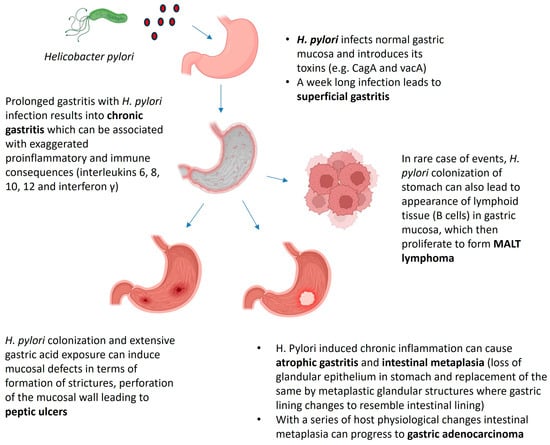
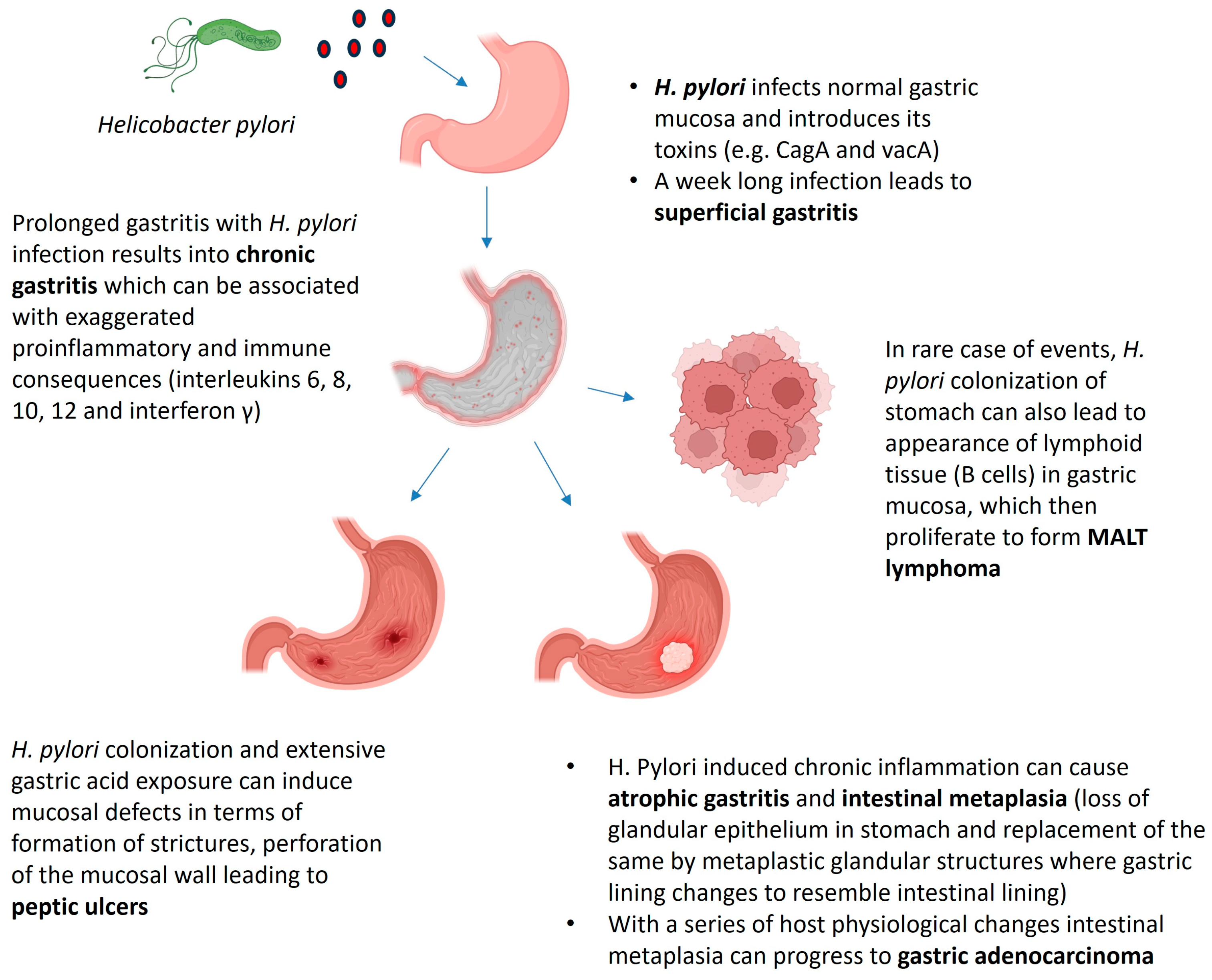
H. pylori-induced chronic inflammation can sooner or later affect the normal architecture of gastric mucosa with loss of the gastric glandular epithelium and replacement of either fibrosis or metaplastic glandular structures [11]. This is the process of atrophic gastritis and intestinal metaplasia, and has affected over half of the H. pylori-colonized population. In addition, areas of inflammation extend with time with no specific symptoms leading to increased risks of gastric cancer, the fourth most common cancer in the world which affects a large part of the world. Thus, gastric cancer is considered a major pathology of H. pylori colonization and its prevention has remained a major focus of research in recent times. MALT lymphoma is another serious pathologic condition characterized by the appearance of lymphoid tissue in the gastric mucosa in response to H. pylori colonization. Eventually, however, in rare events, this tissue may produce a population of monoclonal B cells which then gradually proliferate to MALT lymphoma. Data from several cohort studies suggest that the majority of patients with MALT lymphoma are H. pylori positive and that the presence of H. pylori infection increases the risks of gastric MALT lymphoma development [12]. In addition, H. pylori infection of the stomach elicits exaggerated inflammatory and immune reactions where pro-inflammatory interleukins IL-6 and IL-8 appear in the early cascade [13,14]. The infection also triggers other interleukins, IL-10, IL-12 and interferon (IFN)-γ, in a Th1-type gastric immune response [15]. The precise action mechanism through which the infection proceeds to severe clinical outcomes has not yet been properly established; nevertheless, it is a cumulative effect of several elements which include host and environmental parameters and, more importantly, bacterial virulence factors. An illustration displaying human pathologies associated with H. pylori infection is presented in Figure 1.
Figure 1.
Illustration of host pathologies associated with H. pylori infection.
3. Antibiotic Resistance in H. pylori: Paving the Way for Discovery of New Antibacterials
Antibiotic resistance in H. pylori is a serious concern worldwide. Three major patterns, single-drug resistance (SDR), multidrug resistance (MDR) and heteroresistance (HR, population-wide variable resistance to one or several drugs), can be seen in H. pylori. All these patterns are overlapping and related, and are believed to impose definite clinical issues. In the past, no monotherapeutic treatment strategy has succeeded in achieving adequate efficacy. A few antibiotics, including amoxicillin, clarithromycin, metronidazole, tetracycline, rifabutin and levofloxacin, are being used in combination therapies that constitute two or three of them along with a bismuth compound or an acid inhibitor for effective H. pylori eradication [16]. Their extensive uses in the general population and the ability of bacterial species to adapt have led to the development of primary antibiotic resistance. Over the past decades, escalating antibiotic resistance in H. pylori has been witnessed across the global population despite the disparities in infection rates and profiles in diverse geographical regions. Most of the recommended first-line treatment regimens continue to suffer failures in about 10–30% of patients, which leads to a therapeutic predicament among patients after consecutive unsuccessful treatments [17,18]. In general, the emergence and spread of such resistance is leading to a significant decrease in treatment efficacy while at the same time potentially causing increased risks of severe pathophysiological complications. In view of this, the WHO has listed drug-resistant H. pylori (clarithromycin-resistant H. pylori in particular) on the priority (high) list of threats for which new and effective antibiotics are an urgent need (WHO news, 27 February 2017).
4. Bioactive Natural Products: The Improvement over Pharmaceutical Drugs
Traditional medicines have been serving us since the inception of human civilization. Despite this, we know far less about them than we do about conventional synthetic drugs. However, in the modern world, many have turned towards the use of natural medicines because of their benefits in healing ailments including anxiety and depression, cardiovascular diseases, diabetes, cancer and several other infectious diseases. It may not be wise to say that just because they are natural, they are always safe and non-toxic. The toxic effects reported from any source might have been attributable to inherent chemical structures, the concentration or doses administered or exposure duration [19].
In the 20th century, crude or semi-pure natural extracts, including those from plants and microbes, were the only measures available to treat human ailments. The years that followed witnessed a complete revolution of our thought process regarding the uses of drugs. The physiological effects of natural extracts in the body are facilitated by the interactions of their chemical components with biomolecules, including protein and nucleic acid receptors in the body (otherwise known as the receptor theory of drug action) [19]. This idea led to the establishment of a new era, and pure compounds purified and isolated from natural extracts rather than crude formulations turned into standard treatments. In due course, various natural compounds from plants and microorganisms were isolated and their bioactive effects characterized. Widely known examples include morphine (a natural compound from opium, used as a painkiller) and digoxin (isolated from the flower of Digitalis lanata Ehrh., used as a heart stimulant).
The biosynthesis process of natural products engages through repeated interaction with several modulating proteins and enzymes. This binding ability is believed to be an essential prerequisite for effective drug discovery [20]. On the other hand, pharmaceutical drugs are designed by chemical modification of existing drugs and are meant to bring out a specific reaction; however, they are often associated with obvious or adverse side effects considered to be risks compared to their primary beneficial effects [21,22]. This is how natural products complement synthetic drug molecules and invigorate pharmaceutical companies to reorient their efforts and resources towards natural product-based therapeutics discovery.
5. Plant and Microbial Natural Products as H. pylori Inhibitors
The potential and usefulness of plant and microbial natural products in traditional medicine are substantially known. As discussed in the earlier section, certain bioactive compounds or metabolites which are the intermediates or products of metabolism are responsible for physiological effects on the human body. These metabolites are highly diverse in terms of structure, function and biosynthesis, and are typically classified (according to their chemical structures) into terpenoids (built from isoprene units), phenolics (containing a phenol group), alkaloids (non-protein nitrogen-containing compounds) and polyketides (acetyl-CoA-derived compounds). Moreover, they have been associated with specific biological activities, and have become important clues in drug discovery. In this section, the bioactive significance of such metabolites as potent inhibitors of H. pylori is discussed and they are grouped as per their mechanism of action (specific or unspecific).
5.1. Inhibitors of H. pylori with a Specific Mechanism of Action
5.1.1. Inhibitors of H. pylori Cytotoxins
The CagA and VacA proteins have thus far been reported to be the major virulence proteins of H. pylori and both are associated with an increased risk of gastro-duodenal disorders [23]. CagA is an immunodominant protein produced by most of the virulent strains of H. pylori. It is translocated to the host cell cytoplasm by a type IV secretion system during infection and is phosphorylated by the host Src and Alb kinases at a specific region called the Glu-Pro-Ile-Tyr-Ala (EPIYA) motif which is responsible for the biological activity of the pathogen. In addition, CagA interacts with multiple host receptor molecules and causes imbalance in the homeostasis process of the gastric epithelia, leading to induction of chronic inflammation and gastric carcinogenesis [24]. VacA is a secreted pore-forming cytotoxin and the gene for it is harbored by all H. pylori strains. VacA induces cellular autophagy and interrupts the lysosomal trafficking process. This, in turn, leads to accretion of abnormal autophagosomes and formation of vaculoles inside the cells, which promotes the immunotolerance and intracellular survivability of the bacterium [25]. Several natural compounds demonstrating inhibition or down-regulation of CagA and VacA in vitro were shown to have arrested the growth of different H. pylori strains. Examples include the plant metabolites evodiamine [26], hesperetin [27] and β-caryophyllene [28]. Additionally, two terpenes isolated from the plant Nigella sativa L., thymol [29] and thymoquinone [30], have displayed in silico inhibition of both CagA and VacA using molecular docking; nonetheless, further validation of this in vitro and in vivo is lacking.
5.1.2. Inhibitors of H. pylori Urease
The survival of H. pylori in the harsh, acidic gastric environment is reported to be mediated by the urease enzyme, which utilizes the urea present in the stomach and produces ammonia that acts as a receptor for the H+ ions to create a neutral pH environment. On the other hand, urea and ammonia weaken the mucosal layer and form lesions on the internal mucosal lining of the stomach. Urease also stimulates the host immune system by inducing the activation of monocytes and neutrophils, which ultimately results in inflammatory lesions. To date, H. pylori urease is the most explored target for inhibitor design and anti-H. pylori drug discovery [31]. The secondary metabolites isolated and identified from different plant parts, including methyl rosmarinate [32], sanguinarine [33], terpineol [34] and zerumbone [35], have displayed promising inhibition of urease in vitro. In addition, a few phenolic compounds of plant origin, such as pyrocatechol, chlorogenic acid [36] and diosmin [37], have displayed binding interactions and inhibition of urease in silico.
5.1.3. Inhibitors of H. pylori Homeostatic Stress Regulator A (HrsA)
The H. pylori genome carries genes that encode HrsA, an important and essential protein for microbial viability, which also acts as a global homeostatic regulator orchestrating metabolic functions and virulence, subject to nutrient availability, and arbitrating the responses to oxidative stress. In addition, HrsA modulates expression of several other genes involved in vital functions of host cells, including transcription, translation, redox homeostasis and metabolism of nitrogen [38,39]. A small number of natural products including a few flavones such as chrysin [39], apigenin [40] and kaempferol [41], which can commonly be found in a variety of cereals and red and yellow fruits, have been identified as inhibitors of H. pylori HrsA.
5.1.4. Inhibitors of H. pylori Cystathionine γ-Synthase (CGS)
CGS is a pyridoxal 5′-phosphate-dependent enzyme that catalyzes the initial step of the transsulfuration pathway converting L-cysteine to L-homocysteine in bacteria via a γ-replacement reaction, leading to the formation of cystathionine. Because of its absence in humans, this enzyme becomes an attractive drug target for antibacterials. Such enzymes have been identified and purified from H. pylori and hold great potential for anti-H. pylori drug development [42]. A couple of naphthopyranones, namely, 9-hydroxy-α-lapachone and α-lapachone [42], isolated from the stems of Catalpa ovate G. Don. and the wood of Tabebuia heptaphylla (Vell.) Mattos., respectively, have demonstrated substantial H. pylori CGS inhibition with considerable IC50 values. Another compound, juglone [43], which was isolated from the roots of Juglans nigra L. and Juglans regia L., was found to exhibit H. pylori CGS inhibition activity in vitro. A few lignans, including paulownin and yangambin [42], isolated from Paulownia tomentosa Steud and Ocotea fasciculata (Nees) Mez, respectively, have displayed significant inhibition of H. pylori CGS.
5.1.5. Inhibitors of H. pylori Fatty Acid, Protein and Vitamin Biosynthesis
In addition to the above factors, which serve as excellent targets for H. pylori inhibitor design and drug development, other enzyme targets including malonyl-CoA:acyl carrier protein transacylase (FabD) and β-hydroxyacyl-ACP dehydratase (FabZ), inhibition of which has resulted in growth inhibition of H. pylori, have been less investigated. FabD and FabZ are key enzymes of the fatty acid synthesis pathway (FAS II) in H. pylori. The former confers the transfer of a malonyl moiety from malonyl-CoA to holo-ACP and forms malonyl-ACP, which acts as an elongation substrate for fatty acid synthesis, whereas FabZ is a primary dehydratase involved in the elongation cycles of unsaturated and saturated fatty acid synthesis [44]. Considering their importance and distribution, FabD and FabZ can be deemed a potential target for anti-H. pylori metabolites. An example FabD inhibitor is the natural compound juglone [43], which is also a CGS inhibitor. Another metabolite, emodin [44,45], a natural anthraquinone isolated from the rhizomes of Rheum palmatum and also a constituent of several traditional Chinese medicines, has been shown to inhibit FabZ in vitro with an IC50 of 9.7 μM, carrying enormous potential to be developed as an anti-H. pylori agent.
The biosynthesis of protein in bacteria commences on ribosomes with a formylated methionine (fMet), and successful removal of this group from the N-terminal end (deformylation) is essential to further the N-terminal processing of nascent polypeptides. Peptidyl deformylase (Pdf) cleaves the formyl group from the N-terminal, resulting in formic acid as a product of the reaction. Like any other bacteria, deformylation is also essential for the viability of H. pylori cells [46]. Selective inhibition of H. pylori Pdf may interrupt and impair the protein synthesis that, in turn, will stop and slow down cell growth and proliferation in H. pylori and is an important target for effective anti-H. pylori drug development. Caffeic acid phenethyl ester (CAPE) is so far the only known natural inhibitor of H. pylori Pdf [47]. CAPE is a principal component of honey bee propolis and has also been extracted from other plant parts. Paepalantine, an isocoumarin originally isolated from Paepalanthus bromelioides Silveira, demonstrated considerable inhibition of H. pylori by inhibiting membrane protein biosynthesis [48].
The futalosine pathway plays a vital role in menaquinone (vitamin K2) biosynthesis in H. pylori. Surprisingly, humans and beneficial bacteria from the human gut including Lactobacilli lack a futalosine pathway, which makes this pathway an appealing target for inhibitor design and development relating to H. pylori infection [49]. Siamycin I, a peptide antibiotic isolated from a culture filtrate of Streptomyces sp., has been shown to inhibit the futalosine pathway and prevent H. pylori colonization in gastric mucosa in mice. In addition, polyunsaturated fatty acids such as eicosapentaenoic acid (EPA) and docosahexaenoic acid (DHA), for which microalgae are regarded as an excellent source, were also reported to inhibit H. pylori in the same experimental model [50,51].
5.1.6. Inhibitors of H. pylori Biofilm Formation
Bacterial biofilms formed by aggregated colonies shielded by an extracellular matrix and attached to a surface are a critical part of environmental adaptability and infection. Several studies have demonstrated that H. pylori also forms biofilms in the environment, on abiotic surfaces in vitro and on the mucosal epithelium in the human stomach [52].
Biofilm formation on the gastric mucosa provides opportunities for secret virulence factors which fortify host–pathogen interactions to evade the host’s innate defense system, and neutralizes the actions of combinatorial antibiotic treatments and endogenous antimicrobial peptides as well. In addition, antibiotic resistance mutations are more frequently generated in the biofilm [53]. Summarizing the above facts, biofilm formation in H. pylori is one of the major possible reasons for eradication failure, which emphasizes the need to hunt for safe and effective biofilm-inhibiting agents. In this regard, phillygenin [54] and armeniaspirol A [55], isolated from the leaves of Forsythia suspensa and culture filtrates of Streptomyces armeniacus, respectively, demonstrated strong in vitro biofilm inhibition in H. pylori. However, seeing that this area has potential for the control and management of H. pylori infection, more biofilm-inhibiting agents are warranted in future.
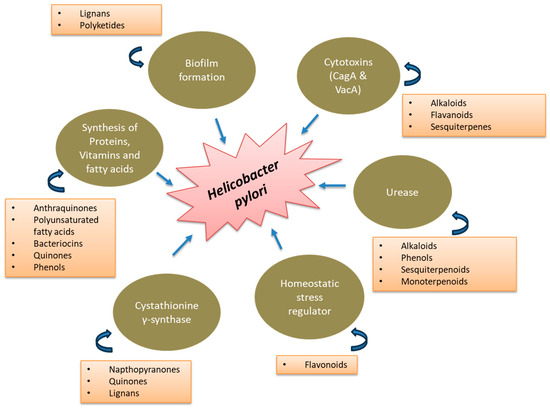
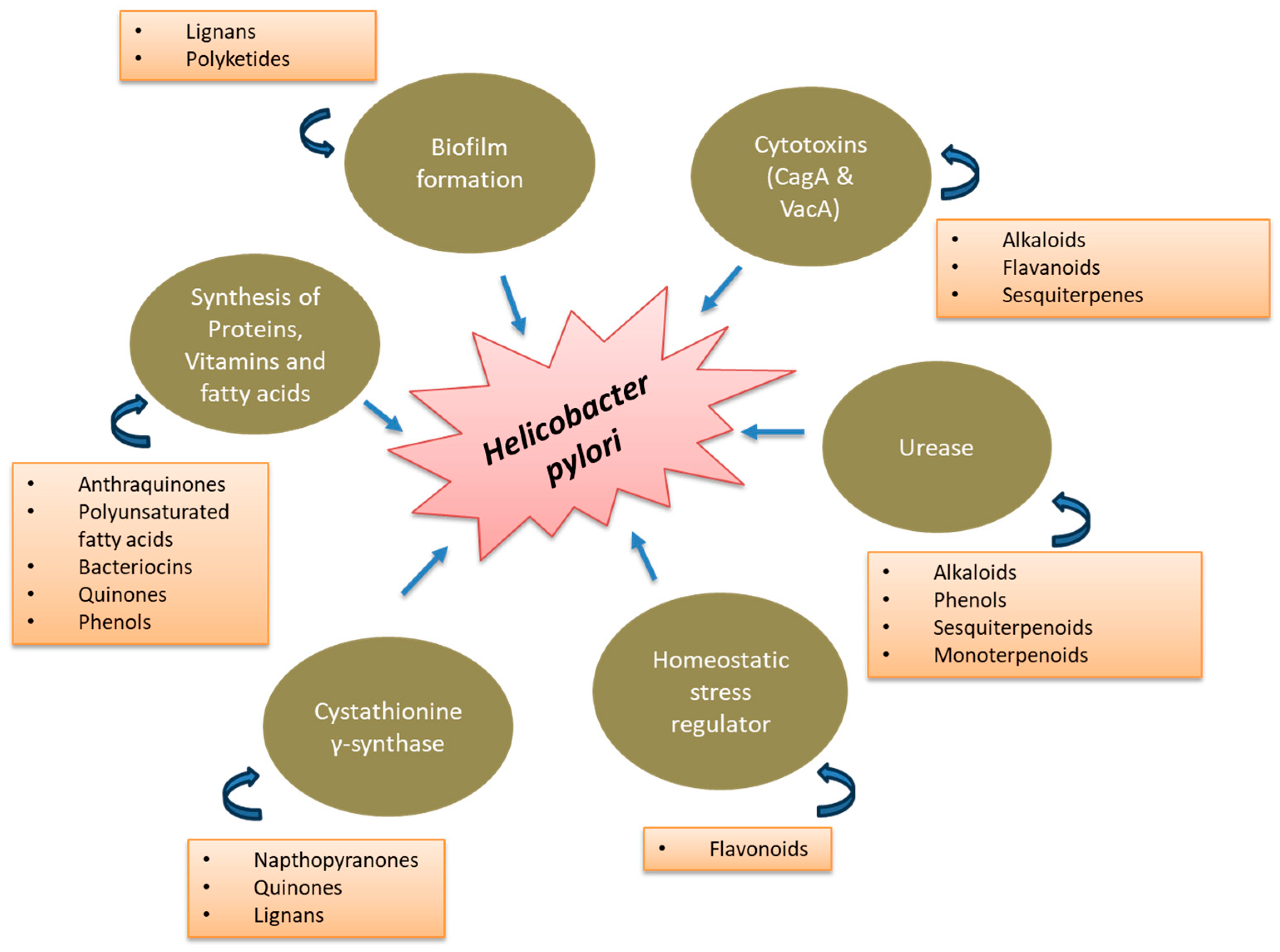
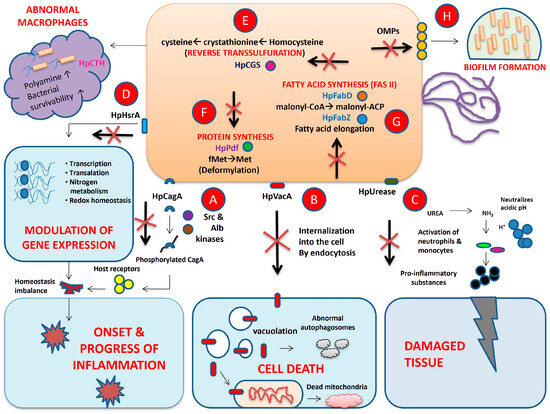
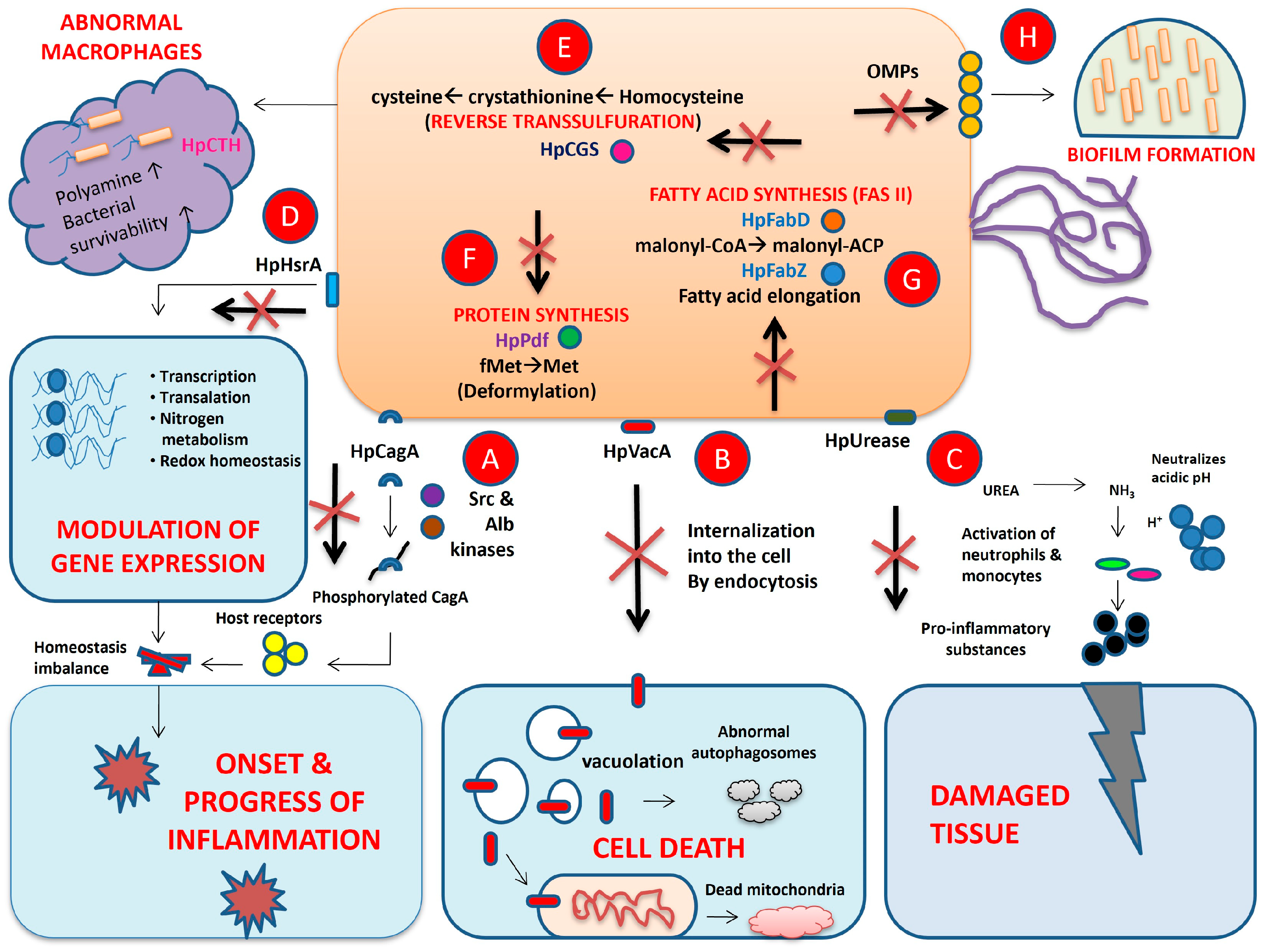
The details of these metabolites, including the isolation source, mechanism of action and bibliographic links, are presented in Table 1. A graphical summary of H. pylori inhibition by different classes of compounds (Figure 2) and a pictorial representation of the action mechanisms demonstrated by these metabolites have been provided to better the understanding of readers (Figure 3). Further, representative structures with the exact mechanism of action discussed above are reported in Figure S1.
Table 1.
Details of plant and microbial metabolites discovered to exhibit potential anti-H. pylori activity with a specific mechanism of action.
Figure 2.
A graphical summary of the different mechanisms of action of H. pylori inhibition of different classes of plant and microbial natural compounds.
Figure 3.
Schematic representation of inhibition mechanisms reported for plant and microbial natural compounds against H. pylori (Hp). A. Inhibition of HpCagA (cytotoxin-associated gene A), B. HpVacA (vacuolating cytotoxin A), C. Urease, D. HpHsrA (homeostatic stress regulator A), E. HpCGS (cystathionine γ-synthase), F. HpPdf (peptide deformylase), G. HpFabD (malonyl-CoA:acyl carrier protein transacylase) and HpFabZ (β-hydroxyacyl-ACP dehydratase) and H. biofilm formation.
5.2. Inhibitors of H. pylori with No Specific Mechanism of Action
Thus far, the natural metabolites with reported particular mechanisms of action which interfere in the cellular processes of or inhibit the virulence factors of H. pylori have been reviewed. A major part of natural compounds displayed in vitro growth inhibition of H. pylori; nevertheless, it has not been investigated for an exact mechanism of action and is reviewed in this section (Table 2). Naphthoquinones isolated from root extract of Reynoutria japonica, such as 2-ethoxy-6-acetyl-7-methyljuglone, 2-methoxy-6-acetyl-7-methyljuglone, 2-methoxy-7-acetonyljuglone and 3-acetyl-7-methoxy-2-methyljuglone, demonstrated significant in vitro growth inhibition against H. pylori [56]. A couple of phenol glycosides, 4,6-dihydroxy-2-methoxyphenyl-1-O-β-D-glucopyranoside and 4-hydroxy-2,6-dimethoxyphenyl-1-O-α-L-rhamnopyranosyl (1-6)-β-D-glucopyranoside, isolated from the organic extract of Hypericum erectum displayed considerable anti-H. pylori activity [57]. A few sesquiterpenoids, namely, (Z)-lanceol, (Z)-α-santalol and (Z)-β-santalol, isolated from the heartwood of Santalum album were able to inhibit H. pylori growth in vitro with a promising IC50 [58]. Fraxetin, syringic acid, (1S,2R)-1,2-bis(4-hydroxy-3-methoxyphenyl)-1,3-propanediol and (2R,3S)-2-ethoxychroman-3,5,7-triol-7-O-β-D-apiofuranoside from the root bark of Ulmus davidiana var. japonica demonstrated significant anti-H. pylori activity in vitro [59]. Additionally, heterophylliin G, nobotanin B, procyanidin B-5, strictinin [60], allicin, allyl-methyl thiosulfinate [61], berberine, dehydrocorydaline [62], cinnamaldehyde [63], eldaricoxide A, manoyl oxide acid [64], ethyl galbanate, sanandajin [65], eugenol [66], myricetin-3-O-β-D-glucuronide, quercetin-3-O-β-D-galactopyranoside-6″-gallate, tiliroside [67] and olean-12-en-3-one [68], which showed in vitro/in vivo H. pylori activity, have been isolated from diverse plants or plant parts.
Though few in number, bacterial metabolites have also been explored as latent anti- H. pylori agents. Strong inhibition of H. pylori growth was reported for CJ-13,136, an alkaloid isolated from the bacterium Pseudonocardia sp. [69]. Similarly, bacteriocins lacticin A164 and BH5 isolated from Lactococcus lactis demonstrated promising anti-H. pylori activity and can be explored as probable antibacterials [70].
Fungal metabolites, including two polyketides, namely, (2E)-1-[(5-hydroxy-7-methoxy-2-methyl-4-oxo-4H-1-benzopyran-3-yl)methyl]3-methyl-2-pentenedioate and (2S,3S)-5-hydroxy-3-hydroxymethyl-7-methoxy-2-methyl-4-chromanone, isolated from Trichoderma sp. showed potent growth inhibition at an IC50 range of 2–8 µg/mL [71]. Two sterols, 3β,5α,6β-trihydroxyergosta-7,22-diene and ergosterol, and two benzophenones, monomethylsulochrin and rhizoctonic acid, isolated from an endophytic fungus Rhizoctonia sp. were reported to have anti-H. pylori activities [72]. Ergosterol and monomethylsulochrin were also isolated from Aspergillus sp., reportedly an endophytic fungus from Cynodon dactylon. Additionally, 3β-hydroxy-5α,8α-epidioxy-ergosta-6,22-diene and helvolic acid demonstrating considerable inhibition of H. pylori were isolated from the same endophytic isolate [73]. A few Bis-naphtho[2,3-b]pyrones, including aurasperone A, B and F, and asperpyrone A with growth-inhibiting activity against H. pylori were reported from the filamentous fungus Aspergillus sp. [74]. Demethylincisterol A3, an ergosterol derivative showing moderate growth inhibition of the pathogen, was isolated from fruiting bodies of the mushroom Daedaleopsis confragosa [75]. Two fatty acids, (9E)-11-oxo-9-octadecenoic acid and (9E)-methyl ester 9-octadecenoic acid, with reasonable anti-H. pylori potential were isolated from the fruiting bodies of Amanita hemibapha subsp. javanica [76].
Table 2.
Details of plant and microbial metabolites discovered to have potential anti-H. pylori activity without any specific mechanism of action.
6. Cytotoxicity as a Challenge in Anti-H. pylori Drug Development
The cytotoxicity of a chemical compound, whether natural or synthetic, is considered to be a dose-dependent outcome and is a key deliberation in the safety assessment of any compound and a major hurdle in therapeutics development. Many natural compounds, whether derived from a plant, bacteria or fungi, can be cytotoxic, depending on their chemical structure, the context of use and the administered doses. In this regard, the goal of anti-H. pylori drug development must focus on managing the dosage to minimize harm to healthy cells and tissues. Herein, we attempt to review the known cytotoxicity or pharmacokinetics of some of the potent anti-H. pylori compounds. While no specific data are available on the in vivo pharmacokinetics, most studies have focused on isolation, structure elucidation and in vitro antibacterial activity. However, few compounds have been reported to have negligible toxicity to the normal cells in in vivo models. For example, armeniaspirol A, a potent anti-H. pylori metabolite isolated from culture filtrates of Streptomyces armeniacus, was found to have negligible toxicity at effective therapeutic doses. Further, when administered at 10 times the effective dosage for five consecutive days, no serious adverse effects were detected. Similarly, Siamycin I also reportedly exhibits negligible toxicity to mammalian cells. Bis-naphtho[2,3-b]pyrones, which appear to be potent antibacterials, among others, have been reported to have negligible or no toxicity against normal mammalian cells at biologically active concentrations [77,78,79]. There are no reports on the cytotoxicity of naphthoquinones reviewed in this study; however, juglone is reported to exhibit toxicity to normal fibroblast cells in particular. Its toxicity can be detrimental to other organisms as it is used as a herbicide and fish toxin [80].
7. Recent Approaches to Improve the Bioavailability and Efficacy of Natural Anti-H. pylori Agents
The unprecedented surge in the global prevalence of H. pylori infection has become a serious concern and is associated with rising numbers of cases of antimicrobial resistance worldwide. Further, the ability of the bacterium to form biofilms can be significantly correlated to the crisis relating to the rise of drug resistance rates. Secondly, the protective function of the mucus layer covering the gastrointestinal epithelium prevents anti-H. pylori drugs reaching the target sites, resulting in low drug bioavailability, provided that adequate drug bioavailability must be reached to mitigate the infection. To overcome these setbacks, new-generation antibiotics such as nanoparticle-based antimicrobials, including silver nanoparticles [AgNPs], gold nanoparticles [AuNPs] and zinc oxide nanoparticles [ZnONPs], are being realized as novel strategies to control H. pylori infection [81]. In addition, nanotechnology-driven drug delivery systems are being rapidly developed, ensuring features such as mucus penetration, precisive targeting and stimuli-responsive measured drug release [82]. This approach is reported to enhance the bioavailability and efficiencies of orally administered anti-H. pylori drugs; moreover, it diminishes the side effects of the original drugs and provides better benefits to patients. Other approaches, such as enclosing the candidate drug inside a defensive nanoshell (encapsulation), protect and enhance its solubility and stability and reduce side effects. Nanoparticles, nanoemulsions and various polymer-based systems are some of the key methods used for nanoencapsulation approaches. Similarly, hybrid drug delivery strategies which combine different systems (materials) to create a new system with synergistic properties from both systems accomplish better control over drug release and improved stability and targeting accuracy. Examples include lipid–polymer nanoparticles and combinations of different manufacturing processes such as compression and 3D printing.
8. Discussion and Conclusions
The entrepreneurs associated with the commercialization of natural products at present are showing huge interest in natural product-based medicines. A broad range of bioactive products have been derived from natural sources including plants and microorganisms. Be it the recent anti-malarial drug ‘artemisin’ developed from the plant Artemisia annua, the antibiotic ‘streptomycin’ produced from Streptomyces griseus or the much-needed anticancer drug ‘taxol’ produced from the endophytic fungus Fusarium solani, in every way natural products continue to offer the pharmaceutical industry enormous opportunities to develop new and potent drugs against new and emerging diseases. Bioassay-guided fractionation and purification have demonstrated successful isolation and identification of active natural compounds from a mixture of compounds prepared from plant extracts or microbial culture filtrates. Alternatively, bioinformatics approaches such as subtractive proteomics, virtual screening and molecular docking coupled with dynamic simulation studies are contributing to identifying potential drugs or inhibitors, thereby reducing both the time and cost associated with traditional pharmaceuticals development.
The natural compounds reviewed herein display massive inhibitory potential against H. pylori. Overall, quinones and quinone derivatives (including anthraquinones and naphthoquinones) and polyketides (including bis-naphtho[2,3-b]pyrones) appear to be the most promising antimicrobials. The biological activity of quinones can be attributed to the chemical structure and the position of substituents. In most cases, quinones act as intercalating agents in the DNA double helix, which is responsible for their antibacterial activity [83]. Moreover, the polarity of substituents is a central factor in determining the antibacterial activity, as in case of anthraquinones and napthoquinones; the greater the polarity, the activity increases [84]. Antibacterial activity in polyketides is also linked to their specific chemical structures. Most polyketides act as inhibitors of protein and nucleic acid synthesis and cell membrane disruption, while some may act as DNA akylation agents, thereby inhibiting the bacterial growth [85]. Bis-naphtho[2,3-b]pyrones, a type of aromatic polyketide, have demonstrated potent anti-H. pylori activity. They have a free hydroxyl group at the C-8 position which is believed to be crucial for their activity [86]. Bacteriocins (isolated from culture filtrates of Lactococcus lactis) were among others with significant potential as H. pylori inhibitors. Bacteriocins are amphipathic, with discrete hydrophobic and hydrophilic faces that enable their contacts with bacterial membrane-bound protein targets and can disrupt the membrane structure and functions [87]. Similarly, CJ-13,136, a quinoline alkaloid derived from the culture filtrate of Pseudonocardia sp., was reported to have strong inhibition against the bacterium. The exact structure–activity relationship is not known, though it can be hypothesized that the alkaloid skeleton might play a role.
Thus far, the literature cited in this review has exploited virulence factors such as CagA, VacA and urease as major targets for antibacterial discovery. However, the discovery of natural compounds targeting disruption of the cell wall and cell membrane, explicitly the enzymes and proteins involved in peptidoglycan synthesis (as in the case of beta lactams and vancomycin), is highly lacking and can be considered an important drawback in anti-H. pylori drug development. Further, peptidoglycan is a very essential bacterial component, absent in mammalian cells, which offers a way to be able to selectively kill the bacterium without causing much harm to the human cells. Further, the experimentation used for assessing the antibacterial activity was mostly in vitro, which is confined to artificial and controlled environments only. Though a few studies went further, to in vivo models, the toxicity parameters remain unexplored. Therefore, a detailed investigation of animal models and clinical trials is warranted to prove the efficacy and safety profiles of these metabolites. Thus, the dearth of in vivo evidence involving a whole living organism is a significant obstacle on their path to becoming a lead candidate.
Unarguably, medicinal plants are the largest contributors of anti-H. pylori metabolites, and the majority of the reported metabolites are of plant origin. The microbial metabolites have been gaining particular interest as a reservoir of structurally and functionally diverse antimicrobial metabolites. Microbial metabolites, which are being used as antibiotic drugs, include cephalosporins (from the fungus Acremonium chrysogenum), tetracyclines (from the bacterium Streptomyces aureofaciens), erythromycins (from the bacterium Saccharopolyspora erythraea) and neomycin (from the bacterium Streptomyces fradiae). The use of microbes facilitates economic, large-scale production of the metabolite of interest. Further, microbial production can be more eco-friendly than synthetic procedures and can use renewable feedstocks as nutrient substrates, thereby reducing/utilizing wastes. Moreover, modulation of biosynthetic pathways of interest through precision fermentation using recombinant DNA technology can improve the yield of a desired product. Further, routine screening of microbial metabolites will introduce novel metabolites with potent activity against H. pylori. Despite such tremendous advantages, microbial resources have been underestimated while discovering natural inhibitors of H. pylori.
Despite continued demand for natural product-based therapeutics, certain limitations are major obstacles in their translation to marketed drugs. Insignificant pharmacokinetics (absorption, distribution, metabolism, elimination) and toxicity profiles associated with the isolated natural compounds are a major cause of failure in the preclinical and clinical stages, and can be considered a major limitation in natural product-based drug discovery. Another limitation is that there are certain H. pylori targets that cannot be influenced by natural compounds, such as efflux pumps, which bacteria use to expel toxic compounds, including antibiotics. This general mechanism of resistance can be a major obstacle, and cannot be undone unless treated with an efflux pump inhibitor along with natural antimicrobials. In conclusion, we insist that research must be focused on bioassay-guided fractionation and purification strategies to isolate novel anti-H. pylori metabolites from unique resources including unexplored plant species and microbial niches. Further, planning must also be brought into in vivo experiments and preclinical and clinical trials. Moreover, research must be directed to investigate the synergistic effects of two or more potent natural compounds and must even combine a natural inhibitor with previously used synthetic drugs (for example, amoxicillin, clarithromycin or metronidazole) with the aim of achieving effective management and successful eradication of H. pylori infection. Above all, we hope that, in the coming days, more natural products will be explored for their ability to inhibit H. pylori and adequate efforts made to develop new and effective antibiotics to overcome the drug resistance in H. pylori.
Supplementary Materials
The following supporting information can be downloaded at https://www.mdpi.com/article/10.3390/biotech14040094/s1, Figure S1. Chemical structures of alkaloids, flavonoids, terpenes, terpenoids, phenols, naphtopyranones, quinones, lignans, anthraquinones and isocumarins with potential anti-H. pylori activity with specific mechanisms of action.
Author Contributions
Conceptualization, methodology, writing and editing, S.P., M.M. and A.K.R.; investigation, writing—original draft, P.S., S.S. and A.C. All authors have read and agreed to the published version of the manuscript.
Funding
This work received no external funding.
Institutional Review Board Statement
Not applicable.
Informed Consent Statement
Not applicable.
Data Availability Statement
The original contributions presented in this study are included in the article/Supplementary Material. Further inquiries can be directed to the corresponding authors.
Conflicts of Interest
The authors declare no conflicts of interest.
References
- Atanasov, A.G.; Waltenberger, B.; Pferschy-Wenzig, E.-M.; Linder, T.; Wawrosch, C.; Uhrin, P.; Temml, V.; Wang, L.; Schwaiger, S.; Heiss, E.H.; et al. Discovery and resupply of pharmacologically active plant-derived natural products: A review. Biotechnol. Adv. 2015, 33, 1582–1614. [Google Scholar] [CrossRef] [Scilit]
- Zhang, S.; Desrosiers, J.; Aponte-Pieras, J.R.; DaSilva, K.; Fast, L.D.; Terry, F.; Martin, W.D.; De Groot, A.S.; Moise, L.; Moss, S.F. Human Immune Responses to H. pylori HLA Class II Epitopes Identified by Immunoinformatic Methods. PLoS ONE 2014, 9, e94974. [Google Scholar] [CrossRef] [Scilit] [PubMed]
- De Martel, C.; Georges, D.; Bray, F.; Ferlay, J.; Clifford, G.M. Global burden of cancer attributable to infections in 2018: A worldwide incidence analysis. Lancet Glob. Health 2020, 8, e180–e190. [Google Scholar] [CrossRef] [Scilit] [PubMed]
- Boyanova, L.; Hadzhiyski, P.; Gergova, R.; Markovska, R. Evolution of Helicobacter pylori Resistance to Antibiotics: A Topic of Increasing Concern. Antibiotics 2023, 12, 332. [Google Scholar] [CrossRef] [Scilit]
- Papastergiou, V. Treatment of Helicobacter pylori infection: Meeting the challenge of antimicrobial resistance. World J. Gastroenterol. 2014, 20, 9898. [Google Scholar] [CrossRef] [Scilit]
- Silva, P.; Bonifácio, B.; Ramos, M.; Negri, K.; Maria Bauab, T.; Chorilli, M. Nanotechnology-based drug delivery systems and herbal medicines: A review. Int. J. Nanomed. 2014, 9, 1–15. [Google Scholar] [CrossRef] [Scilit] [PubMed]
- Marshall, B. A Brief History of the Discovery of Helicobacter pylori. In Helicobacter pylori; Suzuki, H., Warren, R., Marshall, B., Eds.; Springer: Tokyo, Japan, 2016; pp. 3–15. [Google Scholar] [CrossRef] [Scilit]
- Kusters, J.G.; Van Vliet, A.H.M.; Kuipers, E.J. Pathogenesis of Helicobacter pylori Infection. Clin. Microbiol. Rev. 2006, 19, 449–490. [Google Scholar] [CrossRef] [Scilit]
- Narayanan, M.; Reddy, K.M.; Marsicano, E. Peptic Ulcer Disease and Helicobacter pylori infection. Mo. Med. 2018, 115, 219–224. [Google Scholar] [PubMed]
- Bashir, S.K.; Khan, M.B. Overview of Helicobacter pylori Infection, Prevalence, Risk Factors, and Its Prevention. Adv. Gut Microbiome Res. 2023, 2023, 9747027. [Google Scholar] [CrossRef] [Scilit]
- Wang, F.; Meng, W.; Wang, B.; Qiao, L. Helicobacter pylori-induced gastric inflammation and gastric cancer. Cancer Lett. 2014, 345, 196–202. [Google Scholar] [CrossRef] [Scilit]
- Hu, Q.; Zhang, Y.; Zhang, X.; Fu, K. Gastric mucosa-associated lymphoid tissue lymphoma and Helicobacter pylori infection: A review of current diagnosis and management. Biomark. Res. 2016, 4, 15. [Google Scholar] [CrossRef] [Scilit]
- Ando, T.; Kusugami, K.; Ohsuga, M.; Ina, K.; Shinoda, M.; Konagaya, T.; Sakai, T.; Imada, A.; Kasuga, N.; Nada, T.; et al. Differential Normalization of Mucosal Interleukin-8 and Interleukin-6 Activity after Helicobacter pylori Eradication. Infect. Immun. 1998, 66, 4742–4747. [Google Scholar] [CrossRef] [Scilit] [PubMed]
- Bauditz, J.; Ortner, M.; Bierbaum, M.; Niedobitek, G.; Lochs, H.; Schreiber, S. Production of IL-12 in gastritis relates to infection with Helicobacter pylori. Clin. Exp. Immunol. 2001, 117, 316–323. [Google Scholar] [CrossRef] [Scilit] [PubMed]
- Yun, C.H.; Lundgren, A.; Azem, J.; Sjöling, Å.; Holmgren, J.; Svennerholm, A.-M.; Lundin, B.S. Natural Killer Cells and Helicobacter pylori Infection: Bacterial Antigens and Interleukin-12 Act Synergistically to Induce Gamma Interferon Production. Infect. Immun. 2005, 73, 1482–1490. [Google Scholar] [CrossRef] [Scilit] [PubMed]
- Yamaoka, Y. Revolution of Helicobacter pylori treatment. J. Gastroenterol. Hepatol. 2024, 39, 1016–1026. [Google Scholar] [CrossRef] [Scilit]
- Li, B.-Z.; Threapleton, D.E.; Wang, J.-Y.; Xu, J.-M.; Yuan, J.-Q.; Zhang, C.; Li, P.; Ye, Q.-L.; Guo, B.; Mao, C.; et al. Comparative effectiveness and tolerance of treatments for Helicobacter pylori: Systematic review and network meta-analysis. BMJ 2015, 351, h4052. [Google Scholar] [CrossRef] [Scilit]
- Malfertheiner, P.; Megraud, F.; O’Morain, C.A.; Gisbert, J.P.; Kuipers, E.J.; Axon, A.T.; Bazzoli, F.; Gasbarrini, A.; Atherton, J.; Graham, D.Y.; et al. Management of Helicobacter pylori infection—The Maastricht V/Florence Consensus Report. Gut 2017, 66, 6–30. [Google Scholar] [CrossRef] [Scilit]
- Karimi, A.; Majlesi, M.; Rafieian-Kopaei, M. Herbal versus synthetic drugs; beliefs and facts. J. Nephropharmacol. 2015, 4, 27–30. [Google Scholar]
- Lahlou, M. Screening of natural products for drug discovery. Expert Opin. Drug Discov. 2007, 2, 697–705. [Google Scholar] [CrossRef] [Scilit]
- Hassen, G.W.; Ghobadi, F.; Kalantari, H. Synthetic drugs: A new trend and the hidden danger. Am. J. Emerg. Med. 2013, 31, 1413–1415. [Google Scholar] [CrossRef] [Scilit]
- Tamama, K. Synthetic drugs of abuse. In Advances in Clinical Chemistry; Elsevier: Amsterdam, The Netherlands, 2021; Volume 103, pp. 191–214. [Google Scholar] [CrossRef] [Scilit]
- Baj, J.; Forma, A.; Sitarz, M.; Portincasa, P.; Garruti, G.; Krasowska, D.; Maciejewski, R. Helicobacter pylori Virulence Factors—Mechanisms of Bacterial Pathogenicity in the Gastric Microenvironment. Cells 2020, 10, 27. [Google Scholar] [CrossRef] [Scilit]
- Murata-Kamiya, N.; Kikuchi, K.; Hayashi, T.; Higashi, H.; Hatakeyama, M. Helicobacter pylori Exploits Host Membrane Phosphatidylserine for Delivery, Localization, and Pathophysiological Action of the CagA Oncoprotein. Cell Host Microbe 2010, 7, 399–411. [Google Scholar] [CrossRef] [Scilit]
- Abdullah, M.; Greenfield, L.K.; Bronte-Tinkew, D.; Capurro, M.I.; Rizzuti, D.; Jones, N.L. VacA promotes CagA accumulation in gastric epithelial cells during Helicobacter pylori infection. Sci. Rep. 2019, 9, 38. [Google Scholar] [CrossRef] [Scilit]
- Yang, J.Y.; Kim, J.-B.; Lee, P.; Kim, S.-H. Evodiamine Inhibits Helicobacter pylori Growth and Helicobacter pylori-Induced Inflammation. Int. J. Mol. Sci. 2021, 22, 3385. [Google Scholar] [CrossRef] [Scilit]
- Kim, H.W.; Woo, H.J.; Yang, J.Y.; Kim, J.-B.; Kim, S.-H. Hesperetin Inhibits Expression of Virulence Factors and Growth of Helicobacter pylori. Int. J. Mol. Sci. 2021, 22, 10035. [Google Scholar] [CrossRef] [Scilit]
- Woo, H.J.; Yang, J.Y.; Lee, M.H.; Kim, H.W.; Kwon, H.J.; Park, M.; Kim, S.; Park, S.-Y.; Kim, S.-H.; Kim, J.-B. Inhibitory Effects of β-Caryophyllene on Helicobacter pylori Infection In Vitro and In Vivo. Int. J. Mol. Sci. 2020, 21, 1008. [Google Scholar] [CrossRef] [Scilit] [PubMed]
- Sisto, F.; Carradori, S.; Guglielmi, P.; Spano, M.; Secci, D.; Granese, A.; Sobolev, A.P.; Grande, R.; Campestre, C.; Di Marcantonio, M.C.; et al. Synthesis and Evaluation of Thymol-Based Synthetic Derivatives as Dual-Action Inhibitors against Different Strains of H. pylori and AGS Cell Line. Molecules 2021, 26, 1829. [Google Scholar] [CrossRef] [Scilit] [PubMed]
- Tabassum, H.; Ahmad, I.Z. Molecular Docking and Dynamics Simulation Analysis of Thymoquinone and Thymol Compounds from Nigella sativa L. that Inhibit Cag A and Vac A Oncoprotein of Helicobacter pylori: Probable Treatment of H. pylori Infections. Med. Chem. 2020, 17, 146–157. [Google Scholar] [CrossRef] [Scilit] [PubMed]
- Tarsia, C.; Danielli, A.; Florini, F.; Cinelli, P.; Ciurli, S.; Zambelli, B. Targeting Helicobacter pylori urease activity and maturation: In-cell high-throughput approach for drug discovery. Biochim. Biophys. Acta BBA—Gen. Subj. 2018, 1862, 2245–2253. [Google Scholar] [CrossRef] [Scilit]
- Sabry, M.M.; El-Fishawy, A.M.; El-Rashedy, A.A.; El Gedaily, R.A. Phytochemical Investigation of Cordia africana Lam. Stem Bark: Molecular Simulation Approach. Molecules 2022, 27, 4039. [Google Scholar] [CrossRef] [Scilit]
- Lu, Q.; Zhang, Z.; Xu, Y.; Chen, Y.; Li, C. Sanguinarine, a major alkaloid from Zanthoxylum nitidum (Roxb.) DC., inhibits urease of Helicobacter pylori and jack bean: Susceptibility and mechanism. J. Ethnopharmacol. 2022, 295, 115388. [Google Scholar] [CrossRef] [Scilit] [PubMed]
- Al Tawalbeh, D.; Aburjai, T.; Al Balas, Q.; Al Samydai, A. In Silico and In Vitro Investigation of Anti Helicobacter Activity of Selected Phytochemicals. J. Pharm. Bioallied Sci. 2022, 14, 132–139. [Google Scholar] [CrossRef] [Scilit] [PubMed]
- Woo, H.J.; Yang, J.Y.; Lee, P.; Kim, J.-B.; Kim, S.-H. Zerumbone Inhibits Helicobacter pylori Urease Activity. Molecules 2021, 26, 2663. [Google Scholar] [CrossRef] [Scilit]
- Yahya, R.; Al-Rajhi, A.M.H.; Alzaid, S.Z.; Al Abboud, M.A.; Almuhayawi, M.S.; Al Jaouni, S.K.; Selim, S.; Ismail, K.S.; Abdelghany, T.M. Molecular Docking and Efficacy of Aloe vera Gel Based on Chitosan Nanoparticles against Helicobacter pylori and Its Antioxidant and Anti-Inflammatory Activities. Polymers 2022, 14, 2994. [Google Scholar] [CrossRef] [Scilit]
- Kataria, R.; Khatkar, A. In-silico Designing, ADMET Analysis, Synthesis and Biological Evaluation of Novel Derivatives of Diosmin Against Urease Protein and Helicobacter pylori Bacterium. Curr. Top. Med. Chem. 2019, 19, 2658–2675. [Google Scholar] [CrossRef] [Scilit]
- Casado, J.; Lanas, Á.; González, A. Two-component regulatory systems in Helicobacter pylori and Campylobacter jejuni: Attractive targets for novel antibacterial drugs. Front. Cell. Infect. Microbiol. 2022, 12, 977944. [Google Scholar] [CrossRef] [Scilit]
- González, A.; Salillas, S.; Velázquez-Campoy, A.; Espinosa Angarica, V.; Fillat, M.F.; Sancho, J.; Lanas, Á. Identifying potential novel drugs against Helicobacter pylori by targeting the essential response regulator HsrA. Sci. Rep. 2019, 9, 11294. [Google Scholar] [CrossRef] [Scilit] [PubMed]
- Wang, Y.-C. Medicinal plant activity on Helicobacter pylori related diseases. World J. Gastroenterol. 2014, 20, 10368. [Google Scholar] [CrossRef] [Scilit]
- Skiba, M.A.; Szendzielorz, K.; Mazur, B.; Król, W. The inhibitory effect of flavonoids on interleukin-8 release by human gastric adenocarcinoma (AGS) cells infected with cag PAI (+) Helicobacter pylori. Cent. Eur. J. Immunol. 2016, 3, 229–235. [Google Scholar] [CrossRef] [Scilit]
- Kong, Y.; Wu, D.; Bai, H.; Han, C.; Chen, J.; Chen, L.; Hu, L.; Jiang, H.; Shen, X. Enzymatic Characterization and Inhibitor Discovery of a New Cystathionine -Synthase from Helicobacter pylori. J. Biochem. 2007, 143, 59–68. [Google Scholar] [CrossRef] [Scilit]
- Benites, J.; Toledo, H.; Salas, F.; Guerrero, A.; Rios, D.; Valderrama, J.A.; Calderon, P.B. In Vitro Inhibition of Helicobacter pylori Growth by Redox Cycling Phenylaminojuglones. Oxidative Med. Cell. Longev. 2018, 2018, 1618051. [Google Scholar] [CrossRef] [Scilit]
- Liu, W.; Du, L.; Zhang, L.; Chen, J.; Shen, X.; Jiang, H. Helicobacter pylori acyl carrier protein: Expression, purification, and its interaction with β-hydroxyacyl-ACP dehydratase. Protein Expr. Purif. 2007, 52, 74–81. [Google Scholar] [CrossRef] [Scilit] [PubMed]
- Chen, J.; Zhang, L.; Zhang, Y.; Zhang, H.; Du, J.; Ding, J.; Guo, Y.; Jiang, H.; Shen, X. Emodin targets the β-hydroxyacyl-acyl carrier protein dehydratase from Helicobacter pylori: Enzymatic inhibition assay with crystal structural and thermodynamic characterization. BMC Microbiol. 2009, 9, 91. [Google Scholar] [CrossRef] [Scilit] [PubMed]
- Cai, J.; Han, C.; Hu, T.; Zhang, J.; Wu, D.; Wang, F.; Liu, Y.; Ding, J.; Chen, K.; Yue, J.; et al. Peptide deformylase is a potential target for anti- Helicobacter pylori drugs: Reverse docking, enzymatic assay, and X-ray crystallography validation. Protein Sci. 2006, 15, 2071–2081. [Google Scholar] [CrossRef] [Scilit] [PubMed]
- Cui, K.; Lu, W.; Zhu, L.; Shen, X.; Huang, J. Caffeic acid phenethyl ester (CAPE), an active component of propolis, inhibits Helicobacter pylori peptide deformylase activity. Biochem. Biophys. Res. Commun. 2013, 435, 289–294. [Google Scholar] [CrossRef] [Scilit] [PubMed]
- Damasceno, J.; Rodrigues, R.; Gonçalves, R.; Kitagawa, R. Anti-Helicobacter pylori Activity of Isocoumarin Paepalantine: Morphological and Molecular Docking Analysis. Molecules 2017, 22, 786. [Google Scholar] [CrossRef] [Scilit]
- Zhi, X.-Y.; Yao, J.-C.; Tang, S.-K.; Huang, Y.; Li, H.-W.; Li, W.-J. The Futalosine Pathway Played an Important Role in Menaquinone Biosynthesis during Early Prokaryote Evolution. Genome Biol. Evol. 2014, 6, 149–160. [Google Scholar] [CrossRef] [Scilit]
- Yamamoto, T.; Matsui, H.; Yamaji, K.; Takahashi, T.; Øverby, A.; Nakamura, M.; Matsumoto, A.; Nonaka, K.; Sunazuka, T.; Ōmura, S.; et al. Narrow-spectrum inhibitors targeting an alternative menaquinone biosynthetic pathway of Helicobacter pylori. J. Infect. Chemother. 2016, 22, 587–592. [Google Scholar] [CrossRef] [Scilit]
- Karrar, E.; Albakry, Z.; Mohamed Ahmed, I.A.; Zhang, L.; Chen, C.; Wu, D.; Li, J. Docosahexaenoic acid and eicosapentaenoic acid from microalgae: Extraction, purification, separation, and analytical methods. Algal Res. 2024, 77, 103365. [Google Scholar] [CrossRef] [Scilit]
- Yonezawa, H.; Osaki, T.; Kamiya, S. Biofilm Formation by Helicobacter pylori and Its Involvement for Antibiotic Resistance. BioMed Res. Int. 2015, 2015, 914791. [Google Scholar] [CrossRef] [Scilit]
- Gupta, N.; Kumar, A.; Verma, V.K. Strategies Adopted by Gastric Pathogen Helicobacter pylori for a Mature Biofilm Formation: Antimicrobial Peptides as a Visionary Treatment. Microbiol. Res. 2023, 273, 127417. [Google Scholar] [CrossRef] [Scilit]
- Li, R.-J.; Qin, C.; Huang, G.-R.; Liao, L.-J.; Mo, X.-Q.; Huang, Y.-Q. Phillygenin Inhibits Helicobacter pylori by Preventing Biofilm Formation and Inducing ATP Leakage. Front. Microbiol. 2022, 13, 863624. [Google Scholar] [CrossRef] [Scilit] [PubMed]
- Jia, J.; Zhang, C.; Liu, Y.; Huang, Y.; Bai, Y.; Hang, X.; Zeng, L.; Zhu, D.; Bi, H. Armeniaspirol A: A novel anti-Helicobacter pylori agent. Microb. Biotechnol. 2022, 15, 442–454. [Google Scholar] [CrossRef] [Scilit]
- Khalil, A.A.K.; Park, W.S.; Lee, J.; Kim, H.-J.; Akter, K.-M.; Goo, Y.-M.; Bae, J.-Y.; Chun, M.-S.; Kim, J.-H.; Ahn, M.-J. A new anti-Helicobacter pylori juglone from Reynoutria japonica. Arch. Pharmacal Res. 2019, 42, 505–511. [Google Scholar] [CrossRef] [Scilit] [PubMed]
- Moon, H.; Lee, Y.; Lee, J. Phenol Glycosides with In Vitro anti-Helicobacter pylori Activity from Hypericum erectum Thunb. Phytother. Res. 2011, 25, 1389–1391. [Google Scholar] [CrossRef] [Scilit] [PubMed]
- Ochi, T.; Shibata, H.; Higuti, T.; Kodama, K.; Kusumi, T.; Takaishi, Y. Anti-Helicobacter pylori Compounds from Santalum album. J. Nat. Prod. 2005, 68, 819–824. [Google Scholar] [CrossRef] [Scilit]
- So, H.M.; Yu, J.S.; Khan, Z.; Subedi, L.; Ko, Y.-J.; Lee, I.K.; Park, W.S.; Chung, S.J.; Ahn, M.-J.; Kim, S.Y.; et al. Chemical constituents of the root bark of Ulmus davidiana var. Japonica and their potential biological activities. Bioorganic Chem. 2019, 91, 103145. [Google Scholar] [CrossRef] [Scilit]
- Funatogawa, K.; Hayashi, S.; Shimomura, H.; Yoshida, T.; Hatano, T.; Ito, H.; Hirai, Y. Antibacterial Activity of Hydrolyzable Tannins Derived from Medicinal Plants against Helicobacter pylori. Microbiol. Immunol. 2004, 48, 251–261. [Google Scholar] [CrossRef] [Scilit] [PubMed]
- Cañizares, P.; Gracia, I.; Gómez, L.A.; García, A.; De Argila, C.M.; Boixeda, D.; De Rafael, L. Thermal Degradation of Allicin in Garlic Extracts and Its Implication on the Inhibition of the in-Vitro Growth of Helicobacter pylori. Biotechnol. Prog. 2008, 20, 32–37. [Google Scholar] [CrossRef] [Scilit]
- Wu, H.; Sun, Q.; Dong, H.; Qiao, J.; Lin, Y.; Yu, C.; Li, Y. Gastroprotective action of the extract of Corydalis yanhusuo in Helicobacter pylori infection and its bioactive component, dehydrocorydaline. J. Ethnopharmacol. 2023, 307, 116173. [Google Scholar] [CrossRef] [Scilit]
- Li, C.; Liao, L.; Yang, S.; Wang, L.; Chen, H.; Luo, P.; Huang, G.; Huang, Y.-Q. Cinnamaldehyde: An effective component of Cinnamomum cassia inhibiting Helicobacter pylori. J. Ethnopharmacol. 2024, 330, 118222. [Google Scholar] [CrossRef] [Scilit]
- Jeong, S.Y.; Na, M.W.; Park, E.C.; Kim, J.-C.; Kang, D.-M.; Hamishehkar, H.; Ahn, M.-J.; Kim, J.K.; Kim, K.H. Labdane-type Diterpenes from Pinus eldarica Needles and Their Anti-Helicobacter pylori Activity. ACS Omega 2022, 7, 29502–29507. [Google Scholar] [CrossRef] [Scilit] [PubMed]
- Dastan, D.; Salehi, P.; Aliahmadi, A.; Gohari, A.R.; Maroofi, H.; Ardalan, A. New coumarin derivatives from Ferula pseudalliacea with antibacterial activity. Nat. Prod. Res. 2016, 30, 2747–2753. [Google Scholar] [CrossRef] [Scilit] [PubMed]
- Ali, S.M.; Khan, A.A.; Ahmed, I.; Musaddiq, M.; Ahmed, K.S.; Polasa, H.; Rao, L.V.; Habibullah, C.M.; Sechi, L.A.; Ahmed, N. Antimicrobial activities of Eugenol and Cinnamaldehyde against the human gastric pathogen Helicobacter pylori. Ann. Clin. Microbiol. Antimicrob. 2005, 4, 20. [Google Scholar] [CrossRef] [Scilit] [PubMed]
- Hřibová, P.; Khazneh, E.; Žemlička, M.; Švajdlenka, E.; Ghoneim, M.M.; Elokely, K.M.; Ross, S.A. Antiurease activity of plants growing in the Czech Republic. Nat. Prod. Res. 2014, 28, 868–873. [Google Scholar] [CrossRef] [Scilit]
- Bankeu, J.J.K.; Sattar, H.; Fongang, Y.S.F.; Muhammadi, S.W.; Simoben, C.V.; Ntie-Kang, F.; Feuya, G.R.T.; Tchuenmogne, M.A.T.; Lateef, M.; Lenta, B.N.; et al. Synthesis, Urease Inhibition and Molecular Modelling Studies of Novel Derivatives of the Naturally Occurring β-Amyrenone. Nat. Prod. Bioprospect. 2019, 9, 49–59. [Google Scholar] [CrossRef] [Scilit] [PubMed]
- Cushnie, T.P.T.; Cushnie, B.; Lamb, A.J. Alkaloids: An overview of their antibacterial, antibiotic-enhancing and antivirulence activities. Int. J. Antimicrob. Agents 2014, 44, 377–386. [Google Scholar] [CrossRef] [Scilit]
- Kim, T.-S.; Hur, J.-W.; Yu, M.-A.; Cheigh, C.-I.; Kim, K.-N.; Hwang, J.-K.; Pyun, Y.-R. Antagonism of Helicobacter pylori by Bacteriocins of Lactic Acid Bacteria. J. Food Prot. 2003, 66, 3–12. [Google Scholar] [CrossRef] [Scilit]
- Lai, C.; Chen, J.; Liu, J.; Tian, D.; Lan, D.; Liu, T.; Wu, B.; Bi, H.; Tang, J. New Polyketides from a Hydrothermal Vent Sediment Fungus Trichoderma sp. JWM29-10-1 and Their Antimicrobial Effects. Mar. Drugs 2022, 20, 720. [Google Scholar] [CrossRef] [Scilit]
- Ma, Y.M.; Li, Y.; Liu, J.Y.; Song, Y.C.; Tan, R.X. Anti-Helicobacter pylori metabolites from Rhizoctonia sp. Cy064, an endophytic fungus in Cynodon dactylon. Fitoterapia 2004, 75, 451–456. [Google Scholar] [CrossRef] [Scilit]
- Li, Y.; Song, Y.C.; Liu, J.Y.; Ma, Y.M.; Tan, R.X. Anti-Helicobacter pylori substances from endophytic fungal cultures. World J. Microbiol. Biotechnol. 2005, 21, 553–558. [Google Scholar] [CrossRef] [Scilit]
- Gou, X.; Jia, J.; Xue, Y.; Ding, W.; Dong, Z.; Tian, D.; Chen, M.; Bi, H.; Hong, K.; Tang, J. New pyrones and their analogs from the marine mangrove-derived Aspergillus sp. DM94 with antibacterial activity against Helicobacter pylori. Appl. Microbiol. Biotechnol. 2020, 104, 7971–7978. [Google Scholar] [CrossRef] [Scilit]
- Na, M.W.; Lee, E.; Kang, D.-M.; Jeong, S.Y.; Ryoo, R.; Kim, C.-Y.; Ahn, M.-J.; Kang, K.B.; Kim, K.H. Identification of Antibacterial Sterols from Korean Wild Mushroom Daedaleopsis confragosa via Bioactivity- and LC-MS/MS Profile-Guided Fractionation. Molecules 2022, 27, 1865. [Google Scholar] [CrossRef] [Scilit]
- Lee, S.; Alishir, A.; Kim, T.W.; Kang, D.-M.; Ryoo, R.; Pang, C.; Ahn, M.-J.; Kim, K.H. First Chemical Investigation of Korean Wild Mushroom, Amanita hemibapha subsp. Javanica and the Identification of Anti-Helicobacter pylori Compounds. Pharmaceuticals 2022, 15, 152. [Google Scholar] [CrossRef] [Scilit] [PubMed]
- ElNaggar, M.H.; Abdelwahab, G.M.; Kutkat, O.; GabAllah, M.; Ali, M.A.; El-Metwally, M.E.A.; Sayed, A.M.; Abdelmohsen, U.R.; Khalil, A.T. Aurasperone A Inhibits SARS-CoV-2 In Vitro: An Integrated In Vitro and In Silico Study. Mar. Drugs 2022, 20, 179. [Google Scholar] [CrossRef] [Scilit] [PubMed]
- Siriwardane, A.M.D.A.; Kumar, N.S.; Jayasinghe, L.; Fujimoto, Y. Chemical Investigation of Metabolites Produced by an Endophytic Aspergillus sp. Isolated from Limonia acidissima. Nat. Prod. Res. 2015, 29, 1384–1387. [Google Scholar] [CrossRef] [Scilit]
- Chen, X.; Wang, C.; Qiu, H.; Yuan, Y.; Chen, K.; Cao, Z.; Xiang Tan, R.; Tickner, J.; Xu, J.; Zou, J. Asperpyrone A Attenuates RANKL-induced Osteoclast Formation through Inhibiting NFATc1, Ca2+ Signalling and Oxidative Stress. J. Cell. Mol. Med. 2019, 23, 8269–8279. [Google Scholar] [CrossRef] [Scilit] [PubMed]
- Marking, L.L. Juglone (5-Hydroxy-1,4-Naphthoquinone) as a Fish Toxicant. Trans. Am. Fish. Soc. 1970, 99, 510–514. [Google Scholar] [CrossRef] [Scilit]
- Zhu, X.; Su, T.; Wang, S.; Zhou, H.; Shi, W. New Advances in Nano-Drug Delivery Systems: Helicobacter pylori and Gastric Cancer. Front. Oncol. 2022, 12, 834934. [Google Scholar] [CrossRef] [Scilit]
- Bu, F.; Song, X.; Zhao, X.; Wang, R.; Xie, Y.; Yu, L.; Yan, X. Advances in Micro/Nanodrug Delivery Systems for the Treatment of Helicobacter pylori Infection: From Diagnosis to Eradication. Appl. Mater. Today 2024, 37, 102138. [Google Scholar] [CrossRef] [Scilit]
- Molfetta, F.A.; Bruni, A.T.; Honório, K.M.; Da Silva, A.B.F. A Structure–Activity Relationship Study of Quinone Compounds with Trypanocidal Activity. Eur. J. Med. Chem. 2005, 40, 329–338. [Google Scholar] [CrossRef] [Scilit] [PubMed]
- Qun, T.; Zhou, T.; Hao, J.; Wang, C.; Zhang, K.; Xu, J.; Wang, X.; Zhou, W. Antibacterial Activities of Anthraquinones: Structure–Activity Relationships and Action Mechanisms. RSC Med. Chem. 2023, 14, 1446–1471. [Google Scholar] [CrossRef] [Scilit] [PubMed]
- Kumar, G.; Chopra, S. Diverse Chemotypes of Polyketides as Promising Antimicrobial Agents: Latest Progress. RSC Adv. 2025, 15, 32080–32107. [Google Scholar] [CrossRef] [Scilit] [PubMed]
- He, Y.; Tian, J.; Chen, X.; Sun, W.; Zhu, H.; Li, Q.; Lei, L.; Yao, G.; Xue, Y.; Wang, J.; et al. Fungal Naphtho-γ-Pyrones: Potent Antibiotics for Drug-Resistant Microbial Pathogens. Sci. Rep. 2016, 6, 24291. [Google Scholar] [CrossRef] [Scilit] [PubMed]
- Boudrioua, A.; Baëtz, B.; Desmadril, S.; Goulard, C.; Groo, A.-C.; Lombard, C.; Gueulle, S.; Marugan, M.; Malzert-Fréon, A.; Hartke, A.; et al. Lasso Peptides Sviceucin and Siamycin I Exhibit Anti-Virulence Activity and Restore Vancomycin Effectiveness in Vancomycin-Resistant Pathogens. iScience 2025, 28, 111922. [Google Scholar] [CrossRef] [Scilit]

Disclaimer/Publisher’s Note: The statements, opinions and data contained in all publications are solely those of the individual author(s) and contributor(s) and not of MDPI and/or the editor(s). MDPI and/or the editor(s) disclaim responsibility for any injury to people or property resulting from any ideas, methods, instructions or products referred to in the content. |
© 2025 by the authors. Licensee MDPI, Basel, Switzerland. This article is an open access article distributed under the terms and conditions of the Creative Commons Attribution (CC BY) license (https://creativecommons.org/licenses/by/4.0/).