Article

Impact of Alternative Fuels on IMO Indicators

by
José Miguel Mahía-Prados
*,
Ignacio Arias-Fernández
and
Manuel Romero Gómez
Energy Engineering Research Group (INGEN), Department of Nautical Sciences and Marine Engineering, Escuela Técnica Superior de Náutica y Máquinas (ETSNM), University of A Coruña (UDC), 15011 A Coruña, Spain
*
Author to whom correspondence should be addressed.
Submission received: 26 November 2025 / Revised: 2 January 2026 / Accepted: 6 January 2026 / Published: 8 January 2026

Abstract

This study provides a comprehensive analysis of the impact of different marine fuels such as heavy fuel oil (HFO), methane, methanol, ammonia, or hydrogen, on energy efficiency and pollutant emissions in maritime transport, using a combined application of the Energy Efficiency Design Index (EEDI), Energy Efficiency Operational Indicator (EEOI), and Carbon Intensity Indicator (CII). The results show that methane offers the most balanced alternative, reducing CO2 by more than 30% and improving energy efficiency, while methanol provides an intermediate performance, eliminating sulfur and partially reducing emissions. Ammonia and hydrogen eliminate CO2 but generate NOx (nitrogen oxides) emissions that require mitigation, demonstrating that their environmental impact is not negligible. Unlike previous studies that focus on a single fuel or only on CO2, this work considers multiple pollutants, including SOx (sulfur oxides), H2O, and N2, and evaluates the economic cost of emissions under the European Union Emissions Trading System (EU ETS). Using a representative model ship, the study highlights regulatory gaps and limitations within current standards, emphasizing the need for a global system for monitoring and enforcing emissions rules to ensure a truly sustainable and decarbonized maritime sector. This integrated approach, combining energy efficiency, emissions, and economic evaluation, provides novel insights for the scientific community, regulators, and maritime operators, distinguishing itself from previous multicriteria studies by simultaneously addressing operational performance, environmental impact, and regulatory gaps such as unaccounted NOx emissions.

1. Introduction

The maritime sector plays an essential role in the global economy by facilitating trade, transportation, and tourism, but it is also a significant source of polluting emissions, particularly carbon dioxide (CO2), nitrogen oxides (NOx), sulfur oxides (SOx), and particulate matter (PM) [1,2].
By the end of 2020, maritime transport and aviation were responsible for approximately 5% of global CO2 emissions, and UN projections indicate that these could increase to represent between 60% and 220% of permissible emissions by 2050, depending on the scenarios established to meet the Paris Agreement [3].
At the global level, the International Maritime Organization (IMO) updated its targets in 2023 to reduce carbon intensity by 20–30% by 2030, 70–80% by 2040, and to achieve net-zero emissions by 2050 [2,4].
To this end, it has developed various instruments to reduce carbon intensity and greenhouse gas (GHG) emissions in maritime transport: the Energy Efficiency Existing Ship Index (EEXI), the Carbon Intensity Indicator (CII), the Ship Energy Efficiency Management Plan (SEEMP), the Energy Efficiency Design Index (EEDI), and the Energy Efficiency Operational Indicator (EEOI). These instruments are intended to support compliance with the revised carbon-intensity reduction goals [5,6,7,8].
Several major world powers have established specific GHG reduction targets. China aims to achieve carbon neutrality by 2060, while the United States, Japan, and Canada project reductions of 50%, 40%, and 45%, respectively, by 2030 compared to their baseline emission levels. In the case of the European Union (EU), it is notable that ships generate 13.5% of transport-sector GHG emissions, behind land-based transport at 71% and aviation at 14.4% [9].
In Asia, in addition to having ratified MARPOL, China has established emission-control areas in coastal regions such as the Pearl River, Yangtze River, and Bohai Sea, requiring the use of low-sulfur fuels or exhaust-gas cleaning systems. Japan and South Korea have amended their marine pollution prevention laws to include GHG emissions, while Singapore has advanced the Maritime Green Initiative, which incentivizes sustainable vessels and promotes the use of alternative fuels [10].
In the Americas, the United States and Canada apply Emission Control Areas (ECAs) that limit sulfur content in fuels to 0.1% and regulate NOx and particulate emissions under the Clean Air Act. In Central and South America, most countries have also ratified MARPOL, with Panama standing out through its Green Ship Classification initiative, which offers economic incentives for cleaner vessels transiting the Panama Canal [11,12].
In Africa and Oceania, most countries have incorporated MARPOL provisions into their national legislation. In the South Pacific, the Noumea Agreement promotes sustainable navigation practices to protect fragile ecosystems such as the Great Barrier Reef. In the Arctic and Antarctic, regulations focus on safeguarding extremely vulnerable environments through the PAME Convention and the Antarctic Treaty Protocol, which set strict emission limits in both regions [13,14].
Europe, for its part, leads the most advanced and restrictive regulatory framework. Key measures include Regulation (EU) 2015/757, which requires the monitoring and verification of CO2 emissions from ships operating in European ports; Directive (EU) 2016/802, which limits sulfur content in fuels; and Directive (EU) 2018/2001, which promotes the use of renewable energy with specific objectives for maritime transport [15,16,17,18,19].
Of particular significance is the Fuel EU Maritime Regulation, a central component of the Clean Energy for All Europeans package, which aims to reduce maritime transport emissions across the entire European Economic Area. It sets progressive limits on the GHG intensity of marine fuels, mandates cold ironing (shore-side electricity) starting in 2030 for passenger ships and container vessels and incorporates the maritime sector into the Emissions Trading System (EU ETS) [20,21,22,23,24].
This regulatory framework means that, compared to the traditional use of heavy fuel oil (HFO) and its derivatives, there are currently four types of alternative fuels to marine fuel oil or diesel: methane, methanol, ammonia, and hydrogen. Therefore, it is necessary to study the impact of these alternative fuels on IMO indicators within the decarbonization process, to determine whether current regulations are properly aligned with the goal of decarbonization and a more environmentally respectful maritime environment [25,26,27].
Although numerous studies have analyzed energy efficiency, emissions, or the costs of alternative fuels in maritime transport individually or using multi-criteria approaches, this research provides an integrated perspective that combines these three elements within the same analytical framework. This work considers design and operation energy efficiency indicators (EEDI, EEOI, CII), quantifies CO2, NOx, SOx, and other pollutant emissions for different fuels, and assesses their economic impact under a regulatory scheme such as the EU ETS.

2. IMO Indicators

2.1. SEEMP

In the case of the SEEMP, it is the Ship Energy Efficiency Management Plan, a mandatory document adopted by the IMO whose objective is to continuously improve the energy efficiency of ship operations. Since 2023, the SEEMP has taken on an even more relevant role because it must include a CII compliance plan meaning the vessel’s operational strategy to ensure that each year it maintains or improves its carbon-intensity rating [28].
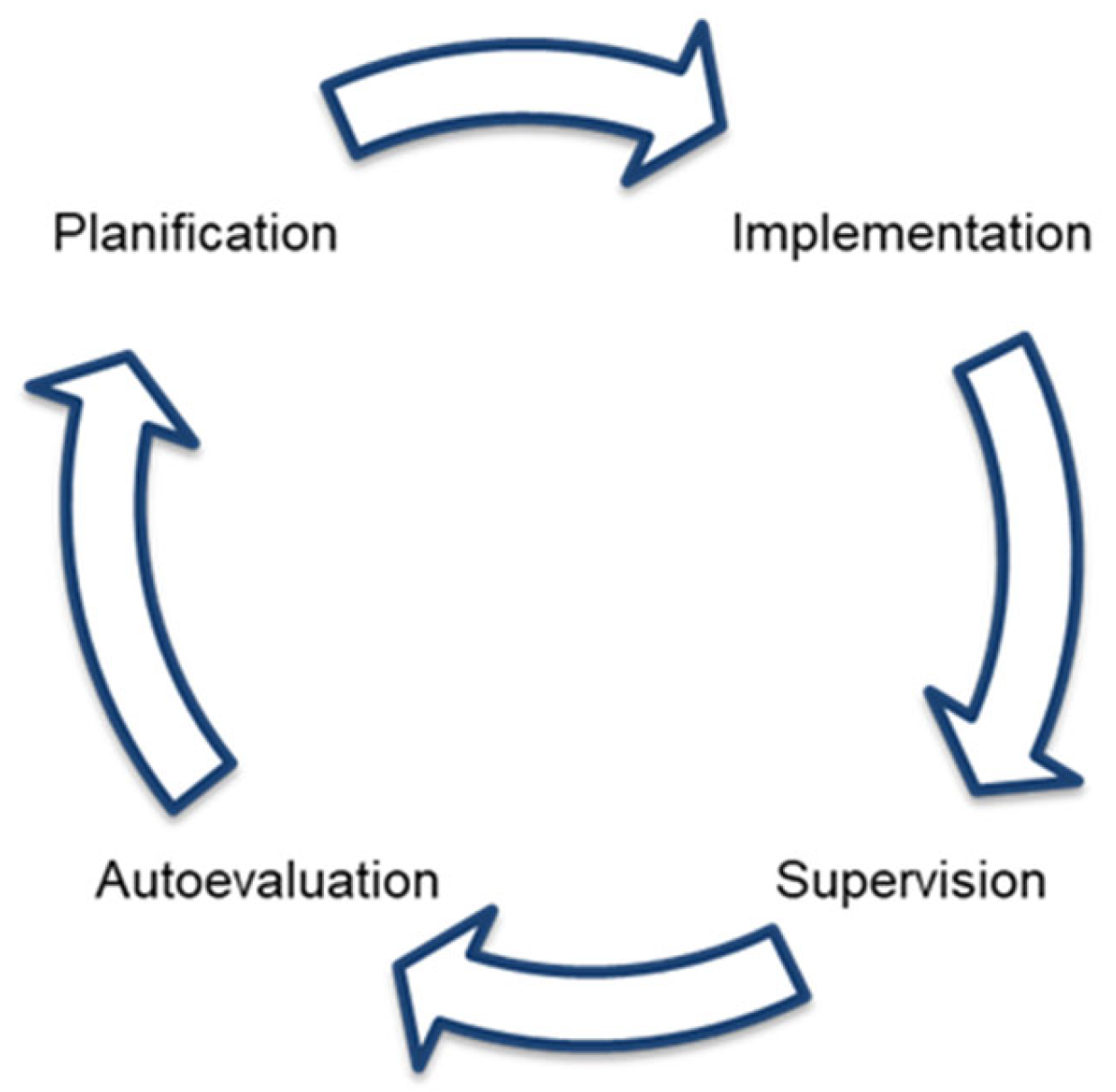
The SEEMP is based on four fundamental pillars that form the foundation for the next stage, as shown in Figure 1 [5].
First, there is the planning stage, during which the ship’s energy calculations are carried out, and the onboard energy-saving and efficiency measures are specified. Second, there is the implementation phase in which these measures are executed by authorized personnel. Third, the measures are monitored, and finally, a self-evaluation is conducted to determine whether they have been effective, before beginning the next planning cycle.
Within the SEEMP framework, there is the EEOI, which is voluntary and is used to measure a ship’s fuel efficiency in operation per unit of cargo and nautical mile [29].

2.2. EEDI

The EEDI applies only to ships whose construction contract was signed after 1 January 2013, and it has been used as an analytical tool for ship design with the aim of assessing the impact of new marine technologies on vessel design [6,30].
Hull modifications to reduce fuel consumption, optimization of propulsion systems and the implementation of hybrid systems, as well as the use of alternative fuels that reduce CO2 emissions, all contribute to improving a ship’s EEDI [31].
The EEDI quantifies a ship’s energy efficiency during its design phase by comparing the CO2 emissions generated by the ship’s propulsion with the transport work performed. According to the EEDI presentation Equation (1), which will be expanded upon throughout the paper, the numerator (Emissions) represents the total mass of CO2 emitted, calculated from the installed power, specific fuel consumption, and fuel-to-CO2 conversion factors, while the denominator (Transport work) corresponds to the product of the ship’s transport capacity and reference speed, thus expressing the useful work performed. This index allows for the comparison of the efficiency of different ship designs, where a lower value indicates lower fuel consumption and emissions per unit of cargo transported per nautical mile, serving as a regulatory reference against the limits established by the IMO. Its units are expressed in gCO2/ton-mile [6].
E E D I = E m i s s i o n s T r a n s p o r t   w o r k
With the adoption of MEPC.350(78) Resolution on 10 June 2022, guidelines were approved for calculating the EEXI indicator, which corresponds similarly to the EEDI but is only applicable to ships built before 1 January 2013. Its purpose is to improve the energy efficiency of older vessels and encourage the adoption of measures to reduce their emissions [32].

2.3. EEXI

The EEXI is equivalent to the EEDI; the main difference between the two indices is that the EEDI applies to new ships, while the EEXI targets existing vessels. Although both use similar formulas to measure energy efficiency, the EEDI ensures that new designs are efficient from the outset, whereas the EEXI requires older ships to be modernized or adjusted to meet standards comparable to those of newer vessels. Specifically, the EEDI applies to ships built from 2013 onward, while the EEXI applies to existing ships over 400 GT that entered service before that date [32,33].

2.4. EEOI

The EEOI measures the actual energy efficiency of a ship during operation by quantifying CO2 emissions per ton of cargo transported and per nautical mile sailed over a given period [29].
Unlike the EEDI, which is calculated based on the ship’s design and capacity, the EEOI reflects efficiency under real operational conditions, considering:
  • Sailing speed.
  • Actual cargo carried.
  • Fuel consumption of all systems.

2.5. CII

Another existing indicator is the CII, which is established as the criterion for measuring a ship’s CO2 emissions during transport. Unlike design-based indices such as the EEDI or EEXI, which focus on a ship’s technical characteristics, the CII measures environmental performance during operation, that is, how efficiently a ship transports cargo relative to its annual carbon dioxide emissions [34].
The IMO determines a ship’s operational carbon intensity by comparing its calculated annual CII with a CII Required, which is progressively adjusted using a reduction factor [34].
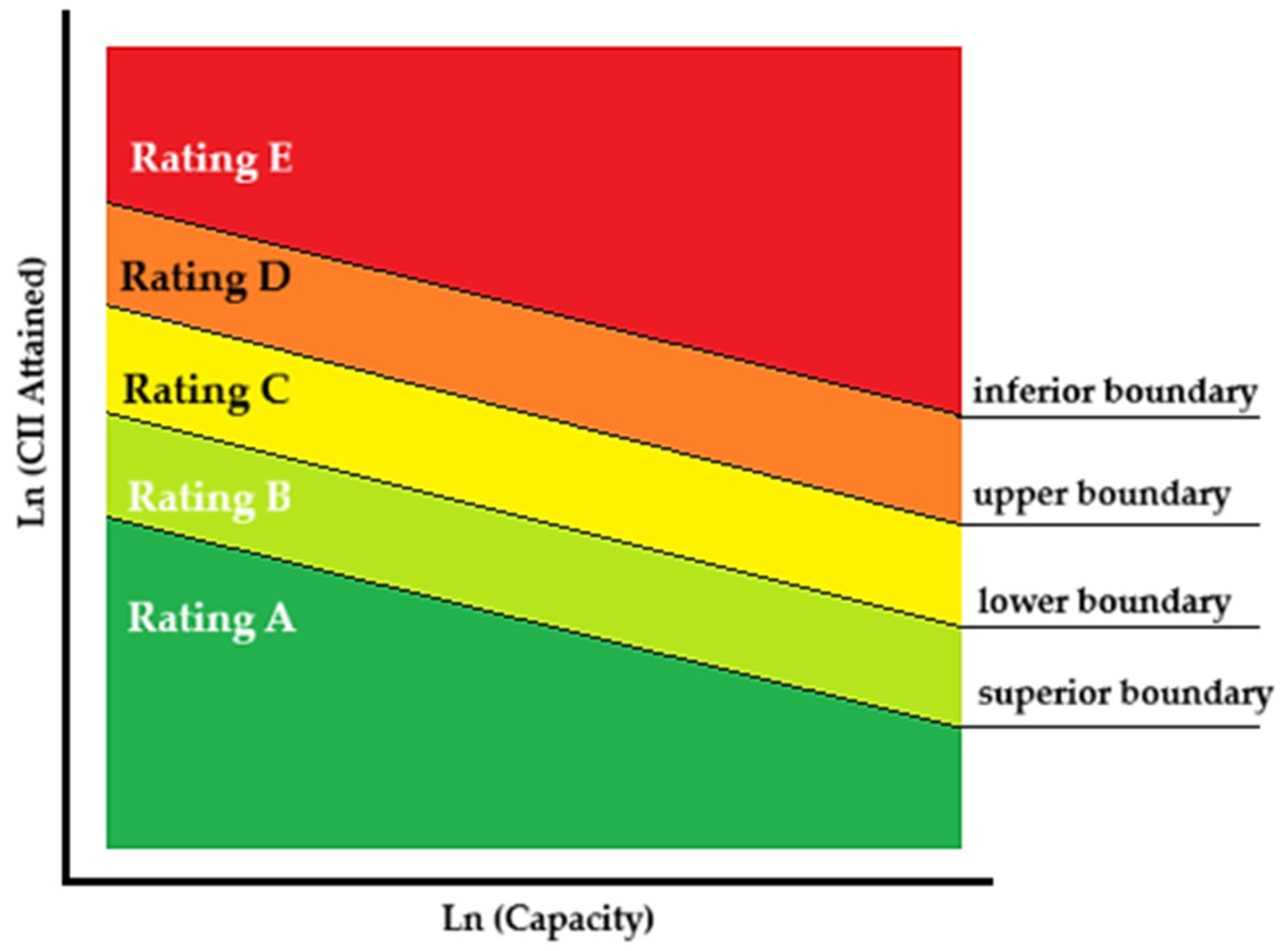
Based on this comparison, MEPC.339(76) Resolution defines five rating categories (A–E), determined by upper and lower limits based on the CII distribution of the fleet in 2019 [35].
According to Figure 2, ships with values well below the upper limit receive an A rating, while those exceeding the lower limit are classified as E, which requires corrective actions. In this way, the system allows for the evaluation and classification of a ship’s actual operational performance, ensuring a progressive reduction in its carbon intensity [35].
In Figure 2, the A rating is represented in bright green, indicating optimal compliance and the highest energy efficiency, while the E rating is shown in red, indicating the most unfavorable level that requires the implementation of corrective measures through the SEEMP to improve carbon intensity.

3. Methodology

For the application of the study’s calculations, as well as for the implementation of regulations and cost calculations, the reference year will be 2030 so that all regulations currently in the implementation phase are fully operational.
All calculations will be performed using the EES software (Engineering Equation Solver Ver. 9.7., Madison, WI, USA). This software is designed to solve algebraic and differential equations, both linear and nonlinear. It is a powerful tool for thermodynamics and heat transfer calculations, as it includes extensive built-in libraries for fluid and material properties, simplifies unit conversions, performs uncertainty analysis, and facilitates optimization and parametric studies [36].
For data processing and the creation of comparative charts, Microsoft Excel software (Redmond, WA, USA) was used [37].
During the preparation of this manuscript, the authors used the artificial intelligence tool Deepl Translate (DeepL SE., Colona, Germany) solely for translation of text segments [38].

3.1. Selection of the Model Ship

The characteristics of the reference ship are based on average values calculated in accordance with standards and specialized literature from previous sector studies [39].
The specific emissions reductions, efficiency improvements, and significant engine modifications required for each type of fuel, as well as critical engine-related variables such as efficiency, fuel consumption, and load factor, have been addressed in previous work [39].
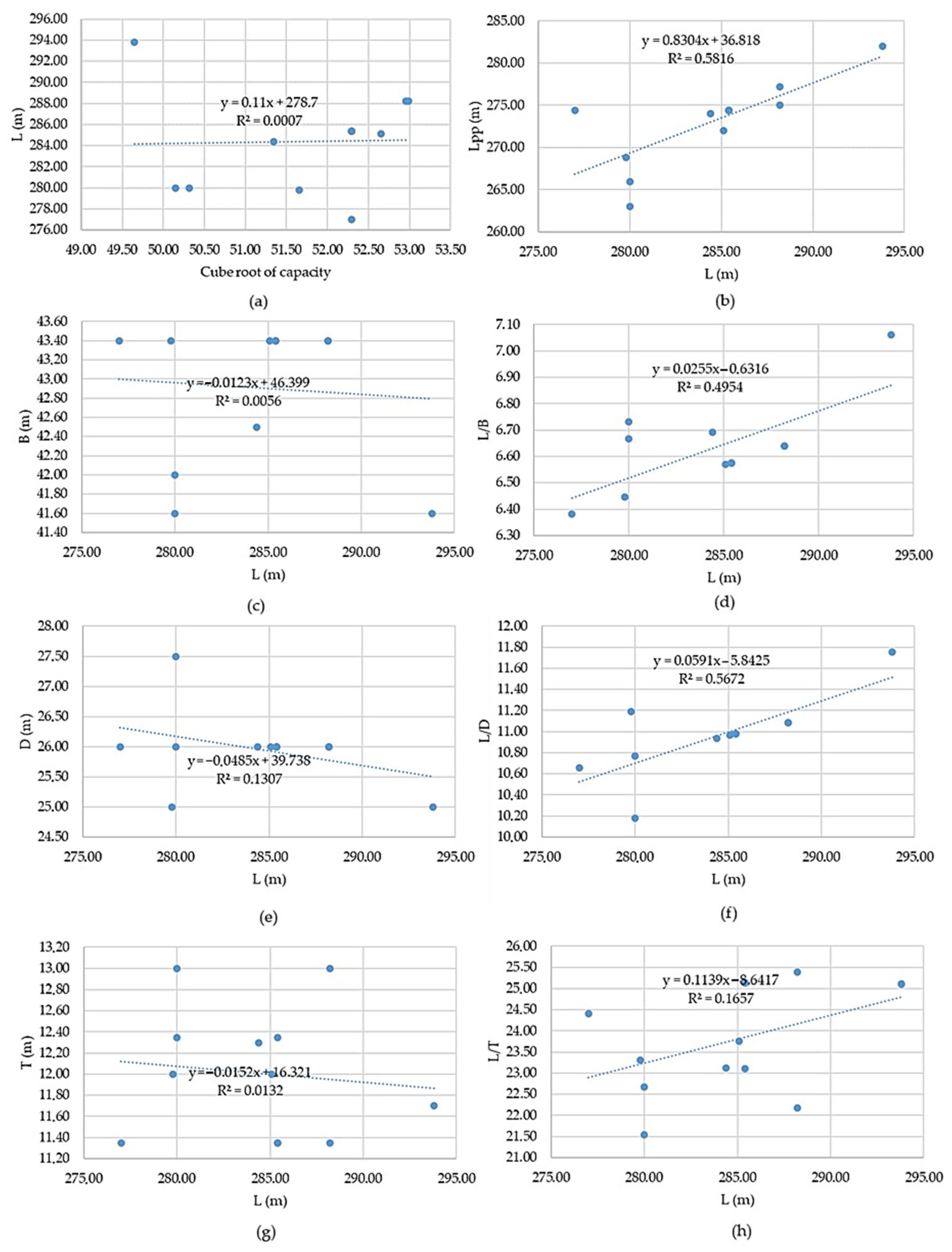
For this purpose, an estimation method using regression lines was applied, based on a database composed of various LNG carriers. Although these are not sister ships, they all share similar characteristics in length, draft, and beam, derived both from current regulations and the type of cargo they transport, as shown in Figure 3.
Building on these findings, the present study focuses on the application and evaluation of the model ship using the previously characterized fuels and parameters to assess emissions indicators (EEDI, EEOI, and CII).
Although several regressions exhibit low R2 values, this is an expected outcome when analyzing heterogeneous ship databases; in this study, regressions are not used as predictive models but as statistical descriptors of average trends, while the observed dispersion reflects design diversity and is explicitly treated as inherent uncertainty in the probabilistic framework.
L represents the ship’s overall length in meters, while Lpp denotes the length between perpendiculars. B corresponds to the beam or maximum width of the hull, and D refers to the depth measured from the keel to the main deck. T represents the draft, indicating the vertical distance between the waterline and the bottom of the hull.
Using these graphs, the estimated dimensions and main characteristics of the model ship have been obtained, as shown in Table 1 [39].
V is the service speed, expressed in knots, GT represents the gross tonnage, and DWT the deadweight, both indicators of the ship’s cargo-carrying capacity. C refers to the cargo capacity in cubic meters and P is the main engine power, expressed in megawatts.

3.2. Selection of Applicable IMO Indicators

The indicators selected for this study are the EEDI, as a measure of energy efficiency during the design phase; the EEOI, which evaluates efficiency during operation; and the CII, which quantifies the ship’s actual carbon intensity under service conditions. In contrast, the EEXI, being a regulatory application of the EEDI, and the SEEMP, as an operational management and maintenance plan, are beyond the scope of this analysis.

3.2.1. EEDI Calculation

From the development of Equation (1), the final expression to the EEDI Attained is obtained as shown in Equation (2), where the power terms are developed together with the application factors, as well as the ship’s capacity and its reference speed [6]:
E E D I A t t a i n e d = P i · C F i · S F C i + P A E · C F A E · S F C A E P P T I · C F P T I · S F C P T I C a p a c i t y · V r e f
The parameters P, CF, and SFC represent, respectively, the rated engine power in kW, the CO2 conversion factor measured in tons of CO2 per ton of fuel consumed, and the specific fuel consumption. The subscripts i, AE, and PTI correspond to the main engine, auxiliary engine, and propulsion-assist systems, respectively.
Finally, Capacity refers to the ship’s transport capacity, and Vref corresponds to the ship’s reference speed, measured in knots. The result is expressed in grams of CO2 per ton–nautical mile (gCO2/ton·nm). In this indicator, the lower the value, the more efficient the ship’s design.
The EEDI Attained is then compared with the EEDI Required, which depends on the ship type, size, and the regulatory phase applicable to the year of construction. For this, the EEDI Reference is first calculated based on Equation (3) and the indicators established by the IMO [6]:
E E D I R e f e r e n c e = a · D W T c
where a and c are coefficients defined by the IMO for each type of ship, and DWT is the deadweight tonnage. In the case of this model ship, the values of a and c are 1120 and 0.456, respectively.
Once the EEDI Reference is calculated, the Reduction Factor (X) is applied according to Equation (4), corresponding to the applicable regulatory phase [6]:
E E D I R e q u i r e d = 1 X 100 · E E D I R e f e r e n c e
Since 1 January 2022, the reduction percentage for LNG carriers is 30% relative to the EEDI Reference. With both values calculated, the comparison is straightforward:
  • If the EEDI Attained ≤ EEDI Required, the ship complies with the regulations.
  • If the EEDI Attained > EEDI Required, the ship does not comply, and its design must be modified with improvements to the hull, propeller design, changes in installed power, the use of cleaner fuels, etc.

3.2.2. EEOI Calculation

The expression for travel regulated by this indicator is that contained in Equation (5) [29].
E E O I = j F C j · C F j m c a r g o · D
The elements of Equation (5) are F C j is the mass of fuel consumed, C F j is the conversion factor from fuel mass to CO2 mass, m c a r g o is the cargo transported in tonnes that in the case of an LNG carrier, it is estimated as the mass of the delivered liquid cargo, and D is the distance in nautical miles corresponding to the journey made, in this case, one year.

3.2.3. CII Calculation

The calculation method is like that of the EEDI, and the first step is to calculate the CII Attained using Equation (6) [40]:
C I I A t t a i n e d = F C j · C f j D · C a p a c i t y
where in the numerator, j is the type of fuel, FC is the total annual fuel mass consumed in grams, and Cf is the emission conversion factor for fuel j. In the denominator, D is the annual distance in nautical miles, and according to MEPC Resolution 336 (76), Capacity is defined as [40]:
  • For bulk carriers, tankers, container ships, gas carriers, LNG carriers, roll-on/roll-off ships, general cargo ships, refrigerated cargo ships, and mixed-use ships, DWT is used as capacity.
  • For cruise ships, roll-on/roll-off passenger ships, and vehicle-carrying passenger ships, gross tonnage (GT) is used as capacity.
In this case, Capacity will be DWT, since it is a gas carrier. The units of the CII are gCO2/ton·nm.
On the other hand, it is necessary to calculate the CII Required, which is done in two steps. First, the ship’s CII Reference is determined, which depends solely on the ship type and size, based on Equation (7) [41]:
C I I R e f e r e n c e = a · D W T c
where a and c are coefficients defined by the IMO for each ship type, as previously presented in the EEDI calculation.
The second step is the application of the reduction factor Z, which varies by regulatory year as defined in MEPC Resolution 338(76) and was updated in MEPC 83, tightening this indicator through 2030 [41,42].
The final calculation is carried out using Equation (8) [41]:
C I I R e q u i r e d = 1 Z 100 · C I I R e f e r e n c e
Once the CII Attained is calculated, it is compared with the CII required. This comparison allows the ship to be assigned an efficiency rating, expressed in bands from A to E, as shown in Figure 2.
The result represents the maximum carbon intensity the ship can have each year to maintain an acceptable rating (A, B, or C). If the ship’s CII Attained exceeds this limit, its rating drops to D or E, triggering corrective measures outlined in the SEEMP.
This ratio is calculated using Equation (9):
R a t i o = C I I A t t a i n e d C I I R e q u i r e d
To obtain the limits and classification of the ship according to a figure-like Figure 2, the quantile regression model from Equation (10) will be applied [43]:
ln C I I a t t a i n e d = δ ( p ) c ln C a p a c i t y + ε p , p = { 0.15 , 0.35 , 0.50 , 0.65 , 0.85 }
where Capacity is the same as that used in the CII, p is the typical quantile, δ is the constant term, and ε is the error term.

3.3. Calculation of Pollutant Emission

For the calculation of the emissions generated, the methodology used in other studies will be followed, based on the stoichiometric equations of each fuel during combustion in the presence of air with concentrations of 21% oxygen, 78% nitrogen, and 1% other gases [39].
The stoichiometric reactions employed and approximated for heavy fuel oil (11), methane (12), methanol (13), ammonia (14), and hydrogen (15) are as follows:
Fuel:
C 12 H 24 S + 18.29   O 2 + 67.92   N 2 11.88   C O 2 + 0.12   C O + 12 H 2 O + S O 2 + 0.5   N O + 67.67   N 2
Methane:
C H 4 + 2 O 2 + 7.45   N 2 0.99   C O 2 + 0.01   C O + 0.02   N O + 2 H 2 O + 7.43   N 2
Methanol:
C H 3 O H + 1.5   O 2 + 5.59   N 2 0.99   C O 2 + 0.01   C O + 2 H 2 O + 0.02   N O + 5.57   N 2
Ammonia:
N H 3 + 0.9   O 2 + 3.34   N 2 0.3   N O + 1.5   H 2 O + 3.7   N 2
Hydrogen:
H 2 + O 2 + 1.86   N 2 H 2 O + 1.84   N 2 + 0.04   N O
Next, the annual calculation of tons of emissions produced by the model ship will be carried out based on the fuel used, p, according to Equation (16):
M f u e l = P · L F · S F O · D V 10 6
where P is the ship’s power in kW, LF is the load factor at which the ship operates, ranging between 0.7 and 0.85 during commercial operation, SFO is the specific fuel consumption in g/kWh, D is the distance traveled in nautical miles, and V is the ship’s average speed in knots.
The values used for the application of the indicators, as well as the pollutant emissions of each fuel, were obtained from industry studies and relevant regulations [44,45,46,47].

3.4. Calculation of Pollutant Emission Cost

The IMO has not yet established its own emissions pricing system; it is currently developing one in accordance with the agreements adopted at MEPC [42].
For this reason, to estimate the economic impact in this study, the mechanism already implemented by the European Union through the EU ETS will be used [16,20,48,49].
For this purpose, the segment representation included in the Excel tables will be analyzed, which is particularly useful for visualizing in a single chart the costs associated with emissions generated by methane, methanol, ammonia, and hydrogen, alongside the estimated CO2 market prices, both maximum and minimum, for the year 2030 [50,51].

4. Results and Discussion

The data in Table 2 clearly show how the ship’s performance varies depending on the fuel used, and how these results are directly related to the regulatory requirements of the EEDI and CII.
When operating with HFO, the indicators show the worst performance: the EEDI Attained is very high, meaning it exceeds the EEDI Required, so the ship does not comply with regulations in its current configuration. The CII is also very high; when compared to the annual allowable limit, the CII Attained with HFO clearly exceeds it, placing the ship in category D or even E in Figure 2, requiring corrective measures within the SEEMP to regain an acceptable rating. The EEOI, also high, confirms its poor operational efficiency.
In contrast, methane shows a substantial improvement; its EEDI is much lower and approaches the EEDI Required, bringing it close to regulatory compliance and indicating that, depending on the regulatory year, it could even fall within the required limits. Operationally, its CII is significantly lower than that of HFO, although still slightly above the annual reference limit; this implies that a ship using methane could be rated C or, in stricter scenarios, close to D. Nevertheless, performance is markedly better, and its EEOI being the lowest of all fuels studied confirms that methane offers the most energy-efficient operation.
Methanol occupies an intermediate position; its EEDI is better than HFO’s but not as favorable as methane’s, so it is likely to remain above the EEDI Required in most current regulatory scenarios, meaning it would not meet the standard without further modifications. Its CII Attained is lower than with HFO but still too high to remain within categories A, B, or C; this means that using methanol would likely place the ship in category D, requiring corrective measures via the SEEMP. The EEOI confirms this intermediate trend, improving over HFO but not approaching Methane’s performance.
Table 3 shows the ship’s emissions over the course of a year.
The analysis confirms the trends already observed in the EEDI, CII, and EEOI indices.
When the ship operates with HFO, over 113,000 tons of CO2 are emitted, along with significant amounts of CO, SO2, and NO. The SO2 value is particularly important, as it only appears in sulfur-containing fuels, confirming that HFO is not only the least efficient but also the most polluting.
Using methane shows a clear reduction; CO2 drops to approximately 76,000 tons, representing a decrease of about 33% compared to HFO, fully consistent with the behavior observed in the energy indices. The absence of SO2 highlights one of methane’s main advantages: its combustion is sulfur-free. NO emissions also decrease, although they do not disappear due to thermal formation of nitrogen oxides at high temperatures, which is common in any combustion process with air.
Methanol shows intermediate values, aligning perfectly with previous trends. CO2 is about 91,600 tons, lower than HFO but higher than methane, reflecting the chemical structure of the fuel, which contains oxygen in its molecule and thus has a different mass-based CO2 output per ton consumed. The absence of SO2 indicates that methanol is also sulfur-free, while NO emissions, although lower than HFO, are still present. The mass of water vapor produced is higher than with methane, consistent with its high hydrogen content. Overall, the data confirm that methanol is a less polluting option than HFO but not as clean as methane.
Ammonia behaves very differently. Combustion of this fuel does not generate CO2, as reflected in the zero value in that column. Similarly, no CO or SO2 emissions are produced. However, the high NO figure, over 39,000 tons, is notable, explained by the presence of nitrogen within the ammonia molecule itself. During combustion, a significant portion of the fuel’s nitrogen oxidizes, resulting in high NOx levels, even exceeding those of fossil fuels. The amount of H2O generated is high, due to ammonia’s hydrogen content, and the nitrogen volume in the exhaust gases is also high because of atmospheric nitrogen combined with that from the fuel. This confirms a key challenge with ammonia: although it produces no CO2, it can generate large amounts of NOx if emission control systems are not applied.
Finally, hydrogen represents the cleanest end of the spectrum from a carbon perspective. Its combustion produces no CO2, CO, or SO2, and NO emissions are extremely low, though still possible at high combustion temperatures. The mass of water vapor generated is very high, as it is the only main product of combustion, while nitrogen comes solely from the air. Overall, the data confirm that hydrogen generates the lowest direct environmental impact, provided NOx formation is properly managed through combustion temperature control.
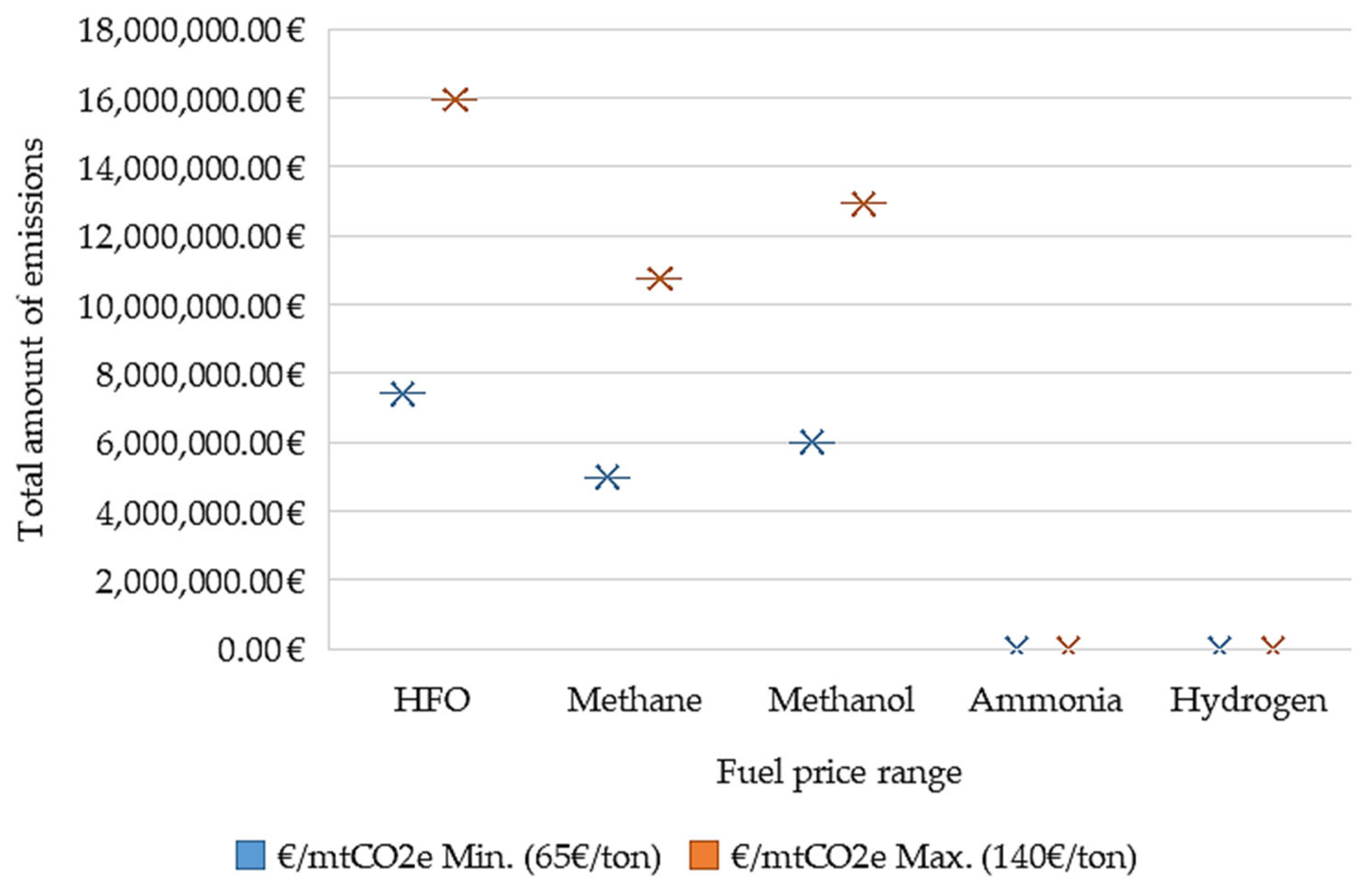
Regarding the economic analysis of the emissions impact of the model ship, Figure 3 shows the financial effect of each fuel under the EU ETS system, applying a price range between €65/mtCO2e (metric tons of CO2 equivalent) in the minimum scenario and €140/mtCO2e in the maximum scenario, based on variations in the estimated price per ton of emissions in the sector.
The CO2 price range of €65–140/t used in the cost simulation corresponds to the minimum and maximum prices observed in the most recent trading period, providing an empirically grounded basis for the scenario [27,52,53].
In the case of HFO, the values are the highest in the entire table, ranging from €7.4 million to nearly €16 million per year, depending on the CO2 price. These figures confirm that, in addition to being the most polluting fuel, HFO is also the most expensive from a regulatory standpoint. In a context where carbon prices are rising, operating with HFO becomes economically unsustainable, as its high carbon intensity results in a very severe financial penalty.
When using methane, the cost reduction is also clear: annual expenses range between €4.99 million and €10.74 million, reflecting a decrease of over 30% compared to HFO. Although still a significant amount, it is much more manageable and explains why, despite challenges such as unburned methane leakage, methane plays an important role as a transitional fuel.
Methanol occupies an intermediate position, with an estimated cost between €6.0 million and €12.9 million, placing it economically between HFO and methane. These figures show that, although methanol reduces emissions compared to HFO, it does not achieve the level of improvement seen with methane.
It is important to note that simulations for ammonia and hydrogen eliminate direct CO2 emissions during ship operation, resulting in IMO environmental indicators showing a value of zero. Since there is no carbon in their stoichiometric combustion, no tons of CO2 are generated to be accounted for in ship design (EEDI), operation (EEOI), annual carbon intensity (CII), or in economic mechanisms linked to the carbon price.
The comparative analysis of the different fuels confirms that HFO performs the worst, both in IMO indicators and in associated emissions, placing the ship in CII categories D or E, requiring corrective measures. Moreover, it is the most polluting fuel and the most heavily penalized economically under the EU ETS, making its use unviable in the medium term.
Methane emerges as the most balanced alternative: it achieves the greatest overall improvement, reduces CO2 emissions by over 30%, and approaches compliance with the EEDI, combining good energy performance with a significant reduction in emissions-related costs.
Methanol, on the other hand, occupies an intermediate position, eliminating sulfur content and partially reducing environmental impact, but falling short of the optimal levels offered by methane.
At the opposite extreme are carbon-free fuels. Ammonia eliminates CO2 emissions, though it presents a significant increase in NOx if not properly managed, while hydrogen has the lowest direct environmental impact. Both reduce carbon-related costs to zero, confirming a direct relationship between emissions and the operator’s economic burden.
Currently, the maritime regulatory framework presents an evident contradiction: only CO2 emissions are economically penalized, while NOx, which is equally or even more harmful than CO2 and present in all fuels studied, remains unregulated globally, despite its direct impact on human health, acidification, and tropospheric ozone formation.
The maritime sector, particularly the IMO, must urgently address this inconsistency. It cannot be claimed that certain “green” fuels contribute to ecological transition when, in practice, they generate high NOx emissions with no economic consequences.
The clearest example is the use of hydrogen or ammonia: although their combustion does not produce CO2, they generate significant amounts of NOx, demonstrating that their environmental impact is not zero. Under coherent regulation, these emissions should also be subject to penalties.
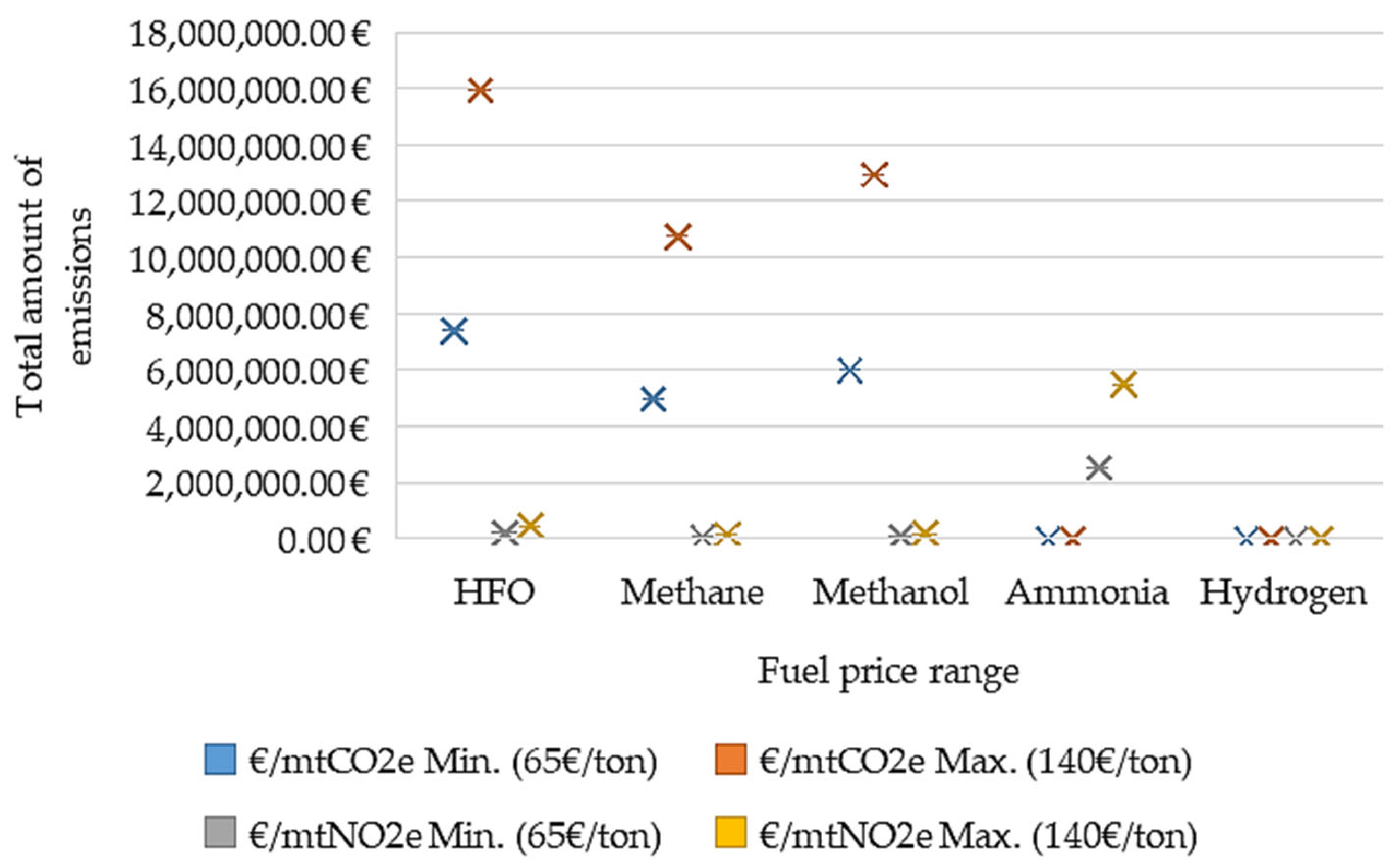
If the cost per ton of NO2 were equated to that of CO2 using the sectoral price range applied in Figure 3, the resulting economic picture of emissions would be reflected in Figure 4.
These values make one conclusion undeniable: if NOx were integrated into the cost scheme, all fuels would pay for their true environmental impact, including those currently presented as “clean” solutions. For example, ammonia would shift from zero costs to multi-million euro figures due to its high NOx emissions, demonstrating that its impact can no longer be ignored.
The clearest evidence is that the IMO already recognizes the seriousness of these emissions through the creation of ECAs, where SOx and NOx levels are limited. However, outside these areas, regulation disappears entirely, allowing massive emissions without consequences for the operator. This gap underscores the urgent need to develop a global mechanism for monitoring, monetizing, and penalizing NOx, like what is already in place for CO2.
At present, several technologies are available for NOx abatement, among which Selective Catalytic Reduction (SCR) systems represent one of the most widely implemented solutions on board ships to comply with the IMO Tier III NOx emission limits. In marine applications, SCR systems enable NOx reductions in the range of 60–95%, depending on exhaust gas temperature, engine operating conditions, and system configuration, making them a well-validated solution for operation in Emission Control Areas (ECAs) [54,55].
With regard to costs, technical studies and industrial experience indicate that the ini-tial investment for a marine SCR system can reach several million euros for large vessels, while the annual operating costs, mainly associated with urea consumption and catalyst maintenance, typically amount to 1–3 million euros, depending on the installed power and the vessel’s operational profile [56,57].
Considering a scenario in which NOx emissions are subject to a payment scheme per emitted ton, based on the data presented in Figure 5, and assuming a price range between 65 and 140 €/tNO2e, the associated annual costs differ significantly depending on the fuel used. In the case of HFO, payments related to NOx emissions range between 0.22 and 0.47 M€ per year, whereas for methane and methanol these costs decrease to 0.07–0.16 M€ and 0.09–0.19 M€, respectively. By contrast, the use of ammonia shows a particularly high impact in terms of NOx emissions, with estimated annual payments between 2.55 and 5.50 M€, while hydrogen exhibits almost negligible values, below 0.02 M€ per year.
The installation of an SCR system, with NOx reduction efficiencies in the order of 85–95%, would allow a substantial reduction in these recurring costs. Assuming an SCR capital investment in the range of 3 to 6 million euros for a medium-power vessel, and considering only the savings associated with NOx emissions, the payback period is found to be highly fuel-dependent.
For HFO, the annual savings after SCR installation are approximately 0.18–0.42 M€, leading to payback periods ranging from 8 to 20 years. In the case of ammonia, annual savings may reach 2.2–5.2 M€, resulting in a payback period of 1 to 3 years, making SCR an essential element for the economic viability of ammonia as a marine fuel.
Conversely, for fuels with inherently low NOx emissions, such as hydrogen, the installation of an SCR system is not economically justified when assessed solely based on NOx emission payment schemes.
In addition, regarding the main indicators used to evaluate ship emissions and efficiency, some significant deficiencies in the calculation formulas should be highlighted.
One of the most notable is that emissions generated by stationary ships, such as FSRU installations (Floating Storage Regasification Units), are not considered, nor is there specific regulation addressing the “methane slip” phenomenon, which involves the release of unburned methane during combustion. FSRU units dedicated to offshore fuel extraction and distribution emit pollutants during operation, but these emissions are not reflected in any current indicators, leaving a significant gap in the environmental assessment of the sector.
Another critical factor is the influence of the ship’s reference speed on the calculations. As noted, reducing speed can yield lower indicators by decreasing engine load and, consequently, CO2 emissions into the atmosphere. This demonstrates that results can vary significantly depending on operational decisions, potentially distorting comparisons between ships or efficiency strategies.

5. Conclusions

This study demonstrates quantitatively that methane offers the most balanced alternative, reducing CO2 emissions by over 30% compared to HFO while improving energy efficiency, as measured by the EEDI and the EEOI. Methanol provides intermediate performance, eliminating sulfur emissions and partially reducing other pollutants. Ammonia and hydrogen fully eliminate CO2 emissions but generate significant NOx emissions that require mitigation. The CII results show that operational compliance varies by fuel type, with methane achieving values closest to the required regulatory limits.
The overall analysis confirms that HFO is the worst-performing fuel for ship operation, both from a regulatory, environmental, and economic perspective due to emissions costs. Its values according to IMO indicators greatly exceed established limits, placing the ship in categories D or E and requiring corrective measures. Moreover, it generates the highest pollutant emissions, resulting in the highest costs under the EU ETS system. In the context of tightening regulations, operating with HFO becomes technically and economically unviable in the medium term.
Methane emerges as the most balanced alternative: it reduces CO2 emissions by over 30%, improves efficiency indicators, and approaches compliance with the EEDI. Although its CII may still place the ship in categories C or D, it represents the best balance between efficiency, emissions reduction, and regulatory costs, consolidating its role as a transitional fuel.
Methanol shows intermediate performance, eliminating sulfur and partially reducing CO2 and NOx emissions, but its EEDI and CII remain above desirable limits, requiring additional measures for regulatory compliance. Economically, it sits between HFO and methane, confirming its role as an improved, but not optimal, alternative.
Carbon-free fuels such as ammonia and hydrogen present a different profile. They eliminate CO2 and associated costs but generate NOx emissions that are extreme in the case of ammonia and low for hydrogen. This demonstrates that their environmental impact is not zero and that advanced control systems are required, which can increase onboard implementation costs. From a carbon perspective, however, they are the only options capable of fully eliminating the economic penalty.
This study highlights a significant regulatory gap: while CO2 is globally monetized and penalized, NOx emissions, which are equally or more harmful, lack a penalty system outside ECA zones. This asymmetrical method allows some fuels, like ammonia, to be presented as clean despite generating large amounts of NOx. Economic simulations indicate that if NOx were penalized at the same level as CO2, all supposedly green fuels would bear costs proportional to their true environmental impact, substantially altering the economic assessment of ship operation.
Overall, when considering NOx emission costs and achievable abatement efficiencies, the analysis clearly indicates that the use of ammonia as a marine fuel without an SCR system would entail prohibitively high NOx-related costs, making the installation of SCR not only technically necessary but economically essential for the viable deployment of ammonia-fueled ships.
Additionally, important limitations in current indicators are evident. Regulations do not consider emissions from stationary ships, such as those generating pollutants during offshore fuel extraction and distribution. There is also no specific regulation addressing “methane slip,” the release of unburned methane into the atmosphere depending on the type of engine installed. Furthermore, operational factors such as the ship’s reference speed significantly influence indicator results: reducing speed lowers engine load and, consequently, emissions, which can distort comparisons between ships or energy-efficiency strategies.
Overall, the results indicate that maritime energy transition cannot focus solely on CO2 reduction. For alternative fuels to provide real environmental benefits and for the regulatory framework to be coherent, the IMO must advance toward a global system for monitoring, monetizing, and penalizing emissions. Only then will it be possible to properly evaluate available technologies and promote truly sustainable solutions for reducing the environmental impact of maritime transport.

Author Contributions

Conceptualization, J.M.M.-P. and I.A.-F.; validation, M.R.G.; formal analysis, J.M.M.-P.; writing—original draft preparation, J.M.M.-P.; writing—review and editing, J.M.M.-P. and I.A.-F.; supervision, I.A.-F. and M.R.G. All authors have read and agreed to the published version of the manuscript.

Funding

This research received no external funding.

Data Availability Statement

Dataset available on request from the authors.

Acknowledgments

During the preparation of this manuscript, the authors used the artificial intelligence tool Deepl Translate solely for translation of text segments. The tool was employed as a language-processing aid only. All text generated or modified using the tool was carefully reviewed, edited, and verified by the authors, who take full responsibility for the final content. No part of the study design, data analysis, interpretation, or conclusions was generated by the AI, and the tool is not listed as an author or co-author.

Conflicts of Interest

The authors declare no conflicts of interest.

Abbreviations

The following abbreviations are used in this manuscript:
BBeam
CFCarbon (CO2) conversion factor
CIICarbon Intensity Indicator
COCarbon monoxide
CO2Carbon dioxide
DDepth
DWTDeadweight tonnage
ECA/ECAsEmission Control Area(s)
EEDIEnergy Efficiency Design Index
EEOIEnergy Efficiency Operational Indicator
EESEngineering Equation Solver
EEXIEnergy Efficiency Existing Ship Index
EUEuropean Union
EU ETSEuropean Union Emissions Trading System
FSRUFloating Storage and Regasification Unit
GHGsGreenhouse gases
GTGross tonnage
HFOHeavy Fuel Oil
H2OWater (water vapor)
IMOInternational Maritime Organization
LOverall length
LFLoad factor
LNGLiquefied Natural Gas
LppLength between perpendiculars
MARPOLInternational Convention for the Prevention of Pollution from Ships
MEPCMarine Environment Protection Committee
N2Nitrogen
NONitric oxide
NOxNitrogen oxides
O2Oxygen
PEngine power
PAMEProtection of the Arctic Marine Environment
PMParticulate matter
SEEMPShip Energy Efficiency Management Plan
SFCSpecific fuel consumption
SFOSpecific fuel oil consumptions
SO2Sulfur dioxide
SOxSulfur oxides
TDraft
UNUnited Nations
VService speed

References

  1. United Nations Environment Programme (UNEP) Copenhagen Climate Centre. Emissions Gap Report 2020; United Nations: New York, NY, USA, 2020. [Google Scholar]
  2. Mahía-Prados, J.M.; Arias-Fernandez, I.; Gómez, M.R.; Parga, M.N. The decarbonisation of the maritime sector: Horizon 2050. Brodogradnja 2024, 75, 1–26. [Google Scholar] [CrossRef]
  3. United Nations Climate Change Conference (COP21). Acuerdo de París; UNFCCC: Bonn, Germany, 2015.
  4. Mahía-Prados, J.M. IMO’s updated strategy and the emerging role of LNG. Rotacion 2024, 617, 20–21. [Google Scholar]
  5. ANAVE (Spanish Shipowners’ Association). Energy Efficiency Existing Ship Index (EEXI); ANAVE (Spanish Shipowners’ Association): Madrid, Spain, 2022. [Google Scholar]
  6. International Maritime Organization (IMO). Resolution mepc.308(73) (Adopted on October 26, 2018) 2018 Guidelines on the Method of Calculation of the Project Energy Efficiency Index (EEDI) Obtained for New Ships; International Maritime Organization (IMO): London, UK, 2018. [Google Scholar]
  7. International Maritime Organization. EEXI and CII: Carbon Intensity Measurements of Ships and the Classification System. Available online: https://www.imo.org/en/mediacentre/hottopics/pages/eexi-cii-faq.aspx (accessed on 25 August 2023).
  8. International Maritime Organization (IMO). Report of the Committee for the Protection of the Marine Environment Corresponding to its 76th Session; International Maritime Organization (IMO): London, UK, 2021. [Google Scholar]
  9. European Maritime Safety Agency; European Environment Agency. European Maritime Transport Environmental Report 2021; Publications Office of the European Union: Luxembourg, 2021. [Google Scholar]
  10. People’s Republic of China. Marine Environmental Protection Law of the People’s Republic of China Prevention and Control of Pollution Damage to the Marine Environment by Dumping Waste; China Legal Publishing House: Beijing, China, 2018. [Google Scholar]
  11. United States of America Government. Clean Air Act; U.S. Government Printing Office: Washington, DC, USA, 2022. [Google Scholar]
  12. Forbes-Gearey, E. Panama Canal—Green Vessel Classification System; West of England: London, UK, 2023. [Google Scholar]
  13. Antarctic Treaty Consultative. Protocol on Enviromental Protection to the Antartic Treaty; 1991. Available online: https://documents.ats.aq/recatt/att006_e.pdf (accessed on 25 August 2025).
  14. Pacific Fishery Management Council. Pacific Coast Fishery Ecosystem Plan; Pacific Fishery Management Council: Portland, OR, USA, 2021. [Google Scholar]
  15. European Parliament; Council of the European Union. Regulation (eu) 2021/1119 of the European Parliament and of the Council of 30 June 2021 Establishing the Framework for Achieving Climate Neutrality and Amending Regulations (EC) No 401/2009 and (EU) 2018/1999 (‘European Climate Law’); European Parliament: Strasbourg, France; Council of the European Union: Brussels, Belgium, 2021. [Google Scholar]
  16. European Parliament; Council of the European Union. Regulation (EU) 2015/757 of the European Parliament and of the Council—Of 29 April 2015—On the Monitoring, Reporting and Verification of Carbon Dioxide Emissions from Maritime Transport, and Amending Directive 2009/16/EC; European Parliament: Strasbourg, France; Council of the European Union: Brussels, Belgium, 2015. [Google Scholar]
  17. The European Parliament; Council of the European Union. Directive (EU) 2016/802 of the European Parliament and of the Council—Of 11 May 2016—Relating to a Reduction in the Sulphur Content of Certain Liquid Fuels; European Parliament: Strasbourg, France; Council of the European Union: Brussels, Belgium, 2016. [Google Scholar]
  18. European Parliament; Council of the European Union. Directive (EU) 2018/2001 of the European Parliament and of the Council of 11 December 2018 on the Promotion of the Use of Energy from Renewable Sources; European Parliament: Strasbourg, France; Council of the European Union: Brussels, Belgium, 2018. [Google Scholar]
  19. Publications Office of the European Union. Commission Delegated Regulation (EU) 2023/1184 of 10 February 2023 Supplementing Directive (EU) 2018/2001 of the European Parliament and of the Council, Establishing a Common Union Methodology Defining Detailed Rules for the Production of Renewable Non-Biological Liquid and Gaseous Fuels; Publications Office of the European Union: Luxembourg, 2023. [Google Scholar]
  20. Publications of the European Union. Directive (EU) 2023/959 of the European Parliament and of the Council of 10 May 2023 Amending Directive 2003/87/EC Establishing a System for Greenhouse Gas Emission Allowance Trading Within the Union and Decision (EU) 2015/1814 Concerning the Establishment and Operation of a Market Stability Reserve for the Union Greenhouse Gas Emission Trading System; Publications Office of the European Union: Luxembourg, 2023. [Google Scholar]
  21. European Parliament. Regulation (EU) 2023/1805 of the European Parliament and of the Council of 13 September 2023 on the Use of Renewable and Low-Carbon Fuels in Maritime Transport, and Amending Directive 2009/16/EC; European Parliament: Strasbourg, France, 2023. [Google Scholar] [CrossRef]
  22. International Renewable Energy Agency; European Commission. Renewable Energy Prospects for the European Union; International Renewable Energy Agency (IRENA): Masdar City, United Arab Emirates, 2018. [Google Scholar]
  23. European Parliament; Council of the European Union. Regulation on the Use of Renewable and Low-Carbon Fuels in Maritime Transport—FuelEU; European Parliament: Strasbourg, France; Council of the European Union: Brussels, Belgium, 2021. [Google Scholar]
  24. European Parliament. Regulation (EU) 2023/1804 of the European Parliament and of the Council of 13 September 2023 on the Deployment of Alternative Fuels Infrastructure, and Repealing Directive 2014/94/EU; European Parliament: Strasbourg, France, 2023. [Google Scholar]
  25. Mahía-Prados, J.M. The Role of Green Hydrogen in the Maritime Sector. GTM by ACLUNAGA, no. 11/2023, 2023. Available online: https://aclunaga.es/wp-content/uploads/2024/10/GMT-by-Aclunaga_no11.pdf (accessed on 25 August 2023).
  26. Mahía-Prados, J.M. Progress on Marine Fuels: Where Are We Going? GTM by ACLUNAGA, no. 12/2024, 2024. Available online: https://aclunaga.es/wp-content/uploads/2024/10/GMT-by-Aclunaga_no12.pdf (accessed on 25 August 2023).
  27. Mahía-Prados, J.M.; Arias-Fernández, I. The Decarbonization Through Marine Fuels. Yearb. Marit. Stud. 2025, 473–492. [Google Scholar]
  28. International Maritime Organization. Resolution MEPC.395(82) (Adopted on 4 October 2024) Guidelines for the Development of a Ship Energy Efficiency Management Plan (SEEMP); International Maritime Organization (IMO): London, UK, 2024. [Google Scholar]
  29. International Maritime Organization (IMO). Guidelines for Voluntary Use of the Ship Energy Efficiency Operational Indicator (EEOI); International Maritime Organization (IMO): London, UK, 2009. [Google Scholar]
  30. Tokuşlu, A. Analyzing the Energy Efficiency Design Index (EEDI) performance of a container ship. Int. J. Environ. Geoinform. 2020, 7, 114–119. [Google Scholar] [CrossRef]
  31. Barreiro, J.; Zaragoza, S.; Diaz-Casas, V. Review of ship energy efficiency. Ocean. Eng. 2022, 257, 111594. [Google Scholar] [CrossRef]
  32. International Maritime Organization (IMO). Resolution MEPC.350(78) (Adopted June 10, 2022) 2022 Guidelines on the Method of Calculation of the Energy Efficiency Index Applicable to Existing Ships (EEXI) Obtenido; International Maritime Organization (IMO): London, UK, 2022. [Google Scholar]
  33. Lloyd’s Register Group Limited. EEXI Calculator; Lloyd’s Register: London, UK; Available online: https://www.lr.org/en/services/statutory-compliance/marpol-international-convention-for-the-prevention-of-pollution/eexi-energy-efficiency-existing-ship-index/eexi-calculator/ (accessed on 26 January 2024).
  34. International Maritime Organization (IMO). Resolution MEPC.336(76) (Adopted on 17 June 2021) 2021 Guidelines on Operational Carbon Intensity Indicators and Calculation Methods; International Maritime Organization (IMO): London, UK, 2021. [Google Scholar]
  35. International Maritime Organization (IMO). Resolution MEPC.339(76) (Adopted on 17 June 2021) on Operational Carbon Intensity Classification; International Maritime Organization (IMO): London, UK, 2021. [Google Scholar]
  36. Klein, S. EES (Engineering Equation Solver Ver. 9.7.); F-Chart Software: Madison, WI, USA, 1992. [Google Scholar]
  37. Microsoft Office 365. Microsoft Excel, Microsoft Corporation: Redmond, WA, USA.
  38. DeepL Translate Tool; DeepL SE: Cologne, Germany. Available online: https://www.deepl.com/en/translator (accessed on 26 January 2024).
  39. Mahía-Prados, J.M.; Arias-Fernández, I.; Gómez, M.R.; Pereira, S. Feasibility Analysis of the New Generation of Fuels in the Maritime Sector. Fuels 2025, 6, 37. [Google Scholar] [CrossRef]
  40. International Maritime Organization. Resolution MEPC.336(76) (Adopted on 17 June 2021)—Guidelines on Operational Carbon Intensity Indicators and the Calculation Methods (CII Guidelines, G1); International Maritime Organization (IMO): London, UK, 2021. [Google Scholar]
  41. International Maritim Organization. Guidelines on the Operational Carbon Intensity Reduction Factors Relative to Reference Lines (CII Reduction Factors Guidelines, G3); International Maritime Organization (IMO): London, UK, 2022. [Google Scholar]
  42. International Maritime Organization. Marine Environment Protection Committee (MEPC) 83rd Sessions; International Maritime Organization (IMO): London, UK, 2025. [Google Scholar]
  43. International Maritim Organization. Resolution MEPC.336(76) (Adopted on 17 June 2021)—Guidelines on Operational Carbon Intensity Indicators and the Calculation Methods (CII Guidelines, D4); International Maritime Organization (IMO): London, UK, 2021. [Google Scholar]
  44. Imhoff, T.B.; Gkantonas, S.; Mastorakos, E. Analysing the performance of ammonia powertrains in the marine environment. Energies 2021, 14, 7447. [Google Scholar] [CrossRef]
  45. Ha, S.; Jang, H.; Park, C.; Jeong, B. A prospective life cycle assessment framework for sustainable renewable fuels in international shipping: Hydrogen based e fuels. Renew. Sustain. Energy Rev. 2025, 226, 116219. [Google Scholar] [CrossRef]
  46. Veber, J. The Development of a Ship Emissions Prediction Model for Ships Transiting Ice-Covered Waters. Ph.D. Thesis, Memorial University of Newfoundland, St. John’s, NL, Canada, 2023. [Google Scholar]
  47. Danish Energy Agency. Commercial Maritime Freight and Passenger Transport; Danish Energy Agency: Copenhagen, Denmark, 2024. [Google Scholar]
  48. Ship Management International. EU ETS Enters into Force; Ship Management International: London, UK, 2023; pp. 34–36. [Google Scholar]
  49. Publications of the European Union. Regulation (EU) 2019/631 of the European Parliament and of the Council of 17 April 2019 Setting CO2 Emission Performance Standards; Publications of the European Union: Luxembourg, 2019. [Google Scholar]
  50. Moen, V. The Economics of Carbon Capture and Storage. An assessment of the economic viability of CCS in Europe. 2023. Available online: https://nva.sikt.no/registration/0199053071e7-69ea3d7e-f42c-4bfa-bad9-798799282ddc (accessed on 26 January 2024).
  51. Conselho de Reguladores do MIBEL. Estudo Sobre o Mercado de Licenças de Emisão de CO2; Mercado Ibérico de Eletricidade: 2020. Available online: https://www.erse.pt/media/d1cnjj14/estudo-do-mercado_mibel_pt.pdf (accessed on 26 January 2024).
  52. Eklavya, G. EU ETS Prices Recover to Eur100/mt Supported by Higher Gas, Power Complex; Explore S&P Global: New York, NY, USA, 2023. [Google Scholar]
  53. Mahía-Prados, J.M. Retrofit to Alternative Fuels; GTM by ACLUNAGA, no. 13/2025. Available online: https://aclunaga.es/wp-content/uploads/GMT-by-Aclunaga-no13-1.pdf (accessed on 26 January 2024).
  54. Azzara, A.; Rutherford, D.; Wang, H. Feasibility of IMO Annex VI Tier III implementation using Selective Catalytic Reduction. Int. Counc. Clean Transp. 2014, 4, 1–9. [Google Scholar]
  55. IACCSEA. The Technical and Operational Capabilities of Marine Selective Catalytic Reduction; IACCSEA: London, UK, 2014. [Google Scholar]
  56. XEAMOS. Zero NOx Xeamos Solution for IMO Tier III Marine Propulsion and Auxiliary Engines; XEAMOS: Wijchen, The Netherlands, 2024. [Google Scholar]
  57. YANMAR. YANMAR SCR Technology for IMO Tier III; YANMAR: Osaka, Japan, 2018. [Google Scholar]
Figure 1. SEEMP flux [5].
Gases 06 00004 g001
Figure 2. CII Classification according to Resolution 339(76) [35].
Gases 06 00004 g002
Figure 3. (a) Estimation of overall length; (b) Estimation of length between perpendiculars; (c) Estimation of beam; (d) Beam correction; (e) Estimation of depth; (f) Depth correction; (g) Estimation of draft; (h) Draft correction.
Gases 06 00004 g003
Figure 4. Estimated CO2 price range for emissions from the model ship.
Gases 06 00004 g004
Figure 5. Estimated price range of COx and NOx emissions for the model ship.
Gases 06 00004 g005
Table 1. Ship model data [39].
L (m)284.4V (knots)19.5
Lpp (m)273GT90,835
B (m)43DWT (tons)68,530
0D (m)26C (m3)135,049
T (m)12P (MW)28
Table 2. Comparison of IMO Indicators.
FuelEEDI
Attained
(gCO2/ton·nm)
CII
Attained
(gCO2/ton·nm)
CII RatioEEOI
(gCO2/ton·nm)
HFO12.4009.9211.810.604
Methane8.2686.6141.2060.403
Methanol9.9487.9581.4510.485
Ammonia0 *0 *0 *0 *
Hydrogen0 *0 *0 *0 *
* Since it contains no carbon in its composition, the calculated values are 0.
Table 3. Principal emissions by fuel in tons.
FuelAnnual Fuel Mass (tons)CO2
(tons)
CO
(tons)
H2O
(tons)
SO2
(tons)
NO
(tons)
N2
(tons)
HFO37,100.00113,155.00742.0046,746.001484.003339.00409,955.00
Methane28,010.0076,187.20560.2063,022.500.001120.40364,130.00
Methanol67,400.0091,664.00674.0075,488.000.001348.00328,912.00
Ammonia74,100.000.000.00117,819.000.0039,273.00450,528.00
Hydrogen11,550.000.000.00103,257.000.00115.50297,990.00
Disclaimer/Publisher’s Note: The statements, opinions and data contained in all publications are solely those of the individual author(s) and contributor(s) and not of MDPI and/or the editor(s). MDPI and/or the editor(s) disclaim responsibility for any injury to people or property resulting from any ideas, methods, instructions or products referred to in the content.