


Abstract
Angioedema (AE) is a heterogeneous condition characterized by acute, localized, non-pitting edema of the skin, mucosa, and submucosal tissues, with potentially life-threatening airway involvement. This comprehensive review aims to provide an updated overview of the different AE subtypes, their pathogenesis, clinical presentation, diagnostic criteria, therapeutic strategies, and dental implications. A literature search of PubMed, MEDLINE, and Google Scholar was performed for articles published between 1950 and 2025, focusing on both bradykinin- and histamine-mediated forms. The findings highlight the importance of distinguishing histaminergic AE, which typically responds to antihistamines, corticosteroids, and epinephrine, from bradykinin-mediated AE, which requires targeted therapies such as C1 esterase inhibitor (C1-INH), icatibant, or kallikrein inhibitors. Subtypes including hereditary, acquired, and drug-induced AE are reviewed, with emphasis on diagnostic markers (C4, C1-INH, C1q) and recent genetic insights in HAE-nC1INH. In dental and surgical settings, invasive procedures may act as triggers, making prophylaxis with plasma-derived C1-INH and stress management strategies essential. In conclusion, accurate subtype recognition is crucial to guide therapy and perioperative care, and further research is needed to refine diagnostic algorithms and preventive strategies.
1. Introduction
Angioedema (AE), or Quincke’s disease, is a transient, diffuse edematous swelling of the soft tissues, most often involving the subcutaneous and submucosal connective tissue [1]. It can be life-threatening when the upper airway is involved, potentially leading to acute airway obstruction [2]. This condition is relatively uncommon and, consequently, its epidemiology is not fully characterized. In a study conducted in Denmark on non-hereditary AE, the prevalence of this condition was estimated to be around 7.4% [3]. AE can be broadly divided into histamine-mediated forms and the less common, though clinically important, bradykinin-mediated forms [1]. Although AE may occur as an isolated manifestation, especially in cases mediated by bradykinin, it is more frequently observed in association with urticarial conditions, most notably chronic spontaneous urticaria [1]. About one-third of non-urticarial AE cases are idiopathic and mostly histaminergic [4].
AE can be classified into the following distinct subtypes: hereditary AE types I and II (HAE I and II), hereditary AE with normal C1 inhibitor (HAE-nC1-INH), acquired AE due to C1 inhibitor deficiency (AAE), Drug-Induced AE (angiotensin-converting enzyme inhibitor–induced AE- ACEi-AE), and idiopathic or histaminergic AE, each with distinct epidemiologic features (Table 1) [5]. Clinically, AE typically presents as a sudden, localized, non-pitting edema. The most frequently affected sites are the face, lips, tongue, larynx, and genital region, whereas involvement of the extremities is less common [4]. Another typical localization site of involvement is gastrointestinal tract, with acute abdominal pain, nausea, vomiting, or diarrhea, which may mimic a surgical abdomen [6]. Unlike urticaria, AE is generally not pruritic, but is instead associated with a sensation of tension or pain [4]. The duration of episodes ranges from 24 to 72 h, depending on the underlying pathogenic mechanism [7]. The most severe complication is laryngeal edema, which may lead to acute airway obstruction and constitutes a medical emergency [5].
Table 1.
Epidemiological and clinical characteristics of the different forms of Angioedema.
The diagnosis of AE relies on a detailed clinical history and physical examination, complemented by laboratory investigations to identify the underlying mechanism [4]. Measurement of serum C4 and both quantitative and functional C1-INH levels is crucial for the diagnosis of hereditary and acquired C1-INH deficiency [6]. In suspected acquired AE, detection of anti–C1-INH autoantibodies provides further confirmation [7]. The lack of response to antihistamines and corticosteroids is suggestive of a bradykinin-mediated form, whereas a rapid therapeutic response favors a histaminergic mechanism [18]. Imaging studies, such as abdominal ultrasound or computed tomography, may be useful during acute abdominal attacks to exclude alternative causes and to support the diagnosis [19,20]. The management of AE depends on the underlying mechanism and the severity of presentation. The first priority in any acute episode is airway protection, as laryngeal edema can rapidly progress to life-threatening obstruction [18]. Histamine-mediated AE, including allergic and idiopathic forms, is usually responsive to H1-antihistamines, corticosteroids, and in severe cases epinephrine, particularly when associated with anaphylaxis [4]. Bradykinin-mediated AE, such as HAE or acquired C1-INH deficiency, does not respond to antihistamines, corticosteroids, or epinephrine [21,22]. Treatment relies on specific therapies, including plasma-derived or recombinant C1-INH concentrate, the bradykinin B2 receptor antagonist icatibant, and, where available, the kallikrein inhibitor ecallantide [21,22]. In patients with HAE requiring long-term prophylaxis, newer options include the subcutaneous monoclonal anti-kallikrein antibody lanadelumab, the oral kallikrein inhibitor berotralstat, or regular C1-INH replacement [23]. ACEi-AE requires immediate and permanent discontinuation of the offending drug; targeted therapies such as icatibant or C1-INH may be considered in severe cases [10]. In AAE, management also includes treatment of the underlying condition, most commonly lymphoproliferative or autoimmune disease [6]. The aim of this study is to provide a narrative overview of the different types of AE, their recognition and diagnosis, differential diagnosis, therapy, and dental and stomatological clinical implications, with particular emphasis on patients managed in oral and maxillofacial practice.
2. Materials and Methods
This comprehensive review is based on articles published between 1950 to 2025.
The articles were selected according to their relevance, scientific validity, and quality, and were searched for in PubMed, MEDLINE and Google Scholar and selected using the following search terms:
- Bradykinin-mediated angioedema;
- Hereditary angioedema due to C1-INH deficiency or dysfunction;
- Acquired angioedema due to C1-INH deficiency;
- Hereditary angioedema with normal C1-INH;
- Acquired angioedema;
- Mast cell mediator-induced angioedema;
- IgE-mediated angioedema;
- Non-IgE mediated angioedema.
All articles that were not written in English or that concerned animals were excluded from the study.
3. Bradykinin-Mediated Angioedema
Bradykinin-mediated AE is a heterogeneous group of disorders caused by excessive bradykinin generation or impaired degradation, leading to increased vascular permeability, vasodilatation and localized tissue swelling [22]. Unlike histamine-mediated forms, bradykinin-mediated AE is typically nonpruritic, develops more slowly over several hours, and resolves over 48 to 72 h. Conventional anti-allergic therapies such as antihistamines, corticosteroids, and epinephrine are ineffective [22,24].
The main subtypes include HAE types I and II, HAE-nC1INH and AAE-C1INH [1,22].
3.1. Hereditary Angioedema Due to C1-INH Deficiency or Dysfunction (HAE Types I and II)
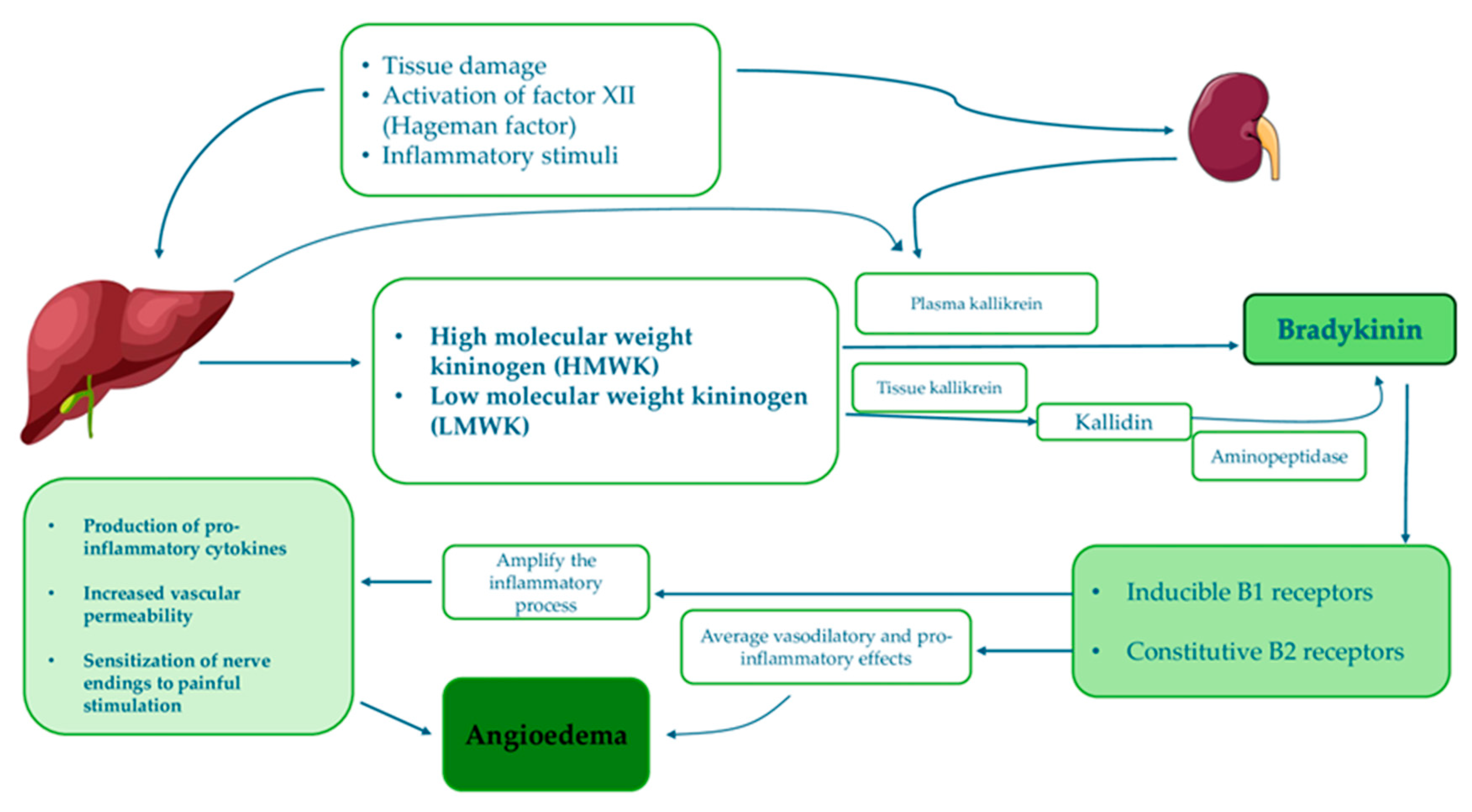
HAE due to quantitative or functional deficiency of C1-INH represents the most common form of bradykinin-mediated AE [6]. It is a rare autosomal dominant disorder with an estimated prevalence of 1:50,000 to 1:100,000 in most populations, although recent analyses suggest global variability with a slight female predominance [5,25]. Two subtypes are recognized: HAE type I is characterized by a mutation in the SERPING1, the gene encoding C1-INH, that leads to reduced synthesis of C1-INH and consequently low plasma levels of the protein. In HAE type II, by contrast, C1-INH concentrations are normal or even elevated, but the protein is functionally defective [6,26,27]. C1-INH, in addition to regulating the complement system, is also the principal inhibitor of the contact system, as it inhibits activated factor XII and plasma kallikrein [19,27]. Both forms result in uncontrolled activation of the kallikrein–kinin system, excessive bradykinin release, and recurrent episodes of nonpitting edema (Figure 1) [26]. Clinically, patients present with attacks affecting the skin, gastrointestinal tract, and upper airways [4]. Glottic edema represents the most severe and life-threatening complication of this condition. Edematous episodes typically involve a single anatomical site, although cases with simultaneous involvement of multiple body regions during the same attack are not uncommon [25]. Symptoms usually develop gradually over several hours, last 2–5 days, and resolve spontaneously [4]. Diagnosis of HAE type I is based on measurement of plasma C1-INH levels, which are typically reduced to less than 50% of normal values. In HAE type II, antigenic C1-INH concentrations remain within the normal range, whereas functional C1-INH activity is decreased to about 50% of normal [22]. Since not all laboratories are able to perform these assays, plasma C4 measurement serves as an excellent screening test in suspected cases of HAE, as C4 levels are reduced in more than 95% of affected patients [22,27,28]. When needed, genetic testing focusing on SERPING1 can further confirm the diagnosis by identifying the causative mutation in most families and is particularly useful in patients with borderline or discordant complement results and for cascade screening of at-risk relatives [22,29]. Early recognition is critical, since standard anti-allergic therapies such as antihistamines, corticosteroids, and epinephrine are ineffective [22]. Effective treatment requires specific agents, including plasma-derived or recombinant C1-INH concentrate administered intravenously, the bradykinin B2 receptor antagonist icatibant administered subcutaneously, or prophylactic agents such as lanadelumab (subcutaneous), C1-INH or berotralstat (oral) in selected patients [22,23].
Figure 1.
Mechanisms of activation and pathogenesis of bradykinin-induced angioedema.
3.2. Acquired Angioedema Due to C1-INH Deficiency (AAE)
AAE-C1INH is a rare, non-hereditary form of bradykinin-mediated AE that typically appears in adulthood, most often after the age of 40 [30]. Unlike HAE, AAE has no familial pattern and is strongly associated with underlying conditions such as B-cell lymphoproliferative disorders, autoimmune diseases, or the presence of autoantibodies against C1-INH [30]. Clinically, AAE is indistinguishable from HAE, with recurrent episodes of non-pitting edema affecting the skin, gastrointestinal tract, and upper airways [31,32]. In AAE, edema most frequently involves the face, tongue, and uvula [31]. Abdominal attacks may present with severe pain, vomiting, or diarrhea, and laryngeal edema remains the most life-threatening manifestation [31]. However, the later age of onset and the association with comorbid conditions should raise suspicion of an acquired rather than hereditary form [33]. The diagnostic hallmark of AAE is the presence of reduced C1q levels, in addition to low C4 and low or dysfunctional C1-INH. Measurement of C1q helps to differentiate AAE from HAE, where C1q levels are typically normal [31]. Treatment of acute attacks mirrors that of HAE and includes C1-INH concentrate and the bradykinin B2 receptor antagonist icatibant [34]. Deucrictibant, an oral B2 receptor antagonist, is being developed as a long-term prophylactic treatment for HAE [35]. Crucially, management of the underlying disease—such as treatment of lymphoproliferative disorders—can improve or even resolve AE in some cases [33].
3.3. Hereditary Angioedema with Normal C1-INH (HAE-nC1INH)
HAE-nC1INH, previously termed type III HAE, is a rare subtype of bradykinin-mediated AE characterized by clinical features similar to classical HAE but with normal quantitative and functional C1-INH levels. The disorder predominantly affects women and is frequently associated with estrogen exposure, such as oral contraceptive use or pregnancy, which may exacerbate or trigger attacks. Genetic studies have identified pathogenic variants in several genes, including F12, PLG, ANGPT1, KNG1, HS3OST6 and more recently MYOF, although in a significant proportion of patients the molecular basis remains unknown. From a genetic perspective, approximately one quarter of cases are associated with mutations in the F12 gene, located within the proline-rich region of the FXII protein [36]. These mutations (e.g., Thr328Lys, Thr328Arg, as well as deletions and duplications in exon 9) promote abnormal FXII activation, often amplified by interaction with plasmin, ultimately leading to excessive bradykinin production [36]. In cases without an identifiable mutation, classified as HAE-UNK, the pathogenesis remains unclear, although indirect evidence supports the involvement of the contact system, plasmin, and bradykinin [36]. Clinically, HAE-nC1INH is indistinguishable from C1-INH-deficient HAE, presenting with recurrent episodes of nonpitting edema affecting the skin, gastrointestinal tract, and upper airways. Facial and oropharyngeal swelling are common, and airway involvement can be life-threatening.
Diagnosis is based on compatible clinical features and family history, with exclusion of other forms of AE. Genetic testing can support the diagnosis, although it is not always conclusive. Standard anti-allergic therapies are ineffective, whereas bradykinin-targeted treatments such as C1-INH concentrate and icatibant have shown effectiveness in case reports and observational studies [22].
4. Drug-Induced Angioedema
The estimated incidence of AE in patients treated with ACE inhibitors ranges from 0.1% to 0.7% [37]. These drugs account for up to 20–40% of emergency department visits for AE [9]. Prospective studies have reported an incidence of 0.07% within the first month of therapy and approximately 0.23% within the first year [38]. Clinical manifestations commonly involve swelling of the lips, tongue, face, and upper airways, typically without urticaria or pruritus, and carry a risk of airway obstruction [38]. In addition to ACE inhibitors, other drugs such as angiotensin II receptor blockers (ARBs), dipeptidyl peptidase-4 (DPP-4) inhibitors (“gliptins”), neprilysin inhibitors, tissue plasminogen activator (tPA), and statins have been implicated as possible causes of bradykinin-mediated AE [24]. The concomitant use of DPP-4 inhibitors and ACE inhibitors appears to pose a particularly high risk, with pharmacovigilance data from the FDA suggesting a synergistic effect [39].
5. Mast Cell Mediator-Induced Angioedema (Histaminergic Angioedema)
Histaminergic AE often manifests as an immediate type I hypersensitivity reaction affecting the face, lips, tongue and throat [1]. It is the most common form of AE encountered in clinical practice and can occur either in association with urticaria or in isolated form [40]. The condition usually has a rapid onset, develops within minutes to a few hours, and typically resolves within 24 h [11]. Unlike bradykinin-mediated forms, histamine-mediated AE often responds well to antihistamines, corticosteroids, and epinephrine when systemic involvement is present [1,11].
5.1. IgE-Mediated: Angioedema with Anaphylaxis, Angioedema with or Without Wheals (Urticaria)
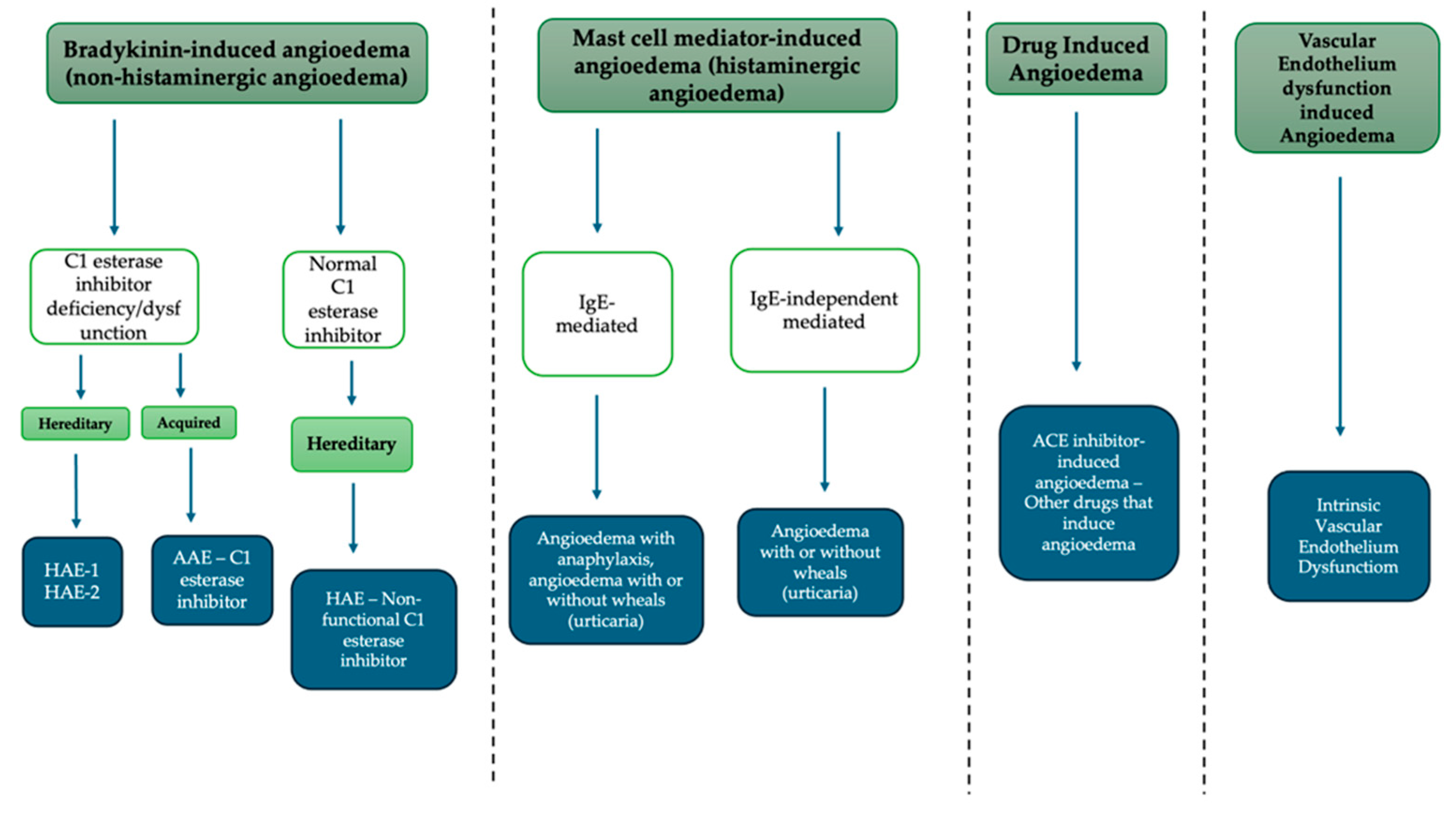
IgE-mediated AE is part of an immediate-type (type I) hypersensitivity reaction, in which allergen-specific IgE antibodies bind to high-affinity receptors on mast cells and basophils (as reported in Figure 2) [41]. During the sensitization phase of a type I hypersensitivity reaction, exposure to allergens stimulates plasma cells to produce antigen-specific immunoglobulin E (IgE) [1]. In this clinically silent stage, IgE molecules bind to high-affinity receptors expressed on mast cells and basophils. Upon re-exposure to the same allergen, cross-linking of IgE molecules with the allergen occurs, thereby initiating cell activation and subsequent degranulation [1]. Mast cell degranulation leads to the subsequent release of histamine, leukotrienes, prostaglandins, and other pro-inflammatory mediators [40,41]. This cascade results in loss of vascular integrity due to vasodilation and increased vascular permeability, ultimately causing fluid extravasation into interstitial spaces and the development of edema [1,40]. Typical triggers include foods, insect stings, and medications, which are also the most common causes of anaphylaxis worldwide [41]. Clinically, IgE-mediated AE frequently coexists with urticaria, pruritus, bronchospasm, and hypotension, forming the clinical spectrum of anaphylaxis. The onset is abrupt, typically within minutes to an hour after allergen exposure, and the course is usually short, with symptoms resolving within 24 h when treated promptly [42]. Because of the systemic risk, intramuscular epinephrine is the treatment of choice, as it rapidly reverses airway obstruction, hypotension, and bronchospasm [43]. Delayed or absent epinephrine use is associated with worse outcomes. Antihistamines and corticosteroids may be used as adjunctive therapies to reduce cutaneous symptoms or prevent biphasic reactions, but they are not substitutes for epinephrine [42].
Figure 2.
Flow chart on different forms of Angioedema.
5.2. IgE-Independently Mediated: Angioedema with or Without Wheals (Urticaria)
IgE-independent AE is mediated by mast cell activation through mechanisms other than IgE cross-linking. It may present with or without urticaria and includes heterogeneous conditions such as nonsteroidal anti-inflammatory drug (NSAID)-induced AE, physical urticarias (cold, heat, pressure), and idiopathic recurrent AE [44]. Unlike IgE-mediated forms, which typically involve allergen-specific immune responses, IgE-independent mechanisms often result from direct mast cell activation or altered arachidonic acid metabolism, as seen in NSAID-exacerbated cutaneous disease. These patients may present with isolated AE or with concurrent wheals, and the clinical course is usually benign but recurrent [45]. Therapeutically, non-sedating H1-antihistamines remain the first-line treatment, although higher than standard doses may be required to achieve adequate control. Short courses of systemic corticosteroids can be considered in severe episodes [44]. For patients with chronic or refractory disease, targeted biologic therapies such as omalizumab, an anti-IgE monoclonal antibody, have demonstrated efficacy in reducing both AE and urticaria activity [46].
6. Vascular Endothelium Dysfunction-Induced Angioedema
The vascular endothelium plays a significant role in the pathogenesis of AE. Mutations such as HAE-ANGPT, HAE-MYOF, HAE-HSST, HAE-UNK, as well as systemic capillary leak syndrome, are typical of these forms [28]. These findings have led recent classification proposals to recognize a specific “endothelium-mediated” AE endotype, distinct from but partially overlapping with bradykinin-mediated forms, within the spectrum of genetic HAE [17].
7. Oro-Facial Angioedema: Differential Diagnosis
A range of non-angioedematous conditions may closely resemble acute oro-facial swelling but differ substantially in etiology, clinical evolution, and therapeutic approach. Odontogenic infections and Ludwig’s angina typically manifest with painful, indurated swelling of the submandibular or sublingual spaces, accompanied by fever and systemic toxicity, with a well-recognized potential for rapid airway compromise; cross-sectional imaging and urgent surgical assessment are usually required [47,48,49]. Cervicofacial necrotizing fasciitis can also mimic AE in its early stages; however, its fulminant course, disproportionate pain, and hallmark radiological findings—such as fascial thickening, gas tracking, and fluid collections—facilitate the distinction [50,51].
Localized toxic or inflammatory reactions, including insect stings, arthropod bites, or animal-related injuries, may produce erythematous, warm, and tender swelling often associated with leukocytosis, features that contrast with the non-inflammatory character of bradykinin-mediated edema [52]. Neoplastic or cystic lesions of the cervicofacial region, on the other hand, generally follow a chronic and progressive course, presenting as firm, asymmetric, and non-fluctuating masses rather than episodic, self-limited edema [53,54].
In addition, lymphedema represents an important differential consideration. It can involve the face, neck, and oral cavity, is typically persistent and non-pitting in advanced stages, and often arises as a sequela of oncologic surgery or radiotherapy in the head and neck [55,56]. Beyond acquired causes, lymphatic dysfunction may also occur in genetic syndromes such as Phelan–McDermid syndrome (22q13.3 deletion/SHANK3-related), in which expert consensus highlights a measurable prevalence of peripheral and facial lymphedema and points to emerging genotype–phenotype correlations, including CELSR1 variants [57].
8. Dental Practice Implications
AE may occur spontaneously or be triggered by external factors such as local trauma or surgical procedures. In particular, dental treatments represent potential triggering factors for the onset of AE episodes, especially in patients predisposed to adverse reactions [58,59]. The regions most frequently affected by AE in the oro-facial district include: the lips, which are among the most common sites; the tongue, less frequently involved but whose swelling may lead to severe respiratory complications; the periorbital region; and the glottis, more rarely affected but particularly dangerous due to the risk of airway obstruction [60,61]. Among the dental causes most commonly associated with AE are:
- Tooth extractions: as with other surgical procedures, they are the most frequently associated with AE. Local tissue damage activates the complement cascade, in particular the contact pathway, which promotes increased bradykinin production [62]. In patients with C1-INH deficiency or dysfunctional C1-INH, this process becomes uncontrolled. Bradykinin binds to the B2 receptor, causing vasodilation and increased capillary permeability, leading to AE [20].
- Allergic reactions to local anesthetics or dental materials such as nickel, resins, latex, or root canal irrigants (NaOCl), although rare, can manifest as AE with urticaria or, in severe cases, with anaphylaxis [63]. These type I (IgE-mediated) or type IV (cell-mediated) allergic reactions provoke mast cell degranulation and the release of histamine and other mediators, resulting in rapidly developing and potentially dangerous AE [20,63,64,65].
- Preoperative or “dental chair” anxiety may activate neuroendocrine mechanisms that facilitate the development of AE, particularly in patients with HAE [66]. In these cases, the use of nitrous oxide (N2O) as a sedative has been proposed to reduce anxiety during dental procedures, thereby helping to prevent AE attacks [67].
- Use of ACE inhibitors, which prevent bradykinin degradation, favoring its accumulation and leading to increased vascular permeability and subsequent AE [38]. In dentistry, a patient on chronic therapy may develop AE even in the absence of trauma or allergens. In such cases, treatment with antihistamines or corticosteroids is often ineffective [9,37,38].
9. Clinical Recommendation
Clinical guidelines for the perioperative management of HAE highlight the critical role of targeted pre-procedural prophylaxis, particularly in dental and surgical contexts, to mitigate the risk of potentially life-threatening attacks. The administration of C1-INH concentrate—preferably plasma-derived—represents the first-line strategy, ideally administered within 1–6 h before the procedure, at doses up to 20 IU/kg IV to ensure effective protection [68,69]. Alternatively, attenuated androgens such as danazol, administered for 5–7 days before and 2–3 days after the intervention, have demonstrated efficacy in preventing perioperative attacks, although their use is limited by a less favorable adverse-effect profile [68,69,70]. Retrospective data strongly support the effectiveness of prophylaxis: in a study of 638 dental procedures in HAE-C1INH patients, the incidence of attacks dropped from 15.7% without prophylaxis to 3.2% in those receiving targeted pre-treatment [71]. Furthermore, perioperative stress and anxiety are recognized as relevant triggers for HAE exacerbations, underscoring the importance of adjunctive strategies such as anxiolysis and conscious sedation to further reduce risk [72].
10. Advances and Research Directions
In recent years, major progress has been made in the understanding and management of angioedema, particularly HAE. On the biomarker side, cleaved high–molecular-weight kininogen has emerged as a promising indicator of excessive kallikrein–kinin system activation, with elevated levels in HAE-C1INH that decrease under effective kallikrein inhibition, suggesting a potential role for future disease monitoring and endotyping [73,74]. At the genetic level, multi-gene panels now routinely extend beyond SERPING1 to include F12, PLG, ANGPT1 and other loci, refining the classification of bradykinin-mediated HAE with normal C1-INH and enabling more precise family counseling, although a substantial proportion of patients still lack an identifiable mutation [75]. Therapeutically, the landscape has been transformed by targeted agents such as the monoclonal kallikrein inhibitor lanadelumab, the oral kallikrein inhibitor sebetralstat for on-demand treatment, and the antisense oligonucleotide donidalorsen, which markedly reduces attack rates and has recently been approved as long-term prophylaxis [76]. Parallel efforts to harmonize terminology and classification, exemplified by the 2024 DANCE consensus, provide a unified framework for bradykinin, and mast cell-mediated forms and highlight persistent unmet needs, including limited access to advanced therapies, lack of widely available mechanistic biomarkers, and the need for earlier recognition of non–histamine-mediated angioedema in general practice [28,77].
11. Conclusions
AE is a heterogeneous disorder in which distinguishing between histaminergic and bradykinin-mediated forms is crucial for both diagnosis and therapy. Bradykinin-mediated forms do not respond to antihistamines, corticosteroids, or epinephrine and require specific treatments such as C1-INH concentrates, icatibant, and, where available, kallikrein inhibitors. Diagnosis relies on a detailed medical history, physical examination, and targeted laboratory tests: C4 and C1-INH (antigenic/functional) for HAE/AAE; C1q for AAE; and selected genetic testing for HAE-nC1INH. In patients with HAE-nC1INH, female predominance and the role of estrogens are distinctive clinical features, while the genetic basis is still evolving, with known mutations (F12 and others) but a large proportion of cases classified as HAE-UNK.
In dental and surgical settings, procedures may act as triggers; therefore, short-term prophylaxis with pdhC1-INH/ plasma-derived human C1-INH and/or attenuated androgens, based on individual evaluation, significantly reduces the risk of airway edema. Regardless of severity scores, a structured perioperative plan is recommended: identification of at-risk patients, anxiety management (e.g., conscious sedation), immediate availability of emergency therapy (C1-INH, icatibant, or alternatives), and a multidisciplinary approach involving allergology, anesthesiology, and dentistry.
Finally, clinician education, patient awareness (recognition of prodromes, avoidance of ACE inhibitors and other high-risk drugs), and research on biomarkers and personalized prophylaxis strategies remain priorities. Prospective studies and comparative effectiveness analyses are needed to optimize the management of HAE-nC1INH and to establish validated decision-making algorithms in dental care settings.
Author Contributions
Conceptualization, D.D.F. and D.M.; methodology, G.G., C.L. and M.P.; validation, M.P. and C.L.; formal analysis, D.D.F. and D.M.; investigation, D.D.F.; resources, D.D.F., D.M. and G.C.; data curation, D.D.F.; writing—original draft preparation, D.D.F.; writing—review and editing, D.D.F. and M.P.; visualization, G.C., G.G. and C.L.; supervision, M.P. All authors have read and agreed to the published version of the manuscript.
Funding
This research received no external funding.
Data Availability Statement
No new data were created or analyzed in this study.
Conflicts of Interest
The authors declare no conflicts of interest.
References
- Lima, H.; Zheng, J.; Wong, D.; Waserman, S.; Sussman, G.L. Pathophysiology of bradykinin and histamine mediated angioedema. Front. Allergy 2023, 4, 1263432. [Google Scholar] [CrossRef] [Scilit] [PubMed]
- Sanchez, G.A.; Boot, M.; Lathif, A. Quincke’s disease: An unusual pathology. J. Surg. Case Rep. 2023, 2023, rjad085. [Google Scholar] [CrossRef] [Scilit] [PubMed]
- Madsen, F.; Attermann, J.; Linneberg, A. Epidemiology of Non-hereditary Angioedema. Acta Derm. Venerol. 2012, 92, 475–479. [Google Scholar] [CrossRef] [Scilit]
- Maurer, M.; Magerl, M.; Ansotegui, I.; Aygören-Pürsün, E.; Betschel, S.; Bork, K.; Bowen, T.; Balle Boysen, H.; Farkas, H.; Grumach, A.S.; et al. The international WAO/EAACI guideline for the management of hereditary angioedema—The 2017 revision and update. Allergy 2018, 73, 1575–1596. [Google Scholar] [CrossRef] [Scilit] [PubMed]
- Fisch, S.A.; Rundle, A.G.; Neugut, A.I.; Freedberg, D.E. Worldwide Prevalence of Hereditary Angioedema: A Systematic Review and Meta-Analysis. Int. Arch. Allergy Immunol. 2025, 186, 802–810. [Google Scholar] [CrossRef] [Scilit] [PubMed]
- Zanichelli, A.; Arcoleo, F.; Barca, M.; Borrelli, P.; Bova, M.; Cancian, M.; Cicardi, M.; Cillari, E.; De Carolis, C.; De Pasquale, T.; et al. A nationwide survey of hereditary angioedema due to C1 inhibitor deficiency in Italy. Orphanet J. Rare Dis. 2015, 10, 11. [Google Scholar] [CrossRef] [Scilit]
- Bork, K.; Machnig, T.; Wulff, K.; Witzke, G.; Prusty, S.; Hardt, J. Clinical features of genetically characterized types of hereditary angioedema with normal C1 inhibitor: A systematic review of qualitative evidence. Orphanet J. Rare Dis. 2020, 15, 289. [Google Scholar] [CrossRef] [Scilit] [PubMed]
- Yong, P.F.K.; Coulter, T.; El-Shanawany, T.; Garcez, T.; Hackett, S.; Jain, R.; Kiani-Alikhan, S.; Manson, A.; Noorani, S.; Stroud, C.; et al. A National Survey of Hereditary Angioedema and Acquired C1 Inhibitor Deficiency in the United Kingdom. J. Allergy Clin. Immunol. Pract. 2023, 11, 2476–2483. [Google Scholar] [CrossRef] [Scilit] [PubMed]
- Banerji, A.; Blumenthal, K.G.; Lai, K.H.; Zhou, L. Epidemiology of ACE Inhibitor Angioedema Utilizing a Large Electronic Health Record. J. Allergy Clin. Immunol. Pr. 2017, 5, 744–749. [Google Scholar] [CrossRef] [Scilit]
- Pathak, G.N.; Truong, T.M.; Chakraborty, A.; Rao, B.; Monteleone, C. Tranexamic acid for angiotensin-converting enzyme inhibitor–induced angioedema. Clin. Exp. Emerg. Med. 2023, 11, 94–99. [Google Scholar] [CrossRef] [Scilit] [PubMed]
- Bernstein, J.A.; Cremonesi, P.; Hoffmann, T.K.; Hollingsworth, J. Angioedema in the emergency department: A practical guide to differential diagnosis and management. Int. J. Emerg. Med. 2017, 10, 15. [Google Scholar] [CrossRef] [Scilit] [PubMed]
- Sartorio, S.; Rivolta, F.; Tedeschi, A.; Manzotti, G.; Piantanida, M.; Marra, A.M.; Cappiello, F.; Yacoub, M.R.; Nannipieri, S.; Maffeis, L.; et al. Demographic and clinical characteristics of chronic histaminergic angioedema and chronic urticaria with angioedema, a multicenter Italian experience. Eur. Ann. Allergy Clin. Immunol. 2025. [Google Scholar] [CrossRef] [Scilit] [PubMed]
- Division of Immunology-Allergy, Department of Internal Medicine, Ege University School of Medicine, Izmir, Turkey; Gulbahar, O. Angioedema without wheals: A clinical update. Balk. Med. J. 2021, 38, 73–81. [Google Scholar] [CrossRef] [Scilit]
- Can, P.K.; Fomina, D.; Kocaturk, E. Chronic inducible urticaria: Clinical presentation, diagnosis, and management. IJSA Indian J. Skin Allergy 2022, 1, 2–6. [Google Scholar] [CrossRef] [Scilit]
- Nurmesa, A.; Zakiyah, N.; Insani, W.N. Clinical Presentations and Characteristics of NSAIDs Hypersensitivity in a Tertiary Care Hospital in Indonesia: A Case Series. Int. Med. Case Rep. J. 2025, 18, 163–171. [Google Scholar] [CrossRef] [Scilit]
- Magen, E.; Leibovich, I.; Magen, I.; Merzon, E.; Green, I.; Golan-Cohen, A.; Vinker, S.; Israel, A. Comorbidity Profile of Chronic Mast Cell–Mediated Angioedema Versus Chronic Spontaneous Urticaria. Biomedicines 2025, 13, 2259. [Google Scholar] [CrossRef] [Scilit] [PubMed]
- Giavina-Bianchi, P.; Vivolo Aun, M.; Giavina-Bianchi, M.; Ribeiro, A.J.; Camara Agondi, R.; Motta, A.A.; Kalil, J. Hereditary angioedema classification: Expanding knowledge by genotyping and endotyping. World Allergy Organ. J. 2024, 17, 100906. [Google Scholar] [CrossRef] [Scilit] [PubMed]
- Young, M.C.; Banerji, A. Angioedema without urticaria: Diagnosis and management. Allergy Asthma Proc. 2025, 46, 185–191. [Google Scholar] [CrossRef] [Scilit] [PubMed]
- Grumach, A.S.; Riedl, M.A.; Cheng, L.; Jain, S.; Nova Estepan, D.; Zanichelli, A. Hereditary angioedema diagnosis: Reflecting on the past, envisioning the future. World Allergy Organ. J. 2025, 18, 101060. [Google Scholar] [CrossRef] [Scilit] [PubMed]
- Tutunaru, C.V.; Ică, O.M.; Mitroi, G.G.; Neagoe, C.D.; Mitroi, G.F.; Orzan, O.A.; Bălăceanu-Gurău, B.; Ianoși, S.L. Unveiling the Complexities of Hereditary Angioedema. Biomolecules 2024, 14, 1298. [Google Scholar] [CrossRef] [Scilit]
- Pines, J.M.; Poarch, K.; Hughes, S. Recognition and Differential Diagnosis of Hereditary Angioedema in the Emergency Department. J. Emerg. Med. 2021, 60, 35–43. [Google Scholar] [CrossRef] [Scilit]
- Craig, T.J.; Bernstein, J.A.; Farkas, H.; Bouillet, L.; Boccon-Gibod, I. Diagnosis and Treatment of Bradykinin-Mediated Angioedema: Outcomes from an Angioedema Expert Consensus Meeting. Int. Arch. Allergy Immunol. 2014, 165, 119–127. [Google Scholar] [CrossRef] [Scilit]
- Busse, P.J.; Farkas, H.; Banerji, A.; Lumry, W.R.; Longhurst, H.J.; Sexton, D.J.; Riedl, M.A. Lanadelumab for the Prophylactic Treatment of Hereditary Angioedema with C1 Inhibitor Deficiency: A Review of Preclinical and Phase I Studies. BioDrugs 2019, 33, 33–43. [Google Scholar] [CrossRef] [Scilit] [PubMed]
- Smolinska, S.; Antolín-Amérigo, D.; Popescu, F.-D. Bradykinin Metabolism and Drug-Induced Angioedema. Int. J. Mol. Sci. 2023, 24, 11649. [Google Scholar] [CrossRef] [Scilit] [PubMed]
- Craig, T.; Pürsün, E.A.; Bork, K.; Bowen, T.; Boysen, H.; Farkas, H.; Grumach, A.; Katelaris, C.H.; Lockey, R.; Longhurst, H.; et al. WAO Guideline for the Management of Hereditary Angioedema. World Allergy Organ. J. 2012, 5, 182–199. [Google Scholar] [CrossRef] [Scilit] [PubMed]
- Santacroce, R.; D’Andrea, G.; Maffione, A.B.; Margaglione, M.; d’Apolito, M. The Genetics of Hereditary Angioedema: A Review. JCM J. Clin. 2021, 10, 2023. [Google Scholar] [CrossRef] [Scilit]
- Zanichelli, A.; Magerl, M.; Longhurst, H.; Fabien, V.; Maurer, M. Hereditary angioedema with C1 inhibitor deficiency: Delay in diagnosis in Europe. All. Asth Clin. Immun. 2013, 9, 29. [Google Scholar] [CrossRef] [Scilit]
- Zuraw, B.L.; Bork, K.; Bouillet, L.; Christiansen, S.C.; Farkas, H.; Germenis, A.E.; Grumach, A.S.; Kaplan, A.; López-Lera, A.; Magerl, M.; et al. Hereditary Angioedema with Normal C1 Inhibitor: An Updated International Consensus Paper on Diagnosis, Pathophysiology, and Treatment. Clin. Rev. Allerg. Immunol. 2025, 68, 24. [Google Scholar] [CrossRef] [Scilit]
- Vatsiou, S.; Zamanakou, M.; Loules, G.; Psarros, F.; Parsopoulou, F.; Csuka, D.; Valerieva, A.; Staevska, M.; Porebski, G.; Obtulowicz, K.; et al. A novel deep intronic SERPING1 variant as a cause of hereditary angioedema due to C1-inhibitor deficiency. Allergol. Int. 2020, 69, 443–449. [Google Scholar] [CrossRef] [Scilit] [PubMed]
- Castelli, R.; Zanichelli, A.; Cicardi, M.; Cugno, M. Acquired C1-inhibitor deficiency and lymphoproliferative disorders: A tight relationship. Crit. Rev. Oncol./Hematol. 2013, 87, 323–332. [Google Scholar] [CrossRef] [Scilit] [PubMed]
- Cicardi, M.; Zanichelli, A. Acquired angioedema. All. Asth Clin. Immun. 2010, 6, 14. [Google Scholar] [CrossRef] [Scilit] [PubMed]
- Dobson, G.; Edgar, D.; Trinder, J. Angioedema of the Tongue Due to Acquired C1 Esterase Inhibitor Deficiency. Anaesth. Intensive Care 2003, 31, 99–102. [Google Scholar] [CrossRef] [Scilit] [PubMed]
- Baeza, M.L.; González-Quevedo, T.; Caballero, T.; Guilarte, M.; Lleonart, R.; Varela, S.; Castro, M.; Díaz, C.; Escudero, E.; García, M.G.; et al. Angioedema Due to Acquired Deficiency of C1-Inhibitor: A Cohort Study in Spain and a Comparison With Other Series. J. Allergy Clin. Immunol. Pract. 2022, 10, 1020–1028. [Google Scholar] [CrossRef] [Scilit]
- Bork, K.; Staubach-Renz, P.; Hardt, J. Angioedema due to acquired C1-inhibitor deficiency: Spectrum and treatment with C1-inhibitor concentrate. Orphanet J. Rare Dis. 2019, 14, 65. [Google Scholar] [CrossRef] [Scilit] [PubMed]
- De Lange, M.; Petersen, R.S.; Fijen, L.M.; Cohn, D.M. Long-term prophylactic treatment with deucrictibant for angioedema due to acquired C1-inhibitor deficiency. J. Allergy Clin. Immunol. 2025, 156, S0091674925008899. [Google Scholar] [CrossRef] [Scilit] [PubMed]
- Magerl, M.; Germenis, A.E.; Maas, C.; Maurer, M. Hereditary Angioedema with Normal C1 Inhibitor. Immunol. Allergy Clin. N. Am. 2017, 37, 571–584. [Google Scholar] [CrossRef] [Scilit] [PubMed]
- Kostis, W.J.; Shetty, M.; Chowdhury, Y.S.; Kostis, J.B. ACE Inhibitor-Induced Angioedema: A Review. Curr. Hypertens. Rep. 2018, 20, 55. [Google Scholar] [CrossRef] [Scilit] [PubMed]
- Montinaro, V.; Cicardi, M. ACE inhibitor-mediated angioedema. Int. Immunopharmacol. 2020, 78, 106081. [Google Scholar] [CrossRef] [Scilit]
- Lepelley, M.; Khouri, C.; Lacroix, C.; Bouillet, L. Angiotensin-converting enzyme and dipeptidyl peptidase-4 inhibitor–induced angioedema: A disproportionality analysis of the WHO pharmacovigilance database. J. Allergy Clin. Immunol. Pract. 2020, 8, 2406–2408.e1. [Google Scholar] [CrossRef] [Scilit]
- Kanani, A.; Betschel, S.D.; Warrington, R. Urticaria and angioedema. Allergy Asthma Clin. Immunol. 2018, 14, 59. [Google Scholar] [CrossRef] [Scilit]
- Simons, F.E.R.; Ardusso, L.R.F.; Bilò, M.B.; El-Gamal, Y.M.; Ledford, D.K.; Ring, J.; Sanchez-Borges, M.; Senna, G.E.; Sheikh, A.; Thong, B.Y. World Allergy Organization anaphylaxis guidelines: Summary. J. Allergy Clin. Immunol. 2011, 127, 587–593.e22. [Google Scholar] [CrossRef] [Scilit]
- Shaker, M.S.; Wallace, D.V.; Golden, D.B.K.; Oppenheimer, J.; Bernstein, J.A.; Campbell, R.L.; Dinakar, C.; Ellis, A.; Greenhawt, M.; Khan, D.A.; et al. Anaphylaxis—A 2020 practice parameter update, systematic review, and Grading of Recommendations, Assessment, Development and Evaluation (GRADE) analysis. J. Allergy Clin. Immunol. 2020, 145, 1082–1123. [Google Scholar] [CrossRef] [Scilit] [PubMed]
- Lieberman, P.; Nicklas, R.A.; Randolph, C.; Oppenheimer, J.; Bernstein, D.; Bernstein, J.; Ellis, A.; Golden, D.B.K.; Greenberger, P.; Kemp, S.; et al. Anaphylaxis—A practice parameter update 2015. Ann. Allergy Asthma Immunol. 2015, 115, 341–384. [Google Scholar] [CrossRef] [Scilit] [PubMed]
- Zuberbier, T.; Aberer, W.; Asero, R.; Abdul Latiff, A.H.; Baker, D.; Ballmer-Weber, B.; Bernstein, J.A.; Bindslev-Jensen, C.; Brzoza, Z.; Buense Bedrikow, R.; et al. The EAACI/GA2LEN/EDF/WAO guideline for the definition, classification, diagnosis and management of urticaria. Allergy 2018, 73, 1393–1414. [Google Scholar] [CrossRef] [Scilit]
- Kowalski, M.L.; Asero, R.; Bavbek, S.; Blanca, M.; Blanca-Lopez, N.; Bochenek, G.; Brockow, K.; Campo, P.; Celik, G.; Cernadas, J.; et al. Classification and practical approach to the diagnosis and management of hypersensitivity to nonsteroidal anti-inflammatory drugs. Allergy 2013, 68, 1219–1232. [Google Scholar] [CrossRef] [Scilit] [PubMed]
- Maurer, M.; Rosén, K.; Hsieh, H.-J.; Saini, S.; Grattan, C.; Gimenéz-Arnau, A.; Agarwal, S.; Doyle, R.; Canvin, J.; Kaplan, A.; et al. Omalizumab for the Treatment of Chronic Idiopathic or Spontaneous Urticaria. N. Engl. J. Med. 2013, 368, 924–935. [Google Scholar] [CrossRef] [Scilit]
- Hoerter, J.E.; Malkin, B.D. Odontogenic Orofacial Space Infections. In StatPearls; StatPearls Publishing: Treasure Island, FL, USA, 2025. Available online: http://www.ncbi.nlm.nih.gov/books/NBK589648/ (accessed on 10 September 2025).
- Vasanth, S.; Chandran, S.; Pandyan, D.A.; Gnanam, P.; Djearamane, S.; Wong, L.S.; Selvaraj, S. Case Report: Ludwig’s angina-“The Dangerous Space”. F1000Res 2024, 11, 1511. [Google Scholar] [CrossRef] [Scilit] [PubMed]
- Petruzzi, M.; Messina, S.; De Falco, D.; Lucchese, A.; Romano, A.; Di Stasio, D.; Milillo, L.; De Benedittis, M.; Petruzzi, M. Dental abscesses and phlegmons: A brief review. Eur. J. Musculoskelet. Diseases 2022, 11, 31–33. [Google Scholar]
- Chaudhry, A.A.; Baker, K.S.; Gould, E.S.; Gupta, R. Necrotizing Fasciitis and Its Mimics: What Radiologists Need to Know. Am. J. Roentgenol. 2015, 204, 128–139. [Google Scholar] [CrossRef] [Scilit] [PubMed]
- Warren, W.A.; Droz, N.C.; Wimalawansa, S.M.; Mancho, S.N.; Bernstein, J.M. It’s Not Always What It Seems: Necrotizing Fasciitis Mimicking Angioedema. Skinmed 2016, 14, 45–46. [Google Scholar] [PubMed]
- Inal, A.; Ufuk Altintas, D.; Korkmaz Güvenmez, H.; Yilmaz, M.; Güneşer Kendirli, S. Life-threatening facial edema due to pine caterpillar mimicking an allergic event. Allergol. Et Immunopathol. 2006, 34, 171–173. [Google Scholar] [CrossRef] [Scilit]
- Bulut, O.C.; Giger, R.; Alwagdani, A.; Aldabal, N.; Stenzinger, A.; Heimgartner, S.; Nisa, L.; Borner, U. Primary neoplasms of the parapharyngeal space: Diagnostic and therapeutic pearls and pitfalls. Eur. Arch. Otorhinolaryngol. 2021, 278, 4933–4941. [Google Scholar] [CrossRef] [Scilit] [PubMed]
- Veluswamy, S.; Poondiyar Sirajuddin, S.H.; Padmanabhan, P.P. Cystic Myoepithelioma of Parapharyngeal Space. Indian. J. Otolaryngol. Head. Neck Surg. 2019, 71, 689–692. [Google Scholar] [CrossRef] [Scilit] [PubMed]
- Starmer, H.; Cherry, M.G.; Patterson, J.; Young, B.; Fleming, J. Assessment of Measures of Head and Neck Lymphedema Following Head and Neck Cancer Treatment: A Systematic Review. Lymphat. Res. Biol. 2023, 21, 42–51. [Google Scholar] [CrossRef] [Scilit] [PubMed]
- Arends, C.R.; van der Molen, L.; Lindhout, J.E.; Bragante, K.; Navran, A.; van den Brekel, M.W.M.; Stuiver, M.M. Lymphedema and Trismus after Head and Neck Cancer, and the Impact on Body Image and Quality of Life. Cancers 2024, 16, 653. [Google Scholar] [CrossRef] [Scilit] [PubMed]
- De Falco, D.; Di Stasio, D.; Lauritano, D.; Lucchese, A.; Petruzzi, M. Orofacial Lymphedema in Phelan–McDermid Syndrome: A Case of Hemifacial Involvement and a Scoping Review. Appl. Sci. 2025, 15, 2195. [Google Scholar] [CrossRef] [Scilit]
- Lee, I.T.; Arioka, M.; Kleinman, S.H.; Gernez, Y. Masqueraders of angioedema after a dental procedure. Ann. Allergy Asthma Immunol. 2020, 124, 536–541. [Google Scholar] [CrossRef] [Scilit] [PubMed]
- Lodi, G.; Sardella, A.; Bez, C.; Demarosi, F.; Cicardi, M.; Carrassi, A. Dental experience and self-perceived dental care needs of patients with angioedema. Spec. Care Dent. 2001, 21, 27–31. [Google Scholar] [CrossRef] [Scilit]
- Rosi-Schumacher, M.; Shah, S.J.; Craig, T.; Goyal, N. Clinical manifestations of hereditary angioedema and a systematic review of treatment options. Laryngoscope Investig. Otolaryngol. 2021, 6, 394–403. [Google Scholar] [CrossRef] [Scilit] [PubMed]
- Kulthanan, K.; Jiamton, S.; Boochangkool, K.; Jongjarearnprasert, K. Angioedema: Clinical and Etiological Aspects. Clin. Dev. Immunol. 2007, 2007, 026438. [Google Scholar] [CrossRef] [Scilit] [PubMed]
- Banerji, A. Hereditary angioedema: Classification, pathogenesis, and diagnosis. Allergy Asthma Proc. 2011, 32, 403–407. [Google Scholar] [CrossRef] [Scilit] [PubMed]
- Speca, S.J.; Boynes, S.G.; Cuddy, M.A. Allergic Reactions to Local Anesthetic Formulations. Dent. Clin. N. Am. 2010, 54, 655–664. [Google Scholar] [CrossRef] [Scilit] [PubMed]
- Bhole, M.V.; Manson, A.L.; Seneviratne, S.L.; Misbah, S.A. IgE-mediated allergy to local anaesthetics: Separating fact from perception: A UK perspective. Br. J. Anaesth. 2012, 108, 903–911. [Google Scholar] [CrossRef] [Scilit] [PubMed]
- Contaldo, M.; Di Stasio, D.; Romano, A.; Fiori, F.; Della Vella, F.; Rupe, C.; Lajolo, C.; Petruzzi, M.; Serpico, R.; Lucchese, A. Oral Candidiasis and Novel Therapeutic Strategies: Antifungals, Phytotherapy, Probiotics, and Photodynamic Therapy. Curr. Drug Delivery 2023, 20, 441–456. [Google Scholar] [CrossRef] [Scilit] [PubMed]
- Aygören-Pürsün, E.; Bygum, A.; Beusterien, K.; Hautamaki, E.; Sisic, Z.; Wait, S.; Boysen, H.B.; Caballero, T. Socioeconomic burden of hereditary angioedema: Results from the hereditary angioedema burden of illness study in Europe. Orphanet J. Rare Dis. 2014, 9, 99. [Google Scholar] [CrossRef] [Scilit]
- Peretz, B.; Katz, J.; Zilburg, I.; Shemer, J. Response to nitrous-oxide and oxygen among dental phobic patients. Int. Dent. J. 1998, 48, 17–23. [Google Scholar] [CrossRef] [Scilit] [PubMed]
- Williams, A.H.; Craig, T.J. Perioperative management for patients with hereditary angioedema. Allergy Rhinol. 2015, 6, 50–55. [Google Scholar] [CrossRef] [Scilit] [PubMed]
- Jurado-Palomo, J.; Muñoz-Caro, J.M.; López-Serrano, M.C.; Prior, N.; Cabañas, R.; Pedrosa, M.; Burgueño, M.; Caballero, T. Management of dental-oral procedures in patients with hereditary angioedema due to C1 inhibitor deficiency. J. Investig. Allergol. Clin. Immunol. 2013, 23, 1–6. [Google Scholar] [PubMed]
- Sebastian, R.; Tobias, J.D. Perioperative care of a patient with hereditary angioedema. Pediatr. Anesth. Crit. Care J.-PACCJ 2014, 2, 19–25. [Google Scholar] [CrossRef] [Scilit]
- Gokmen, N.M.; Gumusburun, R.; Camyar, A.; Ozgul, S.; Ozısık, M.; Turk, T.; Sin, A.Z. The determinants of angioedema attacks related to dental and gingival procedures in hereditary angioedema patients. BMC Oral Health 2025, 25, 1017. [Google Scholar] [CrossRef] [Scilit] [PubMed]
- Rosa, A.; Franco, R.; Miranda, M.; Casella, S.; D’Amico, C.; Fiorillo, L.; Cervino, G. The role of anxiety in patients with hereditary angioedema during oral treatment: A narrative review. Front. Oral Health 2023, 4, 1257703. [Google Scholar] [CrossRef] [Scilit] [PubMed]
- Banerji, A.; Busse, P.; Shennak, M.; Lumry, W.; Davis-Lorton, M.; Wedner, H.J.; Jacobs, J.; Baker, J.; Bernstein, J.A.; Lockey, R.; et al. Inhibiting Plasma Kallikrein for Hereditary Angioedema Prophylaxis. N. Engl. J. Med. 2017, 376, 717–728. [Google Scholar] [CrossRef] [Scilit] [PubMed]
- Wang, Y.; Marier, J.-F.; Kassir, N.; Chang, C.; Martin, P. Pharmacokinetics, Pharmacodynamics, and Exposure-Response of Lanadelumab for Hereditary Angioedema. Clin. Transl. Sci. 2020, 13, 1208–1216. [Google Scholar] [CrossRef] [Scilit] [PubMed]
- Loules, G.; Parsopoulou, F.; Zamanakou, M.; Csuka, D.; Bova, M.; González-Quevedo, T.; Psarros, F.; Porebski, G.; Speletas, M.; Firinu, D.; et al. Deciphering the Genetics of Primary Angioedema with Normal Levels of C1 Inhibitor. J. Clin. Med. 2020, 9, 3402. [Google Scholar] [CrossRef] [Scilit] [PubMed]
- Banerji, A.; Riedl, M.A.; Bernstein, J.A.; Cicardi, M.; Longhurst, H.J.; Zuraw, B.L.; Busse, P.J.; Anderson, J.; Magerl, M.; Martinez-Saguer, I.; et al. Effect of Lanadelumab Compared With Placebo on Prevention of Hereditary Angioedema Attacks: A Randomized Clinical Trial. JAMA 2018, 320, 2108. [Google Scholar] [CrossRef] [Scilit]
- Reshef, A.; Buttgereit, T.; Betschel, S.D.; Caballero, T.; Farkas, H.; Grumach, A.S.; Hide, M.; Jindal, A.K.; Longhurst, H.; Peter, J.; et al. Definition, acronyms, nomenclature, and classification of angioedema (DANCE): AAAAI, ACAAI, ACARE, and APAAACI DANCE consensus. J. Allergy Clin. Immunol. 2024, 154, 398–411.e1. [Google Scholar] [CrossRef] [Scilit]

Disclaimer/Publisher’s Note: The statements, opinions and data contained in all publications are solely those of the individual author(s) and contributor(s) and not of MDPI and/or the editor(s). MDPI and/or the editor(s) disclaim responsibility for any injury to people or property resulting from any ideas, methods, instructions or products referred to in the content. |
© 2025 by the authors. Licensee MDPI, Basel, Switzerland. This article is an open access article distributed under the terms and conditions of the Creative Commons Attribution (CC BY) license (https://creativecommons.org/licenses/by/4.0/).