Case Report

Pediatric Ciliopathy Linked to TULP3 Variant—A Case Report

by
Mrunmayi Prashant Marathe
1,
Snehavardhan Pandey
1,*,
Anusha Kulkarni
2,
Thenral S. Geetha
3 and
Ashish Bavdekar
1
1
Division of Pediatric Gastroenterology, Hepatology and Nutrition, Department of Pediatrics, K.E.M. Hospital and Research Center, Sardar Moodliar Road, Rasta Peth, Pune 411011, Maharashtra, India
2
Department of Pathology, K.E.M. Hospital and Research Center, Sardar Moodliar Road, Rasta Peth, Pune 411011, Maharashtra, India
3
MedGenome Labs Ltd., Sy. Nos. 94/1C and 94/2, Tower 1, Ground Floor, Veerasandra Village, Attibele Hobli, Electronic City Phase-1, Electronics City, Bangalore 560100, Karnataka, India
*
Author to whom correspondence should be addressed.
J. Mol. Pathol. 2026, 7(2), 16; https://doi.org/10.3390/jmp7020016
Submission received: 14 October 2025 / Revised: 15 February 2026 / Accepted: 5 April 2026 / Published: 14 April 2026

Abstract

Ciliopathies, initially known as fibrocystic liver diseases, encompass a group of inherited disorders characterized by cystic dilatation of intrahepatic bile ducts and portal fibrosis, frequently associated with renal anomalies. These disorders are now recognized as resulting from defects in primary cilia. The hepatic manifestations, such as congenital hepatic fibrosis (CHF), Caroli syndrome, and polycystic liver disease, arise from ductal plate malformation. Recent studies have implicated variants in the TULP3 (Tubby related protein variant 3) gene in a novel monogenic ciliopathy affecting the liver, kidneys, and heart. We report an 8-year-old boy who presented with variceal bleeding and evolved to a progressive phenotype of CHF. Whole exome sequencing revealed a homozygous novel TULP3 mutation. The patient was managed by endotherapy and propranolol prophylaxis. Due to repeated episodes of variceal bleeding and progressive worsening of hepatic synthetic functions, he underwent a living donor liver transplantation at the age of 12 years.

1. Introduction

Ciliopathies comprise a heterogeneous group of inherited disorders resulting from structural or functional defects of primary (non-motile) cilia, which play a critical role in cellular signaling during embryogenesis and tissue homeostasis. Disorders historically classified as fibrocystic liver diseases are now recognized as hepatic manifestations of ciliopathies and are characterized by ductal plate malformation, portal fibrosis, and variable cystic dilatation of intrahepatic bile ducts, frequently in association with renal involvement [1].
Hepatic phenotypes associated with ciliopathies include congenital hepatic fibrosis, Caroli disease and syndrome, and polycystic liver disease. The clinical presentation depends on the timing and anatomical level at which ductal plate remodeling is disrupted during embryonic development [1]. Classical ciliopathies with hepatic involvement include autosomal recessive and dominant polycystic kidney disease, Joubert syndrome, Bardet–Biedl syndrome, and Meckel–Gruber syndrome, in which liver disease typically occurs alongside renal and neurological abnormalities.
Recent studies have identified biallelic variants in TULP3 (tubby-like protein 3) as the cause of a distinct monogenic hepato–reno–cardiac ciliopathy [2]. TULP3 encodes a 442-amino-acid protein that interacts with the intraflagellar transport complex A (IFT-A), facilitating trafficking of membrane-associated proteins into the primary cilium. Unlike many ciliopathies, TULP3-related disease does not impair ciliogenesis per se but rather disrupts ciliary protein trafficking and downstream signaling pathways involved in fibrogenesis, including transforming growth factor-β, Sonic Hedgehog, and Wnt signaling [2,3].
The phenotypic spectrum of TULP3-related disease is still emerging. Most reported individuals present in adulthood with progressive renal disease and cardiomyopathy, while hepatic involvement has been variably described, often later in life [2]. Pediatric cases are rare, and early isolated liver disease without concurrent renal or cardiac manifestations is particularly uncommon [3,4,5,6]. Neonatal cholestasis progressing rapidly to liver fibrosis has also been reported, highlighting the wide clinical heterogeneity of this condition [4].
We report a child who presented at 8 years of age with portal hypertension due to congenital hepatic fibrosis and experienced rapid disease progression requiring liver transplantation in early adolescence. This case represents one of the earliest and most severe pediatric hepatic presentations associated with a TULP3 variant and expands the recognized clinical spectrum of TULP3-related ciliopathy.

2. Case Report

An eleven-year-old boy, born of a third-degree consanguineous union with no adverse antenatal or postnatal history and with normal growth and development, was asymptomatic till eight years of age, when he presented with hematemesis and melena. There was no prior history of jaundice, ascites, abnormal bleeding, or hepatic encephalopathy. An upper gastrointestinal endoscopy revealed large high risk esophageal varices for which he underwent endoscopic variceal band ligation.
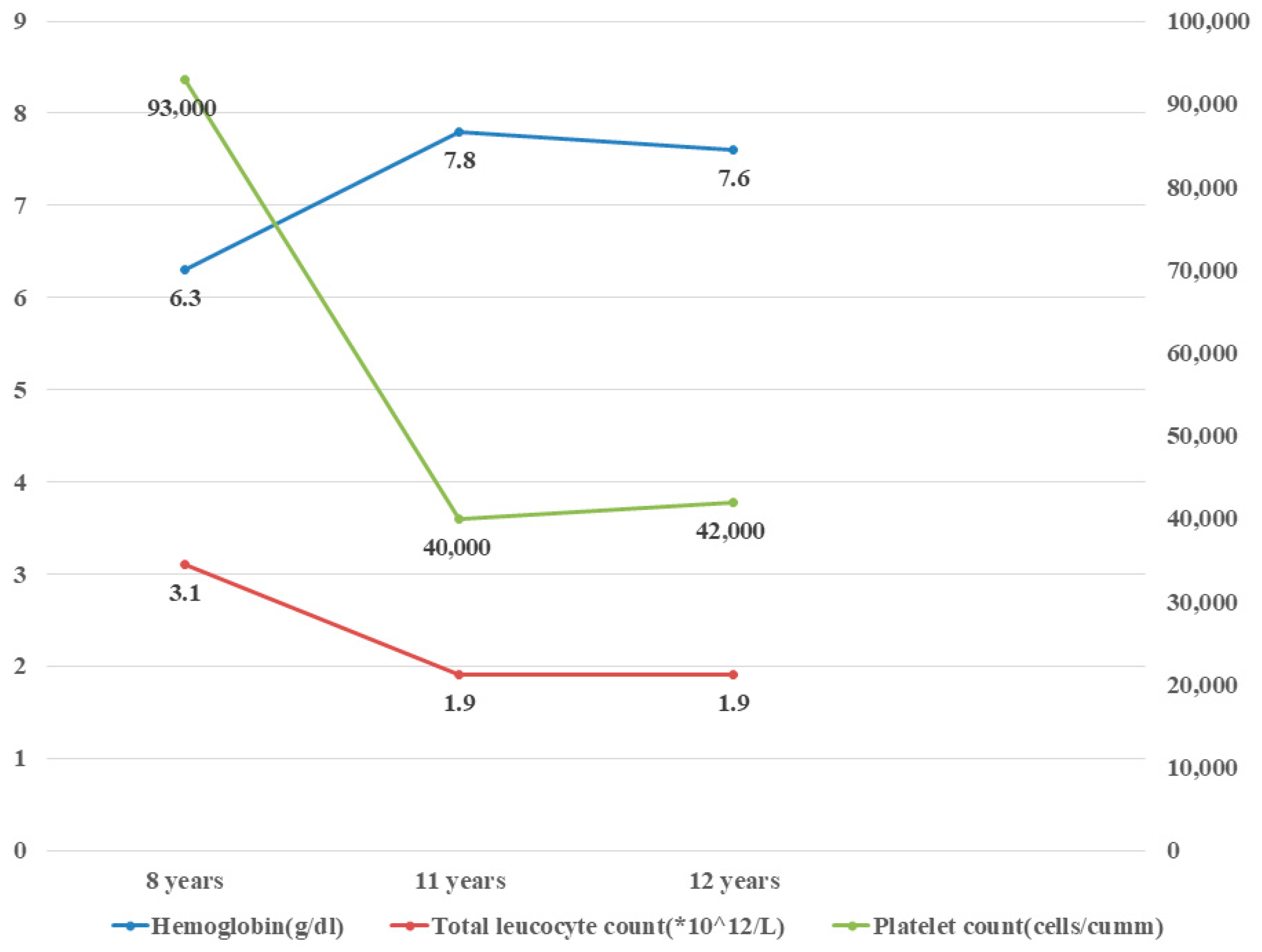
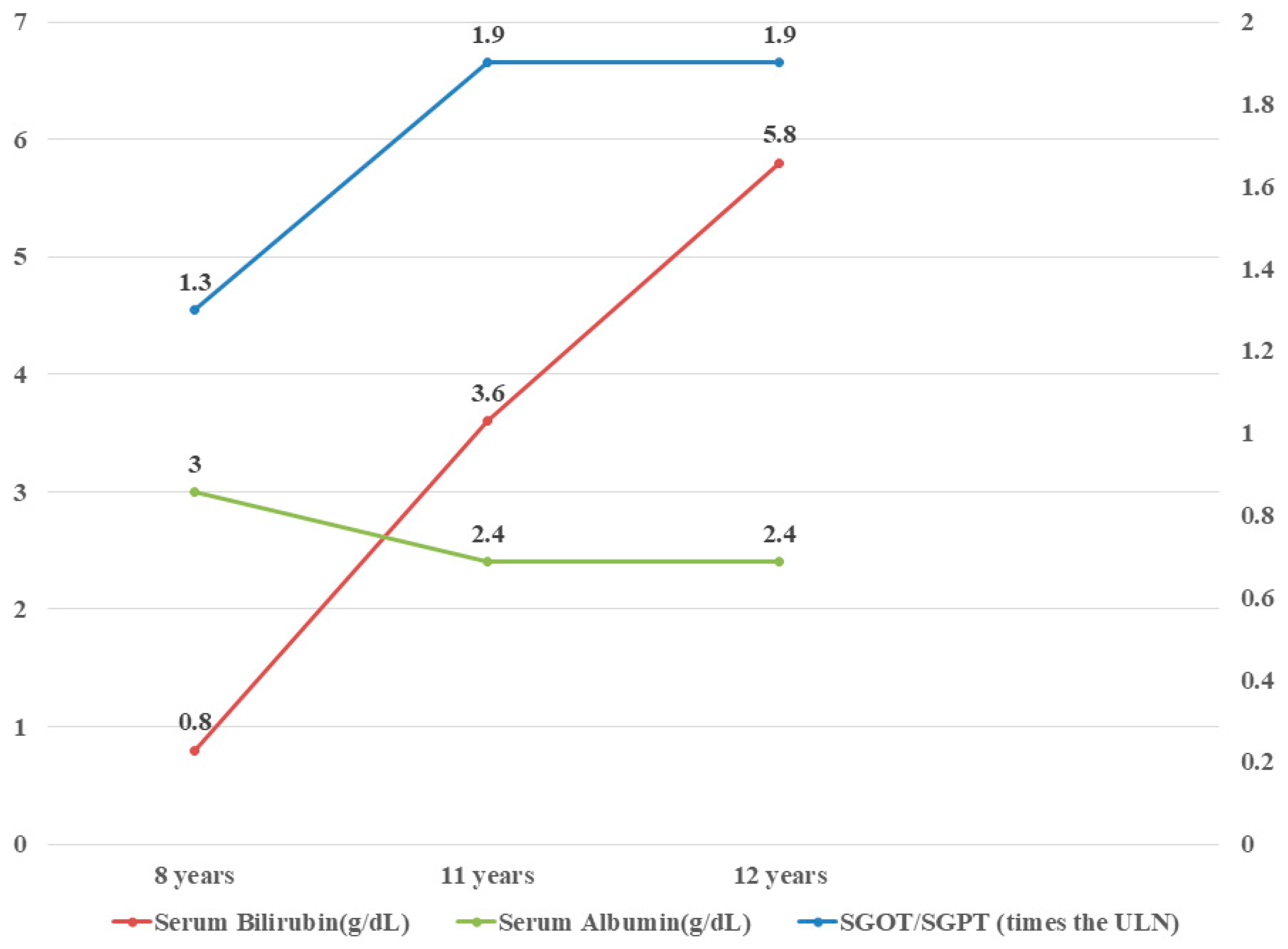
Examination revealed stable vital parameters and a normal sensorium. He was pale, had clubbing, but was anicteric. There was a firm hepatomegaly of 4 cm below the right subcostal margin, with a massive splenomegaly of 10 cm (Grade III by Hackett’s classification). The patient was stabilized in the emergency room. Investigations revealed anemia (hemoglobin 6.3 g/dL), leucopenia (white cell count 3180 cells/cu.mm), absolute neutrophil count 890 cells.cu.mm, and thrombocytopenia (platelet count 93,000/cu.mm), suggestive of pancytopenia. The liver function tests showed normal serum bilirubin, elevated transaminases (SGOT 66 IU/L/SGPT 51 IU/L), total serum proteins 5.5 g/dL with albumin of 3 g/dL, normal alkaline phosphatase (166 IU/L), and gamma-glutamyl transpeptidase (70 U/L). Prothrombin time (18.4 s, control 11 s) and INR (1.41) were deranged. Ultrasonogram of the abdomen revealed a coarse liver echotexture with features of volume re-distribution, moderate splenomegaly with minimal non-tappable ascites. The portal vein diameter was 13 mm (normal for his age less than 10 mm). The diagnosis of portal hypertension due to an underlying cirrhotic or non-cirrhotic disease was considered.
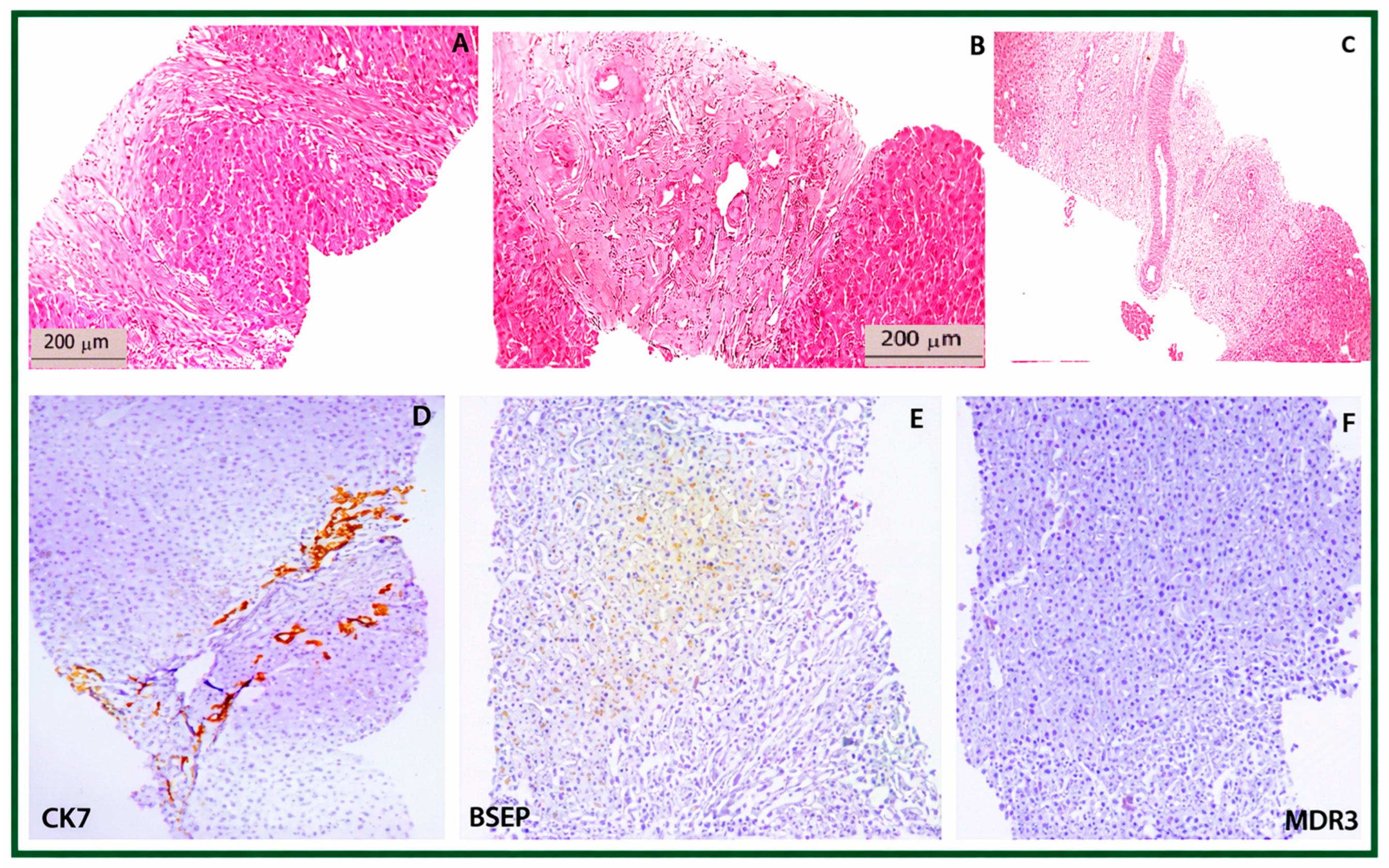
The investigations for possible autoimmune liver disease etiology showed normal immunoglobulin G levels (912 mg/dL; NR 910–1100 mg/dL) with negative autoimmune hepatitis markers (ANA, ASMA and LKM-1). The evaluation for Wilson disease showed normal serum ceruloplasmin (32 mg/dL; NR 20–40 mg/dL) and 24-h urinary copper (38 mcg/day, NR less than 50 mcg/day) and absence of Kayser–Fleischer ring. For non-cirrhotic causes of portal hypertension, a liver biopsy was done, which showed effaced hepatic architecture separated by dense fibrous septae forming incomplete nodules with normal-appearing hepatocytes. The portal tracts appeared expanded containing many thick-walled blood vessels and aberrant bile duct structures, some of them containing inspissated bile. The portal venules appeared hypoplastic, and few portal tracts showed prominent hepatic arterioles. Immunohistochemical staining revealed positive CK7 in peripheral bile ducts and arranged in a circumferential pattern surrounding hepatic nodules. All these findings were consistent with congenital hepatic fibrosis. BSEP was retained whereas MDR3 was partly deficient (Figure 1).
The patient received isotonic fluids (0.9% dextrose normal saline), intravenous vitamin K 10 mg, and pantoprazole at 1 mg/kg/day. Intravenous octreotide infusion was started after a loading dose of 2 mcg/kg followed by 2 mcg/kg/h. After 24 h of no active bleeding, octreotide was tapered and stopped, enteral feeding was initiated. He was discharged on propranolol at 1 mg/kg/day as a secondary prophylaxis of variceal bleeding. He was advised to follow up after four weeks for surveillance endoscopy. However, the follow-up was erratic. The patient had multiple hospitalizations due to recurrent episodes of hematemesis and melena. During each episode, he was stabilized and underwent endoscopic variceal band ligation. Serial endoscopies showed progression and worsening of variceal status with development of high risk esophageal and gastric varices and portal hypertensive gastropathy which needed band ligation and glue injections. Subsequently, at 11 years of age he presented with gradually increasing ascites, worsening of jaundice and coagulopathy over a period of three months. The PELD (Pediatric end stage liver disease) score was 14. Figure 2 and Figure 3 show a brief description of the trend of hematological and liver function tests parameters over time. Whole exome sequencing was sent considering the progressive decompensation in an otherwise non-cirrhotic disease. It revealed a homozygous missense variant of the TULP3 gene (GRCh38(chr12):g.2938268T>G; Depth:78x) that results in the amino acid substitution of arginine for isoleucine at codon 393 [NM_003324.5:c.1178T>G, NP_003315.2:p.(Ile393Arg)], described to cause hepato–reno–cardiac degenerative fibrosis (OMIM#619902). This rare variant was absent from population databases [ExAC, 1000 genome, gnomAD and TOPMed] and deemed “damaging” by on multiple pathogenicity prediction tools [MetaLR, MetaSVM, MetaRNN, REVEL, CADD, FATHMM, LRT, MutPred, Mutation Assessor, MutationTaster, Polyphen, AlphaMissense and SIFT]. In the absence of in vitro/in vivo experimental data, the variant was classified as uncertain significance [ACMG: PM2, PP3, PP4] [7,8]. Sanger sequencing revealed the presence of the heterozygous variant in both parents. Considering the underlying variant, cardiac and renal evaluation was done. Transthoracic echocardiography showed no evidence of ventricular dysfunction or cardiac hypertrophy. Ultrasound of the kidneys showed normal size and morphology of both kidneys. Thereafter, he showed a progressive downhill trend in the clinical and laboratory parameters. His liver function tests worsened gradually (total bilirubin 5.3 mg/dL, direct bilirubin 3.1 mg/dL, serum albumin 2.4 g/dL, INR 2.4), and the ascites was diuretic-dependent. The PELD score increased to 25. For these indications, he was advised to undergo liver transplant. His mother was evaluated as the donor for living donor liver transplant.
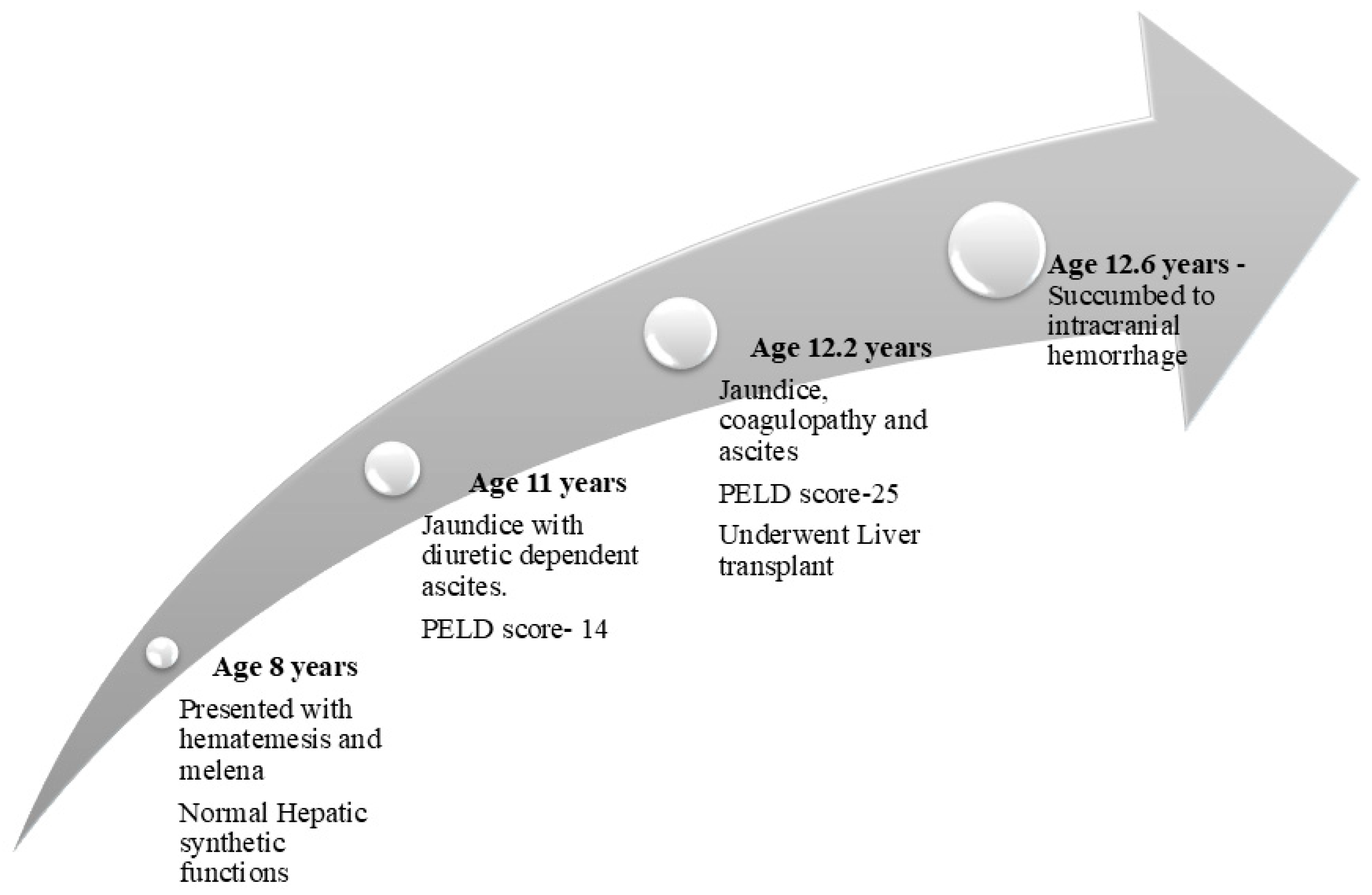
He underwent living donor liver transplant at the age of 12 years 2 months. It was a left lobe graft with duct-to-duct biliary anastomosis. Graft recipient weight ratio of the graft was 1.2. Intraoperatively, he received Inj. methyl prednisolone. Tacrolimus was started on post-operative day 1 and mycophenolate mofetil on day 5. The post-operative period was uneventful, and he was discharged on post-operative day 14. He was on regular follow-up thereafter with stable graft function. Tacrolimus trough levels were maintained between 6 and 8 ng/dL, prednisolone was gradually decreased to 2.5 mg once a day, and mycophenolate mofetil was continued. The tacrolimus trough levels were maintained between 6 and 8 ng/dL. The blood pressure record and renal functions were normal during each follow-up. Four months later, the patient presented to the emergency room with severe headache and loss of consciousness. The contrast CT brain showed a massive bilateral intraventricular and pontine hemorrhage with midline shift and uncal herniation. Sadly, he succumbed to irreversible neurological injury and brainstem herniation. Figure 4 summarizes the patient’s clinical course from initial presentation with portal hypertension to progressive hepatic decompensation, liver transplantation, and subsequent outcome.

3. Discussion

Ciliopathies represent a heterogeneous group of inherited disorders caused by structural or functional defects of primary cilia, organelles that play a central role in embryonic development and intracellular signaling [9]. Hepatic involvement in ciliopathies arises from ductal plate malformation and classically manifests as congenital hepatic fibrosis, Caroli disease, or polycystic liver disease [1]. While most well-characterized ciliopathies present with combined hepatic and renal involvement, recent discoveries have identified TULP3 as a gene underlying a distinct hepato–reno–cardiac ciliopathy with a unique pathogenic mechanism and variable age of onset [2].

3.1. Molecular Pathogenesis of TULP3-Related Ciliopathy

The TULP3 (tubby-like protein 3) gene encodes a protein belonging to the Tubby-domain family. Structurally, TULP3 consists of an N-terminal domain that interacts with the intraflagellar transport complex A (IFT-A) and a highly conserved C-terminal Tubby domain [2,3]. Unlike many ciliopathy-associated proteins that are essential for ciliogenesis, TULP3 is not required for cilia formation itself. Instead, it functions as a cargo adaptor that facilitates the trafficking of membrane-associated proteins into and out of the primary cilium via the IFT-A complex [10].
The Tubby domain forms a positively charged β-barrel structure that binds phosphoinositides—particularly PI(4,5)P2—at the plasma membrane. Through simultaneous interaction with membrane phospholipids and IFT-A subunits (such as IFT122 and IFT140), TULP3 couples ciliary cargo proteins to retrograde intraflagellar transport [2,3]. Disruption of this function impairs the ciliary localization of key signaling molecules, including ARL13B, INPP5E, and the inhibitory G-protein–coupled receptor GPR161.
Mislocalization of GPR161 is particularly relevant to hepatic fibrogenesis. Under physiological conditions, GPR161 acts as a negative regulator of Sonic Hedgehog (SHH) signaling within the cilium. Loss of GPR161 trafficking leads to inappropriate or sustained Hedgehog pathway activation, resulting in premature and persistent activation of hepatic stellate cells. This removes the normal ciliary “brake” on fibrogenic signaling and drives chronic activation of profibrotic pathways, including SHH, transforming growth factor-β (TGF-β), and Wnt signaling, ultimately leading to progressive fibrosis of the liver and other organs [2,3,4,5,6].

3.2. Spectrum of TULP3 Variants and Genotype–Phenotype Correlation

Pathogenic TULP3 variants reported to date predominantly result in loss of function and include truncating variants, splice-site mutations, and missense substitutions within the critical Tubby domain [2,3,4,5]. Functional studies have demonstrated that missense variants affecting this domain disrupt membrane binding, destabilize protein structure, or impair IFT-A recruitment, leading to defective ciliary trafficking.
Tubby domain substitutions, such as C204W, R382W, and R408H, have been associated with clinically manifest disease. Urine-derived epithelial cells harboring the R408H variant exhibit defective ciliary localization of ARL13B, GPR161, and INPP5E, while inner medullary collecting duct cell models expressing the R382W variant show severely reduced membrane protein targeting [2,5]. These findings support the concept that even single-amino acid substitutions within the Tubby domain can have profound functional consequences. Notably, ACMG models with loss of TULP3 demonstrate upregulation of genes involved in hepatic fibrosis, providing additional mechanistic support [2].
The p.(Ile393Arg) variant identified in our patient lies within this conserved domain and is therefore biologically plausible as a disease-causing alteration. Strong genotype–phenotype correlation and concordance with previously reported Tubby domain variants further support its clinical relevance, although functional validation using CRISPR/Cas9 knockout models and differential analysis in patient fibroblasts could further support this association.

3.3. Clinical Phenotype and Insights from the Devane et al. Cohort

Devane et al. described the largest cohort of TULP3-related disease to date, reporting 15 individuals from eight families with biallelic TULP3 variants [2]. In this cohort, renal and cardiac manifestations typically developed after the fourth decade of life, while hepatic involvement showed marked variability. Four individuals developed liver-related symptoms before 18 years of age, with the youngest presenting at four years. Liver manifestations included cholestatic jaundice, elevated transaminases, portal hypertension, and variceal bleeding, with one individual requiring liver transplantation at 41 years.
Subsequent reports have expanded this spectrum to include neonatal cholestasis with rapid progression to liver fibrosis requiring early transplantation, as well as pediatric patients presenting predominantly with portal hypertension [3,4,5,6]. Our patient presented with variceal bleeding at eight years of age and progressed rapidly to decompensated liver disease requiring transplantation by early adolescence. This represents one of the earliest and most severe pediatric hepatic presentations reported in TULP3-associated ciliopathy. The absence of renal or cardiac involvement at presentation highlights the marked phenotypic heterogeneity of this condition.

3.4. Differential Diagnosis and Positioning Among Ciliopathies

Portal hypertension with preserved hepatocellular function necessitates differentiation from other causes of non-cirrhotic portal hypertension and fibrocystic liver disease. Classical ciliopathies, such as autosomal recessive polycystic kidney disease, Joubert syndrome, Bardet–Biedl syndrome, and Meckel–Gruber syndrome are typically associated with prominent renal, neurological, or syndromic features that were absent in this case [1]. The differential diagnosis (Table 1) included in this manuscript contextualizes TULP3-related ciliopathy among these disorders and highlights distinguishing clinical, radiological, and histopathological features.

3.5. Role of ARFI Imaging and Long-Term Surveillance

Acoustic radiation force impulse (ARFI) imaging has emerged as a useful non-invasive modality for detecting increased liver stiffness and may serve as an early marker of hepatic involvement in ciliopathies [5,6,11]. While increased stiffness has been demonstrated in several ciliopathy-related liver diseases, certain genetic subtypes such as NPHP1 and HNF1B mutations may not show similar changes, underscoring the need for genotype-specific interpretation.
Although cardiac manifestations such as hypertrophic cardiomyopathy typically develop later in life, baseline cardiac evaluation and longitudinal clinical surveillance may be considered in individuals with TULP3 variants, based on the progressive and age-dependent nature of cardiac involvement observed in adult cohorts rather than an expectation of early childhood disease [2].

4. Conclusions

In conclusion, TULP3-related ciliopathy represents a rare but increasingly recognized cause of progressive fibrotic liver disease with a highly variable clinical course. This case expands the known phenotype by demonstrating early, isolated, and severe hepatic involvement in childhood, preceding renal or cardiac manifestations. Improved understanding of TULP3 pathogenesis, combined with genomic diagnostics and longitudinal surveillance, is essential for timely diagnosis, prognostication, and management of affected individuals.

5. Limitations

This report is limited by the inherent constraints of a single-case study and the scarcity of pediatric data on TULP3-related disease. Although parental segregation was confirmed by Sanger sequencing, functional validation of the identified variant was not performed. Long-term evolution of renal or cardiac manifestations could not be assessed due to the patient’s untimely demise.

Author Contributions

M.P.M. and S.P. original draft preparation; A.K. pathological investigation and its drafting in the manuscript; T.S.G. genetic analysis and its drafting for the manuscript; A.B. review and editing. All authors have read and agreed to the published version of the manuscript.

Funding

This research received no external funding.

Institutional Review Board Statement

Ethical review and approval were waived for this study by the KEM Hospital Research Centre Ethics Committee (Ref. No. KEMHRC/RVM/EC/1693), as the study involved a retrospective case report with anonymized data.

Informed Consent Statement

Written informed consent was obtained from the patient’s parent or legal guardian for participation in this study and for the publication of this case report.

Data Availability Statement

The original contributions presented in this study are included in the article. Further inquiries can be directed to the corresponding author.

Acknowledgments

Chhagan Bihari Lal, Department of Pathology, Institute of Liver and Biliary Sciences, New Delhi, India for providing us with the immunohistochemistry results on the liver biopsy free of cost.

Conflicts of Interest

Thenral S. Geetha is employed by MedGenome Labs Ltd., Bangalore, the laboratory where the genetic testing for this patient was performed. Her role was limited to interpretation and reporting of the genetic findings. She had no role in clinical management of the patient or the decision-making regarding the treatment. The remaining authors declare no conflicts of interest.

Abbreviations

The following abbreviations are used in this manuscript:
ADHDAttention Deficit Hyperactivity disorder
ANAAnti nuclear antibody
ASMAAnti smooth muscle antibody
BSEPBile salt export pump
CHFCongenital hepatic fibrosis
CK7Cytokeratin 7
DPMDuctal plate malformation
IFT-AIntraflagellar transport complex A
INRInternational normalized ratio
LKM-1Liver Kidney Microsomal-1
MDR3Multidrug resistant protein 3
NRNormal Range
SGOTSerum Glutamic Oxaloacetic transaminase
SGPTSerum Glutamic Pyruvate Transaminase
WESWhole Exome Sequencing

References

  1. Lasagni, A.; Cadamuro, M. Fibrocystic liver disease: Novel concepts and translational perspectives. Transl. Gastroenterol. Hepatol. 2021, 6, 26. [Google Scholar] [CrossRef] [PubMed] [PubMed Central]
  2. Devane, J.; Ott, E. Progressive liver, kidney, and heart degeneration in children and adults affected by TULP3 mutations. Am. J. Hum. Genet. 2022, 109, 928–943. [Google Scholar] [CrossRef] [PubMed] [PubMed Central]
  3. Jafari Khamirani, H.; Palicharla, V.R. A pathogenic variant of TULP3 causes renal and hepatic fibrocystic disease. Front. Genet. 2022, 13, 1021037. [Google Scholar] [CrossRef] [PubMed] [PubMed Central]
  4. Li, J.Q.; Li, Y.; He, R.; Lin, Z.; Feng, J.; Yang, B.; Shan, Q.W.; Chen, S.; Cheng, Y.; Xing, Q.; et al. Biallelic pathogenic TULP3 variants presenting as neonatal cholestasis, liver fibrosis and neurological manifestations. J. Med. Genet. 2025, 62, 631–640. [Google Scholar] [CrossRef] [PubMed]
  5. Kumar, P.; Maidur, R. Portal Hypertension Due to TULP3-related Ciliopathy: First Report From the Asia-Pacific Region. J. Clin. Exp. Hepatol. 2024, 14, 101478. [Google Scholar] [CrossRef] [PubMed] [PubMed Central]
  6. Shastri, A.; Balaraja, S. Unearthing TULP3 Mutation as a Rare Cause of Cryptogenic Cirrhosis: A Case Report and Review of the Literature. J. Clin. Exp. Hepatol. 2025, 15, 102542. [Google Scholar] [CrossRef] [PubMed] [PubMed Central]
  7. Richards, S.; Aziz, N.; Bale, S.; Bick, D.; Das, S.; Gastier-Foster, J.; Grody, W.W.; Hegde, M.; Lyon, E.; Spector, E.; et al. Standards and guidelines for the interpretation of sequence variants: A joint consensus recommendation of the American College of Medical Genetics and Genomics and the Association for Molecular Pathology. Genet. Med. 2015, 17, 405–424. [Google Scholar] [CrossRef] [PubMed] [PubMed Central]
  8. McLaren, W.; Gil, L.; Hunt, S.E.; Riat, H.S.; Ritchie, G.R.; Thormann, A.; Flicek, P.; Cunningham, F. The Ensembl Variant Effect Predictor. Genome Biol. 2016, 17, 122. [Google Scholar] [CrossRef] [PubMed] [PubMed Central]
  9. Reiter, J.F.; Leroux, M.R. Genes and molecular pathways underpinning ciliopathies. Nat. Rev. Mol. Cell Biol. 2017, 18, 533–547. [Google Scholar] [CrossRef] [PubMed] [PubMed Central]
  10. Badgandi, H.B.; Hwang, S.H.; Shimada, I.S.; Loriot, E.; Mukhopadhyay, S. Tubby family proteins are adapters for ciliary trafficking of integral membrane proteins. J. Cell Biol. 2017, 216, 743–760. [Google Scholar] [CrossRef] [PubMed] [PubMed Central]
  11. Friedrich-Rust, M.; Wunder, K.; Kriener, S.; Sotoudeh, F.; Richter, S.; Bojunga, J.; Herrmann, E.; Poynard, T.; Dietrich, C.F.; Vermehren, J.; et al. Liver fibrosis in viral hepatitis: Noninvasive assessment with acoustic radiation force impulse imaging versus transient elastography. Radiology 2009, 252, 595–604. [Google Scholar] [CrossRef] [PubMed]
Figure 1. Histopathological features consistent with congenital hepatic fibrosis. (A) Liver biopsy showing bridging fibrosis with dense fibrous septae and early incomplete nodule formation (H&E stain, ×10). (B) Markedly expanded portal tracts with aberrant circumferential (“garland-like”) arrangement of bile ductules surrounding hypoplastic portal venules (H&E stain, ×100). (C) Portal tract showing prominent hepatic arteriole suggestive of portal venous hypoplasia (H&E stain, ×20). (D) Immunohistochemistry demonstrating cytokeratin 7 (CK7) positivity in proliferating bile ductules arranged in a garland-like pattern (×40). (E) Retained bile salt export pump (BSEP) expression in hepatocytes (×40). (F) Partial deficiency of multidrug resistance protein 3 (MDR3) expression (×40). Scale bars are shown in each pane.
Jmp 07 00016 g001
Figure 2. Trend of hematological parameters over time. Serial trends in hematological parameters demonstrating progressive cytopenias consistent with hypersplenism secondary to portal hypertension. Values shown include hemoglobin, total leukocyte count, absolute neutrophil count, and platelet count over the disease course.
Jmp 07 00016 g002
Figure 3. Trend of liver function parameters over time. Serial liver function test trends demonstrating progressive hepatic synthetic dysfunction, including rising bilirubin levels, declining serum albumin, and worsening coagulopathy (INR), culminating in the need for liver transplantation.
Jmp 07 00016 g003
Figure 4. Clinical timeline of disease progression.
Jmp 07 00016 g004
Table 1. Differential diagnosis of portal hypertension with fibrotic liver disease and distinguishing features from TULP3-related ciliopathy.
DisorderKey Clinical FeaturesDistinguishing Features from TULP3-Related Ciliopathy
Non-cirrhotic portal hypertension/Fibrocystic liver diseases
Congenital hepatic fibrosis (CHF)Portal hypertension, preserved hepatocellular function. May be isolated or associated with ciliopathiesIn TULP3, CHF occurs as part of a multisystem ciliopathy with potential late renal/cardiac involvement
Autosomal recessive polycystic kidney disease (ARPKD)Portal hypertension, CHF. Enlarged echogenic kidneys, collecting duct ectasiaProminent early renal involvement, often detectable antenatally
Nephronophthisis (NPHP genes)Progressive CKD, anemia, Corticomedullary renal cysts, retinal dystrophyRenal disease predominates; hepatic involvement is usually mild
Joubert syndromeRenal cysts, ocular coloboma, molar tooth signCharacteristic neuroimaging and neurological phenotype absent in TULP3
Meckel–Gruber syndromeSevere congenital anomalies. CNS malformations, polydactyly, cystic kidneysTypically lethal in the perinatal period
Bardet–Biedl syndromeObesity, retinal dystrophy, Polydactyly, renal anomaliesSyndromic features not seen in TULP3-related disease
Others:
Gaucher diseaseSplenomegaly, cytopenias, bone painPresence of storage cells on biopsy, systemic involvement
Cirrhotic causes of portal hypertension
Wilson diseaseHepatic dysfunction, neuropsychiatric featuresLow ceruloplasmin, increased urinary copper, Kayser–Fleischer rings
Autoimmune hepatitisHepatitis, portal hypertensionElevated IgG, positive ANA/ASMA/LKM, interface hepatitis
MDR3 (ABCB4) deficiencyHigh-GGT cholestasis, pruritusAbsent or reduced MDR3 expression, canalicular cholestasis
Primary sclerosing cholangitisCholestasis, fatigue, pruritusBiliary strictures, onion-skin fibrosis
Disclaimer/Publisher’s Note: The statements, opinions and data contained in all publications are solely those of the individual author(s) and contributor(s) and not of MDPI and/or the editor(s). MDPI and/or the editor(s) disclaim responsibility for any injury to people or property resulting from any ideas, methods, instructions or products referred to in the content.