
Proceeding Paper

Evolution and Trends in the Use of Biomaterials for Electrodes in Microbial Fuel Cells: A Bibliometric Approach †

by
Segundo Jonathan Rojas Flores
1,*,
De La Cruz-Noriega
1,
Renny Nazario-Naveda
1,
Santiago M. Benites
1 and
Daniel Delfin-Narciso
2
1
Vicerrectorado de Investigación, Universidad Autónoma del Perú, Lima 15046, Peru
2
Grupo de Investigación en Ciencias Aplicadas y Nuevas Tecnologías, Universidad Privada del Norte, Trujillo 13011, Peru
*
Author to whom correspondence should be addressed.
Presented at the 2025 9th International Symposium on Advanced Material Research, Incheon, Republic of Korea, 18–20 July 2025.
Mater. Proc. 2025, 27(1), 4; https://doi.org/10.3390/materproc2025027004
Published: 11 December 2025

Abstract

This bibliometric study analyzes the evolution of biomaterials used for electrodes in microbial fuel cells (MFCs), highlighting a marked increase in publications since 2019. Key materials—including modified cellulose, lignin, and carbon nanocomposites—have improved electrode efficiency and structural stability. The findings indicate that high-impact journals, such as the Journal of Microbial Fuel Cell Research and Bioelectrochemistry & Sustainable Energy (with h-indices of 72 and 64, respectively), have played a pivotal role in advancing the field. Prominent researchers, including Yang J and Xie Q, have made significant contributions, as reflected in their high citation counts. Network analysis reveals limited international collaboration, underscoring the need to strengthen strategic partnerships. Ultimately, this study highlights the importance of future research that integrates artificial intelligence and nanotechnology to optimize biomaterial performance in MFCs, thereby enhancing their contribution to sustainable energy solutions.

1. Introduction

Microbial fuel cells (MFCs) represent an innovative technology that harnesses the metabolic activity of microorganisms to generate electricity [1]. Their potential in renewable energy generation and wastewater treatment has attracted the attention of researchers and developers of sustainable technologies [2]. In this context, electrodes play a fundamental role in the system’s efficiency, facilitating electron transfer between microorganisms and the electrical circuit [3]. The incorporation of biomaterials in electrodes has been a key strategy to enhance the conductivity, stability, and sustainability of MFCs, driving research into biocompatible, cost-effective, and environmentally friendly materials [4,5]. The study of biomaterials applied to electrodes in microbial fuel cells has evolved significantly over the past two decades [6]. Research has focused on improving the active surface of electrodes and optimizing the interaction between microorganisms and conductive materials [7]. Advances in nanotechnology, material chemistry, and biotechnology have enabled the development of electrodes with enhanced properties, maximizing energy conversion and reducing production costs [8].
The use of biomaterials in electrodes has been driven by the need for sustainable alternatives to conventional materials, such as graphite and platinum, whose costs and availability limit large-scale applications [9]. In search of solutions, materials like modified cellulose, biopolymers, lignin, and carbon nanocomposites derived from agricultural or industrial waste have been explored [10]. These biomaterials not only exhibit acceptable electrical properties but also offer advantages in terms of biodegradability and economic accessibility [11,12]. For example, Yang et al. (2024) developed three-dimensional (3D) lignocellulosic carbon electrodes by modifying the proportions of cellulose, lignin, and hemicellulose, finding that composition significantly influences the material’s mechanical strength and electrochemical properties. They achieved a power density of 4.80 W/m2 with a 1:3:2 ratio of cellulose, lignin, and xylan [13]. Similarly, Alalawy et al. (2024) developed Fe2O3@AuNPs/PANI-modified anodes to improve microbial fuel cell performance using macroalgae, where the Fe2O3-3@AuNPs/PANI-CF anode achieved the highest voltage (944 mV) and power density (222.78 mW/cm3), optimizing electron transfer and electrogenic biofilm formation [14]. The evolution of research in biomaterials for MFC electrodes can be observed through the growth of scientific publications on the topic. Another relevant aspect in the evolution of this field is interdisciplinary collaboration. The design and optimization of biomaterials for electrodes require the convergence of disciplines such as microbiology, materials chemistry, surface physics, and environmental engineering [15]. In terms of technological applications, the use of biomaterials in MFCs has evolved from laboratory tests to implementations in real wastewater treatment systems and energy generation for remote communities [16]. Recent studies have demonstrated that integrating biomaterials into electrodes can enhance efficiency and reduce costs, making these fuel cells a viable alternative for clean energy production in regions with limited access to conventional sources [17].
Bibliometric studies have shown that interdisciplinary collaboration has accelerated the discovery of new materials and facilitated knowledge transfer between academic and industrial sectors [18]. In recent years, these studies have covered everything from the physicochemical characterization of biomaterials to their application in real energy generation systems [19]. Bibliometrics allows researchers to identify patterns in scientific production and the geographical distribution of research, highlighting institutions and countries with the most significant contributions to material development. Additionally, this approach enables the analysis of the relationship between biomaterials and MFC performance [20]. Through the review of experimental studies and theoretical models, material efficiency is evaluated in terms of energy generation and durability [21]. Identifying the most cited articles and emerging keywords provides key insights into the most relevant scientific advancements and research areas with the greatest development potential [22]. To date, no bibliometric studies have analyzed the use of biomaterials for electrodes in microbial fuel cells, leaving a knowledge gap.
This bibliometric study aims to analyze the evolution and trends in the use of biomaterials in MFC electrodes, considering the scientific and technological impact of research in this field. It seeks to examine the relationship between biomaterial composition and the electrochemical performance of fuel cells, identifying the most efficient materials in terms of energy generation and durability. Another fundamental aspect is the identification of the most cited articles and emerging keywords, which will help recognize the research lines with the greatest impact and future potential. Additionally, this study will analyze the historical evolution of these materials to understand current challenges and opportunities for innovation in their functionality and application. Ultimately, this study will provide a comprehensive view of the state of the art in the use of biomaterials for electrodes in microbial fuel cells, contributing to the formulation of strategies to improve their performance and sustainability in renewable energy generation.

2. Methodology

To conduct this bibliometric study on biomaterials for electrodes in microbial fuel cells (MFCs), a structured methodology was implemented across several key stages. First, search criteria were established using specific terms related to biomaterials, electrodes, and MFCs, ensuring the inclusion of relevant studies published between 2005 and 2025. A combination of Boolean operators was applied to filter the most relevant documents from indexed scientific databases, guaranteeing the quality and representativeness of the selected sample. Subsequently, bibliometric data extraction was performed, including the number of publications, citations, scientific impact, and thematic evolution over time. For this, tools such as VOSviewer (1.6.20) and RStudio (3.6.0+) were used, enabling the analysis of collaboration networks among authors, institutions, and countries. Key term maps were developed to visualize relationships between concepts and detect emerging trends. Additionally, studies were classified according to their typology, distinguishing between original articles, reviews, and conference proceedings, allowing for an assessment of the nature of research in this field. As part of the bibliometric analysis, h-index and g-index evaluations were conducted for specialized journals, providing insights into the impact and relevance of scientific production in the area. Furthermore, the most influential authors and their collaboration networks were identified to highlight leading research groups in the development of biomaterials for MFC electrodes. The search strategy employed is summarized in Table 1.

3. Results and Analysis

Figure 1 presents an analysis of biomaterials applied to electrodes in microbial fuel cells (MFCs), highlighting trends in scientific production and their evolution over time. Key patterns indicate the growing body of research in this field, as well as the interconnectedness of various disciplines that have contributed to the development of more efficient and sustainable materials. Figure 1a shows a steady increase in the number of annual publications from 2005 to 2025, with a more pronounced rise starting in 2010 (two documents) and a notable surge after 2019 (nine documents). This trend suggests a growing interest in the development of biomaterials for these systems, potentially driven by technological advances, the demand for sustainable solutions, and increased funding in the field [23]. Additionally, the cumulative number of publications reflects the progressive consolidation of the area, underscoring its maturation as a key research line within bioelectrochemical systems [24]. On the other hand, Figure 1b breaks down the types of publications, indicating that scientific articles constitute the majority (73.5%), suggesting that the research community primarily disseminates findings through detailed studies in specialized journals. Reviews (14.7%) highlight the need to systematize existing knowledge, making key information on biomaterials and their impact on electrode electrochemical efficiency more accessible. The lower representation of conference publications (7.8%) and other forms of dissemination (3.9%) may indicate that discussions on this topic primarily take place in indexed journals, reinforcing its technical and academic nature [25]. The data demonstrate the sustained growth of the field and the consolidation of biomaterials as a promising alternative for enhancing the performance of microbial fuel cells [26].
Table 2 presents five scientific journals, each with a significant number of published articles in the field of biomaterials for electrodes. The number of publications (NP) column highlights the productivity of each journal, with values ranging between 140 and 185 articles. This indicates that all the included journals have substantially contributed to the advancement of research in nanotechnology applied to energy [22]. Another important aspect is the h-index, which measures the impact and relevance of articles published in each journal. In this case, values range from 50 to 75, suggesting a high influence within the scientific community. The presence of journals with high h-index values indicates that published articles are frequently cited and serve as references for subsequent research [19]. The g-index complements the analysis by considering the number of citations received by the most influential articles within each journal. The g-index values in this table show considerable variation compared to the h-index, suggesting that the analyzed journals publish highly relevant and high-impact research in the field [27]. The presence of renowned publishers such as Elsevier, Springer, and Wiley underscores the significance of prestigious institutions in disseminating knowledge about biomaterials for microbial fuel cells. Additionally, the high h- and g-index values indicate that many of these studies have been widely cited, demonstrating their importance within the scientific community [28]. This reflects the evolution and consolidation of research in nanotechnology applied to energy. The diversity of journals and the high impact of their publications illustrate that this field continues to grow and generate increasing interest among global researchers [26].
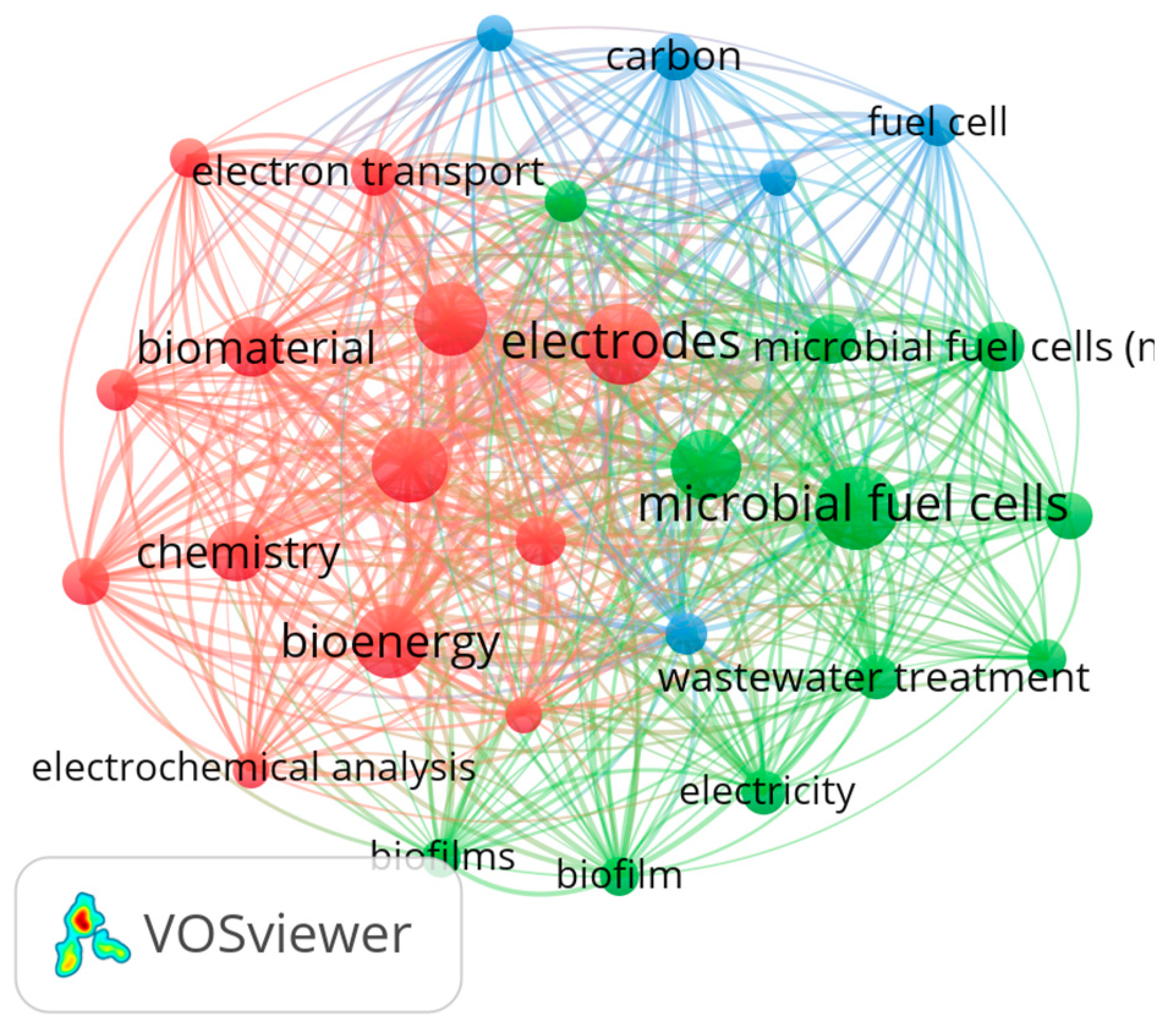
Figure 2 presents a key term map in microbial fuel cell (MFC) research, generated using VOS viewer software. By visualizing relationships between concepts, interconnected word groups can be identified, reflecting the most impactful areas within the field [20]. The red cluster represents agroindustry biomaterials (e.g., starch, cellulose), the green cluster focuses on electrochemical enhancement (e.g., polyaniline, carbon composites), and the blue cluster relates to microbial ecology and biofilm formation. We will add a legend and clarify this in the figure caption. In this case, the most prominent terms include electrodes, microbial fuel cells, bioenergy, biomaterials, electron transport, and wastewater treatment, illustrating strong connections between material research, energy applications, and environmental sustainability [29]. The map consists of distinct word clusters, differentiated by colors, suggesting thematic groupings within the bibliometric analysis [26]. The red cluster appears focused on terms related to electrode development and optimization, while the green cluster includes fundamental aspects of microbial fuel cells, such as their application in wastewater treatment. Meanwhile, the blue cluster encompasses terms related to carbon and electrochemical processes, indicating an emphasis on improving the materials used for electron transfer [30]. Bibliometric analysis based on these terms helps to understand the evolution of research in biomaterials for MFC electrodes. The strong interconnectivity between terms indicates that the research has been interdisciplinary, integrating biochemistry, nanotechnology, materials chemistry, and electrochemistry. This type of visualization is crucial for researchers aiming to identify emerging trends and collaboration opportunities in the development of biomaterials for energy applications [31].
Table 3 provides a bibliometric overview of the most influential authors in the study of biomaterials for electrodes in microbial fuel cells (MFCs). Five researchers from various academic institutions in China and the United States stand out, revealing a strong geographical concentration of scientific production in this field. A key aspect of the analysis is the authors’ productivity in terms of the number of published articles and the impact of their contributions, measured by the h-index and total number of citations [32]. For instance, Yang J, affiliated with the University of Colorado Denver, is identified as the most impactful author, with a total of 258 citations, suggesting a high level of relevance and recognition within the scientific community. However, other authors such as Xie Q and Li N, despite having published the same number of articles (4), exhibit identical h-index values, indicating a relatively equal citation level across their publications. Another relevant aspect is the temporal evolution of research [33]. Most authors have made significant contributions over the last decade, with one exception—Feng Y—who published more recently in 2021, possibly signaling an emerging trend in the development of biomaterials for electrodes. Institutional affiliation is also a determining factor, as it helps identify collaboration networks and key research centers in the field [34]. In this case, Chinese institutions have a strong presence in the development of these studies, likely linked to the country’s investment and technological focus on sustainable energy [35]. These authors provide valuable insights into the structure of research on biomaterials for microbial fuel cells, allowing for the identification of key trends, academic impact, and possible future directions in the development of this technology [36].
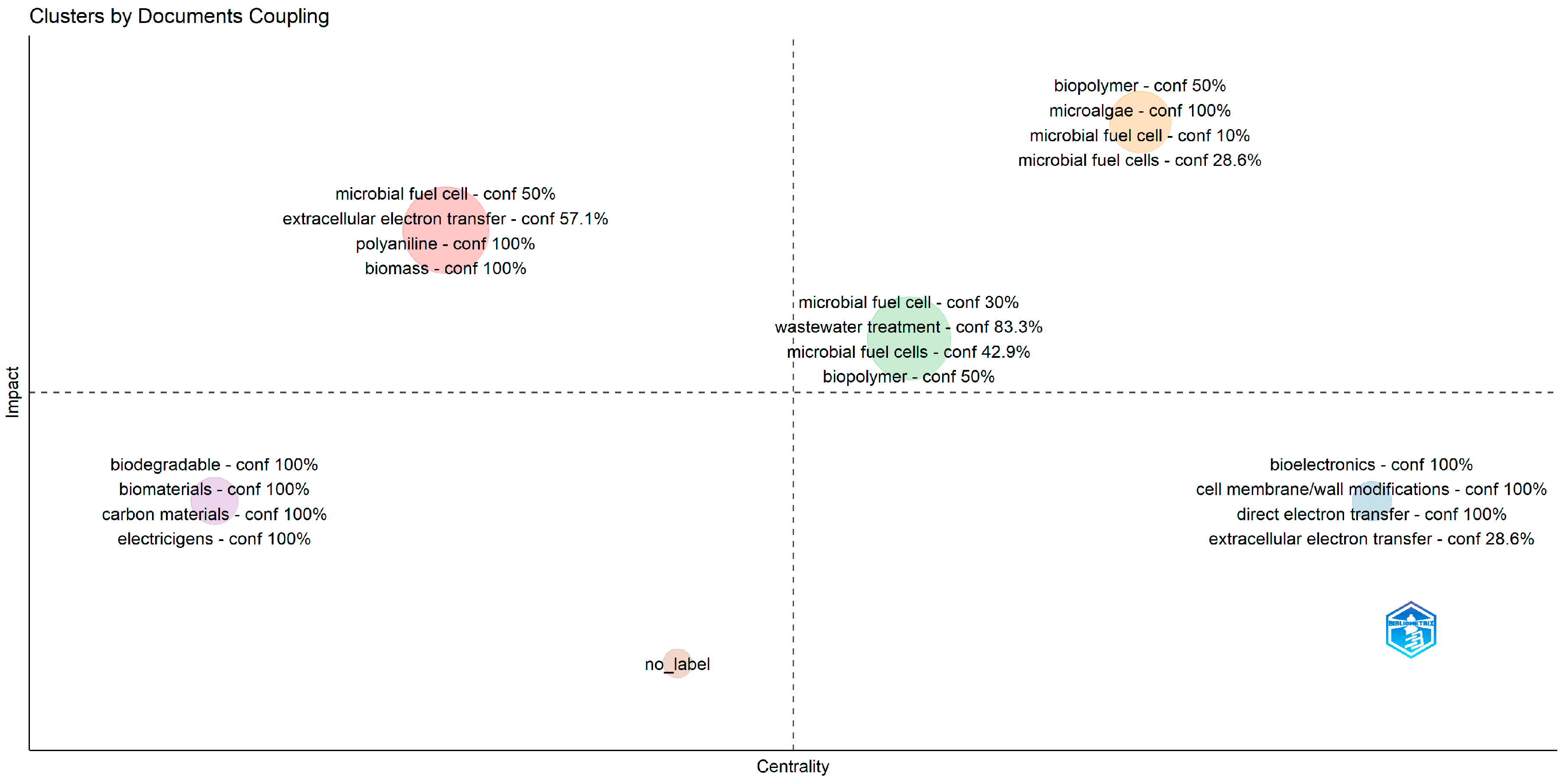
Figure 3 illustrates the distribution of thematic clusters generated through document coupling, focusing on biomaterials for electrodes in microbial fuel cells (MFCs). These clusters, classified by impact and centrality, reveal key patterns in current research. The highest-confidence topics (100%) include polyaniline, biomass, microalgae, biodegradable materials, biomaterials, carbon-based materials, bioelectronics, and direct electron transfer, suggesting strong specialization and consolidation in the scientific literature. In contrast, emerging areas such as MFCs and extracellular electron transfer (EET) exhibit variable confidence levels (10–57.1%), indicating evolving perspectives within the research community. The centrality of certain clusters, such as those related to biomaterials and bioelectronics, suggests that they act as connector nodes facilitating knowledge transfer. Furthermore, the relevance of practical applications like wastewater treatment (83.3% confidence) and biopolymers (50%) reinforces the importance of MFCs in sustainability and circular economy efforts, with microalgae (100% confidence) emerging as a promising resource for bioremediation and energy generation. The cluster distribution highlights a mature field in the development of innovative materials like polyaniline, although challenges remain in optimizing processes such as EET [37]. The high centrality of biomaterials reaffirms their crucial role in future research, while the lower-confidence clusters reveal opportunities for more in-depth studies, emphasizing the interdisciplinary nature of MFCs and their connections to biotechnology, material science, and renewable energy [38].
Future Trends in Research on Biomaterials for Electrodes in MFCs: The field is expected to shift toward optimizing sustainable materials with improved electrochemical efficiency and economic accessibility [27,39]. As the demand for renewable energy sources increases, researchers will focus on designing electrodes using biodegradable materials sourced from agricultural and industrial waste, supporting the circular economy [40]. The use of lignin, modified cellulose, and biopolymers is anticipated to advance further, enhancing electron transfer and structural stability in electrodes. Additionally, the incorporation of nanomaterials, such as carbon nanocomposites and functionalized metals, will continue to be a key strategy for increasing the power density of MFCs [41]. Simultaneously, the application of artificial intelligence and machine learning tools will optimize material design and predict performance across different environments [33]. Another fundamental aspect will be the development of surface modification strategies through molecular engineering, enhancing microorganism–electrode interactions to maximize energy production [29,36]. In terms of applications, a transition is expected from laboratory-scale experiments to real-world implementations in wastewater treatment systems and distributed energy generation for communities with limited access to conventional sources [42]. Interdisciplinary collaboration will remain vital, fostering partnerships between microbiology, nanotechnology, and materials science [35,41]. Bibliometric studies will play a key role in identifying knowledge gaps and emerging trends, guiding research toward strategic areas [42]. Ultimately, new researchers should focus on sustainable solutions, innovative methodologies, and practical applications to strengthen the impact of MFCs in the global energy transition [38].

4. Conclusions

This bibliometric analysis reveals a rapidly maturing research field in the use of biomaterials for MFC electrodes, marked by exponential growth in publications since 2019 and a clear shift toward sustainable, high-performance materials. The dominance of scientific articles in high-impact journals underscores the technical depth and academic rigor of the field, while keyword mapping confirms its interdisciplinary nature, bridging microbiology, nanotechnology, materials science, and environmental engineering. Key findings highlight that lignin-based composites, modified cellulose, and carbon nanocomposites are among the most promising materials for enhancing electrode performance. However, the limited international collaboration and the gap between laboratory research and real-world implementation remain significant challenges. To fully realize the potential of biomaterial-based MFC electrodes in the global energy transition, future research must integrate circular economy principles, advanced material engineering, AI-driven optimization, and equitable collaboration frameworks. By addressing these priorities, MFC technology can evolve from a promising laboratory innovation into a scalable, cost-effective, and sustainable energy solution with tangible environmental and societal benefits.
Future research on biomaterials for electrodes in microbial fuel cells should prioritize the translation from laboratory-scale prototypes to field-scale applications, particularly in wastewater treatment plants and decentralized energy systems for remote or underserved communities. Building on the identified trends, several strategic directions emerge. Material innovation and circular economy: the development of biodegradable, low-cost biomaterials sourced from agroindustrial residues (e.g., lignin, modified cellulose, biopolymers) needs to be advanced to enhance electron transfer, mechanical stability, and long-term durability. Nanostructured additives (carbon nanocomposites, functionalized metals) should be integrated to boost power density without compromising sustainability. Surface engineering and biofilm optimization: molecular engineering and surface functionalization should be applied to improve microorganism–electrode interactions, accelerating extracellular electron transfer (EET) and biofilm stability. Artificial intelligence and predictive modeling: AI and machine learning will be employed to predict electrode performance under varying environmental and operational conditions, enabling faster material screening and design optimization. Standardization and benchmarking: standardized protocols for electrochemical performance evaluation need to be developed to enable more reliable cross-study comparisons and accelerate technology readiness. Future research into biomaterials for MFC electrodes should focus on low-cost, sustainable materials, biofilm optimization, nanotechnology integration, predictive modeling with AI, and validation in real-world settings, driving the transition from laboratory prototypes to field-scale applications in water treatment and decentralized energy.

Author Contributions

Conceptualization, S.J.R.F.; methodology, D.L.C.-N.; validation, S.M.B. and R.N.-N.; formal analysis, S.J.R.F. and D.L.C.-N.; investigation, S.J.R.F. and D.D.-N.; data curation, D.L.C.-N.; writing—original draft preparation, R.N.-N.; writing—review and editing, S.J.R.F.; project administration, S.J.R.F. and R.N.-N. All authors have read and agreed to the published version of the manuscript.

Funding

This research has been financed by Universidad Autonoma del Peru.

Institutional Review Board Statement

Not applicable.

Informed Consent Statement

Not applicable.

Data Availability Statement

Data sharing is not applicable in this study.

Conflicts of Interest

The authors declare no conflicts of interest.

References

  1. Colombo, R.N.; Sedenho, G.C.; Crespilho, F.N. Challenges in biomaterials science for electrochemical biosensing and bioenergy. Chem. Mater. 2022, 34, 10211–10222. [Google Scholar] [CrossRef]
  2. Tsarpali, M.; Arora, N.; Kuhn, J.N.; Philippidis, G.P. Lipid-extracted algae as a source of biomaterials for algae biorefineries. Algal Res. 2021, 57, 102354. [Google Scholar] [CrossRef]
  3. Biradar, M.R.; Mirgane, H.A.; Bhosale, S.V.; Bhosale, S.V. Advancing energy storage with nitrogen containing biomaterials utilizing amino acid, peptide and protein: Current trends and future directions. J. Energy Chem. 2024, 99, 253–276. [Google Scholar] [CrossRef]
  4. Dessie, Y.; Tadesse, S. Advancements in bioelectricity generation through nanomaterial-modified anode electrodes in microbial fuel cells. Front. Nanotechnol. 2022, 4, 876014. [Google Scholar] [CrossRef]
  5. Oliveira, V.B. Microbial fuel cells as a promising power supply for implantable medical devices. Energies 2023, 16, 2647. [Google Scholar] [CrossRef]
  6. Andriukonis, E.; Celiesiute-Germaniene, R.; Ramanavicius, S.; Viter, R.; Ramanavicius, A. From microorganism-based amperometric biosensors towards microbial fuel cells. Sensors 2021, 21, 2442. [Google Scholar] [CrossRef]
  7. Lara-Ramos, J.A.; Machuca-Martinez, F.; Diaz-Angulo, J.; Mosquera-Vargas, E.; Diosa, J.E. Biomaterials in Electrochemical Applications. In Materials from Natural Sources; CRC Press: Boca Raton, FL, USA; pp. 148–169.
  8. Kurniawan, T.A.; Othman, M.H.D.; Liang, X.; Ayub, M.; Goh, H.H.; Kusworo, T.D.; Mohyuddin, A.; Chew, K.W. Microbial fuel cells (MFC): A potential game-changer in renewable energy development. Sustainability 2022, 14, 16847. [Google Scholar] [CrossRef]
  9. Santos, J.S.; Tarek, M.; Sikora, M.S.; Praserthdam, S.; Praserthdam, P. Anodized TiO2 nanotubes arrays as microbial fuel cell (MFC) electrodes for wastewater treatment: An overview. J. Power Sources 2023, 564, 232872. [Google Scholar] [CrossRef]
  10. Verma, J.; Kumar, D.; Singh, N.; Katti, S.S.; Shah, Y.T. Electricigens and microbial fuel cells for bioremediation and bioenergy production: A review. Environ. Chem. Lett. 2021, 19, 2091–2126. [Google Scholar] [CrossRef]
  11. Ulusu, Y.; Eczacioglu, N.; Gokce, I. Sustainable biomaterials for solar energy technologies. In Sustainable Material Solutions for Solar Energy Technologies; Elsevier: Amsterdam, The Netherlands, 2021; pp. 557–592. [Google Scholar]
  12. Das, P.; Chakraborty, G. Sustainable Bio-Based Composites: Biomedical and Engineering Applications; De Gruyter Brill: Berlin, Germany, 2024; Chapter 9; pp. 183–208. [Google Scholar]
  13. Yang, P.; Han, Y.; Xue, L.; Gao, Y.; Liu, J.; He, W.; Feng, Y. Effect of lignocellulosic biomass components on the extracellular electron transfer of biochar-based microbe-electrode in microbial electrochemical systems. J. Water Process Eng. 2024, 59, 105013. [Google Scholar] [CrossRef]
  14. Alalawy, A.I.; Zidan, N.S.; Sakran, M.; Hazazi, A.Y.; Salama, E.S.; Alotaibi, M.A. Enhancing bioelectricity generation in seaweed-derived microbial fuel cells using modified anodes with Fe2O3@AuNPs/PANI nanocomposites. Biomass Bioenergy 2024, 182, 107104. [Google Scholar] [CrossRef]
  15. Ganaie, S.A.; Wani, J.A. Bibliometric analysis and visualization of nanotechnology research field. COLLNET J. Scientometr. Inf. Manag. 2021, 15, 445–467. [Google Scholar] [CrossRef]
  16. Millagaha Gedara, N.I.; Xu, X.; DeLong, R.; Aryal, S.; Jaberi-Douraki, M. Global trends in cancer nanotechnology: A qualitative scientific mapping using content-based and bibliometric features for machine learning text classification. Cancers 2021, 13, 4417. [Google Scholar] [CrossRef] [PubMed]
  17. Zhu, S.; Meng, H.; Gu, Z.; Zhao, Y. Research trend of nanoscience and nanotechnology—A bibliometric analysis of Nano Today. Nano Today 2021, 39, 101233. [Google Scholar] [CrossRef]
  18. Şenocak, E.; Arpacı, İ. A bibliometric analysis on nanoscience and nanotechnology education research. Turk. Kim. Dern. Derg. Kısım C Kim. Egit. 2023, 8, 1–30. [Google Scholar] [CrossRef]
  19. Hosny, R.; Zahran, A.; Abotaleb, A.; Ramzi, M.; Mubarak, M.F.; Zayed, M.A.; Shahawy, A.E.; Hussein, M.F. Nanotechnology impact on chemical-enhanced oil recovery: A review and bibliometric analysis of recent developments. ACS Omega 2023, 8, 46325–46345. [Google Scholar] [CrossRef]
  20. Zuo, C.J.; Tian, J. Global trends and emerging research in nanotechnology for esophageal cancer: A comprehensive bibliometric analysis. Discov. Oncol. 2025, 16, 262. [Google Scholar] [CrossRef]
  21. Yıldız, M.; Kaltakçı Gurel, D.; Salmankurt, B.; Gurel, H.H. Exploring the Evolution of Nanotechnology Education: Insights from Bibliometric Analysis. J. Chem. Educ. 2024, 102, 253–269. [Google Scholar] [CrossRef]
  22. Ai, S.; Li, Y.; Zheng, H.; Zhang, M.; Tao, J.; Liu, W.; Peng, L.; Wang, Z.; Wang, Y. Collision of herbal medicine and nanotechnology: A bibliometric analysis of herbal nanoparticles from 2004 to 2023. J. Nanobiotechnol. 2024, 22, 140. [Google Scholar] [CrossRef] [PubMed]
  23. Lunardi, C.N.; Subrinho, F.L.; Freitas Barros, M.P.D.; Lima, R.C.; de Queiroz Melo, A.C.M.; Barbosa, D.D.M.; Negreiros, L.G.; Rodrigues, B.S.; Neiva, M.S.; Linhares, J.V.R.; et al. Bibliometric analysis: Nanotechnology and COVID-19. Curr. Top. Med. Chem. 2022, 22, 629–638. [Google Scholar] [CrossRef] [PubMed]
  24. Jin, X.; Zhao, J.; Li, H.; Zheng, M.; Shao, J.; Chen, Z. Research trends and hot spots in global nanotechnology applications in liver cancer: A bibliometric and visual analysis (2000–2022). Front. Oncol. 2023, 13, 1192597. [Google Scholar] [CrossRef]
  25. Ma, Y. New progress in international nanotechnology research in the past ten years–visual analysis based on CitesSpace. J. Comput. Methods Sci. Eng. 2022, 22, 265–277. [Google Scholar] [CrossRef]
  26. Zhao, Y.; Wang, X.; Yang, X.; Li, J.; Han, B. Insights into the history and trends of nanotechnology for the treatment of hepatocellular carcinoma: A bibliometric-based visual analysis. Discov. Oncol. 2025, 16, 484. [Google Scholar] [CrossRef]
  27. Zhang, J.; He, M.; Gao, G.; Sun, T. Bibliometric analysis of research on the utilization of nanotechnology in diabetes mellitus and its complications. Nanomedicine 2024, 19, 1449–1469. [Google Scholar] [CrossRef] [PubMed]
  28. Shakeel, H.; Aftab, K.; Jannat, F.T.; Amin, F.; Umbreen, H.; Noreen, R. Advancing lignocellulosic biomass pretreatment with nanotechnology: A comprehensive bibliometric analysis. Cellulose 2025, 32, 2167–2193. [Google Scholar] [CrossRef]
  29. Rajendran, S.D.; Wahab, S.N.; Yeap, S.P.; Kamarulzaman, N.H.; Lim, S.A.H. Nanotechnology in food production: A comprehensive bibliometric analysis using R-package. J. Scientometr. Res. 2023, 12, 648–656. [Google Scholar] [CrossRef]
  30. Mohammadpour, J.; Lee, A.; Timchenko, V.; Taylor, R. Nano-enhanced phase change materials for thermal energy storage: A bibliometric analysis. Energies 2022, 15, 3426. [Google Scholar] [CrossRef]
  31. Lateef, A.; Azeez, M.A.; Suaibu, O.B.; Adigun, G.O. A decade of nanotechnology research in Nigeria (2010–2020): A scientometric analysis. J. Nanoparticle Res. 2021, 23, 211. [Google Scholar] [CrossRef]
  32. Ahuja, V.; Palai, A.K.; Kumar, A.; Patel, A.K.; Farooque, A.A.; Yang, Y.H.; Bhatia, S.K. Biochar: Empowering the future of energy production and storage. J. Anal. Appl. Pyrolysis 2024, 177, 106370. [Google Scholar] [CrossRef]
  33. MV, L.C. Graphene quantum dot effect on biomaterial (Peltophorum pterocarpum) electrolyte incorporated with NH4NO3 for electrochemical devices. Ionics 2024, 30, 7137–7156. [Google Scholar] [CrossRef]
  34. Mutlag, F.; Elaibi, H.; Mahious, R.; Halvacı, E.; Şen, F. Recent advances in enzymatic fuel cells, biocatalytic fuel cells, biofuel cells for clean and efficient energy harvesting. Int. J. Boron Sci. Nanotechnol. 2025, 2, 1–23. [Google Scholar]
  35. Vijay Samuel, G.; Dey, N.; Govindarajan, R.; Sathishkumar, K.; Govarthanan, M.; Sakthidasan, J.; Sandhya, J.; Sundeep, L. Recent Development in Nanoparticle-Assisted Microbial Fuel Cell for Enhanced Reduction of Chromium. Curr. Microbiol. 2024, 81, 284. [Google Scholar] [CrossRef]
  36. Deepika, G.; Kadeppagari, R.K. Biotechnological Approaches for Reaching Zero Waste from Agro-Food Wastes. In Civil Engineering Innovations for Sustainable Communities with Net Zero Targets; CRC Press: Boca Raton, FL, USA, 2024; pp. 271–276. [Google Scholar]
  37. Wu, W.; Hong, H.; Lin, J.; Yang, D. Antimicrobial Responses to Bacterial Metabolic Activity and Biofilm Formation Studied Using Microbial Fuel Cell-Based Biosensors. Biosensors 2024, 14, 606. [Google Scholar] [CrossRef]
  38. Rahman, M.M.; Das, A.K.; Tabassum, S.; Das, S.C.; Uddin, M.A. Physical and chemical characterization of Saccharum spontaneum flower fibre: Potential applications in thermal insulation and microbial fuel cells. arXiv 2025, arXiv:2501.05324. [Google Scholar] [CrossRef]
  39. Zhu, Q.; Sun, E.; Sun, Y.; Cao, X.; Wang, N. Biomaterial Promotes Triboelectric Nanogenerator for Health Diagnostics and Clinical Application. Nanomaterials 2024, 14, 1885. [Google Scholar] [CrossRef]
  40. Jiang, Y.; Zhu, C.; Ma, X.; Fan, D. Janus hydrogels: Merging boundaries in tissue engineering for enhanced biomaterials and regenerative therapies. Biomater. Sci. 2024, 12, 2504–2520. [Google Scholar] [CrossRef] [PubMed]
  41. Khan, R.; Bhadra, S.; Nayak, S.; Bindu, A.; Prabhu, A.A.; Sevda, S. Emerging Trends in fabrication and modification techniques for bioelectrochemical system electrodes: A review. J. Taiwan Inst. Chem. Eng. 2024, 165, 105748. [Google Scholar] [CrossRef]
  42. Kuddushi, M.; Xu, B.B.; Malek, N.; Zhang, X. Review of ionic liquid and ionogel-based biomaterials for advanced drug delivery. Adv. Colloid Interface Sci. 2024, 331, 103244. [Google Scholar] [CrossRef] [PubMed]
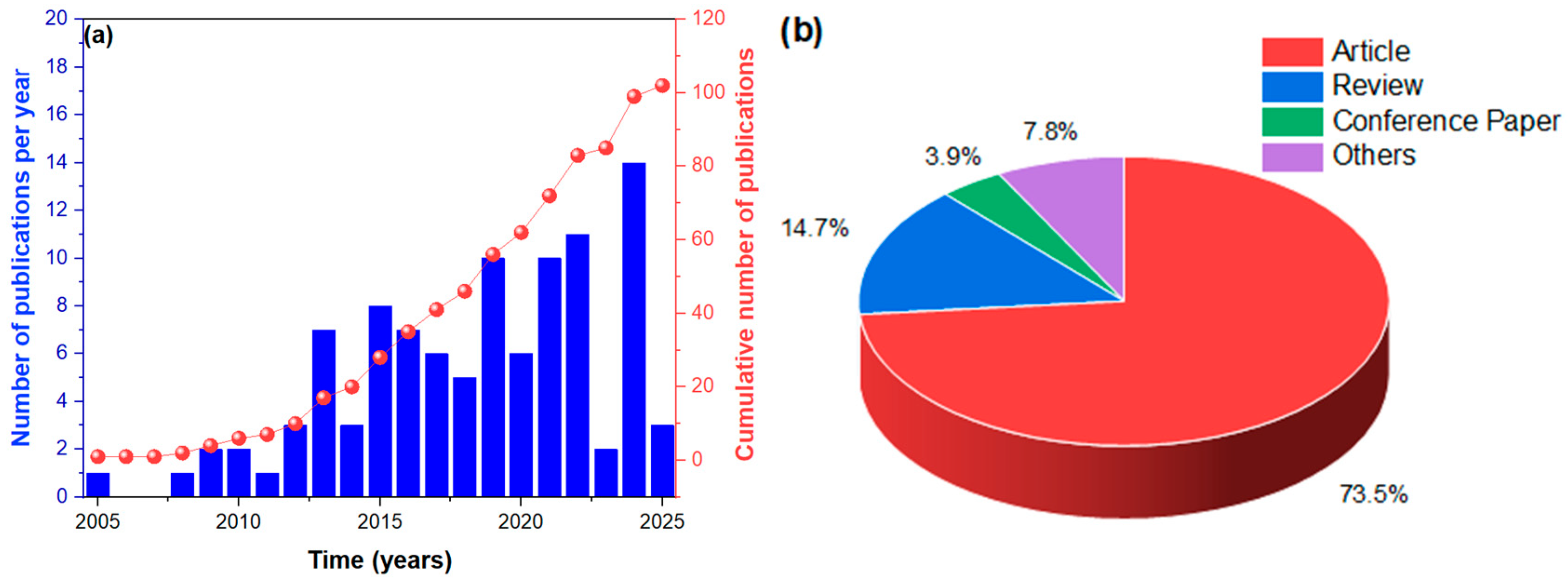
Figure 1. (a) Scientific production and (b) distribution of studies on biomaterials in microbial fuel cell electrodes.
Materproc 27 00004 g001
Figure 2. Network map of terms related to biomaterials for electrodes in microbial fuel cells.
Materproc 27 00004 g002
Figure 3. Distribution of thematic clusters by document coupling, classified according to impact and centrality on biomaterials for electrodes in microbial fuel cells.
Materproc 27 00004 g003
Table 1. Search strategy for scientific documents.
Criteria
Scopus Search Strategy((“biomaterials” OR “bio-materials” OR “biopolymers” OR “natural materials”) AND (“electrodes” OR “anodes” OR “cathodes” OR “conductors”) AND (“microbial fuel cells” OR “MFC” OR “biofuel cells” OR “microbial energy”) AND (“performance” OR “efficiency” OR “output” OR “power”) OR (“sustainability” OR “renewable” OR “environmental” OR “green technology”)
Processing in RStudioPackage: bibliometrix v4.2<br>- Sample code: <br>r<br>library(bibliometrix)<br>M <- convert2df(“scopus_export.bib”, dbsource = “scopus”, format = “bibtex”)<br>results <- biblioAnalysis(M, sep = “;”)<br>summary(results, k = 10)<br>thematicMap <- thematicMap(M, n = 250, minfreq = 5, stemming = TRUE)<br>
Visualization in VOSviewerVersion: 1.6.19<br>- Type of analysis: Co-occurrence of keywords<br>- Unit of analysis: Author Keywords and Keywords Plus<br>- Normalization method: LinLog/modularity
Methodological InnovationIntegration of thematic mapping and temporal evolution of terms<br>- Identification of emerging clusters<br>- Projection of future research trends in biomaterials for electrodes<br>- Linkage to real-world MFC applications
LanguagesEnglish
Document typesArticle
Period2005–2025
DatabaseFormat: BibTeX<br>- Source: Scopus Core Collection
Total documents212
Table 2. Publications on biomaterials for electrodes in microbial fuel cells.
NJournalNPPublisherh-Indexg-IndexTCYear
1Journal of Microbial Fuel Cell Research185Elsevier728645202010
2Bioelectrochemistry & Sustainable Energy170Springer647838902013
3Advances in Biomaterials & Energy Conversion150Wiley586932502008
4Journal of Biocompatible Electrodes162Royal Society617335752015
5Nanobiotechnology for Clean Energy140Springer526328902012
Table 3. Bibliometric indicators of authors in biomaterials for electrodes in microbial fuel cells.
AuthorArticlesH-IndexTCInstitutionCountry
Li N44158Tianjin UniversityChina
Xie Q44215Key Laboratory of Education Department of Hunan Province on Plant Genetics and Molecular BiologyChina
Yang J44258University of Colorado DenverUSA
Chen C3397The Second Affiliated Hospital of Dalian Medical UniversityChina
Feng Y3366Harbin Institute of TechnologyChina
Disclaimer/Publisher’s Note: The statements, opinions and data contained in all publications are solely those of the individual author(s) and contributor(s) and not of MDPI and/or the editor(s). MDPI and/or the editor(s) disclaim responsibility for any injury to people or property resulting from any ideas, methods, instructions or products referred to in the content.