
Proceeding Paper

Bibliometric Trends in Green Nano Microbiology for Advanced Materials in Water Purification: A Sustainable Approach †

by
Magaly De La Cruz-Noriega
1,*,
Renny Nazario-Naveda
1,
Santiago M. Benites
1 and
Daniel Delfin Narciso
2
1
Vicerrectorado de Investigación, Universidad Autónoma del Perú, Lima 15831, Peru
2
Grupo de Investigación en Ciencias Aplicadas y Nuevas Tecnologías, Universidad Privada del Norte, Trujillo 13011, Peru
*
Author to whom correspondence should be addressed.
Presented at the 2025 9th International Symposium on Advanced Material Research, Incheon, Republic of Korea, 18–20 July 2025.
Mater. Proc. 2025, 27(1), 2; https://doi.org/10.3390/materproc2025027002
Published: 10 December 2025

Abstract

Water pollution is a global issue that threatens human health and ecosystems, driving the need for advanced purification technologies. Traditional methods face limitations in cost and efficiency, prompting the emergence of green nanomicrobiology as a sustainable alternative. This interdisciplinary approach integrates nanotechnology and microbiology to develop advanced materials capable of eliminating contaminants. To assess scientific advancements in this field, a bibliometric analysis was conducted based on publications indexed in Scopus, utilizing tools such as VOSviewer 1.6.20 and RStudio 2025.09 to identify trends, institutional collaborations, and development patterns. The findings reveal a significant increase in scientific output between 2010 and 2025, with growing research on nanocomposites, adsorption processes, and hybrid microbiological systems. Notably, metallic nanoparticles and functionalized biopolymers, such as modified bacterial cellulose, demonstrate high efficiency in removing heavy metals and toxic residues. The study also highlights China’s pivotal role in scientific collaboration, with an expanding network of partnerships. Despite these advancements, challenges remain regarding industrial scalability, long-term toxicity, and regulatory frameworks. Integrating artificial intelligence and metagenomics could enhance these systems, strengthening their impact on water sustainability.

1. Introduction

Water pollution is a global environmental issue that threatens human health and ecosystems [1,2]. The presence of emerging contaminants, heavy metals, and pathogenic microorganisms in water has necessitated the development of advanced purification technologies. Traditional methods—such as ion exchange, liquid distillation, activated carbon adsorption, ultrafiltration (UF), reverse osmosis (RO), UV filtration, and deionization—are effective but have limitations, including high costs, energy demands, and maintenance requirements [3]. In this context, nanotechnology and green microbiology have emerged as promising approaches to enhance water treatment processes [4,5]. Green nanomicrobiology integrates principles of green chemistry and nanotechnology to develop sustainable materials for water purification [6]. Green synthesis methods, particularly those based on plant sources, are gaining popularity due to their non-toxic, eco-friendly, and cost-effective nature [4,5,7]. These methods use biological agents such as plants, bacteria, algae, and fungi to produce nanoparticles [4]. Biogenic nanomaterials and microorganisms with biocatalytic capabilities have demonstrated efficacy in degrading toxic compounds and reducing microbial loads. In recent years, significant advancements have been made in functionalizing nanoparticles with specific enzymes and bacteria for selective contaminant removal.
Nanomaterials have emerged as an advanced solution for water purification due to their unique physicochemical properties that enhance contaminant removal [8]. Metallic nanoparticles, carbon-based nanomaterials, dendrimers, and zeolites are widely used because of their high surface area, reactivity, and structural stability [9,10]. In particular, silver nanoparticles (AgNPs) synthesized using fungi have shown remarkable antibacterial activity and a high capacity for pesticide adsorption, making them an efficient tool for wastewater treatment [11]. The integration of biological agents such as polymers, bacteria, and fungi in material synthesis has significantly reduced toxic byproducts, promoting eco-friendly purification methods [12]. This strategy focuses on biochemical and biological technologies, including hybrid systems, to prevent water contamination and protect aquatic ecosystems [12]. Recent studies have demonstrated the high efficiency of these nanomaterials in remediating contaminated water, facilitating the removal of toxic compounds and improving purification system performance [13]. Among eco-friendly nanocomposites, bacterial cellulose (BC) and nanocrystalline cellulose (CNC) have been identified as key materials for heavy metal removal, toxic chemical adsorption, pesticide filtration, and radioactive waste elimination due to their high adsorption capacity and biodegradability [6]. Modified BC, such as bacterial cellulose nanofibers functionalized with Cibacron Blue F3GA, Polysciences, Inc. Warrington, Pensilvania, Estados Unidos significantly enhances Hg2+ adsorption capacity (928.0 mg/g) compared to unmodified BC (0.62 mg/g) [14]. Incorporating materials like polyethyleneimine, graphene oxide, and polydopamine can further improve sorption efficiency [15]. CNC, with functional groups such as carboxyl (-COOH) and hydroxyl (-OH), plays a crucial role in heavy metal removal through electrostatic adsorption, ion displacement, and chemical complexation. These processes enable efficient contaminant capture, facilitating their elimination from aquatic environments. Recent studies indicate that CNC can remove cadmium (Cd) within approximately 30 min, achieving an efficiency of up to 86.3%. Its strong adsorption capacity, combined with biodegradability and sustainability, positions CNC as a promising material for environmental remediation and contaminated water treatment [16,17].
A bibliometric analysis of green nanomicrobiology research applied to water purification provides insights into the impact of scientific studies and the evolution of trends in this field [5]. Analytical tools such as VOSviewer 1.6.20, RStudio 2025.09, and Excel 2016 help examine collaboration networks among researchers, institutions, and nations, offering a comprehensive view of academic interconnectedness. Additionally, these platforms facilitate the assessment of scientific output and its role in shaping innovative approaches across disciplines [18,19]. Bibliometrics offers valuable insights into academic production, institutional collaborations, and interdisciplinary influence on sustainable technological development. Understanding research evolution enables scientists and policymakers to formulate more efficient strategies for ensuring access to safe drinking water, contributing to water resource conservation and societal well-being [20].
This study aims to examine scientific trends in green nanomicrobiology research applied to water purification. Its primary objective is to evaluate the impact of recent studies, identify key institutional collaborations, and analyze thematic developments in this field. By applying bibliometric tools, the research seeks to establish scientific development patterns and outline future research directions that optimize the application of these materials in environmental treatment. Future investigations should focus on improving the scalability of these nanomaterials and designing strategies to minimize their potential ecological impact. This scientific landscape highlights the importance of exploring new synthesis methodologies and nanomaterial applications to enhance production processes and assess environmental implications. Research in this area is crucial to ensuring global accessibility to these technologies and promoting sustainable solutions for water resource preservation.

2. Materials and Methods

This study employed a systematic bibliometric analysis to assess the evolution of research in green nanomicrobiology applied to water purification between 2010 and 2025. A structured search was performed in the Scopus database, using Boolean operators and specific keywords including key terms (TITLE-ABS-KEY (green OR nanomicrobiology AND materials) AND TITLE-ABS-KEY (water AND purification)) AND (LIMIT-TO (OA, “all”)) AND (LIMIT-TO (LANGUAGE, “English”)) to ensure the relevance and quality of the selected studies. Inclusion and exclusion criteria were defined, limiting the dataset to peer-reviewed articles and excluding patents and non-indexed conference papers. The retrieved data were processed using bibliometric tools such as RStudio, which used packages such as Bibliometrix to visualize research evolution patterns. Keyword and citation analysis techniques were applied, generating temporal distribution graphs and maps of collaboration between researchers and institutions. To provide a comprehensive perspective of the field, bibliometric indicators were integrated, including scientific productivity indices, levels of academic interconnectivity, and emerging trends in water purification using nanomaterials (see Table 1).

3. Results and Discussion

Figure 1 illustrates the annual number of publications and the cumulative count of research studies on green nanomicrobiology applied to water purification from 2010 to 2025, highlighting sustained growth in this field. In the initial phase (2010–2015), the scientific community contributed fewer than a dozen articles per year, reflecting an emerging field. From 2016 onwards, the publication rate increased significantly, exceeding 20 annual contributions in 2017 and surpassing 80 in 2019. This momentum continued in the following decade, with around 150 papers in 2021 and more than 300 in 2023. By 2025, a peak of almost 400 annual publications was reached, evidencing the consolidation of this line of research. This pattern indicates increased research investment and the consolidation of the field as a viable strategy for water decontamination [21,22]. The rising number of publications reflects growing environmental concerns and the need to develop efficient purification systems based on microorganisms and sustainable nanomaterials. The integration of these elements has proven highly effective in contaminant removal without generating toxic residues, potentially transforming industrial and community practices in the future [23]. Additionally, the pie chart below illustrates the distribution of different types of publications within this research domain. The majority consists of scientific articles (75%), emphasizing the generation of new knowledge through experimentation and empirical studies. Reviews account for 18.7%, playing a crucial role in synthesizing the state of the art and identifying future trends. Conference proceedings represent 4.1%, underscoring the significance of academic discourse and the dissemination of findings within the scientific community, while the remaining 2.2% correspond to other publication categories [24].
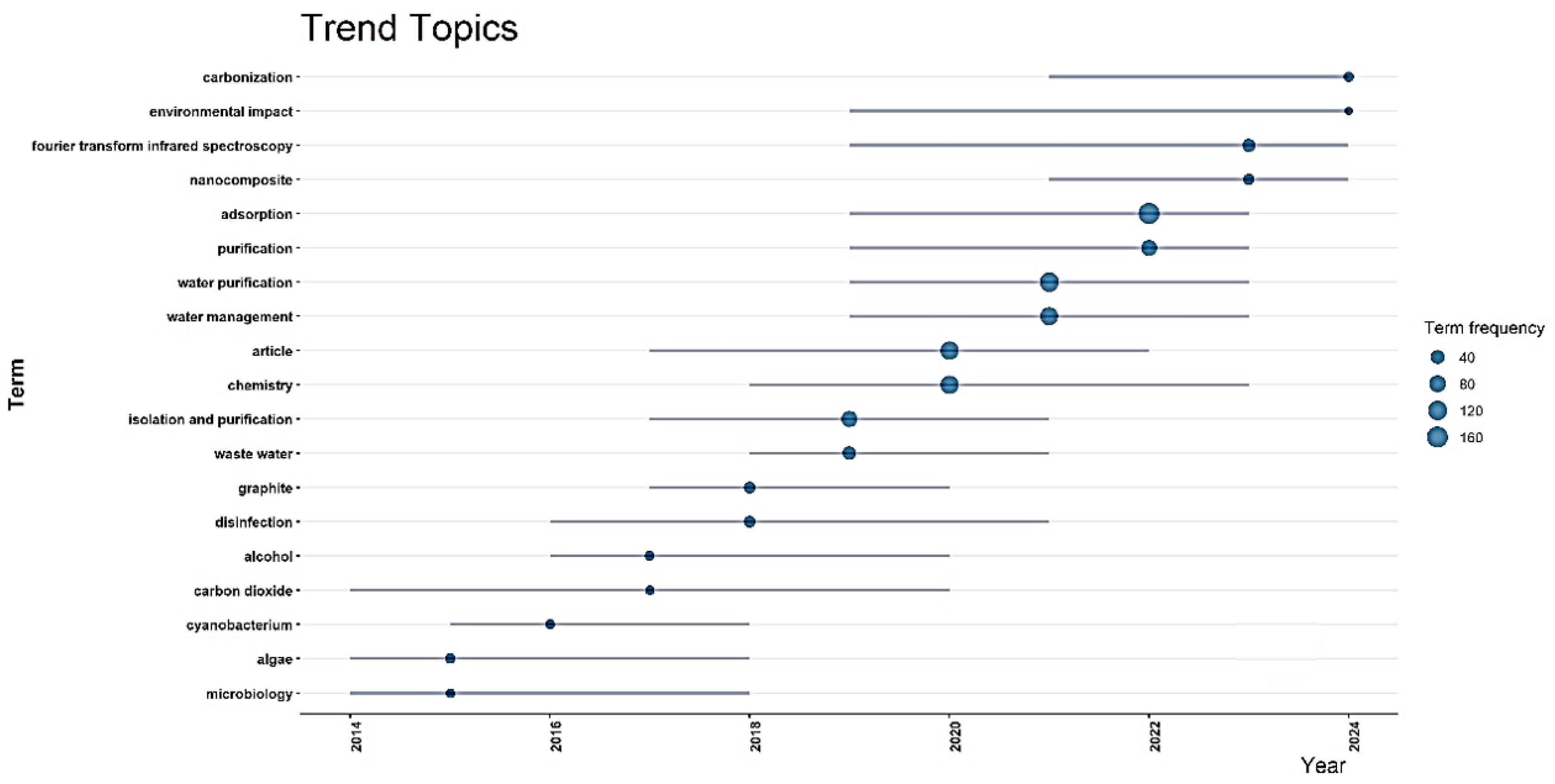
Green nanomicrobiology is emerging as a key field in the research of advanced materials for water purification, addressing the urgent need for sustainable solutions to combat water pollution. Figure 2 presents a trend graph illustrating the evolution of various research topics in this domain from 2010 to 2025. At the top level, the terms adsorption, water purification, water management, and purification are represented by the largest circles (≈160), underscoring their central role and high recurrence in the literature. Next, with intermediate diameters (≈120), instrumental and materiality concepts such as Fourier transform infrared spectroscopy, nanocomposites, and environmental impact emerge, indicating a significant consolidation phase. The next level, with moderately sized circles (≈80), includes words with a methodological and general focus, such as chemistry, article, isolation and purification, and water. Finally, the smaller circles (≈40) correspond to specialized or emerging topics—carbonization, graphite, ethanol, alcohol, carbon dioxide, cyanobacteria, algae, and microbiology—demonstrating that, although present, they are still less prevalent in the published studies. As the environmental crisis intensifies, advancements in nanotechnology and microbiology are providing innovative alternatives to enhance water purification efficiency, reduce environmental impact, and promote sustainability [23]. Among the highlighted topics in the figure, there is a notable increase in research on nanocomposites, adsorption, and carbonization, which are fundamental technologies for improving contaminant removal [24]. Nanocomposites are revolutionizing water treatment through molecularly designed structures that optimize impurity capture, while adsorption processes enable selective contaminant retention, ranging from heavy metals to organic residues [25]. Carbonization, meanwhile, has become a key approach in the development of highly effective adsorbent materials, such as graphite and carbon derivatives, offering efficient solutions for water decontamination [26]. Additionally, the growing interest in the environmental impact of these materials highlights the ongoing effort to evaluate their sustainability and ensure that their applications do not pose risks to ecosystems [19]. In this regard, the integration of green technologies in water purification aims to develop methods that are not only effective in contaminant removal but also minimize energy consumption and the use of harmful chemicals [24]. Furthermore, advanced techniques such as Fourier transform spectroscopy have gained prominence in material characterization, facilitating a better understanding of their properties and behavior in purification processes. These analytical methodologies have contributed to the design of optimized water treatment systems by integrating knowledge from chemistry, microbiology, and nanotechnology to develop increasingly sophisticated and efficient solutions [21]. Another key aspect highlighted in the figure is the role of microorganisms in water decontamination. The presence of terms such as microbiology, cyanobacteria, and algae indicates a growing interest in leveraging natural organisms for bioremediation efforts [25].
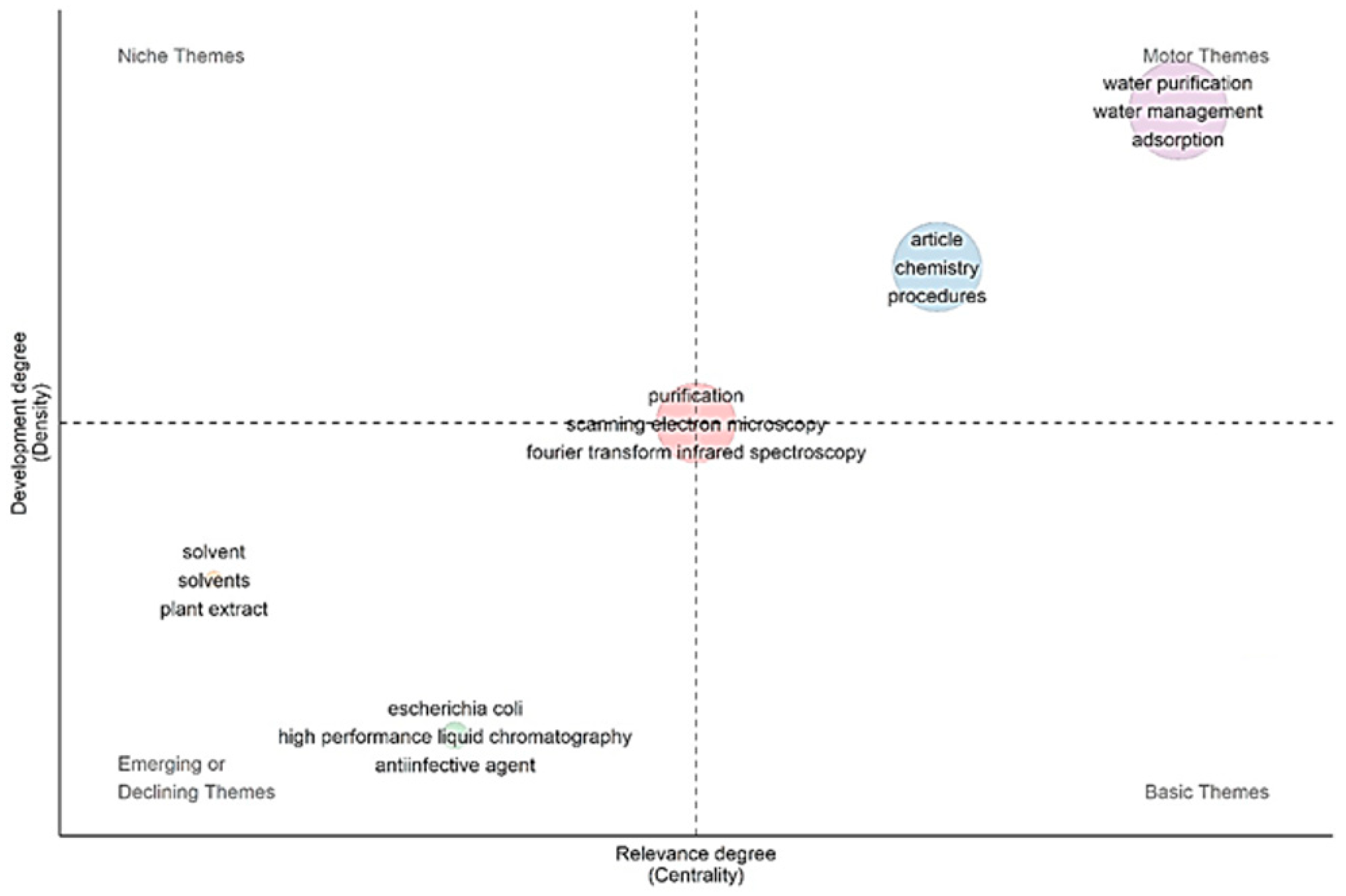
Figure 3, the thematic evolution of green nanomicrobiology applied to water purification, represented in the development versus centrality map, shows how the size and color of the circles synthesize the maturity and relevance of each line of research. In the quadrant of driving themes (top right), the deep blue nodes representing water purification, water management, and adsorption appear with large-diameter circles, indicating their high level of development and centrality in the scientific community. In the area of emerging or declining themes (bottom left), the pale green circles corresponding to solvent, plant extract, Escherichia coli, high-performance liquid chromatography, and anti-infective agents are smaller, reflecting a low level of development and low centrality. The center of the map groups the medium-sized orange nodes of purification, scanning electron microscopy, and Fourier transform infrared spectroscopy that function as methodological bridges, with a moderate level of development and centrality. The absence of significant nodes in the niche and core topics suggests unexplored gaps, highlighting priority areas for future research. The evolution of research themes is depicted through a trend map, where certain terms gain prominence in different periods. The figure reveals an interconnection between concepts related to green nanotechnology, applied microbiology, and advanced materials for water purification [26]. The trend indicates a growing focus on sustainable approaches to water treatment, with an emphasis on process optimization through advancements in nanotechnology and microbiology. A recurring theme in the image is the application of nanomaterials for contaminant removal, underscoring the role of nanotechnology in developing efficient solutions for drinking water [27]. Furthermore, the use of microorganisms in purification processes suggests an increasing interest in biotechnological approaches that support environmental sustainability. The progression of these topics over time signals a rising scientific interest in eco-friendly and cost-effective solutions, promoting the integration of green microbiology and advanced materials to address clean water access challenges [28]. As environmental awareness grows, these approaches are becoming viable alternatives to traditional purification methods [23].
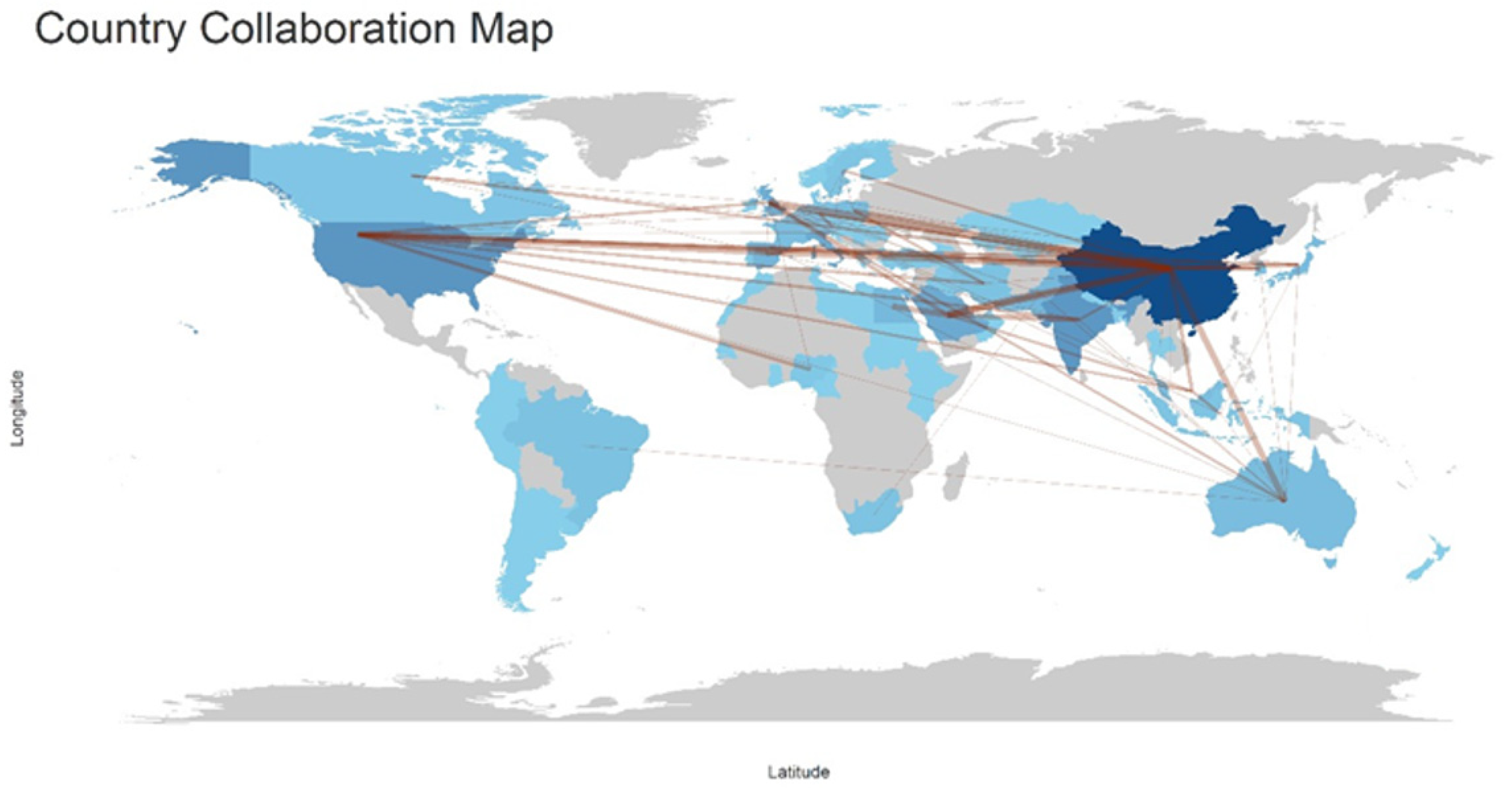
Figure 4 presents a collaboration map illustrating the global interconnectivity of countries engaged in the research and development of advanced water purification technologies using sustainable approaches. The map highlights connections between various nations, with China emerging as the most active hub of collaboration. This suggests that China plays a pivotal role in research on nanotechnology applied to green microbiology and its use in water purification [29]. The lines connecting China to other nations reflect scientific and academic partnerships, indicating that China may be leading the production of scientific publications in this field or serving as a central convergence point for interdisciplinary projects. Several factors may explain China’s role, including its substantial investment in research and development, its focus on innovative solutions for environmental challenges, and the presence of numerous centers of excellence dedicated to nanotechnology and microbiology. Other countries appearing in the map—including those in North America, Europe, Asia, and Oceania—exhibit varying degrees of participation. These collaborations are likely driven by the shared need to develop sustainable technologies that ensure access to clean water, a global concern affecting multiple regions. International cooperation is crucial for tackling global challenges, as water contamination is not confined to a single region. Sharing advancements and methodologies accelerates the development of effective solutions, enhances the implementation of new technologies, and improves accessibility to sustainable purification systems [30].
Figure 4 shows that China leads international scientific collaboration in green nanomicrobiology applied to water purification, with active links with countries in the Americas, Europe, Asia, and Oceania. Shades of blue indicate the intensity of collaboration, with darker shades indicating regions with greater joint production. This global network suggests a strategic interdisciplinary convergence toward sustainable solutions in advanced purification technologies.
Future Research Trends: The application of green nanomicrobiology in the development of advanced water purification materials represents an emerging frontier at the intersection of nanotechnology, microbiology, and sustainability [31]. In the coming years, this field is expected to become a cornerstone in addressing global challenges related to clean water access, promoting more efficient and eco-friendly approaches. One of the leading future trends is the design of bioinspired nanomaterials that mimic natural microbial mechanisms for contaminant removal [32]. The integration of antimicrobial nanoparticles and functionalized biofilms will enable purification systems with enhanced selectivity and reduced environmental impact [33]. Additionally, the use of genetically modified microorganisms for the degradation of heavy metals and persistent organic compounds is expected to advance through high-precision bioengineering strategies [34]. Despite these innovations, several critical gaps must be addressed to solidify these advancements. For instance, the long-term toxicity of nanomaterials used in bioremediation remains poorly understood, necessitating further studies on their interactions with aquatic ecosystems [35]. Similarly, scalability remains a challenge, as the sustainable and cost-effective production of these advanced materials is currently limited in industrial settings [36]. Another crucial factor is regulation and standardization, as the lack of clear regulatory frameworks for microbial nanotechnology in water purification hinders widespread implementation [37]. Moving forward, the convergence of artificial intelligence, metagenomics, and nanobiotechnology could optimize these systems, facilitating their integration into industrial and community processes [38]. Interdisciplinary collaboration and sustained research investment will be key to overcoming these challenges and maximizing the impact of this technology on water resource sustainability [39].

4. Conclusions

Between 2010 and 2025, the field of green nanomicrobiology applied to water purification experienced remarkable quantitative growth, which supports the conclusions of this study. Initially, between 2010 and 2015, fewer than ten papers were published per year, reflecting a nascent discipline; however, starting in 2016, it witnessed a turning point, with more than twenty annual contributions in 2017, surpassing eighty in 2019, reaching around one-hundred-and-fifty in 2021, and consolidating with more than three hundred in 2023 and culminating in nearly four hundred in 2025. This sustained increase demonstrates the acceleration of scientific interest in developing sustainable nanobiotechnological solutions for the treatment of contaminated water. The publication typology also confirms this trend: 75% are original research articles, 18.7% are conference proceedings, 4.1% are reviews, and 2.2% are in other formats, indicating a predominance of empirical studies, while there is still an opportunity to strengthen critical synthesis work. Furthermore, the analysis of keyword co-occurrence revealed that the terms adsorption, water purification, water management, and purification were the most frequent, registering up to 160 mentions each, positioning them as driving forces in the field. At an intermediate level, with approximately 120 mentions, are Fourier transform infrared spectroscopy, nanocomposites, and environmental impact, a sign of its methodological consolidation, and with around 80 mentions, the terms chemistry, article, isolation and purification, and water stand out, indicating its widespread use. Carbonization, graphite, ethanol, alcohol, carbon dioxide, cyanobacteria, algae, and microbiology, with around 40 mentions, are located in the area of emerging or specialized topics, pointing to lines with potential for expansion. Likewise, the construction of international collaboration networks placed China as a central node, demonstrating more than fifty direct connections with institutions in Europe, North America, and Asia, which underscores its leadership in the generation and dissemination of knowledge. These quantitative findings confirm the growing maturity of the discipline and conclude that to advance towards industrial and community applications, it is essential to diversify publication formats, strengthen synthesis studies, and articulate the identified emerging topics in greater depth so that green nanomicrobiology achieves a sustainable and verifiable impact on water purification processes.

Author Contributions

Conceptualization, M.D.L.C.-N.; methodology, M.D.L.C.-N. and S.M.B.; validation, M.D.L.C.-N. and S.M.B.; formal analysis, R.N.-N.; investigation, M.D.L.C.-N. and S.M.B.; data curation, M.D.L.C.-N. and D.D.N.; writing—original draft preparation M.D.L.C.-N., S.M.B. and D.D.N.; writing—review and editing, M.D.L.C.-N.; project administration, M.D.L.C.-N. All authors have read and agreed to the published version of the manuscript.

Funding

This research has been financed by Universidad Autónoma del Perú.

Institutional Review Board Statement

Not applicable.

Informed Consent Statement

Not applicable.

Data Availability Statement

No new data were created or analyzed in this study. Data sharing is not applicable to this article.

Conflicts of Interest

The authors declare no conflicts of interest.

References

  1. Lin, L.; Yang, H.; Xu, X. Effects of Water Pollution on Human Health and Disease Heterogeneity: A Review. Front. Environ. Sci. 2022, 10, 880246. [Google Scholar] [CrossRef]
  2. Camargo, J.A.; Alonso, A. Ecological and Toxicological Effects of Inorganic Nitrogen Pollution in Aquatic Ecosystems: A Global Assessment. Environ. Int. 2006, 32, 831–849. [Google Scholar] [CrossRef] [PubMed]
  3. Gul, M.Z.; Rao, B.S.; Rupula, K. Nanotechnology-Based Applications: A Valuable Tool for Wastewater Clean-Up. In Aquatic Contamination: Tolerance and Bioremediation; Bhat, R.A., Dar, G.H., Tonelli, F.M.P., Hamid, S., Eds.; John Wiley & Sons Ltd.: Hoboken, NJ, USA, 2024; pp. 291–312. [Google Scholar]
  4. Ayyadurai, P.; Ragavendran, C. Green Nanotechnologies for Removing Cosmetic Pollutants: Approach towards Preserving and Protecting Aquatic Health. Nanotechnol. Environ. Eng. 2025, 10, 21. [Google Scholar] [CrossRef]
  5. Sikiru, S.; Abiodun, O.J.A.; Sanusi, Y.K.; Sikiru, Y.A.; Soleimani, H.; Yekeen, N.; Haslija, A.B.A. A Comprehensive Review on Nanotechnology Application in Wastewater Treatment a Case Study of Metal-Based Using Green Synthesis. J. Environ. Chem. Eng. 2022, 10, 108065. [Google Scholar] [CrossRef]
  6. Ugwu, E.I.; Karri, R.R.; Nnaji, C.C.; John, J.; Padmanaban, V.C.; Othmani, A.; Ikechukwu, E.L.; Helal, W.M.K. Application of Green Nanocomposites in Removal of Toxic Chemicals, Heavy Metals, Radioactive Materials, and Pesticides from Aquatic Water Bodies. In Sustainable Nanotechnology for Environmental Remediation; Elsevier: Amsterdam, The Netherlands, 2022; pp. 321–346. [Google Scholar]
  7. Bakhtiari, S.; Salari, M.; Shahrashoub, M.; Zeidabadinejad, A.; Sharma, G.; Sillanpää, M. A Comprehensive Review on Green and Eco-Friendly Nano-Adsorbents for the Removal of Heavy Metal Ions: Synthesis, Adsorption Mechanisms, and Applications. Curr. Pollut. Rep. 2024, 10, 1–39. [Google Scholar] [CrossRef]
  8. Hussain, C.M.; Mishra, A.K. Nanotechnology in Environmental Science: 2 Volumes; Hussain, C.M., Mishra, A.K., Eds.; Wiley-VCH Verlag: Weinheim, Germany, 2018; ISBN 9783527342945. [Google Scholar]
  9. Yadav, A.; Jangid, N.K.; Sharma, R.; Khan, A.U. A Comprehensive Review on Applications of Different Domains of Nanotechnology in Wastewater Treatment. In Green Solutions for Degradation of Pollutants; Bentham Science Publishers: Singapore, 2024; pp. 249–278. ISBN 9789815238969. [Google Scholar]
  10. Mandal, D.; Gupta, J. Potential Application of Nanoparticles for Water Remediation: A New Approach. AIP Conf. Proc. 2023, 2804, 020124. [Google Scholar] [CrossRef]
  11. Das, S.K.; Khan, M.M.R.; Guha, A.K.; Das, A.R.; Mandal, A.B. Silver-Nano Biohybride Material: Synthesis, Characterization and Application in Water Purification. Bioresour. Technol. 2012, 124, 495–499. [Google Scholar] [CrossRef] [PubMed]
  12. Islam, S.U.; Shalla, A.H.; Shahadat, M. Green Purification: Green Chemistry for Sustainable Water Purification; Wiley: Hoboken, NJ, USA, 2025; ISBN 9781119852292. [Google Scholar]
  13. Ajith, M.P.; Aswathi, M.; Priyadarshini, E.; Rajamani, P. Recent Innovations of Nanotechnology in Water Treatment: A Comprehensive Review. Bioresour. Technol. 2021, 342, 126000. [Google Scholar] [CrossRef] [PubMed]
  14. Tamahkar, E.; Tamahkar, E.; Türkmen, D.; Akgönüllü, S.; Qureshi, T.; Denizli, A. Bacterial Cellulose Nanofibers for Efficient Removal of Hg2+ from Aqueous Solutions. In Nanotechnology for Sustainable Water Resources; John Wiley & Sons, Inc.: Hoboken, NJ, USA, 2018; pp. 501–522. ISBN 9781119323655. [Google Scholar]
  15. Sahari, N.S.; Shahir, S.; Ibrahim, Z.; Hasmoni, S.H.; Altowayti, W.A.H. Bacterial Nanocellulose and Its Application in Heavy Metals and Dyes Removal: A Review. Environ. Sci. Pollut. Res. Int. 2023, 30, 110069–110078. [Google Scholar] [CrossRef]
  16. Zhang, Y.; Ye, Z.; Liao, W.; Wu, Q.; Wei, Z.; Qiu, R.; Gao, T.; Xian, W.; Zhang, K.; Li, M.; et al. Cellulose Nanocrystals for Green Remediation of Contaminated Soil with Multiple Heavy Metals. Environ. Geochem. Health 2025, 47, 133. [Google Scholar] [CrossRef]
  17. Yu, X.; Liao, W.; Wu, Q.; Wei, Z.; Lin, X.; Qiu, R.; Chen, Y. Green Remediation of Cadmium-Contaminated Soil by Cellulose Nanocrystals. J. Hazard. Mater. 2023, 443, 130312. [Google Scholar] [CrossRef]
  18. Hassan, W.; Duarte, A.E. Bibliometric Analysis: A Few Suggestions. Curr. Probl. Cardiol. 2024, 49, 102640. [Google Scholar] [CrossRef]
  19. Johri, A.; Joshi, P.; Kumar, S.; Joshi, G. Metaverse for Sustainable Development in a Bibliometric Analysis and Systematic Literature Review. J. Clean. Prod. 2024, 435, 140610. [Google Scholar] [CrossRef]
  20. Bennett, A.; Demaine, J.; Dorea, C.; Cassivi, A. A Bibliometric Analysis of Global Research on Drinking Water and Health in Low- and Lower-Middle-Income Countries. J. Water Health 2023, 21, 417–438. [Google Scholar] [CrossRef]
  21. Asli, H.H.; Tatrishvili, T.; Abraham, A.R.; Haghi, A.K. Sustainable Strategies for Sustainable Water Treatment and Ecosystem Protection Strategies, 1st ed.; Apple Academic Press: New York, NY, USA, 2024; ISBN 9781774915189. [Google Scholar]
  22. Qi, Y.; He, K. Science and Technology for Water Purification: Achievements and Strategies. Water 2025, 17, 91. [Google Scholar] [CrossRef]
  23. Li, B.; Wang, N.; Zheng, J.; Zhu, H.; Wang, S.; Ye, E.; Li, Z. Green Nanotechnology for High-performance Impurity Detection and Water Treatment. In Sustainable Nanotechnology; Li, Z., Zheng, J., Ye, E., Eds.; Royal Society of Chemistry: Cambridge, UK, 2022; Volume 10, pp. 33–64. [Google Scholar] [CrossRef]
  24. Salem, S.S. A mini review on green nanotechnology and its development in biological effects. Arch. Microbiol. 2023, 205, 128. [Google Scholar] [CrossRef]
  25. Malik, S.; Dhasmana, A.; Preetam, S.; Mishra, Y.K.; Chaudhary, V.; Bera, S.P.; Ranjan, A.; Bora, J.; Kaushik, A.; Minkina, T.; et al. Exploring microbial-based green nanobiotechnology for wastewater remediation: A sustainable strategy. Nanomaterials 2022, 12, 4187. [Google Scholar] [CrossRef]
  26. Kumar, S. Smart and innovative nanotechnology applications for water purification. Hybrid Adv. 2023, 3, 100044. [Google Scholar] [CrossRef]
  27. Urso, M.; Ussia, M.; Pumera, M. Smart micro-and nanorobots for water purification. Nat. Rev. Bioeng. 2023, 1, 236–251. [Google Scholar] [CrossRef]
  28. Saleh, T.A. Protocols for synthesis of nanomaterials, polymers, and green materials as adsorbents for water treatment technologies. Environ. Technol. Innov. 2021, 24, 101821. [Google Scholar] [CrossRef]
  29. Jain, K.; Patel, A.S.; Pardhi, V.P.; Flora, S.J.S. Nanotechnology in wastewater management: A new paradigm towards wastewater treatment. Molecules 2021, 26, 1797. [Google Scholar] [CrossRef]
  30. Raja, R.K.; Hazir, S.; Balasubramani, G.; Sivaprakash, G.; Obeth, E.S.J.; Boobalan, T.; Pugazhendhi, A.; Raj, R.H.K.; Arun, A. Green nanotechnology for the environment. In Handbook of Microbial Nanotechnology; Academic Press: Cambridge, MA, USA, 2022; pp. 461–478. [Google Scholar]
  31. Magalhães-Ghiotto, G.A.; de Oliveira, A.M.; Natal, J.P.; Bergamasco, R.; Gomes, R.G. Green nanoparticles in water treatment: A review of research trends, applications, environmental aspects and large-scale production. Environ. Nanotechnol. Monit. Manag. 2021, 16, 100526. [Google Scholar] [CrossRef]
  32. Satyam, S.; Patra, S. Innovations and challenges in adsorption-based wastewater remediation: A comprehensive review. Heliyon 2024, 10, e29573. [Google Scholar] [CrossRef]
  33. Sarma, H.; Joshi, S.J.; Prasad, R.; Jampilek, J. (Eds.) Biobased Nanotechnology for Green Applications; Springer International Publishing: Berlin/Heidelberg, Germany, 2021. [Google Scholar]
  34. Kobayashi, T.; Nakajima, L. Sustainable development goals for advanced materials provided by industrial wastes and biomass sources. Curr. Opin. Green Sustain. Chem. 2021, 28, 100439. [Google Scholar] [CrossRef]
  35. Baglioni, M.; Poggi, G.; Chelazzi, D.; Baglioni, P. Advanced materials in cultural heritage conservation. Molecules 2021, 26, 3967. [Google Scholar] [CrossRef]
  36. Mayorga-Martinez, C.C.; Zelenka, J.; Klima, K.; Kubanova, M.; Ruml, T.; Pumera, M. Multimodal-Driven Magnetic Microrobots with Enhanced Bactericidal Activity for Biofilm Eradication and Removal from Titanium Mesh. Adv. Mater. 2023, 35, 2300191. [Google Scholar] [CrossRef] [PubMed]
  37. Adeola, A.O.; Nomngongo, P.N. Advanced polymeric nanocomposites for water treatment applications: A holistic perspective. Polymers 2022, 14, 2462. [Google Scholar] [CrossRef]
  38. Enang, O.T.; Azeez, B.O.; Ogunyemi, B.T.; Sulayman, A.A.; Araromi, D.O.; Raimi, M.O. Revolutionizing Hemodialysis Water Quality: Development and Evaluation of TiO2 Nanoparticle-Enhanced Microporous Filters. Adv. Nanoparticles 2025, 14, 12–36. [Google Scholar] [CrossRef]
  39. Aswathi, V.P.; Meera, S.; Maria, C.A.; Nidhin, M. Green synthesis of nanoparticles from biodegradable waste extracts and their applications: A critical review. Nanotechnol. Environ. Eng. 2023, 8, 377–397. [Google Scholar] [CrossRef]
Figure 1. (a) Annual number of publications and cumulative count and (b) percentage distribution of scientific publication types on green nanomicrobiology applied to water purification (2010–2025).
Materproc 27 00002 g001
Figure 2. Bibliometric trends of keywords on green nanomicrobiology applied to water purification.
Materproc 27 00002 g002
Figure 3. Trends in niche topics: analysis of the evolution and distribution of green nanomicrobiology applied to water purification.
Materproc 27 00002 g003
Figure 4. International scientific collaboration map in green nanomicrobiology for water purification.
Materproc 27 00002 g004
Table 1. Key methodological elements of the study.
Methodological ElementDescription
DatabaseScopus
Analytical ToolsRStudio 4.3.1, Excel
Inclusion CriteriaPeer-reviewed articles
Exclusion CriteriaPatents, non-indexed conference papers
Bibliometric IndicatorsProductivity indices, interconnectivity, thematic trends
Normalization ApproachData validation and structuring
Network VisualizationScientific collaboration maps and thematic evolution
Disclaimer/Publisher’s Note: The statements, opinions and data contained in all publications are solely those of the individual author(s) and contributor(s) and not of MDPI and/or the editor(s). MDPI and/or the editor(s) disclaim responsibility for any injury to people or property resulting from any ideas, methods, instructions or products referred to in the content.