
Proceeding Paper

Environmental Impacts and Sustainability of Nanomaterials in Water and Soil Systems †

by
Md. Nurjaman Ridoy
and
Sk. Tanjim Jaman Supto
*
Department of Environmental Research, Nano Research Centre, Sylhet 3114, Bangladesh
*
Author to whom correspondence should be addressed.
Presented at the 4th International Online Conference on Materials, 3–6 November 2025; Available online: https://sciforum.net/event/IOCM2025.
Mater. Proc. 2025, 26(1), 6; https://doi.org/10.3390/materproc2025026006 (registering DOI)
Published: 20 January 2026
(This article belongs to the Proceedings of The 4th International Online Conference on Materials)

Abstract

Nanoparticles have become more widely applied in industrial, consumer, and therapeutic products over the past decade, and this trend is presumed to persist due to the rapid population growth, industry, urbanization, and intensive agriculture. The manufacturing of nanomaterials is not necessarily accomplished through eco-friendly processes. Certain nanomaterials involve heavy metals. The release of nanomaterials into the environment could result in soil and aquatic system contamination. Once released into water and soil matrices, nanoparticles undergo dynamic transformations, including aggregation, dissolution, and surface modification, which determine their transport and bioavailability and their toxicological profiles. Different studies have consistently reported adverse impacts of metal, carbon, and plastic-based nanomaterials on aquatic organisms, soil microbial community, enzymatic activities, and nutrient cycling processes, mainly through oxidative stress, disruption of the membrane, and release of metal ions. These problems have stimulated intensive research aimed at the prediction of environmental concentrations of nanoparticles in water and soil and for their ecotoxicological effect on aquatic and terrestrial ecosystems. On the other hand, nanomaterials are also showing great potential for sustainable use, such as water purification, soil remediation, immobilization of contaminants, and geotechnical soil improvement, referring to soil stabilization, strength enhancement, permeability reduction, and ground improvement, where low dosages can improve the mechanical properties and respected environmental performance. This paper deals with current research on these competing roles, examining the causes of nanotoxicity as well as their positive geotechnical and remedial applications in water and soil systems.

1. Introduction

Nanoparticles (NPs) have become more widely applied in industrial, consumer, and therapeutic products over the past decade, and this trend is presumed to persist owing to rapid population growth, industry, urbanization, and intensive agriculture. Manufacturing nanomaterials (NMs) is not necessarily accomplished through eco-friendly processes, and certain NMs may involve heavy metals [1]. Their release into the environment may contaminate soil and aquatic systems, altering their physicochemical and biological characteristics [2]. NPs possess unique optical, catalytic, and antimicrobial properties that make them useful in diverse fields, including water purification, agriculture, and food packaging [3]. However, these properties contribute to ecotoxicological risks when released into the natural environment. NPs dissolve rapidly in water while producing higher toxicity to aquatic organisms [4]. Some NPs release ionic heavy metals exceeding water quality guidelines [5], whereas some NPs disrupt membrane transport in algal species and higher organisms through oxidation-induced adsorption and ingestion [6]. In soil systems, NPs alter microbial activity, enzyme function, and nutrient cycling, potentially leading to long-term ecological shifts [7]. Simultaneously, several NMs have demonstrated positive and sustainable roles in geotechnical (soil improvement, ground stabilization, and sustainable infrastructure performance) and environmental applications [8]. These applications demonstrate that NMs can serve as tools for sustainability when properly managed. Although several studies have addressed NP behavior and toxicity in isolated systems, there is still limited integration of research that links their environmental impacts with sustainability perspectives across both the water and soil systems. A major challenge lies in balancing the beneficial applications of NMs with their potential ecological risks [9]. The present review discusses the classification of NMs and elucidates their environmental pathways, highlight their impacts in aqueous and soil environments, their beneficial and sustainable geotechnical applications, and discusses nanotoxicity mechanisms, risk assessment, and regulatory considerations with proper policies to overcome the problem.

2. Classification and Environmental Pathways of Nanomaterials

NMs exhibit diverse environmental interactions, and although no universally accepted classification system exists, they are commonly grouped according to their composition, origin, and functional attributes. These categories include inorganic, organic, carbon-based, semiconductor, and lipid-based NMs [10]. The environmental pathways of NMs are governed by their physical and chemical transformations upon release into soil and water through industrial effluents, agricultural applications, and atmospheric deposition [11]. Figure 1 shows the classification and environmental pathways of NPs.

Major Nanomaterials in the Environment

Ag NPs are widely used for their antimicrobial properties in medical devices, textiles, and water treatment. Their release into soil and aquatic environments occurs predominantly through wastewater discharge, biosolid application, and industrial effluents. Following environmental entry, Ag NPs undergo aggregation, partial dissolution with the release of toxic Ag+ ions, and surface modification through interactions with organic matter, processes that collectively influence their mobility and bioavailability. Transport behavior is strongly dependent on environmental conditions, with higher mobility generally observed in mineral soils compared to organic-rich soils, reflecting the role of soil composition and water chemistry in regulating NP fate [12,13]. ZnO NPs, commonly used in sunscreens and surface coatings, are introduced into environmental compartments mainly via wastewater pathways and industrial releases. ZnO NPs exhibit partial dissolution, releasing Zn2+ ions that contribute substantially to their observed toxicity. Their transport in porous media is governed by aggregation, hetero-deposition, and slow detachment processes, with mobility modulated by soil composition and groundwater chemistry [13]. TiO2 NPs are widely applied in cosmetics, paints, and photocatalytic processes; they enter soil and water systems primarily through wastewater discharge and surface runoff. In environmental matrices, TiO2 NPs tend to aggregate and settle; however, their fate is influenced by particle size, surface charge, and interactions with soil minerals and organic matter. Although dissolution is limited, TiO2 NPs may undergo transformations driven by redox reactions and adsorption processes, which affect their retention and bioavailability in both soils and aquatic systems [12,14]. CNTs and graphene are used in electronics, composites, and energy storage. They enter soil and water mainly via industrial discharge and waste disposal. Their transport is largely controlled by straining and deposition in porous media, with limited dissolution but potential for surface functionalization, altering aggregation and interaction with natural organic matter, which affects their mobility and persistence [13]. Nanoplastics, such as polystyrene NPs, originate from the degradation of plastic materials and the use of consumer products. Their fate in soil and water environments is determined by particle size, surface functional groups, and interactions with minerals and organic matter. Smaller particles and specific surface chemistries enhance mobility, whereas aggregation with natural colloids promotes retention and sedimentation, particularly in aquatic systems [15,16]. Iron-based NPs used optionally in environmental remediation and medical applications enter the soil and water through industrial and remediation activities. Their transport is influenced by magnetic properties, aggregation, and interactions with soil minerals. They tend to be retained by straining and adsorption, with limited dissolution under typical environmental conditions [13]. Table 1 shows the major uses of nanomaterials, challenges in production, concentration range, and their effects on the environment.

3. Environmental Impacts of Nanomaterials

NMs are increasingly used in industry, agriculture, and environmental remediation, leading to their inevitable release into both aqueous and soil environments. Their unique properties offer remediation benefits but also pose ecological risks [25]. Table 2 shows the environmental impacts of NMs.

3.1. Impact on Water System

The rapid expansion of nanotechnology has increased the presence of NMs in aquatic environments, raising concerns regarding their environmental fate, behavior, and potential risks to ecosystems and human health. The reported biological and ecological effects of NMs in aquatic systems are strongly concentration-dependent, with adverse outcomes most frequently observed at elevated or laboratory exposure concentrations, rather than at environmentally detected levels. Metal-based NPs, carbon-based NMs, and nanoplastics enter water systems through industrial discharges, consumer products, and wastewater effluents [31,32,33]. Their unique physicochemical properties govern transport, transformation, and interactions with pollutants and biota [25]. Following release, the fate of NMs is governed by aggregation, dissolution, sedimentation, and transformation processes, influenced by particle properties, water chemistry, and natural organic matter (NOM), which collectively affect their persistence and toxicity [34]. NMs offer significant advantages for water remediation due to their high surface area and reactivity. Metal–organic frameworks, carbon-based NMs, and MXenes (a family of two-dimensional transition metal carbides, nitrides, or carbonitrides derived from MAX phases, characterized by layered structures and tunable surface terminations [35]) efficiently remove heavy metals, persistent organic pollutants, and emerging contaminants [36]. However, interactions with co-existing pollutants may produce additive, synergistic, or antagonistic toxic effects, increasing uncertainty in environmental risk assessments [37]. NOM and other abiotic factors can simultaneously modulate remediation performance and toxicity [38]. Ecotoxicological studies report adverse biological effects and bioaccumulation in individual aquatic species [4]. Evidence for biomagnification across trophic levels remains limited, with most studies reporting biomagnification factors below unity [39,40]. Transformation products and interactions with other contaminants may further modify NM toxicity [38,40]. NMs undergo dynamic transformations in aquatic environments, including surface modification, eco-corona formation, and chemical aging, which alter reactivity, mobility, and toxicity [34]. A modeling study examined the fate of multiwalled carbon nanotubes (MWCNTs) and graphene oxide (GO) in four aquatic ecosystems in the southeastern United States. Over a simulated 50-year release, the study found that while most NM mass moved through these systems without aggregating, significant accumulation occurred in sediments, especially in lakes with longer water residence times. Recovery periods for sediment NM concentrations to decrease by 50% were estimated at over 37 years for lakes and 1–4 years for rivers, indicating the potential for long-term ecological effects [41]. Consistent with these observations, environmentally relevant Ni NP exposures at 0.05, 0.5, and 5 mg L−1 over 28 days produced species and tissue-specific oxidative stress responses, with glutathione-S-transferase activity increasing in some tissues. Observed effects included increased glutathione-S-transferase activity in selected tissues, inhibition of catalase activity at 5 mg L−1, and significant elevation of thiobarbituric acid reactive substances in bivalve gills at higher exposure levels, indicating oxidative damage exceeding detoxification capacity [42].

3.2. Impact on Soil System

The increasing use of NMs in agriculture, remediation, and industry has led to their inevitable accumulation in soil systems, raising concerns about their environmental fate and potential risks to soil health, biodiversity, and food safety. The impacts of NMs in soils are highly dose-dependent, with toxicity thresholds and beneficial effects varying widely according to nanomaterial type, concentration, soil properties, and exposure duration. NMs and nanoplastics can alter soil physicochemical properties, disrupt microbial communities, affect enzyme activities, and influence plant growth and nutrient cycling [43]. While some NMs provide benefits for soil remediation and crop productivity, their toxicity, bioaccumulation, and persistence pose significant ecological challenges [1]. The impacts of NMs in soils are highly context-dependent and governed by material properties, concentration, soil characteristics, and interactions with biota [44]. Carbon-based NMs and nano-biochar can also modify microbial and enzymatic activities; however, their effects vary with dose, exposure duration, and soil properties [45]. NMs can modify soil structure, porosity, pH, cation exchange capacity, and nutrient availability [46]. Micro/nanoplastics increase greenhouse gas emissions, inhibit crop biomass, and reduce earthworm survival [47]. NMs like nano-biochar and iron oxides can enhance soil fertility and immobilize heavy metals. These benefits may be offset by unintended effects, including altered nutrient cycling or dispersion of pollutants [46]. Plant–soil interactions are also sensitive to NM exposure. NMs have been reported to enhance plant growth, nutrient uptake, and stress tolerance, whereas others induce phytotoxicity, disrupt plant–microbe symbioses, and pose risks of transfer through the food chain [48]. Long-term studies show NMs enhance soil fertility, microbial activity, and crop yield by reducing heavy metal bioavailability. In contaminated soils from Kafr El-Zayat, Egypt, nano-biochar and nano-water treatment residues significantly immobilized Pd, Ni, Cd, and Co, improving soil quality and increasing maize yield, highlighting the potential of NMs for rehabilitating industrially polluted soils [47]. Conversely, a synthesis of 61 soil studies reported substantial effects of Ag NPs across a wide toxicity dose–response range, with notable impairments of microbial functions observed at concentrations ≤1 mg kg−1 and increasing severity at higher doses [49]. Further evidence suggests that NM impacts on soil biogeochemical processes can be highly process specific. Application of Ag NPs at 10 and 100 mg Ag kg−1 soil enhanced nitrogen fixation and nitrification, while simultaneously inhibiting denitrification through down-regulation of nirS, nirK, and nosZ genes and shifts in the abundance of nitrogen-cycling microbial genera. These findings demonstrate that different nitrogen-cycle processes exhibit distinct concentration thresholds and sensitivities to NM exposure [50].

4. Beneficial Roles and Sustainable Geotechnical Applications

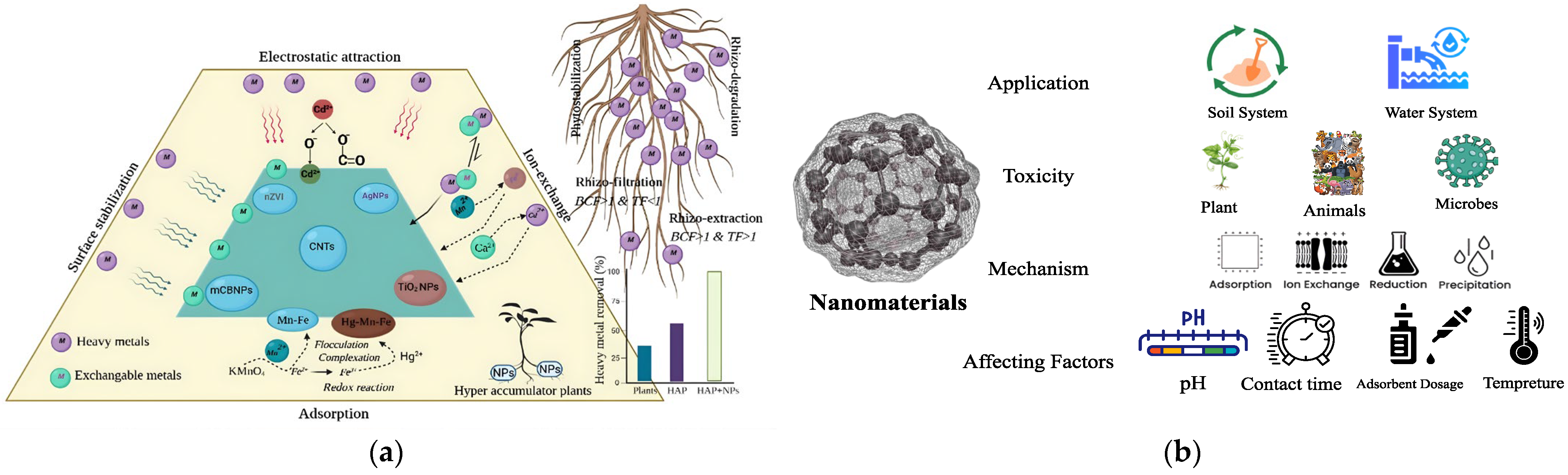
Sustainable geotechnical engineering focuses on reducing environmental impact, conserving resources, and enhancing resilience in infrastructure projects through environmentally responsible materials and design approaches [51]. NMs have emerged as effective soil modifiers capable of improving engineering performance while reducing material consumption and environmental footprints. NMs significantly enhance soil mechanical properties. For example, nano-MgO combined with fibers increased clay soil bearing capacity by more than threefold, while nano-CaCO3 fiber systems achieved up to a 2.58-fold improvement [52,53]. Colloidal silica, bentonite, and laponite are effective in reducing soil liquefaction risk, making them valuable for earthquake-prone regions and critical infrastructure [54]. NMs can immobilize contaminants, improve microbial activity, and support soil remediation [55]. For safer use, smaller NPs are more reactive but can be more toxic and mobile; surface coatings can reduce toxicity and improve stability [26]. NPs at high enough concentrations can harm soil structure, water retention, and beneficial microbes [11]. Nano-phytoremediation using NPs with hyperaccumulator plants enhances the removal of heavy metals by boosting roots and shoot uptake in plants [56]. Figure 2 illustrates the removal of heavy metals via a hyperaccumulator plant, and the factors involved in the remediation of contaminated soil and water.

Green-Synthesized Nanomaterials and Environmental Fate

Greenly synthesized NMs differ from conventional engineered nanomaterials (ENMs) primarily in their synthesis routes, which use biological agents such as plants, bacteria, fungi, and biowaste instead of hazardous chemicals. This green synthesis approach has been reported to reduce environmental toxicity, energy consumption, and carbon footprint, resulting in NMs that are generally more biocompatible and environmentally benign [59]. Compared with conventionally synthesized ENMs, green NMs often exhibit enhanced stability and reduced cytotoxicity, which may translate into lower adverse effects on soil and aquatic microbial communities and associated ecosystems [60]. The environmental fate of green NMs is frequently considered more amiable due to the presence of natural capping agents derived from biological sources. These surface-associated biomolecules can influence aggregation behavior, transformation processes, and bioavailability, potentially reducing persistence and ecotoxicity risks in environmental compartments [60]. However, challenges remain in scaling up green synthesis methods, controlling NP morphology, and fully understanding their long-term environmental behavior and safety [61]. In this context, the incorporation of eco-design principles that integrate nanosafety considerations from the earliest stages of material synthesis has been proposed as a strategy to further enhance the environmental sustainability of both green NMs and ENMs [62].

5. Nanotoxicity in the Water and Soil System

The rapid increase in NP use across industries has led to the inevitable release of NPs into water and soil while raising concerns about their toxic effects on ecosystems. Nanotoxicity is influenced by NP type, size, surface properties, and environmental conditions, affecting a wide range of organisms and ecological processes. NPs can adsorb cell surfaces, disrupt membrane transport, and generate reactive oxygen species (ROS) that can lead to oxidative stress, enzyme inhibition, and DNA damage in plants, microbes, and animals [26]. Metal-based NPs may dissolve and release toxic metal ions that contribute to toxicity, especially in aquatic systems. Once they are ingested, nanoscale materials may accumulate within organisms, propagate through food webs, and elicit transgenerational effects [63]. These materials have been shown to reduce microbial biomass, alter community composition, and impair critical ecosystem functions, including nutrient cycling and the decomposition of organic matter (OM) [28]. NPs undergo transformations that affect their toxicity and persistence. Environmental factors like pH, salinity, and OM content can influence their behavior and impact [26]. Many NPs persist in sediments and soils, with long-term ecological impacts that are not yet fully understood [41].

6. Risk Assessment and Regulatory Considerations

Environmental risk assessment of NMs increasingly relies on probabilistic approaches to evaluate risks in aquatic and soil systems, with current evidence indicating that most environmental concentrations remain below reported effect thresholds [64]. Robust risk characterization requires nano-specific consideration of material properties and environmentally driven transformations that influence bioavailability and toxicity, making form-specific assessments more reliable than nominal concentration-based approaches [64]. Standardized toxicity testing remains challenging due to agglomeration behavior, interactions with test matrices, and dynamic transformations, particularly in soil systems. Conservative assessment approaches and detailed reporting of experimental conditions are therefore recommended to address these uncertainties [57,65]. Although regulatory frameworks such as the EU REACH regulation are evolving to address these issues, significant uncertainties persist, highlighting the need for adaptive, nano-specific risk assessment and regulatory strategies to ensure the safe and sustainable use of nanomaterials [65]. Toxicological evidence further underscores these challenges, as NPs can transform in the environment, disrupt cellular membranes, act as vectors for co-contaminants, and induce adverse effects across aquatic and terrestrial organisms [28].

6.1. Ecotoxicological Assessment of Engineered Nanomaterials

Ecotoxicological testing of ENMs commonly employs aquatic test organisms, including algae, daphnia, and fish, as well as soil-dwelling organisms such as earthworms, soil microorganisms, and plants, in order to address multiple environmental compartments [66]. Experimental approaches encompass both acute and chronic exposure designs, with acute tests targeting short-term effects and chronic tests evaluating longer-term impacts. Studies range from simplified single-species assays to more complex mesocosm experiments intended to simulate natural ecosystem conditions [67]. Dose metrics used in these assessments include mass-based concentrations and surface-area-based metrics, the latter being important due to the high reactivity of NP surfaces [68]. A major challenge in ecotoxicological testing arises from NP aggregation and agglomeration during exposure, processes that can substantially alter bioavailability and toxicity and thereby complicate dose–response interpretation. In addition, transformations of ENMs under test conditions, including dissolution and surface modification, further influence their behavior and toxicological profiles, making the definition of environmentally relevant exposure concentrations difficult [69]. Overall, these challenges highlight the need for standardized, environmentally realistic testing protocols that consider NP dynamics and realistic exposure scenarios to improve ecological risk assessments [67].

6.2. Regulatory Perspectives and Policy Frameworks

Regulatory perspectives on ENPs in water and soil systems face significant challenges due to the complex environmental behavior, transformations, and potential toxicity of these materials. Existing regulatory frameworks remain limited, with a notable absence of nano-specific provisions addressing nanoremediation applications, despite their increasing use for the removal of contaminants from soils and aquatic environments. This regulatory gap constrains broader adoption and safe deployment, particularly within European regulatory contexts [70]. Key regulatory challenges include the definition of environmentally relevant exposure concentrations, the consideration of ENP persistence and transport across environmental compartments, and the management of risks associated with bioaccumulation and toxicity to soil microbiomes and aquatic organisms [71,72]. Current recommendations emphasize the prioritization of ecosafety, the use of predictive safety assessments, and the development of greener and more sustainable NMs in order to balance environmental benefits with potential risks [73]. To improve transparency and risk management, compulsory reporting, registration, and labeling of ENP-containing products have been advocated. In parallel, the integration of advanced risk assessment approaches, including quantitative structure–activity relationships (QSARs) and adverse outcome pathways (AOPs), has been proposed to strengthen regulatory decision-making [74]. National and international regulatory bodies, such as the European Chemicals Agency (ECHA) and the Environmental Protection Agency (EPA), are increasingly acknowledging these complexities by promoting tiered testing strategies, environmentally realistic exposure assessments, and interdisciplinary collaboration among researchers, regulators, and industry stakeholders to improve risk assessment frameworks for ENMs [75,76]. Prospects for ecotoxicological studies include developing standardized protocols, enhancing environmental realism in testing, advancing analytical methods, and integrating eco-design principles to create safer NMs with minimized environmental risks [71].

7. Conclusions

The rapid expansion of NM production across industrial, agricultural, and environmental sectors has led to their inevitable release into aquatic and soil systems, raising concerns about environmental sustainability. NM fate and behavior are controlled by physicochemical properties, release pathways, and transformations, which determine their mobility, persistence, and bioavailability [2,21,26]. In aquatic environments, metal-based NMs can induce ecotoxicity via ion release and oxidative stress, while sediment accumulation, particularly of carbon-based NMs, poses long-term risks despite limited biomagnification [39,40,41]. In soils, NMs alter microbial communities, enzyme activity, and nutrient cycling [43,44,45,77]. Micro/nanoplastics further threaten soil health [29,46]. Conversely, NMs can enhance sustainability by improving soil mechanics, immobilizing contaminants, and supporting phytoremediation [8,30,47,54]. This duality highlights the need for adaptive, nano-specific risk assessment and regulatory frameworks [57,64,65,78]. From a policy and implementation standpoint, the environmental challenges associated with water and soil contamination can be effectively addressed through the deployment of patented nanotechnology-based solutions. For water systems, GO laminate membranes enable high-flux, size-selective removal of salts, heavy metals, and organic contaminants, offering scalable options for drinking water treatment, desalination, and industrial wastewater reuse [79]. Complementary chitosan–GO filtration membranes provide enhanced mechanical stability, antimicrobial properties, and high contaminant rejection efficiency, supporting decentralized and municipal purification infrastructures [80]. For soil systems, patented biochar–metal nanocomposites allow immobilization of nutrients and toxic elements through engineered porosity and surface chemistry, facilitating soil remediation while promoting carbon sequestration and nutrient retention [81]. At the water–soil interface, multifunctional biochar-based nanocomposites enable integrated remediation of aqueous, sedimentary, and soil environments, supporting unified regulatory frameworks for sustainable environmental management [82].

Author Contributions

Writing—original draft preparation, M.N.R.; writing—review and editing, S.T.J.S.; visualization, M.N.R.; supervision, S.T.J.S. All authors have read and agreed to the published version of the manuscript.

Funding

This research received no external funding.

Institutional Review Board Statement

Not applicable.

Informed Consent Statement

Not applicable.

Data Availability Statement

Data is contained within the article.

Conflicts of Interest

The authors declare no conflicts of interest.

References

  1. Alazaiza, M.Y.D.; Albahnasawi, A.; Ali, G.A.M.; Bashir, M.J.K.; Copty, N.K.; Amr, S.S.A.; Abushammala, M.F.M.; Al Maskari, T. Recent Advances of Nanoremediation Technologies for Soil and Groundwater Remediation: A Review. Water 2021, 13, 2186. [Google Scholar] [CrossRef]
  2. Batley, G.E.; Kirby, J.K.; McLaughlin, M.J. Fate and Risks of Nanomaterials in Aquatic and Terrestrial Environments. Acc. Chem. Res. 2013, 46, 854–862. [Google Scholar] [CrossRef]
  3. Alhalili, Z. Metal Oxides Nanoparticles: General Structural Description, Chemical, Physical, and Biological Synthesis Methods, Role in Pesticides and Heavy Metal Removal through Wastewater Treatment. Molecules 2023, 28, 3086. [Google Scholar] [CrossRef]
  4. Bordin, E.R.; Ramsdorf, W.A.; Lotti Domingos, L.M.; De Souza Miranda, L.P.; Mattoso Filho, N.P.; Cestari, M.M. Ecotoxicological Effects of Zinc Oxide Nanoparticles (ZnO-NPs) on Aquatic Organisms: Current Research and Emerging Trends. J. Environ. Manag. 2024, 349, 119396. [Google Scholar] [CrossRef]
  5. Sharma, V.K.; McDonald, T.J.; Sohn, M.; Anquandah, G.A.K.; Pettine, M.; Zboril, R. Assessment of Toxicity of Selenium and Cadmium Selenium Quantum Dots: A Review. Chemosphere 2017, 188, 403–413. [Google Scholar] [CrossRef] [PubMed]
  6. Zhang, J.; Hu, C.; Jiang, M.; Xiang, Q.; Wang, S.; Su, Y.; Zhang, N.; Si, Z.; Mu, Y.; Yang, R. Dissolved Organic Matter Mitigates the Toxicity of Silver Nanoparticles to Freshwater Algae: Effects on Oxidative Stress and Membrane Function. Environ. Pollut. 2025, 372, 125973. [Google Scholar] [CrossRef] [PubMed]
  7. Asadishad, B.; Chahal, S.; Akbari, A.; Cianciarelli, V.; Azodi, M.; Ghoshal, S.; Tufenkji, N. Amendment of Agricultural Soil with Metal Nanoparticles: Effects on Soil Enzyme Activity and Microbial Community Composition. Environ. Sci. Technol. 2018, 52, 1908–1918. [Google Scholar] [CrossRef]
  8. Harsh, H.; Moghal, A.A.B.; Rasheed, R.M.; Almajed, A. State-of-the-Art Review on the Role and Applicability of Select Nano-Compounds in Geotechnical and Geoenvironmental Applications. Arab. J. Sci. Eng. 2023, 48, 4149–4173. [Google Scholar] [CrossRef]
  9. Patil, S.S.; Shedbalkar, U.U.; Truskewycz, A.; Chopade, B.A.; Ball, A.S. Nanoparticles for Environmental Clean-up: A Review of Potential Risks and Emerging Solutions. Environ. Technol. Innov. 2016, 5, 10–21. [Google Scholar] [CrossRef]
  10. Zhang, H.-Y.; Su, W.-H. Classification, Uptake, Translocation, and Detection Methods of Nanoparticles in Crop Plants: A Review. Environ. Sci. Nano 2024, 11, 1847–1870. [Google Scholar] [CrossRef]
  11. Yamini, V.; Shanmugam, V.; Rameshpathy, M.; Venkatraman, G.; Ramanathan, G.; Al Garalleh, H.; Hashmi, A.; Brindhadevi, K.; Devi Rajeswari, V. Environmental Effects and Interaction of Nanoparticles on Beneficial Soil and Aquatic Microorganisms. Environ. Res. 2023, 236, 116776. [Google Scholar] [CrossRef]
  12. Pachapur, V.L.; Dalila Larios, A.; Cledón, M.; Brar, S.K.; Verma, M.; Surampalli, R.Y. Behavior and Characterization of Titanium Dioxide and Silver Nanoparticles in Soils. Sci. Total Environ. 2016, 563–564, 933–943. [Google Scholar] [CrossRef]
  13. Dibyanshu, K.; Chhaya, T.; Raychoudhury, T. A Review on the Fate and Transport Behavior of Engineered Nanoparticles: Possibility of Becoming an Emerging Contaminant in the Groundwater. Int. J. Environ. Sci. Technol. 2023, 20, 4649–4672. [Google Scholar] [CrossRef]
  14. Irumva, O.; Twagirayezu, G.; Xia, A.; Uwimpaye, F.; Nizeyimana, J.C.; Nizeyimana, I.; Uwimana, A.; Birame, C.S. Environmental Fate, Transport, Impacts, and Future Perspectives of Engineered Nanoparticles in Surface Waters. Environ. Res. 2025, 285, 122267. [Google Scholar] [CrossRef]
  15. Shaniv, D.; Dror, I.; Berkowitz, B. Effects of Particle Size and Surface Chemistry on Plastic Nanoparticle Transport in Saturated Natural Porous Media. Chemosphere 2021, 262, 127854. [Google Scholar] [CrossRef]
  16. Besseling, E.; Quik, J.T.K.; Sun, M.; Koelmans, A.A. Fate of Nano- and Microplastic in Freshwater Systems: A Modeling Study. Environ. Pollut. 2017, 220, 540–548. [Google Scholar] [CrossRef] [PubMed]
  17. Giese, B.; Klaessig, F.; Park, B.; Kaegi, R.; Steinfeldt, M.; Wigger, H.; Von Gleich, A.; Gottschalk, F. Risks, Release and Concentrations of Engineered Nanomaterial in the Environment. Sci. Rep. 2018, 8, 1565. [Google Scholar] [CrossRef] [PubMed]
  18. Gottschalk, F.; Sun, T.; Nowack, B. Environmental Concentrations of Engineered Nanomaterials: Review of Modeling and Analytical Studies. Environ. Pollut. 2013, 181, 287–300. [Google Scholar] [CrossRef] [PubMed]
  19. Sun, T.Y.; Gottschalk, F.; Hungerbühler, K.; Nowack, B. Comprehensive Probabilistic Modelling of Environmental Emissions of Engineered Nanomaterials. Environ. Pollut. 2014, 185, 69–76. [Google Scholar] [CrossRef]
  20. Sun, T.Y.; Bornhöft, N.A.; Hungerbühler, K.; Nowack, B. Dynamic Probabilistic Modeling of Environmental Emissions of Engineered Nanomaterials. Environ. Sci. Technol. 2016, 50, 4701–4711. [Google Scholar] [CrossRef]
  21. Mazari, S.A.; Ali, E.; Abro, R.; Khan, F.S.A.; Ahmed, I.; Ahmed, M.; Nizamuddin, S.; Siddiqui, T.H.; Hossain, N.; Mubarak, N.M.; et al. Nanomaterials: Applications, Waste-Handling, Environmental Toxicities, and Future Challenges—A Review. J. Environ. Chem. Eng. 2021, 9, 105028. [Google Scholar] [CrossRef]
  22. Lead, J.R.; Batley, G.E.; Alvarez, P.J.J.; Croteau, M.-N.; Handy, R.D.; McLaughlin, M.J.; Judy, J.D.; Schirmer, K. Nanomaterials in the Environment: Behavior, Fate, Bioavailability, and Effects—An Updated Review. Environ. Toxicol. Chem. 2018, 37, 2029–2063. [Google Scholar] [CrossRef]
  23. Zhang, H.; He, X.; Zhang, Z.; Zhang, P.; Li, Y.; Ma, Y.; Kuang, Y.; Zhao, Y.; Chai, Z. Nano-CeO2 Exhibits Adverse Effects at Environmental Relevant Concentrations. Environ. Sci. Technol. 2011, 45, 3725–3730. [Google Scholar] [CrossRef]
  24. Abbas, Q.; Yousaf, B.; Ullah, H.; Ali, M.U.; Ok, Y.S.; Rinklebe, J. Environmental Transformation and Nano-Toxicity of Engineered Nano-Particles (ENPs) in Aquatic and Terrestrial Organisms. Crit. Rev. Environ. Sci. Technol. 2020, 50, 2523–2581. [Google Scholar] [CrossRef]
  25. Osman, A.I.; Zhang, Y.; Farghali, M.; Rashwan, A.K.; Eltaweil, A.S.; Abd El-Monaem, E.M.; Mohamed, I.M.A.; Badr, M.M.; Ihara, I.; Rooney, D.W.; et al. Synthesis of Green Nanoparticles for Energy, Biomedical, Environmental, Agricultural, and Food Applications: A Review. Environ. Chem. Lett. 2024, 22, 841–887. [Google Scholar] [CrossRef]
  26. Tończyk, A.; Niedziałkowska, K.; Lisowska, K. Ecotoxic Effect of Mycogenic Silver Nanoparticles in Water and Soil Environment. Sci. Rep. 2025, 15, 10815. [Google Scholar] [CrossRef]
  27. Gottschalk, F.; Kost, E.; Nowack, B. Engineered Nanomaterials in Water and Soils: A Risk Quantification Based on Probabilistic Exposure and Effect Modeling. Environ. Toxicol. Chem. 2013, 32, 1278–1287. [Google Scholar] [CrossRef]
  28. He, K.; Chen, G.; Zeng, G.; Peng, M.; Huang, Z.; Shi, J.; Huang, T. Stability, Transport and Ecosystem Effects of Graphene in Water and Soil Environments. Nanoscale 2017, 9, 5370–5388. [Google Scholar] [CrossRef]
  29. Xu, Y.; Ou, Q.; Van Der Hoek, J.P.; Liu, G.; Lompe, K.M. Photo-Oxidation of Micro- and Nanoplastics: Physical, Chemical, and Biological Effects in Environments. Environ. Sci. Technol. 2024, 58, 991–1009. [Google Scholar] [CrossRef] [PubMed]
  30. Sathish, T.; Ahalya, N.; Thirunavukkarasu, M.; Senthil, T.S.; Hussain, Z.; Haque Siddiqui, M.I.; Panchal, H.; Kumar Sadasivuni, K. A Comprehensive Review on the Novel Approaches Using Nanomaterials for the Remediation of Soil and Water Pollution. Alex. Eng. J. 2024, 86, 373–385. [Google Scholar] [CrossRef]
  31. Zhu, Y.; Liu, X.; Hu, Y.; Wang, R.; Chen, M.; Wu, J.; Wang, Y.; Kang, S.; Sun, Y.; Zhu, M. Behavior, Remediation Effect and Toxicity of Nanomaterials in Water Environments. Environ. Res. 2019, 174, 54–60. [Google Scholar] [CrossRef]
  32. Selck, H.; Handy, R.D.; Fernandes, T.F.; Klaine, S.J.; Petersen, E.J. Nanomaterials in the Aquatic Environment: A European Union–United States Perspective on the Status of Ecotoxicity Testing, Research Priorities, and Challenges Ahead. Environ. Toxicol. Chem. 2016, 35, 1055–1067. [Google Scholar] [CrossRef] [PubMed]
  33. Peijnenburg, W.J.G.M.; Baalousha, M.; Chen, J.; Chaudry, Q.; Von Der Kammer, F.; Kuhlbusch, T.A.J.; Lead, J.; Nickel, C.; Quik, J.T.K.; Renker, M.; et al. A Review of the Properties and Processes Determining the Fate of Engineered Nanomaterials in the Aquatic Environment. Crit. Rev. Environ. Sci. Technol. 2015, 45, 2084–2134. [Google Scholar] [CrossRef]
  34. Harrison, D.M.; Briffa, S.M.; Mazzonello, A.; Valsami-Jones, E. A Review of the Aquatic Environmental Transformations of Engineered Nanomaterials. Nanomaterials 2023, 13, 2098. [Google Scholar] [CrossRef]
  35. Rahman, U.U.; Humayun, M.; Ghani, U.; Usman, M.; Ullah, H.; Khan, A.; El-Metwaly, N.M.; Khan, A. MXenes as Emerging Materials: Synthesis, Properties, and Applications. Molecules 2022, 27, 4909. [Google Scholar] [CrossRef] [PubMed]
  36. Saleem, H.; Zaidi, S.J. Developments in the Application of Nanomaterials for Water Treatment and Their Impact on the Environment. Nanomaterials 2020, 10, 1764. [Google Scholar] [CrossRef]
  37. Pikula, K.; Johari, S.A.; Santos-Oliveira, R.; Golokhvast, K. Joint Toxicity and Interaction of Carbon-Based Nanomaterials with Co-Existing Pollutants in Aquatic Environments: A Review. Int. J. Mol. Sci. 2024, 25, 11798. [Google Scholar] [CrossRef] [PubMed]
  38. Wang, X.; Liang, D.; Wang, Y.; Peijnenburg, W.J.G.M.; Monikh, F.A.; Zhao, X.; Dong, Z.; Fan, W. A Critical Review on the Biological Impact of Natural Organic Matter on Nanomaterials in the Aquatic Environment. Carbon Res. 2022, 1, 13. [Google Scholar] [CrossRef]
  39. Rocha, T.L.; Mestre, N.C.; Sabóia-Morais, S.M.T.; Bebianno, M.J. Environmental Behaviour and Ecotoxicity of Quantum Dots at Various Trophic Levels: A Review. Environ. Int. 2017, 98, 1–17. [Google Scholar] [CrossRef]
  40. Peng, C.; Zhang, W.; Gao, H.; Li, Y.; Tong, X.; Li, K.; Zhu, X.; Wang, Y.; Chen, Y. Behavior and Potential Impacts of Metal-Based Engineered Nanoparticles in Aquatic Environments. Nanomaterials 2017, 7, 21. [Google Scholar] [CrossRef]
  41. Avant, B.; Bouchard, D.; Chang, X.; Hsieh, H.-S.; Acrey, B.; Han, Y.; Spear, J.; Zepp, R.; Knightes, C.D. Environmental Fate of Multiwalled Carbon Nanotubes and Graphene Oxide across Different Aquatic Ecosystems. NanoImpact 2019, 13, 1–12. [Google Scholar] [CrossRef]
  42. Correia, A.T.; Motta, E.; Daniel, D.; Nunes, B.; Neves, J. Ecotoxicological Effects of Environmentally Relevant Concentrations of Nickel Nanoparticles on Aquatic Organisms from Three Trophic Levels: Insights from Oxidative Stress Biomarkers. JoX 2025, 15, 112. [Google Scholar] [CrossRef]
  43. Khanna, K.; Kohli, S.K.; Handa, N.; Kaur, H.; Ohri, P.; Bhardwaj, R.; Yousaf, B.; Rinklebe, J.; Ahmad, P. Enthralling the Impact of Engineered Nanoparticles on Soil Microbiome: A Concentric Approach towards Environmental Risks and Cogitation. Ecotoxicol. Environ. Saf. 2021, 222, 112459. [Google Scholar] [CrossRef] [PubMed]
  44. Agarwal, S.; Kumari, S.; Singh, N.; Khan, S. Fate of Plastic Nanoparticles (PNPs) in Soil and Plant Systems: Current Status & Research Gaps. J. Hazard. Mater. Adv. 2023, 11, 100345. [Google Scholar] [CrossRef]
  45. Suazo-Hernández, J.; Arancibia-Miranda, N.; Mlih, R.; Cáceres-Jensen, L.; Bolan, N.; Mora, M.D.L.L. Impact on Some Soil Physical and Chemical Properties Caused by Metal and Metallic Oxide Engineered Nanoparticles: A Review. Nanomaterials 2023, 13, 572. [Google Scholar] [CrossRef]
  46. Chen, L.; Qiu, T.; Huang, F.; Zeng, Y.; Cui, Y.; Chen, J.; White, J.C.; Fang, L. Micro/Nanoplastics Pollution Poses a Potential Threat to Soil Health. Glob. Change Biol. 2024, 30, e17470. [Google Scholar] [CrossRef]
  47. Mahmoud, E.; El-shahawy, A.; Ibrahim, M.; Abd El-Halim, A.E.-H.A.; Abo-Ogiala, A.; Shokr, M.S.; Mohamed, E.S.; Rebouh, N.Y.; Ismail, S.M. Enhancing Maize Yield and Soil Health through the Residual Impact of Nanomaterials in Contaminated Soils to Sustain Food. Nanomaterials 2024, 14, 369. [Google Scholar] [CrossRef] [PubMed]
  48. McKee, M.S.; Filser, J. Impacts of Metal-Based Engineered Nanomaterials on Soil Communities. Environ. Sci. Nano 2016, 3, 506–533. [Google Scholar] [CrossRef]
  49. Mishra, S.; Yang, X. How to Safeguard Soil Health against Silver Nanoparticles through a Microbial Functional Gene-Based Approach? Environ. Int. 2025, 202, 109680. [Google Scholar] [CrossRef]
  50. Dong, J.; Yang, B.; Wang, H.; Cao, X.; He, F.; Wang, L. Reveal Molecular Mechanism on the Effects of Silver Nanoparticles on Nitrogen Transformation and Related Functional Microorganisms in an Agricultural Soil. Sci. Total Environ. 2023, 904, 166765. [Google Scholar] [CrossRef] [PubMed]
  51. Chang, I.; Lee, M.; Tran, A.T.P.; Lee, S.; Kwon, Y.-M.; Im, J.; Cho, G.-C. Review on Biopolymer-Based Soil Treatment (BPST) Technology in Geotechnical Engineering Practices. Transp. Geotech. 2020, 24, 100385. [Google Scholar] [CrossRef]
  52. Bağrıaçık, B.; Mahmutluoğlu, B.; Topoliński, S. Improvements to Load-Bearing Capacity and Settlement of Clay Soil After Adding Nano-MgO and Fibers. Polymers 2025, 17, 1895. [Google Scholar] [CrossRef]
  53. Bağrıaçık, B.; Mahmutluoğlu, B.; Ürünveren, A. A Comprehensive Study on the Assessment of CaCO3-, Nano-CaCO3-, and Glass Fiber Chopped Strand (GFCS)-Treated Clay in Terms of Bearing Capacity and Settlement Enhancements. Appl. Sci. 2025, 15, 7779. [Google Scholar] [CrossRef]
  54. Liu, G.; Zhang, C.; Zhao, M.; Guo, W.; Luo, Q. Comparison of Nanomaterials with Other Unconventional Materials Used as Additives for Soil Improvement in the Context of Sustainable Development: A Review. Nanomaterials 2020, 11, 15. [Google Scholar] [CrossRef] [PubMed]
  55. Rosales, J.; Agrela, F.; Marcobal, J.R.; Diaz-López, J.L.; Cuenca-Moyano, G.M.; Caballero, Á.; Cabrera, M. Use of Nanomaterials in the Stabilization of Expansive Soils into a Road Real-Scale Application. Materials 2020, 13, 3058. [Google Scholar] [CrossRef]
  56. Rajput, V.D.; Minkina, T.; Upadhyay, S.K.; Kumari, A.; Ranjan, A.; Mandzhieva, S.; Sushkova, S.; Singh, R.K.; Verma, K.K. Nanotechnology in the Restoration of Polluted Soil. Nanomaterials 2022, 12, 769. [Google Scholar] [CrossRef]
  57. Hjorth, R.; Coutris, C.; Nguyen, N.H.A.; Sevcu, A.; Gallego-Urrea, J.A.; Baun, A.; Joner, E.J. Ecotoxicity Testing and Environmental Risk Assessment of Iron Nanomaterials for Sub-Surface Remediation—Recommendations from the FP7 Project NanoRem. Chemosphere 2017, 182, 525–531. [Google Scholar] [CrossRef]
  58. Vineeth Kumar, C.M.; Karthick, V.; Kumar, V.G.; Inbakandan, D.; Rene, E.R.; Suganya, K.S.U.; Embrandiri, A.; Dhas, T.S.; Ravi, M.; Sowmiya, P. The Impact of Engineered Nanomaterials on the Environment: Release Mechanism, Toxicity, Transformation, and Remediation. Environ. Res. 2022, 212, 113202. [Google Scholar] [CrossRef]
  59. Gupta, D.; Boora, A.; Thakur, A.; Gupta, T.K. Green and Sustainable Synthesis of Nanomaterials: Recent Advancements and Limitations. Environ. Res. 2023, 231, 116316. [Google Scholar] [CrossRef] [PubMed]
  60. Ahmed, S.F.; Mofijur, M.; Rafa, N.; Chowdhury, A.T.; Chowdhury, S.; Nahrin, M.; Islam, A.B.M.S.; Ong, H.C. Green Approaches in Synthesising Nanomaterials for Environmental Nanobioremediation: Technological Advancements, Applications, Benefits and Challenges. Environ. Res. 2022, 204, 111967. [Google Scholar] [CrossRef] [PubMed]
  61. Mukhopadhyay, R.; Sarkar, B.; Khan, E.; Alessi, D.S.; Biswas, J.K.; Manjaiah, K.M.; Eguchi, M.; Wu, K.C.W.; Yamauchi, Y.; Ok, Y.S. Nanomaterials for Sustainable Remediation of Chemical Contaminants in Water and Soil. Crit. Rev. Environ. Sci. Technol. 2022, 52, 2611–2660. [Google Scholar] [CrossRef]
  62. Corsi, I.; Venditti, I.; Trotta, F.; Punta, C. Environmental Safety of Nanotechnologies: The Eco-Design of Manufactured Nanomaterials for Environmental Remediation. Sci. Total Environ. 2023, 864, 161181. [Google Scholar] [CrossRef] [PubMed]
  63. Devasena, T.; Iffath, B.; Renjith Kumar, R.; Muninathan, N.; Baskaran, K.; Srinivasan, T.; John, S.T. Insights on the Dynamics and Toxicity of Nanoparticles in Environmental Matrices. Bioinorg. Chem. Appl. 2022, 2022, 4348149. [Google Scholar] [CrossRef]
  64. Hong, H.; Adam, V.; Nowack, B. Form-Specific and Probabilistic Environmental Risk Assessment of 3 Engineered Nanomaterials (Nano-Ag, Nano-TiO2, and Nano-ZnO) in European Freshwaters. Environ. Toxicol. Chem. 2021, 40, 2629–2639. [Google Scholar] [CrossRef]
  65. Schwirn, K.; Voelker, D.; Galert, W.; Quik, J.; Tietjen, L. Environmental Risk Assessment of Nanomaterials in the Light of New Obligations Under the REACH Regulation: Which Challenges Remain and How to Approach Them? Integr. Environ. Assess. Manag. 2020, 16, 706–717. [Google Scholar] [CrossRef]
  66. Bellingeri, A.; Ale, A.; Rusconi, T.; Scattoni, M.; Lemaire, S.; Protano, G.; Venditti, I.; Corsi, I. Nanosilver Environmental Safety in Marine Organisms: Ecotoxicological Assessment of a Commercial Nano-Enabled Product vs. an Eco-Design Formulation. Toxics 2025, 13, 338. [Google Scholar] [CrossRef]
  67. Carboni, A.; Slomberg, D.L.; Nassar, M.; Santaella, C.; Masion, A.; Rose, J.; Auffan, M. Aquatic Mesocosm Strategies for the Environmental Fate and Risk Assessment of Engineered Nanomaterials. Environ. Sci. Technol. 2021, 55, 16270–16282. [Google Scholar] [CrossRef] [PubMed]
  68. Book, F.; Backhaus, T. Aquatic Ecotoxicity of Manufactured Silica Nanoparticles: A Systematic Review and Meta-Analysis. Sci. Total Environ. 2022, 806, 150893. [Google Scholar] [CrossRef] [PubMed]
  69. Lowry, G.V.; Hotze, E.M.; Bernhardt, E.S.; Dionysiou, D.D.; Pedersen, J.A.; Wiesner, M.R.; Xing, B. Environmental Occurrences, Behavior, Fate, and Ecological Effects of Nanomaterials: An Introduction to the Special Series. J. Environ. Qual. 2010, 39, 1867–1874. [Google Scholar] [CrossRef]
  70. Marcon, L.; Oliveras, J.; Puntes, V.F. In Situ Nanoremediation of Soils and Groundwaters from the Nanoparticle’s Standpoint: A Review. Sci. Total Environ. 2021, 791, 148324. [Google Scholar] [CrossRef]
  71. Corsi, I.; Bellingeri, A.; Eliso, M.C.; Grassi, G.; Liberatori, G.; Murano, C.; Sturba, L.; Vannuccini, M.L.; Bergami, E. Eco-Interactions of Engineered Nanomaterials in the Marine Environment: Towards an Eco-Design Framework. Nanomaterials 2021, 11, 1903. [Google Scholar] [CrossRef]
  72. Nthunya, L.N.; Mosai, A.K.; López-Maldonado, E.A.; Bopape, M.; Dhibar, S.; Nuapia, Y.; Ajiboye, T.O.; Buledi, J.A.; Solangi, A.R.; Sherazi, S.T.H.; et al. Unseen threats in aquatic and terrestrial ecosystems: Nanoparticle persistence, transport and toxicity in natural environments. Chemosphere 2025, 382, 144470. [Google Scholar] [CrossRef] [PubMed]
  73. Wahab, A.; Muhammad, M.; Ullah, S.; Abdi, G.; Shah, G.M.; Zaman, W.; Ayaz, A. Agriculture and Environmental Management through Nanotechnology: Eco-Friendly Nanomaterial Synthesis for Soil-Plant Systems, Food Safety, and Sustainability. Sci. Total Environ. 2024, 926, 171862. [Google Scholar] [CrossRef] [PubMed]
  74. Lai, R.W.S.; Yeung, K.W.Y.; Yung, M.M.N.; Djurišić, A.B.; Giesy, J.P.; Leung, K.M.Y. Regulation of Engineered Nanomaterials: Current Challenges, Insights and Future Directions. Environ. Sci. Pollut. Res. 2018, 25, 3060–3077. [Google Scholar] [CrossRef]
  75. Wigger, H.; Kägi, R.; Wiesner, M.; Nowack, B. Exposure and Possible Risks of Engineered Nanomaterials in the Environment—Current Knowledge and Directions for the Future. Rev. Geophys. 2020, 58, e2020RG000710. [Google Scholar] [CrossRef]
  76. Corsi, I.; Winther-Nielsen, M.; Sethi, R.; Punta, C.; Della Torre, C.; Libralato, G.; Lofrano, G.; Sabatini, L.; Aiello, M.; Fiordi, L.; et al. Ecofriendly Nanotechnologies and Nanomaterials for Environmental Applications: Key Issue and Consensus Recommendations for Sustainable and Ecosafe Nanoremediation. Ecotoxicol. Environ. Saf. 2018, 154, 237–244. [Google Scholar] [CrossRef] [PubMed]
  77. Chen, S.; Teng, Y.; Luo, Y.; Kuramae, E.; Ren, W. Threats to the Soil Microbiome from Nanomaterials: A Global Meta and Machine-Learning Analysis. Soil Biol. Biochem. 2024, 188, 109248. [Google Scholar] [CrossRef]
  78. Hristozov, D.R.; Gottardo, S.; Critto, A.; Marcomini, A. Risk Assessment of Engineered Nanomaterials: A Review of Available Data and Approaches from a Regulatory Perspective. Nanotoxicology 2012, 6, 880–898. [Google Scholar] [CrossRef]
  79. Nair, R.R.; Kalangi, V.S. Water Purification. International Patent Application WO 2016/189320 A1, 1 December 2016. [Google Scholar]
  80. Medina, V.F.; Griggs, C.S.; Mattei-Sosa, J.; Petery, B.; Gurtowski, L. Advanced Filtration Membranes Using Chitosan and Graphene Oxide. U.S. Patent US 10,596,525 B2, 24 March 2020. [Google Scholar]
  81. Gao, B.; Zhang, M.; Yao, Y. Biochar/Metal Composites, Methods of Making Biochar/Metal Composites, and Methods of Removing Contaminants from Water. International Patent Application WO 2013/126477 A1, 29 August 2013. [Google Scholar]
  82. Bezbaruah, A.N.; Almeelbi, T.B.; Quamme, M.; Kahn, E. Calcium-Alginate Entrapped Nanoscale Zero-Valent Iron. International Patent Application WO 2014/168728 A1, 16 October 2014. [Google Scholar]
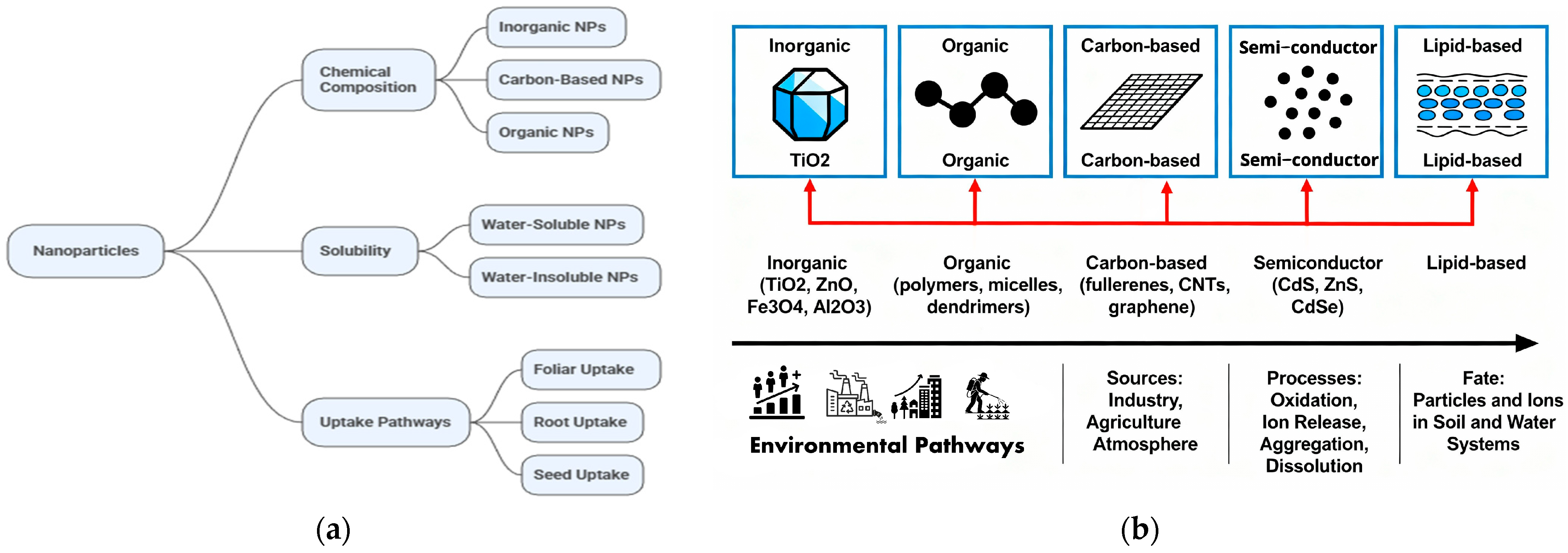
Figure 1. Schematic overview of NP classification and environmental behavior: (a) Classification of NPs based on chemical composition, and major uptake pathways in ecological systems; (b) major environmental pathways of NPs with representative nanomaterial classes, their primary sources, transformation processes, and their fate in soil and aquatic systems.
Materproc 26 00006 g001
Figure 2. Illustration of (a) representation of a plant supplemented with NPs for the removal of heavy metals from contaminated soil [56]; (b) the factors involved in the remediation [31,39,57,58].
Materproc 26 00006 g002
Table 1. Nanomaterials’ major uses, environmental occurrence, and reported effects.
NanomaterialsMajor Uses and ChallengesProductionConcentration RangeEnvironmental System and Effects
Ag NPsAntimicrobial textiles, medical devices, water treatment; High uncertainty release, and transformation. 500 tons/year Surface waters: ng/L; Soils: ng/kg to mg/kg Soil and water; Toxicity mainly via Ag+ ion release, causing oxidative stress and microbial disruption [17,18].
TiO2 NPsCosmetics, paints, photocatalysis; Analytical detection limits, fate modeling uncertainties. About 10,000–100,000 tons Surface waters: pg-ng/L; Soils: µg/kg to mg/kg Surface waters and soils; Low to moderate toxicity, aggregation, and sedimentation affect [19,20].
Nanoplastics Plastic degradation products, consumer goods; Complex environmental behavior. - Water: ng/L to µg/L; Soils: ng/kg. Water and soil; Physical and chemical toxicity, bioaccumulation, interaction with organic matter affecting mobility [21,22].
Carbon-based Electronics, composites, energy storage; Lack of standardized detection methodsHundreds to thousands of tons/yearWater: pg L−1 to ng L−1; Soils: ng kg−1 to µg kg−1.Surface water and soil; Limited dissolution, transport controlled by aggregation and deposition, potential physical effects on organisms [22,23].
CeO2 NPsCatalysts, fuel additives; High uncertainty in release estimates and environmental fate-Soils: µg kg−1 to mg kg−1; Water: low ng L−1 to µg L−1. Soil and water: low toxicity, potential oxidative stress effects, localized risks near point sources [23,24].
Table 2. An overview of the impacts of nanomaterials on aquatic and soil systems.
NanomaterialsKey Properties/FunctionsImpact on WaterImpact on Soil
Ag NPsAntimicrobial and highly reactive Toxic to aquatic organisms Disrupt soil microbial communities [26]
TiO2 NPsStable and high surface area Toxic to algae and aquatic organisms Alters soil microbial, and toxic to plants [27]
ZnO NPsHigh dissolution and UV-absorbing Toxic to aquatic organisms Alters soil enzyme, inhibits microbials [27]
Carbon-based NPsHigh surface area and adsorptive Potential for bioaccumulation Toxic to fauna and flora [28]
Micro/nanoplasticsPersistent and hydrophobic Disrupts planktonic growth Inhibits plant growth [29]
Nano-biocharPorous and carbon-rich Adsorbs organic and heavy metals Adsorbs pollutants [30]
Disclaimer/Publisher’s Note: The statements, opinions and data contained in all publications are solely those of the individual author(s) and contributor(s) and not of MDPI and/or the editor(s). MDPI and/or the editor(s) disclaim responsibility for any injury to people or property resulting from any ideas, methods, instructions or products referred to in the content.