1. Introduction
Electrical impedance tomography (EIT) is a non-invasive imaging technique that visualizes conductivity distribution by injecting electrical currents through electrodes placed around the surface [
1,
2]. EIT offers advantages over traditional imaging methods such as computed tomography and magnetic resonance imaging, including low cost, real-time continuous monitoring, and non-ionizing radiation [
1,
3]. However, EIT faces challenges such as low spatial resolution due to the ill-posed nature of the problem, noise, artifacts from electrode contact, and image reconstruction issues, making it difficult to apply in clinical settings [
1,
2,
4,
5]. The quality of image reconstruction in EIT is significantly influenced by the choice of current injection and voltage measurement patterns [
6,
7]. Different configurations impact the quality of localization, contrast, and detail in the final image. One of the most commonly employed setups is the Adjacent-Adjacent (AD/AD) pattern, where current and voltage are measured between neighboring electrodes [
6,
8]. This approach is favored for its simplicity but often struggles with lower resolution, particularly when the object is positioned near the center of the imaging domain. Another widely used configuration, Opposite-Opposite (OP/OP), offers improved image detail due to the broader spread of the current but is prone to artifacts, such as mirror images, which can complicate the interpretation of results [
8].
Beyond these standard patterns, alternative configurations such as Opposite-Adjacent (OP/AD) and Adjacent-Opposite (AD/OP) present a potential compromise between image sharpness and accurate object localization [
7]. However, the performance of these patterns across different object positions within the imaging region has not been extensively explored [
6]. Understanding how these patterns affect the quality of reconstructed images is crucial for improving EIT applications, particularly in scenarios requiring high localization accuracy and contrast resolution.
This study seeks to evaluate the effectiveness of these four electrode configurations, AD/AD, OP/AD, AD/OP, and OP/OP, in reconstructing the conductivity distribution of a non-conductive object as it moves through various positions within a saline medium. By systematically assessing the strengths and limitations of each configuration, we explored optimal electrode pattern selection, especially in cases where object position, conductivity contrast, and image quality are concerns.
2. Method
Simulations were carried out in a cylindrical tank measuring 160 mm in diameter, filled with saline solution with a conductivity of 1.5 S/m, a common choice for EIT experiments [
9]. A non-conductive circular object with a size of 13 pixels (equivalent to 8 mm or 0.05 units) was placed in five distinct positions along a radial path, starting from the center of the tank (position 1) and moving outward in increments of 25.5 pixels until it reached the farthest point (position 5), corresponding to a maximum distance of 102 pixels (approximately 60 mm). The tank was equipped with 16 electrodes arranged evenly around its circumference. An alternating current of 1 mA at a frequency of 50 kHz was applied for current injection, and voltage was measured at the remaining electrodes in each configuration. Image reconstruction was performed using EIT and diffuse optical tomography reconstruction software (EIDORS), which employed the Gauss-Newton one-step solver combined with a Laplace image to enhance smoothness and reduce noise in the reconstructed images [
3,
10]. The resulting images had a resolution of 256 × 256 pixels, corresponding to the 160 mm diameter of the tank, giving a mapping of 16 pixels per 10 mm. The non-conductive object, therefore, occupied approximately 13 pixels in the reconstructed images. This setup allowed for a detailed evaluation of how each pattern affected the quality and accuracy of the reconstructed images as the object moved through the tank.
3. Results and Discussions
In the simulation, the reconstructed conductivity images for the four patterns—AD/AD, OP/AD, AD/OP, and OP/OP—showed clear differences as the object moved from the center to the boundary.
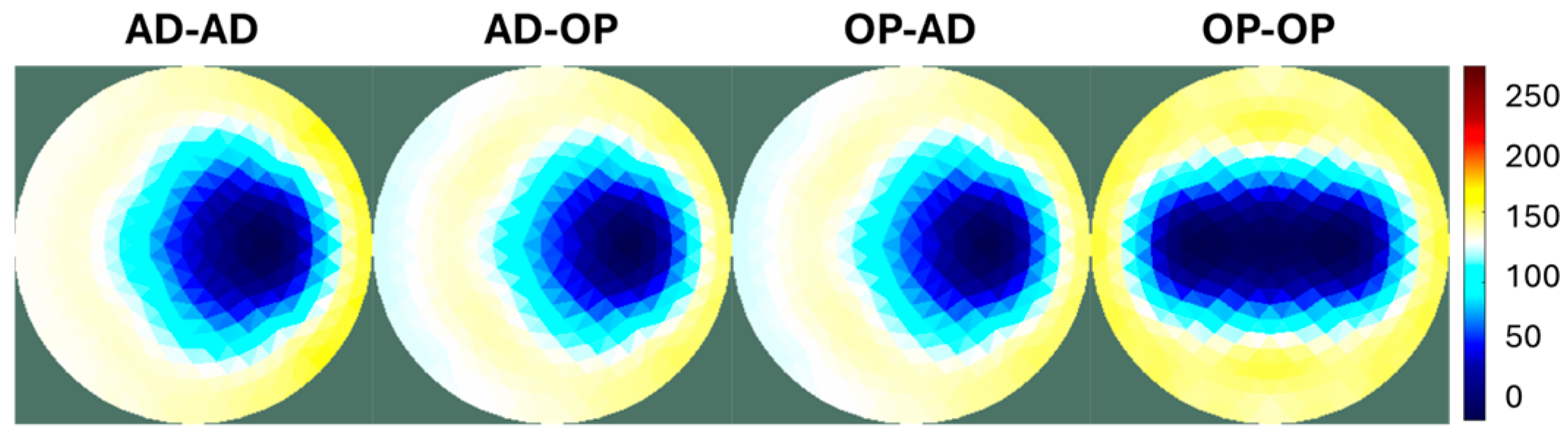
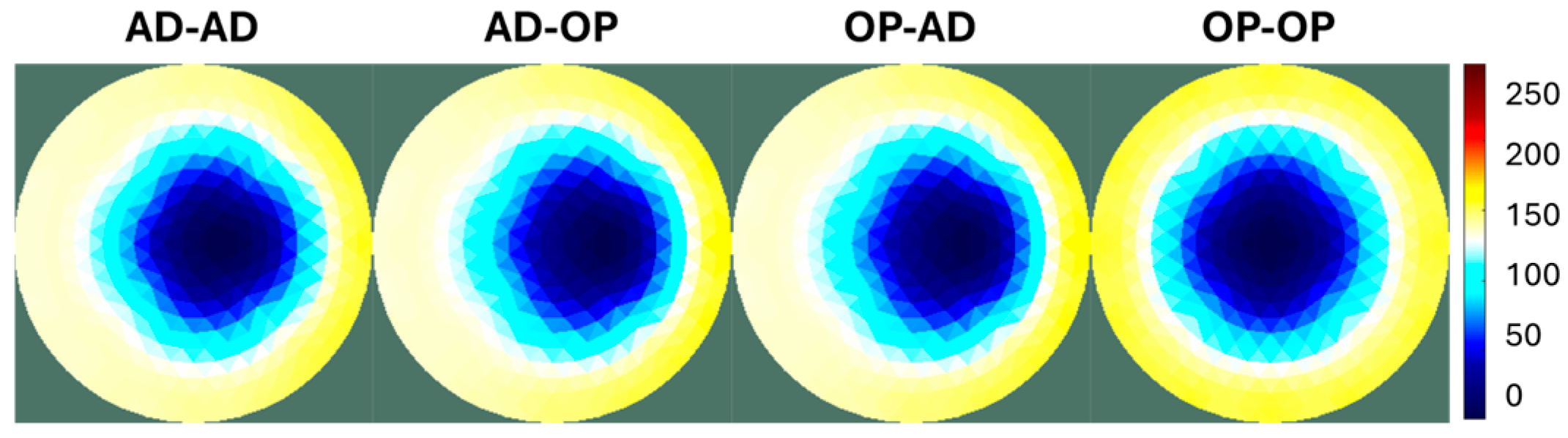
At position 1 (object at the center), the reconstructions from all four patterns appeared identical (
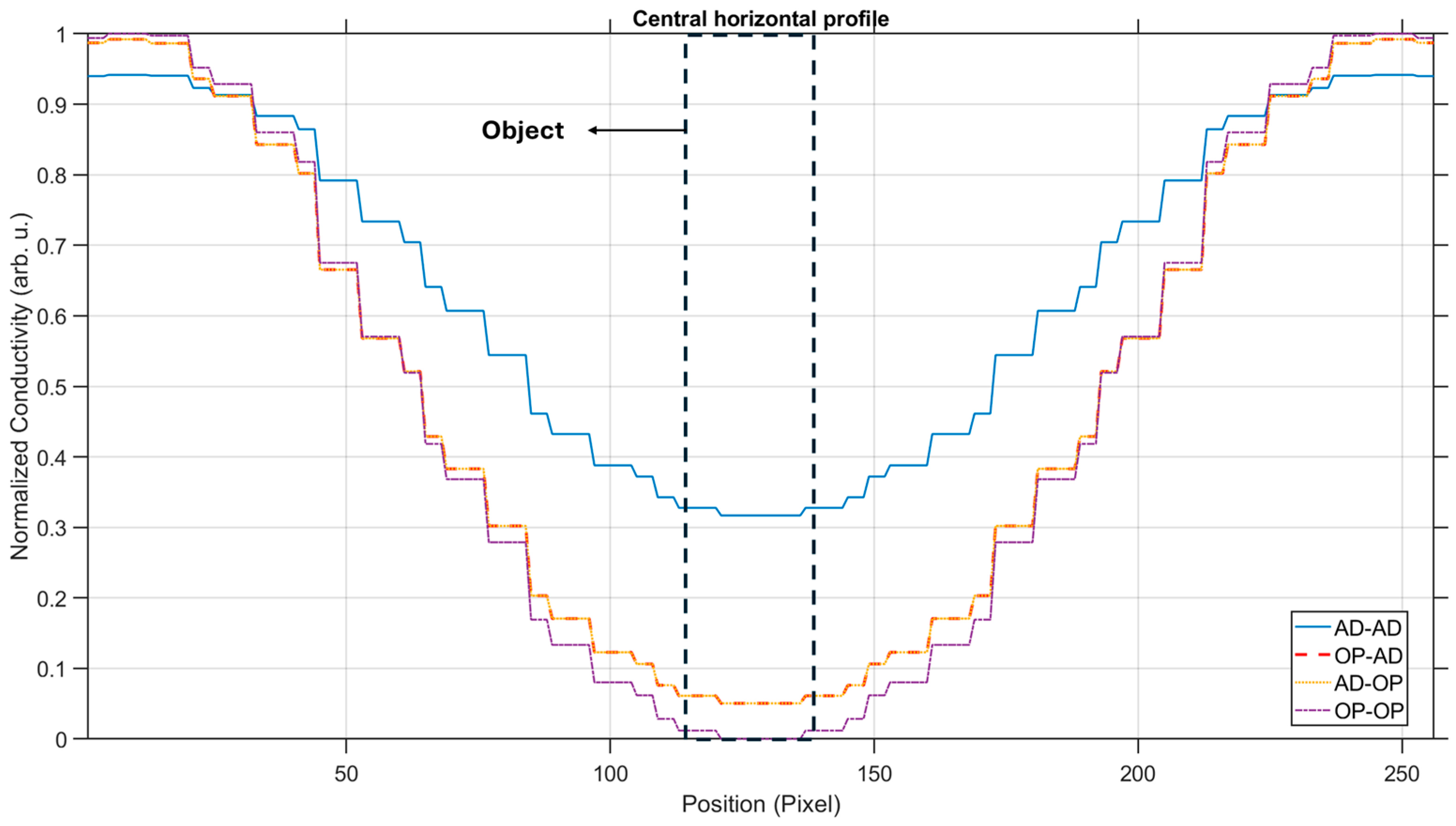
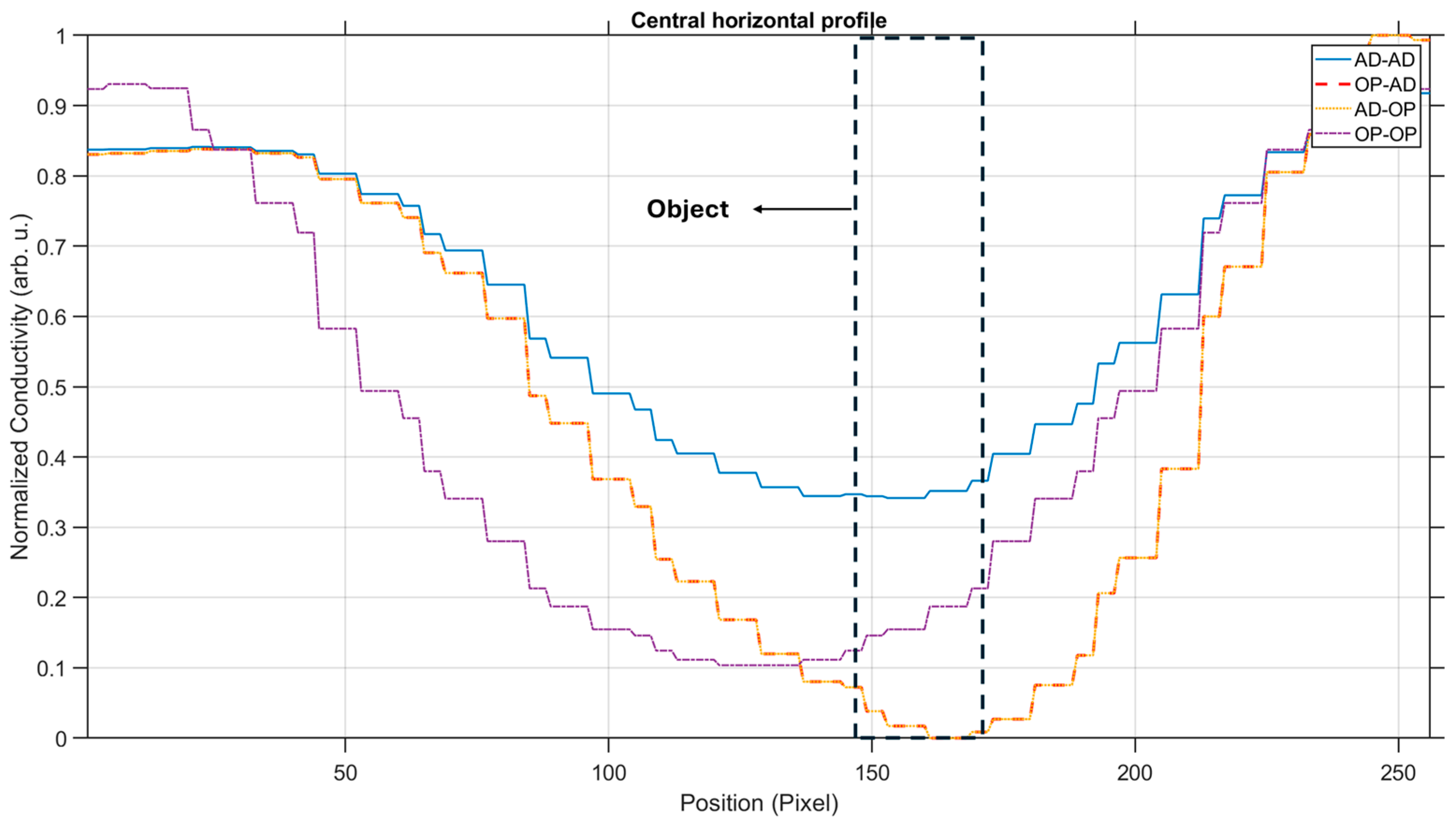
Figure 1). This is a known challenge in EIT, as objects at the center are hard to resolve due to the symmetry of the system. The reconstructed size of the non-conductive object was larger than its true size, with a significant blur radius around the object. This overestimation made the object appear bigger than its actual dimensions. The profile lines also confirmed this, showing a broad, shallow dip in conductivity rather than the expected sharp boundaries (
Figure 2).
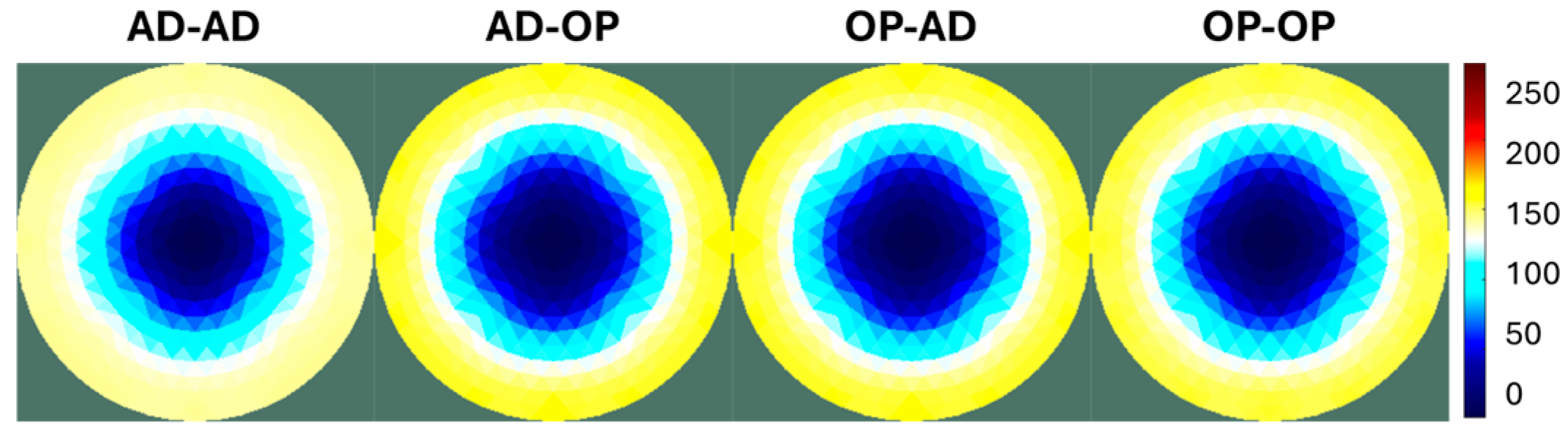
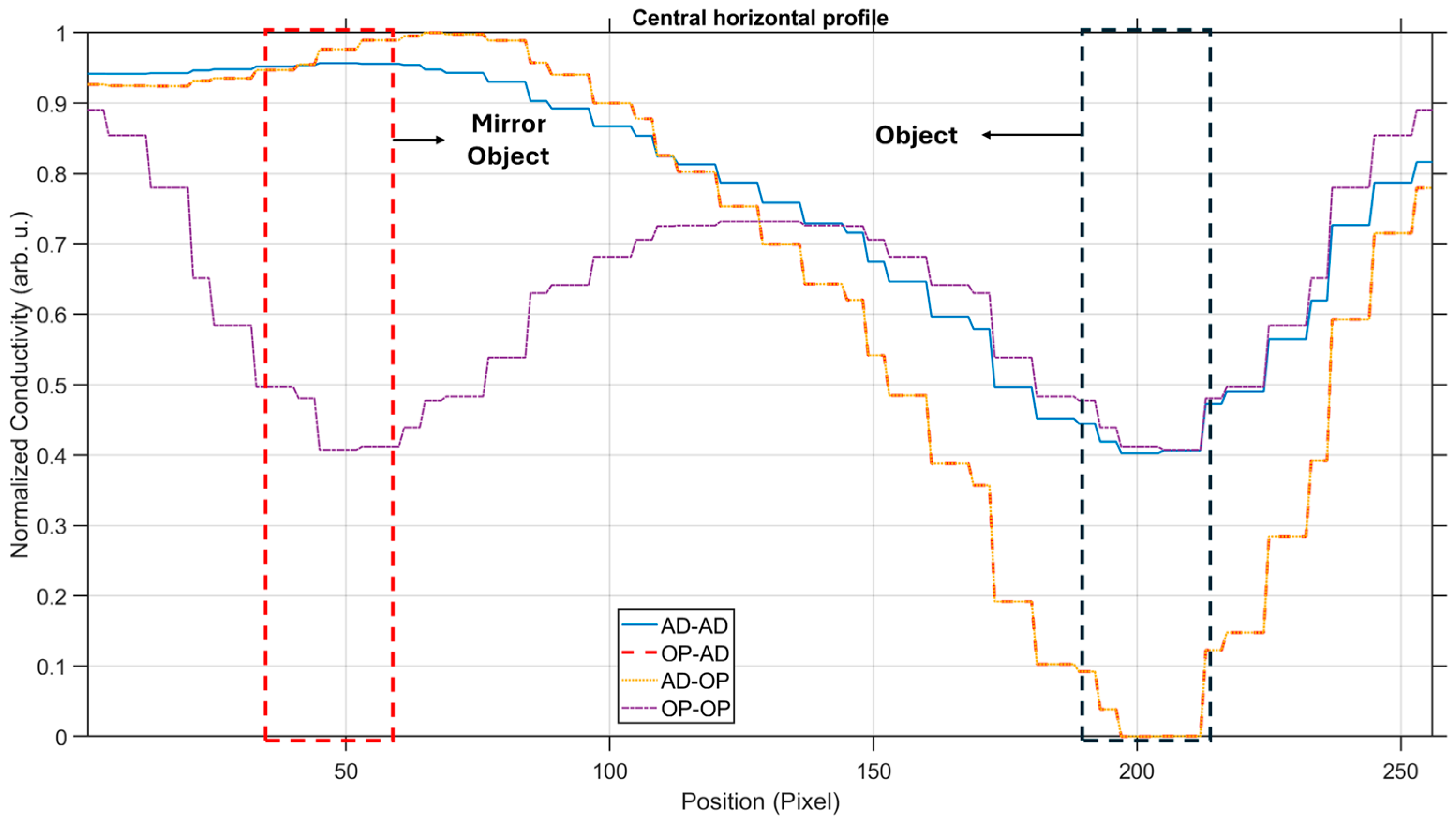
At position 2, as the object moved away from the center, differences between the patterns started to emerge. The OP/OP pattern began to diverge, showing a larger blur radius around the object (
Figure 3). The object was still localized correctly, but the size distortion in the OP/OP pattern was more pronounced. The AD/AD, OP/AD, and AD/OP patterns produced similar reconstructions, though the blur around the object remained. The profile lines indicated a shift in the conductivity drop to match the object’s new location, with AD/AD showing a slightly larger blur radius compared to OP/AD and AD/OP (
Figure 4).
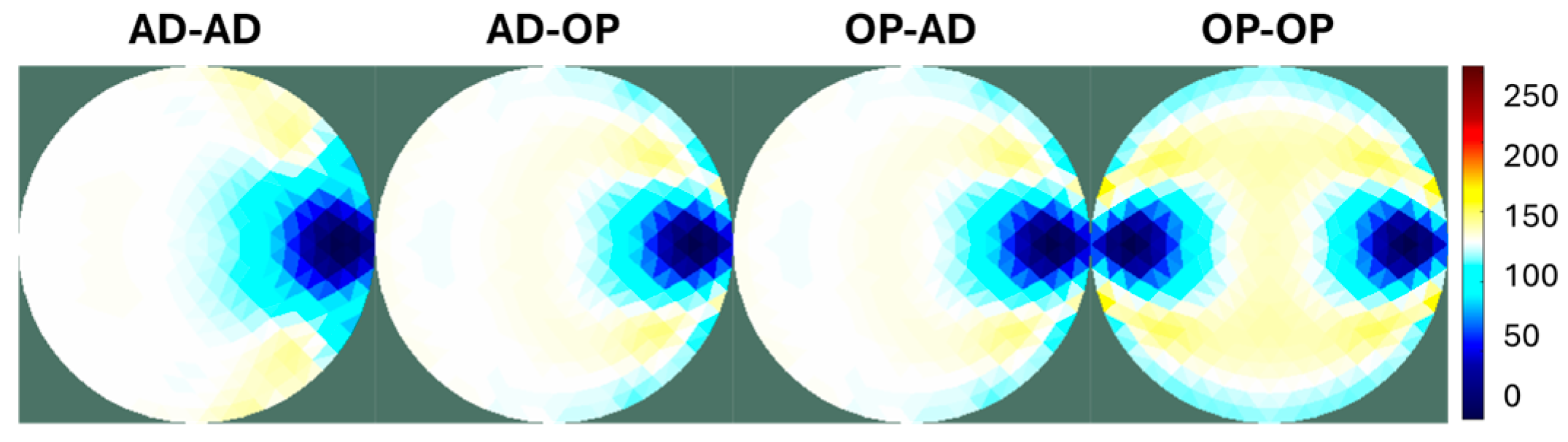
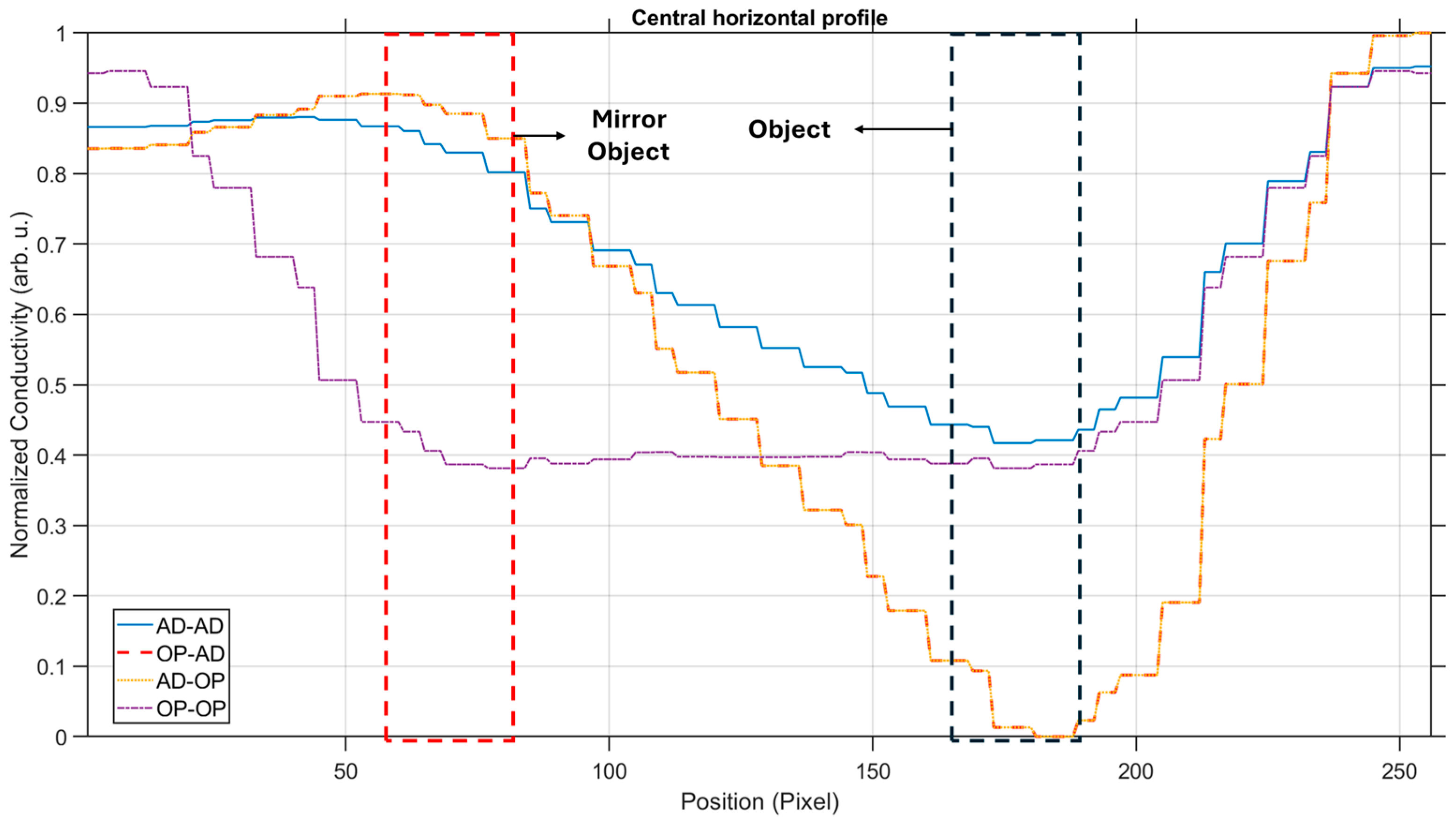
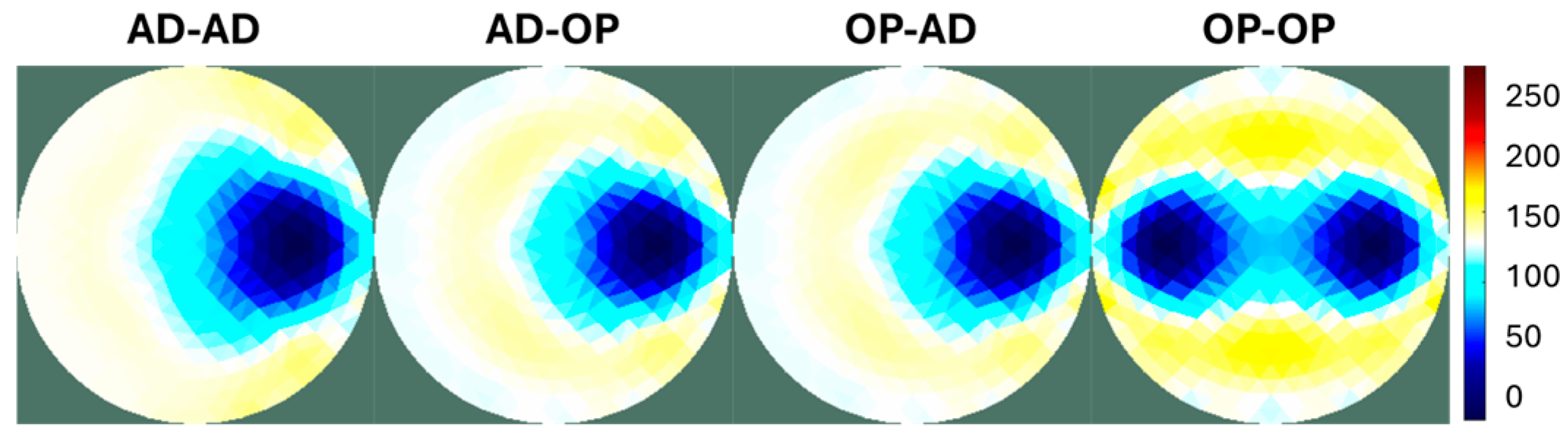
At position 3, the OP/OP pattern displayed a clear mirror image on the left side of the image, while the real object remained on the right (
Figure 5). The blur radius in the OP/OP pattern was reduced compared to earlier positions, but the mirror image introduced ambiguity. In contrast, the AD/AD, OP/AD, and AD/OP patterns localized the object correctly without the mirror effect, though AD/AD showed a larger blur radius, which affected the perceived size of the object. The profile line at pixel 179 (
Figure 6) confirmed this, with the OP/OP pattern showing dips on both sides due to the real and mirrored objects.
At position 4, as the object neared the boundary, the OP/OP pattern continued to show the real object clearly on the right, with the mirror image on the left (
Figure 7). The object size was reconstructed more accurately as the blur radius decreased. In the AD/AD, OP/AD, and AD/OP patterns, the AD/AD case showed a larger blur radius than OP/AD and AD/OP, leading to some size inaccuracies. The profile lines showed a clear separation between the real and mirrored objects in the OP/OP pattern, while the other patterns showed a more focused drop in conductivity at the object’s true position (
Figure 8).
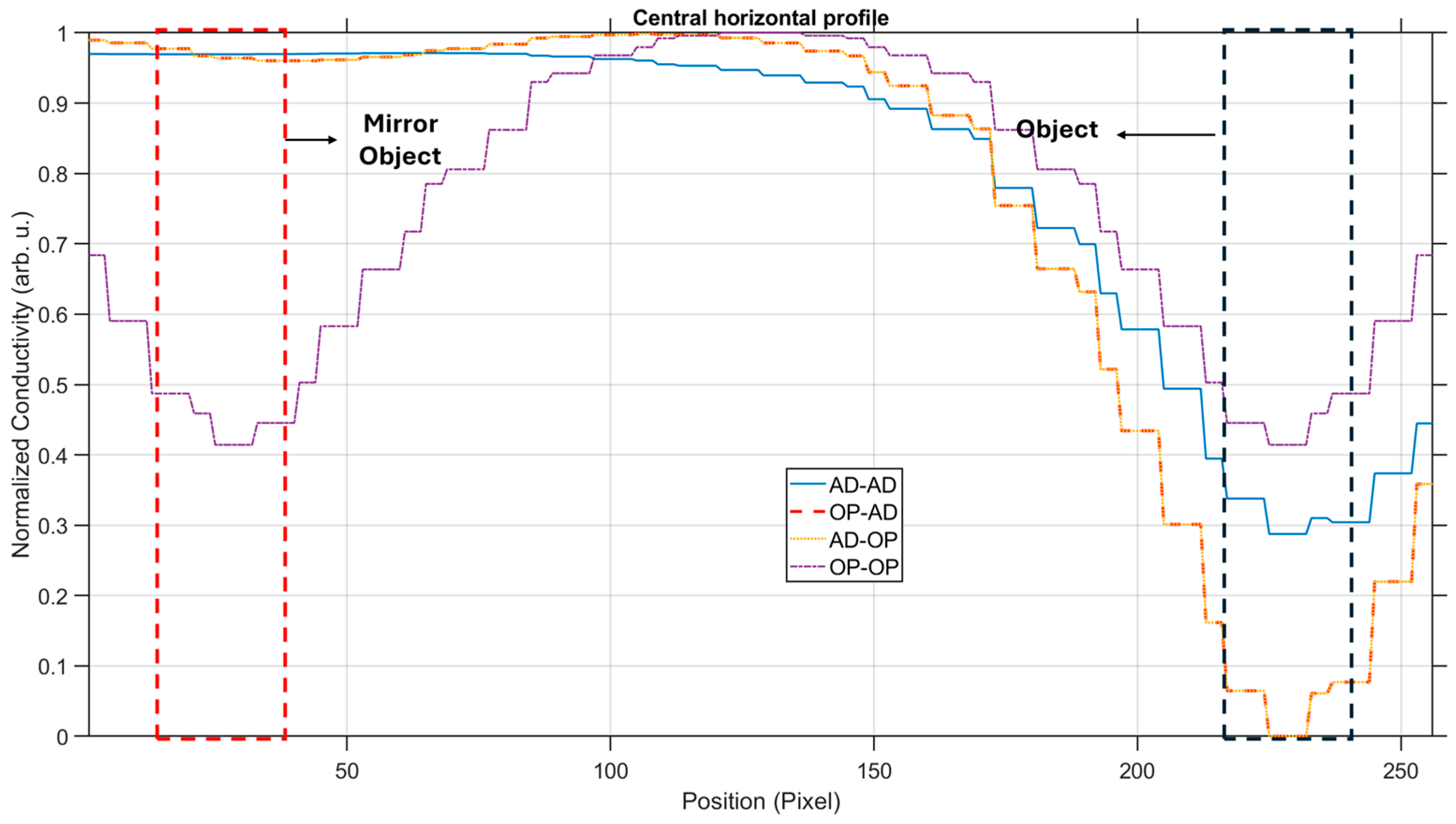
At position 5, closest to the boundary, the OP/OP pattern continued to show the mirror image on the left, with the real object accurately resolved on the right (
Figure 9). The blur radius was minimal, and the object size was more precise. In the AD/AD, OP/AD, and AD/OP patterns, the object was localized correctly, but AD/AD again showed a slightly larger blur radius, resulting in a small size discrepancy compared to OP/AD and AD/OP. The profile lines at pixel 230 confirmed this, with the OP/OP pattern displaying both the real and mirrored objects, while the other patterns produced accurate but slightly blurred profiles (
Figure 10).
Overall, the OP/OP pattern introduced a mirror image as the object moved away from the center, with the real object consistently appearing on the right side. As the object approached the boundary, the reconstructed size became more accurate, and the blur radius decreased across all patterns. However, the AD/AD pattern consistently produced a larger blur radius compared to OP/AD and AD/OP, leading to size inaccuracies in the reconstructed images, especially at greater distances from the center.
4. Conclusions
This simulation study evaluated the effects of different current injection and voltage measurement patterns on the reconstruction accuracy of EIT images. By analyzing four distinct configurations, AD/AD, OP/AD, AD/OP, and OP/OP, across five object positions, important strengths and limitations of each pattern were obtained. At the center of the tank, all patterns struggled to accurately reconstruct the non-conductive object, with a significantly larger-than-expected blur radius due to the inherent challenges of resolving objects located in the middle of the domain. As the object moved outward, the OP/OP pattern began to diverge from the other configurations, initially showing an increased blur radius but later introducing a mirror image effect that became more pronounced in subsequent positions. This mirror image appeared consistently on the left side of the reconstruction, while the real object was correctly positioned on the right, highlighting the limitations of using the OP/OP pattern for accurate localization. In contrast, the AD/AD, OP/AD, and AD/OP patterns showed better overall performance in terms of localizing the object as it moved closer to the boundary. However, the AD/AD pattern consistently generated a larger blur radius compared to OP/AD and AD/OP, resulting in less precise representations of the object’s size, especially as it moved away from the center. Despite this, both OP/AD and AD/OP provided sharper reconstructions, making them more reliable for accurately capturing the object’s true size and location. The study demonstrates that the OP/OP pattern, while capable of localizing objects, introduces ambiguity due to the mirror image effect, making it less suitable for applications requiring precise object positioning. On the other hand, AD/AD, OP/AD, and AD/OP patterns offer more consistent results, with OP/AD and AD/OP producing the most accurate reconstructions, especially for objects located further from the center. These findings underscore the importance of selecting the appropriate measurement pattern in EIT applications to ensure accurate image reconstruction and object localization.
Author Contributions
Conceptualization, M.Q.C.D. and H.D.T.T.; methodology, H.D.T.T.; software, M.Q.C.D.; validation, H.A.N.T.; formal analysis, D.K.T.V.; investigation, H.D.T.T.; resources, H.D.T.T.; data curation, L.D.L. and T.T.N.; writing—original draft preparation, H.D.T.T. and M.Q.C.D.; writing—review and editing, L.D.L.; visualization, D.K.T.V.; supervision, H.D.T.T.; project administration, H.D.T.T. All authors have read and agreed to the published version of the manuscript.
Funding
This research received no external funding.
Institutional Review Board Statement
Not applicable.
Informed Consent Statement
Not applicable.
Data Availability Statement
Data underlying the results presented in this paper are not publicly available but may be obtained from the authors upon reasonable request.
Acknowledgments
We acknowledge Ho Chi Minh City University of Technology (HCMUT), VNU-HCM for supporting this study.
Conflicts of Interest
The authors declare no conflict of interest.
References
- Dimas, C.; Alimisis, V.; Uzunoglu, N.; Sotiriadis, P.P. Advances in electrical impedance tomography inverse problem solution methods: From traditional regularization to deep learning. IEEE Access 2024, 12, 47797–47829. [Google Scholar] [CrossRef]
- Adler, A.; Holder, D. Electrical Impedance Tomography: Methods, History and Applications; CRC Press: Boca Raton, FL, USA, 2021. [Google Scholar]
- Adler, A.; Arnold, J.H.; Bayford, R.; Borsic, A.; Brown, B.; Dixon, P.; Faes, T.J.; Frerichs, I.; Gagnon, H.; Garber, Y.; et al. GREIT: A unified approach to 2D linear EIT reconstruction of lung images. Physiol. Meas. 2009, 30, S35. [Google Scholar] [CrossRef] [PubMed]
- Adler, A.; Boyle, A. Electrical impedance tomography: Tissue properties to image measures. IEEE Trans. Biomed. Eng. 2017, 64, 2494–2504. [Google Scholar] [CrossRef] [PubMed]
- Bera, T.K.; Biswas, S.K.; Rajan, K.; Nagaraju, J. Improving image quality in electrical impedance tomography (EIT) using projection error propagation-based regularization (PEPR) Technique: A simulation study. J. Electr. Bioimpedance 2011, 2, 2–12. [Google Scholar] [CrossRef]
- Tarabi, N.; Mousazadeh, H.; Jafari, A.; Taghizadeh-Tameh, J.; Kiapey, A. Experimental evaluation of some current injection-voltage reading patterns in electrical impedance tomography (EIT) and comparison to simulation results—Case study: Large scales. Flow Meas. Instrum. 2022, 83, 102087. [Google Scholar] [CrossRef]
- Liu, J.; Xiong, H.; Lin, L.; Li, G. Evaluation of measurement and stimulation patterns in open electrical impedance tomography with scanning electrode. Med Biol. Eng. Comput. 2015, 53, 589–597. [Google Scholar] [CrossRef] [PubMed]
- Adler, A.; Gaggero, P.O.; Maimaitijiang, Y. Adjacent stimulation and measurement patterns considered harmful. Physiol. Meas. 2011, 32, 731–744. [Google Scholar] [CrossRef] [PubMed]
- Diep, Q.T.N.; Huynh, H.N.; Dinh, M.Q.C.; Huynh, T.V.; Tran, A.T.; Tran, T.N. Frequency-dependent contrast enhancement for conductive and non-conductive materials in electrical impedance tomography. Appl. Sci. 2024, 14, 2141. [Google Scholar] [CrossRef]
- Adler, A.; Lionheart, W.R.B. Uses and abuses of EIDORS: An extensible software base for EIT. Physiol. Meas. 2006, 27, S25–S42. [Google Scholar] [CrossRef] [PubMed]
| Disclaimer/Publisher’s Note: The statements, opinions and data contained in all publications are solely those of the individual author(s) and contributor(s) and not of MDPI and/or the editor(s). MDPI and/or the editor(s) disclaim responsibility for any injury to people or property resulting from any ideas, methods, instructions or products referred to in the content. |



 ,
,