
Article

Depression in Type 2 Diabetes: Association with Higher Insulin Resistance and Increased Low Grade Inflammation

by
Jelena Stanarcic Gajovic
1,2,*,†,
Dusica Lecic Tosevski
3,
Katarina Lalic
1,2,
Tanja Milicic
1,2,
Ljiljana Lukic
1,2,
Marija Macesic
1,2,
Milica Stoiljkovic
1,2,
Mina Bozic
1,
Djurdja Rafailovic
1,
Nikola Jovanovic
4,
Olivera Vukovic
2,4,
Sanja Stankovic
5,6,
Ognjen Milicevic
2,7,
Stefan Maric
1,
Nina Krako Jakovljevic
1,
Kasja Pavlovic
1,
Nebojsa M. Lalic
2,3 and
Aleksandra Jotic
1,2,†
1
Clinic for Endocrinology, Diabetes and Metabolic Diseases, University Clinical Centre of Serbia, 11000 Belgrade, Serbia
2
Faculty of Medicine, University of Belgrade, 11000 Belgrade, Serbia
3
Serbian Academy of Sciences and Arts, 11000 Belgrade, Serbia
4
Institute of Mental Health, Faculty of Medicine, University of Belgrade, 11000 Belgrade, Serbia
5
Center for Medical Biochemistry, University Clinical Center of Serbia, 11000 Belgrade, Serbia
6
Faculty of Medical Sciences, University of Kragujevac, Kragujevac, 11000 Belgrade, Serbia
7
Institute for Medical Statistics and Informatics, Faculty of Medicine, University of Belgrade, 11000 Belgrade, Serbia
*
Author to whom correspondence should be addressed.
These authors contributed equally to this work.
Diabetology 2026, 7(3), 51; https://doi.org/10.3390/diabetology7030051
Submission received: 5 January 2026 / Revised: 30 January 2026 / Accepted: 14 February 2026 / Published: 3 March 2026

Abstract

Background: Depression is approximately twice as prevalent in type 2 diabetes (T2D) compared to non-diabetic individuals, but its underlying mechanisms remain unclear. Insulin resistance (IR) and low-grade inflammation have been proposed as potential contributors. This study investigated whether IR and inflammatory markers are associated with depression in people with T2D. Methods: This cross-sectional study included 189 participants divided into four groups: T2D with depression (A, n = 38), T2D without depression (B, n = 60), depression without T2D (C, n = 44), and healthy controls (D, n = 47). Depression was diagnosed using the MINI-6 and HAMD scale. IR was assessed using the Matsuda index and HOMA-IR, while low-grade inflammation was evaluated by high-sensitivity C-reactive protein (hs-CRP) and interleukin-6 (IL-6). Results: The Matsuda index was significantly lower in group A compared with B, C and D groups (p < 0.001). HOMA-IR was higher in A than in C and D groups, though not significantly different from group B. Hs-CRP was highest in group A (p < 0.001), with no differences among B, C and D. IL-6 was significantly higher in A than B and D (p < 0.001), and similar between A and C. In multivariable analysis younger age, lower Matsuda index, and higher IL-6 independently predicted depression in people with T2D. ROC analysis detected an AUC of 0.75 (p < 0.001) for IL-6, with a sensitivity of 57% and specificity of 82% at the cutoff of 5.29 pg/mL. Conclusions: Our findings suggest that people with T2D and depression exhibit higher IR and elevated IL-6 and hs-CRP levels as parameters of low-grade inflammation. Depression in T2D was associated with younger age, lower Matsuda ISI, and higher IL-6, highlighting the potential relevance of those metabolic and inflammatory biomarkers in this co-occurrence. Further longitudinal studies are needed to clarify causal relationships.

1. Introduction

In people with type 2 diabetes (T2D), the prevalence of depression is approximately twice greater than in those without diabetes [1,2,3,4]. Despite the consistency of these findings, the mechanisms underlying this association remain incompletely understood.
So far, potential drivers of this association appear to be insulin resistance (IR) and chronic low-grade inflammation. Previous data suggested that IR also plays a role in occurrence not only of T2D but also of depression [3,4,5]. Notably, study conducted in newly diagnosed T2D have reported more pronounced IR in people with comorbid depression, indicating that IR may be further amplified when both diseases coexist [6]. Additionally, both T2D and depression are associated with a state of chronic low-grade inflammation with elevated levels of inflammatory cytokines such as interleukin-6 (IL-6), and high-sensitivity C-reactive protein (hs-CRP) [7,8,9]. Although many data suggest association of inflammation and depression in the general population, relatively few studies have investigated whether IR and markers of low-grade inflammation are associated with depression specifically among people with T2D [10].
The aim of our study was to analyze the levels of IR and markers of low-grade inflammation in people with T2D with depression. Also, we evaluated potential association among IR, low-grade inflammation and presence of depression in people with T2D.

2. Materials and Methods

2.1. Patients

This cross-sectional study, included 189 participants divided into four groups: 38 T2D people with depression (group A), 60 T2D without depression (group B), 44 people without T2D with depression (group C) and 47 healthy controls (group D).
T2D was previously diagnosed according to the World Health Organization’s criteria [10]. People with T2D (group A and B) were treated with standard oral medication therapy (Table 1) and lifestyle changes.
Diagnosis of depression was established by trained psychiatrists, based first on MINI International Neuropsychiatric Interview-MINI 6 and then Hamilton Rating Scale for Depression (HAMD) for quantification of depressive symptoms [11,12,13]. A score of 8 to 15 indicate the presence of a lower degree depression, and 16 and more a high degree of depression. Antidepressant medication included selective serotonin reuptake inhibitors (SSRI) and/or serotonin-norepinephrine reuptake inhibitors (SNRI).
Exclusion criteria comprised presence of type 1 diabetes, history of macrovascular disease (myocardial infarction, coronary artery bypass graft, cerebrovascular diseases, and carotid or limb revascularization), end-stage diabetes renal complication, severe clinical depression according to ICD-10 (F32.2/F32.3), suicidal ideation, or dementia. as well as schizophrenia, eating disorder, bipolar disorder, addictive disorder and personality disorders.
All data were collected from: Center for Diabetes and Lipid disorders, Department for Metabolic Disorders, Intensive Treatment and Cell Therapy in Diabetes, Clinic for Endocrinology, Diabetes and Metabolic Disease, University Clinical Center of Serbia and Institute of Mental Health, Belgrade, Serbia. Our study was approved by the Ethics Committee of the Faculty of Medicine, University of Belgrade (reference number 29/X-21), Ethics Committee of the University Clinical Center of Serbia (reference number 1600/46) and then performed according to the Declaration of Helsinki. Before initiating the study, all participants signed an informed consent form.

2.2. Study Design

After an interview with questions regarding patient medical history, current medical condition, and medication use, anthropometric measurements were done. Body weight and height were measured with a digital scale and body mass index (BMI) was calculated (body weight (kg) divided by squared values of height (m2), (kg/m2)).
The metabolic analyses were performed at the Department for Metabolic Disorders, Intensive Treatment and Cell Therapy in Diabetes, after 12 h fasting period. At the first day blood samples were taken for laboratory analysis (fasting glycemia, insulinemia, markers of low-grade inflammation). Furthermore, all participants underwent a standard 2 h oral glucose tolerance test (OGTT, 75 g) [10,14] for determining Matsuda insulin sensitivity index (Matsuda ISI) and homeostasis model of insulin resistance (HOMA-IR), showing the levels of IR.

2.3. Methods

During 2 h OGTT after overnight fast, blood samples for measuring of glucose and insulin concentrations were taken at 0, 30, 60, 90, and 120 min. Plasma glucose was determined by glucose oxidase method using a Beckman Glucose Analyzer (Beckman Instruments, Brea, CA, USA) [14]. Plasma insulin was measured by radioimmunoassay (RIA) (INEP—Institute for the Application of Nuclear Energy, Zemun, Serbia) [15]. Also, glycated hemoglobin (HbA1c) was measured in using a commercial test reagent (SEBIA, Lisses, France) based on IFCC-standardized methodology [16].

2.4. Detection of Insulin Resistance Levels

All participants were tested with complementary methods that included assessment of insulin resistance (IR). IR was obtained by the Matsuda insulin sensitivity index (ISI) and homeostasis model of insulin resistance (HOMA-IR).
The Matsuda ISI, showing whole body insulin sensitivity, reciprocal value of IR, was calculated by equation 10,000/(G0 × I0 × Gmean × Imean)1/2, where G and I represent plasma glucose (mg/dL) and insulin (mUl/1) concentrations, respectively, and ‘0’ and ‘mean’ indicate fasting value and mean value during OGTT respectively, as originally proposed by Matsuda and DeFronzo [17]. For patients on SGLT2i it has been corrected for Urine Glucose Excretion [18]. HOMA-IR primarily reflects hepatic insulin sensitivity, since the fasting plasma glucose is determined mainly by the rate of hepatic glucose production, in contrast to Matsuda ISI derived from the OGTT which reflects both hepatic and peripheral insulin resistance. HOMA-IR was calculated from fasting plasma insulin and glucose levels according to the formula: (insulin (µlU/L) × glucose (mmol/L))/22.5 [19,20].

2.5. Measurement of Biomarkers of Low-Grade Chronic Inflammation

We measured two inflammatory markers, high-sensitivity CRP (hs-CRP) and interleukin 6 (IL-6). Hs-CRP was measured by assay using an Advia 2400 analyzer (Siemens Diagnostics, Frimley, UK). The detection limit of the assay was 0.1 mg/L. Simultaneously, IL-6 was detected from peripheral blood using ELISA kits (Human IL-6, Elabscience, Houston, TX, USA). The detection limit of the assay was 0.94 pg/mL.

2.6. Statistical Analysis

Collected data were processed in MS Excel with automatic formulas and further processed with custom Python (version is 3.11) scripts and IBM Corp. Released 2013, IBM SPSS Statistics for Windows, Version 22.0. Armonk, NY, USA: IBM Corp. Normal distribution was tested in each of the four groups with the Shapiro-Wilk test, and normal distribution data were described with arithmetic mean and standard deviation, while the non-normal distribution variables in at least one group were represented with a median and interquartile range. Parametric test for comparison of numerical variables between groups was one-way ANOVA with Tukey post hoc test, while the non-normal distribution variables were compared with Kruskal-Wallis test. Best subsets for logistic regression was found with combined forward selection and backward elimination with thresholds in Wald test p-value of 0.05 for inclusion and 0.1 for exclusion. The ROC curve analysis was used to investigate the IL-6 value associated with the greatest sensitivity to the presence of depression in people with T2D. The p level of 0.05 was taken as statistically significant for all other tests.

3. Results

3.1. Patient Population and Baseline Characteristics

The characteristics of the study population stratified by diabetes are summarized in Table 1. People with T2D (group A and B) were older, had higher levels of BMI and HbA1c in comparison to people without T2D (group C and D). On the other hand, group C and D did not differ with respect to age and BMI. Simultaneously, duration of depression was comparable between group A and C. In addition, groups with T2D (A and B) had more frequently cardiovascular risk factors such as hypertension, dyslipidemia and obesity in comparison to groups without T2D (C and D). Majority of people with T2D have been using metformin, 2/3 of them were on SU, and half were on SGLT2-i. Also, all people with depression were using SSRI and SNRI.
People in group A, B, C had similar prevalence of smoking, alcohol abuse and physical inactivity, but with statistically significant difference compared to healthy control. Finally, groups A, B and C had equal frequency of partner and employment status, with statistically significant difference in comparison to healthy control. However, these 4 groups did not differ according to income and community status (Table 1).

3.2. Analyses of Insulin Resistance Indices

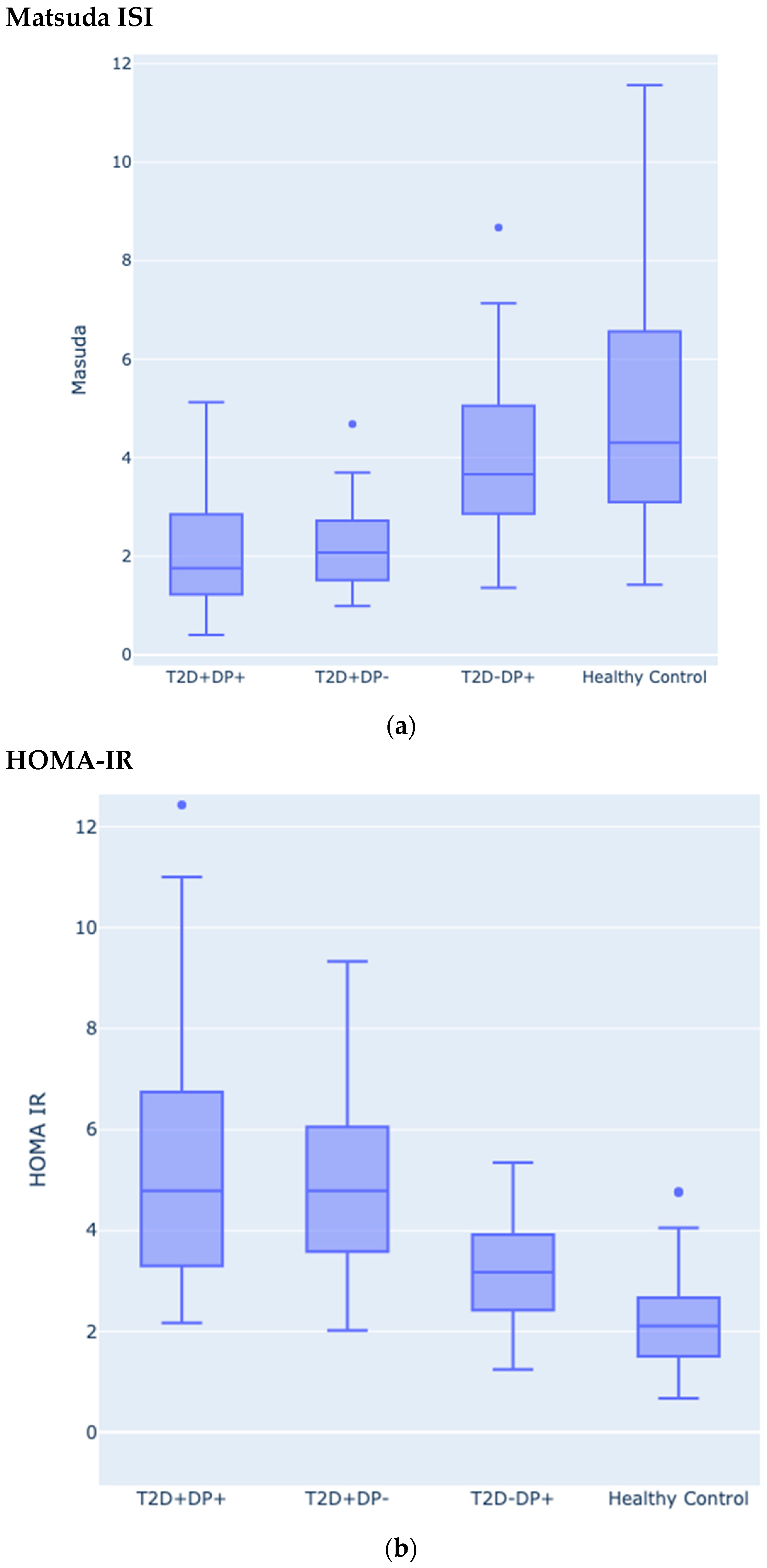
Matsuda ISI was significantly lower in group A in comparison to group B (A: 2.01+/−1.07; B: 2.13+/−0.78; p < 0.001). Moreover, Matsuda ISI was significantly lower in group B than in group C and D (C: 3.97+/−1.62; D: 5.01+/−2.51, B vs. C p < 0.001, B vs. D p < 0.001). (Figure 1a).
In contrast, HOMA-IR was significantly higher in group A in comparison to group C and D (A: 4.89+/−1.21; B: 4.73+/−1.75; C: 3.17+/−0.92; D: 2.11+/−0.96; A vs. C, D p < 0.001). On the other hand, there was no significant difference in HOMA IR level between group A and B (p = 0.843). Moreover, HOMA-IR was significantly higher in group B than in group C and D, as well in C compared to D (B vs. C, D p < 0.001, C vs. D p < 0.001) (Figure 1b).

3.3. Inflammatory Markers

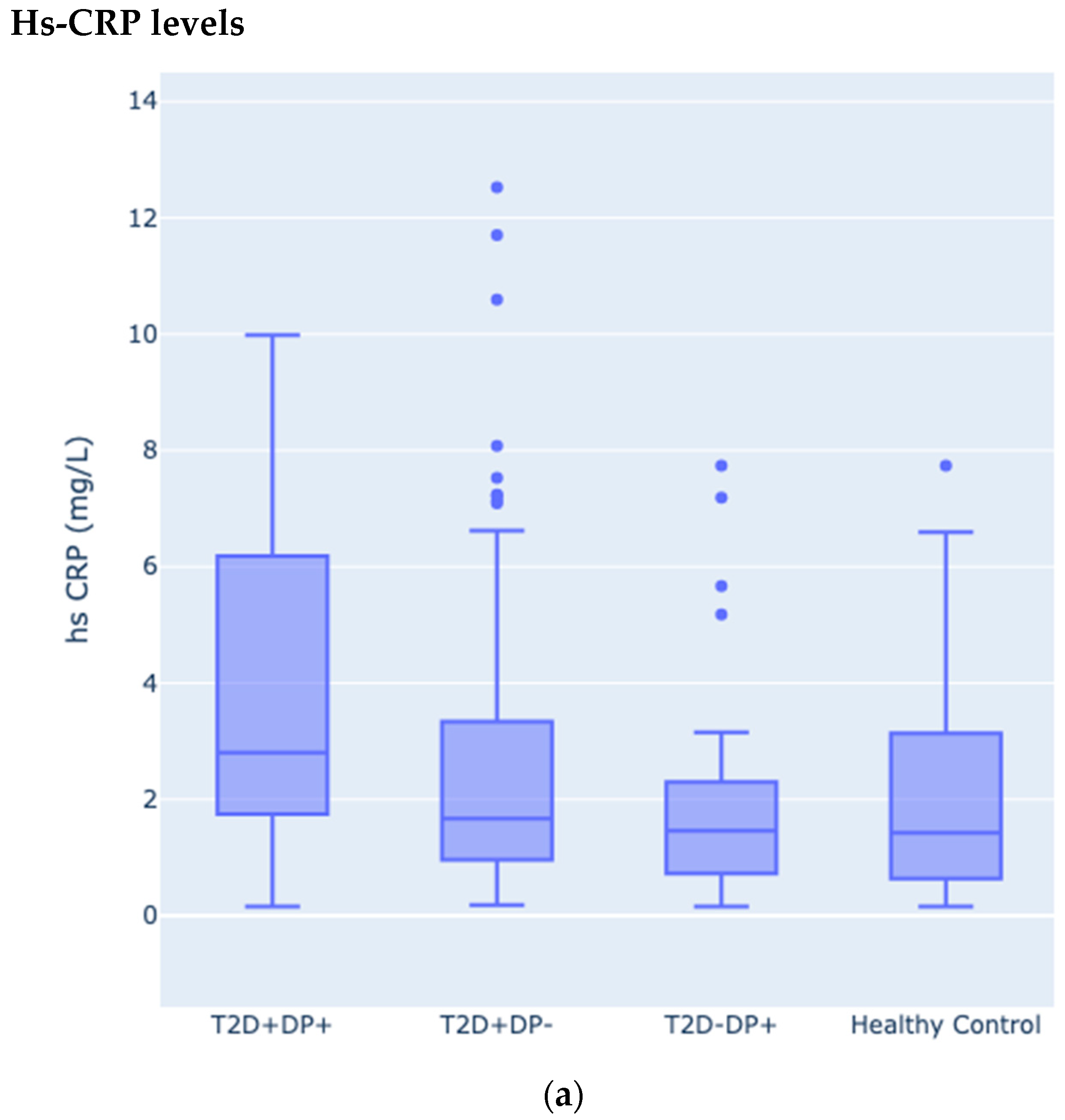
Hs-CRP level was significantly higher in group A in comparison to group B, as well as to group C and D (A: 2.8+/−1.32; B: 1.65+/−1.39; C: 1.46+/−1.30; D: 1.42+/−1.12; A vs. B, C, D p < 0.001). Concurrently, there was no significant difference in hs-CRP level between groups B in comparison to C and D, as well as C than D (B = C = D, p = 0.574, p = 0.851) (Figure 2a).
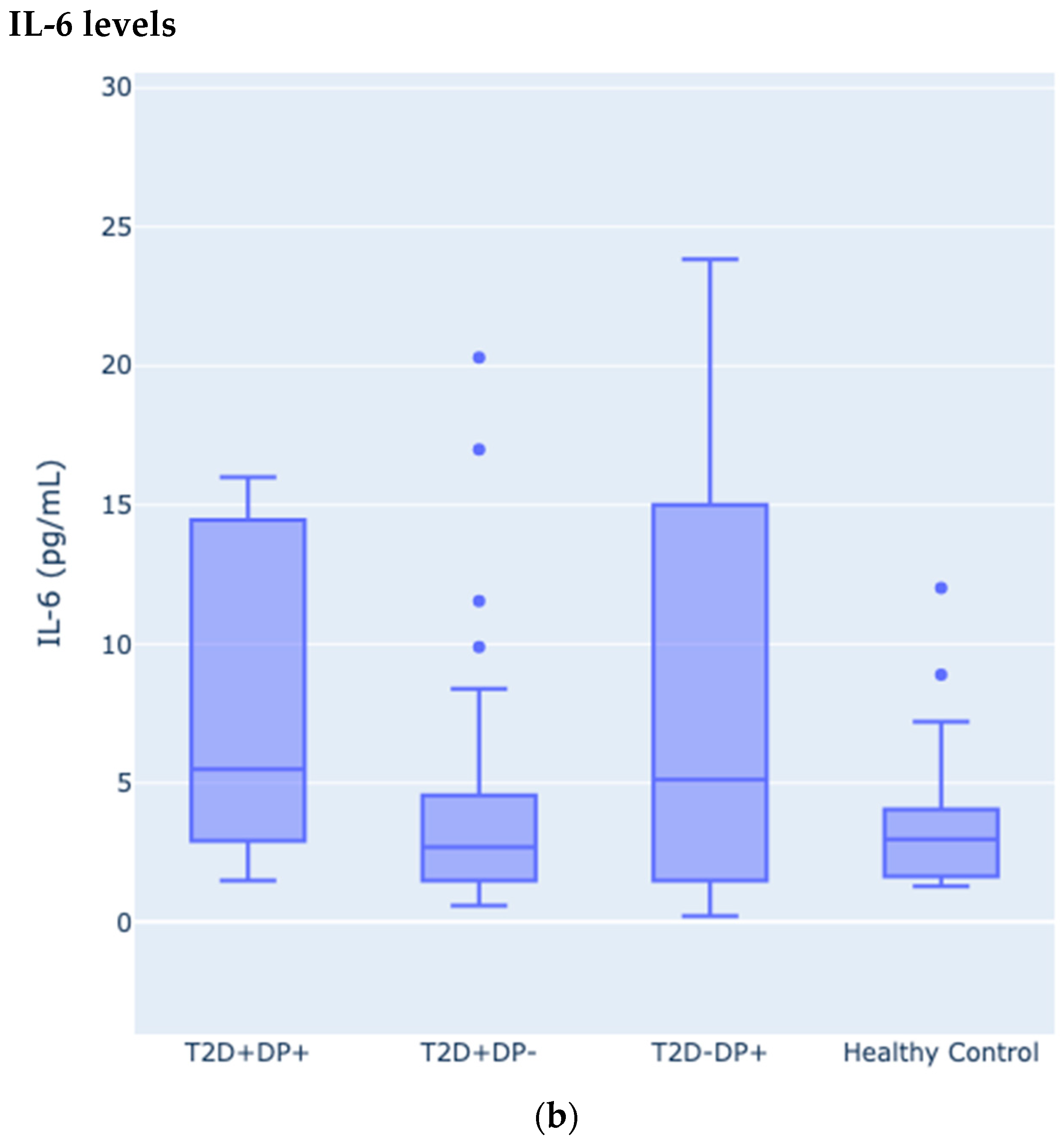
IL-6 level was significantly higher in group A in comparison to group B (A: 5.50+/−2.71; B: 2.76+/−1.84; A vs. B p < 0.001). On the other hand, IL-6 was significantly lower in group B compared to C (C: 5.12+/−2.10 B vs. C p < 0.001), while it was comparable between group B and D (D: 2.48+/−1.18) (p = ns). In contrast, there was no significant difference in levels of IL-6 between groups A and C (A vs. C p = 0.235), as well as B and D (B vs. D p = 0.744) (Figure 2b).

3.4. Binary Logistic Regression Analysis

In order to investigate association between presence of depression as dependent variable with markers of IR and low-grade inflammation in people with T2D, binary regression analysis showed a significant association with younger age, lower levels of Matsuda ISI and higher levels of IL-6 (Table 2). All the other variables are insignificant after adding to the presented model, as well as the potential confounders like BMI and other markers of metabolic status. Conversely, independent predictors retain their significance.
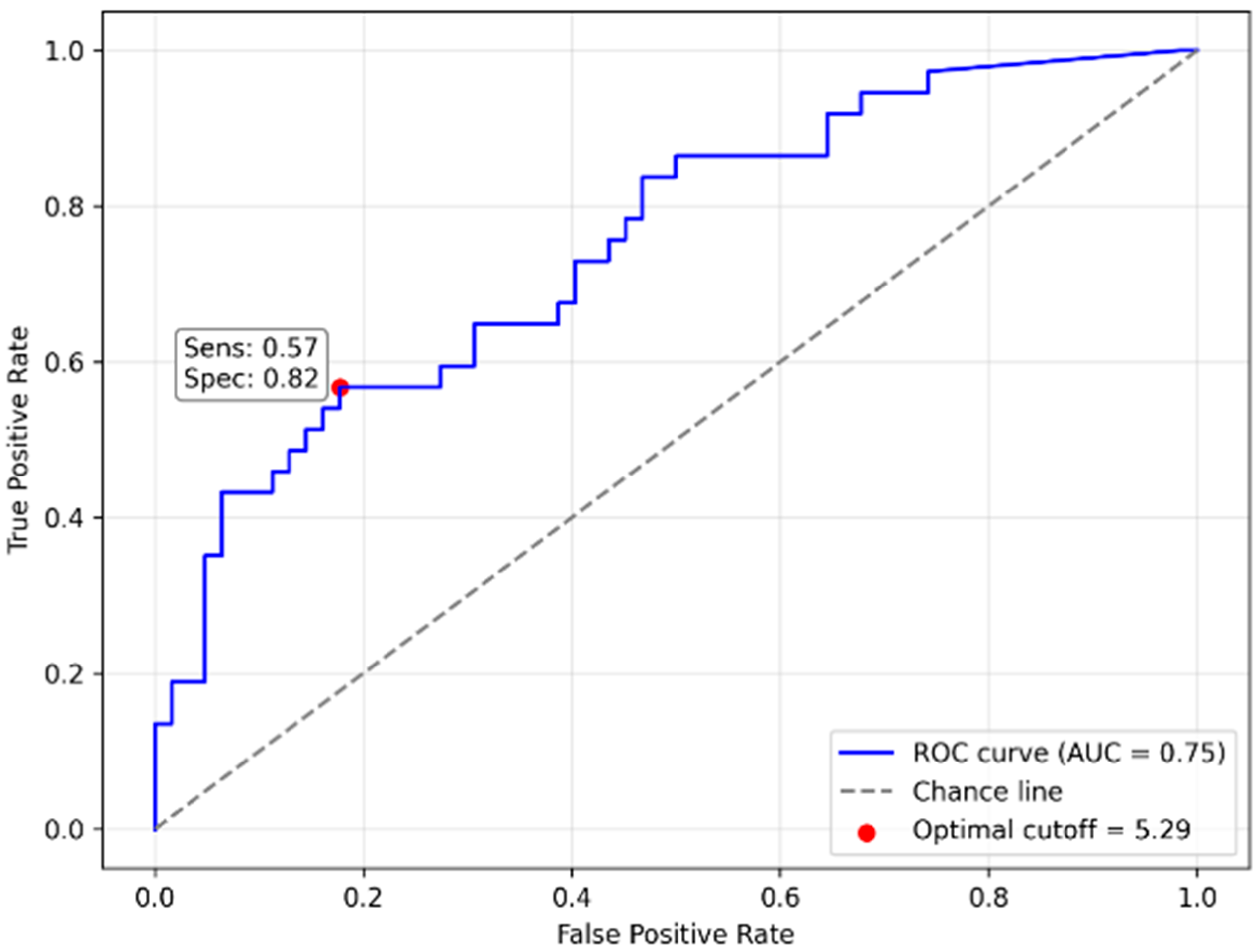
The predictive accuracy of IL-6 for depression in people with T2D showed a sensitivity of 57% and specificity of 82% for a cut-off of 5.29 (Area under the curve 0.75, Figure 3. According to our results, 57% of people with T2D and depression had IL-6 higher than 5.29 pg/mL (Figure 3).

4. Discussion

Our study has shown that T2D patients with depression are characterized with higher IR measured by Matsuda ISI, a dynamic parameter showing whole-body IR, compared to T2D patients without depression. This study was the first to demonstrate significantly decreased Matsuda ISI, in contrast to some rare previous findings [17,20,21].
Simultaneously, HOMA IR index (reflecting mainly hepatic IR) showed higher IR in T2D patients with depression compared to those without depression, but this difference did not reach the level of significance. These findings imply that appearance of depression in T2D is influenced by the whole-body IR. However, we could not show a strong influence of hepatic changes of insulin sensitivity in T2D patients with depression. Moderately elevated HOMA IR index could be potentially based on the longer duration of T2D and mild to moderate depression episodes, as suggested with previous studies [18,21,22,23,24,25,26,27]. Recent studies have demonstrated that people with depression exhibit higher IR (lower insulin sensitivity) determined by Matsuda ISI [6]. In the context of T2D with depression, the Matsuda ISI might be a more sensitive marker of IR than HOMA-IR, given its ability to detect postprandial and dynamic changes in glucose metabolism [28,29].
It is to be noted that in patients with depression without diabetes, both parameters suggest the persistence of elevated IR compared to healthy individuals, although the levels were significantly lower than in T2D patients with depression.
Elevated IR in patients with depression without T2D has been also found in other previous studies but was not compared to those in T2D with depression [21,22,23,24,25,30]. Our findings are in line with several meta-analyses with a respectable number of participants, showing higher HOMA IR in people with depression compared to people without depression [1,2,3,22,24,30,31]. However, these findings suggested variability of HOMA IR according to type and course of depression as well as antidepressant treatment [3,4,5,22,24].
Our findings of evaluation of the low-grade inflammation measured by hs-CRP have shown that it was significantly higher in people with T2D and depression, while it was similar when we compared people with T2D without depression, depression without T2D, and healthy controls. These findings also indicate that in individuals with T2D and depression, elevated hs-CRP may facilitate the synergistic appearance of both diseases [6,7,8,26,27,29,30,31,32].
These data are in line with previous studies, identifying hs-CRP as a reliable biomarker for the detection of people with T2D at increased risk for depression. In one of the previous study, elevated hs-CRP levels were independently associated with higher depression prevalence among people with T2D, even after adjusting for age, sex, duration of T2D, BMI, HbA1c, smoking, and cardiovascular disease [29,30,31,32,33]. Moreover, longitudinal analyses have shown that a reduction in hs-CRP levels over time correlates with improvements in depression in people with T2D [29,30,31,32,33,34].
In contrast, several studies have failed to demonstrate a consistent association between elevated hs-CRP levels and depression, particularly after adjusting for confounding variables such as obesity and IR, suggesting that these factors may mediate the observed relationship [26,27,28,30,31,35,36,37,38,39,40]. When the group of patients in our study is concerned, they are in line with those previous findings due to the fact that in our group the patients with depression without T2D had normal weight.
On the other hand, a distinct pattern of the changes in IL-6 levels was observed in our study, which were higher in people with T2D and depression than in T2D without depression. However, previous studies have shown that higher IL-6 levels were elevated in people with depression, regardless of the presence of T2D, and were significantly higher in those with both T2D and depression compared to people with T2D without depression [7,8,20,26,27,28,40,41,42,43,44,45]. All those results suggest that the role of IL-6 as the biomarker of depression in people with T2D has not yet been clarified [29,30,33,46,47,48]. Our findings are in line with these studies, as comparable IL-6 levels were observed in people with T2D and depression, as well as depression without T2D, suggesting the effect of depression in driving IL-6 elevation, independent of T2D.
When we analyzed the association of the variables examined in this study, we identified that younger age, increased IR (reduced insulin sensitivity) as reflected by lower Matsuda ISI, and elevated IL-6 levels were independently associated with depression in people with T2D. These associations are consistent with previous studies suggesting that early-onset T2D has been linked to a longer duration of disease burden, which may contribute to the development of depression [28,29,32,36,37]. Previous studies have shown that people diagnosed with T2D at a younger age have substantially higher rates of depression compared to those with late-onset T2D [32,36,37,49,50,51,52]. Lower Matsuda SI, was independently associated with presence of depression in T2D. As it reflects both hepatic and peripheral insulin action, lower Matsuda ISI values in people with T2D and depression suggest a more profound IR that may play a role in the development or depression in T2D [17,18,21,22,23,24,25,32,35,37]. Higher IL-6 levels were also found to be independently associated with the presence of depression in people with T2D, suggesting that low-grade systemic inflammation contributes to the presence of depression in T2D [7,8,20,26,27,28,29,30,31,32,33,52,53,54,55]. The findings are consistent with previous studies suggesting that IL-6 may serve as a biomarker of depression [7,8,20,26,27,28,33,38], although its specificity in T2D remains unclear [29,30,32,37].
In this study, the IL-6 demonstrated moderate discriminatory ability for depression in people with T2D. This finding suggests that IL-6 alone has limited utility as a standalone marker for depression in this population. Notably, prior studies reported significant associations between inflammatory markers and depression in T2D, with highlighted hs-CRP rather than IL-6 as the most consistent marker [29,30,31,32,55,56,57,58]. Importantly, these studies did not perform ROC analyses to quantify predictive accuracy, making direct comparison limited. However, these studies did not evaluate diagnostic performance using ROC analyses, limiting direct comparisons with our results. Further research is warranted to determine whether combining IL-6 with other biomarkers improves its clinical relevance in identifying depression among individuals with T2D [59,60,61,62].

5. Conclusions

Our study implies that the highest levels of IR and low-grade inflammation are present in people with T2D and depression. Moreover, low-grade inflammation exhibits the same trend as IR, particularly in people with T2D and depression. In addition, among people with T2D, depression is associated with younger age, IR and increased low grade inflammation.
These findings suggest that both metabolic and inflammatory parameters may contribute equally to the presence of depression in the people with T2D and may serve as clinically relevant indicators for this co-occurrence. Further longitudinal studies are needed to clarify the causality between metabolic and inflammatory parameters and the development of depression in T2D, in order to identify possible therapeutic interventions.

6. Strengths and Limitations

The strength of our study is a comprehensive design that included both people with and without T2D, enabling direct comparisons across metabolic states. Also, the use of multiple IR indices (Matsuda ISI and HOMA-IR) provides a more accurate assessment of glucose metabolism, diminishing the limitations based on a single marker [17,18,21,22,23,24,25]. Analyzing inflammatory biomarkers (hsCRP and IL-6), the study encompassed the multifactorial relationship between T2D and depression [6,7,8,20,26,27,28,29,30,31,32,33,38,39]. Furthermore, numerous multivariable adjustments for potential confounders increase the importance of relationships.
The primary limitation of this study is its cross-sectional design. The absence of longitudinal follow-up data restricts the ability to evaluate the relationship between T2D and depression at different stages of both diseases.

Author Contributions

Conceptualization, J.S.G., A.J. and N.M.L.; methodology, J.S.G., A.J. and D.L.T.; validation, J.S.G., T.M., L.L., K.L., S.S., D.L.T., A.J. and N.M.L.; formal analysis, J.S.G., S.S., T.M., M.M., M.S., O.M. and M.B.; investigation, J.S.G., T.M., L.L., M.M., M.S., O.V., M.B., D.R., S.M., N.K.J., K.P. and N.J.; writing—original draft preparation, J.S.G. and A.J.; writing—review and editing, D.L.T., A.J. and K.L.; supervision, N.M.L. and D.L.T. All authors have read and agreed to the published version of the manuscript.

Funding

This research received no external funding.

Institutional Review Board Statement

This study was conducted in accordance with the Declaration of Helsinki and approved by the Ethics Committee of the Faculty of Medicine, University of Belgrade (reference number 29/X-21), Ethics Committee of the University Clinical Center of Serbia (reference number 1600/46), approval date 13 October 2025.

Informed Consent Statement

Informed consent was obtained from all subjects involved in this study.

Data Availability Statement

The data presented in this study are available on request from the corresponding author. The data are not publicly available, as they include sensitive clinical information.

Conflicts of Interest

The authors declare no conflicts of interest.

Abbreviations

The following abbreviations are used in this manuscript:
T2DType 2 diabetes
IRInsulin resistance
IL-6Interleukin-6
hs-CRPHigh-sensitivity C-reactive protein
HOMA-IRHomeostasis model of insulin resistance
Matsuda ISI Matsuda insulin sensitivity index
BMIBody Mass Index
HbA1cGlycated hemoglobin
SUSulfonylurea
SGLT2iSodium-Glucose Transport Protein 2 Inhibitors
SSRISelective serotonin reuptake inhibitors
SNRISerotonin-Norepinephrine Reuptake Inhibitor

References

  1. Sen, Z.D.; Danyeli, L.V.; Woelfer, M.; Lamers, F.; Wagner, G.; Sobanski, T.; Walter, M. Linking atypical depression and insulin resistance-related disorders via low-grade chronic inflammation: Integrating phenotypic, molecular and neuroanatomical dimensions. Brain Behav. Immun. 2021, 93, 335–352. [Google Scholar] [CrossRef]
  2. Jung, I.; Kwon, H.; Park, S.E.; Han, K.D.; Park, Y.G.; Kim, Y.H.; Rhee, E.J.; Lee, W.Y. Increased risk of cardiovascular disease and mortality in patients with diabetes and coexisting depression: A nationwide population-based cohort study. Diabetes Metab. J. 2021, 45, 379–389. [Google Scholar] [CrossRef]
  3. Lloyd, C.E.; Nouwen, A.; Sartorius, N.; Ahmed, H.U.; Alvarez, A.; Bahendeka, S.; Basangwa, D.; Bobrov, A.E.; Boden, S.; Bulgari, V.; et al. Prevalence and correlates of depressive disorders in people with Type 2 diabetes: Results from the International Prevalence and Treatment of Diabetes and Depression (INTERPRET-DD) study, a collaborative study carried out in 14 countries. Diabet. Med. 2018, 35, 760–769. [Google Scholar] [CrossRef]
  4. Lloyd, C.E.; Sartorius, N.; Ahmed, H.U.; Alvarez, A.; Bahendeka, S.; Bobrov, A.E.; Burti, L.; Chaturvedi, S.K.; Gaebel, W.; de Girolamo, G.; et al. Factors associated with the onset of major depressive disorder in adults with type 2 diabetes living in 12 different countries: Results from the INTERPRET-DD prospective study. Epidemiol. Psychiatr. Sci. 2020, 29, e134. [Google Scholar] [CrossRef]
  5. Kosmas, C.E.; Sourlas, A.; Oikonomakis, K.; Zoumi, E.A.; Papadimitriou, A.; Kostara, C.E. Biomarkers of insulin sensitivity/resistance. J. Int. Med. Res. 2024, 52, 1–40. [Google Scholar] [CrossRef]
  6. Geraets, A.F.J.; Köhler, S.; Muzambi, R.; Schalkwijk, C.G.; Eussen, S.J.P.; Dagnelie, P.C.; Stehouwer, C.D.A.; Schaper, N.C.; Henry, R.M.A.; van der Kallen, C.J.H.; et al. The association of hyperglycaemia and insulin resistance with incident depressive symptoms over 4 years of follow-up: The maastricht study. Diabetologia 2020, 63, 2315–2328. [Google Scholar] [CrossRef] [PubMed]
  7. Krupa, A.J.; Dudek, D.; Siwek, M. Consolidating evidence on the role of insulin resistance in major depressive disorder. Curr. Opin. Psychiatry 2024, 37, 23–28. [Google Scholar] [CrossRef] [PubMed]
  8. van Gennip, A.C.E.; Schram, M.T.; Köhler, S.; Kroon, A.A.; Koster, A.; Eussen, S.J.P.; de Galan, B.E.; van Sloten, T.T.; Stehouwer, C.D.A. Association of type 2 diabetes risk factors within recommended ranges with incidence of depression. Lancet Healthy Longev. 2023, 4, e63–e71. [Google Scholar] [CrossRef]
  9. Park, S.Y.; Gautier, J.F.; Chon, S. Assessment of insulin secretion and insulin resistance in humans. Diabetes Metab. J. 2021, 45, 641–654. [Google Scholar] [CrossRef] [PubMed]
  10. Maina, J.G.; Balkhiyarova, Z.; Nouwen, A.; Pupko, I.; Ulrich, A.; Boissel, M.; Bonnefond, A.; Froguel, P.; Khamis, A.; Prokopenko, I.; et al. Bidirectional mendelian randomization and multiphenotype GWAS show causality and shared pathophysiology between depression and type 2 diabetes. Diabetes Care 2023, 46, 1707–1714. [Google Scholar] [CrossRef]
  11. World Health Organization. Definition and Diagnosis of Diabetes Mellitus and Intermediate Hyperglycaemia; WHO: Geneva, Switzerland, 2006; Available online: https://www.who.int/publications/i/item/definition-and-diagnosis-of-diabetes-mellitus-and-intermediate-hyperglycaemia (accessed on 1 November 2025).
  12. Sheehan, D.V.; Lecrubier, Y.; Sheehan, K.H.; Amorim, P.; Janavs, J.; Weiller, E.; Hergueta, T.; Baker, R.; Dunbar, G.C. The Mini-International Neuropsychiatric Interview (MINI). J. Clin. Psychiatry 1998, 59, 22–33. [Google Scholar]
  13. Hamilton, M. A rating scale for depression. J. Neurol. Neurosurg. Psychiatry 1960, 23, 56–62. [Google Scholar] [CrossRef] [PubMed]
  14. Timotijević, I.; Paunović, V.R. Hamiltonova skala za procenu depresije. In Psihijatrijske Skale i Upitnici; Timotijević, I., Ed.; Naučna knjiga: Belgrade, Serbia, 1992; pp. 45–52. [Google Scholar]
  15. Ito, C.; Maeda, R.; Ishida, S.; Sasaki, H.; Harada, H. Correlation among fasting plasma glucose, two-hour plasma glucose levels in OGTT and HbA1c. Diabetes Res. Clin. Pract. 2000, 50, 225–230. [Google Scholar] [CrossRef] [PubMed]
  16. Hales, C.N.; Randle, P.J. Immunoassay of insulin. Biochem. J. 1963, 88, 137–146. [Google Scholar] [CrossRef]
  17. Jeppsson, J.O.; Kobold, U.; Barr, J.; Finke, A.; Hoelzel, W.; Hoshino, T.; Miedema, K.; Mosca, A.; Mauri, P.; Paroni, R.; et al. Approved IFCC reference method for glycated haemoglobin. Clin. Chem. Lab. Med. 2002, 40, 78–89. [Google Scholar] [CrossRef]
  18. Matsuda, M.; DeFronzo, R.A. Insulin sensitivity indices from OGTT. Diabetes Care 1999, 22, 1462–1470. [Google Scholar] [CrossRef]
  19. Matthews, D.R.; Hosker, J.P.; Rudenski, A.S.; Naylor, B.A.; Treacher, D.F.; Turner, R.C. Homeostasis model assessment (HOMA). Diabetologia 1985, 28, 412–419. [Google Scholar] [CrossRef]
  20. Muniyappa, R.; Madan, R.; Varghese, R.T. Assessing insulin sensitivity and resistance in humans. In Endotext; MDText.com: South Dartmouth, MA, USA, 2024. Available online: https://www.ncbi.nlm.nih.gov/books/NBK278954/ (accessed on 1 September 2025).
  21. Fernandes, B.S.; Salagre, E.; Enduru, N.; Grande, I.; Vieta, E.; Zhao, Z. Insulin resistance in depression: A large meta-analysis of metabolic parameters. Neurosci. Biobehav. Rev. 2022, 141, 104847. [Google Scholar] [CrossRef]
  22. Brouwer, A.; van Raalte, D.H.; Lamers, F.; Rutters, F.; Elders, P.J.M.; Van Someren, E.J.W.; Snoek, F.J.; Beekman, A.T.F.; Bremmer, M.A. Insulin resistance as a marker for the immune-metabolic subtype of depression. J. Affect. Disord. 2021, 295, 1371–1376. [Google Scholar] [CrossRef]
  23. Rashidian, H.; Subramaniapillai, M.; Park, C.; Lipsitz, O.; Zuckerman, H.; Cao, B.; Lee, Y.; Gill, H.; Rodrigues, R.N.; Di Vincenzo, J.D.; et al. Changes in insulin resistance following antidepressant treatment mediate response in major depressive disorder. J. Psychopharmacol. 2023, 37, 313–317. [Google Scholar] [CrossRef] [PubMed]
  24. Sommer, J.; Borgmann, S.O.; Gontscharuk, V.; Zaharia, O.P.; Maalmi, H.; Herder, C.; Wagner, R.; Strassburger, K.; Schön, M.; Burkart, V.; et al. Depression symptoms, wellbeing, health-related quality of life, and diabetes-related distress in novel subtypes of recent-onset diabetes in Germany: A 5-year observational follow-up study. Lancet Diabetes Endocrinol. 2024, 12, 890–903. [Google Scholar] [CrossRef]
  25. Ismail, K.; Laake, J.P.; Stahl, D.; Amiel, S.A.; Petrak, F.; Sherwood, R.A.; Pickup, J.C.; Ismail, K. The Association between depressive symptoms and systemic inflammation in people with type 2 diabetes: Findings from the south london diabetes study. Diabetes Care 2014, 37, 2186–2192. [Google Scholar] [CrossRef]
  26. Lorenzo, C.; Haffner, S.M.; Stančáková, A.; Kuusisto, J.; Laakso, M. Fasting and OGTT-derived measures of insulin resistance as compared with the euglycemic-hyperinsulinemic clamp in nondiabetic finnish offspring of type 2 diabetic individuals. J. Clin. Endocrinol. Metab. 2015, 100, 544–550. [Google Scholar] [CrossRef] [PubMed]
  27. Watson, K.T.; Simard, J.F.; Henderson, V.W.; Nutkiewicz, L.; Lamers, F.; Nasca, C.; Rasgon, N.; Penninx, B.W.J.H. Incident major depressive disorder predicted by three measures of insulin resistance: A dutch cohort study. Am. J. Psychiatry 2021, 178, 914–920. [Google Scholar] [CrossRef] [PubMed]
  28. Bădescu, S.V.; Tătaru, C.; Kobylinska, L.; Georgescu, E.L.; Zahiu, D.M.; Zăgrean, A.M.; Zăgrean, L. Association between diabetes mellitus and depression. J. Med. Life 2016, 9, 120–125. [Google Scholar]
  29. Krupa, A.J.; Chrobak, A.A.; Sołtys, Z.; Dudek, D.; Szewczyk, B.; Siwek, M. Insulin resistance, clinical presentation and resistance to selective serotonin and noradrenaline reuptake inhibitors in major depressive disorder. Pharmacol. Rep. 2024, 76, 1100–1113. [Google Scholar] [CrossRef] [PubMed]
  30. Liu, Y.; Huang, S.Y.; Liu, D.L.; Zeng, X.X.; Pan, X.R.; Peng, J. Bidirectional relationship between diabetes mellitus and depression: Mechanisms and epidemiology. World J. Psychiatry 2024, 14, 1429–1436. [Google Scholar] [CrossRef]
  31. Ali, S.; Stone, M.A.; Peters, J.L.; Davies, M.J.; Khunti, K. Prevalence of co-morbid depression in adults with type 2 diabetes: A systematic review. Diabet. Med. 2006, 23, 1165–1173. [Google Scholar] [CrossRef]
  32. Pasquali, R.; Vicennati, V.; Cacciari, M.; Pagotto, U. HPA axis activity in obesity and metabolic syndrome. Ann. N. Y. Acad. Sci. 2006, 1083, 111–128. [Google Scholar] [CrossRef]
  33. Raison, C.L.; Capuron, L.; Miller, A.H. Cytokines and depression. Trends Immunol. 2006, 27, 24–31. [Google Scholar] [CrossRef]
  34. Pan, A.; Keum, N.; Okereke, O.I.; Sun, Q.; Kivimaki, M.; Rubin, R.R.; Hu, F.B. Bidirectional association between depression and metabolic syndrome: A systematic review and meta-analysis of epidemiological studies. Diabetes Care 2012, 35, 1171–1180. [Google Scholar] [CrossRef]
  35. Herder, C.; Schmitt, A.; Budden, F.; Reimer, A.; Kulzer, B.; Roden, M.; Haak, T.; Hermanns, N. Association between pro- and anti-inflammatory cytokines and depressive symptoms in patients with diabetes—Potential differences by diabetes type and depression scores. Transl. Psychiatry 2017, 7, 1. [Google Scholar] [CrossRef]
  36. Dowlati, Y.; Herrmann, N.; Swardfager, W.; Liu, H.; Sham, L.; Reim, E.K.; Lanctôt, K.L. Cytokines in major depression: A meta-analysis. Biol. Psychiatry 2010, 67, 446–457. [Google Scholar] [CrossRef] [PubMed]
  37. Ehrmann, D.; Krause-Steinrauf, H.; Uschner, D.; Wen, H.; Hoogendoorn, C.J.; Crespo-Ramos, G.; Presley, C.; Arends, V.L.; Cohen, R.M.; Garvey, W.T.; et al. Differential associations of somatic and cognitive-affective symptoms of depression with inflammation and insulin resistance: Cross-sectional and longitudinal results from the Emotional Distress Sub-Study of the GRADE study. Diabetologia 2025, 68, 1403–1415. [Google Scholar] [CrossRef] [PubMed]
  38. Khawagi, W.Y.; Al-Kuraishy, H.M.; Hussein, N.R.; Al-Gareeb, A.I.; Atef, E.; Elhussieny, O.; Alexiou, A.; Papadakis, M.; Jabir, M.S.; Alshehri, A.A.; et al. Depression and type 2 diabetes: Causal relationship and mechanistic pathway. Diabetes Obes. Metab. 2024, 26, 3031–3044. [Google Scholar] [CrossRef]
  39. Chaturvedi, S.K.; Manche Gowda, S.; Ahmed, H.U.; Alosaimi, F.D.; Andreone, N.; Bobrov, A.; Bulgari, V.; Carrà, G.; Castelnuovo, G.; de Girolamo, G.; et al. More anxious than depressed: Prevalence and correlates in a 15-nation study of anxiety disorders in people with type 2 diabetes mellitus. Gen. Psychiatr. 2019, 32, e100076. [Google Scholar] [CrossRef] [PubMed]
  40. Liu, Y.; Ho, R.C.; Mak, A. IL-6 and TNF-α in major depressive disorder. J. Affect. Disord. 2012, 139, 230–239. [Google Scholar] [CrossRef]
  41. Holt, R.I.G.; De Groot, M.; Golden, S.H. Diabetes and depression. Lancet Diabetes Endocrinol. 2014, 2, 246–255. [Google Scholar] [CrossRef]
  42. Sacks, D.B. Glucose methodologies. In Tietz Textbook of Clinical Chemistry; Elsevier: Amsterdam, The Netherlands, 2006. [Google Scholar]
  43. Febbraio, M.A.; Pedersen, B.K. Muscle-derived IL-6. FASEB J. 2002, 16, 1335–1347. [Google Scholar] [CrossRef]
  44. Kan, C.; Silva, N.; Golden, S.H.; Rajala, U.; Timonen, M.; Stahl, D.; Ismail, K. Depression and insulin resistance: A systematic review and meta-analysis. Diabetes Care 2013, 36, 480–489. [Google Scholar] [CrossRef]
  45. Alvarez-Gómez, A.M.; Guillén, C.; Durán, A.; Calle-Pascual, A.L. Insulin resistance in depression: A systematic review. Clin. Nutr. 2019, 38, 1143–1151. [Google Scholar]
  46. Timonen, M.; Rajala, U.; Jokelainen, J.; Keinänen-Kiukaanniemi, S.; Meyer-Rochow, V.B.; Räsänen, P. Depressive symptoms and insulin resistance in young adult males: Results from the Northern Finland 1966 birth cohort. Mol. Psychiatry 2006, 11, 929–933. [Google Scholar] [CrossRef]
  47. Rasgon, N.L.; Kenna, H.A.; Williams, K.E.; Powers, B.; Ruderfer, D.; Vemuri, M.; Matthews, K.A. Insulin resistance and depressive symptoms in women without diabetes. J. Affect. Disord. 2019, 257, 316–323. [Google Scholar]
  48. Clouse, R.E.; Lustman, P.J.; Freedland, K.E.; Griffith, L.S.; McGill, J.B.; Carney, R.M. Depression and coronary heart disease in women with diabetes. Biopsychosoc. Sci. Med. 2003, 65, 376–383. [Google Scholar] [CrossRef]
  49. Howren, M.B.; Lamkin, D.M.; Suls, J. Depression and inflammatory markers: A meta-analysis. Psychosom. Med. 2009, 71, 171–186. [Google Scholar] [CrossRef]
  50. Valkanova, V.; Ebmeier, K.P.; Allan, C.L. CRP, IL-6, and depression: A meta-analysis. J. Affect. Disord. 2013, 150, 736–744. [Google Scholar] [CrossRef]
  51. Jokela, M.; Virtanen, M.; Batty, G.D.; Kivimäki, M. Inflammation and depressive symptoms: A longitudinal study. Psychol. Med. 2016, 46, 501–511. [Google Scholar]
  52. Tabak, A.G.; Akbaraly, T.N.; Batty, G.D.; Kivimäki, M. Depression and type 2 diabetes: A causal association? Lancet Diabetes Endocrinol. 2014, 2, 236–245. [Google Scholar] [CrossRef] [PubMed]
  53. Herder, C.; Hermanns, N. Subclinical inflammation and depressive symptoms in patients with type 1 and type 2 diabetes. Semin. Immunopathol. 2019, 41, 477–489. [Google Scholar] [CrossRef] [PubMed]
  54. Orsolini, L.; Pompili, S.; Tempia Valenta, S.; Salvi, V.; Volpe, U. C-Reactive Protein as a Biomarker for Major Depressive Disorder? Int. J. Mol. Sci. 2022, 23, 1616. [Google Scholar] [CrossRef]
  55. Mezuk, B.; Eaton, W.W.; Albrecht, S.; Golden, S.H. Depression and type 2 diabetes over the lifespan. Diabetes Care 2008, 31, 2383–2390. [Google Scholar] [CrossRef] [PubMed]
  56. Pillay, Y.; Hornsby, W.G., Jr.; Saha, C.K.; Shubrook, J.; Crick, K.A.; Yang, Z.; Mather, K.; de Groot, M. A Post-Hoc analysis of depressive disorders in patients with type 2 diabetes. Healthcare 2025, 13, 1773. [Google Scholar] [CrossRef]
  57. Dantzer, R.; O’Connor, J.C.; Freund, G.G.; Johnson, R.W.; Kelley, K.W. From inflammation to sickness and depression: When the immune system subjugates the brain. Nat. Rev. Neurosci. 2008, 9, 46–56. [Google Scholar] [CrossRef]
  58. Lin, E.H.; Heckbert, S.R.; Rutter, C.M.; Katon, W.J.; Ciechanowski, P.; Ludman, E.J.; Oliver, M.; Young, B.A.; McCulloch, D.K.; Von Korff, M. Depression and increased mortality in diabetes: Unexpected causes of death. Ann Fam. Med. 2009, 7, 414–421. [Google Scholar] [CrossRef]
  59. Watson, K.T.; Simard, J.F.; Henderson, V.W.; Nutkiewicz, L.; Lamers, F.; Rasgon, N.; Penninx, B. Association of Insulin Resistance With Depression Severity and Remission Status: Defining a Metabolic Endophenotype of Depression. JAMA Psychiatry 2021, 78, 439–441. [Google Scholar] [CrossRef]
  60. Darwish, L.; Beroncal, E.; Sison, M.V.; Swardfager, W. Depression in people with type 2 diabetes: Current perspectives. Diabetes Metab. Syndr. Obesity Targets Ther. 2018, 11, 333–343. [Google Scholar] [CrossRef] [PubMed]
  61. Baumeister, D.; Akhtar, R.; Ciufolini, S.; Pariante, C.M.; Mondelli, V. Childhood trauma and adulthood inflammation: A meta-analysis of peripheral C-reactive protein, interleukin-6 and tumour necrosis factor-α. Mol. Psychiatry 2016, 21, 642–649. [Google Scholar] [CrossRef] [PubMed]
  62. Penninx, B.W. Depression and cardiovascular disease: Epidemiologic evidence. Neurosci. Biobehav. Rev. 2017, 74, 277–286. [Google Scholar] [CrossRef]
Figure 1. (a). Insulin resistance levels estimated by Matsuda ISI in people with T2D and depression (Group A), T2D without depression (Group B), depression without T2D (group C) and healthy control (group D). p values indicate the statistical significance of the difference across the groups, as estimated by variance Kruskal-Wallis, with a post hoc Dunn’s test. Data are presented as mean ± SD. Group differences: A vs. B p < 0.001, A vs. C p < 0.001, A vs. D p < 0.001, B vs. C, p < 0.001, B vs. D p < 0.001, C vs. D p < 0.001. (b). Insulin resistance levels estimated by HOMA-IR in people with T2D and depression (Group A), T2D without depression (Group B), depression without T2D (group C) and healthy control (group D). p values indicate the statistical significance of the difference across the groups, as estimated by variance Kruskal-Wallis, with a post hoc Dunn’s test. Data are presented as mean ± SD. Group differences: A vs. C, D < 0.001, B vs. C, D < 0.001, C vs. D p = 0.03, A vs. B p = 0.843.
Diabetology 07 00051 g001
Figure 2. (a). Low-grade inflammation evaluated by hsCRP in people with T2D and depression (Group A), T2D without depression (Group B), depression without T2D (group C) and healthy control (group D). p values indicate the statistical significance of the difference across the groups, as estimated by variance Kruskal-Wallis, with a post hoc Dunn’s test. Data are presented as mean ± SD. Group differences: A vs. B, C, D p < 0.01, A vs. B = C = D, p = 0.574, p = 0.851. (b). Low-grade inflammation evaluated by IL-6 in people with T2D and depression (Group A), T2D without depression (Group B), depression without T2D (group C) and healthy control (group D). p values indicate the statistical significance of the difference across the groups, as estimated by variance Kruskal-Wallis, with a post hoc Dunn’s test. Data are presented as mean ± SD. Group differences: A vs. B p < 0.001, B vs. C p < 0.001, A vs. C p = 0.235, B vs. D p = 0.744.
Diabetology 07 00051 g002aDiabetology 07 00051 g002b
Figure 3. Predictive accuracy of IL-for presence of depression in people with T2D.
Diabetology 07 00051 g003
Table 1. Baseline characteristics of the study participants.
CharacteristicGroup A (T2D+Depression+)Group B (T2D+Depression-)Group C (T2D-Depression+)Group D
(Healthy Control)
p Value
Demographics
Gender, n (% female)84.281.681.4810.591
Age (years)58.7+/−1259.1+/−12.148.6+/−12.450.3+/−12.20.002
Diabetes duration (years)5.755NANA0.936
Depression duration (years)6NA5NA0.279
Anthropometric and metabolic parameters
BMI (kg/m2)28+/−5.028.2+/−2.125.5+/−4.725.2+/−3.6<0.001
HbA1c (%)7.4+/−0.27.2+/−0.45.3+/−0.65.1+/−0.4<0.001
Cardiovascular risk factors
Obesity, n (%)32.633.318.714.40.002
Hypertension, n (%)60.556.732.520<0.001
Dyslipidemia, n (%)73.6653823<0.001
Diabetes medication
n (%)
Metformin10098NANA
SU6085NANA
SGLT2i51.548.3NANA
Depression medication, n (%) NA NA
SSRI86.887.3
SNRI44.855.7
Lifestyle factors
Smoking, y (%)6864.468.256<0.001
Alcohol use, none/low/high,
n (%)
28.6/54.8/16.629.2/59.5/11.326.1/55.2/18.830.7/61.7/7.6<0.001
Physical activity
(150 min/week), yes (%)
22.620.318.444.4<0.001
Socioeconomic status
Partner status,
n (%) (partner)
57.165.25971.40.003
Employment status,
yes (%)
858480900.003
Income (€) n (%)
<30023.723.32512.8 0.442
300–60047.438.34129.80.412
600–1000212022.722.50.458
>100012.6109.114.90.297
Community
Urban/Suburban,
n (%)
84/1681/1983/1786/140.455
Data are presented as mean (standard deviation) or number (percentage). pp-value where <0.05 was considered statistically significant; NA—not applicable. BMI—Body Mass Index; HbA1c-glycated hemoglobin; SU—sulfonylurea, SGLT2i—Sodium-Glucose Transport Protein 2 Inhibitors; SSRI-Selective serotonin reuptake inhibitors; SNRI—serotonin-norepinephrine reuptake inhibitors.
Table 2. Independent factors for the presence of depression in people with T2D using binary logistic regression analysis.
BS.E.OR (95%CI)p Value
Age−0.6340.0151.055 (1.024–1.087)<0.001
Matsuda index−0.6580.0521.131 (0.991–1.261)<0.001
IL-60.5300.0251.005 (1.004–1.109)<0.001
Disclaimer/Publisher’s Note: The statements, opinions and data contained in all publications are solely those of the individual author(s) and contributor(s) and not of MDPI and/or the editor(s). MDPI and/or the editor(s) disclaim responsibility for any injury to people or property resulting from any ideas, methods, instructions or products referred to in the content.