Article

Undiagnosed (Pre)Diabetes as a Prevalent and Important Risk Factor for Recurrent Ischemic Outcomes in ACS Patients Undergoing PCI: Results of a Prospective Multicentre PCI Registry


by
Sanne Janssen
1,2,
Eva C. I. Woelders
3,
Denise A. M. Peeters
3,
Patty J. C. Winkler
1,4,
Peter Damman
3,
Wouter S. Remkes
5,
Jasper J. P. Luijkx
4,
Audrey H. H. Merry
6,
Saman Rasoul
1,4,
Robert Jan M. van Geuns
3 and
Arnoud W. J. van ’t Hof
1,2,4,*,† on behalf of the ZON-HR Investigators
1
Department of Cardiology, Zuyderland Medical Centre, 6419 PC Heerlen, The Netherlands
2
Cardiovascular Research Institute Maastricht (CARIM), Maastricht University, 6229 ER Maastricht, The Netherlands
3
Department of Cardiology, Radboud University Medical Centre, 6525 GA Nijmegen, The Netherlands
4
Department of Cardiology, Maastricht University Medical Centre, 6229 HX Maastricht, The Netherlands
5
Department of Cardiology, VieCuri Medical Centre, 5912 BL Venlo, The Netherlands
6
Zuyderland Academy, Zuyderland Medical Centre, 6419 PC Heerlen, The Netherlands
*
Author to whom correspondence should be addressed.
Membership of the ZON-HR Investigators is provided in the Appendix A.
Diabetology 2026, 7(2), 25; https://doi.org/10.3390/diabetology7020025
Submission received: 28 November 2025 / Revised: 2 January 2026 / Accepted: 20 January 2026 / Published: 1 February 2026

Abstract

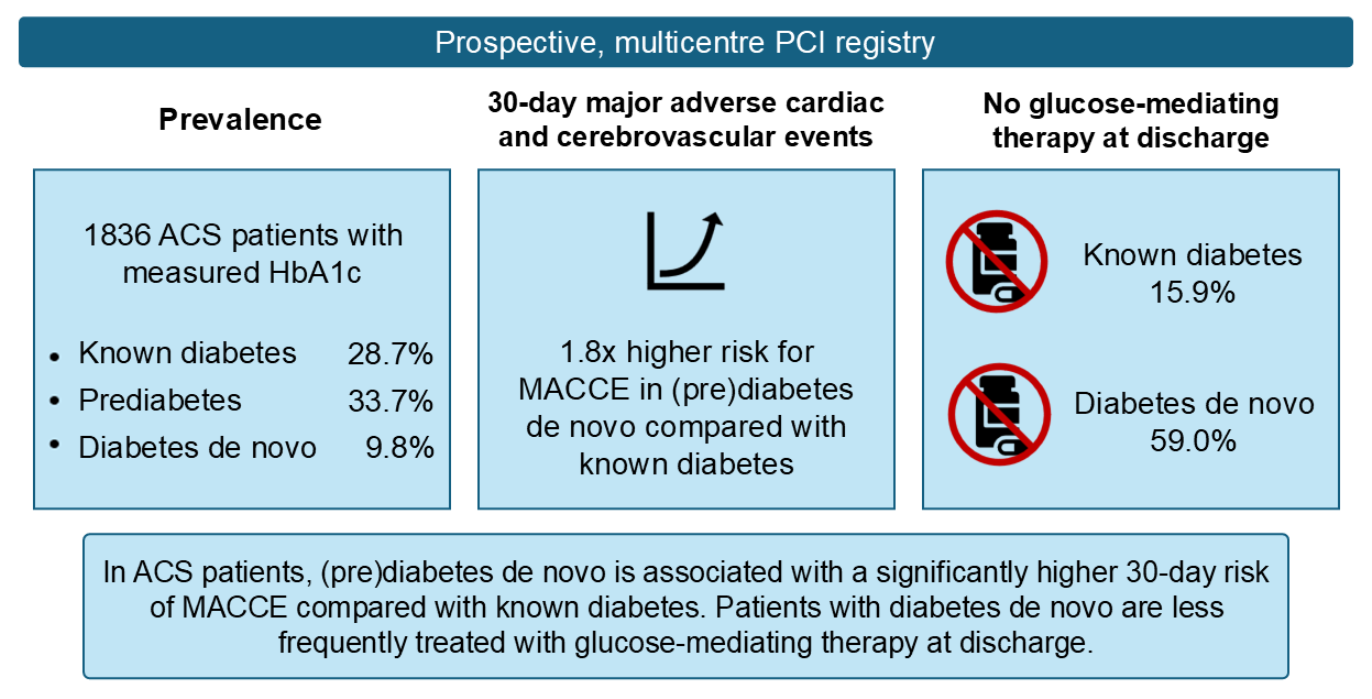
Background: Diabetes is a known risk factor of acute coronary syndrome (ACS). However, diabetes de novo and prediabetes are also common in ACS patients. This study explored the prevalence of prediabetes and diabetes de novo in ACS patients, glucose-mediating therapy at discharge, and compared the prevalence of 30-day major adverse cardiac and cerebrovascular events (MACCE) in patients with prediabetes and diabetes de novo with known diabetes. Methods: ACS patients with measured haemoglobin A1c (HbA1c) from the South-East Netherlands Heart Registry, a prospective, multicentre registry of patients undergoing percutaneous coronary intervention (PCI), were analysed. Patients were stratified into two groups: known diabetes, and prediabetes (HbA1c 39–47 mmol/mol) or diabetes de novo (HbA1c ≥ 48 mmol/mol). Outcomes were analysed at 30 days post-PCI. Results: HbA1c was available in 34.1% of ACS patients (n = 1836), of whom 526 (28.7%) had known diabetes, 619 (33.7%) prediabetes, and 180 (9.8%) diabetes de novo. Compared with patients with known diabetes, patients with prediabetes and diabetes de novo had a significantly higher risk of MACCE (HR = 1.81, 95% CI 1.12–2.93, p = 0.016) after multivariable adjustment. At discharge, 59% of patients with diabetes de novo received no insulin, metformin, nor sodium-glucose co-transporter-2 inhibitor, compared with 16% of patients with known diabetes (p < 0.001). Conclusions: Impaired glucose metabolism without known diabetes was observed in nearly 45% of ACS patients and they demonstrated a significantly higher risk of 30-day MACCE compared with patients with known diabetes. Despite clear guideline recommendations, routine screening for hyperglycaemia and the appropriate initiation of glucose-mediating therapy remain underutilised in clinical practice.

Graphical Abstract

1. Introduction

Diabetes mellitus is a well-established risk factor for all major manifestations of cardiovascular disease (CVD) [1], including acute coronary syndrome (ACS) [2]. Approximately 25–30% of patients presenting with ACS have diabetes [2], and the incidence of ruptured plaques and intracoronary thrombi is higher compared with ACS patients without diabetes [3]. Consequently, diabetes is associated with worse clinical outcomes, including a higher risk of recurrent ischemic events and mortality following ACS [2,3].
While adverse cardiovascular outcomes in patients with known diabetes are well documented, the prognostic significance of prediabetes in the context of ACS remains less clearly defined [4,5]. A meta-analysis of Laichuthai et al. (2020) demonstrated that ACS patients with prediabetes are at increased risk of recurrent major adverse cardiac events (MACE) and heart failure hospitalisation compared with patients with normal glucose metabolism [6]. The comparison with patients with known diabetes was not made in this meta-analysis [6].
Since the first joint guideline on diabetes and cardiovascular disease by the European Society of Cardiology (ESC) and the European Association for the Study of Diabetes (EASD) [1,7], it is recommended to routinely screen for diabetes using fasting glucose or haemoglobin A1c (HbA1c) in all patients with cardiovascular disease [1]. They recommend considering extended dual antiplatelet therapy (DAPT) in ACS patients with diabetes to prevent long term ischemic events [1,8]. However, in daily practice, a large part of the population remains undiagnosed, and is therefore not treated adequately [1,9]. Barriers such as low detection rates and challenges in adherence to lifestyle interventions and pharmacological therapy continue to hinder optimal care [1].
This study aimed to assess the prevalence of prediabetes and diabetes de novo in a Dutch ACS cohort. Furthermore, we aimed to compare major adverse cardiac and cerebrovascular events (MACCE) at 30 days after percutaneous coronary intervention (PCI) between patients with prediabetes or diabetes de novo and known diabetes. Finally, we examined the rate of prescription of glucose-mediating medication at discharge after ACS in these patient groups.

2. Materials and Methods

2.1. Study Design and Patient Population

This study was conducted using data from the South-East Netherlands Heart Registry (Zuid-Oost Nederland Hart Registratie, ZON-HR), a prospective, multicentre registry of all consecutive patients with coronary artery disease treated by PCI in four participating centres in the southeastern region of the Netherlands. The design of the registry has been described previously [10]. The main purpose of the registry is quality control of daily practice and to improve secondary prevention. The study was approved by the Medical Research Ethics Committee Zuyd, adheres to the ethical guidelines of the 1975 Declaration of Helsinki, and is registered at ClinicalTrials.gov (NCT06512493).
For the current analysis, all patients admitted with ACS between November 2020 and December 2023 with a known diabetes status and available HbA1c values were included. ACS included patients with an ST-elevation myocardial infarction (STEMI), a non-STEMI (NSTEMI), or unstable angina pectoris (UAP). Patients’ electronic health records were used to determine if a patient had diabetes before admission, regardless of type or treatment method. Selected patients were stratified into two groups, patients with known diabetes before admission, and patients without known diabetes but elevated HbA1c. The last group consisted of patients with prediabetes (HbA1c 39–47 mmol/mol) and patients with diabetes de novo (HbA1c ≥ 48 mmol/mol).

2.2. Endpoints

The primary outcome of this study was the occurrence of MACCE within the 30 days after initial PCI. MACCE was defined as the composite of unplanned revascularisation, recurrent MI, stent thrombosis (ST), ischemic cerebrovascular accident (iCVA), and cardiovascular death. Unplanned revascularisation was defined as a PCI of a specific vessel not scheduled at the index PCI. Secondary outcomes included the individual components of MACCE, all-cause mortality, and prescription rates of glucose-mediating medication at discharge. An exploratory analysis was performed by observing the use of glucose-mediating medication 1 year after PCI.

2.3. Statistical Analysis

Continuous variables following a normal distribution were presented as a mean ± standard deviation and variables with a skewed distribution were presented as a median with 25th and 75th percentiles. Categorical variables were presented as counts and percentages. Baseline demographics, clinical characteristics, laboratory values, and event rates were compared between groups by independent samples t-test and with a Chi-square test or Fisher’s exact test for categorical variables. Kaplan–Meier curves were constructed for 30-day MACCE based on diabetes status. We used Cox proportional hazard survival analysis to determine the hazard ratios (HRs) with corresponding 95% confidence intervals (CIs), with patients with known diabetes as reference group. The multivariable model consisted of all ZON-HR parameters [10] which were predictive (p < 0.1) in the univariable model. Backward stepwise selection was used to determine the best-fitted model. For imputation of variables with <15% missing, it was assumed that data were missing at random. Multiple imputation of missing values was performed using the Fully Conditional Specification method by combining 10 imputed data sets in SPSS version 28. As outlined in the design paper [10], a sensitivity analysis was conducted including only unique patients, thereby excluding individuals who underwent a subsequent PCI more than one year after the index PCI. A two-sided p < 0.05 was considered statistically significant. All statistical analyses and multiple imputations were executed using IBM SPSS Statistics (Version 28, Armonk, New York: IBM Corp). Cox regression modelling and visualisation of adjusted survival curves were conducted using Python (Version 3.12).

3. Results

3.1. Patient Characteristics

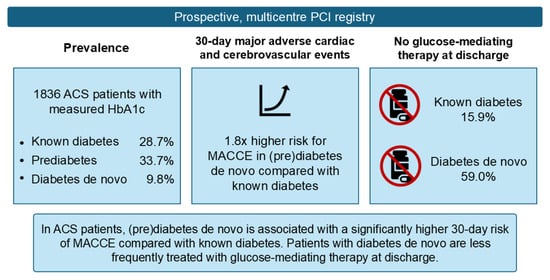
Of all ACS patients, HbA1c was determined on admission in 34.1% of patients, with an increase over time as shown in Supplementary Figure S1. In total, 1836 patients were originally included in this study (Figure 1). Of these patients, 526 (28.7%) had known diabetes on admission. Based on HbA1c, prediabetes was found in 619 patients (33.7%) and diabetes de novo in 180 patients (9.8%).
Baseline characteristics of patients with known diabetes, or without known diabetes with elevated HbA1c are presented in Table 1 and characteristics of the complete ZON-HR ACS cohort are presented in Supplementary Table S1. Baseline characteristics after imputation are presented in Supplementary Table S2. When compared with patients with known diabetes, patients with prediabetes or diabetes de novo had a less extensive cardiovascular risk profile. They were significantly younger (p < 0.001) and had a lower body mass index (p < 0.001). Patients with known diabetes had a significantly higher occurrence of peripheral artery disease (PAD) (p < 0.001) and hypertension (p < 0.001) compared with patients with prediabetes or diabetes de novo. The prevalence of a history of MI and a previous PCI was highest among patients with known diabetes (31.6% and 34.9%, respectively). Patients with known diabetes had a lower estimated glomerular filtration rate (eGFR) compared with patients with prediabetes or diabetes de novo (p = 0.03), as well as a lower baseline low-density lipoprotein (LDL) cholesterol (p < 0.001). On admission, patients with known diabetes had a higher HbA1c; 29.1% of patients were on target (<53 mmol/mol) according to the 2023 ESC recommendations [1].

3.2. Primary Outcome

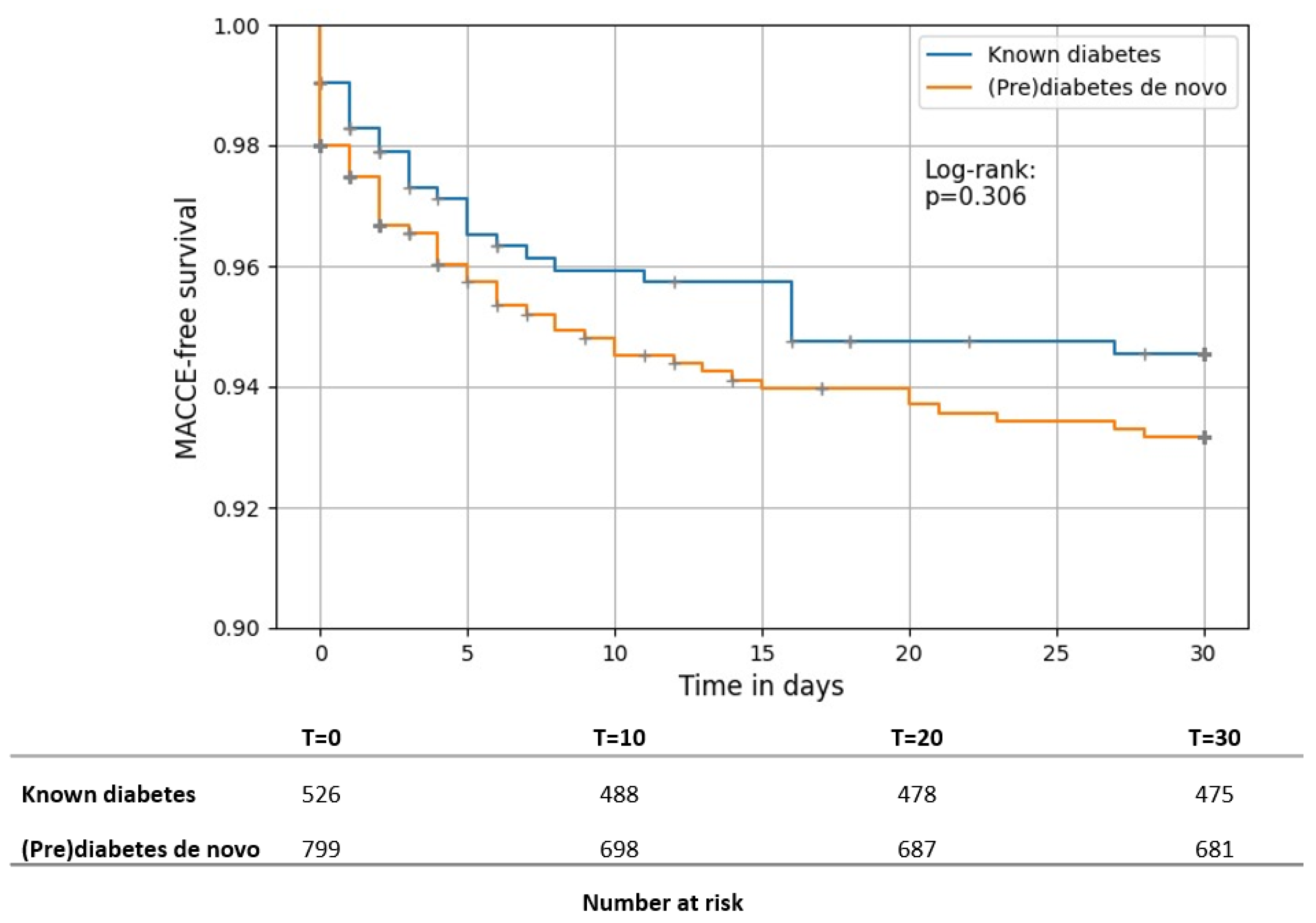
The primary outcome measure, 30-day MACCE, occurred in 52 (6.5%) patients with prediabetes or diabetes de novo, and in 28 (5.3%) patients with known diabetes. The Kaplan–Meier curve for 30-day MACCE-free survival is shown in Figure 2. The unadjusted risk of 30-day MACCE of patients with prediabetes and diabetes de novo was comparable with patients with known diabetes, the Cox regression analysis showed a HR of 1.27 (95% CI 0.80–2.01, p = 0.306). The Kaplan–Meier curve of the risk of 30-day MACCE including all patients with available HbA1c divided into the four groups of Figure 1 is shown in Supplement Figure S2. The risk of patients with prediabetes and diabetes de novo was not significantly different from patients with known diabetes (HR = 1.23, 95% CI 0.76–2.00, p = 0.399 and HR = 1.41, 95% CI 0.73–2.71, p = 0.311, respectively); however, compared with patients without diabetes, a significantly increased risk was observed. Patients with prediabetes showed a HR of 1.84 (95% CI 1.05–3.21, p = 0.033) and patients with diabetes de novo a HR of 2.09 (95% CI 1.03–4.27, p = 0.042).
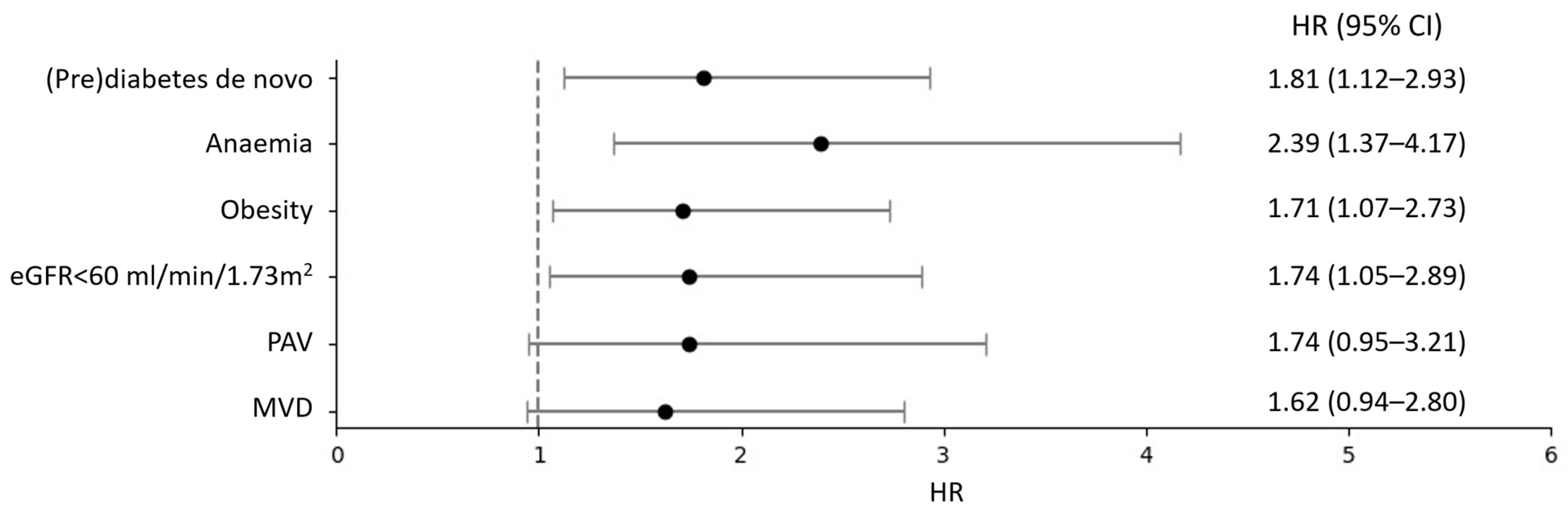
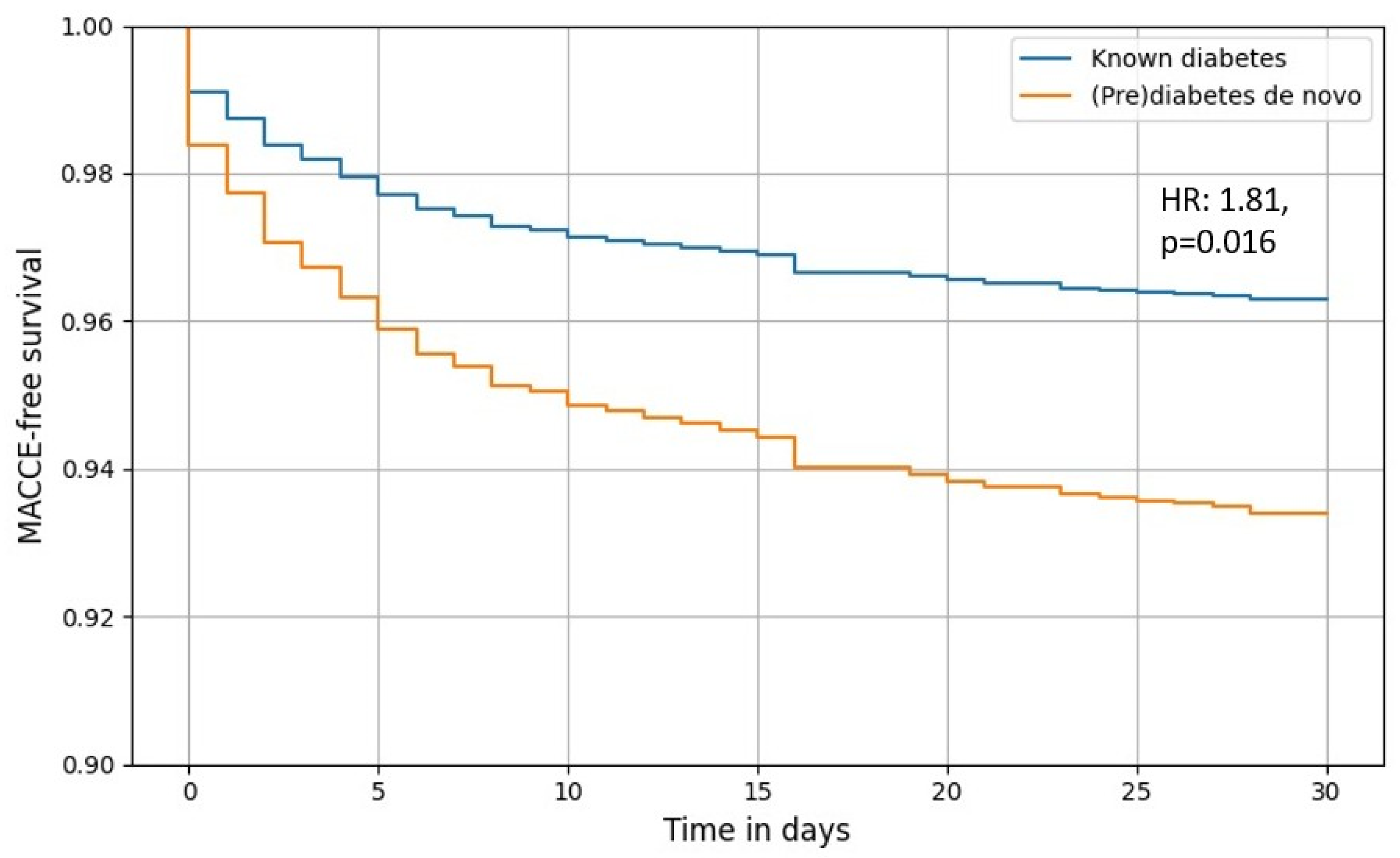
The investigated predictors for the multivariable model are presented in Supplementary Table S3. The variables included in the multivariable model were age, presence of obesity, PAD, eGFR < 60 mL/min/1.73 m2, multivessel coronary artery disease (MVD), anaemia (Hb < 7.0 mmol/L), and a previous MI. After backwards selection, PAD, MVD, eGFR < 60, obesity, and anaemia remained significant and were included in the definitive multivariable model. After adjustment, patients with prediabetes or diabetes de novo were at a significantly higher risk compared to patients with known diabetes, resulting in a HR of 1.81 (95% CI 1.12–2.93, p = 0.016) (Figure 3 and Figure 4). In the sensitivity analysis with only unique patients, 13 patients with known diabetes and 12 patients with prediabetes or diabetes de novo were excluded. The multivariable Cox regression showed a HR of 1.77 (95% CI 1.09–2.91, p = 0.020).

3.3. Secondary Outcomes

The analyses with individual MACCE components and all-cause mortality showed that these were not significantly different between patients with prediabetes or diabetes de novo compared with patients with known diabetes in the first 30 days after PCI (Supplementary Figure S3).
The available data on medication at discharge are shown in Table 2, including glucose-mediating medication. Discharge medication was not available in 119 patients (9.0%). The overall prescription of dual antiplatelet therapy, or triple or dual antithrombotic therapy was not statistically different between the groups (p = 0.174). Similarly, no significant differences were observed in the prescription rates of beta-blockers, angiotensin-converting enzyme (ACE) inhibitors/angiotensin-II receptor blockers (ARBs), or lipid-lowering medications. Patients with diabetes de novo did not receive insulin, metformin, nor SGLT2-i at discharge in 59.0% of cases, compared with 15.6% of patients with known diabetes (p < 0.001). Patients with known diabetes received metformin in 63.7% of cases, insulin in 38.9% of cases, and SGLT2-i in 24.9% of cases (Table 2). In an exploratory analysis, we included patients with a complete 1-year follow-up to determine whether glucose-medicating medication was used, this was available for 650 patients (49.1%). This showed that 1 year after PCI, neither insulin, metformin, nor SGLT2-i was used in 15.9% of patients with known diabetes and in 53.1% of patients with diabetes de novo (Table 3).

4. Discussion

In a large, multicentre Dutch ACS cohort undergoing PCI, we found that nearly 45% of ACS patients with measured HbA1c values had diabetes de novo or prediabetes. The incidence of 30-day MACCE was comparable to patients with known diabetes; however, patients with known diabetes showed a more extensive cardiovascular risk profile at baseline. After adjustment, patients with prediabetes and diabetes de novo demonstrated a significantly higher risk of 30-day MACCE. In addition, it was shown that the majority of patients with diabetes de novo were not treated with glucose-mediating therapy at discharge, indicating a missed opportunity for early intervention.
Our finding regarding the high prevalence of impaired glucose metabolism in ACS patients aligns with prior studies, although the reported rates vary. In a previous single-centre registry of NSTEMI and STEMI patients from 2006 to 2015 [11], diabetes de novo or prediabetes was found in 33% of patients versus 44% of patients in our ZON-HR cohort. Notably, diabetes de novo was more prevalent in our population (9.8% versus 4.4% in the study of Hermanides et al. [11]). These differences can partly be explained by changes over time, or regional differences in the Netherlands [12], but can also be caused by selection bias in the ZON-HR cohort. In the study of Hermanides et al., HbA1c was measured routinely [11]. In the ZON-HR centres, it is advised to determine HbA1c at admission for ACS. This advice resulted in the measurement of HbA1c in only 34% of the ACS patients, but it showed an increase over time (Figure S1). To reflect on this potential selection bias, the population in which HbA1c was determined was compared with the real-world all-comer ACS population in the ZON-HR with respect to the baseline characteristics (Table S1). The most prominent difference was the higher percentage of patients with known diabetes in the selection with measured HbA1c compared with the overall ZON-HR population (28.6% vs. 13.4%, p < 0.001). A more frequent determination of HbA1c in patients with a history of diabetes or suspicion thereof could therefore have led to a distorted view of the prevalence.
National and international guidelines regarding cardiovascular disease and diabetes have evolved in the past decade. Our study showed that treatment with the ‘golden five’ (classes of medication for secondary prevention, including ACE-I/ARBs, aspirin, P2Y12 inhibitors, and statins) [13] was comparable between groups. Already present in the 2012 ESC guideline STEMI and in the 2015 NSTEMI guidelines, screening for possible diabetes is a class 1C recommendation [14,15]. In our analyses, we saw that only a minority of patients actually underwent this screening. In addition, after determining HbA1c values, the majority of patients with diabetes de novo were not treated, again despite clear guideline recommendations [16,17]. This is in accordance with data from Hussain et al. (2023) [18], who showed that the utilisation rates of SGLT2-i are low in patients with atherosclerotic cardiovascular disease and diabetes. In our cohort, only 24.9% of patients with known diabetes received SGLT2-i after ACS. Furthermore, 59.0% of patients with diabetes de novo did not receive insulin, metformin, nor SGLT2-i at discharge, mirroring findings from Hermanides et al. (65.3% untreated) [11]. Our findings emphasise the importance of awareness regarding screening for diabetes and starting medical treatment. Local protocols could guide treating physicians to improve secondary prevention on cardiovascular outcomes. Within the ZON-HR consortium, a protocol for screening and treatment of patients with (pre)diabetes de novo has now been implemented. Also, in accordance with the ESC guidelines, the ZON-HR consortium recommends extended DAPT up to 3 years after PCI in ACS patients with diabetes [1,10]. Based on our current findings, an extension of this recommendation to patients with prediabetes could be considered.
In this study, we decided to compare the outcomes of newly identified patients with elevated HbA1c with patients with known diabetes, while other studies mostly make the comparison with normoglycemic patients. In Supplementary Figure S2, we show that patients with prediabetes or diabetes de novo were at a significantly higher risk of 30-day MACCE compared to patients without diabetes. The meta-analysis of Laichuthai et al. (2020) also found that both prediabetes and diabetes de novo posed an increased risk for all-cause mortality, MACE, and cardiovascular death, compared to patients without diabetes [6]. The mean follow-up of studies included in the meta-analysis was 3.1 years [6]. Likewise, Ahsan et al. (2023) [5] reported an increased risk of MACE in patients with prediabetes compared with normoglycemic patients, with a mean follow-up duration of 2.6 years, whereas a recent study of Behnoush et al. (2024) [19] concluded that the risk of MACCE in patients with prediabetes was overestimated and not higher than patients without diabetes. Giraldez et al. [4] reported no difference in 30-day mortality or MI in patients with prediabetes compared with normoglycemic patients. However, direct comparison of the risk of adverse cardiac outcomes between observational studies is difficult since the components of the composite endpoint MACE/MACCE vary widely [20], as well as the follow-up period. Our current analysis used a short follow-up time of 30 days. Since this is an ongoing registry, future analyses within the ZON-HR registry will incorporate the 1-year outcomes of this cohort.

Limitations

Several limitations of this study warrant consideration. As mentioned before, only patients with available HbA1c values at baseline were included in this analysis, which may have introduced substantial selection bias. However, a history of diabetes seemed the only clinically relevant difference between the overall ACS cohort and the group in which HbA1c was measured. In addition, at the start of the registry, only insulin, metformin, and SGLT2-i were registered as glucose-mediating medication at discharge. It could be possible that patients with diabetes or diabetes de novo were treated with other medications, such as dipeptidyl peptidase 4 (DPP-4) inhibitors, sulfonylureas, or glucagon-like peptide 1 (GLP-1) agonists. However, SGLT2-i and metformin are first choice medications in high-risk patients according to the Dutch guidelines [16], published in November 2021. Moreover, we collected no information on the initiation of or changes in glucose-mediating medication during the follow-up period. By design, we register the use of glucose-mediating medication only at discharge and one year after PCI [10]. The exploratory analysis including patients with completed 1-year follow-up (49.1%) showed that the use of glucose-mediating medication in the diabetes de novo group increased minimally, from 41.0% at discharge to 46.9% at 1-year after PCI. Nevertheless, early initiation of glucose-mediating medication post-ACS has been shown to be safe and beneficial [21,22]. Research in the field of diabetes medications with cardiovascular benefits is rapidly evolving, possibly improving cardiometabolic outcomes in patients without diabetes as well [23,24,25].

5. Conclusions

Impaired glucose metabolism is highly prevalent among ACS patients without known diabetes, affecting nearly 45% of patients, and is associated with a significantly higher short-term risk of MACCE as compared to patients with known diabetes. Despite clear guideline recommendations, routine screening for hyperglycaemia and appropriate initiation of glucose-mediating therapy remain underutilised in clinical practice. This study emphasises once again the importance of incorporating HbA1c testing on admission to identify high-risk patients early. Bridging the gap between evidence-based guidelines and daily practice is essential to improve outcomes and ensure optimal care in this vulnerable population.

Supplementary Materials

The following supporting information can be downloaded at https://www.mdpi.com/article/10.3390/diabetology7020025/s1, Figure S1: Percentage of HbA1c measurements in ACS patients over time in ZON-HR centres; Table S1: Baseline characteristics patients of complete ACS population, divided by whether HbA1c was measured; Table S2: Baseline characteristics of patients based on diabetes status and admission HbA1c levels after multiple imputation of missing values; Figure S2: Unadjusted 30-day Kaplan–Meier MACCE curves according to diabetes status and baseline HbA1c; Table S3: Variables predictive of 30-day MACCE in the univariable model; Figure S3: Major adverse cardiac and cerebrovascular events and all-cause mortality in the first 30 days after PCI according to diabetes status and baseline HbA1c.

Author Contributions

Conceptualization, S.J., E.C.I.W., S.R. and A.W.J.v.H.; methodology, S.J. and A.H.H.M.; formal analysis, S.J.; investigation, S.J., E.C.I.W., D.A.M.P. and J.J.P.L.; writing—original draft preparation, S.J.; writing—review and editing, S.J., E.C.I.W., D.A.M.P., P.J.C.W., P.D., W.S.R., J.J.P.L., A.H.H.M. S.R., R.J.M.v.G. and A.W.J.v.H.; supervision, S.R. and A.W.J.v.H.; funding acquisition, P.J.C.W., R.J.M.v.G. and A.W.J.v.H. All authors have read and agreed to the published version of the manuscript.

Funding

The ZON-HR is supported by unrestricted research grants from AstraZeneca, Sanofi, and Boehringer Ingelheim.

Institutional Review Board Statement

The study was conducted in accordance with the Declaration of Helsinki, and approved by the Medical Research Ethics Committee Zuyderland and Zuyd (METCZ20200185, 23 October 2020).

Informed Consent Statement

Patient consent was waived as patients are not subjected to any procedures other than those recommended in the guidelines and protocols and because the main purpose of this registry is quality control.

Data Availability Statement

The data presented in this study are available on request from the corresponding author in accordance with data protection regulations and respecting the individual consent.

Acknowledgments

We would like to thank the student researchers and data managers at the participating centres for their help with the data collection: Anouk Keuter, Kimia Atai, Mette M. de Haas, Luna S.A. Hendriks, Suzanne Harwig, Suzeth Kettering, Casper J.S. Schrijnemakers, Feline J. Hoomans, Rosalie Nielen, Daniek P.J. Slegers, Femke Kleeven, Jill E.W. Sprooten, Jill M.C.J. Schalleij, Martijn Beurskens, Gert Jan Maessen, Dave Bongaerts, Claudy van Thoor, Chris America, Melanie M. Stones, and Karianna F.M. Teunissen-Beekman, as well as the members of the clinical event committee Vincent van Ommen and Menko-Jan de Boer.

Conflicts of Interest

P.J.C. Winkler has received an unrestricted grant from Boehringer Ingelheim and a personal fee from Abbott. P. Damman has received research grants from Abbott, Philips, AstraZeneca, and Pie Medical Imaging. A.W.J. van ’t Hof has received unrestricted grants from AstraZeneca, Medtronic, Abbott Vascular, and Boehringer Ingelheim. R.J.M. van Geuns has received grants and personal fees from Boston Scientific, Abbott Vascular, AstraZeneca, and Amgen and grants from Infraredx. S. Janssen, E.C.I. Woelders, D.A.M. Peeters, W.S. Remkes, J.J.P. Luijkx, A.H.H. Merry, and S. Rasoul declare that they have no competing interests. The funders had no role in the design of the study; in the collection, analyses, or interpretation of data; in the writing of the manuscript; or in the decision to publish the results.

Abbreviations

The following abbreviations are used in this manuscript:
ACSacute coronary syndrome
ACE-iangiotensin-converting enzyme inhibitor
ARBangiotensin-II receptor blocker
BMIbody mass index
CABGcoronary artery bypass grafting
CIconfidence interval
CVDcardiovascular disease
CXcircumflex artery
DAPTdual antiplatelet therapy
DATdual antithrombotic therapy
DPP-4dipeptidyl peptidase 4
EASDEuropean Association for the Study of Diabetes
eGFRestimated glomerular filtration rate
ESCEuropean Society of Cardiology
GLP-1glucagon-like peptide 1
Hbhaemoglobin
HbA1chaemoglobin A1c
HRhazard ratio
iCVAischemic cerebrovascular accident
LADleft anterior descending
LDLlow-density lipoprotein
LMleft main
MACCEmajor adverse cardiac and cerebrovascular events
MACEmajor adverse cardiac events
MImyocardial infarction
MVDmultivessel coronary artery disease
NSTEMInon-ST-elevation myocardial infarction
OHCAout-of-hospital cardiac arrest
PADperipheral artery disease
PCIpercutaneous coronary intervention
PCSK9iproprotein convertase subtilisin/kexin type 9 inhibitor
RCAright coronary artery
SGLT2-isodium-glucose co-transporter-2 inhibitors
STstent thrombosis
STEMIST-elevation myocardial infarction
TATtriple antithrombotic therapy
UAPunstable angina pectoris
ZON-HRSouth-East Netherlands Heart Registry

Appendix A

Consortia: ZON-HR Investigators: S. Janssen, J. J. P. Luijkx, A. W. J. van ’t Hof, P. J. C. Winkler, M. Ilhan, A. W. Ruiters, A. Lux, M. Stein, S. Rasoul, R. A. L. J. Theunissen, J. Vainer, L. F. Veenstra, P. A. Vriesendorp, L. P. C. Hoebers, K. Kulekci, A. J. J. IJsselmuiden, W. S. Remkes, S. Aydin, B. M. Rahel, F. L. J. Eerens, V. V. Hemradj, E. C. I. Woelders, D. A. M. Peeters, P. Damman, R. J. M. van Geuns, N. van Royen, M. H. van Wely, C. Camaro, T. ten Cate, A. C. Dimitriu-Leen, L. X. van Nunen.

References

  1. Marx, N.; Federici, M.; Schütt, K.; Müller-Wieland, D.; Ajjan, R.A.; Antunes, M.J.; Christodorescu, R.M.; Crawford, C.; Di Angelantonio, E.; Eliasson, B.; et al. 2023 ESC Guidelines for the management of cardiovascular disease in patients with diabetes. Eur. Heart J. 2023, 44, 4043–4140. [Google Scholar] [CrossRef]
  2. Babes, E.E.; Bustea, C.; Behl, T.; Abdel-Daim, M.M.; Nechifor, A.C.; Stoicescu, M.; Brisc, C.M.; Moisi, M.; Gitea, D.; Iovanovici, D.C.; et al. Acute coronary syndromes in diabetic patients, outcome, revascularization, and antithrombotic therapy. Biomed. Pharmacother. 2022, 148, 112772. [Google Scholar] [CrossRef]
  3. Stampouloglou, P.K.; Anastasiou, A.; Bletsa, E.; Lygkoni, S.; Chouzouri, F.; Xenou, M.; Katsarou, O.; Theofilis, P.; Zisimos, K.; Tousoulis, D.; et al. Diabetes Mellitus in Acute Coronary Syndrome. Life 2023, 13, 2226. [Google Scholar] [CrossRef]
  4. Giraldez, R.R.; Clare, R.M.; Lopes, R.D.; Dalby, A.J.; Prabhakaran, D.; Brogan, G.X.J.; Giugliano, R.P.; James, S.K.; Tanguay, J.; Pollack, C.V.J.; et al. Prevalence and clinical outcomes of undiagnosed diabetes mellitus and prediabetes among patients with high-risk non-ST-segment elevation acute coronary syndrome. Am. Heart J. 2013, 165, 918–925.e2. [Google Scholar] [CrossRef] [PubMed]
  5. Ahsan, M.J.; Latif, A.; Ahmad, S.; Willman, C.; Lateef, N.; Shabbir, M.A.; Ahsan, M.Z.; Yousaf, A.; Riasat, M.; Ghali, M.; et al. Outcomes of Prediabetes Compared with Normoglycaemia and Diabetes Mellitus in Patients Undergoing Percutaneous Coronary Intervention: A Systematic Review and Meta-analysis. Heart Int. 2023, 17, 45–53. [Google Scholar] [CrossRef]
  6. Laichuthai, N.; Abdul-Ghani, M.; Kosiborod, M.; Parksook, W.W.; Kerr, S.J.; DeFronzo, R.A. Newly Discovered Abnormal Glucose Tolerance in Patients With Acute Myocardial Infarction and Cardiovascular Outcomes: A Meta-analysis. Diabetes Care 2020, 43, 1958–1966. [Google Scholar] [CrossRef] [PubMed]
  7. Rydén, L.; Standl, E.; Bartnik, M.; Van den Berghe, G.; Betteridge, J.; de Boer, M.; Cosentino, F.; Jönsson, B.; Laakso, M.; Malmberg, K.; et al. Guidelines on diabetes, pre-diabetes, and cardiovascular diseases: Executive summary. The Task Force on Diabetes and Cardiovascular Diseases of the European Society of Cardiology (ESC) and of the European Association for the Study of Diabetes (EASD). Eur. Heart J. 2007, 28, 88–136. [Google Scholar] [CrossRef] [PubMed]
  8. Khan, S.U.; Singh, M.; Valavoor, S.; Khan, M.U.; Lone, A.N.; Khan, M.Z.; Khan, M.S.; Mani, P.; Kapadia, S.R.; Michos, E.D.; et al. Dual Antiplatelet Therapy After Percutaneous Coronary Intervention and Drug-Eluting Stents. Circulation 2020, 142, 1425–1436. [Google Scholar] [CrossRef]
  9. Ferrannini, G.; De Bacquer, D.; De Backer, G.; Kotseva, K.; Mellbin, L.; Wood, D.; Rydén, L.; EUROASPIRE V Collaborators. Screening for Glucose Perturbations and Risk Factor Management in Dysglycemic Patients with Coronary Artery Disease-A Persistent Challenge in Need of Substantial Improvement: A Report from ESC EORP EUROASPIRE V. Diabetes Care 2020, 43, 726–733. [Google Scholar] [CrossRef]
  10. Woelders, E.C.I.; Peeters, D.A.M.; Janssen, S.; Luijkx, J.J.P.; Winkler, P.J.C.; Damman, P.; Remkes, W.S.; van’t Hof, A.W.J.; van Geuns, R.J.M.; ZON-H.R. Investigators. Design and rationale of the South-East Netherlands Heart Registry (ZON-HR). Neth. Heart J. 2025, 33, 76–84. [Google Scholar] [CrossRef]
  11. Hermanides, R.S.; Kennedy, M.W.; Kedhi, E.; van Dijk, P.R.; Timmer, J.R.; Ottervanger, J.P.; Dambrink, J.; Gosselink, A.M.; Roolvink, V.; Miedema, K.; et al. Impact of elevated HbA1c on long-term mortality in patients presenting with acute myocardial infarction in daily clinical practice: Insights from a ‘real world’ prospective registry of the Zwolle Myocardial Infarction Study Group. Eur. Heart J. Acute Cardiovasc. Care 2020, 9, 616–625. [Google Scholar] [CrossRef]
  12. Meisters, R.; Westra, D.; Putrik, P.; Bosma, H.; Ruwaard, D.; Jansen, M. Regional differences in healthcare costs further explained: The contribution of health, lifestyle, loneliness and mastery. TSG 2022, 100, 189–196. [Google Scholar] [CrossRef]
  13. Byrne, R.A.; Rossello, X.; Coughlan, J.J.; Barbato, E.; Berry, C.; Chieffo, A.; Claeys, M.J.; Dan, G.; Dweck, M.R.; Galbraith, M.; et al. 2023 ESC Guidelines for the management of acute coronary syndromes. Eur. Heart J. Acute Cardiovasc. Care. 2024, 13, 55–161. [Google Scholar] [CrossRef]
  14. Steg, P.G.; James, S.K.; Atar, D.; Badano, L.P.; Blömstrom-Lundqvist, C.; Borger, M.A.; Di Mario, C.; Dickstein, K.; Ducrocq, G.; Fernandez-Aviles, F.; et al. ESC Guidelines for the management of acute myocardial infarction in patients presenting with ST-segment elevation. Eur. Heart J. 2012, 33, 2569–2619. [Google Scholar] [CrossRef]
  15. Roffi, M.; Patrono, C.; Collet, J.; Mueller, C.; Valgimigli, M.; Andreotti, F.; Bax, J.J.; Borger, M.A.; Brotons, C.; Chew, D.P.; et al. 2015 ESC Guidelines for the management of acute coronary syndromes in patients presenting without persistent ST-segment elevation: Task Force for the Management of Acute Coronary Syndromes in Patients Presenting without Persistent ST-Segment Elevation of the European Society of Cardiology (ESC). Eur. Heart J. 2016, 37, 267–315. [Google Scholar] [CrossRef] [PubMed]
  16. Barents, E.S.E.; Bilo, H.J.G.; Bouma, M.; Dankers, M.; De Rooij, A.; Hart, H.E.; Houweling, S.T.; IJzerman, R.G.; Janssen, P.G.H.; Kerssen, A.; et al. NHG-Standaard Diabetes Mellitus Type 2 (M01) Version 5.5. Available online: https://zorgvoorzuid.nl/media/2022/09/NHG-standaard-DM2-2021-1.pdf (accessed on 22 April 2025).
  17. Cosentino, F.; Grant, P.J.; Aboyans, V.; Bailey, C.J.; Ceriello, A.; Delgado, V.; Federici, M.; Filippatos, G.; Grobbee, D.E.; Hansen, T.B.; et al. 2019 ESC Guidelines on diabetes, pre-diabetes, and cardiovascular diseases developed in collaboration with the EASD: The Task Force for diabetes, pre-diabetes, and cardiovascular diseases of the European Society of Cardiology (ESC) and the European Association for the Study of Diabetes (EASD). Eur. Heart J. 2020, 41, 255–323. [Google Scholar] [CrossRef]
  18. Hussain, A.; Ramsey, D.; Lee, M.; Mahtta, D.; Khan, M.S.; Nambi, V.; Ballantyne, C.M.; Petersen, L.A.; Walker, A.D.; Kayani, W.T.; et al. Utilization Rates of SGLT2 Inhibitors Among Patients with Type 2 Diabetes, Heart Failure, and Atherosclerotic Cardiovascular Disease: Insights from the Department of Veterans Affairs. JACC Heart Fail. 2023, 11, 933–942. [Google Scholar] [CrossRef] [PubMed]
  19. Behnoush, A.H.; Maleki, S.; Arzhangzadeh, A.; Khalaji, A.; Pezeshki, P.S.; Vaziri, Z.; Esmaeili, Z.; Ebrahimi, P.; Ashraf, H.; Masoudkabir, F.; et al. Prediabetes and major adverse cardiac events after acute coronary syndrome: An overestimated concept. Clin. Cardiol. 2024, 47, e24262. [Google Scholar] [CrossRef] [PubMed]
  20. Bosco, E.; Hsueh, L.; McConeghy, K.W.; Gravenstein, S.; Saade, E. Major adverse cardiovascular event definitions used in observational analysis of administrative databases: A systematic review. BMC Med. Res. Methodol. 2021, 21, 241–245. [Google Scholar] [CrossRef]
  21. von Lewinski, D.; Kolesnik, E.; Aziz, F.; Benedikt, M.; Tripolt, N.J.; Wallner, M.; Pferschy, P.N.; von Lewinski, F.; Schwegel, N.; Holman, R.R.; et al. Timing of SGLT2i initiation after acute myocardial infarction. Cardiovasc. Diabetol. 2023, 22, 269. [Google Scholar] [CrossRef]
  22. Dykun, I.; Bayturan, O.; Carlo, J.; Nissen, S.E.; Kapadia, S.R.; Tuzcu, E.M.; Nicholls, S.J.; Puri, R. HbA1c, Coronary atheroma progression and cardiovascular outcomes. Am. J. Prev. Cardiol. 2022, 9, 100317. [Google Scholar] [CrossRef] [PubMed]
  23. Khiali, S.; Taban-Sadeghi, M.; Sarbakhsh, P.; Khezerlouy-Aghdam, N.; Rezagholizadeh, A.; Asham, H.; Entezari-Maleki, T. SGLT2 Inhibitors’ Cardiovascular Benefits in Individuals Without Diabetes, Heart Failure, and/or Chronic Kidney Disease: A Systematic Review. J. Clin. Pharmacol. 2023, 63, 1307–1323. [Google Scholar] [CrossRef] [PubMed]
  24. James, S.; Erlinge, D.; Storey, R.F.; McGuire, D.K.; de Belder, M.; Eriksson, N.; Andersen, K.; Austin, D.; Arefalk, G.; Carrick, D.; et al. Dapagliflozin in Myocardial Infarction without Diabetes or Heart Failure. NEJM Evid. 2024, 3, EVIDoa2300286. [Google Scholar] [CrossRef] [PubMed]
  25. Michael Lincoff, A.; Brown-Frandsen, K.; Colhoun, H.M.; Deanfield, J.; Emerson, S.S.; Esbjerg, S.; Hardt-Lindberg, S.; Kees Hovingh, G.; Kahn, S.E.; Kushner, R.F.; et al. Semaglutide and Cardiovascular Outcomes in Obesity without Diabetes. N. Engl. J. Med. 2023, 389, 2221–2232. [Google Scholar] [CrossRef]
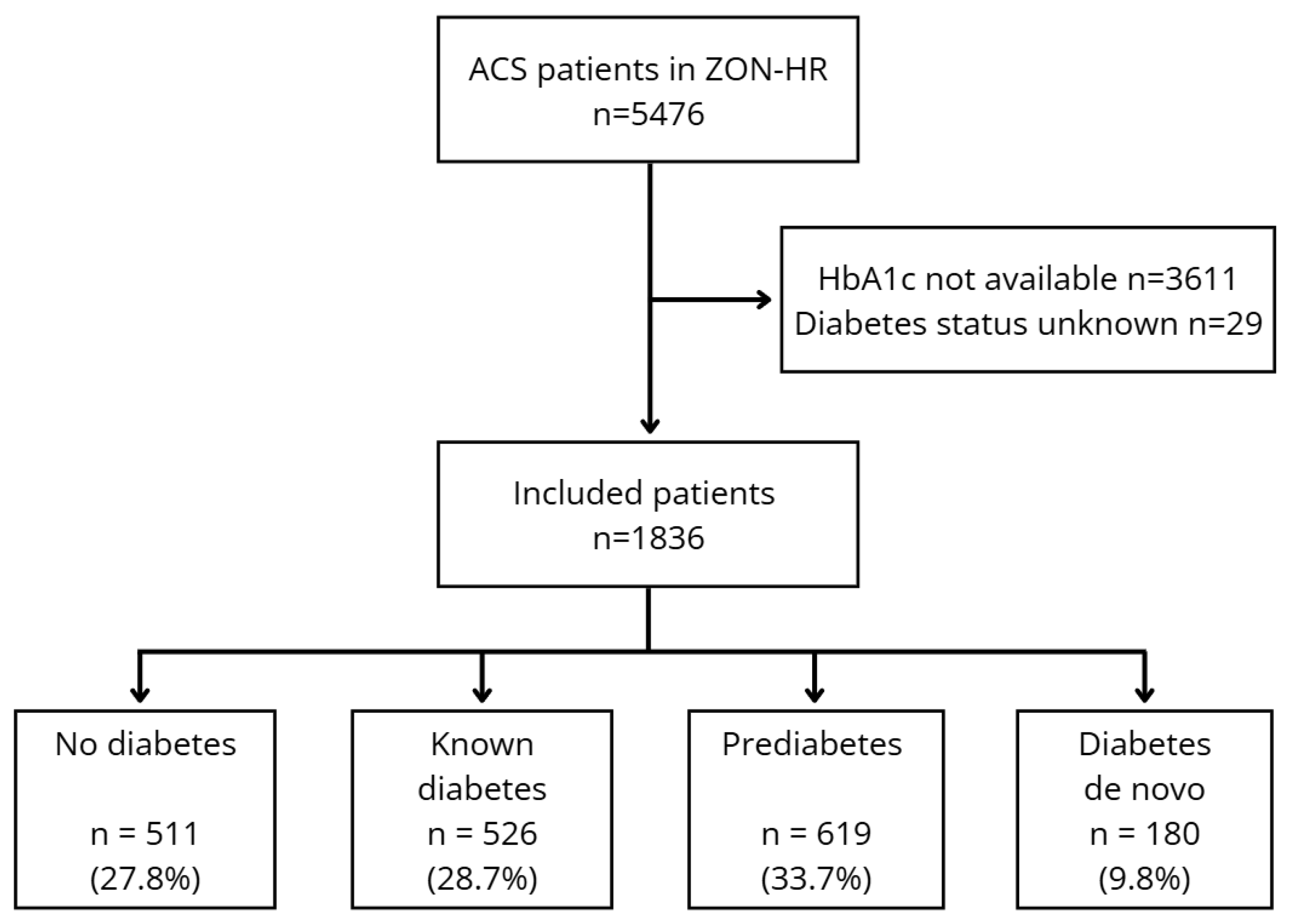
Figure 1. Flowchart of included patients from ZON-HR. ACS, acute coronary syndrome; ZON-HR, South-East Netherlands Heart Registry; HbA1c, glycated haemoglobin.
Diabetology 07 00025 g001
Figure 2. Unadjusted 30-day Kaplan–Meier MACCE curves according to diabetes status and baseline HbA1c. MACCE, major adverse cardiac and cerebrovascular events; HbA1c, haemoglobin A1c.
Diabetology 07 00025 g002
Figure 3. Forest plot hazard ratios of final multivariable model of risk of 30-day MACCE, (pre)diabetes de novo compared to known diabetes. MACCE, major adverse cardiac and cerebrovascular events; eGFR, estimated glomerular filtration rate; PAD, peripheral arterial disease; MVD, multivessel coronary artery disease; HR, hazard ratio; CI, confidence interval.
Diabetology 07 00025 g003
Figure 4. Multivariable Cox proportional hazards model of 30-day MACCE according to diabetes status and baseline HbA1c. MACCE, major adverse cardiac and cerebrovascular events; HbA1c, haemoglobin A1c; HR, hazard ratio.
Diabetology 07 00025 g004
Table 1. Baseline characteristics of patients based on diabetes status and admission HbA1c levels.
Prediabetes or Diabetes de Novo
(n = 799)
Known Diabetes
(n = 526)
% Missingp-Value
Age (years)67.4 ± 11.269.5 ± 11.10<0.001
Women (%)214 (26.8)149 (28.4)00.489
BMI (kg/m2)28.1 ± 4.529.2 ± 5.310.5<0.001
Hypertension (%)389 (50.5)378 (75.0)3.8<0.001
Current smoker (%)210 (30.1)109 (22.2)12.20.014
Previous stroke (%)60 (7.7)58 (11.3)2.00.029
Previous MI (%)200 (25.4)162 (31.6)1.80.015
Previous PCI (%)221 (27.8)183 (34.9)0.60.005
Previous CABG (%)60 (7.6)64 (12.2)0.70.005
OHCA (%)23 (2.9)11 (2.1)1.00.375
MVD (%)431 (61.0)336 (71.5)11.2<0.001
PAD (%)49 (6.5)97 (19.5)5.1<0.001
HbA1c (mmol/mol)46.5 ± 12.361.4 ± 15.30
eGFR (mL/min/1.73 m2)75.3 ± 22.971.6 ± 33.16.20.033
Hb (mmol/L)8.6 ± 1.18.3 ± 1.20.3<0.001
LDL (mmol/L)2.9 ± 1.12.2 ± 1.013.1<0.001
Treated vessel
LM35 (4.4)30 (5.7)00.275
LAD350 (43.8)242 (46.0)00.430
CX188 (23.5)130 (24.7)00.621
RCA304 (38.0)173 (32.9)00.056
Other41 (5.1)45 (8.6)00.013
Multivessel PCI97 (12.1)79 (15.0)00.131
BMI, body mass index; MI, myocardial infarction; PCI, percutaneous coronary intervention; CABG, coronary artery bypass grafting; OHCA, out-of-hospital cardiac arrest; MVD, multivessel coronary artery disease; PAD, peripheral arterial disease; HbA1c, glycated haemoglobin; eGFR, estimated glomerular filtration rate; Hb, haemoglobin; LDL, low-density lipoprotein; LM, left main; LAD, left anterior descending; CX, circumflex artery; RCA, right coronary artery.
Table 2. Discharge medication after PCI.
Prediabetes (n = 557)Diabetes de Novo (n = 159)Known Diabetes (n = 490)p-Value
DAPT/TAT/DAT540 (97.0)150 (94.3)475 (97.0)0.174
Acetylsalicylic acid (%)492 (88.2)136 (85.0)406 (82.9)0.049
P2Y12 inhibitor (%)553 (99.3)155 (97.5)483 (98.6)0.175
Oral anticoagulant (%)77 (13.8)33 (20.9)110 (22.5)<0.001
Beta-blockers (%)466 (83.7)136 (85.5)413 (84.3)0.846
ACE-i/ARB (%)433 (77.7)124 (78.0)399 (81.4)0.310
Statin/ezetimibe/PCSK9i (%)539 (96.8)150 (94.3)463 (94.5)0.400
Insulin (%)6 (1.1)23 (14.7)190 (38.9)<0.001
Metformin (%)6 (1.1)41 (26.3)311 (63.7)<0.001
SGLT2-i (%)33 (5.9)32 (20.1)122 (24.9)<0.001
No glucose-mediating medication (%)499 (92.2)92 (59.0)76 (15.6)<0.001
DAPT, dual antiplatelet therapy; TAT, triple antithrombotic therapy; DAT, dual antithrombotic therapy; ACE-i, angiotensin-converting enzyme inhibitor; ARB, angiotensin-II receptor blocker; PCSK9i, proprotein convertase subtilisin/kexin type 9 inhibitor; SGLT2-i, sodium-glucose co-transporter-2 inhibitors.
Table 3. Glucose-mediating medication 1 year after PCI.
Prediabetes (n = 253)Diabetes de Novo (n = 96)Known Diabetes (n = 301)p-Value
Insulin (%)0 (0)11 (11.5)116 (38.5)<0.001
Metformin (%)3 (1.2)36 (37.5)179 (59.5)<0.001
SGLT2-i (%)22 (8.7)17 (17.7)72 (23.9)<0.001
No glucose-mediating medication (%)288 (90.1)51 (53.1)48 (15.9)<0.001
SGLT2-i, sodium-glucose co-transporter-2 inhibitors.
Disclaimer/Publisher’s Note: The statements, opinions and data contained in all publications are solely those of the individual author(s) and contributor(s) and not of MDPI and/or the editor(s). MDPI and/or the editor(s) disclaim responsibility for any injury to people or property resulting from any ideas, methods, instructions or products referred to in the content.