1. Introduction
Insulin resistance (IR) is a core pathophysiological mechanism linking obesity, type 2 diabetes, and cardiovascular disease (CVD), and it contributes substantially to premature morbidity and mortality worldwide [
1]. Traditional reference methods, such as the hyperinsulinemic–euglycemic clamp, are unsuitable in large cohorts, prompting widespread use of surrogate indices including the triglyceride–glucose (TyG) index, the metabolic score for insulin resistance (METS-IR), and the Single-Point Insulin Sensitivity Estimator for Insulin Resistance (SPISE-IR). These markers demonstrate strong concordance with gold-standard measures and predict the onset of diabetes, metabolic syndrome, and CVD [
2,
3,
4,
5,
6,
7].
The application of TyG, SPISE-IR, and METS-IR has expanded rapidly in both general-population research and large occupational cohorts. In large Spanish working cohorts, IR-related scales have been associated with sociodemographic risk gradients [
8], smoking [
9], diet and physical activity patterns [
10], and shift work schedules [
11]. Recent findings also suggest that psychosocial and behavioral characteristics may help to refine metabolic risk stratification, although such determinants remain underexamined in IR epidemiology [
8,
9,
10,
11,
12].
Psychological well-being is increasingly recognized as a meaningful contributor to cardiometabolic health, complementing conventional risk profiles [
13,
14]. A central component of eudaimonic well-being is purpose in life, defined by Ryff as a sense of meaning, intention, and directedness toward valued goals [
15]. Higher purpose in life has been prospectively associated with a lower incidence of CVD events, reduced all-cause mortality, and better prognosis in patients with existing cardiac disease [
16,
17,
18]. Evidence also suggests benefits for glycemic regulation: greater purpose has been associated with lower HbA1c, reduced risk of dysglycemia, and lower rates of progression to type 2 diabetes [
19,
20].
Multiple pathways may explain how purpose in life influences metabolic function. Higher purpose is linked to healthier behavioral patterns—such as Mediterranean diet adherence, regular physical activity, and non-smoking—which are key determinants of IR [
14,
19,
21]. Purpose may also buffer the effects of chronic stress through neuroendocrine and autonomic regulation, thereby reducing physiological wear, measured through allostatic load [
20,
22]. In addition, positive psychological functioning has been associated with lower systemic inflammation and more favorable glucoregulatory biomarker profiles [
23,
24,
25]. A 2024 scientific review highlights biobehavioral pathways through which purpose and related psychological factors may influence metabolic risk and urges stronger integration into cardiometabolic prevention frameworks [
26].
Despite substantial progress in understanding the psychosocial determinants of metabolic health, important gaps remain. Notably, no previous study has examined how purpose in life relates to insulin resistance using the complementary TyG, SPISE-IR, and METS-IR indices within a large cohort.
Given this context, our study focuses specifically on a large occupational cohort, which provides a valuable opportunity to evaluate psychosocial and metabolic factors in a working-age population undergoing standardized health examinations.
Occupational cohorts are increasingly used in cardiometabolic research because they include diverse socioeconomic groups, allow for harmonized clinical data collection, and capture health-related gradients that may not be observable in smaller or more selective community samples.
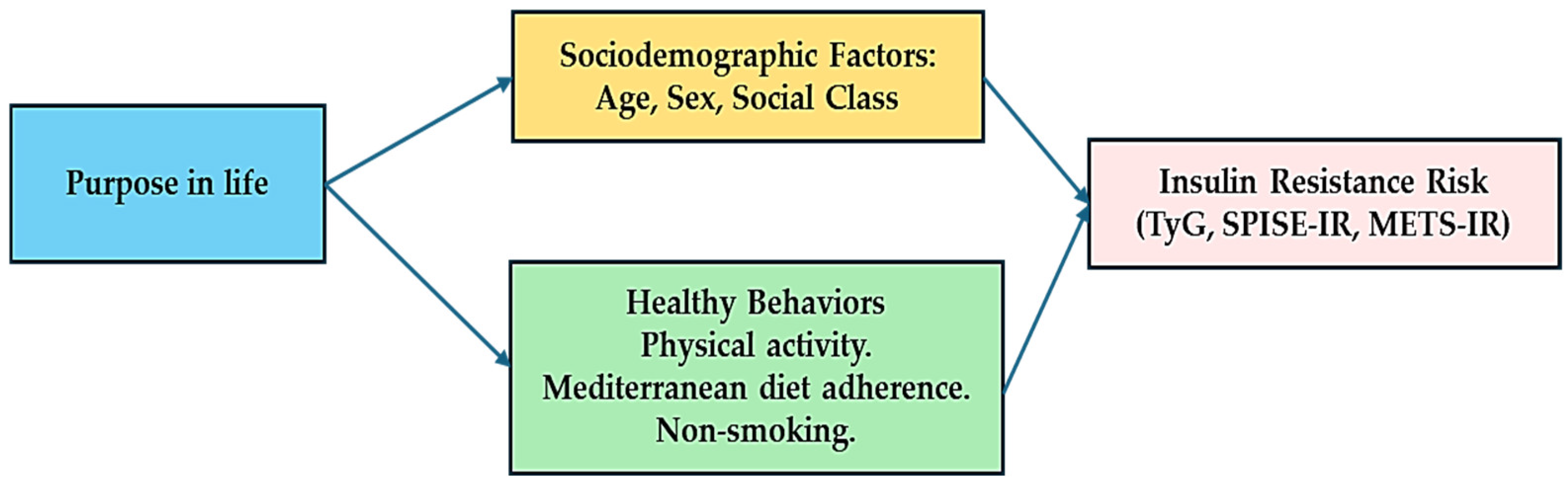
Guided by this background, the conceptual framework of this study posits that purpose in life may influence IR both independently and indirectly via health behaviors—physical activity, Mediterranean diet adherence, and smoking—while accounting for demographic and adiposity indicators.
Building on these gaps, our study aims to explore the associations between purpose in life and insulin resistance within a large occupational cohort, using three metabolic indices that capture different physiological dimensions of insulin sensitivity.
We hypothesized that lower purpose in life would be associated with higher IR risk in a dose-response fashion across all three indices and that higher purpose would attenuate the association between unhealthy behaviors and metabolic impairment.
The conceptual framework guiding this study hypothesizes that psychosocial well-being, represented by purpose in life, influences insulin resistance both directly and indirectly through healthy behaviors such as physical activity, Mediterranean diet adherence, and non-smoking, while controlling for sociodemographic factors (
Figure 1).
Given the cross-sectional design, all observed relationships must be interpreted as associations rather than causal or predictive effects. Directionality cannot be established, and unmeasured or latent variables may partially account for the observed patterns. Therefore, expressions implying causality (e.g., effect, attenuation, modulation, prediction, mediation) should be understood as statistical associations rather than mechanistic pathways.
2. Materials and Methods
2.1. Study Design and Reporting Standards
This cross-sectional study followed the Strengthening the Reporting of Observational Studies in Epidemiology (STROBE) guidelines to ensure transparency and reproducibility in the design, analysis, and reporting of observational data (
Supplementary Materials). All procedures conformed to ethical standards, and participants provided informed consent.
The data used in this study were derived from routinely collected occupational health examinations conducted between 2019 and 2023 in accredited medical centers across Spain. These examinations were not conducted specifically for the purpose of this study; instead, the present analysis represents a secondary use of existing standardized health assessment data. All procedures were carried out by licensed occupational physicians and trained nursing staff following nationally mandated clinical protocols.
2.2. Study Population
The study population comprised employed adults aged 20 to 69 years undergoing periodic occupational health assessments between 2019 and 2023 in accredited centers across Spain. Exclusion criteria included pregnancy, major endocrine, oncologic, or severe chronic disease, missing core variables for insulin resistance estimation, and internally inconsistent or duplicate records. Participants with previously diagnosed diabetes (self-reported or documented in medical records) were also excluded at this stage to avoid confounding by overt metabolic disease.
Clinical and laboratory data were obtained during mandatory periodic health evaluations performed by accredited occupational health professionals. Anthropometric and blood pressure measurements were carried out using harmonized protocols and calibrated equipment as required by Spanish occupational health regulations. Fasting blood samples were collected by trained nursing staff and analyzed in certified laboratories that participated in external quality-control programs.
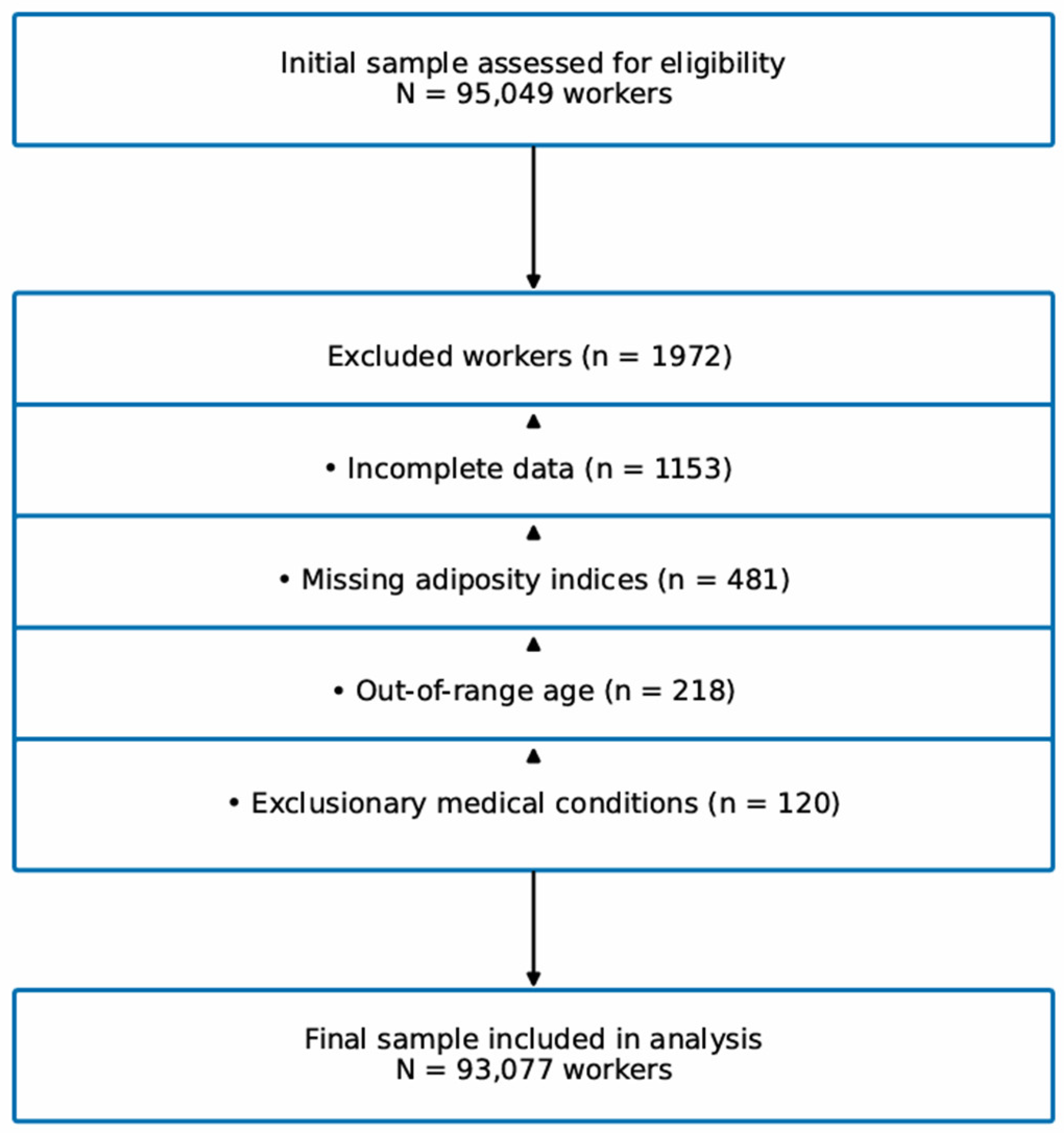
Figure 2 presents the participant flow through the study, detailing inclusion, exclusion, and final sample size.
Sociodemographic variables included age, sex, and occupational social class. Age was analyzed continuously and categorized into five prespecified groups (20–29, 30–39, 40–49, 50–59, 60–69 years) to reflect changes in cardiometabolic risk across the life course [
27]. Social class was derived from the Spanish National Classification of Occupations and grouped into three strata reflecting gradients in material resources and working conditions associated with metabolic risk [
28,
29].
2.3. Health Behavior Variables
Health behaviors included the variables defined below in
Table 1:
These behaviors were included due to their contribution to insulin resistance physiology and relevance for workplace health interventions.
2.4. Psychosocial Variable: Purpose in Life
The PIL-10 consists of 10 items rated on a 1–7 Likert scale, yielding a total score range of 10 to 70, where higher values indicate greater perceived purpose, meaning, and goal-directedness in life. An example item is: ‘I have a clear sense of what gives meaning to my life.’ The instrument has demonstrated good construct validity in Spanish occupational samples, and internal consistency in our cohort was high (Cronbach’s α = 0.89; McDonald’s ω = 0.91).
Missing data were handled according to standard PIL-10 scoring recommendations: if ≤10% of items were missing (i.e., 1 item), the mean of the completed items was imputed; individuals missing ≥2 items were excluded from analyses involving the PIL-10. For descriptive and multivariable analyses, scores were categorized into three groups (low, moderate, high) as described in the Categorization Strategy [
15,
19].
2.5. Clinical and Laboratory Parameters
Clinical variables were obtained by trained personnel using harmonized protocols and included: BMI; waist and hip circumference; systolic and diastolic blood pressure; fasting glucose; triglycerides; and total, HDL, and LDL cholesterol. These measures are strongly implicated in insulin resistance pathophysiology and cardiometabolic risk prediction [
1,
2].
All measurements followed standardized operational manuals to ensure inter-center comparability. Devices for anthropometry and blood pressure were calibrated at least monthly, and laboratories adhered to external quality assurance schemes. Data were subjected to automated consistency checks during entry, and outlier values were flagged for verification. The Purpose in Life Test (PIL-10) used in this study has been previously validated in Spanish adult and occupational populations, supporting its psychometric reliability and construct validity.
2.6. Insulin Resistance Indices
Insulin resistance was estimated using three validated surrogate indices representing complementary metabolic pathways (
Table 2):
Using all three markers reduces single-index bias and enables phenotypic comparison of IR expression.
2.7. Categorization Strategy
Purpose in life, Mediterranean diet adherence, and physical activity were categorized into three groups based on the empirical distribution of their respective scores. Because the underlying distributions were not uniform and included tied values, the resulting categories were not perfectly equal in size. This approach was selected to optimize interpretability and maintain statistical stability [
12].
These categories reflect increasing levels of meaning, goal-directedness, and perceived life purpose.
These strata correspond to dietary patterns progressively closer to the Mediterranean lifestyle.
Because physical activity is categorical by design, groups were formed according to predefined thresholds.
Only continuous or ordinal variables (e.g., purpose in life, MEDAS score) were grouped into three categories using percentile-based cut points. By contrast, Mediterranean diet adherence (‘yes/no’) and physical activity (‘yes/no’) appear as binary variables because these are predefined occupational health screening items derived from separate modules. These binary variables were not subjected to tercile categorization.
2.8. Outlier and Influence Diagnostics
Multinomial logistic regression models were fitted for each insulin resistance index (TyG, SPISE-IR, METS-IR), with three risk categories per index. All models were adjusted for age, sex, social class, smoking, Mediterranean diet adherence, physical activity, BMI, and region. Model diagnostics included variance inflation factors (all <2), likelihood-ratio tests, Nagelkerke R2, and inspection of residuals (Cook’s distance, DFBETAs, studentized residuals).
2.9. Missing Data Management
Missingness was assessed using Little’s MCAR test. Variables with <5% missing were imputed (age- and sex-stratified mean for continuous, mode for categorical). No variable exceeded 8% missingness; complete case and imputed results produced consistent estimates.
2.10. Statistical Analysis
All analyses were performed using R 4.3 and Stata 18 and SPSS (version 29.0; IBM Corp., Armonk, NY, USA). Statistical significance was defined as a two-sided p < 0.05. Descriptive statistics are presented as means and standard deviations for continuous variables and frequencies with percentages for categorical variables. Bivariate comparisons were conducted using ANOVA and χ2 tests, following verification of normal distribution and homogeneity of variances. Because of the large sample size, effect sizes (standardized mean differences, Cohen’s d) were calculated alongside p-values to quantify the magnitude and practical relevance of between-group differences. All analyses adhered to the STROBE recommendations for observational research reporting.
2.11. Main Analytical Models
We fitted multinomial logistic regression models treating each insulin resistance index as a three-level categorical outcome (low, moderate, high). The ‘low’ category served as the reference group. Although the main tables report the contrast between the high vs. low categories for ease of interpretation, the full multinomial outputs—including moderate vs. low—are presented in the
Supplementary Materials. Purpose in life was categorized into three categories (high, moderate, and low), and high-risk IR categories corresponded to the top tertile of each index. Modeling tertiles as a linear ordinal predictor assumes equal spacing between categories and a monotonic relationship with the outcome. Although this assumption cannot be verified empirically, it is commonly applied in epidemiological analyses and was considered acceptable for the present study.
All models were adjusted for the following:
Age, sex, and social class;
Smoking status;
Adherence to the Mediterranean diet;
Physical activity;
Body mass index (BMI);
Region of health examination.
The study included participants from 52 accredited occupational health centers distributed across 17 administrative regions of Spain. To account for systematic geographic variability—including potential inter-laboratory calibration differences and region-specific sociodemographic heterogeneity—we included region as a fixed-effect factor in all multivariable models. This approach allowed us to adjust for between-region differences without estimating random intercepts, given the finite and policy-defined set of regions.
Because BMI may function both as a confounder and as a potential mediator on the pathway linking purpose in life with insulin resistance, its inclusion in fully adjusted models may introduce overadjustment. For this reason, we estimated two complementary sets of multinomial models: (1) models excluding BMI to represent the total association of purpose in life with insulin resistance categories and (2) models including BMI to estimate the direct association net of adiposity. This approach aligns with recommendations for handling covariates that lie on possible causal pathways while preserving the interpretability of the total and direct associations.
Results are reported as adjusted odds ratios (ORa) with 95% confidence intervals (95% CI).
To explore effect heterogeneity, we estimated fully adjusted multinomial models separately for men and women, using the same covariates as in the main models. Stratified analyses improve interpretability given known sex differences in metabolic risk and health behavior patterns.
To test a graded association between purpose in life and IR risk, tertiles were also modeled as ordinal continuous predictors. We calculated a p for trend to assess the linearity of associations. Significant linear trends were interpreted as supporting a psychosocial gradient in metabolic vulnerability.
We evaluated the following metrics:
Likelihood ratio χ2 tests comparing full models vs. intercept-only;
Nagelkerke R2 to estimate explained variance;
Classification accuracy;
Residual inspection (Cook’s distance, DFBetas, studentized residuals) for influential observations.
No influential outliers were detected, and model assumptions were satisfied.
To assess whether purpose in life improved discrimination of IR risk, we compared three hierarchical models:
| Model 1 | Sociodemographic covariates only |
| Model 2 | Model 1 + lifestyle factors |
| Model 3 | Model 2 + purpose in life |
We used ROC curves and area under the curve (AUC) statistics, as well as pairwise DeLong tests, to compare AUC differences. Meaningful AUC increases were interpreted as evidence of incremental predictive utility of psychosocial well-being indicators [
28].
To investigate potential mechanisms, we tested whether physical activity, Mediterranean diet adherence, and smoking mediated the association between purpose in life and IR, using bootstrapped mediation models (5000 resamples). Given the cross-sectional design, mediation analyses cannot establish causal ordering. Therefore, the models should be interpreted as exploratory indirect associations rather than causal mediation. This approach assumes a hypothetical temporal sequence, the absence of unmeasured confounding between the mediator and the outcome, and no reverse causation—assumptions that cannot be empirically verified with cross-sectional data. These limitations are acknowledged when interpreting the indirect effects.
We report the following:
Total effect;
Direct effect adjusted for mediators;
Combined indirect effect;
Specific indirect effects for each mediator.
Effects are presented as standardized coefficients with bias-corrected 95% CI. Mediation was interpreted based on jointly consistent confidence intervals.
We conducted stratified regression models by age (<40 vs. ≥40 years) to examine potential differential vulnerability to metabolic consequences of low purpose, given evidence of uneven distribution of psychosocial protective factors across the life course and sociocultural gradients in meaning-making.
2.17. Data Handling, Missingness, and Sensitivity Analyses
Missing data patterns were examined using Little’s MCAR test. Variables with <5% missingness were imputed via age- and sex-specific means (continuous) or mode (categorical). Complete-case and imputed analyses produced overlapping estimates.
Sensitivity analyses included the following:
Repeating main models using continuous IR indices;
Using purpose in life as a continuous score;
Excluding BMI to address potential overadjustment.
All analyses adhered to the STROBE guidelines for observational studies, ensuring transparency and reproducibility.
3. Results
Table 3 summarizes baseline characteristics stratified by sex. Men exhibited significantly higher mean values of body weight, waist circumference, blood pressure, triglycerides, and fasting glucose, whereas women showed higher HDL-cholesterol and greater adherence to both the Mediterranean diet and regular physical activity (
p < 0.001 for all). Purpose in life scores differed markedly by sex: over half of women reported a high sense of purpose, compared with only 16% of men.
Given the very large sample size, we additionally calculated standardized mean differences (SMD; Cohen’s d) to assess the practical relevance of the observed differences. Most anthropometric and metabolic variables showed medium to large effect sizes (d = 0.40–0.85), indicating substantial sex-related differences despite uniformly small p-values. Behavioral variables such as Mediterranean diet adherence and physical activity showed smaller but meaningful differences (d = 0.20–0.35). These effect sizes provide a more accurate representation of the magnitude of group differences than p-values alone.
The three purpose-in-life groups were not equal in size, as the empirical distribution of PIL-10 scores included tied values and was not uniform. Therefore, the categories represent distribution-based groupings rather than strictly equal tertiles.
Overall, these findings indicate a less favorable cardiometabolic and behavioral profile among men, consistent with previous epidemiologic evidence of sex-related disparities in metabolic health.
3.1. Distribution of Insulin Resistance Risk Across Sociodemographic and Lifestyle Strata
The prevalence of high insulin resistance values progressively increased with age, lower social class, smoking status, inadequate Mediterranean diet adherence, and physical inactivity in both men and women. A clear psychosocial gradient was also observed: participants reporting low purpose in life showed more than double the prevalence of high TyG, SPISE-IR, and METS-IR risk categories compared with those with a high purpose in life. These patterns were consistent across all three indices and support the existence of social, behavioral, and psychosocial determinants of metabolic risk (full distribution available in
Supplementary Table S2).
Table 4 summarizes the multivariable multinomial logistic-regression models quantifying independent associations between predictors and insulin resistance risk.
After full adjustment, male sex, older age, lower social class, smoking, poor adherence to the Mediterranean diet, and physical inactivity were significantly associated with higher insulin resistance risk across all indices (TyG, SPISE-IR, METS-IR).
Physical inactivity showed one of the strongest associations with insulin resistance across all indices. Compared with active participants, inactive individuals had markedly higher odds of belonging to the high IR category, with ORs ranging from approximately 1.8 to 2.5 depending on the index. These values indicate a substantial effect size and position physical inactivity as a key behavioral correlate of elevated insulin resistance in this cohort.
A low sense of purpose in life remained an independent predictor, with adjusted odds ratios ranging from 1.60 to 2.23 (p < 0.001), comparable in magnitude to traditional behavioral factors such as inactivity and poor diet.
The consistency of associations across indices and the satisfactory model fit (Nagelkerke R2 ≈ 0.37) support the robustness of these findings and the relevance of psychosocial determinants in metabolic regulation.
In the fully adjusted multinomial logistic regression model (
Table 5), male sex, older age, lower social class, smoking, low adherence to the Mediterranean diet, physical inactivity, and higher BMI were independently associated with an increased risk of insulin resistance across all three indices. A low sense of purpose in life was strongly related to higher risk categories in all models. Compared with individuals reporting a high purpose in life, those with a moderate purpose showed 30% to 60% higher odds of insulin resistance, whereas those with a low purpose had approximately twofold higher odds (ORa 2.21; 95% CI 1.98–2.47 for METS-IR). The models explained 35–37% of the variance (Nagelkerke R
2) and showed adequate goodness of fit.
For clarity, only the high-versus-low category contrasts are shown in the main tables, but these values derive from a multinomial model that simultaneously estimated moderate-versus-low contrasts as well. All three-category results are available in the
Supplementary Tables.
3.2. Sex-Stratified Associations
In sex-stratified analyses, unhealthy lifestyle factors (physical inactivity and low adherence to the Mediterranean diet) showed stronger associations with insulin resistance risk among men, whereas low purpose in life emerged as a more consistent predictor among women. Although the direction of associations was similar across sexes, the magnitude varied, suggesting potential sex-specific metabolic pathways influenced by both behavioral and psychosocial determinants. Full stratified estimates for TyG, SPISE-IR, and METS-IR indices are available in
Supplementary Table S2a,b.
Significant interaction effects were observed between purpose in life and both physical activity and Mediterranean diet adherence (
p < 0.01 for interaction in all indices). The protective effects of physical activity and a healthy diet were substantially stronger among individuals with higher purpose in life scores.
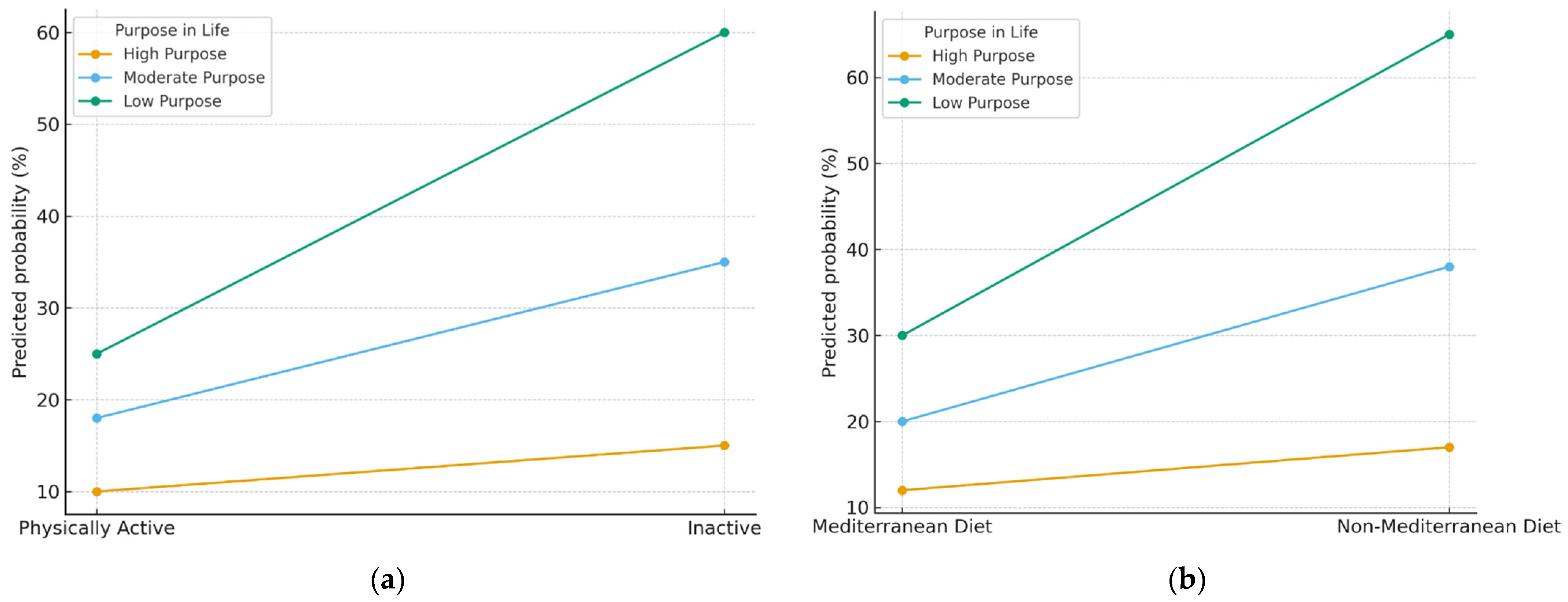
Figure 3a,b illustrate that individuals with a low purpose in life who were inactive or did not adhere to a Mediterranean diet had the highest predicted probabilities of insulin resistance, whereas those with a high purpose and healthy behaviors exhibited the lowest risk (
Table 6).
Post-hoc analyses of predicted probabilities indicated that among individuals with low purpose in life, physical inactivity increased the likelihood of high insulin resistance by approximately 70%, whereas among those with high purpose, the increase was only 25%. Similarly, lack of Mediterranean diet adherence tripled the predicted risk among individuals with low purpose but had a minimal effect among those with high purpose.
Figure 3a,b show the predicted probabilities of high insulin resistance by purpose in life and (a) physical activity or (b) Mediterranean diet adherence. High purpose in life consistently attenuates the detrimental impact of physical inactivity and poor diet on insulin resistance risk.
Figure 3a,b illustrate the interaction effects between purpose in life and lifestyle behaviors on predicted probabilities of high insulin resistance.
In both models, a clear gradient is observed: individuals with low purpose in life consistently exhibit the highest predicted probabilities of insulin resistance, particularly when combined with unhealthy behaviors such as physical inactivity (
Figure 3a) or low adherence to the Mediterranean diet (
Figure 3b).
Conversely, those with a high sense of purpose show substantially lower probabilities of insulin resistance, even in the presence of less favorable habits. The difference between active and inactive individuals was markedly attenuated among participants with high purpose in life, suggesting a buffering or protective role of psychosocial well-being against metabolic risk.
Overall, these patterns support the hypothesis that purpose in life moderates the adverse effects of unhealthy lifestyles, enhancing metabolic resilience and potentially mitigating physiological stress responses associated with insulin resistance.
3.3. Dose–Response Association
A clear graded inverse association was observed between purpose in life and insulin resistance risk. Compared with participants reporting a high sense of purpose, those with moderate purpose showed approximately 1.4–1.6 times higher odds of belonging to the high-risk category, while individuals with low purpose exhibited more than double the odds across all three indices (TyG, SPISE-IR, METS-IR). The
p for trend was <0.001 for all models, supporting a dose–response relationship between psychological purpose and metabolic risk. Full results are presented in
Supplementary Table S3.
3.4. Model Diagnostics
All multinomial regression models met statistical assumptions. No relevant multicollinearity was detected (all VIF < 2), and likelihood ratio tests confirmed that the inclusion of explanatory variables significantly improved model fit (
p < 0.001). Overall model performance was satisfactory, with Nagelkerke R
2 ranging from 0.35 to 0.38, indicating moderate explanatory capacity. Detailed diagnostics are available in
Supplementary Table S5.
3.5. Incremental Predictive Value of Purpose in Life
The addition of purpose in life to a model containing sociodemographic and lifestyle factors led to a statistically significant improvement in the discrimination of high insulin resistance risk across the three metabolic indices. The area under the ROC curve (AUC) increased from 0.76 to 0.78 for TyG, 0.74 to 0.76 for SPISE-IR, and 0.77 to 0.79 for METS-IR (
p values for DeLong tests < 0.01 for all comparisons). Although the improvement in discrimination was modest, model evaluation also considered calibration and clinical decision-analytic relevance. Calibration plots indicated acceptable agreement between predicted and observed risks, but the incremental AUC gains alone are insufficient to justify clinical adoption. Instead, these findings should be interpreted as exploratory evidence of potential incremental predictive value, warranting further validation in prospective and clinically oriented studies. Full AUC estimates and model comparisons are reported in
Supplementary Table S5.
3.6. Mediation Analysis
Health behaviors partially mediated the association between purpose in life and insulin resistance risk. In the mediation framework, insulin resistance was operationalized as a composite IR score. Each of the three indices (TyG, METS-IR, and SPISE-IR) was first standardized using z-scores; SPISE-IR values were inverted so that higher values uniformly indicated higher insulin resistance. The composite IR score was then computed as the mean of the three standardized components and used as the continuous outcome in the mediation models. Indirect pathways were estimated using a counterfactual-based mediation approach (Imai & VanderWeele) with 5000 bootstrap resamples. This framework assumes a hypothetical temporal sequence, the absence of unmeasured confounding between mediator and outcome, and no mediator–outcome reverse causation. Approximately 34% of the total effect of purpose in life on metabolic risk was explained by healthier behaviors, primarily higher physical activity and greater Mediterranean diet adherence. The direct effect remained significant after adjustment for mediators, indicating both behavioral and non-behavioral pathways linking psychological purpose to metabolic regulation. Full decomposition of total, direct, and specific indirect effects is presented in
Supplementary Table S6.
3.7. Sensitivity and Predictive Performance Analyses
Sensitivity analyses yielded results consistent with the main findings. Excluding participants with diabetes, cardiometabolic treatment, or severe obesity (BMI ≥ 35) did not materially alter the associations between purpose in life and insulin resistance risk. Adjusted odds ratios remained within approximately 10% of the primary estimates, supporting the robustness of the observed relationships (
Supplementary Table S7).
Incremental predictive performance analyses showed that adding purpose in life to sociodemographic and lifestyle models improved discrimination for all three insulin resistance indices. For high TyG-based risk, AUC increased from 0.73 (Model 1) to 0.76 (Model 2) and 0.78 after including purpose in life (Model 3). Similar improvements were observed for SPISE-IR (AUC from 0.71 to 0.76; DeLong
p = 0.010) and METS-IR (AUC from 0.72 to 0.74). Full ROC curve comparisons are presented in
Supplementary Figures S1 and S2.
3.8. Stratified Analyses by Age and Educational Level
The inverse association between purpose in life and insulin resistance risk was observed across all population subgroups; however, the strength of the association was more pronounced among younger adults and individuals with lower educational attainment. In participants under 40 years old, low purpose in life was associated with more than a twofold increase in the odds of high insulin resistance risk, whereas this association was moderately attenuated in adults aged 40 years or older. A similar pattern emerged for education, with the strongest associations observed among those with lower educational levels. These results suggest a potential vulnerability to the adverse metabolic consequences of low purpose in life in groups exposed to greater psychosocial or behavioral instability. Full stratified estimates are available in
Supplementary Table S8.
Sensitivity analyses yielded results consistent with the main findings (
Supplementary Table S1). The exclusion of participants with metabolic disease or extreme BMI did not materially change the associations between purpose in life and insulin resistance risk.
Adjusted odds ratios remained within 10% of the original estimates, confirming the robustness of the observed relationships.
4. Discussion
In this large occupational cohort, lower purpose in life was consistently associated with a higher risk of insulin resistance as estimated through three complementary metabolic indices (TyG, METS-IR, and SPISE-IR), independent of sociodemographic and lifestyle factors. These results suggest that purpose in life operates as a significant psychosocial determinant of early metabolic impairment and may hold relevance for prevention strategies targeting type 2 diabetes.
4.1. Comparison with Previous Evidence
Although most cardiometabolic prevention efforts focus on behavioral and clinical risk factors, an expanding body of research links eudaimonic well-being—particularly purpose in life—to reduced incidence of type 2 diabetes, improved metabolic regulation, and lower cardiometabolic mortality [
34,
35]. Meaning-centered and purpose-enhancing interventions have demonstrated positive effects on glycemic self-regulation, health-related motivation, and sustained behavioral adherence, suggesting applicability within diabetes prevention frameworks [
36,
37]. The present findings extend this literature by demonstrating that purpose in life is associated with early metabolic risk even when estimated through three distinct pathophysiological targets of insulin resistance, including hepatic–lipid dysregulation (TyG), composite metabolic burden (METS-IR), and peripheral insulin sensitivity (SPISE-IR).
4.2. Plausible Biobehavioral and Physiological Mechanisms
Adjusting for physical activity, Mediterranean diet adherence, smoking, and BMI did not eliminate the associations, indicating that additional mechanisms likely contribute to the link between purpose and metabolic health. Higher purpose in life has been associated with lower levels of inflammatory cytokines such as IL-6 and CRP [
38], more adaptive hypothalamic–pituitary–adrenal axis responsivity [
39], and enhanced parasympathetic-autonomic regulation, including improved heart rate variability [
40]. These mechanisms reduce allostatic load and may promote metabolic resilience, a key target in preventing the transition from insulin resistance to type 2 diabetes [
41].
4.3. Clinical Implications for Diabetes Prevention
Although our findings suggest that purpose in life may be associated with healthier metabolic profiles, the cross-sectional nature of this study does not allow conclusions regarding whether enhancing purpose would lead to measurable improvements in insulin resistance or metabolic health. Therefore, the idea of incorporating purpose-oriented components into Diabetes Prevention Programs (DPPs) should be regarded strictly as a hypothetical future direction rather than a recommendation [
42]. Any consideration of such integration would require longitudinal evidence demonstrating temporal precedence, as well as randomized controlled interventions showing that increases in purpose in life translate into clinically meaningful metabolic benefits. Until such evidence becomes available, programmatic or clinical applications must remain provisional [
43].
4.4. Implications for Risk Prediction and Stratified Prevention
The incremental improvements in discrimination observed when purpose in life was added to sociodemographic and lifestyle models suggest that psychosocial constructs may enhance precision risk assessment in prediabetes and metabolic syndrome. Because proxy insulin resistance indices such as TyG, METS-IR, and SPISE-IR are already used in population screening and primary care triage, incorporating purpose assessment could help identify high-risk profiles not captured by conventional metabolic markers alone, supporting more targeted preventive allocation [
44,
45].
4.5. Strengths and Limitations
Strengths of this study include the large, working-age population, standardized clinical assessment, and the joint evaluation of three insulin resistance indices. However, causality cannot be inferred due to the cross-sectional design. Despite good psychometric performance, self-reported measures may introduce misclassification, and unmeasured psychosocial or occupational stressors could act as residual confounders. Replication through longitudinal and interventional studies is needed.
Additional limitations should also be acknowledged. First, because the study draws on an employed population undergoing standardized mandatory health examinations, a healthy worker effect is possible; individuals with poorer health are less likely to be employed or remain in the workforce, which may lead to underestimation of associations. Second, insulin resistance categories were defined using cohort-specific tertiles for TyG, METS-IR, and SPISE-IR, which may limit comparability with clinical thresholds or externally validated cutpoints. Third, although BMI was included as a covariate to avoid confounding, partial circularity cannot be ruled out because BMI correlates strongly with the metabolic indices and may capture overlapping physiological information. Finally, reverse causation remains plausible—metabolic impairment could influence psychological well-being and health behaviors—so causal interpretations cannot be drawn from these cross-sectional results.
4.6. Future Directions
Future research should assess whether purpose-enhancing interventions reduce progression to type 2 diabetes among individuals with early metabolic dysregulation and whether integration of purpose improves existing diabetes risk scores. Studies incorporating mechanistic biomarkers, ecological stress monitoring, and digital behavioral phenotyping may help clarify pathways and clinical utility.



 ,
,