Article

Examining Vaccination Coverage in Patients with Diagnosis of Chronic Liver Disease and Cirrhosis: A Cross-Sectional Study in Greece


by
Paschalina Dafnou
1,*,
Ioannis Elefsiniotis
2,
Theodoula Adamakidou
1,
Nikoletta Margari
1,
Stelios Parissopoulos
1,
Lambrini Kourkouta
3,
Konstantinos Giakoumidakis
4 and
Eleni Dokoutsidou
1
1
Department of Nursing, University of West Attica, 12243 Athens, Greece
2
Department of Nursing, National and Kapodistrian University of Athens, 11527 Athens, Greece
3
Department of Nursing, International Hellenic University, 57400 Thessaloniki, Greece
4
Department of Nursing, School of Health Sciences, Hellenic Mediterranean University, 71500 Heraklion, Greece
*
Author to whom correspondence should be addressed.
Livers 2025, 5(4), 68; https://doi.org/10.3390/livers5040068
Submission received: 28 September 2025 / Revised: 3 December 2025 / Accepted: 12 December 2025 / Published: 16 December 2025

Abstract

Background/Objectives: Seasonal influenza, pneumococcal disease, and COVID-19 pose major public health challenges, particularly for individuals with chronic illnesses. This study examined vaccination coverage for influenza, pneumococcal disease, and SARS-CoV-2 among patients with chronic liver disease and cirrhosis and explored the sociodemographic and clinical factors influencing it. Methods: A cross-sectional study, conducted from March 2022 to July 2023 at two university hepatology outpatient clinics in Athens, Greece. The study population consisted of patients with a diagnosis of chronic liver disease (hepatocellular carcinoma and hepatitis) and liver cirrhosis. Results: A convenience sample size of 300 patients (age ≥ 30) participated. Regarding their vaccination, 88.3% were vaccinated against SAR-COVID-19, 44.8% against pneumococcus, and 54.7% against seasonal influenza this year. Patients’ belief that annual vaccination is the best method for influenza prevention was found to be significantly higher among older patients and those with comorbidities. Additionally, patients who had been vaccinated against seasonal influenza (this year or every year), against pneumococcus, or SARS-CoV-2 agreed significantly that annual vaccination is the best method for influenza prevention. In addition, patients who were informed about vaccination by their doctor/nurse agreed significantly more with that. Multiple logistic regression found that a four times greater probability of being fully vaccinated according to the national vaccination program was found in patients who were informed about vaccination by a doctor/nurse. Moreover, as patients’ age increased, so did the probability of being fully vaccinated. Conclusions: The study’s findings are significant and can be utilized within national public health initiatives and by healthcare professionals during patient interactions, ensuring that younger patients and those apprehensive about vaccine efficacy and safety receive focused attention to facilitate adherence to annual vaccinations and all vaccines included in national programs.

1. Introduction

Seasonal influenza, pneumococcal disease, and Coronavirus disease (COVID-19) constitute a serious public health concern, as they impact a substantial portion of the population and frequently have considerable effects on patients [1,2]. The estimated incidence of influenza in the USA across all age groups varied from 3.0% to 11.3% per season, with a median of 8.3%, while the rate for individuals aged 18 to 64 was 8.9% [3]. Seasonal influenza accounts for over 5 million hospital admissions globally, with elevated hospitalization rates among elderly patients (≥65 years) [4]. The burden of pneumococcal community-acquired pneumonia (CAP) in Europe is also high, with older people with co-morbidities being the most vulnerable group in the population. What is particularly important is that most cases of pneumococcal CAP (30–78%) were caused by serotypes covered by the PCV13 vaccine [5]. The likelihood of complications is markedly elevated in cirrhosis, encompassing severe infection, bacteremia, and mortality [6]. In the US, it is estimated that in 5% of adult patients hospitalized for CAP, the responsible pathogen is pneumococcus [7]. Populations at heightened risk for severe COVID-19 disease and mortality comprised the elderly and individuals with underlying comorbidities, including hypertension, diabetes, obesity, chronic lung conditions, and disorders of the heart, liver, and kidneys [8].
The fundamental public health intervention to safeguard the population against the aforementioned three diseases is vaccination [9]. Patients with liver disease, particularly those with cirrhosis, are a vulnerable population for seasonal influenza infection. Vaccination provides substantial protection by enhancing seroconversion rates, ensuring strong immunogenicity, and reducing the risk of hospital admission, without there being patient safety issues [10,11]. Patients with chronic liver disease exhibited elevated seroconversion rates and substantial protection against SARS-CoV-2 infection following vaccination [12]. It is projected that SARS-CoV-2 vaccinations have preserved about 1.5 million lives in European countries from December 2020 to March 2023 among individuals aged 25 and older [13]. Even with a limited body of extensive research concerning the pneumococcal vaccine’s effectiveness in individuals with liver diseases, its administration is nevertheless recommended for this specific chronic patient population.
Despite the safety and efficacy of these vaccinations, vaccination rates among people with liver disease remain significantly low. Concerning seasonal influenza, vaccination rates among patients with liver cirrhosis approximate 40%. Concerning pneumococcal disease vaccination in individuals with liver disease, rates begin at 3.7% at diagnosis and increase to 10.8% after five years, underscoring the exceedingly low acceptance of this vaccine [14,15]. The vaccination rates for SARS-CoV-2 among individuals with liver cirrhosis differ by country, ranging from 31.7% to 89.7% [16]. Detrimental factors influencing the vaccination of individuals with liver disease encompass insufficient knowledge about the vaccine, age under 65 years, apprehension regarding post-vaccination consequences, and perceived vaccine inefficacy [16,17,18]. Factors that enhance the probability of vaccination acceptance comprise increased interaction with healthcare professionals, prior vaccination history, age (≥65 years), current tobacco use, poor health status, inadequate self-reported household income, and the presence of comorbidities [15,19]. Vaccine skepticism and hesitancy are a global phenomenon that became particularly prominent during the COVID-19 pandemic. Factors shaping vaccine-hesitant attitudes include being against vaccines in general, concerns about safety/thinking that a vaccine produced in a rush is too dangerous, considering the vaccine useless because of the harmless nature of COVID-19, general lack of trust, doubts about the efficiency of the vaccine, belief that one is already immunized, and doubt about the provenance of the vaccine [20]. Social networks are also a significant factor, frequently spreading misinformation about vaccine safety and effectiveness [21].
Highlighting vaccination coverage and the factors influencing it is an important factor in designing effective public health programs. The body of literature regarding vaccination coverage in patients with chronic liver disease, particularly those with cirrhosis, is scarce. To examine the factors influencing patients’ vaccination behaviour, an extensive investigation of the demographic and clinical characteristics of patients should be conducted, as has been chosen in the present study.
In this context, this study aimed to investigate vaccine coverage in patients with chronic liver disease and cirrhosis, to influenza, pneumococcal, and SARS-CoV-2 vaccines, and to identify the sociodemographic and clinical factors affecting it. The research questions of the present study are:
  • What is the vaccination coverage rate for influenza, pneumococcal, and SARS-CoV-2 among patients with chronic liver diseases?
  • Which sociodemographic and clinical factors affect the vaccination coverage of patients with chronic liver diseases?

2. Materials and Methods

2.1. Study Design

A cross-sectional study was conducted. The study population consisted of patients with a diagnosis of chronic liver disease (hepatocellular carcinoma and hepatitis) and liver cirrhosis, who visited the outpatient hepatology clinics of two university hospitals in Athens, Greece. A convenience sample size of 300 patients participated. The study was conducted from March 2022 to July 2023.
Patients attending the outpatient clinics during the study period who met the inclusion criteria were asked to participate in the study. The inclusion criteria were patients over 30 years of age, diagnosed with chronic liver disease and cirrhosis, absence of psychiatric diseases, and proficient in reading and speaking Greek. In the present study, individuals with a diagnosed psychiatric disorder were excluded in order to enhance sample homogeneity and minimize significant confounding factors. There is substantial evidence indicating that persons with severe or persistent mental health conditions exhibit distinct patterns of healthcare utilization, lower engagement with preventive services, and often reduced access to vaccinations and other primary prevention interventions compared with the general population [22,23]. The prevalence of chronic liver disease and cirrhosis markedly escalates post the age of 30. The primary etiologies, including alcoholic liver disease, non-alcoholic fatty liver disease, and chronic viral hepatitis, necessitate prolonged exposure and time for progression. Moreover, individuals over 30 years of age with cirrhosis or chronic liver disease face an elevated risk of severe consequences from influenza due to diminished liver and immunological reserves. Vaccination in this demographic is essential for averting hospitalizations and fatalities. Those who did not meet the study inclusion criteria and those who did not give their consent or withdrew their consent during the study were excluded from the study.

2.2. Data Collection

The initial patient interaction was conducted by a medical team member, who introduced the researcher. Following verbal assent, the researcher, also part of the medical team, commenced with the procedure. The researcher clarified the study’s goal, addressed any inquiries, and distributed the consent forms and questionnaires at varying intervals to maintain participant anonymity. The anonymity of participants was safeguarded, with no interaction occurring among them, as the survey was administered in a designated room within the Outpatient Clinics. The data gathering method employed was convenience sampling. All patients who solicited participation in the study consented to engage, resulting in a 100% response rate.
The survey instrument was a structured questionnaire developed specifically for this study, informed by data from the international scientific literature. A literature review was undertaken on vaccine coverage in both healthy adults and patients with chronic disease, chronic liver disease, and cirrhosis, regarding influenza, pneumococcal, and SARS-CoV-2 vaccines [9,14,15,16,17,18,24,25,26,27,28]. The questionnaire was developed by the research team according to the study objectives; therefore, no external approval was required. Academic experts in communicable diseases, infection control, public health, community nursing, vaccinations, and statistics contributed substantially to its design. The initial version contained 100 items. A panel of nursing professors and four specialists in infection control and immunization reviewed the tool to assess clarity and relevance, rating each item as “essential,” “useful but inadequate,” or “unnecessary.” Based on their evaluations and with statistical guidance, 38 items were retained in the final instrument. Prior to the main study, a pilot test with 42 patients was conducted to detect potential issues with item comprehension.
The final questionnaire consisted of three sections. The first captured socio-demographic characteristics through ten variables, including sex, age, height, weight (BMI), ethnicity, marital and employment status, educational level, and smoking and alcohol habits. The second section assessed influenza vaccination history with eleven items on vaccination status, time since the last dose, annual uptake, reasons for non-vaccination, and history of pneumococcal or SARS-CoV-2 vaccination. Participants who had contracted influenza despite vaccination were asked to report the number of episodes, any hospitalizations, the duration of hospitalization, and predominant symptoms such as fever, headache, gastrointestinal symptoms, somnolence, myalgia/arthralgia, and irritability. The final section included four items evaluating attitudes toward influenza vaccination, focusing on beliefs about the effectiveness of annual vaccination, perceived risks for individuals with chronic conditions, adherence to National Immunization Program recommendations, and primary sources of vaccine-related information. According to the official recommendations of the Greek National Immunization Program, patients with chronic liver diseases are advised to receive the following vaccines: influenza, Tdap or Tdap-IPV or Td [Tetanus -T, Diphtheria–d, Pertussis (whooping cough)–ap, Polio (IPV)], MMR (Measles–Mumps–Rubella), VAR (Varicella), HZV (Herpes Zoster Vaccine), RZV (Recombinant Zoster Vaccine), PCV20 (20-valent Pneumococcal Conjugate Vaccine), HepA (Hepatitis A vaccine), HepB (Hepatitis B vaccine, COVID-19, and RSV (Respiratory Syncytial Virus). In the context of this study, a patient who had received all of the above vaccines in accordance with the national vaccination program was considered fully vaccinated.
The third component of the questionnaire has 13 items on the clinical features of individuals. Initially, it comprises six questions detailing general data, including year of diagnosis, disease duration, disorder type (liver cirrhosis, hepatocellular carcinoma, hepatitis), etiological factors (hepatitis B, hepatitis C, alcohol), Child–Pugh score classification (A, B, C), and co-morbidities. Subsequently, four items about the type of drug therapy administered in the past six months are specified, including corticosteroid preparations such as cortisol, prednisolone, and methylprednisolone, as well as immunosuppressants such as interferon A-IFN-α, pegylated interferon (Peg-IFN-α), lamivudine, and entecavir. The results of laboratory tests were documented, including platelet levels (×104/mm3), albumin levels (3.5 g/dl), and prothrombin (80%).

2.3. Ethical Issues

The study was approved by the Ethics Committee of the two hospitals (approval numbers: 24286, 16 September 2021; 986, 26 October 2021). Signed informed consent has been obtained from all participants after informing them about the purpose of the study, confidentiality, and the voluntary nature of participation. Moreover, we conducted our study in accordance with the Declaration of Helsinki [29].

2.4. Statistical Analysis

Quantitative variables were expressed as mean values (Standard Deviation) and as median (interquartile range), while categorical and ordinal variables were expressed as absolute and relative frequencies. For the comparison of proportions, chi-square tests were used. Mann–Whitney or Kruskal–Wallis tests were used for the comparison of ordinal variables among two or more than two groups, respectively. Effect sizes were evaluated via r = Z/√n in Mann–Whitney tests and via η2 = (H − k − 1)/(n − k) in Kruskal–Wallis tests, where n is the sample size, k the number of groups, and Z or H the test statistics. Student’s t-test was used for the comparison of continuous variables between two groups. Spearman correlation coefficients (rho) were used to explore the association between ordinal and continuous variables. The coefficient is considered very high when it is above 0.9, high when it is 0.7–0.9, moderate when it is 0.5–0.7, low when it is 0.3–0.5, and very low when it is below 0.3 [30]. Bonferroni correction was used in order to control for type I error for multiple testing. Logistic regression analysis in a stepwise method (p for entry 0.05, p for removal 0.10) was used to find independent factors associated with being fully vaccinated according to the national vaccination program. Adjusted odds ratios (OR) with 95% confidence intervals (95% CI) were computed from the results of the logistic regression analyses. Cox and Snell R2 and Hosmer−Lemeshow test for goodness of fit were used for the evaluation of the logistic regression model. Multiple linear regression analysis was used with the dependent variables presenting patients’ beliefs on vaccination against influenza, in a stepwise method. Adjusted regression coefficients (β) with standard errors (SE) were computed from the results of the linear regression analyses. Logarithmic transformations of the dependent variables were used for the regression analyses, due to their skewed distributions. Multicollinearity was checked via the VIF index, where in cases where the VIF is greater than 5 or 10 [31], potential collinearity should be considered. It was calculated that with the sample of 300 participants, the study will have 95% power to conduct a linear regression model at a significance level of 0.05 and for effect sizes equal to 0.10 or greater.
All reported p-values are two-tailed. Statistical significance was set at p < 0.05, and analyses were conducted using SPSS statistical software (version 26.0).

3. Results

The sample consisted of 300 patients (56.3% males), with a mean age of 61.4 years (SD = 12.1 years). Their characteristics are presented in Table 1. Most patients had normal BMI (47.8%), were Greeks (82.9%), were married (63.5%), and were middle/high school graduates (50.7%). Additionally, 65.6% smoked, 59% consumed alcohol, and 70.3% had a concomitant disease. Regarding their vaccination, 88.3% were vaccinated against SARS-CoV-2, 44.8% against pneumococcus, and 54.7% against seasonal influenza this year. Moreover, 52.2% believe very much that annual vaccination is the best method for influenza prevention, and 78.3% did not think at all that vaccination against influenza is harmful in patients with their disease. All vaccinations according to the national vaccination program had been performed in 55.9% of the sample, and the main source of vaccination was their doctor/nurse (54.7%). Of the sample, 55.0% had hepatitis, 39% liver cirrhosis, and 11.3% hepatocellular carcinoma. The most frequent cause of disease was found to be Hepatitis B (49.8%).
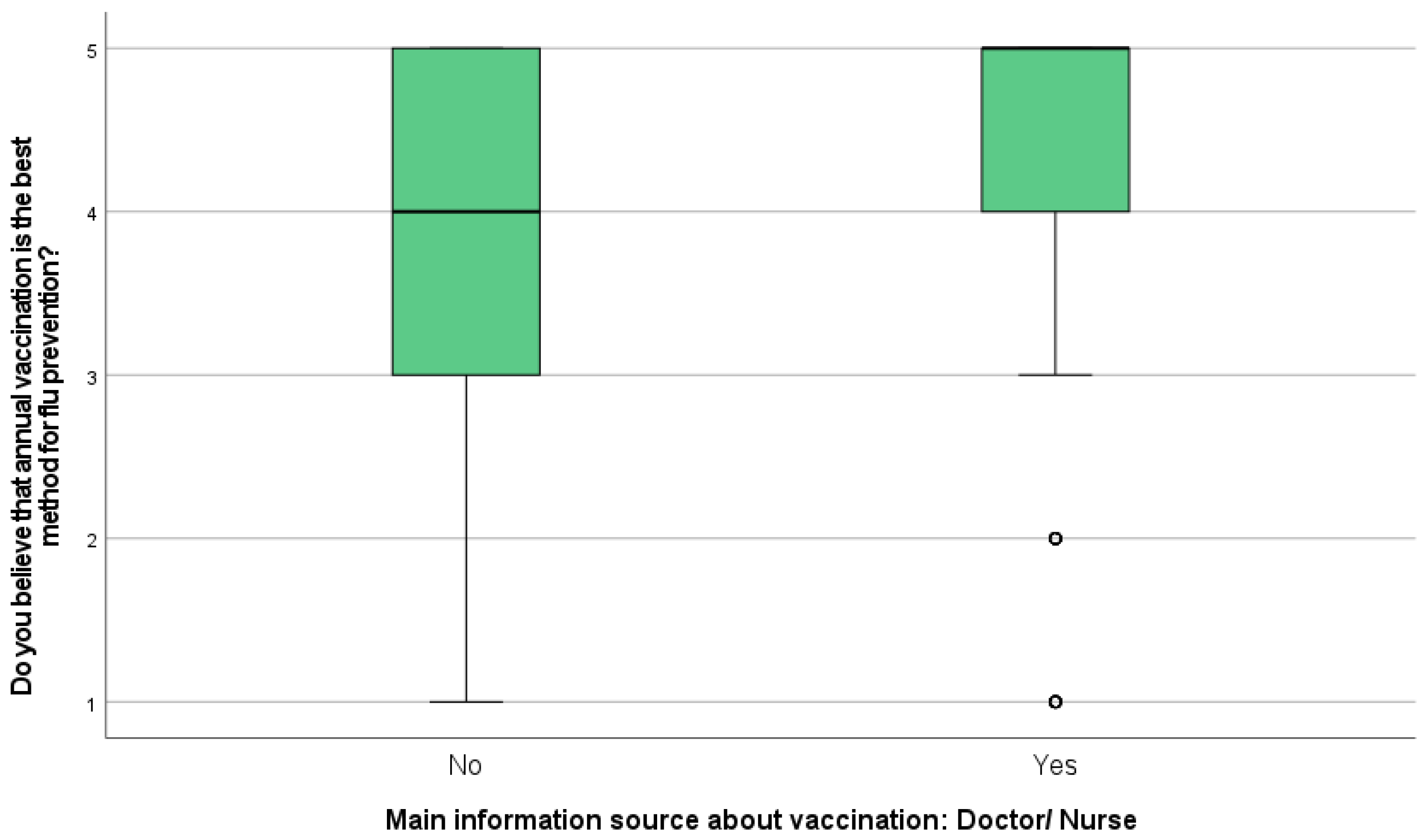
The association of patients’ beliefs that annual vaccination is the best method for influenza prevention with their characteristics is provided in Table 2. Significantly higher levels of agreement were found in patients who were not employed and in older patients. Additionally, patients who had been vaccinated against seasonal influenza (this year or every year), against pneumococcus, or COVID-19 agreed significantly that annual vaccination is the best method for influenza prevention. In addition, patients who were informed about vaccination by their doctor/nurse believed significantly more that annual vaccination is the best method for influenza prevention (Figure 1).
The association of patients’ beliefs that vaccination against influenza is harmful in patients with their disease, with their characteristics, is provided in Table 3. Significantly lower levels of agreement were found in patients who had been vaccinated against seasonal influenza (this year or every year), against pneumococcus, or SARS-CoV-2.
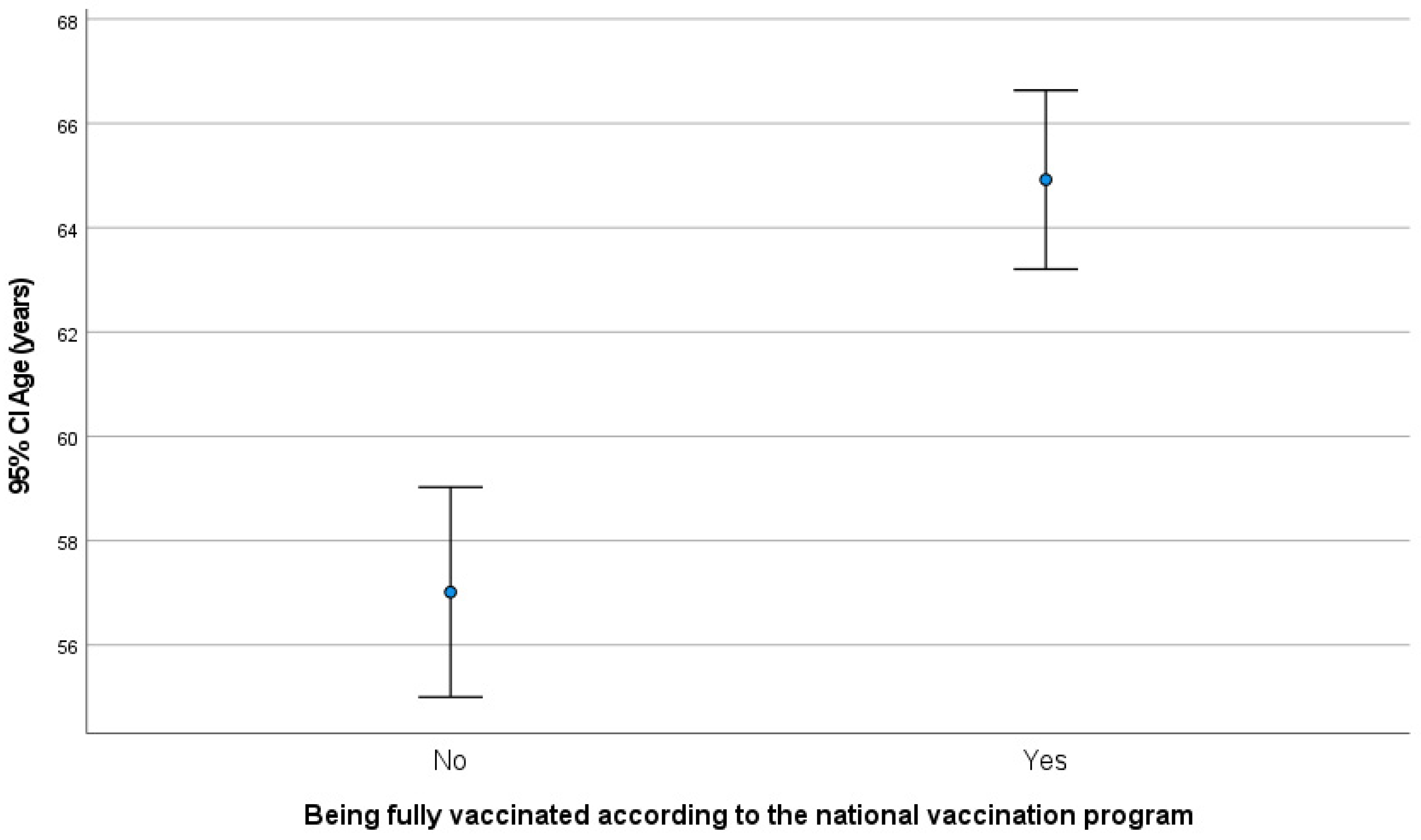
In Table 4 are presented patients percentages that had been fully vaccinated according to the national vaccination program and their association with their characteristics. The percentage of full vaccination was significantly greater in Greek patients, in those who were not employed, in older patients (Figure 2), and in those who had a concomitant disease. Furthermore, the percentage of full vaccination was significantly greater in patients who had been vaccinated against seasonal influenza (this year or every year), against pneumococcus, or SARS-CoV-2. Being informed about vaccination from a doctor/nurse resulted in a significantly greater percentage of having performed all vaccinations according to the national vaccination program, while being informed by the media or friends/family resulted in significantly lower percentages of being fully vaccinated.
After multiple linear regression, it emerged that age and being informed by a doctor/nurse were significantly associated with believing that annual vaccination is the best method for influenza prevention (Table 5). More specifically, greater age and being informed about vaccination by a doctor/nurse were significantly associated with greater belief. With the belief that vaccination against influenza is harmful in patients with the specific disease, it was found that sex and age were significantly associated with it. More specifically, females agreed more with this statement, as well as younger patients.
From multiple logistic regression, it was found that non-Greek (only Greek-speaking individuals of non-Greek ethnicity) patients have a 59% lower probability of being fully vaccinated according to the national vaccination program compared to Greek patients (Table 6). Additionally, employed patients had by 49% lower probability of being fully vaccinated according to the national vaccination program. A four times greater probability of being fully vaccinated according to the national vaccination program was observed in patients who were informed about vaccination by a doctor/nurse. Moreover, as patients’ age increased, so did the probability of being fully vaccinated.

4. Discussion

The current study demonstrated elevated vaccination rates among individuals with liver disease and cirrhosis for SARS-CoV-2, while indicating low rates for seasonal influenza and pneumococcal disease. The study indicated that elderly patients, individuals with comorbidities, and those who received information about vaccination from healthcare providers regarded annual vaccination as the most effective way for influenza protection. Female patients, younger patients, and individuals with higher educational attainment perceived the influenza vaccine as detrimental. Moreover, individuals who received vaccination information from a physician or nurse, patients with Greek nationality, and older patients exhibited a higher likelihood of receiving all their vaccinations under the national vaccination policy.
The elevated vaccination rates for SARS-CoV-2 suggest that study participants exhibit confidence in the vaccinations four years post-release, particularly as they are among vulnerable demographic groups at increased risk for severe disease. Our findings are consistent with the findings of other international studies [18,32]. Despite apprehensions over the safety and efficacy of SARS-CoV-2 vaccinations, initial post-marketing studies have demonstrated elevated acceptance rates [33,34]. Although the SARS-CoV-2 vaccine is much more recent and faced intense scrutiny regarding its safety and efficacy, participants appear to trust it, showing very high vaccination rates compared to the other two vaccines. This is possibly due to the risk of severe COVID-19 complications, as well as the nearly five years since the SARS-CoV-2 vaccines’ introduction, which may have positively influenced participants’ decision to obtain vaccination.
Despite influenza being a severe infectious disease that significantly affects the population every year, especially vulnerable groups, vaccination rates are persistently low. The current study indicates that influenza vaccination rates slightly surpassed 50%, aligning with findings from the literature concerning patients diagnosed with cirrhosis or liver disease [10,17]. Individuals may not perceive seasonal influenza as very hazardous and may believe they are not at risk of it. A crucial determinant for the adoption of the influenza vaccination and all recommended vaccines, as indicated by the current study, is the information conveyed to patients by healthcare professionals (physicians or nurses). This result is consistent with prior research demonstrating that confidence in physicians as sources of vaccine-related information, along with their clinical recommendations, constitutes a key determinant of individuals’ vaccine uptake [26,35]. Healthcare professionals could, during patient consultations, allocate time to advocate vaccination, elucidate the risks associated with non-vaccination, and address any inquiries or concerns patients may have regarding the safety and efficacy of vaccinations.
Individuals often seek vaccine-related information through social media platforms or online sources. However, such information may be unreliable and insufficiently supported by scientific evidence. Content disseminated via social media posts or online uploads frequently lacks citation to credible sources. Moreover, social networks are commonly utilized by anti-vaccination groups as channels for spreading misinformation and conspiracy narratives [36,37]. As misinformation on social media increases, vaccination coverage decreases [38,39]. The delivery of accurate information to patients by healthcare professionals and public health campaigns will improve vaccination rates, regardless of the disease addressed by the vaccine. Increased acceptance will provide future benefits for the implementation of all vaccinations under national vaccination programs.
Age and sex (women) were identified as significant determinants influencing the identification of the benefits of the influenza vaccine and the acceptance of vaccination, according to the findings of this study. Our results concerning age and sex align with evidence reported in a recent literature review examining vaccine hesitancy in the COVID-19 era [20]. Older adults, particularly those with chronic diseases, such as our study participants, constitute a vulnerable population and opt for vaccination to safeguard themselves [24,40]. Younger patients tend to be in good health, exhibit poor vaccine uptake rates, perhaps due to their perception of minimal danger or a low probability of severe illness. Nonetheless, their health status as chronic patients categorizes them within vulnerable populations for severe illness, a fact that should be particularly underscored by their attending physician [41]. Studies regarding HPV vaccination show higher vaccination rates among men and very high rates of vaccination intent [42,43]. Furthermore, another study in Greece investigating COVID-19 vaccination revealed that female sex was a significant predictor of vaccine hesitancy [44]. Consequently, health education programs concerning vaccination should consider these study findings and be designed accordingly with specific interventions weighted by sex or age. Health education initiatives should not solely focus on the elderly but must also address the dangers faced by the younger population, particularly those with comorbidities.
Our results indicated that adherence to the national vaccination schedule was substantially higher among patients who had received vaccination against seasonal influenza (either during the current season or annually), pneumococcal disease, or SARS-CoV-2. This observation is consistent with previous evidence showing that individuals who receive one vaccine are generally more inclined to accept subsequent vaccinations, whereas vaccine refusal and hesitancy are associated with lower adherence to recommended immunization schedules [35,45,46]. Therefore, sustained efforts by healthcare professionals and public health agencies to promote vaccination adherence remain essential, as strengthening vaccine acceptance may generate broader, synergistic benefits and support overall compliance with immunization guidelines.
Non-Greek citizens participating in our study exhibited significantly lower immunization rates in accordance with the national vaccination program. This result aligns with research from other countries indicating that immunization rates among adults and children of a nationality distinct from that of the host country are lower [47,48,49]. This result may be explained by the barriers encountered by residents of diverse national backgrounds when seeking healthcare, including financial and insurance-related constraints, as well as communication challenges associated with language differences. It underscores the critical need to ensure the inclusion of individuals from various ethnic and minority groups in health promotion initiatives and vaccination programs.
Compared to non-working patients, employed patients in this study were found to be much less likely to be fully vaccinated according to the national vaccination program. Employees who come into constant contact with many people are at high risk of infection, and therefore vaccination would be an important preventive measure for them. According to the findings of other studies, those who consider themselves to be at high risk of infection and employees have higher vaccination rates [17,50]. Therefore, this finding is not consistent with those of other studies. Our findings can probably be interpreted as random due to the small sample size of the study. Furthermore, we did not record the perceptions of employees as to whether they considered themselves to be at high risk of infection. Contrary to the findings of previous research, our study demonstrated that employed patients were significantly less likely to be fully vaccinated according to the National Immunization Program compared to their non-working counterparts. Several factors may account for this discrepancy. Employed individuals often face substantial time constraints, limited appointment flexibility, and competing occupational demands, all of which may impede their ability to access preventive healthcare services in a timely manner. Moreover, some working adults may perceive themselves as generally healthy and, consequently, may underestimate the importance of adhering to routine vaccination schedules. Differences across workplace environments, such as the absence of employer-supported vaccination initiatives or insufficient health promotion policies, may further contribute to reduced vaccine uptake. It is also possible that contextual factors unique to the population studied, including variations in socioeconomic conditions, healthcare accessibility, or cultural attitudes toward preventive care, influenced vaccination behaviors in ways that diverge from previously published results. These considerations highlight the need for targeted interventions aimed at improving vaccine coverage among working adults and underscore the importance of accounting for local contextual characteristics when interpreting vaccination patterns.
Perhaps a perception that they do not belong to a high-risk group for infection may explain this finding. Additionally, occupational factors may have influenced employees’ vaccination intent, such as working with minimal direct contact with others or colleagues’ perceptions that the risk of severe illness if unvaccinated was low.
The implementation of educational information programs appears to have a positive impact on vaccine acceptance. Furthermore, the utilization of social media can also constitute a significant positive intervention, even though social media has also been used for the dissemination of false information regarding vaccines [51,52]. Since a large percentage of diseases that can be prevented through vaccination affect immigrants, who also have low vaccination rates, health promotion programs should take into account the specific characteristics of these citizens [53]. In particular, characteristics such as socio-economic status, migration background, generation status, residential duration, cultural/personal beliefs, language proficiency, and healthcare utilization should be taken into account when designing intervention programs to enhance vaccination coverage among immigrants [53].
This research possesses certain limitations. The study is cross-sectional using a convenience sampling method; thus, a causal relationship between the variables cannot be established, and the findings may not be generalized to the broader population. The study is limited to two university hospitals; hence, the findings may be affected by the selection bias and are not generalizable to all individuals with liver disease. Moreover, the limited sample size and dependence on self-reported data, which may induce self-report bias, are two additional limitations of the study. In addition, important socioeconomic and clinical variables that could significantly influence the outcomes, including years of diagnosis, self-reported household income, medication adherence, insurance status, general health literacy, access to healthcare services, and the etiology of liver disease, were not examined. Finally, there is a potential self-report bias, particularly for vaccination status. This could influence the accuracy of the findings.

5. Conclusions

This study highlighted the suboptimal vaccination rates for influenza and pneumococcus among individuals with chronic liver disease and cirrhosis, in contrast to the markedly higher uptake observed for SARS-CoV-2 vaccines. These findings are of considerable public health relevance, as they underscore persistent gaps in preventive care for a population at increased risk of severe infectious complications. The results can be leveraged within national immunization strategies and clinical practice to strengthen targeted communication and counseling approaches. In particular, younger patients and those expressing concerns about vaccine effectiveness or safety should receive individualized guidance and reassurance during clinical encounters, thereby promoting adherence to annual immunizations and completion of all vaccines recommended in national programs.
From a policy perspective, several actions may help improve vaccination coverage in this vulnerable group. First, integrating systematic vaccination reminders and automated alerts within electronic health records could facilitate the timely identification of under-immunized patients. Second, implementing structured vaccination pathways within hepatology and gastroenterology clinics, such as offering influenza and pneumococcal vaccines during routine follow-up appointments, may reduce missed opportunities for preventive care. Third, national authorities could develop targeted awareness campaigns emphasizing the heightened infection risk and disease severity among patients with cirrhosis, using tailored messaging to address vaccine hesitancy and misconceptions. Fourth, expanding access through community-based vaccination programs, mobile units, or pharmacist-administered vaccination services could mitigate logistical barriers, particularly for working-age patients. Finally, collaboration between public health agencies and professional societies may promote standardized guidelines and training for healthcare providers to ensure consistent vaccine counseling and delivery across care settings.
Further large-scale, multicenter studies are needed to validate these findings and to explore additional determinants of vaccination behavior that were not assessed in the present study, including socioeconomic status, health literacy, provider recommendation strength, and structural barriers to healthcare access. Such evidence will be essential for designing more effective, equity-oriented vaccination policies tailored to the needs of patients with chronic liver disease and cirrhosis.

Author Contributions

Conceptualization, P.D. and E.D.; methodology, P.D., I.E., T.A., N.M., L.K., K.G. and E.D.; software, N.M.; validation, P.D., I.E., T.A., S.P., K.G. and E.D.; formal analysis, N.M.; investigation, P.D., T.A., N.M., K.G.; resources, P.D., T.A., N.M., K.G. and E.D.; data curation, P.D. and N.M.; writing—original draft preparation, P.D., I.E., T.A., N.M., L.K., K.G. and E.D.; writing—review and editing, P.D., I.E., T.A., N.M., S.P., K.G. and E.D.; visualization, P.D. and supervision, E.D.; project administration, P.D. and E.D. All authors have read and agreed to the published version of the manuscript.

Funding

The publication of this study (APC) was funded by the Special Account for Research Grants (ELKE), University of West Attica, Athens, Greece. The funders had no role in the design of the study; in the collection, analyses, or interpretation of data; in the writing of the manuscript; or in the decision to publish the results. This research received no external funding.

Institutional Review Board Statement

The study was conducted in accordance with the Declaration of Helsinki and approved by the Ethics Committee of General Oncology Hospital of Κifisia “Agioi Anagyroi” (approval number 986, 26 October 2021), and General Hospital of Athens “G. Genimmatas (approval number 24286, 16 September 2021).

Informed Consent Statement

Informed consent was obtained from all subjects involved in the study.

Data Availability Statement

The data presented in this study are available on request from the corresponding author.

Conflicts of Interest

The authors declare no conflicts of interest.

References

  1. Moghadami, M. A Narrative Review of Influenza: A Seasonal and Pandemic Disease. Iran. J. Med. Sci. 2017, 42, 2. [Google Scholar]
  2. Amin-Chowdhury, Z.; Aiano, F.; Mensah, A.; Sheppard, C.L.; Litt, D.; Fry, N.K.; Andrews, N.; Ramsay, M.E.; Ladhani, S.N. Impact of the Coronavirus Disease 2019 (COVID-19) Pandemic on Invasive Pneumococcal Disease and Risk of Pneumococcal Coinfection with Severe Acute Respiratory Syndrome Coronavirus 2 (SARS-CoV-2): Prospective National Cohort Study, England. Clin. Infect. Dis. 2021, 72, e65–e75. [Google Scholar] [CrossRef]
  3. Tokars, J.I.; Olsen, S.J.; Reed, C. Seasonal Incidence of Symptomatic Influenza in the United States. Clin. Infect. Dis. 2018, 66, 1511–1518. [Google Scholar] [CrossRef]
  4. Lafond, K.E.; Porter, R.M.; Whaley, M.J.; Suizan, Z.; Ran, Z.; Aleem, M.A.; Thapa, B.; Sar, B.; Proschle, V.S.; Peng, Z.; et al. Global Burden of Influenza-Associated Lower Respiratory Tract Infections and Hospitalizations among Adults: A Systematic Review and Meta-Analysis. PLoS Med. 2021, 18, e1003550. [Google Scholar] [CrossRef]
  5. Torres, A.; Cillóniz, C.; Blasi, F.; Chalmers, J.D.; Gaillat, J.; Dartois, N.; Schmitt, H.-J.; Welte, T. Burden of Pneumococcal Community-Acquired Pneumonia in Adults across Europe: A Literature Review. Respir. Med. 2018, 137, 6–13. [Google Scholar] [CrossRef]
  6. Ballester, M.P.; Jalan, R.; Mehta, G. Vaccination in Liver Diseases and Liver Transplantation: Recommendations, Implications and Opportunities in the Post-COVID Era. JHEP Rep. 2023, 5, 100776. [Google Scholar] [CrossRef]
  7. Feldman, C.; Anderson, R. Recent Advances in the Epidemiology and Prevention of Streptococcus Pneumoniae Infections. F1000Research 2020, 9, 338. [Google Scholar] [CrossRef] [PubMed]
  8. Gao, Y.; Ding, M.; Dong, X.; Zhang, J.; Kursat Azkur, A.; Azkur, D.; Gan, H.; Sun, Y.; Fu, W.; Li, W.; et al. Risk Factors for Severe and Critically Ill COVID-19 Patients: A Review. Allergy 2021, 76, 428–455. [Google Scholar] [CrossRef] [PubMed]
  9. Alukal, J.J.; Naqvi, H.A.; Thuluvath, P.J. Vaccination in Chronic Liver Disease: An Update. J. Clin. Exp. Hepatol. 2022, 12, 937–947. [Google Scholar] [CrossRef] [PubMed]
  10. Härmälä, S.; Parisinos, C.A.; Shallcross, L.; O’Brien, A.; Hayward, A. Effectiveness of Influenza Vaccines in Adults with Chronic Liver Disease: A Systematic Review and Meta-Analysis. BMJ Open 2019, 9, e031070. [Google Scholar] [CrossRef]
  11. Gaeta, G.B.; Pariani, E.; Amendola, A.; Brancaccio, G.; Cuomo, G.; Stornaiuolo, G.; Zappa, A.; Zanetti, A. Influenza Vaccination in Patients with Cirrhosis and in Liver Transplant Recipients. Vaccine 2009, 27, 3373–3375. [Google Scholar] [CrossRef] [PubMed]
  12. Ozaka, S.; Kobayashi, T.; Mizukami, K.; Murakami, K. COVID-19 Vaccination and Liver Disease. World J. Gastroenterol. 2022, 28, 6791–6810. [Google Scholar] [CrossRef]
  13. Watson, O.J.; Hogan, A.B. Impact of COVID-19 Vaccination Programmes in Europe: Lives Saved and Lessons Learned. Lancet Respir. Med. 2024, 12, 663–664. [Google Scholar] [CrossRef]
  14. Stroffolini, T.; Lombardi, A.; Ciancio, A.; Niro, G.A.; Colloredo, G.; Marignani, M.; Vinci, M.; Morisco, F.; Babudieri, S.; Ferrigno, L.; et al. Low Influenza Vaccination Coverage in Subjects with Liver Cirrhosis. An Alert Waiting for Winter Season 2020–2021 during the COVID-19 Pandemic. J. Med. Virol. 2021, 93, 2446–2452. [Google Scholar] [CrossRef]
  15. Petigara, T.; Zhang, D. Pneumococcal Vaccine Coverage in Adults Aged 19–64 Years, Newly Diagnosed with Chronic Conditions in the U.S. Am. J. Prev. Med. 2018, 54, 630–636. [Google Scholar] [CrossRef]
  16. Stroffolini, T.; Stroffolini, G. Vaccination in Patients with Liver Cirrhosis: A Neglected Topic. Vaccines 2024, 12, 715. [Google Scholar] [CrossRef]
  17. Eder, M.; Omic, H.; Gorges, J.; Badt, F.; Kikic, Z.; Saemann, M.D.; Tong, A.; Bauer, D.; Semmler, G.; Reiberger, T.; et al. Influenza Vaccination Uptake and Factors Influencing Vaccination Decision among Patients with Chronic Kidney or Liver Disease. PLoS ONE 2021, 16, e0249785. [Google Scholar] [CrossRef]
  18. Serper, M.; Reddy, K.R.; Bewtra, M.; Ahmad, N.; Mehta, S.J. COVID-19 Vaccine Perceptions Among Patients with Chronic Disease in a Large Gastroenterology and Hepatology Practice. Off. J. Am. Coll. Gastroenterol.|ACG 2021, 116, 1345. [Google Scholar] [CrossRef]
  19. La Torre, G.; Iarocci, G.; Cadeddu, C.; Boccia, A. Influence of Sociodemographic Inequalities and Chronic Conditions on Influenza Vaccination Coverage in Italy: Results from a Survey in the General Population. Public Health 2010, 124, 690–697. [Google Scholar] [CrossRef] [PubMed]
  20. Troiano, G.; Nardi, A. Vaccine Hesitancy in the Era of COVID-19. Public Health 2021, 194, 245–251. [Google Scholar] [CrossRef] [PubMed]
  21. Wilson, S.L.; Wiysonge, C. Social Media and Vaccine Hesitancy. BMJ Glob. Health 2020, 5, e004206. [Google Scholar] [CrossRef]
  22. Picker, L.J.D. Closing COVID-19 Mortality, Vaccination, and Evidence Gaps for Those with Severe Mental Illness. Lancet Psychiatry 2021, 8, 854–855. [Google Scholar] [CrossRef]
  23. Warren, N.; Kisely, S.; Siskind, D. Maximizing the Uptake of a COVID-19 Vaccine in People with Severe Mental Illness: A Public Health Priority. JAMA Psychiatry 2021, 78, 589–590. [Google Scholar] [CrossRef]
  24. Nowak, G.J.; Cacciatore, M.A.; Len-Ríos, M.E. Understanding and Increasing Influenza Vaccination Acceptance: Insights from a 2016 National Survey of U.S. Adults. Int. J. Environ. Res. Public Health 2018, 15, 711. [Google Scholar] [CrossRef] [PubMed]
  25. Kini, A.; Morgan, R.; Kuo, H.; Shea, P.; Shapiro, J.; Leng, S.X.; Pekosz, A.; Klein, S.L. Differences and Disparities in Seasonal Influenza Vaccine, Acceptance, Adverse Reactions, and Coverage by Age, Sex, Gender, and Race. Vaccine 2022, 40, 1643–1654. [Google Scholar] [CrossRef] [PubMed]
  26. Tsiligianni, I.; Bouloukaki, I.; Papazisis, G.; Paganas, A.; Chatzimanolis, E.; Kalatharas, M.; Platakis, I.; Tirodimos, I.; Dardavesis, T.; Tsimtsiou, Z. Vaccination Coverage and Predictors of Influenza, Pneumococcal, Herpes Zoster, Tetanus, Measles, and Hepatitis B Vaccine Uptake among Adults in Greece. Public Health 2023, 224, 195–202. [Google Scholar] [CrossRef] [PubMed]
  27. Stroffolini, T.; Ciancio, A.; Federico, A.; Benigno, R.G.; Colloredo, G.; Lombardi, A.; Cotugno, R.; Verucchi, G.; Ferrigno, L.; Gioli, F.; et al. Pneumococcal Vaccination Status among Cirrhotic Patients in Italy: A Neglected Topic. Eur. J. Clin. Microbiol. Infect. Dis. 2023, 42, 945–950. [Google Scholar] [CrossRef]
  28. Cheung, K.S.; Mok, C.H.; Mao, X.; Zhang, R.; Hung, I.F.; Seto, W.K.; Yuen, M.F. COVID-19 Vaccine Immunogenicity among Chronic Liver Disease Patients and Liver Transplant Recipients: A Meta-Analysis. Clin. Mol. Hepatol. 2022, 28, 890–911. [Google Scholar] [CrossRef]
  29. World Medical Association. World Medical Association Declaration of Helsinki: Ethical Principles for Medical Research Involving Human Subjects. JAMA 2013, 310, 2191–2194. [Google Scholar] [CrossRef]
  30. Mukaka, M.M. Statistics Corner: A Guide to Appropriate Use of Correlation Coefficient in Medical Research. Malawi Med. J. 2012, 24, 69–71. [Google Scholar]
  31. James, G. An Introduction to Statistical Learning: With Applications in R, 1st ed.; SPRINGER: New York, NY, USA, 2013; ISBN 978-1-4614-7137-0. [Google Scholar]
  32. Liu, Y.; Yuan, W.; Zhan, H.; Kang, H.; Li, X.; Chen, Y.; Li, H.; Sun, X.; Cheng, L.; Zheng, H.; et al. SARS-CoV-2 Vaccine Uptake among Patients with Chronic Liver Disease: A Cross-Sectional Analysis in Hebei Province, China. Vaccines 2023, 11, 1293. [Google Scholar] [CrossRef]
  33. Moisoglou, I.; Passali, C.; Tsiachri, M.; Galanis, P. Predictors of COVID-19 Vaccine Uptake in Teachers: An On-Line Survey in Greece. J. Community Health 2023, 48, 59–66. [Google Scholar] [CrossRef]
  34. Galanis, P.; Vraka, I.; Siskou, O.; Konstantakopoulou, O.; Katsiroumpa, A.; Moisoglou, I.; Kaitelidou, D. Cross-Sectional Assessment of Predictors for COVID-19 Vaccine Uptake: An Online Survey in Greece. Vacunas 2022, 23, S60–S66. [Google Scholar] [CrossRef] [PubMed]
  35. Galanis, P.; Vraka, I.; Siskou, O.; Konstantakopoulou, O.; Katsiroumpa, A.; Moisoglou, I.; Kaitelidou, D. Predictors of Real-World Parents’ Acceptance to Vaccinate Their Children Against the COVID-19. Acta Med. Litu. 2022, 29, 33–43. [Google Scholar] [CrossRef] [PubMed]
  36. Puri, N.; Coomes, E.A.; Haghbayan, H.; Gunaratne, K. Social Media and Vaccine Hesitancy: New Updates for the Era of COVID-19 and Globalized Infectious Diseases. Human Vaccines Immunother. 2020, 16, 2586–2593. [Google Scholar] [CrossRef]
  37. Ortiz-Sánchez, E.; Velando-Soriano, A.; Pradas-Hernández, L.; Vargas-Román, K.; Gómez-Urquiza, J.L.; Cañadas-De la Fuente, G.A.; Albendín-García, L. Analysis of the Anti-Vaccine Movement in Social Networks: A Systematic Review. Int. J. Environ. Res. Public Health 2020, 17, 5394. [Google Scholar] [CrossRef]
  38. Liebermann, E.; Kornides, M.; Matsunaga, M.; Lim, E.; Zimet, G.; Glauberman, G.; Kronen, C.; Fontenot, H.B. Use of Social Media and Its Influence on HPV Vaccine Hesitancy: US National Online Survey of Mothers of Adolescents, 2023. Vaccine 2025, 44, 126571. [Google Scholar] [CrossRef] [PubMed]
  39. Munjita, S.M. Understanding Vaccine Hesitancy: Insights from Social Media on Polio, Human Papilloma Virus, and COVID-19 in Zambia. Digit. Health 2025, 11, 20552076251326131. [Google Scholar] [CrossRef]
  40. Eilers, R.; de Melker, H.E.; Veldwijk, J.; Krabbe, P.F.M. Vaccine Preferences and Acceptance of Older Adults. Vaccine 2017, 35, 2823–2830. [Google Scholar] [CrossRef]
  41. Grygarová, D.; Kožený, J.; Tišanská, L.; Havlík, M.; Horáček, J. Trust in Official Information as a Key Predictor of COVID-19 Vaccine Acceptance: Evidence from a Czech Longitudinal Survey Study. BMC Public Health 2025, 25, 770. [Google Scholar] [CrossRef]
  42. Kiener, L.M.; Schwendener, C.L.; Jafflin, K.; Meier, A.; Reber, N.; Maurer, S.S.; Muggli, F.; Gültekin, N.; Huber, B.M.; Merten, S.; et al. Vaccine Hesitancy and HPV Vaccine Uptake among Male and Female Youth in Switzerland: A Cross-Sectional Study. BMJ Open 2022, 12, e053754. [Google Scholar] [CrossRef] [PubMed]
  43. Katsiroumpa, A.; Skourli, I.; Kalioras, E.; Moisoglou, I.; Tsiachri, M.; Gkegkes, I.; Stamatiadis, A.; Galanis, P. Determinants of HPV-Positive Male’s Knowledge and Attitudes Towards HPV Vaccination. Int. J. Caring Sci. 2023, 16, 1292–1298. [Google Scholar]
  44. Bouloukaki, I.; Christodoulakis, A.; Patelarou, A.; Giakoumidakis, K.; Zografakis-Sfakianakis, M.; Patelarou, E.; Tsiligianni, I. Factors Influencing COVID-19 Vaccination Hesitancy and Booster Dose Adherence Among University Students: A Cross-Sectional Study in Crete, Greece. Healthcare 2025, 13, 1115. [Google Scholar] [CrossRef]
  45. Galanis, P.; Moisoglou, I.; Vraka, I.; Siskou, O.; Konstantakopoulou, O.; Katsiroumpa, A.; Kaitelidou, D. Predictors of COVID-19 Vaccine Uptake in Healthcare Workers: A Cross-Sectional Study in Greece. J. Occup. Environ. Med. 2022, 64, e191. [Google Scholar] [CrossRef] [PubMed]
  46. Schwarzinger, M.; Watson, V.; Arwidson, P.; Alla, F.; Luchini, S. COVID-19 Vaccine Hesitancy in a Representative Working-Age Population in France: A Survey Experiment Based on Vaccine Characteristics. Lancet Public Health 2021, 6, e210–e221. [Google Scholar] [CrossRef]
  47. Fabiani, M.; Riccardo, F.; Napoli, A.D.; Gargiulo, L.; Declich, S.; Petrelli, A. Differences in Influenza Vaccination Coverage between Adult Immigrants and Italian Citizens at Risk for Influenza-Related Complications: A Cross-Sectional Study. PLoS ONE 2016, 11, e0166517. [Google Scholar] [CrossRef] [PubMed]
  48. Nybru Gleditsch, R.; Skogset Ofitserova, T.; Aubrey White, R.; Karoline Råberg Kjøllesdal, M.; Dvergsdal, E.; Hansen, B.T.; Askeland Winje, B. Vaccine Coverage among Children Born to Immigrant Parents in Norway, 2000–2020. Vaccine 2024, 42, 3049–3056. [Google Scholar] [CrossRef]
  49. Varan, A.K.; Rodriguez-Lainz, A.; Hill, H.A.; Elam-Evans, L.D.; Yankey, D.; Li, Q. Vaccination Coverage Disparities Between Foreign-Born and U.S.-Born Children Aged 19–35 Months, United States, 2010–2012. J Immigr. Minor. Health 2017, 19, 779–789. [Google Scholar] [CrossRef]
  50. Liang, Y.; Bai, X.; Liu, X.; Zhang, Z.; Pang, X.; Nie, L.; Qiu, W.; Zhao, W.; Hu, G. Hepatitis B Vaccination Coverage Rates and Associated Factors: A Community-Based, Cross-Sectional Study Conducted in Beijing, 2019–2020. Vaccines 2021, 9, 1070. [Google Scholar] [CrossRef]
  51. Limaye, R.J.; Holroyd, T.A.; Blunt, M.; Jamison, A.F.; Sauer, M.; Weeks, R.; Wahl, B.; Christenson, K.; Smith, C.; Minchin, J.; et al. Social Media Strategies to Affect Vaccine Acceptance: A Systematic Literature Review. Expert. Rev. Vaccines 2021, 20, 959–973. [Google Scholar] [CrossRef]
  52. Cory, L.; Cha, B.; Ellenberg, S.; Bogner, H.R.; Hwang, W.-T.; Smith, J.S.; Haggerty, A.; Morgan, M.; Burger, R.; Chu, C.; et al. Effects of Educational Interventions on Human Papillomavirus Vaccine Acceptability: A Randomized Controlled Trial. Obstet. Gynecol. 2019, 134, 376. [Google Scholar] [CrossRef] [PubMed]
  53. Charania, N.A.; Gaze, N.; Kung, J.Y.; Brooks, S. Vaccine-Preventable Diseases and Immunisation Coverage among Migrants and Non-Migrants Worldwide: A Scoping Review of Published Literature, 2006 to 2016. Vaccine 2019, 37, 2661–2669. [Google Scholar] [CrossRef] [PubMed]
Figure 1. Participants’ level of belief that annual vaccination is the best method for influenza prevention, according to being informed about vaccination mainly by a doctor/nurse. Note. y-axis values were 1: not at all; 2: A little; 3: Moderately; 4: Much; 5; Very much.
Livers 05 00068 g001
Figure 2. Participants’ age by whether they were fully vaccinated according to the national vaccination program.
Livers 05 00068 g002
Table 1. Sample characteristics.
n = 300n (%)
Sex
Male169 (56.3)
Female131 (43.7)
Age (years), mean (SD)61.4 (12.1)
BMI levels
Underweight (<18.5 kg/m2)20 (6.7)
Normal (18.5–24.9 kg/m2)143 (47.8)
Overweight (25–29.9 kg/m2)94 (31.4)
Obese (≥30 kg/m2)42 (14)
Nationality
Greek248 (82.9)
Other51 (17.1)
Married190 (63.5)
Employed93 (31.0)
Educational level
None/Primary school93 (31)
Middle/High school152 (50.7)
University/MSc/PhD55 (18.3)
Smoking196 (65.6)
Alcohol consumption177 (59)
Comorbidities211 (70.3)
Vaccinated against seasonal influenza this year164 (54.7)
Vaccinated against seasonal influenza every year159 (53.2)
Vaccinated against pneumococcus134 (44.8)
Vaccinated against SAR-COVID-19264 (88.3)
Do you believe that annual vaccination is the best method for influenza prevention?
Not at all17 (5.7)
A little20 (6.7)
Moderately49 (16.4)
Much57 (19.1)
Very much156 (52.2)
Do you think that vaccination against influenza is harmful in patients with your disease?
Not at all234 (78.3)
A little26 (8.7)
Moderately25 (8.4)
Much10 (3.3)
Very much4 (1.3)
Have you had all the vaccinations according to the national vaccination program?167 (55.9)
The main information source about vaccination
Doctor/Nurse164 (54.7)
Pharmacist44 (14.7)
Media76 (25.3)
Friends/Family21 (7)
Other12 (4)
Diagnosis
Liver cirrhosis117 (39)
Hepatocellular carcinoma34 (11.3)
Hepatitis165 (55)
Cause of disease
Hepatitis B148 (49.8)
Hepatitis C29 (9.8)
Alcohol56 (18.9)
Table 2. Association of belief that annual vaccination is the best method for influenza prevention with patients’ characteristics.
Do You Believe That Annual Vaccination Is the Best Method for Influenza Prevention?pEffect Size 1
Mean (95% CI)Median (IQR)
SexMale4.14 (3.97–4.32)5 (3–5)0.241 +−0.07
Female3.94 (3.71–4.16)4 (3–5)
BMI levelsUnderweight (<18.5 kg/m2)4.25 (3.75–4.75)5 (3.5–5)0.891 ++−0.01
Normal (18.5–24.9 kg/m2)4.03 (3.83–4.23)5 (3–5)
Overweight (25–29.9 kg/m2)4.11 (3.87–4.35)5 (4–5)
Obese (≥30 kg/m2)3.95 (3.52–4.38)5 (3–5)
NationalityGreek4.09 (3.94–4.24)5 (3–5)0.284 +−0.06
Other3.88 (3.52–4.25)4 (3–5)
MarriedNo3.92 (3.69–4.14)4 (3–5)0.050 +−0.11
Yes4.13 (3.96–4.31)5 (3–5)
EmployedNo4.25 (4.09–4.40)5 (4–5)<0.001 +−0.26
Yes3.62 (3.36–3.89)4 (3–5)
Educational levelNone/Primary school4.28 (4.06–4.51)5 (4–5)0.085 ++0.01
Middle/High school3.93 (3.72–4.13)4 (3–5)
University/MSc/PhD4.02 (3.70–4.33)4 (3–5)
SmokingNo4.08 (3.84–4.32)5 (3–5)0.722 +−0.02
Yes4.04 (3.87–4.21)5 (3–5)
Alcohol consumptionNo4.10 (3.89–4.31)5 (3–5)0.610 +−0.03
Yes4.02 (3.84–4.21)5 (3–5)
Concomitant diseaseNo3.80 (3.52–4.07)4 (3–5)0.012 +−0.14
Yes4.16 (4.00–4.32)5 (3–5)
Vaccination information
Vaccinated against seasonal influenza this yearNo3.35 (3.13–3.57)3 (3–4)<0.001 +−0.55
Yes4.64 (4.52–4.75)5 (5–5)
Vaccinated against seasonal influenza every yearNo3.44 (3.22–3.65)4 (3–5)<0.001 +−0.50
Yes4.59 (4.47–4.72)5 (4–5)
Vaccinated against pneumococcusNo3.67 (3.47–3.86)4 (3–5)<0.001 +−0.38
Yes4.53 (4.37–4.68)5 (4–5)
Vaccinated against SAR-COVID-19No3.06 (2.58–3.54)3 (2–4)<0.001 +−0.28
Yes4.19 (4.05–4.33)5 (4–5)
Main information source about vaccination
Doctor/NurseNo3.81 (3.59–4.02)4 (3–5)<0.001 +−0.21
Yes4.26 (4.08–4.43)5 (4–5)
PharmacistNo4.02 (3.86–4.17)5 (3–5)0.334 +−0.06
Yes4.27 (3.98–4.56)5 (3.5–5)
MediaNo4.12 (3.96–4.28)5 (3–5)0.062 +−0.11
Yes3.86 (3.57–4.14)4 (3–5)
Friends/FamilyNo4.09 (3.95–4.24)5 (3–5)0.005 +−0.16
Yes3.50 (2.99–4.01)4 (3–4)
Disease
Liver cirrhosisNo4.04 (3.86–4.22)5 (3–5)0.806 +−0.01
Yes4.08 (3.86–4.30)5 (3–5)
Hepatocellular carcinomaNo4.02 (3.87–4.16)5 (3–5)0.099 +−0.10
Yes4.36 (3.98–4.75)5 (4–5)
HepatitisNo4.18 (3.98–4.38)5 (4–5)0.084 +−0.10
Yes3.95 (3.76–4.14)4 (3–5)
Cause of disease
Hepatitis BNo4.09 (3.90–4.29)5 (3–5)0.528 +−0.04
Yes4.00 (3.80–4.20)5 (3–5)
Hepatitis CNo4.09 (3.94–4.23)5 (3–5)0.026 +−0.13
Yes3.66 (3.20–4.11)4 (3–5)
AlcoholNo4.02 (3.86–4.18)5 (3–5)0.437 +−0.05
Yes4.16 (3.86–4.47)5 (3–5)
rho (95% CI)
Age (years)0.30 (0.18–0.40)<0.001
Note. Mean, SD, median, and IQR are based on a scale from 1 to 5; i.e., 1: not at all; 2: A little; 3: Moderately; 4: Much; 5: Very much. p-values in italics are significant after Bonferroni correction for multiple testing. + Mann–Whitney test; ++ Kruskal–Wallis test; rho: Spearman’s correlation coefficient. 1 estimated via r or η2 for the Mann−Whitney or Kruskal–Wallis test, respectively.
Table 3. Association of belief that vaccination against influenza is harmful in these specific patients with their characteristics.
Do You Think That Vaccination Against Influenza Is Harmful in Patients with Your Disease?pEffect Size 1
Mean (95% CI)Median (IQR)
SexMale1.30 (1.18–1.42)1 (1–1)0.005 +−0.16
Female1.54 (1.37–1.71)1 (1–2)
BMI levelsUnderweight (<18.5 kg/m2)1.35 (1.04–1.66)1 (1–1.5)0.562 ++0.00
Normal (18.5–24.9 kg/m2)1.48 (1.32–1.64)1 (1–1)
Overweight (25–29.9 kg/m2)1.32 (1.16–1.48)1 (1–1)
Obese (≥30 kg/m2)1.36 (1.08–1.63)1 (1–1)
NationalityGreek1.41 (1.30–1.52)1 (1–1)0.920 +−0.01
Other1.37 (1.13–1.61)1 (1–1)
MarriedNo1.40 (1.24–1.57) 1 (1–1)0.889 +−0.01
Yes1.41 (1.28–1.54)1 (1–1)
EmployedNo1.36 (1.25–1.48)1 (1–1)0.216 +−0.01
Yes1.51 (1.31–1.70)1 (1–2)
Educational levelNone/Primary school1.24 (1.09–1.38)1 (1–1)0.031 ++0.02
Middle/High school1.45 (1.31–1.60)1 (1–1)
University/MSc/PhD1.56 (1.29–1.84)1 (1–2)
SmokingNo1.39 (1.22–1.56)1 (1–1)0.832 +−0.07
Yes1.42 (1.29–1.55)1 (1–1)
Alcohol consumptionNo1.46 (1.29–1.62)1 (1–2)0.252 +−0.01
Yes1.37 (1.25–1.50)1 (1–1)
Concomitant diseaseNo1.48 (1.28–1.67)1 (1–2)0.257 +−0.07
Yes1.38 (1.26–1.50)1 (1–1)
Vaccination information
Vaccinated against seasonal influenza this yearNo1.68 (1.51–1.86)1 (1–2)<0.001 +−0.34
Yes1.18 (1.08–1.28)1 (1–1)
Vaccinated against seasonal influenza every yearNo1.64 (1.47–1.81)1 (1–2)<0.001 +−0.28
Yes1.21 (1.10–1.32)1 (1–1)
Vaccinated against pneumococcusNo1.55 (1.39–1.70)1 (1–2)0.002 +−0.18
Yes1.24 (1.12–1.36)1 (1–1)
Vaccinated against SAR-COVID-19No2.00 (1.54–2.46)1 (1–3)<0.001 +−0.21
Yes1.33 (1.24–1.42)1 (1–1)
The main information source about vaccination
Doctor/NurseNo1.50 (1.33–1.66)1 (1–2)0.102 +−0.09
Yes1.34 (1.21–1.46)1 (1–1)
PharmacistNo1.37 (1.27–1.48)1 (1–1)0.075 +−0.10
Yes1.61 (1.30–1.93)1 (1–2)
MediaNo1.39 (1.27–1.50)1 (1–1)0.182 +−0.08
Yes1.47 (1.28–1.67)1 (1–2)
Friends/FamilyNo1.41 (1.31–1.51)1 (1–1)0.555 +−0.03
Yes1.40 (0.91–1.89)1 (1–1)
Disease
Liver cirrhosisNo1.47 (1.33–1.61)1 (1–1)0.246 +−0.07
Yes1.31 (1.18–1.44)1 (1–1)
Hepatocellular carcinomaNo1.44 (1.33–1.55)1 (1–1)0.137 +−0.09
Yes1.18 (0.99–1.37)1 (1–1)
HepatitisNo1.29 (1.17–1.41)1 (1–1)0.102 +−0.09
Yes1.50 (1.35–1.66)1 (1–1)
Cause of disease
Hepatitis BNo1.35 (1.23–1.47)1 (1–1)0.407 +−0.05
Yes1.47 (1.31–1.63)1 (1–1)
Hepatitis CNo1.42 (1.31–1.53)1 (1–1)0.834 +−0.01
Yes1.34 (1.07–1.62)1 (1–1)
AlcoholNo1.47 (1.35–1.59)1 (1–1)0.009 +−0.15
Yes1.16 (0.99–1.33)1 (1–1)
rho (95% CI)
Age (years)−0.13 (−0.24–−0.01)0.030
Note. Mean, SD, median, and IQR are based on a scale from 1 to 5; i.e., 1: not at all; 2: A little; 3: Moderately; 4: Much; 5: Very much. p-values in italics are significant after Bonferroni correction for multiple testing. + Mann−Whitney test; ++ Kruskal−Wallis test; rho: Spearman’s correlation coefficient. 1 estimated via r or η2 for the Mann−Whitney or Kruskal−Wallis test, respectively.
Table 4. Association of having had all vaccinations according to the national vaccination program with patients’ characteristics.
Have Had All Vaccinations According to the National Vaccination Programp
n (%)
SexMale89 (52.7)0.205 +
Female78 (60.0)
BMI levelsUnderweight (<18.5 kg/m2)12 (60.0)0.981 +
Normal (18.5–24.9 kg/m2)79 (55.6)
Overweight (25–29.9 kg/m2)52 (55.3)
Obese (≥30 kg/m2)24 (57.1)
NationalityGreek151 (61.1)<0.001 +
Other15 (29.4)
MarriedNo57 (52.8)0.443 +
Yes109 (57.4)
EmployedNo136 (65.7)<0.001 +
Yes31 (33.7)
Educational levelNone/Primary school52 (55.9)0.069 +
Middle/High school77 (51.0)
University/MSc/PhD38 (69.1)
SmokingNo60 (58.3)0.576 +
Yes107 (54.9)
Alcohol consumptionNo78 (63.9)0.019 +
Yes89 (50.3)
Concomitant diseaseNo37 (41.6)0.001 +
Yes130 (61.9)
Vaccination information
Vaccinated against seasonal influenza this yearNo23 (17.0)<0.001 +
Yes144 (87.8)
Vaccinated against seasonal influenza every yearNo26 (18.7)<0.001 +
Yes140 (88.1)
Vaccinated against pneumococcusNo47 (28.5)<0.001 +
Yes119 (89.5)
Vaccinated against SAR-COVID-19No3 (8.8)<0.001 +
Yes164 (62.1)
The main information source about vaccination
Doctor/NurseNo51 (37.5)<0.001 +
Yes116 (71.2)
PharmacistNo142 (55.7)0.889 +
Yes25 (56.8)
MediaNo138 (61.9)<0.001 +
Yes29 (38.2)
Friends/FamilyNo163 (58.6)<0.001 +
Yes4 (19.0)
Disease
Liver cirrhosisNo103 (56.6)0.748 +
Yes64 (54.7)
Hepatocellular carcinomaNo145 (54.7)0.269 +
Yes22 (64.7)
HepatitisNo81 (60.0)0.190 +
Yes86 (52.4)
Cause of disease
Hepatitis BNo87 (58.4)0.298 +
Yes77 (52.4)
Hepatitis CNo152 (56.9)0.110 +
Yes12 (41.4)
AlcoholNo134 (55.8)0.759 +
Yes30 (53.6)
Mean (SD)
Age (years)64.9 (11.2) vs. 57.0 (11.7) 1<0.001 ++
Note. p-values in italics are significant after Bonferroni correction for multiple testing. + Pearson’s chi-square test; ++ Student’s t-test; 1 age of those who had performed all vaccinations according to the national vaccination program vs. those who had not.
Table 5. Multiple linear regression results, in a stepwise method, with the belief that annual vaccination is the best method for influenza prevention and that vaccination against influenza is harmful in patients with the specific disease, as dependent variables.
Dependent VariableIndependent Variablesβ +95% CI ++pVIF
Do you believe that annual vaccination is the best method for influenza prevention?
R2adj = 0.07
Age (years)0.0030.002–0.005<0.0011.02
Main information source about vaccination: Doctor/Nurse (yes vs. no)0.0450.004–0.0860.0321.02
Do you think that vaccination against influenza is harmful in patients with your disease?
R2adj = 0.03
Sex (Females vs. Males)0.0580.015–0.1010.0091.00
Age (years)−0.002−0.004–−0.0010.0321.00
Note. Logarithmic transformations of the dependent variables were used for the regression analyses. + regression coefficient; ++ 95% Confidence Interval.
Table 6. Multiple logistic regression results, in a stepwise method, with being fully vaccinated according to the national vaccination program as a dependent variable.
OR (95% CI) +p
Nationality (Other vs. Greek)0.41 (0.19–0.87)0.020
Employed (yes vs. no)0.51 (0.27–0.99)0.046
Main information source about vaccination: Doctor/Nurse (yes vs. no)4.00 (2.37–6.76)<0.001
Age (years)1.04 (1.01–1.07)0.005
Note. Cox and Snell R2 = 0.22; Hosmer–Lemeshow test for goodness of fit p-value > 0.05. + Odds Ratio (95% Confidence Interval).
Disclaimer/Publisher’s Note: The statements, opinions and data contained in all publications are solely those of the individual author(s) and contributor(s) and not of MDPI and/or the editor(s). MDPI and/or the editor(s) disclaim responsibility for any injury to people or property resulting from any ideas, methods, instructions or products referred to in the content.