1. Introduction
The accelerating challenge of global climate change, largely driven by fossil fuel consumption, underscores the urgent need for sustainable, low-carbon energy technologies [
1]. Nuclear power plays a central role in this transition due to its clean, low-carbon, and highly efficient attributes [
2]. Among Generation IV concepts, the Molten Salt Reactor (MSR) is particularly promising, offering inherent safety and improved thermal efficiency [
2]. MSRs rely on circulating high-temperature molten salts as coolants, which imposes demanding requirements on the primary pumps that sustain continuous circulation [
2].
The engineering significance of advancing molten salt bearing research is therefore twofold. First, it contributes directly to reactor safety by enabling stable, cavitation-resistant, and thermally robust pump operation under both steady and transient conditions. Second, it enhances economic competitiveness by extending pump service life, reducing unplanned outages, and lowering maintenance costs. Addressing the gaps left by Oak Ridge National Laboratory (ORNL)’s pioneering experiments [
3,
4,
5,
6,
7,
8,
9,
10,
11,
12,
13,
14,
15] and by subsequent CFD efforts requires a fully integrated approach combining long-duration experimental validation, advanced computational modeling, and modern materials testing to ensure the reliable deployment of FHRs.
Building upon these lessons, the modern workflow for FHR pump and bearing development explicitly incorporates scalability analysis as an intermediate step. The process begins with CFD and vibration modeling, which predict hydrodynamic stability, lubrication film formation, and shaft–bearing interactions under molten salt conditions [
15,
16]. These models guide design optimization prior to experimental validation. The next stage involves surrogate fluid testing, typically employing water or oil systems to reproduce hydrodynamic performance and cavitation behavior at a reduced temperature [
6,
8], providing rapid validation of numerical models and design assumptions. Development then progresses to hot salt loop experiments, such as the Large-Scale Test Loop (LSTL), where FLiNaK or FLiBe is employed to replicate prototypical thermal and chemical environments [
13]. These experiments generate essential data on corrosion, salt crystallization, and long-duration lubrication stability. At this stage, scalability analysis is introduced as a critical tool, applying pump affinity laws and non-dimensional similarity parameters (e.g., Reynolds and Sommerfeld numbers) to extrapolate loop-scale results to reactor-scale designs [
8,
13]. This ensures that observations of bearing load capacity, cavitation thresholds, and power loss are accurately translated to commercial-scale pumps, serving as a gatekeeper before prototype construction. The workflow culminates in full-scale prototype demonstration, exemplified by the Molten Salt Reactor Experiment (MSRE) pump, which successfully accumulated 30,000 h of operation [
14]. The integration of computational methods, surrogate testing, salt loop validation, and scalability analysis thus provides a systematic pathway to ensure reliable pump and bearing performance for advanced FHR systems [
15,
16]. Over decades, molten salt pump technologies have advanced through major initiatives such as the Aircraft Nuclear Propulsion (ANP) program, the MSRE, and Concentrated Solar Power (CSP) projects [
16]. Building on this foundation, ORNL proposed the Fluoride-salt-cooled High-temperature Reactor (FHR), which integrates high-burnup TRISO fuel with fluoride salt coolant [
2,
17].
Reliable pump operation is therefore a cornerstone for the safe and economical deployment of FHRs. Circulating pumps must sustain a continuous flow of high-temperature (600–750 °C) fluoride salts that serve as coolant in FHRs [
3,
7]. Among the pump components, journal bearings are of particular importance because they directly affect shaft stability, hydrodynamic performance, and long-term reliability. Bearing failure not only risks the functionality of the primary loop but can also trigger cascading safety and economic consequences, including loss of coolant flow, unplanned outages, and costly maintenance interventions [
16]. Long-shafted cantilever pumps are being considered for FHR applications because their configuration provides sufficient space for thermal and radioactive shielding. These pumps rely on multiple journal bearings to ensure shaft stability and reliable operation within fluoride salt environments at temperatures ranging from 600 to 750 °C [
1,
16]. Journal bearings are designed to provide radial support for extended shafts; as the shaft rotates, it generates hydrodynamic pressure in the lubricant film, enabling stable operation [
17].
Modern FHR pump and bearing development workflows explicitly include scalability analysis, beginning with CFD and vibration modeling to predict hydrodynamic stability, film lubrication behavior, and shaft–bearing interactions under molten salt conditions [
14,
16]. These models guide design optimization prior to experimental validation. The next stage involves surrogate fluid testing, typically employing water or oil systems to reproduce hydrodynamic performance and cavitation behavior at reduced temperatures [
8]. This provides rapid validation of numerical models and design assumptions. Following surrogate testing, the development progresses to hot salt loop experiments, such as the LSTL, where FLiNaK or FLiBe is employed to replicate prototypical thermal and chemical environments [
18]. These experiments provide essential data on corrosion, salt crystallization, and long-duration lubrication stability. At this point, scalability analysis is introduced as a critical intermediate stage. By applying pump affinity laws and non-dimensional similarity parameters (e.g., Reynolds and Sommerfeld numbers), the results from loop-scale experiments are extrapolated to reactor-scale designs [
8,
13]. This step ensures that observations made in experimental loops, with regard to bearing load capacity, cavitation thresholds, and power loss, are accurately translated to commercial-scale pumps. Scalability thus functions as a “gatekeeper” before committing to prototype construction, significantly reducing any risks. Finally, the development culminates in full-scale prototype demonstration, exemplified by the MSRE pump, which successfully accumulated 30,000 h of operation [
14]. The integration of computational methods, surrogate tests, salt loop validation, and scalability analysis provides a systematic pathway to ensure reliable pump and bearing performance for advanced FHR systems [
14,
16].
This study applies scalability principles to investigate three fluoride-salt-lubricated journal bearings under varying L/D ratios and shaft speeds, which are critical scaling parameters for ensuring hydrodynamic stability and effective thermal management. To capture the complex flow behavior, CFD simulations are conducted in STAR-CCM+, solving the full three-dimensional Navier–Stokes equations. Hydrodynamic lubrication theory, first developed by Reynolds, introduced the Reynolds equation to describe film pressure distribution on the journal surface. To obtain pressure profiles, the half-Sommerfeld boundary condition was proposed, which assumes zero pressure at the cavitation boundary [
15]. Accurate three-dimensional numerical models are essential for assessing journal bearing performance under realistic operating conditions. Traditional analytical approaches in hydrodynamic lubrication theory are generally based on the assumption that, the lubricant film operates in laminar, turbulent, or transitional regimes [
18,
19]. However, determining the actual flow regime across the full operating speed range remains challenging in CFD simulations. To address this issue, the present work validates the STAR-CCM+ (16.06.008) model against the established findings of Frene and Constantinescu [
20,
21]. Using the dimensions of the journal bearing models, the Reynolds numbers are calculated and found to fall within the laminar regime [
20,
21]. Accordingly, a laminar flow assumption is adopted, consistent with the expected operating conditions of the system. Finally, to ensure credibility, the results are benchmarked against prior numerical studies. The analysis quantifies pressure distribution, applied load, friction forces, and power loss, thereby providing actionable insights for optimizing bearing performance. This work establishes a foundation for the design of robust commercial-scale FHR primary pumps and contributes to the broader advancement of Molten Salt Reactor technology.
2. Methodology
In hydrodynamic journal bearing design, the Sommerfeld number (
) is an important dimensionless parameter related to the applied static load [
22]. The Sommerfeld number is also called the bearing characteristic number, as defined below:
where
,
, and
are the lubricant viscosity, the shaft rotational speed in rev/s, the length of the bearing, the radius of the bearing, radius of journal, the applied static load, the journal radius, and the radial clearance, respectively.
As shown in
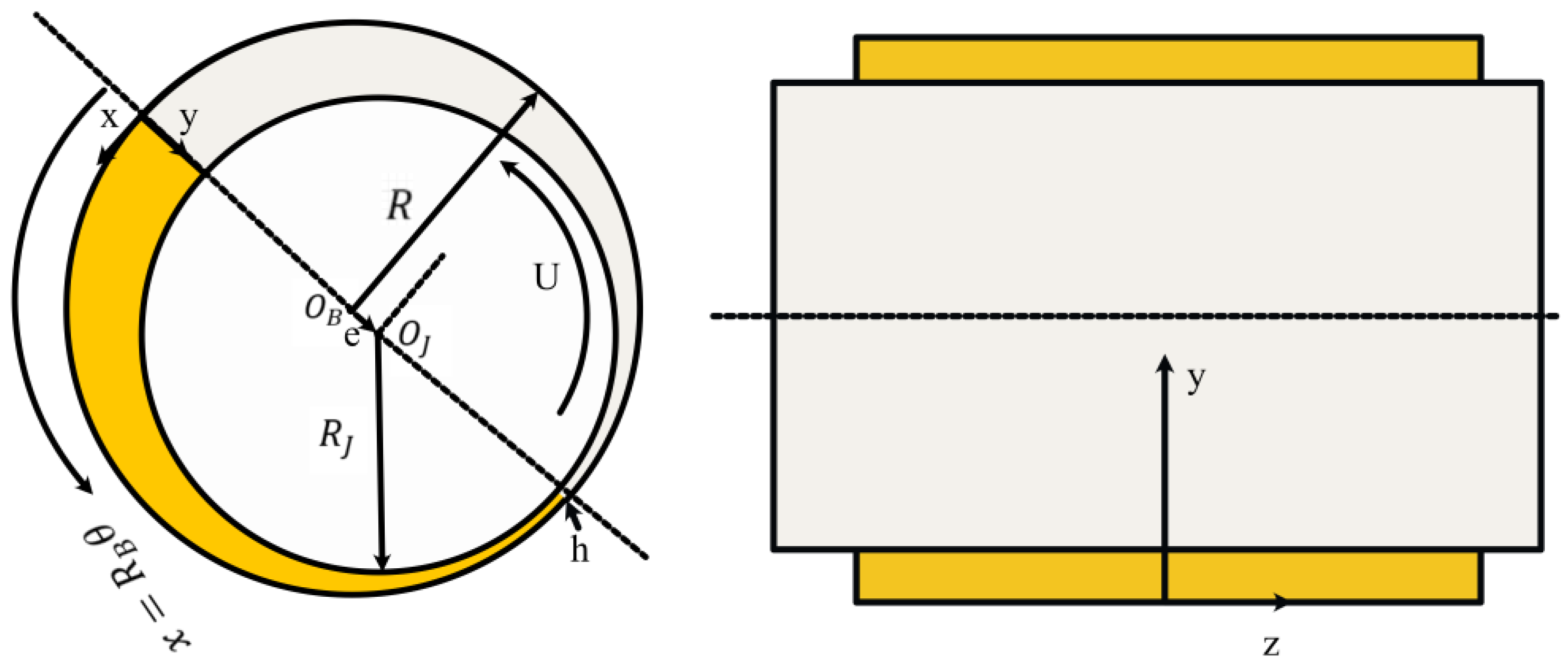
Figure 1, the dashed lines denote symmetry with respect to the y- and z-axes, while the yellow color indicates the lubricant. Based on the general Reynolds equation for a Newtonian incompressible thin fluid film for the long journal bearing,
, the Reynolds equation reduces to the following simplified on-dimensional equation:
For a common long journal bearing with a stationary sleeve, the pressure wave is derived by a double integration of Equation (2). After the first integration, the following explicit expression for the pressure gradient is obtained:
Here,
is a constant of integration. In this equation, a regular derivative replaces the partial one, because in a long bearing, the pressure is a function of one variable,
, only. The constant,
, can be replaced by
, which is the film thickness at the point of peak pressure. At the point of peak pressure,
Substituting condition (4), in Equation (3) results in
, and Equation (3) becomes
Equation (5) has one unknown, , which is determined later from additional information about the pressure wave.
The expression for the pressure distribution (pressure wave) around a journal bearing along the x direction is obtained by integrating Equation (5), which introduces an additional unknown, namely the constant of integration. By applying the two boundary conditions of the pressure wave, the two unknowns, and the second integration constant, can be determined.
The pressures at the start and at the end of the pressure wave are usually used as boundary conditions. However, in certain cases the locations of the start and the end of the pressure wave are not obvious. For example, the fluid film of a practical journal bearing involves a fluid cavitation. Replacing
by an angular coordinate
,
is the radius of the bearing,
Equation (5) takes the form
For the integration of Equation (7), the boundary condition at the start of the pressure wave is required. The pressure wave starts at , and the magnitude of pressure at is can be very close to atmospheric pressure, or much higher if the lubricant is fed into the journal bearing by an external pump.
The film thickness,
, as a function of
, for a journal bearing is given in
, where
is the eccentricity ratio (
). After the substitution of this expression into Equation (7), the pressure wave is given by
The pressure, , is determined by the oil supply pressure (inlet pressure). In a common journal bearing, the lubricant is supplied through a hole in the sleeve, at . The lubricant can be supplied by gravitation from a lubricant container or by a high-presure pump. In the first case, is only slightly above atmospheric pressure and can be approximated as . However, if an external pump supplies the lubricant, the pump pressure (at the bearing inlet point) determines the value of . In industry, there are often central lubricant circulation systems that provide lubricants under pressure for the lubrication of many bearings.
When the length of a journal bearing is larger than its diameter, this journal bearing can be classified as the long journal bearing (LJB). The theoretical pressure distribution of a plain LJB was obtained by solving the Reynolds equation with the full-Sommerfeld boundary condition, as given below:
where
is the eccentricity ratio between the centerline of the journal and bearing. θ is a circumferential coordinate measured directly from the line of centers, i.e., the maximum film thickness at
and the minimum film thickness at
. Note that from
to
the sine function gives negative pressure. The full-Sommerfeld boundary condition is for the full-Sommerfeld
bearing [
22]. The full-Sommerfeld boundary condition assumes
. The gauge pressure
is a
periodic function of
[
23]. It is asymmetric with respect to the position of minimum film thickness
[
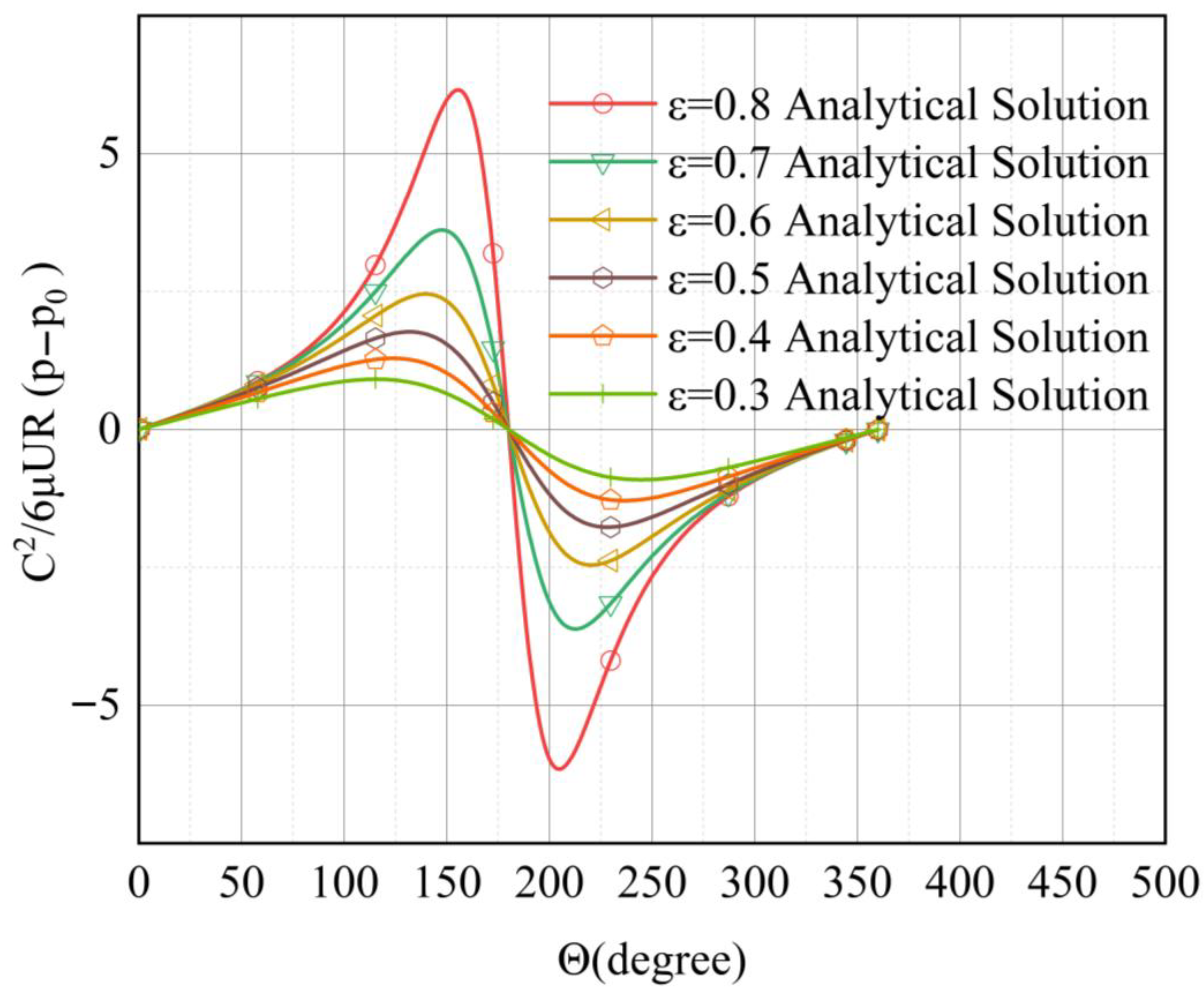
22]. According to theory, below-ambient pressures of the same order of magnitude as the above-ambient pressure are generated, as shown in
Figure 2.
However, in real applications, the negative pressure is compensated for by the cavitation in the radial clearance. Cavitation is the formation of bubbles when the vapor pressure is higher than the fluid pressure [
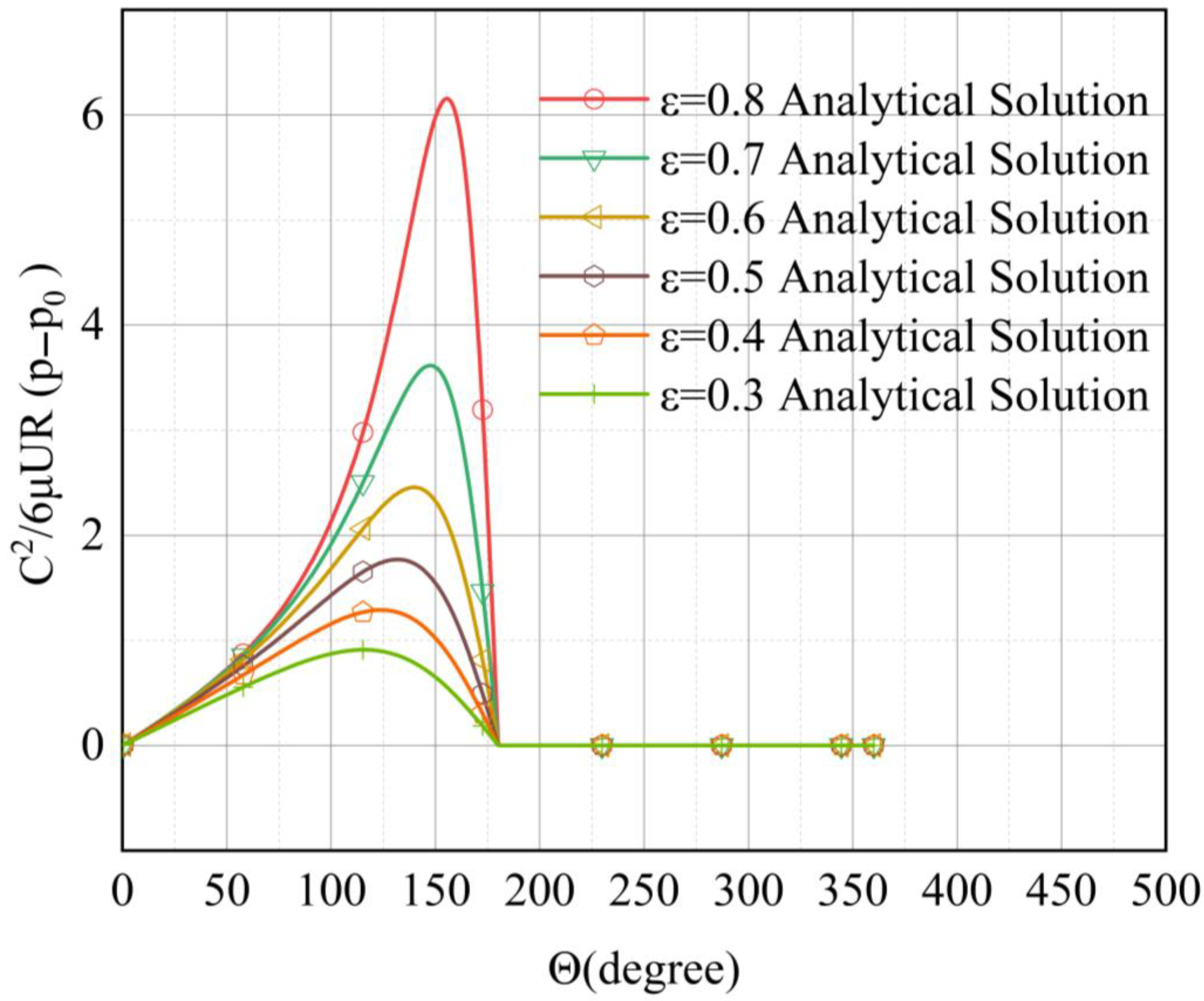
23]. The cavitation usually disappears quickly with gas or vapor dissolving in the film. Taking the cavitation effect into account, Gumbel proposed the half-Sommerfeld boundary condition [
24,
25]. The pressure distribution is shown in
Figure 3.
and
The pressure distribution was summarized as below:
The bearing friction force is the viscous resistance force to the rotation of the journal due to high shear rates in the fluid film. This force acts in the tangential direction of the journal surface and results in a resistance torque to the rotation of the journal. The friction force was defined as the ratio of the friction torque, to the journal radius, .
Power loss is an essential variable for bearing design whose definition is the product of friction torque.
or the product of the friction force
. The power loss was calculated as follows [
26]:
The bearing friction force,
, is the viscous resistance force to the rotation of the journal due to high shear rates in the fluid film. This force is acting in tangential direction of the journal surface and results in a resistance torque to rotation of the journal. The friction force is defined as the ratio of the friction torque,
, to the journal radius,
:
The force is derived by the integration of the shear stresses over the area of the journal surface, at
, around the bearing. The shear stress distribution at the journal surface (shear at the wall,
) around the bearing, is derived from the velocity gradient, as follows:
The friction force is obtained by integration, as follows:
After substituting
in Equation (16), the friction force becomes
Upon the substitution of the value of the shear stress, Equation (17) becomes
If we apply the integral definitions in
Appendix A Equation (A13), the expression for the friction force becomes
The integrals
are functions of the eccentricity ratio. Substituting the solution of the integrals,
, in
Appendix A, Equations (A16)–(A20) result in the following expression pertaining to the friction force:
Substituting Equation (20) into Equation (13) yields
The power loss is proportional to with same dimension of the bearing and eccentricity ratio.
The pressure distribution can be employed to obtain the radial applied loads, under the half-Sommerfeld boundary condition (Equation (12)). Based on Booker’s journal bearing integral tables [
24,
25,
26], the journal bearings applied loads in the radial directions; the x and y coordinates in radial direction, are given as follows:
where
,
,
, and
respectively, denote the load in
direction, the total load, and the bearing length.
The load capacity components can be solved by integrating Equations (22) and (23), where
is substituted from Equation (9). However, the derivation can be simplified is the load capacity components are derived directly from the basic
Appendix A Equation (A9) of the pressure gradient. In this way, there is no need to integrate the complex Equation (9) of the pressure wave. This can be accomplished by employing the following identity for product derivation:
Integrating and rearranging Equation (26) results in
In order to simplify the integration of Equation (22) for the load capacity component
, the substitutions
and
are made. This substitution allows the use of the product rule in Equation (27), and the integral in Equation (22) results in the following terms:
In a similar way, for the load capacity component,
in Equation (23), the substitutions
and
result in
Equations (28) and (29) indicate that the load capacity components in Equations (22) and (23) can be solved directly from the pressure gradient. By using this method, it is not necessary to solve the pressure wave in order to find the load capacity components (it offers the considerable simplification of one simple integration instead of a complex double integration). The first term, on the right-hand side in Equations (28) and (29) are zero, when integrated around a full bearing, because the pressure, , is the same at and .
The integration of the last term in Equation (28), in the boundaries and , indicates that the load component, , is zero. This is because it is an integration of an antisymmetric function around the bearing (the function is antisymmetric on the two sides of the centerline , which cancel each other).
The integration of Equation (23) with the aid of identity (29), and using the value of
in
Appendix A Equation (A15) results in
Substituting for the values of
and
as a function of
yields the following expression for the load capacity component,
. The other component is
; therefore, for the Sommerfeld conditions,
is equal to the total load capacity,
:
By substituting Equation (32) into Equation (1), the Sommerfeld number becomes a function of the eccentricity ratio:
The Sommerfeld number is a nonlinear, monotonically decreasing function of the eccentricity ratio . As approaches zero, increases without bound, corresponding to a near-concentric (lightly loaded) operation. As approaches unity, tends toward zero, indicating heavily loaded conditions as the journal approaches the bearing surface.
2.1. STAR-CCM+ (16.06.008) Simulation Setup Model
Traditional approaches to studying liquid film bearings typically categorize the flow within the film as either laminar or turbulent. This assumption is primarily due to the lack of satisfactory accuracy in understanding the transient conditions and operating characteristics within this transient range, especially underloaded conditions.
This section aimed to highlight and demonstrate the practical significance of the transitional zone between the laminar and fully turbulent flow, particularly concerning loaded bearings. To achieve this goal, approximation techniques were applied, coupled with suitable numerical methods for solving the pressure difference equation.
The computer program was developed by Frene and Constantinescu for journal bearings [
21]. The program employed a super-relaxation procedure and Swift–Steiber boundary conditions. The program outputs are dimensionless load
and friction coefficient
. The dimensionless load and friction were defined as follows:
where
is the lubricant viscosity,
is the friction torque, and
L,
C, and
are the bearing length, clearance, and radius, respectively.
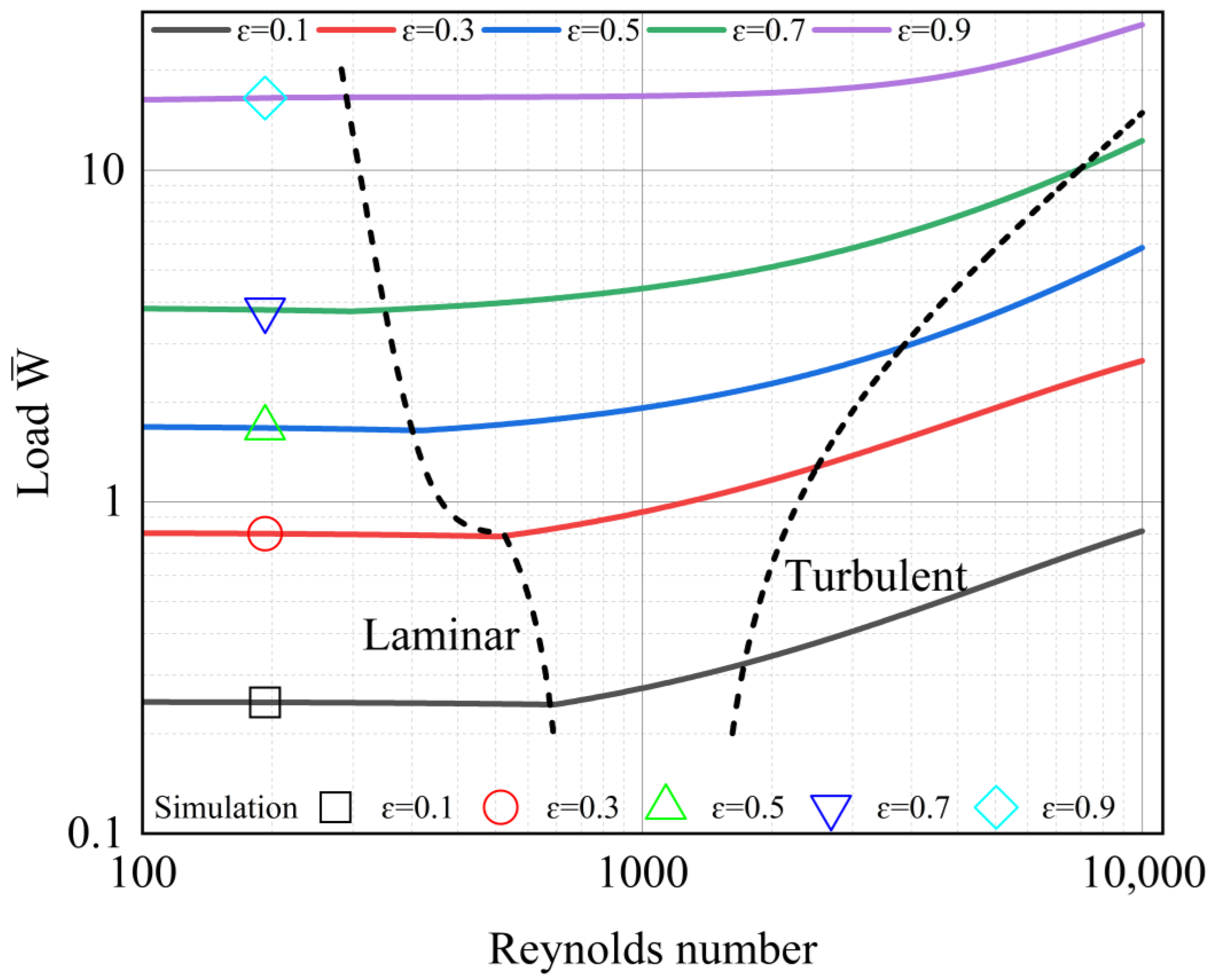
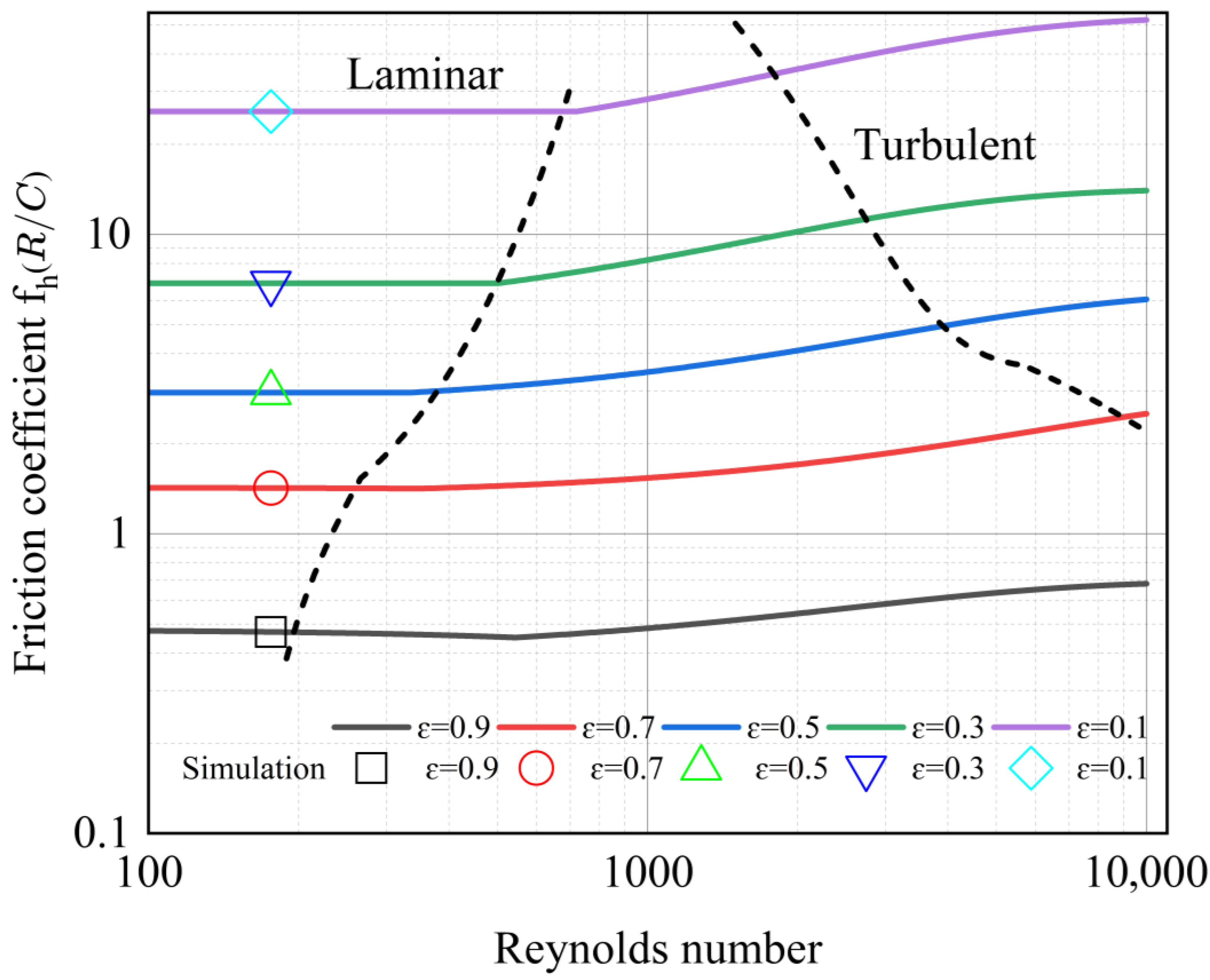
As shown in
Figure 4 and
Figure 5, the journal bearing dimensionless load/friction coefficient were compared the Reynolds number defined with respect to the radial clearance which is based on Frene’s computer program, as follows:
for various eccentricity ratios where
is the lubricant density.
The scatter points are based on Smith’s plain bearing model [
7] with different eccentricity ratios. The bearing has
and
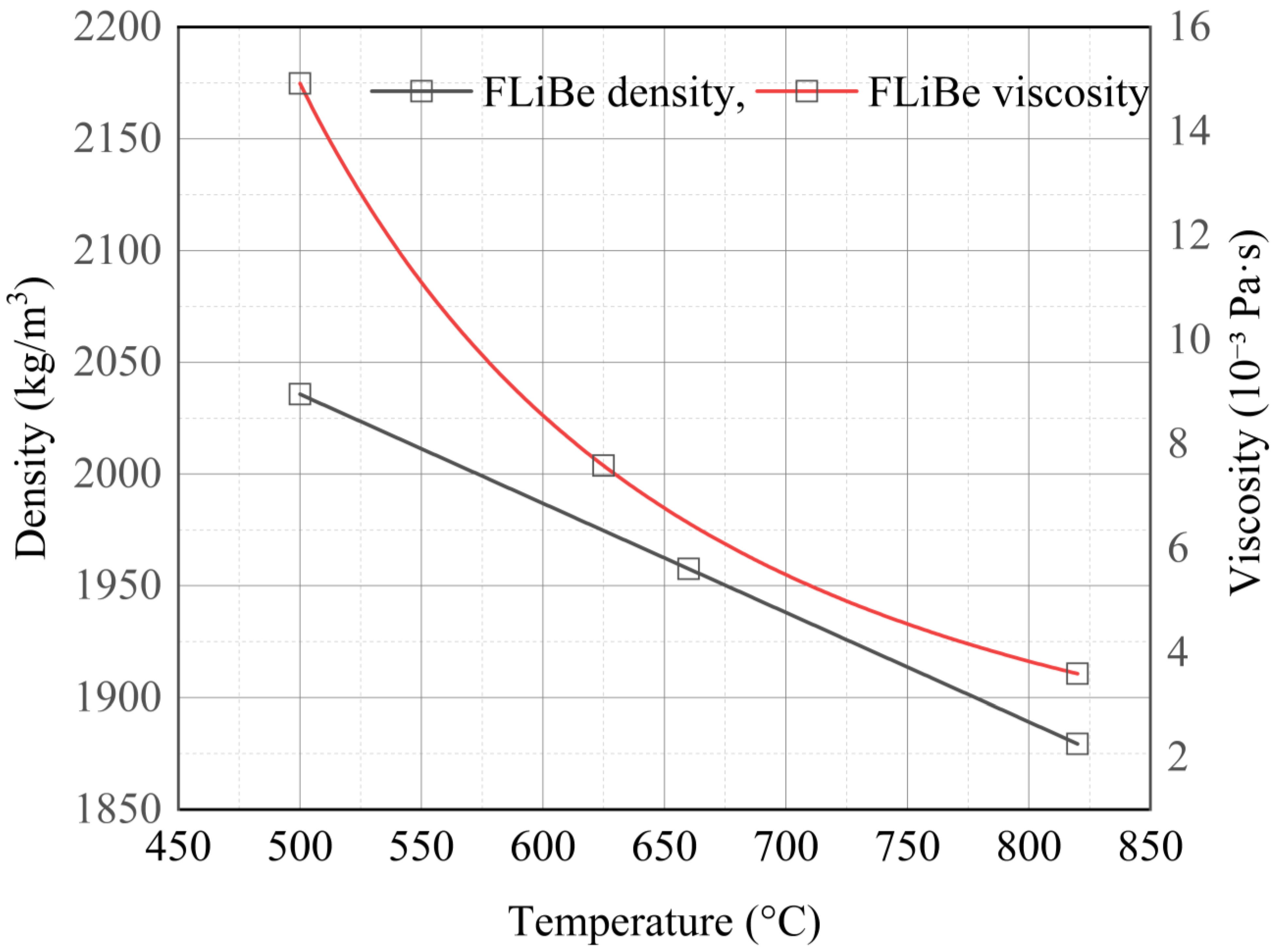
. FLiBe was used as the lubricant in the model at 649 °C and 101 kPa and the dynamic viscosity and density are 0.00793 Pa∙s and 1956 kg/m
3, respectively [
10,
11,
12]. The shaft speed is 1750 rpm. The scatter points are from the STAR-CCM+ (16.06.008) simulation.
Comparisons of the STAR-CCM+ (16.06.008) simulation with Laminar model results and Frene and Constantinescu’s analytical solution, as shown in
Figure 4 and
Figure 5 [
21], indicate the journal bearing models were located at the Laminar regime. The Root Mean Square Error (RMSE) is below 0.01, as shown in
Table 1.
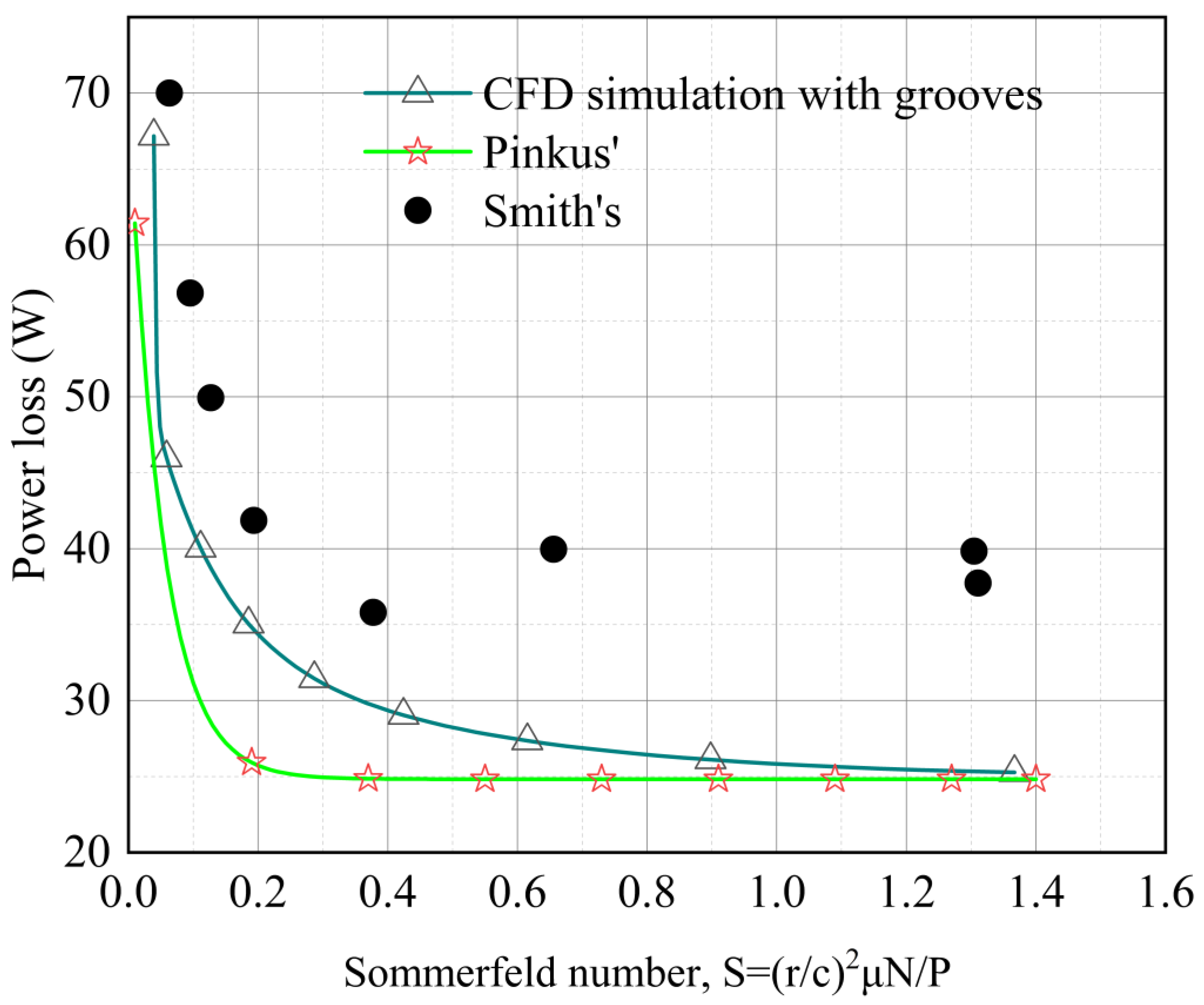
Since the journal bearing geometries of commercial-scale FHR pump designs are seldom reported in publicly available sources, a publicly documented molten salt bearing study is used as an engineering-scale reference, which reports a hydrodynamic journal bearing with R = 38.1 mm and L = 76.2 mm (L/D = 1) [
7]. Commercial-scale FHR concepts typically specify primary pump rated speeds of approximately 1200 rpm [
13]; therefore, the operating range considered here (up to 1750 rpm) spans representative reactor-relevant conditions. The dimensionless load and power loss relations follow established analytical formulations and provide a baseline for assessing numerical fidelity. On this basis, the STAR-CCM+ (16.06.008) simulations using a laminar flow model are appropriate for the present scalability analysis and reproduce the analytical trends with good agreement, supporting the reliability of the numerical approach within the laminar regime.
2.2. Numerical Simulations
In the present study, STAR-CCM+ (16.06.008) was employed for all CFD simulations. The setup parameters utilized in STAR-CCM+ (16.06.008) are detailed in
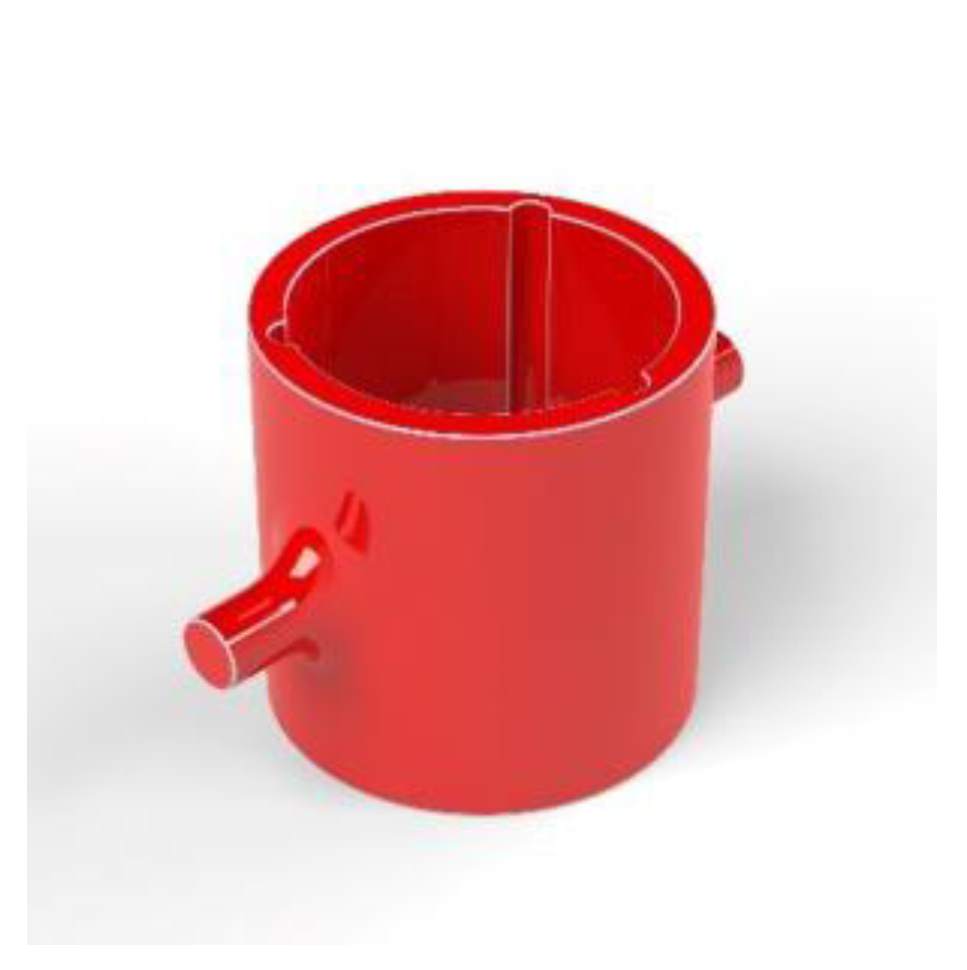
Table 2. The simulation employed a thin-layer mesh model with a laminar flow assumption, combined with stagnation inlet and pressure outlet boundary conditions set at 0 Pa. These settings ensure numerical stability and provide a consistent baseline for analyzing the lubrication film pressure distribution and flow behavior in molten-salt-lubricated bearings. As illustrated in
Figure 6, the boundary conditions for the journal bearing model were established with both the pressure inlet and outlet set to zero Pascal, ensuring a consistent reference for the analysis. The journal bearing mesh was generated using a thin-layer model, which is particularly effective for creating a prismatic volume mesh tailored to thin film volumes. This approach not only enhanced the accuracy of the simulations but also facilitated detailed analysis of the fluid dynamics within the bearing. By employing appropriate meshing techniques and boundary conditions, the study aims to yield reliable results that contribute to a deeper understanding of the performance characteristics of journal bearings in Molten Salt Reactor applications.
2.3. Mesh Independence Study
Our numerical model was rigorously benchmarked against both prior simulations and experimental data [
18], ensuring reliability before applying it to fluoride-salt-lubricated bearings. A critical component of this process was the mesh independence study, designed to achieve an optimal balance between computational expense and solution accuracy. As the mesh is refined, computational cost inevitably increases; thus, the objective is to identify the coarsest mesh that yields results within an acceptable error range for the intended application. Experimental evidence provided important context for model development. Based on Reference [
13], the photographs of the tested bearings revealed multiple degradation mechanisms, including surface scoring, cavitation-induced erosion, and annulus plugging due to salt crystallization. Bearings with very tight clearances (<0.003 in.) frequently experienced seizure, while those with larger clearances (>0.0075 in.) operated stably but with significantly increased leakage [
13]. On this basis, an intermediate clearance of 0.0035 in. was selected for the computational model.
Table 3 summarizes the computational journal bearing model parameters and the physical properties of the lubricant used in STAR-CCM+. The geometrical parameters (shaft diameter, clearance, bearing length, and operating speed) and lubricant properties (dynamic viscosity and density) were derived from experimental tests with FLiBe at 650 °C, ensuring consistency with prototypical FHR operating conditions. These inputs provided the physical foundation for validating CFD predictions against empirical benchmarks.
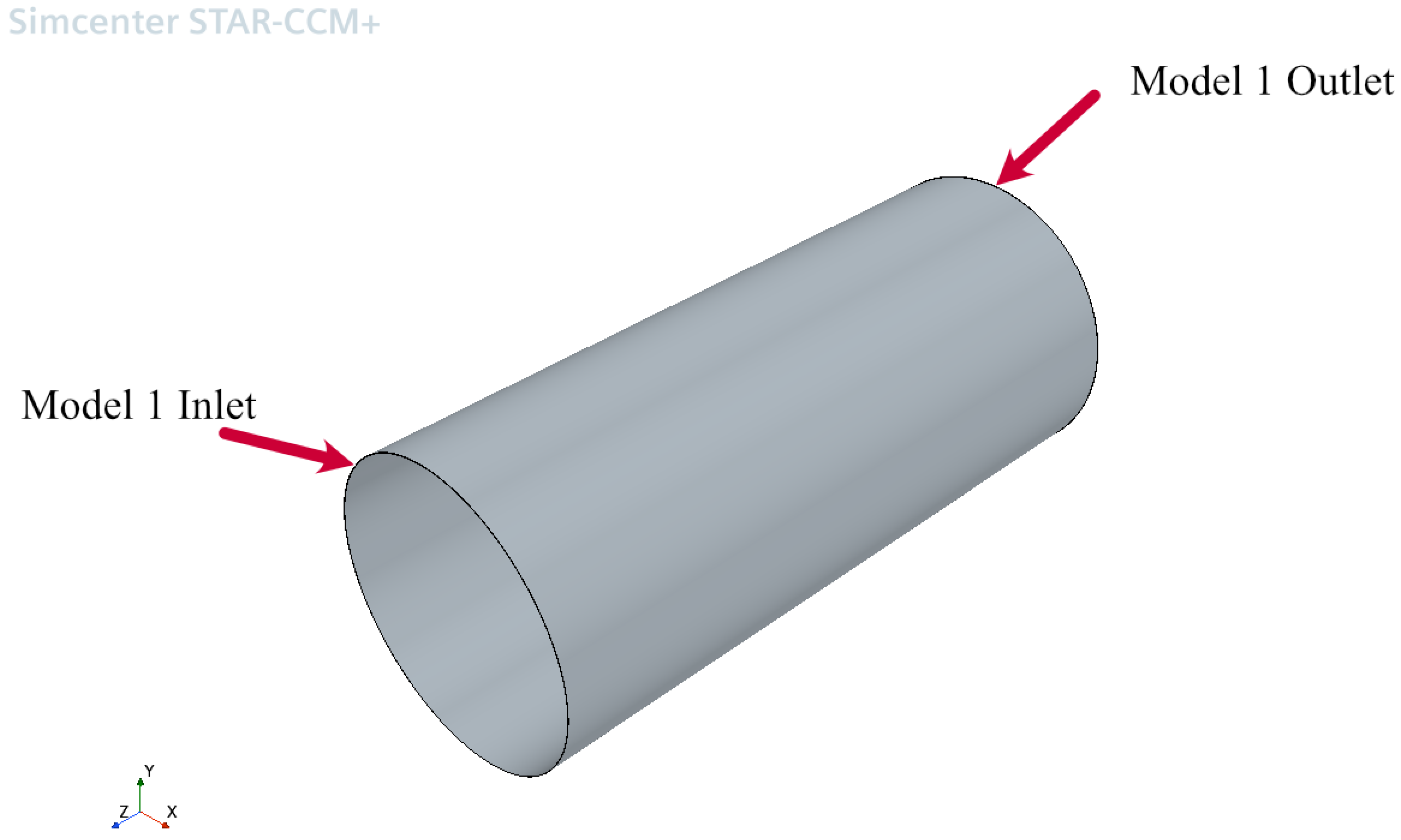
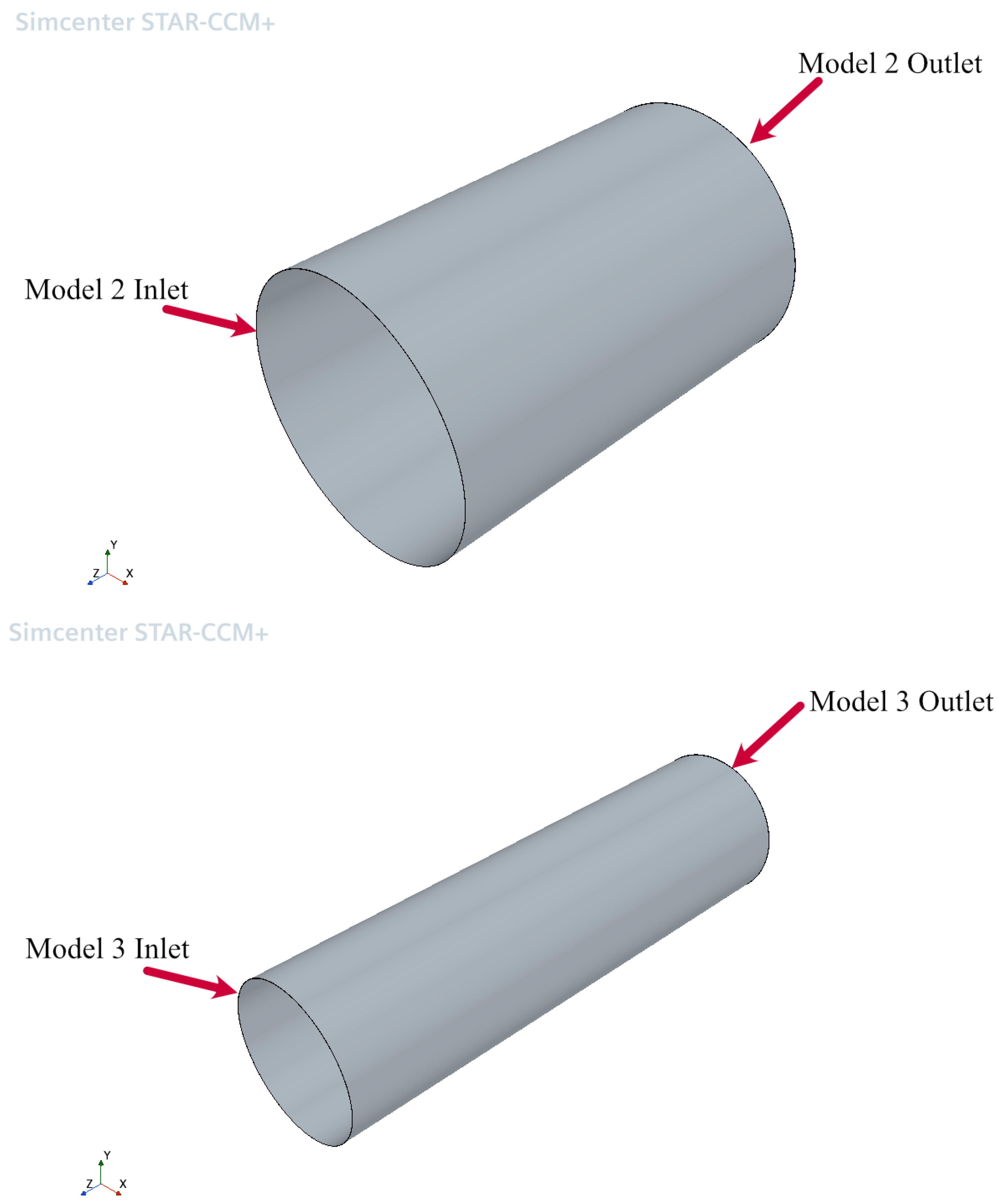
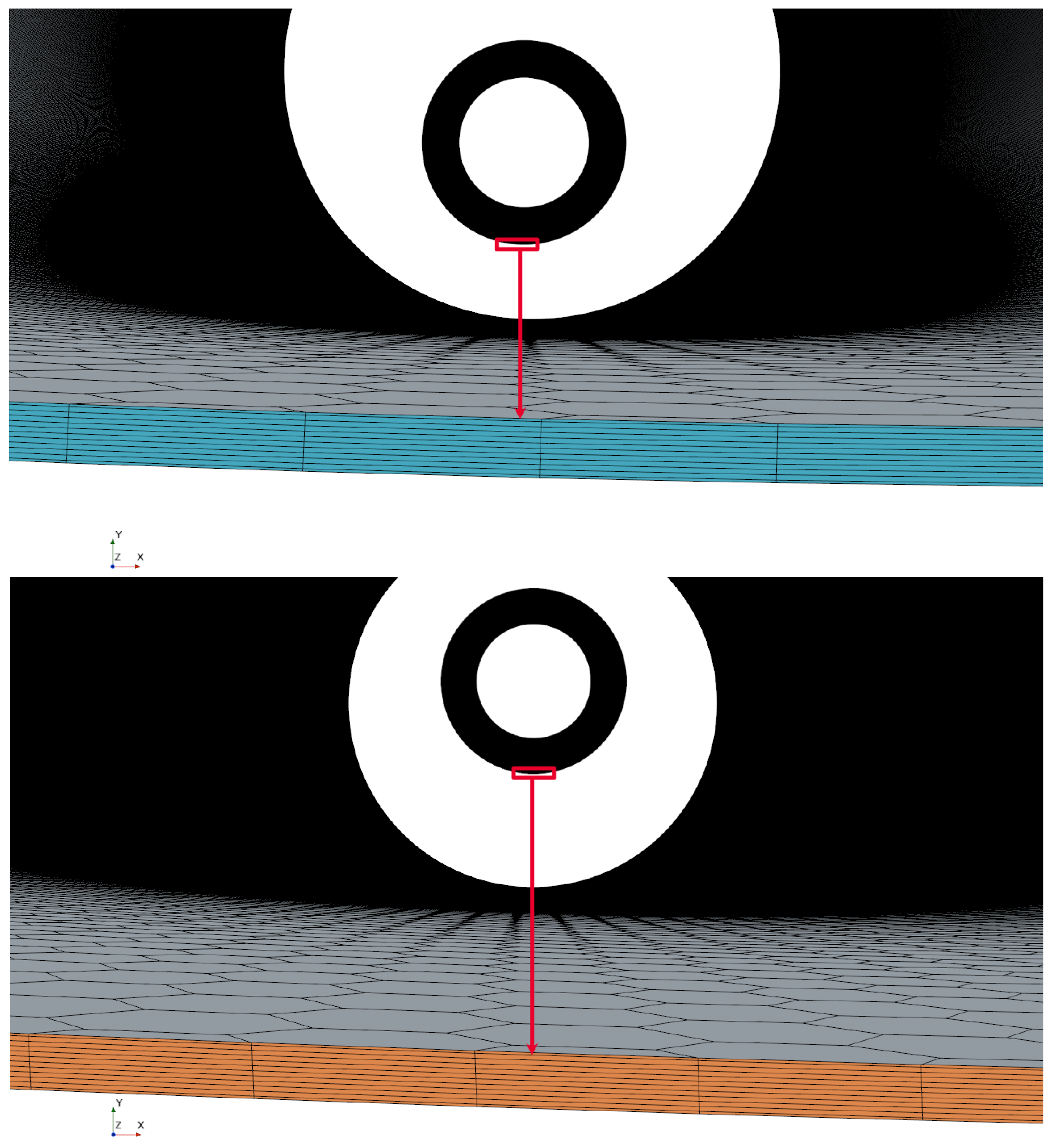
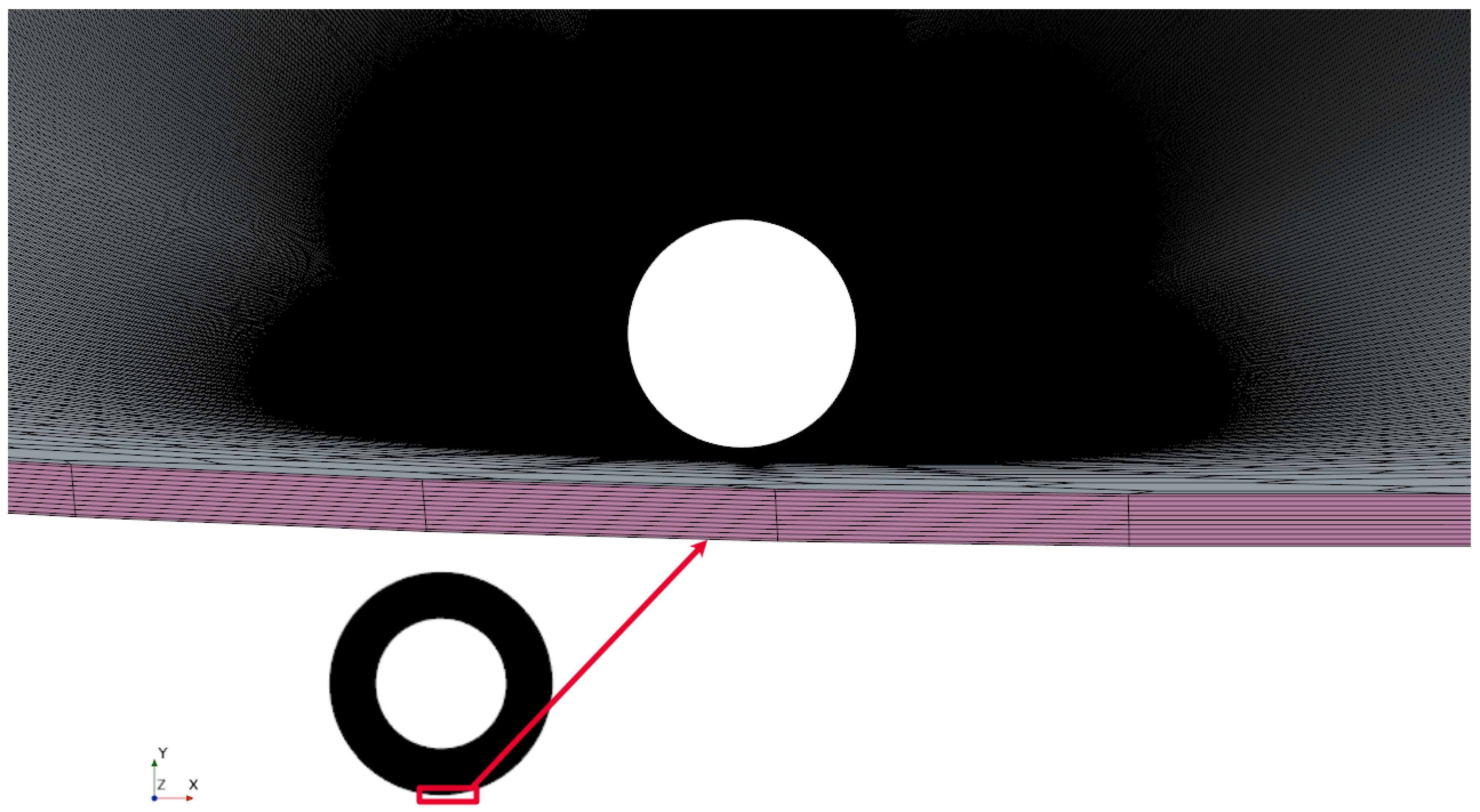
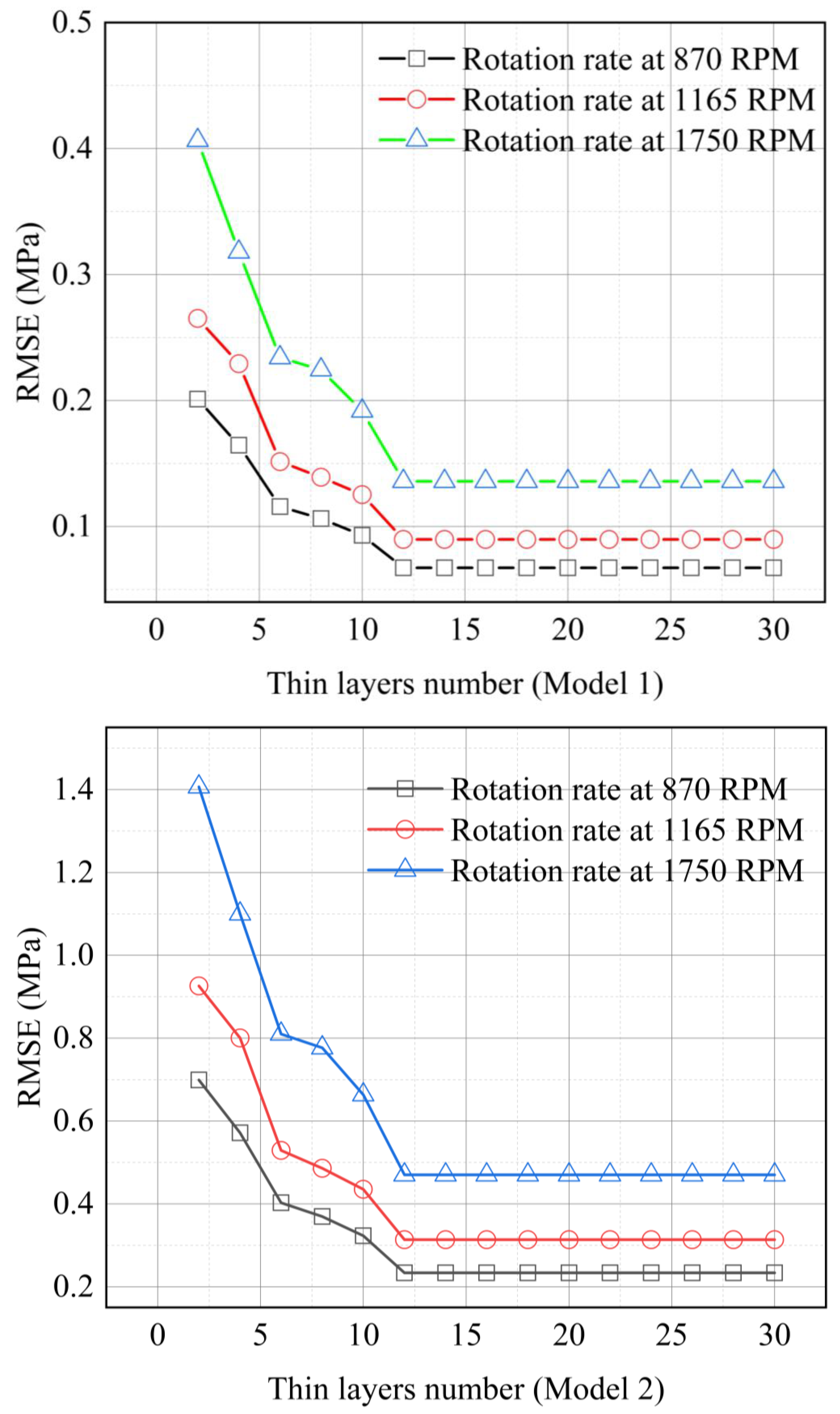
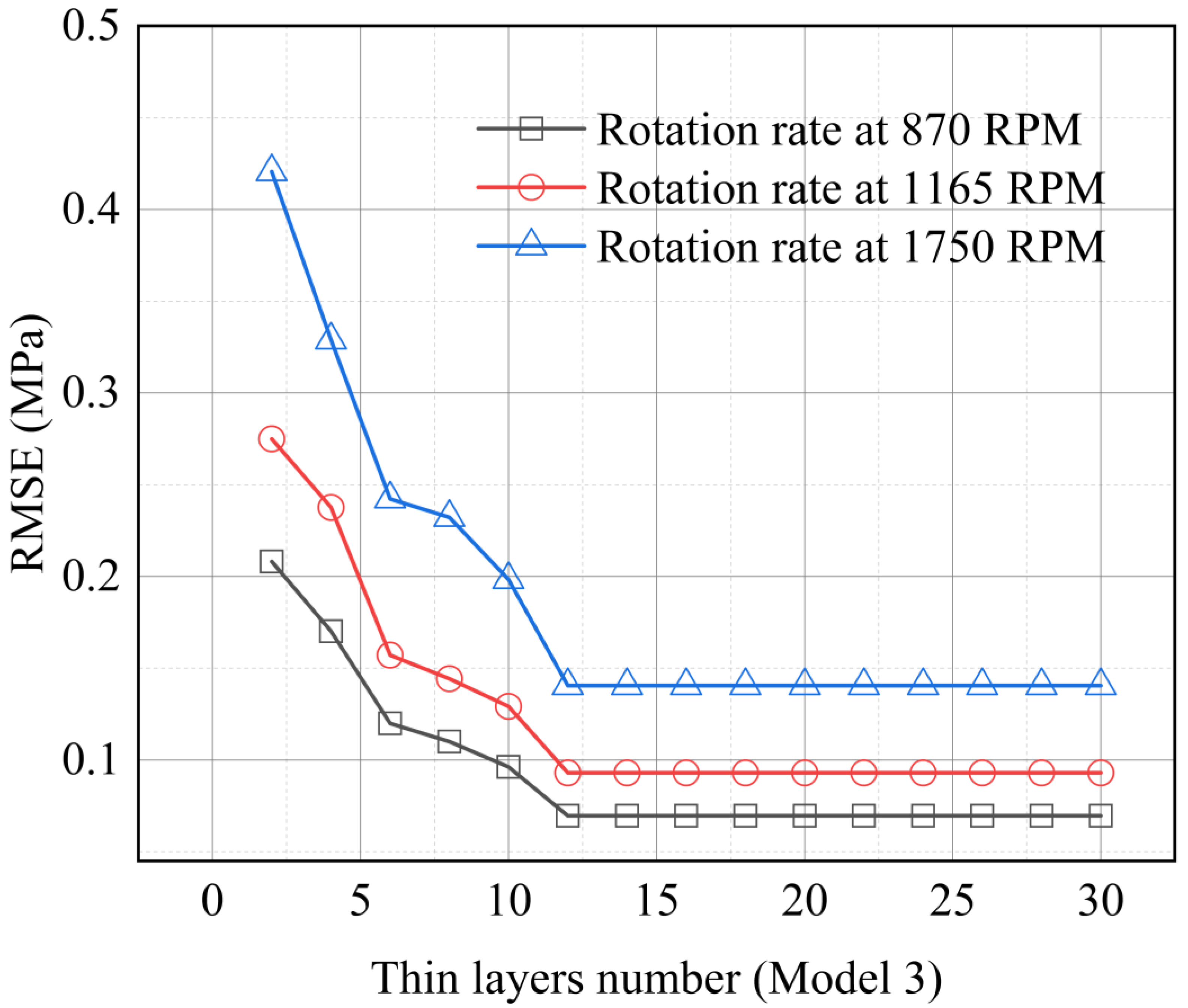
To evaluate mesh sensitivity, we generated a set of CFD meshes with 2–30 thin layers while holding the eccentricity ratio fixed at 0.8 (
Table 4). The base element size was 0.5 mm, and the thin layers were refined specifically within the journal–bearing clearance region (
Figure 7). For Models 1–3, the bearing geometry and FLiBe properties (LiF–BeF
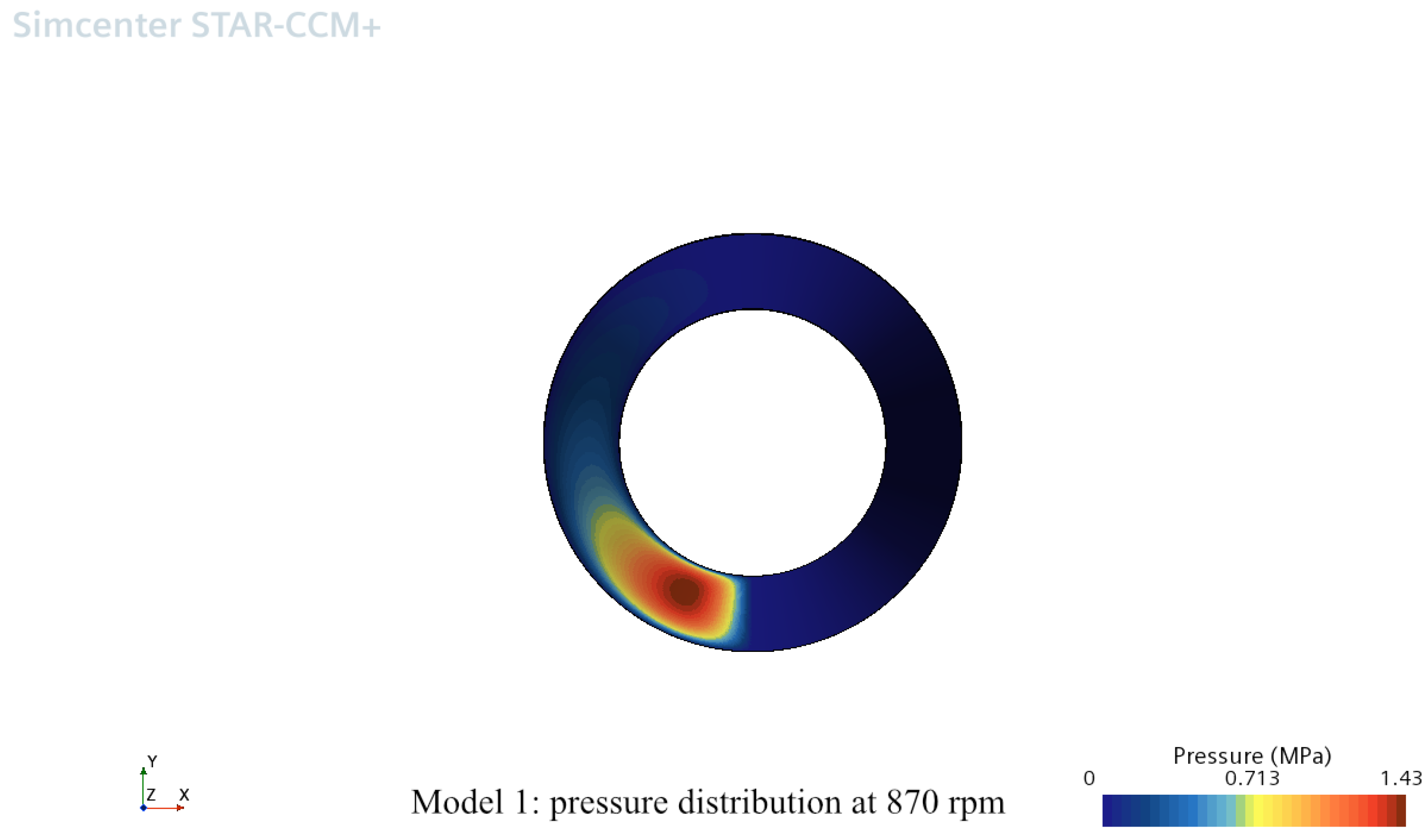
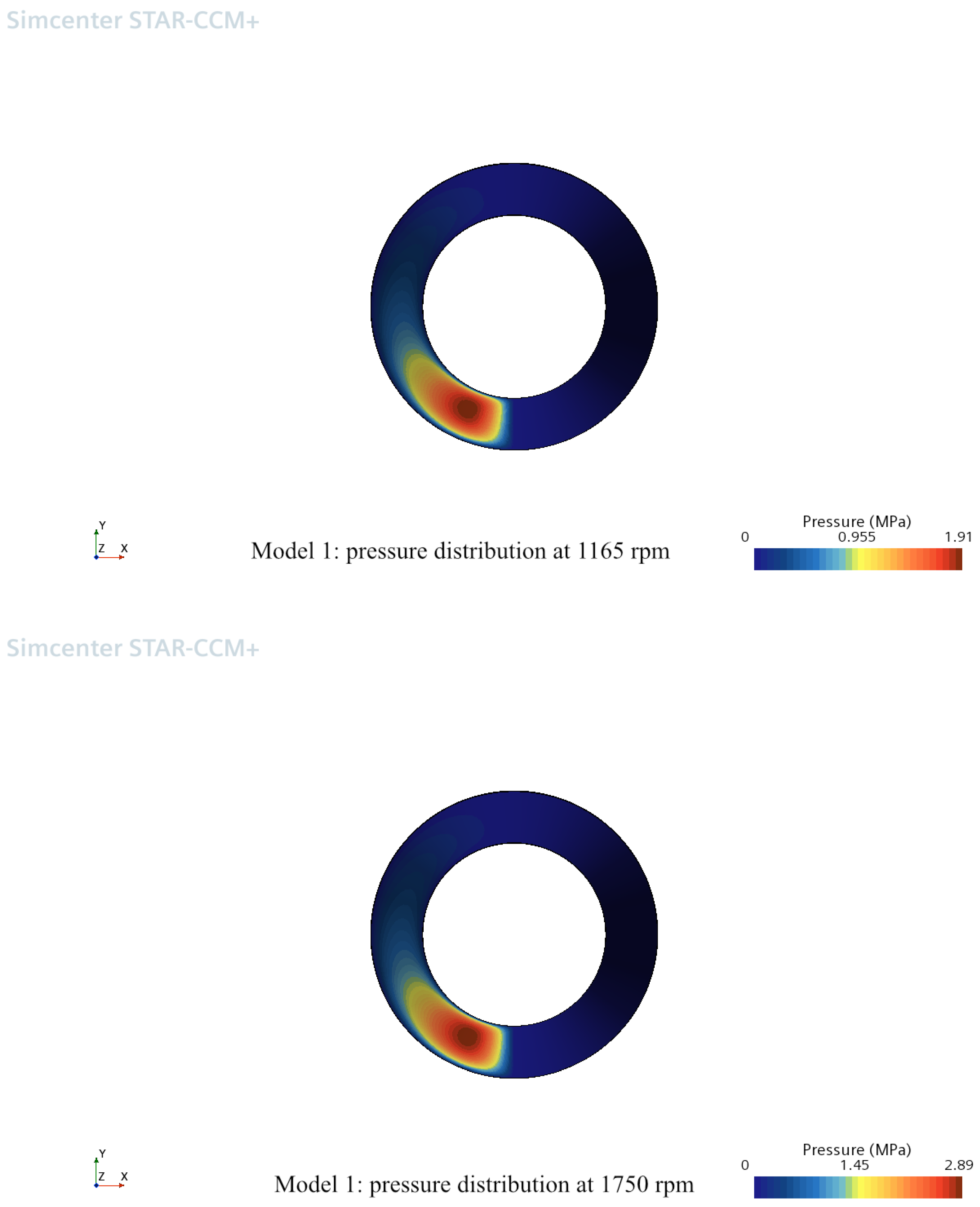
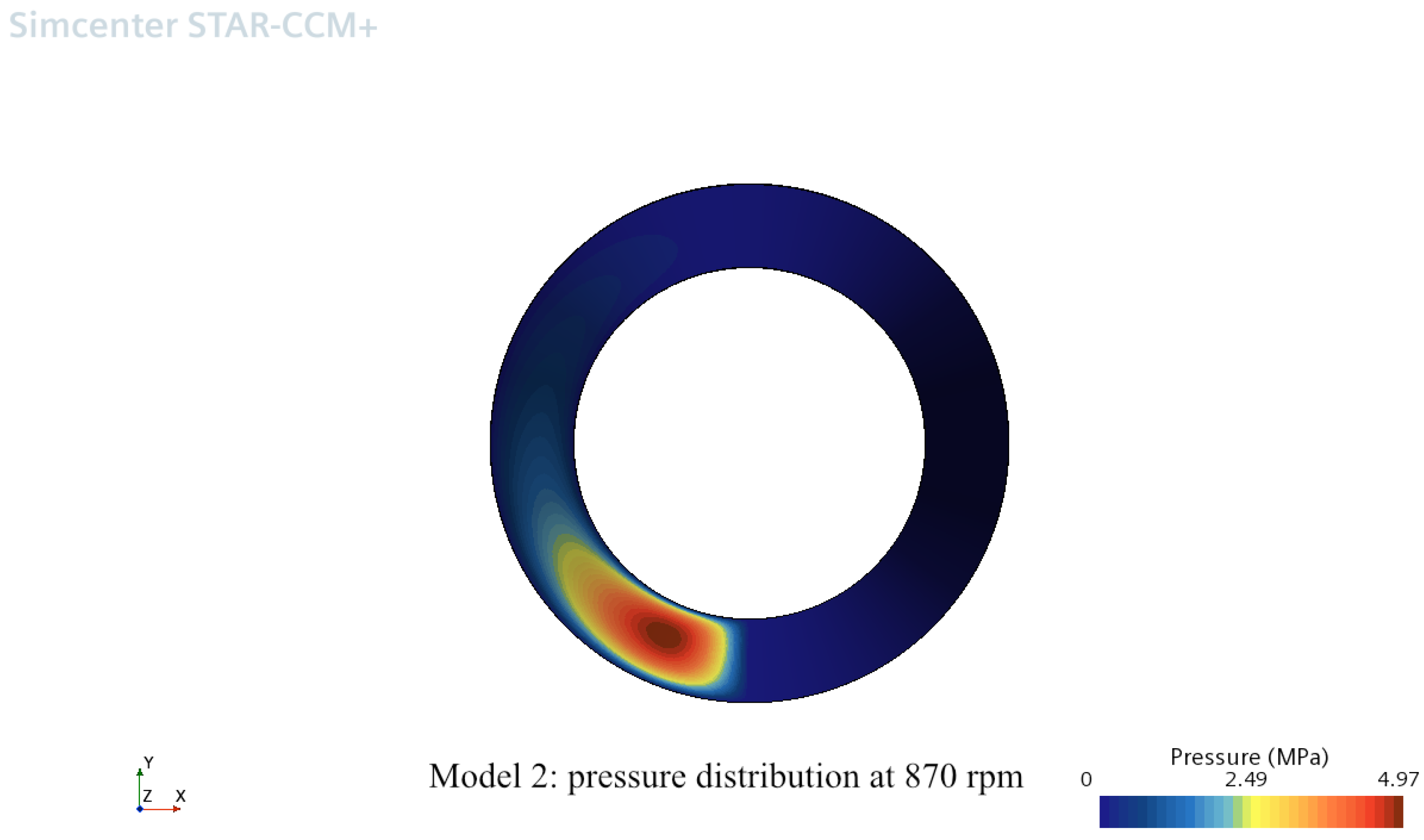
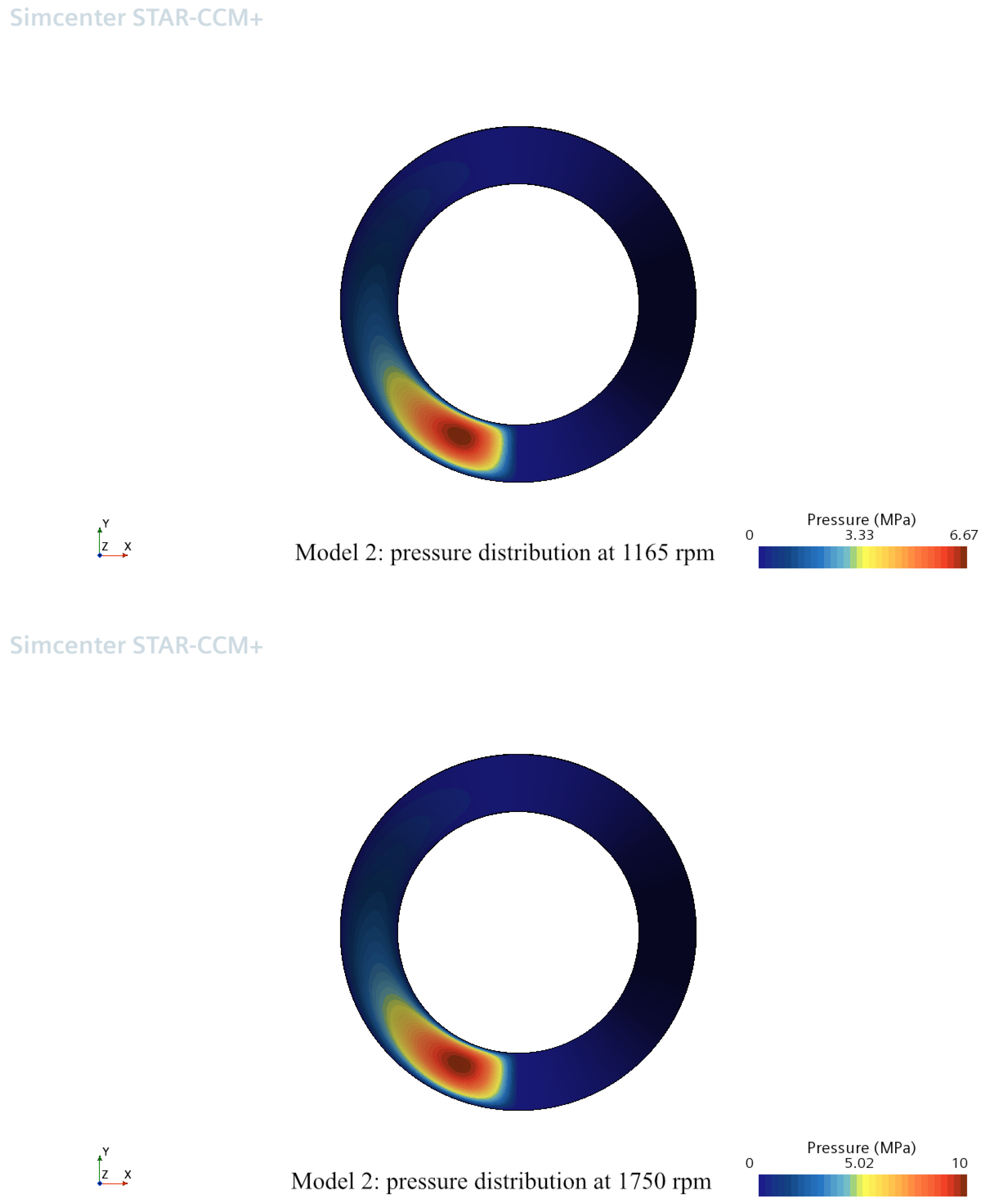
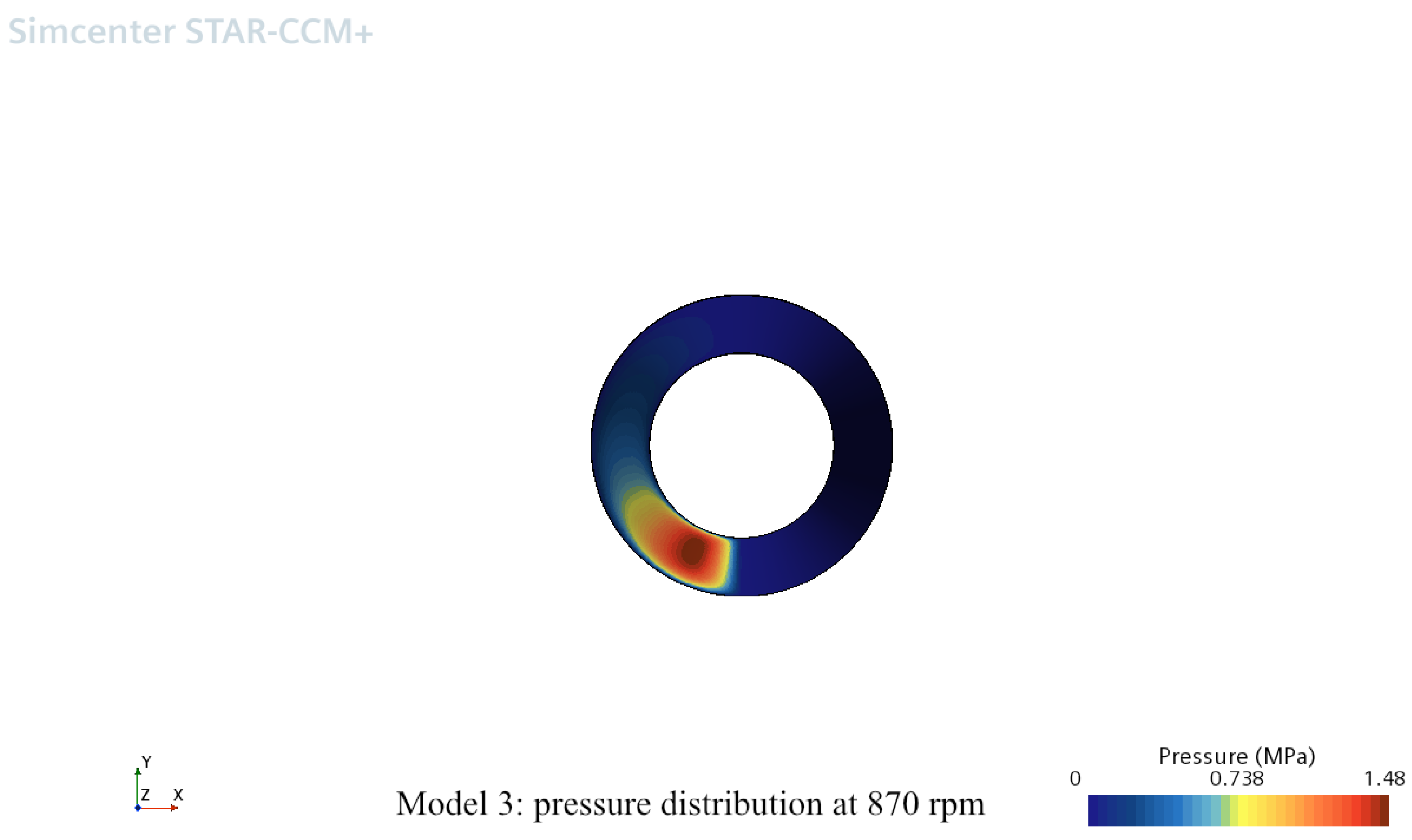
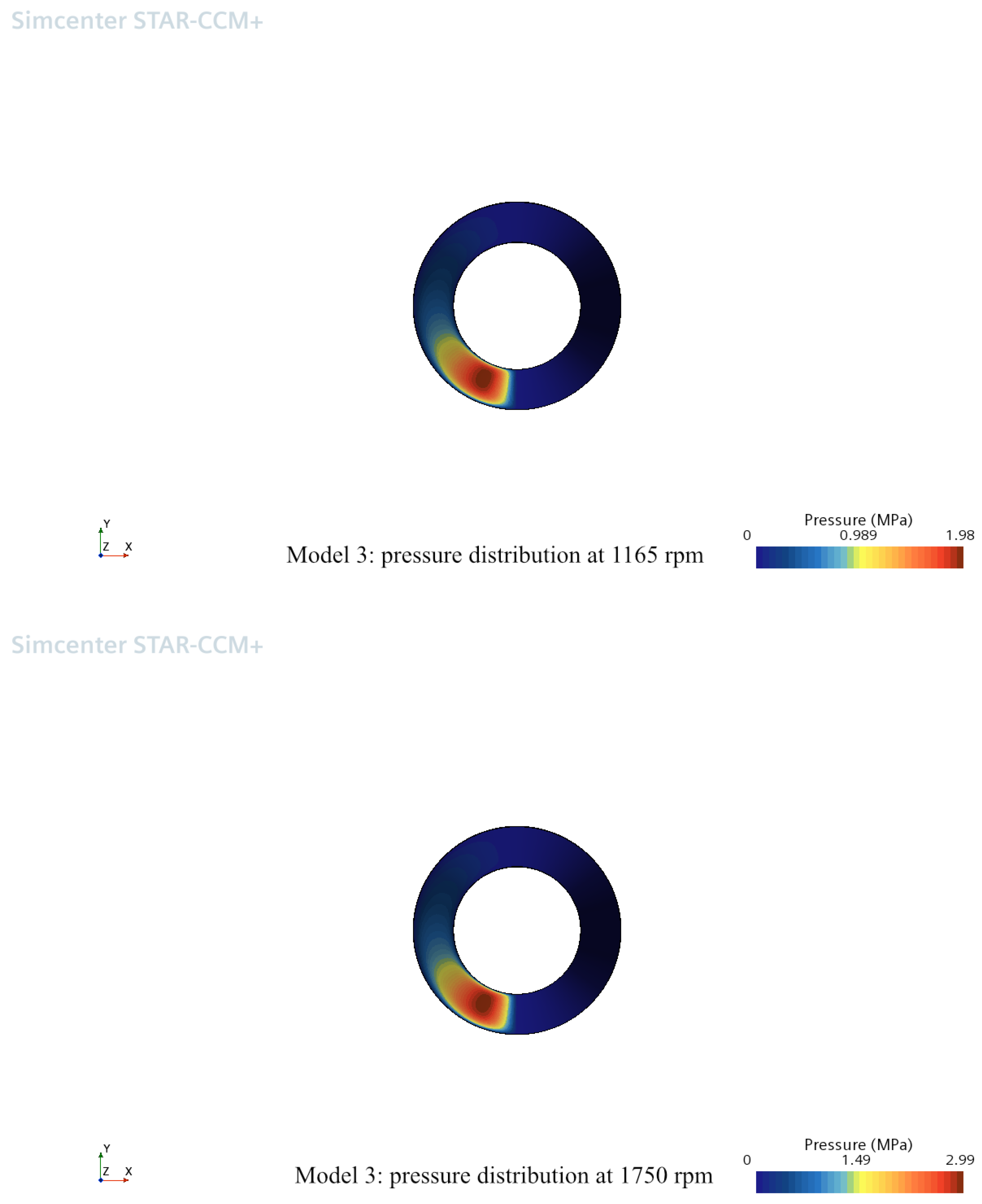
2, 66.7–33.3 mol%) were taken directly from the corresponding experimental test bearings. The mesh refinement study shows that when the mesh includes more than 12 thin layers, the pressure prediction converges by Equation (12): the RMSE drops below 0.5 MPa, indicating an effective trade-off between accuracy and computational cost. This trend is consistent with the comparison of maximum pressure at the central cross-section (
Figure 8,
Figure 9 and
Figure 10) between CFD and experimental measurements (
Figure 11). Accordingly, we adopted 12 thin layers for all subsequent simulations. To further improve clarity, future work could include additional figures showing the eccentricity definition and the final mesh resolution in the clearance region.
4. Conclusions
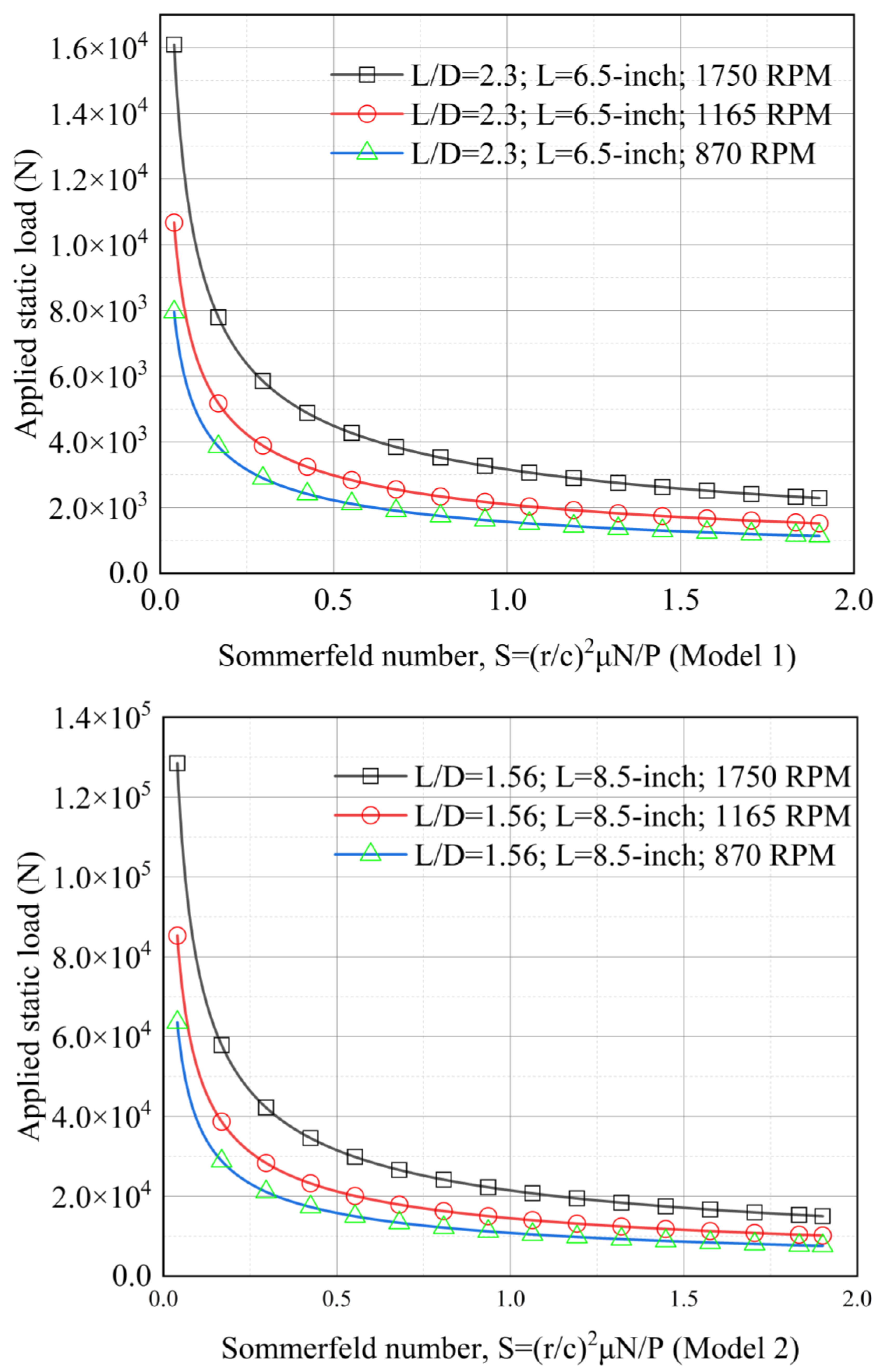
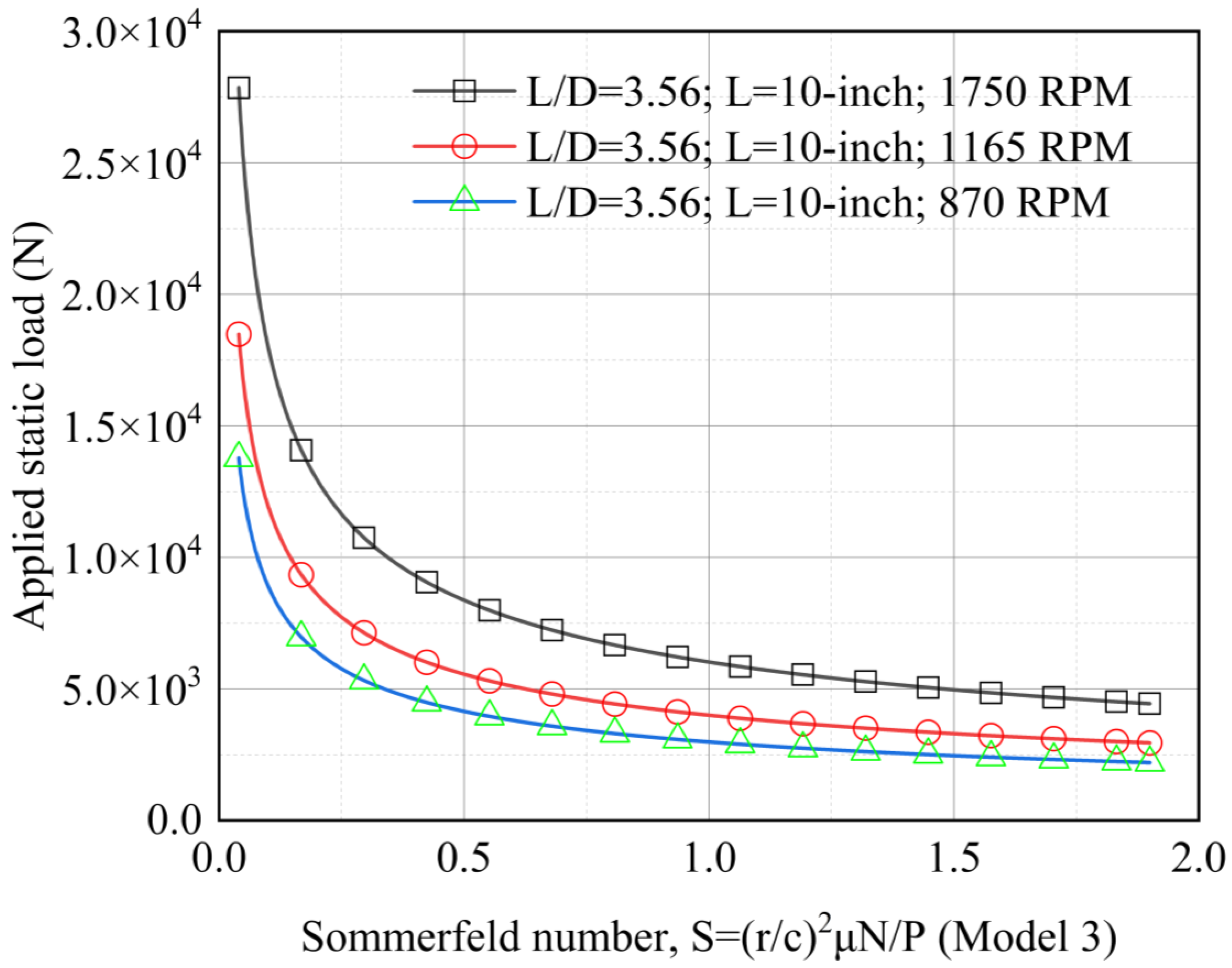
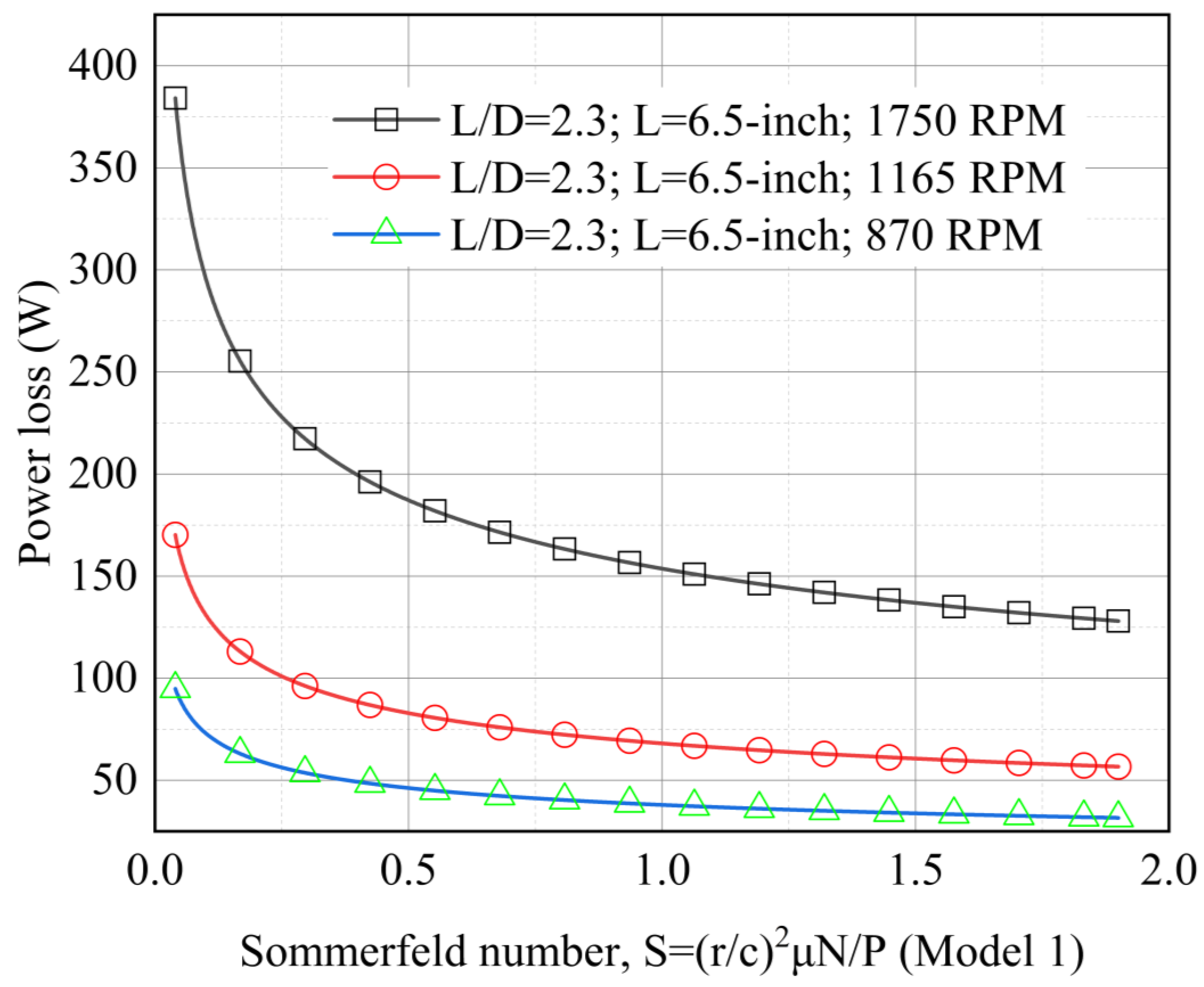
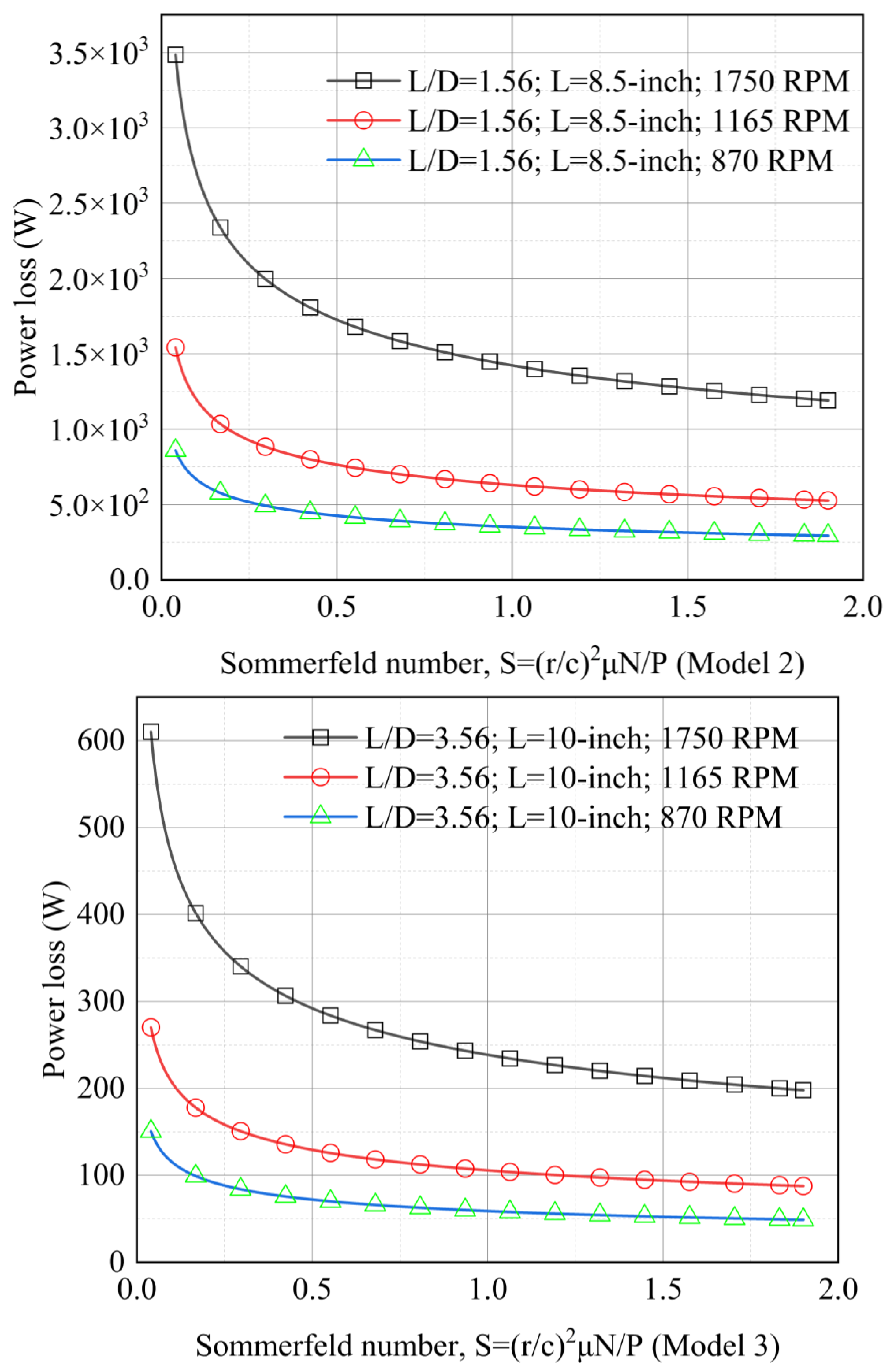
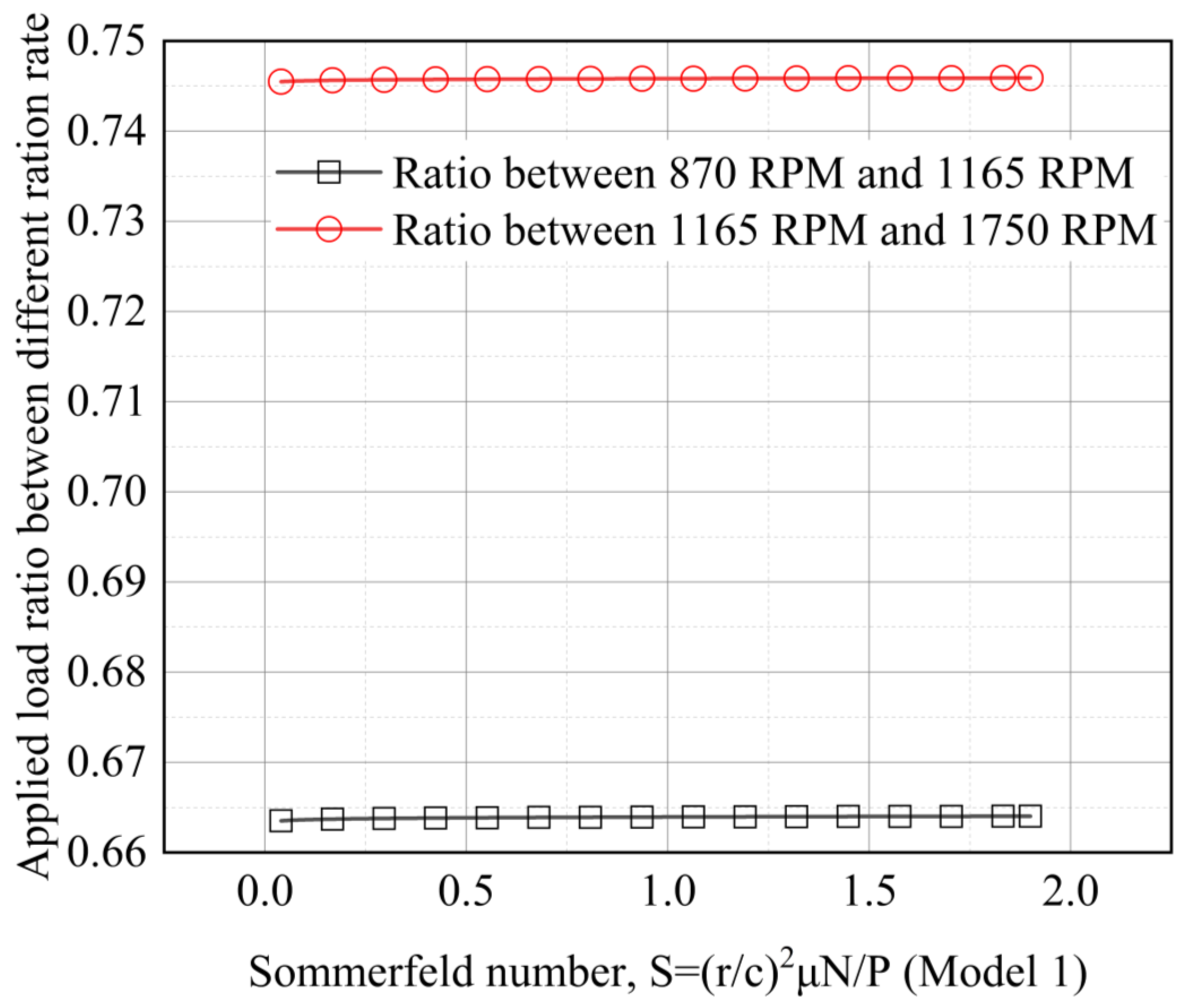
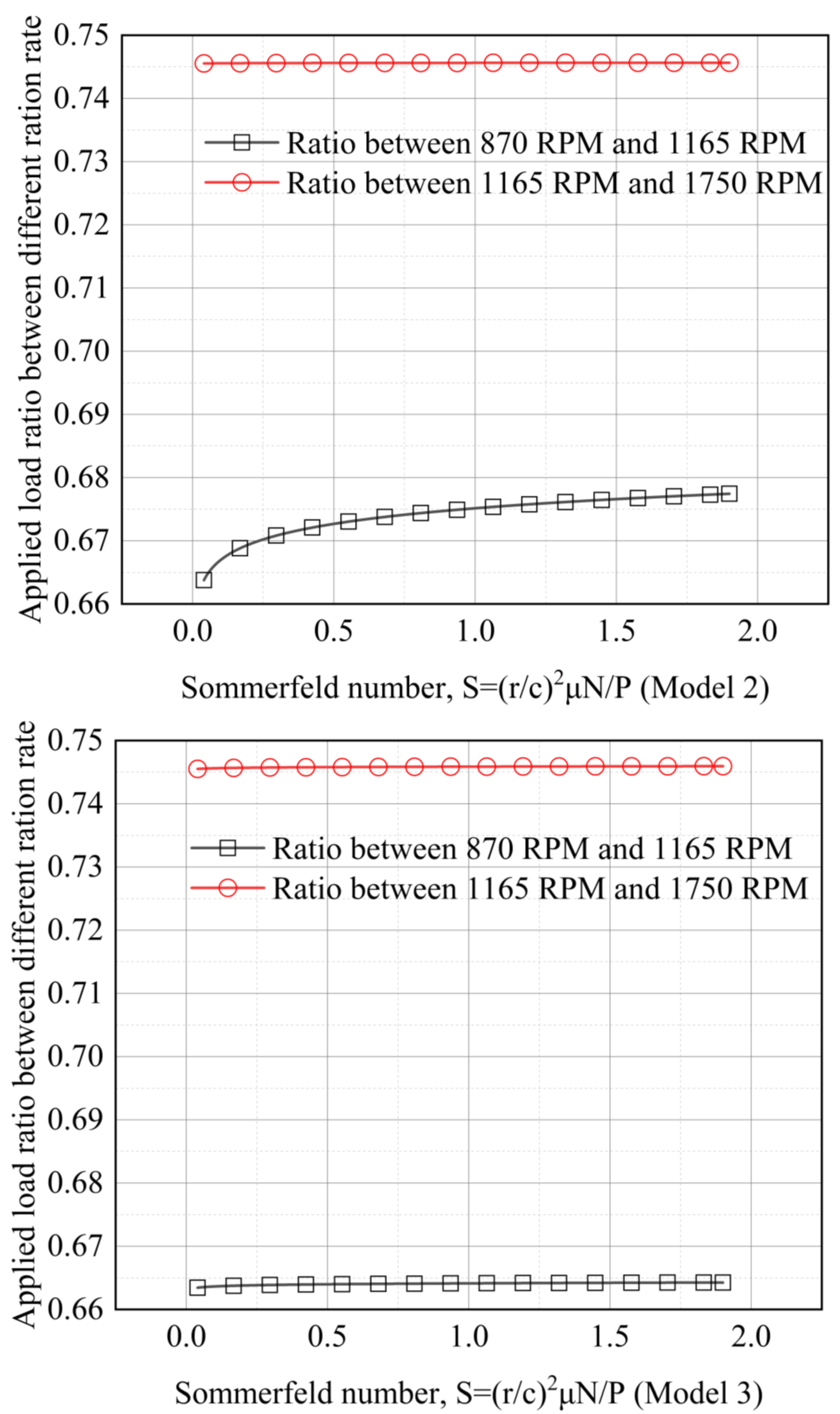
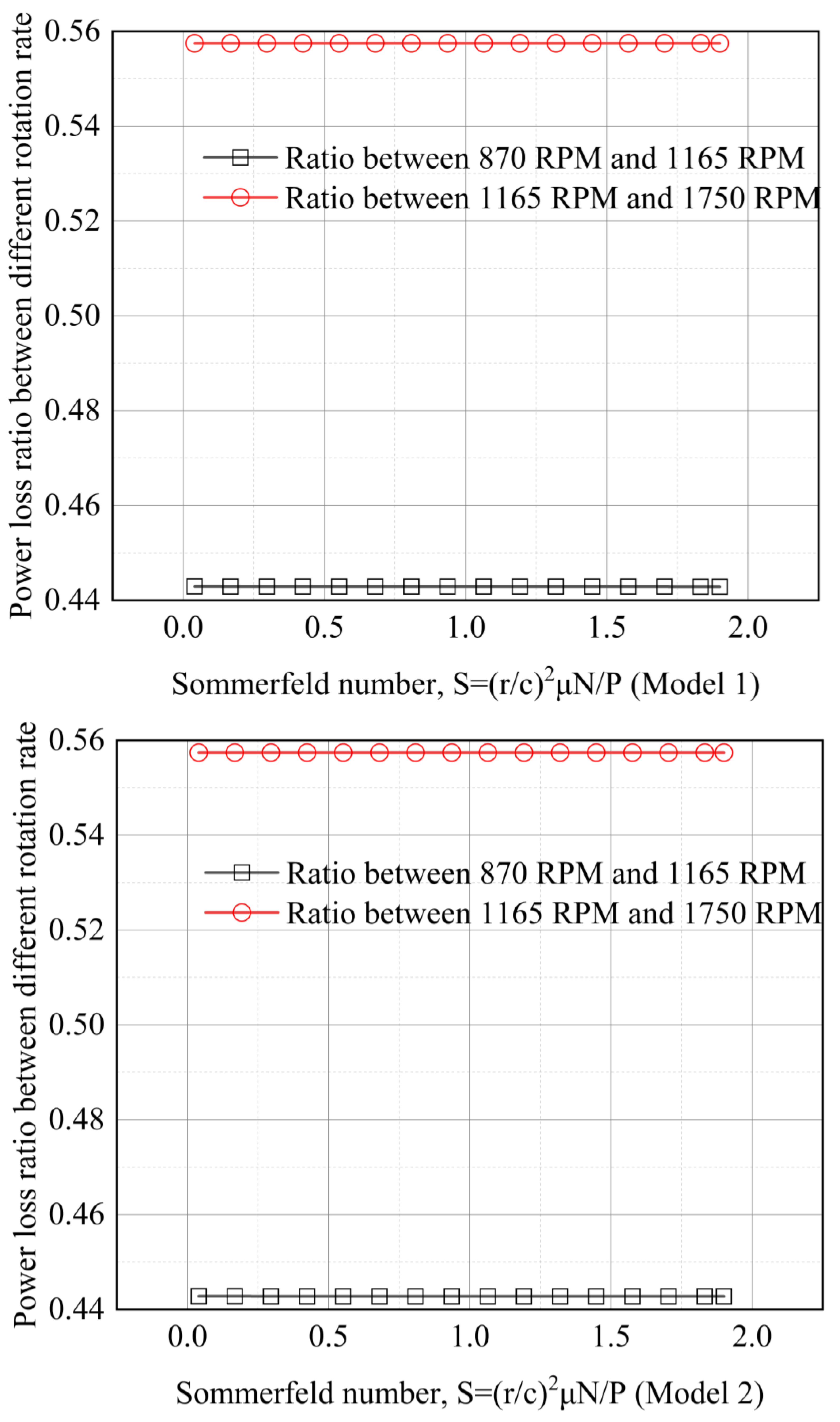
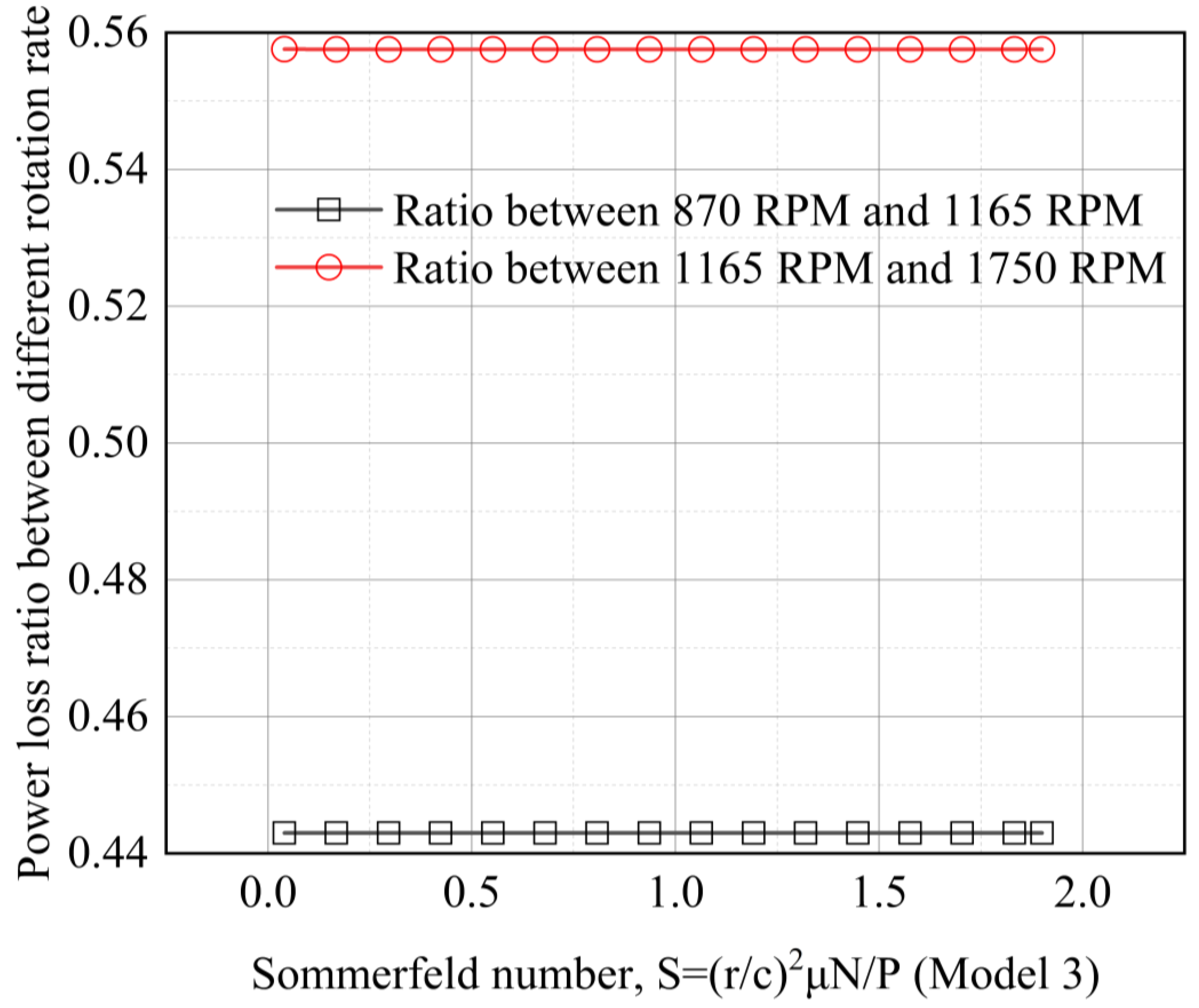
This study applied scalability principles to evaluate the steady-state performance of molten-salt-lubricated hydrodynamic journal bearings over a range of shaft speeds relevant to long-shafted cantilever pump operation. Across the investigated operating envelope (870, 1165, and 1750 rpm) and for FLiBe at 650 °C, the results show the expected laminar regime trends: the bearing load capacity increases approximately linearly with the speed, whereas the viscous power loss increases approximately with the square of the speed. Consequently, the highest speed provides the greatest load capacity but incurs disproportionately large power losses, while the lowest speed minimizes losses at the expense of load capacity.
Within these trade-offs, 1165 rpm provides the most favorable balance, delivering approximately 66% of the reference load while limiting power loss to about 44%. This intermediate operating point maintains adequate hydrodynamic support while reducing energy dissipation, supporting improved thermal management and overall pump efficiency. All the evaluated cases remained within the laminar regime, indicating stable operation within the conditions studied.
From an engineering perspective, these validated scaling correlations serve as practical design rules for molten salt pump bearings: once a reference condition is established for a given geometry and clearance, the relationships enable rapid mapping from pump requirements (target load and acceptable loss) to an admissible speed range, supporting speed selection and early-stage design trade studies for full-scale FHR primary pumps under high-temperature fluoride salt lubrication.
Finally, the applicability of these correlations must be interpreted within a bounded operating envelope. The present work is limited to steady-state lubrication behavior and does not explicitly model start-up/shutdown transients; capturing time-dependent film development, thermal response, and property evolution requires a dedicated transient thermo-hydrodynamic framework and is identified as future work. In addition, rotordynamic constraints (critical speeds, vibration, and stability) must be evaluated separately and may restrict allowable operating speeds even when lubrication performance is favorable. Practical deployment also depends on maintaining a feasible clearance/tolerance window, which conditions the range over which scaling-based extrapolation remains valid. Future investigations will extend the framework to include length-to-diameter (L/D) effects, friction forces, and transient operation to further refine predictive capability and support robust, long-lived molten salt pump bearing designs.