
Article

Body Composition and Bone Status Through Lifespan in a Greek Adult Population: Establishing Reference Curves

by
Dimitrios Balampanos
1,
Dimitrios Pantazis
1,
Alexandra Avloniti
1,
Theodoros Stampoulis
1,
Christos Kokkotis
1,
Anastasia Gkachtsou
1,
Stavros Kallidis
1,
Maria Protopapa
1,
Nikolaos-Orestis Retzepis
1,
Maria Emmanouilidou
1,
Junshi Liu
2,
Dimitrios Ioannou
3,
Stelios Kyriazidis
1,
Nikolaos Zaras
1,
Dimitrios Draganidis
4,
Ioannis Fatouros
4,
Antonis Kambas
1,
Maria Michalopoulou
1 and
Athanasios Chatzinikolaou
1,*
1
Department of Physical Education and Sport Science, School of Physical Education, Sport Science and Occupational Therapy, Democritus University of Thrace, 69100 Komotini, Greece
2
College of Education (Normal School), Dongguan University of Technology, Dongguan 523808, China
3
424 General Military Teaching Hospital, 56429 Thessaloniki, Greece
4
Department of Physical Education and Sport Science, School of Physical Education, Sport Science and Dietetics, University of Thessaly, 42100 Trikala, Greece
*
Author to whom correspondence should be addressed.
Obesities 2026, 6(1), 7; https://doi.org/10.3390/obesities6010007
Submission received: 15 December 2025 / Revised: 9 January 2026 / Accepted: 13 January 2026 / Published: 16 January 2026

Abstract

Background/Objectives: Comprehensive knowledge of body composition and bone status across the lifespan is critical for clinical evaluation and public health initiatives. This study aimed to develop age- and sex-specific reference curves for body composition and bone status in a physically active Greek population aged 18–80 using dual-energy X-ray absorptiometry (DXA). A secondary objective was to examine age- and sex-related trends in fat distribution, lean mass (LM), and bone status. Methods: A cross-sectional analysis was conducted on 637 participants (275 men and 362 women). Physical activity was assessed through structured interviews evaluating type, frequency, and intensity, categorized using established guidelines from organizations such as the American Heart Association and World Health Organization. Anthropometric data and DXA scans were utilized to measure parameters including fat mass (FM), LM, and BMD. Participants were stratified into age categories, and percentile curves were generated using generalized additive models for location, scale, and shape (GAMLSS). Results: Among women, body mass increased by 20.9% and body fat percentage rose by 38.3% from the youngest to the oldest age group, accompanied by a 5.7% reduction in bone mineral density (BMD) and an 11.5% decline in bone mineral content (BMC). Men exhibited a 49.1% increase in body fat percentage, with LM remaining stable across age groups. In men, BMD decreased by 1.7%, while BMC showed minimal variation. Notable sex differences were observed in fat redistribution, with android fat (AF) increasing significantly in older individuals, particularly among women, highlighting distinct age-related patterns. Conclusions: This study provides essential reference data on body composition and bone status, emphasizing the need for tailored interventions to address sex- and age-related changes, particularly in fat distribution and bone density, to support improved health outcomes in aging populations.

1. Introduction

Aging is a complex biological process that leads to progressive and systematic changes in body composition, ultimately affecting human health across life stages [1]. Key components of body composition, including lean mass (LM), fat mass (FM), fat distribution, and bone mineral density (BMD), are closely linked to cardiometabolic risk, functional capacity, and skeletal health [2]. Body composition evolves across the lifespan in response to growth, hormonal transitions, and lifestyle and environmental factors [1,2,3]. During childhood and adolescence, rapid growth typically increases both LM and FM, shaped by genetic influences and sex-specific hormonal profiles [4]. Males generally show a more pronounced increase in muscle mass, whereas females tend to accumulate a higher proportion of body fat during puberty, partly supporting reproductive function [4]. These early patterns set the stage for long-term trajectories that often persist into adulthood [5,6]. Across adulthood and midlife, FM commonly increases [5,6,7], influenced by metabolic and hormonal factors. In women, menopause is associated with pronounced shifts in fat distribution, particularly toward the visceral region, in parallel with declining estrogen [8]. In older adulthood, unfavorable changes become more evident, including declines in LM and deterioration of bone status, both of which are relevant to mobility, independence, and fracture risk [9,10,11,12,13,14]. The substantial, age-related loss of LM is commonly described as primary sarcopenia, whereas secondary sarcopenia refers to LM loss driven or accelerated by comorbid disease [11,12]. Sarcopenia is associated with reduced strength and functional capacity and may increase fall and injury risk [9,10,13,14]. Proposed contributors include mitochondrial dysfunction, chronic low-grade inflammation, and endocrine changes, which may be exacerbated by insufficient physical activity [15].
The relationship between body composition and metabolic disorders also becomes increasingly complex with age [16,17]. Obesity and insulin resistance can promote fat accumulation and LM loss, reinforcing a cycle of physiological decline [18,19,20]. Visceral adiposity contributes to systemic inflammation and is linked to elevated cardiovascular disease (CVD) risk. In this context, android and gynoid regions are frequently used as clinically informative indicators of fat distribution and CVD risk, although detailed reference data remain limited in some populations. Aging also affects bone metabolism. A progressive decline in bone formation, together with stable or increased resorption, can reduce skeletal integrity, often manifesting first as osteopenia and potentially progressing to osteoporosis with increased fracture risk [21,22,23]. Lifestyle factors, particularly habitual physical activity, are consistently associated with more favorable musculoskeletal profiles, emphasizing the need for population-specific reference values that account for the characteristics of the sample under study [24,25,26,27,28,29,30].
Reference curves and normative datasets are well established in pediatric and adolescent populations, including adiposity percentiles for European children [31], normative BMD and bone mineral content (BMC) values in white children [32], and centile curves for bone parameters in adolescents and young adults using advanced imaging in predominantly Asian cohorts [33]. In adults, large datasets have provided important normative information for body composition and related indices, but generalization across populations remains a key limitation. Xiao et al. [34] developed sex- and age-specific percentiles for lean mass index (LMI), appendicular lean mass index (ALMI), fat mass index (FMI), and fat distribution indices in 5688 Chinese adults aged 20–90 years using dual-energy X-ray absorptiometry (DXA), reporting age-related declines in LMI in males but not females and increases in FMI and fat distribution indices with age, particularly in women. Amaral et al. [35] examined age-related changes in body composition in a Brazilian cohort using bioelectrical impedance analysis (BIA) and similarly reported sex- and age-related differences in fat-free mass (FFM) trajectories across the lifespan. These population differences highlight the need for reference values derived from local samples.
Among Caucasian populations, Larsson et al. [36] provided DXA-based body composition reference values for 1424 Swedish adults aged 20–75 years, demonstrating age-related increases in FM and decreases in FFM after age 60. In the Greek population, research has traditionally focused on BMD, often prioritizing specific demographic groups or metrics. For instance, Krassas et al. [37] explored BMD changes in 363 healthy Greek men, emphasizing the roles of age and Body Mass Index (BMI) in osteoporosis risk. More recently, studies have increasingly examined body composition alongside bone status. Theodorou et al. [38] investigated trunk composition in 330 Greek women aged 20–85 using DXA-derived outcomes, describing patterns consistent with menopausal bone loss and age-related shifts in soft tissue compartments, while a complementary study examined appendicular regions and reported site-specific age-related changes in bone and soft tissue measures [39]. Collectively, these studies support integrated assessment but do not provide comprehensive age- and sex-specific percentile curves spanning adulthood in a broad Greek sample. To bridge these significant gaps, the present study aims to develop percentile curves for age- and sex-specific body composition and bone status metrics in a large, representative Greek sample of physically active individuals. Spanning ages 18 to 80 and including men and women, the study integrates total and segmental body composition measurements with regional fat distribution patterns, such as android and gynoid distributions, using DXA. These percentile curves provide a critical reference for clinical assessments, public health interventions, and early identification of individuals at risk for sarcopenia, osteoporosis, and metabolic disorders. By addressing changes in body composition across the lifespan, this research offers valuable insights and practical tools for clinical practice and public health strategies targeting diverse and aging populations.

2. Materials and Methods

2.1. Subject and Design

A cross-sectional study design was employed to establish reference curves. Participants were assessed at the Physical Performance Laboratory of the Department of Physical Education and Sports, Democritus University of Thrace, between January 2020 and December 2023. The study recruited physically active male and female participants from Komotini, a city in the Eastern Macedonia and Thrace region of Greece, located in the country’s northeastern periphery, reflecting its unique geographical and cultural characteristics. Recruitment was conducted through public calls via radio announcements, social media platforms, and printed fliers inviting individuals to participate in the study. Data collection included detailed anthropometric and DXA measurements performed under standardized conditions by highly trained and experienced scientific team members, ensuring precision and consistency. Each participant underwent a comprehensive interview to document their health history, physical activity patterns, and any current health issues. Prior to participation, participants were provided with thorough information regarding the study’s benefits, risks, and potential discomforts, and each gave written informed consent. All experimental procedures complied with the ethical principles outlined in the 1975 Declaration of Helsinki (as revised in 2000) and received approval from the local university ethics committee (Project Number: A.Π.Δ.Π.Θ./Ε.H.Δ.Ε./62808/581).

Participants and Inclusion/Exclusion Criteria

A total of 637 physically active Greek adults, comprising 275 men and 362 women aged 18 to 80 years, were included in the study. Participants were divided into age-specific groups based on gender. The men’s groups were categorized as 18–30, 31–40, 41–50, and 51–80 years, while for women, the groups were 18–30, 31–40, 41–50, 51–60, and 61–80 years. Age was treated as a continuous variable for percentile curve generation. For descriptive purposes, participants were additionally grouped into age categories reflecting adult life stages. The specific age group boundaries were determined based on the empirical age distribution of the sample, aiming to ensure sufficient participant numbers within each stratum and stable estimation of descriptive statistics. At older ages, women were stratified into two age groups, whereas men were grouped into a single older-age category. This asymmetry reflects the greater number of older female participants, which allowed finer stratification without compromising statistical stability. Further subdivision in men would have resulted in very small group sizes and unreliable estimates.
Participants were eligible for inclusion if they met the following criteria: (a) aged between 18 and 80, (b) engaged in non-systematic physical activities three to five times weekly, with no organized or planned training, (c) no known metabolic or endocrine disorders affecting bone status or body composition, (d) no use of medications influencing bone metabolism or body composition, (e) no fractures or bone-related surgeries within the past year, (f) maintained stable body weight (±5%) for at least six months prior to the study, (g) expressed willingness to comply with the study protocols and procedures, (h) no pregnancy or breastfeeding during the last 2 years leading to the evaluation, as verified through self-report or standard screening methods, and (i) no use of dietary supplementation or medication pills, such as hormone therapy or corticosteroids, within the past year.

2.2. Measurements

2.2.1. Physical Activity

Physical activity was assessed through a structured and detailed interview procedure designed to evaluate the type, frequency, and duration of activities performed by each participant, along with the primary weekly activity mode(s) (e.g., walking, light jogging, easy cycling, low-impact aerobic classes, yoga/tai chi, gardening, and common household chores). The categorization of physical activity levels was based on established guidelines from organizations such as the American Heart Association (AHA), Centers for Disease Control and Prevention (CDC), World Health Organization (WHO), and the American College of Sports Medicine (ACSM) [40,41,42,43,44]. Self-reported activity modes were mapped to metabolic equivalent (MET) values using the Compendium of Physical Activities [44] and then classified using ACSM absolute-intensity thresholds (sedentary/inactivity, light, moderate, vigorous, very vigorous). For the purposes of the present study, all included participants were intentionally restricted to the same intensity bracket, namely the light-intensity range (1.6–2.9 METs), representing the lowest activity level above sedentary behavior (typically 1.0–1.5 METs).

2.2.2. Anthropometrics

Height was measured using a Seca stadiometer to the nearest 0.1 cm, and body weight was assessed with a Seca digital scale to the nearest 0.1 kg. Body composition, including body FM, LM, and their percentages, was measured using the DXA. BMI was calculated as body weight (kg) divided by height squared (m2), with values expressed to one decimal place.

2.2.3. Body Composition and Bone Status Analysis

DXA was conducted using a GE Healthcare Lunar DPX NT Bone Densitometer (2012) to evaluate body composition and bone status under standardized conditions [45]. Participants removed all metallic items to avoid scan interference, and the total body scan, lasting approximately 25 min, exposed participants to a minimal radiation dose (0.01–0.03 mSv), significantly lower than a standard chest X-ray (0.1 mSv). The system utilized dual-energy X-ray beams with a constant potential source (76 kVp) and a K-edge filter, ensuring dose efficiency and precise differentiation between bone and soft tissue. Pencil-beam technology, with a narrow X-ray beam and single detector moving in a raster pattern, minimized geometric distortions and measurement errors. Quality assurance was maintained through daily phantom calibration, while enCORE 14.10.022 software automated scan mode selection and region-of-interest analysis to reduce operator variability. DXA measurements included lean muscle mass (LM), fat FM, total mass (TM = LM + bone mineral content [BMC] + FM), percent fat mass (PFAT = FM/TM × 100), and percent lean mass (PLM = LM/TM × 100). Android and gynoid fat and lean mass, along with their percentages, were determined using specific regional definitions. The android region was defined as the lower trunk area, bounded by the horizontal cut line of the pelvis at its lower side and an automatically placed line above the pelvis, with a height equal to 20% of the trunk length (from pelvis to neck). The gynoid region was defined with two additional lines: the upper line located 1.5 times the height of the android region below the pelvic line, and the lower line at twice the android region’s height. Fat and LM for these regions were reported in grams (g) to one decimal place, and their percentages relative to total mass were expressed to two decimal places [46]. Fat and lean percentages were calculated as the ratio of respective masses to total mass within each region. Bone status parameters included total-body-less-head (TBLH) BMC and BMD (=BMC/area), ensuring comprehensive and precise assessments.

2.3. Statistical Analysis

Descriptive statistics were calculated for all variables, including means and standard deviations (SD). The normality of data distribution was assessed by examining skewness and kurtosis values. To determine if there were statistically significant differences among the five age groups for women and four for men, one-way analysis of variance (ANOVA) tests was performed for each variable. When the ANOVA indicated significant differences, post hoc analyses were conducted using the Bonferroni correction to adjust for multiple comparisons.

2.4. Reference Curves Creation

Reference curves were constructed using RefCurv v0.4.4 [47], a software tool designed for generating percentile curves through generalized additive models for location, scale, and shape (GAMLSS). RefCurv’s graphical user interface is implemented in Python [47], while the underlying statistical computations are performed in R using the gamlss package [47]. The LMS method was employed as the default modeling approach to fit our data. Initial data exploration involved visualizing scatter plots within RefCurv to identify and exclude potential outliers through visual inspection. To optimize the smoothness and fit of the percentile curves, we conducted hyperparameter tuning for the degrees of freedom associated with the penalized splines of the L (lambda), M (mu), and S (sigma) parameters. This optimization was achieved using RefCurv’s grid search functionality based on the Bayesian Information Criterion (BIC), which determined the optimal set of hyperparameters (L_df, M_df, S_df). The final GAMLSS model, fitted with these optimized parameters, was used to compute and plot the percentile curves at the 3rd, 10th, 25th, 50th, 75th, 90th, and 97th percentiles. Each curve was labeled accordingly (e.g., “P3” for the 3rd percentile) for subsequent analysis and interpretation.
From a clinical perspective, reference curves were generated by modeling age as a continuous variable, allowing body composition and bone parameters to change smoothly across adulthood rather than in discrete age steps. Smoothing was applied to reduce random variability and to capture underlying biological trends across the lifespan, ensuring that percentile curves reflect gradual age-related changes rather than abrupt fluctuations. Extreme or implausible values were not automatically excluded; instead, potential outliers were identified through visual inspection of scatter plots and fitted curves to ensure biological plausibility. This conservative approach preserves real individual variability while minimizing the influence of measurement artifacts on percentile estimation.
Although formal power calculations are not directly applicable to descriptive reference studies, sample size adequacy was carefully considered with respect to the stability and reliability of the generated percentile curves. The construction of reference curves using GAMLSS relies on adequate coverage of the age range and sufficient data density across age and sex strata, rather than hypothesis-driven statistical power. In the present study, the overall sample size and the number of participants within each age- and sex-specific stratum were deemed sufficient to support smooth and biologically plausible percentile estimation. Model stability was further enhanced by treating age as a continuous variable, applying penalized spline smoothing, and selecting optimal model complexity using the BIC, which reduces the risk of overfitting, particularly at the extremes of the distribution. While the number of participants in the oldest age groups, especially among men, was lower than in younger strata, the use of smoothing techniques allowed for reliable estimation of central and extreme percentiles. Nevertheless, reduced precision at advanced ages cannot be fully excluded and should be considered when interpreting percentile values in the oldest age ranges.

3. Results

Based on the structured interviews conducted prior to participation in the study, we ensured adherence to the inclusion criterion of engaging in non-systematic physical activities no more than four times per week, with no participation in organized or planned training programs. The physical activity levels of participants were categorized using MET values, and a clear decline in activity intensity and duration was observed as age increased across all groups. Younger participants, particularly those aged 18–30 years, predominantly reported engaging in vigorous activities such as recreational team sports, hiking, swimming, and running. These activities reflected higher energy expenditures and potential osteogenic benefits due to their intensity and frequency. Participants aged 31–50 years, while still active, engaged in slightly lower-intensity activities, including brisk walking, recreational cycling, and casual swimming. These activities reflect a shift toward moderate physical exertion. Conversely, older participants, particularly those aged 50 years and above, more frequently engaged in light to moderate-intensity activities, including walking, gardening, and lawn mowing. There was also a noticeable age-related decline in the time spent on physical activities. Younger participants reported spending over one hour per day engaging in physical activities three to five times per week, while older participants reduced their activity duration to approximately 30 min per day as they aged.
Table 1 and Table 2 present the descriptive characteristics of total samples, as they are divided into gender groups.

3.1. Body Composition

BM was approximately 10 kg higher in the older groups compared to group 1, with this difference remaining consistent across the older age ranges. Most of this extra weight was due to body FM gain, which was statistically significantly greater in all groups in contrast to the first group (p < 0.01). There were no differences in LM among age groups for men (p = 0.535), but in women, total LM values in group 5 were significantly lower compared to group 2 (p < 0.01). BMI was lower in group 1 than the other age groups for both genders (p < 0.01); in women, age group 5 presented a higher BMI than group 3 (p < 0.05). FFMI was slightly higher in group 5 than in group 1 (p < 0.01) but not in the other groups of women. On the other hand, in men, the FFMI did not show any difference in all age groups (Table 3 and Table 4).
In women, the android fat mass (AFM, g) was about 7% higher in group 2 (p < 0.01), 10% in groups 3 and 4 (p < 0.01), and 16% in group 5 (p < 0.01) than in group 1, and group 2 was significantly lower than group 5 (p < 0.05). Furthermore, in women, the android fat—AF (%) in Groups 2,3,4 and 5 was higher than in Group 1. Group 2 had lower AF (%), about 7% and 9%, than groups 4 and 5 (p < 0.01), respectively. In men, the AF (%) was significantly higher, about 10% in group 2 and 15% in groups 3 and 4, than in group 1 (p < 0.01). Group 4 presented significantly higher AFM, by about 2 kg, than group 2 (p < 0.05). The android lean mass (AL, %) in women was significantly lower, about 10% and 16%, in groups 4 and 5 than in group 1 (p < 0.01) and 7% and 10% than in groups 2 and 3 (p < 0.01). In men, group 1 had higher AL (%) than all age groups, and group 2 had 5% greater AL than group 4 (p < 0.05). The gynoid fat mass (GFM) in women was 5–6% higher in all age groups than in group 1 (p < 0.01), while the gynoid lean (%) was greater in group 1, about 5–7% than in other groups (p < 0.01). In men, the GFM was about 6% higher in all age groups than in group 1 (p < 0.01) (Table 3 and Table 4).

3.2. Bone Status

In women, BMD and BMC were statistically lower in group 5 than in age groups 1, 2, and 3 (p < 0.01), and age group 4 had lower BMD than group 2 (p < 0.05) and BMC than group 3 (p < 0.05). On the other hand, bone status did not have any differences among the age groups in men, as presented in Table 4.

3.3. Percentiles

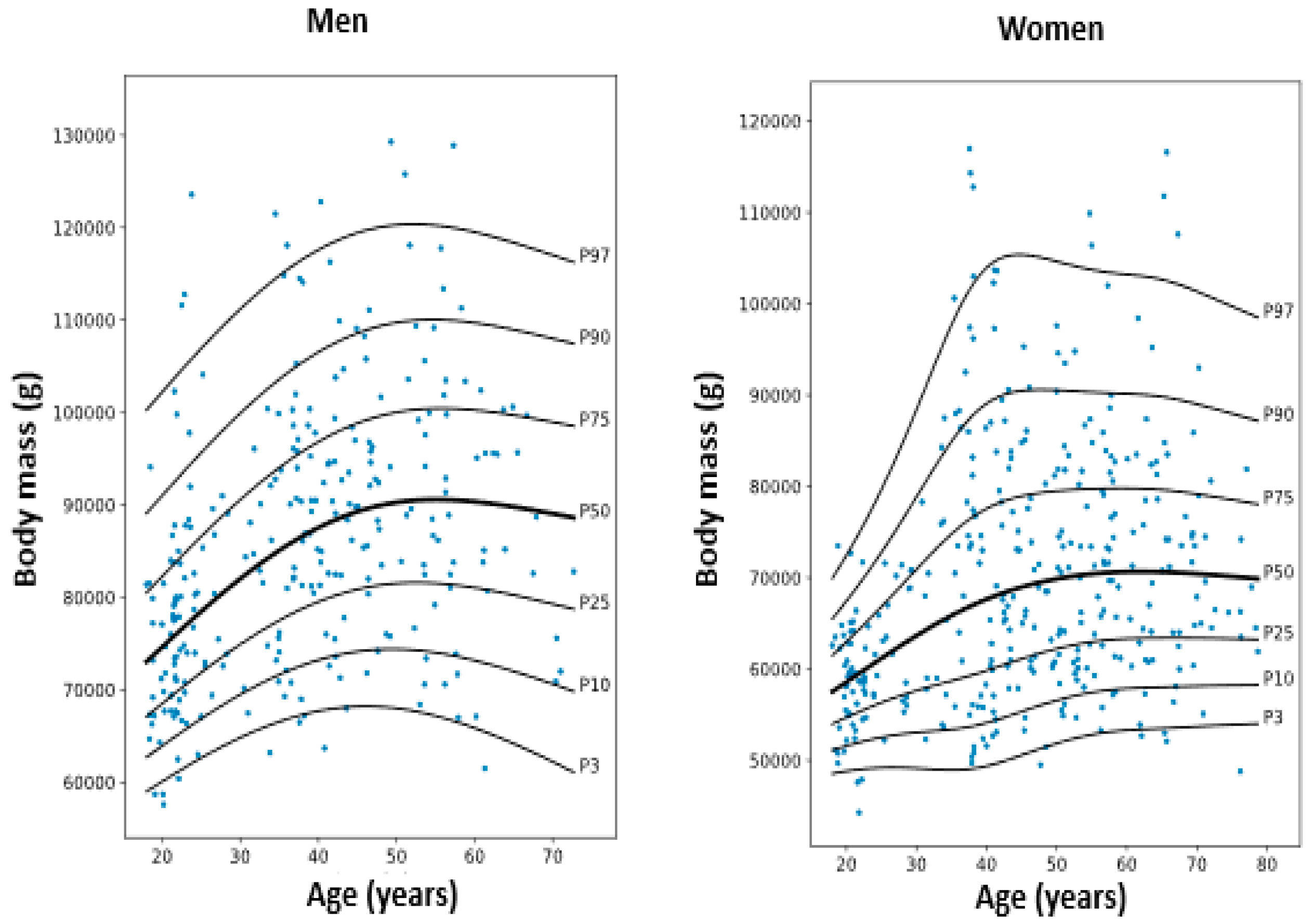
The BM growth charts, as shown in Figure 1, show that both genders increase their weight throughout their lifespan, but after the age of 55 years, a slight decrease was found, which did not appear in women. The female data revealed a trend in which body mass increased in the lower percentiles and decreased in the higher percentiles when compared across age groups.
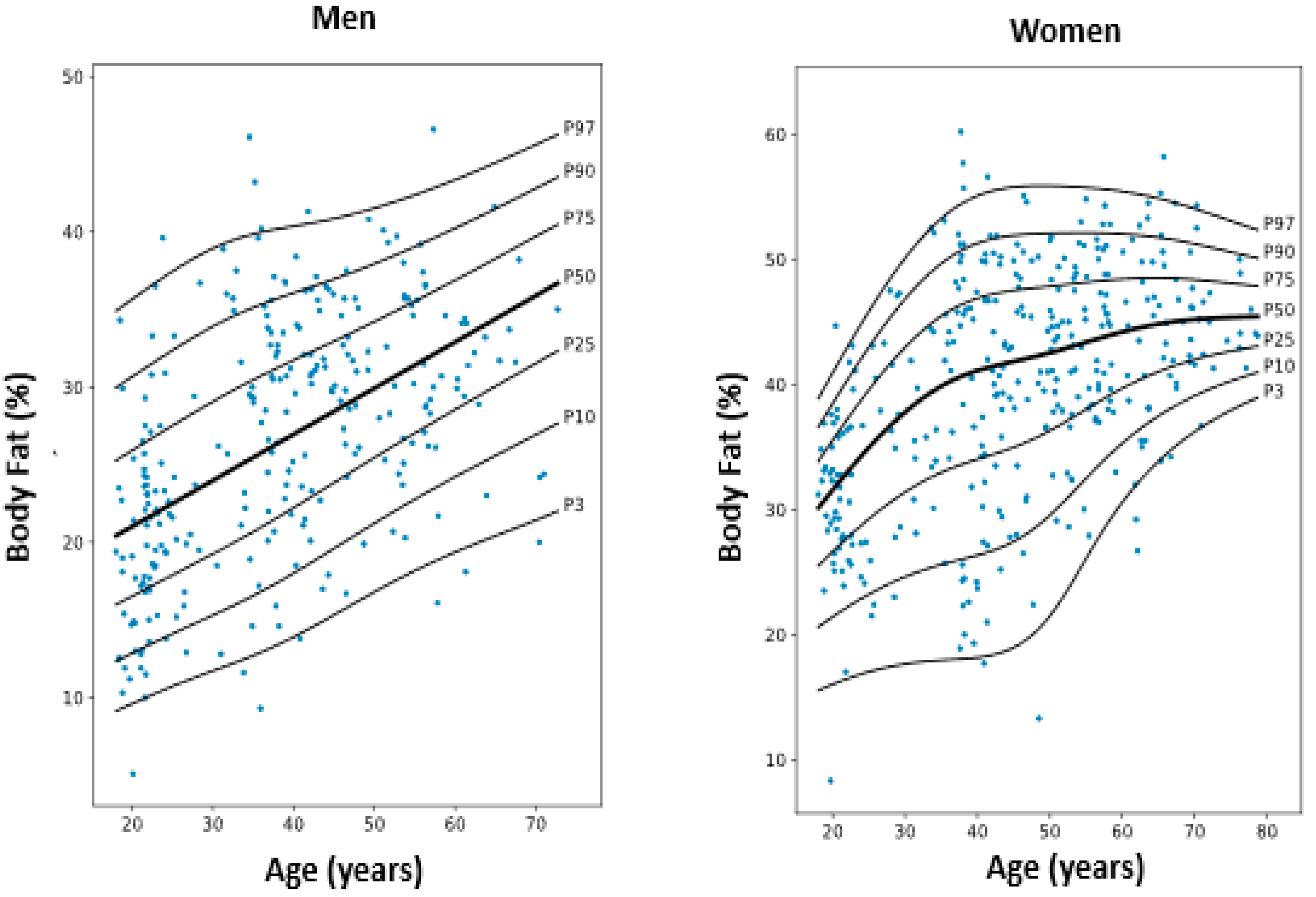
Figure 2 illustrates that BF% is higher in older age groups among men, while among women, BF% is higher in the 31–40 and 51+ age groups. Furthermore, women in the lower percentiles exhibit a more pronounced BF% in the postmenopausal age groups.
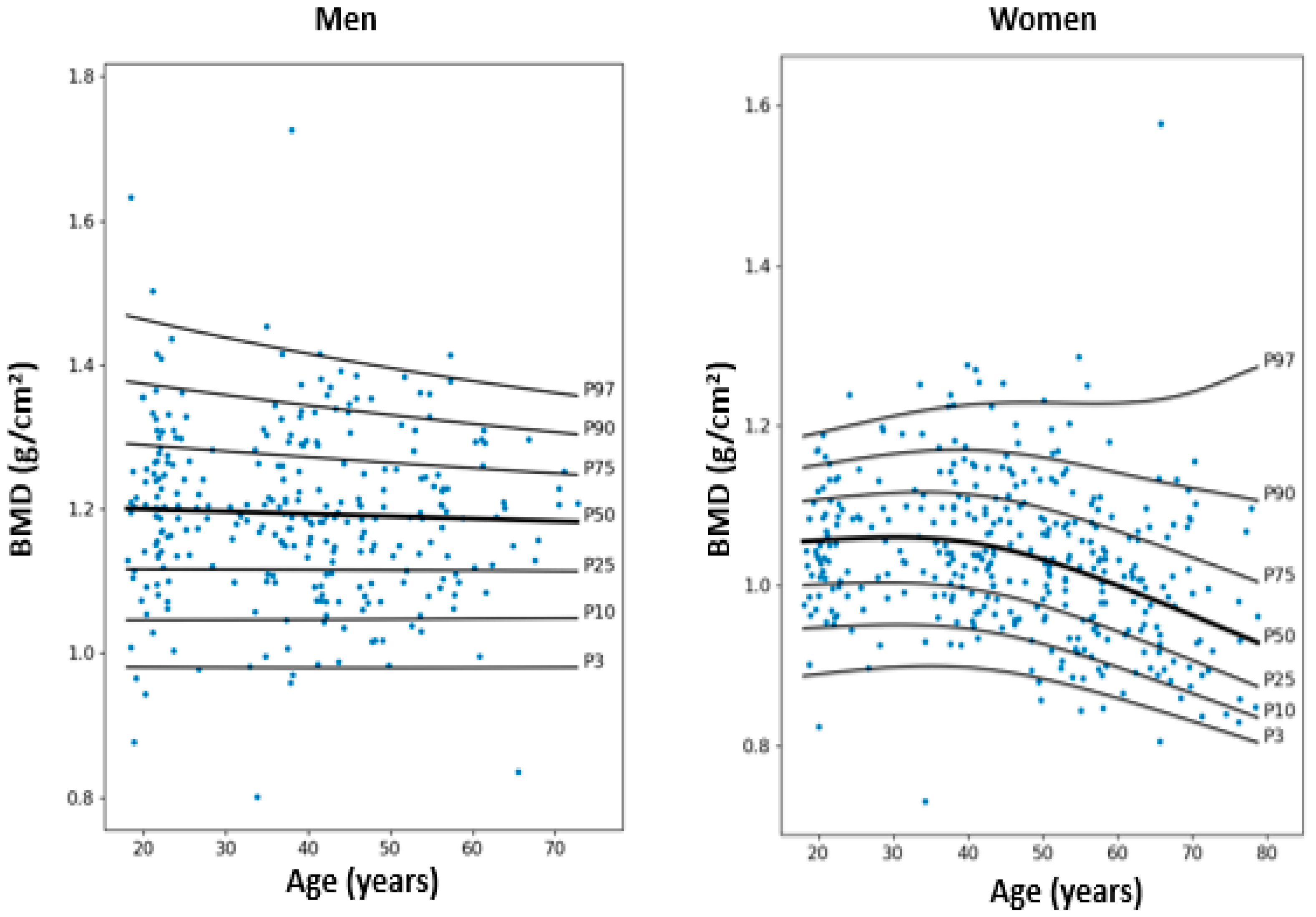
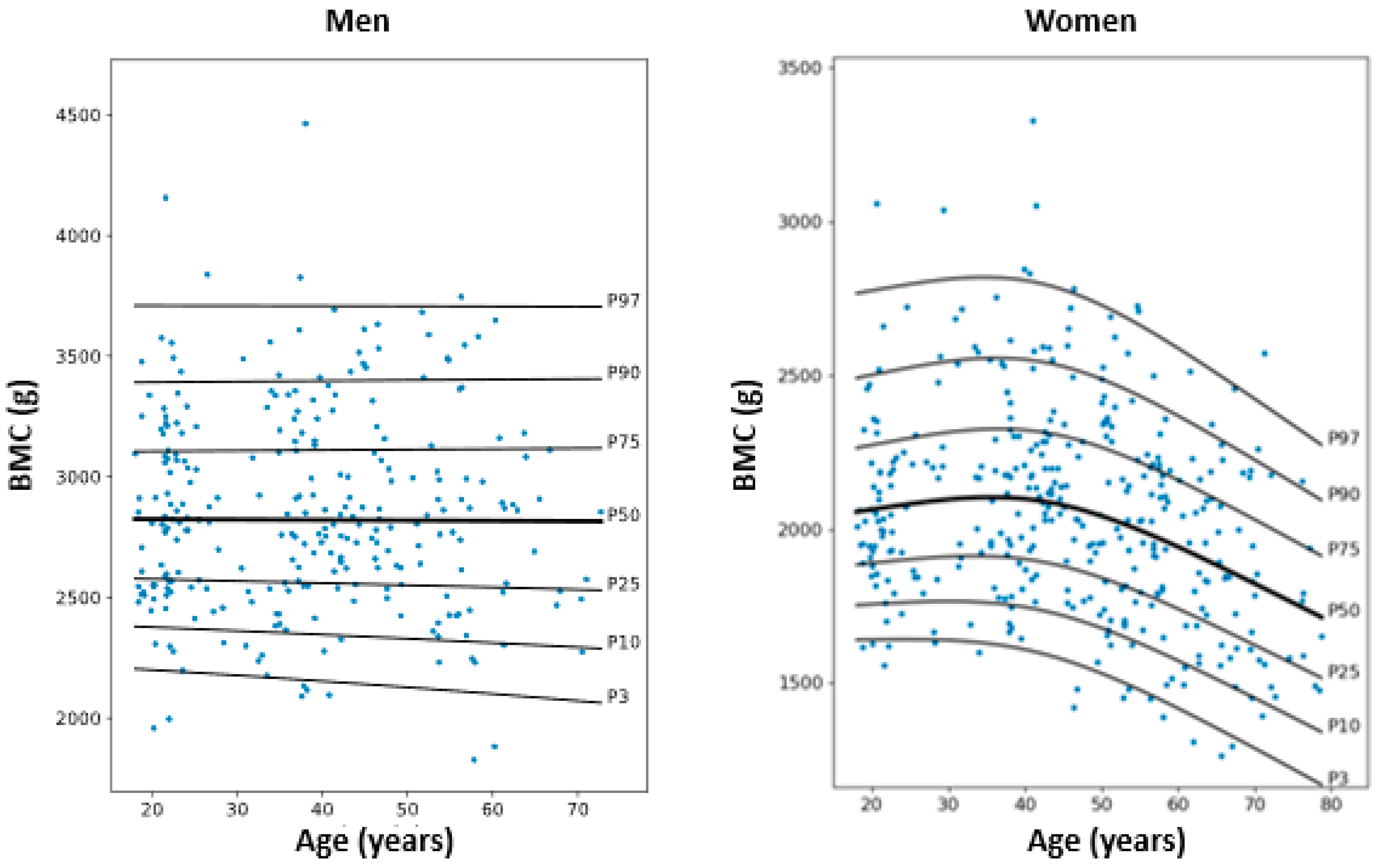
BMD and BMC were consistent across age groups in men, whereas in women, a significant decline was evident in the 50+ age group, as shown in Figure 3 and Figure 4.
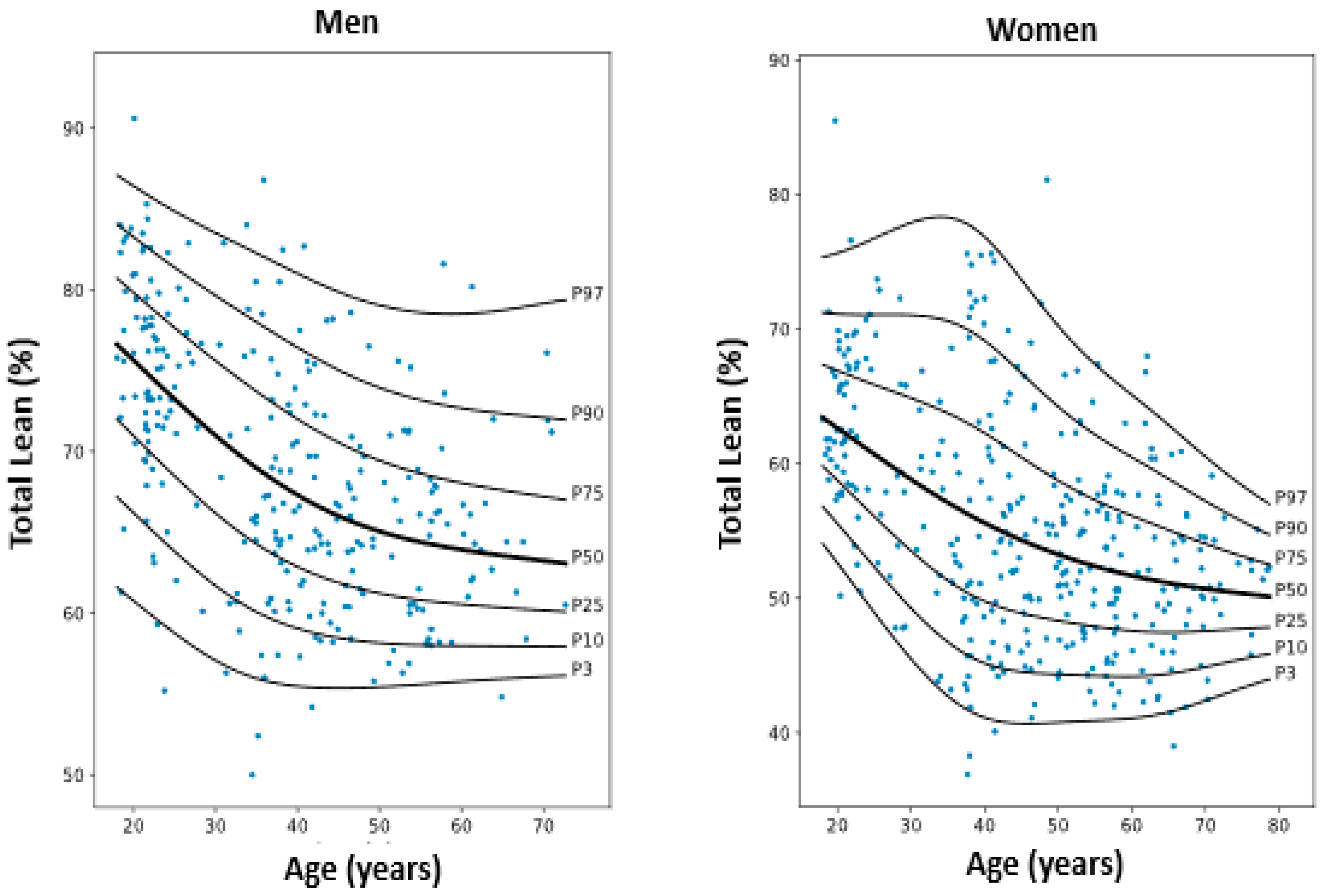
The total TLM % curves demonstrate a general decline across age groups for both genders. However, the values in the lower percentiles remain relatively stable in the 50+ age group (Figure 5).
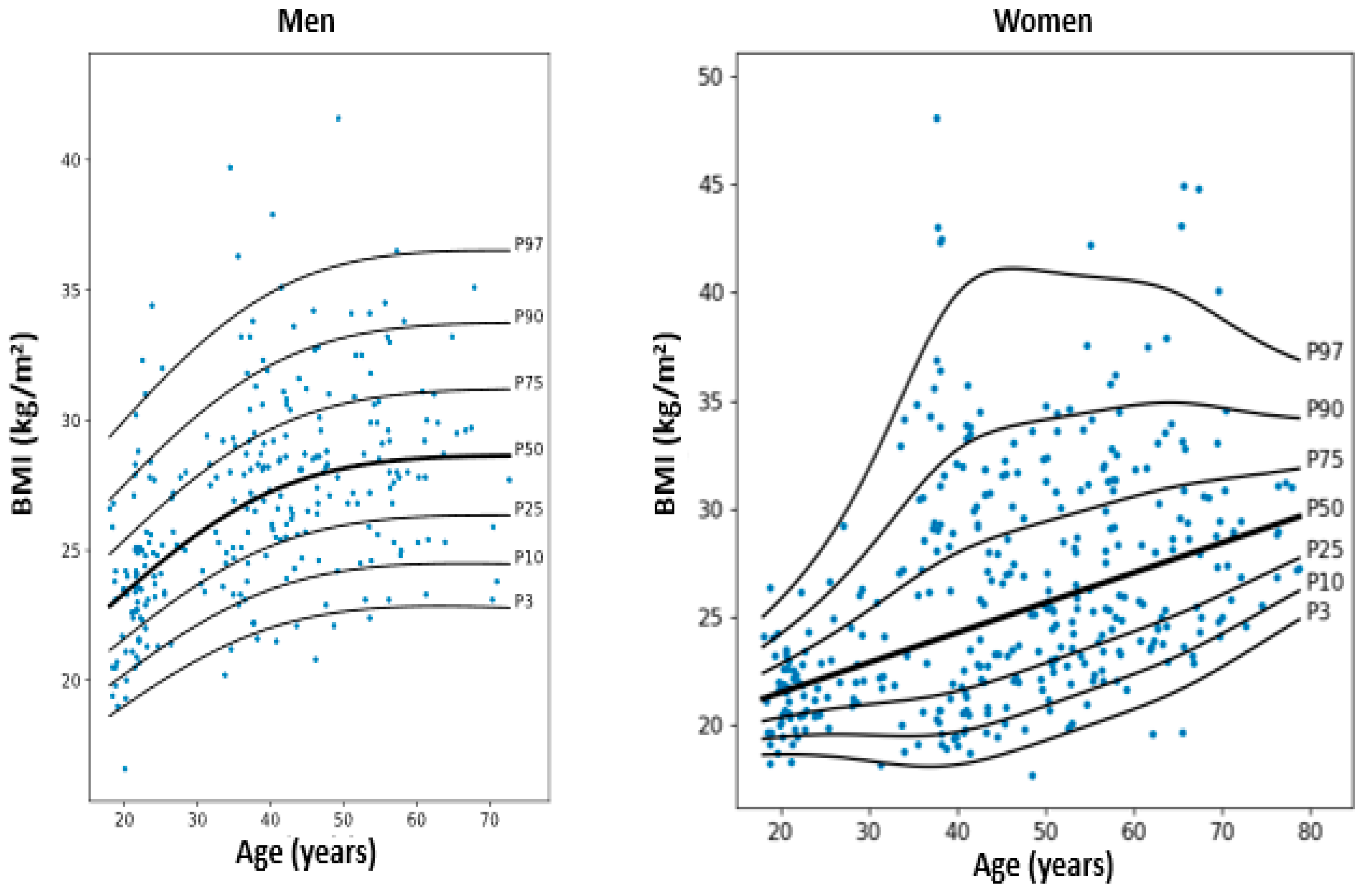
In women, BMI exhibits a consistent upward trend across age groups, in contrast to men, whose BMI increases up to the 50+ age group and then stabilizes within the standard percentiles (Figure 6).
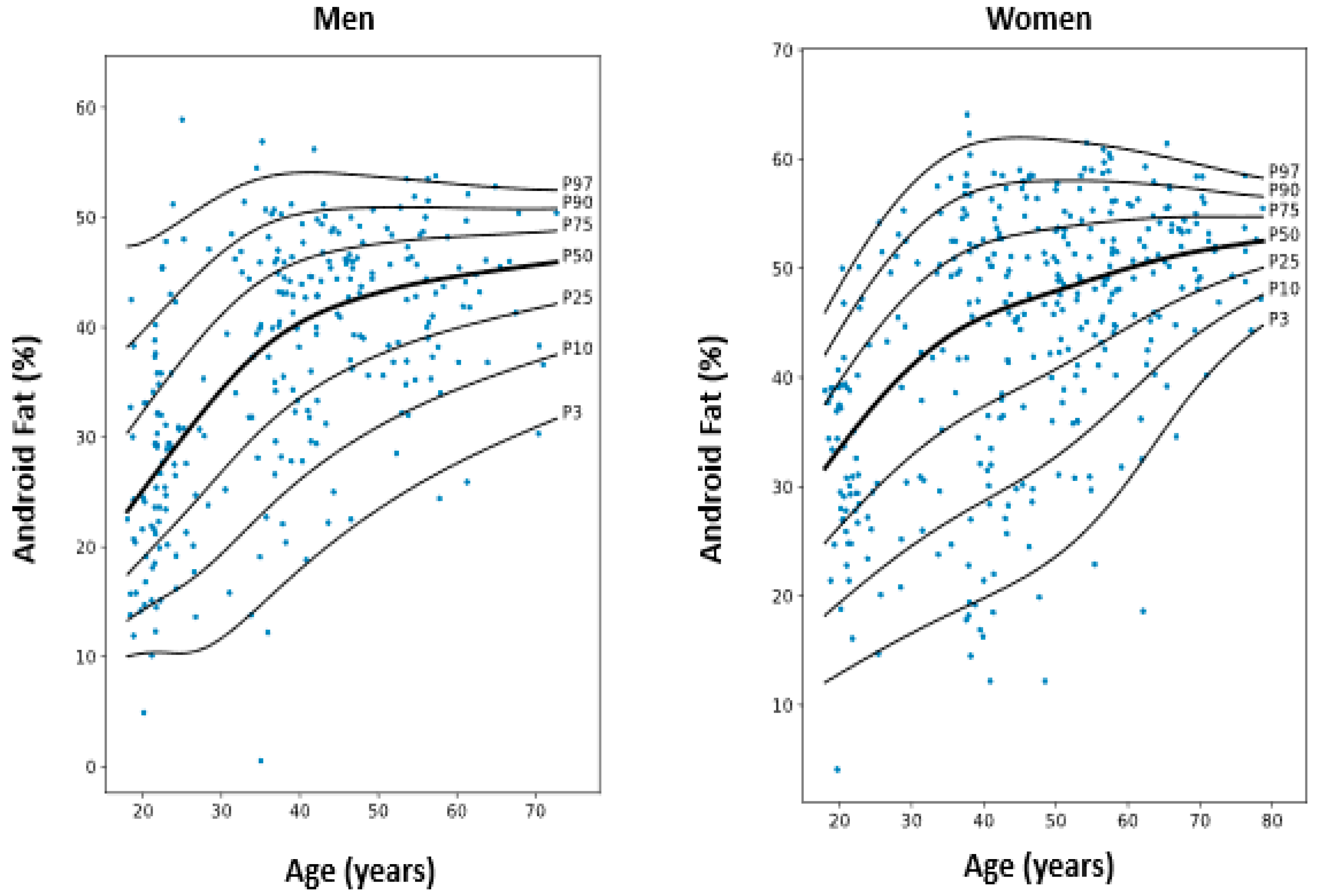
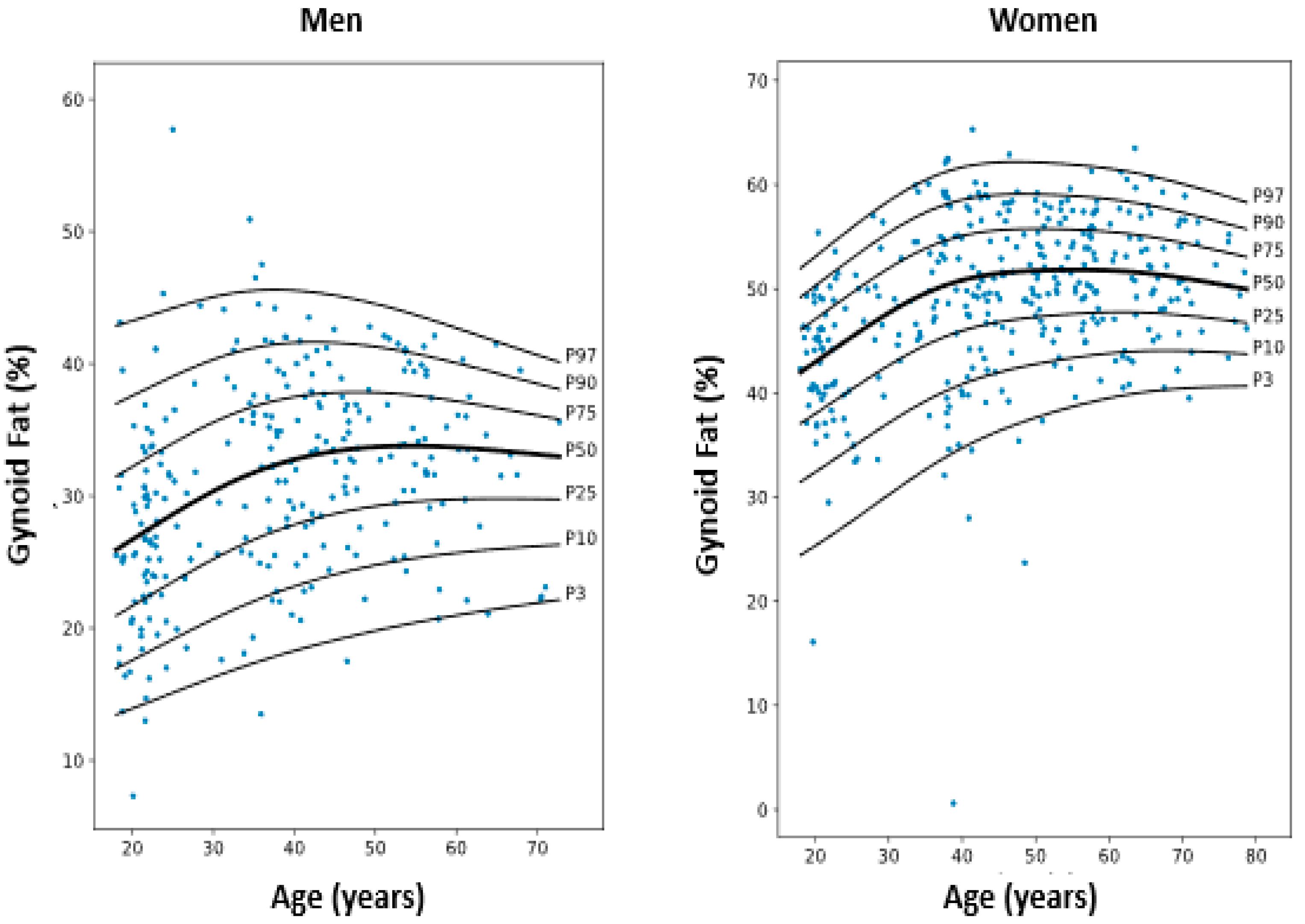
AF(%) was higher in older age groups for both genders (Figure 7). In contrast, GF (%) was higher in younger age groups up to 45 years and appeared stable or slightly lower in older age groups. In the lower percentiles, GF percentage increased progressively across all age groups for both genders (Figure 8).
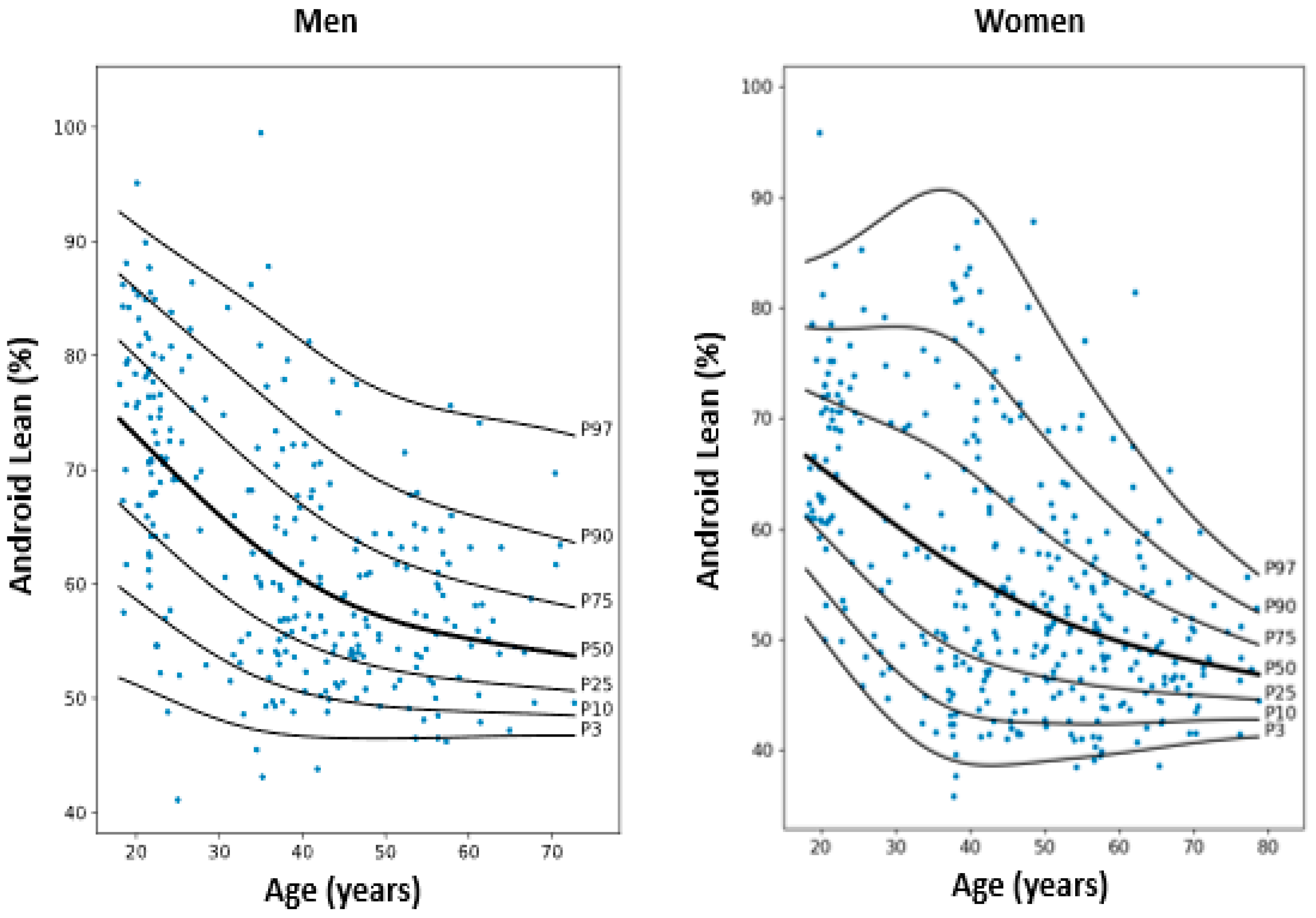
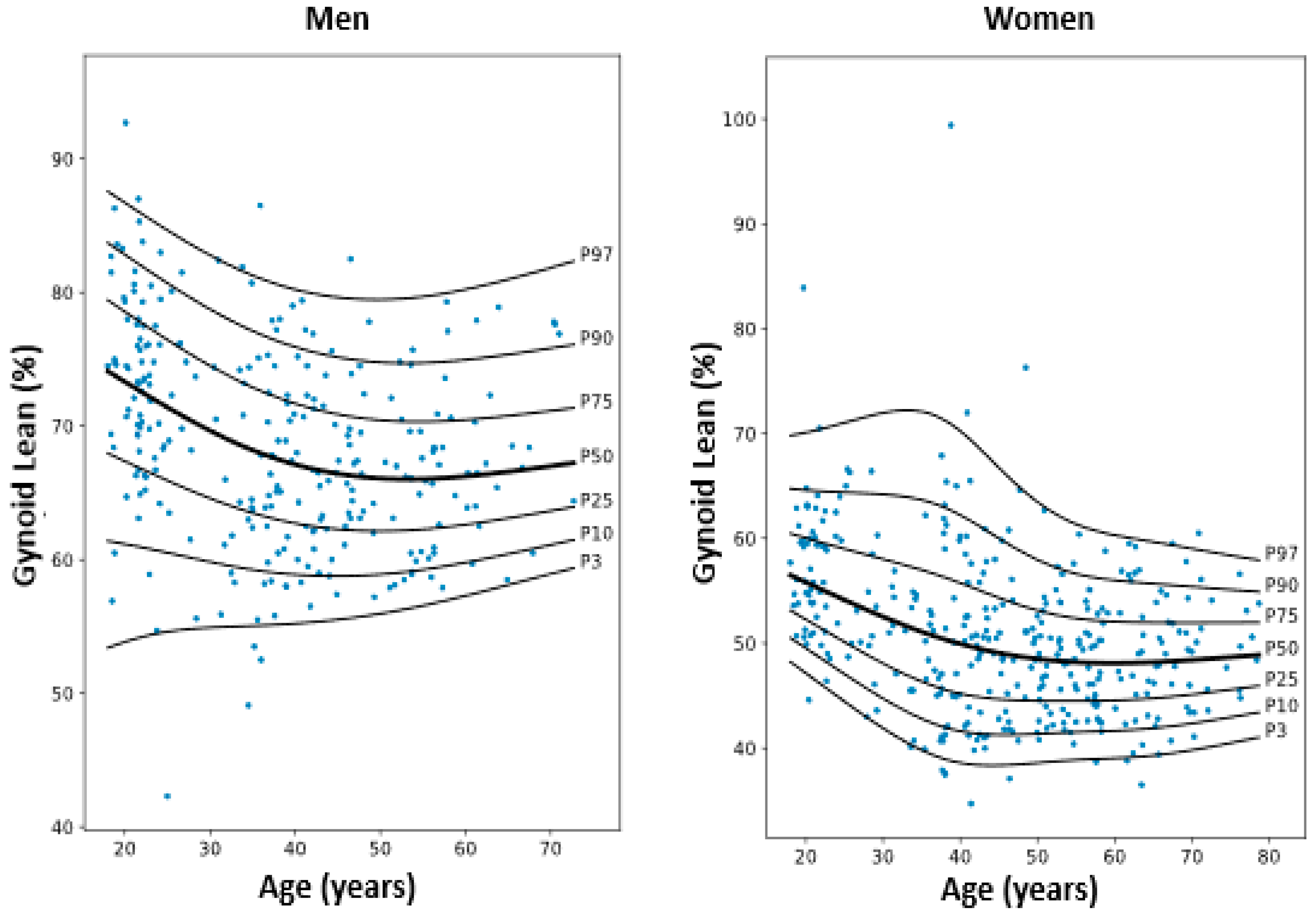
ALpercentage (%) was lower in older age groups for both genders, with a more pronounced decrease observed in women in the higher percentiles after the age of 40–45 years (Figure 9). GL percentage (%) was lower in the older age groups up to 40–45 years for both genders, after which it remained relatively stable (Figure 10).

4. Discussion

The study aimed to create age- and sex-specific percentile curves for body composition and bone status in a physically active Greek population aged 18 to 80 using DXA technology. A secondary goal was to compare age groups within each sex to analyze aging-related changes in key metrics like body composition, fat distribution, LM, and bone status. Findings showed distinct trends based on sex. In women, body mass increased by 20.9%, body fat percentage by 38.3%, and BMI by 30.8%, while LM declined by 2.7%. Significant fat redistribution occurred, particularly in the android and gynoid regions, likely influenced by post-menopausal hormonal changes. This redistribution is biologically plausible given menopause-related endocrine shifts, which are associated with preferential deposition of adipose tissue in the abdominal compartment and reduced capacity to maintain a gynoid-dominant pattern of fat storage [8]. In contrast, men groups showed a 16.5% increase in body mass and a 49.1% rise in body fat percentage, with an 18.3% increase in BMI. AFM increased, while AL declined by 20.8%, although TLM remained stable. Bone status changes varied by sex as well. Women groups presented a 5.7% decline in bone mineral density and an 11.5% reduction in bone mineral content, underscoring aging’s impact on skeletal status. In men, bone mineral density fluctuated by 1.7%, while bone mineral content varied by 3.2%, peaking in mid-adulthood. These reference values should therefore be interpreted as specific to physically active Greek adults and may not generalize to less active, clinical, or non-Greek populations. Given the cross-sectional design, these age-group differences should be interpreted as between-group patterns rather than within-person trajectories.
Research has shown that as women age, especially after menopause, they experience significant changes in their body composition. This study found that women over 31 were, on average, approximately 10 kg heavier than those in the youngest age group. This additional body mass generally remains stable over time, with only minor fluctuations. Supporting these observations, findings from the NHANES I Epidemiologic Follow-up Survey revealed a significantly higher risk of substantial weight gain—defined as an increase in five or more BMI units—in women over time [48]. Similarly, longitudinal European studies [39] corroborate this trend, highlighting comparable increases in body weight and BMI across aging populations. Indeed, the BMI in this study exhibited a significant upward trend across age groups, rising by approximately 30% between the youngest cohort, whose average BMI was 22.03 kg/m2, and the oldest cohort, which reached 28.82 kg/m2. BMI was higher in older age groups of women than in younger groups, with values falling into the range classified as overweight or indicating an increased risk of obesity. This is not surprising, as numerous studies have highlighted alarming rates of obesity among women across different ages and ethnicities, particularly in aging populations [49]. A closer examination reveals that increases in body fat primarily drive weight gain throughout aging [7]. From a mechanistic standpoint, midlife increases in fat mass are commonly linked to lower energy expenditure (partly via reduced resting metabolic rate), hormonal transitions, and reduced habitual engagement in higher-intensity physical activity, which together favor positive energy balance [16,17,50,51,52,53]. In this context, we found that body fat percentages are approximately 7% higher in women aged 31–40 compared to those in the youngest age group. This increase rises to around 10% for women aged 41–50 and reaches about 16% higher in those aged 51 and above, with these findings being in line with the reported increases of up to 7% per decade in the existing literature [7,54]. A similar pattern is observed in regional fat distribution, with AFM showing a notable increase across age groups. In contrast, GFM peaks during midlife and remains relatively stable thereafter. Correspondingly, fat percentages in these regions exhibit notable increases across the age groups. The AF percentage increases by over 40% from the youngest to the oldest group, while the GF percentage shows a comparatively minor rise in less than 20% and remains relatively stable after peaking in midlife. Even in women with normal BMI (<25), AF increases significantly after menopause, with a 20% rise in the android-to-gynoid (A:G) fat ratio. These changes occur despite the absence of fat gain in the gynoid region, suggesting that fat redistribution, rather than overall fat accumulation, is the primary factor [55]. This pattern is clinically relevant because android adiposity is more strongly associated with insulin resistance and low-grade systemic inflammation than gynoid fat, providing a plausible pathway linking age-related redistribution to cardiometabolic risk [16,17,18,19,20,56,57,58]. At the same time, LM undergoes notable age-related changes, with TLM and LM percentage declining progressively across age groups. The decline in LM is especially evident in the android and gynoid regions. In the android area, the LM percentage consistently decreases with age. In contrast, the overall AL remains stable in younger individuals before experiencing a decline in the oldest age group. Likewise, GL peaks during midlife but begins to decrease in later years, accompanied by a gradual decline in the percentage of GL. Changes in body composition in aging women are driven by a complex interplay of hormonal, metabolic, and activity-related factors, affecting fat distribution in the android (abdominal) and gynoid (hip) regions [7,52]. As women age, the decline in lean muscle mass due to sarcopenia plays a central role in reducing resting metabolic rate (RMR), which subsequently lowers total daily energy expenditure (TDEE), further accelerating muscle loss and creating a cyclical process that contributes to increased fat accumulation, particularly in the android region [15,54,59]. At the tissue level, age-related declines in muscle mass and quality are commonly attributed to mitochondrial dysfunction, chronic low-grade inflammation, and endocrine changes, which can be exacerbated when physical activity is insufficient [15]. Hormonal shifts, especially the decline in estrogen during menopause, further exacerbate these changes by promoting fat redistribution toward the android region and reducing the metabolic benefits of gynoid fat storage [50,60]. It should be noted that this study was conducted in a rural Greek population, where physical activity in older women predominantly consisted of non-structured, low-intensity activities, such as housework, rather than structured exercise routines [61,62]. This characterization reflects the habitual, self-reported nature of activity in this cohort and does not imply structured training status.
While men also experience changes in body composition throughout their lives, these changes are generally less pronounced than women, primarily due to hormonal differences [51,63]. Unlike the abrupt hormonal shifts women experience during menopause, men experience a gradual decline in testosterone and other hormonal components [64]. Longitudinal studies have shown that weight steadily increases until around 60, followed by a slight decrease, with cumulative gains primarily attributed to FM accumulation, often concentrated in an android pattern [65,66]. This is accompanied by rising waist circumferences, further highlighting the shift in fat distribution [67]. The prevalence of obesity has also increased, contributing to a rightward shift in BMI distributions [65,66,68]. Building on these trends, the present study found men in the oldest age group weighed an average of 13 kg more than their youngest counterparts, with body mass steadily increasing across age categories before stabilizing at a later stage. This weight gain was accompanied by a significant rise in BMI, surpassing thresholds for overweight and obesity in older age groups. This finding aligns with previous research that links aging in men to gradual weight gain, primarily attributed to increases in FM [37]. Fat distribution showed significant changes, with body fat percentage rising by over 50% between the youngest and oldest groups, closely aligning with the greater than 50% increase reported by Larsson et al. [36]. AFM more than doubled, while GFM exhibited a more moderate rise, with its percentage increasing by approximately 22%. While comprehensive data on GF is limited, consistent evidence exists of increasing AF in aging men. This is highlighted in the research conducted by Kanehisa et al. [69] and even more notably in the study by Schwartz et al. [70], which found that older men exhibit a twofold increase in abdominal fat area compared to their younger counterparts. Such preferential abdominal fat accumulation provides a plausible mechanistic link to age-related increases in cardiometabolic risk through insulin resistance and chronic low-grade inflammation [16,17,18,19,20,56,57,58]. In contrast to the marked changes in FM, absolute LM remained relatively stable, mainly due to the rise in total body mass. However, its percentage showed significant declines across age groups, reflecting shifts in body composition. The most notable reductions were observed in the android and gynoid regions, where AL percentage decreased by 20.8%, and GL percentage declined by 8.1%. While findings on this subject vary [71,72], research indicates that men generally have a lower risk of sarcopenia compared to women, with symptoms often emerging at later stages of life [73]. Additionally, even during weight fluctuations, men tend to maintain a higher proportion of LM relative to FM, implying a slower progression of sarcopenia and a more gradual decline in LM compared to women [74]. A complex interplay of hormonal, metabolic, and lifestyle factors underpins these patterns of body composition change in aging men. The gradual decline in testosterone diminishes the ability to preserve muscle mass and alters fat distribution, leading to increased fat accumulation, particularly in the abdominal area [64]. Reductions in growth hormone and IGF-1 compound this hormonal shift, critical for maintaining muscle integrity [75,76]. Aging also brings metabolic alterations, including a reduced resting metabolic rate and lipid metabolism disruptions, further encouraging fat storage [77]. At the same time, lifestyle factors, such as poorer dietary choices and reduced physical activity, exacerbate these changes [78,79].
The age-related changes in body composition, including reductions in LM and increases in FM, have significant implications for bone status. In women, these changes coincide with a marked decline in bone status, including reductions in BMD and BMC and changes in bone microarchitecture, which increase the risk of fractures, especially in the femur and lumbar spine [80,81]. These areas are commonly referenced in bone status assessments. Additionally, BMD is a key predictor of overall mortality, including cardiovascular-related deaths, in both white and black populations [82]. Making direct comparisons across studies can be complex, as most of the existing literature often utilizes age-matched Z-scores rather than absolute values, which may restrict the extent to which findings can be compared. The present study found distinct patterns of age-related changes in bone status between women and men. In women, BMD decreased by approximately 5.7%, while BMC declined by about 11.5% between the youngest and oldest age groups. However, the rate and onset of significant bone loss appear to vary by skeletal site, as highlighted by Riggs et al. [83], with menopause serving as a major catalyst. Complementary evidence from female cynomolgus monkeys, which share broadly comparable endocrine and reproductive aging patterns with humans, suggests that bone-related indices may decline in midlife and then stabilize thereafter, despite differences in habitual motor patterns [84]. In contrast, men in this study demonstrated only minimal declines in BMD and BMC, with BMD decreasing by just 1.7% and BMC by approximately 1.0% across the age groups. This relative stability in bone measures could be partially attributed to the higher BMI observed among male participants in our sample, as Krassas et al. [37] previously identified a strong positive correlation between BMI and BMD at various sites, including the femoral neck and lumbar spine. While the higher overall BMD noted in our male participants is ascribed to the total body and not a specific region, it is plausible that the protective effect of BMI in preserving bone density may extend to multiple anatomical regions. The present study found that the decline in BMD among women was more than three times greater than that observed in men, while the reduction in BMC was over 11 times greater when comparing age-related changes across groups. Supporting this observation, studies such as the one by Burger et al. [85] have highlighted the significantly faster rate of age-related bone mineral density loss in women compared to men, particularly at specific skeletal sites. The sharp decline in estrogen levels during menopause significantly affects bone homeostasis by altering the balance between osteoblast and osteoclast activity, reducing bone formation, and increasing bone resorption [86]. As estrogen levels decrease with age, bone resorption accelerates, resulting in a net loss of bone mass and a higher risk of fractures [87]. This remodeling imbalance often begins as osteopenia and can progress to osteoporosis, substantially increasing fracture risk [21,22,23,88]. Additionally, the decline in physical activity and mechanical loading that occurs with age further contributes to a reduction in bone strength. Interviews indicated a notable decrease in vigorous physical activity among older participants. In contrast, younger individuals (aged 18–30) actively engaged in high-impact activities such as recreational team sports, hiking, and running, all of which provide adequate mechanical loading to stimulate bone formation. Older participants primarily engaged in low-intensity activities, including walking and gardening, which contributed to lower overall energy expenditure and reduced mechanical loading on the body. This shift in activity intensity and mechanical loading with age suggests that older individuals may not consistently achieve the threshold necessary to promote bone formation [89].
This study offers valuable insights into age- and sex-specific trends in body composition and bone status; however, several limitations should be acknowledged. The oldest age group was underrepresented among men, resulting in fewer age strata for males compared with females, which may reduce the precision of age-related estimates at advanced ages. As a result, percentile estimates, particularly at the oldest ages and at the tails of the distribution, should be interpreted with caution due to reduced precision in smaller strata. In addition, physical activity was assessed using self-reported data, which may not accurately reflect true activity intensity or volume when compared with objective methods such as accelerometry. Additionally, the exclusion of individuals with recent fractures or bone-related surgery may have introduced selection bias, particularly at older ages, by preferentially excluding participants with higher frailty or fracture burden, which could limit representativeness of the oldest strata.
Furthermore, the present analysis relied on total body less head DXA measurements and did not include site-specific assessments of clinically relevant skeletal regions such as the femoral neck or lumbar spine. Although total body DXA provides important information on overall skeletal status, it does not directly substitute for site-specific measurements commonly used in fracture risk evaluation and clinical decision-making. Therefore, the proposed reference curves should be interpreted as complementary tools rather than replacements for clinically indicated site-specific DXA assessments.
Finally, the wide age range of participants introduces potential cohort effects, as observed differences across age groups may reflect not only biological aging but also generational influences related to lifestyle, environmental exposures, and healthcare access [30]. Future studies should aim to include larger samples of adults aged 65 years and older, incorporate sedentary populations, and integrate site-specific DXA measurements to further enhance the clinical applicability of reference values across diverse populations.

5. Conclusions

This study provides age- and sex-specific reference percentile curves for DXA-derived body composition and bone status parameters in physically active Greek adults aged 18–80 years. Aging was associated with increased fat mass and a shift toward android fat distribution in both sexes, while women experienced pronounced declines in bone mineral density and bone mineral content after midlife. In men, LM was relatively preserved in absolute terms, although proportional declines accompanied substantial increases in fat mass and central adiposity.
These findings underscore the importance of age- and sex-specific interpretation of body composition and bone measures, particularly in physically active populations. The proposed reference curves may support clinical assessment and research by facilitating early identification of unfavorable body composition and skeletal profiles. Targeted interventions that account for sex, age, and physical activity characteristics may help mitigate the adverse effects of aging on metabolic and musculoskeletal health.

Author Contributions

Conceptualization, D.B., D.P., A.A. and A.C.; Data curation, D.B., D.P., T.S., A.G., M.P., N.-O.R. and M.E.; Formal analysis, D.B., D.P., C.K. and A.C.; Investigation, D.B., D.P., A.G., M.P., N.-O.R., M.E. and J.L.; Methodology, D.B., D.P., T.S., C.K., S.K. (Stavros Kallidis), D.I., S.K. (Stelios Kyriazidis) and A.C.; Resources, D.B., D.P., A.A. and A.C.; Software, D.B., D.P., A.A., C.K., S.K. (Stavros Kallidis), D.I., S.K. (Stelios Kyriazidis), A.K. and A.C.; Supervision, A.C.; Visualization, A.A. and A.C.; Writing—original draft, D.B., D.P., T.S., C.K., I.F. and A.C.; Writing—review and editing, A.A., N.Z., D.D., A.K., M.M. and A.C. All authors have read and agreed to the published version of the manuscript.

Funding

This research received no external funding.

Institutional Review Board Statement

The study was conducted in accordance with the Declaration of Helsinki and approved by the Institutional Ethics Committee of Democritus University of Thrace, Department of Physical Education and Sport Science (Project Number: A.Π.Δ.Π.Θ./Ε.H.Δ.Ε./62808/581), 25 July 2019.

Informed Consent Statement

Informed consent was obtained from all subjects involved in the study.

Data Availability Statement

The data used in this study are confidential and can not be shared due to stringent primary regulations and ethical considerations. Access to the data is strictly restricted to the research team so we can protect the participants’ identity and well-being.

Conflicts of Interest

The authors declare no conflicts of interest.

References

  1. Guo, S.S.; Zeller, C.; Chumlea, W.C.; Siervogel, R.M. Aging, Body Composition, and Lifestyle: The Fels Longitudinal Study2. Am. J. Clin. Nutr. 1999, 70, 405–411. [Google Scholar] [CrossRef]
  2. Wang, Z.M.; Pierson, R.N.; Heymsfield, S.B. The Five-Level Model: A New Approach to Organizing Body-Composition Research. Am. J. Clin. Nutr. 1992, 56, 19–28. [Google Scholar] [CrossRef] [PubMed]
  3. Baumgartner, R.N. Body Composition in Healthy Aging. Ann. N. Y. Acad. Sci. 2000, 904, 437–448. [Google Scholar] [CrossRef] [PubMed]
  4. Rogol, A.D.; Roemmich, J.N.; Clark, P.A. Growth at Puberty. J. Adolesc. Health 2002, 31, 192–200. [Google Scholar] [CrossRef] [PubMed]
  5. Mellor, D.; Connaughton, C.; McCabe, M.P.; Tatangelo, G. Better with Age: A Health Promotion Program for Men at Midlife. Psychol. Men Masculinity 2017, 18, 40–49. [Google Scholar] [CrossRef]
  6. Haapanen, M.J.; Kananen, L.; Mikkola, T.M.; Jylhävä, J.; Wasenius, N.S.; Eriksson, J.G.; von Bonsdorff, M.B. Frailty in Midlife as a Predictor of Changes in Body Composition from Midlife into Old Age: A Longitudinal Birth Cohort Study. Gerontology 2024, 70, 831–841. [Google Scholar] [CrossRef]
  7. Sowers, M.-F.; Crutchfield, M.; Jannausch, M.L.; Russell-Aulet, M. Longitudinal Changes in Body Composition in Women Approaching the Midlife. Ann. Hum. Biol. 1996, 23, 253–265. [Google Scholar] [CrossRef]
  8. Holloway, D. An Overview of the Menopause: Assessment and Management. Nurs. Stand. 2011, 25, 47–57. [Google Scholar] [CrossRef]
  9. Morley, J.E.; Baumgartner, R.N.; Roubenoff, R.; Mayer, J.; Nair, K.S. Sarcopenia. J. Lab. Clin. Med. 2001, 137, 231–243. [Google Scholar] [CrossRef]
  10. Narici, M.V.; Maffulli, N. Sarcopenia: Characteristics, Mechanisms and Functional Significance. Br. Med. Bull. 2010, 95, 139–159. [Google Scholar] [CrossRef]
  11. Rosenberg, I.H. Sarcopenia: Origins and Clinical Relevance. Clin. Geriatr. Med. 2011, 27, 337–339. [Google Scholar] [CrossRef] [PubMed]
  12. Cruz-Jentoft, A.J.; Sayer, A.A. Sarcopenia. Lancet 2019, 393, 2636–2646. [Google Scholar] [CrossRef] [PubMed]
  13. Buch, A.; Carmeli, E.; Boker, L.K.; Marcus, Y.; Shefer, G.; Kis, O.; Berner, Y.; Stern, N. Muscle Function and Fat Content in Relation to Sarcopenia, Obesity and Frailty of Old Age—An Overview. Exp. Gerontol. 2016, 76, 25–32. [Google Scholar] [CrossRef] [PubMed]
  14. von Haehling, S.; Morley, J.E.; Anker, S.D. From Muscle Wasting to Sarcopenia and Myopenia: Update 2012. J. Cachexia Sarcopenia Muscle 2012, 3, 213–217. [Google Scholar] [CrossRef]
  15. Pillard, F.; Laoudj-Chenivesse, D.; Carnac, G.; Mercier, J.; Rami, J.; Rivière, D.; Rolland, Y. Physical Activity and Sarcopenia. Clin. Geriatr. Med. 2011, 27, 449–470. [Google Scholar] [CrossRef]
  16. Müller, M.J.; Lagerpusch, M.; Enderle, J.; Schautz, B.; Heller, M.; Bosy-Westphal, A. Beyond the Body Mass Index: Tracking Body Composition in the Pathogenesis of Obesity and the Metabolic Syndrome. Obes. Rev. 2012, 13, 6–13. [Google Scholar] [CrossRef]
  17. Dulloo, A.G.; Jacquet, J.; Solinas, G.; Montani, J.-P.; Schutz, Y. Body Composition Phenotypes in Pathways to Obesity and the Metabolic Syndrome. Int. J. Obes. 2010, 34, S4–S17. [Google Scholar] [CrossRef]
  18. Hartz, A.J.; Rupley, D.C.; Kalkhoff, R.D.; Rimm, A.A. Relationship of Obesity to Diabetes: Influence of Obesity Level and Body Fat Distribution. Prev. Med. 1983, 12, 351–357. [Google Scholar] [CrossRef]
  19. Jura, M.; Kozak, L.P. Obesity and Related Consequences to Ageing. Age 2016, 38, 23. [Google Scholar] [CrossRef]
  20. Jensen, M.D. Role of Body Fat Distribution and the Metabolic Complications of Obesity. J. Clin. Endocrinol. Metab. 2008, 93, s57–s63. [Google Scholar] [CrossRef]
  21. Downey, P.; Siegel, M.I. Bone Biology and the Clinical Implications for Osteoporosis. Phys. Ther. 2006, 86, 77–91. [Google Scholar] [CrossRef] [PubMed]
  22. Yu, B.; Wang, C.-Y. Osteoporosis: The Result of an ‘Aged’ Bone Microenvironment. Trends Mol. Med. 2016, 22, 641–644. [Google Scholar] [CrossRef] [PubMed]
  23. Porter, J.L.; Varacallo, M. Osteoporosis; StatPearls Publishing: Treasure Island, FL, USA, 2024. [Google Scholar]
  24. Yong, E.; Logan, S. Menopausal Osteoporosis: Screening, Prevention and Treatment. Singap. Med. J. 2021, 62, 159–166. [Google Scholar] [CrossRef] [PubMed]
  25. Kannus, P. Preventing Osteoporosis, Falls, and Fractures among Elderly People. Promotion of Lifelong Physical Activity Is Essential. BMJ 1999, 318, 205–206. [Google Scholar] [CrossRef]
  26. Howe, T.E.; Shea, B.; Dawson, L.J.; Downie, F.; Murray, A.; Ross, C.; Harbour, R.T.; Caldwell, L.M.; Creed, G. Exercise for Preventing and Treating Osteoporosis in Postmenopausal Women. Cochrane Database Syst. Rev. 2011, 2011, CD000333. [Google Scholar] [CrossRef]
  27. Siegrist, M. Role of physical activity in the prevention of osteoporosis. Med. Monatsschrift Pharm. 2008, 31, 259–264. [Google Scholar]
  28. WHO Scientific Group on the Prevention and Management of Osteoporosis. Prevention and Management of Osteoporosis: Report of a WHO Scientific Group; WHO Technical Report Series; World Health Organization: Geneva, Switzerland, 2003; p. 921. ISBN 92-4-120921-6. [Google Scholar]
  29. Ferrari, S.L. Osteoporosis: A Complex Disorder of Aging with Multiple Genetic and Environmental Determinants. World Rev. Nutr. Diet. 2005, 95, 35–51. [Google Scholar] [CrossRef]
  30. Händel, M.N.; Jørgensen, N.R.; Bybjerg-Grauholm, J.; Jansen, R.B.; Eiken, P.; Tofteng, C.L.; Hermann, A.P.; Bach-Mortensen, P.; Heitmann, B.L.; Rubin, K.H.; et al. Early Life Determinants of Skeletal Maturation, Body Composition and Endocrine Health in Young Adults (EPIPEAK): Protocol for a Nationwide Birth Cohort Study. BMJ Open 2025, 15, e101632. [Google Scholar] [CrossRef]
  31. Nagy, P.; Kovacs, E.; Moreno, L.A.; Veidebaum, T.; Tornaritis, M.; Kourides, Y.; Siani, A.; Lauria, F.; Sioen, I.; Claessens, M.; et al. Percentile Reference Values for Anthropometric Body Composition Indices in European Children from the IDEFICS Study. Int. J. Obes. 2014, 38, S15–S25. [Google Scholar] [CrossRef]
  32. Willing, M.C.; Torner, J.C.; Burns, T.L.; Janz, K.F.; Marshall, T.A.; Gilmore, J.; Warren, J.J.; Levy, S.M. Percentile Distributions of Bone Measurements in Iowa Children. J. Clin. Densitom. 2005, 8, 39–47. [Google Scholar] [CrossRef]
  33. Gabel, L.; Macdonald, H.M.; Nettlefold, L.A.; McKay, H.A. Sex-, Ethnic-, and Age-Specific Centile Curves for pQCT- and HR-pQCT-Derived Measures of Bone Structure and Strength in Adolescents and Young Adults. J. Bone Miner. Res. 2018, 33, 987–1000. [Google Scholar] [CrossRef]
  34. Xiao, Z.; Guo, B.; Gong, J.; Tang, Y.; Shang, J.; Cheng, Y.; Xu, H. Sex- and Age-Specific Percentiles of Body Composition Indices for Chinese Adults Using Dual-Energy X-Ray Absorptiometry. Eur. J. Nutr. 2017, 56, 2393–2406. [Google Scholar] [CrossRef] [PubMed]
  35. Amaral, M.A.; Mundstock, E.; Scarpatto, C.H.; Cañon-Montañez, W.; Mattiello, R. Reference Percentiles for Bioimpedance Body Composition Parameters of Healthy Individuals: A Cross-Sectional Study. Clinics 2022, 77, 100078. [Google Scholar] [CrossRef] [PubMed]
  36. Larsson, I.; Lissner, L.; Samuelson, G.; Fors, H.; Lantz, H.; Näslund, I.; Carlsson, L.M.S.; Sjöström, L.; Bosaeus, I. Body Composition through Adult Life: Swedish Reference Data on Body Composition. Eur. J. Clin. Nutr. 2015, 69, 837–842. [Google Scholar] [CrossRef] [PubMed]
  37. Krassas, G.E.; Papadopoulou, F.G.; Doukidis, D.; Konstantinidis, T.; Kalothetou, K. Age-Related Changes in Bone Density among Healthy Greek Males. J. Endocrinol. Investig. 2001, 24, 326–333. [Google Scholar] [CrossRef]
  38. Theodorou, S.J.; Theodorou, D.J.; Kigka, V.; Gkiatas, I.; Fotopoulos, A. Age-Related Variations in Trunk Composition and Patterns of Regional Bone and Soft Tissue Changes in Adult Caucasian Women by DXA. Rheumatol. Int. 2024, 44, 349–356. [Google Scholar] [CrossRef]
  39. Theodorou, S.J.; Theodorou, D.J.; Kigka, V.; Gkiatas, I.; Fotopoulos, A. DXA-Based Appendicular Composition Measures in Healthy Aging Caucasian Greek Women: A Cross-Sectional Study. Rheumatol. Int. 2024, 44, 1715–1723. [Google Scholar] [CrossRef]
  40. Chodzko-Zajko, W.J.; Proctor, D.N.; Fiatarone Singh, M.A.; Minson, C.T.; Nigg, C.R.; Salem, G.J.; Skinner, J.S. Exercise and Physical Activity for Older Adults. Med. Sci. Sports Exerc. 2009, 41, 1510–1530. [Google Scholar] [CrossRef]
  41. Nelson, M.E.; Rejeski, W.J.; Blair, S.N.; Duncan, P.W.; Judge, J.O.; King, A.C.; Macera, C.A.; Castaneda-Sceppa, C. Physical Activity and Public Health in Older Adults. Med. Sci. Sports Exerc. 2007, 39, 1435–1445. [Google Scholar] [CrossRef]
  42. Lin, Y.-H.; Chen, Y.-C.; Tseng, Y.-C.; Tsai, S.; Tseng, Y.-H. Physical Activity and Successful Aging among Middle-Aged and Older Adults: A Systematic Review and Meta-Analysis of Cohort Studies. Aging 2020, 12, 7704–7716. [Google Scholar] [CrossRef]
  43. Ross, R.; Chaput, J.-P.; Giangregorio, L.M.; Janssen, I.; Saunders, T.J.; Kho, M.E.; Poitras, V.J.; Tomasone, J.R.; El-Kotob, R.; McLaughlin, E.C.; et al. Canadian 24-Hour Movement Guidelines for Adults Aged 18–64 Years and Adults Aged 65 Years or Older: An Integration of Physical Activity, Sedentary Behaviour, and Sleep. Appl. Physiol. Nutr. Metab. 2020, 45, S57–S102. [Google Scholar] [CrossRef]
  44. Ainsworth, B.E.; Haskell, W.L.; Whitt, M.C.; Irwin, M.L.; Swartz, A.; Strath, S.J.; O’Brien, W.L.; Bassett, D.R.; Schmitz, K.H.; Emplaincourt, P.O.; et al. Compendium of Physical Activities: An Update of Activity Codes and MET Intensities. Med. Sci. Sports Exerc. 2000, 32, S498–S504. [Google Scholar] [CrossRef] [PubMed]
  45. Shepherd, J.A.; Fan, B.; Lu, Y.; Wu, X.P.; Wacker, W.K.; Ergun, D.L.; Levine, M.A. A Multinational Study to Develop Universal Standardization of Whole-Body Bone Density and Composition Using GE Healthcare Lunar and Hologic DXA Systems. J. Bone Miner. Res. 2012, 27, 2208–2216. [Google Scholar] [CrossRef] [PubMed]
  46. Ma, M.; Liu, X.; Jia, G.; Geng, B.; Xia, Y. The Association between Body Fat Distribution and Bone Mineral Density: Evidence from the US Population. BMC Endocr. Disord. 2022, 22, 170. [Google Scholar] [CrossRef] [PubMed]
  47. Winkler, C.; Linden, K.; Mayr, A.; Schultz, T.; Welchowski, T.; Breuer, J.; Herberg, U. RefCurv: A Software for the Construction of Pediatric Reference Curves. Softw. Impacts 2020, 6, 100040. [Google Scholar] [CrossRef]
  48. United States Department of Health and Human Services; Centers for Disease Control and Prevention; National Center for Health Statistics. National Health and Nutrition Examination Survey I: Epidemiologic Follow-Up Study, 1992; ICPSR Data Hold: Ann Arbor, MI, USA, 1997. [Google Scholar] [CrossRef]
  49. Williamson, D.F. Descriptive Epidemiology of Body Weight and Weight Change in U.S. Adults. Ann. Intern. Med. 1993, 119, 646–649. [Google Scholar] [CrossRef]
  50. Ambikairajah, A.; Walsh, E.; Tabatabaei-Jafari, H.; Cherbuin, N. Fat Mass Changes during Menopause: A Metaanalysis. Am. J. Obstet. Gynecol. 2019, 221, 393–409.e50. [Google Scholar] [CrossRef]
  51. Gray, A.; Feldman, H.A.; McKinlay, J.B.; Longcope, C. Age, Disease, and Changing Sex Hormone Levels in Middle-Aged Men: Results of the Massachusetts Male Aging Study. J. Clin. Endocrinol. Metab. 1991, 73, 1016–1025. [Google Scholar] [CrossRef]
  52. Hagberg, J.M.; Zmuda, J.M.; McCole, S.D.; Rodgers, K.S.; Wilund, K.R.; Moore, G.E. Determinants of Body Composition in Postmenopausal Women. J. Gerontol. Ser. A 2000, 55, M607–M612. [Google Scholar] [CrossRef][Green Version]
  53. Bosy-Westphal, A.; Eichhorn, C.; Kutzner, D.; Illner, K.; Heller, M.; Müller, M.J. The Age-Related Decline in Resting Energy Expenditure in Humans Is Due to the Loss of Fat-Free Mass and to Alterations in Its Metabolically Active Components. J. Nutr. 2003, 133, 2356–2362. [Google Scholar] [CrossRef]
  54. Hughes, V.A.; Frontera, W.R.; Roubenoff, R.; Evans, W.J.; Singh, M.A.F. Longitudinal Changes in Body Composition in Older Men and Women: Role of Body Weight Change and Physical Activity 1–4. Am. J. Clin. Nutr. 2002, 76, 473–481. [Google Scholar] [CrossRef] [PubMed]
  55. Mastaglia, S.R.; Solis, F.; Bagur, A.; Mautalen, C.; Oliveri, B. Increase in Android Fat Mass with Age in Healthy Women with Normal Body Mass Index. J. Clin. Densitom. 2012, 15, 159–164. [Google Scholar] [CrossRef] [PubMed]
  56. Liguori, I.; Russo, G.; Curcio, F.; Bulli, G.; Aran, L.; Della-Morte, D.; Gargiulo, G.; Testa, G.; Cacciatore, F.; Bonaduce, D.; et al. Oxidative Stress, Aging, and Diseases. Clin. Interv. Aging 2018, 13, 757–772. [Google Scholar] [CrossRef] [PubMed]
  57. Muller, F.L.; Lustgarten, M.S.; Jang, Y.; Richardson, A.; Van Remmen, H. Trends in Oxidative Aging Theories. Free Radic. Biol. Med. 2007, 43, 477–503. [Google Scholar] [CrossRef]
  58. Elahi, M.M.; Kong, Y.X.; Matata, B.M. Oxidative Stress as a Mediator of Cardiovascular Disease. Oxidative Med. Cell. Longev. 2009, 2, 920580. [Google Scholar] [CrossRef]
  59. Lang, T.; Streeper, T.; Cawthon, P.; Baldwin, K.; Taaffe, D.R.; Harris, T.B. Sarcopenia: Etiology, Clinical Consequences, Intervention, and Assessment. Osteoporos. Int. 2010, 21, 543–559. [Google Scholar] [CrossRef]
  60. Toth, M.J.; Tchernof, A.; Sites, C.K.; Poehlman, E.T. Menopause-Related Changes in Body Fat Distribution. Ann. N. Y. Acad. Sci. 2000, 904, 502–506. [Google Scholar] [CrossRef]
  61. Parks, S.E.; Housemann, R.A.; Brownson, R.C. Differential Correlates of Physical Activity in Urban and Rural Adults of Various Socioeconomic Backgrounds in the United States. J. Epidemiol. Community Health 2003, 57, 29. [Google Scholar] [CrossRef]
  62. Martin, S.L.; Kirkner, G.J.; Mayo, K.; Matthews, C.E.; Durstine, J.L.; Hebert, J.R. Urban, Rural, and Regional Variations in Physical Activity. J. Rural Health 2005, 21, 239–244. [Google Scholar] [CrossRef]
  63. Zacur, H.A. Hormonal Changes Throughout Life in Women. Headache J. Head Face Pain 2006, 46, S50–S55. [Google Scholar] [CrossRef]
  64. Harman, S.M.; Metter, E.J.; Tobin, J.D.; Pearson, J.; Blackman, M.R. Longitudinal Effects of Aging on Serum Total and Free Testosterone Levels in Healthy Men. J. Clin. Endocrinol. Metab. 2001, 86, 724–731. [Google Scholar] [CrossRef]
  65. Walls, H.L.; Wolfe, R.; Haby, M.M.; Magliano, D.J.; de Courten, M.; Reid, C.M.; McNeil, J.J.; Shaw, J.; Peeters, A. Trends in BMI of Urban Australian Adults, 1980–2000. Public Health Nutr. 2010, 13, 631–638. [Google Scholar] [CrossRef]
  66. Orpana, H.M.; Tremblay, M.S.; Finès, P. Trends in Weight Change among Canadian Adults. Health Rep. 2007, 18, 9–16. [Google Scholar] [PubMed]
  67. Flegal, K.M. Waist Circumference of Healthy Men and Women in the United States. Int. J. Obes. 2007, 31, 1134–1139. [Google Scholar] [CrossRef] [PubMed]
  68. Ford, E.S.; Li, C.; Zhao, G.; Tsai, J. Trends in Obesity and Abdominal Obesity among Adults in the United States from 1999–2008. Int. J. Obes. 2011, 35, 736–743. [Google Scholar] [CrossRef] [PubMed]
  69. Kanehisa, H.; Miyatani, M.; Azuma, K.; Kuno, S.; Fukunaga, T. Influences of Age and Sex on Abdominal Muscle and Subcutaneous Fat Thickness. Eur. J. Appl. Physiol. 2004, 91, 534–537. [Google Scholar] [CrossRef] [PubMed]
  70. Schwartz, R.S.; Shuman, W.P.; Bradbury, V.L.; Cain, K.C.; Fellingham, G.W.; Beard, J.C.; Kahn, S.E.; Stratton, J.R.; Cerqueira, M.D.; Abrass, I.B. Body Fat Distribution in Healthy Young and Older Men. J. Gerontol. 1990, 45, M181–M185. [Google Scholar] [CrossRef]
  71. Iannuzzi-Sucich, M.; Prestwood, K.M.; Kenny, A.M. Prevalence of Sarcopenia and Predictors of Skeletal Muscle Mass in Healthy, Older Men and Women. J. Gerontol. A Biol. Sci. Med. Sci. 2002, 57, M772–M777. [Google Scholar] [CrossRef]
  72. Lau, E.M.C.; Lynn, H.S.H.; Woo, J.W.; Kwok, T.C.Y.; Melton, L.J. Prevalence of and Risk Factors for Sarcopenia in Elderly Chinese Men and Women. J. Gerontol. A Biol. Sci. Med. Sci. 2005, 60, 213–216. [Google Scholar] [CrossRef]
  73. Yang, Y.; Zhang, Q.; He, C.; Chen, J.; Deng, D.; Lu, W.; Wang, Y. Prevalence of Sarcopenia Was Higher in Women than in Men: A Cross-Sectional Study from a Rural Area in Eastern China. PeerJ 2022, 10, e13678. [Google Scholar] [CrossRef]
  74. Newman, A.B.; Lee, J.S.; Visser, M.; Goodpaster, B.H.; Kritchevsky, S.B.; Tylavsky, F.A.; Nevitt, M.; Harris, T.B. Weight Change and the Conservation of Lean Mass in Old Age: The Health, Aging and Body Composition Study. Am. J. Clin. Nutr. 2005, 82, 872–878. [Google Scholar] [CrossRef] [PubMed]
  75. Clemmons, D.R. Role of IGF-I in Skeletal Muscle Mass Maintenance. Trends Endocrinol. Metab. 2009, 20, 349–356. [Google Scholar] [CrossRef] [PubMed]
  76. Yarasheski, K.E. Growth Hormone Effects on Metabolism, Body Composition, Muscle Mass, and Strength. Exerc. Sport Sci. Rev. 1994, 22, 285–312. [Google Scholar] [CrossRef] [PubMed]
  77. Toth, M.; Tchernof, A. Lipid Metabolism in the Elderly. Eur. J. Clin. Nutr. 2000, 54, S121–S125. [Google Scholar] [CrossRef]
  78. Chedraui, P.; Pérez-López, F.R. Nutrition and Health during Mid-Life: Searching for Solutions and Meeting Challenges for the Aging Population. Climacteric 2013, 16, 85–95. [Google Scholar] [CrossRef]
  79. Pirlich, M.; Lochs, H. Nutrition in the Elderly. Best Pract. Res. Clin. Gastroenterol. 2001, 15, 869–884. [Google Scholar] [CrossRef]
  80. Rodan, G.A. Introduction to Bone Biology. Bone 1992, 13, S3–S6. [Google Scholar] [CrossRef]
  81. Wojtys, E.M. Bone Health. Sports Health Multidiscip. Approach 2020, 12, 423–424. [Google Scholar] [CrossRef]
  82. Mussolino, M.E.; Madans, J.H.; Gillum, R.F. Bone Mineral Density and Mortality in Women and Men: The NHANES I Epidemiologic Follow-up Study. Ann. Epidemiol. 2003, 13, 692–697. [Google Scholar] [CrossRef]
  83. Riggs, B.L.; Melton, L.J.; Robb, R.A.; Camp, J.J.; Atkinson, E.J.; McDaniel, L.; Amin, S.; Rouleau, P.A.; Khosla, S. A Population-Based Assessment of Rates of Bone Loss at Multiple Skeletal Sites: Evidence for Substantial Trabecular Bone Loss in Young Adult Women and Men. J. Bone Miner. Res. 2008, 23, 205–214. [Google Scholar] [CrossRef]
  84. Cai, Q.; Wu, H.; Wang, Z.; Hou, L.; Tan, Z.; Zeng, C.; Lu, Y.; Cheng, Y.; Shang, J.; Tang, Y.; et al. Age-Related Bone Mass and Body Composition Dynamics in Female Cynomolgus Monkeys: Dual-Energy X-Ray Absorptiometry Insights for Osteoporosis Etiology. Quant. Imaging Med. Surg. 2025, 15, 12823–12835. [Google Scholar] [CrossRef]
  85. Burger, H.; van Daele, P.L.A.; Algra, D.; van den Ouweland, F.A.; Grobbee, D.E.; Hofman, A.; van Kuijk, C.; Schütte, H.E.; Birkenhäger, J.C.; Pols, H.A.P. The Association between Age and Bone Mineral Density in Men and Women Aged 55 Years and over: The Rotterdam Study. Bone Miner. 1994, 25, 1–13. [Google Scholar] [CrossRef]
  86. Hernandez, C.J.; Beaupré, G.S.; Carter, D.R. A Theoretical Analysis of the Relative Influences of Peak BMD, Age-Related Bone Loss and Menopause on the Development of Osteoporosis. Osteoporos. Int. 2003, 14, 843–847. [Google Scholar] [CrossRef]
  87. Khosla, S.; Oursler, M.J.; Monroe, D.G. Estrogen and the Skeleton. Trends Endocrinol. Metab. 2012, 23, 576–581. [Google Scholar] [CrossRef]
  88. Raisz, L.G. Pathogenesis of Osteoporosis: Concepts, Conflicts, and Prospects. J. Clin. Investig. 2005, 115, 3318–3325. [Google Scholar] [CrossRef]
  89. Wolff, J. Concept of the Law of Bone Remodelling. In The Law of Bone Remodelling; Springer: Berlin/Heidelberg, Germany, 1986; p. 1. [Google Scholar]
Figure 1. Body mass (kg) vs. Age in adults. Solid lines indicate the percentiles and the blue dots indicate the participants.
Obesities 06 00007 g001
Figure 2. Body fat (%) vs. Age in adults. Solid lines indicate the percentiles.
Obesities 06 00007 g002
Figure 3. Bone Mineral Density (g/cm2) vs. Age in adults. Solid lines indicate the percentiles.
Obesities 06 00007 g003
Figure 4. Bone Mineral Content (g) vs. Age in Adults. Solid lines indicate the percentiles.
Obesities 06 00007 g004
Figure 5. Total Lean Mass (%) vs. Age in Adults. Solid lines indicate the percentiles.
Obesities 06 00007 g005
Figure 6. Body Mass Index (kg/m2) vs. Age in adults. Solid lines indicate the percentiles.
Obesities 06 00007 g006
Figure 7. Android Fat Mass (%) vs. Age in Adults. Solid lines indicate the percentiles.
Obesities 06 00007 g007
Figure 8. Gynoid Fat Mass (%) vs. Age in Adults. Solid lines indicate the percentiles.
Obesities 06 00007 g008
Figure 9. Android Lean Mass (%) vs. Age in Adults. Solid lines indicate the percentiles.
Obesities 06 00007 g009
Figure 10. Gynoid Lean Mass (%) vs. Age in adults. Solid lines indicate the percentiles.
Obesities 06 00007 g010
Table 1. Descriptive characteristics of men’s groups.
Group 1
(18–30)
Group 2
(1–40)
Group 3
(41–50)
Group 4
(51.1–80)
N = 91N = 68N = 55N = 61
Age (years)22.3 ± 2.436.4 ± 2.744.9 ± 2.658.3 ± 5.5
Height (cm)179.3 ± 6.0179.4 ± 6.2179.5 ± 6.3177.7 ± 7.7
BM (kg)77.93 ± 12.088.02 ± 13.990.55 ± 12.590.77 ± 15.1
BF (%)20.7 ± 7.728.2 ± 8.130.0 ± 5.930.8 ± 6.2
BM: Body Mass, BF: Body Fat.
Table 2. Descriptive characteristics of women’s groups.
Group 1
(18–30)
Group 2
(31–40)
Group 3
(41–50)
Group 4
(51–60)
Group 5
(61–80)
N = 77N = 64N = 81N = 74N = 66
Age (years)22.58 ± 3.337.07 ± 2.745.75 ± 3.255.64 ± 2.767.76 ± 4.7
Height (cm)165.19 ± 5.0164.44 ± 5.4165.86 ± 6.6163.05 ± 5.5158.02 ± 6.4
BM (kg)60.16 ± 6.771.39 ± 17.1971.99 ± 13.372.74 ± 12.471.98 ± 13.9
BF (%)32.21 ± 7.238.62 ± 10.841.16 ± 8.643.45 ± 6.444.57 ± 6.4
BM: Body Mass, BF: Body Fat.
Table 3. Statistical analysis for women. Values are presented as mean ± SD. Multiple comparisons among groups are indicated by the reported symbols.
MeasurementGroup 1Group 2Group 3Group 4Group 5F(4,361)p-Value
BM (kg)60.16 ± 6.6771.39 ± 17.19 a71.99 ± 13.26 a72.74 ± 12.43 a71.98 ± 13.93 a12.8580.000
BF (%)32.21 ± 7.2138.62 ± 10.80 a41.16 ± 8.63 a43.45 ± 6.38 a,b44.57 ± 6.44 a,b27.7470.000
BFM (kg)19.64 ± 5.8929.12 ± 14.26 a30.48 ± 10.71 a32.16 ± 9.44 a32.03 ± 11.04 a18.7240.000
BMD (g/cm2)1.05 ± 0.081.07 ± 0.101.05 ± 0.091.02 ± 0.10 b0.99 ± 0.11 a,b,c8.0190.000
BMC (g)2086 ± 3032128 ± 3162162 ± 3351993 ± 321 c1846 ±309 a,b,c11.1090.000
TLM (kg)37.37 ± 3.9439.11 ± 4.6338.33 ± 4.5237.61 ± 4.4436.37 ± 4.42 b3.6810.006
TL (%)62.55 ± 7.0556.81 ± 10.27 a54.34 ± 8.24 a52.41 ± 6.11 a,b51.37 ± 6.19 a,b24.9110.000
BMI (kg/m2)22.03 ± 2.1226.56 ± 7.02 a26.19 ± 4.62 a27.41 ± 4.76 a28.82 ± 5.33 a,c19.6420.000
FFMI (kg/m2)14.84 ± 1.2815.66 ± 2.0215.08 ± 1.3915.25 ± 1.5015.98 ± 3.17 a3.9200.004
AFM (kg)1.28 ± 0.582.24 ± 1.46 a2.39 ± 1.06 a2.72 ± 1.01 a2.77 ± 0.91 a,b25.6590.000
AF (%)34.44 ± 10.4441.04 ± 14.34 a45.28 ± 11.07 a48.48 ± 8.33 a,b50.04 ± 7.28 a,b26.1760.000
ALM (kg)2.30 ± 0.272.72 ± 0.51 a2.65 ± 0.40 a2.77 ± 0.68 a2.66 ± 0.46 a11.0990.000
AL (%)65.56 ± 10.4458.96 ± 14.34 a54.72 ± 11.07 a51.52 ± 8.33 a,b49.96 ± 7.28 a,b26.1760.000
GFM (kg)4.35 ± 1.015.74 ± 2.23 a6.03 ± 1.76 a5.85 ± 1.39 a5.71 ± 1.81 a12.5770.000
GF (%)43.53 ± 6.7148.42 ± 10.11 a50.79 ± 7.09 a51.70 ± 4.98 a51.02 ± 5.82 a16.9430.000
GLM (kg)5.55 ± 0.675.69 ± 0.765.64 ± 0.805.37 ± 0.775.30 ± 0.82 b3.3650.010
GL (%)56.47 ± 6.7151.58 ± 10.11 a49.21 ± 7.09 a48.30 ± 4.98 a48.98 ± 5.82 a16.9430.000
BM: Body Mass, BF: Body Fat, BFM: Body Fat Mass, BMD: Bone Mineral Density, BMC: Bone Mineral Content, TLM: Total Lean Mass, TL: Total Lean, BMI: Body Mass Index, FFMI: Fat-Free Mass Index, AFM: Android Fat Mass, AF: Android Fat, ALM: Android Lean Mass, AL: Android Lean, GFM: Gynoid Fat Mass, GF: Gynoid Fat, GLM: Gynoid Lean Mass, GL: Gynoid Lean, a Indicates significant difference vs. Group 1 (p < 0.01), b Indicates significant difference vs. Group 2 (p < 0.01), c Indicates significant difference vs. Group 3 (p < 0.01).
Table 4. Statistical analysis for men. Values are presented as mean ± SD. Multiple comparisons among groups are indicated by the reported symbols.
MeasurementGroup 1Group 2Group 3Group 4F(3,274)p-Value
BM (kg)77.93 ± 11.9588.02 ± 13.93 a90.55 ± 12.50 a90.77 ± 15.12 a16.412<0.001
BF (%)20.65 ± 6.5328.23 ± 8.06 a29.97 ± 5.88 a30.80 ± 6.22 a37.228<0.001
BFM (kg)16.62 ± 7.7025.66 ± 9.22 a27.52 ± 8.06 a28.67 ± 9.22 a29.539<0.001
BMD (g/cm2)1.21 ± 0.121.20 ± 0.131.20 ± 0.111.19 ± 0.110.2240.880
BMC (g)2842 ± 3882856 ± 4692904 ± 3452815 ± 4490.4680.705
TLM (kg)57.75 ± 6.2958.83 ± 6.2259.30 ± 7.1358.52 ± 6.740.7290.535
TL (%)74.76 ± 6.4667.75 ± 8.07 a65.89 ± 5.96 a65.20 ± 6.04 a33.516<0.001
BMI (kg/m2)24.18 ± 3.0527.31 ± 3.87 a28.08 ± 3.57 a28.60 ± 3.40 a25.990<0.001
FFMI (kg/m2)19.04 ± 1.5919.36 ± 1.5719.53 ± 1.7819.62 ± 1.312.0050.114
AFM (kg)1.44 ± 0.862.57 ± 1.24 a2.92 ± 0.98 a3.18 ± 1.14 a,b41.210<0.001
AF (%)27.51 ± 10.1837.89 ± 11.36 a41.90 ± 7.48 a42.60 ± 7.13 a,b42.646<0.001
ALM (kg)3.50 ± 0.463.82 ± 0.58 a3.90 ± 0.61 a4.08 ± 0.65 a14.488<0.001
AL (%)72.49 ± 10.1862.11 ± 11.36 a58.10 ± 7.48 a57.40 ± 7.13 a,b42.646<0.001
GFM (kg)3.40 ± 1.544.45 ± 1.59 a4.38 ± 1.15 a4.39 ± 1.43 a9.716<0.001
GF (%)27.22 ± 7.8333.08 ± 8.01 a33.19 ± 5.86 a33.13 ± 6.12 a13.798<0.001
GLM (kg)8.73 ± 1.148.69 ± 1.158.70 ± 1.178.59 ± 1.130.1760.913
GL (%)72.78 ± 7.8366.92 ± 8.01 a66.81 ± 5.86 a66.87 ± 6.12 a13.798<0.001
BM: Body Mass, BF: Body Fat, BFM: Body Fat Mass, BMD: Bone Mineral Density, BMC: Bone Mineral Content, TLM: Total Lean Mass, TL: Total Lean, BMI: Body Mass Index, FFMI: Fat-Free Mass Index, AFM: Android Fat Mass, AF: Android Fat, ALM: Android Lean Mass, AL: Android Lean, GFM: Gynoid Fat Mass, GF: Gynoid Fat, GLM: Gynoid Lean Mass, GL: Gynoid Lean, a Indicates significant difference vs. Group 1 (p < 0.01), b Indicates significant difference vs. Group 2 (p < 0.01).
Disclaimer/Publisher’s Note: The statements, opinions and data contained in all publications are solely those of the individual author(s) and contributor(s) and not of MDPI and/or the editor(s). MDPI and/or the editor(s) disclaim responsibility for any injury to people or property resulting from any ideas, methods, instructions or products referred to in the content.