Article

Phytochemical Characteristics, Antioxidant, and Antimicrobial Activities and In Silico Prediction of Bioactive Compounds from Cedrus atlantica Wood Tar

1
Laboratory of Research in Drug Discovery, University Mohamed VI of Sciences and Health, Casablanca 82403, Morocco
2
Laboratory of Applied Chemistry and Environment (LCAE), Faculty of Science, University Mohammed Premier, Bd. Med VI B.P. 717, Oujda 60000, Morocco
3
Immunology and Biodiversity Laboratory, Faculty of Sciences Ain Chock, Hassan II University of Casablanca, Casablanca 20000, Morocco
*
Author to whom correspondence should be addressed.
Biophysica 2026, 6(1), 3; https://doi.org/10.3390/biophysica6010003
Submission received: 1 December 2025 / Revised: 18 December 2025 / Accepted: 26 December 2025 / Published: 31 December 2025

Abstract

Cedrus atlantica wood tar (CAWT) is traditionally used as a medicinal product, especially in low- and middle-income countries. Despite its traditional use, scientific support for its efficacy remains limited. This study evaluated the biological properties of CAWT using an integrated approach that combined qualitative and quantitative phytochemical analysis, disc diffusion and microdilution tests for antimicrobial assays (disc diffusion and microdilution), antioxidant activity (DPPH and ferric-reducing power assays), in silico ADMET/toxicity, docking, and MD/MMGBSA and provided a balanced comparison with reference antioxidants. This study demonstrated that CAWT is rich in secondary metabolites linked to biological activity, including polyphenols (307.39 ± 58.45 mg GAE/g), tannins (124.42 ± 6.14 mg TAE/g), and flavonoids (15.62 ± 2.53 mg QE/g). For free radical scavenging, CAWT inhibited DPPH with an IC50 of 19.781 ± 2.51 µg/mL and showed ferric-reducing activity with an IC50 of 83.7 ± 2.88 µg/mL for its antimicrobial activity against Pseudomonas aeruginosa; inhibition zones reached 35.66 ± 0.58 mm. In silico analysis, Swiss ADMET and pkCSM predicted ≥94% intestinal absorption, no cytochrome P450 liabilities, and low acute toxicity for six dominant terpenoids. Docking pinpointed trans-cadina-1(6),4-diene and α/β-himachalene as high-affinity ligands of LasR and gyrase B (ΔG ≈ −8 kcal mol−1). A 100 ns GROMACS run confirmed stable hydrophobic locking of the lead LasR complex (RMSD 0.22 nm), while MM/GBSA calculated a dispersion-dominated binding free energy of −37 kcal mol−1. Overall, CAWT showed in vitro antioxidant activity (DPPH and ferric-reducing assays) and inhibitory effects in disc diffusion assays, while in silico predictions for major terpenoids suggested favorable oral absorption and low acute toxicity. However, chemical composition analysis and bio-guided fractionation are necessary to confirm the antimicrobial activity and to validate the compounds responsible for the observed effects.

1. Introduction

The environment consists exclusively of organic natural products, which have served as the main source of vital resources for human life since the beginning of civilization millennia ago [1]. Plants have historically been the main source of medicines and therapies throughout history and across diverse human cultures until the industrial revolution, after which herbal drugs were progressively replaced by chemical and synthetic medicines [1,2].
Over the last few years, scientific interest in medicinal plants has been renewed, leading to extensive research aimed at identifying new bioactive compounds using both classical and modern biotechnological approaches [3,4,5,6,7,8,9].
Cedrus atlantica (CA), commonly known as the Atlas cedar or “Arz” or “Meddad” in Moroccan dialect, boasts a rich history of diverse applications deeply rooted in traditional practices [9,10]. In aromatherapy, it was revered for its relaxing effects, purportedly easing stress, anxiety, and promoting restful sleep [7]. However, CAWT made by destructive distillation of CA wood holds significant traditional value in Moroccan folk medicine, particularly in the Marrakesh region and Atlas Mountains, known locally as “Gatran”. This type of extraction has been used for the treatment of animal and human diseases in folk medicine from the past to the present [10].
Chemical analyses reveal distinct compositions in CAWT, notably high in sesquiterpenes such as β-himachalene, α-himachalene, 1-methyl-1,4-cyclohexadiène, trans-cadina-1(6),4-diène, 6-camphénol, and sabinène hydrate [9]. These compounds are therefore known for their role in aromatherapy, perfumery, antioxidants, antimicrobial, and their potential applications in traditional medicine and cosmetics [11,12]. Beyond, CAWT has garnered attention for its potential therapeutic properties [13].
Despite its widespread traditional use, quantitative data on the phytochemical composition and the antioxidant/antibacterial activity of CAWT remain limited and methodologically heterogeneous. Therefore, this study aimed to qualitatively and quantitatively characterize major secondary metabolite classes in CAWT, evaluate antioxidant activity using DPPH and ferric-reducing assays, screen antibacterial activity against selected Gram-positive and Gram-negative strains using disc diffusion (and to highlight the need for MIC/MBC determination), and explore plausible molecular mechanisms using in silico ADME/toxicity prediction, docking, and molecular dynamics.

2. Materials and Methods

2.1. Chemical and Reagents

2,2′-azino-bis-(3-ethylbenzothiazoline-6-sulphonic acid) (ABTS); ferric chloride (FeCl3); trichloroacetic acid (CCl3 COOH); potassium persulfate KH2PO4 (K2S2O8); Potassium ferricyanide K3[Fe(CN)6]; 2,2′-diphenyl-1-picrylhydrazyl (DPPH); Ammonuim persulfate (NH4)2S2O8 and trichloroacetic acid (TCA) were purchased from Oxyford Lab Fine Chem LLP (Maharashta, India). Ascorbic acid; aluminum chloride AlCl3, Iron chloride FeCl3; Folin-Ciocalteu reagent were obtained from Sigma-Aldrich (St. Louis, MO, USA). Sodium carbonate (Na2CO3); sodium hydroxide (NaOH); sodium nitrite (NaNO2) was obtained from Loba Chemie (Pvt. Ltd., Mumbai, India). Ceftriaxone (CRO) (Oxoid Ltd., Thermo Fisher Scientific, Basingstoke, UK). Distilled deionized water (dd. H2O) was prepared by Ultrapure TM water purification system (Lotun Co., Ltd., Taipei, Taiwan).

2.2. Plant Materials

The entire plant of CA was gathered from Termilat (Ifrane) (33°30′02.1″ N 5°05′28.0″ W). The taxonomic identification was confirmed by Pr. Taleb SGHIR. A voucher specimen of CA was deposited in the Herbarium of the Scientific Institute of Rabat (Morocco) under the reference (RAB114993). The collected branches were examined for the absence of dust and insect contamination.

2.3. Preparation of Plant Extracts

The wood (100 g) was placed in a flask (250 mL) and heated to carbonization (1 h). The steam released during distillation was conducted through a pipe and condensed in a cold settling tank. One hour later, two distinct layers formed: an upper layer, made up of a brownish-yellow aqueous liquid, corresponding to the phase not used in traditional Moroccan medicine, and a lower layer, corresponding to the tar. The tar yield was 1.5 g from 100 g of wood (1.5% w/w). The CAWT was stored in amber-glass vials at 4 °C (protected from light) until analysis. The extraction was performed on n = 3 independent batches to assess reproducibility.

2.4. Preliminary Phytochemical Tests

Cedrus atlantica wood tar was analyzed for screening the alkaloids and tannins by the following procedures (Table 1).

2.4.1. Test for Alkaloids

A total of 0.5 g of the CAWT was mixed with 5 mL of ethanol (60%), then divided into two volumes. The presence of alkaloids at room temperature is indicated by the formation of a reddish-brown precipitate automatically following the addition of a few drops of Dragendorff’s reagent or by the formation of a white precipitate after the addition of Mayer’s reagent [14].

2.4.2. Test for Tannins

The appearance of blue coloration at room temperature immediately after the addition of a few drops of a 5% ferric chloride solution to a mixture of the CAWT extract and 2 mL of ethanol indicates the presence of tannins [14].

2.4.3. Test for Saponins

A total of 2 mL of distilled water was added to 2 mL of the ethanolic solution of CAWT and shaken for 1 min. The appearance of a 1 cm layer of foam after 15 min indicates the presence of saponins. All the operations are being done in room temperature conditions [15,16].

2.4.4. Test for Flavonoids

A total of 1 mL NaOH mixed with 2 mL ethanolic extract of CAWT at room temperature conditions and the presence of a yellow color at the same moment indicated the presence of flavonoids [17].

2.4.5. Test of Polyphenols

The reaction with ferric chloride (FeCl3) was used to characterize the polyphenols. To 1 mL of methanolic extract, a drop of 2% alcoholic ferric chloride solution was added. The appearance of a green color automatically indicates the presence of polyphenols [17].

2.5. Quantitative Phytochemical Assays

2.5.1. Polyphenols

Spectrophotometric analysis was carried out using the Folin–Ciocalteu reagent, according to a modified procedure by Singleton and Rossi [18]. A total of 20 μL of CAWT is mixed with 1.16 mL of distilled water, 100 μL of Folin–Ciocalteu reagent, and 300 μL of freshly prepared 20% sodium carbonate (Na2CO3). The absorbance against a blank was measured at 765 nm after 30 min. The total phenolic (TPC) was determined by using gallic phenolic standard (range: 1–7 µg/mL; equation: Y = 0.0791x + 0.0595; R2 = 0.9685), and the results were expressed as mg GAE/g. All measurements were performed in triplicate in n = 3 independent experiments. The real concentration of the extract for each test in the solution was calculated by using the following Formula (1):
Final   c o n c e n t r a t i o n = ( I n t i a l   c o n c e n t r a t i o n × i n i t i a l   v o l u m e ) F i n a l   v o l u m e  

2.5.2. Flavonoid

A modified method based on the procedure described by Topçu et al. [19] was employed. A total of 0.5 mL extract is mixed with 0.5 mL aluminum chloride (AlCl3). After 1 h of incubation at room temperature, absorbance is measured at 420 nm against a blank prepared in the same conditions. The total flavonoid content (TFC) was determined by using quercetin as standard (range: 50–250 µg/mL; equation: Y = 0.049x − 0.006; R2 = 0.9757) and expressed mg QE/g. All measurements were performed in triplicate in n = 3 independent experiments.

2.5.3. Tannin

Standard curves for tannin were constructed using the Folin and Ciocalteu methods [20]. To 0.1 mL solution of sample solution, 6.9 mL of distilled water was added, and the contents were mixed with 1.5 mL of 20% sodium carbonate and 0.5 mL of Folin–phenol reagent. The mixture was shaken well, kept at room temperature for 1 h, and absorbance was measured at 725 nm in a spectrophotometer. A set of standard solutions of Tannic acid (range: 1–5 µg/mL; equation: Y = 0.025X + 0.0445; R2 = 0.8397) was treated in the same manner as described earlier and read against a blank. The results of tannins are expressed in mg TAE/g. All measurements were performed in triplicate in n = 3 independent experiments.

2.6. Antioxidant Activity

2.6.1. 2,2-Diphenyl-1-picrylhydrazylradical Assay (DPPH)

The DPPH scavenging activity of CAWT was measured according to the procedure described by Şahin et al. [11] with some modifications. Radical scavenging activity of wood tar against the stable DPPH radical was determined spectrophotometrically. The colorimetric changes (from deep purple to light yellow) when DPPH is reduced. Briefly, 0.02 mM solution of DPPH was prepared in methanol, and 2 mL of this solution was added to 50 µL of the extract solution in methanol at different concentrations. The reaction mixture was stirred at room temperature in a dark chamber for 30 min, and the absorbance was recorded at 517 nm using a MultiskanTM Multiplate Photometer UVVis spectrophotometer. Control negative was prepared by adding 2 mL of the DPPH solution (0.02 mM) to 50 µL of methanol. Tests were carried out in triplicate using ascorbic acid, and BHT has positive control. Radical scavenging activity was expressed as percentage inhibition of DPPH radical and was calculated by following the Formula (2):
%   I n h i b i t i o n = ( A b s o r b a n c e   o f   c o n t r o l A b s o r b a n c e   o f   s a m p l e s ) A b s o r b a n c e   o f   c o n t r o l × 100
The antioxidant activity of wood cedar wood tar extracts was expressed as IC50, defined as the concentration of the test material required to cause a 50% decrease in initial DPPH concentration. CAWT and reference antioxidants (BHT and ascorbic acid) were tested at 1–33 µg/mL, 2–43 µg/mL, and 1.5–25 µg/mL to cover 0–100% inhibition, and IC50 values were obtained by linear regression.

2.6.2. Ferric-Reducing Antioxidant Power (FRAP)

The FRAP assay was performed following the method previously by Yen & Chen [12]. Briefly, 0.2 mL of the CAWT sample diluted from the range 10 µg to 150 µg was mixed with 2.5 mL phosphate buffer (0.2 M, pH 6.6) and 2.5 mL of potassium ferricyanide (III) (K3Fe (CN)6) solution (1%). The mixtures were incubated at 50 °C for 20 min. After that, 2.5 mL (10%) trichloroacetic acid (TCA) was added, and the mixture was centrifuged at 3000 rpm/min for 10 min. In the end, the upper layer of 2.5 mL of each concentration was mixed with 2.5 mL of distilled water and 0.5 mL of 0.1% iron (III) chloride anhydrous (FeCl3), then the absorbance was recorded at 700 nm. BHT was used as a positive control. A higher absorbance indicates a higher reducing power. The test was carried out in triplicate. CAWT and reference antioxidants (BHT) were tested at 5–26 to cover 0–53% inhibition, and IC50 values were obtained by linear regression.
The real concentration of CAWT by adding DPPH and FRAP reagent solution was calculated by using this Formula (1).

2.7. Antimicrobial Test

Disc-diffusion method kalimba and kunicka [21] was employed for the determination of the antimicrobial activity of CAWT. A suspension of the tested microorganism (0.5 mL of 106 cells/mL) was spread on nutrient agar. The dishes were then dried for approximately 15 min, and a paper disc (Whatman N°1, 6 mm diameter) was impregnated with 10 μL of different concentrations of tar diluted, using 10% Tween 80 in distilled sterile water per disc. Discs loaded with 10% Tween 80 in sterile distilled water (without CAWT) were used as the negative (vehicle) control, while ceftriaxone (CRO, 30 µg/disc) served as the positive control. The agar medium used was Mueller–Hinton agar, and the inoculum was adjusted to 106 CFU/mL. The inoculated plates were incubated at 37 °C for 24 h for bacterial strains. Antimicrobial activity were evaluated by measuring the zone of inhibition with the test organisms. This experiment was repeated three times. Minimum Inhibitory Concentration (MIC) of the CAWT was determined by the micro broth dilution method. Different concentrations of plant extract from 12.5 mg/mL to 50 μg/mL were prepared and transferred into test tubes. Then, 100 μL of MRSA culture (106 CFU/mL) was added to each test tube and incubated at 37 °C for 24 h. After incubation, the MIC was determined by visual inspection, and amoxicillin was used as a positive control. MIC is defined as the lowest concentration of the extract that completely inhibits the visible growth of microorganisms.
For the determination of Minimum Bactericidal Concentration (MBC), each well that showed no visible growth was individually inoculated using a sterile loop onto Mueller–Hinton (MH) agar plates. The plates were then incubated at 37 °C for 24 h. MBC is defined as the lowest concentration of CAWT showing no bacterial growth on the MH agar plates.

2.8. Pharmacokinetic Analysis Using Computational Tools

Canonical SMILES for each ChemDraw Professional 16.0-drawn terpenoid were analyzed with SwissADME and pkCSM to compile physicochemical descriptors and Lipinski drug-likeness and predict intestinal absorption, CYP-mediated metabolism, and renal clearance, yielding an integrated ADME profile for each compound [22].

2.9. Prediction of the Toxicity Analysis (Pro Tox III)

Canonical SMILES were submitted to ProTox-III (default settings) to predict acute oral LD50 (rat), GHS toxicity class, and mechanistic toxicity alerts for each compound [23,24].

2.10. PyRx-Based Molecular Docking: Preparation, Validation, and Visualisation

All molecular-docking calculations were performed with PyMOL (v 3.1) for visual inspection, AutoDockTools/MGLTools (v 1.5.7) for receptor preparation, and PyRx (v 0.9.8, AutoDock Vina 1.1.2 engine) [25] for automated grid generation and pose scoring. The six major terpenoids (β-himachalene, α-himachalene, 1-methyl-1,4-cyclohexadiène, trans-cadina-1(6),4-diène, 6-camphénol, and sabinène hydrate) were retrieved from PubChem as SMILES strings, converted to 3D SDF files, and energy-minimized (MMFF94, 0.001 kcal mol−1 Å−1) in PyRx before conversion to PDBQT. High-resolution crystal structures of E. coli DNA-gyrase B (6KZV), S. epidermidis mevalonate-diphosphate decarboxylase (3QT6), P. aeruginosa LasR LBD (2UV0), and S. aureus DNA-gyrase B (6Z1A) were downloaded from the Protein Data Bank, stripped of waters and non-essential cofactors in PyMOL, protonated at pH 7.4, and assigned Kollman charges in AutoDockTools before being saved as PDBQT files. Protocol validation by redocking the cognate ligands of 6KZV, 3QT6, and 2UV0 yielded RMSD values of 1.079, 0.614, and 1.298 Å, respectively, i.e., well below the 2.0 Å criterion for successful pose reproduction, confirming the reliability of the workflow. For these validated targets, the grid was centered on the co-crystallized ligand and sized to enclose the entire binding pocket (exhaustiveness = 8), whereas 6Z1A was treated by blind docking with a search space encompassing the whole protein. Resulting poses were ranked by predicted binding energy (kcal mol−1), and the top solutions were analyzed in Discovery Studio 2021 to map hydrogen bonds, hydrophobic contacts, and π-stacking interactions. This integrated pipeline systematic ligand preparation, meticulous receptor curation, quantitative validation on three reference complexes, targeted or blind docking as appropriate, and high-resolution interaction analysis provides a robust framework for elucidating the molecular determinants governing the affinity of C. atlantica wood tar terpenoids toward the selected antimicrobial targets.

2.11. Implementation of Molecular Dynamics Simulations Using GROMACS

Molecular dynamics simulations were carried out with GROMACS 2021.3 [26]. The protein was first processed in gmx pdb2gmx using the AMBER99SB-ILDN force field, which added missing hydrogens and assigned protonation states appropriate for physiological pH. Ligand parameters were generated using ACPYPE (Antechamber-based), with GAFF atom types and AM1-BCC partial charges, producing the ligand topology (.itp) and coordinates (.gro) that were then combined with the protein to assemble the complete protein–ligand complex. This complex was centered in a cubic TIP3P water box under periodic boundary conditions (minimum solute–box distance = 1.0 nm), solvated with TIP3P, neutralized with counter-ions (no added salt), and subjected to steepest-descent energy minimization (≤50,000 steps; convergence criterion Fmax ≤ 1000 kJ·mol−1·nm−1). Equilibration followed in two stages: an NVT phase at 310 K using the V-rescale thermostat (τT = 0.1 ps; Protein_LIG and Water_and_ions coupling groups) to stabilize temperature and an NPT phase at 1 bar (Berendsen coupling during equilibration; τP = 2.0 ps; compressibility = 4.5 × 10⁻⁵ bar−1) to stabilize pressure. Finally, a 100 ns production run was performed with the leap-frog integrator (2 fs time step), LINCS constraints on H-bonds, a Verlet neighbor list (rlist = 1.2 nm; nstlist = 20), Lennard–Jones force-switching (1.0–1.2 nm), and PME electrostatics (rcoulomb = 1.2 nm; PME order = 4; Fourier grid spacing = 0.16 nm); pressure was maintained isotropically at 1 bar using the Parrinello–Rahman barostat during production, with coordinates saved every 10 ps (nstxout = 5000), velocities saved every 10 ps (nstvout = 5000), and energies saved every 2 ps (nstenergy = 1000) to produce a trajectory suitable for analyzing the complex’s structural stability, conformational dynamics, and key intermolecular interactions under near-physiological conditions.

2.12. MM/GBSA Calculation

Binding free energies were estimated with AmberTools 23 (MMPBSA.py, parallel run) by evaluating 100 evenly spaced snapshots taken from the 60–100 ns segment of each GROMACS trajectory. The calculations employed the HCT Generalized Born model (igb = 5) with dielectric constants ε_in = 1.0 and ε_out = 80.0, alongside a physiological salt concentration of 0.15 M. Non-polar energies were derived from the solvent accessible surface area, all temporary files were deleted after execution, and per-residue energy decomposition (idecomp = 1) was enabled to isolate van der Waals, electrostatic, polar, and non-polar contributions for every residue.

2.13. Statistical Analysis

All experiments were performed as n = 3 independent experiments, each measured in technical triplicate. Data are reported as mean ± SD. Statistical significance was assessed using one-way ANOVA followed by Tukey’s test. A significance level of p < 0.05 was considered to indicate statistical significance. The statistical analysis was performed using Origin 2018 software.

3. Results

3.1. Quantitative and Qualitative Phytochemical Analysis

3.1.1. Qualitative Phytochemical

Phytochemical screening was conducted to determine the presence (+) or absence (−) of principal secondary metabolites, namely, alkaloids, polyphenols, flavonoids, tannins, and saponins in CAWT. Qualitative determination of the CAWT extract determined the presence of multiple bioactive compounds, especially tannins, polyphenols, and flavonoids, but no saponins were present.

3.1.2. Quantitative Phytochemical

Quantitative determination presented high levels of identified metabolites: tannins were 124.42 ± 6.14 mg TAE/g, polyphenols were 307.39 ± 58.45 mg GAE/g, and flavonoids were 15.62 ± 2.53 mg QE/g per mg of CAWT extract consistently (Table 2).
Data represents the mean ± standard deviation of three independent experiments (n = 3). One-way ANOVA followed by Tukey’s post hoc test revealed significant differences among TPC, TTC, and TFC in CAWT (p < 0.05). TPC (307.39 ± 58.45 mg GAE/g) was significantly higher than TTC (124.42 ± 6.14 mg TAE/g; p = 0.00132) and TFC (15.62 ± 2.53 mg QE/g; p = 1.07 × 10⁻⁴), whereas TTC was also significantly higher than TFC (p = 0.02019).

3.2. Antioxidant Activities

According to Table 3 findings, CAWT demonstrates significant antioxidant properties compared to the standard antioxidants BHT and ascorbic acid, used as reference points (p < 0.05). The extract shows strong scavenging action on DPPH radicals and FRAP assays, with IC50 values of 19.781 ± 2.51 and 83.7 ± 2.88 μg/mL, respectively. Nevertheless, this reducing power is still less active than that of the synthetic antioxidants BHT (IC50 = 24.02 ± 2.03 μg/mL) and ascorbic acid (IC50 = 1.996 ± 0.1 μg/mL). Furthermore, in the FRAP assay, BHT reduces iron with an IC50 of 16.7 ± 1.6 μg/mL.
IC50 represents the half-maximal inhibitory concentration. Results are expressed as mean ± standard deviation (n = 3). One-way ANOVA followed by Tukey’s post hoc test showed no significant difference between BHT and CAWT in the DPPH assay (p = 0.54979), whereas ascorbic acid differed significantly from both CAWT (p = 0.0145) and BHT (p = 0.00672). In the FRAP assay, a significant difference was observed between BHT and CAWT (p = 0.00858).

3.3. Antimicrobial Test

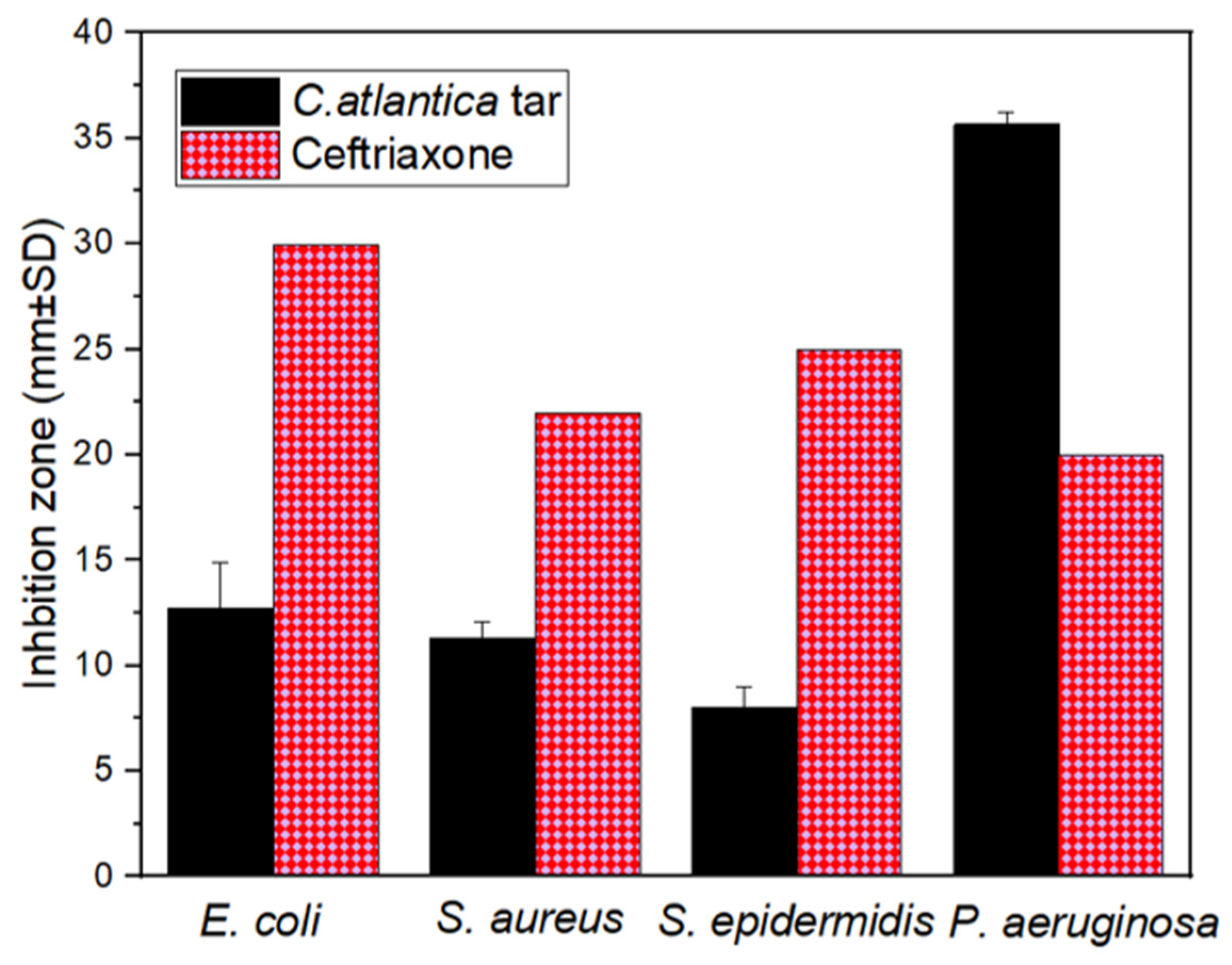
The inhibition zones ranged from 8 mm to 35 mm, with the largest zones being shown by P. aeruginosa (35.66 ± 0.58 mm) (Figure 1). This shows that the extract is highly active against P. aeruginosa, given the natural resistance of the bacteria to most antibiotics.
The MIC and MBC values against P. aeruginosa were 0.7812 mg/mL and 6.25 mg/mL, respectively (Table 4). S. epidermis, however, showed the smallest inhibition zone 8 ± 0.0 mm, indicating comparatively weaker activity with an MIC of 1.56 mg/mL and an MBC of 6.25 mg/mL. This may be attributed to differences in cell membrane composition of bacteria, metabolic activities, or efflux systems that reduce susceptibility. Moderate inhibition zones 11.33 ± 0.72 mm for S. aureus and 12.66 ± 2.18 mm for E. coli suggest that the extract is effective but less effective against these bacteria compared to P. aeruginosa. The MIC and MBC values for S. aureus were both 0.7812 mg/mL, while E. coli showed an MIC of 1.56 mg/mL and an MBC of 6.25 mg/mL. All the tests on the CAWT show a zone of inhibition on the disc lower than the positive control ceftriaxone (CRO), except for P. aeruginosa.
Because CAWT is hydrophobic, diffusion in agar may not fully reflect its intrinsic antimicrobial potency. Therefore, disc diffusion results should be interpreted as preliminary screening, while MIC and MBC values obtained by broth microdilution provide a more accurate assessment of the antibacterial activity.
All tests were performed in triplicate (n = 3) and incubated for 24 h to visually assess the absence of bacterial growth. After inspection, the contents of all wells showing no visible growth were subcultured onto Mueller–Hinton agar and incubated for an additional 24 h. The absence of bacterial growth on MH agar was considered the Minimum Bactericidal Concentration (MBC).

3.4. ADME Results

3.4.1. SwissADME Predictions of Physicochemical Properties and Drug-likeness

Table 5 shows that the six predominant terpenoids of CAWT fall comfortably within the classical oral-drug space: Molecular weights do not exceed 204 g mol−1, hydrogen-bond donors/acceptors are ≤1, and each molecule contains at most one rotatable bond, yielding a uniform predicted bioavailability score of 0.55. The sesquiterpene hydrocarbons β- and α-himachalene, together with trans-cadina-1(6),4-diene, display zero polar surface area and consensus log p values around 4.2, a combination that promises efficient membrane permeation but confers a single Lipinski flag due to extreme apolarity. In contrast, the lighter methyl-1,4-cyclohexadiene and the oxygenated monoterpenes 6-camphenol and sabinene hydrate couple moderate hydrophobicity (log p ≈ 2.1–2.3) with a modest TPSA of 20 Å2, achieving full compliance with both Lipinski and Veber heuristics [22,23]. Across the set, the low conformational entropy implied by negligible rotatable-bond counts supports passive diffusion and may reduce metabolic turnover, whereas the polarity deficit of the himachalene chemotype could warrant solubility-enhancing formulations.

3.4.2. pkCSM Predictions of Pharmacokinetic Parameters

pkCSM predictions (Table 6) indicate broadly favorable and comparable pharmacokinetic profiles for the six CAWT terpenoids. All compounds display high predicted human intestinal absorption (>93%), reinforcing their suitability for oral administration. Blood–brain barrier permeability values (logBB 0.31–0.77) suggest good central access for the highly lipophilic sesquiterpenes β-himachalene (M1), α-himachalene (M2), and trans-cadina-1(6),4-diene (M4), while permeability is moderate for the lighter scaffolds. The absence of predicted inhibition of CYP2D6 or CYP3A4 enzymes and the lack of interaction with the renal OCT2 transporter minimize the risk of drug–drug interactions or transporter-mediated toxicity [27,28]. Total systemic clearance spans from 1.17 and 1.10 mL min−1 kg−1 for the rapidly eliminated sesquiterpenes (M4, M1, and M2) to 0.123 mL min−1 kg−1 for the more persistent 6-camphenol (M5); methyl-1,4-cyclohexadiene (M3) shows an intermediate rate of 0.221 mL min−1 kg−1, and sabinene hydrate (M6) clears at 1.011 mL min−1 kg−1, close to the sesquiterpene range. Collectively, these findings support high oral bioavailability and a benign metabolic profile while offering scope to fine-tune brain penetration and dosing intervals during later optimization stages.

3.5. ProTox-III Acute-Toxicity Profiling

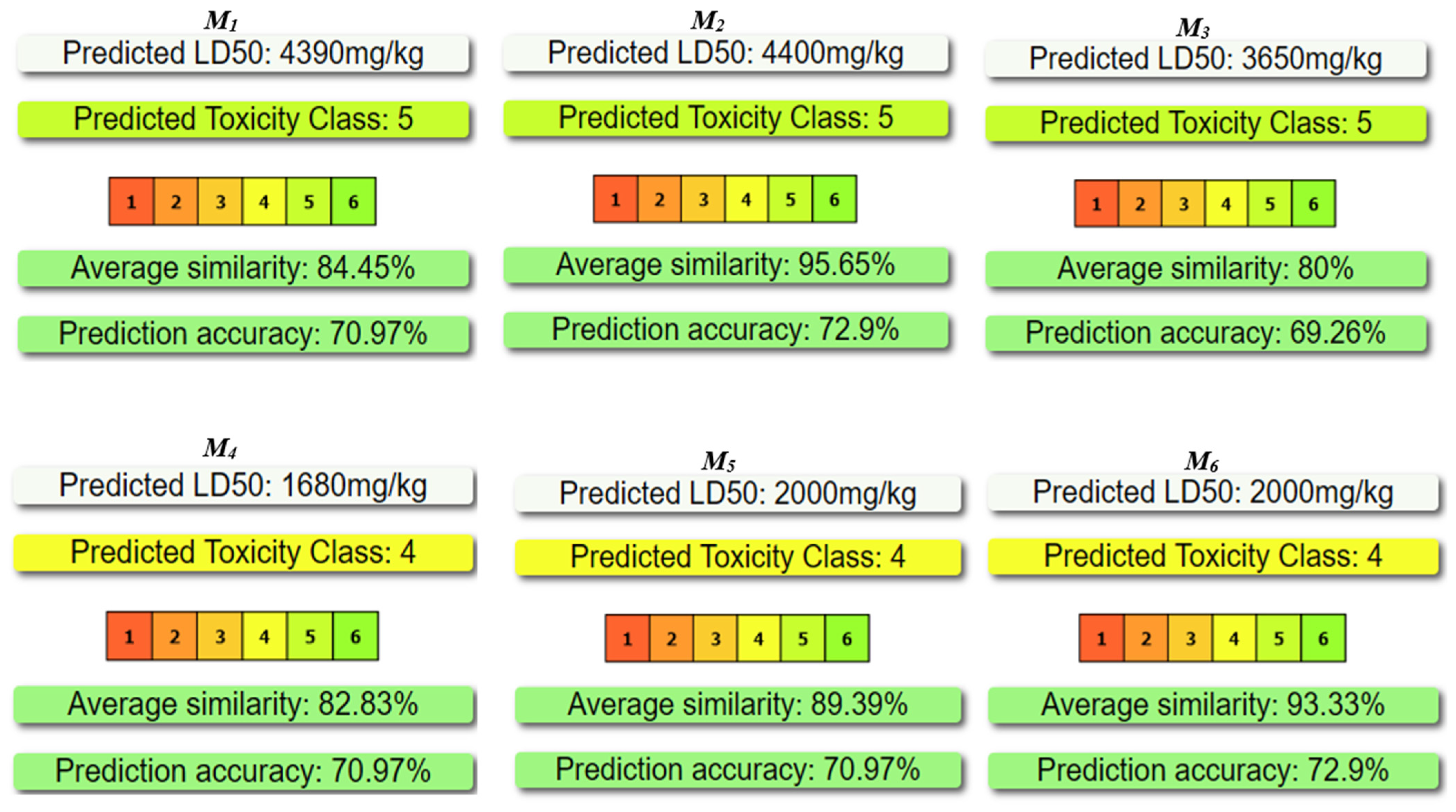
Figure 2 summarizes the ProTox-III acute-toxicity forecasts for the six CAWT terpenoids. The three hydrocarbons β-himachalene (M1), α-himachalene (M2), and methyl-1,4-cyclohexadiene (M3) show the highest predicted oral LD50 values of 4390 mg kg−1, 4400 mg kg−1, and 3650 mg kg−1, respectively, placing them in toxicity class 5, which, under the GHS, corresponds to the lowest regulated hazard level (“may be harmful if swallowed”, LD50 = 2000–5000 mg kg−1) [24]. The oxygenated terpenoids 6-camphenol (M5) and sabinene hydrate (M6) and the more unsaturated sesquiterpene trans-cadina-1(6),4-diene (M4) yield lower LD50 estimates of 2000 mg kg−1 for M5/M6 and 1680 mg kg−1 for M4, aligning with class 4 (“harmful if swallowed”, LD50 = 300–2000 mg kg−1). Average structural similarity to reference compounds ranges from 80% to 96%, and model accuracies cluster near 71–73%, indicating that the predictions rest on well-populated chemical neighborhoods and carry moderate statistical confidence. Collectively, these data suggest a favorable safety margin for all six molecules at the doses typically encountered in nutraceutical or phytopharmaceutical applications, with M1–M3 posing the least acute-toxicity risk and M4–M6 warranting somewhat closer dose management during further pre-clinical evaluation.

3.6. Molecular Docking

Docking energies single out trans-cadina-1(6),4-diene together with the α- and β-himachalene isomers as the most potent ligands in the CAWT set (Table 7), registering the deepest minima particularly within the amphiphilic LasR cavity, where values span −8.2 to −7.7 kcal mol−1, signifying an optimal accommodation of their bulky, highly hydrophobic sesquiterpene skeletons. The same trio also tops the ranking against both bacterial DNA-gyrase B enzymes, although the interaction is attenuated (−7.4 to −6.8 kcal mol−1) by the greater polarity of the ATP-binding pocket, which imposes an enthalpic cost on unfunctionalized hydrocarbons. Mevalonate-diphosphate decarboxylase exhibits intermediate affinities (−6.7 to −6.0 kcal mol−1); in this narrower groove, α-himachalene marginally outperforms its β-counterpart, highlighting the influence of subtle steric complementarity. At the opposite extreme, the truncated, more flexible 1-methyl-1,4-cyclohexadiene invariably yields the weakest scores, while 6-camphénol and sabinene hydrate occupy an intermediate tier, their single hydroxyl group partly enhancing binding in LasR but contributing less to the anionic environments of gyrase and MDD. Collectively, these findings position trans-cadina-1(6),4-diene and both himachalene isomers as the most promising scaffolds, with LasR emerging as the most receptive biological target within the CAWT terpenoid arsenal.
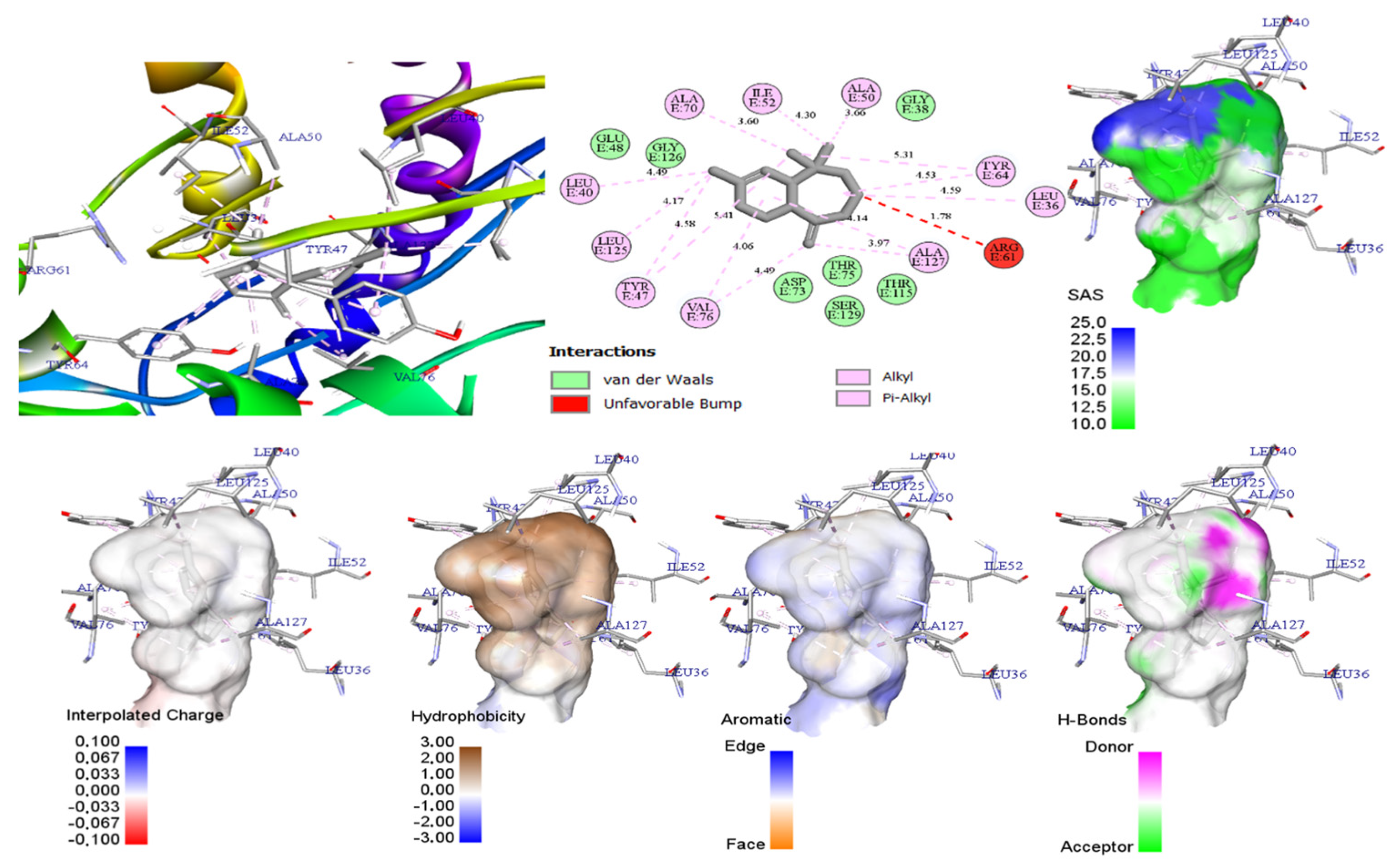
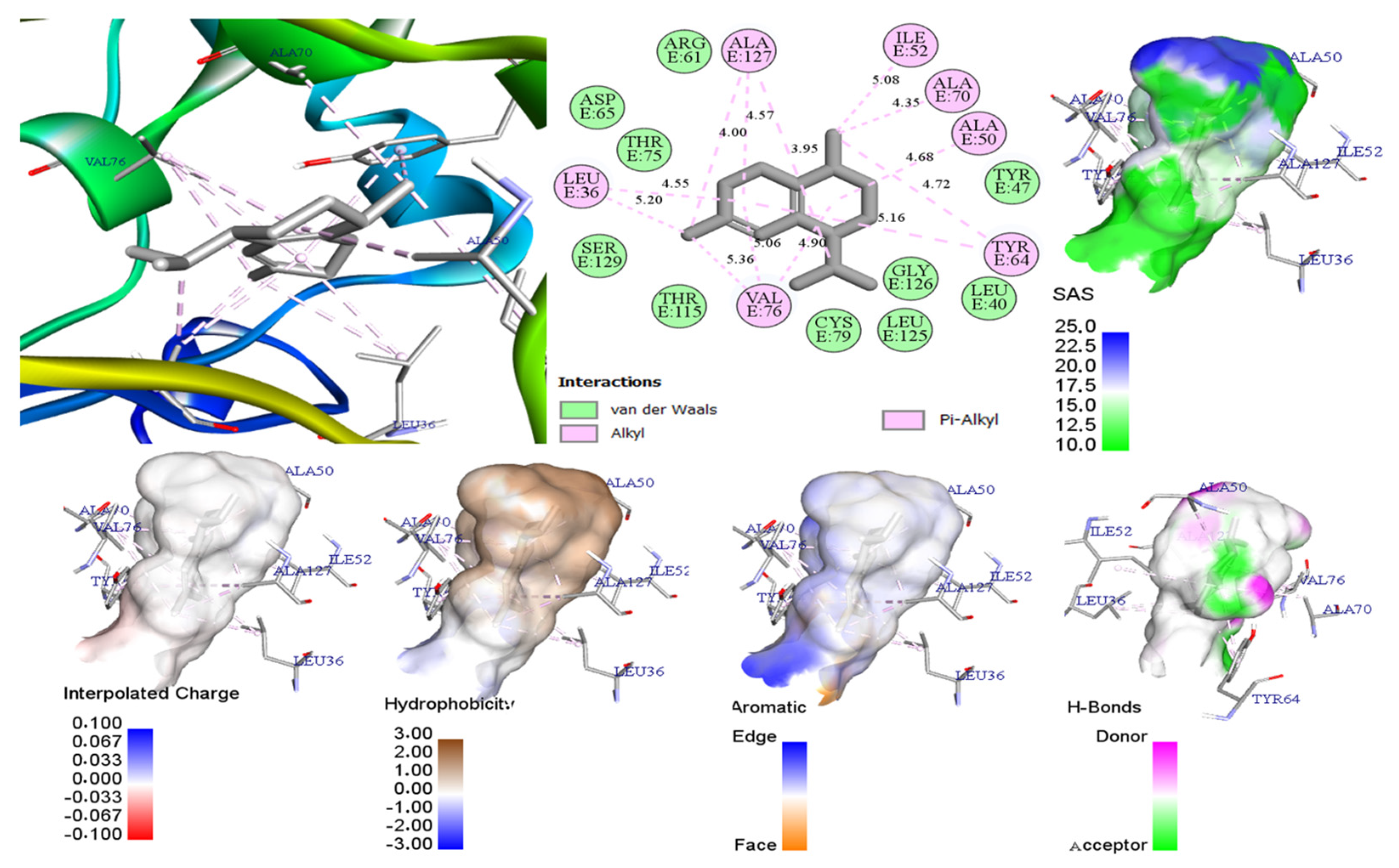
Before turning to Figure 3 and Figure 4, note that these panels present the lowest-energy docking poses of α-himachalene and trans-cadina-1(6),4-diene within the LasR binding pocket (PDB 2UV0). Each pose was selected because it combines the most negative AutoDock Vina score in the terpene set with a compact, well-fitted orientation that maximally occupies the hydrophobic cavity. Comparing these two reference conformations will therefore clarify how scaffold size, branching, and double-bond distribution govern their superior affinity and set the stage for the ensuing structure–activity discussion.

3.7. MM/GBSA Binding-Free-Energy Analysis

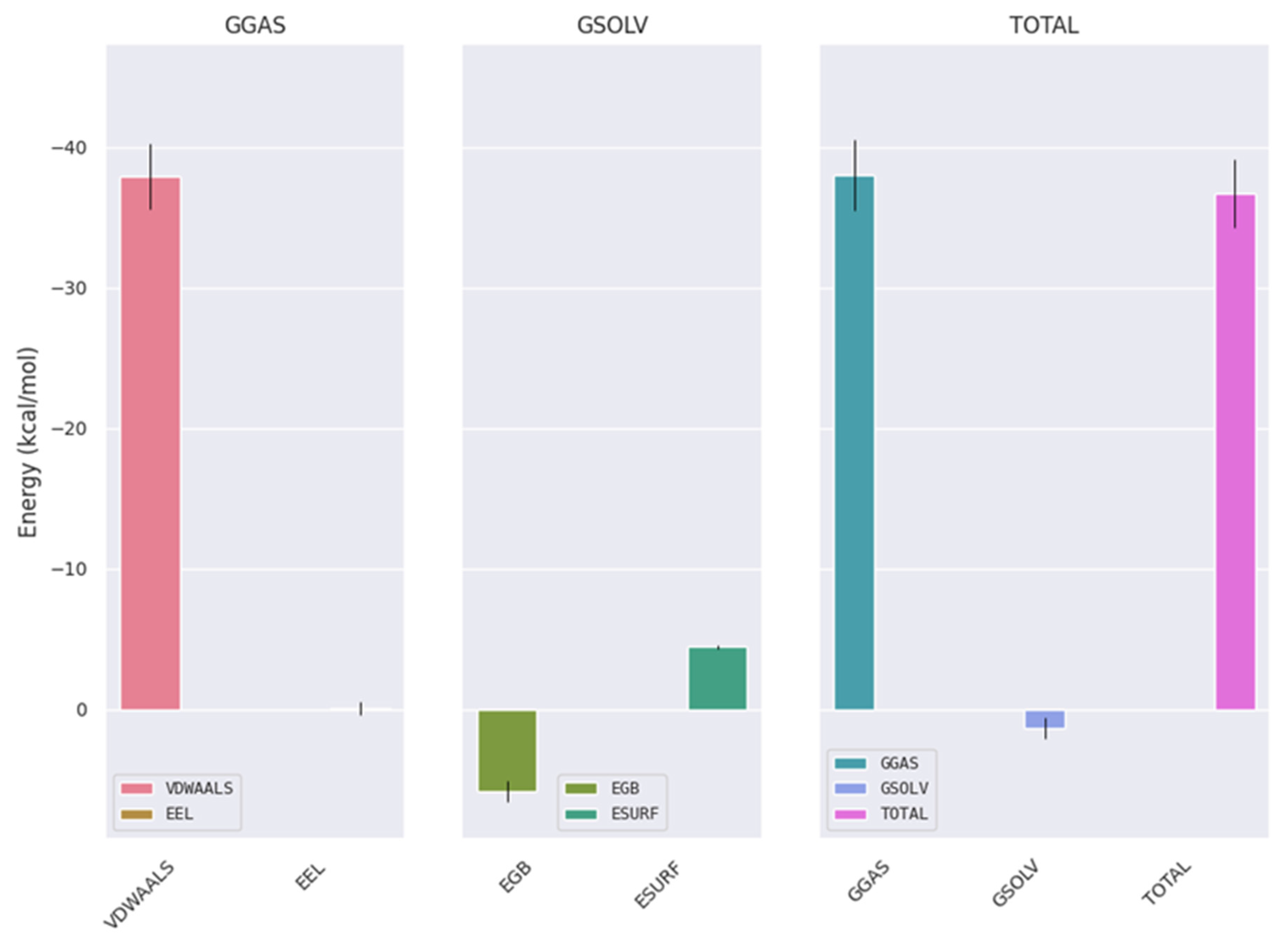
MM/GBSA, a rapid and reliable post-MD estimator of binding free energy, reveals in (Figure 5) that the LasR-M4 complex is overwhelmingly stabilized by van der Waals interactions: Across the 100 snapshots extracted every 0.4 ns between 60 ns and 100 ns, the gas-phase term is driven almost entirely by ΔE_vdW (≈−38 kcal mol−1), while electrostatics are negligible, and the modest solvation penalty (ΔG_solv ≈ +1 kcal mol−1) leaves a strongly favorable overall ΔG_bind of −36.7 kcal mol−1 with sub-kilocalorie uncertainty, confirming a dispersion-dominated, thermodynamically robust binding mode
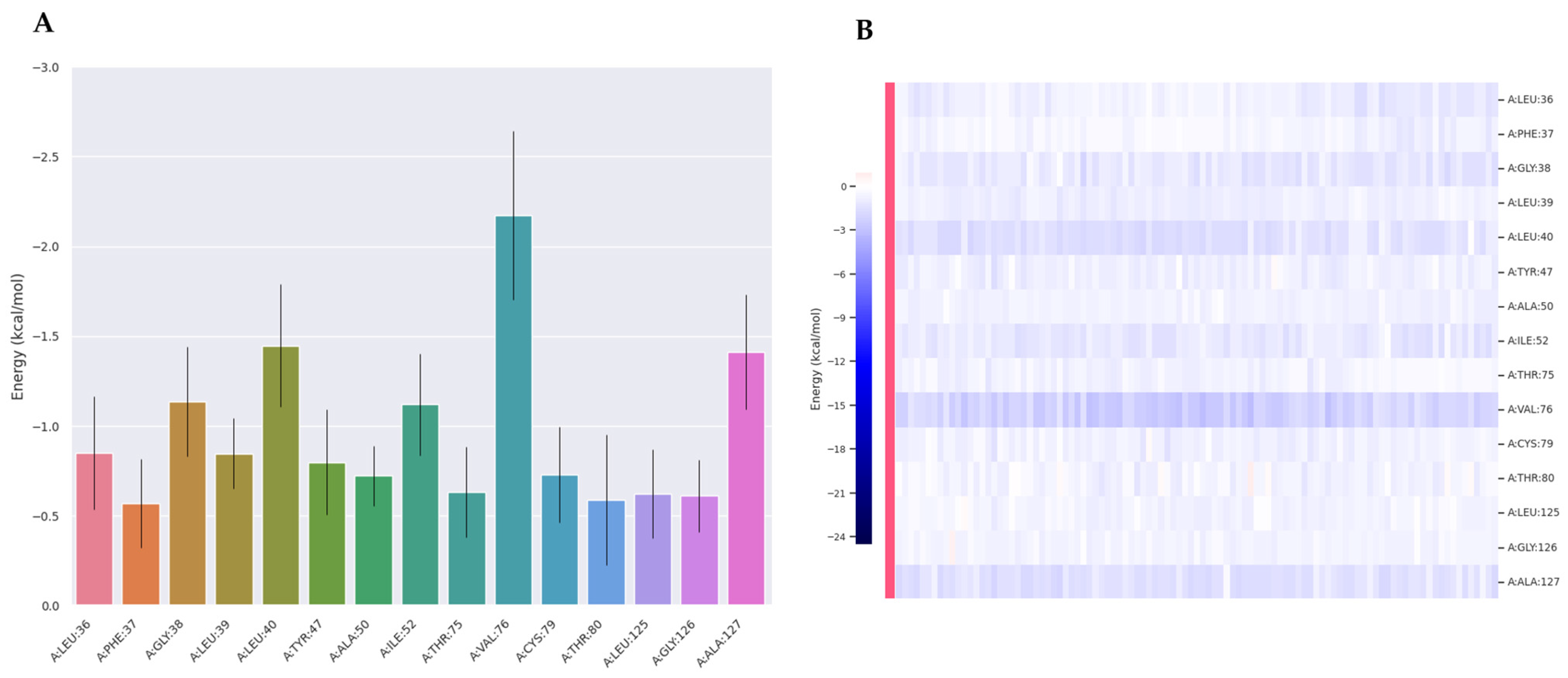
Figure 6 highlights the residue-level determinants of M4 binding: In the bar plot (Figure 6A), every contacted amino acid contributes more than −0.5 kcal mol−1 to the MM/GBSA binding free energy, and five key residues Val 76, Leu 40, Ala127, Gly 38, and IlE52 surpass the −1 kcal mol−1 threshold, underscoring exceptionally strong dispersion-dominated anchoring within the hydrophobic tunnel. The time-resolved heat-map (Figure 6B) confirms that these favorable contributions persist across the 100 snapshots collected between 60 ns and 100 ns, with no drift towards less negative values, mirroring the flat ligand RMSD and attesting to a highly stable binding mode. Consistently, Val 76 and Ala 127, which each form three recurrent contacts in the docking poses, retain markedly negative energies throughout the trajectory, while Leu 40, initially classified as a mere van der Waals contact, emerges as a major hotspot once solvent and dynamic effects are included, illustrating the enhanced reliability of MD-refined MM/GBSA over single-snapshot docking scores.

4. Discussion

The results of the comprehensive analysis of polyphenols, flavonoids, tannins, saponins, and alkaloids in CAWT reveal their vital roles in biological activities. The varying concentrations of polyphenols, flavonoids, and tannins among the extracts highlight their diverse chemical profiles (Table 2), showing higher polyphenol content. The results obtained in the present study are comparable to, or higher than, the richest hydroalcoholic stem extracts reported in the literature. The total polyphenol (307.39 mg GAE/g), tannin (124.42 mg TAE/g), and flavonoid (15.62 mg QE/g) content obtained in this study are comparable to, or higher than, the richest hydroalcoholic stem extracts reported in the literature [8]. In particular, the F3 fraction had lower total polyphenols (237.23 mg GAE/g) and similar tannin levels, while higher flavonoid contents were mainly recorded in the ethyl acetate fraction [8]. On the contrary, studies regarding wood tar essential oils [28,29] have not directly quantified these phenolic families and attributed, with a large predominance, the antioxidant effects to oxygenated sesquiterpenes. This suggests that the tar extract explored here, being especially rich in phenols and tannins, concentrates more directly the metabolites responsible for antioxidant activity.
Consistently, CAWT exhibited strong antioxidant capacity, with a DPPH IC50 of 19.78 µg/mL and an FRAP IC50 of 83.7 µg/mL. These values are markedly more potent than those reported for C. atlantica wood essential oil (DPPH IC50 ≈ 54 µg/mL; FRAP EC50 ≈ 509.5 µg/mL) [8] and substantially superior to wood tar essential oils, for which DPPH IC50 values ranged from 126 to 143 µg/mL [29,30]. In a study on Algerian cedar, strong antioxidant activity was observed against FRAP assays with the IC50 ranging from 75 ± 0.28 µg/mL [31]. Notably, the antioxidant activity of CAWT is very close to that of the best ethanolic stem extract (F3), positioning this traditional tar among the most active antioxidant forms of C. atlantica reported to date [8]. Furthermore, CAWT exhibited DPPH activity comparable to BHT, while remaining less potent than ascorbic acid; in the ferric-reducing assay, CAWT displayed lower reducing power than BHT. The assessment of the cedar wood tar extract antimicrobial against E. coli, P. aeruginosa, S. aureus, and S. epidermis (Figure 1) indicates that cedar wood tar is a potent inhibitor of both bacteria, suggesting its promising antibacterial activity. The inhibition zone of 35.66 mm against Pseudomonas aeruginosa is remarkably high and exceeds those generally reported for C. atlantica wood essential oils, which show moderate to strong antibacterial effects depending on strain and concentration [8]. In comparative studies involving cedar and juniper tar oils, laboratory-produced cedar tar oils displayed lower antibacterial potency than juniper tar against several bacterial strains [30]. Furthermore, our results align with previous reports that the cedar tar demonstrated broad-spectrum activity against E. coli and S. haemolyticus [10].
The ADME assessment focuses on the six most abundant terpenoids reported in CAWT, designated for clarity as M1–M6: M1 = β-Himachalene, M2 = α-Himachalene, M3 = methyl-1,4-cyclohexadiene, M4 = trans-cadina-1(6),4-diene, M5 = 6-camphenol, and M6 = sabinene hydrate. Together, these compounds constitute the wood tar fraction, making them the most probable contributors to the plant’s antimicrobial and antioxidant activities. Concentrating on this major subset not only captures the chemical diversity of himachalene-type sesquiterpenes, cadinane derivatives, monoterpenes, and oxygenated terpenoids but also maximizes translational relevance by prioritizing the molecules most likely to drive in vivo efficacy and safety outcomes. Overall, the physicochemical signature points to favorable oral pharmacokinetics for all six molecules, with distinct solubility-permeability trade-offs between the highly lipophilic sesquiterpenes and the more balanced monoterpenoid subgroup.
Early toxicological screening with ProTox-III rapidly delivers a quantitative estimate of the acute toxicity of the six major CAWT terpenoids. It lowers the risk of costly late-stage failures, guides dose selection for experimental testing, and ensures initial compliance with regulatory safety requirements (Figure 2).
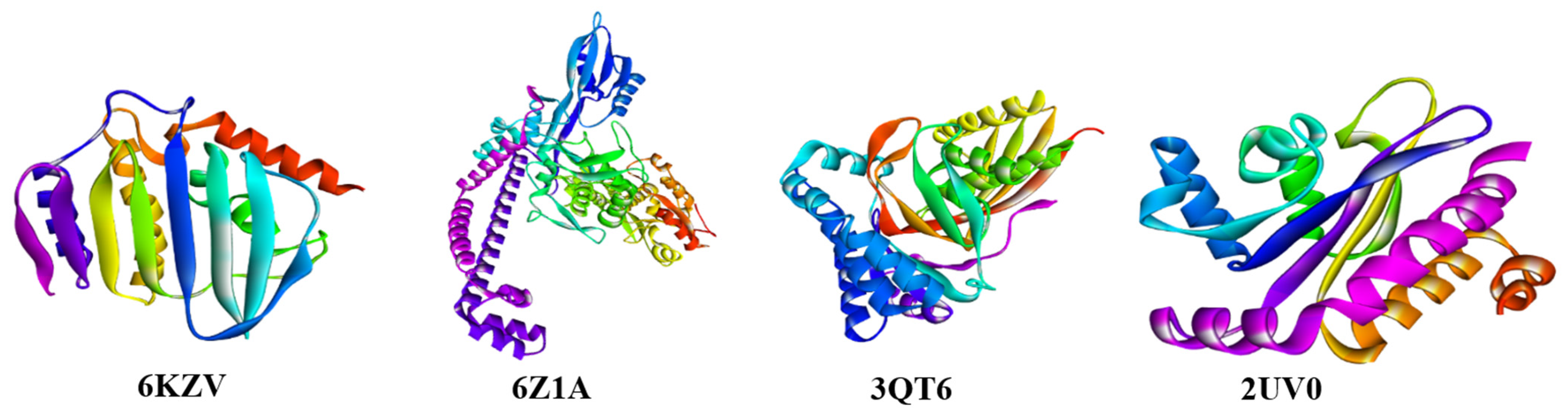
This docking study ranks the six predominant terpenoids of CAWT according to their computed affinity for four bacterial targets: E. coli DNA-gyrase B (6KZV), S. aureus DNA-gyrase B (6Z1A), P. aeruginosa LasR LBD (2UV0), and S. epidermidis mevalonate-diphosphate decarboxylase (3QT6) (Figure 7) [32,33,34,35]. Protocol validation was carried out only for the three structures that possess co-crystallized ligands (6KZV, 3QT6, and 2UV0); redocking these ligands returned heavy-atom RMSD values below 1.3 Å, confirming the reliability of the predicted binding energies. Because 6Z1A lacks a cognate ligand, it was investigated by blind docking without a prior redocking step. Terpenoids exhibiting the greatest steric and electrostatic complementarity will now be subjected to exhaustive all-atom molecular dynamics simulations to refine their binding energetics and elucidate the structure–activity relationships that underpin their experimentally verified antimicrobial potency.
Figure 4 depicts α-himachalene locked deep inside the LasR cavity (PDB 2UV0). Fourteen π-alkyl/alkyl contacts lying 3.6–5.41 Å from the protein envelope the sesquiterpene skeleton, yielding near-ideal steric complementarity and minimizing the entropic cost of desolvation; seven further van der Waals contacts seal residual micro-voids, stabilizing the complex without over-rigidifying it [36]. The solvent accessible surface (SAS) rendering confirms this burial: Most of the ligand is shaded green (<15 Å2 per atom) with only a faint blue cap, indicating that polar solvent is largely excluded once the molecule lodges in the pocket. Property-mapped surfaces reinforce the same picture. The interpolated-charge map is essentially neutral (white), mirroring the ligand’s hydrocarbon nature and explaining the minor contribution of electrostatics to the binding energy. The hydrophobicity projection is uniformly brown, showing that every exposed face of α-himachalene is matched by a lipophilic wall of the pocket consistent with the high density of π-alkyl/alkyl contacts [37]. The aromatic edge/face surface is weakly tinted, reflecting the limited π character of the isopropenyl double bonds yet still aligning favorably with the cavity’s aromatic rim. Finally, the hydrogen-bond surface is almost featureless, with only isolated green/magenta patches and no productive donors or acceptors engaged; this justifies the absence of classical hydrogen bonds and underscores the dominance of dispersion forces. A single strain point remains an unfavorable bump at 1.78 Å against Arg61 that penetrates beyond the Lennard-Jones repulsion minimum. Although the aggregate hydrophobic interactions largely offset this clash, the excessive proximity suggests that a minor torsional tweak or a subtle modification of a neighboring substituent could relieve the steric stress while preserving the favorable contact area, offering a rational route to further improve α-himachalene’s affinity for LasR. Figure 4 shows trans-cadina-1(6),4-diene seated snugly in the LasR pocket (PDB 2UV0). Thirteen π-alkyl/alkyl contacts spanning 3.95–5.36 Å contour its bicyclic scaffold to the lipophilic walls, while ten additional van der Waals contacts seal the remaining crevices, giving the complex almost continuous hydrophobic cohesion with no detectable steric clash [38]. The solvent accessible surface map corroborates this burial: Light green tones (<15 Å2 per atom) dominate, with only a faint blue fringe, indicating near-total solvent exclusion. The interpolated-charge surface is uniformly white, confirming electrical neutrality and the primacy of dispersion forces. Hydrophobicity is a continuous brown mantle, signifying perfect apolar complementarity; the aromatic map shows only modest blue edging, consistent with limited π density yet sufficient for tight packing. Finally, the donor/acceptor surface displays just isolated magenta/green spots, underscoring the absence of classical hydrogen bonds. This homogeneous distribution of hydrophobic contacts free of unfavorable bumps accounts for the ligand’s top-tier binding energy and justifies its selection for subsequent dynamic simulations.
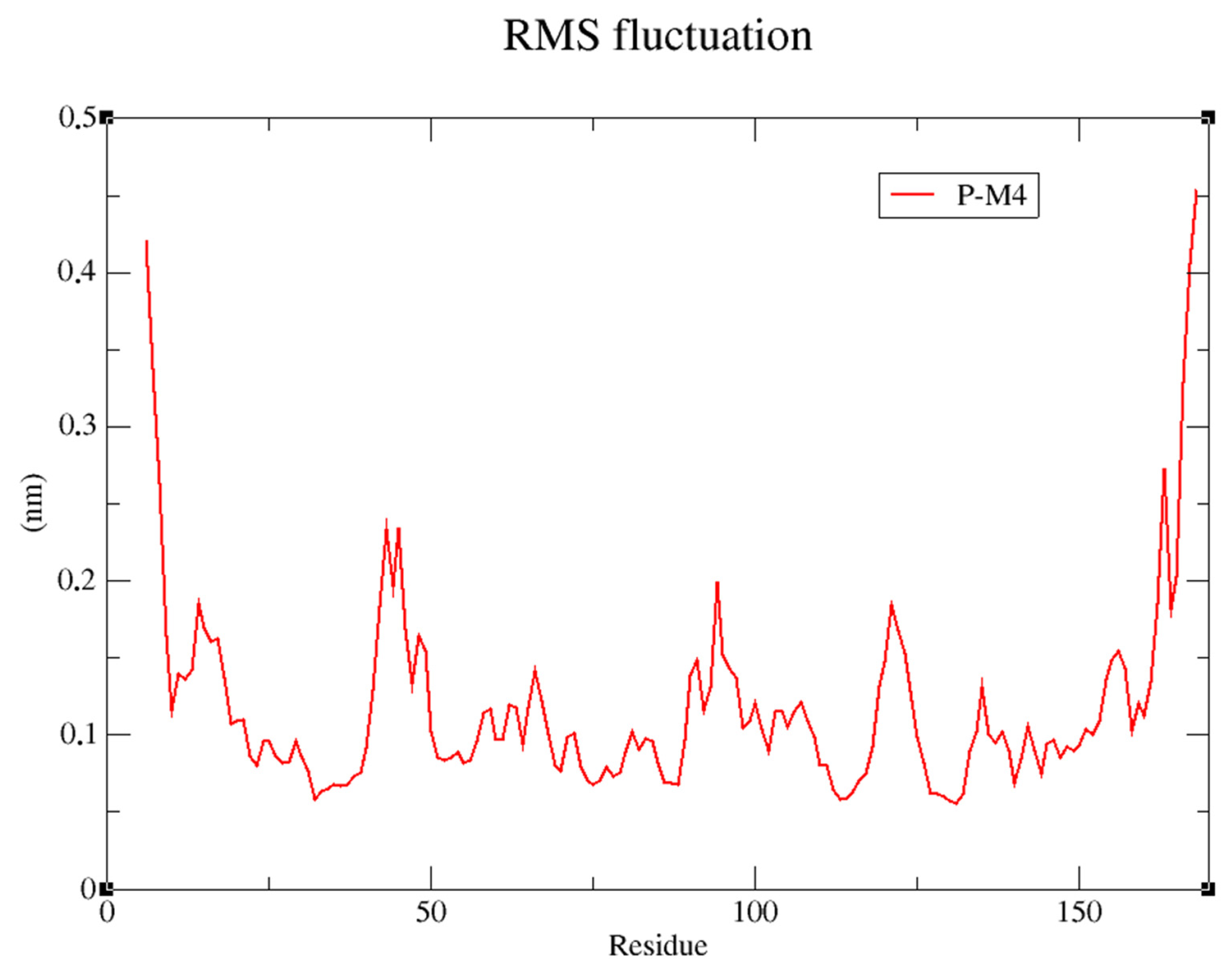
Molecular dynamics (MDs) simulations extend the static crystallographic snapshot into a time-resolved “atomic movie” by numerically integrating Newton’s equations for every atom in the system. Two metrics extracted from the resulting trajectory are routinely used to gauge its reliability: the root-mean-square deviation (RMSD), which tracks the average displacement of the protein backbone or ligand from an initial reference structure and thus reflects global convergence and overall stability, and the root-mean-square fluctuation (RMSF), which measures the residue-by-residue amplitude of motion around each atom’s mean position, identifying flexible loops and rigid cores [39]. Together, the RMSD and RMSF provide a quantitative framework for assessing whether the simulated complex remains structurally stable while revealing the local dynamical hot-spots that can modulate binding and function.
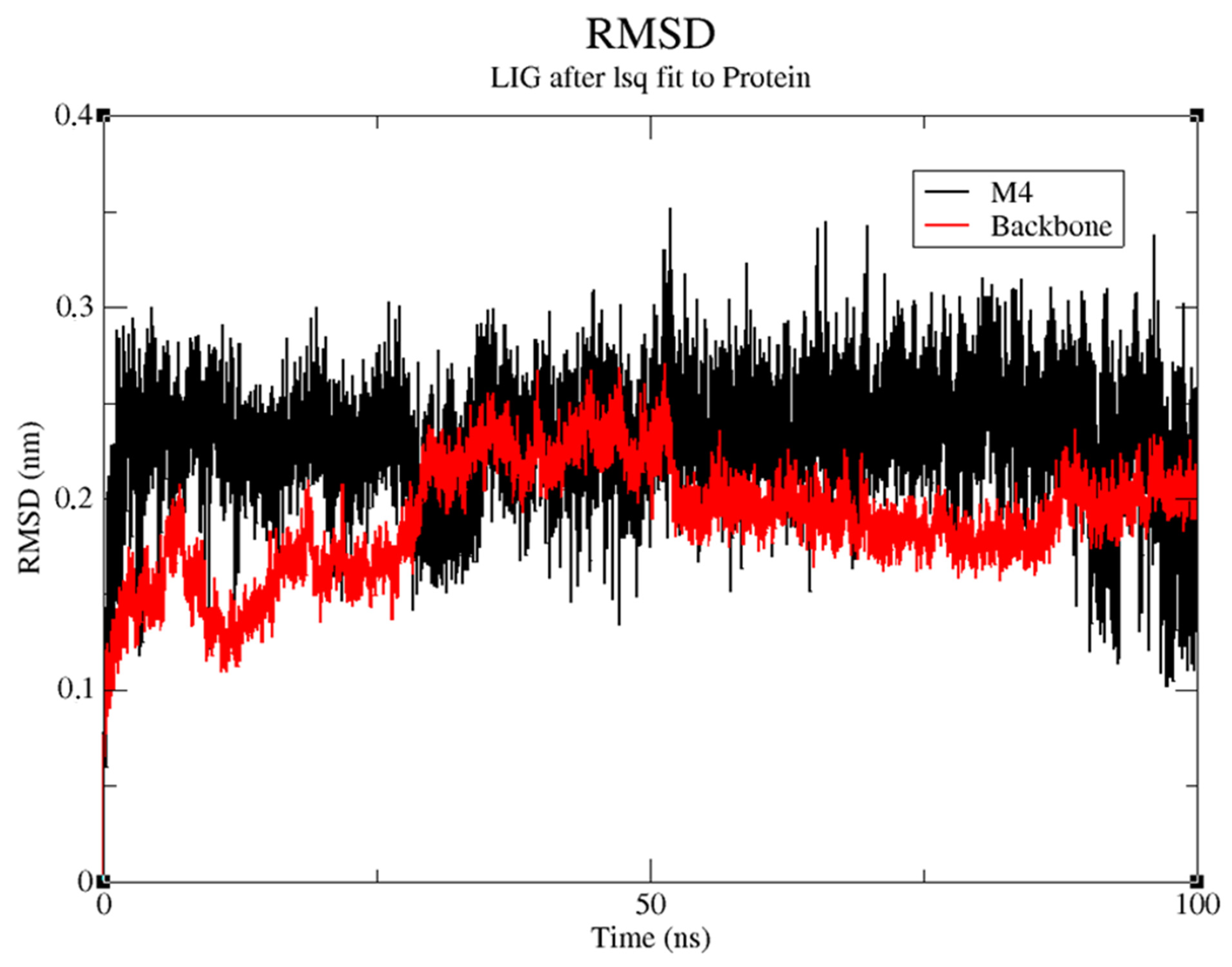
Figure 8 depicts a highly convergent RMSD profile for the trans-cadina-1(6),4-diene (M4)-LasR complex (PDB 2UV0). After a brief adaptation phase of <10 ns, the protein backbone stabilizes at ≈0.22 nm, indicating that the native fold remains essentially intact throughout the 100 ns simulation. The ligand, least-squares-fitted to the protein (black trace), settles in parallel at ≈0.26 nm without any long-term drift or excursions beyond ≈0.35 nm. The near-overlap of the ligand and backbone plateaus, coupled with the absence of systematic divergence between them, demonstrates that the docking-predicted pose is not only retained but further consolidated under explicit solvent dynamics. Such sustained positional fidelity, especially for an apolar sesquiterpene, implies a dense network of persistent van der Waals contacts within the hydrophobic tunnel, consistent with M4’s top docking score. Collectively, the RMSD behavior confirms the complex’s global stability and validates the binding mode, justifying the prioritization of M4 for downstream functional assays.
Figure 9 shows that trans-cadina-1(6),4-diene (M4) markedly dampens local flexibility within LasR’s hydrophobic tunnel. While the N- and C-termini retain the expected high mobility (≈0.42–0.46 nm), every residue that contacts the ligand Leu36, the cluster spanning residues 50–77 (eight π-alkyl or alkyl contacts involving five amino acids), and Ala127 (three contacts) exhibits RMSF values confined to ≤0.12 nm [40,41,42]. Compared with the apo receptor, this uniform reduction demonstrates that the network of eleven hydrophobic interactions rigidifies loops L2/L3 and the adjoining β-strand, restricting the “breathing” motions that normally widen the binding tunnel. Such distributed, contact-driven stabilization underpins M4’s top docking score by converting van der Waals affinity into conformational locking, a dynamic signature often associated with potent competitive inhibition in quorum-sensing receptors.
Re-scoring the 60–100 ns segment with MM/GBSA (Figure 5) shows that M4 binds to LasR through a predominantly van der Waals, enthalpy-driven mechanism, with electrostatic and solvation terms playing only a minor supporting role. At the residue level (Figure 6), every contacting amino acid contributes favorably, and five hotspots, Val 76, Leu 40, Ala 127, Gly 38, and Ile 52, stand out as the principal anchors, in full agreement with the recurrent contacts detected in the docking poses. The persistence of these favorable contributions over all snapshots mirrors the flat ligand RMSD, confirming that hydrophobic “locking” within the tunnel maintains a highly stable complex and reinforcing the mechanistic relevance of M4’s dispersion-dominated binding for quorum-sensing inhibition.


5. Conclusions

In conclusion, our study provides a comprehensive evaluation of the chemical composition, antioxidants, and antimicrobial properties of CAWT, bridging traditional Berber medicinal knowledge with modern scientific validation. The phytochemical analyses confirmed the richness of the extract in bioactive compounds, such as polyphenols (307.39 ± 58.45 mg GAE/g), flavonoids (15.62 ± 2.53 mg QE/g), and tannins (124.42 ± 6.14 mg TAE/g), which are known for their therapeutic potential. The wood tar demonstrated significant antioxidant activity with 19.781 ± 2.51 µg/mL for DPPH and FRAP with 83.7 ± 2.88 µg/mL, as well as notable antimicrobial effects, particularly against P. aeruginosa (35.66 ± 0.58 mm). In silico assessments of the main terpenoids further supported these findings, revealing favorable pharmacokinetic profiles, low predicted toxicity, and strong molecular interactions with microbial targets. Together, these results not only validate the traditional uses of CAWT but also highlight its promise as a natural source of antioxidant and antimicrobial agents for future pharmaceutical and industrial applications. Further studies, including in vivo evaluations and formulation development, are recommended to fully harness the therapeutic potential of this valuable natural resource.

6. Limitations and Future Work

The present antimicrobial evaluation is based on disc diffusion screening, which was complemented by MIC and MBC determination, allowing assessment of antimicrobial potency and bactericidal/bacteriostatic effects. Future studies will include biofilm inhibition/eradication essays and fractionation coupled with chemical profiling to identify the constituents driving the observed activities.

Author Contributions

S.T.: Conceptualization, methodology, software, formal analysis, investigation, data curation, writing—original draft preparation, visualization, and project administration; O.K.: Conceptualization, methodology, software, formal analysis, investigation, resources, writing—original draft preparation, and data curation; A.Z.: validation and conceptualization; M.N.: validation; S.I.: conceptualization and writing—review and editing; K.H.M.: conceptualization; B.L.: conceptualization and resources; M.E.J.: conceptualization, validation, resources, writing—review and editing, supervision, and funding acquisition. All authors have read and agreed to the published version of the manuscript.

Funding

This research received no external funding.

Institutional Review Board Statement

Not applicable.

Informed Consent Statement

Not applicable.

Data Availability Statement

All raw and processed data including quantitative phytochemical, antioxidant activities, antimicrobial stains, Dock Vina output files, protocol validation logs, the full set of GROMACS input/output files (.gro, .itp, .top, and .mdp), and the complete MM/GBSA calculation scripts and results are openly available in the public GitHub repository at Phytochemical-Characteristics (https://github.com/khibech/Phytochemical-Characteristics) (accessed on 5 September 2025).

Acknowledgments

The authors would like to thank the technological research platform of the University of Science and Health for their technical support. We gratefully acknowledge the HPC Marwan team for granting us privileged access to their high-performance computing resources. The exceptional computational power and responsive technical support they provided were instrumental in carrying out the molecular dynamics simulations reported in this study. Their contribution greatly enhanced the quality and robustness of our results, and we are sincerely thankful for their assistance.

Conflicts of Interest

The authors declare no conflicts of interest.

References

  1. Abdallah, E.M. Antibacterial Activity of Hibiscus sabdariffa L. Calyces against Hospital Isolates of Multidrug Resistant Acinetobacter Baumannii. J. Acute Dis. 2016, 5, 512–516. [Google Scholar] [CrossRef]
  2. Petrovska, B.B. Historical Review of Medicinal Plants’ Usage. Pharmacogn. Rev. 2012, 6, 1. [Google Scholar] [CrossRef]
  3. Al-Asmari, A.K.; Athar, M.T.; Kadasah, S.G. An Updated Phytopharmacological Review on Medicinal Plant of Arab Region: Apium Graveolens Linn. Pharmacogn. Rev. 2017, 11, 13. [Google Scholar] [CrossRef]
  4. Aprotosoaie, A.C.; Gille, E.; Trifan, A.; Luca, V.S.; Miron, A. Essential Oils of Lavandula Genus: A Systematic Review of Their Chemistry. Phytochem. Rev. 2017, 16, 761–799. [Google Scholar] [CrossRef]
  5. Nakanishi, K. A Brief History of Natural Products Chemistry. Compr. Nat. Prod. Chem. 1999, 1, 1–31. [Google Scholar]
  6. Cheddadi, R.; Taberlet, P.; Boyer, F.; Coissac, E.; Rhoujjati, A.; Urbach, D.; Remy, C.; Khater, C.; el Antry, S.; Aoujdad, J.; et al. Priority Conservation Areas for Cedrus atlantica in the Atlas Mountains, Morocco. Conserv. Sci. Pract. 2022, 4, e12680. [Google Scholar] [CrossRef]
  7. Idrissi, A.M.; Mahraz, M.A.; Drioua, S.; Assouguem, A.; Ali, E.A.; Ibrahim, M.A.; Mehta, C.M.; Lahlali, R.; Tlemcani, S.; Moussaoui, F.; et al. Phytochemical Investigation and Evaluation of Antioxidant and Antidiabetic Activities in Aqueous Extracts of Cedrus atlantica. Open Chem. 2024, 23, 20240121. [Google Scholar] [CrossRef]
  8. El Hachlafi, N.; Mrabti, H.N.; Al-Mijalli, S.H.; Jeddi, M.; Abdallah, E.M.; Benkhaira, N.; Hadni, H.; Assaggaf, H.; Qasem, A.; Goh, K.W.; et al. Antioxidant, Volatile Compounds; Antimicrobial, Anti-Inflammatory, and Dermatoprotective Properties of Cedrus atlantica (Endl.) Manetti Ex Carriere Essential Oil: In Vitro and In Silico Investigations. Molecules 2023, 28, 5913. [Google Scholar] [CrossRef]
  9. Masmoudi, S.; Aiboud, A.; Chaoui, L.; Milouk, F.Z.; Moussaif, A.; El Hessni, A.; Mesfioui, A. Phytochemical Composition of Cedar Tar of the Atlas and It’s in Vitro Antifungal Activity against Trichophyton Rubrum, Trichophyton Mentagrophytes and Microsporum Canis. Pak. J. Pharm. Sci. 2024, 37, 257–263. [Google Scholar]
  10. Takci, H.A.M.; Turkmen, F.U.; Sari, M. Effect of Cedar (Cedrus libani A. Rich) Tar on Bacterial Growth. J. Microbiol. Biotechnol. Food Sci. 2020, 9, 805–808. [Google Scholar] [CrossRef]
  11. Şahin, F.; Güllüce, M.; Daferera, D.; Sökmen, A.; Sökmen, M.; Polissiou, M.; Agar, G.; Özer, H. Biological Activities of the Essential Oils and Methanol Extract of Origanum vulgare Ssp. Vulgare in the Eastern Anatolia Region of Turkey. Food Control 2004, 15, 549–557. [Google Scholar] [CrossRef]
  12. Yen, G.-C.; Chen, H.-Y. Antioxidant Activity of Various Tea Extracts in Relation to Their Antimutagenicity. J. Agric. Food Chem. 1995, 43, 27–32. [Google Scholar] [CrossRef]
  13. Moustaid, W.; Saffaj, T.; Annemer, S.; Assouguem, A.; Ullah, R.; Ali, E.A.; Ercisli, S.; Marc, R.A.; Farah, A. Simultaneous Hydrodistillation of Healthy Cedrus atlantica Manetti and Infected by Trametes Pini and Ungulina Officinalis: Effect on Antibacterial Activity Utilizing a Mixture-Design Method. ACS Omega 2023, 8, 31899–31913. [Google Scholar] [CrossRef]
  14. Harborne, J.B. Chlorophyll extraction. In Phytochemical Methods, 1st ed.; Harbone, J.B., Ed.; Chapman and Hall: London, UK, 1973; pp. 205–207. [Google Scholar]
  15. Audu, S.A.; Mohammed, I.; Kaita, H.A. Phytochemical Screening of the Leaves of Lophira Lanceolata (Ochanaceae). Life Sci. J. 2007, 4, 1097–8135. [Google Scholar]
  16. Obasi, N.L.; Egbuonu, A.C.C.; Ukoha, P.O.; Ejikeme, P.M. Comparative Phytochemical and Antimicrobial Screening of Some Solvent Extracts of Samanea Saman. Afr. J. Pure Appl. Chem. 2010, 4, 206–2012. [Google Scholar]
  17. Ndayambaje, M.; Habyarimana, T.; Wahnou, H.; Nsanzurwimo, A.; Chgari, O.; Ndishimye, P.; Mezty, A.; Farida, M.; Karkouri, M.; Zaid, Y.; et al. Antioxidant Capacity, Acute and Sub-Acute Oral Toxicity, and in Vivo Anti-Inflammatory Effects of Tetradenia riparia Hydroalcoholic Extract. Drug Chem. Toxicol. 2025, 48, 1293–1306. [Google Scholar] [CrossRef]
  18. Singleton, V.L.; Rossi, J.A. Colorimetry of Total Phenolics with Phosphomolybdic-Phosphotungstic Acid Reagents. Am. J. Enol. Vitic. 1965, 16, 144–158. [Google Scholar] [CrossRef]
  19. Topçu, G.; Ay, M.; Bilici, A.; Sarıkürkcü, C.; Öztürk, M.; Ulubelen, A. A New Flavone from Antioxidant Extracts of Pistacia Terebinthus. Food Chem. 2007, 103, 816–822. [Google Scholar] [CrossRef]
  20. Folin, O.; Ciocalteu, V. On Tyrosine and Tryptophane Determinations in Proteins. J. Biol. Chem. 1927, 73, 627–650. [Google Scholar] [CrossRef]
  21. Kalemba, D.; Kunicka, A. Antibacterial and Antifungal Properties of Essential Oils. Curr. Med. Chem. 2003, 10, 813–829. [Google Scholar] [CrossRef]
  22. Daina, A.; Michielin, O.; Zoete, V. SwissADME: A Free Web Tool to Evaluate Pharmacokinetics, Drug-Likeness and Medicinal Chemistry Friendliness of Small Molecules. Sci. Rep. 2017, 7, 42717. [Google Scholar] [CrossRef]
  23. Banerjee, P.; Kemmler, E.; Dunkel, M.; Preissner, R. ProTox 3.0: A Webserver for the Prediction of Toxicity of Chemicals. Nucleic Acids Res. 2024, 52, W513–W520. [Google Scholar] [CrossRef]
  24. Gadaleta, D.; Vuković, K.; Toma, C.; Lavado, G.J.; Karmaus, A.L.; Mansouri, K.; Kleinstreuer, N.C.; Benfenati, E.; Roncaglioni, A. SAR and QSAR Modeling of a Large Collection of LD50 Rat Acute Oral Toxicity Data. J. Cheminform 2019, 11, 58. [Google Scholar] [CrossRef]
  25. Trott, O.; Olson, A.J. AutoDock Vina: Improving the Speed and Accuracy of Docking with a New Scoring Function, Efficient Optimization, and Multithreading. J. Comput. Chem. 2010, 31, 455–461. [Google Scholar] [CrossRef]
  26. Abraham, M.J.; Murtola, T.; Schulz, R.; Páll, S.; Smith, J.C.; Hess, B.; Lindah, E. GROMACS: High Performance Molecular Simulations through Multi-Level Parallelism from Laptops to Supercomputers. SoftwareX 2015, 1–2, 19–25. [Google Scholar] [CrossRef]
  27. Muhamad, N.; Na-Bangchang, K. The Roles of CYP2C19 and CYP3A4 in the in Vitro Metabolism of β-Eudesmol in Human Liver: Reaction Phenotyping and Enzyme Kinetics. Pharmacol. Res. Perspect. 2023, 11, e01149. [Google Scholar] [CrossRef]
  28. Ninich, O.; El Fahime, E.; Tiskar, M.; Tassaoui, K.; Chauiyakh, O.; Aarabi, S.; Satrani, B.; Benmessaoud, M.; Ettahir, A. Cedar Tar as a Green Corrosion Inhibitor for E24 Steel in 1 M HCl Solution: A Comparative Analysis of Uncleaned and Cleaned Cedar. Int. J. Corros. Scale Inhib. 2023, 12, 2142–2170. [Google Scholar] [CrossRef]
  29. Jaouadi, I.; Cherrad, S.; Tiskar, M.; Tabyaoui, M.; Ghanmi, M.; Satrani, B.; Chaouch, A. Wood Tar Essential Oil from Cedrus atlantica of Morocco (Middle Atlas) as a Green Corrosion Inhibitor for Mild Steel in 1 m Hydrochloric Acid Solution. Int. J. Corros. Scale Inhib. 2020, 9, 265–283. [Google Scholar] [CrossRef]
  30. Ninich, O.; El Fahime, E.; Satrani, B.; Burri, S.; Ghanmi, M.; Aarabi, S.; Chauiyakh, O.; Kettani, K.; Ettahir, A. Comparative Chemical and Biological Analysis of Wood and Tar Essential Oils from Cedrus atlantica and Juniperus oxycedrus in Morocco. Trop. J. Nat. Prod. Res. 2024, 8, 6570–6581. [Google Scholar] [CrossRef]
  31. Skanderi, I.; Chouitah, O. Chemical Characterization and Antioxidant Activity of Cedrus atlantica Manetti Tar (Atlas Cedar Tar). Fr.-Ukr. J. Chem. 2020, 8, 244–255. [Google Scholar] [CrossRef]
  32. Ushiyama, F.; Amada, H.; Takeuchi, T.; Tanaka-Yamamoto, N.; Kanazawa, H.; Nakano, K.; Mima, M.; Masuko, A.; Takata, I.; Hitaka, K. Lead Identification of 8-(Methylamino)-2-Oxo-1, 2-Dihydroquinoline Derivatives as DNA Gyrase Inhibitors: Hit-to-Lead Generation Involving Thermodynamic Evaluation. ACS Omega 2020, 5, 10145–10159. [Google Scholar] [CrossRef]
  33. Kolarič, A.; Germe, T.; Hrast, M.; Stevenson, C.E.M.; Lawson, D.M.; Burton, N.P.; Vörös, J.; Maxwell, A.; Minovski, N.; Anderluh, M. Potent DNA Gyrase Inhibitors Bind Asymmetrically to Their Target Using Symmetrical Bifurcated Halogen Bonds. Nat. Commun. 2021, 12, 150. [Google Scholar] [CrossRef]
  34. Bottomley, M.J.; Muraglia, E.; Bazzo, R.; Carfì, A. Molecular Insights into Quorum Sensing in the Human Pathogen Pseudomonas Aeruginosa from the Structure of the Virulence Regulator LasR Bound to Its Autoinducer. J. Biol. Chem. 2007, 282, 13592–13600. [Google Scholar] [CrossRef]
  35. Barta, M.L.; Skaff, D.A.; McWhorter, W.J.; Herdendorf, T.J.; Miziorko, H.M.; Geisbrecht, B.V. Crystal Structures of Staphylococcus Epidermidis Mevalonate Diphosphate Decarboxylase Bound to Inhibitory Analogs Reveal New Insight into Substrate Binding and Catalysis. J. Biol. Chem. 2011, 286, 23900–23910. [Google Scholar] [CrossRef]
  36. Khan, A.; Khan, S.U.; Khan, A.; Shal, B.; Rehman, S.U.; Rehman, S.U.; Htar, T.T.; Khan, S.; Anwar, S.; Alafnan, A.; et al. Anti-Inflammatory and Anti-Rheumatic Potential of Selective Plant Compounds by Targeting TLR-4/AP-1 Signaling: A Comprehensive Molecular Docking and Simulation Approaches. Molecules 2022, 27, 4319. [Google Scholar] [CrossRef]
  37. Martins, M.O.; da Silva, I.Z.; Fagan, S.B.; dos Santos, A.F. Docking fundamentals for simulation in nanoscience. Discip. Sci. Nat. E Tecnológicas 2021, 22, 67–76. [Google Scholar] [CrossRef]
  38. Ramadhan, H.; Forestryan, D.; Sayakt, P.I.; Riyad, M.; Restapaty, R. In-Silico Study of Antioxidant-Anticancer Activity of Phenolic and Flavonoid Compounds of Mangifera Species Using Molecular Docking PLANTs. J. Ilm. Farm. 2023, 1, 8–22. [Google Scholar] [CrossRef]
  39. Ahmed, B.; Khan, S.; Nouroz, F.; Farooq, U.; Khalid, S. Exploring Multi-Target Inhibitors Using in Silico Approach Targeting Cell Cycle Dysregulator–CDK Proteins. J. Biomol. Struct. Dyn. 2022, 40, 8825–8839. [Google Scholar] [CrossRef]
  40. Camargo, P.G.; da Silva, R.B.; Zuma, A.A.; Garden, S.J.; Albuquerque, M.G.; Rodrigues, C.R.; da Silva Lima, C.H. In Silico Evaluation of N-Aryl-1,10-Phenanthroline-2-Amines as Potential Inhibitors of T. Cruzi GP63 Zinc-Metalloprotease by Docking and Molecular Dynamics Simulations. Sci. Rep. 2025, 15, 6036. [Google Scholar] [CrossRef]
  41. Merzouki, M.; Khibech, O.; Fraj, E.; Bouammali, H. Computational Engineering of Malonate and Tetrazole Derivatives Targeting SARS-CoV-2 Main Protease: Pharmacokinetics, Docking, and Molecular Dynamics Insights to Support the Sustainable Development Goals (SDGs), with a Bibliometric Analysis. Indones. J. Sci. Technol. 2025, 10, 399–418. [Google Scholar] [CrossRef]
  42. Et-tazy, L.; Fedeli, R.; Khibech, O.; Lamiri, A.; Challioui, A. Effects of Monoterpene-Based Biostimulants on Chickpea (Cicer arietinum L.) Plants: Functional and Molecular Insights. Biology 2025, 14, 657. [Google Scholar] [CrossRef] [PubMed]
Figure 1. Antimicrobial activity of C. atlantica wood tar using the disc diffusion method; Tukey’s post hoc test revealed significant differences between each tested bacterium and the positive control (ceftriaxone). Specifically, significant differences were observed between Staphylococcus aureus and ceftriaxone (p = 0.00183), Pseudomonas aeruginosa and ceftriaxone (p = 1.95 × 10⁻⁵), Escherichia coli and ceftriaxone (p = 0.00137), and Staphylococcus epidermidis and ceftriaxone (p < 0.001). All experiments were performed in triplicate (n = 3) and incubated at 37 °C for 24 h. Inhibition zone diameters were measured, and results are expressed as mean values.
Biophysica 06 00003 g001
Figure 2. ProTox-III predicted oral LD50 values and GHS toxicity classes for the six major CAWT terpenoids (M1–M6).
Biophysica 06 00003 g002
Figure 3. Overview of α-himachalene–LasR interactions with five surface property maps.
Biophysica 06 00003 g003
Figure 4. A 3D/2D interaction diagram of trans-cadina-1(6),4-diene bound to LasR (PDB 2UV0) with five surface property maps.
Biophysica 06 00003 g004
Figure 5. MM/GBSA energy decomposition (GGAS, GSOLV, and TOTAL) for the LasR–M4 complex based on 100 snapshots extracted between 60 ns and 100 ns.
Biophysica 06 00003 g005
Figure 6. Per-residue MM/GBSA binding-energy profile of the LasR–M4 complex: (A) average ΔG_bind contributions for interacting residues and (B) heat-map showing the temporal evolution of these contributions along the 60–100 ns trajectory.
Biophysica 06 00003 g006
Figure 7. Ribbon structures of the four docking targets (PDB IDs: 6KZV, 6Z1A, 3QT6, and 2UV0).
Biophysica 06 00003 g007
Figure 8. RMSD profiles of the LasR backbone and bound trans-cadina-1(6),4-diene (M4) over a 100 ns molecular dynamics simulation (complex PDB ID 2UV0).
Biophysica 06 00003 g008
Figure 9. Per-residue RMSF profile for the LasR–trans-cadina-1(6),4-diene (M4) complex (PDB 2UV0) over a 100 ns molecular dynamics simulation.
Biophysica 06 00003 g009
Table 1. Phytochemical constituents of CAWT.
Plant ExtractTanninsAlkaloidsPolyphenolsSaponinsFlavonoids
CAWT++++
+ indicates the presence of secondary metabolites in extracts, while − indicates the absence in qualitative screening phytochemical analysis.
Table 2. Quantitative phytochemical analysis of CAWT.
Plant ExtractTTC (mg TAE/g)TPC (mg GAE/g)TFC (mg QE/g)
CAWT124.42 ± 6.14307.39 ± 58.4515.62 ± 2.53
Table 3. Evaluation of antioxidant activity of C.atlantica using DPPH and FRAP assays.
AssaysCAWTPositive Control
BHTAscorbic Acid
DPPH19.781 ± 2.5124.02 ± 2.031.996 ± 0.1
FRAP83.7 ± 2.8816.7 ± 1.6---
Table 4. Minimum Inhibitory Concentration (MIC) and Minimum Bactericidal Concentration (MBC) of CAWT determined by in vitro serial microdilution assay.
Bacterial StrainMIC (mg/mL)MBC (mg/mL)
Escherichia coli1.566.25
Staphylococcus aureus0.78120.7812
Staphylococcus epidermidis1.566.25
Pseudomonas aeruginosa0.78126.25
Table 5. SwissADME-predicted physicochemical descriptors and drug-likeness metrics for the six major CAWT terpenoids (M1–M6).
MoleculesM1M2M3M4M5M6
Molecular WEIGHT (g/mol)204.35204.3594.15204.35152.23154.25
H-bond acceptors000011
H-bond donors000011
Rotatable bonds000101
TPSA Å2000020.2320.23
Consensus log (Po/w)4.24.252.184.172.092.33
Lipinski: violations110100
Veber: violations000000
Bioavailability score0.550.550.550.550.550.55
Table 6. pkCSM-predicted pharmacokinetic parameters for the six major CAWT tar terpenoids (M1–M6).
MoleculesM1M2M3M4M5M6
Intestinal absorption (human) %94.4694.596.495.4 93.9 94.7
BBB permeability0.7180.7310.3110.7730.6440.663
CNS permeability−2.322−2.322−2.517−1.935−2.331−2.24
CYP2D6 inhibitorNONoNoNoNoNo
CYP3A4 inhibitorNONoNoNoNoNo
Renal OCT2 substrateNONoNoNoNoNo
Total clearance (mL min−1 kg−1)1.0891.10.2211.170.1231.011
Table 7. AutoDock Vina binding energies (kcal mol−1) of the six predominant CAWT terpenoids against four bacterial targets.
Docking Score (Kcal/mol)
Molecules6KZV6Z1A3QT62UV0
β-himachalene−6.8−6.8−6.0−7.7
α-himachalene−7.0−6.8−6.7−7.8
methyl-1,4-cyclohexadiene−4.7−4.3−4.4−6.3
trans-cadina-1(6),4-diene−7.4−6.8−6.4−8.2
6-camphenol−5.3−5.9−5.8−6.8
Sabinene hydrate−5.6−5.0−5.3−7.2
Disclaimer/Publisher’s Note: The statements, opinions and data contained in all publications are solely those of the individual author(s) and contributor(s) and not of MDPI and/or the editor(s). MDPI and/or the editor(s) disclaim responsibility for any injury to people or property resulting from any ideas, methods, instructions or products referred to in the content.