Article

Thermal Stress, Energy Anxiety, and Vulnerable Households in a Just Transition Region: Evidence from Western Macedonia, Greece


by
Stavros P. Migkos
*,
Androniki Katarachia
and
Polytimi M. Farmaki
Department of Accounting & Finance, School of Economic Sciences, University of Western Macedonia, 501 00 Kozani, Greece
*
Author to whom correspondence should be addressed.
Submission received: 8 December 2025 / Revised: 7 January 2026 / Accepted: 10 January 2026 / Published: 13 January 2026

Abstract

This study investigates thermal stress and energy-related anxiety as lived, multidimensional manifestations of energy poverty in Western Macedonia, Greece, a coal phase-out region undergoing just transition. Using a 261-household survey, we construct a thermal stress index from four Likert-type items capturing seasonal thermal adequacy, energy anxiety, and restricted use of rooms. High thermal stress is defined as the upper quartile of the index. Descriptive results indicate that high thermal stress affects 27.2% of households, exceeding a 20% threshold, while energy-related anxiety and restricted room use are widespread. We then estimate logistic regression models to examine whether vulnerability characteristics (disability-related thermal/electric needs, single parenthood, dependent children, benefit receipt, elderly presence), financial stress indicators (arrears, energy debt, frequent forced reductions in consumption), and socio-economic controls (income, employment, tenure, age, gender) predict high thermal stress. Adjusted models show that vulnerability markers do not retain statistically independent associations once controls are included. In contrast, tenure and energy-related financial stress are significantly associated with the probability of high thermal stress. The findings highlight the importance of measurement choices and suggest that experiential indicators capture energy-poverty dynamics that are not reducible to income-based targeting, with implications for just-transition policy design and energy justice.

1. Introduction

Energy poverty is commonly defined as a household’s inability to access socially and materially necessary levels of domestic energy services (e.g., adequate heating/cooling and other essential energy uses) [1]. It is widely treated as a multidimensional condition shaped by the interaction of household resources, energy prices, housing quality/efficiency, and energy needs, which is why measurement often combines monetary indicators with experiential (subjective) evidence. This broader framing aligns with conceptual work that defines energy poverty/energy deprivation as the inability to attain socially and materially necessitated domestic energy services, and with measurement research showing that energy poverty is not captured by income-only or expenditure-only proxies [2,3]. In this context, subjective indicators are defined as self-reported measures of thermal adequacy, energy-related anxiety, and coping behaviors that reveal lived deprivation not captured by income- or expenditure-only proxies [4].
Contemporary measurement research further highlights that single-indicator approaches (e.g., income shares or expenditure ratios) can miss hidden deprivation (including under-heating/under-cooling and low absolute energy expenditure), and therefore recommend monitoring energy poverty using a small set of conceptually distinct indicators rather than any single metric [5,6]. A key form of hidden deprivation is suppressed demand, defined as under-heating/under-cooling undertaken to avoid costs [7].
Western Macedonia has historically been the core lignite-based electricity region of Greece. It has consequently developed a locally concentrated economic structure centered on mining and power generation, along with related supply chains. The nationally defined lignite withdrawal timeline and transition planning frameworks explicitly recognize Western Macedonia as a key transition territory, with policy priorities including economic diversification, worker and community support, and continuity of essential energy services (notably district heating systems historically linked to lignite plants) [4,7]. In this setting, household energy poverty risks may be amplified by labor-market disruption, income uncertainty, and place-based vulnerabilities during restructuring—making thermal stress and energy-related anxiety especially salient outcomes for public health and social policy.
Thermal stress is a health-relevant concern because sustained exposure to inadequate indoor temperatures (cold in winter or excessive heat in summer) is associated with increased cardiovascular and respiratory strain, sleep disruption, and an elevated risk of morbidity, particularly for older adults and individuals with chronic illnesses [8]. Thomson et al. [9] further document that energy poverty indicators are associated with poorer physical health and mental well-being across European countries. Energy-related anxiety is also health-relevant because persistent worry about meeting energy needs or paying bills constitutes a psychosocial stressor linked to poorer mental well-being (e.g., stress, anxiety symptoms, and depressive symptoms) and can amplify vulnerability by constraining household functioning and coping capacity [10,11]. Accordingly, thermal stress and energy-related anxiety can be viewed as outcome-oriented expressions of energy poverty, connecting constrained energy services to physical and mental health pathways [8,9].
In coal withdrawal regions, Just Transition policies—i.e., transition measures such as retrofit programs, district-heating continuity, and targeted support for high-need groups—can shape household energy poverty through several interacting channels: (i) labor-market and income pathways, where employment losses or wage compression increase arrears and debt risks and force behavioral rationing (under-heating/under-cooling); (ii) housing and energy-efficiency investment pathways, where transition funding can reduce energy poverty [4] if it reaches households through retrofits, clean heating/cooling upgrades, and targeted support for high-need groups, but impacts depend on design, eligibility, uptake, and implementation pace; (iii) energy system and price exposure pathways, where shifts in local energy infrastructures and tariffs can alter affordability and reliability [9,10]; and (iv) social protection and safeguards [8], where arrears management, disconnection protections, and vulnerability-targeted assistance determine whether transition shocks translate into sustained deprivation.
To situate these dynamics normatively, we draw on the energy justice framework, which conceptualizes fairness in energy systems through three complementary dimensions: distributive justice (how energy benefits and burdens are allocated), procedural justice (who participates in, and has influence over, energy-related decisions), and recognition justice (whether affected groups—especially vulnerable or marginalized households—are adequately acknowledged in policy design and implementation) [11,12]. In this study, thermal stress and reduced indoor comfort reflect distributive injustice in access to adequate energy services and healthy living conditions; energy-related anxiety captures the psychosocial burden of insecurity that accompanies constrained energy access; and economic pressure (arrears, debt, and forced rationing) represents the financial burden through which energy system and policy conditions are experienced at the household level. Procedural and recognition dimensions are particularly salient in coal-withdrawal territories, where Just Transition measures depend on inclusive governance and on correctly identifying high-need groups whose energy requirements are less “elastic.” [11,12].
Against this backdrop, this paper examines thermal stress and energy-related anxiety as health-relevant expressions of energy poverty in Western Macedonia, Greece—a region experiencing rapid structural change under lignite phase-out and Just Transition governance. The study’s objectives are threefold: first, to quantify the prevalence of high thermal stress and related coping behaviors; second, to test whether specific household vulnerability characteristics are associated with elevated thermal stress net of socio-economic conditions; and third, to model how financial strain mechanisms (arrears, energy debt, and forced reductions in consumption), income, and cumulative vulnerability jointly shape the probability of high thermal stress [4,7].
  • RQ1 (Prevalence): What is the prevalence of high thermal stress and high energy-related anxiety among households in Western Macedonia, and does high thermal stress exceed a policy-relevant threshold?
  • RQ2 (Who is most at risk?): To what extent do household vulnerability characteristics (disability/chronic illness requiring thermal/electric support, single-parent status, dependent children, receipt of social benefits, elderly presence) predict higher odds of high thermal stress, controlling for socio-economic factors?
  • RQ3 (Mechanisms and accumulation): How do energy-related financial strain (arrears/energy debt/forced consumption reductions), income, tenure, and cumulative vulnerability burden jointly shape the probability of high thermal stress?
In this paper, energy-related anxiety is treated as a core psychosocial dimension of energy deprivation and is incorporated into the composite thermal stress index; we also report its prevalence as a standalone indicator to characterize lived experience in the study region. The remainder of the paper is organized as follows: Section 2 describes the study setting, data, measures, and empirical strategy; Section 3 reports descriptive patterns, bivariate contrasts, and multivariable results; Section 4 discusses implications for energy vulnerability and just-transition policy in Western Macedonia; and Section 5 concludes with key limitations and directions for future research.

2. Literature Review

2.1. Conceptualizing Thermal Stress and Energy Anxiety Within Energy Poverty

Within the energy-poverty literature, “thermal stress” and “energy anxiety” can be understood as interlinked outcomes of constrained access to energy services: thermal stress reflects persistent difficulty in maintaining comfortable and healthy indoor conditions [9,13]. In contrast, energy anxiety refers to anticipatory worry and psychological strain related to meeting energy needs or paying bills [9,10,14,15]. This framing aligns with the shift from narrow “fuel poverty” notions towards broader domestic energy deprivation and energy insecurity [13,16], where households may experience deprivation through affordability problems, poor housing, volatile prices, or heightened needs (e.g., illness and disability) [16,17,18], and where coping strategies, such as restricting the use of rooms, are integral to the phenomenon rather than peripheral behaviors [14,17].
Methodologically, subjective indicators (self-reported ability to keep the home comfortable, worry, and behavioral restriction) are increasingly used to complement monetary measures because they capture hidden or rationed demand and directly connect energy poverty to well-being [3,19,20]. Reviews of energy poverty measurement emphasize that composite and multidimensional approaches improve construct validity and policy relevance precisely because they incorporate experiential and outcome-oriented dimensions [3,19]. This is particularly important in contexts where households under-consume energy to avoid arrears or debt, thereby lowering measured consumption while increasing exposure to cold/heat and psychosocial stress [9,15,17].
Energy poverty is increasingly treated as a multidimensional condition that includes not only affordability but also the lived ability to secure adequate energy services and the psychosocial security of maintaining them. In this study, we focus on thermal stress and energy-related anxiety as health-relevant manifestations of domestic energy deprivation [21].

2.2. Household Vulnerability and the Energy–Health Nexus

A growing public health and social science literature links energy poverty and energy insecurity to a broad spectrum of health outcomes, including respiratory and cardiovascular risks, sleep disruption, stress, anxiety, and depression [9,22,23,24], with pathways operating through indoor environmental conditions, financial strain, and constrained household functioning [12,14,25]. Scoping and systematic reviews consistently conclude that the health burden is not uniform: it is amplified among disadvantaged and higher-need households, making vulnerability not merely a correlate but a mechanism shaping exposure and coping capacity [21,24].
Vulnerability in this context is multi-layered. Households with chronic illness or disability may face less “elastic” energy needs because thermal comfort and electricity-dependent equipment can be medically consequential [18,23]; single-parent households often combine budget constraints with care burdens [26]; and families with children face higher minimum thresholds for acceptable warmth/cooling to support child health and development [14,27]. Recent research also stresses that vulnerability is frequently intersectional and cumulative—multiple risk factors can co-occur and jointly reduce adaptive capacity—supporting empirical designs that test both individual vulnerability markers and cumulative burden measures [16,26,28].

2.3. Financial Strain Mechanisms: Arrears, Energy Debt, and Suppressed Demand

Arrears, energy debt, and forced reductions in consumption are widely used as practical indicators of energy-related financial strain and are increasingly conceptualized as mechanisms rather than simple descriptors [29,30]. Arrears and debt reflect difficulties in meeting payment obligations [31]. At the same time, frequent reductions in heating/cooling indicate behavioral rationing, often a sign of suppressed demand in which households avoid using energy services they need [17,32]. These mechanisms matter because they connect macro shocks (price surges, income volatility) and housing constraints to both material deprivation (cold/overheated homes) and psychosocial distress (worry, vigilance, and trade-offs with other essentials) [9,14,15].
Recent evidence from the energy price shock period has renewed attention on how households adjust indoor comfort practices and consumption under affordability pressure [33]. Empirical studies document that when prices rise, some households reduce heating use and accept lower indoor temperatures, adopting compensatory behaviors that may preserve short-term affordability but increase health and stress risks [9,33]. This reinforces the analytic relevance of modeling arrears, debt, and forced reduction simultaneously, because different households may manifest strain in other ways (payment problems vs. rationing vs. both), with potentially different implications for thermal outcomes and anxiety [34,35].

2.4. Just Transition, Place-Based Vulnerability, and the Western Macedonia Context

Just transition processes can reshape energy poverty risk through place-based channels: labor market disruption, shifts in local incomes, demographic change, and evolving energy infrastructures can modify both exposure (ability to pay, quality of housing, access to energy services) and sensitivity (health needs, household composition). Coal regions undergoing phase-out have therefore been emphasized as critical contexts for studying distributional impacts and for designing targeted interventions that integrate energy policy with social and health protection rather than treating energy affordability as a stand-alone technical issue [36,37].
Western Macedonia is emblematic of these dynamics. The region has been central to Greece’s lignite-based energy system and is now a focal area of EU-supported transition planning and investment frameworks [38,39,40]. EU and national just transition programs explicitly recognize the need to mitigate social impacts in affected territories [41,42,43]. Still, the extent to which households experience thermal stress and energy anxiety, particularly among vulnerable groups, remains under-documented in the quantitative literature for coal phase-out regions in Southern Europe. By producing micro-level evidence from an area in accelerated transition, this study contributes to the energy justice and policy evaluation agenda by clarifying who experiences thermal stress, how it co-occurs with mechanisms of financial strain, and how vulnerability is patterned in a territorially specific setting.

2.5. Synthesis and Research Gaps

Taken together, extant research establishes that energy poverty is multidimensional and that thermal outcomes, anxiety, and coping behaviors are meaningful expressions of lived deprivation, particularly where affordability pressures interact with housing inefficiency and heightened needs. However, the evidence base remains uneven in coal-withdrawal territories undergoing just-transition restructuring, and several gaps directly relevant to this study persist.
First, place-based quantitative evidence on the prevalence of combined thermal stress and energy-related anxiety in transition regions is limited, particularly when measurements incorporate experiential and behavioral indicators, motivating RQ1.
Second, while vulnerability is widely theorized, fewer studies test whether commonly used vulnerability markers (e.g., disability-related needs, single parenthood, dependent children, benefits receipt, elderly presence) retain independent predictive power for severe thermal outcomes once socio-economic covariates and proximate strain mechanisms are considered, motivating RQ2.
Third, the joint roles of energy-related financial stress (arrears, energy debt, and forced reductions in consumption) and cumulative vulnerability in shaping high thermal stress classifications are underexplored in the empirical literature, motivating RQ3. Addressing these gaps is particularly important for designing monitoring systems and support instruments in just transition territories.

3. Materials and Methods

3.1. Methodology

The study followed a three-stage quantitative methodology, moving from instrument development and data acquisition to sample profiling and, finally, to hypothesis-oriented modeling. Specifically, it (i) developed and deployed a structured household questionnaire tailored to the Western Macedonia just-transition context, (ii) produced a complete descriptive statistical profile of socio-demographics, vulnerability, and energy-stress conditions, and (iii) applied bivariate and multivariable statistical techniques to estimate the determinants of high thermal stress and to visualize predicted probabilities across key household strata.
Stage 1 (Questionnaire development and sample retrieval). Data were collected through a household-level, cross-sectional survey administered via Google Forms, preceded by short definitional guidance to ensure consistent interpretation of key concepts. The questionnaire was organized into thematic modules (thermal adequacy and anxiety/coping behaviors; housing and socio-economic characteristics; vulnerability indicators such as disability/chronic illness needs, single parenthood, children, benefits, and elderly presence) and implemented with clear ethical safeguards: participation was voluntary, responses were anonymous, no identifying personal data were collected, and respondents could discontinue at any point; completion time was approximately 8–10 min. The final dataset comprises 261 households from Western Macedonia and serves as the empirical basis for subsequent descriptive and inferential analyses.
Stage 2 (Descriptive statistics). The second stage established the empirical “baseline” through standard descriptive statistics (frequencies/percentages for categorical variables; means and standard deviations for scale outcomes), documenting the sample’s socio-demographic composition and the distribution of key energy-related stressors. In line with the Results structure, this included summary profiling of vulnerability and energy-related financial strain indicators (e.g., arrears, outstanding energy debt, and frequent forced reductions in consumption), as well as the prevalence of thermal outcomes and coping behaviors. This descriptive layer provides the contextual map needed to interpret later group comparisons and regression outputs and to transparently report the sample structure and exposure patterns before hypothesis testing.
The thermal stress index was constructed from four 5-point Likert-type items capturing winter thermal adequacy (Q13), summer thermal adequacy (Q14), energy-related anxiety due to thermal conditions (Q15), and restricted use of rooms due to heating/cooling constraints (Q16). Q13, Q14, and Q16 were reverse-coded so that higher values consistently indicate greater thermal stress (i.e., Q13r = 6 − Q13; Q14r = 6 − Q14; Q16r = 6 − Q16), while Q15 already increases with anxiety and was therefore retained as coded. The index was then computed as an equal-weighted composite score using the arithmetic mean of the four aligned items:
Thermal   Stress   Index = Q 13 r + Q 14 r + Q 15 + Q 16 r 4
This yields a 1–5 quasi-continuous scale, where higher values indicate more severe thermal stress. We used an equal-weighted mean (equivalently, a sum divided by four) because the index is a Likert scale (a composite of multiple Likert-type items), for which summary scoring by sum/mean and subsequent analysis using standard parametric methods is widely used and generally considered acceptable in applied health and social science research [41,42,43].
Given that thermal stress is conceptualized as a single underlying construct captured by four Likert-type items (Q13r, Q14r, Q15, Q16r), we operationalized it as an equal-weighted composite computed as the arithmetic mean of the aligned items. Despite representing an unresolved and debated statistical dispute [44,45,46,47,48], this choice is used in applied social and health sciences [49,50,51,52,53,54], when multiple ordered-category indicators are intended to measure the same latent dimension, because averaging (or summing) preserves the full response information across items and yields a readily interpretable composite score [55,56]. While individual Likert responses are ordinal, the literature notes that composites formed by aggregating multiple 5-point Likert-type items are often treated as approximately interval for descriptive and modeling purposes, with many standard statistical procedures showing practical robustness under these conditions [49,50,51,52,53,54]. Accordingly, we treat the resulting composite as a 1–5 quasi-continuous scale, where higher values indicate greater thermal stress, and we use it as a parsimonious operational index given the available survey design and measurement granularity [46].
We used a binary dependent variable to identify severe thermal stress (i.e., households above a pre-defined high-stress threshold), because the substantive goal is risk classification for policy-relevant vulnerability rather than marginal changes across tightly bounded response levels. This aligns with standard energy-poverty reporting practices that use binary indicators of deprivation (e.g., the EU-SILC-based “inability to keep the home adequately warm”), and it yields effect sizes that are straightforward to communicate as odds ratios for high-risk status [57]. The Tobit model is designed for censored outcomes, in which a latent continuous variable is observed only above/below a censoring point. In contrast, our outcome originates from a bounded, discrete, constructed index (and the binary transformation is a deliberate classification step, not a censoring step). Consequently, Tobit assumptions do not match the data-generating process here. A more direct “full-scale” alternative—if one wishes to model the original ordered index rather than classify severity—would be an ordered logit/probit specification (and you can optionally report it as a robustness check) [58].
Because there is no established clinical cut-off for this composite measure in the energy poverty literature, “high thermal stress” was operationalized using a distribution-based threshold at the 75th percentile (upper quartile) of the index (≥4.25). This percentile approach is commonly used to define “high” levels of stress/strain when validated external cut-points are not available, enabling transparent within-sample identification of the most affected subgroup [59]. We also assessed robustness using the equivalent sum-score threshold (≥17 on a 4–20 scale), which yields identical classification by construction.
Stage 3 (Advanced statistical analysis). The final stage operationalized the primary outcome as a thermal stress index (constructed from winter comfort, summer comfort, thermal anxiety, and restricted room use), scaled 1–5, and defined high thermal stress using the upper quartile cut-off (≥4.25), which classified 27.2% of households as high-stress. Inferential analysis proceeded in two steps: bivariate comparisons (t-tests) assessed unadjusted differences across vulnerability and financial-stress groups, and multivariable logistic regression models estimated adjusted odds of high thermal stress, moving from vulnerability-only specifications to models including a composite “high financial stress” indicator and then adding socio-economic/demographic covariates (income, unemployment, tenure, age, gender). A sensitivity model replaced individual vulnerability flags with a cumulative vulnerability count, and predicted probabilities were plotted to support interpretation on an intuitive scale. Finally, the regression models do not include objective dwelling characteristics (e.g., building age, insulation quality, heating/cooling system type). These factors are known to shape thermal comfort and energy service needs, and their omission may leave residual confounding related to the housing-energy efficiency pathway.
To identify factors associated with severe thermal deprivation, we estimated binary logistic regression models with high thermal stress as the dependent variable. Y i denotes whether the household i is classified as high thermal stress (1 = top quartile of the thermal stress index, ≥4.25; 0 = otherwise). The model is:
P r ( Y i = 1 X i ) = 1 1 + e x p ( β 0 + X i β )
equivalently,
logit { P r ( Y i = 1 X i ) } = l n p i 1 p i = β 0 + X i β
where p i = P r ( Y i = 1 X i ) and X i is the vector of predictors. Results are reported as odds ratios (OR = e x p ( β ) ) with standard errors, p-values, and 95% confidence intervals. We used a logit link (rather than probit) because it is the most commonly reported specification in applied social/health research and yields directly interpretable odds ratios, facilitating communication of effect size for policy audiences; in practice, logit and probit typically produce very similar substantive conclusions for binary outcomes.
Model 1 includes vulnerability indicators: disability/chronic illness requiring thermal/electric support, single-parent household, children < 18, receipt of social benefits, and presence of the elderly (65+). Model 2 adds the composite indicator of high energy-related financial stress (constructed from arrears, outstanding energy debt, and frequent forced reductions in energy consumption). Model 3 further adjusts for socio-economic and demographic covariates: income category (ordinal), unemployment (binary), tenure (owner-occupied vs. non-owner), age group (ordinal), and gender (female vs. non-female). A sensitivity specification replaces individual vulnerability indicators with the cumulative vulnerability count.
We conducted a sensitivity analysis to evaluate whether the main inference is robust to an alternative operationalization of vulnerability. Specifically, instead of entering each vulnerability indicator separately (Model 3), we estimated an alternative specification that replaces those indicators with a cumulative vulnerability count (0–5). This checks whether results depend on the chosen coding of vulnerability (separate indicators vs. cumulative burden) and helps assess the stability of key coefficients under a plausible alternative model specification. We report 95% confidence intervals because they are the conventional standard in applied social and health research (α = 0.05), allowing comparability with prior studies; alternative levels (90% or 99%) would not change coefficient signs and are therefore not emphasized.
Variables were analyzed according to their measurement level. The thermal stress index is treated as a quasi-continuous interval-scale composite (range 1–5) derived from four Likert-type items and is summarized using means/standard deviations. For bivariate comparisons, we used (i) independent-samples t-tests to test differences in the mean thermal stress index between two-group predictors, and (ii) Pearson χ2 tests to test differences in the prevalence of high thermal stress (binary; top quartile ≥ 4.25) across the same groups. All predictors were coded as binary nominal variables (Yes/No): disability requiring thermal/electric need, single-parent household, children < 18, benefit receipt, presence of elderly 65+, arrears on bills, outstanding energy debt, and high financial stress.
In multivariable models, the dependent variable is high thermal stress (binary). Predictors include binary nominal indicators (vulnerability markers and financial stress), and ordinal covariates (e.g., income category and age group, modeled as ordered terms). Gender is treated as nominal (female vs. non-female), and tenure is modeled as nominal (owner-occupied vs. non-owner). This specification ensures that each test/model aligns with the variable type and the hypothesis being evaluated.

3.2. Sample Retrieval and Questionnaire Development

Sample retrieval followed a household-based, cross-sectional design focused on Western Macedonia, Greece (a just-transition, post-lignite region), with data collected from 261 households via an online Google Forms instrument covering the area’s central municipalities (e.g., Kozani, Eordaia, Florina, Amyntaio, Grevena, Kastoria). Participation was voluntary, anonymous, and based on informed consent; no identifying personal data were collected, the questionnaire required approximately 8–10 min to complete, and respondents could withdraw at any time without consequences.
Questionnaire development was theory-driven and aligned with the broader measurement framework for energy poverty/just transition impacts, using a structured set of 29 closed questions organized into clearly defined thematic modules (dwelling energy performance, consumption and economic burden, subjective thermal adequacy, socio-economic characteristics, vulnerability, and demographics), preceded by brief definitions to ensure consistent interpretation (as seen in Appendix A). Consistent with the research questions, the intended sampling logic was to combine purposive targeting with stratified elements to capture heterogeneity across communities affected by the energy transition, while also attending to instrument rigor through pilot-oriented design choices and ethical safeguards.
Questionnaire content and item wording were informed by established energy-poverty measurement practice and prior survey-based research. In particular, the modules on affordability and payment burden draw on widely used EU/EU-SILC–aligned indicators (e.g., arrears on utility/energy bills and inability to keep the home adequately warm) and the European Energy Poverty Observatory/EPAH indicator framework [60,61,62]. The module on subjective thermal adequacy extends this approach to include both winter warmth and summer cooling needs, consistent with the growing EU emphasis on summer energy poverty and indoor thermal comfort as a core dimension of deprivation [63]. Finally, the inclusion of energy-related anxiety and coping behaviors (e.g., restricting the use of rooms) follows the “energy insecurity” and energy-poverty–health literature, which documents psychosocial stress and behavioral adaptations as integral to lived energy deprivation [25,64,65].

3.3. Research Hypotheses

Thermal stress and energy anxiety are increasingly treated as multidimensional manifestations of energy poverty/energy deprivation, capturing not only affordability constraints but also the lived (in)ability to secure adequate domestic energy services (heating/cooling) and the coping behaviors that follow (e.g., restricting rooms or suppressing demand) [19,27,28]. This conceptualization is well-established in the energy poverty literature, which emphasizes that vulnerability is produced by interacting drivers (income instability, energy prices, housing quality, and household needs) rather than a single factor [18,19,32]. Accordingly, empirical work is increasingly expected to test both prevalence and correlates using robust, multidimensional indicators rather than relying on single proxies [23,27].
The expectation that severe/high thermal stress affects a substantial share of households (e.g., >20%) is consistent with evidence that energy poverty in Southern Europe—and specifically Greece—has been widespread, particularly in contexts where building performance and heating systems intensify exposure to cold/heat deprivation [18,19,23,27]. Empirical studies in Greece also indicate that combining objective and subjective indicators more effectively captures the breadth of the problem, supporting a priori hypotheses of non-trivial prevalence in regional household samples [18,19,23,27].
H1 (Prevalence of severe thermal stress).
“The prevalence of high thermal stress among households in Western Macedonia is substantial, exceeding 20% of the sample.”
Households with members requiring thermal or electricity-dependent support (e.g., medically necessary devices) plausibly face a higher risk of thermal stress because their energy needs are less elastic [20,23]. However, multidimensional frameworks also suggest that such vulnerability markers may not necessarily translate into independent effects on severe thermal stress once socio-economic resources and proximate financial stress mechanisms are accounted for [18,19,32]. Health-focused research on energy insecurity further motivates testing whether disability-related energy needs remain a distinct predictor net of controls, rather than assuming a direct effect [20,23].
H2 (Disability requiring thermal/electrical support).
“After controlling for socio-economic factors, disability or chronic illness requiring thermal/electrical support is not expected to exhibit a statistically independent association with high thermal stress.”
Single-parent households are repeatedly identified as high-risk for inadequate home heating because single earners face tighter budget constraints, higher care burdens, and reduced flexibility to manage home energy practices [18,19,28]. At the same time, intersectionality-oriented evidence stresses that household-structure effects can be attenuated when material constraints and coping mechanisms are modeled directly, motivating an adjusted test of whether single parenthood retains an independent association with severe thermal stress [19,28].
H3 (Single-parent households).
“After controlling for socio-economic factors and energy-related financial stress, single-parent status is not expected to be a statistically significant independent predictor of high thermal stress.”
Households with dependent children can face heightened thermal stress because children’s well-being needs raise the minimum acceptable “energy service” threshold (adequate warmth/cooling) [16,29]. However, the relationship is often contingent on resources and coping (including room restriction and demand suppression), which may reduce the likelihood that dependent-children status alone emerges as an independent predictor once key controls are included [16,19].
H4 (Households with dependent children).
“After controlling for socio-economic factors and energy-related financial stress, the presence of dependent children under 18 is not expected to be a statistically significant independent predictor of high thermal stress.”
Receipt of social benefits is frequently used as an administratively tractable proxy for vulnerability in energy poverty targeting [30,34]. Yet research warns that welfare-based criteria and income-only rules can misclassify need (exclusion and inclusion errors), motivating empirical testing rather than assumptions [30,34]. Broader vulnerability research also emphasizes multidimensionality, supporting a test of whether benefit receipt—independently of income and employment—signals higher thermal stress once controls are included [18,19].
H5 (Receipt of social benefits as vulnerability proxy).
“After controlling for income and employment status, receipt of at least one social benefit is not expected to be a statistically significant independent predictor of high thermal stress.”
Arrears, energy debt, and repeated reductions in consumption are classic markers of energy insecurity/financial strain and represent mechanisms through which households experience constrained energy services, psychosocial burden, and coping strategies [16,19,35]. Lived-experience and public health–oriented research links affordability stress and coping (including rationing and suppressed demand) to deteriorated well-being and increased anxiety, indicating that financial stress indicators can relate strongly to observed thermal stress classifications [16,19]. However, the relationship may not be strictly positive across contexts and operationalizations, reinforcing the need for an explicitly testable directional hypothesis in this dataset [35].
H6 (Energy-related financial stress).
“Households experiencing high energy-related financial stress (arrears, energy debt, or frequent reductions in consumption) have lower odds of being classified as high thermal stress than households without such stress.”
A negative income gradient (higher income is associated with lower risk of severe thermal stress) is often implied by classic energy-poverty accounts [20,23,27]. Nevertheless, multidimensional and measurement-focused research recognizes that thermal stress classifications can capture housing-related and behavioral dimensions that may not align monotonically with income, motivating an explicitly testable association net of vulnerability and stress covariates [18,19].
H7 (Income gradient in thermal stress).
“After accounting for vulnerability and energy-related financial stress, higher household income is associated with higher odds of high thermal stress.”
Energy poverty and thermal hardship are increasingly conceptualized through the lenses of energy vulnerability and capabilities, in which outcomes emerge from interacting constraints (housing efficiency, affordability, needs, practices, and coping capacity) rather than from a simple additive count of sociodemographic “risk markers” [19,66]. Under these frameworks, vulnerability characteristics (e.g., elderly presence, disability, single parenthood, children, benefit receipt) may have context-dependent and potentially offsetting effects due to targeted transfers, household routines, and coping strategies, implying that cumulative vulnerability need not translate into a monotonic increase in high thermal stress. Consistent with intersectional and cumulative vulnerability arguments in the energy poverty literature, multiple disadvantages and needs can co-occur and jointly shape exposure and adaptive capacity [18,23,27,28]; however, interacting drivers are not necessarily additive in a linear way, and cumulative indicators can therefore exhibit weak, non-monotonic, or non-significant net associations once financial stress, housing, and broader socio-economic conditions are incorporated [18,28]. Accordingly, we treat this as an empirical question and do not impose a monotonic expectation.
H8 (Cumulative vulnerability burden).
“The probability of high thermal stress does not increase monotonically with the number of vulnerability characteristics present in the household (elderly, disability, single parent, children, benefits), and the net association is not expected to be statistically significant once controls are included.”
H1 is evaluated using the prevalence of high thermal stress. H2–H5 are assessed using (a) bivariate group comparisons (t-tests or χ2) and (b) adjusted logistic regression. H6–H8 are assessed primarily in adjusted logistic models that include financial stress indicators, income, and cumulative vulnerability, with unadjusted contrasts provided.

4. Results

4.1. Sample Characteristics

This section provides a complete statistical description of the sample, vulnerability and financial stress profiles, the prevalence and distribution of thermal stress, and the main patterns from bivariate and multivariable analyses, without concluding the research hypotheses, which can be addressed in the discussion.
Table 1 summarizes the socio-demographic profile of the 261 surveyed households. Most respondents are women (59.4%), with men representing 39.5% and a tiny share selecting “other/prefer not to answer” (1.1%). The age structure is skewed towards younger and middle-aged adults: 33.3% are 18–34 years old, 42.1% are 35–49 years old, 18.0% are 50–64 years old, and only 6.5% are 65 years and older.
The educational profile is relatively high. About four in ten respondents hold a postgraduate degree (40.6%), while a further 37.9% have tertiary education. Upper secondary education accounts for 17.2%, and only a small proportion report lower secondary or less (2.3%) or no diploma (1.9%).
Income is broadly distributed across the middle and higher bands. The most frequent income categories are €1001–1500 (25.7%), over €2000 (23.4%), and €1501–2000 (22.6%), while 14.2% fall in the €501–1000 category. Only a small minority reports income up to €500 (combined categories < 5%). The additional income rows, with slightly different formatting (e.g., “1001–1500 €”), represent the same brackets and confirm the predominance of middle- and upper-middle-income groups.
In terms of labor market status, the leading economically active household member is in full-time employment in 86.6% of cases. Part-time employment and economic inactivity each account for 5.0%, while unemployment with or without benefits is relatively rare (1.5% and 1.9%, respectively). Housing tenure is dominated by owner-occupation (73.9%), followed by renting (19.5%) and living as a guest in someone else’s dwelling (6.5%).
Overall, the sample is characterized by a relatively young-to-middle-aged, highly educated, predominantly full-time employed, and largely owner-occupier population with middle-to-high incomes.

4.2. Vulnerability Profile

Table 2 describes household-level vulnerability characteristics. Around two-fifths of households have at least one dependent child under 18 (39.8%), while 28.4% include at least one resident aged 65 years or above. A disability or chronic illness (physical, mental, or intellectual) is reported in 13.8% of households; however, only 4.2% indicate that the condition requires specific thermal or electrical support (e.g., devices or special equipment). Single-parent households represent 11.1% of the sample.
Almost one quarter of households (24.1%) receive at least one social benefit (such as a minimum guaranteed income, a child benefit, a disability benefit, or a housing benefit). When the individual vulnerability markers are combined into a simple count (children, elderly, disability, single parenthood, benefits), 29.1% of households show no vulnerability factors, 41.4% have one, 18.4% have two, and 6.1% have three; only 4.2% and 0.8% have four or five, respectively. Thus, the majority of households present at least one vulnerability characteristic, but a very high cumulative vulnerability (three or more factors) is relatively uncommon (around 11%).

4.3. Financial Stress Related to Energy

Energy-related financial strain is summarized in Table 3. Just over a quarter of households (27.6%) reported arrears on their energy bills in the previous year, and 14.2% had outstanding energy-related debt. Almost one third (30.3%) state that they have been forced to reduce energy consumption frequently (three or more times, more than five times, or systematically every month) for economic reasons.
Combining arrears, debt, and frequent reductions into a composite indicator shows that 46.7% of households experience “high financial stress” related to energy, compared with 53.3% without such stress. This indicates that nearly half of the surveyed households are facing some form of financial difficulty in covering their energy needs.

4.4. Thermal Stress, Anxiety, and Use of Rooms

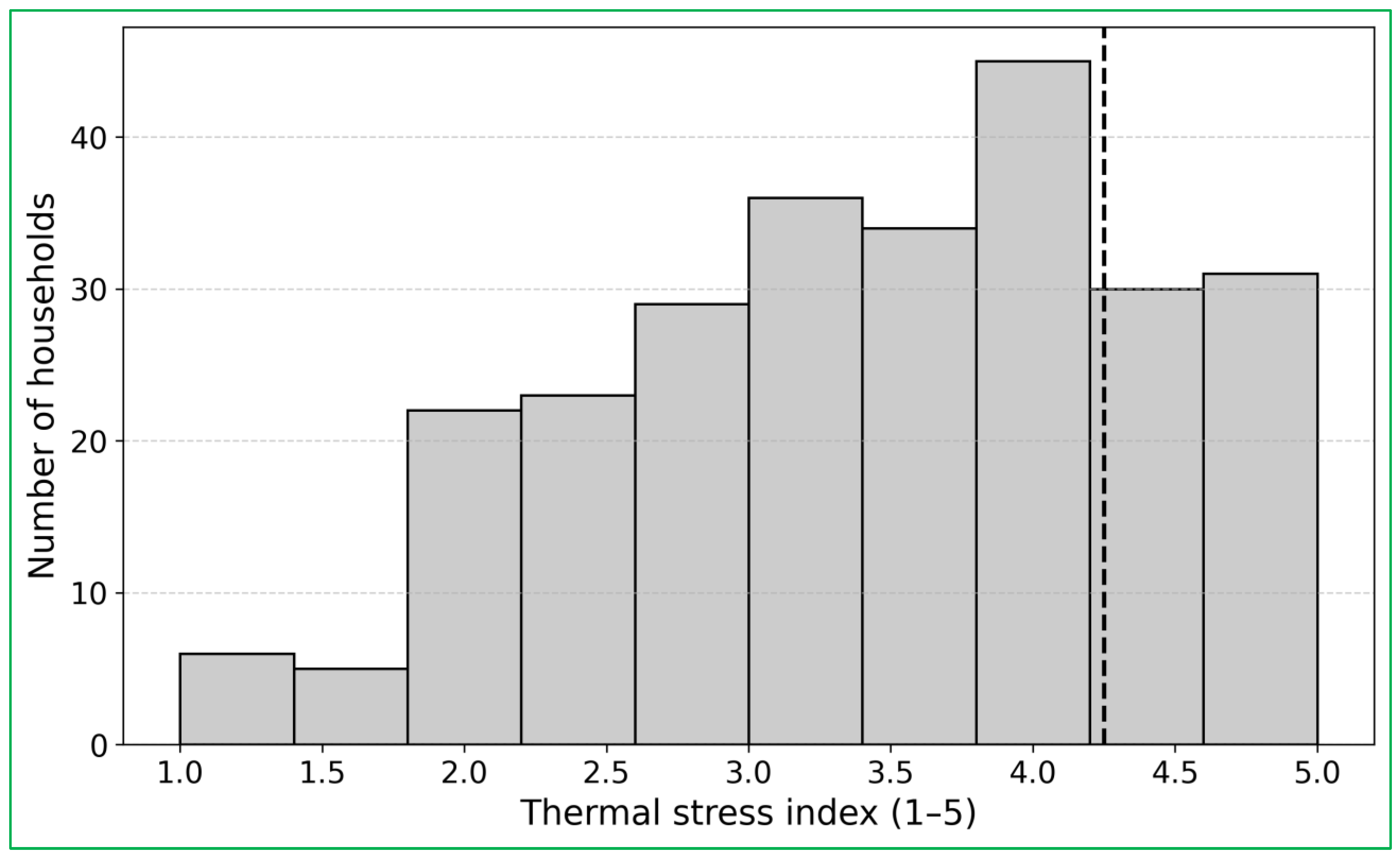
Thermal outcomes are presented in Table 4 and Figure 1. The thermal stress index, constructed from winter comfort, summer comfort, thermal anxiety, and restricted room use, ranges from 1 to 5 with a mean of 3.45 (SD = 0.98). The four-item thermal stress index demonstrated acceptable internal consistency (Cronbach’s α = 0.799; standardized α = 0.80; N = 261), after orienting items so that higher values indicate higher thermal stress (reverse-coding the seasonal adequacy and room-use items).
The distribution (Figure 1) is approximately centered around moderate to high values, with the upper quartile cut-off at 4.25. Using this threshold, 27.2% of households are classified as experiencing high thermal stress.
Individual components of thermal strain are also prevalent. Almost half of households (49.0%) report high energy-related anxiety (item 15 ≥ 4), and a vast majority (77.8%) report restricted use of rooms in the dwelling (item 16 ≤ 3), suggesting that thermal coping strategies such as closing or not heating/cooling certain rooms are widespread.
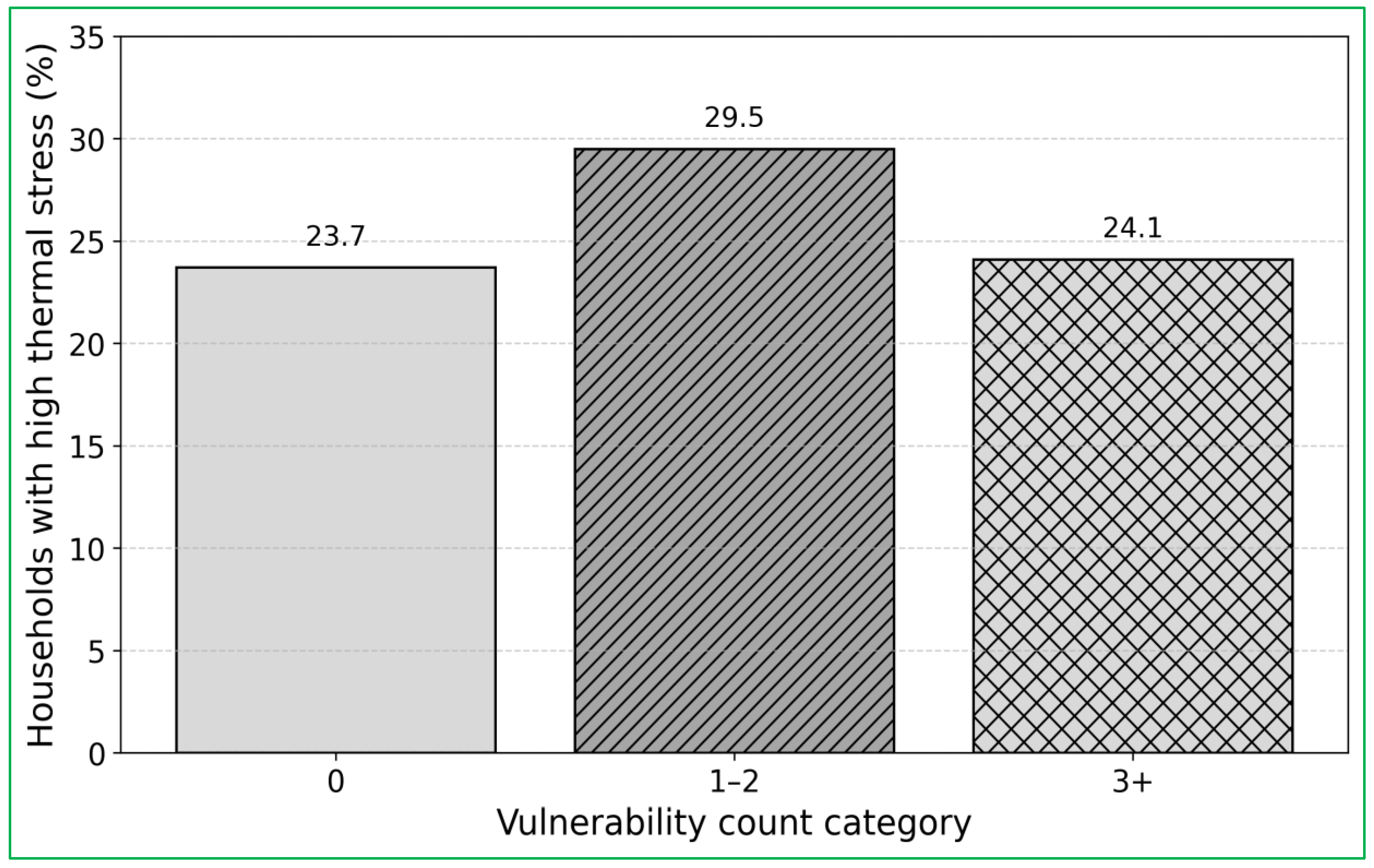
Figure 2 and Table 5 summarize thermal stress by cumulative vulnerability count, defined as the number of vulnerability factors present in a household (0 = no identified vulnerabilities; 1–2 = one or two vulnerabilities; 3+ = three or more vulnerabilities). Households with 1–2 vulnerabilities show the highest prevalence of high thermal stress (29.5%) and the highest mean thermal stress (3.52). In contrast, households with no vulnerabilities report slightly lower prevalence (23.7%) and mean stress (3.41). In comparison, the 3+ group shows lower mean stress (3.22) and prevalence (24.1%), likely reflecting the small size of this subgroup (N = 29) and heterogeneity in the types of vulnerabilities captured.

4.5. Bivariate Associations Between Vulnerability, Financial Stress, and Thermal Stress

Table 6 summarizes bivariate comparisons of thermal stress by vulnerability and financial stress indicators. Differences in the thermal stress index and in the prevalence of high thermal stress across vulnerability groups (disability requiring support, single-parent status, presence of children, receipt of social benefits, presence of elderly) are generally modest and statistically non-significant. For example, mean thermal stress among single-parent households (3.34) is very close to that of other households (3.47), and the proportion classified as high thermal stress is 24.1% versus 27.6% (p_t = 0.509, p_χ2 = 0.863). Similarly, households with a member requiring thermal or electrical support report a slightly lower mean thermal stress index (3.09 vs. 3.47) and a lower share in the high-stress category (18.2% vs. 27.6%), but these differences are not statistically significant (p_t = 0.208, p_χ2 = 0.733).
In contrast, more pronounced and statistically significant differences emerge when comparing groups by financial stress. Households with high financial stress have a substantially lower mean thermal stress index (3.13) than those without high financial stress (3.74), and the prevalence of high thermal stress is 18.0% versus 35.3% (p_t < 0.001, p_χ2 = 0.003). A similar pattern is observed for arrears on energy bills: households without arrears report a higher mean thermal stress index (3.65 vs. 2.95) and a higher share in the high-stress category (32.8% vs. 12.5%; p_t < 0.001, p_χ2 = 0.002). For outstanding energy debt, the mean index is again higher among households without debt (3.54 vs. 2.94; p_t = 0.005), although the difference in high-stress prevalence (28.6% vs. 18.9%) is not statistically significant (p_χ2 = 0.306).
Thus, bivariate analyses suggest that households experiencing more acute energy-related financial strain are, on average, less likely to fall into the most extreme thermal stress category, despite having lower mean thermal comfort scores.
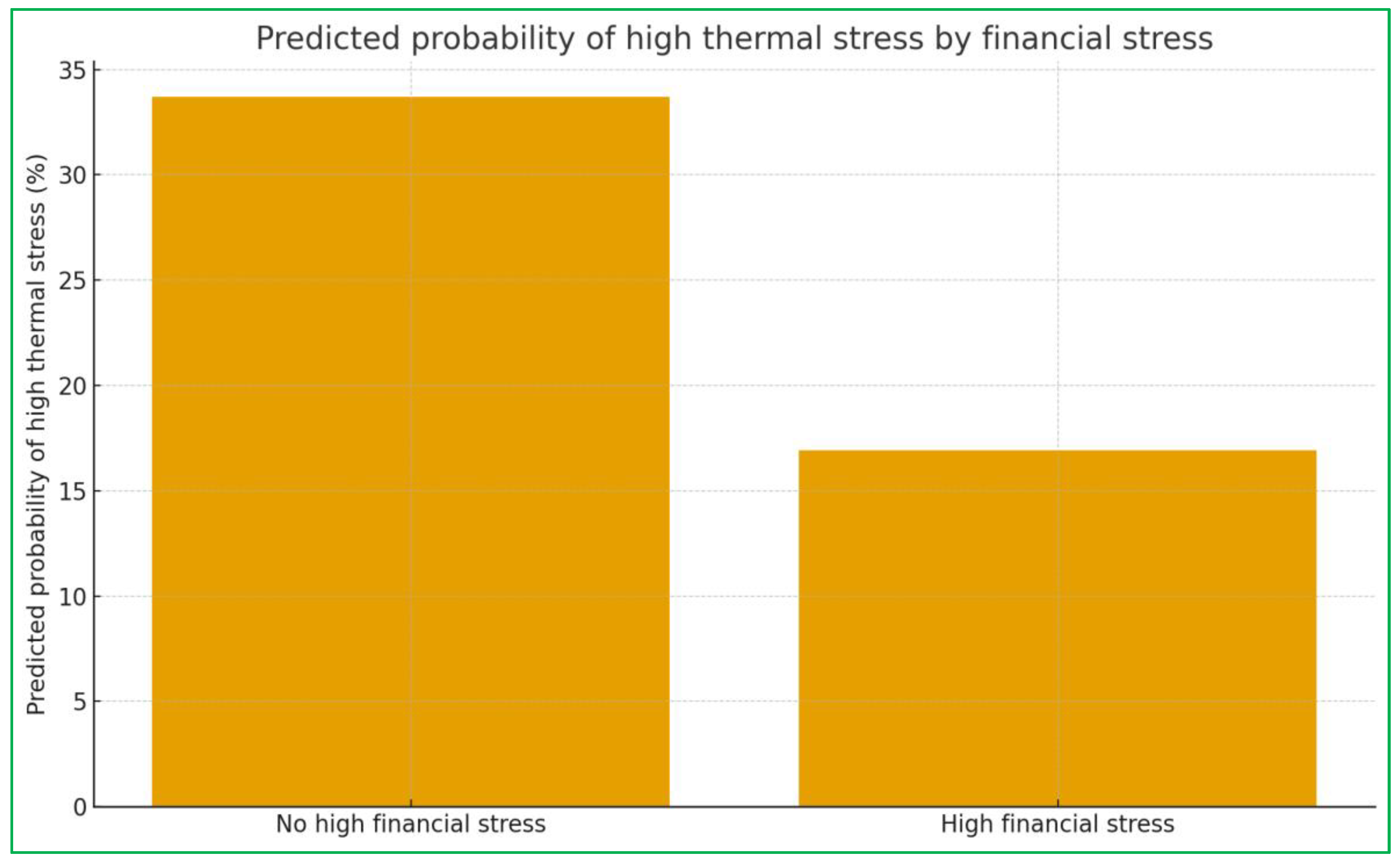
Figure 3 illustrates the predicted probability of high thermal stress by financial stress status from the multivariable model: conditional on the covariate structure, households without high financial stress exhibit a markedly higher predicted probability of high thermal stress than those with high financial stress.

4.6. Multivariable Regression Models

Table 7 presents three logistic regression models with high thermal stress (top quartile of the thermal stress index) as the dependent variable.
In Model 1, which includes only vulnerability indicators (disability with thermal support, single-parent status, presence of children, receipt of social benefits, and elderly in household), none of the predictors reach conventional levels of statistical significance. Odds ratios are close to 1, with wide confidence intervals. For instance, the odds ratio for households with children under 18 is 1.61 (95% CI: 0.90–2.86; p = 0.106), suggesting only a weak and imprecise association.
Model 2 adds the composite indicator of high financial stress. In this specification, high financial stress is negatively associated with high thermal stress (OR = 0.39, 95% CI: 0.21–0.71; p = 0.002). The vulnerability indicators remain non-significant.
Model 3 further adjusts for socio-economic and demographic covariates (income, unemployment, ownership status, age, and gender). The association between high financial stress and high thermal stress remains negative and statistically significant (OR = 0.40, 95% CI: 0.21–0.75; p = 0.004). Income shows a positive, borderline-significant association with high thermal stress (OR = 1.31 per higher income category, 95% CI: 0.99–1.74; p = 0.056). Owner-occupied housing is significantly associated with higher odds of high thermal stress compared to non-owners (OR = 2.25, 95% CI: 1.02–4.97; p = 0.044). Other covariates, including unemployment, age, and gender, are not statistically significant.
Table 8 reports a sensitivity model in which the cumulative vulnerability count replaces the individual vulnerability indicators. Here, vulnerability_count is not significantly associated with high thermal stress (OR = 1.04, 95% CI: 0.79–1.37; p = 0.775). High financial stress remains negatively related to high thermal stress (OR = 0.41, 95% CI: 0.22–0.75; p = 0.004), while income and home ownership preserve similar effect sizes and significance levels as in Model 3.
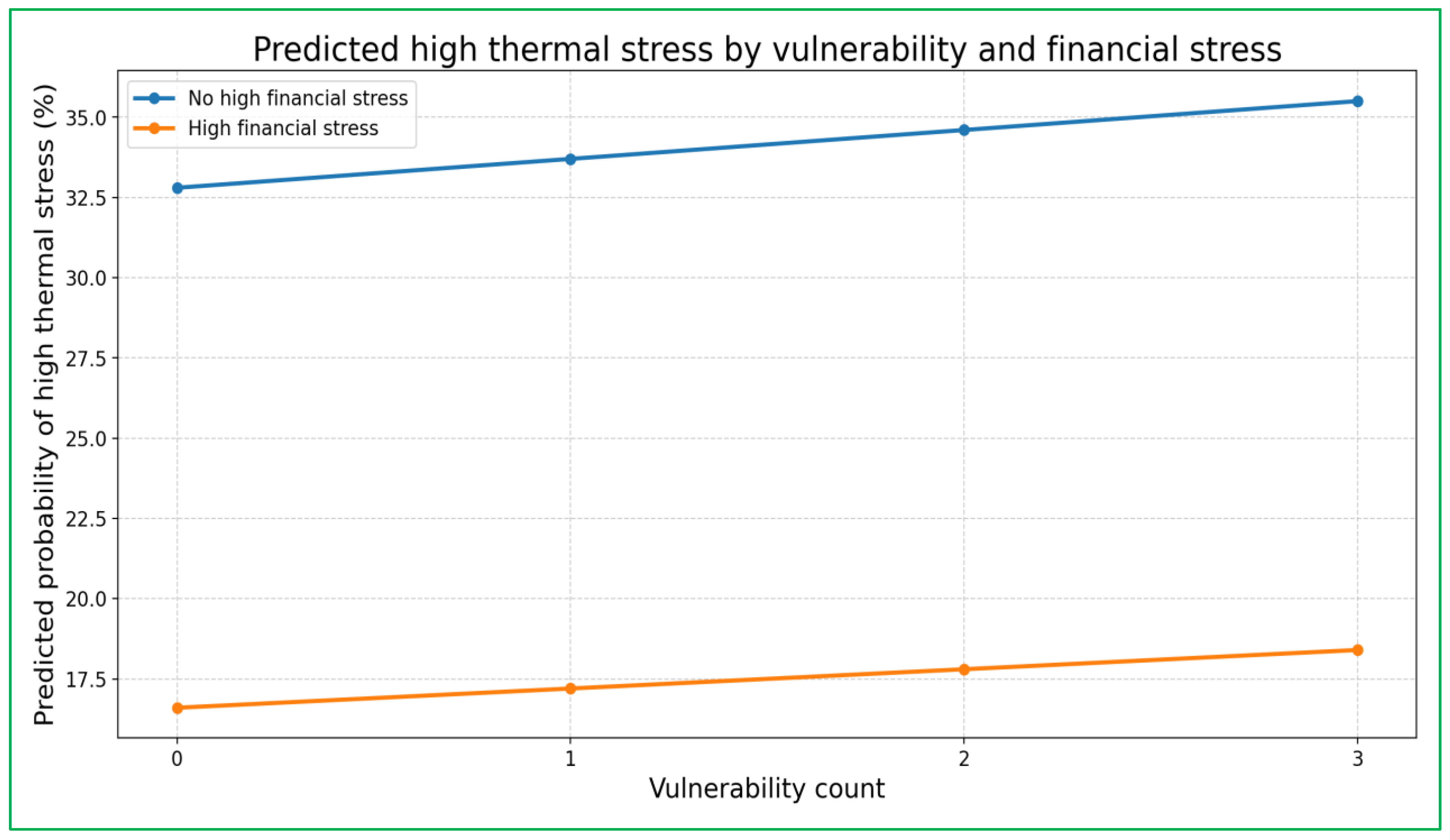
Figure 4 visualizes the predicted probabilities of high thermal stress across levels of vulnerability_count, stratified by financial stress status. For a given level of vulnerability, households without high financial stress display consistently higher predicted probabilities of high thermal stress than those with high financial stress. The probabilities increase slightly with vulnerability_count in both strata, but the gap between the two lines remains evident across the range of vulnerability levels.
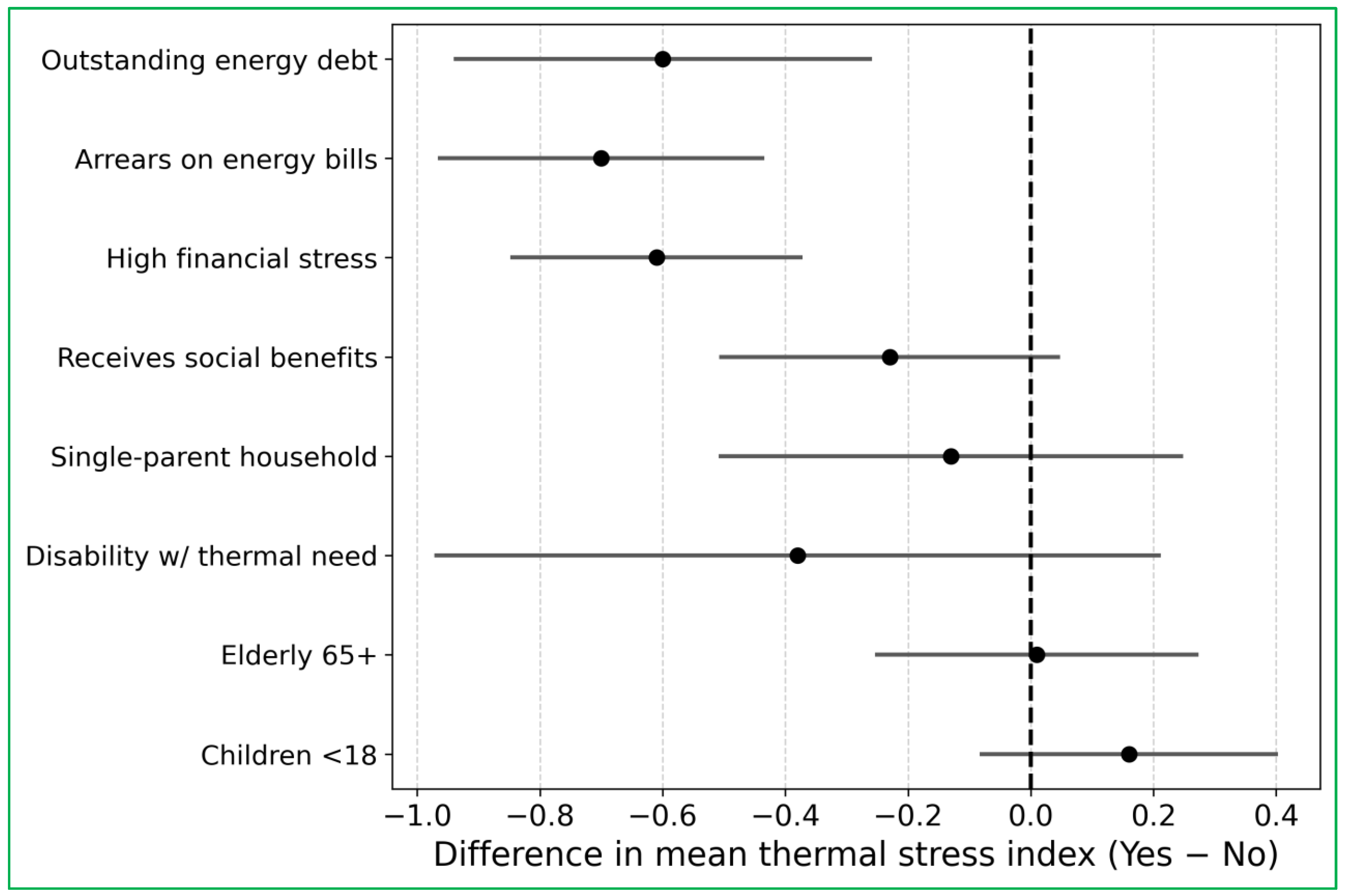
Figure 5 complements these model-based results with simple bivariate contrasts of mean thermal stress, in which most vulnerability-related differences cluster near zero, with overlapping confidence intervals. In comparison, financial-stress markers display more pronounced mean gaps, reinforcing that the strongest visual signal in the data emerges from energy-related financial strain rather than from individual vulnerability flags.

5. Discussion

This study examined thermal stress and energy anxiety as lived, multidimensional manifestations of energy poverty in Western Macedonia, a region undergoing rapid structural change during the lignite phase-out [41,42,67]. Rather than relying on a single affordability proxy, the paper operationalized thermal stress via subjective thermal adequacy items and related coping outcomes (energy anxiety and restricted use of rooms) [16,19]. This approach is consistent with energy vulnerability and energy services perspectives, which emphasize that energy deprivation is produced by interacting drivers—housing conditions, energy prices, household needs, and resources [18,19,27,30]—while experiential indicators are essential for capturing psychosocial and behavioral dimensions of deprivation that income-only metrics can miss [3,17,22,23].
The prevalence results confirm H1: high thermal stress affects a substantial share of households in Western Macedonia, exceeding the “meaningful threshold” of 20%. Using the study definition (top quartile, ≥4.25), 27.2% of households fall into the “high thermal stress” category. This magnitude is consistent with evidence that Greece—and Southern Europe more broadly—has experienced elevated energy poverty across multiple measurement strategies, including subjective indicators of keeping homes adequately warm and paying utility bills [20,27,43]. At the EU level, policy briefings and monitoring reports also underscore the breadth of the challenge and the importance of multi-indicator approaches, because different indicators identify overlapping but non-identical groups [32,43].
Beyond the headline prevalence, the accompanying outcomes reinforce the interpretation of thermal stress as a lived condition with psychosocial and behavioral expressions [16,19]. Almost half the sample reported high energy-related anxiety, which is consistent with evidence linking energy insecurity to mental health risks and psychosocial strain [11,12,16,17]. A large majority reported restricting the use of rooms—signaling rationing and coping that are repeatedly documented in energy poverty research as households attempt to manage thermal comfort under constraints [19]. Together, these results support the paper’s central framing: in a just transition region, energy poverty is experienced not only through affordability hardship but also through persistent worry, stress, and adaptive household practices that compress daily life into fewer rooms and narrower comfort ranges [16,19].
The multivariable models confirm H2–H5 as formulated: after accounting for socio-economic covariates and energy-related financial stress, the tested vulnerability indicators (disability/thermal-electric need, single-parent status, dependent children, receipt of benefits, elderly presence) do not show statistically significant independent associations with high thermal stress. This finding should not be read as evidence that vulnerability is irrelevant; instead, it points to how vulnerability may operate through proximate mechanisms (financial stress, labor market insecurity, housing arrangements, dwelling characteristics) rather than appearing as direct “net effects” in a model that includes key controls [18,19,30].
This interpretation aligns with the energy vulnerability literature, which argues that vulnerability is relational and multi-causal, shaped by the interactions among household needs, agency, dwelling fabric, tenure relations, social relations, and income stability [18,19,30]. In this perspective, household composition categories (e.g., “elderly present,” “single parent”) are essential descriptors of risk contexts [18,28]. Still, their influence can be attenuated when models include more proximate constraints and coping measures [19]. A second, more practical explanation is statistical. Some vulnerability subgroups are small (notably disability with thermal/electric need), which widens confidence intervals and limits power to detect effects even when actual differences exist.
The findings should also be interpreted with caution because the survey was administered online, and the sample achieved differs from the underlying regional population in ways that can matter for inference. In our dataset, only 6.5% of respondents are aged 65+. In contrast, Western Macedonia is a rapidly aging region (older adults comprise roughly one quarter of the regional population, according to recent pre-transition diagnostics). Similarly, the sample is highly educated (about 78.5% report tertiary or postgraduate education), while regional diagnostics highlight a substantially larger share of residents/workers with less than secondary schooling. These discrepancies are consistent with age- and education-related differences in participation in online surveys. They may affect external validity: prevalence estimates could be conservative if older and lower-education households—often facing higher energy vulnerability—are under-represented, and some subgroup gradients may be attenuated. While the multivariable models adjust for key socio-demographic covariates (including age and income), the results should be read as indicative of patterns among connected households in Western Macedonia rather than statistically representative of the full regional population [3,4].
The non-significant results also resonate with a broader policy warning: administratively convenient proxies—such as benefit receipt—can under- or over-identify energy need [34]. In other words, eligibility criteria based on welfare status may not map cleanly onto lived thermal deprivation once housing and behavioral coping are considered, reinforcing the case for multidimensional measurement and careful targeting [32,34].
The paper’s most counterintuitive finding is also one of its clearest statistically: H6 is confirmed as written. High energy-related financial stress (arrears/energy debt/forced reductions) is associated with substantially lower odds of being classified as “high thermal stress,” net of covariates. In addition, arrears and (to a lesser extent) energy debt are associated with lower mean thermal stress scores in bivariate comparisons. This pattern appears robust across specifications (Model 2 and Model 3).
While the direction contrasts with a common assumption that affordability strain generally worsens thermal outcomes, it is consistent with evidence that different measurement approaches—monetary, self-reported, and coping-based—can yield different gradients and identify distinct “energy poor” populations [22,23]. Recent work explicitly links indicator choice to differences in observed associations with mental health outcomes, highlighting that operationalization matters for empirical patterns [17]. EU policy evidence also stresses that energy poverty is not confined to the income-poor and that overlap across indicators can be limited [43]. This matters because it implies that households that remain current on bills may still experience thermal inadequacy due to energy-inefficient housing, high service needs, or climatic exposure [43,68]. In contrast, households in arrears may adopt coping strategies that reduce perceived/recorded thermal stress in specific index constructions [19].
A plausible substantive interpretation is that financially stressed households in this sample are engaging in strong coping and demand-suppression behaviors that change the “manifest” profile of thermal stress [19]. The lived-experience literature emphasizes that households often ration energy services, heat only one room, or curtail usage to avoid accumulating further debt—behaviors that can reshape reported experience while imposing other welfare losses and potential health risks [16,19]. In such contexts, arrears and forced reductions can reflect a coping trajectory in which households downgrade expectations or retreat to fewer heated spaces, potentially lowering the probability of crossing a “top quartile” thermal stress threshold even if objective deprivation remains acute [17,19].
At the same time, given the strength and direction of these associations, the finding should be positioned as a measurement-relevant contribution rather than treated as merely anomalous. Prior research links energy poverty to poorer health and well-being outcomes across Europe [11,26], and community-based research on energy insecurity similarly links coping and hardship to adverse health impacts [16]. Therefore, the results here are best interpreted as highlighting a specific empirical distinction: financial stress indicators are not interchangeable with experiential “high thermal stress” classification in this dataset [22,23]. This supports calls for integrated monitoring systems and motivates later work that triangulates subjective measures with dwelling performance and/or objective indoor conditions [3,11,22].
The analysis also confirms H7 as formulated: higher income (ordinal category) is associated with higher odds of high thermal stress, albeit at borderline conventional significance levels. On its face, this is a reversal of the classic “income buffers thermal deprivation” expectation found in much of the energy poverty theory and measurement literature [20,23,27]. However, this pattern is increasingly plausible when thermal stress is treated as a multidimensional outcome shaped not only by affordability but also by housing form and energy inefficiency [68]. EU-focused research conceptualizes energy inefficiency as a “poverty premium,” requiring higher spending (or deeper compromise) to reach the same comfort level [68]. Under this logic, subjective thermal stress may also incorporate perceptions and expectations regarding acceptable thermal services and whole-dwelling comfort [18,19].
Importantly, the positive income association should be discussed alongside the tenure results (below), as the income–tenure–housing-efficiency nexus is a well-established driver of heterogeneous energy-poverty risks in Europe [30,68]. The paper’s contribution, then, is not to claim that “higher income causes thermal stress,” but to show that in this setting, high thermal stress classification is not reducible to low income and may be shaped by residential characteristics and service expectations that are not captured by conventional economic hardship markers [22,23].
One of the most policy-relevant findings is the role of tenure: owner-occupied households show higher odds of high thermal stress in the fully adjusted model. This aligns with arguments that retrofit constraints and dwelling lock-in can increase risk for owners of older, poorly performing housing stock, particularly where capital constraints and delivery frictions limit upgrades [68]. EU policy work emphasizes building renovation and efficiency as central to alleviating energy poverty because affordability support alone cannot address structural drivers embedded in dwelling fabric and heating systems [43]. The observed pattern also aligns with the “poverty premium” framing, in which households can pay more or experience greater stress to achieve adequate domestic energy services when the home is inefficient or difficult to upgrade [68].
Finally, the results confirm H8: cumulative vulnerability burden does not show a monotonic increase in the probability of high thermal stress, and the net association is not statistically significant once controls are included. This finding is consistent with the argument that vulnerabilities interact in complex ways rather than summing linearly [30]. It also supports the view that proximate constraints (financial stress, housing and tenure, income stability, and coping capacity) can be the channels through which vulnerability is translated into thermal outcomes [18,19,30]. Methodologically, it illustrates a key point for multidimensional measurement: composite vulnerability counts can yield informative descriptive typologies, but they do not necessarily operate as additive predictors of a categorical “high stress” outcome in regression, particularly when the most proximate mechanisms are also included [22,30].
These empirical patterns have direct implications for just transition governance and the design of household support policies in regions undergoing coal phase-out [36,37,67]. Transition planning documents recognize the scale of restructuring and the need for investment and social protection in affected territories [42,67]. Yet the present results underline that vulnerability in such regions may not be adequately captured by welfare proxies alone or by bill-payment distress alone [32,34]. High thermal stress is prevalent even among households not in arrears, and owner-occupiers may face elevated risks—suggesting that renovation and heating system upgrades must be designed to extend beyond narrowly defined “poor” households [43,68].
Interpreting these results in the context of Western Macedonia’s coal withdrawal suggests that thermal stress and energy anxiety are shaped not only by household resources but also by transition-related socio-economic and infrastructural dynamics. The observed associations between thermal stress and financial strain indicators (arrears/energy debt/forced consumption reductions) are consistent with a labor-market and income-volatility pathway in which restructuring pressures translate into affordability stress and rationing behaviors. At the same time, Just Transition measures can mitigate these risks when retrofit and clean heating/cooling investments, district-heating continuity, and vulnerability-targeted protections are implemented at sufficient scale and speed; conversely, delays or gaps in coverage can leave high-need households disproportionately exposed [3,4,7,69].
This has three practical consequences. First, monitoring systems in just transition regions should combine experiential measures (thermal adequacy and anxiety) with affordability and housing indicators to avoid misclassification and missed need [32,34]. Second, interventions should integrate energy and public health logics: extensive evidence links energy poverty to worse physical and mental health, so policies that reduce thermal stress can plausibly generate health co-benefits [11,26]. Third, the prominence of room restriction as a coping outcome suggests that households may be trading comfort for affordability in ways that compress living space and potentially alter household functioning, a lived-experience dimension highlighted in qualitative and community-focused research [16,19].

6. Conclusions

This paper sought to advance the empirical and conceptual understanding of energy poverty in a just transition region by focusing on thermal stress and energy-related anxiety as lived, multidimensional outcomes, rather than relying on a single affordability proxy [18,19,27]. Building on established work that frames energy poverty as an interaction of constraints and needs—shaped by household resources, energy prices, housing quality, and adaptive capacity—the study operationalized thermal stress through subjective seasonal adequacy, anxiety, and behavioral restriction (restricted use of rooms), capturing both comfort deprivation and psychosocial burden [16,18,19,27].
The findings confirm that the prevalence of high thermal stress exceeds a meaningful threshold, lending credibility to policy narratives that view household energy deprivation as widespread in Greece and Southern Europe, particularly when measurement includes experiential and coping dimensions [21,23,43]. At the same time, the paper demonstrates why “who is at risk” cannot be inferred from a single vulnerability proxy: several household vulnerability markers behaved as non-independent predictors once socio-economic conditions and financial stress mechanisms were considered [18,19,30]. This reinforces the argument that vulnerability is multi-causal and mediated rather than a simple additive risk list [18,19,30].
A notable and policy-relevant result is that owner-occupied households displayed higher odds of high thermal stress in the adjusted model, challenging the assumption that ownership is necessarily protective and pointing toward housing-fabric and dwelling-management pathways that can produce thermal strain even beyond conventional low-income framings [68]. This aligns with strands of the literature emphasizing the structural role of housing inefficiency, retrofit constraints, and “energy service” needs in shaping deprivation [43,68], and it speaks directly to debates about the fairness and effectiveness of targeting strategies that focus narrowly on income or welfare eligibility [32,34]. Together, these patterns underscore a central message: in a just transition region, energy poverty may be simultaneously widespread and heterogeneous, requiring measurement and policy frameworks that recognize lived experience, coping behaviors, and housing structures—not only bill affordability [18,19,27,43].

6.1. Theoretical Implications

The theoretical implications of the study are threefold. First, the results reinforce multidimensional conceptualizations of energy poverty and energy vulnerability by showing that subjective thermal adequacy and energy anxiety capture substantial hardship in a population that would not necessarily appear “high risk” under a single economic lens [18,19,27]. This aligns with the argument that energy poverty is best understood as deprivation in domestic energy services, where well-being-relevant outcomes are produced by interacting determinants and where coping is part of the phenomenon rather than a peripheral response [18,19,27]. Second, the analysis illustrates the empirical consequences of measurement choices: the strong association between financial stress indicators (arrears/energy debt/forced reductions) and the high thermal stress classification is not consistent with common directional assumptions [22,23]. Instead, the findings highlight that affordability stress, coping, and perceived thermal outcomes can diverge, especially in contexts where households adapt by restricting rooms, normalizing stress, or managing energy services in ways that reshape reported experience [16,19].
This contributes to a growing recognition—particularly in research that links energy poverty to wellbeing and mental health—that different indicators identify different “energy-poor” populations and may map onto different pathways of harm [17]. Third, the study provides an applied demonstration of the “attenuation” logic in vulnerability research: classic vulnerability markers (single parenthood, dependency, benefit receipt, elderly presence, disability-related needs) may describe risk contexts, but they do not always retain independent predictive power once proximate mechanisms and socio-economic covariates are taken into account [18,28,30]. This is not a refutation of vulnerability theory; instead, it supports the mediation-oriented view that vulnerabilities often operate through constrained resources, energy insecurity, housing constraints, and reduced flexibility—channels that should be modeled explicitly to avoid over-attributing risk to demographic labels [18,19,30]. In theoretical terms, the paper therefore strengthens calls for integrative frameworks that connect energy poverty measurement to housing systems, household practices, and psychosocial experience, especially in regions where transitions create new patterns of insecurity [30,41,42].

6.2. Practical Implications

The practical and policy implications are equally substantive, particularly for designing socially credible and health-sensitive just transition strategies [41,42]. First, the confirmed prevalence of high thermal stress signals that regional transition governance cannot treat energy poverty as a residual problem addressed only through temporary bill relief; instead, it requires durable interventions that stabilize domestic energy services and reduce household exposure to cold/heat stress and anxiety [11,26,43]. A key practical lesson is that monitoring systems should include experiential indicators—thermal adequacy, anxiety, and behavioral restriction—because these provide actionable early warning signals that can be missed by consumption or arrears data alone, especially where suppressed demand is common [17,19].
This supports policy arguments for multi-indicator targeting and integrated diagnostics rather than reliance on a single administrative proxy such as income or benefit receipt [32,34]. Second, the findings on tenure highlight the centrality of housing interventions in mitigating energy poverty [42,68]. If owner-occupiers face higher odds of experiencing high thermal stress, then retrofit programs, heating/cooling system upgrades, and building-envelope improvements should be designed to reach owner households as well as renters, and to prioritize dwellings with structural inefficiencies rather than only households that meet a narrow income criterion [43,68].
This has practical implications for program eligibility, outreach methods, co-financing design, and local delivery capacity, particularly in regions with older building stock and legacy heating systems, which can intensify thermal exposure [41,43,67]. Third, the prominence of room restriction and energy anxiety indicates that policies should treat energy poverty as a psycho-social as well as economic condition [11,16,17]. From a service design perspective, this implies that energy policy should coordinate with social services and health services, including referral pathways for households reporting severe stress or anxiety, support for vulnerable groups facing care and health burdens, and community-level information services that help households navigate subsidies, tariff support, and safe heating practices [11,16,26]. In transition settings, where households may already experience employment uncertainty and institutional distrust, addressing the mental burden of energy insecurity can improve perceived fairness and legitimacy of the transition process [12,41,42].
Regarding the thermal stress index, a first actionable step is to incorporate it into regional energy-poverty monitoring as a complementary household-reported indicator alongside existing affordability and arrears metrics. Practically, local authorities could (i) include the four-item index in routine municipal or regional surveys (e.g., annual/seasonal pulse checks aligned to winter and summer), (ii) flag households exceeding a predefined threshold (e.g., top-quartile cut-off or a calibrated “high stress” cut-off validated against health and coping outcomes), and (iii) use a simple triage logic that combines thermal stress with arrears/energy debt and room restriction to identify distinct need profiles (e.g., “high stress without arrears” versus “arrears with strong rationing”). This would reduce misclassification that arises when monitoring relies solely on bill-payment distress or income proxies and would enable earlier identification of households experiencing severe discomfort and anxiety, even when they remain current on payments.
Second, the tenure finding implies that renovation and heating/cooling upgrade programs should be designed to reach owner-occupiers who may be “asset-rich but cash-constrained,” especially in older, inefficient housing stock. A practical design is a layered subsidy model that combines: (i) higher grant rates (or full coverage) for households meeting vulnerability criteria (health-related energy needs, single-parent status, benefits) or reporting high thermal stress; (ii) income-sensitive co-financing for other owner-occupiers in inefficient dwellings; and (iii) pre-financing/low-interest on-bill or municipal revolving finance options to address liquidity barriers. Targeting should prioritize dwelling efficiency and exposure (building age/insulation/heating system) rather than income alone, and delivery should be simplified through “one-stop-shop” local support (application assistance, trusted contractor lists, and follow-up verification). In Western Macedonia, coupling such housing measures with transition governance (district heating continuity planning, local outreach, and transparent eligibility rules) would increase perceived fairness and accelerate uptake among groups otherwise missed by conventional poverty-only targeting.

6.3. Social Implications

The social implications of the research follow directly from its focus on lived experience [16,19]. High thermal stress, anxiety, and restricted use of rooms not only reflect inefficiencies in the energy system but also constrain everyday life: limited use of domestic space, disrupted comfort, and persistent worry [11,16,19]. These outcomes can exacerbate social inequalities and weaken household resilience, especially in regions where economic restructuring has already shaped community wellbeing [41,42]. The results suggest that energy poverty in Western Macedonia is not adequately captured by a single “vulnerable group” stereotype; instead, thermal hardship can be present among households that remain outside the boundaries of classic poverty targeting, including owner-occupiers and (borderline) higher-income categories [43,68].
This matters for social justice because it raises the risk of misrecognition: households may experience meaningful deprivation and anxiety while being deemed ineligible for support [32,34]. It also matters for the social contract of just transition: when households experience daily hardship during a period framed as a “fair” transformation, perceived legitimacy can erode if policies are seen as narrowly targeted, slow, or disconnected from real household experiences [41,42]. Accordingly, the paper supports an energy justice–oriented stance in which distributional outcomes (who experiences thermal strain), procedural fairness (how support is allocated and communicated), and recognition (whose hardship counts) should be integrated into transition planning and evaluation [18,27]. In practice, these points toward regional programs that combine efficiency upgrades with tailored social protection, community engagement, and transparent criteria that reflect multi-dimensional need—including the psychosocial and behavioral realities documented here [18,19,27].

6.4. Limitations

This study has several limitations that should temper interpretation and motivate careful generalization. The data are cross-sectional, so the findings describe associations rather than causal effects and cannot disentangle persistent structural deprivation from short-term shocks or season-specific experiences. Measures rely on self-reported items, which are valuable for capturing lived expertise but may be influenced by reporting styles, norms, and expectations [17,19]. The classification of “high thermal stress” depends on an operational threshold (upper quartile) that is analytically defensible but not a clinical cut-off [22,23]. Some vulnerability subgroups—most notably disability/chronic illness requiring thermal/electric support—are small in the sample, limiting statistical power and widening uncertainty around those estimates [21,25].
Moreover, data were collected via an online Google Forms survey, which may systematically under-represent digitally excluded households, including older adults, low-education groups, and very low-income residents. Consequently, the findings should be interpreted as indicative of patterns among connected households in Western Macedonia rather than as statistically representative of the regional population. Since key predictors and outcomes were collected from the same respondent and using the same instrument, the study may be affected by standard method variance and social desirability/social expectation biases (e.g., norm-driven under-reporting of stress or affordability problems).
In addition, because this paper intentionally foregrounds subjective thermal outcomes rather than detailed dwelling energy performance, the models may not fully capture structural housing determinants that could mediate or confound observed relationships [38,63]. Finally, the strong and counterintuitive directional associations involving financial stress indicators underline the importance of careful construct validation and sensitivity analysis when combining coping/affordability measures with experiential indices, consistent with measurement cautions raised in the literature [17,22,23].
A final key limitation is that the thermal-stress index is derived from 5-point ordinal (Likert-type) indicators, and the use of an arithmetic mean implicitly assumes approximately equal spacing between adjacent response categories. Although mean-based composites of multiple Likert-type items are widely used and often empirically robust, this remains a measurement compromise [44,50].

6.5. Future Work

Several extensions would strengthen both theory testing and policy relevance. First, longitudinal or repeated seasonal measurement would allow the field to distinguish persistent thermal deprivation from episodic stress and to examine how transition-related changes (employment shifts, price volatility, policy interventions) alter trajectories of stress and anxiety over time [17,41,42]. Second, mixed-methods designs—combining follow-up interviews with survey measures—could clarify how households interpret “thermal stress” and “anxiety,” how room restriction functions as coping, and why financial stress indicators relate to the thermal stress classification in the observed direction, thereby strengthening construct validity and causal interpretation [16,17,19].
Third, integrating objective or semi-objective indicators—such as building energy performance, heating/cooling system type, indoor temperature monitoring, or administrative billing data—would enable triangulation and more robust pathway modeling, including interaction tests among tenure, housing efficiency, income, and financial stress [40,43,68]. Fourth, future modeling could use more flexible approaches (e.g., SEM, latent class analysis) to identify distinct “energy vulnerability pathways” and typologies that reflect structural (housing-driven), economic (affordability-driven), and psychosocial (anxiety-driven) dimensions, while also enabling risk profiling for targeted policy [3,22,34].
Furthermore, future research should strengthen measurement by estimating an ordinal latent-variable model (e.g., ordinal CFA or an IRT graded-response model) to obtain a factor score/θ that more directly respects the ordered-categorical nature of the indicators, and to test measurement invariance across relevant subgroups.
Future work could mitigate the bias risks by triangulating survey responses with objective indicators (e.g., indoor temperature logging, billing/smart-meter data, dwelling energy performance) and by using temporally separated measurements where feasible. Moreover, it could triangulate household patterns in Western Macedonia with qualitative interviews and/or objective indoor-temperature and dwelling-efficiency indicators to assess whether the negative association reflects adaptation/normalization, suppressed demand, or reporting/measurement bias.
Finally, comparative analysis across Greek regions or other EU coal phase-out territories would test external validity and help identify which results are place-specific versus generalizable, thereby supporting evidence-based just transition strategies that remain sensitive to local housing stock, climatic exposure, and social structures [30,41,42].

Author Contributions

Conceptualization, S.P.M., A.K. and P.M.F.; methodology, S.P.M., A.K. and P.M.F.; software, S.P.M., A.K. and P.M.F.; validation, S.P.M., A.K. and P.M.F.; formal analysis, S.P.M., A.K. and P.M.F.; investigation, S.P.M., A.K. and P.M.F.; resources, S.P.M., A.K. and P.M.F.; data curation, S.P.M., A.K. and P.M.F.; writing—original draft preparation S.P.M., A.K. and P.M.F.; writing—review and editing, S.P.M., A.K. and P.M.F.; visualization, S.P.M., A.K. and P.M.F.; supervision, S.P.M., A.K. and P.M.F.; project administration, S.P.M., A.K. and P.M.F.; funding acquisition, S.P.M., A.K. and P.M.F. All authors have read and agreed to the published version of the manuscript.

Funding

This research received no external funding.

Institutional Review Board Statement

The study was conducted in accordance with the Declaration of Helsinki, and the protocol was approved by the Ethics Committee of the University of Western Macedonia (55/2026) on 30 September 2025.

Informed Consent Statement

Informed consent was obtained from all subjects involved in the study.

Data Availability Statement

The data presented in this study are openly available in Files Fm at https://files.fm/f/runf5jmns6 (accessed on 15 November 2025).

Conflicts of Interest

The authors declare no conflicts of interest.

Appendix A

Questionnaire

Section 1—A. Energy Performance of the Dwelling
In this section, you will be asked to answer questions about the technical characteristics and equipment of your dwelling. This information helps assess your home’s energy performance.
1. Does your home have thermal insulation?
☐ Yes
☐ No
2. Has the energy class/efficiency rating of your appliances changed in the last 5 years?
☐ Yes
☐ No
3. Do you have double-glazed windows or aluminum frames?
☐ Yes
☐ No
4. Do you have a solar water heater?
☐ Yes
☐ No
5. Do you have an Energy Performance Certificate?
☐ Yes
☐ No
6. Is there insulation in the roof or in the floors?
☐ Yes
☐ No
Section 2—Energy Consumption and Payment
In this section, you will answer questions about energy costs and the management of related bills. The aim is to capture the financial burden your household faces.
7. Average monthly electricity bill (in euros):
☐ Below €50
☐ €50–99
☐ €100–149
☐ €150–199
☐ Above €200
8. Have you delayed energy payments in the last year?
☐ Yes
☐ No
9. Have you applied for the Social Residential Tariff (KOT)?
☐ Yes
☐ No
10. How many times did you have to reduce your energy consumption for financial reasons?
☐ Never
☐ 1–2 times
☐ 3–5 times
☐ More than 5 times
☐ Systematically every month
11. Have you received a government subsidy for energy?
☐ Yes
☐ No
12. Do you have debts related to energy bills?
☐ Yes
☐ No
Section 3—Subjective Thermal Adequacy
In this section, you are asked to describe your own experience and perception regarding thermal comfort in your home, as well as whether temperature affects the use of spaces in your household.
13. During the winter months, do you feel warm enough in your home?
(1—Fully, 2—Quite, 3—Partly, 4—A little, 5—Not at all)
1 ☐ 2 ☐ 3 ☐ 4 ☐ 5 ☐
14. During the summer months, do you feel cool enough in your home?
(1—Fully, 2—Quite, 3—Partly, 4—A little, 5—Not at all)
1 ☐ 2 ☐ 3 ☐ 4 ☐ 5 ☐
15. Do you feel anxiety due to the thermal conditions in your home?
(1—Fully, 2—Quite, 3—Partly, 4—A little, 5—Not at all)
1 ☐ 2 ☐ 3 ☐ 4 ☐ 5 ☐
16. Can you use all areas/rooms of your home without restrictions due to heating or cooling?
(1—Fully, 2—Quite, 3—Partly, 4—A little, 5—Not at all)
1 ☐ 2 ☐ 3 ☐ 4 ☐ 5 ☐
Section 4—Socio-economic Information
This section collects basic socio-economic information (income, employment status, household composition, and housing situation) to better understand your household’s economic profile.
17. What is your monthly net household income?
☐ Above €2000
☐ €1501–2000
☐ €1001–1500
☐ €501–1000
☐ Up to €500
18. What is the employment status of the main person who brings the most significant income to your household?
(If income is shared equally, answer for the person you consider the leading economically active member).
☐ Full-time employment
☐ Part-time employment
☐ Unemployed but receiving benefits
☐ Unemployed without benefits
☐ Economically inactive (neither working nor seeking work)
19. Do you have dependent members under 18 years old?
☐ No
☐ Yes, one child
☐ Yes, two children
☐ Yes, three children
☐ Yes, four or more children
20. What is your housing tenure status?
☐ Owner-occupied home (no loan)
☐ Owner-occupied home (loan paid off)
☐ Guest in someone else’s dwelling
☐ Owner-occupied home (loan in progress)
☐ Renter
21. How many people live in the dwelling?
☐ 1 person
☐ 2–3 people
☐ 4–5 people
☐ 6 or more people
Section 5—Household Vulnerability
This section includes questions on special social or health circumstances (elderly presence, disability/chronic illness, single parenthood, social benefits) that may affect your household’s energy security.
22. Is there a person aged 65+ permanently living in your household?
☐ No
☐ Yes, one person
☐ Yes, two or more people
23. Is there a person in your household with a disability or chronic illness (physical, mental, or intellectual)?
☐ No
☐ Yes, without the need for thermal support
☐ Yes, with need for thermal/electrical support (e.g., devices, specialized equipment)
24. Is your household single-parent (one parent with underage children)?
☐ Yes
☐ No
25. Do you receive any social benefit (e.g., Minimum Guaranteed Income, child benefit, disability benefit, housing benefit)?
☐ No
☐ Yes, one benefit
☐ Yes, two or more benefits
Section 6—Demographic Information
In this final section, please provide basic demographic information. These data are necessary for correct analysis and interpretation.
26. Respondent’s age:
☐ 18–34 years
☐ 35–49 years
☐ 50–64 years
☐ 65 years and above
27. Respondent’s gender:
☐ Man
☐ Woman
☐ Other/Prefer not to answer
28. What is the highest level of education you have completed?
☐ Postgraduate/Doctoral
☐ Tertiary education (University/Technological Institute) or Vocational training (IEK)
☐ Upper secondary education (High school)
☐ Compulsory education (Lower secondary/Primary)
☐ No diploma
29. Municipality/area of residence:
☐ Municipality of Kozani
☐ Municipality of Eordaia
☐ Municipality of Florina
☐ Municipality of Amyntaio
☐ Municipality of Grevena
☐ Municipality of Kastoria
☐ Other: __________

References

  1. Bouzarovski, S. Energy poverty in the European Union: Landscapes of vulnerability. Wiley Interdiscip. Rev. Energy Environ. 2014, 3, 276–289. [Google Scholar] [CrossRef]
  2. Mengist, W.; Soromessa, T.; Legese, G. Method for conducting systematic literature review and meta-analysis for environmental science research. MethodsX 2020, 7, 100777. [Google Scholar] [CrossRef]
  3. Teixeira, I.; Ferreira, A.C.; Rodrigues, N.; Teixeira, S. Energy Poverty and Its Indicators: A Multidimensional Framework from Literature. Energies 2024, 17, 3445. [Google Scholar] [CrossRef]
  4. Energy Poverty Advisory Hub. National Indicator—Low Absolute Energy Expenditure (M/2). 2025. Available online: https://energy-poverty.ec.europa.eu/modules/custom/epah_indicator/pdfs/Low_absolute_energy_expenditure_EPAH_indicators_June24.pdf (accessed on 23 December 2025).
  5. Trinomics. Selecting Indicators to Measure Energy Poverty. 2016. Available online: https://trinomics.eu/wp-content/uploads/2016/06/Selecting-Indicators-to-Measure-Energy-Poverty.pdf (accessed on 31 December 2025).
  6. European Commission. Energy Poverty. National Indicators. Insights for a More Effective Measuring. 2022. Available online: https://unece.org/sites/default/files/2022-11/E04_BDOC_Energy_Poverty_Indicators_Report_EPAH_EN.pdf (accessed on 23 December 2025).
  7. Al Kez, D.; Foley, A.; Lowans, C.; Del Rio, D.F. Energy poverty assessment: Indicators and implications for developing and developed countries. Energy Convers. Manag. 2024, 307, 118324. [Google Scholar] [CrossRef]
  8. WHO. WHO Housing and Health Guidelines. 2018. Available online: https://wrap.warwick.ac.uk/id/eprint/111325/1/WRAP-WHO-housing-health-guidelines-Ormandy-2018.pdf (accessed on 23 December 2025).
  9. Thomson, H.; Snell, C.; Bouzarovski, S. Health, Well-Being and Energy Poverty in Europe: A Comparative Study of 32 European Countries. Int. J. Environ. Res. Public Health 2017, 14, 584. [Google Scholar] [CrossRef]
  10. Manongi, N.J.; Rajapandian, R.; Moti Wala, S.; AlEdani, E.M.; Samuel, E.A.; Ahmad, K.; Arcia Franchini, A.P. A Systematic Review of the Impact of Energy Insecurity on Mental Health During the COVID-19 Pandemic. Cureus 2024, 16, e71370. [Google Scholar] [CrossRef]
  11. Jenkins, K.; McCauley, D.; Heffron, R.; Stephan, H.; Rehner, R. Energy justice: A conceptual review. Energy Res. Soc. Sci. 2016, 11, 174–182. [Google Scholar] [CrossRef]
  12. Heffron, R.J.; McCauley, D. The concept of energy justice across the disciplines. Energy Policy 2017, 105, 658–667. [Google Scholar] [CrossRef]
  13. Graff, M.; Aung, T.W. Energy Insecurity and Mental Health Symptoms in US Adults. JAMA Netw. Open 2025, 8, e2539479. [Google Scholar] [CrossRef]
  14. Bosman, C.; Kroesbergen, I.; Stoopendaal, M. An unfavorable indoor environment as mediator between fuel poverty and health: An exploration. TSG Tijdschr Gezondheidswet 2024, 102, 97–105. [Google Scholar] [CrossRef]
  15. Howden-Chapman, P. When Your Home Stays Cold: How Energy Poverty Harms Health. 2020. Available online: https://cdn.who.int/media/docs/default-source/documents/social-determinants-of-health/fuel-poverty-and-health_howden-chapman-2021.pdf (accessed on 2 December 2025).
  16. Hernández, D.; Siegel, E. Energy insecurity and its ill health effects: A community perspective on the energy-health nexus in New York City. Energy Res. Soc. Sci. 2019, 47, 78–83. [Google Scholar] [CrossRef]
  17. Hashmi, R.; Clair, A.; Baker, E. Unpacking the mental health effects of energy poverty–implications of energy poverty metric choice for research and policy. Energy Res. Soc. Sci. 2025, 125, 104115. [Google Scholar] [CrossRef]
  18. Middlemiss, L. Who is vulnerable to energy poverty in the Global North, and what is their experience? Wiley Interdiscip. Rev. Energy Environ. 2022, 11, e455. [Google Scholar] [CrossRef]
  19. Middlemiss, L.; Gillard, R. Fuel poverty from the bottom-up: Characterising household energy vulnerability through the lived experience of the fuel poor. Energy Res. Soc. Sci. 2015, 6, 146–154. [Google Scholar] [CrossRef]
  20. Papada, L.; Kaliampakos, D. Measuring energy poverty in Greece. Energy Policy 2016, 94, 157–165. [Google Scholar] [CrossRef]
  21. Middlemiss, L.; Ambrosio-Albalá, P.; Emmel, N.; Gillard, R.; Gilbertson, J.; Hargreaves, T.; Mullen, C.; Ryan, T.; Snell, C.; Tod, A. Energy poverty and social relations: A capabilities approach. Energy Res. Soc. Sci. 2019, 55, 227–235. [Google Scholar] [CrossRef]
  22. Siksnelyte-Butkiene, I.; Streimikiene, D.; Lekavicius, V.; Balezentis, T. Energy poverty indicators: A systematic literature review and comprehensive analysis of integrity. Sustain. Cities Soc. 2021, 67, 102756. [Google Scholar] [CrossRef]
  23. Kashour, M.; Jaber, M.M. Revisiting energy poverty measurement for the European Union. Energy Res. Soc. Sci. 2024, 109, 103420. [Google Scholar] [CrossRef]
  24. Champagne, S.N.; Phimister, E.; Macdiarmid, J.I.; Guntupalli, A.M. Assessing the impact of energy and fuel poverty on health: A European scoping review. Eur. J. Public Health 2023, 33, 764–770. [Google Scholar] [CrossRef]
  25. Siegel, E.L.; Lane, K.; Yuan, A.; Smalls-Mantey, L.A.; Laird, J.; Olson, C.; Hernández, D. Energy insecurity indicators associated with increased odds of respiratory, mental health, and cardiovascular conditions: Study examines energy insecurity and health conditions. Health Aff. 2024, 43, 260–268. [Google Scholar] [CrossRef]
  26. Ballesteros-Arjona, V.; Oliveras, L.; Munoz, J.B.; de Labry Lima, A.O.; Carrere, J.; Ruiz, E.M.; Peralta, A.; León, A.C.; Rodríguez, I.M.; Daponte-Codina, A.; et al. What are the effects of energy poverty and interventions to ameliorate it on people’s health and well-being?: A scoping review with an equity lens. Energy Res. Soc. Sci. 2022, 87, 102456. [Google Scholar] [CrossRef]
  27. Bouzarovski, S.; Petrova, S. A global perspective on domestic energy deprivation: Overcoming the energy poverty–fuel poverty binary. Energy Res. Soc. Sci. 2015, 10, 31–40. [Google Scholar] [CrossRef]
  28. Sunikka-Blank, M.; Galvin, R. Single parents in cold homes in Europe: How intersecting personal and national characteristics drive up the numbers of these vulnerable households. Energy Policy 2021, 150, 112134. [Google Scholar] [CrossRef]
  29. González-Pijuan, I.; Ambrose, A.; Middlemiss, L.; Tirado-Herrero, S.; Tatham, C. Empowering whose future? A European policy analysis of children in energy poverty. Energy Res. Soc. Sci. 2023, 106, 103328. [Google Scholar] [CrossRef]
  30. Robinson, C.; Lindley, S.; Bouzarovski, S. The spatially varying components of vulnerability to energy poverty. Ann. Am. Assoc. Geogr. 2019, 109, 1188–1207. [Google Scholar] [CrossRef]
  31. Vondung, F.; Thema, J. Energy Poverty in the EU: Indicators as a Base for Policy Action; European Council for an Energy Efficient Economy: Stockholm, Sweden, 2019; Available online: https://d-nb.info/1191257975/ (accessed on 2 December 2025).
  32. Csiba, K.; Bajomi, A.; Gosztonyi, Á.; Jones, S.; Tod, A.; Thomson, H.; Anagnostopoulos, F.; Bouzarovski, S.; Snell, C.; Dobbins, A.; et al. Energy Poverty Handbook; European Union: Brussels, Belgium, 2016; Available online: https://bpie.eu/wp-content/uploads/2016/11/energypovertyhandbook-online.pdf (accessed on 2 December 2025).
  33. Maier, S.; Dreoni, I. Who is “energy poor” in the EU? Energy Policy 2026, 208, 114869. [Google Scholar] [CrossRef]
  34. Spandagos, C.; Reaños, M.A.T.; Lynch, M.Á. Energy poverty prediction and effective targeting for just transitions with machine learning. Energy Econ. 2023, 128, 107131. [Google Scholar] [CrossRef]
  35. Al-Hafith, O.; Satish, B.K.; de Wilde, P. Impact of the energy crisis on indoor temperatures and thermal comfort in UK houses during winter 2023. Energy Build. 2024, 323, 114750. [Google Scholar] [CrossRef]
  36. European Commission. Just Transition Mechanism—Performance. 2025. Available online: https://commission.europa.eu/strategy-and-policy/eu-budget/performance-and-reporting/programme-performance-statements/just-transition-mechanism-performance_en (accessed on 23 December 2025).
  37. IEA. Greece’s Just Transition Strategy for Lignite Workers. 2023. Available online: https://www.iea.org/policies/17836-greeces-just-transition-strategy-for-lignite-workers (accessed on 23 December 2025).
  38. CINTRAN. Post-Lignite Era in Western Macedonia: Assessing the Socio-Economic Effects of the Just Transition Fund. 2024. Available online: https://pta.pdm.gr/wp-content/uploads/2024/03/20240325_CINTRAN_Policy-Brief-Western-Macedonia.pdf (accessed on 23 December 2025).
  39. The Green Think Tank. The Course of Just Transition in Western Macedonia. 2021. Available online: https://thegreentank.gr/wp-content/uploads/2021/06/202106_GreenTank_JTWorkshops_EN.pdf (accessed on 24 December 2025).
  40. Ziouzios, D.; Karlopoulos, E.; Fragkos, P.; Vrontisi, Z. Challenges and Opportunities of Coal Phase-Out in Western Macedonia. Climate 2021, 9, 115. [Google Scholar] [CrossRef]
  41. JUSTEM. Regional Energy Transition: Western Macedonia. 2023. Available online: https://ieecp.org/wp-content/uploads/2023/07/JUSTEM-Just-Transition-BRIEF_GREECE.pdf (accessed on 23 December 2025).
  42. European Parliament. Energy Poverty in the EU. 2023. Available online: https://www.europarl.europa.eu/RegData/etudes/BRIE/2022/733583/EPRS_BRI%282022%29733583_EN.pdf (accessed on 2 December 2025).
  43. Lypiridi, D. Just Transition Mechanism and Lignite Phase-Out in Greece: Challenges and Proposals for Policy Adoption. HAPSc Working Paper 17/202. 2021, pp. 1–14. Available online: https://www.hapsc.org/wp-content/uploads/2021/12/HAPSc-Working-Paper-17.2021-Lypiridi.pdf (accessed on 2 December 2025).
  44. Jamieson, S. Likert scales: How to (ab) use them? Med. Educ. 2004, 38, 1217–1218. [Google Scholar] [CrossRef] [PubMed]
  45. Pell, G. Use and misuse of Likert scales. Med. Educ. 2005, 39, 970. [Google Scholar] [CrossRef]
  46. Jamieson, S. Use and misuse of Likert scales: Commentary reply. Med. Educ. 2005, 39, 971. [Google Scholar] [CrossRef]
  47. Batterton, K.A.; Hale, K.N. The Likert scale what it is and how to use it. Phalanx 2017, 50, 32–39. [Google Scholar]
  48. Wu, H.; Leung, S.O. Can Likert scales be treated as interval scales?—A simulation study. J. Soc. Serv. Res. 2017, 43, 527–532. [Google Scholar] [CrossRef]
  49. Koo, M.; Yang, S.-W. Likert-Type Scale. Encyclopedia 2025, 5, 18. [Google Scholar] [CrossRef]
  50. Norman, G. Likert scales, levels of measurement and the “laws” of statistics. Adv. Health Sci. Educ. Theory Pract. 2010, 15, 625–632. [Google Scholar] [CrossRef] [PubMed]
  51. Carifio, J.; Perla, R. Resolving the 50-year debate around using and misusing Likert scales. Med. Educ. 2008, 42, 1150–1152. [Google Scholar] [CrossRef] [PubMed]
  52. Boone, H.N.; Boone, D.A. Analyzing likert data. J. Ext. 2012, 50, 48. Available online: https://pdfs.semanticscholar.org/43fc/e7d7e2100c3f4f2bc6fde5a9cb003c20162f.pdf (accessed on 23 December 2025). [CrossRef]
  53. Bishop, P.A.; Herron, R.L. Use and Misuse of the Likert Item Responses and Other Ordinal Measures. Int. J. Exerc. Sci. 2015, 8, 297–302. [Google Scholar] [CrossRef]
  54. Abreh, M.K.; Okyere, M.; Osiakwan, J.; Adom, G. Navigating the Use and Misuse of Likert Scales in Counseling and Development Research. Meas. Eval. Couns. Dev. 2025, 58, 347–353. [Google Scholar] [CrossRef]
  55. Aletras, V.; Chatzopoulos, S.; Kalouda, M.; Niakas, D.; Flokou, A. Patient Satisfaction Measurement: A Comparison of Likert and Item-Specific Response Options Scales. Healthcare 2025, 13, 3017. [Google Scholar] [CrossRef]
  56. Chen, Y.; Cook, W.D.; Du, J.; Hu, H.; Zhu, J. Bounded and discrete data and Likert scales in data envelopment analysis: Application to regional energy efficiency in China. Ann. Oper. Res. 2017, 255, 347–366. [Google Scholar] [CrossRef]
  57. UCLA. Tobit Analysis | Mplus Data Analysis Examples. 2025. Available online: https://stats.oarc.ucla.edu/mplus/dae/tobit-analysis/ (accessed on 31 December 2025).
  58. Williams, M.N. Levels of measurement and statistical analyses. Meta-Psychol. 2021, 5, 1–14. [Google Scholar] [CrossRef]
  59. Viehmann, A.; Kersting, C.; Thielmann, A.; Weltermann, B. Prevalence of chronic stress in general practitioners and practice assistants: Personal, practice and regional characteristics. PLoS ONE 2017, 12, e0176658. [Google Scholar] [CrossRef] [PubMed]
  60. EU Social Protection Committee. Fiche on Available Energy Poverty Indicators at EU Level. 2021. Available online: https://ec.europa.eu/social/BlobServlet?docId=25629&langId=en (accessed on 24 December 2025).
  61. European Commission. Energy Poverty Indicators Dashboard. 2024. Available online: https://energy-poverty.ec.europa.eu/epah-indicators?country-cooling+dgr+days-%E2%82%AC/kwh-no+dsgcnt+average-nuts+1-country-all+indicators-2024 (accessed on 24 December 2025).
  62. European Commission. The “Inability to Keep Home Adequately Warm” Indicator: Is It Enough to Measure Energy Poverty? 2023. Available online: https://energy-poverty.ec.europa.eu/newsroom/news/inability-keep-home-adequately-warm-indicator-it-enough-measure-energy-poverty? (accessed on 24 December 2025).
  63. European Commission. Energy Poverty. 2025. Available online: https://energy.ec.europa.eu/topics/markets-and-consumers/energy-consumers-and-prosumers/energy-poverty_en? (accessed on 24 December 2025).
  64. Jessel, S.; Sawyer, S.; Hernández, D. Energy, poverty, and health in climate change: A comprehensive review of an emerging literature. Front. Public Health 2019, 7, 357. [Google Scholar] [CrossRef] [PubMed]
  65. Steele, A.J.H.; Bergstrom, J.C. “Brr! It’s cold in here” measures of household energy insecurity for the United States. Energy Res. Soc. Sci. 2021, 72, 101863. [Google Scholar] [CrossRef]
  66. Day, R.; Walker, G.; Simcock, N. Conceptualising energy use and energy poverty using a capabilities framework. Energy Policy 2016, 93, 255–264. [Google Scholar] [CrossRef]
  67. Greek Ministry of Environment; Energy. Just Transition Development Plan of Lignite Areas. 2020. Available online: https://www.sdam.gr/sites/default/files/consultation/Master_Plan_Public_Consultation_ENG.pdf (accessed on 2 December 2025).
  68. Evans, J.; Robinson, C.; Davies, S. Energy inefficiency as a ‘poverty premium’. Energy Res. Soc. Sci. 2024, 118, 103824. [Google Scholar] [CrossRef]
  69. European Investment Bank. Greece Gets EIB Policy Support for Regions Affected by Lignite Phase-Out. 2025. Available online: https://www.eib.org/en/press/all/2025-023-greece-gets-eib-policy-support-for-regions-affected-by-lignite-phase-out (accessed on 23 December 2025).
Figure 1. Distribution of thermal stress index.
World 07 00008 g001
Figure 2. High thermal stress by vulnerable count.
World 07 00008 g002
Figure 3. Predicted probability of high thermal stress by financial stress.
World 07 00008 g003
Figure 4. Predicted high thermal stress by vulnerability and financial stress. The Figure presents the model-based predicted probability of high thermal stress by vulnerability count, stratified by financial stress (from Model 3).
World 07 00008 g004
Figure 5. Bivariate differences in mean thermal stress index (Yes–No) across key vulnerability and financial-stress indicators, with 95% confidence intervals. This Figure presents the bivariate mean differences in the thermal stress index (Yes–No) with 95% CI across key predictors.
World 07 00008 g005
Table 1. Sample socio-demographics.
VariableCategoryNPercent%
GenderWoman15559.4
GenderMan10339.5
GenderOther/Prefer not to answer31.1
Age group35–49 years11042.1
Age group18–34 years8733.3
Age group50–64 years4718
Age group65 years and above176.5
EducationPostgraduate10640.6
EducationTertiary education9937.9
EducationUpper secondary education4517.2
EducationLower secondary or less62.3
EducationNo diploma51.9
Income band1001–1500 €6725.7
Income bandover 2000 €6123.4
Income band1501–2000 €5922.6
Income band501–1000 €3714.2
Income band1001–1500 €124.6
Income bandUp to 500 €83.1
Income band1501–2000 €62.3
Income bandover 2000 €51.9
Income band501–1000 €51.9
Income bandUp to 500 €10.4
Employment statusFull-time employment22686.6
Employment statusFull-time employment135
Employment statusPart-time employment135
Employment statusUnemployed (no benefit)51.9
Employment statusUnemployed (with benefits)41.5
Tenure statusOwner-occupied19373.9
Tenure statusRenter5119.5
Tenure statusGuest (living in someone’s
else’s dwelling)
176.5
N = 261.
Table 2. Household vulnerability indicators.
VariableCategoryNPercent
Household has children < 18No15760.2
Household has children < 18Yes10439.8
Elderly 65+ in householdNo18771.6
Elderly 65+ in householdYes7428.4
Any disability/chronic illnessNo22586.2
Any disability/chronic illnessYes3613.8
Disability with thermal/electric needNo25095.8
Disability with thermal/electric needYes114.2
Single-parent householdNo23288.9
Single-parent householdYes2911.1
Receives social benefitsNo19875.9
Receives social benefitsYes6324.1
Vulnerability count110841.4
Vulnerability count07629.1
Vulnerability count24818.4
Vulnerability count3166.1
Vulnerability count4114.2
Vulnerability count520.8
N = 261.
Table 3. Energy-related financial stress indicators.
VariableCategoryNPercent
Arrears on energy billsNo18972.4
Arrears on energy billsYes7227.6
Outstanding energy debtNo22485.8
Outstanding energy debtYes3714.2
Frequent forced reduction in consumptionNo18269.7
Frequent forced reduction in consumptionYes7930.3
High financial stressNo13953.3
High financial stressYes12246.7
N = 261.
Table 4. Thermal stress outcomes (index and key prevalences).
OutcomeMeanSDMinMax
Thermal stress index (1–5)3.450.981.05.0
High thermal stress (top quartile ≥ 4.25)27.2
High energy-related anxiety (item 15 ≥ 4)49
Restricted use of rooms (item 16 ≤ 3)77.8
N = 261.
Table 5. High thermal stress by vulnerability count.
Vulnerability CategoryNMean Thermal Stress Index% High Thermal Stress
0763.4123.7
1–21563.5229.5
3+293.2224.1
N = 261.
Table 6. Bivariate tests: predictors vs. thermal stress.
PredictorGroupNMean Thermal Stress Index% High Thermal Stress
Disability with thermal/electric needNo2503.4727.6
Disability with thermal/electric needYes113.0918.2
Disability with thermal/electric needp-values p_t = 0.208p_χ2 = 0.733
Single-parent householdNo2323.4727.6
Single-parent householdYes293.3424.1
Single-parent householdp-values p_t = 0.509p_χ2 = 0.863
Household has children < 18No1573.3923.6
Household has children < 18Yes1043.5532.7
Household has children < 18p-values p_t = 0.226p_χ2 = 0.139
Receives social benefitsNo1983.5126.8
Receives social benefitsYes633.2828.6
Receives social benefitsp-values p_t = 0.138p_χ2 = 0.906
Elderly 65+ in householdNo1873.4527.8
Elderly 65+ in householdYes743.4625.7
Elderly 65+ in householdp-values p_t = 0.924p_χ2 = 0.846
High financial stressNo1393.7435.3
High financial stressYes1223.1318.0
High financial stressp-values p_t = 0.001 ***p_χ2 = 0.003 ***
Arrears on energy billsNo1893.6532.8
Arrears on energy billsYes722.9512.5
Arrears on energy billsp-values p_t = 0.001 ***p_χ2 = 0.002 ***
Outstanding energy debtNo2243.5428.6
Outstanding energy debtYes372.9418.9
Outstanding energy debtp-values p_t = 0.005 ***p_χ2 = 0.306
p_t is the two-sided p-value from an independent-samples t-test comparing the mean thermal stress index between groups. p_χ2 is the two-sided p-value from a Pearson chi-squared test comparing the proportion classified as high thermal stress between groups. For comparisons with small, expected cell counts, Fisher’s exact test was used instead of Pearson’s χ2 and is reported as p_χ2. Significance: *** p < 0.01. N = 261.
Table 7. Logit models predicting high thermal stress (N = 261).
PredictorModel 1
(Vulnerability)
Model 2
(+Financial Stress)
Model 3 (+Socio-Economic
Controls)
Disability (thermal/electric need)0.55 (0.86) [0.10, 2.87]0.63 (0.85) [0.12, 3.40]0.65 (0.90) [0.11, 3.75]
Single-parent household0.79 (0.46) [0.32, 1.97]1.02 (0.48) [0.40, 2.60]0.94 (0.49) [0.36, 2.47]
Children < 18 in household1.61 (0.29) [0.90, 2.86]1.55 (0.30) [0.86, 2.79]1.29 (0.32) [0.69, 2.40]
Receives social benefits1.03 (0.34) [0.53, 1.99]1.22 (0.35) [0.62, 2.44]1.41 (0.37) [0.68, 2.95]
Elderly (65+) in household1.04 (0.34) [0.54, 2.01]0.98 (0.34) [0.50, 1.91]0.76 (0.36) [0.37, 1.52]
High financial stress0.39 (0.31) [0.21, 0.71] ***0.40 (0.32) [0.21, 0.75] ***
Income (ordinal)1.31 (0.14) [0.99, 1.74] *
Unemployed3.14 (0.83) [0.62, 15.82]
Owner-occupied2.25 (0.40) [1.02, 4.97] **
Age (ordinal)1.09 (0.19) [0.75, 1.57]
Female0.94 (0.30) [0.52, 1.69]
Dependent variable: High thermal stress (1 = thermal stress index ≥ 4.25; 0 = otherwise). Cells report: OR (SE of lnOR) with 95% CI in brackets. Significance: * p < 0.10, ** p < 0.05, *** p < 0.01.
Table 8. Sensitivity analysis: cumulative vulnerability count predicting high thermal stress (N = 261).
PredictorORSE (lnOR)95% CIp-ValueSig.
Vulnerability count (0–5)1.040.14[0.79, 1.37]0.775
High financial stress0.410.31[0.22, 0.75]0.004***
Income (ordinal)1.320.14[1.00, 1.74]0.052*
Unemployed3.100.83[0.60, 15.97]0.177
Owner-occupied2.040.39[0.95, 4.38]0.069*
Age (ordinal)1.080.18[0.76, 1.54]0.660
Female1.020.30[0.57, 1.83]0.943
DV: High thermal stress (1 = index ≥ 4.25; 0 = otherwise). OR = odds ratio; 95% CI in brackets. Significance: * p < 0.10, *** p < 0.01.
Disclaimer/Publisher’s Note: The statements, opinions and data contained in all publications are solely those of the individual author(s) and contributor(s) and not of MDPI and/or the editor(s). MDPI and/or the editor(s) disclaim responsibility for any injury to people or property resulting from any ideas, methods, instructions or products referred to in the content.