Article

An Integrated Approach to Modeling the Key Drivers of Sustainable Development Goals Implementation at the Global Level

1
Department of Law Theory and Constitutionalism, West Ukrainian National University, 46009 Ternopil, Ukraine
2
Department of Applied Mathematics, West Ukrainian National University, 46009 Ternopil, Ukraine
3
Department of Economic Cybernetics, Ivan Franko National University, 79000 Lviv, Ukraine
4
Department of Informatics and Methods of Its Teaching, Ternopil Volodymyr Hnatiuk National Pedagogical University, 46000 Ternopil, Ukraine
*
Author to whom correspondence should be addressed.
World 2026, 7(1), 2; https://doi.org/10.3390/world7010002 (registering DOI)
Submission received: 19 November 2025 / Revised: 24 December 2025 / Accepted: 26 December 2025 / Published: 31 December 2025

Abstract

This study identifies key determinants shaping countries’ Sustainable Development Goals performance and develops classification models for predicting country group membership based on the SDG Index. The research addresses the urgent need to optimize development policies amid limited resources and the approaching 2030 Agenda deadline. Using data from 154 countries (2024), the analysis reveals that key SDG determinants are fundamentally method-dependent: discriminant analysis identified Goals 10, 6, 15, and 5 as most influential for differentiating countries by SDGI level, while Random Forest identified Goals 4, 9, and 2 as the most important predictors. This divergence reflects fundamentally different analytical perspectives—linear contributions to group separation versus complex nonlinear interactions and synergies between goals—with critical policy implications for prioritization strategies. Correlation analysis demonstrates that sustainable development dynamics operate differently across development stages: high-development countries show strongest associations with technological advancement and institutional capacity, while low-development countries exhibit compensation effects where basic infrastructure provision occurs alongside lagging human capital development. The discriminant model achieved 94.08% overall accuracy with perfect classification for extreme SDGI categories, while the Random Forest model provides complementary insights into interactive pathways. The scientific contribution lies in demonstrating that perceived variable importance depends on analytical framework rather than representing objective reality, and in providing validated classification tools for rapid assessment in data-limited contexts. These findings offer actionable guidance for evidence-based resource allocation and policy prioritization in the critical final years of SDG implementation.

1. Introduction

The 2030 Agenda for Sustainable Development, adopted by all United Nations member states in 2015, represents an unprecedented global commitment to transform the world through the achievement of 17 Sustainable Development Goals (SDGs) [1]. These goals encompass economic prosperity, social justice, and environmental sustainability, offering an integrated pathway toward a future where human progress does not conflict with planetary boundaries. However, a decade later, the reality starkly contrasts with the ambition: none of the 17 SDGs are on track to be fully achieved by 2030 at the current pace [2]. In particular, SDG 2 (Zero Hunger), SDG 11 (Sustainable Cities), SDG 14 (Life Below Water), SDG 15 (Life on Land), and SDG 16 (Peace and Justice) remain especially problematic. Moreover, only 21% of countries have implemented policies that actively support SDG achievement, while half of the world’s governments risk undermining progress, raising serious concern ahead of the 2030 deadline.
This crisis is not accidental—it reflects fundamental challenges in understanding and managing the complex interlinkages among the goals. The gap between high- and low-income countries in SDG progress may be wider in 2030 than it was in 2015 [2], signaling a threat of a lost decade for global convergence. This divergence is particularly evident in resource allocation patterns: while high-income countries invest an average of 24.9% of GDP in social protection (including healthcare, education, and social security), low-income countries can mobilize only 2.0% of GDP due to limited fiscal capacity, high debt burdens, and constrained access to international finance [3,4]. For instance, Sub-Saharan African countries spent an average of USD 92 per capita on health in 2021 [5], compared to USD 5000 in OECD nations (reaching USD 12,555 in the United States in 2022) [6], creating vast disparities in outcomes for SDG 3 (Good Health and Well-being). Similarly, investment in renewable energy infrastructure (SDG 7) remains heavily concentrated in high-income regions: low- and lower-middle-income countries together received only 7% of global clean energy spending in 2022—despite being home to 40% of the world’s population—while over 90% of the increase in clean energy investment since 2021 occurred in advanced economies and China [7,8]. A critical question emerges: how can resource-constrained countries optimize their assets to maximize progress toward sustainable development when every decision matters, and time is running out?
The current SDG monitoring system—particularly the Sustainable Development Goals Index (SDGI)—provides a comprehensive overview of progress by aggregating performance across all 17 goals into a single composite score. However, the system remains largely descriptive: it captures what has happened but fails to address policy-relevant questions. It is still unclear which of the 17 goals exerts the greatest influence on the overall SDGI; whether “leverage points” exist where targeted investment could create cascading improvements; and how the goals interact—synergistically or in conflict. Most importantly, it remains unknown whether a country’s future development level can be predicted based on current achievements in selected areas. These questions are not purely academic. In a world where environmental and governance-related goals face the most severe challenges [9,10,11], countries need evidence-based tools to guide budget allocation. The traditional “equal attention to all goals” approach may be inefficient if some goals disproportionately affect overall progress. Meanwhile, nonlinear interactions—such as investments in education amplifying the impact of investments in health or gender equality—remain underexplored and unaccounted for in policy design [12,13,14].
The urgency of this research is further amplified by the global “Decade of Action” (2020–2030), where every year is critical for adjusting development trajectories [15]. The COVID-19 pandemic further set back progress, widening existing gaps and exacerbating inequality [16]. Under these circumstances, predictive modeling of SDG performance at the global level is underdeveloped, yet such analysis could help policymakers make informed decisions, design more effective strategies, and reduce global disparities.
The complexity of sustainable development challenges requires methodological synthesis beyond traditional disciplinary boundaries. Sustainability science provides a conceptual framework for understanding interconnected socio-economic and ecological systems, defining sustainable development not as a balance of three “pillars” but as an integrated system of multiple synergies and trade-offs [17]. Economic theory and statistics offer tools to quantify impacts and verify causal relationships [18,19].
This study aims to identify the key determinants of SDG performance across countries and to construct classification models that can predict a country’s SDGI-based grouping. To achieve this goal, a comprehensive approach combining classical discriminant analysis and modern machine learning techniques (Random Forest) is applied, allowing both linear and nonlinear relationships between individual SDGs and aggregate performance to be captured.

2. Literature Studies

Scientific research on determinants of sustainable development and methods for their assessment forms a critical foundation for developing evidence-based policies at national and international levels. Empirical literature in this field has evolved from descriptive analysis of individual indicators to sophisticated multidimensional models that enable the identification of hidden interaction patterns between Goals and the prediction of countries’ development trajectories. However, as the SDG timeframe concludes in 2030, there is a pressing need to identify which specific goals most significantly influence overall sustainable development achievement at the global level χ, a gap that our integrated classification approach addresses through comparative analysis of multiple analytical methods.

2.1. Global and National SDG Assessment Frameworks

The evolution of SDG assessment methodologies has progressed from single-indicator tracking to comprehensive multi-dimensional frameworks, yet most studies focus on either temporal dynamics within specific regions or general index comparisons without identifying key discriminating goals that differentiate country performance levels—a critical gap our research addresses. Researchers Xu et al. developed and tested systematic methods for quantitative assessment of progress toward achieving the 17 SDGs at national and subnational levels in China during 2000–2015. They established that China’s overall SDG Index increased at the national level, with each province also improving its indicators. Significant spatiotemporal variations were identified: eastern China had higher indicators than western China in the 2000s, while southern China outperformed northern China in 2015. Of the 17 goals, 13 demonstrated improvements, but 4 goals deteriorated. The study substantiates the necessity of tracking spatiotemporal dynamics of SDG achievement at the global level and in other countries [20].
While Xu et al. focused on temporal evolution within a single country, our study takes a complementary cross-sectional global approach to identify which SDGs serve as the strongest predictors of overall sustainable development achievement across diverse national contexts. X. Zhang and co-authors developed a localized assessment framework for SDGs 1–4 and 6–11 on Hainan Island, China, addressing the gap in comprehensive SDG evaluation beyond urban indicators. Analyzing data from 2015 to 2021 across 18 cities and counties, they found that Hainan’s sustainable development significantly improved, with SDGs 1 (No Poverty), 3 (Good Health), and 10 (Reduced Inequalities) showing the largest gains due to improved social security and narrowed urban-rural income gaps. Most cities increased their SDG index scores by over 10 points, with Sanya replacing Haikou as the top performer by 2021. The study revealed uneven spatial distribution of sustainable development—high levels in northern and southern regions, stable in the east, and low in central and western areas—primarily due to differences in resource availability and economic development between coastal and mountainous regions [21].

2.2. Comparative Assessment and Multi-Criteria Approaches

Recent comparative studies have revealed significant methodological sensitivities in SDG assessment, underscoring the need for multiple analytical approaches—a principle central to our integrated methodology. I. D’Adamo et al. compared the progress of 141 countries in achieving SDGs using a multi-criteria approach based on 72 indicators from the Sustainable Development Report 2024. Application of two aggregation methods (min-max and TOPSIS) revealed sensitivity of results to selected techniques and moderate concordance between rankings [13]. This methodological sensitivity supports our decision to employ both discriminant analysis and Random Forest models, allowing us to compare how different analytical frameworks identify key SDG drivers.
M.J. Al-Thani and M. Koç conducted a comparative assessment of sustainability metrics by mapping 11 existing indices against 15 distinct features of a Sustainable Economy (SE). Focusing on the Sustainable Development Goals Index (SDGI) and Green Growth Index (GGI), they applied these indices to Qatar and selected countries. The analysis revealed that both indices, while more advanced and balanced than alternatives, remain imperfect and require improvements to cover missing SE features. The study concluded that SDGI and GGI provide viable starting points for refinement rather than developing new measurement frameworks from scratch [22].

2.3. Three-Dimensional Sustainability Analysis and Country-Specific Patterns

A critical finding in the literature emphasizes that relationships between sustainability dimensions vary significantly across development contexts, necessitating classification models that can differentiate country groups—precisely what our discriminant and Random Forest approaches provide. L.C.T. dos Santos et al. developed and applied the Five Sectors Sustainability Model (5SEnSU) as a multi-criteria decision-making tool to assess sustainability performance across 164 countries over the period 2000–2022. The study classified nations into sustainability levels based on environmental, economic, and social indicators, revealing that few countries maintained top rankings throughout the timeframe, primarily due to environmental and economic challenges, while 58 countries demonstrated medium sustainability levels and 12 consistently ranked low. The research identified critical tensions among the three dimensions of sustainability and demonstrated that, despite the United Nations’ fundamental role and international cooperation frameworks, local initiatives remain essential for advancing global sustainability. The authors concluded that slow progress reflects inherent conflicts between economic development and environmental preservation, underscoring the need for more robust pro-environmental policies to balance these competing demands [23].
Z. Dvulit et al. analyzed the impact of social, ecological, and economic components on SDG achievement in seven developed countries (Australia, Canada, Germany, the Netherlands, Switzerland, the United Kingdom, and the United States) for 2000–2022 using correlation and regression analysis. The study found strong positive correlations between all three components and the SDG Index, with variations across countries—the Netherlands showed the strongest social component correlation, while Canada demonstrated the strongest ecological component relationship. A critical finding revealed that aggregated data analysis significantly reduced coefficients of determination (R2) compared to individual country models, demonstrating the limitations of generalized approaches and confirming the necessity of country-specific analysis and tailored strategies sensitive to each nation’s unique conditions, strengths, and weaknesses in sustainable development [24]. Dvulit’s finding about reduced R2 in aggregated analysis supports our classification approach: rather than assuming uniform relationships across all countries, we group nations by development level and identify which SDGs differentiate these groups—effectively addressing the heterogeneity challenge through systematic categorization.

2.4. Goal Interdependencies and Synergies

Understanding which SDGs act as leverage points requires examining their interdependencies—a dimension our classification models implicitly capture by identifying goals that most effectively discriminate between development levels. O. Liashenko and O. Dluhopolskyi conducted a comprehensive analysis of interdependencies between Sustainable Development Goals using canonical correlation analysis (CCA). The authors emphasized the importance of a holistic approach and integrated policy frameworks that account for complex interrelationships between different goals. The research findings demonstrate how achievements in specific goals can facilitate or hinder progress in others, which is critically important for balanced and effective SDG implementation [25]. While Liashenko and Dluhopolskyi examined pairwise goal interdependencies, our approach identifies which goals most strongly predict overall SDGI membership—revealing practical leverage points for policy intervention.

2.5. Sectoral Applications and Technology-SDG Linkages

Recent research has expanded beyond traditional assessment frameworks to explore how specific sectors and technologies contribute to SDG achievement, providing context for understanding why certain goals emerge as key differentiators in our classification models. C.A. Rodríguez-Chávez et al. conducted a bibliometric analysis and systematic review examining FDI’s contribution to sustainable development across economic, social, and environmental dimensions, analyzing studies from Scopus and Web of Science published between 2019 and early 2024. The bibliometric analysis revealed that Asia is the most studied region (64.29% of articles), particularly China, while the systematic review of 48 articles demonstrated that economic and environmental dimensions have been extensively researched, whereas the social dimension remains significantly understudied in both qualitative and quantitative studies. The research identified a critical gap in holistic understanding of FDI’s impact on all three sustainability dimensions and highlighted that FDI’s effects—whether positive, negative, or insignificant—are complex and context-dependent, emphasizing the need for comprehensive regulatory frameworks, local capacity building, and innovation policies to maximize FDI’s contribution to sustainable development objectives [26].
U. Norez examined the relationship between FinTech programs in Saudi Arabia and the Sustainable Development Goals (SDGs) through qualitative analysis of secondary data from institutional reports, governmental websites, and research papers. The study identified connections between FinTech initiatives and five specific SDGs: SDG 1 (No Poverty), SDG 2 (Zero Hunger), SDG 5 (Gender Equality), SDG 8 (Decent Work and Economic Growth), and SDG 17 (Partnerships for the Goals). The research mapped specific SDG indicators to products and services provided by FinTech companies—including digital lending, crowdfunding platforms, digital payments, and digital savings associations—demonstrating how these technological solutions directly support sustainable development targets. Key findings show that FinTech enhances financial inclusion through mobile banking and digital payments for underserved populations, supports agricultural development through microloans and insurance, promotes gender equality via tailored financial products for women, facilitates SME access to capital through crowdfunding platforms, and strengthens domestic resource mobilization through innovative financing mechanisms [27].
The growing research on technology-SDG linkages underscores why goals related to innovation and infrastructure (Goal 9) emerge as significant predictors in our Random Forest model. J. Ga et al. conducted a large-scale bibliometric analysis of approximately 1.17 million publications using Elsevier’s SDG research mapping technique to explore associations between 17 SDGs and 11 representative digital technologies (DTs): artificial intelligence, robotics, 3D printing, cloud computing, drones, extended reality, Internet of Things, data analytics, digital twins, and blockchain. The study identified research trends, technology-SDG linkages, and emerging interdisciplinary areas, revealing that AI and robotics demonstrate the most versatile and widespread applicability across SDGs, while technologies like extended reality, IoT, cloud computing, data analytics, drones, and 3D printing show more goal-specific associations reflecting targeted sustainability applications. Notably, digital twins and blockchain experienced rapid research growth over the past five years, highlighting their increasing potential for addressing sustainability challenges. The analysis uncovered patterns of broad applicability versus specialized focus, identifying both well-established and underexplored SDG-DT pairs that represent potential frontier areas for future academic inquiry and investment [28].
S.O. Ametepey conducted a comprehensive Delphi study with domain experts to examine artificial intelligence’s potential role in advancing the Sustainable Development Goals (SDGs), employing statistical techniques including measures of central tendency and interquartile deviation to analyze consensus dynamics. Through two iterative discussion rounds, experts reached a strong consensus that AI exerts an overall positive impact on SDG achievement, with a mean score of 78.8%. The study identified varying levels of AI impact across different goals: SDGs 6, 7, 8, 9, 11, 13, 14, and 15 demonstrated highly positive AI impact potential; SDGs 1, 2, 3, 4, 5, 10, and 12 showed positive but lower impact scores; while SDG 16 (Peace, Justice, and Strong Institutions) and SDG 17 (Partnerships for the Goals) received neutral scores, indicating areas requiring more nuanced consideration. The research positioned AI as a formidable instrument for addressing sustainability challenges, particularly in health, education, and resilient infrastructure domains [29].

2.6. Local-Level Implementation and Monitoring

While global-level analysis identifies broad patterns, understanding local implementation challenges provides essential context for why certain goals prove more difficult to achieve universally. I. Stamos et al. examined SDG monitoring practices by local governments through analysis of 120 voluntary local reviews (VLRs) from 2016 to 2024, using quantitative methods to assess indicator usage and semantic clustering techniques to explore thematic patterns. The study found that cities are the most active participants in SDG localization (70.2% of analyzed VLRs), particularly for goals aligned with urban governance such as Goal 11 (Sustainable Cities) and Goal 4 (Quality Education), while goals like Goal 15 (Life on Land) and Goal 17 (Partnerships) are less frequently monitored due to challenges in translating national objectives to local contexts. Semantic analysis revealed that more experienced local authorities use higher numbers of indicators, but local monitoring frameworks generally feature fewer indicators with different distributions compared to supranational frameworks (UN and EU). The research identified fragmentation in monitoring overlapping goals such as Goal 12 (Responsible Consumption) and Goal 11, indicating difficulties local governments face in addressing cross-cutting themes and underscoring the need for tailored, context-specific indicators for effective local SDG monitoring [30].
H. Fu et al. conducted a comparative analysis of government and public engagement with SDGs in China using multi-source data (Weibo, China News, and Toutiao) and content analysis, combined with importance–performance analysis (IPA) to assess SDG priorities. The study found that government attention focused on SDG 7 (Affordable and Clean Energy), SDG 2 (Zero Hunger), and SDG 9 (Industry, Innovation, and Infrastructure), while public attention concentrated on SDG 8 (Decent Work and Economic Growth), SDG 9, and SDG 4 (Quality Education), with both stakeholders sharing priority for hunger, industry, innovation, and economic growth. Performance analysis revealed that SDG 4 and SDG 1 (No Poverty) showed the greatest progress, while SDG 10 (Reduced Inequalities), SDG 15 (Life on Land), and SDG 17 (Partnerships) demonstrated the least advancement, with 12 of 98 indicators achieving 100% completion but 19 remaining below 50%. The IPA results indicated that China should prioritize SDG 10 and SDG 15, while treating SDGs 6, 7, 14, 16, and 17 as lower priorities, revealing neglected zones requiring increased attention and resource allocation from both stakeholders [31].
B. Almadan et al. conducted a systematic literature review of middleware applications in the nonprofit sector, analyzing 31 papers from Scopus and Web of Science published until 2023. The study found that NPOs primarily use middleware in domains related to specific SDGs: health (SDG 3), NPO operations (SDG 8 and 9), collaborations (SDG 17), sustainable cities (SDG 11), security and disaster management (SDG 16), and education (SDG 4), with particular focus on humanitarian activities, disaster management, healthcare, and volunteering. The research revealed that most researchers developed custom middleware solutions rather than using existing ones, with web-based and IoT-based technologies dominating implementations—web technologies facilitating communication and IoT technologies enabling environmental sensing. Key identified challenges include privacy, security, system development and performance, data processing and transfer, and volunteer attrition, while primary benefits encompass integration, centralization, flexibility, and complexity abstraction [32].

2.7. Goal-Specific Efficiency Analysis

Moving beyond aggregate assessments, recent research has examined efficiency in achieving specific goals, revealing the complexity of translating resources into outcomes—a dimension our classification approach captures by identifying which goals best differentiate development levels. R. Castellano et al. applied Data Envelopment Analysis (DEA) to assess countries’ efficiency in achieving SDG 12 (Sustainable Consumption and Production) by measuring their exploitation of national resources toward SCP targets. The study first calculated OECD’s standardized distance from individual SDG 12 targets, then performed DEA to evaluate efficiency across multiple dimensions, including material footprint and hazardous waste management. Results demonstrated that developed and high-income countries, particularly OECD members, partners, and accession candidates, performed better than non-OECD countries, with most showing optimal efficiency and limited room for improvement. The analysis identified material footprint and hazardous waste as the most significant areas for policy intervention, with non-zero slack values for almost all countries and higher-than-average values indicating substantial potential for improvement through more careful management. The study introduced a robust framework for monitoring SDG 12 progress by identifying best performers and specific fields requiring targeted policy actions [33].

2.8. SDG Impact and Localization Challenges

E. Ordonez-Ponce examined the impact of Sustainable Development Goals on sustainable development trends following their introduction in 2015. The researcher applied nonparametric statistical tests and compared quantitative assessments of trends before and after 2015. Results indicated that the majority of SDGs did not demonstrate substantial improvement following their introduction. Furthermore, sustainable development indicators remain poor in developing countries. This suggests that SDGs have largely not significantly altered sustainable development trends since 2015 [34]. Ordonez-Ponce’s finding of limited overall SDG impact since 2015 heightens the urgency of our research question: if progress has been slow, identifying which goals most strongly differentiate successful from unsuccessful countries becomes critical for optimizing limited resources in the remaining years before 2030.
S.D. Sever et al. conducted a systematic literature review and analyzed key mechanisms, themes, and cases of SDG adaptation to local contexts. The researchers established that localization is a dynamic process of aligning global goals with local governance structures, with cities and local authorities acting as active drivers of SDG adaptation, transforming the global agenda into concrete local actions [35].
G. Burleson and co-authors investigated factors influencing the future of global sustainability efforts in engineering and how they can be strengthened. The researchers applied an adapted Delphi method with surveys, focus groups, and interviews to identify trends in engineering for sustainable development at the ASME 2022 summit, engaging industry leaders, innovators, and academics. Seven key cultural approaches for the engineering community were identified: interdisciplinarity and multilateral collaboration, consideration of dynamic interconnected systems, enhancement of humility and intercultural competence, prioritization of diversity and inclusion, localization and community orientation, acknowledgment of engineering’s non-neutrality, and expansion of engineering goals for more effective contribution to achieving the UN SDGs [36].
J.M. Klopp and D.L. Petretta examined challenges in utilizing the UN Urban Sustainable Development Goal (USDG) as a tool for urban improvement. The authors identified three main practical challenges: (1) low availability of standardized, open, and comparable data; (2) lack of robust data collection institutions at the urban level for USDG monitoring; (3) complexity of localization—adaptation of the goal by various actors in diverse urban contexts [37].
Okitasari M. and Katramiz T. investigated the impact of national SDG adaptation on national development plans for selected countries. The authors established that SDGs offer alternatives to traditional normative frameworks but have not fundamentally transformed the dominant state development paradigm. SDGs created a flexible space for norm translation through technical communication and approaches aligned with domestic discourse, demonstrating norm localization dynamics and SDG flexibility in interaction with national norms and state sovereignty in creating space for sustainable development [38].

2.9. Research Gap and Study Positioning

The majority of research on developing effective policies for achieving sustainable development goals addresses issues of implementing individual SDGs or is based on regional analyses [39,40,41,42,43,44,45,46,47]. Such studies are partial and do not fully encompass the problem of developing effective policies for ensuring efficient achievement of sustainable development goals from a global perspective. Currently, such scientific inquiries are critically relevant, as the SDG timeframe concludes in 2030, necessitating a critical reassessment of their effectiveness and the development of new approaches to sustainable development policy formation.
Despite the wealth of SDG research, three critical gaps remain: (1) most studies either track temporal progress within regions or compare aggregate indices without identifying which specific goals serve as key discriminators between development levels; (2) existing analytical approaches rely predominantly on either classical statistical methods or machine learning, but rarely compare both to reveal how different analytical frameworks identify different drivers; (3) practical tools for rapidly classifying countries not included in official rankings remain scarce. Our research directly addresses these gaps by: (1) conducting systematic classification analysis to identify which SDGs most powerfully differentiate country performance groups; (2) employing both discriminant analysis and Random Forest models to compare linear versus nonlinear perspectives on SDG importance; (3) developing practical classification functions that enable rapid assessment for countries with incomplete data.
Identification of specific Sustainable Development Goals that most significantly influence sustainable development achievement at the global level can provide valuable information to national governments for developing differentiated and targeted policy strategies and their adaptation to the specific needs and capabilities of states at various development stages. This would enhance the effectiveness of international efforts toward achieving the 2030 Agenda.

3. Materials and Methods

To identify the key determinants influencing the level of Sustainable Development Goals (SDG) achievement across countries, a comprehensive multi-stage analysis was conducted. This approach included four sequential steps: comparative visual analysis, correlation analysis, discriminant analysis, and prediction using a Random Forest Model.

3.1. Data Sources

The study relies on empirical values of the Sustainable Development Goals Index (SDGI) and its 17 Goals for 154 countries, for which both the composite SDGI and individual goal-level scores are available [2]. Further details are available in the Supplementary Materials. This dataset enabled the construction of a canonical discriminant model to determine the most influential Goals shaping countries’ SDGI values. Additionally, it allowed the development of a machine learning-based Random Forest Model to forecast the SDGI level for countries not currently ranked, thereby guiding evidence-based development policies aimed at achieving the SDGs.

Sustainable Development Goals Index

The SDGI is a composite assessment tool designed to measure countries’ progress toward achieving the SDGs [2]. The 17 Sustainable Development Goals were adopted by the United Nations in 2015 as a universal call to action to end poverty, protect the planet, and ensure peace and prosperity for all by 2030 [1]. The index quantifies progress by assigning each country a score from 0 to 100, representing the percentage of progress toward the ideal target.
The index’s calculation methodology is refined annually to reflect newly available official SDG indicators, improvements in data quality and availability, statistical audits, and expert consultations. As of 2025, the SDGI values are based on 102 global indicators and an additional 24 indicators specific to OECD countries [2]. The selection criteria for indicators include global relevance, statistical robustness, data timeliness, coverage of at least 80% of UN member states, and the ability to measure the distance to target values. Data sources encompass official statistics from international organizations (e.g., World Bank, OECD, WHO, FAO) as well as alternative sources such as Gallup World Poll surveys, civil society reports, and academic publications.
The index is computed in two stages: first, scores for each goal are calculated as the arithmetic mean of its indicators; then, the overall SDGI score is obtained by averaging across all 17 Goals. Table 1 presents the list of SDGs and the methodology used for their quantitative assessment.
All goals are assigned equal weight, reflecting the commitment to treat the SDGs as an integrated and indivisible set [2].

3.2. Methods

To conduct a comprehensive analysis of the relationship between the SDGI and the 17 individual SDGs, several methods were employed: comparative visual analysis, correlation analysis, canonical discriminant analysis [48], and the machine learning algorithm Random Forest Model [49]. The methodological novelty of the study lies in a complementary approach that combines classical statistical techniques with modern machine learning algorithms. This integration helps overcome the limitations of individual methods: the assumptions of linearity and normality in discriminant analysis are offset by the Random Forest’s capacity to capture complex nonlinear patterns, as well as its robustness to outliers and multicollinearity.

3.2.1. Canonical Discriminant Analysis

Canonical Discriminant Analysis (CDA) is a multivariate statistical method used for identifying and classifying objects into predefined groups and for detecting the variables that most effectively distinguish those groups [48,50].
The objectives of CDA are to
  • Construct linear combinations of variables (canonical functions) that maximize between-group differences;
  • Reduce data dimensionality while retaining the maximum amount of group-related information;
  • Classify new observations based on the derived discriminant functions.
The core idea of CDA is to identify, for g groups and p independent variables x1, x2, …, xp, linear combinations of the form:
Zk = ak1x1 + ak2x2 + ⋯ + akpxp,
where Zk is the k-th canonical discriminant function, and the coefficients akj are selected such that the ratio of between-group to within-group dispersion is maximized.
We present the mathematical formulation of the method.
Let SB denote the between-group covariance matrix (measuring the scatter of group centroids), and SW denote the within-group covariance matrix (measuring the scatter of observations within groups).
Then we seek vector a that maximizes the functional:
J a = a T S B a a T S W a .
The solution is obtained from the spectral equation:
S B a = λ S W a ,
where the eigenvalues λ represent the relative importance of each canonical function, and the eigenvectors a represent the coefficients of these functions.
The maximum number of independent canonical functions equals
m = min(p, g − 1).
The canonical coefficients akj indicate the contribution each variable makes to the formation of the discriminant function. Canonical correlations represent the relationship between canonical variables and group membership.

3.2.2. Random Forest Model

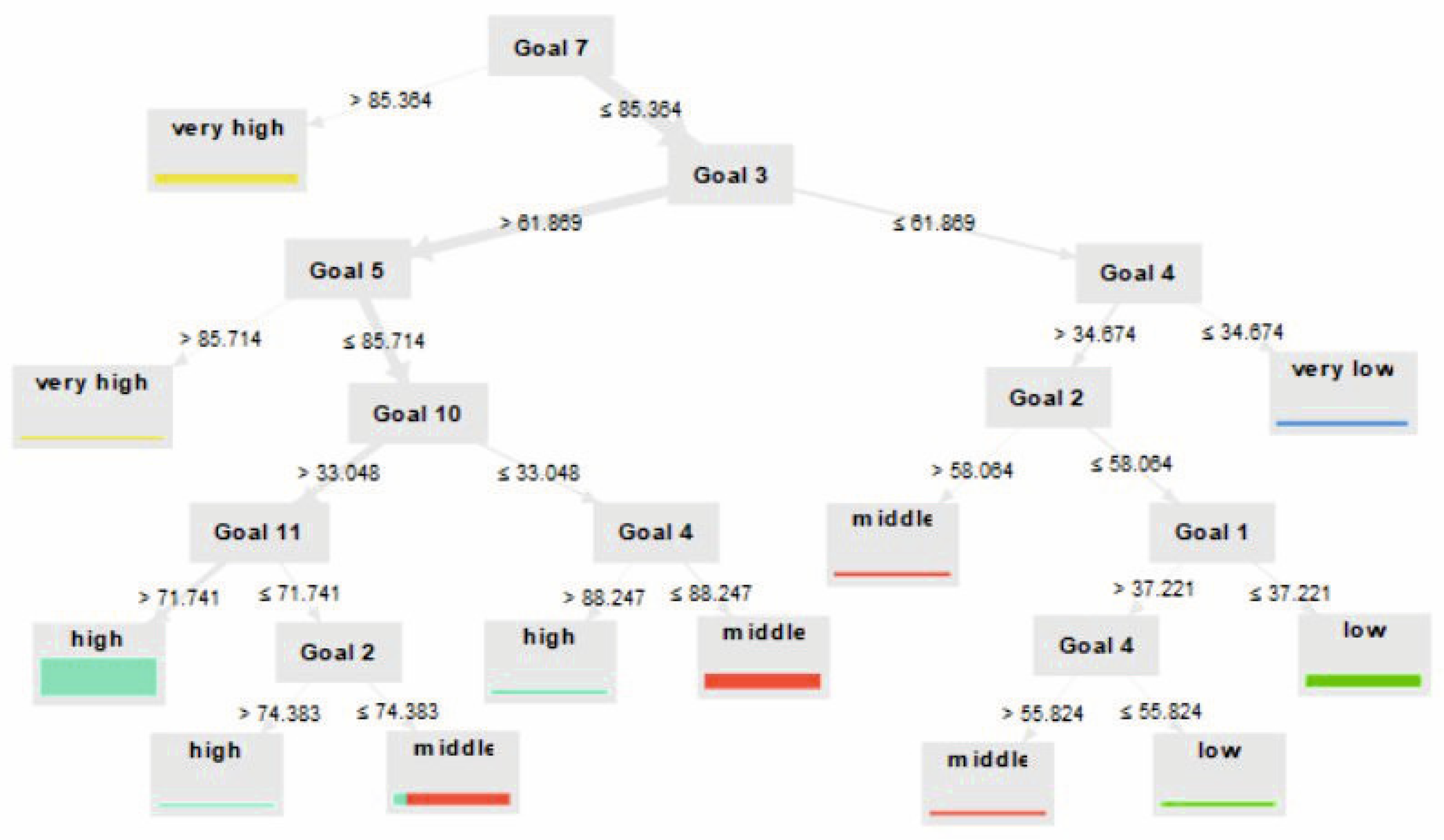
Random Forest (RF) is an ensemble machine learning method used for classification, regression, and variable importance evaluation [50]. The technique is based on the construction of a large number of independent decision trees, followed by aggregation of their predictions. This approach enhances model accuracy and stability compared to single decision trees.
The core idea of the method is to generate numerous decision trees, each trained on a randomly drawn subset of the original dataset (bootstrap sampling) and a random subset of input variables.
For new observations, the classification prediction is obtained via majority voting.
The mathematical formulation of the method is presented below.
Let the training sample be denoted as D = ( x i , y i ) i = 1 N , where x i = ( x i 1 , x i 2 , , x i p ) is a feature vector and y i is the target variable.
The method consists of the following steps:
  • Bootstrap Sampling:
For each tree b = 1 , 2 , , B , a random bootstrap sample D b is drawn from the training set D with replacement;
  • Tree Construction:
For each D b , a decision tree T b ( x ) is built. At each node, a random subset of predictors of size m (where m < p ) is selected to determine the best split;
  • Prediction:
For a new observation x, the final prediction is obtained via majority voting across all trees:
y ^ = m o d e T 1 x , T 2 x , , T B x .
  • Out-of-Bag (OOB) Error Estimation:
For each observation x i , the OOB prediction y ^ O O B ( x i ) is computed using only those trees that did not include x i in their bootstrap sample.
The OOB error is then estimated as:
E r r O O B = 1 N i = 1 N I ( y i y ^ O O B ( x i ) ) ,
where I ( · ) is the indicator function of classification error.
Numerical computations were performed using Statistica software 10 [51]. RapidMiner Studio software 9.10 was employed for data processing and visualization, including the construction of choropleth maps presented in Appendix A [52].

4. Results

4.1. Visual Analysis of SDGI and Sustainable Development Goals Across Countries

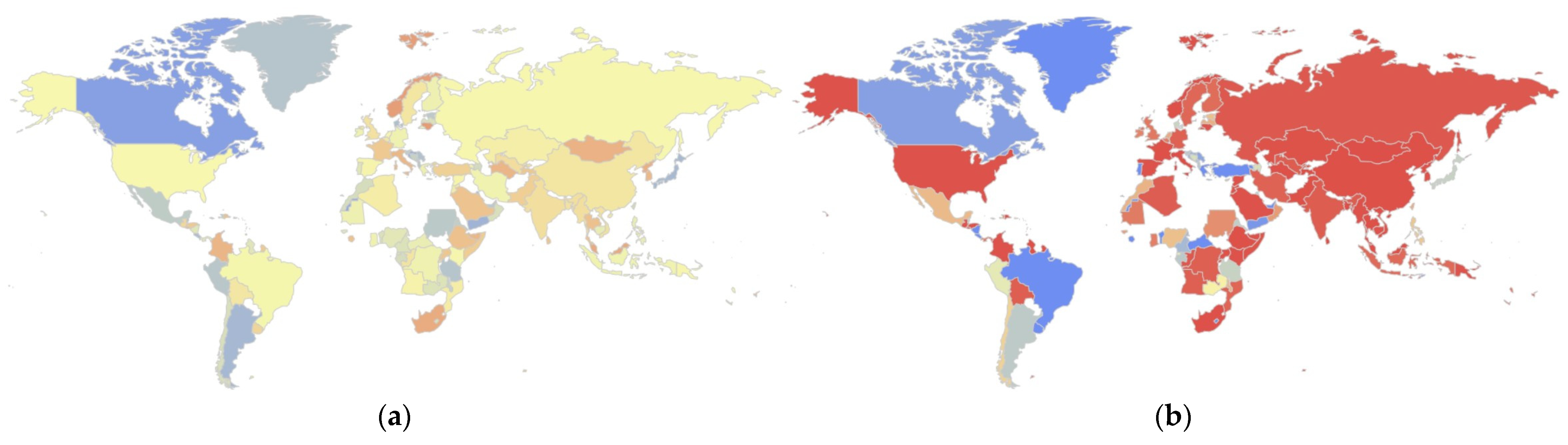
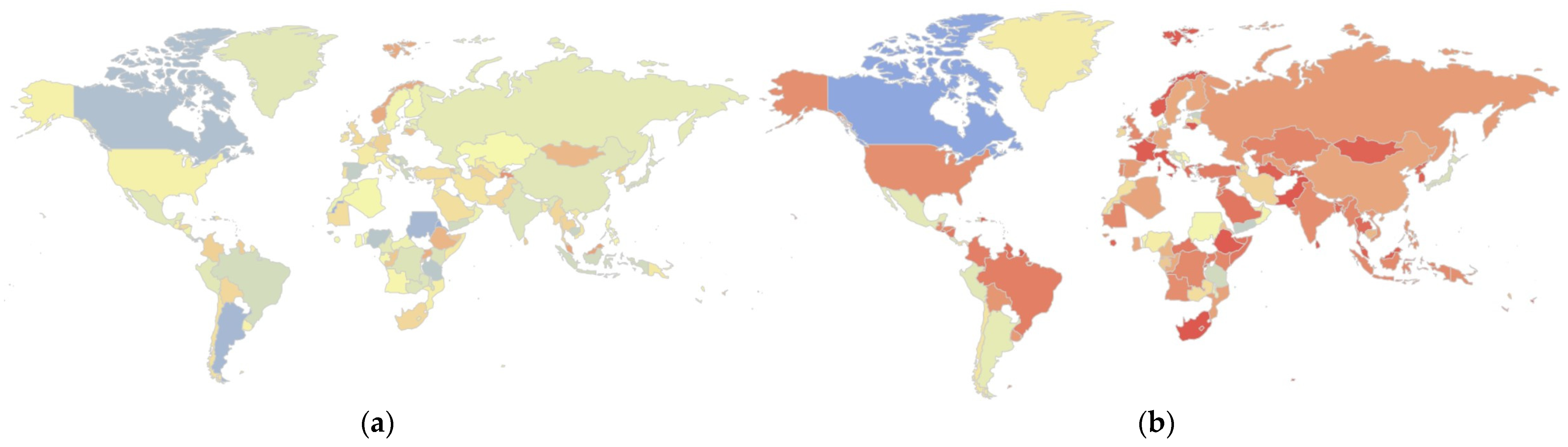
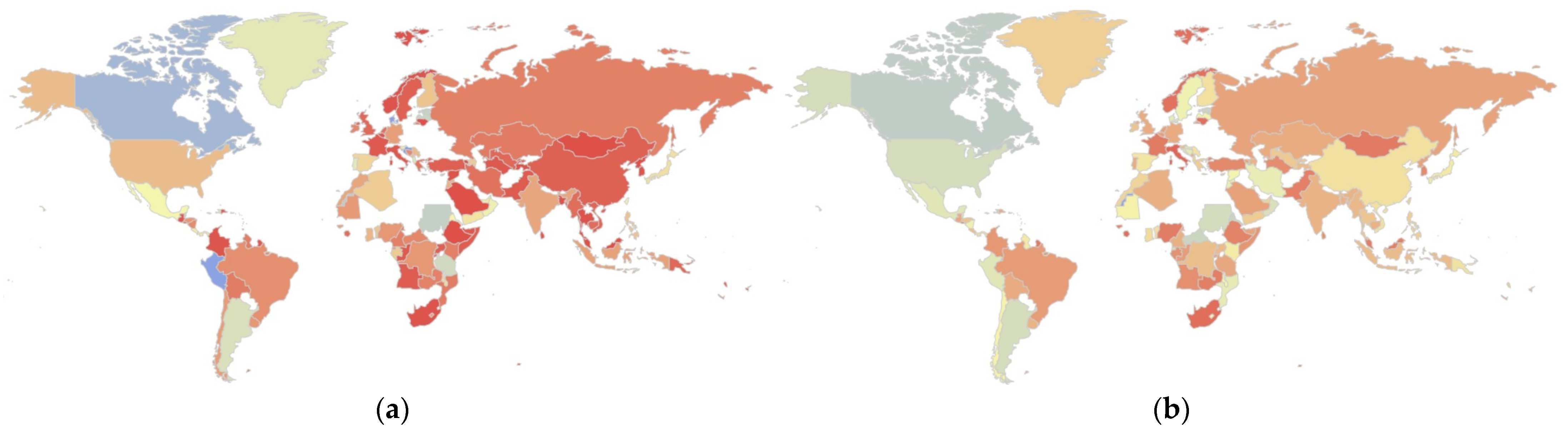
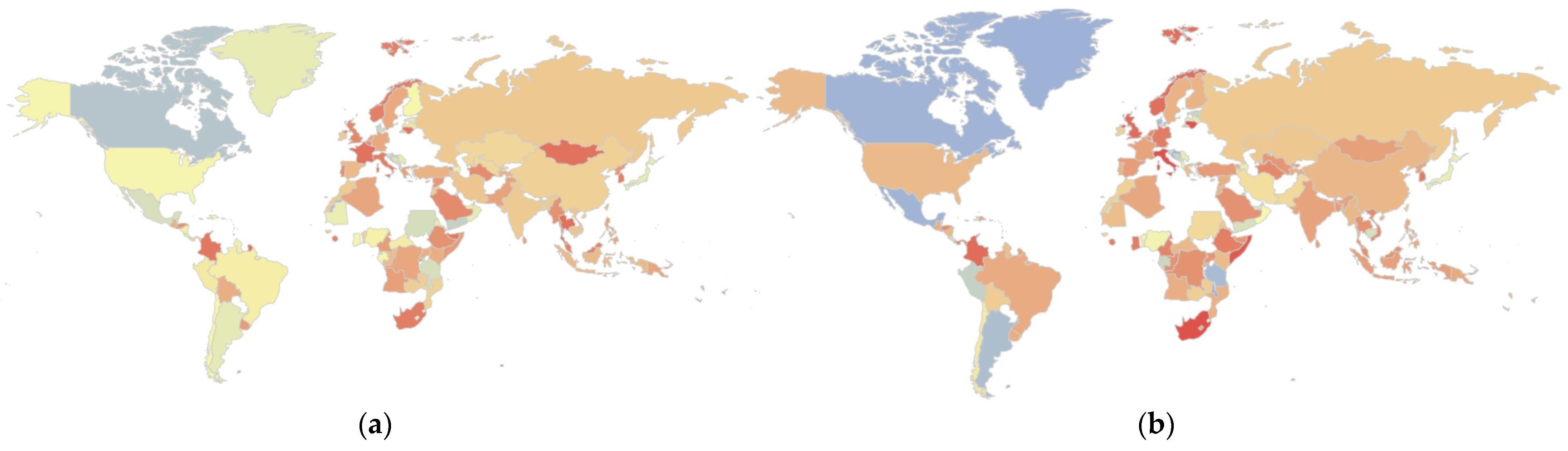
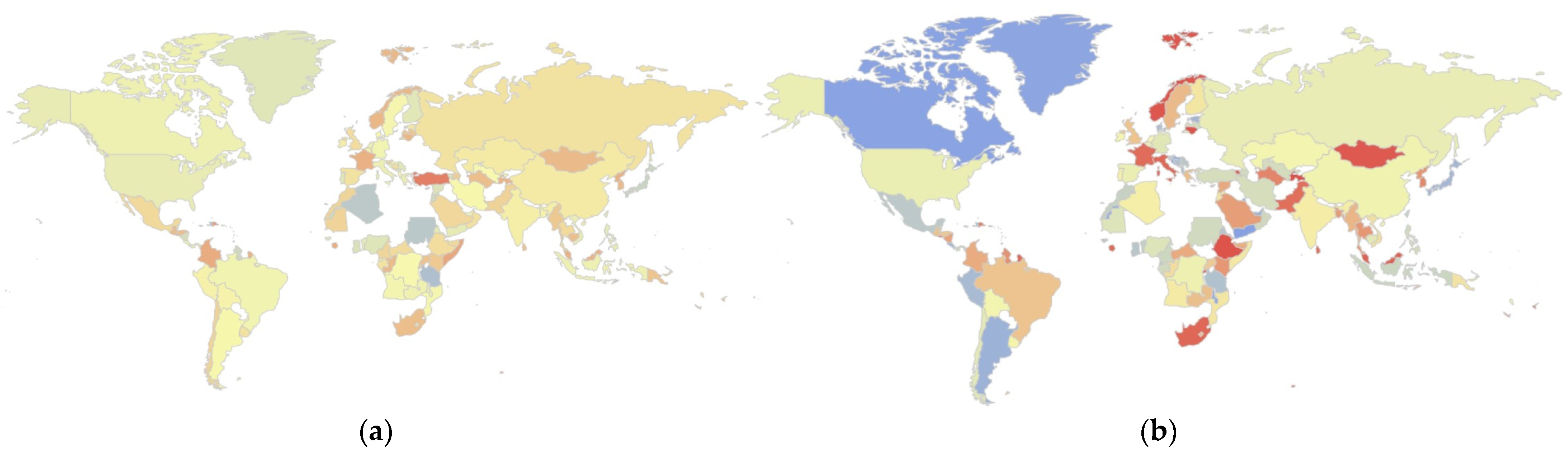
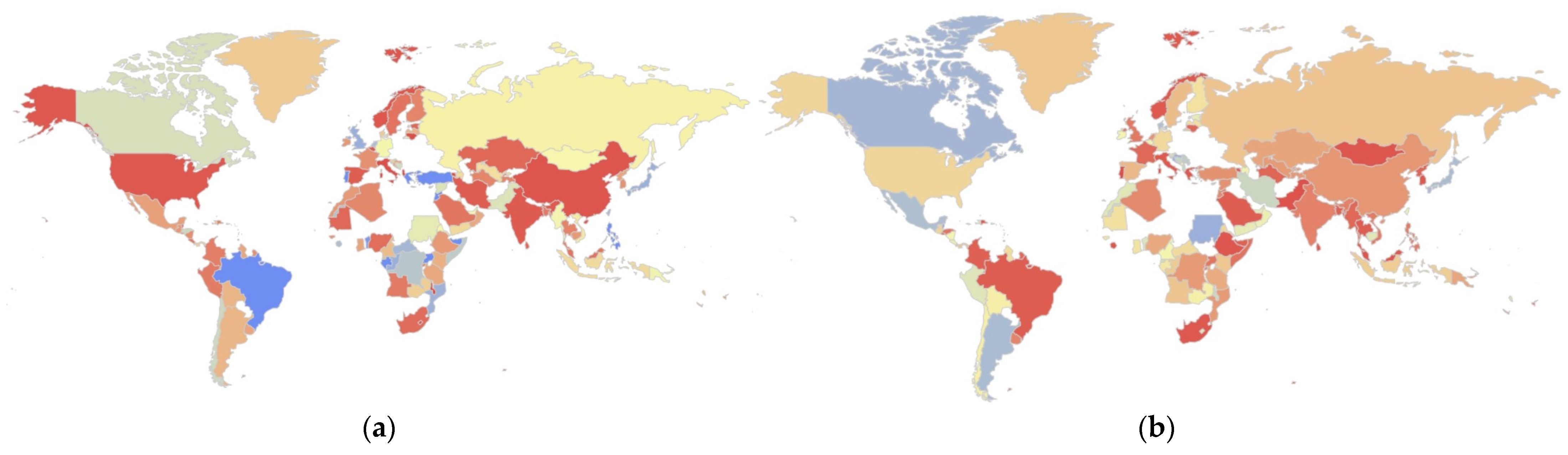
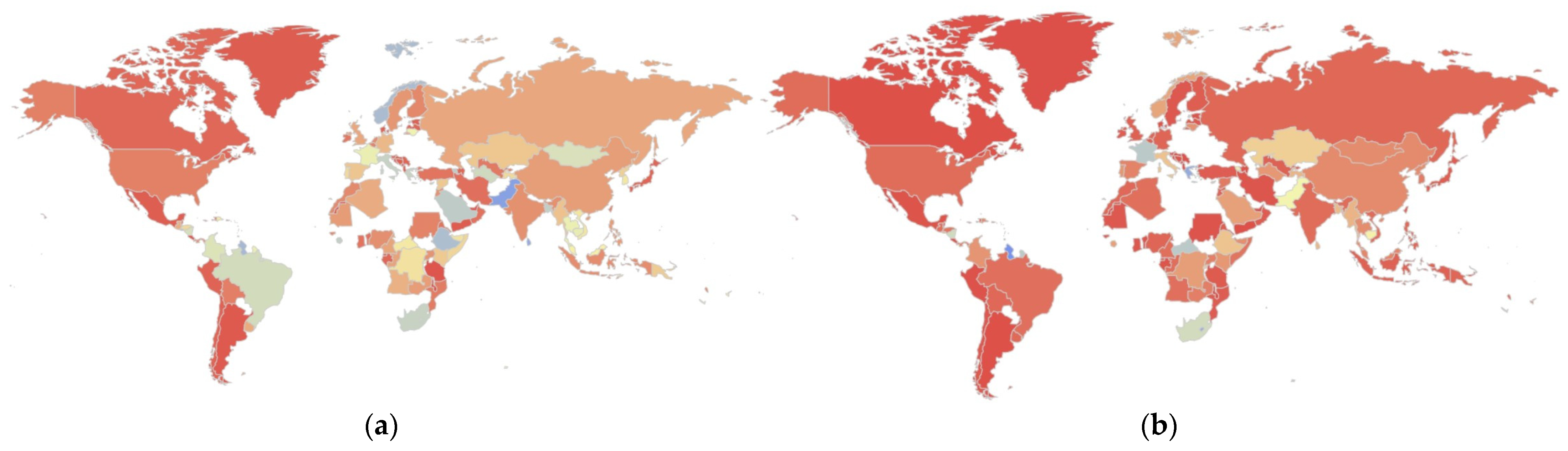
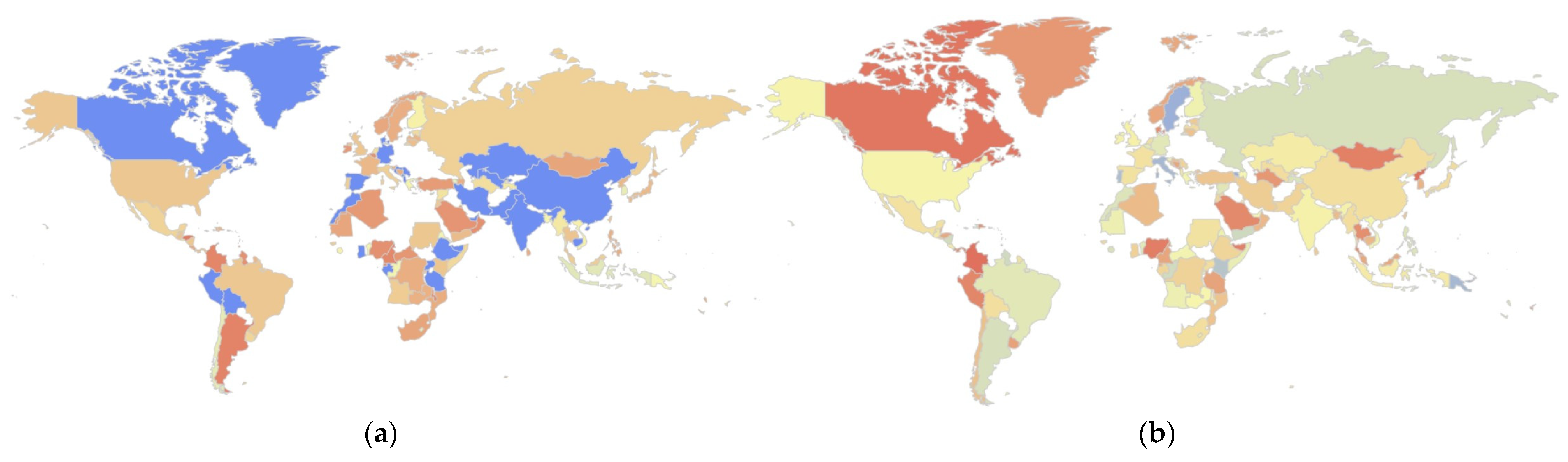
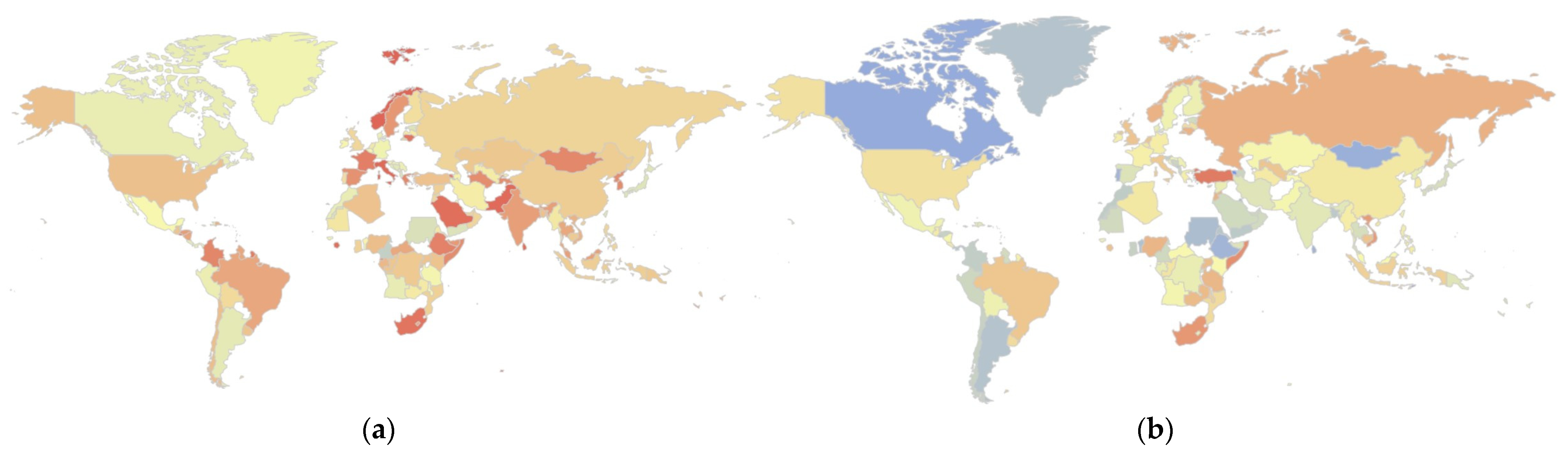
At the initial stage of research, to identify relationships between SDGI values and quantitative assessments of their development in achieving each of the 17 sustainable development goals for 2024 across 154 countries [2], choropleth maps were constructed for all studied indicators (Appendix A). The conducted comparative visual analysis revealed interesting patterns and regularities.
SDGI vs. Goal 1 (No Poverty)
A clear positive correlation was identified between SDGI and indicators of achieving Goal 1 on poverty eradication. Specifically, Scandinavian countries exhibit the highest values for both SDGI and Goal 1, confirming the effectiveness of comprehensive development strategies in ensuring social welfare. The European continent demonstrates an analogous pattern, where states with high overall development indices are also characterized by high poverty eradication indicators, evidencing a systematic approach to social policy in the region. The North American region maintains this trend with high values for both indicators, emphasizing the connection between economic development and social protection. Latin American countries reveal moderate positive correlation, where states with higher SDGI predominantly demonstrate better results for Goal 1, although variability within the region remains notable. The Asian macroregion is characterized by significant differentiation, where East Asian economies with high overall indices show high results in poverty eradication, whereas South Asian states with lower SDGI demonstrate correspondingly lower indicators for the first goal. The African continent exhibits the lowest values for both indicators, confirming the systemic nature of development challenges in this region and the necessity for comprehensive interventions. The identified global pattern confirms the existence of a direct relationship between a country’s overall level of sustainable development and its success in poverty eradication, indicating that Goal 1 is an integral component of overall progress in achieving sustainable development goals.
SDGI vs. Goal 2 (Zero Hunger, Achieving Food Security and Improved Nutrition)
A weak and ambiguous correlation is observed between SDGI and countries’ achievement of Goal 2 on hunger eradication. In Scandinavian countries, with the highest SDGI indicators, moderate values are recorded for Goal 2, indicating the existence of specific food security challenges even in highly developed states. The European continent demonstrates a heterogeneous picture, where Western European states with high overall indices are characterized by average results in hunger eradication, not reaching maximum values despite their overall level of development. The North American region reveals a similar tendency with high SDGI alongside moderate Goal 2 indicators, which may reflect structural peculiarities of food systems or methodological aspects of measuring food security. The Asian macroregion is characterized by the greatest variability, where individual states demonstrate high results for the second goal with moderate overall index values, evidencing the possibility of targeted achievements in food security regardless of overall development level. Latin American countries with relatively high SDGI show average values for Goal 2, supporting the general trend of absence of direct proportionality between indicators. The African continent demonstrates predominantly low indicators for both indices, although individual states reveal relatively better results specifically for the second goal. The identified patterns indicate that a high level of overall sustainable development does not automatically ensure high achievements in hunger eradication, emphasizing the specific nature of food security challenges and the necessity for specialized agricultural policies regardless of a country’s overall level of economic and social development.
SDGI vs. Goal 3 (Good Health and Well-being)
A strong positive correlation exists between SDGI and the achievement of Goal 3 on good health and well-being. Specifically, in Scandinavian countries, the highest SDGI indicators are accompanied by the highest values for Goal 3, evidencing the effectiveness of healthcare systems in highly developed states. The European continent demonstrates a clear pattern, where Western European states with high overall indices are characterized by high results in the health sphere, confirming the direct link between development level and quality of medical services. The North American region reveals high indicators for both indices, supporting the general trend of positive correlation between economic development and population health. The Asian macroregion is characterized by significant differentiation, where East Asian economies with high SDGI demonstrate high results for the third goal, whereas Central Asian and South Asian states with moderate overall indices show moderate values in healthcare. Latin American countries with relatively high SDGI demonstrate moderately high results for Goal 3, indicating the persistence of certain challenges in healthcare systems despite overall development level. The African continent exhibits the lowest indicators for both indices, emphasizing the critical state of healthcare systems in the region and their close connection with overall economic and social development level. The Middle Eastern region demonstrates a heterogeneous picture with moderate values for both indicators, reflecting variability in healthcare sector investments. The identified patterns confirm the existence of a direct and strong relationship between a country’s overall sustainable development and its achievements in ensuring population health, indicating that Goal 3 is one of the key components of overall progress in achieving sustainable development goals.
SDGI vs. Goal 4 (Quality Education)
A very strong positive correlation was determined between the Sustainable Development Goal Index (SDGI) and the achievement of Goal 4 on quality education. In Scandinavian countries, the highest SDGI indicators are accompanied by the highest values for Goal 4, confirming the central role of educational systems in ensuring sustainable development of highly developed states. The European continent demonstrates almost absolute correspondence between indicators, where Western European states with high overall indices are characterized by the highest results in education, reflecting the priority of educational policy in the region. The North American region reveals high indicators for both indices, although slight variability in achieving educational goals is observed. The Asian macroregion is characterized by a clear pattern, where East Asian economies with high SDGI demonstrate maximum results for the fourth goal, whereas South Asian states with moderate overall indices show moderate values in education, confirming the direct dependency between development level and access to quality education. Latin American countries with relatively high SDGI demonstrate high results for Goal 4, indicating the success of educational reforms and investments in human capital in the region. The African continent exhibits the lowest indicators for both indices, emphasizing critical challenges in ensuring access to education and its quality in the world’s least developed states. The Middle Eastern region demonstrates significant variability with predominantly moderate and high values for Goal 4 even with moderate SDGI indicators, which may reflect targeted investments in the educational sector in individual states of the region. The identified patterns confirm the existence of the strongest relationship among all studied goals between overall sustainable development and achievements in education, indicating that Goal 4 is a fundamental foundation for achieving all other sustainable development goals and a central element of a country’s progress.
SDGI vs. Goal 5 (Gender Equality)
A moderate positive correlation was identified between SDGI and the achievement of Goal 5 on gender equality, although the relationship is significantly weaker compared to other goals. In Scandinavian countries, the highest SDGI indicators are accompanied by the highest values for Goal 5, confirming the leadership of Northern European states in ensuring gender equality. The European continent demonstrates a heterogeneous picture, where Western European states with high overall indices are characterized by high results in gender equality, however Eastern European countries with relatively high SDGI show moderate or even low values for the fifth goal, indicating the persistence of cultural and structural barriers. The North American region reveals high SDGI indicators with moderately high Goal 5 values, evidencing the existence of certain challenges in achieving full gender equality even in economically developed states. The Asian macroregion is characterized by the greatest variability and weakest correlation, where states with high overall indices demonstrate a wide range of results for the fifth goal from moderate to high values, reflecting cultural peculiarities and different approaches to gender policy. Latin American countries with relatively high SDGI show moderately high results for Goal 5, supporting the general trend of positive but non-absolute correlation. The African continent reveals the greatest unpredictability in indicator relationships, where individual states with low SDGI demonstrate relatively high gender equality values, whereas others with similar development levels show low results for the fifth goal. The Middle Eastern region is characterized by predominantly low Goal 5 indicators even with moderate overall index values, emphasizing the influence of cultural and religious factors on gender policy regardless of economic development. The identified patterns indicate that a high level of overall sustainable development does not automatically guarantee high achievements in gender equality, as this aspect largely depends on sociocultural norms, historical traditions, and political will, making Goal 5 one of the least economically determined among all sustainable development goals.
SDGI vs. Goal 6 (Clean Water and Sanitation)
A strong positive correlation is observed between SDGI and the achievement of Goal 6 on clean water and sanitation. In Scandinavian countries, the highest SDGI indicators are accompanied by high values for Goal 6, confirming the effectiveness of water supply infrastructure systems in highly developed states. The European continent demonstrates a clear pattern, where Western European states with high overall indices are characterized by high results in ensuring access to clean water and sanitation, reflecting the development of municipal infrastructure in the region. The North American region reveals high indicators for both indices, supporting the general trend of direct dependency between development level and water supply quality. The Asian macroregion is characterized by significant differentiation, where East Asian economies with high SDGI demonstrate moderately high results for the sixth goal, whereas South Asian and Central Asian states with moderate overall indices show moderate values in water supply and sanitation, indicating the existence of infrastructure challenges even with relatively high economic development. Latin American countries with relatively high SDGI demonstrate moderately high and high results for Goal 6, evidencing the success of investments in water infrastructure, although individual states reveal lower indicators, reflecting uneven development in the region. The African continent exhibits predominantly low and moderate indicators for both indices, emphasizing critical challenges in ensuring access to clean water and basic sanitation in the world’s least developed states. The Middle Eastern region demonstrates significant variability with a wide range of values for Goal 6 at moderate SDGI indicators, which may reflect both natural limitations of water resources in arid zones and varying levels of investment in water infrastructure. The identified patterns confirm the existence of a strong relationship between overall sustainable development and achievements in ensuring access to clean water and sanitation, indicating that Goal 6 is an important component of basic infrastructure necessary for ensuring a decent standard of living and achieving other sustainable development goals.
SDGI vs. Goal 7 (Affordable and Clean Energy)
A moderate relationship was identified between SDGI and the achievement of Goal 7 on ensuring access to affordable, reliable, sustainable, and modern energy sources. Specifically, the Scandinavian region exhibits a high SDGI level and simultaneously high level of Goal 7 achievement, evidencing systemic integration of energy policy into the sustainable development strategy. The Central European region demonstrates high overall index indicators with somewhat lower values for the energy goal, which may indicate challenges in energy system transformation. The Latin American region reveals a heterogeneous picture, where the southern part of the continent demonstrates relatively high Goal 7 achievement indicators with moderate overall index values. This may reflect successful hydropower development and targeted electrification policy. The African continent is characterized by the lowest indicators for both indices, especially in the sub-Saharan region, confirming the critical role of energy poverty as a barrier to sustainable development. The Asian region demonstrates significant variability with moderate indicators for both parameters. The North American region is characterized by high SDGI with moderate energy goal achievement indicators. The Middle Eastern region does not exhibit the expected leadership in energy accessibility despite natural resources. The identified patterns indicate the absence of direct linear correlation between the overall index and energy achievements, emphasizing the necessity for targeted strategies to achieve Goal 7 regardless of a country’s overall development level.
SDGI vs. Goal 8 (Decent Work and Economic Growth)
The results of comparative visual analysis provide grounds to assert the existence of a complex and ambiguous relationship between SDGI and the achievement of Goal 8 on promoting sustained, inclusive, and sustainable economic growth, full and productive employment, and decent work for all. The Scandinavian region demonstrates high overall index indicators with moderate Goal 8 achievement values, which may reflect peculiarities of measuring economic growth in post-industrial economies. The Central European region is characterized by high levels of both the overall index and Goal 8 achievement. The Eastern European space reveals relatively high Goal 8 achievement indicators with moderate overall index values. The Latin American region demonstrates notably higher Goal 8 indicators compared to the overall development index, especially in the northern part of the continent. The African continent presents a heterogeneous picture, where unlike energy accessibility, relatively better indicators are observed in the sphere of economic growth and employment. The Asian region is characterized by moderate and high Goal 8 achievement indicators at various overall index levels. The North American region is characterized by high indicators for both indices. The Middle Eastern region reveals moderate indicators for both parameters. The identified patterns indicate that economic growth and employment are more dynamic indicators that can rapidly change even in countries with moderate overall development levels, but do not automatically convert into comprehensive sustainable development.
SDGI vs. Goal 9 (Industry, Innovation and Infrastructure)
A clear correlation is observed between SDGI and the achievement of Goal 9 on building resilient infrastructure, promoting inclusive and sustainable industrialization, and fostering innovation. The Scandinavian and North American regions demonstrate the highest indicators for both indices with practically complete correspondence between the overall development level and achievements in infrastructure and innovation. Central and Western Europe are characterized by high indicators for both parameters. The East Asian region demonstrates a pronounced advantage of Goal 9 indicators over the overall development index, reflecting the priority of industrialization and infrastructure development. The Latin American region reveals contrasts, where lower Goal 9 achievement indicators are observed compared to the overall index in certain parts of the continent. The African continent presents the lowest indicators for both indices, confirming infrastructure deficit as a fundamental barrier to development. The Middle Eastern region demonstrates a heterogeneous picture. The identified patterns indicate the strongest correlation of Goal 9 with the overall sustainable development index, emphasizing the critical role of infrastructure and innovation as prerequisites for progress in achieving the entire complex of sustainable development goals.
SDGI vs. Goal 10 (Reduced Inequalities)
A weak and ambiguous relationship was identified between the overall Sustainable Development Goal Index (SDGI) and the achievement of Goal 10 on reducing inequalities. The Scandinavian region demonstrates a high SDGI level with moderate Goal 10 achievement indicators, indicating that even in the most developed countries, challenges remain in fully overcoming inequality. The North American region reveals a contrast, where high overall index indicators are accompanied by low Goal 10 achievement values. This emphasizes that a high overall development level does not guarantee equitable distribution of opportunities in society. Central and Eastern Europe are characterized by high levels of both the overall index and Goal 10 achievement, reflecting a certain development balance. The Latin American region demonstrates high overall index indicators with low Goal 10 achievement values, indicating the persistence of deep social inequality despite overall development. The African continent presents a heterogeneous picture with variable Goal 10 achievement indicators at low overall index values. The Asian region is characterized by significant variability of Goal 10 indicators at various overall index levels. The Middle Eastern region demonstrates low Goal 10 achievement indicators with moderate overall index values. The identified geographical patterns indicate the absence of clear correlation between the overall sustainable development index and success in reducing inequality, emphasizing the necessity for targeted policy decisions to achieve Goal 10 regardless of a country’s overall development level.
SDGI vs. Goal 11 (Sustainable Cities and Communities)
A moderate positive correlation was identified between SDGI and the achievement of Goal 11 on making cities and human settlements inclusive, safe, resilient, and sustainable. The Scandinavian region demonstrates high indicators for both indices, evidencing successful urban policy and development of sustainable urban infrastructure as a component of overall high development level. The North American region is characterized by high SDGI level with high Goal 11 achievement indicators, reflecting developed urban infrastructure and settlement system. Central and Western Europe reveal high indicators for both parameters, indicating balanced development of urban territories and their integration into the overall sustainable development strategy. Eastern Europe demonstrates a high level of both the overall index and Goal 11 achievement, which may reflect the legacy of planned urban development and their subsequent modernization. The Latin American region is characterized by high Goal 11 achievement indicators with moderate overall index values, especially in the southern part of the continent. This may reflect a high urbanization level and urban infrastructure development as a priority development direction. The African continent presents a heterogeneous picture, where low indicators are observed for both indices in most regions, indicating urbanization challenges and insufficient urban infrastructure development. The Asian region is characterized by significant variability, where individual territories demonstrate moderate indicators for both parameters. The Middle Eastern region reveals moderate indicators for both the overall index and Goal 11 achievement. The identified patterns provide grounds to assert that the development of sustainable cities and communities is closely related to a country’s overall development level, however urban policy can be successful even with moderate overall index indicators, emphasizing the role of targeted investments in urban infrastructure for achieving Goal 11.
SDGI vs. Goal 12 (Responsible Consumption and Production)
A paradoxical and inverse relationship is observed between SDGI and the achievement of Goal 12 on ensuring sustainable consumption and production patterns. The Scandinavian region demonstrates a high SDGI level with low Goal 12 achievement indicators, indicating that a high development level is accompanied by intensive resource consumption and a significant ecological footprint. The North American region reveals an analogous pattern, where high overall index indicators are accompanied by low Goal 12 achievement values. This emphasizes that developed economies are characterized by high consumption levels that contradict the principles of rational resource use. Central and Western Europe are characterized by a high overall index level with low Goal 12 achievement indicators, reflecting high living standards and intensive consumption in developed European countries. The Latin American region demonstrates an opposite tendency, where moderate overall index indicators are accompanied by high Goal 12 achievement values. This may reflect a lower consumption level and smaller ecological footprint with less intensive resource use. The African continent presents the highest Goal 12 achievement indicators with the lowest overall index values, indicating minimal resource consumption and low ecological footprint, conditioned by limited economic development. The Asian region is characterized by significant variability, where high Goal 12 achievement indicators are observed with moderate overall index values in most territories. The Middle Eastern region reveals moderate or low Goal 12 achievement indicators with moderate overall index values. The identified geographical patterns indicate a clear inverse correlation between the overall sustainable development index and Goal 12 achievement. Countries with high economic development levels demonstrate the lowest responsible consumption indicators, whereas the least developed countries reveal the highest values for this goal. This emphasizes the fundamental conflict between traditional economic growth models and ecological sustainability principles, indicating the necessity for consumption model transformation in developed countries to achieve genuine sustainable development.
SDGI vs. Goal 13 (Climate Action)
An unexpected inverse relationship exists between SDGI and the achievement of Goal 13 on taking urgent action to combat climate change and its impacts. Specifically, the Scandinavian region demonstrates a high SDGI level with moderate or low Goal 13 achievement indicators, indicating high greenhouse gas emissions and a significant carbon footprint of developed economies despite overall orientation toward sustainable development. The North American region reveals an analogous pattern, where high overall index indicators are accompanied by low Goal 13 achievement values. This emphasizes that a high level of economic development and consumption is accompanied by significant climate emissions. Central and Western Europe are characterized by a high overall index level with moderate Goal 13 achievement indicators, reflecting high greenhouse gas emissions even in countries with developed climate policy. The Latin American region demonstrates moderate overall index indicators with high Goal 13 achievement values, which may reflect lower per capita emissions and a smaller carbon footprint of the region’s economies. The African continent presents the highest Goal 13 achievement indicators with the lowest overall index values, indicating minimal greenhouse gas emissions conditioned by limited industrialization and low energy consumption levels. The Asian region is characterized by significant variability, where high Goal 13 achievement indicators are observed in less developed territories with moderate or low values in highly industrialized countries. The Middle Eastern region reveals low Goal 13 achievement indicators with moderate overall index values, reflecting high emissions of hydrocarbon-exporting countries. Thus, countries with high economic development levels demonstrate the lowest climate efficiency indicators due to high greenhouse gas emissions, whereas the least developed countries reveal the highest values for this goal. This emphasizes the fundamental conflict between traditional economic growth models and climate goals, indicating the necessity for deep decarbonization of developed countries’ economies to achieve genuine sustainable development and fulfill the Paris Agreement.
SDGI vs. Goal 14 (Life Below Water)
A weak and specific relationship was identified between SDGI and the achievement of Goal 14 on conserving and sustainably using the oceans, seas, and marine resources. Specifically, the Scandinavian region demonstrates a high SDGI level with high Goal 14 achievement indicators, indicating a balanced approach to sustainable development, including marine ecosystem protection. The North American region reveals a contrast, where high overall index indicators are accompanied by moderate Goal 14 achievement values. This emphasizes that a high overall development level does not guarantee effective marine resource conservation. Central and Eastern Europe are characterized by a high overall index level with significant variability in Goal 14 achievement indicators. Coastal countries demonstrate high results, whereas landlocked states have zero indicators due to lack of sea access. The Latin American region demonstrates moderate overall index indicators with high Goal 14 achievement values, indicating the priority of marine resources for the region’s economies. The African continent presents a heterogeneous picture: coastal countries show high Goal 14 achievement indicators with low overall index values, whereas landlocked countries have zero Goal 14 indicators. The Asian region is characterized by significant variability in Goal 14 indicators at various overall index levels, reflecting diversity in marine resource management approaches. The Middle Eastern region demonstrates moderate Goal 14 achievement indicators with average overall index values for coastal countries. The identified geographical patterns indicate the absence of clear correlation between SDGI and success in marine ecosystem conservation, emphasizing the necessity for targeted policy decisions to achieve Goal 14 regardless of a country’s overall development level.
SDGI vs. Goal 15 (Life on Land)
A weak and ambiguous relationship was determined between SDGI and the achievement of Goal 15 on protecting and restoring terrestrial ecosystems. The Scandinavian region demonstrates a high SDGI level with moderate Goal 15 achievement indicators, indicating that even in the most developed countries, challenges remain in fully preserving terrestrial ecosystems. The North American region reveals high overall index indicators with moderate Goal 15 achievement values. This emphasizes that a high overall development level does not guarantee effective protection of forest and other terrestrial ecosystems. Central and Eastern Europe are characterized by high levels of both the overall index and Goal 15 achievement, reflecting a certain balance in natural ecosystem conservation against the backdrop of economic development. The Latin American region demonstrates moderate overall index indicators with moderate and variable Goal 15 achievement values, indicating diversity in terrestrial ecosystem management approaches in the region’s countries. The African continent presents a heterogeneous picture with high and variable Goal 15 achievement indicators at low overall index values. This indicates the preservation of significant areas of natural ecosystems regardless of economic development level. The Asian region is characterized by significant variability in Goal 15 indicators at various overall index levels, reflecting diverse approaches to balancing economic development and nature conservation. The Middle Eastern region demonstrates moderate Goal 15 achievement indicators with moderate overall index values. The absence of clear correlation between SDGI and success in terrestrial ecosystem protection emphasizes the necessity for targeted policy decisions to achieve Goal 15 regardless of a country’s overall development level.
SDGI vs. Goal 16 (Peace, Justice and Strong Institutions)
A moderate interdependence is observed between SDGI and the achievement of Goal 16 on promoting peaceful and inclusive societies, ensuring access to justice, and building effective, accountable institutions. The Scandinavian region demonstrates a high SDGI level with very high Goal 16 achievement indicators, indicating direct dependency between overall development level and institutional quality, rule of law, and societal security level. The North American region reveals high overall index indicators with high Goal 16 achievement values, emphasizing the importance of strong institutions and the rule of law for achieving a high sustainable development level. Central and Eastern Europe are characterized by high levels of both the overall index and Goal 16 achievement, reflecting successful transformation of institutional systems and strengthening of the rule of law in the region. The Latin American region demonstrates moderate overall index indicators with variable Goal 16 achievement values, indicating heterogeneity in institutional capacity development and security provision across different countries in the region. The African continent presents a heterogeneous picture with predominantly low Goal 16 achievement indicators at low overall index values. This indicates complex challenges in building effective institutions, ensuring the rule of law, and overcoming conflicts. The Asian region is characterized by significant variability in Goal 16 indicators at various overall index levels, reflecting diverse political systems and governance approaches in the region’s countries. The Middle Eastern region demonstrates low and moderate Goal 16 achievement indicators with moderate overall index values, reflecting the complex security situation and challenges in building stable institutions in the region. The identified patterns indicate the presence of relatively clear correlation between the overall sustainable development index and success in achieving Goal 16, emphasizing the fundamental role of peaceful, just societies and effective institutions for a country’s overall sustainable development.
SDGI vs. Goal 17 (Partnerships for the Goals)
A moderate and ambiguous relationship was established between SDGI and the achievement of Goal 17 on strengthening the means of implementation and revitalizing the global partnership for sustainable development. The Scandinavian region demonstrates a high SDGI level with high Goal 17 achievement indicators, indicating active participation in international cooperation, provision of development assistance, and support for global sustainable development initiatives. The North American region reveals high overall index indicators with moderate and high Goal 17 achievement values, reflecting significant contribution to global partnership and international cooperation. Central and Eastern Europe are characterized by a high overall index level with moderate Goal 17 achievement indicators, which may reflect limited capacity for providing international assistance and participating in global partnerships compared to the most developed countries. The Latin American region demonstrates moderate overall index indicators with high Goal 17 achievement values, indicating active participation in regional and global cooperation regardless of economic development level. The African continent presents a heterogeneous picture with variable Goal 17 achievement indicators at low overall index values. This indicates varying levels of continent countries’ integration into global partnerships and international cooperation. The Asian region is characterized by significant variability in Goal 17 indicators at various overall index levels, reflecting diverse approaches to international cooperation and participation in global sustainable development initiatives. The Middle Eastern region demonstrates moderate and high Goal 17 achievement indicators with moderate overall index values, which may reflect significant financial resources for participation in international cooperation. The identified geographical patterns indicate the absence of clear correlation between the overall sustainable development index and success in achieving Goal 17, emphasizing the diversity of countries’ participation forms in global partnership regardless of a country’s overall development level.
The comparative visual analysis of choropleth maps did not reveal clear or consistent spatial patterns between the SDGI and the achievement indicators of individual Sustainable Development Goals across countries. Geographic patterns display considerable variability and heterogeneity in the correlation structure between the composite index and its individual components, indicating the complex and nonlinear nature of interactions among various aspects of sustainable development. The absence of visually discernible trends in the cartographic material highlights the need for more precise analytical tools. Consequently, further quantitative analysis of these indicators is warranted using statistical methods such as correlation and regression analysis, clustering, and machine learning algorithms to uncover hidden patterns, identify key drivers of sustainable development, and construct predictive models for SDG achievement.

4.2. Correlation Analysis of SDGI and Sustainable Development Goals

To identify the key determinants of sustainable development progress across countries, nations were grouped according to their SDGI levels. For this purpose, the numerical values of the SDGI were stratified into five categories: very low, low, middle, high, and very high. Table 2 presents the distribution ranges of SDGI values corresponding to these groups.
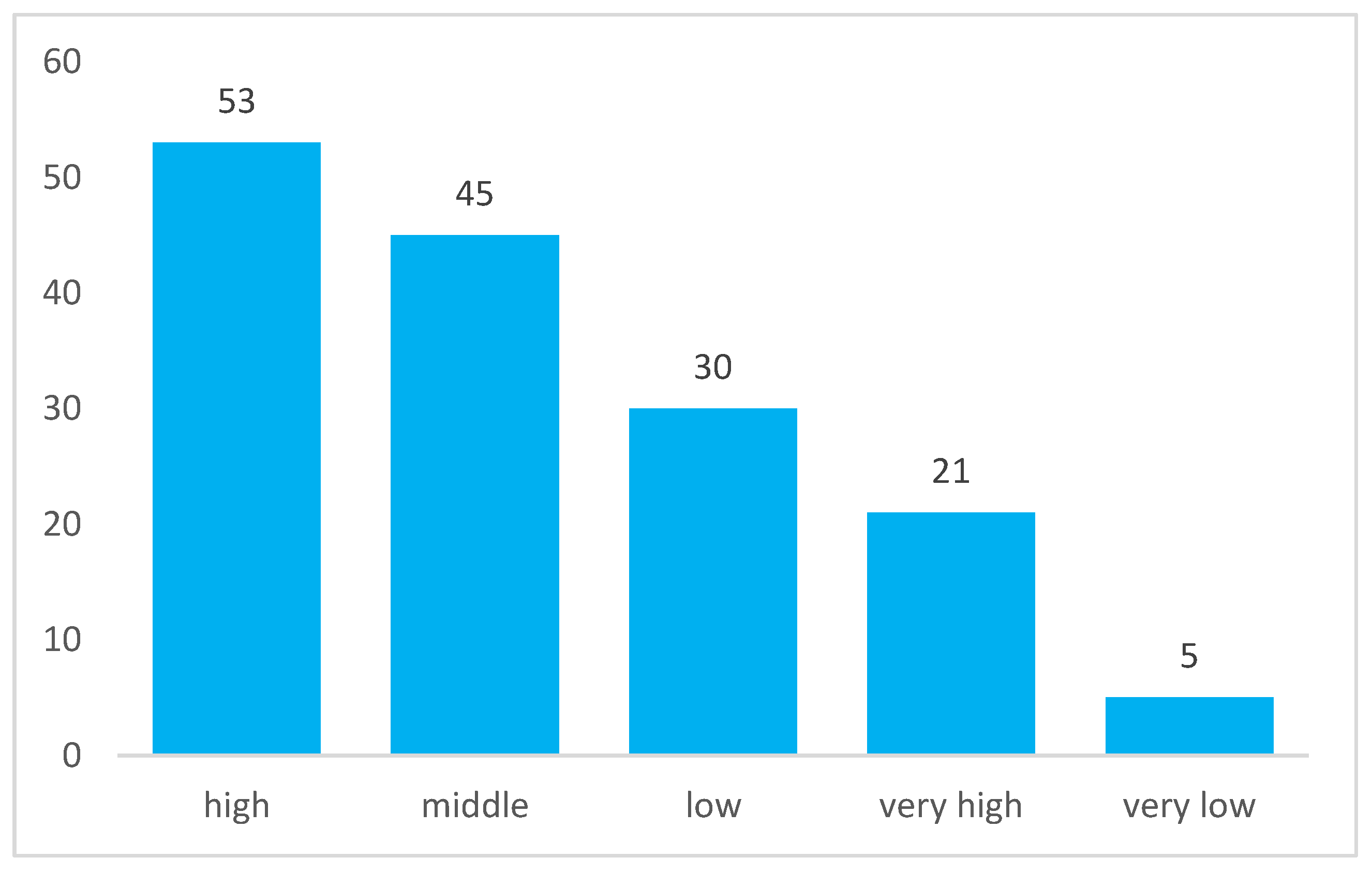
As a result, the following country groups were formed (Figure 1).
Among the countries analyzed, five were classified in the very low SDGI group: Afghanistan (49.1), Central African Republic (45.2), Chad (46.0), Congo Dem. Rep. (48.2), Yemen Rep. (47.7).
The low group includes 30 countries: Angola (52.8), Benin (57.8), Burkina Faso (53.8), Burundi (55.5), Cameroon (57.8), Congo Rep. (52.8), Djibouti (54.3), Eswatini (57.5), Gambia The (58.4), Guatemala (59.9), Guinea (57.2), Haiti (52.5), Lesotho (55.6), Liberia (52.5), Madagascar (51.0), Malawi (57.1), Mali (56.3), Mauritania (57.9), Mozambique (53.7), Niger (50.3), Nigeria (54.7), Pakistan (57.0), Papua New Guinea (53.4), Sierra Leone (59.4), Syrian Arab Republic (58.4), Tanzania (57.7), Togo (59.2), Uganda (55.8), Zambia (54.8), Zimbabwe (57.4).
The middle group comprises 45 countries: Bahamas The (65.2), Bahrain (64.4), Bangladesh (63.9), Barbados (69.6), Belize (67.0), Bolivia (67.8), Botswana (64.5), Brunei Darussalam (68.0), Cabo Verde (67.3), Cambodia (66.4), Cote d’Ivoire (63.2), Egypt Arab Rep. (68.1), El Salvador (68.4), Gabon (65.6), Ghana (63.1), Honduras (61.7), India (67.0), Iran Islamic Rep. (69.6), Iraq (63.9), Jamaica (69.8), Kenya (61.9), Kuwait (63.3), Lao PDR (62.6), Lebanon (61.7), Malaysia (69.5), Mongolia (66.7), Myanmar (63.6), Namibia (65.5), Nepal (68.6), Nicaragua (64.8), Oman (67.1), Panama (68.2), Paraguay (68.1), Philippines (68.3), Qatar (65.1), Rwanda (62.3), Sao Tome and Principe (63.9), Saudi Arabia (65.2), Senegal (63.5), South Africa (64.1), Sri Lanka (67.9), Tajikistan (68.3), Turkmenistan (67.3), United Arab Emirates (69.8), Venezuela RB (63.8).
The high SDGI level includes 53 countries: Albania (75.2), Algeria (70.1), Argentina (74.8), Armenia (74.3), Australia (77.9), Azerbaijan (72.9), Bhutan (70.5), Bosnia and Herzegovina (73.8), Brazil (73.8), Bulgaria (76.3), Canada (79.2), Chile (78.1), China (74.4), Colombia (70.5), Costa Rica (73.4), Cuba (76.5), Cyprus (73.8), Dominican Republic (74.1), Ecuador (70.1), Fiji (72.9), Georgia (73.7), Greece (79.1), Indonesia (70.2), Ireland (78.6), Israel (74.5), Jordan (71.0), Kazakhstan (71.5), Korea Rep. (78.1), Kyrgyz Republic (74.5), Lithuania (78.8), Luxembourg (76.7), Malta (79.3), Mauritius (70.3), Mexico (70.8), Montenegro (73.8), Morocco (71.7), Netherlands (80.0), New Zealand (79.0), Peru (72.7), Romania (77.7), Russian Federation (74.1), Serbia (78.2), Singapore (71.5), Suriname (71.8), Switzerland (79.2), Thailand (75.3), Tunisia (72.0), Türkiye (70.6), Ukraine (75.7), United States (75.2), Uruguay (77.4), Uzbekistan (73.1), Vietnam (73.4).
The very high group includes 21 countries: Austria (83.0), Belgium (80.7), Croatia (82.4), Czechia (81.9), Denmark (85.3), Finland (87.0), France (83.1), Germany (83.7), Hungary (80.4), Iceland (80.8), Italy (80.3), Japan (80.7), Latvia (81.2), Norway (82.7), Poland (82.1), Portugal (80.6), Slovak Republic (80.8), Slovenia (81.2), Spain (81.0), Sweden (85.7), United Kingdom (81.9).
According to the 2025 SDGI assessment, there is a pronounced differentiation among countries in terms of Sustainable Development Goals (SDGs) attainment levels. The largest group consists of countries with high SDGI scores (50 countries), including both advanced economies and dynamically developing nations across Asia, Latin America, and Eastern Europe. The very high SDGI group (23 countries) is composed almost entirely of European states, with Scandinavian countries leading the ranking: Finland (87.0), Sweden (85.7), and Denmark (85.3). Outside Europe, only Japan (80.7) joins this elite group, demonstrating that non-European countries can also achieve high standards of sustainable development.
The very low SDGI group (5 countries) raises the greatest concern, with all states scoring below 50 points. These are predominantly African nations affected by armed conflicts, political instability, and humanitarian crises, such as the Central African Republic (45.2), Chad (46.0), and Yemen (47.7). The middle group (42 countries) mostly includes countries from the Middle East, Southeast Asia, and Latin America, which are currently undergoing transitional development phases.
The heterogeneous performance across different SDGs underlines the need to identify which goals contribute most significantly to the composite index. These SDGs may serve as leverage points for designing effective national policies.
Table 3 presents the pairwise correlation coefficients between SDGI levels (very high, high, middle, and low) and the 17 Sustainable Development Goals.
The correlation matrix reveals the heterogeneous nature of relationships between SDGI levels and the 17 Sustainable Development Goals, highlighting the complex multidimensional character of sustainable development.
For the “very high” SDGI group, moderate positive correlations are observed with most SDGs. The strongest associations are with G9 (Industry, Innovation, and Infrastructure, r = 0.53), G15 (Life on Land, r = 0.37), and G16 (Peace, Justice, and Strong Institutions, r = 0.51). These findings support the hypothesis that highly developed countries achieve comprehensive progress through technological advancement, institutional capacity, and environmental awareness. A negative correlation with G13 (Climate Action, r = −0.16) may reflect the paradox of high industrialization and associated carbon emissions.
The “high” SDGI group shows stable moderate positive correlations (r = 0.19–0.42) with G2 (Zero Hunger), G10 (Reduced Inequalities), G11 (Sustainable Cities), and G12 (Responsible Consumption), indicating balanced socio-economic progress in these countries.
For the “middle” SDGI group, correlations are generally weak (r < 0.25), except for a moderate association with G10 (r = 0.32), suggesting fragmented progress and a lack of systematic policy implementation in mid-level development countries.
The “low” SDGI group demonstrates strong positive correlations with G6 (Clean Water, r = 0.58), G7 (Affordable Energy, r = 0.66), G12 (r = 0.52), and G16 (r = 0.54), but negative ones with G3 (Health, r = −0.66), G4 (Education, r = −0.62), and G9 (Industry, r = −0.57). This illustrates a compensation effect, where countries with lower SDGI improve basic infrastructure while still lagging in human capital and institutional development.
The “very low” SDGI group shows no statistically significant correlations due to multicollinearity and the limited variability of consistently low indicators in this cohort.

4.3. Discriminant Model of SDGI Based on Sustainable Development Goals

To identify the Sustainable Development Goals that significantly influence the SDGI levels across countries, a discriminant analysis was conducted [47]. Table 4 presents the statistical significance of the discriminant function and the independent variables used in constructing the classification function.
The Wilks’ Lambda statistic equals 0.03, falling within the interval [0, 1]. This value, being very close to zero, indicates excellent discrimination between the groups. The F-statistic F(68,516) = 10.349 at p < 0.00 significantly exceeds the critical value of the F-distribution. Therefore, the null hypothesis that observations belong to a single group is rejected. The discriminant analysis is thus valid and appropriate. It can be concluded that the classification of countries into five SDGI levels (very low, low, middle, high, very high) is statistically justified.
The most significant Sustainable Development Goals contributing to the differentiation of SDGI levels include:
  • Goal 10 (Reduced Inequalities): with the lowest Partial Lambda (0.81) and the highest F-remove (7.70, p = 0.01), indicating the strongest discriminatory power;
  • Goal 6 (Clean Water and Sanitation): Partial Lambda = 0.87, F-remove = 5.03 (p = 0.01);
  • Goal 15 (Life on Land): Partial Lambda = 0.88, F-remove = 4.65 (p = 0.01);
  • Goal 5 (Gender Equality): Partial Lambda = 0.89, F-remove = 3.96 (p = 0.01).
In addition, Goal 2 (Zero Hunger), Goal 4 (Quality Education), Goal 11 (Sustainable Cities and Communities), and Goal 16 (Peace, Justice and Strong Institutions) also demonstrated statistically significant contributions (p = 0.01).
Conversely, Goal 8 (Decent Work and Economic Growth), Goal 13 (Climate Action), Goal 14 (Life Below Water), and Goal 17 (Partnerships for the Goals) showed the highest Partial Lambda values (close to 1) and the lowest F-remove values with high p-values (p > 0.05), indicating their minimal impact in differentiating between SDGI groups.
Tolerance values (Toler.) indicate the absence of critical multicollinearity among the variables, although some Goals, such as Goal 9 and Goal 12, exhibit lower tolerance values, suggesting a degree of correlation with other predictors in the model.
To evaluate classification accuracy on the training samples, a classification matrix was employed (Table 5).
The overall classification accuracy reached 94.08%, indicating the high quality of the constructed discriminant model. The model successfully classifies countries by SDGI level in the vast majority of cases, confirming both the adequacy of the training samples and the relevance of the selected discriminant variables.
An analysis of classification accuracy by group reveals heterogeneous results. Countries with very low, middle, and very high SDGI levels were all classified with 100% accuracy. Specifically, all 5 countries in the “very low” group, all 43 countries in the “middle” group, and all 21 countries in the “very high” group were correctly identified without a single error. This demonstrates that these groups possess distinct characteristics, enabling the model to recognize them flawlessly.
The “low” SDGI group also shows high classification accuracy at 96.67%. Of the 30 countries in this group, 29 were accurately classified, with only one misclassified into the “middle” group. This indicates a slight overlap in characteristics between the “low” and “middle” SDGI categories.
The lowest classification accuracy was observed in the “high” SDGI group, at 84.91%. Out of 53 countries in this group, 45 were correctly classified. However, 2 countries were misclassified into the “middle” group, and 6 were incorrectly assigned to the “very high” group. These errors may reflect the transitional status of certain countries within this category or the proximity of their indicators to those of neighboring groups. The relatively higher number of misclassifications in this group can also be attributed to its larger size and greater internal heterogeneity.
Overall, the constructed discriminant model demonstrates excellent classification performance and can be effectively used to predict country membership across SDGI achievement levels.
Table 6 presents the eigenvalues of the discriminant function and the corresponding statistical significance based on the chi-square criterion.
The first discriminant function exhibits the highest eigenvalue (12.97) and canonical correlation (0.96), indicating its superior discriminating power. The Wilks’ Lambda statistic (0.03), which is close to zero, along with a chi-square value of 472.41 at p = 0.00, confirms the strong statistical significance of the model.
The second and third functions are also statistically significant (p = 0.00 and p = 0.04, respectively), though their discriminating ability gradually decreases, as evidenced by increasing Wilks’ Lambda values (0.48 and 0.73) and declining eigenvalues.
In contrast, the fourth function was found to be statistically insignificant (p = 0.26), indicating that its inclusion in the model does not contribute meaningfully to group separation.
Thus, for effective classification of countries based on SDGI levels, the first three discriminant functions are sufficient, offering reliable differentiation among the five categories.
Table 7 presents the classification function coefficients for each SDGI category.
Based on the discriminant analysis results, the following SDGI discriminant model was constructed using sustainable development goals:
very low = −294.15 − 0.13 × Goal1 + 0.81 × Goal2 + 1.14 × Goal3 + 0.25 × Goal4 + 0.10 × Goal5 + 1.16 × Goal6 + 0.29 × Goal7 + 0.57 × Goal8 + 0.67 × Goal9 + 0.31 × Goal10 + 0.26 × Goal11 + 2.54 × Goal12 + 0.18 × Goal13 + 0.05 × Goal14 + 0.65 × Goal15 + 1.28 × Goal16 + 0.51 × Goal17;
low = −537.67 − 0.09 × Goal1 + 1.42 × Goal2 + 1.59 × Goal3 + 0.52 × Goal4 + 0.33 × Goal5 + 1.78 × Goal6 + 0.49 × Goal7 + 0.42 × Goal8 + 0.73 × Goal9 + 0.51 × Goal10 + 0.47 × Goal11 +3.13 × Goal12 + 0.26 × Goal13 + 0.08 × Goal14 + 0.69 × Goal15 + 1.71 × Goal16 + 0.71 × Goal17;
middle = −372.24 − 0.12 × Goal1 + 1.09 × Goal2 + 1.32 × Goal3 + 0.32 × Goal4 + 0.32 × Goal5 + 1.38 × Goal6 + 0.30 × Goal7 + 0.44 × Goal8 + 0.64 × Goal9 + 0.42 × Goal10 + 0.37 × Goal11 +2.86 × Goal12 + 0.17 × Goal13 + 0.08 × Goal14 + 0.61 × Goal15 + 1.42 × Goal16 + 0.58 × Goal17;
high = −626.11 − 0.11 × Goal1 + 1.52 × Goal2 + 1.63 × Goal3 + 0.54 × Goal4 + 0.40 × Goal5 + 1.97 × Goal6 + 0.58 × Goal7 + 0.40 × Goal8 + 0.85 × Goal9 + 0.58 × Goal10 + 0.45 × Goal11 +3.23 × Goal12 + 0.33 × Goal13 + 0.09 × Goal14 + 0.82 × Goal15 + 1.87 × Goal16 + 0.77 × Goal17;
very high = −444.82 − 0.10 × Goal1 + 1.24 × Goal2 + 1.51 × Goal3 + 0.42 × Goal4 + 0.32 × Goal5 + 1.58 × Goal6 + 0.44 × Goal7 + 0.43 × Goal8 + 0.67 × Goal9 + 0.43 × Goal10 + 0.33 × Goal11 +2.99 × Goal12 + 0.19 × Goal13 + 0.08 × Goal14 + 0.65 × Goal15 + 1.60 × Goal16 + 0.63 × Goal17.
Goal 12 (Responsible Consumption and Production) has the highest coefficients across all classification functions (ranging from 2.54 to 3.23), indicating its defining role in classification. Goal 16 (Peace, Justice and Strong Institutions), Goal 6 (Clean Water and Sanitation), and Goal 3 (Good Health and Well-being) also exhibit high coefficients, confirming their importance. Goal 1 has negative coefficients in all groups, which may reflect the specific nature of its impact on classification. The coefficients increase consistently from the “very low” to the “high” group, indicating a progressive improvement in the level of Sustainable Development Goal (SDG) achievement.
The developed discriminant model is of significant practical value for countries not included in the official SDGI ranking or those with incomplete data on the Sustainable Development Goals Index. Provided data on performance in individual SDGs (Goals 1–17) is available, the values of the classification functions can be calculated for any country, allowing the assignment of that country to a category (very low, low, middle, high, very high) based on its SDG achievement level.
This model enables a rapid assessment of a country’s overall level of sustainable development without the need to calculate the composite SDGI. This is particularly relevant for countries with limited statistical reporting or for conducting a preliminary analysis ahead of more detailed research. Additionally, the model can be used to forecast potential shifts in category resulting from improvements in specific SDG indicators, thereby helping to identify strategic development priorities.
In particular, given the high coefficients for Goal 12, Goal 16, Goal 6, and Goal 3, countries may focus their efforts on improving these areas to enhance their classification level. The model may also be employed by international organizations and donors to identify countries in greatest need of support in achieving the SDGs and to monitor the effectiveness of implemented development programs.

4.4. Random Forest Model

At the fourth stage of our study, we employed the non-parametric machine learning method Random Forest Model to overcome the limitations of discriminant analysis, particularly the assumptions regarding linear relationships and the normal distribution of all analyzed variables [47]. This approach allowed us to identify complex nonlinear dependencies and interactions among the Sustainable Development Goals while ensuring robustness against outliers and multicollinearity. Additionally, it enabled verification of the previously obtained results by assessing variable importance and comparing classification accuracy to select the optimal approach for predicting SDGI levels.
Table 8 presents the results of applying the Random Forest Model to predict SDGI levels based on the numerical values of the Sustainable Development Goals for 154 analyzed countries.
The Confusion Matrix illustrates the classification results of countries by SDGI level using the Random Forest model, with an overall model accuracy of 73%. Analyzing classification accuracy across individual categories reveals significant variability in performance.
The “very low” category shows the weakest performance (class precision 0.00%), as neither of the two countries in this group was correctly classified—they were both misclassified as “low.”
The “low” category achieved 75.00% accuracy, with six out of eight countries correctly identified; the remaining two were mistakenly assigned to the “very low” category.
The “middle” category achieved the highest recall (90.91%), with ten of eleven countries correctly classified; one was incorrectly assigned to the “very high” group.
The “high” category demonstrated 80.00% accuracy, where twelve countries were correctly classified, while three were misclassified as “low” and four as “middle.”
The “very high” category achieved perfect recall (100.00%), with all five countries correctly identified. However, due to one misclassification from the “middle” category into this group, its precision stands at 83.33%.
Table 9 presents the relative importance of each Sustainable Development Goal in classifying countries by SDGI level within the Random Forest model.
The most influential variables in the classification process are Goal 4 (Quality Education) and Goal 9 (Industry, Innovation and Infrastructure), each with an importance score of 0.13. Goal 2 (Zero Hunger) also plays a significant role, contributing 0.12 to the model. Goal 1 (No Poverty) holds a weight of 0.10, making it the fourth most important variable. Goal 10 (Reduced Inequalities) and Goal 5 (Gender Equality) both contribute 0.09, indicating a moderate impact on classification.
Variables with medium importance include Goal 3 (Good Health and Well-being) at 0.08, Goal 6 (Clean Water and Sanitation) and Goal 7 (Affordable and Clean Energy) at 0.07 each, and Goal 15 (Life on Land) at 0.06.
The least influential variables are Goal 8 (Decent Work and Economic Growth) with a weight of 0.05, Goal 11 (Sustainable Cities and Communities) and Goal 12 (Responsible Consumption and Production) at 0.04 each. Goals 13 (Climate Action), 14 (Life Below Water), 16 (Peace, Justice and Strong Institutions), and 17 (Partnerships for the Goals) share the lowest importance score of 0.03.
The obtained results revealed a substantial divergence between the outcomes of the Random Forest and discriminant analysis. While Goal 10, Goal 6, Goal 15, and Goal 12 emerged as the most significant variables in the discriminant analysis, the Random Forest model identified Goal 4, Goal 9, and Goal 2 as the most influential.
This discrepancy can be explained by the different approaches used to assess variable importance: discriminant analysis evaluates the linear contribution of variables to group separation, whereas Random Forest considers a variable’s ability to reduce uncertainty during decision tree construction and its interactions with other variables.
This contrast further supports the rationale for employing a complementary analytical approach, using multiple classification methods. Each technique captures different dimensions of the complex interrelations between the Sustainable Development Goals and the overall SDGI score.
Figure 2 presents the Forest Production Model, which illustrates the structure of the constructed Random Forest and the hierarchy of decision trees used to classify countries according to their SDGI level.
The constructed Random Forest model illustrates the process of classifying countries by SDGI level through a sequence of splits based on threshold values of various Sustainable Development Goals. The tree begins with the root node Goal 7 (Affordable and Clean Energy) with a threshold value of 85.384, dividing the dataset into two branches: countries with Goal 7 values greater than 85.384 are potentially classified as “very high”, while those with lower values continue through further classification steps.
The left branch of the tree demonstrates a complex hierarchy of splits, sequentially using Goal 5 (Gender Equality) with a threshold of 85.714, Goal 10 (Reduced Inequalities) with a threshold of 33.048, Goal 11 (Sustainable Cities and Communities) with a threshold of 71.741, and Goal 2 (Zero Hunger) with a threshold of 74.383. These successive divisions enable the separation of countries with high SDGI levels (“very high” and “high”) from those at a medium level (“middle”). Specifically, countries with high Goal 5 indicators (greater than 85.714) are classified as “very high”, while countries with lower Goal 5 values but high Goal 11 indicators (greater than 71.741) are assigned to the “high” category.
The right branch of the tree utilizes Goal 3 (Good Health and Well-being) with a threshold of 61.865 for further splitting. Countries with lower Goal 3 values (less than or equal to 61.865) are classified through Goal 4 (Quality Education) with a threshold of 34.874 and Goal 2 (Zero Hunger) with a threshold of 58.094, allowing their categorization into “very low” and “middle”. Countries with higher Goal 3 values (above 61.865) are further split by Goal 1 (No Poverty) with a threshold of 37.221 and Goal 4 with a threshold of 55.824, which differentiates between the “low” and “middle” categories.
The structure of the tree reflects a complex non-linear classification logic, where various combinations of Sustainable Development Goals determine the classification of a country within a specific SDGI category. It is important to note that each tree in the Random Forest ensemble has its own unique structure, built from different subsamples of the data, and the final prediction is made through the aggregation of all tree outputs. This ensures greater model robustness and reliability.
The conducted comprehensive analysis of factors determining countries’ achievement levels of the Sustainable Development Goals demonstrated discrepancies in the results produced by the two applied alternative methods. This confirms the necessity of employing an integrated approach when modeling complex socio-economic phenomena, as each method reveals different dimensions of the examined issue. The developed classification models are practically significant for countries not included in the official SDGI rankings, enabling rapid assessments of their positioning and identification of priority areas for sustainable development policies based on the analysis of the most influential Goals.

5. Discussion

This study identified key determinants of SDG achievement globally through an integrated analytical approach. The principal findings demonstrate that different analytical methods reveal different sets of influential goals: linear discriminant analysis identified Goals 10, 6, 15, and 5 as most impactful for classification, while nonlinear Random Forest analysis emphasized Goals 4, 9, and 2. Additionally, correlation analysis revealed development-stage-specific patterns, with low-SDGI countries exhibiting compensatory dynamics between infrastructure provision and human capital development, and high-SDGI countries showing strong associations with technological and institutional capacity alongside inverse relationships with environmental goals.
The compensatory patterns observed in low-SDGI countries—positive correlations with basic infrastructure goals alongside negative correlations with human capital development—provide empirical evidence for the theoretical tensions between sustainability dimensions documented by Santos et al. [23]. Their longitudinal analysis identified persistent conflicts between economic development and environmental preservation, concluding that slow progress reflects inherent contradictions in current development models. Our cross-sectional findings extend this insight by demonstrating that these tensions operate differently across development stages: developing countries face sequential rather than simultaneous advancement, progressing in foundational infrastructure while educational and health systems lag.
This pattern aligns with Dvulit et al.’s [24] conclusion that aggregated analysis masks country-specific dynamics and that differentiated strategies sensitive to national contexts are necessary for effective SDG implementation.
The inverse relationships between overall development levels and environmental goals (Goals 12 and 13) empirically validate Santos et al.’s [23] conclusion that current development paradigms embed fundamental conflicts between economic advancement and ecological sustainability. Highly developed countries demonstrated lower achievement on responsible consumption and climate action, indicating that prosperity under existing models systematically generates environmental pressures. This global pattern corroborates Castellano et al.’s [33] finding that even developed countries with better SDG 12 efficiency face substantial challenges in material footprint and waste management.
The divergence between discriminant and Random Forest results represents a methodological finding with practical implications. This divergence extends beyond the sensitivity to aggregation methods documented by D’Adamo et al. [13], who found that different techniques (min-max versus TOPSIS) produce different country rankings. Our results demonstrate that the fundamental analytical framework (linear versus nonlinear) shapes which goals appear most critical for classification. For policymakers facing resource constraints and the approaching 2030 deadline, different strategic objectives require different prioritization frameworks informed by the appropriate analytical perspective.
The discriminant model’s perfect classification accuracy for extreme SDGI categories, contrasted with lower accuracy for intermediate groups, demonstrates that mid-level development represents a heterogeneous phase where standardized approaches are least applicable. This empirical evidence supports the localization emphasis documented by Sever et al. [35] and Okitasari & Katramiz [38], reinforcing that differentiated implementation frameworks are necessary rather than universal approaches.
Three aspects distinguish this research from existing SDG assessment literature. First, the systematic comparison of linear and nonlinear analytical methods reveals that key driver identification is method-dependent. This methodological pluralism provides a more comprehensive understanding of SDG dynamics than single-method approaches. Second, the classification focus—identifying which goals most effectively discriminate between performance levels—yields actionable prioritization guidance rather than descriptive correlation patterns examined in most prior work. Third, the development of validated classification tools with high accuracy addresses the practical needs of countries excluded from official rankings.
The scientific contribution lies in demonstrating that optimal SDG prioritization strategies must be informed by both an analytical perspective and a development context. By documenting systematic variation in SDG-SDGI relationships across development stages, this research provides empirical evidence that differentiated implementation strategies are necessary for effective SDG achievement. The integration of classical statistical and machine learning approaches reveals complementary dimensions of sustainable development dynamics, contributing to more efficient allocation of limited resources in the final years of the SDG implementation period.

6. Conclusions

This study identified key determinants shaping countries’ Sustainable Development Goals performance and developed classification models for predicting country group membership based on the SDGI. The comprehensive methodological approach, integrating visual analysis, correlation analysis, discriminant analysis, and Random Forest modeling, provided a multidimensional understanding of complex interrelations between individual SDGs and sustainable development achievement, addressing the urgent need to optimize development policies amid limited resources and the approaching 2030 Agenda deadline.
The central finding demonstrates that key SDG determinants depend fundamentally on the analytical method employed. Discriminant analysis identified Goals 10, 6, 15, and 5 as most influential for differentiating countries by SDGI level, while Random Forest identified Goals 4, 9, and 2 as the most important predictors. This divergence reflects fundamentally different analytical perspectives: discriminant analysis captures linear contributions to group separation, while Random Forest identifies complex nonlinear interactions and synergies between goals. This methodological finding has critical policy implications—optimal prioritization strategies depend on countries’ strategic objectives. Countries that focus on addressing direct developmental gaps benefit from prioritizing goals identified through linear analysis, which serve as direct markers of the development stage. Countries seeking to leverage multiplicative synergies across multiple domains should emphasize goals identified through nonlinear analysis, which operate through complex interaction effects.
Specific policy recommendations emerge from these findings. For goals identified through discriminant analysis, Goal 10 (Reduced Inequalities) requires progressive taxation reforms and inclusive growth policies that directly signal development stage advancement; Goal 6 (Clean Water and Sanitation) necessitates infrastructure investment as a foundational marker of basic service provision; Goal 15 (Life on Land) demands ecosystem protection frameworks that differentiate development levels; and Goal 5 (Gender Equality) requires institutional reforms in legal frameworks and economic participation. For goals identified through Random Forest analysis, Goal 4 (Quality Education) operates through multiplicative effects on human capital formation across multiple domains; Goal 9 (Industry, Innovation and Infrastructure) generates synergies through technological spillovers and productivity enhancements; and Goal 2 (Zero Hunger) creates interaction effects linking agricultural productivity with health outcomes and economic stability. Countries should select prioritization strategies based on whether they seek to close the developmental gap directly (discriminant analysis goals) or leverage cross-domain synergies (Random Forest goals).
The correlation analysis revealed heterogeneous relationships across SDGI groups, demonstrating that sustainable development dynamics operate differently across development stages. High-development countries showed the strongest associations with technological advancement and institutional capacity, while low-development countries exhibited compensation effects where basic infrastructure provision occurs alongside lagging human capital development. This pattern reveals that resource-constrained countries follow sequential rather than simultaneous development pathways, contradicting the implicit assumption in the 2030 Agenda that all 17 goals can be pursued in parallel. For low-sustainability countries specifically, the compensation effects suggest that simultaneous investment in basic infrastructure and human capital development is essential to break sequential patterns and accelerate progress.
The discriminant model achieved high classification accuracy with perfect results for extreme SDGI categories, indicating clear differentiation in their characteristics and demonstrating model reliability for countries at these development levels. Lower accuracy for intermediate groups reflects their transitional nature and greater heterogeneity, requiring a more nuanced country-specific assessment. The Random Forest model’s alternative hierarchy of variable importance, despite lower overall accuracy, provides complementary insights into which goals drive classification through complex interactive pathways rather than direct linear effects.
The developed classification models provide practical tools for multiple stakeholder groups. National governments excluded from official SDGI rankings or with incomplete data can use the discriminant functions for rapid preliminary assessment of sustainable development positioning and identification of strategic priorities. International development organizations and donors can utilize the models to identify countries requiring targeted support and monitor intervention effectiveness through forecasting potential category shifts based on improved SDG performance. Policymakers in transitional economies should recognize that greater complexity in their development stage necessitates a nuanced assessment rather than reliance solely on group-based strategies.
Several limitations contextualize these findings. The cross-sectional design using 2024 data identifies associations and discriminatory patterns but cannot establish causal relationships between specific SDGs and overall SDGI levels—a limitation inherent to classification approaches analyzing a single time point. The analysis focuses exclusively on the 17 SDGs as independent variables, not capturing contextual factors such as governance quality, geopolitical stability, or natural resource endowments that may mediate SDG-SDGI relationships. Model performance varies across SDGI categories, with particularly weak results for crisis-affected states in the very low category, potentially reflecting genuinely distinct dynamics that do not follow predictable SDG relationships. The global-level analysis may mask important regional patterns—continent-specific or income-level-specific models might achieve higher accuracy and provide more actionable guidance for regional policy coordination.
Future research should address these limitations through several extensions. Panel data analysis incorporating temporal dynamics would enable the identification of how key discriminators evolve and the examination of causal relationships through techniques such as Granger causality testing or structural equation modeling. Application of alternative machine learning algorithms (including Gradient Boosting, Neural Networks, and ensemble methods) would enable systematic comparison of prediction performance and potentially improve classification accuracy for underperforming categories. Development of regional models accounting for geographical, cultural, and economic context would test whether context-specific models achieve superior performance compared to global approaches. Incorporation of additional explanatory variables beyond the 17 SDGs—such as governance indicators, conflict measures, and historical development patterns—would provide a richer understanding of factors driving sustainable development differentiation. This integrated classification methodology applies to other composite indices (Human Development Index, Environmental Performance Index), corporate ESG assessment, urban sustainability classification, and sector-specific sustainability evaluation, wherever researchers seek to understand which factors most effectively discriminate between performance categories in complex multidimensional systems.
The research confirms the complex, multidimensional nature of sustainable development, where universal solutions are ineffective and differentiated strategies aligned with development stage and national context are necessary. The identification of method-dependent key drivers—demonstrating that perceived variable importance depends on analytical framework rather than representing objective reality—advances theoretical understanding of SDG interdependencies and provides practical guidance for resource allocation under the intensifying constraints facing 2030 Agenda implementation. By offering both conceptual frameworks for understanding how different analytical perspectives reveal different leverage points and operational tools for rapid assessment in data-limited contexts, this research contributes to evidence-based policymaking in the critical final years of the SDG implementation period.


Supplementary Materials

The following supporting information can be downloaded at: https://www.un.org/sustainabledevelopment/development-goals/ (accessed on 24 October 2025), and https://unstats.un.org/sdgs/report/2025/The-Sustainable-Development-Goals-Report-2025.pdf (accessed on 24 October 2025).

Author Contributions

Conceptualization, O.K. and L.Z.; methodology, O.K. and K.B.; software, O.K. and R.I.; validation, L.Z. and R.I.; formal analysis, K.B. and R.I.; investigation, O.K. and L.Z.; resources, O.K. and R.I.; data curation, K.B.; writing—original draft preparation, O.K. and K.B.; writing—review and editing, O.K. and L.Z.; visualization, K.B. and R.I.; supervision, L.Z.; project administration, L.Z. and O.K.; funding acquisition, L.Z. All authors have read and agreed to the published version of the manuscript.

Funding

This research received no external funding.

Institutional Review Board Statement

Not applicable.

Informed Consent Statement

Not applicable.

Data Availability Statement

The datasets used in this manuscript are publicly available. Detailed information about these datasets is provided in Section 3 of this manuscript.

Acknowledgments

During the preparation of this manuscript/study, the authors used ChatGPT-5 for the purposes of improving English. The authors have reviewed and edited the output and take full responsibility for the content of this publication.

Conflicts of Interest

The authors declare no conflicts of interest. The funders had no role in the design of the study; in the collection, analyses, or interpretation of data; in the writing of the manuscript; or in the decision to publish the results.

Abbreviations

The following abbreviations are used in this manuscript:
SDGSustainable Development Goal
SDGISustainable Development Goal Index
CDACanonical Discriminant Analysis

Appendix A

Figure A1. (a) Choropleth map of SDGI; (b) Choropleth map of Goal 1.
World 07 00002 g0a1
Figure A2. (a) Choropleth map of Goal 2; (b) Choropleth map of Goal 3.
World 07 00002 g0a2
Figure A3. (a) Choropleth map of Goal 4; (b) Choropleth map of Goal 5.
World 07 00002 g0a3
Figure A4. (a) Choropleth map of Goal 6; (b) Choropleth map of Goal 7.
World 07 00002 g0a4
Figure A5. (a) Choropleth map of Goal 8; (b) Choropleth map of Goal 9.
World 07 00002 g0a5
Figure A6. (a) Choropleth map of Goal 10; (b) Choropleth map of Goal 11.
World 07 00002 g0a6
Figure A7. (a) Choropleth map of Goal 12; (b) Choropleth map of Goal 13.
World 07 00002 g0a7
Figure A8. (a) Choropleth map of Goal 14; (b) Choropleth map of Goal 15.
World 07 00002 g0a8
Figure A9. (a) Choropleth map of Goal 16; (b) Choropleth map of Goal 17.
World 07 00002 g0a9

References

  1. United Nations. The Sustainable Development Goals. 2025. Available online: https://www.un.org/sustainabledevelopment/development-goals/ (accessed on 24 October 2025).
  2. United Nations. The Sustainable Development Goals Report 2025. 2025. Available online: https://unstats.un.org/sdgs/report/2025/The-Sustainable-Development-Goals-Report-2025.pdf (accessed on 24 October 2025).
  3. UN SDG Indicators. Goal 1: End Poverty in All Its Forms Everywhere. 2025. Available online: https://unstats.un.org/sdgs/report/2025/goal-01/ (accessed on 19 December 2025).
  4. ILO. World Social Protection Report 2024-26. 2024. Available online: https://www.ilo.org/resource/article/world-social-protection-report-2024-26-figures (accessed on 19 December 2025).
  5. Apeagyei, A.E.; Lidral-Porter, B.; Patel, N.; Solorio, J.; Tsakalos, G.; Wang, Y.; Warriner, W.; Wolde, A.; Zhao, Y.; Dieleman, J.L.; et al. Financing health in sub-Saharan Africa 1990–2050: Donor dependence and expected domestic health spending. PLoS Glob. Public Health 2024, 4, e0003433. [Google Scholar] [CrossRef] [PubMed]
  6. OECD. Health Spending. In Society at a Glance 2024: OECD Social Indicators; OECD Publishing: Paris, France, 2024; Available online: https://www.oecd.org/en/publications/society-at-a-glance-2024_918d8db3-en/full-report/health-spending_31f85872.html (accessed on 18 December 2025).
  7. Li, S.; Jaeger, J.; Singh, N.; Layke, L. The State of Clean Energy, in 10 Charts. World Resources Institute. 10 December 2025. Available online: https://www.wri.org/insights/state-clean-energy-charted (accessed on 18 December 2025).
  8. International Energy Agency. World Energy Investment 2023; International Energy Agency, IEA: Paris, France, 2023. Available online: https://www.iea.org/reports/world-energy-investment-2023/overview-and-key-findings (accessed on 20 December 2025).
  9. Said, Z.M.; Dindar, S. Key Challenges and Strategies in the Evaluation of Sustainable Urban Regeneration Projects: Insights from a Systematic Literature Review. Sustainability 2024, 16, 9903. [Google Scholar] [CrossRef]
  10. Sahoo, P.K.; Datta, R.; Rahman, M.M.; Sarkar, D. Sustainable Environmental Technologies: Recent Development, Opportunities, and Key Challenges. Appl. Sci. 2024, 14, 10956. [Google Scholar] [CrossRef]
  11. Kovalchuk, O.; Karpinski, M.; Babala, L.; Kasianchuk, M.; Shevchuk, R. The Canonical Discriminant Model of the Environmental Security Threats. Complexity 2023, 2023, 5584750. [Google Scholar] [CrossRef]
  12. Škokić, V.; Jelić, P.; Jerković, I. The Role and Contribution of Sustainable Development Goals as a Transformative Framework in Higher Education: A Case Study of the University of Split. World 2025, 6, 22. [Google Scholar] [CrossRef]
  13. D’Adamo, I.; Della Sciucca, M.; Gastaldi, M.; Lupi, B. Indicator Assessment of Sustainable Development Goals: A Global Perspective. Sustainability 2025, 17, 8259. [Google Scholar] [CrossRef]
  14. Pham Xuan, R.; Håkansson Lindqvist, M. Exploring Sustainable Development Goals and Curriculum Adoption: A Scoping Review from 2020–2025. Societies 2025, 15, 212. [Google Scholar] [CrossRef]
  15. United Nations. Time for Talk Is Over—A Decade of Action for the Global Goals Starts Now. 2025. Available online: https://www.un.org/en/desa/time-talk-over-%E2%80%93-decade-action-global-goals-starts-now (accessed on 24 October 2025).
  16. Gherghina, Ş.C.; Simionescu, L.N. The Impact of COVID-19 Pandemic on Sustainable Development Goals. Sustainability 2024, 16, 5406. [Google Scholar] [CrossRef]
  17. Hariram, N.P.; Mekha, K.B.; Suganthan, V.; Sudhakar, K. Sustainalism: An Integrated Socio-Economic-Environmental Model to Address Sustainable Development and Sustainability. Sustainability 2023, 15, 10682. [Google Scholar] [CrossRef]
  18. Lapinskienė, G. Theory and Practice of Sustainable Economic Development. Sustainability 2025, 17, 4670. [Google Scholar] [CrossRef]
  19. Nowak, M.; Kokocińska, M. The Efficiency of Economic Growth for Sustainable Development—A Grey System Theory Approach in the Eurozone and Other European Countries. Sustainability 2024, 16, 1839. [Google Scholar] [CrossRef]
  20. Xu, Z.; Chau, S.N.; Chen, X.; Chen, X.; Druckenmiller, D.; Sovacool, B.K.; Caldecott, B.; Ramaswami, A.; Ahmad, M.; Gupta, A.; et al. Assessing progress towards sustainable development over space and time. Nature 2020, 577, 74–78. [Google Scholar] [CrossRef] [PubMed]
  21. Zhang, X.; Zhang, L.; Bai, L.; Liao, J.; Chen, B.; Yan, M. Assessment of Localized Targets of Sustainable Development Goals and Future Development on Hainan Island. Sustainability 2023, 15, 8551. [Google Scholar] [CrossRef]
  22. Al-Thani, M.J.; Koç, M. In Search of Sustainable Economy Indicators: A Comparative Analysis between the Sustainable Development Goals Index and the Green Growth Index. Sustainability 2024, 16, 1372. [Google Scholar] [CrossRef]
  23. dos Santos, L.C.T.; Giannetti, B.F.; Agostinho, F.; Almeida, C.M.V.B. Modeling a comprehensive multi-criteria, multi-period framework for assessing global sustainability performance: Insights from 164 selected countries. Ecol. Model. 2025, 507, 111167. [Google Scholar] [CrossRef]
  24. Dvulit, Z.; Maznyk, L.; Horbal, N.; Brych, L.; Skrzypek-Ahmed, S.; Szymoniuk, B.; Dluhopolska, T. Modeling the Integrated Influence of Social, Ecological, and Economic Components on Achieving Sustainable Development Goals: A Cross-Country Analysis. Sustainability 2024, 16, 9946. [Google Scholar] [CrossRef]
  25. Liashenko, O.; Dluhopolskyi, O. The Statistical Approach to Understanding the Interdependencies Among Sustainable Development Goals. Economics 2025, 13, 449–467. [Google Scholar] [CrossRef]
  26. Rodríguez-Chávez, C.A.; Oré-Evanán, L.M.; Zapata-Sánchez, G.G.; Toribio-Lopez, A.; Eguiguren-Eguigurem, G.R. Foreign Direct Investment and Sustainable Development in Asia: Bibliometric Analysis and Systematic Literature Review. Sustainability 2024, 16, 10718. [Google Scholar] [CrossRef]
  27. Noreen, U. Mapping of FinTech Ecosystem to Sustainable Development Goals (SDGs): Saudi Arabia’s Landscape. Sustainability 2024, 16, 9362. [Google Scholar] [CrossRef]
  28. Ga, J.; Bong, J.; Yu, M.; Kwak, M. Digital Enablers of Sustainability: Insights from Sustainable Development Goals (SDGs) Research Mapping. Sustainability 2025, 17, 7031. [Google Scholar] [CrossRef]
  29. Ametepey, S.O.; Aigbavboa, C.; Thwala, W.D.; Addy, H. The Impact of AI in Sustainable Development Goal Implementation: A Delphi Study. Sustainability 2024, 16, 3858. [Google Scholar] [CrossRef]
  30. Stamos, I.; Vivas, L.; Enrique Regueira, I.; Bertozzi, C. What Does SDG Monitoring Practice Tell Us? An Analysis of 120 Voluntary Local Reviews. Sustainability 2024, 16, 10649. [Google Scholar] [CrossRef]
  31. Fu, H.; Fu, L.; Dávid, L.D.; Zhong, Q.; Zhu, K. Bridging Gaps towards the 2030 Agenda: A Data-Driven Comparative Analysis of Government and Public Engagement in China towards Achieving Sustainable Development Goals. Land 2024, 13, 818. [Google Scholar] [CrossRef]
  32. Almadani, B.; Alissa, S.; Alshareef, R.; Aliyu, F.; Al-Nahari, E. A Survey of Middleware Adoption in Nonprofit Sectors: A Sustainable Development Perspective. Sustainability 2024, 16, 8904. [Google Scholar] [CrossRef]
  33. Castellano, R.; De Bernardo, G.; Punzo, G. Sustainable Well-Being and Sustainable Consumption and Production: An Efficiency Analysis of Sustainable Development Goal 12. Sustainability 2024, 16, 7535. [Google Scholar] [CrossRef]
  34. Ordonez-Ponce, E. Exploring the Impact of the Sustainable Development Goals on Sustainability Trends. Sustainability 2023, 15, 16647. [Google Scholar] [CrossRef]
  35. Sever, S.D.; Tok, E.; Sellami, A.L. Sustainable Development Goals in a Transforming World: Understanding the Dynamics of Localization. Sustainability 2025, 17, 2763. [Google Scholar] [CrossRef]
  36. Burleson, G.; Hasna, A.M.; El-Zein, A.; Harris-Lovett, S.; Liang, S.; Mukhopadhyay, S.; Ramaswami, A.; Beecroft, R.; Parodi, O.; Trencher, G.; et al. Advancing Sustainable Development: Emerging Factors and Futures for the Engineering Field. Sustainability 2023, 15, 7869. [Google Scholar] [CrossRef]
  37. Klopp, J.M.; Petretta, D.L. The urban sustainable development goal: Indicators, complexity and the politics of measuring cities. Cities 2017, 63, 92–97. [Google Scholar] [CrossRef]
  38. Okitasari, M.; Katramiz, T. The national development plans after the SDGs: Steering implications of the global goals towards national development planning. Earth Syst. Gov. 2022, 12, 100136. [Google Scholar] [CrossRef]
  39. Yin, C.; Zhao, W.; Ye, J.; Muroki, M.; Pereira, P. Ecosystem carbon sequestration service supports the Sustainable Development Goals progress. J. Environ. Manag. 2023, 330, 117155. [Google Scholar] [CrossRef] [PubMed]
  40. Ferreira, M.I.P.; Sakaki, G.; Shaw, P.; Riscado, T.N.d.S.; Umbelino, L.F. Sustainable Water Management and the 2030 Agenda: Comparing Rain Forest Watersheds in Canada and Brazil. Sustainability 2023, 15, 14898. [Google Scholar] [CrossRef]
  41. Asekomeh, A.; Gershon, O.; Azubuike, S.I. Optimally Clocking the Low Carbon Energy Mile. Energies 2021, 14, 842. [Google Scholar] [CrossRef]
  42. Hu, Z.; Wu, Q.; Li, J. The localization of SDGs in China: System construction, status assessment and development reflection. Ecol. Indic. 2023, 154, 110514. [Google Scholar] [CrossRef]
  43. Li, J.; Li, C.; Liu, C.; Ge, H.; Hu, Z.; Zhang, Z.; Tang, X. Analysis of the Coupling Coordination and Obstacle Factors between Sustainable Development and Ecosystem Service Value in Yunnan Province, China. Sustainability 2023, 15, 9664. [Google Scholar] [CrossRef]
  44. Tan, D.T.; Siri, J.G.; Gong, Y.; Ong, B.; Lumbiganon, P.; Mabuchi, S.; Vong, S.; Bich, T.H.; Militante-Luzon, M.; Chompikul, J.; et al. Systems approaches for localising the SDGs: Co-production of place-based case studies. Glob. Health 2019, 15, 85. [Google Scholar] [CrossRef]
  45. Ningrum, D.; Raven, R.; Malekpour, S.; Moallemi, E.A.; Bryan, B.A. Transformative potential in sustainable development goals engagement: Experience from local governance in Australia. Glob. Environ. Change 2023, 80, 102670. [Google Scholar] [CrossRef]
  46. Zomchak, L.M. Sustainable development of Ukraine as a combination of social, economic and environmental components: Structural econometric model of three-pillar approach. In IOP Conference Series: Earth and Environmental Science; IOP Publishing: Bristol, UK, 2023; Volume 1254, p. 012125. [Google Scholar] [CrossRef]
  47. Ciambra, A.; Stamos, I.; Siragusa, A. Localizing and Monitoring Climate Neutrality through the SDGs: The Case of Madrid. Sustainability 2023, 15, 4819. [Google Scholar] [CrossRef]
  48. IBM. What Is Linear Discriminant Analysis (LDA)? 2023. Available online: https://www.ibm.com/think/topics/linear-discriminant-analysis (accessed on 24 October 2025).
  49. Salman, H.A.H.A.; Kalakech, A.; Steiti, A. Random Forest Algorithm Overview. Babylon. J. Mach. Learn. 2024, 2024, 69–79. [Google Scholar] [CrossRef]
  50. Backhaus, K.; Erichson, B.; Gensler, S.; Weiber, R.; Weiber, T. Multivariate Analysis: An Application-Oriented Introduction, 2nd ed.; Springer: Berlin, Germany, 2023. [Google Scholar]
  51. STATISTICA (Data Analysis Software System), Version 10; StatSoft Inc.: Fort Lauderdale, FL, USA, 2011. Available online: http://www.statsoft.com (accessed on 24 October 2025).
  52. ScienceDirect. RapidMiner. 2022. Available online: https://www.sciencedirect.com/topics/computer-science/rapidminer (accessed on 24 October 2025).
Figure 1. Distribution of Countries by SDGI Levels.
World 07 00002 g001
Figure 2. Random Forest Model for SDGI Based on the Sustainable Development Goals. Note to Figure 2: yellow indicates a very high SDGI level, green indicates a high SDGI level, red indicates a medium SDGI level, light green indicates a low SDGI level, and blue indicates a very low SDGI level.
World 07 00002 g002
Table 1. Methodology for Assessing the Sustainable Development Goals (SDGs).
Goal No.SDGKey Assessment Indicators
Goal 1No PovertyEvaluated based on the share of the population living below the international poverty line (less than USD 2.15/day), the poverty gap, and access to social protection systems
Goal 2Zero HungerMeasured through indicators of undernourishment, child stunting, crop losses, agricultural productivity, and adherence to sustainable land-use practices
Goal 3Good Health and Well-BeingIncludes maternal and child mortality rates, incidence of major infectious diseases, vaccination coverage, access to healthcare services, and prevalence of non-communicable diseases
Goal 4Quality EducationAssessed through literacy rates, enrolment in pre-primary, primary, and secondary education, school completion rates, and standardized test results in mathematics, reading, and science
Goal 5Gender EqualityMeasured using gender wage gaps, women’s representation in parliament and leadership positions, prevalence of gender-based violence, and discriminatory legal frameworks.
Goal 6Clean Water and SanitationEncompasses access to safe drinking water and adequate sanitation, water quality, efficiency in water use, and wastewater treatment coverage
Goal 7Affordable and Clean EnergyEvaluated by the proportion of the population with access to electricity and clean cooking technologies, the share of renewable energy in the energy mix, and energy efficiency
Goal 8Decent Work and Economic GrowthMeasured through GDP per capita growth, unemployment rates (especially youth), share of informal employment, labor productivity, and violations of labor rights
Goal 9Industry, Innovation and InfrastructureIncludes indicators of transport infrastructure development, industrial output, R&D expenditures, and access to mobile networks and the internet
Goal 10Reduced InequalitiesEvaluated through the Gini coefficient, income ratios between top and bottom deciles, financial inclusion metrics, and migration dynamics
Goal 11Sustainable Cities and CommunitiesMeasured by access to adequate housing, public transportation, green spaces, urban air quality, waste management, and cultural heritage preservation
Goal 12Responsible Consumption and ProductionIncludes indicators of municipal waste generation, electronic waste, material footprint, food losses, and adoption of environmental standards
Goal 13Climate ActionAssessed via greenhouse gas emissions per capita and per GDP, emissions embedded in trade, and the presence of climate adaptation policies
Goal 14Life Below WaterMeasured by the Ocean Health Index, fish overexploitation rates, plastic pollution levels, marine protected areas, and fisheries governance
Goal 15Life on LandIncludes forest area, land degradation, biodiversity indicators (e.g., Red List Index), terrestrial protected areas, and trade in endangered species
Goal 16Peace, Justice and Strong InstitutionsEvaluated by levels of violence and crime, rule of law, corruption, access to justice, press freedom, and transparency of government institutions
Goal 17Partnerships for the GoalsMeasured by volumes of official development assistance, domestic tax revenue, technology access, quality of statistical systems, and international cooperation
Source: [2].
Table 2. SDGI Value Ranges by Category.
SDGI LevelValue Range
very low<50
low50–60
middle60–70
high70–80
very high>80
Table 3. Correlation Matrix between SDGI and Sustainable Development Goals for Selected Countries.
AttributesG1G2G3G4G5G6G7G8G9G10G11G12G13G14G15G16G17
G11.00
G20.50 ***1.00
G30.54 ***0.70 ***1.00
G40.54 ***0.67 ***0.81 ***1.00
G50.36 ***0.54 ***0.61 ***0.67 ***1.00
G60.58 ***0.70 ***0.79 ***0.72 ***0.66 ***1.00
G70.56 ***0.62 ***0.84 ***0.76 ***0.59 ***0.77 ***1.00
G80.36 ***0.57 ***0.48 ***0.52 ***0.49 ***0.55 ***0.41 ***1.00
G90.51 ***0.74 ***0.86 ***0.74 ***0.59 ***0.74 ***0.71 ***0.50 ***1.00
G100.54 ***0.33 ***0.31 ***0.20 *0.030.28 ***0.22 ***0.32 ***0.37 ***1.00
G110.47 ***0.63 ***0.80 ***0.67 ***0.69 ***0.75 ***0.74 ***0.46 ***0.75 ***0.23 **1.00
G12−0.37 ***−0.59 ***−0.80 ***−0.65 ***−0.55 ***−0.64 ***−0.64 ***−0.38 ***−0.85 ***−0.28 ***−0.71 ***1.00
G13−0.10−0.35 ***−0.58 ***−0.42 ***−0.26 ***−0.32 ***−0.37 ***−0.15−0.61 ***−0.11−0.37 ***0.75 ***1.00
G140.100.100.170.16 *0.010.140.19 *0.090.17 *−0.040.07−0.10−0.071.00
G150.130.12−0.04−0.28 ***0.130.13−0.040.28 **0.010.25 **0.16 *−0.030.12−0.111.00
G160.43 ***0.59 ***0.80 ***0.66 ***0.58 ***0.64 ***0.66 ***0.49 ***0.81 ***0.34 ***0.78 ***−0.80 ***−0.56 ***0.070.071.00
G170.32 ***0.18 *0.31 ***0.30 ***0.35 ***0.35 ***0.35 ***0.26 **0.20 *0.020.33 ***−0.12−0.050.080.030.30 ***1.00
SDGI = very high0.32 ***0.45 ***0.43 ***0.37 ***0.42 ***0.50 ***0.39 ***0.43 ***0.53 ***0.40 ***0.47 ***−0.43 ***−0.16 *0.040.37 ***0.51 ***0.17
SDGI = high0.39 ***0.38 ***0.42 ***0.43 ***0.24 **0.40 ***0.41 ***0.25 **0.33 ***0.19 *0.42 ***−0.24 **−0.080.06−0.080.29 ***0.22 **
SDGI = middle−0.17 **−0.17 *−0.04−0.05−0.09−0.16 *−0.02−0.19 *−0.13−0.32 ***−0.24 **0.05−0.16 *0.04−0.25 **−0.11−0.06
SDGI = low−0.43 ***−0.48 ***−0.66 ***−0.62 ***−0.37 ***−0.58 ***−0.66 ***−0.36 ***−0.57 ***−0.14−0.50 ***0.52 ***0.35 ***−0.100.02−0.54 ***−0.24 **
Note: Significance levels are indicated as follows: *** p < 0.001; ** p < 0.01; * p < 0.0.
Table 4. Results of the Discriminant Function Analysis.
VariableNo. of Vars in Model: 17; Grouping: SDGI (5 Grps)
Wilks’ Lambda: 0.03 Approx. F (68.516) = 10.349, p < 0.00
Wilks’ LambdaPartial LambdaF-Remove (4, 131)p-ValueToler.1-Toler. (R Sqr.)
Goal 10.040.971.080.370.700.30
Goal 20.040.903.500.010.790.21
Goal 30.040.932.510.050.440.56
Goal 40.040.903.540.010.700.30
Goal 50.040.893.960.010.590.41
Goal 60.040.875.030.010.780.22
Goal 70.040.913.200.020.700.30
Goal 80.030.990.410.800.780.22
Goal 90.040.922.970.020.370.63
Goal 100.040.817.700.010.550.45
Goal 110.040.903.600.010.520.48
Goal 120.040.923.010.020.240.76
Goal 130.040.951.800.130.380.62
Goal 140.030.980.720.580.890.11
Goal 150.040.884.650.010.750.25
Goal 160.040.903.550.010.500.50
Goal 170.040.980.820.520.780.22
Table 5. Classification Matrix.
Rows: Observed Classifications
Columns: Predicted Classifications
GroupPercent
Correct
Very Low
p = 0.33
Low
p = 0.20
Middle
p = 0.28
High
p = 0.35
Very High
p = 0.14
very low100.0050000
low96.67029100
middle100.00004300
high84.91002456
very high100.00000021
Total94.08529464527
Table 6. Results of the Chi-Square Test for the Discriminant Function.
Roots
Removed
Chi-Square Tests with Successive Roots Removed
Eigen-
Value
Canonical RWilks’ LambdaChi-Sqr.dfp-Value
012.970.960.03472.41680.00
10.520.580.48103.23480.00
20.220.430.7344.99300.04
30.130.340.8916.87140.26
Table 7. Classification Function for SDGI.
VariableVery Low
p = 0.32
Low
p = 0.20
Middle
p = 0.28
High
p = 0.35
Very High
p = 0.14
Goal 1−0.13−0.09−0.12−0.11−0.10
Goal 20.811.421.091.521.24
Goal 31.141.591.321.631.51
Goal 40.250.520.320.540.42
Goal 50.100.330.320.400.32
Goal 61.161.781.381.971.58
Goal 70.290.490.300.580.44
Goal 80.570.420.440.400.43
Goal 90.670.730.640.850.67
Goal 100.310.510.420.580.43
Goal 110.260.470.370.450.33
Goal 122.543.132.863.232.99
Goal 130.180.260.170.330.19
Goal 140.050.080.080.090.08
Goal 150.650.690.610.820.65
Goal 161.281.711.421.871.60
Goal 170.510.710.580.770.63
Constant−294.15−537.67−372.24−626.11−444.82
Table 8. Confusion Matrix.
True Very LowTrue LowTrue MiddleTrue HighTrue Very HighClass Precision
pred. very low000000.00%
pred. low2600075.00%
pred. middle01104066.67%
pred. high03012080.00%
pred. very high0010583.33%
class recall0.00%60.00%90.91%75.00%100.00%
Table 9. Attribute Weights.
AttributeWeight
Goal 40.13
Goal 90.13
Goal 20.12
Goal 10.10
Goal 100.09
Goal 50.09
Goal 30.08
Goal 60.07
Goal 70.07
Goal 150.06
Goal 80.05
Goal 110.04
Goal 120.04
Goal 140.03
Goal 130.03
Goal 160.03
Goal 170.03
Disclaimer/Publisher’s Note: The statements, opinions and data contained in all publications are solely those of the individual author(s) and contributor(s) and not of MDPI and/or the editor(s). MDPI and/or the editor(s) disclaim responsibility for any injury to people or property resulting from any ideas, methods, instructions or products referred to in the content.