Review

Navigating the Future of Education: A Review on Telecommunications and AI Technologies, Ethical Implications, and Equity Challenges


by
Christos Koukaras
1,
Stavros G. Stavrinides
1,
Euripides Hatzikraniotis
2,
Maria Mitsiaki
3,
Paraskevas Koukaras
4,* and
Christos Tjortjis
4
1
Department of Physics, Democritus University of Thrace, University Campus, 65404 Kavala, Greece
2
Physics Department, Aristotle University of Thessaloniki, A.U.Th. Campus, 54124 Thessaloniki, Greece
3
Department of Greek Philology, Democritus University of Thrace, University Campus, 69100 Komotini, Greece
4
School of Science and Technology, International Hellenic University, 14th km Thessaloniki-Moudania, 57001 Thessaloniki, Greece
*
Author to whom correspondence should be addressed.
Telecom 2026, 7(1), 2; https://doi.org/10.3390/telecom7010002 (registering DOI)
Submission received: 30 October 2025 / Revised: 15 December 2025 / Accepted: 24 December 2025 / Published: 1 January 2026

Abstract

The increasing integration of Artificial Intelligence (AI) in education (AIEd) and its dependence on contemporary communication infrastructures (5G/6G, the Internet of Things (IoT), and Multi-Access Edge Computing (MEC)) has prompted a surge of research into applications, infrastructural dependencies, and deployment constraints. This is giving rise to a new paradigm termed AI-Enabled Telecommunication-Based Education (AITE). This review synthesises the recent literature (2022–2025) to examine how telecommunications and AI technologies converge to enhance educational ecosystems through adaptive learning systems, intelligent tutoring systems, AI-driven assessment, and administration. The findings reveal that low-latency, high-bandwidth connectivity, combined with edge-deployed analytics, enables real-time personalisation, continuous feedback, and scalable learning models that extend beyond traditional classrooms. In addition, persistent critical challenges are also reported, including issues with ethical governance, data privacy, algorithmic fairness, and uneven access to digital infrastructure, all affecting equitable adoption. By linking pedagogical transformation with telecom performance metrics—namely, latency, Quality of Service (QoS), and device interconnectivity—this work outlines a unified cross-layer framework for AITE. This review concludes by identifying future research avenues in ethical AI deployment, resilient architectures, and inclusive policy design to ensure transparent, secure, and human-centred educational transformation.

1. Introduction

Artificial Intelligence (AI) is progressively reshaping the landscape of education, with a potential that has been widely documented. AI can promote individualised learning and deliver tailored instructional content based on the needs and behaviour of students. It can also improve decision-making through data-driven insights for all stakeholders, providing new insights into how to redesign the curricula of the future [1,2].
However, the transformative potential of AI in education is inseparable from advances in telecommunication infrastructure. Ultra-low-latency 5G networks, dense IoT ecosystems, and Multi-Access Edge Computing (MEC) architectures enable real-time analytics, immersive Extended Reality (XR) learning, and distributed AI processing directly at the campus edge [3,4,5]. Such systems provide the enabling platform through which AI-based educational software like ITS, ALS, and adaptive analytics can work efficiently. They also ensure response, scalability, and privacy, as mentioned above.
However, recent innovations in AI tech, especially machine learning (ML) and Natural Language Processing (NLP), have also optimised internal processes in learning institutions. This tech enables immediate academic performance results to be provided to learners [6]. In addition, AI has been applied to optimise admin tasks in learning institutions, such as intelligent timetabling and resource allocation. This has relieved academia of many tasks and has allowed academics to realign their role from observers to active designers of learning [3,7,8].
In this case, AI applications can support AI teachers as the learning framework changes [9]. In addition, AI applications have demonstrated their efficiency in analysing large amounts of information to predict the performance of the learner/device used [6,10]. This can be achieved through early detection of weaknesses that can be improved [10]. An example of the efficiency of AI applications was developed in Sichuan Province in China for the national iFlyTek exams [11]. Examples of emerging AI applications used in learning can address their limitations regarding study material classification [12].
The transition to distance and hybrid learning sparked by the global COVID-19 crisis was fueled by technological advances in telecommunications. High-bandwidth connections through 5G and Internet of Things (IoT)-enabled devices enabled AI-based learning platforms [3,13,14]. This provided greatly enhanced engagement and accessibility for many learners [15]. AI-based social robots, such as “Nao” and “Pepper”, are also being widely used as learning tools to support the teaching of languages and the development of social skills of young learners due to the advanced speech recognition capabilities of their AI [16].
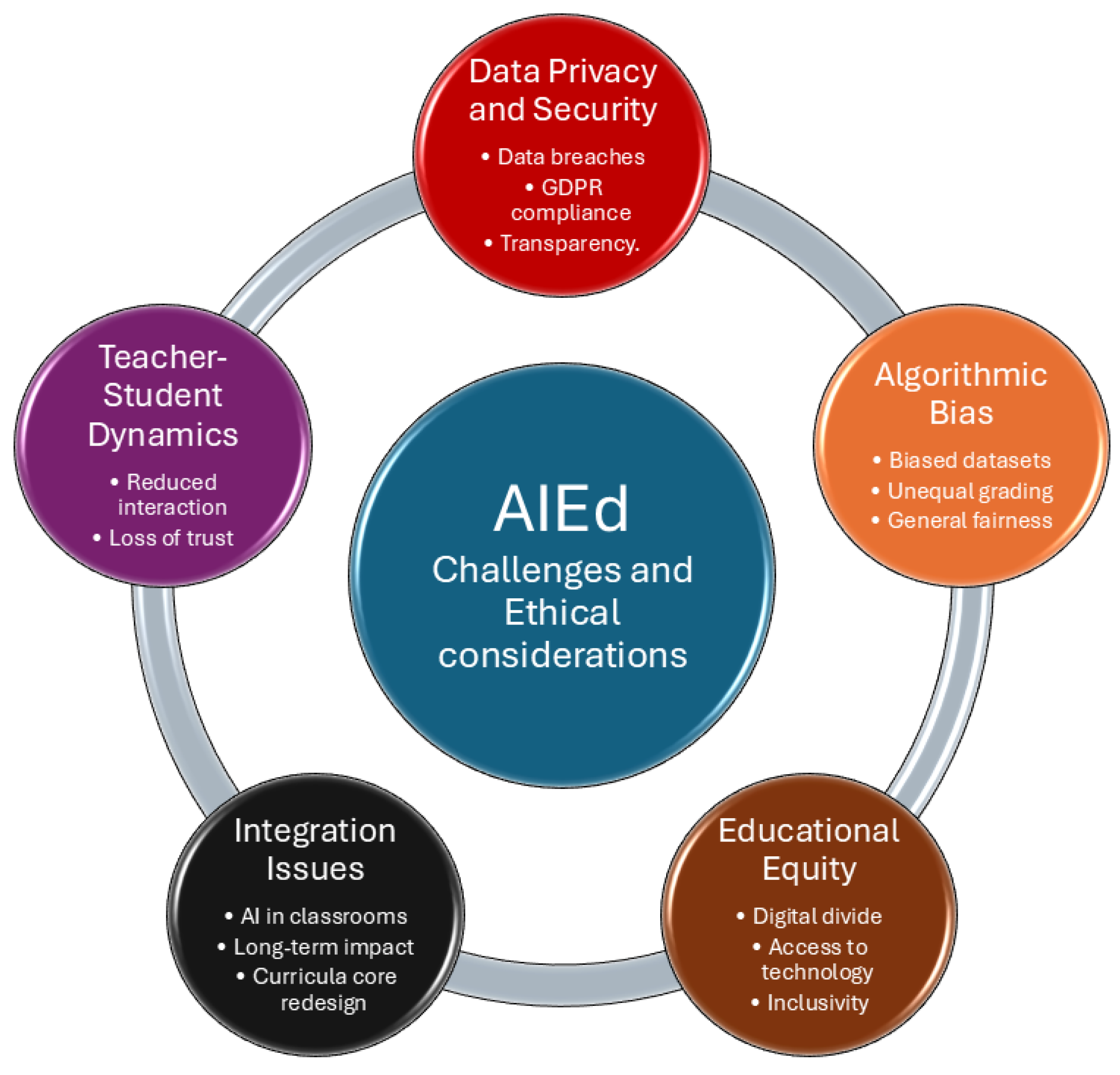
Although applications of AI in education (AIEd) are expanding, rapid incorporation of AI in this sector presents challenges that require careful analysis. The topics of data security, AI bias, and educational equity form the cornerstone of professional debates regarding the prudent use of AI in educational contexts [17]. The algorithmic choices of AI applications could aggravate inequity, as the data used represent existing biases. In addition, the role of AI in educational contexts, albeit augmentative in substituting teachers, remains a point of discourse and debate [18,19]. AI supporters believe that it can help teachers by reducing the burden of repeating the same tasks. On the contrary, opponents argue that it can result in the replacement of teachers and worsen the situation of trust in the educational setup [18].
Across the world today, governments and policymakers are coming to realise the significance of AI and telecommunications in the modernisation of educational practices. Some governments are at the forefront of AI adoption in their educational sectors to optimise learning results and address discrepancies in educational access [20].
However, there are increasing debates about the impact of AI on academic integrity. AI applications, especially for creatively written texts, threaten the classic understanding of the concept of authorship. As mentioned in [21], they also render plagiarism detection and the adaptation of educational integrity standards challenging. In this context, alongside the above concepts, the United Nations Educational, Scientific, and Cultural Organisation (UNESCO) has emphasised the importance of rules and behavioural norms regarding the applications of AIEd, especially generative AI, to promote educational settings, where AI will enrich rather than substitute the role of human-centred learning [20,22].
This union of AI and telecommunication constitutes the beginning of a new paradigm known as AI-Enabled Telecommunication-Based Education (AITE). The union of the two constitutes the smart campus and digital twin ecosystem through learning, governance of data, and connectivity. The inter-relationship of the two therefore constitutes the axis of this review.

1.1. Objectives of This Review

This literature review seeks to achieve the following objectives:
  • Map the growth of AIEd and the facilitating telecommunication technologies of 5G/6G, IoT, MEC, edge cloud computing, and smart campus network architecture from 2022 to 2025, as well as the role of network-level attributes of latency, bandwidth, and device density.
  • Report on the impact of AI on educational practices, engagement, teaching workloads, and efficiency.
  • Critically appraise risks and governance-data privacy, algorithmic bias, equity, and integration constraints.
  • Derive evidence-based recommendations for future research and policy to enable transparent, fair, and inclusive AIEd adoption.
Collectively, these objectives situate AIEd within a telecommunication-enabled ecosystem that integrates network engineering, AI ethics, and pedagogical innovation, a framing that guides the following research questions.

1.2. Research Questions

Following these objectives, this review aims to address the following research questions:
  • What are the most significant AIEd applications (published since 2022), what are their enabling telecom infrastructures (5G/6G, IoT, MEC), and how are these implemented across educational levels and contexts?
  • What are the measured effects of AIEd on teaching and learning outcomes—namely, student engagement and performance, teacher workload, and administrative efficiency?
  • What ethical, privacy, security, and bias challenges arise in AIEd deployments, and which governance controls are reported as effective?
  • What trends and research gaps does the contemporary literature report (methods, metrics, datasets, and reporting standards), and what designs are most needed to strengthen external validity (e.g., longitudinal, multi-site RCTs)?
  • What role can the community of practitioners play in developing effective AIEd strategies and adapting AI solutions to address challenges of access experienced in underserved regions?

1.3. Significance of This Study

The significance of this review can be found in the integrative method of research used to grasp the transformation of the education sector due to the incorporation of AI. Although numerous reviews and articles presently revolve around AIEd, many often target isolated applications only. By amalgamating the findings of various research works and establishing them in separate regions in order to comprehensively understand the impact of AI on the contemporary education sector, one can also obtain profound insights regarding the efficiency of AI applications in the educational sector.
This review also connects research work from the educational sector to the telecommunications engineering field and explains the crucial role played by the architecture of 5G/6G communication networks and edge computing in the efficient application of AI in the educational sector through the establishment of an IoT backbone.
This research also investigates the challenges of integrating AI in education. To guarantee the improvement in equity in the field of education through AI applications, there are various AI ethical considerations that must be examined.
Finally, this paper moves from theory to provide recommendations for the incorporation of AI in educational settings in an effective, equitable, and ethical fashion. Thus, it has direct applications to practitioners who utilise AI technologies along with the right networking environment in the classroom [23,24,25].

1.4. Structure of This Review

Section 1 provides an overview of the research background and objectives, followed by research questions and the significance of this review. Section 2 presents the methodologies used. Section 3 describes the role of telecommunication in AI-driven education. Section 4 examines the applications of AI-driven educational software. Section 4 also examines the role of AI-driven educational software in adaptive learning systems (ALS), ITS, AI-driven administration software, and AI-driven software used to support inclusivity efforts through student achievement and/or teacher engagement. Section 5 examines the effect of AI on educational outcomes through the impact of AI on student engagement and teacher workload. Section 6 deals with challenges and considerations of AIEd regarding data privacy, bias in algorithms, equity, and integration, and Section 7 explains the factors/systems that can improve the educational environment even further. Section 8 presents recommendations concerning the work that should be carried out in the future. Finally, Section 9 provides a discussion of the findings derived from this work, while Section 10 delivers a summary and closing remarks.

2. Methodology

This research work utilises a mixed-methods approach that combines bibliometric, content, and infrastructural mapping. The bibliometric part identifies research work regarding AIEd and the enabling role of telecommunications (5G/6G technologies, IoT, and MEC). This research also combines findings from both the empirical and theoretical aspects of the concerned topics through the content part of each study.

2.1. Literature Search Procedure

The data used in the bibliometric study were collected systematically to ensure their accuracy and comprehensiveness. In this regard, several databases were used to obtain the required literature. The aim was to capture scholarly articles published between 2022 and 2025 that addressed AIEd and telecommunications (Web of Science, Scopus, and Google Scholar).
Duplicate records were removed, and inclusion criteria were applied, focusing on higher-impact works (SCImago Rank (SJR) Q1–Q3) and English-language studies to ensure quality and relevance. Preferred Reporting Items for Systematic Reviews and Meta-Analyses (PRISMA) guidelines were employed to safeguard the transparency of the methods employed. A PRISMA diagram (Figure 1) reports the numerical flow of records through each stage of identification, screening, eligibility, and inclusion and illustrates the step-by-step process undertaken to identify, screen, and include relevant studies for this review [26].
In WOS, the search query was structured as in Table 1. Initially, n = 73 documents were retrieved, and after applying the quality and relevance criteria, n = 20 articles remained.
In Scopus, the search string was designed as shown in Table 2, and the initial identification process yielded n = 163 documents. After the initial screening, duplicate removal, and exclusion process, n = 24 articles remained. The general identification search in Google Scholar according to the keywords and analogous to the previous restrictions, in its interface, returned n = 287 registers, with n = 111 remaining after screening. A total of n = 4 were excluded during the screening process. After cross-database de-duplication in Zotero (n = 69), the unique records were screened (n = 454). Of these, n = 20 (WOS), n = 24 (Scopus), and n = 111 (Google Scholar) non-overlapping items met the inclusion criteria, yielding a final count of n = 155 studies dating from 2022 to 2025.

2.2. Study Quality Assessment

This research presents heterogeneous methods and venues. For this reason, quality was appraised through a combination of factors. Firstly, only peer-reviewed works indexed in the selected databases and published in journals classified as Q1–Q3 in the SCImago Journal Rank (SJR), where applicable, were retained, in line with the focus on higher-impact venues outlined in Section 2.1. Secondly, during full-text screening, we noted for each included study the publication outlet, year, educational level, primary method (e.g., system implementation with evaluation, quasi-experimental comparison, survey, case study, systematic review), and the presence of clearly reported learning or engagement outcomes and/or telecommunications performance indicators (e.g., latency, bandwidth, device density, edge placement).
Studies with limited methodological detail, very small or convenience samples, or sparse outcome reporting were not excluded solely on this basis, but were treated cautiously and used primarily as illustrative examples in the narrative synthesis. In contrast, studies with transparent designs, explicit evaluation protocols, and richer outcomes or network reporting were foregrounded in the analyses developed. Citation counts were not employed as a formal exclusion or weighting criterion given the recency of much of the AIEd–telecommunications literature, but were considered descriptively when indicating more established lines of work.

2.3. Integration of Telecommunications and Educational Evidence

Given the dual focus on telecommunications infrastructures and AI-enabled educational applications, the included studies were organised along two axes: (i) their primary disciplinary lens (telecommunications and networking, AIEd and learning sciences, or ethics/equity and governance) and (ii) their functional role within the proposed AITE stack (infrastructure layer—5G/6G, IoT, and MEC; application layer—adaptive learning systems, intelligent tutoring systems, AI-driven assessment, and administration; and outcome/governance layer—student engagement, teacher workload, ethics, and equity).
Telecom-oriented papers that also reported educational use cases or learning outcomes were treated as “bridging” studies and anchor much of the infrastructural synthesis in Section 3. Education-oriented papers with limited network-level detail were used to deepen the analysis of pedagogical and organisational outcomes in Section 4 and Section 5, while ethics- and equity-focused works structure Section 6 and the research roadmap in Section 8.
No formal statistical weighting or meta-analysis was undertaken because of the diversity of designs, metrics, and contexts represented in the final sample. Instead, a narrative synthesis was employed to relate infrastructural characteristics (e.g., 5G/eMEC versus IoT-centric deployments), application types (ALS, ITS, assessment tools, administrative systems, inclusive technologies), and reported outcomes. This cross-domain mapping underpins the thematic integrations and tensions highlighted in Section 3.2, Section 3.5, Section 4.6, Section 5.2 and Section 5.3, where differences in network architecture, evaluation design, and governance conditions are made explicit.

3. Telecommunications Infrastructure for AI-Driven Education

In this section, real-world implementations of 5G/6G technology, IoT, Multi-Access Edge Computing (MEC), and their roles in developing AI-enabled educational systems, such as ITS or adaptive analytics and XR solutions, will be highlighted. Architectural perspectives and latency/Quality of Service (QoS) results will be presented from the telecommunications and education domains. The future smart campus serves as the integration platform where AI analytics, IoT sensing, and digital twin technology come together to make smart living, mobility, and sustainability a reality. As stated by Menatalla et al. in [5], AI-IoT-DT systems improve efficiency and responsiveness but are challenged by complexity in integration, governance in terms of privacy/security, and high capital expenditure.

3.1. Fifth-Generation (5G) Networks Enabling Immersive, Interactive Learning

Fifth-generation (5G) networks—Enhanced Mobile Broadband (eMBB) and Ultra-Reliable Low-Latency Communications (URLLC)—provide the throughput and latency budgets required for real-time AI feedback, multi-user XR, and high-density device access on smart campuses. Networks using 5G can sustain multi-hundreds of Mb/s with single-digit to low tens of milliseconds E2E latency in campus settings—parameters that are infeasible with legacy 4G/Wi-Fi for synchronised 4K/8K streams and interactive XR [3]. In educational use, these budgets unlock the following:
  • XR/VR teaching modules with real-time instructor intervention and multi-party collaboration. A dedicated 5G private network powering a metaverse training platform supported CNC, acetylene welding, and forklift operation in VR, improving safety (no physical risk), operational efficiency, and student engagement while maintaining synchronous control/video feedback [13].
  • Interactive classrooms (holographic telepresence, speech recognition, live translation) where 5G bandwidth and low jitter maintain continuity of AI-mediated activities [13]. Syntheses of XR in education report improved engagement, knowledge/skill gains, and inclusivity when networks sustained low-latency media plus AI guidance [14,27,28]. Recent metaverse research shows that XR and Internet-of-Everything pipelines can sustain feedback-driven, experiential modules that bridge theory and hands-on practice while preserving real-time instructor intervention; the same work highlights deployment constraints—data privacy, inclusivity, and scalability—and calls for compact XR clients for low-power devices and improved graphical/UI fidelity to broaden access [29].
Beyond bandwidth, 5G’s device concurrency and mobility support seamless learning across indoor/outdoor spaces and dense device scenarios (classrooms, labs, libraries). In emerging-economy campuses, the binding constraint is often last-mile connectivity rather than devices: a November 2024 survey at UNNES (n = 220; Cronbach’s α = 0.821 ) found 97.73% of students owned 5G-capable smartphones and 95.45% functional laptops, yet only 57.27% had home Wi-Fi; off-campus access should therefore be engineered for intermittent links and quota-limited mobile data, while on-campus flows should ride private 5G/Wi-Fi slices [30].
In Sub-Saharan ODeL systems, complementary enablers include rural broadband investment, zero-rated educational content, educator capacity-building, and epistemic inclusion of local languages/knowledge to ensure 4IR deployments are context-fit rather than inequity-reinforcing [31].
XR-enhanced courses show higher student motivation and retention when QoS remains stable and reductions in latency-related motion discomfort when edge-assisted delivery is used over 5G [4]. These outcomes evidence that 5G is not merely a transport upgrade but an enabling substrate for AI-mediated, immersive pedagogy. At the same time, metaverse-style deployments intensify privacy and information-security risk—spanning AI/IoT integration vulnerabilities, surveillance-capitalism pressures, and low user privacy literacy—so XR pilots should be coupled to privacy-by-design controls and multi-stakeholder governance [32]. Overall, evidence converges on a causal chain where improved network determinism → stable XR feedback → heightened engagement and learning gains, confirming that telecom quality parameters directly translate into educational performance indicators [27].
Beyond school borders, but inside the context of education, high-stakes vocational training provides a concrete corroboration: an AI-assisted surgical coaching program for laparoscopic pancreatoduodenectomy exploits 5G links for remote, real-time step identification and structured debriefing, scaling expert feedback beyond local confines [33]. In particular, Human Digital Twin constructs and biometric telemetry in metaverse-class deployments expand re-identification and identity-binding attack surfaces, while device/stack heterogeneity imposes interoperability burdens that demand adaptive, context-aware controls and identity governance [34].
In low-resource contexts, pilot deployments combining a metaverse login layer (avatar/gesture-based authentication), 5G-backed LoRaWAN gateways, and mobile learning apps (e.g., Duolingo) report improved engagement and literacy indicators across sampled schools in India’s Kanchipuram district; although quasi-experimental and methodologically limited, this study illustrates a telecom-first pathway to inclusive XR access where broadband is intermittent [35].
Beyond connectivity, trust and capability frictions persist: “third-level” digital inequality, social-phobia effects, and neo-Luddite attitudes can dampen uptake in AI-powered metaverse contexts. Blockchain-mediated transparency can attenuate—but not eliminate—these deficits [36].

3.2. IoT Backbones for Sensor-Rich, AI-Adaptive Classrooms

IoT turns classrooms into data-rich environments by networking wearables, environmental/interaction sensors, smart boards, and lab kits. Systematic evidence in secondary education shows consistent gains in engagement, collaboration, inquiry, and autonomous learning when tangible interfaces, smart objects, and IoT applications are intertwined with lesson flow. These affordances furnish multimodal streams for AI/learning analytics to personalise instruction [37]. The following occurs in practice:
  • Remote/Hybrid labs. An IoT-powered electronics lab (ESP8266, sensors/actuators, smartphone control via Blynk) enabled six physical experiments to be completed entirely online; >70% of students preferred it over simulation-only labs, with only two non-completions in the cohort, demonstrating feasibility of authentic hands-on practice feeding AI dashboards even at a distance [38].
  • Heterogeneous IoT networking. At scale, low-power protocols (e.g., LoRaWAN, ZigBee, 6LoWPAN) interface with 5G/Wi-Fi backhaul through an edge gateway, enabling real-time MQTT/CoAP telemetry to local AI services while keeping constrained devices efficient [4]. This pattern supports dense, mixed fleets (wearables, lab instruments, cameras) without saturating core links.
  • AIoT pilots for “greening” SLEs. Across three case studies, AI&IoT dashboards and plant biosensors supported the following: (i) primary education activities via a smart plant dashboard; (ii) university classrooms where CO2, illumination, and temperature drove personalised environmental recommendations; and (iii) inference of human presence/activity from plant electrophysiology. These factors demonstrate the privacy-aware, analytics-guided optimisation of learning spaces [39].
  • Security implication. A recent survey of ML-based intrusion detection for IoT underscores that campus-scale IoT (wearables, labs, cameras) requires edge-resident NIDS trained under severe class imbalance; effective pipelines combine rebalancing (over-/under-sampling, synthetic generation), lightweight DL, and, increasingly, few-shot/self-supervised schemes to generalise across verticals (medical/industrial/edge IoT, ITS, smart home). This review argues for coupling IDS placement with MEC and zero-trust gateways so that telemetry never leaves the local fabric unvetted [40].
  • Physiological sensing and on-the-fly personalisation with secure data governance. Xie et al. introduced SHARP, which couples wearable WSNs (e.g., HRV, temperature, stress markers) with a DNN for state recognition and a reinforcement-learning policy to adapt instruction in real time; integrity and access are anchored by a Proof-of-Authority blockchain [41]. In simulation-driven evaluation, SHARP reports an F1-score of 0.942 ± 0.006 for affect/physiology classification, a 98.7 % packet-delivery ratio, and a 23.5 % reduction in WSN energy consumption versus baselines; the smart contract layer also detects all tampering attempts in their tests. Beyond sensing, the RL agent reduces intervention latency and—when enabled—yields large gains in short formative assessments relative to control conditions, demonstrating the coupling of sensing, analytics, and trusted logging for classroom adaptivity [41].
From an Industry-5.0 lens, converging robotics/IoT with intelligent tutoring and analytics is central to human–machine collaborative learning, provided privacy-by-design and equity constraints are observed [42]. From a systems perspective, smart universities operate as “downsized smart cities”: a layered IoT–big data stack—including applications, sensing, interconnection (often wireless), and servers—feeds predictive analytics for resource management and proactive maintenance, while surfacing privacy/security governance needs [43].
A differentiated pattern of outcomes was derived through the comparison of 5G-focused deployments with the IoT-centric classrooms, which were reviewed. Fifth-generation and private or sliced educational networks are predominantly associated with bandwidth- and latency-sensitive scenarios such as metaverse-style vocational training, multi-user XR laboratories, holographic telepresence, and remote coaching. In these scenarios, stable and high Mb/s throughput and low delays enable synchronous XR feedback, real-time instructor intervention, and high-stakes simulation without physical risk.
Highly IoT-centric designs support continuity and granularity in data, as well as remote electronics labs. AI-IoT ‘greening’ dashboard designs and physiological sensor frameworks such as SHARP have demonstrated high completion and preference rates, excellent packet delivery, and a marked energy conservation gain.
Secure IoT architectures highlight edge-hosted Network Intrusion Detection Systems (NIDSs) and zero-trust gateways as being critical in wearables, cameras, and lab equipment connecting to learning analytics. In terms of 5G/eMEC, immersion and temporal determinism are optimized in XR and ITS delivery pipelines, while IoT frameworks will prioritise contextual granularity and sustainability in their backbones. Well-established AITE roadmaps integrate them in a way where edge/MEC nodes balance tradeoffs in immersive bandwidth, sensing intensity, privacy, and cost.

3.3. MEC: Placing AI Inference and Orchestration at the Campus Edge

End-to-end responsiveness in AI-enhanced classrooms hinges on where inference runs. Recent work on lightweight classroom analytics shows the practicality of strictly on-device inference for routine evaluation. Ref. [44] proposes a TinyML-based edge scheme for English classroom quality assessment that quantises/prunes models to fit microcontroller-class devices, processes interaction signals locally to avoid cloud exposure, and still improves accuracy, latency (e.g., ∼120 ms vs. ∼350 ms), and resource use over cloud-first baselines across typical tasks (engagement and interaction cues), thereby aligning privacy-by-design with MEC orchestration.
At the infrastructure layer, Chen et al. implement a dedicated educational MEC (eMEC) that places a Universal Access Gateway (UGW) between the campus UPF and an IaaS-based educational MEC Platform (eMEP), adds I1–I3 interfaces for third-party DNs and inter-campus eMEC interconnection, and uses network slicing to isolate public vs. educational traffic. In campus field tests serving ∼20,000 users, the eMEC prototype achieves stable ∼40 ms access latency, while enabling direct edge deployment of educational applications and wide-area eMEC federation—illustrating how 3GPP UL-CL offloading can be operationalised for smart education [3].
MEC co-locates computation/storage with the radio edge (e.g., in a campus server room), eliminating WAN round-trips and keeping sensitive data on-premises:
  • Edge AI for rapid feedback. A 5G and edge-enabled teaching–evaluation platform reduced response time by 11.45% over a cloud-only baseline, enabling within-session feedback loops (e.g., engagement signals from multimodal classroom data) [45]. A cloud-edge evaluation for autism spectrum disorder proposes edge-deployed facial analysis (AlexNet, 224 × 224 input; 60:20:20 train/val/test on ∼3000 images) with SoftMax classification, reporting ≈92% accuracy (K-fold robustness checks). The authors argue edge placement balances latency, cost, and privacy constraints in educational settings, while supporting early, school-based screening workflows [46].
  • Privacy-aware analytics. In terms of campus patterns, edge nodes perform on-site vision/NLP analytics (engagement, at-risk detection) and stream only de-identified summaries to the cloud. The same edge tier also hosts AI-driven intrusion detection to protect sensitive IoT/biometric flows in real time. Ref. [4] reports that zero-trust architectures coupled with AI-driven IDPS can mitigate the enlarged 5G/IoT attack surface, though adoption remains bounded by budget, teacher training, and regulatory compliance constraints. Pushing pre-processing and inference to fog/edge nodes reduces exposure of personally identifiable data in transit and at rest, enables decentralised storage with lower latency, and supports privacy-preserving computation (e.g., on-node anonymisation, secure multi-party aggregation, and fine-grained cryptographic access control for LA dashboards). Ref. [47] also notes the need for standards and operational guidance to address technical and ethical tradeoffs when migrating LA from cloud-only to edge-first pipelines.
These implementations indicate that MEC transforms the network from a passive conduit into an active pedagogical and security actor. Effective deployments consistently converge on four architectural principles: (i) hosting latency-critical ITS and XR pipelines on-premises to sustain deterministic response times; (ii) employing 5G slicing to guarantee classroom-level QoS and isolate educational traffic; (iii) routing IoT data through a zero-trust Universal Gateway (UGW) to unify policy enforcement, monitoring, and telemetry; and (iv) retaining learner data locally by default while exporting only anonymised or aggregated features to the cloud [3,4]. Collectively, these design patterns recur across successful campus pilots and are consistent with broader ethical deployment frameworks that emphasise proportionality, transparency, and privacy-by-design [42].
Comparing edge-first and cloud-first deployments further clarifies how architectural choices shape educational outcomes. TinyML-based classroom analytics and dedicated educational MEC (eMEC) platforms show, through the literature, lower inference latency and more stable response times than cloud-only baselines, while maintaining or improving accuracy. For example, the 5G and edge-enabled teaching–evaluation platform in [45] reduced response time by 11.45% relative to a cloud-only design, enabling within-session feedback loops that would be difficult to sustain with higher round-trip delays, and the eMEC prototype serving approximately 20,000 users achieved stable access latency with campus resident data [3].
In contrast, cloud-centric architectures provide elastic computation but trade off determinism and data sovereignty, and resource limits are reached despite good privacy in device-level designs. Empirical evaluation shows that an MEC-coordinated, multi-tier strategy of on-device pre-processing, edge inference, and cloud coordination with selective anonymisation strikes a balance in terms of performance, privacy, and scalability in AITE.
The deployments illustrate, however, that reductions in latency and throughput improvements do not arise from broad plug-and-play performance tuning. What it takes to decompose latency into device, edge, and cloud components is a nuanced approach to instrumentation, standard event annotation, and the skill of team members to correlate problematic latency with particular educational activities and constraints. While AITE dashboarding systems assist with identifying bottlenecks end-to-end, analysis of problematic latency and indicated tradeoffs is a human function.
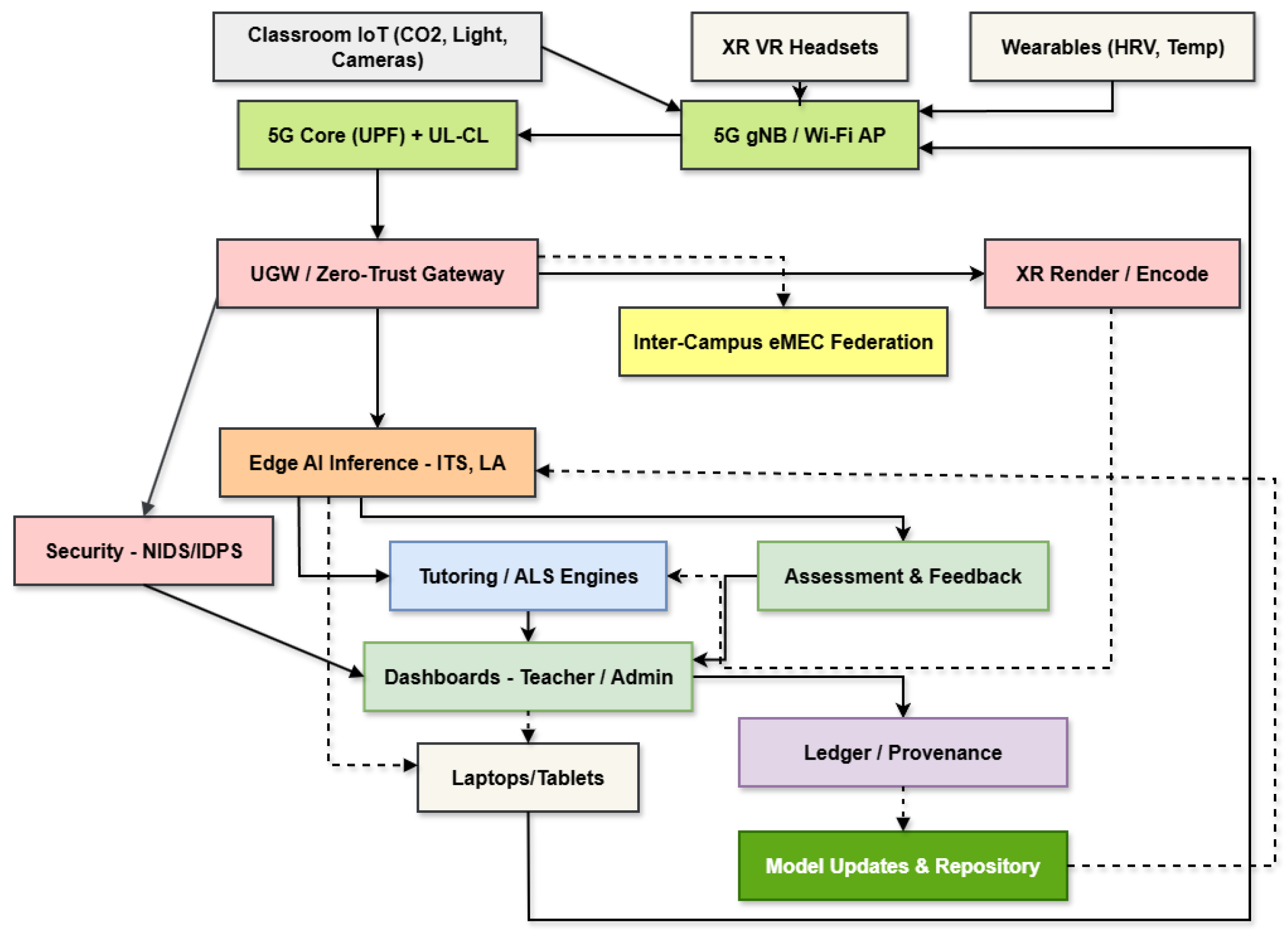
To consolidate the architecture outlined in Section 3.1, Section 3.2 and Section 3.3, Figure 2 provides a summary framework of the end-to-end path from devices and access to the eMEC, on-premises applications, and cloud coordination, clarifying data versus control flows and the rationale for edge-resident inference.

3.4. Towards Future Network Directions

The anticipation of 6G is that it will bring terabit-class links and near-zero latency and enable holographic telepresence, multi-sensory XR, and semantic/AI-native communications for education. While early experiments are nascent, the 5G lessons generalise the following: edge resident inference, strict privacy controls, and teacher-centered orchestration remains decisive for pedagogy at scale. Parallel priorities include green AI/networks (sleep modes, efficient codecs/scheduling) and decentralised credentials/identity for secure, portable recognition of learning [4]. In vocational and skills training, VR/AR studies already show significant improvements in theoretical mastery and practical proficiency when immersive modules augment practice—network evolution will primarily broaden fidelity, concurrency, and reach [14,28].

3.5. Case Snapshots and Outcomes

Synthesising the deployments and standards reviewed, institutional roadmaps for AITE integration prioritise the co-location of stateful, latency-sensitive AI workloads—ITS dialogue managers, XR rendering pipelines, and streaming analytics—at MEC nodes. This placement eliminates wide-area round trips, stabilises end-to-end delay, and preserves data sovereignty by retaining sensitive learner data on-premises. In parallel, dedicated 5G network slices with QoS-guaranteed slices are provisioned for XR and high-stakes assessment traffic to isolate flows and sustain performance under load.
Classrooms are instrumented with IoT endpoints (cameras, microphones, wearables, interactive boards) that publish multimodal signals to AI/learning analytics pipelines via the Universal Gateway (UGW). Security governance adopts zero-trust assumptions with role-based access control (RBAC) enforced across the UGW/eMEC boundary, complemented by AI-assisted intrusion detection for the expanded 5G/IoT attack surface. Finally, privacy-by-design and data minimisation principles are codified in institutional policy so that only necessary features or aggregates leave the edge. Taken together, these operational patterns recur across recent implementations and offer pragmatic guidance for campus integration [4,40,42,47].
By comparison, different telecom stacks emphasise distinct educational and operational outcomes. Deployments of 5G+eMEC and 5G+edge AI prioritise deterministic throughput and low latency for XR lectures and in-class analytics, reporting satisfactory field performance and measurable reductions in feedback delay. Private 5G-powered VR training environments focus on safety, operational efficiency, and sustained immersion in high-risk vocational domains, whereas IoT-based remote laboratories privilege authentic hardware interaction at a distance, with strong student preference and completion rates.
XR implementations over campus Wi-Fi/5G links aim at gains in engagement, comprehension, collaboration, and practical proficiency across diverse subjects, while the hybrid LoRaWAN/ZigBee/Wi-Fi6 language-learning stack demonstrates that aggressively optimised, low-power protocols can deliver acceptable ASR latency with 70–80% lower daily energy use and multi-day off-grid operation.
Collectively, these cases show that high-bandwidth 5G/eMEC designs maximise immersive fidelity and real-time analytics; IoT-centric and hybrid LPWAN designs maximise reach, authenticity, and energy efficiency under constraint; and both must be deliberately chosen and combined according to the dominant pedagogical and infrastructural objectives of a given AITE deployment.
Beyond latency and throughput, a “green AIEd” stack for remote language instruction achieved up to 70–80% lower daily energy use than tablet-based Wi-Fi systems. The hybrid LoRaWAN/ZigBee/Wi-Fi 6 design consumed approximately 1.8 W under active load and 0.5 W in idle mode (versus about 10 W for conventional platforms), with adaptive caching and mesh synchronisation reducing collisions by 40% and CPU load by 30%. Network protocol optimisation contributed an additional 25% reduction in transmission energy, maintaining low-latency ASR feedback (∼0.6 W during transfer). Battery life reached 18-19 hours per charge, while solar assistance enabled multi-day, off-grid operation, demonstrating efficient and resilient learning connectivity [48].
These reviewed deployments address RQ1 by specifying how 5G/6G, IoT, and MEC/eMEC infrastructures concretely underpin ALS, ITS, XR, and remote-laboratory implementations across institutional settings. In parallel, they inform RQ4 by showing that variability in educational outcomes is tightly coupled to latency, throughput, energy, and security tradeoffs. It is also noted that the latter must be made explicit in future, network-aware evaluation designs.

4. Applications

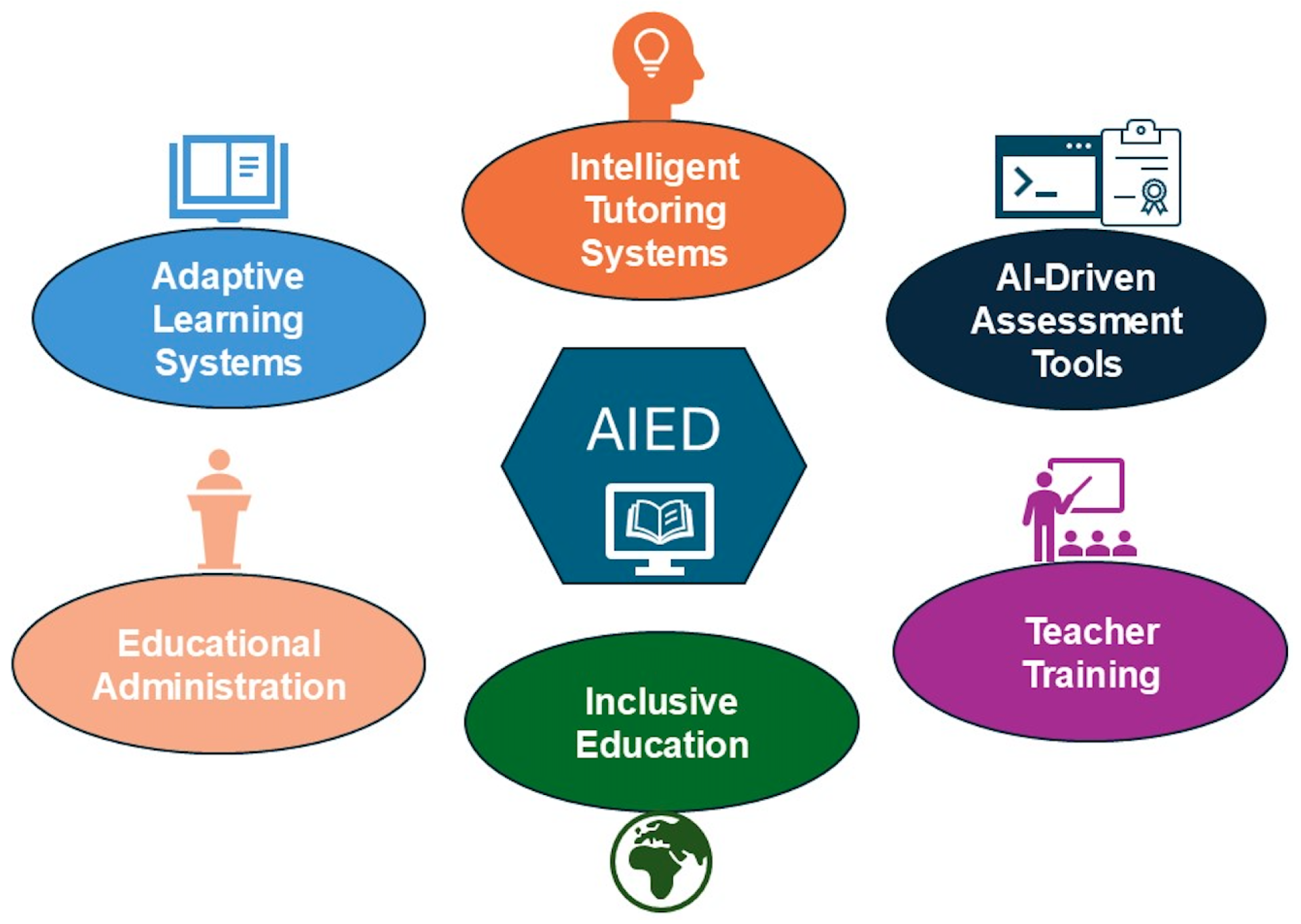
Building upon the telecom infrastructures outlined in Section 3, innovations, such as AI-driven assessment tools, ITS, and ALS, are now feasible at scale. Their deployment depends on low-latency 5G/6G links, IoT backbones, and MEC-based orchestration that sustain continuous data flow and real-time inference. These AI-powered technologies offer comprehensive solutions to meet the demands of modern education by improving personalised instruction, streamlining grading, and providing predictive insights on student performance (Figure 3). Concurrently, generative agents such as ChatGPT (mentioned illustratively rather than used as study software) are being operationalised for tutoring and formative feedback and are re-shaping instructional workflows, yet they also complicate assessment integrity and equity and create new demands for oversight and regulation [49].
In physical education specifically, a recent systematic review shows that AI/ICT (wearables, AR/VR) enable personalised, real-time feedback and inclusive participation and support more objective evaluation of motor performance, albeit with access, training, and data protection constraints [50].
For educational administration, a layered AI and 5G framework specifies foundations (continuous multimodal data acquisition, AI analytics for decision support, cross-domain integration, privacy-by-design) and targets predictive maintenance, dynamic scheduling, real-time resource allocation, asset tracking, and security/privacy (encryption, RBAC, AI-based threat detection) on heterogeneous campus IoT with edge/cloud orchestration [4].
In the context of experiential integration for entrepreneurship, a large mixed-methods workshop (n = 476 undergraduates, diverse disciplines) integrated IoT prototyping, AI-based anomaly detection, and cybersecurity hardening into project-based challenges. Matched pre/post tests showed a mean gain of + 25.5 percentage points (95% CI ± 4.2 , p < 0.001 ) across the three domains. Regression/mediation indicated prior knowledge and hands-on participation as significant predictors. Qualitative data emphasised the value of ideation–prototyping–pitch cycles and embedded ethics for responsible innovation [51].

4.1. Adaptive Learning Systems

ALS operate on AI-enabled infrastructures that can integrate 5G connectivity and IoT data channels, providing personalised materials based on learner profiles. They deliver adaptive content using learner models and analytics, without the full dialogic complexity of ITS, which focus on interactive tutoring and cognitive dialogue that emulates human teaching (ITS are not considered an umbrella term for the majority of the reviewed literature. ALS and ITS are distinct yet functionally overlapping subtypes of AIEd/AITE). ALS are more passive in adjusting content rather than in interacting with the student on a deep cognitive level [52]. This adjustment of the complexity and sequence of the instructional material can optimise learning outcomes for each individual [53,54].
ALS can also employ diverse learning styles and paces for students according to their needs, assisting educators [52]. Adaptive platforms, for example, can modify lesson plans on the fly, providing simpler explanations or introducing more complex material depending on the learner’s understanding at any given moment in synchronous or asynchronous learning [15].
An operational typology groups AIEd enablers into four strata—(i) cognitive services, (ii) VR/MR/AR, (iii) the inclusion of an ‘IoT/edge’ stratum that reflects how adaptive learning now extends beyond software logic into telecom topology sensors, gateways, and edge nodes, mediating the flow of learning analytics with minimal latency and enhanced privacy; and (iv) metacognitive scaffolding—each supporting personalisation while introducing transparency and privacy governance requirements [55].
ALS can also use predictive analytics to identify at-risk students. This can allow educators to intervene before students experience failures. By analysing data, such as test results, engagement metrics, and learning behaviours, ALS can forecast potential challenges and recommend tailored interventions. For example, ref. [56] developed personalised learning path models for Massive Open Online Courses (MOOCs) that dynamically adapt to the learner’s evolving knowledge state. This approach uses cognitive diagnoses and learning behaviours to develop customised learning paths. It provides solutions to problems found in traditional MOOCs, such as low completion rates and ineffective learning paths.
In [57], the authors presented an Adaptive Neuro-Learning System (ANLS), which integrates EEG-based neurofeedback learning support into online video lessons. In this approach, the mental state of the learner is tracked using various factors concerning attention and understanding. The ANLS was demonstrated to provide substantially improved learning performance when compared to existing online learning platforms. This technique reflects the engagement of face-to-face learning environments.
Customised interventional strategies can also be improved through the application of learning analytics within ALS [58]. For example, ref. [54] in the gamification field examined the role of teachers to customise gamification components in ALS, such as customisable mission levels, according to the needs of learners. This revealed that the customisation approach presented by the teachers could greatly promote the engagement of learners in ALS considering the flexibility needed in the pedagogical approach of Adaptive Learning Platforms (ALP).
In addition, learner-sourcing platforms, which fall under the ALS category, give learners access to the work of their peers and hence facilitate the concept of SRL [59,60,61]. This allows the learners to be involved in the development of their learning tasks.
ALS were found to be particularly effective in domains that require conceptual understanding at a deep level, such as math and science. ALS assist in lessening the cognitive load of learning complex concepts by splitting them down into smaller chunks that can be digested and grasped efficiently. The adaptive nature of ALS also allows teachers to offer aid to their students at the level of their ability [58,62]. Finally, through the application of grouping algorithms in ALS, ref. [63] demonstrated the effectiveness of differentiated instruction through intelligent grouping of students according to their abilities and levels of the curriculum using ALS to support group activities run by teachers.

4.2. ITS

While ALS, as discussed in Section 4.1 mainly focus on content adaptation, ITS continually assess the learner’s understanding and adjust their approach based on real-time progress, offering targeted interventions that address individual learning needs, acting more like an active tutor than a content delivery platform. In other words, ITS are actively instructional; they interact with the student, guide their thought processes, and provide specific feedback [64,65]. ITS have been implemented in a variety of educational contexts, from K-12 education to vocational training, enhancing the learning experience across diverse subjects like mathematics, programming, and language learning [66,67,68,69].
One of the core strengths of ITS lies in their ability to work on varying learner profiles. For instance, in [70], authors studied ITS interaction patterns among adults with low literacy skills, categorising learners into distinct clusters—higher performers, conscientious readers, under-engaged readers, and struggling readers. This study noted the ability of ITS to tailor instructional strategies to improve outcomes, particularly for struggling and under-engaged learners.
ITS are also advancing collaborative learning environments by incorporating human-centred AI (HCAI). In [71], the authors investigated the integration of HCAI within ITS to scaffold collaborative problem-solving tasks in small groups. Their research in block-based programming showed that combining human and AI-driven scaffolding supports collaboration, allowing teachers to offload certain domain-specific tasks to the AI, thus improving overall learning efficiency.
In specialised fields of programming, ITS are being used to learn basic and integrative skills. In [72], the researchers investigated code-tracing skill performance in the Python programming language by combining both component skills and integrative skills in the T3. This framework helped develop code-tracing skills efficiently in the learners to achieve better performance and learning efficiency. Likewise, ITS are improving to learn challenges presented by cold-start problems and the absence of data.
In [67], the researchers proposed a Sim-GAIL approach—a GAIL approach to the student modelling method of ITS. Their study used high-fidelity student trajectories to overcome cold-start problems and the absence of data in ITS learning. This approach performed better than the reinforcement learning method and imitation learning approach concerning action distribution and cumulative rewards. The approach improved the efficiency of learning in ITS through the provision of varied and correct data early in development.
Advances in ITS have been used in the field of Science, Technology, Engineering, and Math (STEM) learning. Ref. [73] improved tutoring through the DiscoverOChem system. This system allows undergraduate learners to better grasp organic chemistry through the analysis of performance and suggests materials that the learner must review. This allows them to learn and understand complex topics in the field of chemistry. In another study, ref. [74] created an ITS that determines internal visualisation skills of engineering learners. This system allows the collection of log data from the learner when performing tasks, and can predict the performance of the learner when doing formal assessments.
ITS have also proven to be especially promising regarding the automation of complex problem-solving tasks. In [75], the authors introduced a method of Math Word Problem (MWP) solution development using Large Language Models (LLMs). The latter transforms natural-language input data into code written in Python and can be perfectly integrated into ITS regarding the automation of problem-solving tasks.
ITS also display flexibility when tackling arithmetic problems. In [65], the researchers proved that the introduction of intra-task flexibility in ITS greatly improved the ability of the students to tackle arithmetic problems through the adoption of dynamic strategies. This form of flexibility fostered deep learning through the adaptation of learning strategies according to the type of problem.
As part of their research involving medical tertiary education in [76], the authors applied Epistemic Network Analysis (ENA) within an ITS to examine the learning and thinking patterns of medical students simultaneously. The results of this study showed that medical students demonstrated a higher level of engagement in self-reflection and medical reasoning when they were undergoing complex tasks through the ITS system because it encouraged SRL behaviours that helped them achieve improved accuracy of medical diagnoses.
In [77], the authors showed through their study that the learners who interacted with the target agents demonstrated greater engagement in cognitive and metacognitive strategies than learners in a conventional learning environment.
The usage of SeisTutor, as demonstrated in [9], can also personalise learning paths based on psychological states and pretest results, which improves student engagement and performance.
In addition to the above benefits, ITS are also found to be effective in increasing creativity and innovation. Existing models of research in other subject areas incorporating ML and DL algorithms, such as energy load forecasting [78,79,80], can be employed in AIEd to measure the creativity and accuracy of the ideas within the context of collaborative problem-solving environments.
In [81], the researchers showed the effectiveness of assessments done by ITS in promoting the learning of creativity through the provision of immediate student feedback directly from the system and increasing the value of the learning of creativity when compared to the assessments of instructors.
Additionally, the role of ITS in supporting cognitive as well as non-cognitive learning processes has been widely appreciated. In the paper [82], the effect of meta-affective behaviours, namely awareness and regulation of emotions, on learning outcomes of secondary-level mathematics tasks accomplished through the aid of ITS was explored. The results indicate that a higher meta-capability improves learning outcomes because the ITS assists the learner when confronted with emotions of frustration.
ITS make use of advanced AI algorithms that adapt educational content according to the student’s real-time performance in order to ensure the educational material presents challenges without overloading them. For example, the effectiveness of ZOSMAT was proven in helping diagnose student weaknesses and guiding them through mastering complex topics in math [64].

4.3. AI-Driven Assessment Tools—Academic Performance

AI-driven assessment tools have revolutionised the student learning ability assessment field through scalability, accuracy, and personalisation [83,84].
By exploiting the power of ML algorithms and NLP, these applications can automatically measure traditional tasks of evaluation, grading, and performance. One of the most dramatic uses of AI may be in Automated Essay Scoring (AES). This evaluates the linguistics of the work being submitted and enables immediate feedback. This has been shown to greatly lessen the work of the educator when it comes to grading [85,86]. AI educational assessments also allow educators to ascertain the weaknesses and strengths of the student [85,87].
In an HBA survey, [86] illustrates the evaluation pipes that realise this benefit: (i) early warning systems using RF/LR/SVM/DL based on performance and engagement signals for the risk of dropout; (ii) engagement monitoring in the classroom using SVM/DTree/KNN and CNN based on video and physiology signals; (iii) automated essay scoring using BERT/RNN and GAN variants (such as EASE and Topic-Aware BERT); and (iv) ASR-pronunciation tutoring based on GMM-HMM and CRDNN and wav2vec2 models. While these families improve timeliness and coverage of feedback, most studies remain small-scale or controlled, and the opacity of deep models constrains assessment validity and classroom adoption, placing interpretability and external validity as first-class design constraints.
To determine the examination methodologies used by first-year engineering students through the use of Markov Chain probabilistic graphs at the Czech Technical University of Prague, certain behavioural tendencies that separated successful students from struggling ones were recognised [88]. Such tendencies in behaviour provide answers for interventions needed for struggling students.
One crucial aspect of AI assessment in the context of innovations would be the utilisation of Information Retrieval Systems (IRS). This was achieved by the authors in [89] by incorporating the works of Bloom’s Taxonomy, along with the use of NLP. This approach enhances the accuracy of content retrieval and prevents cognitive overload for both the learner and the tutor by classifying Open Educational Resources (OER) according to the learner’s cognitive needs.
The use of IoT technology along with facial recognition technologies has further improved the processes involved in real-time evaluations. To illustrate, in the work given in [90], the use of IoT technologies along with deep learning algorithms for predicting the results of students improved accuracy to 85%, providing students with customised suggestions. At the same time, 96% of students reported being satisfied with the learning results achieved through these AI-based systems. Finally, for another instance related to the topic, [91] proposed an IoT-based system combining facial expression recognition and physiological measures for evaluating student attention in larger classrooms.
Additionally, sentiment analysis tools backed by the capabilities of DL algorithms are now crucial components in the assessment process by AI. According to the proposed NAGNet system explained in [92], the system relies on facial recognition for the analysis of students’ emotional expressions. With an 89.3% rate of precision in the recognition of students’ emotions, the system is expected to inform the teacher on the emotional engagement of students.
The usefulness of AI within the context of the Short-Answer Grading (SAG) system was also made clear in multilingual environments, where the model uses NLP for the automated process without causing any disparity in the grades. In [93], the developed model for the SAG system in German improved the efficiency of the grades without reducing their precision.
Moreover, the ability to process the complex outputs of students in areas like scientific reasoning tasks and the detection of causal relations was achieved in the developed AI. According to [94], the implementation of the BERT-SBERT model was used for the evaluation of causal arguments in students’ scientific answers. This automated formative process allows for the continuous evaluation and detection of improvement areas for both teacher and students [12,56].
Assessment tools utilising AI are also being developed for various educational setups. In the study presented in [95], the authors evaluated the ability of the ChatGPT model in carrying out graduate-level tasks in designing instruction. Even though the model performed satisfactorily in designing instructions, it lacked details related to specific context areas. This proves that human collaboration with AI is also needed in the field of education. This was also proven in the meta-analysis study presented in [85].
AI-based evaluation methods have also been used in the improvement in peer review processes. Peer review systems aided by AI technology provide guidance for assessors, use probabilistic models for improved grades, and build methods for providing evaluations that increase the reliability of the process [96].
A prototype was developed by the combination of the concepts of the aforementioned research for the assessment of students’ mastery of ideas in the field of AI in the topics of ML and supervised learning, having used the tool on 981 students in [97].
AI technologies also ensure formative assessment processes are done in real time. Feedback given by the system is instantaneous. This allows students to make amends for errors made during the process. ITS also play an important role in analysing student work. ITS ensure improved performance by students in their areas of study. This is because students require effective support in areas like STEM in order to grasp complicated concepts [94]. According to [52], supporting prompts based on the Zone of Proximal Development helped middle school students in China to perform mathematics tasks both more effectively and quicker compared to traditional teaching by experts.
Furthermore, the use of assessment technologies by AI enhances fairness in the assessment process. This is mainly because the computer marking algorithm eliminates biases in the marking process. Feedback from the automated marking system allows students to know their performance instantaneously. This improves their performance in academics by giving them immediate answers to their work [20,22].
Additionally, the use of AI improves academic performance through data analysis. This is because the technologies used in AI are able to analyse large volumes of data in learning institutions. These technologies in AI are able to identify certain patterns within the data they have been analysing [18,98].
Finally, the application of AI in collaborative learning environments helps in academic success by encouraging interaction among students. Platforms developed through the use of AI to facilitate collaboration in virtual learning environments boost engagement, as well as success in academics, because students are stimulated towards carrying out group tasks that boost their problem-solving capabilities [99]. For instance, in [91], the authors proposed a system incorporating facial expression recognition along with physiological measures for real-time analysis of students’ engagement.

4.4. AIEd Administration

AI technologies have significantly changed the administration of education by automating various tasks, reducing costs, and enabling data-driven decision-making [100,101]. Innovation already exists in other areas (e.g., in the area of healthcare during the COVID-19 period), relating to policies and decision-making. Social media, alongside sentiment analysis, now leverages the strength of these players in order to ‘optimise their outcomes’ [102,103]. Descriptive and predictive analytics can also play a role in the administration’s optimisation of infrastructure use [104]. By utilising these technologies, AIEd systems are now more efficient through automated processing of tasks, such as student enrollment, maintenance, scheduling, and data processing [88]. Examples in the field of administration already exist through the implementation of AI Campus Management Systems. Ref. [10] proposed the first AIEd Campus Management System through the implementation of grading alongside risk detection in a real-time fashion. Their Student Success Predictor supported grade prediction tasks with 93% accuracy through the utilisation of Convolutional Neural Network (CNN), Random Forest (RF) and Support Vector Machine (SVM).
TurnItIn and Knewton are just some of the technologies that have significantly impacted the administration aspect of education by enabling the automated process of marking and checking plagiarism. Additionally, in situations that involve administrative punishment, such technologies could also work towards streamlining the process. To that effect, by enabling the automated process of the aforementioned tasks, technology through AI allows teachers to devote more time to teaching [21].
Additionally, the capabilities of the AI system also reach beyond the scope of students. This system supports the processing of various large tasks like admission processing, course registration, and tracking of student attendance [24].
In both online learning and distance education, AI-based platforms offer resource optimisation and improved service delivery. Additionally, the ability of AI to process information on student performance in real time helps in planning for the future academic needs of students [84,105]. The application of sophisticated ML techniques in combination with NLP algorithms by the authors in [106] resulted in the application of an ITS through the use of hints, as well as explanations from Wikipedia. This was achieved in their large-scale dialogue-based system named Korbit, which supports 20,000 students. Due to the system’s adaptability according to the students’ needs, an improvement in students’ results by 22.95% was achieved.
Other administrative use cases include the “Internet+” Physical Education (PE) management system, noted as having achieved a 67.9% reduction in the handling time for teaching administration tasks in field implementation, along with certain exercise capabilities (lung capacity +10.3% on average in the class, 60.7% increase in out-of-class exercises) [107].
The use of AI technology also supports the analysis of big data in institutions of learning to understand the behaviour of the data in forming institutional policies [100]. Data projection allows institutions to make policies centred on students and the institution [101]. Additionally, the FieldTripOrganizer system uses AI to automate the process of forming an itinerary for institutional learning trips for students [101]. As AI technologies evolve, their role in educational administration will likely expand, providing more sophisticated tools to support data-driven decision-making and improve institutional operations.

4.5. Inclusive Education and Teachers’ Training Using AI/ITS

AI can enhance inclusive education by customising learning experiences to accommodate diverse student needs. These tools help teachers adjust their instructional methods critically. Addressing Fairness, Accountability, Transparency, and Ethics (FATE) in AI for education requires a user-centred approach that promotes educator ownership of AI systems, allowing for their effective adaptation to local contexts, as the authors in [108] state. In higher education, platforms like ALEKS have demonstrated the effectiveness of ITS by providing personalised learning experiences that address knowledge gaps, ultimately improving retention and mastery of key concepts [9,24].
To promote equity, a proposed closed-loop AI system for Deaf education combines voice and language technology, computer vision, and 3D avatars to facilitate communication between Deaf students and non-signing lecturers, solving accessibility and cultural sensitivity challenges in the Global South countries [109]. Under Erasmus+, the authors of [1] created an AI curriculum for European high schools, emphasising real-world applications like smartphone-embedded intelligence. This three-year programme boosted students’ AI expertise, notably through hands-on learning. Practical learning with AI simplifies and engages students in complex subjects.
Further research by [110] highlights the importance of teacher engagement in designing AI curricula for primary education. This study shows that teachers’ involvement in curriculum design—where they explain AI concepts, link them to prior student knowledge, and clarify misconceptions—improves both teacher confidence and student enthusiasm. Co-designing curricula with teachers ensures that AI education is more accessible and relevant, fostering greater teacher confidence and engagement with AI topics in the classroom. Comparative survey evidence in [111] (n = 192) indicates broadly similar AI literacy levels across the UK and Indonesia, with higher programming familiarity in the UK, limited ethics discourse overall, and persistent gender-bias perceptions that shape women’s participation and progression in AI/STEM; targeted, contextualised interventions are therefore warranted.
In [112], the authors used integrated discourse analysis during pair programming to study undergraduate students’ computational thinking (CT). Collaboration and practical problem-solving led to more complete CT processes in high-level groups than cognitive-focused ones. This underlines peer collaboration’s role in developing well-rounded CT skills and indicates that AI-supported pair programming can improve students’ cognitive and social computational thinking.

Teacher Training

AI in teacher training and professional development is receiving attention as its importance in education grows. AI-driven systems improve teacher expertise, instructional techniques, and real-time support. Students receive personalised learning, and teachers receive scalable professional development through these tools. For instance, in [66], the authors investigated the application of ITS in mathematics teaching for future teachers. The authors concluded that future teachers tend to think of the system mostly as an assistant in mathematics teaching rather than having it act in partnership.
One innovation uses AI-driven ITS in middle school mathematics teacher professional development. A randomised controlled study [113] found that AI-enhanced courses increased teachers’ content and pedagogical knowledge. Thus, these teachers may choose harder problems and teach more coherently. The findings show that interactive, scalable, and personalised learning experiences can improve teacher proficiency. ITS give teachers real-time feedback and adjust to their progress, making professional development more flexible and responsive.
In STEM education, the ML4STEM Professional Development programme offers a model for incorporating machine learning into K-12 teaching. According to [114], the programme supports teachers in learning how to integrate ML concepts, such as k-means clustering, into inquiry-based lessons. The programme uses a “Teachers-as-Learners” and “Teachers-as-Designers” approach, helping instructors to feel more confident in teaching complex, discovery-driven lessons using AI.
An earlier study [115] examined the factors influencing pre-service special education teachers’ AI technology adoption. The study examined how DiLi, teacher self-efficacy, and perceived usefulness and ease of use affected teachers’ AI adoption intentions using structural equation modelling (SEM). The results showed that DiLi was crucial to AI adoption since it affected perceived utility and simplicity of usage. Self-efficacy did not directly affect AI tool use, showing that practical experience is more important than confidence. Teacher training programmes should emphasise hands-on AI tool experience to build practical understanding and DiLi.
Solutions such as the Intelligent Digital Education Environment (IDEE), in which robots are integrated into the teaching of physics in secondary schools, also seem promising. According to [116], this system supports teachers in improving engagement and learning outcomes for students by providing real-time statistics on student performance on the Conjunctive Knowledge Tracing (CKT) model. This research indicates how AI solutions play an important part in supporting teaching.
However, the increasing gap between the development of technologies in AI and their implementation in learning methodologies calls for instant academic research work in the context of constructing the philosophy of technology in the implementation of AI [19].

4.6. Cross-Cutting Patterns and Tensions Across AIEd Applications

In Section 4, several patterns recur. Firstly, the overwhelming majority of ALS and ITS applications reported positive outcomes in terms of learning achievements, accuracy of diagnosis, and learning efficiency compared to business-as-usual teaching, and this improvement is especially evident in STEM and computer programming. Some methods—for example, adaptive prompting, video-based teaching supplemented with neurofeedback, error-sensitive learning models, and data-driven path planning for MOOCs—have shown better performance, completion rates, or accuracy compared to their non-adaptive counterparts [52,56,57,58,64,65,68,69,72,75].
Second, assessment and administrative applications of AI are known to provide benefits in efficiency and precision: automated marking of short-answer and essay questions, early warning systems, and college administration forecasting programs decrease the effort for marking and monitoring, and are very accurate in making predictions in pilots conducted in universities [10,81,85,86,88,89,107,117].
Thirdly, the literature focusing on inclusive education and teachers’ professional development emphasises that human collaboration and partnership in the use of AI is vital. Collaboratively developed AI-learning programs and professional development courses enriched with machine learning as well as human-oriented ITS applications can be effective in boosting teachers’ self-confidence, helping them develop inquiry-based teaching methods and achieve access for diverse students [19,66,98,100,101,108,109,110,112,113,114,115,116].
However, concurrently, there are evident tensions and contradictions in the literature. GenAI-based tools and LLMs are portrayed as effective work partners for drafting, understanding, and formative assessment and feedback tasks, yet at the same time, several authors discuss the problems of contextual understanding, domain-specific subtlety, and appropriate treatments of ethical considerations [21,85,87,95,118,119,120]. Task and policy considerations are required, otherwise leading to the promotion of shallow thinking and cheating in academia [21,87] and devaluing the role of authorship [21,95,118,119,120] in academic contexts and applications or environments.
In inclusive and ethics-driven interventions, pilot programs in AI literacy and in combination with ethics demonstrate promising changes in knowledge, awareness, and engagement, yet remain short-term in length and small in scope, with little evidence or data on behavioural change or normalisation [83]. Secondly, several reviews state that reported success at the level of application is sometimes based on too little systematic reporting of infrastructural and governance factors (connectivity, edge computing, data protection frameworks) to adequately compare and distinguish changes at the level of pedagogy from developments at the level of telecommunications [6,17,83].
Individually and cumulatively, these trends point toward the conclusion that the payoff of AIEd is very much real, but also highly contextual. It emerges when the use of AI is closely integrated into the teaching agenda and when such applications are nurtured and developed within the framework of powerful connectivity and data governance infrastructures.
The above patterns respond to RQ1 in pointing out the prominent applications of AI in ALS, ITS, assessment and administration of AI-based products, inclusive education tools, and teachers’ training as some of the leading areas of AIEd applications after 2022. They also shed light on RQ2 and RQ5 in understanding the implications of such tools in different contexts.

5. Impact of AI on Educational Outcomes

5.1. Student Engagement

Considering the utilisation of AIEd in the many telecommunication networks available in colleges today, it now represents the modern concept for the measurement of engagement. By utilising the low-latency connectivity capabilities of 5G networks along with the IoT capabilities of analytics software through the telecommunication network capabilities in the institution’s infrastructure, faculty members now have the ability to access in-depth engagement data. This was not the case previously, when engagement was typically assessed through self-report surveys [37].
Personalisation by an AI system is one of the most important aspects in being able to engage students effectively [121]. For instance, ref. [122] proposed the hierarchical logistic model in the context of ITS. This personalises the speed at which audio is played back in order to suit psychophysiological parameters. This improved the listening comfort of the students in the study.
To address the shortcomings of Learning Management Systems (LMS), Nouman et al. [123] developed an effective personalised learning system combining the concepts of e-mentoring and adaptive AI systems. This system works in accordance with the students’ learning types and capabilities by offering immediate feedback to increase student engagement. Such solutions play an important role in the current post-pandemic education environment, where online learning is on the rise.
ALP, fuelled by ML algorithms, allows for the dynamic modification of instructional material according to each individual’s interaction behaviour, thereby enabling students to work within their relevant skill level [82,123]. The use of ITS in supporting students who are also athletes was investigated by [124]. The perspectives of autonomy, competence, and relatedness were considered within the framework of SDT, and this study indicated that the usage of ITS resulted in improved engagement in academics without negatively affecting student athletic performance.
Another study [125] identified factors influencing Gen-AI adoption in higher education using a hybrid SEM-ANN technique. A total of 242 students and professors were assessed for perceived danger, ease of use, usefulness, TPACK, and trust in AI. While perceived utility did not affect Gen-AI adoption, perceived simplicity, TPACK, and trust did. The ANN model predicted Gen-AI adoption with 71% accuracy, showing that trust and simplicity of use are more significant than utility perceptions. In their study, [98] introduce an Expert Decision-Making (EDM) chatbot to support students in constructing knowledge during the learning process. Compared to conventional chatbots, the EDM chatbot significantly improved students’ achievement and enjoyment while reducing their anxiety in a geography course.
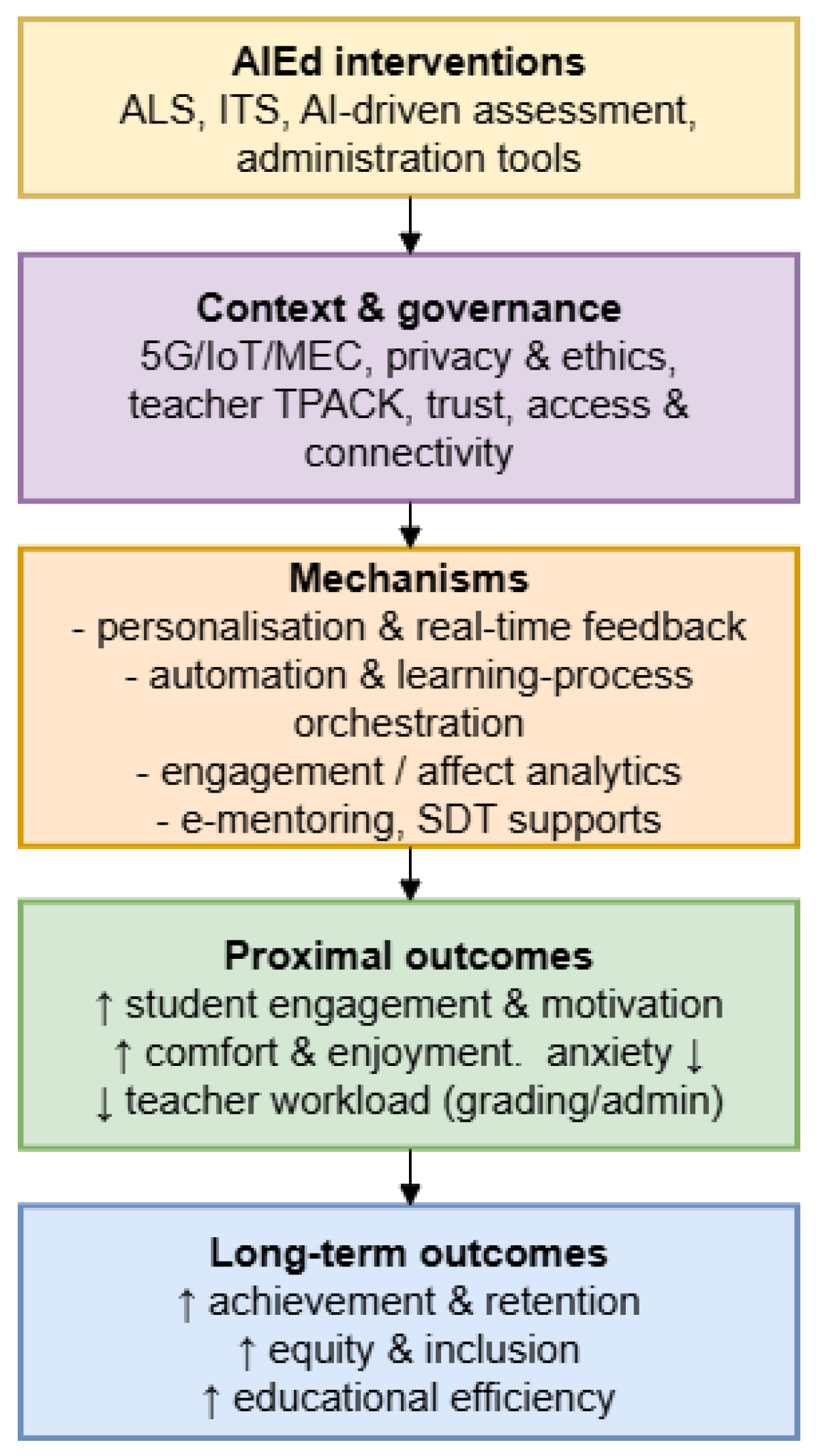
Figure 4 visualises the causal chain identified.

5.2. Teacher Workload

AI technologies, operating atop 5G/edge infrastructures, are reducing teachers’ workload by automating latency-sensitive and data-intensive tasks such as grading, attendance tracking, content synchronisation, and administrative duties, (see Section 4.4), allowing educators to focus more on instructional quality and personalised student engagement [81]. In Figure 2, assessment and administration clusters underwrite the workload relief.
One of the most significant benefits of AIEd is its ability to streamline grading processes. AI-based automated grading systems evaluate both objective and subjective assessments, providing rapid and consistent feedback. This not only reduces the time teachers spend grading but also ensures that feedback is delivered more efficiently, allowing educators to focus on instructional improvements and personalised student support [117].
In [117], it was demonstrated that ML models could decrease the time taken for the process of evaluating short-answer questions by 74%. Of course, the answers also needed to be carefully reviewed by the human teacher. However, the process was made much easier for the teacher by the ML model.
A qualitative study by [126] in Brazil on 410 teachers concluded that the automation of tasks like grades and class attendance is very much appreciated by the teaching staff. However, the requirement for resources that could provide students with individualised learning experiences, along with the demand for more time for lesson plan preparations, was highlighted. This clearly explains that the implementation of AI in addressing such demands could bring immense improvement in the teaching process by reducing workload.
Additionally, research indicates that AI software is extremely effective in bureaucratic tasks [101]. Models of sentence embeddings using deep learning, for instance, Universal Sentence Encoder Transformer (USE-T) and USE Deep Averaging Network (USE-DAN), could automate the assessment of creative ideas in collaborative problem-solving tasks in order to provide real-time feedback. By being in line with the evaluations made by experts in the field, such methods may improve the efficiency of creativity assessment for students because teachers do not have to spend much time on these assessments [81].
AI technologies also make tasks related to lesson planning and the delivery of lessons easier by supporting tutors. Smart technologies are also capable of designing lessons for teaching the subject to students. For instance, systems based on the use of large language models have been proven to analyse student work in order to produce formative assessment responses through the highlighting of learning gaps [118,127]. Robot tutors utilising AI aim to provide adaptive feedback that promotes critical thinking. This process further improves the quality of teaching by offering problem-solving tasks within the ZPD [128].
Other than the learning tasks performed by students in the LMS, the use of AI in the system supports the teaching staff in the administration work by allowing them to automate processes like student attendance recording and communication between teaching staff and students/parents through the system, among other tasks. However, some work by English Language Arts teachers indicates that the implementation of AI in the classrooms decreases the workload in the form of repetitive tasks in the classrooms, as well as the stress levels of the teaching staff [126]. This was achieved by the implementation of an AI-related co-design project that showed an increase in the teaching staff members’ confidence in the implementation of the AI technologies in their classrooms.
By synthesising the above, the outcome evidence portrays a broadly consistent, but not uniform, picture. On the learner side, AI-enabled personalisation, ITS feedback, chatbots, and XR-supported activities are associated with higher engagement, better short-term performance, and, in some cases, reduced anxiety, provided that interventions are well aligned with subject matter and supported by timely feedback [3,82,98,121,122,123,125]. On the teacher side, automated grading, predictive analytics, and AI-assisted planning are repeatedly reported to relieve routine workload and allow more targeted instructional time, while co-design efforts and PD programmes increase confidence in experimenting with AIEd tools [7,126,128].
However, several studies also indicate that these gains are accompanied by new demands: teachers must interpret AI outputs, redesign lessons, and attend to ethical and equity concerns, so that perceived workload does not always decline in a straightforward way [19,83,90,95,105,129]. Thematically, then, AITE implementations tend to amplify both capacity and complexity-enhancing data-informed engagement and support, but simultaneously require sustained investment in teacher expertise, institutional support, and governance to ensure that the promised efficiency and personalisation translate into durable improvements in practice.

5.3. Limitations of the Current Outcome Evidence

Notwithstanding the positive signals summarised above, the outcome evidence reviewed in Section 3, Section 4 and Section 5 remains methodologically constrained in ways that limit its capacity to inform long-term, system-level decisions. Most implementations that combine telecom infrastructures with ALS, ITS, XR, or AI-driven assessment are framed as pilots or controlled evaluations within single institutions or courses—for instance, campus 5G/eMEC deployments, IoT-based remote laboratories, “green” AIoT smart learning environments, and 5G–edge teaching quality analytics [3,28,38,45,48].
Likewise, many outcome trials of tutoring, affect, and GenAI-based learning assistance are single-cohort investigations of short durations (generally one semester or several weeks), and are narrowly focused on specified areas of knowledge ([51,57,69,82,98]). Thus, single case designs, mixed-methods workshops, and quasi-experimentation are rich in evidence, whereas randomised multi-site trials, such as the GPT-4-based GenAI tutor experiment included in this issue, are still limited. Interestingly, this preponderance of controlled small-scale investigations means that findings are of dubious generalisability to real-world school systems.
Another limitation regards the diversity and incomplete specification of performance metrics. Across the sets of interventions reviewed, it is seen that outcome measures are expressed in very different ways: test scores, rates of errors, effect size, affective or engagement indexes, self-reported satisfaction, intentions to use, accuracy of predictions, delay (latency), consumption of energy, or thematic analysis. In very few of them are standardised values like telecom key performance indicators (latency, jitter, or throughput and edge utilisation rates) measured together with those of learning and workloads, in spite of their core role in the proposed AITE framework.
Adjacent regulated domains have begun to address analogous problems through domain-specific reporting frameworks, such as SPIRIT-AI and CONSORT-AI extensions, which enforce minimum transparency around datasets, models, and risk controls; education currently lacks a comparable set of AIEd reporting standards [83,130]. Together, these deficiencies—short-term horizons, small-scale and context-specific designs, and heterogeneous metrics—explain why the current evidence base remains promising but fragmented and underscore the importance of the longitudinal, network-aware, and standardised evaluations called for in this review’s research roadmap.
The outcomes in Section 5 primarily address RQ2 by characterising how AIEd interventions influence student engagement, student performance, and teacher workload, while also feeding into RQ4 by exposing the short-term, small-scale, and methodologically heterogeneous nature of the current evidence base that constrains generalisability.

6. Challenges and Ethical Considerations

The advent of AIEd also brings various ethical considerations related to the issue of data privacy [17,109,131]. Data privacy is particularly an issue in the context of the usage of large data files in the wireless network in the context of education [10]. Any biases in the algorithm might affect the fairness of the outcomes of the algorithm in the context of education [115,132]. Furthermore, the usage of the concept of AI in the context of the field of education might also soon extend towards countering the issue of misleading news [133] by utilising the textual form of the information in the context of detecting the news.
ITS must employ significant learner data. However, this data aspect becomes challenged in terms of data governance if biased outcomes occur because the algorithm lacks inclusive and transparent implementation [17,119]. However, the research challenge is being surmounted by the need to develop transparent models for AI implementation. Additionally, [124,132] argue that the use of learner data must also follow ethical measures. Specifically, the application of positive psychology concepts such as engagement within the context of positive artificial intelligence in education (P-AIEd), proposed by [134], combines constructs.
Apart from the issue of privacy, another concern being raised is the fear of overdependence on the use of AIEd systems. Overdependence on the use of the AIEd system may affect the ability of students to think independently. Additionally, if the issue of access is not carefully evaluated in the use of the system, it may worsen the problem of inequalities in the field of education [17]. However, the proposed Ethical AI in Education platform (EAIEd) by [135] assesses all the highlighted shortcomings by incorporating the advancement in the field of AI together with teaching methodologies that facilitate critical thinking.
In [120], the authors used the Push–Pull–Mooring (PPM) theory to analyse the adoption of the use of AI resources such as ChatGPT in the learning process. However, the authors concluded that despite the resource having the ability to increase engagement and provide personalised learning for students, issues surrounding critical thinking and academic dishonesty also arise. Notably, the resource is gaining popularity in the wake of the increasing use of generative AI tools, such as ChatGPT.
To provide solutions for the aforementioned problems, the process of policymaking must therefore adapt to being inclusive [119]; for instance, ref. [119] noted the significance of copyright laws and privacy in the usage of the resource’s data, together with the aspect of academic dishonesty in the adoption of the resource. At a national level, an integrated analysis of 84 Canadian efforts in governing the use of AI [136] indicates focus on industry/innovation, technology production/use, and research in AI together with administration in the government.
The inclusive education authors in [137] discussed the concept of inclusive education by exploring the literacy curriculum of AI, for instance, “Creative AI” and “How to Train Your Robot,” which combine active learning and ethics in order for middle school students to understand how to critically interact with AI technologies.
Peer review systems based on AI are also an area of ethical consideration. Even though the use of AI in peer review systems could increase the reliability of the process, issues related to the transparency of the system still arise. In [96], systems based on AI were developed for improving the reliability of peer review by providing the review process with defined criteria while keeping human control to prevent the system from fully replacing human judgment.
Figure 5 describes the key challenges arising from ethics in the field of AIEd, whereas the subsections that follow expand on them.

6.1. Data Privacy and Security

The use of AI in the field of education introduces serious problems in terms of the protection of student data, particularly given the amount of personal information that is being accumulated for the purposes of personalisation [3,60]. Handling data related to student behaviour, emotions, and academic engagement is an intricate issue because misuse could be very severe. Adherence to strict data protection regulations, such as the General Data Protection Regulation (GDPR, or the equivalent in the USA, namely the Family Educational Rights and Privacy Act (FERPA), is necessary to maintain trust in an AI-assisted system in the field of education [56,66], for instance. Furthermore, in more practical applications like the use of clinical video, new adversarial forces come into play. For instance, the regulation of operational videos, patient confidentiality, and consent by the surgeon are all constraints that are now recognised by practitioners as being the key ones against the adoption of coaching through AI in the field [33].
Institutions must navigate the complex task of harnessing AI’s educational advantages while maintaining rigorous privacy safeguards [20,32,34] and may also consider leveraging the benefits of blockchain to enhance privacy and security. Telecom-layer telemetry introduces distinct privacy vectors: continuous device-to-edge data streaming and AI-assisted packet inspection demand zero-trust gateways and encryption-by-design at the UGW/eMEC layer [3,40]. In education-specific deployments, Hyperledger Fabric coupled with heuristic k-anonymity for student records demonstrates decentralised provenance and privacy-preserving analytics with limited throughput/latency penalty, while curbing re-identification via quasi-identifier generalisation [138].
Concretely, Liu et al. propose Phone-to-EDU, a consortium–blockchain framework (Hyperledger Fabric with RAFT ordering) that governs the end-to-end lifecycle of generative-AI-assisted (GAI-assisted) programming courses via on-chain rule models and layered world states, while offloading heavy artefacts to IPFS and binding access from students’ smartphones. The chaincode encodes course-stage transitions (e.g., enrol→submit→evaluate→appeal), enforces role-scoped policies for teachers/students, and separates public and private channels so that assessment content and model prompts remain confidential; the IPFS hashes are anchored on-chain for tamper-evident provenance. In their reference deployment, the RAFT-based network with multiple organisations and peers sustains low commitment latency while preserving auditable logs for academic integrity and resource access, illustrating how smart contracts can operationalise “privacy by design” and accountable use of GAI in coursework at scale [139].
ALS, while offering tailored educational experiences, introduce particular challenges, especially concerning the handling of vast amounts of learner data. Issues have emerged regarding how algorithms may unintentionally favour certain groups of students if biases within the data are not adequately addressed [135]. However, the community is still struggling to make such systems adaptable to different learning scenarios to ensure inclusiveness [52,76]. To address the aforementioned issue, [99] proposed the use of a Particle Swarm Optimisation (C-PSO) and Explainable AI (xAI) framework for the decision-making system in ALS. Additionally, the proposed framework ensures the system is free from biases by considering the risk elements that affect the performance of the students.
Additionally, the adoption of cloud-based AI platforms in institutions of learning heightens the susceptibility to cyber threats that call for the implementation of effective cybersecurity solutions [4]. Other than the risks posed by technology, the problem of biases in the adopted AI might persist if the data used are not carefully curated [18]. Transparency in AI processes and obtaining informed consent from users are pivotal in addressing concerns over how student data are collected, utilised, and, potentially, commercialised without proper consent [132,135]. Empirical readiness data indicate that the ethics gap is material: in the same UNNES cohort, only 20.45% “strongly agree” that they understand AI ethics and just 8.64% “strongly agree” that they apply ethics in practice—arguing for mandatory, assessed ethics modules, explicit consent flows, and default data-minimisation in AIEd platforms [30].
Adjacent regulated fields converge on the same risk profile. A 2025 clinical review synthesising AI across diagnosis, treatment, hospital operations, and education identified opaque models, privacy risks, and the absence of uniform regulatory standards as first-order blockers; it also highlighted field-specific reporting norms (SPIRIT-AI and CONSORT-AI extensions) that operationalise transparency for AI interventions in trials. Education lacks an analogue; adopting AIEd-specific reporting checklists for algorithmic provenance, datasets, explainability, and risk controls would close this gap [130]. Macro-level evidence from 84 national AI--governanceinitiatives indicates portfolios over-weight industry/innovation and technology-production while under-serving ethics/standards, AI education/training, and digital infrastructure; recommended remedies include explicit success measures with routine outcome disclosure, participatory public engagement, and a unified national approach—principles directly applicable to AIEd deployment and evaluation [136].
To safeguard against evolving digital threats, educational institutions must prioritise investments in both cybersecurity infrastructure and transparent data management practices. In parallel, the EU AI Act extends GPAI-oriented duties directly relevant to LLM-centric AIEd stacks—documented data governance and record-keeping, transparency, human oversight, accuracy, robustness, and cybersecurity. A recent mapping study found that accuracy and transparency dominate current LLM trustworthiness research, while cybersecurity and record-keeping remain markedly underexamined; moreover, telecommunications is scarcely represented. For educational deployments, this motivates instrumented logging and auditable model cards, adversarial red-teaming, and end-to-end security telemetry at the edge as first-class concerns [140].
As shown in [139], one concrete governance pattern for GAI-assisted coursework is a consortium ledger controller: Phone-to-EDU records prompts, code artefacts, grading rubrics, and instructor feedback as on-chain assets under Hyperledger Fabric chaincode, with role-based and attribute-based access policies enforcing provenance and non-repudiation across students, TAs, and instructors. The smartphone orchestrates capture of micro-interactions and submits signed transactions to the Fabric network, enabling auditable histories (“who ran what, when, with which prompt”) while decoupling private payloads from public metadata via channel/collection scoping.
Promoting trust through strong privacy policies and maintaining open communication about data usage will be essential to protect students in an AI-enhanced educational environment [6].

6.2. Algorithmic Bias

AI systems collect and process vast amounts of student data, including performance metrics, which raises concerns over the governance of this data and its potential for misuse [3]. One of the major risks is that the biases embedded within AI algorithms can disproportionately affect certain student demographics, necessitating continuous oversight and the development of transparent and equitable AI models [9,95].
Such biases emerge from the historical data used to train the AI systems, because the historical data used in the systems exhibit existing inequalities in the social system. Thus, the outcomes from the systems might also exhibit the same inequalities in terms of influencing marginalised groups of students. Fair system development is crucial in the process of designing AI systems to prevent inequalities. Developers of these systems should ensure the process of model development is inclusive. This includes the use of representative datasets in the system to ensure fairness, while bias detection software is also desired in such systems [141].
Bias might occur in various aspects of the educational system. Admissions, evaluations, and predictors might all contain biases that could impact minorities negatively [15]. To prevent such negative consequences, the model must account for inclusivity by not excluding minorities. Additionally, the process must focus on the development of adaptable models that work effectively in all scenarios [18].
Cross-sector evidence from the healthcare field indicates that the intersectional nature of the most serious ethics risks (autonomy and consent, data protection, algorithmic bias, and untangling accountability) correlates with the institutional infrastructure for ethics (inclusive organisational culture and values for leaders and staff on continuous AI literacy and transparent ethics in decision-making), while sparse digital infrastructure and patchwork regulation heighten the risks [142]. Fairness audits must therefore accompany infrastructure and literacy investments rather than having ethics treated as an afterthought.
Transparency is also vital in the aspect of addressing bias in algorithms. It is crucial for the outcomes of the AI system to be understandable [128,137]. This is vital in admission systems, where the use of biased algorithms might affect the fairness of the system. Ethical perspectives along with adjustments must therefore be used to ensure that the outcomes of the AI system are transparent and fair [59,114].

6.3. Educational Equity

AI could bring a paradigm shift in terms of equality in learning by providing customised learning experiences that suit every learner’s requirement, irrespective of their geographical location and socioeconomic class [17]. Based on the paradigm of Education for Sustainable Development (ESD), the implementation of the use of AI (and also the use of chatbot technology) is expected to bring constructivist outcomes in designing learning outcomes in terms of the cognitive hierarchy of Bloom’s Taxonomy. Ref. [143] suggests that the alignment of AI and ESD holds both promise and danger for institutions. ALS can provide targeted support for struggling students, which may help to close achievement gaps by ensuring that students receive the appropriate level of challenge and assistance [15]. However, the successful integration of AI into education, especially for students with disabilities, requires ethical considerations and the involvement of people with disabilities in developing these technologies, as highlighted by [25].
Teacher training and Digital Literacy (DiLi) are also crucial to the effective implementation of AI in classrooms. Complementarily, Industry 5.0 scholarship frames educator development as strategic reskilling: pipelines that blend technical depth (AI/edge computing, human–robot collaboration) with ethical governance and systems thinking so that automation augments rather than displaces human agency [144].
HEI evidence in Romania and Serbia indicates equity gains materialise when DiLi targets a full AI-era skill stack—ML, IoT/5G edge, cloud/big-data pipelines, blockchain, and VR/AR/gamification—together with cross-disciplinary and long-term mindsets aligned to EU DESI/PISA reforms [145].
In [111], cross-national evidence (n = 192) shows broadly comparable AI literacy across the UK and Indonesia, but significantly higher programming familiarity in the UK, sparse ethical AI discussion in both cohorts, and persistent gender biases; perceived inclusivity is higher in UK recruitment/promotion, whereas targeted initiatives for women are reported more often in Indonesia, underscoring the need for locally tailored, gender-responsive AIEd interventions. Convergent bibliometrics–SLR evidence in digital entrepreneurial education (261 studies) similarly shows four dominant clusters (technology-enhanced; experiential/project-based; competencies/mindset; future-oriented/ethical) and concludes that tools alone are insufficient without trained educators, cultural relevance, supportive policy, and stable infrastructure [146]
Without adequate support and professional development, AI risks not realising its full potential for promoting educational equity [115,129]. Moreover, disparities in access to the necessary technology, commonly known as the digital divide, disproportionately affect students from low-income families, potentially deepening existing inequalities. Illustratively, a cross-sectional survey of 1,443 Sudanese medical students found 65.8% awareness but only 41.9% prior use of ChatGPT; usage skewed by gender (male higher, p < 0.001 ), household income ( p < 0.001 ), and Internet quality ( p = 0.004 ), with Wi-Fi access associated with higher awareness—evidence that adoption hinges on connectivity, affordability, and targeted AI literacy [147].
Despite near-universal device ownership in the UNNES sample (97.73% 5G phones; 95.45% laptops), only 57.27% reported home Wi-Fi—therefore, equity interventions should prioritise subsidised fixed access and zero-rating for core LMS/ITS traffic, complemented by campus edge caching [30].
Algorithmic bias, as mentioned in Section 6.2, also poses a threat to educational equity, as AI systems may inadvertently offer recommendations based on data that do not fully represent marginalised student populations [18]. National 4IR integration studies from South Africa underscore the equity preconditions for AIEd at scale: persistent enablement gaps (insufficient electricity, low teledensity, constrained broadband), scarcity of 4IR technical skills, and curricula lagging the technology frontier. Recommended correctives include simultaneous investments in infrastructure, flexible and inclusive curricula, micro-credential pathways, project-based STEM, and structured university–industry partnerships that resource educator adoption and student employability [148].
In parallel, digital agriculture provides a salient exemplar: bridging DA’s “digital divides” requires higher education and extension to co-deliver upskilling and reskilling in AI/IoT/computer vision/robotics while embedding equitable technological change and ethical data stewardship (privacy, fairness). The proposed workforce design spans content (programming, data pipelines, edge ML), delivery (experiential labs; extension partnerships), and governance (transparent data management and inclusion) [149].
A value-sensitive institutional model from three Indonesian Madrasah Aliyah schools shows that LMS-centred flipped classrooms, ethical content filtering, and teacher training grounded in Islamic pedagogy can deliver digital transformation while preserving religious values via coordinated infrastructure and stakeholder collaboration [150].
To address these issues, AI models must be designed with inclusivity in mind, ensuring that they reflect the diverse experiences of all students [95,98].
The importance of equality in the use of AI-based educational technology was evident during the COVID-19 outbreak. This was highlighted in [15] as the ITS proved to be a cheaper means for personalised feedback compared to human tutoring. However, equality in access to technology was limited for students from low-income backgrounds.
Real-time learning analytics systems fueled by AI will also help teachers make informed decisions for personalised interventions in disadvantaged schools. Nevertheless, despite the technology made available by AI for improvements in equity in the education system, the attainment of equity in the sector calls for collective efforts by policymakers and institutions [52,135].

6.4. Integration Issues

Despite the integration of AI in the field of education, some research gaps must also be addressed to unlock its true potential. One of the pressing research gaps in the field is the absence of comprehensive research on the long-term effect that AI may have on the outcomes of learning. Currently, most of the research being done is short-term in nature [17].
Another research gap exists concerning the incorporation of AI technology within the traditional classroom setting. Although the positive impacts of utilising AI within the online setting are abundantly clear, very little is known about its smooth integration within a traditional classroom setting [2].
Despite the promise of reduced workload for teachers through the utilisation of AI technologies in terms of the automated processes for administration and marking, the process of implementation faces various levels of complexity. Teachers also require continuous professional improvement in order to harness the potential of these technologies to their fullest [66].
Additionally, the initial process of implementation might pose an increased workload on teachers in terms of adjusting to the new systems and technologies [124]. This poses the challenge of finding the right middle ground in addressing the issue of teacher autonomy or the erosion thereof through the utilisation of AI in teaching [73]. Moreover, the ethical aspects in terms of algorithmic bias and the issue of data privacy also require more exploration. Of course, the importance of addressing them is recognised. However, research to find remedies for such concerns is still needed. To establish the ethics for the use of AI in the field of education, more research work is needed [18].
Lastly, the impact of AI on teacher–student dynamics remains under-researched. While AI can automate administrative tasks and provide performance insights, its effect on the social and emotional aspects of teaching, such as trust and communication, needs exploration [135].
The above inform RQ3 by specifying the dominant privacy, security, bias, equity, and integration risks associated with telecom-enabled AIEd deployments, as well as the governance mechanisms proposed to mitigate them. RQ4 is also informed by noting unresolved questions about how regulatory frameworks, institutional readiness, and reporting standards should evolve to keep pace with large-scale adoption.

7. Key Factors for Transforming AITE

The future of AIEd is inseparable from the evolution of 5G to 6G telecommunications and the development of AI systems that are interpretable, inclusive, and context-aware. Collaborative efforts between technologists and educators will be key to driving innovation [151]. Concomitantly, 5IR-aligned “intelligent libraries” operate as AI-enabled knowledge infrastructures that widen equitable access, support personalised discovery, and scaffold global knowledge exchange—provided that data privacy, inclusion, IP stewardship, and sustainability are engineered as first-class constraints [152]. The convergence of AI analytics with edge/fog computing transforms libraries, classrooms, and administration into distributed intelligent nodes within a single telecommunication fabric [152].
Figure 6 showcases the key factors for transforming AITE, while the following subsections elaborate on them.

7.1. Emerging AI Technologies

New AI technologies—namely, NLP, virtual assistants, and Generative AI (GenAI)—depend on high-throughput 5G/6G channels and on-device inference to deliver instantaneous feedback and privacy-aware dialogue in educational settings [10,57,127,153]. Chatbots and virtual assistants are increasingly being integrated into online education environments, helping manage routine tasks, answering student queries, and offering personalised resources in real time [10].
NLP, a core component of ITS and automated assessment systems, allows for dynamic, real-time interactions between students and educational technologies, thus promoting more responsive and engaging learning environments [17]. NLP is particularly beneficial in ITS, enabling personalised feedback that adapts to the learner’s progress. This has been particularly impactful in STEM education, where complex problem-solving often requires timely, detailed feedback to guide student understanding [106]. The ability of NLP systems to identify causal structures in students’ scientific explanations has improved the precision of feedback on reasoning in real time [90,94]. Systems like BERT promise to further enhance the accuracy and adaptability of educational AI systems. However, ongoing research is necessary to refine these models’ ability to handle imbalanced data and ensure fairness [94].

7.2. Infrastructure as a Cross-Cutting Determinant

The telecommunications substrate—5G/6G, IoT, and MEC—conditions every key factor of AI-enabled education (see Section 3). Real-time personalisation, XR, and ITS depend on computation locality and tight end-to-end latency/jitter budgets. Architectural choice (edge, cloud, hybrid) and QoS guarantees determine the feasible feedback cadence. Equity hinges on coverage, device heterogeneity, and cost: light clients with edge offload, network slicing, and offline-capable pathways widen participation while preserving service quality under constraints. Assessment integrity requires secure identity, auditable data provenance, and tamper-evident telemetry. Deterministic QoS and MEC-level attestation support robust proctoring and analytics. Teacher augmentation draws on campus IoT as a data plane and digital-twin orchestration to close the sense–decide–act loop, provided data minimisation, on-device/edge processing, and federated analytics enforce privacy. Integration complexity, privacy/security risk, and CAPEX/OPEX remain structural constraints. Sustainable adoption calls for modular, standards-based stacks with carbon-aware placement, resilience, and graceful degradation. Lastly, Factor-level interventions must be co-designed with an enabling—and bounding—telecom architecture.

7.3. Immersive Learning with AR, VR, and Robotics

AR and VR, in combination with robotics, are creating immersive, hands-on learning environments that are particularly beneficial for education. These technologies help students visualise complex concepts through 3D models and interactive simulations, significantly enhancing understanding and bridging the gap between theory and practice [74,116,118,128]. AR and VR tools are especially useful in subjects like biology, chemistry, and engineering, where complex models are better understood when experienced in a virtual, manipulable form [17,118]. For example, virtual labs allow students to conduct experiments without the limitations of physical resources, making science education more accessible [116].
Robotics, if incorporated into class activities, present students with the opportunity to apply theoretical concepts to intricate problem-solving tasks in order to reinforce their learning through experimentation and exposure to technology in a team setting [128]. Such immersive modality technologies also produce massive volumes of multimodal data. Thus, the requirement for the telecom-optimised learning analytics pipeline with sub-second feedback loops stands reaffirmed.

7.4. AI-Driven Learning Analytics and Virtual Assistants

Learning analytics software powered by AI supplies teachers with immediate access to information on student performance in real time to take immediate measures (see Figure 2 for the ALS/ITS layer that represents engagement engines). Learning analytics software is being increasingly used for the tracking of student activities in order to discover their learning behaviour and make forecasts on their performance in their respective subject areas [15,18].
Finally, virtual assistants, also known as chatbots, are being gainfully used in the context of the administration of online courses in terms of attending to the daily administrative tasks of students in order to provide customised learning resources according to their individual profiles [10]. Additionally, their effect on the efficiency and efficacy of the teaching process is remarkable in the context of online courses through the means of automated grading and progress tracking, along with individualised feedback [135].

7.5. Adaptive Learning and ML

ML algorithms in ALS adjust teaching material (see Section 4.1) through feedback loops made possible by a ≤50 ms edge delay. Thus, adaptive system updates keep pace with near-real-time responses that provide individualised learning experiences for improved performance [94,98]. Data mining in the educational field through C-PSO algorithms was fruitful for improving learning processes by performing better than other algorithms like Genetic Algorithm and Ant Colony Optimisation [99].
By analysing vast datasets, C-PSO enables educational systems to predict student outcomes more accurately and recommend individualised learning strategies, thus further enhancing the effectiveness of AI-powered educational technologies [90].
By integrating infrastructural and application trends, this section refined the answers to RQ1 and RQ4. Future AITE capabilities will be conditioned less by individual tools than by cross-layer design choices around 5G/6G, edge/fog, and analytics orchestration, and these choices must be aligned with interpretable, context-aware, and sustainable pedagogical models.

8. Recommendations for Future Research

To maximise AI’s benefits in education, several critical areas of research must be prioritised.
  • Longitudinal studies will be critical in tracking AI’s impact on learning outcomes and will have to record network metrics such as latency, bandwidth variance, and edge usage to examine the impact of telecom performance on student performance.
  • To make AI more in line with excellent pedagogy and ethics, AI research work can focus on model logic and network function. xAI can work on prioritisation in MEC models, and recommendations can highlight AI supporting teachers in data-driven pedagogy with preserved autonomy, increasing trust in these solutions.
  • The impact of social media on education and healthcare requires continuous, accurate tracking to balance both biased and objective perspectives [102]. During emergencies, sentiment analysis in educational systems can assist teachers in understanding reactions to health messages among students and can aid in developing an engaged learning environment. Combining Quality-of-Experience (QoE) analysis with sentiment analysis can relate student emotions to network stability and delay variance.
  • In addition to AIEd, existing mature predictive application domains, such as energy, have methods with good transferability. A mixed-methodology mapping of sustainable AI in energy shows how application domains include sustainable buildings, AI-driven DSS for water in cities, climate AI, Agriculture 4.0, convergence of IoT, AI assessment of renewables, smart campuses, and education-oriented optimisation. Application domains in education include learning analytics at a scale suitable for campuses, optimised lab/resource allocation, and solid xAI baselines for safety-critical considerations [78,79,80,154].
  • AIEd in ITS operating on educational data for adaptive learning must abide by guidelines like GDPR, FERPA, or Personal Information Protection Law (PIPL) [101,155]. In addition, working to remove bias in AI systems, which can be problematic in forecasting academic performance or college admission, is important in AITE [18,135]. For AITE, research work must incorporate traceability and cyber resilience in accordance with guidelines from the AI Act in the EU.
  • Prescriptive maintenance with AI in education can potentially improve efficiency and resource utilisation, assisting in fast fault identification and time-efficient building maintenance. Such models can also examine how interlinked data networks improve learning personalisation and efficiency [104,156,157].
  • AI systems must be designed to promote educational equity. Otherwise, they can widen inequities if not developed to meet equal educational opportunities for all students irrespective of their social and economic status, geographic location, and performance in different subjects [18,25,137].
Figure 7 summarises the seven research priorities identified through this AIEd–telecom synthesis, each integrating pedagogical, infrastructural, and governance dimensions.
Consequently, RQ4 and RQ5 are informed in this section by organising the identified methodological gaps, infrastructural dependencies, and equity concerns into a concrete agenda for longitudinal, network-aware, ethically grounded, and practitioner-informed AITE studies.

9. Discussion

This review synthesised AIEd and contemporary telecommunication infrastructures, addressing five key research questions on applications, impacts, challenges, trends, and equitable integration. It also examined AIEd’s role in inclusion, highlighting benefits for learners from under-represented groups and illustrating how GenAI and IoT-based systems can provide innovative pathways for attention and performance monitoring while preserving data sovereignty through edge-first designs.
To make the correspondence between the research questions in Section 1.2 and the preceding analysis explicit, Table 3 maps each research question to the main bodies of evidence and the conclusions drawn from them.

9.1. Findings by Research Question

Based on Table 3, this section elaborates on the findings. For RQ1 (major AI applications, 2022–2025), evidence indicates that ALS, ITS, and AI-driven assessment tools are among the most significant AIEd applications. Their reliable operation on scale depends on telecom capabilities: low-jitter 5G/6G access, IoT telemetry, and edge/MEC (eMEC) placement for inference on-premises and privacy-preservation of analytics. Where these are present, deployments progress beyond pilot novelty toward routine, campus-wide service.
For RQ2, the evidence converges on improved student engagement, finer-grained personalisation, and non-trivial reductions in teacher workload through automation of grading, monitoring, and scheduling. These gains are greatest when real-time feedback loops are sustained by edge latency in the tens of milliseconds and stable throughput; the outcome pathways follow the mechanism of telecom QoS → timely analytics → engagement → achievement/efficiency. Real-time lesson feedback and streamlined administrative tasks (e.g., grading and scheduling) can reduce teacher workload and support targeted interventions via advanced learning analytics. When coupled to the end-to-end telecom-to-learning stack (Figure 2), these tools optimise resource allocation, improve student engagement, and enable data-informed decision-making for tutors and administrators.
In response to RQ3, the main risks concern data privacy, algorithmic bias, and network/security externalities introduced by dense IoT and continuous device-to-edge streaming. Effective controls are architectural and procedural: privacy-by-design (local processing, data minimisation, encrypted telemetry), zero-trust gateways at the campus edge, explainability that extends from model logic to MEC orchestration, and auditable provenance for assessment and administrative pipelines. Without these, AIEd could reproduce or amplify inequities.
Regarding RQ4, GenAI and immersive XR/robotics are reshaping classroom workflows, yet the literature remains methodologically thin on long-term, multi-site evaluations. As shown in Section 5.3, the evidence base is dominated by short-term, small-scale pilots that employ heterogeneous performance metrics, which further constrains external validity and weakens cross-study comparability [23,24,83]. A key deficit is the absence of co-recorded network metrics (latency, bandwidth variability, edge utilisation) alongside learning measures. This hinders attribution of effects to the underlying communications fabric. Reporting standards for datasets, model cards, and edge configurations are therefore an immediate research need.
Finally, for RQ5, equitable AIEd requires concurrent investment in connectivity (private/neutral-host 5G; resilient backhaul), campus eMEC for local inference and sovereignty, teacher professional development (AI, data, and ethics literacies), and governance that aligns institutional practice with transparent, accountable use of student data. Bridging the digital divide (access, affordability, devices) is a precondition.

9.2. Limitations

However, this review has certain limitations. First, the focus on the literature from 2022 to 2025 (with emphasis on higher-impact venues) may exclude earlier or lower-profile studies and thus overlook some prior findings or alternative perspectives. Second, restricting sources to English-language publications may limit generalisability to non-English or practitioner contexts.
Despite the aforementioned observations, this review presents a relevant compilation of current developments in the areas related to the field of education, as well as telecommunications. It also explains the key ethical issues related to equity in the implementation of AIEd, providing insights for educators, policymakers, and researchers.

9.3. Research Pathways

The application of AI using broad, multiple-source datasets is a concern with regard to using, collecting, and storing student information, and biases can negatively affect marginalised populations. Future research must focus on developing large-scale longitudinal research studies that include connectivity and edge performance measures into pedagogical outcomes. In addition, research is needed in developing AI system logic to execute MEC/eMEC orchestration and work with a focus on a privacy-by-design philosophy concerning security and auditability to incorporate AI in learning environments without diminishing trust.

9.4. Practical Implications for Institutions and Practitioners

From the perspective of practical applications, the AITE lens proposes some priority areas for each type of institution. System architects and IT departments at universities are encouraged to pursue edge computing and designs that preserve privacy, as advocated in the referenced architecture in Figure 2 and in Section 3 and Section 7, to colocate ALS/ITS or XR applications that are sensitive to latency at the campus eMEC, to use zero-trust gateway monitoring and ML analytics pipelines, or to incorporate network and application monitoring in dashboards for applications in education.
Institutional leaders’ and practitioners’ attention must be drawn to the outcome and equity evidence in Section 4, Section 5 and Section 6, which point towards the need for pedagogical and governance frameworks for AI tools that are aligned with data protection and anti-discrimination laws. Enhancing teaching literacies in AI, data, and ethics; engaging in co-designing of use cases of AIEd systems at the organisational level and in classrooms; and implementing connectivity interventions for underserved students are, thus, actions that institutionally emerge as direct implications of this review of the literature. Overall, the implications of this review contextualise AITE within organisational change leadership, going beyond telecom modernisation and encompassing pedagogy, equity, and accountability.

10. Conclusions

To convey the key takeaway message from this work, we distill its contribution by highlighting it through the following structure: this work aspired to (i) advance an integrative AITE lens that couples pedagogy with telecom engineering; (ii) consolidate a telecom-to-learning reference architecture (Figure 2) and a causal account of outcomes (Figure 4); and (iii) propose a seven-priority research roadmap (Figure 7) that centres rigorous network-aware evaluation, cross-layer explainability, and compliance-by-design.
In practice, the AITE lens helps explain how learning, assessment, and design relate to and leverage 5G/6G connectivity, IoT sensor telemetry, and edge/MEC orchestration. The reference architecture helps provide a common framework for aligning learning and analytics, and the causal explanation helps explain how QoS for telecommunication resources leads to analytics and learning outcomes. Together, these elements provide a common language for learning, analytics, and telecom that helps enable learning ecosystem architects to better design, evaluate, and scale learning environments to prioritise future evaluations and analytics that are reproducible, explainable, and compliant.

Author Contributions

Conceptualisation, C.K.; methodology, C.K., E.H. and P.K.; validation, C.K., S.G.S., E.H., M.M., P.K. and C.T.; formal analysis, C.K., S.G.S., M.M., P.K. and C.T.; investigation, C.K., E.H., M.M. and P.K.; resources, C.K. and S.G.S.; data curation, C.K. and P.K.; writing—original draft preparation, C.K. and P.K.; writing—review and editing, C.K., S.G.S., P.K. and C.T.; visualisation, C.K.; supervision, S.G.S.; project administration, S.G.S., P.K. and C.T.; funding acquisition, P.K. All authors have read and agreed to the published version of the manuscript.

Funding

This research received no external funding.

Institutional Review Board Statement

Not applicable.

Informed Consent Statement

Not applicable.

Data Availability Statement

No new data were created or analyzed in this study. Data sharing is not applicable to this article.

Conflicts of Interest

The authors declare no conflicts of interest.

Abbreviations

The following abbreviations are used in this manuscript:
3GPPThird-Generation Partnership Project
4IRFourth Industrial Revolution
5IRFifth Industrial Revolution
5GFifth-Generation Mobile Networks
6GSixth-Generation Mobile Networks
AESAutomated Essay Scoring
AIArtificial Intelligence
AIEdArtificial Intelligence in Education
AITEAI-Enabled Telecommunication-Based Education
AIoTArtificial Intelligence of Things
ALPAdaptive Learning Platforms
ALSAdaptive Learning Systems
ANLSAdaptive Neuro-Learning System
ARAugmented Reality
ASDAutism Spectrum Disorder
ASRAutomatic Speech Recognition
BERTBidirectional Encoder Representations from Transformers
CAPEX       Capital Expenditure
CKTConjunctive Knowledge Tracing
CNNConvolutional Neural Network
CoAPConstrained Application Protocol
C-PSOChaotic Particle Swarm Optimisation
CRDNNConvolutional Recurrent Deep Neural Network
CTComputational Thinking
DESIDigital Economy and Society Index
DiLiDigital Literacy
DLDeep Learning
DNNDeep Neural Network
DTDigital Twin
DTreeDecision Tree
E2EEnd-to-End
EAIEdEthical AI in Education
EDMExpert Decision-Making
eMBBEnhanced Mobile Broadband
eMECEducational Multi-Access Edge Computing
eMEPEducational MEC Platform
ENAEpistemic Network Analysis
FATEFairness, Accountability, Transparency, and Ethics
FERPAFamily Educational Rights and Privacy Act
GANGenerative Adversarial Network
GAILGenerative Adversarial Imitation Learning
GDPRGeneral Data Protection Regulation
GMMGaussian Mixture Model
HCAIHuman-Centred AI
HEIHigher Education Institution
HMMHidden Markov Model
IaaSInfrastructure as a Service
IDEEIntelligent Digital Education Environment
IDPSIntrusion Detection and Prevention System
IoTInternet of Things
IPFSInterPlanetary File System
IRSInformation Retrieval Systems
ITSIntelligent Tutoring Systems
KNNk-Nearest Neighbour
LALearning Analytics
LLMsLarge Language Models
LMSLearning Management Systems
LoRaWANLong Range Wide Area Network
LRLogistic Regression
MECMulti-Access Edge Computing
MOOCsMassive Open Online Courses
MQTTMessage Queuing Telemetry Transport
MRMixed Reality
MLMachine Learning
MWPsMath Word Problems
NIDSNetwork Intrusion Detection System
NLPNatural Language Processing
ODeLOpen Distance e-Learning
OEROpen Educational Resources
O-RANOpen Radio Access Network
P-AIEdPositive Artificial Intelligence in Education
PIPLPersonal Information Protection Law
PISAProgramme for International Student Assessment
PPMPush–Pull–Mooring
PRISMAPreferred Reporting Items for Systematic Reviews and Meta-Analyses
QoSQuality of Service
RBACRole-Based Access Control
RCTRandomized Controlled Trial
RFRandom Forest
RNNRecurrent Neural Network
SAGShort-Answer Grading
SBERTSentence-BERT
SDTSelf-Determination Theory
SLESmart Learning Environment(s)
SLRSystematic Literature Review
SRLSelf-Regulated Learning
STEMScience, Technology, Engineering, and Mathematics
SVMSupport Vector Machine
TinyMLTiny Machine Learning
TPACKTechnological Pedagogical and Content Knowledge
UGWUniversal Gateway
UL-CLUplink Classifier
UNESCOUnited Nations Educational, Scientific, and Cultural Organisation
UPFUser Plane Function
URLLCUltra-Reliable Low-Latency Communications
USE-DANUniversal Sentence Encoder—Deep Averaging Network
USE-TUniversal Sentence Encoder—Transformer
VRVirtual Reality
WAPWireless Access Point
Wi-Fi 6Wi-Fi 6 (IEEE 802.11ax)
WOSWeb of Science
WSNWireless Sensor Network
xAIExplainable AI
XRExtended Reality
ZPDZone of Proximal Development

References

  1. Bellas, F.; Guerreiro-Santalla, S.; Naya, M.; Duro, R.J. AI Curriculum for European High Schools: An Embedded Intelligence Approach. Int. J. Artif. Intell. Educ. 2023, 33, 399–426. [Google Scholar] [CrossRef]
  2. Zhang, H.; Lee, I.; Ali, S.; DiPaola, D.; Cheng, Y.; Breazeal, C. Integrating Ethics and Career Futures with Technical Learning to Promote AI Literacy for Middle School Students: An Exploratory Study. Int. J. Artif. Intell. Educ. 2023, 33, 290–324. [Google Scholar] [CrossRef]
  3. Chen, Q.; Wang, Z.; Su, Y.; Fu, L.; Wei, Y. Educational 5G Edge Computing: Framework and Experimental Study. Electronics 2022, 11, 2727. [Google Scholar] [CrossRef]
  4. Koukaras, C.; Koukaras, P.; Ioannidis, D.; Stavrinides, S.G. AI-Driven Telecommunications for Smart Classrooms: Transforming Education Through Personalized Learning and Secure Networks. Telecom 2025, 6, 21. [Google Scholar] [CrossRef]
  5. Haggag, M.; Oulefki, A.; Amira, A.; Kurugollu, F.; Mushtaha, E.S.; Soudan, B.; Hamad, K.; Foufou, S. Integrating advanced technologies for sustainable Smart Campus development: A comprehensive survey of recent studies. Adv. Eng. Inform. 2025, 66, 103412. [Google Scholar] [CrossRef]
  6. Ahmad, K.; Iqbal, W.; El-Hassan, A.; Qadir, J.; Benhaddou, D.; Ayyash, M.; Al-Fuqaha, A. Data-Driven Artificial Intelligence in Education: A Comprehensive Review. IEEE Trans. Learn. Technol. 2024, 17, 12–31. [Google Scholar] [CrossRef]
  7. Nemani, S. Evaluating the impact of artificial intelligence on reducing administrative burden and enhancing instructional efficiency in middle schools. Curr. Perspect. Educ. Res. 2025, 8, 1–16. [Google Scholar] [CrossRef]
  8. Sposato, M. Artificial intelligence in educational leadership: A comprehensive taxonomy and future directions. Int. J. Educ. Technol. High. Educ. 2025, 22, 20. [Google Scholar] [CrossRef]
  9. Singh, N.; Gunjan, V.K.; Mishra, A.K.; Mishra, R.K.; Nawaz, N. SeisTutor: A Custom-Tailored Intelligent Tutoring System and Sustainable Education. Sustainability 2022, 14, 4167. [Google Scholar] [CrossRef]
  10. Shoaib, M.; Sayed, N.; Singh, J.; Shafi, J.; Khan, S.; Ali, F. AI student success predictor: Enhancing personalized learning in campus management systems. Comput. Hum. Behav. 2024, 158, 108301. [Google Scholar] [CrossRef]
  11. iFlyTek. iFLYTEK Supports Sichuan Province’s High-Quality Education Through Artificial Intelligence. 2024. Available online: https://www.iflytek.com/en/news-events/news/41.html (accessed on 22 August 2025).
  12. Dhananjaya, G.; Goudar, R.; Kulkarni, A.A.; Rathod, V.N.; Hukkeri, G.S. A Digital Recommendation System for Personalized Learning to Enhance Online Education: A Review. IEEE Access 2024, 12, 34019–34041. [Google Scholar] [CrossRef]
  13. Huang, J.E.; Chang, L.W.; Chin, H.H. 5G Metaverse in Education. Mob. Netw. Appl. 2024, 29, 947–960. [Google Scholar] [CrossRef]
  14. Lampropoulos, G. Augmented Reality, Virtual Reality, and Intelligent Tutoring Systems in Education and Training: A Systematic Literature Review. Appl. Sci. 2025, 15, 3223. [Google Scholar] [CrossRef]
  15. del Olmo-Munoz, J.; Antonio Gonzalez-Calero, J.; Diago, P.D.; Arnau, D.; Arevalillo-Herraez, M. Intelligent tutoring systems for word problem solving in COVID-19 days: Could they have been (part of) the solution? ZDM-Math. Educ. 2023, 55, 35–48. [Google Scholar] [CrossRef] [PubMed]
  16. Pande, A.; Mishra, D.; Nachenahalli Bhuthegowda, B. NAO vs. Pepper: Speech Recognition Performance Assessment. In Human–Computer Interaction; Kurosu, M., Hashizume, A., Eds.; Springer: Cham, Switzerland, 2024; pp. 156–167. ISBN 978-3-031-60412-6. [Google Scholar]
  17. Nguyen, A.; Ngo, H.N.; Hong, Y.; Dang, B.; Nguyen, B.P.T. Ethical principles for artificial intelligence in education. Educ. Inf. Technol. 2023, 28, 4221–4241. [Google Scholar] [CrossRef]
  18. Ninaus, M.; Sailer, M. Closing the loop—The human role in artificial intelligence for education. Front. Psychol. 2022, 13, 956798. [Google Scholar] [CrossRef]
  19. Pham, S.T.H.; Sampson, P.M. The development of artificial intelligence in education: A review in context. J. Comput. Assist. Learn. 2022, 38, 1408–1421. [Google Scholar] [CrossRef]
  20. Giannini, S.; Tawil, S.; Miao, F.; Holmes, W. Guidance for Generative AI in Education and Research; United Nations Educational, Scientific and Cultural Organization (UNESCO): Paris, France, 2024. [Google Scholar] [CrossRef]
  21. Wise, B.; Emerson, L.; Van Luyn, A.; Dyson, B.; Bjork, C.; Thomas, S.E. A scholarly dialogue: Writing scholarship, authorship, academic integrity and the challenges of AI. High. Educ. Res. Dev. 2024, 43, 578–590. [Google Scholar] [CrossRef]
  22. Williamson, B. AI must be kept in check at school: The use of artificial intelligence in education needs to be subject to supervision and independent evaluations. UNESCO Cour. 2023, 2023, 6–9. Available online: https://unesdoc.unesco.org/ark:/48223/pf0000387030_eng (accessed on 30 August 2025). [CrossRef]
  23. Wang, S.; Wang, F.; Zhu, Z.; Wang, J.; Tran, T.; Du, Z. Artificial intelligence in education: A systematic literature review. Expert Syst. Appl. 2024, 252, 124167. [Google Scholar] [CrossRef]
  24. Lameras, P.; Arnab, S. Power to the Teachers: An Exploratory Review on Artificial Intelligence in Education. Information 2022, 13, 14. [Google Scholar] [CrossRef]
  25. Pierres, O.; Christen, M.; Schmitt-Koopmann, F.M.; Darvishy, A. Could the Use of AI in Higher Education Hinder Students With Disabilities? A Scoping Review. IEEE Access 2024, 12, 27810–27828. [Google Scholar] [CrossRef]
  26. Page, M.J.; McKenzie, J.E.; Bossuyt, P.M.; Boutron, I.; Hoffmann, T.C.; Mulrow, C.D.; Shamseer, L.; Tetzlaff, J.M.; Akl, E.A.; Brennan, S.E.; et al. The PRISMA 2020 statement: An updated guideline for reporting systematic reviews. BMJ 2021, 372, n71. [Google Scholar] [CrossRef]
  27. Crogman, H.T.; Cano, V.D.; Pacheco, E.; Sonawane, R.B.; Boroon, R. Virtual Reality, Augmented Reality, and Mixed Reality in Experiential Learning: Transforming Educational Paradigms. Educ. Sci. 2025, 15, 303. [Google Scholar] [CrossRef]
  28. Long, Y.; Zhang, X.; Zeng, X. Application and effect analysis of virtual reality technology in vocational education practical training. Educ. Inf. Technol. 2025, 30, 9755–9786. [Google Scholar] [CrossRef]
  29. Chamola, V.; Peelam, M.S.; Mittal, U.; Hassija, V.; Singh, A.; Pareek, R.; Mangal, P.; Sangwan, D.; de Albuquerque, V.H.C.; Mahmud, M.; et al. Metaverse for Education: Developments, Challenges, and Future Direction. Comput. Appl. Eng. Educ. 2025, 33, e70018. [Google Scholar] [CrossRef]
  30. Iskandar, R.; Nashiroh, P.K. Analysis of the Readiness of Students in Automotive Engineering Education at Universitas Negeri Semarang to Engage in Learning with Generative AI. Multidiscip. Sci. J. 2025, 7, e2025528. [Google Scholar] [CrossRef]
  31. Aboderin, O.S.; Pietersen, D.; Langeveldt, D. Exploring the Promotion of Skills Development in an ODeL Space Vis-À-Vis 4IR Technologies in Sub-Saharan Africa. Int. J. Learn. Teach. Educ. Res. 2025, 24, 584–600. [Google Scholar] [CrossRef]
  32. Laiz-Ibanez, H.; Mendaña-Cuervo, C.; Carus Candas, J.L. The metaverse: Privacy and information security risks. Int. J. Inf. Manag. Data Insights 2025, 5, 100373. [Google Scholar] [CrossRef]
  33. Cheng, K.; Wu, S.; Peng, B.; Wang, X. An Artificial Intelligence–Enhanced Coaching Mode. Int. J. Surg. 2025, 111, 6469–6472. [Google Scholar] [CrossRef] [PubMed]
  34. Ruiu, P.; Nitti, M.; Pilloni, V.; Cadoni, M.; Grosso, E.; Fadda, M. Metaverse & Human Digital Twin: Digital Identity, Biometrics, and Privacy in the Future Virtual Worlds. Multimodal Technol. Interact. 2024, 8, 48. [Google Scholar] [CrossRef]
  35. Vijitha, S.; Anandan, R. Metaverse Technology to Empower Students Literacy Rate Using Modern Educational Resources in Kanchipuram District. J. Inst. Eng. (India) Ser. B 2025, 0, 1–13. [Google Scholar] [CrossRef]
  36. Jin, S.A.A. In the Metaverse We (Mis)trust? Third-Level Digital (In)equality, Social Phobia, Neo-Luddism, and Blockchain/Cryptocurrency Transparency in the Artificial Intelligence-Powered Metaverse. Cyberpsychology Behav. Soc. Netw. 2024, 27, 64–75. [Google Scholar] [CrossRef]
  37. Tsipianitis, D.; Misirli, A.; Lavidas, K.; Komis, V. IoT Devices and Their Impact on Learning: A Systematic Review of Technological and Educational Affordances. IoT 2025, 6, 45. [Google Scholar] [CrossRef]
  38. de Almeida, F.V.; Hayashi, V.T.; Arakaki, R.; Midorikawa, E.; de Mello Canovas, S.; Cugnasca, P.S.; Corrêa, P.L.P. Teaching Digital Electronics during the COVID-19 Pandemic via a Remote Lab. Sensors 2022, 22, 6944. [Google Scholar] [CrossRef]
  39. Tabuenca, B.; Uche-Soria, M.; Greller, W.; Hernández-Leo, D.; Balcells-Falgueras, P.; Gloor, P.; Garbajosa, J. Greening smart learning environments with Artificial Intelligence of Things. Internet Things 2024, 25, 101051. [Google Scholar] [CrossRef]
  40. Manivannan, D. Recent endeavors in machine learning-powered intrusion detection systems for the Internet of Things. J. Netw. Comput. Appl. 2024, 229, 103925. [Google Scholar] [CrossRef]
  41. Xie, Z.; Li, Z.; Liu, X. SHARP: Blockchain-Powered WSNs for Real-Time Student Health Monitoring and Personalized Learning. Sensors 2025, 25, 4885. [Google Scholar] [CrossRef]
  42. Adel, A. The Convergence of Intelligent Tutoring, Robotics, and IoT in Smart Education for the Transition from Industry 4.0 to 5.0. Smart Cities 2024, 7, 325–369. [Google Scholar] [CrossRef]
  43. Abdul Jawwad, A.K.; Turab, N.; Al-Mahadin, G.; Abu Owida, H.; Al-Nabulsi, J. A perspective on smart universities as being downsized smart cities: A technological view of internet of thing and big data. Indones. J. Electr. Eng. Comput. Sci. 2024, 35, 1162–1170. [Google Scholar] [CrossRef]
  44. Jiang, S. TinyML Based Edge Intelligent English Classroom Quality Assessment Scheme. Internet Technol. Lett. 2025, 8, e70072. [Google Scholar] [CrossRef]
  45. Li, F.; Wang, C. Artificial intelligence and edge computing for teaching quality evaluation based on 5G-enabled wireless communication technology. J. Cloud Comput. Adv. Syst. Appl. 2023, 12, 45. [Google Scholar] [CrossRef]
  46. Pan, Y.; Foroughi, A. Evaluation of AI tools for healthcare networks at the cloud-edge interaction to diagnose autism in educational environments. J. Cloud Comput. 2024, 13, 39. [Google Scholar] [CrossRef]
  47. Amo-Filva, D.; Fonseca, D.; García-Peñalvo, F.J.; Forment, M.A.; Casany Guerrero, M.J.; Godoy, G. Exploring the landscape of learning analytics privacy in fog and edge computing: A systematic literature review. Comput. Hum. Behav. 2024, 158, 108303. [Google Scholar] [CrossRef]
  48. Rasulova, N.; Mavlonova, M.; Khudaykulov, A.; Bakaeva, F.; Allaberganov, O.; Saidov, K.; Sapaev, I.B.; Yoqubov, D. Designing Energy-Efficient Wireless Language Learning Platforms for Remote Education. J. Wirel. Mob. Netw. Ubiquitous Comput. Dependable Appl. 2025, 16, 276–292. [Google Scholar] [CrossRef]
  49. Madsen, D.O.; Toston, D.M. ChatGPT and Digital Transformation: A Narrative Review of Its Role in Health, Education, and the Economy. Digital 2025, 5, 24. [Google Scholar] [CrossRef]
  50. Tohanean, D.I.; Vulpe, A.M.; Mijaica, R.; Alexe, D.I. Embedding Digital Technologies (AI and ICT) into Physical Education: A Systematic Review of Innovations, Pedagogical Impact, and Challenges. Appl. Sci. 2025, 15, 9826. [Google Scholar] [CrossRef]
  51. Nweke, L.O.; Okebanama, U.F.; Mba, G.U. Enhancing entrepreneurial skills through experiential learning in IoT, AI, and cybersecurity. Discov. Educ. 2025, 4, 149. [Google Scholar] [CrossRef]
  52. Wang, S.; Christensen, C.; Cui, W.; Tong, R.; Yarnall, L.; Shear, L.; Feng, M. When adaptive learning is effective learning: Comparison of an adaptive learning system to teacher-led instruction. Interact. Learn. Environ. 2023, 31, 793–803. [Google Scholar] [CrossRef]
  53. Contrino, M.F.; Reyes-Millán, M.; Vâzquez-Villegas, P.; Membrillo-Hernández, J. Using an adaptive learning tool to improve student performance and satisfaction in online and face-to-face education for a more personalized approach. Smart Learn. Environ. 2024, 11, 6. [Google Scholar] [CrossRef]
  54. Tenório, K.; Dermeval, D.; Monteiro, M.; Peixoto, A.; Silva, A.P.d. Exploring Design Concepts to Enable Teachers to Monitor and Adapt Gamification in Adaptive Learning Systems: A Qualitative Research Approach. Int. J. Artif. Intell. Educ. 2022, 32, 867–891. [Google Scholar] [CrossRef]
  55. Yuskovych-Zhukovska, V.; Poplavska, T.; Diachenko, O.; Mishenina, T.; Topolnyk, Y.; Gurevych, R. Application of Artificial Intelligence in Education. Problems and Opportunities for Sustainable Development. BRAIN. Broad Res. Artif. Intell. Neurosci. 2022, 13, 339–356. Available online: https://www.edusoft.ro/brain/index.php/brain/article/view/1272. [CrossRef]
  56. Jiang, B.; Li, X.; Yang, S.; Kong, Y.; Cheng, W.; Hao, C.; Lin, Q. Data-Driven Personalized Learning Path Planning Based on Cognitive Diagnostic Assessments in MOOCs. Appl. Sci. 2022, 12, 3982. [Google Scholar] [CrossRef]
  57. Kim, H.; Chae, Y.; Kim, S.; Im, C.H. Development of a Computer-Aided Education System Inspired by Face-to-Face Learning by Incorporating EEG-Based Neurofeedback Into Online Video Lectures. IEEE Trans. Learn. Technol. 2023, 16, 78–91. [Google Scholar] [CrossRef]
  58. Eglington, L.G.; Pavlik, P.I., Jr. How to Optimize Student Learning Using Student Models That Adapt Rapidly to Individual Differences. Int. J. Artif. Intell. Educ. 2023, 33, 497–518. [Google Scholar] [CrossRef]
  59. Lahza, H.; Khosravi, H.; Demartini, G. Analytics of learning tactics and strategies in an online learnersourcing environment. J. Comput. Assist. Learn. 2023, 39, 94–112. [Google Scholar] [CrossRef]
  60. Li, S.; Zheng, J.; Lajoie, S.P. Temporal Structures and Sequential Patterns of Self-regulated Learning Behaviors in Problem Solving with an Intelligent Tutoring System. Educ. Technol. Soc. 2022, 25, 1–14. Available online: https://www.jstor.org/stable/48695977 (accessed on 10 September 2025).
  61. Lan, M.; Zhou, X. A qualitative systematic review on ai empowered self-regulated learning in higher education. npj Sci. Learn. 2025, 10, 21. [Google Scholar] [CrossRef]
  62. Lu, Y.; Wang, D.; Chen, P.; Zhang, Z. Design and Evaluation of Trustworthy Knowledge Tracing Model for Intelligent Tutoring System. IEEE Trans. Learn. Technol. 2024, 17, 1701–1716. [Google Scholar] [CrossRef]
  63. Lechuga, C.G.; Doroudi, S. Three Algorithms for Grouping Students: A Bridge Between Personalized Tutoring System Data and Classroom Pedagogy. Int. J. Artif. Intell. Educ. 2023, 33, 843–884. [Google Scholar] [CrossRef]
  64. Villegas-Ch, W.; Buenano-Fernandez, D.; Navarro, A.M.; Mera-Navarrete, A. Adaptive intelligent tutoring systems for STEM education: Analysis of the learning impact and effectiveness of personalized feedback. Smart Learn. Environ. 2025, 12, 41. [Google Scholar] [CrossRef]
  65. del Olmo-Muñoz, J.; González-Calero, J.A.; Diago, P.D.; Arnau, D.; Arevalillo-Herráez, M. Using intra-task flexibility on an intelligent tutoring system to promote arithmetic problem-solving proficiency. Br. J. Educ. Technol. 2022, 53, 1976–1992. [Google Scholar] [CrossRef]
  66. Shin, D. Teaching Mathematics Integrating Intelligent Tutoring Systems: Investigating Prospective Teachers’ Concerns and TPACK. Int. J. Sci. Math. Educ. 2022, 20, 1659–1676. [Google Scholar] [CrossRef]
  67. Li, Z.; Shi, L.; Wang, J.; Cristea, A.I.; Zhou, Y. Sim-GAIL: A generative adversarial imitation learning approach of student modelling for intelligent tutoring systems. Neural Comput. Appl. 2023, 35, 24369–24388. [Google Scholar] [CrossRef]
  68. Liu, H.; Zhang, Y.; Jia, J. The Design of Guiding and Adaptive Prompts for Intelligent Tutoring Systems and Its Effect on Students’ Mathematics Learning. IEEE Trans. Learn. Technol. 2024, 17, 1379–1389. [Google Scholar] [CrossRef]
  69. Kestin, G.; Miller, K.; Klales, A.; Milbourne, T.; Ponti, G. Ai tutoring outperforms in-class active learning: An rct introducing a novel research-based design in an authentic educational setting. Sci. Rep. 2025, 15, 17458. [Google Scholar] [CrossRef]
  70. Fang, Y.; Lippert, A.; Cai, Z.; Chen, S.; Frijters, J.C.; Greenberg, D.; Graesser, A.C. Patterns of Adults with Low Literacy Skills Interacting with an Intelligent Tutoring System. Int. J. Artif. Intell. Educ. 2022, 32, 297–322. [Google Scholar] [CrossRef]
  71. Andersen, R.; Morch, A.I.; Litherland, K.T. Collaborative learning with block-based programming: Investigating human-centered artificial intelligence in education. Behav. Inf. Technol. 2022, 41, 1830–1847. [Google Scholar] [CrossRef]
  72. Huang, Y.; Brusilovsky, P.; Guerra, J.; Koedinger, K.; Schunn, C. Supporting skill integration in an intelligent tutoring system for code tracing. J. Comput. Assist. Learn. 2023, 39, 477–500. [Google Scholar] [CrossRef]
  73. Jakobsche, C.E.; Kongsomjit, P.; Milson, C.; Wang, W.; Ngan, C.K. Incorporating an Intelligent Tutoring System into the DiscoverOChem Learning Platform. J. Chem. Educ. 2023, 100, 3081–3088. [Google Scholar] [CrossRef]
  74. Sung, H.; Rau, M.A.; Van Veen, B.D. Development of an Intelligent Tutoring System That Assesses Internal Visualization Skills in Engineering Using Multimodal Triangulation. IEEE Trans. Learn. Technol. 2024, 17, 1625–1638. [Google Scholar] [CrossRef]
  75. Arnau-González, P.; Serrano-Mamolar, A.; Katsigiannis, S.; Althobaiti, T.; Arevalillo-Herráez, M. Toward Automatic Tutoring of Math Word Problems in Intelligent Tutoring Systems. IEEE Access 2023, 11, 67030–67039. [Google Scholar] [CrossRef]
  76. Huang, X.; Li, S.; Wang, T.; Pan, Z.; Lajoie, S.P. Exploring the co-occurrence of students’ learning behaviours and reasoning processes in an intelligent tutoring system: An epistemic network analysis. J. Comput. Assist. Learn. 2023, 39, 1701–1713. [Google Scholar] [CrossRef]
  77. Dever, D.A.; Sonnenfeld, N.A.; Wiedbusch, M.D.; Schmorrow, S.G.; Amon, M.J.; Azevedo, R. A complex systems approach to analyzing pedagogical agents’ scaffolding of self-regulated learning within an intelligent tutoring system. Metacognition Learn. 2023, 18, 659–691. [Google Scholar] [CrossRef]
  78. Mystakidis, A.; Koukaras, P.; Tsalikidis, N.; Ioannidis, D.; Tjortjis, C. Energy Forecasting: A Comprehensive Review of Techniques and Technologies. Energies 2024, 17, 1662. [Google Scholar] [CrossRef]
  79. Mystakidis, A.; Ntozi, E.; Afentoulis, K.; Koukaras, P.; Giannopoulos, G.; Bezas, N.; Gkaidatzis, P.A.; Ioannidis, D.; Tjortjis, C.; Tzovaras, D. One Step Ahead Energy Load Forecasting: A Multi-model approach utilizing Machine and Deep Learning. In Proceedings of the 2022 57th International Universities Power Engineering Conference (UPEC), Istanbul, Turkey, 30 August–2 September 2022; pp. 1–6. [Google Scholar] [CrossRef]
  80. Tsalikidis, N.; Mystakidis, A.; Tjortjis, C.; Koukaras, P.; Ioannidis, D. Energy load forecasting: One-step ahead hybrid model utilizing ensembling. Computing 2024, 106, 241–273. [Google Scholar] [CrossRef]
  81. Ul Haq, I.; Pifarre, M.; Fraca, E. Novelty Evaluation using Sentence Embedding Models in Open-ended Cocreative Problem-solving. Int. J. Artif. Intell. Educ. 2024, 34, 1599–1626. [Google Scholar] [CrossRef]
  82. Rebolledo-Mendez, G.; Huerta-Pacheco, N.S.; Baker, R.S.; du Boulay, B. Meta-Affective Behaviour within an Intelligent Tutoring System for Mathematics. Int. J. Artif. Intell. Educ. 2022, 32, 174–195. [Google Scholar] [CrossRef]
  83. Bond, M.; Khosravi, H.; Laat, M.d.; Bergdahl, N.; Negrea, V.; Oxley, E.; Pham, P.; Chong, S.W.; Siemens, G. A meta systematic review of artificial intelligence in higher education: A call for increased ethics, collaboration, and rigour. Int. J. Educ. Technol. High. Educ. 2024, 21, 4. [Google Scholar] [CrossRef]
  84. Bai, X.; Stede, M. A Survey of Current Machine Learning Approaches to Student Free-Text Evaluation for Intelligent Tutoring. Int. J. Artif. Intell. Educ. 2023, 33, 992–1030. [Google Scholar] [CrossRef] [PubMed]
  85. Lin, L.; Lin, X.; Zhang, X.; Ginns, P. The Personalized Learning by Interest Effect on Interest, Cognitive Load, Retention, and Transfer: A Meta-Analysis. Educ. Psychol. Rev. 2024, 36, 88. [Google Scholar] [CrossRef]
  86. Essahraui, S.; Lamaakal, I.; Maleh, Y.; El Makkaoui, K.; Filali Bouami, M.; Ouahbi, I.; Abd El-Latif, A.A.; Almousa, M.; Rodrigues, J.J.P.C. Human Behavior Analysis: A Comprehensive Survey on Techniques, Applications, Challenges, and Future Directions. IEEE Access 2025, 13, 128379–128419. [Google Scholar] [CrossRef]
  87. Yang, Y.; Luo, J.; Yang, M.; Yang, R.; Chen, J. From surface to deep learning approaches with Generative AI in higher education: An analytical framework of student agency. Stud. High. Educ. 2024, 49, 817–830. [Google Scholar] [CrossRef]
  88. Kuzilek, J.; Zdrahal, Z.; Vaclavek, J.; Fuglik, V.; Skocilas, J.; Wolff, A. First-Year Engineering Students’ Strategies for Taking Exams. Int. J. Artif. Intell. Educ. 2023, 33, 583–608. [Google Scholar] [CrossRef]
  89. Kameni, J.S.H.; Batchakui, B.; Nkambou, R. Optimization of Information Retrieval Systems for Learning Contexts. Int. J. Artif. Intell. Educ. 2024, 35, 65–95. [Google Scholar] [CrossRef]
  90. Wang, M.; Lv, Z. Construction of personalized learning and knowledge system of chemistry specialty via the internet of things and clustering algorithm. J. Supercomput. 2022, 78, 10997–11014. [Google Scholar] [CrossRef]
  91. Marceddu, A.C.; Pugliese, L.; Sini, J.; Espinosa, G.R.; Amel Solouki, M.; Chiavassa, P.; Giusto, E.; Montrucchio, B.; Violante, M.; De Pace, F. A Novel Redundant Validation IoT System for Affective Learning Based on Facial Expressions and Biological Signals. Sensors 2022, 22, 2773. [Google Scholar] [CrossRef]
  92. Zhu, H.; Hu, P.; Tang, X.; Xia, D.; Huang, H. NAGNet: A novel framework for real-time students’ sentiment analysis in the wisdom classroom. Concurr. Comput.-Pract. Exp. 2023, 35, e7727. [Google Scholar] [CrossRef]
  93. Pado, U.; Eryilmaz, Y.; Kirschner, L. Short-Answer Grading for German: Addressing the Challenges. Int. J. Artif. Intell. Educ. 2023, 34, 1321–1352. [Google Scholar] [CrossRef]
  94. Cochran, K.; Cohn, C.; Hastings, P.; Tomuro, N.; Hughes, S. Using BERT to Identify Causal Structure in Students’ Scientific Explanations. Int. J. Artif. Intell. Educ. 2023, 34, 1248–1286. [Google Scholar] [CrossRef]
  95. Parsons, B.; Curry, J.H. Can ChatGPT Pass Graduate-Level Instructional Design assignments? Potential Implications of Artificial Intelligence in Education and a Call to Action. TechTrends 2024, 68, 67–78. [Google Scholar] [CrossRef]
  96. Darvishi, A.; Khosravi, H.; Sadiq, S.; Gašević, D. Incorporating AI and learning analytics to build trustworthy peer assessment systems. Br. J. Educ. Technol. 2022, 53, 844–875. [Google Scholar] [CrossRef]
  97. Zhang, H.; Perry, A.; Lee, I. Developing and Validating the Artificial Intelligence Literacy Concept Inventory: An Instrument to Assess Artificial Intelligence Literacy among Middle School Students. Int. J. Artif. Intell. Educ. 2024, 35, 398–438. [Google Scholar] [CrossRef]
  98. Hsu, T.C.; Huang, H.L.; Hwang, G.J.; Chen, M.S. Effects of Incorporating an Expert Decision-making Mechanism into Chatbots on Students? Achievement, Enjoyment, and Anxiety. Educ. Technol. Soc. 2023, 26, 218–231. [Google Scholar] [CrossRef]
  99. Parkavi, R.; Karthikeyan, P.; Sheik Abdullah, A. Enhancing personalized learning with explainable AI: A chaotic particle swarm optimization based decision support system. Appl. Soft Comput. 2024, 156, 111451. [Google Scholar] [CrossRef]
  100. Wang, N.; Lester, J. K-12 Education in the Age of AI: A Call to Action for K-12 AI Literacy. Int. J. Artif. Intell. Educ. 2023, 33, 228–232. [Google Scholar] [CrossRef]
  101. Mauro, N.; Ardissono, L.; Cena, F.; Scarpinati, L.; Torta, G. An Intelligent Support System to Help Teachers Plan Field Trips. Int. J. Artif. Intell. Educ. 2023, 34, 793–824. [Google Scholar] [CrossRef]
  102. Koukaras, P.; Rousidis, D.; Tjortjis, C. Forecasting and Prevention Mechanisms Using Social Media in Health Care. In Advanced Computational Intelligence in Healthcare-7: Biomedical Informatics; Springer: Berlin/Heidelberg, Germany, 2020; pp. 121–137. [Google Scholar] [CrossRef]
  103. Kapoteli, E.; Koukaras, P.; Tjortjis, C. Social Media Sentiment Analysis Related to COVID-19 Vaccines: Case Studies in English and Greek Language. In Artificial Intelligence Applications and Innovations; Maglogiannis, I., Iliadis, L., Macintyre, J., Cortez, P., Eds.; Springer: Cham, Switzerland, 2022; pp. 360–372. [Google Scholar] [CrossRef]
  104. Koukaras, P.; Dimara, A.; Herrera, S.; Zangrando, N.; Krinidis, S.; Ioannidis, D.; Fraternali, P.; Tjortjis, C.; Anagnostopoulos, C.N.; Tzovaras, D. Proactive Buildings: A Prescriptive Maintenance Approach. In Artificial Intelligence Applications and Innovations. AIAI 2022 IFIP WG 12.5 International Workshops; Maglogiannis, I., Iliadis, L., Macintyre, J., Cortez, P., Eds.; Springer: Cham, Switzerland, 2022; pp. 289–300. [Google Scholar] [CrossRef]
  105. Blikstein, P.; Zheng, Y.; Zhou, K.Z. Ceci n’est pas une école: Discourses of artificial intelligence in education through the lens of semiotic analytics. Eur. J. Educ. 2022, 57, 571–583. [Google Scholar] [CrossRef]
  106. Kochmar, E.; Vu, D.D.; Belfer, R.; Gupta, V.; Serban, I.V.; Pineau, J. Automated Data-Driven Generation of Personalized Pedagogical Interventions in Intelligent Tutoring Systems. Int. J. Artif. Intell. Educ. 2022, 32, 323–349. [Google Scholar] [CrossRef]
  107. Chen, Q.; Ping, B. Research on Physical Education Teaching Management Based on “Internet+” Platform. Int. J. Healthc. Inf. Syst. Inform. 2025, 20, 1–20. [Google Scholar] [CrossRef]
  108. Bhimdiwala, A.; Neri, R.C.; Gomez, L.M. Advancing the Design and Implementation of Artificial Intelligence in Education through Continuous Improvement. Int. J. Artif. Intell. Educ. 2022, 32, 756–782. [Google Scholar] [CrossRef]
  109. Coy, A.; Mohammed, P.S.; Skerrit, P. Inclusive Deaf Education Enabled by Artificial Intelligence: The Path to a Solution. Int. J. Artif. Intell. Educ. 2024, 35, 96–134. [Google Scholar] [CrossRef]
  110. Ottenbreit-Leftwich, A.; Glazewski, K.; Jeon, M.; Jantaraweragul, K.; Hmelo-Silver, C.E.; Scribner, A.; Lee, S.; Mott, B.; Lester, J. Lessons Learned for AI Education with Elementary Students and Teachers. Int. J. Artif. Intell. Educ. 2023, 33, 267–289. [Google Scholar] [CrossRef]
  111. Tunjungbiru, A.D.; Pranggono, B.; Sari, R.F.; Sanchez-Velazquez, E.; Purnamasari, P.D.; Liliana, D.Y.; Andryani, N.A.C. AI Literacy and Gender Bias: Comparative Perspectives from the UK and Indonesia. Educ. Sci. 2025, 15, 1143. [Google Scholar] [CrossRef]
  112. Zhou, R.; Li, Y.; He, X.; Jiang, C.; Fang, J.; Li, Y. Understanding undergraduates’ computational thinking processes: Evidence from an integrated analysis of discourse in pair programming. Educ. Inf. Technol. 2024, 29, 19367–19399. [Google Scholar] [CrossRef]
  113. Copur-Gencturk, Y.; Li, J.; Atabas, S. Improving Teaching at Scale: Can AI Be Incorporated Into Professional Development to Create Interactive, Personalized Learning for Teachers? Am. Educ. Res. J. 2024, 61, 767–802. [Google Scholar] [CrossRef]
  114. Tang, J.; Zhou, X.; Wan, X.; Daley, M.; Bai, Z. ML4STEM Professional Development Program: Enriching K-12 STEM Teaching with Machine Learning. Int. J. Artif. Intell. Educ. 2023, 33, 185–224. [Google Scholar] [CrossRef]
  115. Yao, N.; Wang, Q. Factors influencing pre-service special education teachers’ intention toward AI in education: Digital literacy, teacher self-efficacy, perceived ease of use, and perceived usefulness. Heliyon 2024, 10, e34894. [Google Scholar] [CrossRef]
  116. Orlando, S.; Gaudioso, E.; de la Paz, F. Toward Embedding Robotics in Learning Environments With Support to Teachers: The IDEE Experience. IEEE Trans. Learn. Technol. 2024, 17, 874–884. [Google Scholar] [CrossRef]
  117. Weegar, R.; Idestam-Almquist, P. Reducing Workload in Short Answer Grading Using Machine Learning. Int. J. Artif. Intell. Educ. 2024, 34, 247–273. [Google Scholar] [CrossRef]
  118. Mao, J.; Chen, B.; Liu, J.C. Generative Artificial Intelligence in Education and Its Implications for Assessment. TechTrends 2024, 68, 58–66. [Google Scholar] [CrossRef]
  119. Bukar, U.A.; Sayeed, M.S.; Fatimah Abdul Razak, S.; Yogarayan, S.; Sneesl, R. Decision-Making Framework for the Utilization of Generative Artificial Intelligence in Education: A Case Study of ChatGPT. IEEE Access 2024, 12, 95368–95389. [Google Scholar] [CrossRef]
  120. Annamalai, N. Factors affecting English language high school teachers switching intention to ChatGPT: A Push-Pull-Mooring theory perspective. Interact. Learn. Environ. 2024, 33, 1367–1384. [Google Scholar] [CrossRef]
  121. Schmid, R.; Pauli, C.; Stebler, R.; Reusser, K.; Petko, D. Implementation of technology-supported personalized learning—Its impact on instructional quality. J. Educ. Res. 2022, 115, 187–198. [Google Scholar] [CrossRef]
  122. Varnavsky, A. The Three-Stage Hierarchical Logistic Model Controlling Personalized Playback of Audio Information for Intelligent Tutoring Systems. IEEE Trans. Learn. Technol. 2024, 17, 2005–2019. [Google Scholar] [CrossRef]
  123. Nouman, N.; Shaikh, Z.A.; Wasi, S. A Novel Personalized Learning Framework With Interactive e-Mentoring. IEEE Access 2024, 12, 10428–10458. [Google Scholar] [CrossRef]
  124. Chen, A.; Liu, H.; Li, K.C.; Jia, J. For Educational Inclusiveness: Design and Implementation of an Intelligent Tutoring System for Student-Athletes Based on Self-Determination Theory. Sustainability 2023, 15, 14709. [Google Scholar] [CrossRef]
  125. Jain, K.K.; Raghuram, J.N.V. Gen-AI integration in higher education: Predicting intentions using SEM-ANN approach. Educ. Inf. Technol. 2024, 29, 17169–17209. [Google Scholar] [CrossRef]
  126. Ferreira, A.; Lima, D.A.; Oliveira, W.; Bittencourt, I.I.; Dermeval, D.; Reimers, F.; Isotani, S. Exploring Brazilian Teachers’ Perceptions and a priori Needs to Design Smart Classrooms. Int. J. Artif. Intell. Educ. 2024, 35, 914–965. [Google Scholar] [CrossRef]
  127. Estevez-Ayres, I.; Callejo, P.; Hombrados-Herrera, M.A.; Alario-Hoyos, C.; Delgado Kloos, C. Evaluation of LLM Tools for Feedback Generation in a Course on Concurrent Programming. Int. J. Artif. Intell. Educ. 2024, 35, 774–790. [Google Scholar] [CrossRef]
  128. Benvenuti, M.; Cangelosi, A.; Weinberger, A.; Mazzoni, E.; Benassi, M.; Barbaresi, M.; Orsoni, M. Artificial intelligence and human behavioral development: A perspective on new skills and competences acquisition for the educational context. Comput. Hum. Behav. 2023, 148, 107903. [Google Scholar] [CrossRef]
  129. Van Schoors, R.; Elen, J.; Raes, A.; Vanbecelaere, S.; Depaepe, F. The Charm or Chasm of Digital Personalized Learning in Education: Teachers’ Reported Use, Perceptions and Expectations. TechTrends 2023, 67, 315–330. [Google Scholar] [CrossRef]
  130. Zhou, X.; Liu, H.; Wang, T.; Liu, X.; Liu, F.; Kang, D. Challenges and Future Directions of Medicine with Artificial Intelligence. Chin. J. Clin. Thorac. Cardiovasc. Surg. 2025, 32, 244–251, (In Chinese; English Abstract). [Google Scholar] [CrossRef]
  131. Kamalov, F.; Santandreu Calonge, D.; Gurrib, I. New Era of Artificial Intelligence in Education: Towards a Sustainable Multifaceted Revolution. Sustainability 2023, 15, 12451. [Google Scholar] [CrossRef]
  132. Aler Tubella, A.; Mora-Cantallops, M.; Nieves, J.C. How to teach responsible AI in Higher Education: Challenges and opportunities. Ethics Inf. Technol. 2024, 26, 3. [Google Scholar] [CrossRef]
  133. Kasseropoulos, D.P.; Koukaras, P.; Tjortjis, C. Exploiting Textual Information for Fake News Detection. Int. J. Neural Syst. 2022, 32, 2250058. [Google Scholar] [CrossRef]
  134. Bittencourt, I.I.; Chalco, G.; Santos, J.; Fernandes, S.; Silva, J.; Batista, N.; Hutz, C.; Isotani, S. Positive Artificial Intelligence in Education (P-AIED): A Roadmap. Int. J. Artif. Intell. Educ. 2023, 34, 732–792. [Google Scholar] [CrossRef]
  135. Airaj, M. Ethical artificial intelligence for teaching-learning in higher education. Educ. Inf. Technol. 2024, 29, 17145–17167. [Google Scholar] [CrossRef]
  136. Attard-Frost, B.; Brandusescu, A.; Lyons, K. The governance of artificial intelligence in Canada: Findings and opportunities from a review of 84 AI governance initiatives. Gov. Inf. Q. 2024, 41, 101929. [Google Scholar] [CrossRef]
  137. Williams, R.; Ali, S.; Devasia, N.; DiPaola, D.; Hong, J.; Kaputsos, S.P.; Jordan, B.; Breazeal, C. AI plus Ethics Curricula for Middle School Youth: Lessons Learned from Three Project-Based Curricula. Int. J. Artif. Intell. Educ. 2023, 33, 325–383. [Google Scholar] [CrossRef] [PubMed]
  138. Sowmiya, B.; Poovammal, E. A Heuristic K-Anonymity Based Privacy Preserving for Student Management Hyperledger Fabric Blockchain. Wirel. Pers. Commun. 2022, 127, 1359–1376. [Google Scholar] [CrossRef]
  139. Liu, T.; Song, H.; Guo, L.; Li, B.; Lin, Z.; Gao, Y.; Ge, W. Phone-to-EDU: A Smart Contract-Based Framework for Comprehensive Management of GAI-Assisted Programming Courses. IEEE Internet Things J. 2025, 12, 35261–35277. [Google Scholar] [CrossRef]
  140. Billah, M.M.; Hamjaya, H.S.; Shiralizade, H.; Singh, V.; Inam, R. Large Language Models’ Trustworthiness in the Light of the EU AI Act—A Systematic Mapping Study. Appl. Sci. 2025, 15, 7640. [Google Scholar] [CrossRef]
  141. Oyetade, K.; Zuva, T. Advancing Equitable Education with Inclusive AI to Mitigate Bias and Enhance Teacher Literacy. Educ. Process. Int. J. 2025, 14, e2025087. [Google Scholar]
  142. Almagharbeh, W.T.; Alharrasi, M.; Rony, M.K.K.; Kabir, S.; Ahmed, S.K.; Alrazeeni, D.M. Ethical and Institutional Readiness for Artificial Intelligence in Nursing: An Umbrella Review. Int. Nurs. Rev. 2025, 72, e70111. [Google Scholar] [CrossRef] [PubMed]
  143. Abulibdeh, A.; Zaidan, E.; Abulibdeh, R. Navigating the confluence of artificial intelligence and education for sustainable development in the era of industry 4.0: Challenges, opportunities, and ethical dimensions. J. Clean. Prod. 2024, 437, 140527. [Google Scholar] [CrossRef]
  144. Rosário, A.T.; Raimundo, R.J.G. AI, Optimization, and Human Values: Mapping the Intellectual Landscape of Industry 4.0 to 5.0. Appl. Sci. 2025, 15, 7264. [Google Scholar] [CrossRef]
  145. Bucea-Manea-Țoniş, R.; Kuleto, V.; Gudei, S.C.D.; Lianu, C.; Lianu, C.; Ilić, M.P.; Păun, D. Artificial Intelligence Potential in Higher Education Institutions Enhanced Learning Environment in Romania and Serbia. Sustainability 2022, 14, 5842. [Google Scholar] [CrossRef]
  146. Fourqoniah, F.; Aransyah, M.F.; Riani, L.P. Thematic synthesis and future outlook in digital entrepreneurial education. Electron. J. e-Learn. 2025, 23, 30–44. [Google Scholar] [CrossRef]
  147. Ahmed, W.M.M.; Abdalmotalib, M.M.; Elbadawi, M.H.; Mohammed, G.T.F.; Mohamed, W.M.I.; Mohammed, F.S.B.; Salih, H.S.; Mohamed, H.O.Y. Shaping the future of medical education: A cross-sectional study on ChatGPT attitude and usage among medical students in Sudan. PLoS ONE 2025, 20, e0324698. [Google Scholar] [CrossRef]
  148. Olaitan, O.; Vijayalekshmi, S.; Vinoth Kumar, D. Integrating 4IR Technologies into Higher Education in South Africa: Opportunities, Challenges, and Strategies. Int. J. Learn. Teach. Educ. Res. 2024, 23, 157–179. [Google Scholar] [CrossRef]
  149. Bampasidou, M.; Goldgaber, D.; Gentimis, T.; Mandalika, A. Overcoming ‘Digital Divides’: Leveraging higher education to develop next generation digital agriculture professionals. Comput. Electron. Agric. 2024, 224, 109181. [Google Scholar] [CrossRef]
  150. Wedi, A.; Mardiana, D.; Umiarso, U. Digital Transformation Model of Islamic Religious Education in the AI Era: A Case Study of Madrasah Aliyah in East Java, Indonesia. Int. J. Learn. Teach. Educ. Res. 2025, 24, 842–863. [Google Scholar] [CrossRef]
  151. Tatar, C.; Jiang, S.; Rose, C.P.; Chao, J. Exploring Teachers’ Views and Confidence in the Integration of an Artificial Intelligence Curriculum into Their Classrooms: A Case Study of Curricular Co-Design Program. Int. J. Artif. Intell. Educ. 2024, 35, 702–735. [Google Scholar] [CrossRef]
  152. Adigun, G.O.; Ajani, Y.A.; Enakrire, R.T. The Intelligent Libraries: Innovation for a Sustainable Knowledge System in the Fifth (5th) Industrial Revolution. Libri 2024, 74, 211–223. [Google Scholar] [CrossRef]
  153. Hsu, Y.C.; Ching, Y.H. Generative Artificial Intelligence in Education, Part One: The Dynamic Frontier. TechTrends 2023, 67, 603–607. [Google Scholar] [CrossRef]
  154. Saheb, T.; Dehghani, M.; Saheb, T. Artificial Intelligence for Sustainable Energy: A Contextual Topic Modeling and Content Analysis. Sustain. Comput. Informatics Syst. 2022, 35, 100699. [Google Scholar] [CrossRef]
  155. Calzada, I. Citizens’ Data Privacy in China: The State of the Art of the Personal Information Protection Law (PIPL). Smart Cities 2022, 5, 1129–1150. [Google Scholar] [CrossRef]
  156. Chen, J.; Huang, M.; Chen, B.; Sun, Z. Evaluation of university student education management effect based on data augmentation and transfer learning for remote sensing applications. Sci. Rep. 2025, 15, 28313. [Google Scholar] [CrossRef]
  157. Koukaras, P.; Berberidis, C.; Tjortjis, C. A Semi-supervised Learning Approach for Complex Information Networks. In Intelligent Data Communication Technologies and Internet of Things; Hemanth, J., Bestak, R., Chen, J.I.Z., Eds.; Springer: Singapore, 2021; pp. 1–13. [Google Scholar] [CrossRef]
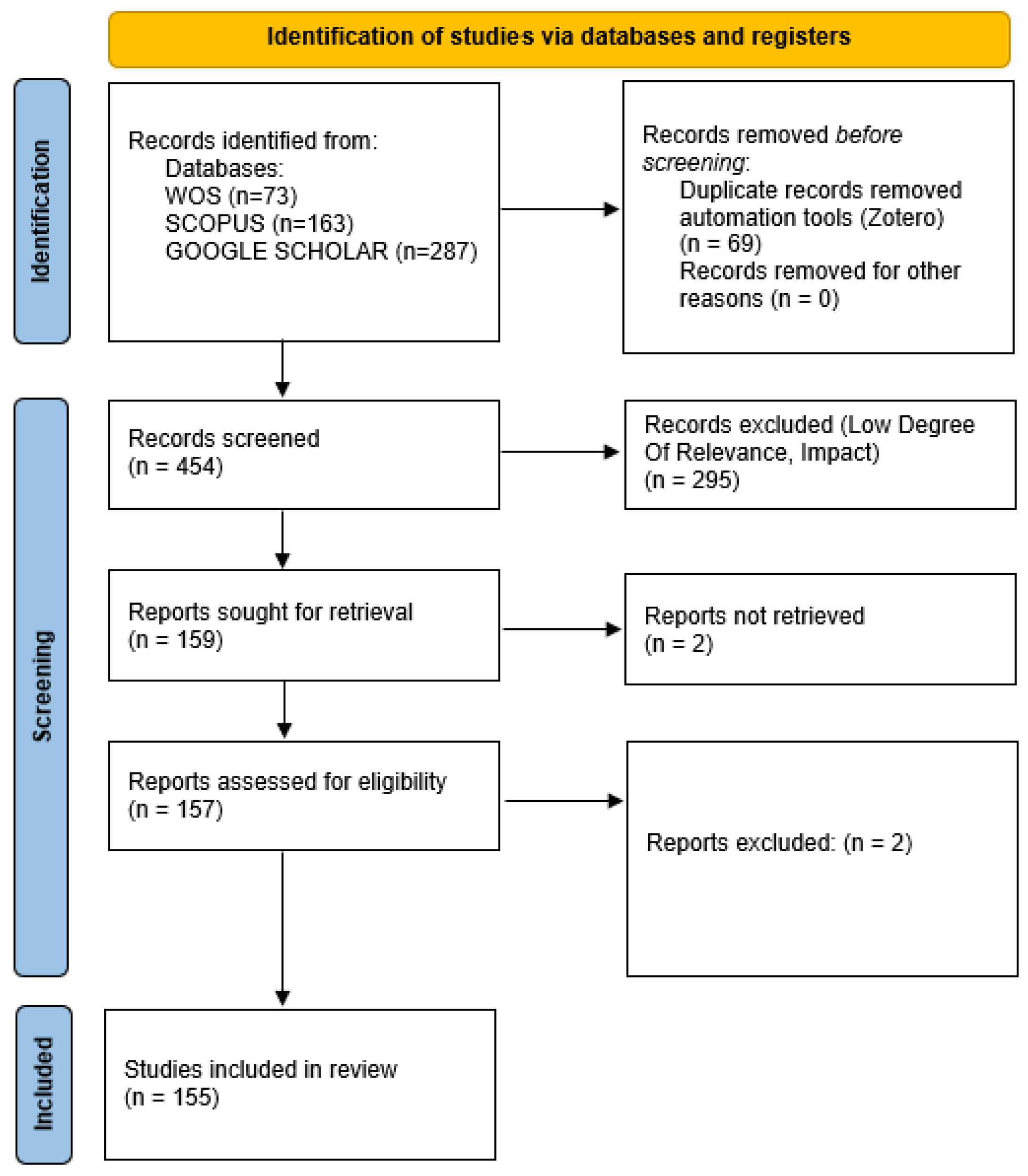
Figure 1. Study selection process according to PRISMA guidelines.
Telecom 07 00002 g001
Figure 2. End-to-end telecom-to-learning stack. Devices connect via 5G/Wi-Fi to a campus eMEC with a zero-trust UGW. Edge AI hosts ITS/LA/XR and feeds on-premises ALS, assessment, and dashboards. Provenance is maintained locally while model updates are coordinated in the cloud. Solid lines denote operational data and telemetry flows, while dashed lines denote end-user logical feedback or control loops. Colours denote functional layers (devices, connectivity, security/XR, edge AI, tutoring/ALS, assessment/dashboards, and provenance/model lifecycle).
Telecom 07 00002 g002
Figure 3. Conceptual diagram of applications of AIEd.
Telecom 07 00002 g003
Figure 4. Outcome pathways from AIEd. Arrows between blocks show the pathway from AIEd interventions and context/governance through mechanisms to proximal and long-term outcomes. Within outcome boxes, ↑ denotes increase/improvement and ↓ denotes decrease/reduction.
Telecom 07 00002 g004
Figure 5. Challenges and ethical considerations in AIEd.
Telecom 07 00002 g005
Figure 6. Important factors for transforming AITE.
Telecom 07 00002 g006
Figure 7. Research roadmap derived from this review: seven priorities spanning rigorous evaluation, interdisciplinary co-design, analytics for crisis contexts, methodological transfer, compliance-by-design, operational optimisation, and equity-first assessment.
Telecom 07 00002 g007
Table 1. Structured search query details for WOS.
FieldDetails
Search QueryAB = ((“artificial intelligence” OR “AI” OR “machine learning” OR “intelligent tutoring system *” OR “adaptive learning system *” OR “learning analytic *”) AND (education *) AND (telecommunication * OR “5G” OR “6G” OR “internet of things” OR IoT OR “edge computing” OR “multi-access edge computing” OR MEC OR “smart campus” OR “digital infrastructure”) AND (ethic * OR equity OR fairness OR “digital divide” OR privacy OR “data governance” OR “responsible AI” OR accountability OR transparency)) AND LA = (“English”)
Date RangePY = (2022 OR 2023 OR 2024 OR 2025)
Document TypeDT = (“ARTICLE” OR “PROCEEDINGS PAPER” OR “BOOK CHAPTER”)
LanguageEnglish
Note: The asterisk (*) denotes truncation (wildcard), used for retrieving all word variants that share the same stem (e.g., ethic* matches ethic, ethics, ethical, etc.).
Table 2. Structured search query details for Scopus.
FieldDetails
Search QueryABS ((“artificial intelligence” OR “AI” OR “machine learning” OR “intelligent tutoring system *” OR “adaptive learning system *” OR “learning analytic *” ) AND (education *) AND (telecommunication * OR “5G” OR “6G” OR “internet of things” OR IoT OR “edge computing” OR “multi-access edge computing” OR MEC OR “smart campus” OR “digital infrastructure”) AND (ethic * OR equity OR fairness OR “digital divide” OR privacy OR “data governance” OR “responsible AI” OR accountability OR transparency))
Publication Year RangePUBYEAR > 2021 AND PUBYEAR < 2026
Keywordseducation * AND “artificial intelligence” AND telecommunications AND ethic *
LimitationsLIMIT-TO(SRCTYPE, “j”) AND LIMIT-TO(DOCTYPE, “ar”) OR LIMIT-TO(DOCTYPE, “ch”) OR LIMIT-TO(DOCTYPE, “cp”)) AND LIMIT-TO(LANGUAGE, “English”) AND LIMIT-TO(PUBSTAGE, “final”) AND (LIMIT-TO(SUBJAREA, “COMP”) OR LIMIT-TO(SUBJAREA, “SOCI”) OR LIMIT-TO(SUBJAREA, “PSYC”) OR LIMIT-TO(SUBJAREA, “ARTS“) OR LIMIT-TO(SUBJAREA, “DECI”) OR LIMIT-TO(SUBJAREA, “MULT”) OR LIMIT-TO(SUBJAREA, “ENGI”))
Note: The asterisk (*) denotes truncation (wildcard), used for retrieving all word variants that share the same stem (e.g., analytic* matches analytic, analytics, analytical, etc.).
Table 3. Mapping of research questions to findings.
RQSectionFindings
RQ1Section 3, Section 4 and Section 7Field deployments and reviews of 5G/eMEC campuses, IoT-based smart learning environments, XR/metaverse pilots, ALS/ITS platforms, AI-driven assessment and administration, and inclusive/teacher-PD initiatives show that ALS, ITS, AI-driven assessment, XR/VR/AR, administrative analytics, and inclusive/PD tools are the dominant AIEd applications. They depend on low-latency 5G access, IoT telemetry, and MEC/eMEC placement, motivating the AITE reference architecture that couples telecom stacks with pedagogical functions.
RQ2Section 4.1, Section 4.2, Section 4.3, Section 4.4 and Section 4.5, Section 5.1 and Section 5.2Multiple ALS/ITS, GenAI/chatbot, and EDM studies, together with AI-based assessment and campus-management systems, report improved engagement, diagnostic precision, short-term performance, reduced grading, and administrative workload, and in some cases lower anxiety, provided that interventions are aligned with curricular goals and supported by timely feedback and adequate telecom QoS.
RQ3Section 3.1, Section 3.2 and Section 3.3, Section 6.1, Section 6.2, Section 6.3 and Section 6.4 and Section 7.2AITE introduces risks around data privacy and security (dense IoT and continuous device–edge streaming), algorithmic bias in ALS/ITS and assessment, academic integrity and over-reliance on GenAI, and integration tensions related to teacher autonomy and institutional capacity. Effective controls emphasise privacy-by-design (local/edge processing, data minimisation, encryption), zero-trust gateways, explainable and trustworthy models, ethics and AI literacy curricula, and alignment with evolving regulatory frameworks.
RQ4Section 4.6, Section 5.3, Section 6.4, Section 7, Section 8 and Section 9.3The evidence base is dominated by short-term, single-site pilots and quasi-experiments with heterogeneous performance metrics and limited co-recording of telecom KPIs. This constrains external validity and cross-study comparability. This review identifies the need for longitudinal and multi-site, network-aware evaluations, standardised outcome and network reporting, cross-layer explainability (from models to MEC orchestration), and compliance-by-design for privacy, security, and auditability.
RQ5Section 3.1, Section 3.5, Section 4.4 and Section 4.5,
Section Teacher Training, Section 6.3, Section 7 and Section 8
Teachers, administrators, and local stakeholders emerge as co-designers and stewards of AIEd. AI-augmented administration, ITS, and PD programmes can relieve routine burden and widen inclusion when educators retain goal-setting and interpretive authority, when PD builds AI/data/ethics literacies, and when policies and infrastructure explicitly target connectivity, affordability, device access, and cultural relevance in underserved regions.
Disclaimer/Publisher’s Note: The statements, opinions and data contained in all publications are solely those of the individual author(s) and contributor(s) and not of MDPI and/or the editor(s). MDPI and/or the editor(s) disclaim responsibility for any injury to people or property resulting from any ideas, methods, instructions or products referred to in the content.