Article

Gaps in Vitamin D Intake and Status in Moroccan Women

by
Noura Zouine
1,2,*,
Ilham Lhilali
1,2,
Abdelhai Messaoudi
3,
Samir El Jaafari
1 and
Younes Filali-Zegzouti
1
1
FSTE-FSM Joint Laboratory “Natural Resources, Health, and Environment”, Faculty of Sciences, Moulay Ismail University, Meknes 50000, Morocco
2
Higher Institute of Nursing and Health Professions of Fes-Meknes Annex, Meknes 50000, Morocco
3
LREMMALIF—Laboratory for Research in Management, International Logistics Marketing, and Finance, Sidi Mohamed Ben Abdellah University—EST, Fez 30000, Morocco
*
Author to whom correspondence should be addressed.
Epidemiologia 2025, 6(4), 66; https://doi.org/10.3390/epidemiologia6040066

Submission received: 1 July 2025 / Revised: 26 September 2025 / Accepted: 10 October 2025 / Published: 17 October 2025

Abstract

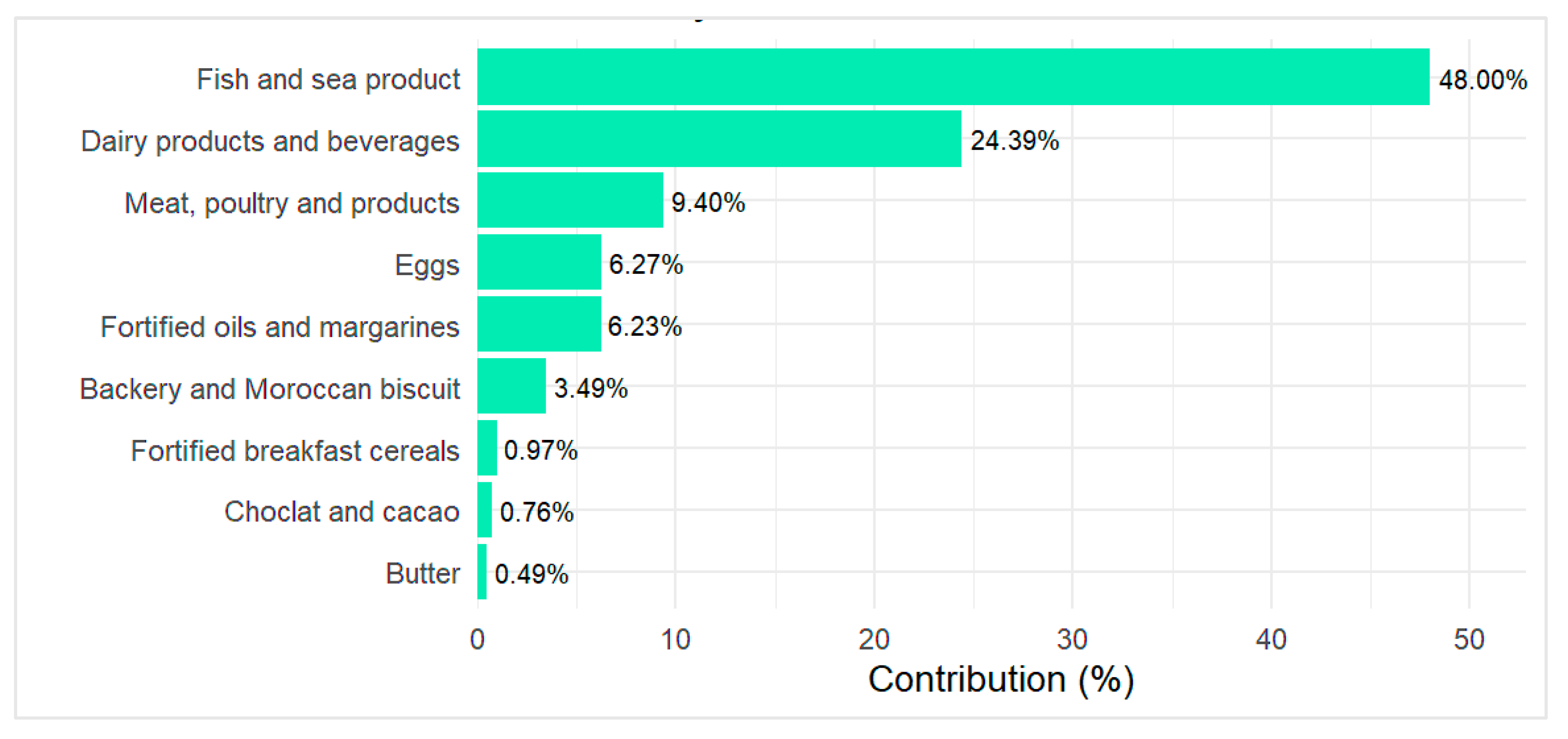
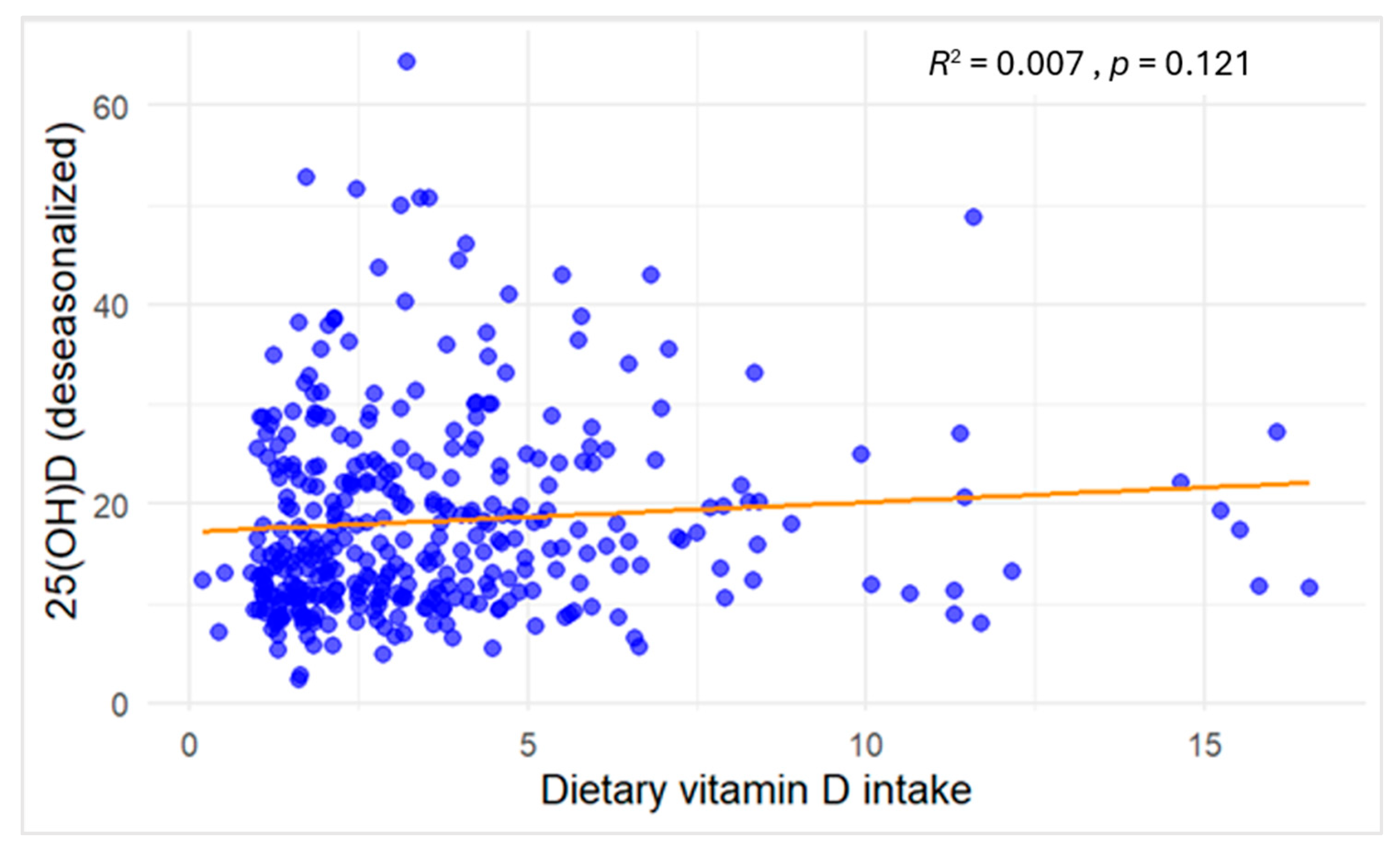
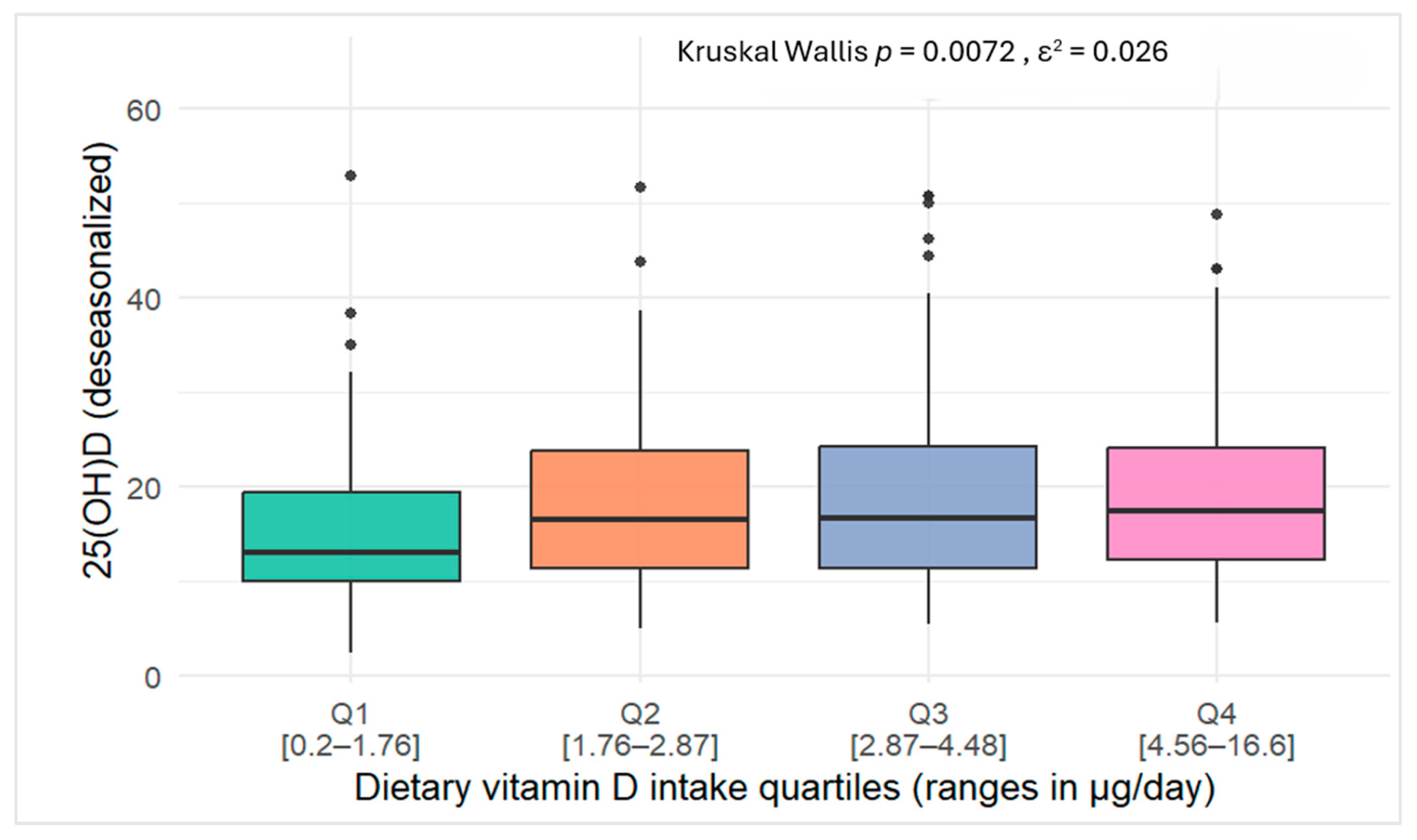
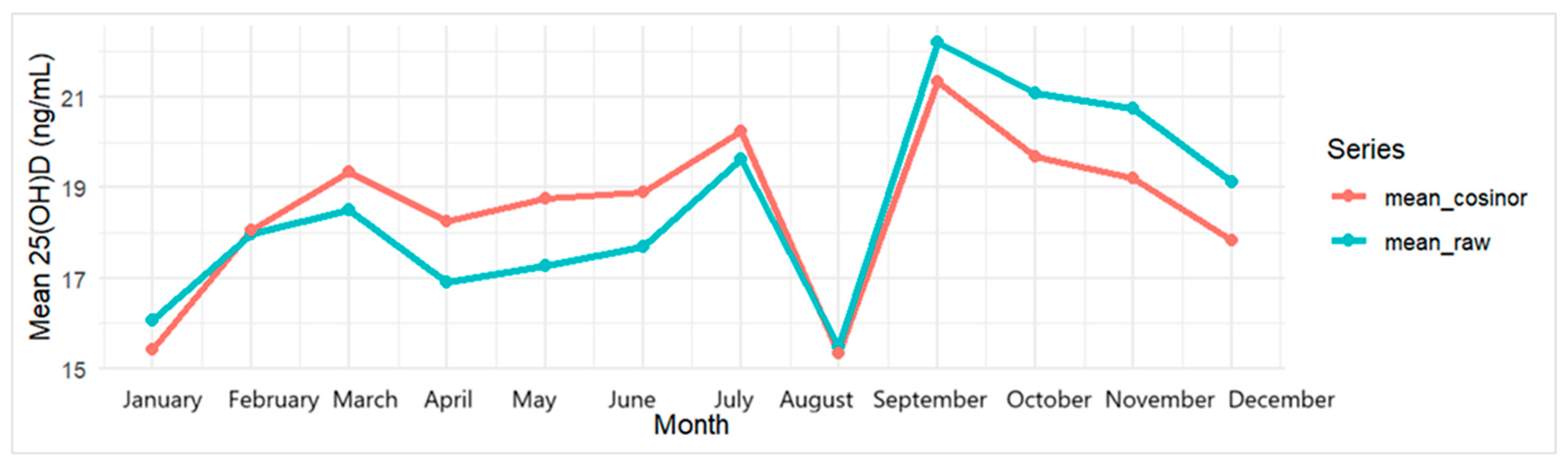
Background: Vitamin D is essential for women’s health, yet deficiency is widespread among Moroccan premenopausal women. Objectives: This study examined vitamin D intake, dietary sources, determinants, and predictors of serum 25-hydroxyvitamin D [25(OH)D3] in 355 women aged 18–49 years in Meknes, Morocco. Methods: Intake and sun exposure were assessed with validated questionnaires, and serum 25(OH)D3 was measured by chemiluminescence immunoassay. Multivariable and penalized regression (LASSO) were applied to deseasonalized values. Results: Median intake was 2.89 µg/day, and fewer than 20% of participants met the 5 µg/day recommendation. Fish (48%), dairy (24.39%), and meat (9.40%) were the main sources. Intake varied by age and residence: women aged 18–25 had significantly lower intakes (p = 0.027), while rural women consumed less than urban women (2.73 vs. 3.18 µg/day, p = 0.014), with inadequacy in 67.70% vs. 32.30% (p = 0.018). In adjusted regression, quartiles Q2–Q4 (1.76–16.60 µg/day) were associated with ~+3 ng/mL higher serum 25(OH)D compared to Q1 (0.20–1.76 µg/day, p < 0.05). Increments plateaued beyond Q2, and deficiency (<20 ng/mL) persisted in all quartiles (>59%, including 64% in Q4), reflecting limited sun exposure and high adiposity. Sun exposure was a strong positive predictor (β = 0.35, p < 0.001), while BMI was inversely associated (β = −0.37, p < 0.001). In LASSO, only sun exposure remained, explaining ~3% of variance. Conclusion: In this population, improving sun exposure (≥20 min/day) should be prioritized, alongside increasing vitamin D intake through richer food sources and fortification, while also addressing obesity, with a focus on women at risk of deficiency.
Keywords: dietary intake; food sources; vitamin D deficiency; 25-hydroxyvitamin D; premenopausal women; Morocco dietary intake; food sources; vitamin D deficiency; 25-hydroxyvitamin D; premenopausal women; Morocco