

Intelligent Modeling of Concrete Permeability Using XGBoost Based on Experimental and Real Data: Evaluation of Pressure, Time, and Severe Conditions

Abstract
1. Introduction
2. Materials and Methods
2.1. Machine Learning
2.1.1. Data Integration
2.1.2. Data Cleaning and Outlier Removal
2.1.3. Feature Scaling
2.1.4. Initial Model Selection
2.1.5. Model Evaluation—K-Fold Cross-Validation
2.1.6. Best Model Selection and Hyperparameter Optimization
- (1)
- structural alignment and data cleaning,
- (2)
- calibration of in-situ measurements with laboratory behavior,
- (3)
- construction of a hybrid dataset, and,
- (4)
- training of the XGBoost model using the validated combined dataset.
2.1.7. Feature Importance Analysis
2.2. Materials Used
2.2.1. Two Conditioning Regimes Were Implemented
2.2.2. Physical and Microstructural Testing
2.2.3. Integration with Machine Learning Models
2.3. Permeability Test
- A.
- New Calibration Procedures
- 1.
- Multi-Unit Redundancy Calibration for Environmental Reliability
- 2.
- Rapid Leak Check under High Pre-Pressure
- 3.
- Verification of the Penetration Volume–Depth Relationship
- B.
- Modified Sealing Technique
- Surface Conditioning Prior to Chamber Installation
- 2.
- Control of Epoxy Layer Uniformity and Prevention of Excess Thickness (Bond-Layer Uniformity)
- 3.
- Ensuring Full Adhesive Cure under Variable Environmental Conditions (24 h)
- 4.
- Sealing Aid for Vertical Surfaces (Vertical Surface Installation)
- 5.
- Controlled Pre-Heating of the Bonding Surface
- 6.
- Multi-Unit Redundancy for Leak-Free Specimen Selection
- C.
- Improved Pressure Control
- D.
- Data Integration with the Machine-Learning Model
- Structural Alignment of Features
- 2.
- Lab-Anchored Calibration of Field Data
- 3.
- Hybrid Dataset Construction
3. Results and Discussion
3.1. Integration of Experimental Data and Machine Learning for Permeability Prediction
- (a)
- Mechanical effects.
- (b)
- Physical effects (transport and pore structure).
- (c)
- Overall interpretation.
3.2. Model Description and Availability
3.3. Experimental Results Analysis
3.3.1. Accuracy Evaluation of the Cylindrical Chamber Test
3.3.2. Influence of Polypropylene Fibers on Concrete Permeability Under Thermal Cycling
3.3.3. X-Ray Diffraction and Microstructural Insights in PP Fiber-Reinforced Concrete
3.3.4. MIP Analysis of Thermal Cycling and Fiber-Reinforcement Effects in Concrete
3.4. Limitations of the Study
4. Conclusions
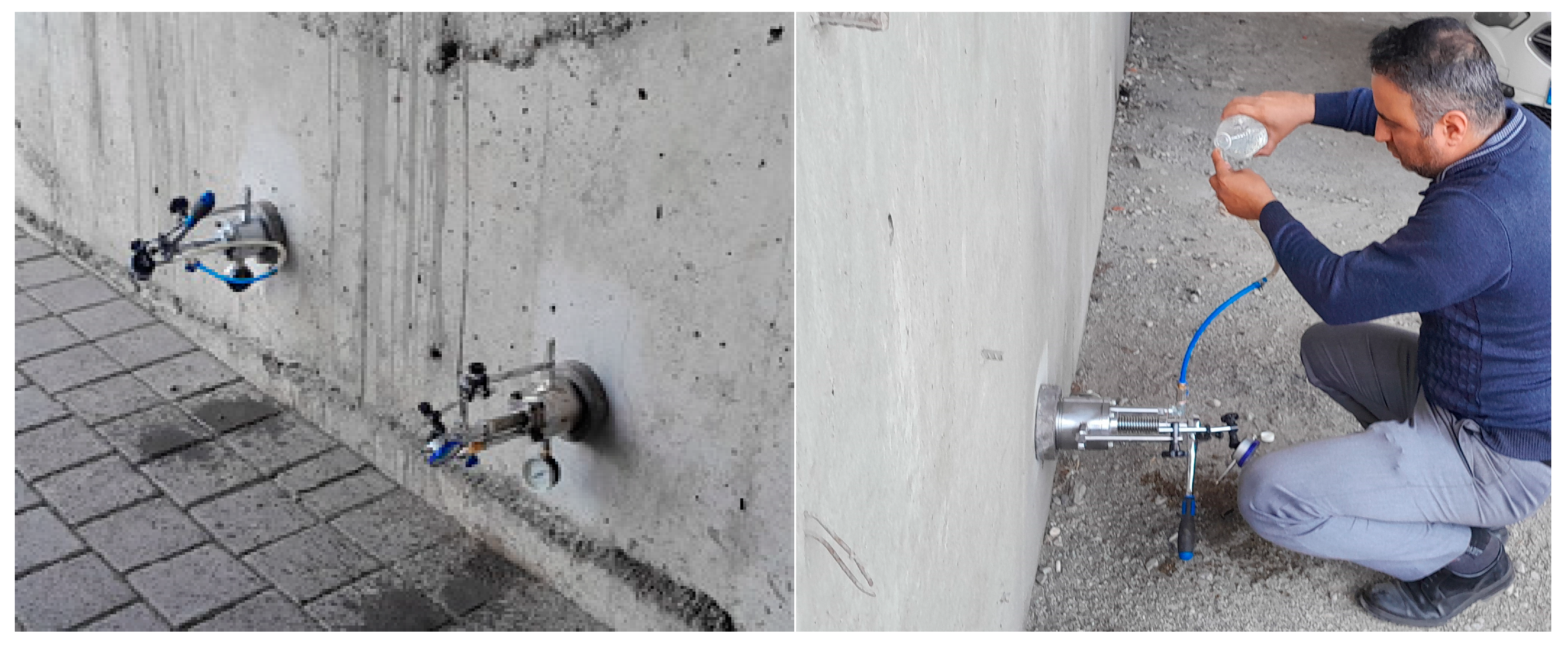
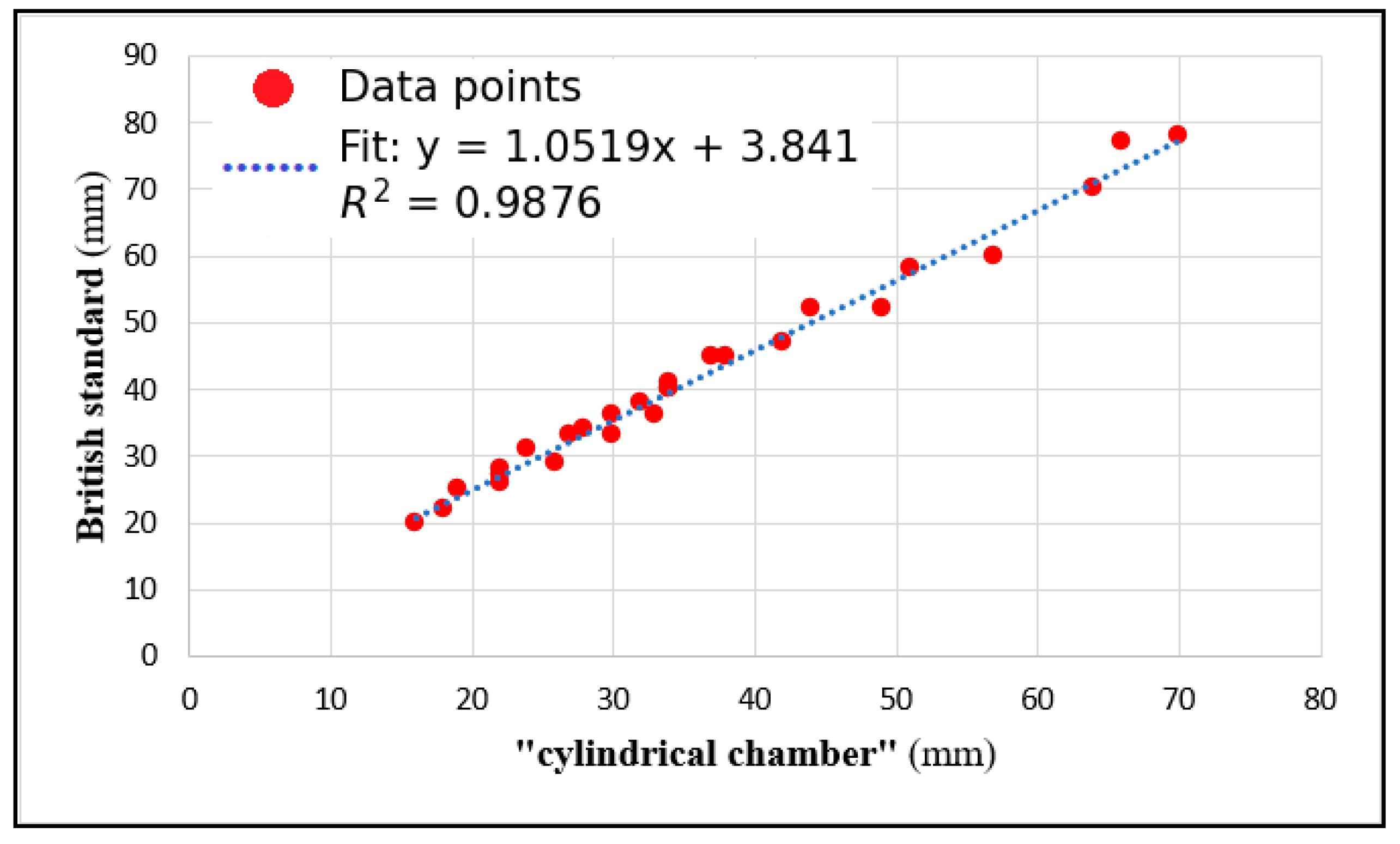
- Results from the portable cylindrical chamber device exhibited an excellent correlation with the standard BS EN 12390-8 test (R2 ≈ 0.98), validating its reliability for rapid field assessments. Unlike the conventional 72-h standard test, the developed device enabled accurate permeability estimation within less than 5 h, requiring no cutting or core sampling.
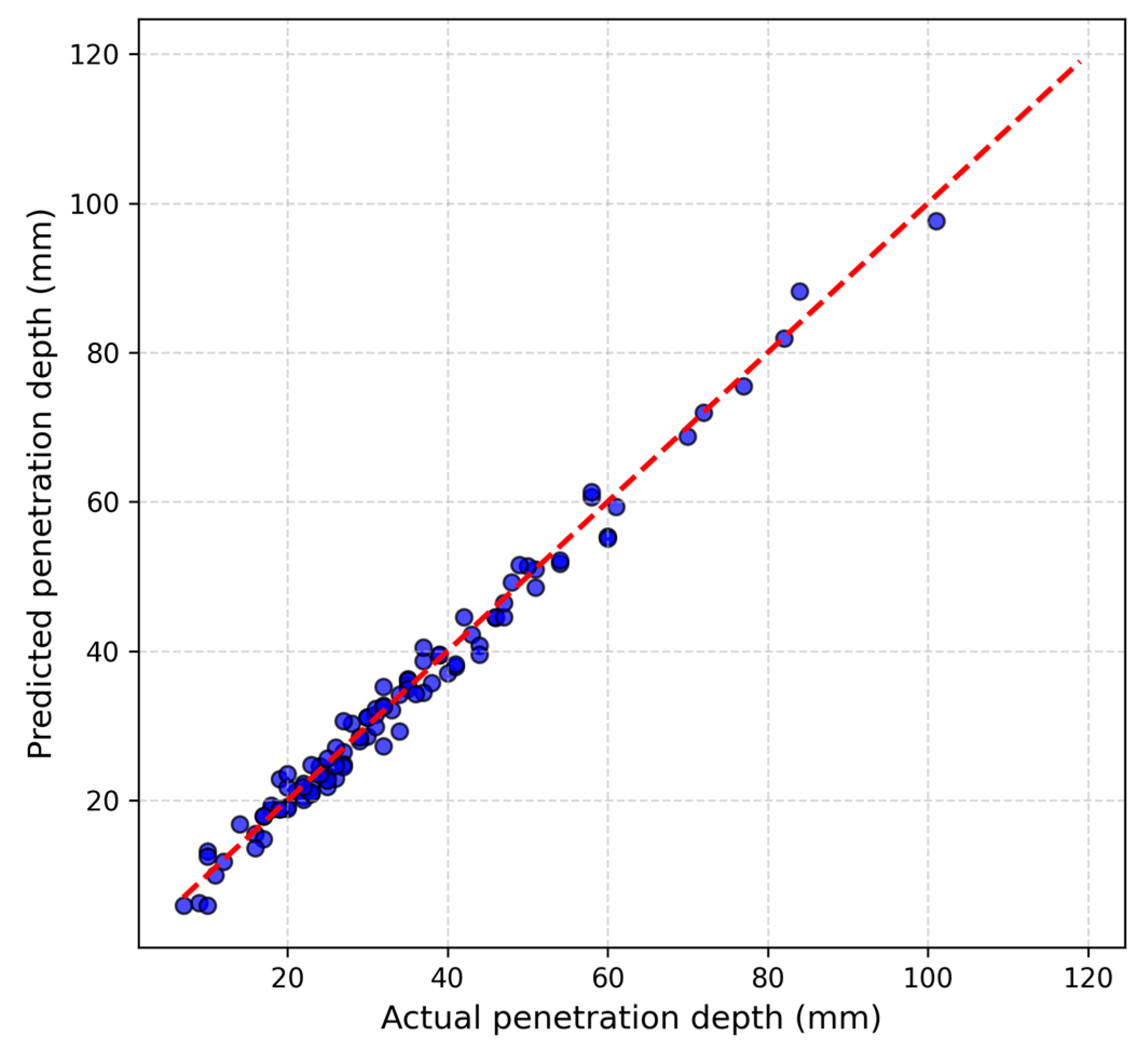
- After extensive algorithmic comparison, the XGBoost regressor demonstrated the highest predictive capability (R2 = 0.956, RMSE = 1.08 mm, MAPE = 4.7%), outperforming both Random Forest and Linear Regression models. Feature importance analysis indicated that the water-to-cement ratio (≈13%), compressive strength (≈11%), curing method, and pressure duration were the dominant contributors governing permeability.
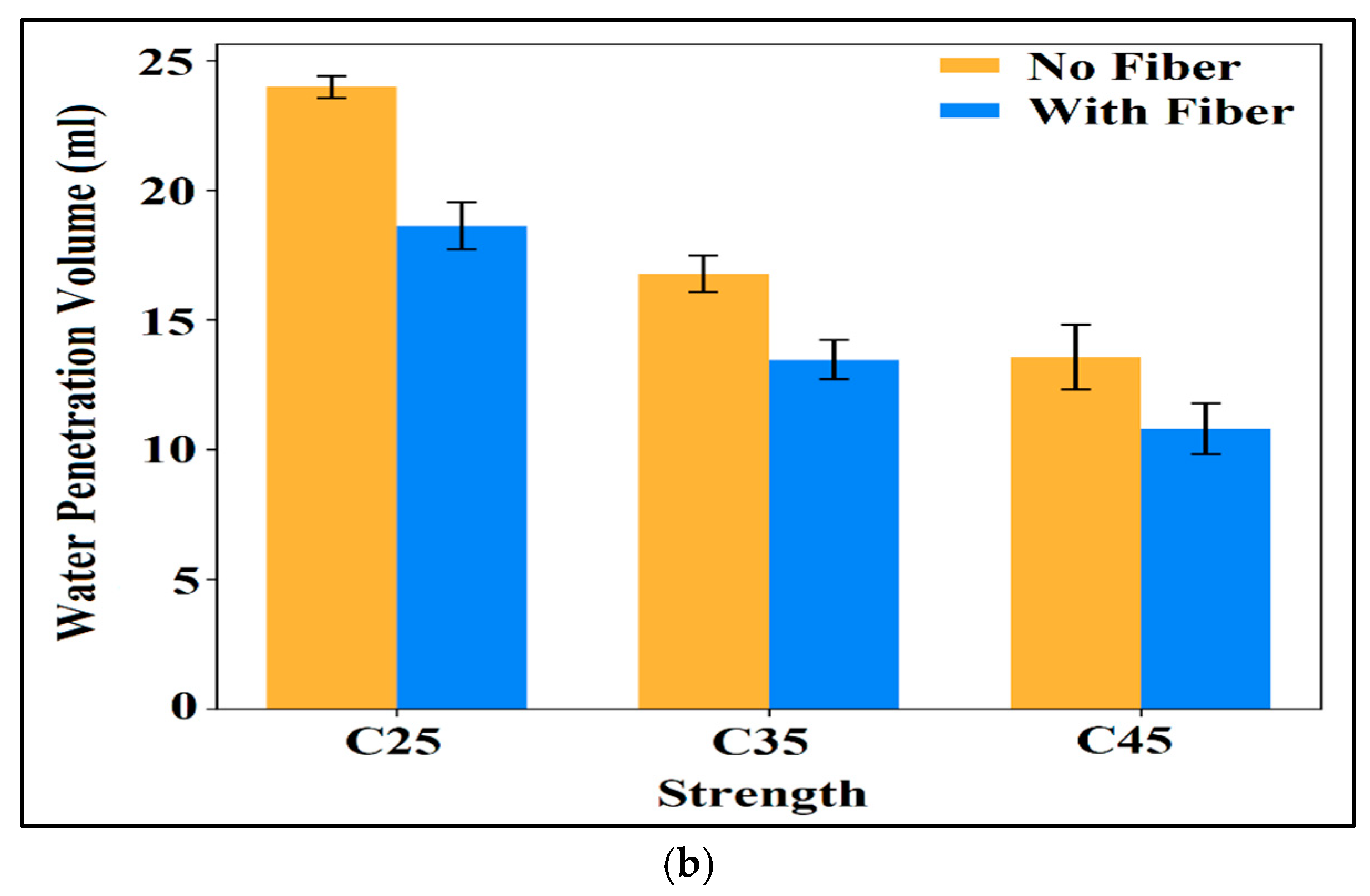
- The synergy between moderate thermal cycling (50–100 cycles) and fiber reinforcement yielded measurable benefits in mitigating the permeability increase induced by thermal fluctuations, particularly evident in specimens subjected to air curing.
- The work establishes a reproducible digital workflow by coupling a field testing protocol with machine learning (XGBoost). This framework enables:
- (a)
- rapid in situ permeability assessment;
- (b)
- data-driven mix design optimization; and;
- (c)
- durability prediction for structures in hot, dry environments.
- 5.
- Using the cylindrical chamber permeability test, the water penetration volumes of several real-scale concrete structures were experimentally measured. The corresponding penetration depths were then estimated through the proposed machine learning approach, demonstrating its strong capability in accurately quantifying the permeability of actual concrete structures.
- 6.
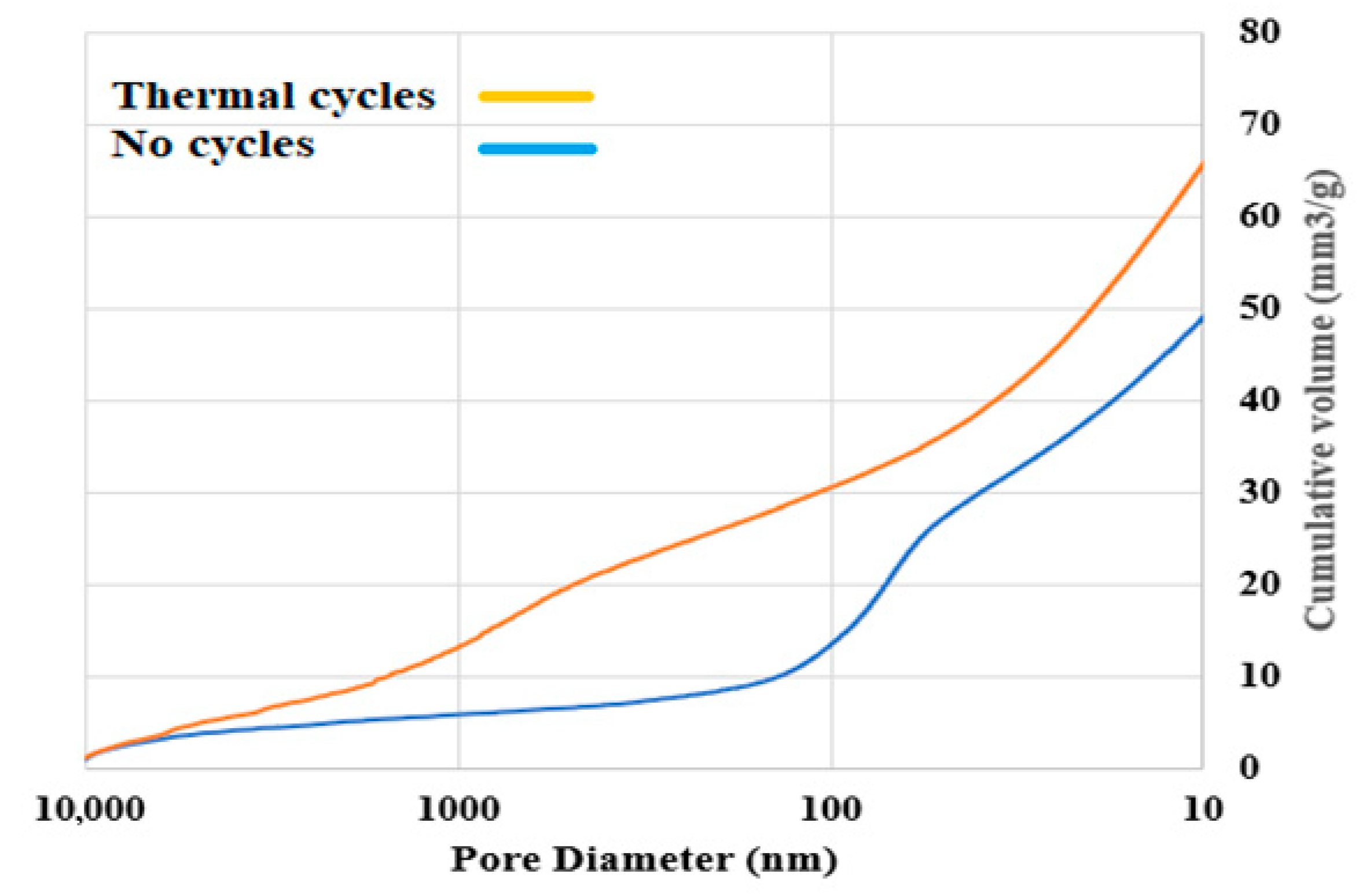
- Thermal cycling substantially increased the cumulative pore volume, primarily in the capillary domain (50–1000 nm), which signifies intensified pore interconnectivity. This process also led to the growth of larger voids (>1 µm) due to progressive microcrack extension. These microstructural alterations, caused by non-uniform thermal fields and expansion mismatches, collectively enhance capillary continuity, elevate permeability, and reduce the material’s resistance to aggressive agents.
- 7.
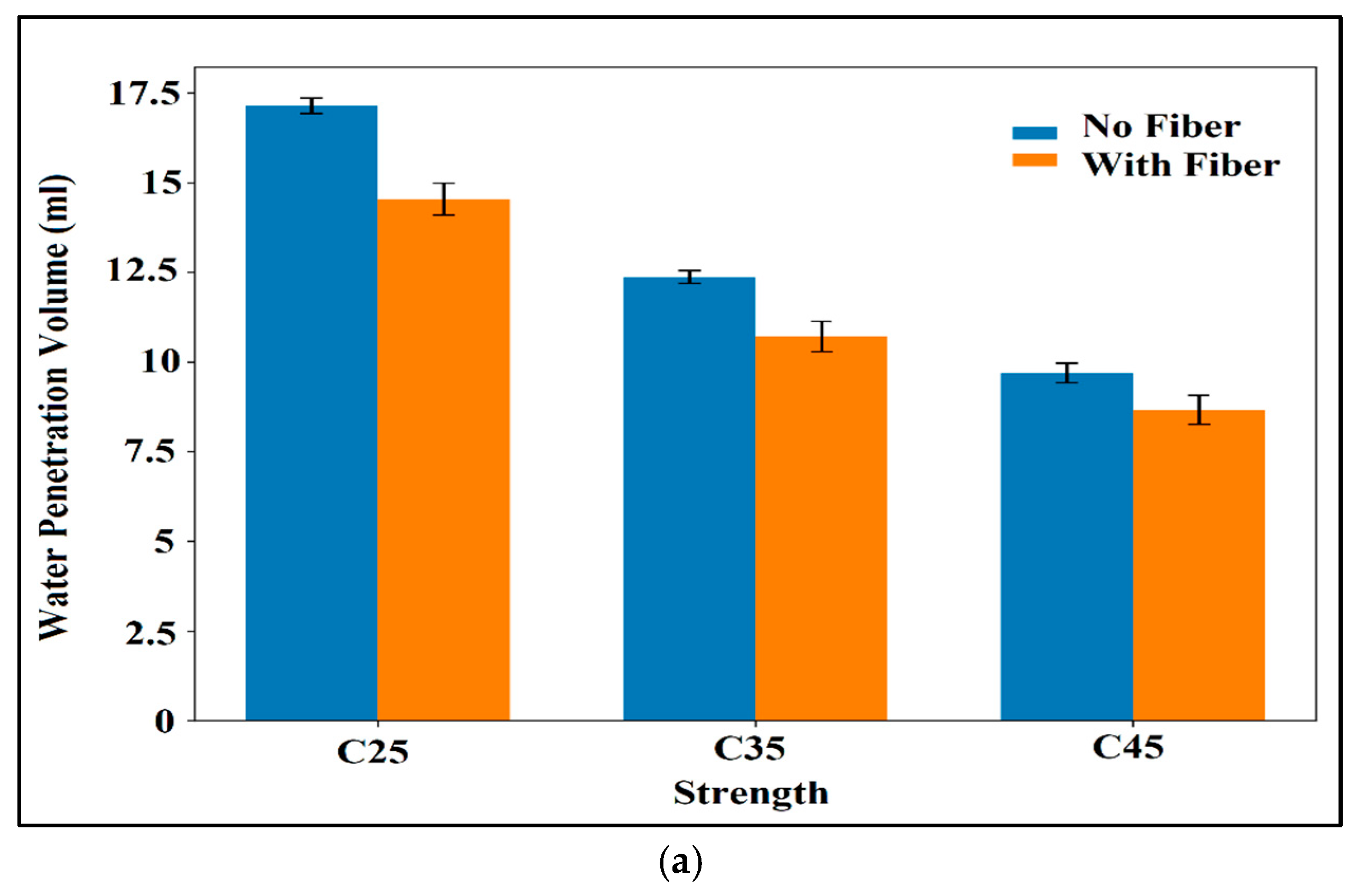
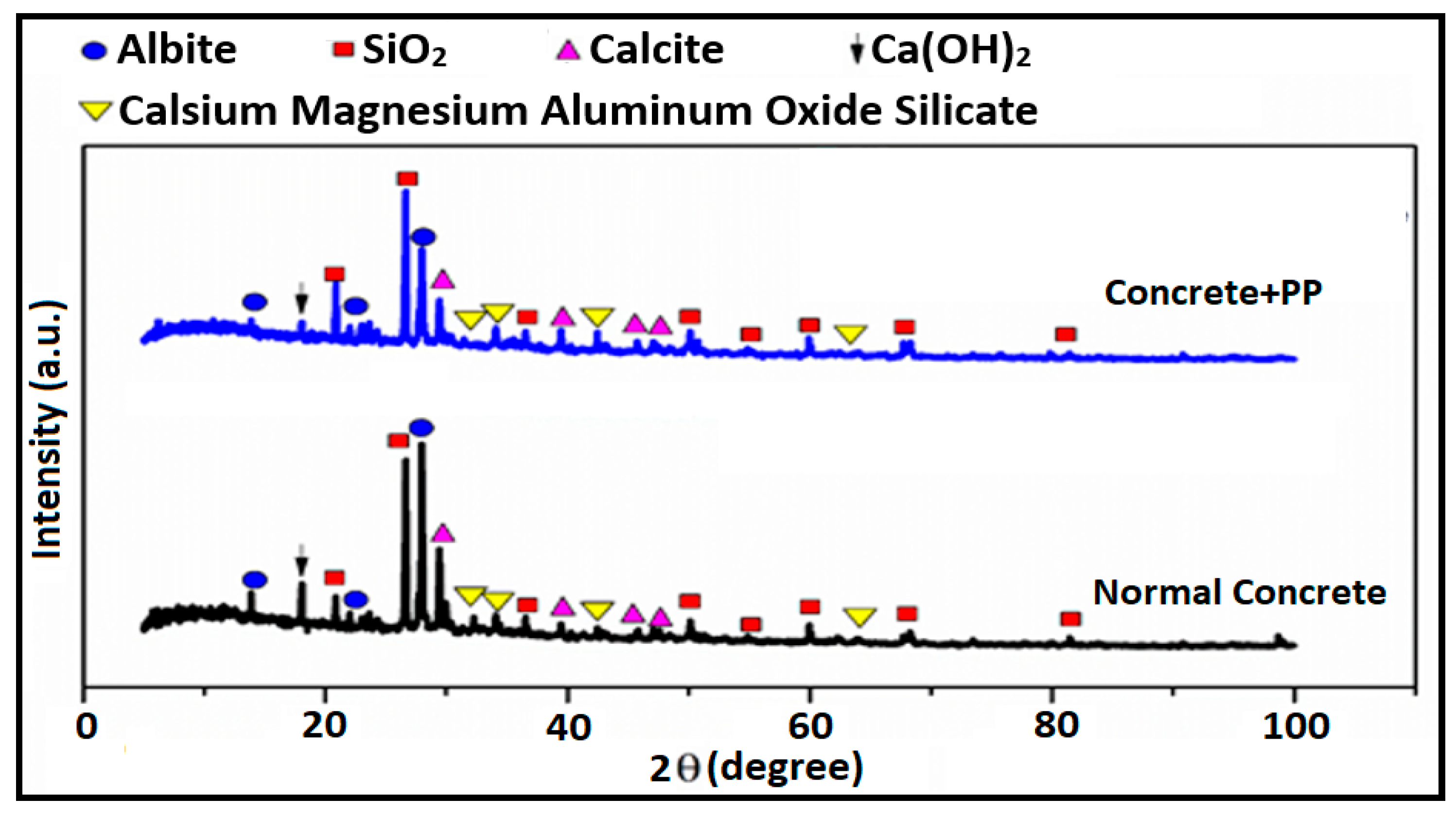
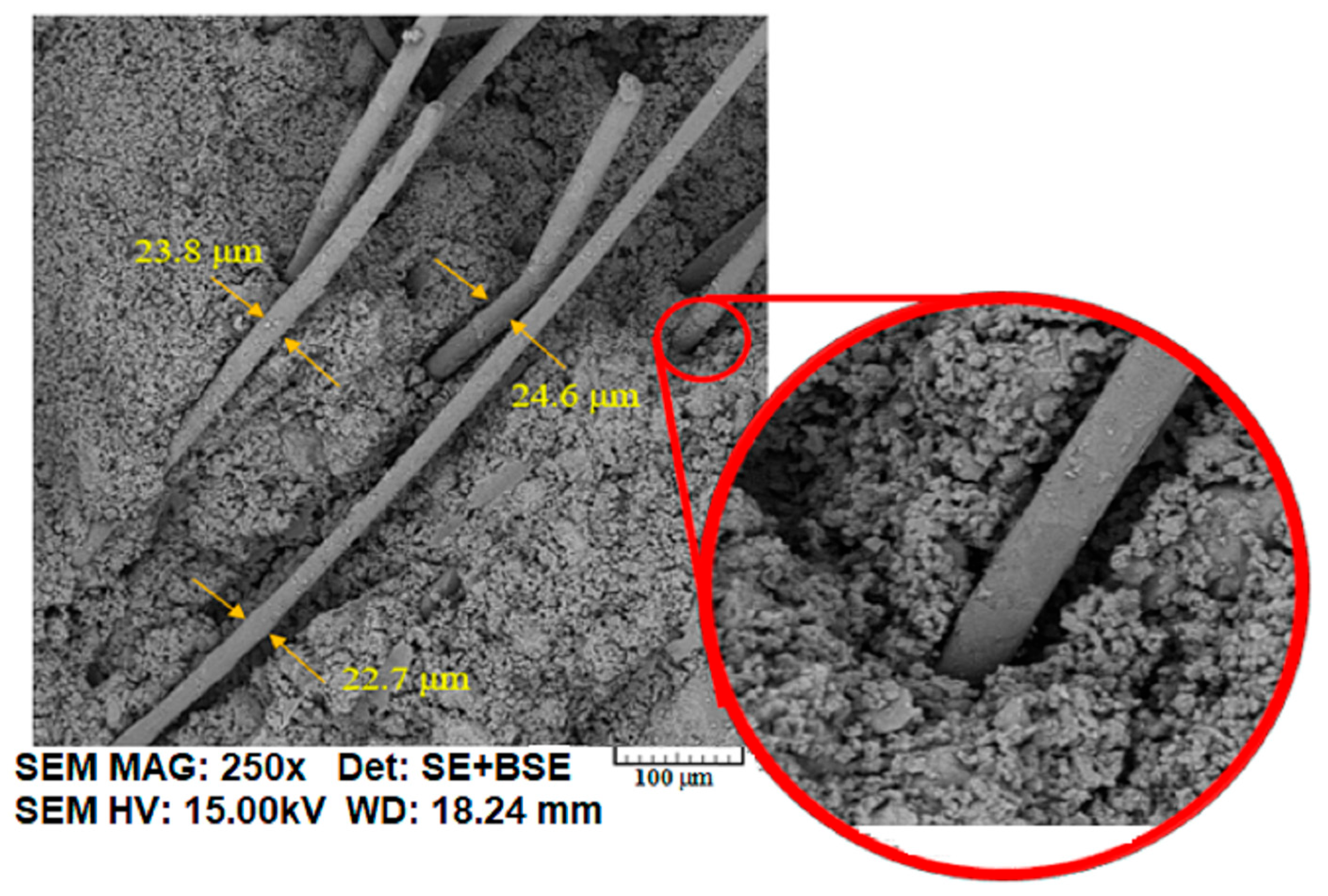
- The integration of microstructural observations indicated that the incorporation of 0.3% polypropylene fibers effectively reduced crack density and water penetration depth across all concrete strength classes. Microscopic analyses revealed a finer and less-connected crack network, which can be attributed to the crack-bridging and stress-redistribution role of the fibers. Complementary XRD results showed no evidence of new chemical phases, while the overall densification of the cementitious matrix suggests improved hydration efficiency resulting from restrained microcrack development. These combined effects provide a clear physical basis for the observed enhancement in concrete impermeability.
Supplementary Materials
Author Contributions
Funding
Data Availability Statement
Conflicts of Interest
References
- Tymoshchuk, D.; Didych, I.; Maruschak, P.; Yasniy, O.; Mykytyshyn, A.; Mytnyk, M. Machine Learning Approaches for Classification of Composite Materials. Modelling 2025, 6, 118. [Google Scholar] [CrossRef]
- Mai, H.V.T.; Nguyen, M.H.; Trinh, S.H. Optimization of machine learning models for predicting the compressive strength of fiber-reinforced self-compacting concrete. Front. Struct. Civ. Eng. 2023, 17, 284–305. [Google Scholar] [CrossRef]
- Wu, L.; Li, X.; Yuan, J. Real-time prediction of tunnel face conditions using XGBoost Random Forest algorithm. Front. Struct. Civ. Eng. 2023, 17, 1777–1795. [Google Scholar] [CrossRef]
- Mao, J.; Ding, Y.; Dai, F.; Fang, K.; Jin, L.; Zhu, X.; Gong, F.; Ren, J. Improvement on mechanical properties and durability of concrete by ultra-deep migration technology of coupling agents. Constr. Build. Mater. 2025, 461, 139863. [Google Scholar] [CrossRef]
- Yuya, S. Simulating water penetration in cementitious materials using pore structures from mercury intrusion porosimetry. Case Stud. Constr. Mater. 2025, 22, e04492. [Google Scholar] [CrossRef]
- Zhu, Y.P.; Hussein, H.; Kumar, A.; Chen, G. A review: Material and structural properties of UHPC at elevated temperatures or fire conditions. Cem. Concr. Compos. 2021, 123, 104212. [Google Scholar] [CrossRef]
- Xu, Z.H.; Li, J.; Wu, P.T.; Wu, C.Q. Experimental investigation of triaxial strength of ultra-high performance concrete after exposure to elevated temperature. Constr. Build. Mater. 2021, 295, 123689. [Google Scholar] [CrossRef]
- Ma, H.Q.; Zhang, S.C.; Li, S.R.; Zhang, Y.; Feng, J.J. New insights on the evolution and mechanism of mechanical and shrinkage properties of UHPC under sustained subelevated temperatures. Constr. Build. Mater. 2024, 448, 138178. [Google Scholar] [CrossRef]
- Zhang, J.J.; Yu, R.; Shui, Z.H.; Liu, K.N. Hydration kinetics and microstructure development of ultra-high performance concrete (UHPC) subjected to microwave pre-curing. Cem. Concr. Compos. 2022, 129, 104484. [Google Scholar] [CrossRef]
- Xu, D.S.; Tang, J.H.; Hu, X.; Zhou, Y.C.; Yu, C.; Han, F.Y.; Liu, J.P. Influence of silica fume and thermal curing on long-term hydration, microstructure and compressive strength of ultra-high performance concrete (UHPC). Constr. Build. Mater. 2023, 395, 132370. [Google Scholar] [CrossRef]
- An, M.Z.; Huang, H.F.; Wang, Y.; Zhao, G.Y. Effect of thermal cycling on the properties of high-performance concrete: Microstructure and mechanism. Constr. Build. Mater. 2020, 243, 118310. [Google Scholar] [CrossRef]
- Hong, L.; Li, M.; Du, C. Bond behavior of the interface between concrete and basalt fiber reinforced polymer bar after freeze-thaw cycles. Front. Struct. Civ. Eng. 2024, 18, 630–641. [Google Scholar] [CrossRef]
- Liu, X.; Zhang, H.; Peng, J. Frost heaving behavior and mechanical deterioration of prestressed concrete. Front. Struct. Civ. Eng. 2025, 19, 859–871. [Google Scholar] [CrossRef]
- Huang, H.; An, M.; Wang, Y.; Yu, Z.; Ji, W. Effect of environmental thermal fatigue on concrete performance based on mesostructural and microstructural analyses. Constr. Build. Mater. 2019, 207, 450–462. [Google Scholar] [CrossRef]
- Ye, B.; Cheng, Z.R.; Ni, X.Q. Effects of multiple heating-cooling cycles on the permeability and microstructure of a mortar. Constr. Build. Mater. 2018, 176, 156–164. [Google Scholar] [CrossRef]
- Shokrieh, M.M.; Heidari-Rarani, M.; Shakouri, M.; Kashizadeh, E. Effects of thermal cycles on mechanical properties of an optimized polymer concrete. Constr. Build. Mater. 2011, 25, 3540–3549. [Google Scholar] [CrossRef]
- Ma, H.; Zhang, S.; Fu, H.; Li, S.; Su, M.; Wu, C.H. Effect of thermal cycling on the mechanics and microstructure of ultra-high performance concrete. Constr. Build. Mater. 2024, 424, 135878. [Google Scholar] [CrossRef]
- ASTM D6944-15; Standard Practice for Resistance of Cured Coatings to Thermal Cycling. ASTM International: West Conshohocken, PA, USA, 2020.
- Algaifi, H.A.; Muhammad, E.A.; Baharom, S.; Alrshoudi, F.; Syamsir, A.; Salah, H.A.; Anggraini, V. Optimizing polypropylene fiber and carbon nanotubes to reinforce concrete matrix: A response surface methodology. Constr. Build. Mater. 2024, 442, 137388. [Google Scholar] [CrossRef]
- Mousavinejad, S.H.G.; GilKalaye, S.G. Effect of freezing–thawing cycles and high temperatures on concretes containing partial replacement of fine grain blast and Electric Arc Furnace slags. Discov. Mater. 2024, 4, 78. [Google Scholar] [CrossRef]
- Li, Y.; Zhang, Y.; Yang, E.; Hai Tan, K. Effects of geometry and fraction of polypropylene fibers on permeability of ultra-high performance concrete after heat exposure. Cem. Concr. Res. 2019, 116, 168–178. [Google Scholar] [CrossRef]
- Building and Housing Research Center. The National Method for Concrete Mix Design, BHRC Publication No.S-479; Building and Housing Research Center: Cairo, Egypt, 2008.
- Xu, Y.; Yao, L.; Yu, X. Effect of polypropylene fibers on mechanical and wetting properties of overall uperhydrophobic foamed concrete. Constr. Build. Mater. 2020, 448, 138207. [Google Scholar] [CrossRef]
- Taffese, W.Z.; Hilloulin, B.; Zaccardi, Y. Machine learning in concrete durability: Challenges and pathways identified by RILEM TC 315-DCS towards enhanced predictive models. Mater Struct. 2025, 58, 145. [Google Scholar] [CrossRef]
- Alpaydin, E. Introduction to Machine Learning, 2nd ed.; MIT Press: Cambridge, MA, USA, 2020. [Google Scholar]
- Ivanovic, M.; Radovanovic, M. Modern Machine Learning Techniques and Their Applications, Electronics, Communications and Networks; CRC Press: Boca Raton, FL, USA, 2015; pp. 833–846. [Google Scholar]
- Hastie, T.; Tibshirani, R.; Friedman, J. The Elements of Statistical Learning. Data Mining, Inference, and Prediction, 2nd ed.; Springer: New York, NY, USA, 2009. [Google Scholar]
- Kroviakov, S.; Zavoloka, M.; Dudnik, L.; Kryzhanovskyi, V. Comparison of strength and durability of concretes made with sulfate-resistant portland cement and portland cement with pozzolana additive. Elektron. Časopis Građevinskog Fak. 2019, 10, 81–86. [Google Scholar] [CrossRef]
- Abdulkader, E.; Samer, Z.; Dana, N.; Nabil, S.; Joseph, A.; Hilal, H. Use of machine learning models to predict the water penetration depth in concrete. J. Build. Eng. 2024, 95, 110107. [Google Scholar] [CrossRef]
- Yu, F.; Chu, W.; Zhang, R. Predicting the permeability and compressive strength of pervious concrete using a stacking ensemble machine learning approach. Sci Rep. 2025, 15, 22506. [Google Scholar] [CrossRef]
- Meysam, N.; Nader, G.h.; Mehdi, N. Modeling chloride penetration in self-consolidating concrete using artificial neural network combined with artificial bee colony algorithm. J. Build. Eng. 2019, 22, 216–226. [Google Scholar] [CrossRef]
- Hamed, N.; Farzad, S.; Amir, H. Machine learning approaches for RCPT modeling of concrete. Constr. Build. Mater. 2025, 492, 143126. [Google Scholar] [CrossRef]
- Kaboudan, A.; Naderi, M.; Afshar, M. The efficiency of Darcy and two-dimensional diffusion flow models to estimate water penetration into concrete. J. Build. Eng. 2021, 34, 102012. [Google Scholar] [CrossRef]
- Naderi, M.; Kaboudan, A. Experimental study of the effect of aggregate type on concrete strength and permeability. J. Build. Eng. 2021, 37, 101928. [Google Scholar] [CrossRef]
- Naderi, M.; Kaboudan, A. Evaluation of the effect of strength, duration, water pressure and casting direction on concrete permeability. Amirkabir Civ. Eng. J. 2020, 52, 2379–2398. [Google Scholar] [CrossRef]
- Naderi, M.; Saberi Varzaneh, A.; Parhizkari, M. Measuring the Permeability and Compressive Strength of Concretes Containing Additives in Freeze–Thaw Conditions without Breaking the Sample. J. Mater. Civ. Eng. 2024, 36, 04024202. [Google Scholar] [CrossRef]
- ASTMC136; Standard Test Method for Sieve Analysis of Fine Coarse Aggregates. ASTM International: West Conshohocken, PA, USA, 2019.
- BSEN12390; Testing Hardened Concrete Depth of Penetration of Water Under Pressure. British Standards Institution: London, UK, 2019.
- Saeid, K.; Hazizan, M.; Morteza, J.; Jalal, R. The effects of polypropylene fibers on the properties of reinforced concrete structures. Constr. Build. Mater. 2012, 27, 73–77. [Google Scholar] [CrossRef]
- Liu, F.; Wang, P.; Yang, X. Effect of polypropylene fiber on dry shrinkage ratio of cement mortar. J. Build. Mater. 2005, 8, 373–377. [Google Scholar]
- Li, Q.; Liu, F. Effect of fiber dosage and geometry on permeability of UHPC under elevated temperature. Constr. Build. Mater. 2020, 247, 118542. [Google Scholar] [CrossRef]
- Bentur, A.; Mindess, S. Fibre Reinforced Cementitious Composites, 2nd ed.; CRC Press: Boca Raton, FL, USA, 2007. [Google Scholar]
- El-Didamony, H.; Heikal, M.; Aiad, I.; Al-Masry, S. Behavior of delayed addition time of SNF superplasticizer on microsilica-sulphate resisting cements. Ceram. Silik. 2013, 57, 232–242. [Google Scholar]
- Yaseen, S.A.; Yiseen, G.A.; Li, Z. Elucidation of Calcite Structure of Calcium Carbonate Formation Based on Hydrated Cement Mixed with Graphene Oxide and Reduced Graphene Oxide. ACS Omega 2019, 4, 10160–10170. [Google Scholar] [CrossRef]
- Hisham, A.M. Polypropylene as a Promising Plastic: A Review. Am. J. Polym. Sci. 2016, 6, 1–11. [Google Scholar]



| Type of Effect | Brief Description | Column |
|---|---|---|
| Material Properties | Ages 28 and 90 days | Compressive strength (MPa) |
| Material Composition—thermal | Age of specimen (hardening duration) | Age (day) |
| Material Composition—moisture | Curing method | Curing_Water/Curing_Free |
| Environmental Actions—thermal | Temperature shocks | Number of thermal cycles |
| — | Target variable | Penetration depth (mm) |
| Dependent (experimental) | Actual measured penetration volume | Penetration volume (mL) |
| Material Composition | W/C | W/C |
| Material Composition—toughness and crack-dispersion | Fiber percentage | Fiber content |
| Environmental Actions—hydrodynamic | Applied water pressure | Water pressure (MPa) |
| Environmental Actions—time-dependent | Duration of applied pressure | Time of pressure (h) |
| Optimization Stage | Hyperparameter | Search Range/Final Value | Rationale for Selection |
|---|---|---|---|
| Randomized Search CV | n_estimators | 100–600 | Ensures sufficient model capacity for a medium-sized dataset (1512 samples) without unnecessary computational cost |
| max_depth | 3–8 | Covers shallow to moderately deep trees to capture nonlinear physical relationships while limiting overfitting | |
| learning_rate | 0.01–0.10 | Balances learning stability (smaller rates) and convergence speed | |
| subsample | 0.6–1.0 | Reduces correlation among trees and improves generalization | |
| colsample_bytree | 0.6–1.0 | Enhances feature diversity and avoids dominance of specific variables | |
| min_child_weight | 1–6 | Prevents learning from noisy or sparse node splits | |
| gamma | 0–0.3 | Controls split complexity and avoids excessively simple trees | |
| n_iter | 100 | A sufficient number to adequately cover the parameter space without unnecessarily increasing the training time. autorenewthumb_upthumb_down | |
| Grid Search CV | n_estimators | 400, 500, 600 | Focus on regions with diminishing validation error gains |
| max_depth | 5, 6, 7 | Optimizes bias–variance trade-off | |
| learning_rate | 0.03, 0.05, 0.07 | Ensures stable convergence without excessive iterations | |
| subsample | 0.8, 0.9, 1.0 | Balances robustness and information retention | |
| colsample_bytree | 0.8, 0.9, 1.0 | Confirms optimal use of multivariate input features | |
| Cross-Validation | K-Fold CV | K = 5 | A common and robust choice for engineering datasets of moderate size. |
| autorenewthumb_upthumb_down | |||
| Data shuffling | Enabled | To prevent the influence of experimental ordering effects and to enhance the objectivity of the evaluation. autorenewthumb_upthumb_down | |
| Evaluation Metric | RMSE | - | To express the actual prediction error of water penetration in millimeters. |
| autorenewthumb_upthumb_down | |||
| Final Model | n_estimators | 500 | Achieved highest cross-validated R2 = 0.956 with reasonable computational cost |
| max_depth | 6 | Best generalization with lowest fold-to-fold variance | |
| learning_rate | 0.05 | Most stable convergence and consistent performance | |
| subsample | 0.9 | Reduces variance while preserving dataset representativeness | |
| colsample_bytree | 0.9 | Ensures strong feature utilization without overfitting |
| Design Number | W/C | Water () | Cement () | Gravel () | Sand () | Fiber Volume Percentage |
|---|---|---|---|---|---|---|
| C25 | 0.55 | 211 | 381 | 699 | 879 | 0.3 |
| C35 | 0.45 | 198 | 440 | 686 | 862 | 0.3 |
| C45 | 0.37 | 191 | 516 | 667 | 838 | 0.3 |
| Description | Learning Type | Model |
|---|---|---|
| Establishing a simple mathematical relationship between input features and penetration depth | Linear, baseline | Linear Regression |
| Discovering nonlinear relationships and interactive effects among parameters | Multi-decision-tree ensemble | Random Forest Regressor (RF) |
| Optimizing residual errors of the RF model through iterative boosting | Advanced gradient boosting | XGBoost Regressor (XGB) |
| MAE (Test) | RMSE (Test) | R2 (Test) | R2 (Train) | Model |
|---|---|---|---|---|
| 2.30 mm | 2.98 mm | 0.812 | 0.842 | Linear Regression |
| 0.94 mm | 1.26 mm | 0.941 | 0.962 | Random Forest |
| 0.81 mm | 1.08 mm | 0.956 | 0.974 | XGBoost |
| Compressive Strength (MPa) | Age (Day) | W/C | Fiber | Thermal Cycles | Actual Penetration (mm) | Predicted Penetration (mm) | Absolute Error (mm) | Relative Error (%) |
|---|---|---|---|---|---|---|---|---|
| 43.1 | 28 | 0.45 | 0 | 0 | 34 | 34.92 | 0.92 | 2.71 |
| 38.9 | 28 | 0.45 | 0 | 0 | 30 | 31.36 | 1.36 | 4.53 |
| 48.9 | 28 | 0.37 | 0 | 0 | 24 | 23.11 | 0.89 | 3.71 |
| 47.8 | 28 | 0.37 | 0 | 0 | 22 | 21.85 | 0.15 | 0.68 |
| 47.3 | 28 | 0.37 | 0 | 0 | 19 | 18.25 | 0.75 | 3.95 |
| 44.8 | 28 | 0.45 | 1 | 0 | 31 | 31.56 | 0.56 | 1.81 |
| 51.5 | 28 | 0.37 | 1 | 0 | 21 | 20.22 | 0.78 | 3.71 |
| 27 | 28 | 0.55 | 0 | 50 | 57 | 56.41 | 0.59 | 1.04 |
| 35.1 | 28 | 0.45 | 0 | 100 | 47 | 46.13 | 0.87 | 1.85 |
| 34.6 | 28 | 0.45 | 0 | 100 | 44 | 43.24 | 0.76 | 1.73 |
| 29.7 | 28 | 0.55 | 1 | 50 | 43 | 42.12 | 0.88 | 2.05 |
| 43.6 | 28 | 0.45 | 1 | 50 | 39 | 38.15 | 0.85 | 2.18 |
| Structure | Water Penetration Volume (mL) | Compressive Strength (MPa) | W/C | Thermal Cycles | Curing (Day) | Water Pressure (MPa) | Time of Pressure (h) | Predicted Penetration (mm) |
|---|---|---|---|---|---|---|---|---|
| Concrete Foundation | 23.6 | 21 | 0.55 | 100 | 28 | 0.5 | 5 | 63.58 |
| Water Tank | 11.2 | 40 | 0.45 | 100 | 28 | 0.5 | 5 | 30.53 |
| Vehicle Bridge | 22.4 | 30 | 0.5 | 100 | 28 | 0.5 | 5 | 59.75 |
| Type | Curing | Age (Day) | Mean (“Cylindrical Chamber”) (mm) | Mean (British Standard) (mm) | Std. Dev. (Cylindrical Chamber) |
|---|---|---|---|---|---|
| C45 | Water | 28 | 22 | 28 | 2.51 |
| 90 | 19 | 21 | 3.04 | ||
| C35 | Water | 28 | 32 | 37 | 2.08 |
| 90 | 25 | 29 | 3.05 | ||
| C25 | Water | 28 | 41 | 48 | 3.61 |
| 90 | 30 | 36 | 3.51 | ||
| C45 | Free Space | 28 | 35 | 41 | 2.65 |
| C35 | Free Space | 28 | 53 | 58 | 4.16 |
| C25 | Free Space | 28 | 66 | 75 | 3.05 |
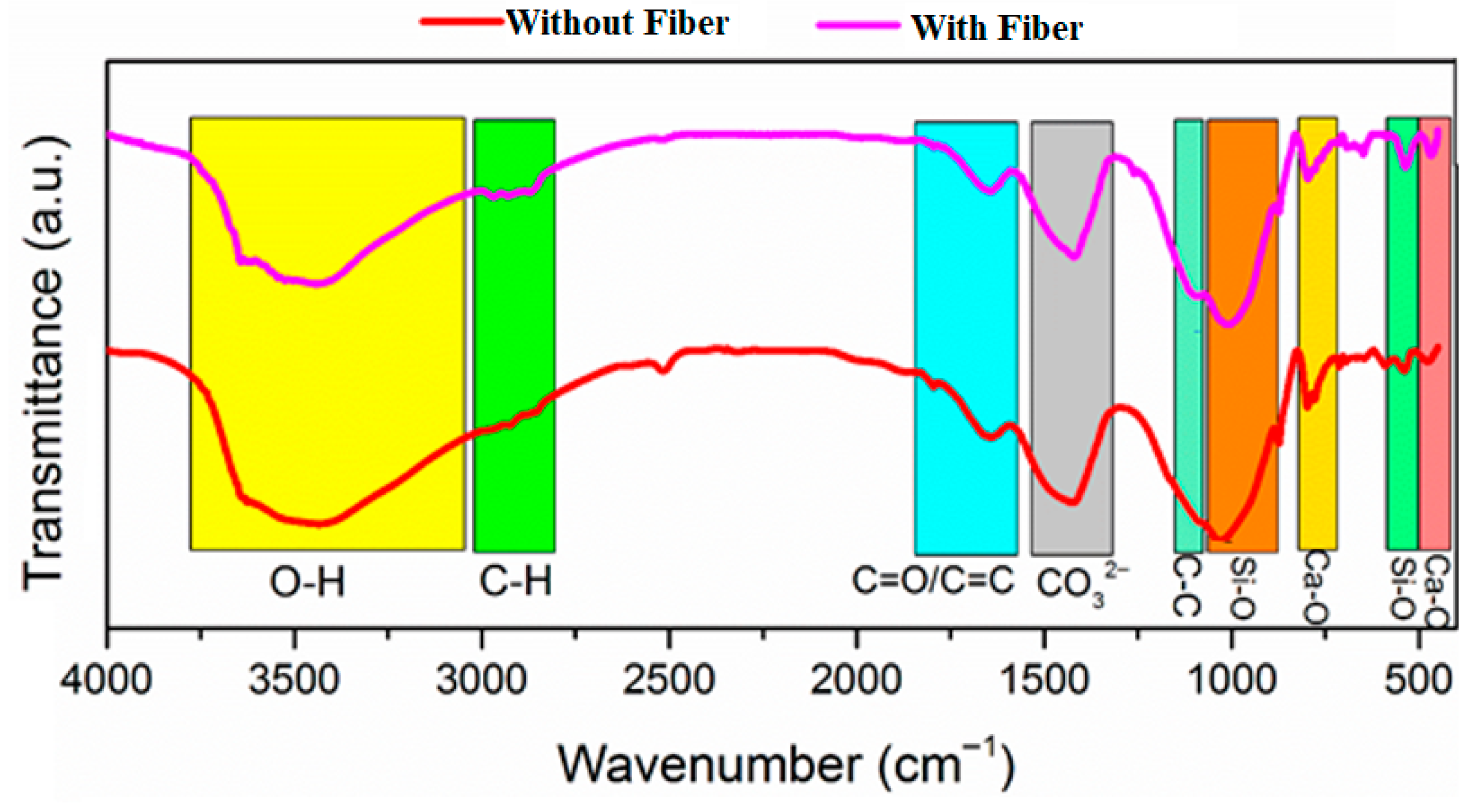
| Wavenumber (cm−1) | Vibrational Mode/Assignment |
|---|---|
| 470 | Symmetric stretching vibration of Ca–O bonds |
| 531 | Symmetric stretching vibration of Si–O bonds |
| 798 | Asymmetric stretching vibration of Ca–O bonds |
| 1014 | Asymmetric stretching vibration of Si–O bonds |
| 1094 | Stretching vibration of C–C bonds |
| 1421 | Stretching vibration of carbonate groups (CaCO32−) and/or rocking vibration of C–H bonds in –CH2 groups |
| 1630–1800 | Symmetric stretching vibration of C=O bonds and/or bending vibration of O–H bonds |
| 2873 | Symmetric stretching vibration of C–H bonds |
| 2923 | Asymmetric stretching vibration of C–H bonds |
| 3445 | Stretching vibration of O–H bonds |
| Condition | Cumulative Pore Volume (mm3/gr) | Pore Specific Surface Area (m2/gr) | Porosity (%) |
|---|---|---|---|
| Normal | 49 | 5.8 | 11.2 |
| Temperature variations | 63 | 8.1 | 14.4 |
| Observed Change After PP Fiber Incorporation | Dominant Role in Permeability | Diameter Range | Pore Type |
|---|---|---|---|
| Virtually unchanged after fiber addition | Contribute negligibly to bulk transport due to molecular-scale confinement | <10 nm | Gel Pores |
| Significantly reduced because of matrix densification induced by PP fibers | Principal pathways controlling water and ion migration through the matrix | 10–1000 nm | Capillary Pores |
| Slightly diminished; fibers limit crack propagation and coalescence | Localized flow channels leading to abrupt increases in permeability under stress | >1000 nm | Macropores/Microcracks |
Disclaimer/Publisher’s Note: The statements, opinions and data contained in all publications are solely those of the individual author(s) and contributor(s) and not of MDPI and/or the editor(s). MDPI and/or the editor(s) disclaim responsibility for any injury to people or property resulting from any ideas, methods, instructions or products referred to in the content. |
© 2026 by the authors. Licensee MDPI, Basel, Switzerland. This article is an open access article distributed under the terms and conditions of the Creative Commons Attribution (CC BY) license.
Share and Cite
Saberi Varzaneh, A.; Naderi, M. Intelligent Modeling of Concrete Permeability Using XGBoost Based on Experimental and Real Data: Evaluation of Pressure, Time, and Severe Conditions. Modelling 2026, 7, 13. https://doi.org/10.3390/modelling7010013
Saberi Varzaneh A, Naderi M. Intelligent Modeling of Concrete Permeability Using XGBoost Based on Experimental and Real Data: Evaluation of Pressure, Time, and Severe Conditions. Modelling. 2026; 7(1):13. https://doi.org/10.3390/modelling7010013
Chicago/Turabian StyleSaberi Varzaneh, Ali, and Mahmood Naderi. 2026. "Intelligent Modeling of Concrete Permeability Using XGBoost Based on Experimental and Real Data: Evaluation of Pressure, Time, and Severe Conditions" Modelling 7, no. 1: 13. https://doi.org/10.3390/modelling7010013
APA StyleSaberi Varzaneh, A., & Naderi, M. (2026). Intelligent Modeling of Concrete Permeability Using XGBoost Based on Experimental and Real Data: Evaluation of Pressure, Time, and Severe Conditions. Modelling, 7(1), 13. https://doi.org/10.3390/modelling7010013