1. Introduction
Owing to their wide bandwidth and high data transmission rate [
1], terahertz waves have emerged as a major research focus in the future 6G communication field. The regulation of terahertz waves is therefore a key issue in the field of terahertz communications [
2,
3]. In this work, we focus on silicon-based terahertz modulators. Benefiting from silicon’s low cost and high compatibility with CMOS technology, such modulators are more conducive to large-scale applications in future communication scenarios. Terahertz modulators are categorized into optical modulators and electrical modulators. Optically controlled modulators exhibit lower insertion loss and, furthermore, are not limited by the resistance–capacitance (RC) time constant of devices [
4], thus offering more advantages over electrically controlled modulators. In recent years, heterojunction engineering has been widely applied in various fields of device fabrication [
5,
6]. Due to the low modulation efficiency of silicon, we combine perovskite with silicon to form a heterojunction, aiming to enhance its electrical conductivity and carrier mobility for improved modulation performance. Perovskite materials have been extensively studied in the photovoltaic field due to their high carrier mobility [
7,
8,
9], and in recent years, they have also been gradually applied to the terahertz field [
9,
10].
Lead-free halide perovskites have gradually replaced traditional lead-based halide perovskites due to their advantages, such as being environmentally friendly, non-toxic, and having a high light absorption coefficient [
11,
12,
13]. In 2020, Zhou et al. developed a novel lead-free halide perovskite—Cs
2CuSbCl
6—and demonstrated that it serves as an excellent light-absorbing layer for perovskite solar cells [
14]. In 2024, Hicham El-Assib et al. obtained a theoretical efficiency of 27% for Cs
2CuSbCl
6-based lead-free double perovskite solar cells via theoretical calculations [
15]. In 2022, Yashaswi Soni et al. confirmed through theoretical calculations that Cs
2CuSbX
6 (X = Cl, Br, I) possesses a high dielectric constant, low electronic effective mass, and high carrier mobility [
16]. However, experimental studies on terahertz devices based on Cs
2CuSbCl
6 have not been reported yet.
This paper applies Cs2CuSbCl6 to the field of terahertz modulation. This work synthesized Cs2CuSbCl6 via a one-pot hot-injection method and measured the terahertz time-domain spectroscopy (THz-TDS) of the Cs2CuSbCl6/Si heterojunction structure in the range of 0.4–1.6 THz under 532 nm laser excitation. The maximum modulation depth experimentally measured reaches 84%.
2. Material Synthesis and Characterization
2.1. Synthesis and Characterization of Cs2CuSbCl6 Sample
Materials: Copper(II) acetate (Cu(OAc)2, purity ≥ 98%, Aladdin, Shanghai, China), antimony(III) acetate (Sb(OAc)3, purity 97%, Aladdin), cesium acetate (Cs(OAc), purity ≥ 95%, Aladdin), trimethylchlorosilane (TMCS, purity 98%, Aladdin), 1-octadecene (purity ≥ 90%, Aladdin), oleic acid (reagent grade, Macklin, Shanghai, China), oleylamine (purity > 90%, Adamas, Shanghai, China), toluene (analytical grade, Tianjin Fuyu Fine Chemical Reagent Co., Ltd., Tianjin, China), n-hexane (analytical grade, Tianjin Fuyu Fine Chemical Reagent Co., Ltd.). All reagents were used without further purification.
Synthesis of Cs2CuSbCl6 nanocrystals via a one-pot hot-injection method: 0.65 mmol of cesium acetate, 0.22 mmol of copper acetate, and 0.5 mmol of antimony acetate were added to a two-necked flask. Subsequently, 10 mL of 1-octadecene, 2.9 mL of oleic acid, and 0.65 mL of oleylamine were introduced into the flask. First, vacuum evacuation was performed at 105 °C for 1 h, followed by heating to 165 °C under a nitrogen atmosphere. At 165 °C, 0.4 mL of trimethylchlorosilane (TMCS) was injected. When the temperature reached 170 °C, the reaction mixture was rapidly quenched in an ice-water bath for 1 min. The resulting solution was centrifuged at 9000 rpm for 10 min, and the supernatant was discarded. The precipitate was washed with 10 mL of toluene three times. Subsequently, the cleaned precipitate was dissolved in 5 mL of n-hexane and sonicated for 10 min. The solution was then centrifuged at 5000 rpm for 10 min, and the supernatant was collected as the Cs2CuSbCl6 nanocrystals.
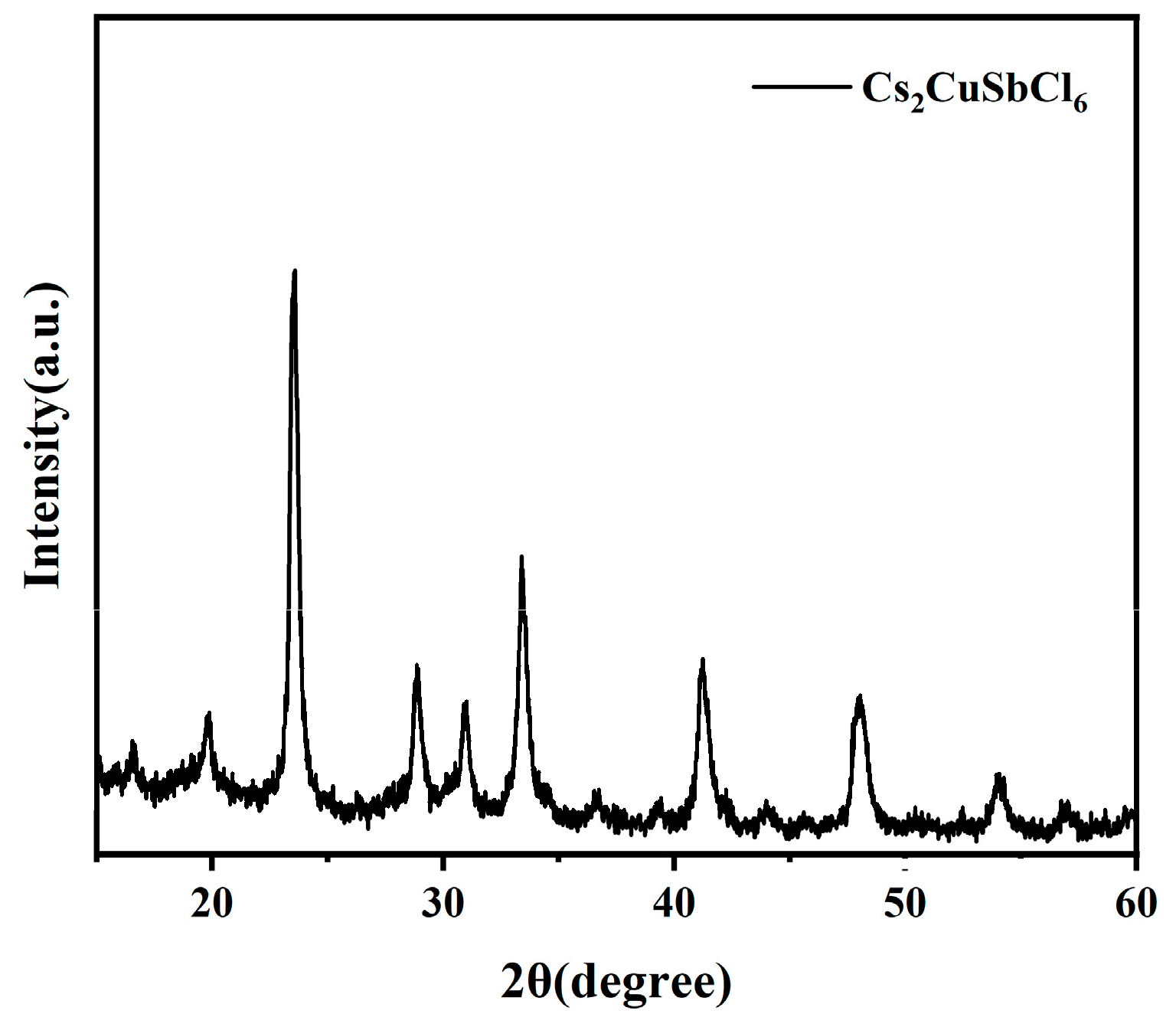
Material Characterization: The nanocrystal precipitate washed with toluene was used for structural characterization via powder X-ray diffraction (XRD) measurements. The results are basically consistent with the XRD pattern reported in the literature [
17], as shown in
Figure 1. In addition, both the absorption spectrum and band gap diagram of the as-synthesized Cs
2CuSbCl
6 nanocrystals are consistent with the literature reports [
17], further verifying the success of the nanocrystal synthesis. The (210) crystal plane was selected for analysis, and the Scherrer equation was employed for calculation. For the (210) plane, the full width at half maximum (FWHM) is 0.3°, the diffraction angle 2θ is 19.7°, and the X-ray wavelength is 0.15406 nm. The calculated grain size is 27 nm, which is consistent with the value reported in Ref. [
17]. In addition, scanning electron microscopy (SEM) experiments were performed on all samples, as detailed in
Supplementary Material Figure S1.
2.2. Preparation of Thin Films
A 10 mm × 10 mm × 500 µm high-resistivity silicon wafer was first ultrasonically cleaned in acetone, absolute ethanol, and deionized water for 30 min each, followed by an ozone treatment in an ozone cleaner for 15 min. The as-prepared Cs2CuSbCl6 nanocrystal solution was sonicated for 5 min to achieve a uniform dispersion of the crystals. Using a pipette, the Cs2CuSbCl6 solution was dropped onto the surface of a bare silicon substrate and spin-coated at a rotation speed of 2000 rpm for 30 s, completing one spin-coating cycle. The thickness of the film was adjusted by increasing the number of spin-coating cycles. After spin-coating, the silicon substrate was placed on an annealing stage for annealing for 30 min. In this experiment, Sample 1 (thin film) was fabricated via three spin-coating cycles followed by annealing at 100 °C. While maintaining the same number of spin-coating cycles, Sample 2 was obtained by annealing at 120 °C; Sample 3 was prepared by annealing at 150 °C with the same spin-coating cycles; Sample 4 was fabricated via annealing at 180 °C under identical spin-coating conditions; and Sample 5 was obtained by annealing at 210 °C while keeping the number of spin-coating cycles unchanged.
The ozone treatment process was conducted using an ozone cleaner (Model: PSD Pro Series, Novascan Technologies Inc., Boone, KY, USA, operating on the principle of UV–light excitation of oxygen to generate ozone) under room temperature and atmospheric pressure. While ultrasonic cleaning can remove most visible impurities, trace organic residues, weakly adsorbed inorganic particles, and metallic contaminants may still remain on the silicon substrate surface. Ozone exhibits strong oxidizing properties and decomposes into reactive oxygen atoms during treatment, which oxidize residual organic matter into CO2 and H2O, while also inducing oxidative modification of inorganic impurities, making them more easily detached from the substrate surface and thereby achieving atomic-level cleanliness of the substrate. Furthermore, after ultrasonic cleaning, the silicon substrate surface remains primarily covered with hydrophobic Si–H groups. Following ozone treatment, these Si–H groups are oxidized into hydrophilic Si–OH groups, which promote better spreading of the solution during spin-coating and improve the quality of the thin film.
2.3. Characterization Technology
The crystal structure of Cs2CuSbCl6 was characterized via X-ray diffraction (XRD, Model SmartLab SE, Rigaku Corporation, Tokyo, Japan). The UV-Vis diffuse reflectance spectrum of the Cs2CuSbCl6 sample was measured using a UV-Vis spectrophotometer (Model UV-2600i, Shimadzu Corporation, Kyoto, Japan). Furthermore, the secondary electron cutoff and valence band edge of the Cs2CuSbCl6 material were investigated via ultraviolet photoelectron spectroscopy (UPS, Model ESCALAB 250 XI, Thermo Fisher Scientific Inc., Waltham MA, USA). The surface and cross-sectional morphology of the Cs2CuSbCl6/Si composite were examined using scanning electron microscopy (SEM, Model Regulus 8100, Hitachi High-Technologies Corporation, Tokyo, Japan).
3. Terahertz Experiment
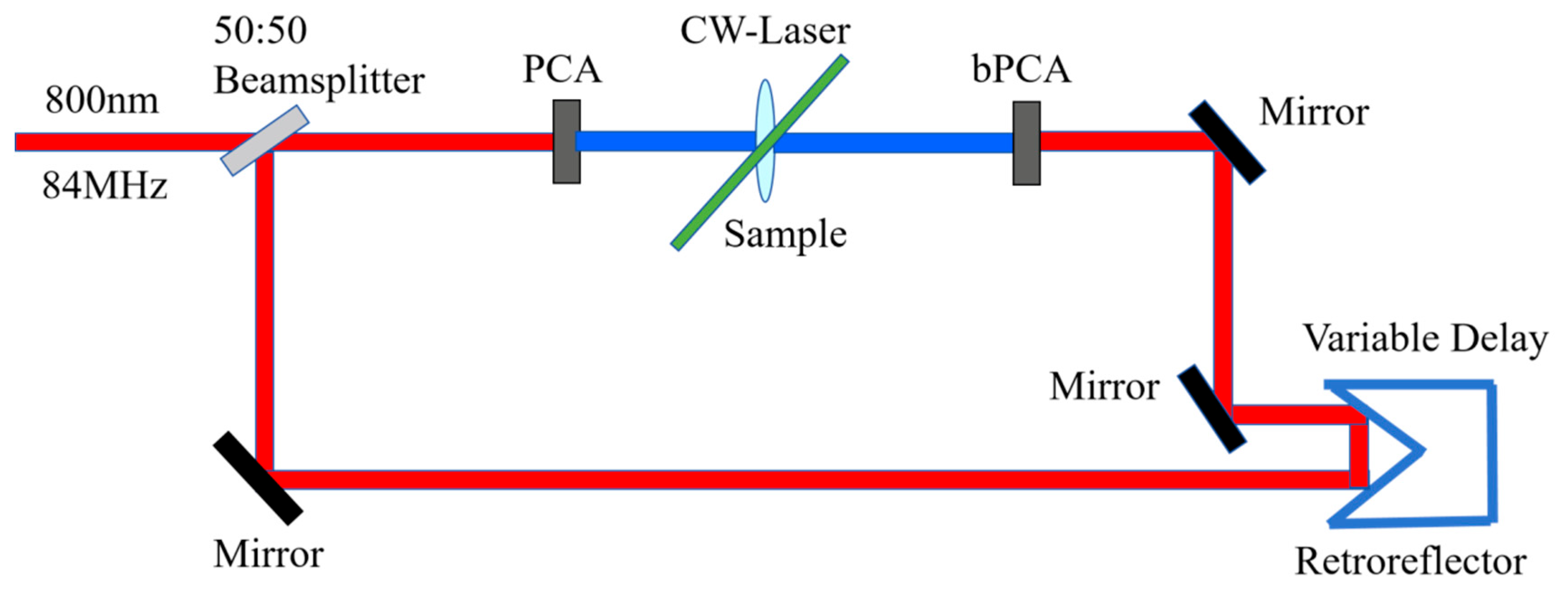
The terahertz time-domain spectroscopy (THz-TDS) of the samples was measured using a home-built THz-TDS system in our laboratory, which is coupled with a continuous-wave (CW) laser system to enable visible light excitation of the samples. The THz-TDS adopts a photoconductive scheme for terahertz generation and detection, utilizing a femtosecond laser with a central wavelength of 800 nm, a pulse duration of 100 fs, and a repetition rate of 84 MHz. The laser beam is split into two beams by a 50:50 beam splitter—one for terahertz generation and the other for terahertz detection. A CW semiconductor laser diode with a wavelength of 532 nm was used as the optical pump source, with a laser spot area of 4.1 cm
2 and a terahertz spot area of 2.4 cm
2. With air as the reference for the background signal, the terahertz time-domain spectra of the samples were measured under different laser power density conditions, and a Fourier transform was applied to extract corresponding information such as frequency and amplitude. The schematic diagram of the experimental setup is shown in
Figure 2.
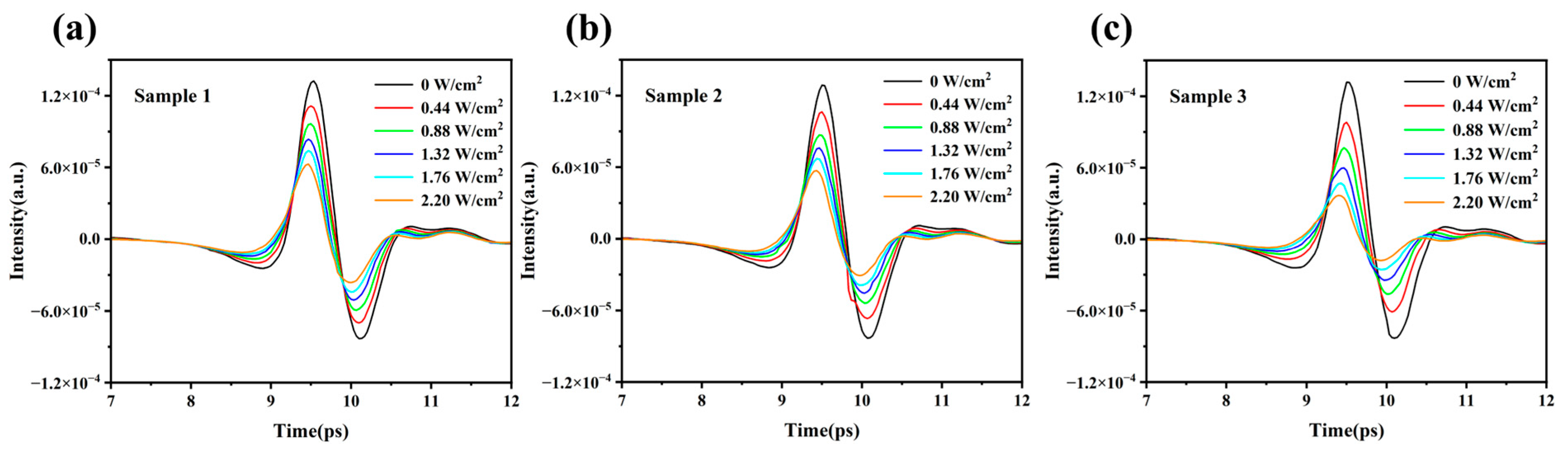
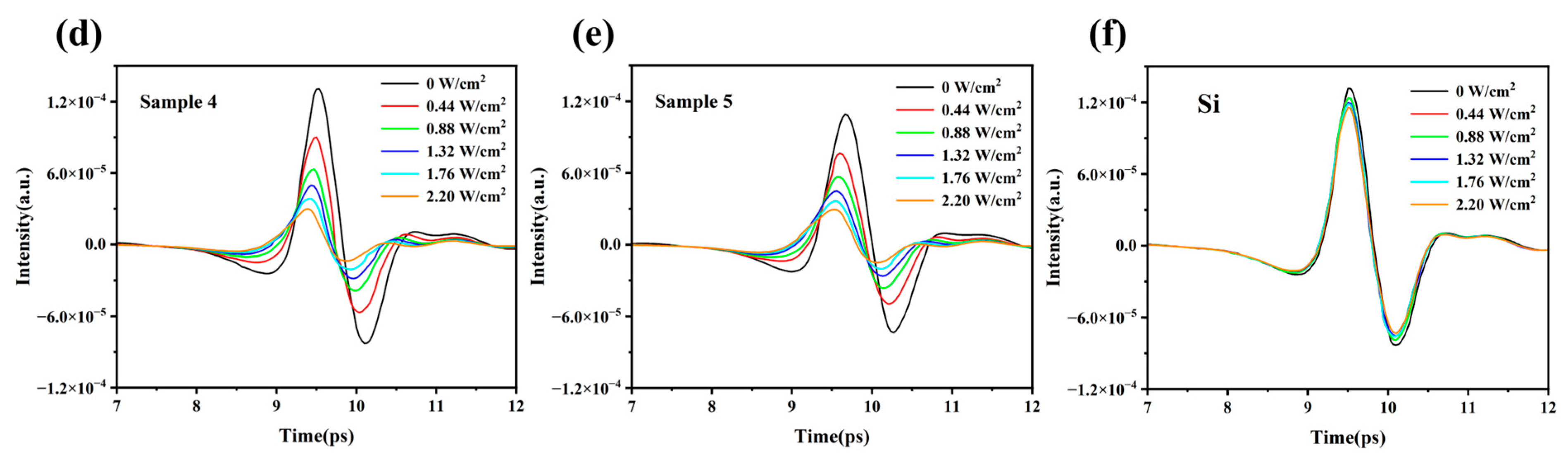
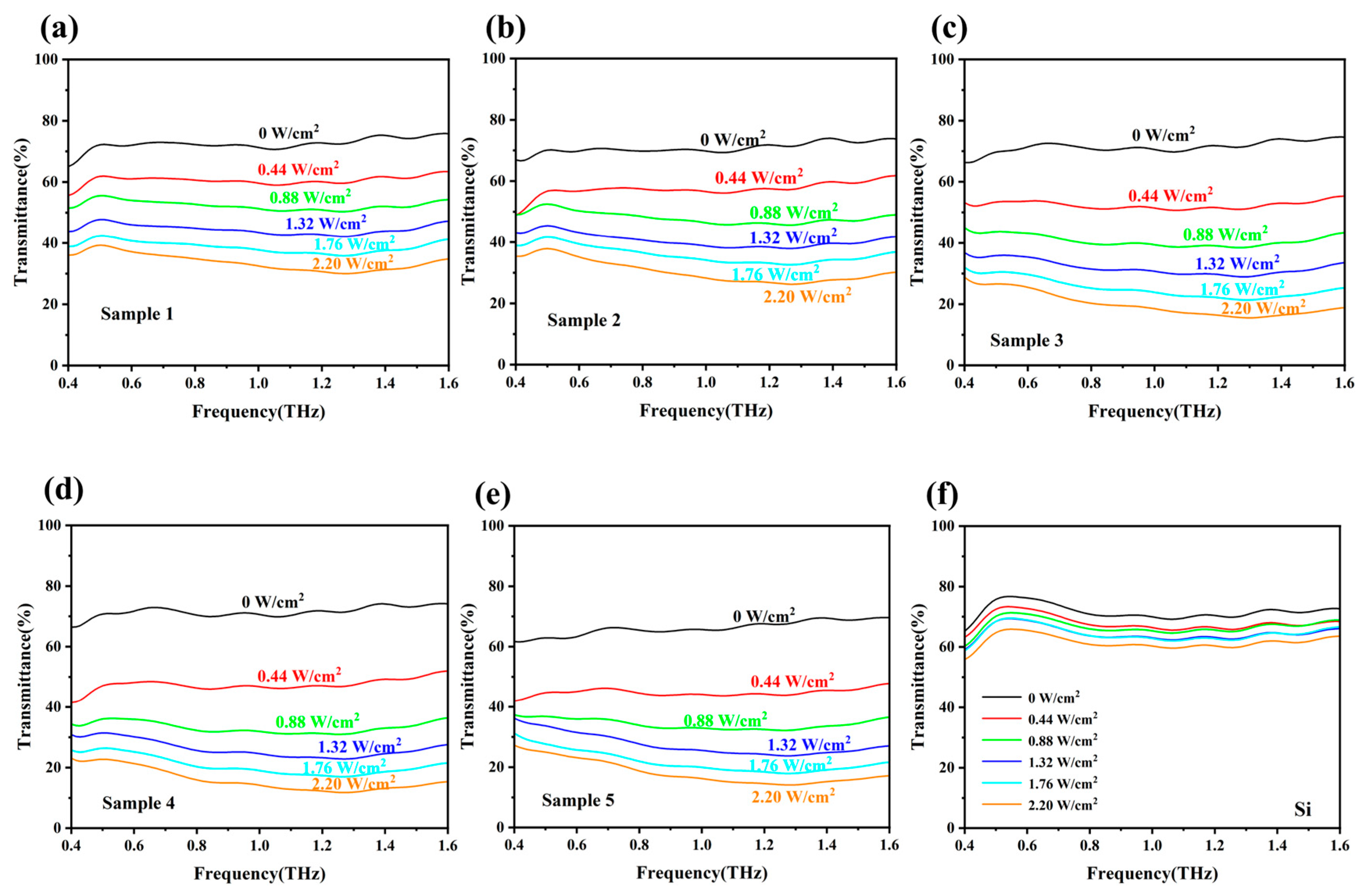
The measured terahertz transmission results are shown in
Figure 3a–f. As the pump laser power density increases continuously, the amplitude of terahertz waves decreases progressively, which indicates that all samples exhibit significant modulation effects on terahertz waves. Among them, Sample 4 demonstrates a superior modulation effect at each pump power. As presented in
Figure 3f, the modulation effect of bare silicon is extremely weak—even at a laser power density of 2.2 W/cm
2, its modulation effect on terahertz waves remains insignificant.
The transmittance T(ω) is calculated using the formula T(ω) = E
s(ω)/E
r(ω), where T(ω) denotes the transmittance of the sample, E
s(ω) represents the Fourier-transformed frequency-domain signal of the sample, and E
r(ω) is the Fourier-transformed frequency-domain signal of air (reference). As shown in
Figure 4, at a pump laser power density of 0, the terahertz transmittance of all samples is nearly identical. With the continuous increase in pump laser power density, the terahertz transmittance of the samples decreases correspondingly. The Fabry–Pérot effect, caused by multiple reflections of terahertz waves inside the sample and at the sample–air interface, leads to obvious fluctuations in the terahertz transmission spectrum. Irradiation of the silicon substrate and Cs
2CuSbCl
6 by the pump laser generates photogenerated carriers, which alter the dielectric constant and electrical conductivity of the material, thereby resulting in a decrease in terahertz transmittance.
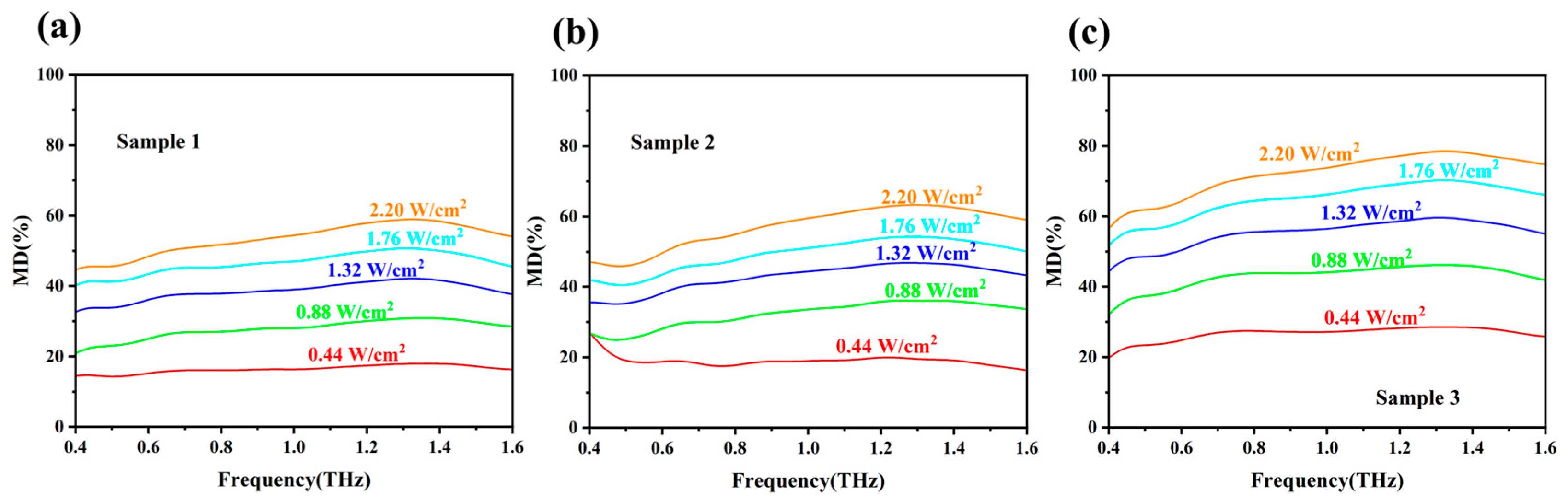
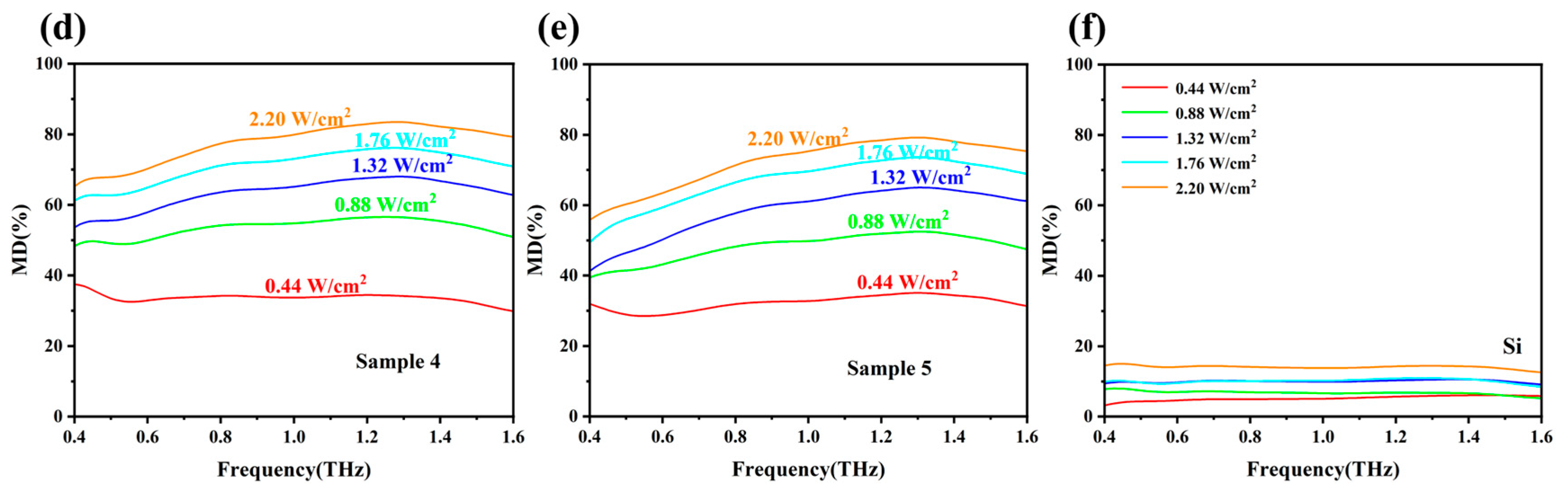
To more intuitively demonstrate the terahertz wave modulation effect, the modulation depth (MD) of the samples was defined and calculated. The modulation depth is derived from the formula
, where T
dark denotes the transmittance of the sample without laser irradiation, and T
laser represents the transmittance with laser irradiation.
Figure 5 presents the broadband terahertz modulation of all samples and the silicon substrate. Under pump light irradiation with the same power density, all samples exhibit a higher modulation depth than the silicon substrate at the same frequency.
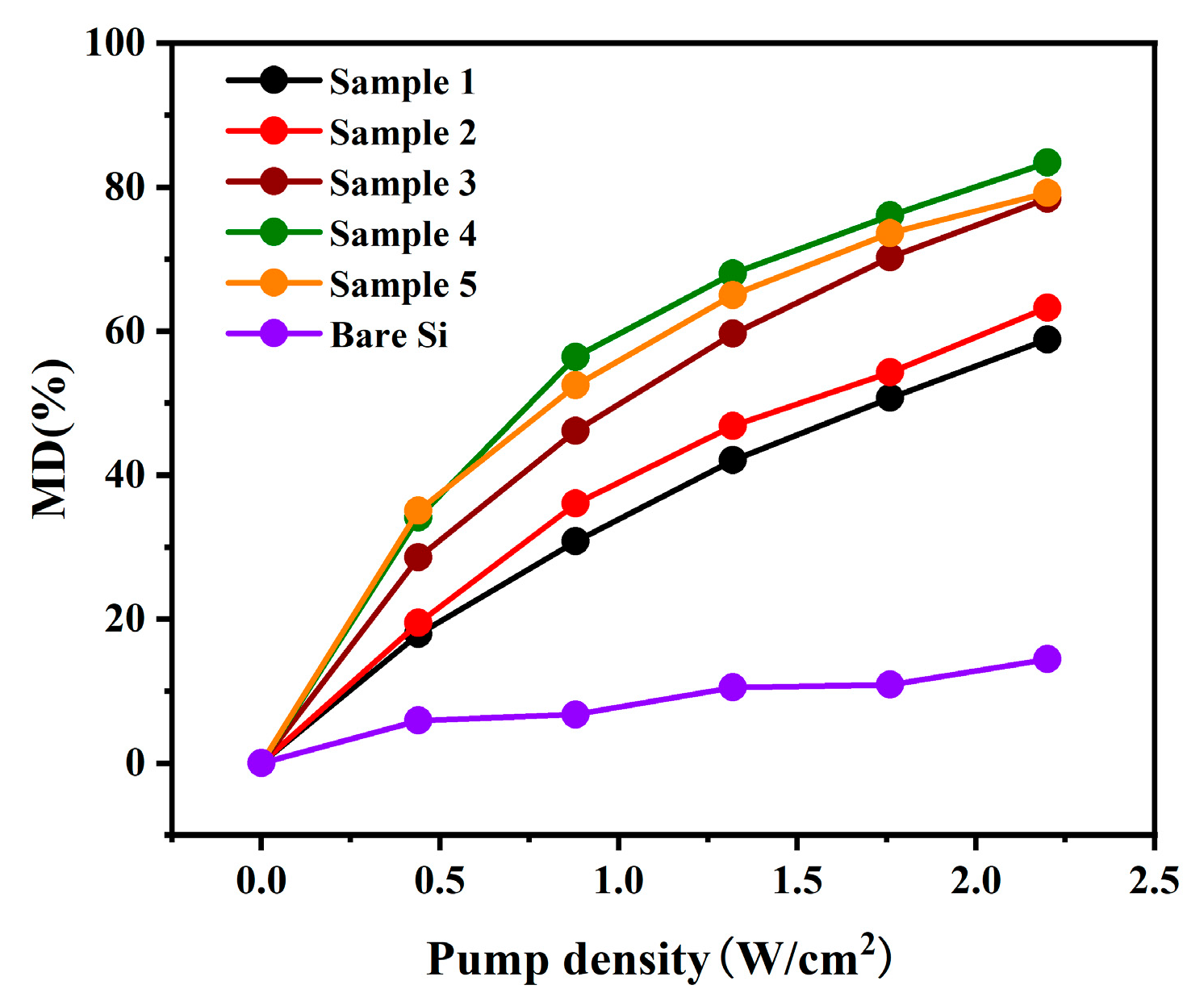
Figure 6 shows the variation in the modulation depth of the samples at 1.3 THz with the pump light power density. As the pump light power density increases, the modulation depth continuously rises, and the growth rate tends to slow down, yet a significant trend of further growth remains. At an irradiation power density of 2.2 W/cm
2, the modulation depth of Sample 4 reaches 84%, while that of bare silicon is only 14%—the modulation depth of the sample is 6 times that of bare silicon. Compared with Sample 4, the modulation depths of Samples 3 and 5 also exceed 78%, whereas those of Samples 1 and 2 are only 59% and 63%, respectively. From the experimental results, it can be concluded that with the increase in annealing temperature, the terahertz modulation effect of the samples gradually enhances and reaches the optimum around 180 °C; as the temperature continues to rise, the modulation effect of the samples decreases thereafter. This indicates that the samples fabricated at an annealing temperature around 180 °C possess excellent terahertz modulation performance. In order to clearly compare the modulation effect of this silicon-based Cs
2CuSbCl
6 modulator,
Table 1 summarizes the modulation performance of various recently reported terahertz modulators based on silicon and perovskite materials. From this, it can be seen that the modulation performance of this silicon-based Cs
2CuSbCl
6 modulator is at a relatively favorable level.
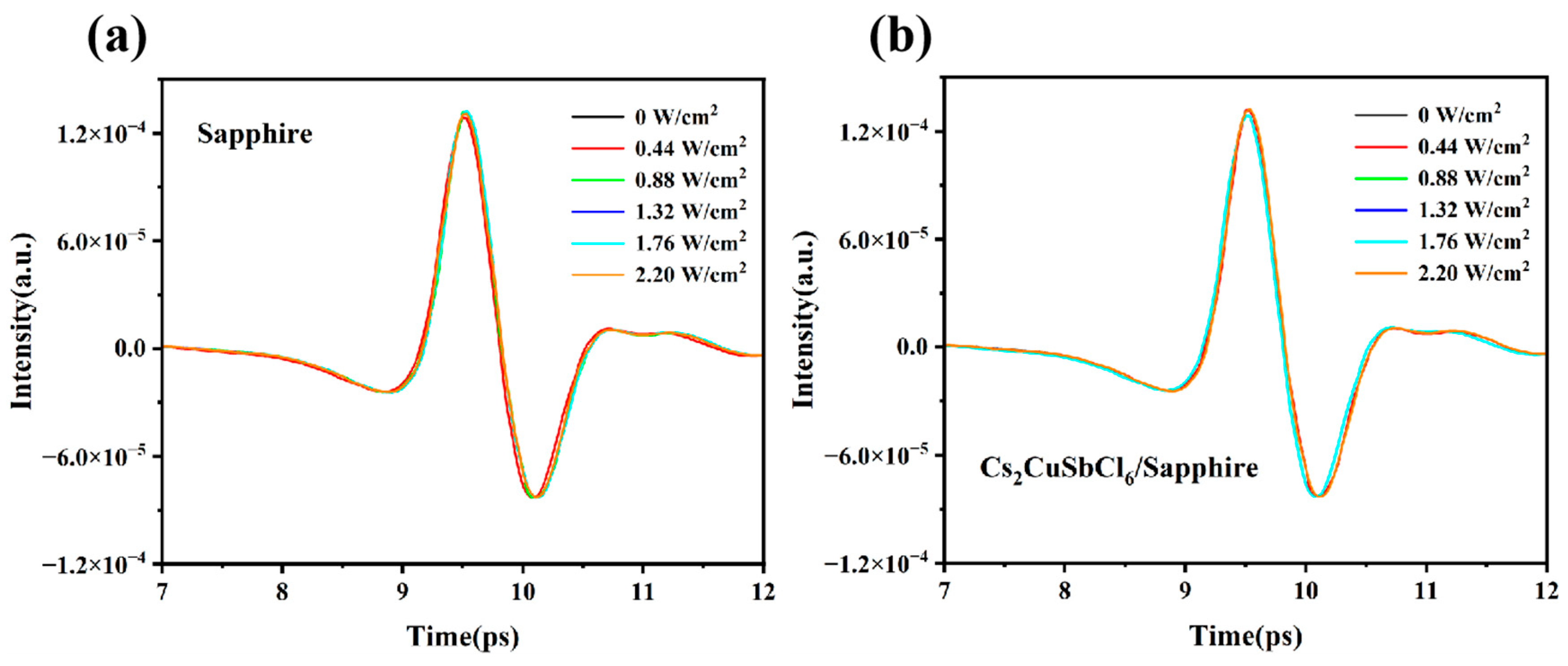
To determine the modulation mechanism of the samples, additional terahertz experiments on Cs
2CuSbCl
6/sapphire were conducted, and the results are shown in
Figure 7. It can be observed that sapphire exhibits no modulation effect on terahertz waves, and the Cs
2CuSbCl
6/sapphire structure also shows no terahertz modulation capability. Sapphire has a band gap of 9 eV and acts as an insulator, which cannot form a heterojunction structure with Cs
2CuSbCl
6. Thus, the terahertz modulation of the Cs
2CuSbCl
6/sapphire structure would primarily be attributed to Cs
2CuSbCl
6 itself. However, the experimental results indicate that Cs
2CuSbCl
6 alone does not induce terahertz optical modulation. It is therefore evident that the modulation effect of the Cs
2CuSbCl
6/Si device originates primarily from the Cs
2CuSbCl
6/Si heterojunction.
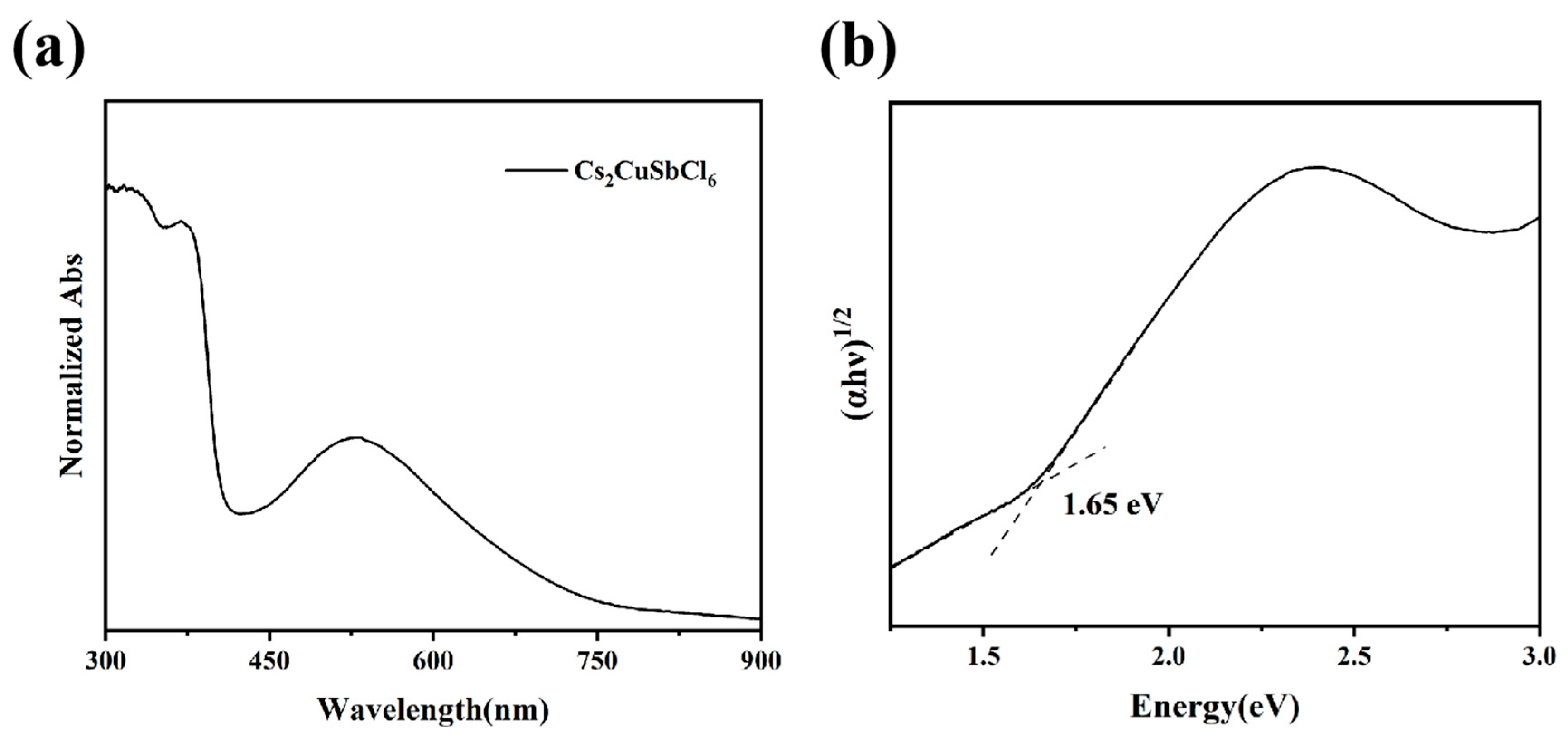
Figure 8 presents the absorption spectrum and Tauc plot of the Cs
2CuSbCl
6 nanocrystals. Both the absorption spectrum and the Tauc plot are consistent with the literature reports, further verifying the successful synthesis of the nanocrystals. Due to the weak absorption of the 532 nm pump laser by the Cs
2CuSbCl
6 film, based on the above analysis, the majority of photogenerated carriers are generated in the silicon substrate. Experimental observations reveal that under laser irradiation, the attenuation of the terahertz wave intensity transmitted through the Cs
2CuSbCl
6 thin-film sample is significantly higher than that through bare silicon materials. Combined with the analysis of steady-state conductivity and terahertz modulation trends, we infer that this phenomenon is associated with the enhanced carrier lifetime, and the relevant analysis is as follows:
This phenomenon is most likely attributed to the heterojunction formed at the interface between the Cs2CuSbCl6 thin film and the silicon substrate. Given the Fermi level difference between the Cs2CuSbCl6 thin film and the silicon substrate, electrons are likely to migrate from the region with a higher Fermi level to that with a lower one, thereby potentially inducing carrier diffusion. Such diffusion may further lead to the formation of a space charge region and the generation of a built-in electric field. It is inferred that the presence of this built-in electric field can trigger carrier drift, and ultimately, a dynamic equilibrium may be established between diffusion and drift motions.
Consistent with the analysis of steady-state conductivity and terahertz modulation trends, our inference suggests that the diffusion and drift of electrons can extend the carrier lifetime, which in turn may enhance the terahertz modulation effect. Analysis indicates that the built-in electric field of the Cs2CuSbCl6/Si heterojunction can significantly facilitate carrier transport; furthermore, based on the inferences from steady-state conductivity and terahertz modulation trends, both carrier mobility and lifetime exhibit an increasing trend. This heterojunction structure is expected to optimize the overall device architecture and improve carrier transport behavior, thereby potentially enhancing the comprehensive performance of the device. Experimental tests demonstrate that the performance of the Cs2CuSbCl6/Si heterojunction device is approximately six times that of the bare silicon device.
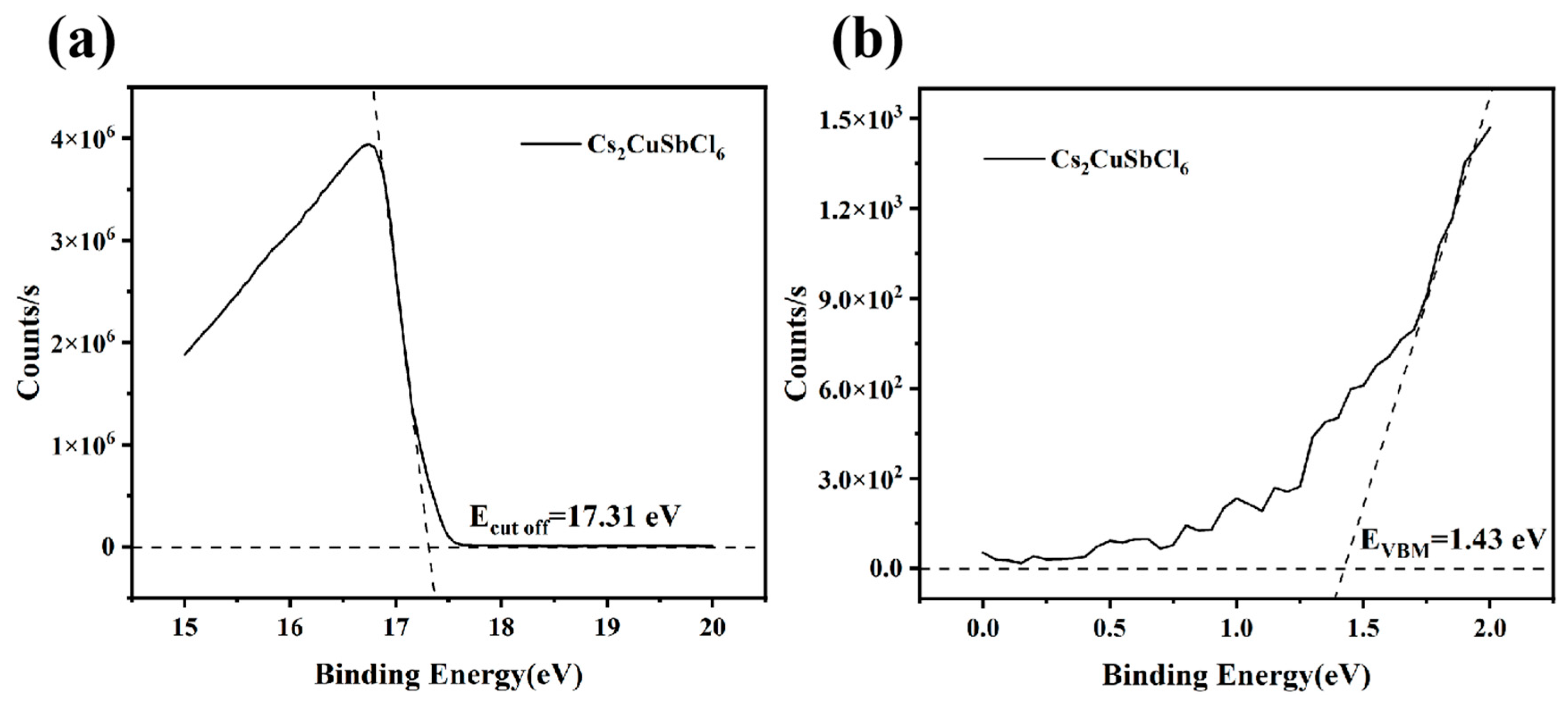
To verify the above viewpoint and elaborate on the carrier transport mechanism in the samples, the band gap and vacuum level of Cs
2CuSbCl
6 were determined using absorption spectroscopy and photoelectron spectroscopy, and their heterojunction structure diagram was presented. The absorption spectrum and band gap diagram are shown in
Figure 8, while the ultraviolet photoelectron spectroscopy (UPS) spectrum is illustrated in
Figure 9. Based on the UPS data, the valence band maximum (E
VBM) and secondary electron cutoff edge (E
cutoff) of Cs
2CuSbCl
6 were derived. Using the formula work function Φ = 21.22 − E
cutoff (where 21.22 eV corresponds to the photon energy of the He I excitation source in UPS), the work function of Cs
2CuSbCl
6 was calculated to be 3.91 eV.
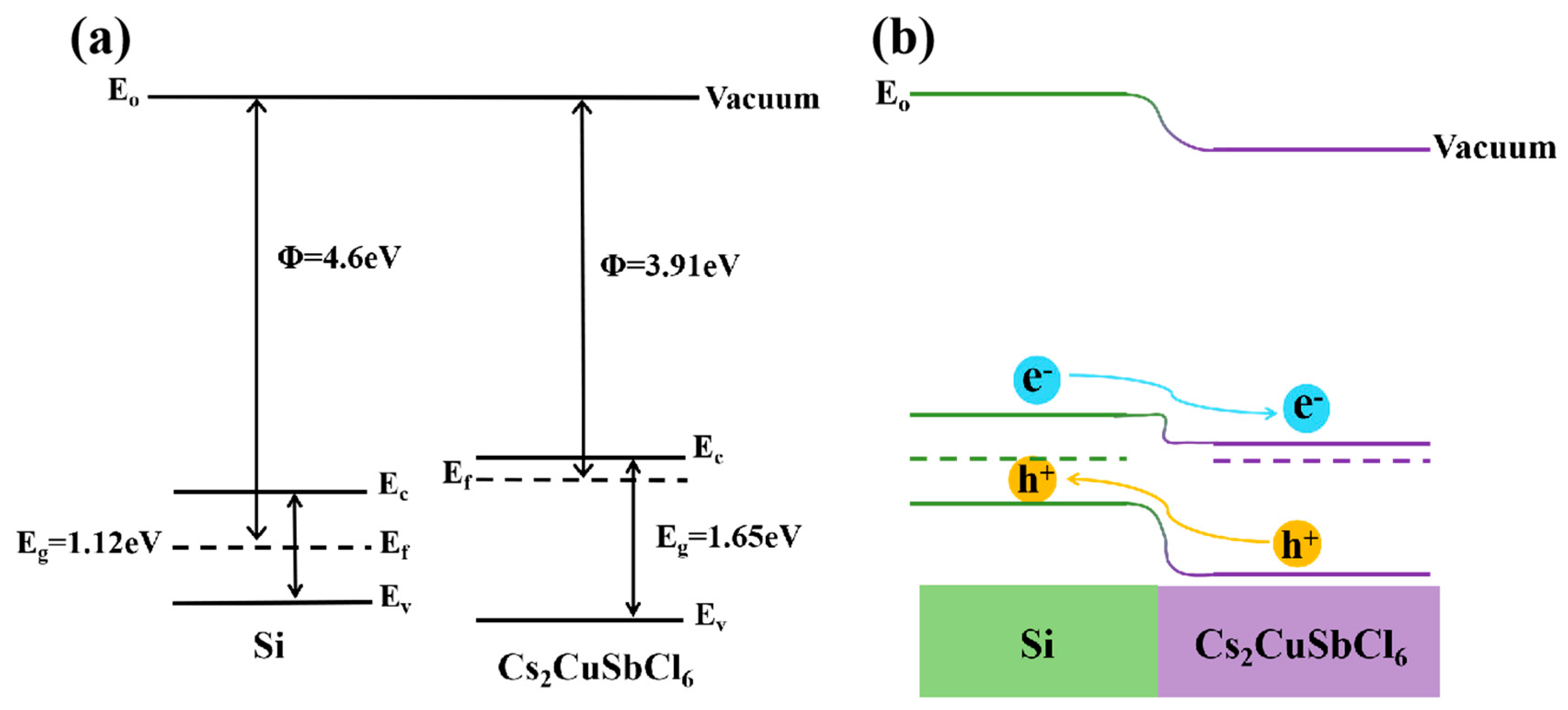
Thus, the key energy level parameters of Cs
2CuSbCl
6 are summarized as follows: work function (Φ) = 3.91 eV, conduction band minimum (E
c) = −5.34 eV, valence band maximum (E
v) = −3.69 eV, Fermi level (E
f) = −3.91 eV, and band gap (E
g) = 1.65 eV. For bare silicon, the corresponding parameters are known to be Φ = 4.6 eV, E
c = −4.04 eV, E
v = −5.16 eV, E
f = −4.6 eV, and E
g = 1.12 eV. The vacuum level was set to 0 eV. Their energy level diagram and heterojunction structure diagram are shown in
Figure 10.
As can be seen from the figures, the Cs
2CuSbCl
6 thin film forms a Type-II heterojunction with intrinsic silicon—this structure is conducive to the separation of photogenerated carriers. When the two materials are in contact, under thermal equilibrium, electrons initially migrate from Cs
2CuSbCl
6 to silicon until the Fermi levels of Cs
2CuSbCl
6 and silicon align, forming the heterojunction structure illustrated in
Figure 10b. Under the influence of the built-in electric field, electrons are likely to flow from silicon to Cs
2CuSbCl
6, while holes tend to migrate from Cs
2CuSbCl
6 to silicon. This spatial separation of electrons and holes can enhance the polarizability of the sample to some degree, while concomitantly reducing the electron–hole recombination rate. Building on the analysis of steady-state conductivity and terahertz modulation trends, we deduce that this process can effectively extend the carrier lifetime. Meanwhile, the conductivity and dielectric constant of the sample are also expected to exhibit an upward trend. In light of the above inference, the refractive index and terahertz absorption rate of the sample are likely to increase correspondingly, and the terahertz modulation effect can be significantly optimized.
The relationship between the terahertz transmittance T(ω) and complex conductivity σ(ω) of the Cs
2CuSbCl
6/Si photoexcited layer is expressed as [
18,
19]
, where σ denotes the complex conductivity of the sample, Z
0 is the free-space impedance (Z
0 = 377 Ω), N is the refractive index of the silicon substrate (N = 3.42), and d is the thickness of the photoexcited layer. Under 532 nm continuous-wave laser excitation, the penetration depth of silicon is approximately 1 μm [
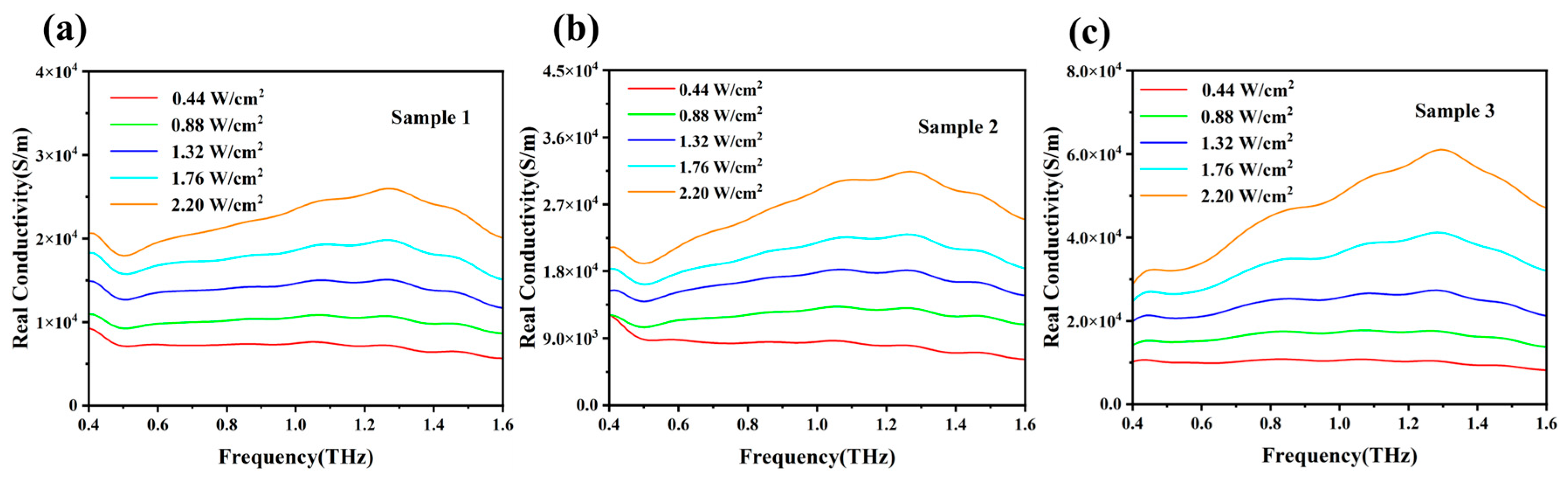
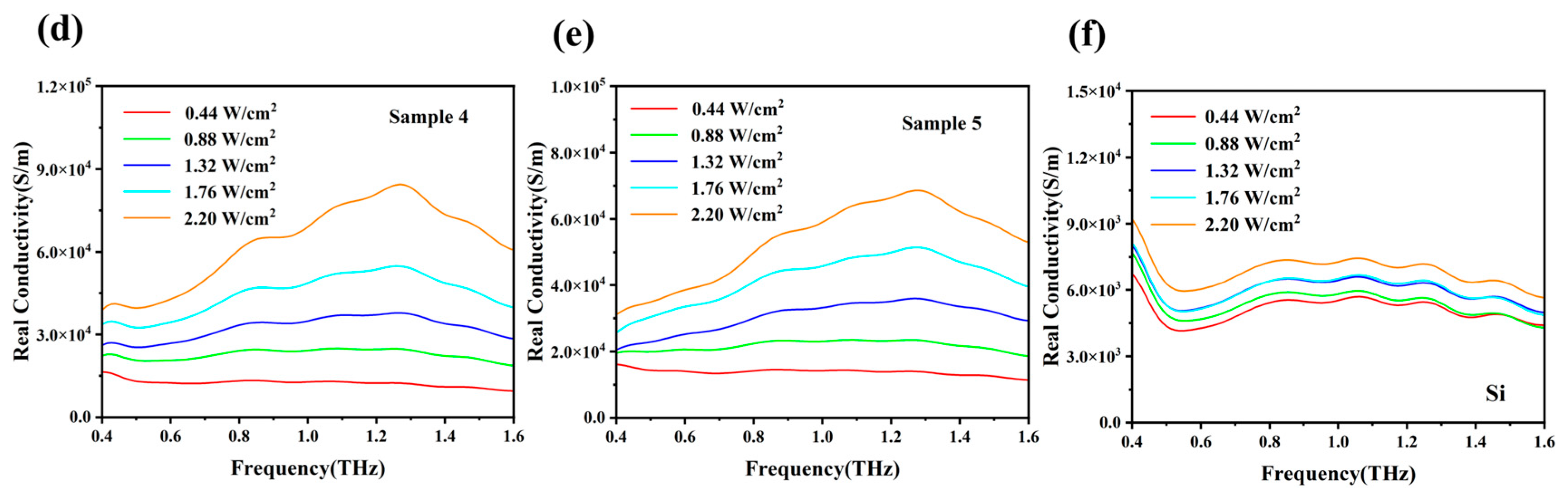
20], as shown in
Figure 11.
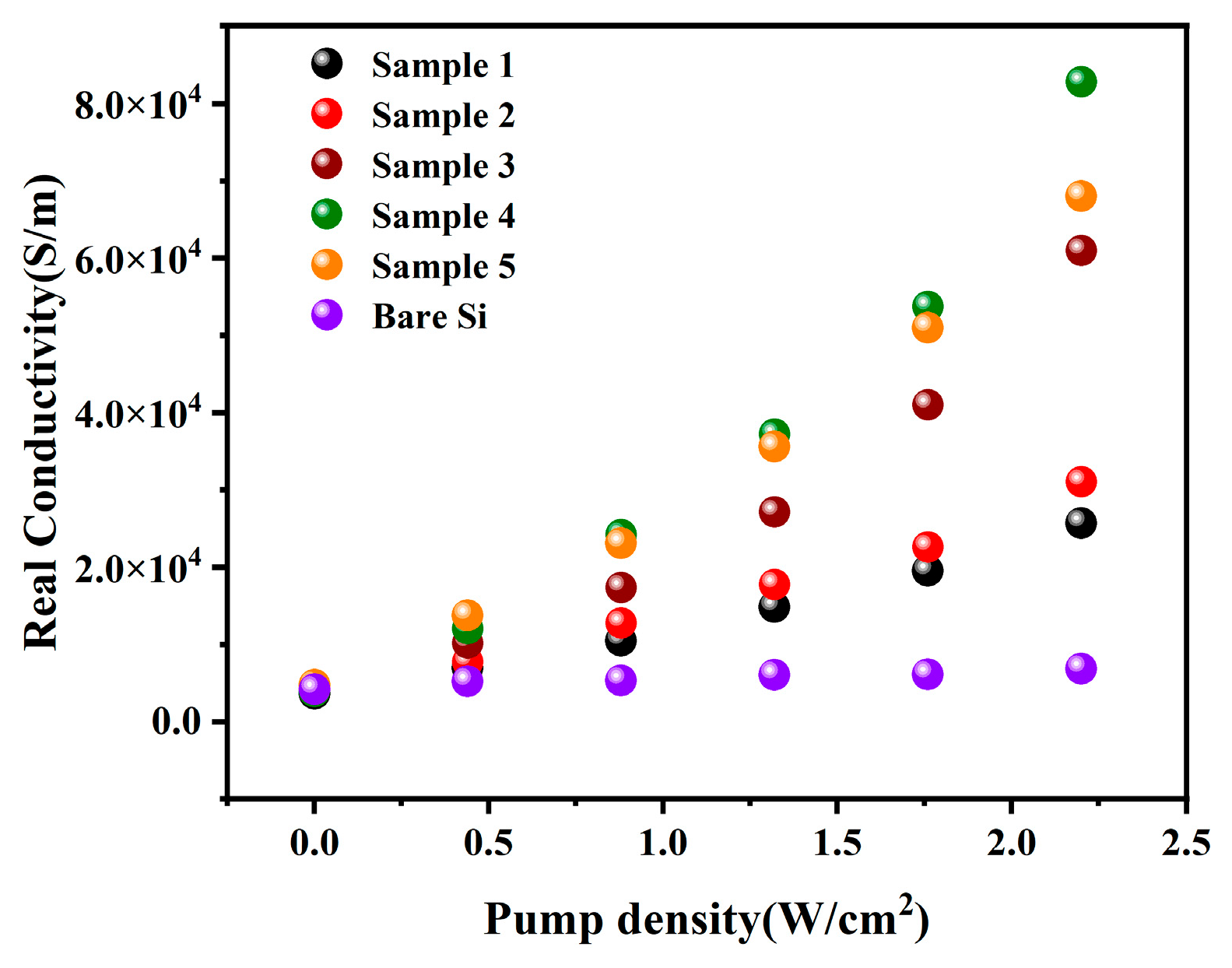
Under laser irradiation, the conductivity of all samples increases significantly with the increase in laser power density, which is attributed to the enhancement of carrier concentration.
Figure 12 presents the variation in sample conductivity at 1.3 THz with increasing pump power. At a laser power density of 2.2 W/cm
2, the conductivity of Sample 4 reaches 8.4 × 10
4 S/m, which is approximately 12 times that of bare silicon.
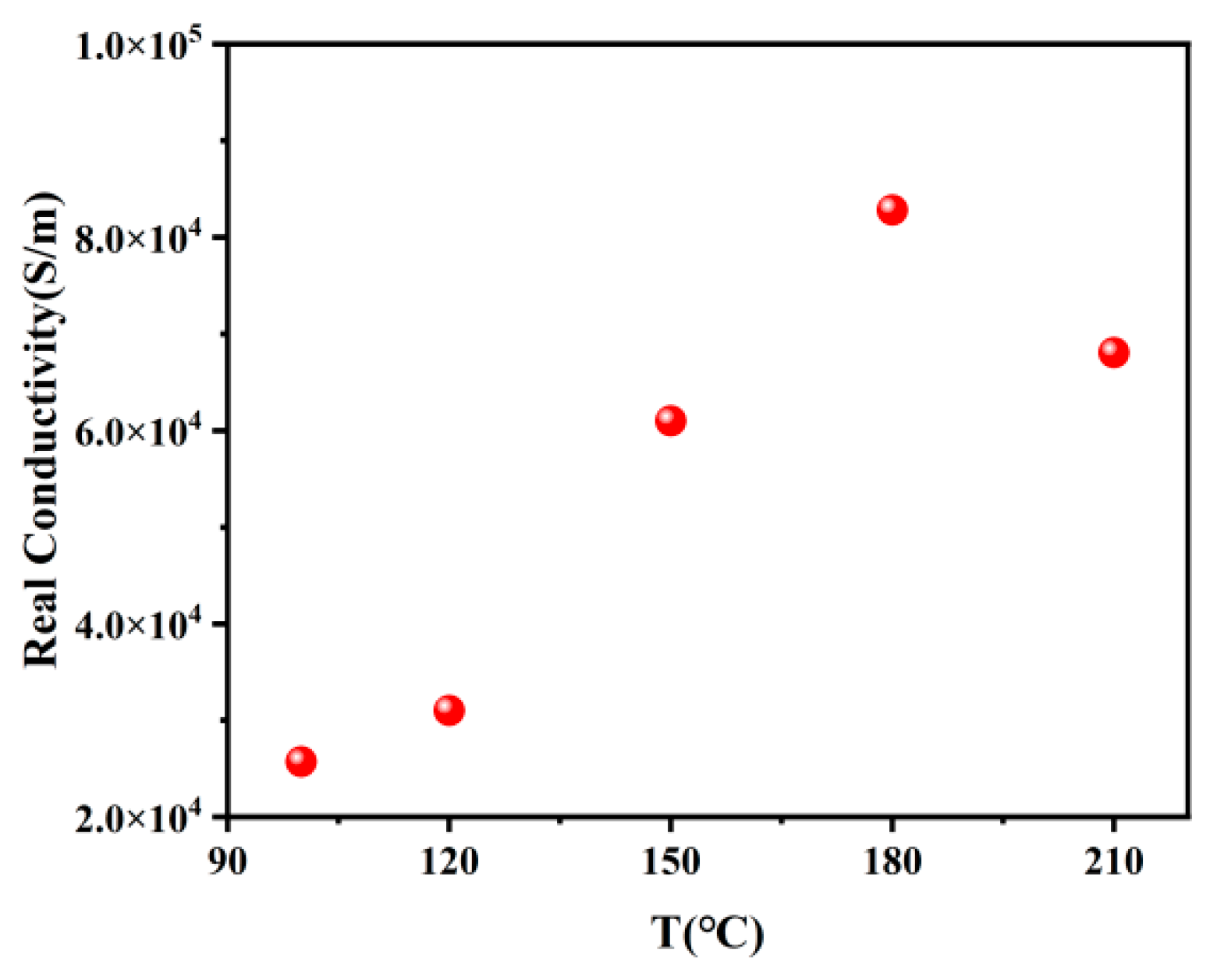
Figure 13 illustrates the conductivity of different samples at 1.3 THz under a laser power density of 2.2 W/cm
2. The conductivity of the samples first increases and then decreases with the rise in annealing temperature, reaching a peak at 180 °C—this trend is consistent with the variation in terahertz modulation depth reported earlier.
We speculate that the annealing temperature affects the compactness of the thin film and the number of interface defects. A dense thin film cannot be formed at lower annealing temperatures, resulting in a smaller contact area between Cs2CuSbCl6 and the silicon substrate, and thus an insignificant heterojunction effect. In contrast, higher annealing temperatures may induce more interface defects, which hinder carrier transport and mobility, thereby affecting carrier concentration and weakening the terahertz modulation effect of the samples.
In addition, it can be seen from the absorption spectrum that the absorption peaks of Cs
2CuSbCl
6 are mainly located in the high-frequency ultraviolet (UV) region. We speculate that better modulation performance will be achieved if ultraviolet light modulation is adopted. The electron–hole pair generation rate per unit time and unit area in Cs
2CuSbCl
6, denoted as N, can be expressed as [
19]
, where P represents the laser power, R is the reflectivity of the sample to the laser, S is the irradiated area, hν denotes the photon energy of the laser, and α is the absorption coefficient of Cs
2CuSbCl
6.
It can be inferred from this that the electron–hole pair generation rate of Cs2CuSbCl6 is higher under ultraviolet light, thereby resulting in a larger total number of photogenerated carriers. The average total number of photogenerated carriers can be expressed as , where n and p denote the number of electrons and holes, respectively; τ is the average lifetime of photogenerated carriers; and d is the effective thickness involved in optical modulation. As can be seen from the above formulas, the high absorption of high-frequency light by the sample leads to a higher carrier concentration, which in turn enhances the modulation depth.