Article

Baited-Associated Aggregation of Spinner Sharks in Hulhumale, Maldives: Preliminary Observations and Photo-Identification Tools


1
Sharks Studies Centre-Scientific Institute, 58024 Massa Marittima, Italy
2
Department of Information Engineering, Computer Science, and Mathematics, University of L’Aquila, 67100 L’Aquila, Italy
3
Istituto Zooprofilattico Sperimentale delle Venezie, 35020 Legnaro, Italy
4
Department of Physical Sciences, Earth and Environment, University of Siena, 53100 Siena, Italy
*
Author to whom correspondence should be addressed.
Oceans 2026, 7(2), 22; https://doi.org/10.3390/oceans7020022
Submission received: 14 January 2026 / Revised: 13 February 2026 / Accepted: 26 February 2026 / Published: 2 March 2026

Abstract

The spinner shark is a widely distributed coastal species that faces significant anthropogenic pressures, yet information on its ecology in the western Indian Ocean remains poorly documented. This study provides preliminary baseline observations on temporal occurrence, sex ratio, and size distribution of a bait-attracted spinner shark aggregation in Hulhumale (North Malé Atoll, Maldives) and presents the first individual-level photo-identification (photo-ID) catalogue for the species based on underwater observations. Surveys were conducted in November 2024 and November 2025 using underwater photography, video recordings, and laser photogrammetry. In total, 69 individual spinner sharks were identified using the standard photo-ID protocol which proved to be valid. On the contrary, the preliminary application of the semi-automatic Identifin software indicated possible effectiveness for individual recognition; however, its performance cannot be reliably validated in this area because of poor image quality and environmental turbidity. Six individuals were re-sighted across years, demonstrating the feasibility of non-invasive repeated, long-term monitoring through photo-ID. Although interannual variation in sex ratio of sharks observed was detected (χ2 = 10.56, p = 0.0012), this pattern should be interpreted cautiously due to provisioning-related sampling bias and unequal sampling effort across years. Total length measurements (n = 28) indicated predominantly adult and subadult individuals, with no apparent interannual differences in size distributions. Overall, this study establishes a methodological baseline for spinner shark photo-ID in the Maldives and highlights the importance of multi-year and multi-season monitoring to robustly evaluate aggregation dynamics, site fidelity, and population-level patterns in this region.

1. Introduction

The spinner shark Carcharhinus brevipinna (Müller & Henle, 1839) is frequently found in coastal and nearshore areas of warm-temperate, subtropical, and tropical regions worldwide [1,2,3], making it particularly vulnerable to anthropogenic pressures [2]. Although information on various biological aspects of the spinner shark is available [4,5,6,7,8,9,10,11,12,13,14,15,16,17,18], most existing knowledge is based on fisheries bycatch or opportunistic datasets, giving partial resolution on habitat use and fine-scale ecology [19].
Size at sexual maturity in the spinner shark varies substantially among regions, a pattern likely driven chiefly by differences in methodological approaches among studies, with additional effects from ecological factors—such as temperature, prey availability, and fishing pressure—and variation in population structure across its range [5,6,7,9,16,19]. Therefore, regional estimates should be interpreted independently, as relying on a single global maturity threshold may obscure spatial variability relevant for management and conservation. For example, in the western Indian Ocean, data from protective shark control nets along the KwaZulu-Natal coast (South Africa) indicate that both sexes reach maturity at around 200–210 cm total length (TL) [6,19], whereas earlier studies reported smaller adult sizes in Sri Lanka (approximately 160 cm TL) [20] and maturity ranges of 176–200 cm TL for males and 212–266 cm TL for females in South Africa [21].
Spinner sharks have been observed forming aggregations in multiple regions, often associated with specific behavioural contexts such as foraging, mating, habitat use by juveniles, or thermal habitat selection [4,7,11,19,22,23,24]. These aggregations may vary in sex ratio and maturity composition, although most available information come from indirect or opportunistic sampling (e.g., shark control programs, fisheries bycatch, and baited surveys), which may bias estimates of aggregation size, composition, and inferred behavioural context [19,25]. In the Maldives, information on spinner shark aggregations remains scarce and limited to a single documented occurrence in the southern region of the archipelago [25]. For instance, the presence of the spinner shark in the Maldives was scientifically confirmed for the first time only in 2020, in waters off Kooddoo Harbour (Villingili Pass, Northern Huvadhoo Atoll, southern Maldives, western Indian Ocean) [25]. Under provisioning conditions, Russo and De Maddalena [25] documented approximately 40 individuals over a two-day survey using video recordings, with visually estimated TLs ranging from 150 to 200 cm. Species identification was primarily based on morphological characteristics, and the aggregation was composed predominantly of females [25]. Prior to this record, 36 shark species had been reported from the Maldives, including 13 requiem sharks (family Carcharhinidae); however, the spinner shark had never been listed among them [26,27,28,29,30]. The absence of earlier records may be attributed either to misidentification with morphologically similar species, such as the blacktip shark Carcharhinus limbatus (Müller & Henle, 1839), or to the lack of targeted surveys in the waters of the Maldives [5,9,25,31,32].
Sharks are key components of marine ecosystems, and gaining a better understanding of their ecology is essential for monitoring population trends and supporting management and conservation measures, including the designation of Marine Protected Areas [33,34]. Identifying bait-attracted aggregation areas can offer valuable baseline information on species presence and size structure, particularly in regions with limited data, such as the Maldives [25]. Although baiting may introduce biases in population-level estimates, such observations still provide valuable insights into spinner shark ecology and contribute to shaping future targeted and standardized monitoring efforts [25].
Photo-identification (photo-ID) is a non-invasive technique widely applied to several shark species [35] and represents an effective method for documenting demographic research through individual-specific natural markings or scars, thereby enabling the compilation of reference catalogues for comparison across subsequent encounters [36]. Photo-ID can be based on natural markings (e.g., spots and dark pigmentation patterns on the body or fin tips), fin morphology (e.g., notches, deformities, or truncated fins), scars (e.g., wounds, scratches, or depigmented areas), and ventral pigmentation patterns [35,37,38,39,40,41,42,43,44,45,46]. Despite recent advances in drone-based monitoring and high-definition underwater video, no published studies to date have developed an individual-level photo-ID catalogue for the spinner shark (e.g., based on dorsal-fin trailing-edge notches or pigmentation patterns) comparable to those routinely employed for other shark species, such as whale sharks, tiger sharks, white sharks, and grey reef sharks [35,43,44,45,46]. As a result, most demographic parameters for this species still rely on lethal or opportunistic sampling methods, including shark control programs, fisheries landings, and stranded or landed gravid females [12,14,19,23]. This methodological gap currently limits the assessments of survivorship, individual site fidelity, and social structure using non-lethal approaches. Accurate individual identification combined with repeated re-sightings and strong site fidelity could eventually support long-term ecological and behavioural studies [36]. However, most reproductive parameters needed for demographic modelling (e.g., female maturity, brood size, and fecundity) would still require direct biological sampling and cannot be inferred from photo-ID alone [36].
Here, we present a preliminary photo-ID framework for identifying individual spinner sharks and offer baseline observations on a bait-attracted aggregation at Hulhumale, Maldives. Specifically, we (i) evaluate the feasibility of photo-ID for the spinner shark and (ii) document temporal patterns of their presence at the study site to guide future monitoring and research on the species’ ecology in the region.

2. Materials and Methods

2.1. Study Site

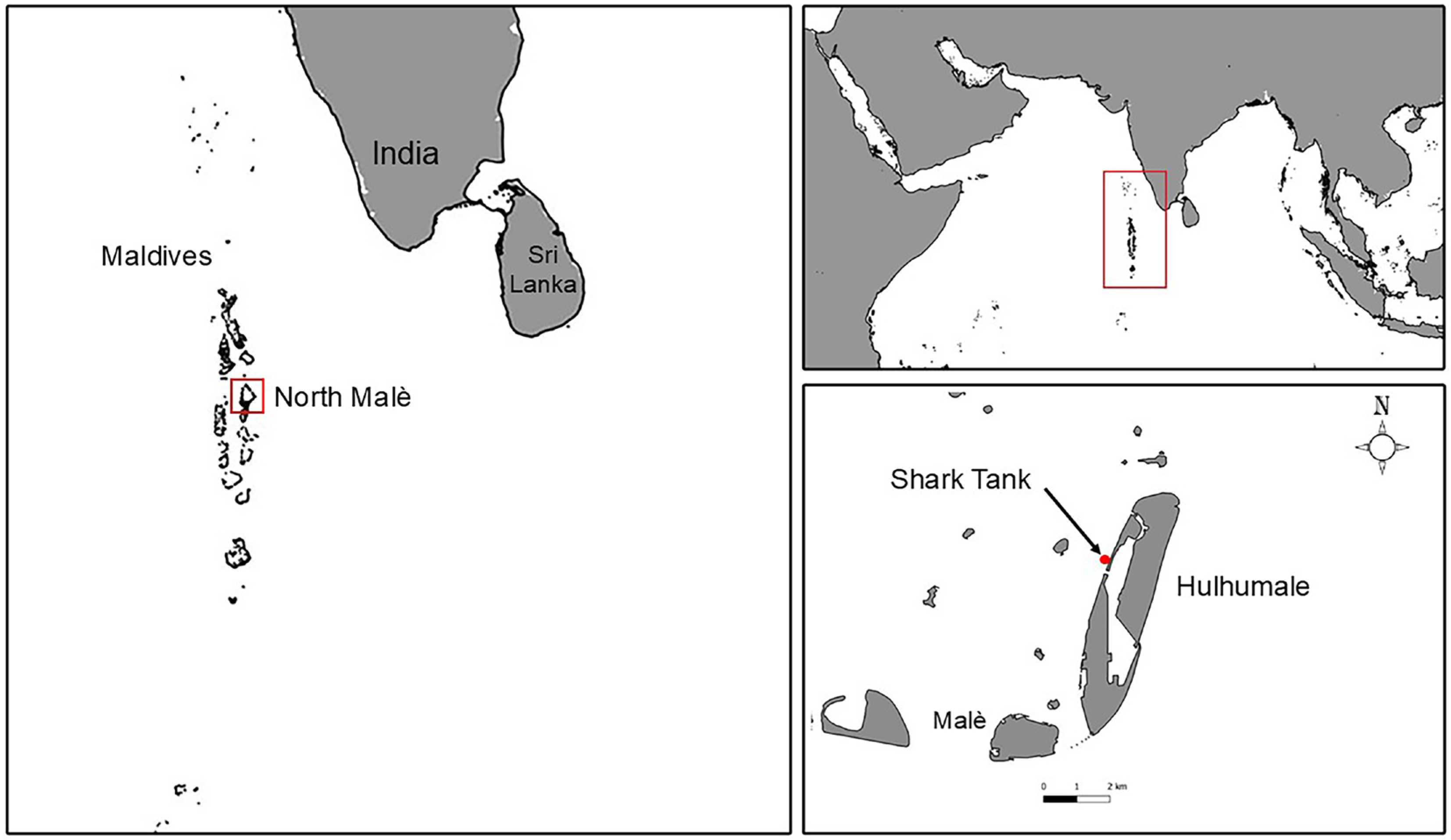
Observations of spinner sharks were conducted in Hulhumale (4.21168° N, 73.54129° E), North Malé Atoll, Maldives, at a dive site locally known as Nerumathi and commonly referred to as “Shark Tank”, located near the harbour entrance (4.22287° N, 73.53260° E; Figure 1). The site ranges from the surface down to roughly 30 m and is characterized by a sandy and rocky seabed. A fixed rope, attached to a surface float, is positioned in the centre of the site, enabling divers to safely descend to the seabed to observe sharks. Year-round provisioning from a nearby fish-processing facility—where fishers regularly discard fish remains from their vessels— attracts high densities of sharks to this popular dive site. Species commonly observed include the spinner shark, tiger shark Galeocerdo cuvier (Péron & Lesueur, 1822), bull shark Carcharhinus leucas (Müller & Henle, 1839), great hammerhead shark Sphyrna mokarran (Rüppel, 1837), and sicklefin lemon shark Negaprion acutidens (Rüppel, 1837), as well as large numbers of stingrays and guitarfishes (unpublished data, Reinero, 2025).

2.2. Spinner Shark Observations

Observations of spinner sharks were conducted in November 2024 and November 2025, during which a total of 15 SCUBA dives were performed (4 dives over three days in 2024 and 11 dives over six days in 2025). Each dive lasted approximately one hour, yielding a total of 15 h of underwater observation conducted between 08:00 and 16:00 h. Dives were carried out at depths ranging from 5 to 30 m. Water temperature was continuously recorded throughout the study period using dive computers and ranged from 28 to 30 °C.
Due to the frequent misidentification between spinner shark and blacktip shark, the species was confirmed using a set of consistent external diagnostic criteria following Branstetter [31].
Spinner sharks were attracted daily by recreating a scavenging/baiting condition through the placement of fish scraps and discards in perforated containers deployed at multiple depths (5–30 m). This method generated an olfactory cue of fish blood and oil while limiting immediate access to the bait, thereby simulating feeding conditions more similar to natural scavenging scenarios and facilitating prolonged shark presence in front of divers throughout the study period [45].
The research team consisted of 11 divers equipped with in-house underwater video and still cameras (GoPro Hero 10, 11, 12 (GoPro, San Mateo, CA, USA) Insta360 Ace Pro (Insta360, Shenzhen, China); and SeaLife Micro 3.0 (SeaLife Cameras, Moorestown, NJ, USA) and a dual-laser system to facilitate the collection of images for spinner shark photo-ID and size measurements. Only images meeting the minimum criteria of 1 MB file size, 96 DPI resolution, and dimensions of 2160 × 1441 pixels were used [35].
Females were recorded when their pelvic fin area was filmed and the absence of claspers was confirmed [35,45]. TL of spinner sharks (n = 28) was measured using laser photogrammetry. Measurements were taken at 3–4 m distance using two green lasers (Oceama, 520 nm, 1 mW, (Oceama Co., Ltd., Shenzhen, China) mounted on a rigid plane, spaced 30 cm apart in 2024 and 20 cm in 2025. A distortion coefficient was calculated prior to data collection using an underwater checkerboard, and a linear regression model was applied to compare observed and expected lengths. The resulting regression equation was then applied to correct lens distortion in all measurements. Laser calibration was conducted before each dive at distances of 3 m and 8 m from a calibration board with markers spaced 30 cm and 20 cm apart, ensuring accurate laser alignment [45]. For each individual, three frames were extracted from video recordings for measurement, and TL was calculated as the average of these frames. Frames were selected based on the criterion that the shark’s body was fully extended and aligned as close as possible to a 90° angle relative to the camera to minimize parallax error [45,47]. Image analysis was performed using Paint software (version 11.2510.311.0), while distortion coefficient calculation and correction were conducted in RStudio (version 2023.03.1+446).
The size at sexual maturity of spinner sharks in the Maldives remains unknown. In several regions of the western Indian Ocean, it ranges from 160 to 266 cm TL for females and from 160 to 200 cm TL for males [6,19,20,21]. Accordingly, following recent literature, we adopted the sexual maturity sizes proposed by Allen & Cliff [19] and Allen & Wintner [6], using 200 cm TL for males and 210 cm TL for females, to define maturity categories at Shark Tank. Based on these thresholds: TL < 160 cm was classified as immature for both sexes; TL 160–199 cm for males and 160–209 cm for females were classified as subadults; TL ≥ 200 cm corresponded to adult males, and TL ≥ 210 cm corresponded to adult females.

2.3. Spinner Shark Photo-Identification Protocols

After each dive, photos and videos of the observed specimens were collected and organized by individual and chronological sequence. Key frames were extracted from the videos, selecting those in which distinguishing characteristics for photo-ID were clearly visible. The number of distinct spinner sharks was determined based on identifiable individuals.
However, not all animals sighted were captured in the identification photographs due to the species’ elusive behaviour, which limited close approaches to divers, as well as the effects of distance and water turbidity caused by chum, which reduced image resolution and sometimes made photo-ID impossible [25]. Consequently, this method may have led to underestimation of shark numbers, but overestimation was unlikely [42]. Moreover, it was rarely possible to photograph both sides of individuals, limiting the ability to assess unique markings for identification [35].

2.3.1. Standard Protocol

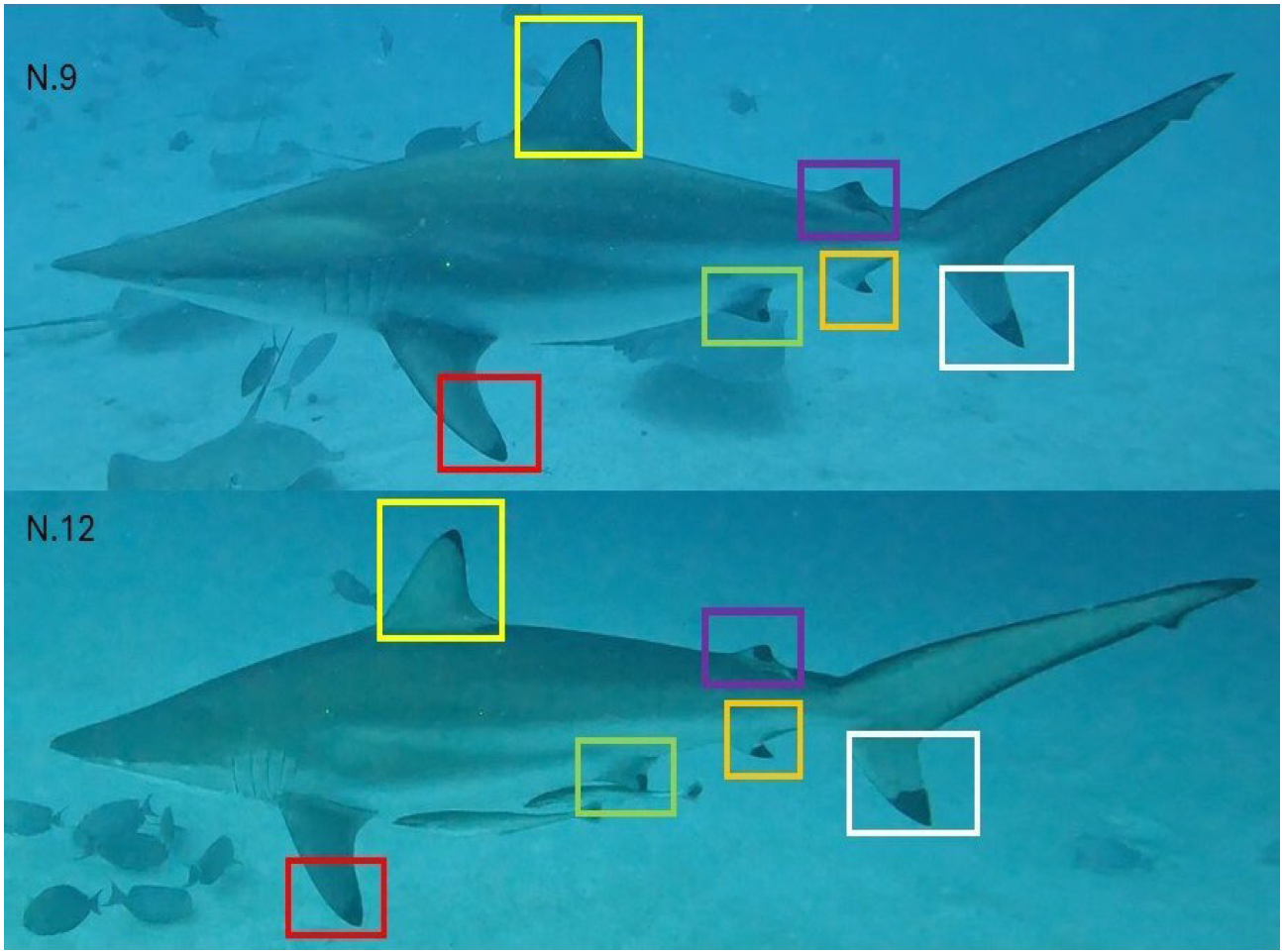
Spinner sharks were photo-identified using a method based on the comparison of black markings along the internal edges of the first dorsal fin and the lower lobe of the caudal fin, ensuring higher accuracy in individual identification. This approach followed the methodology of Micarelli et al. [35], previously applied to grey reef sharks (Carcharhinus amblyrhynchos (Bleeker, 1856)) at Nosy Be, Madagascar. The method involves assessing variations in the shape, extent, and intensity of black markings, as well as scars (e.g., bite marks, wounds, scratches), fin morphology, and deformities, which are particularly useful when intrinsic patterns (e.g., stable pigmentation patterns, body markings) are absent [35,37,41,42,48,49]. Due to the rapid healing capacity of elasmobranchs [50], scars were used for identification only within the same year (intra-annual identification, i.e., within the month of November of each year).
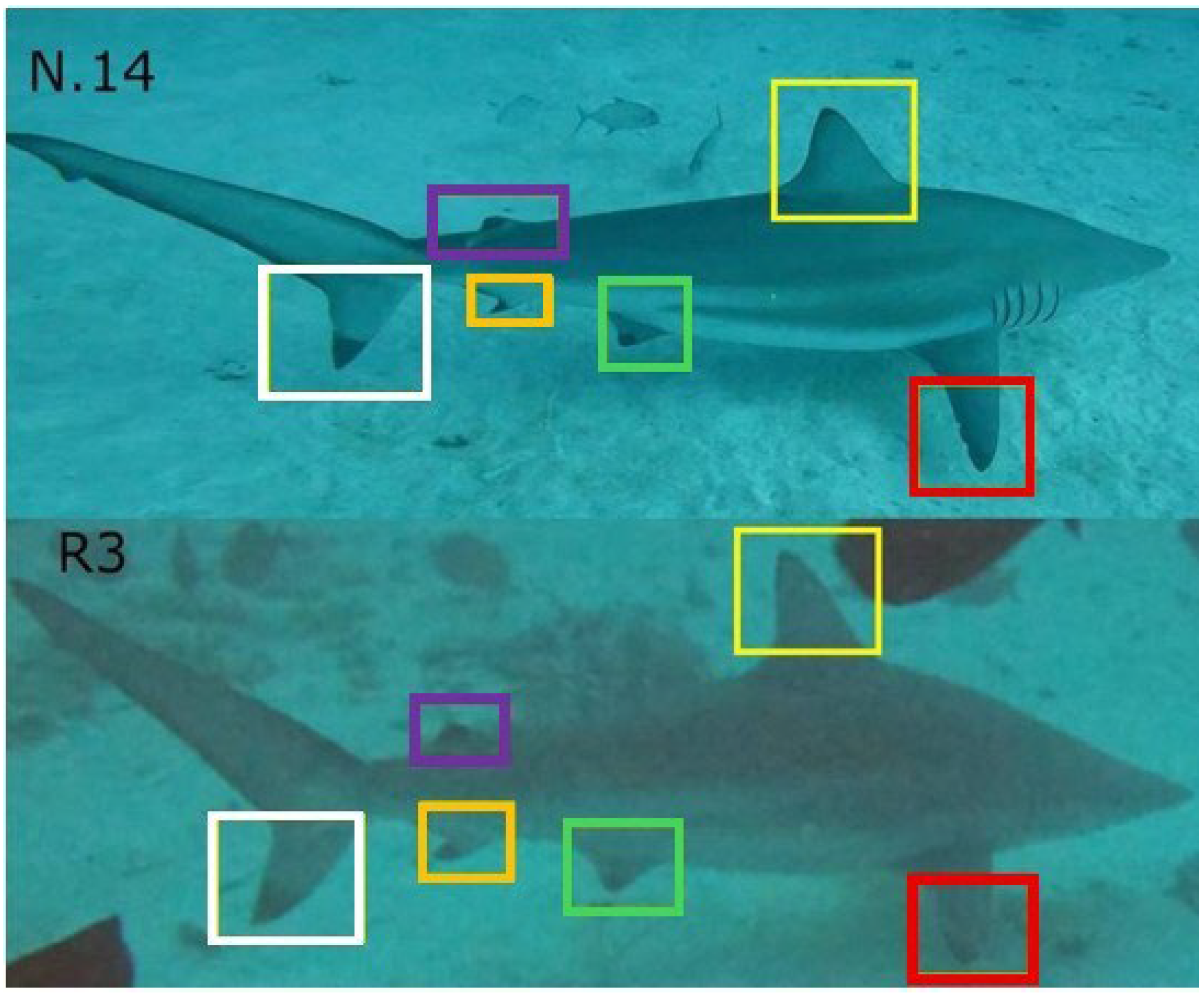
Several adjustments were necessary due to the lower inter-individual variability observed in the spinner shark. The first dorsal fin and the lower lobe of the caudal fin served as primary diagnostic features, as their dark markings remained relatively stable over time. Nonetheless, because spinner sharks generally exhibit less variability than grey reef sharks, additional fins were examined in ambiguous cases (personal comment F.R. Reinero). The second dorsal fin showed limited variation and was used as a supporting feature. In contrast, the anal and pelvic fins displayed more pronounced differences in the shape and extent of black patterns, making them useful for distinguishing individuals that could not be separated based on dorsal and caudal fins alone. Due to their small size, pelvic fins required high-quality images for reliable assessment. When clearly visible, pectoral fins were highly informative for photo-ID, enabling accurate comparisons among individuals. Their effectiveness stems from a greater degree of inter-individual variability compared to other identification features. However, in some cases, pectoral fins could not be used due to limited visibility, which was often determined by the shark’s position relative to the observer (Figure 2).
New specimens were compared with those already present in the database to identify potential re-sightings through systematic visual matching. Archival images were organized in Excel sheets according to the year of sighting. Images were processed by removing the background and emphasizing fin edges using the “mark areas to keep” and “mark areas to remove” tools [35].
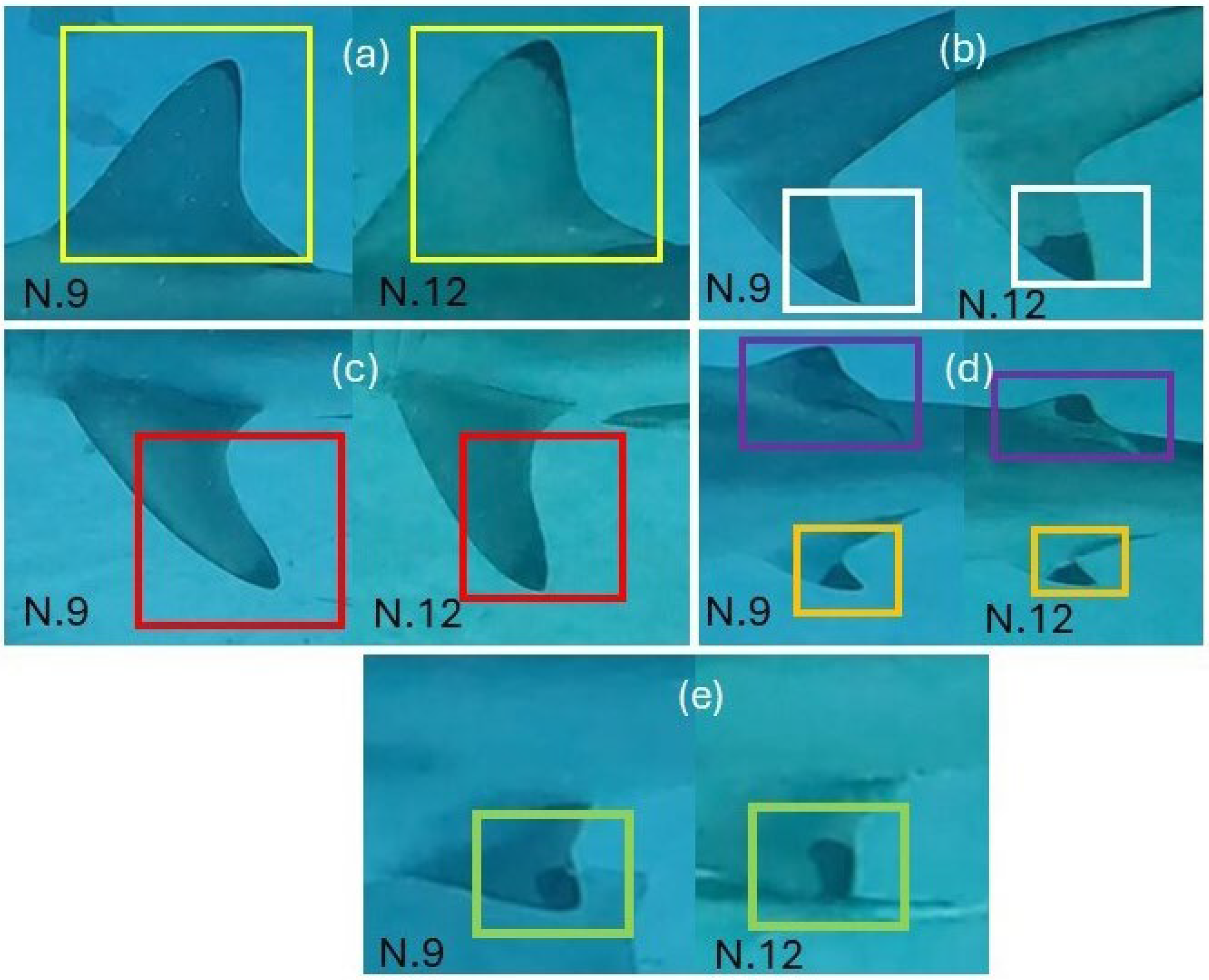
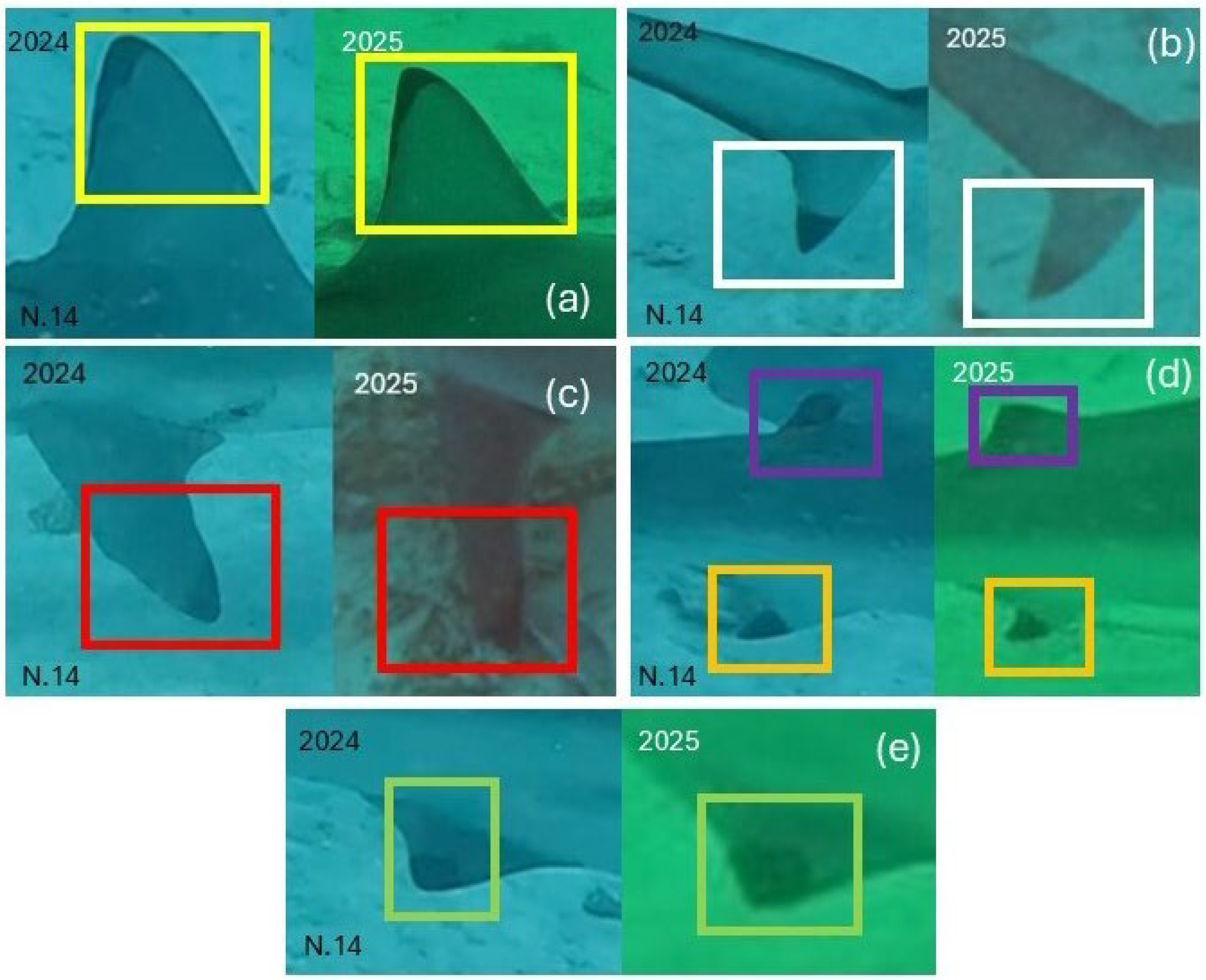
During cropping of the first dorsal fin, the entire fin—from the fin base (including fin origin, fin insertion, and free rear tip) to the apex—was included, while retaining a small portion of the adjacent dorsal surface to preserve natural orientation and proportional context relative to the body (Figure 3a). The lower lobe of the caudal fin was isolated, maintaining anatomical proportions and ensuring consistent comparisons between individuals (Figure 3b). Pectoral fins were cropped to include the entire fin surface from fin base (including fin origin, fin insertion, and free rear tip) to the apex, with a minimal portion of the adjacent body flank retained to preserve anatomical context. To ensure consistency with the collected data, only the fin web of the pectoral fin was considered, which was visible to be captured consistently with the available cameras and video equipment (Figure 3c). The second dorsal and anal fins were evaluated together, preserving their natural spatial relationship (Figure 3d). Pelvic fins were cropped to include the fin and a minimal portion of the adjacent ventral region. Due to their small size and frequent partial occlusion, pelvic fins were used only when the fin margins were fully visible and free from perspective distortion or motion-related artifacts (Figure 3e).
In all cases, cropping was performed while maintaining consistent orientation across images and prioritizing lateral views as close to perpendicular to the body axis as possible, minimizing perspective distortion and ensuring reliable comparisons over time.
An individual was classified as a resighting only if it was observed in a subsequent year and the comparison of fin patterns (Figure 4 and Figure 5) fully matched the original identification, with no conflicting morphological features.

2.3.2. Preliminary Protocol

For the first time we also conducted a preliminary test using a semi-automatic program called Identifin (version 2 beta 2), previously applied for the photo-ID of the bronze whaler shark (Carcharhinus brachyurus, Günther, 1870) and the white shark (Carcharodon carcharias, Linnaeus, 1758) [51,52]. The software was originally developed to recognize and track the posterior margin (from the apex to the beginning of the free rear tip) of the first dorsal fin, which serves as a reference pattern for comparisons among individuals.
For spinner sharks, we used the shape of the internal margin of the first dorsal fin black pattern, as it displays a detailed and complex internal contour and the fin is sufficiently large to allow zooming without loss of image sharpness. In contrast, the other fins are smaller and therefore unsuitable for analysis, as excessive zooming causes the black pattern to become grainy and unusable. The caudal fin was also excluded because it is rarely held completely straight, preventing reliable and undistorted photographic capture. Therefore, images of spinner shark first dorsal fins must be extremely sharp to allow clear visualization of the internal contour of the black pattern for use in the Identifin software, and the fins should be photographed as perpendicularly as possible relative to the observer to avoid image distortion. Therefore, we employed high-quality cameras (SeaLife Micro 3) and video cameras (GoPro Hero 10, 11, 12; Insta360 Ace Pro) to obtain suitable images.
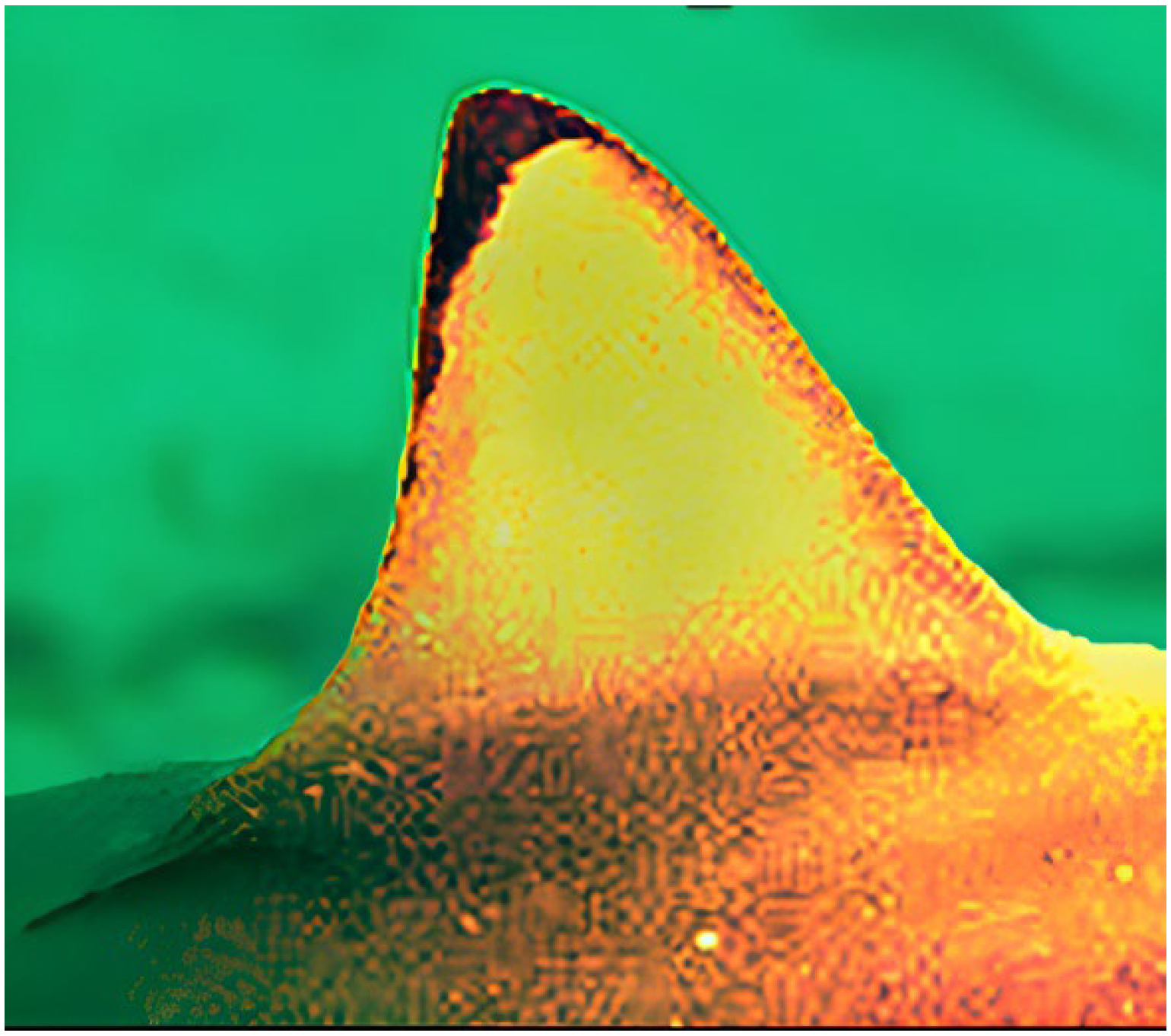
A preliminary standardization of spinner shark first dorsal fin photographs was required using Adobe Lightroom (version 9.1) to prepare the images for import into the software. In the initial phase, photographs were cropped to focus exclusively on the identification-relevant region, specifically the first dorsal fin and its black pattern, thereby minimizing the presence of non-essential elements. Subsequently, image parameters including exposure, contrast, highlights, shadows, whites, blacks, and sharpness were adjusted in Adobe Lightroom to enhance the black pattern and improve the accuracy of subsequent analyses (Figure 6).
The photographs obtained were finally exported in JPEG format with standardized dimensions of 8 × 8 cm and a resolution of 300 dpi. These specifications are essential to ensure image uniformity and comparability within the Identifin software database.
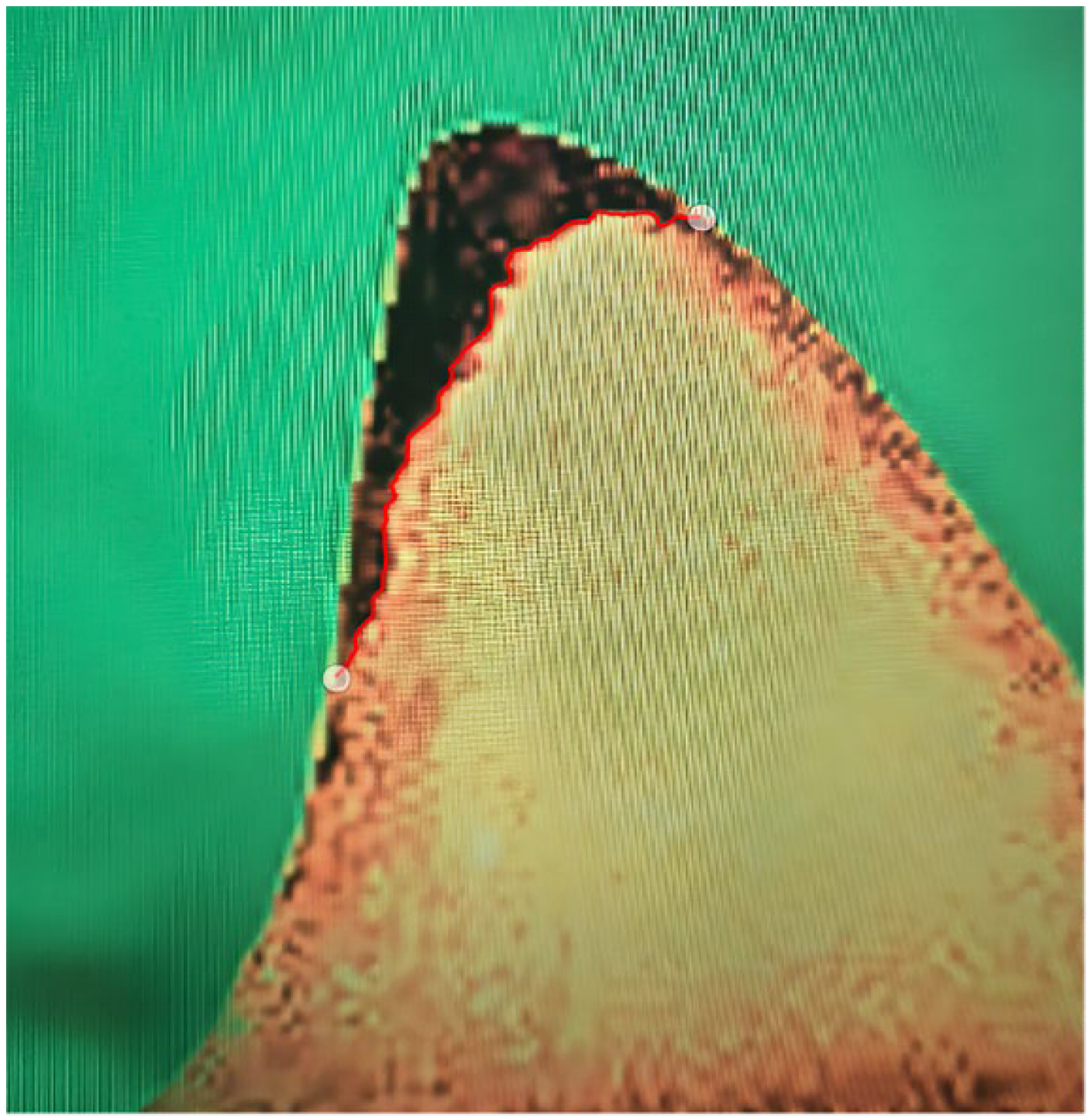
After importing the images into Identifin, the inner contour of the black pattern on the first dorsal fin was traced manually by indicating the start and end points of the segment to be analyzed. The software then automatically generated the model tracing. However, because the automatic output is not always fully accurate, the trace alignment was manually refined using the “paint exclusion mask” option [53] (Figure 7).
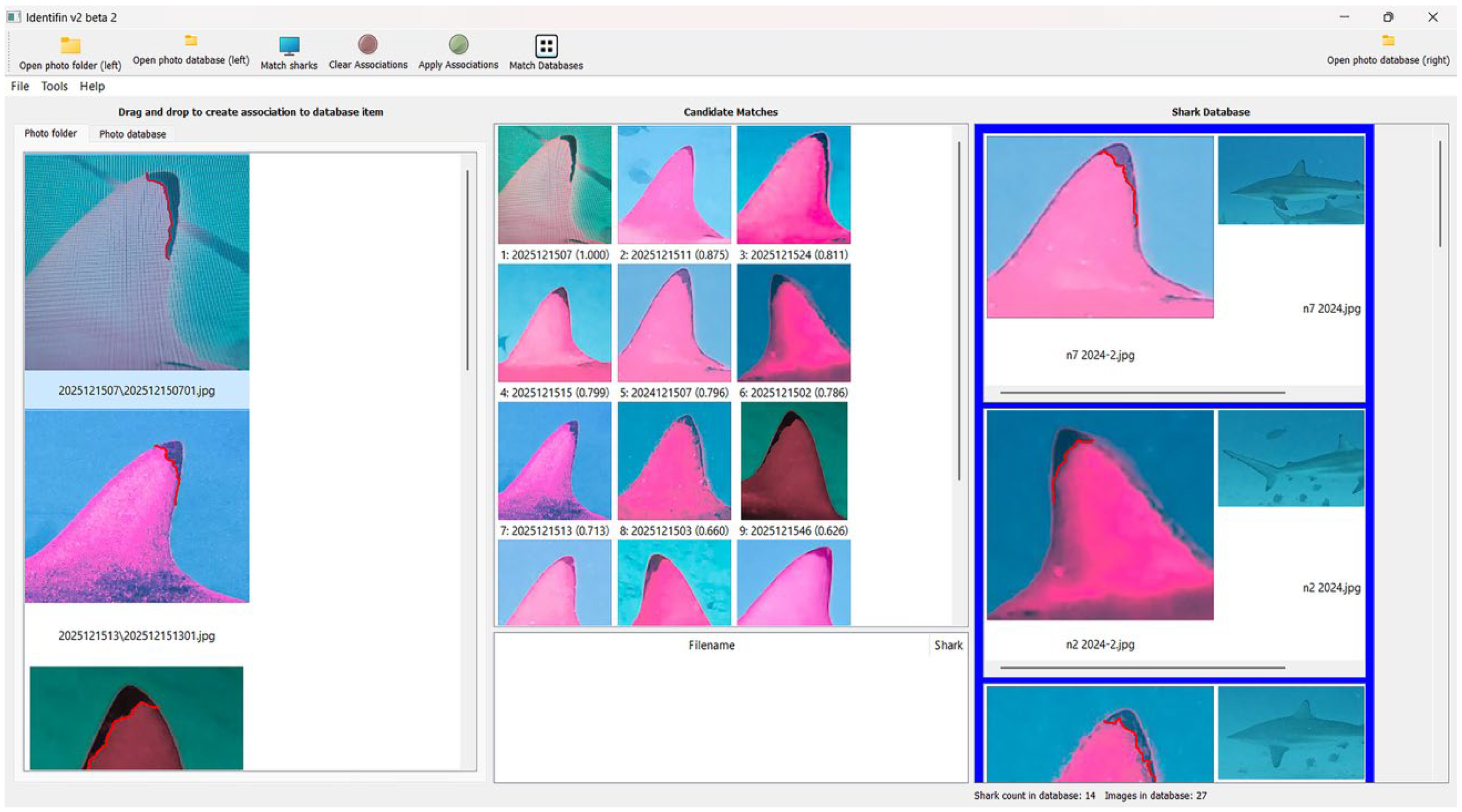
Once the model is completed, the algorithm can be instructed to match the traced photograph against those already in the database using a dynamic time warping approach. Results are displayed in the central section of the interface, ranked by similarity (Figure 8). Reliable similarity values are those above the minimum threshold of 70% established by the program developer for a reliable match.
Each shark is assigned a unique numerical code based on the date of its first photographic capture [51]. The software automatically generates this code using metadata, such as the date embedded in the photograph. Identifin also allows additional information to be recorded for each first dorsal fin, including size estimates obtained through laser-photogrammetry, sex, geographic coordinates, and the availability of collected genetic samples [53].

2.4. Statistical Analysis

To determine whether the interannual sex ratios of sharks observed in 2024 and 2025 differed from the expected 1:1 ratio, a chi-square test was applied following Capapè et al. [7]. To determine whether interannual sizes differed for the overall sample (n = 14 in 2024; and n = 14 in 2025), both a t-test for independent samples and a Mann–Whitney U test were conducted. Furthermore, to assess interannual size differences among females (n = 12 in 2024; and n = 2 in 2025) a Welch’s t-test was applied to account for unequal variances. For males (n = 2 in 2024; and n = 10 in 2025) both Welch’s t-test and the Mann–Whitney U test were used. Analyses were conducted in RStudio (version 4.3.1, 16 June 2023) using a significance level α = 0.05.

3. Results

3.1. Photo-Identification

3.1.1. Standard Protocol

In total, 69 spinner sharks were identified, including 20 (28.99%) in November 2024 and 49 (71.01%) in November 2025.
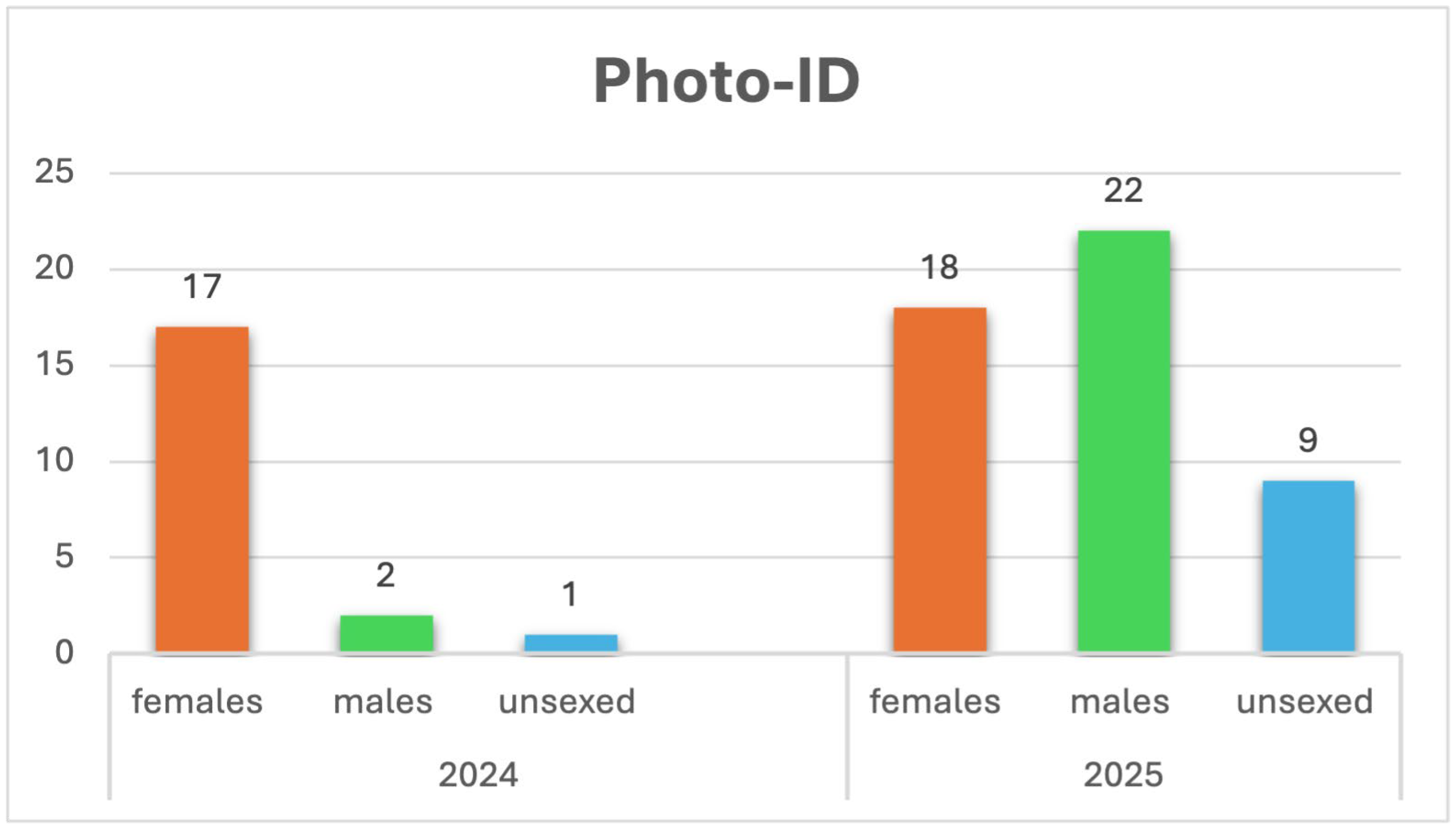
In 2024, 17 individuals were female (85%), 2 were male (10%), and 1 was unsexed (5%). Sex ratio in 2024 was 1:8.5. In 2025, 18 were female (36.73%), 22 were male (44.90%), and 9 were unsexed (18.37%). Sex ratio in 2025 was 1:0.8. The general sex ratio in both years was 1:1.5 (Figure 9).
In 2024 shark observations were strongly female-biased, whereas in 2025 the distribution of male and female observations was more evenly balanced (χ2 = 10.56, p = 0.0012).
In 2024, 10 photo-identified individuals were photographed from the left side (50%), 7 from the right side (35%), and 3 from both sides (15%). In 2025, 29 individuals were photographed from the left side (59.18%), 17 from the right side (34.69%), and 3 from both sides (6.12%). This observation allows us to estimate a different number of specimens, certainly ranging between 45 and 69 individuals.
A total of six individuals (females N.7, N.13, N.14, N.18; and males N.16, N.19) were first sighted and photo-identified in 2024 and were re-sighted one or more times in 2025 through photo-ID (Table 1).

3.1.2. Preliminary Protocol

Overall, only 12 (17.39%) spinner shark first dorsal fins (specimens N.2, N.3, N.5, N.8, N.9, N.12, N.14, N.16, N.17 of 2024 and N.24, N.27, N.33 of 2025) were suitable for analysis using the Identifin program, as they exhibited a sharp internal contour of the black pattern and were photographed perfectly perpendicularly relative to the observer. In all cases, similarity values were <70% threshold, indicating differences in black patterns and, consequently, among individual spinner shark specimens. These results were consistent with those obtained using the standard identification protocol.
Initially, 14 first dorsal fins were included in the Identifin comparisons; however, two fins belonging to spinner shark specimen N.16 (2024) yielded a low similarity value (55%) despite being from the same individual as determined by the standard protocol. A similar issue occurred for two other fins belonging to spinner shark specimen N.7 (2024), which produced a similarity value of 67% even though they also belonged to the same specimen.
The presence of suspended particles over the internal contour of the black pattern prevented the software from accurately delineating the contour, resulting in the misidentification of fins, as belonging to different individuals. Additionally, one of the fins of specimen N.16 was slightly distorted, further hindering accurate matching with the other fin belonging to the same animal.
These findings showed that the Identifin program functions reliably only when the dorsal fin is completely clean, the black pattern is free of any suspended material, and images are captured as perpendicularly as possible relative to the observer.

3.2. Laser Photogrammetry

In total, 28 spinner sharks (40.58%) were measured using laser photogrammetry: 14 (50%) in 2024, with TLs ranging from 178 to 243 cm and with an average TL of 208.6 ± 17.1 cm, and 14 (50%) in 2025, with TLs ranging from 114 to 246 cm and with an average TL of 207.8 ± 32.3 cm. None of the sharks measured in 2024 were re-measured in 2025, and for this reason no assessment of potential annual growth rate was possible.
Regarding females, 12 individuals (70.59%) were measured in 2024, with TLs ranging from 178 to 243 cm, and two individuals (11.11%) were measured in 2025, with TLs ranging from 202 to 220 cm. Mean TL was 209.8 ± 18.3 cm in 2024 and 211 ± 12.7 cm in 2025. For males, two individuals (100%) were measured in 2024, with TLs ranging from 201 to 202 cm, while ten individuals (45.45%) were measured in 2025, with TLs ranging from 190 to 246 cm. Mean TL was 201.5 ± 0.7 cm in 2024 and 213.3 ± 18.9 cm in 2025. Regarding unsexed individuals, no specimens were measured in 2024, while two (22.22%) were measured in 2025, with TLs ranging from 114 to 240 cm. The mean TL in 2025 was 177 ± 89.1 cm (Table 2).
Both t-test (t = 0.085, p = 0.93) and Mann–Whitney U test (U = 75, p = 0.65) showed no significant difference between the overall TL distributions of sharks observed in 2024 and 2025, indicating that the TLs of the measured spinner sharks did not change significantly across the two years.
For female spinner sharks, Welch’s t-test (t ≈ −0.14, p ≈ 0.91) showed no significant difference between the years, although results should be interpreted cautiously given the small sample.
For male spinner sharks, both t-test (t ≈ −2.08, p ≈ 0.065) and Mann–Whitney U test (U = 3, p ≈ 0.064) suggest a tendency for larger TL in 2025, but the difference was not statistically significant at the conventional α = 0.05 threshold. The very small sample size in 2024 limits the statistical power of this comparison.
Overall, these analyses indicate that there were no statistically significant differences in TL between 2024 and 2025 for the overall sample, females, or males, although small sample sizes in some groups limit the ability to detect subtle differences.

4. Discussion

This study provides preliminary observations on temporal occurrence, sex ratio, and size distribution of bait-attracted spinner sharks at Hulhumale, Maldives, using photo-ID and laser photogrammetry. The standard photo-ID method proved effective, enabling the identification of 69 individuals across two consecutive Novembers (2024–2025). However, incomplete bilateral photographic coverage suggests that the actual number of distinct individuals likely ranges between 45 and 69. Consequently, caution is warranted when interpreting individual-based estimates. To improve identification reliability, future studies should prioritize capturing images of both sides of the body and, where possible, multiple body regions, while carefully selecting stable and diagnostic markings [54,55,56]. Validation of long-term marking stability could be improved through double-tagging approaches, such as the application of conventional tags to a subset of individuals [39,57]; complementary methods, including individual genotyping, may further increase confidence in identifying individuals over time [58,59].
While the standard photo-ID approach enabled reliable individual identification, the pre-liminary application of Identifin was constrained to a limited number of suitable first dorsal-fin images and should be considered an initial proof of concept rather than a formal validation. The software consistently matched individuals when applied to high-quality images showing clearly visible and continuous black pigmentation along the inner fin margin, indicating clear methodological potential. However, persistent turbidity and variable image quality substantially reduced the number of analyzable photographs, precluding the validation of the approach in this setting. The quantitative evaluation of Identifin for spinner sharks will require a larger dataset of high-quality images. Given the recurring turbidity at Shark Tank—driven by fish discards from local fishing boats and ongoing dredging activities at the entrance to Hulhumale harbour—routine application of this method at this site is likely to remain constrained. Nevertheless, targeted testing and further development of Identifin in regions with consistently clearer waters would provide a more suitable framework for comprehensive validation and could establish the method as a reliable tool for spinner shark identification.
The standard Photo-ID protocol enabled the resighting of six individuals across years, demonstrating the feasibility of non-invasive repeated monitoring, although these observations do not provide conclusive evidence of long-term site fidelity. These findings are consistent with previous studies showing that photo-ID can effectively track individual sharks over time, particularly in aggregations exhibiting predictable seasonal site fidelity [23,35,54,56]. Overall, the spinner shark exhibits repeated seasonal use of specific coastal habitats, such as nurseries and pupping areas, but strong evidence of long-term individual site fidelity remains limited [11,19,23]. In the Maldives, repeated female aggregations at a harbour-adjacent reef were driven by continuous chumming, reflecting artificially maintained concentrations rather than natural fidelity [25]. In KwaZulu-Natal, low recapture rates indicate high individual mobility, although seasonal aggregations of gravid females and neonates suggest population-level reuse of pupping areas [19,22]. Similarly, early life stages in Florida remained in shallow inshore habitats for extended periods [11], and mixed spinner shark/blacktip shark aggregations in Ilha Grande Bay, Brazil, reappeared predictably over six years [23]. Long-term individual site fidelity remains unconfirmed due to the lack of direct tracking data. While spinner sharks exhibit seasonal site use at the population level, patterns appear to vary regionally and may be influenced by both natural behaviour and anthropogenic factors. Repeated aggregations may therefore reflect artificial concentrations or high individual mobility rather than true fidelity to the site [25]. Our findings highlight the need for multi-year and multi-seasonal monitoring to robustly assess site fidelity and individual residency. Future studies should also investigate the effects of provisioning and ecotourism on site fidelity and sighting rates, as documented for other shark species in different regions [60,61,62,63,64]. Furthermore, behavioural data—such as the sequence of arrival following bait deployment—could reveal sex- or size-specific patterns in site use and aggregation dynamics [45]. Such information would provide valuable insights into population structure, social organization, and habitat use, and would strengthen the ecological interpretation of bait-attracted aggregations.
In 2024, observed sharks appeared female-biased, whereas in 2025 the distribution of male and female observations was more balanced. TL estimates for both sexes in both years indicate the presence of predominantly adult, and to a lesser extent subadult, individuals [6,19], with no apparent size differences between the sexes. These observations provide preliminary baseline information on the composition of this bait-attracted aggregation; however, they should be interpreted with caution due to the potential sampling bias associated with provisioning and differences in effort between years. Notably, the apparent female bias in 2024 may reflect low sampling effort and stochastic variation, whereas the larger and more diverse sample in 2025 resulted in a sex ratio closer to parity. This suggests that the 2024 pattern may represent a sampling artefact rather than persistent sexual segregation.
Interannual variation in sex ratios has been reported in other coastal spinner shark aggregations and is often linked to sex-specific habitat use [19,23,65,66,67,68]. In our study, the apparent female bias in 2024 cannot be separated from sampling effort or provisioning effects, while the more balanced sex ratio in 2025 may reflect interannual variability rather than true biological patterns. Together, these findings underscore the limitations of short-term, bait-attracted surveys for assessing sex-specific aggregation and highlight the need for multi-year, multi-season monitoring to distinguish genuine ecological trends from sampling artefacts.
Observed TLs are consistent with previous studies showing substantial size variation within spinner shark aggregations but a limited interannual change in mean body size [19,23]. The inability to re-measure individuals across years precluded estimation of annual growth rates, highlighting the importance of long-term monitoring to assess demographic dynamics.
This study establishes a baseline methodological framework for spinner shark photo-ID in the Maldives and provides preliminary insights into the aggregation at Hulhumale. Future research at Shark Tank should aim to: (i) standardize sampling effort through calibrated dive durations and consistent protocols to improve the robustness and comparability of photo-ID and demographic estimates; (ii) explore programs or methods more suitable for spinner shark photo-ID; (iii) determine whether female-biased or more balanced aggregations reflect sampling bias or genuine sexual segregation; (iv) monitor interannual and interseasonal variability in sex ratios; (v) track movements and individual site fidelity; (vi) assess the influence of environmental and anthropogenic factors such as chumming and tourism; and (vii) examine population connectivity through genetic analyses [19,23,25,54,58,62]. Long-term monitoring across several months and years is required to better understand the population’s structure, fidelity to sites, and aggregation characteristics in this area.

5. Conclusions

This study provides preliminary baseline observations on the temporal occurrence, sex ratio, and size distribution of bait-attracted spinner sharks at Hulhumale, Maldives, using photo-ID and laser photogrammetry. Although the standard photo-ID protocol proved feasible for individual identification under bait-attraction conditions, the preliminary application of Identifin suggested its performance could not be robustly validated in this specific area but in other regions with clearer waters. Observed aggregation patterns in sex ratio, size distribution and re-sightings may reflect either natural movements of spinner sharks or variations in sampling efforts and provisioning, and should therefore be cautiously interpreted. Comprehensive characterization of the bait-attracted spinner aggregation at Shark Tank, including evaluation of potential seasonal patterns and sex ratio fluctuations, will require extended, standardized monitoring. Integrating complementary approaches, including tagging and genetic analyses, will be essential for a more accurate evaluation of site fidelity, population connectivity, and the influence of environmental and anthropogenetic factors, including baiting and tourism. Such efforts are critical to move beyond preliminary observations and inform monitoring and conservation strategies for this vulnerable species in the region.

Author Contributions

Conceptualization, F.R.R. and P.M.; methodology, F.R.R., P.M., M.P., G.R. and L.V.; software, M.P., G.R., L.V. and A.P.; validation, F.R.R., P.M., M.P., G.R. and L.V.; formal analysis, F.R.R. and A.P.; investigation, F.R.R. and P.M.; resources, F.R.R. and P.M.; data curation, F.R.R., P.M., M.P., G.R., L.V. and A.P.; writing—original draft preparation, F.R.R.; writing—review and editing, P.M., M.P., G.R., L.V. and F.E.; visualization, F.R.R., P.M., M.P., G.R., L.V., A.P. and F.E.; supervision, F.R.R.; project administration, F.R.R. and P.M. All authors have read and agreed to the published version of the manuscript.

Funding

This research received no external funding.

Institutional Review Board Statement

Ethical review and approval were waived for this study by Sharks Studies Centre-Scientific Institute due to it did not intervene in the observed animals.

Data Availability Statement

The original contributions presented in this study are included in the article. Further inquiries can be directed to the corresponding author.

Acknowledgments

We are grateful to the Sharks Studies Centre-Scientific Institute team members that carried out the expeditions for their support of this research, and thanks are due to Raajje Divers diving center team for their logistical and field assistance with data collection.

Conflicts of Interest

The authors declare no conflicts of interest.

References

  1. Compagno, L.J.V. FAO Species Catalogue. Vol. 4. Sharks of the World. An Annotated and Illustrated Catalogue of Shark Species Known to Date. Part 2; Fisheries Synopsis No. 125; Food and Agriculture Organization of the United Nations: Rome, Italy, 1984. [Google Scholar]
  2. Burgess, G.H. Carcharhinus brevipinna. IUCN Red List. Threat. Species 2009, e.T39368A10182758. Available online: https://doi.org/10.2305/IUCN.UK.2009-2.RLTS.T39368A10182758.en (accessed on 7 January 2026).
  3. De Maddalena, A.; Baensch, H.; Heim, W. Sharks of the Mediterranean. An Illustrated Study of All Species; McFarland & Co.: Jefferson, NC, USA, 2015; p. 204. [Google Scholar]
  4. Castro, J.I. The Sharks of North America; Oxford University Press: New York, NY, USA, 2011; p. 613. [Google Scholar]
  5. Branstetter, S. Age and growth estimates for blacktip, Carcharhinus limbatus, and spinner, C. brevipinna, sharks from the northwestern Gulf of Mexico. Copeia 1987, 4, 964–974. [Google Scholar] [CrossRef]
  6. Allen, B.R.; Wintner, S.P. Age and growth of the spinner shark (Carcharhinus brevipinna) off the KwaZulu-Natal coast, South Africa. S. Afr. J. Mar. Sci. 2002, 24, 1–8. [Google Scholar] [CrossRef]
  7. Capapé, C.; Hemida, F.; Seck, A.A.; Diatta, Y.; Guélorget, O.; Zaouali, J. Distribution and reproductive biology of the spinner shark, Carcharhinus brevipinna (Müller and Henle, 1841) (Chondrichthyes: Carcharhinidae). Isr. J. Ecol. Evol. 2003, 49, 311–322. [Google Scholar] [CrossRef]
  8. Capapè, C.; Seck, A.A.; Diatta, Y.; Reynaud, C.; Hemida, F.; Zaouali, J. Reproductive biology of the blacktip shark, Carcharhinus limbatus (Chondrichthyes: Carcharhinidae) off West and North African coasts. Cybium 2004, 28, 275–284. [Google Scholar]
  9. Joung, S.J.; Liao, Y.Y.; Liu, K.M.; Chen, C.T.; Leu, L.C. Age, growth, and reproduction of the spinner shark, Carcharhinus brevipinna, in the northeastern waters of Taiwan. Zool. Stud. 2005, 44, 102–110. [Google Scholar]
  10. Carlson, J.K.; Baremore, I.E. Growth dynamics of the spinner shark (Carcharhinus brevipinna) off the United States southeast and Gulf of Mexico coasts: A comparison of methods. Fish. Bull. 2005, 103, 280–291. [Google Scholar]
  11. Aubrey, C.; Snelson, F.F., Jr. Early life history of the spinner shark (Carcharhinus brevipinna) in a Florida nursery. Fish. Bull. 2007, 105, 527–535. [Google Scholar]
  12. White, W.T. Catch composition and reproductive biology of whaler sharks (Carcharhiniformes: Carcharhinidae) caught by fisheries in Indonesia. J. Fish Biol. 2007, 71, 1512–1543. [Google Scholar] [CrossRef]
  13. Geraghty, P.T.; Williamson, J.E.; Macbeth, W.G.; Wintner, S.P.; Harry, A.V.; Ovenden, J.R.; Gillings, M.R. Population expansion and genetic structure in Carcharhinus brevipinna in the southern Indo-Pacific. PLoS ONE 2013, 8, e75169. [Google Scholar] [CrossRef]
  14. Geraghty, P.T.; Macbeth, W.G.; Williamson, J.E. Aspects of the reproductive biology of dusky, spinner and sandbar sharks (Family carcharhinidae) from the Tasman Sea. Mar. Freshw. Res. 2016, 67, 513–525. [Google Scholar] [CrossRef]
  15. Santos dos Santos, P.R.; Santoro, P.; de David Chelotti, L. Length–weight relationship of the spinner shark (Carcharhinus brevipinna) on the continental shelf of southern Brazil. Arq. Ciências Mar 2017, 50, 133–135. [Google Scholar]
  16. Palmrose, K. Reproductive Biology of the Spinner Shark, Carcharhinus brevipinna, off the Southeast U.S. Coast. Master’s Thesis, University of North Florida, Jacksonville, FL, USA, 2021. [Google Scholar]
  17. Linn, A.K.; Levengood, A.L.; Dudgeon, C.L.; Gustafson, J.A.; Smith, J.L.; Holmes, B.J. Assessment of multiple paternity in spinner shark (Carcharhinus brevipinna) litters from eastern Australian waters. Mar. Freshw. Res. 2025, 76, MF24222. [Google Scholar] [CrossRef]
  18. Vinyard, E.A.; Portnoy, D.S.; Driggers, W.B., III; Gelsleichter, J.; Hendon, J.M.; Higgs, J.M.; Natanson, L.J.; Frazier, B.S. Age and growth of spinner sharks (Carcharhinus brevipinna) in the western North Atlantic Ocean. Environ. Biol. Fish. 2025, 109, 17. [Google Scholar] [CrossRef]
  19. Allen, B.R.; Cliff, G. Sharks caught in the protective gill nets off KwaZulu-Natal, South Africa. 9. The spinner shark (Carcharhinus brevipinna) (Müller and Henle). S. Afr. J. Mar. Sci. 2000, 22, 163–179. [Google Scholar] [CrossRef]
  20. Sivasubramaniam, K. Pelagic sharks in the Indian Ocean. Bay Bengal News 1992, 47, 11–19. [Google Scholar]
  21. Bass, A.J.; d’Aubrey, J.D.; Kistnasamy, N. Sharks of the East Coast of Southern Africa. The Genus Carcharhinus (Carcharhinidae). I; Oceanographic Research Institute: KwaZulu-Natal, South Africa, 1973; Volume 33, pp. 1–168. [Google Scholar]
  22. Hussey, N.E.; Wintner, S.P.; Dudley, S.F.J.; Cliff, G.; Cocks, D.T.; MacNeil, M.A. Maternal investment and size-specific reproductive output in carcharhinid sharks. J. Anim. Ecol. 2009, 79, 184–193. [Google Scholar] [CrossRef]
  23. Rolim, F.A.; Rodrigues, P.F.C.; Gadig, O.B.F.; Motta, F.D.S.; Slerca, M.A.L.; Araujo, N.L.F.; Neves, L.M. Evidences of seasonal aggregations and breaching behaviour of blacktip (Carcharhinus limbatus) and spinner (C. brevipinna) sharks in a southwest Atlantic marine protected area. Aquat. Conserv. Mar. Freshw. Ecosyst. 2025, 35, e70153. [Google Scholar] [CrossRef]
  24. Sumpton, W.; Lane, B.; Ham, T. Characteristics of the biology and distribution of the spinner shark (Carcharhinus brevipinna) in Queensland, Australia based on data collected from the shark control program. Asian Fish. Sci. 2010, 23, 340–354. [Google Scholar] [CrossRef]
  25. Russo, F.; De Maddalena, A. On the presence of the spinner shark Carcharhinus brevipinna (Müller & Henle, 1839) (Chondrichthyes: Carcharhinidae) in Maldivian waters. Mar. Biol. J. 2021, 6, 87–91. [Google Scholar] [CrossRef]
  26. Anderson, R.C.; Ahmed, H. The Shark Fisheries of the Maldives; Ministry of Fisheries and Agriculture, Republic of Maldives: Malé, Maldives; Food and Agriculture Organization of the United Nations: Malé, Maldives, 1993; p. 73. [Google Scholar]
  27. Adam, M.S.; Merrett, N.R.; Anderson, R.C. Additions to the fish fauna of the Maldive Islands. Part I: An annotated checklist of the deep demersal fishes of the Maldive Islands. Ichthyol. Bull. JLB Smith Inst. Ichthyol. 1998, 67, 1–19. [Google Scholar]
  28. Anderson, R.; Randall, J.; Kuiter, R. New records of fishes from the Maldive Islands with notes on other species. Ichthyol. Bull. 1998, 67, 20–36. [Google Scholar]
  29. De Maddalena, A.; Galli, P. Sharks of the Maldives; Editoriale Magenes: Milano, Italy, 2017; p. 216. [Google Scholar]
  30. Ali, K.; Sinan, H. National Plan of Action for the Conservation and Management of Sharks in the Maldives; Ministry of Fisheries and Agriculture, Republic of Maldives: Malé, Maldives, 2015; p. 44. [Google Scholar]
  31. Branstetter, S. Problems associated with the identification and separation of the spinner shark, Carcharhinus brevipinna, and the blacktip shark, Carcharhinus limbatus. Copeia 1982, 2, 461–465. [Google Scholar] [CrossRef]
  32. Kajiura, S.M.; Tellman, S.L. Quantification of massive seasonal aggregations of blacktip sharks (Carcharhinus limbatus) in southeast Florida. PLoS ONE 2016, 11, e0150911. [Google Scholar] [CrossRef] [PubMed]
  33. Bethea, D.M.; Buckel, J.A.; Carlson, J.K. Foraging ecology of the early life stages of four sympatric shark species. Mar. Ecol. Prog. Ser. 2004, 268, 245–264. [Google Scholar] [CrossRef]
  34. Martín, G.; Espinoza, M.; Heupel, M.; Simpfendorfer, C.A. Estimating marine protected area network benefits for reef sharks. J. Appl. Ecol. 2020, 57, 1969–1980. [Google Scholar] [CrossRef]
  35. Micarelli, P.; Pireddu, M.; Persia, D.; Sanna, M.; Vicariotto, C.; Pacifico, A.; Storelli, P.; Mahrer, M.; Venanzi, E.E.; Reinero, F.R. Observations on an aggregation of grey reef sharks (Carcharhinus amblyrhynchos) in the Mozambique Channel off the coast of Nosy Be (Madagascar) and tools for photo-identification—A new aggregation nursery site? Biology 2024, 13, 661. [Google Scholar] [CrossRef]
  36. Marshall, A.D.; Pierce, S.J. Use and abuse of photographic identification in sharks and rays. J. Fish Biol. 2012, 80, 1361–1379. [Google Scholar] [CrossRef]
  37. Sims, D.W.; Speedy, C.D.; Fox, A.M. Movements and growth of a female basking shark re-sighted after a three-year period. J. Mar. Biol. Assoc. UK 2000, 80, 1141–1142. [Google Scholar] [CrossRef]
  38. Carraro, R.; Gladstone, W. Habitat preferences and site fidelity of the ornate wobbegong shark (Orectolobus ornatus) on rocky reefs of New South Wales. Pac. Sci. 2006, 60, 207–223. [Google Scholar] [CrossRef]
  39. Dudgeon, C.L.; Noad, M.J.; Lanyon, J.M. Abundance and demography of a seasonal aggregation of zebra sharks (Stegostoma fasciatum). Mar. Ecol. Prog. Ser. 2008, 368, 269–281. [Google Scholar] [CrossRef]
  40. Buray, N.; Mourier, J.; Planes, S.; Clua, E. Underwater photo-identification of sicklefin lemon sharks, Negaprion acutidens, at Moorea (French Polynesia). Cybium 2009, 33, 21–27. [Google Scholar]
  41. Anderson, S.D.; Chapple, T.K.; Jorgensen, S.J.; Klimley, A.P.; Block, B.A. Long-term individual identification and site fidelity of white sharks, Carcharodon carcharias, off California using dorsal fins. Mar. Biol. 2011, 158, 1233–1237. [Google Scholar] [CrossRef] [PubMed]
  42. Boube, T.; Azam, C.-S.; Guilbert, A.; Trujillo, J.E.; Femmami, N.; Bersani, F.; Laurent, E.; Mourier, J.; Kunovsky, A.; Bousseyroux, A.; et al. Population characteristics and seasonal occurrence of the great hammerhead shark, Sphyrna mokarran (Rüppell, 1837) in the Western Tuamotu Archipelago, French Polynesia. Front. Mar. Sci. 2023, 10, 1234059. [Google Scholar] [CrossRef]
  43. Micarelli, P.; Bonsignori, D.; Compagno, L.J.V.; Pacifico, A.; Romano, C.; Reinero, F.R. Analysis of sightings of white sharks in Gansbaai (South Africa). Eur. Zool. J. 2021, 88, 363–374. [Google Scholar] [CrossRef]
  44. Reinero, F.R.; Marsella, A.; Pacifico, A.; Vicariotto, C.; Maule, L.; Mahrer, M.; Micarelli, P. Influence of environmental factors on the surface feeding behaviour of immature male whale sharks in the Gulf of Tadjoura (Djibouti). Conservation 2024, 4, 792–811. [Google Scholar] [CrossRef]
  45. Reinero, F.R.; Bocchi, F.; Perisic, N.; Crouch, J.; Pacifico, A.; Asshauer, L.; Vicariotto, C.; Micarelli, P. First insights into social behavioral patterns between pairs of bait-attracted mature female tiger sharks from Fuvahmulah Island, Maldives. Behav. Process 2025, 229, 105216. [Google Scholar] [CrossRef]
  46. Reinero, F.R.; Marsella, A.; Vitale, G.; Pacifico, A.; Mahrer, M.; Micarelli, P. Environmental drivers of immature whale shark surface sightings in the Gulf of Tadjoura, Djibouti. Conservation 2025, 5, 68. [Google Scholar] [CrossRef]
  47. Rohner, C.A.; Richardson, A.J.; Marshall, A.D.; Weeks, S.J.; Pierce, S.J. How large is the world’s largest fish? Measuring whale sharks Rhincodon typus with laser photogrammetry. J. Fish Biol. 2011, 78, 378–385. [Google Scholar] [CrossRef]
  48. Klimley, A.P.; Anderson, S.D. Residency patterns of white sharks at the South Farallon Islands, California. In Great White Sharks: The Biology of Carcharodon carcharias; Klimley, A.P., Ainley, D.G., Eds.; Academic Press: Cambridge, MA, USA, 1996; pp. 365–373. [Google Scholar]
  49. Mourier, J.; Vercelloni, J.; Planes, S. Evidence of social communities in a spatially structured network of a free-ranging shark species. Anim. Behav. 2012, 83, 389–401. [Google Scholar] [CrossRef]
  50. Chin, A.; Mourier, J.; Rummer, J.L. Blacktip reef sharks (Carcharhinus melanopterus) show high capacity for wound healing and recovery following injury. Conserv. Physiol. 2015, 3, cov062. [Google Scholar] [CrossRef]
  51. Andreotti, S.; Rutzen, M.; van der Walt, S.; Von der Heyden, S.; Henriques, R.; Meÿer, M.; Matthee, C.A. An integrated mark-recapture and genetic approach to estimate the population size of white sharks in South Africa. Mar. Ecol. Prog. Ser. 2016, 552, 241–253. [Google Scholar] [CrossRef]
  52. Maroen, M.; Rowlinson, M.; Matthee, C.; Andreotti, S. The effectiveness of the semi-automated Identifin software to accurately fast-track dorsal fin photographic identifications of sharks. Aquat. Conserv. Mar. Freshw. Ecosyst. 2024, 34, e4159. [Google Scholar] [CrossRef]
  53. Andreotti, S.; Holtzhausen, P.; Rutzen, M.; Meÿer, M.; Van der Walt, S.; Herbst, B.; Matthee, C.A. Semi-automated software for dorsal fin photographic identification of marine species: Application to Carcharodon carcharias. Mar. Biodivers. 2018, 48, 1655–1660. [Google Scholar] [CrossRef]
  54. Domeier, M.L.; Nasby-Lucas, N. Annual re-sightings of photographically identified white sharks (Carcharodon carcharias) at an eastern Pacific aggregation site (Guadalupe Island, Mexico). Mar. Biol. 2006, 150, 977–984. [Google Scholar] [CrossRef]
  55. Meekan, M.G.; Bradshaw, C.J.A.; Press, M.; McLean, C.; Richards, A.; Quasnichka, S.; Taylor, J.G. Population size and structure of whale sharks (Rhincodon typus) at Ningaloo Reef, Western Australia. Mar. Ecol. Prog. Ser. 2006, 319, 275–285. [Google Scholar] [CrossRef]
  56. Marshall, A.D.; Dudgeon, C.L.; Bennett, M.B. Size and structure of a photographically identified population of manta rays Manta alfredi in southern Mozambique. Mar. Biol. 2011, 158, 1111–1124. [Google Scholar] [CrossRef]
  57. Pratt, H.L.; Carrier, J.C. A review of elasmobranch reproductive behavior with a case study on the nurse shark, Ginglymostoma cirratum. Environ. Biol. Fish. 2001, 60, 157–188. [Google Scholar] [CrossRef]
  58. Gubili, C.; Johnson, R.; Gennari, E.; Oosthuizen, W.H.; Kotze, D.; Meyer, M.; Sims, D.W.; Jones, C.S.; Noble, L.R. Concordance of genetic and fin photo-identification in the great white shark (Carcharodon carcharias) off Mossel Bay, South Africa. Mar. Biol. 2009, 156, 2199–2207. [Google Scholar] [CrossRef]
  59. Clua, E.; Buray, N.; Legendre, P.; Mourier, J.; Planes, S. Behavioural response of sicklefin lemon sharks (Negaprion acutidens) to underwater feeding for ecotourism purposes. Mar. Ecol. Prog. Ser. 2010, 414, 257–266. [Google Scholar] [CrossRef]
  60. Maljković, A.; Côté, I.M. Effects of tourism-related provisioning on the trophic signatures and movement patterns of an apex predator, the Caribbean reef shark (Carcharhinus perezi). Biol. Conserv. 2011, 144, 859–865. [Google Scholar] [CrossRef]
  61. Hammerschlag, N.; Gallagher, A.J.; Wester, J.; Luo, J.; Ault, J.S. Don’t bite the hand that feeds: Assessing ecological impacts of provisioning ecotourism on an apex marine predator. Funct. Ecol. 2012, 26, 567–576. [Google Scholar] [CrossRef]
  62. Brunnschweiler, J.M.; Barnett, A. Opportunistic visitors: Long-term behavioural response of bull sharks (Carcharhinus leucas) to food provisioning in Fiji. PLoS ONE 2013, 8, e58522. [Google Scholar] [CrossRef] [PubMed]
  63. Séguigne, C.; Bègue, M.; Meyer, C.; Mourier, J.; Clua, É. Provisioning ecotourism does not increase tiger shark (Galeocerdo cuvier) site fidelity. Sci. Rep. 2023, 13, 7785. [Google Scholar] [CrossRef]
  64. Micarelli, P.; Reinero, F.R.; Pacifico, A.; Giglio, G.; Mahrer, M.; Sperone, E. Observations on the frequency of sightings of white sharks in the population of Gansbaai, South Africa, in the presence of cage diving. Biology 2025, 14, 762. [Google Scholar] [CrossRef]
  65. Werry, J.M.; Clua, E. Sex-based spatial segregation of adult bull sharks (Carcharhinus leucas) in the New Caledonian great lagoon. Aquat. Living Resour. 2013, 26, 281–288. [Google Scholar] [CrossRef]
  66. Bruce, B.D.; Bradford, R.W. Segregation or aggregation? Sex-specific patterns in the seasonal occurrence of white sharks (Carcharodon carcharias) at the Neptune Islands, South Australia. J. Fish Biol. 2015, 87, 1355–1370. [Google Scholar] [CrossRef]
  67. Spaet, J.L.Y.; Patterson, T.A.; Bradford, R.W.; Butcher, P.A. Spatiotemporal distribution patterns of immature Australasian white sharks (Carcharodon carcharias). Sci. Rep. 2020, 10, 10169. [Google Scholar] [CrossRef]
  68. Pillans, R.D.; Rochester, W.; Babcock, R.C.; Thomson, D.P.; Haywood, M.D.E.; Vanderklift, M.A. Long-term acoustic monitoring reveals site fidelity, reproductive migrations, and sex-specific differences in habitat use and migratory timing in a large coastal shark (Negaprion acutidens). Front. Mar. Sci. 2021, 8, 616633. [Google Scholar] [CrossRef]
Figure 1. Map of Hulhumale and Shark Tank sampling area.
Oceans 07 00022 g001
Figure 2. Comparison between two individuals of spinner shark (individuals 9 and 12). Coloured boxes indicate the key features used for photo-ID: yellow = black pattern on the first dorsal fin; white = black pattern on the lower lobe of the caudal fin; orange = black pattern on the anal fin; green = black pattern on the pelvic fins; red = black pattern on the pectoral fin; purple = black pattern on the second dorsal fin. The unique combination of these black patterns enables reliable differentiation between the two individuals.
Oceans 07 00022 g002
Figure 3. Detailed comparison of fin features between two individuals of spinner shark (individuals 9 and 12). Panels (ae) show close-up views of selected fin regions, including the first dorsal fin pattern (a), caudal fin pattern (b), pectoral fin pattern (c), second dorsal and anal fin patterns (d), and pelvic fin pattern (e).
Oceans 07 00022 g003
Figure 4. Comparison of the black patterns used for photo-ID in the same individual of spinner shark (individual 14), photographed one year apart. This individual was re-identified as Resighting 3 (R3). Coloured boxes indicate the key features used for photo-ID: yellow = black pattern on the first dorsal fin; white = black pattern on the lower lobe of the caudal fin; orange = black pattern on the anal fin; green = black pattern on the pelvic fin; red = black pattern on the pectoral fin; purple = black pattern on the second dorsal fin.
Oceans 07 00022 g004
Figure 5. Detailed comparison of fin features of individual 14. Panels (ae) show close-up views of selected fin regions, including the first dorsal fin pattern (a), caudal fin pattern (b), pectoral fin pattern (c), second dorsal and anal fin patterns (d), and pelvic fin pattern (e).
Oceans 07 00022 g005
Figure 6. Cropping of a spinner shark’s first dorsal fin and adjustment of the image in Adobe Lightroom to enhance the internal black pattern relative to the rest of the fin.
Oceans 07 00022 g006
Figure 7. Tracing the internal contour of the black pattern on a spinner shark’s first dorsal fin using the Identifin program.
Oceans 07 00022 g007
Figure 8. Identifin identification interface organized into three sections. On the left are the images to be traced and matched, on the right is the complete database, and in the centre the software which compares the newly traced fin with those in the database, producing a ranked list of images based on their degree of similarity.
Oceans 07 00022 g008
Figure 9. Yearly frequency of photo-identified spinner sharks in 2024 and 2025, categorized by males, females, and unsexed individuals.
Oceans 07 00022 g009
Table 1. Dates of photo-identified individuals recorded as re-sightings (R) between 2024 and 2025.
N. Photo-IDDate Photo-ID in 2024Date Photo-ID 2025
N.7-R11 November 2024 11 November 2024
N.13-R21 November 2024 11 and 12 November 2024
N.14-R31 November 2024 11, 12 and 13 November 2024
N.16-R43 November 2024 11, 12 and 13 November 2024
N.18-R53 November 2024 10 and 11 November 2024
N.19-R63 November 2024 11 and 13 November 2024
Table 2. Total length (TL) measurements of spinner sharks by year and sex. Values include minimum, maximum, mean TL, and Standard Deviation (SD) in cm.
YearMinimum TL (cm)Maximum TL (cm)Mean TL (cm)SD (cm)
2024178243208.617.1
2025114246207.832.3
Females
2024178243209.818.3
202520222021112.7
Males
2024201202201.50.7
2025190246213.318.9
Unsexed
202511424017789.1
Disclaimer/Publisher’s Note: The statements, opinions and data contained in all publications are solely those of the individual author(s) and contributor(s) and not of MDPI and/or the editor(s). MDPI and/or the editor(s) disclaim responsibility for any injury to people or property resulting from any ideas, methods, instructions or products referred to in the content.