


Abstract
Background: Postoperative infections remain a major complication in spinal surgeries involving intersomatic screws, often compromising osseointegration and long-term implant stability. Questions/Purposes: This study evaluated a nanotextured titanium oxide surface with nanopillar-like morphology designed to reduce bacterial colonization while preserving mechanical integrity and promoting bone integration. Methods: Ti6Al4V screws were studied in three batches: control, passivated with HCl and acid mixture treatment to obtain nanotopographies on the surfaces. To create the nanotopographies, the screws were treated with a 1:1 (v/v) sulfuric acid–hydrogen peroxide solution for 2 h. Surface morphology, roughness, wettability, and surface energy were analyzed by SEM, confocal microscopy, and contact angle measurements. Corrosion and ion release were assessed electrochemically and by ICP-MS, respectively. Mechanical behavior, cytocompatibility, mineralization, and antibacterial efficacy were evaluated in vitro. Osseointegration was analyzed in rabbit tibiae after 21 days by histology and bone–implant contact (BIC). Results: The treatment produced uniform nanopillars (Ra = 0.12 µm) with increased hydrophilicity (49° vs. 102° control) and higher surface energy. Mechanical properties and fatigue resistance (~600 N, 10 million cycles) were unaffected. Corrosion currents and Ti ion release remained low. Nanopillar surfaces enhanced osteoblast adhesion and mineralization and reduced bacterial viability by >60% for most strains. In vivo, Bone Index Contact (BIC) was higher for nanopillars (52.0%) than for HCl-treated (43.8%) and control (40.1%) screws, showing a positive osseointegration trend (p > 0.005). Conclusions: The proposed acid-etching process generates a stable, scalable nanotopography with promising antibacterial and osteogenic potential while maintaining the alloy’s mechanical and chemical integrity. Clinical relevance: This simple, scalable, and drug-free surface modification offers a promising approach to reduce postoperative infections and promote bone integration in spinal implants.
1. Introduction
Infection remains one of the most devastating complications in orthopedic surgery, representing a major cause of morbidity, mortality, and socioeconomic burden. The five-year mortality rate following periprosthetic infection (PPI) has been estimated at approximately 25% [1], while the treatment cost of surgical site infections can double or triple those of uncomplicated cases, reaching up to fivefold higher expenses at 24 months post-operation [2,3]. Reported infection rates vary according to the procedure, from 1 to 3% following open reduction and internal fixation of bone fractures (up to 50% in high-energy cases) to 1.5–2.5% after primary total hip or knee replacement, reaching 10–20% in revision procedures. Spinal instrumentation becomes infected in 2.1–8.5% of cases for degenerative conditions and up to 20% in tumor surgery [4,5,6,7,8,9,10].
Orthopedic interventions that rely on metallic implants are particularly susceptible to infection because the presence of a foreign body greatly reduces the bacterial inoculum required to cause disease [11]. Once bacteria adhere to the implant surface, they can proliferate and form biofilms, which confer resistance to host defense mechanisms and to antimicrobial therapy [12]. To address this problem, numerous strategies have been developed to prevent bacterial adhesion and biofilm formation on implant surfaces [9,13,14,15,16,17]. These antibacterial approaches are generally classified as anti-adhesion, releasing-type, or contact-killing coatings [18].
Coatings incorporating bioactive compounds, metal ions, nanoparticles, antimicrobial peptides, or polymers have been produced through methods such as micro-arc oxidation, layer-by-layer assembly, plasma electrolytic oxidation, anodization, magnetron sputtering, and spin coating [19,20,21]. These coatings can inhibit bacterial adhesion or release bactericidal species, but most suffer from drawbacks such as instability, detachment, cytotoxicity, and high manufacturing cost. Releasing-type coatings deliver antimicrobial agents (e.g., silver ions or antibiotics), yet their uncontrolled release may cause local toxicity and foster bacterial resistance [18]. Contact-killing coatings avoid systemic toxicity but act only on bacteria in direct contact with the surface, and their effectiveness diminishes as dead cells and organic residues accumulate, masking active sites [22,23,24,25,26]. Moreover, many bactericidal coatings require prolonged exposure or high concentrations of antimicrobial agents to be effective, which may adversely affect surrounding tissues.
Although these strategies can reduce bacterial colonization, achieving a balance between antibacterial performance and osseointegration remains difficult. Surfaces that promote osteoblast adhesion often also facilitate bacterial attachment, since both rely on similar adhesion mechanisms [27,28].
In recent years, attention has shifted toward physical and topographical surface modifications as a promising alternative to chemical coatings. These approaches aim to impart bactericidal activity through surface morphology rather than through the release of antimicrobial substances. Micro and nanotopographies can physically disrupt bacterial membranes while supporting host cell adhesion, thereby favoring tissue integration and “winning the race for the surface” [29,30]. Such features can be generated by techniques including anodization, hydrothermal treatment, or chemical etching [25,31,32,33]. Among them, high-aspect-ratio nanopillars or nanospikes have demonstrated the ability to mechanically rupture bacterial membranes upon contact, producing a bactericidal effect without added chemicals [25,31,34].
The antibacterial mechanisms of these nanostructures are not yet fully elucidated, but several hypotheses have been proposed. Nanometric features may physically hinder bacterial division and colony formation by acting as structural obstacles [18,19,25,30]; their non-wetting nature can render the surface energetically unfavorable for bacterial attachment [25]. Alternatively, sharp, high-aspect-ratio nanopillars may mechanically stretch or puncture bacterial membranes, leading to cell death—a phenomenon inspired by the nanopatterns naturally found on cicada or dragonfly wings [18,19,25]. The bactericidal effect depends strongly on the geometry, spacing, and aspect ratio of these surface features, which determine the degree of contact between bacterial membranes and the nanostructure [35].
This study explores a simple chemical treatment that transforms the surface of Ti6Al4V implants into a dense array of titanium oxide nanopillars through controlled acid immersion. Unlike conventional coatings, this modification introduces no external agents; instead, its antibacterial capacity arises exclusively from the nanotopographic geometry of the oxide layer [27,30]. In this work, we want to determine if this treatment is cytocompatible with human osteoblastic cells and does not affect the static or cyclic mechanical properties with respect to the current intersomatic screw and to determine the bactericidal capacity against the most common bacterial strains in spine surgery.
In addition, the corrosion resistance, ion release, and osseointegration of the treated implants are assessed in comparison with untreated controls and with HCl-passivated surfaces, as previous reports suggest that passivation may enhance corrosion resistance and osteoblast function [36,37].
Many research studies were conducted with dental implants treated with acid etching in order to roughen the surface of the implant, thereby increasing roughness and thus increasing the surface area for bone colonization and implant fixation [33,38]. These acid treatments did not achieve the most suitable roughness for osteoblast colonization, and this treatment was complementary to sandblasting, which, by projecting abrasive particles, gave a macro-roughness and then acid etching gave a micro-roughness that achieved osseointegration values greater than 70% [38,39,40,41]. However, these surfaces were designed for osseointegration, and new surfaces appeared that provided bacteriostatic or bactericidal properties with the application of polyethylene glycol or attacks with hydrogen peroxide and the presence of silver ions, such as the work of Ferraris et al., [42] which obtained very promising results. The originality of our contribution lies in obtaining a nanotextured layer in the form of pillars whose bactericidal capacity is due to the contact of the spikes with the bacteria and the stresses they can exert on them, which can cause their membrane to fracture. This treatment is simple and economical, and the results may be of interest for application in implants, prostheses, and screws made of Ti6Al4V.
Treatments that use ion implantation, sputtering, micro arc oxidation, or layer-by-layer assemblies are complicated by the geometry of the part, since it is a projection and there are areas of the parts that are not oriented properly for projection. The cost of the first treatment means increasing the cost of the implant by 60% of the manufacturing cost, depending on the parts that can be sprayed and the elements we want to spray. In many cases, silver, gold, and copper ions are used, which are known for their bactericidal properties [3,43,44]. Passivation treatments are more economical than the above, as they are generally performed electrolytically using plates on which the screws are placed for anodizing. These treatments cost approximately between 15 and 20% of the manufacturing cost. However, the treatment proposed in this research is based on a chemical reaction between a mixture of concentrated sulfuric acid and hydrogen peroxide in a reactor agitated for two hours [45,46]. No deposition or electrolytic techniques are necessary; instead, direct chemical reactions with temperature control are used. Many parts can be placed in each treatment, which reduces the cost of the procedure. The approximate cost ranges from 1 to 5% of the manufacturing cost [47]. These economic estimates have been made for the intervertebral screw that is the subject of our study. The cost will increase as the specific surface area of the part increases, but the level of economic savings that this treatment entails can be appreciated.
These economic estimates have been made for the intervertebral screw that is the subject of our study. The cost will increase as the specific surface area of the part increases, but the level of economic savings can be appreciated.
We aim to determine whether acid-induced titanium nanopillars can provide a stable, cytocompatible, and inherently bactericidal surface suitable for application in orthopedic and spinal implants.
2. Materials and Methods
2.1. Samples
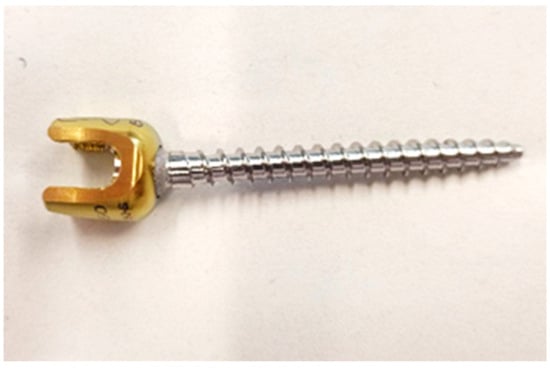
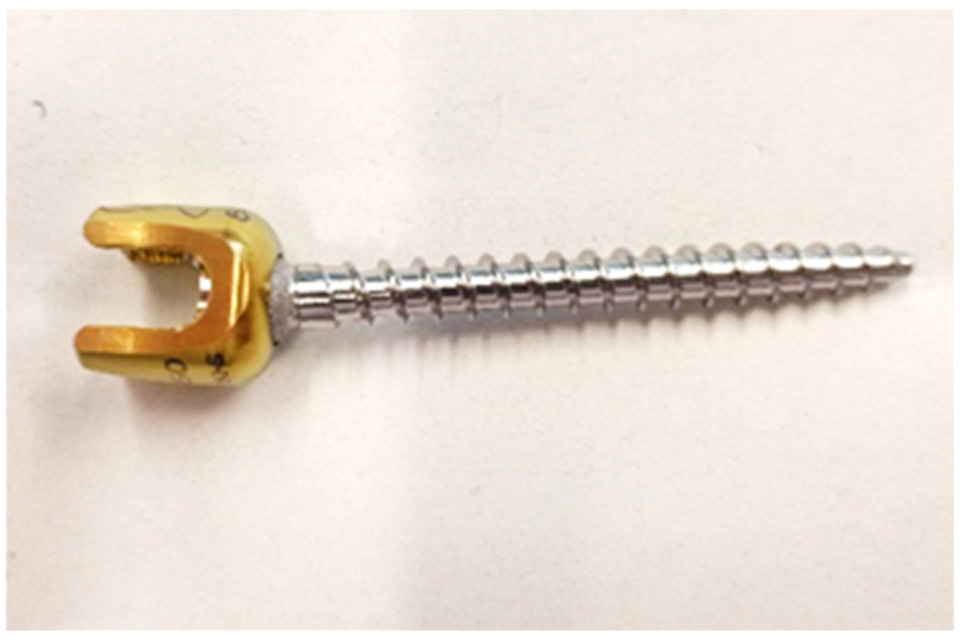
A total of two hundred ninety grade 5 titanium alloy (Ti6Al4V) intersomatic screws (Innovacions Quirúrgiques de Catalunya, Barcelona, Spain), with chemical composition showed in Table 1, were used in this study (Figure 1). For in vitro biological assays, disks with 5 mm in diameter of the same alloy were employed. For each test were used 5 disks from the 5 different screws.
Table 1.
Chemical composition in weight percentage.
Figure 1.
Intersomatic screw used for the studies.
The screw used for the study has a diameter of 4.5 mm at the top and a total length of 65 mm, with a total taper of 6°. It has 16 screw threads with a pitch of 3 mm. The thread has an angle of 4.5°. The final treatment consists of machining and light polishing with alumina particles with an average size of 0.6 mm in a rotary reactor in an aqueous medium for 1 h.
Two different groups were used: a control and a nanopillar passivation group. The control group consisted of screws as received. The nanopillar passivation group consisted of screws immersed for 2 h in Piranha solution, which is a mixture of sulfuric acid 96% (v/v) and a 1:1 ratio of 10% (v/v) hydrochloric acid and 20% (v/v) hydrogen peroxide.
A third group, treated with 20% hydrochloric acid (HCl) for 60 s, was included specifically in the corrosion testing, ion release evaluation, and in vitro osteoblast cell studies. These assays are particularly sensitive to surface oxide composition and chemical passivation, both of which are strongly influenced by acid etching. Hydrochloric acid was chosen because it is a widely used industrial treatment for cleaning and passivating titanium surfaces, making it a relevant and standardized control for these specific analyses [48].
Following treatment, all samples were cleaned in an ultrasonic bath: twice with distilled water and once with ethanol.
2.2. Surface Characterization
2.2.1. Morphology and Roughness
A high-resolution field emission scanning electron microscope (FE-SEM; FEI Nova NanoSEM 230, Hillsboro, OR, USA) was employed to examine the micro- and nanostructural features of the sample surfaces.
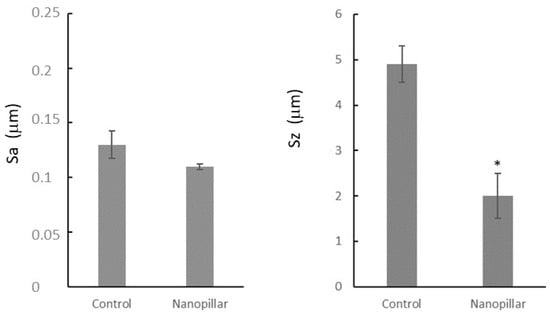
Surface roughness measurements for all experimental groups were performed using a high resolution confocal microscope (Olympus LEXT OLS3100, Tokyo, Japan). Five specimens from each group were analyzed, and three measurements per specimen were recorded at a magnification of 1000×. The resolution in the roughness of the equipment is 10 nm in each roughness value. The surface roughness parameters Sa and Sz were determined, where Ra corresponds to the arithmetic mean of the absolute profile deviations within a defined sampling length, and Sz represents the combined value of the maximum peak height and the maximum valley depth within that same region.
2.2.2. Wettability and Surface Energy
Contact angle and surface free energy (SFE) measurements were performed because both wettability and surface energy significantly affect the initial stages of protein adsorption as well as cell and bacterial adhesion kinetics.
The wettability of the intersomatic screw surfaces was evaluated using the sessile drop method to measure the contact angle. Measurements were obtained through optical microscopy (Contact Angle System OCA15plus, Dataphysics, Filderstadt, Germany) and analyzed with dedicated software (SCA20, Dataphysics, Riverside, CA, USA). For each surface type, ten measurements were recorded under controlled conditions of 37 °C and 100% relative humidity to simulate physiological environments. Additionally, static contact angles (CA) were determined using two reference liquids—pure water and another standard solution—under identical temperature and humidity conditions. All analyses were performed using a contact angle goniometer (OCA15+, Dataphysics, Riverside, CA, USA).
The total surface free energy was calculated as the sum of the dispersive (London) and polar components for each sample. Contact angles obtained with three test liquids—ultrapure distilled water (Milli-Q, Sigma-Aldrich, St. Louis, MO, USA) and diiodomethane—were used to compute the SFE according to the Owens and Wendt model [49,50].
being γS the surface tension of the solid phase (S), γL the surface tension of the liquid (L), γSL the interfacial free energy or SE between L and S, θ the contact angle between L and S, and γd and γp represent the dispersive and polar components of the SE, respectively. Where is due to dipole–dipole–dipole interactions (London or ‘dispersion’), and is the polar component produced by the permanent interaction between dipoles.
2.3. Hydrogen Quantification
Hydrogen concentration in both the control and nanotextured Ti6Al4V alloy was analyzed, as interstitial hydrogen could penetrate into the structure and potentially lead to hydrogen embrittlement of the intersomatic screw. Measurements were conducted using an Inert gas Fusion (LECO TCH600) and a standard (QA-PRO-7452-037-INTA), to quantify internal hydrogen content within the titanium alloy. Five samples per group were evaluated using CP-MS.
2.4. Mechanical Properties
Ten screws from each group were subjected to a three-point flexural test using an electromechanical testing machine (Instron 640, Norwood, MA, USA) with a crosshead speed of 1 mm/min. Test were realized according the international standard ISO 7438:2016 [50]. For fatigue testing, forty intersomatic screws were evaluated, 20 per group. Tests were conducted using a universal testing machine (Bionix, MTS, Mineapolis, MN, USA) with a 100 kN load capacity, also at a crosshead speed of 1 mm/min. Fatigue specimens were cyclically loaded in tension-compression under strain-controlled conditions (Re = −1). The strain rate was maintained at 6.5 × 10⁻³ s−1, and the total strain amplitude applied was ±7 × 10⁻³. Fatigue tests were performed in accordance with ISO 14801:2007 [51], which starts from the breaking stress and reduces different percentages of the maximum load to perform the fatigue test. As the percentage of maximum stress is reduced, the number of cycles increases. When the value exceeds five million cycles, that stress is considered the fatigue limit, or, as it is called in engineering terms, the material has infinite life at that stress. In our case, we performed tests up to 10 million cycles without breakage, and we consider that mechanical load to be the fatigue limit.
2.5. Corrosion Resistance
Corrosion tests were conducted in accordance with ISO and ASTM standards [52,53,54]. Experiments were performed using a Voltalab PGZ 301 potentiostat (Radiometer, Copenhagen, Denmark) operated through Voltamaster 4 software (Radiometer Analytical, Villeurbanne Cedex, France). An Ag/AgCl/KCl electrode (E = 0.222 V) served as the reference electrode, while a platinum electrode with a surface area of 240 mm2 (Radiometer Analytical, Villeurbanne, France) was used as the auxiliary electrode.
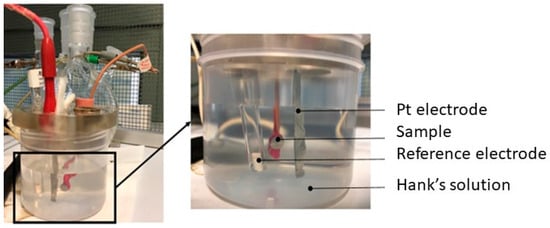
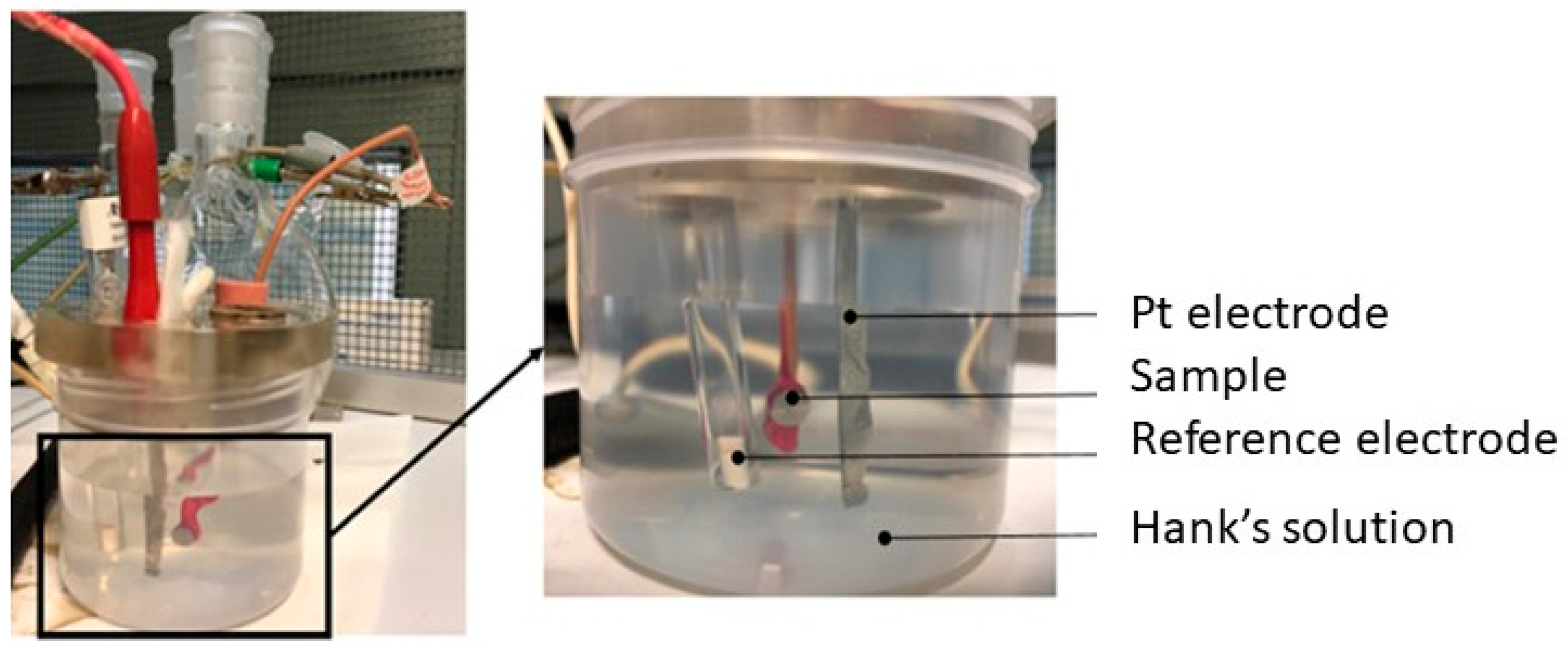
The electrolyte solution consisted of Hank’s balanced salt solution (Sigma-Aldrich, USA), whose chemical composition is listed in Table 2. This saline medium mimic the ionic environment of human physiological fluids. All tests were performed at a controlled temperature of 37 °C. The experimental setup used for the corrosion tests is illustrated in Figure 2.
Table 2.
Chemical composition of Hank’s solution.
Figure 2.
Electrical setup used to measure the electrochemical parameters.
The open circuit potential (OCP) was monitored for 3 h to ensure stabilization of the potential value prior to performing the polarization resistance test. Cyclic voltammetry was subsequently conducted by scanning the potential of the alloy samples at a rate of 0.25 mV/s. The minimum and maximum current limits were set at −1 A and +1 A, respectively, with a potential window of 100 A ranging from −300 to +2000 mV around the OCP value.
The following electrochemical parameters were obtained for each sample:
- Open circuit potential (EOCP), corrosion potential (Ecorr), and corrosion current density (icorr), which were recorded during the tests.
- Open circuit potential (EOCP): the potential of an electrode measured relative to a reference electrode when no current flows to or from the material.
- Corrosion potential (Ecorr): the potential determined at the intersection point where the total oxidation rate equals the total reduction rate.
- Corrosion current density (icorr): the corrosion current divided by the electrode surface area, representing the anodic component of the current flowing at Ecorr.
- Polarization resistance (Rp): an indicator of the absolute corrosion rate, obtained by scanning a narrow potential range around Ecorr and relating the slope of the current–potential curve to icorr.
- Corrosion rate (Vc): the material loss per year, expressed as a reduction in thickness.
2.6. Ion Release
The ion-release study was performed by immersing the implants in 100 mL of Hank’s solution and maintaining them at 37 °C for exposure periods of 1, 7, 14, and 30 days. Each disk presented a tested surface area of 19.64 mm2. The concentration of ions released into the medium was quantified using inductively coupled plasma–mass spectrometry (ICP–MS) on a Perkin Elmer Optima 320RL system (Waltham, MA, USA). Titanium calibration standards were prepared from serial dilutions of a certified stock solution to achieve the required measurement range. All immersion extracts were analyzed in triplicate, and ion levels were obtained through linear regression based on the calibration curve. The incubation steps were performed in a Memmert BE500 oven (MEMMERT GmbH, Schwabach, Germany).
2.7. Bacterial Adhesion
Several Gram-negative and Gram-positive bacteria strains commonly present in orthopedic surgery were studied: Pseudomonas aeruginosa, Streptococcus sanguinis, Streptococcus gordonii, Enterococcus faecalis, Veillonella parvula, Lactobacillus salivarius, Staphylococcus aureus and Staphylococcus epidermis. Five samples per group and bacterial strain were tested. Prior to testing, all samples were sterilized using ethanol and subsequently exposed to ultraviolet light for 30 min [54,55,56]. The bacterial inoculum was prepared by suspending the bacteria in 5 mL of Brain Heart Infusion (BHI) medium and incubated for 24 h at 37 °C. The culture was then diluted to an optical density of 0.1 at a wavelength of 600 nm. A volume of 500 µL was placed to each sample and incubated overnight at 37 °C to allow adhesion. After incubation, samples were gently washed three times with phosphate-buffered saline (PBS) to remove non- adherent bacteria. Adherent bacteria were then detached by sonication for 5 min in 1 mL of sterile PBS followed by vortexing for 30 s.
The resulting bacterial suspensions were serially diluted and plated on BHI agar plates. Plates were incubated for 24 h at 37 °C, and colony-forming units (CFUs) were counted to quantify the number of viable adherent bacteria. The CFU reduction percentage was calculated for each bacterial strain by comparing the nanopillar group to the control group.
2.8. Osteoblast Cell Culture
Osteoblastic cells (SaOs-2; ATCC, Manassas, VA, USA) were employed for the in vitro experiments. The cells were maintained in McCoy’s 5A modified medium supplemented with 10% fetal bovine serum (FBS), 50 µg/mL L-glutamine, and 2 mM penicillin/streptomycin (Invitrogen, Carlsbad, CA, USA). Cultures were incubated at 37 °C in a humidified atmosphere containing 5% CO2.
When cultures reached confluence, cells were detached using TrypLE (Invitrogen, Carlsbad, CA, USA) for 3 min, centrifuged, and resuspended in fresh complete medium. Subsequently, 5000 cells were seeded onto titanium disks and incubated at 37 °C. After 3 and 7 days, cell lysis was performed using 200 µL/well of M-PER® buffer (Pierce, Rockford, IL, USA). Cell proliferation was then assessed with the LDH Cytotoxicity Detection Kit (Roche Applied Science, Mannheim, Germany). The level of lactate dehydrogenase (LDH) released, directly proportional to cell number, was quantified spectrophotometrically at 492 nm using an ELx800 microplate reader (Bio-Tek Instruments, Winooski, VT, USA) [22].
Osteogenic differentiation was analyzed on day 14 by measuring alkaline phosphatase (ALP) activity with the Sensolyte pNPP colorimetric assay (Anaspec, Fremont, CA, USA). Absorbance values were recorded at 495 nm using the same ELx800 microplate reader (Bio-Tek Instruments, Winooski, VT, USA).
2.9. In Vivo Tests
2.9.1. Animals
All the animals used in the experimental study in which different biological aspects related to bone implantation of titanium cylinders were evaluate were laboratory rabbits. The rabbits were bred and cared for at our facilities and were assigned to this study once their use had been approved by the ethics committee. All experimental procedures were conducted in accordance with ethical standards and were approved by the Animal and Human Research Ethical Committee of the Universitat Autonoma de Barcelona, under procedure number #4684 and in compliance with the Guide for the Care and Use of Laboratory Animals and the European Community Guidelines (Directive 2010/63/EU). Ten healthy adult male New Zealand White rabbits (Universitat Autònoma de Barcelona, Cerdanyola, Spain), aged 6–7 months and with an average body weight of approximately 5 kg, were included in the study. All experimental procedures were approved by the institutional ethics committee (CEEH2013-05) and carried out at the Animal Experimentation Facility of the Universitat Autònoma de Barcelona (Spain). Experiments followed the guidelines of the Spanish Government and the European Directive for the Care and Use of Laboratory Animals. Rabbits were housed individually in enriched cages that allowed normal activity and were observed daily by trained personnel to monitor overall health status. Food and tap water were provided ad libitum. Human patients were not used in the in vivo studies. (The documents of the institutional ethics committee and the permission of the Animal Experimental Facility of the Universitat Autònoma de Barcelona (Cerdanyola, Spain) are in Supplementary Materials).
2.9.2. Implants and Surgical Procedure
In this study, three implant types were evaluated: 13 untreated controls, 13 implants subjected to hydrochloric acid (HCl) passivation, and 14 implants engineered with a nanopillar surface design. All screws had a diameter of 4.1 mm and a length of 10 mm, matching the typical dimensions used for intersomatic fixation.
Surgical procedures were conducted under sterile operating room conditions and general anesthesia. Anesthesia was induced and maintained with 2.5–4% isoflurane (Isobavet, Schering-Plough, Madrid, Spain). Prior to induction, animals were sedated intramuscularly with medetomidine (50 mg/kg; Domtor, Esteve, Barcelona, Spain) in combination with ketamine (25 mg/kg; Imalgène 1000, Merial, Toulouse, France). A certified veterinarian (category B or C) continuously supervised anesthetic depth and physiological parameters throughout the procedure [56,57].
Following surgery, animals received prophylactic antibiotic treatment consisting of enrofloxacin (15 mg/kg, s.c., once daily for 7 days; Ganadexil 5%, Invesa, Barcelona, Spain). Analgesic management was provided with meloxicam (0.2 mg/kg, s.c.; Metacam, Boehringer Ingelheim, Barcelona, Spain) for a period of 3 days to ensure adequate postoperative pain control.
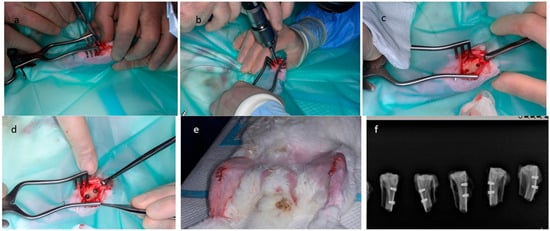
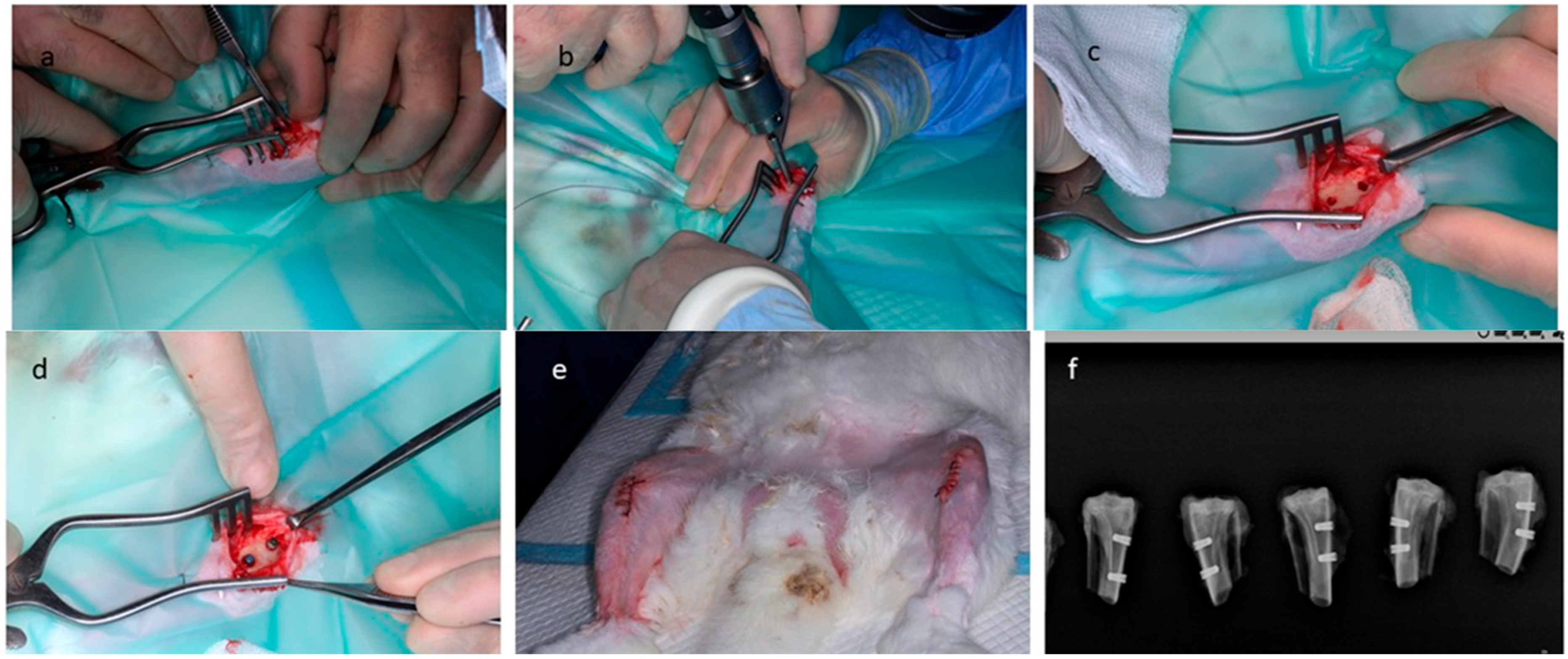
Each rabbit received four implants—two in the right tibia and two in the left tibia—for a total of 40 implants across 10 animals. The surgical site was located at the distal lateral femoral condyles. After a three-week quarantine period, animals were anesthetized, and the surgical area was shaved and disinfected. A lateral longitudinal incision was made to expose the femoral condyles, and implant beds were prepared following the manufacturer’s instructions. The muscle, subcutaneous tissue, and skin were then closed in layers using resorbable sutures (Vicryl 4-0, Ethicon, Raritan, NJ, USA). After 21 days, the rabbits were humanely euthanized under deep sedation with ketamine and medetomidine, followed by an intravenous overdose of sodium pentobarbital (100 mg/kg; Dolethal, Vétoquinol, Madrid, Spain). In Figure 3 can be observed the implantology process.
Figure 3.
(a). Preparation of the tibia for the implantation. (b). Surgical drill used. (c). Two places to put the implants. (d). Insertion of the implants. (e). Suture of the rabbit. (f). X-Ray obtained after implantation.
2.9.3. Histological and Histomorphometric Analysis
The implant-containing bone segments—including the distracted distal femur and the surrounding soft and hard tissues—were removed using an oscillating saw, then fixed and appropriately labeled. After collection, the samples were dehydrated using a graded ethanol series (50–100%) and subsequently embedded by progressive infiltration with ethanol and glycomethacrylate (Technovit 7200 VLC, Heraeus Kulzer, Wehrheim, Germany), following established procedures [54]. Resin polymerization was completed at 37 °C for 24 h to ensure full material curing.
Central longitudinal sections of approximately 200 µm were obtained from each implant block using a precision band saw. These sections were then progressively thinned and polished (Exakt Apparatebau, Norderstedt, Germany) with 1200- and 4000-grit silicon carbide abrasive papers (Struers, Copenhagen, Denmark) until a final thickness of roughly 40 µm was reached. The resulting slides were stained using the Levai–Laczkó method [52] to allow both histological and histomorphometric evaluation.
Quantitative and semiquantitative analyses were performed with a motorized light microscope equipped with a digital imaging system (BX51, DP71, Olympus Corporation, Tokyo, Japan). The peri-implant compartment was designated as the region of interest. Tissue characterization was based on color and structural patterns, enabling differentiation among newly formed bone, mature lamellar bone, fibrous connective tissue, and vascular elements (Adobe Photoshop, San Jose, CA, USA). All image-based measurements were conducted by a blinded examiner using CellSens 1.5 software (Olympus Corporation, Japan). Bone-to-implant contact (BIC)—defined as the percentage of the implant surface directly apposed to mineralized tissue—was calculated for each specimen.
2.10. Statistical Analysis
All data were presented as mean ± standard deviation, except for the bacterial adhesion assay results, which were expressed as median ± standard error. Comparative analyses were performed using Student’s t-tests, one-way ANOVA, and Tukey’s post hoc multiple comparison tests to determine statistically significant differences among groups, with a significance threshold set at p < 0.05.
Number of screws used:
Roughness: 5 samples × 2 treatments = 10 screws.
Wettability and Surface energy: 5 samples × 2 treatments = 10 screws
Hydrogen content: 5 samples × 2 treatments = 10 screws.
Flexion. Mechanical properties: 10 samples × 2 treatments = 20 screws.
Fatigue behavior: 20 samples × 2 treatments = 40 screws.
Corrosion: 5 samples × 2 tests (open circuit/potentiodynamic) × 3 treatments = 30 screws
Ion release: 3 samples × 5 times × 3 treatments = 45 screws
Bacteria cultures: 5 samples × 8 different strains = 40 screws.
Osteoblastic culture: 5 samples × 2 times × 3 treatments (proliferation) + 5 samples (mineralization) × 3 treatments = 45 screws.
In vivo tests: 10 rabbits × 2 tibias × 2 screws/tibia = 40 screws. TOTAL: 290 screws.
3. Results
3.1. Surface Characterization
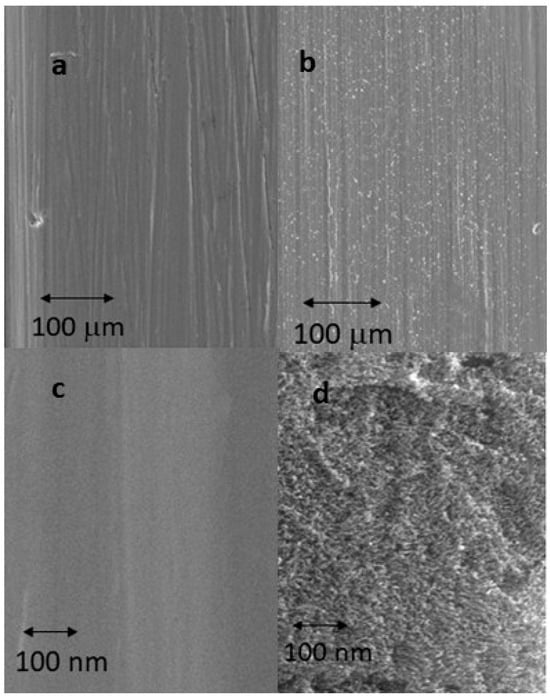
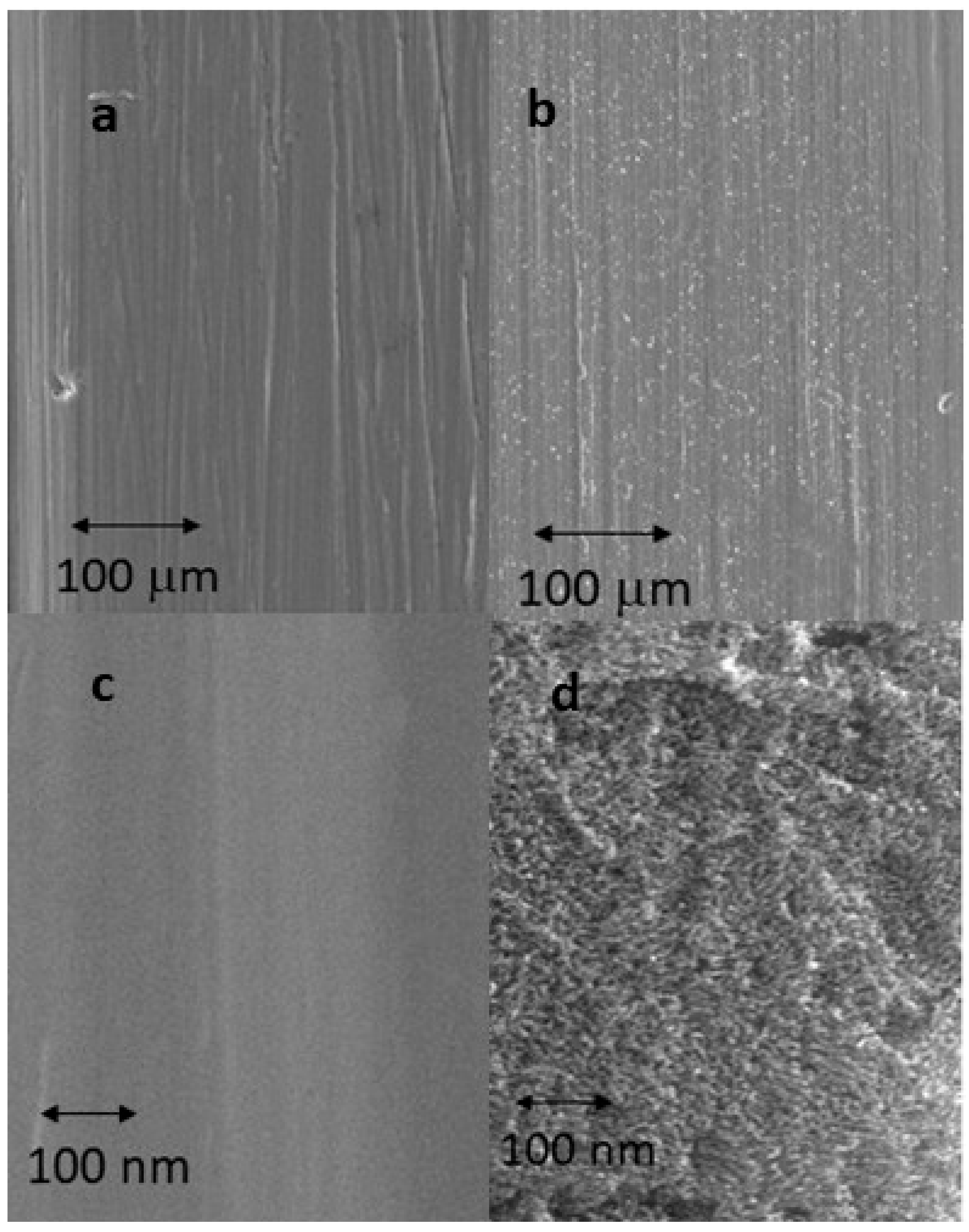
High-resolution FE-SEM analysis revealed distinct morphological differences between the studied surfaces (Figure 4). The control Ti6Al4V screws exhibited a smooth, featureless morphology, whereas the acid-treated samples displayed an array of nanopillars distributed across the entire surface. At higher magnifications, the nanopillar structures were clearly distinguishable, indicating a successful topographical modification.
Figure 4.
FE-SEM images of Ti6Al4V surfaces: (a,c) control and (b,d) nanopillars.
Quantitative surface roughness analysis obtained by high resolution confocal microscope with a resolution power of 10 nm confirmed that the mean roughness (Sa) did not differ significantly between the control and nanopillar-treated groups (control: 0.14 ± 0.05 µm; nanopillar 0.12 ± 0.06 X; p = 0.7893, n = 5). However, the maximum peak-to-valley height (Sz) was significantly lower in the nanopillar-treated samples (control: 4.98 ± 1.23 µm; nanopillar: 1.89X ± 0.23; p < 0.005, n = 5) (Figure 5). This reduction suggests that the treatment effectively refines surface asperities while introducing nanoscale features.
Figure 5.
Quantitative roughness parameters (Sa and Sz) for control and nanopillar-treated screws. Data are shown as mean ± SD (n = 5). * Indicates statistically significant difference (p < 0.05).
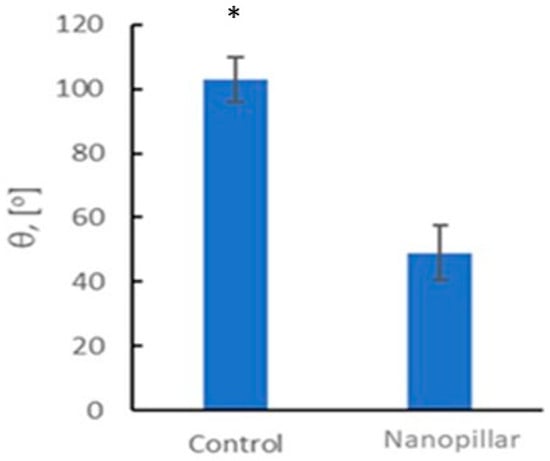
The contact angle measurements (Figure 6) demonstrated a significant increase in hydrophilicity following nanopillar formation. The control surface exhibited a contact angle of 102 ± 9°, whereas the nanopillar-treated surface showed 49 ± 4° (n = 10), confirming enhanced wettability. The contact angle presented statistical difference significances with p < 0.05.
Figure 6.
Static contact angles for control and nanopillar-treated surfaces. Data are shown as mean ± SD (n = 10). * Indicates statistically significant difference (p < 0.05).
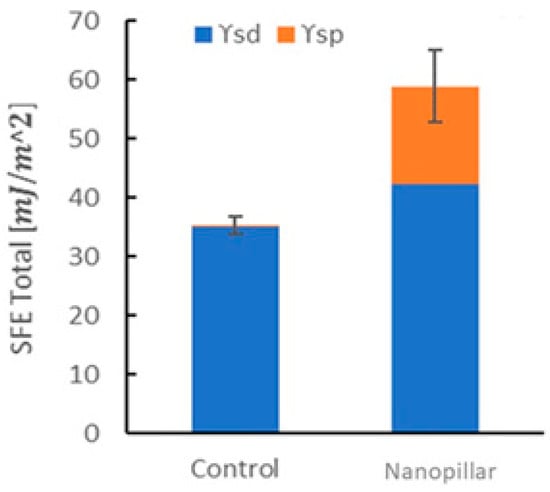
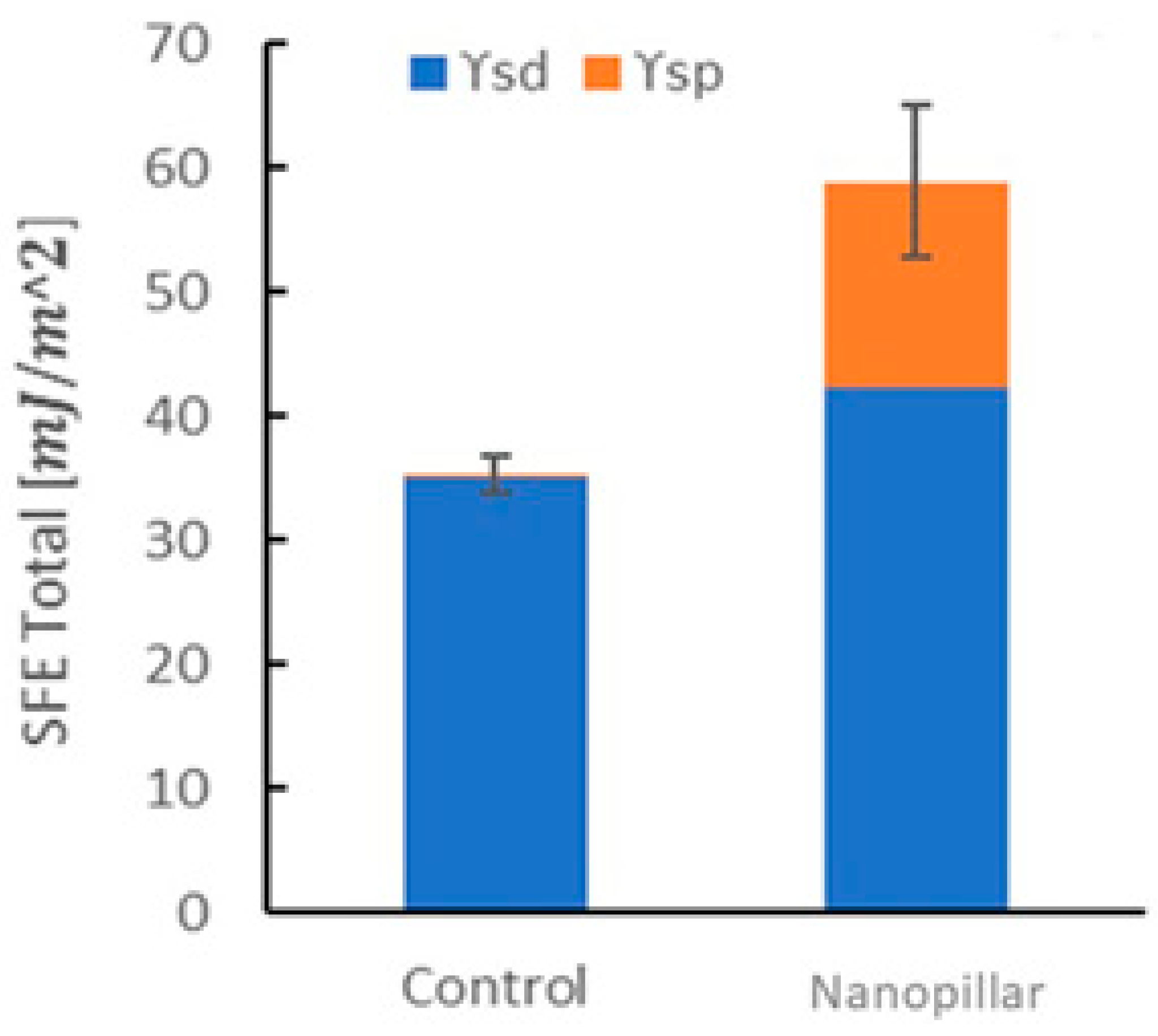
The total surface energy determination tests were performed by determining the dispersive and polar components on the three surfaces (Figure 7). The analysis revealed that nanopillar-treated samples possessed the highest surface energy (32.3 ± 3.0 mJ/m2) compared to the control (59.4 ± 10.5 mJ/m2). The polar component (γsp) contributed most to this increase, rising from 19.2 ± 5.1 mJ/m2 in the control to 0.9 ± 0.2 mJ/m2 in the nanopillar group (p < 0.05). The larger polar contribution is known to promote protein adsorption, suggesting that the nanopillar topography may favor osteoblast attachment and early osseointegration.
Figure 7.
Total surface energy and its dispersive (γsd) and polar (γsp) components. Values are mean ± SD (n = 5).
3.2. Hydrogen Incorporation
One of the most significant concerns for titanium and its alloys in concentrated acidic conditions is the potential of hydrogen infiltration along grain boundaries. This can result in the creation of molecular hydrogen (H + H → H2), causing volumetric expansion and hydrogen embrittlement due to voids and cracks at grain boundaries.
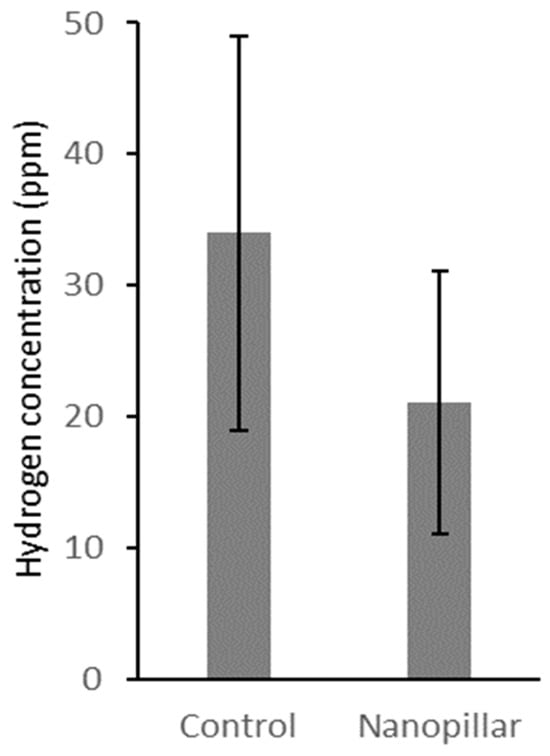
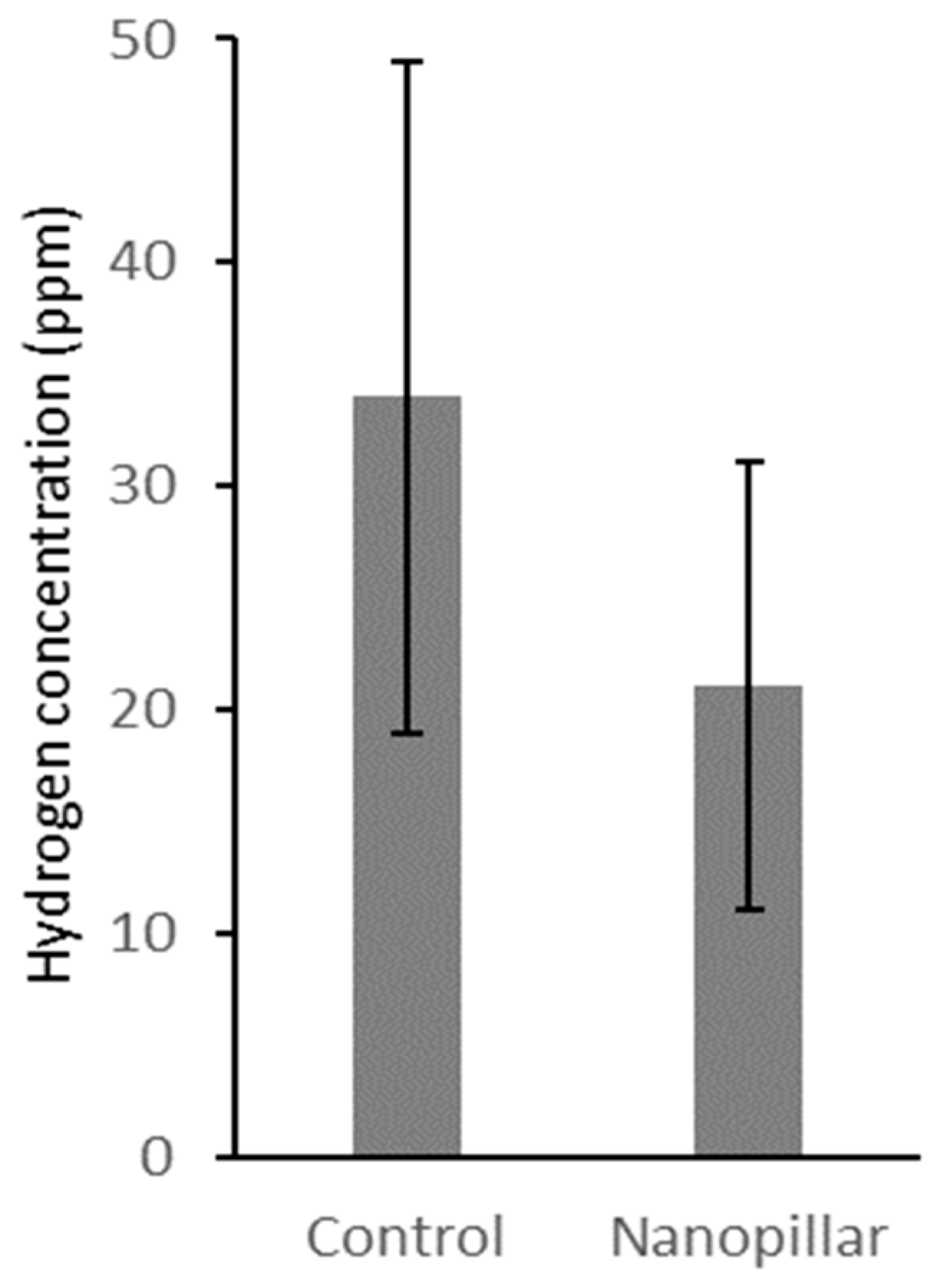
This phenomenon was determined using spectroscopy to assess hydrogen content (Figure 8). Both the control and nanopillar-treated groups exhibited comparable hydrogen concentrations (control: 32 ± 3 ppm; nanopillar: 20 ± 4 ppm; p = 0.2768, n = 5). These results confirm that the proposed acid passivation treatment does not promote hydrogen infiltration or embrittlement within the Ti6Al4V matrix.
Figure 8.
Hydrogen content (ppm) in control and nanopillar-treated Ti6Al4V screws (mean ± SD, n = 5).
3.3. Mechanical Properties
To confirm that the surface modification did not compromise the mechanical integrity of the intersomatic screws, both three-point flexural and cyclic loading tests were performed. Mechanical tests have been performed in accordance with international standards for three-point bending tests on elastic materials used in prostheses and implants ISO 7438 [50].
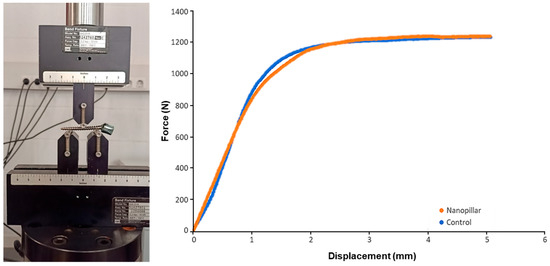
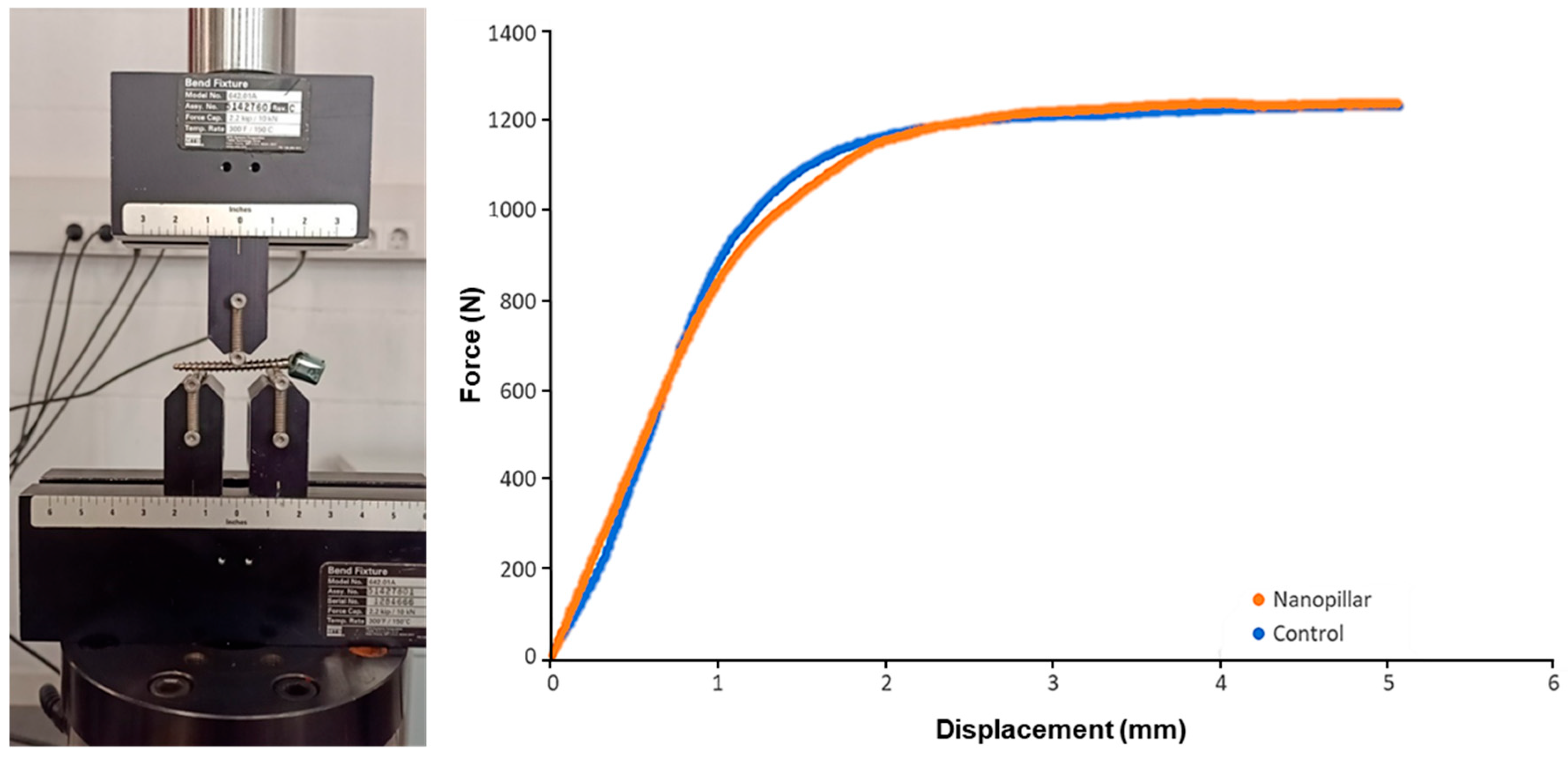
The flexural test results showed nearly identical load–displacement behavior for both groups (Figure 9). The maximum bending forces were 1238 ± 123 N for the control and 1231 ± 167 N for the nanopillar-treated screws (p = 0.8425, n = 10), confirming that the acid-based passivation treatment did not alter the alloy’s elastic–plastic response.
Figure 9.
Three-point flexural curves of control and nanopillar-treated Ti6Al4V intersomatic screws (mean ± SD, n = 10).
Different authors [58,59,60] have shown that the initial stresses of bone fracture under bending occur between values of 400 and 700 N, depending on bone quality, load application speed, and stress orientation. These stress values at the onset of cracking range from 0.1 to 0.6 mm, and based on the values shown in Figure 9, the intervertebral screw is working in elastic behavior, which allows us to confirm that the bone would break before the screw would break. No specimen from either group failed or exhibited plastic deformation after 10,000,000 loading cycles at 550 N, indicating that nanopillar formation does not detrimentally affect fatigue resistance. Values of 550 N would, in principle, be values that could fracture the bone, therefore the interosseous screws will not break when used by the patient, as the bone would break before the screw, since the fracture stresses would be smaller [60]. It is worth noting the high mechanical resistance of the vertebrae under compression, which exceeds 2600 N due to the orientation of the bone tissue and, in particular, the apatite particles, so that in this orientation of the load, which is physiological, it has the maximum possible tension. Bending stress decreases in the vertebra due to the poorer orientation of the tissue for this stress, which is not expected for its normal behavior in the human body [58,59,60].
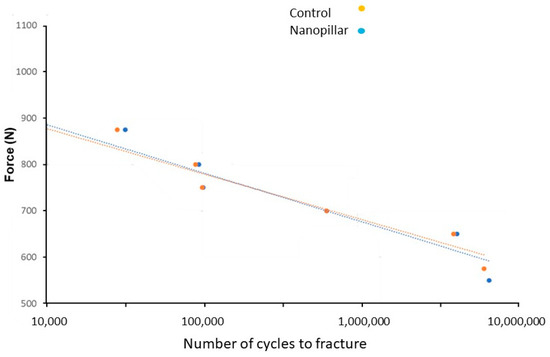
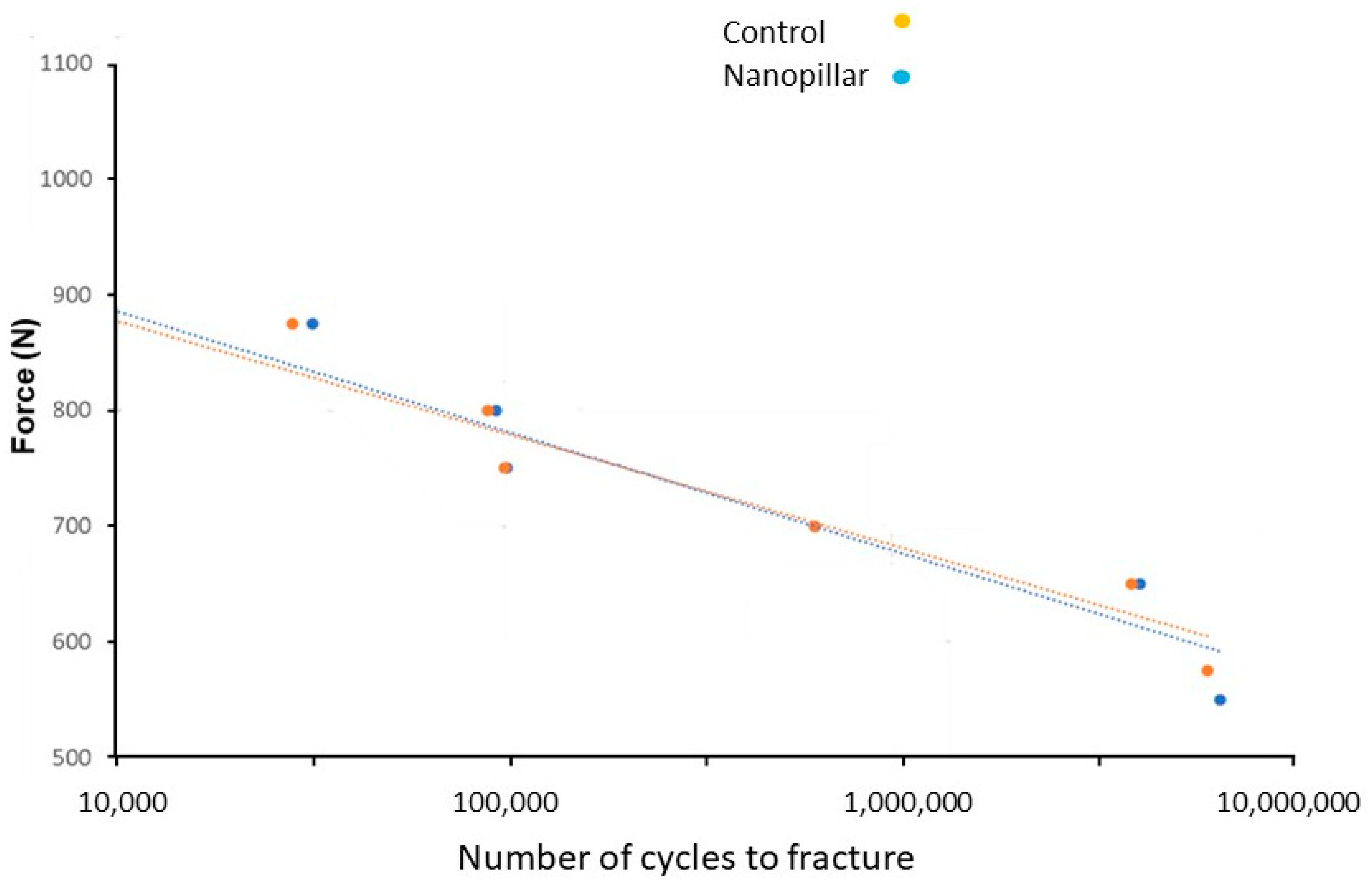
Under cyclic fatigue testing, both surface conditions exhibited similar SN behavior (Figure 10). Fatigue tests have been performed at different mechanical loads. The tests carried out at 850 N show that the number of cycles to fracture is approximately 50,000. when the load is reduced to 800 N, the number of cycles to fracture ranges from 100,000, and when the load is reduced to 600 N, the cycles to fracture reach 5,000,000 cycles, which is the standard for implants and prostheses. When the load is reduced to 550 N, the implants do not break (>10,000,000 cycles) and are considered to have an infinite life for that mechanical load. The results between the control and those treated with nanopillar surfaces are very similar, and it can be said that nanopillars do not affect the fatigue behavior of the screws.
Figure 10.
SN curves of control and nanopillar-treated screws under cyclic loading. The dotted lines represent the fatigue curve adjustments with the results obtained for the two types of samples: control and nanopillars.
3.4. Corrosion Resistance
Electrochemical corrosion measurements were carried out in Hank’s solution (37 °C) to investigate how surface treatment influenced the passive film stability and corrosion behavior.
As shown in Table 3, HCl-treated screws displayed the highest corrosion resistance, with a polarization resistance (Rp) of 2.479 ± 0.083 MW/cm2 and the lowest corrosion current density (inorr) of 0.018 ± 0.005 μA/cm2. The nanopillar-treated group showed slightly reduced corrosion resistance (Rp = 1.387 ± 0.149 MW/cm2, inorr = 0.046 ± 0.006 μA/cm2), while control samples presented intermediate values (Rp = 2.428 ± 0.390 MW/cm2, inorr = 0.027 ± 0.008 μA/cm2). Despite minor variations, all corrosion rates are very low and they are not susceptible to physiological corrosive processes.
Table 3.
Electrochemical and corrosion parameters for the studied surfaces (mean ± SD, n = 5).
3.5. Ion Release
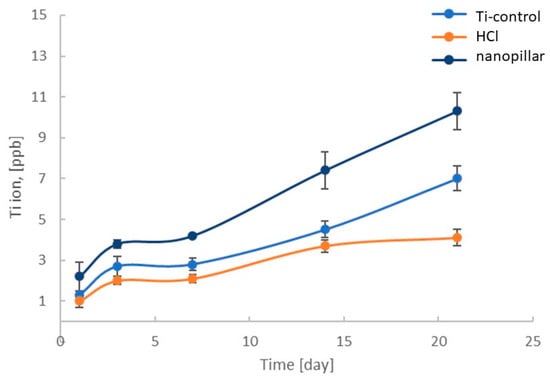
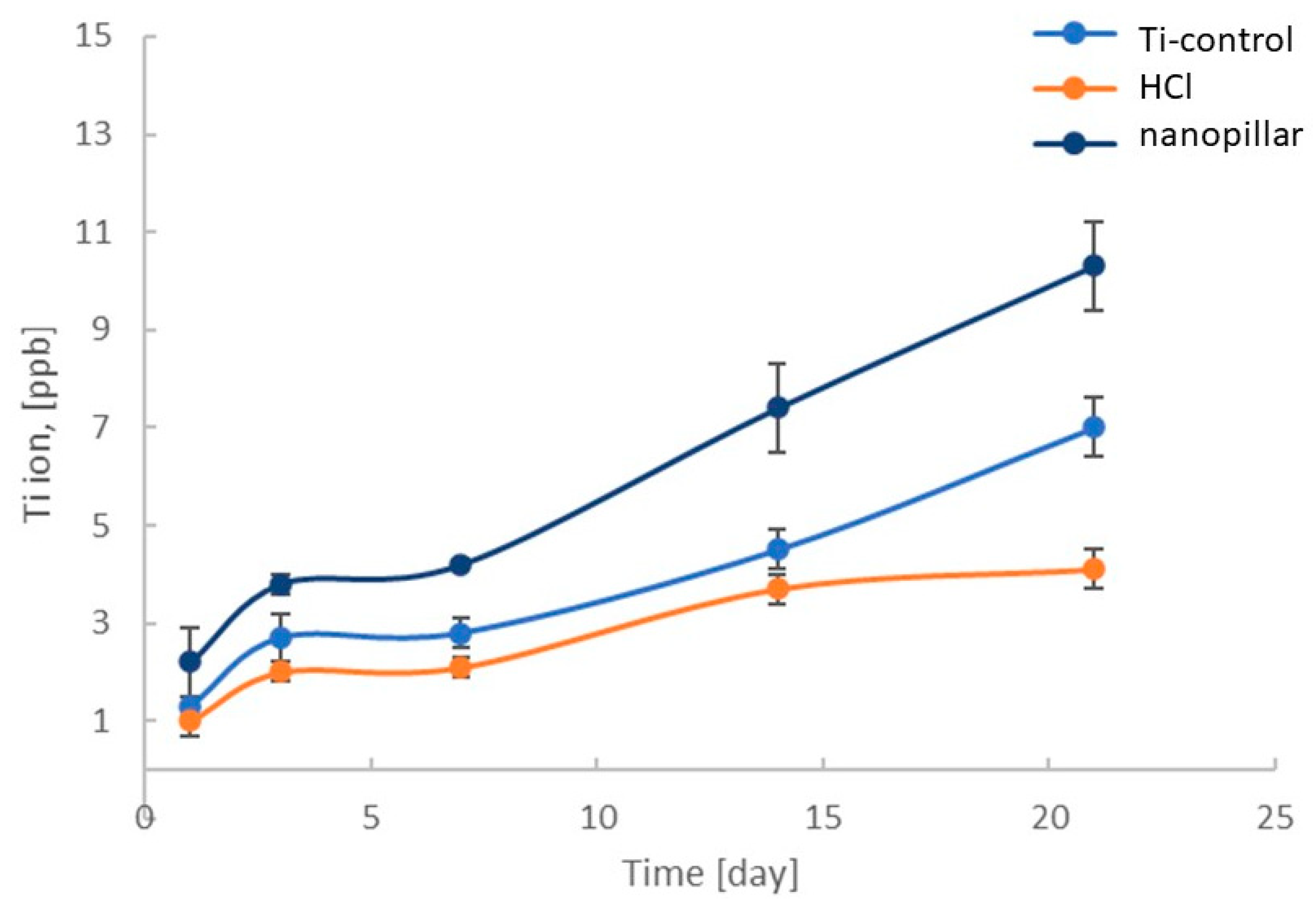
Titanium ion release into Hank’s solution was quantified up to 30 days (Figure 11). The HCl-passivated surfaces exhibited the lowest release (2.9 ± 0.2 ppb after 21 days) since the passivation layer provides an obstacle for ionic migration into solution. The nanopillar-treated surfaces showed slightly higher values (9.5 ± 1.0 ppb), attributed to their increased porosity. The control group released intermediate concentrations (6.1 ± 0.7 ppb). All detected levels were well below cytotoxic thresholds, confirming the chemical stability of the treated surfaces.
Figure 11.
Titanium ion release from different surface treatments over 30 days in Hank’s solution at 37 °C (mean ± SD, n = 3).
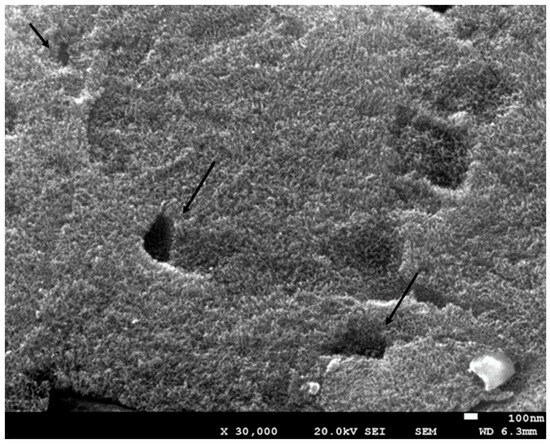
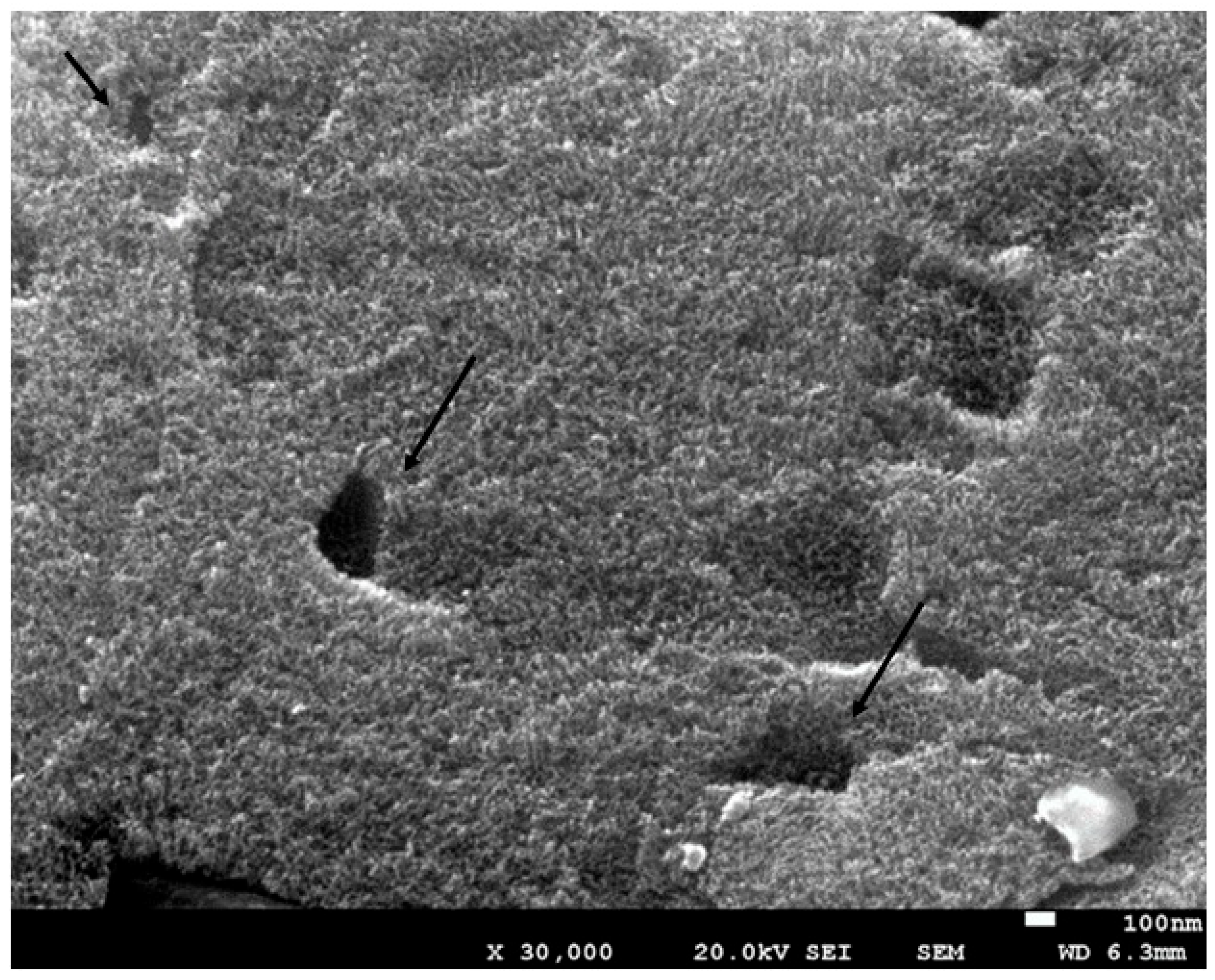
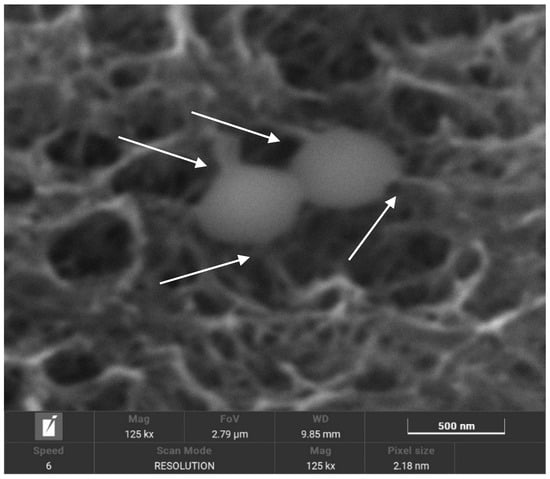
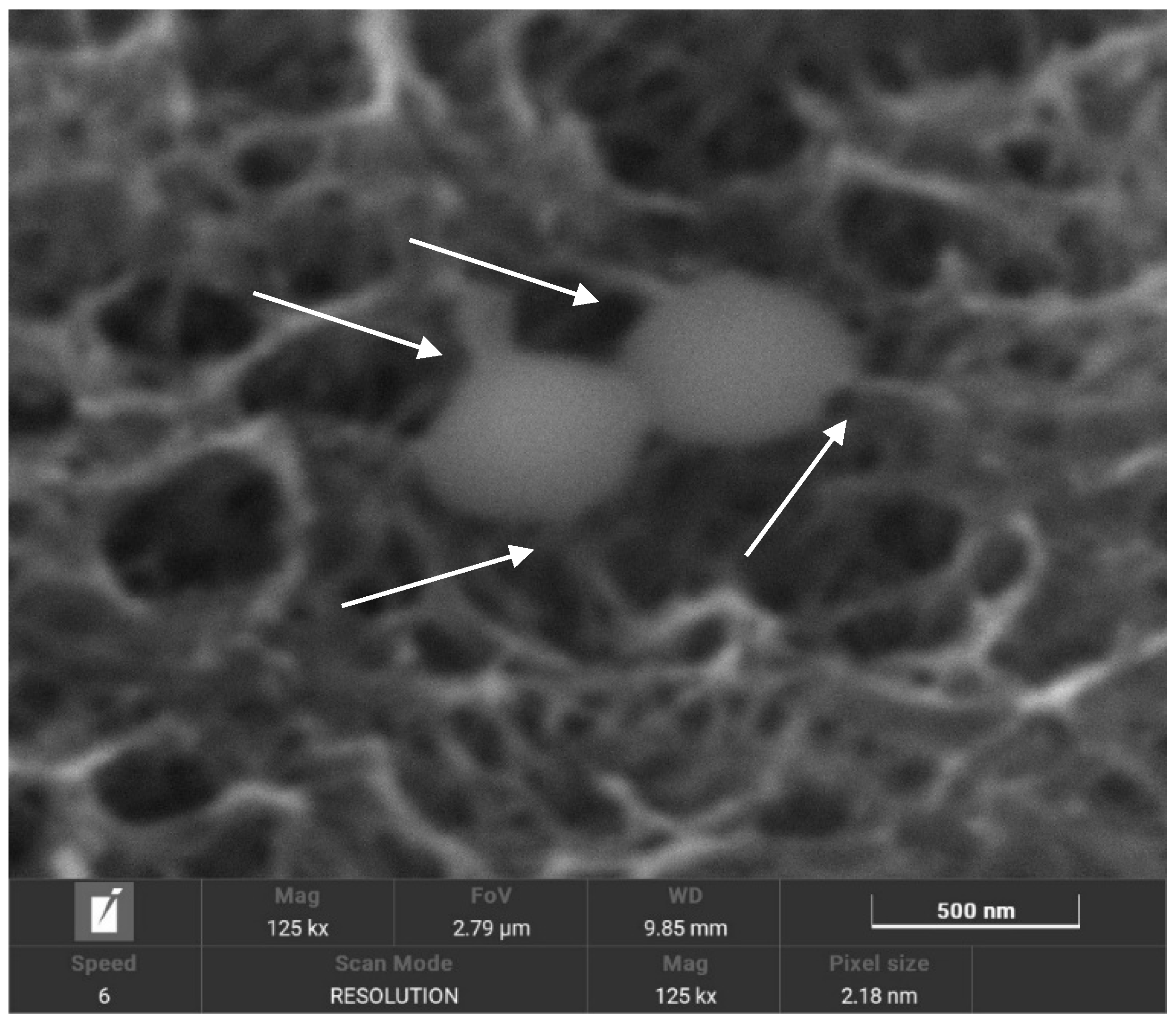
The ionic release process in physiological media of the three samples studied follows the normal behavior of metals implanted in the human body. There is a rapid initial release, which decreases after 2 to 3 days and continues to decrease over time [61,62,63]. In the case of the sample treated with HCl, a lower release is observed, which can be explained by the passivation layer formed by the effect of the acid on the titanium alloy. This passivation layer is compact and significantly reduces the release of ions into the medium. The control sample does not have this compact layer, which is why the release is slightly higher than that passivated with hydrochloric acid. The sample that releases the most ions over the immersion time is the one with a surface consisting of nanopillars. This is because the change in the topography of the oxide layer creates some more porous areas, i.e., the thickness of the oxide layer is reduced, thus facilitating the release of titanium ions. Figure 12 shows nanometric pores that could explain this behavior.
Figure 12.
High resolution scanning electron microcopy image of the nanopillar surface with several nanometric prorous in the surface. Arrows shows these porous.
However, it should be noted that the values of ions released are very small, as they do not reach 10 parts per billion in 20 days of immersion, which ensures that there is no cytotoxic effect, as these values are well below the established limits [63,64].
3.6. Bacterial Adhesion
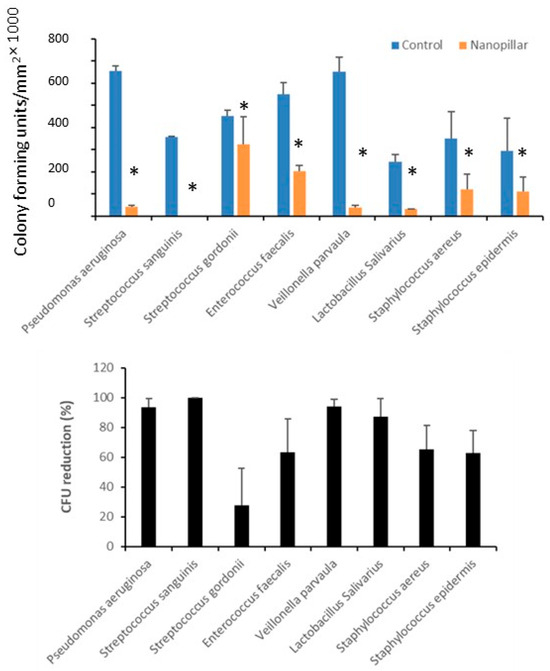
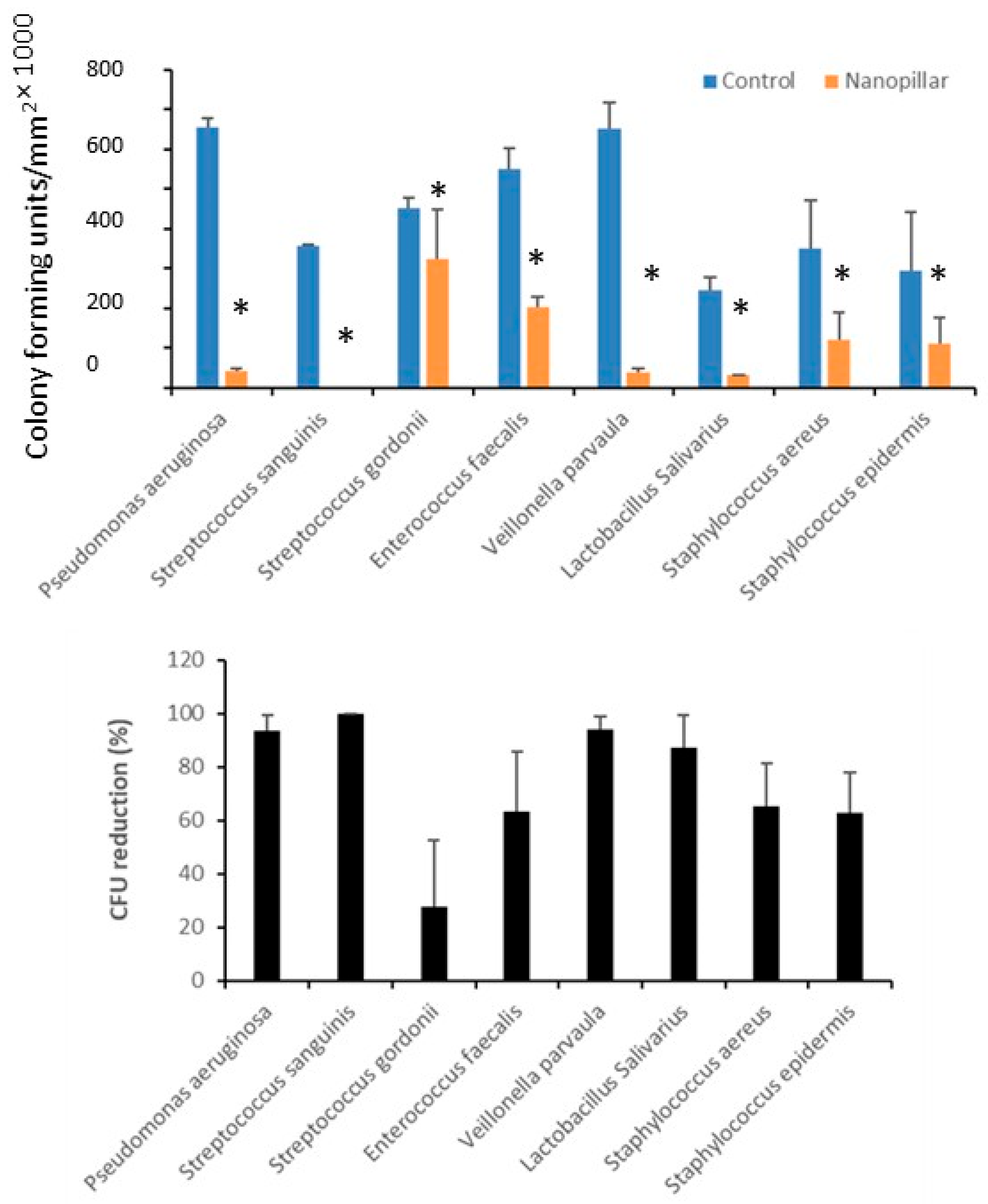
Bacterial adhesion assays revealed a marked reduction in bacterial colonization on nanopillar surfaces compared with control (Figure 13). Across all tested species (n = 5 per group), CFU/mm2 counts decreased depending on the strain. Pseudomonas aeruginosa adhesion was reduced from 6.8 × 10⁵ ± 5.2 × 10⁴ CFU/mm2 (control) to 2.8 × 10⁴ ± 1.1 × 10³ CFU/mm2, Streptococcus sanguinis adhesion reduced from 3.5 × 10⁵ ± 8.0 102 CFU/mm2 (control) to 120.8 ± 19 CFU/mm2, for Streptococcus gordonii was reduced from 4.8 × 10⁵ ± 1.2 × 10⁴ CFU/mm2 (control) to 3.2 × 10⁵ ± 1.3 × 10⁴ CFU/mm2, Enterococcus faecalis was reduced from 5.8 × 10⁵ ± 7.0 × 10⁴ CFU/mm2 (control) to 2.1 × 10⁵ ± 2.1 × 10⁴ CFU/mm2, Veillonella parvaula was reduced from 6.7 × 10⁵ ± 1.2 × 10⁴ CFU/mm2 (control) to 5.1 × 10⁴ ± 1.3 × 10³ CFU/mm2, Lactobacillus salivarius was reduced from 2.8 × 10⁵ ± 2.0 × 10⁴ CFU/mm2 (control) to 1.3 × 10⁴ ± 3.1 × 10³ CFU/mm2, Staphylococcus aureus was reduced from 3.2 × 10⁵ ± 1.2 × 10⁵ CFU/mm2 (control) to 1.5 × 10⁵ ± 1.1 × 10⁴ CFU/mm2 and for Staphylococcus epidermis was reduced from 2.8 × 10⁵ ± 5.2 × 10⁴ CFU/mm2 (control) to 1.0 × 10⁵ ± 1.1 × 10⁴ CFU/mm2. In all cases there are statistical difference significance (p < 0.05).
Figure 13.
Quantification of bacterial adhesion on Ti6Al4V surfaces (mean ± SD, n = 5). * Indicates significant difference (p < 0.05).
SEM imaging confirmed physical disruption of bacterial membranes by the nanopillars (Figure 14), supporting a contact-based bactericidal mechanism.
Figure 14.
SEM image showing nanopillars penetrating bacterial membranes. Arrows shows the penetration of the nanopillars in the bacteria’s membrane.
3.7. Osteoblast Viability and Differentiation
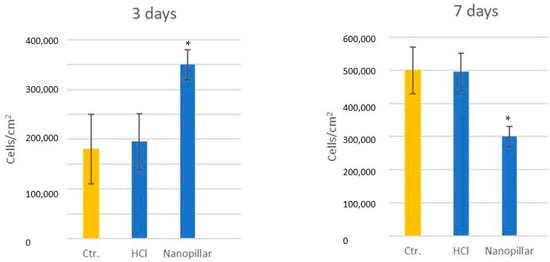
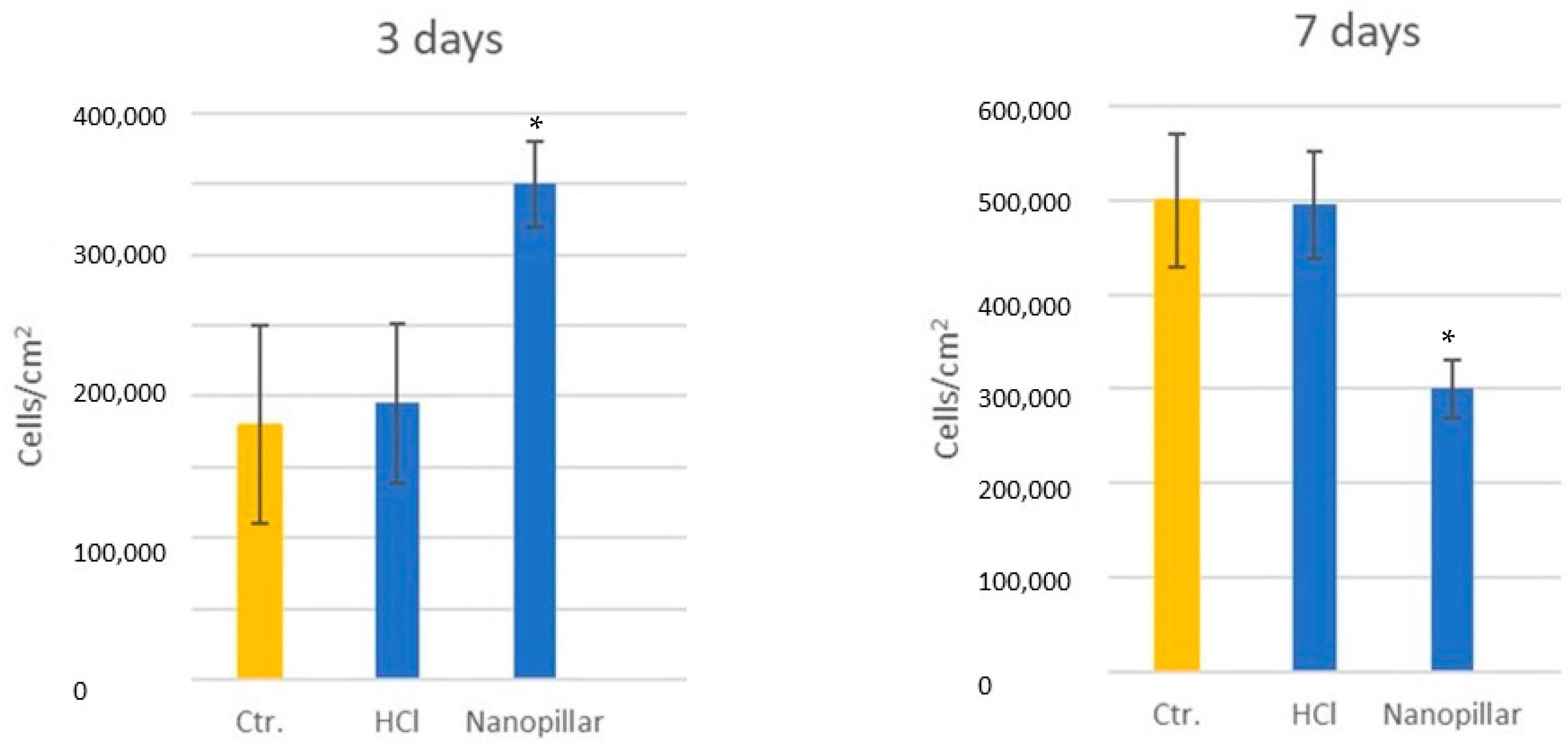
Cell proliferation on the different Ti6Al4V surfaces was evaluated at 3 and 7 days using the LDH assay (n = 5). At day 3, the nanopillar surface exhibited a significantly higher cell density (35 × 104 ± 4.2 × 10⁴ cells/cm2) than both the control (18 × 104 ± 3.8 × 10⁴ cells/cm2) and HCl-treated (19 × 104 ± 3.5 × 10⁴ cells/cm2) surfaces (p < 0.05). However, by day 7, this trend was reversed: control and HCl-treated samples supported greater proliferation (4.9 × 10⁵ ± 1.3 × 10⁵ cells/cm2 and 4.7 × 10⁵ ± 1.0 × 10⁵ cells/cm2, respectively), while the nanopillar surface showed a lower viable cell number (2.9 × 10⁵ ± 6 × 10⁴ cells/cm2, p < 0.05) (Figure 15).
Figure 15.
Cell proliferation (LDH assay) on Ti6Al4V surfaces at 3 and 7 days. Asterisks indicate statistically significant differences (p < 0.05).
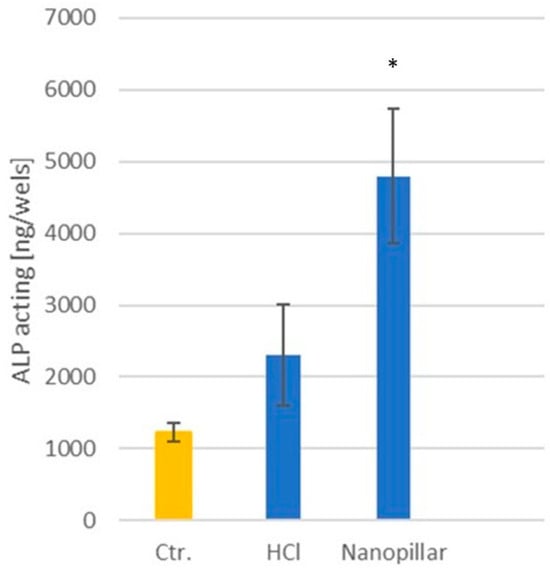
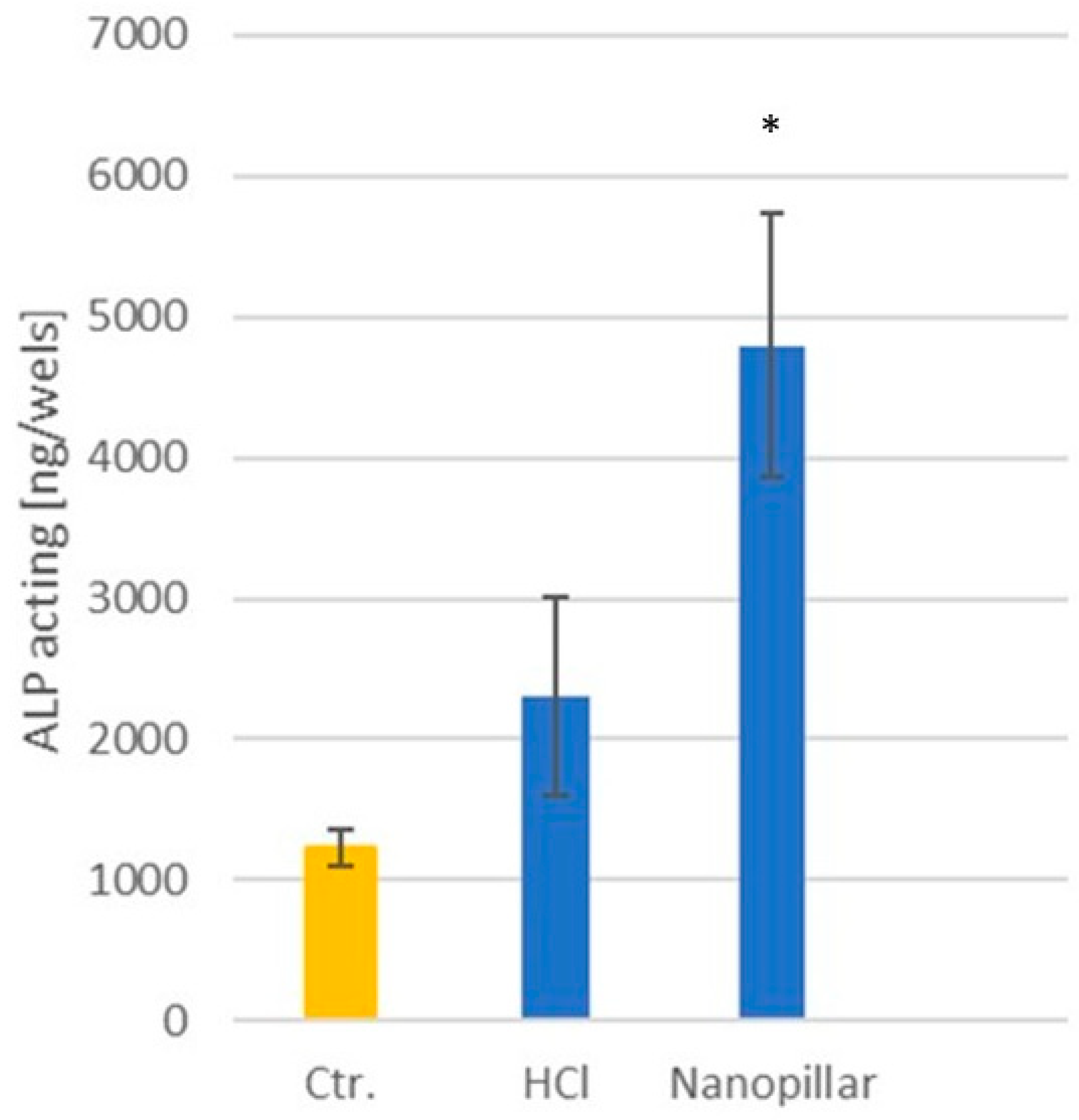
This transient reduction may reflect differences in surface-induced cell spreading or early differentiation onset on the nanotopography. Indeed, ALP activity at day 14 was significantly higher on the nanopillar surface (p < 0.05), indicating enhanced osteogenic differentiation despite the lower proliferation at later time points (Figure 16).
Figure 16.
Alkaline phosphatase (ALP) activity of SaOS-2 osteoblasts after 14 days of culture on Ti6Al4V surfaces. Asterisks indicate statistically significant differences (p < 0.05).
As can be seen, the results of osteoblastic adhesion at 7 days show a significant reduction compared to the values obtained at 3 days. This is because surfaces with nanopillars, due to their good wettability, have already completed the adhesion stage and the osteoblasts are in the proliferation and differentiation phase, as confirmed by the mineralization results (alkaline phosphatase). These results are very promising, as they indicate that the osseointegration process on surfaces with nanopillars will be faster than in the control group.
3.8. In Vivo Tests
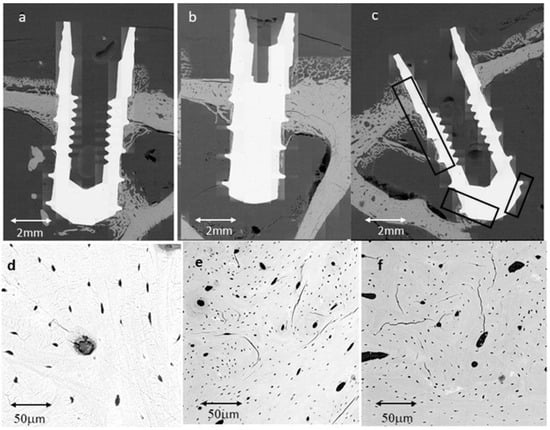
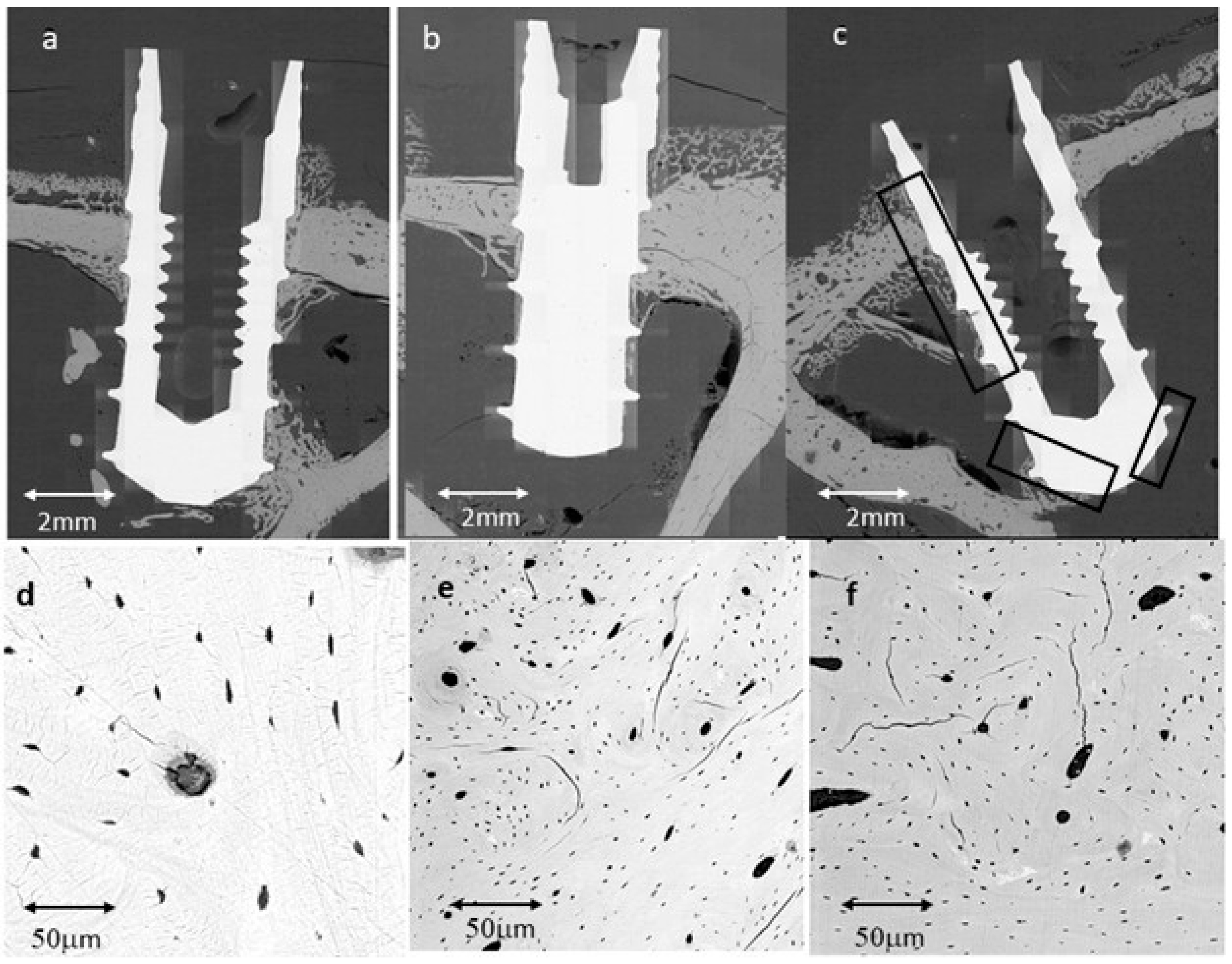
Histological analysis after 21 days of implantation revealed new bone formation around all screw types, with varying degrees of bone–implant contact (BIC) (Figure 17). Quantitative analysis using ImageJ (version4.0) confirmed that the nanopillar surface achieved the highest mean BIC value (52.0 ± 5.2%), followed by the HCl-treated (43.8 ± 7.0%) and control (40.1 ± 8.6%) groups (Table 4). Although the differences did not reach statistical significance at the predefined threshold (p < 0.005), the nanopillar surface exhibited a clear trend toward improved osseointegration, with p = 0.0087 versus control and p = 0.018 versus HCl-treated samples. No postoperative infections or complications were observed during the 21-day healing period.
Figure 17.
Histologies of the different surfaces studied. Longitudinal cross-sectional cut of the implant. (a). control. (b). Passivated with HCl. (c). Nanopillars. (d). control at higher magnification. (e). HCl passivated at higher magnification. (f). Nanopillars at higher magnification. The areas framed are the places of new bone tissue formed in contact with the implant.
Table 4.
Bone implant contact of the three surfaces studied. The values are the statistical average of the observations in all dental implants.
4. Discussion
Titanium and its alloys remain the materials of choice for load-bearing implants due to their superior mechanical strength, corrosion resistance, and biocompatibility [56,57]. Despite these advantages, implant-associated infections remain one of the leading causes of implant failure, often requiring revision surgeries or device removal. To address this challenge, numerous surface modification strategies have been investigated to inhibit bacterial colonization while maintaining or promoting osseointegration. However, achieving a stable, non-cytotoxic, and durable antibacterial surface that also supports bone integration remains a major challenge in orthopedic and spinal implant design.
It has been developed a simple and scalable chemical etching treatment that generates a nanopillar surface on Ti6Al4V implants. This nanotopography mimics natural bactericidal surfaces, such as those of cicada and dragonfly wings, known to physically rupture bacterial membranes [16,26,29]. It has also been observed that the surface topography reduces the attachment of bacteria, prevents biofilm formation on the surface of the implant, and inhibits microbial growth.
This surface provides a mechanical, contact-based bactericidal effect while maintaining the material’s mechanical and biological performance, representing a promising alternative to coatings or antibiotic-based strategies. The acid-etched surface exhibited a homogeneous distribution of high-aspect-ratio nanopillars without altering the bulk properties of the alloy. Although the treatment did not significantly change the average surface roughness (Sa), it reduced the peak-to-valley height (Sz), resulting in a more uniform microtopography.
This morphology is consistent with previous reports of bioinspired antibacterial surfaces and is expected to contribute to both bactericidal activity and improved osteoblastic response.
The nanopillar surface showed increased wettability and a higher polar component of surface energy compared to the control and HCl-passivated samples. These characteristics are known to favor protein adsorption, particularly fibronectin, which mediate osteoblast adhesion and early stages of osseointegration [54,65,66]. Thus, the physicochemical modifications introduced by acid etching are expected to contribute both to improved biological performance and to the observed bactericidal effect.
Mechanical characterization confirmed that the surface treatment did not compromise implant strength. Flexural and fatigue tests revealed comparable mechanical responses between treated and untreated screws, enduring 10 million cycles at 550 N without deformation or fracture. Additionally, hydrogen quantification confirmed the absence of hydrogen embrittlement. This is a common concern for acid-etched titanium, demonstrating that the proposed process preserves the alloy’s mechanical integrity.
With respect to electrochemical corrosion, we have been able to verify how the samples passivated with hydrochloric acid are the most resistant to corrosion and those formed by nanopillars have the least resistance to corrosion. The slightly lower resistance of the nanopillar surface likely results from nanoscale porosity, which increases the exposed area to the electrolyte. However, corrosion currents and titanium ion release remained at extremely low levels (in the microampere and parts-per-billion ranges, respectively), well below thresholds associated with cytotoxicity or material degradation [67,68,69].
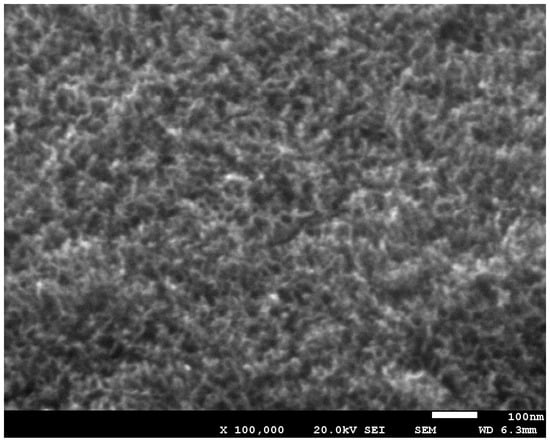
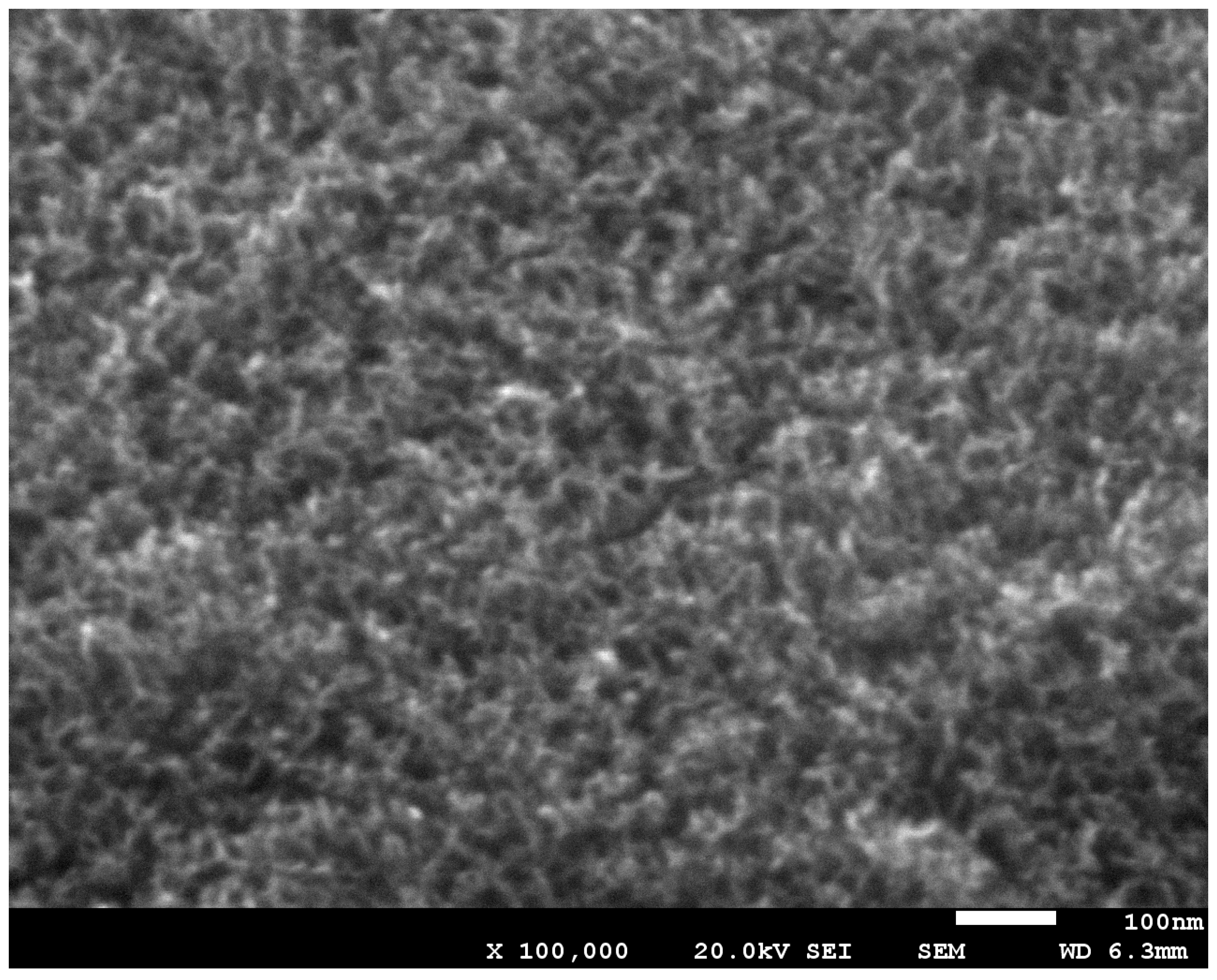
It should be noted that there are two bactericidal mechanisms on the surface of nanopillars: one is the penetration of the nanopillars through the bacterial membrane, and the other is the tensile stresses that occur in the membrane at the axes of the bacteria, causing the membrane to fracture [70,71,72,73,74,75]. For this effect to be effective, the distance between peaks must be less than 1 micrometer, which is the smallest measurement of the size of the bacteria. In this way, bacteria cannot colonize the surface of the screw, proliferate, and form a biofilm. As can be seen in Figure 18, where the image can be seen using high-resolution electron microscopy, there are no 1-micrometer spaces without nanopillars.
Figure 18.
Microstructure of the surface with nanopillars obtained by High resolution scanning electron microcopy.
The bactericidal efficacy of the nanotextured surfaces was confirmed against eight clinically relevant Gram-positive and Gram-negative bacterial strains frequently implicated in spinal infections. All species showed significant reductions in CFU counts compared to the control, with Pseudomonas aeruginosa and Staphylococcus aureus exhibiting reductions exceeding 70%. This broad-spectrum efficacy aligns with the literature on nanopatterned bactericidal surfaces, which act by physically disrupting bacterial membranes [13,15,25,26]. These findings align with prior reports that link bactericidal efficacy to bacterial size, membrane rigidity, and envelope composition [16,60]. Gram-negative bacteria, characterized by thinner peptidoglycan layers, appear more susceptible to nanopillar-induced rupture, whereas Gram-positive bacteria, with thicker and more rigid cell walls, show reduced but still significant susceptibility [35,61,62].
From a biological perspective, the nanopillar surface demonstrated excellent cytocompatibility. Osteoblastic cell adhesion was enhanced at early time points, likely driven by the surface’s hydrophilicity and polar energy. Despite a moderate decrease in cell density by day 7, which possibly reflects early differentiation rather than proliferation arrest, the ALP activity measured at day 14 was significantly higher on nanopillar surfaces, confirming accelerated osteogenic differentiation. These findings agree with prior reports showing that nanoscale surface features can modulate osteoblast maturation and promote bone matrix mineralization [16,33].
In vivo, nanopillar-treated implants exhibited a trend toward greater bone-implant contact (BIC) compared to both untreated and HCl-passivated samples. The BIC represents the percentage of the implant surface directly in contact with newly formed bone, serving as a quantitative indicator of the degree of osseointegration and the mechanical stability achieved at the bone–implant interface. Although the difference did not reach statistical significance (p > 0.05), the consistent enhancement across biological parameters supports the positive impact of the nanotopography on early osseointegration. The absence of adverse inflammatory or structural changes further confirms the biocompatibility and mechanical stability of the modified surface.
Importantly, the acid-etching process presented here is simple, cost-effective, and scalable, enabling uniform treatment of complex implant geometries without the need for coatings or antibiotic incorporation. This drug-free, dual-function surface combines mechanical bactericidal action with osteogenic potential, addressing two of the most critical challenges in implantology: infection control and bone integration.
To our knowledge, this is the first study to demonstrate both in vitro bactericidal activity and in vivo osseointegration of a nanostructured Ti6Al4V surface fabricated by a single-step chemical treatment. These results highlight the clinical promise of nanotopographical modification as a safe, efficient, and durable strategy for reducing implant-related infections while promoting bone regeneration.
In the contribution there are some limitations. The animal model employed allowed for the assessment of early osseointegration but did not enable evaluation of antibacterial performance under in vivo infection conditions. The implantation period of 21 days provided insight into early bone–implant interactions; however, longer implantation times are necessary to assess bone remodeling, mechanical stability, and long-term biological responses. -Additionally, although surface morphology, roughness, and wettability were comprehensively characterized, the chemical composition of the modified layer was not analyzed in detail. Complementary surface chemistry analyses, such as X-ray photoelectron spectroscopy (XPS) would help elucidate the contribution of chemical changes to biological performance.
Future studies should therefore include extended implantation periods with multiple time points, combined infection and osseointegration models, and in-depth chemical surface characterization to confirm the long-term safety and clinical applicability of this surface modification.
5. Conclusions
We successfully developed a nanotextured titanium oxide surface through a simple acid etching process that does not incorporate hydrogen or alter the biomechanical properties of the base material. This surface modification provides a stable, scalable, and cost-effective approach that avoids common complications such as cytotoxicity or technical instability. The resulting nanopillar topography exhibited pronounced bactericidal activity while maintaining osteoblast viability and enhancing early cell adhesion and mineralization.
In vivo, the nanopillar-treated implants showed a clear trend toward higher bone–implant contact compared to both untreated and HCl-passivated controls. Although the differences were not statistically significant (p > 0.005), the consistent improvement across multiple parameters supports the biological relevance of this surface modification. Corrosion resistance and ion release remained within safe limits, confirming the electrochemical stability of the nanopillar layer. Overall, this drug-free, dual-function surface treatment enhances osseointegration while potentially reducing postoperative infection risk, offering a practical strategy for improving orthopedic and spinal implant performance.
Supplementary Materials
The following supporting information can be downloaded at https://www.mdpi.com/article/10.3390/prosthesis8010004/s1, In this section is the approval of the Animal Research Ethics Committee of the Universitat Autònoma de Barcelona (Cerdanyola del Vallés; Spain) (approval code 2013-05 of 04-26-2013, dated 15 February 2022) Certified by the head of the University Veterinary Clinic of the Autonomous University of Barcelona regarding the study conducted, ownership of the animals, and use approved by the ethics committee, as well as the care of the experimental animals in accordance with international regulations.
Author Contributions
J.G.: study conception and design, analysis and interpretation of data, drafting of the manuscript, visualization of the results. M.F.-F.: study conception and design, analysis and interpretation of data, critical revision of the manuscript, administrative support, and study supervision. L.M.D.: Investigation, acquisition of different data and interpretation. M.R.: administrative support, technical methods, investigation and study supervision. All authors have read and agreed to the published version of the manuscript.
Funding
The authors are also grateful to the Spanish Government for its support through the research project MINECO (PID2022-137496OB-I00) and project Producte of Generalitat de Catalunya 2023 PROD 00148. The authors also make known the patents protecting this research: European patent no. 23841483.3 “method for the passivation of surgical implants comprising titanium, and surgical implant obtained” and patent no. 18/681625 “method for the passivation of surgical implants comprising titanium, and surgical implant obtained” for United States.
Institutional Review Board Statement
The study was conducted in accordance with the Declaration of Helsinki, and approved by the Animal Research Ethics Committee of the Universitat Autònoma de Barcelona (Cerdanyola del Vallés; Spain) (approval code 2013-05 of 04-26-2013, dated 15 February 2022) (Supplementary Materials). The animal studies were carried out by the Faculty of Veterinary Medicine at the Autonomous University of Barcelona (Spain). The animals are bred and cared for exclusively for the purpose of conducting research studies. These animals are treated in accordance with international regulations at the facilities provided by the Faculty of Veterinary Medicine. The authors hired the services of surgeon Jordi Franch, Professor at the Faculty of Veterinary Medicine, who provided the animals for the study with the authorization of the University and the University’s ethics committee. A document certifying this is included in the supplementary files. All care, surgeries, post-surgical treatments, care and analysis, and euthanasia were performed in accordance with approved protocols.
Informed Consent Statement
Not applicable. This research not involving humans.
Data Availability Statement
The original contributions presented in the study are included in the article. Further inquiries can be directed to the corresponding authors.
Acknowledgments
The authors wish to thank Diego Ballester and his company Innovaciones Quirúrgicas de Catalunya for their generous donation of the materials and their firm commitment to research.
Conflicts of Interest
J.G. has received a donation of intersomatic screw for different tests from IQGroup, a surgical equipment distribution company based in Barcelona (Spain), with which he has no conflict of interest. M.F.-F., M.R. and L.M.D certify that there are no funding or commercial associations (consultancies, stock ownership, equity interest, patent/licensing arrangements, etc.) that might pose a conflict of interest in connection with the submitted article related to the author or any immediate family members.
References
- Zmistowski, B.; Karam, J.A.; Durinka, J.B.; Casper, D.S.; Parvizi, J. Periprosthetic joint infection increases the risk of one-year mortality. J. Bone Jt. Surg. Am. 2013, 95, 2177–2184. [Google Scholar] [CrossRef] [Scilit]
- Thakore, R.V.; Greenberg, S.E.; Shi, H.; Foxx, A.M.; Francois, E.L.; Prablek, M.A.; Nwosu, S.K.; Archer, K.R.; Ehrenfeld, J.M.; Obremskey, W.T.; et al. Surgical site infection in orthopedic trauma: A case-control study evaluating risk factors and cost. J. Clin. Orthop. Trauma 2015, 6, 220–226. [Google Scholar] [CrossRef] [Scilit]
- Fernandez-Fairen, M.; Torres, A.; Menzie, A.; Hernandez-Vaquero, D.; Fernandez-Carreira, J.M.; Murcia-Mazon, A.; Guerado, E.; Merzthal, L. Economical analysis on prophylaxis, diagnosis, and treatment of periprosthetic infections. Open Orthop. J. 2013, 7, 227–242. [Google Scholar] [CrossRef] [Scilit]
- Fei, Q.; Li, J.; Lin, J.; Li, D.; Wang, B.; Meng, H.; Wang, Q.; Su, N.; Yang, Y. Risk Factors for Surgical Site Infection After Spinal Surgery: A Meta-Analysis. World Neurosurg. 2016, 95, 507–515. [Google Scholar] [CrossRef] [Scilit]
- Kalfas, F.; Severi, P.; Scudieri, C. Infection with Spinal Instrumentation: A 20-Year, Single-Institution Experience with Review of Pathogenesis, Diagnosis, Prevention, and Management. Asian J. Neurosurg. 2019, 14, 1181–1189. [Google Scholar] [CrossRef] [Scilit]
- Kennedy, D.G.; O’Mahony, A.M.; Culligan, E.P.; O’Driscoll, C.M.; Ryan, K.B. Strategies to Mitigate and Treat Orthopaedic Device-Associated Infections. Antibiotics 2022, 11, 1822. [Google Scholar] [CrossRef] [Scilit]
- Metsemakers, W.J.; Kuehl, R.; Moriarty, T.F.; Richards, R.G.; Verhofstad, M.H.J.; Borens, O.; Kates, S.; Morgenstern, M. Infection after fracture fixation: Current surgical and microbiological concepts. Injury 2018, 49, 511–522. [Google Scholar] [CrossRef] [Scilit]
- Pirisi, L.; Pennestrì, F.; Viganò, M.; Banfi, G. Prevalence and burden of orthopaedic implantable-device infections in Italy: A hospital-based national study. BMC Infect. Dis. 2020, 20, 337. [Google Scholar] [CrossRef] [Scilit]
- Wang, B.; Wang, Q.; Hamushan, M.; Yu, J.; Jiang, F.; Li, M.; Guo, G.; Tang, J.; Han, P.; Shen, H. Trends in microbiological epidemiology of orthopedic infections: A large retrospective study from 2008 to 2021. BMC Infect. Dis. 2023, 23, 567. [Google Scholar] [CrossRef] [Scilit] [PubMed]
- Wise, B.T.; Connelly, D.; Rocca, M.; Mascarenhas, D.; Huang, Y.; Maceroli, M.A.; Gage, M.J.; Joshi, M.; Castillo, R.C.; O’Toole, R.V. A Predictive Score for Determining Risk of Surgical Site Infection After Orthopaedic Trauma Surgery. J. Orthop. Trauma 2019, 33, 506–513. [Google Scholar] [CrossRef] [Scilit]
- Montanaro, L.; Speziale, P.; Campoccia, D.; Ravaioli, S.; Cangini, I.; Pietrocola, G.; Giannini, S.; Arciola, C.R. Scenery of Staphylococcus implant infections in orthopedics. Future Microbiol. 2011, 6, 1329–1349. [Google Scholar] [CrossRef] [Scilit] [PubMed]
- Zimmerli, W.; Moser, C. Pathogenesis and treatment concepts of orthopaedic biofilm infections. FEMS Immunol. Med. Microbiol. 2012, 65, 158–168. [Google Scholar] [CrossRef] [Scilit]
- Chen, X.; Zhou, J.; Qian, Y.; Zhao, L. Antibacterial coatings on orthopedic implants. Mater. Today Bio 2023, 19, 100586. [Google Scholar] [CrossRef] [Scilit]
- Li, W.; Thian, E.S.; Wang, M.; Wang, Z.; Ren, L. Surface Design for Antibacterial Materials: From Fundamentals to Advanced Strategies. Adv. Sci. 2021, 8, e2100368. [Google Scholar] [CrossRef] [Scilit]
- Liu, J.; Liu, J.; Attarilar, S.; Wang, C.; Tamaddon, M.; Yang, C.; Xie, K.; Yao, J.; Wang, L.; Liu, C.; et al. Nano-Modified Titanium Implant Materials: A Way Toward Improved Antibacterial Properties. Front. Bioeng. Biotechnol. 2020, 8, 576969. [Google Scholar] [CrossRef] [Scilit]
- Lu, X.; Wu, Z.; Xu, K.; Wang, X.; Wang, S.; Qiu, H.; Li, X.; Chen, J. Multifunctional Coatings of Titanium Implants Toward Promoting Osseointegration and Preventing Infection: Recent Developments. Front. Bioeng. Biotechnol. 2021, 9, 783816. [Google Scholar] [CrossRef] [Scilit] [PubMed]
- Uneputty, A.; Dávila-Lezama, A.; Garibo, D.; Oknianska, A.; Bogdanchikova, N.; Hernández-Sánchez, J.F.; Susarrey-Arce, A. Strategies applied to modify structured and smooth surfaces: A step closer to reduce bacterial adhesion and biofilm formation. Colloids Interface Sci. Commun. 2022, 46, 100560. [Google Scholar] [CrossRef] [Scilit]
- Cloutier, M.; Mantovani, D.; Rosei, F. Antibacterial Coatings: Challenges, Perspectives, and Opportunities. Trends Biotechnol. 2015, 33, 637–652. [Google Scholar] [CrossRef] [Scilit]
- Bandara, C.D.; Singh, S.; Afara, I.O.; Wolff, A.; Tesfamichael, T.; Ostrikov, K.; Oloyede, A. Bactericidal Effects of Natural Nanotopography of Dragonfly Wing on Escherichia coli. ACS Appl. Mater. Interfaces 2017, 9, 6746–6760. [Google Scholar] [CrossRef] [Scilit]
- Bassous, N.J.; Jones, C.L.; Webster, T.J. 3-D printed Ti-6Al-4V scaffolds for supporting osteoblast and restricting bacterial functions without using drugs: Predictive equations and experiments. Acta Biomater. 2019, 96, 662–673. [Google Scholar] [CrossRef] [Scilit]
- Biggs, M.J.P. The use of nanoscale topography to modulate the dynamics of adhesion formation in primary osteoblasts and ERK/MAPK signaling in STRO-1+ enriched skeletal stem cells. Biomaterials 2009, 30, 5094–5103. [Google Scholar] [CrossRef] [Scilit]
- Mas-Moruno, C.; Garrido, B.; Rodriguez, D.; Ruperez, E.; Gil, F.J. Biofunctionalization strategies on tantalum-based materials for osseointegrative applications. J. Mater. Sci. Mater. Med. 2015, 26, 109. [Google Scholar] [CrossRef] [Scilit] [PubMed]
- Godoy-Gallardo, M.; Guillem-Marti, J.; Sevilla, P.; Manero, J.M.; Gil, F.J.; Rodriguez, D. Anhydride-functional silane immobilized onto titanium surfaces induces osteoblast cell differentiation and reduces bacterial adhesion and biofilm formation. Mater. Sci. Eng. C Mater. Biol. Appl. 2016, 59, 524–532. [Google Scholar] [CrossRef] [Scilit]
- Godoy-Gallardo, M.; Manzanares-Céspedes, M.C.; Sevilla, P.; Nart, J.; Manzanares, N.; Manero, J.M.; Gil, F.J.; Boyd, S.K.; Rodríguez, D. Evaluation of bone loss in antibacterial coated dental implants: An experimental study in dogs. Mater. Sci. Eng. C Mater. Biol. Appl. 2016, 69, 538–545. [Google Scholar] [CrossRef] [Scilit] [PubMed]
- Cruz, N.; Gil, J.; Punset, M.; Manero, J.M.; Tondela, J.P.; Verdeguer, P.; Aparicio, C.; Rúperez, E. Relevant Aspects of Piranha Passivation in Ti6Al4V Alloy Dental Meshes. Coatings 2022, 12, 154. [Google Scholar] [CrossRef] [Scilit]
- Tripathy, A.; Sen, P.; Su, B.; Briscoe, W.H. Natural and bioinspired nanostructured bactericidal surfaces. Adv. Colloid Interface Sci. 2017, 248, 85–104. [Google Scholar] [CrossRef] [Scilit] [PubMed]
- Raphel, J.; Holodniy, M.; Goodman, S.B.; Heilshorn, S.C. Multifunctional coatings to simultaneously promote osseointegration and prevent infection of orthopaedic implants. Biomaterials 2016, 84, 301–314. [Google Scholar] [CrossRef] [Scilit]
- Sukhorukova, I.V.; Sheveyko, A.N.; Kiryukhantsev-Korneev, P.V.; Zhitnyak, I.Y.; Gloushankova, N.A.; Denisenko, E.A.; Filippovich, S.Y.; Ignatov, S.G.; Shtansky, D.V. Toward bioactive yet antibacterial surfaces. Colloids Surf. B Biointerfaces 2015, 135, 158–165. [Google Scholar] [CrossRef] [Scilit]
- Arango-Santander, S. Bioinspired Topographic Surface Modification of Biomaterials. Materials 2022, 15, 2383. [Google Scholar] [CrossRef] [Scilit]
- Kelleher, S.M.; Habimana, O.; Lawler, J.; O’Reilly, B.; Daniels, S.; Casey, E.; Cowley, A. Cicada Wing Surface Topography: An Investigation into the Bactericidal Properties of Nanostructural Features. ACS Appl. Mater. Interfaces 2016, 8, 14966–14974. [Google Scholar] [CrossRef] [Scilit]
- Lee, S.W.; Phillips, K.S.; Gu, H.; Kazemzadeh-Narbat, M.; Ren, D. How microbes read the map: Effects of implant topography on bacterial adhesion and biofilm formation. Biomaterials 2021, 28, 120595. [Google Scholar] [CrossRef] [Scilit]
- Punset, M.; Villarrasa, J.; Nart, J.; Manero, J.M.; Bosch, B.; Padrós, R.; Gil, F.J. Citric acid passivation of titanium dental implants for minimizing bacterial colonization impact. Coatings 2021, 11, 214. [Google Scholar] [CrossRef] [Scilit]
- Aparicio, C.; Manero, J.M.; Conde, F.; Pegueroles, M.; Planell, J.A.; Vallet-Regí, M.; Gil, F.J. Acceleration of apatite nucleation on microrough bioactive titanium for bone-replacing implants. J. Biomed. Mater. Res. A 2007, 82, 521–529. [Google Scholar] [CrossRef] [Scilit]
- Godoy-Gallardo, M.; Eckhard, U.; Delgado, L.M.; de Roo Puente, Y.J.D.; Hoyos-Nogués, M.; Gil, F.J.; Perez, R.A. Antibacterial approaches in tissue engineering using metal ions and nanoparticles: From mechanisms to applications. Bioact. Mater. 2021, 6, 4470–4490. [Google Scholar] [CrossRef] [Scilit]
- Jia, Z.; Xiu, P.; Li, M.; Xu, X.; Shi, Y.; Cheng, Y.; Wei, S.; Zheng, Y.; Xi, T.; Cai, H.; et al. Bioinspired anchoring AgNPs onto micro-nanoporous TiO2 orthopedic coatings: Trap-killing of bacteria, surface-regulated osteoblast functions and host responses. Biomaterials 2016, 75, 203–222. [Google Scholar] [CrossRef] [Scilit]
- Aparicio, C.; Gil, F.J.; Fonseca, C.; Barbosa, M.; Planell, J.A. Corrosion behaviour of commercially pure titanium shot blasted with different materials and sizes of shot blasted with different materials and sizes of shot particles for dental implant applications. Biomaterials 2003, 24, 263–273. [Google Scholar] [CrossRef] [Scilit]
- Gil, F.J.; Planell, J.A. Aplicaciones biomédicas del titanio v sus aleaciones. Biomecánica 1993, 1, 34–43. [Google Scholar] [CrossRef] [Scilit]
- Leonardis, D.; Garg, A.K.; Pecora, G.E. Osseointegration of Rough Acid-Etched Titanium Implants: 5-Year Follow-up of 100 Minimatic Implants. Int. J. Oral Maxillofac. Implant. 1994, 14, 384–391. [Google Scholar]
- Barewal, R.M.; Oates, T.W.; Meredith, N.; Cochran, D.L. Resonance frequency measurement of implant stability in vivo on implants with a sandblasted and acid-etched surface. Int. J. Oral Maxillofac. Implant. 2003, 18, 641–651. [Google Scholar]
- Stubinger, S.; Etter, C.; Miskiewicz, M.; Homann, F.; Saldamli, B.; Wieland, M.; Sader, R. Surface alterations of polished and sandblasted and acid-etched titanium implants after Er:YAG, carbon dioxide, and diode laser irradiation. Int. J. Oral Maxillofac. Implant. 2010, 25, 104–111. [Google Scholar]
- Buxadera-Palomero, J.; Calvo, C.; Torrent-Camarero, S.; Gil, F.J.; Mas-Moruno, C.; Canal, C.; Rodríguez, D. Biofunctional polyethylene glycol coatings on titanium: An in vitro-based comparison of functionalization methods. Colloids Surf. B Biointerfaces 2017, 152, 367–375. [Google Scholar] [CrossRef] [Scilit]
- Ferraris, S.; Venturello, A.; Miola, M.; Cochis, A.; Rimondini, L.; Spriano, S. Antibacterial and bioactive nanostructured titanium surfaces for bone integration. Appl. Surf. Sci. 2014, 311, 279–291. [Google Scholar] [CrossRef] [Scilit]
- Zhai, S.; Tian, Y.; Shi, X.; Liu, Y.; You, J.; Yang, Z.; Wu, Y.; Chu, S. Overview of strategies to improve the antibacterial property of dental implants. Front. Bioeng. Biotechnol. 2023, 11, 1267128. [Google Scholar] [CrossRef] [Scilit] [PubMed] [PubMed Central]
- Chen, Z.; Wang, Z.; Qiu, W.; Fang, F. Overview of Antibacterial Strategies of Dental Implant Materials for the Prevention of Peri-Implantitis. Bioconjugate Chem. 2021, 32, 627–638. [Google Scholar] [CrossRef] [Scilit] [PubMed]
- Li, X.; Qi, M.; Sun, X.; Weir, M.D.; Tay, F.R.; Oates, T.W.; Dong, B.; Zhou, Y.; Wang, L.; Xu, H.H.K. Surface treatments on titanium implants via nanostructured ceria for antibacterial and anti-inflammatory capabilities. Acta Biomater. 2019, 6, 627–643. [Google Scholar] [CrossRef] [Scilit] [PubMed]
- Wheelis, S.E.; Gindri, I.M.; Valderrama, P.; Wilson, T.G., Jr.; Huang, J.; Rodrigues, D.C. Effects of decontamination solutions on the surface of titanium: Investigation of surface morphology, composition, and roughness. Clin. Oral Implant. Res. 2016, 27, 329–340. [Google Scholar] [CrossRef] [Scilit]
- Bosch-Rué, E.; Diez-Tercero, L.; Giordano-Kelhoffer, B.; Delgado, L.M.; Bosch, B.M.; Hoyos-Nogués, M.; Mateos-Timoneda, M.A.; Tran, P.A.; Gil, F.J.; Perez, R.A. Biological Roles and Delivery Strategies for Ions to Promote Osteogenic Induction. Front. Cell Dev. Biol. 2021, 8, 614545. [Google Scholar] [CrossRef] [Scilit]
- Good, R.J. Contact-Angle, Wetting, and Adhesion—A Critical-Review. J. Adh. Sci. Technol. 1992, 6, 1269–1302. [Google Scholar] [CrossRef] [Scilit]
- Hu, Y.; Duan, J.; Yang, X.; Zhang, C.; Fu, W. Wettability and biological responses of titanium surface’s biomimetic hexagonal microstructure. J. Biomater. Appl. 2023, 37, 1112–1123. [Google Scholar] [CrossRef] [Scilit]
- ISO 7438:2016; Flexion Test Metals. International Organization for Standardization: Geneva, Switzerland, 2016.
- ISO 14801:2007; Dynamic Fatigue Test for Implants. International Organization for Standardization: Geneva, Switzerland, 2007.
- ASTM G31-90; Standard Practice for Laboratory Immersion Corrosion Testing Metals. ASTM: Philadelphia, PA, USA, 1992; Volume 03.02, pp. 102–109.
- ASTM G61-86; Standard Test Method for Conducting Cyclic Potentiodynamic Polarization Measurements for Localized Corrosion Susceptibility of Iron–Nickel, or Cobalt-Based Alloys. ASTM: Philadelphia, PA, USA, 1992; Volume 03.02, pp. 231–235.
- ASTM G102-89; Standard Practice for Calculation of Corrosion Rates and Related Information from Electrochemical Measurements. ASTM: Philadelphia, PA, USA, 1992; Volume 03.02, pp. 231–235.
- Aparicio, C.; Padrós, A.; Gil, F.J. In vivo evaluation of micro-rough and bioactive titanium dental implants using histometry and pull-out tests. J. Mech. Behav. Biomed. Mater. 2011, 4, 1672–1682. [Google Scholar] [CrossRef] [Scilit]
- Manero, J.M.; Gil, F.J.; Padrós, E.; Planell, J.A. Applications of environmental scanning electron microscopy (ESEM) in biomaterials field. Microsc. Res. Tech. 2003, 61, 469–480. [Google Scholar] [CrossRef] [Scilit]
- Marin, E.; Lanzutti, A. Biomedical Applications of Titanium Alloys: A Comprehensive Review. Materials 2023, 17, 114. [Google Scholar] [CrossRef] [Scilit]
- Wegrzyn, J.; Roux, J.P.; Arlot, M.E.; Boutroy, S.; Vilayphiou, N.; Guyen, O.; Delmas, P.D.; Chapurlat, R.; Bouxsein, M.L. Determinants of the mechanical behavior of human lumbar vertebrae after simulated mild fracture. J. Bone Miner. Res. 2011, 26, 739–746. [Google Scholar] [CrossRef] [Scilit]
- Roux, J.P.; Wegrzyn, J.; Boutroy, S.; Bouxsein, M.L.; Hans, D.; Chapurlat, R. The predictive value of trabecular bone score (TBS) on whole lumbar vertebrae mechanics: An ex vivo study. Osteoporos. Int. 2013, 24, 2455–2460. [Google Scholar] [CrossRef] [Scilit] [PubMed]
- Perilli, E.; Briggs, A.M.; Kantor, S.; Codrington, J.; Wark, J.D.; Parkinson, I.H.; Fazzalari, N.L. Failure strength of human vertebrae: Prediction using bone mineral density measured by DXA and bone volume by micro-CT. Bone 2012, 50, 1416–1425. [Google Scholar] [CrossRef] [Scilit]
- Arregui, M.; Latour, F.; Gil, F.J.; Pérez, R.A.; Giner-Tarrida, L.; Delgado, L.M. Ion Release from Dental Implants, Prosthetic Abutments and Crowns under Physiological and Acidic Conditions. Coatings 2021, 11, 98. [Google Scholar] [CrossRef] [Scilit]
- Robles, D.; Brizuela, A.; Fernández-Domínguez, M.; Gil, J. Corrosion Resistance and Titanium Ion Release of Hybrid Dental Implants. Materials 2023, 16, 3650. [Google Scholar] [CrossRef] [Scilit] [PubMed]
- Afşar, O.; Oltulu, Ç. Evaluation of the cytotoxic effect of titanium dioxide nanoparticles in human embryonic lung cells. Turk. J. Med. Sci. 2023, 53, 1648–1657. [Google Scholar] [CrossRef] [Scilit]
- Wang, Y.; Cui, H.; Zhou, J.; Li, F.; Wang, J.; Chen, M.; Liu, Q. Cytotoxicity, DNA damage, and apoptosis induced by titanium dioxide nanoparticles in human non-small cell lung cancer A549 cells. Environ. Sci. Pollut. Res. Int. 2015, 22, 5519–5530. [Google Scholar] [CrossRef] [Scilit]
- Romero-Gavilán, F.; Cerqueira, A.; García-Arnáez, I.; Azkargorta, M.; Elortza, F.; Gurruchaga, M.; Goñi, I.; Suay, J. Proteomic evaluation of human osteoblast responses to titanium implants over time. J. Biomed. Mater. Res. A 2023, 111, 45–59. [Google Scholar] [CrossRef] [Scilit]
- Feller, L.; Jadwat, Y.; Khammissa, R.A.; Meyerov, R.; Schechter, I.; Lemmer, J. Cellular responses evoked by different surface characteristics of intraosseous titanium implants. BioMed Res. Int. 2015, 2015, 171945. [Google Scholar] [CrossRef] [Scilit]
- Radovanović, M.B.; Tasić, Z.Z.; Simonović, A.T.; Petrović, M.; Antonijević, M.M. Corrosion Behavior of Titanium in Simulated Body Solutions with the Addition of Biomolecules. ACS Omega 2020, 5, 12768–12776. [Google Scholar] [CrossRef] [Scilit] [PubMed]
- Zhang, Z.; Kou, N.; Ye, W.; Wang, S.; Lu, J.; Lu, Y.; Liu, H.; Wang, X. Construction and Characterizations of Antibacterial Surfaces Based on Self-Assembled Monolayer of Antimicrobial Peptides (Pac-525) Derivatives on Gold. Coatings 2021, 11, 1014. [Google Scholar] [CrossRef] [Scilit]
- Pascual, B.; Gurruchaga, M.; Ginebra, M.P.; Gil, F.J.; Planell, J.A.; Goñi, I. Influence of the modification of P/L ratio on a new formulation of acrylic bone cement. Biomaterials 1999, 20, 465–474. [Google Scholar] [CrossRef] [Scilit]
- Sun, J.; Rutherford, S.T.; Silhavy, T.J.; Huang, K.C. Physical properties of the bacterial outer membrane. Nat. Rev. Microbiol. 2022, 20, 236–248. [Google Scholar] [CrossRef] [Scilit]
- Ferreira, R.J.; Kasson, P.M. Antibiotic Uptake Across Gram-Negative Outer Membranes: Better Predictions Towards Better Antibiotics. ACS Infect. Dis. 2019, 5, 2096–2104. [Google Scholar] [CrossRef] [Scilit] [PubMed]
- Skrzyniarz, K.; Kuc-Ciepluch, D.; Lasak, M.; Arabski, M.; Sanchez-Nieves, J.; Ciepluch, K. Dendritic systems for bacterial outer membrane disruption as a method of overcoming bacterial multidrug resistance. Biomater. Sci. 2023, 11, 6421–6435. [Google Scholar] [CrossRef] [Scilit]
- MacNair, C.R.; Brown, E.D. Outer Membrane Disruption Overcomes Intrinsic, Acquired, and Spontaneous Antibiotic Resistance. mBio 2020, 11, e01615-20. [Google Scholar] [CrossRef] [Scilit]
- Vázquez, B.; Ginebra, M.P.; Gil, F.J.; Planell, J.A.; López Bravo, A.; San Román, J. Radiopaque acrylic cements prepared with a new acrylic derivative of iodo-quinoline. Biomaterials 1999, 20, 2047–2053. [Google Scholar] [CrossRef] [Scilit]
- Velic, A.; Hasan, J.; Li, Z.; Yarlagadda, P.K.D.V. Mechanics of Bacterial Interaction and Death on Nanopatterned Surfaces. Biophys. J. 2021, 120, 217–231. [Google Scholar] [CrossRef] [Scilit]

Disclaimer/Publisher’s Note: The statements, opinions and data contained in all publications are solely those of the individual author(s) and contributor(s) and not of MDPI and/or the editor(s). MDPI and/or the editor(s) disclaim responsibility for any injury to people or property resulting from any ideas, methods, instructions or products referred to in the content. |
© 2025 by the authors. Licensee MDPI, Basel, Switzerland. This article is an open access article distributed under the terms and conditions of the Creative Commons Attribution (CC BY) license.