
The Keto–Inflammatory Network: From Systems Biology to Biological Code


Abstract
1. Introduction
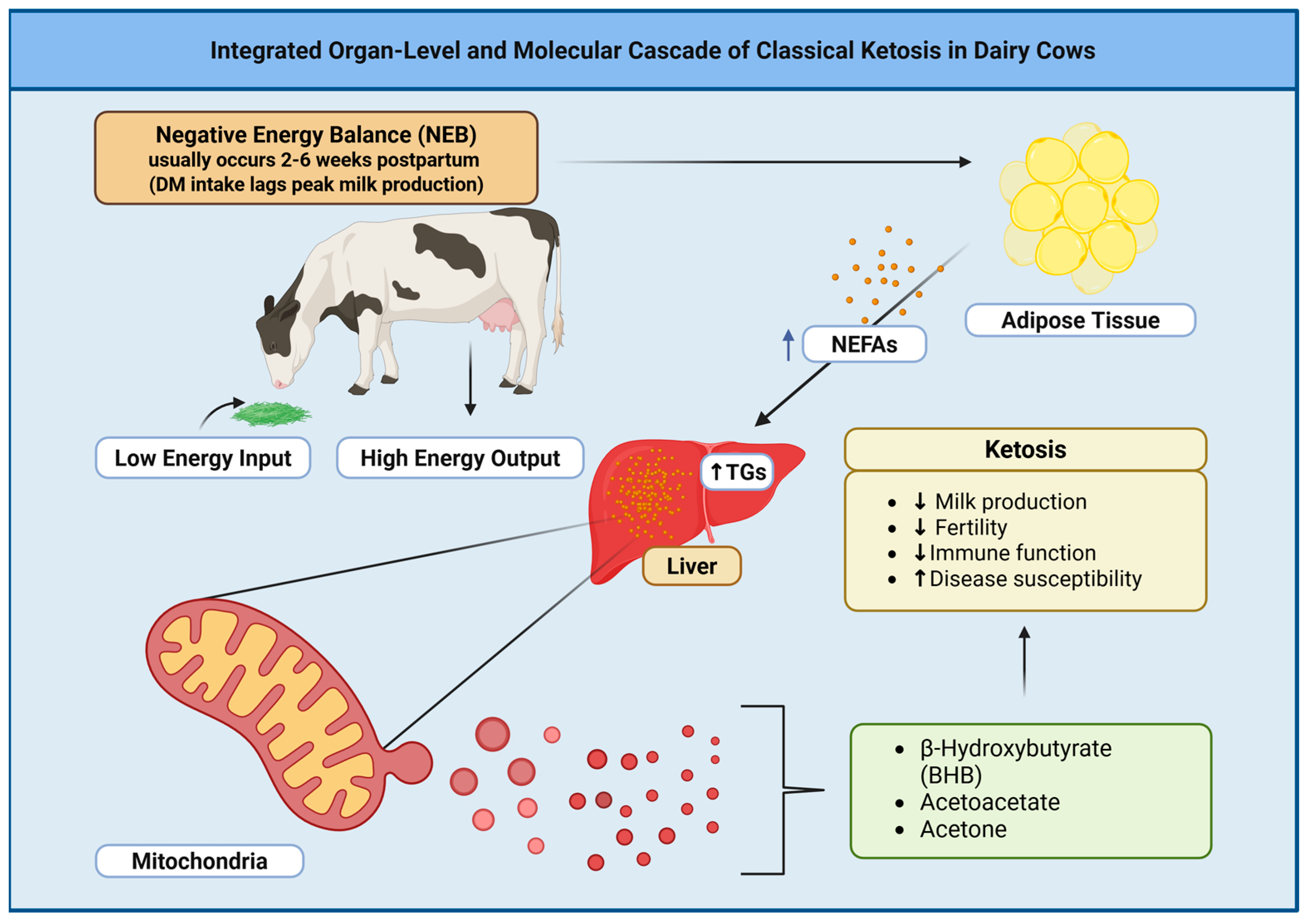
1.1. Terminology and Conceptual Framework
1.2. Epidemiology and Predictive Approaches
1.3. Challenging the Pathological Paradigm
1.4. Ketosis Across Species and Physiological Contexts
1.5. Molecular Discoveries and Paradigm Shifts
1.6. Framework and Scope of Review
2. The Reductionist Paradigm—Ketosis as Pathology
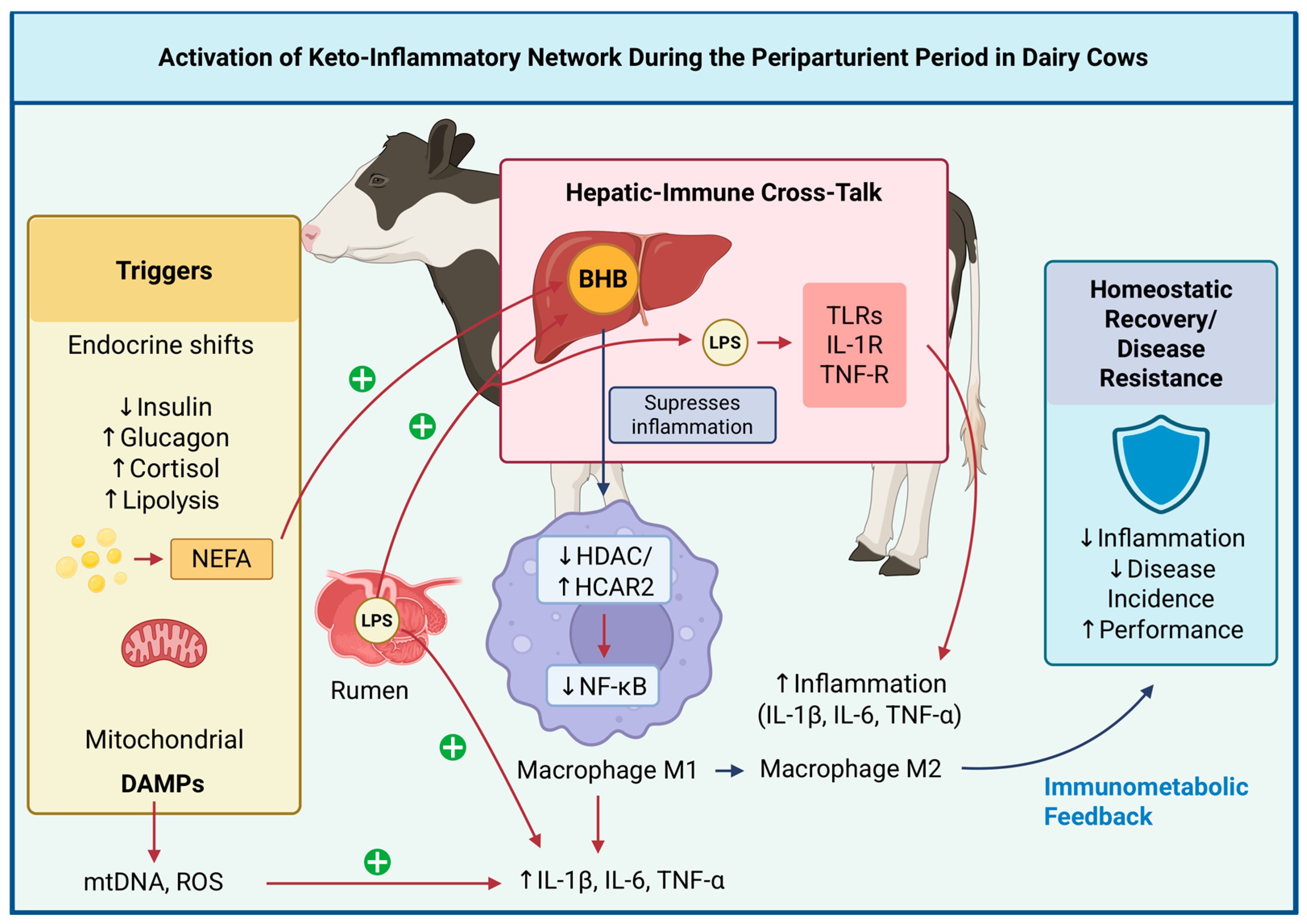
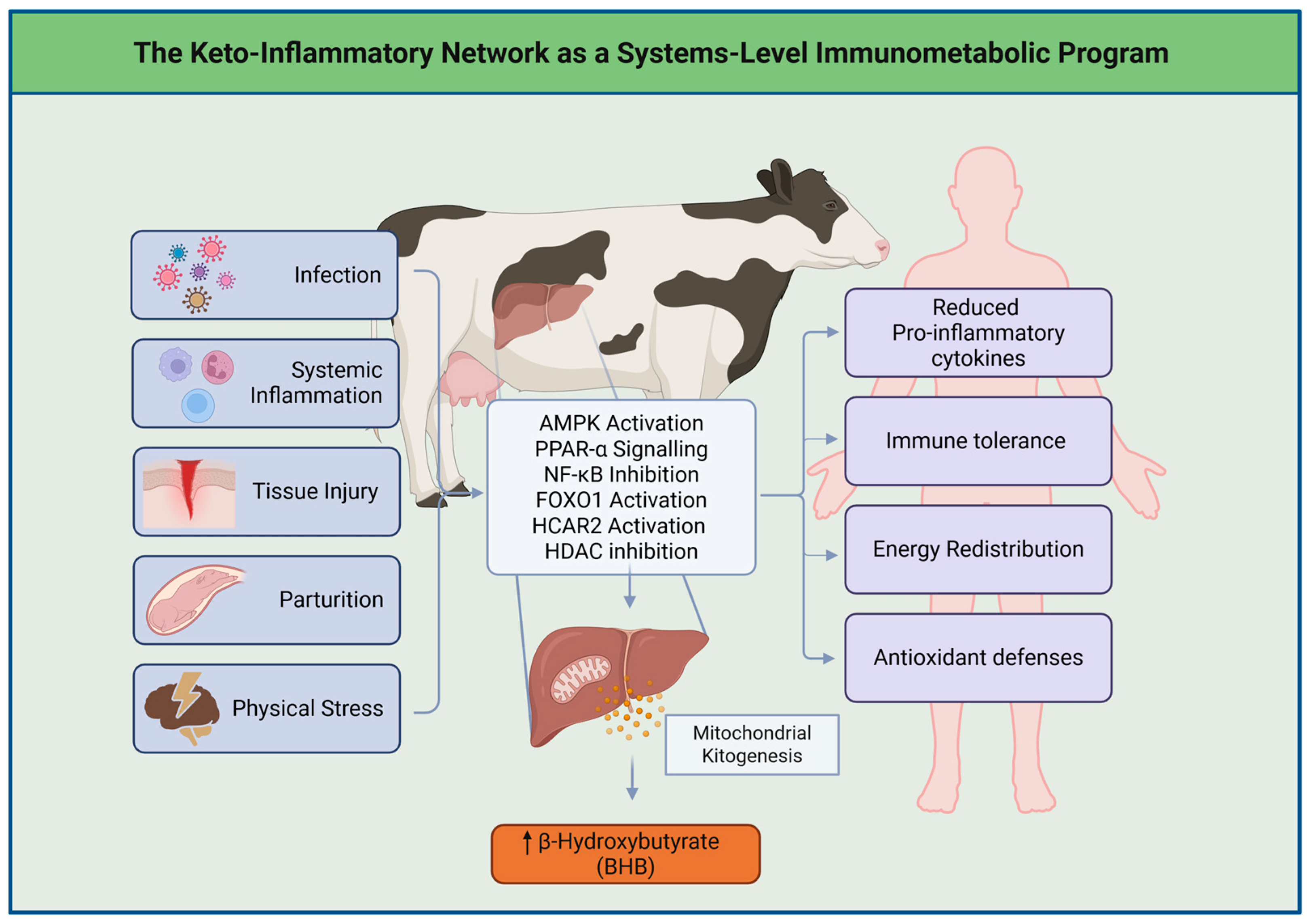
3. The Keto–Inflammatory Network—A Systems Level Framework
3.1. Network Architecture: Molecular Integration and Distributed Processing
Ruminant–Specific Considerations and Evidence Sources
3.2. Predictive Metabolomics: Evidence for Coordinated Programming
3.3. Evolutionary Conservation: Fundamental Biological Importance
4. Triggers of the Keto–Inflammatory Network
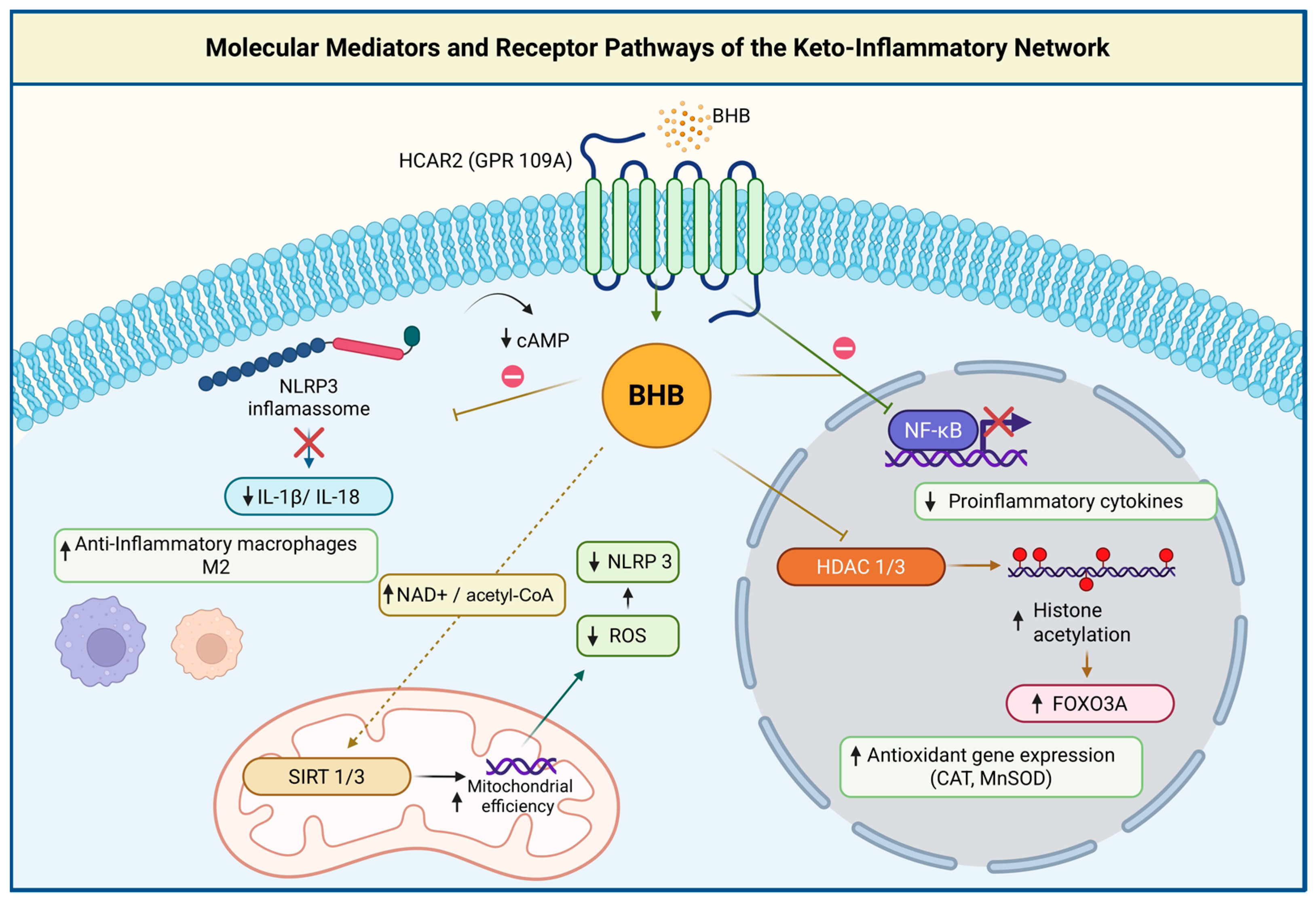
5. Receptors and Molecular Mediators of the Keto–Inflammatory Network
5.1. G–Protein Coupled Receptor Signaling
5.2. Epigenetic Regulation Through Histone Deacetylase Inhibition
5.3. NAD+–Dependent Sirtuin Activation
5.4. Inflammasome Modulation and Innate Immune Signaling
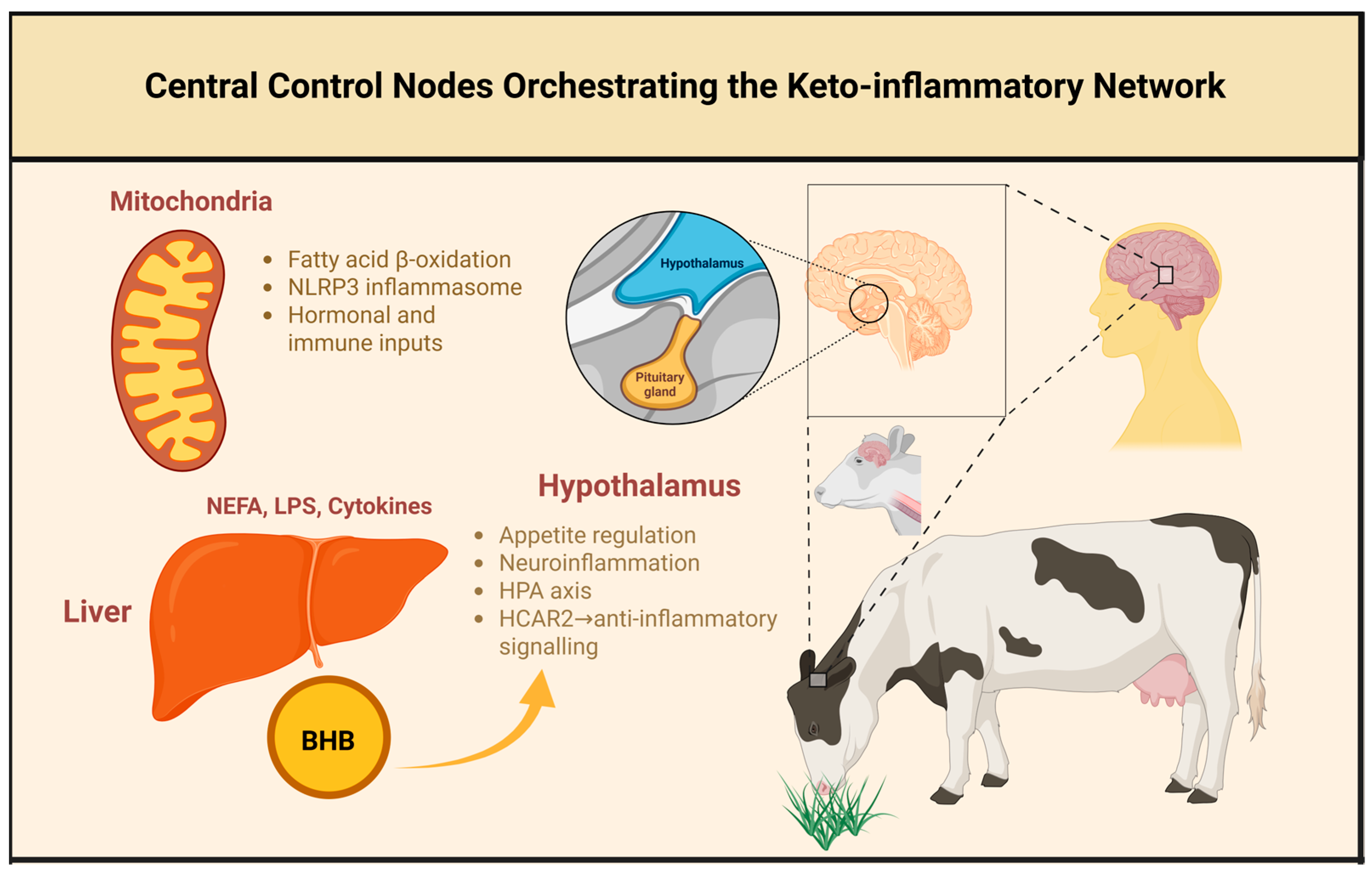
6. Central Control Nodes: Hypothalamic Integration and Circadian Coordination
6.1. Hypothalamic Ketone Sensing and Neuroendocrine Integration
6.2. Circadian Clock Integration and Temporal Coordination
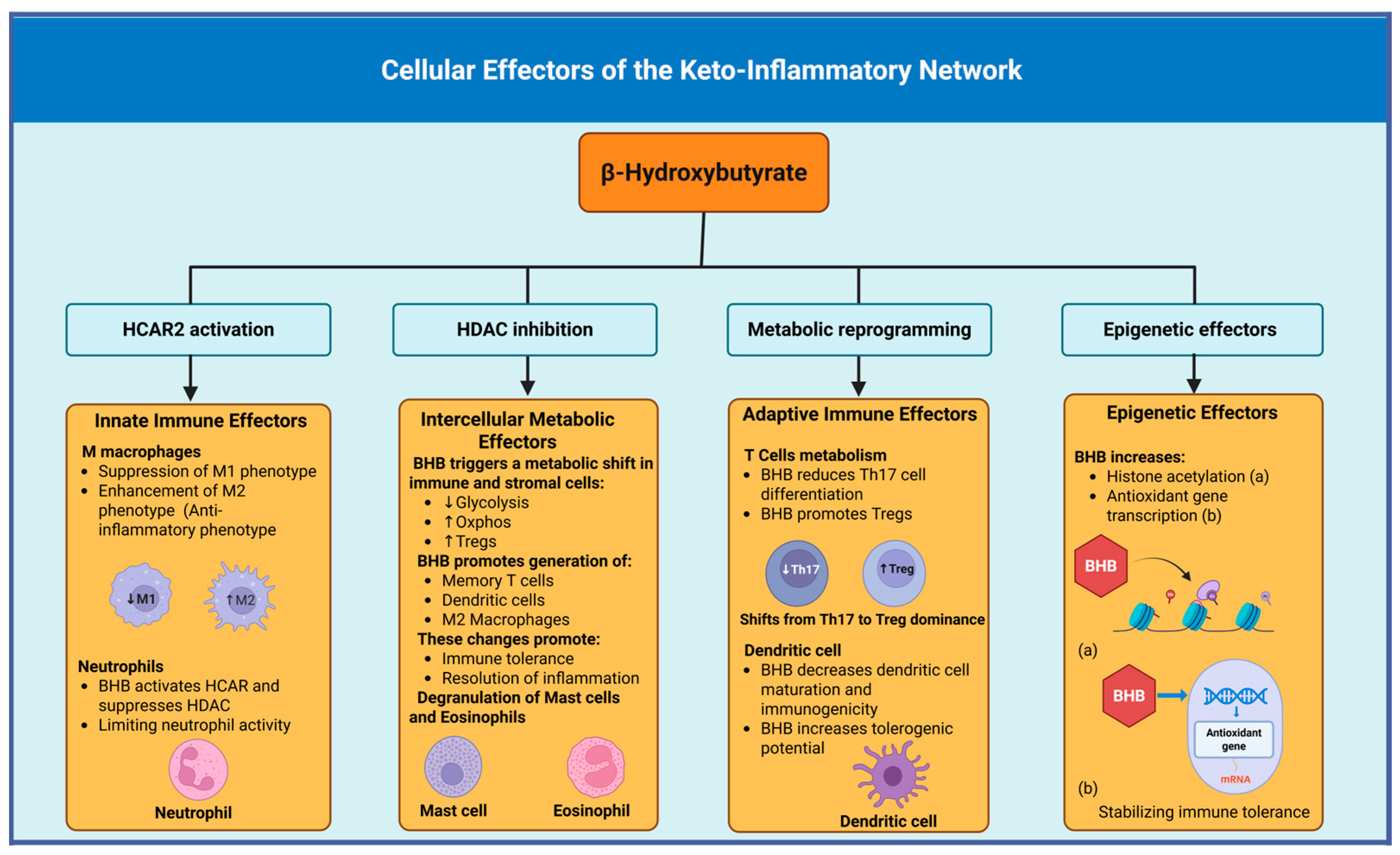
7. Cellular Effectors of the Keto–Inflammatory Network
7.1. Myeloid Cell Populations and Innate Immunity
7.2. Lymphocyte Populations and Adaptive Immunity
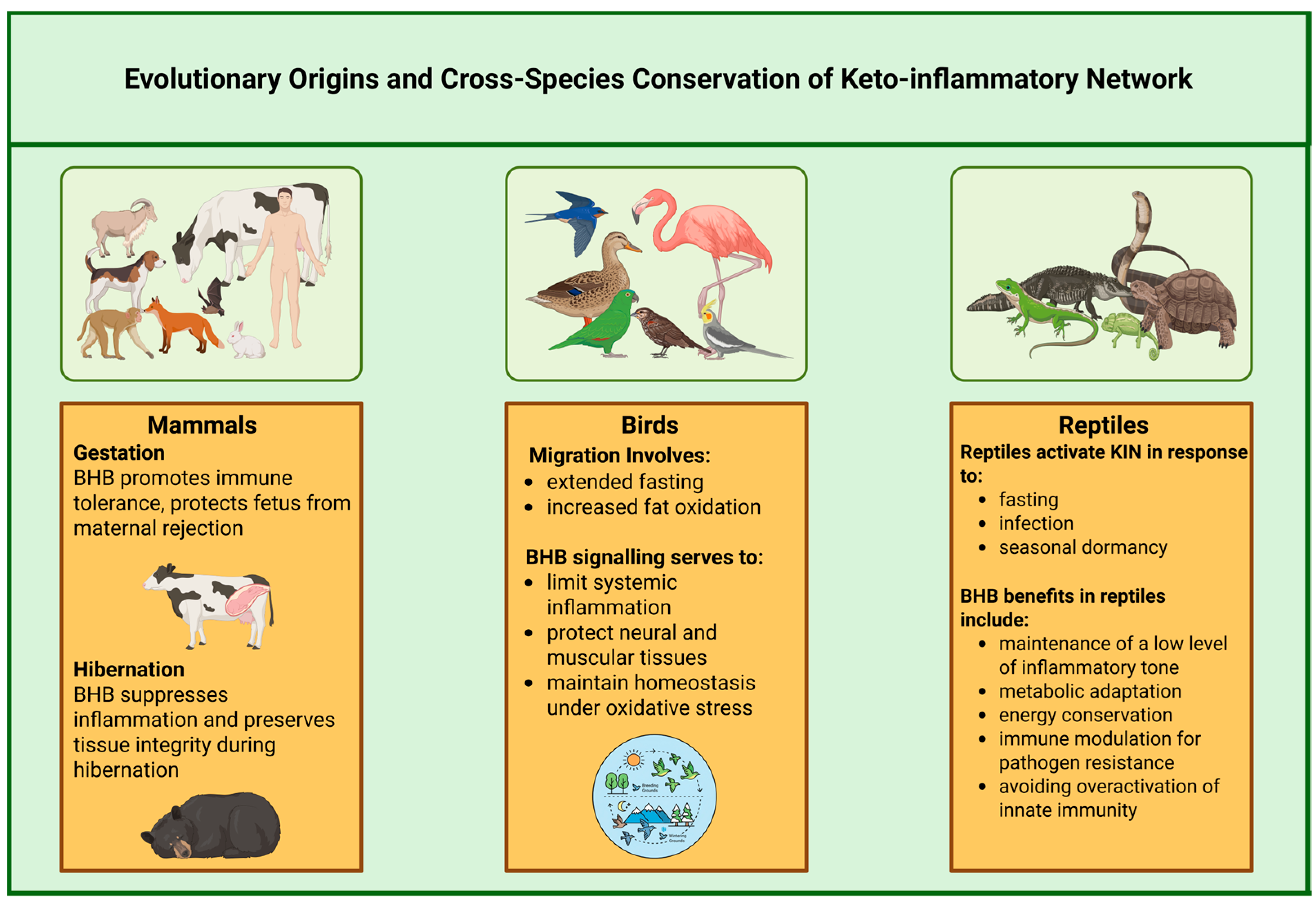
8. Evolutionary Origins and Conservation of the Keto–Inflammatory Network
8.1. Comparative Physiology Across Taxa
8.2. Domestication and Artificial Selection Pressures
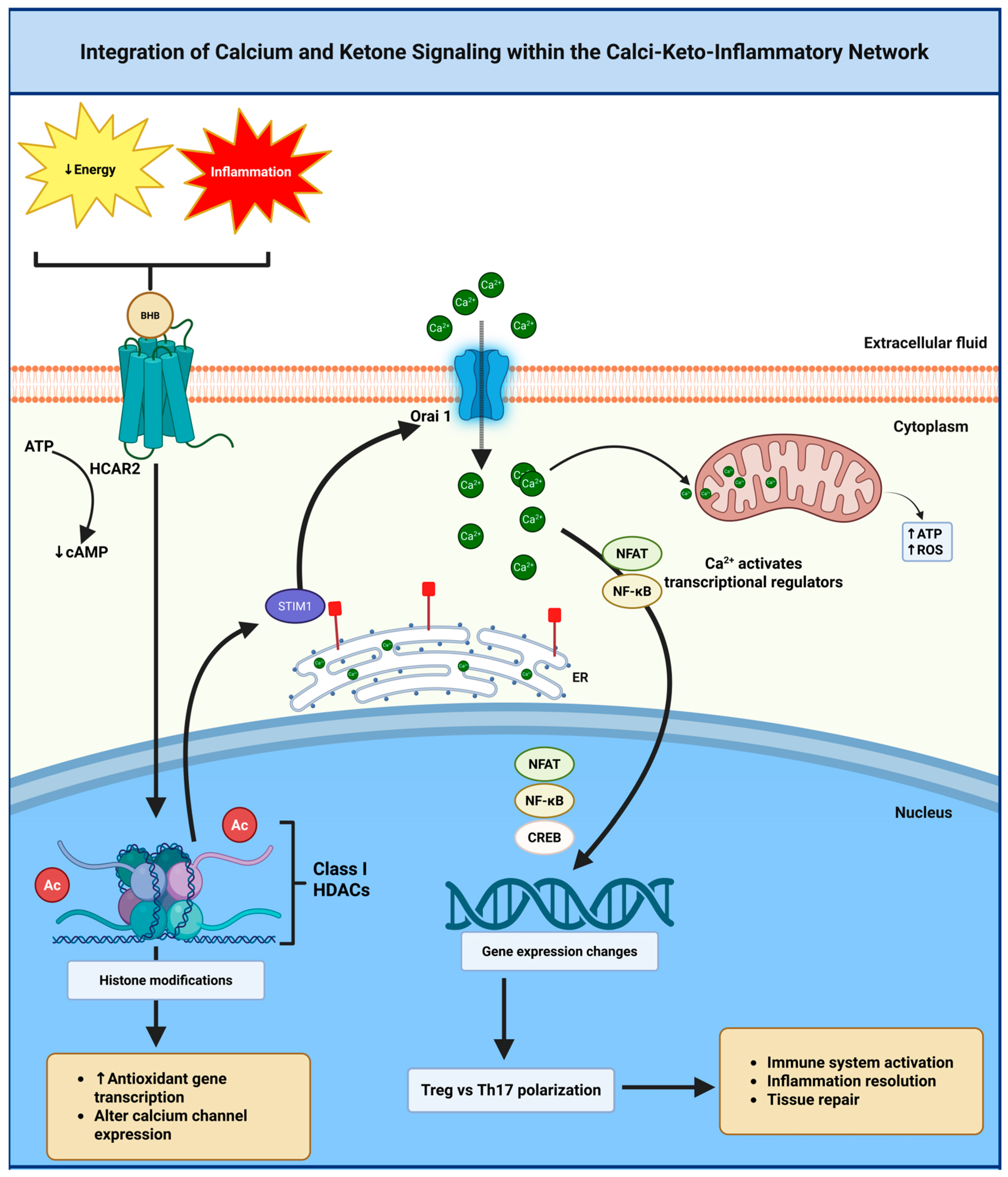
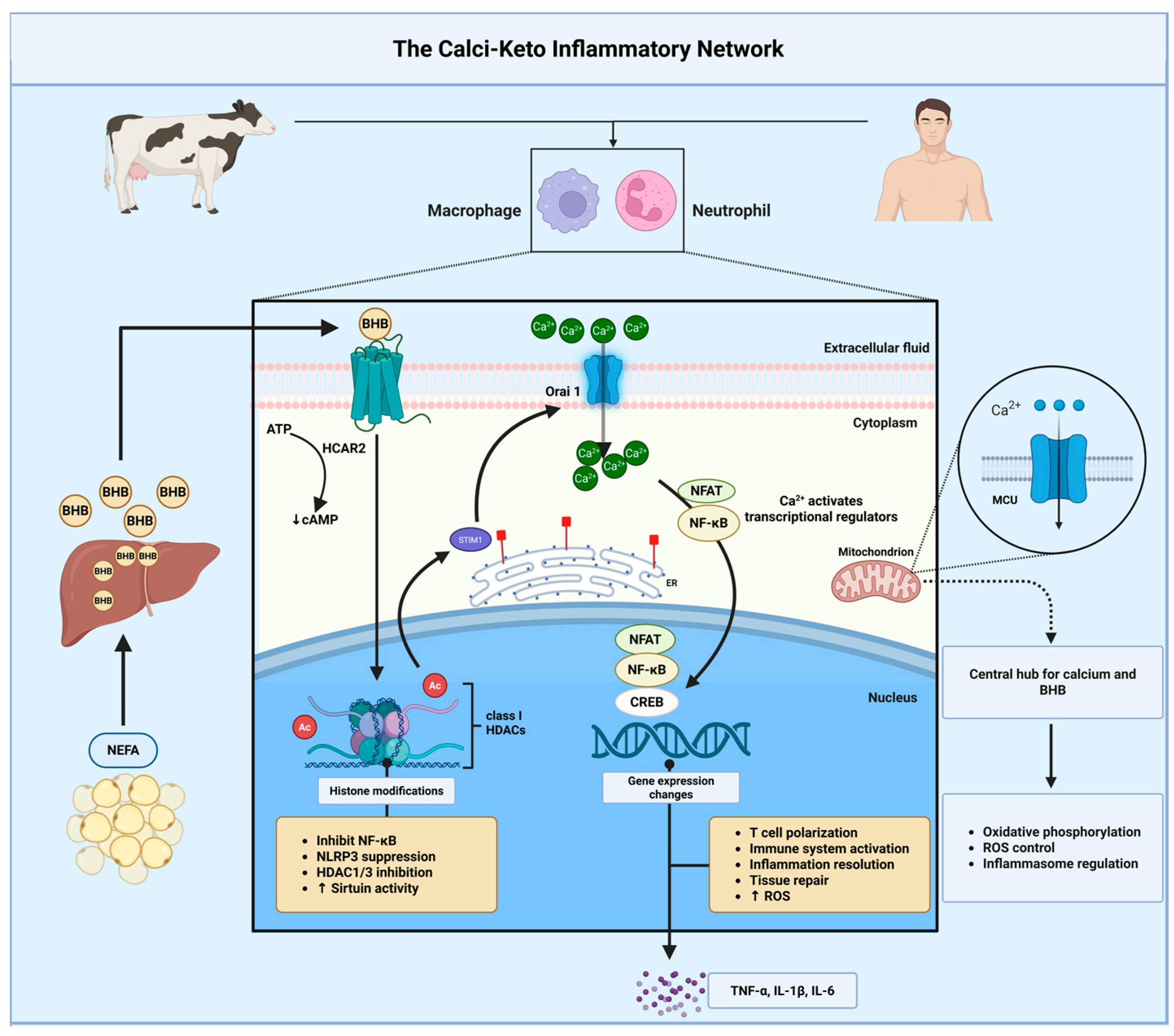
9. The Calci–Keto–Inflammatory Network: Integrating Calcium and Ketone Signaling
9.1. Molecular Mechanisms of Calcium–Ketone Integration
9.2. Clinical Applications and Therapeutic Implications
9.3. Clinical Manifestations in Periparturient Dairy Cows
9.4. Translational Implications for Human Health
9.5. The “Pedal and Brake” System
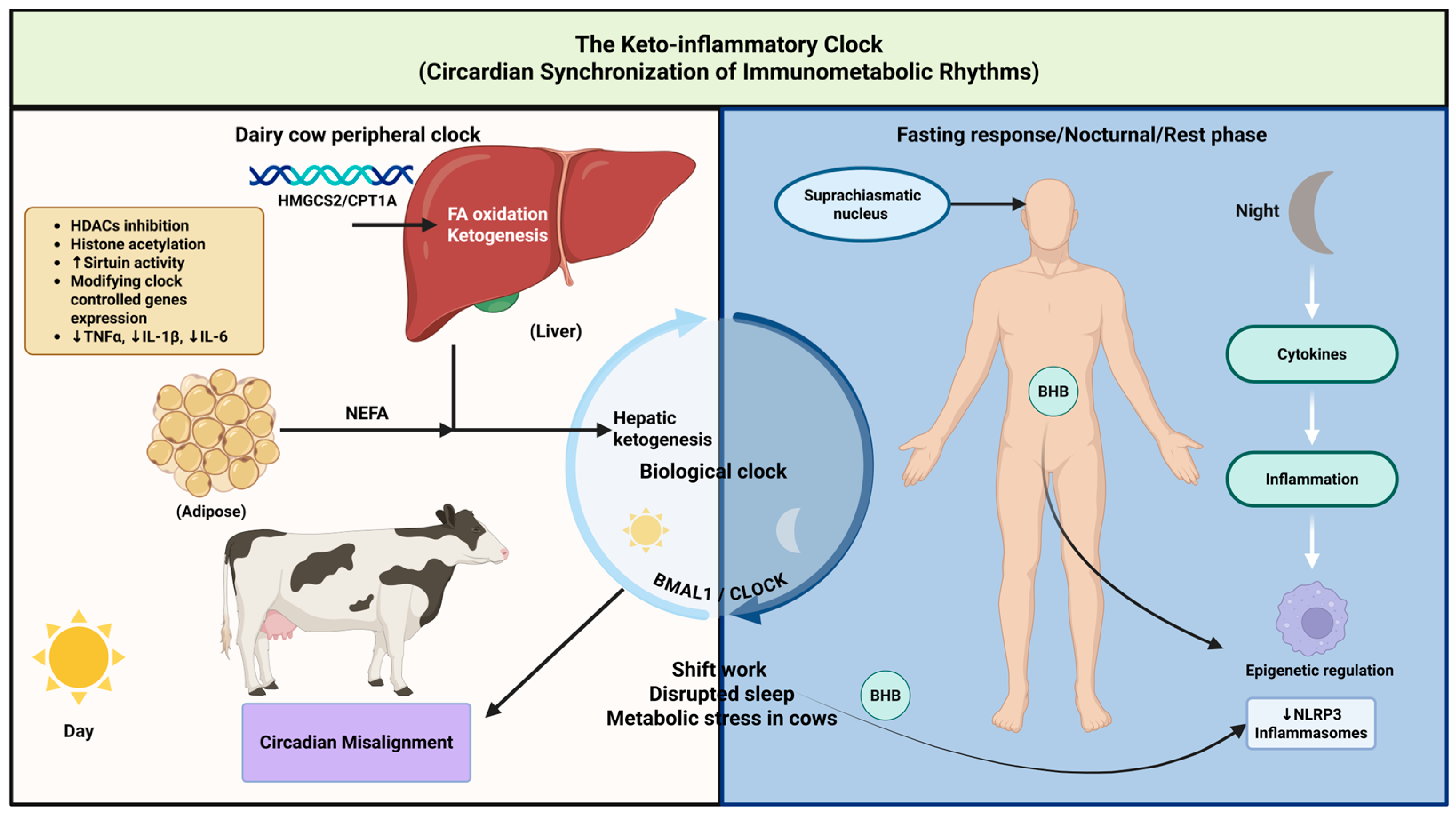
10. The Ketoinflammatory Clock: Circadian Synchronization of Immunometabolic Rhythms
10.1. Molecular Circadian Control of Ketogenesis
10.2. Circadian Regulation of Immune Function
10.3. Translational Implications for Dairy Cattle
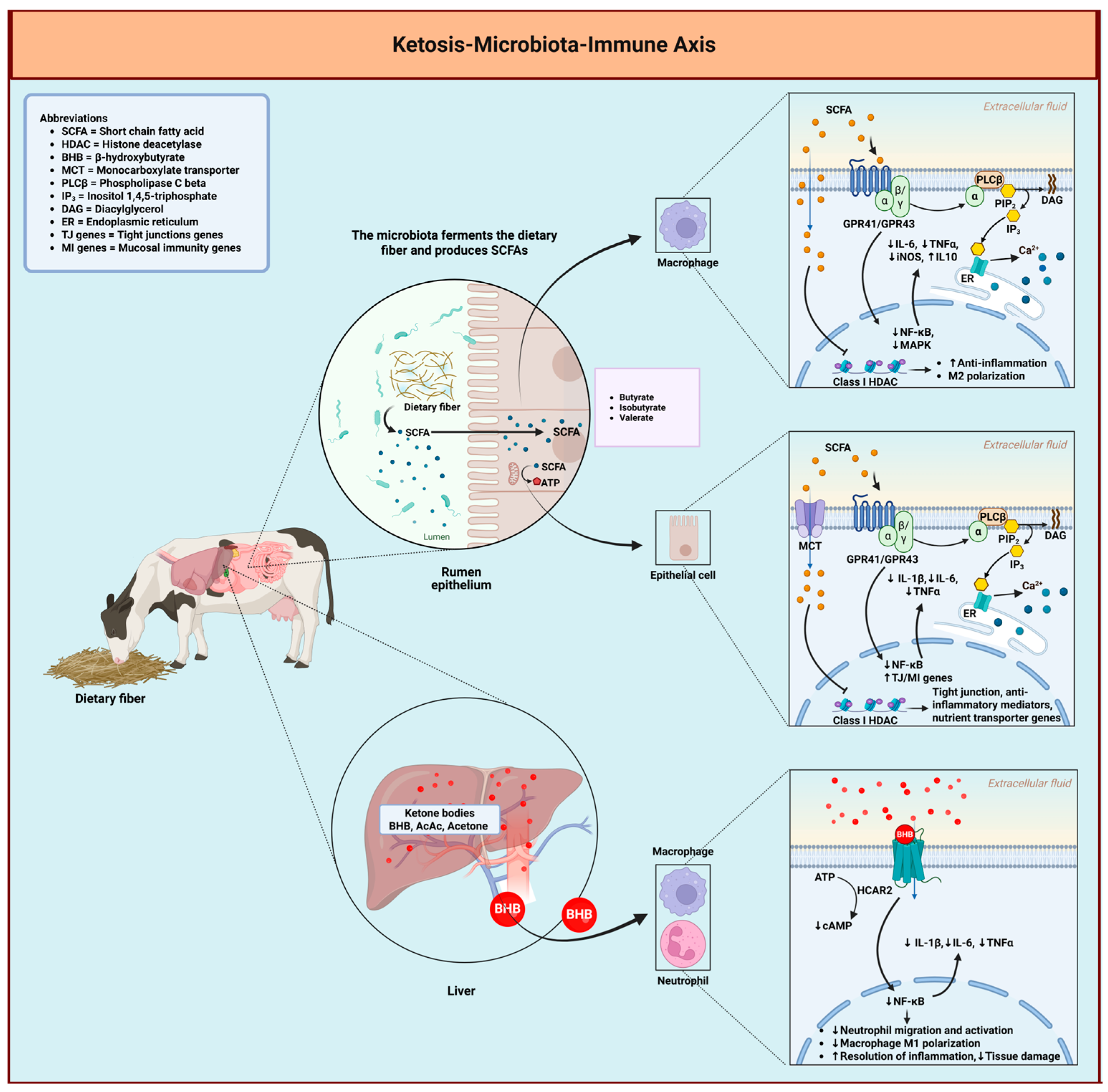
11. The Ketosis–Microbiota–Immune Triad: Trans–Kingdom Signaling
11.1. Evolutionary Origins and Bidirectional Communication
11.2. The Rumen Microbiome and Ketosis in Dairy Cattle
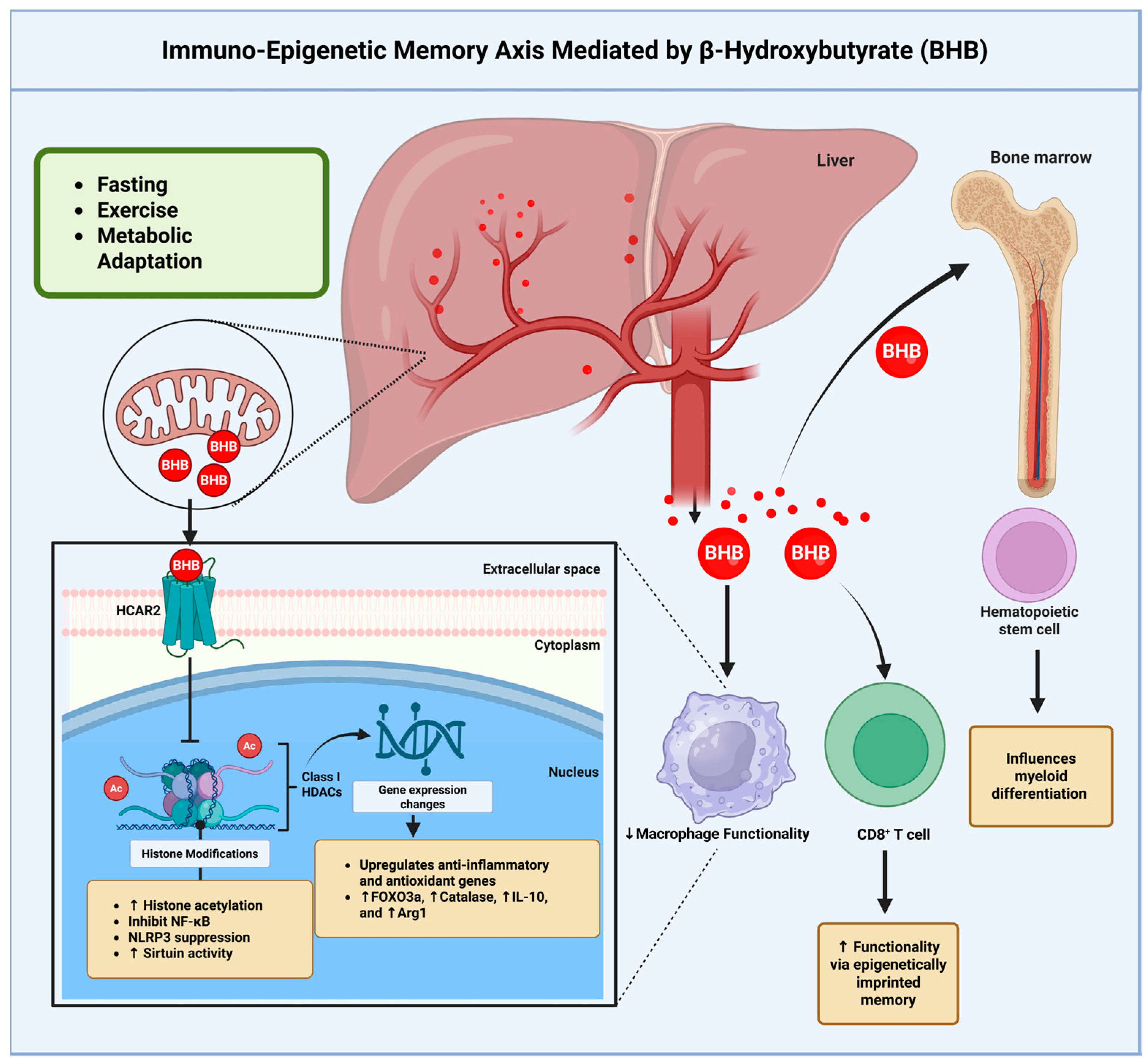
12. Ketosis and Immuno–Epigenetic Memory
12.1. Molecular Mechanisms of Ketone–Induced Epigenetic Memory
12.2. Trained Immunity and Metabolic Reprogramming
12.3. Evidence and Implications in Dairy Cattle
12.4. Translational Implications and Future Directions
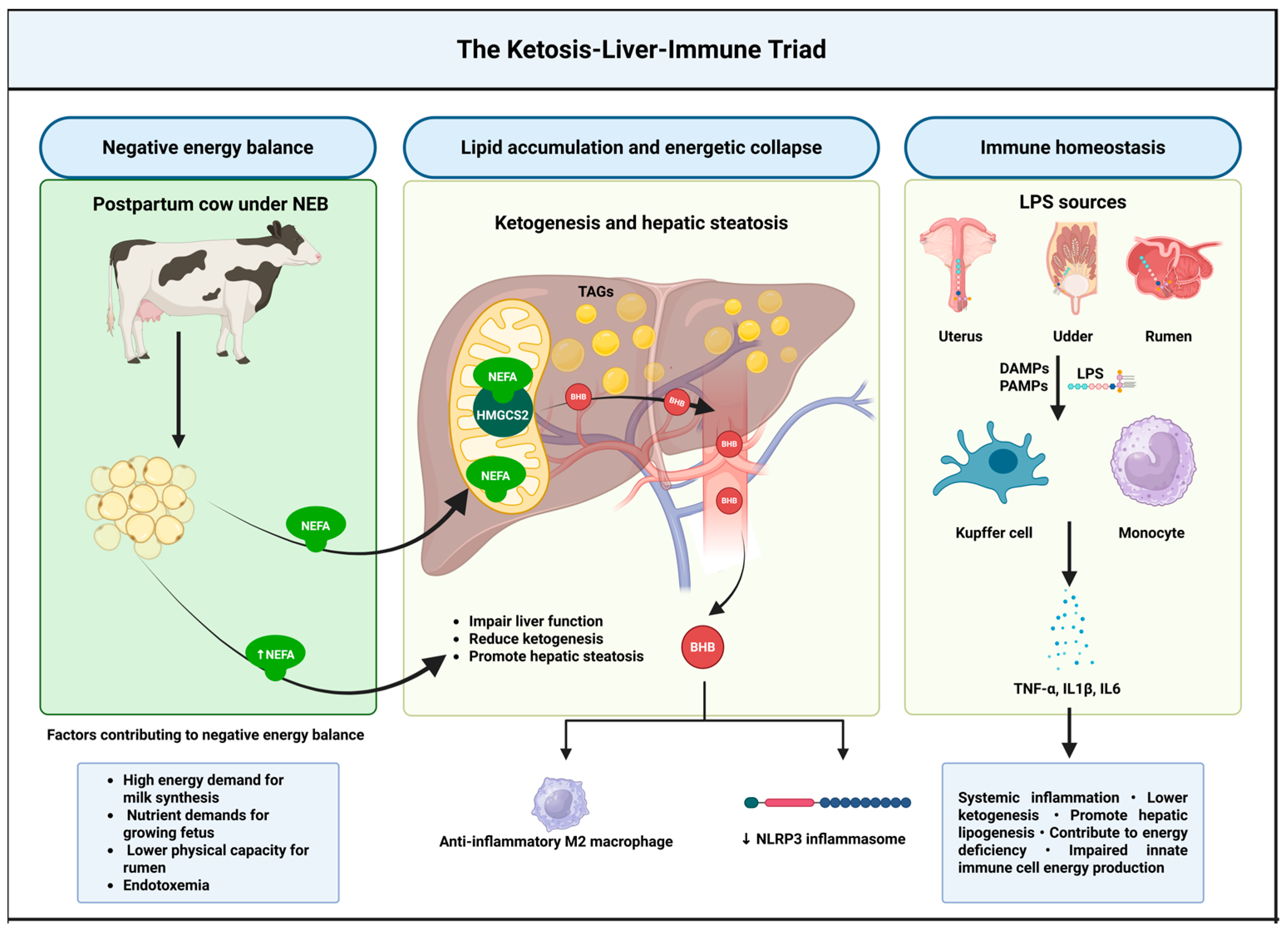
13. The Ketosis–Liver–Immune Triad: Hepatic Surveillance and Metabolic Integration
13.1. Hepatic Architecture and Integration Capacity
13.2. NEFA Metabolism and Hepatic Lipidosis
13.3. Inflammatory and Oxidative Stress
13.4. Integrative Perspective
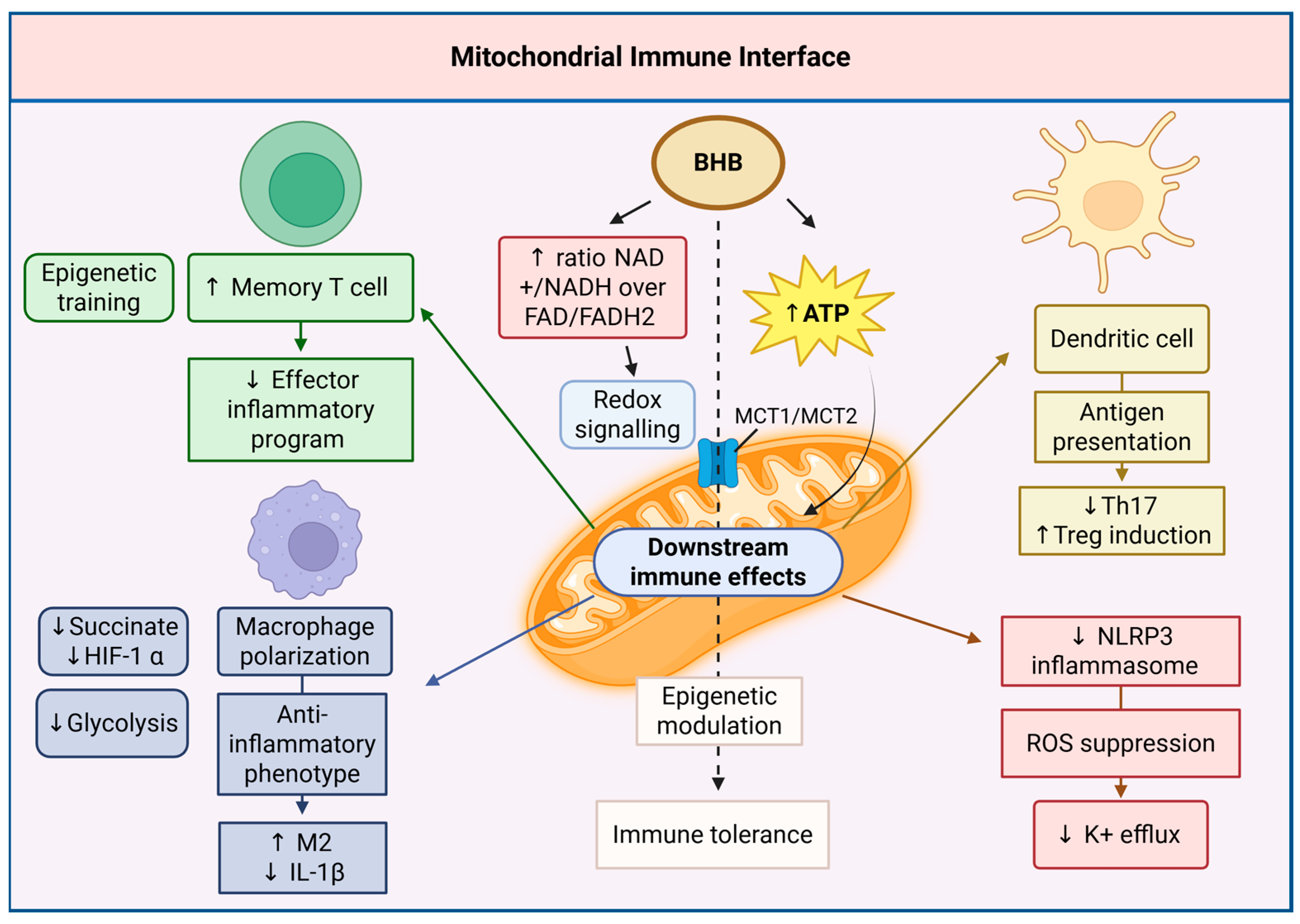
14. The Mitochondrial Interface of Metabolic–Immune Integration
14.1. Mitochondrial Ketone Metabolism and Bioenergetics
14.2. Mitochondrial Control of Immune Cell Metabolism and Function
14.3. Mitochondrial Membrane Potential and Immune Activation
14.4. Mitochondrial ROS as Immune Signaling Molecules
14.5. Mitochondrial Dynamics and Immune Cell Fate
14.6. Mitochondrial Metabolites as Immunoregulatory Signals
14.7. Species–Specific Considerations
14.8. Mitochondrial Integration of Ketone–Immune Signaling
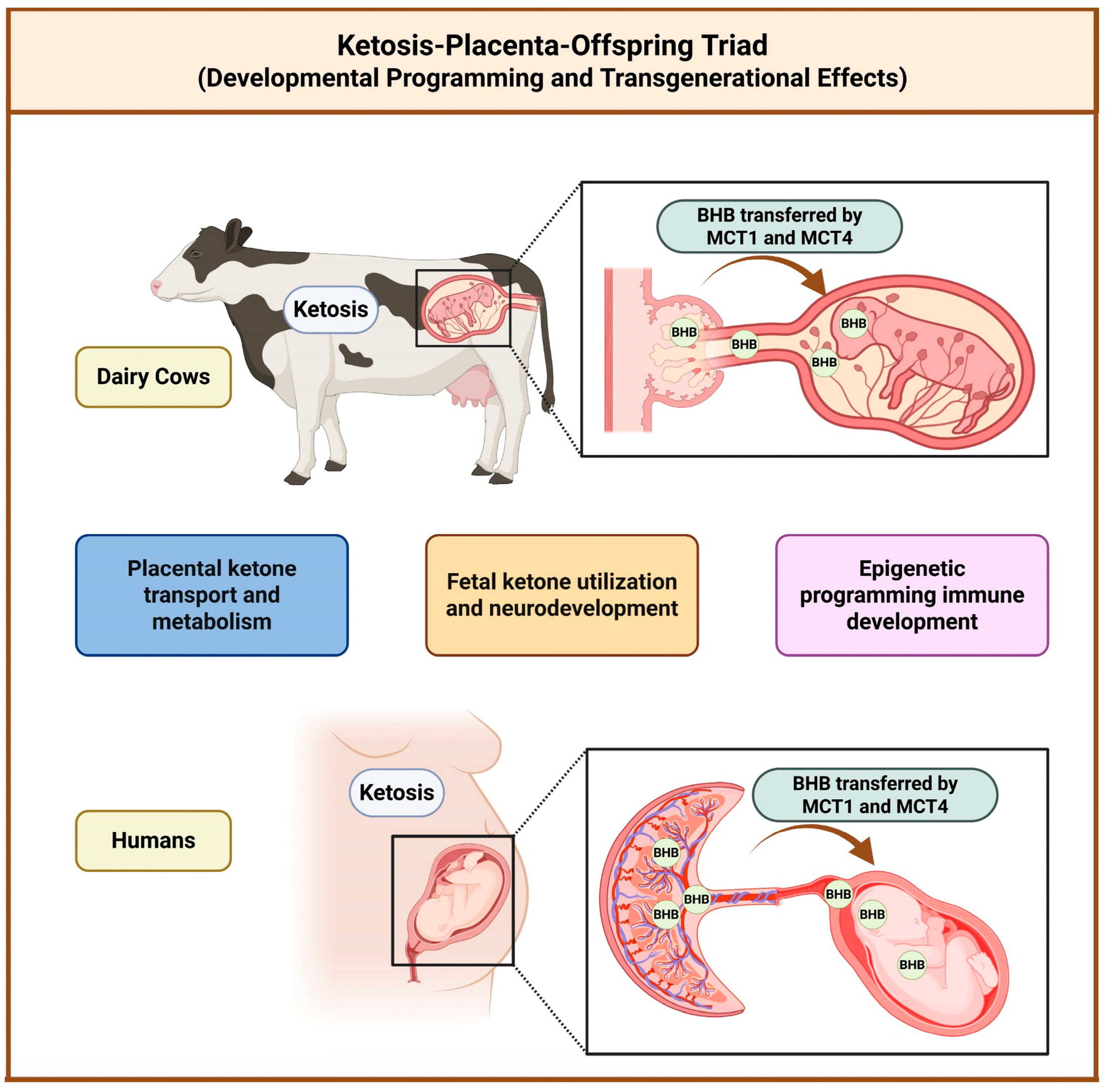
15. The Ketosis–Placenta–Offspring Triad: Developmental Programming and Transgenerational Effects
15.1. Placental Ketone Transport and Metabolism
15.2. Epigenetic Programming and Immune Development
15.3. Evidence in Dairy Cattle
16. Reframing Ketosis: From Pathology to Adaptive Programming
16.1. Historical Context and Conceptual Evolution
16.2. Evolutionary Conservation: Ketosis as Survival Strategy
16.3. The Paradigm Shift: From Suppression to Support
17. The Calci–Keto–Inflammatory Code: A Systems Integration Framework
17.1. Calcium as a Master Regulatory Node: The Adaptive Hypocalcemia Hypothesis
17.1.1. The Adaptive Hypocalcemia Hypothesis
17.1.2. The Calci–Keto–Inflammatory Pattern Classification
17.1.3. Evidence Supporting Adaptive Hypocalcemia
17.1.4. Therapeutic Implications
17.2. Code–Based Interpretation: Pattern over Threshold
17.3. Implications and Future Directions
Funding
Institutional Review Board Statement
Informed Consent Statement
Data Availability Statement
Acknowledgments
Conflicts of Interest
References
- Robinson, A.M.; Williamson, D.H. Physiological roles of ketone bodies as substrates and signals in mammalian tissues. Physiol. Rev. 1980, 60, 143–187. [Google Scholar] [CrossRef] [PubMed]
- Tabatabaei Dakhili, S.A.; Yang, K.; Stenlund, M.J.; Ussher, J.R. The multifaceted roles of ketones in physiology. Exp. Physiol. 2026, 111, 1–13. [Google Scholar] [CrossRef] [PubMed] [PubMed Central]
- Melendez, P.; Serrano, M.V. Update on ketosis in dairy cattle with major emphasis on subclinical ketosis and abdominal adiposity. Vet. Med. Sci. 2024, 10, e1525. [Google Scholar] [CrossRef]
- Weber, C.; Hametner, C.; Tuchscherer, A.; Losand, B.; Kanitz, E.; Otten, W.; Sauerwein, H.; Bruckmaier, R.M.; Becker, F.; Kanitz, W.; et al. Hepatic gene expression involved in glucose and lipid metabolism in transition cows: Effects of fat mobilization during early lactation in relation to milk performance and metabolic changes. J. Dairy Sci. 2013, 96, 5670–5681. [Google Scholar] [CrossRef] [PubMed]
- Zhang, G.; Ametaj, B.N. Ketosis an old story under a new approach. Dairy 2020, 1, 61–90. [Google Scholar] [CrossRef]
- Newman, J.C.; Verdin, E. β–Hydroxybutyrate: A signaling metabolite. Annu. Rev. Nutr. 2017, 37, 51–76. [Google Scholar] [CrossRef] [PubMed]
- Puchalska, P.; Crawford, P.A. Multi–dimensional roles of ketone bodies in fuel metabolism, signaling, and therapeutics. Cell Metab. 2017, 25, 262–284. [Google Scholar] [CrossRef] [PubMed]
- Krilowicz, B.L. Ketone body metabolism in a ground squirrel during hibernation and fasting. Am. J. Physiol. 1985, 249, R462–R470. [Google Scholar] [CrossRef] [PubMed]
- Dilliraj, L.N.; Schiuma, G.; Lara, D.; Strazzabosco, G.; Clement, J.; Giovannini, P.; Trapella, C.; Narducci, M.; Rizzo, R. The Evolution of Ketosis: Potential Impact on Clinical Conditions. Nutrients 2022, 14, 3613. [Google Scholar] [CrossRef] [PubMed] [PubMed Central]
- Baird, G.D. Primary ketosis in the high–producing dairy cow: Clinical and subclinical disorders, treatment, prevention, and outlook. J. Dairy Sci. 1982, 65, 1–10. [Google Scholar] [CrossRef]
- McArt, J.A.A.; Nydam, D.V.; Oetzel, G.R. Epidemiology of subclinical ketosis in early lactation dairy cattle. J. Dairy Sci. 2012, 95, 5056–5066. [Google Scholar] [CrossRef] [PubMed]
- de Roos, A.P.; van den Bijgaart, H.J.; Hørlyk, J.; de Jong, G. Screening for subclinical ketosis in dairy cattle by Fourier transform infrared spectrometry. J. Dairy Sci. 2007, 90, 1761–1766. [Google Scholar] [CrossRef] [PubMed]
- Benedet, A.; Manuelian, C.L.; Zidi, A.; Penasa, M.; De Marchi, M. Invited review: β–hydroxybutyrate concentration in blood and milk and its associations with cow performance. Animal 2019, 13, 1676–1689. [Google Scholar] [CrossRef] [PubMed]
- Chandler, T.L.; Pralle, R.S.; Dórea, J.R.R.; Poock, S.E.; Oetzel, G.R.; Fourdraine, R.H.; White, H.M. Predicting hyperketonemia by logistic and linear regression using test–day milk and performance variables in early–lactation Holstein and Jersey cows. J. Dairy Sci. 2018, 101, 2476–2491. [Google Scholar] [CrossRef]
- Pralle, R.S.; Amdall, J.D.; Fourdraine, R.H.; Oetzel, G.R.; White, H.M. Hyperketonemia predictions provide an on–farm management tool with epidemiological insights. Animals 2021, 11, 1291. [Google Scholar] [CrossRef]
- Zhang, G.; Hailemariam, D.; Dervishi, E.; Deng, Q.; Goldansaz, S.; Deng, Q.; Dunn, S.M.; Ametaj, B.N. Dairy cows affected by ketosis show alterations in innate immunity and lipid and carbohydrate metabolism during the dry off period and postpartum. Res. Vet. Sci. 2016, 107, 246–256. [Google Scholar] [CrossRef]
- Zhang, G.; Mandal, R.; Wishart, D.S.; Ametaj, B.N. A Multi–platform metabolomics approach identifies urinary metabolite signatures that differentiate ketotic from healthy dairy cows. Front. Vet. Sci. 2021, 8, 595983. [Google Scholar] [CrossRef]
- Bradford, B.J.; Yuan, K.; Farney, J.K.; Mamedova, L.K.; Carpenter, A.J. Invited review: Inflammation during the transition to lactation: New adventures with an old flame. J. Dairy Sci. 2015, 98, 6631–6650. [Google Scholar] [CrossRef]
- Farney, J.K.; Mamedova, L.K.; Coetzee, J.F.; Minton, J.E.; Hollis, L.C.; Drouillard, J.S.; Bradford, B.J. Anti–inflammatory salicylate treatment alters the metabolic adaptations to lactation in dairy cattle. Am. J. Physiol. Regul. Integr. Comp. Physiol. 2013, 305, R110–R117. [Google Scholar] [CrossRef]
- Swartz, T.H.; Bradford, B.J.; Mamedova, L.K. Connecting metabolism to mastitis: Hyperketonemia impaired mammary gland defenses during a streptococcus uberis challenge in dairy cattle. Front. Immunol. 2021, 12, 700278. [Google Scholar] [CrossRef] [PubMed]
- Abuajamieh, M.; Kvidera, S.K.; Fernandez, M.V.; Nayeri, A.; Upah, N.C.; Nolan, E.A.; Lei, S.M.; DeFrain, J.M.; Green, H.B.; Schoenberg, K.M.; et al. Inflammatory biomarkers are associated with ketosis in periparturient Holstein cows. Res. Vet. Sci. 2016, 109, 81–85. [Google Scholar] [CrossRef]
- Kvidera, S.K.; Horst, E.A.; Abuajamieh, M.; Mayorga, E.J.; Fernandez, M.V.; Baumgard, L.H. Glucose requirements of an activated immune system in lactating Holstein cows. J. Dairy Sci. 2017, 100, 2360–2374. [Google Scholar] [CrossRef]
- Graugnard, D.E.; Moyes, K.M.; Trevisi, E.; Khan, M.J.; Keisler, D.; Drackley, J.K.; Bertoni, G.; Loor, J.J. Liver lipid content and inflammometabolic indices in peripartal dairy cows are altered in response to prepartal energy intake and postpartal intramammary inflammatory challenge. J. Dairy Sci. 2013, 96, 918–935. [Google Scholar] [CrossRef]
- Bertoni, G.; Trevisi, E.; Han, X.; Bionaz, M. Effects of inflammatory conditions on liver activity in puerperium period and consequences for performance in dairy cows. J. Dairy Sci. 2008, 91, 3300–3310. [Google Scholar] [CrossRef]
- Mezzetti, M.; Minuti, A.; Piccioli–Cappelli, F.; Amadori, M.; Bionaz, M.; Trevisi, E. Inflammatory status and metabolic changes at dry–off in high–yield dairy cows. Ital. J. Anim. Sci. 2019, 19, 51–65. [Google Scholar] [CrossRef]
- Zarrin, M.; Wellnitz, O.; van Dorland, H.A.; Bruckmaier, R.M. Induced hyperketonemia affects the mammary immune response during lipopolysaccharide challenge in dairy cows. J. Dairy Sci. 2014, 97, 330–339. [Google Scholar] [CrossRef] [PubMed]
- Zarrin, M.; Wellnitz, O.; van Dorland, H.A.; Gross, J.J.; Bruckmaier, R.M. Hyperketonemia during lipopolysaccharide–induced mastitis affects systemic and local intramammary metabolism in dairy cows. J. Dairy Sci 2014, 97, 3531–3541. [Google Scholar] [CrossRef] [PubMed]
- Hawdon, J.M.; Ward Platt, M.P.; Aynsley–Green, A. Patterns of metabolic adaptation for preterm and term infants in the first neonatal week. Arch. Dis. Child 1992, 67, 357–365. [Google Scholar] [CrossRef]
- Kolb, H.; Kempf, K.; Röhling, M.; Martin, S. Ketone bodies: From enemy to friend and guardian angel. BMC Med. 2021, 19, 313. [Google Scholar] [CrossRef]
- Drackley, J.K. Biology of dairy cows during the transition period: The final frontier? J. Dairy Sci. 1999, 82, 2259–2273. [Google Scholar] [CrossRef]
- Martinez, N.; Risco, C.A.; Lima, F.S.; Bisinotto, R.S.; Greco, L.F.; Ribeiro, E.S.; Maunsell, F.; Galvão, K.; Santos, J.E. Evaluation of peripartal calcium status, energetic profile, and neutrophil function in dairy cows. J. Dairy Sci 2012, 95, 7158–7172. [Google Scholar] [CrossRef] [PubMed]
- Zhang, G.; Ametaj, B.N. Ketosis Under a Systems Veterinary Medicine Perspective. In Periparturient Diseases of Dairy Cows: A Systems Biology Approach; Springer International: Cham, Switzerland, 2017; pp. 201–222. [Google Scholar]
- Mills, E.L.; Kelly, B.; O’Neill, L.A.J. Mitochondria are the powerhouses of immunity. Nat. Immunol. 2017, 18, 488–498. [Google Scholar] [CrossRef]
- Mitchell, G.A.; Kassovska–Bratinova, S.; Boukaftane, Y.; Robert, M.F.; Wang, S.P.; Ashmarina, L.; Lambert, M.; Lapierre, P.; Potier, E. Medical aspects of ketone body metabolism. Clin. Invest. Med. 1995, 18, 193–216. [Google Scholar] [PubMed]
- Kronfeld, D.S.; Chalupa, W.L.; Rehovot, D. Ketosis, lactational efficiency and feeding fat. Animal Nutr. Health 1983, 38, 28–33. [Google Scholar]
- Herdt, T.H. Ruminant adaptation to negative energy balance. Influences on the etiology of ketosis and fatty liver. Vet. Clin. North Am. Food Anim. Pract. 2000, 16, 215–230. [Google Scholar] [CrossRef]
- Grummer, R.R. Impact of changes in organic nutrient metabolism on feeding the transition dairy cow. J. Anim. Sci. 1995, 73, 2820–2833. [Google Scholar] [CrossRef]
- Egyedy, A.; Rosales, E.B.; Ametaj, B.N. Association of high somatic cell counts prior to dry off to the incidence of periparturient diseases in holstein dairy cows. Vet. Sci 2022, 9, 624. [Google Scholar] [CrossRef] [PubMed]
- Gross, J.; van Dorland, H.A.; Schwarz, F.J.; Bruckmaier, R.M. Endocrine changes and liver mRNA abundance of somatotropic axis and insulin system constituents during negative energy balance at different stages of lactation in dairy cows. J. Dairy Sci. 2011, 94, 3484–3494. [Google Scholar] [CrossRef] [PubMed]
- Etherton, T.D.; Bauman, D.E. Biology of somatotropin in growth and lactation of domestic animals. Physiol. Rev. 1998, 78, 745–761. [Google Scholar] [CrossRef]
- Hegardt, F.G. Mitochondrial 3–hydroxy–3–methylglutaryl–CoA synthase: A control enzyme in ketogenesis. Biochem. J. 1999, 338, 569–582. [Google Scholar] [CrossRef]
- Marczuk, J.; Brodzki, P.; Brodzki, A.; Kurek, Ł. The concentration of free amino acids in blood serum of dairy cows with primary ketosis. Pol. J. Vet. Sci. 2018, 21, 149–156. [Google Scholar] [CrossRef]
- Weerathilake, W.A.D.V.; Brassington, A.H.; Williams, S.J.; Kwong, W.Y.; Sinclair, L.A.; Sinclair, K.D. Added dietary cobalt or vitamin B12, or injecting vitamin B12 does not improve performance or indicators of ketosis in pre– and post–partum Holstein–Friesian dairy cows. Animal 2019, 13, 750–759. [Google Scholar] [CrossRef] [PubMed]
- Gordon, J.L.; LeBlanc, S.J.; Duffield, T.F. Ketosis treatment in lactating dairy cattle. Vet. Clin. North Am. Food Anim. Pract. 2013, 29, 433–445. [Google Scholar] [CrossRef]
- Piantoni, P.; Allen, M. Evaluation of propylene glycol and glycerol infusions as treatments for ketosis in dairy cows. J. Dairy Sci. 2015, 98, 5429–5439. [Google Scholar] [CrossRef] [PubMed]
- Youm, Y.H.; Nguyen, K.Y.; Grant, R.W.; Goldberg, E.L.; Bodogai, M.; Kim, D.; D’Agostino, D.; Planavsky, N.; Lupfer, C.; Kanneganti, T.D.; et al. The ketone metabolite β–hydroxybutyrate blocks NLRP3 inflammasome–mediated inflammatory disease. Nat Med. 2015, 21, 263–269. [Google Scholar] [CrossRef] [PubMed] [PubMed Central]
- Kitano, H. Systems biology: A brief overview. Science 2002, 295, 1662–1664. [Google Scholar] [CrossRef] [PubMed]
- Salem, M. Biological Networks: An Introductory Review. J. Prot. Gen. Res. 2018, 2, 41–111. [Google Scholar] [CrossRef]
- Madhavan, S.S.; Stubbs, B.J. Beta–hydroxybutyrate. Trends Endocrinol. Metab. 2025, 36, 96–97. [Google Scholar] [CrossRef] [PubMed] [PubMed Central]
- Rivkind, A.; Schreier, H.; Brenner, N.; Barak, O. Scale free topology as an effective feedback system. PLoS Comput. Biol. 2020, 16, e1007825. [Google Scholar] [CrossRef] [PubMed] [PubMed Central]
- Yang, T.; Datsomor, O.; Jiang, M.X.; Zhao, G.; Zhan, K. Protective roles of sodium butyrate in lipopolysaccharide–induced bovine ruminal epithelial cells by activating g protein–coupled receptors 41. Front. Nut. 2022, 9, 842634. [Google Scholar] [CrossRef] [PubMed]
- Baldwin, R.L.; Wu, S.; Li, W.; Li, C.; Bequette, B.J.; Li, R.W. Quantification of transcriptome responses of the rumen epithelium to butyrate infusion using RNA–seq Technology. Gene Regul. Syst. Bio. 2012, 6, 67–80. [Google Scholar] [CrossRef]
- Baldwin, R.L.; Li, R.W.; Jia, Y.; Li, C.J. Transcriptomic impacts of rumen epithelium induced by butyrate infusion in dairy cattle in dry period. Gene Regul. Syst. Biol. 2018, 12, 1177625018774798. [Google Scholar] [CrossRef]
- Zhen, Y.; Xi, Z.; Nasr, S.M.; He, F.; Han, M.; Yin, J.; Ge, L.; Chen, Y.; Wang, Y.; Wei, W.; et al. Multi–omics reveals the impact of exogenous short–chain fatty acid infusion on rumen homeostasis: Insights into crosstalk between the microbiome and the epithelium in a goat. Model. Microbiol. Spectr. 2023, 11, e0534322. [Google Scholar] [CrossRef] [PubMed]
- Mamedova, L.K.; Krogstad, K.C.; McDonald, P.O.; Pokhrel, L.; Hua, D.H.; Titgemeyer, E.C.; Bradford, B.J. Investigation of HCAR2 antagonists as a potential strategy to modulate bovine leukocytes. J. Anim. Sci. Biotechnol. 2024, 15, 38. [Google Scholar] [CrossRef]
- Hou, G.; You, J.; Zhuang, Y.; Gao, D.; Xu, Y.; Jiang, W.; Li, S.; Zhao, X.; Chen, T.; Zhang, S.; et al. Disorders of acid–base balance promote rumen lipopolysaccharide biosynthesis in dairy cows by modulating the microbiome. Front. Microbiol. 2024, 15, 1492476. [Google Scholar] [CrossRef] [PubMed]
- Rahman, M.; Muhammad, S.; Khan, M.A.; Chen, H.; Ridder, D.A.; Müller–Fielitz, H.; Pokorná, B.; Vollbrandt, T.; Stölting, I.; Nadrowitz, R.; et al. The β–hydroxybutyrate receptor HCA2 activates a neuroprotective subset of macrophages. Nat. Commun. 2014, 5, 3944. [Google Scholar] [CrossRef]
- Goldberg, E.; Letian, A.; Dlugos, T.; Leveau, C.; Dixit, V. Innate immune cell–intrinsic ketogenesis is dispensable for organismal metabolism and age–related inflammation. J. Biol. Chem. 2022, 299, 103005. [Google Scholar] [CrossRef]
- Huo, Y.; Shen, T.; Feng, T.; Li, M.; Zhao, W.; Loor, J.; Aernouts, B.; Psifidi, A.; Xu, C. β–Hydroxybutyrate–induced mitochondrial DNA (mtDNA) release mediated innate inflammatory response in bovine mammary epithelial cells by inhibiting autophagy. J. Anim. Sci. Biotechnol. 2025, 16, 15. [Google Scholar] [CrossRef]
- Ringseis, R.; Gessner, D.; Eder, K. Molecular insights into the mechanisms of liver–associated diseases in early–lactating dairy cows: Hypothetical role of endoplasmic reticulum stress. J. Anim. Physiol. Anim. Nutr. 2015, 99, 626–645. [Google Scholar] [CrossRef] [PubMed]
- Thomsen, H.H.; Rittig, N.; Johannsen, M.; Møller, A.B.; Jørgensen, J.O.; Jessen, N.; Moller, N. Effects of 3–hydroxybutyrate and free fatty acids on muscle protein kinetics and signaling during LPS–induced inflammation in humans: Anticatabolic impact of ketone bodies. Am. J. Clin. Nutr. 2018, 108, 857–867. [Google Scholar] [CrossRef]
- Zhang, Y.; Li, X.; Zhang, H.; Zhao, Z.; Peng, Z.; Wang, Z.; Liu, G.; Li, X. Non–Esterified Fatty Acids Over–Activate the TLR2/4–NF–Κb Signaling Pathway to Increase Inflammatory Cytokine Synthesis in Neutrophils from Ketotic Cows. Cell Physiol. Biochem. 2018, 48, 827–837. [Google Scholar] [CrossRef] [PubMed]
- Kawai, T.; Akira, S. The role of pattern–recognition receptors in innate immunity: Update on Toll–like receptors. Nat. Immunol. 2010, 11, 373–384. [Google Scholar] [CrossRef] [PubMed]
- Luo, Z.; Huang, Y.; Yong, K.; Wu, D.; Zheng, L.; Yao, X.; Shen, L.; Yu, S.; Wang, B.; Cao, S. Gut microbiota regulates hepatic ketogenesis and lipid accumulation in ketogenic diet–induced hyperketonemia by disrupting bile acid metabolism. Gut Microbes 2025, 17, 2496437. [Google Scholar] [CrossRef] [PubMed]
- Alarcon, P.; Manosalva, C.; Carretta, M.D.; Hidalgo, A.I.; Figueroa, C.D.; Taubert, A.; Hermosilla, C.; Hidalgo, M.A.; Burgos, R.A. Fatty and hydroxycarboxylic acid receptors: The missing link of immune response and metabolism in cattle. Vet. Immunol. Immunopathol. 2018, 201, 77–87. [Google Scholar] [CrossRef]
- Sangalli, J.R.; Sampaio, R.V.; Del Collado, M.; da Silveira, J.C.; De Bem, T.H.C.; Perecin, F.; Smith, L.C.; Meirelles, F.V. Metabolic gene expression and epigenetic effects of the ketone body β–hydroxybutyrate on H3K9ac in bovine cells, oocytes and embryos. Sci. Rep. 2018, 8, 13766. [Google Scholar] [CrossRef]
- Sangalli, J.R.; Nociti, R.P.; Del Collado, M.; Sampaio, R.V.; da Silveira, J.C.; Perecin, F.; Smith, L.C.; Ross, P.J.; Meirelles, F.V. Characterization of histone lysine β–hydroxybutyrylation in bovine tissues, cells, and cumulus–oocyte complexes. Mol. Reprod. Dev. 2022, 89, 375–398. [Google Scholar] [CrossRef]
- Qi, J.; Gan, L.; Fang, J.; Zhang, J.; Yu, X.; Guo, H.; Cai, D.; Cui, H.; Gou, L.; Deng, J.; et al. Beta–hydroxybutyrate: A dual function molecular and immunological barrier function regulator. Front. Immunol. 2022, 13, 805881. [Google Scholar] [CrossRef]
- Carretta, M.D.; Barría, Y.; Borquez, K.; Urra, B.; Rivera, A.; Alarcón, P.; Hidalgo, M.A.; Burgos, R.A. β–hydroxybutyrate and hydroxycarboxylic acid receptor 2 agonists activate the AKT, ERK and AMPK pathways, which are involved in bovine neutrophil chemotaxis. Sci. Rep. 2020, 10, 12491. [Google Scholar] [CrossRef]
- Shimazu, T.; Hirschey, M.D.; Newman, J.; He, W.; Shirakawa, K.; Le Moan, N.; Grueter, C.A.; Lim, H.; Saunders, L.R.; Stevens, R.D.; et al. Suppression of oxidative stress by β–hydroxybutyrate, an endogenous histone deacetylase inhibitor. Science 2013, 339, 211–214. [Google Scholar] [CrossRef] [PubMed]
- Itoh, K.; Chiba, T.; Takahashi, S.; Ishii, T.; Igarashi, K.; Katoh, Y.; Oyake, T.; Hayashi, N.; Satoh, K.; Hatayama, I.; et al. An Nrf2/small Maf heterodimer mediates the induction of phase II detoxifying enzyme genes through antioxidant response elements. Biochem. Biophys. Res. Commun. 1997, 236, 313–322. [Google Scholar] [CrossRef]
- Jiang, L.; Wang, J.; Liu, Z.; Jiang, A.; Li, S.; Wu, D.; Zhang, Y.; Zhu, X.; Zhou, E.; Wei, Z.; et al. Sodium Butyrate Alleviates Lipopolysaccharide–Induced Inflammatory Responses by Down–Regulation of NF–κB, NLRP3 Signaling Pathway, and Activating Histone Acetylation in Bovine Macrophages. Front. Vet. Sci. 2020, 7, 579674. [Google Scholar] [CrossRef]
- Chen, J.; Wu, Y.; Sun, Y.; Dong, X.; Wang, Z.; Zhang, Z.; Xiao, Y.; Dong, G. Bacterial endotoxin decreased histone H3 acetylation of bovine mammary epithelial cells and the adverse effect was suppressed by sodium butyrate. BMC Vet. Res. 2019, 15, 267. [Google Scholar] [CrossRef]
- Romanick, S.S.; Morrill, K.; Hostler, A.; Evans, L.W.; Shen, Y.; Matsumura, A.; Piotrowski, H.; Silva, L.G.; Faciola, A.P.; Ferguson, B.S. HDAC1/2–mediated regulation of JNK and ERK phosphorylation in bovine mammary epithelial cells in response to TNF–α. J. Cell. Physiol. 2019, 234, 1088–1098. [Google Scholar] [CrossRef] [PubMed]
- Houtkooper, R.H.; Cantó, C.; Wanders, R.J.; Auwerx, J. The secret life of NAD+: An old metabolite controlling new metabolic signaling pathways. Endocr. Rev. 2010, 31, 194–223. [Google Scholar] [CrossRef]
- Fiorentino, F.; Carafa, V.; Favale, G.; Altucci, L.; Mai, A.; Rotili, D. Activation and inhibition of sirtuins: From bench to bedside. Med. Res. Rev. 2024, 44, 2496–2533. [Google Scholar] [CrossRef]
- Kincaid, B.; Bossy–Wetzel, E. Forever young: SIRT3 a shield against mitochondrial meltdown, aging, and neurodegeneration. Front. Aging Neurosci. 2013, 5, 48. [Google Scholar] [CrossRef]
- Lambona, C.H.; Zwergel, C.; Valente, S.; Mai, A. SIRT3 Activation: A promise in drug development? New insights into SIRT3. Biol. J. Med. Chem. 2024, 67, 2765–2800. [Google Scholar] [CrossRef]
- Cantó, C.; Auwerx, J. Targeting Sirtuin 1 to Improve Metabolism: All You Need Is NAD+? Pharmacol. Rev. 2012, 64, 166–187. [Google Scholar] [CrossRef]
- Gureev, A.P.; Shaforostova, E.A.; Popov, V.N. Regulation of mitochondrial biogenesis as a way for active longevity: Interaction between the Nrf2 and PGC–1α signaling pathways. Front. Genet. 2019, 10, 435. [Google Scholar] [CrossRef] [PubMed]
- Goldberg, E.L.; Asher, J.L.; Molony, R.D.; Shaw, A.C.; Zeiss, C.J.; Wang, C.; Morozova–Roche, L.A.; Herzog, R.I.; Iwasaki, A.; Dixit, V.D. β–Hydroxybutyrate deactivates neutrophil NLRP3 inflammasome to relieve gout flares. Cell Rep. 2017, 18, 2077–2087. [Google Scholar] [CrossRef] [PubMed]
- Shen, T.; Li, X.; Loor, J.; Zhu, Y.; Du, X.; Wang, X.; Xing, D.; Shi, Z.; Fang, Z.; Li, X.; et al. Hepatic nuclear factor kappa B signaling pathway and NLR family pyrin domain containing 3 inflammasome is over–activated in ketotic dairy cows. J. Dairy Sci. 2019, 102, 10554–10563. [Google Scholar] [CrossRef] [PubMed]
- Madhavan, M.; Kitazawa, H.; Magata, F.; Shirasuna, K. Acetoacetate is a trigger of nlrp3 inflammasome activation in bovine peripheral blood mononuclear cells. Res. Vet. Sci. 2022, 145, 81–86. [Google Scholar] [CrossRef] [PubMed]
- Sun, X.; Tang, Y.; Jiang, C.; Luo, S.; Jia, H.; Xu, Q.; Zhao, C.; Liang, Y.; Cao, Z.; Shao, G.; et al. Oxidative stress, NF–κB signaling, NLRP3 inflammasome, and caspase apoptotic pathways are activated in mammary gland of ketotic Holstein cows. J. Dairy Sci. 2021, 104, 849–861. [Google Scholar] [CrossRef] [PubMed]
- Shi, X.; Li, X.; Li, D.; Li, Y.; Song, Y.; Deng, Q.; Wang, J.; Zhang, Y.; Ding, H.; Yin, L.; et al. β–Hydroxybutyrate activates the NF–κB signaling pathway to promote the expression of pro–inflammatory factors in calf hepatocytes. Cell. Physiol. Biochem. 2014, 33, 920–932. [Google Scholar] [CrossRef]
- Laeger, T.; Metges, C.C.; Kuhla, B. Role of β–hydroxybutyric acid in the central regulation of energy balance. Appetite 2010, 54, 450–455. [Google Scholar] [CrossRef] [PubMed]
- Capuron, L.; Miller, A.H. Immune system to brain signaling: Neuropsychopharmacological implications. Pharmacol. Ther. 2011, 130, 226–238. [Google Scholar] [CrossRef]
- Allen, M.S. Review: Control of feed intake by hepatic oxidation in ruminant animals: Integration of homeostasis and homeorhesis. Animal 2020, 14, s55–s64. [Google Scholar] [CrossRef]
- Roche, J.R.; Blache, D.; Kay, J.K.; Miller, D.R.; Sheahan, A.J.; Miller, D.W. Neuroendocrine and physiological regulation of intake with particular reference to domesticated ruminant animals. Nutr. Res. Rev. 2008, 21, 207–234. [Google Scholar] [CrossRef]
- Carneiro, L.; Pellerin, L. Nutritional impact on metabolic homeostasis and brain health. Front. Neurosci. 2021, 15, 767405. [Google Scholar] [CrossRef]
- Carneiro, L.; Bernasconi, R.; Bernini, A.; Repond, C.; Pellerin, L. Elevation of hypothalamic ketone bodies induces a decrease in energy expenditures and an increase risk of metabolic disorder. Mol. Metab. 2024, 83, 101926, Erratum in: Mol. Metab. 2024, 83, 101937. https://doi.org/10.1016/j.molmet.2024.101937. PMID: 38553002; PMCID: PMC10999683. [Google Scholar] [CrossRef]
- Cope, E.R.; Voy, B.H.; Whitlock, B.K.; Staton, M.; Lane, T.; Davitt, J.; Mulliniks, J.T. Beta–hydroxybutyrate infusion identifies acutely differentially expressed genes related to metabolism and reproduction in the hypothalamus and pituitary of castrated male sheep. Physiol. Genom. 2018, 50, 468–477. [Google Scholar] [CrossRef] [PubMed]
- Laeger, T.; Pöhland, R.; Metges, C.C.; Kuhla, B. The ketone body β–hydroxybutyric acid influences agouti–related peptide expression via AMP–activated protein kinase in hypothalamic GT1–7 cells. J. Endocrinol 2012, 213, 193–203. [Google Scholar] [CrossRef] [PubMed]
- Carneiro, L.; Geller, S.; Fioramonti, X.; Hébert, A.; Repond, C.; Leloup, C.; Pellerin, L. Evidence for hypothalamic ketone body sensing: Impact on food intake and peripheral metabolic responses in mice. Am. J. Physiol. Endocrinol. Metab. 2016, 310, E103–E115. [Google Scholar] [CrossRef] [PubMed]
- Casey, T.M.; Plaut, K. Circadian clocks and their integration with metabolic and reproductive systems: Our current understanding and its application to the management of dairy cows. J. Anim. Sci. 2022, 100, skac233. [Google Scholar] [CrossRef]
- Nikkhah, A. Eating timing an evolutionary manager of postmodern rumen physiology and health: A review. Open Access Anim. Physiol. 2011, 3, 13–19. [Google Scholar] [CrossRef]
- Takahashi, J.S. Transcriptional architecture of the mammalian circadian clock. Nat. Rev. Genet. 2017, 18, 164–179. [Google Scholar] [CrossRef]
- Bitman, J.; Lefcourt, A.; Wood, D.L.; Stroud, B. Circadian and ultradian temperature rhythms of lactating dairy cows. J. Dairy Sci. 1984, 67, 1014–1023. [Google Scholar] [CrossRef]
- Suarez–Trujillo, A.; Hoang, N.; Robinson, L.; McCabe, C.J.; Conklin, D.; Minor, R.C.; Townsend, J.; Plaut, K.; George, U.Z.; Boerman, J.; et al. Effect of circadian system disruption on the concentration and daily oscillations of cortisol, progesterone, melatonin, serotonin, growth hormone, and core body temperature in periparturient dairy cattle. J. Dairy Sci. 2022, 105, 2651–2668. [Google Scholar] [CrossRef]
- Lefcourt, A.M.; Bitman, J.; Kahl, S.; Wood, D.L. Circadian and ultradian rhythms of peripheral cortisol concentrations in lactating dairy cows. J. Dairy Sci. 1995, 78, 1443–1448. [Google Scholar] [CrossRef]
- Lefcourt, A.M.; Bitman, J.; Kahl, S.; Wood, D.L. Circadian and ultradian rhythms of peripheral growth hormone concentrations in lactating dairy cows. Domest. Anim. Endocrinol. 1993, 10, 247–258. [Google Scholar] [CrossRef] [PubMed]
- Lefcourt, A.M.; Huntington, J.H.; Akers, R.M.; Wood, D.L.; Bitman, J. Circadian and ultradian rhythms of body temperature and peripheral concentrations of insulin and nitrogen in lactating dairy cows. Domest. Anim. Endocrinol. 1999, 16, 41–55. [Google Scholar] [CrossRef] [PubMed]
- Bitman, J.; Lefcourt, A.M.; Wood, D.L. Rhythms in cholesterol, cholesteryl esters, free fatty acids, and triglycerides in blood of lactating dairy cows. J. Dairy Sci. 1990, 73, 948–955. [Google Scholar] [CrossRef] [PubMed]
- Suarez–Trujillo, A.; Wernert, G.; Sun, H.; Steckler, T.S.; Huff, K.; Cummings, S.; Franco, J.; Klopp, R.N.; Townsend, J.R.; Grott, M.; et al. Exposure to chronic light–dark phase shifts during the prepartum nonlactating period attenuates circadian rhythms, decreases blood glucose, and increases milk yield in the subsequent lactation. J. Dairy Sci. 2020, 103, 2784–2799. [Google Scholar] [CrossRef] [PubMed]
- Niu, M.; Ying, Y.; Bartell, P.A.; Harvatine, K.J. The effects of feeding time on milk production, total–tract digestibility, and daily rhythms of feeding behavior and plasma metabolites and hormones in dairy cows. J. Dairy Sci. 2014, 97, 7764–7776. [Google Scholar] [CrossRef]
- Rottman, L.W.; Ying, Y.; Zhou, K.; Bartell, P.A.; Harvatine, K.J. The daily rhythm of milk synthesis is dependent on the timing of feed intake in dairy cows. Physiol. Rep. 2014, 2, e12049. [Google Scholar] [CrossRef]
- Salfer, J.A.; Harvatine, K.J. Night–restricted feeding of dairy cows modifies daily rhythms of feed intake, milk synthesis and plasma metabolites compared to day–restricted feeding. Br. J. Nutr. 2020, 123, 849–858. [Google Scholar] [CrossRef]
- Plaut, K.; Casey, T. Does the circadian system regulate lactation? Animal 2012, 6, 394–402. [Google Scholar] [CrossRef]
- Casey, T.M.; Plaut, K. Lactation biology symposium: Circadian clocks as mediators of the homeorhetic response to lactation. J. Anim. Sci. 2012, 90, 744–754. [Google Scholar] [CrossRef]
- Gao, J.; Xu, Q.; Wang, M.; Ouyang, J.; Tian, W.; Feng, D.; Liang, Y.; Jiang, B.; Loor, J.J. Ruminal epithelial cell proliferation and short–chain fatty acid transporters in vitro are associated with abundance of period circadian regulator 2 (PER2). J. Dairy Sci. 2020, 103, 12091–12103. [Google Scholar] [CrossRef]
- Ali, R.; Zhen, Y.; Zanna, X.; Lin, J.; Zhang, C.; Ma, J.; Zhong, Y.; Husien, H.M.; Saleh, A.A.; Wang, M. Impact of circadian clock PER2 gene overexpression on rumen epithelial cell dynamics and VFA transport protein expression. Int. J. Mol. Sci. 2024, 25, 12428. [Google Scholar] [CrossRef]
- Ouyang, J.; Wang, M.; Bu, D.; Ma, L.; Liu, F.; Xue, C.; Du, C.; Aboragah, A.; Loor, J.J. Ruminal microbes exhibit a robust circadian rhythm and are sensitive to melatonin. Front. Nutr. 2021, 8, 760578. [Google Scholar] [CrossRef]
- Wang, M..; Zhou, Z.; Khan, M.J.; Gao, J.; Loor, J.J. Clock circadian regulator (CLOCK) gene network expression patterns in bovine adipose, liver, and mammary gland at 3 time points during the transition from pregnancy into lactation. J. Dairy Sci. 2015, 98, 4601–4612. [Google Scholar] [CrossRef] [PubMed]
- Nakahata, Y.; Sahar, S.; Astarita, G.; Kaluzova, M.; Sassone–Corsi, P. Circadian control of the NAD+ salvage pathway by CLOCK–SIRT1. Science 2009, 324, 654–657. [Google Scholar] [CrossRef]
- Casey, T.M.; Crodian, J.; Erickson, E.; Kuropatwinski, K.K.; Gleiberman, A.S.; Antoch, M.P. Tissue–specific changes in molecular clocks during the transition from pregnancy to lactation in mice. Biol. Reprod. 2014, 90, 127. [Google Scholar] [CrossRef] [PubMed]
- McCabe, C.J.; Suarez–Trujillo, A.; Teeple, K.A.; Casey, T.M.; Boerman, J.P. Chronic prepartum light–dark phase shifts in cattle disrupt circadian clocks, decrease insulin sensitivity and mammary development, and are associated with lower milk yield through 60 days postpartum. J. Dairy Sci. 2021, 104, 2422–2437. [Google Scholar] [CrossRef]
- Casey, T.; Suarez–Trujillo, A.M.; McCabe, C.; Beckett, L.; Klopp, R.; Brito, L.; Rocha Malacco, V.M.; Hilger, S.; Donkin, S.S.; Boerman, J.; et al. Transcriptome analysis reveals disruption of circadian rhythms in late gestation dairy cows may increase risk for fatty liver and reduced mammary remodeling. Physiol. Genom. 2021, 53, 441–455. [Google Scholar] [CrossRef] [PubMed]
- McCabe, C.J.; Aryal, U.K.; Casey, T.; Boerman, J. Impact of exposure to chronic light–dark phase shifting circadian rhythm disruption on muscle proteome in periparturient dairy cows. Proteomes 2021, 9, 35. [Google Scholar] [CrossRef]
- Dahl, G.E.; Buchanan, B.A.; Tucker, H.A. Photoperiodic effects on dairy cattle: A review. J. Dairy Sci. 2000, 83, 885–893. [Google Scholar] [CrossRef] [PubMed]
- Dahl, G.E.; Petitclerc, D. Management of photoperiod in the dairy herd for improved production and health. J. Anim. Sci. 2003, 81, 11–17. [Google Scholar] [CrossRef]
- Dahl, G.E.; Tao, S.; Thompson, I.M. Lactation biology symposium: Effects of photoperiod on mammary gland development and lactation. J. Anim. Sci. 2012, 90, 755–760. [Google Scholar] [CrossRef]
- Dahl, G.E. Effects of short–day photoperiod on prolactin signaling in dry cows: A common mechanism among tissues and environments? J. Anim. Sci. 2008, 86, 10–14. [Google Scholar] [CrossRef]
- Murray, P.J.; Allen, J.E.; Biswas, S.K.; Fisher, E.A.; Gilroy, D.W.; Goerdt, S.; Gordon, S.; Hamilton, J.A.; Ivashkiv, L.B.; Lawrence, T.; et al. Macrophage activation and polarization: Nomenclature and experimental guidelines. Immunity 2014, 41, 14–20. [Google Scholar] [CrossRef]
- Gordon, S.; Martinez, F.O. Alternative activation of macrophages: Mechanism and functions. Immunity 2010, 32, 593–604. [Google Scholar] [CrossRef]
- Bradford, B.J.; Swartz, T.H. Review: Following the smoke signals: Inflammatory signaling in metabolic homeostasis and homeorhesis in dairy cattle. Animal 2020, 14, s144–s154. [Google Scholar] [CrossRef] [PubMed]
- Galván–Peña, S.; O’Neill, L.A. Metabolic reprogramming in macrophage polarization. Front. Immunol. 2014, 5, 420. [Google Scholar] [CrossRef] [PubMed]
- Sun, X.; Gao, S.; Chang, R.; Jia, H.; Xu, Q.; Mauck, J.; Loor, J.J.; Li, X.; Xu, C. Fatty acids promote M1 polarization of monocyte–derived macrophages in healthy or ketotic dairy cows and a bovine macrophage cell line by impairing mTOR–mediated autophagy. J. Dairy Sci. 2024, 107, 7423–7434. [Google Scholar] [CrossRef]
- Chang, J.; Wang, Z.; Hao, Y.; Song, Y.; Xia, C. Calmodulin contributes to lipolysis and inflammatory responses in clinical ketosis cows through the TLR4/IKK/NF–κB pathway. Animals 2024, 14, 1678. [Google Scholar] [CrossRef]
- Dong, Z.; Sun, X.; Tang, Y.; Luo, S.; Jia, H.; Xu, Q.; Jiang, Q.; Loor, J.J.; Xu, W.; Xu, C. β–hydroxybutyrate impairs monocyte function via the ROS–NLR family pyrin domain–containing three inflammasome (NLRP3) pathway in ketotic cows. Front. Vet. Sci. 2022, 9, 925900. [Google Scholar] [CrossRef]
- Buck, M.D.; O’Sullivan, D.; Pearce, E.L. T cell metabolism drives immunity. J. Exp. Med. 2015, 212, 1345–1360. [Google Scholar] [CrossRef] [PubMed]
- Pearce, E.L.; Walsh, M.C.; Cejas, P.J.; Harms, G.M.; Shen, H.; Wang, L.S.; Jones, R.G.; Choi, Y. Enhancing CD8 T–cell memory by modulating fatty acid metabolism. Nature 2009, 460, 103–107. [Google Scholar] [CrossRef]
- Sinclair, L.V.; Rolf, J.; Emslie, E.; Shi, Y.B.; Taylor, P.M.; Cantrell, D.A. Control of amino–acid transport by antigen receptors coordinates the metabolic reprogramming essential for T cell differentiation. Nat. Immunol. 2013, 14, 500–508. [Google Scholar] [CrossRef] [PubMed]
- Arpaia, N.; Campbell, C.; Fan, X.; Dikiy, S.; van der Veeken, J.; deRoos, P.; Liu, H.; Cross, J.R.; Pfeffer, K.; Coffer, P.J.; et al. Metabolites produced by commensal bacteria promote peripheral regulatory T–cell generation. Nature 2013, 504, 451–455. [Google Scholar] [CrossRef]
- Furusawa, Y.; Obata, Y.; Fukuda, S.; Endo, T.A.; Nakato, G.; Takahashi, D.; Nakanishi, Y.; Uetake, C.; Kato, K.; Kato, T.; et al. Commensal microbe–derived butyrate induces the differentiation of colonic regulatory T cells. Nature 2013, 504, 446–450. [Google Scholar] [CrossRef]
- Cui, G.; Staron, M.M.; Gray, S.M.; Ho, P.C.; Amezquita, R.A.; Wu, J.; Kaech, S.M. IL–7–induced glycerol transport and tag synthesis promotes memory CD8+ T cell longevity. Cell 2015, 161, 750–761. [Google Scholar] [CrossRef]
- Collins, N.; Han, S.J.; Enamorado, M.; Link, V.M.; Huang, B.; Moseman, E.A.; Kishton, R.J.; Shannon, J.P.; Dixit, D.; Schwab, S.R.; et al. The bone marrow protects and optimizes immunological memory during dietary restriction. Cell 2019, 178, 1088–1101. [Google Scholar] [CrossRef]
- Parker, K.L.; Barboza, P.S.; Gillingham, M.P. Nutrition integrates environmental responses of ungulates. Funct. Ecol. 2009, 23, 57–69. [Google Scholar] [CrossRef]
- Nelson, R.A. Protein and fat metabolism in hibernating bears. Fed. Proc. 1980, 39, 2955–2958. [Google Scholar]
- Jeukendrup, A.E.; Aldred, S. Fat supplementation, health, and endurance performance. Nutrition 2004, 20, 678–688. [Google Scholar] [CrossRef]
- Pan, X.; Ye, F.; Ning, P.; Zhang, Z.; Li, X.; Zhang, B.; Wang, Q.; Chen, G.; Gao, W.; Qiu, C.; et al. Structural insights into ligand recognition and selectivity of the human hydroxycarboxylic acid receptor HCAR2. Cell. Discov. 2023, 9, 118. [Google Scholar] [CrossRef] [PubMed] [PubMed Central]
- Mezhnina, V.; Ebeigbe, O.P.; Velingkaar, N.; Poe, A.; Sandlers, Y.; Kondratov, R.V. Circadian clock controls rhythms in ketogenesis by interfering with PPARα transcriptional network. Proc. Natl. Acad. Sci. USA 2022, 119, e2205755119. [Google Scholar] [CrossRef] [PubMed]
- Dechow, C.D.; Rogers, G.W.; Clay, J.S. Heritabilities and correlations among body condition scores, production traits, and reproductive performance. J. Dairy Sci. 2001, 84, 266–275. [Google Scholar] [CrossRef]
- Ametaj, B.N. The Calci–inflammatory network: A paradigm shift in understanding milk fever. Dairy 2025, 6, 22. [Google Scholar] [CrossRef]
- Giorgi, C.; Marchi, S.; Pinton, P. The machineries, regulation and cellular functions of mitochondrial calcium. Nat. Rev. Mol. Cell Biol. 2018, 19, 713–730. [Google Scholar] [CrossRef] [PubMed]
- Berridge, M.J.; Lipp, P.; Bootman, M.D. The versatility and universality of calcium signalling. Nat. Rev. Mol. Cell Biol. 2000, 1, 11–21. [Google Scholar] [CrossRef]
- Neves, R.C.; Leno, B.M.; Stokol, T.; Overton, T.R.; McArt, J.A. Risk factors associated with postpartum subclinical hypocalcemia in dairy cows. J. Dairy Sci. 2017, 100, 3796–3804. [Google Scholar] [CrossRef]
- Baughman, J.M.; Perocchi, F.; Girgis, H.S.; Plovanich, M.; Belcher–Timme, C.A.; Sancak, Y.; Bao, X.R.; Strittmatter, L.; Goldberger, O.; Bogorad, R.L.; et al. Integrative genomics identifies MCU as an essential component of the mitochondrial calcium uniporter. Nature 2011, 476, 341–345. [Google Scholar] [CrossRef]
- Hogan, P.G.; Chen, L.; Nardone, J.; Rao, A. Transcriptional regulation by calcium, calcineurin, and NFAT. Genes Dev. 2003, 17, 2205–2232. [Google Scholar] [CrossRef] [PubMed]
- Kong, C.; Yan, X.; Liu, Y.; Huang, L.; Zhu, Y.; He, J.; Gao, R.; Kalady, M.F.; Goel, A.; Qin, H.; et al. Ketogenic diet alleviates colitis by reduction of colonic group 3 innate lymphoid cells through altering gut microbiome. Signal Transduct. Target. Ther 2021, 6, 154. [Google Scholar] [CrossRef]
- Ma, D.; Wang, A.C.; Parikh, I.; Green, S.J.; Hoffman, J.D.; Chlipala, G.; Murphy, M.P.; Sokola, B.S.; Bauer, B.; Hartz, A.M.S.; et al. Ketogenic diet enhances neurovascular function with altered gut microbiome in young healthy mice. Sci. Rep. 2018, 8, 6670. [Google Scholar] [CrossRef]
- Walsh, J.J.; Caldwell, H.G.; Neudorf, H.; Ainslie, P.N.; Little, J.P. Short–term ketone monoester supplementation improves cerebral blood flow and cognition in obesity: A randomized cross–over trial. J. Physiol. 2021, 599, 4763–4778. [Google Scholar] [CrossRef]
- Oswald, B.; DeCamp, L.; Longo, J.; Dahabieh, M.; Bunda, N.; Watson, M.S.; Sheldon, R.; Vincent, M.; Johnson, B.; Ellis, A.; et al. Dietary Restriction Enhances CD8+ T Cell Ketolysis to Limit Exhaustion and Boost Anti–Tumor Immunity. bioRxiv 2024. in preprinting. [Google Scholar] [CrossRef]
- Rojas–Morales, P.; Tapia, E.; Pedraza–Chaverri, J. β–Hydroxybutyrate: A signaling metabolite in starvation response? Cell. Signal 2016, 28, 917–923. [Google Scholar] [CrossRef] [PubMed]
- Hirota, T.; Okano, T.; Kokame, K.; Shirotani–Ikejima, H.; Miyata, T.; Fukada, Y. Glucose down–regulates Per1 and Per2 mRNA levels and induces circadian gene expression in cultured Rat–1 fibroblasts. J. Biol. Chem. 2002, 277, 44244–44251. [Google Scholar] [CrossRef] [PubMed]
- Keller, M.; Mazuch, J.; Abraham, U.; Eom, G.D.; Herzog, E.D.; Volk, H.D.; Kramer, A.; Maier, B. A circadian clock in macrophages controls inflammatory immune responses. Proc. Natl. Acad. Sci. USA 2009, 106, 21407–21412. [Google Scholar] [CrossRef]
- Le Martelot, G.; Claudel, T.; Gatfield, D.; Schaad, O.; Kornmann, B.; Lo Sasso, G.; Moschetta, A.; Schibler, U. REV–ERBα participates in circadian SREBP signaling and bile acid homeostasis. PLoS Biol. 2009, 7, e1000181. [Google Scholar] [CrossRef]
- Liu, J.; Wang, F.; Wei, F.; Jin, Y.; Zhang, H.; Chen, H. Research progress on the role of circadian clock in regulating glucose and lipid metabolism homeostasis of ketosis in dairy cows. China Anim. Husb. Vet. Med. 2025, 52, 3449–3458. [Google Scholar] [CrossRef]
- Casey, T.M.; Plaut, K.; Boerman, J. Circadian clocks and their role in lactation competence. Domest. Anim. Endocrinol. 2022, 78, 106680. [Google Scholar] [CrossRef]
- Zhang, H.S.; Li, C.; Li, Y.T.; Jin, Y.P.; Liu, W.; Chen, H.T. Research progress on the regulation of mammalian energy metabolism by the circadian clock system and gut microbiota. Sheng Li Xue Bao 2022, 74, 443–460. [Google Scholar] [PubMed]
- Jordan, S.; Tung, N.; Casanova–Acebes, M.; Chang, C.; Cantoni, C.; Zhang, D.; Wirtz, T.H.; Naik, S.; Rose, S.A.; Brocker, C.N.; et al. Dietary Intake Regulates the Circulating Inflammatory Monocyte Pool. Cell 2019, 178, 1102–1114. [Google Scholar] [CrossRef]
- Mukherji, A.; Kobiita, A.; Ye, T.; Chambon, P. Homeostasis in intestinal epithelium is orchestrated by the circadian clock and microbiota cues transduced by TLRs. Cell 2013, 153, 812–827. [Google Scholar] [CrossRef]
- David, L.A.; Maurice, C.F.; Carmody, R.N.; Gerstner, D.B.; Turnbaugh, J.E.; Wolfe, C.; Triplett, A.V.; Turnbaugh, P.J. Diet rapidly and reproducibly alters the human gut microbiome. Nature 2014, 505, 559–563. [Google Scholar] [CrossRef]
- Wang, A.; Gu, Z.; Heid, B.; Akers, R.M.; Jiang, H. Identification and characterization of the bovine G protein–coupled receptor GPR41 and GPR43 genes. J. Dairy Sci. 2009, 92, 2696–2705. [Google Scholar] [CrossRef]
- Wu, Y.; Sun, Y.; Zhang, R.; He, T.; Huang, G.; Tian, K.; Liu, J.; Chen, J.; Dong, G. Sodium butyrate more effectively mitigates the negative effects of high–concentrate diet in dairy cows than sodium β–hydroxybutyrate via reducing free bacterial cell wall components in rumen fluid and plasma. Toxins 2021, 13, 352. [Google Scholar] [CrossRef] [PubMed]
- Zhang, J.; Bu, L.; Liu, Y.; Huo, W.; Xia, C.; Pei, C.; Liu, Q. Dietary supplementation of sodium butyrate enhances lactation performance by promoting nutrient digestion and mammary gland development in dairy cows. Anim. Nutr. 2023, 15, 137–148. [Google Scholar] [CrossRef]
- Plaizier, J.C.; Danesh Mesgaran, M.; Derakhshani, H.; Golder, H.; Khafipour, E.; Kleen, J.L.; Lean, I.; Loor, J.; Penner, G.; Zebeli, Q. Review: Enhancing gastrointestinal health in dairy cows. Animal 2018, 12, s399–s418. [Google Scholar] [CrossRef] [PubMed]
- Newell, C.; Bomhof, M.R.; Reimer, R.A.; Hittel, D.S.; Rho, J.M.; Shearer, J. Ketogenic diet modifies the gut microbiota in a murine model of autism spectrum disorder. Mol. Autism. 2016, 7, 37. [Google Scholar] [CrossRef] [PubMed]
- Gao, Z.; Yin, J.; Zhang, J.; Ward, R.E.; Martin, R.J.; Lefevre, M.; Cefalu, W.T.; Ye, J. Butyrate improves insulin sensitivity and increases energy expenditure in mice. Diabetes 2009, 58, 1509–1517. [Google Scholar] [CrossRef]
- Wang, S.; Kong, F.; Zhang, X.; Dai, D.; Li, C.; Cao, Z.; Wang, Y.; Wang, W.; Li, S. Disruption of hindgut microbiome homeostasis promotes postpartum energy metabolism disorders in dairy ruminants by inhibiting acetate–mediated hepatic AMPK–PPARA axis. Microbiome 2025, 13, 167. [Google Scholar] [CrossRef]
- Wang, Q.; Cui, Y.; Indugu, N.; Loor, J.J.; Jiang, Q.; Yu, Z.; Baker, L.; Pitta, D.; Deng, Z.; Xu, C. Integrated meta–omics analyses reveal a role of ruminal microorganisms in ketone body accumulation and ketosis in lactating dairy cows. J. Dairy Sci. 2023, 106, 4906–4917. [Google Scholar] [CrossRef]
- Zhuang, X.; Xiong, L.; Li, L.; Li, M.; Chen, M. Alterations of gut microbiota in patients with irritable bowel syndrome: A systematic review and meta–analysis. J. Gastroenterol. Hepatol. 2017, 32, 28–38. [Google Scholar] [CrossRef]
- Eckel, E.F.; Ametaj, B.N. Invited review: Role of bacterial endotoxins in the etiopathogenesis of periparturient diseases of transition dairy cows. J. Dairy Sci. 2016, 99, 5967–5990. [Google Scholar] [CrossRef] [PubMed]
- Banchereau, J.; Steinman, R.M. Dendritic cells and the control of immunity. Nature 1998, 392, 245–252. [Google Scholar] [CrossRef]
- Hull, E.E.; Montgomery, M.R.; Leyva, K.J. HDAC inhibitors as epigenetic regulators of the immune system: Impacts on cancer therapy and inflammatory diseases. BioMed. Res. Int. 2016, 2016, 8797206. [Google Scholar] [CrossRef]
- Bae, H.R.; Kim, D.H.; Park, M.H.; Lee, B.; Kim, M.J.; Lee, E.K.; Chung, K.W.; Kim, S.M.; Im, D.S.; Chung, H.Y. β–Hydroxybutyrate suppresses inflammasome formation by ameliorating endoplasmic reticulum stress via AMPK activation. Oncotarget 2016, 7, 66444–66454. [Google Scholar] [CrossRef] [PubMed]
- Contreras, G.A.; Sordillo, L.M. Lipid mobilization and inflammatory responses during the transition period of dairy cows. Comp. Immunol. Microbiol. Infect. Dis. 2011, 34, 281–289. [Google Scholar] [CrossRef]
- Ben–Moshe, S.; Itzkovitz, S. Spatial heterogeneity in the mammalian liver. Nat. Rev. Gastroenterol. Hepatol. 2019, 16, 395–410. [Google Scholar] [CrossRef] [PubMed]
- Jungermann, K.; Kietzmann, T. Zonation of parenchymal and nonparenchymal metabolism in liver. Annu. Rev. Nutr. 1996, 16, 179–203. [Google Scholar] [CrossRef]
- Trevisi, E.; Amadori, M.; Cogrossi, S.; Razzuoli, E.; Bertoni, G. Metabolic stress and inflammatory response in high–yielding, periparturient dairy cows. Res. Vet. Sci. 2012, 93, 695–704. [Google Scholar] [CrossRef]
- Kietzmann, T. Metabolic zonation of the liver: The oxygen gradient revisited. Redox. Biol. 2017, 11, 622–630. [Google Scholar] [CrossRef]
- White, H.M. The role of TCA cycle anaplerosis in ketosis and fatty liver in periparturient dairy cows. Animals 2015, 5, 793–802. [Google Scholar] [CrossRef]
- Bobe, G.; Young, J.W.; Beitz, D.C. Invited review: Pathology, etiology, prevention, and treatment of fatty liver in dairy cows. J. Dairy Sci. 2004, 87, 3105–3124. [Google Scholar] [CrossRef]
- Shi, X.; Li, D.; Deng, Q.; Li, Y.; Sun, G.; Yuan, X.; Song, Y.; Wang, Z.; Li, X.; Li, X.; et al. NEFAs activate the oxidative stress–mediated NF–κB signaling pathway to induce inflammatory response in calf hepatocytes. J. Steroid Biochem. Mol. Biol. 2015, 145, 103–112. [Google Scholar] [CrossRef]
- Sordillo, L.M.; Aitken, S.L. Impact of oxidative stress on the health and immune function of dairy cattle. Vet. Immunol. Immunopathol. 2009, 128, 104–109. [Google Scholar] [CrossRef]
- Zhang, G.; Dervishi, E.; Dunn, S.M.; Mandal, R.; Liu, P.; Han, B.; Wishart, D.S.; Ametaj, B.N. Metabotyping reveals distinct metabolic alterations in ketotic cows and identifies early predictive serum biomarkers for the risk of disease. Metabolomics 2017, 13, 43. [Google Scholar] [CrossRef]
- Trinchese, G.; Cimmino, F.; Catapano, A.; Cavaliere, G.; Mollica, M.P. Mitochondria: The gatekeepers between metabolism and immunity. Front. Immunol. 2024, 15, 1334006. [Google Scholar] [CrossRef] [PubMed]
- Faas, M.M.; de Vos, P. Mitochondrial function in immune cells in health and disease. Biochim. Et Biophys. Acta Mol. Basis Dis. 2020, 1866, 165845. [Google Scholar] [CrossRef] [PubMed]
- Angajala, A.; Lim, S.; Phillips, J.B.; Kim, J.H.; Yates, C.; You, Z.; Tan, M. Diverse roles of mitochondria in immune responses: Novel insights into immuno–metabolism. Front. Immunol. 2018, 9, 1605. [Google Scholar] [CrossRef] [PubMed]
- Chen, S.; Liao, Z.; Xu, P. Mitochondrial control of innate immune responses. Front. Immunol. 2023, 14, 1166214. [Google Scholar] [CrossRef]
- Steinert, E.M.; Vasan, K.; Chandel, N.S. Mitochondrial Metabolism Regulation of T Cell–Mediated Immunity. Annu. Rev. Immunol. 2021, 39, 395–416. [Google Scholar] [CrossRef]
- Takabayashi, A.; Kanai, M.; Kawai, Y.; Iwata, S.; Sasada, T.; Obama, K.; Taki, Y. Change in mitochondrial membrane potential in peripheral blood lymphocytes, especially in natural killer cells, is a possible marker for surgical stress on the immune system. World J. Surg. 2003, 27, 659–665. [Google Scholar] [CrossRef]
- Weinberg, S.E.; Chandel, N.S. Mitochondrial reactive oxygen species signaling–dependent immune responses in macrophages and T cells. Immunity 2025, 58, 1904–1921. [Google Scholar] [CrossRef]
- Sena, L.A.; Li, S.; Jairaman, A.; Prakriya, M.; Ezponda, T.; Hildeman, D.A.; Wang, C.R.; Schumacker, P.T.; Licht, J.D.; Perlman, H.; et al. Mitochondria are required for antigen–specific T cell activation through reactive oxygen species signaling. Immunity 2013, 38, 225–236. [Google Scholar] [CrossRef] [PubMed]
- Buck, M.D.; O’Sullivan, D.; Klein Geltink, R.I.; Curtis, J.D.; Chang, C.H.; Sanin, D.E.; Qiu, J.; Kretz, O.; Braas, D.; van der Windt, G.J.; et al. Mitochondrial dynamics controls t cell fate through metabolic programming. Cell 2016, 166, 63–76. [Google Scholar] [CrossRef]
- Sack, M.N. Mitochondrial fidelity and metabolic agility control immune cell fate and function. J. Clin. Investig. 2018, 128, 3651–3661. [Google Scholar] [CrossRef]
- Frezza, C. Mitochondrial metabolites: Undercover signaling molecules. Interface Focus 2017, 7, 20160100. [Google Scholar] [CrossRef]
- Casey, T.M.; Plaut, K. The role of glucocorticoids in secretory activation and milk secretion, a historical perspective. J. Mammary Gland. Biol. Neoplasia 2007, 12, 293–304. [Google Scholar] [CrossRef] [PubMed]
- Song, Y.; Loor, J.J.; Li, C.; Liang, Y.; Li, N.; Shu, X.; Yang, Y.; Feng, X.; Du, X.; Wang, Z.; et al. Enhanced mitochondrial dysfunction and oxidative stress in the mammary gland of cows with clinical ketosis. J. Dairy Sci 2021, 104, 6909–6918. [Google Scholar] [CrossRef] [PubMed]
- Fukao, T.; Lopaschuk, G.D.; Mitchell, G.A. Pathways and control of ketone body metabolism: On the fringe of lipid biochemistry. Prostaglandins Leukot. Essent. Fatty Acids 2004, 70, 243–251. [Google Scholar] [CrossRef]
- Van den Bossche, J.; O’Neill, L.A.; Menon, D. Macrophage immunometabolism: Where are we (going)? Trends Immunol. 2017, 38, 395–406. [Google Scholar] [CrossRef]
- Dahl, G.E.; Tao, S.; Monteiro, A.P. Effects of late–gestation heat stress on immunity and performance of calves. J. Dairy Sci. 2016, 99, 3193–3198. [Google Scholar] [CrossRef]
- Vickers, M.H. Early Life Nutrition, Epigenetics and Programming of Later Life Disease. Nutrients 2014, 6, 2165–2178. [Google Scholar] [CrossRef] [PubMed] [PubMed Central]
- Kamal, M.M.; Van Eetvelde, M.; Depreester, E.; Hostens, M.; Vandaele, L.; Opsomer, G. Age at calving in heifers and level of milk production during gestation in cows are associated with the birth size of Holstein calves. J. Dairy Sci. 2014, 97, 5448–5458. [Google Scholar] [CrossRef]
- Crawford, M.A.; Bloom, M.; Broadhurst, C.L.; Schmidt, W.F.; Cunnane, S.C.; Galli, C.; Gehbremeskel, K.; Linseisen, F.; Lloyd–Smith, J.; Parkington, J. Evidence for the unique function of docosahexaenoic acid during the evolution of the modern hominid brain. Lipids 1999, 34, S39–S47. [Google Scholar] [CrossRef]
- Kim, D.Y.; Davis, L.M.; Sullivan, P.G.; Maalouf, M.; Simeone, T.A.; van Brederode, J.; Rho, J.M. Ketone bodies are protective against oxidative stress in neocortical neurons. J. Neurochem. 2007, 101, 1316–1326. [Google Scholar] [CrossRef] [PubMed]
- Deng, G.; Song, X.; Greene, M. FoxP3 in Treg cell biology: A molecular and structural perspective. Clin. Exp. Immunol. 2019, 199, 255–262. [Google Scholar] [CrossRef]
- Halfen, J.; Carpinelli, N.A.; Lasso–Ramirez, S.; Michelotti, T.C.; Fowler, E.C.; St–Pierre, B.; Trevisi, E.; Osorio, J.S. Physiological conditions leading to maternal subclinical ketosis in Holstein dairy cows can impair the offspring’s postnatal growth and gut microbiome development. Microorganisms 2023, 11, 1839. [Google Scholar] [CrossRef] [PubMed]
- Hildebrand, C.; Hollenbach, J.; Seeger, B.; Pfarrer, C. β–Hydroxybutyrate Effects on Bovine Caruncular Epithelial Cells: A model for investigating the peri–implantation period disruption in ketotic dairy cows. Animals 2023, 13, 2950. [Google Scholar] [CrossRef] [PubMed]
- Copping, K.J.; Hoare, A.; McMillen, I.C.; Rodgers, R.J.; Wallace, C.R.; Perry, V.E.A. Maternal periconceptional and first trimester protein restriction in beef heifers: Effects on maternal performance and early fetal growth. Reprod. Fertil. Dev. 2020, 32, 835–850. [Google Scholar] [CrossRef]
- González–Recio, O.; Pérez–Cabal, M.A.; Alenda, R. Economic value of female fertility and its relationship with profit in Spanish dairy cattle. J. Dairy Sci. 2004, 87, 3053–3061. [Google Scholar] [CrossRef]
- Fouéré, C.; Sanchez, M.P.; Boussaha, M.; Fritz, S.; Vinet, A.; Kiefer, H.; Boichard, D.; Hozé, C. A large population study to assess the magnitude of prenatal programming in dairy cattle. J. Dairy Sci. 2024, 107, 5913–5923. [Google Scholar] [CrossRef]
- Dejos, C.; Gkika, D.; Cantelmo, A.R. The Two–way relationship between calcium and metabolism in cancer. Front. Cell Dev. Biol. 2020, 8, 573747. [Google Scholar] [CrossRef]
- Feske, S.; Wulff, H.; Skolnik, E.Y. Ion channels in innate and adaptive immunity. Annu. Rev. Immunol. 2015, 33, 291–353. [Google Scholar] [CrossRef]
- Murakami, T.; Ockinger, J.; Yu, J.; Byles, V.; McColl, A.; Hofer, A.M.; Horng, T. Critical role for calcium mobilization in activation of the NLRP3 inflammasome. Proc. Natl. Acad. Sci. USA 2012, 109, 11282–11287. [Google Scholar] [CrossRef]
- Shinya, U.; Iwamura, Y.; Yamato, O.; Pambudi, D.; Widodo, O.S.; Taniguchi, M.; Takagi, M. Serum amyloid A concentrations of healthy and clinically diseased Japanese black breeding cattle—Preliminary measurements for determining the cut–off concentrations. Vet. Sci. 2022, 9, 198. [Google Scholar] [CrossRef] [PubMed]
- Lei, M.; Simões, J. Invited Review: Ketosis diagnosis and monitoring in high–producing dairy cows. Dairy 2021, 2, 303–325. [Google Scholar] [CrossRef]
- Seminara, J.A.; Seely, C.R.; McArt, J.A.A. Acute phase responses in clinically healthy multiparous Holsteins with and without calcium dysregulation during the early postpartum period. J. Dairy Sci. 2025, 108, 1930–1939. [Google Scholar] [CrossRef]
- Graef, G.M.; Sipka, A.; Tompkins, S.; Pereira, R.C.; Neville, B.W.; Mamedova, L.K.; Santschi, D.E.; Overton, T.R. Associations between periparturient calcium dynamics of multiparous Holstein cows and inflammation markers during the transition period. J. Dairy Sci. 2025, 108, 11389–11402. [Google Scholar] [CrossRef]
- McArt, J.A.A.; Neves, R.C. Association of transient, persistent, or delayed subclinical hypocalcemia with early lactation disease, removal, and milk yield in Holstein cows. J. Dairy Sci. 2020, 103, 690–701. [Google Scholar] [CrossRef] [PubMed]
- Horst, E.A.; Mayorga, E.J.; Al–Qaisi, M.; Rodriguez–Jimenez, S.; Goetz, B.M.; Abeyta, M.A.; Gorden, P.J.; Kvidera, S.K.; Baumgard, L.H. Effects of maintaining eucalcemia following immunoactivation in lactating Holstein dairy cows. J. Dairy Sci. 2020, 103, 7472–7486. [Google Scholar] [CrossRef]




| Component | Coordinated (Adaptive) | Discordant (Maladaptive) | Clinical Interpretation |
|---|---|---|---|
| Calcium Trajectory | Phasic (72–96 h recovery) | Sustained (>5 d), Biphasic, Progressive | Primary classification axis |
| Haptoglobin | <0.5 g/L | >0.5 g/L | Acute phase protein marker [14,24,179] |
| SAA | <15 mg/L | >15 mg/L | Inflammatory status indicator [179,215] |
| TNF–α | <0.3 ng/mL | >0.3 ng/mL | Pro–inflammatory cytokine [14] |
| BHB Status | 1.2–1.4 mmol/L | 1.4–2.9 mmol/L (moderate); ≥3.0 mmol/L (severe) | Metabolic context [11,13,22,23] |
| Temporal Pattern | Stable or declining | Rising or accelerating | Trajectory prediction [17,185] |
Disclaimer/Publisher’s Note: The statements, opinions and data contained in all publications are solely those of the individual author(s) and contributor(s) and not of MDPI and/or the editor(s). MDPI and/or the editor(s) disclaim responsibility for any injury to people or property resulting from any ideas, methods, instructions or products referred to in the content. |
© 2026 by the author. Licensee MDPI, Basel, Switzerland. This article is an open access article distributed under the terms and conditions of the Creative Commons Attribution (CC BY) license.
Share and Cite
Ametaj, B.N. The Keto–Inflammatory Network: From Systems Biology to Biological Code. Dairy 2026, 7, 19. https://doi.org/10.3390/dairy7010019
Ametaj BN. The Keto–Inflammatory Network: From Systems Biology to Biological Code. Dairy. 2026; 7(1):19. https://doi.org/10.3390/dairy7010019
Chicago/Turabian StyleAmetaj, Burim N. 2026. "The Keto–Inflammatory Network: From Systems Biology to Biological Code" Dairy 7, no. 1: 19. https://doi.org/10.3390/dairy7010019
APA StyleAmetaj, B. N. (2026). The Keto–Inflammatory Network: From Systems Biology to Biological Code. Dairy, 7(1), 19. https://doi.org/10.3390/dairy7010019