


Quantitative Assessment of Drought Risk in Major Rice-Growing Areas in China Driven by Process-Based Crop Growth Model

Abstract
1. Introduction
2. Materials and Methods
2.1. Study Area
2.2. Data
2.3. Overview of Evaluation System
2.4. EPIC Model and Calibration
2.5. Fitting of Vulnerability Curves
2.6. Risk Assessment of Rice Drought
3. Results
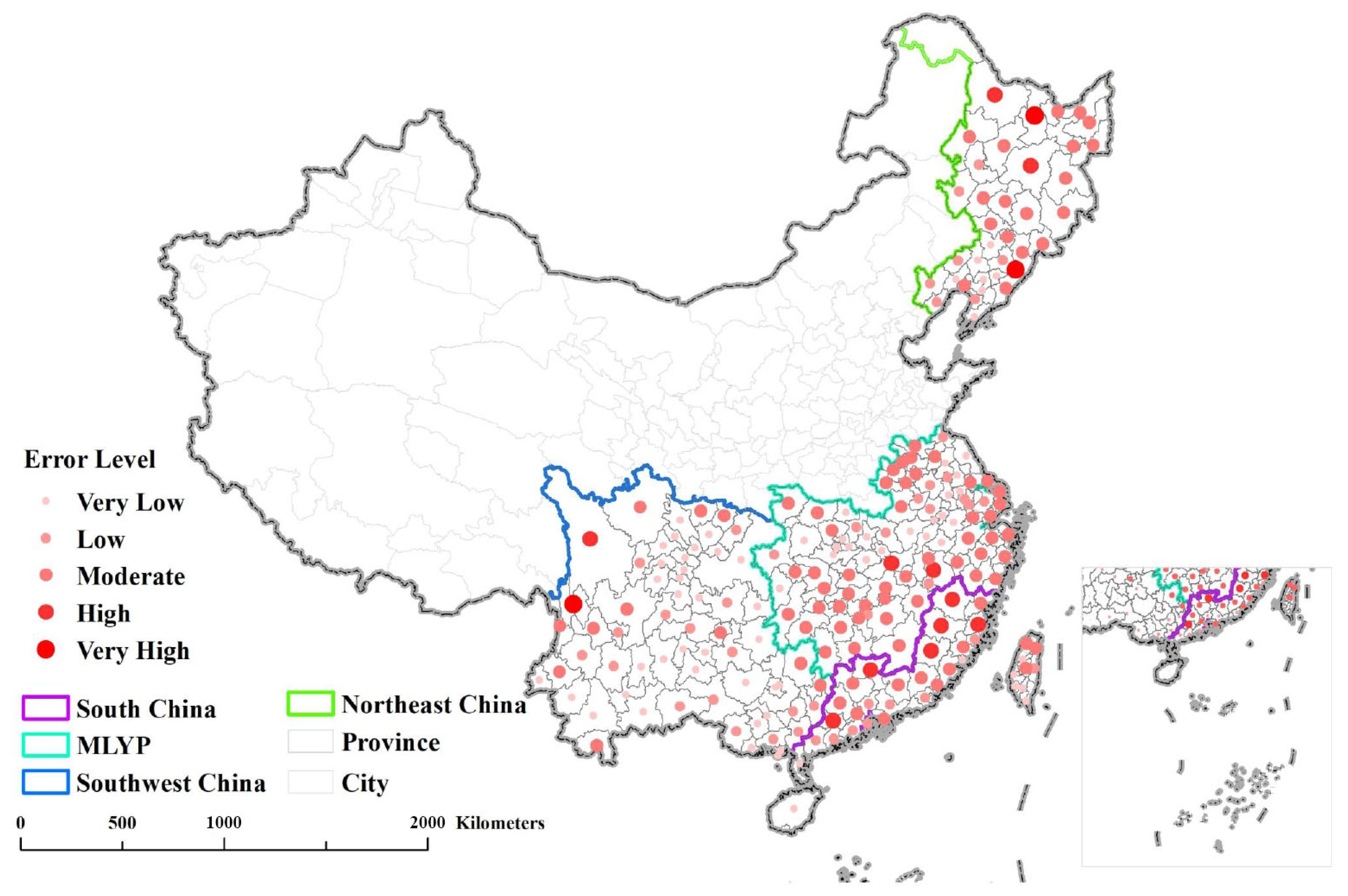
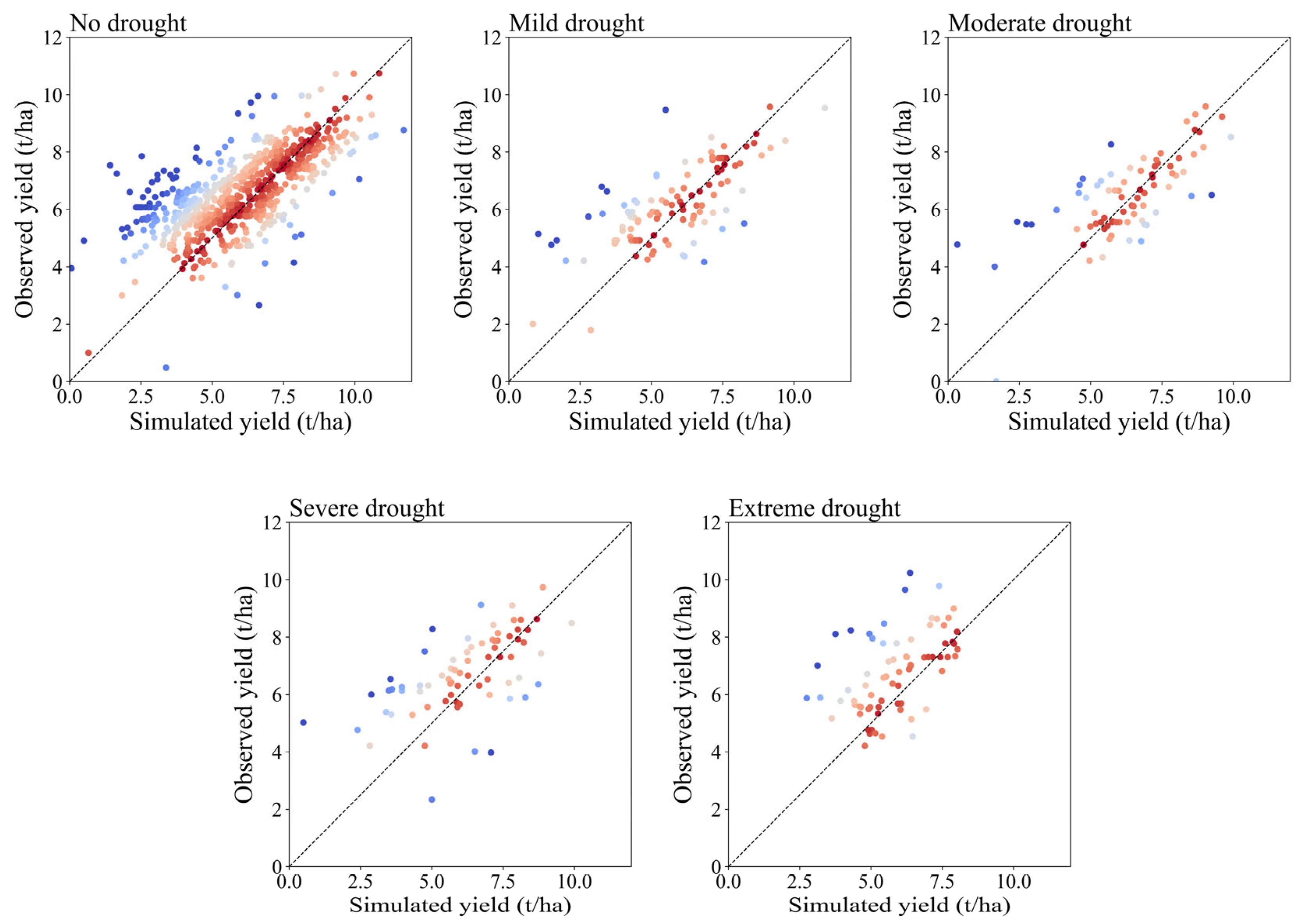
3.1. Model Simulation Performance
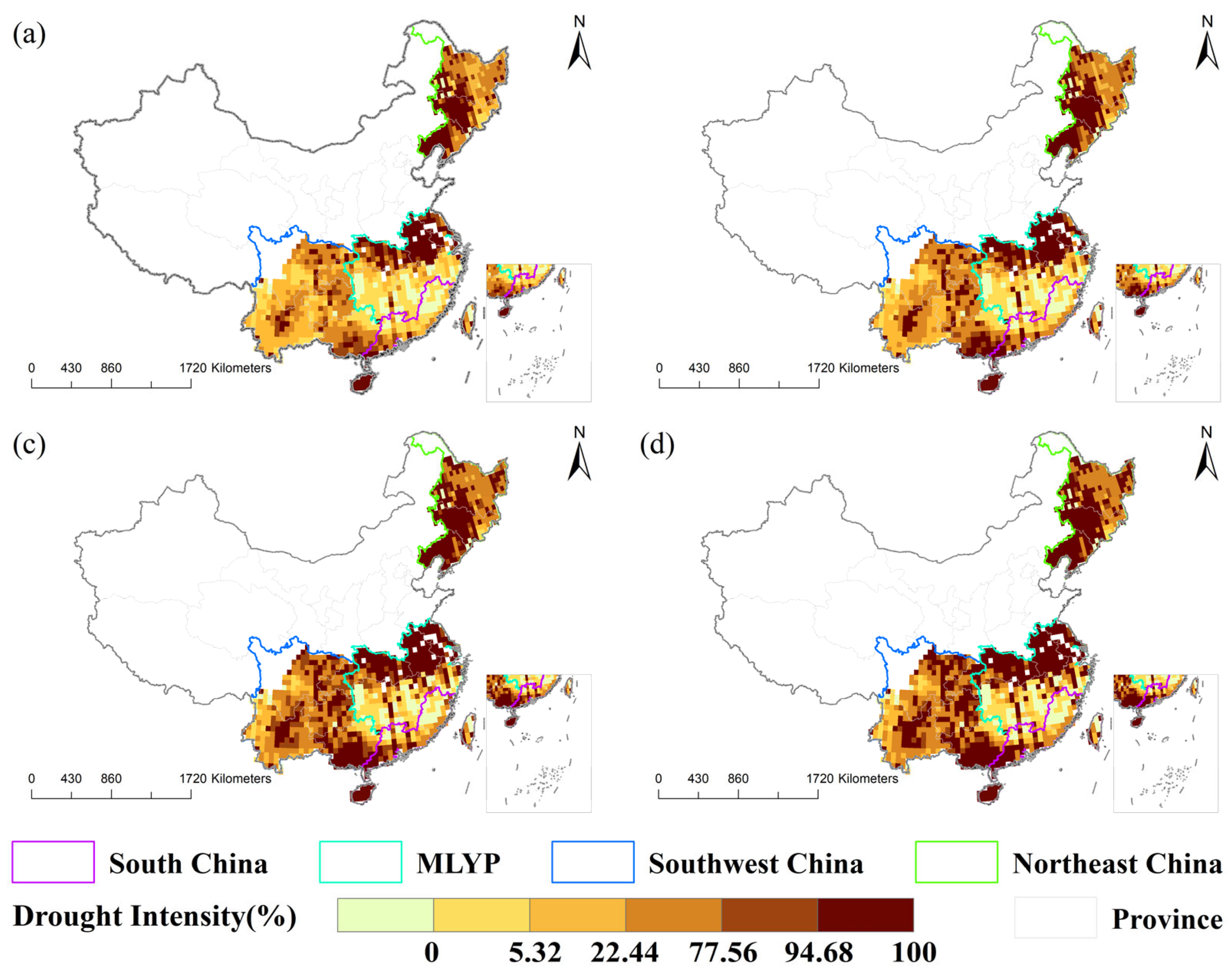
3.2. Drought Hazard
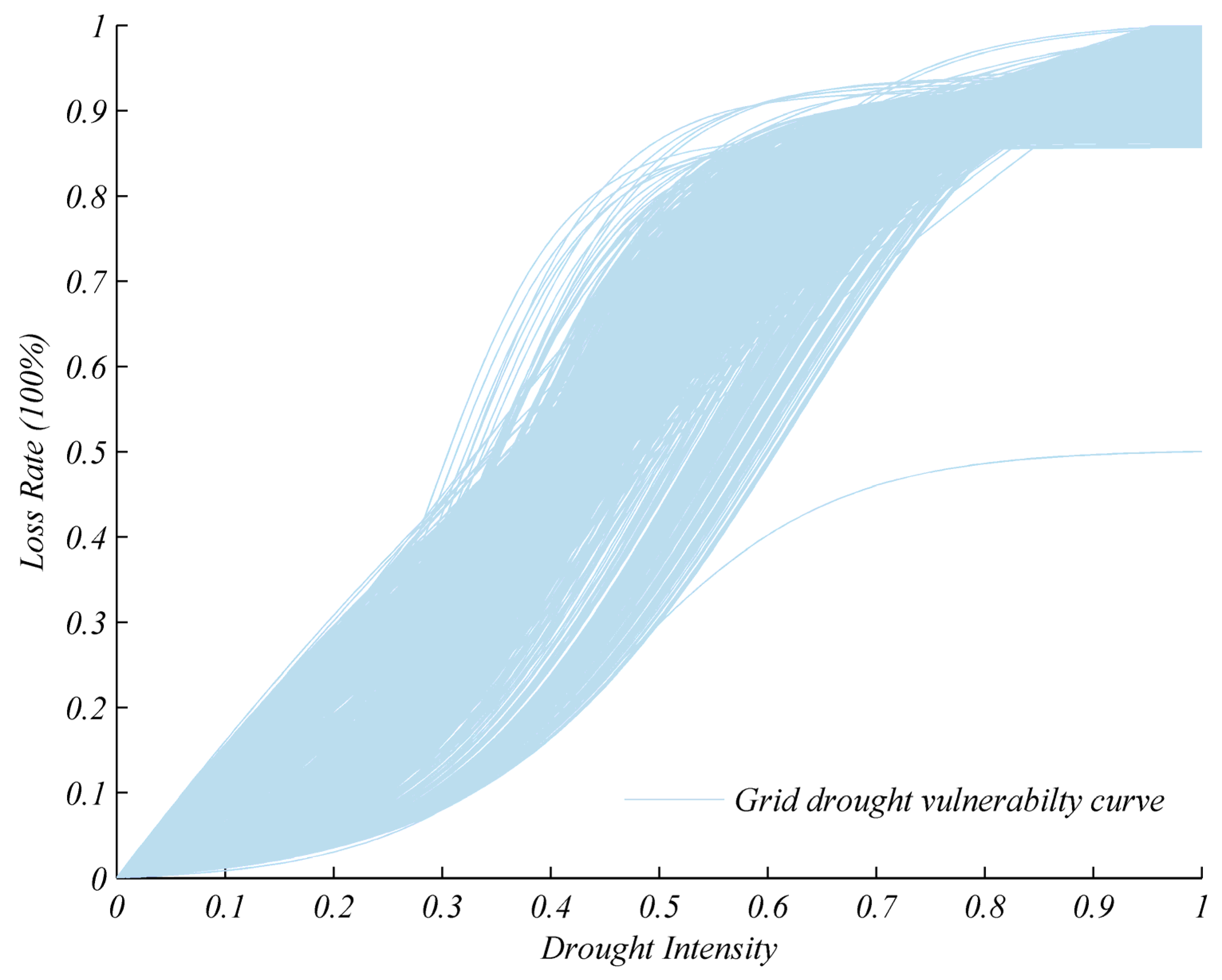
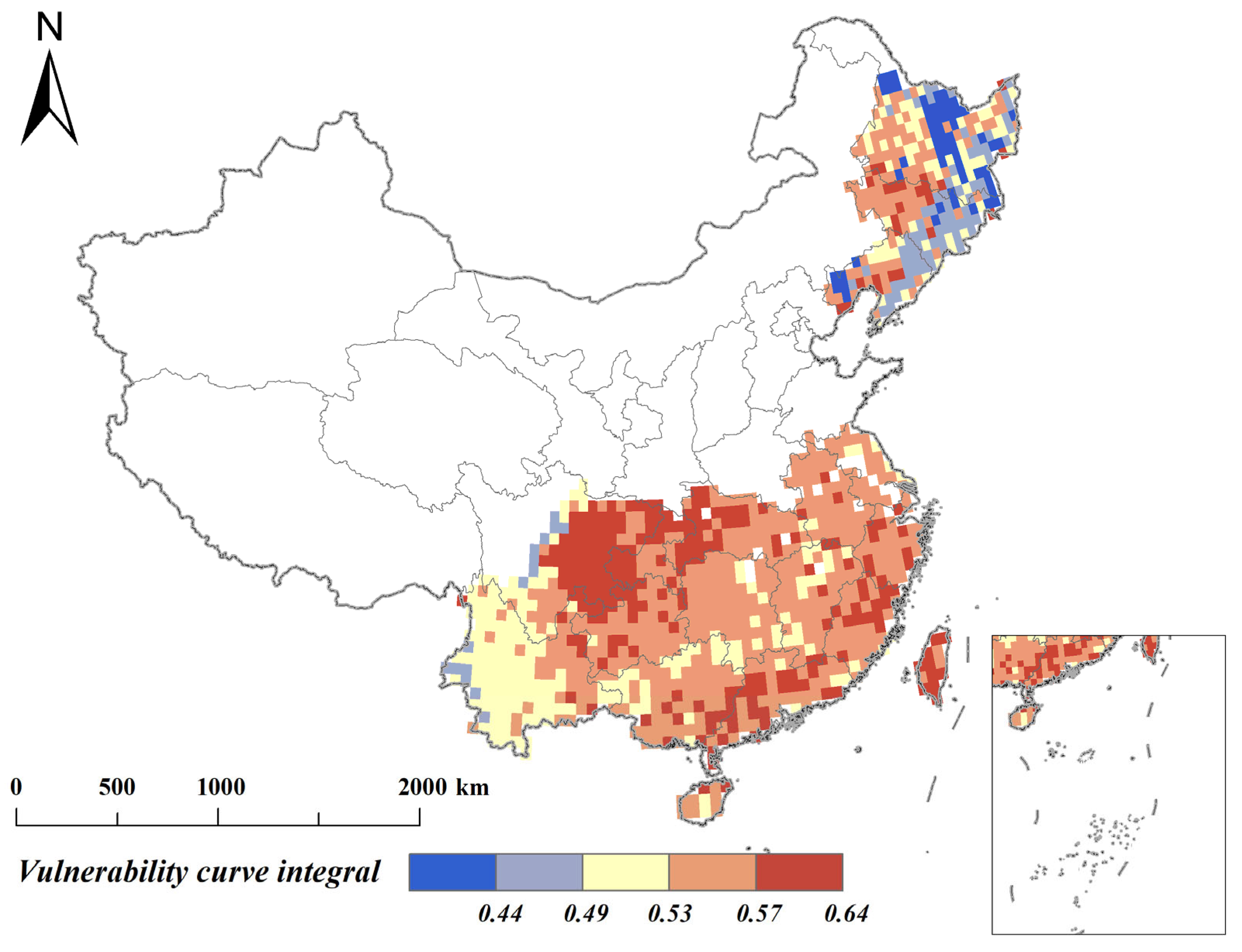
3.3. Drought Vulnerability Curves
3.4. Drought Risk Assessment
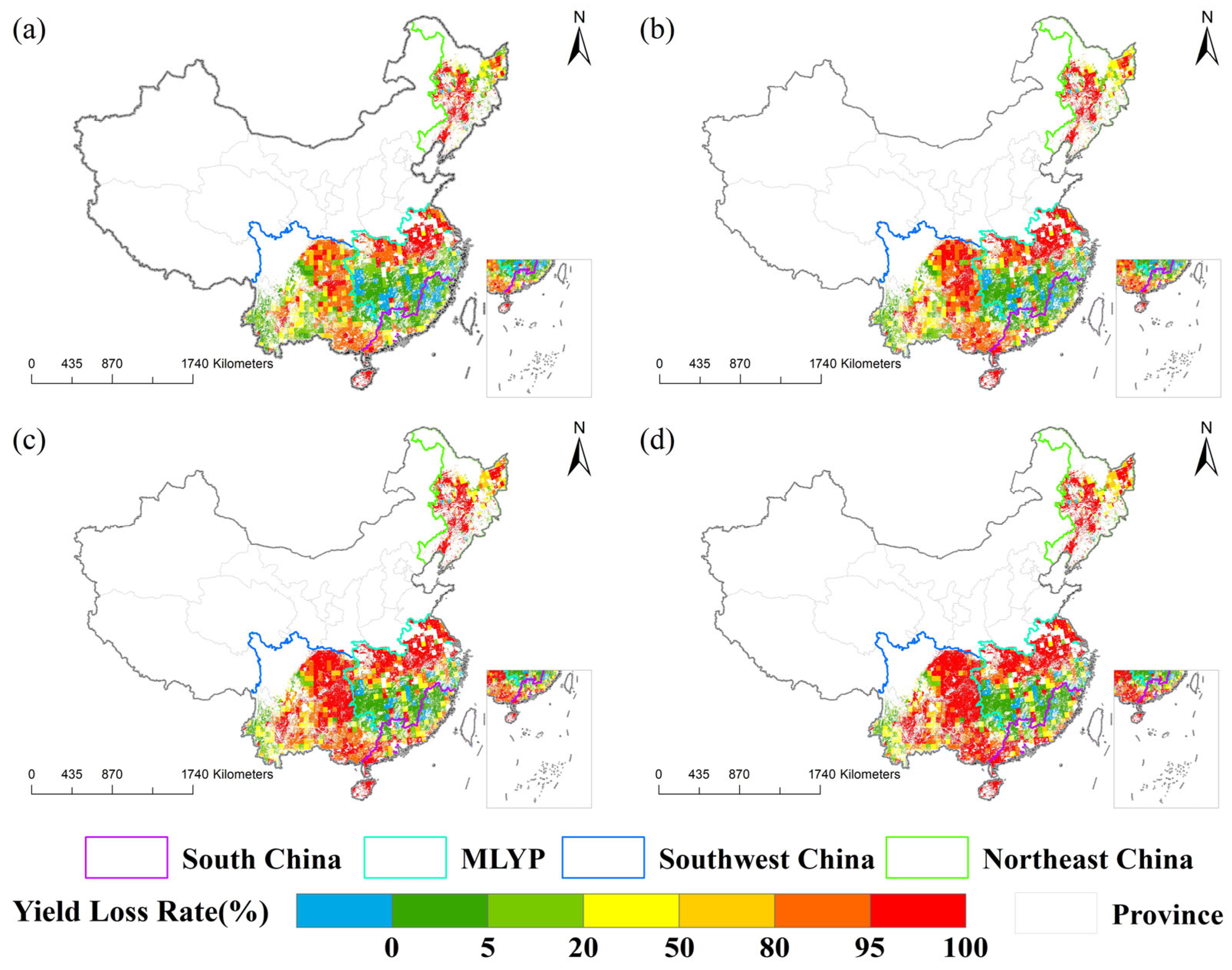
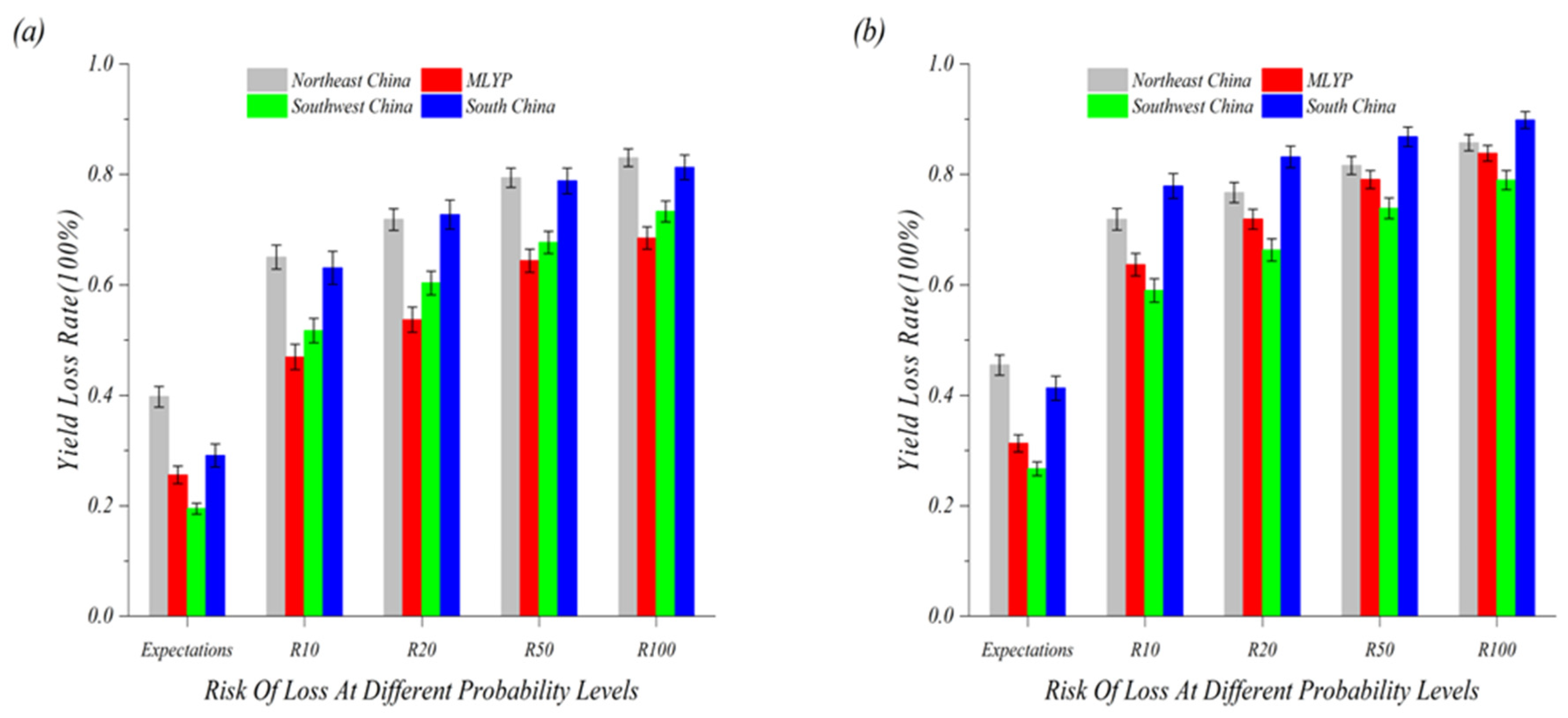
3.4.1. Yield Loss Rate in Different Return Periods
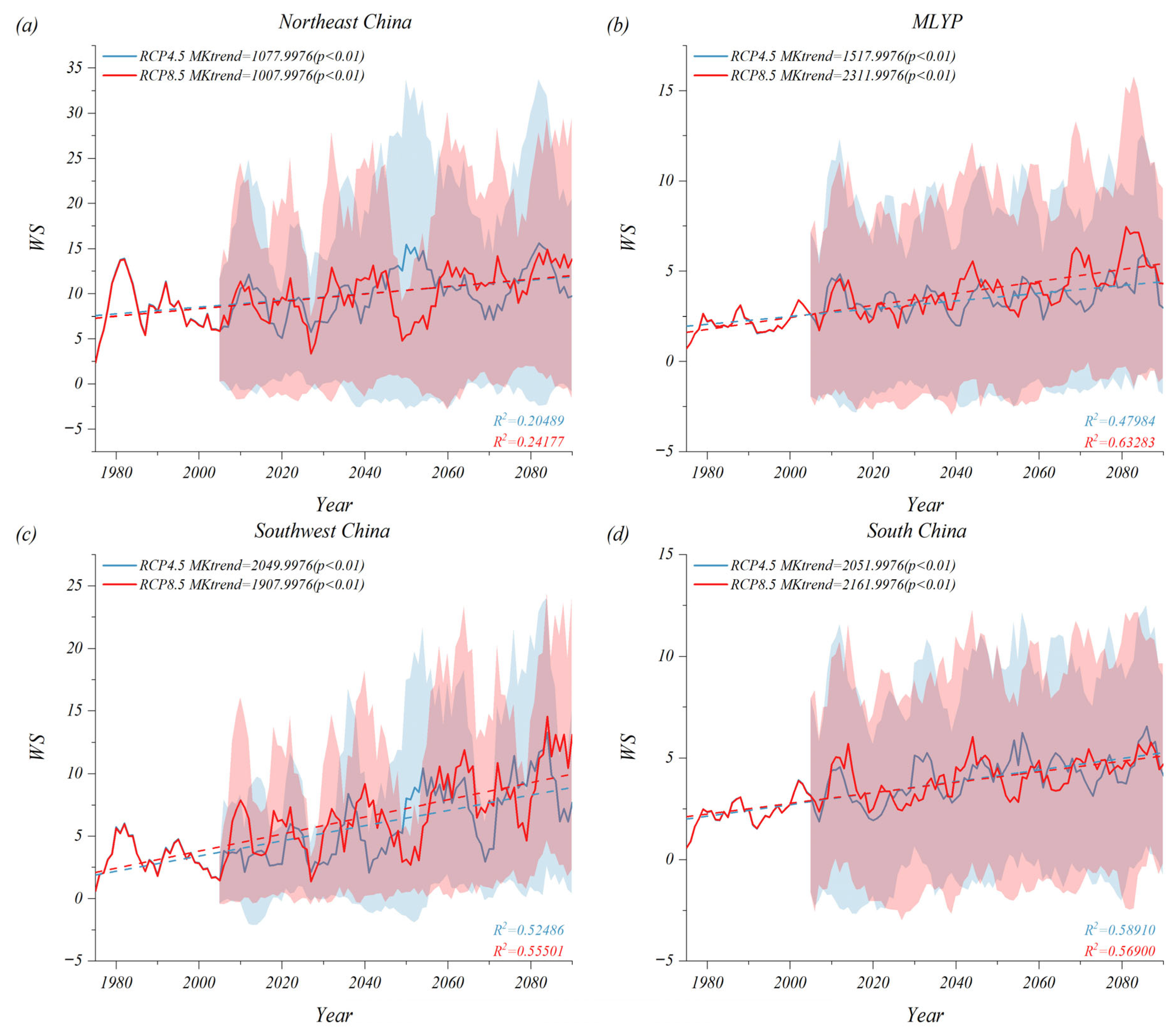
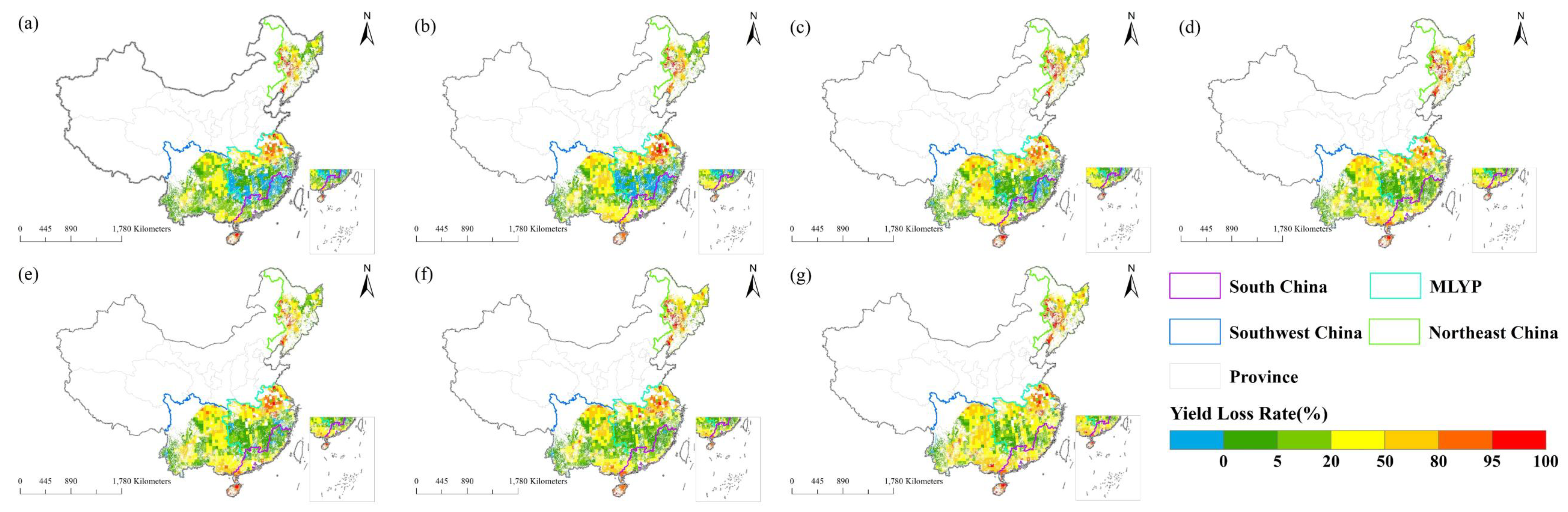
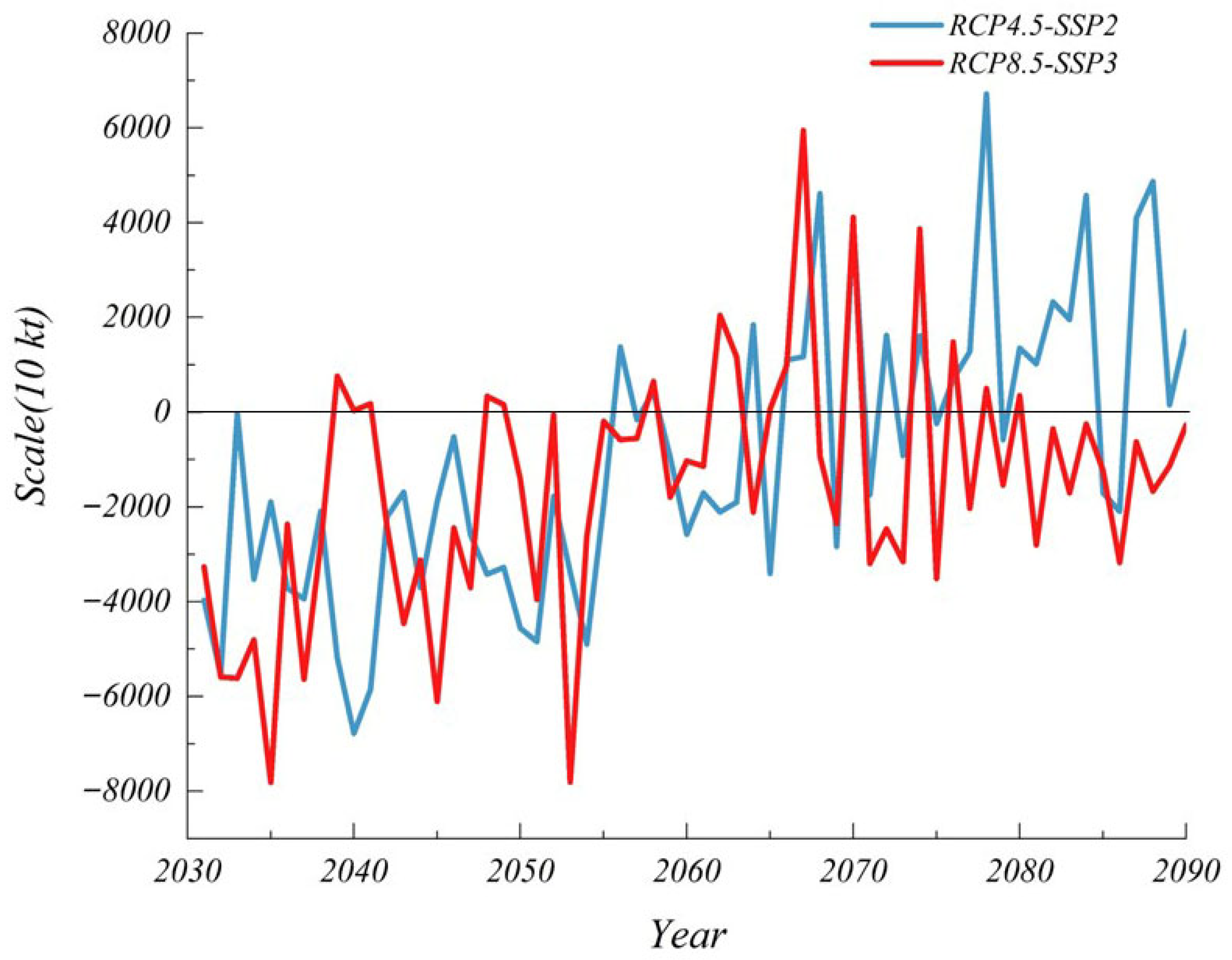
3.4.2. Yield Loss Rate in the Future Periods
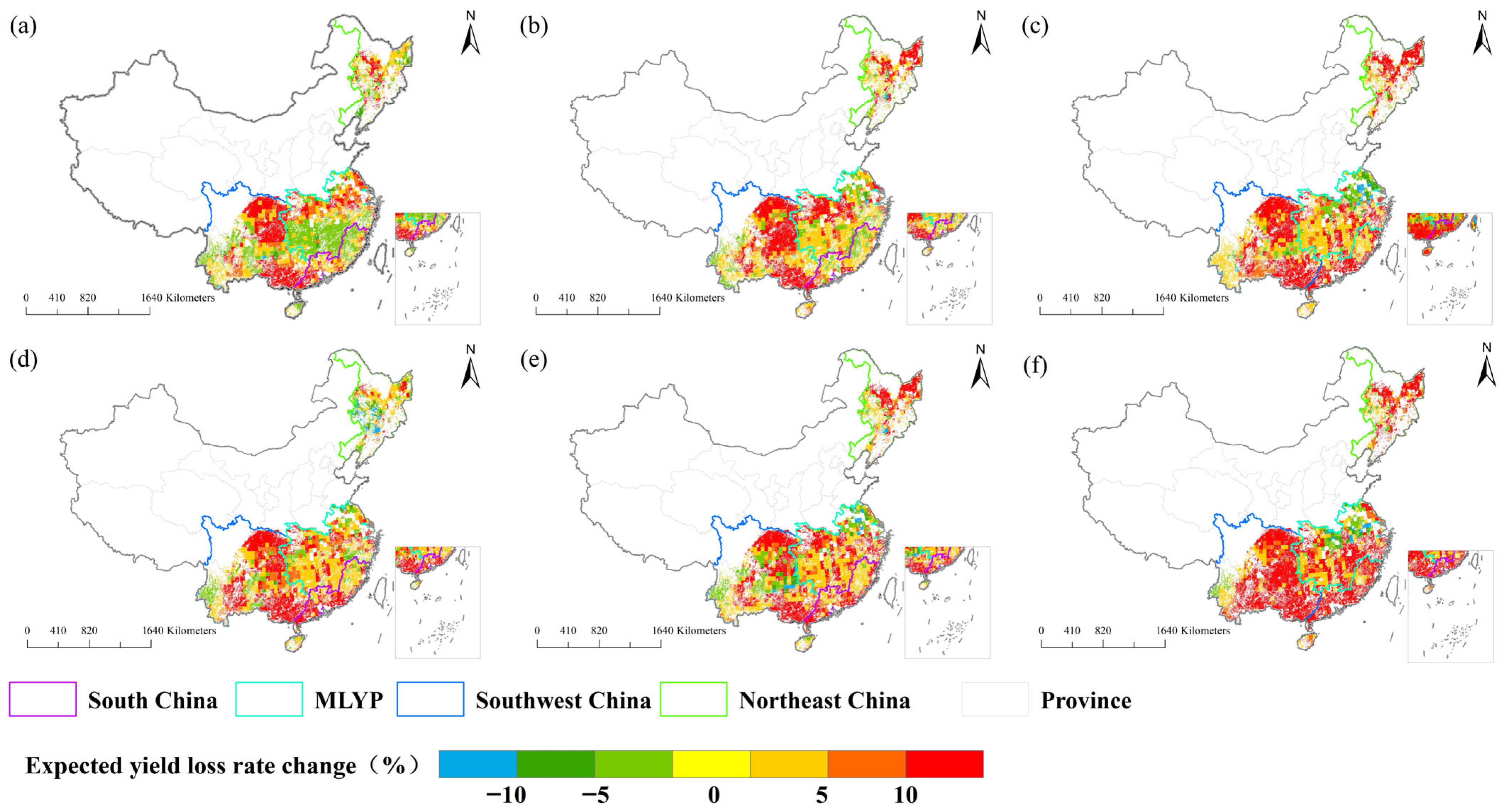
3.4.3. Expected Yield Loss Rate Change in the Future
4. Discussion
4.1. Uncertainty in the Risk Assessment
4.2. Rice Drought Risk and Food Security
5. Conclusions
Author Contributions
Funding
Data Availability Statement
Acknowledgments
Conflicts of Interest
References
- IPCC. Climate Change 2021: The Physical Science Basis [M/OL]. Available online: https://www.ipcc.ch/report/ar6/wg1/downloads/report/IPCC_AR6_WGI_Full_Report.pdf (accessed on 1 August 2021).
- UNDRR. GAR Special Report on Drought 2021: A Summary for Policy Makers; United Nations Office for Disaster Risk Reduction: Geneva, Switzerland, 2021; Available online: https://www.undrr.org/publication/gar-special-report-drought-2021 (accessed on 1 August 2021).
- Zhang, H.; Yang, X.; Ren, L.; Wu, F.; Huang, Y.; Wang, Y. Response of typical large-scale persistent drought events to atmospheric circulation in China. Trans. Chin. Soc. Agric. Eng. (Trans. CSAE) 2024, 40, 124–132. [Google Scholar] [CrossRef]
- Bouman, B.A.M.; Humphreys, E.; Tuong, T.P.; Barker, R. Rice and Water. In Advances in Agronomy; Sparks, D.L., Ed.; Academic Press: San Diego, CA, USA, 2007; Volume 92, pp. 187–237. [Google Scholar] [CrossRef]
- Zhang, G.; Xiao, X.; Biradar, C.M.; Dong, J.; Qin, Y.; Menarguez, M.A.; Zhou, Y.; Zhang, Y.; Jin, C.; Wang, J.; et al. Spatiotemporal patterns of paddy rice croplands in China and India from 2000 to 2015. Sci. Total Environ. 2017, 579, 82–92. [Google Scholar] [CrossRef]
- Zhou, S.; Wang, Y.; Li, Z.; Chang, J.; Guo, A.; Zhou, K. Characterizing spatio-temporal patterns of multi-scalar drought risk in mainland China. Ecol. Indic. 2021, 131, 108189. [Google Scholar] [CrossRef]
- Guan, X.; Zang, Y.; Meng, Y.; Liu, Y.; Lv, H.; Yan, D. Study on spatiotemporal distribution characteristics of flood and drought disaster impacts on agriculture in China. Int. J. Disaster Risk Reduct. 2021, 64, 102504. [Google Scholar] [CrossRef]
- Nam, W.H.; Hayes, M.J.; Svoboda, M.D.; Tadesse, T.; Wilhite, D.A. Drought hazard assessment in the context of climate change for South Korea. Agric. Water Manag. 2015, 160, 106–117. [Google Scholar] [CrossRef]
- Arab, S.T.; Noguchi, R.; Ahamed, T. Yield loss assessment of grapes using composite drought index derived from Landsat OLI and TIRS datasets. Remote Sens. Appl. Soc. Environ. 2022, 26, 100727. [Google Scholar] [CrossRef]
- He, B.; Wu, J.; Lü, A.; Cui, X.; Zhou, L.; Liu, M.; Zhao, L. Quantitative assessment and spatial characteristic analysis of agricultural drought risk in China. Nat. Hazards 2013, 66, 155–166. [Google Scholar] [CrossRef]
- Zhao, J.; Zhang, Q.; Zhu, X.; Shen, Z.; Yu, H. Drought risk assessment in China: Evaluation framework and influencing factors. Geogr. Sustain. 2020, 1, 220–228. [Google Scholar] [CrossRef]
- Zhang, L.; Gao, J.; Tang, Z.; Jiao, K. Quantifying the ecosystem vulnerability to drought based on data integration and processes coupling. Agric. For. Meteorol. 2021, 301, 108354. [Google Scholar] [CrossRef]
- Zhu, X.; Xu, K.; Liu, Y.; Guo, R.; Chen, L. Assessing the vulnerability and risk of maize to drought in China based on the AquaCrop model. Agric. Syst. 2021, 189, 103040. [Google Scholar] [CrossRef]
- United States Geological Survey (USGS). Global 30 Arc-Second Elevation (GTOPO30). Available online: https://lta.cr.usgs.gov/GTOPO30 (accessed on 1 August 2021).
- Global Agro-ecological Zones (GAEZ). Terrain Slope Classes. Available online: http://www.gaez.iiasa.ac.at/ (accessed on 1 August 2021).
- Batjes, N.H. ISRIC-WISE Derived Soil Properties on a 5 by 5 Arc-Minutes Global Grid (ver. 1.2); ISRIC-World Soil Information: Wageningen, The Netherlands, 2012; Report No. 2012/01; Available online: https://data.isric.org/geonetwork/srv/eng/catalog.search#/metadata/82f3d6b0-a045-4fe2-b960-6d05bc1f37c0 (accessed on 1 August 2021).
- Hempel, S.; Frieler, K.; Warszawski, L.; Schewe, J.; Piontek, F. A trend-preserving bias correction—The ISI-MIP approach. Earth Syst. Dyn. 2013, 4, 219–236. [Google Scholar] [CrossRef]
- Shen, R.; Pan, B.; Peng, Q.; Dong, J.; Chen, X.; Zhang, X.; Ye, T.; Huang, J.; Yuan, W. High-resolution distribution maps of single-season rice in China from 2017 to 2022. Earth Syst. Sci. Data. 2023, 15, 3203–3222. [Google Scholar] [CrossRef]
- Sacks, W.J.; Deryng, D.; Foley, J.A.; Ramankutty, N. Crop planting dates: An analysis of global patterns. Glob. Ecol. Biogeogr. 2010, 19, 607–620. [Google Scholar] [CrossRef]
- Tan, G.; Shibasaki, R. Global estimation of crop productivity and the impacts of global warming by GIS and EPIC integration. Ecol. Model. 2003, 168, 357–370. [Google Scholar] [CrossRef]
- Potter, P.; Ramankutty, N.; Bennett, E.M.; Donner, S.D. Characterizing the spatial patterns of global fertilizer application and manure production. Earth Interact. 2010, 14, 1–22. [Google Scholar] [CrossRef]
- Guo, X.; Zhang, R.; Xie, N.; Jin, J. Predicting the population growth and structure of China based on grey fractional-order models. J. Math. 2021, 2021, 7725125. [Google Scholar] [CrossRef]
- Granger, K. Quantifying storm tide risk in Cairns. Nat. Hazards 2003, 30, 165–185. [Google Scholar] [CrossRef]
- Cutter, S.L. Vulnerability to environmental hazards. Prog. Hum. Geogr. 1996, 20, 529–539. [Google Scholar] [CrossRef]
- Wang, Z.; He, F.; Fang, W.; Liao, Y. Assessment of physical vulnerability to agricultural drought in China. Nat. Hazards 2013, 67, 645–657. [Google Scholar] [CrossRef]
- Yang, H.; Du, T.; Mao, X.; Ding, R.; Shukla, M.K. A comprehensive method of evaluating the impact of drought and salt stress on tomato growth and fruit quality based on EPIC growth model. Agric. Water Manag. 2019, 213, 116–127. [Google Scholar] [CrossRef]
- Le, K.N.; Jha, M.K.; Reyes, M.R.; Jeong, J.; Doro, L.; Gassman, P.W.; Hok, L.; Sá, J.C.d.M.; Boulakia, S. Evaluating carbon sequestration for conservation agriculture and tillage systems in Cambodia using the EPIC model. Agric. Ecosyst. Environ. 2018, 251, 37–47. [Google Scholar] [CrossRef]
- Wang, X.C.; Li, J. Evaluation of crop yield and soil water estimates using the EPIC model for the Loess Plateau of China. Math. Comput. Model. 2010, 51, 1390–1397. [Google Scholar] [CrossRef]
- Wang, Z.; Ye, L.; Jiang, J.; Fan, Y.; Zhang, X. Review of application of EPIC crop growth model. Ecol. Model. 2022, 467, 109952. [Google Scholar] [CrossRef]
- Xiong, W.; Balkovič, J.; van der Velde, M.; Zhang, X.; Izaurralde, R.C.; Skalský, R.; Lin, E.; Mueller, N.; Obersteiner, M. A calibration procedure to improve global rice yield simulations with EPIC. Ecol. Model. 2014, 273, 128–139. [Google Scholar] [CrossRef]
- Billen, N.; Röder, C.; Gaiser, T.; Stahr, K. Carbon sequestration in soils of SW-Germany as affected by agricultural management—Calibration of the EPIC model for regional simulations. Ecol. Model. 2009, 220, 71–80. [Google Scholar] [CrossRef]
- Huang, X.; Huang, G.; Yu, C.; Ni, S.; Yu, L. A multiple crop model ensemble for improving broad-scale yield prediction using Bayesian model averaging. Field Crops Res. 2017, 211, 114–124. [Google Scholar] [CrossRef]
- Wang, X.; Williams, J.R.; Gassman, P.W.; Baffaut, C.; Izaurralde, R.C.; Jeong, J.; Kiniry, J.R. EPIC and APEX: Model use, calibration, and validation. Trans. ASABE 2012, 55, 1447–1462. [Google Scholar] [CrossRef]
- Zhan, P.; Zhu, W.; Zhang, T.; Li, N. Regional inequalities of future climate change impact on rice (Oryza sativa L.) yield in China. Sci. Total Environ. 2023, 898, 165495. [Google Scholar] [CrossRef]
- Yu, R.; Dong, S.; Han, Z.; Li, W. Increased exposure of rice to compound drought and hot extreme events during its growing seasons in China. Ecol. Indic. 2024, 167, 112735. [Google Scholar] [CrossRef]
- Xu, F.; Qu, Y.; Bento, V.A.; Song, H.; Qiu, J.; Qi, J.; Wan, L.; Zhang, R.; Miao, L.; Zhang, X.; et al. Understanding climate change impacts on drought in China over the 21st century: A multi-model assessment from CMIP6. npj Clim. Atmos. Sci. 2024, 7, 32. [Google Scholar] [CrossRef]
- Wen, Q.; Chen, H. Changes in drought characteristics over China during 1961–2019. Front. Earth Sci. 2023, 11, 1138795. [Google Scholar] [CrossRef]
- Choruma, D.J.; Balkovic, J.; Pietsch, S.A.; Odume, O.N. Using EPIC to simulate the effects of different irrigation and fertilizer levels on maize yield in the Eastern Cape, South Africa. Agric. Water Manag. 2021, 254, 106974. [Google Scholar] [CrossRef]
- Folberth, C. Modeling Crop Yield and Water Use in the Context of Global Change with a Focus on Maize in Sub-Saharan Africa. Doctoral Dissertation, ETH Zurich, Zurich, Switzerland, 2013. [Google Scholar] [CrossRef]
- Müller, C.; Elliott, J.; Chryssanthacopoulos, J.; Arneth, A.; Balkovic, J.; Ciais, P.; Deryng, D.; Folberth, C.; Glotter, M.; Hoek, S.; et al. Global gridded crop model evaluation: Benchmarking, skills, deficiencies and implications. Geosci. Model Dev. 2017, 10, 1403–1422. [Google Scholar] [CrossRef]
- Li, Z.; Zhan, C.; Hu, S.; Ning, L.; Wu, L.; Guo, H. Evaluation of global gridded crop models (GGCMs) for the simulation of major grain crop yields in China. Hydrol. Res. 2022, 53, 353–369. [Google Scholar] [CrossRef]
- Kostková, M.; Hlavinka, P.; Pohanková, E.; Kersebaum, K.C.; Nendel, C.; Gobin, A.; Olesen, J.E.; Ferrise, R.; Dibari, C.; Takáč, J.; et al. Performance of 13 crop simulation models and their ensemble for simulating four field crops in Central Europe. J. Agric. Sci. 2021, 159, 69–89. [Google Scholar] [CrossRef]
- Luo, Y.; Zhang, Z.; Chen, Y.; Li, Z.; Tao, F. ChinaCropPhen1km: A High-Resolution Crop Phenological Dataset for Three Staple Crops in China during 2000–2015 Based on Leaf Area Index (LAI) Products. Earth Syst. Sci. Data 2020, 12, 197–214. [Google Scholar] [CrossRef]
- Müller, C.; Franke, J.; Jägermeyr, J.; Ruane, A.C.; Elliott, J.; Moyer, E.; Heinke, J.; Falloon, P.D.; Folberth, C.; Francois, L.; et al. Exploring uncertainties in global crop yield projections in a large ensemble of crop models and CMIP5 and CMIP6 climate scenarios. Environ. Res. Lett. 2021, 16, 034040. [Google Scholar] [CrossRef]
- Hui, J.; Lin, E.D.; Wheeler, T.; Challinor, A.; Jiang, S. Climate change modelling and its roles to Chinese crop yields. J. Integr. Agric. 2013, 12, 892–902. [Google Scholar] [CrossRef]
- Tao, F.; Palosuo, T.; Rötter, R.P.; Díaz-Ambrona, C.G.H.; Mínguez, M.I.; Semenov, M.A.; Kersebaum, K.C.; Cammarano, D.; Specka, X.; Nendel, C.; et al. Why do crop models diverge substantially in climate impact projections? A comprehensive analysis based on eight barley crop models. Agric. For. Meteorol. 2020, 281, 107851. [Google Scholar] [CrossRef]
- Zhang, Y.; Zhao, Y.; Feng, L. Higher contributions of uncertainty from global climate models than crop models in maize-yield simulations under climate change. Meteorol. Appl. 2019, 26, 74–82. [Google Scholar] [CrossRef]
- Huang, C. Information diffusion techniques and small-sample problem. Int. J. Inf. Technol. Decis. Mak. 2002, 1, 229–249. [Google Scholar] [CrossRef]
- Ruane, A.C.; Phillips, M.; Müller, C.; Elliott, J.; Jägermeyr, J.; Arneth, A.; Balkovic, J.; Deryng, D.; Folberth, C.; Iizumi, T.; et al. Strong regional influence of climatic forcing datasets on global crop model ensembles. Agric. For. Meteorol. 2021, 300, 108313. [Google Scholar] [CrossRef]
- Kirono, D.G.C.; Kent, D.M.; Hennessy, K.J.; Mpelasoka, F. Characteristics of Australian droughts under enhanced greenhouse conditions: Results from 14 global climate models. J. Arid Environ. 2011, 75, 566–575. [Google Scholar] [CrossRef]
- Alou, I.N.; Steyn, J.M.; Annandale, J.G.; Van der Laan, M. Growth, phenological, and yield response of upland rice (Oryza sativa L. cv. Nerica 4®) to water stress during different growth stages. Agric. Water Manag. 2018, 198, 39–52. [Google Scholar] [CrossRef]
- Liu, F.; Liu, Y.; Su, L.; Tao, W.; Wang, Q.; Deng, M. Integrated growth model of typical crops in China with regional parameters. Water 2022, 14, 1139. [Google Scholar] [CrossRef]
- Yanai, J.; Lee, C.K.; Kaho, T.; Iida, M.; Matsui, T.; Umeda, M.; Kosaki, T. Geostatistical analysis of soil chemical properties and rice yield in a paddy field and application to the analysis of yield-determining factors. Soil Sci. Plant Nutr. 2001, 47, 291–301. [Google Scholar] [CrossRef]
- Rüth, B.; Lennartz, B. Spatial variability of soil properties and rice yield along two catenas in southeast China. Pedosphere 2008, 18, 409–420. [Google Scholar] [CrossRef]
- He, Z.W. Analysis on yield components of japonica rice in different altitude areas. China Rice 2015, 21, 75–78. [Google Scholar] [CrossRef]
- Zhao, T.; Chen, L.; Ma, Z. Simulation of historical and projected climate change in arid and semiarid areas by CMIP5 models. Chin. Sci. Bull. 2014, 59, 412–429. [Google Scholar] [CrossRef]
- Hu, T.; Ju, Z.S.; Zhou, W. Regional pattern of grain supply and demand in China. Acta Geogr. Sin. 2016, 71, 1372–1383. [Google Scholar] [CrossRef]
- Jiang, T.; Su, B.; Jing, C.; Wang, Y.; Huang, J.; Guo, H.; Yang, Y.; Wang, G.; Luo, Y. National and provincial population and economy projection databases under Shared Socioeconomic Pathways(SSP1-5)_v2 [DS/OL]. Sci. Data Bank 2022. Available online: http://cstr.cn/31253.11.sciencedb.01683 (accessed on 21 May 2022).
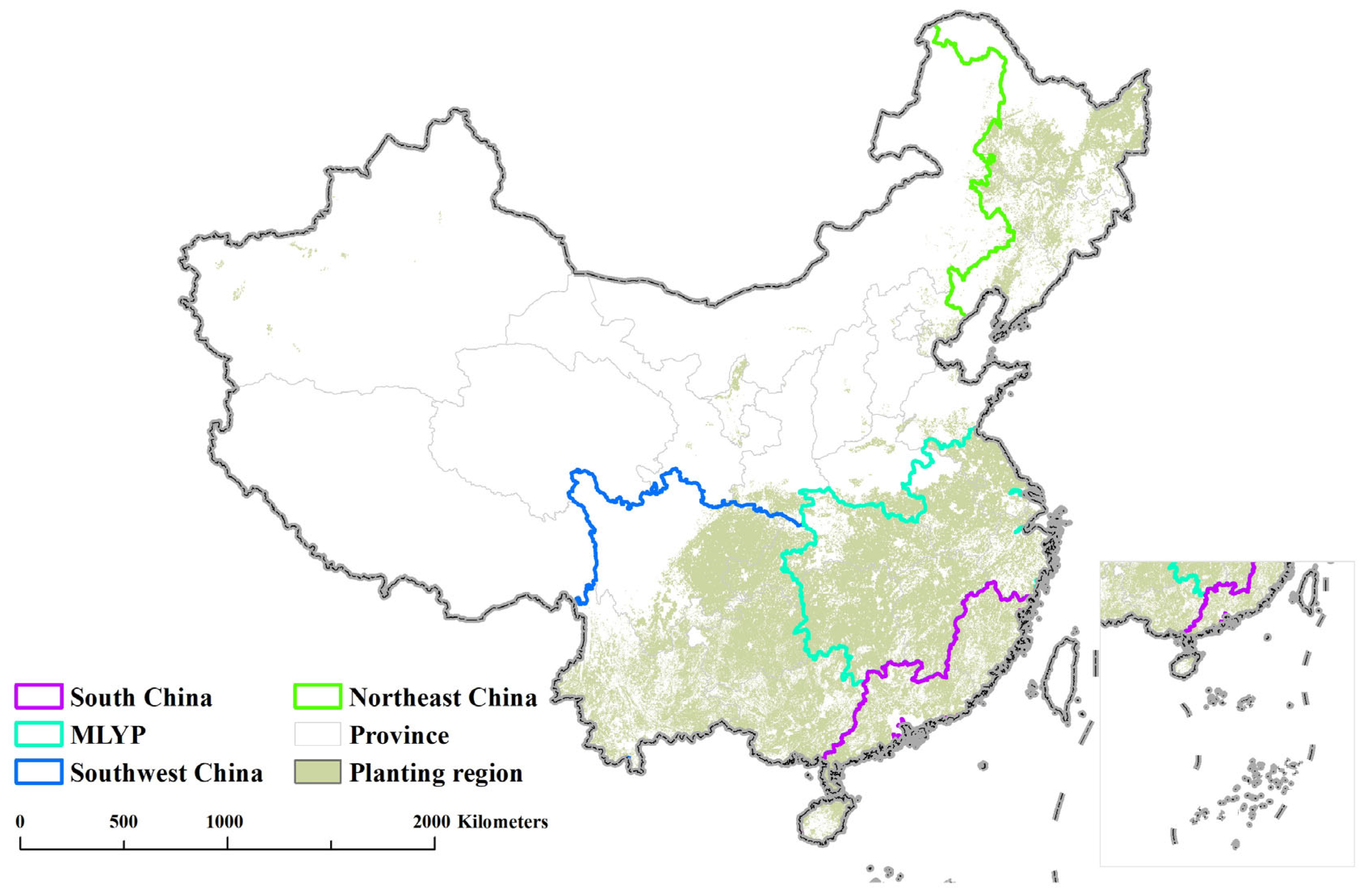
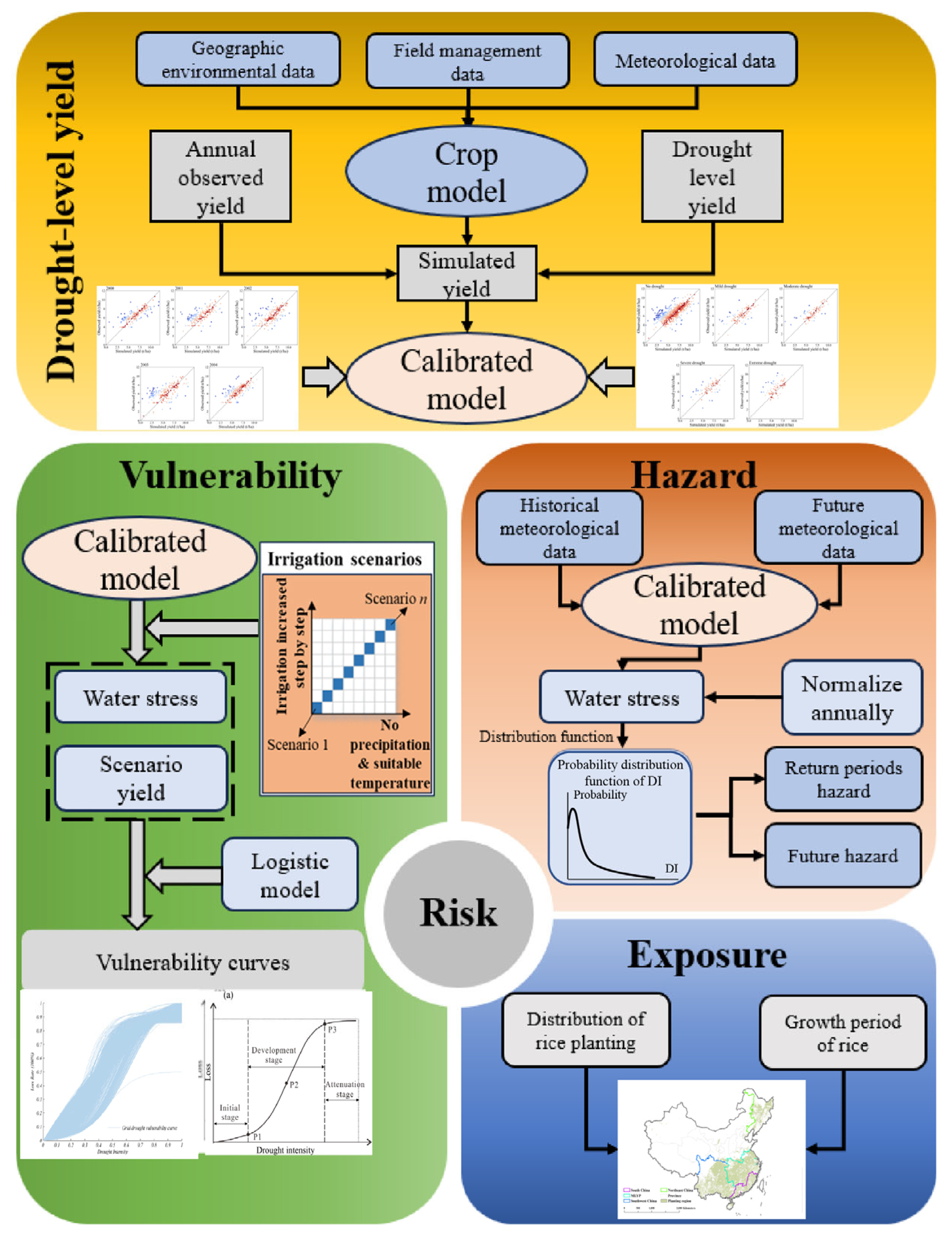
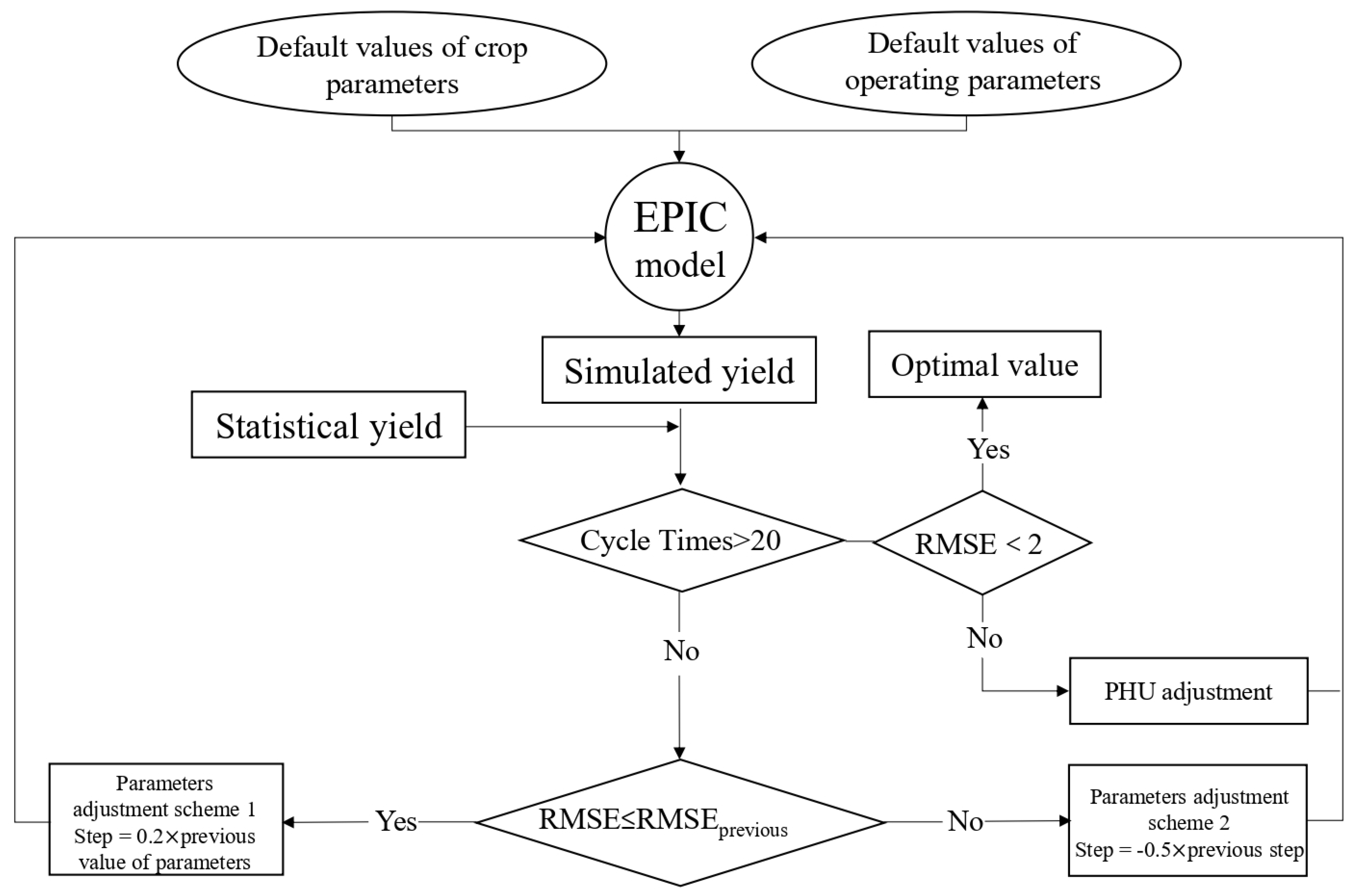
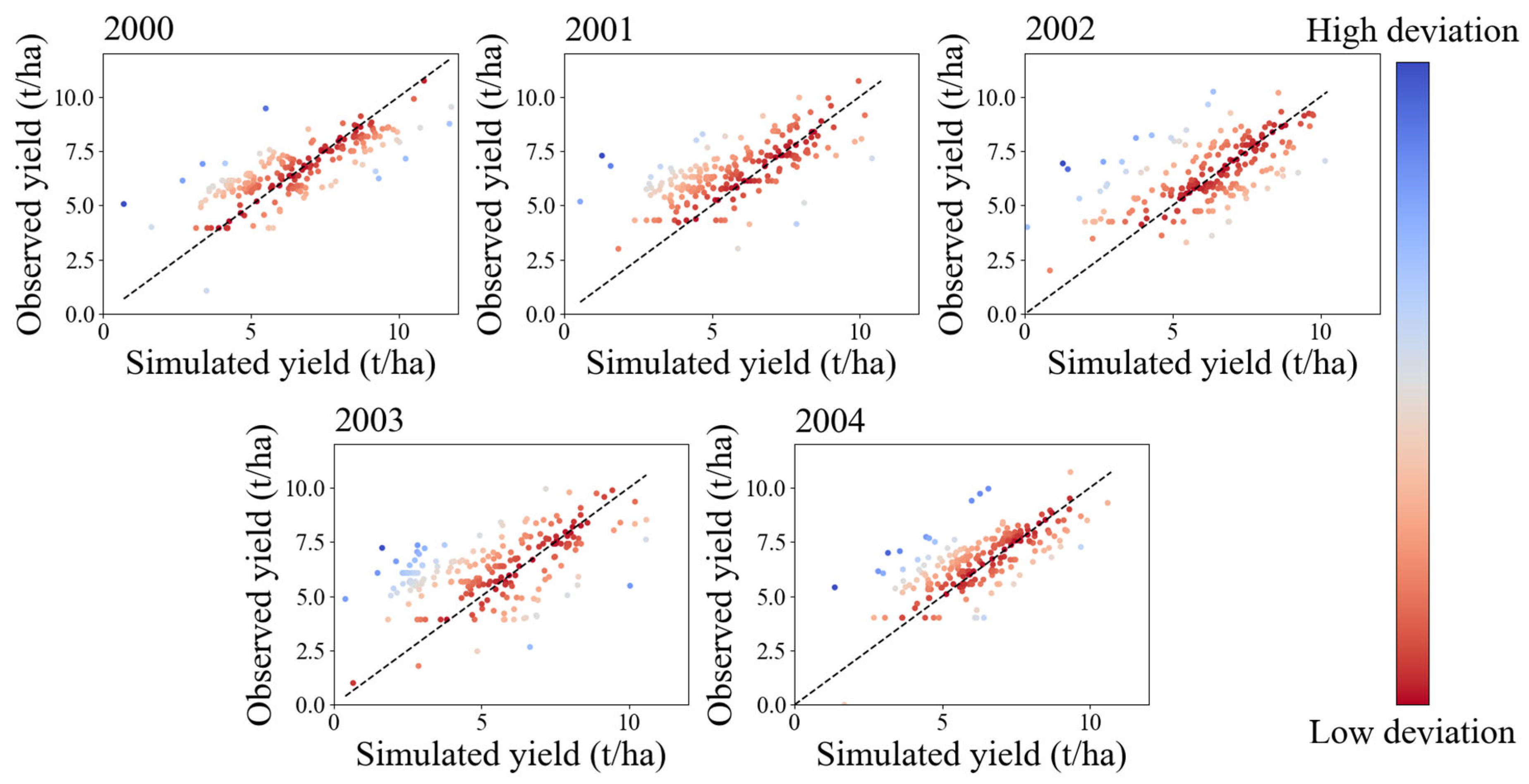

| Name | Source | Spatial Resolution | Temporal Resolution |
|---|---|---|---|
| Altitude | United States Geological Survey (USGS) [14] | 0.0833° × 0.0833° | 1996 |
| Slope | International Institute for Applied Systems Analysis—Global Agro-ecological Zones (GAEZ) [15] | 0.0833° × 0.0833° | 2002 |
| Soil | International Soil Reference and Information Centre (ISRIC) [16] | 5′ × 5′ | 2012 |
| Meteorological | The Inter-Sectoral Impact Model Intercomparison Project (ISIMIP) [17] | 0.5° × 0.5° | 1975–2090 |
| Planting area | Sun Yat-sen University [18] | 0.00833° × 0.00833° | 2017–2022 |
| Growth period of rice | University of Wisconsin–Madison Sustainability and the Global Environment (SAGE) [19] | 0.5° × 0.5° | 2010 |
| Irrigation | The University of Tokyo (OKI Laboratory) [20] | 0.5° × 0.5° | 2002 |
| Fertilizer | Land Use and the Global Environment (LUGE) [21] | 0.5° × 0.5° | 2010 |
| Years | Number of Prefecture-Level Cities | Observed Yield (t/ha) | Simulated Yield (t/ha) | RMSE | r | PBIAS | t | ||
|---|---|---|---|---|---|---|---|---|---|
| Mean | SD | Mean | SD | ||||||
| 2000 | 216 | 6.63 | 1.34 | 6.43 | 1.88 | 1.17 | 0.79 ** | 3.63% | * |
| 2001 | 216 | 6.56 | 1.31 | 5.69 | 1.81 | 1.56 | 0.70 ** | 1.95% | ** |
| 2002 | 216 | 6.49 | 1.42 | 6.22 | 1.75 | 1.44 | 0.62 ** | −8.07% | ** |
| 2003 | 216 | 6.34 | 1.41 | 5.38 | 2.00 | 1.96 | 0.54 ** | 0.88% | ** |
| 2004 | 216 | 6.70 | 1.27 | 6.24 | 1.57 | 1.20 | 0.71 ** | −1.59% | ** |
| SPI | Characterization |
|---|---|
| ≥−0.5 | No drought |
| −1.0–−0.5 | Mild drought |
| −1.5–−1.0 | Moderate drought |
| −2.0–−1.5 | Severe drought |
| ≤−2.0 | Extreme drought |
| Drought Grade | Number of Prefecture-Level Cities | Observed Yield (t/ha) | Simulated Yield (t/ha) | RMSE | r | PBIAS | t | ||
|---|---|---|---|---|---|---|---|---|---|
| Mean | SD | Mean | SD | ||||||
| No drought | 714 | 6.58 | 1.32 | 6.00 | 1.89 | 1.51 | 0.68 ** | 8.86% | ** |
| Mild drought | 112 | 6.13 | 1.40 | 5.73 | 1.88 | 1.38 | 0.71 ** | 6.55% | ** |
| Moderate drought | 80 | 6.43 | 1.44 | 6.26 | 1.82 | 1.29 | 0.71 ** | 2.56% | |
| Severe drought | 72 | 6.72 | 1.37 | 6.15 | 1.81 | 1.59 | 0.59 ** | 8.64% | ** |
| Extreme drought | 72 | 6.78 | 1.39 | 5.84 | 1.31 | 1.63 | 0.50 ** | 13.82% | ** |
Disclaimer/Publisher’s Note: The statements, opinions and data contained in all publications are solely those of the individual author(s) and contributor(s) and not of MDPI and/or the editor(s). MDPI and/or the editor(s) disclaim responsibility for any injury to people or property resulting from any ideas, methods, instructions or products referred to in the content. |
© 2025 by the authors. Licensee MDPI, Basel, Switzerland. This article is an open access article distributed under the terms and conditions of the Creative Commons Attribution (CC BY) license (https://creativecommons.org/licenses/by/4.0/).
Share and Cite
Lin, T.; Ding, H.; Chen, W.; Liu, Y.; Guo, H. Quantitative Assessment of Drought Risk in Major Rice-Growing Areas in China Driven by Process-Based Crop Growth Model. GeoHazards 2025, 6, 85. https://doi.org/10.3390/geohazards6040085
Lin T, Ding H, Chen W, Liu Y, Guo H. Quantitative Assessment of Drought Risk in Major Rice-Growing Areas in China Driven by Process-Based Crop Growth Model. GeoHazards. 2025; 6(4):85. https://doi.org/10.3390/geohazards6040085
Chicago/Turabian StyleLin, Tao, Hao Ding, Wangyu Chen, Yu Liu, and Hao Guo. 2025. "Quantitative Assessment of Drought Risk in Major Rice-Growing Areas in China Driven by Process-Based Crop Growth Model" GeoHazards 6, no. 4: 85. https://doi.org/10.3390/geohazards6040085
APA StyleLin, T., Ding, H., Chen, W., Liu, Y., & Guo, H. (2025). Quantitative Assessment of Drought Risk in Major Rice-Growing Areas in China Driven by Process-Based Crop Growth Model. GeoHazards, 6(4), 85. https://doi.org/10.3390/geohazards6040085

