Previous Article in Journal
Multisensor Monitoring of Soil–Plant–Atmosphere Interactions During Reproductive Development in Wheat
 
 
Due to scheduled maintenance work on our servers, there may be short service disruptions on this website between 11:00 and 12:00 CEST on March 28th.
Article

Electromagnetic Priming Modulates Gas Exchange During Pea Seed Germination Under Salt Stress

by
Svetlana Yu. Khashirova
1,
Albert S. Shabaev
1,
Igor F. Turkanov
2,
Elena V. Bondarchuk
2,
Valery G. Gryaznov
2,
Ekaterina A. Galkina
2,
Polina N. Bolotskova
3,
Irina M. Kaigorodova
4,*,
Elena G. Kozar
4 and
Vladimir G. Zainullin
5
1
Progressive Materials and Additive Technologies Center, H.M. Berbekov Kabardino-Balkarian State University, 123, Chernyshevsky Str., Nalchik 360004, Russia
2
“Concern GRANIT”, JSC, Gogolevsky Blvd., 31, Bldg. 2, Moscow 119019, Russia
3
Department of Fundamental Sciences, Bauman Moscow State Technical University, 2nd Bauman Str. 5, Moscow 105005, Russia
4
Federal State Budgetary Scientific Institution “Federal Scientific Vegetable Center”, (FSBSI FSVC) 14, Selectsionnaya Str., VNIISSOK, Odintsovo District, Moscow 143072, Russia
5
A.V. Zhuravsky Institute of Agrobiotechnology, Komi Scientific Research Center, The Ural Branch, Russian Academy of Sciences, 27 Rucheynaya Str., Syktyvkar 167023, Russia
*
Author to whom correspondence should be addressed.
AgriEngineering 2026, 8(4), 120; https://doi.org/10.3390/agriengineering8040120
Submission received: 21 January 2026 / Revised: 7 March 2026 / Accepted: 24 March 2026 / Published: 26 March 2026
(This article belongs to the Section Sustainable Bioresource and Bioprocess Engineering)

Abstract

Electromagnetic treatment (EMF) can stimulate seed germination and plant development, including mitigating the negative effects of stressors. One non-invasive approach to detecting the early effects of EMF exposure is the study of gas exchange dynamics during the seed imbibition stage. Gas chromatography was used to assess the effect of low-intensity non-thermal EMF on the concentration of H2, O2, CO2, and NH3 gases in the “soil–pea seed” system under optimal conditions and under salt stress. EMF treatment exhibited a variant-dependent effect. Under optimal conditions, it stimulated respiration (O2 concentration decreased by 12%, CO2 increased by 15%); under salinity, the concentration of both gases decreased by 8–10% relative to the control. H2 emission proved to be a sensitive biochemical marker of the response to external factors. Under optimal conditions, EMF treatment nearly tripled H2 emission and shifted its emission peak one day earlier, which may indicate accelerated mobilization of the seed’s defense systems under developing hypoxia. Salinity reduced H2 levels by an order of magnitude, while EMF treatment stabilized the H2 emission rate, reducing it by almost half. Thus, EMF should be regarded as a modifier of the seed’s metabolic response to imbibition conditions, rather than solely as a germination stimulant.

1. Introduction

In recent years, pre-sowing seed priming has emerged as an effective strategy for enhancing plant tolerance to abiotic stresses [1]. Traditionally, chemical agents (such as disinfectants and incrustation compounds) have been employed for this purpose. However, the chemical burden on agroecosystems is associated with environmental and health risks and necessitates strict dosage control. In this regard, increasing attention is being paid to the development of environmentally friendly (“eco-friendly”) physical methods for improving plant stress tolerance, which may serve as an alternative to chemical growth regulators.
In the context of developing “green” technologies, the pre-sowing seed treatment method using low-intensity electromagnetic fields (EMFs) is of particular interest as a potentially effective and environmentally safe approach [2,3].
Plants respond to geomagnetic fields (both strong static and alternating magnetic fields) in numerous ways [4,5]. Special attention is given to bioelectromagnetic interactions underlying the changes in plant metabolism, stress resistance, and the productivity of agricultural crops induced by pulsed magnetic fields [6]. It has been established that prolonged exposure of plants to a weak magnetic field can induce various biological effects at the cellular, tissue, and organ levels [7]. At the same time, the pronounced context-dependence of EMF effects is emphasized, determined by treatment parameters, plant genotype, and growing conditions [8].
Most strategically important agricultural crops, including legumes, are impacted by drought and salinity during the early stages of ontogenesis, both in natural ecosystems and agrocenoses [9,10]. Soil salinity removes approximately three hectares of arable land from traditional crop production every minute [11]. During the germination stage, salt stress induces osmotic and ionic imbalance, membrane damage, inhibition of mitochondrial respiration, which is manifested in reduced O2 uptake and CO2 emission, and disruption of redox homeostasis [12,13,14,15,16]. As a result, growth rates significantly decrease, and seedling viability is reduced. Enhancing the tolerance of agricultural plants to abiotic stresses, such as salinity, is one of the key objectives of modern agroengineering and crop science [17,18,19].
According to the literature, EMF can modify cell membrane permeability, the activity of respiratory chain enzymes, and the antioxidant system, as well as increase germination energy and plant resistance to abiotic stresses, including salinity and drought [20,21,22,23]. For instance, pre-sowing treatment with a magnetic field enhanced the drought tolerance of dry alfalfa (Medicago scutellata L.) seeds [22] and contributed to increasing and stabilizing the yield of chickpea (Cicer arietinum L.) [24]. Seed treatment with a pulsed electric field provided a significant increase in germination rate under exposure to 100–200 mM NaCl (p ≤ 0.05), with the best germination results (up to 62.0 ± 0.9%) observed at an exposure energy of 17.28 J [21]. Electromagnetic stimulation and salt priming have also proven effective in enhancing the germination energy and physiological activity of wheat seeds under rainfed farming conditions [25]. Pre-treatment of tomato seeds with an alternating electromagnetic field at a frequency of 60 Hz and magnetic induction of 2–4 mT for 9 min led to a significant increase in germination percentage and rate, and also mitigated the negative impact of salt stress on photosynthesis and seedling growth [26]. Collectively, these data indicate the high potential of EMF as a tool for enhancing plant tolerance to salinity.
However, previous studies have mainly focused only on recording the morphophysiological and biochemical parameters of germinated seeds and developed seedlings, thereby documenting only the long-term effects of EMF exposure. To the contrary, the critical stage in which seeds transition from a viable to an active metabolic state, specifically the dynamics of metabolic activation during seed imbibition immediately after EMF treatment, has often been overlooked. For the most part, this developmental stage has been characterized solely by comparing the water uptake rate of imbibing seeds between control and post-treatment groups [27]. This is because conducting detailed biochemical assays of activity requires disruption of seed integrity. A non-invasive approach that allows indirect insight into the processes occurring in seeds during imbibition is the study of gas exchange dynamics (O2 uptake, CO2, H2, and NH3 emission) [7,28,29].
Gas exchange serves as an integral indicator of the metabolic state of a biological system and reflects the activity of mitochondrial respiration, redox processes, and adaptive responses of the plant organism to stress factors [25,26,30,31]. Changes in CO2 and O2 levels correlate with the intensity of aerobic respiration via the plant Krebs cycle, the rate of which depends on environmental conditions [7,32]. H2 emission is not directly associated with the Krebs cycle and indicates the activation of alternative energy metabolism pathways characteristic of redox imbalance and hypoxic conditions. In particular, its emission may be related to the activity of hydrogenases and nitrogenase-like enzymes [33,34,35]. Molecular hydrogen (H2) is also increasingly considered a signaling molecule involved in plant stress responses. A positive effect of endogenous and exogenous H2 on the stress tolerance of several crops (such as rice and rapeseed) to environmental stressors has been reported [34,36,37,38]. The primary source of NH3 in biological systems is considered to be the deamination of amino acids. Under stress conditions, both protein degradation and glutamate dehydrogenase activity may be activated; this enzyme catalyzes a reversible reaction involving α-ketoglutarate (an intermediate of the Krebs cycle) [26,28]. That is, in plants under stress, Krebs cycle substrates may be diverted to meet other needs, such as NH3 production. However, we did not find studies in the literature that comprehensively analyze the dynamics of key gas emissions in the “soil–pea seed” system, particularly during the imbibition period under the influence of EMF treatment, salt stress, and their combined effects.
The aim of this study was to comprehensively assess the effect of pre-sowing EMF treatment of pea seeds on gas exchange dynamics under conditions of induced substrate salinity. Thus, the objectives are as follows:
-
To quantify the contribution of the main factors (“Seeds”, “Salt”, “EMF”) and their interactions to changes in the concentrations of H2, O2, CO2, and NH3;
-
To discuss the possible physiological and biochemical mechanisms underlying the observed changes;
-
To evaluate the potential of using EMF as a method for the biostimulation of stress tolerance.

2. Materials and Methods

Materials: Soil sourced from the Chegem region (Kabardino-Balkarian Republic, Russia); sodium chloride (NaCl) table salt; pea seeds (Pisum sativum L.) of the “Nemchinovsky 50” cultivar, developed by the Federal State Budgetary Scientific Institution Federal Research Center “NEMCHINOVKA”, Odintsovo, Moscow region, Russian Federation; (reproduction year 2022, batch № 705), with a moisture content of 9–11%.
Equipment: EMF generator, “TOR” device manufactured by JSC “Concern GRANIT” (Moscow, Russian Federation) (Figure 1). The treatment mode was configured according to the parameters recommended by the authors (RF Patent № 2765973 dated 7 February 2022). Device dimensions: 205.4 × 185.1 × 432 mm; weight without packaging: 8.5 kg; operating power: 12 W within an operating temperature range of −20 °C to +40 °C (power consumption in cooling mode at ambient temperatures above 40 °C: 150 W; voltage: 220 V). The operating principle of the device is based on the application of specific broadband, non-ionizing, non-thermal pulsed electromagnetic radiation.
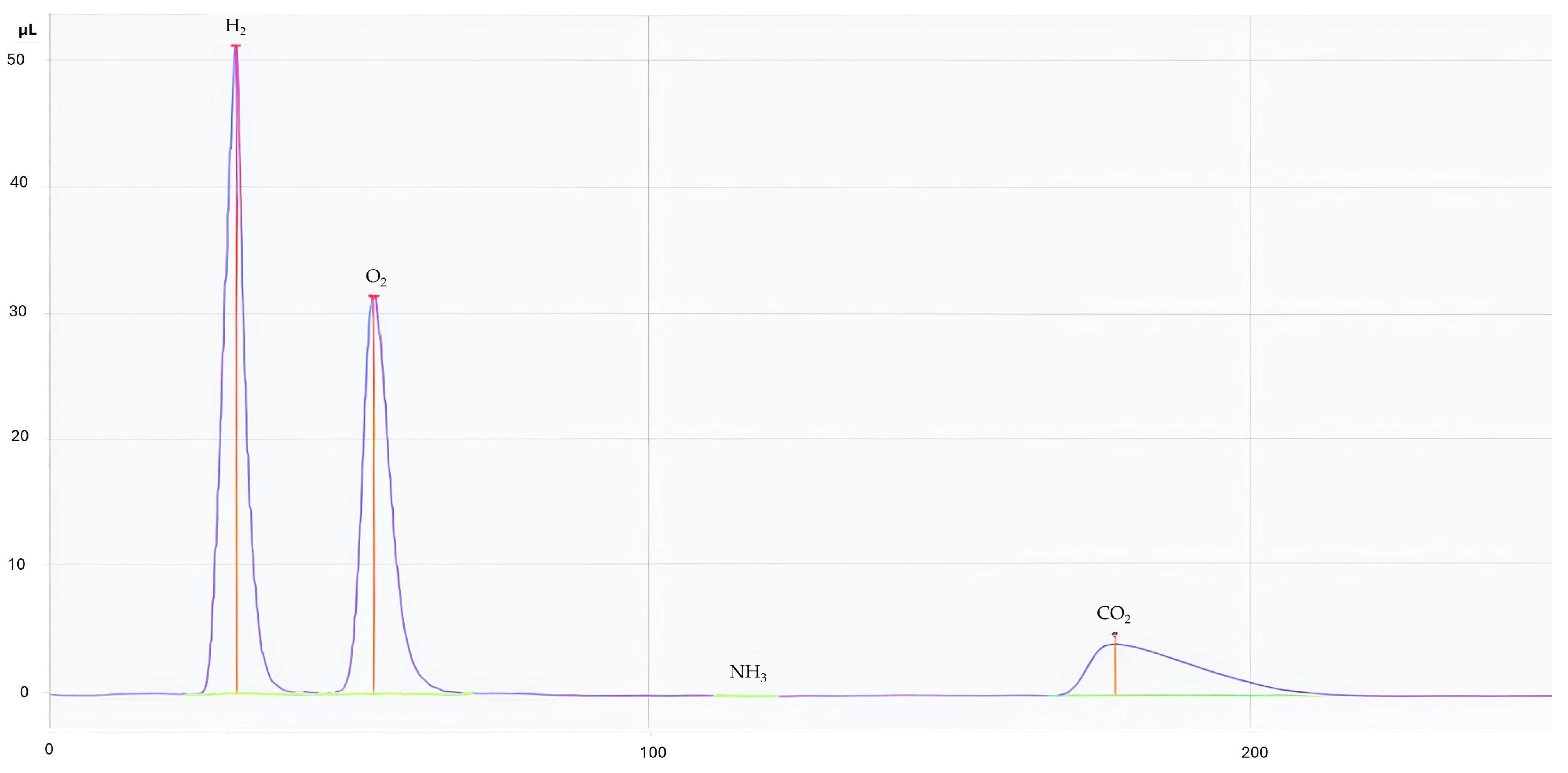
The gas chromatograph “TSVET-800” (LLC “TSVET”, Dzerzhinsk, Nizhny Novgorod region) equipped with a packed column for the separation of gases, H2, O2, CO2, and NH3, was used. Absolute calibration for quantitative calculations was performed for all gases using pure components. Data processing was carried out using the “Tsvet-Analyst v 1.03 E” software. A typical chromatogram for the four gases is presented in Figure 2.
Soil characteristics. The soil used in the study was leached podzolized chernozem, a soil type commonly found in river valleys and foothills of the Chegem region of the Kabardino-Balkarian Republic, Russian Federation. Agrochemical assessment of the soil sample indicated that the content of essential nutrients was typical for this geographic area [39]. The pH of the aqueous extract was 7.4 (GOST 26483-85); humus content was 5.45% (Tyurin method, GOST 26213-91); alkaline-hydrolysable nitrogen was 100 mg/kg (Kornfield method) [40]; available phosphorus (mobile forms) was 35.0 mg/kg (Chirikov method, GOST 6204-91); and exchangeable potassium was 436.7 mg/kg (Chirikov method, GOST 6204-91).
Methodology. The volume of water to add to the soil substrate required to achieve a final moisture content of 18% was calculated (determined according to GOST 28268-89). It was established that 40 mL of water must be added per 100 g of soil substrate. The batch of pea seeds (germination rate 99%) was calibrated by size, and a seed fraction with uniform mass (0.200 ± 0.002 g) was selected.
Experimental Design: Component Combinations for Gas Analysis
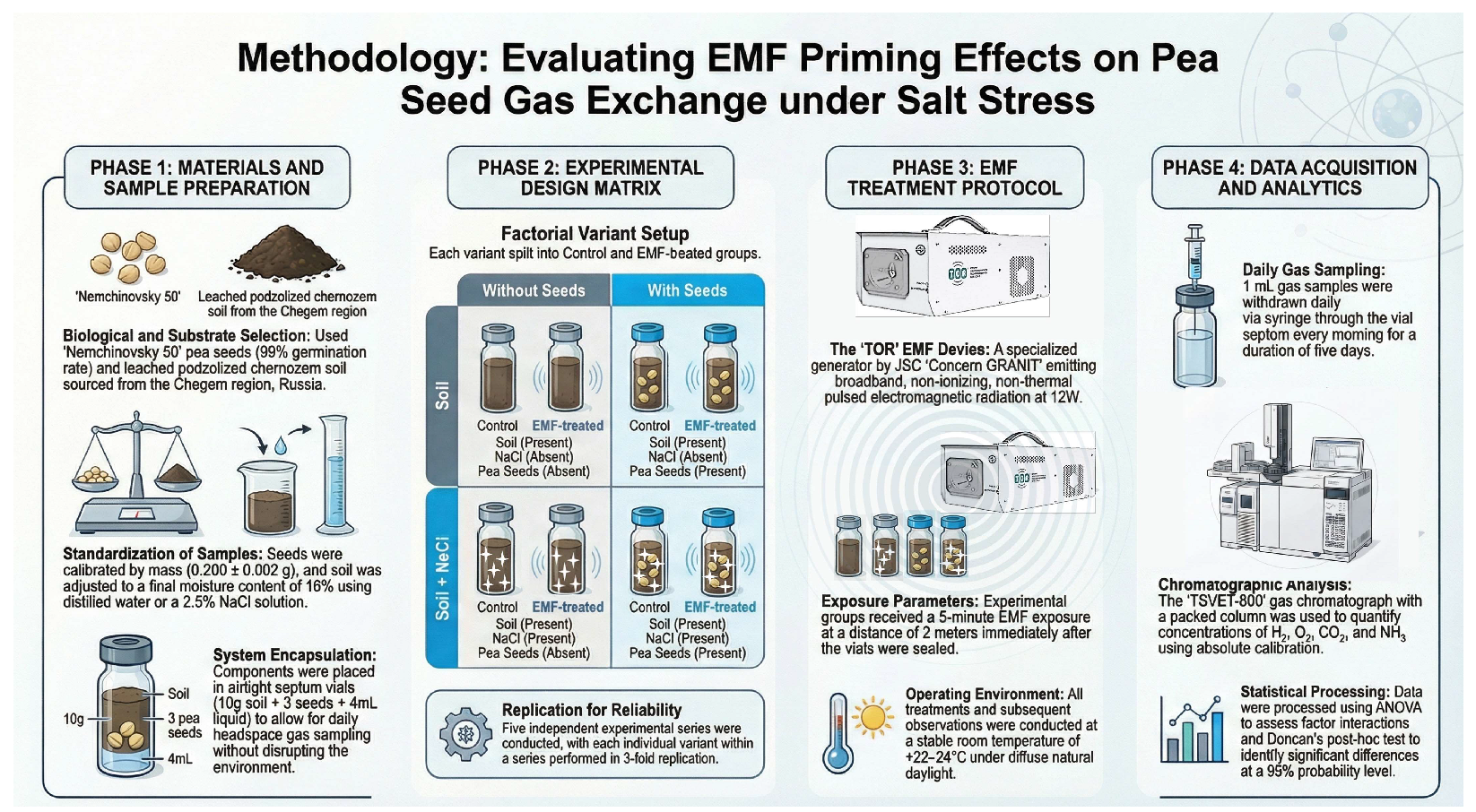
The following combinations of the studied components (soil, salt solution, and pea seeds) were placed in septum vials for gas composition analysis (Table 1, Figure 3):
“Soil”—10 g of soil substrate + 4 mL of distilled water;
“Soil + NaCl”—10 g of soil substrate + 4 mL of 2.5% aqueous NaCl solution;
“Soil + Seeds”—10 g of soil substrate + 0.6 g of pea seeds (three seeds);
“Soil + NaCl + Seeds”—10 g of soil substrate + 4 mL of 2.5% aqueous NaCl solution + 0.6 g of pea seeds (three seeds).
For each combination, six septum vials were prepared (4 combinations × 6 = 24 vials) and divided into two groups (4 combinations × 3 = 12 vials per group). One group was treated with EMF using the “TOR” device (experimental group) immediately after sealing in the airtight septum vials, with an exposure time of 5 min and a distance of two meters from the emitter to the object. The second group consisted of untreated control vials (control group). In total, the experiment comprised 8 variants, each with threefold replication. The complete experimental scheme is presented in Table 1.
The laboratory experiment was conducted under diffuse natural daylight at room temperature (+22–24 °C). Gas samples were collected daily from the septum vials by inserting a syringe through the septum cap and withdrawing 1 mL of the gas mixture; samples were taken in the morning hours and injected into the gas chromatograph to quantify the target gases over a period of five days. Using the “Tsvet-Analyst v 1.03 E” software, the amount of each gas (in µL) was recorded on a typical chromatogram for the four gases (Figure 3).
The experiment was repeated in five independent series, which yielded comparable results. Analysis of the entire dataset and the averaged parameters from the five independent experiments was performed using analysis of variance (ANOVA) to assess the significance of factors and their interactions, as well as regression analysis. Data processing was carried out using Statistica 10.0 and R 4.2.1 software. For a more detailed analysis of process dynamics, the rate of change in concentration for each gas (ΔC/Δt) was calculated over consecutive daily intervals (1 → 2, 2 → 3, 3 → 4, 4 → 5). The rate was calculated as the difference in concentrations between subsequent and previous days for each individual replicate; thereafter, the mean value and standard error were computed for each factor combination. Statistical analysis of the rates was performed using three-way analysis of variance (factors: system variant, time interval, condition, EMF/control) followed by Duncan’s post hoc test to identify significant differences between the control and experimental groups under specific conditions [41].

3. Results

The study of interactions between abiotic stressors and physical methods influencing plants is of significant interest in modern agrobiology. This research analyzes the combined effects of NaCl and EMF treatment on the dynamics of gas exchange (O2, CO2, H2, NH3) in the “soil/salinity/germinating pea seeds” system. To quantitatively assess the intensity of gas exchange processes, the rates of change in gas concentrations (Δ[Gas]/Δt, µL/day) were also calculated using the finite difference method over the intervals between measurements. This approach enabled the identification of critical periods of maximum metabolic activity in the germinating pea seeds and the evaluation of the dynamic influence of the factors (NaCl, EMF).
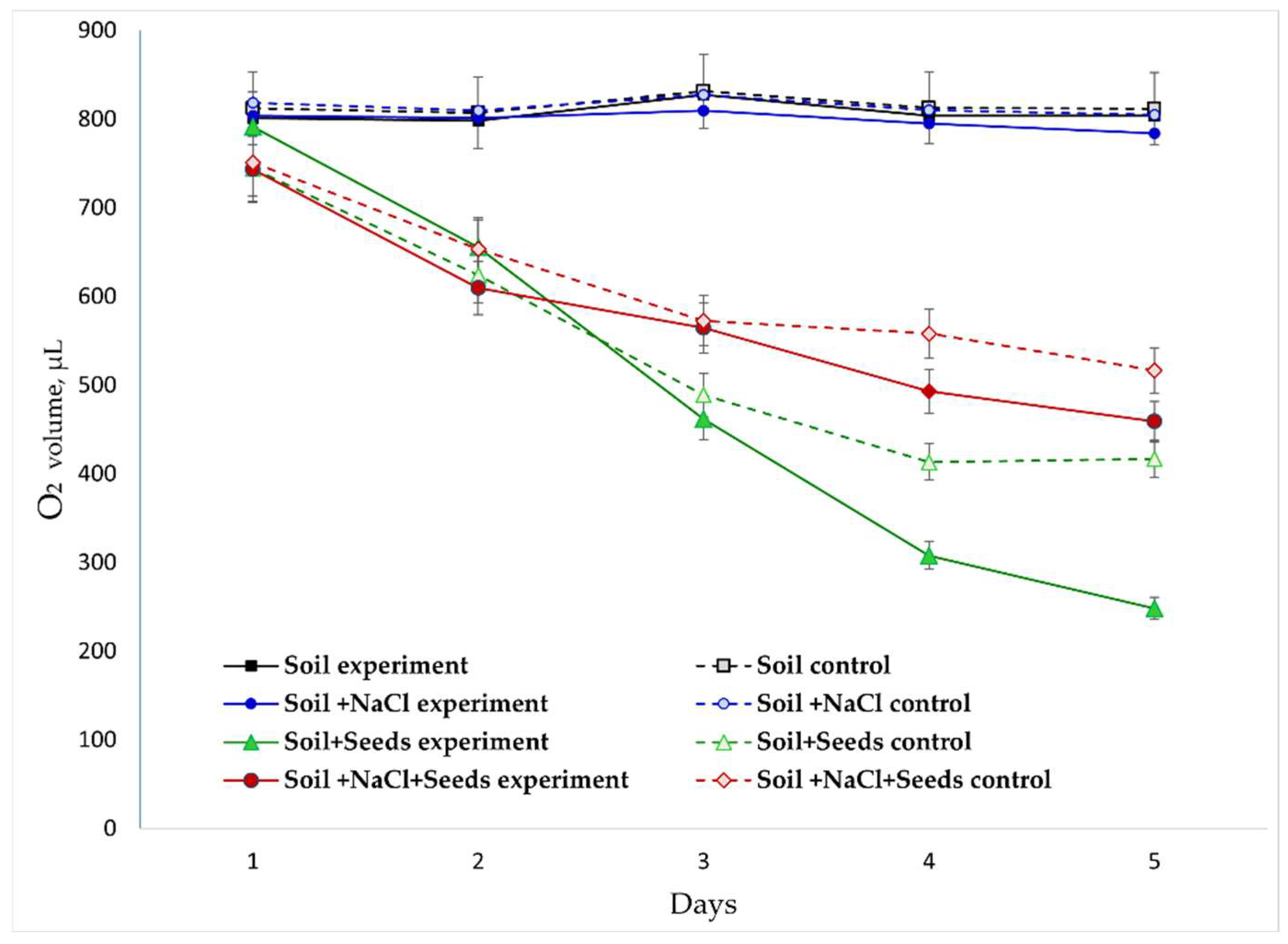
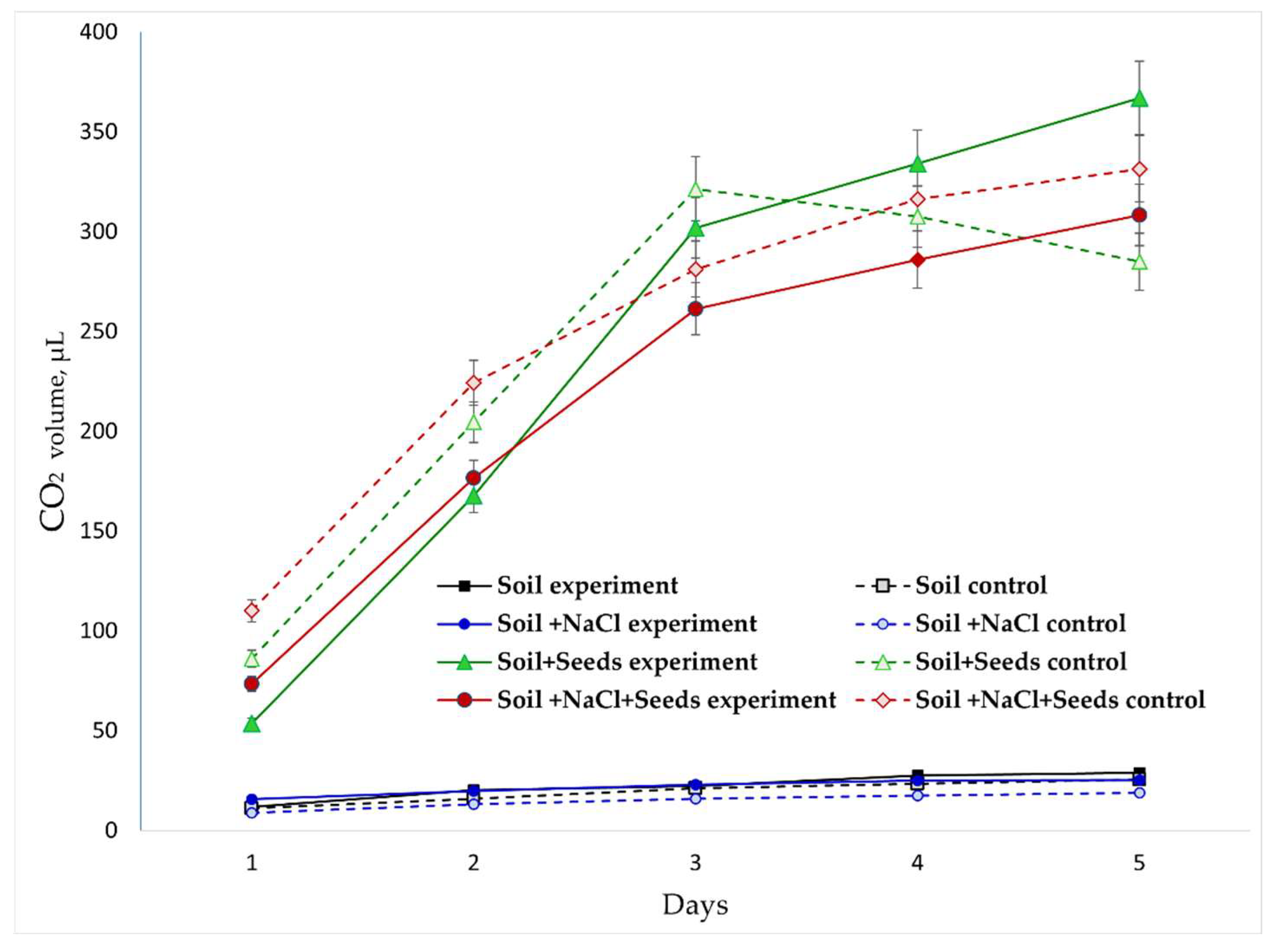
O2/CO2 dynamics (Figure 4 and Figure 5). In the absence of seeds, the O2 concentration remained consistently high, while CO2 emission gradually increased due to the activity of soil microbiota. EMF significantly stimulated microbial respiration, which was manifested in consistently higher CO2 concentrations in all treated variants. Salinization (“Soil + Salt”) inhibited this process, reducing O2 consumption by 18–25% and CO2 emission by 20–30% by day 5 compared to non-salinized variants.
The presence of germinating seeds in the system fundamentally alters gas exchange. The dynamics of oxygen (O2) consumption and carbon dioxide (CO2) emission reflect the intensity of their respiratory metabolism, where an expected sharp decrease in O2 concentration and an increase in CO2 were observed, correlating with the activation of aerobic respiration in the seeds. Two key phases of seedling respiratory activity were identified: (1) an intensive consumption phase (days 1–3) with peak O2 consumption (up to −150 µL/day) and CO2 release (up to +80 µL/day), particularly in the variant with EMF treatment; (2) a stabilization phase (days 4–5), where the rates of O2 and CO2 gas exchange decreased, coinciding with the phase of metabolic activation and the onset of radicle growth.
EMF treatment exhibited a variant-dependent effect: in the “Soil + Seeds” variant, it stimulated respiration (an additional 12% decrease in O2, 15% increase in CO2). Conversely, in the stressed “Soil + Salt + Seeds” variant, the effect was opposite: O2 consumption was less intense, and CO2 release was 8–10% lower compared to the control in the “Untreated Soil” variant.
Calculations of the rate of change in the “Soil + Salt + Seeds” variant also indicate the protective action of EMF. The daily decrease in O2 consumption in the treated group was 20–30% lower than in the control. Similarly, the increase in CO2 concentration under EMF influence was more gradual (15–25% lower than peak values), indicating a reduction in the oxidative “stress” spike (Table 2).
Calculation of the ratio of CO2 emission rates to O2 consumption rates—an analog of the respiratory quotient, RQ = (ΔCO2/Δt)/(ΔO2/Δt)—revealed the following patterns: Under non-saline conditions in the control “Soil + Seeds” variant, RQ ≈ 0.9–1.1, which is characteristic of carbohydrate oxidation. In response to ionic stress, the RQ in the control increased to 1.3–1.5, which may indicate the involvement of organic acids in respiration or partial fermentation of the respiratory substrate. Under saline conditions, EMF treatment maintained the RQ value close to 1.0–1.2, suggesting partial compensation for the inhibition of respiration in imbibing seeds and, likely, improved energy efficiency.
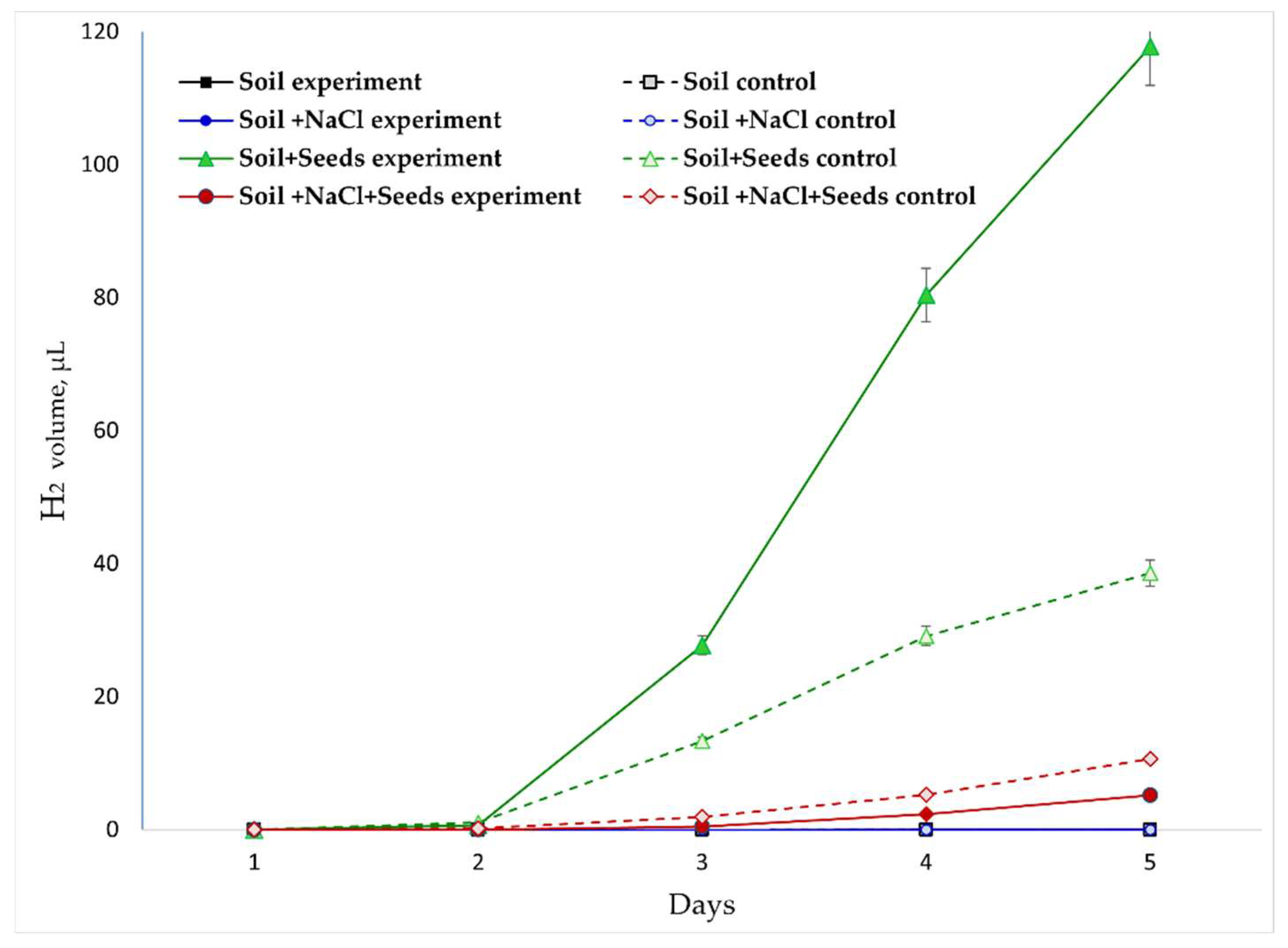
H2 dynamics (Figure 6). H2 emission was detectable mainly in the variants with germinating seeds, confirming its biogenic origin. Maximum values (up to 120 µL) were recorded in the “Soil + Seeds” variant under EMF treatment, where the highest H2 emission rate was observed on days 3–4, reaching an average of +52.7 µL/day, which was more than three times higher than the control (Table 2). This corresponds to the phase of initial activation of embryonic root growth and maximum induction of hydrogenase activity. Salinity (“Soil + NaCl + Seeds”) served as a powerful distress factor, reducing H2 levels by an order of magnitude. H2 emission rates were correspondingly substantially lower (<5.5 µL/day), and their peak shifted to days 4–5 (Table 2). In contrast to absolute concentrations, rate analysis clearly demonstrated that EMF treatment in the absence of salt stress not only increased total H2 emission but also shifted its emission peak to an earlier time (from days 4–5 to days 3–4), which may indicate accelerated mobilization of defense systems. Under stress conditions, EMF stabilized H2 emission and decreased it by nearly half, preventing sharp fluctuations (Table 2). It should be noted that the contribution of microorganisms to hydrogen emission in our experiment was negligible, and in the “Untreated Soil” variant, no H2 emissions were detected at all.
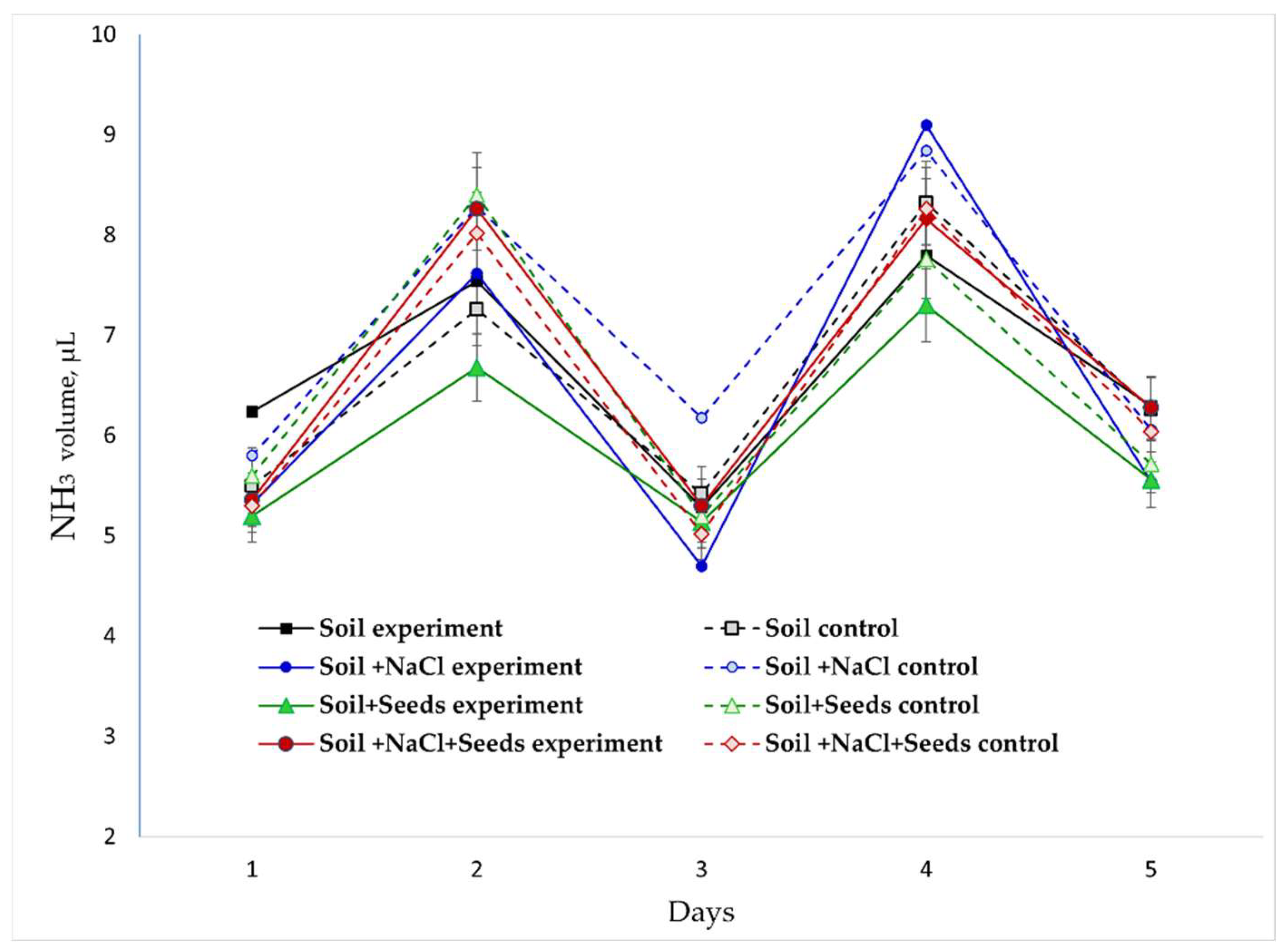
NH3 dynamics (Figure 7). The NH3 concentration exhibited wave-like dynamics (5–9 µL) without a systematic influence from the main factors during the short-term experiment. Analysis of the rates confirmed a two-phase dynamic with positive peaks on days 2 and 4 (up to +1.5 µL/day) and a negative phase on day 3 (consumption up to −1.0 µL/day). None of the external factors (“Salt, “EMF”) had a statistically significant influence on the amplitude of these peaks, only altering their temporal synchronization within 0.5 days. The presence of germinating seeds in the analyzed systems did not significantly alter the NH3 level, suggesting that its source is predominantly soil microbiota.

Analysis of the Mutual Influence of Factors (Seeds, NaCl, EMF) on the Gas Composition

Multifactor analysis of variance confirmed the statistically significant influence of all three main factors and their interactions on the concentrations of key gases (p < 0.05) (Table 3). The dominant factor was the presence of pea seeds, accounting for approximately 60–70% of the total variability in O2 and CO2 indicators and about 55% of the variability in H2. Salt stress contributed at a level of 8–12%, primarily through interaction with the biological factor, suppressing metabolic activity. EMF treatment explained 6–15% of the total variation, with its effect being multidirectional, revealing an antagonistic nature of the influence of NaCl and EMF on seed metabolism. Under optimal conditions, EMF acted as a stimulator, showing synergism with the seed factor; under salinity, its role shifted to a protective one. Here, EMF treatment demonstrated antagonism towards stress-induced processes, counterbalancing salt distress with “EMF eustress”. The interactions between factors were statistically significant and explained up to 25% of the deviations from the additive model. No significant influence of the factors was detected on NH3 emission, meaning ammonia is formed more stably and is likely controlled by background microbial processes and the NH4+/NH3 equilibrium.
A comprehensive correlation analysis was conducted to identify relationships between all studied parameters, including binary factors (Seeds, NaCl, and EMF). This analysis confirmed a close link between respiratory processes; strong negative correlations were found between O2 and CO2 concentrations in all variants containing seeds (correlation coefficient r from −0.85 to −0.95, p < 0.001). In the presence of EMF, these correlations persisted but with altered regression slopes, indicating a modification of respiratory efficiency. The influence of EMF was less pronounced but still significant in variants without seeds, particularly for CO2. A positive correlation was identified between H2 emission and CO2 levels in the control group (r ≈ 0.75–0.85), which weakened under the influence of EMF (r ≈ 0.4–0.6). This suggests that EMF may uncouple the linked processes of anaerobic respiration and fermentation that lead to H2 formation. No significant correlations were found between NH3 and the other gases, nor among the parameters in variants without seeds.
To identify relationships between all studied parameters, a general correlation matrix was calculated based on the combined dataset. The factors “Seeds,” “NaCl,” and “EMF” were coded as binary variables (1—present, 0—absent). The obtained Pearson correlation coefficients are presented in Table 4, which also confirms that the key factor primarily determining gas exchange intensity is the biological activity of germinating seeds (strong correlations with O2, CO2, and H2 concentrations). Furthermore, the positive correlation between CO2 and H2 (r = 0.78) reflects the activation of anaerobic metabolism under hypoxia associated with intensive respiration (Table 4).
The influence of electromagnetic radiation on gas exchange, while statistically significant overall (p < 0.001), largely depended on the system composition and exposure time, which was reflected in the magnitude of the correlation coefficients (Table 4). EMF did not exert an independent, significant influence on gas composition in abiotic soil. However, in the presence of seeds and under salt stress, it acted as a metabolic modulator, exhibiting a dual physiological effect: a stimulating one under optimal conditions (enhancing respiration and H2 emission) and a protective one under salt stress conditions (metabolic stabilization and inhibition of H2 coupled with reduced stress respiration).

4. Discussion

Non-ionizing electromagnetic treatment serves as a significant external regulator of the rate and direction of key metabolic processes in the “soil + germinating seed” system. Its effects are system- and time-dependent, manifesting most prominently under developing oxygen deficiency, primarily affecting the respiratory metabolism pathways and anaerobic fermentation of imbibing seeds. The high negative correlation between O2 and CO2 (r = −0.96) indicates the dominance of aerobic respiration, whereas the positive correlation between CO2 and H2 (r = 0.53) reflects the involvement of reductive and fermentative pathways under oxygen depletion. Changes in CO2 and O2 levels reflect the activity of mitochondrial respiration and the Krebs cycle—the primary pathway for oxidizing organic compounds to produce energy in mitochondria [32]. Salt stress disrupts these processes by causing osmotic and ionic damage, inhibiting mitochondrial respiration, and reducing the activity of key enzymes and the associated respiratory electron transport chain, which regenerates NAD+ for continued cycle operation [35]. This represents an adaptive response involving a transition to an “energy-saving mode.” EMF treatment in this context exhibited a dual role—stimulatory (eustress) under optimal conditions and protective (distress compensation) under salinity stress.
Of particular interest is the dynamics of H2 as an indicator of redox imbalance and adaptive responses in germinating pea seeds, where high H2 emission is not directly associated with the Krebs cycle and indicates the activation of hydrogenase pathways characteristic of anaerobiosis. It has been shown that a state of hypoxia during pea seed imbibition is not a rare phenomenon and can be detected by the level of porphyrin phosphorescence [42,43] or the dynamics of H2 emission [29]. Its occurrence, as a nonspecific response to stress factors at low doses, has been observed during immersion in water [29], natural and accelerated aging [42], and following γ-irradiation, light-pulse treatment, helium–neon laser irradiation, and exposure to non-thermal GSM (905 MHz) EMF [44] during seed germination under standard conditions (without O2 deficiency in the medium). According to the authors, hypoxia beneath the seed coat of an imbibing seed results from an imbalance between active O2 uptake by the embryo and its slow diffusion through the seed coat. The important role of factors affecting the state of aquaporin channels in plasma membranes, responsible for water uptake rates and metabolic processes, as well as the involvement of non-enzymatic carbohydrate hydrolysis and aminocarbonyl reactions in the onset of hypoxia in pea seeds of varying quality, has also been discussed [43,44].
On the other hand, it is known that under anaerobiosis, plants can produce hydrogen via the activation of [FeFe]-hydrogenases under anaerobic conditions when the respiratory chain becomes overwhelmed and NADH accumulates in cells. The enzyme hydrogenase oxidizes NADH, reducing protons (H+) to molecular hydrogen (H2). This represents an “emergency” mechanism for regenerating NAD+ to maintain the required level of glycolysis [45]; in this context, EMF treatment may reduce the need for activating alternative NAD+ regeneration pathways involving H2 emission under stress conditions, thereby supporting mitochondrial respiration [46]. In our experiment, the high H2 emission in the “Soil + Seeds” variant, particularly following EMF treatment, may also indicate that, as a result of respiratory activation and the consequent drop in oxygen concentration within the closed system, an alternative NAD+ regeneration pathway becomes activated in imbibing pea seeds under hypoxic conditions. Under salt stress, due to membrane damage and respiratory inhibition, H2 emission decreased by an order of magnitude. However, the significant three-way interactions observed for H2 suggest that EMF treatment is capable of mitigating salt stress by reducing the H2 emission rate by half, which most likely points to the preservation of mitochondrial functionality in imbibing pea seeds and the maintenance of an optimal balance between respiration rate and oxygen supply under stress conditions.
Thus, data analysis revealed clear patterns indicating a profound influence of pre-sowing bioactivation of seeds with low-frequency non-ionizing EMF, generated by the “TOR” device, on their physiological and biochemical state, particularly under salt stress conditions. The key observation is that the treatment stabilizes metabolism, transitioning it into an energy-saving mode, which is most clearly manifested in the dynamics of carbon dioxide (CO2), oxygen (O2), and hydrogen (H2). That is, EMF treatment of pea seeds immediately after sowing into the soil may represent a promising non-chemical method for enhancing plant tolerance to salt stress. In this context, EMF should be regarded as a modifier of the metabolic response rather than a universal stimulant, and H2 emission should be considered the most sensitive indicator of redox imbalance induced by hypoxia and modulated by EMF.
The two-phase dynamics of NH3 reflect the nonlinear and multi-stage biogeochemical transformation of nitrogen in the soil, where the balance between ammonia generation, consumption, and losses is determined by the state of the biota and environmental conditions. Notably, all of these processes are less sensitive to electromagnetic exposure than the respiratory and fermentative metabolism of germinating seeds. The increase in NH3 concentration during the first stage (days 1–2) appears to be associated with the initial activation of soil microorganisms and the degradation of seed protein structures during germination, leading to the release of amino acids and subsequent ammonification during the proteolysis of storage proteins. This process was most pronounced in the “Soil + NaCl + Seeds” variant, likely as a response to osmotic shock. The decline observed by day 3 may be attributed to the temporary suppression of microbial activity due to the accumulation of metabolic byproducts, consumption of ammonia by the germinating seeds themselves as a nitrogen source for de novo protein synthesis, and adsorption of NH3 onto soil particle surfaces. The second peak on day 4 is most likely related to the reactivation of ammonifying bacteria after the transient stress has been overcome and the breakdown of residual organic compounds in developing seedlings, particularly temporary nitrogen transport compounds (e.g., asparagine). In this case, the presence of NaCl further amplifies this process, manifesting as more pronounced NH3 peaks.
According to data from the literature on the influence of EMF on plant metabolism, the following biophysical and biochemical mechanisms likely underlie the observed early effects of EMF priming of pea seeds:
-
Effects on membranes: Low-intensity EMF may modulate the permeability of cellular and mitochondrial membranes, thereby altering intracellular ion balance and influencing metabolic processes, particularly under salt stress conditions. This may serve as a signal for the activation of adaptive cascades [7,47].
-
Modulation of redox status: EMF can affect the operation of electron transport chains in seed mitochondria, altering the efficiency of oxidative phosphorylation and shifting the balance between aerobic and anabolic processes toward increased energy efficiency of respiratory metabolism [12,13,14]. This reduces the generation of reactive oxygen species (ROS) under stress conditions by inhibiting hydrogenases and redistributing electron flow during anaerobic metabolism [48], which is consistent with the observed reduction in “stress-induced” respiration (CO2) and H2 emission.
-
Induction of defense systems: Indirectly, through redox signaling, EMF may enhance the expression of genes and the activity of antioxidant defense and osmoregulation enzymes, thereby increasing overall seedling tolerance [49].
-
Indirect effects via the soil microbiome: This is evidenced by changes in O2 and CO2 levels in systems without seeds, which may subsequently influence root metabolism [50].
Soil salinity exerts a pronounced negative impact on the growth and productivity of agricultural crops, particularly in semi-arid and arid regions of the world, which comprise approximately one-third of the land surface. According to FAO (Food and Agriculture Organization) data, over 800 million hectares of arable land globally are affected by various forms of salinization, representing one of the most serious threats to global food security [30,51,52,53,54]. EMF treatment may be considered as a physical seed priming tool capable of enhancing respiration and regenerative processes in germinating seeds, including under stressful saline conditions, which is important for the development of agriengineering technologies aimed at managing crop growth and stress tolerance. The obtained data on changes in gas exchange process rates provide an important foundation for targeted biochemical investigations of specific enzymatic systems that may serve as primary targets for electromagnetic exposure.

5. Conclusions

It was found that pre-sowing EMF treatment of pea seeds exhibited adaptogenic properties under saline conditions, promoting the stabilization of aerobic respiration and reducing signs of metabolic stress; this was most clearly reflected in the dynamics of H2 and CO2. EMF and salinity exerted significant modulating effects, with their interaction being antagonistic in nature. The stress factor inhibited this process, reducing CO2 concentration by the end of the experiment by 20–30% compared to the non-salinized variants. EMF treatment under optimal conditions stimulated respiration, increasing CO2 concentration by 15%, whereas under salinity, it conversely led to a decrease of 8–10% relative to the untreated control.
Molecular hydrogen (H2) emission has been identified as a highly sensitive biochemical marker for evaluating the effectiveness of biophysical treatments. In the absence of salt stress, EMF treatment increased H2 emission threefold and shifted its emission peak one day earlier, which may indicate accelerated activation of seed defense systems under developing hypoxia. Salinity reduced H2 concentration levels by an order of magnitude, while EMF treatment stabilized its emission rate, reducing it by nearly half. Thus, EMF should be regarded as a modifier of the seed’s metabolic response to imbibition conditions, rather than solely as a germination stimulant.

Author Contributions

Conceptualization, I.M.K.; methodology, software, A.S.S.; validation, E.G.K. and V.G.Z.; formal analysis, P.N.B.; resources, data curation, V.G.G.; writing—original draft preparation, E.A.G.; writing—review and editing, I.M.K.; supervision, S.Y.K.; writing—review and editing, project administration, I.F.T.; supervision, methodology, funding acquisition, E.V.B. All authors have read and agreed to the published version of the manuscript.

Funding

This study was conducted using funds from JSC “Concern GRANIT”.

Institutional Review Board Statement

Not applicable.

Informed Consent Statement

Not applicable.

Data Availability Statement

The original contributions presented in this study are included in the article. Further inquiries can be directed to the corresponding author.

Conflicts of Interest

Authors Igor F. Turkanov, Elena V. Bondarchuk, Valery G. Gryaznov, and Ekaterina A. Galkina were employed by the company Concern GRANIT JSC. The remaining authors declare that the research was conducted in the absence of any commercial or financial relationships that could be construed as a potential conflict of interest.

Abbreviations

The following abbreviations are used in this manuscript:
EMFsElectromagnetic fields
NADHNicotinamide adenine dinucleotide (reduced form)
NAD+Nicotinamide adenine dinucleotide (oxidized form)
RQRespiratory quotient
ROSReactive oxygen species

References

  1. Corbineau, F.; Taskiran-Özbingöl, N.; El-Maarouf-Bouteau, H. Improvement of Seed Quality by Priming: Concept and Biological Basis. Seeds 2023, 2, 101–115. [Google Scholar] [CrossRef]
  2. De Souza, A.; García, D.; Sueiro, L.; Gilart, F. Pre-Sowing Magnetic Treatments of Tomato Seeds Increase the Growth and Yield of Plants. Bioelectromagnetics 2006, 27, 247–257. [Google Scholar] [CrossRef]
  3. Vian, A.; Davies, E.; Gendraud, M.; Bonnet, P. Plant Responses to High Frequency Electromagnetic Fields. BioMed Res. Int. 2016, 2016, 1830262. [Google Scholar] [CrossRef]
  4. Galland, P.; Pazur, A. Magnetoreception in Plants. J. Plant Res. 2005, 118, 371–389. [Google Scholar] [CrossRef] [PubMed]
  5. Maffei, M.E. Magnetic Field Effects on Plant Growth, Development, and Evolution. Front. Plant Sci. 2014, 5, 445. [Google Scholar] [CrossRef]
  6. Abdulraheem, M.I.; Moshood, A.Y.; Gourkhede, P.H.; Li, L.; Zhang, Y.; Abdi, G.; Raghavan, V.; Hu, J. Emerging Trends in The Application of Pulsed Magnetic Fields for Modulating Plant Growth and Development: Mechanisms, Dynamics, And Potential Impact. Acta Physiol. Plant. 2025, 47, 94. [Google Scholar] [CrossRef]
  7. Belyavskaya, N.A. Biological Effects Due to Weak Magnetic Field on Plants. Adv. Space Res. 2004, 34, 1566–1574. [Google Scholar] [CrossRef]
  8. Turkanov, I.F.; Bondarchuk, E.V.; Gryaznov, V.G.; Galkina, E.A.; Guzenko, A.Y.; Zainullin, V.G.; Kozar, E.G.; Kaigorodova, I.M. Effects of Remote Barley Seed Treatment with Weak Non-Thermal Pulsed Electromagnetic Fields on Plant Development and Yields. Seeds 2025, 4, 35. [Google Scholar] [CrossRef]
  9. Qin, Y.; Ma, R.; Wang, Z.; Liu, Z.; Chen, L.; Han, Q.; Liu, Z.; Liu, G. Effects of Salt Stress on Seed Germination and Embryo Growth of Oxytropis coerulea. Legume Res. Int. J. 2025, 48, 38–46. [Google Scholar] [CrossRef]
  10. Ntshalintshali, S.; Sibiya, S.G.P.; Mabuza, N.; Nkomo, M.; Buthelezi, L.G. Seed Priming in Legume Crops: Mechanisms, Applications and Future Directions for Enhanced Germination, Growth and Abiotic Stress Tolerance in Sustainable Agriculture: A Review. J. Agron. Crop Sci. 2025, 211, e70115. [Google Scholar] [CrossRef]
  11. Shabala, S.; Bose, J.; Hedrich, R. Salt Bladders: Do They Matter? Trends Plant Sci. 2014, 19, 687–691. [Google Scholar] [CrossRef]
  12. Cakmak, T.; Dumlupinar, R.; Erdal, S. Acceleration of germination and early growth of wheat and bean seedlings grown under various magnetic field and osmotic conditions. Bioelectromagnetics 2010, 31, 120–129. [Google Scholar] [CrossRef]
  13. Vashisth, A.; Nagarajan, S. Effect on Germination and Early Growth Characteristics in Sunflower (Helianthus annuus) Seeds Exposed to Static Magnetic Field. J. Plant Physiol. 2010, 167, 149–156. [Google Scholar] [CrossRef]
  14. Van Aken, O. Mitochondrial redox systems as central hubs in plant metabolism and signaling. Plant Physiol. 2021, 186, 36–52. [Google Scholar] [CrossRef]
  15. Wang, L.; Zuo, Q.; Zheng, J.; You, J.; Yang, G.; Leng, S. Salt Stress Decreases Seed Yield and Postpones Growth Process of Canola (Brassica napus L.) by Changing Nitrogen and Carbon Characters. Sci. Rep. 2022, 12, 17884. [Google Scholar] [CrossRef] [PubMed]
  16. Waheed, A.; Zhuo, L.; Wang, M.; Hailiang, X.; Tong, Z.; Wang, C.; Aili, A. Integrative Mechanisms of Plant Salt Tolerance: Biological Pathways, Phytohormonal Regulation, and Technological Innovations. Plant Stress 2024, 14, 100652. [Google Scholar] [CrossRef]
  17. Ben Youssef, R.; Jelali, N.; Acosta Motos, J.R.; Abdelly, C.; Albacete, A. Salicylic Acid Seed Priming: A Key Frontier in Conferring Salt Stress Tolerance in Barley Seed Germination and Seedling Growth. Agronomy 2025, 15, 154. [Google Scholar] [CrossRef]
  18. Shrivastava, P.; Kumar, R. Soil Salinity: A Serious Environmental Issue and Plant Growth Promoting Bacteria as One of The Tools for Its Alleviation. Saudi J. Biol. Sci. 2015, 22, 123–131. [Google Scholar] [CrossRef] [PubMed]
  19. Zhao, C.; Zhang, H.; Song, C.; Zhu, J.-K.; Shabala, S. Mechanisms of Plant Responses and Adaptation to Soil Salinity. Innovation 2020, 1, 100017. [Google Scholar] [CrossRef]
  20. Sharafi, S. Increasing Tolerance to Salt-Dryness Stress of Snail Medic Seedlings Using Magnetic Field and Ultrasonic Waves. Greenh. Plant Prod. J. 2024, 1, 27–37. [Google Scholar] [CrossRef]
  21. Evrendilek, G.A.; Yalçın, B. Pulsed Electric Fields-Driven Enhancement of Tomato Seed Quality and Resilience: Improving Germination, Stress Tolerance, and Microbial Disinfection. Appl. Sci. 2025, 15, 6447. [Google Scholar] [CrossRef]
  22. Sharafi, S. Enhanced Seedling Growth of Annual Medic Under Salt-Drought Stress Through Ultrasonic Wave and Magnetic Field Treatments. Appl. Water Sci. 2025, 15, 59. [Google Scholar] [CrossRef]
  23. Cesniene, I.; Cesna, V.; Miskelyte, D.; Novickij, V.; Mildaziene, V.; Sirgedaite-Seziene, V. Seed Treatment with Cold Plasma and Electromagnetic Field: Changes in Antioxidant Capacity of Seedlings in Different Picea abies (L.) H. Karst Half-Sib Families. Plants 2024, 13, 2021. [Google Scholar] [CrossRef] [PubMed]
  24. Bhavani, L.L.; Dayal, A. Effect of Magnetic and Electric Treatments on Growth, Yield and Seedling Parameters of Chickpea (Cicer arietinum L.). Environ. Conserv. J. 2024, 25, 726–733. [Google Scholar] [CrossRef]
  25. Mandal, A.; Bala, N. Influence of Electrotherapy and Salt Priming to Improve Germination and Vigour of Wheat Seeds. J. Soils Crops 2023, 32, 317–323. [Google Scholar] [CrossRef]
  26. Aleman, E.I.; Diaz, R.S.; Dubois, A.F.; Boix, Y.F.; Aguilera, J.G.; Zuffo, A.M.; Steiner, F. Effects of 60 Hz Non-Uniform Electromagnetic Fields on Tomato (cv L-05) Seed Germination, Photosynthesis and Seedling Growth Under Salt Stress Conditions. Bioelectromagnetics 2025, 46, e22537. [Google Scholar] [CrossRef]
  27. Mumtaz, S.; Javed, R.; Rana, J.N.; Iqbal, M.; Choi, E.H. Pulsed High Power Microwave Seeds Priming Modulates Germination, Growth, Redox Homeostasis, and Hormonal Shifts in Barley for Improved Seedling Growth: Unleashing the Molecular Dynamics. Free. Radic. Biol. Med. 2024, 222, 371–385. [Google Scholar] [CrossRef]
  28. Kataria, S.; Jain, M.; Tripathi, D.K.; Singh, V.P. Involvement of Nitrate Reductase-Dependent Nitric Oxide Production in Magnetopriming-Induced Salt Tolerance in Soybean. Physiol. Plant. 2020, 168, 422–436. [Google Scholar] [CrossRef] [PubMed]
  29. Khashirova, S.Y.; Shabaev, A.S.; Bondarchuk, E.V.; Turkanov, I.F.; Gryaznov, V.G.; Galkina, E.A.; Kaigorodova, I.M.; Zainullin, V.G. Gas Chromatographic Analysis of Agricultural Soils and Seeds Treated with Weak Non-Ionizing Non-Thermal Electromagnetic Fields (EMFs). Proc. Komi Sci. Cent. Ural. Branch Russ. Acad. Sci. Ser. Agric. Sci. 2025, 1, 120–126. (In Russian) [Google Scholar] [CrossRef]
  30. Sarraf, M.; Kataria, S.; Taimourya, H.; Santos, L.O.; Menegatti, R.D.; Jain, M.; Ihtisham, M.; Liu, S. Magnetic Field (MF) Applications in Plants: An Overview. Plants 2020, 9, 1139. [Google Scholar] [CrossRef]
  31. Tomaz, A.; Palma, P.; Alvarenga, P.; Gonçalves, M.C. Chapter 10—Soil Salinization Risk Under Climate Change and Its Effects on Soil Health and Crop Yield. In Climate Change and Soil Interactions; Elsevier: Amsterdam, The Netherlands, 2026; pp. 235–272. [Google Scholar] [CrossRef]
  32. Tcherkez, G.; Ghashghaie, J. Plant Respiration: Metabolic Fluxes and Carbon Balance; Springer International Publishing: Berlin/Heidelberg, Germany, 2017; Volume 334. [Google Scholar]
  33. Russell, G.; Zulfiqar, F.; Hancock, J.T. Hydrogenases and the Role of Molecular Hydrogen in Plants. Plants 2020, 9, 1136. [Google Scholar] [CrossRef] [PubMed]
  34. Zhao, G.; Cheng, P.; Zhang, T.; Abdalmegeed, D.; Xu, S.; Shen, W. Hydrogen-Rich Water Prepared by Ammonia Borane Can Enhance Rapeseed (Brassica napus L.) Seedlings Tolerance Against Salinity, Drought or Cadmium. Ecotoxicol. Environ. Saf. 2021, 224, 112640. [Google Scholar] [CrossRef] [PubMed]
  35. Dhal, S.; Pal, H. Regulation of Glycolysis and Krebs Cycle During Biotic and Abiotic Stresses. In Photosynthesis and Respiratory Cycles During Environmental Stress Response in Plants; Apple Academic Press: Palm Bay, FL, USA, 2022; pp. 263–308. [Google Scholar]
  36. Jin, Q.; Zhu, K.; Cui, W.; Xie, Y.; Han, B.; Shen, W. Hydrogen Gas Acts as a Novel Bioactive Molecule in Enhancing Plant Tolerance to Paraquat-Induced Oxidative Stress Via the Modulation of Heme Oxygenase-1 Signalling System. Plant Cell Environ. 2013, 36, 956–969. [Google Scholar] [CrossRef]
  37. Xu, S.; Zhu, S.; Jiang, Y.; Wang, N.; Wang, R.; Shen, W.; Yang, J. Hydrogen-Rich Water Alleviates Salt Stress in Rice During Seed Germination. Plant Soil 2013, 370, 47–57. [Google Scholar] [CrossRef]
  38. Fu, X.; Ma, L.; Gui, R.; Ashraf, U.; Li, Y.; Yang, X.; Zhang, J.; Imran, M.; Tang, X.; Tiana, H.; et al. Differential Response of Fragrant Rice Cultivars to Salinity and Hydrogen Rich Water in Relation to Growth and Antioxidative Defense Mechanisms. Int. J. Phytoremediation 2021, 23, 1203–1211. [Google Scholar] [CrossRef]
  39. Tarchokov, H.S.; Chochaev, M.M.; Mataeva, O.K.; Shogenov, A.K.; Kushkhabiev, A.Z. Influence of Ways of Seeding Agricultural Crops on The Intensity of Erosion Processes and Yield of Agricultural Crops on Slope Lands of Kabardino-Balkarian Republic. Bull. Kabard.-Balkar. Sci. Cent. Russ. Acad. Sci. 2020, 5, 5–19. (In Russian) [Google Scholar] [CrossRef]
  40. Samokhvalov, S.G.; Prizhukova, V.G.; Molkanova, L.I. Guidelines for the Determination of Alkaline-Hydrolyzable Nitrogen in Soil Using the Kornfield Method; Publishing House of the Central Institute of Agrochemistry: Moscow, Russia, 1985; 8p. (In Russian) [Google Scholar]
  41. Duncan, D.B. Multiple range and multiple F tests. Biometrics 1955, 11, 1–42. [Google Scholar] [CrossRef]
  42. Veselova, T.V.; Veselovskii, V.A.; Usmanov, P.D.; Usmanova, O.V.; Kozar, V.I. Hypoxia and Imbibition Injuries to Aging Seeds. Russ. J. Plant Physiol. 2003, 50, 835–842. [Google Scholar] [CrossRef]
  43. Veselova, T.V.; Veselovsky, V.A.; Turovetsky, V.B.; Galchuk, S.V.; Vanyushin, B.F.; Aleksandrushkina, N.I.; Rubin, A.B. Post-Hypoxic Oxidative Stress after Radicle Protrusion as a Possible Cause for the Production of Abnormal Seedlings in Pea. Seed Sci. Technol. 2004, 32, 283–296. [Google Scholar] [CrossRef]
  44. Veselova, T.V.; Veselovsky, V.A.; Deev, L.I.; Baizhumanov, A.A. Non-Themal Effect of GSM Range Electromagnetic Radiation on The Quality of Pea Seeds. Radiat. Biol. Radioecol. 2012, 52, 394. [Google Scholar]
  45. Maric, A.K.; Radan, A.; Milcic, N.; Sudar, M.; Findrik Blazevic, Z. Hydrogenases—Types, Sources, Properties, and the Potential for Their Application. Kem. Ind. Cas. Kem. Kem. Inz. Hrvat. 2025, 74, 33–42. [Google Scholar] [CrossRef]
  46. Chow, S.C.; Zhang, Y.; Ng, R.W.; Hui, S.Y.R.; Solovyov, I.A.; Lui, W.Y. External RF-EMF Alters Cell Number and ROS Balance Possibly Via the Regulation of NADPH Metabolism and Apoptosis. Front. Public Health 2024, 12, 1425023. [Google Scholar] [CrossRef]
  47. Pietruszewski, S.; Martínez, E. Magnetic Field as A Method of Improving the Quality of Sowing Material: A Review. Int. Agrophys. 2015, 29, 377–389. [Google Scholar] [CrossRef]
  48. Stiebritz, M.T.; Reiher, M. Hydrogenases and oxygen. Chem. Sci. 2012, 3, 1739–1751. [Google Scholar] [CrossRef]
  49. Chaudhary, D.; Aggarwal, H.; Kaur, B.; Agarwal, H.; Das, A.; Kumar, A.; Mishra, V.; Kumar Singh, P.; Joshi, N.C. Priming—A State of Alert Against Environmental Stress Challenges in Plants. Plant Gene 2025, 43, 100513. [Google Scholar] [CrossRef]
  50. Suvendran, S.; Johnson, D.; Acevedo, M.; Smithers, B.; Xu, P. Electromagnetic Water Treatment and Soil Compost Incorporation to Alleviate the Impact of Soil Salinization. Water 2024, 16, 1577. [Google Scholar] [CrossRef]
  51. Golla, B. Agricultural Production System in Arid and Semi-Arid Regions. Int. J. Agric. Sci. Food Technol. 2021, 7, 234–244. [Google Scholar] [CrossRef]
  52. Aksoy, S.; Yildirim, A.; Gorji, T.; Hamzehpour, N.; Tanik, A.; Sertel, E. Assessing the Performance of Machine Learning Algorithms for Soil Salinity Mapping in Google Earth Engine Platform Using Sentinel-2A and Landsat-8 OLI Data. Adv. Space Res. 2022, 69, 1072–1086. [Google Scholar] [CrossRef]
  53. Saxena, N.P.; Saxena, M.C.; Johansen, C.; Virmani, S.M.; Harris, H. Future Research Priorities for Chickpea in WANA And SAT. In Adaptation of Chickpea in the West Asia and North Africa Region; ICARDA: Aleppo, Syria, 1996; pp. 257–262. [Google Scholar]
  54. Food and Agriculture Organization (FAO). Available online: https://www.fao.org (accessed on 20 November 2025).
Figure 1. The “TOR” device.
Agriengineering 08 00120 g001
Figure 2. A typical chromatogram for four gases: H2, O2, CO2, NH3.
Agriengineering 08 00120 g002
Figure 3. The complete experimental scheme.
Agriengineering 08 00120 g003
Figure 4. Dynamics of changes in the concentration of O2 in a gaseous environment in different experimental variants.
Agriengineering 08 00120 g004
Figure 5. Dynamics of changes in the concentration of CO2 in a gaseous environment in different experimental variants.
Agriengineering 08 00120 g005
Figure 6. Dynamics of changes in the concentration of H2 in a gaseous environment in different experimental variants.
Agriengineering 08 00120 g006
Figure 7. Dynamics of changes in the concentration of NH3 in a gaseous environment in different experimental variants.
Agriengineering 08 00120 g007
Table 1. General scheme of the experimental variants (five independent experiments were conducted).
VariantSystem Components
Control (Untreated)Experiment (EMF-Treated)
SoilNaClSeedsSoilNaClSeeds
“Soil”+--+--
“Soil +NaCl”++-++-
“Soil + Seeds”+-++-+
“Soil +NaCl + Seeds”++++++
Table 2. Average rate of change in gas concentration (µL/day, negative values indicate consumption) and Duncan’s test results for significant intervals.
System
Variant
Interval
(Day Number →
Day Number)
Control
(Mean ± SE)
Experiment (EMF) (Mean ± SE)p-Level
ΔO2/Δt
Soil + Seeds3 → 4−75.6 ± 3.2 a−153.6 ± 5.1 b<0.001
4 → 5−5.2 ± 2.1 a−59.8 ± 4.3 b<0.001
Soil + NaCl + Seeds2 → 3−45.0 ± 2.8 a−60.8 ± 4.5 b0.008
4 → 5−34.2 ± 1.9 a−36.0 ± 3.2 b0.654
Soil + NaCl4 → 5−3.6 ± 0.9 a−10.6 ± 1.2 b<0.001
ΔCO2/Δt
Soil4 → 52.08 ± 0.45 a1.40 ± 0.21 b0.022
Soil + NaCl1 → 23.90 ± 0.32 a4.16 ± 0.28 b0.049
4 → 51.54 ± 0.15 a0.38 ± 0.09 b<0.001
Soil + Seeds1 → 2118.6 ± 4.2 a114.1 ± 3.8 b0.047
4 → 5−22.6 ± 1.8 b32.8 ± 2.1 a<0.001
Soil + NaCl + Seeds2 → 360.8 ± 2.1 a76.8 ± 3.4 b<0.001
4 → 515.4 ± 1.2 a22.4 ± 1.5 b0.001
ΔH2/Δt
Soil + Seeds3 → 415.82 ± 2.25 a52.66 ± 3.25 b<0.001
4 → 59.40 ± 1.85 a37.40 ± 2.15 b<0.001
Soil + NaCl + Seeds4 → 55.40 ± 0.35 a2.98 ± 0.25 b<0.001
Soil + NaCl4 → 50.0032 ± 0.0005 a0.0004 ±0.0001 b<0.001
a, b—Duncan’s post hoc test was used to compare means between control and EMF in each treatment × day combination. The table shows the average values in the variant; a and b indicate the reliability of differences, where values with the same letter indicate no significant difference, with a probability of 95% according to Duncan’s test [41].
Table 3. Shares of influence of factors and their interaction on the variation in gas concentration in the system (average for the totality of all data).
FactorShare of Influence of Factors, %
O2CO2NH3H2
Seeds62682855
NaCl71298
EMF1115612
Seeds × NaCl4585
Seeds × EMF991213
NaCl × EMF3454
Seeds × NaCl × EMF4333
Table 4. Matrix of Pearson correlation coefficients between experimental factors (presence of Seeds, NaCl, EMF) and gas concentrations (between all studied parameters, including binary factors).
ParameterSeedsNaClEMFO2CO2NH3
O20.750.110.15---
CO20.720.090.180.87--
H20.690.210.250.650.78−0.08
Note: Coefficients in bold are significant at p < 0.01. For H2, correlations are calculated based on data from days 2, 4, and 5.
Disclaimer/Publisher’s Note: The statements, opinions and data contained in all publications are solely those of the individual author(s) and contributor(s) and not of MDPI and/or the editor(s). MDPI and/or the editor(s) disclaim responsibility for any injury to people or property resulting from any ideas, methods, instructions or products referred to in the content.