
Article

Numerical Simulation and Response Surface Optimization of Sliding-Cutting Digging Shovel for Two-Row Ridge Peanut Planting

1
Changyuan Branch of Henan Academy of Agricultural Sciences, Henan Province Peanut Cultivation and Processing Intelligent Equipment Engineering Research Center, Changyuan 453400, China
2
College of Mechanical and Electrical Engineering, Qingdao Agricultural University, Qingdao 266109, China
*
Author to whom correspondence should be addressed.
AgriEngineering 2026, 8(3), 107; https://doi.org/10.3390/agriengineering8030107
Submission received: 19 January 2026 / Revised: 6 February 2026 / Accepted: 26 February 2026 / Published: 11 March 2026
(This article belongs to the Section Agricultural Mechanization and Machinery)

Abstract

To optimize the structural parameters of a peanut digging shovel and enhance its operational performance, the forces exerted on the digging shovel were examined through a graphical mechanics approach. This analysis identified the primary structural and operational parameters of the shovel’s design. A numerical simulation model for the working resistance of the shovel was established adopting EDEM (2018) discrete element analysis software and subsequently validated through comparative analysis with field experiment results. Employing the Box–Behnken response surface method, quadratic regression models were constructed with digging resistance and soil non-breakage ratio as the response variables, while forward speed, soil entry angle, and blade tilt angle were taken as the influencing factors. Optimization analysis of these parameters was conducted. The optimization results indicate that with a forward speed of 0.8 m/s, a soil entry angle of 20°, and a blade tilt angle of 40°, the working resistance of the shovel is 1667 N, and the soil non-breakage ratio is 20.56%. The error between the field test results and the predictions from the optimized model was less than 2%, illustrating the feasibility of the model and the optimization outcomes. This study offers a technical reference for future simulation-based optimization of peanut digging shovels.

1. Introduction

As an essential economic and oil crop in China, peanut is extensively cultivated in more than 20 provinces. In recent years, with the support of national agricultural policies, China’s peanut output has remained above 17 million tons, making its edible oil production second only to rapeseed [1,2,3]. Recently, with the Henan Provincial government placing increased emphasis on enhancing peanut yield and efficiency and continuously promoting guidance policies, including the “Four Excellences and Four Modernizations” and the “Henan Provincial Science and Technology Support Action Plan for Superior and Characteristic Agricultural Industries,” the province’s peanut planting area and yield have indicated a modest increase. In 2023, the peanut planting area in Henan Province reached 19.6 million mu, with a total output of 6.39 million tons, accounting for 29% and 34% of the national total, respectively, ranking first in China [4].
Research indicates that peanut harvesting in China currently relies primarily on a two-stage process [5]. The first stage employs a digging-and-windrowing apparatus to unearth and align intact peanut plants in windrows for field drying. This equipment integrates digging and lifting, conveying and soil shaking, and orderly windrowing into a single operation, and can process two or more rows at once [6,7]. The second stage, following the dying of the plants in orderly windrows, adopts a pickup-pod-stripping combine harvester to perform pod stripping, cleaning, and other operations. This machine completes pickup, pod stripping, cleaning, and fruit collection in a single pass [8]. The two-stage process accomplishes the entire sequence from field digging and drying to pod stripping and cleaning. Among these, the digging shovel—acting as a core working component of peanut harvesting machinery—exerts a decisive impact on subsequent operational quality and digging performance through its structural design parameters and force conditions. A review of the literature reveals diverse structural forms for peanut digging shovels [9,10]. This study focuses on analyzing the structural design and force characteristics of a skid-cutting digging shovel used for two-row ridge peanut cultivation. A mechanical model of the shovel’s operation is established employing a graphic method. By combining simulation analysis with field experiments, the resistance of the skid-cutting peanut digging shovel is examined, aiming to provide a theoretical foundation for improving the operational performance of the peanut digging shovel.

2. Design of the Skid-Cutting Type Digging Shovel for Two-Row Ridge (Flat) Cultivation

2.1. Overall Structural Design of the Digging Shovel

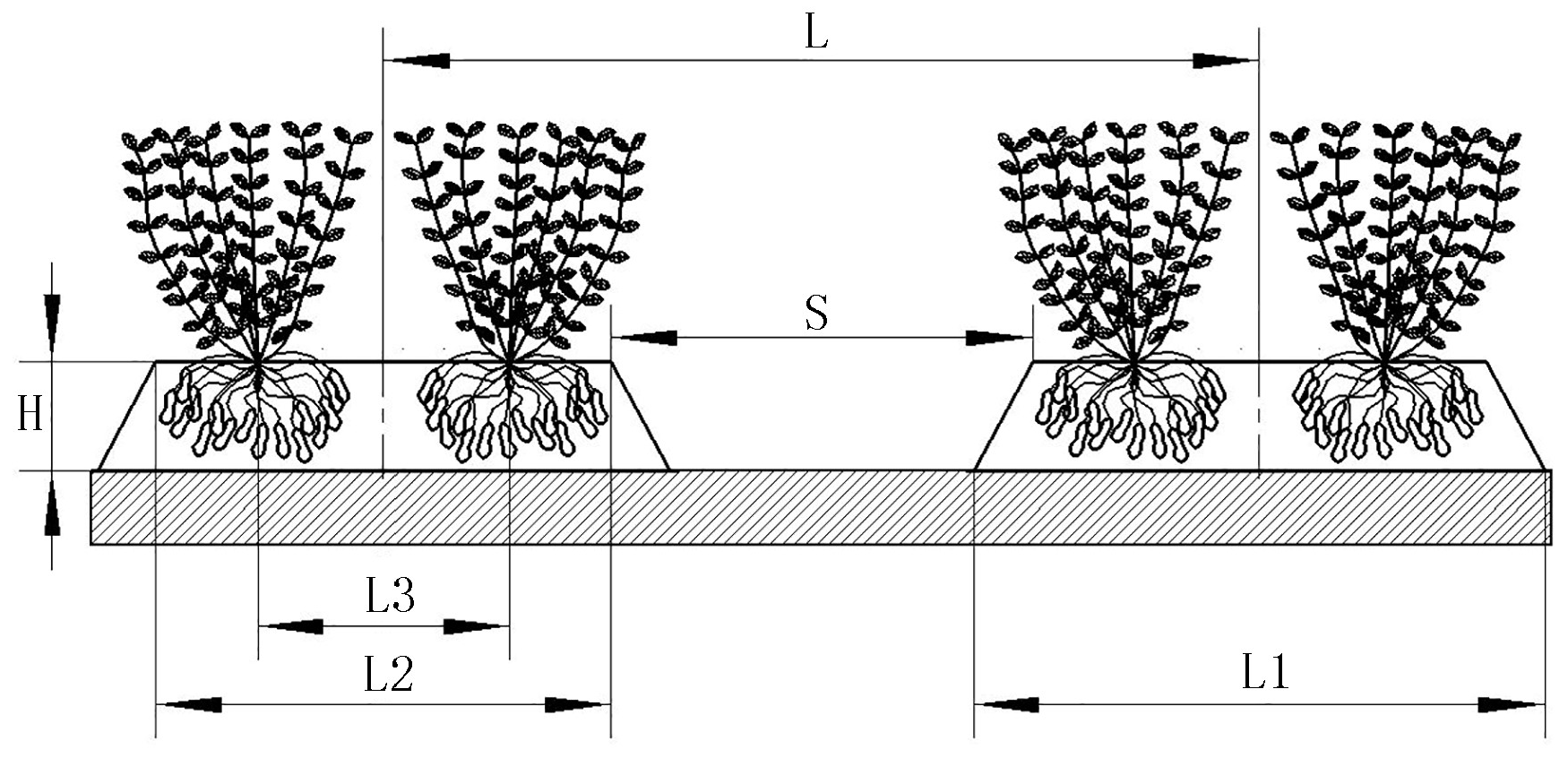
This study is mainly based on the two-row ridge peanut cultivation pattern employed at the Changyuan Branch of the Henan Academy of Agricultural Sciences. The relevant parameters are as follows: ridge spacing (L) ranges from 850 to 920 mm, ridge bottom width (L1) from 600 to 680 mm, ridge top width (L2) from 530 to 580 mm, row spacing (L3) within a ridge from 220 to 290 mm, ridge height (H) from 100 to 120 mm, and furrow width (S) from 260 to 300 mm. The ridge planting pattern is shown in Figure 1.
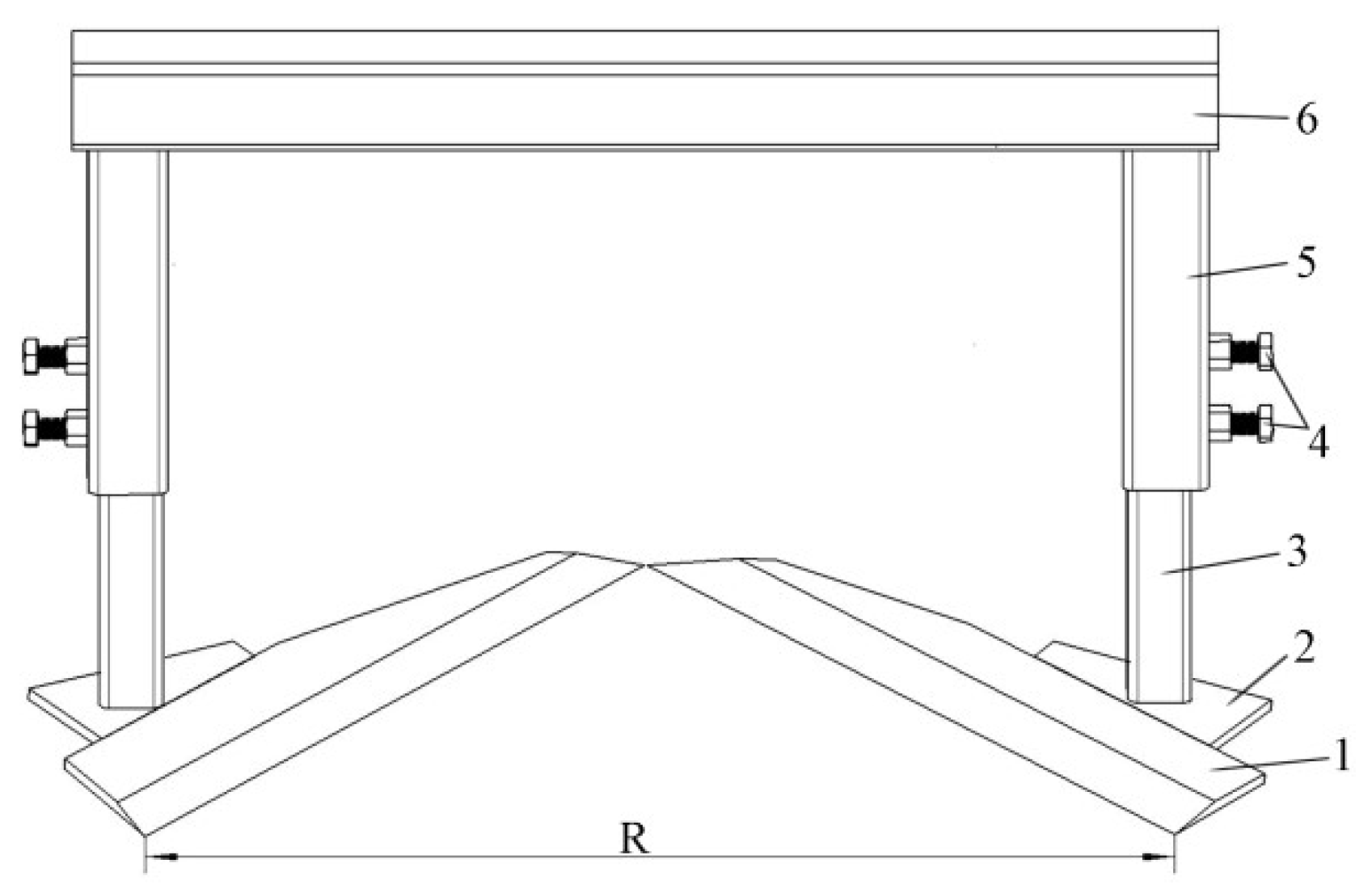
The digging shovel device serves as a crucial component in peanut harvesting, with its main role being to employ the shovel blade to loosen the soil located in the upper section of the ridge bottom. Simultaneously, the blade edge severs the main rootstalk of the peanut plants, and the digging shovel surface lifts both the plants and soil. In this study, the digging shovel device is composed primarily of a plane skid-cutting digging shovel, a shovel blade fixing plate, limit supports, and the machine frame. Its structural layout is illustrated in Figure 2.
On the basis of the analysis of Figure 2, to ensure the digging quality for the peanut plants in two rows within a single ridge, the spacing between the shovel tips, R, must be slightly greater than the width of the peanut planting ridge bottom. Taking into account the agronomic characteristics of peanut planting mentioned above, through intuitive analysis and field experimental design, R is set to 680 mm. This ensures the integrity of the peanut plant digging process.

2.2. Analysis of Working Force Process and Performance of the Digging Shovel

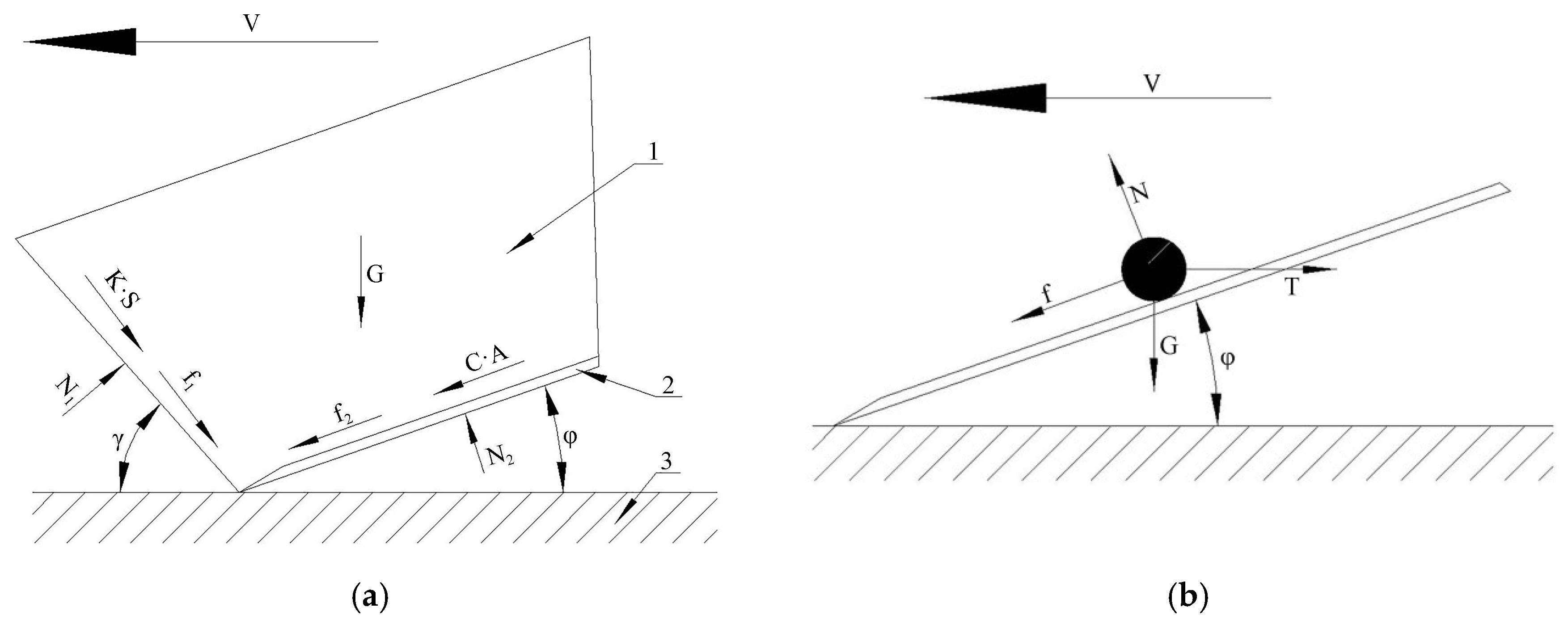
The analysis indicates that, under the condition of neglecting secondary factors, the primary force acting on the digging shovel during operation is the working resistance of the digging shovel. Consequently, it is sufficient to analyze the operational resistance of the shovel blade. The forces exerted on the soil and the shovel surface during digging were examined through a graphic analytical approach, as shown in Figure 3.
Based on Figure 3a, the simplified mechanical equation is established as [11]:
F = G Z + K S + B Z ( sin γ + μ 1 cos γ ) + C A Z ( sin φ + μ 2 cos φ )
where F indicates the traction force exerted on the digging shovel during operation, N; G demonstrates the gravity of the soil lifted above the shovel surface, N; Z shows the correction constant; K reveals the soil cohesion per unit area, N/m2; C represents the soil internal adhesion factor, N/m2; S illustrates the soil shearing area by the shovel blade, m2; A displays the area of the digging shovel itself, m2; γ implies the front failure surface inclination angle, °; φ signifies the entry angle of the digging shovel, °; N1 denotes the pressure on the front failure surface, N; μ1 expresses the friction coefficient between soil layers (where f1 = N1μ1); N2 conveys the normal load on the digging shovel, N; μ2 suggests the friction coefficient between the shovel and soil (where f2 = N2μ2); and V highlights the forward speed of the digging shovel, m/s.
According to Equation (1), the working resistance of the digging shovel is positively correlated with its length (L) and width (B). Analysis indicates that, with a fixed shovel entry angle, increasing the shovel’s length and width enhances the conveying of the uprooted peanut plants along the shovel surface. Nonetheless, excessive length and width can lead to increased digging resistance and higher power consumption. Taking into account the overall machine design dimensions and prior design experience [12], for the purpose of ensuring the integrity of peanut plant digging and the smoothness of subsequent conveying, the shovel length is determined to be 600 mm, and the width is 100 mm, which is sufficient to meet operational requirements.
Based on further analysis of Figure 3b, it can be inferred that, with the design dimensions of the digging shovel held constant, a force calculation is carried out to examine the relationship between the entry angle and soil interaction in order to smoothly lift the peanut plants after digging and to ensure effective soil movement.
T cos φ f G sin φ > > 0
N G cos γ T sin γ = 0
f = N μ
μ = tan δ
where T indicates the Horizontal force required for the digging shovel to lift the soil, N; N conveys the Support force provided by the shovel surface to the soil in the vertical direction, N; f shows the Frictional force between the shovel surface and the soil, N; G represents the Gravity of the soil lifted by the shovel surface, N; and φ reveals the Entry angle of the digging shovel, °.
From the above equations, the following expression can be derived:
T G tan ( γ + δ )
From Equation (6), it can be noted that the force exerted by the soil on the shovel surface increases as the entry angle becomes larger. When the entry angle γ is within the range of 0° to 25°, the force required by the shovel surface shows an increasing trend as γ increases, yet the increase is not significant. Nonetheless, when the entry angle γ exceeds 25°, the force exerted by the soil on the shovel surface increases rapidly with further increases in γ [13]. Based on field tests, this study selects γ = 18–22°, which meets the requirements for digging operations.

2.3. Analysis of the Relationship Between Shovel Blade Tilt Angle and Operational Performance

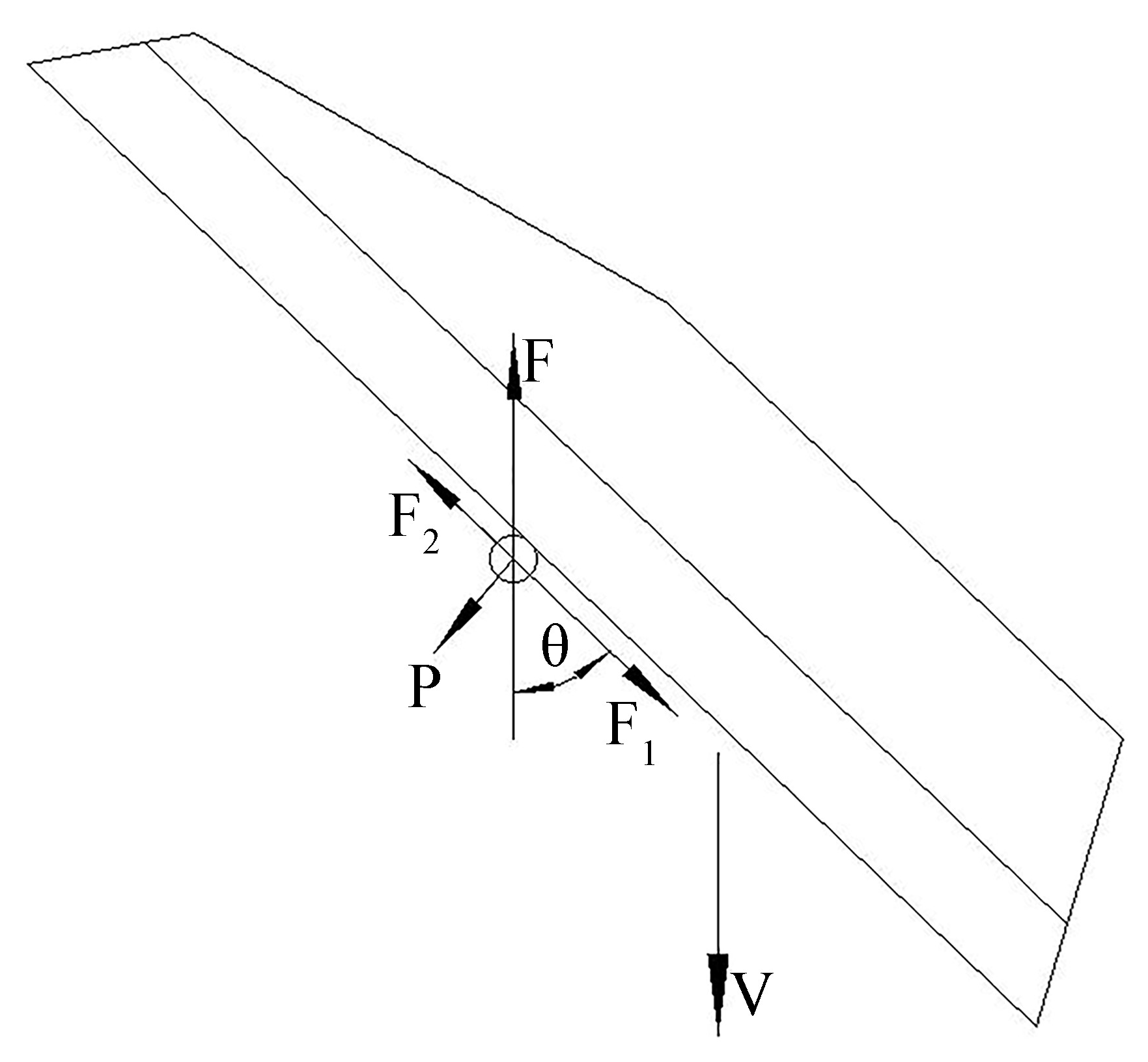
The capacity of the digging shovel blade to sever peanut root systems is closely associated with the magnitude of the inclination angle of the digging shovel blade [14]. Analysis indicates that when the blade tilt angle is too small, the root-severing capability weakens. Conversely, when the blade tilt angle is excessively large, it increases the working resistance of the shovel and readily results in root entanglement and a higher incidence of skid-cutting detachment. Thus, an appropriate blade tilt angle is essential for ensuring satisfactory operational performance. Consequently, to ensure the effectiveness of the blade’s skid-cutting action, a graphic mechanical analysis of the blade tilt angle was conducted, as illustrated in Figure 4.
From the force analysis illustrated in Figure 4, for the purpose of ensuring the digging shovel blade effectively severs peanut rootstalks and cuts through soil, the design of the blade tilt angle (δ) must satisfy the following condition:
F 2 > F 1 F 1 = F sin θ tan η F 2 = F cos θ
where F indicates the Digging resistance force, N; F1 shows the Sliding friction force on the shovel blade, N; F2 demonstrates the Component of resistance F1 along the direction of the shovel blade, N; θ represents the inclination angle of the digging shovel blade, °; and tan η implies the Friction coefficient between steel components and soil, typically ranging from 0.4 to 0.8.
Analysis of Equation (7) indicates that, during the skid-cutting operation of the digging shovel blade, the condition for initiating skid-cutting is:
F cos θ > F sin θ tan η
By simplifying Equation (8), we obtain:
θ < 90 ° η
Based on the analysis of Figure 4, it can be observed that the inclination angle of the digging shovel blade (θ) is the angle between the forward speed (V) of the implement during harvesting operations and the direction of the digging shovel blade. A certain magnitude of blade tilt angle aids in enhancing cutting performance and minimizing soil accumulation. Nonetheless, the inclination angle of the digging shovel blade should not be excessively large, as this can increase the interaction force between the blade and the material, resulting in greater blade wear and increased cutting energy consumption [15]. Considering soil characteristics and field tests, a θ value of 40–44° yields better cutting results.

3. Mechanics Experiment of Skid-Cutting Digging Shovel Based on Numerical Simulation

3.1. Establishment of a Discrete Element Soil Model

The soil conditions encountered during actual operations are complex, rendering the establishment of a comprehensive field soil model challenging. To simplify calculations, a suitable rectangular soil bin with dimensions of 2500 mm × 800 mm × 400 mm (length × width × height) was created within the discrete element analysis software. In addition, to approximate the size of soil particles, the particle radius was set to 4 mm, and the soil cohesion coefficient was set to 4.5 [16]. Furthermore, the total number of soil particles generated was 700,000, and the particle model was generated adopting the Change Factory Type → Total Number module. The particle generation and settling time ranged from 0.001 to 0.4 s. Following complete settlement, the soil layer thickness was approximately 160 mm. The process of establishing the soil model using the EDEM discrete element particle generation method is illustrated in Figure 5.

3.2. Setting of Key Simulation Parameters

Under actual operating conditions, adhesive forces exist within the soil itself. To accurately simulate the tangential and normal displacements resisted by soil bonding forces, the Hertz–Mindlin with Bonding contact model [17,18] was selected for the soil. Furthermore, this model can approximate the complex interaction forces between the soil and the shovel surface. It can simulate the adhesive effects within the soil itself and the state of soil particle breakage during operation. During the digging process, the shovel blade is significantly harder than the soil [19,20], and its deformation during operation is minimal; therefore, the digging shovel can be regarded as a fixed rigid body. During the simulation, the properties of both the particle model and the digging shovel are configured according to the parameters listed in Table 1 and Table 2 [21,22].

3.3. Mechanical Simulation Experiment of the Digging Shovel

Based on the comprehensive analysis above, the simulation was performed using the following parameters: shovel entry angle γ = 20°, blade tilt angle θ = 44°, digging depth of 120 mm, and a forward speed of 1 m/s. The simulation duration was set to 2 s, and the process of the simulation experiment is shown in Figure 6.

3.4. Field Test Verification

3.4.1. Test Conditions

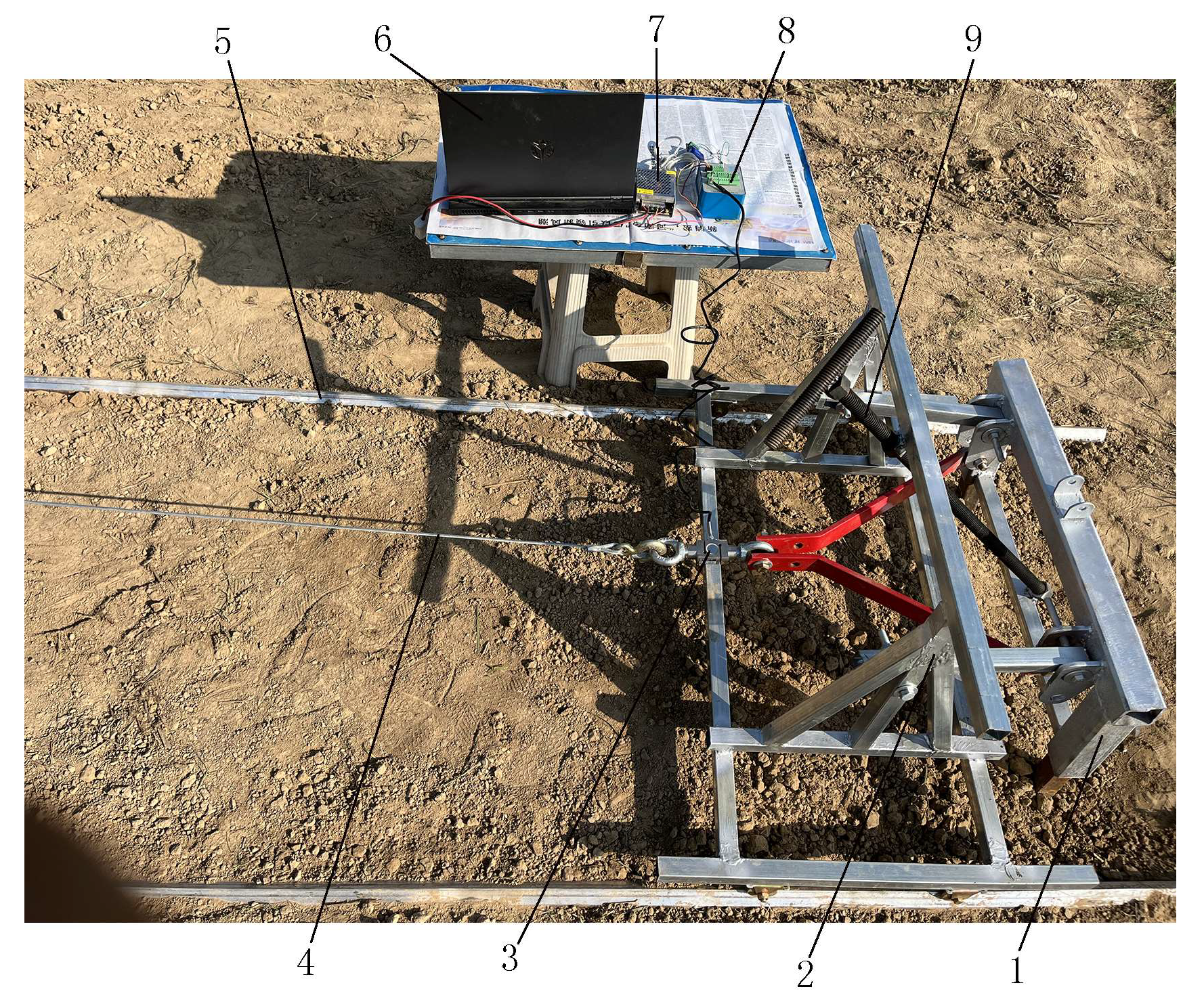
The test setup included a BSLZ-1S column-type tension sensor (range: 0–5000 N), an RS485 transmitter, moisture-measuring equipment (XF-720MA, Benlong, Yueqing, China), a laptop, a stopwatch, and a tape measure, among other devices. In addition, the field soil bin test was conducted at the Changyuan Branch of the Henan Academy of Agricultural Sciences on 15 April 2024. The test site is illustrated in Figure 7. During the test, the equipment’s forward speed was set to 0.8 m/s, the digging depth to 120 mm, the soil entry angle to 20°, and the blade tilt angle to 40°. The soil moisture content measured during the test was 21.2%. The tension force on the digging shovel served as the test indicator for comparison with the simulation results.

3.4.2. Simulation Model Verification

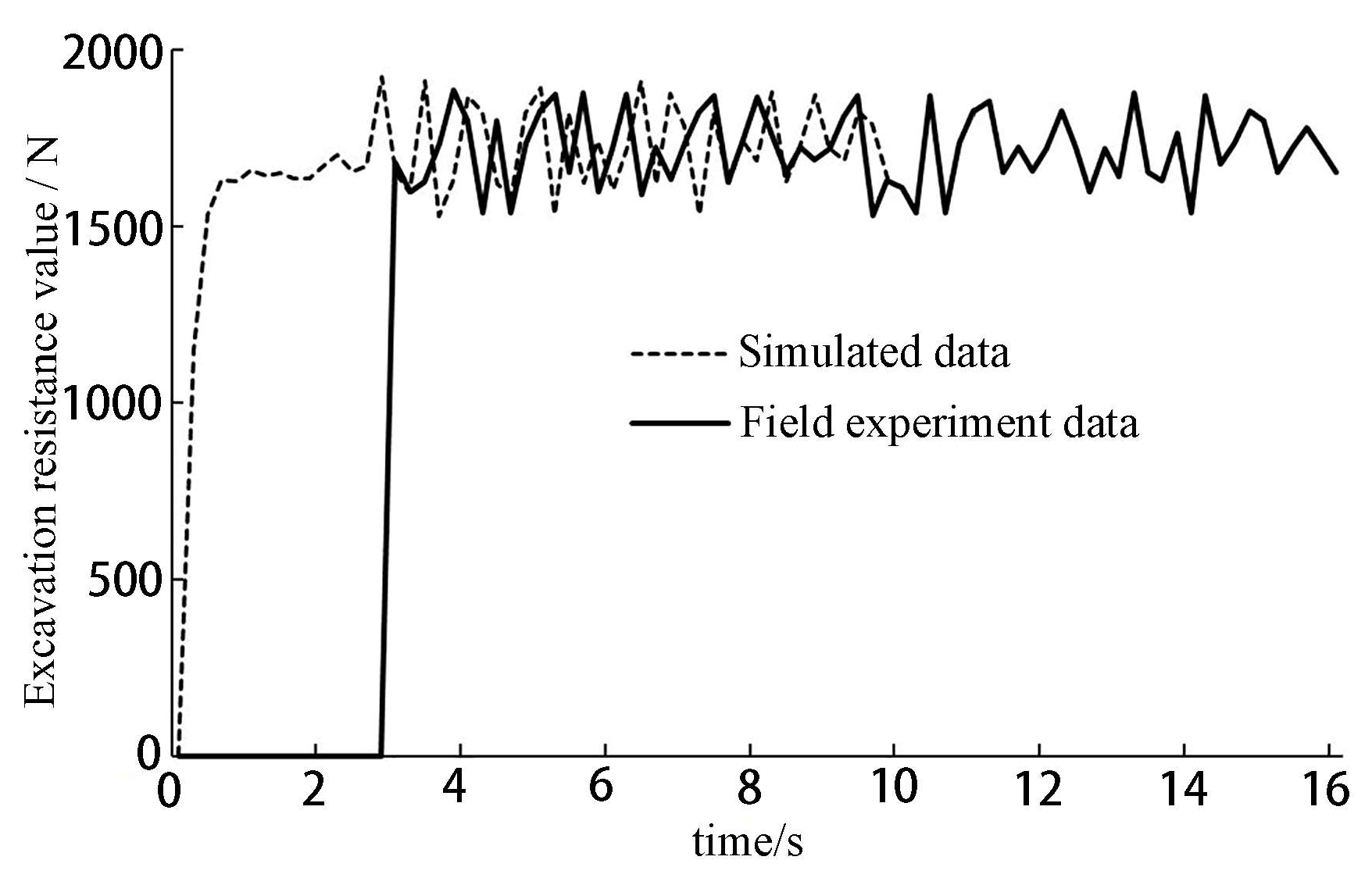
Real-time test data collected through the BSLZ-1S tension sensor (Dayang Sensor, Bengbu, China)yielded the digging resistance curve shown in Figure 8. Data collection commenced at 2.5 s, with the actual digging operation lasting 13.5 s. Between 2.5 and 4 s, there was a sharp change in the digging resistance parameter, indicating the initiation of the digging operation. When the shovel was operating normally, the resistance fluctuated around 1685 N, with a maximum of 1886.43 N and an average of 1652.29 N.
Based on the test conditions and operational parameters, the numerical simulation method described earlier was employed to analyze the digging shovel’s working process, and the simulation duration was 10 s. Following the simulation, the shovel began to move forward. When the shovel tip contacted the soil, the blade commenced normal soil engagement. The resistance increased continuously as the blade fully penetrated the soil. During stable operation, it fluctuated around 1705 N. The maximum simulated digging resistance reached 1924.67 N, with an average of 1681.16 N. Comparing the maximum resistance from the dynamic simulation curve with the field test results indicates a difference of 38.24 N, and the average resistance values differ by 28.87 N. Furthermore, a comparison between the dynamic simulation curve of the skid-cutting digging shovel and the field test results is shown in Figure 8. Analysis shows that the digging resistance values obtained from the test and the simulation are in close agreement, with an error of less than 2%, confirming the feasibility of this simulation method.

4. Design of Digging Shovel Working Parameters Based on Response Surface Methodology

4.1. Response Surface Experiment

To investigate the influence of forward speed, entry angle, and the inclination angle of the digging shovel blade on digging resistance and soil breakage effectiveness (digging quality), this study employed the Box–Behnken experimental design software (Design-Expert 8.0.6 (2012)). A three-factor, three-level experiment was designed with the objective of minimizing resistance and the soil non-breakage ratio, which serves as an indicator of digging quality. Here, digging resistance reflects power consumption during the digging and harvesting operation, with the soil breakage ratio reflecting the operational quality of the digging shovel. The soil non-breakage ratio refers to the degree of soil looseness following digging compared to its initial state, specifically the ratio of unbroken soil to the initial soil condition during the digging process.

4.2. Experimental Design

Building upon the aforementioned analysis, three factors—the forward speed of the digging shovel (X1), its soil entry angle (X2), and the inclination angle of the digging shovel blade (X3)—were selected for the experiment. A total of 17 sets of operational parameter combinations were generated, including 5 repeated sets to account for experimental errors. The values of the response surface factors are presented in Table 3, while the experimental design combinations and corresponding results are detailed in Table 4.

4.3. Experimental Results and Analysis

4.3.1. Establishment and Testing of Regression Models

The digging shovel working resistance under distinct experimental conditions was obtained through EDEM simulation analysis. Adopting the stepwise regression method, the regression models for the digging shovel’s operating resistance and the unbroken soil ratio were established as Equation (11) and Equation (12), respectively. The analysis of variance (ANOVA) results are presented in Table 5.
R 1 = 1806.20 + 36.28 A + 81.88 B 7.02 C + 26.12 A B + 1.25 A C + 2.78 B C 43.54 A 2 14.06 B 2 + 7.73 C 2
R 2 = 35.93 + 1.63 A + 7.88 B + 3.82 C + 1.5 A B 0.16 A C + 2.71 B C 0.68 A 2 2.98 B 2 2.17 C 2
Analysis of Table 5 indicates that the significance probabilities (p) for the regression models of both digging shovel working resistance and soil non-breakage ratio are less than 0.0001, indicating that the models are statistically highly significant. Their coefficients of determination (R2) are 0.9995 and 0.9994, respectively, demonstrating the feasibility of the regression experiment.

4.3.2. Influence of Interaction Factors on Test Indicators

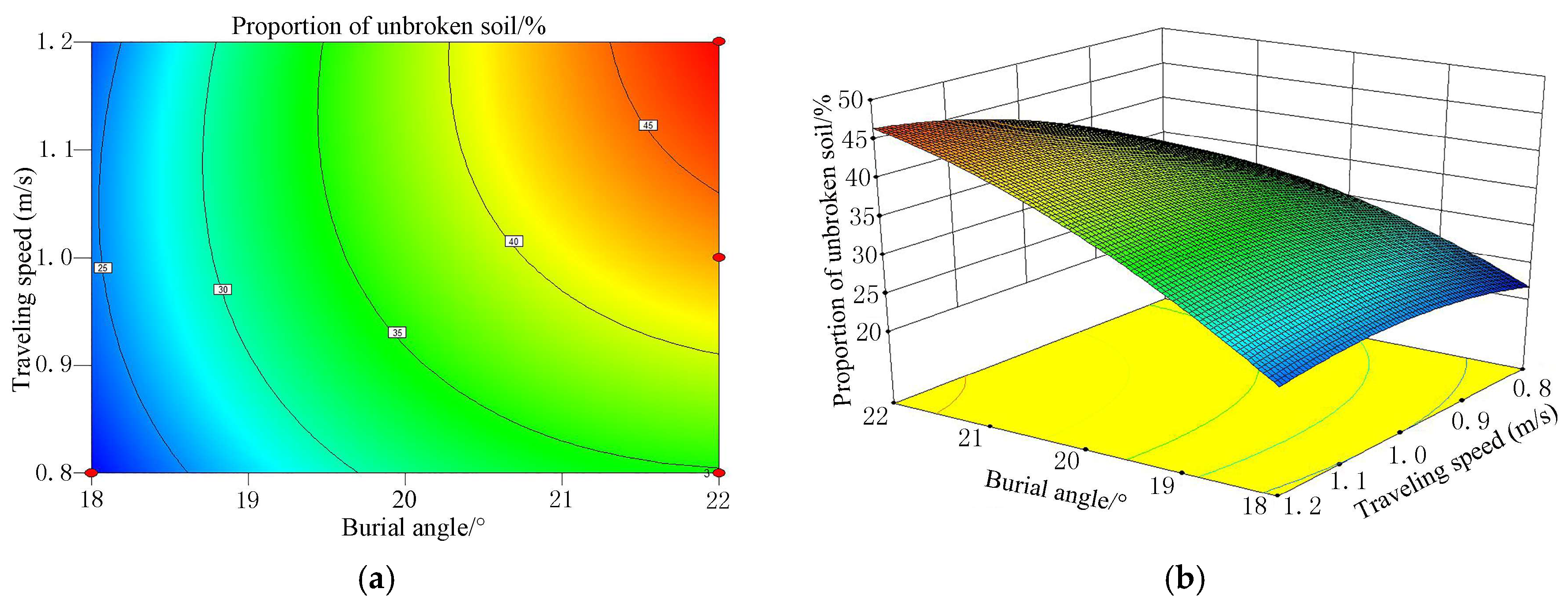
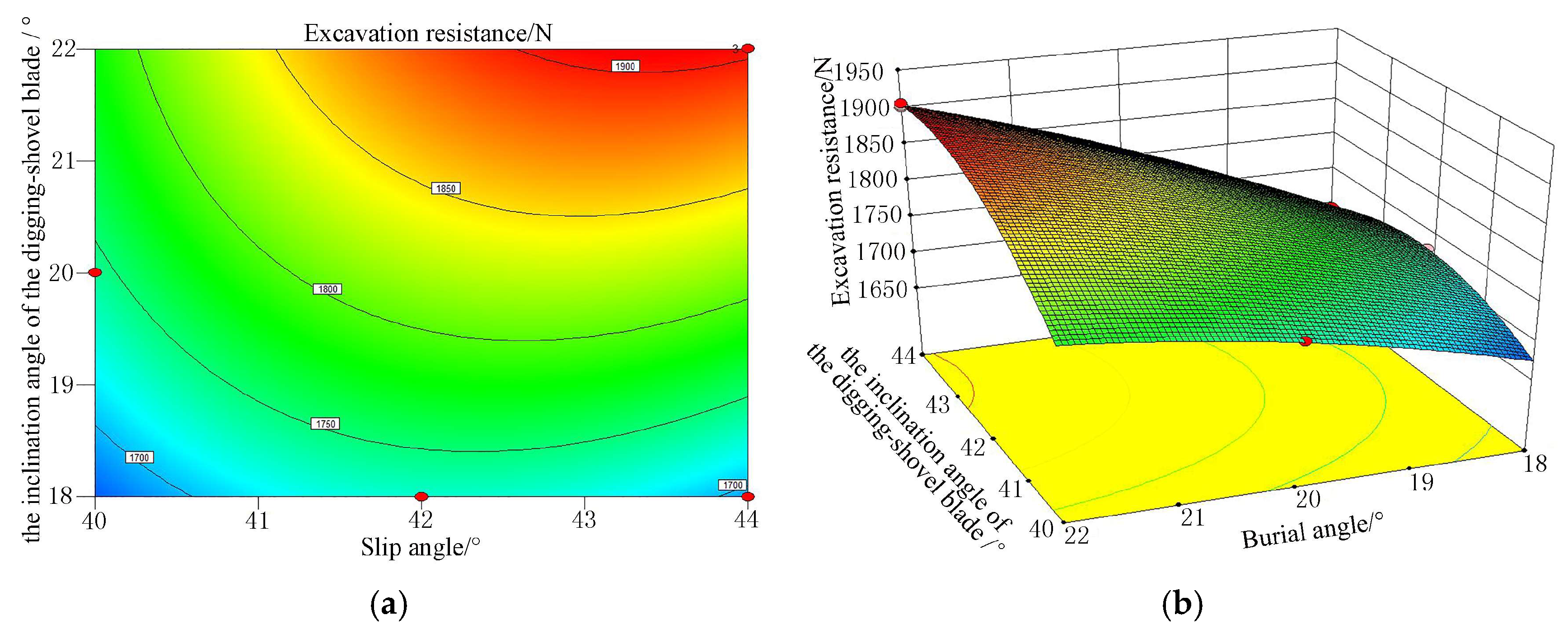
To investigate the interactive effects of different factors on the digging shovel’s resistance and the soil unbreakage ratio, Design-Expert software (Design-Expert 8.0.6 (2012)) was adopted to generate response surfaces illustrating the influence of these factors on working resistance and the soil unbreakage ratio, as indicated in Figure 9 and Figure 10, respectively. Analysis of Figure 9 indicates that, with the blade tilt angle held constant, the digging resistance increases as the entry angle becomes larger. The reason for this is that a larger entry angle results in a greater volume of soil being excavated per unit time, requiring a higher resistance force to overcome. Analysis of Figure 10 shows that, with the entry angle held constant, the soil unbreakage ratio decreases as the forward speed of the implement increases. In other words, a slower forward speed allows for more gradual rearward movement of the soil over the same working distance, resulting in a lower soil unbreakage ratio.

5. Parameter Optimization and Experimental Verification

5.1. Parameter Optimization

To obtain the optimal combination of parameters, the Box–Behnken analysis module of Design-Expert software was employed. Aiming to minimize both the working resistance and the soil unbroken ratio, the optimization mathematical model was established as follows:
min R 1 min R 2 s . t 0.8 X 1 1.2 18 X 2 22 40 X 3 44
Through analysis, the optimal combination of operating parameters for the digging shovel was identified as follows: a forward speed of 0.8 m/s, a digging shovel entry angle of 18°, and an inclination angle of the digging shovel blade of 40°. Under these conditions, the digging resistance is 1642 N, and the unbroken soil ratio is 20.56%.

5.2. Experimental Verification

To validate the reliability of the optimization model and experimental results, and taking verification feasibility into account, field trials were conducted at the experimental field of the Changyuan Branch of the Henan Academy of Agricultural Sciences using the aforementioned optimal operating parameters for the digging shovel. The experiment was replicated five times, with the average result taken, and the experimental results are summarized in Table 6.
Based on the data in Table 6, the average actual digging resistance obtained was 1667 N. In addition, the relative error between the field test results and the predicted values of the optimization model does not exceed 2%, implying that the optimization results are highly feasible. Moreover, further analysis indicated that the primary cause of this error was the complexity of the actual soil environment (e.g., the presence of small stones, fine weeds, etc.), which contributes to experimental discrepancies. Future research should further analyze and model the actual soil environment to enhance the accuracy of simulation tests.

6. Conclusions

Given that most existing studies on peanut digging shovels primarily concentrate on the theoretical analysis of structural design parameters, with limited comparative research on working mechanisms, simulation experiments, and field trials, this paper systematically investigates the skid-cutting type digging shovel, particularly its structural design parameters, operational parameters, and comparative simulation and field experiments.
(1) This study designed a peanut harvesting digging shovel suitable for the two-row ridge cultivation pattern. Moreover, a graphic analysis method was employed to conduct a mechanical analysis of the interaction between the shovel and the soil, and its operational performance was analyzed and studied. The key design parameters for a two-row ridge digging shovel were identified.
(2) Based on discrete element analysis software, a cubic soil bin model measuring 2500 × 800 × 400 mm was established. An EDEM discrete element simulation model for the soil and the skid-cutting peanut digging shovel was developed. A field test setup was implemented, and the soil unbroken ratio was introduced as an indicator of digging quality. By comparing simulation results with field test results, an error of less than 2% was achieved, verifying the feasibility of the simulation experiments.
(3) The Box–Behnken analysis module in Design-Expert was adopted to optimize the parameters for the best operational performance of the digging shovel. In addition, targeting the minimization of working resistance and soil unbroken ratio, optimization analysis of the working parameters was conducted. The optimal parameter combination was identified as a forward speed of 0.8 m/s, an entry angle of 18°, and an inclination angle of the digging shovel blade of 40°. Under these conditions, the predicted digging resistance was 1642 N, and the soil unbroken ratio was 20.56%. Field validation tests showed that the relative error between the experimental values and the predicted values did not exceed 2%. Meanwhile, this method can provide a technical reference for further enhancing the design and optimization simulation of peanut digging shovels. Nonetheless, further optimization and validation are still required concerning overall working performance, practical engineering applicability, and guidance for field practice.

Author Contributions

Writing—original draft, Q.S.; formal analysis, Q.S. and H.Q.; data curation, J.H.; software, H.G.; methodology, H.G. and W.S.; supervision, D.W.; project administration, W.S.; funding acquisition, W.S. All authors have read and agreed to the published version of the manuscript.

Funding

This research was funded by the Modern Agricultural Industrial Technology System Project (Grant No. CARS-13); Key Research and Development Project of Henan Province (Grant No. 261111111300) and Henan Province Science and Technology Key Project (Grant No. 262102110374).

Institutional Review Board Statement

Not applicable.

Informed Consent Statement

Not applicable.

Data Availability Statement

Data are contained within the article.

Acknowledgments

The authors are grateful to the reviewers and the editor for their valuable suggestions and assistance, and they express gratitude to the funders for providing financial support.

Conflicts of Interest

The authors declare no conflicts of interest.

References

  1. Tang, S.; Yu, S.; Liao, B. Current Situation, Problems and Development Strategies of China’s Peanut Industry. J. Peanut Sci. 2010, 39, 35–38. [Google Scholar]
  2. Zhang, L.; Wang, L. Development Status, Existing Problems and Policy Recommendations of China’s Peanut Industry. China Oils Fats 2020, 45, 116–122. [Google Scholar]
  3. Yan, M.; Ge, W.; Zhang, X.; Huang, Y.; Zhang, Z.; Zhang, Y. Analysis of China’s Oilseed Industry Situation and Development Strategies. China Oils Fats 2023, 48, 8–18. [Google Scholar]
  4. Henan Provincial Bureau of Statistics. Henan Statistical Yearbook; Henan Statistics Press: Zhengzhou, China, 2023. [Google Scholar]
  5. Zhang, C.; Hu, Z.; Qiu, T.; Wu, N.; Wang, B.; You, Z. Analysis of the Development of Peanut Mechanized Harvesting at Home and Abroad. Jiangsu Agric. Sci. 2018, 46, 13–18. [Google Scholar]
  6. Zhao, S.; Wang, D.; Wang, Y.; Luan, G.; Sun, Q. Development of an Ordered Windrowing Peanut Harvester. J. Agric. Mechan. Res. 2013, 35, 73–75. [Google Scholar]
  7. Zhang, R.; Tian, L.; Wang, D.; Shang, S. Design and Experiment of a Three-Ridge Six-Row Ordered Windrowing Peanut Harvester. J. Agric. Mechan. Res. 2023, 45, 177–182. [Google Scholar]
  8. Xu, H.; Zhang, P.; Zhang, Y.; Wang, S.; Yu, Z.; Gu, F. Design and Experiment of the Picking and Conveying Device for a Multi-stage Tangential Flow Peanut Pick-up Harvester. Trans. Chin. Soc. Agric. Mach. 2023, 54, 52–60. [Google Scholar]
  9. Zhou, J.; Cai, H.; Hu, G.; Chen, Y.; Chen, P. Design and Experiment of Potato Digging Shovel Based on Single-ridge Double-row Planting Agronomy. J. Agric. Mechan. Res. 2024, 46, 191–195. [Google Scholar]
  10. Xia, C.; Shang, S.; Wang, D.; Liu, Y.; He, X.; Zhao, Z.; Li, C.; Shang, Z. Design of Rotational Wear Test Bench for Agricultural Machinery Digging Components Based on EDEM Simulation. J. Agric. Mechan. Res. 2023, 45, 98–103. [Google Scholar]
  11. Chen, S.; Li, Y.; Sun, X. Dynamic Analysis and Experiment of Peanut Digging Shovel. Trans. Chin. Soc. Agric. Mach. 2005, 65–69. [Google Scholar]
  12. Wang, B.; Hu, Z.; Zhou, D.; Peng, B.; Chen, Y. Mechanical Model and Experimental Analysis of Peanut Digging Shovel in Segmented Harvesting. J. Agric. Mechan. Res. 2017, 39, 58–62. [Google Scholar]
  13. Wang, D.; Shang, S.; Han, K. Design and Experiment of 4HJL-2 Peanut Picking and Pod-stripping Combine Harvester. Trans. Chin. Soc. Agric. Eng. 2013, 29, 27–36. [Google Scholar]
  14. Zhao, S.; Wang, J.; Wang, F.; Zhang, F.; Li, X. Research Status and Prospect of Vibration-based Agricultural Soil Cutting and Digging Technology. J. Agric. Mechan. Res. 2017, 39, 244–251. [Google Scholar]
  15. Chen, S.; Li, Y.; Sun, X. Design and Research on the Digging Device of Peanut Combine Harvester. J. Agric. Mech. Res. 2005, 47–49. [Google Scholar]
  16. Zhou, H.; Che, H.; Geng, D.; Chen, M.; Zhang, Y. Establishment and Parameter Calibration of Discrete Element Model for Typical Soils in Corn Field Plow Layer. Trans. Chin. Soc. Agric. Mach. 2023, 54, 49–60+113. [Google Scholar]
  17. Shi, J.; Shan, Z.; Yang, H. Research on the macro- and meso-mechanical properties of frozen sand mold based on Hertz-Mindlin with Bonding model. Particuology 2024, 88, 176–191. [Google Scholar]
  18. Liu, W.; Su, Q.; Fang, M.; Zhang, J.; Zhang, W.; Yu, Z. Parameters Calibration of Discrete Element Model for Corn Straw Cutting Based on Hertz-Mindlin with Bonding. Appl. Sci. 2023, 13, 1156. [Google Scholar] [CrossRef]
  19. Wang, H. Microstructure and Friction-Wear Properties of Fe-based Alloy Coating on 65Mn Steel by Laser Cladding. Appl. Laser 2016, 36, 385–390. [Google Scholar]
  20. Research Group on “Influence of Soil Abrasive Particle Characteristics”. Influence of Soil Abrasive Particle Characteristics on Wear Performance of Agricultural Machinery Materials. Trans. Chin. Soc. Agric. Mach. 1986, 53–62.
  21. Guo, X.; Shi, P.; Qiao, S.; Sun, Q. Numerical Simulation and Working Parameter Response Surface Optimization of Ditching and Ridging Tool for Strawberry Greenhouse. J. Shenyang Agric. Univ. 2024, 55, 334–342. [Google Scholar]
  22. Li, H.; Shang, S.; Wang, D.; He, X.; Yue, D.; Guo, P.; Xu, N.; Xia, C. Design and Simulation Analysis of Digging Shovel for Six-row Ridge (Flat) Peanut Harvester. J. Agric. Mechan. Res. 2023, 45, 107–112. [Google Scholar]
Figure 1. Two-row ridge cultivation peanut planting mode.
Agriengineering 08 00107 g001
Figure 2. Assembly diagram of the digging shovel device. 1. Digging shovel; 2. Digging shovel fixing plate; 3. Limit support; 4. Limit support fixing bolt; 5. Limit sleeve; 6. Crossbeam.
Agriengineering 08 00107 g002
Figure 3. Force analysis of digging shovel. (a) Force analysis on the excavated soil; (b) Schematic diagram of soil forces. 1. Soil lifted by the shovel; 2. Digging shovel; 3. Soil.
Agriengineering 08 00107 g003
Figure 4. Analysis of force on sliding-cutting of digging shovel blade.
Agriengineering 08 00107 g004
Figure 5. Soil particle generation and sedimentation process.
Agriengineering 08 00107 g005
Figure 6. Simulation test process of digging shovel.
Agriengineering 08 00107 g006
Figure 7. Soil bin test. 1. Digging shovel; 2. Pulley traction frame; 3. Tension sensor; 4. Traction rope; 5. Slide rail; 6. Laptop computer; 7. Voltage converter; 8. Transmitter; 9. Entry angle adjustment lead screw.
Agriengineering 08 00107 g007
Figure 8. Comparison of simulation and experimental digging shovel resistance.
Agriengineering 08 00107 g008
Figure 9. The inclination angle of the digging shovel blade and the penetration angle on excavation resistance. (a) Contour plot; (b) 3D response surface.
Agriengineering 08 00107 g009
Figure 10. Effects of soil entry angle and forward speed of machinery on soil fragmentation ratio. (a) Contour plot; (b) 3D response surface.
Agriengineering 08 00107 g010
Table 1. Basic parameters of discrete element model.
Material NameMaterial UnitMaterial Value
Soil Particle Densitykg·m−32530
Soil Particle Poisson’s Ratio/0.3
Soil Particle Shear ModulusPa1.86 × 108
Digging Shovel Densitykg·m−37830
Digging Shovel Poisson’s Ratio/0.29
Digging Shovel Shear ModulusPa6.9 × 1010
Table 2. Contact Model Attribute Parameters.
Contact TypeCoefficient of RestitutionCoefficient of Static FrictionCoefficient of Sliding Friction
Soil Particle to Soil Particle0.60.560.13
Digging Shovel to Soil0.160.50.15
Table 3. Test Parameter Values.
FactorLevel
−101
X1/(m/s)0.811.2
X2182022
X3404244
Table 4. Box–Behnken design plan and results.
Run OrderDesign VariablesResponse Values
X1/(m/s)X2X3Digging Shovel Working Resistance/NUnbroken Soil Ratio/%
10.82244190634.9
20.81842172621.7
31.21840165323.2
412042181135.8
51.22042180637.6
61.21840165523.2
70.81844169421.4
80.82244190134.5
90.82040174427.3
101.21842170724.1
111.22244189847.6
1212244189242.9
131.22042180437.7
1411840165624.6
1512040172333.8
160.82244190335.1
171.22242187845.2
Table 5. Analysis of variance.
SourceSum of SquaresdfMean SquareFpSum of SquaresdfMean SquareFp
Model150,600916,736.14498.44<0.00011151.599127.951383.75<0.0001
A4474.0114474.01197.07<0.00018.9918.9997.22<0.0001
B25,038.56125,038.56690.55<0.0001232.061232.062509.61<0.0001
C422.971422.976.280.0003119.231119.231289.42<0.0001
AB964.481964.486.94<0.00013.1813.1834.440.0006
AC/////2.3412.3414.250.0082
BC/////23.82123.82257.57<0.0001
A23925.0213925.0251.79<0.00010.9510.9510.310.0148
B2221.171221.176.970.00219.9319.93107.41<0.0001
C2136.281136.284.820.007311.27111.27121.84<0.0001
Lack of Fit51.57317.194.13Not Sig.0.4630.153.17Not Sig.
Table 6. Test verification results.
Test NumberTest Value (N)
11629
21711
31671
41635
51689
Disclaimer/Publisher’s Note: The statements, opinions and data contained in all publications are solely those of the individual author(s) and contributor(s) and not of MDPI and/or the editor(s). MDPI and/or the editor(s) disclaim responsibility for any injury to people or property resulting from any ideas, methods, instructions or products referred to in the content.