
Article

Hall Sensor-Based Detection and Prevention of Seed Misses in Long-Belt Finger-Clip Precision Metering Device

by
Nikolay Kostyuchenkov
,
Aldiyar Bakirov
*,†,
Oksana Kostyuchenkova
,
Saidalin Yerlan
and
Nikolay Zagainov
Technical Faculty, S. Seifullin Kazakh Agrotechnical Research University, Zhenis Avenue 62, Astana 010000, Kazakhstan
*
Author to whom correspondence should be addressed.
These authors contributed equally to this work.
AgriEngineering 2025, 7(12), 436; https://doi.org/10.3390/agriengineering7120436

Submission received: 20 October 2025 / Revised: 9 December 2025 / Accepted: 12 December 2025 / Published: 18 December 2025

Abstract

Accurate seed singulation is critical for uniform crop establishment and yield optimization in precision agriculture. This study presents the development and evaluation of a Hall sensor-based Seed Miss Prevention System (SMPS) integrated into a long-belt finger-clip precision metering device for corn (‘Dekalb DKC5032’) and sunflower (‘Astana’). The system utilizes neodymium magnets mounted on seed-picking fingers to trigger a Hall sensor that detects missed seeds in real time and initiates immediate compensation. Laboratory tests across rotational speeds from 10 to 80 rpm showed that the SMPS significantly reduced seed misses, especially within the 10–30 rpm range, where near-perfect singulation was achieved for corn (Miss Index < 0.01). For sunflower, although performance at very low speeds was limited by mechanical variability, the SMPS effectively reduced the miss index by up to 50 % at medium speeds. Statistical analysis (Tukey HSD) confirmed significant improvements in single and double miss prevention across both crops. The proposed Hall sensor-based approach demonstrated a robust, cost-effective, and dust-resistant solution for enhancing seed placement accuracy, providing a strong foundation for the development of intelligent and adaptive precision seeding systems.

1. Introduction

Accurate seed detection and prompt identification of missed seeds are critical for achieving uniform seed distribution, which directly impacts crop emergence, stand uniformity, and yield. Missed seeds (miss-seeding) can lead to gaps in the field, reducing plant population and overall productivity, while multiple seeds in one spot can cause competition and lower crop quality [1,2,3,4]. Suboptimal spacing between plants leads to a whole series of negative consequences: changes in competition, increased plant variability, increased likelihood of lodging and plant disease, which in turn reduces yield by up to 31% (on average by 10%) [5]. Missing sowing rates can be alarmingly high, with mean percentages reaching 17.20% under certain field conditions, significantly influenced by factors such as specific field characteristics, productivity zones within the field, and sowing machines [6]. These skips and doubles are frequently attributed to inadequate performance of the seeder’s seed singulation mechanism or other seeder malfunctions [7]. Beyond the direct loss of a potential plant from a skip or increased competition from a double, these inaccuracies can lead to the development of empty achenes, which are essentially undeveloped seeds consisting only of a pericarp and testa, thereby directly reducing harvestable yield [8].
Modern seed metering devices integrate advanced sensors and algorithms to achieve detection accuracies above 94–98% for various crops and speeds [9,10,11,12]. These systems can also trigger compensation mechanisms to replant missed seeds, further enhancing field uniformity and reducing manual labor [9,13]. Capacitive and photoelectric systems are especially valued for their robustness, low cost, and adaptability to harsh field conditions [14,15,16].
Photoelectric sensors are widely used for seed monitoring due to their simplicity and high single-seed detection accuracy [17,18,19]. Xie et al. [20] found that while photoelectric sensors achieved high accuracy for single seeds, their recognition accuracy for double overlapping seeds was nearly 0%, and their resistance to dust was inferior to microwave-based sensors. Similarly, Zhang et al. [21] reported that photoelectric sensors detected big-diameter seeds more precisely than small ones, indicating a size-dependent limitation. Tang et al. [22] also observed that sensor monitoring accuracy decreased with increasing seeding speed and frequency, further highlighting the limitations of photoelectric sensors under high-speed or dense seeding conditions.
Capacitive sensors offer non-contact measurement and are less affected by dust compared to photoelectric sensors [23,24,25]. However, their accuracy is influenced by seed water content, machine vibration, temperature, and parasitic capacitance. These factors can lead to false readings, especially with small or irregular seeds. For instance, Ren et al. [11] demonstrated that while interdigital capacitive sensors could achieve high detection accuracy (up to 99.67% for miss-seeding), their performance could be affected by variations in seed properties and environmental conditions. Xu et al. [26] also noted that differences in cotton seed grain weight could lead to misjudgment between normal, missed, and multiple seeding states, with misjudgment rates below 4% but still present. Capacitive sensors thus require careful calibration and may struggle with variable seed types or field conditions.
Piezoelectric sensors detect seeds based on physical impacts, converting mechanical energy into electrical signals [27,28,29]. Their main drawbacks include sensitivity to mounting and vibration, and the potential for seed trajectory alteration, which can lead to overcounting. At high seed flow rates, the accuracy of piezoelectric sensors declines, and multiple impacts can result in false positives. Rossi et al. [30] found that while advanced signal processing algorithms could achieve over 97% accuracy, the percentage of undetected seeds increased with higher seed flow rates. Gierz et al. [31] also reported that sensor indication errors could reach up to 10%, particularly at certain tube tilt angles, confirming the sensitivity of piezoelectric sensors to installation and operational parameters.
Microwave and radio frequency (RF) sensors are less affected by dust and can better detect overlapping seeds compared to photoelectric sensors [32,33]. However, they are characterized by high cost, complex signal-processing requirements, and limited field validation. Xie et al. [20] showed that a smart microwave-based seed sensor achieved over 99% accuracy for single seeds and 56.3% for double overlapping seeds, outperforming photoelectric sensors in dust resistance and overlap detection. However, the technology is still developing, and comprehensive field validation is limited.
Machine vision systems provide high inspection accuracy and are less dependent on seed size and shape. However, they are expensive, computationally demanding, and highly sensitive to dust and lighting conditions [34,35,36]. These factors limit their robustness and practicality for field use, especially at high operational speeds. Zhang et al. [37] reported that the accuracy of missed seeding monitoring using machine vision was 92.5%, but the system was not robust for harsh agricultural environments and was slower at high speeds. Borja et al. [38] also noted that the operational speed of machine vision-assisted systems was limited by camera latency and computational delays.
With the advancement of machine vision technologies, recent studies have begun integrating machine learning, AI-based classification, and even soft-robotic concepts to improve seed state detection and error correction [39,40,41]. These approaches enhance recognition accuracy, but substantially increase system complexity. Complex multi-sensor and vision-based architectures often require multiple detectors, high-resolution cameras, or dedicated computing hardware (e.g., GPUs), along with extensive calibration procedures. Furthermore, advanced AI or bio-inspired algorithms demand large training datasets and careful parameter tuning, and may lack transparency, making field calibration and maintenance difficult [42,43,44].
Hall sensors, which detect changes in magnetic fields, are generally more robust under harsh field conditions, being largely immune to dust, light, and vibration. They provide reliable detection with high accuracy and a low rate of false positives, making them well-suited for agricultural applications where environmental conditions are highly variable. However, their use in seed detection has been limited because seeds themselves do not inherently interact with magnetic fields in a measurable way. This study demonstrates, for the first time, the application of a Hall sensor for detecting seed misses in a long-belt finger-clip precision metering device, enabling the integration of the Seed Miss Prevention System (SMPS) into this type of mechanism [45]. The proposed approach not only introduces a novel sensing concept but also offers a technically robust and practically feasible solution for improving seed placement reliability under real field conditions.

2. Materials and Methods

2.1. Long-Belt Finger-Clip Precision Seed Metering Devices

Overall Structure and Operational Principles

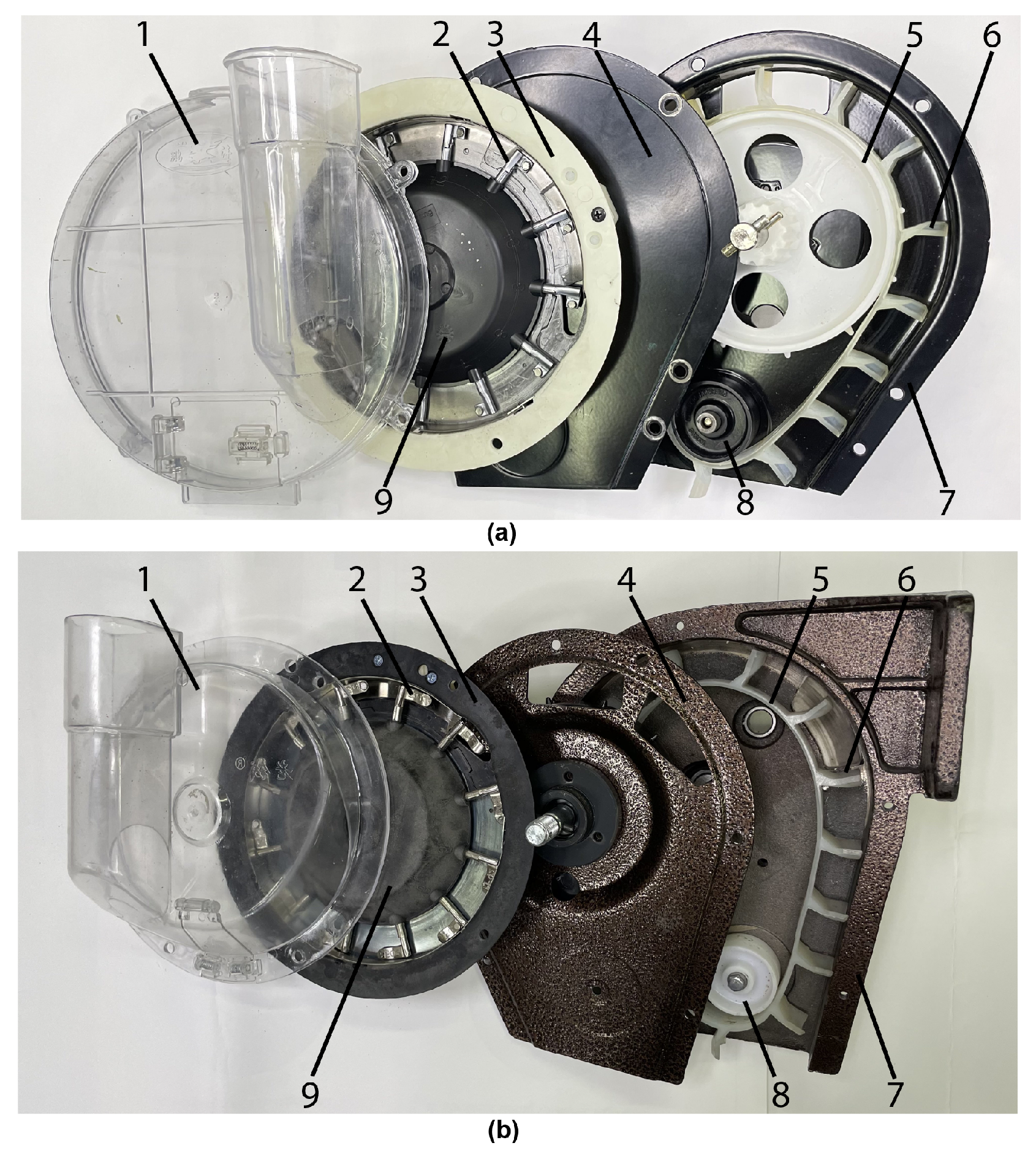
Two commercially available long-belt finger-clip precision seed metering devices for corn (Lao Qian Agricultural Machinery, Weifang, China) and sunflower seeds (Great Plains Manufacturing, Salina, KS, USA) were used as the test platforms for developing and evaluating the Hall sensor-based seed miss detection and prevention system. Although designed for different crops, both devices share a similar structural and operational concept (Figure 1). Therefore, two devices will undergo similar structural changes to accommodate a hall sensor.
Each metering device (Figure 1) utilizes a finger-clip singulation mechanism (2, 9) that mechanically separates individual seeds from the seed pool, followed by a belt-based delivery system (5, 6) ensuring controlled transfer to the outlet. The long-belt mechanism (5) maintains continuous control of seed trajectory after singulation, minimizes friction against housing surfaces, and enhances placement accuracy by utilizing gravitational release. Although the sunflower and corn metering units differ in seed size adaptation—the former optimized for smaller seeds and the latter featuring extended clip geometry — their core mechanical structure remains identical. Both consist of a seed chamber formed in the lower part between the front cover (1) and the housing, a finger-clip mechanism (2, 9), a long-belt assembly (5, 6), a drive pulley (8), and a seed outlet located below the guide pulley (5) within the shield housing (7), allowing implementation of the same seed sensing principle for evaluating the proposed electronic monitoring and control system.

2.2. Retrofitting the Long-Belt Finger-Clip Precision Seed Metering Devices

2.2.1. Working Principle of Hall Sensor for Seed Miss Detection

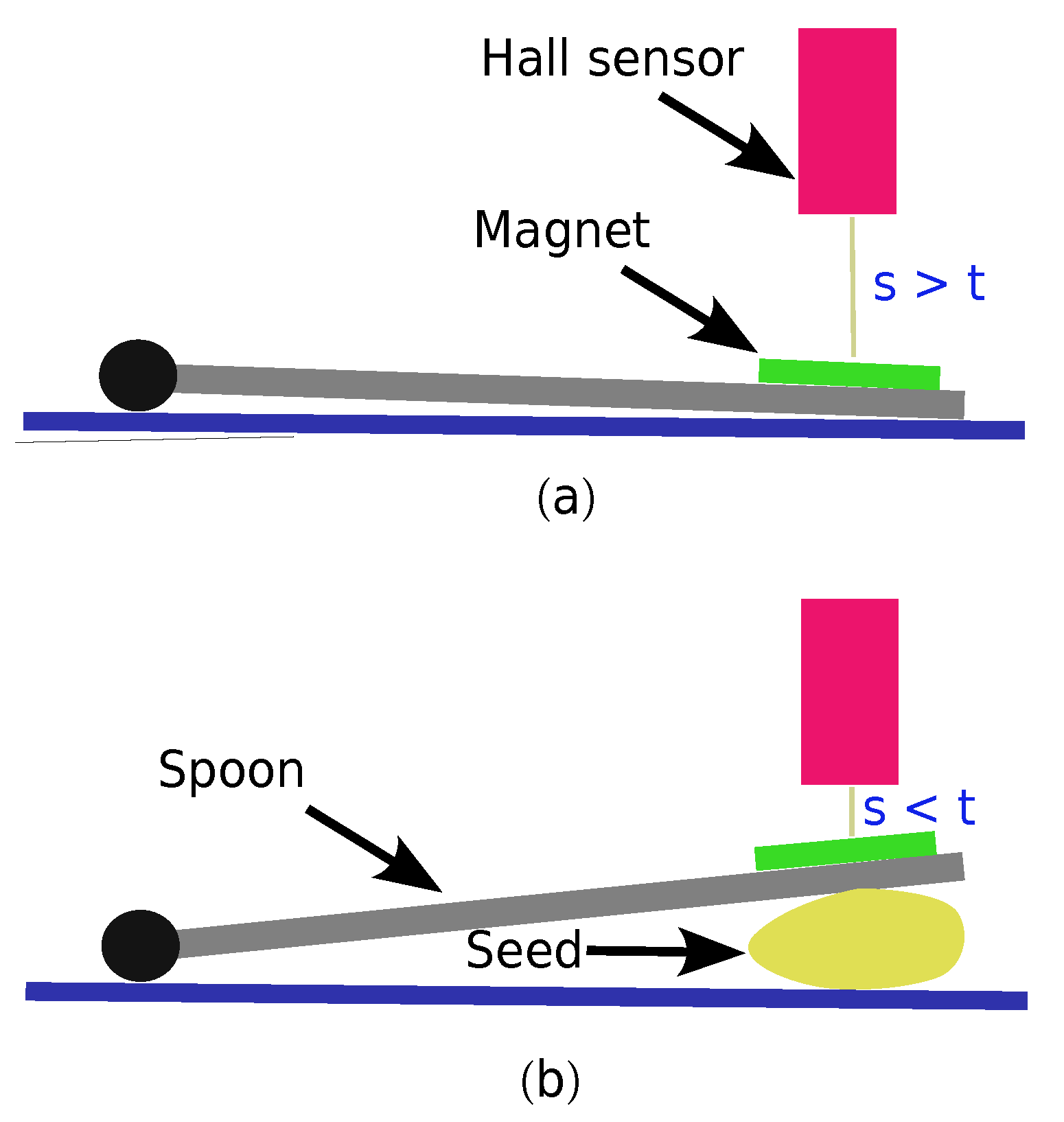
Since the Hall sensor can reliably detect changing magnetic field, the passing of the seeds mush be linked to a reliable magnetic pulse. The NJK-5002C sensor’s nominal detection distance of 10 mm (effective range: 0–10 mm) aligns precisely with this 3–5 mm lift, facilitating clear binary differentiation between seed-present ( s < t ) and seed-absent ( s > t ) states (Figure 2). Its unipolar magnetic sensitivity, with a typical switching threshold of  10–20 Gauss (operate point for south pole detection, as characteristic of similar Hall-effect switches), ensures activation only when the magnet’s field exceeds this hysteresis-protected level, reducing susceptibility to ambient magnetic noise or minor vibrations.
In the absence of a seed (Figure 2a), s exceeds the calibrated threshold t (empirically determined as 6 mm via iterative bench testing using a digital micrometer for distance measurement and an oscilloscope for signal verification, achieving >95% detection accuracy across 100 trials per configuration), resulting in a sub-threshold magnetic field and no output signal. This allows the microcontroller to register a seed miss. Conversely, with a seed present (Figure 2b), s < t , elevating the field above the threshold and producing a digital pulse for seed confirmation. Calibration involved incrementing magnet-sensor distances in 0.5 mm steps while assessing output stability under simulated vibrations (up to 10 Hz), confirming robustness to mechanical tolerances (±0.5 mm from wear or assembly variations). Given the system’s binary operation, a full sensitivity curve was not required.

2.2.2. Seed Miss Prevention System

As a use case of sensor, a Seed Miss Prevention System was used, the principles of which were initially outlined by Nikolay et al. [45]. In short, an active Seed Miss Prevention System (SMPS) was designed and integrated into the metering mechanism to identify and compensate for instances in which the pickup finger failed to capture a seed. The efficiency of this compensation process is governed by the speed and accuracy of the detection module. Reliable identification of seed misses is critical: false-positive signals cause overseeding, leading to excessive seed consumption, whereas false-negative detections result in seed gaps and irregular plant spacing. Consequently, the sensing unit must ensure a rapid response time and stable signal recognition to trigger the corrective mechanism in real time, particularly at elevated rotational speeds of the metering drum.
However, substantial structural and functional enhancements are needed to meet the specific requirements of the long-belt finger-clip precision seed metering device (which will be explained in the Section 2.2.4) as well as changes in control system.

2.2.3. Control System Design and Data Acquisition

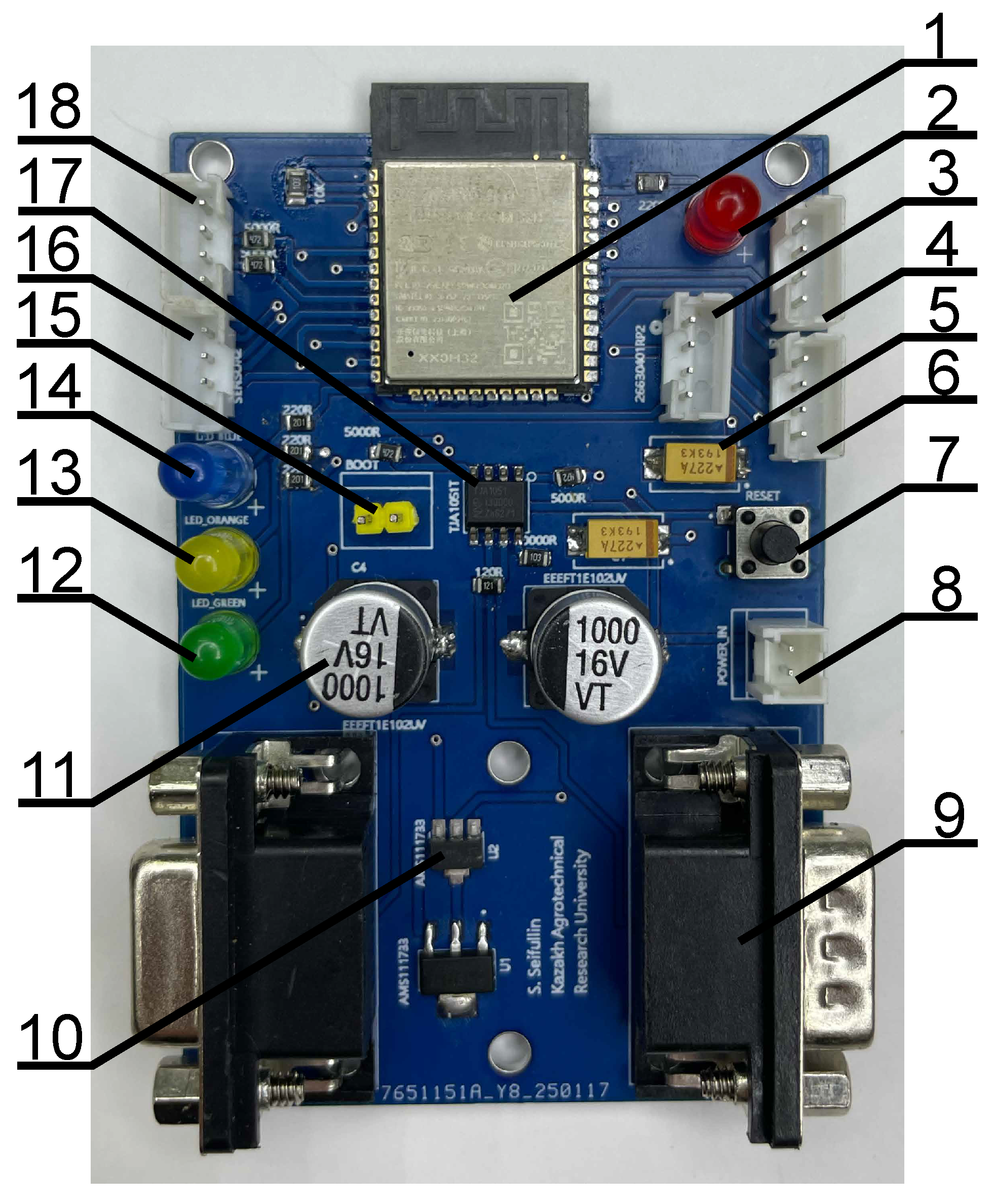
The control system of the seed metering device was implemented on a custom two-layer printed circuit board (PCB), similar to those designed by Bakirov et al. [46] in Proteus 8.16 (Figure 3) with some design changes. Similarly, the board integrates a WROOM ESP32 unit (MCU) (1), which coordinates data acquisition and real-time control tasks. The layout of PCB also includes dedicated sockets for the stepper motor driver (6), power socket (8), programming socket (4), reboot button (7), and boot-mode jumper (15). The socket for seed miss sensors (3, 16) was expanded in case more sensors are required, ensuring modular connectivity and reliable signal transmission. Power is supplied through a 5 V input socket (8) and stepped down to 3.3 V by AMS1117733 (10) to meet the voltage requirements of the ESP32. Several LED indicators (red (2), green (12), yellow (13), and blue (14)) were employed to display system states such as power, communication, and error diagnostics. Additional elements include TJA1051T CAN bus module (17) for long-range data exchange, reset and boot-mode buttons for firmware flashing, as well as 2—A227A ceramic (5) and 2—100016VT electrolytic capacitors (11) for input voltage stabilization and noise filtering. CAN bus modules are interfaced via 2 (wired through) DB9 connectors (9). All components are mounted on the top layer, with routing and power distribution traces located on the bottom layer to minimize interference and enhance signal integrity.
The software for the control and data acquisition system was implemented on the ESP32 microcontroller and programmed in C language using the Arduino framework within the PlatformIO extension for VS Code (version 1.90.2). Its architecture is conceptually similar to the control systems described by Bakirov et al. [46], but it includes several key changes. The sensor by default is only capable to detect seeds, but the Seed Miss Prevention System requires seed miss detection; in other words, seed detection could be mapped to seed miss detection. To achieve this, at each step of the stepper motor, the conditional if statement checks the memorized (in ISR routine) step count of seed detection with anticipated step count detection, which is the latest seed detection step count (last_seed_time) or seed miss step count (pulse_miss), depending which event was latest. If the anticipated step count with some debounce value (DEBOUNCE_STEPS to correct sensing imperfections such as imperfect angular distance from magnets or slightly early or late signals) is superior to the current step counter (pulse_counter), the seed miss is detected and registered, while the seed miss count is also updated, meaning enough steps have passed to declare that the was no expected seed. Therefore, a seed miss can be registered safely but only with denounce value subtracted back (since actions are delayed anyways, this is acceptable); see the code below:
    volatile long sector_time =
    (last_seed_time > pulse_miss) ? last_seed_time : pulse_miss;
    if (((pulse_counter - sector_time) - SECTOR_STEPS) > DEBOUNCE_STEPS)
    {
      pulse_miss = pulse_counter - DEBOUNCE_STEPS;
      seeds_missed++;
    }
(The source code repository is available on GitHub, Version 1.0, available online: https://github.com/AldiyarBakirov/SMD_control_section/releases/tag/v1.0 (accessed on 15 October 2025))
The user interface and control logic were based on the design approach previously presented in our earlier study by Bakirov et al. [46]. The Android application (version 1.0.3), developed in Android Studio using Kotlin, enables the operator to control the seed metering device via Bluetooth Low Energy (BLE) communication. It allows adjustment of rotational speed, activation and stopping of the motor, monitoring and resetting of seed misses, and configuration of calibration parameters. All settings are stored in the EEPROM of the ESP32 microcontroller for persistent use.

2.2.4. Retrofiring of the Device

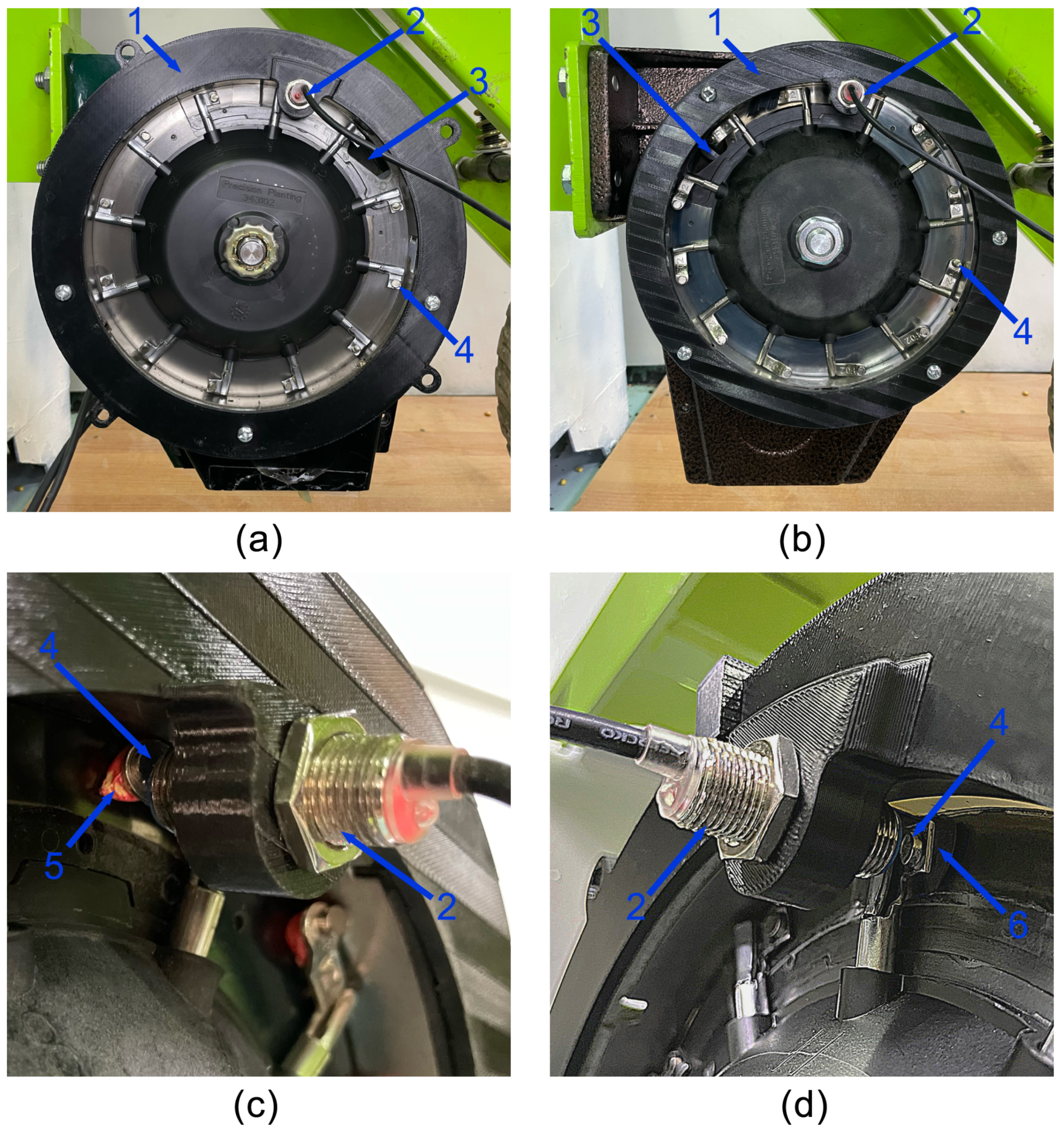
The main task of the mechanical retrofitting is to place and calibrate a Hall sensor at the desired distance as explained in Section 2.2.1. For this purpose, a non-contact Hall sensor model—NJK-5002C (HandsOn Technology, Masai, Malaysia) (Figure 4 (2))—was selected and installed near the seed ejection point (3). This Hall-effect proximity sensor was chosen for its specifications optimized for reliable, real-time seed miss detection in the long-belt finger-clip mechanism under variable agricultural conditions. Key features include a nominal detection distance of 10 mm (effective range: 0–10 mm ±10%), which aligns with the 3–5 mm lift of the finger clips when capturing a seed, enabling clear differentiation between seed-present ( s < t ) and seed-absent ( s > t ) states. Its typical response time of <2 ms (characteristic of Hall-effect switches) supports seamless integration with the SMPS at rotational speeds up to 80 rpm, where inter-finger intervals are 50 ms, minimizing latency that could affect compensation. Additional advantages encompass a wide supply voltage range (5–30 VDC), low current consumption (<5 mA quiescent, <150 mA load), NPN normally open output, compact dimensions (Ø12 × 37 mm), IP67-rated housing for dust and water resistance, and an operating temperature range of −20 °C to +60 °C. Its affordability and availability also aided in prototyping and its compatibility with the 5 V ESP32-based control system.
To ensure accurate positioning and secure mounting of the sensor, a custom adapter (1) was designed and 3D-printed using a Bambu Lab X1 Carbon. The adapter was designed to fit precisely between the front cover and the wear plate of the metering unit, providing optimal alignment with the path of the finger clips. It features the threaded hole for holding sensor and adjust threshold (t) by positioning it closer to or further away from magnets. The threshold distance was adjusted in such way that it will detect a seed of more than 1 mm in diameter (lift of finger 1 mm) and the big-diameter seeds can still pass through.
Small, round neodymium magnets (2 mm thick and 5 mm in diameter) (4) were attached to the ends of all fingers grippers. When a seed is present in the gripper, the finger is lifted, and as it passes beneath the Hall sensor (Figure 2), the magnetic field triggers a signal indicating seed presence. Conversely, if the finger fails to capture a seed, it remains in the lowered position, and the absence of a magnetic response generates a miss signal, which is later processed by the microcontroller to activate the compensation action.
The metering unit is driven by a Nema 34 stepper motor (12 Nm holding torque) equipped with a digital driver. The motor transmits torque to both the metering plate and the long-belt mechanism through a system of gears and shafts, ensuring synchronized and stable operation. The use of a stepper motor allows precise control of both the rotational speed of the metering plate and the linear velocity of the belt, maintaining uniform seed spacing under varying planting speeds.
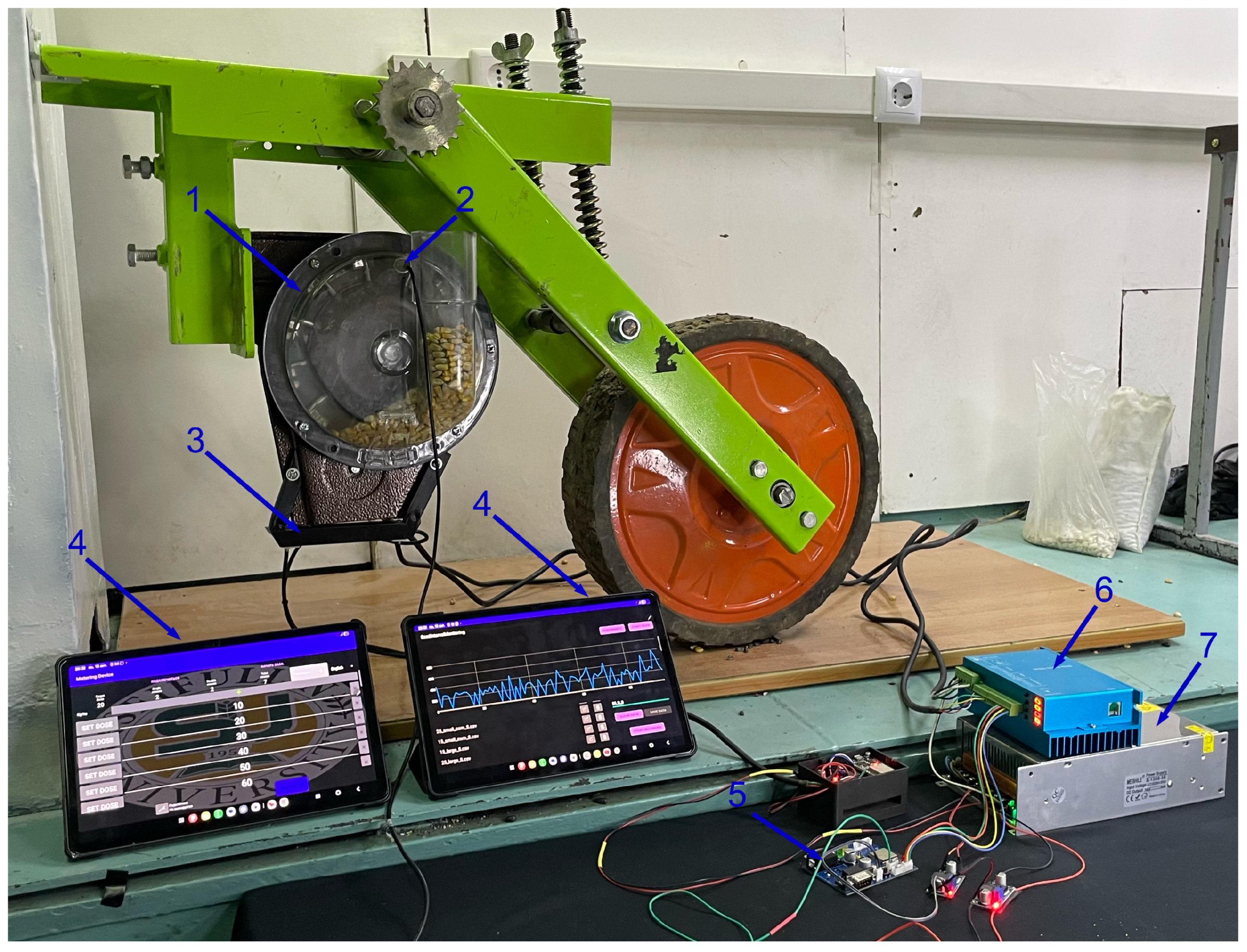
The overall laboratory experimental setup is presented in Figure 5. The setup integrates the mechanical and electronic subsystems of the long-belt finger-clip precision seed metering device (1), including the control PCB (5), stepper driver (6), power supply (7), and sensor modules. The seed metering unit was installed on a laboratory test stand and connected to the ESP32-based controller through dedicated motor driver and sensor interfaces. Hall sensor (2) and optical sensors (3) were positioned near the seed ejection point to enable accurate detection of seed flow and misses. Considering that seed metering during operation occurs within millisecond intervals, precise speed regulation and miss detection are essential. For this purpose, a dedicated seed miss detection sensor was integrated into the system. Experiments were conducted using the Planter 2NPN KUHN optical sensor, in combination with previously developed software described by Zagainov et al. [16]. Communication with the Android application was established via Bluetooth Low Energy (BLE), providing an efficient wireless interface for real-time monitoring and control, while ensuring reliable data acquisition for subsequent visualization, logging, and comprehensive analytical processing.

2.3. Design Experiment

A critical prerequisite for evaluating any precision seed metering system is an understanding of the inherent variability in seed morphology, as this directly influences the accuracy and consistency of seed singulation. Mechanical seed metering devices—particularly those employing finger-clip mechanisms—depend on uniform physical interaction between the seed and the metering components to ensure reliable operation. Among commonly sown crops, sunflower seeds (Helianthus annuus L.) exhibit pronounced variability in shape and size, while even hybrid corn (Zea mays L.) seeds demonstrate noticeable differences among cultivars and seed lots. Such morphological variability complicates precision metering and necessitates careful calibration of the metering system.
For the present study, two crop species were selected to represent different seed morphologies and dimensions. Sunflower seeds of the Astana variety (Helianthus annuus L.) and corn seeds of the commercial hybrid Dekalb DKC5032 (Zea mays L.) were obtained from the seed bank of Saken Seifullin Kazakh Agrotechnical Research University. The Astana sunflower variety was chosen for its uniform medium-sized seeds, which are commonly used in regional agricultural production, whereas the Dekalb DKC5032 hybrid was selected to represent a larger and coarser seed type. This combination allowed for the evaluation of metering accuracy and seed miss prevention performance across contrasting seed geometries while minimizing bias toward any specific seed size.
For each cultivar, a representative sample of 200 seeds was randomly selected and subjected to detailed physical characterization, including measurements of length, width, and thickness, as well as the weight of 1000 seeds. The main dimensional and mass characteristics are summarized in Table 1.
Both metering devices were tested under controlled laboratory conditions at rotational speeds of 10, 15, 20, 25, 30, 40, 50, 60, 70, and 80 rpm. Speed adjustment was performed via a dedicated application interface to ensure precise and repeatable control throughout each test. Data acquisition began only after operational stabilization and continued until approximately 3000 seeds were dispensed for each crop and speed level. The experiment was conducted with an unmodified seed metering device (control treatment), with a magnet attached (to see the effect of attaching the magnets on raw performance) and attached magnets and enabled seed miss prevention (where the signal from the sensor was actually used).
All statistical and computational analyses were carried out in the Python programming environment (version 3.13), employing the NumPy (v2.2), pandas (v2.2.3), Seaborn (v0.13.2), Matplotlib (v3.10), and Statsmodels (v0.14) libraries inside Jupyter analytical platform (version 7.4). The theoretical framework for calculating the seed release interval ( Δ t ), the number of consecutive seed misses ( M c ), and the Miss Index ( I miss ) was adopted from our previous publication [46] and further refined according to the methodological approach proposed by Nikolay et al. [45]. The corresponding equations are provided as Equations (1)–(3) in those studies, ensuring full methodological consistency and reproducibility of the analysis.

3. Results and Discussion

3.1. Experimental Framework and Core Performance Metrics

The performance of the Hall sensor-based Seed Miss Prevention System (SMPS) was evaluated under three operational modes for each crop: no prevention (SMPS disabled) with no magnets (control), no prevention with magnets installed (Hall sensor present but no active replanting), and prevention enabled with magnets (Hall sensor active, SMPS on). Table 2 summarizes the seed delivery outcomes (total seeds sown, single misses, double misses, more than 3 misses in a row, and miss index) for corn (Dekalb DKC5032) and sunflower (Astana) across rotational speeds from 10 to 80 rpm.

3.2. Singulation Efficacy and Miss Mitigation in Corn (‘Dekalb DKC5032’)

For corn (‘Dekalb DKC5032’), the system achieved almost-stable and consistent singulation at low rotational speeds when SMPS was active. At 10–30 rpm, the miss index (fraction of missed seeds) remained essentially zero (on the order of 0.01 or less) with the prevention system enabled. In practical terms, this corresponds to a nearly complete elimination of single and double seed misses in that range. Furthermore, at 20 rpm, the miss index dropped from 0.04 in the baseline configuration to 0.005 with SMPS engaged (Table 2). Such dramatic improvement at low speeds reflects the Hall sensor’s ability to reliably detect an empty seed-pick and trigger a compensating action fast enough to plant the missing seed. The controller’s response time was sufficient to fill gaps at these speeds, and the result was a stable, consistent seed release with almost no skips. The pairwise statistical comparisons reinforce this: runs with the SMPS had significantly lower miss counts than the control (p values ≤ 0.01).
As the rotation speed increased beyond 30 rpm, corn singulation performance naturally began to decline in all configurations, but the SMPS continued to provide substantial benefits. In the baseline (no prevention) mode, the miss index for corn rose steadily with speed—for instance, from about 0.04 at 20 rpm up to around 0.23 at 80 rpm. With the prevention system enabled, however, the miss index stayed much lower at high speeds (approximately 0.10 at 80 rpm, less than half the uncontrolled value). This trend indicates that the SMPS still compensated for many missed picks even under faster operation, albeit not as perfectly as at slower speeds. The data show a threshold around 30 rpm: up to this point, the SMPS maintained near-flawless performance, but beyond it, the number of misses began to climb more rapidly. Above 30 rpm, the seed delivery process became less consistent—the variance in outcomes increased, and occasional missed hills became inevitable even with intervention. This behavior is evident in the experimental data and was noted in the statistical analysis: beyond 30 rpm, the results became more erratic (higher variability run-to-run), reflecting the physical limits of the system. Nonetheless, even at the highest tested speed of 80 rpm, the SMPS-enabled configuration for corn maintained a considerably lower miss index than either of the non-compensated modes, demonstrating the system’s ability to enhance performance across a wide speed range.

3.3. Singulation Efficacy and Miss Mitigation in Sunflower (‘Astana’)

In tests with sunflower (‘Astana’), the metering device’s performance was more variable and generally poorer than with corn, owing to the seeds’ physical characteristics. Sunflower seeds are smaller, flatter, and lighter, which introduced considerable irregularity in the singulation process. The miss index for sunflower in the baseline configuration fluctuated between roughly 0.15 and 0.55 across the speed range—substantially higher on average than for corn. Several factors contributed to this instability: the variable shape and mass of sunflower seeds meant they did not always follow a uniform trajectory once released, and they were easily affected by aerodynamic forces. Light sunflower seeds could be deflected or accelerated upon ejection, often colliding with chamber walls or being thrown off the expected path. These erratic movements led to false absences or mistimed pickups that the sensor system had difficulty interpreting, thereby complicating accurate miss detection. In essence, the metering mechanism could not achieve the same consistent single-seed feeding with sunflower as it did with corn, a limitation reflected in the higher miss indices and greater variation for sunflower runs. As a result, it was not possible to achieve consistent singulation performance with the sunflower seed metering device, as reflected by the seed miss index. The presence of attached magnets and activation of SMPS did not negatively affect the general operation, as evidenced by the statistically insignificant (p > 0.05) differences between “without magnets” and “with magnets” configurations. However, the inherent irregularity of sunflower seed geometry limited the effectiveness of the Hall sensor-based detection compared with corn.

3.4. Dynamic Signal Characterization from the Hall Sensor

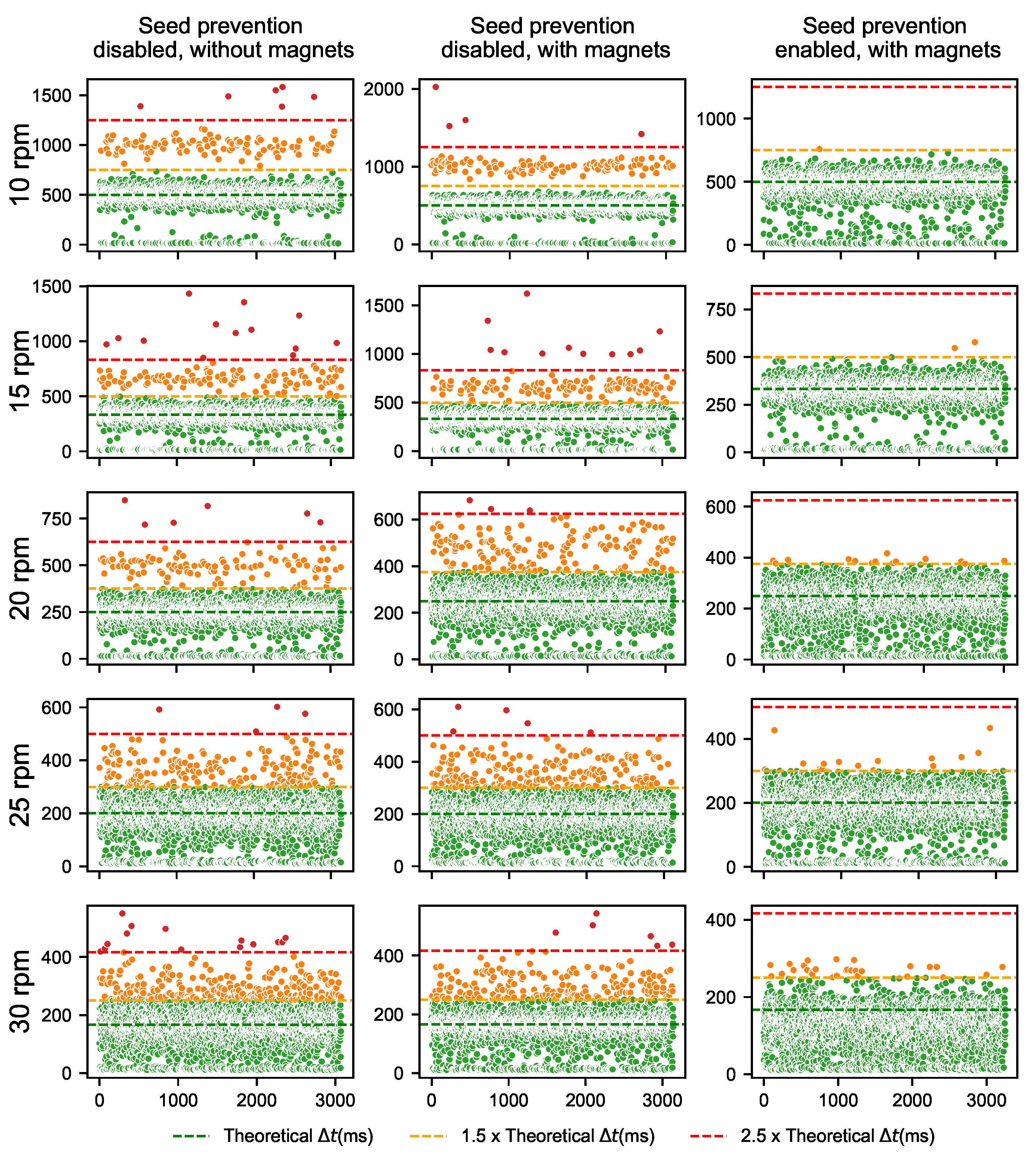
To further assess the operational effectiveness of the seed miss prevention system, a detailed analysis was conducted on the portion of the experimental data derived from the Hall sensor signal (Figure 6). This analysis enabled a more accurate evaluation of the dynamic interaction between the rotating metering elements and the seed flow. The results revealed that, for corn seeds, the system effectively and consistently prevented most seed omissions at lower rotational speeds, demonstrating stable synchronization between the mechanical metering and the electronic control unit. At these speeds, the seed trajectory remained predictable, and the Hall sensor provided clear, well-defined pulse signals corresponding to each singulated seed. However, as the rotation speed increased, the seed stream exhibited increasingly irregular behavior characterized by frequent collisions among seeds, greater inertial effects, and intensified aerodynamic disturbances within the seed chamber. These factors led to fluctuations in the timing and spacing of seed release events, reducing the precision of signal interpretation and the system’s ability to detect and compensate for misses. As a result, at higher operational speeds, the number of missed seeds increased markedly, indicating that the mechanical stability of the seed path and the response time of the sensor unit become critical constraints for ensuring consistent singulation accuracy.
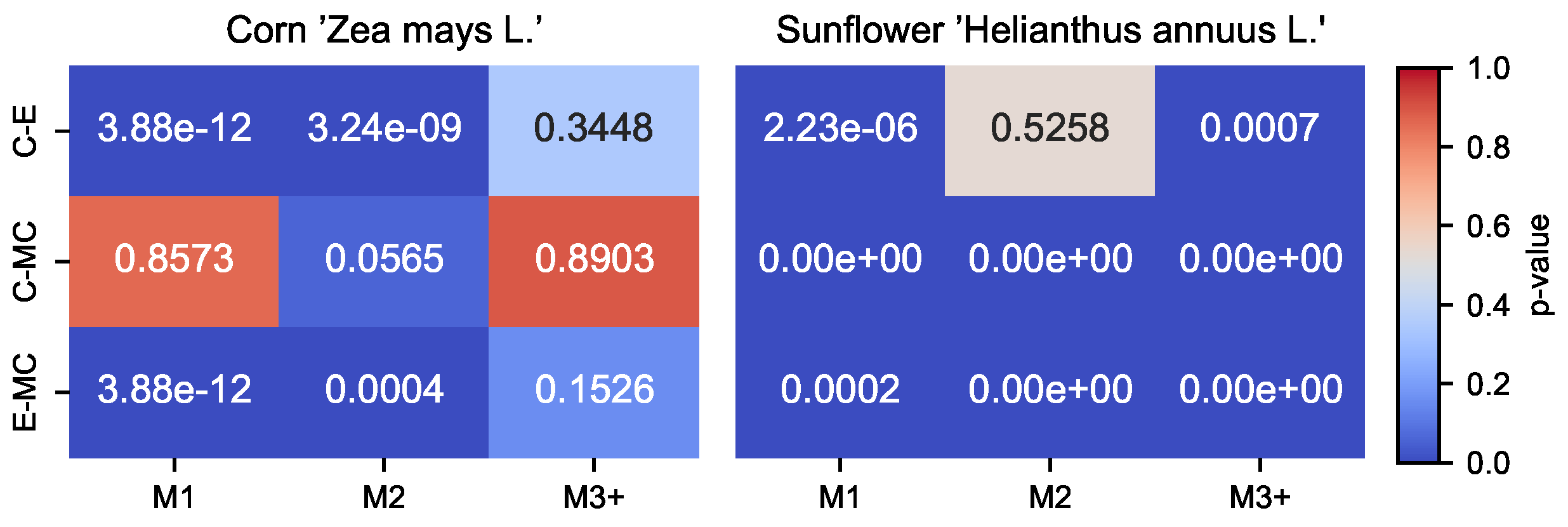
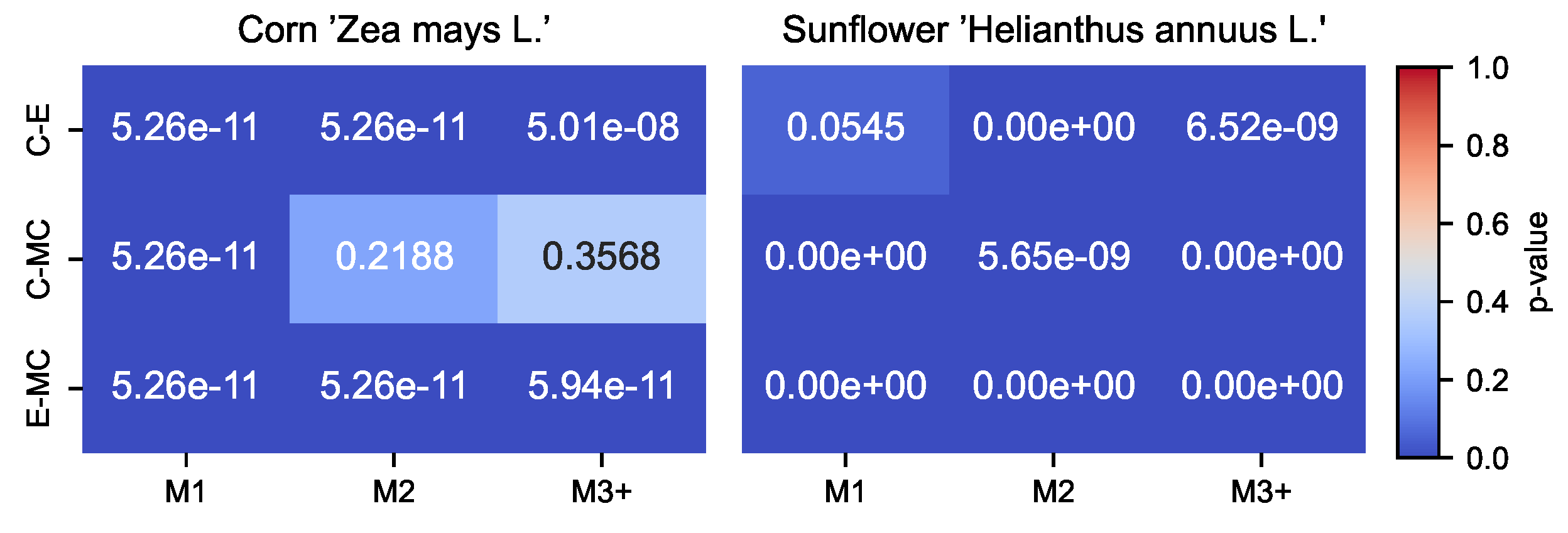
After 30 rpm, the datasets become highly inconsistent, even with the seed miss prevention system operating. This observation is further supported by the conducted Tukey test, which compares different experimental groups based on the number of misses and the state of the seed miss prevention system (Figure 7 and Figure 8). For corn seeds, however, an unfortunate outcome can be noted. Although the Hall sensor provides a reliable signal for seed detection and identification of misses, its effect is only evident at lower speeds. Due to higher seeding rate requirements for smaller seeds, the seed metering device itself was optimized for higher rotational speeds. At lower speeds, a significant number of seeds were discarded early by the finger spring loading mechanism and groove, which limited excessive seeds and resulted in numerous misses after the sensor. This can be further seen in Figure 7.
Higher p-values (Figure 7, C-MC) indicate that the installation of magnets does not affect the baseline performance of the corn seed metering device. The high p-values observed at M3 are also logical, as the SMPS cannot prevent three consecutive seed misses and therefore does not influence this parameter.
At higher operating speeds, the seed stream at the outlet of the metering device becomes increasingly unstable. Consequently, most of the multiple comparison tests yield low p-values, reflecting greater variation and stochasticity in the measurement of seed misses at the outlet of the seed metering device.

3.5. Impact of Seed Morphology on Detection Reliability

Seed morphology—encompassing form, dimensions, and mass—profoundly modulates finger-clip mechanics and consequent Hall sensor detection stability. Corn seeds (‘Dekalb DKC5032’) exhibit sphericality, augmented thickness (4–6 mm average), and mass (0.25–0.35 g/seed), eliciting consistent 3–5 mm clip elevation upon capture. This ensures magnet proximity within the calibrated threshold ( s < t ≈ 6 mm), yielding magnetic fields surpassing the 10–20 Gauss switch point. Empirical outcomes attribute corn’s near-flawless low-to-medium velocity (10–30 rpm) singulation and mitigation (miss index < 0.01, variance < 5%) to this.
Conversely, sunflower seeds (‘Astana’)—flattened (2–4 mm thickness), elongated, and lightweight (0.05–0.10 g/seed)—induce variable elevation (2–4 mm), skirting threshold margins and heightening vulnerability to tolerances, vibrations, or orientations. Low-mass seeds predispose to slippage or erratic gripping at < 10 rpm , where gravity and tension prevail, fostering intermittent false negatives or attenuated signals. This corroborates findings of elevated miss indices (≤0.15) at minimal velocities despite SMPS, as well as 50% reductions at 20–50 rpm via dynamic stabilization.
Mitigation entailed iterative calibration with micrometers and oscilloscopes, tailoring t per crop for >95% accuracy. Prospective refinements—adaptive thresholding via machine learning or modulated magnet intensities—could accommodate diverse morphologies. Ultimately, the Hall approach evinces robustness, albeit flat/lightweight seeds necessitate bespoke optimizations for field constancy.

4. Conclusions

This study demonstrated the successful implementation and evaluation of a Hall sensor-based Seed Miss Prevention System (SMPS) integrated into a long-belt finger-clip precision seed metering device. The developed system effectively detected missed seed events in real time and triggered immediate compensating actions, thereby improving the uniformity of seed distribution for both corn and sunflower crops.
For corn (Dekalb DKC5032), the SMPS achieved nearly complete elimination of seed misses within the low-to-moderate speed range of 10–30 rpm, with a miss index approaching zero. Even at higher operational speeds up to 80 rpm, the SMPS maintained a substantial reduction in misses compared to the control configuration, confirming its reliability under varying conditions. The system exhibited excellent signal stability and timing precision, allowing it to respond within the limited interval between successive seed releases.
For sunflower (Astana), the prevention effect was less pronounced due to the high morphological variability and low mass of the seeds, which introduced irregularities in trajectory and airflow interactions. Nevertheless, the SMPS consistently reduced the miss index—by up to 50% at medium speeds (20–60 rpm)—demonstrating adaptability to different seed geometries. Importantly, the integration of neodymium magnets for Hall effect sensing did not alter the mechanical behavior of the metering mechanism, ensuring that improvements were attributed solely to the active prevention algorithm rather than structural interference.
Overall, the results confirmed that the Hall sensor-based detection approach is a robust and cost-efficient alternative to optical or capacitive monitoring systems, offering resistance to dust, vibration, and lighting variations. The SMPS was most effective for single and double miss events, while its impact on preventing extended (more than 3 misses) consecutive misses was limited by the mechanical nature of the device.
The study establishes a foundation for further development of intelligent precision seeding technologies capable of self-diagnosing and correcting seed delivery errors in real time. The singulation performance of the metering device is inversely proportional to the operating speed, resulting in an increased incidence of doubles and higher seed velocity discrepancies at the outlet due to increased seed–wall collisions and a greater probability of seed escape before the belt chain chamber. Future work should focus on optimizing sensor placement, reducing actuation latency, and extending the system’s adaptability to different crops and field conditions. In the next stage of the research, we plan to conduct comprehensive field experiments to evaluate system performance under real operational variability and to validate its robustness in practical seeding environments. The demonstrated performance suggests strong potential for field integration, contributing to higher seeding accuracy, improved crop stand uniformity, and, ultimately, greater agricultural productivity.

5. Patents

As an outcome of this research, a national patent has been granted in the Republic of Kazakhstan: Kostyuchenkov, N.V.; Zagainov, N.A. Precision seeder sowing unit with a system for preventing seed skips in the row. Patent No. 37619, granted on 14 November 2025.

Author Contributions

Conceptualization, A.B. and N.Z.; methodology, A.B. and N.Z.; software, A.B. and N.Z.; validation A.B. and N.Z.; formal analysis, A.B.; investigation, A.B., N.Z. and S.Y.; resources, A.B. and N.K.; data curation, A.B.; writing—original draft preparation, A.B. and N.Z.; writing—review and editing, A.B., N.K., O.K. and N.Z.; visualization, A.B. and N.Z.; supervision, N.Z.; project administration, N.K.; funding acquisition, A.B. All authors have read and agreed to the published version of the manuscript.

Funding

This research was funded by the Science Committee of the Ministry of Science and Higher Education of the Republic of Kazakhstan (Grant No. AP19678776), “Development of a novel seed miss prevention system and modernization of a precision seed metering device”.

Institutional Review Board Statement

Not applicable.

Informed Consent Statement

Not applicable.

Data Availability Statement

The dataset presented in this study is openly available in the Zenodo repository at https://doi.org/10.5281/zenodo.17406681 accessed on 23 October 2025.

Conflicts of Interest

The authors declare no conflicts of interest.

References

  1. Pereyra, V.M.; Bastos, L.M.; de Borja Reis, A.F.; Melchiori, R.J.; Maltese, N.E.; Appelhans, S.C.; Vara Prasad, P.; Wright, Y.; Brokesh, E.; Sharda, A.; et al. Early-season plant-to-plant spatial uniformity can affect soybean yields. Sci. Rep. 2022, 12, 17128. [Google Scholar] [CrossRef] [PubMed]
  2. Zhai, C.; Long, J.; Taylor, R.; Weckler, P.; Wang, N. Field scale row unit vibration affecting planting quality. Precis. Agric. 2020, 21, 589–602. [Google Scholar] [CrossRef]
  3. Zhang, C.; Xie, X.; Zheng, Z.; Wu, X.; Wang, W.; Chen, L. A plant unit relates to missing seeding detection and reseeding for maize precision seeding. Agriculture 2022, 12, 1634. [Google Scholar] [CrossRef]
  4. Kimmelshue, C.L.; Goggi, A.S.; Moore, K.J. Single-plant grain yield in corn (Zea mays L.) based on emergence date, seed size, sowing depth, and plant to plant distance. Crops 2022, 2, 62–86. [Google Scholar] [CrossRef]
  5. Celik, A.; Ozturk, I.; Way, T.R. Effects of various planters on emergence and seed distribution uniformity of sunflower. Appl. Eng. Agric. 2007, 23, 57–61. [Google Scholar] [CrossRef]
  6. Zalai, M.; Bojtor, C.; Nagy, J.; Széles, A.; Monoki, S.; Illés, Á. Challenges in Precision Sunflower Cultivation: The Impact of the Agronomic Environment on the Quality of Precision Sowing Techniques and Yield Parameters. AgriEngineering 2025, 7, 145. [Google Scholar] [CrossRef]
  7. Olson, N.A.; Trostle, C.; Meyer, R.; Hulke, B.S. Canopy closure, yield, and quality under heterogeneous plant spacing in sunflower. Agron. J. 2024, 116, 2275–2283. [Google Scholar] [CrossRef]
  8. Yernaidu, Y.; Sreelatha, T.; Gosavi, S.V.; Tamminaina, S.K.; Nalabolu, V. Problems of Seed Setting and its Management in Sunflower. In Advanced Research and Review; Bright Sky Publications: Delhi, India, 2023; pp. 53–67. [Google Scholar]
  9. Wang, G.; Yang, X.; Wei, S.; Yan, L.; Wang, C.; Hua, Z.; Liu, X.; Bin, F.; Li, H. Potato seed-metering monitoring and improved miss-seeding catching-up compensation control system using spatial capacitance sensor. Int. J. Agric. Biol. Eng. 2024, 17, 255–264. [Google Scholar] [CrossRef]
  10. Xing, H.; Wan, Y.; Zhong, P.; Lin, J.; Huang, M.; Yang, R.; Zang, Y. Design and experimental analysis of real-time detection system for The seeding accuracy of rice pneumatic seed metering device based on the improved YOLOv5n. Comput. Electron. Agric. 2024, 227, 109614. [Google Scholar] [CrossRef]
  11. Ren, L.; Wang, S.; Hu, B.; Li, T.; Zhao, M.; Zhang, Y.; Yang, M. Seed State-Detection Sensor for a Cotton Precision Dibble. Agriculture 2023, 13, 1515. [Google Scholar] [CrossRef]
  12. Liu, Z.; Xia, J.; Hu, M.; Du, J.; Luo, C.; Zheng, K. Design and analysis of a performance monitoring system for a seed metering device based on pulse width recognition. PLoS ONE 2021, 16, e0261593. [Google Scholar] [CrossRef]
  13. Deng, S.; Feng, Y.; Cheng, X.; Wang, X.; Zhang, X.; Wei, Z. Disturbance analysis and seeding performance evaluation of a pneumatic-seed spoon interactive precision maize seed-metering device for plot planting. Biosyst. Eng. 2024, 247, 221–240. [Google Scholar] [CrossRef]
  14. Yin, Y.; Chen, L.; Meng, Z.; Li, B.; Luo, C.; Fu, W.; Mei, H.; Qin, W. Design and evaluation of a maize monitoring system for precision planting. Int. J. Agric. Biol. Eng. 2018, 11, 186–192. [Google Scholar] [CrossRef]
  15. Liu, W.; Hu, J.; Zhao, X.; Pan, H.; Lakhiar, I.A.; Wang, W.; Zhao, J. Development and experimental analysis of a seeding quantity sensor for the precision seeding of small seeds. Sensors 2019, 19, 5191. [Google Scholar] [CrossRef]
  16. Zagainov, N.; Kostyuchenkov, N.; Huang, Y.; Sugirbay, A.; Xian, J. Line laser based sensor for real-time seed counting and seed miss detection for precision planter. Opt. Laser Technol. 2023, 167, 109742. [Google Scholar] [CrossRef]
  17. Wang, S.; Yi, S.; Zhao, B.; Li, Y.; Wang, G.; Li, S.; Sun, W. Photoelectric sensor-based belt-type high-speed seed guiding device performance monitoring method and system. Comput. Electron. Agric. 2024, 227, 109489. [Google Scholar] [CrossRef]
  18. Karimi, H.; Navid, H.; Besharati, B.; Behfar, H.; Eskandari, I. A practical approach to comparative design of non-contact sensing techniques for seed flow rate detection. Comput. Electron. Agric. 2017, 142, 165–172. [Google Scholar] [CrossRef]
  19. Bai, S.; Yuan, Y.; Niu, K.; Shi, Z.; Zhou, L.; Zhao, B.; Wei, L.; Liu, L.; Zheng, Y.; An, S.; et al. Design and experiment of a sowing quality monitoring system of cotton precision hill-drop planters. Agriculture 2022, 12, 1117. [Google Scholar] [CrossRef]
  20. Xie, C.; Yang, L.; Zhang, D.; Cui, T.; Zhang, K.; He, X.; Du, Z. Design of smart seed sensor based on microwave detection method and signal calculation model. Comput. Electron. Agric. 2022, 199, 107178. [Google Scholar] [CrossRef]
  21. Zhang, J.; Hou, Y.; Ji, W.; Zheng, P.; Yan, S.; Hou, S.; Cai, C. Evaluation of a Real-Time Monitoring and Management System of Soybean Precision Seed Metering Devices. Agronomy 2023, 13, 541. [Google Scholar] [CrossRef]
  22. Tang, H.; Xu, C.; Wang, Z.; Wang, Q.; Wang, J. Optimized Design, Monitoring System Development and Experiment for a Long-Belt Finger-Clip Precision Corn Seed Metering Device. Front. Plant Sci. 2022, 13, 814747. [Google Scholar] [CrossRef]
  23. Zhou, L.; Wang, S.; Zhang, X.; Yuan, Y.; Zhang, J. Seed monitoring system for corn planter based on capacitance signal. Trans. Chin. Soc. Agric. Eng. 2012, 28, 16–21. [Google Scholar]
  24. Sun, Y.J.; Jia, H.L.; Ren, D.L.; Yan, J.J.; Liu, Y. Experimental study of capacitance sensors to test seed-flow. Appl. Mech. Mater. 2013, 347, 167–170. [Google Scholar] [CrossRef]
  25. Jianguo, C.; Yanming, L.; Chengjin, Q.; Chengliang, L. Design and experiment of precision detecting system for wheat-planter seeding quantity. Nongye Jixie Xuebao/Trans. Chin. Soc. Agric. Mach. 2019, 50, 73–81. [Google Scholar]
  26. Xu, L.; Hu, B.; Li, J.; Ren, L.; Guo, M.; Mao, Z.; Cai, Y.; Sun, S. An efficient seeding state monitoring system of a pneumatic dibbler based on an interdigital capacitive sensor. Comput. Electron. Agric. 2023, 209, 107856. [Google Scholar] [CrossRef]
  27. Huang, D.; Jia, H.; Qi, Y.; Zhu, L.; Li, H. Seeding monitor system for planter based on polyvinylidence fluoride piezoelectric film. Trans. Chin. Soc. Agric. Eng. 2013, 29, 15–22. [Google Scholar]
  28. Huang, D.; Zhu, L.; Jia, H.; Yu, T.; Yan, J. Remote monitoring system for corn seeding quality based on GPS and GPRS. Trans. Chin. Soc. Agric. Eng. 2016, 32, 162–168. [Google Scholar]
  29. Jin, X.; Zhao, K.; Ji, J.; Qiu, Z.; He, Z.; Ma, H. Design and experiment of intelligent monitoring system for vegetable fertilizing and sowing. J. Supercomput. 2020, 76, 3338. [Google Scholar] [CrossRef]
  30. Rossi, S.; Scola, I.; Bourges, G.; Šarauskis, E.; Karayel, D. Improving the seed detection accuracy of piezoelectric impact sensors for precision seeders. Part I: A comparative study of signal processing algorithms. Comput. Electron. Agric. 2023, 215, 108449. [Google Scholar] [CrossRef]
  31. Gierz, Ł.; Kruszelnicka, W.; Robakowska, M.; Przybył, K.; Koszela, K.; Marciniak, A.; Zwiachel, T. Optimization of the Sowing Unit of a Piezoelectrical Sensor Chamber with the Use of Grain Motion Modeling by Means of the Discrete Element Method. Case Study: Rape Seed. Appl. Sci. 2022, 12, 1594. [Google Scholar] [CrossRef]
  32. Pimentel, A.; Ferreira, S.H.; Nunes, D.; Calmeiro, T.; Martins, R.; Fortunato, E. Microwave synthesized ZnO nanorod arrays for UV sensors: A seed layer annealing temperature study. Materials 2016, 9, 299. [Google Scholar] [CrossRef]
  33. Boydas, M.G. Determination of low mass flow rate of wheat in a seed drill usinga microwave Doppler sensor. Span. J. Agric. Res. 2025, 23, 2. [Google Scholar] [CrossRef]
  34. Cakir, E.; Aygün, İ.; Yazgi, A.; Karabulut, Y. Determination of in-row seed distribution uniformity using image processing. Turk. J. Agric. For. 2016, 40, 874–881. [Google Scholar] [CrossRef]
  35. Dong, W.; Ma, X.; Li, H.; Tan, S.; Guo, L. Detection of performance of hybrid rice pot-tray sowing utilizing machine vision and machine learning approach. Sensors 2019, 19, 5332. [Google Scholar] [CrossRef]
  36. Bai, J.; Hao, F.; Cheng, G.; Li, C. Machine vision-based supplemental seeding device for plug seedling of sweet corn. Comput. Electron. Agric. 2021, 188, 106345. [Google Scholar] [CrossRef]
  37. Zhang, W.; Zhao, B.; Gao, S.; Ji, Y.; Zhou, L.; Niu, K.; Qiu, Z.; Jin, X. Online Recognition of Small Vegetable Seed Sowing Based on Machine Vision. IEEE Access 2023, 11, 134331–134339. [Google Scholar] [CrossRef]
  38. Borja, A.A.; Amongo, R.M.C.; Suministrado, D.; Pabico, J. A machine vision assisted mechatronic seed meter for precision planting of corn. In Proceedings of the 2018 3rd International Conference on Control and Robotics Engineering (ICCRE), Nagoya, Japan, 20–23 April 2018; pp. 183–187. [Google Scholar] [CrossRef]
  39. Thomas, G.; Balocco, S.; Mann, D.; Simundsson, A.; Khorasani, N. Intelligent agricultural machinery using deep learning. IEEE Instrum. Meas. Mag. 2021, 24, 93–100. [Google Scholar] [CrossRef]
  40. Rizvi, S.M.H.; Naseer, A.; Rehman, S.U.; Akram, S.; Gruhn, V. Revolutionizing agriculture: Machine and deep learning solutions for enhanced crop quality and weed control. IEEE Access 2024, 12, 11865–11878. [Google Scholar] [CrossRef]
  41. Chen, C.; Chen, W.; Zhang, X.; Qiu, M.; Jin, B.; He, J.; Xu, C.; Chen, L.; Wan, Y. A scene-adaptive reseeding system with missed seeding detection for double-disc air-suction seed meter based on an improved YOLOv8n algorithm. Comput. Electron. Agric. 2025, 237, 110682. [Google Scholar] [CrossRef]
  42. Kang, H.; Zhou, H.; Wang, X.; Chen, C. Real-time fruit recognition and grasping estimation for robotic apple harvesting. Sensors 2020, 20, 5670. [Google Scholar] [CrossRef]
  43. Maraveas, C.; Asteris, P.G.; Arvanitis, K.G.; Bartzanas, T.; Loukatos, D. Application of bio and nature-inspired algorithms in agricultural engineering. Arch. Comput. Methods Eng. 2023, 30, 1979–2012. [Google Scholar] [CrossRef]
  44. Li, H.; Zhang, H.; Liu, X.; Li, H.; Jia, S.; Sun, W.; Wang, G.; Quan, F.; Yang, S. Design and experiment of miss-seeding detection and preparatory seed scraper-belt compensation mechanism based on improved YOLOv5s for potato seed-metering devices. Front. Plant Sci. 2025, 16, 1686174. [Google Scholar] [CrossRef] [PubMed]
  45. Nikolay, Z.; Nikolay, K.; Gao, X.; Wei Li, Q.; Peng Mi, G.; Xiang Huang, Y. Design and testing of novel seed miss prevention system for single seed precision metering devices. Comput. Electron. Agric. 2022, 198, 107048. [Google Scholar] [CrossRef]
  46. Bakirov, A.; Kostyuchenkov, N.; Kostyuchenkova, O.; Grishin, A.; Omarbekova, A.; Zagainov, N. Application of Seed Miss Prevention System for a Spoon-Wheel Type Precision Seed Metering Device: Effectiveness and Limitations. Agriculture 2025, 15, 1363. [Google Scholar] [CrossRef]
Figure 1. Structural diagram of finger-clip precision seed metering devices; (a) sunflower seed metering device; (b) corn seed metering device. 1—front cover; 2—seed-pick finger-clip; 3—wear plate; 4—middle cover (or backing plate); 5—upper seed guide pulley; 6—seed guide belt; 7—shield housing (casing); 8—lower seed guide pulley; 9—finger pressure plate.
Agriengineering 07 00436 g001
Figure 2. Operating principle of the Hall sensor for seed detection in the finger-clip seed metering device; (a) when no seed is captured, the magnetic field remains below the sensor’s activation threshold ( s < t ); (b) when a seed is present, the finger clip rises, bringing the magnet closer and triggering the Hall sensor ( s > t ).
Agriengineering 07 00436 g002
Figure 3. Control PCB board of the seed metering device. 1—WROOM ESP32; 2—red LED; 3—seed miss sensor socket; 4—UART socket; 5—ceramic capacitor; 6—stepper motor driver socket; 7—reboot push button; 8—5 V socket; 9—CAN bus module; 10—Step-Down Converter from 5 V to 3.3 V; 11—electrolytic capacitor; 12—green LED; 13—yellow LED; 14—blue LED; 15 —boot mode jumpers; 16—seed miss sensor socket; 17—CAN bus module; 18—DB9 connector.
Agriengineering 07 00436 g003
Figure 4. Retrofitting the long-belt finger-clip precision seed metering devices. (a) Sunflower metering device; (b) corn metering device; (c) location of hall sensor on corn metering device; (d) location of hall sensor on sunflower metering device. 1—adapter for Hall sensor; 2—Hall sensor (NJK-5002C); 3—ejection point; 4—seed-pick finger-clip with neodymium magnet; 5—corn seed; 6—sunflower seed.
Agriengineering 07 00436 g004
Figure 5. Laboratory experimental setup for control and data acquisition of the long-belt finger-clip precision seed metering device. 1—seed metering device; 2—Hall sensor (NJK-5002C); 3—optical seed detection sensor (Planter 2NPN KUHN); 4—Android-based control and data acquisition interface (BLE connection); 5—ESP32-based control board and signal-processing PCB; 6—stepper motor driver; 7—regulated power supply.
Agriengineering 07 00436 g005
Figure 6. Comparative analysis of operational modes for corn ‘Dekalb DKC5032’.
Agriengineering 07 00436 g006
Figure 7. p-values obtained from pairwise Tukey HSD statistical analysis performed at rotational speeds ranging from 10 to 30 rpm. C—SMPS disabled, without magnets; MC—SMPS enabled, with magnets; E—SMPS enabled, with magnets; M1—comparison with single misses data; M2—comparison with double misses data; M3+—comparison with 3 or more misses data; C-MC—comparison between C and MC; C-E—comparison between C and E; E-MC—comparison between E and MC.
Agriengineering 07 00436 g007
Figure 8. p-values obtained from pairwise Tukey HSD statistical analysis performed at rotational speeds ranging from 10 to 80 rpm. C—SMPS disabled, without magnets; MC—SMPS enabled, with magnets; E—SMPS enabled, with magnets; M1—comparison with single misses data; M2—comparison with double misses data; M3+—comparison with 3 or more misses data; C-MC—comparison between C and MC; C-E—comparison between C and E; E-MC—comparison between E and MC.
Agriengineering 07 00436 g008
Table 1. Physical properties of seed varieties used in experiments.
Seed VarietyThousand-
Grain Weight/g
ParametersMaximum
Value/mm
Minimum
Value/mm
Average
Value/mm
Sunflower
Astana “Medium”
95.48Length12.219.6810.95
Width5.984.305.14
Height8.676.217.44
Corn
Dekalb DKC5032
343.2Length13.688.9811.12
Width5.953.524.74
Height9.676.547.87
Table 2. Experimental results.
ModeCultivarSeed Prevention Disabled, without MagnetsSeed Prevention Disabled, with MagnetsSeed Prevention Enabled, with Magnets
rpm
101520253040506070801015202530405060708010152025304050607080
CountCorn ‘Dekalb DKC5032’307831323139313330753105304330963068313130933143310031203140308730433113310131013131311030203124325331323115312531933116
Sunflower ‘Astana’303721993018307031483046314430133039306030193109302431233029310230313022303530333144312831373106305330843056315829973189
Single
Misses
Corn ‘Dekalb DKC5032’11111211118826453367173664267711811715819418424236671569567812151829324238298106261
Sunflower ‘Astana’201508553681543534509503493517643716624716551594527479498537576756523723450464441365393358
Double
Misses
Corn ‘Dekalb DKC5032’6106414278110811512338356525106142148000002110221634
Sunflower ‘Astana’402471882861781461271241061052994102273111981501151231001071343771392971208043324229
More than
two Misses
Corn ‘Dekalb DKC5032’030002514201413000011624260000000104
Sunflower ‘Astana’4416141230736043212741495549209269986145442124167500682512910107264
Miss
Index
Corn ‘Dekalb DKC5032’0.0380.0430.0380.0590.0870.1600.2180.2430.2330.2360.0390.0440.0500.0610.0590.0750.1210.2390.2530.2540.0000.0010.0050.0060.0090.1050.0760.0990.0410.099
Sunflower ‘Astana’0.0890.5550.3230.4090.2690.2530.2240.2140.2060.2190.5310.5520.3870.4270.3020.2640.2310.2230.2020.2150.3260.5310.2490.4230.2060.1750.1540.1250.1650.118
Disclaimer/Publisher’s Note: The statements, opinions and data contained in all publications are solely those of the individual author(s) and contributor(s) and not of MDPI and/or the editor(s). MDPI and/or the editor(s) disclaim responsibility for any injury to people or property resulting from any ideas, methods, instructions or products referred to in the content.