


Smart Sensing in Italian Historic City Centers: The Liminal Environmental Monitoring System (LEMS)
 , , , , , , , and
Highlights
- A flexible, low-cost Liminal Environmental Monitoring System (LEMS) was designed and calibrated to reliably measure temperature, humidity and solar irradiance in heritage-compatible, liminal spaces.
- Combining LEMS data with a 3D-ray tracing based shading indicator enables a clear separation between geometric shading and meteorological effects in the analysis of microclimate conditions.
- LEMSs provide a practical, heritage-compatible tool to build a dense microclimate monitoring network, supporting conservation and comfort assessment in smart heritage districts.
- The proposed measurement-simulation workflow can be replicated and scaled as a building block for urban digital twins and a smart-city platform.
Abstract
1. Introduction
2. Materials and Methods
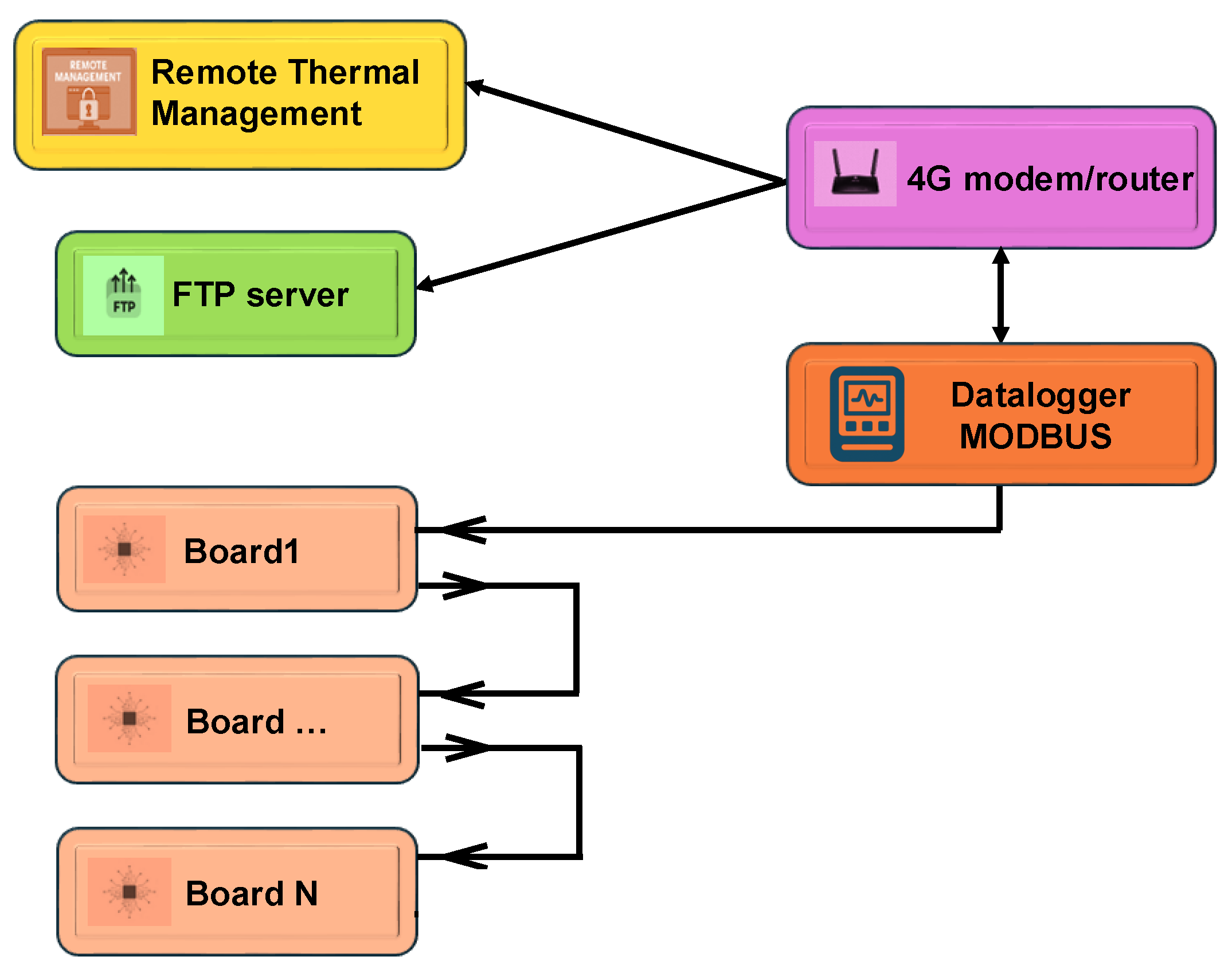
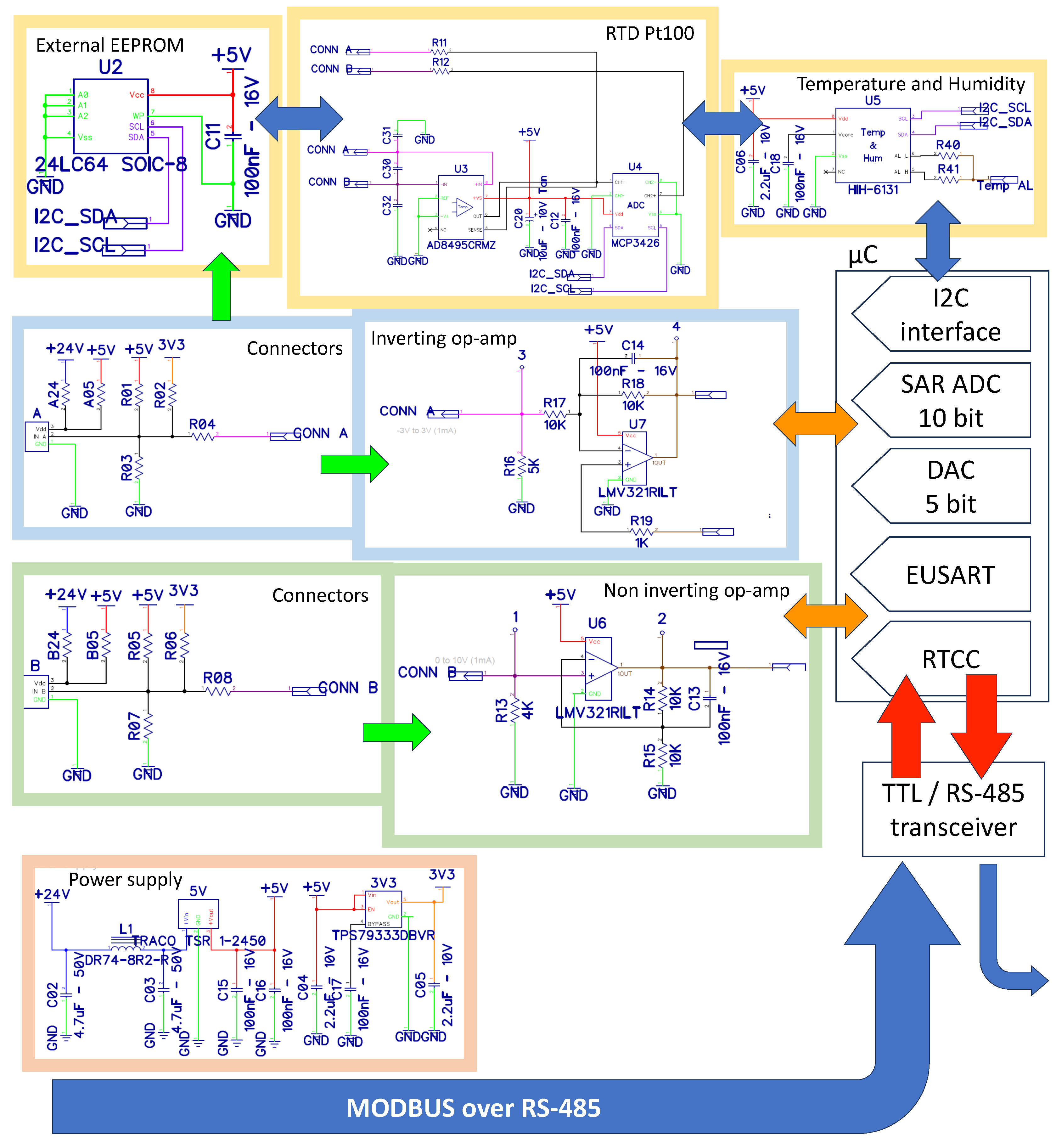
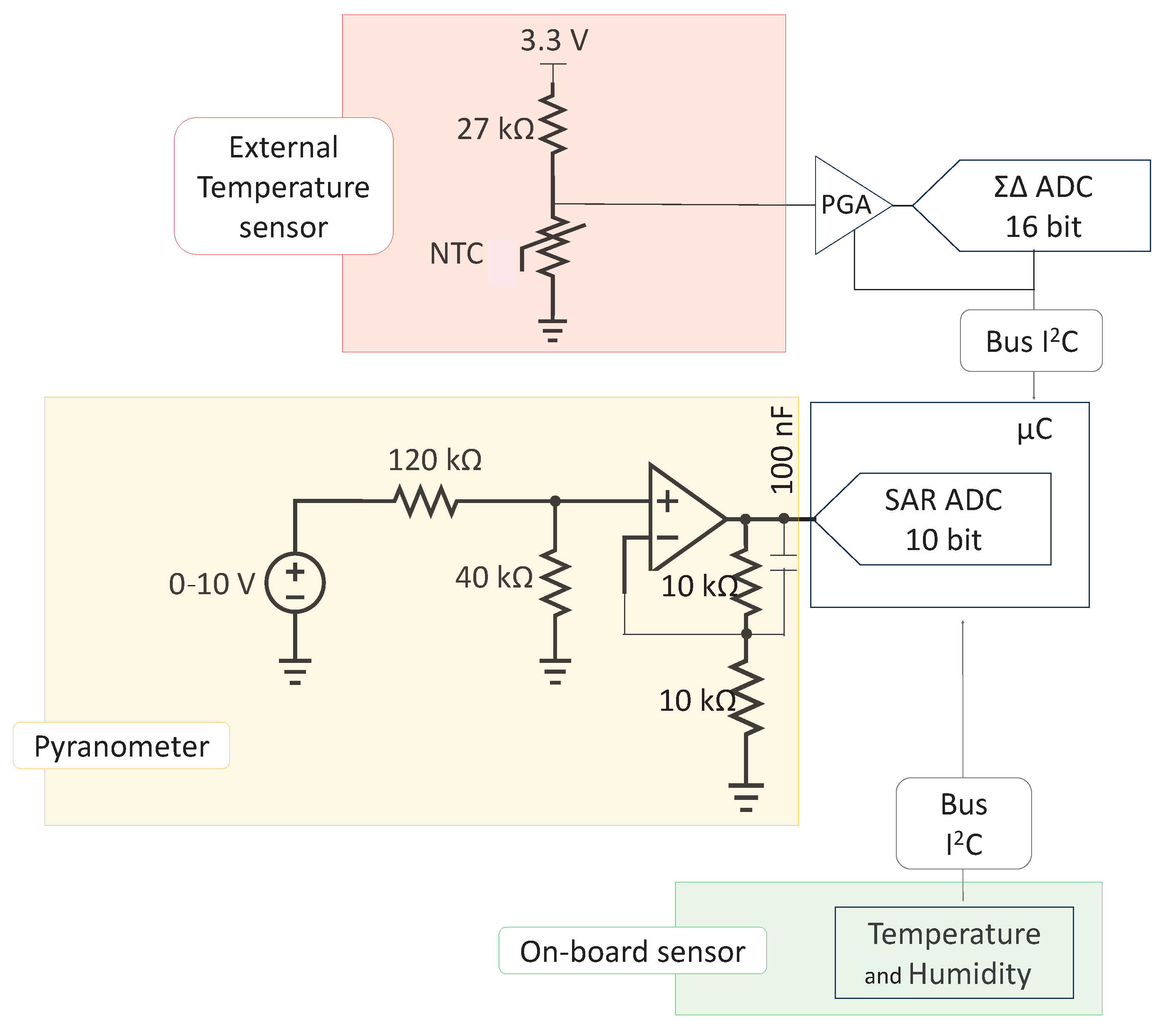
2.1. Liminal Environmental Monitoring System (LEMS) Architecture
2.2. Monitoring Configurations
2.2.1. Configuration 1: RH, NTC, PYRA
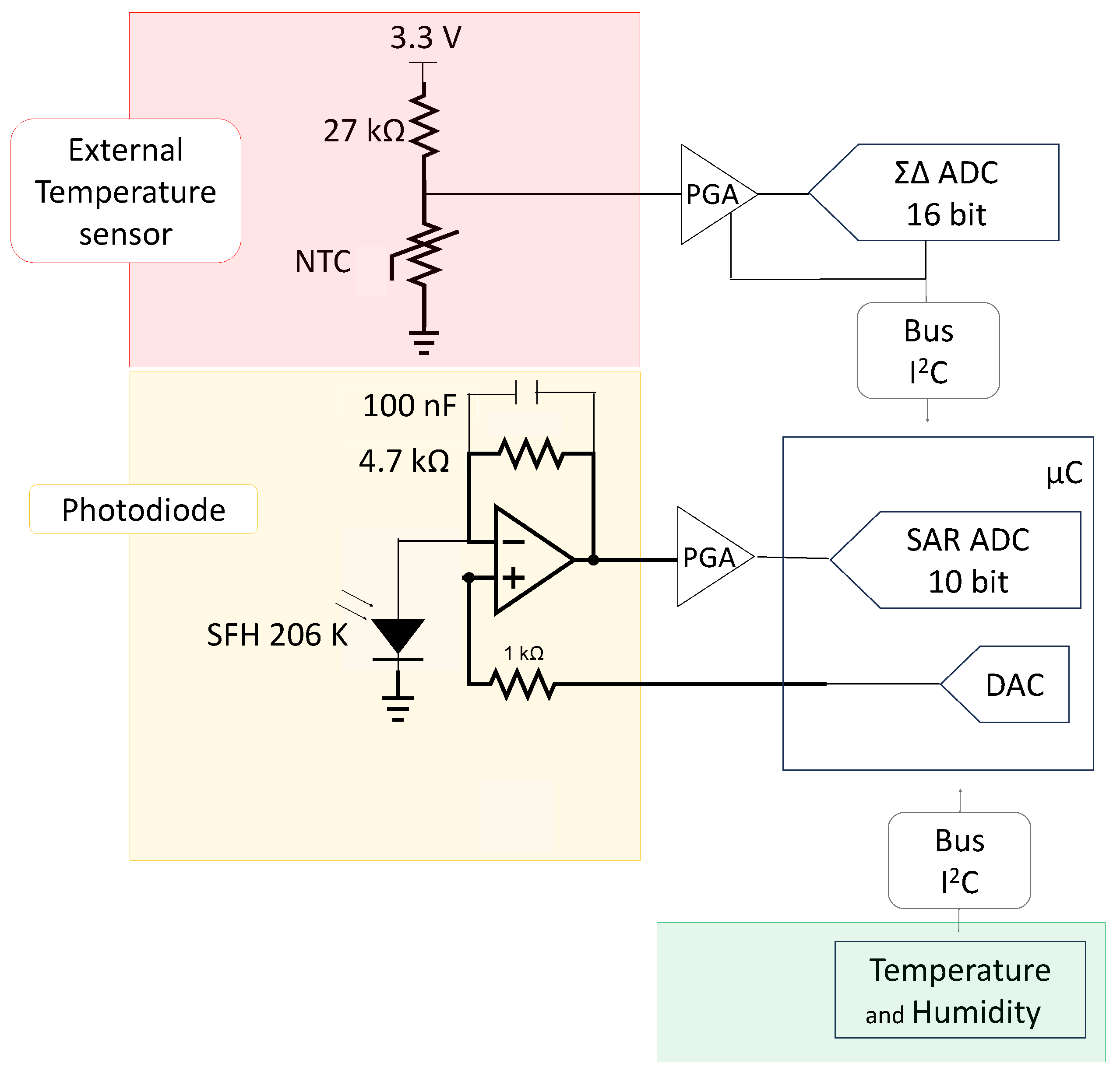
2.2.2. Configuration 2: NTC, RH, PHOTO
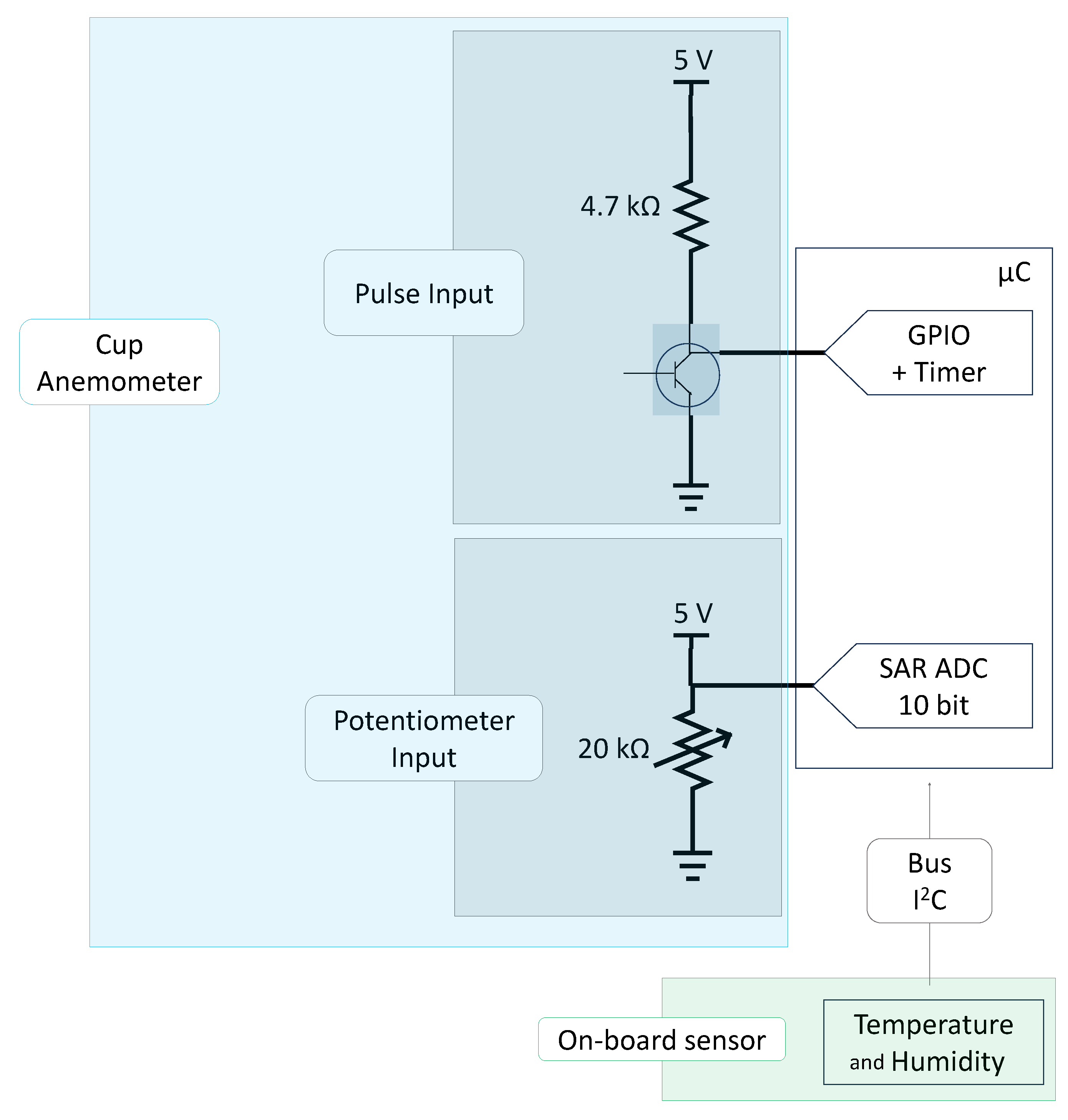
2.2.3. Configuration 3: RH, ANEMOMETER
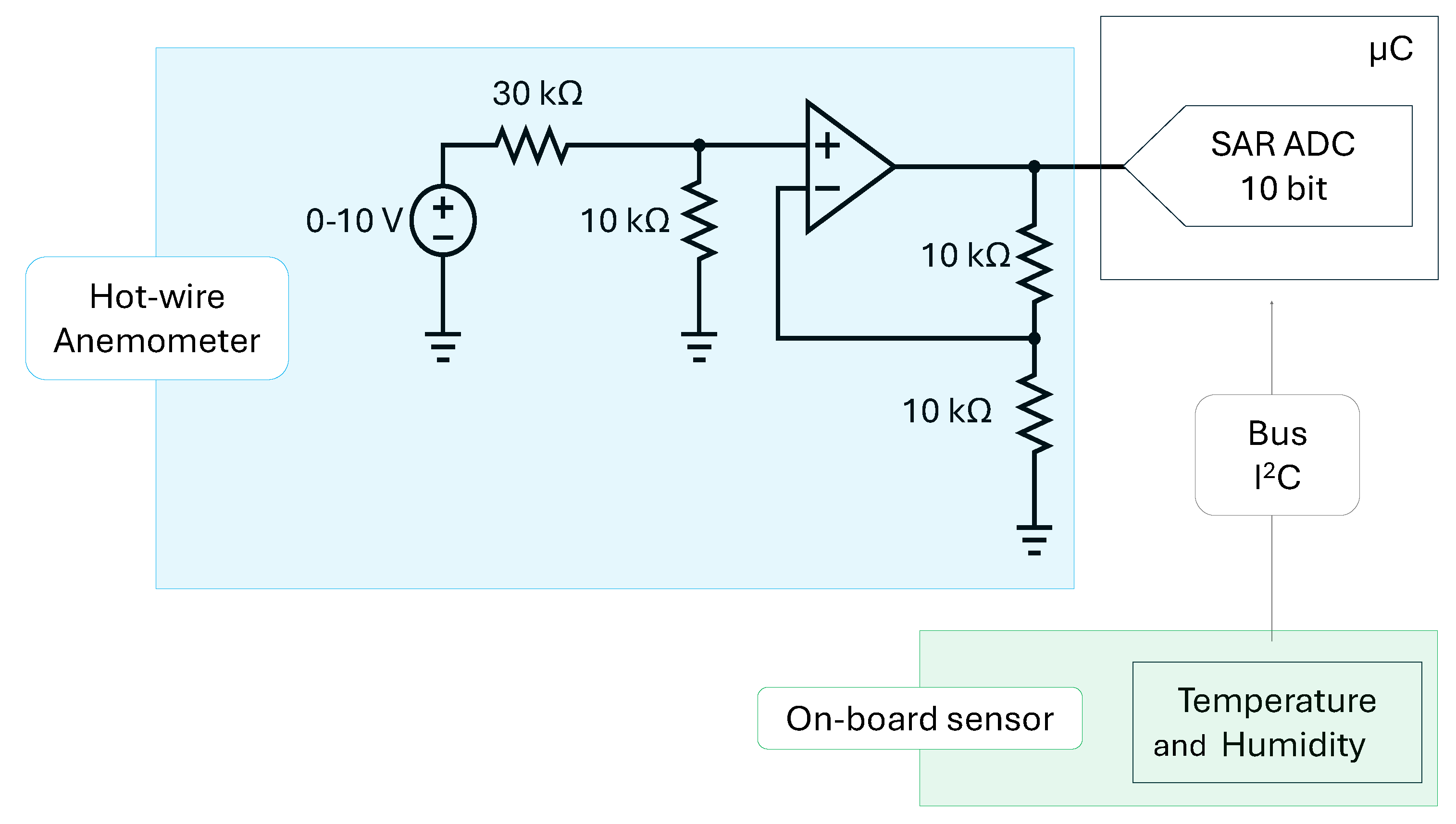
2.2.4. Configuration 4: RH, HOT WIRE
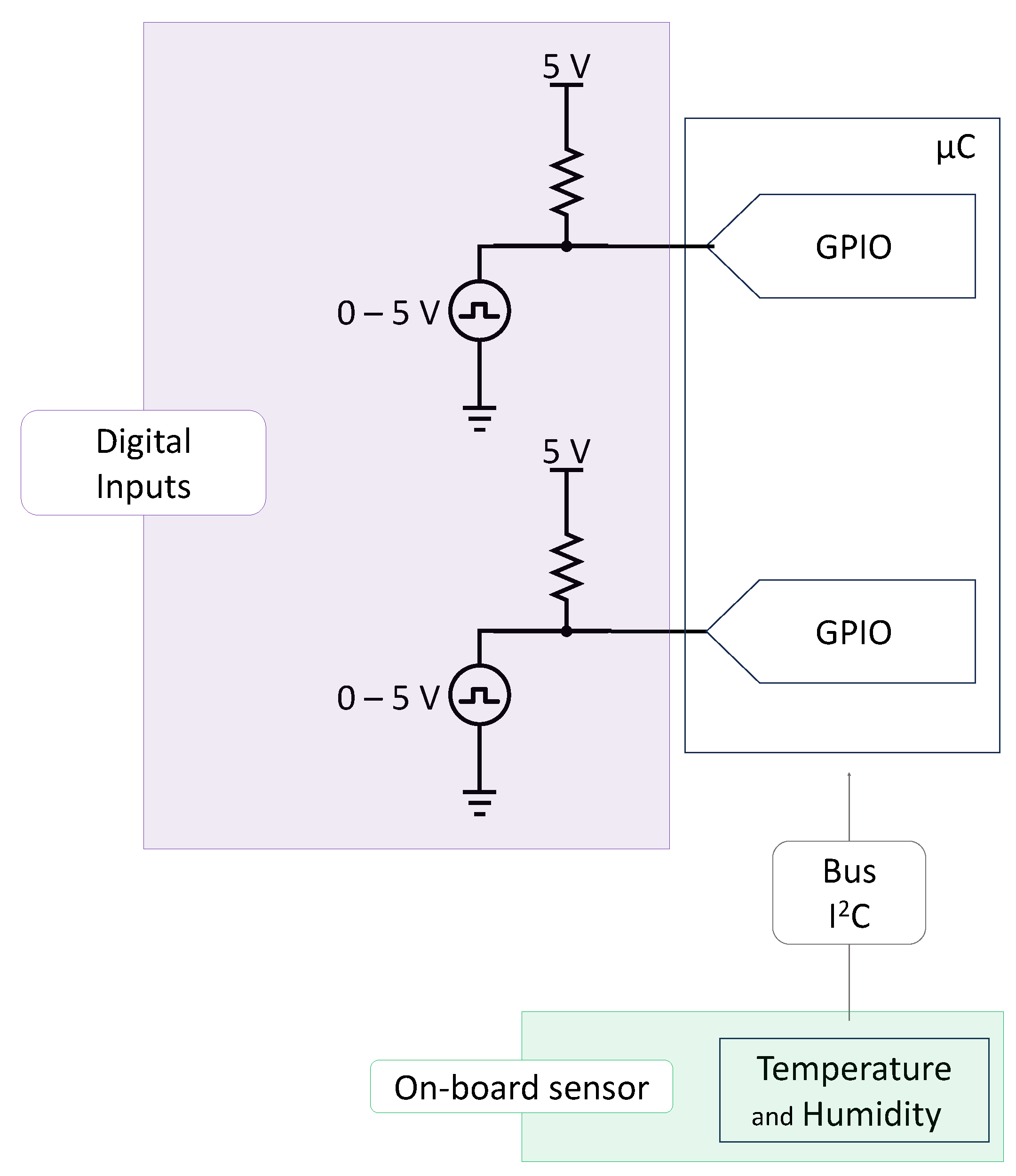
2.2.5. Configuration 5: RH, DI
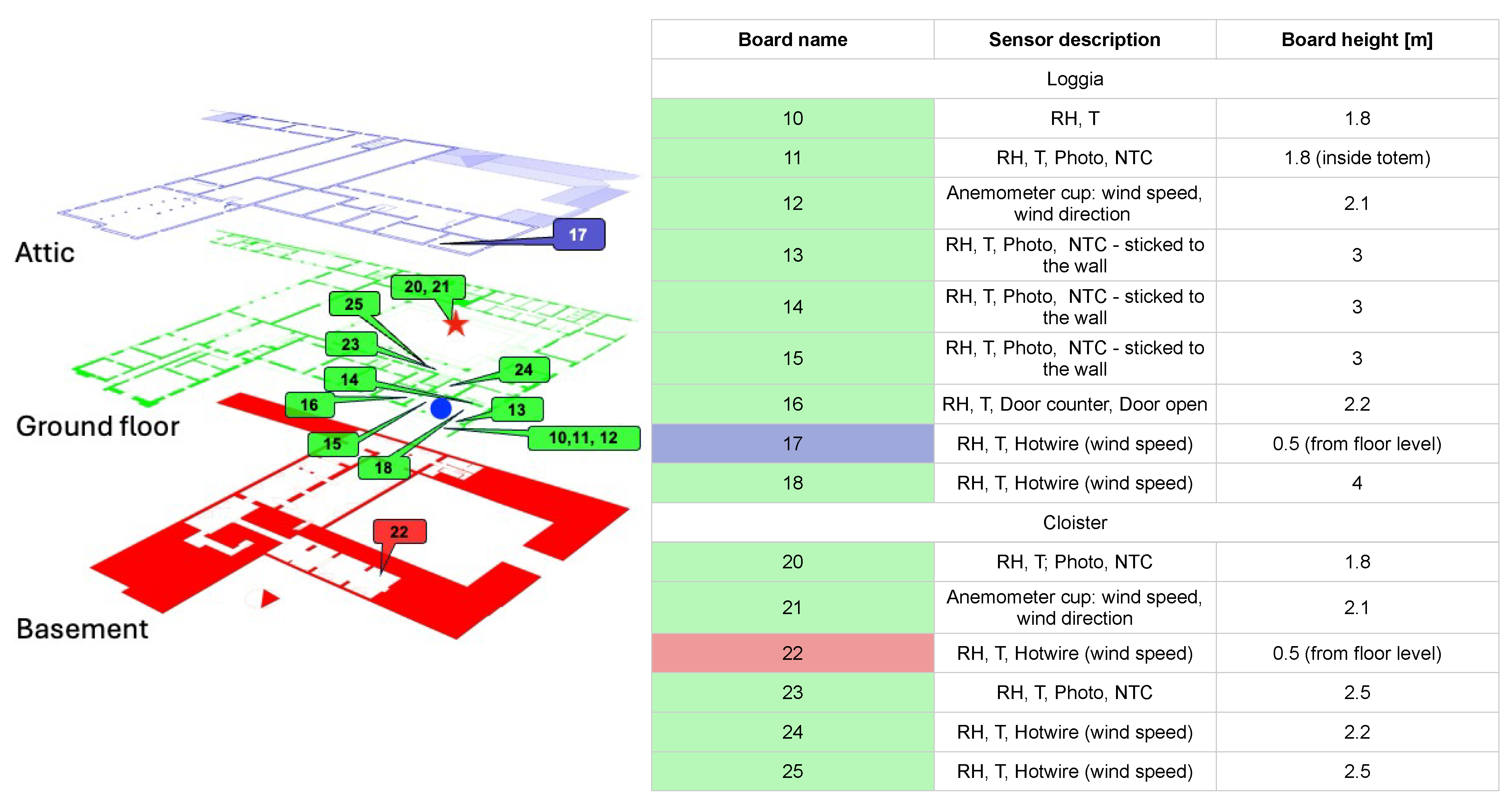
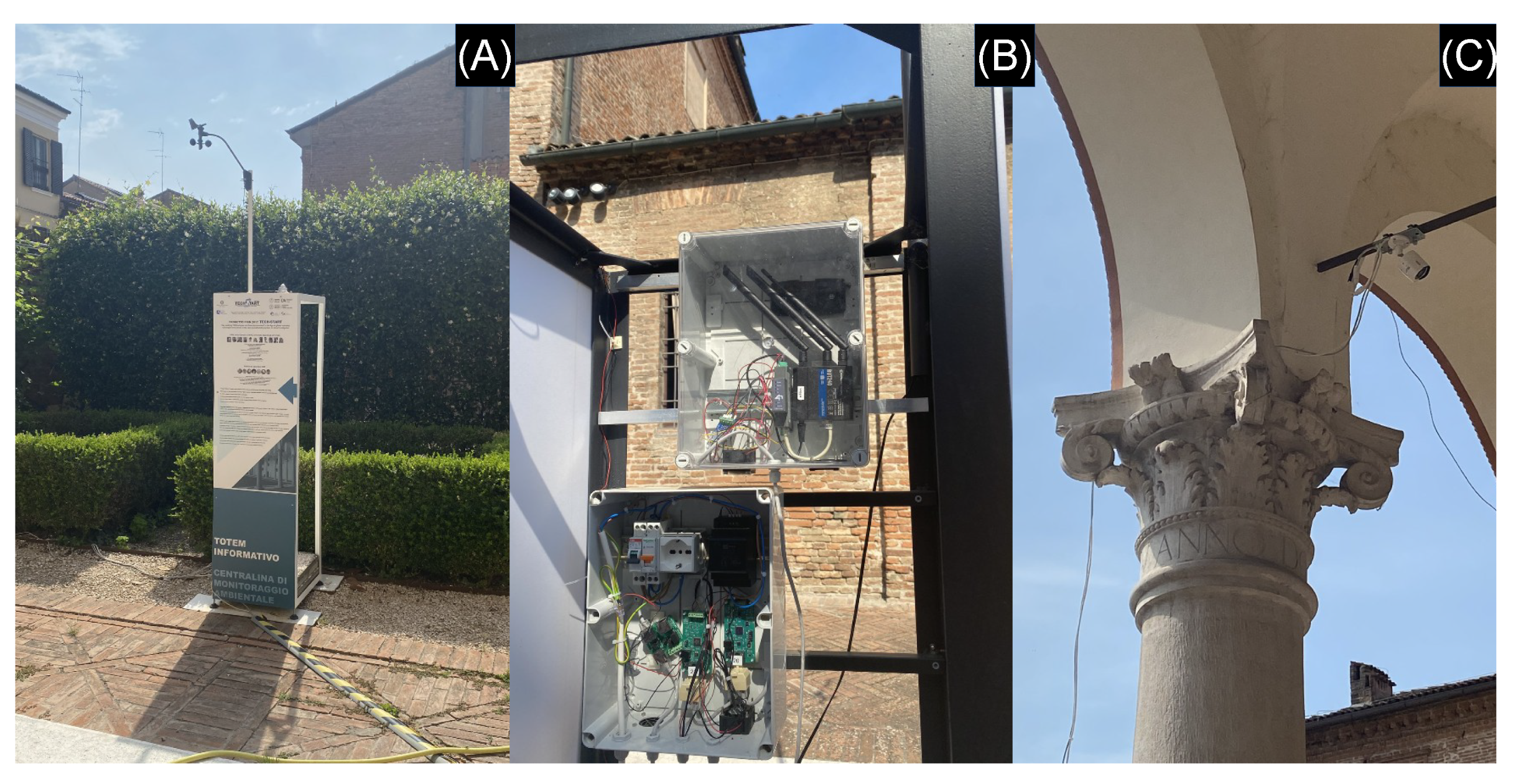
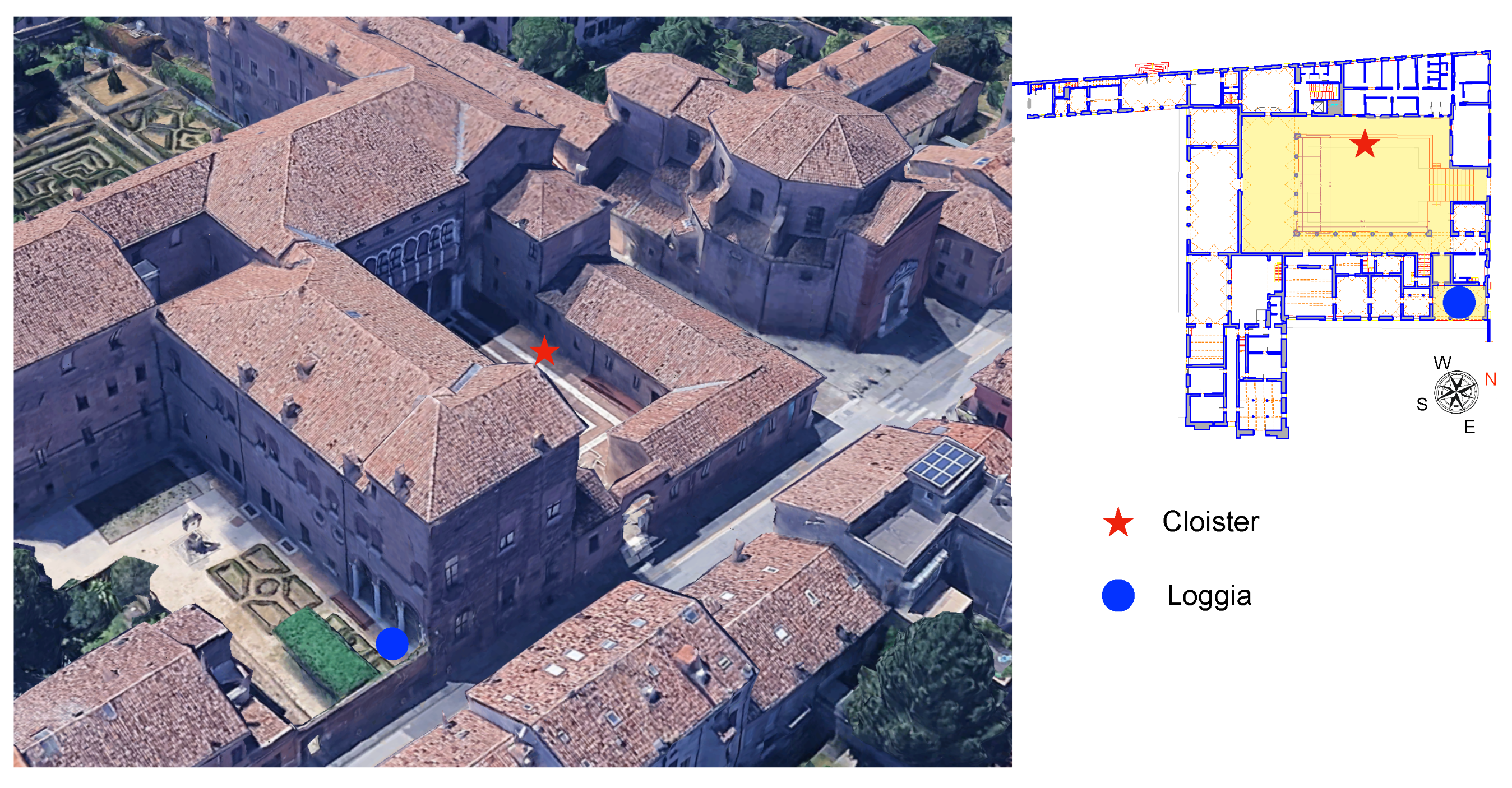
3. Case Study: Palazzo Costabili
- Absence of exceptional external factors that could compromise data collection, such as the presence of heat-emitting machinery or movements that could alter the normal use of the space;
- Height (distance from ground level) as close as possible to human level (to measure the parameters at the point perceived by the user) but still high enough that museum visitors could not interfere with data collection by touching or moving the equipment;
- Principle of reversibility, meaning that the installation of the equipment would not cause damage to the historic structure, strongly required when working on heritage buildings of significant value.
4. Results
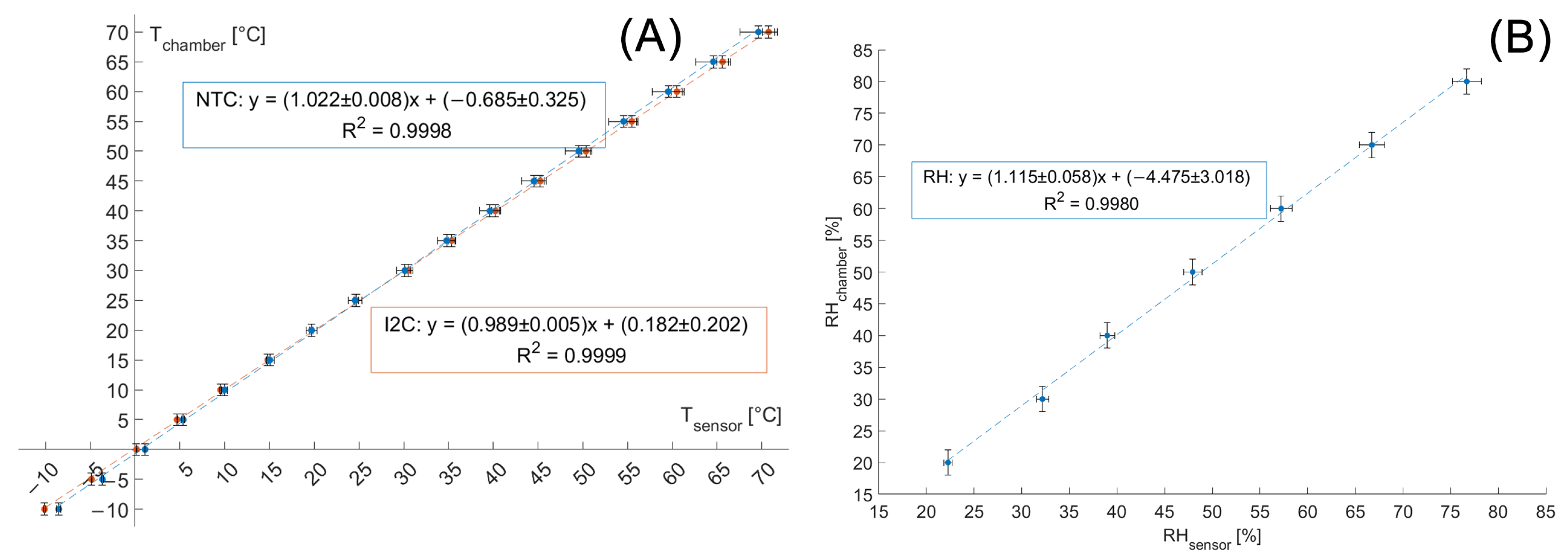
4.1. Board Calibration
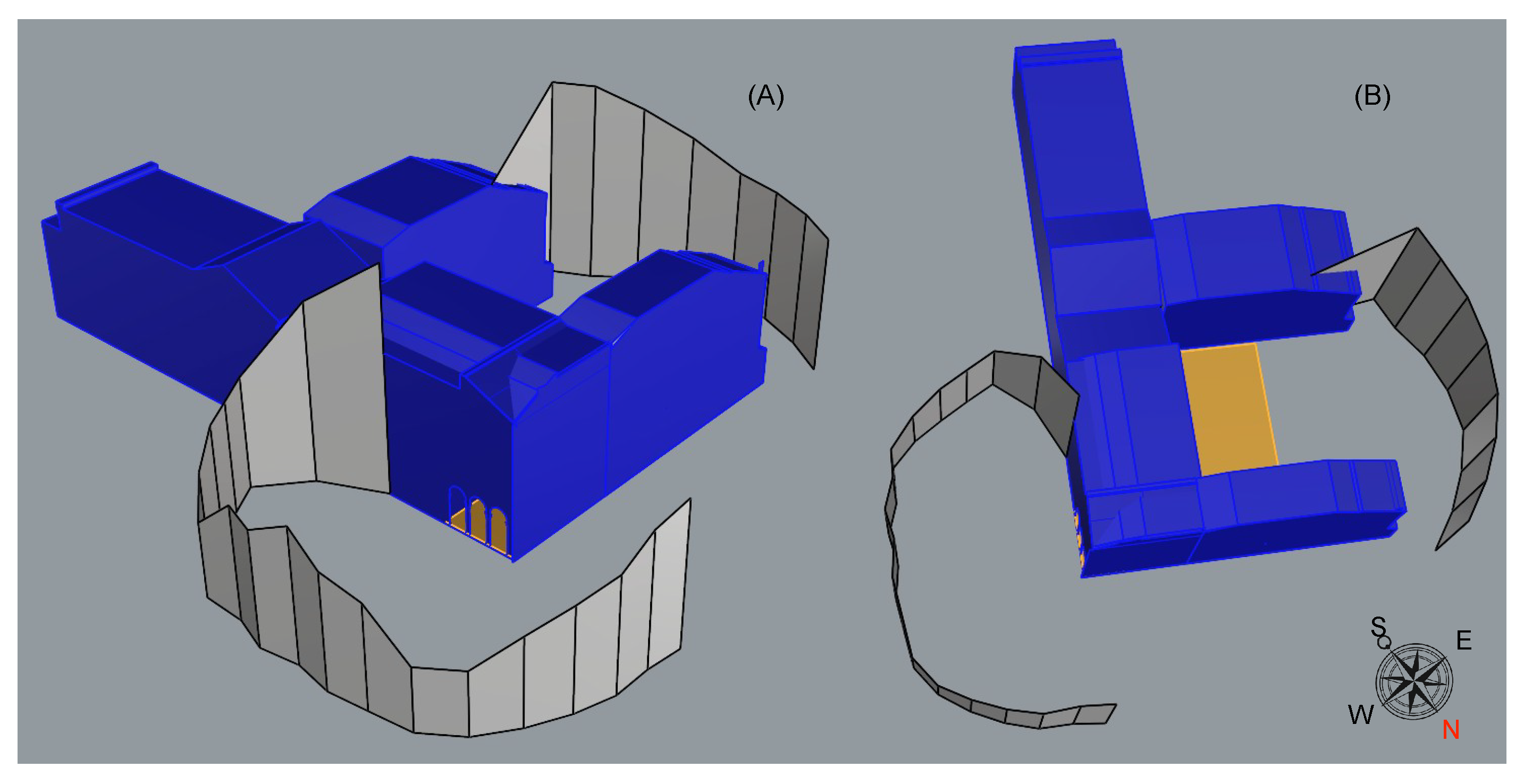
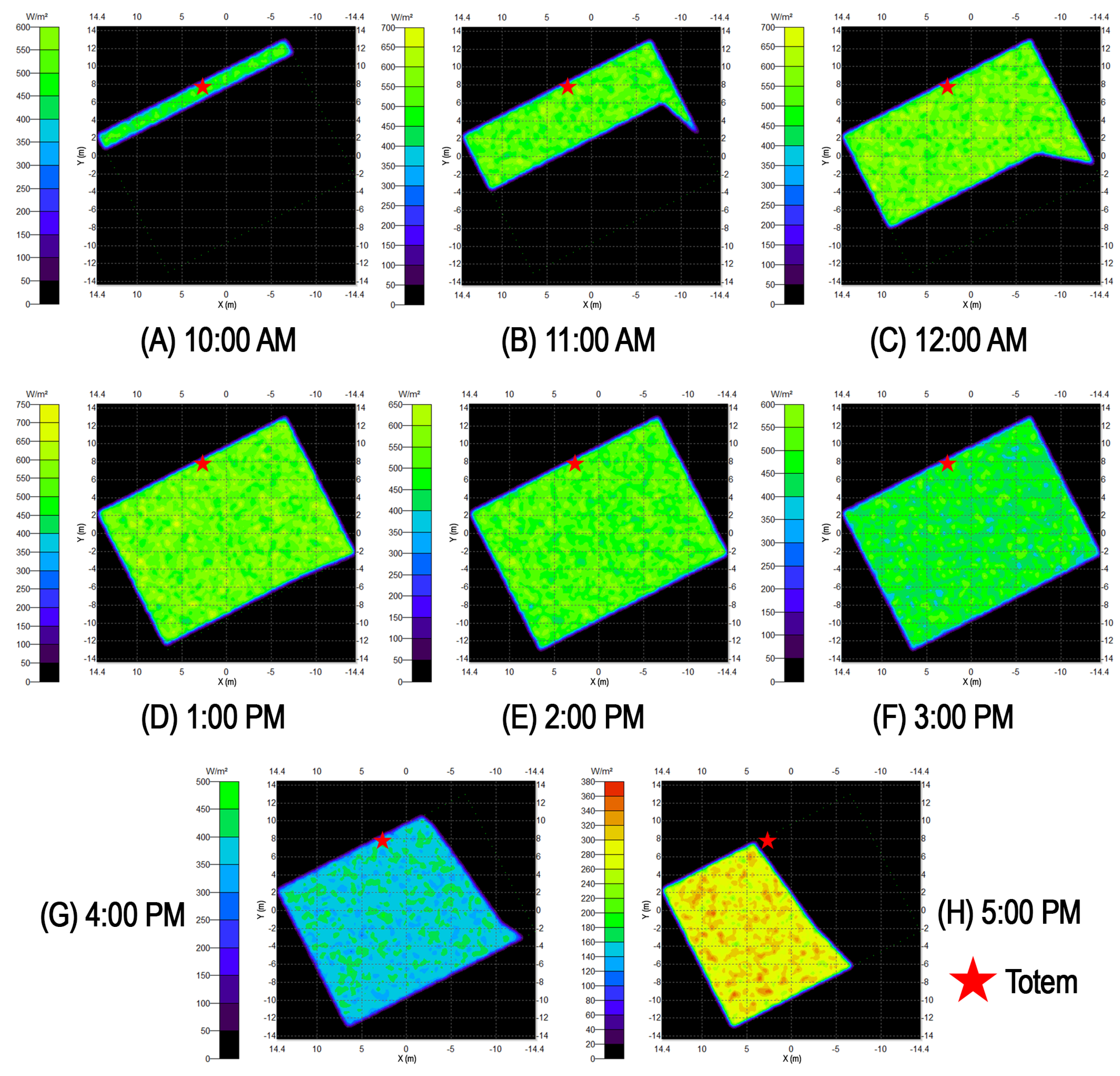
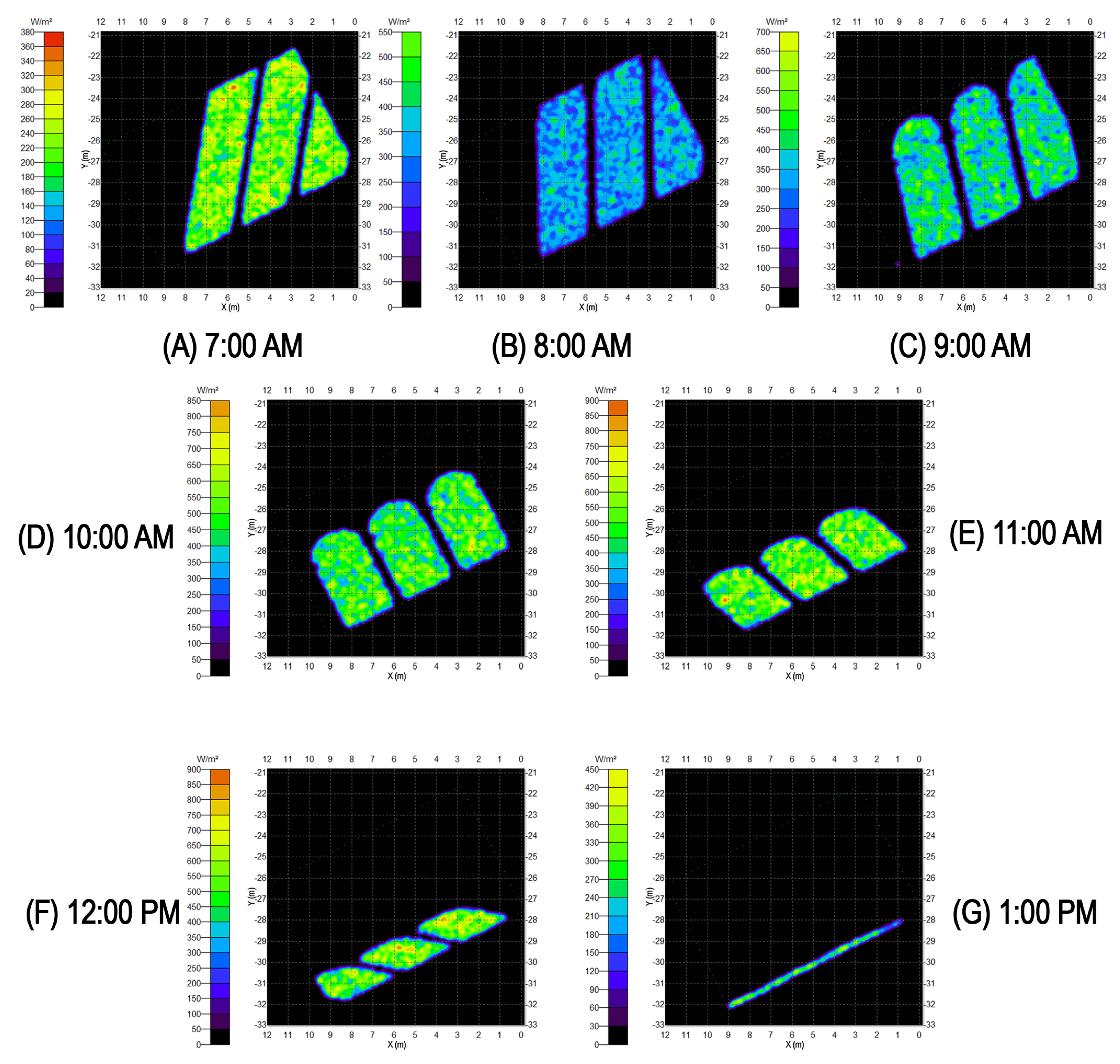
4.2. Shading Simulations
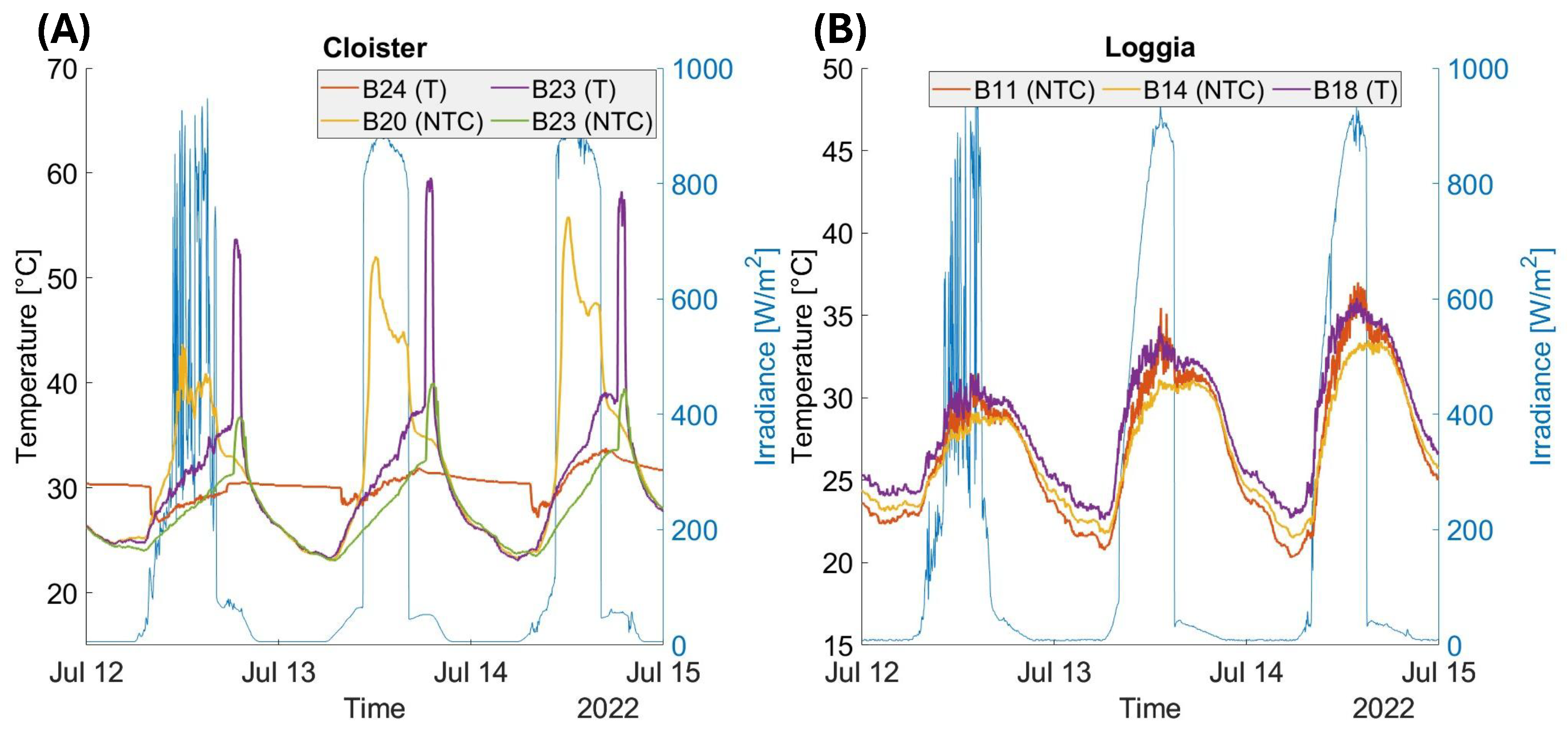
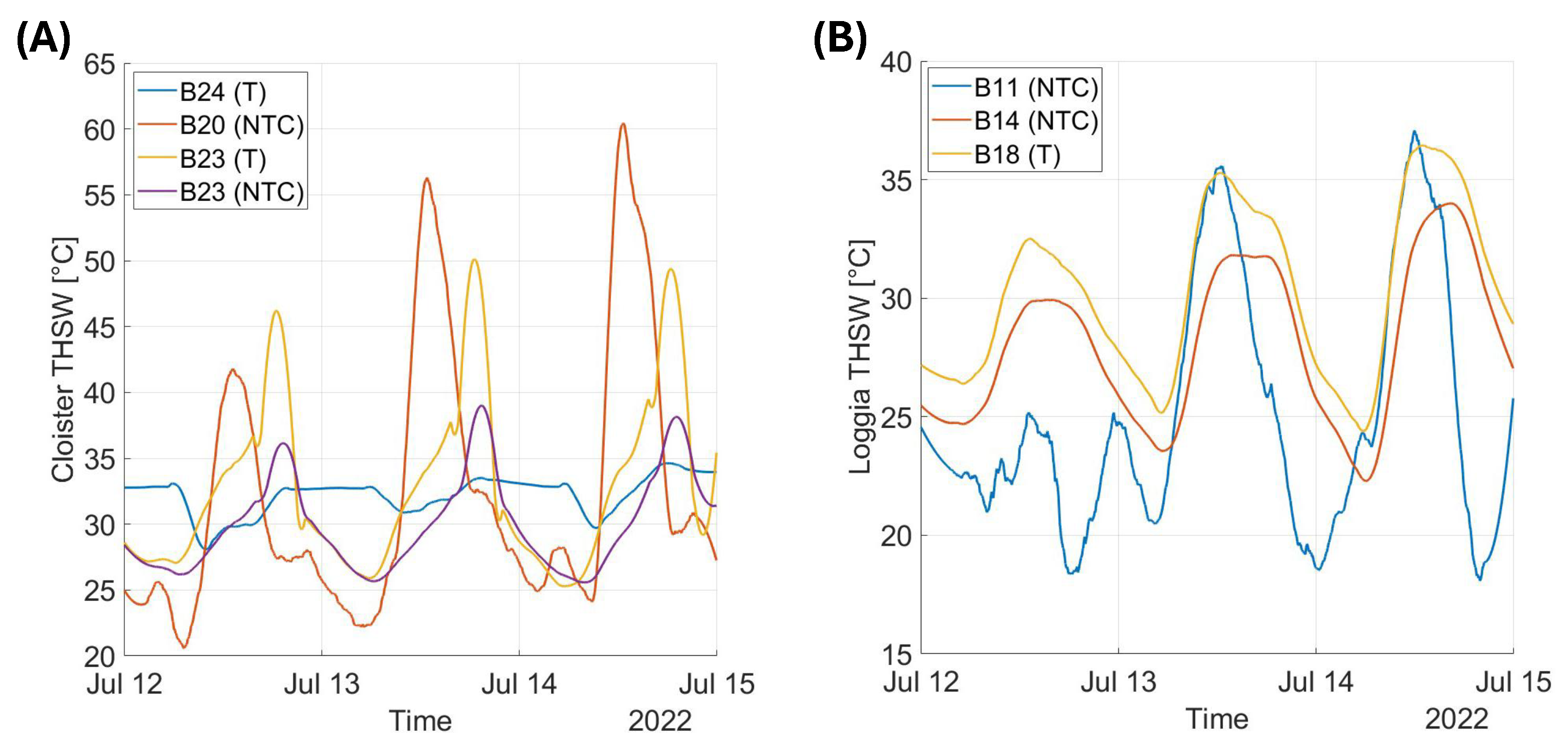
4.3. Microclimate Conditions in the Cloister and Loggia
5. Discussion: Lesson Learned, Further Development and Smart-City Implications
6. Conclusions
Supplementary Materials
Author Contributions
Funding
Data Availability Statement
Acknowledgments
Conflicts of Interest
Abbreviations
| ADC | Analog-to-Digital Converter |
| DAC | Digital-to-Analog Converter |
| EEPROM | Electrically Erasable Programmable Read-Only Memory |
| ETU | Universal Effective Temperature |
| GHI | Global Horizontal Irradiance |
| GUI | Graphical User Interface |
| HVAC | Heating, Ventilation, and Air Conditioning |
| I2C | Inter-Integrated Circuit |
| IoT | Internet of Things |
| LEMS | Liminal Environmental Monitoring System |
| NTC | Negative Temperature Coefficient |
| PCB | Printed Circuit Board |
| PGA | Programmable Gain Amplifier |
| PoE | Power over Ethernet |
| RH | Relative Humidity |
| RTD | Resistance Temperature Detector |
| SM | Surface-Mounted |
| THSW | Temperature Humidity Sun Wind |
References
- Cacciotti, R.; Kaiser, A.; Sardella, A.; De Nuntiis, P.; Drdáckỳ, M.; Hanus, C.; Bonazza, A. Climate change-induced disasters and cultural heritage: Optimizing management strategies in Central Europe. Clim. Risk Manag. 2021, 32, 100301. [Google Scholar] [CrossRef]
- Buda, A.; de Place Hansen, E.J.; Rieser, A.; Giancola, E.; Pracchi, V.N.; Mauri, S.; Marincioni, V.; Gori, V.; Fouseki, K.; Polo López, C.S.; et al. Conservation-compatible retrofit solutions in historic buildings: An integrated approach. Sustainability 2021, 13, 2927. [Google Scholar] [CrossRef]
- Andreotti, M.; Calzolari, M.; Davoli, P.; Dias Pereira, L.; Lucchi, E.; Malaguti, R. Design and construction of a new metering hot box for the in situ hygrothermal measurement in dynamic conditions of historic masonries. Energies 2020, 13, 2950. [Google Scholar] [CrossRef]
- Andreotti, M.; Calzolari, M.; Davoli, P.; Pereira, L.D. Hygrothermal performance of an internally insulated masonry wall: Experimentations without a vapour barrier in a historic Italian Palazzo. Energy Build. 2022, 260, 111896. [Google Scholar] [CrossRef]
- Mangherini, G.; Diolaiti, V.; Bernardoni, P.; Andreoli, A.; Vincenzi, D. Review of façade photovoltaic solutions for less energy-hungry buildings. Energies 2023, 16, 6901. [Google Scholar] [CrossRef]
- Batchelor, D.; Schnabel, M.A.; Dudding, M. Smart heritage: Defining the discourse. Heritage 2021, 4, 1005–1015. [Google Scholar] [CrossRef]
- Bernardoni, P.; Mangherini, G.; Gjestila, M.; Andreoli, A.; Vincenzi, D. Performance Optimization of Luminescent Solar Concentrators under Several Shading Conditions. Energies 2021, 14, 816. [Google Scholar] [CrossRef]
- Mangherini, G.; Bernardoni, P.; Baccega, E.; Andreoli, A.; Diolaiti, V.; Vincenzi, D. Design of a ventilated façade integrating a luminescent solar concentrator photovoltaic panel. Sustainability 2023, 15, 9146. [Google Scholar] [CrossRef]
- Rajapaksha, I.; Nagai, H.; Okumiya, M. A ventilated courtyard as a passive cooling strategy in the warm humid tropics. Renew. Energy 2003, 28, 1755–1778. [Google Scholar] [CrossRef]
- Baboli, F.B.M.; Ibrahim, N.; Sharif, D.M. Design characteristics and adaptive role of the traditional courtyard houses in the moderate climate of Iran. Procedia-Soc. Behav. Sci. 2015, 201, 213–223. [Google Scholar] [CrossRef]
- Chun, C.; Kwok, A.; Tamura, A. Thermal comfort in transitional spaces—Basic concepts: Literature review and trial measurement. Build. Environ. 2004, 39, 1187–1192. [Google Scholar] [CrossRef]
- Zuo, J.; Daniel, L.; Soebarto, V. Re-Thinking the Role of Urban in-between Spaces. In Proceedings of the 50th International Conference of the Architectural Science Association, Adelaide, Australia, 7–9 December 2016; pp. 7–9. [Google Scholar]
- Langevin, J.; Wen, J.; Gurian, P.L. Simulating the human-building interaction: Development and validation of an agent-based model of office occupant behaviors. Build. Environ. 2015, 88, 27–45. [Google Scholar] [CrossRef]
- Basto, C.; Pelà, L.; Chacón, R. Open-source digital technologies for low-cost monitoring of historical constructions. J. Cult. Herit. 2017, 25, 31–40. [Google Scholar] [CrossRef]
- Kang, S.; Ou, D.; Mak, C.M. The impact of indoor environmental quality on work productivity in university open-plan research offices. Build. Environ. 2017, 124, 78–89. [Google Scholar] [CrossRef]
- Nasrollahi, N.; Hatami, Z.; Taleghani, M. Development of outdoor thermal comfort model for tourists in urban historical areas; A case study in Isfahan. Build. Environ. 2017, 125, 356–372. [Google Scholar] [CrossRef]
- Evola, G.; Costanzo, V.; Magrì, C.; Margani, G.; Marletta, L.; Naboni, E. A novel comprehensive workflow for modelling outdoor thermal comfort and energy demand in urban canyons: Results and critical issues. Energy Build. 2020, 216, 109946. [Google Scholar] [CrossRef]
- de la Paz Diulio, M.; Mercader-Moyano, P.; Gómez, A.F. The influence of the envelope in the preventive conservation of books and paper records. Case study: Libraries and archives in La Plata, Argentina. Energy Build. 2019, 183, 727–738. [Google Scholar] [CrossRef]
- Caratelli, A.; Siani, A.M.; Casale, G.R.; Paravicini, A.; Fiore, K.H.; Camuffo, D. Stucco panels of Room VI in the Galleria Borghese (Rome): Physical–chemical analysis and microclimate characterization. Energy Build. 2013, 61, 133–139. [Google Scholar] [CrossRef]
- Vuerich, E.; Malaspina, F.; Barazutti, M.; Georgiadis, T.; Nardino, M. Indoor measurements of microclimate variables and ozone in the church of San Vincenzo (Monastery of Bassano Romano—Italy): A pilot study. Microchem. J. 2008, 88, 218–223. [Google Scholar] [CrossRef]
- Samek, L.; De Maeyer-Worobiec, A.; Spolnik, Z.; Bencs, L.; Kontozova, V.; Bratasz, Ł.; Kozłowski, R.; Van Grieken, R. The impact of electric overhead radiant heating on the indoor environment of historic churches. J. Cult. Herit. 2007, 8, 361–369. [Google Scholar] [CrossRef]
- Camuffo, D.; Pagan, E.; Rissanen, S.; Bratasz, Ł.; Kozłowski, R.; Camuffo, M.; della Valle, A. An advanced church heating system favourable to artworks: A contribution to European standardisation. J. Cult. Herit. 2010, 11, 205–219. [Google Scholar] [CrossRef]
- Bertolin, C.; Luciani, A.; Valisi, L.; Camuffo, D.; Landi, A.; Del Curto, D. Laboratory tests for the evaluation of the heat distribution efficiency of the Friendly-Heating heaters. Energy Build. 2015, 107, 319–328. [Google Scholar] [CrossRef]
- Kramer, R.; van Schijndel, J.; Schellen, H. Dynamic setpoint control for museum indoor climate conditioning integrating collection and comfort requirements: Development and energy impact for Europe. Build. Environ. 2017, 118, 14–31. [Google Scholar] [CrossRef]
- Muñoz-González, C.M.; León-Rodríguez, A.; Campano-Laborda, M.; Teeling, C.; Baglioni, R. The assessment of environmental conditioning techniques and their energy performance in historic churches located in Mediterranean climate. J. Cult. Herit. 2018, 34, 74–82. [Google Scholar] [CrossRef]
- Canan, F.; Golasi, I.; Falasca, S.; Salata, F. Outdoor thermal perception and comfort conditions in the Köppen-Geiger climate category BSk. One-year field survey and measurement campaign in Konya, Turkey. Sci. Total Environ. 2020, 738, 140295. [Google Scholar] [CrossRef]
- Chen, X.; Xue, P.; Liu, L.; Gao, L.; Liu, J. Outdoor thermal comfort and adaptation in severe cold area: A longitudinal survey in Harbin, China. Build. Environ. 2018, 143, 548–560. [Google Scholar] [CrossRef]
- Xiao, F.; Fan, C. Data mining in building automation system for improving building operational performance. Energy Build. 2014, 75, 109–118. [Google Scholar] [CrossRef]
- Hernández-Morales, C.A.; Luna-Rivera, J.; Perez-Jimenez, R. Design and deployment of a practical IoT-based monitoring system for protected cultivations. Comput. Commun. 2022, 186, 51–64. [Google Scholar] [CrossRef]
- Tse, W.L.; Chan, W.L. A distributed sensor network for measurement of human thermal comfort feelings. Sens. Actuators A Phys. 2008, 144, 394–402. [Google Scholar] [CrossRef]
- Silva, H.E.; Coelho, G.B.; Henriques, F.M. Climate monitoring in World Heritage List buildings with low-cost data loggers: The case of the Jerónimos Monastery in Lisbon (Portugal). J. Build. Eng. 2020, 28, 101029. [Google Scholar] [CrossRef]
- Karami, M.; McMorrow, G.V.; Wang, L. Continuous monitoring of indoor environmental quality using an Arduino-based data acquisition system. J. Build. Eng. 2018, 19, 412–419. [Google Scholar] [CrossRef]
- Ali, A.S.; Zanzinger, Z.; Debose, D.; Stephens, B. Open Source Building Science Sensors (OSBSS): A low-cost Arduino-based platform for long-term indoor environmental data collection. Build. Environ. 2016, 100, 114–126. [Google Scholar] [CrossRef]
- Angelakoglou, K.; Nikolopoulos, N.; Giourka, P.; Svensson, I.L.; Tsarchopoulos, P.; Tryferidis, A.; Tzovaras, D. A Methodological Framework for the Selection of Key Performance Indicators to Assess Smart City Solutions. Smart Cities 2019, 2, 269–306. [Google Scholar] [CrossRef]
- Angelakoglou, K.; Kourtzanidis, K.; Giourka, P.; Apostolopoulos, V.; Nikolopoulos, N.; Kantorovitch, J. From a Comprehensive Pool to a Project-Specific List of Key Performance Indicators for Monitoring the Positive Energy Transition of Smart Cities—An Experience-Based Approach. Smart Cities 2020, 3, 705–735. [Google Scholar] [CrossRef]
- Du, J.; Yu, Z.; Cheng, S.; Li, L.; Miao, C. Exploring the role of government-driven culture-led micro-regeneration in shaping the sense of place within urban historic districts in China. Cities 2026, 169, 106575. [Google Scholar] [CrossRef]
- Tousi, E.; Pancholi, S.; Rashid, M.M.; Khoo, C.K. Integrating Cultural Heritage into Smart City Development Through Place Making: A Systematic Review. Urban Sci. 2025, 9, 215. [Google Scholar] [CrossRef]
- TracePro. Available online: https://lambdares.com/tracepro (accessed on 1 December 2025).
- Sydenham, P.; Thorn, R. Handbook of Measuring System Design; John Wiley & Sons: Chichester, UK, 2005; Volume 3. [Google Scholar]
- Compagnon, R. Solar and daylight availability in the urban fabric. Energy Build. 2004, 36, 321–328. [Google Scholar] [CrossRef]
- Steadman, R.G. A Universal Scale of Apparent Temperature. J. Appl. Meteorol. Climatol. 1984, 23, 1674–1687. [Google Scholar] [CrossRef]
- Watanabe, S.; Nagano, K.; Ishii, J.; Horikoshi, T. Evaluation of outdoor thermal comfort in sunlight, building shade, and pergola shade during summer in a humid subtropical region. Build. Environ. 2014, 82, 556–565. [Google Scholar] [CrossRef]
- Barroca, N.; Borges, L.M.; Velez, F.J.; Monteiro, F.; Górski, M.; Castro-Gomes, J. Wireless sensor networks for temperature and humidity monitoring within concrete structures. Constr. Build. Mater. 2013, 40, 1156–1166. [Google Scholar] [CrossRef]
- Jiang, F.; Ma, J.; Jin, Y. Unleashing the Potential of Large Language Models in Urban Data Analytics: A Review of Emerging Innovations and Future Research. Smart Cities 2025, 8, 201. [Google Scholar] [CrossRef]
- Zhang, L.; Chen, Z. Large language model-based interpretable machine learning control in building energy systems. Energy Build. 2024, 313, 114278. [Google Scholar] [CrossRef]







| Sensor Type | Manufacturer | Model | Measurement Range | Output Signal | Accuracy | Supplied Voltage |
|---|---|---|---|---|---|---|
| Temperature/RH | Honeywell | HIH-6131 | °C | I2C | / | 5 Vdc |
| NTC | Vishay | NTCLE413 | °C | Resistance | - | |
| Pyranometer | Delta OHM | LPPYRA03 | 0–2000 W/m2 | 0–10 V | ±30 W/m−2 | 24 Vdc |
| Photodiode | Osram | SFH 206 K | 0–250 W/m2 | 0–2 mA | 5% | - |
| Cup anemometer | Davis Instruments | 6410 | 0.5–70 m/s | Tachometric | m/s/ mv * | 5 Vdc |
| 0–360 ° | Resistance | ° | - | |||
| Hot-wire anemometer | E+E Elektronic | EE671 | 0–5 m/s | 0–10 V | m/s + 3% mv * | 24 Vdc |
| Reed relay | Assemtech | PSB130/30 | - | Digital TTL | - | 5V |
| Uncalibrated LEMS | Calibrated LEMS | |||
|---|---|---|---|---|
| Sensor | Maximum Error | Average Error | Maximum Error | Average Error |
| I2C temperature sensor | 0.7 °C | 0.4 °C | 0.5 °C | 0.2 °C |
| NTC temperature senor | 1.7 °C | 0.5 °C | 0.8 °C | 0.3 °C |
| I2C humidity sensor | 3.3% | 2.4% | 1.4% | 0.8% |
| Photodiode | 126 W/m2 | 26 W/m2 | 70 W/m2 | 12 W/m2 |
| Board | Relative Uncertainty [%] |
|---|---|
| 20 (NTC) | |
| 23 (T) | ∼ |
| 23 (NTC) | |
| 24 (T) | |
| 11 (NTC) | |
| 14 (NTC) | |
| 18 (T) | ∼ |
Disclaimer/Publisher’s Note: The statements, opinions and data contained in all publications are solely those of the individual author(s) and contributor(s) and not of MDPI and/or the editor(s). MDPI and/or the editor(s) disclaim responsibility for any injury to people or property resulting from any ideas, methods, instructions or products referred to in the content. |
© 2026 by the authors. Licensee MDPI, Basel, Switzerland. This article is an open access article distributed under the terms and conditions of the Creative Commons Attribution (CC BY) license.
Share and Cite
Diolaiti, V.; Sollazzo, L.; Mangherini, G.; Aslam, N.; Bernardoni, D.; Calzolari, M.; Davoli, P.; Modugno, V.; Vincenzi, D. Smart Sensing in Italian Historic City Centers: The Liminal Environmental Monitoring System (LEMS). Smart Cities 2026, 9, 14. https://doi.org/10.3390/smartcities9010014
Diolaiti V, Sollazzo L, Mangherini G, Aslam N, Bernardoni D, Calzolari M, Davoli P, Modugno V, Vincenzi D. Smart Sensing in Italian Historic City Centers: The Liminal Environmental Monitoring System (LEMS). Smart Cities. 2026; 9(1):14. https://doi.org/10.3390/smartcities9010014
Chicago/Turabian StyleDiolaiti, Valentina, Leonardo Sollazzo, Giulio Mangherini, Nazim Aslam, Diego Bernardoni, Marta Calzolari, Pietromaria Davoli, Valentina Modugno, and Donato Vincenzi. 2026. "Smart Sensing in Italian Historic City Centers: The Liminal Environmental Monitoring System (LEMS)" Smart Cities 9, no. 1: 14. https://doi.org/10.3390/smartcities9010014
APA StyleDiolaiti, V., Sollazzo, L., Mangherini, G., Aslam, N., Bernardoni, D., Calzolari, M., Davoli, P., Modugno, V., & Vincenzi, D. (2026). Smart Sensing in Italian Historic City Centers: The Liminal Environmental Monitoring System (LEMS). Smart Cities, 9(1), 14. https://doi.org/10.3390/smartcities9010014