

Profit-Aware EV Utilisation Model for Sustainable Smart Cities: Joint Optimisation over EV System, Power Grid System, and City Road Grid System

Highlights
- For EVs that do not have the willingness or technical ability to discharge back to the grid, the proposed model successfully identifies the most financially profitable charging stations, routes, and schedules, all jointly optimised over the electric vehicle system, the power grid system, and the city road grid system.
- The performance has also been successfully proven for EVs that have the technical ability and willingness to discharge back to the grid.
- Traditional distance-based charging station suggestion models may put more stress on urban power grids. In contrast, the proposed profit-aware design can now be utilised to optimally manage this stress, thanks to the grid mismatch-driven nodal price allocation.
- This joint optimisation model can also be utilised to fairly compensate EV users for their additional inconveniences and to help the grid maintain its supply and demand mismatch, thereby ensuring stability.
Abstract
1. Introduction
1.1. Literature Review
1.2. Motivations
1.3. Contributions
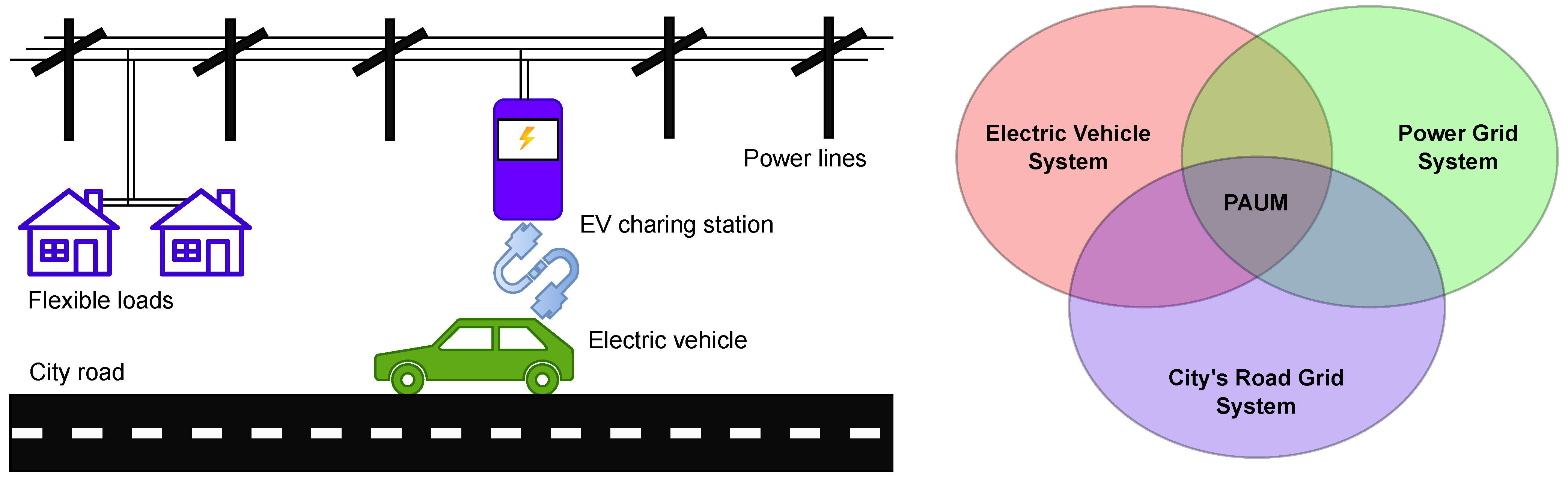
- A joint optimisation model is curated to combine the impacts and benefits of electric vehicles, power grids, and cities’ road grid systems.
- A profit-aware EV utilisation model (PAUM-EV-M1) is developed for charging location and optimal route selection for conventional EVs.
- A profit-aware EV utilisation model (PAUM-EV-M2) is developed for charging–discharging location and optimal route selection for V2G-enabled EVs.
- We extend the PAUM-EV-M2 model (PAUM-EV-M2b) to work under the flexibility and uncertainty of demand-side resources.
2. Profit-Aware Electric Vehicle Utilisation Model (PAUM-EV)
2.1. Proposed PAUM Objective Function
2.2. PAUM System Modelling
2.2.1. EV System Model
2.2.2. PG System Model
2.2.3. CG System Model
2.3. PAUM-EV-M1: Profit-Aware Charging Location and Optimal Route Selection
2.4. PAUM-EV-M2: Profit-Aware Charging–Discharging Location and Optimal Route Selection
2.5. PAUM-EV-M2b: Extension of PAUM-EV-M2 Considering the Demand Flexibility
2.6. Utility’s Pricing Strategy
3. Results
3.1. Simulation Set-Up
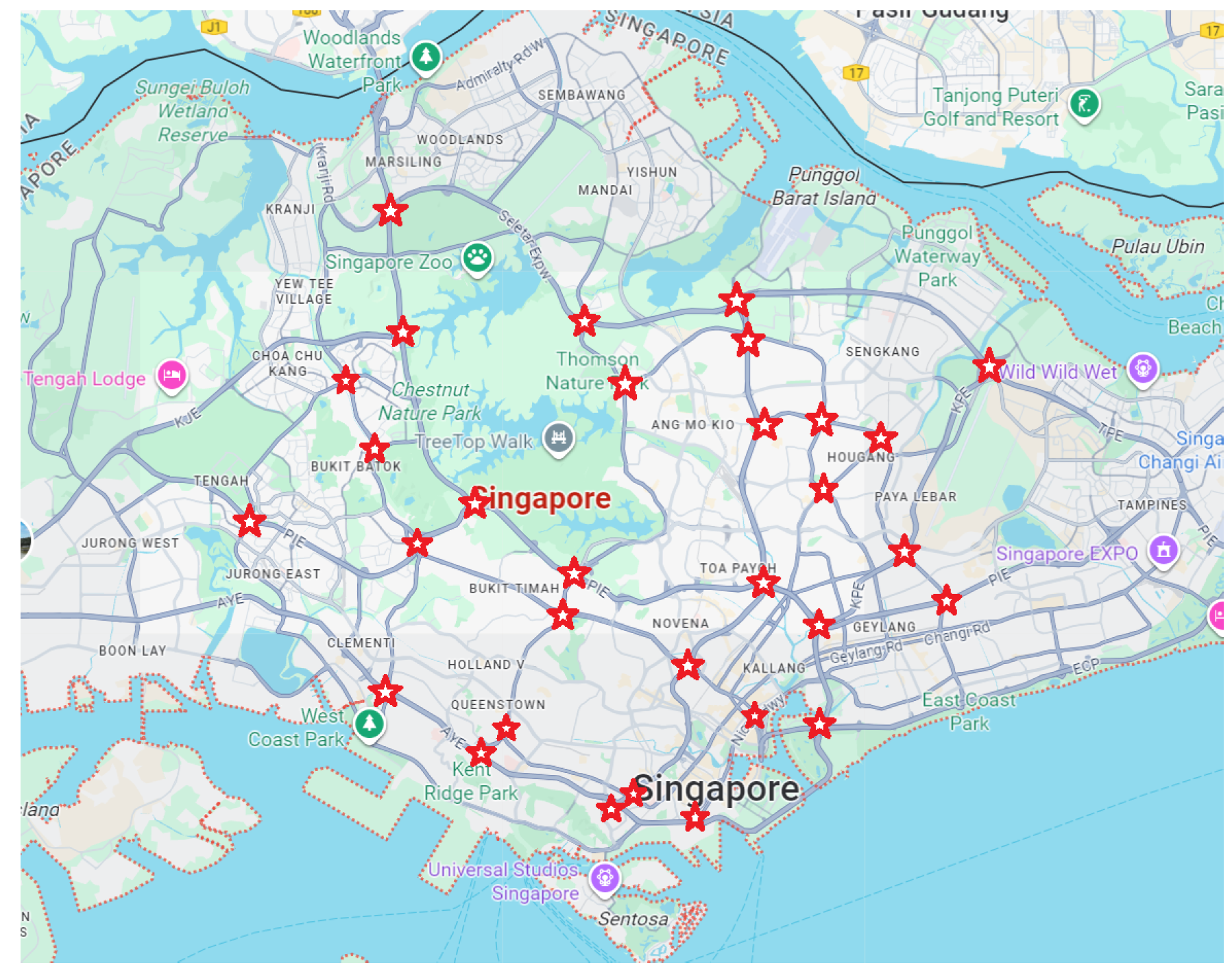
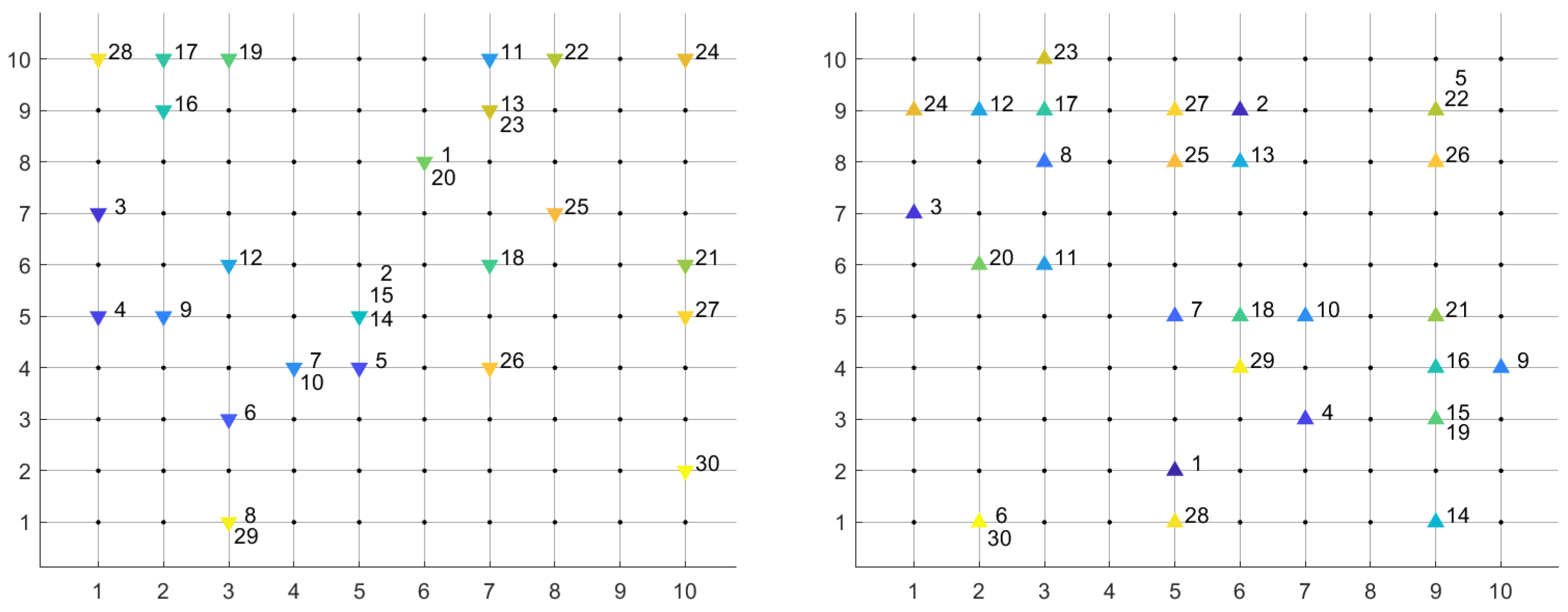
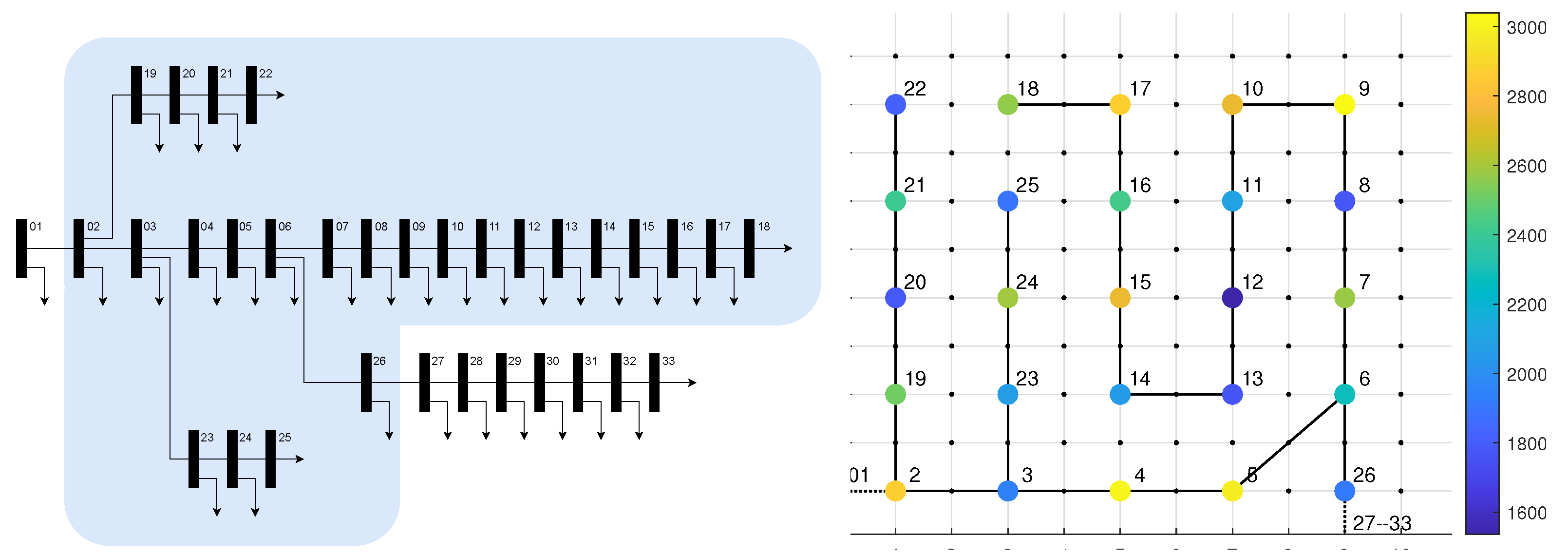
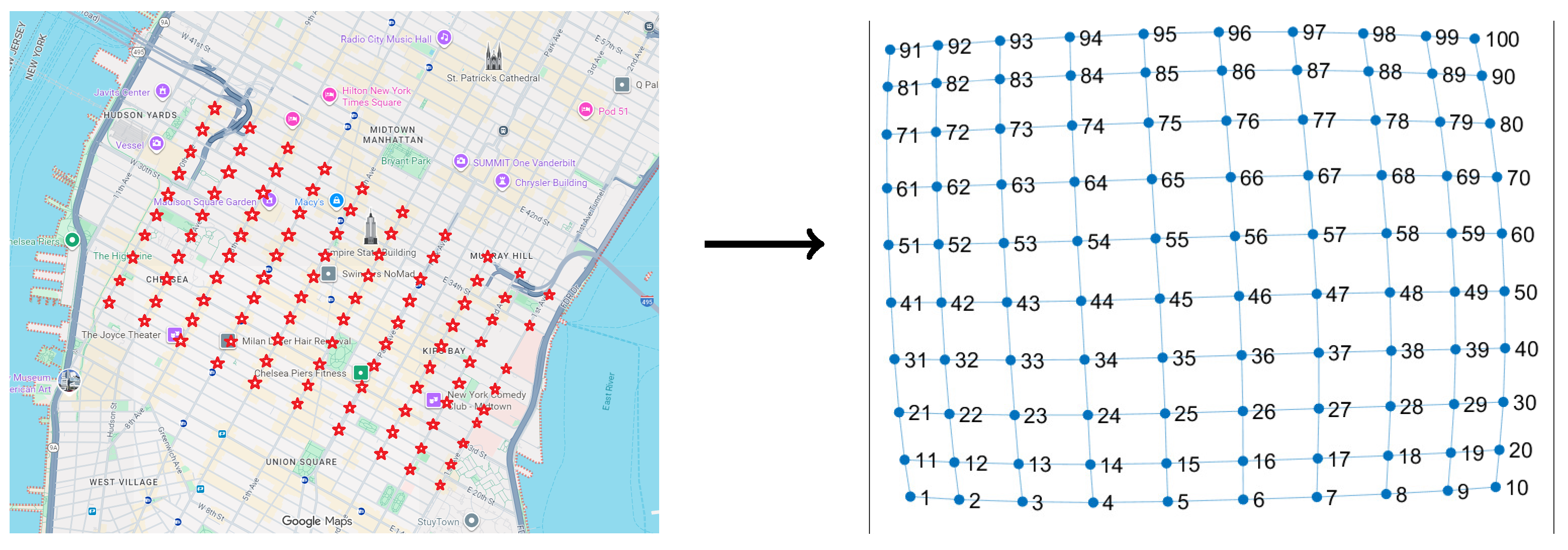
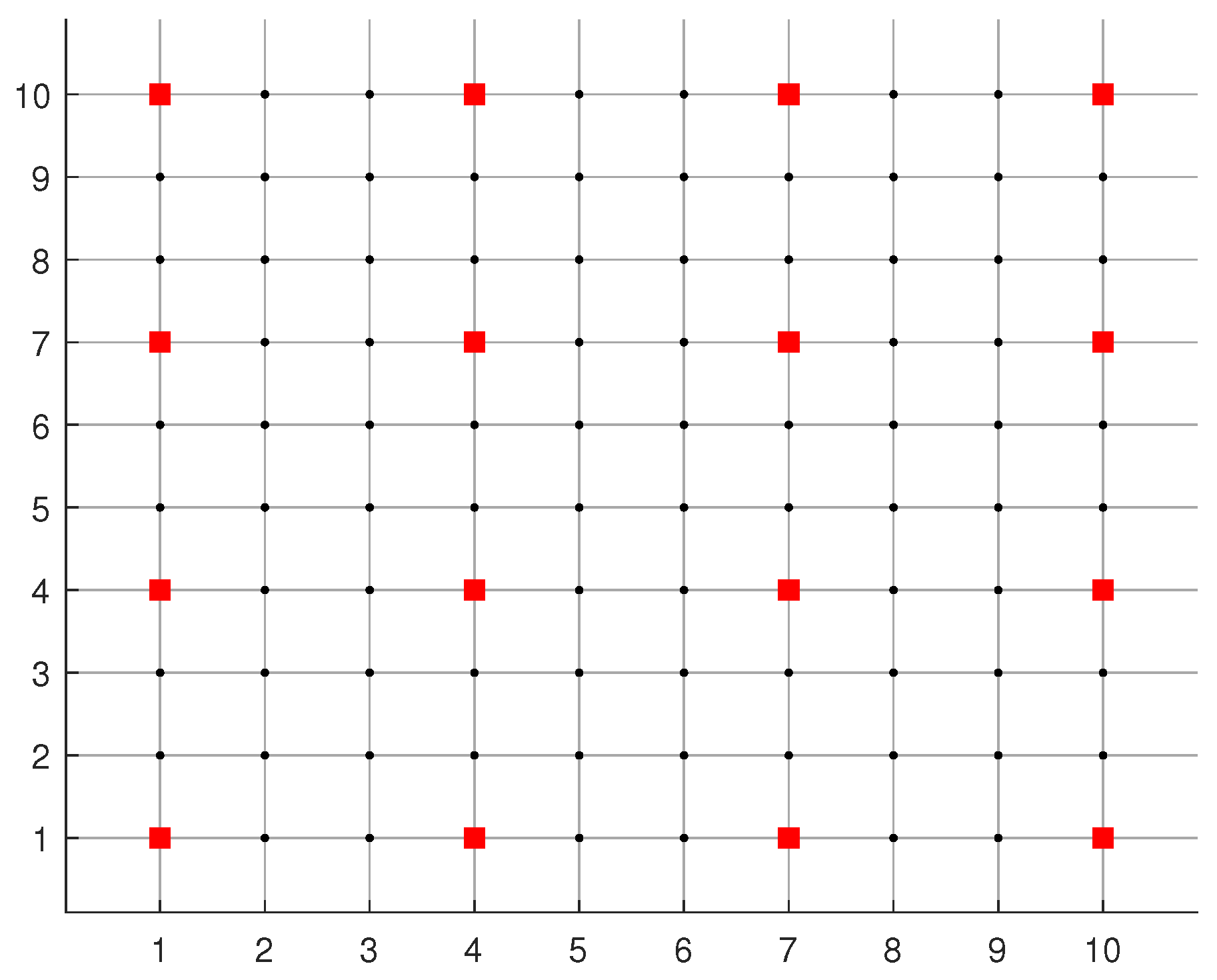
- City road grid information is derived from a check-board-pattern city, like Manhattan in New York, where each junction (graph vertices) is approximately equidistantly placed. In the present study, the graph edge weight is assumed to be 5km uniformly, as shown in Figure 3. It can easily be extended to non-uniform weights as shown in Figure 4.
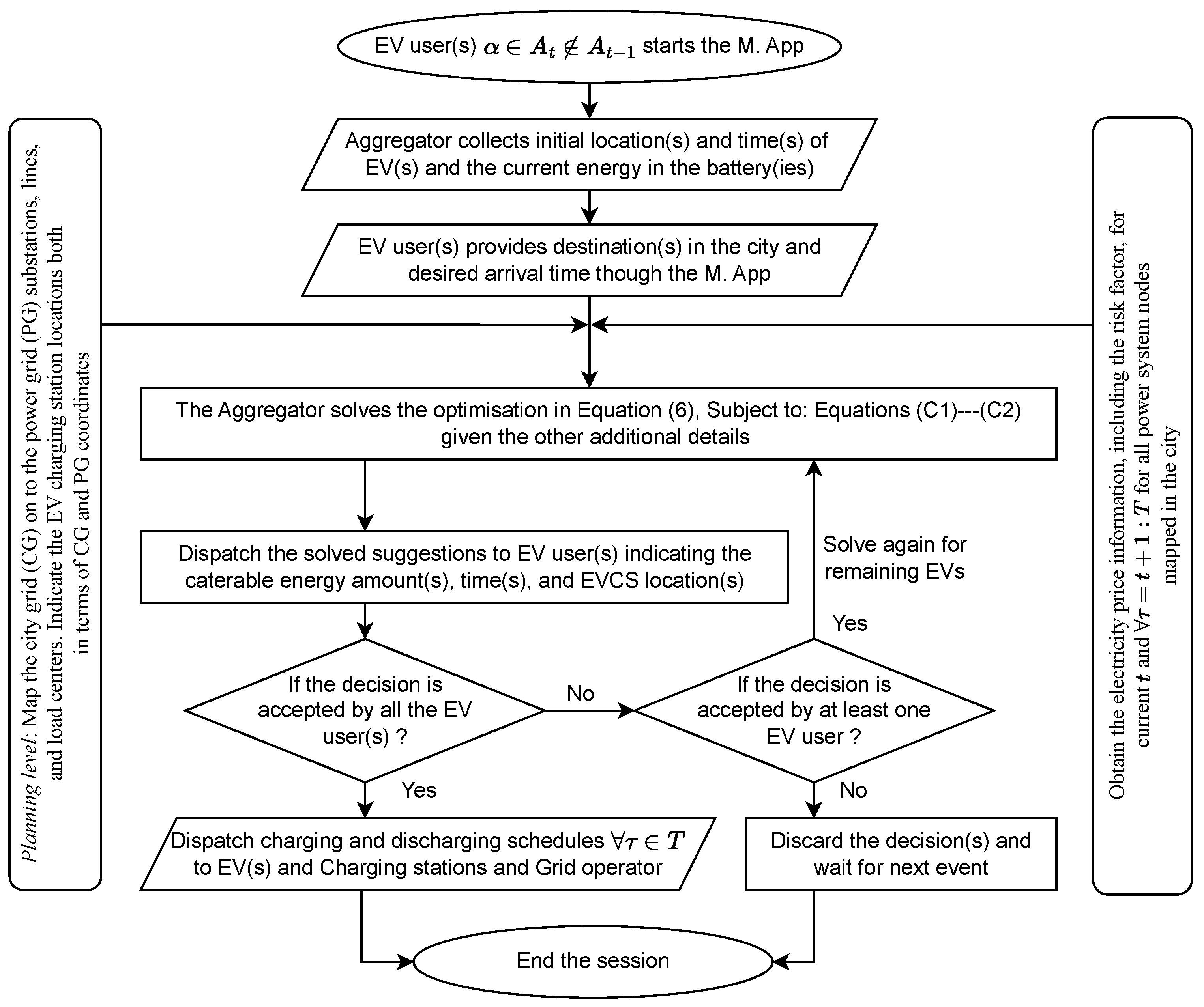
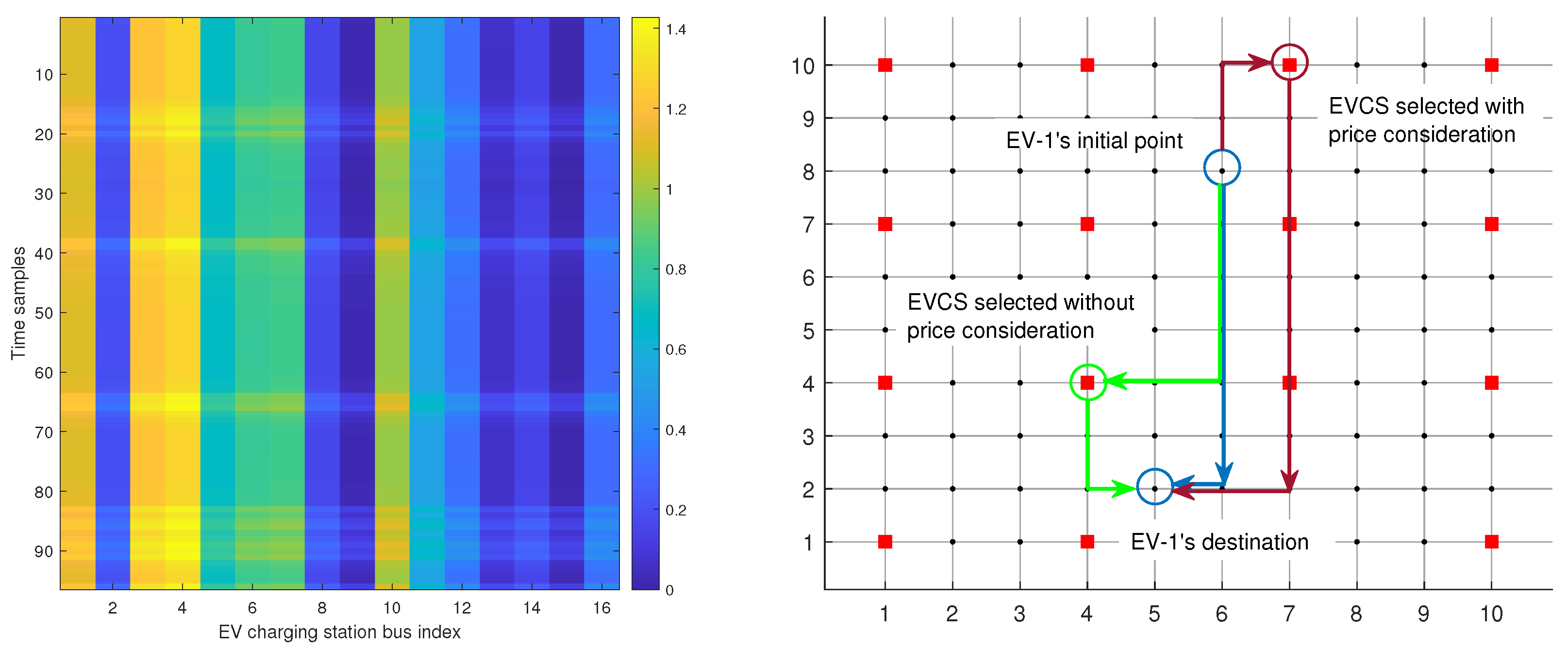
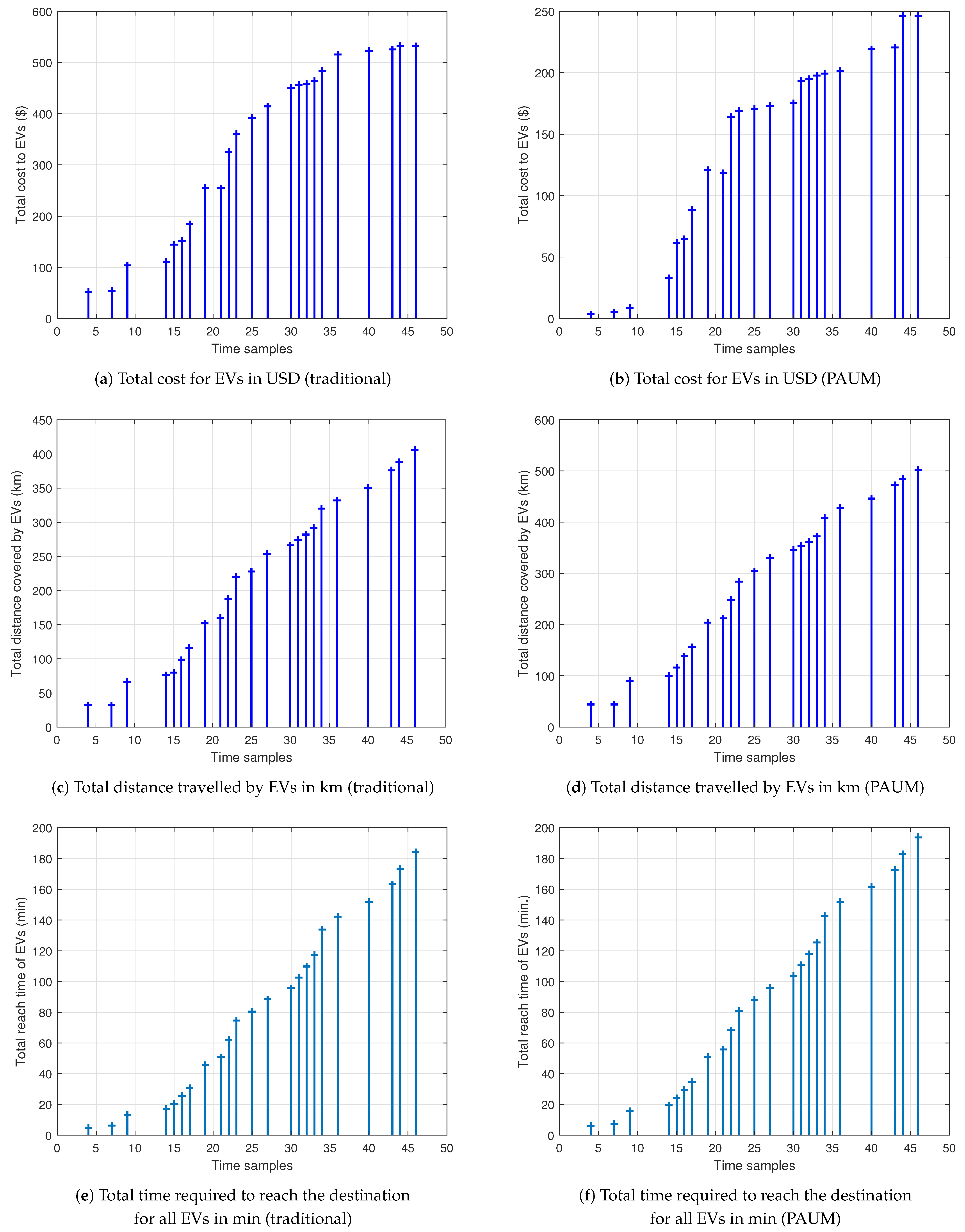
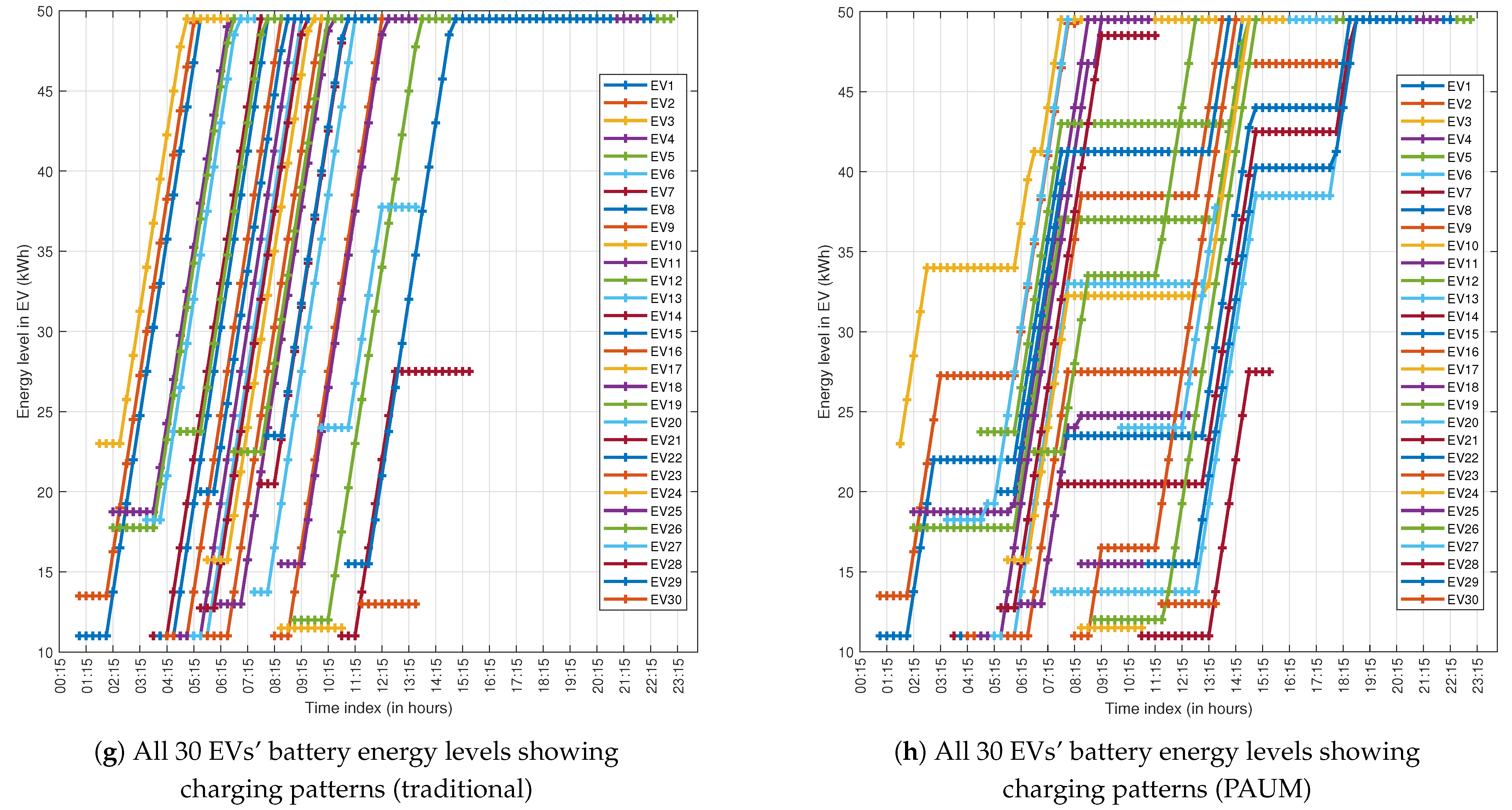
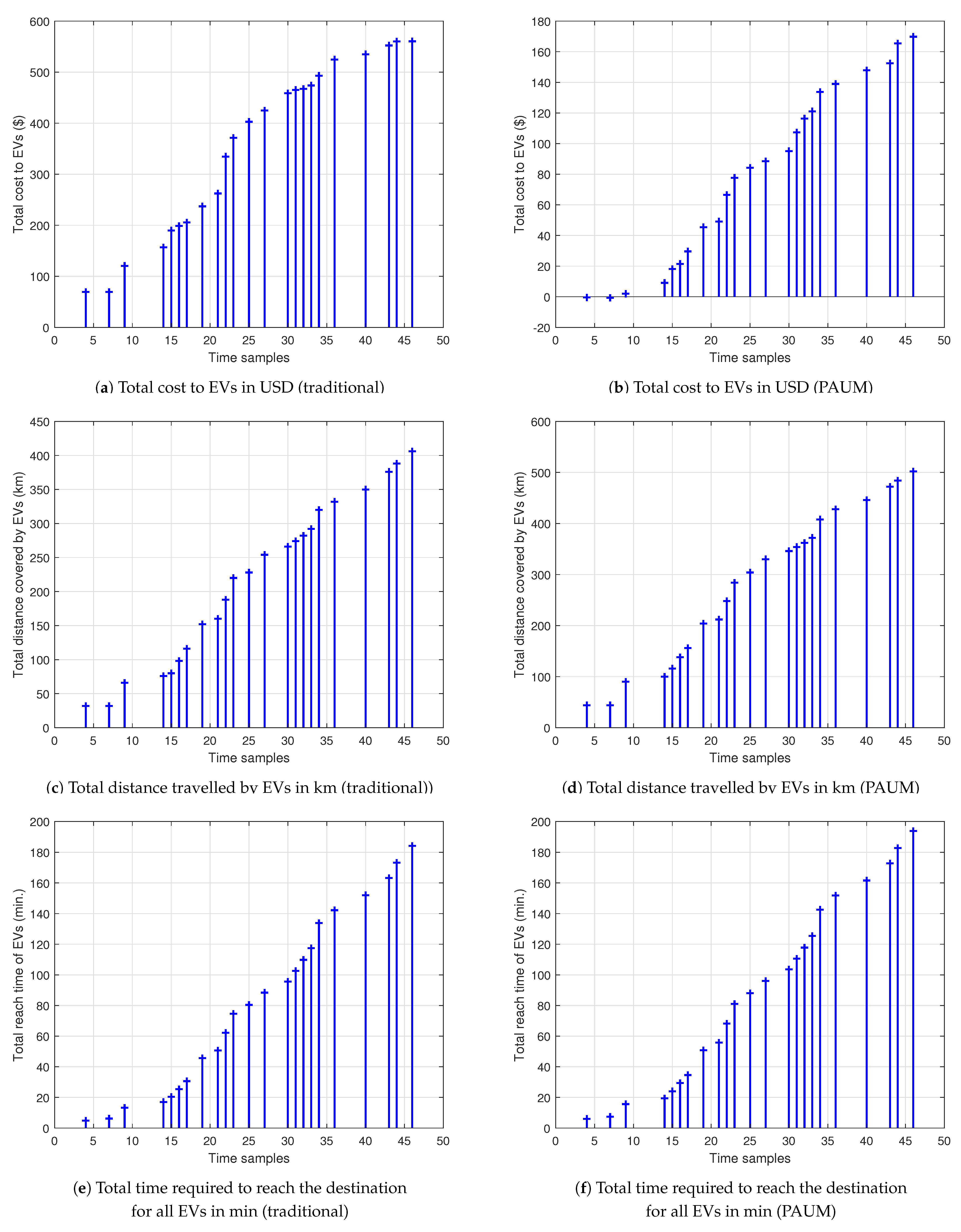
- Case-1: Charging schedule of EV, EVCS location, and route selection: It emphasises the performance of PAUM-EV-M1 with smart charging capability. It also shows the ability of the proposed model to appropriately optimise the route across the cities. Figure 8 of the revised manuscript illustrates the performance of the model in the city road grid system, and Figure 9 illustrates the EV users’ financial benefits.
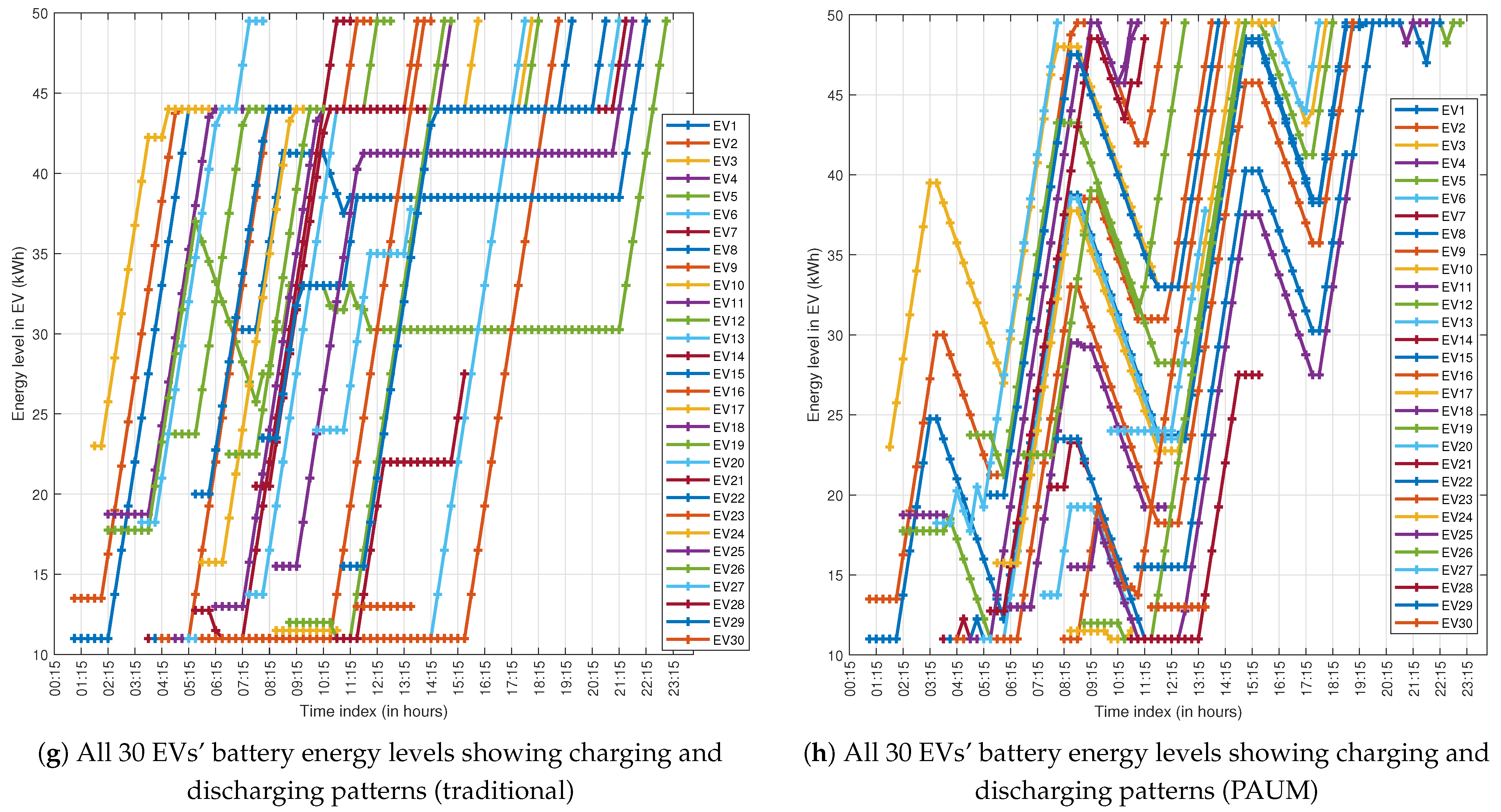
- Case-2: Charging and discharging schedules of EVs: It emphasises the performance of the PAUM-EV-M2 model with smart charging and discharging capability. It is illustrated in Figure 10 of the revised manuscript along with the financial benefits of EV users. It also shows the ability of the model to support the power grid by reducing stress by appropriately mobilising EV loads.
- Case-3: Charging and discharging schedules along with demand management: It presents the performance of the PAUM-EV-M2b model with smart charging and discharging and appropriate management of the flexible demand loads. Table 1 presents how the flexible loads absorb the impact of other systems on the power grid system.
3.2. Case-1: Charging Schedule of EVs, EVCS Location, and Route Selection
3.3. Case-2: Charging and Discharging Schedules of EVs
3.4. Case-3: Charging and Discharging Schedules Along with Demand Management
3.5. Case-4: Non-Grid-Pattern City
4. Discussion
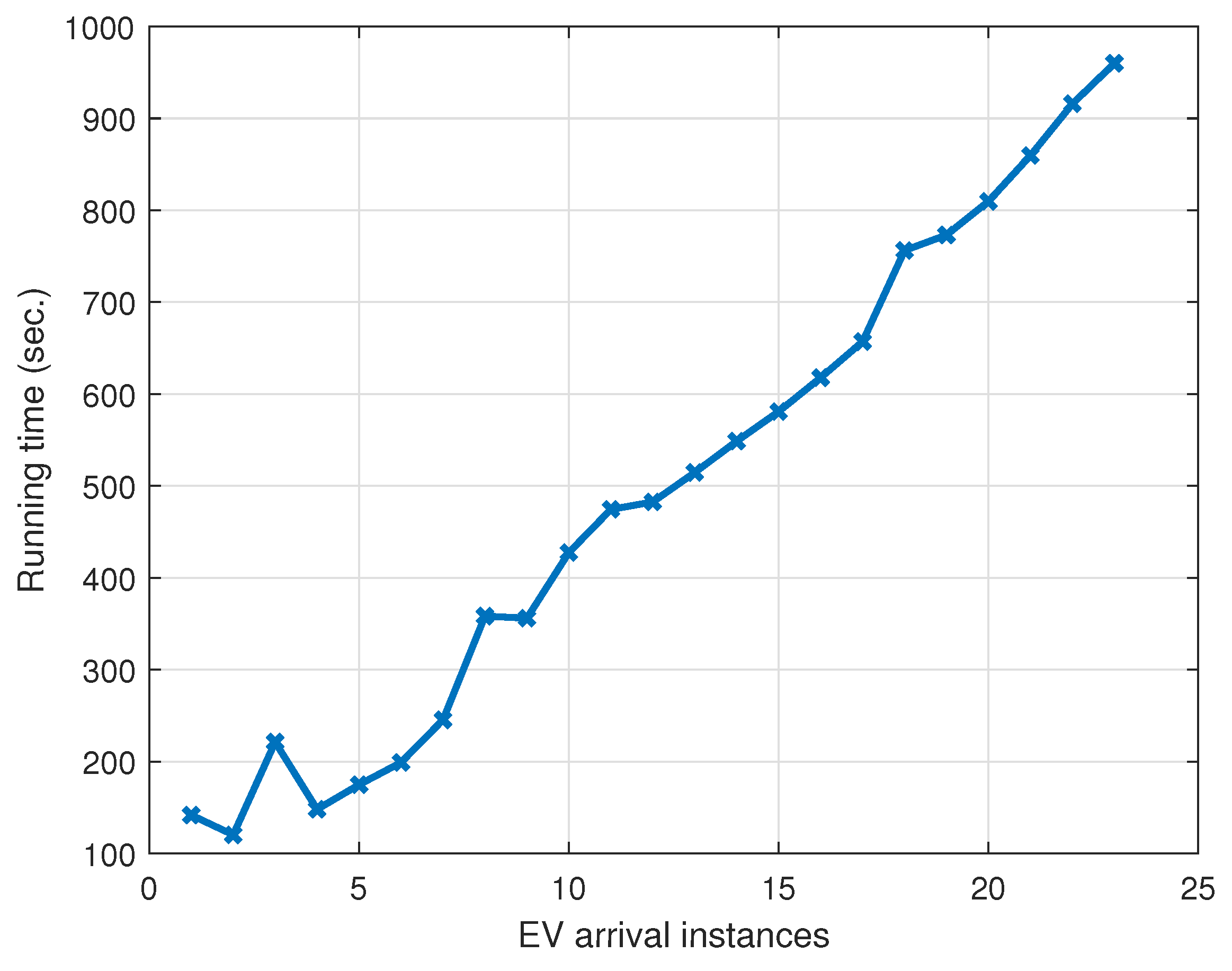
- Computational complexity:In this model, five primary decision variables are used, as explained in Section 2.1. Here, the latter two are associated with charger location and demand management. However, the former three are associated with EVs, and their dimensions grow with the arrival of the new EVs. The increase in dimension of the decision variable matrix with the arrival of new EVs leads to an increase in computational complexity. This can be noticed in Figure 13, where execution time is plotted against each instance of EV arrival at any charging station in the city. Note that this rise in computation time is also due to PG constraint nonlinearity, the increase in the number of constraints with the arrival of new EVs, and the retention of solver cache. Without PG system constraints, each instance is solved within 10 s. To improve this time complexity, better computation hardware should be utilised by the utility.
- Step size/time interval:The impact of the step size is quite critical. If we make too large, the error between estimated SoC values and actual SoC values will be enormous; on the other hand, too small a will increase the computational burden. Hence, a trade-off is always necessary. Depending on the available computational capacity at the utility and the requirement of fast decisions, the step size should be selected by the operator.
- EV penetration stages:The performance of the proposed joint optimisation model PAUM-EV may vary in accordance with various stages of EV penetration.At the introductory level, with few EVs on the road, this proposal can only serve EV users economically. At the maturity level, the presence of a large number of EVs can significantly impact grid stability; but the availability of power lines with sufficient carrying capacity may not affect the locational prices. However, performing joint optimisation at this level by providing an appropriate incentive will be financially beneficial for both the grid and EV users in critical scenarios.Based on our case studies, the following conclusions are drawn:
- During the introductory stage, the optimisation model works well and caters for the requirement of all EVs ().
- At the intermediate level, if a 10% increase in EV load is taken, then the model requires a higher generation limit to converge without curtailing too much demand.
- However, at the mature level, a 100% increase in the present EV load requires a significant change in the network parameters of the PG system to allow the joint optimisation models to converge.
- PV penetration and grid resilience:High penetration of intermittent renewables and peak load hours, if not handled timely, can deteriorate grid resilience. Dispatchable conventional generators and appropriate mobilisation of EVs with its flexible storage capacity can unlock a potential solution for this challenge (which is modelled in the PG system). Since the utility, with its enormous number of data, can forecast near-real-time events, it can easily evaluate the second term in Equation (32) (which is governed by power mismatch) and set the locational prices to lure the EVs accordingly. Furthermore, the factor can also be updated to address any missing reserve issue if the LMP is beyond the utility’s immediate control.
- Policy requirements:This PAUM framework requires some policy-level support for its implementation. If the policy does not allow any variation in price or incentive, joint optimisation may not work as expected. Furthermore, for regulated market structure, the provision of additional incentives to EV users should be considered in the policy so that locational variations can be realised.
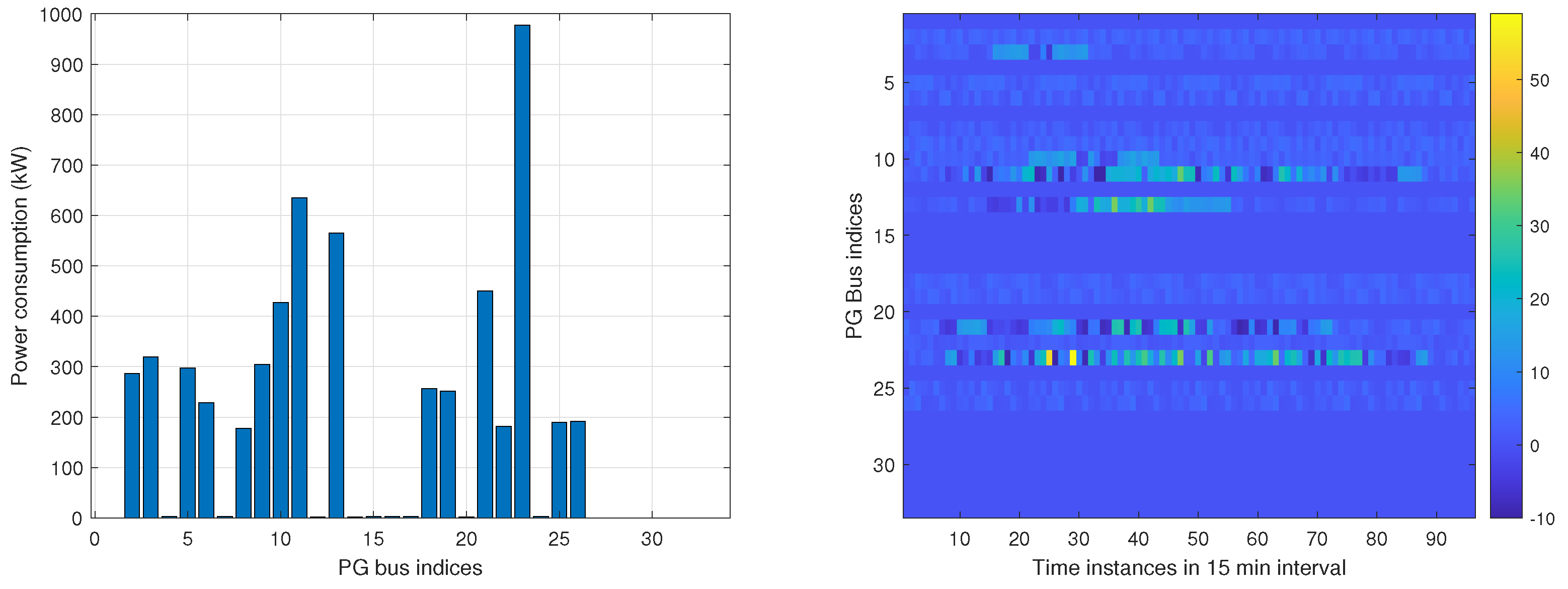
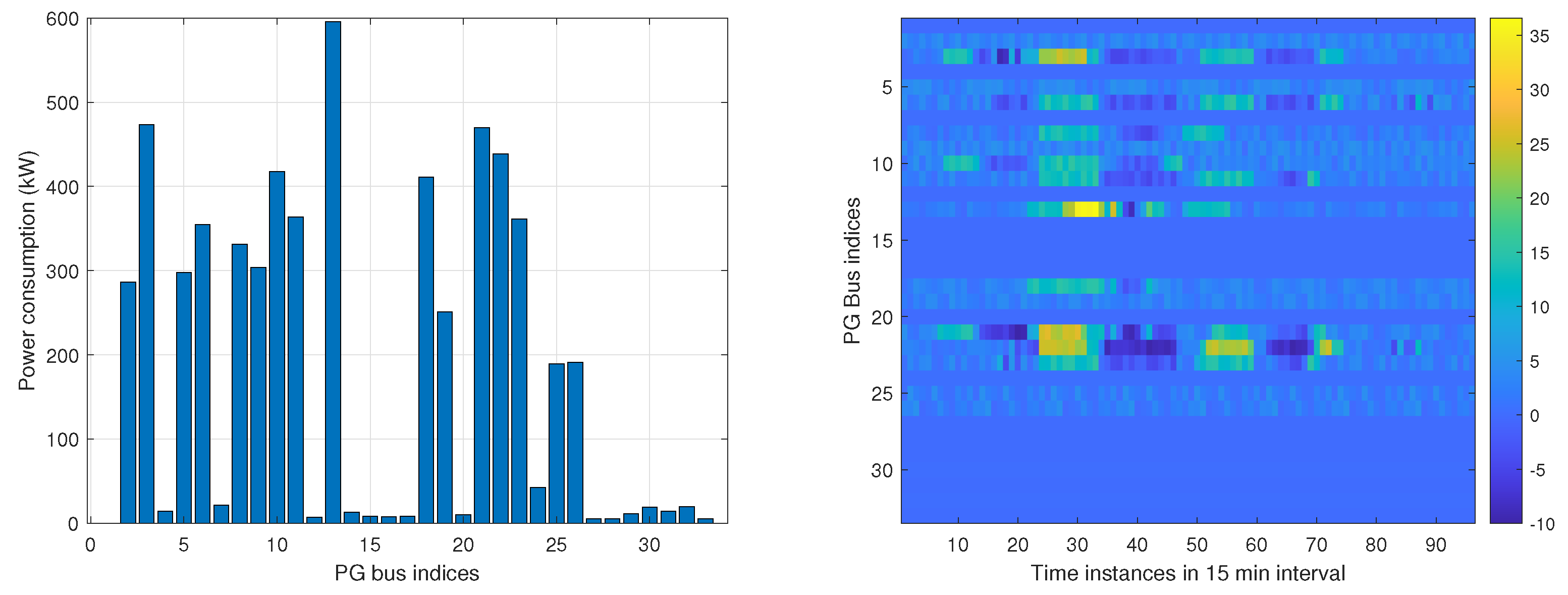
- Applications:Each of the three PAUM-EV models is designed for a specific scenario and task. The core goal is to develop a joint optimisation model for the EV, PG, and CG systems that can easily serve the interests of EV users as well as the electric utility. With traditional distance-based EV charging, power lines may experience higher stress at certain locations, which can lead to instability, and EV users may be forced to pay higher prices due to the LMP pricing structure. If the PAUM-EV models are deployed, they can suggest the least expensive location, which will indirectly help the grid with a balanced burden across the nodes.
5. Conclusions and Future Directions
- Both M1 and M2 can yield more profit for EVs compared with their traditional counterpart, USD 260 and USD 390 in this case, while performing a minimum re-routing of the EVs. M2 is capable of obtaining better financial benefits than M1 (around USD 80), but it is subjected to technical feasibility at the EV and EVCS end.
- With the enhanced model, M2b, flexible demand management can further contribute towards reducing the 0–3 kW burden on the power grid across the city by optimally balancing the flexible loads subject to EV charging burden and price structure.
- In contrast to the traditional EV charging strategy, the proposed M1 and M2 models focus on both aspects of price structure in a city, namely, nodal variations and temporal variations. This makes the proposed models more profit-oriented compared with the traditional model, more grid requirement-aware, and hence, a better alternative to accomplish the sustainability goals of a city.
- The model is developed on the core assumption of market deregulation. If the market is regulated, policy must be designed so as to enable the operator to provide additional incentives to EV users. The availability of the charging infrastructure is another challenge; if enough options are not present, joint optimisation may not work appropriately for the city road grid system. If policy does not allow any variation in price as an incentive and enforces ToU-like pricing, then the PG system model may not behave as expected.
- An extensive study will be carried out to understand the proposed model’s ability to lower carbon emissions in cities in various critical scenarios.
- The work will be extended to address macro-level grid challenges like energy security, baseload management, and infrastructure planning.
- Analyses will be carried out to understand societal constraints on flexible demand management.
- Extensive study will be conducted on different stages of PV and EV penetration in cities, equitable access, the impacts of traffic conditions, carbon caps, grid congestion forecasts, and generation mix conditions.
- The proposed model can be extended to work with fuel cell electric vehicles alongside battery electric vehicles for overall system-level enhancements.
Author Contributions
Funding
Data Availability Statement
Acknowledgments
Conflicts of Interest
Nomenclature
| EV | Electric vehicle |
| CG | City (road) grid |
| PG | Power grid |
| M. App | Mobile application |
| RTP | Real-time pricing |
| PAUM | Profit-aware utilisation model |
| PAUM-EV | Profit-aware EV utilisation model |
| V2G | Vehicle-to-grid |
| FDM | Flexible demand management |
| EVCS | EV charging station |
| MPC | Model predictive control |
| PV | Photovoltaic |
| M1 | (PAUM-EV) Model-1 |
| M2 | (PAUM-EV) Model-2 |
| M2b | (PAUM-EV) Model-2’s extension |
| DSM | Demand-side management |
| NEMS | National Electricity Market of Singapore (NEMS) |
| GPC | Grid-pattern city |
| NPC | Non-grid-pattern city |
| ToU | Time-of-Use Tariff |
References
- Reddy, K.; Kumar, M.; Mallick, T.; Sharon, H.; Lokeswaran, S. A review of Integration, Control, Communication and Metering (ICCM) of renewable energy based smart grid. Renew. Sustain. Energy Rev. 2014, 38, 180–192. [Google Scholar] [CrossRef]
- Wouters, H.; Martinez, W. Bidirectional onboard chargers for electric vehicles: State-of-the-art and future trends. IEEE Trans. Power Electron. 2023, 39, 693–716. [Google Scholar] [CrossRef]
- Astapov, V.; Shabbir, N.; Rosin, A.; Kütt, L.; Maask, V.; Tiismus, H. Review of technical solutions addressing voltage and operational challenges in a distribution grid with high penetration of intermittent RES. Energy Rep. 2025, 14, 1738–1760. [Google Scholar] [CrossRef]
- Jiang, J.; Li, Y.; Li, Y.; Li, C.; Yu, L.; Li, L. Smart transportation systems using learning method for urban mobility and management in modern cities. Sustain. Cities Soc. 2024, 108, 105428. [Google Scholar] [CrossRef]
- Marino, P.; Rubino, G.; Rubino, L.; Capasso, C.; Veneri, O.; Motori, I. A case study of a DC-microgrid for the smart integration of renewable sources with the urban electric mobility. In Proceedings of the 2018 International Symposium on Power Electronics, Electrical Drives, Automation and Motion (SPEEDAM), Amalfi, Italy, 20–22 June 2018; pp. 544–549. [Google Scholar]
- Calvillo, C.F.; Sánchez-Miralles, Á.; Villar, J. Synergies of electric urban transport systems and distributed energy resources in smart cities. IEEE Trans. Intell. Transp. Syst. 2017, 19, 2445–2453. [Google Scholar] [CrossRef]
- Bastida-Molina, P.; Ribó-Pérez, D.; Gómez-Navarro, T.; Hurtado-Pérez, E. What is the problem? The obstacles to the electrification of urban mobility in Mediterranean cities. Case study of Valencia, Spain. Renew. Sustain. Energy Rev. 2022, 166, 112649. [Google Scholar] [CrossRef]
- Barman, P.; Dutta, L.; Bordoloi, S.; Kalita, A.; Buragohain, P.; Bharali, S.; Azzopardi, B. Renewable energy integration with electric vehicle technology: A review of the existing smart charging approaches. Renew. Sustain. Energy Rev. 2023, 183, 113518. [Google Scholar] [CrossRef]
- Moghaddam, Z.; Ahmad, I.; Habibi, D.; Phung, Q.V. Smart Charging Strategy for Electric Vehicle Charging Stations. IEEE Trans. Transp. Electrif. 2018, 4, 76–88. [Google Scholar] [CrossRef]
- Huang, P.; Munkhammar, J.; Fachrizal, R.; Lovati, M.; Zhang, X.; Sun, Y. Comparative studies of EV fleet smart charging approaches for demand response in solar-powered building communities. Sustain. Cities Soc. 2022, 85, 104094. [Google Scholar] [CrossRef]
- Sultanuddin, S.; Vibin, R.; Kumar, A.R.; Behera, N.R.; Pasha, M.J.; Baseer, K. Development of improved reinforcement learning smart charging strategy for electric vehicle fleet. J. Energy Storage 2023, 64, 106987. [Google Scholar] [CrossRef]
- Fachrizal, R.; Shepero, M.; Åberg, M.; Munkhammar, J. Optimal PV-EV sizing at solar powered workplace charging stations with smart charging schemes considering self-consumption and self-sufficiency balance. Appl. Energy 2022, 307, 118139. [Google Scholar] [CrossRef]
- Zheng, X.Q.; Yao, Y.P. Multi-objective capacity allocation optimization method of photovoltaic EV charging station considering V2G. J. Cent. South Univ. 2021, 28, 481–493. [Google Scholar] [CrossRef]
- Tian, P.; Yan, S.; Pan, B.; Shi, Y. Two-stage optimization for efficient V2G coordination in distribution power system. In Proceedings of the 2024 IEEE International Conference on Communications, Control, and Computing Technologies for Smart Grids (SmartGridComm), Oslo, Norway, 17–20 September 2024; pp. 245–251. [Google Scholar]
- Shaheen, H.I.; Rashed, G.I.; Yang, B.; Yang, J. Optimal electric vehicle charging and discharging scheduling using metaheuristic algorithms: V2G approach for cost reduction and grid support. J. Energy Storage 2024, 90, 111816. [Google Scholar] [CrossRef]
- He, C.; Peng, J.; Jiang, W.; Wang, J.; Du, L.; Zhang, J. Vehicle-To-Grid (V2G) Charging and Discharging Strategies of an Integrated Supply–Demand Mechanism and User Behavior: A Recurrent Proximal Policy Optimization Approach. World Electr. Veh. J. 2024, 15, 514. [Google Scholar] [CrossRef]
- Abiassaf, G.A.; Arkadan, A.A. Impact of EV charging, charging speed, and strategy on the distribution grid: A case study. IEEE J. Emerg. Sel. Top. Ind. Electron. 2024, 5, 531–542. [Google Scholar] [CrossRef]
- Khalid, M.; Thakur, J.; Bhagavathy, S.M.; Topel, M. Impact of public and residential smart EV charging on distribution power grid equipped with storage. Sustain. Cities Soc. 2024, 104, 105272. [Google Scholar] [CrossRef]
- Iqbal, S.; Habib, S.; Ali, M.; Shafiq, A.; ur Rehman, A.; Ahmed, E.M.; Khurshaid, T.; Kamel, S. The impact of V2G charging/discharging strategy on the microgrid environment considering stochastic methods. Sustainability 2022, 14, 13211. [Google Scholar] [CrossRef]
- Roy, P.; Ilka, R.; He, J.; Liao, Y.; Cramer, A.M.; Mccann, J.; Delay, S.; Coley, S.; Geraghty, M.; Dahal, S. Impact of electric vehicle charging on power distribution systems: A case study of the grid in western kentucky. IEEE Access 2023, 11, 49002–49023. [Google Scholar] [CrossRef]
- Algafri, M.; Baroudi, U. Optimal charging/discharging management strategy for electric vehicles. Appl. Energy 2024, 364, 123187. [Google Scholar] [CrossRef]
- Jia, C.; He, H.; Zhou, J.; Li, J.; Wei, Z.; Li, K.; Li, M. A novel deep reinforcement learning-based predictive energy management for fuel cell buses integrating speed and passenger prediction. Int. J. Hydrogen Energy 2025, 100, 456–465. [Google Scholar] [CrossRef]
- Hecht, C.; Victor, K.; Zurmühlen, S.; Sauer, D.U. Electric vehicle route planning using real-world charging infrastructure in Germany. eTransportation 2021, 10, 100143. [Google Scholar] [CrossRef]
- Kim, Y.J.; Do Chung, B. Energy consumption optimization for the electric vehicle routing problem with state-of-charge-dependent discharging rates. J. Clean. Prod. 2023, 385, 135703. [Google Scholar] [CrossRef]
- Shahkamrani, A.; Askarian-abyaneh, H.; Nafisi, H.; Marzband, M. A framework for day-ahead optimal charging scheduling of electric vehicles providing route mapping: Kowloon case study. J. Clean. Prod. 2021, 307, 127297. [Google Scholar] [CrossRef]
- Dijkstra, E.W. A note on two problems in connexion with graphs. Numer. Math. 1959, 1, 269–271. [Google Scholar] [CrossRef]
- Dash, S.; Trivedi, A.; Srinivasan, D. A Resource-Constrained V2V Optimisation Model for Commercial EV Fleet Operation. In Proceedings of the 2025 IEEE PES Innovative Smart Grid Technologies Conference Europe (ISGT-Europe), Valletta, Malta, 20–23 October 2025. [Google Scholar]
- EMM Lab. Systems Mappings and EVs Energy and Time Information. 2025. Available online: https://shitikantha91.github.io/document2/EV/MDPI/data.pdf (accessed on 3 November 2025).
- Baran, M.; Wu, F. Network reconfiguration in distribution systems for loss reduction and load balancing. IEEE Trans. Power Deliv. 1989, 4, 1401–1407. [Google Scholar] [CrossRef]
- Energy Market Company Pte Ltd. NEMS Prices. 2024. Available online: https://www.nems.emcsg.com/nems-prices (accessed on 17 October 2025).






| EV System | CG System | PG System | Temporal Pricings | Temporal and Locational Pricings | |||
|---|---|---|---|---|---|---|---|
| Smart Charging | V2G (Charging + Discharging) | Route Optimisation | Grid Burden Management | Demand Flexibility | |||
| [8] | Y | Y | Y | ||||
| [9] | Y | Y | Y | ||||
| [10] | Y | Y | Y | ||||
| [11] | Y | Y | |||||
| [12] | Y | Y | |||||
| [13] | Y | Y | Y | ||||
| [14] | Y | Y | |||||
| [15] | Y | Y | Y | ||||
| [16] | Y | Y | Y | Y | |||
| [17] | Y | Y | |||||
| [18] | Y | Y | |||||
| [19] | Y | Y | Y | Y | |||
| [20] | Y | Y | |||||
| [21] | Y | Y | Y | ||||
| [23] | Y | Y | |||||
| [24] | Y | Y | |||||
| [25] | Y | Y | Y | ||||
| PAUM-EV | Y | Y | Y | Y | Y | Y | Y |
| Bus No. | 1 | 2 | 3 | 4 | 5 | 6 | 7 | 8 | 9 | 10 | 11 | 12 | 13 | 14 |
| No FDM | 0 | 9.6 | 8.64 | 11.52 | 5.76 | 5.76 | 19.2 | 19.2 | 5.76 | 5.76 | 4.32 | 5.76 | 5.76 | 11.52 |
| FDM | 0 | 9.3566 | 5.8518 | 9.1929 | 4.2996 | 4.4524 | 17.86 | 18.281 | 4.2345 | 4.2277 | 1.8671 | 3.3755 | 3.827 | 10.384 |
| Bus No. | 15 | 16 | 17 | 18 | 19 | 20 | 21 | 22 | 23 | 24 | 25 | 26 | 27 | 28 |
| No FDM | 5.76 | 5.76 | 5.76 | 8.64 | 8.64 | 8.64 | 8.64 | 8.64 | 8.64 | 40.32 | 40.32 | 5.76 | 5.76 | 5.76 |
| FDM | 3.3253 | 4.1615 | 4.7078 | 5.823 | 6.0122 | 6.9895 | 6.7726 | 6.8789 | 8.0168 | 39.416 | 38.907 | 5.0685 | 3.2271 | 5.1757 |
| Bus No. | 29 | 30 | 31 | 32 | 33 | |||||||||
| No FDM | 11.52 | 19.2 | 14.4 | 20.16 | 5.76 | |||||||||
| FDM | 10.842 | 18.688 | 14.4 | 20.16 | 5.76 |
| EV index | 1 | 2 | 3 | 4 | 5 | 6 | 7 | 8 | 9 | 10 | 11 | 12 | 13 | 14 | 15 | 16 | 17 | 18 | 19 | 20 | 21 | 22 | 23 | 24 | 25 | 26 | 27 | 28 | 29 | 30 |
| GPC | 15 | 15 | 9 | 9 | 15 | 2 | 2 | 9 | 8 | 8 | 15 | 9 | 15 | 8 | 8 | 15 | 13 | 15 | 15 | 9 | 8 | 15 | 15 | 15 | 15 | 15 | 12 | 9 | 2 | 3 |
| NPC | 15 | 15 | 9 | 9 | 15 | 2 | 9 | 9 | 8 | 9 | 15 | 9 | 15 | 2 | 8 | 9 | 13 | 9 | 15 | 9 | 8 | 15 | 15 | 9 | 15 | 15 | 15 | 9 | 2 | 2 |
Disclaimer/Publisher’s Note: The statements, opinions and data contained in all publications are solely those of the individual author(s) and contributor(s) and not of MDPI and/or the editor(s). MDPI and/or the editor(s) disclaim responsibility for any injury to people or property resulting from any ideas, methods, instructions or products referred to in the content. |
© 2025 by the authors. Licensee MDPI, Basel, Switzerland. This article is an open access article distributed under the terms and conditions of the Creative Commons Attribution (CC BY) license.
Share and Cite
Dash, S.; Chauhan, D.; Srinivasan, D. Profit-Aware EV Utilisation Model for Sustainable Smart Cities: Joint Optimisation over EV System, Power Grid System, and City Road Grid System. Smart Cities 2026, 9, 1. https://doi.org/10.3390/smartcities9010001
Dash S, Chauhan D, Srinivasan D. Profit-Aware EV Utilisation Model for Sustainable Smart Cities: Joint Optimisation over EV System, Power Grid System, and City Road Grid System. Smart Cities. 2026; 9(1):1. https://doi.org/10.3390/smartcities9010001
Chicago/Turabian StyleDash, Shitikantha, Dikshit Chauhan, and Dipti Srinivasan. 2026. "Profit-Aware EV Utilisation Model for Sustainable Smart Cities: Joint Optimisation over EV System, Power Grid System, and City Road Grid System" Smart Cities 9, no. 1: 1. https://doi.org/10.3390/smartcities9010001
APA StyleDash, S., Chauhan, D., & Srinivasan, D. (2026). Profit-Aware EV Utilisation Model for Sustainable Smart Cities: Joint Optimisation over EV System, Power Grid System, and City Road Grid System. Smart Cities, 9(1), 1. https://doi.org/10.3390/smartcities9010001