


Abstract
Background: Esophageal achalasia increasingly affects elderly patients, in whom frailty and comorbidity complicate management and heighten procedural risk. Minimally invasive Heller–Dor myotomy remains the reference surgical treatment, while the advent of robotics has renewed interest in its potential advantages. Whether these refinements translate into meaningful benefits for older adults remains unclear. This gap is clinically significant given the distinct physiological vulnerabilities of older adults. Methods: A narrative review of the literature was conducted to examine current evidence on robotic Heller–Dor myotomy for achalasia, with specific focus on its applicability in elderly and frail patients. Comparative studies between robotic and laparoscopic approaches were analyzed and integrated with available data on achalasia management in older individuals. Results: Robotic Heller–Dor myotomy demonstrates equivalent efficacy to laparoscopic surgery, with reduced mucosal perforation rates, improved ergonomics, and comparable operative times once the learning curve is achieved. However, no published series has specifically analyzed outcomes in geriatric cohorts. Available evidence from laparoscopic studies confirms that surgery remains safe and effective in geriatric patients, suggesting that the precision of robotics could potentially further enhance safety and recovery in this subgroup. Conclusions: Robotic Heller–Dor myotomy represents a promising evolution of minimally invasive therapy for achalasia, potentially aligning technological refinements with the physiological needs of older adults. Prospective studies incorporating frailty assessment, patient-centered outcomes, and cost analyses are required to determine its true value and guide evidence-based use in the aging population.
1. Introduction
Esophageal achalasia is a rare primary motor disorder characterized by impaired relaxation of the lower esophageal sphincter and absence of peristalsis in the esophageal body, leading to progressive dysphagia, regurgitation, and weight loss [1]. Although the overall incidence remains low, estimated at approximately one to two cases per 100,000 individuals each year, the prevalence is rising in parallel with population aging and improved diagnostic accuracy through high-resolution manometry and endoscopic imaging [1,2].
The management of achalasia in elderly patients (defined here as those aged ≥65 years, with “very elderly” referring to those ≥75 years) poses distinctive challenges. Aging is associated with progressive decline in cardiopulmonary and metabolic reserve, as well as a higher prevalence of comorbidities such as diabetes, coronary artery disease, and chronic pulmonary disorders [3,4]. These conditions influence both the tolerance of surgical procedures and the ability to recover postoperatively [3,4,5,6]. Beyond chronological age, the concept of the “geriatric patient” encompasses frailty, nutritional status, cognitive integrity, and overall functional independence, all of which critically affect perioperative risk and long-term outcomes [3].
Among current therapeutic options, pneumatic dilation, peroral endoscopic myotomy (POEM), and laparoscopic Heller myotomy combined with a partial fundoplication remain the most widely adopted interventions [7,8,9,10,11,12]. The laparoscopic Heller–Dor (LHD) procedure is considered a benchmark technique due to its durable symptom relief and protection against postoperative gastroesophageal reflux [13,14]. Over the past two decades, the introduction of robotic systems has progressively influenced the surgical management of esophageal achalasia [15,16]. Robotic Heller–Dor (RHD) myotomy offers three-dimensional magnified visualization, tremor filtration, and articulated instrumentation, allowing for precise dissection in the narrow operative space of the distal esophagus and esophagogastric junction [7,15,17]. These technical advantages are associated with reduced mucosal perforation rates and improved operative ergonomics, particularly during the myotomy phase [18].
Comparative studies and meta-analyses show that RHD provides outcomes equivalent or superior to laparoscopy. Postoperative symptom control is similar, and hospital stay is often shorter [15,19]. However, despite growing evidence in the general population, no published study has specifically evaluated robotic Heller–Dor myotomy in elderly or frail patients, an important gap that forms the primary rationale for this review.
Several series have confirmed the safety and efficacy of the LHD procedure in older patients, yet equivalent data for the robotic approach remain absent [20,21]. This underrepresentation likely reflects historical referral patterns and the systematic exclusion of older adults from surgical trials rather than a lack of clinical relevance.
In view of this gap, the present narrative review aims to consolidate current evidence on RHD myotomy for esophageal achalasia, integrate these findings with existing data on elderly patients, and critically analyze the potential advantages, limitations, and future perspectives of robotic surgery in the context of geriatric minimally invasive therapy.
As the proportion of older adults with achalasia continues to rise, clinicians must make operative decisions in the absence of age-stratified data. A narrative synthesis is therefore timely, as it contextualizes current evidence, integrates geriatric physiological considerations, and outlines the key questions that future studies must address. Rather than providing definitive answers, this review aims to synthesize available evidence, contextualize geriatric physiological considerations, and outline priorities for future investigation.
2. Methods
This article is a narrative review. For the purpose of this review, “elderly” was defined as age ≥ 65 years, consistent with commonly adopted geriatric thresholds in surgical literature; the term “very elderly” was used for patients aged ≥75 years. Throughout the manuscript, chronological age is interpreted alongside physiological reserve and frailty, which are emphasized as key determinants of perioperative risk and recovery. Chronological age was not considered a surrogate for frailty. Frailty was conceptualized as a multidimensional construct reflecting reduced physiological reserve, comorbidity burden, nutritional status, functional dependence, and cognitive vulnerability. Because formal frailty assessments were infrequently reported in the included studies, outcomes were interpreted using indirect clinical indicators rather than validated frailty scores. Because no published robotic series specifically target elderly or very elderly cohorts, these age thresholds were not used as eligibility criteria for study inclusion. Instead, they served as a conceptual framework to interpret available evidence, contextualizing outcomes from predominantly younger populations within established geriatric physiological and clinical principles. We searched PubMed, Scopus, and Web of Science for articles published in English between January 2010 and October 2025 using the terms “achalasia”, “Heller myotomy”, “Heller–Dor”, “robotic surgery”, “laparoscopic”, “elderly”, and “frailty”. The 2010 start date was selected to coincide with widespread clinical adoption of current-generation robotic platforms in foregut surgery. The search strategy was expanded during the revision process to include Web of Science in response to reviewer feedback. Reference lists of included articles and relevant reviews were also manually screened.
Additional references were identified by screening the bibliographies of relevant reviews and original articles. We prioritized comparative studies, meta-analyses, multicenter cohorts, and guideline documents dealing with Heller myotomy (laparoscopic or robotic) and the management of achalasia in geriatric patients. Case reports and very small series (<10 patients) were used only to illustrate specific technical or clinical points. Because of the heterogeneity of study designs and outcomes, no formal quantitative synthesis was attempted. Given the paucity of geriatric-focused data, all studies were screened for reporting age distribution, comorbid profile, or frailty markers, although these were rarely available. As a narrative review, formal risk-of-bias assessment using standardized tools (e.g., ROBINS-I, Newcastle-Ottawa Scale) was not performed. This approach was selected given the heterogeneity of available evidence and the exploratory nature of the clinical question. When graphical summaries were used, weighted averages were derived from aggregate outcome data reported in the original publications and meta-analyses, without re-analysis of individual patient data. These summaries were intended for descriptive visualization only and not as formal pooled estimates.
3. Results
3.1. The Geriatric Patient with Achalasia: Physiological and Clinical Considerations
Managing achalasia in older adults requires consideration of factors beyond chronological age, including diminished physiological reserve that increases surgical and anesthetic demands [13,14,20,21].
Frailty assessment has become an essential component of preoperative evaluation, particularly in minimally invasive and robotic surgery, where the goal is to maximize the therapeutic benefit while minimizing physiological strain [3,4,17,18,19]. Various validated tools allow surgeons to quantify vulnerability: the Clinical Frailty Scale (rapid 9-point assessment), Charlson Comorbidity Index (mortality prediction), and comprehensive geriatric assessment (CGA; multidimensional evaluation). These instruments identify patients who may benefit from prehabilitation or modified perioperative strategies [22,23]. The CGA, in particular, integrates medical, functional, cognitive, and social parameters, offering a holistic framework that aligns surgical decision-making with individual goals of care [23,24]. Despite the recognized clinical relevance of these instruments, most studies included in this review did not report formal frailty assessments. Consequently, the available robotic literature does not allow stratification of outcomes according to frailty status, limiting the interpretation of results in physiologically vulnerable elderly patients.
In achalasia, these factors are clinically relevant because many elderly patients present late, often with malnutrition or sarcopenia [25,26,27]. Malnutrition and chronic aspiration predispose them to postoperative complications, including pneumonia and delayed gastric emptying, emphasizing the importance of careful nutritional optimization and perioperative support [23,24,25,26,27,28].
From a surgical standpoint, advanced age alone should not preclude operative management when symptoms are severe and quality of life is compromised. LHD myotomy has demonstrated safety and efficacy in elderly cohorts, with outcomes comparable to those in younger patients, provided that perioperative risk is appropriately stratified [21,29]. A persistent misconception is that advanced age constitutes a contraindication to Heller–Dor myotomy, despite evidence demonstrating comparable safety when perioperative risk is appropriately stratified.
Robotic assistance may offer specific advantages in elderly patients due to improved precision and stability during myotomy. The improved precision and stability of the robotic platform may reduce intraoperative trauma and the risk of mucosal perforation, thereby limiting postoperative morbidity [16,17]. Moreover, shorter recovery time, reduced postoperative pain, and earlier resumption of oral intake are of special relevance for older patients, in whom even minor complications can lead to functional decline or prolonged institutionalization [19]. Even modest reductions in intraoperative injury (e.g., the absolute reduction in perforation rates reported in comparative studies) could be clinically relevant in frail patients with limited physiological reserve, potentially reducing physiologic stress, facilitating earlier oral intake, and lowering the risk of functional decline. However, it must be emphasized that geriatric-specific benefits (frailty-adjusted morbidity, aspiration/pulmonary events, recovery of independence) have not yet been demonstrated, as published robotic series rarely provide age- or frailty-stratified outcomes.
Patients should not be excluded solely based on age. Comprehensive risk assessment and optimization should guide therapeutic choice [30,31,32,33]. This patient-centered approach forms the conceptual basis for analyzing whether RHD myotomy may offer distinct advantages in the treatment of achalasia within an aging population [26,27,28,29]. Table 1 summarizes the principal physiological and clinical domains that influence operative risk and recovery, together with potential strategies for preoperative optimization.
Table 1.
Key physiological and clinical features of the geriatric achalasia patient and their surgical relevance.
3.2. Therapeutic Options for Achalasia in the Elderly
The therapeutic management of esophageal achalasia seeks to alleviate the functional obstruction at the lower esophageal sphincter while preserving the integrity of esophageal emptying [20,23,24,26,27,28,29].
Pneumatic dilation has historically been the least invasive option and continues to play a role for patients who are unsuitable for general anesthesia or surgery [34,35,36]. The procedure provides rapid symptomatic relief and can be repeated when necessary [37]. However, its long-term durability is limited, with symptom recurrence rates approaching 40 percent within two years [37,38]. Repeated dilations increase the likelihood of esophageal perforation and may lead to submucosal fibrosis, complicating future surgical dissection [39]. For this reason, pneumatic dilation is often reserved for patients with significant comorbidities or those who refuse operative treatment [39]. In elderly individuals with advanced or sigmoid-type achalasia, where esophageal morphology is markedly distorted, the efficacy of dilation is further reduced. Notably, none of these modalities has been systematically evaluated in frail or geriatric cohorts, despite their increasing representation in real-world clinical practice.
Peroral endoscopic myotomy (POEM) has emerged over the past decade as a minimally invasive alternative capable of achieving symptom relief comparable to that of surgical myotomy [37,40,41]. The endoscopic approach avoids abdominal incisions and is associated with rapid convalescence, which makes it particularly appealing in elderly or high-risk patients [16]. Nonetheless, the absence of a concomitant fundoplication represents a major limitation [16]. Several studies have documented significantly higher rates of pathological gastroesophageal reflux after POEM, often exceeding 40%, a finding that may be clinically relevant in the elderly, who are more susceptible to aspiration and reflux-related respiratory events [42,43,44,45]. Notably, limited data suggest POEM may be performed safely in selected elderly patients, though the absence of fundoplication remains a concern in those with impaired esophageal clearance or aspiration risk [16,20].
LHD myotomy remains the reference surgical treatment, offering durable symptom control and effective protection against postoperative reflux. Multiple studies have shown that the procedure is safe and effective even in advanced age, with complication rates comparable to those observed in younger patients [21,29]. The addition of a partial anterior fundoplication ensures reflux control, an important consideration in patients with limited pulmonary reserve or pre-existing aspiration [20,29].
RHD myotomy represents the latest evolution in minimally invasive management [16,17]. The robotic platform enhances depth perception and instrument dexterity, allowing precise dissection around the esophagogastric junction [16,17]. Comparative studies and recent meta-analyses suggest that robotic surgery achieves similar or superior functional outcomes compared with laparoscopy, with a trend toward fewer intraoperative mucosal perforations and shorter hospital stays [15,19].
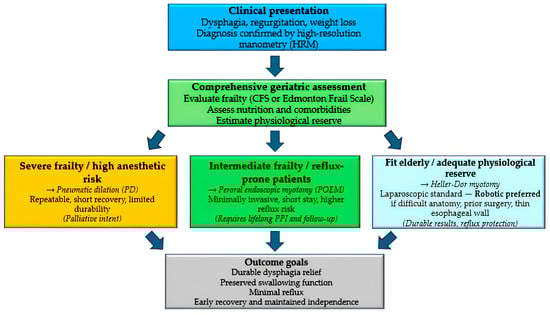
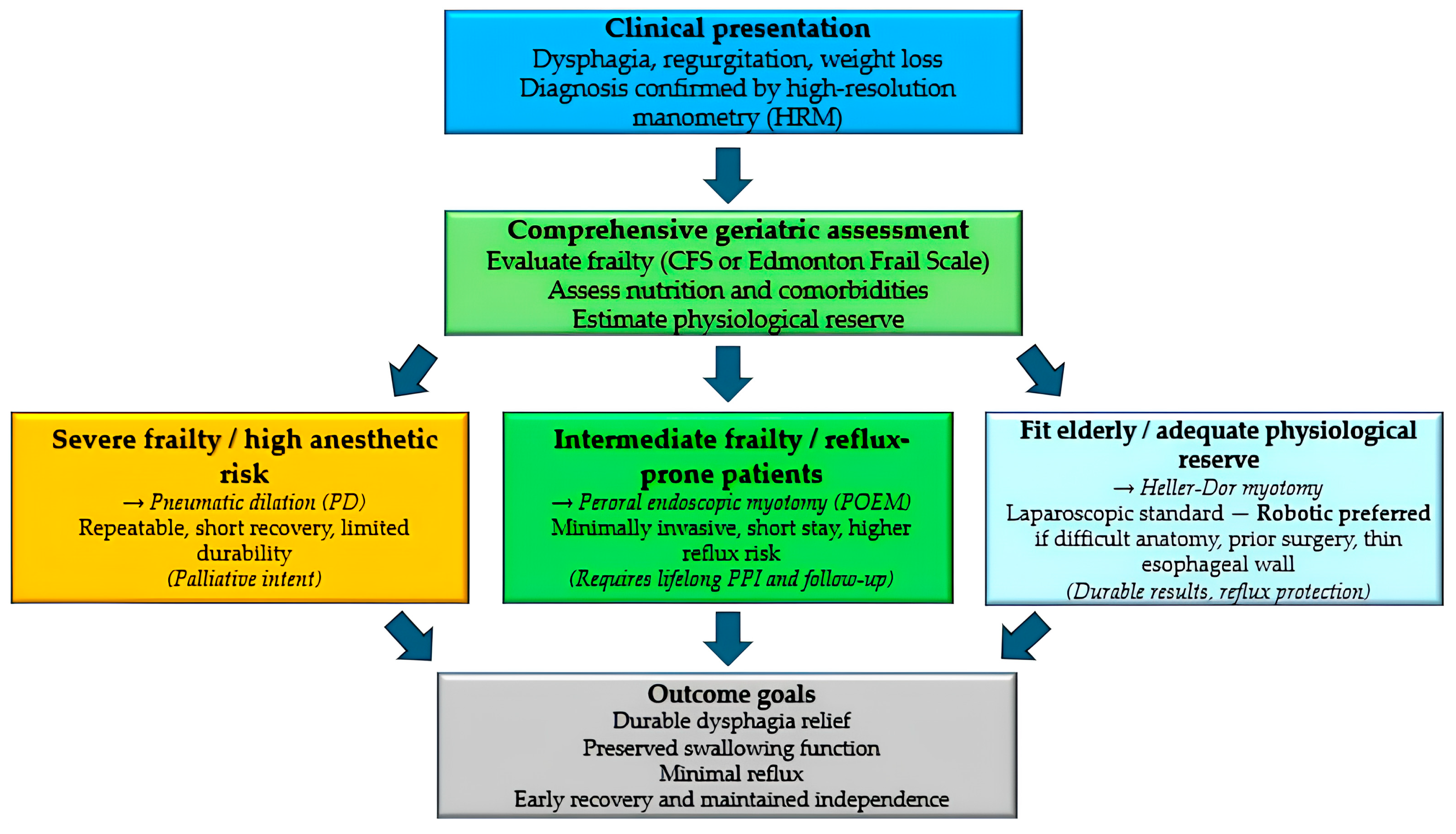
Pneumatic dilation and POEM may be reserved for those unfit for general anesthesia, whereas Heller–Dor myotomy, performed laparoscopically or robotically, remains the gold standard for fit elderly individuals [7,9,16,20,36,41,42]. As robotic technology becomes more widespread, future studies will need to determine whether its advantages can translate into measurable improvements in outcomes for this expanding patient population [7,15,16]. A comparative overview of available therapeutic options, their risks, and their applicability to the geriatric population is summarized in Table 2. A practical decision-making algorithm summarizing the therapeutic approach to achalasia in elderly patients, based on frailty and physiological reserve, is illustrated in Figure 1.
Table 2.
Comparative overview of therapeutic options for achalasia in the elderly.
Figure 1.
Proposed decision-making algorithm for achalasia in elderly patients.
3.3. Evidence on Robotic Heller–Dor Myotomy
The introduction of robotic systems into foregut surgery has progressively reshaped the management of benign esophageal disorders, including achalasia [15,16,17]. The RHD combines the principles of the traditional laparoscopic Heller procedure with the technical refinements offered by robotic technology, particularly enhanced three-dimensional vision, motion scaling, and increased instrument articulation [15,16,17].
Early comparative studies demonstrated that robotic Heller myotomy yields at least equivalent clinical outcomes while significantly reducing intraoperative mucosal perforations, a complication historically reported in up to 10 percent of laparoscopic cases [18].
From a clinical standpoint, mucosal perforation is typically an intraoperative event that requires immediate recognition and repair (most commonly primary suturing) and may increase operative time and postoperative surveillance. In the meta-analysis by Milone et al., mucosal injuries were generally identified intraoperatively and promptly treated, with limited association with severe postoperative complications [17]. Nevertheless, perforation may delay diet advancement, increase the need for postoperative imaging or antibiotics, and potentially prolong hospital stay, especially in patients with reduced physiological reserve.
Chan and colleagues highlighted the improved dexterity and tremor filtration of the robotic platform as major contributors to the observed reduction in perforation risk [18]. This precision is particularly relevant when extending the myotomy onto the gastric side, where the mucosa is thinner [19,46].
A more recent multicenter analysis by Rabe et al. evaluated 78 patients undergoing robotic or LHD myotomy and confirmed the absence of mucosal perforations in the robotic group, in contrast to 6 percent in the laparoscopic cohort [19]. Operative times were comparable between the two techniques after the initial learning phase, and functional outcomes, including Eckardt score reduction and patient satisfaction, were similar [19]. Importantly, the study found no increase in postoperative reflux or dysphagia, reinforcing the functional safety of the robotic approach when combined with a Dor fundoplication [19]. The role of an anti-reflux procedure after Heller myotomy remains clinically important [7,9,10]. Although fundoplication strategy may be individualized (e.g., Dor vs. Toupet vs. selective omission in highly selected cases), partial fundoplication is generally recommended to mitigate postoperative reflux without impairing dysphagia relief [7,9,10]. In older patients, reflux prevention may be particularly relevant due to reduced esophageal clearance, higher prevalence of pulmonary comorbidity, and increased vulnerability to reflux-related microaspiration [3,4,5,6]. Therefore, while the approach should remain patient-tailored, maintaining reflux protection through a partial fundoplication appears especially appropriate in elderly and frail individuals.
Two recent meta-analyses have synthesized the growing body of evidence comparing robotic and laparoscopic Heller myotomy. Ataya et al. analyzed more than 18,000 patients and demonstrated a significant reduction in mucosal perforation (OR ≈ 0.36) and a shorter hospital stay with robotic assistance [47]. The updated review by Aiolfi et al. confirmed these trends in over 800 patients, though partial overlap of primary studies between these meta-analyses should be noted [15]. Together, these findings support the concept that robotic surgery offers improved intraoperative safety without compromising long-term efficacy. In addition, Milone et al. conducted a meta-analysis of six studies and found no significant differences in operative time, blood loss, or length of stay, while confirming a markedly lower intraoperative perforation rate with the robotic technique (OR 0.13; p < 0.001) [17].
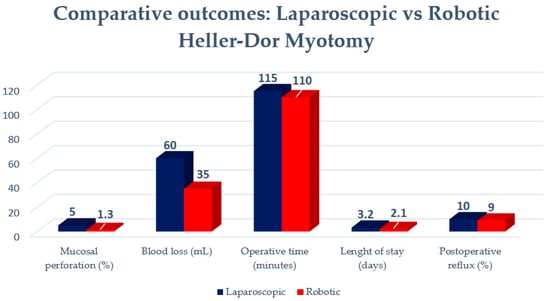
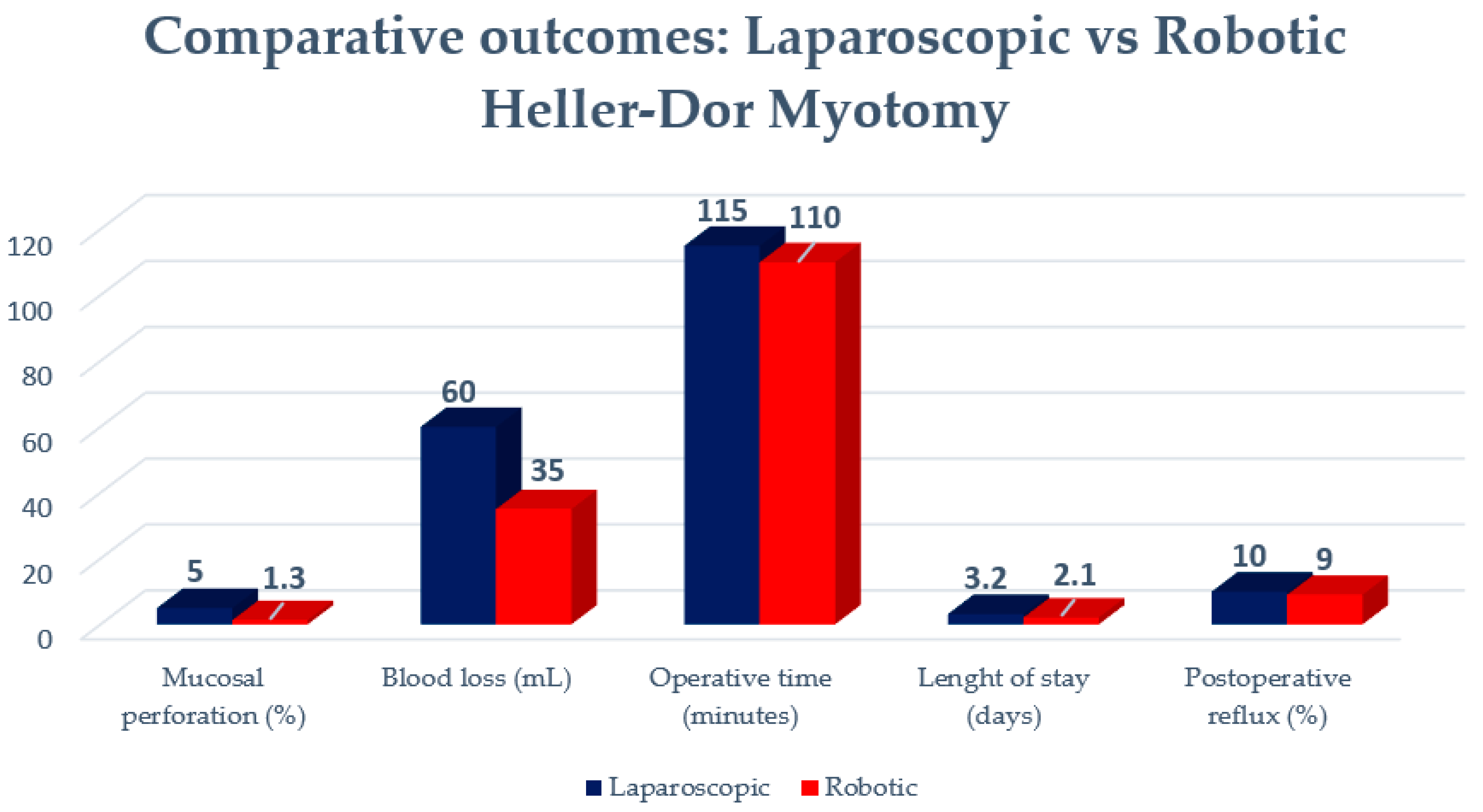
Table 3 summarizes the principal comparative and synthetic studies published between 2010 and 2025. A visual synthesis of these comparative outcomes is presented in Figure 2. Although cost considerations remain a limitation, the growing diffusion of robotic platforms and reduction in operative times may mitigate the economic gap in the coming years.
Table 3.
Summary of key RHD myotomy studies (2010–2025).
Figure 2.
Comparative outcomes between laparoscopic and robotic Heller–Dor myotomy in the treatment of esophageal achalasia. The bar chart summarizes representative data extracted from contemporary literature (Milone 2019 [17]; Rabe 2023 [19]; Aiolfi 2025 [15]; Ataya 2023 [47]; Arcerito 2022 [48]). Values represent descriptive weighted averages derived from aggregate outcomes reported in published meta-analyses and large comparative cohort studies, weighted according to sample size as reported by the original authors. These values were not calculated from original patient-level data and should be interpreted as illustrative rather than as pooled effect estimates. The robotic approach demonstrates a lower mucosal perforation rate and reduced intraoperative blood loss, with comparable operative time and postoperative reflux. Hospital stays were consistently shorter after robotic surgery; however, dedicated age- and frailty-stratified studies are still required to determine whether these technical advantages translate into geriatric-specific clinical benefits.
Arcerito et al. described a seamless transition from laparoscopic to robotic technique, with comparable operative times after 15 to 20 cases and subjective improvements in ergonomics and surgeon comfort [48]. Such findings may have important implications for surgical education, suggesting that robotic assistance could shorten the technical learning curve for complex foregut procedures.
Despite these encouraging data, the absence of stratification by patient age or frailty status across all available studies remains the defining limitation of the current evidence base (Table 4). As a result, potential advantages associated with robotic surgery, such as reduced mucosal perforation or shorter hospital stay, cannot be confidently attributed to frail elderly patients, in whom physiological vulnerability may outweigh purely technical benefits. Across available robotic series, the reported mean patient age consistently ranges between 45 and 60 years, underscoring the lack of direct evidence in elderly or very elderly populations. Consequently, current robotic data can only be indirectly applied to geriatric patients and must be interpreted in conjunction with physiological aging principles and evidence derived from laparoscopic cohorts. Given the increasing prevalence of achalasia in older populations, this absence represents an important target for future research. This review, therefore, does not claim direct evidence for robotic Heller–Dor myotomy in elderly patients but rather proposes a reasoned extrapolation grounded in geriatric physiology and supported by robust laparoscopic data, highlighting the urgent need for age-stratified robotic studies.
Table 4.
Embedded Data Table.
In summary, RHD myotomy appears to offer equivalent efficacy and potentially greater intraoperative safety compared with the laparoscopic approach. However, definitive conclusions about its role in elderly or frail patients cannot yet be drawn. Future prospective and multicenter studies specifically designed to include geriatric cohorts are needed to clarify whether the technological advantages of robotic systems translate into meaningful clinical benefits for this vulnerable population.
4. Discussion
4.1. The Role of Robotic Surgery in the Geriatric Setting
The progressive aging of the population is reshaping the epidemiology of esophageal achalasia and redefining the boundaries of surgical candidacy: in this context, in the future, the use of Artificial Intelligence could provide a benefit in the stratification of elderly patients as well [28,32,50]. The contemporary surgeon increasingly encounters elderly individuals with symptomatic disease, in whom the balance between operative risk and long-term benefit becomes more delicate. Yet, the enthusiasm surrounding robotics must be tempered by critical evaluation of its real clinical impact, particularly when applied to a population whose physiology and priorities differ from those of younger adults.
Whether these technological advantages translate into meaningful clinical benefits for older adults remains empirically unanswered.
Elderly patients have reduced tissue elasticity, lower mucosal perfusion, and greater susceptibility to iatrogenic injury. These factors increase the risk associated with fine dissection at the esophagogastric junction. The robotic system’s enhanced dexterity, stable three-dimensional vision, and motion scaling appear particularly advantageous under these circumstances [18].
A second dimension relates to postoperative recovery and quality of life. In elderly individuals, even short episodes of postoperative ileus, pneumonia, or delayed swallowing can trigger a cascade of functional decline, loss of independence, and institutionalization. The consistent observation of lower mucosal perforation rates and shorter hospital stays in robotic series suggests that even modest reductions in perioperative morbidity could translate into clinically meaningful benefits in this setting [15,19]. This could be particularly relevant in older patients with impaired esophageal clearance or pre-existing pulmonary compromise, for whom postoperative reflux and microaspiration may have disproportionate consequences.
The value of robotic surgery in geriatric practice must also be examined through the lens of appropriateness and resource allocation. The cost of robotic procedures remains higher than that of laparoscopic surgery, and while incremental improvements in safety are desirable, they must be justified by tangible clinical advantages. Available economic evidence suggests that robotic Heller myotomy is generally associated with higher direct procedural costs than laparoscopy, primarily related to platform acquisition/maintenance and operating room expenditure [48]. Nonetheless, the cost differential may narrow as operative times decrease with experience and as robotic platforms become more widely adopted. Importantly, robust cost-effectiveness data are lacking, and current literature does not demonstrate cost neutrality or cost benefit of the robotic approach in achalasia [48]. Yet, in healthcare systems under financial constraint, the prioritization of high-cost technology for elderly patients with limited life expectancy can raise ethical and logistical questions. In such cases, robotic surgery may find its most appropriate application not as a universal standard but as a selective tool reserved for high-risk anatomical or physiological scenarios where its advantages are maximized. Evidence from other geriatric surgical domains supports the hypothesis that robotic technology may offer advantages specifically relevant to older patients [51]. In colorectal and urologic surgery, robotic procedures have been associated with decreased conversion rates, fewer complications, and improved postoperative recovery in elderly cohorts [51,52]. These findings suggest that enhanced precision, superior visualization, and reduced tissue manipulation could similarly benefit elderly patients with achalasia, whose mucosa is more fragile and whose physiological reserve is limited.
Optimal outcomes depend on prehabilitation, nutritional optimization, and individualized anesthetic strategies that mitigate stress responses and preserve muscle mass. The robotic approach should therefore be viewed as one component of a broader continuum of care, rather than a purely technical innovation. Two study designs merit priority: (1) prospective observational registries enabling age-stratified outcome analysis (target n ≥ 500), and (2) focused comparative trials of RHD versus LHD in patients aged ≥70 years with predefined frailty assessment (target n = 150–200 per arm).
Another underexplored dimension is the impact on the surgical workforce itself. Robotic systems improve surgeon ergonomics and reduce fatigue, potentially extending the operative lifespan of experienced specialists. This factor may indirectly enhance patient outcomes, particularly in complex operations where surgeon experience strongly correlates with safety and efficacy [18]. The ability to perform high-precision procedures with reduced physical strain could maintain consistency in surgical performance and facilitate mentorship within aging surgical teams.
Despite these theoretical and pragmatic advantages, the evidence base remains incomplete. Most published series include relatively young patients, with mean ages in the fifth decade, and few report detailed comorbidity profiles or frailty indices. As such, extrapolating results from the general population to the elderly remains speculative. Large-scale, prospective multicenter registries should aim to capture data specific to geriatric cohorts, integrating objective measures of frailty, postoperative function, and quality of life. In parallel, cost-effectiveness analyses stratified by age and comorbidity could provide a more balanced view of when and for whom RHD myotomy offers true value, including downstream costs related to pulmonary complications, delayed oral intake, and loss of independence, which are particularly relevant in geriatric patients.
In elderly patients, surgical innovation is valuable only if it improves autonomy, comfort, or quality of life. For these reasons, RHD should be seen not as an inevitable technological evolution but as a selective, patient-centered option whose potential will only be realized through rigorous clinical validation.
4.2. Future Perspectives
The key question is not whether robotic surgery can replicate the results of laparoscopy, but rather whether it can offer distinct and measurable advantages for specific subgroups, particularly the elderly.
A fundamental priority is the development of prospective multicenter registries dedicated to esophageal motility disorders. Such registries should systematically collect: (1) demographic data with age stratification (≥65, ≥75, ≥85 years); (2) validated frailty indices (Clinical Frailty Scale, Edmonton Frail Scale); (3) baseline nutritional parameters (albumin, BMI, sarcopenia assessment); and (4) standardized functional outcomes (Eckardt score, quality-of-life instruments, activities of daily living). Such registries would allow stratification by age, comorbidity, and frailty index, offering a realistic picture of outcomes in elderly patients undergoing RHD. The inclusion of standardized endpoints, such as the Eckardt score, manometric recovery, and validated quality-of-life instruments, will be crucial to assess not only procedural success but also the global functional benefit of surgery [15].
Another important direction involves integrating robotic surgery into comprehensive geriatric care pathways [3,28,32]. Within such pathways, prehabilitation should be considered a key enabling component, particularly for frail and malnourished patients with achalasia. Targeted interventions (nutritional optimization, protein supplementation, respiratory training, and resistance exercise when feasible) may improve functional reserve, reduce postoperative pulmonary complications, and facilitate earlier return to oral intake and independence. In this context, a minimally invasive robotic approach may synergize with prehabilitation by reducing surgical stress while maximizing recovery potential in older adults. Likewise, the perioperative management of achalasia in elderly patients could benefit from multimodal strategies that minimize opioid use, reduce delirium risk, and promote early oral feeding: elements already compatible with enhanced recovery protocols and well aligned with the minimally invasive nature of robotic surgery [48]. Moreover, intraoperative imaging technologies such as near-infrared fluorescence or real-time perfusion assessment may enhance mucosal protection, an aspect particularly relevant in elderly tissues with reduced vascularity.
From a methodological perspective, future studies should include patient-reported outcomes (PROs) and long-term follow-up, focusing on parameters that truly reflect quality of life and autonomy. Metrics such as independence in eating, absence of regurgitation, and freedom from aspiration are arguably more meaningful to elderly patients than manometric normalization alone. The use of geriatric-specific outcome measures, such as the activities of daily living (ADL) scale or the frailty-adjusted quality-of-life index, would bring clinical research closer to real-world priorities.
Finally, education and dissemination will shape the future role of RHD. Simulation-based training and structured robotic curricula can shorten the learning curve, ensuring that surgeons achieve proficiency with minimal patient risk. Collaborative initiatives between academic centers and community hospitals will be essential to generate robust data and standardize best practices. As robotics continues to mature, its integration into geriatric surgical care should not be guided solely by technological enthusiasm but by rigorous evaluation of value, safety, and patient-centered outcomes.
4.3. Limitations
This narrative review has several limitations. First, the narrative design precluded formal quality appraisal and quantitative synthesis. Second, included studies demonstrate substantial heterogeneity in outcome definitions, follow-up duration, and reporting standards. Third, the mean age across available RHD series (45–60 years) necessitates extrapolation to truly elderly populations. Fourth, frailty indices and comorbidity-adjusted outcomes were rarely reported, limiting assessment of the robotic approach’s value in physiologically vulnerable patients. This limitation prevents adjustment of outcomes for physiological vulnerability and limits the ability to disentangle the respective contributions of chronological age, comorbidity burden, and frailty to postoperative results. The absence of frailty indices, comorbidity-adjusted outcomes, and patient-reported functional measures constrains the ability to determine the true value of robotic Heller–Dor in older adults. In addition, the descriptive weighted averages shown in Figure 2 combine data derived from heterogeneous study designs, including retrospective cohorts and meta-analyses. Although useful for visual comparison, this approach may introduce interpretative bias and should not be considered equivalent to formal quantitative pooling. Accordingly, these data are presented for illustrative purposes and should be interpreted with caution.
Finally, dedicated health–economic evaluations are scarce, and no studies provide age- or frailty-stratified cost-effectiveness analyses; therefore, any statement regarding ‘value’ in elderly patients remains inferential and should be validated in prospective studies incorporating standardized geriatric outcomes and resource-use measures.
These limitations highlight the need for prospective, stratified research.
5. Conclusions
Although robotic Heller–Dor myotomy has demonstrated improved intraoperative safety and excellent functional outcomes in the general population, its specific benefit for elderly and frail patients remains unproven. Future research should incorporate frailty indices, geriatric-specific functional outcomes, and cost-effectiveness analyses to clarify its true value. Until such evidence becomes available, robotic surgery should be selectively offered to elderly patients with higher anatomical or physiological risk, where its advantages are most likely to yield meaningful clinical benefits. The absence of geriatric-stratified data remains the most important limitation in the current literature and the key priority for future research.
Author Contributions
Conceptualization, A.F.; methodology, M.S. (Murtaja Satea), F.K., F.M.M.; software, J.E.G.C., A.S.; validation, F.C., A.C. and J.M.Z.T.; formal analysis, L.R., M.S. (Michele Santangelo); investigation, A.S., A.Z.; resources, A.F., M.S. (Murtaja Satea); data curation, F.K., J.E.G.C., J.M.Z.T.; writing—original draft preparation, A.F.; writing—review and editing, M.S. (Murtaja Satea), F.K., F.M.M., J.E.G.C.; visualization, M.S. (Murtaja Satea); supervision, M.S. (Michele Santangelo), S.T.; project administration, A.F., M.S. (Michele Santangelo). All authors have read and agreed to the published version of the manuscript.
Funding
This research received no external funding.
Institutional Review Board Statement
Not applicable. This study is a narrative review of previously published literature and did not involve human subjects.
Informed Consent Statement
Not applicable.
Data Availability Statement
No new data were created or analyzed in this study. Data sharing is not applicable to this article.
Conflicts of Interest
The authors declare no conflicts of interest related to this work.
Abbreviations
The following abbreviations are used in this manuscript:
| POEM | Peroral Endoscopic Myotomy |
| LHD | Laparoscopic Heller–Dor |
| RHD | Robotic Heller–Dor |
| ADL | Activities of Daily Living |
References
- Pandolfino, J.E.; Kahrilas, P.J. Presentation, Diagnosis, and Management of Achalasia. Clin. Gastroenterol. Hepatol. 2013, 11, 887–897. [Google Scholar] [CrossRef] [Scilit]
- Fernicola, A.; Calogero, A.; Crocetto, F.; Capece, G.; Bocchino, G.; Santangelo, M. Achalasia and Thyroid Disorders: A Hidden Autoimmune Overlap? Epidemiology, Mechanisms, and Clinical Relevance of an Emerging Association. Gastrointest. Disord. 2025, 7, 64. [Google Scholar] [CrossRef] [Scilit]
- Clegg, A.; Young, J.; Iliffe, S.; Rikkert, M.O.; Rockwood, K. Frailty in elderly people. Lancet 2013, 381, 752–762. [Google Scholar] [CrossRef] [Scilit]
- De Lepeleire, J.; Iliffe, S.; Mann, E.; Degryse, J.M. Frailty: An emerging concept for general practice. Br. J. Gen. Pr. 2009, 59, e177–e182. [Google Scholar] [CrossRef] [Scilit] [PubMed]
- Besanko, L.K.; Burgstad, C.M.; Cock, C.; Heddle, R.; Fraser, A.; Fraser, R.J. Changes in Esophageal and Lower Esophageal Sphincter Motility with Healthy Aging. J. Gastrointest. Liver Dis. 2014, 23, 243–248. [Google Scholar] [CrossRef] [Scilit] [PubMed]
- Jankovic, J.; Milenkovic, B.; Simic, A.; Ivanovic, N.; Skrobic, O. Characteristics of achalasia and detection of pulmonary complications: A comparison of findings in younger and elderly patients. Qatar Med J. 2024, 2024, 52. [Google Scholar] [CrossRef] [Scilit]
- Ugliono, E.; Buscemi, S.; Consalvo, D.; Iossa, A.; Tamburini, N.; Pernazza, G.; Rebecchi, F. Real-world management of achalasia and esophagogastric junction outlet obstruction in Italy: Results from a national survey. Updat. Surg. 2025, 77, 2235–2243. [Google Scholar] [CrossRef] [Scilit] [PubMed]
- Calabrese, E.C.; Kindel, T.; Slater, B.J.; Marks, J.; Swanstrom, L.; Saxena, P.; Docimo, S.; Athanasiadis, D.I.; Hanna, N.M.; Stefanidis, D.; et al. 2024 Update to SAGES guidelines for the use of peroral endoscopic myotomy (POEM) in the treatment of achalasia. Surg. Endosc. 2025, 39, 4027–4037. [Google Scholar] [CrossRef] [Scilit]
- Fernicola, A.; Palomba, G.; Calogero, A.; Sciarra, A.; Cavaliere, A.; Crocetto, F.; Sagnelli, C.; Alvigi, A.; Basile, R.; Pignatelli, D.; et al. Achalasia and Gut Microbiota: Is Dysbiosis an Overlooked Factor in Postoperative Surgical Outcomes? Surgeries 2025, 6, 63. [Google Scholar] [CrossRef] [Scilit]
- Midya, S.; Ghosh, D.; Mahmalat, M.W. Fundoplication in laparoscopic Heller’s cardiomyotomy for achalasia. Cochrane Database Syst. Rev. 2022, 2022, CD013386. [Google Scholar] [CrossRef] [Scilit]
- Mittal, S.; Kumar, A.; Bale, M.; Singla, V.; Makharia, G.; Gunjan, D.; Parshad, R. Mid-term outcomes of the patients of achalasia cardia undergoing laparoscopic Heller’s myotomy with angle of his accentuation versus laparoscopic Heller’s myotomy with Toupet’s fundoplication. Surg. Endosc. 2025, 39, 5189–5197. [Google Scholar] [CrossRef] [Scilit]
- Barron, J.O.; Toth, A.J.; Blackstone, E.H.; Ramji, S.; Jain, N.; Tasnim, S.; Thota, P.N.; Gabbard, S.L.; Zanoni, A.; Sudarshan, M.; et al. Heller myotomy for esophageal achalasia: Outcomes in 1010 patients with longitudinal follow-up. J. Thorac. Cardiovasc. Surg. 2025, 170, 1821–1830.e4. [Google Scholar] [CrossRef] [Scilit]
- Salvador, R.; Forattini, F.; Provenzano, L.; Costantini, A.; Vittori, A.; Santangelo, M.; Capovilla, G.; Costantini, M.; Moletta, L.; Nezi, G.; et al. Long-term results of laparoscopic Heller-Dor for esophageal-gastric junction outflow obstruction: A prospective comparative study. Int. J. Surg. 2024, 111, 1950–1956. [Google Scholar] [CrossRef] [Scilit]
- Salvador, R.; Provenzano, L.; Nezi, G.; Capovilla, G.; Nicoletti, L.; Pierobon, E.S.; Moletta, L.; Valmasoni, M.; Merigliano, S.; Costantini, M. Laparoscopic Heller-Dor Is an Effective Treatment for Esophageal-Gastric Junction Outflow Obstruction. J. Gastrointest. Surg. 2021, 25, 2201–2207. [Google Scholar] [CrossRef] [Scilit]
- Aiolfi, A.; Damiani, R.; Manara, M.; Cammarata, F.; Bonitta, G.; Biondi, A.; Bona, D.; Bonavina, L. Robotic versus laparoscopic heller myotomy for esophageal achalasia: An updated systematic review and meta-analysis. Langenbeck’s Arch. Surg. 2025, 410, 75. [Google Scholar] [CrossRef] [Scilit]
- Palomba, G.; Capuano, M.; Basile, R.; Sorrentino, G.; Fernicola, A.; Anoldo, P.; Milone, M.; De Palma, G.D.; Aprea, G. Robotic Surgery in Achalasia: State of the Art. Chirurgia 2023, 118, 8–19. [Google Scholar] [CrossRef] [Scilit]
- Milone, M.; Manigrasso, M.; Vertaldi, S.; Velotti, N.; Aprea, G.; Maione, F.; Gennarelli, N.; De Simone, G.; De Conno, B.; Pesce, M.; et al. Robotic versus laparoscopic approach to treat symptomatic achalasia: Systematic review with meta-analysis. Dis. Esophagus 2019, 32, 1–8. [Google Scholar] [CrossRef] [Scilit] [PubMed]
- Chan, E.G.; Sarkaria, I.S. Robotic assisted Heller myotomy: Indications, techniques and outcomes. Shanghai Chest 2021, 5, e48495. [Google Scholar] [CrossRef] [Scilit]
- Rabe, S.M.; Burmeister, E.; Niebisch, S.; Gockel, I. Clinical and functional outcome following robotic Heller-myotomy with partial fundoplication in patients with achalasia. J. Robot. Surg. 2023, 17, 1689–1696. [Google Scholar] [CrossRef] [Scilit]
- Palomba, G.; Capuano, M.; Pegoraro, F.; Basile, R.; Pesce, M.; Rurgo, S.; Effice, E.; Sarnelli, G.; De Palma, G.D.; Aprea, G. Laparoscopic Heller-Dor myotomy in elderly achalasia patients: A single center experience with PSM analysis. Minim. Invasive Ther. Allied Technol. 2023, 33, 13–20. [Google Scholar] [CrossRef] [Scilit] [PubMed]
- Roll, G.R.; Ma, S.; Gasper, W.J.; Patti, M.; Way, L.W.; Carter, J. Excellent outcomes of laparoscopic esophagomyotomy for achalasia in patients older than 60 years of age. Surg. Endosc. 2010, 24, 2562–2566. [Google Scholar] [CrossRef] [Scilit]
- Erhag, H.F.; Guðnadóttir, G.; Alfredsson, J.; Cederholm, T.; Ekerstad, N.; Religa, D.; Nellgård, B.; Wilhelmson, K. The Association Between the Clinical Frailty Scale and Adverse Health Outcomes in Older Adults in Acute Clinical Settings—A Systematic Review of the Literature. Clin. Interv. Aging 2023, 18, 249–261. [Google Scholar] [CrossRef] [Scilit]
- Miller, R.L.; Barnes, J.D.; Mouton, R.; Braude, P.; Hinchliffe, R. Comprehensive geriatric assessment in perioperative care: A protocol for a systematic review and qualitative synthesis. BMJ Open 2021, 11, e049875. [Google Scholar] [CrossRef] [Scilit]
- Xue, D.; Cheng, Y.; Wu, M.; Zhang, Y. Comprehensive geriatric assessment prediction of postoperative complications in gastrointestinal cancer patients: A meta-analysis. Clin. Interv. Aging 2018, 13, 723–736. [Google Scholar] [CrossRef] [Scilit]
- Zhao, C.Y.; Xu, N.; Dong, H.; Chai, N.L.; Linghu, E.Q. Effect of sex on the outcomes of peroral endoscopic myotomy for the treatment of achalasia. World J. Gastroenterol. 2025, 31, 104579. [Google Scholar] [CrossRef] [Scilit] [PubMed]
- Bar, N.; Vélez, C.; Pasricha, T.S.; Thurm, T.; Shor, D.B.-A.; Dekel, R.; Ron, Y.; Staller, K.; Kuo, B. Safety of Pneumatic Dilation in Older Adults with Achalasia: An International Multicenter Cross-Sectional Study. J. Clin. Med. 2023, 12, 6682. [Google Scholar] [CrossRef] [Scilit]
- Babbar, S.; Sachar, M.; Faye, A.; Knotts, R.M. Esophageal Disorders in the Older Adult. Curr. Treat. Options Gastroenterol. 2025, 23, 3. [Google Scholar] [CrossRef] [Scilit] [PubMed]
- Mari, A.; Sbeit, W.; Abboud, W.; Awadie, H.; Khoury, T. Achalasia in the Elderly: Diagnostic Approach and a Proposed Treatment Algorithm Based on a Comprehensive Literature Review. J. Clin. Med. 2021, 10, 5565. [Google Scholar] [CrossRef] [Scilit]
- Craft, R.O.; Aguilar, B.E.; Flahive, C.; Merritt, M.V.; Chapital, A.B.; Schlinkert, R.T.; Harold, K.L. Outcomes of Minimally Invasive Myotomy for the Treatment of Achalasia in the Elderly. JSLS J. Soc. Laparosc. Robot. Surg. 2010, 14, 342–347. [Google Scholar] [CrossRef] [Scilit]
- Lin, H.S.; Watts, J.N.; Peel, N.M.; Hubbard, R.E. Frailty and post-operative outcomes in older surgical patients: A systematic review. BMC Geriatr. 2016, 16, 157. [Google Scholar] [CrossRef] [Scilit]
- Zietlow, K.E.; Wong, S.; Heflin, M.T.; McDonald, S.R.; Sickeler, R.; Devinney, M.; Blitz, J.; Lagoo-Deenadayalan, S.; Berger, M. Geriatric Preoperative Optimization: A Review. Am. J. Med. 2022, 135, 39–48. [Google Scholar] [CrossRef] [Scilit]
- Bettelli, G.; Maggi, S. Decision-making about surgery in the elderly. Aging Clin. Exp. Res. 2018, 30, 225–227. [Google Scholar] [CrossRef] [Scilit] [PubMed]
- Tang, V.L.; Covinsky, K. Frailty and Surgical Decision Making. Ann. Intern. Med. 2016, 165, 669–670. [Google Scholar] [CrossRef] [Scilit]
- Latorre, G.; Bechara, R. Endoscopic Treatment of Achalasia. Digestion 2025, 106, 603–615. [Google Scholar] [CrossRef] [Scilit] [PubMed]
- Elfert, K.; Ismail, A.; Abusuliman, M.; Eldesouki, M.; Aloum, K.; Kloub, M.; Elghayesh, M.; Passalacqua, K.; Abosheaishaa, H.; Nassar, M.; et al. Safety of Esophageal Dilation Procedures in Patients on Antithrombotic Therapy: A US Collaborative Network Cohort Study. Am. J. Gastroenterol. 2025. [Google Scholar] [CrossRef] [Scilit]
- Ayuso, S.A.; Ujiki, M.B. What to do when Heller myotomy fails: Pneumatic dilation, redo Heller, or peroral endoscopic myotomy? J. Gastrointest. Surg. 2025, 29, 102192. [Google Scholar] [CrossRef] [Scilit] [PubMed]
- Ponds, F.A.; Fockens, P.; Lei, A.; Neuhaus, H.; Beyna, T.; Kandler, J.; Frieling, T.; Chiu, P.W.Y.; Wu, J.C.Y.; Wong, V.W.Y.; et al. Effect of Peroral Endoscopic Myotomy vs. Pneumatic Dilation on Symptom Severity and Treatment Outcomes Among Treatment-Naive Patients with Achalasia. JAMA 2019, 322, 134–144. [Google Scholar] [CrossRef] [Scilit]
- Kim, G.H.; Jung, K.W.; Jung, H.; Kim, M.; Na, H.K.; Ahn, J.Y.; Lee, J.H.; Kim, D.H.; Choi, K.D.; Song, H.J.; et al. Superior clinical outcomes of peroral endoscopic myotomy compared with balloon dilation in all achalasia subtypes. J. Gastroenterol. Hepatol. 2019, 34, 659–665. [Google Scholar] [CrossRef] [Scilit]
- Moayyedi, P.; Delaney, B.C.; Vakil, N.; Forman, D.; Talley, N.J. The efficacy of proton pump inhibitors in nonulcer dyspepsia: A systematic review and economic analysis. Gastroenterology 2004, 127, 1329–1337. [Google Scholar] [CrossRef] [Scilit]
- Cho, Y.K.; Kim, S.H. Current Status of Peroral Endoscopic Myotomy. Clin. Endosc. 2018, 51, 13–18. [Google Scholar] [CrossRef] [Scilit]
- Meng, F.; Li, P.; Wang, Y.; Ji, M.; Wu, Y.; Yu, L.; Niu, Y.; Lv, F.; Li, W.; Li, W.; et al. Peroral endoscopic myotomy compared with pneumatic dilation for newly diagnosed achalasia. Surg. Endosc. 2017, 31, 4665–4672. [Google Scholar] [CrossRef] [Scilit]
- Shimamura, Y. Advancing the management of achalasia with peroral endoscopic myotomy (POEM) versus pneumatic balloon dilation: Is POEM the superior choice? Gastrointest. Endosc. 2025, 101, 568–569. [Google Scholar] [CrossRef] [Scilit] [PubMed]
- Marano, L.; Pallabazzer, G.; Solito, B.; Santi, S.; Pigazzi, A.; De Luca, R.; Biondo, F.G.; Spaziani, A.; Longaroni, M.; Di Martino, N.; et al. Surgery or Peroral Esophageal Myotomy for Achalasia. Medicine 2016, 95, e3001. [Google Scholar] [CrossRef] [Scilit]
- Ma, O.; Brar, K.; McCluskey, S.; Morris-Janzen, D.; Peabody, J.; Turner, S. Long-term outcomes after per-oral endoscopic myotomy versus laparoscopic Heller myotomy in the treatment of achalasia: A systematic review and meta-analysis. Surg. Endosc. 2025, 39, 5985–5994. [Google Scholar] [CrossRef] [Scilit]
- Conner, A.; Jain, N.; Barron, J.O.; Toth, A.J.; Tang, A.; Azari, F.; Sudarshan, M.; Murthy, S.C.; Blackstone, E.H.; Raja, S. When the gold standard fails: Propensity-matched comparison of peroral endoscopic myotomy after Heller myotomy versus index peroral endoscopic myotomy. J. Thorac. Cardiovasc. Surg. 2025. [Google Scholar] [CrossRef] [Scilit]
- Capuano, M.; Palomba, G.; Pesce, M.; Fernicola, A.; Efficie, E.; De Palma, G.D.; Sarnelli, G.; Aprea, G. Clinical utility of Eckardt Score and high-resolution manometry in the follow-up of achalasia patients treated with Heller–Dor myotomy. Curr. Probl. Surg. 2026, 74, 101929. [Google Scholar] [CrossRef] [Scilit]
- Ataya, K.; Bsat, A.; Aljaafreh, A.; Bourji, H.; Al Ayoubi, A.R.; Hassan, N.; El Bourji, H. Robot-Assisted Heller Myotomy Versus Laparoscopic Heller Myotomy: A Systematic Review and Meta-Analysis. Cureus 2023, 15, e48495. [Google Scholar] [CrossRef] [Scilit] [PubMed]
- Arcerito, M.; Jamal, M.M.; Perez, M.G.; Kaur, H.; Sundahl, A.; Moon, J.T. Esophageal Achalasia: From Laparoscopic to Robotic Heller Myotomy and Dor Fundoplication. JSLS J. Soc. Laparosc. Robot. Surg. 2022, 26. [Google Scholar] [CrossRef] [Scilit]
- Nevins, E.; Greene, K.; Bawa, S.; Horgan, L. Robotic Heller’s cardiomyotomy for achalasia: Early outcomes for a high-volume UK centre. Ind. Mark. Manag. 2024, 106, 353–358. [Google Scholar] [CrossRef] [Scilit]
- Fernicola, A.; Parmeggiani, D.; Crocetto, F.; Shafeea, M.S.; Cece, A.; Calogero, A.; Cicatiello, A.G.; Benassai, G.; Quarto, G.; Santangelo, M. Artificial intelligence applied to achalasia: An emerging frontier in precision motility care? State of the art and future prospects. J. Basic Clin. Physiol. Pharmacol. 2025. [Google Scholar] [CrossRef] [Scilit] [PubMed]
- Koubanani, Z.G.; Tahir, M.S.; Abdullah, H.M.; Malik, W.S.; Saleh, M.; Ali, M.; Min, M. Feasibility of robotic surgery in elderly patients with rectal cancer: A meta-analysis. J. Robot. Surg. 2025, 19, 50. [Google Scholar] [CrossRef] [Scilit] [PubMed]
- Schütz, V.; Hatiboglu, G.; Würkner, D.; Tekesin, M.; Feisst, M.; Duensing, S.; Huber, J.; Hohenfellner, M.; Kaufmann, B. Comparison of Retzius-sparing versus anterior robotic-assisted radical prostatectomy in patients with prior transurethral resection of the prostate (TURP). World J. Urol. 2025, 44, 23. [Google Scholar] [CrossRef] [Scilit] [PubMed]

Disclaimer/Publisher’s Note: The statements, opinions and data contained in all publications are solely those of the individual author(s) and contributor(s) and not of MDPI and/or the editor(s). MDPI and/or the editor(s) disclaim responsibility for any injury to people or property resulting from any ideas, methods, instructions or products referred to in the content. |
© 2026 by the authors. Licensee MDPI, Basel, Switzerland. This article is an open access article distributed under the terms and conditions of the Creative Commons Attribution (CC BY) license.