Article

Carbon Forms and Their Dynamics in Soils of the Carbon Supersite at the Black Sea Coast


by
Sergey N. Gorbov
1,2,
Nadezhda V. Salnik
1,2,*,
Suleiman S. Tagiverdiev
1,2,
Marina V. Slukovskaya
1,3,4,
Margarita V. Kochkina
5,
Svetlana A. Tishchenko
2,
Elena V. Gershelis
1,
Vyacheslav V. Kremenetskiy
5 and
Alexander V. Olchev
5,6
1
International Scientific Center for Ecology and Climate Change, Sirius University of Science and Technology, Krasnodar Region, Sirius Federal Territory, Sochi 354340, Russia
2
D.I. Ivanovsky Academy of Biology and Medicine, Southern Federal University, Rostov-on-Don 344090, Russia
3
Laboratory of Nature-Inspired Technologies and Environmental Safety of the Arctic Region, Kola Science Centre, Russian Academy of Sciences, Apatity 184209, Russia
4
I.V. Tananaev Institute of Chemistry and Technology of Rare Elements and Mineral Raw Materials, Kola Science Centre, Russian Academy of Sciences, Apatity 184209, Russia
5
Shirshov Institute of Oceanology, Russian Academy of Sciences, Moscow 117997, Russia
6
Faculty of Geography, Lomonosov Moscow State University, Moscow 119991, Russia
*
Author to whom correspondence should be addressed.
Soil Syst. 2026, 10(1), 4; https://doi.org/10.3390/soilsystems10010004

Submission received: 22 October 2025 / Revised: 3 December 2025 / Accepted: 13 December 2025 / Published: 23 December 2025

Abstract

This study is one of the first comprehensive assessments of soil carbon dynamics on the Black Sea coast of Russia, focusing on the role of soils in the terrestrial carbon cycle and the greenhouse gas balance of sub-Mediterranean ecosystems. Our integrated approach combined soil classification with the analysis of the distribution of organic and inorganic carbon, as well as the measurement of microbial biomass and respiration. Soil respiration components, including substrate-induced respiration (SIR) and basal respiration (BR), as well as greenhouse gas (carbon dioxide (CO2) and methane (CH4)) dynamics, were evaluated using a combination of laboratory and field measurements. Our results revealed significant differences between natural Rendzic Leptosols and terraced Skeletic Rendzic Leptosols (Technic and Transportic types). The latter contained higher organic carbon stocks (up to 25 kg m−2) associated with buried humus horizons, whereas the former were dominated by inorganic carbon accumulation. Microbial biomass carbon (MBC) ranged from 113 to 1119 µg C g−1 of soil and decreased with depth. Basal respiration averaged 0.39 ± 0.30 µg C–CO2 g−1 h−1. CO2 emissions were strongly correlated with soil temperature (r = 0.65, p < 0.05) and negatively correlated with soil moisture, reflecting the predominant influence of abiotic factors. Seasonal chamber observations confirmed that these soils consistently function as CH4 sinks, with negative CH4 fluxes recorded across all seasons. Thus, Rendzic Leptosols on the Black Sea coast serve as significant CO2 sources and stable CH4 sinks simultaneously, and anthropogenic terracing enhances their potential for organic carbon sequestration. These findings refine our understanding of the carbon balance in sub-Mediterranean forest soils and highlight their dual role in greenhouse gas dynamics under changing climate conditions.

1. Introduction

In the face of ongoing climate change and mounting anthropogenic pressure, maintaining the stable functioning of ecosystems is essential for sustaining global carbon reservoirs. Disturbing or degrading natural ecosystems can lead to the large-scale release of carbon, which reinforces climate warming through positive feedback. Conversely, stable, well-preserved ecosystems mitigate these effects by sequestering atmospheric CO2 and enhancing long-term carbon storage in biomass and soils. Preserved natural ecosystems regulate atmospheric greenhouse gas concentrations, as vegetation removes CO2 from the atmosphere and stores it in the soil [1]. Numerous studies have shown that forest ecosystems accumulate large amounts of organic carbon in both aboveground biomass and soil [2,3,4,5]. Globally, forests play a pivotal role in the biogeochemical carbon cycle, capturing up to 30% of annual anthropogenic CO2 emissions [6,7,8]. Therefore, investigating regional and local carbon sequestration processes is essential for understanding their spatial distribution and controlling factors.
In forest ecosystems, soil and woody vegetation are among the largest reservoirs of organic carbon in the terrestrial biosphere [9,10,11,12,13,14]. Soils account for approximately 60% of the total carbon stock in temperate forest ecosystems [6]. However, they often receive less attention than vegetation in carbon balance assessments [15]. Despite extensive research on forest carbon cycling, the spatial distribution and stability of soil organic carbon in heterogeneous local forest ecosystems remain poorly constrained. This gap is particularly evident in biogeographically specific regions, such as the sub-Mediterranean zone of the Russian Black Sea coast. Therefore, carbonate parent materials, a variety of Mediterranean and Colchic forest types, and long-term anthropogenic landscape modifications interact to create unique, understudied conditions for carbon accumulation and turnover [16]. In many boreal and temperate forests, soil (including dead organic matter) and dead organic matter account for a significant portion of total carbon stocks, surpassing aboveground biomass [6,17]. The rate and stability of carbon accumulation in soils depend on climatic conditions, vegetation composition, soil type, hydrological regime, and the intensity of anthropogenic impact [18,19].
In recent years, an extensive network of carbon supersites and eco-climatic stations has been established in Russia to monitor greenhouse gas fluxes and carbon balance in terrestrial ecosystems [20]. These scientific platforms are equipped with instruments and methodologies to measure spatial and temporal variability in carbon dioxide and other greenhouse gas emissions and accumulation across diverse landscapes characterized by varying relief, vegetation, and soil cover types [21]. Nevertheless, the dynamics of greenhouse gas fluxes remain insufficiently explored in many Russian regions, and the contribution of soils to total ecosystem fluxes remains unclear. In particular, the Black Sea Coast carbon supersite is a critical yet insufficiently studied ecosystem located in a transition zone between subtropical and Mediterranean climates. Despite its importance, detailed information on soil–atmosphere greenhouse gas exchange and the contribution of soils to the region’s carbon balance is currently lacking. Additionally, there is no quantitative data on how anthropogenic slope terracing, which is widespread in the area, has affected soil carbon levels and stability compared to those of natural forest soils.
This study examines soil cover characteristics at the carbon supersite of the Southern Branch of the Institute of Oceanology of the Russian Academy of Sciences (SB IO RAS). The carbon supersite is situated in the coastal zone of the Black Sea and encompasses sub-Mediterranean broadleaf-coniferous forests and xerophytic communities. The diverse soil cover in the region supports unique sub-Mediterranean ecosystems with endemic species near Novorossiysk. Mediterranean-type plant communities, such as juniper woodlands, tomillares, and tragacanth communities, as well as forests where Quercus pubescens and Carpinus orientalis comprise the primary canopy layer, are concentrated here [22,23].
Although numerous studies have investigated forest carbon cycling [14,24,25,26,27,28,29], the spatial distribution and stability of organic carbon in heterogeneous local forest ecosystems remain largely unknown. It is particularly important to compare soil carbon stocks of forest ecosystems that differ in vegetation composition, structure, and the degree of anthropogenic transformation. The relationships between carbon stocks, vegetation and soil cover, soil temperature and moisture, as well as CO2 and CH4 fluxes, have not yet been comprehensively evaluated. Quantitative assessment of soil CO2 and CH4 fluxes is integral to carbon balance studies [30]. While organic carbon stocks reflect only the potential of soils to accumulate carbon, measured fluxes reveal the ongoing dynamics of mineralization and methanogenesis. Accounting for CO2 and CH4 fluxes is crucial for understanding the contribution of carbonate soils to regional and global carbon cycles, as well as their roles as sources or sinks of greenhouse gases under changing climate conditions.
The objectives of this study are as follows:
  • Quantitatively assess the distribution and stocks of organic and inorganic carbon in natural and anthropogenically modified sub-Mediterranean soils at the Black Sea Coast carbon supersite.
  • Characterize microbial activity (e.g., microbial biomass, basal respiration, and metabolic quotient) as an indicator of carbon transformation processes in different soil types.
  • Measure CO2 and CH4 fluxes using chamber techniques and determine their seasonal dynamics.
  • Identify the key factors that control carbon accumulation and greenhouse gas emissions in regional carbonate soils, such as soil temperature, moisture, vegetation type, and degree of anthropogenic transformation.

2. Materials and Methods

The study area is a carbon supersite of the SB IO RAS, located in Gelendzhik, Krasnodar Krai (Russia). According to the Köppen–Geiger classification, the study area lies at the transition between the humid subtropical (Cfa) and Mediterranean (Csa) climate zones. The mean annual temperature is +13.7 °C, with an average wind speed of 4.5 m s−1, and annual precipitation of about 788 mm.
The coastal part of the carbon supersite is situated on a 15–20° slope facing the bay and extends up to 150 m above sea level (a.s.l.). Vegetation height ranges from 1.5 to 15 m [31]. Geologically, the area is underlain by carbonate rocks, primarily marls and limestones.
The soil cover consists of natural Rendzic Leptosols and their anthropogenically transformed counterparts, Skeletic Rendzic Leptosols (Technic and Transportic), which were formed as a result of slope terracing and vegetation stabilization in the latter half of the 20th century [32].
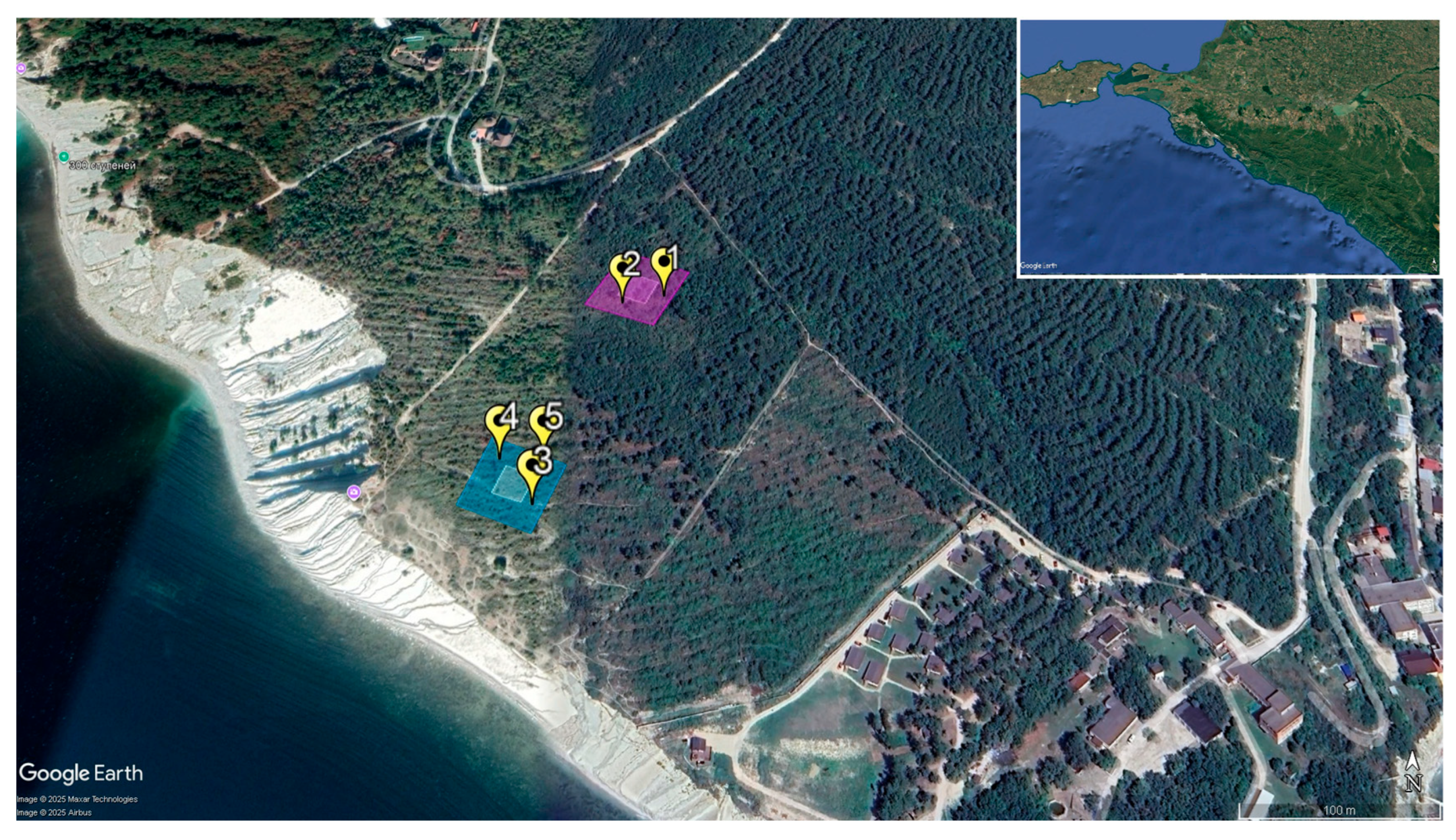
Two field trial plots (FTPs) were established to study soils under different plant formations and varying degrees of erosion. The plots were positioned in the upper and lower slope parts to capture the dominant plant communities of the carbon supersite (Figure 1). The first FTP represents a terraced oak–pine forest dominated by Pinus brutia var. pityusa and Quercus petraea plantations, whereas the second FTP corresponds to a natural oak shrubland dominated by Quercus pubescens with xerophytic forb vegetation.
Full-profile soil pits were established in areas representing the dominant landforms and vegetation types within the experimental plot. Soil samples were collected from each pit throughout the profile by genetic horizons, forming a continuous column. Soil type and subtype were identified at each sampling point in accordance with the World Reference Base for Soil Resources [32]. Classification of each soil type was based on the diagnostic criteria defined for the corresponding WRB Reference Soil Group.
Organic carbon content was determined using the dry high-temperature catalytic combustion method with a Shimadzu TOC-L CPN analyzer (Shimadzu, Kyoto, Japan) equipped with a solid sample module (SSM-5000A (Shimadzu, Kyoto, Japan)). The analysis was performed in two stages. First, the soil sample was combusted at 900 °C to determine total carbon (TC). Then, another aliquot was heated to 200 °C with the addition of orthophosphoric acid to determine inorganic carbon (IC). The total organic carbon (TOC) content was calculated as the difference between TC and IC [33,34].
The TOC stocks (kg m−2) in soils were calculated using the following formula:
C a r b o n   S t o c k = T O C × H × B D × A I ,
where TOC is the organic carbon content, %; H is the soil horizon thickness, cm; BD is the soil bulk density, g cm−3; AI is the correction factor for the stoniness and anthropogenic inclusions. The total conversion factor to kg m−2 is 0.1.
Soil bulk density (BD) was determined by the gravimetric method on undisturbed soil samples taken with cylindrical cores of known volume [35]. The pH indicator was determined potentiometrically in a soil suspension at a soil/water ratio of 1:5 [36].
Soil rockiness was determined using the sieving method. First, a representative sample was taken by quartering, then ground in a porcelain mortar. Then, the sample was sieved through a 2 mm sieve. This process was repeated until the rocky particles were separated from the fine earth. The result was expressed as a percentage of the original sample mass [35].
To measure substrate-induced respiration (SIR) and basal respiration (BR), 0.2 cm3 of either a 5% glucose solution or distilled water was added to the pre-incubated samples. The amount of solution added depended on whether SIR or BR was being measured. The flasks were tightly sealed, and the incubation time was recorded. SIR: 3–5 h; BR: 20–24 h. A control was performed using empty flasks to account for background CO2 concentration. After incubation, the CO2 concentration was measured by gas chromatography, and the headspace volume was determined.
The SIR rate was calculated using the following formula [37]:
S I R =   C O 2 s o i l C O 2 a i r × V f l × 60 × 10 t   × m s p ,
where SIR is the substrate-induced respiration rate (µL CO2 g−1 h−1); CO2soil is the CO2 concentration in the gas phase of the flask containing soil (% by volume); CO2air is the CO2 concentration in the gas phase of the control (empty) flask (% by volume); V(fl) is the headspace volume in the flask containing the soil sample (cm3); 60 is the conversion factor from minutes to hours; 10 is the combined conversion factor (1000 cm3 → µL and % → fraction); ∆t is the incubation time between flask sealing and gas sampling (min); m(sp) is the mass of the oven-dry soil sample (g).
The soil microbial biomass content was calculated as follows [38]:
C m i c = S I R   × 40.04 + 3.7 ,
where Cmic is the microbial biomass carbon content (µg C g−1); SIR is the substrate-induced respiration rate (µL CO2 g−1 h−1); 40.04 and 3.7 are empirical coefficients used to estimate Cmic (µg C g−1) from SIR (µL CO2 g−1 h−1).
The basal respiration (BR) rate was calculated using the following formula [39]:
B R = ( C O 2 s o i l C O 2 a i r ) × V f l × 60 × 10 t × m a s p × 0.272 × 1.8177 ,
where BR is the soil basal respiration rate (µg C g−1 h−1); CO2soil is the CO2 concentration in the gas phase of the flask with soil (% by volume); CO2air is the CO2 concentration in the gas phase of the control flask (% by volume); V(fl) is the headspace volume in the flask containing the soil sample (cm3); 60 is the conversion factor from minutes to hours; 10 is the combined conversion factor (1000 cm3 → µL and % → fraction); ∆t is the incubation time between flask sealing and gas sampling (min); m(asp) is the mass of the oven-dry soil sample (g); 0.272 is the carbon mass fraction in CO2 (12/44); 1.8177 is the density of CO2 at 22 °C (g L−1).
The specific respiration of microbial biomass (metabolic quotient) was calculated as the ratio of the BR rate to microbial biomass:
q C O 2 = B R C m i c × 1000 ,
where qCO2 is the metabolic quotient (µg C m g−1 Cmic h−1); BR is the soil basal respiration rate (µg C g−1 h−1); Cmic is the microbial biomass carbon content (µg C g−1); 1000 is the conversion factor from µg C to mg Cmic.
Measurements of CO2 and CH4 fluxes at the soil surface were regularly conducted using a Smart Chamber (LI-COR, NE, USA), which was connected to an LI-7810 infrared gas analyzer (LI-COR, USA). A HydraProbe sensor (Stevens, OR, USA) was used to measure soil temperature and moisture. The measurement procedure involved placing the chamber on a base ring inserted into the soil to prevent greenhouse gas leakage into the chamber and reduce measurement error. The measurement protocol, including the exposure time of the chamber and the number of replicates, was configured manually. Measurement duration was 15 min in summer and approximately 25 min in winter, with an average chamber exposure time of 105 s.
Statistical data processing was performed using Statistica 10.0 (StatSoft, OK, USA) and Microsoft Office Excel 2013 (Microsoft, WA, USA).

3. Results

3.1. Specifics of the Carbon Supersite Soil Cover

The soil cover of the plots consists of natural Rendzic Leptosols [32] and their anthropogenically transformed counterparts, Skeletic Rendzic Leptosols (Technic and Transportic) [32], which emerged due to slope terracing (Table 1 and Table 2).
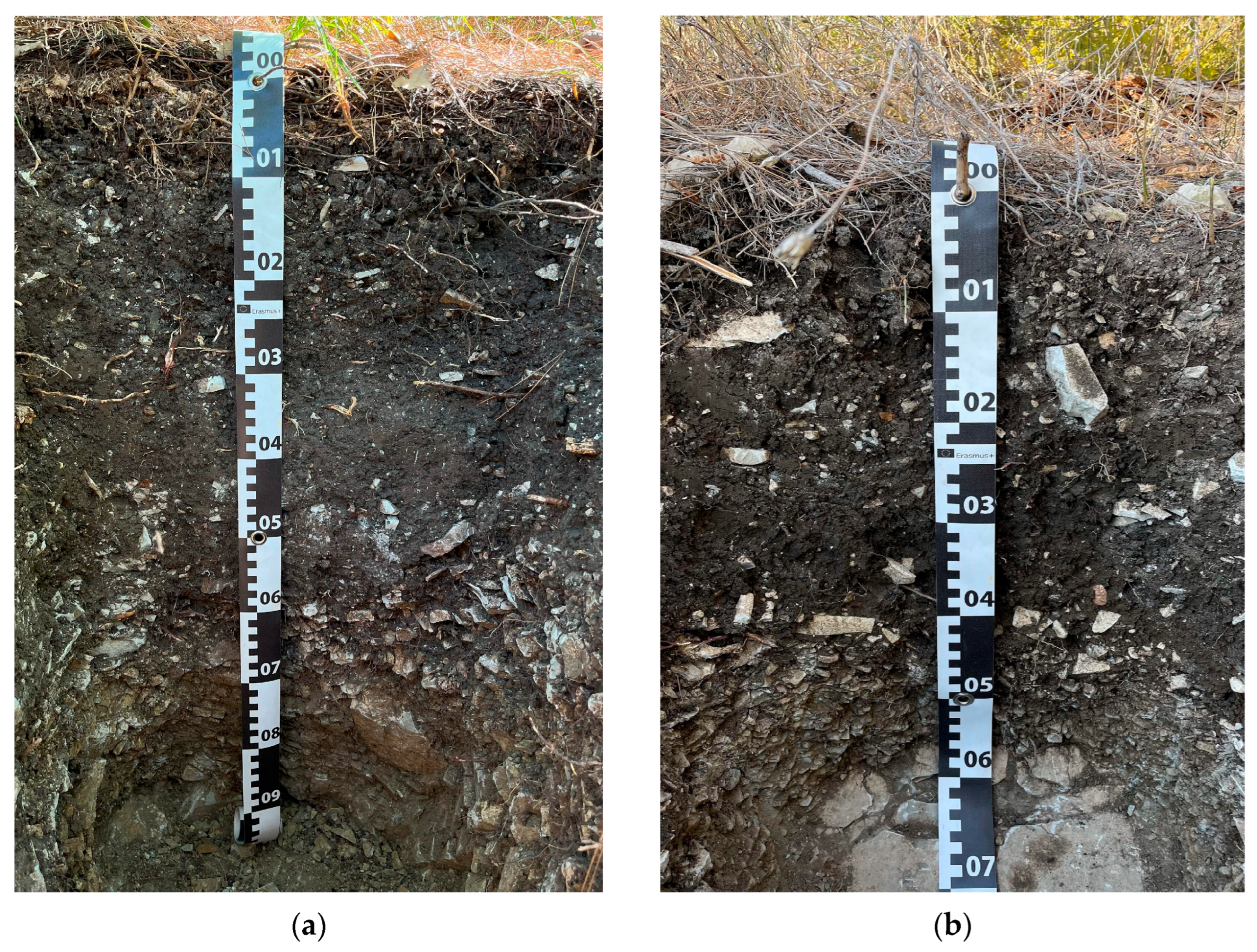
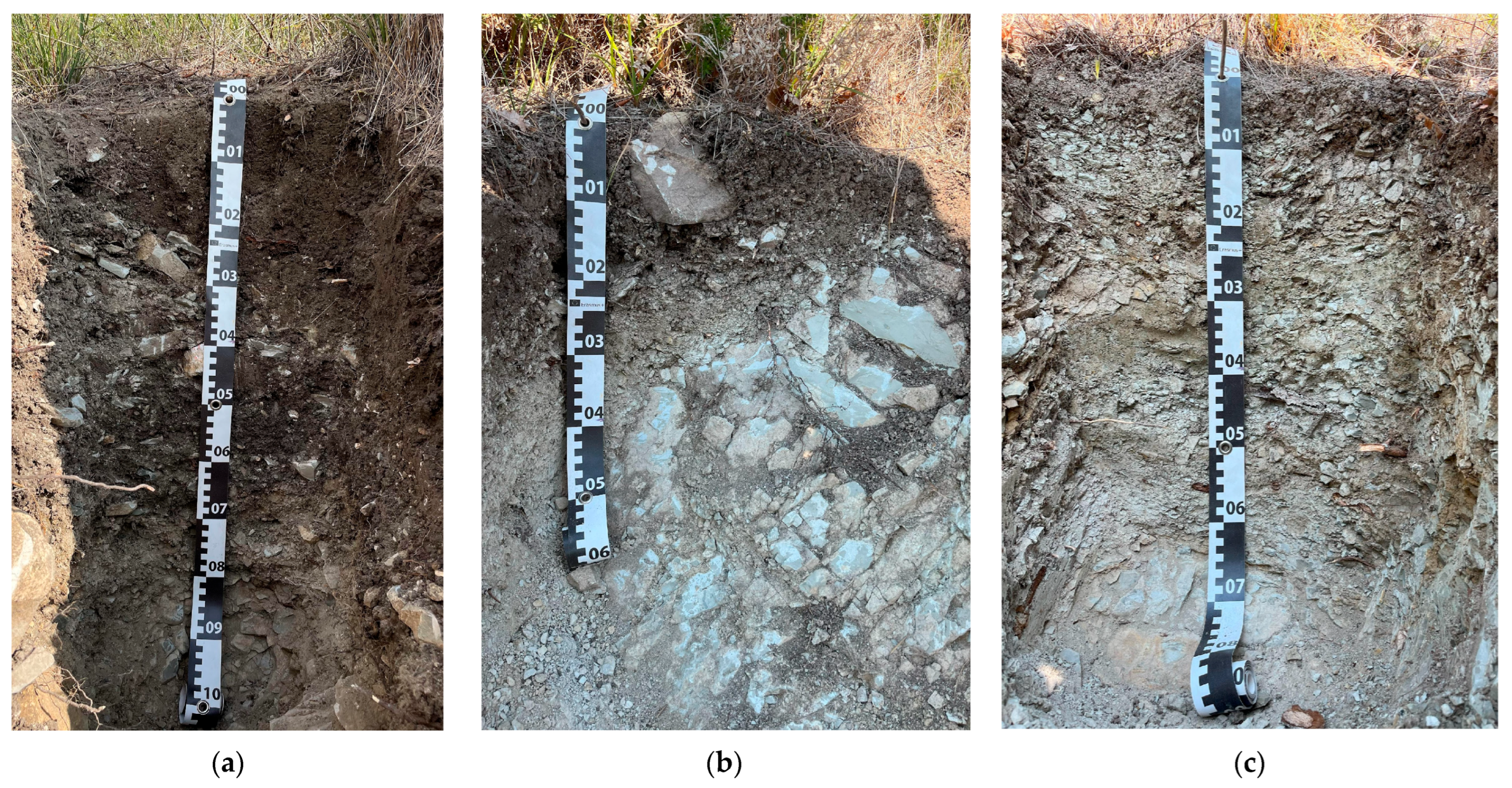
The natural soils of the study area are classified as Rendzic Leptosols. The dominant pedogenic processes in these soils are humus formation and accumulation, which counteract carbonate leaching. In some natural Rendzic Leptosols (Pit 5), the soil profile exhibits signs of gleying and ferrugination, indicating sporadic secondary processes associated with periodic or prolonged waterlogging (Figure 2 and Figure 3).
Soil bulk density increases markedly with depth, ranging from 1.07 to 2.24 g cm−3, reflecting natural differences between the surface and deeper soil layers and the high concentration of coarse particles in the lower layers, which is characteristic of calcareous soils. The pH (H2O) varies from 8.2 to 8.9, reflecting the influence of carbonate parent materials (Table 2).
The terracing of the slope during the establishment of artificial tree plantations substantially altered the soil cover, leading to the formation of Skeletic Rendzic Leptosols (Technic, Transportic). As a result, the natural soil profile became overlain by displaced humus-accumulative material of varying particle sizes and degrees of rockiness. Under these conditions, active turf formation occurred within the newly developed anthropogenic horizons. Consequently, Skeletic Rendzic Leptosols now exhibit a distinctly binary profile, both morphologically and chemically (Table 1). It should be noted that terracing markedly reduces erosion, which often results in greater soil thickness. For example, the Skeletic Rendzic Leptosols examined in this study have thicknesses range from 60 to 100 cm (Figure 2 and Figure 3; Table 1 and Table 2).
Morphologically, these soils are characterized by coarse fragments in the surface horizons, with the size and abundance of inclusions increasing with depth in the natural part of the profile. Bulk density ranges from 0.78 to 2.74 g cm−3, while the pH (H2O) varies between 8.1 and 8.9 (Table 1).

3.2. Content of Various Carbon Forms in the Carbon Supersite Soils

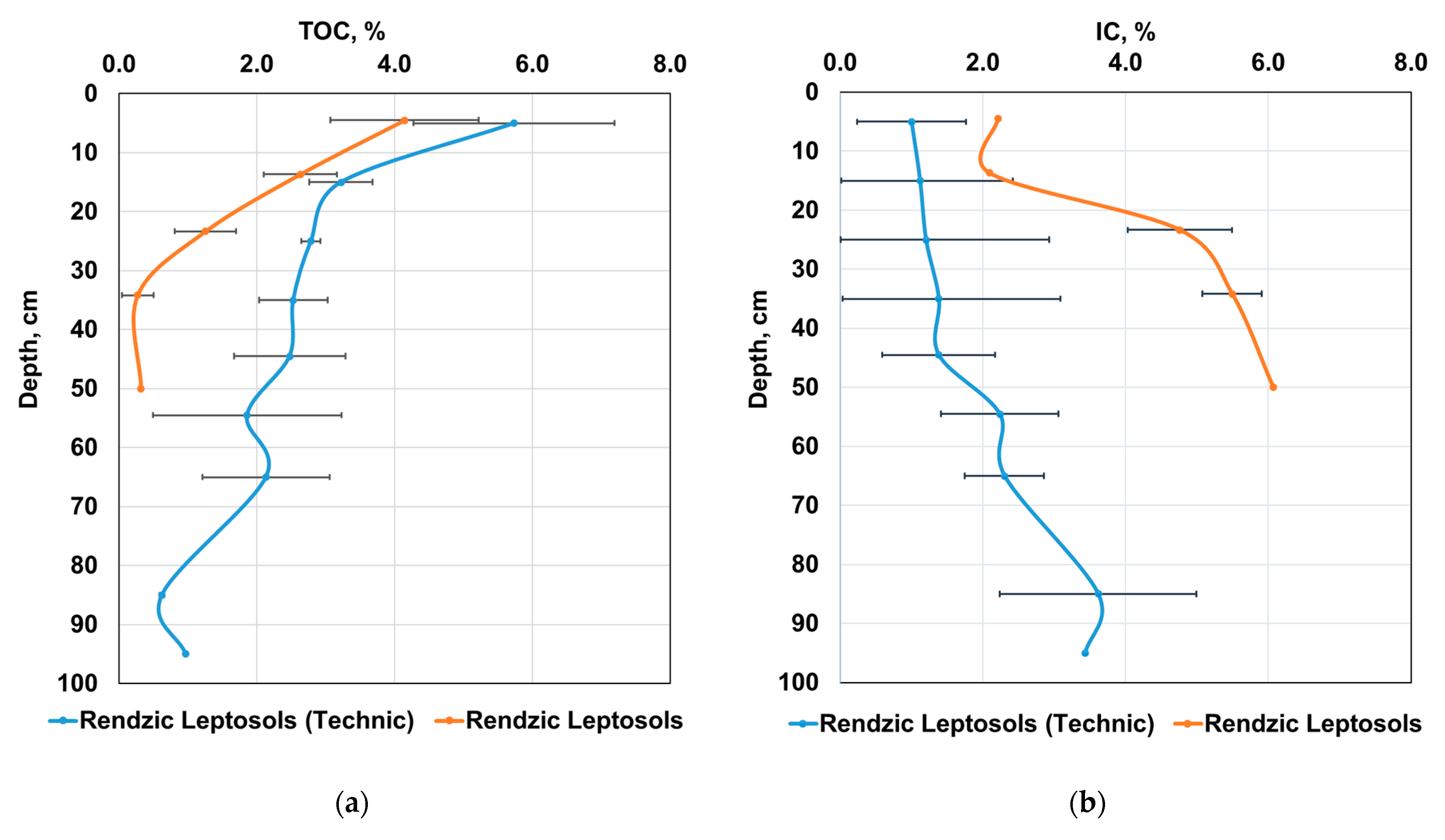
The depth distribution of IC in natural and anthropogenically modified Rendzic Leptosols shows clear differences reflecting both their genetic characteristics and transformation processes associated with slope terracing. IC content increases with depth, ranging from 2.1% to 6.1%, as determined by the catalytic combustion method (Table 1 and Table 2; Figure 4b).
In natural Rendzic Leptosols, the IC content increases gradually and consistently with depth—from 2.2% in the upper horizons to 6.1% at depths below 50–60 cm—reflecting carbonate accumulation in the lower part of the profile (Figure 4b). In contrast, anthropogenically modified Rendzic Leptosols (Technic) display a different distribution pattern: carbon concentrations range from 0.5% to 3.6% throughout the profile and exhibit only minor fluctuations.
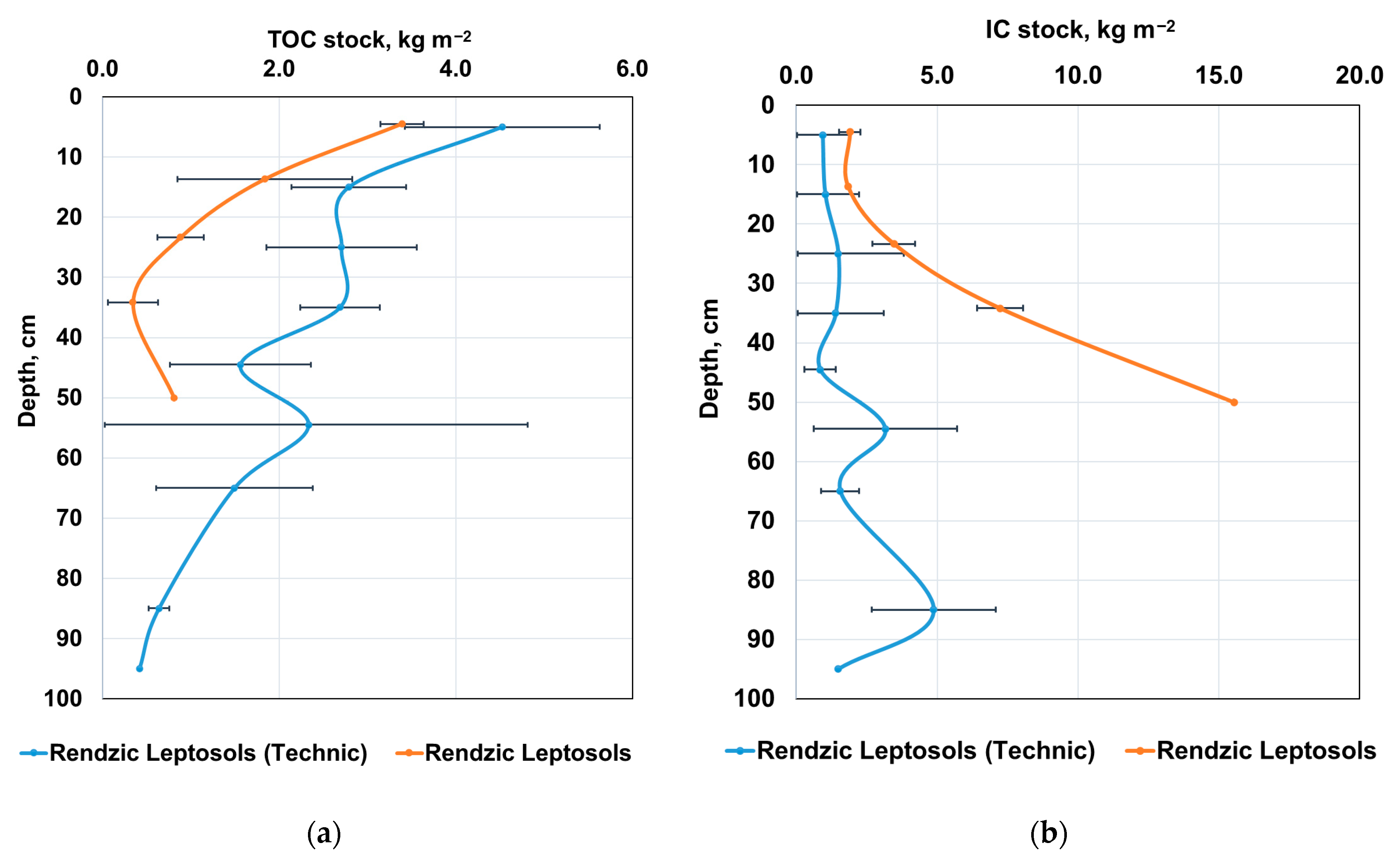
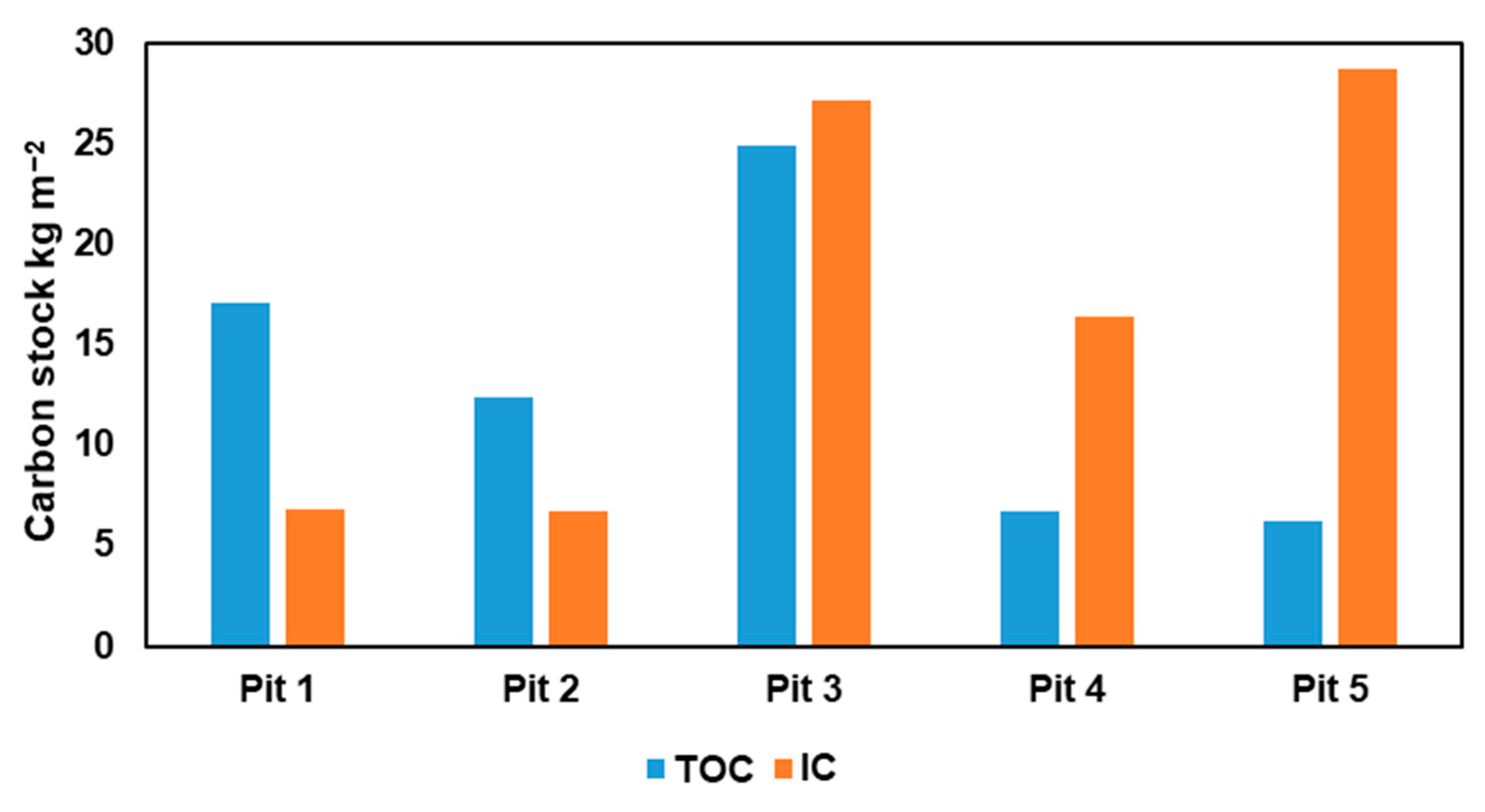
The genesis of these soils also determines substantial IC stocks within the entire soil profile influenced by the elementary soil-forming processes described above. For example, in Skeletic Rendzic Leptosols (Technic, Transportic) (Pit 3) with a thickness of 40 cm, the IC stocks reach 16.7 kg m−2, whereas in natural Rendzic Leptosols (Pit 4), with a thickness of up to 60 cm, they are significantly higher—28.7 kg m−2 (Figure 5). By comparison, Skripnikov et al. [40] reported that in Haplic Chernozems, IC stocks within a 100 cm layer are much lower, amounting to only 7–10 kg m−2.
The TOC content of the soils in the study area decreases with depth (Figure 4b). The maximum values occur in the surface humus-accumulative horizons, which are ~20 cm thick. TOC values detected by the catalytic combustion method range from 1.40 to 5.22% in these horizons, dropping to 0.04 to 0.32% closer to the parent rock.
A comparative analysis of anthropogenically transformed and natural Rendzic Leptosols revealed pronounced differences in the structure of the carbon pool, particularly in the distribution of TOC and IC stocks throughout the soil profile (Figure 6). Anthropogenically transformed Rendzic Leptosols (Pits 1–3) generally exhibit the predominance of TOC accumulation. In Pits 1 and 2, the TOC stocks are 17 and 12 kg m−2, respectively—more than twice the corresponding IC stocks, which do not exceed 7 kg m−2. Pit 3 shows the highest TOC stock (25 kg m−2) while also containing substantial IC reserves (27 kg m−2), indicating an almost equal contribution of TOC and IC forms to the total carbon pool.
The high TOC stocks in the profile of anthropogenically transformed Rendzic Leptosols reflect their sequestration capacity, even in soils with high degrees of rockiness. In natural Rendzic Leptosols (Pits 4–5), the opposite picture is observed: the dominance of IC with relatively low stocks of TOC.

3.3. Main Microbiological Indicators of Carbon Transformation in the Carbon Supersite Soils

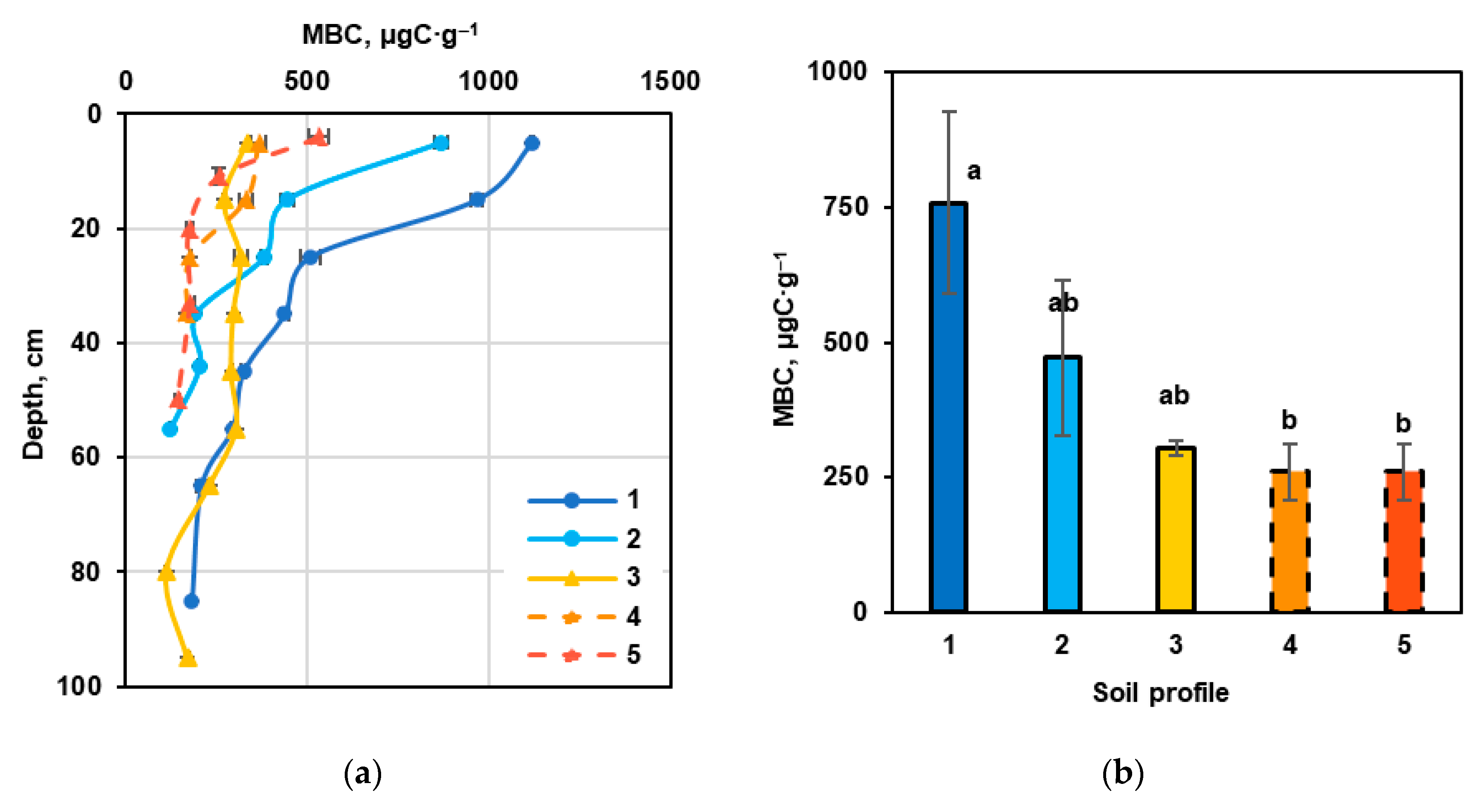
The microbial biomass carbon (MBC) content in the studied Rendzic Leptosols ranged from 113 to 1119 µg C g−1 soil. The mean MBC value for the entire soil profile was 340 ± 238 µg C g−1, while in the upper 40 cm layer it averaged 411 ± 60 µg C g−1. A consistent decrease in MBC with depth was observed across all sampling plots (Figure 7a).
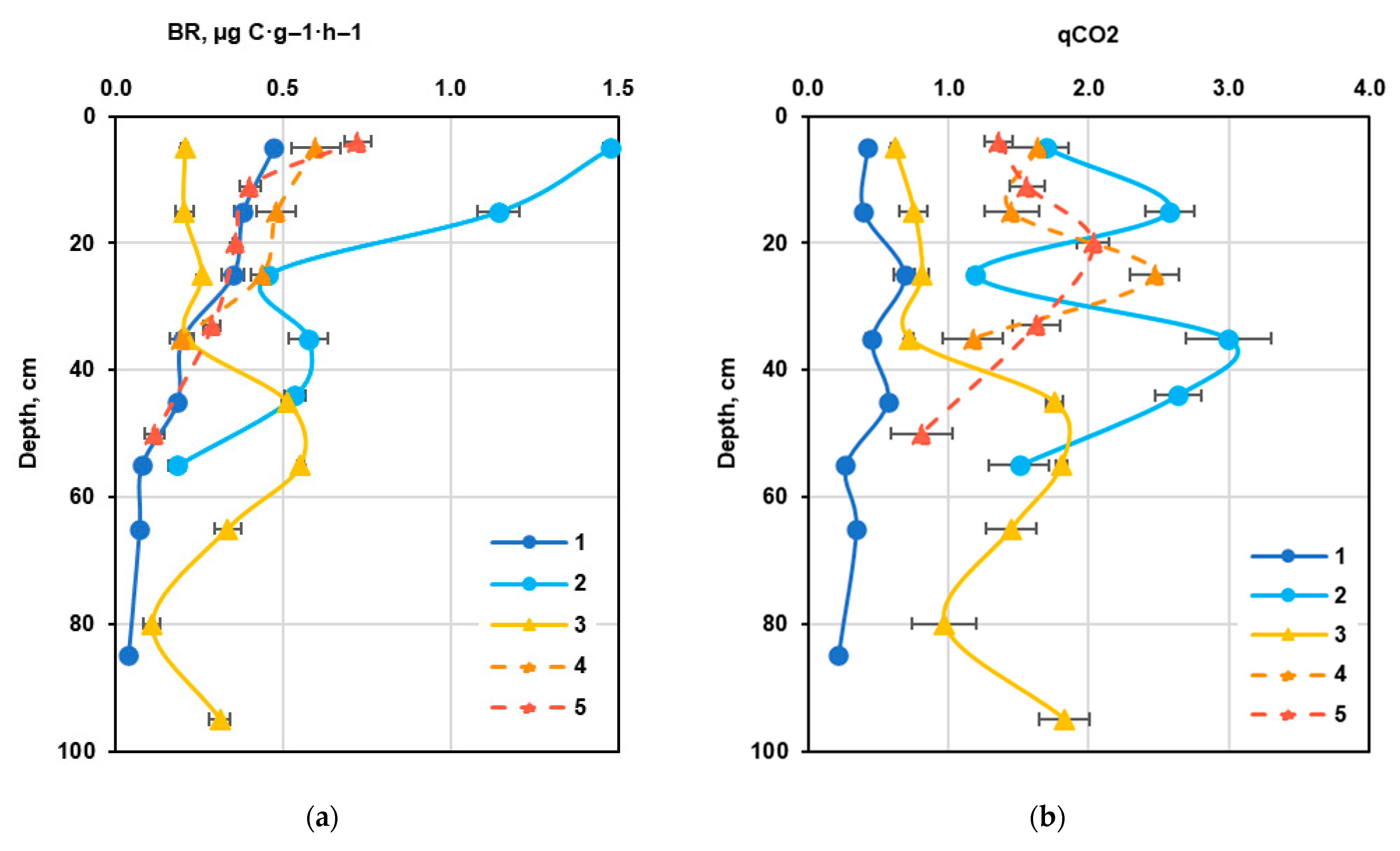
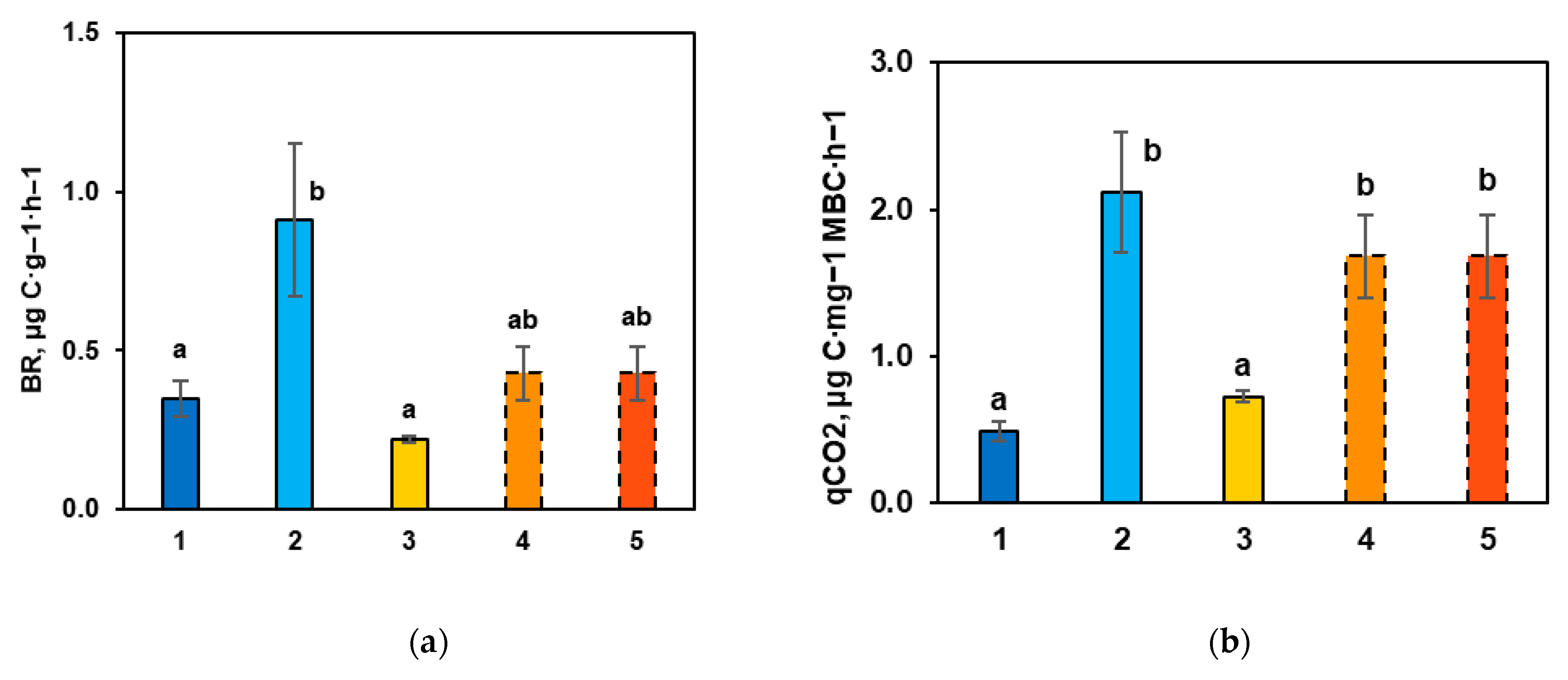
Basal respiration ranged from 0.04 to 1.48 µg C∙g−1soil∙h−1, with an average value of 0.39 ± 0.30 µg C∙g−1∙h−1. The vertical distribution was less pronounced than that of MBC; however, distinct peaks of basal respiration were observed in the buried horizons of profiles 2 and 3, corresponding to high organic matter content (Figure 8a). A comparison of mean basal respiration values in the upper 40 cm soil layer between the two plots showed 1.8 times higher values at Plot 1 compared to Plot 2 (Figure 9a).
The microbial metabolic quotient [41] reflects the efficiency with which heterotrophic organisms convert TOC into microbial mass. Generally, it indicates that the microbial community of the carbon supersite soils is in a state of disturbed equilibrium, suggesting an accelerated biochemical carbon cycle. The only exception is the Skeletic Rendzic Leptosols at Plot 1, which are formed under pine plantations and are characterized by low qCO2 values throughout the soil profile, which reflects the most favorable conditions for microbial community (Figure 8b).
The upper 40 cm soil layer of profile 2 had statistically significantly (p < 0.05) higher BR values, compared to the other profiles (Figure 9a). This is associated with lower values of total and IC (p < 0.05) in this case. The same profile corresponds to the maximum values of the microbial metabolic quotient, which, however, did not differ statistically significantly from this indicator for natural Rendzic Leptosols (profiles 4–5) (Figure 9b). Thus, the anthropogenic transformation of the soil profile, and consequently a change in the organic matter accumulation process, created more favorable conditions for the microbial community.

3.4. CO2 and CH4 Emission Dynamics

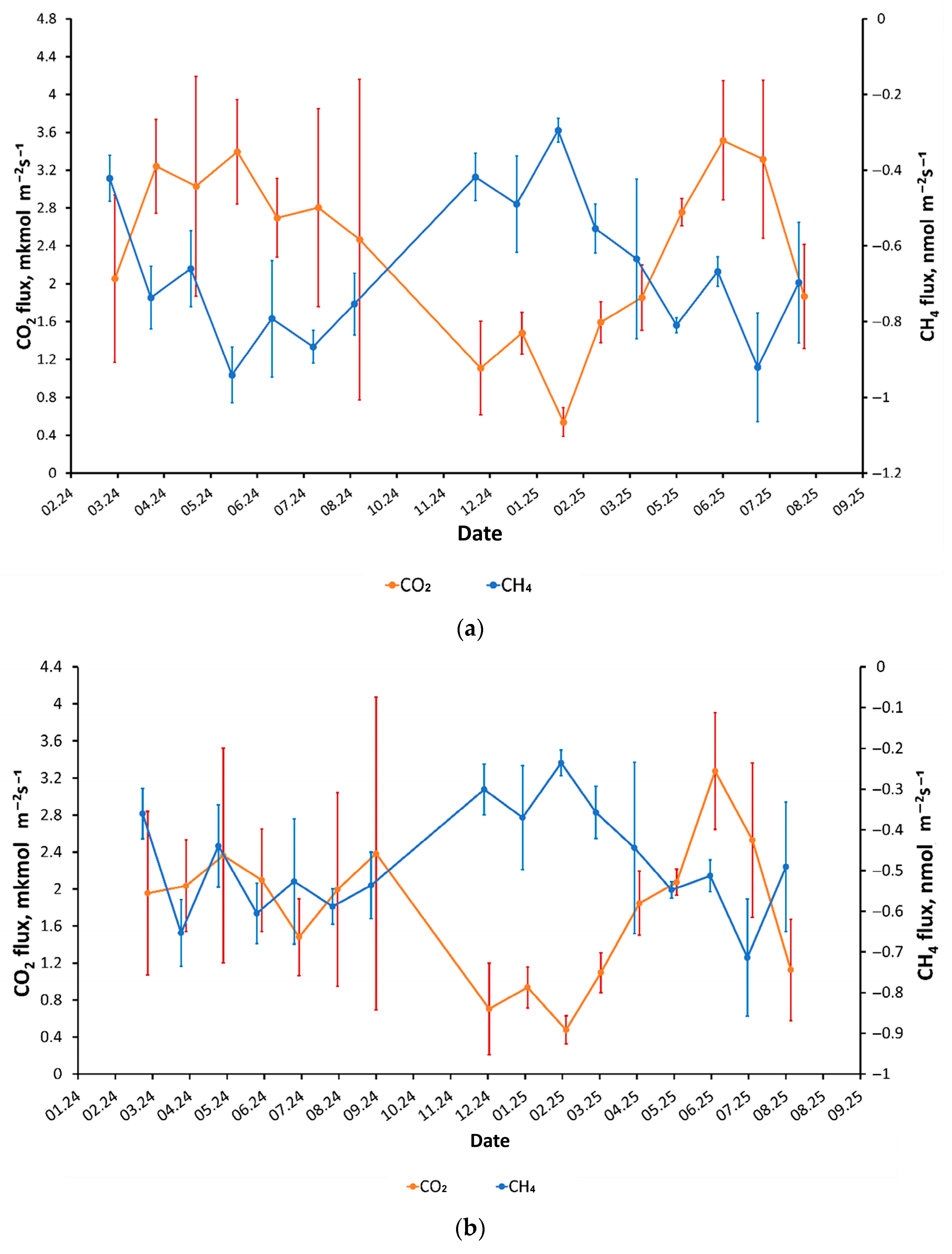
Field observations of CO2 and CH4 fluxes revealed that Rendzic Leptosols play a dual role in the carbon cycle in the study area. These soils serve as a significant source of CO2 while also functioning as a stable sink for CH4 (Figure 10).
CO2 emissions exhibited pronounced seasonal dynamics. At Plot 1 (Pits 1–2), the average values ranged from 0.54 to 3.51 µmol m−2 s−1, peaking in the summer of 2025. At Plot 2 (Pits 3–5), the values were significantly higher, with pronounced peaks in spring and summer. Unlike CO2, CH4 fluxes had negative values in all seasons, indicating the dominance of CH4 oxidation processes and confirming the soils’ status as a stable atmospheric sink for CH4. At Plot 1, the CH4 uptake rate was 0.3–0.95 nmol m−2 s−1, whereas at Plot 2, it ranged from 0.2 to 0.71 nmol m−2 s−1.

4. Discussion

Our results reveal several consistent patterns and to explain the processes shaping the carbon cycle in Rendzic Leptosols and their anthropogenically modified counterparts. These patterns encompass both methodological aspects and the interrelations among soil profile structure, carbon distribution, and microbiological activity.
Although the catalytic combustion method reliably measures carbon, several methodological limitations may influence absolute estimates. First, the catalytic combustion detector only measures carbon, which minimizes interference from non-carbon gases. The Scheibler volumetric method may be affected by evolved gases, such as hydrogen sulfide [5]. However, both techniques can be biased by carbonate decomposition and sample heterogeneity, particularly in calcareous matrices. Recognizing these constraints is essential when comparing IC contents determined by different methods. Thus, the catalytic combustion approach is preferred, though it still benefits from inter-method comparisons and quality control checks.
Secondly, the distribution of IC and TOC is closely linked to soil genesis and to the transformations that occurred during slope terracing. In natural Rendzic Leptosols, IC accumulation reflects the processes of carbonate enrichment, whereas in Skeletic Rendzic Leptosols, carbon redistribution is driven by horizon displacement and mixing of soil material. TOC is mainly concentrated in the upper horizons, while anthropogenically transformed profiles display an additional peak in the buried layers. This pattern indicates that the anthropogenically transformed soils have a strong capacity for long-term carbon stabilization. In terraced Skeletic Rendzic Leptosols, the additional peak in organic carbon reflects stabilization pathways directly induced by slope terracing. Burying former surface horizons protects them from erosion and microbial access. Meanwhile, mixing carbonate-rich materials promotes chemical stabilization by forming Ca-mediated organo-mineral complexes. Reduced aeration and lower microbial turnover in these buried layers further limit biological decomposition. These processes create stabilization conditions that differ fundamentally from those in natural Rendzic Leptosols, in which carbon dynamics are primarily governed by gradual pedogenesis and progressive carbonate enrichment with depth. However, the apparent increase in TOC in terraced profiles should be interpreted cautiously, as differences in vegetation cover, litter input, or terrace age could also be contributing factors.
Although vegetation cover was initially considered a potential confounding factor, its effect on TOC stocks was not statistically significant (p < 0.05). This likely reflects the low variability in vegetation structure across the studied plots, as all sites are dominated by similar sub-Mediterranean woody communities. Furthermore, in terraced Skeletic Rendzic Leptosols, the relationship between vegetation and soil carbon storage is partially decoupled because terracing physically displaces and buries organic-rich soil layers. Consequently, TOC stocks in these soils are more strongly driven by profile mixing, burial, and carbonate-mediated stabilization than by contemporary litter inputs. This explains why vegetation cover did not emerge as a significant factor despite the clear differences in carbon stocks between terraced and natural soils.
Overall, Rendzic Leptosols possess a high potential for TOC accumulation. According to various studies, the TOC content in their surface horizons ranges from 5 to 51% [42,43,44,45,46]. This capacity is primarily attributed to the presence of earth alkaline metal carbonates. During the decomposition of plant litter, these carbonates bind humic acids, forming stable calcium and magnesium humates [5].
Microbiological indicators also reflect differences in the soil carbon pool. Overall, MBC had a strong statistically significant positive correlation with TOC (r = 0.8, p < 0.001) and a negative correlation with sampling depth (r = −0.56, p < 0.001). In addition, higher values of MBC and BR in anthropogenically modified soils are associated with the presence of buried humus horizons and an increased supply of organic substrates. However, the elevated microbial metabolic quotient (qCO2) indicates a stressed state of the microbial community. An exception was found in soils under pine plantations, where conditions were more stable and favorable for microbial functioning.
Correlation analysis revealed strong relationships between CO2 flux and abiotic factors—namely, soil temperature and moisture. The CO2 flux showed a significant positive correlation with soil temperature (r = 0.65, p < 0.05). This finding is consistent with the well-established temperature dependence of soil respiration intensity and microbial activity [47,48,49]. However, CO2 emission was weakly and negatively correlated with soil moisture (r = –0.25, p < 0.05), suggesting that excessive wetting could suppress microbial respiration by creating anaerobic zones within the soil profile.
The higher TOC and microbial biomass content at Plot 2 resulted in enhanced respiratory activity, supporting the concept of substrate-limited respiration [9]. The specific respiration rate of the microbial community also indicated less efficient substrate utilization, greater metabolic quotient (qCO2). Elevated IC levels and alkaline pH values (8.1–8.9) promote CO2 release from carbonates, confirming the contribution of abiotic processes to the overall flux [50].
The amplitude of seasonal variation was less pronounced, though enhanced uptake was observed during the summer, particularly at Plot 1. Correlation between CH4 and soil moisture (r = 0.32, p < 0.05) suggests that moderate wetting reduces oxygen diffusion, creating mildly reducing conditions that are favorable for methanogenesis. Methane generation aligns with the key role of gas diffusion. Under higher temperatures and moderate moisture levels, methane penetrates the soil profile more easily, creating optimal conditions for methanotrophic activity [51,52]. Conversely, excessive moisture limits diffusion, resulting in decreased CH4 uptake [53,54].
Future investigations should address temporal representativeness by using automated chamber techniques to capture diurnal and seasonal variability. Combining gas flux data with isotopic analyses (δ13C-CO2, 14C) could help distinguish between carbonate-derived and biogenic CO2 sources.
These findings highlight that land management practices aimed at reducing erosion and enhancing soil retention can support local carbon sequestration. However, further multi-site studies are essential before such benefits can be extrapolated regionally.

5. Conclusions

The results of the study from the Black Sea Coast Carbon Supersite reveal important features of soil structure and carbon dynamics under both natural and human-influenced conditions. These findings improve our understanding of how sub-Mediterranean forest soils affect the regional carbon cycle through their regulation of organic and inorganic carbon, microbial activity, and greenhouse gas emissions and uptake.
Terracing produced a second TOC peak at the buried humus horizons, reflecting the dual nature of terraced profiles. This indicates that TOC stocks can reliably indicate the presence of buried horizons in rocky, calcareous soils. Terraced profiles contained markedly higher organic carbon stocks than natural profiles, primarily due to horizon displacement and organic matter burial, while natural profiles were dominated by inorganic carbon, reflecting progressive carbonate enrichment with depth.
The microbial biomass carbon averaged 411 µg C g−1 and consistently declined with depth. Differences among soil types followed the sequence Skeletic Rendzic (Technic, Transportic) → Rendzic → Skeletic Rendzic. This confirms the strong link between microbial abundance and organic carbon availability. Basal respiration averaged 0.48 µg CO2—C g−1 h−1 and exhibited greater spatial variability than profile-based trends. The metabolic quotient indicated reduced carbon-use efficiency, suggesting disturbance to microbial equilibrium and enhanced biochemical cycling.
Measured CO2 and CH4 fluxes confirmed the significant influence of microbiological processes on the ecosystem’s carbon balance. Soils with higher organic carbon content and favorable moisture-temperature relationships exhibited increased CO2 emissions. However, all profiles served as net CH4 sinks, resulting in a reduced regional greenhouse gas balance. CO2 dynamics were primarily temperature-driven, while CH4 fluxes were mainly influenced by soil moisture. The contrasting responses of these gases to abiotic factors are consistent with previous observations from sub-Mediterranean forest soils.
Taken together, these findings suggest that Rendzic Leptosols play a key role in regulating the regional carbon cycle. Recognizing their dual function as sources of CO2 and persistent sinks of CH4 is essential for predicting how ecosystems will respond to ongoing climate change.

Author Contributions

Conceptualization, S.N.G. and A.V.O.; methodology, S.N.G.; software, N.V.S.; validation, S.N.G., S.S.T. and M.V.S.; formal analysis, N.V.S., M.V.K. and S.A.T.; investigation, E.V.G.; resources, E.V.G.; data curation, M.V.K.; writing—original draft preparation, M.V.K.; writing—review and editing, A.V.O.; visualization, N.V.S. and M.V.S.; project administration, V.V.K. All authors have read and agreed to the published version of the manuscript.

Funding

This work was supported by the grant of the state program of the «Sirius» Federal Territory «Scientific and technological development of the «Sirius» Federal Territory» (Agreement No. 18-03 dated 10 September 2024).

Institutional Review Board Statement

Not applicable.

Informed Consent Statement

Not applicable.

Data Availability Statement

The data presented in this paper are available upon request from the corresponding author.

Conflicts of Interest

The authors declare no conflicts of interest.

Abbreviations

The following abbreviations are used in this manuscript:
SB IO RASSouthern Branch of the Institute of Oceanology, Russian Academy of Sciences
FTPField trial plots
TOCTotal organic carbon
TCTotal carbon
ICInorganic carbon
BDBulk density
SIRSubstrate-induced respiration
BRBasal respiration
MBCMicrobial biomass carbon
PCAPrincipal component analysis

References

  1. IPCC. Climate Change 2021: The Physical Science Basis; IPCC: Geneva, Switzerland, 2021; Available online: https://www.ipcc.ch/2021/08/09/ar6-wg1-20210809-pr/ (accessed on 10 October 2025).
  2. Bonan, G.B. Forests and climate change: Forcings, feedbacks, and the climate benefits of forests. Science 2008, 320, 1444–1449. [Google Scholar] [CrossRef]
  3. Lukina, N.; Kuznetsova, A.; Tikhonova, E.; Smirnov, V.; Danilova, M.; Gornov, A.; Knyazeva, S. Linking forest vegetation and soil carbon stock in Northwestern Russia. Forests 2020, 11, 979. [Google Scholar] [CrossRef]
  4. Zamolodchikov, D.G.; Kaganov, V.V.; Mostovaya, A.S. The effect of forest plantations on carbon dioxide emission from soils in the Volga and Don regions. Russ. J. Ecol. 2023, 54, 584–593. [Google Scholar] [CrossRef]
  5. Gorbov, S.N.; Minaeva, E.N.; Tagiverdiev, S.S.; Skripnikov, P.N.; Nosov, G.N.; Besuglova, O.S. Comparison of different carbonate methods for determining Calcic Chernozems. Biol. Bull. Russ. Acad. Sci. 2024, 51, S384–S394. [Google Scholar] [CrossRef]
  6. Pan, Y.; Birdsey, R.A.; Fang, J.; Houghton, R.; Kauppi, P.E.; Kurz, W.A.; Hayes, D. A large and persistent carbon sink in the world’s forests. Science 2011, 333, 988–993. [Google Scholar] [CrossRef]
  7. Friedlingstein, P.; O’Sullivan, M.; Jones, M.W.; Andrew, R.M.; Bakker, D.C.; Hauck, J.; Smith, S.M. Global Carbon Budget 2023. Earth 2023, 15, 5301–5369. [Google Scholar] [CrossRef]
  8. Friedlingstein, P.; O’sullivan, M.; Jones, M.W.; Andrew, R.M.; Hauck, J.; Landschützer, P.; Zeng, J. Global Carbon Budget 2024. Earth Syst. Sci. Data 2025, 17, 965–1039. [Google Scholar] [CrossRef]
  9. Lal, R. Soil carbon sequestration to mitigate climate change. Geoderma 2004, 123, 1–22. [Google Scholar] [CrossRef]
  10. Lal, R. Forest soils and carbon sequestration. For. Ecol. Manag. 2005, 220, 242–258. [Google Scholar] [CrossRef]
  11. Schmidt, M.W.I.; Torn, M.S.; Abiven, S.; Dittmar, T.; Guggenberger, G.; Janssens, I.A.; Trumbore, S.E. Persistence of soil organic matter as an ecosystem property. Nature 2011, 478, 49–56. [Google Scholar] [CrossRef]
  12. Batjes, N.H. Total carbon and nitrogen in the soils of the world. Eur. J. Soil Sci. 2014, 65, 10–21. [Google Scholar] [CrossRef]
  13. Gorbov, S.N.; Bezuglova, O.S.; Skripnikov, P.N.; Tishchenko, S.A. Soluble organic matter in soils of the Rostov agglomeration. Eurasian Soil Sci. 2022, 55, 957–970. [Google Scholar] [CrossRef]
  14. Koptsik, G.N.; Koptsik, S.V.; Kupriyanova, I.V.; Kadulin, M.S.; Smirnova, I.E. Estimation of carbon stocks in soils of forest ecosystems as a basis for monitoring the climatically active substances. Eurasian Soil Sci. 2023, 56, 2009–2023. [Google Scholar] [CrossRef]
  15. Harrison, R.B.; Footen, P.W.; Strahm, B.D. Deep soil horizons: Contribution and importance to soil carbon pools and in assessing whole-ecosystem response to management and global change. For. Sci. 2011, 57, 67–76. [Google Scholar] [CrossRef]
  16. Lal, R. Soil carbon sequestration impacts on global climate change and food security. Science 2004, 304, 1623–1627. [Google Scholar] [CrossRef] [PubMed]
  17. Luyssaert, S.; Schulze, E.D.; Börner, A.; Knohl, A.; Hessenmöller, D.; Law, B.E.; Grace, J. Old-growth forests as global carbon sinks. Nature 2008, 455, 213–215. [Google Scholar] [CrossRef] [PubMed]
  18. Don, A.; Schumacher, J.; Freibauer, A. Impact of tropical land-use change on soil organic carbon stocks—A meta-analysis. Glob. Change Biol. 2011, 17, 1658–1670. [Google Scholar] [CrossRef]
  19. Kurganova, I.; Lopes de Gerenyu, V.; Kuzyakov, Y. Carbon cost of collective farming collapse in Russia. Glob. Change Biol. 2019, 25, 3781–3793. [Google Scholar] [CrossRef]
  20. Olchev, A.V.; Gulev, S.K. Carbon flux measurement supersites of the Russian Federation: Objectives, methodology, prospects. Izv. Atmos. Ocean. Phys. 2024, 60, S428–S434. [Google Scholar] [CrossRef]
  21. Abakumov, E.V.; Polyakov, V.I.; Chukov, S.N. Approaches and methods for studying soil organic matter in the carbon polygons of Russia. Eurasian Soil Sci. 2022, 55, 849–860. [Google Scholar] [CrossRef]
  22. Litvinskaya, S.A. Protected Nature of the Kuban; OOO KONSTANTA: Rostov-on-Don, Russia, 2023; 452p, ISBN 978-5-8209-2116-2. (In Russian) [Google Scholar]
  23. Litvinskaya, S.A. Vegetation of the Black Sea Coast of Russia (Mediterranean Enclave); Knizhnoe Izdatelstvo: Krasnodar, Russia, 2004; 130p, ISBN 5-331-00036-3. (In Russian) [Google Scholar]
  24. Bobrik, A.A.; Goncharova, O.Y.; Matyshak, G.V.; Ryzhova, I.M.; Makarov, M.I.; Timofeeva, M.V. Spatial distribution of the components of carbon cycle in soils of forest ecosystems of the northern, middle, and southern taiga of western Siberia. Eurasian Soil Sci. 2020, 53, 1549–1560. [Google Scholar] [CrossRef]
  25. Kurganova, I.N.; Telesnina, V.M.; Lopes de Gerenyu, V.O.; Lichko, V.I.; Karavanova, E.I. The dynamics of carbon pools and biological activity of Retic Albic Podzols in southern taiga during the post-agrogenic evolution. Eurasian Soil Sci. 2021, 54, 337–351. [Google Scholar] [CrossRef]
  26. Zhao, J.; Liu, D.; Zhu, Y.; Peng, H.; Xie, H. A review of forest carbon cycle models on spatiotemporal scales. J. Clean. Prod. 2022, 339, 130692. [Google Scholar] [CrossRef]
  27. Mo, L.; Zohner, C.M.; Reich, P.B.; Liang, J.; De Miguel, S.; Nabuurs, G.J.; Ortiz-Malavasi, E. Integrated global assessment of the natural forest carbon potential. Nature 2023, 624, 92–101. [Google Scholar] [CrossRef] [PubMed]
  28. Ryzhova, I.M.; Podvezennaya, M.A.; Telesnina, V.M.; Bogatyrev, L.G.; Semenyuk, O.V. Assessment of carbon stock and CO2 production potential for soils of coniferous-broadleaved forests. Eurasian Soil Sci. 2023, 56, 1317–1326. [Google Scholar] [CrossRef]
  29. Moreno-Duborgel, M.; Gosheva-Oney, S.; González-Domínguez, B.; Brühlmann, M.; Minich, L.I.; Haghipour, N.; Hagedorn, F. Shifting carbon fractions in forest soils offset 14C-based turnover times along a 1700 m elevation gradient. Glob. Change Biol. 2025, 31, e70326. [Google Scholar] [CrossRef]
  30. Olchev, A.V. Estimation of carbon dioxide and methane emissions and absorption by land and ocean surfaces in the 21st century. Izv. Atmos. Ocean. Phys. 2025, 61, S74–S100. [Google Scholar] [CrossRef]
  31. Kochkina, M.V.; Soldatkina, M.A.; Satosina, E.M.; Ilyichev, I.A.; Romanenko, V.A.; Kremenetsky, V.V.; Olchev, A.V.; Gulev, S.K. Spatial and temporal variability of carbon dioxide and methane fluxes at the soil surface in the coastal area of the carbon supersite in the Krasnodar region. Grozny Nat. Sci. Bull. 2023, 3, 58–64. [Google Scholar] [CrossRef]
  32. IUSS Working Group WRB. World Reference Base for Soil Resources, 4th ed.; International Union of Soil Sciences: Vienna, Austria, 2022. [Google Scholar]
  33. Sleutel, S.; De Neve, S.; Singier, B.; Hofman, G. Quantification of organic carbon in soils: A comparison of methodologies and assessment of the carbon content of organic matter. Commun. Soil Sci. Plant Anal. 2007, 38, 2647–2657. [Google Scholar] [CrossRef]
  34. Roper, W.R.; Robarge, W.P.; Osmond, D.L.; Heitman, J.L. Comparing four methods of measuring soil organic matter in North Carolina soils. Soil Sci. Soc. Am. J. 2019, 83, 466–474. [Google Scholar] [CrossRef]
  35. Vadyunina, A.F.; Korchagina, Z.A. Methods of Studying the Physical Properties of Soils, 3rd ed.; Agropromizdat: Moscow, Russia, 1986; 416p. (In Russian) [Google Scholar]
  36. Gupta, I.C.; Yaduvanshi, N.P.S.; Gupta, S.K. Standard Methods for Analysis of Soil, Plant and Water; Scientific Publishers: Jodhpur, India, 2012. [Google Scholar]
  37. Ananyeva, N.D.; Susyan, E.A.; Gavrilenko, E.G. Features of carbon determination of microbial biomass of soil by the method of substrate-induced respiration. Soil Sci. 2011, 11, 1327–1333. (In Russian) [Google Scholar]
  38. Anderson, T.H.; Domsch, K.H. Soil microbial biomass: The eco-physiological approach. Soil Biol. Biochem. 2010, 42, 2039–2043. [Google Scholar] [CrossRef]
  39. ISO 16072-2002; Soil Quality—Laboratory Methods for Determination of Microbial Soil Respiration. ISO: Geneva, Switzerland, 2002. Available online: https://standards.iteh.ai/catalog/standards/sist/47bffa5e-2462-4f00-95a0-e95638bf8d98/iso-16072-2002 (accessed on 1 October 2023).
  40. Skripnikov, P.N.; Gorbov, S.N.; Tagiverdiev, S.S.; Salnik, N.V.; Kozyrev, D.A.; Terekhov, I.V.; Nosov, G.N.; Melnikova, I.P. Carbon accumulation features in different functional zones of cities in the steppe zone. Environ. Monit. Assess. 2024, 196, 601. [Google Scholar] [CrossRef] [PubMed]
  41. Nikitin, D.A.; Semenov, M.V.; Chernov, T.I.; Ksenofontova, I.A.; Zhelezova, A.D.; Ivanova, E.A.; Khitrov, N.B.; Stepanov, A.L. Microbiological Indicators of Soil Ecological Functions: A Review. Eurasian Soil. Sci. 2022, 55, 221–234. [Google Scholar] [CrossRef]
  42. Blaschke, P.M.; Trustrum, N.A.; DeRose, R.C. Ecosystem processes and sustainable land use in New Zealand steeplands. Agric. Ecosyst. Environ. 1992, 41, 153–178. [Google Scholar] [CrossRef]
  43. Dinca, L.C.; Spârchez, G.; Dinca, M.; Blujdea, V.N. Organic carbon concentrations and stocks in Romanian mineral forest soils. Ann. For. Res. 2012, 55, 229–241. [Google Scholar] [CrossRef]
  44. Homolák, M.; Kriaková, E.; Pichler, V.; Gömöryová, E.; Bebej, J. Isolating the soil type effect on the organic carbon content in a Rendzic Leptosol and an Andosol on a limestone plateau with andesite protrusions. Geoderma 2017, 302, 1–5. [Google Scholar] [CrossRef]
  45. Kurucu, Y.; Esetlili, M.T. Rendzic Leptosols. In The Soils of Turkey; Kapur, S., Akça, E., Günal, H., Eds.; Springer: Cham, Switzerland, 2018; pp. 251–258. [Google Scholar] [CrossRef]
  46. Trustrum, N.A.; De Rose, R.C. Soil depth–age relationship of landslides on deforested hillslopes, Taranaki, New Zealand. Geomorphology 1988, 1, 143–160. [Google Scholar] [CrossRef]
  47. Davidson, E.A.; Janssens, I.A. Temperature sensitivity of soil carbon decomposition and feedbacks to climate change. Nature 2006, 440, 165–173. [Google Scholar] [CrossRef] [PubMed]
  48. Bond-Lamberty, B.; Thomson, A. Temperature-associated increases in the global soil respiration record. Nature 2010, 464, 579–582. [Google Scholar] [CrossRef]
  49. Wang, B.; Zha, T.S.; Jia, X.; Wu, B.; Zhang, Y.Q.; Qin, S.G. Soil moisture modifies the response of soil respiration to temperature in a desert shrub ecosystem. Biogeosciences 2014, 11, 259–268. [Google Scholar] [CrossRef]
  50. Zhang, N.; Xiao, Q.; Guo, Y.; Chen, F.; Sun, P.; Miao, Y.; Zhang, C. Soil respiration characteristics and karst carbon sink potential in woodlands and grasslands. Forests 2025, 16, 424. [Google Scholar] [CrossRef]
  51. Luo, G.J.; Kiese, R.; Wolf, B.; Butterbach-Bahl, K. Effects of soil temperature and moisture on methane uptake and nitrous oxide emissions across three different ecosystem types. Biogeosciences 2013, 10, 3205–3219. [Google Scholar] [CrossRef]
  52. Wang, X.; Tang, Z.; Kang, X.; He, N.; Li, M. Climate warming and soil drying significantly enhance the methane uptake in China’s grasslands. Glob. Change Biol. 2025, 31, e70286. [Google Scholar] [CrossRef] [PubMed]
  53. Feng, H.; Guo, J.; Malghani, S.; Han, M.; Cao, P.; Sun, J.; Wang, W. Effects of soil moisture and temperature on microbial regulation of methane fluxes in a poplar plantation. Forests 2021, 12, 407. [Google Scholar] [CrossRef]
  54. Zheng, Z.; Wen, F.; Li, C.; Guan, S.; Xiong, Y.; Liu, Y.; Li, L. Methane uptake responses to heavy rainfalls co-regulated by seasonal timing and plant composition in a semiarid grassland. Front. Ecol. Evol. 2023, 11, 1149595. [Google Scholar] [CrossRef]
Figure 1. Satellite image showing the studied contours and locations of established soil pits (purple for Plot 1 and blue for Plot 2). © Google Earth image (map data: Google, Maxar Technologies, Airbus) of the measurement site at Novorossiysk, Russia.
Soilsystems 10 00004 g001
Figure 2. Dominant soil types at Monitoring Plot 1 of the Carbon supersite: (a) Pit 1. Skeletic Rendzic Leptosols (Technic, Transportic); (b) Pit 2. Skeletic Rendzic Leptosols (Technic, Transportic).
Soilsystems 10 00004 g002
Figure 3. Dominant soil types at Monitoring Plot 2 of the Carbon supersite: (a) Pit 3. Skeletic Rendzic Leptosols (Technic, Transportic); (b) Pit 4. Rendzic Leptosols; (c) Pit 5. Skeletic Rendzic Leptosols.
Soilsystems 10 00004 g003
Figure 4. Profile distribution of organic (a) and inorganic (b) carbon in natural and anthropogenically transformed Rendzic Leptosols. Values are shown as means ± SD.
Soilsystems 10 00004 g004
Figure 5. Profile distribution of organic (a) and inorganic (b) carbon stocks in natural and anthropogenically transformed Rendzic Leptosols. Values are shown as means ± SD.
Soilsystems 10 00004 g005
Figure 6. Carbon stocks in soils of different areas of the carbon supersite.
Soilsystems 10 00004 g006
Figure 7. Distribution of microbial biomass carbon (MBC) in soil profiles (a) (● profiles of Plot 1, ▲ profiles of Plot 2; solid line—anthropogenically transformed Rendzic Leptosols; dash line—natural Rendzic Leptosols) and averaged MBC values for the 0–40 cm layer (b).
Soilsystems 10 00004 g007
Figure 8. Distribution of basal respiration (BR) (a) and microbial metabolic quotient (qCO2) (b) in soil profiles (● profiles of Plot 1, ▲ profiles of Plot 2; solid line—anthropogenically transformed Rendzic Leptosols; dashed line—natural Rendzic Leptosols).
Soilsystems 10 00004 g008
Figure 9. Averaged values of BR (a) and qCO2 (b), for the 0–40 cm layer.
Soilsystems 10 00004 g009
Figure 10. Seasonal dynamics of greenhouse gas fluxes (CO2 and CH4) at the experimental plots ((a)—Plot 1; (b)—Plot 2) of the carbon supersite. Values are shown as means ± SD.
Soilsystems 10 00004 g010
Table 1. Chemical and physical properties of soils from monitoring Plot 1.
Depth, cmRockiness, (>2 mm), %Bulk Density, g cm−3pH H2OTC, % 1IC, % 2TOC, % 3IC Stocks, kg m−2TOC Stocks, kg m−2
The Catalytic Combustion Method
Pit 1. Skeletic Rendzic Leptosols (Technic, Transportic)
0–1018.90.788.18.030.627.410.394.69
10–2024.71.218.64.350.623.720.573.39
20–3048.31.288.33.290.362.930.241.94
30–4016.81.238.43.880.783.100.803.17
40–5023.61.058.83.230.852.380.681.91
50–6063.71.188.53.281.621.660.690.71
60–7079.72.498.82.961.751.210.890.61
70–10083.02.538.92.662.070.592.680.76
Pit 2. Skeletic Rendzic Leptosols (Technic, Transportic)
0–1034.91.098.45.210.504.720.353.35
10–2036.81.188.52.950.142.820.102.10
20–3018.41.188.22.720.062.660.062.56
30–4014.21.388.22.260.062.210.072.62
40–4760.21.358.72.731.011.720.380.65
47–6048.92.748.93.773.170.605.771.10
1 Total carbon, 2 Inorganic carbon, 3 Total organic carbon.
Table 2. Chemical and physical properties of soils from monitoring Plot 2.
Depth, cmRockiness, (>2 mm), %Bulk Density, g cm−3pH H2OTC, %IC, %TOC, %IC Stocks, kg m−2TOC Stocks, kg m−2
The Catalytic Combustion Method
Pit 3. Skeletic Rendzic Leptosols (Technic, Transportic)
0–103.61.138.26.961.885.082.055.54
10–2019.91.158.35.732.603.132.402.88
20–3034.72.008.35.963.192.774.173.62
30–4049.41.988.35.593.312.283.322.28
40–5046.31.198.35.622.293.331.472.13
50–6030.72.268.35.231.923.323.005.19
60–7048.31.508.45.922.863.062.222.38
70–9066.32.238.65.054.710.357.070.52
90–10076.81.888.54.403.430.971.490.42
Pit 4. Rendzic Leptosols
0–104.31.078.25.302.233.072.283.15
10–2020.71.138.25.252.093.161.872.83
20–3049.91.538.66.305.490.814.210.62
30–4012.21.558.65.955.910.048.040.06
Pit 5. Skeletic Rendzic Leptosols
0–77.01.078.57.422.25.221.533.64
7–1564.51.428.46.334.43 2.101.790.85
15–2557.71.598.85.734.031.72.711.15
25–4060.52.138.95.585.080.56.410.63
40–6042.92.248.66.396.070.3215.530.81
Disclaimer/Publisher’s Note: The statements, opinions and data contained in all publications are solely those of the individual author(s) and contributor(s) and not of MDPI and/or the editor(s). MDPI and/or the editor(s) disclaim responsibility for any injury to people or property resulting from any ideas, methods, instructions or products referred to in the content.