1. Introduction
The exponential growth of city inhabitants over the past 50 years, together with the vertical development of residential and office buildings, has required the continuous adaptation of advanced fire safety design and assessment strategies, particularly regarding smoke control and fire spread limitation in multi-story buildings. In addition to passive protection measures, a wide range of active fire protection systems have been implemented, including mechanical smoke exhaust fans and smoke vents, sprinkler systems, jet fans, and automatic extinguishing systems commonly installed in data centers (1). These systems are typically integrated and permanently connected to fire detection, control, and alarm equipment.
The contemporary approach to fire safety engineering primarily focuses on limiting fire propagation and reducing smoke infiltration into evacuation routes [
1,
2]. The penetration of fire and smoke into these evacuation areas represents the principal factor responsible for fire-related fatalities. One of the major contributors to loss of life, even indirectly, is reduced visibility, which promotes the onset of panic conditions. When combined with crowd congestion along evacuation routes in multi-story buildings, this often leads to overcrowding situations and accidents that are frequently fatal [
3,
4]. Within performance-based fire safety design, ensuring occupant survival relies on proving a critical condition: the Available Safe Egress Time or ASET must be strictly greater than the Required Safe Egress Time or RSET. While the ASET denotes the duration before the surroundings become unsurvivable based on predefined limits, the RSET measures the complete period necessary for people to notice the emergency, react accordingly, and escape the dangerous zone, thus forming the primary standard for evaluating protective measures [
5,
6].
CFD software has played a particularly important role in large-scale simulations involving building and neighborhood-level geometries, where equivalent experimental investigations would be impractical, prohibitively expensive, or largely irreproducible. A representative example is the stacks or chimneys occurring in tall buildings, particularly within stairwells and elevator shafts. From a fire safety perspective, this phenomenon represents a critical mechanism influencing smoke and fire spread; however, it cannot be effectively investigated using reduced-scale experimental setups due to similarity constraints. Consequently, the development of experimentally validated Fire Dynamics Simulator (FDS) numerical models, subsequently extended to full-scale applications, represents an increasingly relevant and feasible research direction for the coming years.
As highlighted in previous studies [
7,
8], the stack effect has a significant influence on fire development and smoke movement within buildings; however, the interaction between pressurization systems and buoyancy-driven fire flows is not well understood at the building scale [
9]. In certain situations, buildings exceeding 15 stories, typically subject to stricter fire safety regulations, may exhibit more controlled smoke propagation compared to mid-rise buildings of approximately nine stories, which are often not required to comply with equivalent minimum fire safety provisions. Many such buildings are exempt from fire safety approval and authorization procedures under Romanian legislation, either because they are not classified as high-rise buildings or because they were already built prior to the introduction of modern fire safety regulations.
Within the capital city of Romania, more than 75% of the residential building stock was constructed before the implementation of prescriptive fire safety codes [
10]. Furthermore, approximately 40% of these buildings have heights ranging between 5 and 11 stories. Consequently, the hazards associated with inefficient evacuation, caused by reduced visibility, panic conditions, or exposure to elevated temperatures and toxic gases, remain both significant and highly relevant in contemporary urban environments [
11].
Existing research on smoke control strategies has largely focused either on compartment-scale fire dynamics or on idealized pressurization scenarios. However, the complex interaction between buoyancy-driven flows, the stack effect, neutral pressure plane shifts [
12], and mechanically induced ventilation is often insufficiently addressed. Consequently, the robustness and reliability of pressurization systems under realistic fire conditions in multi-story buildings remain inadequately understood [
13].
In this framework, the focus of this study is to investigate the effectiveness of cost-efficient active fire protection measures intended to limit fire and smoke propagation while remaining practical for implementation in existing buildings. The proposed solution consists of installing a mechanical exhaust fan in place of the conventional smoke vent located at the top level of the stairwell. An alternative solution would involve compartmentation of the stairwell using fire-resistant walls and doors; however, the associated costs are difficult to quantify and such interventions remain rarely implemented in buildings constructed in Romania prior to 1999.
This research compares the impact of burner elevation on the efficiency of Positive Pressure Ventilation (PPV) in a B + GF + 9 residential building. An FDS model, validated against full-scale experimental data, is used to analyze temperature and carbon monoxide (CO) concentration profiles across six numerical scenarios. The purpose of this study is to evaluate the capability of a top-level mechanical fan to maintain tenability criteria when the fire originates at different heights within the stairwell. This is among the first research to systematically analyze the interaction between mechanical overpressure and buoyancy-driven flow depending on the burner elevation in a multi-story building.
The novelty of this study lies in addressing a gap in current fire safety research related to the analysis of non-conventional ventilation strategies using numerically based models supported by empirical validation. While stairwell pressurization systems are widely implemented, their performance is generally evaluated within standard configurations prescribed by existing regulations. In contrast, this work investigates an alternative approach involving air supply at the upper part of the stairwell, where smoke is typically exhausted, a configuration not covered by current standards. Furthermore, the influence of burner position on system performance is systematically analyzed, contributing to a deeper understanding of smoke control solutions applicable to existing buildings.
Consequently, several questions need to be addressed in order to properly evaluate the effectiveness of ventilation strategies under realistic fire scenarios. The outputs provide a comprehensive understanding of the limitations associated with stairwell pressurization systems and their overall performance in controlling smoke propagation. In this context, an important question is whether intrinsic constraints exist in current ventilation strategies, particularly regarding their ability to maintain tenable conditions across different fire locations within a multi-story building. A second key question, widely debated in the field of fire safety engineering, concerns the effectiveness and reliability of stairwell pressurization as a primary means of protecting evacuation routes. Specifically, it remains unclear to what extent such systems can consistently prevent smoke infiltration under varying fire dynamics and building configurations. Within this framework, the present study further investigates the following research question: how does the neutral pressure plane evolve as the fire source migrates from the ground level to the uppermost floor of the building?
The remainder of this paper is structured as follows.
Section 2 describes the methodology, including the experimental phase, focused on HRR determination, and the numerical model, detailing the geometry, mesh, and simulation conditions.
Section 3 presents the results, organized by key parameters such as temperature and carbon monoxide concentration. Finally,
Section 4 and
Section 5 discuss the findings and summarize the main conclusions.
2. Materials and Methods
The present study constitutes a phase of a larger research framework initiated through two real-scale experiments conducted in a real-size experimental room [
14,
15], and subsequently extended through three numerical studies focused on evaluating the effectiveness of natural ventilation [
16], and forced ventilation using one and two fans [
17], as well as different burner locations, namely the ground floor, intermediate level, and top floor [
18]. Continuing this research approach, the current study investigates the same three burner locations in relation to the efficiency of the PPV strategy under conditions where the same mechanical fan is installed at the top level of the building.
This previously identified interdependence, from a theoretical perspective, may lead to improved efficiency in maintaining stairwell overpressure conditions, thereby reducing the risk of combustion product propagation into the stairwell. Considering the complexity and scale of the investigated objective, as well as the thermal and aerodynamic phenomena involved, conducting a full-scale experiment directly within an existing building proved technically and logistically infeasible. Hence, the research methodology is based on a prior empirical study performed in a fire-test compartment, described in detail in references [
14,
15]. The study does not aim at full-scale validation but rather at capturing the dominant physical mechanisms governing smoke movement under combined buoyancy and mechanical forcing.
2.1. Experimental Phase
The experimental compartment had an area of 16 m
2 and incorporated a burner with a heating-load density of 420 MJ/m
2, representative of an office fire according to standard [
19]. To produce the thermal load, an array of nine timber cribs was ignited, utilizing a spatial layout highly endorsed by prior studies for its specific benefits [
20].
The objective of the experimental phase consisted of obtaining three datasets intended for use in the numerical modeling stage, namely the heat release rate (HRR), determined based on the fuel weight reduction during actual 1:1-scale scenarios, and the specific grid dimension linked to the burning area, required to establish the calculation domain inside the simulation, alongside time-dependent changes affecting atmospheric conditions. The numerical model developed to reproduce these physical tests relied on the Fire Dynamics Simulator (version 6.10.1). This code utilizes HRR reported to area (HRRPUA), quantified in kW/m2, as its fundamental driving metric to simulate a predefined combustion reaction. Unlike empirical models, the FDS does not introduce temperature, air speed, visual range, or poisonous emission levels as initial data, these parameters being obtained exclusively as derived outputs of the simulation process.
The temperature-measuring equipment was 27 thermocouples (TCs) that pierce walls, each with a length of 400 mm, type K, manufactured from malleable steel, with a diameter of 6 mm, a 3/8″ thread, and a G-type nipple. This equipment (Schrack Technik GmbH, Wien, Austria) can measure values up to 1200 °C and was arranged in monitoring planes at five different levels, at 2.9, 2.5, 1.8, 1.1, and 0.6 m height, forming five temperature-monitoring layers. The sensors were grouped using five color codes to facilitate interpretation of the results.
For HRR determination, a Dini Argeo PBX 300 weighing (Dini Argeo S.r.l., Fiorano Modenese, Italy) platform was used, with a maximum load capacity of 300 kg, dimensions of 0.6 × 0.6 m, and an accuracy of 50 g, accompanied by a DFWL-1 indicator with a dedicated workstation.
For the preparation of the wooden material required to achieve the targeted fire load, the material was initially weighed and subsequently conditioned through controlled drying to reduce its moisture content to 12%, after which it was arranged inside the experimental compartment. The configuration of the burner is based on a methodology described in reference [
20], incorporating a computational framework to predict the thermal output, relying strictly on various adjustable boundary conditions.
Additional details regarding the instrumentation and equipment used are presented extensively in
Section 2 of reference [
15]. The mass loss rate (MLR) was empirically measured, leading to the real-time determination of the heat release rate (HRR), considering the linear relationship between these two physical quantities, given by the fuel heat of combustion. Following completion of the test, the theoretical HRR curve obtained using the reference model [
20] was compared with the experimental HRR evolution derived from the mass loss data. The results indicated a satisfactory level of agreement, confirming the practical reliability of the estimation tool.
2.1.1. Heat Release Rate Determination
The discretization level of the computational grid represents a defining factor within any FDS framework. While adopting smaller cell dimensions typically enhances the alignment with empirical results, this approach simultaneously triggers massive surges regarding processing duration. Consequently, conducting a grid sensitivity analysis became indispensable to pinpoint the most effective balance among geometric detailing, predictive precision, and resource consumption.
Throughout initial trial runs, within the grid sensitivity analysis, we assessed mesh refinements of 25, 10, 5, and 2.5 cm to determine their impact on both hardware demands and simulation output variations. Guided by these early outcomes, the researchers streamlined the subsequent steps by selecting a pair of typical grid scales, integrating them inside the final evaluation matrix. As an illustration, running a 1280 s scenario built upon 10 cm cubic elements demanded over five hours of processing. Ultimately, the discretization assessment involved altering a trio of initial conditions: the spatial partitioning of the grid, cell dimensions, and wood crib’s overall exposed area. Concurrently, the study monitored a couple of primary metrics, including predictive reliability coupled with processing time, topics broadly detailed within Section 6 of Ref. [
14].
As a result, the grid sensitivity study integrated standalone computational domains alongside multi-grid setups. Concurrently, the cell dimensions were restricted to a pair of standard scales: 5 and 10 cm. Furthermore, the methodology integrated an additional variable, the overall crib area. This parameter utilized a 40 m2 value to designate the aggregate boundary of the wooden pieces, alongside an 80 m2 setting. The latter serves to estimate the mean active combustion zone throughout the fire evolution, equating to roughly half of the peak available ignition area.
This timeframe was deemed adequate for obtaining the most relevant numerical outcomes needed to calibrate the model based on empirical results. Within the numerical phase, a shorter and computationally efficient simulation time of 360 s was employed. This selection is supported by the observation that, in the 300 to 1000 s range, the fire evolves into a regime of relatively stable thermal behavior, with only minor fluctuations of the thermal parameters. Under these quasi steady-state conditions, the simulation provides a reliable framework for analyzing smoke propagation and evaluating pressurization system performance, without the need to reproduce the full duration of the fire scenario.
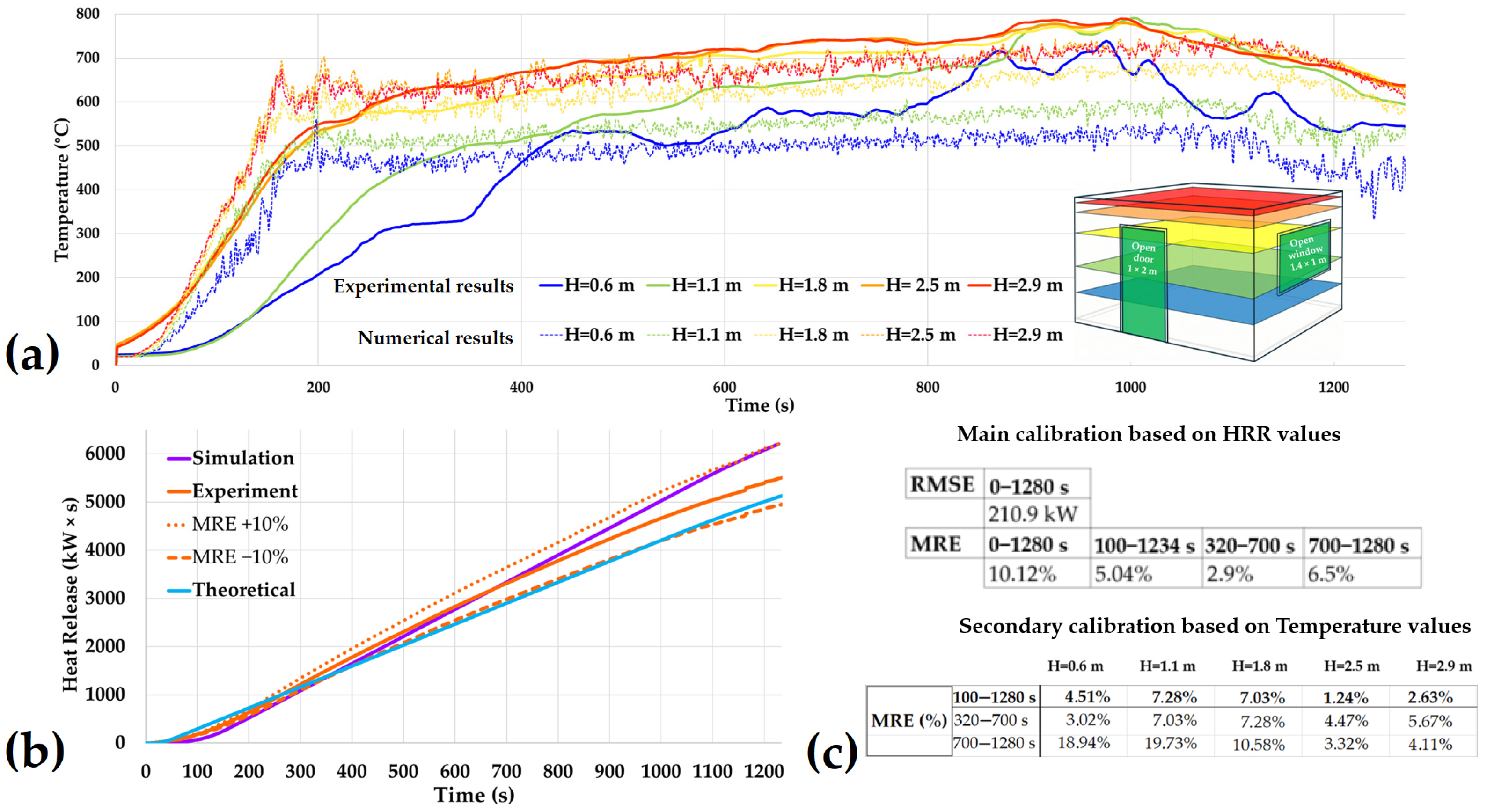
The empirical validation of the computational model is presented in
Figure 1. The validation process is primarily driven by the HRR (a), followed by secondary temperature comparisons (b), and concludes with an assessment of the model’s accuracy utilizing two separate approaches (c).
The model was validated through a detailed comparison between the numerical results and experimental measurements. HRR was used as the main reference parameter to evaluate the model’s accuracy, whereas the temperature distributions and concentrations of toxic gases served as secondary and tertiary indicators. These were used to describe the vertical thermal gradients and the transient stages of fire development, particularly those associated with increased production of incomplete combustion products.
The effectiveness of the grid sensitivity study was quantitatively assessed using performance metrics such as the Root Mean Square Error (RMSE) and Mean Relative Error (MRE), which allowed the evaluation of the result accuracy in relation to the required computational resources.
At the conclusion of the calibration and validation stage, a three-dimensional RMSE 238 matrix of type 2 × 2 × 2 was generated. The associated configuration space served as the foundation for the error assessment matrix, enabling a systematic analysis of model sensitivity with respect to discretization parameters and burning surface area. The obtained results indicated an RMSE-based accuracy of 210 kW and an MRE-based accuracy of 5.04%, both satisfying the predefined accuracy criteria [
14,
15].
2.1.2. Experimental Results
The experimental phase was conducted in May 2022 at the Faculty of Fire Officers, under calm atmospheric conditions, including no wind, no precipitation, and an ambient temperature of approximately 20 °C. The total duration of the experiment was around five hours and was divided into four distinct development stages: a slow burning phase (0 to 320 s), the active burning phase (320 to 700 s), the fully developed fire phase (700 to 1280 s), and the regression phase (1280 to 1600 s). Despite this full timeline, the interval of primary relevance, corresponding to the peak HRR values, was identified within the first 0–1280 s. Temperature variations measured at the upper monitoring levels remained relatively small, whereas significantly larger fluctuations were observed at the lower levels, particularly during the fully developed fire phase and the regression phase.
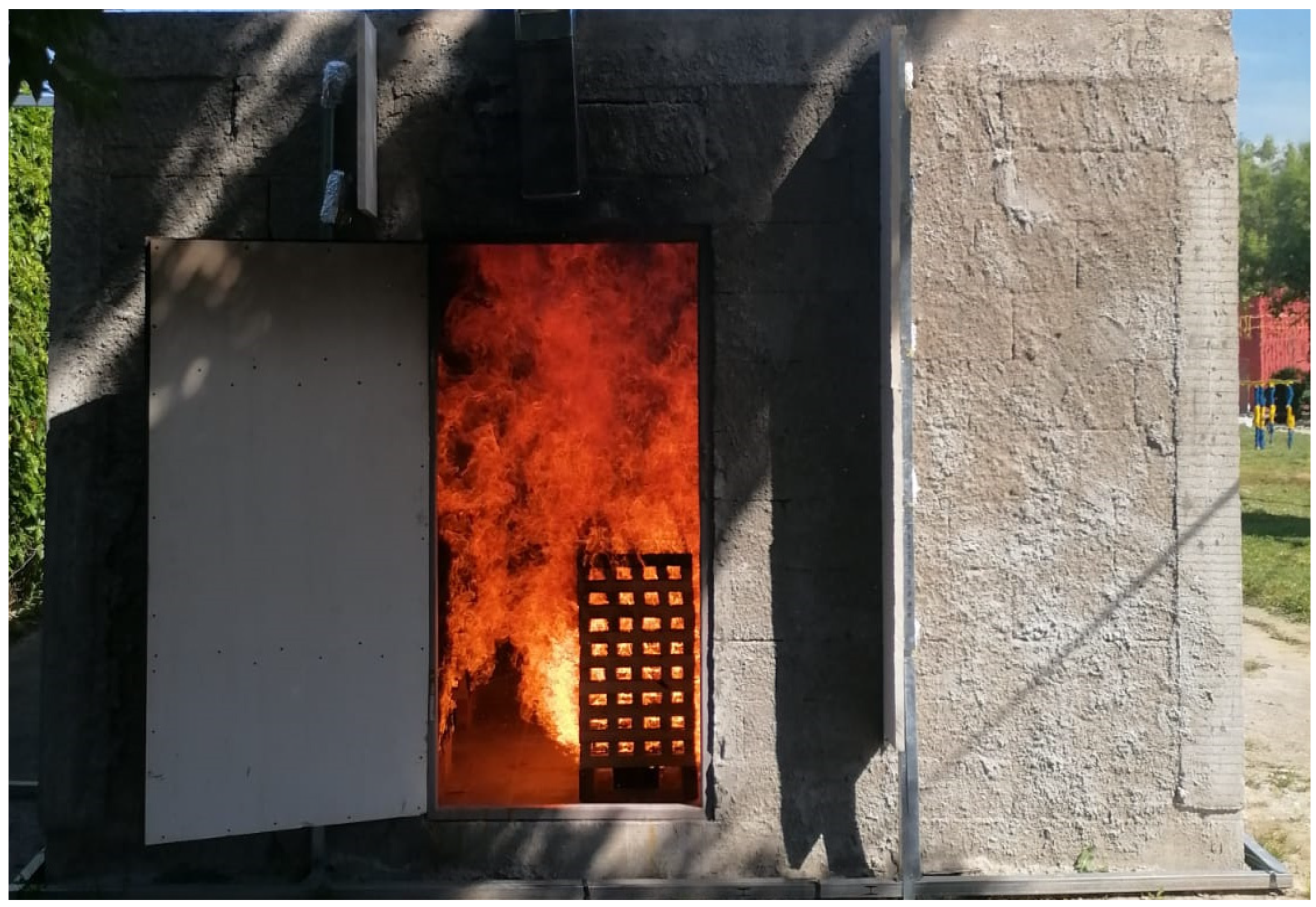
Figure 2 illustrates two key events recorded during the test. These include triggering conditions of the flashover and the extension of flames beyond the boundaries of the experimental compartment.
2.2. Numerical Model
In order to conduct a comprehensive investigation of the spatial distribution of combustion products and the performance of pressurization systems during a fire that may occur, the geometry of a residential building, with a height configuration of a basement, a ground floor, and nine upper stories (B + GF + 9), was designed. This modeling phase is important for in-depth knowledge of the phenomena occurring within evacuation routes, particularly stairwells, where smoke extraction and fire ventilation become critical in the absence of natural lighting and natural ventilation [
21]. Therefore, the geometry was designed at an optimal level of building detail, while construction elements with negligible influence were intentionally omitted, as their inclusion would have led to an exponential increase in computational time, with examples including furniture objects, door frames, and window frames.
This simplification approach is justified by the fact that such elements cannot be faithfully reproduced under the relatively coarse mesh resolution imposed by the mesh sensitivity analysis. Moreover, current fire safety regulations require evacuation routes to remain unobstructed at all times, further supporting the choice to eliminate these elements from the model geometry.
Unlike approaches frequently documented in the fire safety domain [
22], which analyze PPV in stairwells at multiple locations, the present paper focuses on buildings where the integration of HVAC or smoke extraction systems is constrained by significant structural limitations.
2.2.1. Geometry
The geometry is based on a common residential building with 9 stories, characterized by a staircase located between two apartment landings. This configuration reflects a realistic operational scenario in which interior doors are typically maintained in an open position, thereby eliminating the need for additional internal compartmentation within each unit.
The chosen geometry is intended to accurately represent the key phenomena controlling smoke propagation and ventilation behavior, while avoiding an unnecessarily high level of geometric detail. The validity of this approach is documented by previous studies [
14,
15], which demonstrated the model’s feasibility in the reproduction of phenomena such as the chimney effect and the evolution of pressure differentials throughout the building.
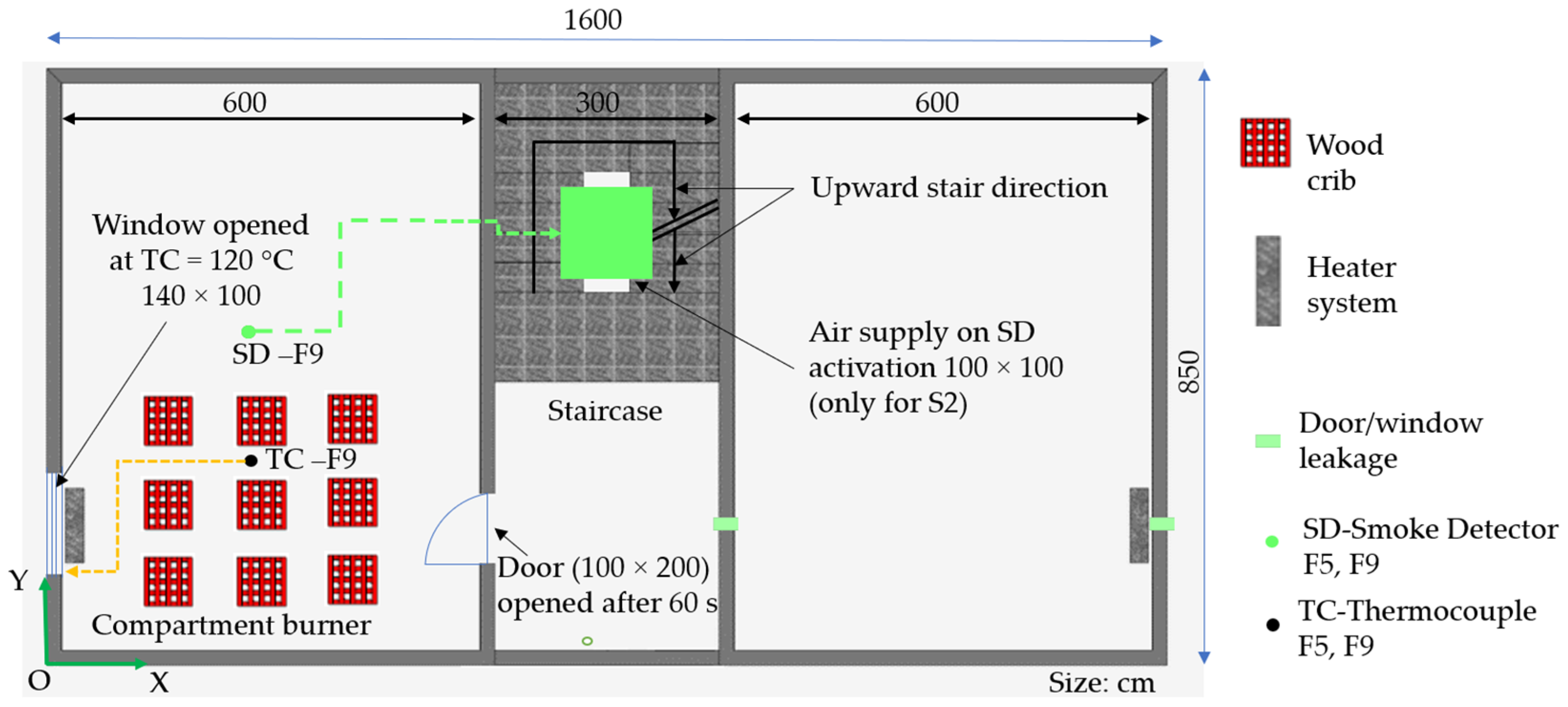
Figure 3 presents the ninth floor of the residential building, which, with the exception of the burner and the stairwell fan, is geometrically identical to a typical floor level.
2.2.2. Computational Domain and Numerical Grid
For the numerical simulations of the building, a computational domain extending beyond the actual physical boundaries of the structure was adopted, with a footprint of 20 × 15 and height of 35 m. This strategy makes it possible to impose relevant climatic boundary conditions and to analyze airflow behavior both within the interior spaces and in the surrounding exterior environment. A key feature of the Large Eddy Simulation model (LES), which is used by the FDS, is the spatial variability of the computational cell size, which allows mesh refinement only in regions of interest, such as near the burner or ventilation openings, where fine flow and combustion details play a crucial role in simulation accuracy [
23].
To capture these effects, multiple subdomains were introduced, including a dedicated region enclosing the fire source, along with 36 additional subdomains corresponding to infiltration areas around openings such as doors and windows. The subdomain assigned to the burner is in the lower part of the left-side apartment at ground floor level, like the configuration presented in
Figure 3. Each leakage subdomain corresponding to the exterior windows and apartment doors is defined as a cube with an edge length of 75 cm.
A smaller cell size was selected for all subdomains in order to achieve a higher-fidelity representation of fire behavior, consistent with other references [
24,
25,
26].
Prior grid optimization assessments revealed a unwanted effect: adopting finer grids beyond an optimal boundary failed to meaningfully enhance model exactness, yet drastically amplified calculation durations [
27,
28,
29].
Reducing the cell size in regions outside the fire-related subdomains leads to negligible differences in accuracy [
30,
31,
32], with some studies reporting variations below 5%, and does not significantly affect the feasibility of the final results [
33,
34,
35]. Based on these findings, two mesh resolutions were adopted, namely a coarse grid of 25 × 25 × 25 cm for the global domain and a refined grid of 5 × 5 × 5 cm for the aforementioned subdomains [
36,
37,
38], as described in greater detail in
Figure 3 of reference [
16].
The size of the computational grid has a strong impact on both the precision of the numerical results and the overall runtime of the simulation. Therefore, achieving a proper compromise between accuracy and computational cost becomes a key objective in order to ensure dependable outcomes within an acceptable duration. The effect of mesh resolution on simulation behavior was assessed by analyzing multiple grid configurations, expressed through the dimensionless parameter D*/dx, which relates the characteristic fire diameter to the mesh cell dimension [
33,
39]. Within this work, the values of D*/dx varied from 6.68 for the coarsest mesh, characterized by 25 cm cells, up to 33.4 for the finest discretization using 5 cm cells. Results from the sensitivity study showed that a cell dimension of 5 cm is adequate for capturing fire-driven flow structures and smoke transport phenomena, while still keeping computational demands at a reasonable level.
Based on these findings, a finer discretization of 5 cm was implemented in zones requiring higher accuracy, such as the burner subdomain, air intake openings, and infiltration zones. In contrast, a coarser mesh of 25 cm was used for the rest of the computational domain.
The computational mesh size plays a decisive role in both numerical solution accuracy and total simulation duration. Consequently, identifying an optimal balance between accuracy and computational efficiency is essential for obtaining reliable results within a reasonable time frame. To quantify the influence of mesh resolution on simulation performance, various mesh densities were evaluated using the dimensionless ratio D*/dx, which expresses the relationship between the characteristic fire diameter and cell size [
33,
39]. In the present study, D*/dx values ranged from 6.68, corresponding to the coarse grid with 25 cm cells, to 33.4, corresponding to the refined grid with 5 cm cells. The sensitivity analysis indicated that a 5 cm cell size provides sufficient accuracy in resolving fire-induced flows and smoke movement while maintaining a reasonable computational cost.
In conclusion, for sensitive regions, including the burner subdomain, air supply openings, and infiltration zones, a refined cell size of 5 cm was adopted. The remaining simulation domain employed a coarser resolution of 25 cm.
2.2.3. Boundary Conditions
Boundary conditions and simulation parameters are the defining factors in FDS modeling, affecting numerical stability, data accuracy, and the fidelity of modeled combustion processes. The simulation domain’s outer limits were established as open, permitting unrestricted exchanges between the inside and outside of the domain. Such a setup facilitated an authentic depiction of passive airing across building apertures, avoiding the introduction of restrictions upon the air currents.
Exterior boundary settings were assigned to guarantee a thermodynamic balance with the adjacent atmosphere. Starting indoor variables were configured to represent a standard pre-ignition state, featuring thermal and chemical metrics chosen to mirror normal air makeup and passive draft conditions. Optical characteristics tied to sightline ranges and thermal radiation exchange were established via widely accepted equations governing smoke propagation, whereas gravity forces were enforced along the vertical axis to faithfully capture buoyancy-induced fluid dynamics. Ambiental weather conditions across the outside domain were simulated relying on the Monin–Obukhov theorem [
40,
41].
Overall, the specified initial and boundary conditions offer a physically coherent setup for modeling the interdependence between fire evolution, smoke ventilation, building permeability, and toxic gas circulation in a nine-story building, as detailed further in
Section 3.3 of reference [
18].
2.2.4. Burner Specifications
The properties governing the modeled ignition origin remain based on an exhaustive procedure encompassing planning, trials, and verification derived from prior empirical plus computational investigations presented in reference [
14]. Within the simulator, this flaming boundary was established and tuned to closely represent the heat dissipation patterns recorded during real-size physical tests. The key parameter, HRRPUA, was set to 100 kW/m
2, equating to an overall HRR reaching 4350 kW distributed over a cumulative wooden crib surface area of 43.5 m
2. This value is typical for dried wooden mass combustion subjected to highly ventilated indoor environments. Consequently, wooden cribs deliver an authentic representation of the fire scenario and enable accurate validation of the structural layout’s thermodynamic reaction against the applied thermal load.
The underlying burning algorithm linked to this heat source incorporated a customized stoichiometric formula reflecting refined wooden bars. Aligning with simulator prerequisites, the combustible material was described using a standardized and broadly accepted molecular breakdown incorporating carbon, hydrogen, oxygen, and nitrogen, utilizing the exact molar ratios of C
3.4H
6.2O
2.5N
0 [
25,
42]. Such an equation ensures a thermodynamically sound estimation regarding wooden-derived combustibles while facilitating dependable numerical simulation of the actual burning sequence.
This chemistry setup integrates defining metrics influencing combustion alongside inhabitants’ survivability. The higher flame temperature was set to 1327 K, the CO yield was fixed at 42 g/g, and the soot yield was specified as 80 g/g, an elevated figure signifying heavy soot generation alongside dense airborne particle dispersion. Furthermore, the radiant energy ratio stood at 35%, showcasing the source’s capability to emit considerable thermal output via radiative heat pathways. Such assigned values, together with the wooden crib configuration, facilitate a real reproducing of combustion dynamics alongside pollutant emission tracking, holding immediate relevance for airflow system appraisal, egress path planning, and heat shielding verification.
2.2.5. Simulation Setup
The scenarios implemented in the numerical modeling were defined based on the principle that the operation of fire safety systems should be governed by the actual evolution of the fire rather than by artificially imposed activation times. The simulations were performed using PyroSim (version 2025.1.0826) and incorporated activation criteria dependent on measured physical parameters, allowing reproduction of the key stages of fire development. The mechanical air supply system, intended to control pressure differentials in the upper region of the building, was configured to activate exclusively after fire product detection by the smoke detector located within the burner zone, reflecting the operational behavior of pressurization systems under real emergency conditions. At the same time, natural ventilation was treated as a thermally induced process, with the opening of the exterior window conditioned by the attainment of a temperature threshold within the hot gas layer above the burner, measured using a thermocouple. For all analyzed cases, comprising six numerical simulations, communication between the fire compartment and the stairwell was permitted after 60 s from fire ignition, introducing a controlled modification of the flow regime and oxygen supply. Maintaining these common assumptions across all simulations ensures analytical consistency and enables a comparative evaluation of how opening activation influences smoke evolution, temperature distribution, and occupant safety conditions.
Two simulation scenarios were defined for analyzing fire behavior:
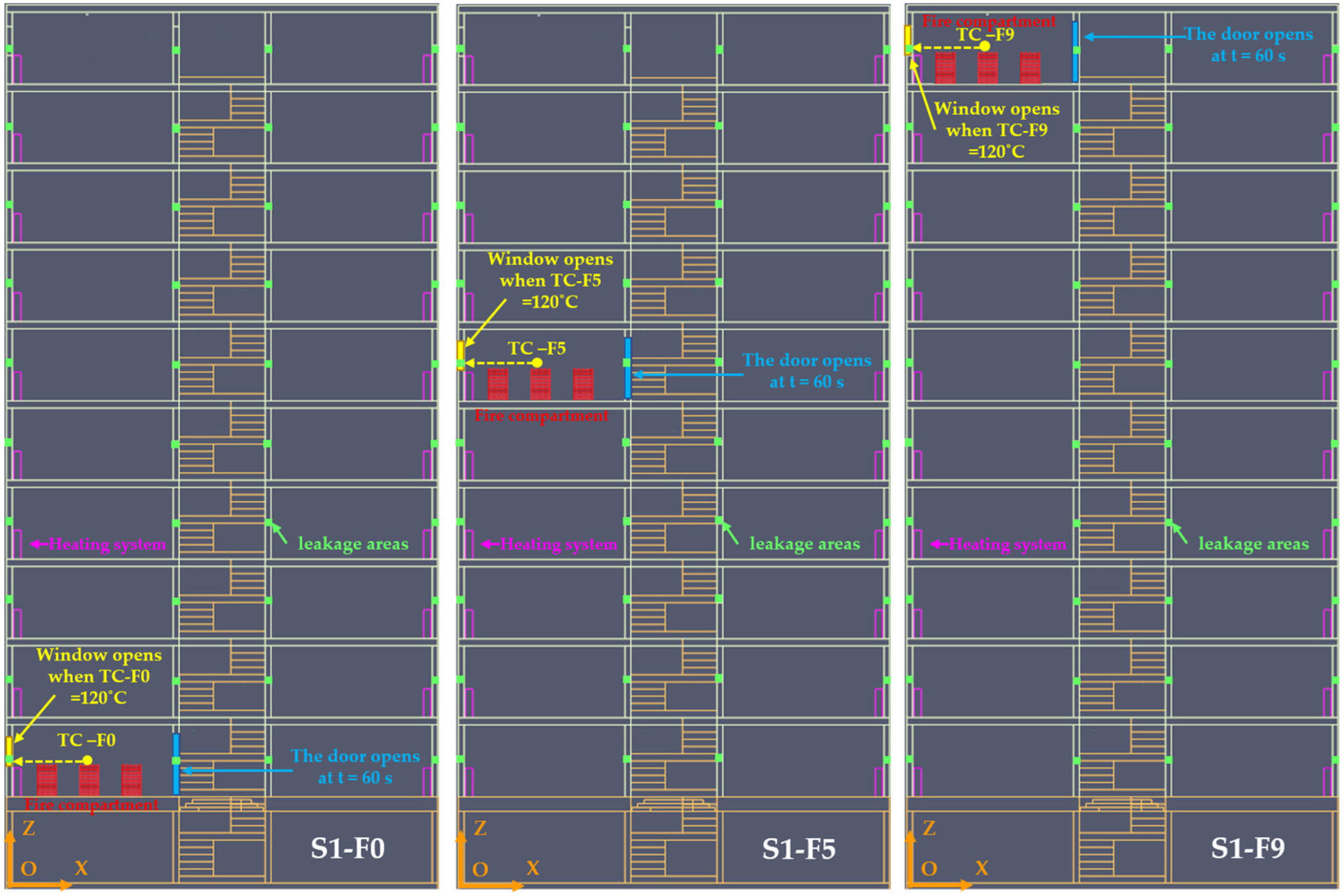
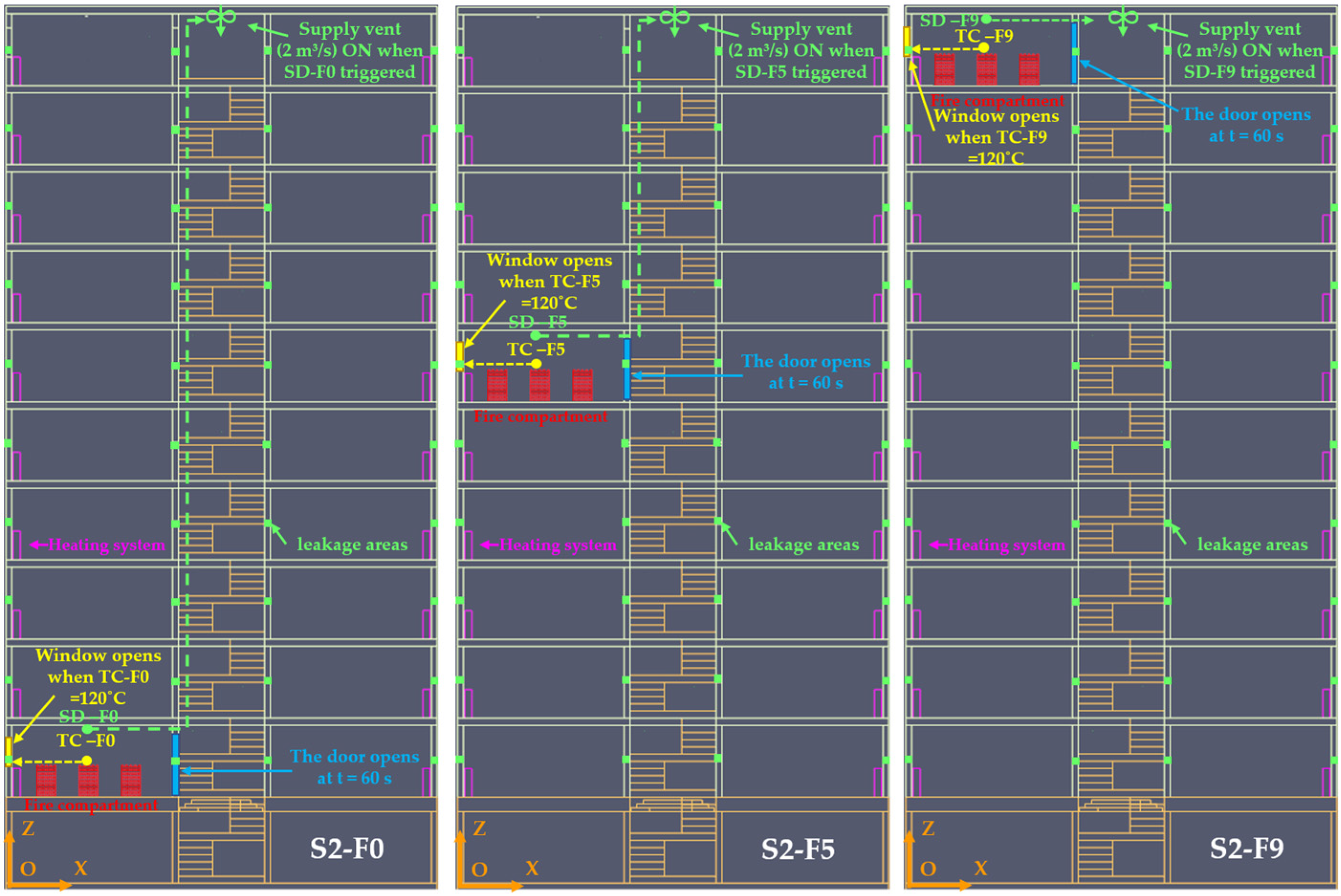
Scenario 1, characterized by the absence of mechanical ventilation, includes three numerical cases differentiated by burner location, namely the ground floor, fifth floor, and ninth floor, illustrated as S1-F0, S1-F5, and S1-F9 in
Figure 4. In this configuration, smoke movement is governed exclusively by natural draft effects and air infiltration through building envelope elements. In all cases, the entrance door of the burner compartment (2 × 1 m) opens 1 min after fire ignition, while the associated window (1.00 × 1.40 m) is automatically activated upon reaching a local temperature threshold of 120 °C. The 120 °C activation threshold was defined as a conservative thermo-functional limit for PVC-based sealing components, which may significantly soften within the 75–105 °C range, leading to reduced airtightness and the formation of leakage paths represented in the CFD model as an effective smoke vent. This value is also consistent with the hazardous tenability threshold for the lower gas layer [
43]. Prior to the opening of these ventilation openings, air exchange occurs through infiltration processes, which are subsequently replaced by airflow driven through the door and window openings.
Scenario 2, which includes mechanical ventilation controlled through differential pressurization systems, was analyzed through three distinct numerical cases defined by burner location, namely the ground floor, fifth floor, and ninth floor, illustrated as S2-F0, S2-F5, and S2-F9 in
Figure 5. This setup implements an active ventilation strategy layered over standard natural stack effects. Across all investigated cases, a mechanical fan positioned at the ninth floor ensures a steady volumetric flow of 2 m
3/s. Relative to the building’s aggregate internal volume of 3300 m
3, this intake rate translates to slightly under two air changes per hour (ACH), indicative of a typical ambient ventilation layout. Conversely, when confining the analysis solely to the stairwell enclosure, which holds a restricted volume of only 660 m
3, this localized airflow yields a significantly higher ACH of 10.9. The extraction hardware is automatically engaged via signals transmitted by the smoke sensor located inside the ignition zone. Mirroring the first scenario, the fire room’s exterior window (1.00 × 1.40 m) clears dynamically once local thermal conditions hit a 120 °C limit, whereas the main access door (2 × 1 m) actuates 1 min following the initial combustion. Prior to these barrier removals, mass transfer relies entirely on structural leakages, being eventually dominated by the forced drafts circulating across the fully functional door and window apertures. The airflow rate was selected to meet the pressure-differential requirement of 50–60 Pa recommended by EN 12101-6 for stairwell pressurization. The imposed flow accounts for leakage paths and door opening conditions to ensure adequate overpressure. In the simulations, the airflow was prescribed at the fan boundary, while the resulting pressure field was obtained as part of the solution.
The numerical modeling frameworks were designed to evaluate the impact of burner location on the level of stairwell exposure and to assess how different ventilation strategies can limit smoke propagation. The comparison of fires located at lower, intermediate, and upper levels highlights the role of the stack effect in the vertical transport of combustion products. The analysis includes both natural ventilation configurations and mechanically pressurized solutions, providing a relevant framework for optimizing fire safety in existing mid-rise buildings that were not originally equipped with dedicated evacuation route pressurization systems.
3. Results
The following section presents, in sequence, the thermal and air quality results obtained for the two scenarios previously described, from which six numerical simulations were derived. The determination of safety limits in fire safety engineering has evolved from the use of static threshold values toward performance-based dynamic models. The reference document issued by the Society of Fire Safety [
44] establishes the fundamental conditions defining an unsafe environment. For convective heat exposure, fatality occurs within the temperature interval of 100 °C to 120 °C, while for thermal radiation, the pain threshold for unprotected skin is defined as 2.5 kW/m
2. These values describe the “survivability window” within which self-evacuation remains possible [
44]. In the context of smart buildings, evacuation algorithms integrated into Internet of Things (IoT) systems process such data to generate safe evacuation routes, considering 60 °C as a critical safety threshold intended to prevent occupant exposure to thermal conditions capable of inducing panic or hyperthermic shock [
45].
The effectiveness of these limits, however, depends on the dynamics of active intervention and on the physiological profile of exposed individuals. Additional experimental research [
46] has demonstrated that firefighting tactics can significantly modify safety conditions. Through ventilation and water application, temperatures at the occupant breathing level can be maintained below 65 °C, even in the presence of a flashover. For intervention teams, recent studies establish an operational threshold of 263 °C, where exposure time must be limited to approximately 26 s in order to preserve protective equipment integrity and prevent skin burns [
47].
A significant theoretical advancement is proposed in reference [
48], which argues for a paradigm shift in estimating the time to loss of tenability. This work critically analyses conventional standards, such as ISO 13571 [
49], which treat thermal exposure and toxicity as independent variables. In reality, thermal stress acts as a metabolic accelerator, since elevated temperatures induce hyperventilation, thereby exponentially increasing the inhaled volume of asphyxiant gases, including CO and HCN. Consequently, incapacitation is not solely a function of temperature, but rather a synergistic outcome in which heat drastically reduces the time required to reach a lethal toxic dose [
48]. Modern fire safety assessment should therefore rely on integrated Fractional Effective Dose (FED) modeling, where thermal thresholds [
44,
47] and dynamic evacuation pathways [
45] are correlated with heat-enhanced toxin absorption rates.
In fire safety evaluation, carbon monoxide concentration is considered a critical parameter, as short-term exposure to elevated concentrations can rapidly become lethal. Previous research indicates that concentrations within the range of 1000 to 1200 ppm (0.10 to 0.12%), sustained for 10 to 15 min, are associated with loss of evacuation capability and severe intoxication risk. For this reason, a CO concentration of 0.12% is commonly adopted as a hazardous threshold in occupant safety analysis [
50,
51]. Studies further show that such levels may be reached rapidly in multi-story buildings, particularly under the influence of stack-driven airflow, significantly reducing the available safe evacuation time [
52]. Comparative analyses of ventilation strategies demonstrate that maintaining CO concentrations below critical thresholds for evacuation-compatible time intervals is achievable only through effective smoke control solutions, particularly mechanical pressurization combined with combustion gas exhaust systems [
18,
53,
54].
3.1. Ground Floor
3.1.1. Temperature
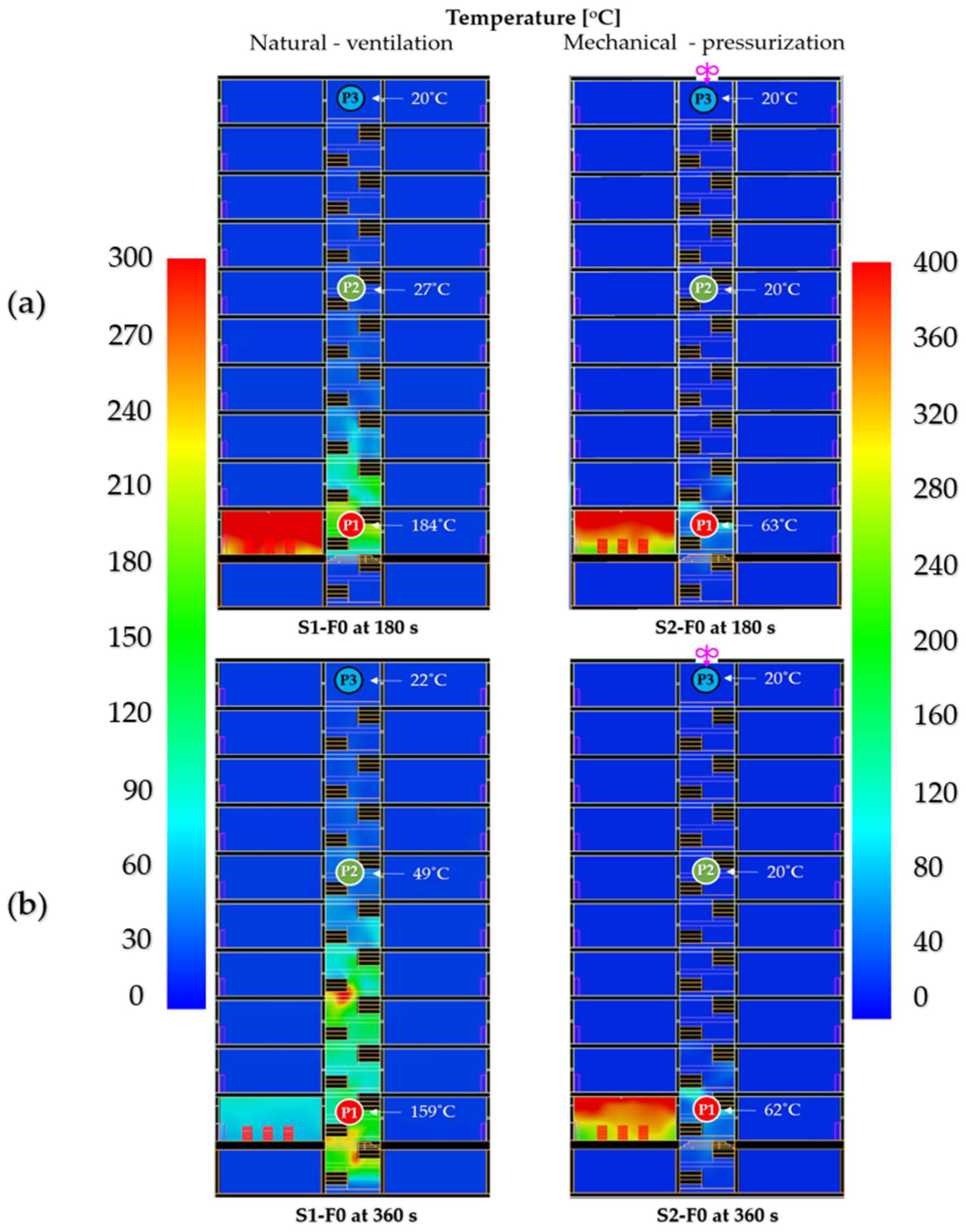
The temperature distribution maps in the transverse plane Y = 5.75 m at the critical intervals of 180 and 360 s after ignition, illustrated in
Figure 6, highlight the decisive impact of the ventilation strategy on maintaining the integrity of evacuation routes. A comparative analysis of the two configurations reveals the following fundamental aspects:
Scenario S1 reflects an uncontrolled thermal regime, typical of vertical stairwells, in which the exhaust of hot gases is obstructed at the upper level. A significant accumulation of smoke is observed, leading to systematic exceedance of temperatures above 180 °C. With maximum values reaching 294 °C, this scenario confirms that minimum conditions required for safe evacuation, and consequently for survivability, are not achieved. From both a clinical and fire safety perspective, the environment rapidly becomes untenable, as the recorded temperatures are sufficient to cause occupant fatality and prevent self-evacuation.
Scenario S2, through the implementation of a pressurization system with air supply introduced at the upper level, demonstrates a superior capability to control fluid dynamics. The downward airflow generates a stable barrier that limits the upward movement of the smoke column and associated thermal flux. Although at point P1, located on the ground floor near to the burner, the maximum temperature reaches 92 °C, this value remains below the convective lethal threshold of 120 °C, confirming the effectiveness of the overpressure system in preserving a viable evacuation route throughout the entire building height. In line with the requirements of EN 12101-6 [
55], the effectiveness of the pressurization system was examined by quantifying the differential pressure between the stair enclosure and the burner room. A target differential close to 50 Pa was considered necessary to ensure smoke containment, while recognizing that insufficient pressurization may allow smoke penetration and that excessive values, particularly above 60 Pa, may adversely affect door opening conditions and evacuation performance [
55].
The temporal evolution of temperature presented in
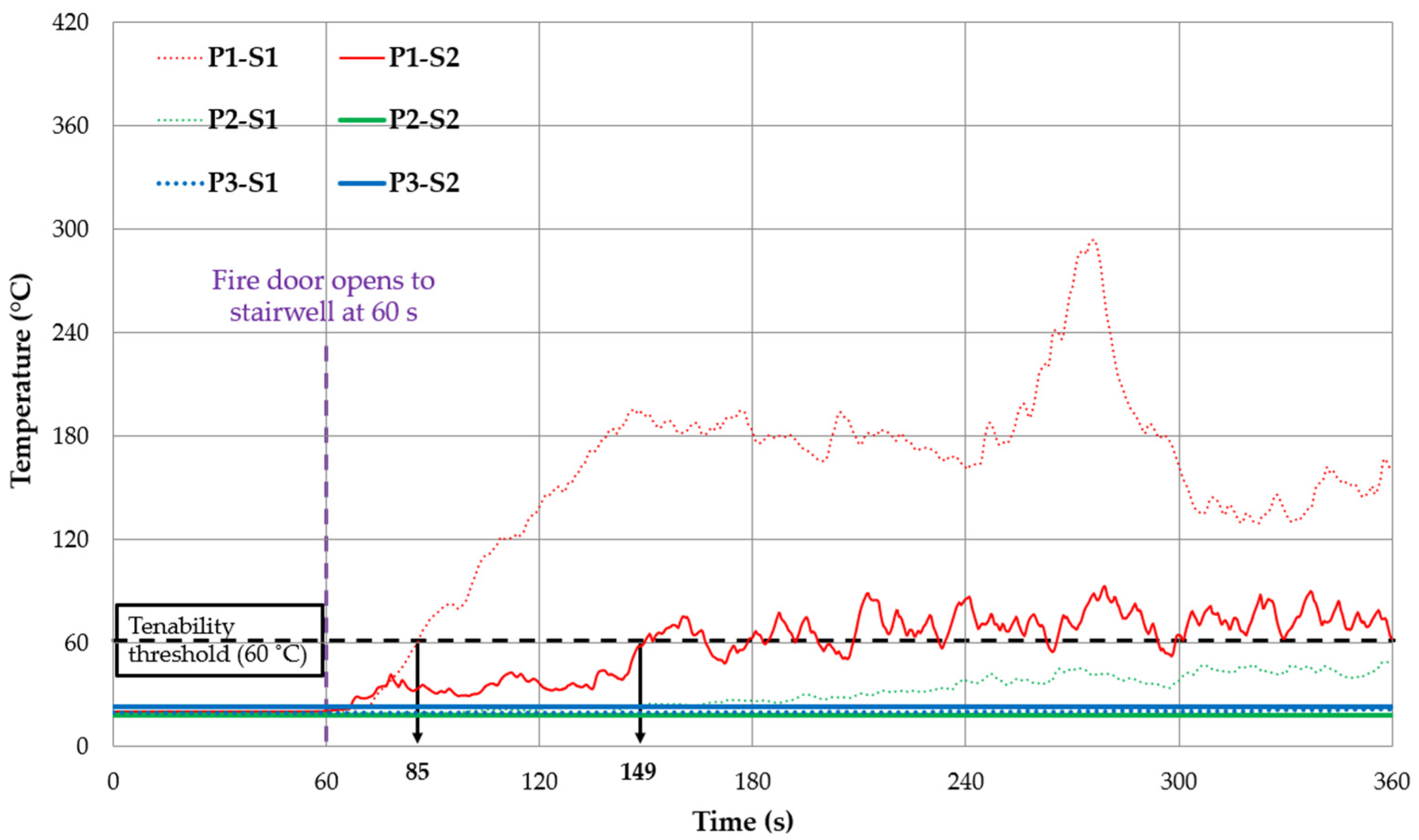
Figure 7 reveals critical indicators related to the ASET, highlighting the effectiveness of the pressurization solution compared with the natural ventilation configuration. The results demonstrate that, in Scenario S1, the integrity of the internal environment is compromised at an early stage, with the safety threshold exceeded only 85 s after fire ignition. This rapid degradation of evacuation conditions indicates a systemic vulnerability of the stairwell in the absence of active systems.
In contrast, the implementation of the pressurization system in Scenario S2 delays the attainment of this critical threshold until 149 s, extending the survivability window by approximately 75%. This additional time margin is crucial in real fire scenarios, providing occupants with sufficient time to traverse evacuation routes and facilitating rescue operations.
The effectiveness of the unidirectional top-level pressurization system is further validated through analysis of the average temperature values recorded at monitoring point P1, the thermally most demanding location due to its proximity to the burner. The data reveals a significant discrepancy between the two scenarios. While Scenario S1 exhibits an average temperature of 133 °C, exceeding the convective lethal threshold and indicating an imminent risk of thermal shock, Scenario S2 maintains stable thermal conditions with an average temperature of 53 °C. Maintaining this parameter below the critical threshold of 60 °C demonstrates the capability of the active system to counteract the upward movement of hot gases, effectively transforming the stairwell from a heat propagation pathway into a protected refuge zone. This thermal stability is essential not only for physical survivability but also for preventing panic, thereby supporting orderly and efficient evacuation.
The ground floor fire scenario, after previous comparative analysis, demonstrates that, while natural ventilation (S1) transforms the stairwell into a thermally lethal environment, active pressurization (S2) provides effective thermodynamic protection. This barrier, primarily generated by the pressure differential, successfully limits temperatures at the upper floors below the critical threshold of 60 °C, thereby preserving the integrity of the evacuation route by counteracting the buoyancy-driven upward movement of hot gases.
3.1.2. Carbon Monoxide
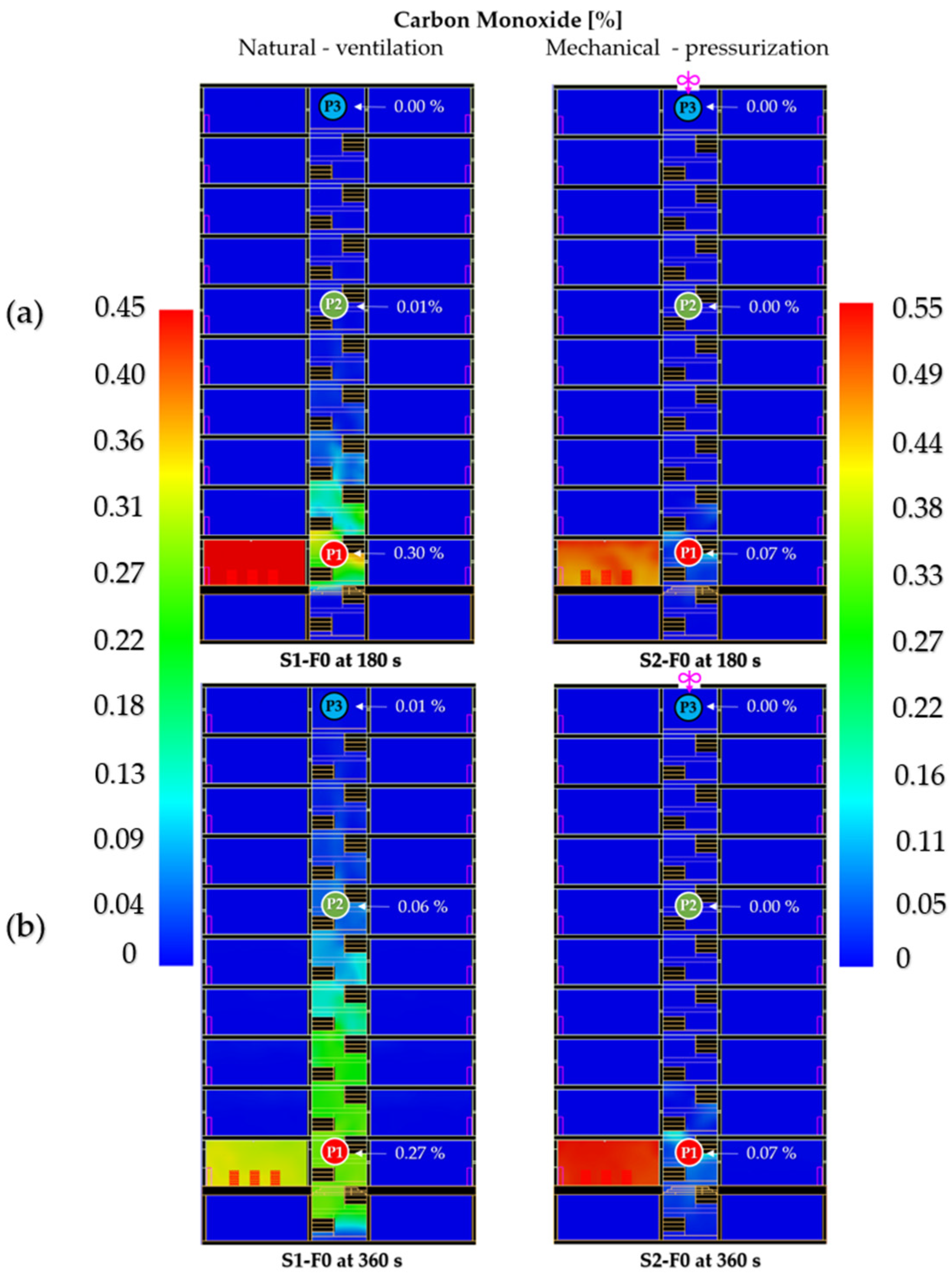
The distribution of the carbon monoxide (CO) concentration in the air for the scenario involving a ground floor fire is illustrated in
Figure 8, where natural ventilation (S1) and mechanical pressurization (S2) are compared at 180 and 360 s after fire ignition. In the natural ventilation scenario, the CO concentrations within the fire compartment reach values on the order of 0.27 to 0.30%, significantly exceeding the safety threshold of 0.12%, while vertical propagation through the stairwell results in the progressive smoke contamination of the evacuation route. This evolution indicates the rapid accumulation of a toxic dose and accelerated degradation of evacuation conditions, primarily driven by buoyancy-induced flows and stack effect mechanisms.
In contrast, Scenario S2, incorporating mechanical pressurization, effectively limits CO penetration into the stairwell, maintaining concentrations at negligible levels throughout the analyzed period. At the ground floor level, the CO values remain below 0.12%, even at 360 s after ignition. These results highlight the decisive role of pressurization in controlling toxic gas propagation for fires located at lower levels, demonstrating the capability of this solution to maintain safe evacuation route conditions during the critical evacuation period.
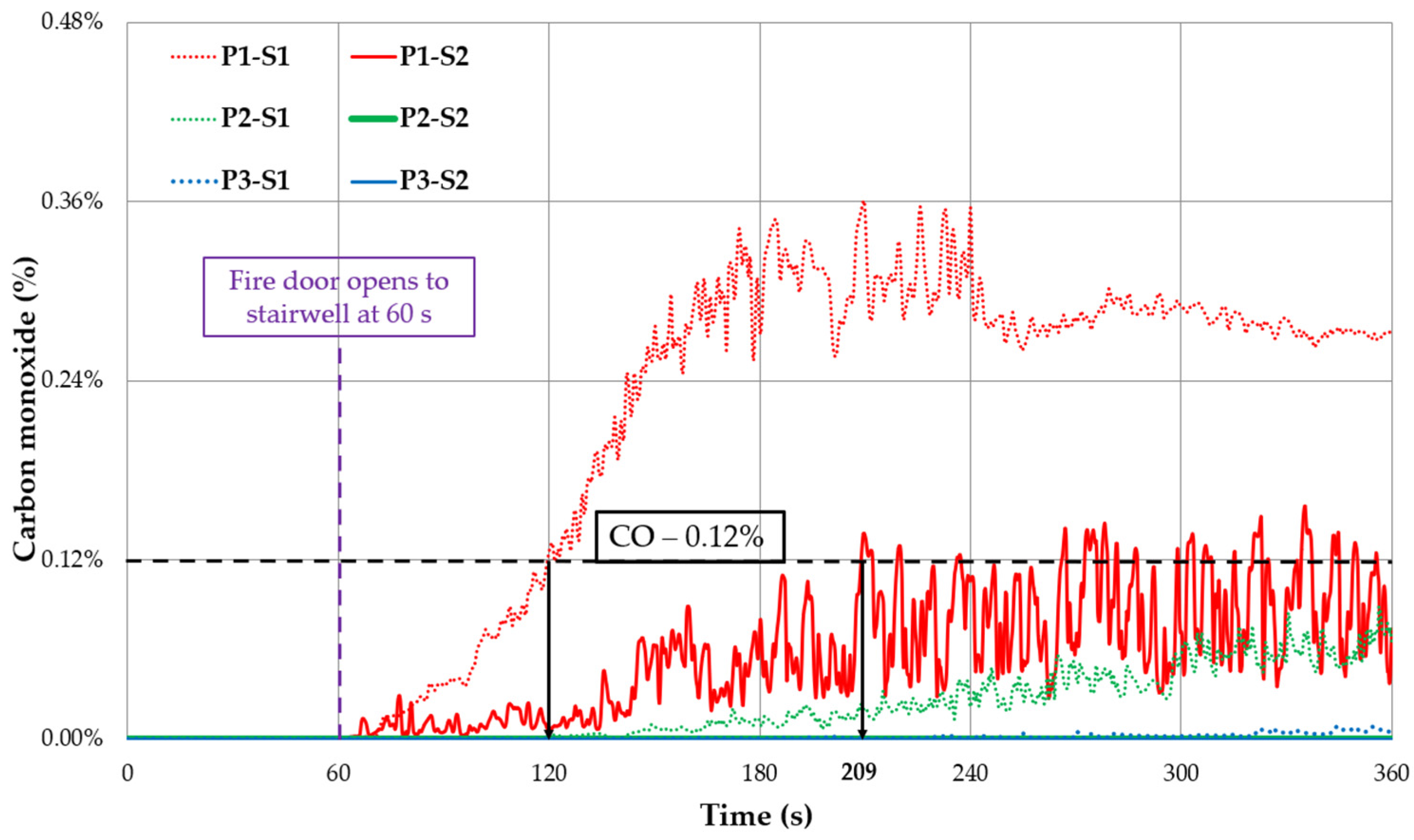
The temporal evolution of the CO concentration, referenced against the critical threshold of 0.12%, is presented in
Figure 9, highlighting differences both in the timing of threshold exceedance and in the severity of the values recorded at the burner level. In Scenario S1, the CO concentration at monitoring point P1 exceeds the limit at approximately 120 s, while the calculated average value of 0.24% indicates sustained exceedance. The average concentrations recorded at P2 (0.03%) and P3 (0.01%) confirm the vertical propagation of contamination. In Scenario S2, exceedance at P1 occurs later, at approximately 209 s, and represents only a slight surpassing of the 0.12% threshold, while monitoring points P2 and P3 remain at zero throughout the analyzed period. Overall, comparison with the 0.12% threshold indicates a faster and more pronounced loss of safety conditions at P1 for Scenario S1, whereas Scenario S2 exhibits a delayed and limited exceedance confined to the fire compartment, accompanied by the preservation of uncontaminated conditions within the monitored stairwell.
For the ground floor fire scenario, natural ventilation leads to a rapid and pronounced exceedance of the safety threshold at the burner level, followed by progressive contamination of the stairwell. In contrast, under mechanical pressurization, the CO concentration at the fire compartment reaches the 0.12% threshold in a delayed and limited manner, without generating vertical propagation, thereby maintaining acceptable evacuation conditions within the stairwell throughout the analyzed period.
3.2. Fifth Floor
3.2.1. Temperature
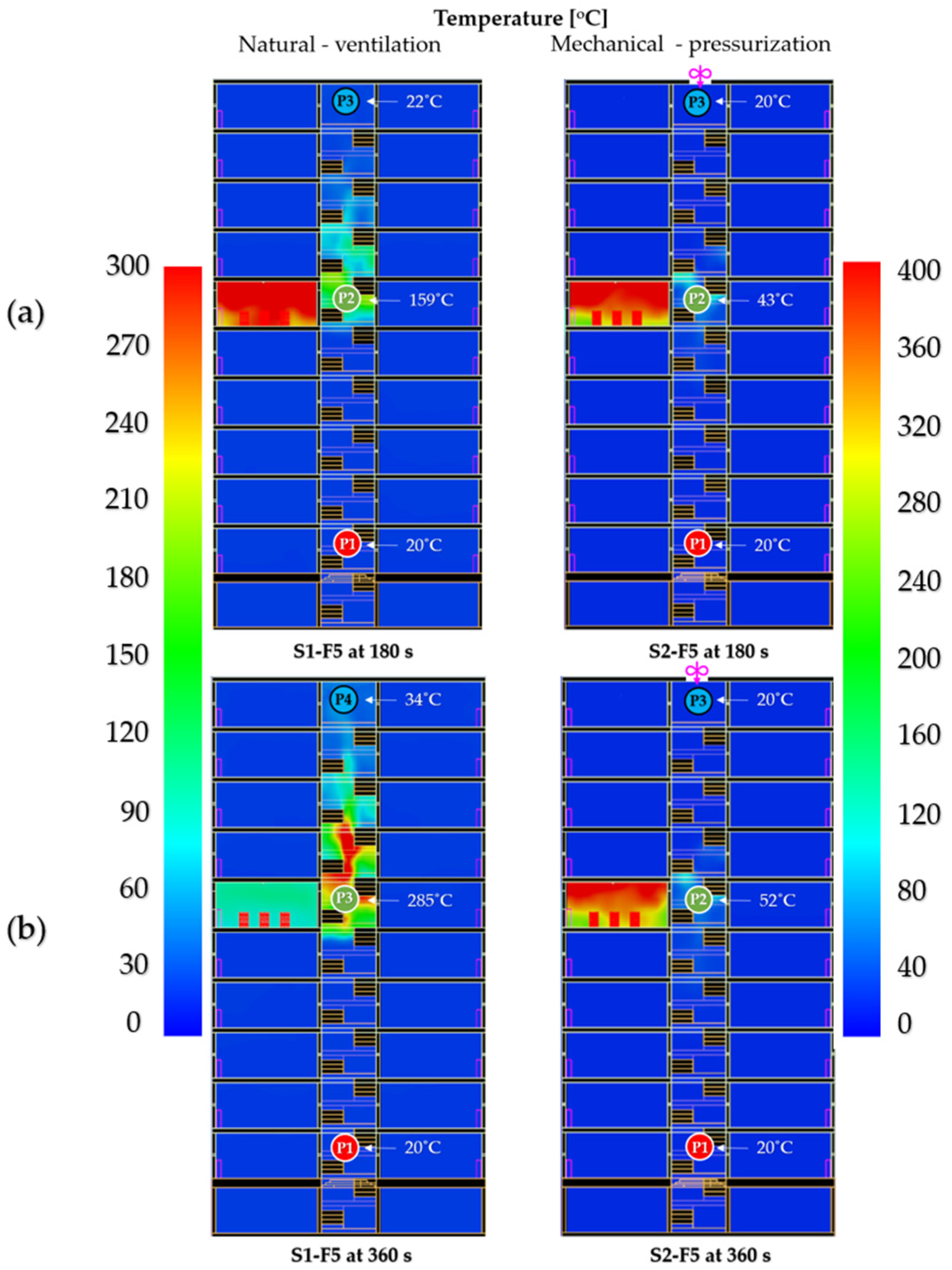
The comparative analysis of thermal profiles at monitoring point P2, under the influence of a burner located at the intermediate level, namely the fifth floor, highlights a critical contrast in thermal risk management (
Figure 10). In Scenario S1, the absence of a pressure control mechanism allows rapid convective saturation of the vertical volume, with temperature escalating to an extreme value of 285 °C within only 360 s. From a fire safety engineering perspective, this thermal regime exceeds all physiological safety thresholds, leading to evacuation route failure and transforming the stairwell into a pathway for fire propagation toward the upper levels.
In contrast, the performance observed in Scenario S2 demonstrates the effectiveness of aerodynamic isolation achieved through active pressurization. The differential pressure gradient established within the enclosure acts as an efficient thermodynamic barrier, counteracting the buoyancy-driven ascent of combustion gases and stabilizing temperature below the critical threshold of 60 °C. This thermal stability, maintained despite the proximity of the burner, preserves a viable survivability window and validates the unidirectional pressurization strategy as an essential technical solution for protecting life safety and facilitating emergency intervention.
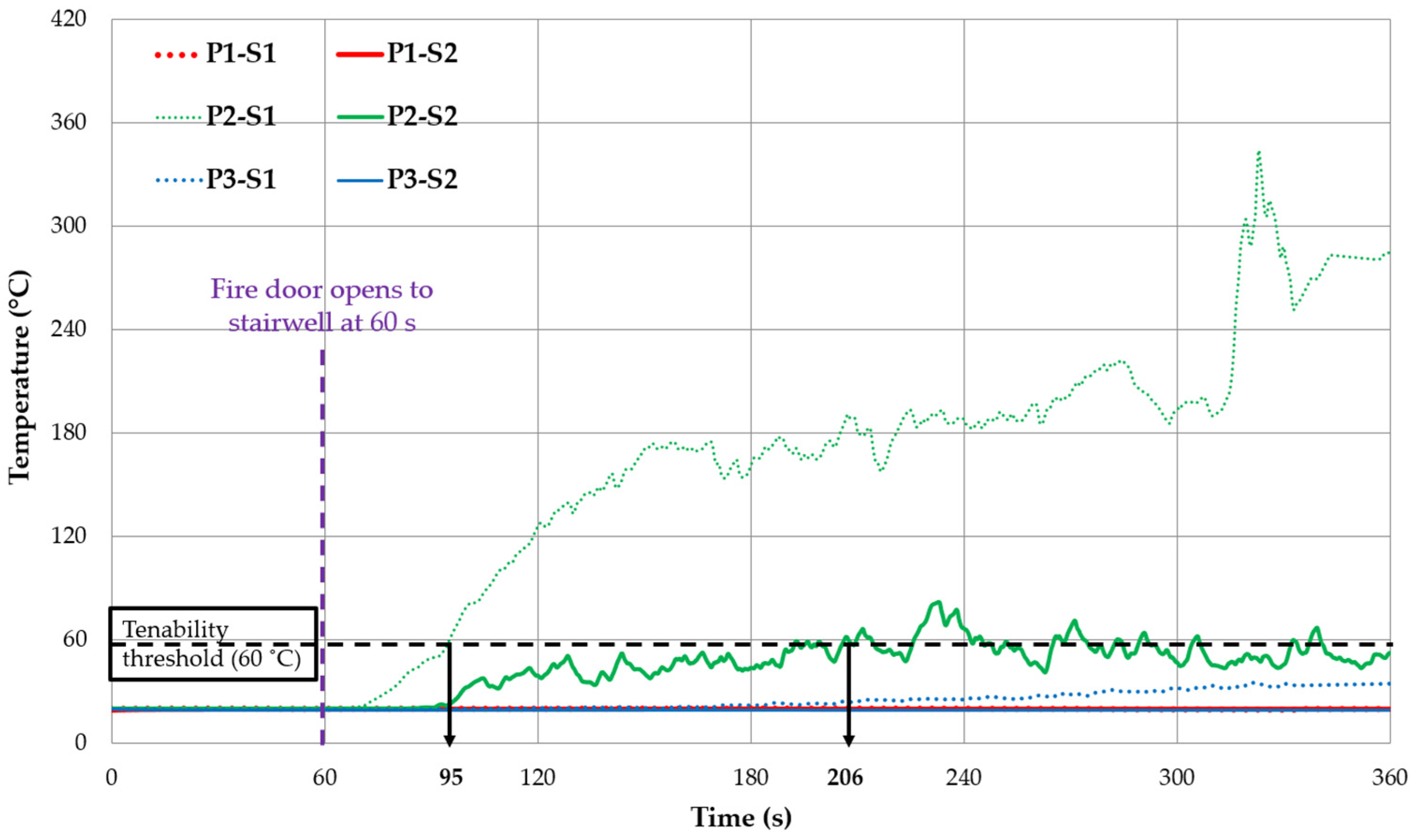
The temporal analysis of fire safety conditions for the burner located at the intermediate level, namely the fifth floor, confirms a major divergence in the performance of the two smoke management strategies (
Figure 11). In Scenario S1, an extremely rapid degradation of the internal environment is observed, with the safety threshold being exceeded only 95 s after fire ignition. This accelerated deterioration of safety conditions transforms the stairwell into a hostile environment, where the average temperature at monitoring point P2 reaches 171 °C. From a physiological perspective, this thermal regime exceeds the lethal threshold, preventing self-evacuation and generating immediate life-threatening conditions for occupants.
In contrast, Scenario S2 demonstrates significantly improved thermal conditions, maintaining the integrity of the evacuation route until approximately 206 s. This extension of the survivability window by more than 110% compared to the previous configuration is critical for the success of the evacuation process. Although minor fluctuations locally exceeding the 60 °C limit are observed, the average temperature at monitoring point P2 remains stabilized at 49 °C. Maintaining this parameter below the critical threshold associated with panic onset and hyperthermic shock validates the effectiveness of the unidirectional pressurization system, which succeeds in providing a controlled evacuation environment.
The analysis of the fire scenario positioned on the fifth floor confirms the critical failure of Scenario S1, where the absence of pressure control transforms the stairwell into a lethal thermal column within only 95 s, effectively eliminating any possibility of evacuation. In contrast, Scenario S2 extends the survivability window by 110%, reaching 206 s, while stabilizing temperature at a safe average value of 49 °C. The results validate active pressurization as the only effective active measure capable of limiting temperature escalation at intermediate floors and ensuring the integrity of the evacuation route.
3.2.2. Carbon Monoxide
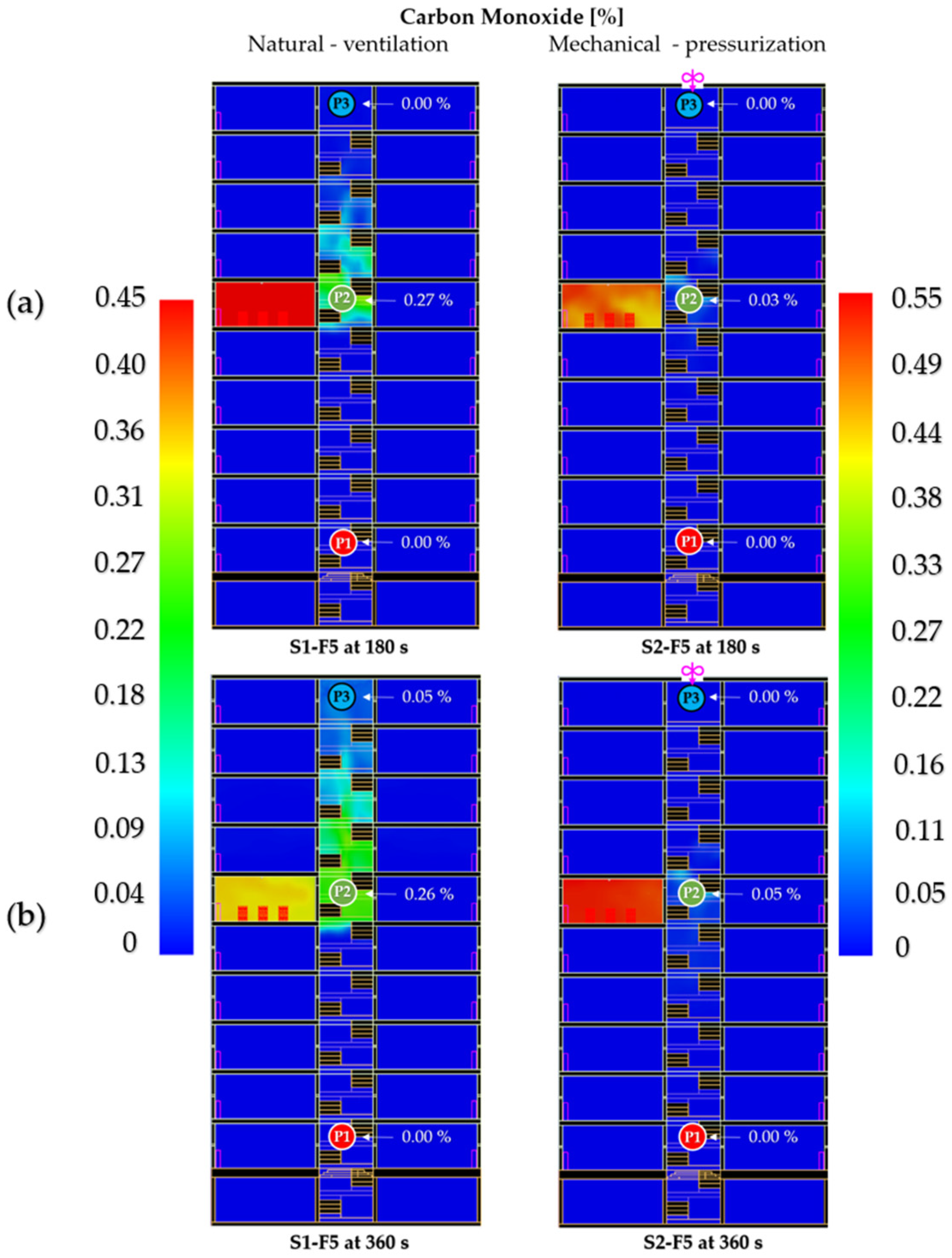
The distribution of the carbon monoxide (CO) concentration in the air for the scenario involving a burner positioned on the fifth floor is illustrated in
Figure 12, with emphasis on the behavior of this pollutant within the stairwell, referenced against the lethal threshold of 0.12%. In Scenario S1, the CO concentration at monitoring point P2, corresponding to the fire level, reaches 0.27% at 180 s and 0.26% at 360 s, values exceeding the critical limit and indicating local loss of tenability conditions. At the upper level, monitoring point P3 records a concentration of 0.05% at 360 s, highlighting the upward propagation of contamination.
In Scenario S2, the CO concentrations within the stairwell remain below the 0.12% threshold throughout the analyzed period, with values of 0.03% at P2 at 180 s, 0.05% at P2 at 360 s, and 0% at both P1 and P3. These results demonstrate that, for a fire located at an intermediate level, exceedance of the safety threshold remains localized at the fire floor in the first scenario, whereas the second scenario ensures the preservation of acceptable evacuation conditions within the stairwell.
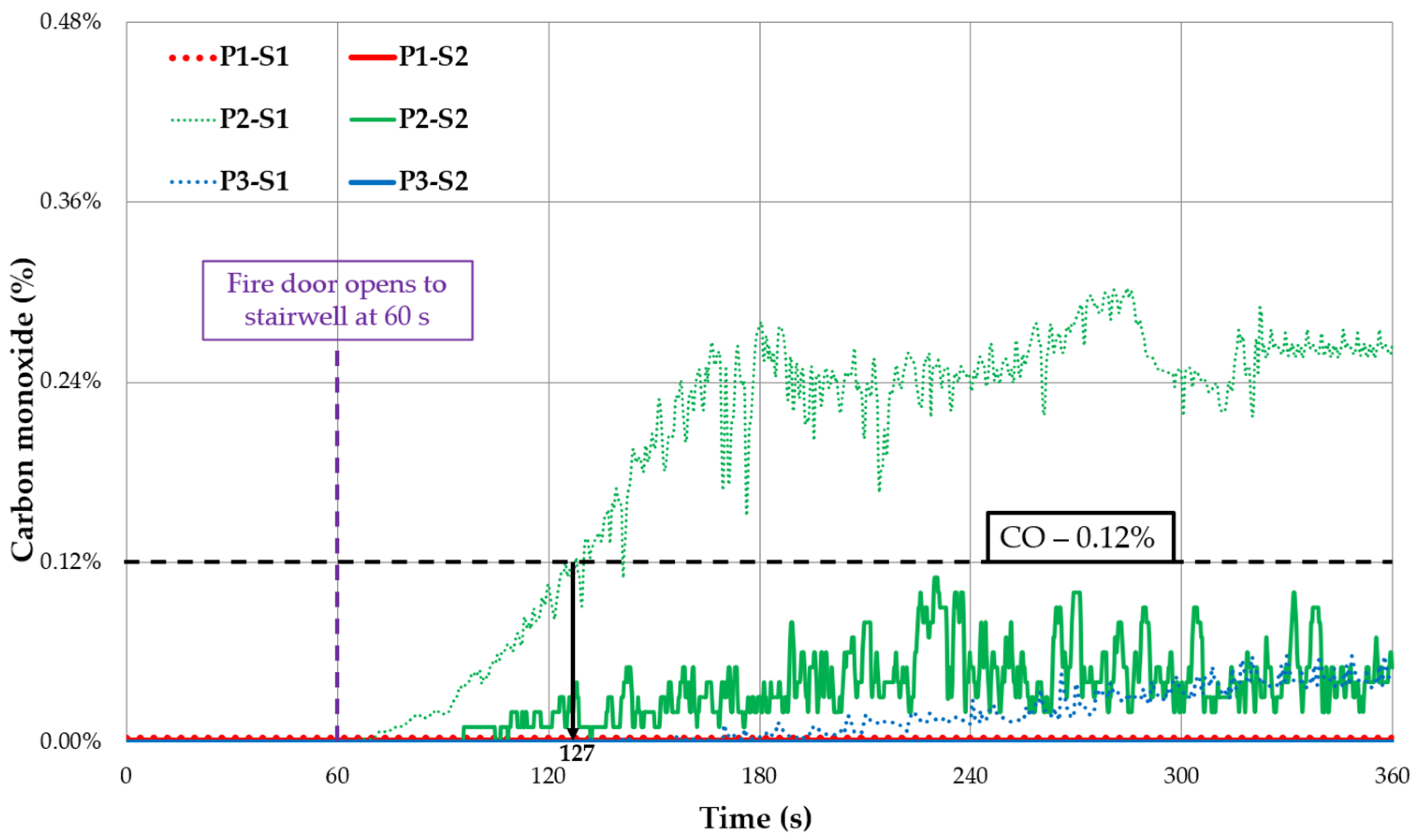
The temporal evolution of the carbon monoxide (CO) concentration at monitoring points P1 to P3 within the stairwell, for the scenario involving a burner positioned on the fifth floor, is presented in
Figure 13 and referenced against the lethal threshold of 0.12%. In Scenario S1, the CO concentration at P2 exceeds the limit after 127 s, while the calculated average value of 0.20% confirms the persistence of untenable conditions at the fire level. Simultaneously, an average value of 0.02% recorded at P3 indicates the upward propagation of CO along the vertical axis. In Scenario S2, the concentrations remain below the threshold throughout the analyzed period, with values of 0.04% at P2 and 0.00% at P3, demonstrating the effective limitation of vertical CO transport. In both scenarios, P1 remains at 0%, confirming that the burner positioned on the intermediate level does not affect the lower floors of the stairs.
For the burner positioned at an intermediate level, the results indicate a significant degradation of safety conditions at the fire floor under natural ventilation, accompanied by upward propagation of carbon monoxide within the stairwell. In contrast, mechanical pressurization maintains CO concentrations below the lethal value of 0.12% throughout the stairwell, effectively limiting toxic gas transport. These differences highlight that, for fires located on intermediate floors, pressurization strategies are essential for protecting evacuation routes and preventing vertical contamination.
3.3. Ninth Floor
3.3.1. Temperature
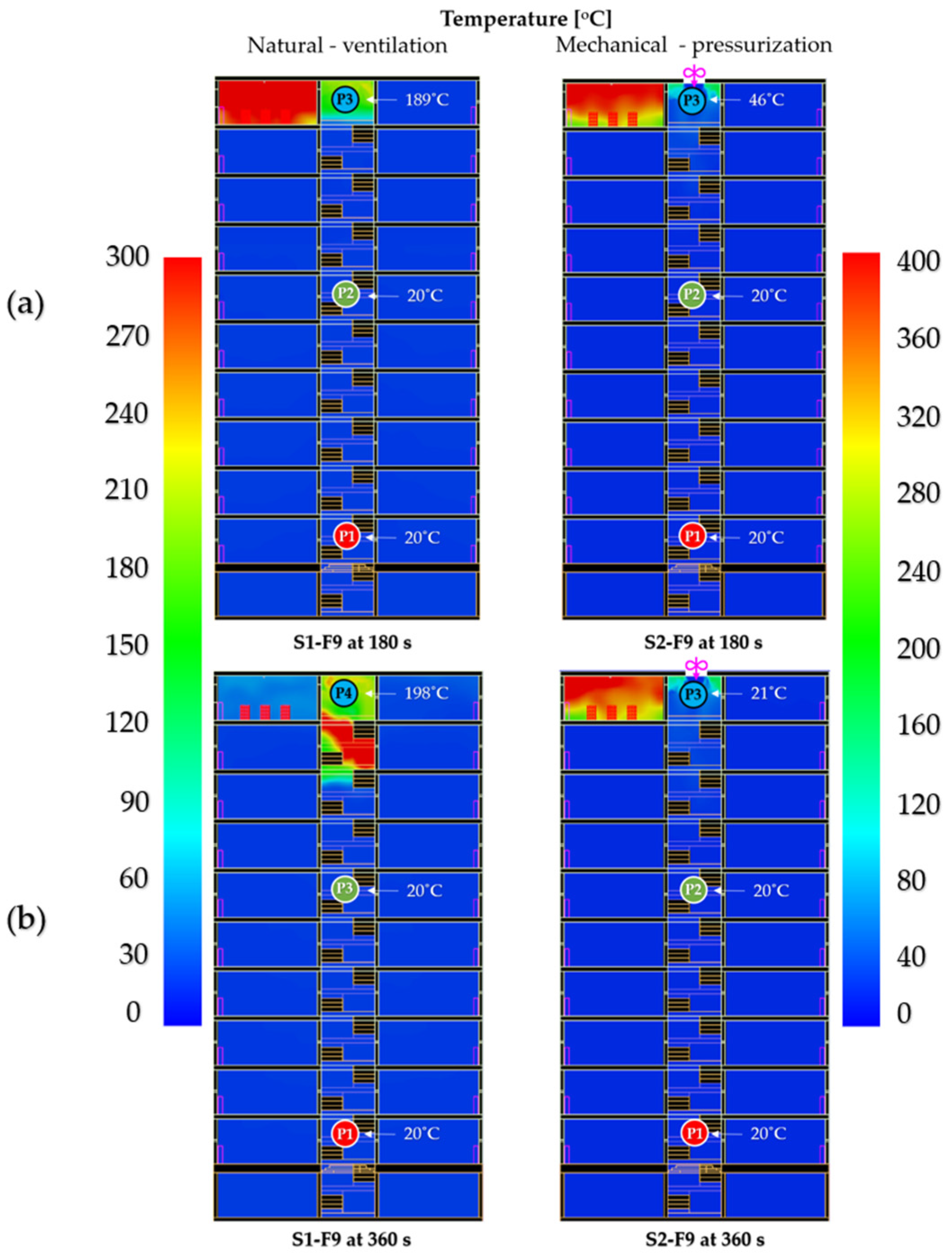
The analysis presented in
Figure 14 illustrates the hazardous conditions associated with a top floor fire when relying solely on natural ventilation (S1). Under these conditions, the stairwell behaves as a reservoir that rapidly fills with hot gases, which are unable to evacuate effectively and begin descending toward the lower floors, reaching temperatures of 189 °C at the ninth floor level and rendering evacuation impossible. In contrast, the pressurization system (S2) acts as an effective aerodynamic barrier. It successfully confines smoke and heat propagation to the upper portion of the ninth floor while maintaining safe thermal conditions throughout the remainder of the stairwell, with temperatures remaining below 60 °C. This significant difference demonstrates that active pressurization does not merely cool the air, but physically isolates the fire, preserving a clear and safe evacuation route for occupants.
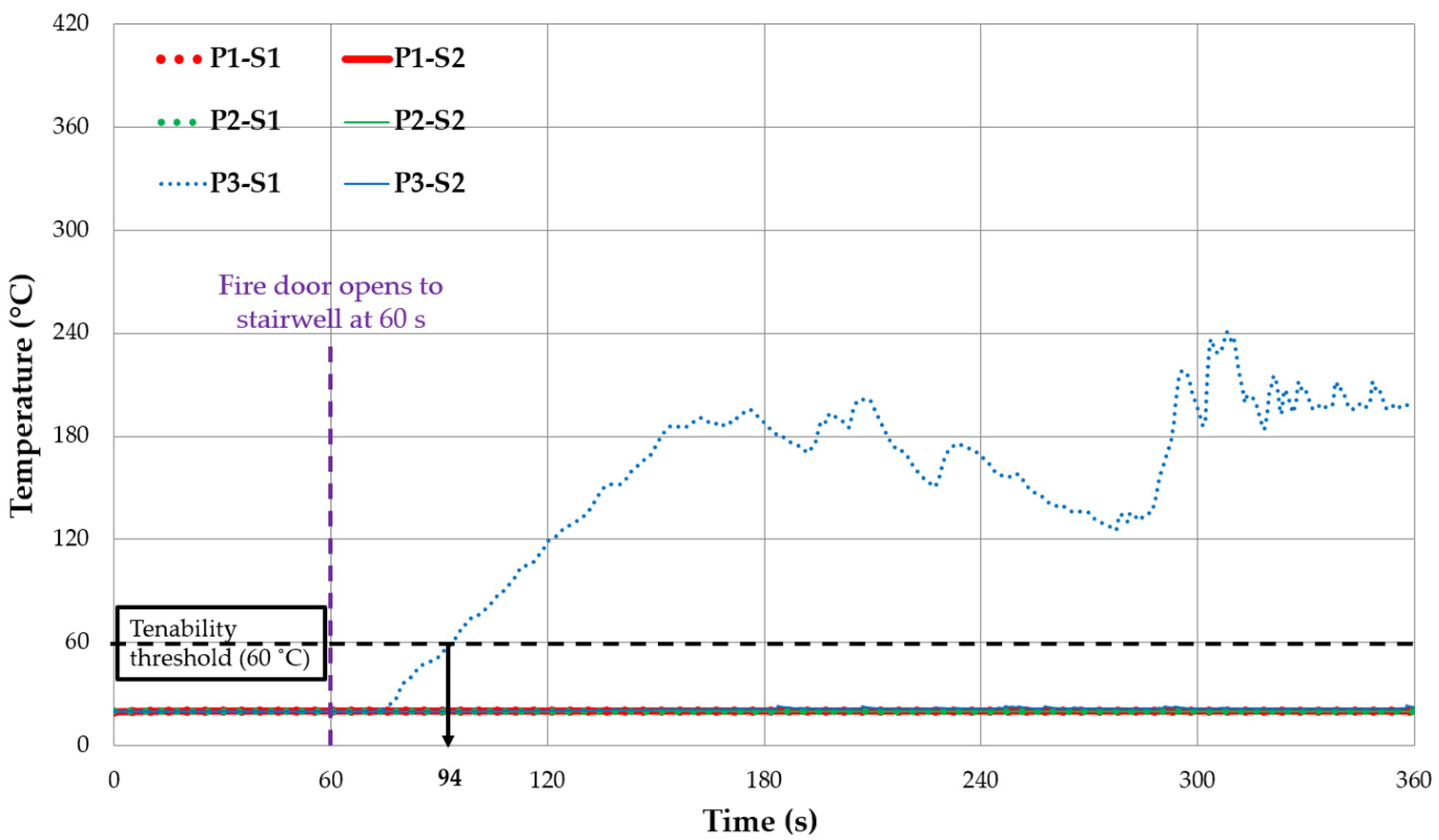
The temporal analysis at monitoring point P3 (
Figure 15) further highlights a critical contrast in thermal management. While Scenario S1 fails after only 94 s, reaching a lethal average temperature of 155 °C, Scenario S2 maintains stable ambient conditions of approximately 21 °C, without exceeding safety limits throughout the entire simulation period. This exceptional thermal stability observed in Scenario S2 confirms the capability of the pressurization system to effectively isolate the fire located at the upper level, ensuring full preservation of evacuation route integrity and eliminating the risk of physiological incapacitation of occupants.
The comparison across the three fire locations demonstrates that, whereas natural ventilation (S1) allows temperature escalation toward lethal values ranging between 133 and 189 °C, the pressurization system (S2) stabilizes the internal environment below the critical threshold of 60 °C, ensuring a viable evacuation route regardless of burner position.
3.3.2. Carbon Monoxide
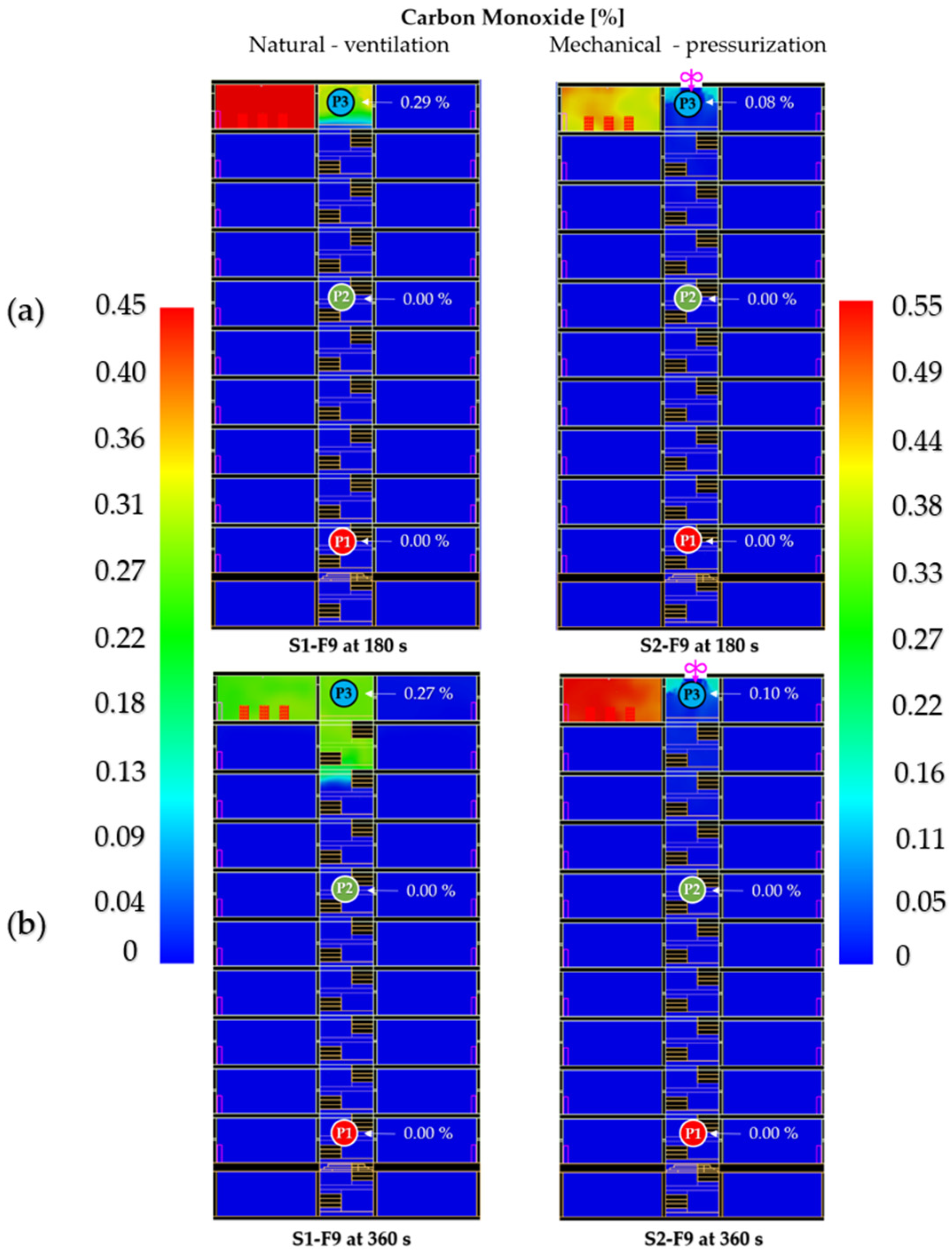
The behavior of the stairwell for a burner positioned on the top floor is illustrated in
Figure 16. Under organized natural ventilation conditions, the carbon monoxide concentration at monitoring point P3, corresponding to the fire level, reaches 0.29% at 180 s and remains at 0.27% at 360 s, significantly exceeding the safety threshold of 0.12% and indicating local loss of evacuation conditions immediately after communication with the stairwell is established. In contrast, in the pressurization scenario, the values at P3 remain below the critical limit throughout the analyzed period, namely 0.08% at 180 s and 0.10% at 360 s, while the monitoring points P2 and P1 remain at 0%. These results demonstrate the capability of pressurization to limit CO transfer through the communication opening and to preserve the evacuation function of the stairwell.
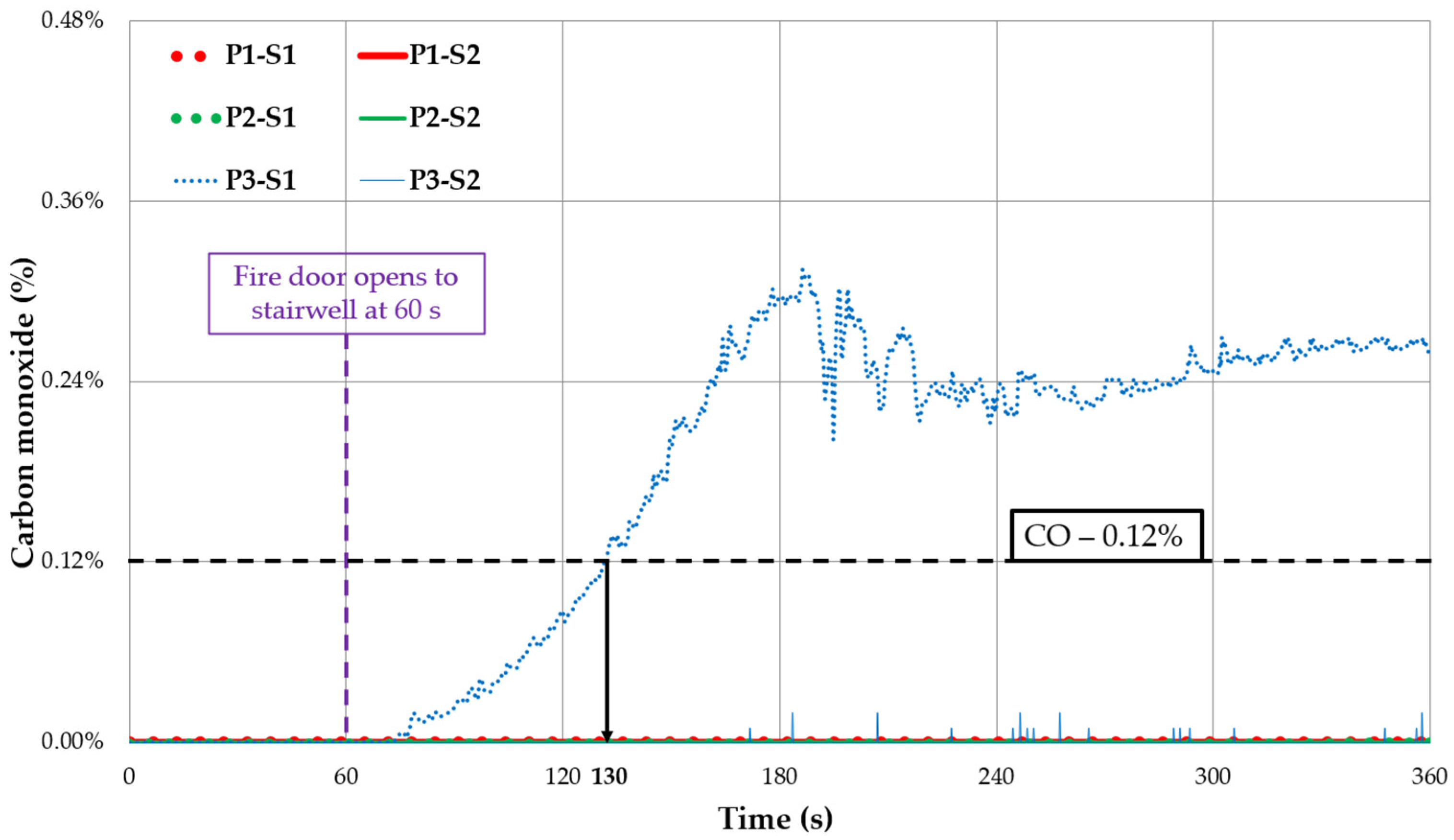
The temporal evolution of the CO concentration at monitoring points P1 to P3 within the stairwell, for a burner positioned on the top floor and with the stairwell door opening at 60 s, is presented in
Figure 17 and referenced against the safety threshold of 0.12%. In the organized natural ventilation scenario, the CO concentration at P3 increases rapidly following door opening and exceeds the critical threshold at approximately 130 s, remaining above this limit until the end of the analyzed interval. The calculated average value at P3 is 0.20%, confirming sustained loss of evacuation conditions at the upper level of the stairwell. In this case, monitoring points P1 and P2 remain close to zero, indicating contamination concentrated primarily at the fire level. In the pressurization scenario, the CO concentrations remain below 0.12% throughout the analyzed period at all monitored locations, with an average value of 0.00% at P3, demonstrating effective limitation of CO transfer through the opening of communication. Comparison of the two scenarios indicates that, for a fire located at an upper level, organized natural ventilation leads to persistent exceedance of safety thresholds, whereas pressurization preserves acceptable evacuation conditions within the stairwell.
For the burner positioned on the top floor, the results indicate that stairwell safety is strongly affected by the CO concentration originating from the fire compartment. Organized natural ventilation allows rapid exceedance of the critical threshold of 0.12% at the upper level of the stairwell, compromising local evacuation conditions, whereas pressurization effectively limits CO penetration and maintains concentrations below the safety limit. This difference highlights the decisive role of pressurization for fires occurring at upper levels, where the risk of direct contamination of the evacuation route is maximal.
4. Discussion
The numerical results are further examined from a tenability and evacuation safety perspective, with particular emphasis on the factors governing ASET. As shown in
Table 1, the governing ASET in naturally ventilated scenarios (S1) is consistently dictated by thermal tenability rather than CO concentration, with temperature thresholds reached within 85–95 s across all investigated fire floors, leading to untenable conditions well before 360 s; conversely, the implementation of positive pressure ventilation (S2) substantially extends the thermal tenability limit, increasing the governing ASET to 149–206 s at lower levels and beyond 360 s at the ninth floor, thereby preserving a positive ASET–RSET safety margin and maintaining tenable evacuation conditions throughout the simulation period.
While the previous analysis focused on tenability limits through ASET, a complementary perspective is provided by examining the fire dynamics in terms of the heat release rate (HRR). This allows a clearer understanding of how the ventilation strategy influences fire development and, consequently, the Available Safe Egress Time.
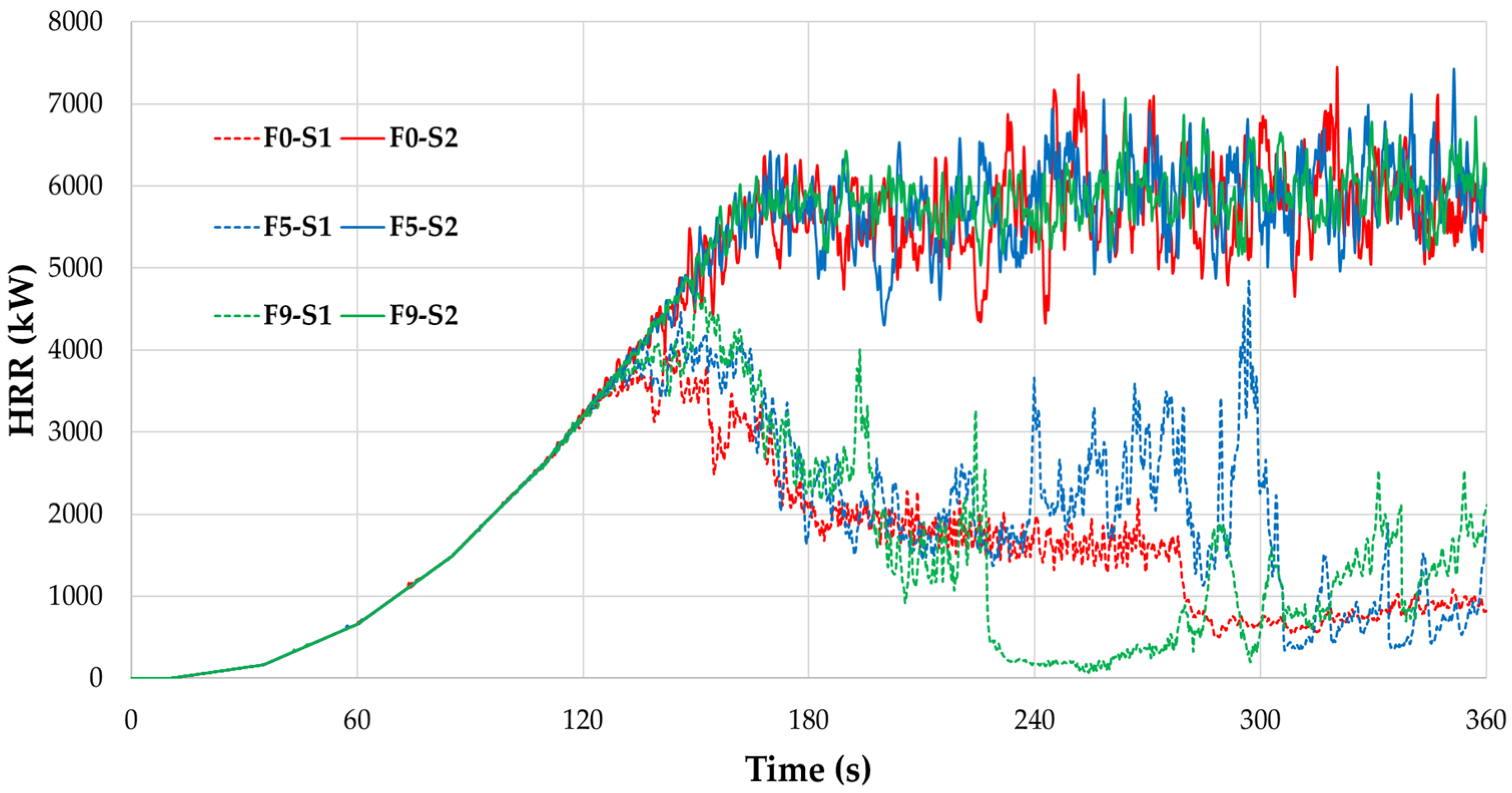
The HRR curves show an almost identical growth stage for all cases up to approximately 120 s, indicating comparable initial fire development (
Figure 18). After this stage, the ventilation strategy becomes the governing factor of fire evolution. Under PPV conditions, the HRR remains at consistently higher levels, which indicates that the additional air supply sustains combustion and delays the transition toward ventilation-limited burning. By contrast, in the naturally ventilated cases, the HRR decreases markedly and becomes more unstable, reflecting restricted oxygen availability and intermittent combustion.
Figure 18 also indicates that fire location affects the subsequent HRR evolution. Although this effect is less pronounced than that of the ventilation mode, the differences observed between F0, F5, and F9 suggest that the vertical position of the fire modifies the local flow structure, buoyancy effects, and pressure distribution, thereby influencing both combustion intensity and smoke propagation. Therefore, the effectiveness of PPV should be interpreted as the result of a coupled interaction between ventilation conditions, fire intensity, and the floor on which the fire develops.
To support the discussion of HRR evolution,
Table 2 summarizes the key input parameters and main output variables, including peak HRR, maximum stairwell temperature, and CO concentration. This overview facilitates a direct comparison between scenarios and highlights the combined influence of the ventilation strategy and fire location on fire dynamics and smoke propagation.
Table 2 demonstrates that the ventilation conditions govern both fire development and smoke control performance. PPV maintains higher HRR levels due to enhanced oxygen supply while improving tenability in the stairwell, as indicated by reduced CO concentrations. In contrast, natural ventilation leads to ventilation-limited combustion and less effective smoke control. The influence of fire location is secondary but noticeable, confirming the coupled effect of ventilation regime and vertical fire position on system performance.
5. Conclusions
The protection of evacuation routes in existing mid-rise residential buildings remains a critical challenge for fire safety engineering, as many of these structures lack the modern compartmentation required to prevent rapid smoke spread. While previous studies have addressed the general principles of stairwell pressurization, a significant gap exists in understanding how the vertical elevation of a burner specifically influences the effectiveness of single-fan ventilation systems in non-compartmented buildings. This study addresses this limitation by demonstrating that the fire floor location is a determining factor in calculating the time to loss of tenability, proving that organized natural ventilation is fundamentally insufficient to protect occupants in buildings where the stack effect is dominant.
The numerical and experimental findings confirm that PPV serves as a superior alternative, establishing a stable pneumatic barrier that counteracts buoyancy-driven flows. Across all analyzed scenarios, the implementation of a top-level fan maintained temperatures below the 60 °C safety threshold and kept CO concentrations within tenable limits (below 0.12%) during the critical evacuation period. The data indicates that system effectiveness is directly proportional to burner elevation, with the highest level of protection achieved when the fire originates on the upper floors near the air injection point. Even for ground floor fires, where thermal stress is maximal, the mechanical system extends the Available Safe Egress Time by approximately 75% compared to natural ventilation.
The results provide a practical basis for upgrading fire safety in older building stocks where structural modifications are technically or economically restricted. By utilizing a single-fan configuration, it is possible to transform a vulnerable stairwell into a protected refuge zone, significantly reducing the risk of occupant incapacitation.
The present study is the object of at least two restrictions that should be specified. First, the validation is performed at compartment scale, which may not fully capture the complexity of multi-story airflow interactions. Second, several operational parameters, such as door opening schedules, leakage characteristics, and external wind conditions, are treated in a simplified manner. Therefore, future research must incorporate the influence of external wind conditions, leakage variability, and the dynamics of door-opening durations, as these variables can modify the internal pressure differential and affect the overall stability of the smoke control strategy. In addition, future work will focus on extending the analysis to additional fire scenarios and building configurations, as well as investigating the combined use of PPV and other smoke control strategies to enhance overall performance.





 ,
,