1. Introduction
Steel is widely used in construction across the globe due to its strength, light weight, endurance, versatility, recyclability and many other attractive properties, from design to maintenance and disposal [
1]. When the structural steel is exposed to a fire, it loses strength and stiffness at elevated temperatures.
Structural steel starts to lose its yield strength at 350 °C, and the retention drops to approximately 10% at 800 °C. The critical temperature can be defined as the temperature at which the structural steel is expected to fail. It has a value between 350 °C and 800 °C depending on the degree of utilisation [
2]. Buildings are likely to collapse when the steel temperature exceeds the critical temperature. This may lead to injuries and casualties when the individuals cannot evacuate before the building collapses. The responsible company will be affected by tremendous economic and social impacts. Further legal actions may be taken for breaching the criminal and civil laws in the UK. More importantly, the company’s reputation will be damaged, and future business opportunities will be reduced. It is therefore important to ensure the building’s structural integrity in a fire.
BS EN 1363-1 [
3] has shown that the load-bearing capability can be maintained over a greater range of temperatures in fire resistance tests by applying insulations on the steel surface. The insulation is more commonly known as passive fire protection. It has a low thermal conductivity, which reduces the rate of steel temperature increase. This gives time for individuals to evacuate to a safe location and for the emergency shutdown of critical assets, i.e., chemical and nuclear plants.
Passive fire protections are available in intumescent coating, concrete encasement, calcium silicate or gypsum plaster boards, cementitious spray-on systems and flexible fire blankets [
4]. Amongst all types of passive fire protection, intumescent coating has become increasingly popular in the past 20 years because of aesthetics, speed of construction, cost savings, corrosion protection, and better quality control [
5].
Intumescent coating is a thin layer coating with a thickness of less than a few millimetres [
4]. It is typically applied on the steel surface with a primer and a sealer coat. The primer is initially used on the steel surface to ensure good adhesion with the following intumescent coating and provide corrosion resistance. The second paint applied is the intumescent coating, which gives fire resistance to the steel. The sealer coat is painted last to provide a decorative finish and protection against the environment [
5].
The intumescent coating contains an acid source, blowing agent and charring agent [
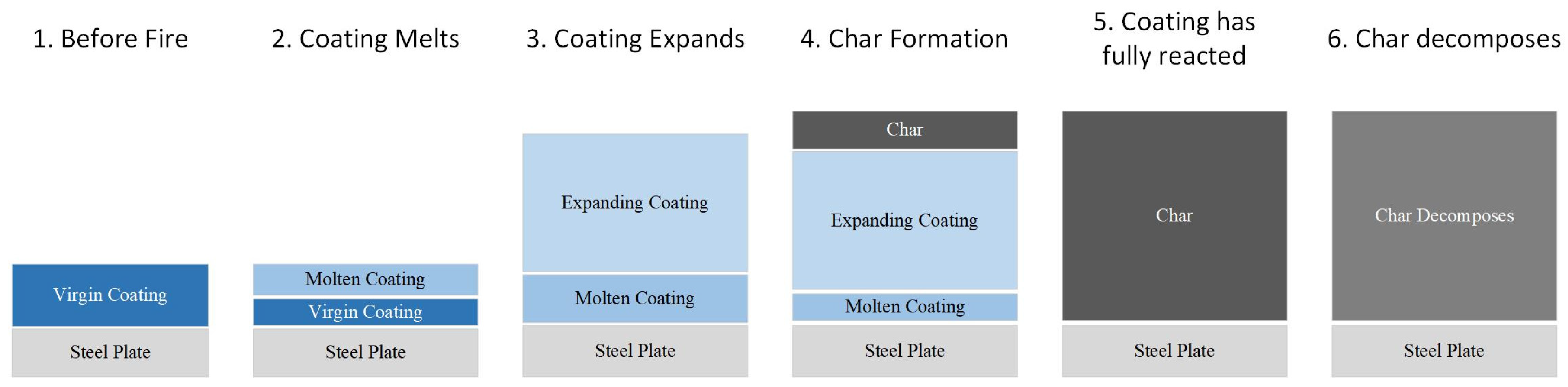
4]. The intumescent process begins when the acid source undergoes thermal decomposition at approximately 200 °C. The coating surface melts and forms a viscous liquid [
6]. The blowing agent then decomposes to release gas bubbles. This causes the coating to swell up to 100 times its original thickness [
7]. The expansion continues until all blowing agents and decomposition products have reacted or the char layer cannot withstand the internal pressure increase. Char is formed as the temperature increases further. This is a carbonaceous material that confines the viscous liquid and gases generated. The char starts degrading when the coating has fully reacted and continues to heat up. The char is partially oxidised to form CO
2 or CO [
8] and the colour gradually changes from grey to white due to the reduction in carbon content. The white colour can be caused by the other filler materials within the coating, i.e., TiO
2 [
9]. The full intumescent process is also outlined graphically in
Figure 1.
Swelling is the key stage for fire protection in the intumescent process. Gas bubbles are generated and expanded as the temperature rises. Gases have a lower thermal conductivity than solids and liquids. As the coating becomes more porous, the overall thermal conductivity of the coating decreases. This provides fire resistance to the steel underneath by reducing the steel’s temperature increase rate. Therefore, it is important to understand how the coating expands in the fire and its impact on the steel temperature. A common way of measuring the coating expansion is by using an expansion ratio, which compares the current coating thickness with its original value before the expansion. Although the expansion ratio is the key factor in modelling coating performances, very few studies have included it in their models.
In previous studies, an empirical parameter
was introduced to represent the expansion ratio [
10,
11]. The expansion process is assumed to be fast, and the coating reaches its maximum thickness instantaneously. The model, therefore, uses the maximum expansion ratio and keeps it constant during the fire. This assumption is valid for coatings with a thin thickness, as the expansion process is more rapid. However, the accuracy of this method decreases as the coating becomes thicker. Therefore, the model does not capture the variation in the expansion ratio at different temperatures.
The model is improved by establishing the direct link between the expansion ratio and the thermal conductivity [
12]. This allows the possibility of modelling the thermal conductivity accurately when the expansion ratio is provided. As a similar approach to previous models is adopted when simulating the coating expansion, the same concerns apply to the model, as the expansion ratio remains constant.
Zhang et al. [
13,
14] proposed a model that relates the thermal conditions to the expansion ratio. This addresses the problem in previous models and allows more accurate modelling of the coating behaviour during the expansion. The input parameters provided in their model are also independent of the fire conditions. The same set of input data can therefore be used to predict other fire conditions. The generated results are in close agreement with their cone calorimeter tests [
13] and furnace fire tests [
14]. The main concern in their model is the introduction of the trapped gas fraction
. They have assumed that only a fraction of the gas generated is trapped in the coating and contributes to the expansion. The rest of the gas will escape into the atmosphere by travelling through the coating, including the char layer. This is correct when more pores appear as the coating expands further at higher temperatures. The empirical expression for β was derived through a nonlinear regression of the experimental data. It is also only specific to the coating studied by Zhang et al. [
13,
14]. There is no high-fidelity model regarding coating expansion chemistry and physical behaviour to verify the expression for β.
Cirpici et al. [
15] adopted the bubble expansion model from Amon et al. [
16] to simulate the coating expansion process. In contrast to Zhang et al.’s model [
13,
14], they assumed all gas released contributes to the coating expansion process. They generated the insulated structural steel temperature profile using expansion ratio curves with different heat fluxes [
15,
17]. They have also proposed a multi-layer model which divides the coating into five equal layers with identical temperature and thermal resistance at each layer. This allows more accurate calculations of the coating temperature and non-uniform conductive heat transfer. Key parameters of the model, such as viscosity and bubble pressure, are dependent on the coating temperature. The solution quality can therefore be improved by accurately modelling the coating temperature. This can be shown by the close alignment between the generated results and the furnace test data produced by Zhang et al. [
14]. However, the expansion ratio is obtained by linear interpolation between expansion ratio curves with different heat fluxes at the coating temperature. The expansion ratio in the thermal conductivity calculations is not directly linked to the bubble expansion model. The approach of selecting the expansion ratio based solely on the heat flux and coating temperature is also questionable. Furthermore, the multi-layer model claims that the temperature is identical within each layer, but the temperatures and thermal conductivities are calculated at the layer boundary. It is unclear whether the layer temperature is taken from the boundary inlet, outlet or an average of both values.
Recent research studies have shifted the focus to solving more complex differential equations using computational fluid dynamics (CFD) software [
18,
19]. The accuracy of these models is improved by solving the governing equations numerically using a finite-difference or finite-element method. However, the computation cost is relatively high and requires significant solution time. Consequently, the problem duration in some studies does not exceed 20 min [
18]. A. Bilotta et al. [
20] have produced experimental data for existing steel structures coated with restored intumescent paint under different fire conditions and compared them with finite-element simulation results. The results show good alignment in the first 90 min, but the error increases afterwards. de Silva et al. [
21] have used empirical regression models for thermal conductivity in finite-element simulations. The results are in close agreement between experimental and simulation results. However, small-scale lab tests are required to generate the regression models for each case. The experimental results are also close to the simulation results from different regression models for different cases, which makes it difficult to determine which regression model should be followed. In summary, the expansion ratio is a key parameter in modelling coating performance in a fire. Researchers have made significant progress in developing models to simulate the coating behaviours, yet each model has limitations and shortcomings. There is a need to explore the topic with greater accuracy and without high computation costs. This paper will attempt to address the issues identified from previous models and propose a model that links the expansion ratio directly to thermal conductivity and structural steel temperature calculations.
In this article, we have updated the existing models followed by substantial simulations. Consequently, we have introduced an important parameter, known as Retention Loss Onset Time (RLOT), which accounts for the time that is required for the steel to start losing its yield stress at 350 °C.
Moreover, we have explained how, from each of these models, we can build an Artificial Neural Network (ANN) model to estimate RLOT. It should be remembered that the results of this paper are validated through the tests done by Zhang [
14] only, since more experimental data is not available.
4. Effective Thermal Conductivity
The porous material thermal conductivity model, shown in Equation (7), can be used to calculate the apparent intumescent coating thermal conductivity [
12]. To account for the expansion effects, the apparent thermal conductivity can be divided by the expansion ratio to obtain the effective thermal conductivity, as shown in Equation (8) [
17].
A novel approach is adopted by directly inputting
Section 3’s expansion ratio into the thermal conductivity calculations. This differs from the approach of Cirpici et al. [
17], where they generate expansion ratio curves at different heat fluxes and carry out linear interpolation to obtain the expansion ratio at each time step. The new approach inputs the expansion ratio directly and does not rely on linear interpolations, and this improves the solution’s accuracy.
The solid thermal conductivity (
) is contributed by the coating’s solid char layer. As the coating temperature increases, the char layer oxidises to form a stable solid protective insulating layer on the coating surface [
13], and the solid thermal conductivity remains approximately constant. For simplicity, it is assumed the char layer oxidation is instantaneous, and the solid thermal conductivity is 0.5 W m
−1 K
−1 [
17].
The gas thermal conductivity (
) considers the heat transfer through gas conduction and radiation. This relationship is shown in Equation (9). The gas conduction part can be calculated using Equation (10) [
26], and the radiation part can be found using Equation (12) [
12].
The current pore diameter (
) is required to solve Equation (12). This can be obtained by assuming the current pore diameter to the maximum pore diameter ratio is identical to the current expansion to the maximum expansion ratio. The maximum pore diameter is considered to be 3.5 mm [
12]. The maximum expansion ratio is initially assumed to be any random number. The revised maximum expansion ratio is calculated numerically using Excel Solver by comparing the initial value with the expansion ratio at the last time step. Using the maximum pore diameter, maximum expansion ratio and the current expansion ratio obtained from
Section 3, the current pore diameter can be calculated using Equation (11).
The porosity (
) is often referred to as the void fraction. This represents the ratio between the void volume and the total volume. For intumescent coating, the void volume is the gas volume occupied in the gas–liquid mixture. As all the bubbles in the coating are assumed to have identical size and chemical composition, the coating porosity can be considered the same as the bubble shell porosity. The initial volume of the bubble shell has a large liquid content. The gas content in the shell increases as the coating temperature increases. The gas volume is therefore the current shell volume minus its initial value before heating. The porosity can be obtained by dividing the gas volume by the current shell volume, as shown in Equation (13). The expression can be further simplified to only relate to the outer shell expansion ratio obtained in
Section 3. This expression is slightly different to the approach from Cirpici et al. [
17] which uses the bubble radius instead of the volume. Equation (13) gives greater accuracy in modelling the porosity as it calculates the void volume fraction instead of the radius ratio.
The expansion ratio is used to find the effective thermal conductivity, gas radiation conductivity and porosity in
Section 4. The expansion process, therefore, significantly impacts the thermal conductivity numerically. This reinforces the importance of the expansion process in the modelling process.
7. Multi-Layer Model
The single-layer model assumes steady-state conduction heat transfer across a single coating layer. This method provides a simple yet effective way of estimating the temperature profile across the coating. However, the actual temperature profile is non-uniform across the coating. Additionally, the coating temperature is an important parameter in determining the coating pressure, viscosity, surface tension and thermal conductivity. The conduction heat transfer across the coating also affects the change in structural steel temperature over time. It is therefore necessary to model the heat transfer more accurately.
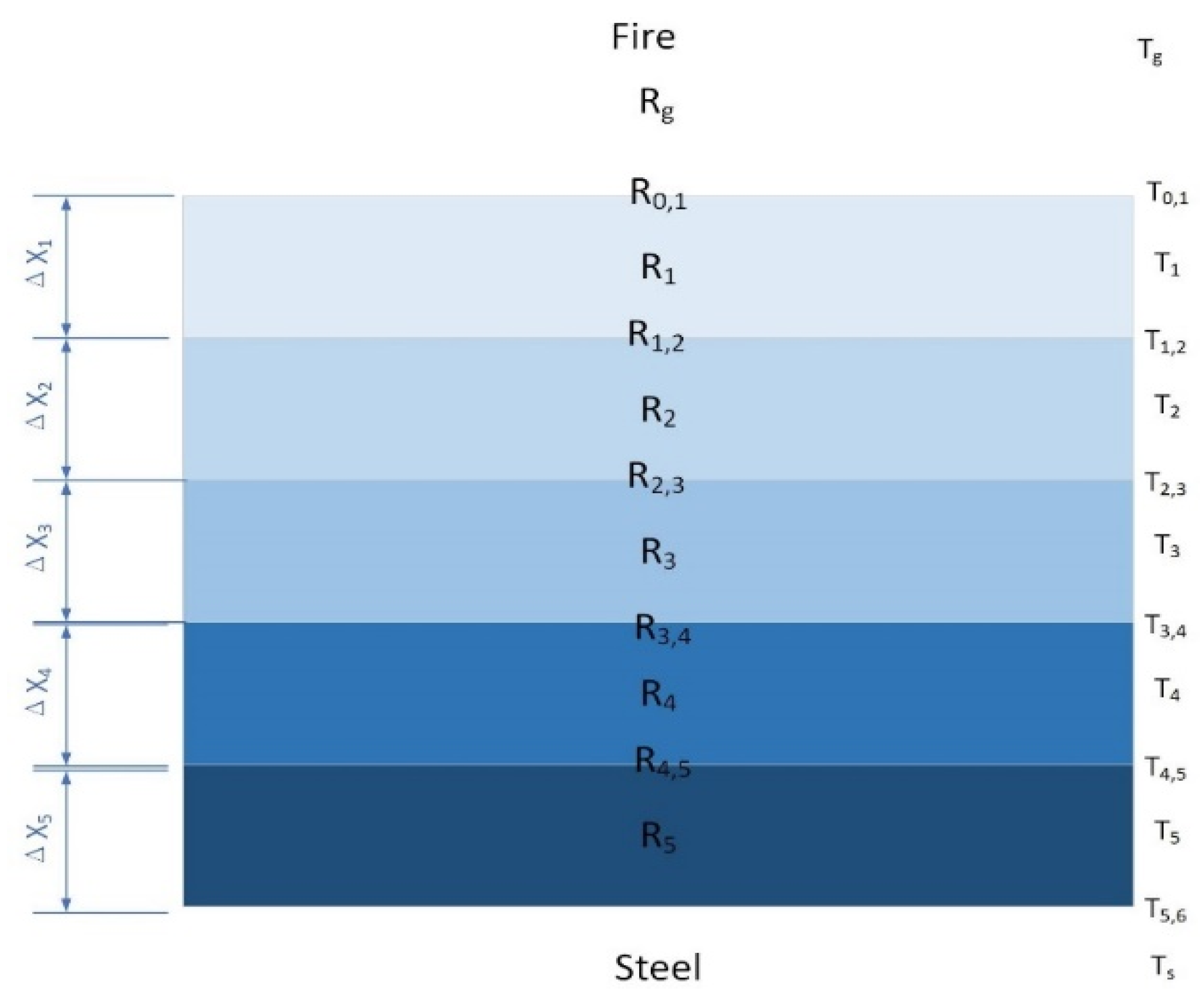
The multi-layer model divides the coating into five equal-distance layers, as shown in
Figure 5. The temperature and thermal resistance are calculated at the centre and layer boundary. The temperature and thermal resistance at the centre of each layer are used for calculating the coating temperature and the overall conductive thermal resistance, respectively. The multi-layer model accounts for the difference in thermal conductivity in different positions within the coating. This improves the model’s accuracy and solution quality under non-uniform heat transfer conditions.
The temperatures and thermal resistances in the multi-layer model can be determined after the thermal conductivity calculations and before the structural steel temperature calculations. The multi-layer model calculations start with finding the coating surface temperature using Equations (21)–(23). The method in this step is similar to finding the coating surface temperature in the single-layer model. The expansion ratio and thermal conductivity are calculated following the methodology outlined in
Section 3 and
Section 4.
The effective thermal conductivity at the inlet boundary (
) can be calculated using the coating surface temperature (
) following the method outlined in
Section 4. This value can be inputted into Equation (24) to obtain the conductive thermal resistance at the surface. The temperature at the boundary between Layers 1 and 2 is initially calculated using Equation (25). The temperature at the centre of Layer 1 is determined by taking the mean value between the Layer 1 boundaries shown in Equation (26). The thermal resistance at the Layer 1 centre can be obtained using the temperature at the centre of Layer 1, following Equation (27). The temperature at the boundary between Layers 1 and 2 can be revised using the thermal resistance at the Layer 1 centre shown in Equation (28).
The calculation method is repeated for the following layers to obtain all the temperatures and thermal resistances shown in
Figure 5.
The temperature modelling approach iterates the boundary temperatures and averages the boundary temperatures to obtain the centre temperature. This allows the temperatures and thermal resistance to be calculated more accurately.
The structural steel temperature in the multi-layer model is calculated slightly differently from the single-layer model. The thermal resistances are summed together to form an overall thermal resistance, as shown in Equation (29). This overall thermal resistance replaces the
term in the adopted single-layer model from Eurocode Part 3 [
27]. The change in structural steel temperature over time can be calculated using the revised formula shown in Equation (30).
The coating temperature in the multi-layer model can be determined by the mean between the centre temperature of each layer and the steel temperature shown in Equation (31).
10. Model Limitations, Sensitivity Analysis and Optimisation
In this section, after discussing the novelty and the robustness of the model in this paper, the sensitivity of the parameters is investigated. The work herein is methodologically similar to Cirpici et al. [
17], but the significant difference is the calculation of the expansion ratio from a direct simulation of the bubble growth model. However, in [
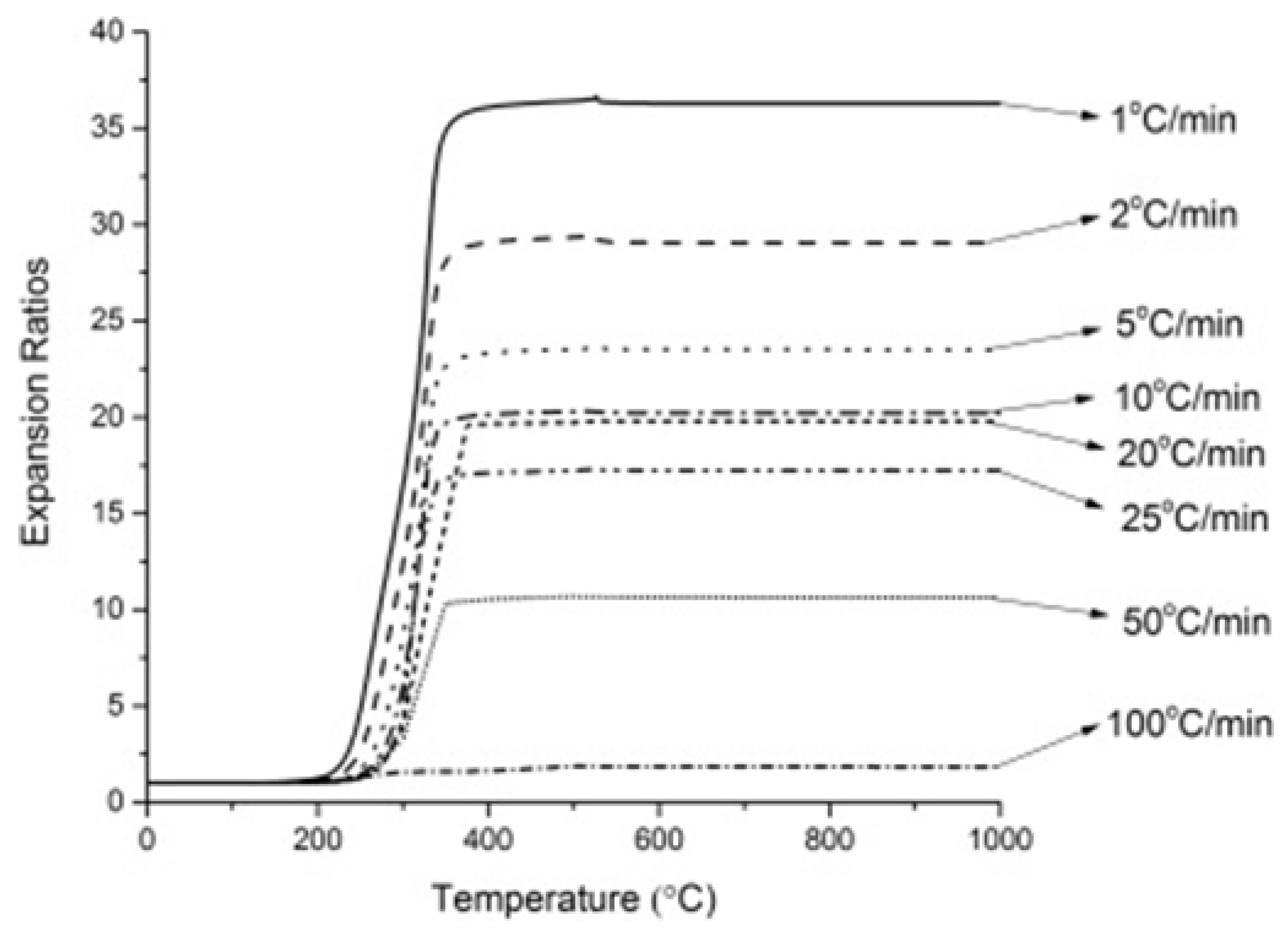
17], the expansion ratio is determined from
Figure 13.
Figure 13 is also shown in [
17], but it is not explained how this figure was obtained. We are not using this figure in our paper. Our method is the calculation of the expansion ratio directly from the bubble growth model.
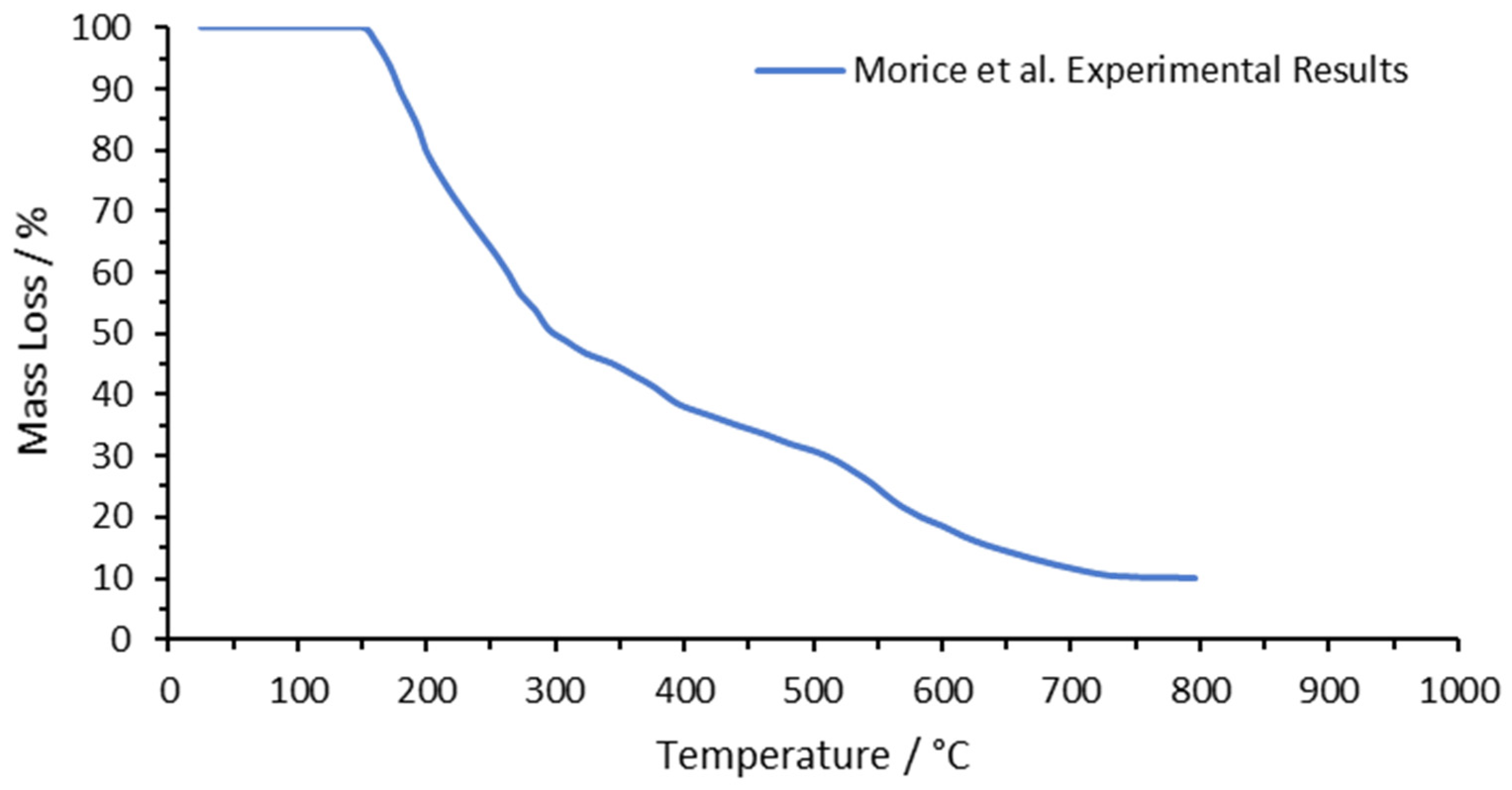
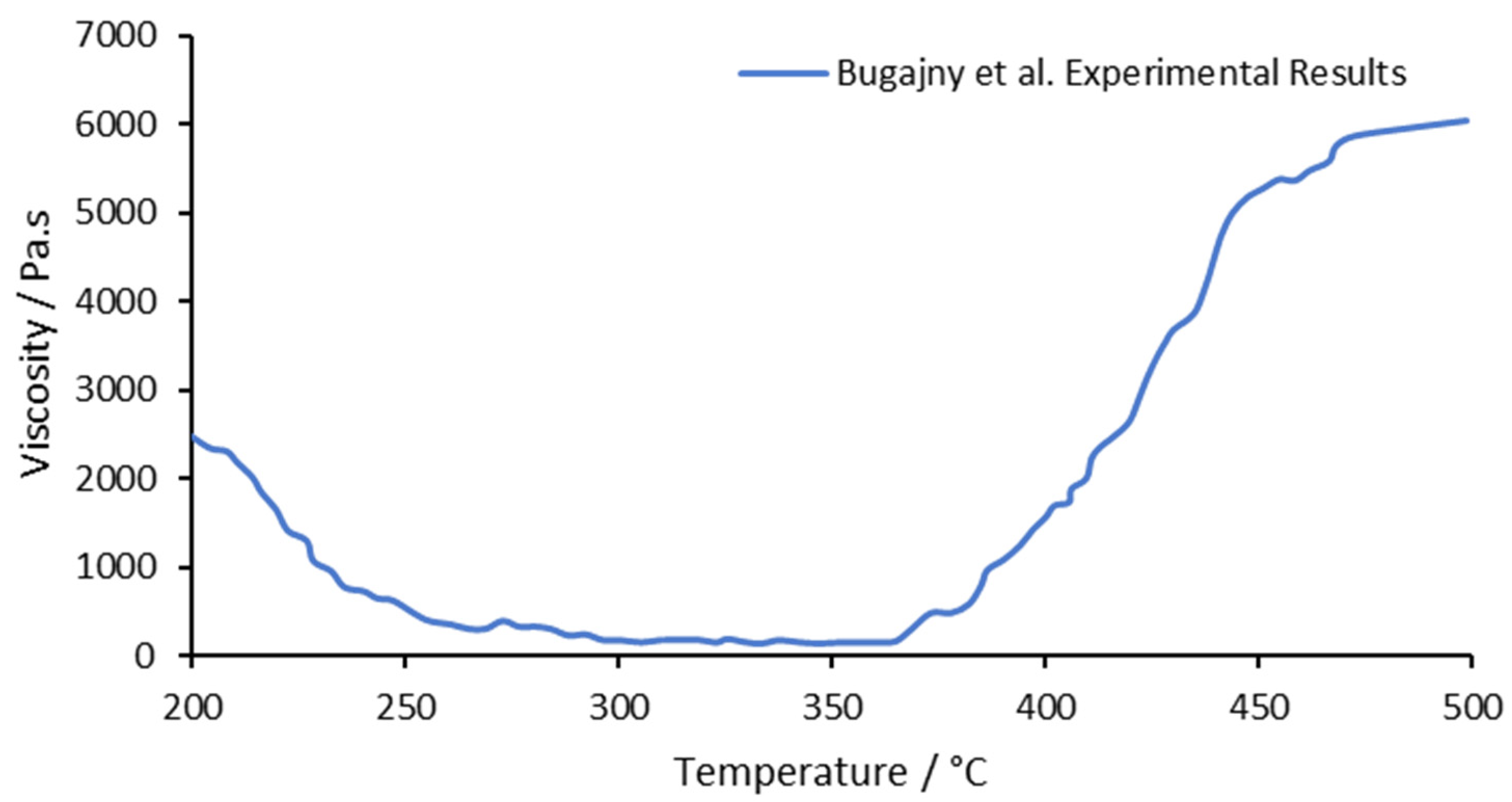
The first limitation of the model is the experimental data for viscosity and surface tension. It has been taken from the only available source in the literature [
23,
24,
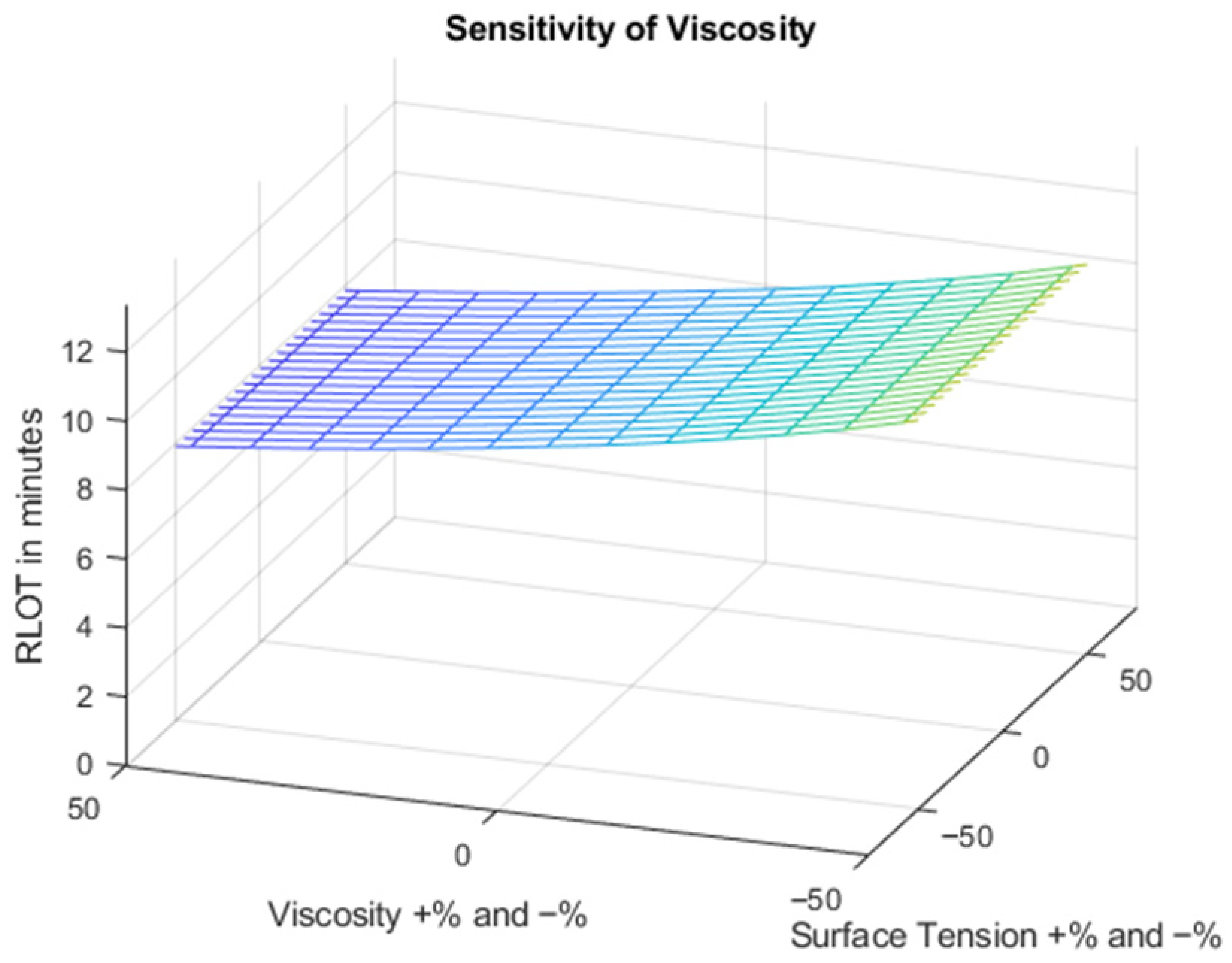
25] and cannot be implemented for all types of intumescent paints. Therefore, a sensitivity analysis is required, as shown in
Figure 14. In this figure, the viscosity variations of ±50% and surface tension variation of ±80% and their effect on RLOT are investigated. It is shown that, while surface tension variations cannot change the RLOT, the viscosity variations can change the RLOT and the viscosity underestimation results in a higher RLOT. We recommend that, for future work, a reliability-based approach for RLOT predictions should be carried out, similar to the research that is described in [
32].
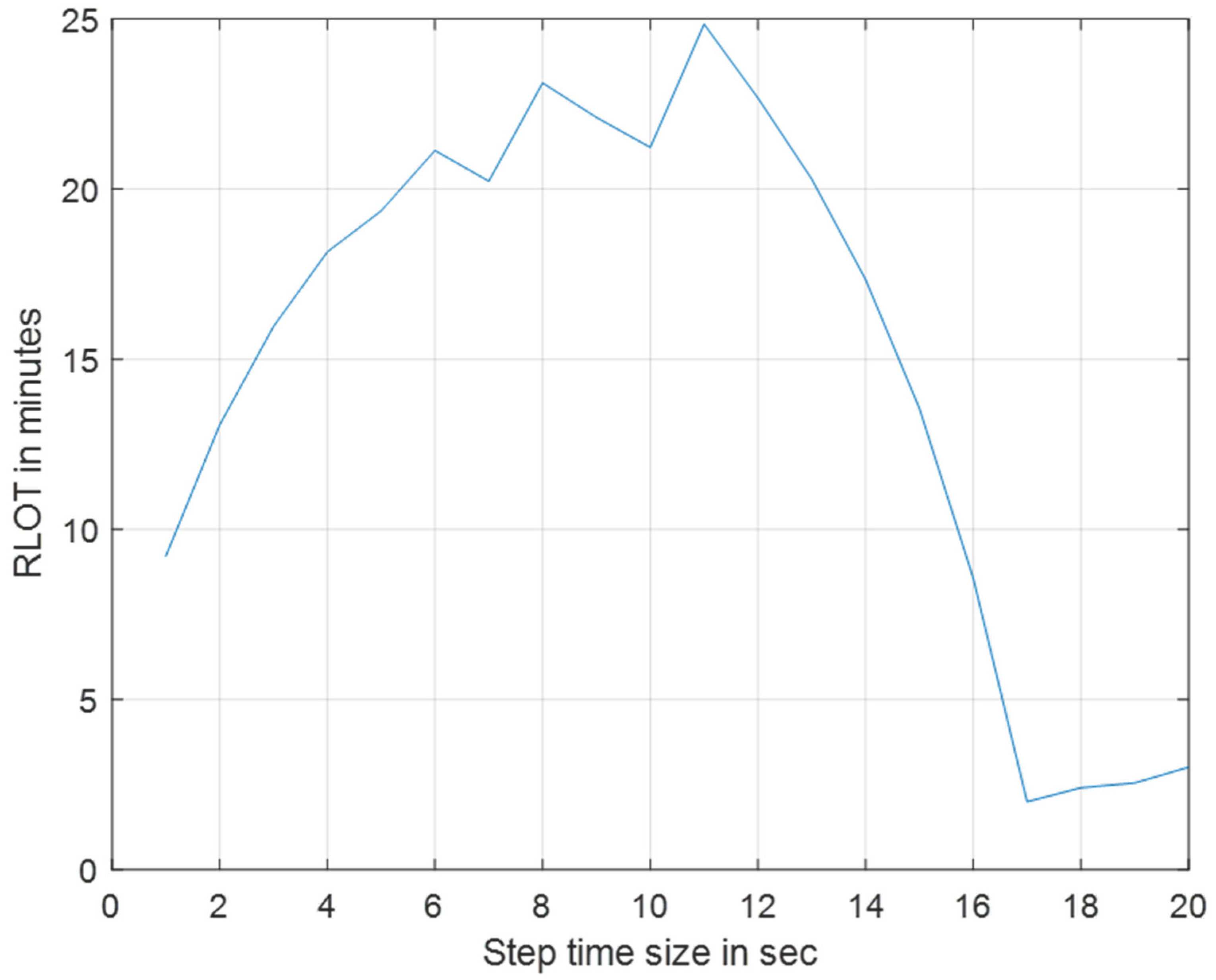
Moreover, the sensitivity of the simulation time step size on the results is also an important issue. Since the bubble growth phenomenon is a fast event, the authors considered the finest 1 s time step. We have also investigated the effect of a coarse time step on RLOT results. Surprisingly,
Figure 15 shows that, in some time steps, the RLOT can be up to 150% overestimated, which is not good for safety analysis. It is obvious in the coarse time step that the bubble expansion phase cannot be analysed correctly. Therefore, time steps of 1 s or less can be recommended.
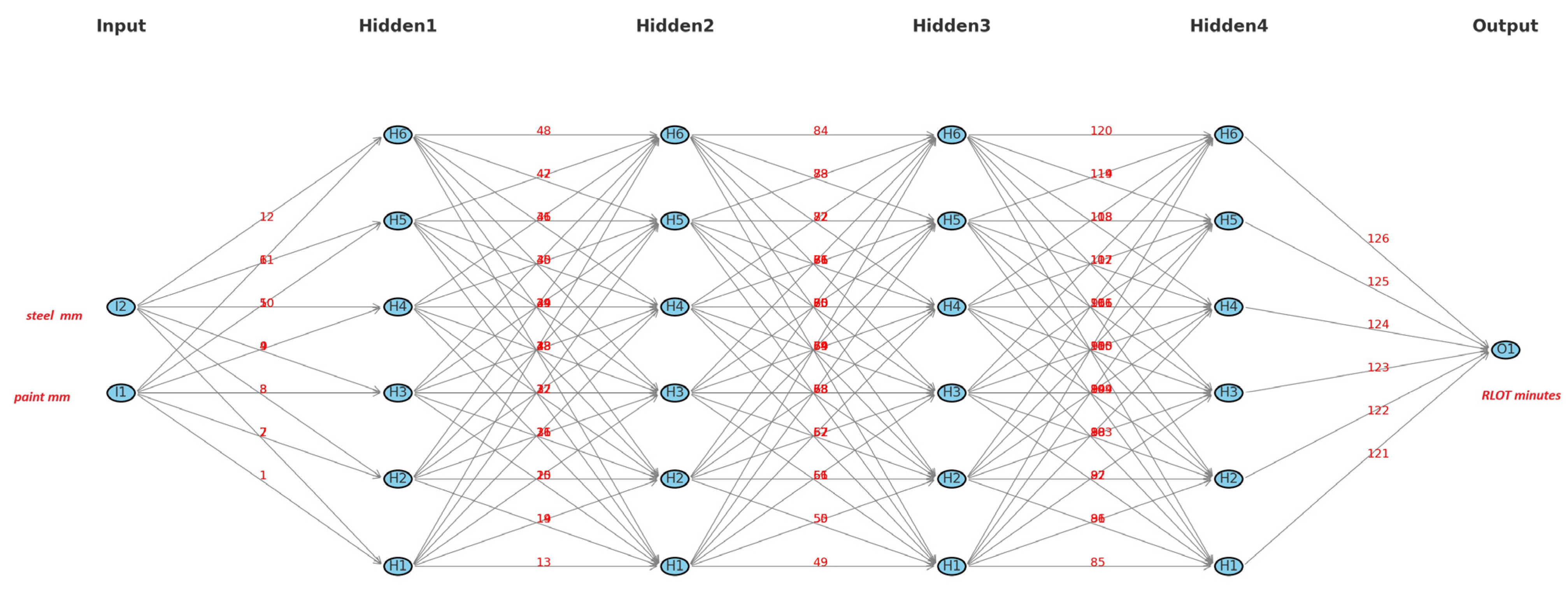
Regarding optimisation, the architecture of the AI network in this paper is based on hyperparameter optimisation using the grid search method since the network is based on 36 simulations. However, in sophisticated networks, advanced optimisation techniques are required to find a proper architecture, as shown in [
33]. The performance metrics and other important parameters of the network are tabulated in
Table 5.
By setting a 10% threshold for the maximum error, we want to ensure that the trained network is not overfitting. Therefore, according to
Table 5, we have also limited the ranges for the grid search. The performance metric shows a reasonably good network.
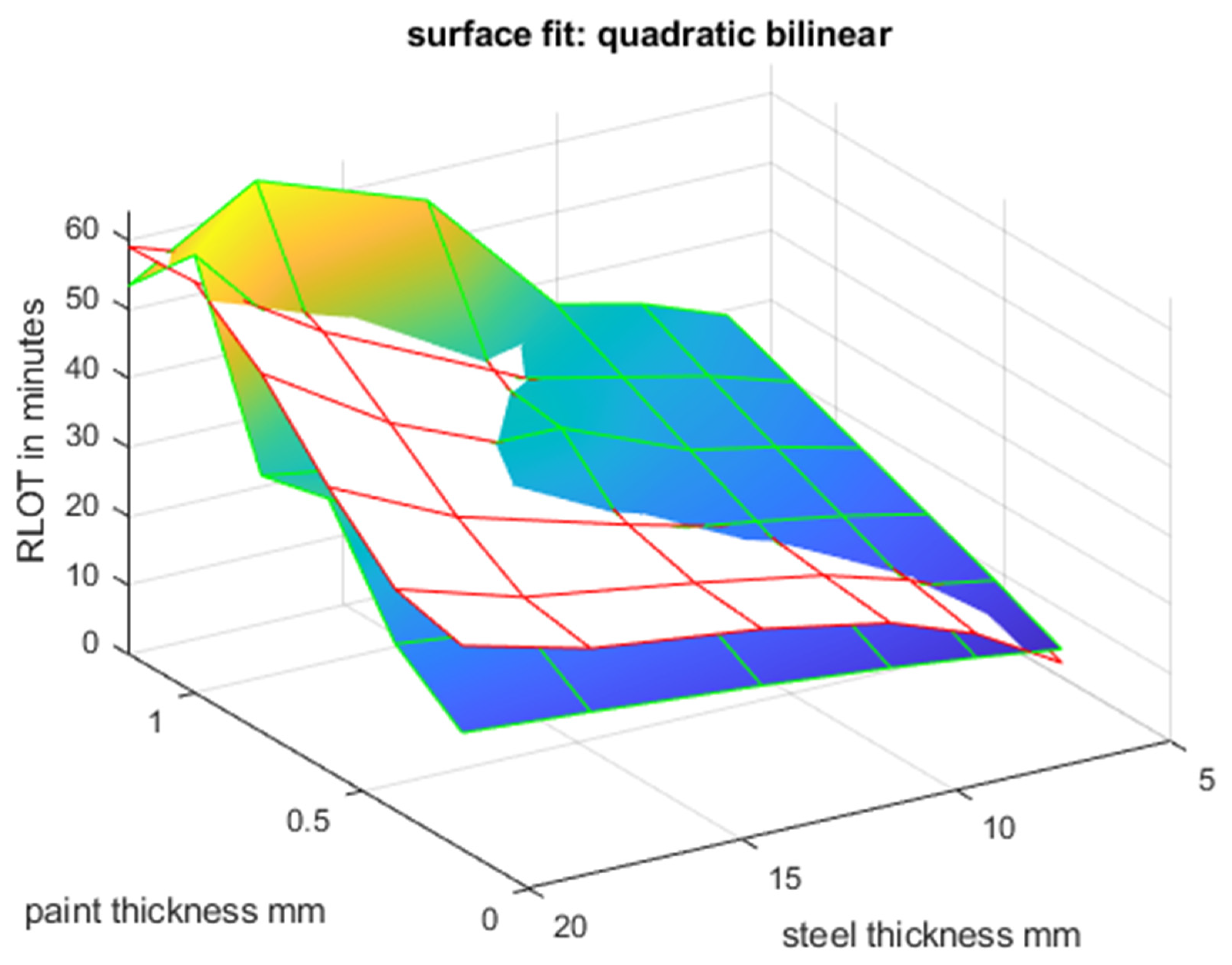
Moreover, we have also tried traditional interpolation methods. The approximated interpolation function is a bilinear surface given by the following:
In
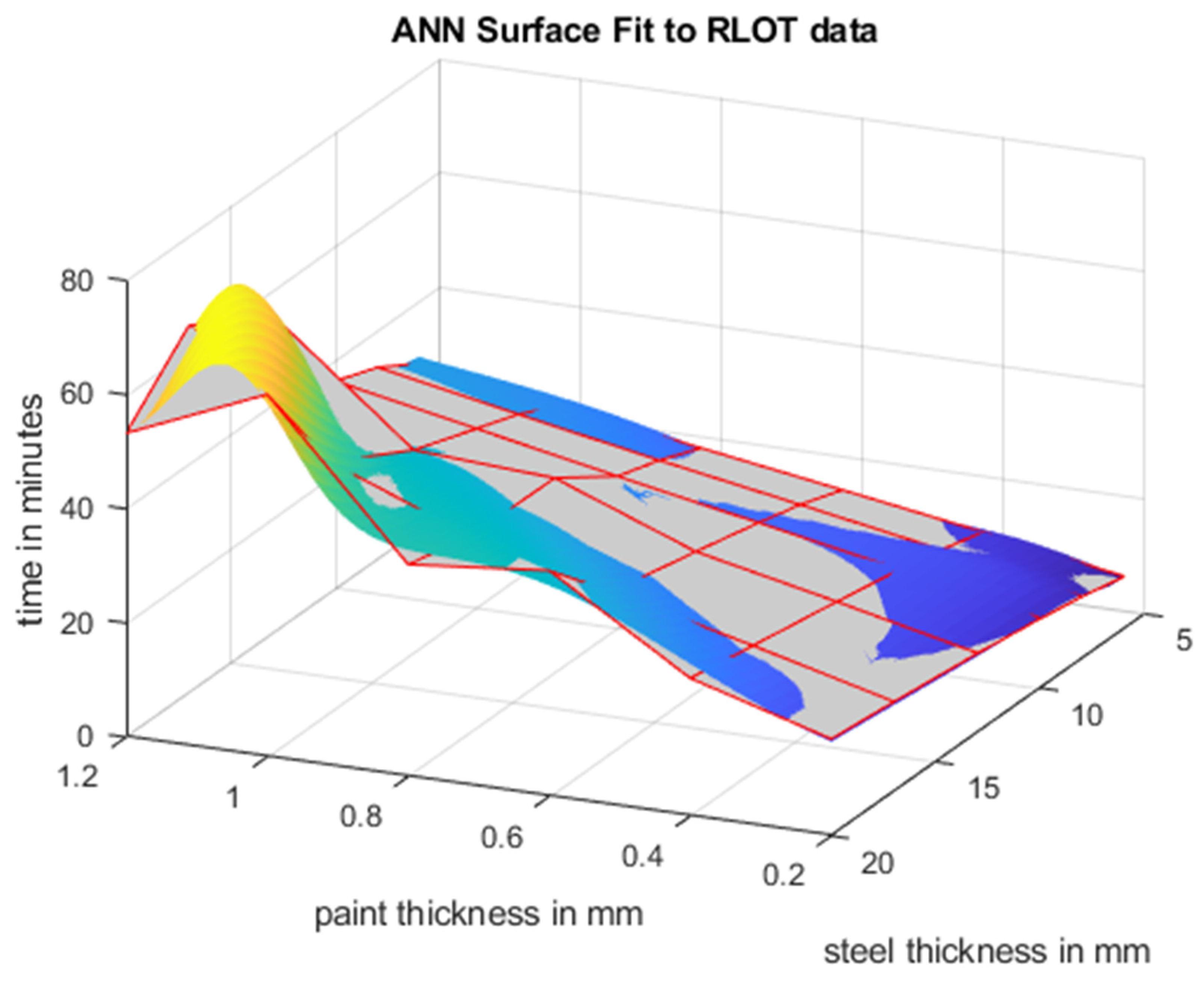
Figure 16, it is shown that a quadratic bilinear surface in Equation (35) does not provide the same fitting performance when compared to an ANN prediction in
Figure 12.
11. Conclusions
A thorough investigation into the performance of intumescent coatings was conducted in ISO fire conditions. The review of the existing literature highlighted that the expansion ratio is the most crucial factor in modelling coating performance, which also aligns with the modelling details. The coating releases gases at elevated temperatures, causing the coating to expand. This reduces the thermal conductivity and the heat transfer from the fire to the steel surface. Therefore, the steel temperature increases at a slower rate, which causes a slower loss in yield strength. This results in a longer fire duration to reach the critical temperature and gives time for individuals to evacuate before the steel building collapses. This paper is written to develop a new multi-layer model that is verified by the previous tests, but does not consider the trapped gas fraction parameter (β). Current models use empirical expansion ratios, which are not always valid for every coating. The authors believe that directly simulating the bubble growth model in multiple layers provides sufficient accuracy to compensate for the absence of β, as it only represents the trapped gas.
The existing bubble expansion model is used to simulate the swelling behaviour of the coating. The model uses pressure as the drive for coating expansions, and the resistance forces are viscosity and surface tension. These parameters are found or derived from empirical data and are input into the coating expansion governing equation. The model’s differential equation is solved using a time step approach. The 1 h fire duration is divided into small steps, and the solution from the last time step is used for solving the next time step. This gradually generates the expansion ratio over the fire duration.
A novel approach is adopted to input the resulting expansion ratio directly into the thermal conductivity model. This differs from the current approach, where they generate expansion ratio curves at different heat fluxes and carry out linear interpolation to obtain the expansion ratio at each time step. The new approach inputs the expansion ratio directly and does not rely on linear interpolations, which improve the solution’s accuracy.
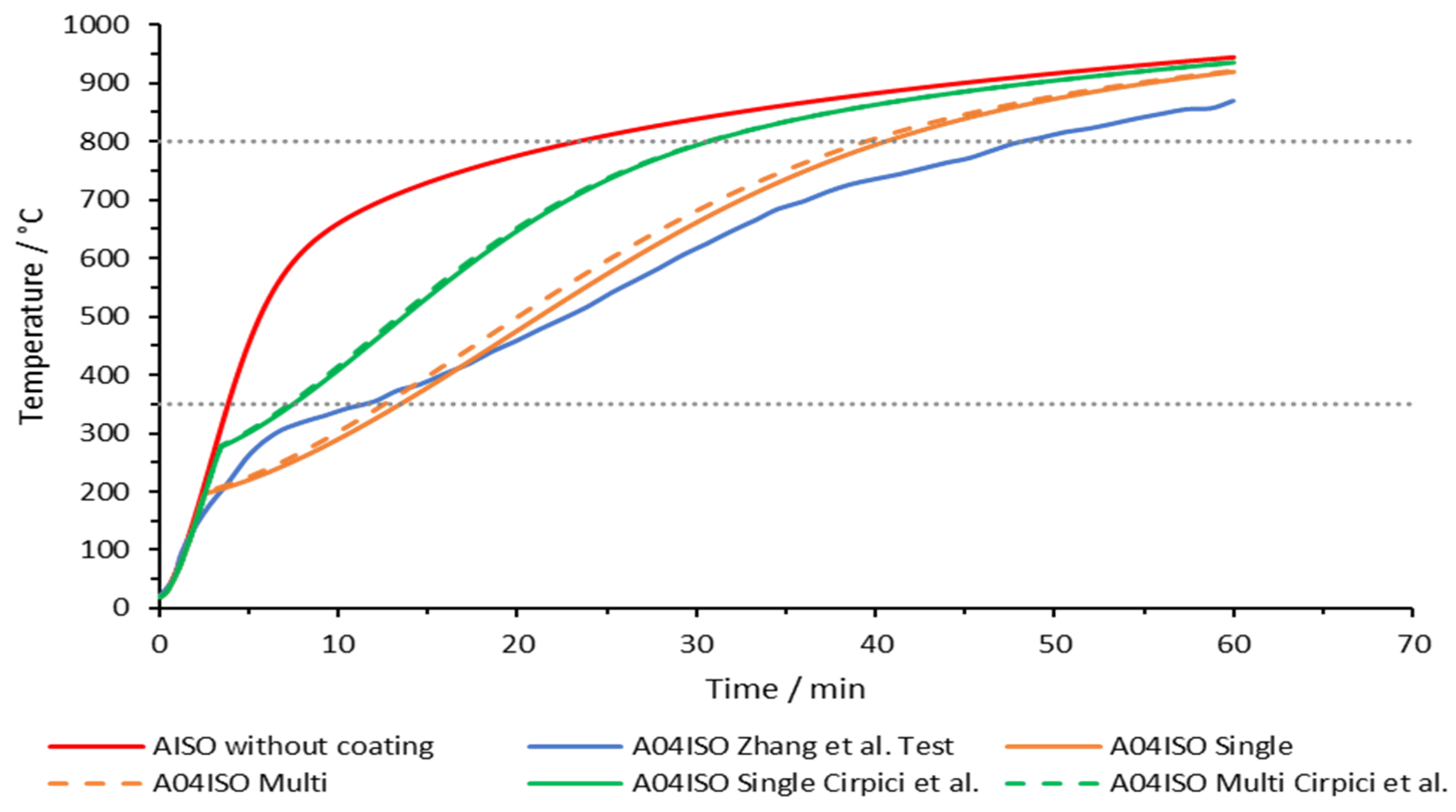
The Eurocode is then used with both single-layer and multi-layer models to predict the temperature of structural steel during a 1 h ISO fire. The multi-layer model divides the coating into five equal-thickness layers with identical temperatures and thermal resistances at each layer. The temperatures and thermal resistances are calculated at each layer to capture the non-uniform heat transfer characteristics. A novel approach is adopted to simulate the temperature and thermal resistance at the centre of each layer. The model’s accuracy is improved compared to the existing literature, which is unclear on whether the layer temperatures are taken from the boundary inlet, outlet or an average of both values.
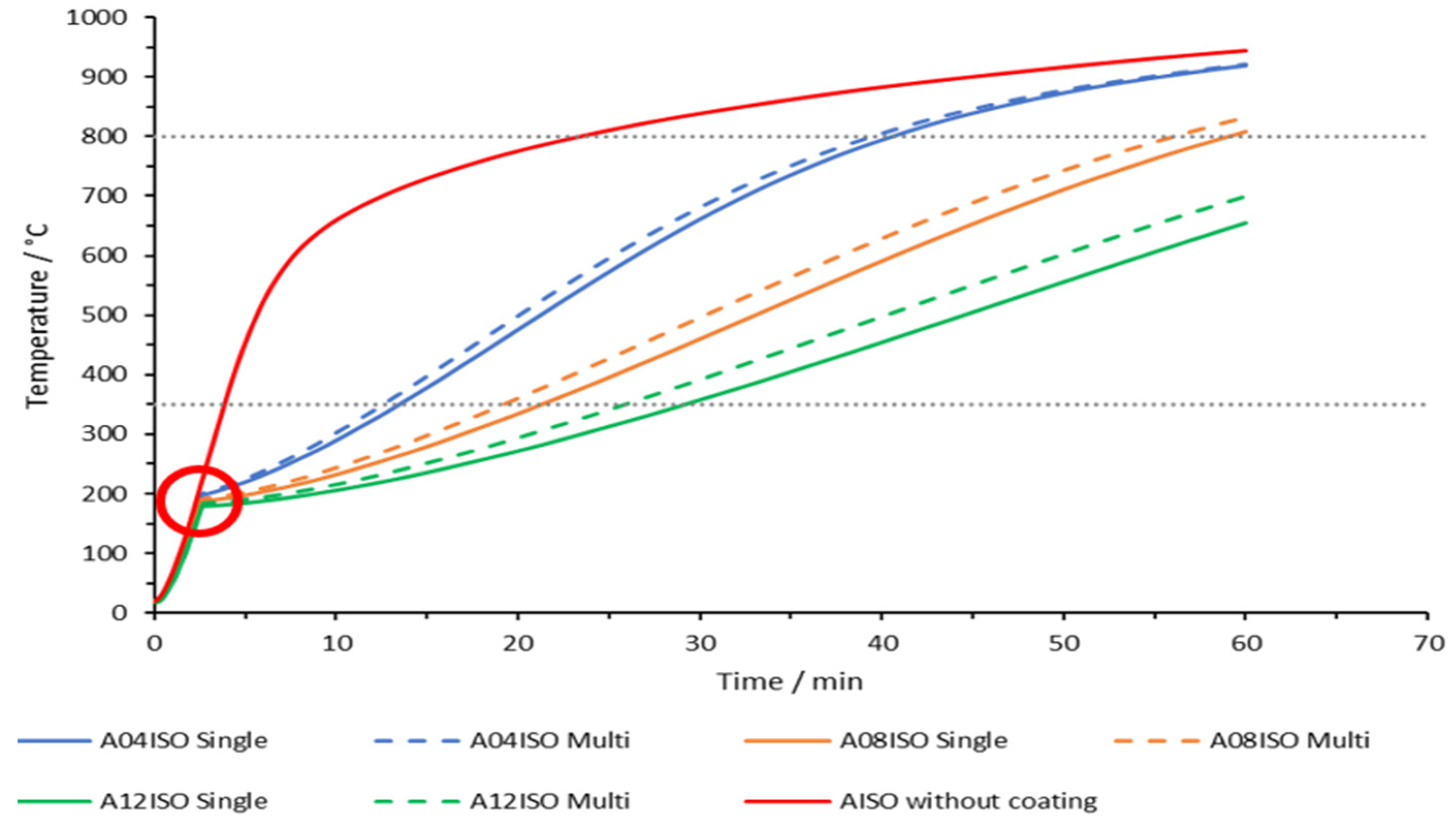
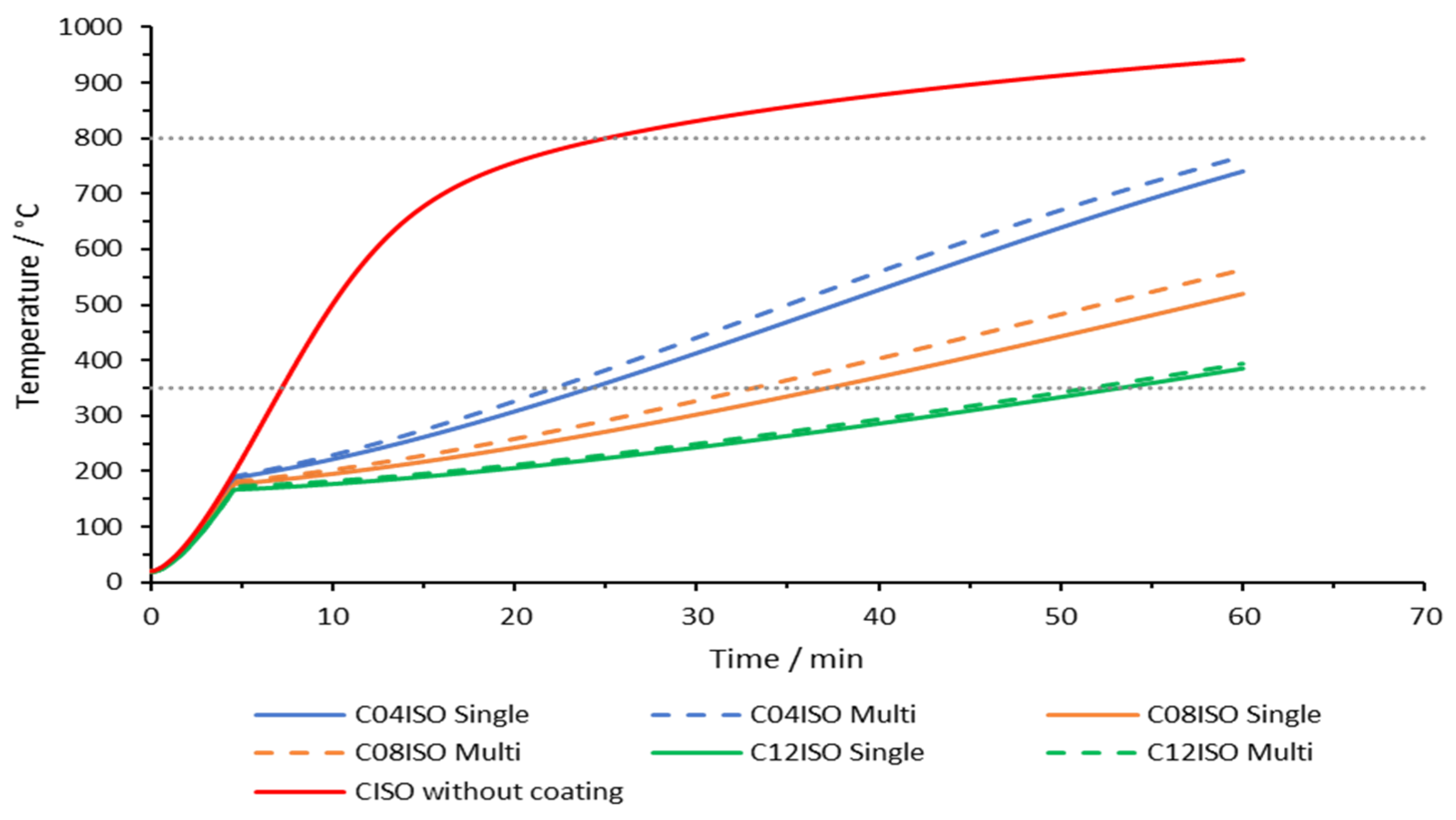
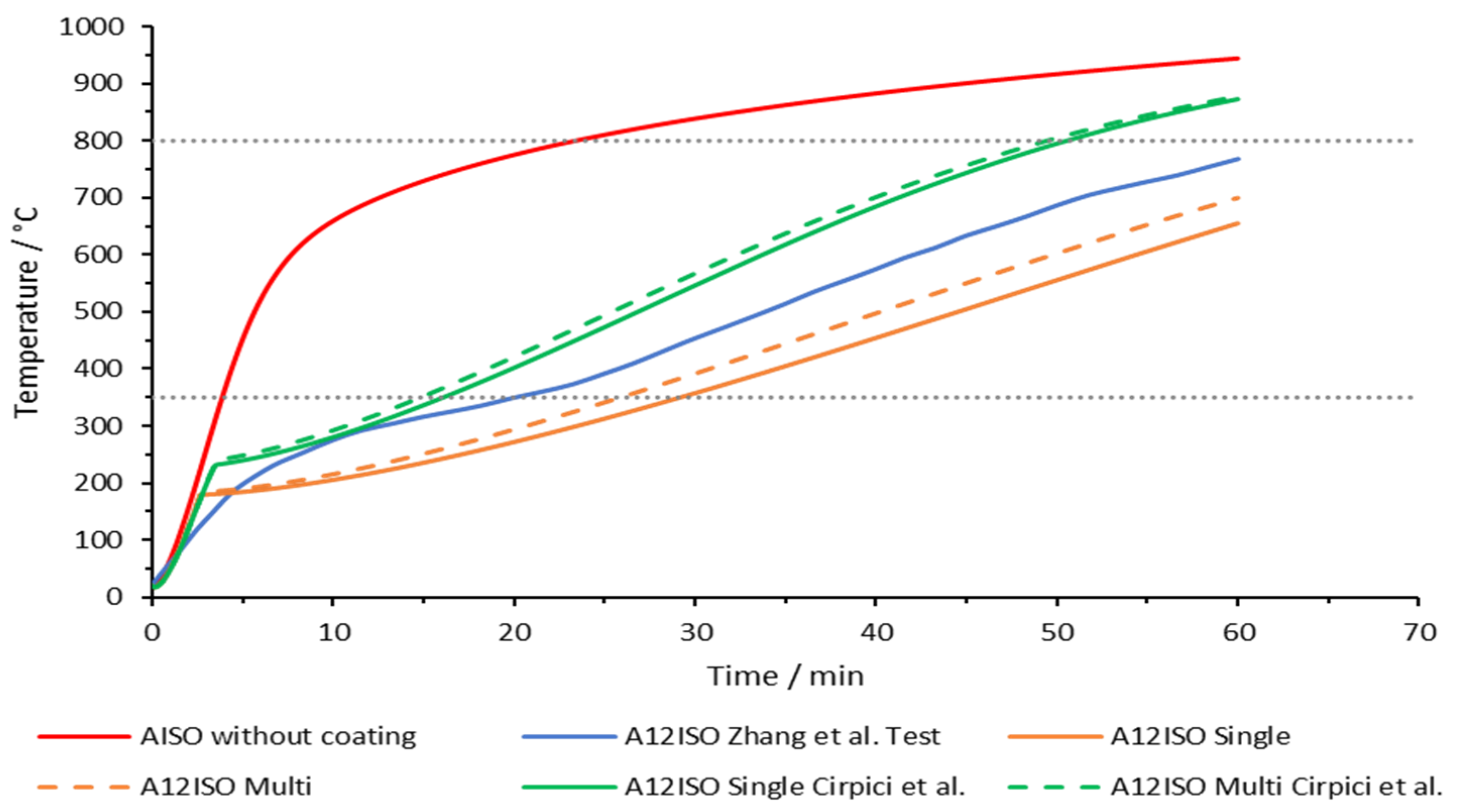
The steel temperature profiles over the 1 h fire duration are plotted on graphs for different coating thickness scenarios. The insulation performance improves as the coating becomes thicker. The same trend also applies to different steel plate thicknesses. The simulated results are verified and validated by comparing the analytical data from the current adopted model and current empirical data, showing close agreement, especially with the multi-layer model.
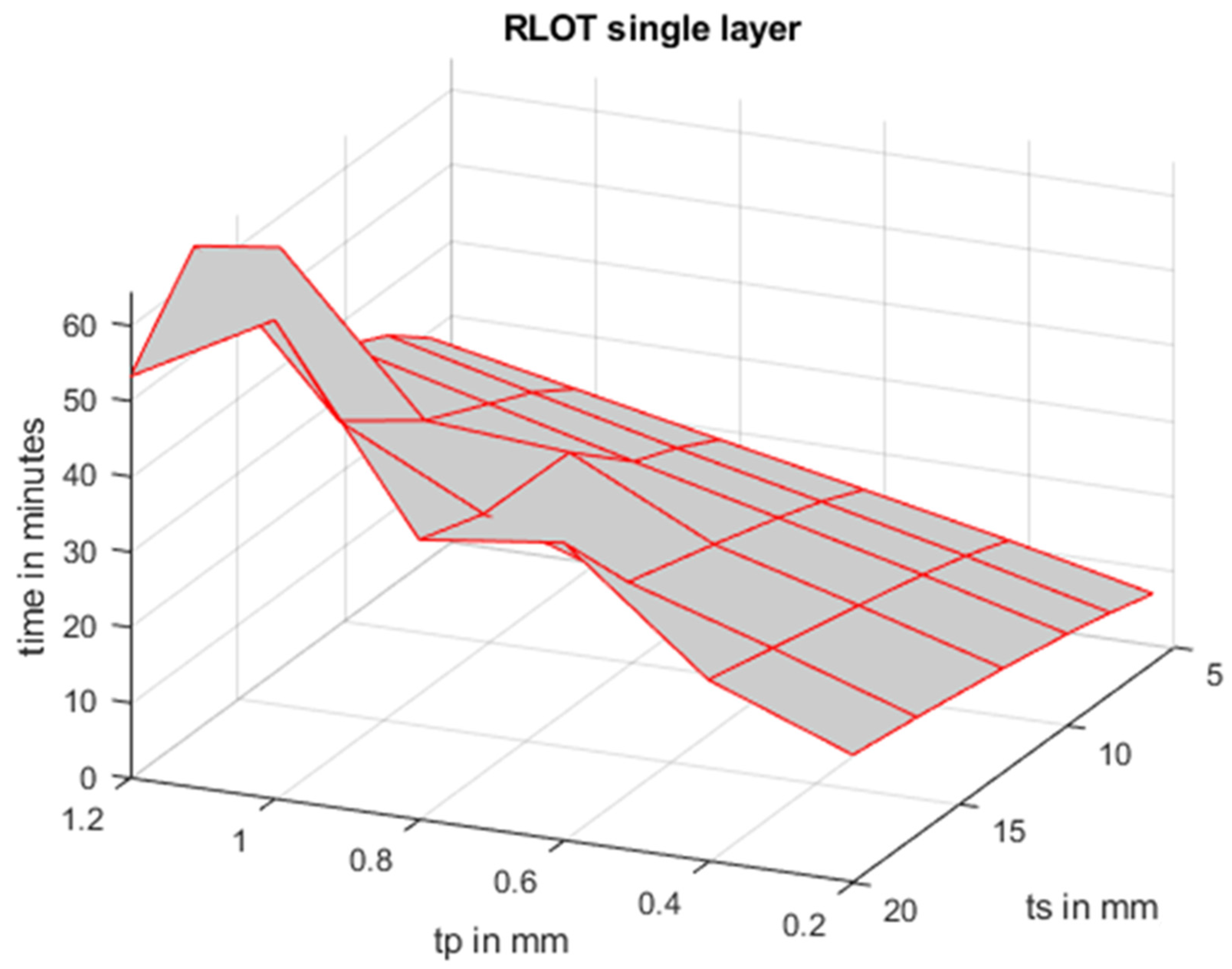
We have introduced a new safety parameter and named it Retention Loss Onset Time (RLOT), the time that is required for steel to reach 350 °C, at which the yield stress drops. An Artificial Neural Network (ANN) is found to calculate the estimated RLOT with different steel thicknesses and coating thicknesses. The ANN shows close alignment with the simulation results. This allows predictions for RLOT at different steel thicknesses and coating thicknesses without lab testing, which can be repetitive and costly.