A Land Cover Recognition-Based Method for Wildfire Early Warning in Transmission Corridor Areas


Abstract
1. Introduction
- (1)
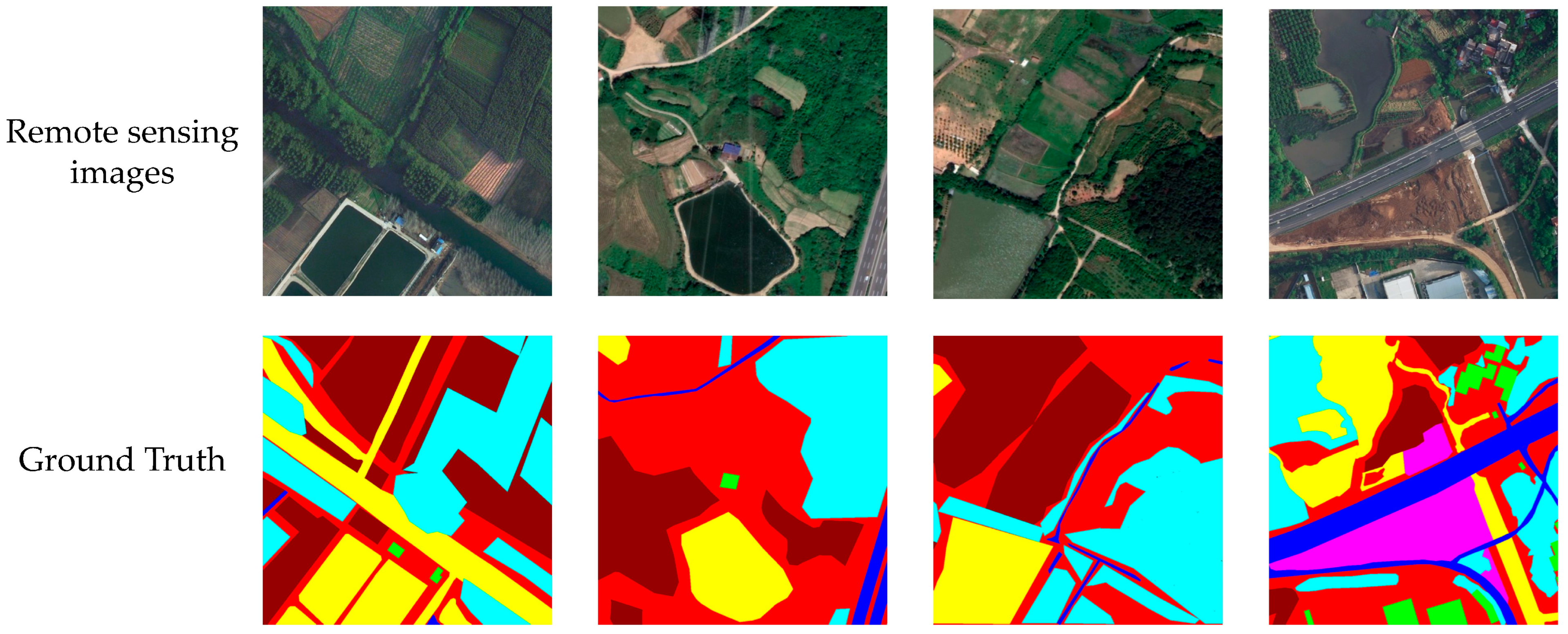
- A specialized semantic segmentation network is introduced to achieve refined extraction of land cover features in complex transmission corridor environments;
- (2)
- A deep learning-based prediction framework is developed to effectively fuse multi-source features and improve wildfire risk identification accuracy;
- (3)
- The proposed framework provides spatially explicit risk zoning that can be directly integrated into grid operation and maintenance workflows, supporting practical disaster prevention and control.
2. Materials and Methods
2.1. Study Area
2.2. Data Source and Preprocessing
2.2.1. Remote Sensing Image Data
2.2.2. Multi-Source Geographic Environmental Feature Data
- (1)
- Climate data
- (2)
- Human activity data
2.2.3. Fire Sample Data
2.3. Intelligent Remote Sensing Assessment Framework for Wildfire Risk in Transmission Corridors
2.3.1. Improved Dual-Branch Semantic Segmentation Network
- (1)
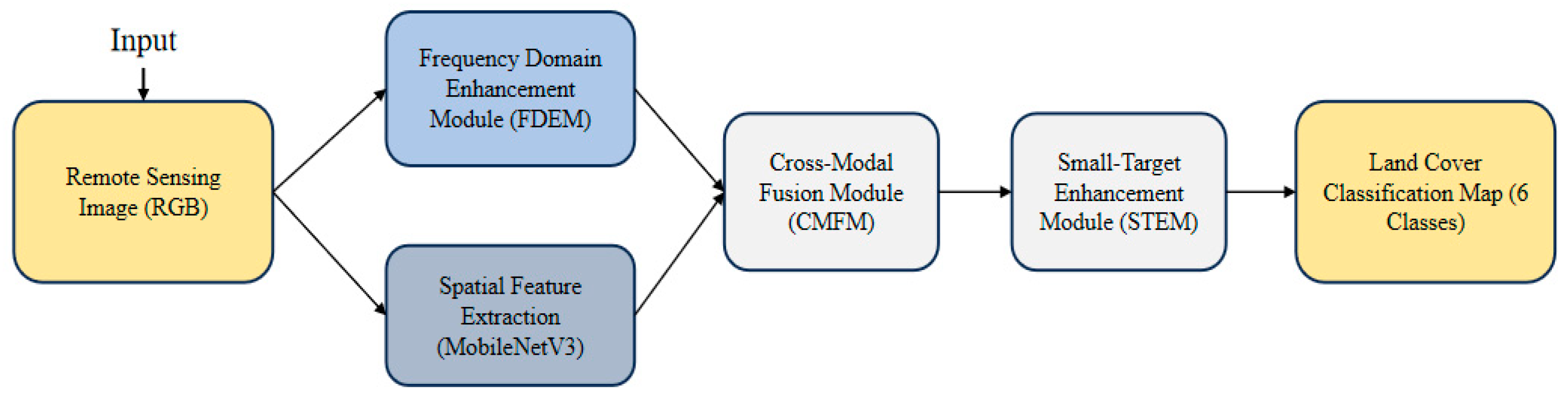
- Frequency Domain Enhancement Branch (FDEM)
- (2)
- Cross-Modal Fusion Module (CMFM)
- (3)
- Small-Target Enhancement Module (STEM)
2.3.2. Multi-Modal Wildfire Point Prediction Network
- (1)
- Single-Modal Feature Encoding
- Surface cover features (where is the number of grid units in the study area, 6 is the number of surface cover types, and each dimension represents the area proportion of the corresponding surface cover type);
- Terrain features (including three indicators: elevation, average slope, and slope standard deviation);
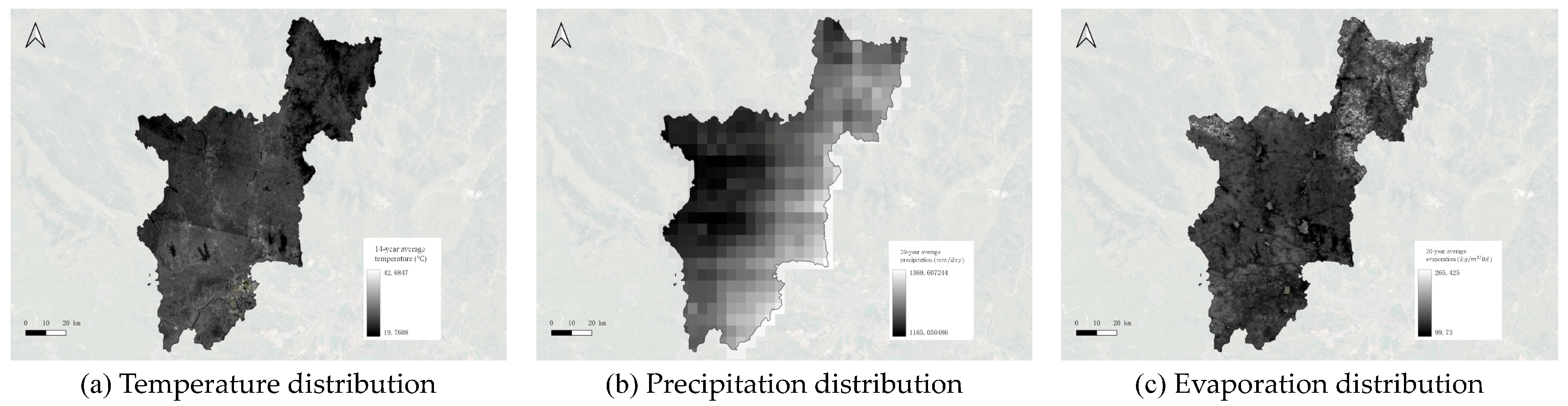
- Climate features (composed of land surface temperature, precipitation, and evapotranspiration);
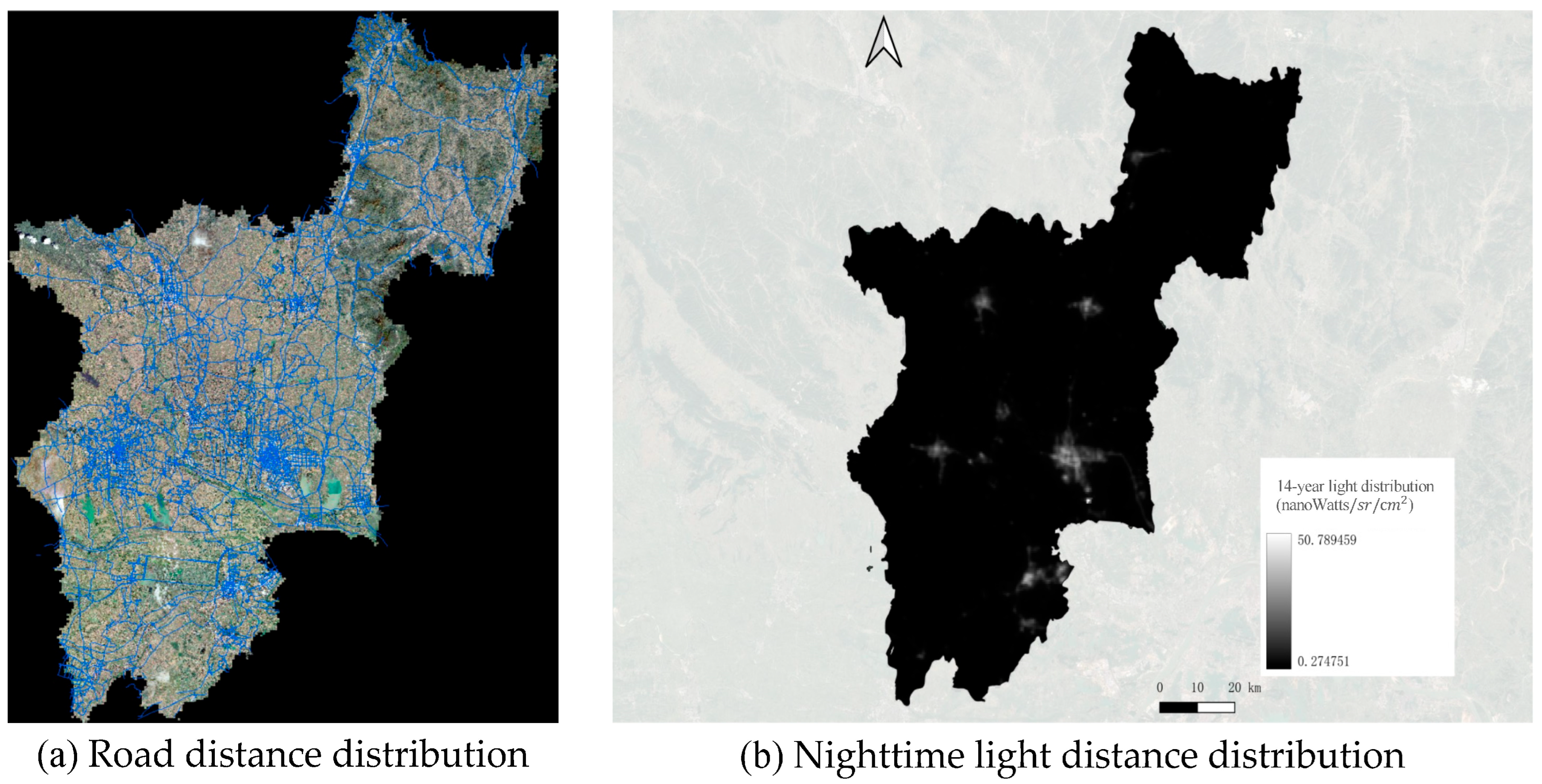
- Human activity features (road distance and nighttime light index).
- (2)
- Cross-Modal Attention Fusion (CMAF)
- (3)
- Frequency Domain Enhancement Module
- (4)
- Residual Refinement and Risk Prediction
2.4. Evaluation Metrics
3. Experimental Analysis
3.1. Semantic Segmentation Results
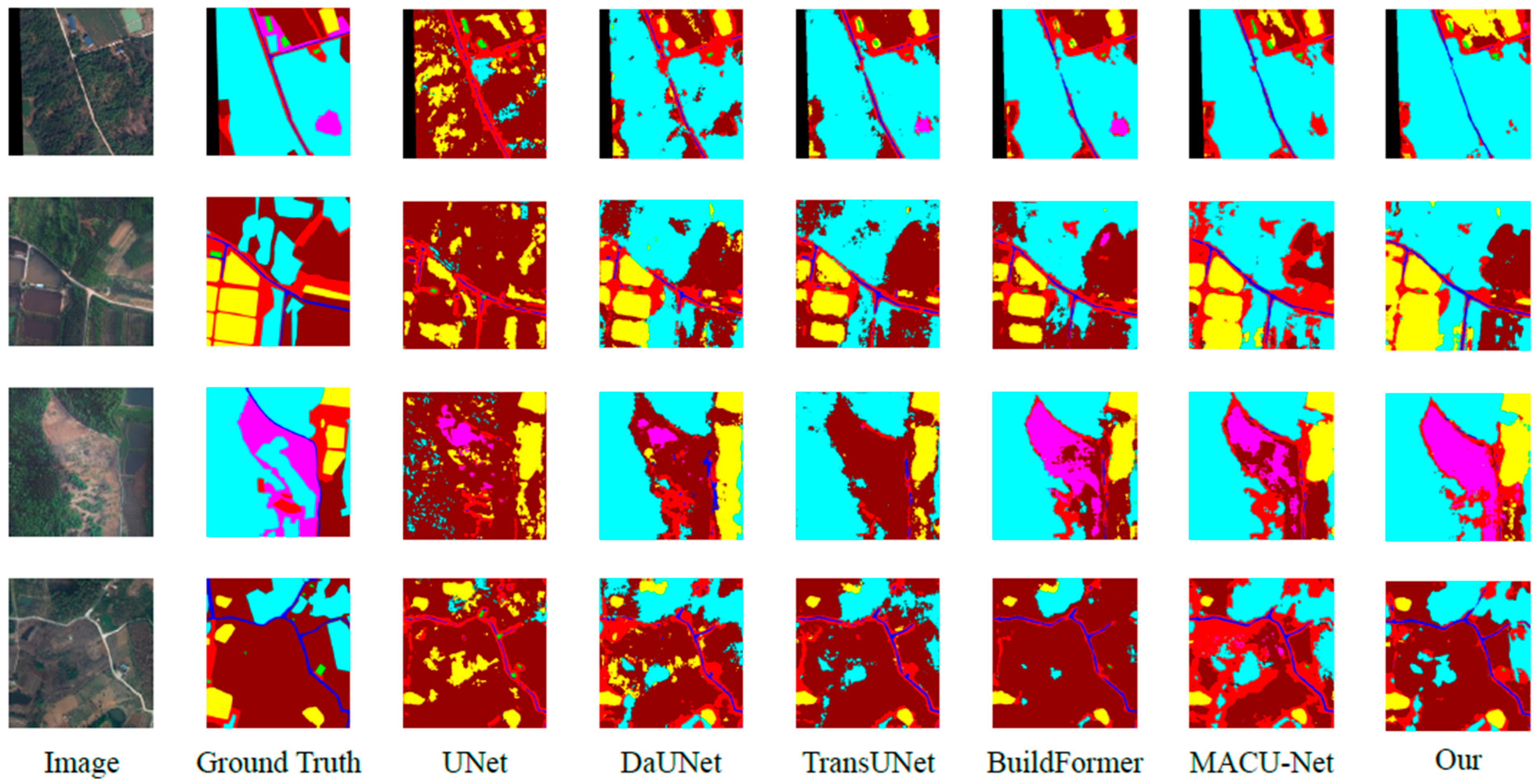
3.1.1. Comparison Experiment of Different Models
3.1.2. Ablation Experiment
3.2. Wildfire Prediction Results
3.2.1. Analysis of Prediction Performance of Different Models
3.2.2. Ablation Experiment
3.3. Fire Risk Assessment of Power Transmission Corridor
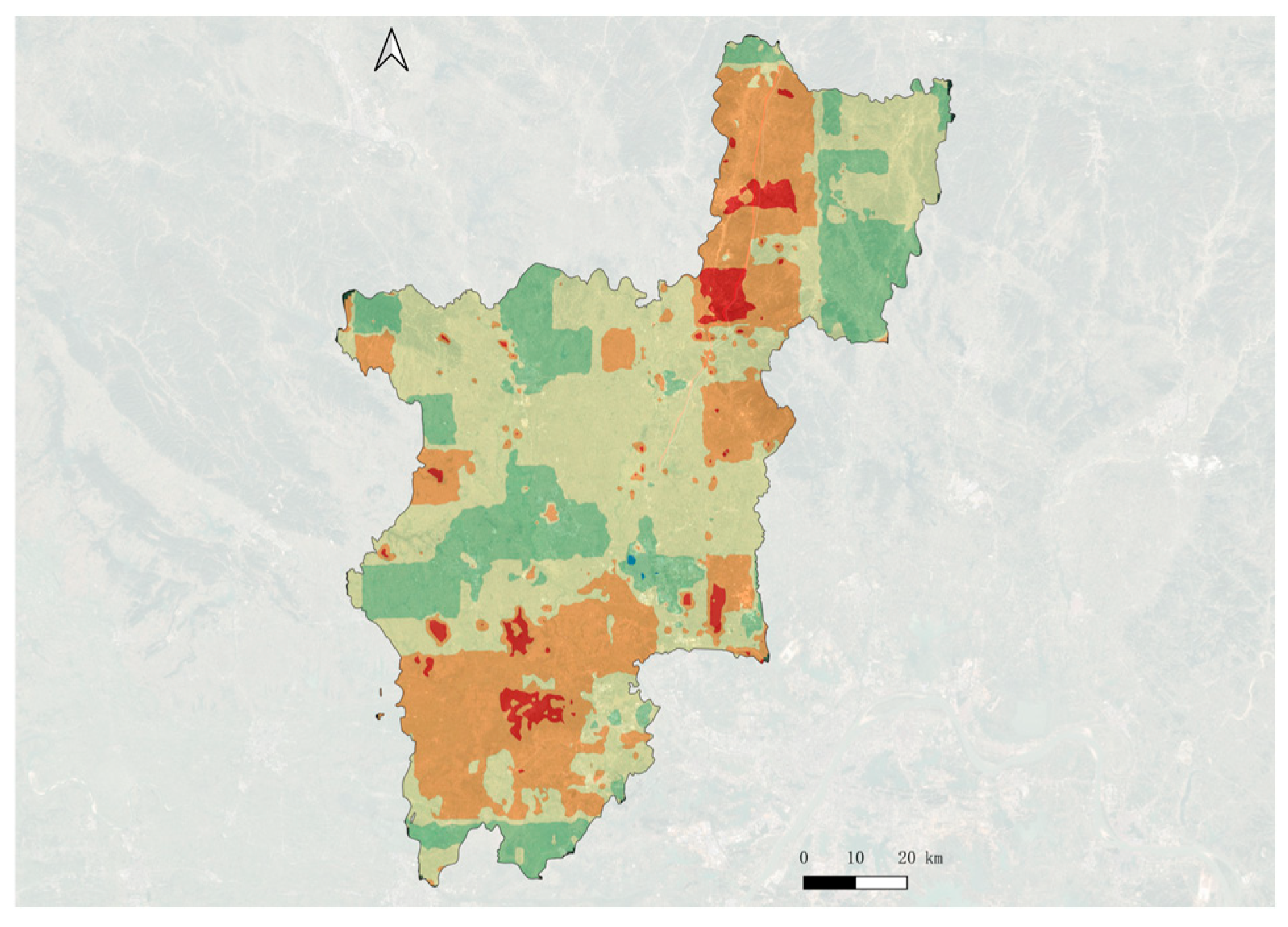
3.3.1. Fire Risk Threshold Classification and Statistical Analysis
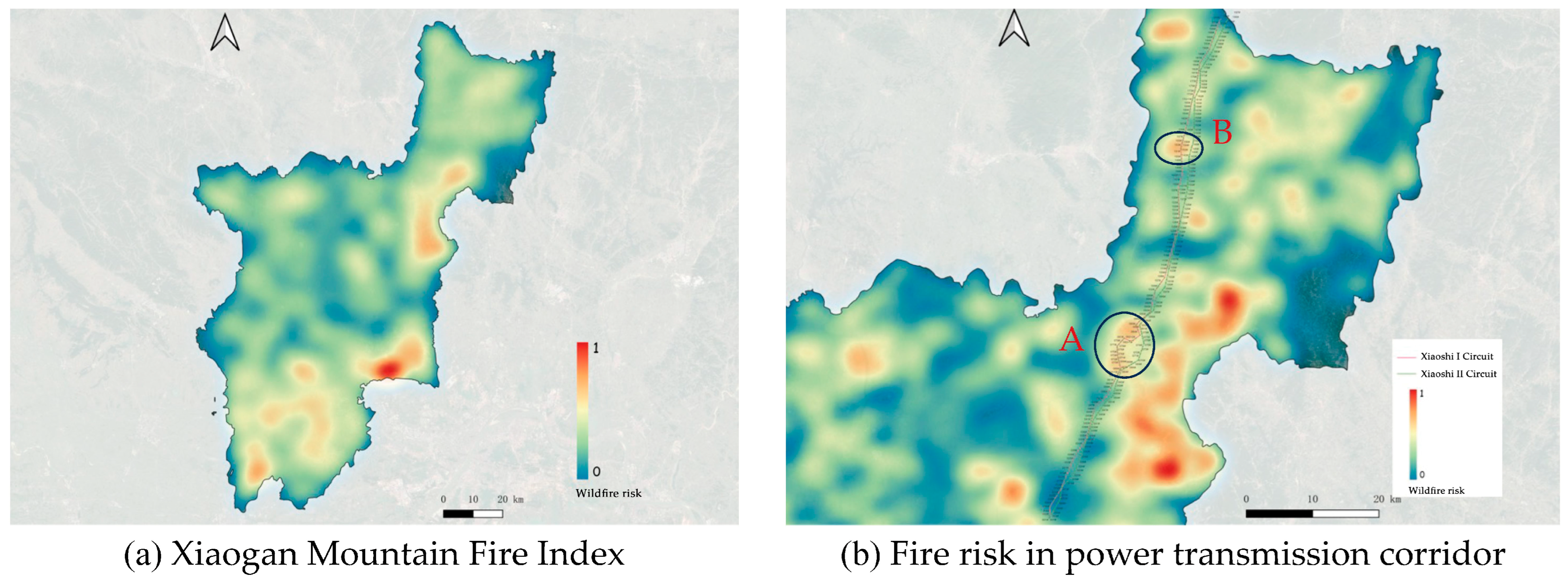
3.3.2. Wildfire Risk Analysis of Power Transmission Corridor
4. Discussion
5. Conclusions
- (1)
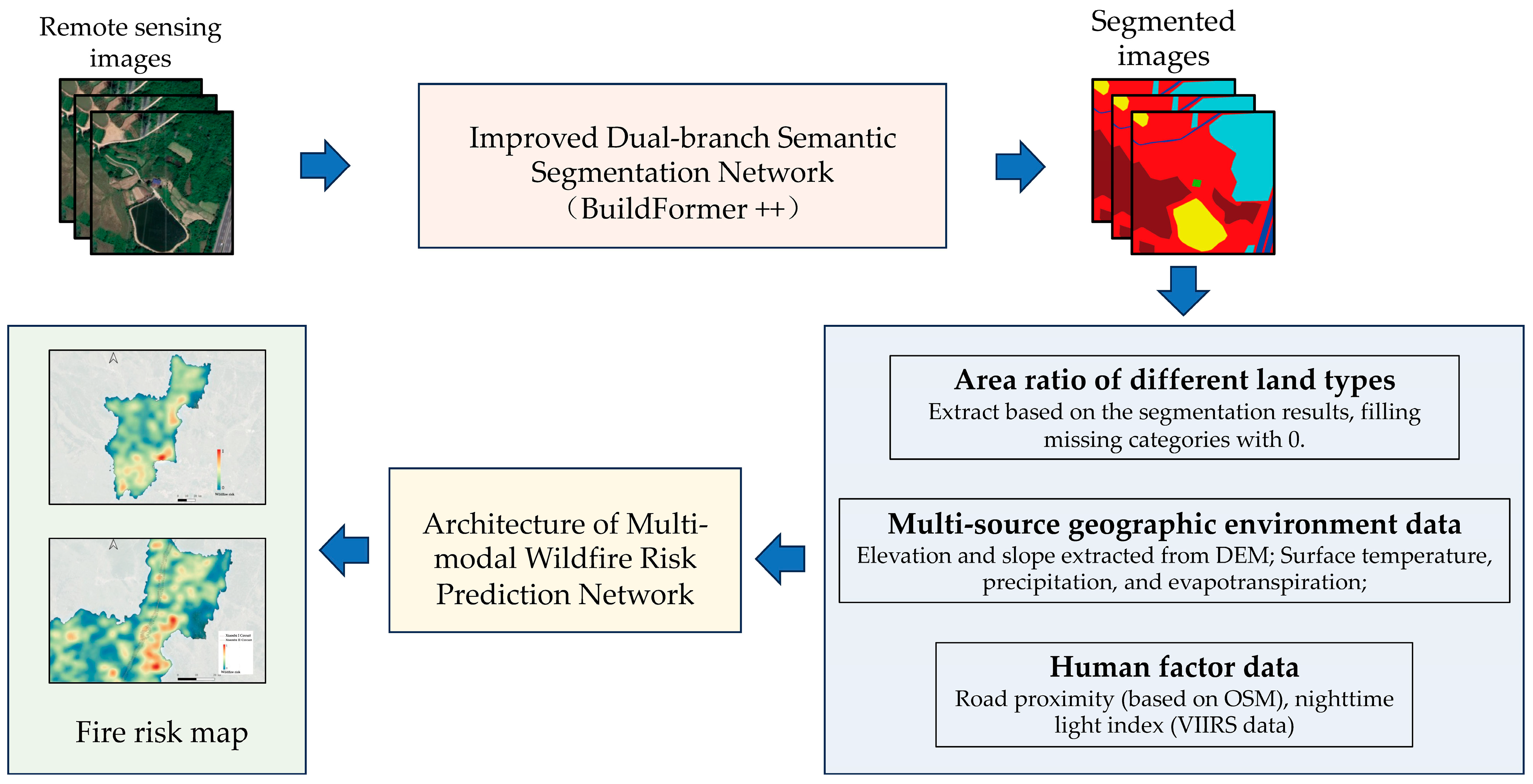
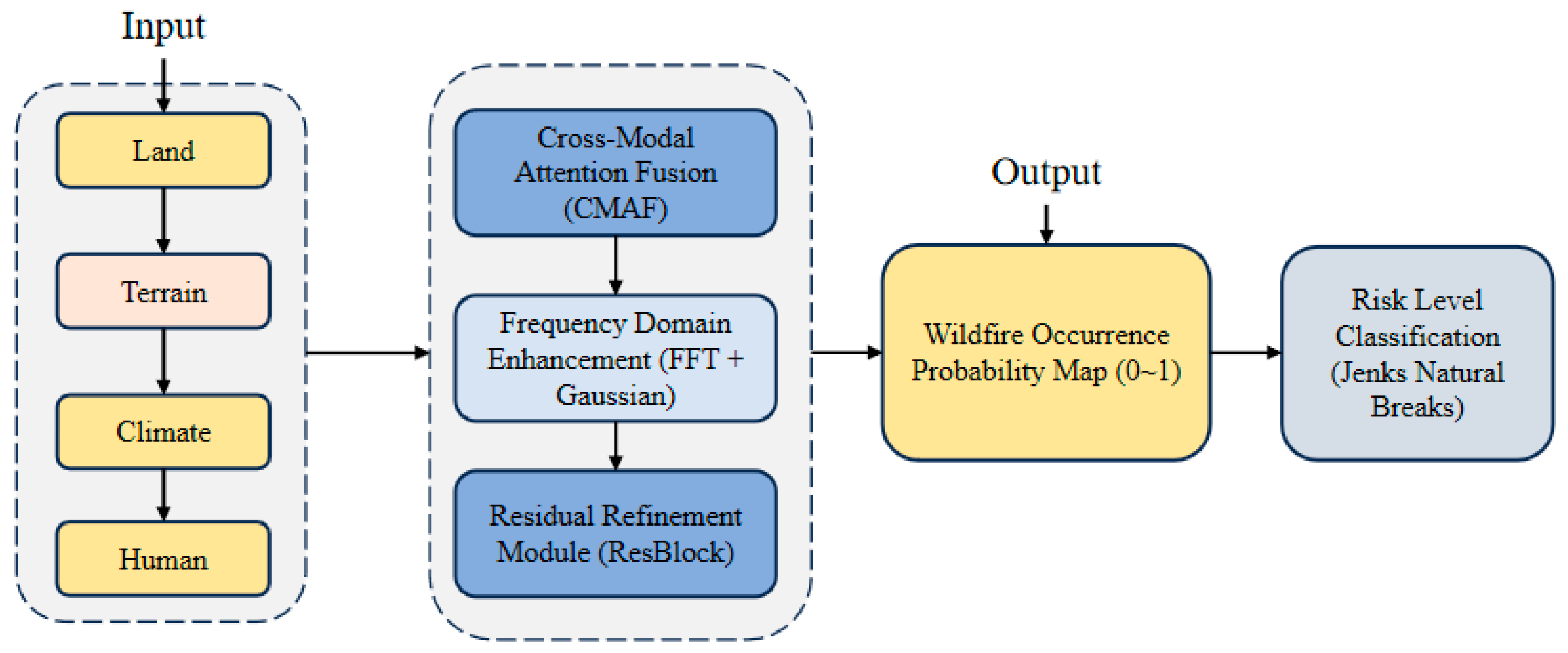
- Effectiveness of the improved technical framework: The proposed three-level technical system effectively overcomes the limitations of traditional methods such as low fine-grained segmentation accuracy and insufficient multi-source feature fusion. The improved dual-branch semantic segmentation network (BuildFormer++) integrates the Frequency Domain Enhancement Module (FDEM), Cross-Modal Fusion Module (CMFM), and Small-Target Enhancement Module (STEM), which significantly improves the segmentation accuracy of fragmented and small-scale land cover types in transmission corridor areas. The mIoU of land cover segmentation reaches 40.68%, and the overall accuracy exceeds 90%, providing high-precision basic data for subsequent risk assessment. The multi-modal wildfire point prediction network further fuses land cover, terrain, climate, and human activity features, realizing the deep mining of correlations between multi-source heterogeneous data and wildfire occurrence.
- (2)
- Superior performance of the model system: Comparative experiments show that BuildFormer++ outperforms representative segmentation networks such as U-Net, DA-Unet, and MACU-net in terms of mIoU, Precision, Recall, and Acc. Specifically, its mIoU is 1.14 percentage points higher than that of the second-ranked MACU-net, and the segmentation edges are more complete with fewer false alarms. In terms of wildfire risk prediction, the proposed multi-modal model achieves 85.37% accuracy, 93.15% F1-score, and 85.42% ROC-AUC, which are significantly better than traditional machine learning methods (Random Forest, SVM, etc.) and deep learning baselines (1D ResNet, 1D Vision Transformer). Ablation experiments confirm that each functional module (FDEM, CMFM, STEM, CMAF, FFT) plays a positive role in performance improvement, and the collaborative effect of multi-modules and multi-source data effectively enhances the model’s robustness and predictive ability.
- (3)
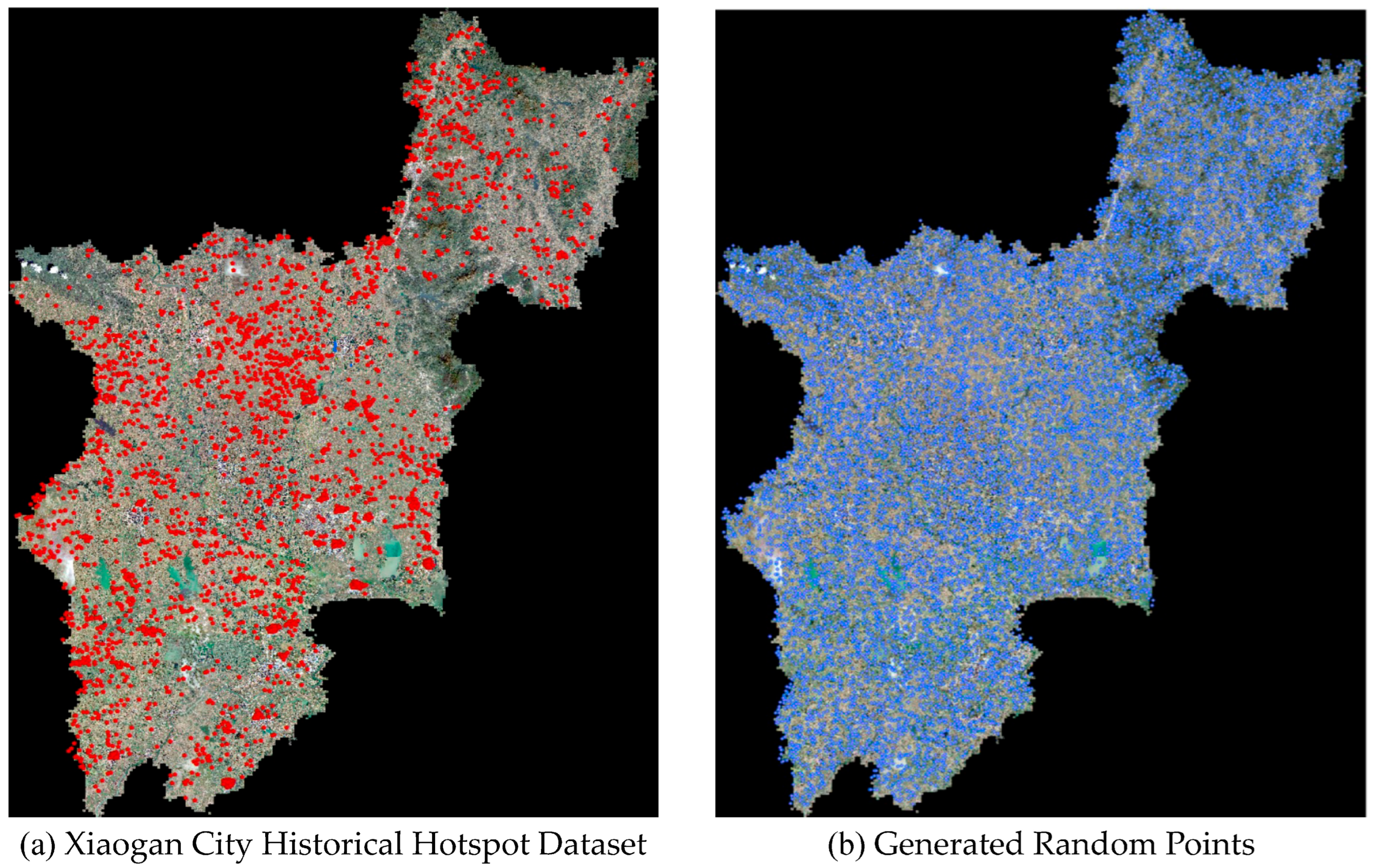
- Rationality of spatial risk zoning and verification: Based on the wildfire occurrence probability output by the model, the study area is divided into three risk levels (Low Risk, Medium Risk, High Risk) using the Natural Breaks (Jenks) method. Spatial mapping results show that high-risk areas are mainly concentrated in the southern hilly area of the study area, which has a high overlap with some sections of Xiaoshi I and Xiaoshi II transmission corridors, showing obvious “corridor-adjacent risk concentration” characteristics. Verification with historical fire point data (2015–2023) shows that 62.37% of historical fire points are distributed in high-risk areas, and all fire points are located in medium-risk and above areas, which fully verifies the rationality and reliability of the risk zoning results.
- (4)
- Clear guiding significance for engineering applications: The research results have clear practical value for the operation and maintenance of transmission corridors. High-risk sections identified by the model are mostly distributed in areas with undulating terrain, dense woodland, and frequent human activities. This conclusion can guide power grid operation and maintenance departments to carry out targeted patrols and hidden danger rectification, improve the efficiency of disaster prevention and mitigation, and reduce the economic losses caused by wildfires to power grids. Meanwhile, the framework has good scalability and can be popularized and applied to other transmission corridor areas after appropriate parameter adjustment.
Author Contributions
Funding
Institutional Review Board Statement
Informed Consent Statement
Data Availability Statement
Conflicts of Interest
References
- Chen, W.; Zhou, Y.; Zhou, E.; Xiang, Z.; Zhou, W.; Lu, J. Wildfire Risk Assessment of Transmission-Line Corridors Based on Naïve Bayes Network and Remote Sensing Data. Sensors 2021, 21, 634. [Google Scholar] [CrossRef]
- Xiang, K.; Zhou, Y.; Zhou, E.; Lu, J.; Liu, H.; Huang, Y. A spatial assessment of wildfire risk for transmission-line corridor based on a weighted naïve bayes model. Front. Energy Res. 2022, 10, 829934. [Google Scholar] [CrossRef]
- Panossian, N.; Elgindy, T. Power system wildfire risks and potential solutions: A literature review & proposed metric. Natl. Renew. Energy Lab. (NREL) 2023. [Google Scholar]
- Sayarshad, H.R.; Ghorbanloo, R. Evaluating the resilience of electrical power line outages caused by wildfires. Reliab. Eng. Syst. Saf. 2023, 240, 109588. [Google Scholar] [CrossRef]
- Ling, R.; Jun, W.A.N.; Junjie, H. Risk zoning on forest fire along the power transmission lines in Hubei Province based on GIS. Torrential Rain Disasters 2015, 34, 268. [Google Scholar]
- Chen, X.; Li, T.; Ruan, L.; Xu, K.; Huang, J.; Xiong, Y. Research and application of fire risk assessment based on satellite remote sensing for transmission line. In Proceedings of the World Congress on Engineering and Computer Science, San Francisco, CA, USA, 21–23 October 2015; pp. 21–23. [Google Scholar]
- Xiaozhi, Z.; Tao, L.; Kan, X.; Zhiguo, C.; Xiaoming, C.; Ling, R. Evaluation of wildfire occurrence along high voltage power line by remote sensing data: A case study in Xianning, Hubei, China. In 2016 4th International Workshop on Earth Observation and Remote Sensing Applications (EORSA), Guangzhou, China, 4–6 July 2016; IEEE: New York, NY, USA, 2016; pp. 300–304. [Google Scholar]
- Tonbul, H. Integrating ensemble machine learning and explainable AI for enhanced forest fire susceptibility analysis and risk assessment in Türkiye’s Mediterranean region. Earth Sci. Inform. 2024, 17, 5709–5731. [Google Scholar] [CrossRef]
- Sharma, S.; Khanal, P. Forest fire prediction: A spatial machine learning and neural network approach. Fire 2024, 7, 205. [Google Scholar] [CrossRef]
- Gao, C.; Lin, H.; Hu, H. Forest-fire-risk prediction based on random forest and backpropagation neural network of Heihe area in Heilongjiang province, China. Forests 2023, 14, 170. [Google Scholar] [CrossRef]
- Nhongo, E.J.S.; Fontana, D.C.; Guasselli, L.A.; Bremm, C. Probabilistic modelling of wildfire occurrence based on logistic regression, Niassa Reserve, Mozambique. Geomat. Nat. Hazards Risk 2019, 10, 1772–1792. [Google Scholar] [CrossRef]
- Kalantar, B.; Ueda, N.; Idrees, M.O.; Janizadeh, S.; Ahmadi, K.; Shabani, F. Forest fire susceptibility prediction based on machine learning models with resampling algorithms on remote sensing data. Remote Sens. 2020, 12, 3682. [Google Scholar] [CrossRef]
- Vergara, A.J.; Valqui-Reina, S.V.; Cieza-Tarrillo, D.; Gómez-Santillán, Y.; Chapa-Gonza, S.; Ocaña-Zúñiga, C.L.; Auquiñivin-Silva, E.A.; Cayo-Colca, I.S.; Rosa dos Santos, A. Modeling of Forest Fire Risk Areas of Amazonas Department, Peru: Comparative Evaluation of Three Machine Learning Methods. Forests 2025, 16, 273. [Google Scholar] [CrossRef]
- Díaz-Vázquez, D.; Casillas-García, L.F.; Garcia-Gonzalez, A.; Montero, S.H.G.; Rubio, J.I.M.; Llamas, J.J.L.; Hernandez, M.S.G. Integrating Remote Sensing and machine learning for dynamic burn probability mapping in data-limited contexts. Remote Sens. Appl. Soc. Environ. 2025, 38, 101554. [Google Scholar] [CrossRef]
- Akıncı, H.A.; Akıncı, H. Machine learning based forest fire susceptibility assessment of Manavgat district (Antalya), Turkey. Earth Sci. Inform. 2023, 16, 397–414. [Google Scholar] [CrossRef]
- Phiri, D.; Simwanda, M.; Salekin, S.; Nyirenda, V.R.; Murayama, Y.; Ranagalage, M. Sentinel-2 Data for Land Cover/Use Mapping: A Review. Remote Sens. 2020, 12, 2291. [Google Scholar] [CrossRef]
- Lee, K.; Kim, B.; Park, S. Evaluating the potential of burn severity mapping and transferability of Copernicus EMS data using Sentinel-2 imagery and machine learning approaches. GISci. Remote Sens. 2023, 60, 2192157. [Google Scholar] [CrossRef]
- Suwanprasit, C. Shahnawaz Mapping burned areas in Thailand using Sentinel-2 imagery and OBIA techniques. Sci. Rep. 2024, 14, 9609. [Google Scholar] [CrossRef]
- Taylor, A.; Dronova, I.; Sigona, A.; Kelly, M. Using Sentinel-2 Imagery to Measure Spatiotemporal Changes and Recovery across Three Adjacent Grasslands with Different Fire Histories. Remote Sens. 2024, 16, 2232. [Google Scholar] [CrossRef]
- Giglio, L.; Boschetti, L.; Roy, D.; Hoffmann, A.A.; Humber, M.; Hall, J.V. Collection 6 Modis Burned Area Product User’s Guide Version 1.0; NASA EOSDIS Land Processes DAAC: Sioux Falls, SD, USA, 2016; pp. 11–27.
- Neves, A.K.; Pereira, J.M.; Silva, J.M.; Catarino, S.; Oliva, P.; Chuvieco, E.; Campagnolo, M.L. Active fire-based dating accuracy for Landsat burned area maps is high in boreal and Mediterranean biomes and low in grasslands and savannas. ISPRS J. Photogramm. Remote Sens. 2024, 209, 461–471. [Google Scholar] [CrossRef]
- Minh, N.Q.; Huong, N.T.T.; Khanh, P.Q.; Hien, L.P.; Bui, D.T. Impacts of resampling and downscaling digital elevation model and its morphometric factors: A comparison of hopfield neural network, bilinear, bicubic, and kriging interpolations. Remote Sens. 2024, 16, 819. [Google Scholar] [CrossRef]
- Jafari, M.; Dehkordi, A.T.; Kariminejad, N.; Zoej, M.J.V.; Shahabi, E.; Quesada-Román, A. Comprehensive introduction to Digital Elevation Models, as a key dataset in soil erosion mapping. In Advanced Tools for Studying Soil Erosion Processes; Elsevier: Amsterdam, The Netherlands, 2024; pp. 31–58. [Google Scholar]
- Wang, J.; Zeng, Y.L.; Wang, J.; Wang, Y.; Jiang, L.S.; Wu, S.D.; Jiang, L. Observation on clinical effects of moxibustion therapy plus medications for chronic heart failure. J. Acupunct. Tuina Sci. 2012, 10, 349–354. [Google Scholar] [CrossRef]
- Guo, F.; Zhang, L.; Jin, S.; Tigabu, M.; Su, Z.; Wang, W. Modeling anthropogenic fire occurrence in the boreal forest of China using logistic regression and random forests. Forests 2016, 7, 250. [Google Scholar] [CrossRef]
- Zhang, Z.; Yang, S.; Wang, G.; Wang, W.; Xia, H.; Sun, S.; Guo, F. Evaluation of geographically weighted logistic model and mixed effect model in forest fire prediction in northeast China. Front. For. Glob. Change 2022, 5, 1040408. [Google Scholar] [CrossRef]
- Das, J.0; Mahato, S.; Joshi, P.K.; Liou, Y.A. Forest fire susceptibility zonation in Eastern India using statistical and weighted modelling approaches. Remote Sens. 2023, 15, 1340. [Google Scholar] [CrossRef]
- Zhang, F.; Zhang, B.; Luo, J.; Liu, H.; Deng, Q.; Wang, L.; Zuo, Z. Forest fire driving factors and fire risk zoning based on an optimal parameter logistic regression model: A case study of the Liangshan Yi Autonomous Prefecture, China. Fire 2023, 6, 336. [Google Scholar] [CrossRef]
- Choi, M.Y.; Jun, S. Fire risk assessment models using statistical machine learning and optimized risk indexing. Appl. Sci. 2020, 10, 4199. [Google Scholar] [CrossRef]
- Hua, Y.; Stead, T.S.; George, A.; Ganti, L. Clinical risk prediction with logistic regression: Best practices, validation techniques, and applications in medical research. Acad. Med. Surg. 2025. [Google Scholar] [CrossRef]






| Indicator Category | Name | Formula |
|---|---|---|
| Overall Discriminative Ability | ROC-AUC | |
| ) | ||
| Classification decision performance | ) | |
| Recall | ||
| Comparative Experiment | Pre | Recall | ACC | mIoU |
|---|---|---|---|---|
| UNet | 0.2934 | 0.2634 | 0.8432 | 0.3214 |
| DaUNet | 0.3234 | 0.3125 | 0.8763 | 0.3675 |
| TransuNet | 0.3012 | 0.2873 | 0.8534 | 0.3451 |
| BuildFormer | 0.3501 | 0.3357 | 0.8912 | 0.3873 |
| MACU-net | 0.3572 | 0.3421 | 0.8963 | 0.3954 |
| Our | 0.3678 | 0.3497 | 0.9091 | 0.4068 |
| FDEM | CMFM | STEM | Pre | Recall | ACC | mIoU |
|---|---|---|---|---|---|---|
| ✔ | 0.3461 | 0.3241 | 0.8798 | 0.3708 | ||
| ✔ | 0.3125 | 0.3071 | 0.8761 | 0.3691 | ||
| ✔ | 0.3045 | 0.2943 | 0.8641 | 0.3641 | ||
| ✔ | ✔ | 0.3341 | 0.3314 | 0.8801 | 0.3787 | |
| ✔ | ✔ | 0.3514 | 0.3453 | 0.8943 | 0.3883 | |
| ✔ | ✔ | 0.3452 | 0.3351 | 0.8853 | 0.3841 | |
| ✔ | ✔ | ✔ | 0.3678 | 0.3497 | 0.9091 | 0.4068 |
| Comparative Experiment | ACC | Pre | Recall | F1 | ROC |
|---|---|---|---|---|---|
| RF | 0.782 | 0.812 | 0.895 | 0.851 | 0.804 |
| SVM | 0.765 | 0.801 | 0.874 | 0.835 | 0.792 |
| CART | 0.742 | 0.776 | 0.852 | 0.812 | 0.765 |
| NB | 0.721 | 0.76 | 0.835 | 0.796 | 0.751 |
| 1d resnet | 0.8024 | 0.8395 | 0.9254 | 0.8872 | 0.821 |
| 1d vit | 0.8152 | 0.8621 | 0.9354 | 0.9154 | 0.8421 |
| Our | 0.8537 | 0.8972 | 0.9531 | 0.9315 | 0.8542 |
| CMAF | FFT | ACC | Pre | Recall | F1 | ROC |
|---|---|---|---|---|---|---|
| ✔ | 0.8432 | 0.8735 | 0.9364 | 0.9254 | 0.8456 | |
| ✔ | 0.8324 | 0.8642 | 0.9236 | 0.9164 | 0.8367 | |
| ✔ | ✔ | 0.8537 | 0.8972 | 0.9531 | 0.9315 | 0.8542 |
| Segmentation Prediction Result Data | DEM Data | Anthropogenic Factor | ACC | Pre | Recall | F1 | ROC |
|---|---|---|---|---|---|---|---|
| ✔ | 0.7983 | 0.8401 | 0.9198 | 0.8785 | 0.8123 | ||
| ✔ | 0.7652 | 0.8045 | 0.8746 | 0.8357 | 0.7928 | ||
| ✔ | 0.7827 | 0.8124 | 0.8954 | 0.8543 | 0.8048 | ||
| ✔ | ✔ | 0.8154 | 0.8567 | 0.9289 | 0.9057 | 0.8245 | |
| ✔ | ✔ | 0.8235 | 0.8678 | 0.9354 | 0.9125 | 0.8354 | |
| ✔ | ✔ | 0.8021 | 0.8435 | 0.9243 | 0.8845 | 0.8165 | |
| ✔ | ✔ | ✔ | 0.8537 | 0.8972 | 0.9531 | 0.9315 | 0.8542 |
Disclaimer/Publisher’s Note: The statements, opinions and data contained in all publications are solely those of the individual author(s) and contributor(s) and not of MDPI and/or the editor(s). MDPI and/or the editor(s) disclaim responsibility for any injury to people or property resulting from any ideas, methods, instructions or products referred to in the content. |
© 2026 by the authors. Licensee MDPI, Basel, Switzerland. This article is an open access article distributed under the terms and conditions of the Creative Commons Attribution (CC BY) license.
Share and Cite
Deng, C.; Li, W.; Chen, B.; Fan, Z. A Land Cover Recognition-Based Method for Wildfire Early Warning in Transmission Corridor Areas. Fire 2026, 9, 85. https://doi.org/10.3390/fire9020085
Deng C, Li W, Chen B, Fan Z. A Land Cover Recognition-Based Method for Wildfire Early Warning in Transmission Corridor Areas. Fire. 2026; 9(2):85. https://doi.org/10.3390/fire9020085
Chicago/Turabian StyleDeng, Changzheng, Weiyi Li, Bo Chen, and Zechuan Fan. 2026. "A Land Cover Recognition-Based Method for Wildfire Early Warning in Transmission Corridor Areas" Fire 9, no. 2: 85. https://doi.org/10.3390/fire9020085
APA StyleDeng, C., Li, W., Chen, B., & Fan, Z. (2026). A Land Cover Recognition-Based Method for Wildfire Early Warning in Transmission Corridor Areas. Fire, 9(2), 85. https://doi.org/10.3390/fire9020085