Article

White-Tailed Deer Forage Nutrient Quality Under Varied Fire Frequencies in East Texas

1
US Army Corps of Engineers, 7400 Leaked Ave, New Orleans, LA 70118, USA
2
Arthur Temple College of Forestry and Agriculture, Stephen F. Austin State University, Nacogdoches, TX 75962, USA
*
Author to whom correspondence should be addressed.
Submission received: 16 October 2025 / Revised: 16 December 2025 / Accepted: 28 December 2025 / Published: 7 January 2026

Abstract

Prescribed fire is a common habitat management tool for white-tailed deer (Odocoileus virginianus Zimm.) that can influence browse quantity and quality. We tested effects of time since burn and number of burns within a decade on browse forage productivity in forested stands in the Pineywoods ecoregion of Texas. We utilized 46 plots on sites managed by the United States Forest Service National Forests and Grasslands in Texas, The Nature Conservancy, and a private landowner. Preferred browse forage species were sampled and analyzed for nutrient content, and years since last prescribed burn and the number of burns within the last 10 years were compared. Deer had strong preferences for plants with greater crude protein, magnesium, and potassium. Crude protein and net energy for maintenance were generally greater with a more frequent burn regime. Different nutrients peaked at different burn intervals. Frequent fires resulted in higher crude protein ( x ¯   = 14.0%) than infrequently burned sites. At four burns per decade, net maintenance energy was highest ( x ¯ = 0.6 Mcal Kg−1). Linear regression models only explained between 28% and 41% of utilization, although some preferences for some nutrients, such as crude protein and magnesium, were detected. To improve the nutritional carrying capacity for white-tailed deer, long-term management regimes should incorporate site-specific burn plans that include fire frequency. Timing and burn frequency are critical to achieving optimum results that improve browse forage availability, quality, and utilization.

1. Introduction

Prescribed fire can be used as a tool for managing many wildlife species, including white-tailed deer (Odocoileus virginianus Zimm.). Fire effects on white-tailed deer habitats have been previously studied in the southern United States [1,2,3,4,5,6]; however, the majority of these studies in East Texas have not included effects on the nutrient availability of potential forage.
In the loblolly shortleaf pine (Pinus taeda L.-Pinus echinata Mill.) forests in the south, e.g., evergreen leaves maintain a high digestibility and forage quality throughout the year, while the stems are more succulent, nutritious, and digestible during the spring [7]. Deer are primarily browsing herbivores [8], and their preferred plant species are often highly utilized, but may be low in abundance [9]. Preferences are often classified as first-choice, second-choice, and third-choice plants. First-choice plants are typically the most palatable and nutritious and are usually low in abundance due to a history of heavy utilization. The majority of a deer diet comprises second-choice plants, which are abundant but may not be the most nutritious choice. Third-choice plants are species that have low nutritional value but provide a “stuffing” for the stomach if moderate stocking utilization is low [10,11], and energy and protein obtained from the food are currencies that herbivores use in deciding certain forages [12]. Improved nutrition is often a management goal because forages may not be of adequate quality to meet maximum biological potential [13], and deer nutritional requirements vary with age, physiological state, and environmental conditions.
In the southern US, forage quality is more limited than forage availability [2,14]. Adult deer require 4–12% crude protein diets for general metabolic maintenance, whereas a nursing lactating female requires a 14% crude protein diet during late summer [15]. Magnesium is an essential part of bones and teeth, and is important in enzyme activation relative to energy and metabolism [16]. Calcium influences blood clotting, excitability of nerves and muscles, acid–base balance, enzyme activation, and muscle contraction, while phosphorus is involved in almost every aspect of animal metabolism. Antlers are approximately 22% calcium and 11% phosphorus [17].
Prescribed burning enhances the quality of white-tailed deer habitats by reducing undesired woody growth, improving accessibility of palatable species, increasing herbaceous vegetation abundance in semi-open or open conditions, improving the nutrient quality of forage species, and invigorating soft and hard mast production [14,18].
The East Texas Pineywoods historically had a short interval fire regime, reflected in longleaf pine (Pinus palustris L.) or shortleaf pine forests [19]. As the native pine stands were harvested, the forests shifted to predominately loblolly, which regenerates easily and produces a large number of seeds [20], but can persist and help perpetuate a stand that becomes “wildlife barren” by becoming too tall or dense, along with other trees that would be suitable for deer browse in the absence of a disturbance. In unmanaged southeastern forests, the nutritional quality of forage species is often limited because highly nutritious shade-intolerant forage species are hindered by a dense midstory and litter layer [4], often due to a lack of burning. Deer prefer mixed pine–hardwood forests when recently burned because fire exposes the mast, but burning may reduce foraging efficiency and availability and use of fruits of woody plants within the first year after burning [2,21]; however, fire can remove shrubs, which may provide an increase in herbaceous production during the growing season, but less browse or mast in other seasons [6]. Fire has improved winter nutrition of white-tailed deer, mule deer (Odocoileus hemionus Rafin.), and mountain sheep (Ovis canadensis L.), because it can improve concentrations of protein and in vitro digestibility of forages [22]. Improved gastrointestinal morphology, liver characteristics, length of papillae, and enlargement factor of papillae indicated that the forages were improved for both mule deer and white-tailed deer post fire than in the unburned habitat [23]. Fire effects on crude protein and phosphorous content vary considerably among forage plant species, but burning may not have any negative effects on the crude protein and phosphorus content of plants; there can be higher crude protein and phosphorous levels in some browse species burned in the growing season than in unburned plots. Increases in browse palatability shortly after burn have been observed due to a reduction in lignin content [18,24].
The aim of this research was to assess the effects of different prescribed burn regime characteristics, burn frequencies, and site parameters on white-tailed deer forage and the utilization and nutritional value of preferred white-tailed deer browse species. Our hypothesis was that forage quality would improve in a short-interval fire regime.

2. Materials and Methods

2.1. Study Area

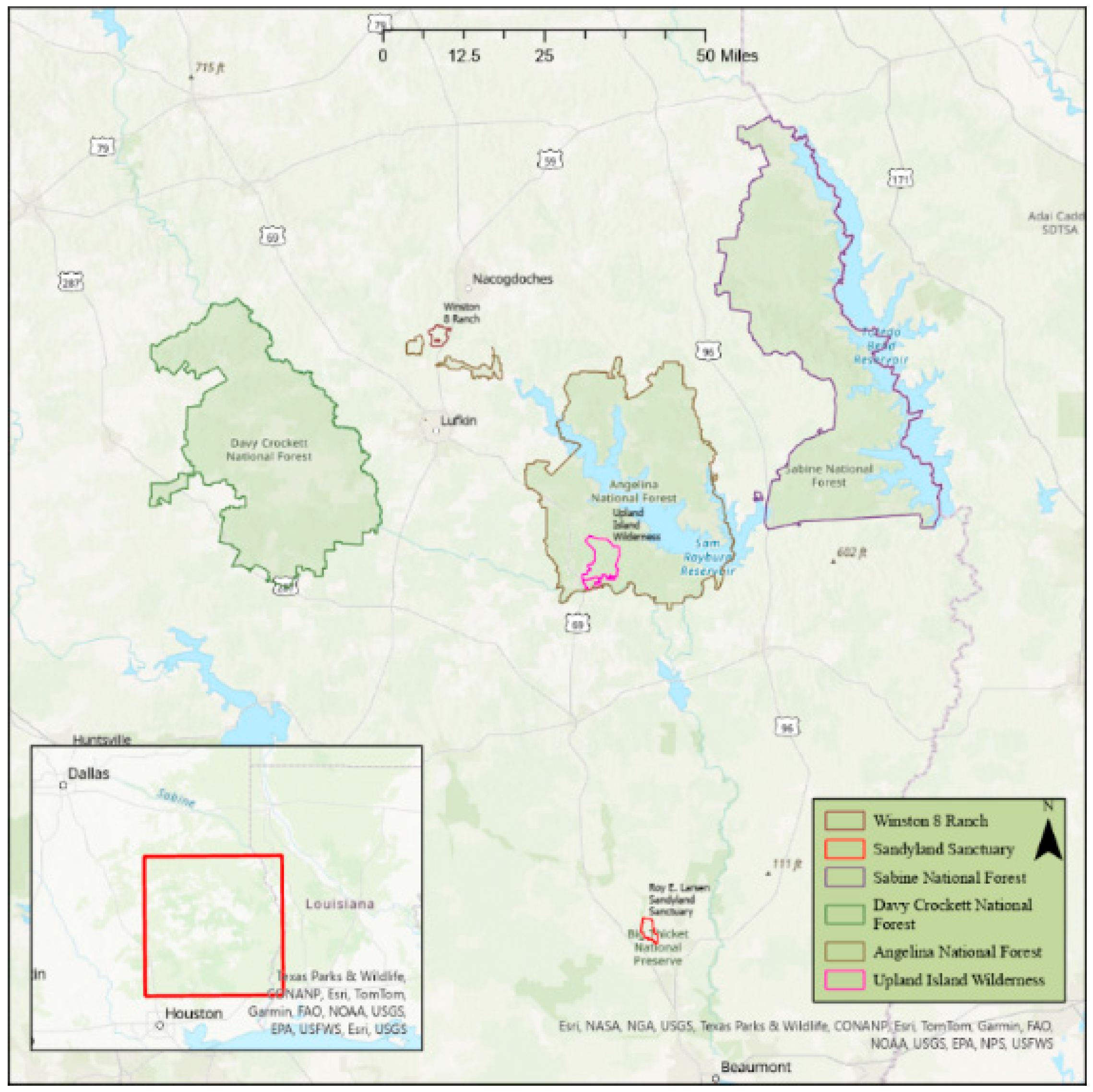
The Pineywoods ecoregion is characterized by extensive pine and pine–hardwood forests found at elevations between 61 and 152 m with annual precipitation between 89 and 127 cm (Table 1). Soils are predominantly light-colored to dark-gray sands or sandy loams [25] (Table 2). Our study sites were located on the Sabine, Angelina, and Davy Crockett National Forests; the Winston 8 Land and Cattle Ranch (Winston 8); and The Nature Conservancy’s Roy E. Larsen Sandyland Sanctuary (Sandyland) (Figure 1). The Sabine, Angelina, and Davy Crockett National Forests are part of the United States Forest Service (USFS) National Forests and Grasslands of Texas (NFGT). Winston 8 is privately owned, and Sandyland is managed by The Nature Conservancy.
The 61,989 ha Angelina National Forest (N 31°17.4′34″, W 956.4′32″) is dominated by longleaf pine, loblolly pine, and shortleaf pine, and the Sabine National Forest (N 31°29′47″, W 93°52′12″) covers 65,015 ha, with the predominant overstory species being loblolly pine. The Davy Crockett National Forest (N 31°17′28″, W 95°6′32″) contains 64,749 ha, with the dominant overstory species being loblolly pine. These National Forests have a one-to-five-year burn rotation, burning 26,304 to 34,398 ha per year; operationally, the goal is two to three years. Winston 8 (N 31°30′13″, W 94°42′36″) is a privately owned ranch covering 1360 ha, with forests of young or mature loblolly and longleaf pine stands, and mixed forest stands in streamside management zones; for this study, only stands containing a longleaf pine overstory were utilized. Sandyland (N 30°21′31″, W 94°14′14″) covers 2288 ha and features extensive floodplain forest, a transition area between floodplains and dry sandy uplands, and extensive baygall areas. Operationally, an annual burn regime occurs; however, in 2020, no burns were conducted due to the pandemic.

2.2. Field Methods and Data Collection

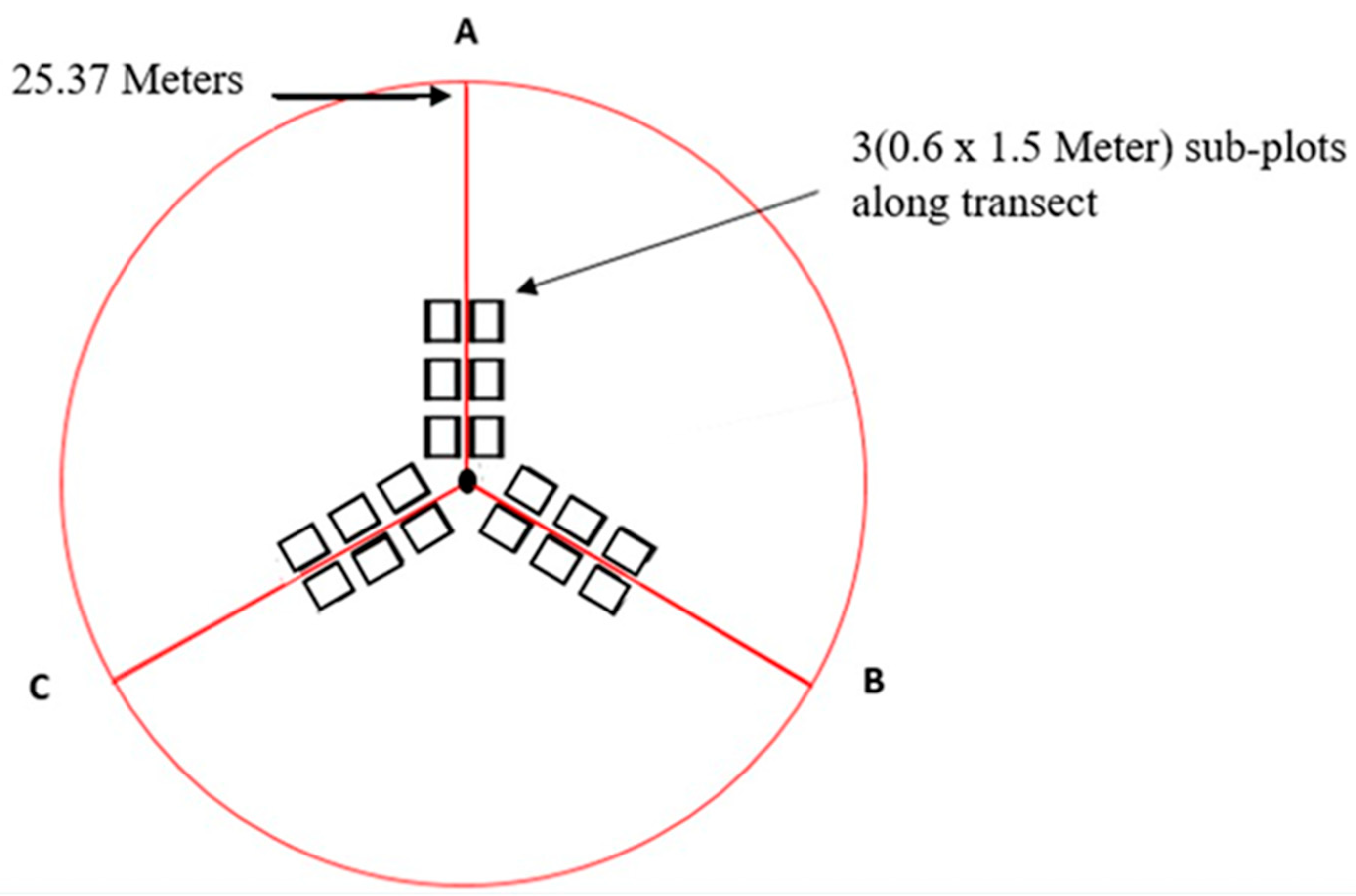
Surveys were conducted during the 2020 and 2021 dormant seasons (Table 3) on plots 0.2 ha in size (radius = 25.37 m), with the browse survey initiated at the plot center (Figure 2). All plant scientific names were verified using the USDA plants database [26]. Plots were randomly stratified in the National Forests, based on different levels of importance and forest composition determined by USFS [5]. All plots were at least 30.5 to 61.0 m away from a road, with the plot center being randomly located [27].
Species selected had stems below 1.5 m tall, approximately the vertical reach of a deer [11], had greater than 200 stems present in a plot, were a preferred browse species for white-tailed deer, and were a preferred browse choice for eastern Texas [11]. The survey starting point was at the plot center, which was then moved to the nearest browse species with a maximum of 34 stems that met the above criteria; the number of stems with evidence of white-tailed deer browse was recorded. The survey continued to the next plant in a random direction a minimum of 23 m away. The process continued until 100 stems were reached for each species, and repeated for a 2nd time for each species.
New buds, shoots, leaves, and stems were collected within the plots from multiple plants for nutrient analysis. When possible, a minimum of 50 g was weighed, dried at 55 °C for 48 h or until constant weight was obtained, weighed again, and assessed for percent dry matter. Samples were then ground in a 1 mm Wiley mill to obtain a minimum of 25 g, which was stored in a Ziploc bag, frozen, and then sent to Dairy One Forage Laboratory in Ithaca New York for dry matter, crude protein, lignin, ash, neutral detergent fiber, and macro-element content (calcium, phosphorus, sodium, potassium, magnesium, chlorine, and sulfur) analysis.
Standard analytical procedures were used to analyze crude fat, lignin, and ash [28]. In performing individual mineral analysis, a Microwave Accelerated Reaction System (MARS6; CEM, Matthews, NC, USA) digested the samples, and the samples were analyzed by a Thermo Jarrell Ash IRIS Advantage HX Inductively Coupled Plasma Radial Spectrometer (Thermo Instrument Systems, Inc., Waltham, MA, USA). The neutral detergent fiber and acid detergent fiber were analyzed using a modified version of [16] in an Ankom 2000 Fiber Analyzer (Ankom Technol. Corp., Fairport, NY, USA) using α-amylase and sodium sulfite. Acid detergent insoluble crude protein was determined by the product of 6.25 and nitrogen, which was then analyzed in the residue remaining after the acid detergent fiber procedure. Crude protein was calculated as 6.25 × total nitrogen utilizing standard method [28] for determining nitrogen.

2.3. Data Analysis

All statistical analyses were performed in SAS version 9.4. or R Studio version 4.0. We tested for normality using the Shapiro–Wilk normality test. Histograms and Kernel density plots helped visualize distributions. Principal Component Analysis (PCA) was performed to reduce the number of redundant variables in multiple linear regressions and determine which were most important. We utilized repeated ANOVAs to determine if different burn regimes had different nutritional values of browse, with year sampled being the repeated measure. All tests except the Shapiro–Wilk normality test had a significance value of ( α   = 0.10). A one-way ANOVA was conducted on USFS data since nutrient sampling only occurred during 2021; we used Tukey’s multiple comparison means test to determine which years since burned and number of burns within a decade were different. If a data set did not pass the normality test, we used a Kruskal–Wallis test; Dunn’s test with Bonferroni correction was conducted post hoc if the Kruskal–Wallis test indicated significant differences existed. Several nutrient variables were compared to soil nutrient results obtained from a companion study [29] using Pearson Correlation. Yaupon (Ilex vomitoria) was analyzed separately because it occurred in numerous plots across multiple burn regimes, and this was compared to the crude protein, net energy for maintenance, and lignin content for all sites. Pearson Correlation was used to quantify the strength of relationships among all variables [30]. Multiple linear regression models were estimated to quantify the effects of nutrient parameters and some environmental variables on browse utilization. A chi-square test was performed to test the significance for browse that had more than 200 stems per plots and within the browse height of white-tailed deer by burn history.

3. Results

Variables relating to energy (starches, sugars, fats, and protein) and palatability were the most influential in PCA analyses, as were macronutrients, micronutrients, and palatability when comparing the three sites (Table 4, Table 5 and Table 6). Only lignin, ash, and neutral detergent fiber passed the Shapiro–Wilk test for normality. Lignin and neutral detergent fiber were significantly different among number of burns within a decade, but not by year since burned. Ash content was not significant for number of burns within a decade, but was significant for year since burned. All browse species’ nutrient variables were significantly different among years since burned and number of burns over a decade. Lignin, crude protein, and energy changed over burn regimes for all browse species and were compared to yaupon’s utilization, crude protein, and net energy for maintenance by years since burned and number of burns within a decade (Table 7 and Table 8). Yaupon utilization, crude protein, energy, and lignin were not significantly different among years since burn; however, there were significant differences in crude protein and net energy for maintenance by number of burns within a decade.
Linear 2. = 0.0024 and number of burns within a decade (R2 = 0.14) were developed. Since number of burns within a decade was a better predictor than years since burned, the number of burns within a decade was included in the multiple linear regression model. Additional independent variables included biomass, adjusted crude protein, acid detergent fiber, total digestible nutrients, calcium, phosphorus, magnesium, potassium, iron, manganese, and molybdenum. Adjusted crude protein was used in the model because it does not include incomplete proteins [16]. For fiber content, acid detergent fiber was used rather than amylase neutral detergent fiber or non-fiber carbohydrates. Total digestible nutrients were used rather than any of the energy variables (net energy for maintenance, net energy for lactation, or net energy for growth), because total digestible nutrients is both a quality and quantity variable when assessing forage (Table 9). The high multicollinearity found for many of the non-significant variables was not surprising, as many of parameters such as crude protein and nutrients such as potassium are often correlated. Vegetation nutrient variables compared soil nutrient variables from the same plots [28] found very low correlations between soils and vegetation nutrient status (Table 10).
Browse nutrient content in all three sites (Table 11) exceeded the requirement range for all but phosphorus, where it only exceeded requirements at Winston 8. While the Winston 8 and USFS sites had one soil series (Cuthbert) in common, the other soil series at Winston 8 are more commonly associated with the upper coastal plain of this region, while the USFS sites are commonly associated with the lower coastal plain. The difference often results in lower levels on lower coastal plain sites, and, as a result, in vegetation growing on those sites.

4. Discussion

Variables relating to energy (starches, sugars, fats, and protein) and digestibility were consistently the most important factors. Lignan and net energy for maintenance had negative correlations with number of burns per decade, but this was the opposite for years since burned. Typically, stands that are infrequently burned support denser woody vegetation, resulting in overall higher lignin content [24]; however, burning too often can reduce the amount of available browse, which is probably why areas with only two burns in a decade had greatest lignin concentrations. Energy, on the other hand, was higher at sites burned 4 times a decade compared to 10 times a decade, and energy was higher in sites burned 3 years ago compared to 1 year ago. Habitats managed accordingly would potentially help reduce the use of fat reserves and utilize lower-quality foods in the winter time [31]. Up to 30% of a buck’s body mass will be lost during the rut from fat reserves acquired during the fall. Furthermore, if there are low-quality resources for energy, ungulates can decrease future or current maternal investments when energy needs are not met [32]. For lactation, the rate of energy intake cannot meet the demands of energy expenditure, thus causing endogenous reserves to be used and a loss in body condition. Therefore, having high-quality forage is crucial for a deer population’s reproduction [13].
Crude protein had a moderately strong positive correlation with increasing number of burns per decade. The nitrogen content of the forage is used to calculate crude protein [28], and fire has been shown to often increase nitrogen concentrations in the soil following a prescribed burn [33]. Vegetative communities also have the potential to be influenced by the impact of the fire on the organic layer from frequent fires [34]. Sites burned annually on the Winston 8 ranch had significantly higher crude protein than burning two, three, and five times per decade. However, nitrogen levels may be negatively impacted by long-term frequent fire, although productivity was not significantly altered by nutrient loss [35]. Crude protein was significantly lower for 2 years since burned when compared to sites that were burned 4 and 1 year ago. A potential reason why sites burned four years ago did not have the lowest crude protein was because there were only two USFS sites sampled where this occurred, and both of those sites where near a riparian area.
Site factors can significantly influence nutrient availability for white-tailed deer, and can also influence what type of plants grow in the plot. Crude protein and energy were significantly different by site; however, lignin was not. The different management goals and strategies utilized by the three organizations who provided sites may have also increased variability.
The nutrient availability in yaupon was compared to [14], who reported that protein during the winter was greatest three years after a burn; their findings regarding protein do contrast with this study, where the average crude protein content was greatest one year after a burn. For yaupon, this was from 1 to 3 years.
First-choice browse species do typically display high palatability, high energy, and high protein; however, selection and utilization of browse by deer is complex. The ranges of utilization overlap, which could indicate that there are preferences within these browse choices. In some cases, species lists indicating browse preferences or choices may not always be applicable to every region or site. Since individual species do vary greatly in nutrient variability, this could impact the utilization of the species. However, the greatest utilizations observed were for first-choice browse species such as greenbrier (Smilax L. sp.), blackberry (Rubus L. sp.), and Sassafras (Sassafras albidum Nutt.).
Many factors influence why deer utilize certain areas more than others, so in the multiple linear regression model, nutrient variables and plot variables such as number of burns within a decade and canopy density were included. Taking into account many different nutrient variables in the model did account for nutrient avoidance and maximization occurring simultaneously, while also including diet selection, supporting the nutrient balance hypothesis [25].
While the Winston 8 model was not significant, this information is useful, as there might be additional factors affecting the utilization of browse species, such as abundance of available browse and deer density. This could indicate that none of the measured nutrients are limiting for the deer on the Winston 8 Ranch.
At USFS and Sandyland, browse alone could not meet the nutritional requirements of phosphorus for white-tailed deer. However, the deer could be obtaining phosphorus from other food sources in their habitat that were not observed in this study. White-tailed deer can offset phosphorus deficiency from resorption from bone, decreased endogenous losses, and increases in absorption efficiency. Micronutrients were not included because there are not any established guidelines for them [13]. No other nutrients were observed to be deficient in the browse samples by site (Table 11).
In the Sandyland model, deer had positive selection for plants with high adjusted crude protein and magnesium. Proteins are usually one of the nutrients recognized to be limiting for large herbivores and are generally used in forage selection [17]. Magnesium is a limiting factor in Sandyland, probably due to soil characteristics; however, in wild populations, magnesium deficiency is extremely rare. The soil series observed in Sandyland (McNeely and Belrose) had a predominate sandy texture, and such soils have been reported to have low levels of nitrogen, phosphorus, potassium, and boron [36].
In the USFS model, deer showed selection for plants with high adjusted crude protein, calcium, magnesium, and potassium. The selection for macronutrients observed in the model could have been due to the browse comprising primarily of second- and third-choice browse, which are less nutritious than first-choice browse species. Forages’ and species’ nutritional characteristics, such as phosphorus concentration, crude protein, calcium, differ spatially and temporally according to the soil [35,36].
Another factor affecting white-tailed deer nutrient availability is the diversity of available browse species. Over all sites, 56 different woody species were observed; however, only 37% of all observed woody species were evaluated for utilization because they were within the approximate vertical reach of deer and had greater than 200 stems per plot. If sites had more diverse browse, this could have affected choices and a wider range of nutrients would have been provided for the deer as well. The sites that had the most browse species evaluated for utilization were those 2 years since burned with two burns per decade, while the sites with the most species were plots with 3, 4, 5, and 10 burns per decade and those 4 years since burned.
Another factor that could impact the selection of sites for utilization for white-tailed deer browse is available mast. Fire can cause many soft mast species to forgo fruiting by top killing or removing aboveground vegetation, which causes energy to be used for vegetative growth [37]; furthermore, a browse survey could account for less than half and as little as one-fourth of a deer diet on fully stocked ranges [11].
The low values of the variation accounted for in the linear models reflect the importance of variables not measured in this study that still play an important role in plant growth and nutrient availability, such as precipitation and soil texture. We did not perform any multi-variate analysis between soil mapping unit (soil series) and the vegetation parameters, as plots for the USFS sites were those given to us, and were not stratified by soil series when initially established.

5. Conclusions

Prescribed burning has positive effects on browse quality and availability; thus, it has impacts on the management of white-tailed deer. However, the appropriate timing and frequency of burning is crucial to achieving optimum results for prescribed burning, and fire is extremely variable in influencing the nutrient availability of browse species and, in turn, can influence utilization. Frequent fires resulted in higher crude protein ( x ¯ = 14.0%) than infrequently burned sites. At four burns per decade, net energy for maintenance was highest ( x ¯   = 0.6 Mcal Kg−1). Significant linear regression models only explained about a quarter to less than half of the utilization (28% to 41%), but the parameters in the model did show that the deer had some preferences for some nutrients, such as crude protein and magnesium. Recurring prescribed burns should also benefit other wildlife species that require a reduced brush component, increased herbaceous ground cover, and a more open midstory in these pine-dominated ecosystems, thus increasing biodiversity and facilitating a healthier and more resilient ecosystem.

Author Contributions

All authors contributed towards project conceptualization and design. W.B. wrote the initial draft and performed the majority of the analysis. W.B. and B.P.O. were the primary authors of the manuscript, and J.L.G. and K.R.K. provided substantial edits to the manuscript. All authors have read and agreed to the published version of the manuscript.

Funding

Funding was provided by the McIntire-Stennis Cooperative Research Program and the Arthur Temple College of Forestry and Agriculture, Stephen F. Austin State University.

Institutional Review Board Statement

Not applicable.

Informed Consent Statement

Not applicable.

Data Availability Statement

The data sets are available upon request from the corresponding author.

Acknowledgments

The field work could not have been accomplished without all the volunteers, field technicians, and fellow graduate students. Our thanks go out to the USFS personnel Ike McWhorter, Robert Dodgen, Matt Laricos, and Joey Silva who provided fire data on compartments, and allowed access on the USFS land. From The Nature Conservancy (TNC) we are grateful for Shawn Benedict and Charlotte Remmts for providing us data and access on Sandyland, and at the Winston 8 ranch, we are grateful for Paul Wood who allowed the study to be conducted.

Conflicts of Interest

The authors declare they have no competing interests.

References

  1. Dills, G. Effects of Prescribed burning on deer browse. J. Wild. Manag. 1970, 34, 540–545. [Google Scholar] [CrossRef]
  2. Thill, R.E.; Martin, A.; Morris, H.F.; McCune, E.D. Grazing and burning impacts on deer diets on Louisiana pine-bluestem range. J. Wild. Manag. 1987, 51, 873–880. [Google Scholar] [CrossRef]
  3. Wood, G.W. Effects of prescribed fire on deer forage and nutrients. Wild. Soc. Bull. 1988, 16, 180–186. [Google Scholar]
  4. Edwards, S.L.; Demarais, S.; Watkins, B.; Strickland, B.K. White-tailed deer forage production in managed and unmanaged pine stands and summer food plots in Mississippi. Wild. Soc. Bull. 2004, 32, 739–745. [Google Scholar] [CrossRef]
  5. Wall, T.; Oswald, B.; Kidd, K.R.; Darville, R. An evaluation of United States Forest Service prescribed fire regimes in East Texas. For. Ecol. Manag. 2019, 449, 117485. [Google Scholar] [CrossRef]
  6. Johnson, A.S.; Hale, P.E.; Ford, W.M.; Wentworth, J.M.; French, J.M.; Anderson, O.F.; Pullen, G.B. White-tailed deer foraging in relation to successional stage, over story type and management of Southern Appalachian forests. Amer. Mid. Nat. 1995, 133, 18–35. [Google Scholar] [CrossRef]
  7. Short, H.L.; Blair, R.M.; Epps, E.A. Composition and digestibility of deer browse in southern forests; SO-11. In Simulating Timber and Deer Food Potential in Loblolly Pine Plantations; U.S. Department of Agriculture, Forest Service, Southern Forest Experiment Station: New Orleans, LA, USA, 1975. [Google Scholar]
  8. Fullbright, T.E.; Ortega, O.S. White-Tailed Deer Habitat: Ecology and Management on Rangelands; Texas A&M University Press: College Station, TX, USA, 2006. [Google Scholar]
  9. Blair, R.M.; Burnett, L.E. Seasonal browse selection by deer in a southern pine-hardwood habitat. J. Wild. Manag. 1980, 44, 79–88. [Google Scholar] [CrossRef]
  10. Kroll, J.C. A Practical Guide to Producing and Harvesting White-Tailed Deer; Stephen, F., Ed.; Austin State University Press: Nacogdoches, TX, USA, 1994. [Google Scholar]
  11. Lay, D.W. Deer range appraisal in eastern Texas. J. Wild. Manag. 1967, 31, 426–432. [Google Scholar] [CrossRef]
  12. Berteaux, D.; Crete, M.; Hoot, J.; Maltais, J.; Ouellet, J.P. Food choice by white-tailed deer in relation to protein and energy content of the diet: A field experiment. Oecologia 1998, 115, 84–92. [Google Scholar] [CrossRef]
  13. Hewitt, D.G. Biology and Management of White-Tailed Deer; CRC Press: New York, NY, USA, 2011. [Google Scholar]
  14. Lay, D.W. Browse quality and the effects of prescribed burning in southern pine forests. J. For. 1957, 55, 342–347. [Google Scholar] [CrossRef]
  15. Lowman, Z.G.; Greene, E.J.; Wheat, B.R.; Demarais, S.; Miller, D.A.; Rush, S.A.; Riffell, S.K. White-tailed deer carrying capacity, intercropping switchgrass, and pine plantations. J Wild. Manag. 2017, 81, 999–1008. [Google Scholar] [CrossRef]
  16. Van Soest, P. Nutritional Ecology of the Ruminant; Cornell University Press: Ithaca, NY, USA, 1994. [Google Scholar]
  17. Robbins, C. Wildlife Feeding and Nutrition, 2nd ed.; Academic Press: San Diego, CA, USA, 1993. [Google Scholar]
  18. Carlson, P.C.; Tanner, G.W.; Wood, J.M.; Humphrey, S.R. Fire in key deer habitat improves browse, prevents succession, and preserves endemic herbs. J. Wild. Manag. 1993, 57, 914–928. [Google Scholar] [CrossRef][Green Version]
  19. Baker, J.B. Uneven-Aged Silviculture for the Loblolly and Shortleaf Pine Forest Cover Types; General Technical Report; SO-118; Department of Agriculture, Forest Service, Southern Forest Experiment Station: New Orleans, LA, USA, 1996. [Google Scholar]
  20. Schultz, R.P. Loblolly Pine: The Ecology and Culture of Loblolly Pine (Pinus taeda L.); Agriculture Handbook 713; U.S. Department of Agriculture, Forest Service: Washington, DC, USA, 1997. [Google Scholar]
  21. Ivey, T.L.; Causey, M.K. Response of white-tailed deer to prescribed fire. Wild. Soc. Bull. 1984, 12, 138–141. [Google Scholar]
  22. Walter, W.D.; Zimmerman, T.J.; Leslie, D.M., Jr.; Jenks, J.A. Dietary response of sympatric deer to fire using stable isotope analysis of liver tissue. Wildl. Bio. Pract. 2009, 5, 128–135. [Google Scholar] [CrossRef]
  23. Zimmerman, T.; Jenks, J.; Leslie, D.D. Gastrointestinal morphology of female white-tailed and mule deer: Effects of fire, reproduction, and feeding type. J. Mamm. 2006, 87, 598–605. [Google Scholar] [CrossRef]
  24. Stransky, J.; Harlow, R. Effects of fire on deer habitat in the southeast. In Prescribed Fire and Wildlife in Southern Forests; Wood, G.W., Ed.; Belle Baruch Forest Science Institute, Clemson University: Georgetown, SC, USA, 1981; pp. 135–142. [Google Scholar]
  25. Correll, D.S.; Johnston, M.C. Manual of the Vascular Plants of Texas, 4th ed.; The University of Texas at Dallas: Dallas, TX, USA, 1996. [Google Scholar]
  26. Natural Resources Conservation Service Plants Database. Available online: https://plants.usda.gov (accessed on 13 August 2025).
  27. ESRI ArcGIS Desktop. 11.0 Redlands, CA. Environmental Systems Research Institute. 2023. Available online: https://pro.arcgis.com (accessed on 15 August 2025).
  28. Association of Officiating Analytical Chemists International. Official Methods of Analysis, 18th ed.; Association of Officiating Analytical Chemists International: Arlington, VA, USA, 2006. [Google Scholar]
  29. Dunson, C.P.; Oswald, B.P.; Farrish, K.W. The Effects of Prescribed Burning on Selected Soil Chemical Properties in East Texas Forests. Forests 2023, 14, 1912. [Google Scholar] [CrossRef]
  30. Szafran, R.F. Answering Questions with Statistics; SAGE: Thousand Oaks, CA, USA, 2011. [Google Scholar]
  31. Short, H.L. Nutrition of southern deer in different seasons. J. Wild. Manag. 1975, 39, 321–329. [Google Scholar] [CrossRef]
  32. Cherry, M.J.; Warren, R.J.; Connor, L.M. Fire-mediated foraging tradeoffs in white-tailed deer. Ecosphere 2017, 8, e01784. [Google Scholar] [CrossRef]
  33. Bell, R.L.; Binkley, D. Soil nitrogen mineralization and immobilization in response to periodic prescribed fire in a loblolly pine plantation. Can. J. For. Res. 1989, 19, 816–820. [Google Scholar] [CrossRef]
  34. Glow, M.P.; Ditchkoff, S.S.; Smith, M.D. Annual fire return interval influences nutritional carrying capacity of white-tailed deer in pine-hardwood forests. For. Sci. 2019, 65, 483–491. [Google Scholar] [CrossRef]
  35. Liechty, H.O.; Hooper, J.L. Long term fire effect of periodic fire on nutrient pools and soil chemistry in loblolly- shortleaf pine stands managed with single-tree selection. For. Ecol. Manag. 2016, 405, 9–12. [Google Scholar] [CrossRef]
  36. Horrell, L.B.; Cohen, B.S.; Miller, K.V.; Chamberlain, M.J. Geographical variation in nutritional quality of white-tailed deer forage plants in Louisiana. J. Southeast Assoc. Fish Wildl. Agencies 2015, 2, 187–192. [Google Scholar]
  37. Harlow, R.F.; Van Lear, D.H. Effects of prescribed burning on mast production in the southeast. In Proceedings of the Southern Appalachian Mast Management Workshop; University of Tennessee: Knoxville, TN, USA, 1989; pp. 14–16. [Google Scholar]
Figure 1. Location of the four study sites in East Texas utilized in this study.
Fire 09 00030 g001
Figure 2. Plot design modified from USFS fuel monitoring protocols (from [5]), with radius adjusted for deer browse. Plots were 0.2 ha in size (25.37 m radius) with 3 transects (A, B, and C).
Fire 09 00030 g002
Table 1. Annual total precipitation, the number of days with maximum temperature less than 0 °C, number of days maximum temperature was greater than 32.2 °C, and number of days minimum daily temperature was less than 0 °C by year.
Year SampledTotal Precipitation
(cm)
Number of Days Maximum Temperature < 0 °CNumber of Days Maximum Temperature Was >32.22 °CNumber of Days Minimum Daily Temperature < 0°
2020133.910.0077.3620.35
2021140.821.7596.3819.43
Table 2. Confirmed soil series found at each of the four sites utilized in this study.
Winston 8USFS
Soil SeriesTaxonomic ClassificationSoil SeriesTaxonomic Classification
BernaldoFine–loamy, siliceous, semiactive, thermicGlossic PaleudalfsAlazanFine–loamy, siliceous, semiactive, thermicAquic Glossudalfs
CuthbertFine, mixed, semiactive, thermic Typic HapludultsCuthbertFine, mixed, semiactive, thermic Typic Hapludults
BowieFine–loamy, siliceous, semiactive, thermic Plinthic PaleudultsKeithvilleFine–silty, siliceous, semiactive, thermic Glossaquic Paleudalfs
KirvinFine, mixed, semiactive, thermic Typic HapludultsKurthFine–loamy, siliceous, semiactive, thermic Oxyaquic Glossudalfs
LaCerdaFine–loamy, siliceous, semiactive, thermic Oxyaquic Glossudalfs
SandylandLibertLoamy, siliceous, semiactive, thermicArenicPlinthic Paleudults
BelroseCoarse–loamy, siliceous, superactive, thermic Oxyaquic PaleudultsLoveladyLoamy, mixed, semiactive, thermic Arenic Glossudalfs
McNeeleyThermic, coatedTypic QuartzipsammetsMoswellVery fine, smectitic, thermic Vertic Hapludalfs
RaylakeFine, smectitic, thermic Chromic Dystruderts
Metcalf-Sawtown complexFine, smectitic, thermic Chromic Dystruderts
Table 3. Number of plots at Winston 8, Sandyland, and USFS by years since burned and number of burns within a decade.
Years Since BurnedNumber of Burns Within a Decade
Site nSite n
Winston 8115Winston 81015
Sandyland16Sandyland22
Sandyland28Sandyland37
USFS112Sandyland42
USFS24Sandyland53
USFS35USFS21
USFS42USFS36
USFS36
USFS412
USFS52
USFS62
Table 4. Most influential factors from the Principal Component Analysis (PCA) of all nutrients, reduced set of nutrients, as well as the 3 sites utilized in this study.
All Nutrients
Relative feed valueEthanol-soluble carbohydrates
Reduced Set of Nutrients
Net energy for lactationCopper
Winston 8
CopperAcid detergent fiber
Phosphorus
Sandyland
IronAcid detergent fiber
Potassium
USFS
CopperAcid detergent fiber
Table 5. Top three imputed and reduced Principal Component Analysis (PCA) Eigenvalues, with percent variation explained by Axis 1 and Axis 2.
Overall Imputed
VariableAxis 1 (36.3%)VariableAxis 2 (19.2%)
Relative feed value6.606Ethanol-soluble carbohydrates8.559
Amylase neutral detergent fiber6.577Dietary cation–anion difference8.396
Acid detergent fiber6.441Copper8.002
Overall Reduced
VariableAxis 1 (31.6%)VariableAxis 2 (20.2%)
Net energy for lactation11.822Copper11.942
Acid detergent fiber11.612Precipitation10.208
Net energy for maintenance11.358Manganese10.110
Table 6. Top three Principal Component Analysis (PCA) Eigenvalues for macronutrients, micronutrients, and palatability, with percent variation explained by Axis 1 and Axis 2 for Sandyland, Winston 8, and USFS.
Sandyland
Macronutrients
VariableAxis 1 (41.8%)VariableAxis 2 (28.2%)
Potassium41.828Sodium38.559
Phosphorus30.646Phosphorus23.261
Magnesium14.594Magnesium22.377
Micronutrients
Axis 1 (31.6%) Axis 2 (24.4%)
Iron35.563Copper48.068
Manganese34.134Zinc25.089
Zinc19.069Manganese12.813
Palatability
Axis 1 (61.2%) Axis 2 (22.1%)
Acid detergent fiber30.409Non-fiber carbohydrates44.118
Net energy for maintenance24.006Crude protein26.758
Crude protein17.451Digestible dry matter23.497
Winston 8
Macronutrients
Axis 1 (39.4%) Axis 2 (29.4%)
Phosphorus43.142Magnesium38.843
Potassium29.705Sodium34.122
Sodium13.929Potassium19.584
Micronutrients
Axis 1 (40.5%) Axis 2 (24.4%)
Copper30.653Iron59.092
Molybdenum29.891Copper16.451
Manganese20.779Molybdenum14.528
Palatability
Axis 1 (60.8%) Axis 2 (21.5%)
Acid detergent fiber32.300Digestible Dry Matter75.477
Net energy for maintenance31.196Non-fiber carbohydrates18.135
Crude Protein19.963Crude Protein5.699
USFS
Macronutrients
Axis 1 (40.1%) Axis 2 (27.4%)
Potassium41.049Magnesium52.282
Phosphorus26.685Calcium28.017
Calcium19.586Potassium8.387
Micronutrients
Axis 1 (36.1%) Axis 2 (22.3%)
Copper40.966Manganese50.543
Zinc34.070Iron31.861
Iron17.254Molybdenum15.355
Palatability
Axis 1 (57.9%) Axis 2 (30.4%)
Acid detergent fiber31.314Non-fiber carbohydrates33.594
Net energy for maintenance27.563Crude protein30.359
Crude protein14.378Digestible dry matter29.980
Table 7. Significant nutrient variables from the Kruskal–Wallis test among years since burned and number of burns within a decade by site. aNDF = neutral detergent fiber, using sodium sulfite and α-amylase.
Years Since Burned
USFS
Crude ProteinAdjusted Crude ProteinPhosphorus
Available ProteinAshNon-fiber carbohydrates
Iron
Sandyland
Crude ProteinCalciumAdjusted incomplete crude proteins
PotassiumChloride IonNon-dietary incomplete crude protein
SodiumSoluble crude proteinZinc
CopperMolybdenumStarch
Iron Ethanol-soluble carbohydrates
Number of Burns Within a Decade
USFS
Crude ProteinAvailable ProteinAdjusted Crude Protein
PhosphorusMagnesiumPotassium
CopperUseNon-fiber carbohydrates
Iron
Sandyland
SulfurAshAsh-free amylase neutral detergent fiber
Table 8. Mean browse utilization (%) and crude protein (%) for Winston 8, USFS, and Sandyland sites and yaupon with standard deviation, Net energy for maintenance (NEM), and lignin by year since burned and number of burns within a decade. n = number of plots. Variables within a column with same letter are not significantly different. NA = none.
Utilization (%)Crude Protein (%)
Years Since Burned
nAllnYauponnAllnYaupon
1268.5 (11.4) a187.8 (6.2) a2512.8 (6.1) a,b1713.3 (2.8) a
2163.5 (4.8) b158.3 (5.3) a108.1 (2.8) c711.5 (2.0) a
3116.4 (10.8) a,b97.3 (5.9) a89.7 (4.4) b,c511.5 (1.5) a
4213.1 (16.4) a,b26.3 (5.3) a216.6 (5.6) a215.1 (1.5) a
Number of Burns within a Decade
222.2 (1.5) b23.5 (1.4) a27.2 (1.7) b29.3 (0.7) b
3154.8 (7.9) b146.3 (4.3) a1310.4 (4.7) b1112.6 (1.7) a,b
4144.0 (4.5) b127.2 (3.6) a711.0 (5.6) a,b514.3 (3.6) a,b
585.3 (10.9) b79.3 (7.6) a810.0 (4.8) b610.9 (1.7) a,b
101613.5 (13.3) a910.8 (7.4) a1614.0 (6.5) a914.0 (2.2) a
NEM (Mcal Kg−1)Lignin (%)
Years Since Burned
nAllnYauponnAllnYaupon
1250.5 (0.1) b170.6 (0.1) a2417.0 (5.1) a318.8 (2.5) a
2100.6 (0.1) a,b70.7 (0.1) a818.4 (3.6) a113.7 (NA) a
380.6 (0.1) a50.6 (0.1) a415.7 (5.4) a0NA
420.6 (0.1) a,b20.6 (0.1) a0NA0NA
Number of Burns within a Decade
220.6 (0.1) a,b20.6 (0.1) a119.4 (NA) a0NA
3130.6 (0.1) a,b110.6 (0.1) a820.1 (5.1) a0NA
470.6 (0.1) a50.6 (0.1) a515.7 (1.4) a0NA
580.6 (0.2) a,b60.6 (0.1) a616.8 (6.6) a215.2 (2.1) a
10160.5 (0.2) b90.6 (0.1) a1616.3 (3.8) a220.0 (2.2) a
Table 9. Multiple linear regression parameters predicting browse utilization for the Sandyland and USFS sites. Sandyland adjusted r-squared value = 0.41, and p = 0.0002; USFS’s adjusted r-squared value = 0.28, and p = 0.0395. Potassium was kept in the regression because it is an important macronutrient, despite a variance inflation factor > 10.
SandylandUSFS
VariableParameter
Estimate
Pr > |t|Variance
Inflation Factor
Parameter
Estimate
Pr > |t|Variance
Inflation Factor
Intercept−0.06390.60020−0.59390.26570
Canopy density−0.00030.54891.30105−0.00050.74643.30119
Number of burns within a decade−0.00140.71871.312360.03160.37443.42307
Biomass0.000290.36381.65169−0.00140.50292.52553
Adjusted crude protein0.004940.04787.72670.018020.0227.02491
Acid detergent fiber−0.00020.83349.657120.005270.19456.08996
Total digestible nutrients0.001010.42257.249840.001230.81274.76251
Calcium0.012680.36332.735330.114620.01812.64491
Phosphorus0.048350.57526.62169−0.99310.00225.16842
Magnesium0.079360.00683.178820.283410.04472.95153
Potassium−0.04360.158811.27730.250690.01628.39228
Iron−0.00040.15042.06321−0.82770.0293.07385
Manganese6.2 × 10−60.29541.92336−1 × 10−40.85971.96634
Molybdenum−0.02590.27421.51433−1 × 10−50.63862.65018
Table 10. Pearson Correlation values of soil nutrients [29] compared to the browse nutrients sampled on the Winston 8. Crude protein is a direct measurement of nitrogen in the foliage, so it can be compared to the nitrogen variables measured in the soil. TNC = Total Nitrogen Content, and CP = Crude protein.
SoilBrowse
PKCaMgSNaCP
P0.0140.193−0.285−0.465−0.031−0.050−0.023
K0.0770.309−0.0250.0420.245−0.0050.220
Ca0.4700.3780.056−0.1900.607−0.5760.427
Mg0.1110.040−0.194−0.2970.309−0.5120.075
S−0.0050.171−0.259−0.0390.200−0.1850.129
Na0.086−0.2890.1150.0510.031−0.255−0.095
NH4−0.1200.183−0.371−0.363−0.2050.227−0.087
NO3-0.2150.5430.056−0.0350.1090.3650.302
TNC−0.07−0.001−0.473−0.2060.092−0.222−0.040
Table 11. Nutrient content for browse by site. Nutrient requirements for crude protein are for the winter. Calcium requirements are defined for a 50 Kg doe and 80 Kg buck. Minimum requirement for potassium of a dry forage % is reported. Sodium requirement was converted to percent from 109 mg Kg−1 dry matter intake.
NutrientWinston 8 (Mean)Sandyland
(Mean)
USFS
(Mean)
Requirement (%)
Crude protein (%)13.989.8010.618–9
Calcium (%)0.700.801.060.21
Phosphorus (%)0.200.120.120.17
Potassium %1.010.570.720.20–0.30
Magnesium %0.380.280.320.06
Sodium (%)0.040.040.050.0109
Disclaimer/Publisher’s Note: The statements, opinions and data contained in all publications are solely those of the individual author(s) and contributor(s) and not of MDPI and/or the editor(s). MDPI and/or the editor(s) disclaim responsibility for any injury to people or property resulting from any ideas, methods, instructions or products referred to in the content.