Article

Study on the Effectiveness of Perfluorohexanone in Extinguishing Small-Scale Pool Fires in Enclosed Compartments Under Low-Pressure Conditions

1
College of Civil Aviation Safety Engineering, Civil Aviation Flight University of China, Guanghan 618307, China
2
Civil Aircraft Fire Science and Safety Engineering Key Laboratory of Sichuan Province, Civil Aviation Flight University of China, Guanghan 618307, China
3
School of Civil Aviation, Nanjing University of Aeronautics and Astronautics, Nanjing 210016, China
*
Author to whom correspondence should be addressed.
Fire 2025, 8(12), 472; https://doi.org/10.3390/fire8120472
Submission received: 30 October 2025 / Revised: 24 November 2025 / Accepted: 28 November 2025 / Published: 4 December 2025

Abstract

To investigate the fire suppression effectiveness of perfluorohexanone in low-pressure environments, a self-built fire suppression experimental platform was utilized to analyze the influence of ambient pressure and heat release rate on its performance. The results demonstrate that under normal-pressure conditions, the extinguishing time increases with the heat release rate of the fire source, whereas under low-pressure conditions, the extinguishing time decreases as the heat release rate increases. Specifically, under normal pressure, the extinguishing times for Fire Pan A (10 cm × 10 cm × 10 cm), Fire Pan B (15 cm × 15 cm × 10 cm), and Fire Pan C (20 cm × 20 cm × 10 cm) were 5.03 s, 8.15 s, and 9.63 s, respectively. In contrast, under low pressure, the extinguishing times were significantly shorter, with reductions of 2.8 s, 6.59 s, and 8.45 s, respectively. In terms of temperature reduction, the flame temperature decreased by approximately 300 °C under normal pressure, while under low pressure, it decreased by only about 100 °C. The concentration of hydrogen fluoride (HF) produced after extinguishment was relatively low, indicating limited toxicity. The HF concentration under normal pressure was, on average, approximately 59.2% higher than that under low-pressure conditions. Based on parameters such as the mass of the extinguishing agent, temperature changes, and hydrogen fluoride content, a fire suppression effectiveness model was established. The results show that the weight coefficient for chemical inhibition intensity is as high as 38.81, significantly exceeding other factors, demonstrating that perfluorohexanone primarily relies on chemical inhibition to interrupt the combustion chain reaction. This conclusion provides an important theoretical basis for the design and optimization of fire suppression systems in low-pressure environments such as aviation and high-altitude areas.

1. Introduction

Since the establishment of aircraft fire suppression systems, halon-based extinguishing agents have been widely used in aviation fire protection. However, subsequent studies have revealed that halogenated components in halon extinguishants decompose under solar radiation and react with ozone molecules, thereby accelerating ozone layer depletion and harming the environment. To mitigate these effects, the 2016 Kigali Amendment to the Montreal Protocol was adopted, prompting the international community to jointly address ozone depletion and climate change [1,2,3]. The development of environmentally friendly fire suppression technologies has therefore become urgent. Among various extinguishing agents, gaseous fire suppression technology has become an indispensable member of the fire protection family due to its unique characteristics [4]. With rapid industrialization, electrification, and digitalization, gaseous fire suppression systems are increasingly required to protect electrical equipment, precision instruments, information control and storage systems, and archival preservation facilities, as well as military and civilian transportation vehicles.
The existing chemical gas fire-extinguishing agents (mainly hydrofluorocarbons), as one of the main non carbon dioxide greenhouse gases, will gradually exit the gas fire-extinguishing agent market due to their high global warming potential (GWP) [5,6,7]. The National Institute of Standards and Technology (NIST) and the U.S. Department of Defense (DOD) launched the “Next Generation Fire Suppression Technology Program,” which proposed that an ideal halon replacement agent should meet multiple requirements: low extinguishing concentration, rapid extinguishing speed, effective suppression of re-ignition, zero ozone depletion potential, low global warming impact, short atmospheric lifetime, low toxicity of both the agent and its decomposition products, long-term storage stability, low or negligible corrosiveness to metals, good compatibility with elastomers and polymers, non-conductive or minimally conductive properties, and minimal residue after discharge [8,9]. As shown in Table 1, comparative analysis of key performance indicators of various fire suppressants demonstrates that perfluorohexanone exhibits significant overall advantages and meets most of the criteria for an ideal halon replacement [10,11]. First introduced by 3M in 2001 and certified by UL and FM, perfluorohexanone was later incorporated into the NFPA 2001 standard as a clean agent. In 2004, it was named one of the “Best Inventions” by Time magazine. Its physicochemical properties have been extensively studied [12,13,14], and its performance and advantages have been widely recognized across many countries. During flight, aircraft cabins are typically pressurized to the equivalent of approximately 2400 m (8000 ft) altitude to ensure passenger safety. In addition, about 26% of China’s land area is classified as plateau regions, and dozens of high-altitude airports (above 2438 m) have been constructed, where aircraft are directly exposed to natural low-pressure environments. These unique conditions increase the difficulty of aviation fire suppression. Therefore, studying the fire-extinguishing performance of agents under low-pressure conditions is of great significance for improving fire protection strategies in aviation scenarios.
Regarding the fire-extinguishing efficacy of Perfluorohexanone, some scholars have already conducted experimental research. Liang et al. developed a plunger-type perfluorohexanone fire suppression device, optimizing its core components such as the gas generator and puncture valve [16]. Their experiments on large-capacity LiFePO4 batteries under extreme conditions demonstrated that extinguishment was achieved within 11 s, 14 s, and 9 s in ambient, −40 °C, and 85 °C environments, respectively. The ambient temperature remained below 90 °C for 30 min after extinguishment, and no re-ignition was observed, showing stable performance even under extreme conditions. Wang et al. studied the atomization characteristics of perfluorohexanone under different ambient pressures using a VOF–DPM coupled model to reveal the liquid film breakup mechanism [17]. They found that the Sauter mean diameter (SMD) initially increased and then decreased along the spray axis. With decreasing pressure, the SMD increased by 38–51%, resulting in significantly reduced atomization quality. Consequently, effective coverage per unit volume decreased, requiring a 30–40% increase in agent dosage in high-altitude environments to compensate for atomization efficiency losses. Jiang et al. constructed a combustion suppression platform to investigate the inhibition effect of perfluorohexanone on thermal runaway of NCM pouch lithium-ion batteries in confined spaces [18]. Results showed that visible flames were suppressed within 3 s, with a minimum effective extinguishing dosage of 2.62 kg/kWh. However, lower dosages aggravated post-runaway temperature rise, increasing re-ignition risks. At dosages exceeding 5.48 kg/kWh, a positive suppression effect was observed. Yao et al. examined the combined use of perfluorohexanone and intermittent water mist for suppressing thermal runaway propagation in lithium-ion batteries [19]. Compared with continuous water mist spraying, the combined method exhibited stronger suppression efficiency, with visible flames extinguished within 1 s. During the cooling phase, overall cooling performance decreased with increasing cycle duration and duty ratio. This synergistic effect effectively blocked runaway propagation. Liu et al. investigated the suppression performance of perfluorohexanone on large-capacity lithium-ion battery fires [20]. Results indicated that as agent dosage increased, peak temperatures on the long side and bottom of the battery module initially rose and then fell, suggesting a negative suppression effect at low dosages, which gradually turned positive with increased dosage. In a 47.5 × 21.5 × 16 cm3 module box, the optimal dosage was 9.42 g·W−1·h−1, with suppression performance improving as the dosage increased. Zhang et al. compared different extinguishing agents in large-scale battery module fire scenarios [21]. Among perfluorohexanone, CO2, HFC-227ea, and water mist, perfluorohexanone demonstrated the best performance, extinguishing flames within 16 s and preventing further propagation of thermal runaway. Ahmed et al. studied the effect of perfluorohexanone airflow on lithium-ion batteries in a bench-scale wind tunnel [22]. At an airflow rate of 320 L/min and agent concentration of 15.2%, perfluorohexanone completely inhibited thermal runaway propagation. Ye et al. compared halon and perfluorohexanone in discharge systems, focusing on temperature variations [23]. They concluded that three factors—pressure levels and gas composition in pipelines, pressure work and convection, and under-pressure conditions—significantly affected discharge system temperature changes. Li et al. used ReaxFF molecular dynamics simulations to study perfluorohexanone–gas mixtures under different temperatures and pressures, finding that C2F6 and C3F6 were the dominant products, while C3F8 and CF4 were the least abundant [24]. Zhang et al. investigated the effects of perfluorohexanone on hydrogen explosions under varying equivalence ratios, inhibitor concentrations, pressures, and temperatures [25]. CHEMKIN-based calculations revealed that perfluorohexanone exacerbated combustion on the lean side, while exerting inhibitory effects on stoichiometric and fuel-rich conditions. Yu et al. investigated how to utilize swirl nozzles to enhance the atomization and fire suppression efficiency of perfluorohexanone under different injection pressures. They systematically analyzed the coupled effects of swirl nozzle geometry and injection pressure on droplet size distribution, vapor dispersion, and suppression effectiveness. Increasing the injection pressure from 0.3 MPa to 0.5 MPa reduced the D90 and D50 by 22% and 29%, respectively, thereby accelerating vaporization and improving the cooling rate [26]. Takahashi et al. studied the extinguishment of propane cup-burner flames by a halon-replacement fire-extinguishing agent C6F12O (Novec 1230) added to coflowing air in normal gravity, and found that the total heat release increases up to three times while the flame-anchoring reaction kernel weakens (the local heat release rate decreases) and eventually the flame blows off [27].
The aforementioned research status indicates that the fire suppression performance of perfluorohexanone has predominantly been evaluated under standard atmospheric conditions. However, both aircraft cabins and high-plateau airports represent typical low-pressure environments, where fire safety demands place unique requirements on extinguishing agent performance. Thus, this study establishes a controlled low-pressure fire suppression experimental platform to quantitatively investigate the effectiveness of perfluorohexanone in suppressing n-heptane pool fires under both normal atmospheric and low-pressure (61 kPa) conditions. The research aims to reveal the influence mechanisms of ambient pressure on perfluorohexanone’s fire suppression performance, thereby providing experimental evidence and theoretical support for the design of fire suppression systems in specialized low-pressure scenarios.

2. Experimental Setup and Methodology

2.1. Experimental Materials

The extinguishing agent selected for this study was perfluorohexanone (C6F12O), while n-heptane was used as the fuel. Perfluorohexanone is a transparent, colorless, and odorless liquid primarily applied to protect high-value equipment, liquid fires, electrical fires, and special fire scenarios in aviation. It demonstrates high extinguishing efficiency with minimal environmental impact. Its physicochemical properties are summarized in Table 2. N-heptane is a colorless, transparent, and volatile liquid with a characteristic gasoline odor, serving as a representative straight-chain alkane (C7H16).

2.2. Experimental Procedure

The fire suppression experiments were conducted using the platform illustrated in Figure 1. N-heptane pool fires were selected as the fire source. Following the ISO 14520-1 standard for Class B fire tests of gaseous extinguishants, stainless steel oil pans were employed to prevent deformation at high temperatures [28]. The oil pans were square in shape, with a uniform height of 10 cm: Oil pan A measured 10 cm × 10 cm, Oil pan B 15 cm × 15 cm, and Oil pan C 20 cm × 20 cm.
During experiments, 8 cm of water was added to each oil pan, followed by 0.5 cm of n-heptane as the fuel layer. The compartment door was closed to maintain a sealed environment, and ignition was achieved using an externally controlled spark generator powered by a transformer. Eight thermocouples were vertically arranged from bottom to top, with the first located just above the oil pan surface and the others spaced at 10 cm intervals (labeled T01–T08).
Given the significant temperature differences between low- and normal-pressure environments, all experiments were conducted indoors within a controlled temperature range of 15–20 °C and relative humidity of 40–50% to minimize interference. A water pump was used to drive perfluorohexanone discharge at a stable pressure. The pump is driven by electricity and is equipped with components such as a motor and a pressure gauge, enabling it to continuously spray perfluorohexanone at the set pressure. The extinguishing process was monitored using a paperless recorder, camera, and flue gas analyzer. After each test, the compartment was ventilated with a high-power fan to remove residual perfluorohexanone and HF gas. A 30-min interval was observed before conducting the next experiment, and each condition was repeated three times to ensure accuracy, the experiments were conducted in the Kangding plateau region (61 kPa) and Guanghan plain region (101 kPa) of Sichuan Province, China.

3. Results and Discussion

3.1. Measurement of Heat Release Rate

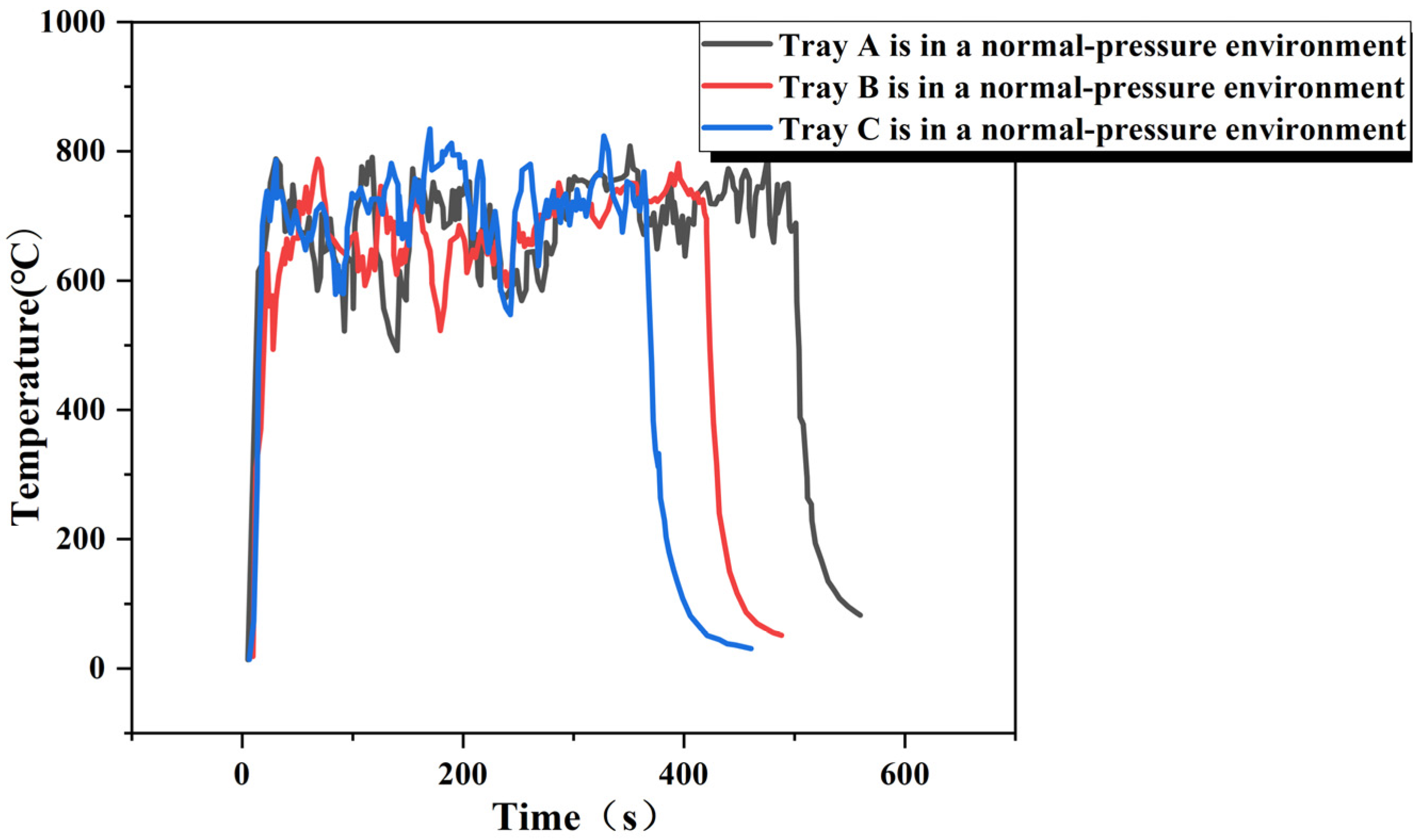
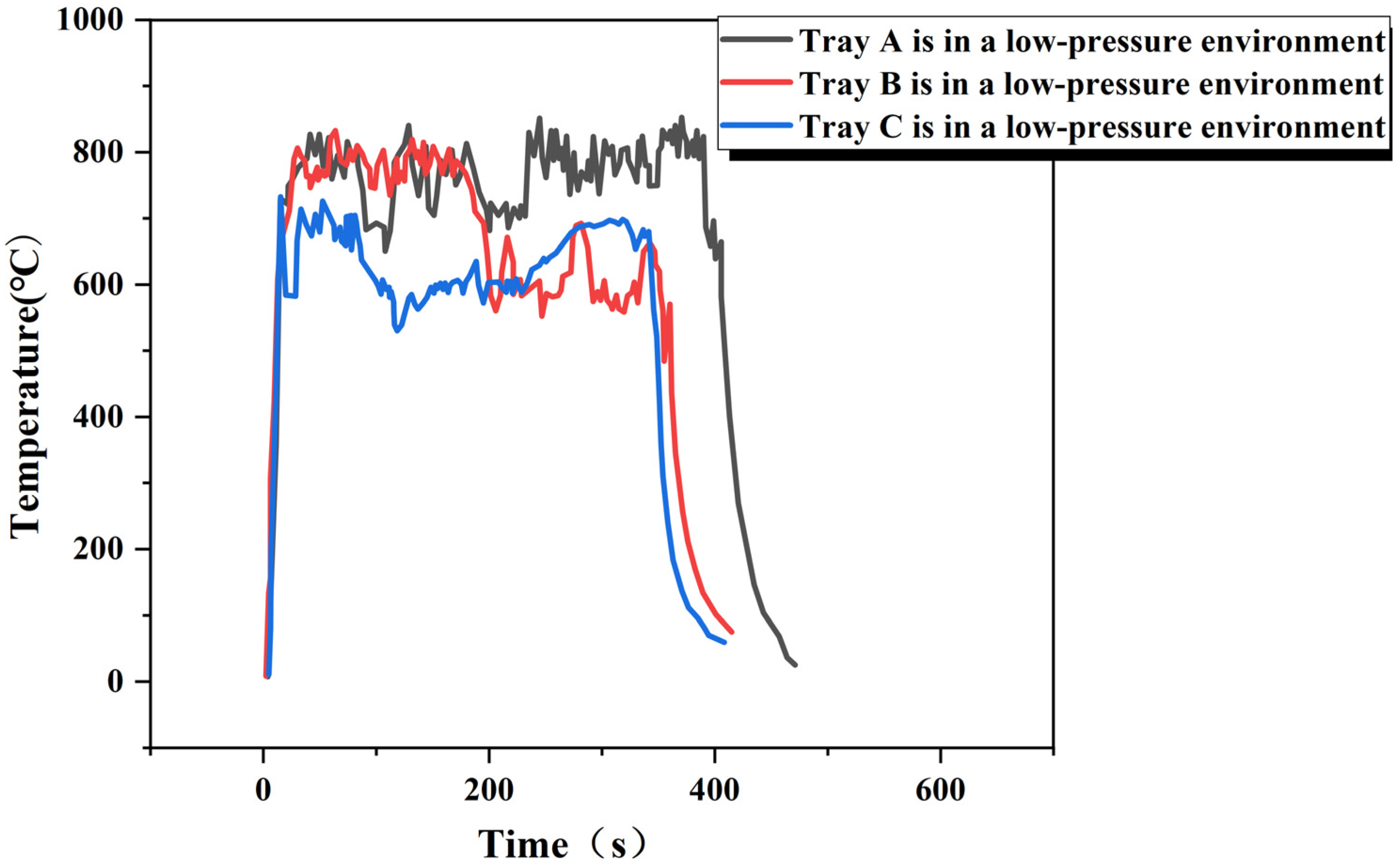
Figure 2 and Figure 3 illustrate the temperature variations in n-heptane pool fires under normal-pressure and low-pressure conditions. After ignition, the temperature rose rapidly, and stable combustion was achieved after approximately one minute, with flame temperatures ranging between 700–800 °C. The burning duration increased with pan size. To better evaluate extinguishing performance, perfluorohexanone was discharged only after the pool fire reached a stable burning state [28]. For comparison, free-burn experiments were also conducted under both pressure conditions to record fire source temperatures and mass loss during combustion.
In fire research, the heat release rate (HRR) of the fire source is a critical parameter for evaluating combustion intensity and flame spread. By assessing the HRR, the effectiveness of perfluorohexanone in suppressing high-intensity fires can be analyzed. The mass loss method determines the HRR by measuring the mass loss rate of the fire source using an electronic balance during combustion, and then calculating it based on the effective heat of combustion and combustion efficiency of the fuel. In this study, the HRR was calculated using the mass loss method [29]. The equation is expressed as follows:
Q = m × Δ H
Δ H = μ × Δ H g
where Q · is the heat release rate (MW), m · is the mass loss rate of the fuel (g/s), Δ H is the effective heat of combustion of n-heptane (44.6 kJ/g), and μ is the combustion efficiency. According to literature, the combustion efficiency of n-heptane is 0.83 at 101 kPa and 0.87 at 61 kPa. where Δ H g is the heat of combustion of the fuel (kJ/kg) [30].
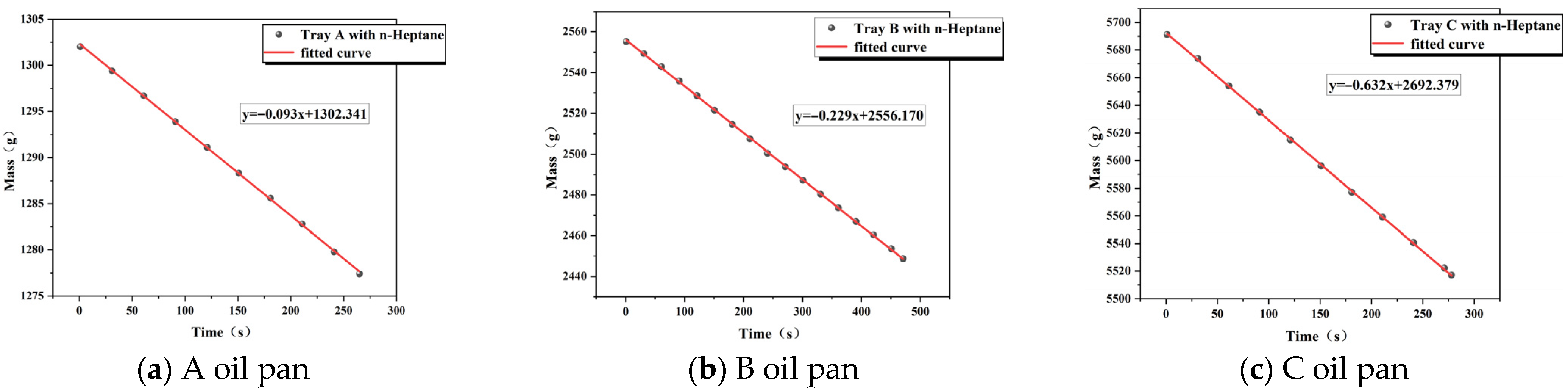
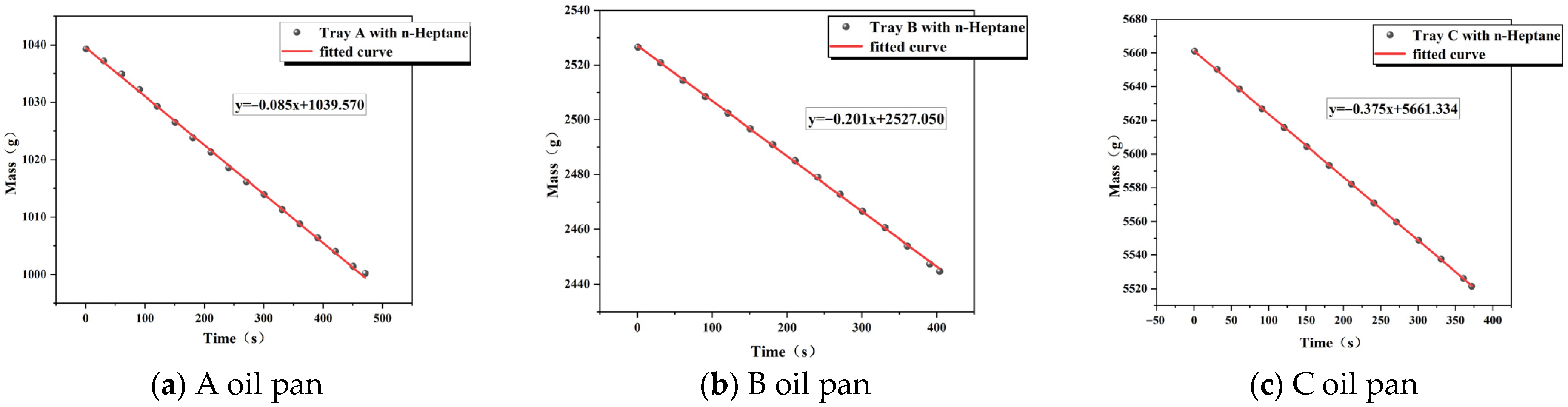
The mass loss rates during steady combustion are shown in Figure 4 and Figure 5. Under atmospheric pressure, the mass loss rates for oil pans A, B, and C were 0.093 g/s, 0.229 g/s, and 0.632 g/s, respectively. Oil pan C showed a significantly higher mass loss rate, attributed to its larger surface area, which enhanced oxygen–fuel contact and combustion intensity [31]. Under low pressure, the mass loss rates were 0.085 g/s (A), 0.201 g/s (B), and 0.375 g/s (C), indicating that fire intensity was noticeably reduced due to lower oxygen density at reduced pressure, which limits combustion [32,33].
Table 3 summarize the HRR values under normal-pressure and low-pressure conditions, respectively. The HRR increased with pan size but was consistently lower in the low-pressure environment.

3.2. Fire Suppression Experiments

3.2.1. Visualization of the Extinguishing Process

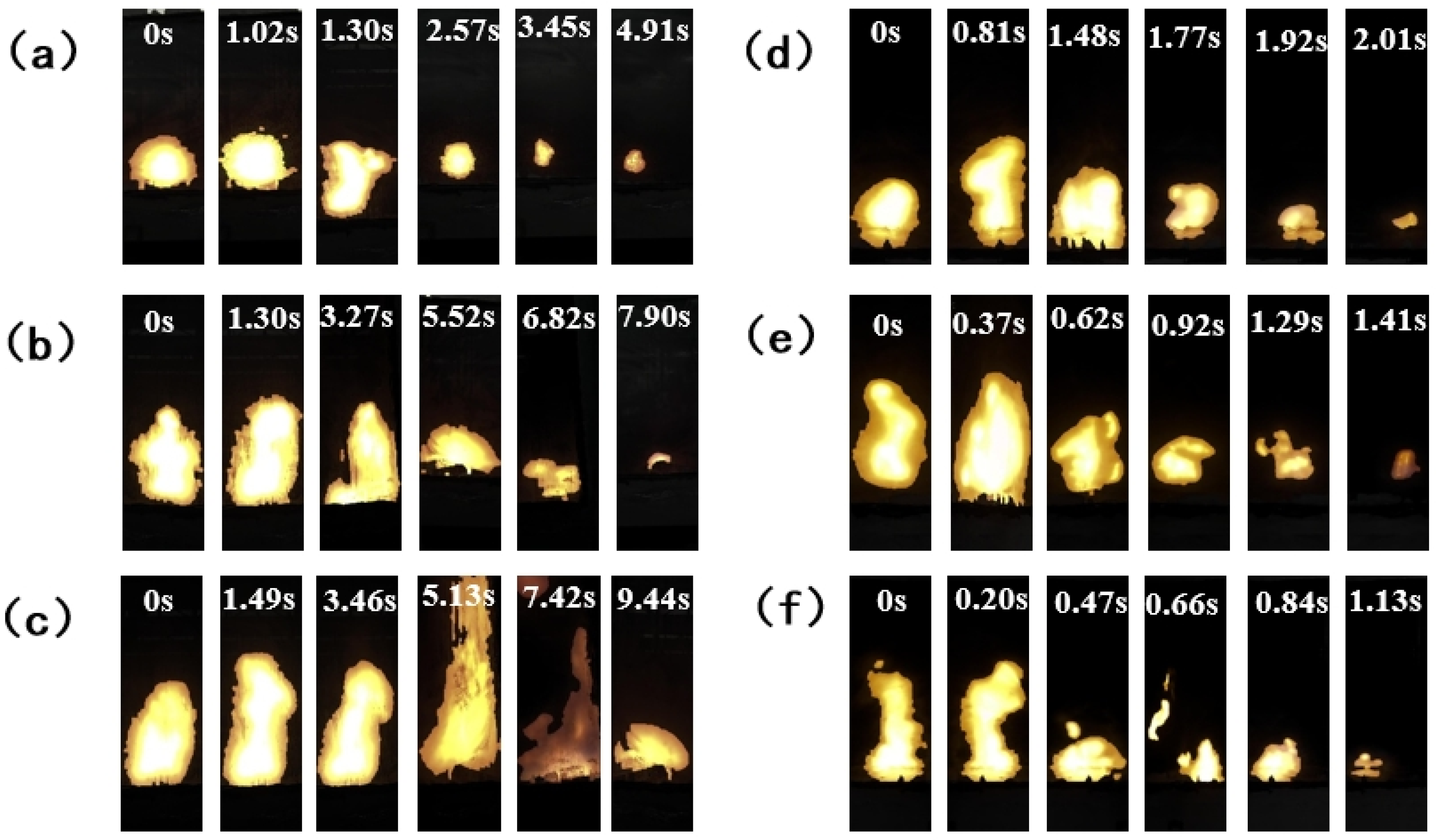
After determining the steady combustion stage and corresponding flame temperature, suppression experiments were performed on fires with different heat release rates, with the perfluorohexanone discharge pressure set at 2.5 MPa. Once the n-heptane fire reached a steady state, the extinguishing agent was discharged until the flame was completely suppressed. The flame behavior was recorded by a video camera, and key frames were processed using MATLAB 2024a, as shown in Figure 6.
The results show that flame height increased with the fire’s heat release rate. At the initial stage of suppression, a phenomenon of flame intensification was observed, which had a temporary negative effect on extinguishment. This can be attributed to two factors. Firstly, during thermal decomposition, perfluorohexanone releases fluorine-containing radicals. At insufficient concentrations, these radicals may fail to interrupt the combustion chain reaction effectively and instead participate in promoting oxidation of intermediate products, temporarily increasing the local burning rate. Secondly, the injection of gaseous extinguishing agents induces turbulence in the combustion zone, enhancing mixing of fuel and air, which may momentarily intensify the flame, raising both its temperature and spread.
Under low-pressure conditions, flames exhibited greater fluctuation because they were less stable due to insufficient ambient pressure [34,35]. The reduced stability promoted lateral spreading and uneven airflow distribution during agent discharge, leading to unstable flame morphology.

3.2.2. Extinguishing Time and Temperature

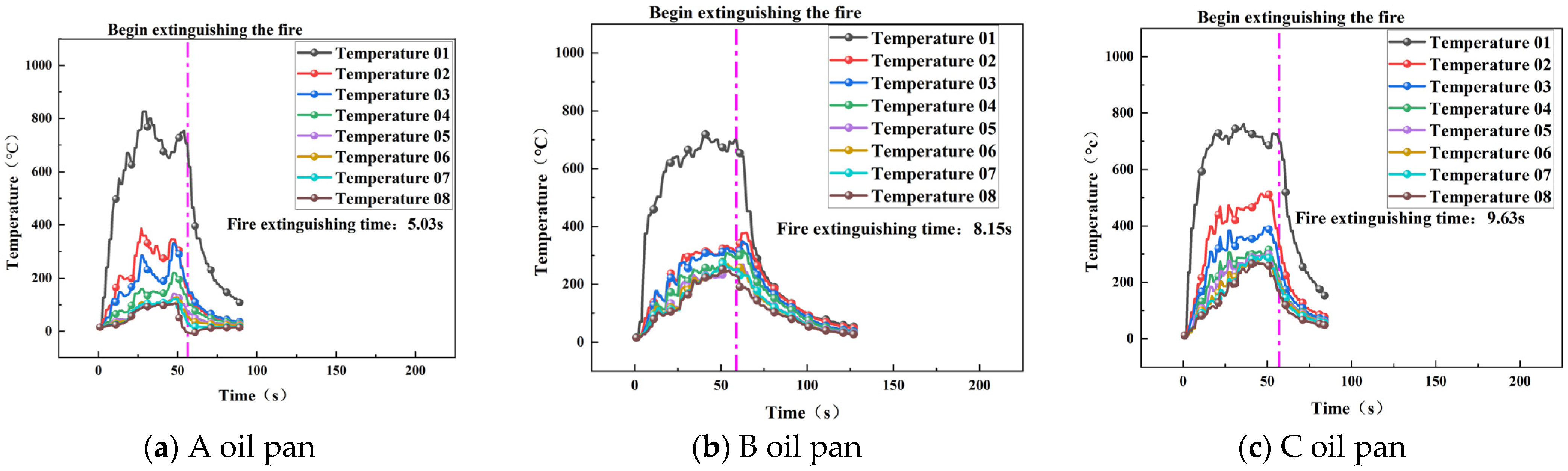
Figure 7 presents the temperature variations during extinguishment under atmospheric pressure. Owing to differences in heat release rates, the extinguishing times and corresponding temperature drops varied significantly. Perfluorohexanone demonstrated strong extinguishing efficiency: For oil pan A, the fire was suppressed within 5.03 s, with the temperature dropping from 698.23 °C to 348.47 °C. For oil pan B, the extinguishing time extended to 8.15 s, with the temperature decreasing from 706.72 °C to 371.81 °C. For oil pan C, the extinguishing time further increased to 9.63 s, with the temperature dropping from 724.21 °C to 381.45 °C. The slower suppression at higher fire intensities was mainly due to reduced diffusion efficiency of the extinguishing agent in larger flames. Temperature curves showed fluctuations, reflecting uneven heat distribution and partial coverage of the fire source during the extinguishing process.
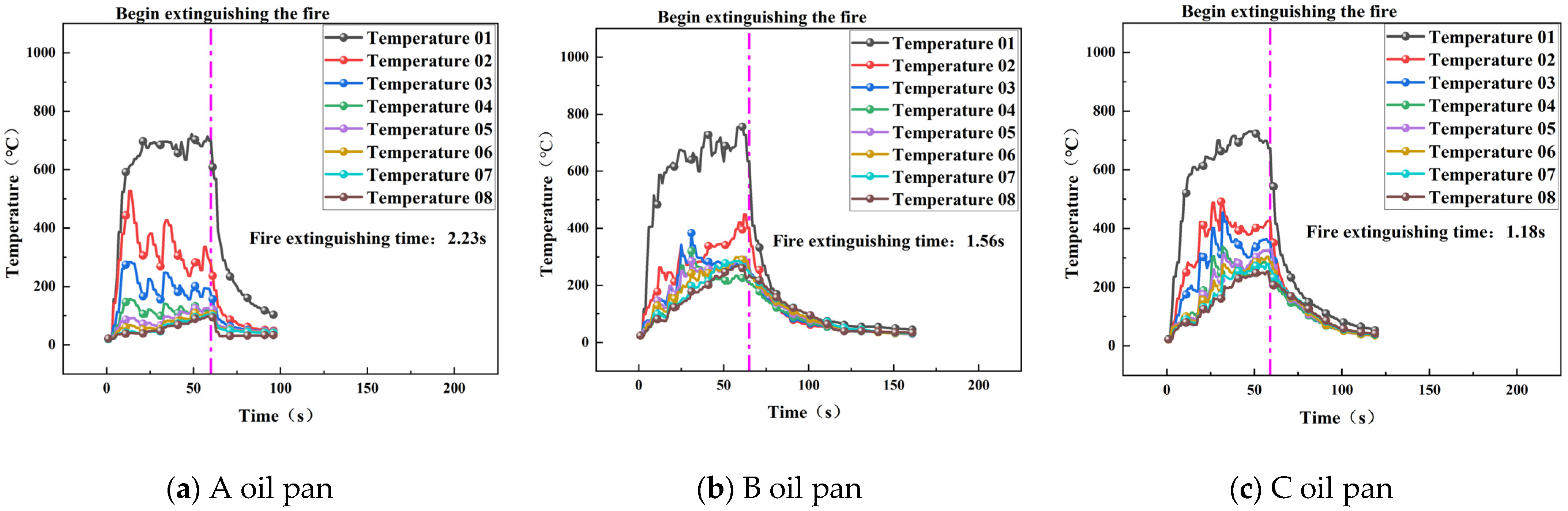
Figure 8 illustrates the variation in extinguishing temperatures for Perfluorohexanone under low-pressure conditions. It is evident that extinguishing times under low pressure are significantly reduced compared to atmospheric pressure. Specifically, the extinguishing times for oil pans A, B, and C were shortened by 2.8 s, 6.59 s, and 8.45 s, respectively, under low pressure. Perfluorohexanone exhibits favourable extinguishing performance under low-pressure conditions. However, unlike at atmospheric pressure, oil pan flames with higher heat release rates extinguish more rapidly in low-pressure environments. This occurs because insufficient oxygen concentration prevents extensive oil pan flames from achieving complete combustion.
After the flames were extinguished, the flame temperature of oil pan A decreased from 637.6 °C to 567.58 °C, that of oil pan B decreased from 674.55 °C to 552.05 °C, and that of oil pan C decreased from 702.51 °C to 543.20 °C. Comparing the temperature reductions achieved under low pressure versus atmospheric pressure reveals that the magnitude of temperature reduction bears no direct correlation with the duration of extinguishing. This indicates that Perfluorohexanone primarily operates through chemical inhibition as its extinguishing mechanism. Under high-temperature conditions, it decomposes to produce CF2 and CF3 radicals, which rapidly react with hydrogen radicals, oxygen radicals, hydroxyl groups, and oxygen molecules. This reaction interrupts the chain reaction of combustion, thereby achieving extinguishment [36,37].

3.2.3. HF Measurement Results

Perfluorohexanone generates gases such as hydrogen fluoride during fire suppression. Hydrogen fluoride is a highly irritant and toxic gas; when inhaled by humans, it causes severe corrosion of the respiratory tract, leading to inflammation and, in severe cases, death. Concurrently, hydrogen fluoride poses significant environmental hazards. Its high solubility causes water contamination upon entering aquatic systems, resulting in the death of aquatic organisms and disrupting ecosystem balance. Furthermore, it can permeate soil, altering its pH levels and causing soil contamination. Therefore, measuring the hydrogen fluoride content produced after the extinguishing of Perfluorohexanone is crucial, as it aids in assessing the safety of the fire-extinguishing agent.
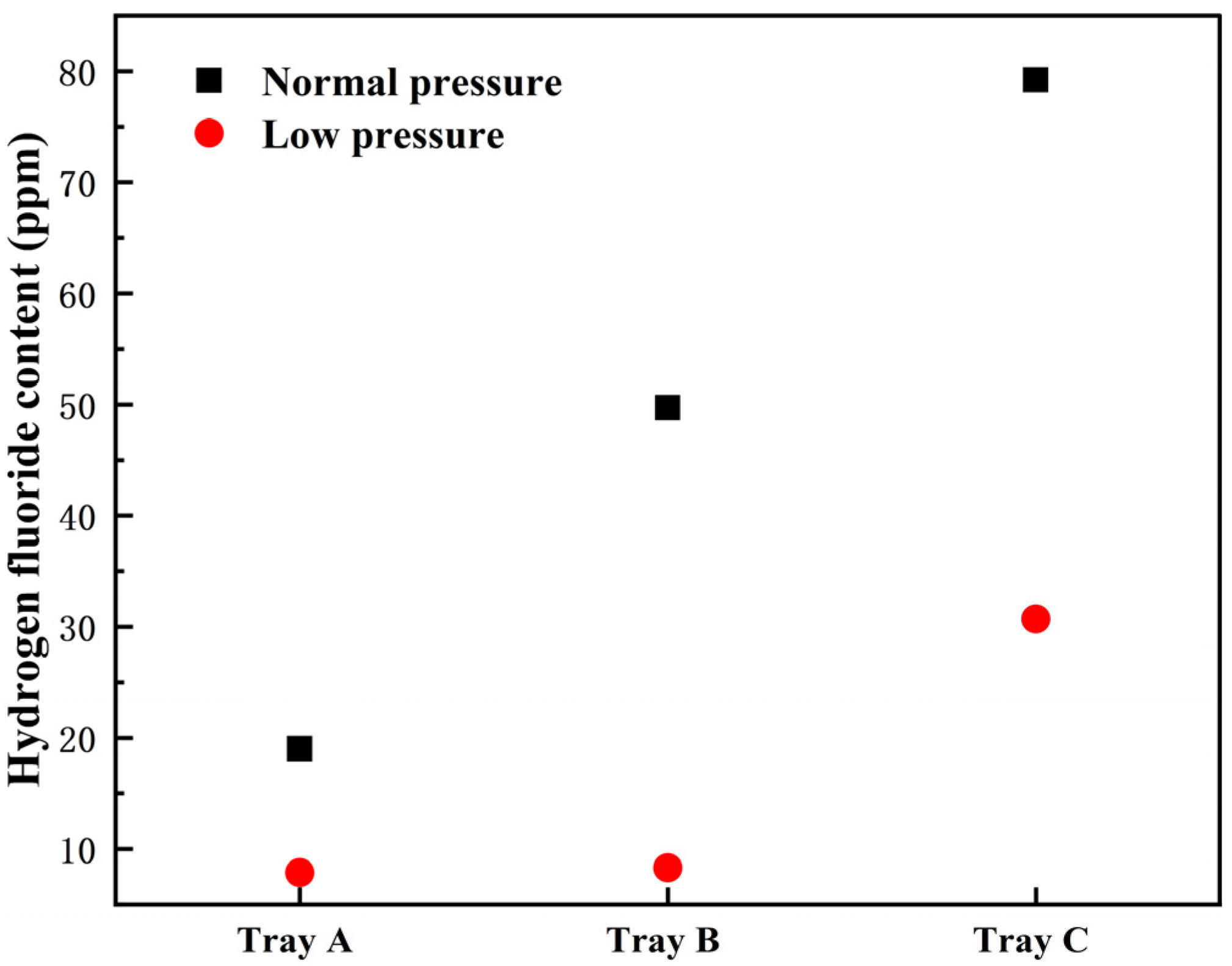
Figure 9 illustrates the hydrogen fluoride concentrations produced following Perfluorohexanone extinguishing under atmospheric and low-pressure conditions. The figure indicates that the hydrogen fluoride concentrations produced during extinguishing at atmospheric pressure were 19 ppm, 49.7 ppm, and 79.2 ppm, respectively, while those at low pressure were 7.88 ppm, 21.8 ppm, and 30.7 ppm. The LC50 of hydrogen fluoride for rats (the gas concentration causing 50% mortality in test animals exposed to the chemical within a specified timeframe) is 1270 ppm. This indicates that post-extinguishment hydrogen fluoride levels are relatively low and less toxic. However, these levels increase with higher heat release rates from the fire source. Furthermore, hydrogen fluoride concentrations are generally lower under low-pressure conditions than under atmospheric pressure. This is primarily because, under low-pressure conditions, the fire suppression duration is shorter, resulting in a lower quantity of decomposable extinguishing agent compared to that available at atmospheric pressure. Furthermore, at atmospheric pressure, the gas density is higher, allowing more intensive contact between the extinguishing agent and the fire source. Conversely, as pressure decreases, the distance between gas molecules increases, slowing the decomposition reaction of the extinguishing agent and thereby reducing hydrogen fluoride generation. In practical applications, rapid fire suppression effectively minimises hydrogen fluoride generation.

3.2.4. Extinguishing Effectiveness Model

To quantitatively evaluate the effectiveness of perfluorohexanone under atmospheric and low-pressure conditions, a performance index model was developed based on its extinguishing mechanisms and experimental data. The model integrates chemical inhibition, physical heat absorption, temperature variation, and ambient pressure effects, normalized into a dimensionless index.
Regarding chemical inhibition, the concentration of hydrogen fluoride (HF) generated after extinguishment was used as the evaluation index. A lower HF concentration indicates a stronger chemical inhibition effect, and the correlation is represented by F1:
F 1 = 1 C H F
where C H F denotes the hydrogen fluoride concentration.
As a gaseous fire suppression agent, the physical heat absorption effect of perfluorohexanone is represented by F2:
F 2 = m L V H R R t
where m is agent mass, as shown in Table 4, L v is latent heat of vaporization, H R R represents the heat release rate of the fire source, and t is discharge time.
The flame temperature during agent discharge and the temperature variation after flame extinction were used to evaluate the cooling effect, and the correlation is represented by F3:
F 3 = Δ T t T 0
Here, Δ T represents the temperature variation during the extinguishing process, and T 0 represents the flame temperature at the start of fire suppression, as measured by Thermocouple 01. Finally, the influence of ambient pressure on extinguishing effectiveness was incorporated, and the correlation is represented by F4:
F 4 = P n P m
where P n is experimental pressure and P m is standard atmospheric pressure.
Thus, integrating all parameters, the initial formula is established and represented by I n e t .
I n e t = a 1 C H F + b m L v H R R t + c Δ T t T 0 + d P n P m
Here, a, b, c, and d are weighting coefficients to be determined, representing the relative contributions of each parameter.
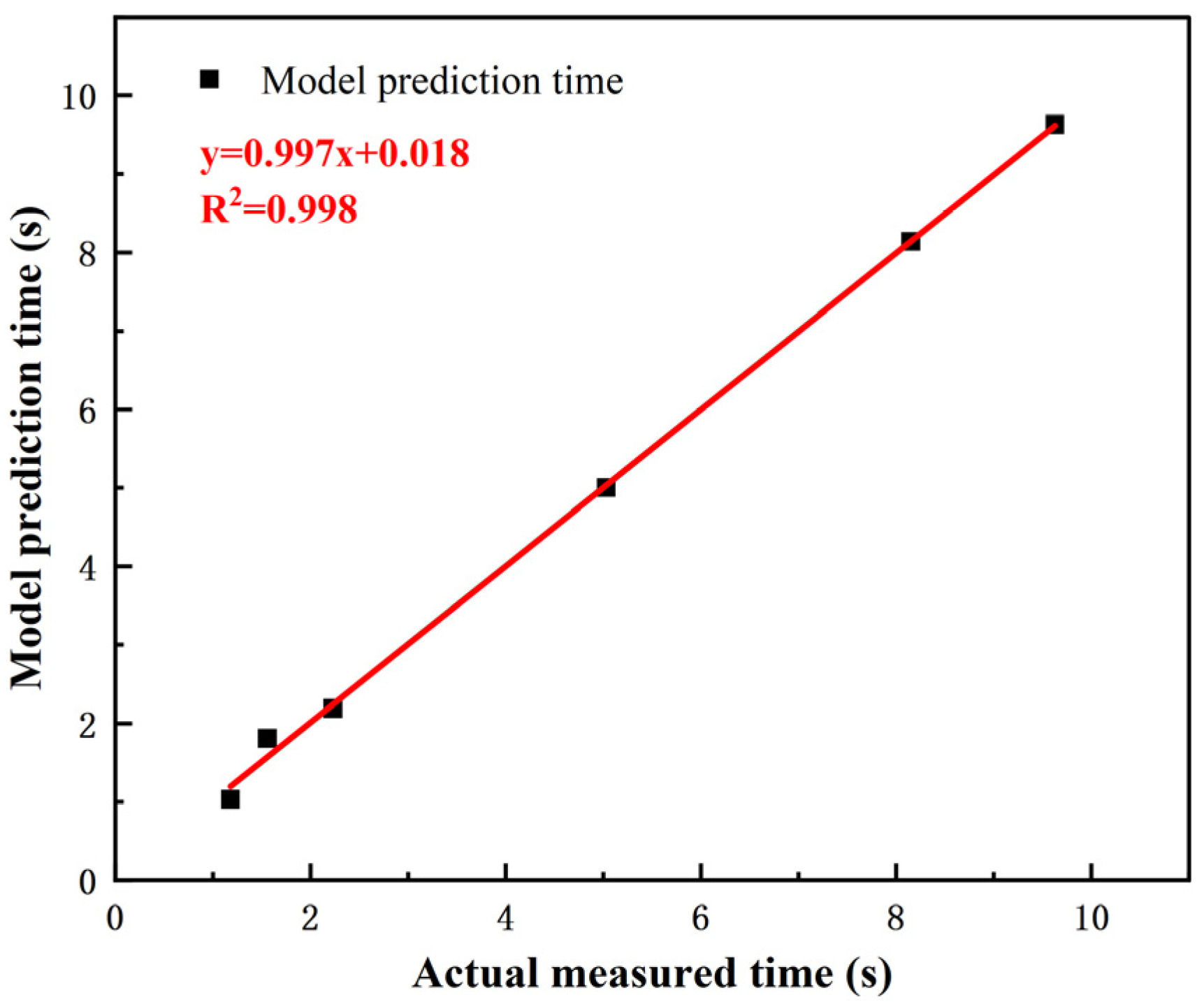
Based on the experimental data, a fire hazard index model was developed to comprehensively evaluate the extinguishing difficulty of a fire source under specific environmental and suppression conditions. The index takes extinguishing time as the fitting objective (i.e., ensuring that the index value follows the same trend as extinguishing time) and incorporates several key factors, including chemical inhibition intensity (HF generation), physical heat absorption capacity (latent heat of vaporization of the agent), temperature field evolution rate, and ambient pressure. A higher index value indicates greater extinguishing difficulty and higher fire hazard. Using the nonlinear least-squares fitting method with six sets of experimental data, the weighting coefficients of the formula were determined as follows: a = 38.81, b = −0.00302, c = −14.39, d = 11. Therefore, the dimensionless index I n e t can be expressed as follows:
I n e t = 38.81 1 C H F 0.00302 m L v H R R t 14.39 Δ T t T 0 + 11 P n P m
Figure 10 illustrates the relationship between the calculated and experimental values. The results show that the extinguishing effectiveness index exhibits a significant positive correlation with extinguishing time: a higher index value corresponds to a longer extinguishing time, indicating that the suppression process is more difficult under such conditions; conversely, a lower index value corresponds to a shorter extinguishing time, reflecting a faster suppression process. The goodness of fit reached R2 = 0.9986, demonstrating that the index can serve as an approximate predictive function for extinguishing time, with excellent predictive accuracy and strong engineering applicability. Although extinguishing time was included in the initial formulation of the effectiveness index to describe temperature variation and heat absorption rate, it is not required as an input parameter in practical predictive applications. Instead, the index value I n e t is first calculated from other parameters, and the predicted extinguishing time is then derived through the fitted relationship, thereby avoiding the problem of simultaneously solving two unknowns and enabling effective prediction of extinguishing time.

4. Conclusions

This study investigates the effectiveness of perfluorohexanone in suppressing liquid pool fires under normal and low-pressure conditions. A self-designed fire suppression experimental platform was employed to analyze the effects of ambient pressure, fire source characteristics, and injection pressure on extinguishing performance. Results show that extinguishing time increases with heat release rate under both normal and low-pressure (61 kPa) conditions. Under normal pressure, extinguishing times for Fire Pan A (10 cm × 10 cm), Fire Pan B (15 cm × 15 cm), and Fire Pan C (20 cm × 20 cm) were 5.03 s, 8.15 s, and 9.63 s, respectively. In contrast, low-pressure conditions significantly reduced extinguishing times by 2.8 s, 6.59 s, and 8.45 s, respectively. The shorter extinguishing times observed in low-pressure environments demonstrate perfluorohexanone’s maintained suppression efficiency under such conditions, confirming ambient pressure as a key factor affecting its performance. A fire suppression effectiveness model was established based on parameters including agent mass and temperature variations: I n e t = 38.81 1 C H F 0.00302 m L v H R R · T 14.39 T t T 0 + 11.00 P n P m . The model reveals that chemical inhibition dominates the extinguishing process, with its weight coefficient substantially exceeding those of other factors like physical heat absorption, confirming the core mechanism involves interrupting the combustion chain reaction. Future work will expand research to wider pressure ranges, different fuel types, and practical complex scenarios to advance the engineering application of perfluorohexanone in special environmental fire protection.

Author Contributions

Conceptualization, Q.L. and R.Y.; methodology, Q.L.; software, R.Y.; validation, R.Y.; formal analysis, P.Z.; investigation, R.Y.; resources, R.Y.; data curation, R.Y.; writing—original draft preparation, Q.L. and R.Y.; writing—review and editing, P.Z.; visualization, R.Y.; supervision, Q.L.; project administration, Q.L.; funding acquisition, Q.L. and P.Z. All authors have read and agreed to the published version of the manuscript.

Funding

This work was funded by the National Key Research and Development Program of China (Grant No.2024YFC3014400), the National Natural Science Foundation of China (Grant No. 52202416), the Fundamental Research Funds for the Central Universities (No.25CAFUC01007, Grant No.25CAFUC04084), the Natural Science Foundation of Sichuan Province (Grant No.2024YFHZ0027), the project of Key Laboratory of Civil Aviation Emergency Science & Technology (Grant No. NJ2022022 and Grant NJ2023025).

Institutional Review Board Statement

Not applicable.

Informed Consent Statement

Not applicable.

Data Availability Statement

The data in this study are available from the corresponding author upon reasonable request.

Conflicts of Interest

The authors declare no conflicts of interest.

References

  1. Burkholder, J.B.; Cox, R.A.; Ravishankara, A.R. Atmospheric Degradation of Ozone Depleting Substances, Their Substitutes, and Related Species. Chem. Rev. 2015, 115, 3704–3759. [Google Scholar] [CrossRef]
  2. Takahashi, F.; Katta, V.R.; Linteris, G.T.; Babushok, V.I. Combustion Inhibition and Enhancement of Cup-Burner Flames by CF3Br, C2HF5, C2HF3Cl2, and C3H2F3Br. Proc. Combust. Inst. 2015, 35, 2741–2748. [Google Scholar] [CrossRef]
  3. Takahashi, F.; Katta, V.R.; Linteris, G.T.; Babushok, V.I. A Computational Study of Extinguishment and Enhancement of Propane Cup-Burner Flames by Halon and Alternative Agents. Fire Saf. J. 2017, 91, 688–694. [Google Scholar] [CrossRef] [PubMed]
  4. Gann, R.G. Next-Generation Fire Suppression Technology Program. Fire Technol. 1998, 34, 363–371. [Google Scholar] [CrossRef]
  5. Wilson, L.C.; Wilding, W.V.; Wilson, G.M.; Rowley, R.L.; Felix, V.M.; Chisolmcarter, T. Thermophysical Properties of HFC-125. Fluid Phase Equilibria 1992, 80, 167–177. [Google Scholar] [CrossRef]
  6. Lifke, J.; Martinez, A.; Tapscott, R.E.; Mather, J.D. Tropodegradable Bromocarbon Extinguishants. Available online: http://www.bfrl.nist.gov/866/NGP/publications/Tropo_Final_Rpt.pdf (accessed on 9 September 2025).
  7. Lemmon, E.W.; Jacobsen, R.T. A New Functional form and New Fitting Techniques for Equations of State with Application to Pentafluoroethane (HFC-125). J. Phys. Chem. Ref. Data 2005, 34, 69–108. [Google Scholar] [CrossRef]
  8. Cousins, D.S.; Laesecke, A. Sealed Gravitational Capillary Viscometry of Dimethyl Ether and Two Next-Generation Alternative Refrigerants. J. Res. Natl. Inst. Stand. Technol. 2012, 117, 231–256. [Google Scholar] [CrossRef]
  9. Dinesh, A.; Benson, C.M.; Holborn, P.G.; Sampath, S.; Xiong, Y. Performance Evaluation of Nitrogen for Fire Safety Application in Aircraft. Reliab. Eng. Syst. Saf. 2020, 202, 107044. [Google Scholar] [CrossRef]
  10. Taniguchi, N.; Wallington, T.J.; Hurley, M.D.; Guschin, A.G.; Molina, L.T.; Molina, M.J. Atmospheric Chemistry of C2F5C(O)CF(CF3)2: Photolysis and Reaction with Cl Atoms, OH Radicals, and Ozone. J. Phys. Chem. A 2003, 107, 2674–2679. [Google Scholar] [CrossRef]
  11. Li, Y.; Zhang, X.; Tian, S.; Xiao, S.; Chen, Q.; Chen, D.; Cui, Z.; Tang, J. Insight into the Compatibility Between C6F12O and Metal Materials: Experiment and Theory. IEEE Access 2018, 6, 58154–58160. [Google Scholar] [CrossRef]
  12. Tanaka, K. Measurement of pρT Properties of 1,1,1,2,2,4,5,5,5-Nonafluoro-4-(trifluoromethyl)-3-pentanone in the Near-Critical and Supercritical Regions. J. Chem. Eng. Data 2016, 61, 3958–3961. [Google Scholar] [CrossRef]
  13. Wen, C.Y.; Meng, X.Y.; Huber, M.L.; Wu, J.T. Measurement and Correlation of the Viscosity of 1,1,1,2,2,4,5,5,5-Nonafluoro-4-(trifluoromethyl)-3-pentanone. J. Chem. Eng. Data 2017, 62, 3603–3609. [Google Scholar] [CrossRef] [PubMed]
  14. Perkins, R.A.; Huber, M.L.; Assael, M.J. Measurement and Correlation of the Thermal Conductivity of 1,1,1,2,2,4,5,5,5-Nonafluoro-4-(trifluoromethyl)-3-pentanone. J. Chem. Eng. Data 2018, 63, 2783–2789. [Google Scholar] [CrossRef]
  15. Wang, Y.W.; Zou, G.W.; Liu, C.L.; Gao, Y. Comparison of Fire Extinguishing Performance of Four Halon Substitutes and Halon 1301. J. Fire Sci. 2021, 39, 370–399. [Google Scholar] [CrossRef]
  16. Liang, C.; Jin, K.Q.; Liu, P.J.; Wang, C.D.; Xu, J.J.; Li, H.; Wang, Q.S. The Efficiency of Perfluorohexanone on Suppressing Lithium-Ion Battery Fire and Its Device Development. Fire Technol. 2023, 59, 1283–1301. [Google Scholar] [CrossRef]
  17. Wang, Z.; He, Y.; Huang, J. Numerical Simulation of Atomization Characteristics of Perfluorohexanone under Low-Pressure Environment. In Proceedings of the 3rd International Conference on Artificial Intelligence and Industrial Technology Applications (AIITA 2023), Suzhou, China, 24–26 March 2023; p. 012088. [Google Scholar]
  18. Huang, J.; Jin, J.Q.; Liang, J.X.; He, Y.H.; Chen, Y.G. Experimental Study on Fire Suppression of NCM Lithium-Ion Battery by C6F12O in A Confined Space. Appl. Therm. Eng. 2025, 259, 12. [Google Scholar] [CrossRef]
  19. Yao, Y.Z.; Jiang, Y.; Chen, F.; Wang, Y.Y.; Zhou, H.Y.; Zhao, J.C. Experimental Study of the Strategy of C6F12O and Water Mist Intermittent Spray to Suppress Lithium-Ion Batteries Thermal Runaway Propagation. J. Loss Prev. Process Ind. 2024, 91, 12. [Google Scholar] [CrossRef]
  20. Liu, Y.J.; Duan, Q.L.; Xu, J.J.; Chen, H.D.; Lu, W.; Wang, Q.S. Experimental Study on the Efficiency of Dodecafluoro-2-Methylpentan-3-One on Suppressing Lithium-Ion Battery Fires. RSC Adv. 2018, 8, 42223–42232. [Google Scholar] [CrossRef]
  21. Zhang, L.; Ye, F.M.; Li, Y.Q.; Chen, M.; Meng, X.D.; Xu, J.J.; Sun, J.H.; Wang, Q.S. Experimental Study on the Efficiency of Dodecafluoro-2-Methylpentan-3-One on Suppressing Large-Scale Battery Module Fire. Fire Technol. 2023, 59, 1247–1267. [Google Scholar] [CrossRef]
  22. Said, A.O.; Stoliarov, S. Analysis of Effectiveness of Suppression of Lithium Ion Battery Fires with A Clean Agent. Fire Saf. J. 2021, 121, 14. [Google Scholar] [CrossRef]
  23. Chen, Y.; Zhao, C.X.; Huang, Q.R.; Li, S.Y.; Huang, J.H.; Ni, X.M.; Wang, J. Investigation on the Temperature Variation of Novec-1230 and Halon 1301 in A Discharge System. Case Stud. Therm. Eng. 2023, 50, 11. [Google Scholar] [CrossRef]
  24. Li, Y.; Zhang, X.; Tian, S.; Xiao, S.; Li, Y.; Chen, D. Insight into the Decomposition Mechanism of C6F12O-CO2 Gas Mixture. Chem. Eng. J. 2019, 360, 929–940. [Google Scholar] [CrossRef]
  25. Zhang, J.X.; Gao, W.; Chen, L.R.; Li, Y.C. Inhibition and Enhancement of Hydrogen Explosion by Perfluorohexanone. Int. J. Hydrogen Energy 2024, 53, 522–534. [Google Scholar] [CrossRef]
  26. Yu, Z.; Li, G.; Jia, H.; Dong, H.; Zhao, J.; Zhang, H. Enhancing Atomization and Fire-Suppression Efficiency of Perfluorohexanone Using Swirl Nozzles Across A Range of Injection Pressures. J. Loss Prev. Process Ind. 2026, 99, 105802. [Google Scholar] [CrossRef]
  27. Takahashi, F.; Katta, V.R.; Babushok, V.; Linteris, G.T. Numerical and experimental studies of extinguishment of cup-burner flames by C6F12O. Proc. Combust. Inst. 2021, 38, 4645–4653. [Google Scholar] [CrossRef]
  28. ISO 14520-1:2023(en); Gaseous Fire-Extinguishing Systems—Physical Properties and System Design — Part 1: General Requirements. The International Organization for Standardization: Geneva, Switzerland, 2023.
  29. Chen, Y.; Fang, J.; Zhang, X.; Miao, Y.; Lin, Y.; Tu, R.; Hu, L. Pool Fire Dynamics: Principles, Models and Recent Advances. Prog. Energy Combust. Sci. 2023, 95, 101070. [Google Scholar] [CrossRef]
  30. Wang, F. Study on Fire Model Test and Numerical Simulation of Combustion Temperature Distribution and Smoke Concentration in High Altitude Tunnel. Master’s Thesis, Sichuan Agricultural University, Yaan, China, 2024. [Google Scholar]
  31. Zhou, Z. Effects of Low AmbientPressure on Pool Fire Behaviorand Plume Characteristics. Ph.D. Thesis, University of Science and Technology of China, Hefei, China, 2014. [Google Scholar]
  32. Zhang, L. Study on the Relationship between Discharge Conditions and Class B Flame-extinguishing Effeet of Ce-Fluoroke tone. Master’s Thesis, Nanjing University of Science & Technology, Nanjing, China, 2015. [Google Scholar]
  33. Tuo, Y.; Huo, Y.; Huang, X.; Zhou, X. Effect of Low Ambient Pressure on Spray Characteristics of Water Mist and Effectiveness of Fire Extinguishing. Appl. Therm. Eng. 2025, 283, 128976. [Google Scholar] [CrossRef]
  34. Wang, W.; Wang, L.; Yang, R.; Zhang, H.; Ren, C.; Yang, J. Investigation of the Effect of Low Pressure on Fire Hazard in Cargo Compartment. Appl. Therm. Eng. 2019, 158, 113775. [Google Scholar] [CrossRef]
  35. Liu, J.H.; He, Y.P.; Zhou, Z.H.; Yao, W.; Yuen, R.; Wang, J. The Burning Behaviors of Pool Fire Flames Under Low Pressure. Fire Mater. 2016, 40, 318–334. [Google Scholar] [CrossRef]
  36. Mu, X.; Cong, H.; Shao, Z.; Yuan, Z.; Zhu, B.; Zhang, K.; Bi, M.; Wang, X. Experimental and Theoretical Research on the Inhibition Performance of Ethanol Gasoline/Air Explosion by C6F12O. J. Loss Prev. Process Ind. 2023, 83, 105088. [Google Scholar] [CrossRef]
  37. Mu, X.M.; Cong, H.Y.; Yuan, Z.Q.; Bi, Y.B.; Bi, M.S. Study on the Inhibitory Effect and Mechanism of Perfluoro (2-Methyl-3-Pentanone) on the Combustion of Gasoline Blended with Biomass Additives. Fuel 2023, 349, 11. [Google Scholar] [CrossRef]
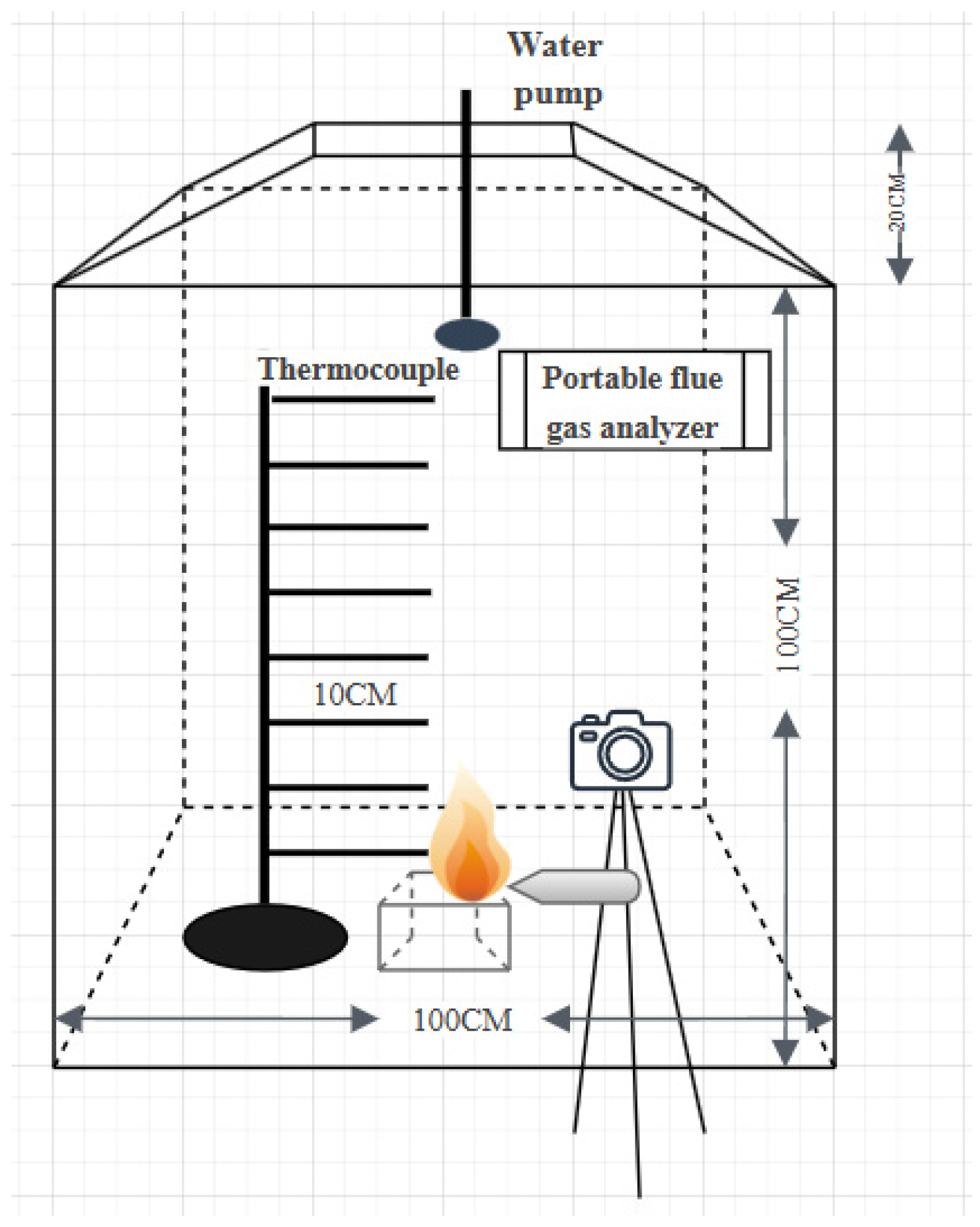
Figure 1. Experimental platform for fire suppression tests.
Fire 08 00472 g001
Figure 2. Free-burn temperature of n-heptane pool fire under normal pressure.
Fire 08 00472 g002
Figure 3. Free-burn temperature of n-heptane pool fire under low pressure.
Fire 08 00472 g003
Figure 4. Mass loss of n-heptane pool fires under normal pressure: (a) oil pan A; (b) oil pan B; (c) oil pan C.
Fire 08 00472 g004
Figure 5. Mass loss of n-heptane pool fires under low pressure: (a) oil pan A; (b) oil pan B; (c) oil pan C.
Fire 08 00472 g005
Figure 6. Changes in flame morphology during the extinguishing process of three oil pan fires under normal- and low-pressure conditions ((a): Normal-pressure A oil pan fire; (b): normal-pressure B oil pan fire; (c): normal-pressure C oil pan fire; (d): low-pressure A oil pan fire; (e): low-pressure B oil pan fire; (f): low-pressure C oil pan fire).
Fire 08 00472 g006
Figure 7. Temperature variation during extinguishment under atmospheric pressure for different fire sizes.
Fire 08 00472 g007
Figure 8. Temperature variation during extinguishment under low pressure for different fire sizes.
Fire 08 00472 g008
Figure 9. HF concentration after extinguishment under atmospheric and low-pressure conditions.
Fire 08 00472 g009
Figure 10. Relationship between model predictions and experimental extinguishing times.
Fire 08 00472 g010
Table 1. Comparison of performance indicators of different fire-extinguishing agents [15].
Extinguishing AgentODPGWPALT (Years)NOAEL (%)LOAEL (%)Ext. Conc. (v/v%)
Halon1.0006500.00065.0000.1000.0504.500–5.900
HFC-227ea0.0003220.00033.0000.1000.0507.000–9.000
CO20.0001.0005.0005.0003.00034.000–40.000
IG-5410.0000.0001.0005.0003.00034.000–40.000
HFC-1250.0003500.00029.0000.5000.2005.000–6.000
2-BTP0.0000.0000.0500.1000.0506.000–9.000
Perfluorohexanone0.0001.0005.0000.5000.2004.500–5.900
Table 2. Physicochemical properties of perfluorohexanone.
ParameterValue
Chemical nameDifluoro(trifluoromethyl)oxymethyl-trifluoromethane
Molecular formulaC6F12O
Molecular weight (g/mol)316.040
AppearanceColorless transparent liquid
Gas density (kg/m3, 1 atm, 25 °C)13.600
Liquid density (kg/m3, 25 °C)1610.000
Boiling point (°C)49.200
Freezing point (°C)–108.000
Heat of vaporization (kJ/kg)88.000
Specific heat capacity (J/g·K, 25 °C)1.040
SolubilitySlightly soluble in water; soluble in alcohols/ethers
Ozone depletion potential (ODP)0.000
Global warming potential (GWP)1.000
Atmospheric lifetime (days)5.000
Extinguishing concentration (NFPA 2001, v/v%)4.500–5.900
Dielectric strength (kV/cm)50.000
Vapor pressure (kPa, 25 °C)39.900
Table 3. Relationship between HRR and oil pan size under atmospheric pressure.
Environmental Pressure
(kPa)
Oil Pan Size (cm)Mass Loss Rate (g/s)Heat of Combustion (kJ/g)Combustion Efficiency (%)HRR (kW)
Normal pressure10 × 10 × 10 (A)0.09344.6000.8303.442
Normal pressure15 × 15 × 10 (B)0.22944.6000.8308.477
Normal pressure20 × 20 × 10 (C)0.63244.6000.83023.395
Low pressure10 × 10 × 10 (A)0.08544.6000.8703.071
Low pressure15 × 15 × 10 (B)0.20144.6000.8707.78
Low pressure20 × 20 × 10 (C)0.37544.6000.87014.55
Table 4. Mass of perfluorohexanone required to extinguish pool fires under different pressures.
Ambient PressureMass Required for Pan A (kg)Mass Required for Pan B (kg)Mass Required for Pan C (kg)
Atmospheric0.4020.6520.770
Low pressure0.1780.1250.094
Disclaimer/Publisher’s Note: The statements, opinions and data contained in all publications are solely those of the individual author(s) and contributor(s) and not of MDPI and/or the editor(s). MDPI and/or the editor(s) disclaim responsibility for any injury to people or property resulting from any ideas, methods, instructions or products referred to in the content.