
Article

Fourier-Feature Neural Surrogate for Hemodynamic Field Reconstruction in Stenotic and Bifurcating Flows

by
Polydoros N. Papadopoulos
1,2,* and
Vasilis N. Burganos
2,*
1
Department of Mechanical Engineering, University of the Peloponnese, GR-263 34 Patras, Greece
2
Institute of Chemical Engineering Sciences, Foundation for Research and Technology-Hellas (FORTH/ICE-HT), Stadiou Str., Platani, GR-265 04 Patras, Greece
*
Authors to whom correspondence should be addressed.
Mach. Learn. Knowl. Extr. 2026, 8(3), 59; https://doi.org/10.3390/make8030059
Submission received: 20 January 2026 / Revised: 16 February 2026 / Accepted: 26 February 2026 / Published: 3 March 2026

Abstract

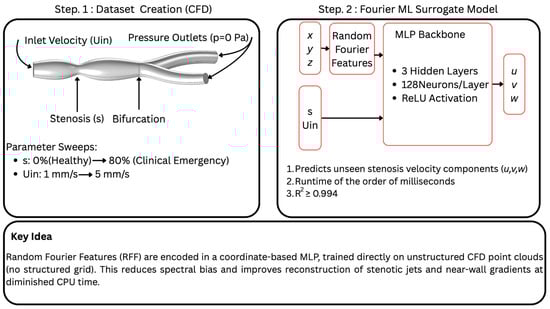
This work presents a fast neural surrogate capable of reconstructing fully three-dimensional hemodynamic velocity fields in stenotic and bifurcating microvascular geometries with satisfactory accuracy, avoiding repeated, computationally demanding computational fluid dynamics (CFD) simulations. A Fourier-augmented, coordinate-neural surrogate is presented and assessed for rapid computation of three-dimensional blood-flow fields in a sample geometry. The model is trained on detailed CFD data across a parameter set of stenosis severities that feed a direct mapping from spatial coordinates to velocity components. To mitigate spectral bias and improve accuracy in regions of steep gradients, the input space is embedded with random Fourier features and compared against a conventional multilayer perceptron (MLP) backbone. Predictive ability is assessed upon strict hold-out testing, during which certain arteriolar stenosis cases are excluded from training and treated with the Fourier surrogate. Direct comparison with CFD results reveals that the Fourier MLP achieves nearly CFD fidelity with the coefficient of determination R2 ≥ 0.994 and offers more than 80% reduction in the normalized errors as provided by conventional MLP, with the precise improvement depending on the severity of stenosis. Centerline velocity and cross-sectional profiles further show that the Fourier MLP reconstructs stenosis speed-up and radial profiles more reliably compared to conventional MLP. These results indicate that Fourier feature embedding provides a simple and effective route to robust full-field hemodynamic surrogates for efficient screening of stenosis configurations without resorting to repeated, heavily demanding CFD simulations.

Graphical Abstract

1. Introduction

Fluid dynamics underpins a broad range of scientific and engineering systems, from hydraulic infrastructure and aerodynamic components to microvascular transport in living tissue, where reliable maps of velocity and pressure fields inform design, safety, and clinical decision-making. In hemodynamics, velocity, pressure, and other variables are indispensable for assessing stenoses, quantifying flow splits at bifurcations, and evaluating risk in regions of elevated shear or recirculation [1,2]. Three-dimensional computational fluid dynamics (CFD) remains the quantitative standard for patient or device specific analyses [1,2]. However, outcomes depend sensitively on mesh density and boundary-layer refinement [3], outlet impedance modeling and boundary-condition choices [4,5], even when credible, repeated solutions are costly for large parameter sweeps. Complementary four-dimensional flow MRI provides non-invasive velocities but tends to under-resolve near-wall gradients relative to CFD, complicating wall shear stress (WSS) estimation and validation [6].
Achieving credible CFD in vascular domains typically requires fine near-wall resolution, robust linear/nonlinear solvers, and sometimes fluid–structure interaction (FSI), each adding complexity and runtime [3,4,5]. Moreover, changing geometry, stenosis severity, inlet flow rates, or rheology often invalidates prior solutions and meshes, necessitating fresh 3D runs. These realities make routine parametric studies, sensitivity analyses, and rapid clinical iteration difficult to sustain at scale [1,2]. Consequently, reliable alternatives that preserve predictive fidelity while reducing computational burden are sought out, especially for workflows that need dense near-wall sampling and quick turnaround.
Machine learning (ML) surrogates provide such a complement by learning mappings from coordinates and boundary descriptors to flow quantities, avoiding repeated solutions of partial differential equations (PDE) at inference time. Imaging-to-index models demonstrate that clinically relevant indices such as fractional flow reserve (FFR) can be predicted from coronary CT using supervised ML surrogates trained on physics/CFD labeled data [7]. Learning from time-resolved MRI has also been used to support pressure estimation within the vasculature, including physics-constrained formulations [8]. Full-field surrogates based on convolutional networks approximate steady flows on structured grids with large speed-ups but face memory scaling and geometric aliasing in 3D [9]. In parallel, mesh and graph-based trained simulators provide an alternative surrogate route on unstructured discretization, enabling learned PDE updates directly on mesh connectivity [10]. Physics-informed neural networks (PINNs) embed Navier–Stokes residuals into the loss to improve physical plausibility, yet optimization can be stiff in 3D regimes with steep gradients and post-stenotic jets [11]. Operator-learning frameworks, notably the Fourier Neural Operator (FNO), deliver resolution-invariant performance on canonical PDEs and fluids, while recent vascular studies highlight both potential and challenges for irregular domains with thin boundary layers [12,13,14]. Recent hemodynamics-focused work also demonstrates that deep neural network surrogates can recover clinically relevant 3D fields including velocity, pressure, and derived WSS in aortic flows with good agreement to CFD, enabling substantially faster analysis than repeated CFD solutions [14].
Neural surrogates for CFD have been demonstrated across a range of flow regimes and geometries, showing that learned models can reproduce velocity and pressure fields with significant computational savings compared to repeated CFD simulations [15,16]. In parallel, operator-learning approaches, such as DeepONets, learn nonlinear solution operators from data and can be applied broadly to parametric PDE families [17], while Fourier Neural Operators are widely used as baselines in operator-learning studies for resolution-robust PDE mappings [18]. Comprehensive reviews unify these developments and clarify conditions under which operator learning is advantageous for PDE surrogates or when simpler regressors may suffice [19]. Coordinate-based implicit neural representations model physical fields as continuous functions of spatial coordinates, enabling predictions on unstructured samples and at arbitrary query locations. This representation family has been advanced through analyses and formulations that connect Fourier mappings and implicit representations to frequency content and learning behavior [20], and through discretization-independent neural-field surrogate frameworks that combine coordinate networks (often with hypernetworks) to handle complex, variable geometries and meshes [21]. Notably, discretization-independent coordinate-network surrogate modeling has explicitly evaluated random Fourier features as an input-encoding mechanism on 2D external vehicle aerodynamics and reported improved agreement with high-fidelity simulations in the settings tested, underscoring the practical value of Fourier-feature bandwidth control for resolving sharp spatial variation [21]. Collectively, these studies establish that the representation choice, especially input encoding, can be decisive when the target fields contain sharp gradients or thin layers.
Aravanis et al. [22] trained a standard multilayer perceptron on finite-volume simulations of two-dimensional channel flow, learning direct mapping from spatial coordinates (and flow parameters such as Reynolds number) to CFD flow fields. They evaluated the network across multiple mesh resolutions and tested its ability to generalize outside the training range of operating conditions, demonstrating that a simple coordinate-based MLP can serve as an efficient surrogate for a canonical viscous-flow problem. Their study provides a useful reference point for data-driven flow reconstruction in settings where repeated CFD solutions would otherwise be required.
A central obstacle for coordinate networks is spectral bias, i.e., the tendency to fit smooth, low-frequency details before high-frequency ones, leading to over-smoothed predictions precisely where hemodynamic fidelity matters most: near walls, within shear layers, and across reattachment zones that govern WSS and pressure drop (ΔP). Random Fourier features (RFF) mitigate this by enriching inputs with sinusoidal components across a controllable spectrum, broadening effective bandwidth without complicating the backbone [23,24,25]. Beyond random Fourier features, a growing family of input encodings and implicit representations has emerged to mitigate spectral bias while enhancing geometric expressivity. Transformer-style positional encodings introduce sinusoidal bases at multiple wavelengths to embed absolute and relative spatial information directly into the network input [26]. Neural Radiance Field (NeRF)-style multi-resolution feature banks extend this approach by combining spatial frequencies across scales, enabling the model to capture both coarse global structure and fine local detail [27]. Subsequent refinements, such as Bundle-Adjusting Radiance Fields (BARF), progressively activate high-frequency bands during training to improve stability under noisy or ill-posed supervision [28]. Mip-NeRF incorporates an anti-aliasing formulation that integrates features over finite pixel or voxel footprints, reducing spectral leakage across scales and yielding smoother, more accurate reconstructions [29]. Multi-resolution hash-grid encodings offer a memory-efficient alternative by learning compact local descriptors on hierarchical grids [30], while implicit periodic-activation networks such as Sinusoidal Representation Networks (SIREN) use sine-based activations to model naturally a high-frequency oscillatory structure [31]. Taken together, these techniques underscore that input bandwidth and representation design are decisive for resolving steep-gradient regions, especially wall-adjacent layers and shear interfaces, while preserving physical fidelity.
In this work, a lightweight coordinate-based neural-field surrogate augmented with random Fourier feature (RFF) input encoding is formulated, tailored to vascular flows. A compact multilayer perceptron (MLP) that maps spatial coordinates and simple case descriptors (inlet velocity, stenosis percentage) directly to the three-dimensional velocity field (u, v, w) is presented. Because the surrogate is defined as a continuous function of position (x, y, z), all flow information can be provided on the original unstructured point cloud or at arbitrary user-defined probe locations, enabling direct extraction of centerline trends and cross-sectional profiles without additional mesh refinements or gridding. By embedding inputs with random Fourier features (RFF), the model mitigates spectral bias and better represents sharp spatial gradients of the velocity field without resorting to computationally heavier architectures. Trained on high fidelity CFD simulations, spanning stenotic and bifurcating micro vessels, the surrogate delivers almost CFD accuracy. Accuracy is assessed using global field-wise metrics, like mean absolute error (MAE), root mean squared error (RMSE), coefficient of determination (R2) and normalized root mean squared error (NRMSE), together with targeted flow diagnostics (centerline and radial profile comparisons) on held-out stenosis severities, and compared to the results of a plain MLP to help isolate the contribution of the Fourier encoding. The results suggest that a small, Fourier-enhanced coordinate network can serve as a practical bridge between deterministic CFD and data-driven prediction for microvascular velocity fields. In addition, accurate near-wall velocity reconstruction is a prerequisite for future WSS inference, which is, however, beyond the scope of the present work.

2. Materials and Methods

This section outlines the methodological framework that is adopted to develop and evaluate a fast surrogate model for steady incompressible microvascular flow. The approach integrates (i) a compact machine-learning (ML) surrogate capable of offering point-wise predictions of the velocity field, (ii) a physics-based solver providing reference solutions as the ground truth, and (iii) a geometrical model that is used to generate the data on which the surrogate is trained and assessed.

2.1. AI Surrogate Modeling

The high computational cost that is required for repeatedly solving flow problems numerically motivates the development of reduced-order surrogates that can approximate the velocity field rapidly while preserving essential physical features. Traditional coordinate-based neural networks exhibit a spectral bias toward low-frequency functions, which can lead to excessive smoothing of wall-normal gradients and under-resolution of thin shear layers. To address this issue, we combine a lightweight feed-forward model with a simple spectral transformation of spatial inputs. The latter increases the representational bandwidth without altering the overall network complexity. The resulting surrogate is designed to be agnostic to mesh topology and can be queried at arbitrary points within the domain.
Let (x, y, z) denote spatial coordinates in the computational domain, and let c represent a compact set of case descriptors. These descriptors comprise (i) boundary-condition parameters describing how the flow is driven and (ii) geometric parameters describing the conduit configuration. In the present work, c R 2 is represented explicitly as [ U i n ,   s ] , where U i n is the mean inlet velocity in m/s and s is the stenosis severity expressed as diameter reduction (reported as a dimensionless fraction).
The surrogate seeks to learn a deterministic mapping,
f θ : ( ( x , y , z ) , c ) ( u , v , w )
where (u, v, w) represent the three components of a steady velocity vector. The model aims at full-field reconstruction with the potential to output the flow velocity at any position without resorting to a structured mesh.
Two neural-network variants are considered here. The first is a conventional coordinate MLP, mapping the concatenated vector [(x, y, z), c] directly onto the velocity components as per Equation (1). The second variant incorporates a spectral embedding that is applied exclusively to spatial coordinates. This transformation expands the coordinate input into a richer feature space, while leaving the downstream network unchanged.
Let r = ( x , y , z ) denote the coordinate vector and let B R 3 × D be a random projection matrix with B i j N 0 , σ 2 . A positional encoding ϕ R 2 D is then created
ϕ ( r ) = [ s i n ( 2 π B r ) , c o s ( 2 π B r ) ]
that is concatenated with the case descriptor c to yield the network input:
z = [ ϕ ( r ) , c ]
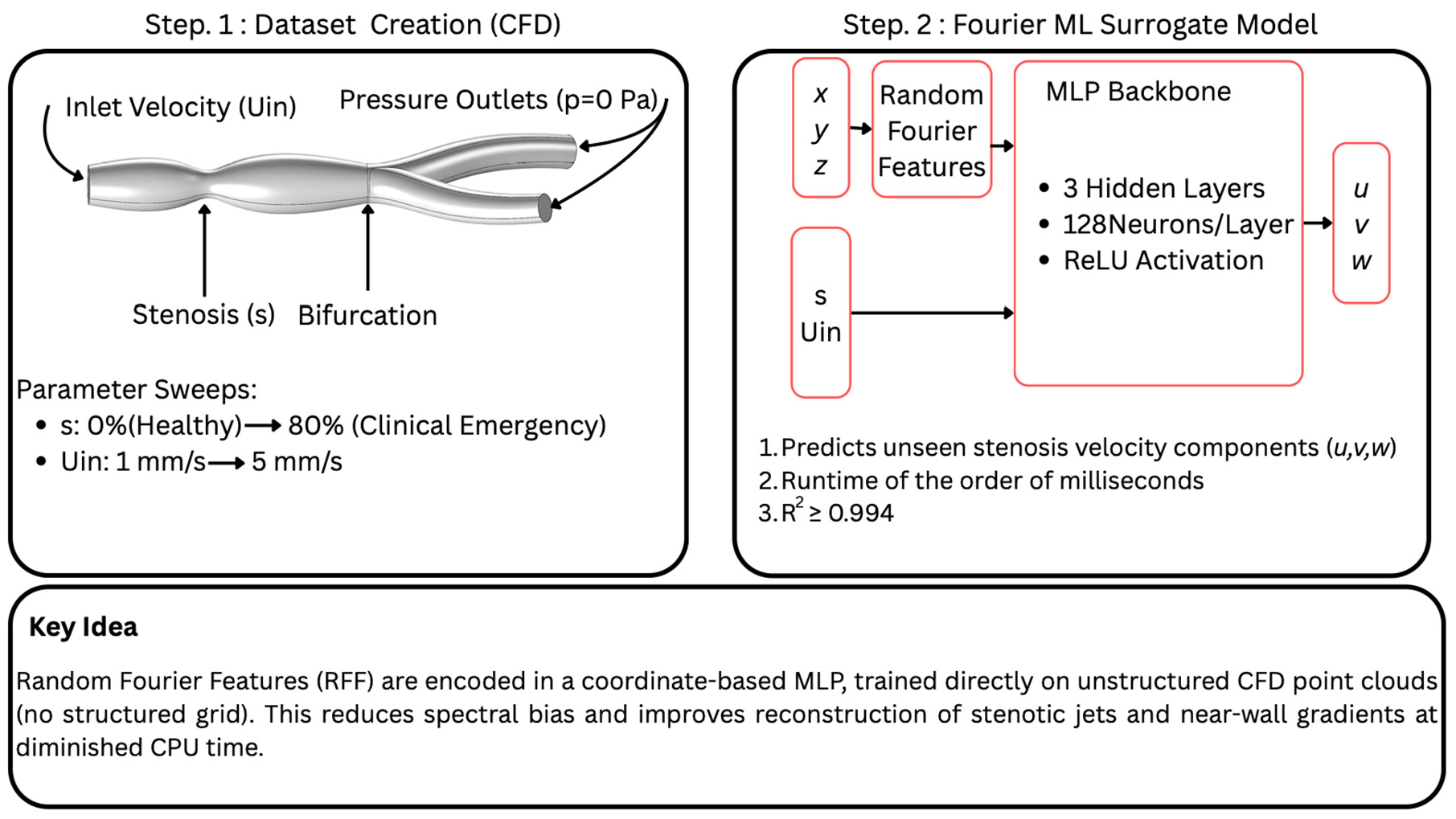
This construction follows random Fourier features (RFF), which can be interpreted as a finite-dimensional approximation of a stationary kernel (e.g., RBF) via Bochner’s theorem [22]. In practice, the embedding increases the effective spatial bandwidth available to a plain coordinate MLP and mitigates the tendency of such networks to under-resolve near-wall gradients. The number of Fourier features D allows the network to represent more complex details. Setting D too high can lead to increased computational cost without substantial accuracy gain. The bandwidth σ is the standard deviation of the Gaussian distribution from which the random Fourier frequencies are sampled. If set too low, then the network acts as a low-pass filter resulting in smoothed outputs hinting at underfitting, while large σ makes it too sharp, indicating overfitting. The values D = 64, σ = 2 were selected to balance accuracy and computational cost. The backbone in both cases is deliberately kept compact as a fully connected MLP with three hidden layers of 128 neurons each and Rectified Linear Unit (ReLU) activation functions (Figure 1), followed by three output neurons, one for each velocity component (u, v, w). While sine activations (e.g., SIREN) can capture high-frequency details, they typically require careful initialization and tuning to train reliably, which increases training overhead and may slow convergence. Since RFF embedding already introduces a sinusoidal structure into the input space, we retain ReLU in the backbone to keep optimization simple and computationally efficient.
Inputs and targets are standardized using training-set statistics only. Spatial coordinates use a global per-axis z-score and the velocity targets are scaled to the range of [0, 1] using the scikit-learn’s, MinMaxScaler module, per component for optimization. The case descriptor c = [Uin, s] contains two bounded scalar inputs and is scaled within the range of [0, 1] on both of its components. Metrics are reported in physical units after inverse transformation.
Training minimizes the MSE and monitors the RMSE of the normalized values, using Pytorch’s AdamW as the optimizer an adaptive stochastic gradient descent method that estimates per-parameter learning rates from running averages of the first and second moments of the gradients with Weight Decaying (WD) of 10−4 and learning rate L R = 10 3 . Finally, the checkpoint with the lowest validation loss is retained. Hyper-parameters (layer width/depth, activation, optimizer, and schedule) follow widely adopted defaults for coordinate networks. The complete configuration is summarized in Table 1.

2.2. CFD Calculations

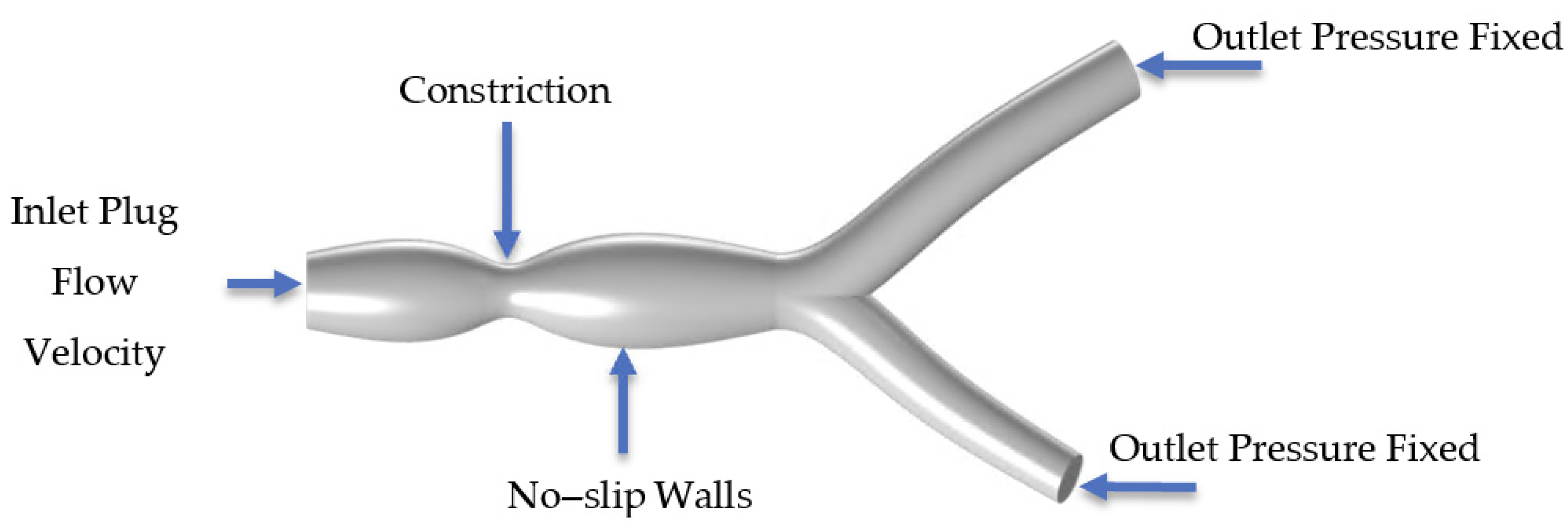
Steady, incompressible flow of a Newtonian fluid is considered in a microvascular conduit subject to prescribed fixed inlet, two fixed pressure outlets, and wall-boundary conditions. The conduit comprises a localized axisymmetric constriction and a single bifurcation, as shown in Figure 2. The post-split branch radii follow Hess–Murray scaling [32,33] to provide physiologically plausible daughter-to-parent size ratios and the associated hydraulic resistance distribution. In the present study, this idealized, parametrically defined geometry is adopted as a controlled benchmark to isolate the effect of random Fourier feature encoding on the learning of steady three-dimensional velocity fields. Although the surrogate formulation is not inherently restricted to Hess–Murray scaling, demonstrating generalization across patient-specific anatomies would require training over a broader family of geometries. These extensions are outside the scope of the current work and are identified as future directions.
The constriction is parameterized by a single scalar geometric descriptor that controls the minimum diameter and the axial extent of the stenotic region. The reference fields satisfy the mass and momentum balances,
u = 0
ρ ( u ) u = p + μ 2 u
where u is the velocity, p the static pressure, ρ the density, and μ the dynamic viscosity. The Reynolds number is given by the relation:
R e = ρ   U   L μ
with U being a characteristic velocity and L a characteristic length. In this work, U is taken as the mean velocity of the inflow profile and L corresponds to the upstream vessel diameter. With these choices, the Reynolds number in all simulated configurations satisfies Re << 1, indicating that inertial contributions are negligible and viscous effects dominate. In this regime the governing equations reduce to
p + μ 2 u = 0  
· u = 0
Boundary conditions are summarized in Figure 2. A fixed plug flow condition is imposed at the inlet to simplify the analysis so that each case is parameterized only by the mean inlet velocity in the descriptor c. In the present low-Re regime, the hydrodynamic entrance length is much smaller than the vessel diameter, so the influence of the imposed inlet profile is confined to a short region near the inlet, and the parabolic profile is built right after that, ensuring that the downstream flow is governed primarily by the stenosis and bifurcation geometry. Walls are considered no-slip surfaces throughout the conduit. At the outlets, a fixed gauge pressure condition was enforced. The system is solved numerically using a segregated velocity–pressure solver of COMSOL Multiphysics version 6.0. A multi-grid preconditioned iterative linear solver is chosen based on mesh size.
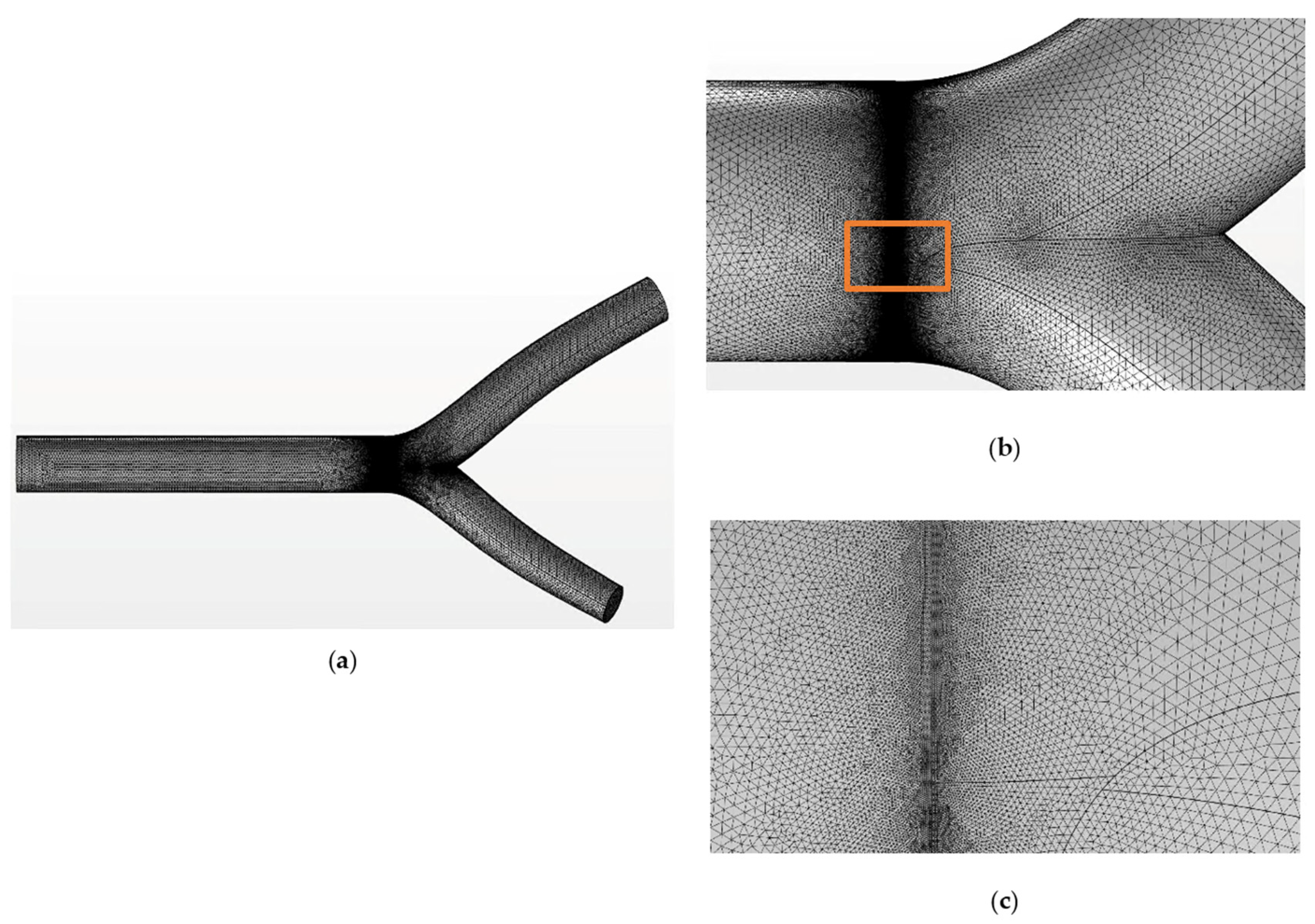
Specifically, the domain was discretized using unstructured tetrahedral elements in the core flow region and prismatic boundary layer stacks adjacent to the vessel wall. Boundary layers employ 10–12 prism layers, with the first-cell height y + 1 where y + denotes the dimensionless wall distance at the highest average velocity ( U m e a n ). A geometric growth factor g 2 is defined as the ratio between adjacent boundary-layer cell heights. Core grading resolves post-stenotic shear layers and junction recirculation, if recirculation is present. Various meshing levels are considered to ensure convergence and keep computational requirements reasonable, as shown in Table 2, keeping all other numerical criteria constant.
The mesh independence tests confirmed convergence when the section averaged pressure drop, as seen in Equation (9), where it varied by less than 1% upon doubling the element count:
Δ P = p ¯ i n p ¯ o u t
In Equation (9), p ¯ i n and p ¯ o u t are the cross-section averaged static pressures at the inlet and outlet, respectively. It appears that the optimal choice is that of Case 2, which generates the meshing structure of Figure 3.
All cases are computed on a workstation, with an Intel Xeon CPU E5-2650 (Intel Corporation, Santa Clara, CA, USA; 2.3 GHz).and 384 GB of RAM. Steady laminar flow solutions typically require times ranging from minutes (coarse meshes) to hours (finest mesh). Once trained, the ML model is able to reproduce the full 3D velocity fields for a new configuration in milliseconds and can also be queried for the local velocity at arbitrarily selected positions, sidestepping the need for numerical solution of the PDEs.
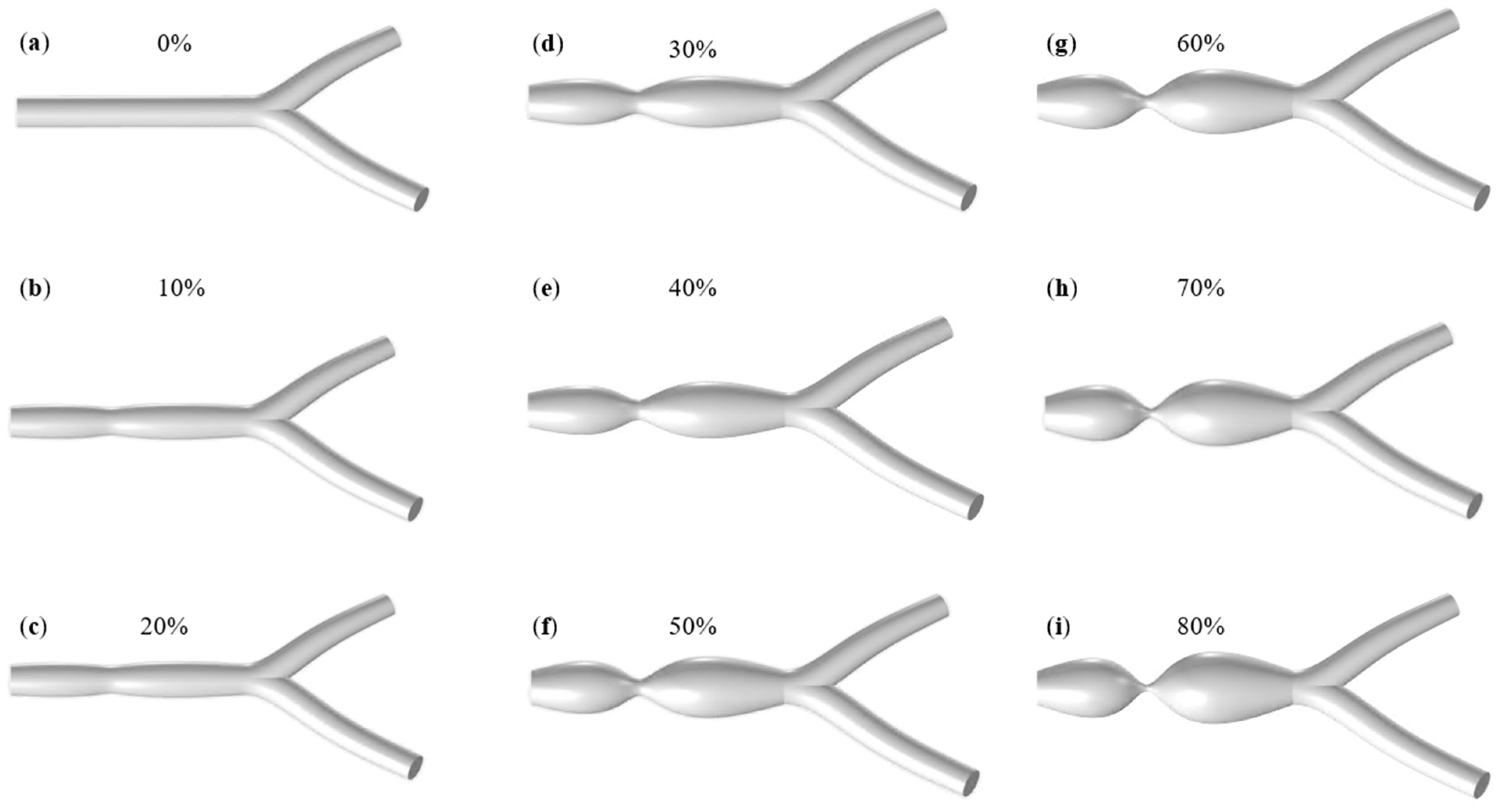
A parameter sweep spans a healthy to severe stenosis range, aiming to populate training and validation data, as they are obtained from direct, detailed CFD calculations. Selected stenosis severities are strictly held out from training and validation and are used solely as targets for predictive flow field evaluation. The case descriptor c of Equation (1) contains the inlet boundary condition and the geometric feature (stenosis severity). The stenosis severity (s) ranges from 0% (healthy) to 80% (clinical emergency), through 10% increments. The bifurcation section of the geometry is held fixed (branching angles, diameters, and lengths remain unchanged), and the only geometric degree of freedom varied across cases is the stenosis severity s (diameter reduction) applied to the parent vessel (Figure 4). This design intentionally isolates the effect of constriction severity on the flow field and avoids confounding variability from changing the bifurcation morphology.
At the parent inlet, a velocity boundary condition was applied as mean inlet velocity U between 0.001 and 0.005 [m/s]. Both daughter branch ends were set to zero-gauge static re ( p = 0 ).
The Laminar Flow interface was solved with a segregated velocity–pressure algorithm, the PARDISO parallel sparse direct linear solver, using algebraic multi-grid preconditioning. Nonlinear convergence tolerances were 10 6 and 10 9 for relative and absolute errors respectively. Simulations were terminated when residual norms met tolerance and mass-balance error was below 0.5%. The total time duration for the aforementioned parametric sweep of the simulations took 5658 s of wall-clock time.

2.3. Surrogate Model-Based Recovery of Flow Field

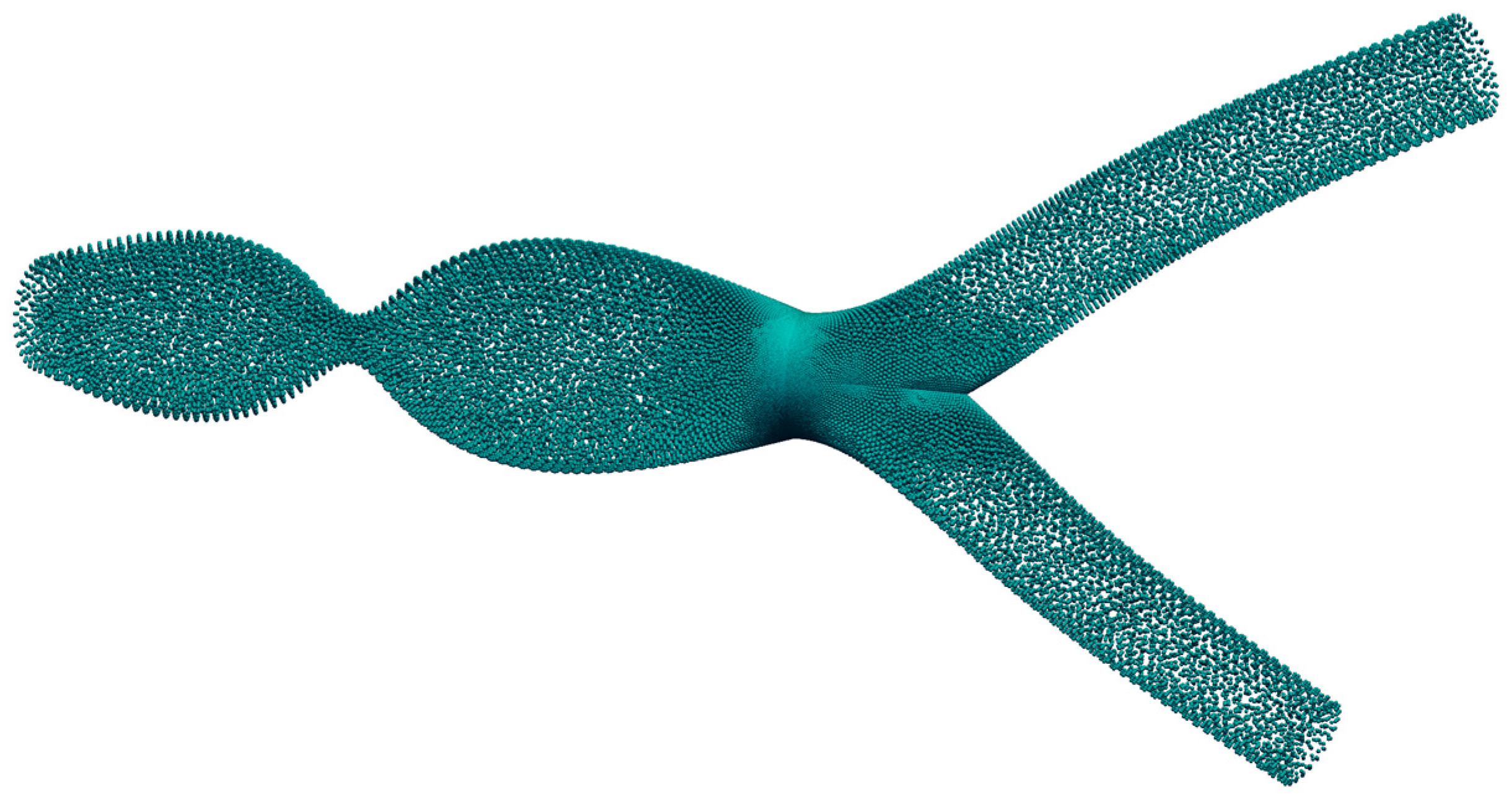
After the FEM simulations were done, the AI surrogate was activated to reconstruct the complete flow field for any chosen case descriptor c (defined above) and any set of query locations (x, y, z) (Figure 5).
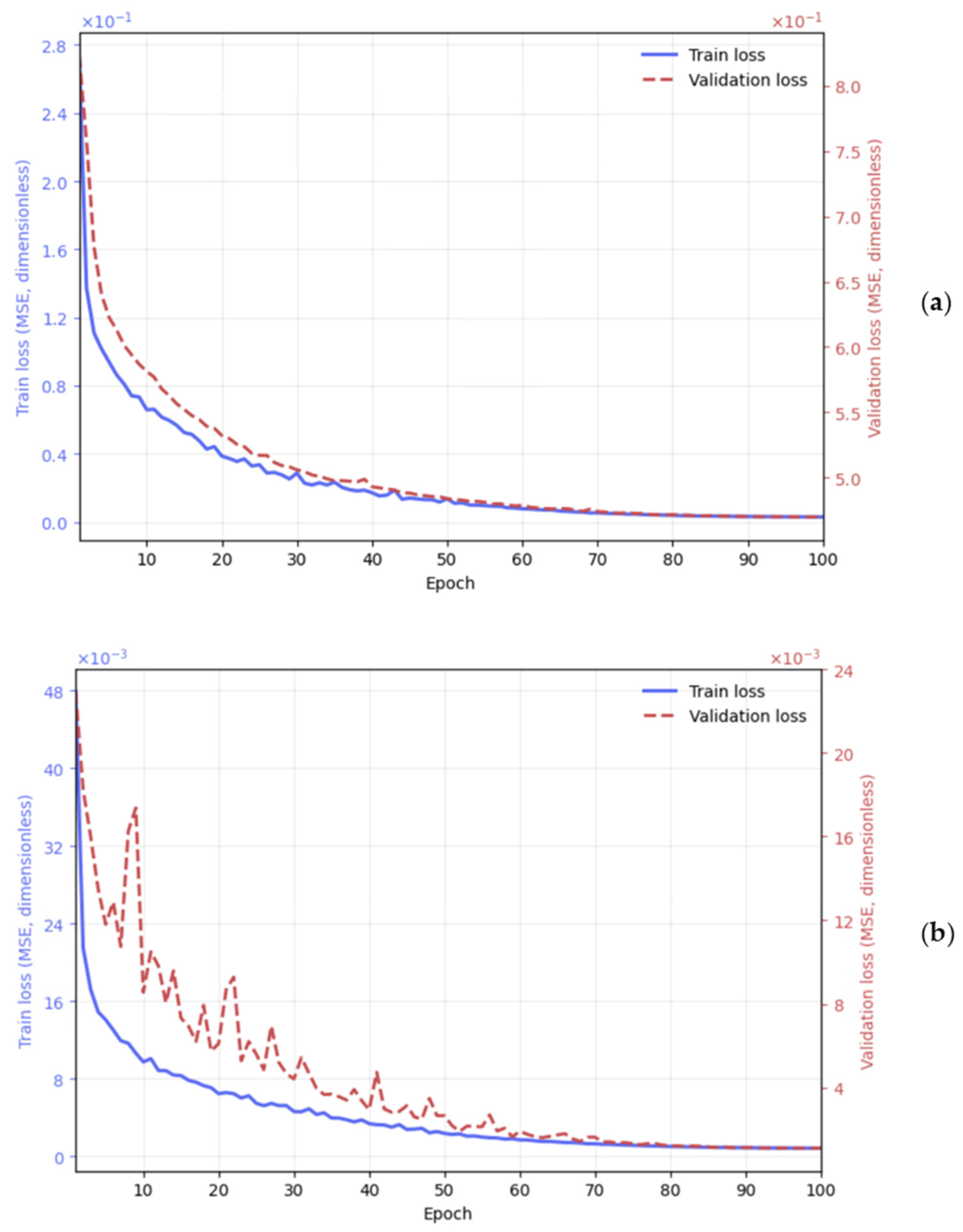
During the training phase, the stenosis severities of 30% and 60% were held out from the training and validation stage and were used only as external target scenarios. Data from all remaining severities were fed into the training and validation process, the total points extracted for each geometry in Table 3, and train/validation split and external evaluation are shown in Table 4. Wall-clock training and validation duration (minutes) for each model are reported in Table 5. The corresponding learning curves (training vs validation loss MSE per epoch) are shown in Figure 6 and help select the checkpoint with the lowest validation loss.
Finally, all inference results on the strictly held-out severities are reported using the MAE, NRMSE (on the velocity magnitude) and R 2 . The corresponding numbers and plots are presented in the next section.

3. Results and Discussion

3.1. CFD Results

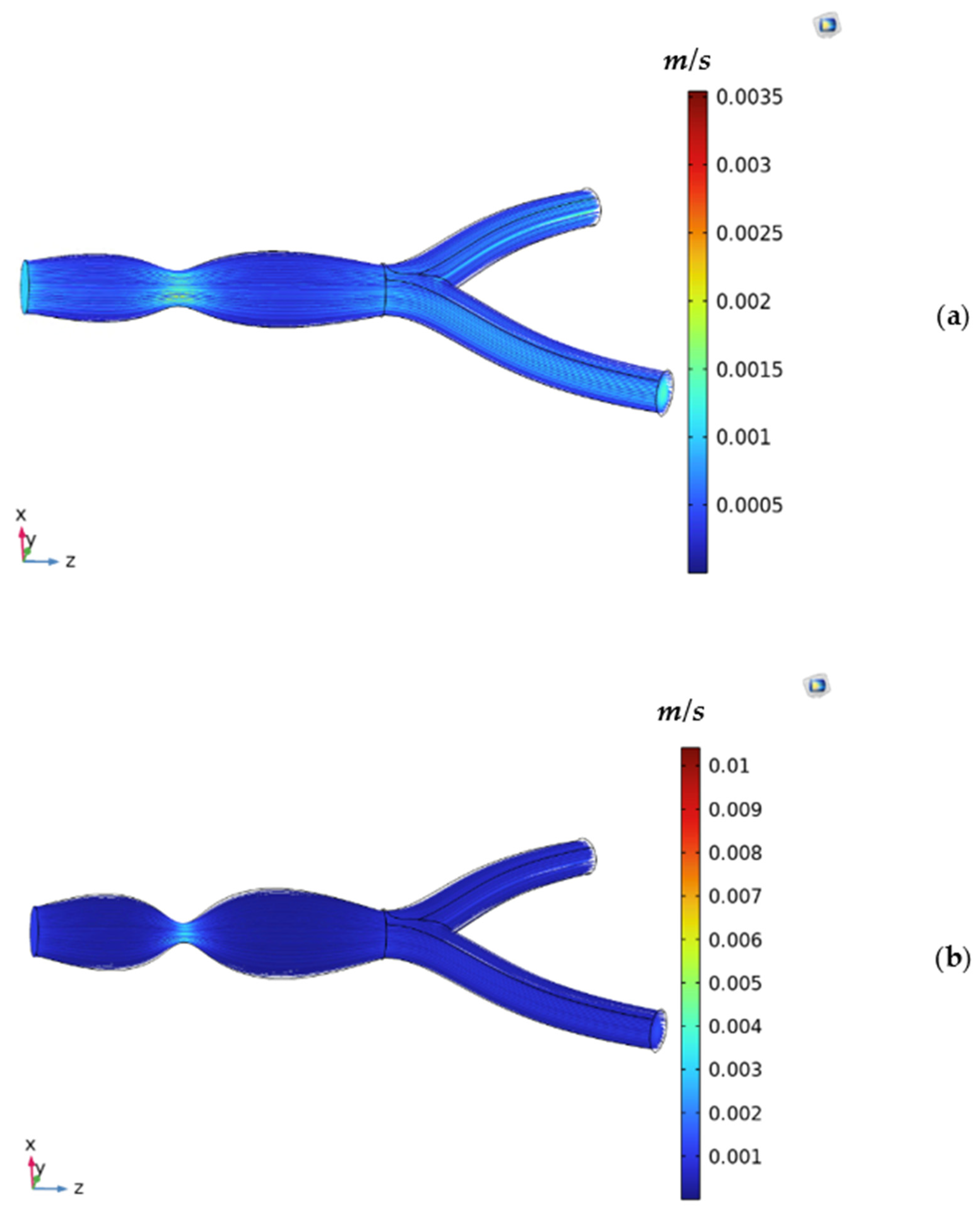
CFD reference fields are presented first, as they serve as ground truth for the held-out stenosis cases. Figure 7 shows velocity-colored streamlines within the arteriolar geometry for two stenosis severities, namely 30% and 60%. In both cases, flow speeds up strongly as the arteriole narrows, producing a compact high-speed core at the throat bounded by a thin near-wall high shear layer. Flow then expands and slows down within the post stenotic dilation before entering the bifurcation, where it partitions smoothly into the two branches.
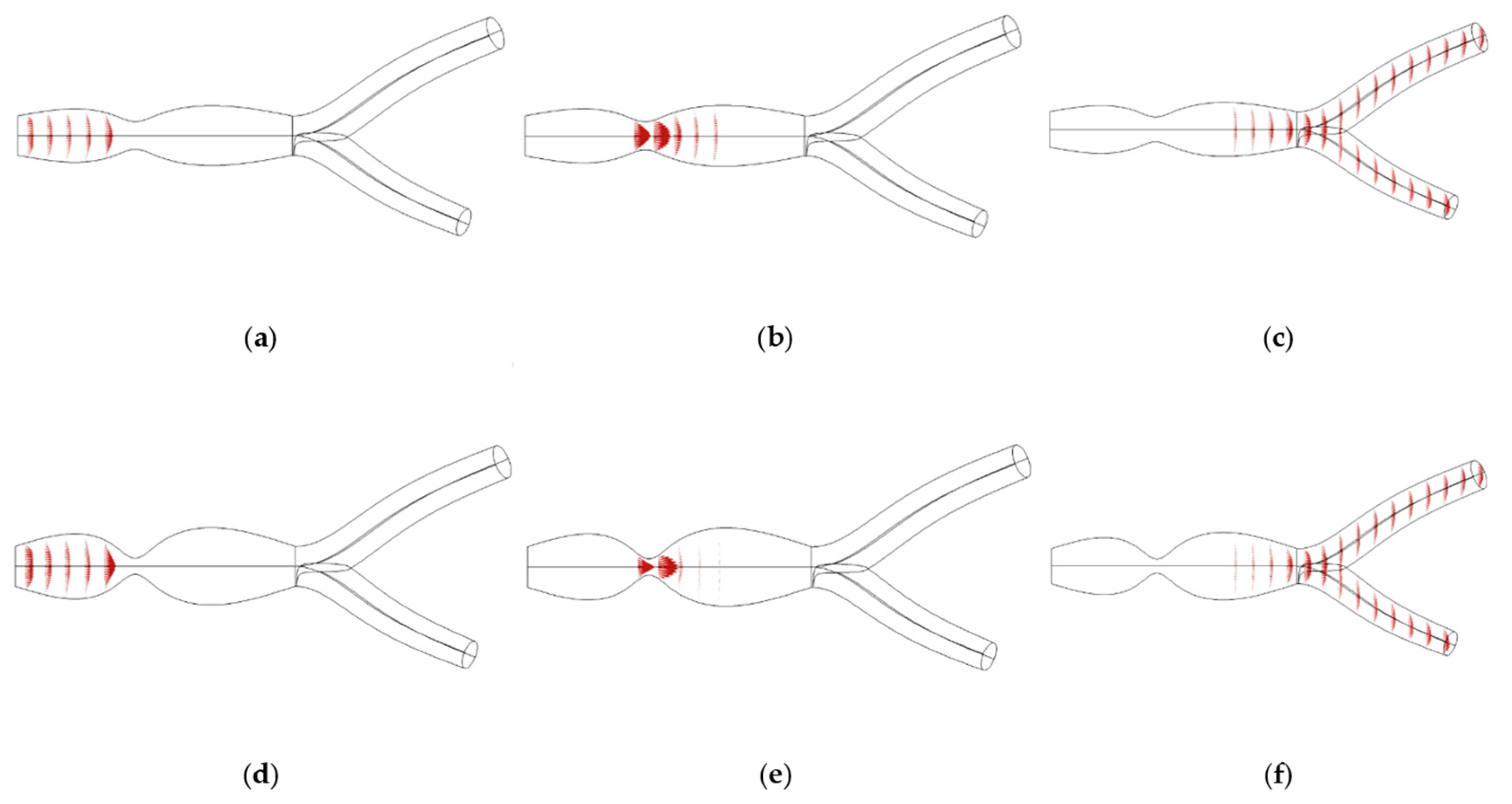
Figure 8 shows the velocity profiles in upstream and downstream regions, as well as within the stenosis region itself, for 30% stenosis and 60% stenosis severities. The profiles are taken on a plane that passes through the axis of symmetry of the parent arteriole. These profiles illustrate how stenosis severity influences the radial distribution of the velocity, as the fluid speeds up into the constriction and splits into the daughter arterioles.
At the stenosis, sharply peaked centerline velocities and strong radial gradients develop despite the linearity of the equations that pose a real challenge to the prediction of the local flow field by ML models, given that the particular stenosis CFD data are held out form the training and validation stages, therefore the surrogate must interpolate across unseen constriction levels and points and not interpolate just within a known case. The same holds for the downstream region and especially the bifurcation position where rapid distribution of momentum is noted. In any case, carefully extracted and fully converged CFD data provide a spatially localized reference against which surrogate-model velocity predictions and regional error assessments will be evaluated.
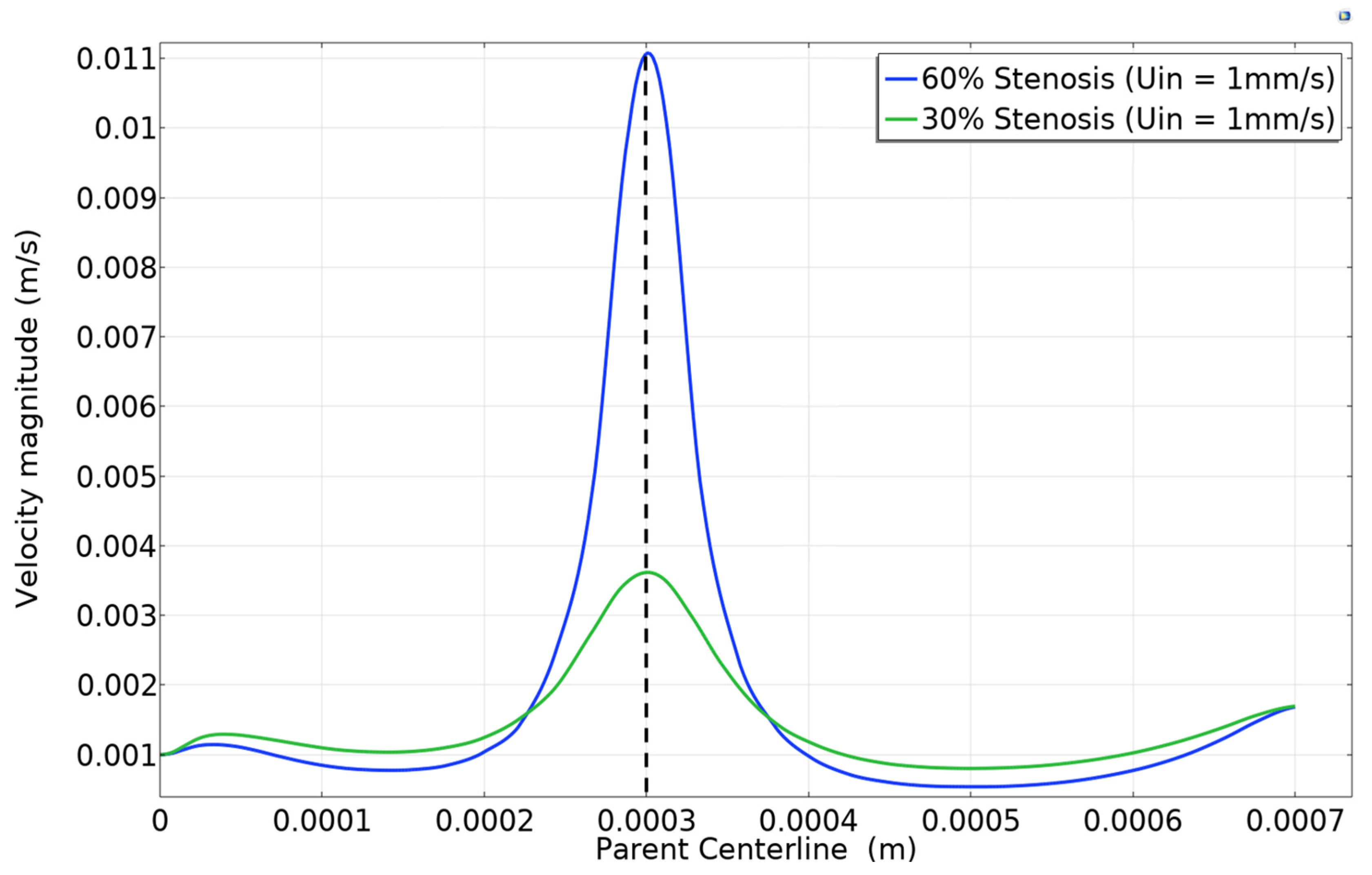
Figure 9 shows the profile of the axial velocity magnitude along the centerline of the parent vessel for 30% and 60% stenosis severities. The velocity profile shows the characteristic stenotic speed-up, with a rapid rise to a sharp peak at the throat followed by downstream decay. The 60% narrowing produces a higher and more confined velocity peak compared to the 30% case.

3.2. Results of Surrogate Models

The predictive capability of the two surrogate architectures is presented in this section, namely, that of (i) a conventional multilayer perceptron (MLP) and (ii) an identical network augmented with randomized Fourier features (Fourier MLP). The aim is to reconstruct the full three-dimensional velocity field from the stenosis percentage and the entry blood velocity, upstream of the stenosis. Both models were used to predict the flow field for the unseen 30% and 60% stenosis severity cases, with a fixed inlet velocity of Uin = 0.001 m/s; in other words, both models are trained to interpolate within the training regime regarding the descriptor values.
Table 6 summarizes the accuracy per velocity component of the two surrogate models in the 60% stenosis case. For all velocity components, the Fourier MLP exhibits 1 to 2 orders of magnitude lower MAE and RMSE compared to the conventional MLP, with R2 values consistently above 0.997. The improvement is most pronounced in the w-component (z-direction), for which the conventional MLP exhibits elevated errors due to its limited ability to resolve sharp spatial gradients and near-wall velocity variations induced by the stenotic geometry. In contrast, the Fourier MLP preserves the high-frequency spatial content of the CFD solution and accurately reconstructs all velocity components.
Table 7 reports the model performance for the 30% stenosis case, which was strictly excluded from training. Despite the distribution shift, the Fourier MLP maintains high accuracy with MAE values below 3 × 10⁻⁶ m/s and R2 exceeding 0.994 for all components. To complement the absolute metrics on Table 6 and Table 7, we additionally report the NRMSE on the velocity magnitude, which expresses the residual error relative to the RMS magnitude of the CFD field and is defined as
N R M S E = 1 N i = 1 N q i q i ^ 2 1 N i = 1 N q i 2
where qi is the true velocity magnitude, q i ^ is the predicted velocity magnitude, and N is the total number of values.
In the held-out 30% and 60% stenosis cases, the Fourier MLP consistently maintains a low normalized error in contrast to the conventional MLP. The Fourier MLP preserves both the magnitude and direction of the flow velocity vectors, indicating that it has learned a transferable, geometry-robust representation rather than memorizing individual stenosis configurations. Overall, these results confirm that Fourier feature encoding plays a critical role in enabling reliable full velocity-field reconstruction on unseen stenosis severities.
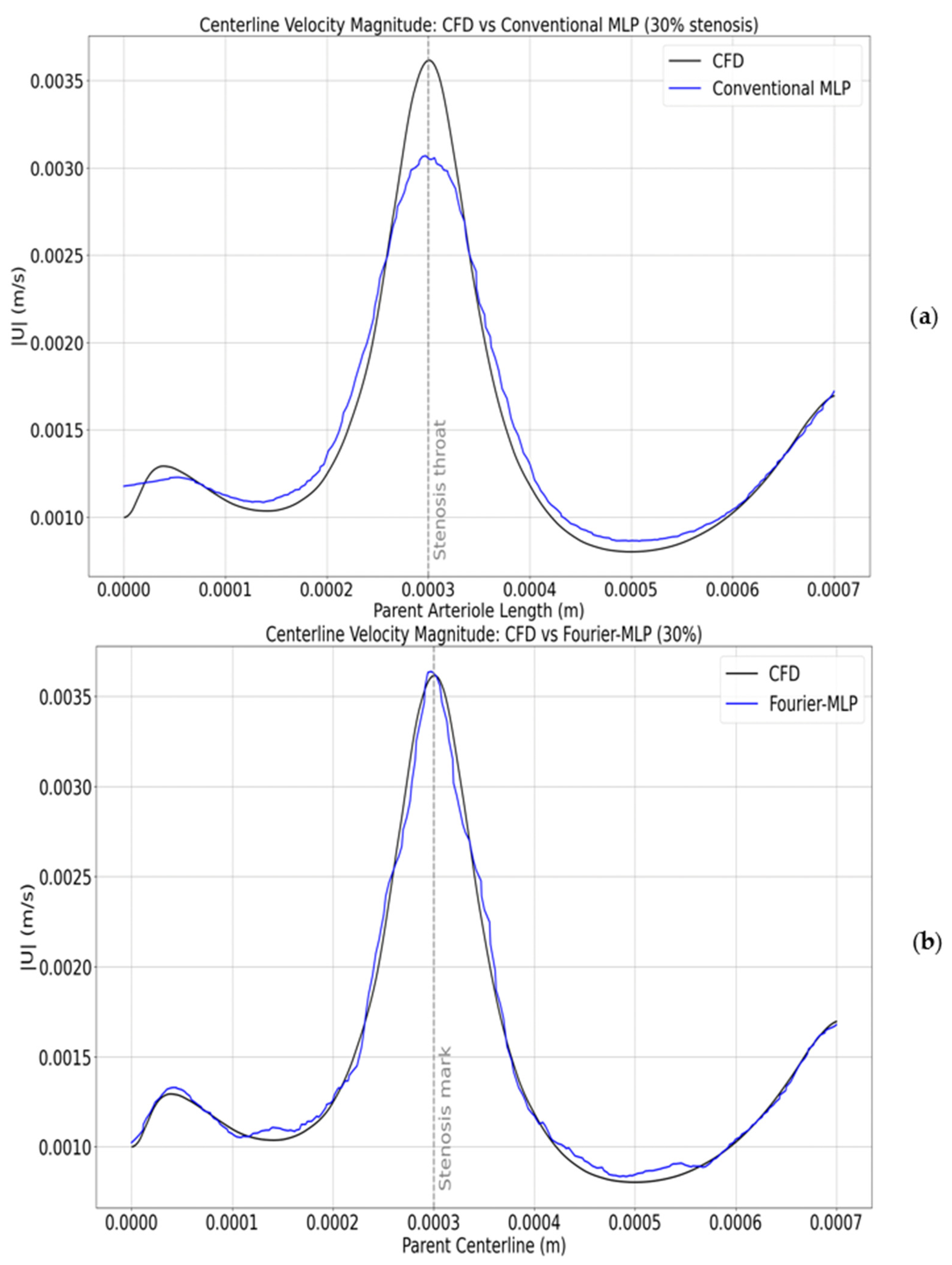
Figure 10 depicts the comparison of the predicted centerline velocity magnitude profile |U| along the parent arteriole against the CFD ground truth for the 30% stenosis case. The dashed vertical line marks the highest constriction location (z = 3 × 10⁻⁴ m), where the CFD model predicts a sharply localized speed-up with a pronounced peak, followed by a rapid post-stenotic slow-down until gradual recovery further downstream. According to the results of Figure 10a, the conventional MLP is shown to fail to reproduce this localized behavior. The peak is markedly under-predicted and broadened, whereas the surrounding upstream/downstream flow variations are overestimated. On the contrary, Figure 10b shows that the present Fourier MLP model follows the CFD velocity profile quite closely throughout the entire working domain, capturing quantitatively both the position and sharpness of the stenosis peak as well as the downstream flow relaxation trend. Overall, the centerline velocity test confirms that incorporating Fourier features into the model substantially improves fidelity to the CFD reference, even in regions that are dominated by steep spatial variations in the flow velocity. The latter is especially important for WSS calculations if near-wall phenomena are to be examined, e.g., for clinical applications, given that WSS is proportional to the near-wall velocity gradient and, thus, requires sufficient accuracy there.
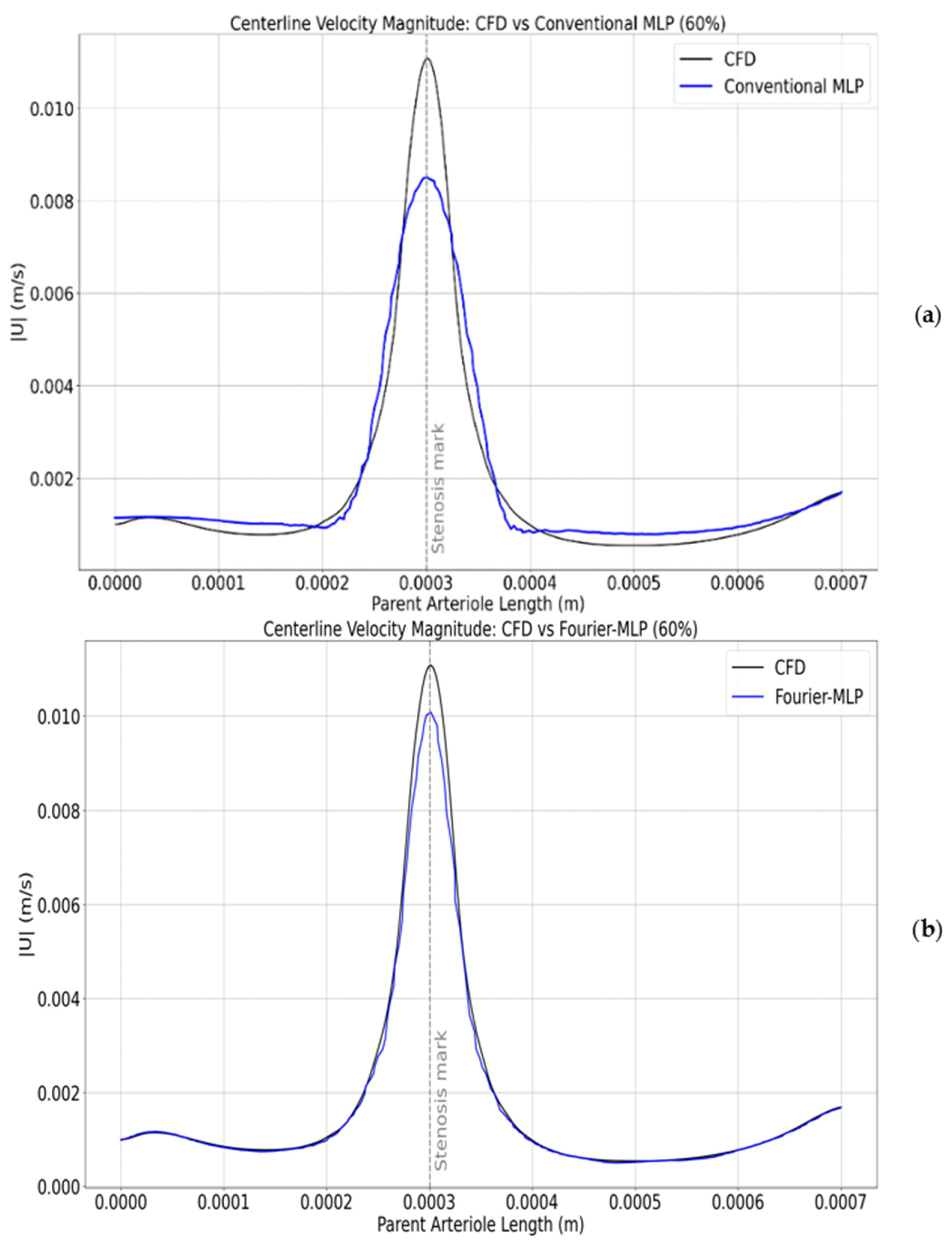
Similar observations can be made for the 60% stenosis case, as shown in Figure 11a,b. Despite the severity of the stenosis, the new model closely follows CFD data. A small deviation (≈9%) is noted only at the stenosis throat, where abrupt speed-up develops due to the sharp change in local arteriole geometry. It is also apparent that the conventional MLP model fails to follow the CFD data, practically over the entire domain of the conduit, with the biggest deviation being at the stenosis throat (≈20.9%). Although errors are reported in m/s, their physical impact is interpretable because flow rate relates directly to it, as explained below.
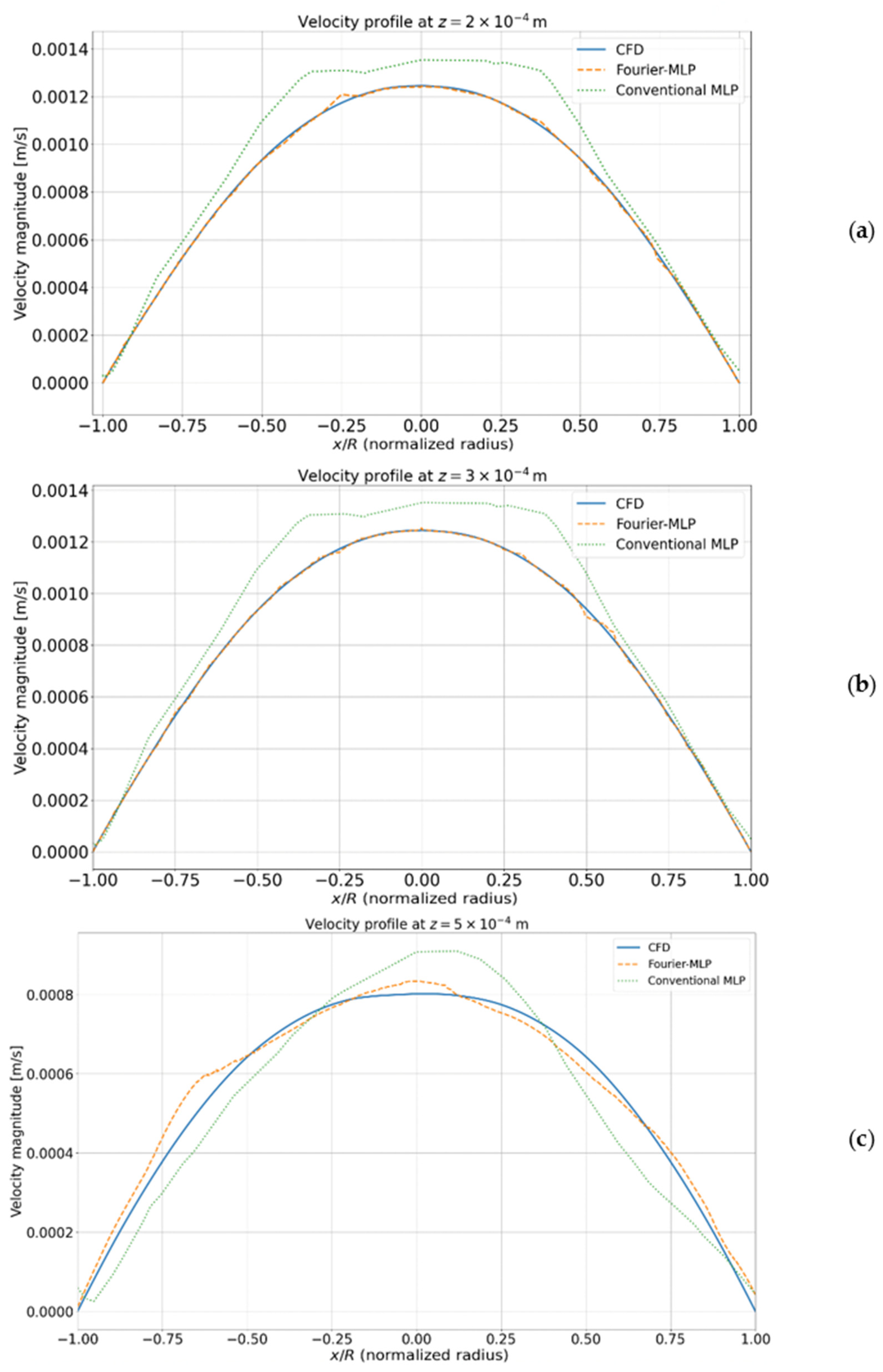
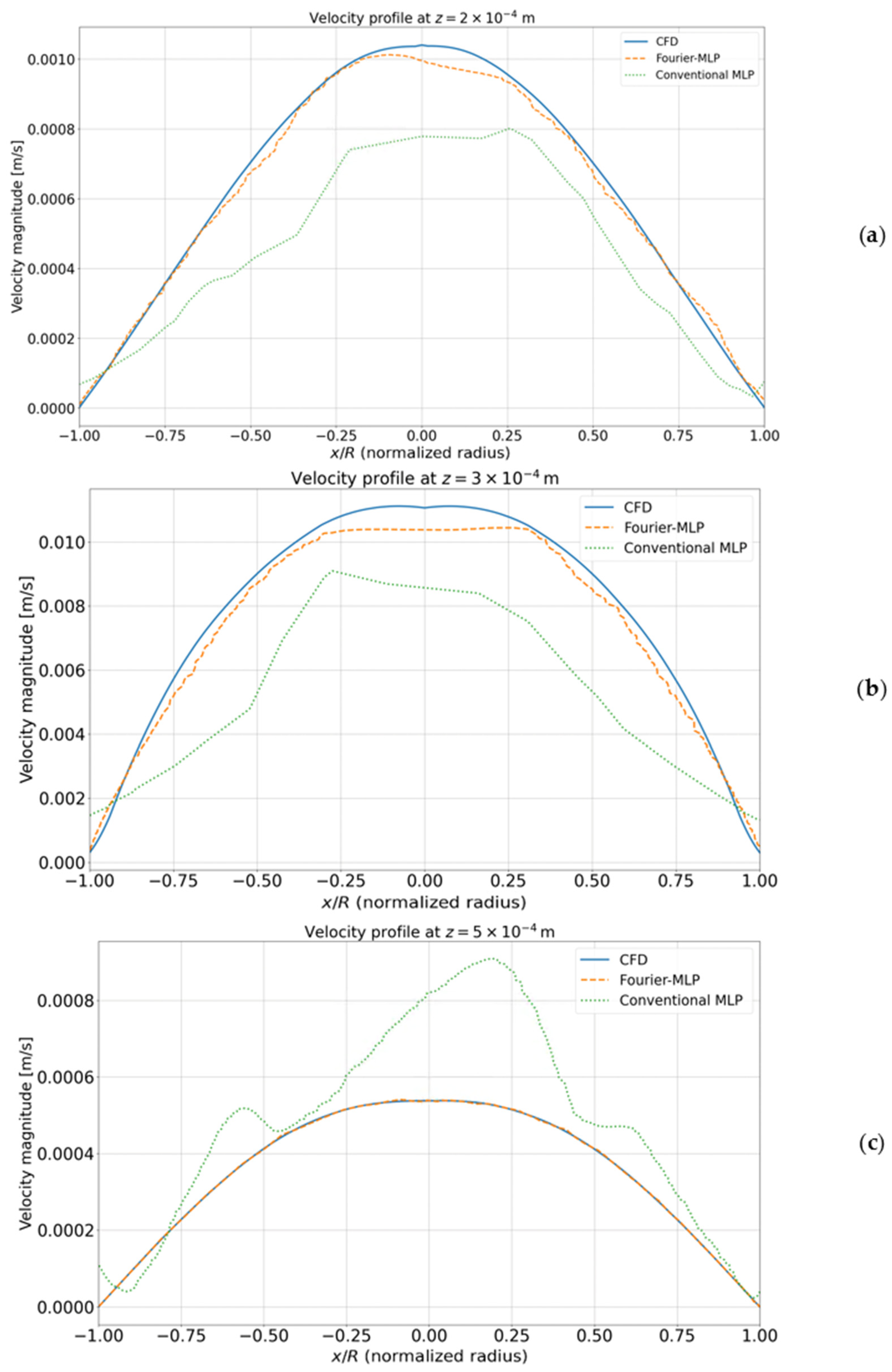
Figure 12 compares the radial velocity profiles as predicted by the new Fourier MLP model with those by the conventional MLP model, against the CFD (ground truth) predictions at three axial positions along the parent vessel, namely, before the 30% stenosis, precisely at the stenosis, and in the post-stenosis region. A similar comparison is made in Figure 13 for the 60% stenosis case. In both figures, the profile of the velocity magnitude across the arteriole is plotted using the normalized position, x/R, as abscissa, where R is the local radius of the conduit (x = 0 corresponds to the centerline). The conventional MLP exhibits strong deviations from the CFD solution across the cross-section, with the largest discrepancies occurring at the stenosis throat where velocity gradients are steepest. On the contrary, the new Fourier MLP model follows the CFD data closely, even in the large stenosis severity (60%), with some discernible deviation near the centerline in the post-stenosis region (close to the bifurcation).
It is also useful to check the predictive power of the Fourier MLP model as regards to the flow rate at selected positions, given that this metric is physically practical and at the same time reflects the physical consistency of the surrogate through mass conservation. The volumetric flow rate, Q, is calculated from
Q = A u z d A
where uz denotes the velocity component in the direction of the vessel axis and A represents the area of the cross-slice. The results for 30% and 60% stenosis cases are shown in Table 8 and Table 9. The same positions along the flow conduit were considered as those used in Figure 12 and Figure 13, namely, upstream of the stenosis, at the stenosis, and downstream of the stenosis. A direct comparison with the predictions of the conventional MLP model is also presented in these tables. It is evident that the Fourier MLP recovers the volumetric flow rate within only a few percent across the examined sections, for both mild and severe stenosis cases. On the contrary, the plain MLP exhibits substantially larger deviations downstream of the stenosis.

4. Conclusions

In this work, we built and evaluated a coordinate-based neural surrogate for rapid reconstruction of steady three-dimensional velocity fields in a stenosed, bifurcating microvascular conduit. By comparing a conventional multilayer perceptron against an otherwise identical model only augmented with random Fourier features on the spatial inputs, we showed that the choice of positional representation is a key factor governing reconstruction fidelity in flows that contain localized steep gradients.
The main finding is that Fourier feature encoding mitigates the tendency of standard coordinate networks to over-smooth high-gradient regions, thereby improving the surrogate’s ability to preserve stenosis-induced speed-up as well as downstream flow patterns. This supports the use of lightweight Fourier-augmented coordinate networks as mesh-agnostic, query-anywhere surrogates for microvascular flow screening and rapid field reconstruction, where repeated CFD simulations are computationally prohibitive.
The present study is intentionally limited to a controlled, parametrically defined bifurcation geometry and a steady Newtonian/Stokes regime. Consequently, generalization across patient-specific anatomies, uncertainty in boundary conditions, and more complex physics are not demonstrated here. In addition, the surrogate is trained in a supervised manner without explicitly enforcing governing equations, and physical consistency is assessed only through post hoc diagnostics.
Overall, the results highlight that appropriately designed positional encodings can substantially enhance the reliability of coordinate-based surrogates for vascular hemodynamics without increasing model complexity.

Author Contributions

Conceptualization, P.N.P.; methodology, P.N.P. and V.N.B.; software, P.N.P.; validation, P.N.P. and V.N.B.; formal analysis, P.N.P.; investigation, P.N.P.; resources, P.N.P.; data curation, P.N.P.; writing—original draft preparation, P.N.P.; writing—review and editing, V.N.B. and P.N.P.; supervision, V.N.B.; project administration, V.N.B.; funding acquisition, V.N.B. All authors have read and agreed to the published version of the manuscript.

Funding

This research received no external funding.

Data Availability Statement

Data availability upon reasonable request.

Acknowledgments

P.N.P. acknowledges Alexandros N. Kalarakis for reviewing the manuscript. Computational infrastructure and access to commercial software were provided by the Institute of Chemical Engineering Sciences, Foundation for Research and Technology Hellas (FORTH/ICE-HT).

Conflicts of Interest

The authors declare no conflicts of interest.

References

  1. Taylor, C.A.; Figueroa, C.A. Patient-specific modeling of cardiovascular mechanics. Annu. Rev. Biomed. Eng. 2009, 11, 109–134. [Google Scholar] [CrossRef]
  2. Morris, P.D.; Narracott, A.; von Tengg-Kobligk, H.; Silva Soto, D.A.; Hsiao, S.; Lungu, A.; Evans, P.; Bressloff, N.W.; Lawford, P.V.; Hose, D.R.; et al. Computational fluid dynamics modelling in cardiovascular medicine. Heart 2016, 102, 18–28. [Google Scholar] [CrossRef]
  3. Prakash, S.; Ethier, C.R. Requirements for mesh resolution in 3D computational hemodynamics. J. Biomech. Eng. 2001, 123, 134–144. [Google Scholar] [CrossRef]
  4. Vignon-Clementel, I.E.; Figueroa, C.A.; Jansen, K.E.; Taylor, C.A. Outflow boundary conditions for 3D simulations of non-periodic blood flow and pressure fields in deformable arteries. Comput. Methods Biomech. Biomed. Eng. 2010, 13, 625–640. [Google Scholar] [CrossRef] [PubMed]
  5. Taylor, C.A.; Petersen, K.; Xiao, N.; Sinclair, M.; Bai, Y.; Lynch, S.R.; UpdePac, A.; Schaap, M. Patient-specific modeling of blood flow in the coronary arteries: A state-of-the-art review. Comput. Methods Appl. Mech. Eng. 2023, 417, 116414. [Google Scholar] [CrossRef]
  6. Szajer, J.; Ho-Shon, K. A comparison of 4D flow MRI-derived wall shear stress with computational fluid dynamics in intracranial aneurysms. J. Magn. Reson. Imaging 2018, 48, 1249–1258. [Google Scholar] [CrossRef]
  7. Itu, L.M.; Rapaka, S.; Passerini, T.; Georgescu, B.; Schwemmer, C.; Schoebinger, M.; Rohkohl, C.; Comaniciu, D.; Suciu, C. A machine-learning approach for computation of fractional flow reserve from coronary CT. Med. Image Anal. 2016, 36, 306–317. [Google Scholar] [CrossRef]
  8. Kissas, G.; Yang, Y.; Hwuang, E.; Witschey, W.R.; Detre, J.A.; Perdikaris, P. Machine learning in cardiovascular flows modeling: Predicting arterial blood pressure from non-invasive 4D flow MRI. Front. Phys. 2020, 8, 54. [Google Scholar] [CrossRef]
  9. Guo, X.; Li, W.; Iorio, F. Convolutional neural networks for steady flow approximation. In Proceedings of the 22nd ACM SIGKDD International Conference on Knowledge Discovery and Data Mining—KDD ’16, San Francisco, CA, USA, 13–17 August 2016; pp. 481–490. [Google Scholar] [CrossRef]
  10. Pfaff, T.; Fortunato, M.; Sanchez-Gonzalez, A.; Battaglia, P.W. Learning Mesh-Based Simulation with Graph Networks. arXiv 2020, arXiv:2010.03409. [Google Scholar] [CrossRef]
  11. Raissi, M.; Perdikaris, P.; Karniadakis, G.E. Physics-informed neural networks: A deep learning framework for solving forward and inverse problems involving nonlinear PDEs. J. Comput. Phys. 2019, 378, 686–707. [Google Scholar] [CrossRef]
  12. Li, Z.; Kovachki, N.; Azizzadenesheli, K.; Liu, B.; Bhattacharya, K.; Stuart, A.; Anandkumar, A. Fourier Neural Operator for parametric partial differential equations. In Proceedings of the ICLR 2021—The Ninth International Conference on Learning Representations, Virtual, 3–7 May 2021; Available online: https://openreview.net/forum?id=c8P9NQVtmnO (accessed on 15 November 2025).
  13. MacRaild, M.; Sarrami-Foroushani, A.; Lassila, T.; Frangi, A.F. Accelerated simulation methodologies for computational vascular flow modelling. J. R. Soc. Interface 2024, 21, 20230565. [Google Scholar] [CrossRef]
  14. Lin, D.; Kenjereš, S. Towards fast and reliable estimations of 3D pressure, velocity and wall shear stress in aortic blood flow: CFD-based machine learning approach. Comput. Biol. Med. 2025, 191, 110137. [Google Scholar] [CrossRef]
  15. Du, P.; Zhu, X.; Wang, J.-X. Deep learning-based surrogate model for 3-D patient-specific computational fluid dynamics. arXiv 2022, arXiv:2204.08939. [Google Scholar] [CrossRef]
  16. Catalani, G.; Agarwal, S.; Bertrand, X.; Tost, F.; Bauerheim, M.; Morlier, J. Neural fields for rapid aircraft aerodynamics simulations. Sci. Rep. 2024, 14, 25496. [Google Scholar] [CrossRef] [PubMed]
  17. Lu, L.; Jin, P.; Pang, G.; Zhang, Z.; Karniadakis, G.E. Learning nonlinear operators via DeepONet based on the universal approximation theorem of operators. Nat. Mach. Intell. 2021, 3, 218–229. [Google Scholar] [CrossRef]
  18. Lu, L.; Meng, X.; Cai, S.; Mao, Z.; Goswami, S.; Zhang, Z.; Karniadakis, G.E. A comprehensive and fair comparison of two neural operators (with practical extensions) based on FAIR data. Comput. Methods Appl. Mech. Eng. 2022, 393, 114778. [Google Scholar] [CrossRef]
  19. Azizzadenesheli, K.; Kovachki, N.; Li, Z.; Liu-Schiaffini, M.; Kossaifi, J.; Anandkumar, A. Neural operators for accelerating scientific simulations and design. Nat. Rev. Phys. 2024, 6, 320–328. [Google Scholar] [CrossRef]
  20. Benbarka, N.; Höfer, T.; Riaz, H.u.-M.; Zell, A. Seeing Implicit Neural Representations as Fourier Series. In Proceedings of the IEEE/CVF Winter Conference on Applications of Computer Vision (WACV), Waikoloa, HI, USA, 3–8 January 2022. [Google Scholar]
  21. Duvall, J.; Duraisamy, K. Discretization-independent surrogate modeling of physical fields around variable geometries using coordinate-based networks. Data-Centric Eng. 2025, 6, e5. [Google Scholar] [CrossRef]
  22. Aravanis, T.; Chrimatopoulos, G.; Xenos, M.; Tzirtzilakis, E.E. Forecasting two-dimensional channel flow using machine learning. Phys. Fluids 2024, 36, 103617. [Google Scholar] [CrossRef]
  23. Rahimi, A.; Recht, B. Random features for large-scale kernel machines. In Advances in Neural Information Processing Systems; NeurIPS: San Diego, CA, USA, 2007; Volume 20, Available online: https://people.eecs.berkeley.edu/~brecht/papers/07.rah.rec.nips.pdf (accessed on 3 December 2025).
  24. Tancik, M.; Srinivasan, P.P.; Mildenhall, B.; Fridovich-Keil, S.; Raghavan, N.; Singhal, U.; Ramamoorthi, R.; Barron, J.T.; Ng, R. Fourier features let networks learn high-frequency functions in low-dimensional domains. arXiv 2020, arXiv:2006.10739. [Google Scholar]
  25. Aravanis, T.; Papadopoulos, P.; Georgikos, D. Fourier Feature-Enhanced Neural Networks for Wind Turbine Power Modeling. Electricity 2025, 6, 70. [Google Scholar] [CrossRef]
  26. Vaswani, A.; Shazeer, N.; Parmar, N.; Uszkoreit, J.; Jones, L.; Gomez, A.N.; Kaiser, Ł.; Polosukhin, I. Attention is all you need. arXiv 2017, arXiv:1706.03762. [Google Scholar]
  27. Mildenhall, B.; Srinivasan, P.P.; Tancik, M.; Barron, J.T.; Ramamoorthi, R.; Ng, R. NeRF: Representing scenes as neural radiance fields for view synthesis. arXiv 2020, arXiv:2003.08934. [Google Scholar] [CrossRef]
  28. Lin, C.-H.; Ma, W.-C.; Torralba, A.; Lucey, S. BARF: Bundle-adjusting neural radiance fields. arXiv 2021, arXiv:2104.06405. [Google Scholar] [CrossRef]
  29. Barron, J.T.; Mildenhall, B.; Tancik, M.; Hedman, R.; Martin-Brualla, R.; Srinivasan, P.P. Mip-NeRF: A multiscale representation for anti-aliasing neural radiance fields. arXiv 2021, arXiv:2103.13415. [Google Scholar]
  30. Müller, T.; Evans, A.; Schied, C.; Keller, A. Instant Neural Graphics Primitives with a Multiresolution Hash Encoding. arXiv 2022, arXiv:2201.05989v2. [Google Scholar] [CrossRef]
  31. Sitzmann, V.; Martel, J.N.P.; Bergman, A.W.; Lindell, D.B.; Wetzstein, D. Implicit neural representations with periodic activation functions. arXiv 2020, arXiv:2006.09661v1. [Google Scholar] [CrossRef]
  32. Sherman, T.F. On connecting large vessels to small. The meaning of Murray’s law. J. Gen. Physiol. 1981, 78, 431–453. [Google Scholar] [CrossRef]
  33. Kassab, G.S. Scaling laws of vascular trees: Of form and function. Am. J. Physiol. Heart Circ. Physiol. 2006, 290, H894–H903. [Google Scholar] [CrossRef]
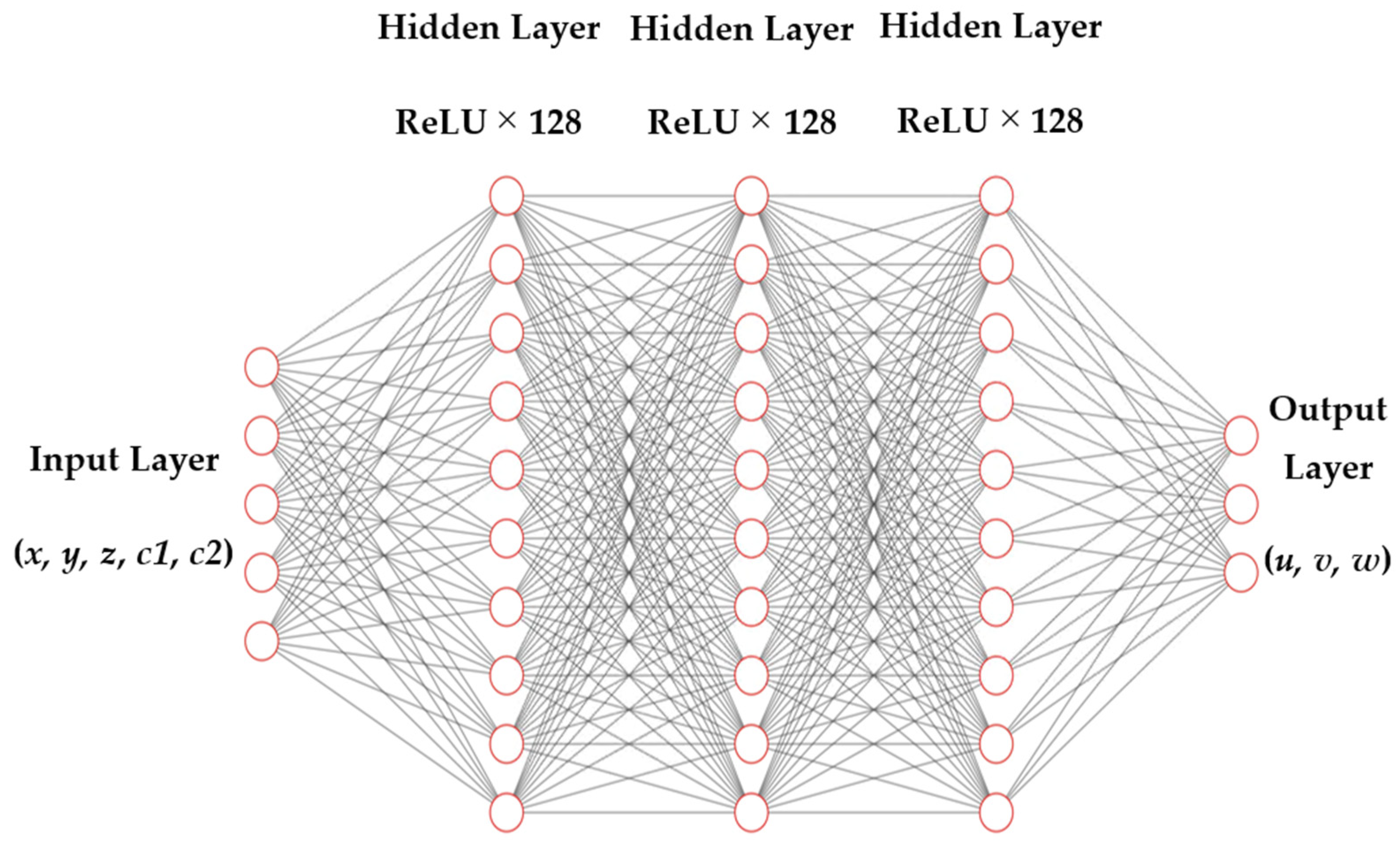
Figure 1. Schematic representation of the MLP backbone.
Make 08 00059 g001
Figure 2. Graphical representation of boundary conditions applied on the computational domain.
Make 08 00059 g002
Figure 3. Selected mesh with a total number of elements equal to 1,239,438. (a) The healthy arteriole (no constriction), (b) right before bifurcation, and (c) detail of b at the marked area (orange rectangle).
Make 08 00059 g003
Figure 4. Parametric stenosis sweep in a Hess–Murray bifurcation. (ai) Stenosis severity expressed as diameter reduction: 0–80%.
Make 08 00059 g004
Figure 5. Example of FEM extracted point cloud.
Make 08 00059 g005
Figure 6. Training history of the neural surrogate models. Training (blue, solid) and validation (red, dashed) losses over 100 epochs, shown on logarithmic dual y-axes scaled to the respective loss ranges, for (a) the conventional MLP model, (b) the Fourier MLP model. In both cases, the loss decreases monotonically with epochs and the validation curve closely tracks the training curve, indicating stable optimization and no evidence of overfitting under the chosen training protocol.
Make 08 00059 g006
Figure 7. Three-dimensional streamline visualization colored by velocity magnitude (m/s) in the arteriolar model for (a) 30% and (b) 60% diameter stenosis.
Make 08 00059 g007
Figure 8. Cross-sectional 3D arrow plots showing fluid velocity shape in three distinct regions (upstream, stenosis, and downstream), for stenosis severity 30% (ac) and 60% (df).
Make 08 00059 g008
Figure 9. Centerline velocity magnitude for 30% (green) and 60% (blue) stenosis cases. The black-dashed line indicates the location of the constriction along the parent trunk length.
Make 08 00059 g009
Figure 10. Centerline velocity magnitude for the 30% stenosis cases: (a) predictions of conventional MLP against CFD values (ground truth), (b) Fourier MLP predictions against CFD.
Make 08 00059 g010
Figure 11. Centerline velocity magnitude for the 60% stenosis cases. (a) predictions of conventional MLP against CFD values (ground truth), (b) Fourier MLP predictions against CFD.
Make 08 00059 g011
Figure 12. Normalized radial velocity–magnitude profiles comparing CFD (solid), conventional MLP (dotted) and Fourier MLP predictions (dashed) for the 30% stenosis case at positions (a) upstream (z = 2 × 10⁻⁴ m), (b) (z = 3 × 10⁻⁴ m) stenosis plane and (c) downstream (z = 5 × 10⁻⁴ m). The x-axis represents the normalized radius x/R with x/R = 0 at the centerline and x/R = ±1 at the vessel wall.
Make 08 00059 g012
Figure 13. Normalized radial velocity–magnitude profiles comparing CFD (solid), conventional MLP predictions (dotted) and the Fourier MLP (dashed) for the 60% stenosis case at (a) upstream (z = 2 × 10⁻⁴ m), (b) (z = 3 × 10⁻⁴ m) stenosis plane and (c) downstream (z = 5 × 10⁻⁴ m). The x-axis represents the normalized radius x/R with x/R = 0 at the centerline and x/R = ±1 at the vessel wall.
Make 08 00059 g013
Table 1. Model and training Hyper-parameters.
SettingsConventional MLPFourier MLP
Hidden layers × width3 × 1283 × 128
Activation (backbone)ReLUReLU
Spectral embedding-RFF on (x, y, z) only
Embedding dimension D Spectral bandwidth σ-D = 64
σ = 2.0
Input to backbone[(x, y, z), c][φ(x, y, z), c]
LossMSE on (u, v, w)MSE on (u, v, w)
Optimized/WDAdamW, 10−4AdamW, 10−4
Learning rate10−3 cosine anneal10−3 cosine anneal
Batch size/epochs1024/1001024/100
Early stopping/selectionLowest validation lossLowest validation loss
EMA of weightsOn (0.999)On (0.999)
Table 2. Meshing sizes considered in the study (healthy arteriole, no constriction).
Meshing CaseTotal Number of ElementsSimulation Wall-Clock Time [min]
1619,7198.2
21,239,43814.7
32,478,876140
Table 3. Dataset points per geometry 30% and 60% are excluded from training or validation but recovered from the Fourier surrogate.
Stenosis Severity (%)Number of Points
0226,949
10231,564
20236,812
30241,098
40245,366
50248,882
60252,331
70255,806
80260,064
Total2,198,872
Table 4. Summary of dataset partitioning used for model development and evaluation. Training and validation totals correspond to an 80/20 split.
SplitNumber of Points
Total2,198,872
Training1,364,354
Validation341,089
External Evaluation (Testing)493,429
Table 5. Duration of train/validation phase for the Fourier and conventional MLP approaches.
Model VariantTime (min)
Conventional MLP15.16
Fourier MLP53.00
Table 6. Global accuracy of the surrogate models on the 60% stenosis case per velocity component.
Metricu-Component (x-Direction)v-Component (y-Direction)w-Component (z-Direction)
MAE (m/s)Conventional MLP: 1.00 × 10⁻⁵Conventional MLP: 7.50 × 10⁻⁶Conventional MLP: 3.46 × 10⁻⁵
Fourier MLP: 1.19 × 10⁻⁶Fourier MLP: 9.27 × 10⁻⁷Fourier MLP: 4.88 × 10⁻⁶
RMSE (m/s)Conventional MLP: 2.06 × 10⁻⁵Conventional MLP: 1.75 × 10⁻⁵Conventional MLP: 8.40 × 10⁻⁵
Fourier MLP: 3.53 × 10⁻⁶Fourier MLP: 3.12 × 10⁻⁶Fourier MLP: 1.52 × 10⁻⁵
R2Conventional MLP: 0.9530Conventional MLP: 0.9333Conventional MLP: 0.9586
Fourier MLP: 0.9986Fourier MLP: 0.9979Fourier MLP: 0.9986
NRMSE (global):Plain MLP: 0.1725 (17.25%)
Fourier MLP: 0.0657 (6.57%)
Table 7. Global accuracy of the surrogate models in the 30% stenosis case per velocity component.
Metricu-Component (x-Direction)v-Component (y-Direction)w-Component (z-Direction)
MAE (m/s)Conventional MLP: 7.28 × 10⁻⁶Conventional MLP: 5.56 × 10⁻⁶Conventional MLP: 3.03 × 10⁻⁵
Fourier MLP: 2.37 × 10⁻⁶Fourier MLP: 1.85 × 10⁻⁷Fourier MLP: 1.15 × 10⁻⁵
RMSE (m/s)Conventional MLP: 1.24 × 10⁻⁵Conventional MLP: 1.06 × 10⁻⁵Conventional MLP: 5.30 × 10⁻⁵
Fourier MLP: 4.54 × 10⁻⁶Fourier MLP: 3.73 × 10⁻⁶Fourier MLP: 2.03 × 10⁻⁵
R2Conventional MLP: 0.9785Conventional MLP: 0.9562Conventional MLP: 0.9769
Fourier MLP: 0.9971Fourier MLP: 0.9946Fourier MLP: 0.9966
NRMSE (global)Plain MLP: 0.2735 (27.35%)
Fourier MLP: 0.0493 (4.93%)
Table 8. Volumetric flow rate (Q) at selected positions in the 30% stenosis case.
z (m) QCFD (m3/s)QPlainMLP (m3/s)Relative Error Plain-MLP (%)QFourierMLP (m3/s)Relative Error Fourier MLP (%)
2 × 10−47.69 × 10−127.79 × 10−121.28.05 × 10−124.56
3 × 10−47.62 × 10−125.80 × 10−1223.977.83 × 10−122.5
5 × 10−47.65 × 10−128.85 × 10−1215.57.66 × 10−120.1
Table 9. Volumetric flow rate (Q) at selected positions in the 60% stenosis case.
z (m) QCFD (m3/s)QPlainMLP (m3/s)Relative Error Plain-MLP (%)QFourierMLP (m3/s)Relative Error Fourier MLP (%)
2 × 10−47.72 × 10−127.84 × 10−121.57.74 × 10−120.2
3 × 10−47.69 × 10−126.12 × 10−1220.47.48 × 10−122.8
5 × 10−47.76 × 10−121.05 × 10−1135.57.39 × 10−124.7
Disclaimer/Publisher’s Note: The statements, opinions and data contained in all publications are solely those of the individual author(s) and contributor(s) and not of MDPI and/or the editor(s). MDPI and/or the editor(s) disclaim responsibility for any injury to people or property resulting from any ideas, methods, instructions or products referred to in the content.