1. Introduction
A product’s performance evaluation can be a complex and resource-intensive process that often demands significant investments in time, energy, and cost [
1]. Predicting product performance has become a key strategy in optimizing manufacturing processes, helping organizations overcome inefficiencies associated with variability, waste, and post-production rework [
2]. Although traditional statistical control techniques enable tracking of product quality attributes, they may fall short in capturing the complex, non-linear interactions that impact overall performance, especially in multi-stage production environments [
3].
In such scenarios, it becomes critical to predict performance with accuracy during earlier stages of the process. Accurate prediction facilitates identifying hidden process interactions, conducting effective interventions, and increasing production yields [
4]. This predictive approach is central to improving product quality and manufacturing competitiveness in modern industries [
5].
Simultaneously, the pressure on manufacturing sectors to enhance operational efficiency, reduce cycle time, and maintain high product standards has led to the adoption of artificial intelligence (AI) techniques. Artificial neural networks (ANNs) have proven highly effective in modeling and forecasting performance, particularly where traditional methods struggle to handle complex data. These networks can learn from historical data, recognize hidden patterns, and provide insights that help in both design and process improvement.
Alongside prediction, optimization of product assembly and resource utilization remains a vital concern. This is particularly evident in complex assembly systems where even minor deviations in component selection can result in performance degradation. Optimization algorithms, such as genetic algorithms (GAs), are frequently used to address such challenges. GAs are inspired by evolutionary principles and offer powerful capabilities for identifying optimal configurations among large, combinatorial solution spaces.
The current study proposes a structured, two-phase framework that integrates predictive and optimization techniques to enhance manufacturing performance. In Phase I, critical performance-affecting parameters are identified using design of experiments (DOE), and a prediction model is developed using ANN to estimate product performance based on component attributes. In Phase II, a GA-based optimization model is employed to allocate parts in a way that maximizes product quality and minimizes variability, using a structured permutation matrix.
The framework is validated through a case study on hermetic reciprocating compressors, components widely used in refrigeration systems and known for their high sensitivity to part variability. These compressors serve as an ideal example to showcase how AI-driven methods can be applied to real-world manufacturing settings with complex assembly constraints.
While prior studies have demonstrated the utility of ANN and GA individually, limited research has focused on combining these approaches within a unified system tailored for performance prediction and part allocation in assembly. Furthermore, existing works often lack integration with actual product configurations or experimental structures that reflect industrial constraints.
This study builds on our earlier research on ANN-based performance prediction and GA-based optimization, extending their application into a unified system that supports both forecasting and resource allocation. By systematically linking predictive modeling with evolutionary optimization and validating the approach with a realistic case study, the proposed framework aims to address current gaps in smart manufacturing strategies.
The remainder of the paper is organized as follows.
Section 1.1 provides a focused review of the relevant literature.
Section 2 details the methodology, including the experimental design and model development process.
Section 3 presents the case study results, highlighting improvements in product quality and manufacturing efficiency.
Section 4 offers conclusions and discusses future research opportunities.
1.1. Literature Review
1.1.1. Artificial Neural Networks in Manufacturing
Artificial Neural Networks (ANNs) have become essential tools in modern manufacturing for modeling complex relationships between process variables and product quality outcomes. Their strength lies in capturing non-linear interactions and learning from data with noise or uncertainty. Recent works have demonstrated the use of ANNs for surface roughness prediction [
6], tool wear classification [
7], and weld quality assessment [
8]. These applications span across industries such as automotive, electronics, and heavy machinery, showcasing the versatility of ANNs in predictive modeling.
However, limitations remain. Many studies focus on single-component or linear systems, where ANN models are trained on narrow datasets or lack cross-validation robustness. Additionally, some implementations overlook the challenge of interpretability and generalization in ANN models, especially when applied to real-time systems with process variability. Recent works under Industry 4.0 frameworks seek to integrate ANN with sensor networks and real-time feedback, yet issues of scalability and model transparency persist [
9,
10].
1.1.2. Genetic Algorithms in Manufacturing Optimization
Genetic Algorithms (GAs), inspired by biological evolution, are widely applied to optimization problems in manufacturing due to their flexibility in handling large solution spaces and multi-objective formulations. They are often used in layout design [
11], production scheduling [
12], and assembly line balancing [
13]. More recent studies have shown GAs being applied to energy-efficient machining [
14], material selection [
15], and flexible resource planning under constraints [
16].
While GAs are effective, several limitations are noted in the literature. Parameter tuning (e.g., crossover and mutation rates) often relies on heuristics or empirical methods, leading to suboptimal convergence in some cases. Furthermore, GAs tend to be computationally intensive when applied to real-world large-scale problems, which restricts their use in time-sensitive environments unless hybridized or parallelized. There is also a lack of standardized approaches to evaluate GA performance across different industrial cases.
1.1.3. Hybrid ANN–GA Models: Opportunities and Challenges
Combining ANN and GA into hybrid models has emerged as a promising trend, leveraging the predictive strengths of ANN and the optimization power of GA. These models are used in applications such as analog circuit design [
15], product configuration [
17], and fuzzy system calibration. In these works, GA is typically employed to optimize ANN architecture, hyperparameters, or to search for optimal solutions guided by ANN-based predictions.
Despite their promise, hybrid models still face several challenges. Many are demonstrated only in simulation environments or toy problems, lacking validation against real manufacturing datasets. Additionally, the transition between prediction and optimization phases is often vague, with little emphasis on how prediction outputs are structured to inform optimization logic. Moreover, only a few studies attempt to integrate hybrid models into structured frameworks that reflect real assembly constraints or industrial production settings.
1.1.4. Research Gap and Study Contribution
Although significant advancements have been made in applying ANN and GA in manufacturing individually, and to some extent jointly, there remains a clear research gap in developing fully integrated, real-world-validated frameworks that connect performance prediction to part allocation optimization. Most existing studies either treat prediction and optimization in isolation or simplify the problem structure to idealized cases that are not representative of industrial complexity.
This study addresses this gap by presenting a two-phase framework that explicitly links ANN-based performance prediction with GA-driven part allocation optimization. It builds on prior work by the authors in both domains and extends the methodology by structuring prediction outputs into a matrix form suitable for evolutionary optimization. The approach is validated through a realistic case study involving hermetic compressors—a multi-component system where assembly precision and component variability have direct impacts on performance.
The framework not only enhances prediction and optimization in isolation but also creates a closed-loop system that supports informed decision-making in manufacturing assembly. Its applicability to real-world components and integration with experimental design make it a strong contribution to the growing body of research in AI-based manufacturing intelligence. Unlike prior works, this study develops a structured two-phase system where ANN predictions feed directly into GA-based assembly optimization, applied to a real-world multi-component system.
2. Methodology and Model Development
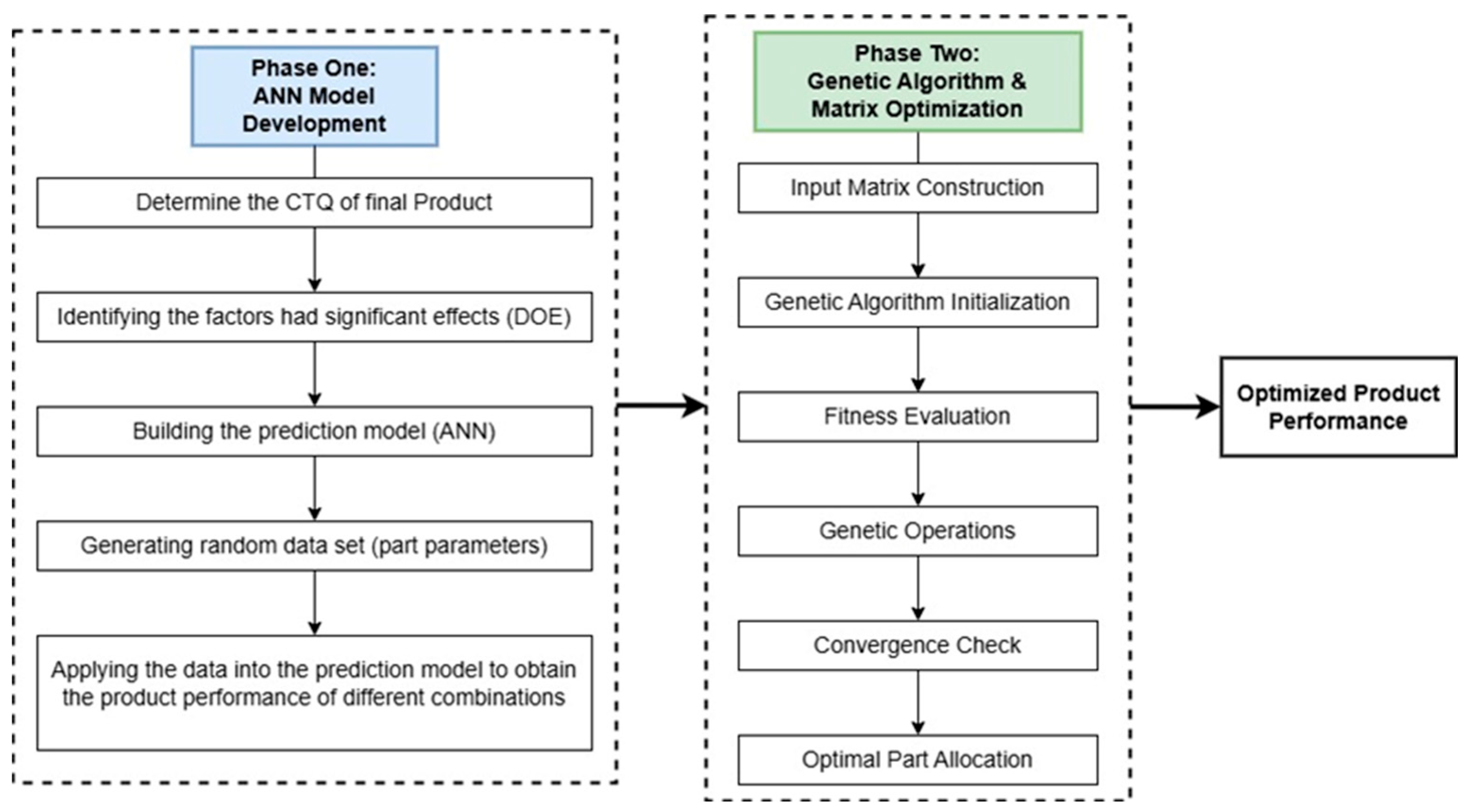
This section provides a comprehensive overview of the methodological framework employed to achieve the research objectives. As illustrated in
Figure 1, the proposed methodology is structured into two distinct yet interconnected phases. The first phase focuses on the formulation and development of a robust performance prediction model utilizing ANNs. This phase aims to harness the predictive power of ANNs to improve the accuracy and reliability of performance forecasting.
The second phase, as depicted in
Figure 1, presents a refined and systematically structured strategy aimed at optimizing the efficiency and effectiveness of product assembly processes. This optimization is accomplished through the integration of genetic algorithms, which enable evolutionary-based problem solving, in conjunction with a matrix-based classification system that enhances decision-making accuracy. Collectively, these two phases contribute to the development of an intelligent, data-driven approach for enhancing product assembly performance and overall operational efficiency.
In Phase I: Prediction Model Development, the primary objective is to establish a robust framework for forecasting the performance of product combinations. The process begins with identifying the critical-to-quality parameters, which define the essential attributes of the final product’s quality and functionality [
18]. Subsequently, the DOE methodology is applied to determine and analyze factors with statistically significant impacts on product performance [
19]. This step ensures that only the most influential parameters are considered in subsequent stages.
Once the critical factors are identified, an Artificial Neural Network is developed as the core of the prediction model. The ANN is trained using relevant data to capture complex relationships between input parameters and product performance. To enhance the model’s applicability and accuracy, a diverse dataset of part parameters is generated, representing various potential configurations. These datasets are then fed into the ANN-based prediction model to compute the expected performance for each combination of parts.
By analyzing these outputs, the model provides valuable insights into the behavior of different configurations, laying a strong foundation for optimizing product assembly in later phases. This structured approach ensures that the prediction model remains both comprehensive and reliable, facilitating informed decision-making for improved product performance.
Phase II focuses on leveraging genetic algorithms and matrix optimization techniques to determine the optimal solution for the given problem. The process begins with constructing the input matrix, which encapsulates the system’s parameters, variables, and constraints, serving as the foundational dataset for optimization.
Next, the genetic algorithm is initialized by generating an initial population of candidate solutions. These solutions, which represent potential answers to the problem, are randomly distributed within the feasible solution space. The algorithm then evaluates the fitness of each candidate using a predefined fitness function that quantifies how well each solution aligns with the desired objectives.
Based on this evaluation, genetic operations are applied to iteratively refine the population. These operations include selection, where the most promising individuals are chosen for reproduction; crossover, where selected solutions exchange genetic material to generate offspring; and mutation, where small random modifications are introduced to maintain genetic diversity.
After each iteration, a convergence check is conducted to assess whether the solutions are approaching the optimal outcome or if further iterations are required for refinement. This process continues until the algorithm converges, ultimately identifying the optimal part allocation that best satisfies the problem’s objectives and constraints.
2.1. Phase One: Performance Prediction Model
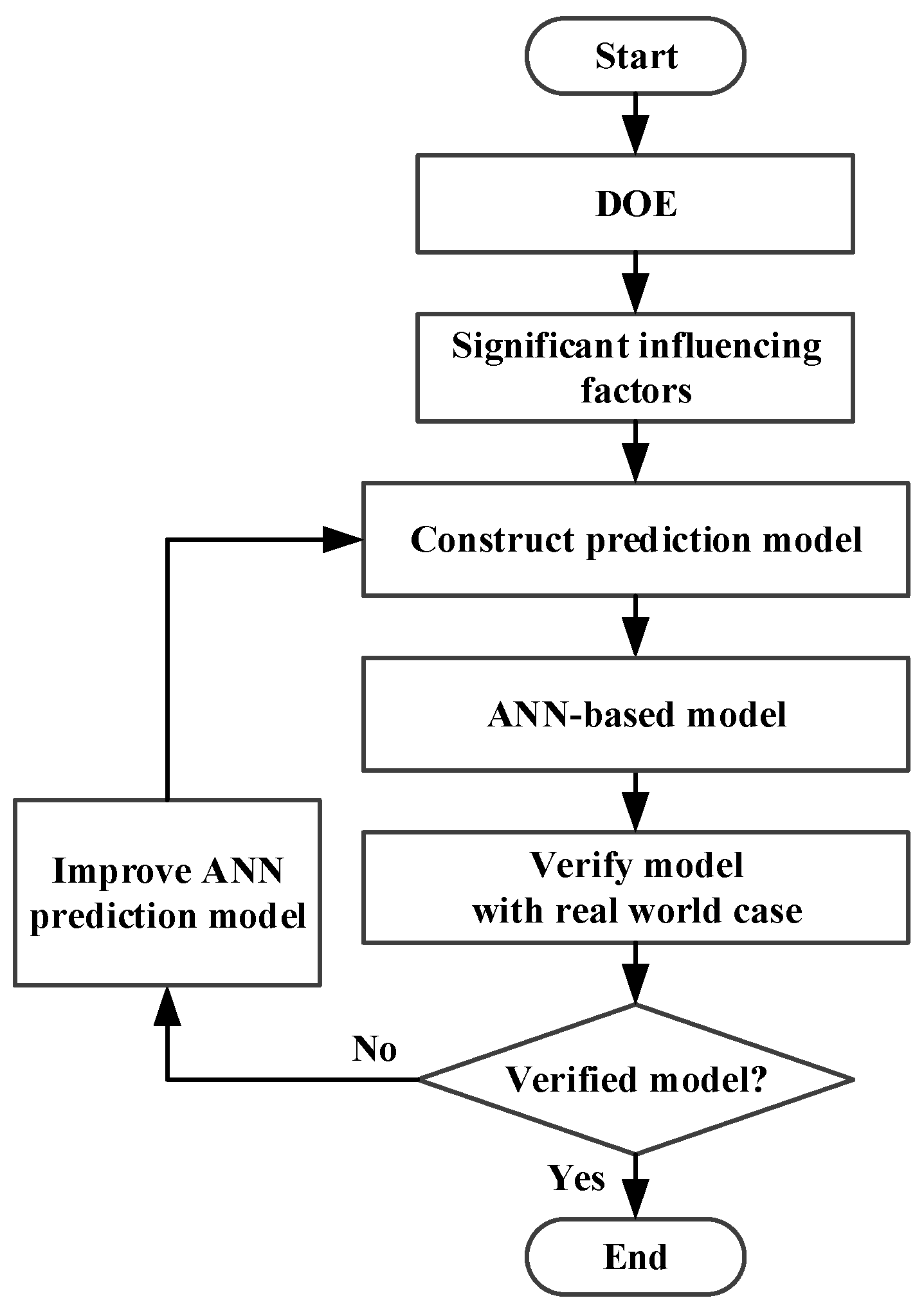
The approach used to develop the performance prediction model in this study aligns with the methodology presented in our previous work [
20]. A summary of the key steps is provided below in
Figure 2.
2.1.1. Experimental Design
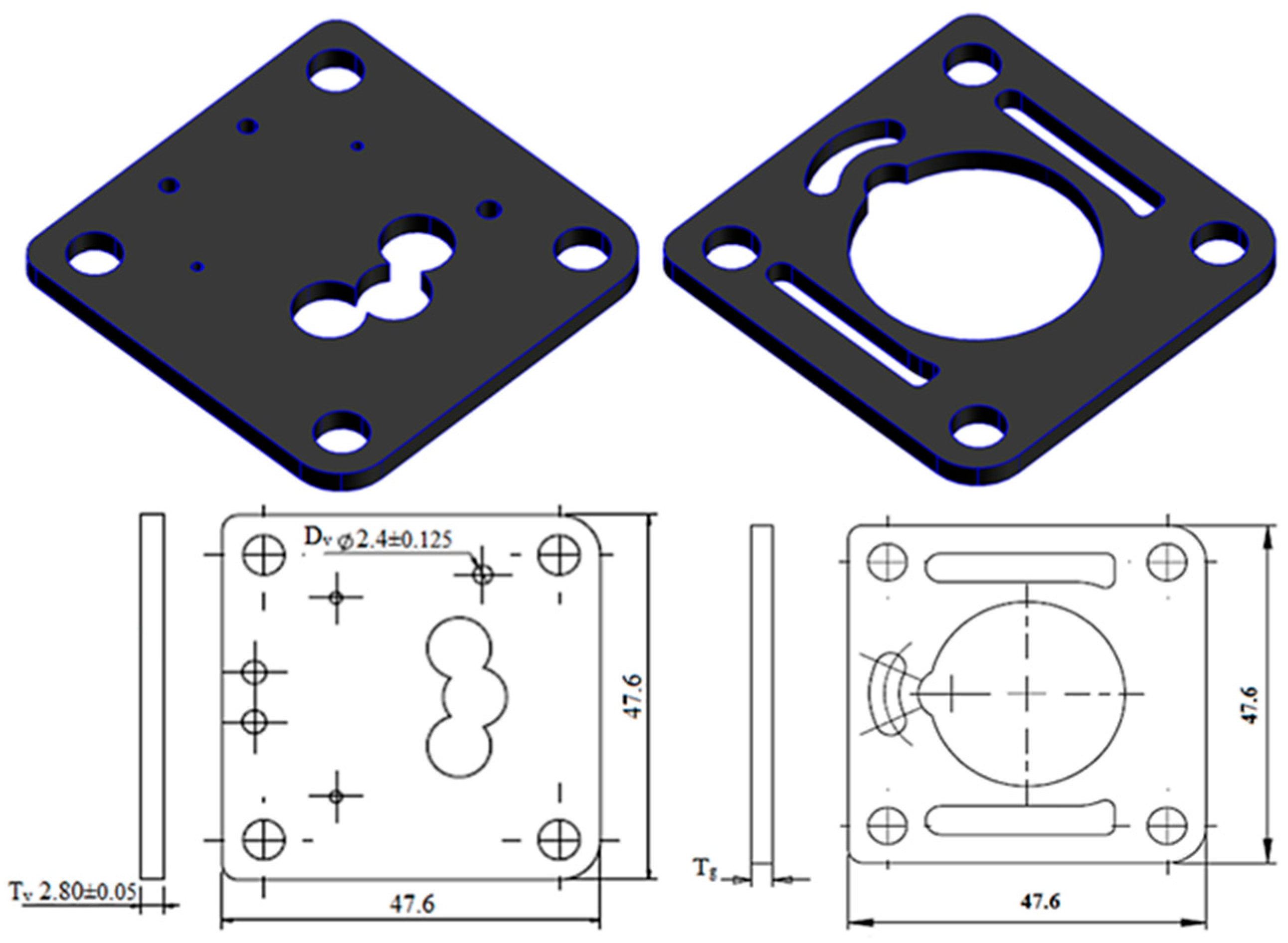
To identify the critical factors influencing product performance, a structured experimental design was applied using the principles of DOE. Four-dimensional control factors were selected based on their geometric and functional importance within the hermetic compressor assembly:
Valve plate thickness (Tv)
Valve orifice diameter (Dv)
Gasket thickness (Tg)
Crankcase orifice diameter (Dcc)
As shown in
Figure 3, the valve plate and gasket are two central components in the valve unit. Their geometric attributes—Tv, Dv, and Tg—are directly visible in the diagram and play a key role in controlling airflow and pressure characteristics within the system. These parameters were chosen for their influence on cooling performance. While Dcc is not illustrated in the figure, it was included in the control factors set due to its recognized impact on flow regulation and internal dynamics. The progression of the performance index (PI) is expressed as a percentage relative to its designed value. Specifically, the cooling capacity (CC) progression percentage represents how the measured value compares to the intended design benchmark.
Each factor was studied within its design tolerances listed in
Table 1, inferred from the geometric parameters. Combining these levels resulted in a structured matrix of 32 experimental trials, covering all relevant permutations with two replications. The experimental design was adopted and extended from the authors’ earlier work [
20], where a similar setup was successfully implemented for performance prediction in hermetic compressors. In the current research, this experimental design forms the predictive foundation that is extended through integration with genetic algorithm optimization.
2.1.2. Artificial Neural Network Structure
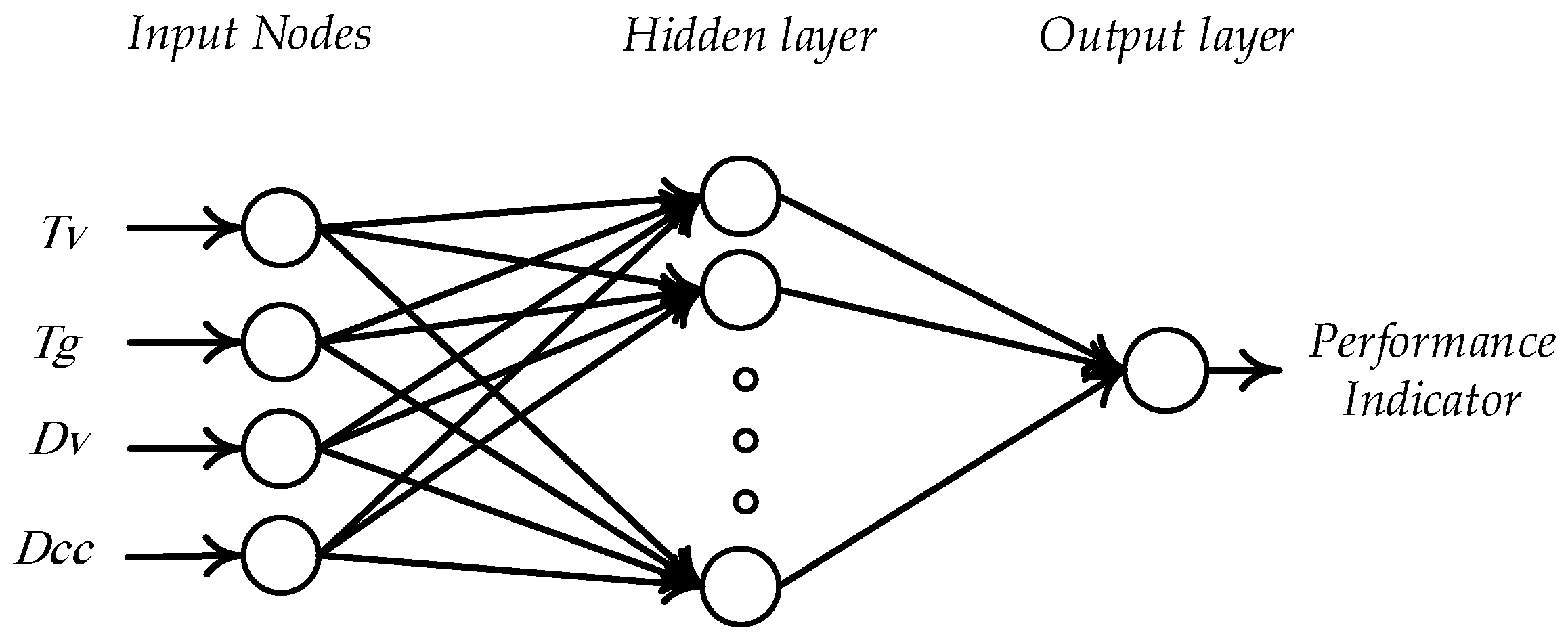
The artificial neural network (ANN) developed in this study is based on a multilayer feed-forward backpropagation model, structured to predict the performance index (PI) based on the DOE input parameters. The network architecture consists of one input layer with four neurons corresponding to the selected input variables (Tv, Dv, Tg, and Dcc), one hidden layer with 18 neurons, and a single-neuron output layer as shown in
Figure 4. The configuration is chosen based on an iterative performance analysis to balance model complexity and prediction accuracy. The hidden layer employs the hyperbolic tangent sigmoid (tansig) transfer function, which was selected due to its effectiveness in capturing non-linear relationships and ensuring convergence during training. The output layer uses a linear transfer function (purelin) to generate continuous output values aligned with the expected performance index.
Table 2 summarizes the final architecture and hyperparameters used in the ANN model. This combination was tested against other configurations and consistently yielded superior convergence rates and lower mean square error (MSE).
The ANN weights were initialized randomly within a small range, and the network was trained using a gradient descent backpropagation algorithm. The learning rate was initially set to 0.1 and adaptively reduced as training progressed.
2.1.3. Training and Testing
The ANN was trained using a dataset derived from the experimental design, which included 32 data points representing combinations of the four control factors. The dataset was split into 85% for training and validation, and 15% for testing to ensure generalization and prevent overfitting. The training process was conducted using a backpropagation algorithm with an initial learning rate of 0.1, which was gradually reduced. The network weights were initialized randomly and updated iteratively using gradient descent. The training was terminated when the mean square error (MSE) fell below 0.01 or upon reaching a maximum of 50 epochs. A separate testing dataset was used to validate the model’s generalization. This testing process was essential to confirm that the model performs well on unseen data and is not overfitted with the training set. The selected performance metrics were the correlation coefficient (R) between predicted and actual values and the mean square error (MSE).
2.2. Phase Two: Genetic Algorithm-Based Optimization of Assembly Quality
In Phase Two, a Genetic Algorithm (GA) is implemented to optimize the pairing and assembly of components, aiming to maximize the quality level of the final assembled products. The GA operates as a combinatorial optimization technique, well-suited for navigating the complex search space of possible part combinations while satisfying design constraints.
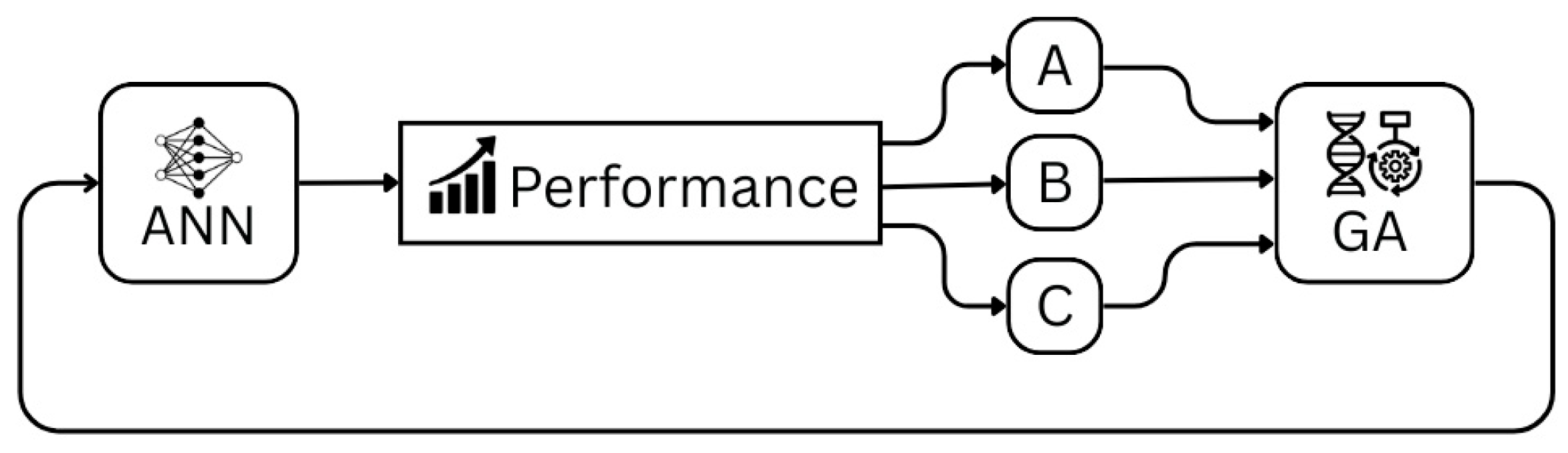
This phase utilizes as input the part classifications derived from the ANN model in Phase One, which predicts the cooling performance of each part and categorizes it into one of three quality classes: A (high), B (medium), or C (low). By leveraging these classifications, the GA explores various configurations to identify the most optimal assemblies at the product level.
In addition, the interaction between the ANN and GA forms a dynamic feedback loop. The ANN’s predictions guide the GA’s optimization, and the optimized assembly outcomes can, in turn, inform future ANN training cycles. This closed-loop mechanism enables continuous adaptation and quality improvement within the assembly process.
Figure 5 illustrates this feedback loop between ANN and GA.
2.2.1. Assembly Representation and Part Structuring
The first step in the GA process involves constructing valid part groupings based on predefined compatibility and design constraints. Each product assembly consists of key components such as a valve plate (Tv, Dv), a gasket (Tg), and a crankcase (Dcc). After being classified by the ANN according to their cooling performance, parts are organized into feasible groups that meet dimensional, functional, and assembly-fit conditions.
Table 3 presents a simplified structure of assembled products.
Each chromosome in the GA encodes a complete product configuration, consisting of one valid combination per product. In each generation, the GA maintains a population of full assembly sequences, typically comprising all 100 major products. This encoding ensures that optimization operates at the assembly level, taking into account the total system quality.
2.2.2. Genetic Algorithm Workflow for Quality-Oriented Assembly Optimization
Once chromosomes are generated, the allocation strategy determines how selected pairs are assigned to the final product configuration. The objective is to maximize the overall quality score, as defined by the fitness function, while satisfying process constraints such as balanced part utilization and avoidance of redundant pairings. The allocation strategy integrates both the predicted quality classes and their contribution to the performance index, ensuring that configurations with a higher concentration of Class A parts are prioritized.
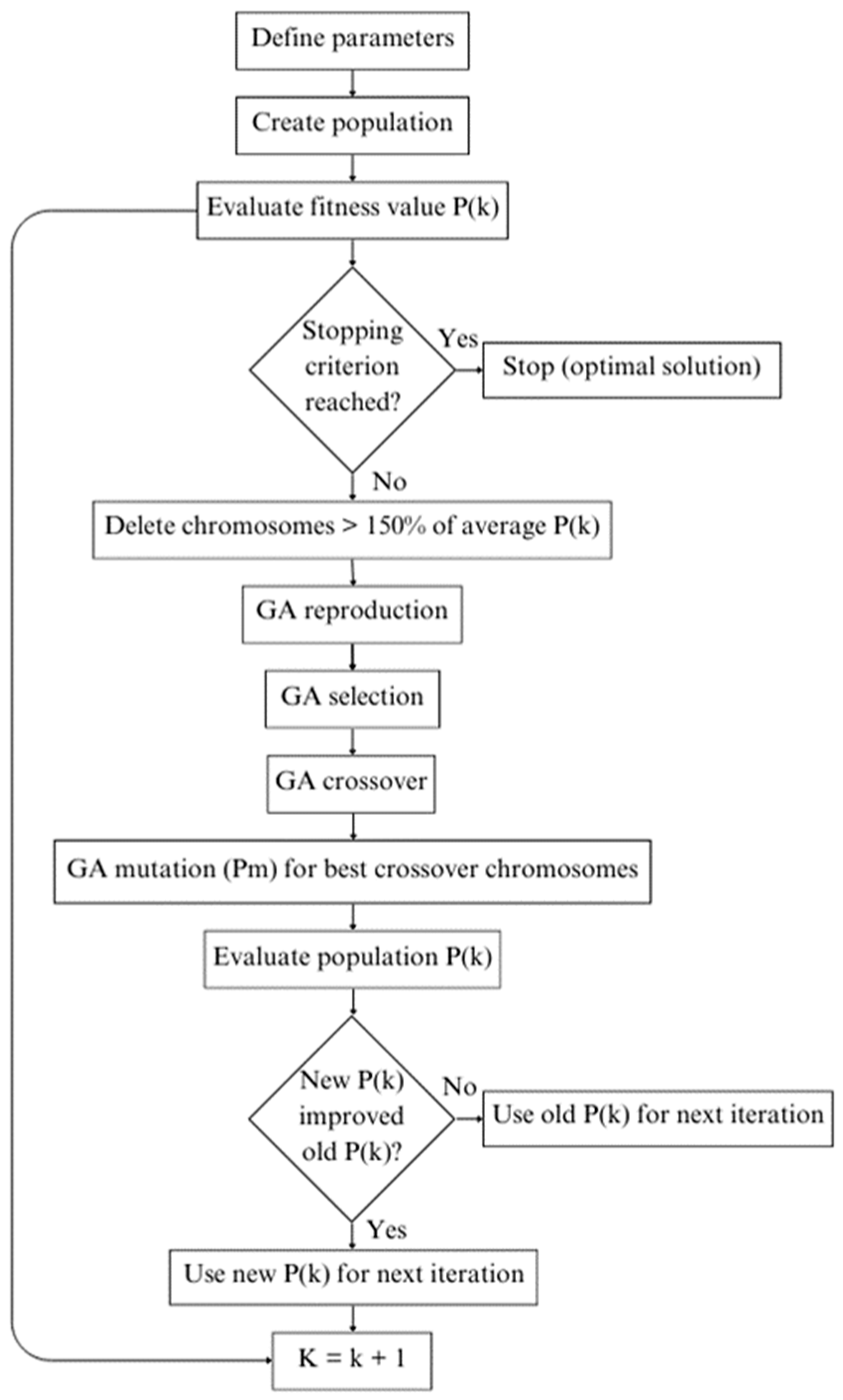
The GA process in this study follows a classical evolutionary approach with adjustments specific to product assembly optimization. The core steps include:
Initialization: Generate an initial population of chromosomes representing feasible product assemblies.
Fitness Evaluation: Compute the fitness of each chromosome based on the assigned quality levels and the defined fitness function.
Selection: Apply a selection method (e.g., roulette wheel) to choose chromosomes for reproduction.
Crossover: Generate offspring by combining parent chromosomes through a defined crossover operator.
Mutation: Introduce small random changes to maintain genetic diversity.
Replacement: Form a new generation from selected offspring and elite solutions.
Termination: Repeat until a maximum number of generations is reached or convergence is observed.
Figure 6 presents the detailed workflow of the GA process, illustrating how initialization, selection, crossover, mutation, and replacement stages interact to progressively improve assembly quality. This flowchart, adapted from earlier work [
11], outlines the full sequence of operations from initialization through selection, crossover, mutation, and replacement, and provides a visual understanding of how the algorithm iteratively refines assembly configurations.
Each part’s classification is determined based on its predicted cooling performance index (PI), a continuous value normalized to the range [0, 1]. Thresholds were defined to classify parts as follows: Class A for PI ≥ 0.85, Class B for 0.70 ≤ PI < 0.85, and Class C for PI < 0.70. These discrete quality levels form the basis for the optimization process.
This classification ensures a clear quantification of part quality. The normalization of the cooling performance index simplifies the mapping into discrete classes, allowing the GA to operate with structured and meaningful data. These quality levels are crucial for evaluating the performance of each assembly configuration.
Table 4 illustrates the thresholds and their associated classifications.
The Genetic Algorithm generates candidate configurations (chromosomes) consisting of possible part pairings. The fitness of each chromosome is evaluated using a fitness function that reflects the quantity and quality of parts used:
where F is the fitness score of the chromosome; NA, NB, and NC are the Number of parts from Class A, B, and C used in the configuration; and α, β, γ are weighting coefficients assigned to each class (with α > β > γ). The weighting coefficients (α = 3, β = 2, γ = 1) were selected to reflect the relative priority of achieving higher-quality product classes, particularly emphasizing Class A outputs. Several combinations were explored, and this configuration provided a balanced trade-off between allocation efficiency and quality orientation.
This design encourages the use of higher-quality parts (Class A), ensuring better performance of the final product. The GA applies typical genetic operations—selection, crossover, and mutation—to evolve these configurations toward optimality.
Table 5 lists the key parameters applied in the GA optimization process.
A hypothetical example: If a chromosome includes 4 Class A parts, 3 Class B parts, and 2 Class C parts, and the coefficients are α = 3, β = 2, γ = 1, the fitness is calculated as:
In the proposed closed-loop framework, the optimization process proceeds in a structured and iterative manner, as follows:
Step 1: Initial part pairings are proposed based on predefined assembly constraints.
Step 2: For each pairing, the ANN model predicts the expected product performance (e.g., cooling efficiency), utilizing trained data derived from real part measurements.
Step 3: The GA evaluates each predicted outcome using a defined fitness function that aligns with product quality targets.
Step 4: Based on fitness scores, the GA applies genetic operations (selection, crossover, mutation) to evolve the pairings toward optimal solutions.
Step 5: The loop is repeated, with ANN providing fresh predictions for each new generation of pairings, until convergence is achieved.
This integration enables the framework to support future real-time refinement of decisions through predictive feedback, reinforcing its adaptability in smart manufacturing settings.
2.2.3. Algorithmic Workflow and Closed-Loop Intelligence
The proposed system operates through a two-phase algorithmic workflow that forms a closed loop between prediction and optimization. In the first phase, the Artificial Neural Network (ANN) is trained using historical or simulated performance data to classify products or parts into quality categories (e.g., A, B, C) based on process variables such as cycle time, defect rates, material usage, and cooling behavior.
Once trained, the ANN acts as a real-time evaluator within the second phase: the Genetic Algorithm (GA)-based optimization. During this phase, GA generates possible allocation scenarios or configurations for the production process. For each scenario, the ANN predicts the expected quality outcome. These predictions directly influence the fitness function of GA, guiding it toward solutions that maximize the proportion of high-quality outcomes while minimizing cost, time, or other constraints.
This feedback loop continues iteratively. As GA explores the solution space, it refines its allocations based on the ANN’s output, effectively embedding intelligent evaluation into every generation of the optimization process. The ANN itself can be periodically retrained using updated data if real-time integration is enabled. Thus, the closed-loop interaction ensures that optimization is not static or blind but continuously aligned with predictive insights from evolving process conditions.
2.2.4. Comparison with Traditional Open-Loop Models
In conventional open-loop approaches, Artificial Neural Networks (ANN) and Genetic Algorithms (GA) are applied as independent modules. ANN typically performs prediction or classification, and GA executes optimization separately, without any dynamic feedback between the two. In contrast, the proposed model integrates ANN outputs directly into GA’s optimization process, forming a closed-loop structure that enables continuous adaptation and improvement.
The following comparison is constructed to reflect the conceptual and practical differences as observed in the implementation and results of the proposed model.
Table 6 summarizes the key conceptual differences between open-loop and closed-loop implementations. The closed-loop system mimics intelligent decision-making by continuously aligning optimization actions with predictive assessments. This dynamic interaction results in more effective part allocation, improved alignment with quality targets, and greater resilience to process variability.
3. Results and Discussion
As a result of the first phase implementation, the ANN model demonstrated high prediction accuracy with a structure of 4-18-1, achieving R values exceeding 0.97 across all data partitions, while MSE values remained well below 0.01 according to [
20]. The test set in this framework yielded a correlation coefficient of R = 0.98 and MSE = 0.0083, confirming excellent agreement between predicted and actual performance index values. The network achieved the desired performance across different data splits: training, validation, and testing, with correlation coefficients of 0.99, 0.94, and 0.98, respectively, and an MSE of 0.0083.
These results affirm the ANN’s capability to capture the non-linear relationships among critical-to-quality parameters, making it suitable for deployment in real-world manufacturing environments. Moreover, the consistency between the current model’s performance and the previously published findings further strengthens the robustness and reliability of the adopted architecture.
The validated prediction model served as the foundation for the subsequent optimization phase (Phase II), in which the predicted performance indices were used to guide genetic algorithm-based assembly decisions for maximizing product quality.
3.1. Performance Improvements
The integration of ANN and GA led to significant enhancements in product assembly quality. The ANN achieved an average classification accuracy of 92.5% in identifying the quality levels of components based on their normalized cooling performance. Following GA optimization, the proportion of Class A components per assembled product improved markedly—from 28.3% before optimization to 46.7% after. This improvement highlights GA’s ability to iteratively evolve superior configurations through its fitness-based selection mechanism.
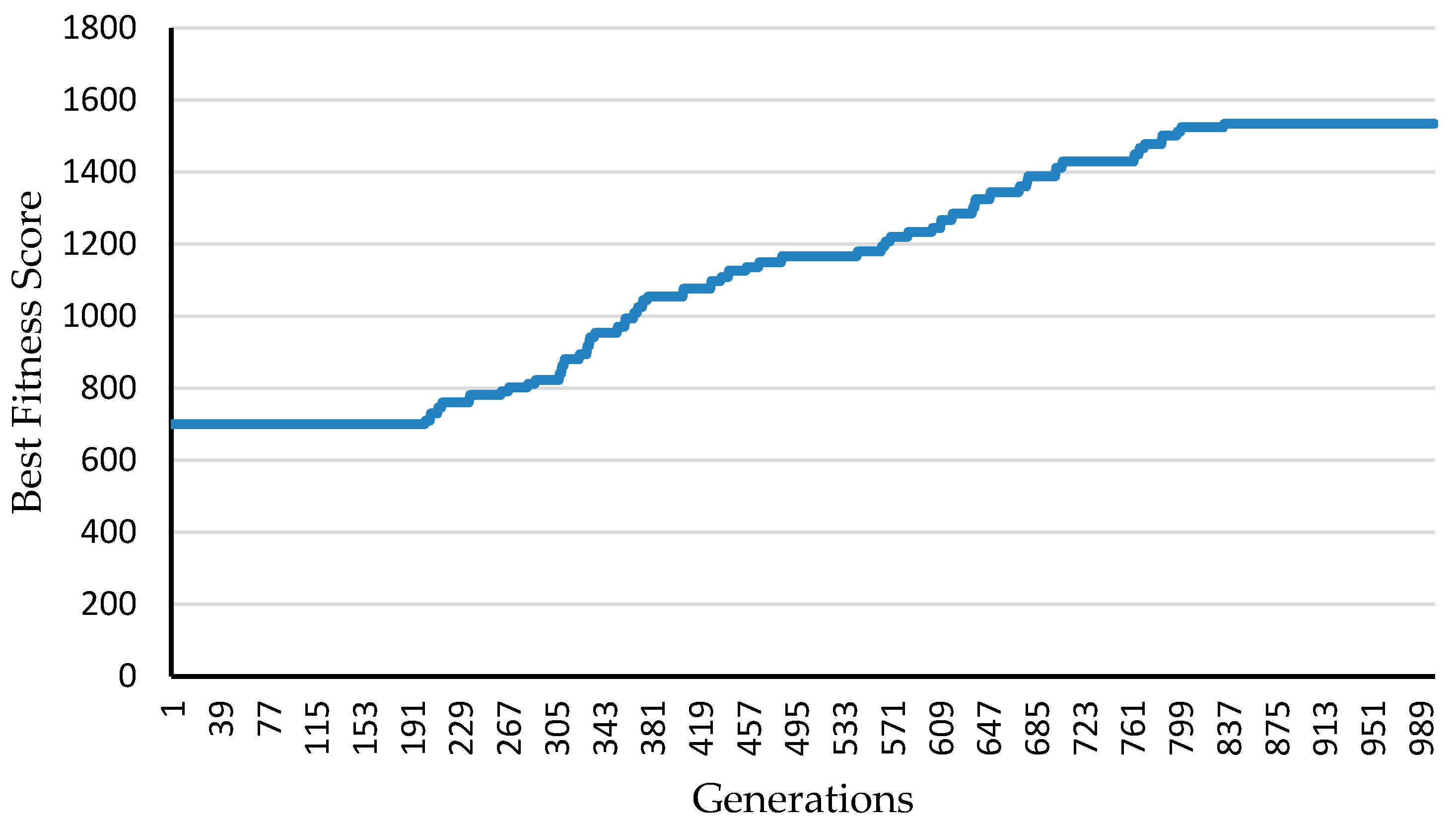
Figure 7 illustrates the fitness progression over 1000 generations in a ladder-like pattern. The improvement was non-linear, with gains occurring in distinct steps rather than a smooth trajectory. This behavior indicates how the GA discovers better configurations incrementally. Convergence is observed around generation 820.
It is important to note that the fitness score used in this study is not normalized to a maximum of 1. Instead, it represents a weighted aggregate score based on the number and quality classification of parts used in the configurations, as defined by the fitness function.
The consistent increase in fitness values confirms the effectiveness of the closed-loop ANN–GA framework in improving product assembly quality.
3.2. Computational Efficiency
Execution time is a critical factor for real-time or near-real-time industrial applications. On a mid-range computing system, the ANN training and validation phase required approximately 12.4 s, while the GA optimization phase over 1000 generations averaged 18.6 s. Thus, the total runtime remained under 35 s, indicating that the model is computationally efficient and suitable for implementation in automated or smart manufacturing environments.
Moreover, the GA demonstrated robustness across different configurations, maintaining stable performance even with changes to mutation rates or population sizes. This stability further supports its applicability in dynamic production settings.
3.3. Comparison with Random Assembly
To benchmark the proposed approach, a set of product assemblies was generated randomly, serving as a baseline for comparison. The GA-optimized assemblies significantly outperformed the random ones, particularly in the proportion of high-quality components. To further illustrate the quality enhancement,
Table 7 presents a detailed comparison of the percentage distribution across different product quality classes before and after optimization. This table reinforces the observed performance gains by demonstrating a clear shift from lower-quality configurations (Class B and C) to higher-quality outcomes (Class A). These results validate the GA’s ability to refine part allocation and enhance system-level product quality through intelligent optimization. A brief sensitivity analysis was performed by altering the weighting coefficients within reasonable bounds. The resulting changes in the fitness score and quality distribution were minimal, suggesting the model’s robustness against small parameter variations.
Beyond numerical improvements, the broader implications of these findings are worth noting. The experimental results demonstrate not only the effectiveness of the ANN–GA hybrid model in improving assembly quality but also its computational practicality for real-time implementation. The observed fitness improvement and consistent classification accuracy provide strong evidence that such integration can lead to more reliable and optimized assembly processes.
One of the key strengths of this approach lies in its adaptability. By leveraging the feedback loop between ANN predictions and GA optimization, the system continuously adjusts to part variability and evolving production conditions. This dynamic nature is highly desirable in modern manufacturing environments where customization and precision are essential.
In addition, the clear improvement in Class A component utilization and the corresponding reduction in lower-quality parts reflect how optimization algorithms can drive tangible quality enhancements. This suggests opportunities for extending the model to incorporate additional objectives such as cost efficiency or production time.
Future work could explore multi-objective optimization and integration with real-time sensor data to further enhance model responsiveness and broaden its application across various industries. While the proposed framework was applied to a refrigeration-based assembly process, its design is modular and adaptable to other industrial contexts such as automotive, electronics, and biomedical device manufacturing. The ANN–GA integration can be reconfigured with different classification thresholds and optimization criteria, depending on the specific application. However, the model assumes consistent availability of pre-classified parts, which may limit its direct applicability in more dynamic or uncertain production environments. Future adaptations could include real-time classification updates or hybrid learning approaches to expand robustness across industries.
4. Conclusions
This study presented a comprehensive and integrated framework that leverages Artificial Neural Networks (ANN) and Genetic Algorithms (GA) to enhance product assembly quality in manufacturing. By combining data-driven part classification with evolutionary optimization, the framework demonstrated a significant improvement in the proportion of high-quality components in assembled products, achieving measurable gains in both performance and consistency.
The results confirm that the ANN–GA synergy enables intelligent decision-making by classifying parts based on normalized cooling performance and optimizing configurations based on weighted quality metrics. The closed-loop interaction ensures adaptive improvements through iterative feedback, making the framework robust and responsive.
Computational experiments validated the effectiveness and efficiency of the method, achieving convergence within a feasible time frame. Compared to random assembly, the GA-optimized process produced significantly higher-quality assemblies, justifying the use of AI-based techniques in modern production systems.
Future research should focus on expanding the framework to support multi-objective optimization—balancing cost, quality, and time—and integrating real-time sensor data for adaptive learning. Additionally, applying the approach to other manufacturing domains and scaling to more complex assembly structures would further demonstrate its versatility and industrial value.
In summary, the proposed ANN–GA framework offers a viable, scalable, and intelligent solution to quality-driven product assembly, bridging the gap between AI methodologies and practical industrial applications.
Author Contributions
Conceptualization, M.A.E.-B. and M.S.A.-E.; methodology, M.A.E.-B. and M.S.A.-E.; software, M.A.E.-B. and M.S.A.-E.; validation, M.A.E.-B.; formal analysis, M.A.E.-B.; resources, M.A.E.-B. and M.S.A.-E.; data curation, M.A.E.-B. and M.S.A.-E.; writing—original draft preparation, M.A.E.-B.; writing—review and editing, M.A.E.-B. and M.S.A.-E.; visualization, M.A.E.-B. and M.S.A.-E.; project administration, M.A.E.-B.; funding acquisition, M.A.E.-B. All authors have read and agreed to the published version of the manuscript.
Funding
This research was funded by Deanship of Scientific Research (DSR) at King Abdulaziz University under grant no. IPP: 428-305-2025.
Data Availability Statement
The data that support the findings of this study are available upon reasonable request.
Acknowledgments
This project was funded by Deanship of Scientific Research (DSR) at King Abdulaziz University, Jeddah, Saudi Arabia—grant number (IPP: 428-305-2025). The authors, therefore, acknowledge with thanks DSR for technical and financial support.
Conflicts of Interest
The authors declare no conflict of interest.
References
- Moultrie, J.; Clarkson, P.J.; Probert, D. A tool to evaluate design performance in SMEs. Int. J. Product. Perform. Manag. 2006, 55, 184–216. [Google Scholar] [CrossRef]
- Wang, J.; Ma, Y.; Zhang, L.; Gao, R.X.; Wu, D. Deep learning for smart manufacturing: Methods and applications. J. Manuf. Syst. 2018, 48, 144–156. [Google Scholar] [CrossRef]
- Lughofer, E.; Zavoianu, A.C.; Pollak, R.; Pratama, M.; Meyer-Heye, P.; Zörrer, H.; Eitzinger, C.; Radauer, T. Autonomous supervision and optimization of product quality in a multi-stage manufacturing process based on self-adaptive prediction models. J. Process Control 2019, 76, 27–45. [Google Scholar] [CrossRef]
- Weichert, D.; Link, P.; Stoll, A.; Rüping, S.; Ihlenfeldt, S.; Wrobel, S. A review of machine learning for the optimization of production processes. Int. J. Adv. Manuf. Technol. 2019, 104, 1889–1902. [Google Scholar] [CrossRef]
- Burawat, P. Improvement of Productivity by Using Means of Lean Manufacturing, Just in Time, and Production Technology in Thai SMEs Manufacturing Industry. Des. Constr. Maint. 2024, 4, 102–108. [Google Scholar] [CrossRef]
- Zhang, M.; Li, W.; Zhang, R.; Yang, X. How do manufacturing and producer service agglomerations affect urban innovation differently? PLoS ONE 2022, 17, e0275616. [Google Scholar] [CrossRef] [PubMed]
- Nguyen, N.; Nguyen, C.; Nguyen, H.; Nguyen, T.A.V. The impact of quality management on business performance of manufacturing firms: The moderated effect of Industry 4.0. Qual. Innov. Prosper. 2021, 25, 120–135. [Google Scholar] [CrossRef]
- Goel, A.; Goel, A.K.; Kumar, A. The role of artificial neural network and machine learning in utilizing spatial information. Spat. Inf. Res. 2023, 31, 275–285. [Google Scholar] [CrossRef]
- Rüßmann, M.; Lorenz, M.; Gerbert, P.; Waldner, M.; Justus, J.; Engel, P.; Harnisch, M. Industry 4.0: The future of productivity and growth in manufacturing industries. Boston Consult. Group 2015, 9, 54–89. [Google Scholar]
- Kaveh, A. Applications of artificial neural networks and machine learning in civil engineering. Stud. Comput. Intell. 2024, 1168, 472. [Google Scholar]
- El-Baz, M.A. A genetic algorithm for facility layout problems of different manufacturing environments. Comput. Ind. Eng. 2004, 47, 233–246. [Google Scholar] [CrossRef]
- Xu, W.; Sun, H.Y.; Awaga, A.L.; Yan, Y.; Cui, Y.J. Optimization approaches for solving production scheduling problem: A brief overview and a case study for hybrid flow shop using genetic algorithms. Adv. Prod. Eng. Manag. 2022, 17, 45–56. [Google Scholar] [CrossRef]
- Didden, J.B.H.C.; Lefeber, E.; Adan, I.J.B.F.; Panhuijzen, I.W.F. Genetic algorithm and decision support for assembly line balancing in the automotive industry. Int. J. Prod. Res. 2022, 61, 3377–3395. [Google Scholar] [CrossRef]
- Sohail, A. Genetic algorithms in the fields of artificial intelligence and data sciences. Ann. Data. Sci. 2023, 10, 1007–1018. [Google Scholar] [CrossRef]
- Singhal, A.; Goyal, P.; Agarwal, H. Artificial Neural Network Driven Optimization for Analog Circuit Performance. In Proceedings of the 2024 IEEE Latin American Electron Devices Conference (LAEDC), Guatemala City, Guatemala, 8–10 May 2024; pp. 1–4. [Google Scholar] [CrossRef]
- Sharifani, K.; Amini, M. Machine Learning and Deep Learning: A Review of Methods and Applications. World Inf. Technol. Eng. J. 2023, 10, 3897–3904. [Google Scholar]
- Acharya, S.; Mishra, V.K.; Chaudhuri, S.; Patel, J.K.; Ghose, P.; Kar, V.R. Decision support system for porous ceramic matrix-based burner by hybrid genetic algorithm-supervised kohonen Map: A comparative assessment of performance of neural network under different minor attributes. Arab. J. Sci. Eng. 2024, 49, 2179–2197. [Google Scholar] [CrossRef]
- Toivanen, M. Improving New Product Development Through Effective Critical to Quality Process and Supplier Quality Activity. 2022. Available online: https://urn.fi/URN:NBN:fi:amk-202205077765 (accessed on 2 September 2025).
- Jankovic, A.; Chaudhary, G.; Goia, F. Designing the design of experiments (DOE)—An investigation on the influence of different factorial designs on the characterization of complex systems. Energy Build. 2021, 250, 111298. [Google Scholar] [CrossRef]
- Elmidany, T.; Elbaz, M.A.; Abdelwahed, M.S. Improve Characteristics of Manufactured Products Using Artificial Neural Network Performance Prediction Model. Int. J. Recent Adv. Mech. Eng. (IJMECH) 2013, 2, 23–33. [Google Scholar]
| Disclaimer/Publisher’s Note: The statements, opinions and data contained in all publications are solely those of the individual author(s) and contributor(s) and not of MDPI and/or the editor(s). MDPI and/or the editor(s) disclaim responsibility for any injury to people or property resulting from any ideas, methods, instructions or products referred to in the content. |
© 2025 by the authors. Licensee MDPI, Basel, Switzerland. This article is an open access article distributed under the terms and conditions of the Creative Commons Attribution (CC BY) license (https://creativecommons.org/licenses/by/4.0/).