Barriers and facilitators to older adults’ engagement in healthy aging initiatives

Abstract
INTRODUCTION
METHODS
SEARCH STRATEGY
ELIGIBILITY CRITERIA
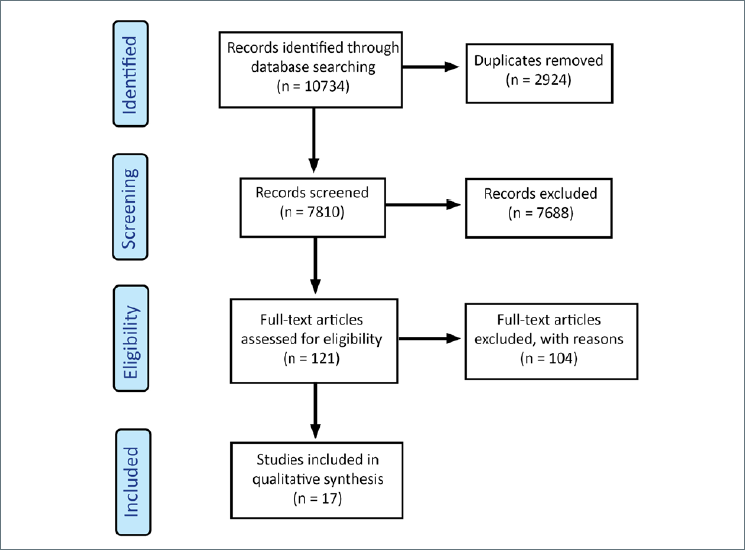
STUDY SELECTION PROCESS
DATA EXTRACTION
SYNTHESIS APPROACH
RESULTS
Theme 1. Attitudes
Theme 2. Organizational structure
Theme 3. Accessibility
Theme 4. Social structure
Theme 5. Knowledge
Theme 6. Demographics
Theme 7. Program specifics
DISCUSSION
CONCLUSIONS
Acknowledgement
Conflict of interest
Funding
Author contributions
Ethical consideration
Figures and tables


| Study | Participants | Study design | Program details |
|---|---|---|---|
| 24 | n = 140 completed survey (n = 98 attendees and n = 87 males) | Quasi-experimental, mixed methods, purposive sampling | Heartmoves offers long-term, low- to moderate-intensity exercise classes and require minimal equipment. Classes are conducted by certified fitness instructors or other specifically accredited health care professionals. Classes include aerobic, resistance, and balance components. |
| n = 88 participants older than 65 years; n = 52 participants younger than 65 years | Program evaluation via surveys | ||
| 23 | n = 44 (n = 33 males) | Qualitative, purposive sampling | Twelve-week program that consisted of exercise sessions and health education on diet, stress, and smoking cessation. Patients were referred from primary and secondary care settings |
| Age range was 51-69 years, with a mean age of 66 years | 8 focus groups (n = 4 FG with participants with > 60% attendance; n = 2 FG with participants with < 60% attendance; n = 2 FG with 0% attendance) | Program eligibility: diagnosis of M1, post-CABG and angina, understand English | |
| Exclusion from program: evidence of psychosis or dementia | |||
| 17 | n = 40 (n = 20 males) | Descriptive study (focus groups and interviews), convenience sampling | No single CR program |
| CR participants: n = 28 (n = 14 males) | Inclusion: first MI, CABS, or intracoronary intervention within the past 6 months; being 65 years of age or older; ability to read and speak English | ||
| CR participants’ mean age was 71.5 years (range 66-83 years) | |||
| Non-CR participants: n = 12 (n = 6 males) | |||
| Non-CR participants’ mean age was 72 year (range 65 – 81 years) | |||
| 21 | n = 1273 (n = 911 males) | Secondary analysis of data from a prospective study, quantitative, 9- month follow-up. | No single CR program |
| Mean age was 65.9 +/- 11.2 years | Survey | Inclusion: coronary artery disease diagnosis, patients who had undergone percutaneous coronary interventions or acute coroner bypass or had diagnosis of heart failure or arrhythmia | |
| Exclusion: lack of English-language proficiency, incorrect contact information, no CAD diagnosis, orthopedic, neuromuscular, cognitive, or vision impairment, non-recent index event or treatment, previous attendance at CR, non-affective psychiatric disorders | |||
| 26 | n = 13 (all women) | A qualitative descriptive design, one year follow-up | Educational program: the information presented in the sessions is guided by the questions and needs as expressed by the participants. The program focuses on self-understanding of the patients rather than on professionals. Participants are encouraged to talk to each other in group discussions and informally. Each group met three times, two and a half hours each time |
| Age range was 73-87 years | Focus groups (n = 3) | ||
| 30 | Cohort 2 participated in CR enrolled in the nurse managed modified CR program with telephonic interaction: | Nonrandomized, retrospective, descriptive study | Cohort 2 program: patients assigned to a care manager (nurse). Program focused on patient education, emotional support early symptom recognition and triage, medication adherence, ongoing interactions with the PCPs, and achievement of recommendations around nutrition, exercise, smoking, lipids, and blood pressure |
| n = 158 (n = 83 males) | Inclusion: discharged to home or another acute care facility with a diagnosis of MI or angina; resided in the hospital service area; lived for at least one-month post-discharge | ||
| Mean age was 68.6 +/- 1.7 years | |||
| 27 | n = 143 (n = 77 males; n = 66 females) | Quasi-experimental | No single CR program |
| Participations were 50 years of age and older; mean age was 75 years | Survey | Inclusion: patients discharged from hospital with International Classification of Disease codes for cardiac diagnosis, older than 50 years of age and lived in New Zealand | |
| 25 | n = 644 (n = 514 males) | Cross-sectional, purposive sampling | The program (Health Check) was delivered through general medical practices and offers advice regarding lifestyle (smoking, drinking, nutrition, and exercise) and medication for individuals with an increased risk of developing coronary heart disease, stroke, diabetes and chronic renal disease |
| n = 435 participants over the age of 65 years | Inclusion: potential participants were identified through medical records | ||
| 18 | n = 22 (n = 12 males) | Qualitative, purposive sampling | No single CR program |
| Participants were 50 years of age and older; mean age was 71.4 years with a range of 53-87 years | Focus groups (n = 4) | ||
| 19 | n = 6 (n = 2 males) | Qualitative, purposive sampling | YMCA cardiac exercise program. The YMCA cardiac program aims to educate both client and family about cardiac risk factors, assist with lifestyle modifications, and promote physical activity and conditioning |
| Age range: 61-80 years | Interviews | ||
| 29 | n = 10 (all women) | Qualitative, convenience sampling | Located in suburban ambulatory care center. Program was a 12-week exercise regimen and nutrition counselling |
| Mean age was 72 years with a range of 62 to 83 years | Focus groups | Inclusion: women, completed the program within 6-months of study recruitment were 65 years of age or older and could speak and understand English | |
| Female, 10 | |||
| 22 | n = 157 (all women) | Quantitative, cross-sectional, descriptive study | No single CR program |
| Mean age was 65.5 +/- 11.3 years | |||
| 31 | n = 22 (n = 8 males) | Quantitative, single-group repeated-measures design | The program ‘People Reducing Risk and Improving Strength through Exercise, Diet and Drug Adherence (PRAISEDD)’ included motivational, educational, and exercise sessions to strengthen participants’ ability to adhere to exercise, diet, and medication recommendations. The program was 12 weeks long and included 60-minute intervention sessions 3 times per week |
| Participants were older than 65 year, with a mean age of 76.4 years | Inclusion: older than 65 years of age, could read and write English, and passed a cognitive test, could give consent, had known history of hypertension, hyperlipidemia and sedentary behaviour, were on antihypertensive, or lipid-lowering medications | ||
| Exclusion: if evaluated by a primary healthcare professional within 2 years and if did not pass an exercise screening test | |||
| 28 | n = 79 (n = 52 males) | Quantitative, convenience sampling | Cardiac rehabilitation program of Wimmera Health Care Group includes eight weekly sessions of exercise and education. |
| Age unclear; Age at AMI for referred participants as 62.4 years and for not referred participants was 68.95 years | |||
| 32 | n = 450 (n = 299 males) | Quantitative, retrospective | CR program is located in a multispecialty outpatient clinic building and is fully integrated with the 2 hospitals in our healthcare system |
| Mean age was 66 +/- 13 years | Medical record review | Inclusion: diagnosis acute myocardial infarction, stable angina pectoris, coronary artery bypass surgery, and after March 22, 2006 included diagnoses of percutaneous coronary intervention, heart valve repair or replacement, and heart transplantation | |
| 16 | n = 21 (n = 17 males) | Qualitative, convenience sampling | The Gloucestershire Royal Cardiac Rehabilitation Program is a seven-week program for patients 4-6 weeks post MI. Participants attend once a week for seven weeks and two follow-ups within six months. The program includes lifestyle education, exercise and stress management |
| Mean age of program attenders was 59.6 years with a range of range 39-70 | |||
| Mean age of participants who initially accepted offer to participate, but then did not attend was 59.7 years with a range 51-72 years | |||
| Mean age of program non-attenders was 65.83 year with a range 55-71 | Inclusion: patients who had been admitted to hospital with MI and were eligible for CR. | ||
| 20 | n = 222 (n = 163 males) | Quantitative, exploratory, comparative design | No single CR program |
| Mean age was 67.8 years with a range of 41-92 years | Inclusion: all patients who had been hospitalized for a cardiac illness. |
* The median age of women in this program was 75 years. Age may be a confounding variable in this finding as other studies found mixed results for sex and participation in healthy aging programs. |
References
- Canada S. 2016 Census of population – data products (https://www12.statcan.gc.ca/census-recensement/2016/dp-pd/index-eng.cfmfiles/12672/index-eng.html).
- Williams R. A national seniors strategy needs to account for complexity in the aging process. Policy Magazine. Policy 2018.
- Network CF. Frailty matters (https://www.cfn-nce.ca/frailty-matters).
- Canada PHAo. Prevalence of chronic diseases among canadian adults (https://www.canada.ca/en/public-health/services/chronic-diseases/prevalence-canadian-adults-infographic-2019.htmlfiles/12730/prevalence-canadian-adults-infographic-2019.html).
- Organization WH. Noncommunicable diseases (https://www.who.int/news-room/fact-sheets/detail/noncommunicable-diseases).
- Bloom DE, Cafiero ET, Jané-Llopis E, et al. The Global Economic Burden of noncommunicable diseases. Geneva: World Economic Forum 2011.
- Roth GA, Forouzanfar MH, Moran AE, et al. Demographic and epidemiologic drivers of global cardiovascular mortality. N Engl J Med 2015;372:1333-1341. https://doi.org/10.1056/NEJMoa1406656 10.1056/NEJMoa1406656
- Smith EE. Clinical presentations and epidemiology of vascular dementia. Clin Sci 2017;131:1059-1068. https://doi.org/10.1042/CS20160607 10.1042/CS20160607
- Appleton A. Healthy ageing and nutrition. InnovAiT 2017;10:549-552.
- Beard JR, de Carvalho IA, Sumi Y, et al. Healthy ageing: moving forward. Bulletin of the World Health Organization 2017;95:730-770.
- Lu W, Pikhart H, Sacker A. Socioeconomic determinants of healthy ageing: evidence from the English Longitudinal Study of Ageing. Lancet 2018;392:S54-S54. https://doi.org/10.1016/S0140-6736(18)32883-6 10.1016/S0140-6736(18)32883-6
- Organization WH. Active ageing: a policy framework (http://www.who.int/ageing/publications/active_ageing/en/files/12711/en.html).
- Sidorenko A, Zaidi A. Active ageing in cis countries: semantics, challenges, and responses. Curr Gerontol Geriatr Res 2013:1-17. https://doi.org/10.1155/2013/261819 10.1155/2013/261819
- Walker A, Naegele G. The politics of old age in Europe, Buckingham: Open University Press 1999, pp. 230.
- Arksey H, O’Malley L. Scoping studies: towards a methodological framework. International journal of social research methodology 2005;8:19-32. https://doi.org/10.1080/1364557032000119616 10.1080/1364557032000119616
- Covidence (https://www.covidence.org/homefiles/12741/home.html).
- Wyer SJ, Earll L, Joseph S, et al. Deciding whether to attend a cardiac rehabilitation programme: an interpretative phenomenological analysis. Coron Health Care 2001;5:178-188. https://doi.org/10.1054/chec.2001.0136 10.1054/chec.2001.0136
- Dolansky MA, Moore SM, Visovsky C. Older adults’ views of cardiac rehabilitation programs: is it time to reinvent? J Gerontol Nurs 2006;32:37-44. https://doi.org/10.3928/0098-9134-20060201-10 10.3928/0098-9134-20060201-10
- Lennon OC, Doody C, Ni Choisdealbh C, et al. Barriers to healthy-lifestyle participation in stroke: consumer participation in secondary prevention design. Int J Rehabil Res 2013;36:354-361. https://doi.org/10.1097/MRR.0b013e3283643d48 10.1097/MRR.0b013e3283643d48
- Mitchell R, Muggli M, Sato A. Cardiac rehabilitation: participating in an exercise program in a quest to survive. Rehabil Nurs 1999;24:236-239. https://doi.org/10.1002/j.2048-7940.1999.tb02189.x 10.1002/j.2048-7940.1999.tb02189.x
- Yates BC, Braklow-Whitton JL, Agrawal S. Outcomes of cardiac rehabilitation participants and nonparticipants in a rural area. Rehabil Nurs 2003;28:57-63. https://doi.org/10.1002/j.2048-7940.2003.tb02030.x/ 10.1002/j.2048-7940.2003.tb02030.x/
- Grace SL, Shanmugasegaram S, Gravely-Witte S, et al. Barriers to cardiac rehabilitation: does age make a difference? J Cardiopulm Rehabil Prev 2009;29:183-187. https://doi.org/10.1097/HCR.0b013e3181a3333c 10.1097/HCR.0b013e3181a3333c
- Plach SK. Women and cardiac rehabilitation after heart surgery: patterns of referral and adherence. Rehabil Nurs 2002;27:104-109. https://doi.org/10.1002/j.2048-7940.2002.tb01998.x 10.1002/j.2048-7940.2002.tb01998.x
- Clark AM, Barbour RS, White M, et al. Promoting participation in cardiac rehabilitation: patient choices and experiences. J Adv Nurs 2004;47:5-14. https://doi.org/10.1111/j.1365-2648.2004.03060.x 10.1111/j.1365-2648.2004.03060.x
- Adsett J, Hickey A, Nagle A, et al. Implementing a community-based model of exercise training following cardiac, pulmonary, and heart failure rehabilitation. J Cardiopulm Rehabil Prev 2013;33:239-243. https://doi.org/10.1097/HCR.0b013e3182930cea 10.1097/HCR.0b013e3182930cea
- Krska J, du Plessis R, Chellaswamy H. Views and experiences of the nhs health check provided by general medical practices: cross-sectional survey in high-risk patients. J Public health (Oxf) 2015;37:210-217. https://doi.org/10.1093/pubmed/fdu054 10.1093/pubmed/fdu054
- Hagberth V, Sjöberg T, Ivarsson B. Older women with a serious cardiac event experience support with a vifladt & hopen inspired patient group education programme. Eur J Cardiovasc Nurs 2008;7:140-146. https://doi.org/10.1016/j.ejcnurse.2007.09.003 10.1016/j.ejcnurse.2007.09.003
- Hutchinson P, Meyer A, Marshall B. Factors influencing outpatient cardiac rehabilitation attendance. Rehabil Nurs 2015;40:360-367. https://doi.org/10.1002/rnj.202 10.1002/rnj.202
- Schulz DL, McBurney H. Factors which influence attendance at a rural Australian cardiac rehabilitation program. Coron health care 2000;4:135-141. https://doi.org/10.1054/chec.2000.0086 10.1054/chec.2000.0086
- Moore SM. Women’s views of cardiac rehabilitation programs. J Cardiopulm Rehabil 1996;16:123-129. https://doi.org/10.1097/00008483-199603000-00007 10.1097/00008483-199603000-00007
- Harris DE, Record NB, Gilbert-Arcari J, et al. Cardiac rehabilitation with nurse care management and telephonic interactions at a community hospital: program evaluation of participation and lipid outcomes. Lippincotts Case Manag 2003;8:141-159. https://doi.org/10.1097/00129234-200307000-00002 10.1097/00129234-200307000-00002
- Resnick B, Shaughnessy M, Galik E, et al. Pilot testing of the praisedd intervention among african american and low-income older adults. J Cardiovasc Nurs 2009;24:352-361. https://doi.org/10.1097/JCN.0b013e3181ac0301 10.1097/JCN.0b013e3181ac0301
- Weingarten MN, Salz KA, Thomas RJ, et al. Rates of enrollment for men and women referred to outpatient cardiac rehabilitation. J Cardiopulm Rehabil Prev 2011;31:217-222. https://doi.org/10.1097/HCR.0b013e318207d2fa 10.1097/HCR.0b013e318207d2fa
- Dechaine CL, Merighi JR, O’Keefe TC. Healing the heart: a qualitative study of challenges and motivations to cardiac rehabilitation attendance and completion among women and men. Sex roles 2018;79:489-503. https://doi.org/10.1007/s11199-017-0873-5 10.1007/s11199-017-0873-5
- Bennett KK, Marte RM. Patient attributions for cardiac events: predictors of physical and psychological recovery. J Appl Soc Psychol 2013;43:660-672.
Società Italiana di Gerontologia e Geriatria (SIGG) This is an open access article distributed in accordance with the CC-BY-NC-ND (Creative Commons Attribution-NonCommercial-NoDerivatives 4.0 International) license. The article can be used by giving appropriate credit and mentioning the license, but only for non-commercial purposes and only in the original version. For further information: https://creativecommons.org/licenses/by-nc-nd/4.0/deed.en
Share and Cite
Hastings-Truelove, A.; Ghahari, S.; Coderre-Ball, A.; Kessler, D.; Turnnidge, J.; Lester, B.; Auais, M.; Dalgarno, N.; DePaul, V.; Donnelly, C.; et al. Barriers and facilitators to older adults’ engagement in healthy aging initiatives. J. Gerontol. Geriatr. 2022, 70, 192-201. https://doi.org/10.36150/2499-6564-N407
Hastings-Truelove A, Ghahari S, Coderre-Ball A, Kessler D, Turnnidge J, Lester B, Auais M, Dalgarno N, DePaul V, Donnelly C, et al. Barriers and facilitators to older adults’ engagement in healthy aging initiatives. Journal of Gerontology and Geriatrics. 2022; 70(3):192-201. https://doi.org/10.36150/2499-6564-N407
Chicago/Turabian StyleHastings-Truelove, Amber, Setareh Ghahari, Angela Coderre-Ball, Dorothy Kessler, Jennifer Turnnidge, Britney Lester, Mohammad Auais, Nancy Dalgarno, Vincent DePaul, Catherine Donnelly, and et al. 2022. "Barriers and facilitators to older adults’ engagement in healthy aging initiatives" Journal of Gerontology and Geriatrics 70, no. 3: 192-201. https://doi.org/10.36150/2499-6564-N407
APA StyleHastings-Truelove, A., Ghahari, S., Coderre-Ball, A., Kessler, D., Turnnidge, J., Lester, B., Auais, M., Dalgarno, N., DePaul, V., Donnelly, C., Finlayson, M., Hopkins-Rosseel, D., Kolomitro, K., Norman, K., Lawson, T. L., Stockley, D., Van Wylick, R., & Woo, K. (2022). Barriers and facilitators to older adults’ engagement in healthy aging initiatives. Journal of Gerontology and Geriatrics, 70(3), 192-201. https://doi.org/10.36150/2499-6564-N407