Age Discrimination in Delivery of Health Services to Old People During COVID-19 Pandemic: A Scoping Review Study

Abstract
BACKGROUND AND OBJECTIVES
RESEARCH DESIGN AND METHODS
IDENTIFICATION OF THE RESEARCH QUESTION
- What are the conditions of discrimination in the delivery of health services to old people during COVID-19 disease?
IDENTIFYING RELEVANT STUDIES
SEARCH STRATEGY
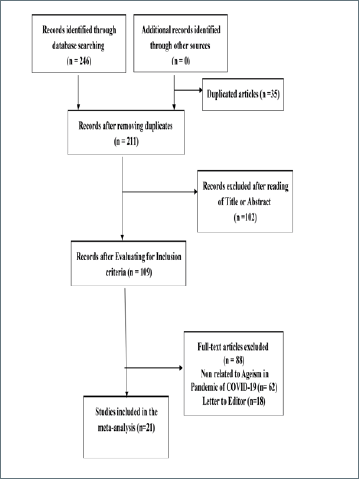
SELECTION OF STUDIES
Eligibility criteria and study selection
ASSESSMENT OF RISK OF BIAS
CHARTING THE DATA
- Title
- Country of study
- The key points of the study
COLLATION, SUMMARIZATION AND REPORT OF RESULTS
RESULTS
PROMOTION OF ANTI-AGING CULTURE
DISCRIMINATORY GUIDELINES AND DECISIONS
FEELING OF INSIGNIFICANCE BY OLD PEOPLE THEMSELVES
DISCUSSION AND IMPLICATIONS
CONCLUSIONS
STUDY LIMITATIONS
Acknowledgement
Figures and tables


| N | Study (all are 2020) | 1. Is there a clearly stated aim, objective or purpose for the source material? | 2. Is there a clear description of the source of the information reported (transparency)? | 3. Is there a clear description of the programme or intervention or policy or reform on which the source material focuses? | 4. Is there a clear description of the context/s to which the information described in the source material relates? | 5. Is the in formation accurate? (non-empirical studies) | 7. Is the evidence representative? | 8. Are any limitations of the information and/or methods discussed in the source material? | 9. Is evidence provided to support any findings or conclusions made? | 10. Are relevant rights and ethics considerations described | 11. Are any interest declared and any potential conflicts of interest noted? | Overall assessment |
|---|---|---|---|---|---|---|---|---|---|---|---|---|
| 1 | Grzelka 15 | Y | Y | U | Y | Y | Y | Y | Y | N | Y | Serious concern |
| 2 | Cezari Cesari M, Proietti M 14 | U | Y | Y | Y | Y | N | N | U | Y | N | Serious concern |
| 3 | DePergola 11 | Y | Y | Y | Y | Y | Y | U | Y | Y | U | No or very minor concern |
| 4 | White 13 | Y | Y | Y | Y | Y | U | N | U | Y | Y | Serious concern |
| 5 | Rudolph 6 | Y | Y | Y | Y | Y | U | N | Y | Y | N | Serious concern |
| 6 | Comas-Herrera A, et al. 1 | U | Y | Y | Y | Y | U | N | Y | Y | Y | Serious concern |
| 7 | Lloyd-Sherlock 35 | U | Y | Y | Y | Y | U | N | U | U | Y | Serious concern |
| 8 | Monahan 4 | Y | Y | Y | Y | Y | N | N | U | Y | N | Serious concern |
| 9 | Petretto D R, Pili R, 2020 62 | Y | Y | Y | Y | Y | U | Y | Y | Y | Y | No or very minor voncern |
| 10 | Gallina 37 | Y | U | Y | Y | Y | U | Y | U | Y | N | Serious voncern |
| 11 | Merodio 32 | Y | Y | Y | Y | U | Y | Y | Y | Y | U | No or very minor concern |
| 12 | Miralles 31 | Y | Y | Y | Y | Y | Y | Y | Y | Y | Y | No or very minor concern |
| 13 | Morrow-Howell 34 | Y | U | Y | U | Y | U | U | Y | U | Y | Minor concern |
| 14 | Shadmi 66 | Y | Y | Y | Y | Y | Y | U | Y | Y | Y | No or very minor concern |
| 15 | Swazo NK, et al. 38 | Y | Y | Y | Y | Y | U | Y | Y | Y | Y | No or very minor concern |
| 16 | Colenda CC, et al., 2020 24 | Y | U | Y | U | Y | U | N | Y | N | N | Serious concern |
| 17 | Lichtenstein B, 2020 41 | Y | Y | Y | Y | Y | Y | U | Y | U | Y | No or very minor concern |
| 18 | Ehni HJ, Wahl HW 36 | Y | U | Y | U | Y | U | Y | U | Y | y | Minor concern |
| 19 | Falandry C, et al. 67 | Y | U | Y | Y | U | N | N | N | Y | Y | Serious concern |
| 20 | Ayalon L, et al. 40 | U | Y | Y | U | Y | Y | N | Y | Y | N | Serious concern |
| 21 | Marckmann G, et al., 2020 30 | Y | Y | Y | Y | Y | Y | U | Y | Y | N | Serious concern |
| Goal | country | Author | N |
|---|---|---|---|
| To study how Polish public perceive vulnerable populations during the COVID-19 outbreak | Poland | Grzelka | 1 |
| To study ageism and decisions made during the COVID-19 outbreak despite the limited resources at the height of the disease | Italy | Cesari M, Proietti M | 2 |
| To provide basic ethical guidelines to treat patients with suspected or definitive diagnosis of coronavirus disease (COVID-19) and to address the moral considerations inherent to caring for this patient population, especially in the context of scarce resource allocation, imposition of restrictions to individual freedoms, and de facto social distancing | United States of America | DePergola 11 | 3 |
| Presenting a framework for rationing ventilators and critical care beds during COVID-19 pandemic | United States of America | White 9 | 4 |
| Reviewing emerging discriminatory issue and presenting evidence against attempts to define “the COVID-19 Generation” as a new construct along with conceptual, methodological and practical lines, with a specific focus on identifying real dangers related to examining and potentially managing a new generation related to this pandemic in media | Germany | Rudolph 35 | 5 |
| Evaluating the effect of COVID-19 on care home residents and staff and as new and updated information and data become available, summarizing information from three types of sources: epidemiological studies, official estimates and news reports | United Kingdom | Comas-Herrera A, et al 1 | 6 |
| Investigating impacts of COVID-19 on elderly in low- and middle-income countries | United Kingdom | Lloyd-Sherlock | 7 |
| Investigating positive and negative responses toward older adults during COVID-19 pandemic and the expected short- and long-term consequences such as affecting beliefs about and treatment of older adults, intergenerational relations, and individuals’ mental and physical health. The study addresses policy changes to health care (triaging, elder abuse), employment (layoffs, retirement), and education about ageism | United States of America | Monahan | 8 |
| Investigating the role of elderly in COVID-19 based on media | Italy | Petretto DR, Pili R, 2020 62 | 9 |
| To study decisions to offer interventions with limited availability of medical resources | Italy | Gallina 37 | 10 |
| To collect evidence on hospital healthcare experiences of elderly infected by COVID-19 and to analyze elements that have positively affected elderly perceived health and well-being | Spain | Merodio | 11 |
| Summarizing actions, health policies and clinical guidelines adopted by six European countries during the pandemic and assessing the effect of national policies on reducing unfavorable effects of the COVID-19 pandemic in elderly | Belgium, France, Italy, Poland, Spain and United Kingdom | Miralles | 12 |
| Recovering from the COVID-19 Pandemic in older adults with an focus on increased comfort through technology and online platforms; stronger family and intergenerational connections, renewed energy to combat social isolation; more respect for self-care and time management; enhanced knowledge on the importance of advance directives; and, potentially, increased interest across disciplines to address the issues of aging society | United States of America | Morrow-Howell | 13 |
| 1. Exploring the challenges to health equity and describing some of the approaches adopted by governments and local organizations in 13 countries during Covid-19 pandemic | China, Brazil, Thailand, Sub Saharan Africa, Nicaragua, Armenia, India, Guatemala, United States of America (USA), Israel, Australia, Colombia, and Belgium | Shadmi | 14 |
| 2. Encouraging researchers to continue advancing global knowledge on COVID-19 health equity related issues, through rigorous studies and generation of a strong evidence based on new empirical studies in this field | |||
| Evaluating the challenges faced by Bangladeshi physicians in treating and refraining COVID-19 patients | Bangladesh | Swazo NK, et al. | 15 |
| Presenting this perspective as a way to enhance knowledge of people about ageism concerning coronavirus disease (COVID-19) pandemic, and acknowledging the extraordinary work that healthcare providers across all disciplines, including geriatrics, are doing at the frontlines of care, and also presenting these thoughts as advocates for older patients, their families, their providers, and the broader community | Italy | Colenda CC, et al., 2020 | 16 |
| Comparing responses to COVID-19 control in Australia, the United Kingdom, and the United States, 3 countries where public ageism erupted over the social and economic costs of protecting older adults from COVID-19 | America | Lichtenstein B, 2020 41 | 17 |
| To provide suggestions on how to deal with beliefs and discriminatory behaviors against older people in COVID-19 pandemic | Germany | Ehni HJ, Wahl HW | 18 |
| Investigating the challenges of management of elderly with cancer disease during the COVID-19 pandemic such as increased risks of COVID-19 infection and the temptations of ageism | France | Falandry C, et al. | 19 |
| To present some recommendations on how to navigate the current pandemic in the world and confront ageism and intergenerational division | International | Ayalon L, et al. | 20 |
| To exame the decisions made on the allocation of intensive care resources in the context of the COVID-19 pandemic and to provide some clinical and ethical recommendations | Germany | Marckmann G, et al. | 21 |
| Section/topic | # | Checklist item | Reported on page # |
|---|---|---|---|
| TITLE | |||
| Title | 1 | Identify the report as a systematic review, meta-analysis, or both. | |
| ABSTRACT | |||
| Structured summary | 2 | Provide a structured summary including, as applicable: background; objectives; data sources; study eligibility criteria, participants, and interventions; study appraisal and synthesis methods; results; limitations; conclusions and implications of key findings; systematic review registration number. | |
| INTRODUCTION | |||
| Rationale | 3 | Describe the rationale for the review in the context of what is already known. | |
| Objectives | 4 | Provide an explicit statement of questions being addressed with reference to participants, interventions, comparisons, outcomes, and study design (PICOS). | |
| METHODS | |||
| Protocol and registration | 5 | Indicate if a review protocol exists, if and where it can be accessed (e.g., Web address), and, if available, provide registration information including registration number. | |
| Eligibility criteria | 6 | Specify study characteristics (e.g., PICOS, length of follow-up) and report characteristics (e.g., years considered, language, publication status) used as criteria for eligibility, giving rationale. | |
| Information sources | 7 | Describe all information sources (e.g., databases with dates of coverage, contact with study authors to identify additional studies) in the search and date last searched. | |
| Search | 8 | Present full electronic search strategy for at least one database, including any limits used, such that it could be repeated. | |
| Study selection | 9 | State the process for selecting studies (i.e., screening, eligibility, included in systematic review, and, if applicable, included in the meta-analysis). | |
| Data collection process | 10 | Describe method of data extraction from reports (e.g., piloted forms, independently, in duplicate) and any processes for obtaining and confirming data from investigators. | |
| Data items | 11 | List and define all variables for which data were sought (e.g., PICOS, funding sources) and any assumptions and simplifications made. | |
| Risk of bias in individual studies | 12 | Describe methods used for assessing risk of bias of individual studies (including specification of whether this was done at the study or outcome level), and how this information is to be used in any data synthesis. | |
| Summary measures | 13 | State the principal summary measures (e.g., risk ratio, difference in means). | |
| Synthesis of results | 14 | Describe the methods of handling data and combining results of studies, if done, including measures of consistency (e.g., I2) for each meta-analysis. | |
| Risk of bias across studies | 15 | Specify any assessment of risk of bias that may affect the cumulative evidence (e.g., publication bias, selective reporting within studies). | |
| Additional analyses | 16 | Describe methods of additional analyses (e.g., sensitivity or subgroup analyses, meta-regression), if done, indicating which were pre-specified. | |
| RESULTS | |||
| Study selection | 17 | Give numbers of studies screened, assessed for eligibility, and included in the review, with reasons for exclusions at each stage, ideally with a flow diagram. | |
| Study characteristics | 18 | For each study, present characteristics for which data were extracted (e.g., study size, PICOS, follow-up period) and provide the citations. | |
| Risk of bias within studies | 19 | Present data on risk of bias of each study and, if available, any outcome level assessment (see item 12). | |
| Results of individual studies | 20 | For all outcomes considered (benefits or harms), present, for each study: (a) simple summary data for each intervention group (b) effect estimates and confidence intervals, ideally with a forest plot. | |
| Synthesis of results | 21 | Present results of each meta-analysis done, including confidence intervals and measures of consistency. | |
| Risk of bias across studies | 22 | Present results of any assessment of risk of bias across studies (see Item 15). | |
| Additional analysis | 23 | Give results of additional analyses, if done (e.g., sensitivity or subgroup analyses, meta-regression [see Item 16]). | |
| DISCUSSION | |||
| Summary of evidence | 24 | Summarize the main findings including the strength of evidence for each main outcome; consider their relevance to key groups (e.g., healthcare providers, users, and policy makers). | |
| Limitations | 25 | Discuss limitations at study and outcome level (e.g., risk of bias), and at review-level (e.g., incomplete retrieval of identified research, reporting bias). | |
| Conclusions | 26 | Provide a general interpretation of the results in the context of other evidence, and implications for future research. | |
| FUNDING | |||
| Funding | 27 | Describe sources of funding for the systematic review and other support (e.g., supply of data); role of funders for the systematic review. |
Ethical consideration This study was approved by Isfahan University of Medical Science ethics committee. | |
Funding This work was supported by Isfahan University of Medical Sciences. | |
Conflict of interest The Authors have no conflict of interest to declare. |
References
- Comas-Herrera A, Zalakain J, Lemmon E, et al. Mortality associated with COVID-19 outbreaks in care homes: early international evidence. International Long-Term Care Policy Network, 2020.
- WHO Coronavirus (COVID-19) Dashboard. World Health Organization 2021 (https://covid19.who.int).
- Brooke J, Jackson D. Older people and COVID-19: Isolation, risk and ageism. J Clin Nurs 2020;29:2044-2046. https://doi.org/10.1111/jocn.15274 10.1111/jocn.15274
- Monahan C, McDonald J, Ashley L, et al. COVID-19 and ageism: how positive and negative responses impact older adults and society. Am Psychol 2020;75:887-896. https://doi.org/10.1037/amp0000699 10.1037/amp0000699
- Rahimi M, Maracy MR, Shahraki RA. A survey of knowledge, attitude and practice of the older people about COVID-19 pandemic in Isfahan, Iran. Journal of Gerontology and Geriatrics 2020;68:204-211. https://doi.org/10.36150/2499-6564-253 10.36150/2499-6564-253
- Lloyd-Sherlock P, Ebrahim S, Geffen L, et al. Bearing the brunt of COVID-19: older people in low and middle income countries. BMJ 2020;368:m1052. https://doi.org/10.1136/bmj.m1052 10.1136/bmj.m1052
- Flett GL, Heisel MJ. Aging and feeling valued versus expendable during the COVID-19 pandemic and beyond: a review and commentary of why mattering is fundamental to the health and well-being of older adults. Int J Ment Health Addict 2020:1-27. https://doi.org/10.1007/s11469-020-00339-4 10.1007/s11469-020-00339-4
- Mahmoodi R, Hassanzadeh A, Rahimi M. Health literacy and its dimensions in elderly people in Farsan city, Iran. J Edu Health Promot 2021;10:362. https://doi.org/10.4103/jehp.jehp_149_21 10.4103/jehp.jehp_149_21
- Fox MT, Persaud M, Maimets I, et al. Effectiveness of acute geriatric unit care using acute care for elders components: a systematic review and meta-analysis. J Am Geriatr Soc 2012;60:2237-2245. https://doi.org/10.1111/jgs.12028 10.1111/jgs.12028
- Lachs MS, Williams CS, O'Brien S, et al. The mortality of elder mistreatment. JAMA 1998;280:428-432.
- DePergola PAII. Ethical guidelines for the treatment of patients with suspected or confirmed novel coronavirus disease (COVID-19). J Health Ethics 2020;16:4. https://doi.org/10.18785/ojhe.1601.04 10.18785/ojhe.1601.04
- Fraser S, Lagacé M, Bongué B, et al. Ageism and COVID-19: what does our society’s response say about us? Age Ageing 2020;49:692-695. https://doi.org/10.1093/ageing/afaa097 10.1093/ageing.afaa097
- White DB, Lo B. A Framework for rationing ventilators and critical care beds during the COVID-19 pandemic. JAMA 2020;323:1773-1774. https://doi.org/10.1001/jama.2020.5046 10.1001/jama.2020.5046
- Cesari M, Proietti M. COVID-19 in Italy: ageism and decision making in a pandemic. J Am Med Directors Ass 2020;21:576-577. https://doi.org/10.1016/j.jamda.2020.03.025 10.1016/j.jamda.2020.03.025
- Grzelka M. Attitudes toward vulnerable populations in the time of COVID-19: critical discourse analysis of Gazeta. Pl Online Comment Sections. Society Register 2020;4:121-132. https://doi.org/10.14746/sr.2020.4.2.09 10.14746/sr.2020.4.2.09
- Harper S. A chance to create a better world? J Popul Ageing 2020;13:281-283. https://doi.org/10.1007/s12062-020-09295-2 10.1007/s12062-020-09295-2
- Jackson SE, Hackett RA, Steptoe A. Associations between age discrimination and health and wellbeing: cross-sectional and prospective analysis of the English longitudinal study of ageing. The Lancet Public Health 2019;4:e200-e208. https://doi.org/10.1016/S2468-2667(19)30035-0 10.1016/S2468-2667(19)30035-0
- Chang E-S, Kannoth S, Levy S, et al. Global reach of ageism on older persons’ health: a systematic review. PLoS One 2020;15:e0220857. https://doi.org/10.1371/journal.pone.0220857 10.1371/journal.pone.0220857
- Kydd A, Fleming A. Ageism and age discrimination in health care: fact or fiction? A narrative review of the literature. Maturitas 2015;81:432-438. https://doi.org/10.1016/j.maturitas.2015.05.002 10.1016/j.maturitas.2015.05.002
- Toygar I, Kardakovan A. Factors affecting the attitudes of nursing students toward ageism. Nursing Practice Today 2020;7:38-44. https://doi.org/10.1093/geronb/gbx056 10.1093/geronb/gbx056
- Kagan SH, Melendez-Torres G. Ageism in nursing. J Nurs Manag 2015;23:644-650. https://doi.org/10.1111/jonm.12191 10.1111/jonm.12191
- Rippon I, Kneale D, de Oliveira C, et al. Perceived age discrimination in older adults. Age Ageing 2014;43:379-386. https://doi.org/10.1093/ageing/aft146 10.1093/ageing/aft146
- Bagenstos SR. May hospitals withhold ventilators from COVID-19 patients with pre-existing disabilities? Notes on the law and ethics of disability-based medical rationing. Notes on the law and ethics of disability-based medical rationing (March 24, 2020) 2020. https://doi.org/10.2139/ssrn.3559926 10.2139/ssrn.3559926
- Colenda CC, Reynolds CF, Applegate WB, et al. COVID-19 pandemic and ageism: a call for humanitarian care. J Am Geriatr Soc 2020;68:1627-1628. https://doi.org/10.1111/jgs.16663 10.1111/jgs.16663
- Rosenbaum L. Facing COVID-19 in Italy – ethics, logistics, and therapeutics on the epidemic’s front line. New Engl J Med 2020;382:1873-1875. https://doi.org/10.1056/NEJMp2005492 10.1056/NEJMp2005492
- Utych SM, Fowler L. Age-based messaging strategies for communication about COVID-19. J Behav Public Administr 2020;3. https://doi.org/10.30636/jbpa.31.151 10.30636/jbpa.31.151
- Levy B. Stereotype embodiment: a psychosocial approach to aging. Curr Direct Psychol Sci 2009;18:332-336. https://doi.org/10.1111/j.1467-8721.2009.01662.x 10.1111/j.1467-8721.2009.01662.x
- Conway A, Reszel J, Walker MC, et al. Obstetrical safety indicators for preventing hospital harms in low risk births: a scoping review protocol. BMJ Open 2020;10:e036203. https://doi.org/10.1136/bmjopen-2019-036203 10.1136/bmjopen-2019-036203
- Lewin S, Langlois E, Tuncalp Ö, et al. WEIRD (Ways of Evaluating Important and Relevant Data) tool Questions to guide assessment/critical appraisal of programme descriptions, implementation descriptions and other mainly descriptive types of evidence, 2019. (https://epoc.cochrane.org/sites/epoc.cochrane.org/files/public/uploads/Resources-for-authors2017/weird_tool.pdf).
- Marckmann G, Neitzke G, Schildmann J, et al. Decisions on the allocation of intensive care resources in the context of the COVID-19 pandemic: clinical and ethical recommendations of DIVI, DGINA, DGAI, DGIIN, DGNI, DGP, DGP and AEM. Med Klin Intensivmed Notfmed 2020;115(Suppl 3):115-122. https://doi.org/10.1007/s00063-020-00709-9 10.1007/s00063-020-00709-9
- Miralles O, Sanchez-Rodriguez D, Marco E, et al. Unmet needs, health policies, and actions during the COVID-19 pandemic: a report from six European countries. Eur Geriatr Med 2021;12:193-204. https://doi.org/10.1007/s41999-020-00415-x 10.1007/s41999-020-00415-x
- Merodio G, Ramis-Salas M, Valero D, et al. How much is one life worth? The right to equity healthcare for improving older patients’ health infected by COVID-19. Sustainability 2020;12:6848. https://doi.org/10.3390/su12176848 10.3390/su12176848
- Maxfield M, Pituch KA. COVID-19 worry, mental health indicators, and preparedness for future care needs across the adult lifespan. Aging Ment Health 2021;25:1273-1280. https://doi.org/10.1080/13607863.2020.1828272 10.1080/13607863.2020.1828272
- Morrow-Howell N, Galucia N, Swinford E. Recovering from the COVID-19 pandemic: a focus on older adults. J Aging Soc Pol 2020;32:526-535. https://doi.org/10.1080/08959420.2020.1759758 10.1080/08959420.2020.1759758
- Rudolph CWZ. “The COVID-19 generation”: a cautionary note. Work Aging Retir 2020. 10.1093/workar/waaa009 [Epub Ahead of Print] 10.1093/workar/waaa009
- Ehni HJ, Wahl HW. Six propositions against ageism in the COVID-19 pandemic. J Aging Soc Policy 2020;32:515-525. https://doi.org/10.1080/08959420.2020.1770032 10.1080/08959420.2020.1770032
- Gallina P, Ricci M, Pera M. COVID-19: decisions to offer interventions with limited availability should be decided based on chance of recovery. J Am Med Dir Assoc 2020;21:993-994. https://doi.org/10.1016/j.jamda.2020.05.024 10.1016/j.jamda.2020.05.024
- Swazo NK, Talukder MMH, Ahsan MK. A duty to treat? A right to refrain? Bangladeshi physicians in moral dilemma during COVID-19. Philos Ethics Humanit Med 2020;15:7. https://doi.org/10.1186/s13010-020-00091-6 10.1186/s13010-020-00091-6
- Ayalon L. There is nothing new under the sun: ageism and intergenerational tension in the age of the COVID-19 outbreak. Int Psychogeriatr 2020:1-4. https://doi.org/10.1017/S1041610220000575 10.1017/S1041610220000575
- Lichtenstein B. From “Coffin Dodger” to “Boomer Remover:” outbreaks of ageism in three countries with divergent approaches to coronavirus control. J Gerontol B Psychol Sci Soc Sci 2021;76:e206-e212. https://doi.org/10.1093/geronb/gbaa102 10.1093/geronb.gbaa102
- Traxler AJ. Let’s get gerontologized: developing a sensitivity to aging. Southern Illinois University at Edwardsville, 1980.
- Ng R, Allore HG, Trentalange M, et al. Increasing negativity of age stereotypes across 200 years: evidence from a database of 400 million words. PLoS One 2015;10:e0117086. https://doi.org/10.1371/journal.pone.0117086 10.1371/journal.pone.0117086
- Liu Y-E, Norman IJ, While AE. Nurses’ attitudes towards older people: a systematic review. Int J Nurs Stud 2013;50:1271-1282. https://doi.org/10.1016/j.ijnurstu.2012.11.021 10.1016/j.ijnurstu.2012.11.021
- Krosch AR, Amodio DM. Economic scarcity alters the perception of race. Proceedings of the National Academy of Sciences 2014;111:9079-9084. https://doi.org/10.1073/pnas.1404448111 10.1073/pnas.1404448111
- Levy BR, Slade MD, Chang E-S, et al. Ageism amplifies cost and prevalence of health conditions. Gerontologist 2020;60:174-181. https://doi.org/10.1093/geront/gny131 10.1093/geront.gny131
- Di Gennaro F, Gualano G, Timelli L, et al. Increase in tuberculosis diagnostic delay during first wave of the COVID-19 pandemic: data from an Italian infectious disease referral hospital. Antibiotics 2021;10:272. https://doi.org/10.3390/antibiotics10030272 10.3390/antibiotics10030272
- Madan AK, Aliabadi-Wahle S, Beech DJ. Age bias: a cause of underutilization of breast conservation treatment. J Canc Educ 2001;16:29-32. https://doi.org/10.1080/08858190109528720 10.1080/08858190109528720
- Barnow S, Linden M, Lucht M, et al. Influence of age of patients who wish to die on treatment decisions by physicians and nurses. Am J Geriatr Psych 2004;12:258-264.
- Votron L, D'Hoore W, Swine C, et al. The opinion of general practitioners on the treatment of prostate and breast cancer in elderly people: results of a survey based on clinical models. Clin Oncol 2004;16:474-478. https://doi.org/10.1016/j.clon.2004.06.012 10.1016/j.clon.2004.06.012
- Levy BR, Ferrucci L, Zonderman AB, et al. A culture-brain link: negative age stereotypes predict Alzheimer’s disease biomarkers. Psychol Aging 2016;31:82. https://doi.org/10.1037/pag0000062 10.1037/pag0000062
- Rahimi M, Fadayevatan R, Abedi H. Care instability in nursing homes; a qualitative study. Iran Red Crescent Med J 2017;1(Suppl 1):628-629. https://doi.org/10.5812/ircmj.21515 10.5812/ircmj.21515
- Shiovitz-Ezra S, Shemesh J, McDonnell M. Pathways from ageism to loneliness. In: contemporary perspectives on ageism. New York, NY: Springer 2018, pp. 131-147.
- Swift HJ, Abrams D, Lamont RA, et al. The risks of ageism model: how ageism and negative attitudes toward age can be a barrier to active aging. Soc Issues Pol Rev 2017;11. https://doi.org/10.1111/sipr.12031 10.1111/sipr.12031
- Dykstra PA. Older adult loneliness: myths and realities. Eur J Ageing 2009;6:91. https://doi.org/10.1007/s10433-009-0110-3 10.1007/s10433-009-0110-3
- Barth J, Schneider S, Von Känel R. Lack of social support in the etiology and the prognosis of coronary heart disease: a systematic review and meta-analysis. Psychosom Med 2010;72:229-238. https://doi.org/10.1097/PSY.0b013e3181d01611 10.1097/PSY.0b013e3181d01611
- Berg-Weger M, Morley J. Loneliness and social isolation in older adults during the COVID-19 pandemic: implications for gerontological social work. New York, NY: Springer 2020. https://doi.org/10.1007/s12603-020-1366-8 10.1007/s12603-020-1366-8
- Van der Horst M. Internalised ageism and self-exclusion: does feeling old and health pessimism make individuals want to retire early? Soc Inclusion 2019;7:27-43. https://doi.org/10.17645/si.v7i3.1865 10.17645/si.v7i3.1865
- Tovel H, Carmel S, Raveis VH. Relationships among self-perception of aging, physical functioning, and self-efficacy in late life. J Gerontol Series B 2019;74:212-221. https://doi.org/10.1093/geronb/gbx056. https://doi.org/10.1093/geronb/gbx056 10.1093/geronb.gbx056
- Klusmann V, Sproesser G, Wolff JK, et al. Positive self-perceptions of aging promote healthy eating behavior across the life span via social-cognitive processes. J Gerontol Series B 2019;74:735-744. https://doi.org/10.1093/geronb/gbx139 10.1093/geronb.gbx139
- Levy BR, Pilver CE, Pietrzak RH. Lower prevalence of psychiatric conditions when negative age stereotypes are resisted. Soc Sci Med 2014;119:170-174. https://doi.org/10.1016/j.socscimed.2014.06.046 10.1016/j.socscimed.2014.06.046
- Petretto DR, Pili R. Ageing and COVID-19: what is the role for elderly people? Geriatrics 2020;5:4. https://doi.org/10.3390/geriatrics5020025 10.3390/geriatrics5020025
- Lytle A, Macdonald J, Apriceno M, et al. Reducing ageism with brief videos about aging education, ageism, and intergenerational contact. Gerontologist 2021;61:1164-1168. https://doi.org/10.1093/geront/gnaa167 10.1093/geront.gnaa167
- Levy SR. Toward reducing ageism: PEACE (positive education about aging and contact experiences) model. Gerontologist 2018;58:226-232. https://doi.org/10.1093/geront/gnw116 10.1093/geront.gnw116
- ŞİMŞEK H, Bahadir H, Bilgin AC. Physicians’attitudes towards the elderly: ageism in a university hospital in Turkey. Türk Geriatri Dergisi 2019;22.
- Shadmi E, Chen Y, Dourado I, et al. Health equity and COVID-19: global perspectives. Int J Equity Health 2020;19:104. https://doi.org/10.1186/s12939-020-01218-z 10.1186/s12939-020-01218-z
- Falandry C, Filteau C, Ravot C, et al. Challenges with the management of older patients with cancer during the COVID-19 pandemic. J Geriatr Oncol 2020;11:747-749. https://doi.org/10.1016/j.jgo.2020.03.020 10.1016/j.jgo.2020.03.020
Società Italiana di Gerontologia e Geriatria (SIGG) This is an open access article distributed in accordance with the CC-BY-NC-ND (Creative Commons Attribution-NonCommercial-NoDerivatives 4.0 International) license. The article can be used by giving appropriate credit and mentioning the license, but only for non-commercial purposes and only in the original version. For further information: https://creativecommons.org/licenses/by-nc-nd/4.0/deed.en
Share and Cite
Daniali, S.S.; Rahimi, M.; Salarvand, S. Age Discrimination in Delivery of Health Services to Old People During COVID-19 Pandemic: A Scoping Review Study. J. Gerontol. Geriatr. 2022, 70, 68-82. https://doi.org/10.36150/2499-6564-N415
Daniali SS, Rahimi M, Salarvand S. Age Discrimination in Delivery of Health Services to Old People During COVID-19 Pandemic: A Scoping Review Study. Journal of Gerontology and Geriatrics. 2022; 70(1):68-82. https://doi.org/10.36150/2499-6564-N415
Chicago/Turabian StyleDaniali, Seyede Shahrbanoo, Majid Rahimi, and Shahin Salarvand. 2022. "Age Discrimination in Delivery of Health Services to Old People During COVID-19 Pandemic: A Scoping Review Study" Journal of Gerontology and Geriatrics 70, no. 1: 68-82. https://doi.org/10.36150/2499-6564-N415
APA StyleDaniali, S. S., Rahimi, M., & Salarvand, S. (2022). Age Discrimination in Delivery of Health Services to Old People During COVID-19 Pandemic: A Scoping Review Study. Journal of Gerontology and Geriatrics, 70(1), 68-82. https://doi.org/10.36150/2499-6564-N415